AB 2868: County of Los Angeles: limited-term law clerk.
- Session Year: 2017-2018
- House: Assembly
- Latest Version Date: 2018-02-16
The Trial Court Employment Protection and Governance Act establishes a trial court employee personnel system that provides authority to hire trial court personnel, regulates the classification and compensation of trial court employees, labor relations, and personnel files, and requires each trial court to establish a system of employment selection and advancement and an employment protection system.
The act defines the term trial court employee as a person who is paid from the trial courts budget, as specified, and is subject to the trial courts right to control the manner and means of his or her work because of the trial courts authority to hire, supervise, discipline, and terminate employment. In defining this term, the act prohibits the employment of a temporary employee in the trial court for a period exceeding 180 calendar days, except for court reporters under certain conditions.
This bill would prohibit, in the Superior Court for the County of Los Angeles, the employment of a limited-term law clerk in the trial court for a period exceeding 180 calendar days. The bill would provide that the law clerk is a trial court employee if he or she is employed for more than 180 calendar days.
This bill would make legislative findings and declarations as to the necessity of a special statute for the Superior Court for the County of Los Angeles.
For purposes of this chapter, the following definitions shall apply:
(a)Appointment means the offer to and acceptance by a person of a position in the trial court in accordance with this chapter and the trial courts personnel policies, procedures, and plans.
(b)Employee organization means either of the following:
(1)Any organization that includes trial court employees and has as one of its primary purposes representing those employees in their relations with that trial court.
(2)Any organization that seeks to represent trial court employees in their relations with that trial court.
(c)Hiring means appointment as defined in subdivision (a).
(d)Mediation means effort by an impartial third party to assist in reconciling a dispute regarding wages, hours, and other terms and conditions of employment between representatives of the trial court and the recognized employee organization or recognized employee organizations through interpretation, suggestion, and advice.
(e)Meet and confer in good faith means that a trial court or representatives as it may designate, and representatives of recognized employee organizations, shall have the mutual obligation personally to meet and confer promptly upon request by either party and continue for a reasonable period of time in order to exchange freely information, opinions, and proposals, and to endeavor to reach agreement on matters within the scope of representation. The process should include adequate time for the resolution of impasses where specific procedures for resolution are contained in this chapter or in a local rule, or when the procedures are utilized by mutual consent.
(f)Personnel rules, personnel policies, procedures, and plans, and rules and regulations mean policies, procedures, plans, rules, or regulations adopted by a trial court or its designee pertaining to conditions of employment of trial court employees, subject to meet and confer in good faith.
(g)Promotion means promotion within the trial court as defined in the trial courts personnel policies, procedures, and plans, subject to meet and confer in good faith.
(h)Recognized employee organization means an employee organization that has been formally acknowledged to represent trial court employees by the county under Sections 3500 to 3510, inclusive, prior to the implementation date of this chapter, or by the trial court under former Rules 2201 to 2210, inclusive, of the California Rules of Court, as those rules read on April 23, 1997, Sections 70210 to 70219, inclusive, or Article 3 (commencing with Section 71630).
(i)Subordinate judicial officer means an officer appointed to perform subordinate judicial duties as authorized by Section 22 of Article VI of the California Constitution, including, but not limited to, a court commissioner, probate commissioner, child support commissioner, referee, traffic referee, juvenile court referee, and juvenile hearing officer.
(j)Transfer means transfer within the trial court as defined in the trial courts personnel policies, procedures, and plans, subject to meet and confer in good faith.
(k)Trial court means a superior court.
(l)Trial court employee means a person who is both of the following:
(1)Paid from the trial courts budget, regardless of the funding source. For the purpose of this paragraph, trial courts budget means funds from which the presiding judge of a trial court, or his or her designee, has authority to control, authorize, and direct expenditures, including, but not limited to, local revenues, all grant funds, and trial court operations funds.
(2)Subject to the trial courts right to control the manner and means of his or her work because of the trial courts authority to hire, supervise, discipline, and terminate employment. For purposes of this paragraph only, the trial court includes the judges of a trial court or their appointees who are vested with or delegated the authority to hire, supervise, discipline, and terminate.
(m)(1)A person is a trial court employee if and only if both paragraphs (1) and (2) of subdivision (l) are true irrespective of job classification or whether the functions performed by that person are identified in Rule 10.810 of the California Rules of Court. Trial court employee includes those subordinate judicial officers who satisfy paragraphs (1) and (2) of subdivision (l). The phrase trial court employee does not include temporary employees hired through agencies, jurors, individuals hired by the trial court pursuant to an independent contractor agreement, individuals for whom the county or trial court reports income to the Internal Revenue Service on a Form 1099 and does not withhold employment taxes, sheriffs, temporary judges, and judges whether elected or appointed. Any temporary employee, whether hired through an agency or not, shall not be employed in the trial court for a period exceeding 180 calendar days, except that for court reporters in a county of the first class, a trial court and a recognized employee organization may provide otherwise by mutual agreement in a memorandum of understanding or other agreement.
(2)In the Superior Court for the County of Los Angeles, a limited-term law clerk, whether hired through an agency or not, shall not be employed in the trial court for a period exceeding 180 calendar days. If that limited-term law clerk is employed for more than 180 calendar days, he or she is a trial court employee.
SEC. 2.The Legislature finds and declares that a special statute is necessary and that a general statute cannot be made applicable within the meaning of Section 16 of Article IV of the California Constitution because of the unique circumstances relating to trial court employees in the Superior Court for the County of Los Angeles.
|
Date
|
Status
|
|---|---|
| Jun 26, 2018 | In committee: Set, first hearing. Hearing canceled at the request of author. |
| Jun 13, 2018 | Referred to Com. on JUD. |
| May 31, 2018 | In Senate. Read first time. To Com. on RLS. for assignment. |
| May 30, 2018 | Read third time. Passed. Ordered to the Senate. |
| May 25, 2018 | From committee: Do pass. (Ayes 12. Noes 4.) (May 25). |
| May 2, 2018 | In committee: Set, first hearing. Referred to APPR. suspense file. |
| Apr 18, 2018 | From committee: Do pass and re-refer to Com. on APPR. (Ayes 5. Noes 1.) (April 18). Re-referred to Com. on APPR. |
| Mar 12, 2018 | Referred to Com. on P.E., R., & S.S. |
| Feb 17, 2018 | From printer. May be heard in committee March 19. |
| Feb 16, 2018 | Read first time. To print. |
|
Date
|
Description
|
Location
|
Votes
|
|
|---|---|---|---|---|
| May 30, 2018 | AB 2868 SANTIAGO Assembly Third Reading | Assembly Floor |
Passed |
|
| May 25, 2018 | Do pass. | Assembly Standing Committee on Appropriations |
Passed |
|
| Apr 18, 2018 | Do pass and be re-referred to the Committee on [Appropriations] | Assembly Standing Committee on Public Employees, Retirement, and Social Security |
Passed |
This list shows positions taken on this bill by organizations on the date displayed, which is linked to the original source.
Positions by individuals are not included.
|
Organization
|
Position
|
Date
|
|---|---|---|
| California Labor Federation | * Support | Apr 18, 2018 |
| District Council 36 | * Indeterminate | Apr 18, 2018 |
| Judical Counsel of California | * Against | Apr 18, 2018 |
| Judicial Council of California | ** Against | Apr 17, 2018 |
| Los Angeles County Superior Court | ** Against | Apr 17, 2018 |
| Service Employees International Union | * Support | Apr 18, 2018 |
| Unknown affiliation | * Support | Apr 18, 2018 |
Senator Hannah-Beth Jackson, Chair
2017-2018 Regular Session
Bill No: AB 2868 (Author:Santiago)
Version: February 16, 2018
Hearing Date: June 26, 2018
Fiscal: Yes
Urgency: No
Consultant: MEC
SUBJECT
County of Los Angeles: limited-term law clerk.
DESCRIPTION
This bill would provide that in the Superior Court for the County of Los Angeles, a limited-term law clerk, whether hired through an agency or not, shall not be employed in the trial court for a period exceeding 180 calendar days. This bill would also provide that if that limited-term law clerk is employed for more than 180 calendar days, he or she is a trial court employee.
BACKGROUND
In 2000, SB 2140 (Burton, Ch. 1010, Stats. 2000) established the Trial Court Employment Protection and Governance Act (Act), which, among other things, created a civil-service-like employment system for many trial court employees, including a mutual obligation for the trial courts and recognized employee organizations to meet and confer in good faith. The legislation established a trial court’s authority to establish job classifications and salary ranges as it deems necessary. The legislation also established “for cause” termination employment protection for employees, except for specified employee classifications, including managerial, confidential, temporary, limited-term, and probationary employees. In 2002, SB 2011 (Burton, Ch. 905, Stats. 2002), in part established that any temporary employee may not be employed in the trial court for more than 180 calendar days, except as specified. The statutory scheme set forth in the Act appears to contemplate a balancing between a trial court’s authority to establish job classifications and salary ranges and the mutual obligation of the courts and employee representatives to meet and confer in good faith.
In 2005, the Legislature passed, but the Governor vetoed AB 1797 (Bermudez) which was nearly identical to the bill now before this Committee. The Senate Committee on Judiciary’s analysis of AB 1797 explained that the “LACSC hires law clerks for two-year limited-term positions. Applicants and those appointed to these positions must have a law degree, but need not have passed the bar exam.” In 2005, there were “approximately 38 law clerks employed by LACSC.” The analysis further explained that after “the two-year clerkship, some of those law clerks become research attorneys for the court, while others move on to other employment.”
Now, 13 years later, the sponsors of the previous bill assert that the problem with law clerks being denied benefits continues to exist and again bring the bill to provide that the LACSC cannot employ a limited-term law clerk for a period exceeding 180 days without having that limited-term law clerk become a trial court employee.
CHANGES TO EXISTING LAW
Existing law, the Trial Court Employment Protection and Governance Act (Act), establishes a trial court employee personnel system that provides authority to hire trial court personnel, regulates the classification and compensation of trial court employees, labor relations, and personnel files, and requires each trial court to establish a system of employment selection and advancement and an employment protection system. (Gov. Code Sec. 71601.)
Existing law defines, for purposes of the Act, the term “trial court employee” is defined as a person who is paid from the trial court’s budget, as specified, and is subject to the trial court’s right to control the manner and means of his or her work because of the trial court’s authority to hire, supervise, discipline, and terminate employment. (Gov. Code Sec. 71601(l).)
Existing law provides that any temporary employee, whether hired through an agency or not, shall not be employed in the trial court for a period exceeding 180 calendar days, except that for court reporters in a county of the first class, a trial court and a recognized employee organization may provide otherwise by mutual agreement in a memorandum of understanding or other agreement. (Gov. Code Sec. 71601(m).)
Existing law provides that the phrase “trial court employee” does not include temporary employees hired through agencies, jurors, individuals hired by the trial court pursuant to an independent contractor agreement, individuals for whom the county or trial court reports income to the Internal Revenue Service on a Form 1099 and does not withhold employment taxes, sheriffs, temporary judges, and judges whether elected or appointed. (Gov. Code Sec. 71601(m).)
Existing law provides that each trial court may establish such job classifications and may appoint such trial court officers, deputies, assistants, and employees as are deemed necessary for the performance of the duties and the exercise of the powers conferred by law upon the trial court and its members. (Gov. Code Sec. 71620(a).)
This bill would provide that in the Superior Court for the County of Los Angeles, a limited-term law clerk, whether hired through an agency or not, shall not be employed in the trial court for a period exceeding 180 calendar days.
This bill would provide that if that limited-term law clerk is employed for more than 180 calendar days, he or she is a trial court employee.
COMMENT
1. Stated need for the bill
According to the author:
AB 2868 seeks to get more trial court funding into the hands of employees, who have been overworked, and underpaid, so as to be more in balance with the other allocations courts chose like equipment and technology. AB 2868 simply requires the Los Angeles County Superior Court to make permanent law clerks who have been temporary employees greater than 180 days.
According to the American Federation of State, County, and Municipal Employees, AFL-CIO, sponsors of this bill:
In 2002, Government Code 71601(m) was amended by Senate Bill 2011 to limit temporary employment in the trial courts to 180 days. This statute was passed as a reaction to the trial court’s history of abusing the label of “temporary” employment to deprive long-time employees of their for-cause protection and of full benefits, such as pension rights. Los Angeles County’s law clerks are kept for longer than 180-days, but receive only the benefits of temporary employees. They are systematically terminated without cause and replaced with new hires or have their limited-term repeatedly extended beyond 180 days.
This practice has led to the repeated hiring and firing of professionals without due cause in order to avoid fully compensating them as regular, permanent employees. The intentional mislabeling of these employees is not only in clear violation of the intent of the laws to protect civil service employees, it also is unfair, unjust, drains the courts of its experienced and hard-working employees, and frustrates the goal of providing efficient and effective court services.
AB 2868 will improve the court’s ability to recruit and retain qualified employees, guarantee the provision of benefits to long-term employees of the court, and prevent courts from distorting the budget process by exporting expenses such as medical benefits to other government agencies, such as county welfare departments.
2. Law Clerks in the Superior Court of Los Angeles
The Superior Court of Los Angeles explains that “AB 2868 anticipates that the Court would convert existing limited-term Law Clerk positions to permanent Research Attorney positions.” However, “to convert the existing 44 Law Clerk positions to 44 Research Attorney positions would require an additional $2.8 million per year.”
The Superior Court explains that the “majority of Law Clerks are recent law school graduates who appreciate the opportunity to work directly with a judge, and conduct legal research, draft bench memoranda, and recommend rulings on pending cases.” The Superior court asserts that many of the attorneys “do not want a permanent position within the Court.” The Superior Court explains that the salary of Law Clerks exceed entry level attorney salaries at the Los Angeles County District Attorney Office and Public Defender’s Office. The Superior Court also indicates that Law Clerks receive the same employee benefits as other employees at the Court except for pension benefits.
The sponsors of the bill assert, however, that there is no difference between Research Attorneys and the Law Clerks who are members of the State Bar other than time in the position and certain benefits. They explain that the Law Clerks and Research Attorneys all do the same work and have similar assignments. Another distinction, besides the difference in benefits, is that Research Attorneys are permanent employees while Law Clerks, whether members of the State Bar or not, are all limited term employees with a maximum term of 2.5 years. Additionally, an attorney cannot be hired as a Research Attorney without first being a Law Clerk. The Los Angeles Superior Court does not hire Research Attorneys from the outside, with the exception of those who termed out and seek to return if there is an opening for a Research Attorney position.
3. Arguments in Opposition
Arguments have been made by Deans of California law schools to express support for the Law Clerk program at the Los Angeles Superior Court and to voice concern about “the threat Assembly Bill 2868” poses to it. According to these law school deans, including Dean Erwin Chemerinsky of U.C. Berkeley Law School and Dean Jennifer Mnookin of U.C.L.A. School of Law, in her individual capacity:
Judicial clerkships are designed to provide recent law school graduates practical professional experience and to familiarize them with the local bench before whom many of them will practice. Compelling the Los Angeles Superior Court to choose between (1) limiting clerkships to six months; and (2) appointing Law Clerks to career positions ignores that clerkships are designed to provide recent graduates practical training. It also undermines a longstanding and valuable tradition in the legal profession.
In opposition to this bill, the Judicial Council of California explains:
The Judicial Council opposes AB 2868 because it inappropriately interferes with the local bargaining process and unfairly limits the trial court’s authority as an employer. AB 2868 would prohibit the Superior Court of the County of Los Angeles from employing a “limited-term law clerk” for a period exceeding 180 calendar days, and would deem any limited-term law clerk employed for more than 180 days to be a trial court employee.
AB 2868 prohibits an employment model that is common in the Executive branch and is usually governed by a Memorandum of Understanding (MOU) between an employer and their employee representatives. For most public employees, temporary and limited-term issues are negotiated in local bargaining agreements. No other major employment laws contain a strict restriction on limited-term employees.
Law Clerks and Research Attorneys are engaged in meaningful and important work at the Los Angeles County Superior Court. If Law Clerks and Research Attorneys are engaged in the same work, it is arguably unfair that they be treated differently in terms of pay, benefits, and status.
However, the Superior Court of Los Angeles, in opposition notes:
The Court negotiated in good faith the conditions of the Law Clerk appointments, including length of appointment, salary, and benefits, with AFSCME Local 910, which represents Law Clerks and Research Attorneys. The limited-term language is in the inaugural Memorandum of Understanding (MOU) the parties approved in 2001. The parties have ratified the limited-term provisions in the MOU repeatedly, including in the current MOU that was negotiated in 2017.
As written, AB 2868 would effectively eliminate the legal distinction between two classes of employment at the trial courts. It would also interfere with and undermine the meet and confer process established by the Trial Court Employment Protection and Governance Act and replace it with a statutory determination of the working conditions for one class of limited-term employees at one of the 58 trial courts in California.
Support: American Federation of State, County and Municipal Employees District Council 36
Opposition: California Judges Association; Judicial Council of California; Superior Court of California, County of Los Angeles; 2 individuals
HISTORY
Source: American Federation of State, County and Municipal Employees, AFL-CIO
Related Pending Legislation: None Known
Prior Legislation:
Assembly Bill 1797 (Bermudez, 2006) among other provisions, would have established that in Los Angeles County, a limited-term employee, including a limited-term law clerk, is a regular trial court employee if the assignment, position or project of the employee is an integral part of the long-term, regular work of the trial court. This bill was vetoed by the Governor who stated, in part, that “…this bill would undermine the local collective-bargaining process and establish a precedent for other bargaining units or employers to come to the Legislature to settle their differences instead of following the process set forth in law requiring negotiations between parties.”
Assembly Bill 76 (Bermudez, 2005) would have provided that, in Los Angeles County Superior Court, only, any limited-term law clerk, whether hired through an agency or not, would not be allowed to be employed in the trial court for a period exceeding 180 calendar days, and any such limited-term law clerk employed for more than 180 calendar days would become a regular employee. The bill was vetoed by the Governor.
SB 2011 (Burton, Ch. 905, Stats. 2002) revised existing provisions regarding trial court employees, employee transfers between trial courts and counties, agency shop provisions between a trial court and employee organization, and trial court procedures concerning employee organizations.
SB 2140 (Burton, Ch. 1010, Stats. 2000), the Trial Court Employment Protection and Governance Act, established a new trial court civil-service-like employee personnel system, as specified, governing, among other things, the authority to hire trial court personnel, and to regulate their classification and compensation, labor relations, personnel selections and advancement, employment protection, retirement, and personnel files.
Prior Vote:
Assembly Floor (Ayes 50, Noes 27)
Assembly Appropriations Committee (Ayes 12, Noes 4)
Assembly Public Employees, Retirement, and Social Security Committee (Ayes 5, Noes 1)
**************
ASSEMBLY THIRD READING
ATR Bill Id:AB 2868
Author:(Santiago)
As Introduced Ver:February 16, 2018
Majority vote
Committee | Votes | Ayes | Noes |
Public Employees | 5-1 | Rodriguez, Cervantes, Cooley, Cooper, O'Donnell | Brough |
Appropriations | 12-4 | Gonzalez Fletcher, Bloom, Bonta, Calderon, Carrillo, Chau, Eggman, Friedman, Eduardo Garcia, Nazarian, Quirk, Reyes | Bigelow, Fong, Gallagher, Obernolte |
SUMMARY: Prohibits the Los Angeles County Superior Court (LASC) from employing a limited-term law clerk in that capacity for a period exceeding 180 calendar days, and establishes that the limited-term law clerk is a trial court employee if employed more than 180 calendar days.
EXISTING LAW:
- Governs collective bargaining in the private sector under the federal National Relations Labor Relations Act (NLRA) but leaves it to the states to regulate collective bargaining in their respective public sectors.
While the NLRA and the decisions of its National Labor Relations Board often provide persuasive precedent in interpreting state collective bargaining law, public employees have no collective bargaining rights absent specific statutory authority establishing those rights.
- Provides several statutory frameworks under California law to provide public employees collective bargaining rights, govern public employer-employee relations and limit labor strife and economic disruption in the public sector through a reasonable method of resolving disputes regarding wages, hours and other terms and conditions of employment between public employers and recognized public employee organizations or their exclusive representatives. These statutes include the Trial Court Employment Protection and Governance Act (Trial Court Act) governing employer-employee relations of trial court employees.
3) Establishes the Public Employment Relations Board (PERB), a quasi-judicial administrative agency charged with resolving disputes and enforcing the statutory duties and rights of public agency employers and employee organizations, but provides the City and County of Los Angeles a local alternative to PERB oversight.
4) Defines, pursuant to the Trial Court Act, "trial court employee' to mean a person who is paid from the trial court's budget, regardless of funding source and who is subject to the trial court's right to control the manner and means of his or work because of the trial court's authority to hire, supervise, discipline, and terminate employment, but excludes temporary employees hired though agencies, jurors, individuals hired by the trial court pursuant to an independent contractor agreement, and other certain positions.
In addition, the Trial Court Act provides that a temporary employee must not be employed for more than 180 calendar days, but a trial court and recognized employee organization may otherwise mutually agree in a memorandum of understanding or other agreement.
FISCAL EFFECT: According to the Assembly Appropriations Committee, this bill would result in ongoing costs to LASC of $2.8 million each year if every limited-term law clerk becomes a Research Attorney. Costs will be lower to the extent that limited-term law clerks do not work more than 180 days and are not reclassified as a trial court employee (special fund/General Fund).
COMMENTS: According to the author, "Assembly Bill 2868 seeks to get more trial court funding into the hands of employees, who have been overworked, and underpaid, so as to be more in balance with the other allocations courts choose like equipment and technology.
'Assembly Bill 2868 simply requires the Los Angeles County Superior Court to make permanent law clerks who have been temporary employees greater than 180 days."
1) The Revolving Door of Employment for a Limited-Term Law Clerk
While the Trial Court Act provides that a temporary employee must not be employed for more than 180 calendar days, as specified, it is silent as to similar and equitable of a limited-term law clerk.
As such, a limited-law clerk may be employed up to, and through, the 180th day of a 180-day calendar period and be terminated. After a period of time following the termination, however minimal, the individual who previously was employed in that classification may subsequently be rehired in the same classification to perform the same work; therefore, the limited-term law clerk may be periodically employed in this classification from time to time instead of becoming a permanent employee.
Although this measure would enable a limited-term law clerk to become an employee of the trial court if employed in excess of 180 calendar days, it does not prohibit nor inhibit a trial court’s ability to supervise, discipline and terminate the employee, subject to provisions contained in the Trial Court Act or memorandum of understanding between the employer and recognized employee organization.
2) Please see the policy committee analysis for further discussion of this bill.
Analysis Prepared by: Michael Bolden / P.E.,R., & S.S. / (916) 319-3957 FN: 0003116
Date of Hearing: May 2, 2018
ASSEMBLY COMMITTEE ON APPROPRIATIONS
Lorena Gonzalez Fletcher, Chair
ABPCA Bill Id:AB 2868
Author:(Santiago) – As Introduced Ver:February 16, 2018
Policy Committee: | Public Employees, Retirement, and Social Security | Vote: | 5 - 1 |
|
| ||
|
|
Urgency: No State Mandated Local Program: No Reimbursable: No
SUMMARY:
This bill prohibits the Los Angeles County Superior Court (LASC) from employing a limited-term law clerk in that capacity for a period exceeding 180 calendar days, and establishes that the limited-term law clerk is a trial court employee if employed more than 180 days.
FISCAL EFFECT:
Ongoing costs to LASC of $2.8 million each year if every limited-term law clerk becomes a Research Attorney. Costs will be lower to the extent that limited-term law clerks do not work more than 180 days and are not reclassified as a trial court employee. (Special fund / General Fund).
COMMENTS:
- Background and purpose. Under existing law, a trial court temporary employee must not be employed for more than 180 calendar days. However, current law is vague on the treatment of limited-term law clerks, and these employees may be periodically employed in the classification from time to time instead of becoming permanent employees.
According to the bill’s sponsor, the American Federation of State, County and Municipal Employees, AB 2868 will address an unfair treatment of experienced and hard-working employees. They note that limited-term law clerks often work for the court for more than 180 days, but receive only the benefits of temporary employees.
- Opposition. AB 2868 is opposed by LASC, who argues this bill will deprive law school graduates of valuable experiences, and Judicial Council, who argues this bill interferes with the collective bargaining process.
- Previous legislation. AB 716 (Bermudez) and AB 1797 (Bermudez), both of the 2005-06 Legislative Session, would have restricted LASC’s ability to keep limited-term law clerks on for longer than 180 days. Both bills were vetoed by the governor, who argued that these bills interfered with the collective bargaining process.
Analysis Prepared by: Luke Reidenbach / APPR. / (916) 319-2081
Date of Hearing: April 18, 2018
ASSEMBLY COMMITTEE ON PUBLIC EMPLOYEES, RETIREMENT, AND SOCIAL SECURITY
Freddie Rodriguez, Chair
ABPCA Bill Id:AB 2868 (
Author:Santiago) – As Introduced Ver:February 16, 2018
SUBJECT: County of Los Angeles: limited-term law clerk
SUMMARY: Prohibits the Los Angeles County Superior Court from employing a limited-term law clerk in that capacity for a period exceeding 180 calendar days, and establishes that the limited-term law clerk is a trial court employee if employed more than 180 calendar days.
EXISTING LAW:
- Governs collective bargaining in the private sector under the federal National Relations Labor Relations Act (NLRA) but leaves it to the states to regulate collective bargaining in their respective public sectors.
While the NLRA and the decisions of its National Labor Relations Board often provide persuasive precedent in interpreting state collective bargaining law, public employees have no collective bargaining rights absent specific statutory authority establishing those rights.
2) Provides several statutory frameworks under California law to provide public employees collective bargaining rights, govern public employer-employee relations, and limit labor strife and economic disruption in the public sector through a reasonable method of resolving disputes regarding wages, hours and other terms and conditions of employment between public employers and recognized public employee organizations or their exclusive representatives. These statutes include the Trial Court Employment Protection and Governance Act (Trial Court Act) governing employer-employee relations of trial court employees.
3) Establishes the Public Employment Relations Board (PERB), a quasi-judicial administrative agency charged with resolving disputes and enforcing the statutory duties and rights of public agency employers and employee organizations, but provides the City and County of Los Angeles a local alternative to PERB oversight.
4) Defines, pursuant to the Trial Court Act, “trial court employee’ to mean a person who is paid from the trial court’s budget, regardless of funding source and who is subject to the trial court’s right to control the manner and means of his or work because of the trial court’s authority to hire, supervise, discipline, and terminate employment, but excludes temporary employees hired though agencies, jurors, individuals hired by the trial court pursuant to an independent contractor agreement, and other specified positions.
In addition, the Trial Court Act provides that a temporary employee, as specified, must not be employed for more than 180 calendar days, but a trial court and recognized employee organization may otherwise mutually agree in a memorandum of understanding or other agreement.
FISCAL EFFECT: Unknown. This bill is flagged fiscal by Legislative Counsel.
COMMENTS: According to the author, “Assembly Bill 2868 seeks to get more trial court funding into the hands of employees, who have been overworked, and underpaid, so as to be more in balance with the other allocations courts chose like equipment and technology.
‘Assembly Bill 2868 simply requires the Los Angeles County Superior Court to make permanent law clerks who have been temporary employees greater than 180 days.”
1) The Revolving Door of Employment for a Limited-Term Law Clerk
While the Trial Court Act provides that a temporary employee must not be employed for more than 180 calendar days, as specified, it is silent as to similar and equitable of a limited-term law clerk.
As such, a limited-law clerk may be employed up to, and through, the 180th day of a 180-day calendar period and be terminated. After a period of time following the termination, however minimal, the individual who previously was employed in that classification may subsequently be rehired in the same classification to perform the same work; therefore, the limited-term law clerk may be periodically employed in this classification from time to time instead of becoming a permanent employee.
Although this measure would enable a limited-term law clerk to become an employee of the trial court if employed in excess of 180 calendar days, it does not prohibit nor inhibit a trial court’s ability to supervise, discipline and terminate the employee, subject to provisions contained in the Trial Court Act or memorandum of understanding between the employer and recognized employee organization.
2) Whether this Activity Exists in Other Courts?
This measure amends existing law and the amendment specifically applies to the Los Angeles County Superior Court.
While the issue of the revolving door of employment for a limited-term law clerk might be particularly acute in relation to that court which warranted introduction of this measure, as of this writing, the extent of this activity in other trial courts throughout the state is currently unknown.
Given that limited-term law clerks work for trial courts throughout the state, this activity, however minimal, might also exist in other courts.
3) Comments by Supporters
According to the American Federation of State, County, and Municipal Employees, AFL-CIO, “[i]n 2002, Section 71601(m) was amended by Senate Bill (SB) 2011 (Burton) to limit temporary employment in the trial courts to 180 days. This statute was passed as a reaction to the trial court’s history of abusing the label of “temporary” employment to deprive long-time employees of their for-cause protection and of full benefits, such as pension rights. Los Angeles County’s law clerks are kept for longer than 180 days, but receive only the benefits of temporary employees. They are systematically terminated without cause and replaced with new hires or have their limited-term repeatedly extended beyond 180 days.
‘This practice has led to the repeated hiring and firing of professionals without due cause in order to avoid fully compensating them as regular, permanent employees. The intentional mislabeling of these employees is not only in clear violation of the intent of the laws to protect civil service employees, it also is unfair, unjust, drains the courts of its experienced and hard-working employees, and frustrates the goal of providing efficient and effective court services.”
4) Comments by Opponents
The Judicial Council state that this bill “inappropriately interferes with the local bargaining process and unfairly limits the trial court’s authority as an employer.” In addition, “[This bill] prohibits an employment model that is common in the Executive branch and is usually government by a Memorandum of Understanding between an employer and their employee representatives. For most public employees, temporary and limited-term issue are negotiated in local bargaining agreements. No other major employment laws contain a strict restriction on limited-term employees.”
The Los Angeles Superior Court states that this bill “would deprive hundreds of recent law school graduates with valuable experience, modeled after the Law Clerkships provided in the Federal courts. It would interfere with the collective bargaining process in Los Angeles (and set a precedent for interference with that process across the state), where the current employment arrangement has been approved through multiple contract negotiations with the labor organization representing the Law Clerks.
5) Related/Prior Legislation
Assembly Bill 1797 (Bermudez, 2006) would have established that in Los Angeles County, a limited-term employee, including a limited-term law clerk, is a regular trial court employee if the assignment, position or project of the employee is an integral part of the long-term regular work of the trial court, among other provisions. This bill was vetoed by the Governor who stated, in part, that “…this bill would undermine the local collective bargaining process and establish a precedent for other bargaining units or employers….”
Assembly Bill 76 (Bermudez, 2005) would have prohibited the employment of a limited –term law clerk for a period exceeding 180 calendar days, among other provisions. This bill was vetoed by the Governor who stated, in part, that “… this bill inappropriately interferes in the collective bargaining process ongoing in the Los Angeles Superior Court by statutorily converting limited-term law clerks into permanent employees after 180 days of employment….”
REGISTERED SUPPORT / OPPOSITION:
Support
American Federation of State, County and Municipal Employees, AFL-CIO (Sponsor)
Opposition
Judicial Council of California
Los Angeles County Superior Court
Analysis Prepared by: Michael Bolden / P.E.,R., & S.S. / (916) 319-3957
Discussed in Hearing
 1MIN
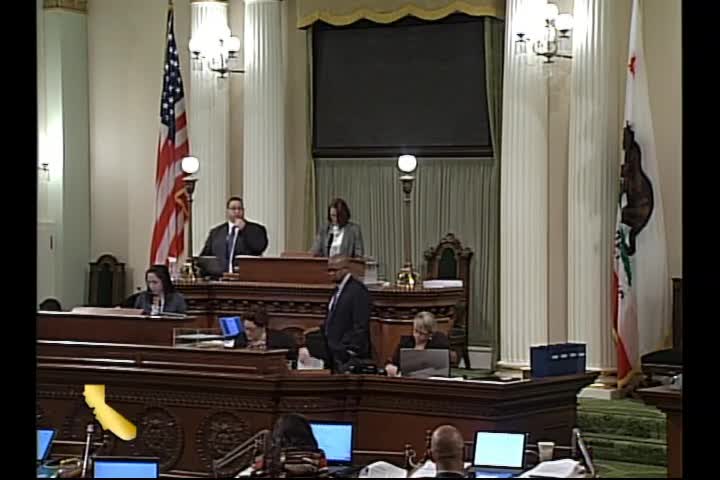
Assembly Floor
 5MIN
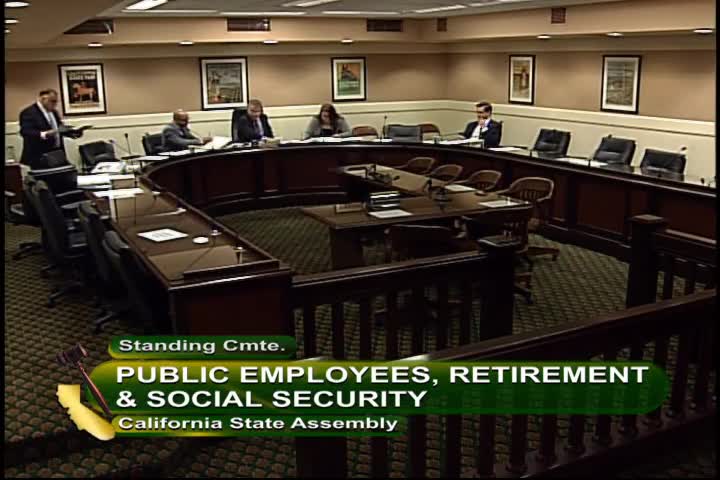
Assembly Standing Committee on Public Employees, Retirement, and Social Security
Bill Author

Bill Co-Author(s):