AB 287: State Highway Route 710.
- Session Year: 2017-2018
- House: Assembly
- Latest Version Date: 2018-01-03
Existing law provides that the Department of Transportation has full possession and control of all state highways and associated property. Existing law designates and describes state highway routes, and also describes the state highway routes in the California freeway and expressway system, including all of Route 710 in the County of Los Angeles.
This bill would require encourage the Department of Transportation, in consultation coordination with the Los Angeles County Metropolitan Transportation Authority, to establish the State Route 710 North Advisory Committee, with a specified membership, to study the alternatives considered in the State Route 710 North Draft Environmental Impact Review and other transit options to improve travel in, and environmental impacts of, the State Route 710 North project area, along with alternatives not considered by the environmental review. The bill would require the advisory committee, by January 1, 2019, to make recommendations in a report to the Legislature, the Department of Transportation, and the Los Angeles County Metropolitan Transportation Authority on the most appropriate and feasible alternative in the State Route 710 North project area to consult with local governments of cities and areas along the State Route 710 North corridor regarding development of the State Route 710 North project area, as specified, and would require the department to seek alternatives for the development of the State Route 710 North project area from those local governments that improve air quality and public health, reduce greenhouse gas emissions, improve traffic safety, modernize the freeway design, address projected traffic volumes, address projected growth in population and employment, population, and create jobs. The bill would require the department, if appropriate and feasible, to implement any development alternative agreed upon by the Los Angeles County Metropolitan Transportation Authority and those local governments, in a manner consistent with applicable law. The bill would require the department to report to the Legislature on the progress of the State Route 710 North project on or before January 1, 2020.
The bill would require the department to implement the alternative recommended by the advisory committee, if appropriate and feasible, but would prohibit the advisory committee from considering or recommending, and would prohibit the department from implementing, a freeway tunnel or a surface freeway alternative. The bill would also limit the portion of Route 710 included in the California freeway and expressway system to the portion between Route 1 and Route 10. The bill would make legislative findings and declarations.
Existing law provides that the Department of Transportation has full possession and control of all state highways and associated property. Existing law designates and describes state highway routes, and also describes the state highway routes in the California freeway and expressway system, including all of Route 710 in the County of Los Angeles.
This bill would require the Department of Transportation, in consultation with the Los Angeles County Metropolitan Transportation Authority, to establish the I-710 Gap Corridor Transit Study Zone State Route 710 North Advisory Committee, with a specified membership, to study the alternatives considered in the State Route 710 North Draft Environmental Impact Review and other transit options to improve travel in, and environmental impacts of, the I-710 Corridor State Route 710 North project area, along with alternatives not considered by the environmental review. The bill would require the advisory committee, by January 1, 2019, to make recommendations in a report to the Legislature, the Department of Transportation, and the Los Angeles County Metropolitan Transportation Authority on the most appropriate and feasible alternative in the I-710 Corridor State Route 710 North project area to improve air quality and public health, improve traffic safety, modernize the freeway design, address projected traffic volumes, and address projected growth in population and employment and activities related to goods movement. employment, and create jobs.
The bill would require the department to implement the alternative recommended by the advisory committee, if appropriate and feasible, but would prohibit the advisory committee from considering or recommending, and would prohibit the department from implementing, a freeway tunnel or a surface freeway alternative. The bill would also limit the portion of Route 710 included in the California freeway and expressway system to the portion between Route 1 and Route 10. The bill would make legislative findings and declarations.
Existing law provides that the Department of Transportation has full possession and control of all state highways and associated property. Existing law designates and describes state highway routes, including Route 710 in the County of Los Angeles.
This bill would require the Department of Transportation, in consultation with the Los Angeles County Metropolitan Transportation Authority, to establish the I-710 Gap Corridor Transit Study Zone Advisory Committee, with a specified membership, to study the alternatives considered in the State Route 710 North Draft Environmental Impact Review and other transit options to improve travel in, and environmental impacts of, the I-710 Corridor project area, along with alternatives not considered by the environmental review. The bill would require the advisory committee, by January 1, 2019, to make recommendations in a report to the Legislature, the Department of Transportation, and the Los Angeles County Metropolitan Transportation Authority on the most appropriate and feasible alternative in the I-710 Corridor project area to improve air quality and public health, improve traffic safety, modernize the freeway design, address projected traffic volumes, and address projected growth in population and employment and activities related to goods movement.
The bill would require the department to implement the alternative recommended by the advisory committee, if appropriate and feasible, but would prohibit the advisory committee from considering or recommending, and would prohibit the department from implementing, a freeway tunnel alternative. The bill would make legislative findings and declarations.
(a)The Department of Transportation, in coordination with the Los Angeles County Metropolitan Transportation Authority, is encouraged to consult with local governments along the State Route 710 North corridor, including, but not limited to, the City of Alhambra, the City of Pasadena, and the City of South Pasadena, and those with jurisdiction in the 90032 ZIP Code, regarding the development of the State Route 710 North project area.
(b)(1)The Department of Transportation shall seek from local governments along the State Route 710 North corridor alternatives for the development of the State Route 710 North project area that improve air quality and public health, reduce greenhouse gas emissions, improve traffic safety, address projected traffic volumes, address projected growth in population, and create jobs.
(2)If the Department of Transportation determines that it is appropriate and feasible, the Department of Transportation shall implement any development alternative agreed upon by the Los Angeles County Metropolitan Transportation Authority and local governments along the State Route 710 North corridor, in a manner consistent with applicable law.
(c)On or before January 1, 2020, the Department of Transportation shall report to the Legislature, in compliance with Section 9795 of the Government Code, on the progress of the State Route 710 North project.
SEC. 3.SEC. 2.Section 253.1 of the Streets and Highways Code is amended to read:253.1.(a)The California freeway and expressway system shall include:
Routes 5, 6, 7, 8, 10, 11, 14, 15, 18, 24, 28, 32, 34, 37, 40, 44, 47, 48, 50, 51, 52, 53, 54, 55, 56, 57, 59, 60, 61, 63, 65, 67, 68, 70, 71, 73, 74, 78, 80, 81, 83, 85, 87, 88, 89, 90, 93, 97, 100, 102, 103, 105, 107, 108, 118, 121, 122, 124, 125, 126, 134, 136, 139, 140, 145, 148, 149, 154, 156, 161, 163, 164, 179, 181, 183, 184, 199, 205, 210, 215, 217, 221, 223, 230, 232, 234, 235, 237, 238, 239, 241, 242, 247, 249, 251, 257, 258, 259, 261, 280, 330, 371, 380, 405, 505, 580, 605, 680, 780, 805, 880, and 980 in their entirety.
(b)The California freeway and expressway system shall also include Route 710 from Route 1 to Route 10.
SEC. 4.Section 622.2 is added to the Streets and Highways Code, to read:622.2.The department shall not implement a freeway tunnel or surface freeway for Route 710 between Route 10 and Route 210.The Legislature finds and declares all of the following:
(a)The I-710 Corridor is a critical artery to the state, region, and Los Angeles County for the transportation of goods and passengers by connecting the countys ports to distribution centers and railways.
(b)The earliest iterations of I-710, former State Highway Routes 7 and 167, were designed in 1933 to improve north-south mobility in Los Angeles County extending from the harbors of San Pedro and Long Beach to the San Gabriel Valley.
(c)I-710 incorporated these former routes into the Interstate Highway System that was constructed in the 1950s and 1960s, specifically to connect the Port of Long Beach to the industrial center of Los Angeles, facilitating the transport of manufactured goods to the port.
(d)Construction of the I-710 freeway has terminated at the I-10 freeway, stopping short of its intended connections and terminations. freeway, and I-710 does not extend through to I-210.
(e)There are seven east-west freeways and seven north-south freeways in the Los Angeles Basin critical to the transportation of goods and people in the highly urbanized county.(f)I-710 is one of two north-south freeways that terminate in the San Gabriel Valley and do not connect to other freeways, forcing traffic onto local streets or other freeways.(g)(e)The residents and commuters of the I-710 Corridor Corridor, north of I-10, are facing elevated levels of diesel particulate emissions and are experiencing traffic congestion, high truck volumes, and high accident rates on a daily basis.
(h)(f)The United States Environmental Protection Agency has stated the South Coast Air Basin, which includes the I-710 Corridor, is an extreme ozone nonattainment area and a nonattainment area for small airborne particulate matter between 10 and 2.5 microns, which is commonly attributed to vehicle traffic and contributes to high rates of cancer.
(i)(g)The highest levels of these air toxins in the Los Angeles Basin are found along the I-710 corridor.
(j)The significant residential and commercial development that has taken place along the I-710 Corridor since its initial construction, along with the negative environmental impacts, have caused significant concerns for local communities.(k)(h)In 1998 the Federal Highway Administration published a record of decision approving a surface freeway with six mixed-flow lanes and two high-occupancy vehicle lanes to close the 6.2-mile gap between I-10 and I-210, crossing through Los Angeles, Alhambra, South Pasadena, and Pasadena, but later in 2003 rescinded it due to litigation and community concerns. concerns and an injunction prohibiting freeway construction.
(l)(i)The Department of Transportation (Caltrans) has conducted feasibility studies of alternatives to the surface freeway route including alternative freeway routes, light rail construction, bus system improvements, and tunnels to mitigate the environmental impacts of air toxins due to vehicle traffic.
(m)(j)In 2015, Caltrans and the Los Angeles County Metropolitan Transportation Authority completed an a draft environmental impact report, the State Route 710 North Draft Environmental Impact Review, that studied the impacts of these alternatives, including a cost-benefit analysis, that evaluated the travel time benefits, capital expenditures, vehicle operating costs, system operations and maintenance costs, safety effects, emissions effects, employment benefits, and residual values.
(n)(k)There continues to be significant community and local government concern about the safety and efficacy of the proposed tunnel alternative and its $2 $3.1 billion to $3 $5.6 billion cost.
(o)Caltrans states that the purpose of the I-710 Corridor Northbound Freeway Project is to improve air quality and public health, improve traffic safety, modernize the freeway design, address projected traffic volumes, and address projected growth in population and in employment and activities related to goods movement.(p)(l)An advisory committee should be established by Caltrans, in consultation with the Los Angeles County Metropolitan Transportation Authority, to resolve the transportation problems caused by the I-710 gap in the State Route 710 North project area while fully considering the concerns of local communities.
(q)(m)The advisory committee should review the transit options proposed in the State Route 710 North Draft Environmental Impact Review and also consider all other alternatives, other than a tunnel, tunnel or surface freeway, including alternatives not included in the review, and recommend a proposed solution.
SEC. 2.(a)The Department of Transportation, in consultation with the Los Angeles County Metropolitan Transportation Authority, shall establish the I-710 Gap Corridor Transit Study Zone State Route 710 North Advisory Committee to study the alternatives considered in the State Route 710 North Draft Environmental Impact Review and other transit options to improve travel in, and environmental impacts of, the I-710 Corridor State Route 710 North project area.
(b)The advisory committee shall consist of all of the following:
(1)Three representatives of the Department of Transportation.
(2)Two representatives of the Los Angeles County Metropolitan Transportation Authority, appointed by the authority.
(3)Two representatives each from the City of Alhambra, the City of Los Angeles, Angeles City Council District 14, the City of Pasadena, and the City of South Pasadena, appointed by the applicable city.
(4)Two Three members of the Assembly that represent the I-710 Corridor State Route 710 North project area or their designees, appointed by the Speaker of the Assembly.
(5)Two Three members of the Senate that represent the I-710 Corridor State Route 710 North project area or their designees, appointed by the Senate Committee on Rules.
(c)Participation on, and appointment of members to, the advisory committee by the Los Angeles County Metropolitan Transportation Authority and the cities shall be at the option of each local agency. Members of the advisory committee shall serve without compensation that is specific to serving on the committee. The Department of Transportation shall provide staff to the advisory committee.
(d)On or before January 1, 2019, the advisory committee shall make recommendations in a report to the Legislature, the Department of Transportation, and the Los Angeles County Metropolitan Transportation Authority on the most appropriate and feasible alternative in the I-710 Corridor Gap for the State Route 710 North project area to improve air quality and public health, improve traffic safety, modernize the freeway design, address projected traffic volumes, and address projected growth in population and employment and activities related to goods movement. employment, and create jobs. In conducting its study, the advisory committee shall take into consideration the input of residents living in the I-710 Corridor State Route 710 North project area. The committee shall consider development of open space, light rail options, and traffic calming options, and may consider alternatives not considered in the State Route 710 North Draft Environmental Impact Review. The report to the Legislature shall be submitted pursuant to Section 9795 of the Government Code.
(e)The advisory committee shall not consider or recommend the freeway tunnel alternative proposed for implementation in the State Route 710 North Draft Environmental Impact Review, or the surface freeway alternative, and the department shall not proceed with implementation of that alternative. those alternatives. The advisory committee shall have no authority to make recommendations regarding the properties acquired for the I-710 freeway.
(f)If appropriate and feasible, the Department of Transportation shall implement the alternative recommended by the advisory committee in its report submitted pursuant to subdivision (d) in a manner consistent with applicable laws.
SEC. 3.Section 253.1 of the Streets and Highways Code is amended to read:253.1.The California freeway and expressway system shall include:
Routes 5, 6, 7, 8, 10, 11, 14, 15, 18, 24, 28, 32, 34, 37, 40, 44, 47, 48, 50, 51, 52, 53, 54, 55, 56, 57, 59, 60, 61, 63, 65, 67, 68, 70, 71, 73, 74, 78, 80, 81, 83, 85, 87, 88, 89, 90, 93, 97, 100, 102, 103, 105, 107, 108, 118, 121, 122, 124, 125, 126, 134, 136, 139, 140, 145, 148, 149, 154, 156, 161, 163, 164, 179, 181, 183, 184, 199, 205, 210, 215, 217, 221, 223, 230, 232, 234, 235, 237, 238, 239, 241, 242, 247, 249, 251, 257, 258, 259, 261, 280, 330, 371, 380, 405, 505, 580, 605, 680, 710, 780, 805, 880, and 980 in their entirety.
The California freeway and expressway system shall also include Route 710 from Route 1 to Route 10.
SEC. 3.SEC. 4.Section 622.2 is added to the Streets and Highways Code, to read:622.2.The department shall not implement a freeway tunnel or surface freeway for Route 710 between Route 10 and Route 210.
The Legislature finds and declares all of the following:
(a)The I-710 Corridor is a critical artery to the state, region, and Los Angeles County for the transportation of goods and passengers by connecting the countys ports to distribution centers and railways.
(b)The earliest iterations of I-710, former State Highway Routes 7 and 167, were designed in 1933 to improve north-south mobility in Los Angeles County extending from the harbors of San Pedro and Long Beach to the San Gabriel Valley.
(c)I-710 incorporated these former routes into the Interstate Highway System that was constructed in the 1950s and 1960s, specifically to connect the Port of Long Beach to the industrial center of Los Angeles, facilitating the transport of manufactured goods to the port.
(d)Construction of the I-710 freeway has terminated at the I-10 freeway, stopping short of its intended connections and terminations.
(e)There are seven east-west freeways and seven north-south freeways in the Los Angeles Basin critical to the transportation of goods and people in the highly urbanized county.
(f)I-710 is one of two north-south freeways that terminate in the San Gabriel Valley and do not connect to other freeways, forcing traffic onto local streets or other freeways.
(g)The residents and commuters of the I-710 Corridor are facing elevated levels of diesel particulate emissions and are experiencing traffic congestion, high truck volumes, and high accident rates on a daily basis.
(h)The United States Environmental Protection Agency has stated the South Coast Air Basin, which includes the I-710 Corridor, is an extreme ozone nonattainment area and a nonattainment area for small airborne particulate matter between 10 and 2.5 microns, which is commonly attributed to vehicle traffic and contributes to high rates of cancer.
(i)The highest levels of these air toxins in the Los Angeles Basin are found along the I-710 corridor.
(j)The significant residential and commercial development that has taken place along the I-710 Corridor since its initial construction, along with the negative environmental impacts, have caused significant concerns for local communities.
(k)In 1998 the Federal Highway Administration published a record of decision approving a surface freeway with six mixed-flow lanes and two high-occupancy vehicle lanes to close the 6.2-mile gap between I-10 and I-210, crossing through Los Angeles, Alhambra, South Pasadena, and Pasadena, but later rescinded it due to litigation and community concerns.
(l)The Department of Transportation (Caltrans) has conducted feasibility studies of alternatives to the surface freeway route including alternative freeway routes, light rail construction, bus system improvements, and tunnels to mitigate the environmental impacts of air toxins due to vehicle traffic.
(m)In 2015, Caltrans and the Los Angeles County Metropolitan Transportation Authority completed an environmental impact report, the State Route 710 North Draft Environmental Impact Review, that studied the impacts of these alternatives, including a cost-benefit analysis, that evaluated the travel time benefits, capital expenditures, vehicle operating costs, system operations and maintenance costs, safety effects, emissions effects, employment benefits, and residual values.
(n)There continues to be significant community and local government concern about the safety and efficacy of the proposed tunnel alternative and its $2 billion to $3 billion cost.
(o)Caltrans states that the purpose of the I-710 Corridor Northbound Freeway Project is to improve air quality and public health, improve traffic safety, modernize the freeway design, address projected traffic volumes, and address projected growth in population and in employment and activities related to goods movement.
(p)An advisory committee should be established by Caltrans, in consultation with the Los Angeles County Metropolitan Transportation Authority, to resolve the transportation problems caused by the I-710 gap while fully considering the concerns of local communities.
(q)The advisory committee should review the transit options proposed in the State Route 710 North Draft Environmental Impact Review and also consider all other alternatives, other than a tunnel, including alternatives not included in the review, and recommend a proposed solution.
SEC. 2.(a)The Department of Transportation, in consultation with the Los Angeles County Metropolitan Transportation Authority, shall establish the I-710 Gap Corridor Transit Study Zone Advisory Committee to study the alternatives considered in the State Route 710 North Draft Environmental Impact Review and other transit options to improve travel in, and environmental impacts of, the I-710 Corridor project area.
(b)The advisory committee shall consist of all of the following:
(1)Three representatives of the Department of Transportation.
(2)Two representatives of the Los Angeles County Metropolitan Transportation Authority, appointed by the authority.
(3)Two representatives each from the City of Alhambra, the City of Los Angeles, the City of Pasadena, and the City of South Pasadena, appointed by the city.
(4)Two members of the Assembly that represent the I-710 Corridor or their designees, appointed by the Speaker of the Assembly.
(5)Two members of the Senate that represent the I-710 Corridor or their designees, appointed by the Senate Committee on Rules.
(c)Participation on, and appointment of members to, the advisory committee by the Los Angeles County Metropolitan Transportation Authority and the cities shall be at the option of each local agency. Members of the advisory committee shall serve without compensation that is specific to serving on the committee. The Department of Transportation shall provide staff to the advisory committee.
(d)On or before January 1, 2019, the advisory committee shall make recommendations in a report to the Legislature, the Department of Transportation, and the Los Angeles County Metropolitan Transportation Authority on the most appropriate and feasible alternative in the I-710 Corridor Gap to improve air quality and public health, improve traffic safety, modernize the freeway design, address projected traffic volumes, and address projected growth in population and employment and activities related to goods movement. In conducting its study, the advisory committee shall take into consideration the input of residents living in the I-710 Corridor project area. The committee shall consider development of open space, light rail options, and traffic calming options, and may consider alternatives not considered in the State Route 710 North Draft Environmental Impact Review. The report to the Legislature shall be submitted pursuant to Section 9795 of the Government Code.
(e)The advisory committee shall not consider or recommend the freeway tunnel alternative proposed for implementation in the State Route 710 North Draft Environmental Impact Review, and the department shall not proceed with implementation of that alternative. The advisory committee shall have no authority to make recommendations regarding the properties acquired for the I-710 freeway.
(f)If appropriate and feasible, the Department of Transportation shall implement the alternative recommended by the advisory committee in its report submitted pursuant to subdivision (d) in a manner consistent with applicable laws.
SEC. 3.Section 622.2 is added to the Streets and Highways Code, to read:622.2.The department shall not implement a freeway tunnel for Route 710 between Route 10 and Route 210.
|
Date
|
Status
|
|---|---|
| Feb 1, 2018 | From committee: Filed with the Chief Clerk pursuant to Joint Rule 56. |
| Jan 31, 2018 | Died pursuant to Art. IV, Sec. 10(c) of the Constitution. |
| Jan 8, 2018 | In committee: Set, second hearing. Hearing canceled at the request of author. |
| Jan 4, 2018 | Re-referred to Com. on TRANS. |
| Jan 3, 2018 | From committee chair, with author's amendments: Amend, and re-refer to Com. on TRANS. Read second time and amended. |
| Apr 17, 2017 | Re-referred to Com. on TRANS. |
| Apr 6, 2017 | From committee chair, with author's amendments: Amend, and re-refer to Com. on TRANS. Read second time and amended. |
| Feb 13, 2017 | Referred to Com. on TRANS. |
| Feb 3, 2017 | From printer. May be heard in committee March 5. |
| Feb 2, 2017 | Read first time. To print. |
|
Date
|
Description
|
Location
|
Votes
|
|
|---|---|---|---|---|
| Apr 17, 2017 | Reconsideration. | Assembly Standing Committee on Transportation |
Passed |
|
| Apr 17, 2017 | Do pass and be re-referred to the Committee on [Appropriations] | Assembly Standing Committee on Transportation |
Failed |
This list shows positions taken on this bill by organizations on the date displayed, which is linked to the original source.
Positions by individuals are not included.
|
Organization
|
Position
|
Date
|
|---|---|---|
| 10 private citizens | ** Support | Apr 14, 2017 |
| California Bicycle Coalition | ** Support | Apr 14, 2017 |
| California Preservation Foundation | ** Support | Apr 14, 2017 |
| California Public Interest Research Group | ** Support | Apr 14, 2017 |
| California State Council Of Laborers | ** Against | Apr 14, 2017 |
| California Teamsters Public Affairs Council | ** Against | Apr 14, 2017 |
| City of Alhambra | ** Against | Apr 14, 2017 |
| City of Glendale | * Support | Apr 17, 2017 |
| City of LaCaada Flintridge | ** Support | Apr 14, 2017 |
| city of lacanada flintridge | ** Support | Apr 14, 2017 |
| City of Monterey Park | ** Against | Apr 14, 2017 |
| City of San Gabriel | ** Against | Apr 14, 2017 |
| City of San Marino | ** Against | Apr 14, 2017 |
| City of South Pasadena | ** Support | Apr 14, 2017 |
| Connected Cities and Communities | ** Support | Apr 14, 2017 |
| East Area Progressive Democrats | ** Support | Apr 14, 2017 |
| Five Star Coalition | ** Support | Apr 14, 2017 |
| international association of operative plasterer's and cement mason | ** Against | Apr 14, 2017 |
| International Association of Operative Plasterers and Cement Mason | ** Against | Apr 14, 2017 |
| International Association of Sheet Metal Workers | ** Against | Apr 14, 2017 |
| International Brotherhood Of Electrical Workers | ** Against | Apr 14, 2017 |
| International Union of Elevator Construction | ** Against | Apr 14, 2017 |
| International Union of Operating Engineers | ** Against | Apr 14, 2017 |
| International Union Of Painters And Allied Trades | ** Against | Apr 14, 2017 |
| Los Angeles | ** Against | Apr 14, 2017 |
| National Trust for Historic Preservation | ** Support | Apr 14, 2017 |
| Natural Resources Defense Council | ** Support | Apr 14, 2017 |
| Pasadena Heritage | ** Support | Apr 14, 2017 |
| Rosemead, City Of | * Against | Apr 17, 2017 |
| San Gabriel Valley Council Of Governments | * Against | Apr 17, 2017 |
| Sequoyah School | ** Support | Apr 14, 2017 |
| South Pasadena Chamber of Commerce | ** Support | Apr 14, 2017 |
| State Building & Construction Trades Council Of California | * Against | Apr 17, 2017 |
| The Honorable Terry Tornek, Mayor, City of Pasadena | ** Support | Apr 14, 2017 |
| The West Pasadena Residents' Association | ** Support | Apr 14, 2017 |
| Union of Bricklayers and Allied Craftworkers | ** Against | Apr 14, 2017 |
| United Association of Plumbers and Pipefitters | ** Against | Apr 14, 2017 |
| United Union of Roofers, Waterproofers & Allied Workers | ** Against | Apr 14, 2017 |
| Westridge School | ** Support | Apr 14, 2017 |
Date of Hearing: April 17, 2017
ASSEMBLY COMMITTEE ON TRANSPORTATION
Jim Frazier, Chair
ABPCA Bill Id:AB 287 (
Author:Holden) – As Amended Ver:April 6, 2017
SUBJECT: State Highway Route 710: advisory committee
SUMMARY: Directs the California Department of Transportation (Caltrans) to establish a State Route (SR) 710 Advisory Committee. Specifically, this bill:
- Makes legislative findings and declarations regarding the history and current status of the SR 710 North corridor.
- Directs Caltrans, in consultation with the Los Angeles County Metropolitan Transportation Authority (LA Metro), to establish an SR 710 North Advisory Committee.
- Directs the advisory committee to study the alternatives considered in the SR 710 North Draft Environmental Impact Report (draft EIR) and other transit options to improve travel in, and environmental impacts of the SR 710 North project area.
- Prescribes the membership of the advisory committee to include:
- Three representatives of Caltrans;
- Two representatives of LA Metro;
- Two representatives each from the City of Alhambra, the City of Los Angeles City Council District 14, the City of Pasadena, and the City of South Pasadena; and,
- Three members of the Assembly and three members of the Senate that represent the SR 710 project area.
- Directs the advisory committee to, by January 1, 2019, report recommendations to the Legislature, Caltrans, and LA Metro on the most appropriate and feasible alternative for the SR 710 North project area to do all of the following:
- Improve air quality and public health;
- Improve traffic safety;
- Modernize the freeway design;
- Address projected traffic volumes;
- Address projected population and employment growth; and,
- Create jobs.
- Prohibits the advisory committee from considering or recommending the freeway tunnel alternative proposed for implementation in the State Route 710 North draft EIR or a surface freeway alternative, and prohibits Caltrans from proceeding with implementation of either of these two alternatives.
- Deletes the portion of Route 710 between I-10 and I-210 from the statutorily defined Freeway and Expressway System.
- Specifically prohibits Caltrans from implementing a freeway tunnel or surface freeway for Route 710 between I-10 and I-210.
EXISTING LAW:
- Grants Caltrans broad authority to have full possession and control of all state highways and all property and rights in property acquired for state highway purposes. The department is authorized and directed to lay out and construct all state highways between termini designated by law.
- Statutorily defines state highways to be included in the Freeway and Expressway System.
FISCAL EFFECT: Unknown
COMMENTS: SR 710 is a major north-south interstate running 23 miles through Los Angeles County, from Long Beach in the south to Alhambra in the north, stopping approximately 6 miles short of the originally planned northerly terminus in Pasadena. Efforts to complete the segment between I-10 in Alhambra and I-210 in Pasadena, sometimes dubbed the "freeway gap closure," have started and stalled several times over the past 60 years. In fact, Caltrans owns and still maintains hundreds of homes in the corridor that were bought as far back as the 1960s to preserve the corridor for the freeway long ago proposed but as of yet not delivered.
Many believe that failure to complete the SR 710 North improvement project contributes to traffic congestion in northeastern Los Angeles and the northwestern San Gabriel Valley, as there are no north-south freeways in the heavily populated area between I-5 (Golden State Freeway) and I-605 (San Gabriel River Freeway). Over the past fifty years, alternative concepts have been proposed and evaluated to build the SR 710 freeway between I-10 and I-210. Community members, particularly residents of Pasadena, opposed the freeway project because of concerns about the impact of the freeway on their community.
Within the past ten years, the concept of a tunnel between I-10 and I-210 has been proposed as an alternative to the previously proposed surface freeway. In response, Metro completed a feasibility assessment of a tunnel alternative, and the assessment concluded that the tunnel concept is feasible. Potential environmental impacts were identified but preliminary assessments concluded that these impacts could be minimized, eliminated, or mitigated. The report concluded that no insurmountable environmental issues were identified that would preclude further consideration of the tunnel alternative.
In March 2015, Caltrans and LA Metro released the latest study in this decades-old saga—a draft EIR that evaluates and identifies cost estimates for the following five alternatives to improve transportation in the SR 710 North project area:
- Transportation system management/transportation demand management (TSM/TDM) strategies (estimated to cost $105 million);
- Light rail transit (estimated to cost $2.42 billion);
- Bus rapid transit (estimated to cost $204 million);
- Freeway tunnel (estimated to cost between $3.15 billion for a single-bore option and $5.65 billion for a dual-bore option); and,
- No build.
According to the author, "SR 710 has divided communities in the San Gabriel Valley for too long. The well-intentioned proposal to build a freeway 50 years ago has led to a neighborhood deteriorating physically and an ongoing feud that has left both sides with the consequences of inaction." The author asserts that this bill will require these communities to come together to craft a solution that can be constructed in a timely manner and avoid being mired in conflict for years to come. He believes this bill will take the controversial tunnel option off the table and encourage a solution that is community-led and provides the greatest community benefit.
Supporters of this bill assert that the tunnel alternative, included in Caltrans' draft EIR, does not reflect current day community values, environmental policies, or even an understanding of contemporary thinking with regard to the impact that congestion-relieving projects have on inducing travel demand. They suggest that the advisory committee will provide a collaborative forum to address the area's transportation needs in a way that is more reflective of the communities' values. They also support permanently removing a tunnel option from the alternatives to be considered, contending that the option would cost significantly more than others options and result in an increase in the number of vehicle miles traveled.
Opponents, on the other hand, contend that this bill is illogical and unjustifiable given the "countless hours and millions of taxpayer dollars [spent] on the environmental review of the project." They also contend that the tunnel is "the best solution and the only alternative that further reduces air emissions and health risks in lower income, minority areas that have been plagued by poor air quality due to severe congestion and slow traffic on neighborhood streets." They further assert that tunnel opponents "have been relentless in their efforts to stall and disrupt the ongoing environmental review. Further delay will only exacerbate the negative traffic and environmental impacts not just in San Gabriel Valley but throughout the entire region."
Committee comments: Although Caltrans and LA Metro are expected to issue a determination on the pending draft EIR in the very near future, the reality is, even if the tunnel alternative is selected as the preferred alternative, it would not be constructed anytime in the near future.
For fifty years, community opposition has successfully kept a freeway gap closure project from going forward. Years of litigation are sure to ensue if the tunnel alternative is chosen. Furthermore, given the preliminary price tag for the tunnel (between $3.1 billion and $5.65 billion in 2014 dollars), it is doubtful that funding for the project could materialize any time soon, if at all. The County's Measure R allocated $750 million to address congestion in the SR 710 North project area but this would be a drop in the bucket compared to eventual funding needs.
Regarding the advisory committee to be created by this bill, it is questionable whether it will be able to bridge the abyss that exists between the two sides of this issue. Still, after 50 years of a complete, fruitless standoff on this project, a collaborative, community-based approach, rather than the current approach, is more likely to render a menu of solutions that might actually be built.
Previous legislation: SB 204 (Liu) of 2012 would have, among other things, authorized LA Metro, in consultation with Caltrans and acting jointly with affected cities, to develop and file with the California Transportation Commission a local alternative transportation improvement program to address transportation problems and opportunities in the SR 710 study area. Governor Brown vetoed SB 204. In his veto message, the Governor declared the bill premature, in part, because LA Metro was conducting the SR 710 North EIR. The Governor further stated, "My administration is committed to… [finding] a solution to the long-standing controversies over closing the 710 freeway gap."
SB 545 (Cedillo) of 2002 would have prohibited the SR 710 freeway gap closure project from being constructed as a surface or above-grade highway. SB 545 was vetoed by Governor Schwarzenegger. In his veto message, the Governor stated, "This bill is unnecessary. The project development process currently being undertaken by [Caltrans] and [LA Metro] is the appropriate vehicle to determine the scope and feasibility of a project to address the transportation needs in the [SR 710] corridor. This process provides ample opportunity for public involvement and input."
REGISTERED SUPPORT / OPPOSITION:
Support
California Bicycle Coalition
California Preservation Foundation
California Public Interest Research Group
City of Glendale
City of LaCañada Flintridge
City of South Pasadena
Connected Cities and Communities
East Area Progressive Democrats
Five Star Coalition
National Trust for Historic Preservation
Natural Resources Defense Council
NO 710 Action Committee
Pasadena Heritage
Sequoyah School
South Pasadena Chamber of Commerce
The Honorable Terry Tornek, Mayor, City of Pasadena
The West Pasadena Residents' Association
Westridge School
10 private citizens
Opposition
California State Council of Laborers
California Teamsters Public Affairs Council
City of Alhambra
City of Monterey Park
City of Rosemead
City of San Gabriel
City of San Marino
International Association of Bridge, Structural, Ornamental and Reinforcing Iron Workers
International Association of Heat and Frost Insulators and Allied Workers
International Association of Operative Plasterer’s and Cement Mason
International Association of Sheet Metal Workers
International Brotherhood of Boilermakers, Iron, Ship Builders, Blacksmiths, Forgers and Helpers
International Brotherhood of Electrical Workers
International Union of Elevator Construction
International Union of Operating Engineers
International Union of Painters and Allied Trades
Los Angeles/Orange Counties Building and Construction Trades Council
State Building and Construction Trades Council of California
Union of Bricklayers and Allied Craftworkers
United Association of Plumbers and Pipefitters
United Union of Roofers, Waterproofers & Allied Workers
Analysis Prepared by: Janet Dawson / TRANS. /
Discussed in Hearing
 42MIN
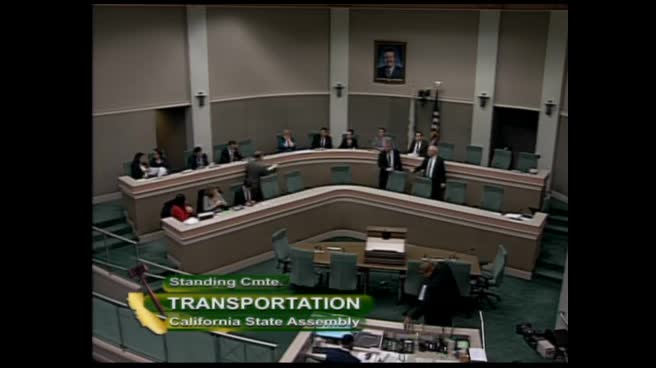
Assembly Standing Committee on Transportation
Bill Author

Bill Co-Author(s):