AB 2876: Vehicles: removal and impound authority.
- Session Year: 2017-2018
- House: Assembly
- Latest Version Date: 2018-09-20
Existing law authorizes a peace officer to order the removal and storage of a vehicle under various circumstances including when the driver is incapacitated or has been arrested, the vehicle is unregistered, reported stolen, or has been used in a crime, or the vehicle is parked in a manner obstructing traffic or blocking access to a fire hydrant.
Judicial precedent deems the warrantless removal of a vehicle a seizure subject to the protections of the Fourth Amendment of the Constitution of the United States that is permissible only pursuant to a recognized exception to the warrant requirement. Case law permits removal of a vehicle by a peace officer in furtherance of an officers criminal investigation function, such as removing a vehicle used in a crime for the collection or preservation of evidence, or pursuant to an officers community caretaking function, such as removing a vehicle to safeguard the vehicles contents, to ensure the safe flow of traffic, or to remove an illegally parked vehicle or a public nuisance. Case law has held that those statutory authorities that permit the removal of a vehicle when the driver is arrested are based on community caretaking and therefore may only reasonably be relied upon when the removal is reasonably necessary for a community caretaking reason such as safeguarding the vehicle or ensuring the flow of traffic.
This bill would clarify that the removal of a vehicle as authorized by California statute is also required to be constitutionally reasonable based on the specific situation.
Existing law authorizes a peace officer to order the removal and storage of a vehicle under various circumstances including when the driver is incapacitated or has been arrested, the vehicle is unregistered, reported stolen, or has been used in a crime, or the vehicle is parked in a manner obstructing traffic or blocking access to a fire hydrant.
Judicial precedent deems the warrantless removal of a vehicle a seizure subject to the protections of the Fourth Amendment of the Constitution of the United States that is permissible only pursuant to a recognized exception to the warrant requirement. Case law permits removal of a vehicle by a peace officer in furtherance of an officers criminal investigation function, such as removing a vehicle used in a crime for the collection or preservation of evidence, or pursuant to an officers community caretaking function, such as removing a vehicle to safeguard the vehicles contents, to ensure the safe flow of traffic, or to remove an illegally parked vehicle or a public nuisance. Case law has held that those statutory authorities that permit the removal of a vehicle when the driver is arrested are based on community caretaking and therefore may only reasonably be relied upon when the removal is reasonably necessary for a community caretaking reason such as safeguarding the vehicle or ensuring the flow of traffic.
This bill would clarify that the removal of a vehicle as authorized by California statute is also required to be constitutionally reasonable based on the specific situation. The bill would additionally provide that removal of a vehicle is only reasonable if it is justified by preventing a hazard to other drivers, protecting the public from unsafe drivers, or preventing theft or vandalism.
By limiting the circumstances under which a vehicle may be removed without first obtaining a warrant, the bill would impose a state-mandated local program.The California Constitution requires the state to reimburse local agencies and school districts for certain costs mandated by the state. Statutory provisions establish procedures for making that reimbursement.This bill would provide that, if the Commission on State Mandates determines that the bill contains costs mandated by the state, reimbursement for those costs shall be made pursuant to the statutory provisions noted above.Existing law authorizes a peace officer to order the removal and storage of a vehicle under various circumstances including when the driver is incapacitated or has been arrested, the vehicle is unregistered, reported stolen, or has been used in a crime, or the vehicle is parked in a manner obstructing traffic or blocking access to a fire hydrant.
Judicial precedent deems the warrantless removal of a vehicle a seizure subject to the protections of the Fourth Amendment of the Constitution of the United States that is permissible only pursuant to a recognized exception to the warrant requirement. Case law permits removal of a vehicle by a peace officer in furtherance of an officers criminal investigation function, such as removing a vehicle used in a crime for the collection or preservation of evidence, or pursuant to an officers community caretaking function, such as removing a vehicle to safeguard the vehicles contents, to ensure the safe flow of traffic, or to remove an illegally parked vehicle or a public nuisance. Case law has held that those statutory authorities that permit the removal of a vehicle when the driver is arrested are based on community caretaking and therefore may only reasonably be relied upon when the removal is reasonably necessary for a community caretaking reason such as safeguarding the vehicle or ensuring the flow of traffic.
This bill would clarify that the removal of a vehicle as authorized by California statute is also required to be constitutionally reasonable based on the specific situation. The bill would additionally provide that removal of a vehicle is only reasonable if it is justified by preventing a hazard to other drivers, protecting the public from unsafe drivers, or preventing theft or vandalism.
By limiting the circumstances under which a vehicle may be removed without first obtaining a warrant, the bill would impose a state-mandated local program.
The California Constitution requires the state to reimburse local agencies and school districts for certain costs mandated by the state. Statutory provisions establish procedures for making that reimbursement.
This bill would provide that, if the Commission on State Mandates determines that the bill contains costs mandated by the state, reimbursement for those costs shall be made pursuant to the statutory provisions noted above.
Existing law authorizes a peace officer to order the removal and storage of a vehicle under various circumstances including when the driver is incapacitated or has been arrested, the vehicle is unregistered, reported stolen, or has been used in a crime, or the vehicle is parked in a manner obstructing traffic or blocking access to a fire hydrant.
Judicial precedent deems the warrantless removal of a vehicle a seizure subject to the protections of the Fourth Amendment of the Constitution of the United States that is permissible only pursuant to a recognized exception to the warrant requirement. Case law permits removal of a vehicle by a peace officer in furtherance of an officers criminal investigation function, such as removing a vehicle used in a crime for the collection or preservation of evidence, or pursuant to an officers community caretaking function, such as removing a vehicle to safeguard the vehicles contents, to ensure the safe flow of traffic, or to remove a public nuisance. Case law has held that those statutory authorities that permit the removal of a vehicle when the driver is arrested are based on community caretaking and therefore may only reasonably be relied upon when the removal is reasonably necessary for a community caretaking reason such as safeguarding the vehicle or ensuring the flow of traffic.
This bill would clarify that the removal of a vehicle as authorized by California statute is also required to be constitutionally reasonable based on the specific situation.
(a)It is unlawful for a peace officer or an unauthorized person to remove an unattended vehicle from a highway to a garage or to any other place, except as provided in this code.
(b)Any removal of a vehicle is a seizure under the Fourth Amendment of the Constitution of the United States and Section 13 of Article I of the California Constitution, and shall be reasonable and subject to the limits set forth in Fourth Amendment jurisprudence. A removal pursuant to an authority, including, but not limited to, as provided in Section 22651, that is based on community caretaking, is only reasonable if the removal is necessary to achieve the community caretaking need, such as ensuring the safe flow of traffic or protecting property from theft or vandalism.
(c)Those law enforcement and other agencies identified in this chapter as having the authority to remove vehicles shall also have the authority to provide hearings in compliance with the provisions of Section 22852. During these hearings the storing agency shall have the burden of establishing the authority for, and the validity of, the removal.
(d)This section does not prevent a review or other action as may be permitted by the laws of this state by a court of competent jurisdiction.
(a)It is unlawful for any a peace officer or any an unauthorized person to remove any an unattended vehicle from a highway to a garage or to any other place, except as provided in this code.
(b)The warrantless Any removal of a vehicle is a seizure under the Fourth Amendment of the Constitution of the United States and Section 13 of Article I of the California Constitution, and shall be reasonable. The removal or storage of a vehicle pursuant to an authority, including, but not limited to, subdivision (h) of Section 22651, that is based on community caretaking, is only reasonable if the vehicle owners substantial interest in possessing his or her vehicle is outweighed by one or more of the following community caretaking justifications: reasonable and subject to the limits set forth in Fourth Amendment jurisprudence. A removal pursuant to an authority, including, but not limited to, as provided in Section 22651, that is based on community caretaking, is only reasonable if the removal is necessary to achieve the community caretaking need, such as ensuring the safe flow of traffic or protecting property from theft or vandalism.
(1)Preventing a hazard to other drivers.(2)Protecting the public from an unsafe driver.(3)Preventing theft or vandalism.(c)Those law enforcement and other agencies identified in this chapter as having the authority to remove vehicles shall also have the authority to provide hearings in compliance with the provisions of Section 22852. During these hearings the storing agency shall have the burden of establishing the authority for, and the validity of, the removal.
(d)Nothing in this section shall be deemed to This section does not prevent a review or other action as may be permitted by the laws of this state by a court of competent jurisdiction.
SEC. 2.If the Commission on State Mandates determines that this act contains costs mandated by the state, reimbursement to local agencies and school districts for those costs shall be made pursuant to Part 7 (commencing with Section 17500) of Division 4 of Title 2 of the Government Code.(a)It is unlawful for any peace officer or any unauthorized person to remove any unattended vehicle from a highway to a garage or to any other place, except as provided in this code.
(b)The warrantless removal of a vehicle is a seizure under the Fourth Amendment of the Constitution of the United States and Section 13 of Article I of the California Constitution, and shall be reasonable. A The removal or storage of a vehicle pursuant to an authority, including, but not limited to, subdivision (h) of Section 22651, that is based on community caretaking, such as ensuring the safe flow of traffic or protecting property from theft or vandalism, is only reasonable if the removal is necessary to achieve the community caretaking need. the vehicle owners substantial interest in possessing his or her vehicle is outweighed by one or more of the following community caretaking justifications:
(1)Preventing a hazard to other drivers.
(2)Protecting the public from an unsafe driver.
(3)Preventing theft or vandalism.
(c)Those law enforcement and other agencies identified in this chapter as having the authority to remove vehicles shall also have the authority to provide hearings in compliance with the provisions of Section 22852. During these hearings the storing agency shall have the burden of establishing the authority for, and the validity of, the removal.
(d)Nothing in this section shall be deemed to prevent a review or other action as may be permitted by the laws of this state by a court of competent jurisdiction.
SEC. 2.If the Commission on State Mandates determines that this act contains costs mandated by the state, reimbursement to local agencies and school districts for those costs shall be made pursuant to Part 7 (commencing with Section 17500) of Division 4 of Title 2 of the Government Code.
(a)It is unlawful for any peace officer or any unauthorized person to remove any unattended vehicle from a highway to a garage or to any other place, except as provided in this code.
(b)The warrantless removal of a vehicle is a seizure under the Fourth Amendment of the Constitution of the United States and shall be reasonable. A removal pursuant to an authority, including, but not limited to, subdivision (h) of Section 22651, that is based on community caretaking, such as ensuring the safe flow of traffic or protecting property from theft or vandalism, is only reasonable if the removal is necessary to achieve the community caretaking need.
(a)(c)Those law enforcement and other agencies identified in this chapter as having the authority to remove vehicles shall also have the authority to provide hearings in compliance with the provisions of Section 22852. During these hearings the storing agency shall have the burden of establishing the authority for, and the validity of, the removal.
(b)(d)Nothing in this section shall be deemed to prevent a review or other action as may be permitted by the laws of this state by a court of competent jurisdiction.
|
Date
|
Status
|
|---|---|
| Sep 20, 2018 | Chaptered by Secretary of State - Chapter 592, Statutes of 2018. |
| Sep 20, 2018 | Approved by the Governor. |
| Sep 11, 2018 | Enrolled and presented to the Governor at 4:30 p.m. |
| Aug 30, 2018 | Senate amendments concurred in. To Engrossing and Enrolling. |
| Aug 29, 2018 | In Assembly. Concurrence in Senate amendments pending. |
| Aug 29, 2018 | Read third time. Passed. Ordered to the Assembly. |
| Aug 27, 2018 | Read second time. Ordered to third reading. |
| Aug 24, 2018 | Read third time and amended. Ordered to second reading. |
| Aug 7, 2018 | Read second time. Ordered to third reading. |
| Aug 6, 2018 | From committee: Be ordered to second reading pursuant to Senate Rule 28.8. |
| Jun 20, 2018 | From committee: Do pass and re-refer to Com. on APPR. (Ayes 6. Noes 1.) (June 19). Re-referred to Com. on APPR. |
| Jun 12, 2018 | From committee chair, with author's amendments: Amend, and re-refer to committee. Read second time, amended, and re-referred to Com. on PUB. S. |
| Jun 7, 2018 | In committee: Set, first hearing. Hearing canceled at the request of author. |
| May 3, 2018 | Referred to Com. on PUB. S. |
| Apr 23, 2018 | In Senate. Read first time. To Com. on RLS. for assignment. |
| Apr 23, 2018 | Read third time. Passed. Ordered to the Senate. |
| Apr 18, 2018 | Read second time. Ordered to Consent Calendar. |
| Apr 17, 2018 | From committee: Do pass. To Consent Calendar. (Ayes 7. Noes 0.) (April 17). |
| Mar 15, 2018 | Referred to Com. on PUB. S. |
| Feb 17, 2018 | From printer. May be heard in committee March 19. |
| Feb 16, 2018 | Read first time. To print. |
|
Date
|
Description
|
Location
|
Votes
|
|
|---|---|---|---|---|
| Aug 30, 2018 | AB 2876 JONES-SAWYER Concurrence in Senate Amendments | Assembly Floor |
Passed |
|
| Aug 29, 2018 | Assembly 3rd Reading AB2876 Jones-Sawyer By Lara | Senate Floor |
Passed |
|
| Jun 19, 2018 | Do pass, but first be re-referred to the Committee on [Appropriations] | Senate Standing Committee on Public Safety |
Passed |
|
| Apr 23, 2018 | AB 2876 JONES-SAWYER Consent Calendar Second Day Regular Session | Assembly Floor |
Passed |
|
| Apr 17, 2018 | Do pass. To Consent Calendar. | Assembly Standing Committee on Public Safety |
Passed |
This list shows positions taken on this bill by organizations on the date displayed, which is linked to the original source.
Positions by individuals are not included.
|
Organization
|
Position
|
Date
|
|---|---|---|
| Assembly Floor Vote: 75 - 0 | ** Against | Jun 18, 2018 |
| California Attorneys For Criminal Justice | ** Support | Aug 27, 2018 |
| California Immigrant Policy Center | ** Support | Aug 27, 2018 |
| California Police Chiefs Association | ** Against | Aug 27, 2018 |
| California Public Defenders Association | ** Support | Aug 27, 2018 |
| California Rural Legal Assistance Foundation | ** Support | Aug 27, 2018 |
| Mexican American Legal Defense and Educational Fund | ** Support | Aug 27, 2018 |
| PURPOSE | ** Against | Jun 18, 2018 |
CONCURRENCE IN SENATE AMENDMENTS
CSA1 Bill Id:AB 2876
Author:(Jones-Sawyer)
As Amended Ver:August 24, 2018
Majority vote
ASSEMBLY: | 75-0 | (April 23, 2018) | SENATE: | 36-2 | (August 29, 2018) |
Original Committee Reference: PUB. S.
SUMMARY: Clarifies that the protections against unreasonable seizures provided by the Fourth Amendment of the United States (U.S.) Constitution apply even when a vehicle is removed pursuant to an authorizing California statute.
The Senate amendments:
- Specify that removal or storage of a vehicle based on community caretaking is only reasonable when it is necessary to achieve a community caretaking need, such as ensuring safe traffic flow or protecting property from theft or vandalism.
- Make cross references to the Fourth Amendment and to the California Constitution’s protections against unreasonable searches and seizures.
EXISTING LAW:
- States that it is unlawful for an officer to remove an unattended vehicle from a highway, except as provided for by law.
- Authorizes peace officers, or others engaged in enforcing vehicle laws, to remove a vehicle under the following circumstances:
- When a vehicle left unattended on a bridge, viaduct, or other specified roadway constitutes an obstruction to traffic;
- When a vehicle is placed on a highway in a position that obstructs the normal movement of traffic or poses a hazard to other traffic;
- When a vehicle is found on public land and has previously been reported as stolen or a warrant has been issued charging that the vehicle was embezzled;
- When a vehicle is illegally parked blocking the entrance to a private driveway and it is impractical to move the vehicle to another point on the highway;
- When a vehicle is illegally parked and is preventing access by firefighting equipment to a fire hydrant and it is impractical to move the vehicle;
- Excluding highway maintenance or construction equipment, when a vehicle is stopped more than four hours on the right-of-way of a freeway that has full control of access and no crossings at grade and the vehicle cannot be moved under its own power; and,
- When the driver of the vehicle on public land is incapacitated due to some illness and is unable to provide for its custody or removal.
- Authorizes an officer, upon arresting and taking into custody a person driving a vehicle, to remove the vehicle.
AS PASSED BY THE ASSEMBLY, this bill:
- Stated that all warrantless removals of vehicles are seizures under the Fourth Amendment of the U.S. Constitution and must be reasonable.
- Provided that vehicle removals authorized by community caretaking statutes are reasonable only if the removal was necessary to achieve the community caretaking need.
FISCAL EFFECT: According to the Senate Appropriations Committee, pursuant to Senate Rule 28.8, negligible state costs.
COMMENTS: According to the author, ''In 2011 the California Legislature passed, and the Governor signed, AB 353 by then Assemblymember Cedillo to limit the impoundment of vehicles at DUI checkpoints. AB 2876 follows up on those changes by codifying 4th Amendment protections in state statute.
''In various court cases this lack of clarity has led to the seizure of vehicles that should not have been removed. These instances are violations of people’s 4th Amendment right, but more importantly they are instances where people’s only means of transportation was taken from them. In urban districts, like the one I represent, having a vehicle impounded can mean that an individual needs to choose between picking up their child from school and going to work on time. Providing clarity regarding the 4th Amendment would help law enforcement know their rights as community caretakers, while preventing needless vehicle seizures.''
Analysis Prepared by: Sandy Uribe and Mureed Rasool / PUB. S. / (916) 319-3744 FN: 0004913
Office of Senate Floor Analyses (916) 651-1520 Fax: (916) 327-4478 | AB |
THIRD READING
Bill No: AB 2876
:
SENATE PUBLIC SAFETY COMMITTEE: 6-1, 6/19/18
AYES: Skinner, Bradford, Jackson, Mitchell, Stone, Wiener
NOES: Anderson
SENATE APPROPRIATIONS COMMITTEE: Senate Rule 28.8
ASSEMBLY FLOOR: 75-0, 4/23/18 (Consent) - See last page for vote
SOURCE: Mexican American Legal Defense and Educational Fund
DIGEST:
This bill clarifies that the protections against removal and subsequent storage of a vehicle, as authorized by California statute, must be reasonable under the Fourth Amendment and California Constitution.
Senate Floor Amendments of 8/24/18 clarify that any removal of a vehicle is a seizure under the Fourth Amendment of the U.S. Constitution and Section 13 of Article I of the California Constitution set forth in jurisprudence. Removal is only reasonable to achieve the community caretaking need.
Existing law:
- States that it is unlawful for any peace officer, or any unauthorized person to remove any unattended vehicle from a highway to a garage or to any other place with some exceptions. (Veh. Code § 22650.)
- Authorizes peace officers, or a employee, engaged in directing traffic or enforcing parking laws and regulations, may remove a vehicle under the following circumstances (Veh. Code § 22651, subds. (a)–(g).):
- When a vehicle is left unattended on a bridge, viaduct, or other specified roadway constituting an obstruction to traffic;
- When a vehicle is placed on a highway obstructing the normal movement of traffic or poses a hazard to other traffic;
- When a vehicle is found on public land and has previously been reported as stolen or a warrant has been issued charging that the vehicle was embezzled;
- When a vehicle is illegally parked blocking the entrance to a private driveway and it is impractical to move the vehicle to another point on the highway;
- When a vehicle is illegally parked and is preventing access by firefighting equipment to a fire hydrant and it is impractical to move the vehicle;
- Excluding highway maintenance or construction equipment, when a vehicle is stopped more than four hours on the right-of-way of a freeway that has full control of access and no crossings at grade and the vehicle cannot be moved under its own power; and,
- When the driver of the vehicle on public land is incapacitated due to some illness and is unable to provide for its custody or removal.
- Authorizes an officer, upon arresting and taking into custody a person driving a vehicle, to remove the vehicle. (Veh. Code § 22651, subd. (h)(1).)
- Authorizes an officer serving a notice of an order of suspension or revocation for a DUI-related offense, to remove the vehicle. (Veh. Code § 22651, subd. (h)(2).)
- Authorizes a law enforcement agency to impound a vehicle that has been issued five or more parking violations and the owner has not responded, when the registered owner has been issued failed to appear in court for traffic violations, or in other specified situations. (Pen. Code § 22651, subd. (i).)
- States that a vehicle may be impounded if found illegally parked and there are no license plates or other evidence of registration displayed, unless the owner or person in control of the vehicle furnishes the impounding law enforcement agency evidence of their identity. (Pen. Code § 22651, subd. (j).)
- Authorizes vehicle removal when the vehicle is parked or left standing upon a highway for 72 or hour consecutive hours in violation of a local ordinance. (Pen. Code § 22651, subd. (k).)
- Authorizes vehicle removal when the vehicle is illegally parked in violation of a local ordinance forbidding parking and the highway needs to be used for the purposes of repair of construction. (Veh. Code § 22651, subd. (l).)
- Authorizes vehicle removal when the vehicle would prohibit or interfere with the normal flow of traffic or the movement of equipment, articles, or structures of unusual size, and signs giving notice that the vehicle may be removed are erected or placed at least 24 hours prior to the removal by a local authority. (Veh. Code § 22651, subd. (m).)
- Authorizes vehicle removal when the vehicle is parked or left standing where local authorities, by resolution or ordinance, have prohibited parking and have authorized the removal of vehicles. (Veh. Code § 22651, subd. (n).)
- Authorizes vehicle removal when found or operated upon a highway, public land, or an off-street parking facility and has an expired registration in excess of six months, is displaying a license plate or registration not issued for the vehicle, and other specified circumstances. (Veh. Code § 22651, subd. (o).)
- Authorizes a vehicle removal when an officer issues the driver of a vehicle a notice to appear for violating a traffic law, as specified, and the vehicle has not been impounded. (Veh. Code § 22651, subd. (p).)
- Authorizes vehicle removal when a vehicle is parked more than 24 hours on a specified portion of a highway. (Veh. Code § 22651, subd. (q).)
- Authorizes vehicle removal when a vehicle is illegally parked so as to block the movement of a legally parked vehicle. (Veh. Code § 22651, subd. (r).)
- Authorizes vehicle removal when a vehicle, except highway maintenance equipment or other specified vehicles, is parked for more than hours at a roadside rest area or viewpoint. (Veh. Code § 22651, subd. (s).)
- States that an officer may remove a vehicle parked in violation of a specified local ordinance with the registered owner was previously issued a warning citation for the same offense. (Veh. Code § 22651, subd. (w).
- Authorizes an officer to remove a vehicle and imposes guidelines for storage and release, as specified. (Veh. Code, §§ 22651.05 – 22856.)
- Provides that law enforcement and other agencies have authority to remove vehicles shall also have authority to provide hearings, as specified. (Veh. Code, § 22650, subd. (a).)
- Places the burden of establishing the authority for and the validity of the removal on the storing agency during the hearings. (Veh. Code, § 22650, subd. (a).)
- States that the right of the people to be secure in their persons, houses, papers, and effects, against unreasonable searches and seizures, shall not be violated, and no warrants shall issue, but upon probable cause, supported by Oath or affirmation, and particularly describing the place to be searched, and the persons or things to be seized. (U.S. Const. Amend. IV, Sec. 1).
This bill:
- States that it is unlawful for a peace officer or an unauthorized person to remove an unattended vehicle from a highway to a garage or to any other place, except as provided in this code.
- States that any removal of vehicle is a seizure under the Fourth Amendment of the U.S. Constitution and Article 1, Section 13 of the California Constitution, and shall be reasonable and subject to the limits set forth in Fourth Amendment jurisprudence. A removal pursuant to an authority, including, but not limited to, community caretaking, is only reasonable if the removal is necessary to achieve the community caretaking need, such as ensuring the safe flow of traffic or protecting property from theft or vandalism.
- States that those law enforcement and other agencies identified in this chapter as having the authority to remove vehicles shall also have the authority to provide hearings in compliance with provisions of vehicle disposition. During these hearing the storing agency shall have the burden of establishing the authority for, and the validity of, the removal.
- States that this section does not prevent a review or other action as may be permitted by the laws of this state by a court of competent jurisdiction.
Background
The Fourth Amendment of the United States Constitution protects the right of people to be secure in their persons, property, and documentation from unreasonable searches and seizures unless permitted by warrants upon probable cause. Article 1, Section 13 of the California Constitution declares that,
The right of the people to be secure in their persons, houses, papers, and effects against unreasonable seizures and searches may not be violated; and a warrant may not issue except on probable cause, supported by oath or affirmation, particularly describing the place to be searched and the persons and things to be seized.
The Supreme Court affirmed in Agnello v. United States that searches conducted without warrants have been held unlawful “notwithstanding facts unquestionably showing probable cause” (Agnello v. U.S. (1925) 269 U. S. 20, 269 U. S. 33). Katz v. U.S. further emphasized that searches and seizers without a warrant issued by a judge or magistrate are considered to be unreasonable (Katz v. U.S. (1967) 389 U.S. 347, 357).
However, in Florida v. Jimeno, the Court held that the Fourth Amendment is not violated if it is objectively reasonable for the search or seizure to be conducted (Florida v. Jimeno (1991) 500 U.S. 248, 250). The specific exceptions when officers may remove a vehicle without a warrant have been documented in case law. Local law enforcement has the authority to remove vehicles when it is part of their “community caretaking function,” jeopardizes public safety, or impedes the movement of vehicular traffic (South Dakota v. Opperman (1976) 428 U.S. 364, 368-69). Under the community caretaking doctrine, the officer’s decision to remove the vehicle depends on the location of the vehicle and the officer’s duty to prevent it from being an obstruction or hazard to traffic, or potentially being of it being stolen. (Miranda v. City of Cornelius (9th Cir. 2005) 429 F.3d 858, 864).
California statutes outline which specific circumstances where a law enforcement officer may remove a vehicle including, but not limited to, when the vehicle is left unattended and obstructs traffic, poses a hazard, found on public land after being reported stolen (Veh. Code § 22650).
Even in cases where a statute may authorize the removal of a vehicle, the removal must still be reasonable under the Fourth Amendment (People v. Williams (2006) 145 Cal.App.4th 756, 762). In People v. Williams, an officer arrested the defendant and took them into custody. The officer then removed the vehicle pursuant to a statute stating that an officer to remove a vehicle upon arresting an taking into custody a person driving or in control of a vehicle for an alleged offense (Veh. Code, § 22561, subd. (h)(1)). The court stated that,
While the statute authorizes law enforcement officers to “remove” a vehicle when they make a custodial arrest of a person “driving or in control of” the vehicle, this statutory authorization does not, in and of itself, determine the constitutional reasonableness of the seizure (People v. Williams, supra, 145 Cal.App.4th at p. 762).
The court also stated that:
At best, the statute may constitute a standardized policy guiding officers’ discretion. It does not, however, end the inquiry. By [the officer’s] own admission, he impounded appellant’s car simply because he was taking appellant into custody. [The officer] did not assert any community caretaking justification for the impoundment, and in light of the evidence at the hearing, no such justification existed (Id. at p. 763).
Although the removal of the vehicle was conducted according to an authorizing statute, the removal must “still serve a community caretaking function” (Ibid).
In a different case that focused on the same statute, the court upheld an officer’s decision to remove a vehicle when they asserted a valid community caretaking justification (People v. Shafrir, (2010) 183 Cal.App.4th 1238). After arresting and taking the defendant into custody, the officer removed the vehicle for safekeeping pursuant to Vehicle Code section 22651, subdivision (h) (Id. at 1241). In upholding the removal of the vehicle, the court distinguished itself from People v. Williams, stating that the factors articulated by the officers at the hearing explaining the decision to remove the vehicle for safekeeping purposes, "seem[ed] ... reasonable" and were "very good reasons why the car should have been taken someplace else" (Id. at 1241).
This bill codifies case law concerning warrantless removal and subsequent storage of vehicles; the removal must be reasonable, regardless of whether the removal was made pursuant to an authorizing statute.
FISCAL EFFECT: Appropriation: Fiscal Com.: No Local: No
Mexican American Legal Defense and Educational Fund (source)
California Attorneys for Criminal Justice
California Immigrant Policy Center
California Public Defenders Association
California Rural Legal Assistance Foundation
OPPOSITION: (Verified 8/24/18)
California Police Chiefs Association
ARGUMENT IN SUPPORT: According to the California Public Defenders Association, “AB 2876 would amend the Vehicle Code statutes regarding police authority to impound motor vehicles by including a declaration of existing constitutional law which permits warrantless seizure of vehicles only when factual circumstances supporting narrow exceptions to the Fourth Amendment warrant requirement (such as community caretaking exception) are present.”
ARGUMENT IN OPPOSITION: According to the California Police Chiefs Association, “Currently, the “community caretaking doctrine” allows law enforcement to remove and seize vehicles if a peace officer feels the driver is unable to lawfully operate the vehicle or if the vehicle is station in an exposed location. In June of 2017 the 9th Circuit Court of Appeals issued an opinion on Brewster v. Beck which upheld Los Angeles Police Department’s ability to impound a vehicle pursuant to Vehicle Code section 14602.6(a)(1). The panel of judges stated, a “seizure is justified under the Fourth Amendment only to the extent that the government’s justification holds force.” Law Enforcement agencies have updated their policies that reflect new case law such as the Brewster v. Beck decision.”
ASSEMBLY FLOOR: 75-0, 4/23/18
AYES: Acosta, Aguiar-Curry, Travis Allen, Arambula, Baker, Berman, Bigelow, Bloom, Bonta, Brough, Burke, Caballero, Calderon, Carrillo, Cervantes, Chau, Chávez, Chen, Chiu, Choi, Chu, Cooley, Cooper, Cunningham, Dahle, Daly, Eggman, Flora, Fong, Frazier, Friedman, Gallagher, Gipson, Gloria, Gonzalez Fletcher, Gray, Grayson, Harper, Holden, Irwin, Jones-Sawyer, Kalra, Kamlager-Dove, Kiley, Lackey, Levine, Limón, Low, Maienschein, Mathis, Mayes, McCarty, Medina, Melendez, Mullin, Muratsuchi, Nazarian, Obernolte, O'Donnell, Patterson, Quirk-Silva, Reyes, Rodriguez, Rubio, Salas, Santiago, Steinorth, Mark Stone, Thurmond, Ting, Voepel, Waldron, Weber, Wood, Rendon
NO VOTE RECORDED: Cristina Garcia, Eduardo Garcia, Quirk
8/27/18 19:50:38
**** END ****
Office of Senate Floor Analyses (916) 651-1520 Fax: (916) 327-4478 | AB |
THIRD READING
Bill No: AB 2876
:
SENATE PUBLIC SAFETY COMMITTEE: 6-1, 6/19/18
AYES: Skinner, Bradford, Jackson, Mitchell, Stone, Wiener
NOES: Anderson
SENATE APPROPRIATIONS COMMITTEE: Senate Rule 28.8
ASSEMBLY FLOOR: 75-0, 4/23/18 (Consent) - See last page for vote
SOURCE: Mexican American Legal Defense and Educational Fund
DIGEST:
This bill clarifies that the protections against removal and subsequent storage of a vehicle, as authorized by California statute, must be reasonable under the Fourth Amendment and California Constitution.
Existing law:
- States that it is unlawful for any peace officer, or any unauthorized person to remove any unattended vehicle from a highway to a garage or to any other place with some exceptions. (Veh. Code § 22650.)
- Authorizes peace officers, or a employee, engaged in directing traffic or enforcing parking laws and regulations, may remove a vehicle under the following circumstances (Veh. Code § 22651, subds. (a)–(g).):
- When a vehicle is left unattended on a bridge, viaduct, or other specified roadway constituting an obstruction to traffic;
- When a vehicle is placed on a highway obstructing the normal movement of traffic or poses a hazard to other traffic;
- When a vehicle is found on public land and has previously been reported as stolen or a warrant has been issued charging that the vehicle was embezzled;
- When a vehicle is illegally parked blocking the entrance to a private driveway and it is impractical to move the vehicle to another point on the highway;
- When a vehicle is illegally parked and is preventing access by firefighting equipment to a fire hydrant and it is impractical to move the vehicle;
- Excluding highway maintenance or construction equipment, when a vehicle is stopped more than four hours on the right-of-way of a freeway that has full control of access and no crossings at grade and the vehicle cannot be moved under its own power; and,
- When the driver of the vehicle on public land is incapacitated due to some illness and is unable to provide for its custody or removal.
- Authorizes an officer, upon arresting and taking into custody a person driving a vehicle, to remove the vehicle. (Veh. Code § 22651, subd. (h)(1).)
- Authorizes an officer serving a notice of an order of suspension or revocation for a DUI-related offense, to remove the vehicle. (Veh. Code § 22651, subd. (h)(2).)
- Authorizes a law enforcement agency to impound a vehicle that has been issued five or more parking violations and the owner has not responded, when the registered owner has been issued failed to appear in court for traffic violations, or in other specified situations. (Pen. Code § 22651, subd. (i).)
- States that a vehicle may be impounded if found illegally parked and there are no license plates or other evidence of registration displayed, unless the owner or person in control of the vehicle furnishes the impounding law enforcement agency evidence of their identity. (Pen. Code § 22651, subd. (j).)
- Authorizes vehicle removal when the vehicle is parked or left standing upon a highway for 72 or hour consecutive hours in violation of a local ordinance. (Pen. Code § 22651, subd. (k).)
- Authorizes vehicle removal when the vehicle is illegally parked in violation of a local ordinance forbidding parking and the highway needs to be used for the purposes of repair of construction. (Veh. Code § 22651, subd. (l).)
- Authorizes vehicle removal when the vehicle would prohibit or interfere with the normal flow of traffic or the movement of equipment, articles, or structures of unusual size, and signs giving notice that the vehicle may be removed are erected or placed at least 24 hours prior to the removal by a local authority. (Veh. Code § 22651, subd. (m).)
- Authorizes vehicle removal when the vehicle is parked or left standing where local authorities, by resolution or ordinance, have prohibited parking and have authorized the removal of vehicles. (Veh. Code § 22651, subd. (n).)
- Authorizes vehicle removal when found or operated upon a highway, public land, or an off-street parking facility and has an expired registration in excess of six months, is displaying a license plate or registration not issued for the vehicle, and other specified circumstances. (Veh. Code § 22651, subd. (o).)
- Authorizes a vehicle removal when an officer issues the driver of a vehicle a notice to appear for violating a traffic law, as specified, and the vehicle has not been impounded. (Veh. Code § 22651, subd. (p).)
- Authorizes vehicle removal when a vehicle is parked more than 24 hours on a specified portion of a highway. (Veh. Code § 22651, subd. (q).)
- Authorizes vehicle removal when a vehicle is illegally parked so as to block the movement of a legally parked vehicle. (Veh. Code § 22651, subd. (r).)
- Authorizes vehicle removal when a vehicle, except highway maintenance equipment or other specified vehicles, is parked for more than hours at a roadside rest area or viewpoint. (Veh. Code § 22651, subd. (s).)
- States that an officer may remove a vehicle parked in violation of a specified local ordinance with the registered owner was previously issued a warning citation for the same offense. (Veh. Code § 22651, subd. (w).
- Authorizes an officer to remove a vehicle and imposes guidelines for storage and release, as specified. (Veh. Code, §§ 22651.05 – 22856.)
- Provides that law enforcement and other agencies have authority to remove vehicles shall also have authority to provide hearings, as specified. (Veh. Code, § 22650, subd. (a).)
- Places the burden of establishing the authority for and the validity of the removal on the storing agency during the hearings. (Veh. Code, § 22650, subd. (a).)
- States that the right of the people to be secure in their persons, houses, papers, and effects, against unreasonable searches and seizures, shall not be violated, and no warrants shall issue, but upon probable cause, supported by Oath or affirmation, and particularly describing the place to be searched, and the persons or things to be seized. (U.S. Const. Amend. IV, Sec. 1).
This bill:
- Allows the warrantless vehicle removal for the purposes of officer seizure, community caretaking, safe flow of traffic, protection from theft or vandalism, if constitutionally reasonable under the Fourth Amendment of the U.S. Constitution and Article 1, Section 13 of the California Constitution.
- States that any removal and/or subsequent storage of a vehicle that is based on community caretaking is only reasonable if an individual’s substantial interest in possessing their vehicle is outweighed by one or more of the following community caretaking justifications:
- Preventing a hazard to other drivers;
- Protecting the public from an unsafe driver; or
- Preventing theft or vandalism.
Background
The Fourth Amendment of the United States Constitution protects the right of people to be secure in their persons, property, and documentation from unreasonable searches and seizures unless permitted by warrants upon probable cause. Article 1, Section 13 of the California Constitution declares that,
The right of the people to be secure in their persons, houses, papers, and effects against unreasonable seizures and searches may not be violated; and a warrant may not issue except on probable cause, supported by oath or affirmation, particularly describing the place to be searched and the persons and things to be seized.
The Supreme Court affirmed in Agnello v. United States that searches conducted without warrants have been held unlawful “notwithstanding facts unquestionably showing probable cause” (Agnello v. U.S. (1925) 269 U. S. 20, 269 U. S. 33). Katz v. U.S. further emphasized that searches and seizers without a warrant issued by a judge or magistrate are considered to be unreasonable (Katz v. U.S. (1967) 389 U.S. 347, 357).
However, in Florida v. Jimeno, the Court held that the Fourth Amendment is not violated if it is objectively reasonable for the search or seizure to be conducted (Florida v. Jimeno (1991) 500 U.S. 248, 250). The specific exceptions when officers may remove a vehicle without a warrant have been documented in case law. Local law enforcement has the authority to remove vehicles when it is part of their “community caretaking function,” jeopardizes public safety, or impedes the movement of vehicular traffic (South Dakota v. Opperman (1976) 428 U.S. 364, 368-69). Under the community caretaking doctrine, the officer’s decision to remove the vehicle depends on the location of the vehicle and the officer’s duty to prevent it from being an obstruction or hazard to traffic, or potentially being of it being stolen. (Miranda v. City of Cornelius (9th Cir. 2005) 429 F.3d 858, 864).
California statutes outline which specific circumstances where a law enforcement officer may remove a vehicle including, but not limited to, when the vehicle is left unattended and obstructs traffic, poses a hazard, found on public land after being reported stolen (Veh. Code § 22650).
Even in cases where a statute may authorize the removal of a vehicle, the removal must still be reasonable under the Fourth Amendment (People v. Williams (2006) 145 Cal.App.4th 756, 762). In People v. Williams, an officer arrested the defendant and took them into custody. The officer then removed the vehicle pursuant to a statute stating that an officer to remove a vehicle upon arresting an taking into custody a person driving or in control of a vehicle for an alleged offense (Veh. Code, § 22561, subd. (h)(1)). The court stated that,
While the statute authorizes law enforcement officers to “remove” a vehicle when they make a custodial arrest of a person “driving or in control of” the vehicle, this statutory authorization does not, in and of itself, determine the constitutional reasonableness of the seizure (People v. Williams, supra, 145 Cal.App.4th at p. 762).
The court also stated that:
At best, the statute may constitute a standardized policy guiding officers’ discretion. It does not, however, end the inquiry. By [the officer’s] own admission, he impounded appellant’s car simply because he was taking appellant into custody. [The officer] did not assert any community caretaking justification for the impoundment, and in light of the evidence at the hearing, no such justification existed (Id. at p. 763).
Although the removal of the vehicle was conducted according to an authorizing statute, the removal must “still serve a community caretaking function” (Ibid).
In a different case that focused on the same statute, the court upheld an officer’s decision to remove a vehicle when they asserted a valid community caretaking justification (People v. Shafrir, (2010) 183 Cal.App.4th 1238). After arresting and taking the defendant into custody, the officer removed the vehicle for safekeeping pursuant to Vehicle Code section 22651, subdivision (h) (Id. at 1241). In upholding the removal of the vehicle, the court distinguished itself from People v. Williams, stating that the factors articulated by the officers at the hearing explaining the decision to remove the vehicle for safekeeping purposes, "seem[ed] ... reasonable" and were "very good reasons why the car should have been taken someplace else" (Id. at 1241).
This bill codifies case law concerning warrantless removal and subsequent storage of vehicles; the removal must be reasonable, regardless of whether the removal was made pursuant to an authorizing statute.
FISCAL EFFECT: Appropriation: Fiscal Com.: Local:
Mexican American Legal Defense and Educational Fund (source)
California Attorneys for Criminal Justice
California Immigrant Policy Center
California Public Defenders Association
California Rural Legal Assistance Foundation
California Police Chiefs Association
ARGUMENT IN SUPPORT: According to the California Public Defenders Association, “AB 2876 would amend the Vehicle Code statutes regarding police authority to impound motor vehicles by including a declaration of existing constitutional law which permits warrantless seizure of vehicles only when factual circumstances supporting narrow exceptions to the Fourth Amendment warrant requirement (such as community caretaking exception) are present.”
ARGUMENT IN OPPOSITION: According to the California Police Chiefs Association, “Currently, the “community caretaking doctrine” allows law enforcement to remove and seize vehicles if a peace officer feels the driver is unable to lawfully operate the vehicle or if the vehicle is station in an exposed location. In June of 2017 the 9th Circuit Court of Appeals issued an opinion on Brewster v. Beck which upheld Los Angeles Police Department’s ability to impound a vehicle pursuant to Vehicle Code section 14602.6(a)(1). The panel of judges stated, a “seizure is justified under the Fourth Amendment only to the extent that the government’s justification holds force.” Law Enforcement agencies have updated their policies that reflect new case law such as the Brewster v. Beck decision.”
ASSEMBLY FLOOR: 75-0, 4/23/18
AYES: Acosta, Aguiar-Curry, Travis Allen, Arambula, Baker, Berman, Bigelow, Bloom, Bonta, Brough, Burke, Caballero, Calderon, Carrillo, Cervantes, Chau, Chávez, Chen, Chiu, Choi, Chu, Cooley, Cooper, Cunningham, Dahle, Daly, Eggman, Flora, Fong, Frazier, Friedman, Gallagher, Gipson, Gloria, Gonzalez Fletcher, Gray, Grayson, Harper, Holden, Irwin, Jones-Sawyer, Kalra, Kamlager-Dove, Kiley, Lackey, Levine, Limón, Low, Maienschein, Mathis, Mayes, McCarty, Medina, Melendez, Mullin, Muratsuchi, Nazarian, Obernolte, O'Donnell, Patterson, Quirk-Silva, Reyes, Rodriguez, Rubio, Salas, Santiago, Steinorth, Mark Stone, Thurmond, Ting, Voepel, Waldron, Weber, Wood, Rendon
NO VOTE RECORDED: Cristina Garcia, Eduardo Garcia, Quirk
8/8/18 16:00:32
**** END ****
SENATE COMMITTEE ON PUBLIC SAFETY
Senator Nancy Skinner, Chair
2017 - 2018 Regular
Bill No: AB 2876 Hearing Date: June 19, 2018
Author: | Jones-Sawyer | ||
Version: | June 12, 2018 | ||
Urgency: | No | Fiscal: | Yes |
Consultant: | EC | ||
Subject: Vehicles: Removal and Impound Authority
HISTORY
Source: Mexican American Legal Defense and Educational Fund
Prior Legislation: AB 353 (Cedillo), Chapter 653, Statutes of 2011
Support: California Attorneys for Criminal Justice; California Immigrant Policy Center; California Public Defenders Association; California Rural Legal Assistance Foundation
Opposition: California Police Chiefs Association
Assembly Floor Vote: 75 - 0
PURPOSE
The purpose of this bill is to clarify that the protections against removal and subsequent storage of a vehicle, as authorized by California statute, must be reasonable under the Fourth Amendment and California Constitution.
Existing law states that it is unlawful for any peace officer, or any unauthorized person to remove any unattended vehicle from a highway to a garage or to any other place with some exceptions. (Veh. Code § 22650.)
Existing law authorizes peace officers, or a employee, engaged in directing traffic or enforcing parking laws and regulations, may remove a vehicle under the following circumstances (Veh. Code § 22651, subds. (a)–(g).):
- When a vehicle is left unattended on a bridge, viaduct, or other specified roadway constituting an obstruction to traffic;
- When a vehicle is placed on a highway obstructing the normal movement of traffic or poses a hazard to other traffic;
- When a vehicle is found on public land and has previously been reported as stolen or a warrant has been issued charging that the vehicle was embezzled;
- When a vehicle is illegally parked blocking the entrance to a private driveway and it is impractical to move the vehicle to another point on the highway;
- When a vehicle is illegally parked and is preventing access by firefighting equipment to a fire hydrant and it is impractical to move the vehicle;
- Excluding highway maintenance or construction equipment, when a vehicle is stopped more than four hours on the right-of-way of a freeway that has full control of access and no crossings at grade and the vehicle cannot be moved under its own power; and,
- When the driver of the vehicle on public land is incapacitated due to some illness and is unable to provide for its custody or removal.
Existing law authorizes an officer, upon arresting and taking into custody a person driving a vehicle, to remove the vehicle. (Veh. Code § 22651, subd. (h)(1).)
Existing law authorizes an officer serving a notice of an order of suspension or revocation for a DUI-related offense, to remove the vehicle. (Veh. Code § 22651, subd. (h)(2).)
Existing law authorizes a law enforcement agency to impound a vehicle that has been issued five or more parking violations and the owner has not responded, when the registered owner has been issued failed to appear in court for traffic violations, or in other specified situations. (Pen. Code § 22651, subd. (i).)
Existing law states that a vehicle may be impounded if found illegally parked and there are no license plates or other evidence of registration displayed, unless the owner or person in control of the vehicle furnishes the impounding law enforcement agency evidence of their identity. (Pen. Code § 22651, subd. (j).)
Existing law authorizes vehicle removal when the vehicle is parked or left standing upon a highway for 72 or hour consecutive hours in violation of a local ordinance. (Pen. Code § 22651, subd. (k).)
Existing law authorizes vehicle removal when the vehicle is illegally parked in violation of a local ordinance forbidding parking and the highway needs to be used for the purposes of repair of construction. (Veh. Code § 22651, subd. (l).)
Existing law authorizes vehicle removal when the vehicle would prohibit or interfere with the normal flow of traffic or the movement of equipment, articles, or structures of unusual size, and signs giving notice that the vehicle may be removed are erected or placed at least 24 hours prior to the removal by a local authority. (Veh. Code § 22651, subd. (m).)
Existing law authorizes vehicle removal when the vehicle is parked or left standing where local authorities, by resolution or ordinance, have prohibited parking and have authorized the removal of vehicles. (Veh. Code § 22651, subd. (n).)
Existing law authorizes vehicle removal when found or operated upon a highway, public land, or an off-street parking facility and has an expired registration in excess of six months, is displaying a license plate or registration not issued for the vehicle, and other specified circumstances. (Veh. Code § 22651, subd. (o).)
Existing law authorizes a vehicle removal when an officer issues the driver of a vehicle a notice to appear for violating a traffic law, as specified, and the vehicle has not been impounded. (Veh. Code § 22651, subd. (p).)
Existing law authorizes vehicle removal when a vehicle is parked more than 24 hours on a specified portion of a highway. (Veh. Code § 22651, subd. (q).)
Existing law authorizes vehicle removal when a vehicle is illegally parked so as to block the movement of a legally parked vehicle. (Veh. Code § 22651, subd. (r).)
Existing law authorizes vehicle removal when a vehicle, except highway maintenance equipment or other specified vehicles, is parked for more than hours at a roadside rest area or viewpoint. (Veh. Code § 22651, subd. (s).)
Existing law states that an officer may remove a vehicle parked in violation of a specified local ordinance with the registered owner was previously issued a warning citation for the same offense. (Veh. Code § 22651, subd. (w).)
Existing law authorizes an officer to remove a vehicle and imposes guidelines for storage and release, as specified. (Veh. Code, §§ 22651.05 – 22856.)
Existing law provides that law enforcement and other agencies have authority to remove vehicles shall also have authority to provide hearings, as specified. (Veh. Code, § 22650, subd. (a).)
Existing law places the burden of establishing the authority for and the validity of the removal on the storing agency during the hearings. (Veh. Code, § 22650, subd. (a).)
Existing U.S. Constitutional Amendment states that the right of the people to be secure in their persons, houses, papers, and effects, against unreasonable searches and seizures, shall not be violated, and no warrants shall issue, but upon probable cause, supported by Oath or affirmation, and particularly describing the place to be searched, and the persons or things to be seized. (U.S. Const. amend. IV, sec. 1).
This bill allows the warrantless vehicle removal for the purposes of officer seizure, community caretaking, safe flow of traffic, protection from theft or vandalism, if constitutionally reasonable under the Fourth Amendment of the U.S. Constitution and Article 1, section 13 of the California Constitution.
This bill states that any removal and/or subsequent storage of a vehicle that is based on community caretaking is only reasonable if an individual’s substantial interest in possessing their vehicle is outweighed by one or more of the following community caretaking justifications:
- Preventing a hazard to other drivers;
- Protecting the public from an unsafe driver; or
- Preventing theft or vandalism.
COMMENTS
1. Need for This Bill
The author states:
In various court cases this lack of clarity in state statute has led to the seizure of vehicles that should not have been removed. These instances are violations of people’s 4th Amendment right, but more importantly they are instances where people’s only means of transportation was taken from them. In urban districts, like the one I represent, having a vehicle impounded can mean that an individual needs to choose between picking up their child from school and going to work on time. Providing clarity regarding the 4th Amendment would help law enforcement know their rights as community caretakers, while preventing needless vehicle seizures.
The 4th Amendment of the Constitution of the United States and the Constitution of the State of California provide peace officers the ability to seize property with the use of a warrant. Additionally, courts have ruled that in a limited number of circumstances warrantless seizures may also be appropriate under the “community caretaking doctrine,” however current law does not reflect the narrow scope of this power.
The “community caretaking doctrine” has been defined by courts through various rulings to mean that warrantless seizures of vehicles are only reasonable if an individual’s substantial property interest in possessing his or her vehicle is outweighed by one or more of the following justifications:
- Preventing a hazard to other drivers;
ii) Protecting the public from an unsafe driver; or
iii) Preventing theft or vandalism.
Although the court has made clear that property rights protections exist for individuals, current law is not explicit on this matter, resulting in inadvertent unconstitutional vehicle seizures. This is especially important in cases where a towed vehicle can make the difference between going to work or staying home. Without clarifying 4th Amendment protections in state law, low-income and immigrant families are especially vulnerable to unwarranted vehicle seizures and their dire economic consequences.
AB 2876 would make explicitly clear that vehicle seizures must comply with the “community caretaking doctrine” in accordance with the United States and California constitutions. Providing this clarification in state law preserves the discretion peace officers have, while clarifying property rights protections for individual California residents.
2. Fourth Amendment and the California Constitution
The Fourth Amendment of the United States Constitution protects the right of people to be secure in their persons, property, and documentation from unreasonable searches and seizures unless permitted by warrants upon probable cause. Article 1, Section 13 of the California Constitution declares that,
The right of the people to be secure in their persons, houses, papers, and effects against unreasonable seizures and searches may not be violated; and a warrant may not issue except on probable cause, supported by oath or affirmation, particularly describing the place to be searched and the persons and things to be seized.[1]
The Supreme Court affirmed in Agnello v. United States that searches conducted without warrants have been held unlawful “notwithstanding facts unquestionably showing probable cause” (Agnello v. U.S. (1925) 269 U. S. 20, 269 U. S. 33). Katz v. U.S. further emphasized that searches and seizers without a warrant issued by a judge or magistrate are considered to be unreasonable (Katz v. U.S. (1967) 389 U.S. 347, 357).
However, in Florida v. Jimeno, the Court held that the Fourth Amendment is not violated if it is objectively reasonable for the search or seizure to be conducted (Florida v. Jimeno (1991) 500 U.S. 248, 250). The specific exceptions when officers may remove a vehicle without a warrant have been documented in case law. Local law enforcement has the authority to remove vehicles when it is part of their “community caretaking function,” jeopardizes public safety, or impedes the movement of vehicular traffic (South Dakota v. Opperman (1976) 428 U.S. 364, 368-69). Under the community caretaking doctrine, the officer’s decision to remove the vehicle depends on the location of the vehicle and the officer’s duty to prevent it from being an obstruction or hazard to traffic, or potentially being of it being stolen. (Miranda v. City of Cornelius (9th Cir. 2005) 429 F.3d 858, 864).
3. Case Law and California Statutes
California statutes outline which specific circumstances where a law enforcement officer may remove a vehicle including, but not limited to, when the vehicle is left unattended and obstructs traffic, poses a hazard, found on public land after being reported stolen (Veh. Code § 22650).
Even in cases where a statute may authorize the removal of a vehicle, the removal must still be reasonable under the Fourth Amendment (People v. Williams (2006) 145 Cal.App.4th 756, 762). In People v. Williams, an officer arrested the defendant and took them into custody. The officer then removed the vehicle pursuant to a statute stating that an officer to remove a vehicle upon arresting an taking into custody a person driving or in control of a vehicle for an alleged offense (Veh. Code, § 22561, subd. (h)(1)). The court stated that,
While the statute authorizes law enforcement officers to “remove” a vehicle when they make a custodial arrest of a person “driving or in control of” the vehicle, this statutory authorization does not, in and of itself, determine the constitutional reasonableness of the seizure (People v. Williams, supra, 145 Cal.App.4th at p. 762).
The court also stated that:
At best, the statute may constitute a standardized policy guiding officers’ discretion. It does not, however, end the inquiry. By [the officer’s] own admission, he impounded appellant’s car simply because he was taking appellant into custody. [The officer] did not assert any community caretaking justification for the impoundment, and in light of the evidence at the hearing, no such justification existed (Id. at p. 763).
Although the removal of the vehicle was conducted according to an authorizing statute, the removal must “still serve a community caretaking function” (Ibid).
In a different case that focused on the same statute, the court upheld an officer’s decision to remove a vehicle when they asserted a valid community caretaking justification (People v. Shafrir, (2010) 183 Cal.App.4th 1238). After arresting and taking the defendant into custody, the officer removed the vehicle for safekeeping pursuant to Vehicle Code section 22651, subdivision (h) (Id. at 1241). In upholding the removal of the vehicle, the court distinguished itself from People v. Williams, stating that the factors articulated by the officers at the hearing explaining the decision to remove the vehicle for safekeeping purposes, "seem[ed] ... reasonable" and were "very good reasons why the car should have been taken someplace else" (Id. at 1241).
This bill codifies case law concerning warrantless removal and subsequent storage of vehicles; the removal must be reasonable, regardless of whether the removal was made pursuant to an authorizing statute.
4. Argument in Support
According to the California Public Defenders Association:
AB 2876 would amend the Vehicle Code statutes regarding police authority to impound motor vehicles by including a declaration of existing constitutional law which permits warrantless seizure of vehicles only when factual circumstances supporting narrow exceptions to the Fourth Amendment warrant requirement (such as community caretaking exception) are present.
5. Argument in Opposition
According to the California Police Chiefs Association:
Currently, the “community caretaking doctrine” allows law enforcement to remove and seize vehicles if a peace officer feels the driver is unable to lawfully operate the vehicle or if the vehicle is station in an exposed location. In June of 2017 the 9th Circuit Court of Appeals issued an opinion on Brewster v. Beck which upheld Los Angeles Police Department’s ability to impound a vehicle pursuant to Vehicle Code section 14602.6(a)(1). The panel of judges stated, a “seizure is justified under the Fourth Amendment only to the extent that the government’s justification holds force.” Law Enforcement agencies have updated their policies that reflect new case law such as the Brewster v. Beck decision.
-- END –
“Law Section,” accessed June 11, 2018, https://leginfo.legislature.ca.gov/faces/codes_displaySection.xhtml?lawCode=CONS§ionNum=SEC.%2013.&article=I. ↑
Date of Hearing: April 17, 2018
Consultant: Mureed Rasool
ASSEMBLY COMMITTEE ON
Reginald Byron Jones-Sawyer, Sr., Chair
ABPCA Bill Id:
Author:() – As Ver:February 16, 2018
SUMMARY:
Clarifies that the protections against unreasonable seizures provided by the Fourth Amendment of the U.S. Constitution apply even when a vehicle is removed pursuant to an authorizing statute. Specifically, this bill:
- States that all warrantless removals of vehicles are seizures under the Fourth Amendment of the U.S. Constitution and must be reasonable.
- Provides that vehicle removals authorized by community caretaking statutes are reasonable only if the removal was necessary to achieve the community caretaking need.
EXISTING LAW:
- States that it is unlawful for an officer to remove an unattended vehicle from a highway, except as provided for by law. (Veh. Code, § 22650.)
- Authorizes peace officers, or others engaged in enforcing vehicle laws, to remove a vehicle under the following circumstances:
- When a vehicle left unattended on a bridge, viaduct, or other specified roadway constitutes an obstruction to traffic;
- When a vehicle is placed on a highway in a position that obstructs the normal movement of traffic or poses a hazard to other traffic;
- When a vehicle is found on public land and has previously been reported as stolen or a warrant has been issued charging that the vehicle was embezzled;
- When a vehicle is illegally parked blocking the entrance to a private driveway and it is impractical to move the vehicle to another point on the highway;
- When a vehicle is illegally parked and is preventing access by firefighting equipment to a fire hydrant and it is impractical to move the vehicle;
- Excluding highway maintenance or construction equipment, when a vehicle is stopped more than four hours on the right-of-way of a freeway that has full control of access and no crossings at grade and the vehicle cannot be moved under its own power; and,
- When the driver of the vehicle on public land is incapacitated due to some illness and is unable to provide for its custody or removal. (Veh. Code, § 22651, subds. (a) – (g).)
- When a vehicle left unattended on a bridge, viaduct, or other specified roadway constitutes an obstruction to traffic;
- Authorizes an officer, upon arresting and taking into custody a person driving a vehicle, to remove the vehicle. (Veh. Code, § 22651, subd. (h)(1).)
- Authorizes an officer serving a notice of an order of suspension or revocation for a DUI related offense, to remove the vehicle. (Veh. Code, § 22651, subd. (h)(2).)
- Provides that a law enforcement agency may impound a vehicle that has been issued five or more parking violations and the owner has not responded, when the registered owner has been issued failed to appear in court for traffic violations, or in other situations, as specified. (Veh. Code, § 22651, subd. (i).)
- Authorizes an officer to impound a vehicle illegally parked and without license plates or other evidence of registration displayed. (Veh. Code, § 22651, subd. (j).)
- States that a vehicle may be removed when it has been left standing on a highway for 72 consecutive hours or more in violation of a local ordinance authorizing removal. (Veh. Code, § 22651, subd. (k).)
- Provides that an officer may remove a vehicle illegally parked in violation of a local ordinance forbidding parking and the highway needs to be used for the purposes of repair or construction, as specified. (Veh. Code, § 22651, subd. (l).)
- Authorizes removal of a vehicle when it is parked or left standing where local ordinances have prohibited parking. (Veh. Code, § 22651, subd. (n).)
- Provides that a vehicle may be removed when found or operated on public land and has expired registration in excess of six months, is displaying a license plate or registration not issued for the vehicle, and other specified circumstances. (Veh. Code, § 22651, subd. (o).)
- States that when an officer issues the driver of a vehicle a notice to appear for violating a traffic law, as specified, and the vehicle has not been impounded, the officer may remove the vehicle, as specified. (Veh. Code, § 22651, subd. (p).)
- Authorizes removal of a vehicle when a car is parked more than 24 hours on a specified portion of a highway. (Veh. Code, § 22651, subd. (q).)
- Provides that a vehicle illegally parked so as to block the movement of a legally parked vehicle may be removed. (Veh. Code, § 22651, subd. (r).)
- States that vehicles, except highway maintenance equipment or other specified vehicles, parked for more than hours at a roadside rest area or viewpoint may be removed, as specified. (Veh. Code, § 22651, subd. (s).)
- States that an officer may remove a vehicle parked in violation of a specified local ordinance if the registered owner was previously issued a warning citation for the same offense. (Veh. Code, § 22561, subd. (w).)
- Authorizes an officer to remove a vehicle and imposes guidelines for storage and release, as specified. (Veh. Code, §§ 22651.05 – 22856.)
- Provides that law enforcement and other agencies having authority to remove vehicles shall also have the authority to provide hearings, as specified. (Veh. Code, § 22650, subd. (a).)
- Places the burden of establishing the validity of the removal on the storing agency. (Veh. Code, § 22650, subd. (a).)
FISCAL EFFECT:
Unknown
COMMENTS:
- Author's Statement: According to the author, “In 2011 the California Legislature passed, and the Governor signed, AB 353 by then Assemblymember Cedillo to limit the impoundment of vehicles at DUI checkpoints. AB 2876 follows up on those changes by codifying 4th Amendment protections in state statute.
“In various court cases this lack of clarity has led to the seizure of vehicles that should not have been removed. These instances are violations of people’s 4th Amendment right, but more importantly they are instances where people’s only means of transportation was taken from them. In urban districts, like the one I represent, having a vehicle impounded can mean that an individual needs to choose between picking up their child from school and going to work on time. Providing clarity regarding the 4th Amendment would help law enforcement know their rights as community caretakers, while preventing needless vehicle seizures.”
- Background: The Fourth Amendment of the U.S. Constitution protects people from excessively intrusive government searches and seizures. The Supreme Court has emphasized that the Fourth Amendment requires adherence to judicial processes, and has stressed that searches and seizures occurring without a warrant issued by a judge or magistrate are considered to be per se unreasonable under the Fourth Amendment. (Katz v. U.S. (1967) 389 U.S. 347, 357.) There are exceptions, however, such exceptions must comply with the touchstone of the Fourth Amendment—reasonableness. (Florida v. Jimeno (1991) 500 U.S. 248, 250.)
Generally speaking, officers may remove a vehicle without a warrant under certain conditions. Officers have the authority to remove vehicles that jeopardize public safety or impede the movement of vehicular traffic as part of their “community caretaking function.” (South Dakota v. Opperman (1976) 428 U.S. 364, 368-69.) The decision to remove the vehicle under the community caretaking doctrine depends on the location of the vehicle and the officer’s duty to prevent it from being an obstruction or hazard to traffic, or potentially being stolen. (Miranda v. City of Cornelius (9th Cir. 2005) 429 F.3d 858, 864.) Therefore, removing the car must be reasonable in relation to the officer’s community caretaking function. (People v. Williams (2006) 145 Cal.App.4th 756, 761-62.)
Current law outlines specific circumstances wherein an officer may remove a vehicle. (Veh. Code, § 22650 et seq.) Even in cases where a statute may authorize the removal of a vehicle, the removal must still be reasonable under the Fourth Amendment. (People v. Williams (2006) 145 Cal.App.4th 756, 762.)
In People v. Williams, supra, the officer had arrested and taken the defendant into custody. (145 Cal.App.4th at p. 759.) The officer then removed the vehicle pursuant to an authorizing statute. (Ibid.) That statute authorizes an officer to remove a vehicle upon arresting and taking into custody a person driving or in control of a vehicle for an alleged offense. (Veh. Code, § 22561, subd. (h)(1).) The court stated that while “the statute authorizes law enforcement officers to ‘remove’ a vehicle when they make a custodial arrest of a person ‘driving or in control of’ the vehicle, this statutory authorization does not, in and of itself, determine the constitutional reasonableness of the seizure.” (People v. Williams, supra, 145 Cal.App.4th at p. 762.)
The court also stated that, “At best, the statute may constitute a standardized policy guiding officers’ discretion. It does not, however, end the inquiry. By [the officer’s] own admission, he impounded appellant’s car simply because he was taking appellant into custody. [The officer] did not assert any community caretaking justification for the impoundment, and in light of the evidence at the hearing, no such justification existed.” (Id. at p. 763.) Although the removal of the vehicle was conducted according to an authorizing statute, the removal must “still serve a community caretaking function.” (Ibid.)
The same statute was the point of focus in a different case, where the court upheld an officer’s decision to remove a vehicle. (People v. Shafrir, (2010) 183 Cal.App.4th 1238.) However, the officer in this case asserted a valid community caretaking justification. (Id. at 1248.) After arresting and taking the defendant into custody, the officer removed the vehicle to protect it from theft as it was a luxury vehicle and was parked in a known high crime area. (Id. at 1241.) In upholding the removal of the vehicle, the court distinguished itself from the case above, stating that, “In this case reliance on section 22651, subdivision (h), is sufficient… because, unlike the situation in Williams, supra, that reliance is coupled with testimony indicating a reasonable community caretaking justification.” (Id. at 1248.)
This bill would codify the case law holding that warrantless removal of vehicles must be reasonable, regardless of whether the removal was made pursuant to an authorizing statute. - Argument in Support: According to the bill’s sponsor, the Mexican American Legal Defense and Education Foundation, “Current law provides peace officers the authority to seize vehicles in accordance with the 4th Amendment, requiring a search warrant in most cases. However, courts have also ruled that in a limited number of circumstances warrantless seizures may also be appropriate if peace officers lack probable cause, but have grounds to remove a vehicle from its location under the ‘community caretaking doctrine.’
“The ‘community caretaking doctrine’ has been defined by courts through various rulings to mean that ‘an impoundment may be proper…if the driver’s violation…prevents the driver from lawfully operating the vehicle, and also if it is necessary to remove the vehicle from an exposed location’ (Miranda v City Conelius, 9th Cir. 2005). This means that an impoundment may be deemed constitutional if a driver is unable to operate or move the vehicle.
“This doctrine provides peace officers with discretion as they ensure public safety and the movement of traffic. However, this authority needs to be weighed against the rights of individuals. Although courts have made clear that protections exist for individuals, current law is not explicit on this matter. This lack of clarity has resulted in vehicle seizures that are outside the scope of the ‘community caretaking doctrine’ and in violation of 4th Amendment rights.
“It is especially important to provide constitutional protections in cases where a towed vehicle can make the difference between going to work or staying home. Without clarifying 4th Amendment protections in state law, low-income and immigrant families are vulnerable to unwarranted vehicle seizures.”
- Related Legislation: AB 2175 (Aguiar-Curry) would, among other things, allow impoundment of a vessel when an officer has probable cause to believe it was used in the commission of a crime. AB 2175 is currently pending referral in Assembly Committee on Appropriations.
- Prior Legislation: AB 353 (Cedillo), Chapter 653, Statutes of 2011, requires law enforcement officers conducting a sobriety checkpoint to make reasonable attempts to identify the registered owner of a vehicle being driven by a person under the influence, and to release the vehicle to the owner or to obtain the owner’s consent to release the vehicle to a licensed driver by the end of the checkpoint.
REGISTERED SUPPORT / OPPOSITION:
Support
Mexican American Legal Defense and Educational Foundation (Sponsor)
California Immigrant Policy Center
California Public Defenders Association
California Rural Legal Assistance Foundation
Opposition
None
Analysis Prepared by:
Discussed in Hearing
 53SEC
Assembly Floor
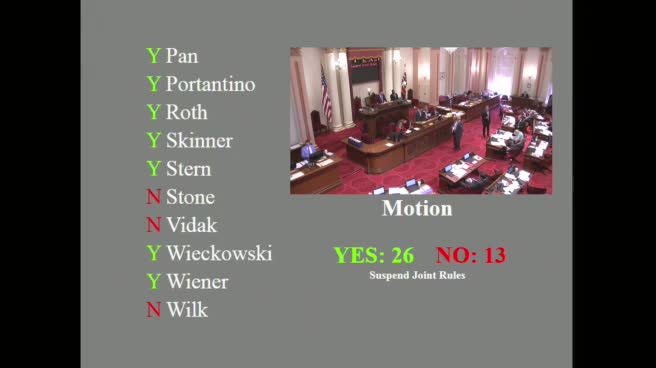 2MIN
Senate Floor
 4MIN
Senate Standing Committee on Public Safety
Bill Author

Bill Co-Author(s):