AB 2877: Vehicular air pollution: nonemergency medical transport.
- Session Year: 2017-2018
- House: Assembly
- Latest Version Date: 2018-04-17
The California Global Warming Solutions Act of 2006 designates the State Air Resources Board as the state agency charged with monitoring and regulating sources of emissions of greenhouse gases. The act authorizes the state board to include the use of market-based compliance mechanisms. Existing law requires all moneys, except for fines and penalties, collected by the state board as a part of the market-based compliance mechanism to be deposited in the Greenhouse Gas Reduction Fund.
Existing law establishes the Air Quality Improvement Program that is administered by the state board for purposes of funding projects related to, among other things, the reduction of criteria air pollutants and improvement of air quality.This bill would require the state board to develop and implement a program, as a part of the Air Quality Improvement Program, program to provide grants to a rural county with rural, desert, or mountain regions a total population of less than 250,000 or a public transit operator located in such a rural county for the purchase of clean purchase, operation, and maintenance of near-zero-emission or zero-emission vehicles to provide seniors and disabled populations located in a rural, desert, or mountain region that rural county with nonemergency medical transportation services. The bill would authorize the state board to expend moneys appropriated by the Legislature from the Air Quality Improvement Fund or the Greenhouse Gas Reduction Fund for the implementation of the program.
The California Global Warming Solutions Act of 2006 designates the State Air Resources Board as the state agency charged with monitoring and regulating sources of emissions of greenhouse gases. The act authorizes the state board to include the use of market-based compliance mechanisms. Existing law requires all moneys, except for fines and penalties, collected by the state board as a part of the market-based compliance mechanism to be deposited in the Greenhouse Gas Reduction Fund.
Existing law establishes the Air Quality Improvement Program that is administered by the state board for purposes of funding projects related to, among other things, the reduction of criteria air pollutants and improvement of air quality.
This bill would require the state board to develop and implement a program, as a part of the Air Quality Improvement Program, to provide grants to a county with rural, desert, or mountain regions for the purchase of clean vehicles to provide seniors and disabled populations located in a rural, desert, or mountain region with nonemergency medical transportation services. The bill would authorize the state board to expend moneys appropriated by the Legislature from the Air Quality Improvement Fund or the Greenhouse Gas Reduction Fund for the implementation of the program.
Existing law prohibits a person from having in his or her possession or otherwise under his or her control more than one drivers license.This bill would make a technical, nonsubstantive change to that provision.Existing law prohibits a person from having in his or her possession or otherwise under his or her control more than one drivers license.
This bill would make a technical, nonsubstantive change to that provision.
(a)For purposes of this section, the following definitions apply:
(1)Clean vehicle means a hybrid, plug-in hybrid, electric, compressed natural gas, or other nonpolluting vehicle.(1)Near-zero-emission vehicle and zero-emission vehicle have the same meanings as described in Section 44258.
(2)Eligible applicant means a rural county with rural, desert, or mountain regions. a total population of less than 250,000 or a public transit operator located in such a rural county.
(3)Nonemergency medical services means services not required to, as appropriate, medically screen, examine, evaluate, or stabilize an emergency medical condition that manifests itself by acute symptoms of sufficient severity, including severe pain, so that the absence of immediate medical attention could reasonably be expected to result in any of the following:(A)Placing the individuals health, or, with respect to a pregnant woman, the health of the woman or her unborn child, in serious jeopardy.(B)Serious impairment to bodily functions.(C)Serious dysfunction of any bodily organ or part.(3)Nonemergency medical transportation includes, at a minimum, round-trip transportation for an elderly or disabled person to obtain medical services.
(b)To reduce the emissions of greenhouse gases and criteria air pollutants, the state board shall develop and implement a program, as a part of the Air Quality Improvement Program, program to provide grants to eligible applicants for the purchase of clean purchase, operation, and maintenance of near-zero-emission or zero-emission vehicles to provide seniors and disabled populations located in a rural, desert, or mountain region rural county with a total population of less than 250,000 with nonemergency medical transportation services.
(c)The state board may expend moneys appropriated by the Legislature from the Air Quality Improvement Fund or the Greenhouse Gas Reduction Fund for the implementation of the program.
(a)For purposes of this section, the following definitions apply:
(1)Clean vehicle means a hybrid, plug-in hybrid, electric, compressed natural gas, or other nonpolluting vehicle.
(2)Eligible applicant means a county with rural, desert, or mountain regions.
(3)Nonemergency medical services means services not required to, as appropriate, medically screen, examine, evaluate, or stabilize an emergency medical condition that manifests itself by acute symptoms of sufficient severity, including severe pain, so that the absence of immediate medical attention could reasonably be expected to result in any of the following:
(A)Placing the individuals health, or, with respect to a pregnant woman, the health of the woman or her unborn child, in serious jeopardy.
(B)Serious impairment to bodily functions.
(C)Serious dysfunction of any bodily organ or part.
(b)To reduce the emissions of greenhouse gases and criteria air pollutants, the state board shall develop and implement a program, as a part of the Air Quality Improvement Program, to provide grants to eligible applicants for the purchase of clean vehicles to provide seniors and disabled populations located in a rural, desert, or mountain region with nonemergency medical transportation services.
(c)The state board may expend moneys appropriated by the Legislature from the Air Quality Improvement Fund or the Greenhouse Gas Reduction Fund for the implementation of the program.
SECTION 1.Section 12511 of the Vehicle Code is amended to read:12511.A person shall not have in his or her possession or otherwise under his or her control more than one drivers license.No person shall A person shall not have in his or her possession or otherwise under his or her control more than one drivers license.
|
Date
|
Status
|
|---|---|
| May 25, 2018 | In committee: Held under submission. |
| May 9, 2018 | In committee: Set, first hearing. Referred to APPR. suspense file. |
| Apr 24, 2018 | From committee: Do pass and re-refer to Com. on APPR. (Ayes 13. Noes 0.) (April 23). Re-referred to Com. on APPR. |
| Apr 18, 2018 | Re-referred to Com. on TRANS. |
| Apr 17, 2018 | From committee chair, with author's amendments: Amend, and re-refer to Com. on TRANS. Read second time and amended. |
| Mar 19, 2018 | From committee chair, with author's amendments: Amend, and re-refer to Com. on TRANS. Read second time and amended. |
| Mar 20, 2018 | Re-referred to Com. on TRANS. |
| Mar 19, 2018 | Referred to Com. on TRANS. |
| Feb 17, 2018 | From printer. May be heard in committee March 19. |
| Feb 16, 2018 | Read first time. To print. |
|
Date
|
Description
|
Location
|
Votes
|
|
|---|---|---|---|---|
| Apr 23, 2018 | Do pass and be re-referred to the Committee on [Appropriations] | Assembly Standing Committee on Transportation |
Passed |
This list shows positions taken on this bill by organizations on the date displayed, which is linked to the original source.
Positions by individuals are not included.
|
Organization
|
Position
|
Date
|
|---|---|---|
| California Senior Legislature | * Support | Apr 23, 2018 |
Date of Hearing: May 9, 2018
ASSEMBLY COMMITTEE ON APPROPRIATIONS
Lorena Gonzalez Fletcher, Chair
ABPCA Bill Id:AB 2877
Author:(Mathis) – As Amended Ver:April 17, 2018
Policy Committee: | Transportation | Vote: | 13 - 0 |
|
| ||
|
|
Urgency: No State Mandated Local Program: No Reimbursable: No
SUMMARY:
This bill requires the Air Resources Board (ARB) to establish a grant program to fund the purchase, operation, and maintenance of near-zero-emission vehicles (NZEVs) and zero-emission vehicles (ZEVs) for rural counties with a population of less than 250,000 to provide non-emergency medical transportation for seniors and disabled persons. This bill allows ARB to expend funds from the Greenhouse Gas Reduction Fund (GGRF) to implement the program.
FISCAL EFFECT:
- GGRF cost pressure, likely in the millions of dollars annually, for ARB to award grants. For example, if ARB awards 10 grants for $300,000 each (roughly the amount needed to purchase a new bus), costs will be $3 million.
- Ongoing GGRF costs of about $345,000 for ARB for two staff positions to administer the program.
COMMENTS:
Background and purpose. Under current law, ARB has numerous programs to provide funding and incentives for the purchase of NZEVs and ZEVs. For example, the Clean Vehicle Rebate Program (CVRP) provides up to $7,000 to California residents who purchase or lease a new NZEV or ZEV. Similarly, the Enhanced Fleet Modernization Program (EFMP) retire-and-replace program, in conjunction with the Clean Cars 4 All program (also known as EFMP Plus-up), provides up to $9,500 for eligible residents to replace their vehicle with a NZEV or ZEV. For commercial vehicles, ARB provides grants of up to $95,000 for the purchase or lease of a zero-emission truck or bus and up to $30,000 for eligible hybrid trucks and buses. According to the author, seniors living in rural areas are often at a severe disadvantage with regard to accessing medical care. In addition to limited healthcare options allotted to these regions, seniors struggle to find safe and reliable modes of transportation to seek nonemergency medical services.
Analysis Prepared by: Jessica Peters / APPR. / (916) 319-2081
Date of Hearing: April 23, 2018
ASSEMBLY COMMITTEE ON TRANSPORTATION
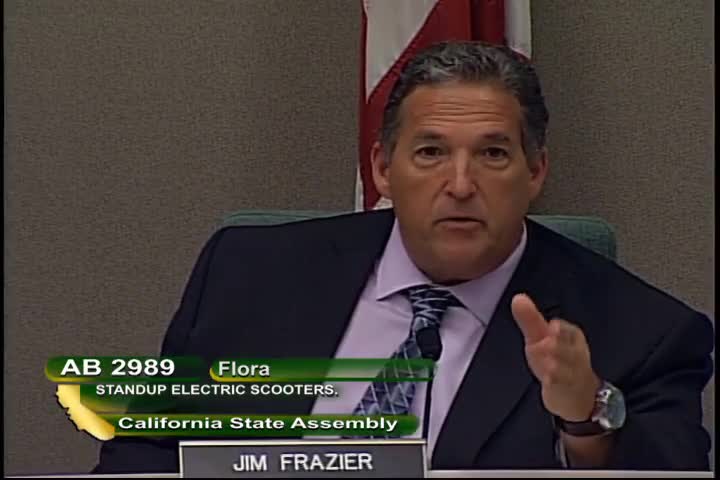
Jim Frazier, Chair
ABPCA Bill Id:AB 2877 (
Author:Mathis) – As Amended Ver:April 17, 2018
SUBJECT: Vehicular air pollution: nonemergency medical transport
SUMMARY: Requires the Air Resources Board (ARB) to provide grants to rural counties for the purchase, operation and maintenance of near-zero-emission vehicles (NZEVs) and zero-emission vehicles (ZEVs) and requires these counties to provide seniors and the disabled with non-emergency transportation services using these vehicles. Specifically, this bill:
- Requires ARB to develop and implement a program that provides grants to a rural county or a public transit operator in a rural county to purchase, operate and maintain ZEVs and NZEVs and requires these rural entities to provide seniors and the disabled with non-emergency transportation services using these vehicles.
- Defines a "near-zero-emission vehicle" as a vehicle that utilizes zero-emission technologies, enables technologies that provide a pathway to zero-emissions operations, or incorporates other technologies that significantly reduce criteria pollutants, toxic air contaminants, and greenhouse gas (GHG) emissions, as defined by ARB in consultation with the State Energy Resources Conservation and Development Commission, consistent with meeting the state's mid-and long-term air quality standards and climate goals.
- Defines a "zero-emission vehicle" as a vehicle that produces no emissions of criteria pollutants, toxic air contaminants, and GHG when stationary or operating, as determined by ARB.
- Defines “eligible applicant” as a rural county with a population of less than 250,000 or public transit operator located in a rural county.
- Defines “non-emergency medical transportation” to include, at a minimum, round trip transportation for a senior or disabled person to obtain medical services.
- Provides that moneys from the Greenhouse Gas Reduction Fund (GGRF), upon appropriation by the Legislature, be used to implement the program.
EXISTING LAW:
- Requires ARB, pursuant to California Global Warming Solutions Act of 2006 [AB 32 (Nuñez), Chapter 488, Statutes of 2006], to adopt a statewide GHG emissions limit equivalent to 1990 levels by 2020 and adopt regulations to achieve maximum technologically feasible and cost-effective GHG emission reductions.
- Requires ARB to reduce GHG emissions at least 40% below 1990 levels by 2030. Authorizes ARB, until December 31, 2030, to permit the use of market-based compliance mechanisms (i.e., the cap-and-trade program) to comply with GHG reduction regulations once specified conditions are met.
- Establishes the GGRF and requires all moneys, except for fines and penalties, collected pursuant to a market-based mechanism be deposited in the fund and requires the Department of Finance, in consultation with ARB and any other relevant state agency, to develop, as specified, an investment plan for the moneys deposited in the GGRF.
- Establishes the Charge Ahead California Initiative [SB 1275 (de León), Chapter 530, Statutes of 2014], that, among other things, included the goal of placing at least one million ZEVs and NZEVs into service by January 1, 2023, and required increasing access to these vehicles for disadvantaged, low-income, and moderate-income communities and consumers.
- Provides various definitions of rural county based on population density, population size, demographics or economic data or other specified criteria.
- Defines non-emergency transportation services, for purposes of the Medi-Cal Progam, to include, at a minimum, round trip transportation for a beneficiary to obtain covered Medi-Cal services by passenger car, taxicab, or any other form of public or private conveyance, and mileage reimbursement when conveyance is in a private vehicle arranged by the beneficiary and not through a transportation broker, bus passes, taxi vouchers, or train tickets.
FISCAL EFFECT: Unknown
COMMENTS: California has established a number of policies, goals, and programs to improve air quality and reduce GHG emissions. Most notably, AB 32 established the goal of reducing GHG emissions to 1990 levels by the year 2020 and, more recently, SB 32 (Pavley), Chapter 248, Statutes of 2016, established the more aggressive goal of reducing emissions 40% below 1990 levels by 2030. Along with establishing emissions reduction goals, AB 32 allowed for the establishment, by regulation, of cap-and-trade, that includes the use of market-based mechanisms with funds deposited into GGRF used to fund emission reduction programs.
Using GGRF funds and under the direction of SB 1275, ARB has invested in light-duty pilot projects, including the Car Sharing and Mobility Options Pilot Project which provides funding for government entities or non-profit organizations to start or expand car share and mobility programs for residents of disadvantaged communities. This bill creates a similar program in order to expand mobility options exclusively for elderly and disabled rural residents to attend their doctors’ appointments.
Under the Americans with Disabilities Act, transit operators are required to provide transportation services to the elderly and disabled (paratransit services). However, lack of transit funding or limited service, especially in rural areas, can be a real barrier for the elderly and disabled to access healthcare services.
The Federal government does however authorize the Medi-Cal program (which may provide service for the elderly and disabled) to specifically cover non-medical transportation services. To clarify and align the state with this authorization, in 2016, the Legislature passed AB 2394
(E. Garcia) which required Medi-Cal to cover non-medical transportation for a beneficiary to obtain covered Medi-Cal services. Non-emergency medical transportation is provided when necessary to obtain program covered medical services and when the beneficiary's medical and physical condition is such that transport by ordinary means of private or public conveyance is medically contraindicated. This type of medical transportation is subject to prior authorization. Each authorization request for such transportation must be accompanied by either a prescription or order signed by a physician, dentist, or podiatrist, which describes the medical reasons necessitating the use of non-emergency medical transportation. Authorization is granted only for the lowest cost type of medical transport that is adequate for the patient's medical needs and is available to transport the patient at the time transportation is required.
Although Medi-Cal and many transit operators are required to provide transportation services to the disabled and the elderly, there is still a huge need for rural residents to attend their medical appointments because of the requirements, restrictions or lack of funding current services may have, and the mobility challenges associated with the topography of rural counties. For example, depending on location, rural county residents can potentially travel more than 200 miles to visit a specialty doctor. The author has introduced this bill to address those challenges. According to the author “this bill provides counties the ability to receive funds for the deployment of ‘green’ non-emergency transportation options for seniors living in rural regions. This program will help to ensure that distance is not a barrier to accessing healthcare for seniors living in these regions”.
Previous Legislation: AB 398 (E. Garcia), Chapter 135, Statutes of 2017, among other things, extends cap-and-trade provisions until December 31, 2030.
AB 2394 (E. Garcia), Chapter 615, Statutes of 2016, requires the Medi-Cal program to cover non-emergency medical transportation for a beneficiary to obtain covered Medi-Cal services.
SB 32 (Pavley), Chapter 249, Statutes of 2016, required ARB to ensure that statewide GHG emissions are reduced at least 40% below 1990 levels by 2030.
SB 1275 (de León), Chapter 530, Statutes of 2014, established the Charge Ahead Initiative, to provide incentives to increase the availability of zero-emission vehicles and near-zero-emission vehicles, particularly to low-income and moderate-income consumers and disadvantaged communities.
AB 32 (Núñez), Chapter 488, Statutes of 2006, required ARB to develop a plan of how to reduce emissions to 1990 levels by the year 2020, authorized cap-and-trade and also required ARB to ensure that, to the extent feasible, GHGs reduction requirement and programs direct public and private investment toward the most disadvantaged communities.
REGISTERED SUPPORT / OPPOSITION:
Support
None on file
Opposition
None on file
Analysis Prepared by: Cynthia Alvarez / TRANS. / (916) 319-2093
Discussed in Hearing
 11MIN
Assembly Standing Committee on Transportation
Bill Author

Bill Co-Author(s):