AB 2898: Emergency services: local emergencies.
- Session Year: 2017-2018
- House: Assembly
- Latest Version Date: 2018-09-14
Existing law, the California Emergency Services Act, establishes the Office of Emergency Services and vests the office with responsibility for the states emergency and disaster response services for natural, technological, or manmade disasters and emergencies, as specified. The act also prescribes a process for the declaration of a local emergency and permits a local emergency to be proclaimed only by the governing body of a city or county or by an official designated by ordinance adopted by that governing body. Existing law requires the governing body to review the need for continuing the local emergency at least once every 30 days until the governing body terminates the local emergency.
This bill would instead require review of a local emergency by the governing body, as described above, to occur at least once every 60 days.
This bill would incorporate additional changes to Section 8630 of the Government Code proposed by SB 531 to be operative only if this bill and SB 531 are enacted and this bill is enacted last.
Existing law, the California Emergency Services Act, establishes the Office of Emergency Services and vests the office with responsibility for the states emergency and disaster response services for natural, technological, or manmade disasters and emergencies, as specified. The act also prescribes a process for the declaration of a local emergency and permits a local emergency to be proclaimed only by the governing body of a city or county or by an official designated by ordinance adopted by that governing body. Existing law requires the governing body to review the need for continuing the local emergency at least once every 30 days until the governing body terminates the local emergency.
This bill would instead require review of a local emergency by the governing body, as described above, to occur at least once every 60 days.
(a)A local emergency may be proclaimed only by the governing body of a city, county, or city and county, or by an official designated by ordinance adopted by that governing body.
(b)Whenever a local emergency is proclaimed by an official designated by ordinance, the local emergency shall not remain in effect for a period in excess of seven days unless it has been ratified by the governing body.
(c)The governing body shall review the need for continuing the local emergency at least once every 60 days until the governing body terminates the local emergency.
(d)The governing body shall proclaim the termination of the local emergency at the earliest possible date that conditions warrant.
SEC. 1.5.Section 8630 of the Government Code is amended to read:8630.(a)A local emergency may be proclaimed only by the governing body of a county, city and county, city, or port district or by an official designated by ordinance adopted by that governing body.
(b)Whenever a local emergency is proclaimed by an official designated by ordinance, the local emergency shall not remain in effect for a period in excess of seven days unless it has been ratified by the governing body.
(c)The governing body shall review the need for continuing the local emergency at least once every 60 days until the governing body terminates the local emergency.
(d)The governing body shall proclaim the termination of the local emergency at the earliest possible date that conditions warrant.
SEC. 2.Section 1.5 of this bill incorporates amendments to Section 8630 of the Government Code proposed by both this bill and Senate Bill 531. That section of this bill shall only become operative if (1) both bills are enacted and become effective on or before January 1, 2019, (2) each bill amends Section 8630 of the Government Code, and (3) this bill is enacted after Senate Bill 531, in which case Section 1 of this bill shall not become operative.
(a)A local emergency may be proclaimed only by the governing body of a city, county, or city and county, or by an official designated by ordinance adopted by that governing body.
(b)Whenever a local emergency is proclaimed by an official designated by ordinance, the local emergency shall not remain in effect for a period in excess of seven days unless it has been ratified by the governing body.
(c)The governing body shall review the need for continuing the local emergency at least once every 60 days until the governing body terminates the local emergency.
(d)The governing body shall proclaim the termination of the local emergency at the earliest possible date that conditions warrant.
SEC. 1.5.Section 8630 of the Government Code is amended to read:8630.(a)A local emergency may be proclaimed only by the governing body of a city, county, or city and county, city, or port district or by an official designated by ordinance adopted by that governing body.
(b)Whenever a local emergency is proclaimed by an official designated by ordinance, the local emergency shall not remain in effect for a period in excess of seven days unless it has been ratified by the governing body.
(c)The governing body shall review the need for continuing the local emergency at least once every 30 60 days until the governing body terminates the local emergency.
(d)The governing body shall proclaim the termination of the local emergency at the earliest possible date that conditions warrant.
SEC. 2.Section 1.5 of this bill incorporates amendments to Section 8630 of the Government Code proposed by both this bill and Senate Bill 531. That section of this bill shall only become operative if (1) both bills are enacted and become effective on or before January 1, 2019, (2) each bill amends Section 8630 of the Government Code, and (3) this bill is enacted after Senate Bill 531, in which case Section 1 of this bill shall not become operative.
(a)A local emergency may be proclaimed only by the governing body of a city, county, or city and county, or by an official designated by ordinance adopted by that governing body.
(b)Whenever a local emergency is proclaimed by an official designated by ordinance, the local emergency shall not remain in effect for a period in excess of seven days unless it has been ratified by the governing body.
(c)The governing body shall review the need for continuing the local emergency at least once every 30 60 days until the governing body terminates the local emergency.
(d)The governing body shall proclaim the termination of the local emergency at the earliest possible date that conditions warrant.
|
Date
|
Status
|
|---|---|
| Sep 14, 2018 | Chaptered by Secretary of State - Chapter 395, Statutes of 2018. |
| Sep 14, 2018 | Approved by the Governor. |
| Aug 27, 2018 | Enrolled and presented to the Governor at 3 p.m. |
| Aug 20, 2018 | Senate amendments concurred in. To Engrossing and Enrolling. |
| Aug 14, 2018 | In Assembly. Concurrence in Senate amendments pending. May be considered on or after August 16 pursuant to Assembly Rule 77. |
| Aug 13, 2018 | Read third time. Passed. Ordered to the Assembly. |
| Aug 9, 2018 | Read second time. Ordered to third reading. |
| Aug 8, 2018 | Read third time and amended. Ordered to second reading. |
| Jun 27, 2018 | Read second time. Ordered to third reading. |
| Jun 26, 2018 | From committee: Do pass. (Ayes 13. Noes 0.) (June 26). |
| May 30, 2018 | Referred to Com. on G.O. |
| May 17, 2018 | In Senate. Read first time. To Com. on RLS. for assignment. |
| May 17, 2018 | Read third time. Passed. Ordered to the Senate. |
| May 14, 2018 | Read second time. Ordered to Consent Calendar. |
| May 10, 2018 | From committee: Do pass. To Consent Calendar. (Ayes 9. Noes 0.) (May 9). |
| Mar 19, 2018 | Referred to Com. on L. GOV. |
| Feb 17, 2018 | From printer. May be heard in committee March 19. |
| Feb 16, 2018 | Read first time. To print. |
|
Date
|
Description
|
Location
|
Votes
|
|
|---|---|---|---|---|
| Aug 20, 2018 | AB 2898 GLORIA Concurrence in Senate Amendments | Assembly Floor |
Passed |
|
| Aug 13, 2018 | Assembly 3rd Reading AB2898 Gloria By McGuire | Senate Floor |
Passed |
|
| Jun 26, 2018 | Do pass | Senate Standing Committee on Governmental Organization |
Passed |
|
| May 17, 2018 | AB 2898 GLORIA Consent Calendar Second Day Regular Session | Assembly Floor |
Passed |
|
| May 9, 2018 | Do pass. To Consent Calendar. | Assembly Standing Committee on Local Government |
Passed |
This list shows positions taken on this bill by organizations on the date displayed, which is linked to the original source.
Positions by individuals are not included.
|
Organization
|
Position
|
Date
|
|---|---|---|
| American Red Cross | ** Support | May 8, 2018 |
| California Central Valley Flood Control Association | ** Support | Aug 10, 2018 |
| California State Sheriffs' Association | ** Support | Aug 10, 2018 |
| Christopher Ward, Councilmember, City Of San Diego | ** Support | Aug 10, 2018 |
| Rural County Representatives of California | ** Support | Aug 10, 2018 |
CONCURRENCE IN SENATE AMENDMENTS
CSA1 Bill Id:AB 2898
Author:(Gloria)
As Amended Ver:August 8, 2018
Majority vote
ASSEMBLY: | 73-0 | (May 17, 2018) | SENATE: | 37-0 | (August 13, 2018) |
Original Committee Reference: L. GOV.
SUMMARY: Requires a governing body of a local agency to review the need for continuing a local emergency pursuant to the California Emergency Services Act every 60 days, instead of every 30 days.
The Senate amendments add chaptering out language to avoid potential conflicts with provisions of SB 531 (Galgiani) of the current legislative session.
EXISTING LAW:
- Allows, pursuant to the California Emergency Services Act, a local emergency to be proclaimed only by the governing body of a city, county, or city and county, or by an official designated by ordinance adopted by that governing body.
- Provides, whenever a local emergency is proclaimed by an official designated by ordinance, that the local emergency shall not remain in effect for a period in excess of seven days, unless it has been ratified by the governing body. Requires the governing body to proclaim the termination of the local emergency at the earliest possible date that conditions warrant.
- Requires the governing body to review the need for continuing the local emergency at least once every 30 days until the governing body terminates the local emergency.
FISCAL EFFECT: None
COMMENTS:
- Bill Summary and Author's Statement. This bill requires a governing body of a local agency to review the need for continuing a local emergency pursuant to the California Emergency Services Act every 60 days, instead of every 30 days, and is sponsored by the author. According to the author, "AB 2898 saves taxpayer dollars and increases government efficiency at the city and county levels by extending the emergency declaration renewal requirement to 60 days."
- Arguments in Support. Supporters note that existing law sometimes requires a city or county to convene special meetings when that governing body is not in session, for the sole purpose of voting on an extension of a local emergency, and that this bill allows for greater flexibility at the local level while still respecting the timeliness related to calling for a state of emergency.
- Arguments in Opposition. None on file.
Analysis Prepared by: Debbie Michel / L. GOV. / (916) 319-3958 FN: 0003884
Office of Senate Floor Analyses (916) 651-1520 Fax: (916) 327-4478 | AB |
THIRD READING
Bill No: AB 2898
:
SENATE GOVERNMENTAL ORG. COMMITTEE: 13-0, 6/26/18
AYES: Dodd, Wilk, Bradford, Cannella, Gaines, Galgiani, Glazer, Hill, Hueso, Lara, Portantino, Vidak, Wiener
ASSEMBLY FLOOR: 73-0, 5/17/18 (Consent) - See last page for vote
DIGEST:
This bill extends the amount of time that a governing body has to review the need for continuing a local emergency from 30 days to 60 days.
Senate Floor Amendments of 8/8/18 address chaptering out issues with SB 531 (Galgiani).
Existing law:
- Establishes, pursuant to the California Emergency Services Act, the Office of Emergency Services (OES) in the office of the Governor, and provides that OES is responsible for the state’s emergency and disaster response services for natural, technological, or manmade disasters and emergencies.
- Prescribes a process for the declaration of a local emergency and permits a local emergency to be proclaimed only by the governing body of a city or county or by an official designated by ordinance adopted by that governing body.
- Requires the governing body to proclaim the termination of the local emergency at the earliest possible date that conditions warrant.
- Requires the governing body to review the need for continuing the local emergency at least once every 30 days until the governing body terminates the local emergency.
This bill extends the amount of time that a governing body has to review the need for continuing a local emergency from 30 days to 60 days.
Background
Purpose of the bill. According to the author, “AB 2898 saves taxpayer dollars and increases government efficiency at the city and county levels by extending the emergency declaration renewal requirement to 60 days.”
In support of the bill, the author cites the City of San Diego’s declaration of a local emergency regarding its housing affordability crisis. From 2002 to 2017, the City renewed every 21 days and later every 30 days, the need for the emergency despite the ongoing crisis.
Additionally, the San Diego City Council continues to renew its state of emergency on the Tijuana River Valley sewer spillage since 1993. Millions of gallons of waste have made its way into the ocean off the coast of Imperial Beach and continue to pose health and safety issues. The author argues that it is inefficient to constantly require governing bodies to renew declarations for long-term emergencies.
Related/Prior Legislation
SB 531 (Galgiani, 2017) revises the definition of a "local emergency" to include conditions of disaster or extreme peril to the safety of persons and property within the territorial limits of districts established under the Harbors and Navigation Code. (Pending on the Assembly Floor)
AB 486 (Chesbro, Chapter 6, Statutes of 2009) eliminated the distinction between a governing body that meets weekly and nonweekly, and required a governing body to review the continuing need for a local emergency at least once every 30 days until the local emergency is terminated.
FISCAL EFFECT: Appropriation: Fiscal Com.: Local:
California Central Valley Flood Control Association
California State Sheriffs’ Association
Christopher Ward, Councilmember, City of San Diego
Rural County Representatives of California
None received
ARGUMENTS IN SUPPORT: The California State Sheriffs’ Association writes in support of the bill that, “[a]fter the adoption of a local emergency ordinance by a local governing body, the governing body is required to review the need for continuing the local emergency at least once every 30 days until the local emergency ordinance is terminated. However, this 30-day requirement to review and renew local emergency ordinances is a costly administrative burden on local governments with ongoing crises.”
ASSEMBLY FLOOR: 73-0, 5/17/18
AYES: Acosta, Aguiar-Curry, Travis Allen, Arambula, Baker, Berman, Bigelow, Bloom, Bonta, Brough, Burke, Caballero, Calderon, Carrillo, Cervantes, Chau, Chávez, Chen, Chiu, Choi, Chu, Cooley, Cooper, Cunningham, Dahle, Daly, Eggman, Flora, Fong, Frazier, Friedman, Gallagher, Eduardo Garcia, Gipson, Gloria, Gonzalez Fletcher, Gray, Grayson, Harper, Holden, Irwin, Jones-Sawyer, Kalra, Kamlager-Dove, Kiley, Lackey, Levine, Limón, Low, Maienschein, Mathis, Mayes, McCarty, Medina, Mullin, Nazarian, Obernolte, O'Donnell, Patterson, Quirk, Quirk-Silva, Reyes, Rodriguez, Rubio, Salas, Mark Stone, Thurmond, Ting, Voepel, Waldron, Weber, Wood, Rendon
NO VOTE RECORDED: Cristina Garcia, Melendez, Muratsuchi, Santiago, Steinorth
8/10/18 14:29:29
**** END ****
Office of Senate Floor Analyses (916) 651-1520 Fax: (916) 327-4478 | AB |
THIRD READING
Bill No: AB 2898
:
SENATE GOVERNMENTAL ORG. COMMITTEE: 13-0, 6/26/18
AYES: Dodd, Wilk, Bradford, Cannella, Gaines, Galgiani, Glazer, Hill, Hueso, Lara, Portantino, Vidak, Wiener
ASSEMBLY FLOOR: 73-0, 5/17/18 (Consent) - See last page for vote
DIGEST:
This bill extends the amount of time that a governing body has to review the need for continuing a local emergency from 30 days to 60 days.
Existing law:
- Establishes, pursuant to the California Emergency Services Act, the Office of Emergency Services (OES) in the office of the Governor, and provides that OES is responsible for the state’s emergency and disaster response services for natural, technological, or manmade disasters and emergencies.
- Prescribes a process for the declaration of a local emergency and permits a local emergency to be proclaimed only by the governing body of a city or county or by an official designated by ordinance adopted by that governing body.
- Requires the governing body to proclaim the termination of the local emergency at the earliest possible date that conditions warrant.
- Requires the governing body to review the need for continuing the local emergency at least once every 30 days until the governing body terminates the local emergency.
This bill extends the amount of time that a governing body has to review the need for continuing a local emergency from 30 days to 60 days.
Background
Purpose of the bill. According to the author, “AB 2898 saves taxpayer dollars and increases government efficiency at the city and county levels by extending the emergency declaration renewal requirement to 60 days.”
In support of the bill, the author cites the City of San Diego’s declaration of a local emergency regarding its housing affordability crisis. From 2002 to 2017, the City renewed every 21 days and later every 30 days, the need for the emergency despite the ongoing crisis.
Additionally, the San Diego City Council continues to renew its state of emergency on the Tijuana River Valley sewer spillage since 1993. Millions of gallons of waste have made its way into the ocean off the coast of Imperial Beach and continue to pose health and safety issues. The author argues that it is inefficient to constantly require governing bodies to renew declarations for long-term emergencies.
Related/Prior Legislation
AB 486 (Chesbro, Chapter 6, Statutes of 2009) eliminated the distinction between a governing body that meets weekly and nonweekly, and required a governing body to review the continuing need for a local emergency at least once every 30 days until the local emergency is terminated.
AB 441 (Knight, Chapter 110, Statutes of 1995) required a governing body that declared a local emergency to review the need for continuing the local emergency at its regularly scheduled meetings until the local emergency is terminated provided that such review does not take place more than 21 days after the previous review.
FISCAL EFFECT: Appropriation: Fiscal Com.: Local:
California Central Valley Flood Control Association
California State Sheriffs’ Association
Christopher Ward, Councilmember, City of San Diego
Rural County Representatives of California
OPPOSITION: (Verified 6/27/18)
None received
ARGUMENTS IN SUPPORT: The California State Sheriffs’ Association writes in support of the bill that, “[a]fter the adoption of a local emergency ordinance by a local governing body, the governing body is required to review the need for continuing the local emergency at least once every 30 days until the local emergency ordinance is terminated. However, this 30-day requirement to review and renew local emergency ordinances is a costly administrative burden on local governments with ongoing crises.”
ASSEMBLY FLOOR: 73-0, 5/17/18
AYES: Acosta, Aguiar-Curry, Travis Allen, Arambula, Baker, Berman, Bigelow, Bloom, Bonta, Brough, Burke, Caballero, Calderon, Carrillo, Cervantes, Chau, Chávez, Chen, Chiu, Choi, Chu, Cooley, Cooper, Cunningham, Dahle, Daly, Eggman, Flora, Fong, Frazier, Friedman, Gallagher, Eduardo Garcia, Gipson, Gloria, Gonzalez Fletcher, Gray, Grayson, Harper, Holden, Irwin, Jones-Sawyer, Kalra, Kamlager-Dove, Kiley, Lackey, Levine, Limón, Low, Maienschein, Mathis, Mayes, McCarty, Medina, Mullin, Nazarian, Obernolte, O'Donnell, Patterson, Quirk, Quirk-Silva, Reyes, Rodriguez, Rubio, Salas, Mark Stone, Thurmond, Ting, Voepel, Waldron, Weber, Wood, Rendon
NO VOTE RECORDED: Cristina Garcia, Melendez, Muratsuchi, Santiago, Steinorth
6/27/18 15:47:52
**** END ****
SENATE COMMITTEE ON GOVERNMENTAL ORGANIZATION
Senator Bill Dodd
Chair
2017 - 2018 Regular
Bill No: AB Hearing Date: 6/12/2018
Author: | Gloria | ||
Version: | Introduced | ||
Urgency: | Fiscal: | ||
Consultant: | |||
SUBJECT:
DIGEST: This bill extends the amount of time that a governing body has to review the need for continuing a local emergency from 30 days to 60 days.
ANALYSIS:
Existing law:
- The California Emergency Services Act establishes the Office of Emergency Services (OES) in the office of the Governor, and provides that OES is responsible for the state’s emergency and disaster response services for natural, technological, or manmade disasters and emergencies.
- Prescribes a process for the declaration of a local emergency and permits a local emergency to be proclaimed only by the governing body of a city or county or by an official designated by ordinance adopted by that governing body.
- Provides that whenever a local emergency is proclaimed by an official designated by ordinance, the local emergency shall not remain in effect for a period in excess of seven days unless it has been ratified by the governing body.
- Requires the governing body to proclaim the termination of the local emergency at the earliest possible date that conditions warrant.
- Requires the governing body to review the need for continuing the local emergency at least once every 30 days until the governing body terminates the local emergency.
This bill extends the amount of time that a governing body has to review the need for continuing a local emergency from 30 days to 60 days.
Background
Purpose of the bill. According to the author, “AB 2898 saves taxpayer dollars and increases government efficiency at the city and county levels by extending the emergency declaration renewal requirement to 60 days.”
In support of the bill, the author cites the City of San Diego’s declaration of a local emergency regarding its housing affordability crisis. From 2002 to 2017, the City renewed every 21 days and later every 30 days, the need for the emergency despite the ongoing crisis.
Additionally, the San Diego City Council continues to renew its state of emergency on the Tijuana River Valley sewer spillage since 1993. Millions of gallons of waste have made its way into the ocean off the coast of Imperial Beach and continue to pose health and safety issues. The author argues that it is inefficient to constantly require governing bodies to renew declarations for long-term emergencies.
Prior/Related Legislation
SB 531 (Galgiani, 2017) revises the definition of a local emergency to include conditions of disaster or extreme peril to the safety of persons and property within the territorial limits of a district established under the Harbor and Navigation Code. (Pending in the Assembly Governmental Organization Committee)
SB 532 (Dodd, 2017) would add “cyberterrorism” to the list of conditions that are named in the California Emergency Services Act that may be cited to support the proclamation of a state of emergency or local emergency. (Pending in the Assembly Governmental Organization Committee)
AB 486 (Chesbro, Chapter 6, Statutes of 2009) eliminated the distinction between a governing body that meets weekly and nonweekly, and required a governing body to review the continuing need for a local emergency at least once every 30 days until the local emergency is terminated.
AB 441 (Knight, Chapter 110, Statutes of 1995) required a governing body that declared a local emergency to review the need for continuing the local emergency at its regularly scheduled meetings until the local emergency is terminated provided that such review does not take place more than 21 days after the previous review.
FISCAL EFFECT: Appropriation: No Fiscal Com.: No Local: No
SUPPORT:
California Central Valley Flood Control Association
California State Sheriffs’ Association
Christopher Ward, Councilmember, City of San Diego
Rural County Representatives of California
OPPOSITION:
None received
ARGUMENTS IN SUPPORT: The California State Sheriffs’ Association writes in support of the bill that, “[a]fter the adoption of a local emergency ordinance by a local governing body, the governing body is required to review the need for continuing the local emergency at least once every 30 days until the local emergency ordinance is terminated. However, this 30-day requirement to review and renew local emergency ordinances is a costly administrative burden on local governments with ongoing crises.”
Date of Hearing: May 9, 2018
ASSEMBLY COMMITTEE ON LOCAL GOVERNMENT
Cecilia Aguiar-Curry, Chair
ABPCA Bill Id:AB 2898 (
Author:Gloria) – As Introduced Ver:February 16, 2018
SUBJECT: Emergency services: local emergencies.
SUMMARY: Requires a governing body of a local agency to review the need for continuing
a local emergency pursuant to the California Emergency Services Act every 60 days, instead of every 30 days.
EXISTING LAW:
- Allows, pursuant to the California Emergency Services Act, a local emergency to be proclaimed only by the governing body of a city, county, or city and county, or by an official designated by ordinance adopted by that governing body.
- Provides, whenever a local emergency is proclaimed by an official designated by ordinance, that the local emergency shall not remain in effect for a period in excess of seven days, unless it has been ratified by the governing body.
- Requires the governing body to review the need for continuing the local emergency at least once every 30 days until the governing body terminates the local emergency.
- Requires the governing body to proclaim the termination of the local emergency at the earliest possible date that conditions warrant.
FISCAL EFFECT: None
COMMENTS:
- Bill Summary. This bill requires a governing body of a local agency to review the need
for continuing a local emergency pursuant to the California Emergency Services Act every 60 days, instead of every 30 days, and is sponsored by the author. - Author’s Statement. According to the author, “AB 2898 saves taxpayer dollars and increases government efficiency at the city and county levels by extending the emergency declaration renewal requirement to 60 days.”
- Arguments in Support. Supporters note that existing law sometimes requires a city or county to convene special meetings when that governing body is not in session, for the sole purpose of voting on an extension of a local emergency, and that this bill allows for greater flexibility at the local level while still respecting the timeliness related to calling for a state
of emergency. - Arguments in Opposition. None on file.
REGISTERED SUPPORT / OPPOSITION:
Support
American Red Cross
Rural County Representatives of California
California State Sheriffs’ Association
Christopher Ward, Councilmember, City of San Diego
Opposition
None on file
Analysis Prepared by: Debbie Michel / L. GOV. / (916) 319-3958
Discussed in Hearing
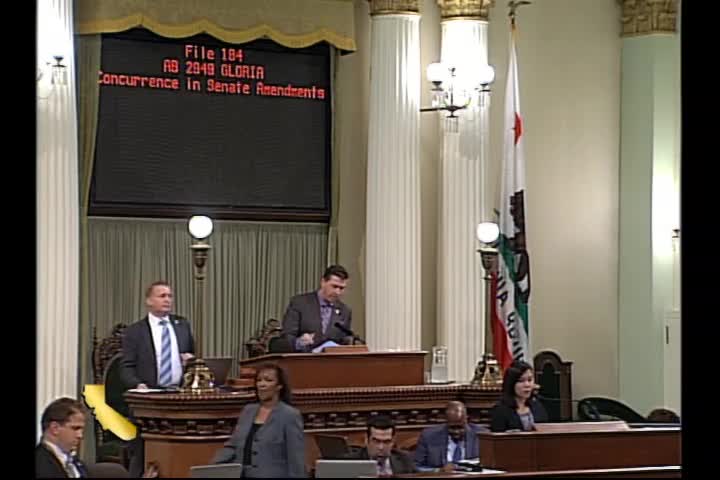 39SEC
Assembly Floor
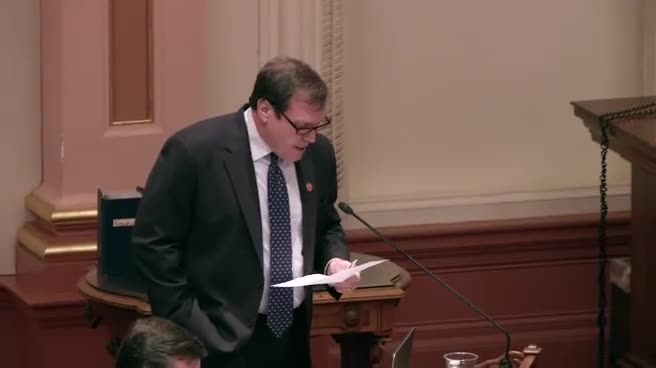 1MIN
Senate Floor
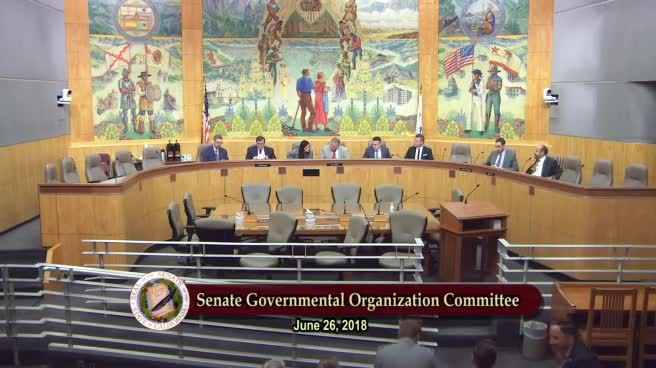 2MIN
Senate Standing Committee on Governmental Organization
Bill Author

Bill Co-Author(s):