AB 292: Personal income tax: deductions: qualified pet adoption costs.
- Session Year: 2017-2018
- House: Assembly
- Latest Version Date: 2017-03-21
The Personal Income Tax Law, in modified conformity with federal income tax laws, allows various deductions in computing the income that is subject to the taxes imposed by that law, including miscellaneous itemized deductions that are allowed only to the extent that the aggregate amount of those deductions exceed 2% of adjusted gross income.
This bill, for taxable years beginning on or after January 1, 2018, and before January 1, 2023, would allow a deduction, not to exceed $100, under that law for the qualified costs paid or incurred by a taxpayer for the adoption of a qualified pet, as defined, from a qualified animal rescue organization. The bill would make these provisions operative on the effective date of any budget measure that specifically appropriates funds to the Franchise Tax Board for its costs of administering these provisions.
This bill would take effect immediately as a tax levy.
The Personal Income Tax Law, in modified conformity with federal income tax laws, allows various deductions in computing the income that is subject to the taxes imposed by that law, including miscellaneous itemized deductions that are allowed only to the extent that the aggregate amount of those deductions exceed 2% of adjusted gross income.
This bill, for taxable years beginning on or after January 1, 2018, and before January 1, 2023, would allow a deduction, not to exceed $100, under that law for the qualified costs paid or incurred by a taxpayer for the adoption of a qualified pet, as defined, from a qualified animal rescue organization.
This bill would take effect immediately as a tax levy.
(a)For each taxable year beginning on or after January 1, 2018, and before January 1, 2023, there shall be allowed as a deduction an amount equal to the qualified costs paid or incurred during the taxable year by a taxpayer for the adoption of a qualified pet from a qualified animal rescue organization.
(b)For the purposes of this section, the following definitions shall apply:
(1)Qualified animal rescue organization means a public animal control agency or shelter, humane society shelter, or rescue group.
(2)Qualified costs means amounts paid or incurred to a qualified animal rescue organization to adopt a pet, not to exceed one hundred dollars ($100).
(3)Qualified pet means either of the following animals adopted from a qualified animal rescue organization that is not used by the taxpayer in a trade or business or for the production of income:
(A)A pet over four years of age, as determined by the qualified animal rescue organization.
(B)A cat.
(4)Rescue group means an organization exempt from federal income taxation as an organization described in Section 501(c)(3) of the Internal Revenue Code, whose primary purpose is the placement of dogs, cats, or other animals that have been removed from a public animal control agency or shelter, society for the prevention of cruelty to animals shelter, or humane society, or that have been surrendered or relinquished to the rescue group by the previous owner.
(c)The deduction allowed under this section for a taxable year shall not exceed one hundred dollars ($100).
(d)This section shall remain in effect only until December 1, 2023, and as of that date is repealed.
(e)This section shall become operative on the effective date of any budget measure that specifically appropriates funds to the Franchise Tax Board for its costs of administering this section.
SEC. 2.This act provides for a tax levy within the meaning of Article IV of the California Constitution and shall go into immediate effect.
REVISIONS: HeadingLine 3.(a)For each taxable year beginning on or after January 1, 2018, and before January 1, 2023, there shall be allowed as a deduction an amount equal to the qualified costs paid or incurred during the taxable year by a taxpayer for the adoption of a qualified pet from a qualified animal rescue organization.
(b)For the purposes of this section, the following definitions shall apply:
(1)Qualified animal rescue organization means a public animal control agency or shelter, humane society shelter, or rescue group.
(2)Qualified costs means amounts paid or incurred to a qualified animal rescue organization to adopt a pet, not to exceed one hundred dollars ($100).
(3)Qualified pet means either of the following animals adopted from a qualified animal rescue organization that is not used by the taxpayer in a trade or business or for the production of income:
(A)A pet over four years of age, as determined by the qualified animal rescue organization.
(B)A cat.
(4)Rescue group means an organization exempt from federal income taxation as an organization described in Section 501(c)(3) of the Internal Revenue Code, whose primary purpose is the placement of dogs, cats, or other animals that have been removed from a public animal control agency or shelter, society for the prevention of cruelty to animals shelter, or humane society, or that have been surrendered or relinquished to the rescue group by the previous owner.
(c)The deduction allowed under this section for a taxable year shall not exceed one hundred dollars ($100).
(d)This section shall remain in effect only until December 1, 2023, and as of that date is repealed.
SEC. 2.This act provides for a tax levy within the meaning of Article IV of the California Constitution and shall go into immediate effect.
REVISIONS: HeadingLine 2.|
Date
|
Status
|
|---|---|
| Feb 1, 2018 | From committee: Filed with the Chief Clerk pursuant to Joint Rule 56. |
| Jan 31, 2018 | Died pursuant to Art. IV, Sec. 10(c) of the Constitution. |
| May 26, 2017 | In committee: Held under submission. |
| Apr 5, 2017 | In committee: Set, first hearing. Referred to APPR. suspense file. |
| Mar 30, 2017 | Coauthors revised. |
| Mar 22, 2017 | Re-referred to Com. on APPR. |
| Mar 21, 2017 | Read second time and amended. |
| Mar 20, 2017 | From committee: Amend, and do pass as amended and re-refer to Com. on APPR. (Ayes 8. Noes 1.) (March 13). |
| Mar 8, 2017 | Coauthors revised. |
| Feb 13, 2017 | Referred to Com. on REV. & TAX. |
| Feb 3, 2017 | From printer. May be heard in committee March 5. |
| Feb 2, 2017 | Read first time. To print. |
|
Date
|
Description
|
Location
|
Votes
|
|
|---|---|---|---|---|
| Mar 13, 2017 | Do pass as amended and be re-referred to the Committee on [Appropriations] | Assembly Standing Committee on Revenue and Taxation |
Passed |
This list shows positions taken on this bill by organizations on the date displayed, which is linked to the original source.
Positions by individuals are not included.
|
Organization
|
Position
|
Date
|
|---|---|---|
| Animal Rescue, Media and Education | ** Support | Mar 10, 2017 |
| California Tax Reform Association | ** Against | Mar 10, 2017 |
| County of San Bernardino | ** Support | Mar 10, 2017 |
| Mars Petcare | ** Support | Mar 10, 2017 |
| Paw PAC | ** Support | Mar 10, 2017 |
| The Paw Project | ** Support | Mar 10, 2017 |
Date of Hearing: April 5, 2017
ASSEMBLY COMMITTEE ON APPROPRIATIONS
Lorena Gonzalez Fletcher, Chair
ABPCA Bill Id:AB 292
Author:(Steinorth) – As Amended Ver:March 21, 2017
Policy Committee: | Revenue and Taxation | Vote: | 8 - 1 |
|
| ||
|
|
Urgency: No State Mandated Local Program: No Reimbursable: No
SUMMARY:
This bill allows a Personal Income Tax (PIT) deduction for qualified costs paid or incurred adopting a pet from a qualified animal rescue organization. Specifically, this bill:
- Allows a deduction equal to the amounts paid or incurred in adopting either a pet over the age of four or a cat of any age from a qualified nonprofit animal rescue organization. The deduction may not exceed $100.
- Allows the deduction for taxable years beginning on or after January 1, 2018, and before January 1, 2023. This bill repeals the statutory provision authorizing the deduction on December 1, 2023.
- Specifies that the deduction will become operative on the effective date of any budget measure that appropriates funds to the Franchise Tax Board (FTB) for administration of the deduction.
FISCAL EFFECT:
- Minor GF cost pressures for FTB’s administration of the proposed deduction. These costs only materialize if FTB receives a budget appropriation to administer the provisions of this bill, as specified by a recent policy committee amendment.
- Additional General Fund (GF) cost pressures in the range of $150,000 beginning in 2018-19. These cost pressures reflect the potential GF revenue loss if the proposed deduction becomes operative once FTB receives an appropriation to administer it (See Comment #3).
COMMENTS:
- Purpose. According to the author, AB 282 would increase the rate of adoption for cats and older shelter pets through the incentive of a $100 deduction.
- Fiscal implications of tax expenditures. Existing law provides various credits, deductions, exclusions, and exemptions for particular taxpayer groups. These features of the tax law are referred to as "expenditures" since they are generally enacted to accomplish some governmental purpose and there is a determinable cost associated with each (in the form of foregone revenues). One ongoing concern about tax expenditures is the lack of control over revenue losses, since the number of taxpayers taking advantage of any given tax expenditure can vary each year. This bill enacts a new tax expenditure program, in the form of a PIT deduction, to encourage the adoption of pets from qualified animal rescue organizations.
- Recent amendments and cost pressures. A recent policy committee amendment to AB 292 addresses concerns about the ongoing and automatic revenue loss associated with any new tax expenditure. Specifically, the recent amendment makes the deduction operative only when the FTB receives a budget measure appropriation to administer it. As a result, the Legislature has more fiscal oversight over the deduction because it can be turned “off” by simply not including the described appropriation in the annual budget measure.
This amendment is as a step in the right direction for managing the year-to-year costs of PIT tax expenditures, but significant cost pressures remain. As amended, this bill creates the expectation that a deduction will be available for pet adoption costs and puts in place the conditions for that deduction to be made available. Moreover, the nature of PIT tax expenditures means that once the deduction is made operative by funding the administrative costs, the revenue loss associated with that deduction can no longer be managed or capped for that year.
Analysis Prepared by: Luke Reidenbach / APPR. / (916) 319-2081
Date of Hearing: March 13, 2017
ASSEMBLY COMMITTEE ON REVENUE AND TAXATION
Sebastian Ridley-Thomas, Chair
ABPCA Bill Id:AB 292 (
Author:Steinorth) – As Introduced Ver:February 2, 2017
Majority vote. Tax levy. Fiscal committee.
SUBJECT: Personal income tax: deductions: qualified pet adoption costs
SUMMARY: Allows a deduction, not to exceed $100, for qualified costs paid or incurred adopting a pet from a qualified animal rescue organization. Specifically, this bill:
- Allows, for taxable years beginning on or after January 1, 2018, and before January 1, 2023, a deduction, under the Personal Income Tax (PIT) Law, equal to the “qualified costs” paid or incurred by a taxpayer for the adoption of a “qualified pet” from a “qualified animal rescue organization.”
- Limits the adoption deduction allowed for a taxable year to $100.
- Defines a “qualified pet” as either of the following animals adopted from a qualified animal rescue organization that is not used by the taxpayer in a trade or business or for the production of income:
- A pet over the age of four, as determined by a qualified animal rescue organization; and,
- A cat.
- Defines a “qualified animal rescue organization” as a public animal control agency or shelter, humane society shelter, or rescue group.
- Defines “qualified costs” as amounts paid or incurred to a qualified animal rescue organization to adopt a pet, not to exceed $100.
- Defines a “rescue group” as an organization exempt from federal income taxation, pursuant to Internal Revenue Code (IRC) Section 501(c)(3), whose primary purpose is the placement of dogs, cats, or other animals that have been removed from a public animal control agency or shelter, society for the prevention of cruelty to animals shelter, or humane society, or that have been surrendered or relinquished to the rescue group by the previous owner.
- Repeals the statutory provision authorizing the deduction on December 1, 2023.
- Takes effect immediately as a tax levy.
EXISTING LAW:
- Allows, under the PIT Law, in modified conformity with federal income tax laws, various deductions in computing the income that is subject to the taxes imposed by that law, including miscellaneous itemized deductions that are allowed only to the extent that the aggregate amount of those deductions exceed 2% of adjusted gross income (AGI).
- Allows for the deduction of certain expenses to arrive at a taxpayer's AGI. These expenses include certain trade and business expenses, losses from the sale or exchange of certain property, alimony, and moving expenses. Thus, all taxpayers with these types of expenses receive the benefit of a deduction, regardless of whether the taxpayer itemizes deductions or uses the standard deduction. These deductions are known as "above-the-line" deductions.
FISCAL EFFECT: The Franchise Tax Board (FTB) estimates General Fund revenue losses of $150,000 in fiscal year (FY) 2018-19 and $150,000 in FY 2019-20.
COMMENTS:
- Authors Statement: The author has provided the following statement in support of this bill:
AB 292: Rescue Pet Deduction would increase the rate of adoption for older shelter cats and pets through the incentive of a $100 tax deduction for adopting an animal over the age of four years. The Rescue Pet Deduction has been tailored to apply only to pets that are in the most need of adoption. In return, the higher rates of adoption that AB 292 encourages would relieve pressure on county budgets and local taxpayers by reducing shelter overcrowding.
- Committee Staff Arguments:
- Arguments in Support: According to Project Paw, “[t]his bill helps to promote animal adoptions and will save lives. At all times, animal shelters and adoptions organizations are overwhelmed with animals who desperately need to find homes. Many of these shelters and organizations do not have personnel or resources to effectively promote the adoptions they work so hard to achieve. This bill would facilitate adoptions for our state’s citizens and allow animals, who might otherwise die in the shelters, to leave them for a happy home.”
- Arguments in Opposition: According to the California Tax Reform Association, “[p]romoting the adoption of animals from animal rescue organizations is a laudable goal. However, achieving that goal through the mechanism of a tax deduction is poor public policy.” Specifically, the Tax Reform Association states that deductions are generally only available to those who earn enough to itemize. Additionally, the act of adopting an animal from a rescue organization is motivated by compassion, not finance.
- What is a “tax expenditure”? Existing law provides various credits, deductions, exclusions, and exemptions for particular taxpayer groups. In the late 1960s, U.S. Treasury officials began arguing that these features of the tax law should be referred to as "expenditures" since they are generally enacted to accomplish some governmental purpose and there is a determinable cost associated with each (in the form of foregone revenues). This bill enacts a new tax expenditure program, in the form of a PIT deduction, to encourage the adoption of pets from qualified animal rescue organizations.
- How is a tax expenditure different from a direct expenditure? As the Department of Finance notes in its annual Tax Expenditure Report, there are several key differences between tax expenditures and direct expenditures. First, tax expenditures are reviewed less frequently than direct expenditures once they are put in place. This can offer taxpayers greater certainty, but it can also result in tax expenditures remaining a part of the tax code without demonstrating any public benefit. Second, there is generally no control over the amount of revenue losses associated with any given tax expenditure. Finally, it should also be noted that, once enacted, it takes a two-thirds vote to rescind an existing tax expenditure absent a sunset date. This effectively results in a "one-way ratchet" whereby tax expenditures can be conferred by majority vote, but cannot be rescinded, irrespective of their efficacy, without a supermajority vote.
- Above-/Below-the-Line Deduction: An above-the-line deduction is a deduction that allows a taxpayer to subtract amounts from gross income when calculating their "adjusted gross income." If the deduction is taken above the line, it is used to determine the taxpayer’s AGI. An above-the-line deduction can be taken by any taxpayer regardless of whether the taxpayer itemizes. Moreover, an above-the-line deduction reduces AGI, and having a smaller AGI can lower many subsequent calculations which will further reduce taxes. As a result, above-the-line deductions are more advantageous than those taken below the line. Once AGI is determined, a taxpayer can either itemize deductions or take the standard deduction, whichever is greater. Once itemized deductions exceed the standard deduction, other smaller deductions, such as miscellaneous expenses, can be applied to increase tax savings. However, in order to take advantage of a miscellaneous deduction, total expenses must exceed 2% of AGI. This bill enacts a below the line, miscellaneous deduction.
- Incentive or Reward? Generally, tax expenditures are enacted to encourage socially beneficial behavior that would not take place without a financial incentive. As noted above, this bill establishes a deduction to encourage the adoption of pets from qualified animal rescue organizations. It would be difficult to find a person who did not consider this a worthy goal. At the same time, however, this bill limits the deduction amount to $100 per taxable year. Applying a marginal tax rate of 9.3%, this would translate to a tax break of less than $10. The Committee may wish to consider whether such an incentive is likely to encourage people to engage in "new" behavior, or whether it would simply reward people who would have adopted a pet in the absence of a deduction. Finally, this bill proposes to enact a below the line, miscellaneous deduction. Given that less than one-half of individual California taxpayers itemize their deductions; and given that an even smaller percentage of itemizers will exceed the 2% floor for miscellaneous deductions, very few people will actually be able to claim this deduction.
- Prior Legislation:
- AB 976 (Steinorth), of the 2015-16 Legislative Session, is identical to this bill. AB 976 was held on the Senate Committee on Appropriations’ Suspense File.
- AB 2326 (Dickinson), of the 2013-14 Legislative Session, would have allowed a deduction for qualified costs paid or incurred adopting a pet from a qualified animal rescue organization. AB 2326 was held on the Assembly Committee on Appropriations' Suspense File.
- AB 233 (Smyth), of the 2009-10 Legislative Session, would have allowed a deduction for qualified costs paid or incurred by a taxpayer for the adoption of a pet from a qualified animal rescue organization. AB 233 was held on the Assembly Committee on Appropriations' Suspense File.
REGISTERED SUPPORT / OPPOSITION:
Support
American Society for the Prevention of Cruelty to Animals
Animal Rescue, Media and Education
County of San Bernardino
Mars Petcare
Paw PAC
The Paw Project
Opposition
California Tax Reform Association
Analysis Prepared by: Carlos Anguiano / REV. & TAX. / (916) 319-2098
Discussed in Hearing
 1H
Assembly Standing Committee on Appropriations
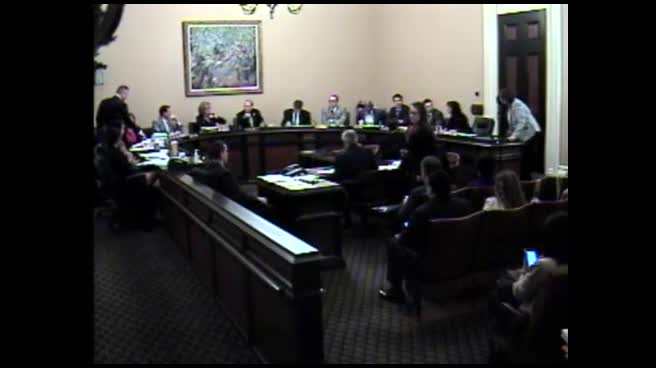 10MIN
Assembly Standing Committee on Revenue and Taxation
Bill Author