AB 2925: Tenancy: eviction: for cause.
- Session Year: 2017-2018
- House: Assembly
- Latest Version Date: 2018-05-29
Existing law governs the hiring of residential dwelling units and establishes provisions for the renewal or termination of a hiring of residential real property for an unspecified term. Existing law requires that an owner of a residential dwelling generally give at least 60 days notice prior to termination or, in the case of a tenant or resident that has resided in the dwelling for less than one year or if certain other conditions apply, 30 days notice prior to termination. Existing law provides that a tenant of real property is guilty of unlawful detainer in certain circumstances, including that the tenant continues in possession of the property after the expiration of the term for which it is let to him or her, as provided.
This bill would prohibit a landlord from terminating a tenancy, or seeking to recover possession from a tenant who continues in possession of property after the expiration of the term for which it is let, as described above, except for cause, as set forth with particularity in the notice. The bill would specify that neither a change, including an anticipated change in ownership of the property nor a foreclosure of the property nor expiration of a fixed-term lease would constitute cause for termination of a tenancy or eviction of a tenant. The bill would state the intent of the Legislature to encourage or incentivize cities to enact just cause eviction ordinances in order to prevent unnecessary displacement of tenants. The bill would state that its provisions are in addition to, and do not supersede or preempt, any other state or local law regulating the grounds for eviction or the termination of a tenancy.
Existing law governs the hiring of residential dwelling units and establishes provisions for the renewal or termination of a hiring of residential real property for an unspecified term. Existing law requires that an owner of a residential dwelling generally give at least 60 days notice prior to termination or, in the case of a tenant or resident that has resided in the dwelling for less than one year or if certain other conditions apply, 30 days notice prior to termination. Existing law provides that a tenant of real property is guilty of unlawful detainer in certain circumstances. circumstances, including that the tenant continues in possession of the property after the expiration of the term for which it is let to him or her, as provided.
This bill would prohibit a landlord from terminating a tenancy tenancy, or seeking to recover possession from a tenant who continues in possession of property after the expiration of the term for which it is let, as described above, except upon good for cause, as set forth with particularity in the notice. The bill would specify that neither a change change, including an anticipated change in ownership of the property nor a foreclosure of the property nor expiration of a fixed-term lease would constitute a good cause for termination of a tenancy or eviction of a tenant. The bill would state the intent of the Legislature to encourage, incentivize, or require encourage or incentivize cities to enact just cause eviction ordinances in order to prevent unnecessary displacement of tenants. The bill would state that its provisions are in addition to, and do not supersede or preempt, any other state or local law requiring the showing of good cause prior to regulating the grounds for eviction or the termination of a tenancy.
Existing law governs the hiring of residential dwelling units and establishes provisions for the renewal or termination of a hiring of residential real property for an unspecified term. Existing law requires that an owner of a residential dwelling generally give at least 60 days notice prior to termination or, in the case of a tenant or resident that has resided in the dwelling for less than one year or if certain other conditions apply, 30 days notice prior to termination. Existing law provides that a tenant of real property is guilty of unlawful detainer in certain circumstances.
This bill would prohibit a landlord from terminating a tenancy except upon good cause, as set forth with particularity in the notice. The bill would specify that neither a change in ownership of the property nor a foreclosure of the property would constitute a good cause for termination of a tenancy or eviction of a tenant. The bill would state the intent of the Legislature to encourage, incentivize, or require cities to enact just cause eviction ordinances in order to prevent unnecessary displacement of tenants. The bill would state that its provisions are in addition to, and do not supersede or preempt, any other state or local law requiring the showing of good cause prior to the termination of a tenancy.
Existing law governs the hiring of residential dwelling units and establishes provisions for the renewal or termination of a hiring of residential real property for an unspecified term. Existing law requires that an owner of a residential dwelling generally give at least 60 days notice prior to termination or, in the case of a tenant or resident that has resided in the dwelling for less than one year or if certain other conditions apply, 30 days notice prior to termination. Existing law provides that a tenant of real property is guilty of unlawful detainer in certain circumstances.
This bill would declare the intent of the Legislature to enact legislation relating to just cause evictions of residential tenants.This bill would prohibit a landlord from terminating a tenancy except upon good cause, as set forth with particularity in the notice. The bill would state that its provisions are in addition to, and do not supersede or preempt, any other state or local law requiring the showing of good cause prior to the termination of a tenancy.
Existing law provides that a tenant of real property is guilty of unlawful detainer in certain circumstances.
This bill would declare the intent of the Legislature to enact legislation relating to just cause evictions of residential tenants.
(a)A landlord shall not issue a notice to terminate a tenancy pursuant to Section 1946 or 1946.1, or seek to recover possession from a tenant under subdivision (1) of Section 1161 of the Code of Civil Procedure, except for cause, as set forth with particularity in the notice.
(b)The following shall not constitute cause for termination of a tenancy or eviction of a tenant for purposes of this section:(1)A change, or anticipated change, in ownership of the property.(2)Foreclosure of the property.(3)Expiration of a fixed-term lease.(c)(b)It is the intent of the Legislature to encourage or incentivize cities to enact just cause eviction ordinances in order to prevent unnecessary displacement of tenants.
(d)(c)This section is in addition to, and does not supersede or preempt, any other state or local law regulating the grounds for eviction or termination of a tenancy.
(a)A landlord shall not issue a notice to terminate a tenancy pursuant to Section 1946 or 1946.1 1946.1, or seek to recover possession from a tenant under subdivision (1) of Section 1161 of the Code of Civil Procedure, except upon good for cause, as set forth with particularity in the notice.
(b)The following shall not constitute good cause for termination of a tenancy or eviction of a tenant for purposes of this section:
(1)A change change, or anticipated change, in ownership of the property.
(2)Foreclosure of the property.
(3)Expiration of a fixed-term lease.
(c)It is the intent of the Legislature to encourage, incentivize, or require encourage or incentivize cities to enact just cause eviction ordinances in order to prevent unnecessary displacement of tenants.
(d)This section is in addition to, and does not supersede or preempt, any other state or local law requiring the showing of good cause prior to the regulating the grounds for eviction or termination of a tenancy.
(a)A landlord shall not issue a notice to terminate a tenancy pursuant to Section 1946 or 1946.1 except upon good cause, as set forth with particularity in the notice. This
(b)The following shall not constitute good cause for termination of a tenancy or eviction of a tenant for purposes of this section:
(1)A change in ownership of the property.
(2)Foreclosure of the property.
(c)It is the intent of the Legislature to encourage, incentivize, or require cities to enact just cause eviction ordinances in order to prevent unnecessary displacement of tenants.
(d)This section is in addition to, and does not supersede or preempt, any other state or local law requiring the showing of good cause prior to the termination of a tenancy.
A landlord shall not issue a notice to terminate a tenancy pursuant to Section 1946 or 1946.1 except upon good cause, as set forth with particularity in the notice. This section is in addition to, and does not supersede or preempt, any other state or local law requiring the showing of good cause prior to the termination of a tenancy.
SECTION 1.It is the intent of the Legislature to enact legislation relating to just cause evictions of residential tenants.It is the intent of the Legislature to enact legislation relating to just cause evictions of residential tenants.
|
Date
|
Status
|
|---|---|
| May 31, 2018 | Read third time. Refused passage. |
| May 29, 2018 | Read third time and amended. Ordered to third reading. (Ayes 51. Noes 25.) |
| May 8, 2018 | Read second time. Ordered to third reading. |
| May 7, 2018 | Read second time and amended. Ordered returned to second reading. |
| May 3, 2018 | From committee: Amend, and do pass as amended. (Ayes 6. Noes 3.) (May 1). |
| Apr 25, 2018 | Re-referred to Com. on JUD. |
| Apr 24, 2018 | From committee chair, with author's amendments: Amend, and re-refer to Com. on JUD. Read second time and amended. |
| Apr 2, 2018 | Re-referred to Com. on JUD. |
| Mar 22, 2018 | Referred to Com. on JUD. |
| Feb 17, 2018 | From printer. May be heard in committee March 19. |
| Feb 16, 2018 | Read first time. To print. |
|
Date
|
Description
|
Location
|
Votes
|
|
|---|---|---|---|---|
| May 31, 2018 | AB 2925 BONTA Assembly Third Reading | Assembly Floor |
Failed |
|
| May 1, 2018 | Do pass as amended. | Assembly Standing Committee on Judiciary |
Passed |
This list shows positions taken on this bill by organizations on the date displayed, which is linked to the original source.
Positions by individuals are not included.
|
Organization
|
Position
|
Date
|
|---|---|---|
| Alameda Renters Coalition | * Support | May 1, 2018 |
| Apartment Association of Greater Los Angeles | * Against | May 1, 2018 |
| Apartment Association Of Orange County | ** Against | Apr 30, 2018 |
| Buena Vista United Methodist Church | ** Support | Apr 30, 2018 |
| California Apartment Association | * Against | May 1, 2018 |
| California Association Of Realtors | * Against | May 1, 2018 |
| California Building Industry Association | ** Against | Apr 30, 2018 |
| California Business Properties Association | ** Against | Apr 30, 2018 |
| California Chamber Of Commerce | ** Against | Apr 30, 2018 |
| California Renters Legal Advocacy and Education Fund | ** Support | Apr 30, 2018 |
| California Rural Legal Assistance Foundation | * Support | May 1, 2018 |
| Central Valley Empowerment Alliance | * Support | May 1, 2018 |
| Civil Justice Association Of California | ** Against | Apr 30, 2018 |
| Congregations Organizing for Renewal | ** Support | Apr 30, 2018 |
| Disability Rights California | ** Support | Apr 30, 2018 |
| East Bay Rental Housing Association | ** Against | Apr 30, 2018 |
| East Bay, Southern Cities, Orange County, and North Valley Apartment Associations | * Against | May 1, 2018 |
| Faith In Action, Bay Area | ** Support | Apr 30, 2018 |
| Filipino Advocates for Justice | * Support | May 1, 2018 |
| Herself | * Support | May 1, 2018 |
| National Rental Home Council | * Against | May 1, 2018 |
| North Valley Property Owners Association | ** Against | Apr 30, 2018 |
| Oakland Tenants Union | ** Support | Apr 30, 2018 |
| People Acting In Community Together | ** Support | Apr 30, 2018 |
| San Diego Apartment Association | * Against | May 1, 2018 |
| San Diego County Apartment Association | ** Against | Apr 30, 2018 |
| Santa Barbara Rental Property Association | ** Against | Apr 30, 2018 |
| Service Employees International Union | * Support | May 1, 2018 |
| TechEquity Collaborative | * Support | May 1, 2018 |
| Tenants Together | * Support | May 1, 2018 |
| The Western Center on Law and Poverty | * Support | May 1, 2018 |
ASSEMBLY THIRD READING
ATR Bill Id:AB 2925
Author:(Bonta)
As Amended Ver:May 29, 2018
Majority vote
Committee | Votes | Ayes | Noes |
Judiciary | 6-3 | Mark Stone, Chiu, Gonzalez Fletcher, Holden, Kalra, Reyes | Cunningham, Kiley, Maienschein |
SUMMARY: Requires that cause for eviction be stated by the landlord in any notice to terminate tenancy or to recover possession when no notice is required. Specifically, this bill:
- Provides that a landlord shall not issue a notice to terminate a tenancy pursuant to Civil Code Section 1946 or 1946.1, or seek to recover possession from a tenant under Code of Civil Procedure (CCP) Section 1161(1), except for cause, as set forth with particularity in the notice.
- States the intent of the Legislature to encourage or incentivize cities to enact just cause eviction ordinances in order to prevent unnecessary displacement of tenants.
- Clarifies that this act is in addition to, and does not supersede or preempt, any other state or local law regulating the grounds for eviction or the termination of a tenancy.
FISCAL EFFECT: None
COMMENTS: According to the author, recent data reported by the EvictionLab.org project show that there were at least 41,178 eviction judgements across California in 2016, which means each day approximately 112 families were evicted from their homes. That number does not count the large number of tenants who voluntarily vacated the premises upon receiving an initial notice to terminate the tenancy—something that happens well before a judgment in an eviction case is issued. Current state law does not require a landlord to state a reason for evicting the tenant, so without having to state a reason for terminating tenancy, an eviction may be at best arbitrary, and at worst, potentially discriminatory and retaliatory in nature.
This bill simply requires a landlord to provide a reason for terminating tenancy, to be stated with particularity in the existing notice of termination. According to the author:
This bill aims to prevent discriminatory, arbitrary, and retaliatory evictions. AB 2925 will help protect Californian tenants from living in uncertainty, hoping they are not unjustly evicted from one day to the next. By requiring landlords to provide a reason for terminating tenancy, this bill will help ensure that tenants are not being evicted for arbitrary, discriminatory or retaliatory causes. This bill will help protect marginalized communities, such as the elderly, people of color, and people with disabilities, providing them with stable housing in the midst of a devastating housing crisis.
According to the author, evictions without cause are arbitrary and the reason for them unknowable to the tenant and all others, except the landlord himself. Evictions executed with cause are more transparent in nature, and as long as there is some cause provided, all parties, including a neutral court, can evaluate whether that cause is sufficient to justify eviction or not, according to the applicable laws of this state.
Tenants Together, a statewide organization for tenants' rights, states that in its experience, no-cause evictions are most common in foreclosure and change in ownership situations. They write:
Through our statewide hotline we have counseled over 10,000 tenant households. We regularly hear from tenants who receive a 30- or 60-‐day notice requiring them to move, but stating no reason for eviction. In the absence of a local just cause for eviction law, landlords are allowed to issue such notices. (W)here tenants assert their rights (usually by requesting repairs), some landlords will retaliate with a 60-day notice that does not state any reason for eviction. AB 2925 will provide greater stability for tenants in these unfair situations.
The bill clarifies that a landlord shall not seek to recover possession of the rental premises from a tenant under CCP Section 1161(1) except for cause, as set forth in a notice. This technical amendment was necessary to clarify the workability of the bill because Section 1161(1), unlike other provisions of Section 1161, does not require any specific additional notice before a tenant can be evicted by the landlord (unless he is a tenant at will, which does require a notice). Under this bill, it appears that a notice setting forth the cause for eviction will be required for direct evictions under Section 1161(1), since there is no notice currently exists that can be modified to simply state the cause.
Finally, this bill contains declaratory language that the Legislature's intent is to encourage, but not require, local jurisdictions to define grounds for eviction at the local level, and also that the bill does not preempt or supersede stronger local eviction protections.
Western Center on Law & Poverty, writing in support of the bill, argues that this bill will help keep families in their homes and avoid unnecessary displacement in situations where there is no valid reason to evict that the landlord is willing to state up front on a termination notice. Western Center states:
AB 2925 merely requires landlords to list the reason for evicting a tenant on a notice they are already required to provide. Surely, adding a sentence to such a notice does not work an undue hardship on landlords, especially where it guards against the hardship of a tenant losing their home arbitrarily. The bill does not change the rights of landlords to evict tenants for reasons such as nonpayment, endangering other tenants, or violating their lease. Nor does it change the rights of landlords with respect to what they can do with their property – it still allows for evictions under the Ellis Act, owner move-in, renovations and the like. AB 2925 simply says that where landlords don’t have a valid reason to evict their tenants, these tenants should not be forced out of their homes.
Writing in opposition to the bill, the California Apartment Association (CAA) contends that enacting just cause protections will be "ineffective and will lead to significantly higher rents." Why? Apparently because landlords will significantly raise rents if they can no longer evict tenants without cause. They state:
Just-cause – absent rent control – is not logical, and, in fact, will have the effect of encouraging higher rents – at a time when we can least afford it. In the absence of rent control, a property owner who needs to remove a tenant can simply raise the rent in order to influence the tenant to vacate. In the event the unit is then returned to the rental market, the owner is likely to set the rent rate at the higher amount, which will have the effect of increasing the median rents for the area.
In response, the author states:
Absent rent control, landlords already have the ability to raise the rents of their units to what the market is willing to pay. Actively seeking new opportunities to evict tenants and cause uncertainty in the lives of Californian families further demonstrates the need for these tenant protections. This bill seeks to eliminate arbitrary evictions that can take place from one day to the next with no reason given to the tenant.
The San Diego County Apartment Association (SDCAA) writes in opposition: "Just Cause eviction ordinances create many unintended consequences, one of which is an unhealthy, uncomfortable, or even dangerous living environment for neighboring tenants who report a nuisance to the property owner. In cities where Just Cause eviction ordinances are in place, property owners do not have the ability to evict tenants who have been repeatedly reported to harass, bully, or threaten neighbors or even commit petty crime for which solid proof does not exist." It is a fair question whether the property owner should have the ability to evict a tenant for committing a petty crime "for which solid proof does not exist." The example cited by SDCAA seems to highlight the problem that this bill is intended to address – namely, that under existing law, a landlord can give a 30-day notice to evict a tenant who, purely on the landlord's own belief, is "committing petty crime for which solid proof does not exist."
Proponents contend that when evictions are allowed without cause, a landlord with retaliatory motives is provided cover to go ahead and evict a tenant for reporting a nuisance to the property owner that the owner allows to exist or perhaps is responsible for creating in the first place. For example, if a conscientious tenant makes multiple requests to the landlord to make repairs or fix blighted conditions on the grounds of an apartment complex that may constitute a nuisance, the landlord could find it easier to terminate the tenancy without cause (using a 30- or 60-day notice) than to abate the underlying nuisance. In that example, the tenant could be evicted with a retaliatory motive in mind, but would lack any recourse for challenging the 30- or 60-day notice, given that no cause is stated for its issuance.
Recent amendments delete language that would restrict a landlord from issuing a notice to terminate tenancy (or evicting someone under CCP Section 1161(1), where no notice is required) for cause based on any of the following reasons: 1) a change, or anticipated change, in ownership of the property; 2) foreclosure of the property; or 3) expiration of a fixed-term lease. Instead, this bill would simply require the landlord to provide a reason – any reason – on the notice to terminate tenancy, without restriction as to what constitutes valid cause to terminate or evict. Proponents contend that this simple change still potentially discourages unjust evictions where the motive may be discriminatory or retaliatory in nature.
Analysis Prepared by: Anthony Lew / JUD. / (916) 319-2334 FN: 0003445
ASSEMBLY THIRD READING
ATR Bill Id:AB 2925
Author:(Bonta)
As Amended Ver:May 7, 2018
Majority vote
Committee | Votes | Ayes | Noes |
Judiciary | 6-3 | Mark Stone, Chiu, Gonzalez Fletcher, Holden, Kalra, Reyes | Cunningham, Kiley, Maienschein |
SUMMARY: Requires that cause for eviction be stated by the landlord in any notice to terminate tenancy or to recover possession when no notice is required, and specifies certain events that shall not constitute cause. Specifically, this bill:
- Provides that a landlord shall not issue a notice to terminate a tenancy pursuant to the Civil Code Section 1946 or 1946.1, or seek to recover possession from a tenant under the Code of Civil Procedure (CCP) Section 1161(1), except for cause, as set forth with particularity in the notice.
- Provides that the following shall not constitute cause for termination of a tenancy or eviction of a tenant for purposes of this act:
- A change, or anticipated change, in ownership of the property.
- Foreclosure of the property.
- Expiration of a fixed term lease.
- States the intent of the Legislature to encourage or incentivize cities to enact just cause eviction ordinances in order to prevent unnecessary displacement of tenants.
- Clarifies that this act is in addition to, and does not supersede or preempt, any other state or local law regulating the grounds for eviction or the termination of a tenancy.
FISCAL EFFECT: None
COMMENTS: According to the author, recent data reported by the EvictionLab.org project show that there were at least 41,178 eviction judgements across California in 2016, which means each day approximately 112 families were evicted from their homes. That number does not count the large number of tenants who voluntarily vacated the premises upon receiving an initial notice to terminate the tenancy—something that happens well before a judgment in an eviction case is issued. Current state law does not require a landlord to state a reason for evicting the tenant, so without having to state a reason for terminating tenancy, an eviction may be at best arbitrary, and at worst, potentially discriminatory and retaliatory in nature. This bill simply requires a landlord to provide a reason for terminating tenancy, to be stated with particularity in the existing notice of termination. According to the author:
This bill aims to prevent discriminatory, arbitrary, and retaliatory evictions. AB 2925 will help protect Californian tenants from living in uncertainty, hoping they are not unjustly evicted from one day to the next. By requiring landlords to provide a reason for terminating tenancy, this bill will help ensure that tenants are not being evicted for arbitrary, discriminatory or retaliatory causes. Furthermore, this bill will help ensure that tenants who have not done any wrongdoing do not lose the place they call home due to change of ownership, foreclosure of property, or expiration of a fixed-term lease. This bill will help protect marginalized communities, such as the elderly, low-income residents, people of color, and people with disabilities, providing them with stable housing in the midst of a devastating housing crisis.
According to the author, evictions without cause are arbitrary and the reason for them unknowable to the tenant and all others, except the landlord himself. Evictions executed with cause are more transparent in nature, and as long as there is some cause provided, all parties, including a neutral court, can evaluate whether that cause is sufficient to justify eviction or not, according to the applicable laws of this state.
Tenants Together, a statewide organization for tenants' rights, states that in its experience, no-cause evictions are most common in foreclosure and change in ownership situations. They write:
Through our statewide hotline we have counseled over 10,000 tenant households. We regularly hear from tenants who receive a 30- or 60-‐day notice requiring them to move, but stating no reason for eviction. In the absence of a local just cause for eviction law, landlords are allowed to issue such notices. These no‐cause evictions are most common in the following situations: First, where the ownership of the property is changing, whether by voluntary sale or foreclosure, sellers or buyers or their agents will often reflexively clear the property of tenants. This creates unnecessary displacement. Second, where tenants assert their rights (usually by requesting repairs), some landlords will retaliate with a 60-day notice that does not state any reason for eviction. AB 2925 will provide greater stability for tenants in these unfair situations.
Accordingly, the bill provides that neither change in ownership of the property nor foreclosure of the property, constitute good cause for termination of the tenancy or eviction of a tenant. Recent amendments clarify that an anticipated change in ownership shall also not constitute cause for termination. This is necessary to make sure the exiting landlord/owner in the sale of an apartment building must state cause in a termination notice (i.e. when the change is anticipated) and not just the entering landlord/owner (when the change has already happened).
The bill also provides that expiration of a fixed-term lease does not constitute cause for termination of a tenancy. Quite commonly, a tenant will initially enter into a one-year fixed-term lease upon moving into a property, which converts into a month-to-month tenancy after one year if the landlord accepts rent. If expiration of a one-year fixed-term lease initially bargained for by the parties does not constitute cause for termination, then opponents legitimately question whether this provision will force landlords to retain all tenants on a month-to-month tenancy upon expiration of the original fixed-term, even if the landlord has no desire to so contract for at that point. On the other hand, it should be noted that every tenant who becomes a month-to-month tenant in month 13, after expiration of a one year lease, is in fact just a month-to-month tenant like any other at that point, and certainly susceptible to an arbitrary eviction without cause--the precise event that this bill seeks to prevent from occurring.
The author may wish to further explore this issue and consider whether an amendment is needed to clarify operation of the statute. He may wish to examine other local or state just-cause laws which provide cause for eviction when the tenant refuses to accept the landlord's offer of renewal of a fixed-term lease or other reasonable changes to the lease terms and conditions.
Recent amendments clarify that a landlord shall not seek to recover possession of the rental premises from a tenant under CCP Section 1161(1) except for cause, as set forth in a notice. This technical amendment was necessary to clarify the workability of the bill because Section 1161(1), unlike other provisions of Section 1161, does not require any specific additional notice before a tenant can be evicted by the landlord (unless he is a tenant at will, which does require a notice). Under this bill, it appears that a notice setting forth the cause for eviction will be required for direct evictions under Section 1161(1), since there is no notice currently exists that can be modified to simply state the cause.
Finally, this bill contains declaratory language that the Legislature's intent is to encourage, but not require, local jurisdictions to define grounds for eviction at the local level, and also that the bill does not preempt or supersede stronger local eviction protections.
Western Center on Law & Poverty, writing in support of the bill, argues that this bill will help keep families in their homes and avoid unnecessary displacement in situations where there is no valid reason to evict that the landlord is willing to state up front on a termination notice. Western Center states:
AB 2925 merely requires landlords to list the reason for evicting a tenant on a notice they are already required to provide. Surely, adding a sentence to such a notice does not work an undue hardship on landlords, especially where it guards against the hardship of a tenant losing their home arbitrarily. The bill does not change the rights of landlords to evict tenants for reasons such as nonpayment, endangering other tenants, or violating their lease. Nor does it change the rights of landlords with respect to what they can do with their property – it still allows for evictions under the Ellis Act, owner move-in, renovations and the like. AB 2925 simply says that where landlords don’t have a valid reason to evict their tenants, these tenants should not be forced out of their homes.
Writing in opposition to the bill, the California Apartment Association (CAA) contends that enacting just cause protections will be "ineffective and will lead to significantly higher rents." Why? Apparently because landlords will raise rents significantly if they can no longer evict tenants without cause. They state:
Just-cause – absent rent control – is not logical, and, in fact, will have the effect of encouraging higher rents – at a time when we can least afford it. In the absence of rent control, a property owner who needs to remove a tenant can simply raise the rent in order to influence the tenant to vacate. In the event the unit is then returned to the rental market, the owner is likely to set the rent rate at the higher amount, which will have the effect of increasing the median rents for the area.
In response, the author states:
Absent rent control, landlords already have the ability to raise the rents of their units to what the market is willing to pay. Actively seeking new opportunities to evict tenants and cause uncertainty in the lives of Californian families further demonstrates the need for these tenant protections. This bill seeks to eliminate arbitrary evictions that can take place from one day to the next with no reason given to the tenant.
The San Diego County Apartment Association (SDCAA) writes in opposition:
Just Cause eviction ordinances create many unintended consequences, one of which is an unhealthy, uncomfortable, or even dangerous living environment for neighboring tenants who report a nuisance to the property owner. In cities where Just Cause eviction ordinances are in place, property owners do not have the ability to evict tenants who have been repeatedly reported to harass, bully, or threaten neighbors or even commit petty crime for which solid proof does not exist.
Proponents contend that this concern can just as easily be framed in the opposite direction. When evictions are allowed without cause, a landlord with retaliatory motives is provided cover to go ahead and evict a tenant for reporting a nuisance to the property owner that the owner allows to exist or perhaps is responsible for creating in the first place. For example, if a conscientious tenant makes multiple requests to the landlord to make repairs or fix blighted conditions on the grounds of an apartment complex that may constitute a nuisance, the landlord could find it easier to terminate the tenancy without cause (using a 30- or 60-day notice) than to abate the underlying nuisance. In that example, the tenant could be evicted with a retaliatory motive in mind, but would lack any recourse for challenging the 30- or 60-day notice, given that no cause is stated for its issuance.
In addition, it should be asked whether the property owner should have the ability to evict a tenant for committing a petty crime "for which solid proof does not exist." The example cited by SDCAA highlights the exact problem that this bill is intended to address – namely, that under existing law, a landlord can give a 30-day notice to evict a tenant who, purely on his own belief, is "committing petty crimes for which solid proof does not exist."
Analysis Prepared by: Anthony Lew / JUD. / (916) 319-2334 FN: 0002806
Date of Hearing: May 1, 2018
ASSEMBLY COMMITTEE ON JUDICIARY
Mark Stone, Chair
ABPCA Bill Id:AB 2925
Author:(Bonta) – As Amended Ver:April 24, 2018
As Proposed to be Amended
SUBJECT: TENANCY: CAUSE FOR TERMINATION: NOTICE
KEY ISSUE: IN ORDER TO SAFEGUARD AGAINST ARBITRARY NO-CAUSE EVICTIONS —THOSE INITIATED WITHOUT ANY STATED REASON—AND RECOGNIZING THE SERIOUS DISRUPTIVE IMPACT THAT EVICTIONS HAVE ON FAMILIES GENERALLY, SHOULD LANDLORDS BE REQUIRED TO SPECIFY THE CAUSE FOR EVICTION IN ANY NOTICE TO TERMINATE TENANCY?
SYNOPSIS
Current law allows landlords to evict tenants without a reason, absent local eviction controls, upon 30 or 60-days’ notice, depending on the length of tenancy. The author and supporters of the bill believe that in the current affordable housing crisis, that is often not enough time for families to uproot from the home and find a new place to live. Supporters also caution that, without having to state a reason for terminating tenancy, an eviction can be discriminatory, arbitrary, and retaliatory in nature, and used for purposes that would otherwise be impermissible under state law. This bill simply requires a landlord to provide a reason for terminating tenancy, to be stated with particularity in the existing notice of termination. Proposed author's amendments are largely technical and clarifying in nature, but do specify that expiration of a fixed term lease or an anticipated change in ownership of the property do not constitute sufficient cause to terminate a tenancy. The bill is supported by Western Center on Law and Poverty, Tenants Together, and other community groups who believe that by requiring landlords to provide a reason for terminating tenancy, this bill will help ensure that tenants are not being evicted for arbitrary, discriminatory, or retaliatory causes. The bill is strongly opposed by apartment associations and other business groups, who contend that it will make it harder for landlords to evict bad tenants, increase litigation over for-cause determinations, and even lead to higher rents in California.
SUMMARY: Requires that cause for eviction be stated by the landlord in any notice to terminate tenancy, and specifies certain events that shall not constitute cause for termination of a tenancy or eviction of a tenant. Specifically, this bill:
- Provides that a landlord shall not issue a notice to terminate a tenancy pursuant to Section 1946 or 1946.1 of the Civil Code, or seek to recover possession from a tenant under Section 1161(1) of the Code of Civil Procedure, except for cause, as set forth with particularity in the notice.
- Provides that the following shall not constitute cause for termination of a tenancy or eviction of a tenant for purposes of this act:
- A change, or anticipated change, in ownership of the property.
- Foreclosure of the property.
- Expiration of a fixed term lease.
- States the intent of the Legislature to encourage or incentivize cities to enact just cause eviction ordinances in order to prevent unnecessary displacement of tenants.
- Clarifies that this act is in addition to, and does not supersede or preempt, any other state or local law regulating the grounds for eviction or the termination of a tenancy.
EXISTING LAW:
- Requires a 30-day written notice by either party to terminate a periodic rental agreement, such as a month-to-month tenancy, without stating a reason. Allows the parties to provide by an agreement at the time the tenancy is created that a notice of the intention to terminate the tenancy may be given at any time not less than seven days before the expiration of the term. (Civil Code Section 1946. All further references are to this code unless otherwise stated.)
- Requires a landlord to give a 60-day written notice to terminate the tenancy for any reason, or for no reason at all, when the tenant has occupied the premises for a year or more, except as provided. Notably, for tenants who already live in a jurisdiction requiring just cause for eviction, the 30-day or 60-day termination notice must state the reason for termination. (Section 1946.1.)
- Provides that a tenant has committed unlawful detainer when he or she continues in possession of the property without the landlord's permission after the expiration of the lease term. No specific additional notice is required for a tenant who is guilty of unlawful detainer, except that a tenancy at will must be terminated by notice, as specified. (Code of Civil Procedure 1161 (1).)
- Provides that a tenant has committed unlawful detainer when he or she continues in possession of the property without the landlord's permission after the tenant has failed to cure nonpayment of rent, after service of a 3-day notice requiring payment of the rent past due. (Code of Civil Procedure Section 1161 (2).)
- Provides that a tenant has committed unlawful detainer when he or she continues in possession of the property without the landlord's permission after the tenant has breached a covenant of the lease or failed to perform other conditions under the lease, after service of a 3-day notice requiring performance of such covenants or conditions. (Code of Civil Procedure Section 1161 (3).)
- Provides that a tenant has committed unlawful detainer when he or she continues in possession of the property without the landlord's permission after the tenant has breached a covenant of the lease prohibiting subletting, assignment, or waste; has committed or permitted a nuisance on the premises; or used the premises for an unlawful purpose. (Code of Civil Procedure Section 1161 (4).)
FISCAL EFFECT: As currently in print this bill is keyed non-fiscal.
COMMENTS: According to the author, recent data reported by the EvictionLab.org project show that there were at least 41,178 eviction judgements across California in 2016, which means each day approximately 112 families were evicted from their homes. That number does not count the large number of tenants who voluntarily vacated the premises upon receiving an initial notice to terminate the tenancy—something that happens well before a judgment in an eviction case is issued. Current state law does not require a landlord to state a reason for evicting the tenant, so without having to state a reason for terminating tenancy, an eviction may be at best arbitrary, and at worst, potentially discriminatory and retaliatory in nature. This bill simply requires a landlord to provide a reason for terminating tenancy, to be stated with particularity in the existing notice of termination. According to the author:
Evictions can cause a family to lose their home and be expelled from their communities. Children are negatively impacted during the eviction process by having to switch schools, often in the middle of the school year. Eviction also has been shown to affect people’s mental health: one study found that mothers who experienced eviction reported higher rates of depression two years after their move. With growing housing costs, low vacancy rates, high moving costs, and short eviction notices, finding a new place to live after being evicted can be extremely hard. Families who are evicted can be pushed into homelessness or unstable shelter for months or years following eviction.
This bill aims to prevent discriminatory, arbitrary, and retaliatory evictions. AB 2925 will help protect Californian tenants from living in uncertainty, hoping they are not unjustly evicted from one day to the next. By requiring landlords to provide a reason for terminating tenancy, this bill will help ensure that tenants are not being evicted for arbitrary, discriminatory or retaliatory causes. Furthermore, this bill will help ensure that tenants who have not done any wrongdoing do not lose the place they call home due to change of ownership, foreclosure of property, or expiration of a fixed-term lease. This bill will help protect marginalized communities, such as the elderly, low-income residents, people of color, and people with disabilities, providing them with stable housing in the midst of a devastating housing crisis.
Proposed author's amendments specifying cause to terminate. Tenants Together, a statewide organization for tenants' rights, states that in its experience, no-cause evictions are most common in foreclosure and change in ownership situations. They write:
Through our statewide hotline we have counseled over 10,000 tenant households. We regularly hear from tenants who receive a 30-or 60-‐day notice requiring them to move, but stating no reason for eviction. In the absence of a local just cause for eviction law, landlords are allowed to issue such notices. These no‐cause evictions are most common in the following situations: First, where the ownership of the property is changing, whether by voluntary sale or foreclosure, sellers or buyers or their agents will often reflexively clear the property of tenants. This creates unnecessary displacement. Second, where tenants assert their rights (usually by requesting repairs), some landlords will retaliate with a 60-day notice that does not state any reason for eviction. AB 2925 will provide greater stability for tenants in these unfair situations.
Accordingly, the bill provides that neither change in ownership of the property nor foreclosure of the property, constitute good cause for termination of the tenancy or eviction of a tenant. Author's amendments further clarify that an anticipated change in ownership shall also not constitute cause for termination. This is necessary to make sure the exiting landlord/owner in the sale of an apartment building must state cause in a termination notice (i.e. when the change is anticipated) and not just the entering landlord/owner (when the change has already happened).
Proposed amendments also specify that expiration of a fixed-term lease does not constitute cause for termination of a tenancy. It is a very common scenario that a tenant will initially enter into a one-year fixed-term lease upon moving into a property, which converts into a month-to-month tenancy after one year if the landlord accepts rent. If expiration of a one-year fixed-term lease initially bargained for by the parties does not constitute cause for termination, then opponents legitimately question whether this provision will force landlords to retain all tenants on a month-to-month tenancy upon expiration of the original fixed-term, even if the landlord has no desire to so contract for at that point. On the other hand, Committee staff notes that every tenant who becomes a month-to-month tenant in month 13, after expiration of a one year lease, is in fact just a month-to-month tenant like any other at that point, and certainly susceptible to an arbitrary eviction without cause--the precise event that this bill seeks to prevent from occurring.
The author may wish to further explore this issue and consider whether an amendment is needed to clarify operation of the statute. He may wish to examine other local or state just-cause laws which provide cause for eviction when the tenant refuses to accept the landlord's offer of renewal of a fixed-term lease or other reasonable changes to the lease terms and conditions.
Proposed technical and clarifying amendments. The author also proposes a number of technical and clarifying amendments to the bill. First, the use of the term "good cause" is abandoned because it suggests that some causes are "good" and some must therefore be "bad." According to the author, it is more appropriate to think of this as "with cause" and "without cause." Evictions without cause are arbitrary and the reason for them unknowable to the tenant and all others, except the landlord himself. Evictions executed with cause are more transparent in nature, and as long as there is some cause provided, all parties, including a neutral court, can evaluate whether that cause is sufficient to justify eviction or not, according to the applicable laws of this state.
Proposed amendments also clarify that a landlord shall not seek to recover possession of the rental premises from a tenant under CCP Section 1161(1) except for cause, as set forth in a notice. This technical amendment is necessary to clarify the workability of the bill because Section 1161(1), unlike other provisions of Section 1161, does not require any specific additional notice before a tenant can be evicted by the landlord (unless he is a tenant at will, which does require a notice). In any case, this amendment is necessary to clarify that a notice setting forth the cause for eviction will be required for direct evictions under Section 1161(1) where no notice currently exists that can be modified to simply state the cause.
Finally, proposed author's amendments also clarify that the Legislature's intent is to encourage (but not require) local jurisdictions to define grounds for eviction at the local level. The bill already makes clear that the bill will not preempt or supersede stronger local eviction protections. The complete set of proposed amendments appears below:
SECTION 1. Section 1946.2 is added to the Civil Code, to read:
1946.2. (a) A landlord shall not issue a notice to terminate a tenancy pursuant to Section 1946 or 1946.1, or seek to recover possession from a tenant under Section 1161(1) of the Code of Civil Procedure, except upon for cause, as set forth with particularity in the notice.
(b) The following shall not constitute good cause for termination of a tenancy or eviction of a tenant for purposes of this section:
(1) A change, or anticipated change, in ownership of the property.
(2) Foreclosure of the property.
(3) Expiration of a fixed term lease.
(c) It is the intent of the Legislature to encourage or incentivize, or require cities to enact just cause eviction ordinances in order to prevent unnecessary displacement of tenants.
(d) This section is in addition to, and does not supersede or preempt, any other state or local law requiring the showing of good cause regulating the grounds for eviction or prior to the termination of a tenancy.
ARGUMENTS IN SUPPORT: The Western Center on Law & Poverty, writing in support of the bill, argues that the bill will help keep families in their homes and avoid unnecessary displacement in situations where there is no valid reason to evict that the landlord is willing to state up front on a termination notice. Western Center states:
Current law allows landlords to evict tenants without a reason, absent local eviction controls, upon 30- or 60-days’ notice, depending on the length of tenancy. Simply put, this is not enough time in today’s housing climate for a family to locate, successfully apply for, and move into new housing that is appropriate for their circumstances. Being displaced from one’s housing often means being displaced from one’s community, requiring not only finding a new home, but often also a new school for one’s children, new doctors and medical providers, a new place of worship, and an entirely new routine.
AB 2925 merely requires landlords to list the reason for evicting a tenant on a notice they are already required to provide. Surely, adding a sentence to such a notice does not work an undue hardship on landlords, especially where it guards against the hardship of a tenant losing their home arbitrarily. The bill does not change the rights of landlords to evict tenants for reasons such as nonpayment, endangering other tenants, or violating their lease. Nor does it change the rights of landlords with respect to what they can do with their property – it still allows for evictions under the Ellis Act, owner move-in, renovations and the like. AB 2925 simply says that where landlords don’t have a valid reason to evict their tenants, these tenants should not be forced out of their homes.
ARGUMENTS IN OPPOSITION: Writing in opposition to the bill, the California Apartment Association (CAA) contends that enacting just cause protections will be "ineffective and will lead to significantly higher rents." Why? Apparently because landlords will raise rents significantly if they can no longer evict tenants without cause. They state:
Just-cause—absent rent control—is not logical, and, in fact, will have the effect of encouraging higher rents—at a time when we can least afford it. In the absence of rent control, a property owner who needs to remove a tenant can simply raise the rent in order to influence the tenant to vacate. In the event the unit is then returned to the rental market, the owner is likely to set the rent rate at the higher amount, which will have the effect of increasing the median rents for the area.”
In response, the author states:
Absent rent control, landlords already have the ability to raise the rents of their units to what the market is willing to pay. Actively seeking new opportunities to evict tenants and cause uncertainty in the lives of Californian families further demonstrates the need for these tenant protections. This bill seeks to eliminate arbitrary evictions that can take place from one day to the next with no reason given to the tenant.
Tenants Together also notes that while it is best for just cause and rent control laws to be enacted together for maximum effectiveness, there are some cities in California, including San Diego and Glendale, that apparently lacked the political will to pass rent control but nevertheless did enact just cause ordinances, so it is not necessarily true that one without the other has no impact. Tenants Together also notes that some cities have extended just cause for eviction protections to units that are exempt from rent control. For example, in San Francisco, single family homes are exempt from rent control due to Costa Hawkins, but the just cause provisions of the local law apply fully, requiring landlords to have and show cause to evict.
CAA also contends that enacting just cause protections will reduce access to housing for struggling Californians, stating:
Today many property owners are willing to take a chance on an applicant who is otherwise qualified but who has something in their past—such as an eviction when they were young, a foreclosure, a bankruptcy, or a lack of credit history as a result of living abroad. Property owners are willing to do this because they know that if the tenant is unable to live up to their lease obligations, there is, today, a straightforward process to recover possession of the unit. If AB 2925 becomes law, property owners will no longer be willing to go out on a limb for these riskier applicants, who are often those in the greatest need of housing.
In response, the author states:
AB 2925 does not prevent property owners from evicting tenants who breach their lease agreements or fail to pay rent. The obligations of the tenants remain the same. This bill seeks to level the playing field by ensuring that tenants who have done no harm are not served an eviction notice without reason. According to the Eviction Lab, “Low-income women, especially poor women of color, have a high risk of eviction. Research has shown domestic violence victims and families with children are also at particularly high risk for eviction.” By helping these individuals prevent an arbitrary eviction, we can help prevent school displacements, job loss, housing insecurity, and other undue hardships tied to evictions.
The San Diego County Apartment Association writes in opposition:
Just Cause eviction ordinances create many unintended consequences, one of which is an unhealthy, uncomfortable, or even dangerous living environment for neighboring tenants who report a nuisance to the property owner. In cities where Just Cause eviction ordinances are in place, property owners do not have the ability to evict tenants who have been repeatedly reported to harass, bully, or threaten neighbors or even commit petty crime for which solid proof does not exist.
Committee staff notes that this concern can just as easily be framed in the opposite direction. When evictions are allowed without cause, a landlord with retaliatory motives is provided cover to go ahead and evict a tenant for reporting a nuisance to the property owner that the owner allows to exist or perhaps is responsible for creating in the first place. For example, if a conscientious tenant makes multiple requests to the landlord to remove abandoned furniture or blighted conditions on the grounds of an apartment complex that may be citable as a nuisance, the landlord could find it easier to terminate the tenancy without cause (using a 30 or 60 day notice) than to abate the nuisance. In that example, the tenant could be evicted with a retaliatory motive in mind, but would lack any recourse for challenging the 30 or 60 day notice, given that no cause is stated for its issuance.
In addition, it should be asked whether the property owner should have the ability to evict a tenant for committing a petty crime "for which solid proof does not exist." The example cited by SDCAA highlights the exact problem that this bill is intended to address—namely, that under existing law, a landlord can give a 30-day notice to evict a tenant who, purely on his own belief, is "committing petty crimes for which solid proof does not exist."
Apartment Association, California Southern Cities and group of other regional apartment associations write in opposition:
Lease termination is a local issue. Applying a statewide one-size-fits-all mandate to lease terminations is unnecessary and unreasonable. If local government leaders believe the community needs “just cause” policies, they can vote for those policies, or let their citizens vote for them. Each city and county is different, and each has very different needs. There are currently 15 cities with “just cause” requirements for evictions. Most of those cities have strict rent controls in place. Those cities also have the highest rents, highest housing demand, and largest populations. Smaller communities do not suffer from such problems and are without need for such residential rental mandates. Let city leaders and the citizens of those communities choose for themselves whether a highly litigious and expensive form of lease termination should be the standard for all rental property leases. The state should not interfere with these choices.
Curiously, Committee staff notes that the same apartment associations that contend just cause ordinances are a local issue that should be decided by individual cities, based on local housing conditions, are the same apartment associations that sponsored and continue to support the Costa-Hawkins Act—legislation that applies a statewide, one-size-fits-all mandate to limit the scope of local rent control ordinances, and that for over 20 years has interfered with local government leaders' authority to enact rent control measures stronger than that allowed by the Act.
REGISTERED SUPPORT / OPPOSITION:
Support
Buena Vista United Methodist Church
California Renters Legal Advocacy and Education Fund
California Rural Legal Assistance Foundation
Congregations Organizing for Renewal
Disability Rights California
Faith in Action, Bay Area
Filipino Advocates for Justice
Oakland Tenants Union
People Acting in Community Together (PACT)
TechEquity Collaborative
Tenants Together
Western Center on Law and Poverty
One individual
Opposition
Apartment Association, California Southern Cities
Apartment Association of Greater Los Angeles
Apartment Association of Orange County
California Apartment Association
California Chamber of Commerce
California Business Properties Association
California Association of Realtors
California Building Industry Association
Civil Justice Association of California (CJAC)
East Bay Rental Housing Association
North Valley Property Owners Association
Santa Barbara Rental Property Association
San Diego County Apartment Association
Analysis Prepared by: Anthony Lew / JUD. / (916) 319-2334
Discussed in Hearing
View Older Hearings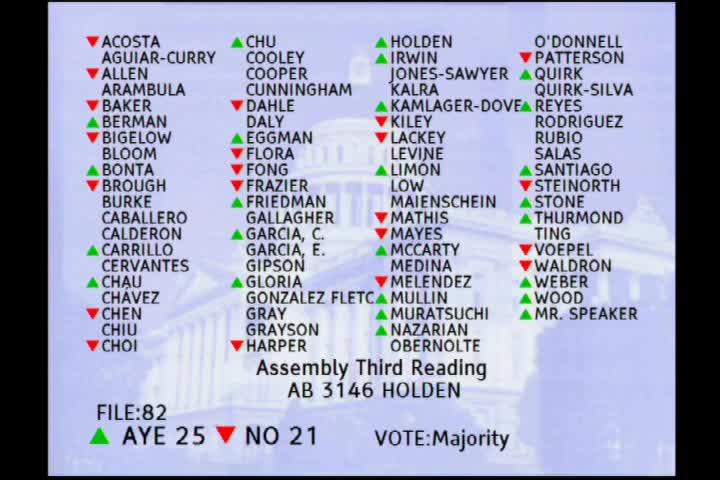
Bill Author



