AB 2931: Law enforcement: cooperation with immigration officials.
- Session Year: 2017-2018
- House: Assembly
- Latest Version Date: 2018-04-03
Existing law authorizes a local law enforcement agency to cooperate with federal immigration authorities regarding an individual under certain circumstances, including if the individual has been previously convicted of certain crimes. crimes or if the individual is arrested and brought before a magistrate on a charge involving a serious or violent felony, as defined, or a felony that is punishable by imprisonment in the state prison, and a magistrate makes a specified finding of probable cause to a complaint based on that charge.
This bill would add additional qualifying convictions that would authorize local law enforcement to cooperate with federal immigration authorities regarding the individual. The bill would additionally authorize local law enforcement to cooperate with federal immigration authorities regarding an individual arrested on a charge involving a serious or violent felony, as defined, or a felony that is punishable by imprisonment in the state prison, if a magistrate makes any finding of probable cause to that charge. The bill would also authorize that cooperation with regard to arrests on charges involving additional crimes, including, among other things, domestic violence, sexual assault, and driving under the influence, or to an individual who is a member of a criminal street gang, as defined. The bill would require the Department of Justice to develop a process to provide a notification to a local law enforcement agency that books, or is holding in custody upon booking, an individual for which cooperation with federal immigration authorities is authorized, as specified. The bill would provide that a law enforcement agency not so notified by the department , department, or that substantially relies on information provided by the department, or information that is otherwise lawfully known, observed, or obtained, would not be liable for any act or omission related to cooperation or noncooperation with immigration officials that was undertaken or occurred in good faith and in substantial compliance with state law.
Existing law authorizes a local law enforcement agency to cooperate with federal immigration authorities regarding an individual under certain circumstances, including if the individual has been previously convicted of certain crimes.
This bill would add additional qualifying convictions that would authorize local law enforcement to cooperate with federal immigration authorities regarding the individual. The bill would require the Department of Justice to develop a process to provide a notification to a local law enforcement agency that books, or is holding in custody upon booking, an individual for which cooperation with federal immigration authorities is authorized, as specified. The bill would provide that a law enforcement agency not so notified by the department , or that substantially relies on information provided by the department, or information that is otherwise lawfully known, observed, or obtained, would not be liable for any act or omission related to cooperation or noncooperation with immigration officials that was undertaken or occurred in good faith and in substantial compliance with state law.
(a)A law enforcement official shall have discretion to cooperate with immigration authorities only if doing so would not violate any federal, state, or local law, or local policy, and where permitted by the California Values Act (Chapter 17.25 (commencing with Section 7284)). Additionally, the specific activities described in subparagraph (C) of paragraph (1) of subdivision (a) of, and in paragraph (4) of subdivision (a) of, Section 7284.6 shall only occur under the following circumstances:
(1)The individual has been convicted of a serious or violent felony identified in subdivision (c) of Section 1192.7 of, or subdivision (c) of Section 667.5 of, the Penal Code.
(2)The individual has been convicted of a felony punishable by imprisonment in the state prison.
(3)The individual has been convicted within the past five years of a misdemeanor for a crime that is punishable as either a misdemeanor or a felony for, or has been convicted within the last 15 years of a felony for, any of the following offenses:
(A)Assault, as specified in, but not limited to, Sections 217.1, 220, 240, 241.1, 241.4, 241.7, 244, 244.5, 245, 245.2, 245.3, 245.5, 4500, and 4501 of the Penal Code.
(B)Battery, as specified in, but not limited to, Sections 242, 243.1, 243.3, 243.4, 243.6, 243.7, 243.9, 273.5, 347, 4501.1, and 4501.5 of the Penal Code.
(C)Use of threats, as specified in, but not limited to, Sections 71, 76, 139, 140, 422, 601, and 11418.5 of the Penal Code.
(D)Sexual abuse, sexual exploitation, or crimes endangering children, as specified in, but not limited to, Sections 266, 266a, 266b, 266c, 266d, 266f, 266g, 266h, 266i, 266j, 267, 269, 288, 288.5, 311.1, 311.3, 311.4, 311.10, 311.11, and 647.6 of the Penal Code.
(E)Child abuse or endangerment, as specified in, but not limited to, Sections 270, 271, 271a, 273a, 273ab, 273d, 273.4, and 278 of the Penal Code.
(F)Burglary, robbery, theft, fraud, forgery, or embezzlement, as specified in, but not limited to, Sections 211, 215, 459, 463, 470, 476, 487, 496, 503, 518, 530.5, 532, and 550 of the Penal Code.
(G)Driving under the influence of alcohol or drugs, but only for a conviction that is a felony.
(H)Obstruction of justice, as specified in, but not limited to, Sections 69, 95, 95.1, 136.1, and 148.10 of the Penal Code.
(I)Bribery, as specified in, but not limited to, Sections 67, 67.5, 68, 74, 85, 86, 92, 93, 137, 138, and 165 of the Penal Code.
(J)Escape, as specified in, but not limited to, Sections 107, 109, 110, 4530, 4530.5, 4532, 4533, 4534, 4535, and 4536 of the Penal Code.
(K)Unlawful possession or use of a weapon, firearm, explosive device, or weapon of mass destruction, as specified in, but not limited to, Sections 171b, 171c, 171d, 246, 246.3, 247, 417, 417.3, 417.6, 417.8, 4574, 11418, 11418.1, 12021.5, 12022, 12022.2, 12022.3, 12022.4, 12022.5, 12022.53, 12022.55, 18745, 18750, and 18755 of, and subdivisions (c) and (d) of Section 26100 of, the Penal Code.
(L)Possession of an unlawful deadly weapon, under the Deadly Weapons Recodification Act of 2010 (Part 6 (commencing with Section 16000) of the Penal Code).
(M)An offense involving the felony possession, sale, distribution, manufacture, or trafficking of controlled substances.
(N)Vandalism with prior convictions, as specified in, but not limited to, Section 594.7 of the Penal Code.
(O)Gang-related offenses, as specified in, but not limited to, Sections 186.22, 186.26, and 186.28 of the Penal Code.
(P)An attempt, as defined in Section 664 of, or a conspiracy, as defined in Section 182 of, the Penal Code, to commit an offense specified in this section.
(Q)A crime resulting in death, or involving the personal infliction of great bodily injury, as specified in, but not limited to, subdivision (d) of Section 245.6 of, and Sections 187, 191.5, 192, 192.5, 12022.7, 12022.8, and 12022.9 of, the Penal Code.
(R)Possession or use of a firearm in the commission of an offense.
(S)An offense that would require the individual to register as a sex offender pursuant to Section 290, 290.002, or 290.006 of the Penal Code.
(T)False imprisonment, slavery, and human trafficking, as specified in, but not limited to, Sections 181, 210.5, 236, 236.1, and 4503 of the Penal Code.
(U)Criminal profiteering and money laundering, as specified in, but not limited to, Sections 186.2, 186.9, and 186.10 of the Penal Code.
(V)Torture and mayhem, as specified in, but not limited to, Section 203 of the Penal Code.
(W)A crime threatening the public safety, as specified in, but not limited to, Sections 219, 219.1, 219.2, 247.5, 404, 404.6, 405a, 451, and 11413 of the Penal Code.
(X)Elder and dependent adult abuse, as specified in, but not limited to, Section 368 of the Penal Code.
(Y)A hate crime, as specified in, but not limited to, Section 422.55 of the Penal Code.
(Z)Stalking, as specified in, but not limited to, Section 646.9 of the Penal Code.
(AA)Soliciting the commission of a crime, as specified in, but not limited to, subdivision (c) of Section 286 of, and Sections 653j and 653.23 of, the Penal Code.
(AB)An offense committed while on bail or released on his or her own recognizance, as specified in, but not limited to, Section 12022.1 of the Penal Code.
(AC)Rape, sodomy, oral copulation, or sexual penetration, as specified in, but not limited to, paragraphs (2) and (6) of subdivision (a) of Section 261 of, paragraphs (1) and (4) of subdivision (a) of Section 262 of, Section 264.1 of, subdivisions (c) and (d) of Section 286 of, subdivisions (c) and (d) of Section 288a of, and subdivisions (a) and (j) of Section 289 of, the Penal Code.
(AD)Kidnapping, as specified in, but not limited to, Sections 207, 209, and 209.5 of the Penal Code.
(AE)A violation of subdivision (c) of Section 20001 of the Vehicle Code.
(4)The individual is a current registrant on the California Sex and Arson Registry.
(5)The individual has been convicted of a federal crime that meets the definition of an aggravated felony as set forth in subparagraphs (A) to (P), inclusive, of paragraph (43) of subsection (a) of Section 101 of the federal Immigration and Nationality Act (8 U.S.C. Sec. 1101), or is identified by the United States Department of Homeland Securitys Immigration and Customs Enforcement as the subject of an outstanding federal felony arrest warrant.
(6)The individual has been convicted within the past five years of a misdemeanor for, or has been convicted within the last 15 years of a felony for, any of the following offenses:
(A)Assault on a peace officer or other public officer as specified in subdivision (c) of Section 241 of the Penal Code.
(B)Domestic battery, as specified in subdivision (e) of Section 243 of the Penal Code.
(C)A knowing violation of a protective order, as specified in subdivision (a) of Section 273.6 of the Penal Code.
(D)Theft of goods, labor, or services not exceeding a value of nine hundred fifty dollars ($950) as specified in Section 490.2 of the Penal Code.
(E)Animal cruelty, as specified in subdivision (a) of Section 597 of the Penal Code.
(F)Possession of a restricted biological agent, as specified in Section 11419 of the Penal Code.
(G)Carrying a concealed firearm, as specified in subdivision (a) of Section 25400 of the Penal Code.
(H)Failure to stop at the scene of a motor vehicle accident where no injury occurs, as specified in subdivision (a) of Section 20002 of the Vehicle Code.
(I)Driving under the influence of alcohol, a controlled substance, or both, where no injury occurs, as specified in Section 23152 of the Vehicle Code.
(J)Being under the influence of a controlled substance, as specified in Section 11550 of the Health and Safety Code.
(7)In no case shall cooperation occur pursuant to this section for individuals arrested, detained, or convicted of misdemeanors that were previously felonies, or were previously crimes punishable as either misdemeanors or felonies, prior to passage of the Safe Neighborhoods and Schools Act of 2014 as it amended the Penal Code.
(b)In cases in which the individual is arrested and taken before a magistrate on a charge involving a serious or violent felony, as identified in subdivision (c) of Section 1192.7 or subdivision (c) of Section 667.5 of the Penal Code, respectively, or a felony that is punishable by imprisonment in state prison, an offense where the individual is a member of a criminal street gang as that term is defined in subdivision (f) of Section 186.22 of the Penal Code, or an offense involving domestic violence, sexual assault, unlawful use or possession of a firearm, driving under the influence , or any other crime containing an element of violence or risk of bodily injury or death to a person other than the arrestee or accomplice, and the magistrate makes a finding of probable cause as to that charge pursuant to Section 872 of the Penal Code, and individual, a law enforcement official shall additionally have discretion to cooperate with immigration officials pursuant to subparagraph (C) of paragraph (1) of subdivision (a) of Section 7284.6.
(c)The Department of Justice shall establish a process to notify a law enforcement agency when that agency books, or is holding in custody upon booking, a person described in subdivision (a) or (b) by virtue of a qualifying arrest or conviction so that the agency is aware that cooperation with immigration officials is authorized. The department shall provide the notice as soon as possible to the law enforcement agency.
(d)A law enforcement official or agency that the Department of Justice fails to provide the notice described in subdivision (c) to, or that substantially relies on information provided pursuant to subdivision (c), or information that is otherwise lawfully known, observed, or obtained, shall not be liable for any act or omission related to cooperation or noncooperation with immigration officials that was undertaken or occurred in good faith and in substantial compliance with state law.
(a)A law enforcement official shall have discretion to cooperate with immigration authorities only if doing so would not violate any federal, state, or local law, or local policy, and where permitted by the California Values Act (Chapter 17.25 (commencing with Section 7284)). Additionally, the specific activities described in subparagraph (C) of paragraph (1) of subdivision (a) of, and in paragraph (4) of subdivision (a) of, Section 7284.6 shall only occur under the following circumstances:
(1)The individual has been convicted of a serious or violent felony identified in subdivision (c) of Section 1192.7 of, or subdivision (c) of Section 667.5 of, the Penal Code.
(2)The individual has been convicted of a felony punishable by imprisonment in the state prison.
(3)The individual has been convicted within the past five years of a misdemeanor for a crime that is punishable as either a misdemeanor or a felony for, or has been convicted within the last 15 years of a felony for, any of the following offenses:
(A)Assault, as specified in, but not limited to, Sections 217.1, 220, 240, 241.1, 241.4, 241.7, 244, 244.5, 245, 245.2, 245.3, 245.5, 4500, and 4501 of the Penal Code.
(B)Battery, as specified in, but not limited to, Sections 242, 243.1, 243.3, 243.4, 243.6, 243.7, 243.9, 273.5, 347, 4501.1, and 4501.5 of the Penal Code.
(C)Use of threats, as specified in, but not limited to, Sections 71, 76, 139, 140, 422, 601, and 11418.5 of the Penal Code.
(D)Sexual abuse, sexual exploitation, or crimes endangering children, as specified in, but not limited to, Sections 266, 266a, 266b, 266c, 266d, 266f, 266g, 266h, 266i, 266j, 267, 269, 288, 288.5, 311.1, 311.3, 311.4, 311.10, 311.11, and 647.6 of the Penal Code.
(E)Child abuse or endangerment, as specified in, but not limited to, Sections 270, 271, 271a, 273a, 273ab, 273d, 273.4, and 278 of the Penal Code.
(F)Burglary, robbery, theft, fraud, forgery, or embezzlement, as specified in, but not limited to, Sections 211, 215, 459, 463, 470, 476, 487, 496, 503, 518, 530.5, 532, and 550 of the Penal Code.
(G)Driving under the influence of alcohol or drugs, but only for a conviction that is a felony.
(H)Obstruction of justice, as specified in, but not limited to, Sections 69, 95, 95.1, 136.1, and 148.10 of the Penal Code.
(I)Bribery, as specified in, but not limited to, Sections 67, 67.5, 68, 74, 85, 86, 92, 93, 137, 138, and 165 of the Penal Code.
(J)Escape, as specified in, but not limited to, Sections 107, 109, 110, 4530, 4530.5, 4532, 4533, 4534, 4535, and 4536 of the Penal Code.
(K)Unlawful possession or use of a weapon, firearm, explosive device, or weapon of mass destruction, as specified in, but not limited to, Sections 171b, 171c, 171d, 246, 246.3, 247, 417, 417.3, 417.6, 417.8, 4574, 11418, 11418.1, 12021.5, 12022, 12022.2, 12022.3, 12022.4, 12022.5, 12022.53, 12022.55, 18745, 18750, and 18755 of, and subdivisions (c) and (d) of Section 26100 of, the Penal Code.
(L)Possession of an unlawful deadly weapon, under the Deadly Weapons Recodification Act of 2010 (Part 6 (commencing with Section 16000) of the Penal Code).
(M)An offense involving the felony possession, sale, distribution, manufacture, or trafficking of controlled substances.
(N)Vandalism with prior convictions, as specified in, but not limited to, Section 594.7 of the Penal Code.
(O)Gang-related offenses, as specified in, but not limited to, Sections 186.22, 186.26, and 186.28 of the Penal Code.
(P)An attempt, as defined in Section 664 of, or a conspiracy, as defined in Section 182 of, the Penal Code, to commit an offense specified in this section.
(Q)A crime resulting in death, or involving the personal infliction of great bodily injury, as specified in, but not limited to, subdivision (d) of Section 245.6 of, and Sections 187, 191.5, 192, 192.5, 12022.7, 12022.8, and 12022.9 of, the Penal Code.
(R)Possession or use of a firearm in the commission of an offense.
(S)An offense that would require the individual to register as a sex offender pursuant to Section 290, 290.002, or 290.006 of the Penal Code.
(T)False imprisonment, slavery, and human trafficking, as specified in, but not limited to, Sections 181, 210.5, 236, 236.1, and 4503 of the Penal Code.
(U)Criminal profiteering and money laundering, as specified in, but not limited to, Sections 186.2, 186.9, and 186.10 of the Penal Code.
(V)Torture and mayhem, as specified in, but not limited to, Section 203 of the Penal Code.
(W)A crime threatening the public safety, as specified in, but not limited to, Sections 219, 219.1, 219.2, 247.5, 404, 404.6, 405a, 451, and 11413 of the Penal Code.
(X)Elder and dependent adult abuse, as specified in, but not limited to, Section 368 of the Penal Code.
(Y)A hate crime, as specified in, but not limited to, Section 422.55 of the Penal Code.
(Z)Stalking, as specified in, but not limited to, Section 646.9 of the Penal Code.
(AA)Soliciting the commission of a crime, as specified in, but not limited to, subdivision (c) of Section 286 of, and Sections 653j and 653.23 of, the Penal Code.
(AB)An offense committed while on bail or released on his or her own recognizance, as specified in, but not limited to, Section 12022.1 of the Penal Code.
(AC)Rape, sodomy, oral copulation, or sexual penetration, as specified in, but not limited to, paragraphs (2) and (6) of subdivision (a) of Section 261 of, paragraphs (1) and (4) of subdivision (a) of Section 262 of, Section 264.1 of, subdivisions (c) and (d) of Section 286 of, subdivisions (c) and (d) of Section 288a of, and subdivisions (a) and (j) of Section 289 of, the Penal Code.
(AD)Kidnapping, as specified in, but not limited to, Sections 207, 209, and 209.5 of the Penal Code.
(AE)A violation of subdivision (c) of Section 20001 of the Vehicle Code.
(4)The individual is a current registrant on the California Sex and Arson Registry.
(5)The individual has been convicted of a federal crime that meets the definition of an aggravated felony as set forth in subparagraphs (A) to (P), inclusive, of paragraph (43) of subsection (a) of Section 101 of the federal Immigration and Nationality Act (8 U.S.C. Sec. 1101), or is identified by the United States Department of Homeland Securitys Immigration and Customs Enforcement as the subject of an outstanding federal felony arrest warrant.
(6)The individual has been convicted within the past five years of a misdemeanor for, or has been convicted within the last 15 years of a felony for, any of the following offenses:
(A)Assault on a peace officer or other public officer as specified in subdivision (c) of Section 241 of the Penal Code.
(B)Domestic battery, as specified in subdivision (e) of Section 243 of the Penal Code.
(C)A knowing violation of a protective order, as specified in subdivision (a) of Section 273.6 of the Penal Code.
(D)Theft of goods, labor, or services not exceeding a value of nine hundred fifty dollars ($950) as specified in Section 490.2 of the Penal Code.
(E)Animal cruelty, as specified in subdivision (a) of Section 597 of the Penal Code.
(F)Possession of a restricted biological agent, as specified in Section 11419 of the Penal Code.
(G)Carrying a concealed firearm, as specified in subdivision (a) of Section 25400 of the Penal Code.
(H)Failure to stop at the scene of a motor vehicle accident where no injury occurs, as specified in subdivision (a) of Section 20002 of the Vehicle Code.
(I)Driving under the influence of alcohol, a controlled substance, or both, where no injury occurs, as specified in Section 23152 of the Vehicle Code.
(J)Being under the influence of a controlled substance, as specified in Section 11550 of the Health and Safety Code.
(6)(7)In no case shall cooperation occur pursuant to this section for individuals arrested, detained, or convicted of misdemeanors that were previously felonies, or were previously crimes punishable as either misdemeanors or felonies, prior to passage of the Safe Neighborhoods and Schools Act of 2014 as it amended the Penal Code.
(b)In cases in which the individual is arrested and taken before a magistrate on a charge involving a serious or violent felony, as identified in subdivision (c) of Section 1192.7 or subdivision (c) of Section 667.5 of the Penal Code, respectively, or a felony that is punishable by imprisonment in state prison, and the magistrate makes a finding of probable cause as to that charge pursuant to Section 872 of the Penal Code, a law enforcement official shall additionally have discretion to cooperate with immigration officials pursuant to subparagraph (C) of paragraph (1) of subdivision (a) of Section 7284.6.
(c)The Department of Justice shall establish a process to notify a law enforcement agency when that agency books, or is holding in custody upon booking, a person described in subdivision (a) or (b) by virtue of a qualifying arrest or conviction so that the agency is aware that cooperation with immigration officials is authorized. The department shall provide the notice as soon as possible to the law enforcement agency.
(d)A law enforcement official or agency that the Department of Justice fails to provide the notice described in subdivision (c) to, or that substantially relies on information provided pursuant to subdivision (c), or information that is otherwise lawfully known, observed, or obtained, shall not be liable for any act or omission related to cooperation or noncooperation with immigration officials that was undertaken or occurred in good faith and in substantial compliance with state law.
|
Date
|
Status
|
|---|---|
| Apr 26, 2018 | From committee: Without further action pursuant to Joint Rule 62(a). |
| Apr 24, 2018 | In committee: Set, second hearing. Failed passage. |
| Apr 10, 2018 | In committee: Set, first hearing. Failed passage. Reconsideration granted. |
| Apr 4, 2018 | Re-referred to Com. on PUB. S. |
| Apr 3, 2018 | From committee chair, with author's amendments: Amend, and re-refer to Com. on PUB. S. Read second time and amended. |
| Mar 8, 2018 | Referred to Coms. on PUB. S. and JUD. |
| Feb 17, 2018 | From printer. May be heard in committee March 19. |
| Feb 16, 2018 | Read first time. To print. |
|
Date
|
Description
|
Location
|
Votes
|
|
|---|---|---|---|---|
| Apr 24, 2018 | Do pass and be re-referred to the Committee on [Judiciary] | Assembly Standing Committee on Public Safety |
Failed |
|
| Apr 10, 2018 | Reconsideration. | Assembly Standing Committee on Public Safety |
Passed |
|
| Apr 10, 2018 | Do pass and be re-referred to the Committee on [Judiciary] | Assembly Standing Committee on Public Safety |
Failed |
This list shows positions taken on this bill by organizations on the date displayed, which is linked to the original source.
Positions by individuals are not included.
|
Organization
|
Position
|
Date
|
|---|---|---|
| American Civil Liberties Union of California | ** Against | Apr 23, 2018 |
| Asian Americans Advancing Justice - California | ** Against | Apr 23, 2018 |
| California Immigrant Policy Center | ** Against | Apr 23, 2018 |
| California Public Defenders Association | * Against | Apr 10, 2018 |
| California State Sheriffs' Association | ** Support | Apr 23, 2018 |
| Coalition for Humane Immigrant Rights | ** Against | Apr 23, 2018 |
| Drug Policy Alliance | ** Against | Apr 23, 2018 |
| Ella Baker Center For Human Rights | ** Against | Apr 23, 2018 |
| Immigrant Legal Resource Center | * Against | Apr 10, 2018 |
| Legal Services for Prisoners with Children | ** Against | Apr 23, 2018 |
| Riverside Sheriffs Association | * Support | Apr 10, 2018 |
| Root and Rebound Reentry Advocates | ** Against | Apr 23, 2018 |
| Youth Justice Coalition | * Against | Apr 10, 2018 |
Date of Hearing: April 24, 2018
Counsel: Sandra Uribe
ASSEMBLY COMMITTEE ON
Reginald Byron Jones-Sawyer, Sr., Chair
ABPCA Bill Id:
Author:() – As Ver:
VOTE ONLY
SUMMARY:
Expands the list of qualifying criminal offenses which permits law enforcement to cooperate with federal immigration authorities for purposes of transfer or notification requests. Specifically, this bill:
- States that a law enforcement agency (LEA) may respond to transfer or notification requests from immigration authorities if an individual has been convicted within the past five years of a misdemeanor for, or in the past 15 years of a felony for, the following offenses:
- Assault on a peace officer or other public official;
- Domestic battery;
- A knowing violation of a protective order;
- Petty theft;
- Animal cruelty;
- Possession of a restricted biological agent;
- Carrying a concealed firearm;
- Failure to stop at the scene of an accident;
- Driving under the influence of drugs or alcohol; and,
- Being under the influence of a controlled substance.
- Assault on a peace officer or other public official;
- States that a LEA may respond to a transfer or notification request when an individual is arrested for, and a magistrate makes a finding of probable cause on, any of the following charges:
- An offense where the individual is a member of a criminal street gang, as specified;
- An offense involving domestic violence, sexual assault, unlawful use or possession of a firearm, or driving under the influence; and,
- Any other crime containing an element of violence or risk of bodily injury or death to a person other than the arrestee or an accomplice.
- An offense where the individual is a member of a criminal street gang, as specified;
- Requires the California Department of Justice (DOJ) to establish a process to notify a LEA when that agency books, or is holding a person in custody for a qualifying offense so that the agency knows that cooperation with immigration officials is authorized.
- Requires DOJ to notify the LEA as soon as possible.
- Provides indemnification for a LEA for any act or omission related to cooperation or non-cooperation with immigration officials based on DOJ’s failure to provide the required notice, or based in good faith and in substantial compliance with state law.
EXISTING STATE LAW:
- Prohibits LEAs (including school police and security departments) from using resources to investigate, interrogate, detain, detect, or arrest people for immigration enforcement purposes. These provisions are commonly known as the Values Act. Restrictions include:
- Inquiring into an individual's immigration status;
- Detaining a person based on a hold request from ICE;
- Providing information regarding a person’s release date or responding to requests for notification by providing release dates or other information unless that information is available to the public;
- Providing personal information, as specified, including, but not limited to, name, social security number, home or work addresses, unless that information is “available to the public;”
- Arresting a person based on a civil immigration warrant;
- Participating in border patrol activities, including warrantless searches;
- Performing the functions of an immigration agent whether through agreements known as 287(g) agreements, or any program that deputizes police as immigration agents;
- Using ICE agents as interpreters;
- Transfer an individual to immigration authorities unless authorized by a judicial warrant or judicial probable cause determination, or except as otherwise specified;
- Providing office space exclusively for immigration authorities in a city or county law enforcement facility; and,
- Entering into a contract, after June 15, 2017, with the federal government to house or detain adult or minor non-citizens in a locked detention facility for purposes of immigration custody. (Gov. Code, § 7284.6, subd. (a).)
- Describes the circumstances under which a LEA has discretion to respond to transfer and notification requests from immigration authorities. These provisions are commonly known as the TRUST Act. LEAs cannot honor transfer and notification requests unless one of the following apply:
- The individual has been convicted of a serious or violent felony, as specified;
- The individual has been convicted of any felony which is punishable by imprisonment in state prison;
- The individual has been convicted within the last five years of a misdemeanor for a crime that is punishable either as a felony or misdemeanor (a wobbler);
- The individual has been convicted within the past 15 years for any one of a list of specified felonies;
- The individual is a current registrant on the California Sex and Arson Registry;
- The individual has been convicted of a federal crime that meets the definition of an aggravated felony as specified in the federal Immigration and Nationality Act; or,
- The individual is identified by ICE as the subject of an outstanding federal felony arrest warrant for any federal crime; or,
- The individual is arrested on a charge involving a serious or violent felony, as specified, or a felony that is punishable by imprisonment in state prison, and a magistrate makes a finding of probable cause as to that charge. (Gov. Code, § 7282.5.)
- The individual has been convicted of a serious or violent felony, as specified;
- Provides that LEAs are able to participate in joint taskforces with the federal government only if the primary purpose of the joint task force is not immigration enforcement. Participating agencies must annually report to the California Department of Justice (DOJ) if there were immigration arrests as a result of task force operations. (Gov. Code, § 7284.6, subds. (b) & (c).)
- Provides individuals who are in the custody of local LEAs with information about their procedural and legal rights in the event that immigration authorities want to contact them. These provisions are commonly referred to as the TRUTH Act. (Gov. Code, §§ 7283, 7283.1, & 7283.2.)
EXISTING FEDERAL LAW:
- Prohibits the federal government from “conscripting” the states to enforce federal regulatory programs. (U.S. Const. Tenth Amend.)
- Provides that any authorized immigration officer may at any time issue Immigration Detainer-Notice of Action, to any other federal, state, or local law enforcement agency. A detainer serves to advise another law enforcement agency that the Department of Homeland Security (DHS) seeks custody of an alien presently in the custody of that agency, for the purpose of arresting and removing the alien. The detainer is a request that such agency advise the DHS, prior to release of the alien, in order for the DHS to arrange to assume custody, in situations when gaining immediate physical custody is either impracticable or impossible. (8 CFR § 287.7(a).)
- States that upon a determination by the DHS to issue a detainer for an alien not otherwise detained by a criminal justice agency, such agency shall maintain custody of the alien for a period not to exceed 48 hours, excluding Saturdays, Sundays, and holidays in order to permit assumption of custody by the DHS. (8 CFR § 287.7(d).)
- Authorizes the Secretary of DHS to enter into agreements that delegate immigration powers to local police. The negotiated agreements between ICE and the local police are documented in memorandum of agreements (MOAs). (8 U.S.C. § 1357(g).)
FISCAL EFFECT:
Unknown
COMMENTS:
- Author's Statement: According to the author, “Existing law provides that law enforcement shall have discretion to cooperate with immigration authorities only if doing so would not violate any federal, state, or local law, or local policy, and where permitted by SB 54. Specifically, statute limits communication when a person has been convicted of, or arrested for, certain crimes. This list of crimes however, omits several serious and violent offenses. AB 2931 surgically amends this list of crimes to address significant omissions including assault on a peace officer, domestic battery, animal cruelty, serial theft, and driving under the influence.
“Related to this ability to communicate is the need to establish a person's criminal history. It is often difficult, if not impossible, to ascertain the totality of a person's background. Rap sheets routinely lack dispositions, foreign crimes are often unknown, and the time it takes to uncover and analyze this information is costly and could take longer than when the person would otherwise be released. AB 2931 establishes a process whereby DOJ can notify law enforcement agencies, based on information it holds, when communication is appropriate. This will help ensure that law enforcement is able to communicate when authorized but also to clearly illustrate when communication is not permitted.” - The California Values Act: The Values Act, which became effective on January 1, 2018, limits the involvement of state and local LEAs in federal immigration enforcement. It prohibits law enforcement agencies (including school police and security departments) from using resources to investigate, interrogate, detain, detect, or arrest people for immigration enforcement purposes. It also places limitations on the ways in which LEAs can collaborate with immigration authorities.
The Values Act is an expansion of prior state law, the TRUST Act which prohibited law enforcement from honoring federal immigration holds unless the detainee had a criminal history involving a serious or violent felony.
After enactment of the Values Act, the federal government has sued the State of California alleging that the Act and two other state laws have made it impossible for federal immigration officials to do their jobs. The lawsuit alleges that the statutes “reflect a deliberate effort by California to obstruct the United States’ enforcement of federal immigration law” and “impede[s] consultation and communication between federal and state law enforcement officials.” (Benner & Medina, Trump Administration Sues California Over Immigration Laws, New York Times (March 6, 2018) <https://www.nytimes.com/2018/03/06/us/politics/justice-department-california-sanctuary-cities.html>.)
Recently, the Orange County Board of Supervisors has voted to join the Trump administration in the challenge to the state laws. (Kopetman, Orange County Votes to Join Trump Administration Lawsuit Against California Sanctuary Law, The Orange County Register (March 27, 2018) <https://www.ocregister.com/2018/03/27/orange-county-votes-to-join-lawsuit-against-california-sanctuary-law/>.) - Responding to Transfer or Notification Requests: LEAs are never required to respond to immigration requests for transfer of custody or for notification of a person’s release information (transfer or notification requests). However, under the Values Act, LEAs have discretion to honor these requests if certain conditions are satisfied. These conditions include convictions for specified criminal offenses, or arrests for other specified criminal offenses in which a magistrate has made a finding of probable cause as to the charge. (Gov. Code, § 7282.5, subd. (a).)
This bill would expand both categories. This bill would allow a LEA to respond to notification or transfer requests when a person has been convicted for the following crimes, if the offense occurred within specified washout periods: assault on a peace officer or other public official; domestic battery; a knowing violation of a protective order; petty theft; animal cruelty; possession of a restricted biological agent; carrying a concealed firearm; failure to stop at the scene of an accident; driving under the influence of drugs or alcohol; and, being under the influence of a controlled substance.
In addition, this bill would allow a LEA to respond to notification or transfer requests when a person had been arrested and charged with one of the following: an offense in which the individual has been determined to be a member of a criminal street gang, an offense involving domestic violence, sexual assault, unlawful use or possession of a firearm, driving under the influence, or any other crime containing an element of violence or risk of bodily injury or death to any person other than the person charged or an accomplice to the crime.
This bill does not specify what is meant by “an offense containing an element of violence of risk of bodily injury or death.”
- ICE Involvement Can Impede Cooperation Between Law Enforcement and the Community: A study by the University of Illinois – Chicago sought to assess how police involvement in immigration enforcement impacted public safety and police-community relations. Latinos in Cook (Chicago), Harris (Houston), Los Angeles, and Maricopa (Phoenix) counties were surveyed on their perception of local law enforcement when there is police involvement in immigration enforcement. The results showed that “a substantial number of Latinos are less likely to voluntarily contact the police if they are a victim of a crime, or to provide information about a crime, because they are afraid the police will ask them or persons they know about their immigration status.” (Insecure Communities: Latino Perceptions of Police Involvement in Immigration Enforcement, Nik Theodore et al., (May 2013), p. 1 http://www.policylink.org/sites/default/files/INSECURE_COMMUNITIES_REPORT_FINAL.PDF)
Specifically, the study found that 44 percent of Latinos surveyed reported they are less likely to contact police officers if they have been the victim of a crime because they fear that police officers will use this interaction as an opportunity to inquire into their immigration status or that of people they know. (Id. at p. 6.) Likewise, 45 percent of Latinos surveyed stated that they are less likely to voluntarily offer information about crimes, and 45 percent are less likely to report a crime because they are afraid the police will ask them or people they know about their immigration status. And while undocumented immigrants are particularly fearful to contact law enforcement authorities if they were victims of a crime or to offer information relating to a crime; fear of police contact is not confined to immigrants; but rather, it is shared by US-born Latinos. (Ibid.) - Heightened Concerns of Intimidation of Immigrants: On January 25, 2017, President Trump signed Executive Order 13768, titled “Enhancing Public Safety in the Interior of the United States.” (https://www.whitehouse.gov/the-press-office/2017/01/25/presidential-executive-order-enhancing-public-safety-interior-united>.) The executive order vastly expanded the proportion of the immigrant population who face potential risk of deportation. The order prioritizes removal of aliens who: are convicted of any criminal offense; are charged with any criminal offense; and commit acts that constitute a chargeable offense.
Additionally, the executive order instructs officers to remove any illegal immigrant that poses “a risk to public safety or national security.” It increases resources for enforcement with 10,000 additional immigration officers. The executive order also withholds federal funding from “sanctuary jurisdictions” or states and cities that limit cooperation with federal immigration officers.
Since the enactment of Executive Order 13768, there have been accounts of immigration sweeps in which ICE agents have arrested people at places of employment, in court, and even at schools. (See e.g., http://www.latimes.com/local/lanow/la-me-ln-norcal-immigration-arrests-20180227-story.html ; https://www.scpr.org/news/2017/03/16/69965/california-justice-doesn-t-want-immigration-arrest/ ; http://www.latimes.com/local/lanow/la-me-immigration-school-20170303-story.html.) - Argument in Support: The California State Sheriffs’ Association, the sponsor of this bill, writes, “Existing law provides that law enforcement shall have discretion to cooperate with immigration authorities only if doing so would not violate any federal, state, or local law, or local policy, and where permitted by SB 54. Specifically, statute limits communication when a person has been convicted of, or arrested for, certain crimes. This list of crimes however, omits several serious and violent offenses. AB 2931 modestly amends this list of crimes to address significant omissions, including crimes committed by gang members, assault on a peace officer, domestic violence, firearms crimes, driving under the influence, and animal cruelty.
Related to this ability to communicate is the need to establish a person’s criminal history. It is often difficult to ascertain the totality of a person’s background. Rap sheets routinely lack dispositions, foreign crimes are often unknown, and the time it takes to uncover and analyze this information is costly and could take longer than when the person would otherwise be released. AB 2931 establishes a process whereby the Department of Justice can notify law enforcement agencies, based on information it holds, when communication may be appropriate. This will help ensure that law enforcement is able to communicate when authorized but also clearly illustrate when communication is not permitted.
“Finally, AB 2931 clarifies potential ambiguity by eliminating a reference to Penal Code Section 872, which could be interpreted to require a preliminary hearing before allowing law enforcement to communicate about a person booked into jail. However, the bill would maintain the requirement that a magistrate make a finding of probable cause as to the person and the crime prior to communication.” - Argument in Opposition: According to the Ella Baker Center for Human Rights, “By adding new qualifying convictions without any public policy justification, AB 2931 undermines the balance struck just last year by the Legislature and the Governor in enacting SB 54. There is also no rationale for requiring the Department of Justice to expend financial resources and dedicate staff time to developing a process to notify LEAs when individuals are booked into their custody with a qualifying conviction because LEAs already have access to an individual’s criminal history as part of the fingerprinting and booking process. Furthermore, there is no reason to provide indemnification for LEAs because the cooperation authorized by SB 54 is discretionary….
“The Legislature and Governor came together to enact SB 54 because continued entanglement of state and local public safety resources with the federal deportation system undercut immigrant communities’ confidence in law enforcement and undermined the public safety and well-being of all Californians.” - Related Legislation:
- AB 2948 (Allen) would repeal the California Values Act. AB 2948 will be heard in this committee today.
- SB 1219 (Gaines) also would repeal the California Values Act. SB 1219 is pending hearing in the Senate Public Safety Committee.
- AB 2948 (Allen) would repeal the California Values Act. AB 2948 will be heard in this committee today.
- Prior Legislation:
- SB 54 (De Leon) Chapter 495, Statutes of 2017, enacted the California Values Act, which limits the involvement of state and local law enforcement agencies in federal immigration enforcement.
- AB 298 (Gallagher), of the 2017-2018 Legislative Session, would have repealed the TRUST Act and required law enforcement to cooperate with federal immigration by detaining an individual convicted of a felony for up to 48 hours on an immigration hold, as specified, after the person became eligible for release from custody. AB 298 was failed passage in this committee.
- AB 1252 (Allen), of the 2017-2018 Legislative Session would have repealed the TRUST Act and prohibited state grants to county and local “sanctuary jurisdictions.” AB 1252 failed passage in this committee.
- AB 4 (Ammiano), Chapter 570, Statutes of 2013, enacted the TRUST Act which prohibits a law enforcement official from detaining an individual on the basis of an immigration hold after that individual becomes eligible for release from custody, unless, at the time of release eligibility certain conditions are met, including that the individual has been convicted of specified crimes.
- SB 54 (De Leon) Chapter 495, Statutes of 2017, enacted the California Values Act, which limits the involvement of state and local law enforcement agencies in federal immigration enforcement.
REGISTERED SUPPORT / OPPOSITION:
Support
California State Sheriffs’ Association (Sponsor)
Opposition
American Civil Liberties Union of California
Asian Americans Advancing Justice – California
California Immigrant Policy Center
California State Conference of the National Association for the Advancement of Colored People
Coalition for Humane Immigrant Rights
Drug Policy Alliance
Ella Baker Center for Human Rights
Legal Services for Prisoners with Children
Root and Rebound Reentry Advocates
Analysis Prepared by:
Date of Hearing: April 10, 2018
Counsel: Sandra Uribe
ASSEMBLY COMMITTEE ON
Reginald Byron Jones-Sawyer, Sr., Chair
ABPCA Bill Id:
Author:() – As Ver:
SUMMARY:
Expands the list of qualifying criminal offenses which permits law enforcement to cooperate with federal immigration authorities for purposes of transfer or notification requests. Specifically, this bill:
- States that a law enforcement agency (LEA) may respond to transfer or notification requests from immigration authorities if an individual has been convicted within the past five years of a misdemeanor for, or in the past 15 years of a felony for, the following offenses:
- Assault on a peace officer or other public official;
- Domestic battery;
- A knowing violation of a protective order;
- Petty theft;
- Animal cruelty;
- Possession of a restricted biological agent;
- Carrying a concealed firearm;
- Failure to stop at the scene of an accident;
- Driving under the influence of drugs or alcohol; and,
- Being under the influence of a controlled substance.
- Assault on a peace officer or other public official;
- States that a LEA may respond to a transfer or notification request when an individual is arrested for, and a magistrate makes a finding of probable cause on, any of the following charges:
- An offense where the individual is a member of a criminal street gang, as specified;
- An offense involving domestic violence, sexual assault, unlawful use or possession of a firearm, or driving under the influence; and,
- Any other crime containing an element of violence or risk of bodily injury or death to a person other than the arrestee or an accomplice.
- An offense where the individual is a member of a criminal street gang, as specified;
- Requires the California Department of Justice (DOJ) to establish a process to notify a LEA when that agency books, or is holding a person in custody for a qualifying offense so that the agency knows that cooperation with immigration officials is authorized.
- Requires DOJ to notify the LEA as soon as possible.
- Provides indemnification for a LEA for any act or omission related to cooperation or non-cooperation with immigration officials based on DOJ’s failure to provide the required notice, or based in good faith and in substantial compliance with state law.
EXISTING STATE LAW:
- Prohibits LEAs (including school police and security departments) from using resources to investigate, interrogate, detain, detect, or arrest people for immigration enforcement purposes. These provisions are commonly known as the Values Act. Restrictions include:
- Inquiring into an individual's immigration status;
- Detaining a person based on a hold request from ICE;
- Providing information regarding a person’s release date or responding to requests for notification by providing release dates or other information unless that information is available to the public;
- Providing personal information, as specified, including, but not limited to, name, social security number, home or work addresses, unless that information is “available to the public;”
- Arresting a person based on a civil immigration warrant;
- Participating in border patrol activities, including warrantless searches;
- Performing the functions of an immigration agent whether through agreements known as 287(g) agreements, or any program that deputizes police as immigration agents;
- Using ICE agents as interpreters;
- Transfer an individual to immigration authorities unless authorized by a judicial warrant or judicial probable cause determination, or except as otherwise specified;
- Providing office space exclusively for immigration authorities in a city or county law enforcement facility; and,
- Entering into a contract, after June 15, 2017, with the federal government to house or detain adult or minor non-citizens in a locked detention facility for purposes of immigration custody. (Gov. Code, § 7284.6, subd. (a).)
- Describes the circumstances under which a LEA has discretion to respond to transfer and notification requests from immigration authorities. These provisions are commonly known as the TRUST Act. LEAs cannot honor transfer and notification requests unless one of the following apply:
- The individual has been convicted of a serious or violent felony, as specified;
- The individual has been convicted of any felony which is punishable by imprisonment in state prison;
- The individual has been convicted within the last five years of a misdemeanor for a crime that is punishable either as a felony or misdemeanor (a wobbler);
- The individual has been convicted within the past 15 years for any one of a list of specified felonies;
- The individual is a current registrant on the California Sex and Arson Registry;
- The individual has been convicted of a federal crime that meets the definition of an aggravated felony as specified in the federal Immigration and Nationality Act; or,
- The individual is identified by ICE as the subject of an outstanding federal felony arrest warrant for any federal crime; or,
- The individual is arrested on a charge involving a serious or violent felony, as specified, or a felony that is punishable by imprisonment in state prison, and a magistrate makes a finding of probable cause as to that charge. (Gov. Code, § 7282.5.)
- The individual has been convicted of a serious or violent felony, as specified;
- Provides that LEAs are able to participate in joint taskforces with the federal government only if the primary purpose of the joint task force is not immigration enforcement. Participating agencies must annually report to the California Department of Justice (DOJ) if there were immigration arrests as a result of task force operations. (Gov. Code, § 7284.6, subds. (b) & (c).)
- Provides individuals who are in the custody of local LEAs with information about their procedural and legal rights in the event that immigration authorities want to contact them. These provisions are commonly referred to as the TRUTH Act. (Gov. Code, §§ 7283, 7283.1, & 7283.2.)
EXISTING FEDERAL LAW:
- Prohibits the federal government from “conscripting” the states to enforce federal regulatory programs. (U.S. Const. Tenth Amend.)
- Provides that any authorized immigration officer may at any time issue Immigration Detainer-Notice of Action, to any other federal, state, or local law enforcement agency. A detainer serves to advise another law enforcement agency that the Department of Homeland Security (DHS) seeks custody of an alien presently in the custody of that agency, for the purpose of arresting and removing the alien. The detainer is a request that such agency advise the DHS, prior to release of the alien, in order for the DHS to arrange to assume custody, in situations when gaining immediate physical custody is either impracticable or impossible. (8 CFR § 287.7(a).)
- States that upon a determination by the DHS to issue a detainer for an alien not otherwise detained by a criminal justice agency, such agency shall maintain custody of the alien for a period not to exceed 48 hours, excluding Saturdays, Sundays, and holidays in order to permit assumption of custody by the DHS. (8 CFR § 287.7(d).)
- Authorizes the Secretary of DHS to enter into agreements that delegate immigration powers to local police. The negotiated agreements between ICE and the local police are documented in memorandum of agreements (MOAs). (8 U.S.C. § 1357(g).)
FISCAL EFFECT:
Unknown
COMMENTS:
- Author's Statement: According to the author, “Existing law provides that law enforcement shall have discretion to cooperate with immigration authorities only if doing so would not violate any federal, state, or local law, or local policy, and where permitted by SB 54. Specifically, statute limits communication when a person has been convicted of, or arrested for, certain crimes. This list of crimes however, omits several serious and violent offenses. AB 2931 surgically amends this list of crimes to address significant omissions including assault on a peace officer, domestic battery, animal cruelty, serial theft, and driving under the influence.
“Related to this ability to communicate is the need to establish a person's criminal history. It is often difficult, if not impossible, to ascertain the totality of a person's background. Rap sheets routinely lack dispositions, foreign crimes are often unknown, and the time it takes to uncover and analyze this information is costly and could take longer than when the person would otherwise be released. AB 2931 establishes a process whereby DOJ can notify law enforcement agencies, based on information it holds, when communication is appropriate. This will help ensure that law enforcement is able to communicate when authorized but also to clearly illustrate when communication is not permitted.” - The California Values Act: The Values Act, which became effective on January 1, 2018, limits the involvement of state and local LEAs in federal immigration enforcement. It prohibits law enforcement agencies (including school police and security departments) from using resources to investigate, interrogate, detain, detect, or arrest people for immigration enforcement purposes. It also places limitations on the ways in which LEAs can collaborate with immigration authorities.
The Values Act is an expansion of prior state law, the TRUST Act which prohibited law enforcement from honoring federal immigration holds unless the detainee had a criminal history involving a serious or violent felony.
After enactment of the Values Act, the federal government has sued the State of California alleging that the Act and two other state laws have made it impossible for federal immigration officials to do their jobs. The lawsuit alleges that the statutes “reflect a deliberate effort by California to obstruct the United States’ enforcement of federal immigration law” and “impede[s] consultation and communication between federal and state law enforcement officials.” (Benner & Medina, Trump Administration Sues California Over Immigration Laws, New York Times (March 6, 2018) <https://www.nytimes.com/2018/03/06/us/politics/justice-department-california-sanctuary-cities.html>.)
Recently, the Orange County Board of Supervisors has voted to join the Trump administration in the challenge to the state laws. (Kopetman, Orange County Votes to Join Trump Administration Lawsuit Against California Sanctuary Law, The Orange County Register (March 27, 2018) <https://www.ocregister.com/2018/03/27/orange-county-votes-to-join-lawsuit-against-california-sanctuary-law/>.) - Responding to Transfer or Notification Requests: LEAs are never required to respond to immigration requests for transfer of custody or for notification of a person’s release information (transfer or notification requests). However, under the Values Act, LEAs have discretion to honor these requests if certain conditions are satisfied. These conditions include convictions for specified criminal offenses, or arrests for other specified criminal offenses in which a magistrate has made a finding of probable cause as to the charge. (Gov. Code, § 7282.5, subd. (a).)
This bill would expand both categories. This bill would allow a LEA to respond to notification or transfer requests when a person has been convicted for the following crimes, if the offense occurred within specified washout periods: assault on a peace officer or other public official; domestic battery; a knowing violation of a protective order; petty theft; animal cruelty; possession of a restricted biological agent; carrying a concealed firearm; failure to stop at the scene of an accident; driving under the influence of drugs or alcohol; and, being under the influence of a controlled substance.
In addition, this bill would allow a LEA to respond to notification or transfer requests when a person had been arrested and charged with one of the following: an offense in which the individual has been determined to be a member of a criminal street gang, an offense involving domestic violence, sexual assault, unlawful use or possession of a firearm, driving under the influence, or any other crime containing an element of violence or risk of bodily injury or death to any person other than the person charged or an accomplice to the crime.
This bill does not specify what is meant by “an offense containing an element of violence of risk of bodily injury or death.”
- ICE Involvement Can Impede Cooperation Between Law Enforcement and the Community: A study by the University of Illinois – Chicago sought to assess how police involvement in immigration enforcement impacted public safety and police-community relations. Latinos in Cook (Chicago), Harris (Houston), Los Angeles, and Maricopa (Phoenix) counties were surveyed on their perception of local law enforcement when there is police involvement in immigration enforcement. The results showed that “a substantial number of Latinos are less likely to voluntarily contact the police if they are a victim of a crime, or to provide information about a crime, because they are afraid the police will ask them or persons they know about their immigration status.” (Insecure Communities: Latino Perceptions of Police Involvement in Immigration Enforcement, Nik Theodore et al., (May 2013), p. 1 http://www.policylink.org/sites/default/files/INSECURE_COMMUNITIES_REPORT_FINAL.PDF)
Specifically, the study found that 44 percent of Latinos surveyed reported they are less likely to contact police officers if they have been the victim of a crime because they fear that police officers will use this interaction as an opportunity to inquire into their immigration status or that of people they know. (Id. at p. 6.) Likewise, 45 percent of Latinos surveyed stated that they are less likely to voluntarily offer information about crimes, and 45 percent are less likely to report a crime because they are afraid the police will ask them or people they know about their immigration status. And while undocumented immigrants are particularly fearful to contact law enforcement authorities if they were victims of a crime or to offer information relating to a crime; fear of police contact is not confined to immigrants; but rather, it is shared by US-born Latinos. (Ibid.) - Heightened Concerns of Intimidation of Immigrants: On January 25, 2017, President Trump signed Executive Order 13768, titled “Enhancing Public Safety in the Interior of the United States.” (https://www.whitehouse.gov/the-press-office/2017/01/25/presidential-executive-order-enhancing-public-safety-interior-united>.) The executive order vastly expanded the proportion of the immigrant population who face potential risk of deportation. The order prioritizes removal of aliens who: are convicted of any criminal offense; are charged with any criminal offense; and commit acts that constitute a chargeable offense.
Additionally, the executive order instructs officers to remove any illegal immigrant that poses “a risk to public safety or national security.” It increases resources for enforcement with 10,000 additional immigration officers. The executive order also withholds federal funding from “sanctuary jurisdictions” or states and cities that limit cooperation with federal immigration officers.
Since the enactment of Executive Order 13768, there have been accounts of immigration sweeps in which ICE agents have arrested people at places of employment, in court, and even at schools. (See e.g., http://www.latimes.com/local/lanow/la-me-ln-norcal-immigration-arrests-20180227-story.html ; https://www.scpr.org/news/2017/03/16/69965/california-justice-doesn-t-want-immigration-arrest/ ; http://www.latimes.com/local/lanow/la-me-immigration-school-20170303-story.html.) - Argument in Support: The California State Sheriffs’ Association, the sponsor of this bill, writes, “Existing law provides that law enforcement shall have discretion to cooperate with immigration authorities only if doing so would not violate any federal, state, or local law, or local policy, and where permitted by SB 54. Specifically, statute limits communication when a person has been convicted of, or arrested for, certain crimes. This list of crimes however, omits several serious and violent offenses. AB 2931 modestly amends this list of crimes to address significant omissions, including crimes committed by gang members, assault on a peace officer, domestic violence, firearms crimes, driving under the influence, and animal cruelty.
Related to this ability to communicate is the need to establish a person’s criminal history. It is often difficult to ascertain the totality of a person’s background. Rap sheets routinely lack dispositions, foreign crimes are often unknown, and the time it takes to uncover and analyze this information is costly and could take longer than when the person would otherwise be released. AB 2931 establishes a process whereby the Department of Justice can notify law enforcement agencies, based on information it holds, when communication may be appropriate. This will help ensure that law enforcement is able to communicate when authorized but also clearly illustrate when communication is not permitted.
“Finally, AB 2931 clarifies potential ambiguity by eliminating a reference to Penal Code Section 872, which could be interpreted to require a preliminary hearing before allowing law enforcement to communicate about a person booked into jail. However, the bill would maintain the requirement that a magistrate make a finding of probable cause as to the person and the crime prior to communication.” - Argument in Opposition: According to the Ella Baker Center for Human Rights, “By adding new qualifying convictions without any public policy justification, AB 2931 undermines the balance struck just last year by the Legislature and the Governor in enacting SB 54. There is also no rationale for requiring the Department of Justice to expend financial resources and dedicate staff time to developing a process to notify LEAs when individuals are booked into their custody with a qualifying conviction because LEAs already have access to an individual’s criminal history as part of the fingerprinting and booking process. Furthermore, there is no reason to provide indemnification for LEAs because the cooperation authorized by SB 54 is discretionary….
“The Legislature and Governor came together to enact SB 54 because continued entanglement of state and local public safety resources with the federal deportation system undercut immigrant communities’ confidence in law enforcement and undermined the public safety and well-being of all Californians.” - Related Legislation:
- AB 2948 (Allen) would repeal the California Values Act. AB 2948 will be heard in this committee today.
- SB 1219 (Gaines) also would repeal the California Values Act. SB 1219 is pending hearing in the Senate Public Safety Committee.
- AB 2948 (Allen) would repeal the California Values Act. AB 2948 will be heard in this committee today.
- Prior Legislation:
- SB 54 (De Leon) Chapter 495, Statutes of 2017, enacted the California Values Act, which limits the involvement of state and local law enforcement agencies in federal immigration enforcement.
- AB 298 (Gallagher), of the 2017-2018 Legislative Session, would have repealed the TRUST Act and required law enforcement to cooperate with federal immigration by detaining an individual convicted of a felony for up to 48 hours on an immigration hold, as specified, after the person became eligible for release from custody. AB 298 was failed passage in this committee.
- AB 1252 (Allen), of the 2017-2018 Legislative Session would have repealed the TRUST Act and prohibited state grants to county and local “sanctuary jurisdictions.” AB 1252 failed passage in this committee.
- AB 4 (Ammiano), Chapter 570, Statutes of 2013, enacted the TRUST Act which prohibits a law enforcement official from detaining an individual on the basis of an immigration hold after that individual becomes eligible for release from custody, unless, at the time of release eligibility certain conditions are met, including that the individual has been convicted of specified crimes.
- SB 54 (De Leon) Chapter 495, Statutes of 2017, enacted the California Values Act, which limits the involvement of state and local law enforcement agencies in federal immigration enforcement.
REGISTERED SUPPORT / OPPOSITION:
Support
California State Sheriffs’ Association (Sponsor)
Opposition
American Civil Liberties Union of California
Asian Americans Advancing Justice – California
California Immigrant Policy Center
Coalition for Humane Immigrant Rights
Drug Policy Alliance
Ella Baker Center for Human Rights
Analysis Prepared by:
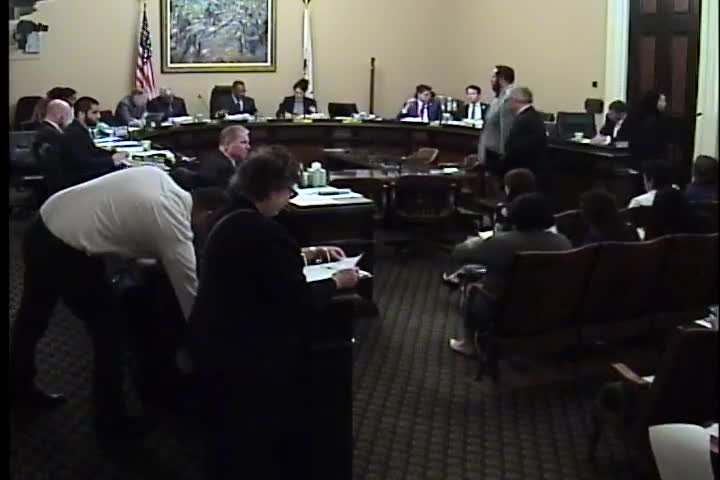
Discussed in Hearing
 19MIN
Assembly Standing Committee on Public Safety
Bill Author

Bill Co-Author(s):
