AB 2979: High school diplomas: State Seal of Career Technical Education Pathway Completion.
- Session Year: 2017-2018
- House: Assembly
- Latest Version Date: 2018-07-05
Existing law declares the need to have a well-educated and highly skilled workforce in the state. Existing law establishes the Golden State Seal Merit Diploma for the purpose of recognizing pupils who have mastered the high school curriculum. Existing law also establishes the State Seal of Biliteracy to recognize high school graduates who have attained a high level of proficiency in speaking, reading, and writing in one or more languages in addition to English and the State Seal of Civic Engagement to recognize high school graduates who have demonstrated excellence in civics education and participation and have demonstrated an understanding of the federal and state constitutions and the democratic system of government.
This bill would establish a State Seal of Career Technical Education Pathway Completion to recognize high school graduates who have attained a high level of knowledge and proficiency in career technical education pathways. The bill would establish criteria for the receipt of the State Seal of Career Technical Education Pathway Completion, would require the Superintendent of Public Instruction to prepare and deliver to participating school districts an appropriate insignia to be affixed to pupil diplomas or transcripts, and would require participating school districts to maintain appropriate records and records, affix the appropriate insignia to diplomas or transcripts of recipient pupils. pupils, and provide pupil support staff and programs to ensure equitable pupil access and success in completing seal requirements and evaluating postsecondary options. The bill would not become operative unless the State Board of Education, in a public meeting, makes specified declarations.
Existing law declares the need to have a well-educated and highly skilled workforce in the state. Existing law establishes the Golden State Seal Merit Diploma for the purpose of recognizing pupils who have mastered the high school curriculum. Existing law also establishes the State Seal of Biliteracy to recognize high school graduates who have attained a high level of proficiency in speaking, reading, and writing in one or more languages in addition to English and the State Seal of Civic Engagement to recognize high school graduates who have demonstrated excellence in civics education and participation and have demonstrated an understanding of the federal and state constitutions and the democratic system of government.
This bill would establish a State Seal of Career Technical Education Pathway Completion to recognize high school graduates who have attained a high level of knowledge and proficiency in career technical education pathways. The bill would establish criteria for the receipt of the State Seal of Career Technical Education Pathway Completion, would require the Superintendent of Public Instruction to prepare and deliver to participating school districts an appropriate insignia to be affixed to pupil diplomas or transcripts, and would require participating school districts to maintain appropriate records and affix the appropriate insignia to diplomas or transcripts of recipient pupils. The bill would not become operative unless the State Board of Education, in a public meeting, makes specified declarations.
Existing law declares the need to have a well-educated and highly skilled workforce in the state. Existing law establishes the Golden State Seal Merit Diploma for the purpose of recognizing pupils who have mastered the high school curriculum. Existing law also establishes the State Seal of Biliteracy to recognize high school graduates who have attained a high level of proficiency in speaking, reading, and writing in one or more languages in addition to English and the State Seal of Civic Engagement to recognize high school graduates who have demonstrated excellence in civics education and participation and have demonstrated an understanding of the federal and state constitutions and the democratic system of government.
This bill would establish a State Seal of Career Technical Education Pathway Completion to recognize high school graduates who have attained a high level of knowledge and proficiency in career technical education pathways. The bill would establish criteria for the receipt of the State Seal of Career Technical Education Pathway Completion, would require the Superintendent of Public Instruction to prepare and deliver to participating school districts an appropriate insignia to be affixed to pupil diplomas or transcripts, and would require participating school districts to maintain appropriate records and affix the appropriate insignia to diplomas or transcripts of recipient pupils.
Existing law declares the need to have a well-educated and highly skilled workforce in the state. Existing law also declares specified principles to guide the states workforce investment system.This bill would declare the intent of the Legislature to enact legislation that would expand access by state citizens to high-quality workforce development programs to support a strong and growing middle class.Existing law declares the need to have a well-educated and highly skilled workforce in the state. Existing law also declares specified principles to guide the states workforce investment system.
This bill would declare the intent of the Legislature to enact legislation that would expand access by state citizens to high-quality workforce development programs to support a strong and growing middle class.
The State Seal of Career Technical Education Pathway Completion is established to recognize high school graduates who have attained a high level of knowledge and proficiency in fields of study within one of the 15 industry sectors described in the California Career Technical Education Model Curriculum Standards as adopted by the state board. The State Seal of Career Technical Education Pathway Completion shall be awarded by the Superintendent. School district participation in this program is voluntary.
51491.The purposes of the State Seal of Career Technical Education Pathway Completion are as follows:
(a)To encourage pupils to study career technical education.
(b)To encourage school districts to provide high-quality career technical education pathways leading to industry-recognized certification or licenses.
(c)To certify and recognize high achievement within career technical education pathways.
(d)To provide pupils with a tool to demonstrate occupational competency to employers.
(e)To provide postsecondary educational institutions with a method to recognize and give academic credit to applicants seeking admission.
(f)To prepare pupils with career-ready skills.
(g)To engage pupils in career exploration at an early age.
51492.The State Seal of Career Technical Education Pathway Completion certifies that a graduating high school pupil has attained a high level of proficiency in a career technical education pathway and meets all at least three of the six following criteria:
(a)Attained a 3.0 2.5 grade point average or higher on a 4.0 scale for a sequence of career technical education courses taken in high school.
(b)Has either of the following:(1)An industry recognized career technical education credential or certificate.(2)A grade of B or higher in a college-level career technical education course taken through concurrent enrollment.(c)Participation in an extracurricular activity relating to the career technical education pathway in which he or she is enrolled in, including, but not limited to, any of the following extracurricular activities:(1)Active participation in a state recognized career technical student organization that meets regularly and either participates in or organizes events relating to the career technical education pathway or related industry sector.(2)Participation in career-technical-education-based competitions.(3)Internships with organizations or employers who work in the career technical education field or fields in which the pupil is enrolled.(4)Participation in the research of an industry-related topic either done independently or in coordination with an industry professional.(b)Earned an industry recognized career technical education credential or certificate.
(c)Provided proof of enrollment in a postsecondary apprenticeship, certificate, credential, or degree program.
(d)Participated in a state recognized career technical student organization that meets regularly, and either participates in or organizes events relating to the career technical education pathway or related industry sector at a sectional, regional, state, or national level.
(e)Participated in career-technical-education-based competitions at a sectional, regional, state, or national level.
(f)Participated in an internship provided by local employers or organizations that advance pupils career readiness skills.
51493.The Superintendent shall do both of the following:
(a)Prepare and deliver to participating school districts an appropriate insignia to be affixed to the diploma or transcript of the pupil indicating that the pupil has been awarded a State Seal of Career Technical Education Pathway Completion by the Superintendent.
(b)Provide other information he or she deems necessary for school districts to successfully participate in the program.
51494.A school district that participates in the program under this article shall do both of the following:
(a)Maintain appropriate records in order to identify pupils who have earned a State Seal of Career Technical Education Pathway Completion.
(b)Affix the appropriate insignia to the diploma or transcript of each pupil who earns a State Seal of Career Technical Education Pathway Completion.
(c)Provide pupil support staff and programs to ensure equitable pupil access and success in completing seal requirements and evaluating postsecondary options, including, but not necessarily limited to, counselors, tutoring programs, and other staff that meet pupil needs.
51495.(a)No fee shall be charged to a pupil to receive a State Seal of Career Technical Education Pathway Completion.
(b)The state board may prescribe additional pertinent requirements for purposes of this article.
51496.This article shall not become operative unless the state board, in a public meeting, makes a declaration of all of the following:
(a)All California pupils have reasonably equal opportunity to engage in the coursework and other requirements that would be necessary to earn the State Seal of Career Technical Education Pathway Completion.
(b)The State Seal of Career Technical Education Pathway Completion would confer value to the pupil through recognition by postsecondary educational institutions or employers.
(c)The State Seal of Career Technical Education Pathway Completion would be earned through recognized excellence or outstanding achievement in the field of study.
(d)The State Seal of Career Technical Education Pathway Completion would not be based primarily on achievement which is already recognized through other means, such as grades, assessment results, other measures of academic achievement, or industry certifications.
The State Seal of Career Technical Education Pathway Completion is established to recognize high school graduates who have attained a high level of knowledge and proficiency in fields of study within one of the 15 industry sectors described in the California Career Technical Education Model Curriculum Standards as adopted by the state board. The State Seal of Career Technical Education Pathway Completion shall be awarded by the Superintendent. School district participation in this program is voluntary.
51491.The purposes of the State Seal of Career Technical Education Pathway Completion are as follows:
(a)To encourage pupils to study career technical education.
(b)To encourage school districts to provide high-quality career technical education pathways leading to industry-recognized certification or licenses.
(c)To certify and recognize high achievement within career technical education pathways.
(d)To provide pupils with a tool to demonstrate occupational competency to employers.
(e)To provide postsecondary educational institutions with a method to recognize and give academic credit to applicants seeking admission.
(f)To prepare pupils with career-ready skills.
(g)To engage pupils in career exploration at an early age.
51492.The State Seal of Career Technical Education Pathway Completion certifies that a graduating high school pupil has attained a high level of proficiency in a career technical education pathway and meets all of the following criteria:
(a)Attained a 3.0 grade point average or higher on a 4.0 scale for a sequence of career technical education courses taken in high school.
(b)Has one either of the following:
(1)An industry recognized career technical education credential or certificate.
(2)A score of 80 percent or higher on an approved career technical education third party pathway assessment.(3)(2)A grade of B or higher in a college-level career technical education course taken through concurrent enrollment.
(c)Participation in an extracurricular activity relating to the career technical education pathway in which he or she is enrolled in, including, but not limited to, any of the following extracurricular activities:
(1)Active participation in a state recognized career technical student organization that meets regularly and either participates in or organizes events relating to the career technical education pathway or related industry sector.
(2)Participation in career-technical-education-based competitions.
(3)Internships with organizations or employers who work in the career technical education field or fields in which the pupil is enrolled.
(4)Participation in the research of an industry-related topic either done independently or in coordination with an industry professional.
51493.The Superintendent shall do both of the following:
(a)Prepare and deliver to participating school districts an appropriate insignia to be affixed to the diploma or transcript of the pupil indicating that the pupil has been awarded a State Seal of Career Technical Education Pathway Completion by the Superintendent.
(b)Provide other information he or she deems necessary for school districts to successfully participate in the program.
51494.A school district that participates in the program under this article shall do both of the following:
(a)Maintain appropriate records in order to identify pupils who have earned a State Seal of Career Technical Education Pathway Completion.
(b)Affix the appropriate insignia to the diploma or transcript of each pupil who earns a State Seal of Career Technical Education Pathway Completion.
51495.No fee shall be charged to a pupil to receive a State Seal of Career Technical Education Pathway Completion.
51496.This article shall not become operative unless the state board, in a public meeting, makes a declaration of all of the following:
(a)All California pupils have reasonably equal opportunity to engage in the coursework and other requirements that would be necessary to earn the State Seal of Career Technical Education Pathway Completion.
(b)The State Seal of Career Technical Education Pathway Completion would confer value to the pupil through recognition by postsecondary educational institutions or employers.
(c)The State Seal of Career Technical Education Pathway Completion would be earned through recognized excellence or outstanding achievement in the field of study.
(d)The State Seal of Career Technical Education Pathway Completion would not be based primarily on achievement which is already recognized through other means, such as grades, assessment results, other measures of academic achievement, or industry certifications.
The State Seal of Career Technical Education Pathway Completion is established to recognize high school graduates who have attained a high level of knowledge and proficiency in fields of study within one of the 15 industry sectors described in the California Career Technical Education Model Curriculum Standards as adopted by the state board. The State Seal of Career Technical Education Pathway Completion shall be awarded by the Superintendent. School district participation in this program is voluntary.
51491.The purposes of the State Seal of Career Technical Education Pathway Completion are as follows:
(a)To encourage pupils to study career technical education.
(b)To encourage school districts to provide high-quality career technical education pathways leading to industry-recognized certification or licenses.
(c)To certify and recognize high achievement within career technical education pathways.
(d)To provide pupils with a tool to demonstrate occupational competency to employers.
(e)To provide postsecondary educational institutions with a method to recognize and give academic credit to applicants seeking admission.
(f)To prepare pupils with career-ready skills.
(g)To engage pupils in career exploration at an early age.
51492.The State Seal of Career Technical Education Pathway Completion certifies that a graduating high school pupil has attained a high level of proficiency in a career technical education pathway and meets all of the following criteria:
(a)Attained a 3.0 grade point average on a 4.0 scale for a sequence of career technical education courses taken in high school.
(b)Has one of the following:
(1)An industry recognized career technical education credential or certificate.
(2)A score of 80 percent or higher on an approved career technical education third party pathway assessment.
(3)A grade of B or higher in a college-level career technical education course taken through concurrent enrollment.
(c)Participation in an extracurricular activity relating to the career technical education pathway in which he or she is enrolled in, including, but not limited to, any of the following extracurricular activities:
(1)Active participation in a state recognized career technical student organization that meets regularly and either participates in or organizes events relating to the career technical education pathway or related industry sector.
(2)Participation in career-technical-education-based competitions.
(3)Internships with organizations or employers who work in the career technical education field or fields in which the pupil is enrolled.
(4)Participation in the research of an industry-related topic either done independently or in coordination with an industry professional.
51493.The Superintendent shall do both of the following:
(a)Prepare and deliver to participating school districts an appropriate insignia to be affixed to the diploma or transcript of the pupil indicating that the pupil has been awarded a State Seal of Career Technical Education Pathway Completion by the Superintendent.
(b)Provide other information he or she deems necessary for school districts to successfully participate in the program.
51494.A school district that participates in the program under this article shall do both of the following:
(a)Maintain appropriate records in order to identify pupils who have earned a State Seal of Career Technical Education Pathway Completion.
(b)Affix the appropriate insignia to the diploma or transcript of each pupil who earns a State Seal of Career Technical Education Pathway Completion.
51495.No fee shall be charged to a pupil to receive a State Seal of Career Technical Education Pathway Completion.
SECTION 1.It is the intent of the Legislature to enact legislation that would expand access by state citizens to high-quality workforce development programs to support a strong and growing middle class.It is the intent of the Legislature to enact legislation that would expand access by state citizens to high-quality workforce development programs to support a strong and growing middle class.
|
Date
|
Status
|
|---|---|
| Aug 31, 2018 | Ordered to inactive file at the request of Senator Allen. |
| Aug 24, 2018 | Ordered to third reading. |
| Aug 21, 2018 | Ordered to special consent calendar. |
| Aug 17, 2018 | From committee: Do pass. (Ayes 7. Noes 0.) (August 16). |
| Aug 6, 2018 | In committee: Referred to APPR. suspense file. |
| Jul 5, 2018 | Read second time and amended. Re-referred to Com. on APPR. |
| Jul 3, 2018 | From committee: Amend, and do pass as amended and re-refer to Com. on APPR. (Ayes 7. Noes 0.) (June 27). |
| Jun 13, 2018 | Referred to Com. on ED. |
| May 31, 2018 | In Senate. Read first time. To Com. on RLS. for assignment. |
| May 30, 2018 | Read third time. Passed. Ordered to the Senate. |
| May 25, 2018 | From committee: Do pass. (Ayes 16. Noes 0.) (May 25). |
| May 16, 2018 | In committee: Set, first hearing. Referred to APPR. suspense file. |
| May 3, 2018 | Re-referred to Com. on APPR. |
| May 2, 2018 | Read second time and amended. |
| May 1, 2018 | From committee: Amend, and do pass as amended and re-refer to Com. on APPR. (Ayes 7. Noes 0.) (April 25). |
| Apr 11, 2018 | In committee: Set, first hearing. Hearing canceled at the request of author. |
| Apr 2, 2018 | Re-referred to Com. on A. & A.R. |
| Mar 22, 2018 | Referred to Com. on ED. |
| Feb 17, 2018 | From printer. May be heard in committee March 19. |
| Feb 16, 2018 | Read first time. To print. |
|
Date
|
Description
|
Location
|
Votes
|
|
|---|---|---|---|---|
| Aug 16, 2018 | Do pass | Senate Standing Committee on Appropriations |
Passed |
|
| Aug 6, 2018 | Placed on suspense file | Senate Standing Committee on Appropriations |
Passed |
|
| Jun 27, 2018 | Do pass as amended, but first amend, and re-refer to the Committee on [Appropriations] | Senate Standing Committee on Education |
Passed |
|
| May 30, 2018 | AB 2979 BURKE Assembly Third Reading | Assembly Floor |
Passed |
|
| May 25, 2018 | Do pass. | Assembly Standing Committee on Appropriations |
Passed |
|
| Apr 25, 2018 | Do pass as amended and be re-referred to the Committee on [Appropriations] | Assembly Standing Committee on Education |
Passed |
This list shows positions taken on this bill by organizations on the date displayed, which is linked to the original source.
Positions by individuals are not included.
|
Organization
|
Position
|
Date
|
|---|---|---|
| California Agricultural Teachers Association | ** Support | Apr 23, 2018 |
| California Agricultural Teachers' Association | ** Support | Aug 18, 2018 |
| California Business Education Association | ** Support | Aug 18, 2018 |
| California Manufacturers & Technology Association | ** Support | Aug 18, 2018 |
| California Right to Life Committee, Inc. | ** Against | Aug 18, 2018 |
| California School Boards Association | ** Support | Aug 18, 2018 |
| California Teachers Association | * Support | Apr 25, 2018 |
| Los Angeles County Board of Education | ** Support | Jun 26, 2018 |
| Los Angeles County Office Of Education | ** Support | Aug 18, 2018 |
| Project Lead the Way | ** Support | Aug 18, 2018 |
| Public Advocates | * Indeterminate | Jun 27, 2018 |
| State Building and Construction Trades Council | ** Support | Aug 18, 2018 |
Office of Senate Floor Analyses (916) 651-1520 Fax: (916) 327-4478 | AB |
THIRD READING
Bill No: AB 2979
:
SENATE EDUCATION COMMITTEE: 7-0, 6/27/18
AYES: Allen, Wilk, Galgiani, Leyva, McGuire, Pan, Vidak
SENATE APPROPRIATIONS COMMITTEE: 7-0, 8/16/18
AYES: Portantino, Bates, Beall, Bradford, Hill, Nielsen, Wiener
ASSEMBLY FLOOR: 77-0, 5/30/18 - See last page for vote
DIGEST:
This bill establishes State Seal of Career Technical Education Pathway Completion to recognize high school graduates who have attained a high level of knowledge and proficiency in fields of study within one of the 15 industry sectors described in the California Career Technical Education Model Curriculum Standards.
Existing law:
- Establishes the State Seal of Biliteracy (SSB), which provides recognition to high school students who have demonstrated proficiency in speaking, reading, and writing in one or more languages in addition to English. (Education Code § 51460)
- Requires each school district, county office of education, or direct-funded charter school that confers the SSB to maintain appropriate records in order to identify students who have met the established criteria for the award and to affix the SSB insignia to the diploma or transcript of each qualifying student. (EC § 51464)
- Requires high school graduates to meet all of the following criteria to be eligible for the SSB:
- Complete all English language arts requirements for graduation with an overall grade point average of 2.0 or above in those classes.
- Pass the California Standards Test in English language arts administered in grade 11 at the proficient level or above.
- Demonstrate proficiency in one or more languages in addition to English, through one of four methods. (EC § 51461)
- Establishes the Golden State Seal Merit Diploma (GSSMD), which provides recognition to public high school graduates who have demonstrated mastery of high school curriculum in six designated subject areas, four of which must be mathematics, English language arts, science, and United States history. Eligibility requirements for the GSSMD include a combination of course grades, results from assessments produced by private providers or local education agencies (LEAs), and/or qualifying Smarter Balanced Summative Assessment of California Standards test scores for use by LEAs to award the GSSMD to graduating students. (EC § 51450 et seq.)
- Establishes a State Seal of Civic Engagement, to be affixed to the diploma of qualifying high school graduates, based on a demonstration of excellence in civics education and participation in community service or extracurricular activities. (EC§ 51471)
- Authorizes the California Career Technical Education (CTE) Incentive Grant Program as a state education, economic, and workforce development initiative with the goal of providing pupils in kindergarten through 12th grade with the knowledge and skills necessary to transition to employment and postsecondary education. (EC § 53070)
This bill establishes State Seal of Career Technical Education Pathway Completion to recognize high school graduates who have attained a high level of knowledge and proficiency in fields of study within one of the 15 industry sectors described in the California CTE Model Curriculum Standards. Specifically, this bill:
- Requires the Superintendent of Public Instruction to award the State Seal of Career Technical Education Pathway Completion.
- Specifies that school district participation in the State Seal of Career Technical Education Pathway Completion program is voluntary.
- Specifies the following purposes for the State Seal of Career Technical Education Pathway Completion:
- To encourage pupils to study career technical education.
- To encourage school districts to provide high-quality career technical education pathways leading to industry-recognized certification or licenses.
- To certify and recognize high achievement within career technical education pathways.
- To provide pupils with a tool to demonstrate occupational competency to employers.
- To provide postsecondary educational institutions with a method to recognize and give academic credit to applicants seeking admission.
- To prepare pupils with career-ready skills.
- To engage pupils in career exploration at an early age.
- Specifies that the State Seal of Career Technical Education Pathway Completion certifies that a graduating high school student has attained a high level of proficiency in a career technical education pathway and meets at least three of the six following criteria:
- Attained a 2.5-grade point average or higher on a 4.0 scale for a sequence of career technical education courses taken in high school.
- Earned an industry recognized career technical education credential or certificate.
- Provided proof of enrollment in a postsecondary apprenticeship, certificate, credential, or degree program.
- Participated in a state recognized career technical student organization that meets regularly, and either participates in or organizes events relating to the career technical education pathway or related industry sector at a sectional, regional, state, or national level.
- Participated in career-technical-education-based competitions at a sectional, regional, state, or national level.
- Participated in an internship provided by local employers or organizations that advance pupils’ career readiness skills.
- Requires the Superintendent of Public Instruction (SPI) to do all of the following:
- Prepare and deliver to participating school districts an appropriate insignia to be affixed to the diploma or transcript of the pupil indicating that the pupil has been awarded a State Seal of Career Technical Education Pathway Completion by the SPI.
- Provide other information he or she deems necessary for school districts to successfully participate in the program.
- Provide pupil support staff and programs to ensure equitable pupil access and success in completing seal requirements and evaluating postsecondary options, including, but not necessarily limited to, counselors, tutoring programs, and other staff that meet pupil needs.
- Requires a school district that participates in the State Seal of Career Technical Education Pathway Completion program to do both of the following:
- Maintain appropriate records in order to identify pupils who have earned a State Seal of Career Technical Education Pathway Completion.
- Affix the appropriate insignia to the diploma or transcript of each pupil who earns a State Seal of Career Technical Education Pathway Completion.
- Prohibits a fee from being charged to a student to receive a State Seal of Career Technical Education Pathway Completion.
- Prohibits the provisions above from becoming operative unless the State Board of Education (SBE), in a public meeting, makes a declaration of all of the following:
- All California pupils have reasonably equal opportunity to engage in the coursework and other requirements that would be necessary to earn the State Seal of Career Technical Education Pathway Completion.
- The State Seal of Career Technical Education Pathway Completion would confer value to the pupil through recognition by postsecondary educational institutions or employers.
- The State Seal of Career Technical Education Pathway Completion would be earned through recognized excellence or outstanding achievement in the field of study.
- The State Seal of Career Technical Education Pathway Completion would not be based primarily on achievement which is already recognized through other means, such as grades, assessment results, other measures of academic achievement, or industry certifications.
- Authorizes the SBE to prescribe additional pertinent requirements for purposes of State Seal of Career Technical Education Pathway Completion.
1) Need for the bill. According to the author, “AB 2979 creates the State Seal of Career Technical Education Pathway Completion to be affixed to the diploma or transcript of a graduate that meets the requirements to be eligible for the Seal.
The purpose of the State Seal of Career Technical Education Pathway Completion is to encourage students to study CTE, to encourage school district to provide high-quality CTE pathways leading to industry-recognized certification or licenses, to certify and recognize high achievement within CTE pathways, to prepare students with career-ready skills, and to engage students in career exploration at an early age.”
2) CTE investments by the state. As noted by the author, the state has made significant investments in CTE in recent years. In 2013, AB 86 (Committee on Budget, Chapter 48, Statutes of 2013) was signed into law creating the California Career Pathways Trust and was funded in the budget with $250 million for the SPI to award regional and local implementation grants.
The Agricultural CTE Incentive program provides local educational agencies with funds to improve the quality of their agricultural vocational education programs. The goal is to maintain a high-quality, comprehensive agricultural vocational program in California's public school system to ensure a constant source of employable, trained, and skilled individuals.
In 2015, the CTE Incentive Grant Program was established by AB 104 as a part of the California State Budget Act. This is a competitive grant program administered by the California Department of Education (CDE) to provide support for career technical education in grades K-12, and provides $400 million in 2015-16, $300 million in 2016-17, and $200 million in 2017-18 for this program.
3) How many CTE courses are offered in California? Data from the CDE on schools, courses, and A-G approval rates, during the 2016-17 school year, are shown on the table below. These data show that the most commonly offered subjects were Information and Communication Technologies, and Arts, Media, and Entertainment.
2016-17 Subject | Schools | Courses | A-G Approved |
Agriculture and Natural Resources | 586 | 4,803 | 1,975 |
Arts, Media, and Entertainment | 1,252 | 8,825 | 5,696 |
Building and Construction Trades | 590 | 2,347 | 138 |
Business and Finance | 845 | 3,760 | 540 |
Education, Child Development, and Family Services | 871 | 5,106 | 784 |
Energy and Utilities | 174 | 414 | 157 |
Engineering and Architecture | 740 | 3,049 | 1,712 |
Fashion and Interior Design | 283 | 700 | 117 |
Health Science and Medical Technology | 846 | 4,759 | 1,743 |
Hospitality, Tourism, and Recreation | 862 | 4,064 | 631 |
Information and Communication Technologies | 1,306 | 6,447 | 1,576 |
Manufacturing and Product Development | 585 | 1,928 | 258 |
Marketing, Sales, and Service | 507 | 1,660 | 410 |
Public Services | 618 | 2,276 | 508 |
Transportation | 551 | 2,360 | 158 |
Work Experience | 529 | 2,044 | 17 |
This bill proposes to recognize CTE pathway completion. A CTE pathway is a sequence of CTE courses in an industry sector. There does not appear to be statewide data regarding the number of students who complete a CTE pathway.
Related/Prior Legislation
AB 24 (Eggman, Chapter 24, Statutes of 2018) established a State Seal of Civic Engagement, to be affixed to the diploma of qualifying high school graduates, based on a demonstration of excellence in civics education and participation.
AB 1142 (Medina, Chapter 95, Statutes of 2018) updated the criteria used to determine eligibility for the SSB to reflect new state assessments in English language development and English language arts, and to authorized the SSB for pupils who seek to qualify through a language that is not characterized by listening, speaking, or reading, or for which there is no written system.
AB 2072 (Chang) of the 2015-16 Session would have established the State Seal of STEM to recognize high school graduates who have attained proficiency in STEM content. AB 2072 was held in the Senate Appropriations Committee.
FISCAL EFFECT: Appropriation: Fiscal Com.: Yes Local: No
According to the Senate Appropriations Committee, the CDE “estimates one-time General Fund costs of $150,000 and ongoing costs of $151,000 to administer the State Seal of Career Technical Education Pathway Completion. The one-time costs would be associated with working with the State Board of Education to determine whether the seal meets certain conditions and to develop and provide information about the seal. Ongoing activities would include preparing and delivering the seals to participating schools, postage, and disseminating program information.
There could be Proposition 98 General Fund cost pressure for participating school districts to track and maintain the necessary records of students that complete the seal’s requirements, and to affix the seals onto the students’ diplomas and transcripts. There could also be cost pressure for these districts to provide support staff and programs to ensure equitable student access and success in completing the seal’s requirements.”
California Agricultural Teachers’ Association
California Business Education Association
California Manufacturers & Technology Association
California School Boards Association
Los Angeles County Office of Education
State Building and Construction Trades Council
Project Lead the Way
OPPOSITION: (Verified 8/16/18)
California Right to Life Committee, Inc.
ASSEMBLY FLOOR: 77-0, 5/30/18
AYES: Acosta, Aguiar-Curry, Travis Allen, Arambula, Baker, Berman, Bigelow, Bloom, Bonta, Brough, Burke, Caballero, Calderon, Carrillo, Cervantes, Chau, Chávez, Chen, Chiu, Choi, Chu, Cooley, Cooper, Cunningham, Dahle, Daly, Eggman, Flora, Fong, Frazier, Friedman, Gallagher, Cristina Garcia, Eduardo Garcia, Gipson, Gloria, Gonzalez Fletcher, Gray, Grayson, Harper, Holden, Irwin, Jones-Sawyer, Kalra, Kamlager-Dove, Kiley, Lackey, Levine, Limón, Low, Maienschein, Mathis, Mayes, McCarty, Medina, Melendez, Mullin, Muratsuchi, Nazarian, Obernolte, O'Donnell, Quirk, Quirk-Silva, Reyes, Rodriguez, Rubio, Salas, Santiago, Steinorth, Mark Stone, Thurmond, Ting, Voepel, Waldron, Weber, Wood, Rendon
NO VOTE RECORDED: Patterson
8/18/18 14:55:26
**** END ****
SENATE COMMITTEE ON APPROPRIATIONS
Senator Anthony Portantino, Chair
2017 - 2018 Regular Session
AB 2979 (Burke) - High school diplomas: State Seal of Career Technical Education Pathway Completion
Version: July 5, 2018 | Policy Vote: ED. 7 - 0 |
Urgency: No | Mandate: No |
Hearing Date: August 6, 2018 | Consultant: Lenin Del Castillo |
This bill meets the criteria for referral to the Suspense File.
Bill Summary:
This bill establishes State Seal of Career Technical Education Pathway Completion to recognize high school graduates who have attained a high level of knowledge and proficiency in fields of study within one of the 15 industry sectors described in the California Career Technical Education Model Curriculum Standards.
Fiscal Impact:
- The California Department of Education estimates one-time General Fund costs of $150,000 and ongoing costs of $151,000 to administer the State Seal of Career Technical Education Pathway Completion. The one-time costs would be associated with working with the State Board of Education to determine whether the seal meets certain conditions and to develop and provide information about the seal. Ongoing activities would include preparing and delivering the seals to participating schools, postage, and disseminating program information.
- There could be Proposition 98 General Fund cost pressure for participating school districts to track and maintain the necessary records of students that complete the seal’s requirements, and to affix the seals onto the students’ diplomas and transcripts. There could also be cost pressure for these districts to provide support staff and programs to ensure equitable student access and success in completing the seal’s requirements.
Background:
Existing law establishes the State Seal of Biliteracy (SSB), which provides recognition to high school students who have demonstrated proficiency in speaking, reading, and writing in one or more languages in addition to English. Each school district, county office of education, or direct-funded charter school that confers the SSB is required to maintain appropriate records in order to identify students who have met the established criteria for the award and to affix the SSB insignia to the diploma or transcript of each qualifying student. Additionally, high school graduates must meet all of the following criteria to be eligible for the SSB: complete all English language arts requirements for graduation with an overall grade point average of 2.0 or above in those classes, pass the California Standards Test in English language arts administered in grade 11 at the proficient level or above, and demonstrate proficiency in one or more languages in addition to English, through one of four methods.
Existing law establishes the Golden State Seal Merit Diploma (GSSMD), which provides recognition to public high school graduates who have demonstrated mastery of high school curriculum in six designated subject areas, four of which must be mathematics, English language arts, science, and United States history. Eligibility requirements for the GSSMD include a combination of course grades, results from assessments produced by private providers or local education agencies (LEAs), and/or qualifying Smarter Balanced Summative Assessment of California Standards test scores for use by LEAs to award the GSSMD to graduating students.
Proposed Law:
This bill establishes State Seal of Career Technical Education Pathway Completion to recognize high school graduates who have attained a high level of knowledge and proficiency in fields of study within one of the 15 industry sectors described in the California CTE Model Curriculum Standards.
This bill requires the Superintendent of Public Instruction (SPI) to award the State Seal of Career Technical Education Pathway Completion, and provides that school district participation is voluntary.
This bill specifies the purposes for the State Seal of Career Technical Education Pathway Completion, including the encouragement to study career technical education and for school districts to provide high-quality career technical education pathways leading to industry-recognized certification or licenses.
This bill specifies that the State Seal of Career Technical Education Pathway Completion certifies that a graduating high school student has attained a high level of proficiency in a career technical education pathway and meets three of the following criteria:
- Attained a 2.5 grade point average or higher on a 4.0 scale for a sequence of career technical education courses taken in high school.
- Earned an industry recognized career technical education credential or certificate.
- Provided proof of enrollment in a postsecondary apprenticeship, certificate, credential, or degree program.
- Participated in a state recognized career technical student organization that meets regularly and either participates in or organizes events relating to the career technical education pathway or related industry sector at a sectional, regional, state, or national level.
- Participated in career-technical-education-based competitions at a sectional, regional, state, or national level.
- Participated in an internship provided by local employers or organizations that advance students’ career readiness skills.
This bill requires the SPI to prepare and deliver to participating school districts an appropriate insignia to be affixed to the diploma or transcript of the pupil indicating that the pupil has been awarded a State Seal of Career Technical Education Pathway Completion by the SPI and provide other information he or she deems necessary for school districts to successfully participate in the program.
This bill requires a school district that participates in program to maintain appropriate records in order to identify pupils who have earned a State Seal of Career Technical Education Pathway Completion, affix the appropriate insignia to the diploma or transcript of each pupil who earns the seal, and provide pupil support staff and programs to ensure equitable pupil access and success in completing program requirements and evaluating postsecondary options, as specified.
This bill prohibits a fee from being charged to a student to receive a State Seal of Career Technical Education Pathway Completion.
This bill also prohibits these provisions from becoming operative unless the State Board of Education, in a public meeting, makes a declaration of all of the following:
- All California pupils have reasonably equal opportunity to engage in the coursework and other requirements that would be necessary to earn the State Seal of Career Technical Education Pathway Completion.
- The State Seal of Career Technical Education Pathway Completion would confer value to the pupil through recognition by postsecondary educational institutions or employers.
- The State Seal of Career Technical Education Pathway Completion would be earned through recognized excellence or outstanding achievement in the field of study.
- The State Seal of Career Technical Education Pathway Completion would not be based primarily on achievement which is already recognized through other means, such as grades, assessment results, other measures of academic achievement, or industry certifications.
This bill also allows the State Board of Education to prescribe additional pertinent requirements.
Related Legislation:
AB 24 (Eggman, Chapter 24, Statutes of 2018) Establishes a State Seal of Civic Engagement, to be affixed to the diploma of qualifying high school graduates, based on a demonstration of excellence in civics education and participation.
-- END --
SENATE COMMITTEE ON EDUCATION
Senator Benjamin Allen, Chair
2017 - 2018 Regular
Bill No: Hearing Date: June 27, 2018
Author: | Burke | ||
Version: |
| ||
Urgency: | Fiscal: | ||
Consultant: | |||
Subject: .
SUMMARY
This bill establishes State Seal of Career Technical Education Pathway Completion to recognize high school graduates who have attained a high level of knowledge and proficiency in fields of study within one of the 15 industry sectors described in the California Career Technical Education Model Curriculum Standards.
BACKGROUND
Existing law:
1) Establishes the State Seal of Biliteracy (SSB), which provides recognition to high school students who have demonstrated proficiency in speaking, reading, and writing in one or more languages in addition to English. (Education Code § 51460)
2) Requires each school district, county office of education, or direct-funded charter school that confers the SSB to maintain appropriate records in order to identify students who have met the established criteria for the award and to affix the SSB insignia to the diploma or transcript of each qualifying student. (EC § 51464)
3) Requires high school graduates to meet all of the following criteria to be eligible for the SSB:
a) Complete all English language arts requirements for graduation with an overall grade point average of 2.0 or above in those classes.
b) Pass the California Standards Test in English language arts administered in grade 11 at the proficient level or above.
c) Demonstrate proficiency in one or more languages in addition to English, through one of four methods. (EC § 51461)
4) Establishes the Golden State Seal Merit Diploma (GSSMD), which provides recognition to public high school graduates who have demonstrated mastery of high school curriculum in six designated subject areas, four of which must be mathematics, English language arts, science, and United States history. Eligibility requirements for the GSSMD include a combination of course grades, results from assessments produced by private providers or local education agencies (LEAs), and/or qualifying Smarter Balanced Summative Assessment of
California Standards test scores for use by LEAs to award the Golden State Seal Merit Diploma (GSSMD) to graduating students. (EC § 51450 et seq.)
5) This bill establishes a State Seal of Civic Engagement, to be affixed to the diploma of qualifying high school graduates, based on a demonstration of excellence in civics education and participation in community service or extracurricular activities (EC§ 51471)
6) Authorizes the California Career Technical Education (CTE) Incentive Grant Program as a state education, economic, and workforce development initiative with the goal of providing pupils in kindergarten through 12th grade with the knowledge and skills necessary to transition to employment and postsecondary education. (EC § 53070)
ANALYSIS
This bill establishes State Seal of Career Technical Education Pathway Completion to recognize high school graduates who have attained a high level of knowledge and proficiency in fields of study within one of the 15 industry sectors described in the California CTE Model Curriculum Standards. Specifically, this bill:
1) Requires the Superintendent of Public Instruction to award the State Seal of Career Technical Education Pathway Completion.
2) Specifies that school district participation in the State Seal of Career Technical Education Pathway Completion program is voluntary.
3) Specifies the following purposes for the State Seal of Career Technical Education Pathway Completion:
a) To encourage pupils to study career technical education.
b) To encourage school districts to provide high-quality career technical education pathways leading to industry-recognized certification or licenses.
c) To certify and recognize high achievement within career technical education pathways.
d) To provide pupils with a tool to demonstrate occupational competency to employers.
e) To provide postsecondary educational institutions with a method to recognize and give academic credit to applicants seeking admission.
f) To prepare pupils with career-ready skills.
g) To engage pupils in career exploration at an early age.
4) Specifies that the State Seal of Career Technical Education Pathway Completion certifies that a graduating high school student has attained a high level of proficiency in a career technical education pathway and meets all of the following criteria:
a) Attained a 3.0-grade point average or higher on a 4.0 scale for a sequence of career technical education courses taken in high school.
b) Has either of the following:
i) An industry recognized career technical education credential or certificate.
ii) A grade of B or higher in a college-level career technical education course taken through concurrent enrollment.
c) Participation in an extracurricular activity relating to the career technical education pathway in which he or she is enrolled in, including, but not limited to, any of the following extracurricular activities:
i) Active participation in a state recognized career technical student organization that meets regularly and either participates in or organizes events relating to the career technical education pathway or related industry sector.
ii) Participation in career-technical-education-based competitions.
iii) Internships with organizations or employers who work in the career technical education field or fields in which the pupil is enrolled.
iv) Participation in the research of an industry-related topic either done independently or in coordination with an industry professional.
5) Requires the Superintendent of Public Instruction (SPI) to do both of the following:
a) Prepare and deliver to participating school districts an appropriate insignia to be affixed to the diploma or transcript of the pupil indicating that the pupil has been awarded a State Seal of Career Technical Education Pathway Completion by the SPI.
b) Provide other information he or she deems necessary for school districts to successfully participate in the program.
6) Requires a school district that participates in the State Seal of Career Technical Education Pathway Completion program to do both of the following:
a) Maintain appropriate records in order to identify pupils who have earned a State Seal of Career Technical Education Pathway Completion.
b) Affix the appropriate insignia to the diploma or transcript of each pupil who earns a State Seal of Career Technical Education Pathway Completion.
7) Prohibits a fee from being charged to a student to receive a State Seal of Career Technical Education Pathway Completion.
8) Prohibits the provisions above from becoming operative unless the State Board of Education, in a public meeting, makes a declaration of all of the following:
a) All California pupils have reasonably equal opportunity to engage in the coursework and other requirements that would be necessary to earn the State Seal of Career Technical Education Pathway Completion.
b) The State Seal of Career Technical Education Pathway Completion would confer value to the pupil through recognition by postsecondary educational institutions or employers.
c) The State Seal of Career Technical Education Pathway Completion would be earned through recognized excellence or outstanding achievement in the field of study.
d) The State Seal of Career Technical Education Pathway Completion would not be based primarily on achievement which is already recognized through other means, such as grades, assessment results, other measures of academic achievement, or industry certifications.
STAFF COMMENTS
- Need for the bill. According to the author, “AB 2979 creates the State Seal of Career Technical Education Pathway Completion to be affixed to the diploma or transcript of a graduate that meets the requirements to be eligible for the Seal.
The purpose of the State Seal of Career Technical Education Pathway Completion is to encourage students to study CTE, to encourage school district to provide high-quality CTE pathways leading to industry-recognized certification or licenses, to certify and recognize high achievement within CTE pathways, to prepare students with career-ready skills, and to engage students in career exploration at an early age.”
2) Career Technical Education (CTE) investments by the state. As noted by the author, the state has made significant investments in CTE in recent years. In 2013, AB 86 was signed into law creating the California Career Pathways Trust and was funded in the budget with $250 million for the State Superintendent of Public Instruction to award regional and local implementation grants.
The Agricultural CTE Incentive program provides local educational agencies with funds to improve the quality of their agricultural vocational education programs. The goal is to maintain a high-quality, comprehensive agricultural vocational program in California's public school system to ensure a constant source of employable, trained, and skilled individuals.
In 2015, the Career Technical Education (CTE) Incentive Grant Program was established by AB 104 as a part of the California State Budget Act. This is a competitive grant program administered by the California Department of Education to provide support for career technical education in grades K-12, and provides $400 million in 2015-16, $300 million in 2016-17, and $200 million in 2017-18 for this program.
2) Author’s amendments. The author would like to amend the bill to revise the criteria by which a student would become eligible for the seal, including counseling requirements, and provide more flexibility to the State Board of Education to require additional criteria. Staff recommends that the bill be amended to reflect the author’s intent, as shown below:
- Delete the current contents of Section 51492 and replace it with the following language:
“The State Seal of Career Technical Education Pathway Completion certifies that a graduating high school pupil has attained a high level of proficiency in a career technical education pathway and meets three of the six following criteria:
(a) Attained a 2.5 grade point average or higher on a 4.0 scale for a sequence of career technical education courses taken in high school.
(b) Earned an industry recognized career technical education credential or certificate.
(c) Provided proof of enrollment in a postsecondary apprenticeship, certificate, credential, or degree program
(d) Participated in a state recognized career technical student organization that meets regularly and either participates in or organizes events relating to the career technical education pathway or related industry sector at a sectional, regional, state, or national level
(e) Participated in career-technical-education-based competitions at a sectional, regional, state, or national level.
(f) Participated in an internship provided by local employers or organizations that advance students’ career readiness skills.”
- Replace subdivision (c) of Section 51494 with the following language:
“Provide student support staff and programs to ensure equitable student access and success in completing seal requirements and evaluating postsecondary options including, but not limited to counselors, tutoring programs, and other staff that meet student needs.”
- Authorize the State Board of Education or prescribe additional requirements for the seal.
3) How many Career Technical Education (CTE) courses are offered in California? Data from the California Department of Education (CDE) on schools, courses, and A-G approval rates, during the 2016-17 school year, are shown on the table below. These data show that the most commonly offered subjects were Information and Communication Technologies, and Arts, Media, and Entertainment.
2016-17 Subject | Schools | Courses | A-G Approved |
Agriculture and Natural Resources | 586 | 4,803 | 1,975 |
Arts, Media, and Entertainment | 1,252 | 8,825 | 5,696 |
Building and Construction Trades | 590 | 2,347 | 138 |
Business and Finance | 845 | 3,760 | 540 |
Education, Child Development, and Family Services | 871 | 5,106 | 784 |
Energy and Utilities | 174 | 414 | 157 |
Engineering and Architecture | 740 | 3,049 | 1,712 |
Fashion and Interior Design | 283 | 700 | 117 |
Health Science and Medical Technology | 846 | 4,759 | 1,743 |
Hospitality, Tourism, and Recreation | 862 | 4,064 | 631 |
Information and Communication Technologies | 1,306 | 6,447 | 1,576 |
Manufacturing and Product Development | 585 | 1,928 | 258 |
Marketing, Sales, and Service | 507 | 1,660 | 410 |
Public Services | 618 | 2,276 | 508 |
Transportation | 551 | 2,360 | 158 |
Work Experience | 529 | 2,044 | 17 |
This bill proposes to recognize CTE pathway completion. A CTE pathway is a sequence of CTE courses in an industry sector. There does not appear to be statewide data regarding the number of students who complete a CTE pathway.
4) Do diploma seals provide a tangible benefit? In recent years the Legislature has reviewed three proposals for state diploma seals, in biliteracy, science, technology, engineering, and mathematics (STEM), and civic engagement. In addition, the Golden State Seal Merit (GSSM) diplomas are still issued. Diploma seals can be powerful incentives for students. They can influence students’ course taking patterns, assessments taken, and extracurricular choices. All such choices involve trade-off and opportunity costs. So what is the benefit to students who pursue diploma seals?
It may be instructive to consider the Golden State Seal Merit Diploma in this context. When originally authorized in the 1990’s, Governor Wilson argued that this diploma would serve as an ambitious goal that would both shape teaching and inspire students. It was envisioned as California version of the New York's Regent's Diploma, conferring advantages in the University of California (UC) and California State University (CSU) admission. The state created a series of assessments, called the Golden State Merit Examinations, which were taken by hundreds of thousands of students, who spent time and resources preparing to take the exams. These examinations were eliminated in 2009, and now the GSSMDs are awarded based on grades, Smart Balance Assessment Consortium (SBAC) scores, and, in some cases, local assessments.
The committee may wish to consider the extent to which Career Technical Education (CTE) diploma seals would provide a benefit beyond the credential or certificate that a student might also otherwise obtain by completing a CTE pathway.
5) Do all students have an equal opportunity to earn diploma seals? Two years ago this Committee heard AB 2072 (Chang), which would have established a State Seal of STEM. The author’s intent was to recognize outstanding achievement in the fields of STEM. That bill, as initially proposed, would have established criteria for the diploma seal to include scores on Advanced Placement and International Baccalaureate examinations in STEM fields, out-of-school STEM activities such as robotics clubs, internships in STEM fields, participation in STEM research, and completion of college level courses in STEM fields.
Evidence from multiple sources has demonstrated serious inequities in the availability of these high quality STEM courses and programs. According to the College Board, for example, “in many cases, schools serving large numbers of traditionally underrepresented minority students do not yet provide Advance Placement course work in science, technology, engineering, and mathematics (STEM) disciplines.” With respect to the equal opportunity to participate in out-of-school STEM programs, 2014 study commissioned by the Association of Children’s Museums Committee found that “there are still significant challenges to ensuring youth in low socioeconomic communities have equitable access to out-of-school STEM learning opportunities, most of which revolve around issues of finances and funding.”
As a result, the opportunity to earn the proposed diploma seal in STEM would have been highly uneven, and would have made many students from low income communities disadvantaged. This contrasts with the State Seal of Biliteracy, which uses criteria which are accessible to the vast majority of students in the state.
This bill requires the State Board of Education (SBE) to make a determination that all California pupils have reasonably equal opportunity to engage in the coursework and other requirements that would be necessary to earn the State Seal of Career Technical Education (CTE) Pathway Completion. However, the committee may wish to consider whether there are factors outside of that requirement that may inhibit all students from earning the State Seal of Career Technical Education Pathway Completion, including awareness of the seal, academic counseling to attain the seal, the availability of appropriate volunteer opportunities, and parental engagement in encouraging students to obtain the seal. Moreover, this bill makes participation in the program optional for each school district, and schools are not required to offer CTE programs.
6) Proliferation of diploma seals. Since 2011 this Committee has reviewed three bills proposing diploma seal, in biliteracy, STEM, and civic engagement. It is likely that this Committee will see similar measures to establish diploma seals in other subjects. The committee may wish to consider the policy implications of establishing numerous diploma seal options, including the effect multiple seals would have on students and families, and whether authorizing additional diploma seals could result in diminishing returns on the already limited benefits they might provide.
7) Previous legislation. AB 24 (Eggman, Chapter 24, Statutes of 2018) Establishes a State Seal of Civic Engagement, to be affixed to the diploma of qualifying high school graduates, based on a demonstration of excellence in civics education and participation.
AB 1142 (Medina, Chapter 95, Statutes of 2018) updates the criteria used to determine eligibility for the State Seal of Biliteracy (SSB) to reflect new state assessments in English language development and English language arts, and to authorize the SSB for pupils who seek to qualify through a language that is not characterized by listening, speaking, or reading, or for which there is no written system.
AB 2072 (Chang) of the 2015-16 Session would have established the State Seal of STEM to recognize high school graduates who have attained proficiency in STEM content. AB 2072 was held in the Senate Appropriations Committee.
AB 815 (Brownley), Chapter 618, Statutes of 2011 established the State Seal of Biliteracy to recognize high school graduates who what attained a high level of proficiency in speaking, reading, and writing in one or more languages in addition to English.
SB 253 (Wyland) of the 2009-10 Session would have authorized school districts and county offices of education to offer pupils a CTE certificate upon meeting specified requirements. This bill was held in the Assembly Appropriations Committee.
SUPPORT
California School Boards Association
Los Angeles County Board of Education
State Building and Construction Trades Council
Project Lead the Way
OPPOSITION
None received
-- END --
ASSEMBLY THIRD READING
ATR Bill Id:
Author:(Burke)
As Amended Ver:May 2, 2018
Majority vote
Committee | Votes | Ayes | Noes |
Education | 7-0 | O'Donnell, Kiley, Kalra, McCarty, Steinorth, Thurmond, Weber | |
Appropriations | 16-0 | Gonzalez Fletcher, Bigelow, Bloom, Bonta, Calderon, Carrillo, Chau, Eggman, Fong, Friedman, Gallagher, Eduardo Garcia, Nazarian, Obernolte, Quirk, Reyes |
|
SUMMARY: Establishes a State Seal of Career Technical Education (CTE) Pathway Completion is established to recognize high school graduates who have attained a high level of knowledge and proficiency in fields of study within one of the 15 industry sectors described in the California Career Technical Education Model Curriculum Standards. Specifically, this bill:
- Establishes the State Seal of CTE Pathway Completion (Seal) to recognize high school graduates who have attained a high level of knowledge and proficiency in fields of study within one of the 15 industry sectors described in the California Career Technical Education Model Curriculum Standards as adopted by the State Board of Education (SBE).
- Establishes the purposes of the Seal as follows:
- To encourage students to study CTE.
- To encourage school districts to provide high-quality CTE pathways leading to industry-recognized certification or licenses.
- To certify and recognize high achievement within CTE pathways.
- To provide students with a tool to demonstrate occupational competency to employers.
- To provide postsecondary educational institutions with a method to recognize and give academic credit to applicants seeking admission.
- To prepare students with career-ready skills.
- To engage students in career exploration at an early age.
- States that the Seal certifies that a graduating high school student has attained a high level of proficiency in a CTE pathway and meets all of the following criteria:
- Attained a 3.0 grade point average on a 4.0 scale for a sequence of CTE courses taken in high school.
- Has one of the following:
- An industry recognized CTE credential or certificate.
- A grade of B or higher in a college-level CTE course taken through concurrent enrollment.
- Participation in an extracurricular activity relating to the CTE pathway in which he or she is enrolled in, including any of the following extracurricular activities:
- Active participation in a state recognized CTE student organization that meets regularly and either participates in or organizes events relating to the CTE pathway or related industry sector.
- Participation in CTE-based competitions.
- Internships with organizations or employers who work in the CTE field or fields in which the student is enrolled.
- Participation in the research of an industry-related topic either done independently or in coordination with an industry professional.
- States that the Seal is to be awarded by the Superintendent of Public Instruction (SPI).
- States that school district participation in the program is voluntary.
- Requires the SPI to do the following:
- Prepare and deliver to participating school districts an appropriate insignia to be affixed to the diploma or transcript of the student indicating that the student has been awarded a Seal by the SPI.
- Provide other information the SPI deems necessary for school districts to successfully participate in the program.
- Requires a school district that participates in the program to do both of the following:
- Maintain appropriate records in order to identify students who have earned a Seal.
- Affix the appropriate insignia to the diploma or transcript of each student who earns a Seal.
- Prohibits fees from being charged to a student to receive a Seal.
- Prohibits the act from becoming operative unless the State Board of Education, in a public meeting, makes a declaration of all of the following:
- All California pupils have reasonably equal opportunity to engage in the coursework and other requirements that would be necessary to earn the State Seal of Career Technical Education Pathway Completion.
- The Seal would confer value to the pupil through recognition by postsecondary educational institutions or employers.
- The Seal would be earned through recognized excellence or outstanding achievement in the field of study.
- The Seal would not be based primarily on achievement which is already recognized through other means, such as grades, assessment results, other measures of academic achievement, or industry certifications.
FISCAL EFFECT: According to the Assembly Appropriations Committee:
- One-time general fund (GF) costs of about $150,000 for California Department of Education (CDE) to hire one staff member to work with the SBE to determine whether the seal meets certain conditions and, if the seal meets those conditions, develop and provide information on its website about the seal.
- Minor one-time GF costs in the low thousands of dollars for CDE to develop the seal, if the seal meets certain conditions.
- Ongoing GF costs of about $150,000 to hire one staff member at CDE to prepare and deliver seals to participating schools, maintain webpages, and maintain information about participation, if the seal meets certain conditions.
COMMENTS:
Need for the bill. The author's office states, "Assembly Bill 2979 establishes the State Seal of Career Technical Education Pathway Completion to recognize high school graduates who have attained a high level of knowledge and proficiency in a Career Technical Education Pathway. CTE programs not only prepare students to be college and career ready but they can also provide students with a pathway to a lifelong career. We must ensure all Californians have the opportunity to gain the skills necessary to obtain a job that provides economic security for their families and we must support a strong and growing middle class. AB 2979 recognizes the accomplishments of graduates who complete a CTE Pathway by awarding them the State Seal of Career Technical Education Pathway Completion on their diploma and transcript."
Analysis Prepared by: Tanya Lieberman / ED. / (916) 319-2087 FN: 0003084
Date of Hearing: May 16, 2018
ASSEMBLY COMMITTEE ON APPROPRIATIONS
Lorena Gonzalez Fletcher, Chair
ABPCA Bill Id:AB 2979
Author:(Burke) – As Amended Ver:May 2, 2018
Policy Committee: | Education | Vote: | 7 - 0 |
|
| ||
|
|
Urgency: No State Mandated Local Program: No Reimbursable: No
SUMMARY: This bill creates the State Seal of Career Technical Education (CTE) Pathway Completion to recognize high school graduates who have attained a high level of proficiency in career technical education. The bill specifies criteria for the receipt of the seal and requires the California Department of Education (CDE) to prepare and deliver to participating school districts seals which will be affixed to diplomas or transcripts. The bill will not become operative until the State Board of Education (SBE) determines the seal meets certain conditions, including a declaration that all students have a reasonably equal opportunity to engage in the requirements that would be necessary to earn the seal.
FISCAL EFFECT:
- One-time GF costs of about $150,000 for CDE to hire one staff member to work with the SBE to determine whether the seal meets certain conditions and, if the seal meets those conditions, develop and provide information on its website about the seal.
- Minor one-time GF costs in the low thousands of dollars for CDE to develop the seal, if the seal meets certain conditions.
- Ongoing GF costs of about $150,000 to hire one staff member at CDE to prepare and deliver seals to participating schools, maintain webpages, and maintain information about participation, if the seal meets certain conditions.
COMMENTS:
- Background. The CDE defines high school CTE as sequenced coursework in one of 15 industry sectors, including arts and media, health science, and manufacturing.
Each local education agency (LEA) in the state must develop a strategic plan, known as a Local Control and Accountability Plan (LCAP), which demonstrate how they plan to meet eight state education priorities. One of these priority areas is preparing all students for college and careers. In addition, the state’s accountability system for LEAs includes information about student completion of CTE Pathways.
- Conditions on State Seal of CTE Pathway Completion. The implementation of this bill is contingent on a declaration by the SBE that all of the following conditions have been met:
- All California students have reasonably equal opportunity to engage in the coursework and other requirements necessary to earn the diploma seal.
- The diploma seal confers value to the student through recognition by postsecondary educational institutions or employers.
- The diploma seal is earned through recognized excellence or outstanding achievement in the field of study.
- The diploma seal is not based primarily on achievement already recognized through other means, such as grades, assessment results, other measures of academic achievement, or industry certifications.
- Diploma Seals. In recent years the state has established two state diploma seals, in biliteracy and civic engagement. This year two measures propose new diploma seals, in STEM and CTE.
- Related Legislation. AB 2265 (Obernolte and Quirk), of this session, creates a State Seal of STEM to recognize high school graduates who have attained proficiency in STEM content.
AB 1743 (O’Donnell), of this session, extends funding for the Career Technical Education Incentive Grant Program at $500 million per year and establishes funding of $12 million per year for regional technical assistance.
AB 24 (Eggman) Chapter 604, Statutes of 2017, established a State Seal of Civic Engagement, to be affixed to the diploma of qualifying high school graduates, based on a demonstration of excellence in civics education and participation.
AB 815 (Brownley), Chapter 618, Statutes of 2011, established the State Seal of Biliteracy to recognize high school graduates who what attained a high level of proficiency in speaking, reading, and writing in one or more languages in addition to English.
Analysis Prepared by: Natasha Collins / APPR. / (916) 319-2081
Date of Hearing: April 25, 2018
ASSEMBLY COMMITTEE ON EDUCATION
Patrick O'Donnell, Chair
ABPCA Bill Id:AB 2979 (
Author:Burke) – As Amended Ver:March 22, 2018
SUBJECT: High school diplomas: State Seal of Career Technical Education Pathway Completion
SUMMARY: Establishes a State Seal of Career Technical Education (CTE) Pathway Completion is established to recognize high school graduates who have attained a high level of knowledge and proficiency in fields of study within one of the 15 industry sectors described in the California Career Technical Education Model Curriculum Standards. Specifically, this bill:
- Establishes the State Seal of CTE Pathway Completion (Seal) to recognize high school graduates who have attained a high level of knowledge and proficiency in fields of study within one of the 15 industry sectors described in the California Career Technical Education Model Curriculum Standards as adopted by the State Board of Education (SBE).
- Establishes the purposes of the Seal as follows:
- To encourage students to study CTE.
- To encourage school districts to provide high-quality CTE pathways leading to industry-recognized certification or licenses.
- To certify and recognize high achievement within CTE pathways.
- To provide students with a tool to demonstrate occupational competency to employers.
- To provide postsecondary educational institutions with a method to recognize and give academic credit to applicants seeking admission.
- To prepare students with career-ready skills.
- To engage students in career exploration at an early age.
- States that the Seal certifies that a graduating high school student has attained a high level of proficiency in a CTE pathway and meets all of the following criteria:
- Attained a 3.0 grade point average on a 4.0 scale for a sequence of CTE courses taken in high school.
- Has one of the following:
- An industry recognized CTE credential or certificate.
- A score of 80 percent or higher on an approved CTE third party pathway assessment.
- A grade of B or higher in a college-level CTE course taken through concurrent enrollment.
- Participation in an extracurricular activity relating to the CTE pathway in which he or she is enrolled in, including any of the following extracurricular activities:
- Active participation in a state recognized CTE student organization that meets regularly and either participates in or organizes events relating to the CTE pathway or related industry sector.
- Participation in CTE-based competitions.
- Internships with organizations or employers who work in the CTE field or fields in which the student is enrolled.
- Participation in the research of an industry-related topic either done independently or in coordination with an industry professional.
- States that the Seal is to be awarded by the Superintendent of Public Instruction (SPI).
- States that school district participation in the program is voluntary.
- Requires the SPI to do the following:
- Prepare and deliver to participating school districts an appropriate insignia to be affixed to the diploma or transcript of the student indicating that the student has been awarded a Seal by the SPI.
- Provide other information the SPI deems necessary for school districts to successfully participate in the program.
- Requires a school district that participates in the program to do both of the following:
- Maintain appropriate records in order to identify students who have earned a Seal.
- Affix the appropriate insignia to the diploma or transcript of each student who earns a Seal.
- Prohibits fees from being charged to a student to receive a Seal.
EXISTING LAW:
- Establishes the State Seal of Civic Engagement, to be affixed to the diploma of qualifying high school graduates, to recognize demonstrated excellence in civics education and participation and have demonstrated an understanding of the United States Constitution, the California Constitution, and the democratic system of government.
- Establishes the State Seal of Biliteracy (SSB), which provides recognition to high school students who have demonstrated proficiency in speaking, reading, and writing in one or more languages in addition to English. Requires each school district, county office of education, or direct-funded charter school that confers the SSB to maintain appropriate records in order to identify students who have met the established criteria for the award and to affix the SSB insignia to the diploma or transcript of each qualifying student.
3) Establishes the Golden State Seal Merit Diploma (GSSMD), which provides recognition to public high school graduates who have demonstrated mastery of high school curriculum in six designated subject areas, four of which must be mathematics, English language arts, science, and United States history. Eligibility requirements for the GSSMD include a combination of course grades, results from assessments produced by private providers or local education agencies (LEAs), and/or qualifying Smarter Balanced Summative Assessment of California Standards Tests scores for use by LEAs to award the GSSMD to graduating students.
FISCAL EFFECT: Unknown
COMMENTS:
Need for the bill. The author’s office states, “Assembly Bill 2979 establishes the State Seal of Career Technical Education Pathway Completion to recognize high school graduates who have attained a high level of knowledge and proficiency in a Career Technical Education Pathway. CTE programs not only prepare students to be college and career ready but they can also provide students with a pathway to a lifelong career. We must ensure all Californians have the opportunity to gain the skills necessary to obtain a job that provides economic security for their families and we must support a strong and growing middle class. AB 2979 recognizes the accomplishments of graduates who complete a CTE Pathway by awarding them the State Seal of Career Technical Education Pathway Completion on their diploma and transcript.”
Defining Career Technical Education. According to the CDE, “CTE is a program of study that involves a multiyear sequence of courses that integrates core academic knowledge with technical and occupational knowledge to provide students with a pathway to postsecondary education and careers. CTE programs in California have been organized into 15 industry sectors, covering 58 pathways that identify the knowledge and skills students need. Partnerships are usually developed between high schools, businesses, and postsecondary schools, providing pathways to employment and associate, Bachelor’s and advanced degrees.
CTE prepares students for the world of work by introducing them to workplace competencies, and makes academic content accessible to students by providing it in a hands-on context. Along the way, students develop career-relevant, real-world 21st Century skills.”
College and career readiness is a state priority. Each local educational agency’s Local Control and Accountability Plan (LCAP) must demonstrate, among other priorities, how they are ensuring that all students are being prepared to be college and career ready. The College and Career Readiness Index displayed on each LEA’s dashboard includes data on the number of students completing a CTE pathway. CDE notes that over 90% of districts report that CTE is now embedded into their LCAP.
2016-17 Subject | Number of Schools | Courses Taught | A-G approved |
Agriculture and Natural Resources | 586 | 4,803 | 1,975 |
Arts, Media, and Entertainment | 1,252 | 8,825 | 5,696 |
Building and Construction Trades | 590 | 2,347 | 138 |
Business and Finance | 845 | 3,760 | 540 |
Education, Child Development, and Family Services | 871 | 5,106 | 784 |
Energy and Utilities | 174 | 414 | 157 |
Engineering and Architecture | 740 | 3,049 | 1,712 |
Fashion and Interior Design | 283 | 700 | 117 |
Health Science and Medical Technology | 846 | 4,759 | 1,743 |
Hospitality, Tourism, and Recreation | 862 | 4,064 | 631 |
Information and Communication Technologies | 1,306 | 6,447 | 1,576 |
Manufacturing and Product Development | 585 | 1,928 | 258 |
Marketing, Sales, and Service | 507 | 1,660 | 410 |
Public Services | 618 | 2,276 | 508 |
Transportation | 551 | 2,360 | 158 |
Work Experience | 529 | 2,044 | 17 |
How many CTE courses are offered in California? Data from the California Department of Education (CDE) on schools, courses, and A-G approval rates, during the 2016-17 school year, are shown on the table to the right. These data show that the most commonly offered subjects were Information and Communication Technologies, and Arts, Media, and Entertainment.
This bill proposes to recognize CTE pathway completion. A CTE pathway is a sequence of CTE courses in an industry sector. There does not appear to be statewide data regarding the number of students who complete a CTE pathway.
Opportunity gaps in extracurricular CTE activities? This bill requires that, to be eligible to receive a diploma seal, students must have completed an extracurricular CTE activity. Eligible activities include: active participation in a state recognized CTE student organization that meets regularly and either participates in or organizes events relating to the CTE pathway or related industry sector; participation in CTE-based competitions; and internships with organizations or employers who work in the CTE field or fields in which the student is enrolled. Such activities can have clear academic and career benefits for students.
It is unclear how widespread such opportunities are in California. However, research related to out-of-school STEM opportunities suggests that an opportunity gap may exist. With regard to STEM programs, according to a 2014 study commissioned by the Association of Children’s Museums Committee on Successful Out-of-School STEM Learning, titled Broadening Access to STEM Learning through Out-of-School Learning Environments, “there are still significant challenges to ensuring youth in low socioeconomic communities have equitable access to out-of-school STEM learning opportunities, most of which revolve around issues of finances and funding.”
The report notes that most out-of-school programs – including STEM-focused programs – are fee-based in some form, and even when the fees are nominal or nonexistent, “participation still requires a significant amount of resource investment from families in terms of time and resources.” The report notes that transportation is a particularly troublesome issue when programs are based at sites beyond the neighborhood, and that while many out-of-school programs work to ensure affordability, “there is growth in high-profile and high-visibility robotics programs, which require a buy-in cost in the thousands of dollars, and also require the recruitment of multiple STEM professional volunteers, multiple adult coordinators, etc. – all structural requirements that are well outside the reach of most youth, but especially those in low socio-economic status communities.”
As noted above, robotics teams are a popular out-of-school high school STEM activity. A review of the fundraising plans for three high school robotics teams indicates that the cost for robot parts and other materials, trailers for transporting robots, competition fees, and travel, requires between $20,000 and $40,000 most of which are recurring annual costs. This estimate does not include staff and parent time and facility costs, and assumes that skilled staff and parents are available to coach the team. High school robotics teams typically fundraise by seeking community and corporate sponsorship.
Access to dual enrollment opportunities. This bill establishes, as one criterion, the receipt of a grade of B or higher in a college-level CTE course taken through concurrent enrollment, means of establishing eligibility to receive a diploma seal.
According to a June 2014 study by the Education Commission of the States titled Dual enrollment: Challenges in Rural Areas, rural areas face unique challenges in providing high-quality dual enrollment programs. Students also face access issues based on their geography or ability to get to and from a college campus. Other issues include covering program costs, a lack of available technology or equipment necessary for the coursework, and access to qualified teachers. While some urban and suburban high school offer dual enrollment courses led by postsecondary faculty who travel to the high school campus, the report notes that longer travel distances in rural areas can render these arrangements unfeasible.
Third party assessments. This bill establishes a score of 80 percent or higher on an approved CTE third party pathway assessment as one way a student can demonstrate proficiency for purposes of earning a diploma seal. It is not clear what is meant by third party assessments, or which entity has approved them. It is also not clear whether a score of 80 percent is an appropriate threshold on a range of assessments. Staff recommends that this provision be removed.
What benefit does a diploma seal have to students? CTE pathways can lead to industry certificates, licensure, and other forms of recognition which have real value to students in the job market because they are recognized by employers. In comparison, it is not clear what benefit would be conferred to students by a State Seal of CTE Pathway Completion.
Because diploma seals can influence students’ course taking, assessments, and extracurricular choices, and because these choices involve trade-offs, it’s important to ensure that diploma seals confer value to students in terms of postsecondary education and employment opportunities.
So what is the effect on students if a diploma seal is designed so that it confers no to students beyond high school? It may be instructive to consider the Golden State Seal Merit Diploma in this context. When originally authorized in the 1990’s, Governor Wilson argued that this diploma would serve as recognition of outstanding achievement that would both shape teaching and inspire students. It was envisioned as California version of the New York's Regent's Diploma, conferring advantages in UC and CSU admission. The state created a series of assessments, called the Golden State Merit Examinations, which were taken by hundreds of thousands of students, who spent time and resources preparing to take the exams. These examinations were eliminated in 2009, and now the GSSMDs are awarded based on grades, SBAC scores, and, in some cases, local assessments.
Each year over 50,000 students work toward achieving the special diploma, taking the time to prepare for and take assessments. But the GSSMD appears to confer no advantage to students in terms of postsecondary education or employment. The Committee may wish to consider whether it is fair to encourage students to work toward a diploma seal which confers no clear benefit to them.
Achievement thresholds. Forms of special recognition in high school, such as the honor roll, valedictorian awards, or an International Baccalaureate diploma, recognize outstanding achievement. Because the threshold for achieving this recognition is set high, it’s widely understood that these forms of recognition represent outstanding achievement.
But if the bar is set too low – for example, recognizing that a student has taken a required course and received a passing grade – a diploma seal ceases to carry any significance. In addition, schools already provide recognition, in the form of grades or test scores, for proficiency in a given subject. The Committee may wish to consider the importance of using diploma seals to recognize outstanding achievement, particularly achievement not already recognized by schools in other ways.
Guiding questions for this Committee’s review of diploma seal bills. Staff recommends that this Committee consider the following questions when evaluating any measure seeking to establish a diploma seal meet the following criteria:
- Does the diploma seal confer a benefit to the student through recognition by postsecondary institutions, employers, or other institutions outside of high school?
- Is the diploma seal designed so that all students have an opportunity to earn it?
- Does the diploma seal recognize excellence or outstanding achievement, not simply proficiency in a required or widely studied subject?
- Is eligibility for the diploma seal based primarily on achievement which is already recognized through grades or other standard measure of student achievement?
Recommended amendments. Staff recommends that this bill be amended to require that implementation of the act be contingent upon a declaration by the State Board of Education that all of the following conditions have been met:
- All California students have reasonably equal opportunity to engage in the coursework and other requirements necessary to earn the diploma seal
- The diploma seal confers value to the student through recognition by postsecondary educational institutions or employers
- The diploma seal is earned through recognized excellence or outstanding achievement in the field of study
- The diploma seal is not based primarily on achievement which is already recognized through other means, such as grades, assessment results, other measures of academic achievement, or industry certifications
Proliferation of diploma seals. In recent years the state has established two state diploma seals, in biliteracy and civic engagement. This year two measures propose new diploma seals, in STEM and CTE. If this legislation is enacted (and perhaps even if it isn’t), it is likely that this Committee will continue to see similar measures to establish Seals in other subject areas. The committee may wish to consider the policy implications of numerous options for students to earn diploma seals.
Related and prior legislation. AB 1743 (O’Donnell) of this Session would extend funding for the Career Technical Education Incentive Grant (CTEIG) Program at $500 million per year and establishes funding of $12 million per year for regional technical assistance.
AB 2265 (Obernolte) of this Session would establish a State Seal of STEM to recognize high school graduates who have attained proficiency in STEM content.
AB 24 (Eggman) Chapter 604, Statutes of 2017 established a State Seal of Civic Engagement, to be affixed to the diploma of qualifying high school graduates, based on a demonstration of excellence in civics education and participation.
AB 2072 (Chang) of the 2015-16 Session would have established the State Seal of STEM to recognize high school graduates who have attained proficiency in STEM content. This bill was held in the Senate Appropriations Committee.
AB 815 (Brownley), Chapter 618, Statutes of 2011 established the State Seal of Biliteracy to recognize high school graduates who what attained a high level of proficiency in speaking, reading, and writing in one or more languages in addition to English.
SB 253 (Wyland) of the 2009-10 Session would have authorized school districts and county offices of education to offer students a CTE certificate upon meeting specified requirements. This bill was held in the Assembly Appropriations Committee.
REGISTERED SUPPORT / OPPOSITION:
Support
California Agricultural Teachers Association
State Building and Construction Trades Council of California
Opposition
California Right to Life Committee, Inc.
Analysis Prepared by: Tanya Lieberman / ED. / (916) 319-2087




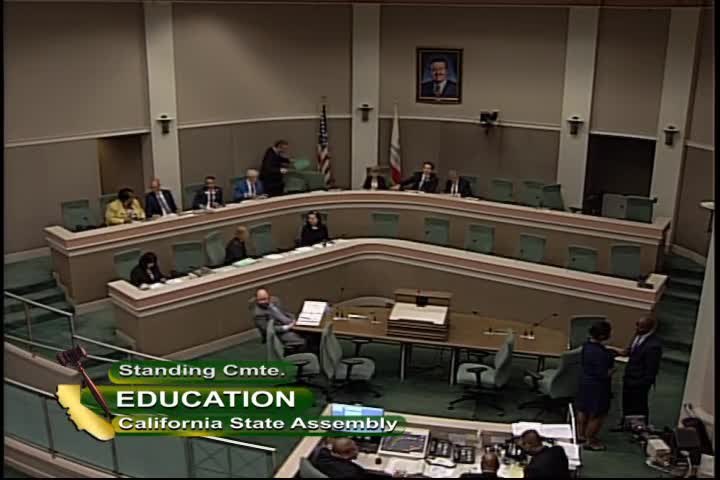
Bill Author

Bill Co-Author(s):