AB 299: Hiring of real property: immigration or citizenship status.
- Session Year: 2017-2018
- House: Assembly
- Latest Version Date: 2017-10-05
Existing law prohibits any city, county, or city and county from compelling a landlord or any agent of the landlord to take any action, as specified, based on the immigration or citizenship status of a tenant, prospective tenant, occupant, or prospective occupant of residential rental property. Existing law provides that these prohibitions do not prohibit a landlord from complying with any legal obligation under federal law.
This bill would revise this prohibition to include a public entity, which the bill would define to include the state, as defined, a city, county, city and county, district, public authority, public agency, and any other political subdivision or public corporation in the state. The bill would clarify that the term federal law in the provision described above includes any legal obligation of a landlord under a federal government program that provides for rent limitations or rental assistance to a qualified tenant, and would broaden that provision to include any legal obligation of a landlord under a subpoena, warrant, or other order issued by a court.
This bill would incorporate additional changes to Section 1940.3 of the Civil Code proposed by AB 291 to be operative only if this bill and AB 291 are enacted and this bill is enacted last.
Existing law prohibits any city, county, or city and county from compelling a landlord or any agent of the landlord to take any action, as specified, based on the immigration or citizenship status of a tenant, prospective tenant, occupant, or prospective occupant of residential rental property. Existing law provides that these prohibitions do not prohibit a landlord from complying with any legal obligation under federal law.
This bill would revise this prohibition to include a public entity, which the bill would define to include the state, as defined, a city, county, city and county, district, public authority, public agency, and any other political subdivision or public corporation in the state. The bill would clarify that the term federal law in the provision described above includes any legal obligation of a landlord under a federal government program that provides for rent limitations or rental assistance to qualified tenant, and would broaden that provision to include any legal obligation of a landlord under a subpoena, warrant, or other order issued by a court.
This bill would incorporate additional changes to Section 1940.3 of the Civil Code proposed by AB 291 to be operative only if this bill and AB 291 are enacted and this bill is enacted last.
Existing law prohibits any city, county, or city and county from compelling a landlord or any agent of the landlord to take any action, as specified, based on the immigration or citizenship status of a tenant, prospective tenant, occupant, or prospective occupant of residential rental property.
This bill would expand revise this prohibition to include a public entity, which the bill would define to include the state, as defined, a city, county, city and county, district, public authority, public agency, and any other political subdivision or public corporation in the state.
Existing law prohibits any city, county, or city and county from compelling a landlord or any agent of the landlord to take any action, as specified, based on the immigration or citizenship status of a tenant, prospective tenant, occupant, or prospective occupant of residential rental property.
This bill would expand this prohibition to include a public entity, which the bill would define to include the state, as defined, a city, county, city and county, district, public authority, public agency, and any other political subdivision or public corporation in the state.
(a)A public entity shall not, by ordinance, regulation, policy, or administrative action implementing any statute, ordinance, regulation, policy, or administrative action, compel a landlord or any agent of the landlord to make any inquiry, compile, disclose, report, or provide any information, prohibit offering or continuing to offer, accommodations in the property for rent or lease, or otherwise take any action regarding or based on the immigration or citizenship status of a tenant, prospective tenant, occupant, or prospective occupant of residential rental property.
(b)A landlord, or any agent of the landlord, shall not do any of the following:
(1)Make any inquiry regarding or based on the immigration or citizenship status of a tenant, prospective tenant, occupant, or prospective occupant of residential rental property.
(2)Require that any tenant, prospective tenant, occupant, or prospective occupant of the rental property disclose or make any statement, representation, or certification concerning his or her immigration or citizenship status.
(c)This section does not prohibit a landlord from either:
(1)Complying with any legal obligation under federal law, including, but not limited to, any legal obligation under any federal government program that provides for rent limitations or rental assistance to a qualified tenant, or a subpoena, warrant, or other order issued by a court.
(2)Requesting information or documentation necessary to determine or verify the financial qualifications of a prospective tenant, or to determine or verify the identity of a prospective tenant or prospective occupant.
(d)For purposes of this section, both of the following shall apply:
(1)Public entity includes the state, a city, county, city and county, district, public authority, public agency, and any other political subdivision or public corporation in the state.
(2)State includes any state office, department, division, bureau, board, or commission and the Trustees of the California State University and the California State University.
SEC. 1.5Section 1940.3 of the Civil Code is amended to read:1940.3.(a)A public entity shall not, by ordinance, regulation, policy, or administrative action implementing any ordinance, regulation, policy, or administrative action, compel a landlord or any agent of the landlord to make any inquiry, compile, disclose, report, or provide any information, prohibit offering or continuing to offer, accommodations in the property for rent or lease, or otherwise take any action regarding or based on the immigration or citizenship status of a tenant, prospective tenant, occupant, or prospective occupant of residential rental property.
(b)A landlord, or any agent of the landlord, shall not do any of the following:
(1)Make any inquiry regarding or based on the immigration or citizenship status of a tenant, prospective tenant, occupant, or prospective occupant of residential rental property.
(2)Require that any tenant, prospective tenant, occupant, or prospective occupant of the rental property disclose or make any statement, representation, or certification concerning his or her immigration or citizenship status.
(3)Disclose to any person or entity information regarding or relating to the immigration or citizenship status of any tenant, prospective tenant, occupant, or prospective occupant of the rental property for the purpose of, or with the intent of, harassing or intimidating a tenant, prospective tenant, occupant, or prospective occupant, retaliating against a tenant or occupant for the exercise of his or her rights, influencing a tenant or occupant to vacate a dwelling, or recovering possession of the dwelling.
(c)This section does not prohibit a landlord from doing any of the following:
(1)Complying with any legal obligation under federal law, including, but not limited to, any legal obligation under any federal government program that provides for rent limitations or rental assistance to a qualified tenant, or a subpoena, warrant, or other order issued by a court.
(2)Requesting information or documentation necessary to determine or verify the financial qualifications of a prospective tenant, or to determine or verify the identity of a prospective tenant or prospective occupant.
(d)For purposes of this section, both of the following shall apply:
(1)Public entity includes the state, a city, county, city and county, district, public authority, public agency, and any other political subdivision or public corporation in the state.
(2)State includes any state office, department, division, bureau, board, or commission and the Trustees of the California State University and the California State University.
SEC. 2.Section 1.5 of this bill incorporates amendments to Section 1940.3 of the Civil Code proposed by both this bill and Assembly Bill 291. That section shall only become operative if (1) both bills are enacted and become effective on or before January 1, 2018, (2) each bill amends Section 1940.3 of the Civil Code, and (3) this bill is enacted after Assembly Bill 291, in which case Section 1 of this bill shall not become operative.
(a)A public entity shall not, by ordinance, regulation, policy, or administrative action implementing any statute, ordinance, regulation, policy, or administrative action, compel a landlord or any agent of the landlord to make any inquiry, compile, disclose, report, or provide any information, prohibit offering or continuing to offer, accommodations in the property for rent or lease, or otherwise take any action regarding or based on the immigration or citizenship status of a tenant, prospective tenant, occupant, or prospective occupant of residential rental property.
(b)A landlord landlord, or any agent of the landlord landlord, shall not do any of the following:
(1)Make any inquiry regarding or based on the immigration or citizenship status of a tenant, prospective tenant, occupant, or prospective occupant of residential rental property.
(2)Require that any tenant, prospective tenant, occupant, or prospective occupant of the rental property disclose or make any statement, representation, or certification concerning his or her immigration or citizenship status.
(c)This section shall does not prohibit a landlord from either:
(1)Complying with any legal obligation under federal law. law, including, but not limited to, any legal obligation under any federal government program that provides for rent limitations or rental assistance to a qualified tenant, or a subpoena, warrant, or other order issued by a court.
(2)Requesting information or documentation necessary to determine or verify the financial qualifications of a prospective tenant, or to determine or verify the identity of a prospective tenant or prospective occupant.
(d)For purposes of this section, both of the following shall apply:
(1)Public entity includes the state, a city, county, city and county, district, public authority, public agency, and any other political subdivision or public corporation in the state.
(2)State includes any state office, department, division, bureau, board, or commission and the Trustees of the California State University and the California State University.
SEC. 1.5Section 1940.3 of the Civil Code is amended to read:1940.3.(a)No city, county, or city and county shall, by statute, A public entity shall not, by ordinance, or regulation, policy, or by administrative action implementing any statute, ordinance, or regulation, policy, or administrative action, compel a landlord or any agent of the landlord to make any inquiry, compile, disclose, report, or provide any information, prohibit offering or continuing to offer, accommodations in the property for rent or lease, or otherwise take any action regarding or based on the immigration or citizenship status of a tenant, prospective tenant, occupant, or prospective occupant of residential rental property.
(b)No landlord A landlord, or any agent of the landlord landlord, shall not do any of the following:
(1)Make any inquiry regarding or based on the immigration or citizenship status of a tenant, prospective tenant, occupant, or prospective occupant of residential rental property.
(2)Require that any tenant, prospective tenant, occupant, or prospective occupant of the rental property disclose or make any statement, representation, or certification concerning his or her immigration or citizenship status.
(3)Disclose to any person or entity information regarding or relating to the immigration or citizenship status of any tenant, prospective tenant, occupant, or prospective occupant of the rental property for the purpose of, or with the intent of, harassing or intimidating a tenant, prospective tenant, occupant, or prospective occupant, retaliating against a tenant or occupant for the exercise of his or her rights, influencing a tenant or occupant to vacate a dwelling, or recovering possession of the dwelling.
(c)Nothing in this This section shall does not prohibit a landlord from either: doing any of the following:
(1)Complying with any legal obligation under federal law. law, including, but not limited to, any legal obligation under any federal government program that provides for rent limitations or rental assistance to a qualified tenant, or a subpoena, warrant, or other order issued by a court.
(2)Requesting information or documentation necessary to determine or verify the financial qualifications of a prospective tenant, or to determine or verify the identity of a prospective tenant or prospective occupant.
(d)For purposes of this section, both of the following shall apply:
(1)Public entity includes the state, a city, county, city and county, district, public authority, public agency, and any other political subdivision or public corporation in the state.
(2)State includes any state office, department, division, bureau, board, or commission and the Trustees of the California State University and the California State University.
SEC. 2.Section 1.5 of this bill incorporates amendments to Section 1940.3 of the Civil Code proposed by both this bill and Assembly Bill 291. That section shall only become operative if (1) both bills are enacted and become effective on or before January 1, 2018, (2) each bill amends Section 1940.3 of the Civil Code, and (3) this bill is enacted after Assembly Bill 291, in which case Section 1 of this bill shall not become operative.
(a)A public entity shall not, by statute, ordinance, regulation, policy, or administrative action implementing any statute, ordinance, regulation, policy, or administrative action, compel a landlord or any agent of the landlord to make any inquiry, compile, disclose, report, or provide any information, prohibit offering or continuing to offer, accommodations in the property for rent or lease, or otherwise take any action regarding or based on the immigration or citizenship status of a tenant, prospective tenant, occupant, or prospective occupant of residential rental property.
(b)A landlord or any agent of the landlord shall not do any of the following:
(1)Make any inquiry regarding or based on the immigration or citizenship status of a tenant, prospective tenant, occupant, or prospective occupant of residential rental property.
(2)Require that any tenant, prospective tenant, occupant, or prospective occupant of the rental property disclose or make any statement, representation, or certification concerning his or her immigration or citizenship status.
(c)This section shall not prohibit a landlord from either:
(1)Complying with any legal obligation under federal law.
(2)Requesting information or documentation necessary to determine or verify the financial qualifications of a prospective tenant, or to determine or verify the identity of a prospective tenant or prospective occupant.
(d)For purposes of this section, both of the following shall apply:
(1)Public entity includes the state, a city, county, city and county, district, public authority, public agency, and any other political subdivision or public corporation in the state.
(2)State includes any state office, department, division, bureau, board, or commission and the Trustees of the California State University and the California State University.
(a)No city, county, or city and county shall, by statute, A public entity shall not, by statute, ordinance, or regulation, policy, or by administrative action implementing any statute, ordinance, or regulation, policy, or administrative action, compel a landlord or any agent of the landlord to make any inquiry, compile, disclose, report, or provide any information, prohibit offering or continuing to offer, accommodations in the property for rent or lease, or otherwise take any action regarding or based on the immigration or citizenship status of a tenant, prospective tenant, occupant, or prospective occupant of residential rental property.
(b)No A landlord or any agent of the landlord shall not do any of the following:
(1)Make any inquiry regarding or based on the immigration or citizenship status of a tenant, prospective tenant, occupant, or prospective occupant of residential rental property.
(2)Require that any tenant, prospective tenant, occupant, or prospective occupant of the rental property disclose or make any statement, representation, or certification concerning his or her immigration or citizenship status.
(c)Nothing in this This section shall not prohibit a landlord from either:
(1)Complying with any legal obligation under federal law.
(2)Requesting information or documentation necessary to determine or verify the financial qualifications of a prospective tenant, or to determine or verify the identity of a prospective tenant or prospective occupant.
(d)For purposes of this section, both of the following shall apply:
(1)Public entity includes the state, a city, county, city and county, district, public authority, public agency, and any other political subdivision or public corporation in the state.
(2)State includes any state office, department, division, bureau, board, or commission and the Trustees of the California State University and the California State University.
|
Date
|
Status
|
|---|---|
| Oct 5, 2017 | Chaptered by Secretary of State - Chapter 490, Statutes of 2017. |
| Oct 5, 2017 | Approved by the Governor. |
| Sep 26, 2017 | Enrolled and presented to the Governor at 3 p.m. |
| Sep 15, 2017 | In Assembly. Concurrence in Senate amendments pending. |
| Sep 14, 2017 | Read third time. Passed. Ordered to the Assembly. |
| Sep 6, 2017 | Read second time. Ordered to third reading. |
| Sep 5, 2017 | Read third time and amended. Ordered to second reading. |
| Jun 29, 2017 | Read second time. Ordered to third reading. |
| Jun 28, 2017 | From committee: Do pass. (Ayes 6. Noes 0.) (June 27). |
| Jun 7, 2017 | From committee chair, with author's amendments: Amend, and re-refer to committee. Read second time, amended, and re-referred to Com. on JUD. |
| Jun 6, 2017 | In committee: Set, first hearing. Hearing canceled at the request of author. |
| May 10, 2017 | Referred to Com. on JUD. |
| Mar 20, 2017 | In Senate. Read first time. To Com. on RLS. for assignment. |
| Mar 20, 2017 | Read third time. Passed. Ordered to the Senate. (Ayes 71. Noes 1. Page 646.) |
| Mar 15, 2017 | Read second time. Ordered to third reading. |
| Mar 14, 2017 | From committee: Do pass. (Ayes 10. Noes 0.) (March 14). |
| Feb 13, 2017 | Referred to Com. on JUD. |
| Feb 7, 2017 | From printer. May be heard in committee March 9. |
| Feb 6, 2017 | Read first time. To print. |
|
Date
|
Description
|
Location
|
Votes
|
|
|---|---|---|---|---|
| Sep 15, 2017 | AB 299 Calderon Concurrence in Senate Amendments | Assembly Floor |
Passed |
|
| Sep 14, 2017 | Assembly 3rd Reading AB299 Calderon By Hertzberg | Senate Floor |
Passed |
|
| Jun 27, 2017 | Do pass | Senate Standing Committee on Judiciary |
Passed |
|
| Mar 20, 2017 | AB 299 CALDERON Assembly Third Reading | Assembly Floor |
Passed |
|
| Mar 14, 2017 | Do pass. | Assembly Standing Committee on Judiciary |
Passed |
This list shows positions taken on this bill by organizations on the date displayed, which is linked to the original source.
Positions by individuals are not included.
|
Organization
|
Position
|
Date
|
|---|---|---|
| apartment association of california - orange county | ** Support | Sep 6, 2017 |
| apartment association of california - southern cities | ** Support | Sep 6, 2017 |
| Apartment Association of Greater Los Angeles | ** Support | Sep 6, 2017 |
| Apartment Association Of Orange County | * Support | Mar 14, 2017 |
| California Apartment Association | ** Support | Sep 6, 2017 |
| California Federation of Teachers, AFL-CIO | ** Support | Sep 6, 2017 |
| East Bay Rental Housing Association | ** Support | Sep 6, 2017 |
| National Association of Social Workers | ** Support | Sep 6, 2017 |
| north valley property owner's association | ** Support | Sep 6, 2017 |
| Santa Barbara Rental Property Association | ** Support | Sep 6, 2017 |
CONCURRENCE IN SENATE AMENDMENTS
CSA1 Bill Id:AB 299
Author:(Calderon)
As Amended Ver:September 5, 2017
Majority vote
ASSEMBLY: | 71-1 | (March 20, 2017) | SENATE: | 40-0 | (September 14, 2017) |
Original Committee Reference: JUD.
SUMMARY: Expands existing prohibitions on cities and counties – rules that prohibit them from compelling landlords to take certain actions based on the immigration or citizenship status of tenants or prospective tenants – to also include state agencies and public entities, as defined. Specifically, this bill:
- Defines the term "public entity" to include the state, a city, county, city and county, district, public authority, public agency, and any other political subdivision or public corporation in the state.
- Further defines the term "state" to include any state office, department, division, bureau, board, or commission and the Trustees of the California State University and the California State University.
- Provides that a public entity, as defined above, shall not, by ordinance, regulation, policy, or administrative action implementing any statute, ordinance, regulation, policy, or administrative action, compel a landlord or any agent of the landlord to take certain actions against tenants, occupants, or prospective tenants or occupants that are prohibited under existing law, as specified.
- Clarifies that a landlord or the landlord's agent shall not require any tenant, prospective tenant, occupant, or prospective occupant of the rental property to disclose any statement, representation, or certification concerning his or her immigration or citizenship status.
The Senate amendments:
- Clarify that this bill does not prohibit a landlord from complying with any legal obligation under federal law, including, but not limited to, any legal obligation under any federal government program that provides for rent limitations or rental assistance to a qualified tenant, or a subpoena, warrant, or other order issued by a court.
- Incorporate technical amendments to avoid a chaptering-out conflict with AB 291 (Chiu, et al.) of the current legislative session.
FISCAL EFFECT: None
COMMENTS: Existing law, established by AB 976 (Charles Calderon), Chapter 403, Statutes of 2007, prohibits landlords from collecting information about the immigration or citizenship status of their tenants, and also prohibits cities and counties from requiring landlords to collect or report such information about their tenants, among other actions. This bill would expand the scope of the latter rule to also prohibit state agencies and public entities, as defined, from requiring landlords to collect or report the immigration or citizenship status of their tenants.
In explaining the motivation of the bill, the author notes the campaign promises made by President Trump to deport millions of people from the United States (U.S.), and states: "We see a strong and compelling need for AB 299 and have concluded based on recent events that the federal government may take action to compel our public entities to report the status of each tenant. Should this bill be successful, we will not be able to comply with a federal requirement and our state agencies will not be able to heed the federal mandate because we will not have that information in our files."
Background on previous legislation enacted to protect against local mandates compelling landlord inquiry and disclosure of tenant immigration information. On October 16, 2006, the city of Escondido (San Diego County) passed an ordinance that made it unlawful to lease or rent a dwelling unit, or to suffer or permit the occupancy of a dwelling unit, to any person who was not lawfully present in the U.S. The ordinance, known as Ordinance No. 2006-38, deemed such conduct to be "harboring illegal aliens" and provided for stiff penalties to those failing to comply, and was modeled after an ordinance enacted earlier in the year in Hazelton, Pennsylvania. Among other things, the Escondido ordinance burdened landlords with the dual responsibility of obtaining information about the immigration status of their tenants, and then providing that information to the city. (Escondido Ordinance No. 2006-38. Accessed at http://immigration.procon.org/sourcefiles/escondido-Ord-2006-38R.pdf.)
A federal judge issued a temporary restraining order against the ordinance after several civil rights groups sued to block its implementation, and the Escondido City Council later rescinded the ordinance. However, the controversy over the Escondido ordinance, as well as reported efforts to adopt similar ordinances elsewhere in California and other states at the time, prompted Assemblyman Charles Calderon to carry legislation seeking to bar cities and counties from adopting restrictive rental housing ordinances, such as the Escondido law. According to this committee's analysis of that legislation, AB 976, the landlord groups who sponsored the bill reported that "landlords in other California cities were prompted by the Escondido ordinance to begin screening prospective applicants consistent with the intent and direction of the ordinance," and that "a proposed ballot initiative filed in the City of San Bernardino . . . would have prohibited landlords from renting to undocumented immigrants" had it not later failed before the city council. (Assembly Judiciary Committee analysis of AB 976, April 17, 2007.)
In direct response to these real controversies arising at the local government level, the Legislature approved and the Governor signed AB 976 to prohibit cities and counties from compelling landlords to inquire and report information about the immigration or citizenship status of a tenant or occupant of rental property, and likewise prohibiting adoption of local ordinances barring landlords from renting to people on that basis. In addition, AB 976 sought to prohibit a landlord from voluntarily conducting such an inquiry into a tenant's immigration or citizenship status, and prohibit landlords from requiring that tenants make any statements about immigration or citizenship status at all. AB 976 was supported by both landlord and tenant groups, and now forms the basis of existing law that this bill seeks to expand.
This bill expands the law enacted by AB 976 to safeguard against hypothetical action by state agencies or public entities seeking to compel landlords to gather or disclose tenant immigration information. According to the author, this bill is needed to ensure that California state agencies and public entities will not be able to comply with a federal mandate to report the immigration or citizenship status of tenants to federal authorities, should such a mandate arise in the future.
Whereas AB 976 was a direct Legislative response to specific actions taken by local governments seeking to compel landlords to essentially act as immigration police, by contrast this bill appears to be anticipatory in nature and not in response to any specific example of unwanted government action. The threat of Escondido, San Bernardino, or some other California local jurisdiction enacting a restrictive housing ordinance is already addressed by the prohibitions achieved by passage of AB 976, while of course the actions of cities in other states are outside the reach of California law. Instead, supporters of this bill, including the Apartment Association, California Southern Cities (sponsors of AB 976), contend that the bill is needed to further protect against the possibility that landlords are forced to act as immigration police as a result of any statute, regulation policy or administrative action originating from the State of California or any public entity at the state level. Although neither the author nor supporters allege there is any state governmental entity seeking to compel landlords to collect or report immigration information about their tenants, nevertheless this bill furthers the worthy public policy established by AB 976—namely, to prevent the harmful practice of forcing landlords to collect and report immigration information about their tenants if mandated by the state of California in the future, even if that prospect seems unlikely at present.
Federal immigration enforcement and the multi-faceted relationship between landlords, tenants, and local, state, and federal authorities. With respect to the relationship between landlords and tenants in California, existing law prohibits landlords from inquiring about a tenant's immigration status or requiring any tenant to make any statement or representation about their immigration status. As a result, landlords complying with the law should not possess information about their tenants' immigration or citizenship status. According to landlord groups in support of the bill, however, landlords are permitted and often do request information or documentation necessary to determine or verify the financial qualifications or identity of prospective tenants, and that information can in some cases be used to impute a person's immigration or citizenship status.
With respect to the relationship between local government and landlords, existing law prohibits local governments from compelling landlords to collect or disclose immigration information about their tenants. There is currently no law prohibiting the state from compelling landlords as such, and this bill would occupy that place by expanding the scope of Section 1940.3. Existing law also establishes that landlords may not be prohibited from complying with any legal obligation under federal law, or from requesting information or documentation necessary to determine or verify the financial qualifications of a prospective tenant, or to determine or verify the identity of a prospective tenant or prospective occupant. Senate amendments to the bill clarify that "any legal obligation under federal law" includes but is not limited to any legal obligation under any federal government program that provides for rent limitations or rental assistance to a qualified tenant, or a subpoena, warrant, or other order issued by a court (e.g. the federal "Section 8" voucher program.)
With respect to the relationship between state or local government and federal immigration authorities, it should be noted that federal law provides that a federal, state, or local government entity or official may not prohibit, or in any way restrict, any government entity or official from sending to, or receiving from, the Immigration and Naturalization Service (INS) information regarding the citizenship or immigration status of any individual. (8 United States Code (U.S.C.) Section 1373.) If this bill were to restrict state public entities from cooperating with or providing information to federal immigration authorities, then it would likely be in violation of 8 U.S.C. Section 1373. Wisely, however, the bill does not cross that line. Instead, as the author notes, it only restricts the state from compelling landlords to provide that tenant immigration information to the state, with the idea that there won't be any information for the state to disclose to federal authorities in the case of a federal mandate to do so. It is unclear, however, to what extent California currently possesses information about the immigration or citizenship status of Californians tenants. If there is already little information of this type, and California is not seeking to obtain such information, then this bill may be interpreted simply as an extra, contingent safeguard against a potential federal demand for information that the state is unlikely to have, regardless of the bill.
It is well established that the regulation of immigration belongs exclusively to the federal government (See, e.g., LULAC v. Wilson, 908 F. Supp. 755, 786-87 (C.D. Cal. 1995)), and therefore this bill may not interfere with the ability of federal immigration authorities to approach private landlords directly in carrying out immigration enforcement. As a result of this exclusive federal power, the federal government, rather than compelling California to collect tenant immigration information from landlords and then demanding its production pursuant to 8 U.S.C. Section 1373, is much more likely to take a direct approach by requesting or pressuring private landlords to turn over immigration information about their tenants, if that is the goal of immigration authorities. In that case, California landlords should theoretically not even have such information to disclose to federal officials, because existing law enacted by AB 976 bars them from asking for, or collecting, it in the first place. To the extent landlords may have such information, and the federal request is lawful, existing state law of course compels the landlord to comply with federal law.
Analysis Prepared by: Anthony Lew / JUD. / (916) 319-2334 FN: 0002000
Office of Senate Floor Analyses (916) 651-1520 Fax: (916) 327-4478 | AB |
THIRD READING
Bill No: AB 299
:
SENATE JUDICIARY COMMITTEE: 6-0, 6/27/17
AYES: Jackson, Moorlach, Anderson, Hertzberg, Stern, Wieckowski
NO VOTE RECORDED: Monning
ASSEMBLY FLOOR: 71-1, 3/20/17 - See last page for vote
DIGEST:
This bill forbids all public entities, including state agencies and California State Universities, from using policies, ordinances, or administrative actions to compel landlords to inquire about or disclose the immigration status of current or prospective tenants. Currently, such restrictions apply only to local government entities.
Senate Floor Amendments of 9/5/17 add language to avoid chaptering out issues in the event that both this bill and AB 291 (Chiu), which also amends Civil Code Section 1940.3, are enacted.
Existing law:
- Prohibits cities and counties from using statutes, ordinances, or administrative actions to compel landlords to inquire about or disclose the immigration status of current or prospective tenants. (Civ. Code 1940.3(a).)
- Prohibits cities and counties from using statutes, ordinances, or administrative actions to compel landlords to inquire about or disclose the immigration status of current or prospective tenants. (Civ. Code 1940.3(a).)
- Prohibits cities and counties from using statutes, ordinances, or administrative actions to compel residential landlords to take action against current or prospective tenants based on the tenants’ immigration status. (Civ. Code 1940.3(a).)
This bill:
- Adds “policies” to the list of legal mechanisms that may not be used to compel residential landlords to accomplish the prohibited aims.
- Expands the application of these prohibitions to all public entities, as defined, which includes state offices, state departments, state divisions, state bureaus, state boards, state commissions, the Trustees of the California State University, the California State University, cities, counties, districts, public authorities, public agencies, and any other political subdivisions or public corporations in the state.
Background
In 2007, the California Legislature enacted AB 976 (Calderon, Chapter 403, Statutes of 2007) which preempted cities and counties in California from establishing certain local laws relating to the rental of residential property. Specifically, AB 976 prohibited cities and counties from using statutes, ordinances, regulations, or administrative actions to compel residential landlords to take action against current or prospective tenants based on their immigration status. In addition, under AB 976, cities and counties cannot force residential landlords to inquire or disclose immigration status information about their tenants. AB 976 was codified at Civil Code Section 1940.3.
AB 976 came in response to attempts by a handful of local jurisdictions across the United States, including some in California, that sought to prevent residential landlords from renting to undocumented immigrants. While federal courts blocked some of these local efforts on the grounds that they interfered with the federal government’s dominion over enforcement of immigration law, a more recent court decision upheld such a local ordinance in Nebraska. (Keller v. City of Fremont (8th Cir. 2013) 719 F.3d 931.) Additionally, the federal government has taken a different approach to immigration enforcement since the inauguration of President Donald Trump. Whereas federal immigration enforcement had previously focused largely on immigrants suspected or convicted of serious criminal offenses,[1] the federal government is now enforcing immigration laws more indiscriminately.[2] The Trump Administration also argues that state and local governments should do more to cooperate and assist with federal immigration enforcement efforts.
In this context, this bill seeks to foreclose one avenue by which California state government entities could theoretically get wrapped up in federal immigration enforcement: their role as regulator and potentially as an actor within the residential rental market. This bill achieves that end by taking the existing restrictions on cities’ and counties’ authority to compel landlords to take action against tenants based on the tenants’ immigration status and applying those restrictions to all public entities in the state.
Comments
Amendments made since the bill left the Assembly
As both a practical and legal matter, the Legislature cannot enact statutes that purport to bind future legislatures. A legislature cannot restrict the powers of a subsequent legislature by enacting a statute that appears to be nonrepealable. (County Mobilehome Positive Action Committee v. County of San Diego (1998) 62 Cal.App.4th 727, 734.) “An act of one legislature is not binding upon, and does not tie the hands of future legislatures.” (Ibid. Citations omitted.)
As it emerged from the Assembly, this bill declared that one of the things the “state” may not do is enact a “statute” that compels residential landlords to inquire about or disclose their tenants’ immigration status, or to base rental decision or actions on their tenant’s immigration status. In order to ensure that this bill is not construed as containing an unlawful attempt to restrict future legislatures from enacting laws, the author has since amended the bill to clarify that its prohibitions on rule-making do not apply to the Legislature itself, by striking the word “statute” from subdivision (a).
What the bill does and does not do
Neither the author nor the Senate Judiciary Committee staff is aware of any instances in which a public entity, as defined in this bill, currently engages or proposes to engage in, the kind of actions this bill is intended to prevent: requiring landlords to inquire about, collect, disclose, or report on a residential tenant’s immigration status. Whereas existing law prohibits cities and counties from doing such things, it is at least theoretically possible that a state government department or agency might attempt to require landlords to seek or report this kind of information. This bill, therefore, does not alter any existing policies or procedures. Rather, it is best viewed as a prophylactic measure designed to ensure that no such policies are implemented in the future.
Related/Prior Legislation
SB 31 (Lara, 2017) directs California state and local governments to refrain from initiating, participating in, or assisting with any program to create a religious list, registry, or database, or using information about people’s national origin or ethnicity to achieve the same basic purpose. SB 31 is currently pending before the Assembly Committee on Appropriations.
SB 54 (De León, 2017) prohibits state or local resources from being used for immigration enforcement, and prohibits state or local law enforcement agencies from detaining or transferring anyone for deportation without a judicial warrant. SB 54 is currently pending before the Assembly Committee on Judiciary.
SB 244 (Lara, 2017) requires that sensitive personal information collected or obtained by state or local governments from an applicant for public services or programs may only be used for purposes of administering the program or service and may not be disclosed except under certain limited circumstances. SB 244 is currently pending before the Assembly Committee on Privacy and Consumer Protection.
AB 291 (Chiu, 2017), among other things, makes it unlawful for a landlord to disclose the immigration or citizenship status or perceived immigration or citizenship status of any tenant or occupant of the rental property to any immigration authority, law enforcement agency, or other local, state, or federal agency, unless the landlord makes that disclosure or engages in conduct at the express and specific direction or request of the federal government. AB 291 is currently pending consideration on the Senate Floor.
AB 976 (Calderon, Chapter 403, Statutes of 2007) prohibited landlords from inquiring or collecting information about the immigration or citizenship status of their tenants, and also prohibited cities and counties from requiring landlords to collect or report such information about their tenants, among other actions.
FISCAL EFFECT: Appropriation: Fiscal Com.: Local:
Apartment Association of California – Orange County
Apartment Association of California – Southern Cities
Apartment Association of Greater Los Angeles
California Apartment Association
California Federation of Teachers, AFL-CIO
East Bay Rental Housing Association
National Association of Social Workers
North Valley Property Owner’s Association
Santa Barbara Rental Property Association
None received
ARGUMENTS IN SUPPORT:
According to the author:
It’s not a landlord’s job to be an immigration agent. A person’s immigration status is of no significance to a landlord. AB 299 would ensure that a renter’s immigration status cannot be used to prevent them from being able to find housing that they would otherwise be qualified to obtain.
AB 299 is intended to protect an undocumented person from being targeted and discriminated against by ensuring that those seeking rental housing will not face scrutiny because of their immigration status. Tenant leasing decisions would be based upon proper financial and personal qualifications and other health and safety standards without the threat of a lawsuit or administrative recourse.
The need to extend the protections afforded under this measure to prohibit discrimination by any public entity in California is greater than ever. Anti-immigration sentiment is rising with the new executive branch of government where our current president campaigned heavily on an anti-immigration platform, threatening to deport millions….
[T]he federal government may take action to compel [California] public entities to report the status of each tenant. Should this bill be successful, [California]… will not have that information in our files.
In support, the California Apartment Association writes:
AB 299 provides important protections for rental property owners by continuing to ensure that they cannot be compelled by public entities to become de facto immigration agents.
In further support, the California Federation of Teachers, AFL-CIO writes:
Current law prohibits only a city, county, or individual landowner from requiring inquiries, compilations, and reports of the citizenship status of a current or prospective tenant. There are many more types of public entities, however, which may serve as a rental property owner. Entities such as a district, public authority, agency, public corporation, California State University system, various offices, departments, bureaus, boards, commissions, or any other political subdivision may be in a position to serve as a rental property landlord….
Students require homes that are free from the fear of targeting and discrimination. This bill will help families find housing, free from the fear of intimidation or deportation, and able to focus on their education for a better future….
ASSEMBLY FLOOR: 71-1, 3/20/17
AYES: Acosta, Aguiar-Curry, Arambula, Baker, Berman, Bigelow, Bloom, Bocanegra, Bonta, Brough, Burke, Caballero, Calderon, Cervantes, Chau, Chávez, Chen, Chiu, Chu, Cooley, Cooper, Cunningham, Dababneh, Daly, Eggman, Flora, Fong, Frazier, Friedman, Gallagher, Cristina Garcia, Eduardo Garcia, Gipson, Gloria, Gomez, Gonzalez Fletcher, Gray, Grayson, Holden, Irwin, Kalra, Lackey, Levine, Limón, Low, Maienschein, Mathis, Mayes, McCarty, Medina, Mullin, Muratsuchi, Nazarian, Obernolte, O'Donnell, Quirk, Quirk-Silva, Reyes, Rodriguez, Rubio, Salas, Santiago, Steinorth, Mark Stone, Thurmond, Ting, Voepel, Waldron, Weber, Wood, Rendon
NOES: Harper
NO VOTE RECORDED: Travis Allen, Choi, Dahle, Jones-Sawyer, Kiley, Melendez, Patterson, Ridley-Thomas
Prepared by: Timothy Griffiths / JUD. / (916) 651-4113
9/6/17 15:58:13
**** END ****
See Johnson, Policies for the Apprehension, Detention and Removal of Undocumented Immigrants (Nov. 20, 2014) U.S. Department of Homeland Security -- https://www.dhs.gov/ sites/default/files/ publications/14_1120_memo_prosecutorial_discretion.pdf -- (as of May 24, 2017). ↑
See Kelly, Enforcement of the Immigration Laws to Serve the National Interest (Feb. 20, 2017) U.S. Department of Homeland Security p.2 -- https://www.dhs.gov/sites/default/files/ publications/17_0220_S1_Enforcement-of-the-Immigration-Laws-to-Serve-the-National-Interest.pdf -- (as of May 24, 2017). Kelly, Implementation of the President's Border Security and Immigration Enforcement Improvements Policies (Feb. 20, 2017) U.S. Department of Homeland Security, p. 1 -- https://www.dhs.gov/sites/default/files/publications/17_0220_S1_ Implementing-the-Presidents-Border-Security-Immigration-Enforcement-Improvement-Policies.pdf -- (as of May 24, 2017). ↑
Office of Senate Floor Analyses (916) 651-1520 Fax: (916) 327-4478 | AB |
THIRD READING
Bill No: AB 299
:
SENATE JUDICIARY COMMITTEE: 6-0, 6/27/17
AYES: Jackson, Moorlach, Anderson, Hertzberg, Stern, Wieckowski
NO VOTE RECORDED: Monning
ASSEMBLY FLOOR: 71-1, 3/20/17 - See last page for vote
DIGEST:
This bill forbids all public entities, including state agencies and California State Universities, from using policies, ordinances, or administrative actions to compel landlords to inquire about or disclose the immigration status of current or prospective tenants. Currently, such restrictions apply only to local government entities.
Existing law:
- Prohibits cities and counties from using statutes, ordinances, or administrative actions to compel landlords to inquire about or disclose the immigration status of current or prospective tenants. (Civ. Code 1940.3(a).)
- Prohibits cities and counties from using statutes, ordinances, or administrative actions to compel landlords to inquire about or disclose the immigration status of current or prospective tenants. (Civ. Code 1940.3(a).)
- Prohibits cities and counties from using statutes, ordinances, or administrative actions to compel residential landlords to take action against current or prospective tenants based on the tenants’ immigration status. (Civ. Code 1940.3(a).)
This bill:
- Adds “policies” to the list of legal mechanisms that may not be used to compel residential landlords to accomplish the prohibited aims.
- Expands the application of these prohibitions to all public entities, as defined, which includes state offices, state departments, state divisions, state bureaus, state boards, state commissions, the Trustees of the California State University, the California State University, cities, counties, districts, public authorities, public agencies, and any other political subdivisions or public corporations in the state.
Background
In 2007, the California Legislature enacted AB 976 (Calderon, Chapter 403, Statutes of 2007) which preempted cities and counties in California from establishing certain local laws relating to the rental of residential property. Specifically, AB 976 prohibited cities and counties from using statutes, ordinances, regulations, or administrative actions to compel residential landlords to take action against current or prospective tenants based on their immigration status. In addition, under AB 976, cities and counties cannot force residential landlords to inquire or disclose immigration status information about their tenants. AB 976 was codified at Civil Code Section 1940.3.
AB 976 came in response to attempts by a handful of local jurisdictions across the United States, including some in California, that sought to prevent residential landlords from renting to undocumented immigrants. While federal courts blocked some of these local efforts on the grounds that they interfered with the federal government’s dominion over enforcement of immigration law, a more recent court decision upheld such a local ordinance in Nebraska. (Keller v. City of Fremont (8th Cir. 2013) 719 F.3d 931.) Additionally, the federal government has taken a different approach to immigration enforcement since the inauguration of President Donald Trump. Whereas federal immigration enforcement had previously focused largely on immigrants suspected or convicted of serious criminal offenses,[1] the federal government is now enforcing immigration laws more indiscriminately.[2] The Trump Administration also argues that state and local governments should do more to cooperate and assist with federal immigration enforcement efforts.
In this context, this bill seeks to foreclose one avenue by which California state government entities could theoretically get wrapped up in federal immigration enforcement: their role as regulator and potentially as an actor within the residential rental market. This bill achieves that end by taking the existing restrictions on cities’ and counties’ authority to compel landlords to take action against tenants based on the tenants’ immigration status and applying those restrictions to all public entities in the state.
Comments
Amendments made since the bill left the Assembly
As both a practical and legal matter, the Legislature cannot enact statutes that purport to bind future legislatures. A legislature cannot restrict the powers of a subsequent legislature by enacting a statute that appears to be nonrepealable. (County Mobilehome Positive Action Committee v. County of San Diego (1998) 62 Cal.App.4th 727, 734.) “An act of one legislature is not binding upon, and does not tie the hands of future legislatures.” (Ibid. Citations omitted.)
As it emerged from the Assembly, this bill declared that one of the things the “state” may not do is enact a “statute” that compels residential landlords to inquire about or disclose their tenants’ immigration status, or to base rental decision or actions on their tenant’s immigration status. In order to ensure that this bill is not construed as containing an unlawful attempt to restrict future legislatures from enacting laws, the author has since amended the bill to clarify that its prohibitions on rule-making do not apply to the Legislature itself, by striking the word “statute” from subdivision (a).
What the bill does and does not do
Neither the author nor the Senate Judiciary Committee staff is aware of any instances in which a public entity, as defined in this bill, currently engages or proposes to engage in, the kind of actions this bill is intended to prevent: requiring landlords to inquire about, collect, disclose, or report on a residential tenant’s immigration status. Whereas existing law prohibits cities and counties from doing such things, it is at least theoretically possible that a state government department or agency might attempt to require landlords to seek or report this kind of information. This bill, therefore, does not alter any existing policies or procedures. Rather, it is best viewed as a prophylactic measure designed to ensure that no such policies are implemented in the future.
Related/Prior Legislation
SB 31 (Lara, 2017) directs California state and local governments to refrain from initiating, participating in, or assisting with any program to create a religious list, registry, or database, or using information about people’s national origin or ethnicity to achieve the same basic purpose. SB 31 is currently pending before the Assembly Committee on Appropriations.
SB 54 (De León, 2017) prohibits state or local resources from being used for immigration enforcement, and prohibits state or local law enforcement agencies from detaining or transferring anyone for deportation without a judicial warrant. SB 54 is currently pending before the Assembly Committee on Judiciary.
SB 244 (Lara, 2017) requires that sensitive personal information collected or obtained by state or local governments from an applicant for public services or programs may only be used for purposes of administering the program or service and may not be disclosed except under certain limited circumstances. SB 244 is currently pending before the Assembly Committee on Privacy and Consumer Protection.
AB 291 (Chiu, 2017), among other things, makes it unlawful for a landlord to disclose the immigration or citizenship status or perceived immigration or citizenship status of any tenant or occupant of the rental property to any immigration authority, law enforcement agency, or other local, state, or federal agency, unless the landlord makes that disclosure or engages in conduct at the express and specific direction or request of the federal government. AB 291 is currently pending consideration on the Senate Floor.
AB 976 (Calderon, Chapter 403, Statutes of 2007) prohibited landlords from inquiring or collecting information about the immigration or citizenship status of their tenants, and also prohibited cities and counties from requiring landlords to collect or report such information about their tenants, among other actions.
FISCAL EFFECT: Appropriation: Fiscal Com.: Local:
Apartment Association of California – Orange County
Apartment Association of California – Southern Cities
Apartment Association of Greater Los Angeles
California Apartment Association
California Federation of Teachers, AFL-CIO
East Bay Rental Housing Association
National Association of Social Workers
North Valley Property Owner’s Association
Santa Barbara Rental Property Association
OPPOSITION: (Verified 6/29/17)
None received
ARGUMENTS IN SUPPORT:
According to the author:
It’s not a landlord’s job to be an immigration agent. A person’s immigration status is of no significance to a landlord. AB 299 would ensure that a renter’s immigration status cannot be used to prevent them from being able to find housing that they would otherwise be qualified to obtain.
AB 299 is intended to protect an undocumented person from being targeted and discriminated against by ensuring that those seeking rental housing will not face scrutiny because of their immigration status. Tenant leasing decisions would be based upon proper financial and personal qualifications and other health and safety standards without the threat of a lawsuit or administrative recourse.
The need to extend the protections afforded under this measure to prohibit discrimination by any public entity in California is greater than ever. Anti-immigration sentiment is rising with the new executive branch of government where our current president campaigned heavily on an anti-immigration platform, threatening to deport millions….
[T]he federal government may take action to compel [California] public entities to report the status of each tenant. Should this bill be successful, [California]… will not have that information in our files.
In support, the California Apartment Association writes:
AB 299 provides important protections for rental property owners by continuing to ensure that they cannot be compelled by public entities to become de facto immigration agents.
In further support, the California Federation of Teachers, AFL-CIO writes:
Current law prohibits only a city, county, or individual landowner from requiring inquiries, compilations, and reports of the citizenship status of a current or prospective tenant. There are many more types of public entities, however, which may serve as a rental property owner. Entities such as a district, public authority, agency, public corporation, California State University system, various offices, departments, bureaus, boards, commissions, or any other political subdivision may be in a position to serve as a rental property landlord….
Students require homes that are free from the fear of targeting and discrimination. This bill will help families find housing, free from the fear of intimidation or deportation, and able to focus on their education for a better future….
ASSEMBLY FLOOR: 71-1, 3/20/17
AYES: Acosta, Aguiar-Curry, Arambula, Baker, Berman, Bigelow, Bloom, Bocanegra, Bonta, Brough, Burke, Caballero, Calderon, Cervantes, Chau, Chávez, Chen, Chiu, Chu, Cooley, Cooper, Cunningham, Dababneh, Daly, Eggman, Flora, Fong, Frazier, Friedman, Gallagher, Cristina Garcia, Eduardo Garcia, Gipson, Gloria, Gomez, Gonzalez Fletcher, Gray, Grayson, Holden, Irwin, Kalra, Lackey, Levine, Limón, Low, Maienschein, Mathis, Mayes, McCarty, Medina, Mullin, Muratsuchi, Nazarian, Obernolte, O'Donnell, Quirk, Quirk-Silva, Reyes, Rodriguez, Rubio, Salas, Santiago, Steinorth, Mark Stone, Thurmond, Ting, Voepel, Waldron, Weber, Wood, Rendon
NOES: Harper
NO VOTE RECORDED: Travis Allen, Choi, Dahle, Jones-Sawyer, Kiley, Melendez, Patterson, Ridley-Thomas
6/30/17 11:02:06
**** END ****
See Johnson, Policies for the Apprehension, Detention and Removal of Undocumented Immigrants (Nov. 20, 2014) U.S. Department of Homeland Security -- https://www.dhs.gov/ sites/default/files/ publications/14_1120_memo_prosecutorial_discretion.pdf -- (as of May 24, 2017). ↑
See Kelly, Enforcement of the Immigration Laws to Serve the National Interest (Feb. 20, 2017) U.S. Department of Homeland Security p.2 -- https://www.dhs.gov/sites/default/files/ publications/17_0220_S1_Enforcement-of-the-Immigration-Laws-to-Serve-the-National-Interest.pdf -- (as of May 24, 2017). Kelly, Implementation of the President's Border Security and Immigration Enforcement Improvements Policies (Feb. 20, 2017) U.S. Department of Homeland Security, p. 1 -- https://www.dhs.gov/sites/default/files/publications/17_0220_S1_ Implementing-the-Presidents-Border-Security-Immigration-Enforcement-Improvement-Policies.pdf -- (as of May 24, 2017). ↑
Senator Hannah-Beth Jackson, Chair
2017-2018 Regular Session
Bill No: AB 299 (Author:Calderon)
Version: June 7, 2017
Hearing Date: June 27, 2017
Fiscal: No
Urgency: No
Consultant: TSG
SUBJECT
Hiring of real property: immigration or citizenship status
DESCRIPTION
Existing law preempts cities and counties in California from enacting local laws that compel landlords to collect or disclose immigration status information about current or prospective tenants. Cities and counties are further preempted from restricting landlords’ ability to rent to a tenant regardless of immigration status. In addition, existing law prohibits landlords from inquiring about their current or prospective tenants’ immigration status or requiring current or prospective tenants to make declarations about their immigration status.
This bill would broaden the applicability of these prohibitions to all public entities, as defined, which includes state agencies and California State Universities.
BACKGROUND
In 2007, the California Legislature enacted AB 976 (Calderon, Chapter 403, Statutes of 2007) which preempted cities and counties in California from establishing certain local laws relating to the rental of residential property. Specifically, AB 976 prohibited cities and counties from using statutes, ordinances, regulations, or administrative actions to compel residential landlords to take action against current or prospective tenants based on their immigration status. In addition, under AB 976, cities and counties cannot force residential landlords to inquire or disclose immigration status information about their tenants. AB 976 was codified at Civil Code Section 1940.3.
AB 976 came in response to attempts by a handful of local jurisdictions across the United States, including some in California, that sought to prevent residential landlords from renting to undocumented immigrants. While federal courts blocked some of these local efforts on the grounds that they interfered with the federal government’s dominion over enforcement of immigration law, a more recent court decision upheld such a local ordinance in Nebraska. (Keller v. City of Fremont (8th Cir. 2013) 719 F.3d 931.) Additionally, the federal government has taken a different approach to immigration enforcement since the inauguration of President Donald Trump. Whereas federal immigration enforcement had previously focused largely on immigrants suspected or convicted of serious criminal offenses,[1] the federal government is now enforcing immigration laws more indiscriminately.[2] The Trump Administration also argues that state and local governments should do more to cooperate and assist with federal immigration enforcement efforts.
In this context, this bill seeks to foreclose one avenue by which California state government entities could theoretically get wrapped up in federal immigration enforcement: their role as regulator and potentially as an actor within the residential rental market. This bill would achieve that end by taking the existing restrictions on cities’ and counties’ authority to compel landlords to take action against tenants based on the tenants’ immigration status and applying those restrictions to all public entities in the state.
CHANGES TO EXISTING LAW
Existing law prohibits cities and counties from using statutes, ordinances, or administrative actions to compel landlords to inquire about or disclose the immigration status of current or prospective tenants. (Civ. Code 1940.3(a).)
Existing law prohibits cities and counties from using statutes, ordinances, or administrative actions to compel landlords to inquire about or disclose the immigration status of current or prospective tenants. (Civ. Code 1940.3(a).)
Existing law prohibits cities and counties from using statutes, ordinances, or administrative actions to compel residential landlords to take action against current or prospective tenants based on the tenants’ immigration status. (Civ. Code 1940.3(a).)
This bill would add “policies” to the list of legal mechanisms that may not be used to compel residential landlords to accomplish the prohibited aims.
This bill would expand the application of these prohibitions to all public entities, as defined, which includes state offices, state departments, state divisions, state bureaus, state boards, state commissions, the Trustees of the California State University, the California State University, cities, counties, districts, public authorities, public agencies, and any other political subdivisions or public corporations in the state.
COMMENT
1. Stated need for the bill
According to the author:
It’s not a landlord’s job to be an immigration agent. A person’s immigration status is of no significance to a landlord. AB 299 would ensure that a renter’s immigration status cannot be used to prevent them from being able to find housing that they would otherwise be qualified to obtain.
AB 299 is intended to protect an undocumented person from being targeted and discriminated against by ensuring that those seeking rental housing will not face scrutiny because of their immigration status. Tenant leasing decisions would be based upon proper financial and personal qualifications and other health and safety standards without the threat of a lawsuit or administrative recourse.
The need to extend the protections afforded under this measure to prohibit discrimination by any public entity in California is greater than ever. Anti-immigration sentiment is rising with the new executive branch of government where our current president campaigned heavily on an anti-immigration platform, threatening to deport millions….
[T]he federal government may take action to compel [California] public entities to report the status of each tenant. Should this bill be successful, [California]… will not have that information in our files.
In support, the California Apartment Association writes:
AB 299 provides important protections for rental property owners by continuing to ensure that they cannot be compelled by public entities to become de facto immigration agents.
In further support, the California Federation of Teachers, AFL-CIO writes:
Current law prohibits only a city, county, or individual landowner from requiring inquiries, compilations, and reports of the citizenship status of a current or prospective tenant. There are many more types of public entities, however, which may serve as a rental property owner. Entities such as a district, public authority, agency, public corporation, California State University system, various offices, departments, bureaus, boards, commissions, or any other political subdivision may be in a position to serve as a rental property landlord….
Students require homes that are free from the fear of targeting and discrimination. This bill will help families find housing, free from the fear of intimidation or deportation, and able to focus on their education for a better future….
3. Amendments made since the bill left the Assembly
As both a practical and legal matter, the Legislature cannot enact statutes that purport to bind future legislatures. A legislature cannot restrict the powers of a subsequent legislature by enacting a statute that appears to be nonrepealable. (County Mobilehome Positive Action Committee v. County of San Diego (1998) 62 Cal.App.4th 727, 734.) “An act of one legislature is not binding upon, and does not tie the hands of future legislatures.” (Ibid. Citations omitted.)
As it emerged from the Assembly, this bill declared that one of the things the “state” may not do is enact a “statute” that compels residential landlords to inquire about or disclose their tenants’ immigration status, or to base rental decision or actions on their tenant’s immigration status. In order to ensure that this bill is not construed as containing an unlawful attempt to restrict future legislatures from enacting laws, the author has since amended the bill to clarify that its prohibitions on rule-making do not apply to the Legislature itself, by striking the word “statute” from subdivision (a).
4. What the bill does and does not do
Neither the author nor Committee staff is aware of any instances in which a public entity, as defined in this bill, currently engages or proposes to engage in, the kind of actions this bill is intended to prevent: requiring landlords to inquire about, collect, disclose, or report on a residential tenant’s immigration status. Whereas existing law prohibits cities and counties from doing such things, it is at least theoretically possible that a state government department or agency might attempt to require landlords to seek or report this kind of information. This bill is therefore does not alter any existing policies or procedures. Rather, it is best viewed as a prophylactic measure designed to ensure that no such policies are implemented in the future.
Support: Apartment Association of Greater Los Angeles; Apartment Association of California – Orange County; Apartment Association of California – Southern Cities; California Apartment Association; California Federation of Teachers, AFL-CIO; East Bay Rental Housing Association; National Association of Social Workers; North Valley Property Owner’s Association; Santa Barbara Rental Property Association
Opposition: None known
HISTORY
Source: Author
Related Pending Legislation:
SB 31 (Lara, 2017) would direct California state and local governments to refrain from initiating, participating in, or assisting with any program to create a religious list, registry, or database, or using information about people’s national origin or ethnicity to achieve the same basic purpose. SB 31 is currently pending before the Assembly Committee on the Judiciary.
SB 54 (De León, 2017) would prohibit state or local resources from being used for immigration enforcement, and prohibit state or local law enforcement agencies from detaining or transferring anyone for deportation without a judicial warrant. SB 54 is currently pending before the Assembly Committee on Public Safety.
SB 244 (Lara, 2017) would require that sensitive personal information collected or obtained by state or local governments from an applicant for public services or programs may only be used for purposes of administering the program or service and may not be disclosed except under certain limited circumstances. SB 244 is currently pending consideration on the Senate Floor.
AB 291 (Chiu, 2017) would, among other things, make it unlawful for a landlord to disclose the immigration or citizenship status or perceived immigration or citizenship status of any tenant or occupant of the rental property to any immigration authority, law enforcement agency, or other local, state, or federal agency, unless the landlord makes that disclosure or engages in conduct at the express and specific direction or request of the federal government. AB 291 is currently awaiting referral in the Senate.
Prior Legislation:
AB 976 (Calderon, Chapter 403, Statutes of 2007) prohibited landlords from inquiring or collecting information about the immigration or citizenship status of their tenants, and also prohibits cities and counties from requiring landlords to collect or report such information about their tenants, among other actions.
Prior Vote:
Assembly Floor (Ayes 71, Noes 1)
Assembly Judiciary Committee (Ayes 10, Noes 0)
**************
See Johnson, Policies for the Apprehension, Detention and Removal of Undocumented Immigrants (Nov. 20, 2014) U.S. Department of Homeland Security <https://www.dhs.gov/sites/default/files/publications/14_1120_memo_
prosecutorial_discretion.pdf> (as of May 24, 2017). ↑
See Kelly, Enforcement of the Immigration Laws to Serve the National Interest (Feb. 20, 2017) U.S. Department of Homeland Security p.2 < https://www.dhs.gov/sites/default/files/publications/17_0220_S1_Enforcement-of-the-Immigration-Laws-to-Serve-the-National-Interest.pdf> (as of May 24, 2017). Kelly, Implementation of the President's Border Security and Immigration Enforcement Improvements Policies (Feb. 20, 2017) U.S. Department of Homeland Security, p. 1 <https://www.dhs.gov/sites/default/files/publications/17_0220_S1_Implementing-the-Presidents-Border-Security-Immigration-Enforcement-Improvement-Policies.pdf> (as of May 24, 2017). ↑
ASSEMBLY THIRD READING
ATR Bill Id:
Author:(Calderon)
As Introduced Ver:February 6, 2017
Majority vote
Committee | Votes | Ayes | Noes |
Judiciary | 10-0 | Mark Stone, Cunningham, Chau, Chiu, Cristina Garcia, Holden, Kalra, Maienschein, Reyes, Ting |
|
SUMMARY: Expands existing prohibitions on cities and counties—rules that prohibit them from compelling landlords to take certain actions based on the immigration or citizenship status of tenants or prospective tenants--to also include state agencies and public entities, as defined. Specifically, this bill:
- Defines the term "public entity" to include the state, a city, county, city and county, district, public authority, public agency, and any other political subdivision or public corporation in the state.
- Further defines the term "state" to include any state office, department, division, bureau, board, or commission and the Trustees of the California State University and the California State University.
- Provides that a public entity, as defined above, shall not, by statute, ordinance, regulation, policy, or administrative action implementing any statute, ordinance, regulation, policy, or administrative action, compel a landlord or any agent of the landlord to take certain actions against tenants, occupants, or prospective tenants or occupants that are prohibited under existing law, as specified.
- Clarifies that a landlord or the landlord's agent shall not require any tenant, prospective tenant, occupant, or prospective occupant of the rental property to disclose any statement, representation, or certification concerning his or her immigration or citizenship status.
FISCAL EFFECT: None
COMMENTS: Existing law, established by AB 976 (Charles Calderon), Chapter 403, Statutes of 2007, prohibits landlords from collecting information about the immigration or citizenship status of their tenants, and also prohibits cities and counties from requiring landlords to collect or report such information about their tenants, among other actions. This bill would expand the scope of the latter rule to also prohibit state agencies and public entities, as defined, from requiring landlords to collect or report the immigration or citizenship status of their tenants.
In explaining the motivation of the bill, the author notes the campaign promises made by President Trump to deport millions of people from the United States (U.S.), and states: "We see a strong and compelling need for AB 299 and have concluded based on recent events that the federal government may take action to compel our public entities to report the status of each tenant. Should this bill be successful, we will not be able to comply with a federal requirement and our state agencies will not be able to heed the federal mandate because we will not have that information in our files."
Background on previous legislation enacted to protect against local mandates compelling landlord inquiry and disclosure of tenant immigration information. On October 16, 2006, the city of Escondido (San Diego County) passed an ordinance that made it unlawful to lease or rent a dwelling unit, or to suffer or permit the occupancy of a dwelling unit, to any person who was not lawfully present in the U.S. The ordinance, known as Ordinance No. 2006-38, deemed such conduct to be "harboring illegal aliens" and provided for stiff penalties to those failing to comply, and was modeled after an ordinance enacted earlier in the year in Hazelton, Pennsylvania. Among other things, the Escondido ordinance burdened landlords with the dual responsibility of obtaining information about the immigration status of their tenants, and then providing that information to the city. (Escondido Ordinance No. 2006-38. Accessed at http://immigration.procon.org/sourcefiles/escondido-Ord-2006-38R.pdf.)
A federal judge issued a temporary restraining order against the ordinance after several civil rights groups sued to block its implementation, and the Escondido City Council later rescinded the ordinance. However, the controversy over the Escondido ordinance, as well as reported efforts to adopt similar ordinances elsewhere in California and other states at the time, prompted Assemblyman Charles Calderon to carry legislation seeking to bar cities and counties from adopting restrictive rental housing ordinances, such as the Escondido law. According to this committee's analysis of that legislation, AB 976, the landlord groups who sponsored the bill reported that "landlords in other California cities were prompted by the Escondido ordinance to begin screening prospective applicants consistent with the intent and direction of the ordinance," and that "a proposed ballot initiative filed in the City of San Bernardino . . . would have prohibited landlords from renting to undocumented immigrants" had it not later failed before the city council. (Assembly Judiciary Committee analysis of AB 976, April 17, 2007.)
In direct response to these real controversies arising at the local government level, the Legislature approved and the Governor signed AB 976 to prohibit cities and counties from compelling landlords to inquire and report information about the immigration or citizenship status of a tenant or occupant of rental property, and likewise prohibiting adoption of local ordinances barring landlords from renting to people on that basis. In addition, AB 976 sought to prohibit a landlord from voluntarily conducting such an inquiry into a tenant's immigration or citizenship status, and prohibit landlords from requiring that tenants make any statements about immigration or citizenship status at all. AB 976 was supported by both landlord and tenant groups, and now forms the basis of existing law that this bill seeks to expand.
This bill expands the law enacted by AB 976 to safeguard against hypothetical action by state agencies or public entities seeking to compel landlords to gather or disclose tenant immigration information. According to the author, this bill is needed to ensure that California state agencies and public entities will not be able to comply with a federal mandate to report the immigration or citizenship status of tenants to federal authorities, should such a mandate arise in the future.
Whereas AB 976 was a direct Legislative response to specific actions taken by local governments seeking to compel landlords to essentially act as immigration police, by contrast this bill appears to be anticipatory in nature and not in response to any specific example of unwanted government action. The threat of Escondido, San Bernardino, or some other California local jurisdiction enacting a restrictive housing ordinance is already addressed by the prohibitions achieved by passage of AB 976, while of course the actions of cities in other states are outside the reach of California law. Instead, supporters of this bill, including the Apartment Association, California Southern Cities (sponsors of AB 976), contend that the bill is needed to further protect against the possibility that landlords are forced to act as immigration police as a result of any statute, regulation policy or administrative action originating from the State of California or any public entity at the state level. They write:
AB 299 elevates the current law to the next logical step—barring all governmental entities from forcing rental property owners to collect and report the citizenship status of their tenants. With immigration issues at the forefront of the national conversation, immigrant discrimination on the rise, and uncertainty about how immigration enforcement will be conducted in the next few years, it is important that California gets out ahead of the issue.
Committee staff is not aware of any state governmental entity seeking to compel landlords to collect or report immigration information about their tenants. In fact, legislation introduced so far in the current Session indicates that the Legislature is considering a strong public policy of protecting immigration-related information in the state's possession from being disclosed to federal immigration authorities. (See, e.g., SB 31 (Lara) of the current legislative session [directing state and local governments to refrain from participating in any program to create a list or registry of people based on religion or national origin]; SB 244 (Lara) of the current legislative session [requiring that personal information collected or obtained by the state from an applicant for public services or programs may be not disclosed to any other person or subject and is not a public record for purposes of the Public Records Act, except as provided].) Nevertheless, this bill furthers the worthy public policy established by AB 976 and seeks to prevent the harmful practice of forcing landlords to collect and report immigration information about their tenants if mandated by the state of California in the future, even if that prospect seems unlikely at present.
Federal immigration enforcement and the multi-faceted relationship between landlords, tenants, and local, state, and federal authorities. With respect to the relationship between landlords and tenants in California, existing law prohibits landlords from inquiring about a tenant's immigration status or requiring any tenant to make any statement or representation about their immigration status. As a result, landlords complying with the law should not possess information about their tenants' immigration or citizenship status. According to landlord groups in support of the bill, however, landlords are permitted and often do request information or documentation necessary to determine or verify the financial qualifications or identity of prospective tenants, and that information can in some cases be used to impute a person's immigration or citizenship status.
With respect to the relationship between local government and landlords, existing law prohibits local governments from compelling landlords to collect or disclose immigration information about their tenants. There is currently no law prohibiting the state from compelling landlords as such, and this bill would occupy that place by expanding the scope of Section 1940.3.
With respect to the relationship between state or local government and federal immigration authorities, it should be noted that federal law provides that a federal, state, or local government entity or official may not prohibit, or in any way restrict, any government entity or official from sending to, or receiving from, the Immigration and Naturalization Service (INS) information regarding the citizenship or immigration status of any individual. (8 United States Code (U.S.C.) Section 1373.) If this bill were to restrict state public entities from cooperating with or providing information to federal immigration authorities, then it would likely be in violation of 8 U.S.C. Section 1373. Wisely, however, the bill does not cross that line. Instead, as the author notes, it only restricts the state from compelling landlords to provide that tenant immigration information to the state, with the idea that there won't be any information for the state to disclose to federal authorities in the case of a federal mandate to do so. It is unclear, however, to what extent California currently possesses information about the immigration or citizenship status of Californians tenants. If there is already little information of this type, and California is not seeking to obtain such information, then this bill may be interpreted simply as an extra, contingent safeguard against a potential federal demand for information that the state is unlikely to have, regardless of the bill.
It is well established that the regulation of immigration belongs exclusively to the federal government (See, e.g., LULAC v. Wilson, 908 F. Supp. 755, 786-87 (C.D. Cal. 1995)), and therefore this bill may not interfere with the ability of federal immigration authorities to approach private landlords directly in carrying out immigration enforcement. As a result of this exclusive federal power, the federal government, rather than compelling California to collect tenant immigration information from landlords and then demanding its production pursuant to 8 U.S.C. Section 1373, is much more likely to take a direct approach by requesting or pressuring private landlords to turn over immigration information about their tenants, if that is the goal of immigration authorities. In that case, California landlords should theoretically not even have such information to disclose to federal officials, because existing law enacted by AB 976 bars them from asking for, or collecting, it in the first place. Of course to the extent landlords may have such information, and the federal request is lawful, existing state law compels the landlord to comply with federal law.
Analysis Prepared by: Anthony Lew / JUD. / (916) 319-2334 FN: 0000030
Date of Hearing:
ASSEMBLY COMMITTEE ON
, Chair
ABPCA Bill Id:
Author:() – As Ver:
SUBJECT:
KEY ISSUE: SHOULD EXISTING LAW PROHIBITING CITIES AND COUNTIES FROM COMPELLING LANDLORDS TO COLLECT AND POSSIBLY DISCLOSE INFORMATION ABOUT THEIR TENANTS' IMMIGRATION OR CITIZENSHIP STATUS BE EXPANDED TO ALSO PROHIBIT THE STATE OF CALIFORNIA FROM DOING SO?
SYNOPSIS
Existing law, established by AB 976 (Ch. 403, Stats. 2007), prohibits landlords from inquiring or collecting information about the immigration or citizenship status of their tenants, and also prohibits cities and counties from requiring landlords to collect or report such information about their tenants, among other actions. Ten years ago, AB 976 was enacted in direct response to a controversial ordinance enacted, and later rescinded, by the City of Escondido that, among other things, would have effectively prohibited landlords from renting to undocumented immigrants and compelled them to engage in immigration enforcement actions. This bill would expand the scope of the law enacted by AB 976 to also prohibit state agencies and public entities, as defined, from requiring landlords to collect or report the immigration or citizenship status of their tenants. According to the author, in case the federal government attempts to compel state agencies or public entities to collect and report the status of California tenants, this bill would ensure that California would not have such information in its possession to turn over, as the state might otherwise have to do in order to comply with federal law. The bill is supported by a number of regional apartment associations who contend that the bill is needed to further protect against the possibility that landlords are forced to act as immigration police or turn over tenant immigration information as a result of any statute, regulation policy or administrative action set forth by the State of California or one its public entities.
For reasons noted in the analysis, this bill does not restrict state public entities from cooperating with or providing information to federal immigration authorities, which would likely violate existing federal law. In addition, because the regulation of immigration is exclusively reserved to the federal government, this bill cannot and does not impact the more likely situation where federal authorities, acting within the scope of their immigration enforcement duties, approach private landlords directly, and request or pressure them to turn over immigration information about their tenants. This bill is simply a limitation on the authority of state entities to compel landlords to take certain actions that may negatively impact undocumented immigrants, not a limitation on the actions of landlords themselves or upon federal authorities. There is no known opposition to this bill.
SUMMARY: Expands existing prohibitions on cities and counties—rules that prohibit them from compelling landlords to take certain actions based on the immigration or citizenship status of tenants or prospective tenants--to also include state agencies and public entities, as defined. Specifically, this bill:
- Defines the term “public entity” to include the state, a city, county, city and county, district, public authority, public agency, and any other political subdivision or public corporation in the state.
- Further defines the term “state” to include any state office, department, division, bureau, board, or commission and the Trustees of the California State University and the California State University.
- Provides that a public entity, as defined above, shall not, by statute, ordinance, regulation, policy, or administrative action implementing any statute, ordinance, regulation, policy, or administrative action, compel a landlord or any agent of the landlord to take certain actions against tenants, occupants, or prospective tenants or occupants that are prohibited under existing law, as specified.
- Clarifies that a landlord or the landlord's agent shall not require any tenant, prospective tenant, occupant, or prospective occupant of the rental property to disclose any statement, representation, or certification concerning his or her immigration or citizenship status.
EXISTING STATE LAW:
- Prohibits a city, county, or city and county, by statute, ordinance, or regulation, or by administrative action implementing any statute, ordinance, or regulation, from compelling a landlord or any agent of the landlord to take any of the following actions with respect to a person who is a tenant, prospective tenant, occupant, or prospective occupant of residential rental property:
- Make any inquiry about the person's immigration or citizenship status.
- Compile, disclose, report, or provide any information regarding or based on the person's immigration or citizenship status.
- Prohibit offering or continuing to offer accommodations in the property for rent or lease based on the person's immigration or citizenship status.
- Take any other action regarding or based on the person's immigration or citizenship status. (Civil Code Section 1940.3 (a). All further references are to this code unless otherwise stated.)
- Prohibits a landlord or the landlord's agent from doing any of the following:
- Making any inquiry regarding or based on the immigration or citizenship status of a tenant, prospective tenant, occupant, or prospective occupant of residential rental property.
- Requiring that any tenant, prospective tenant, occupant, or prospective occupant of the rental property make any statement, representation, or certification concerning his or her immigration or citizenship status. (Section 1940.3 (b).)
- Provides that nothing in the above provisions shall prohibit a landlord from either complying with any legal obligation under federal law, or from requesting information or documentation necessary to determine or verify the financial qualifications of a prospective tenant, or to determine or verify the identity of a prospective tenant or prospective occupant. (Section 1940.3 (c).)
- Provides under the Unruh Civil Rights Act that all persons within the jurisdiction of this state are free and equal, and no matter what their sex, race, color, religion, ancestry, national origin, disability, medical condition, marital status, or sexual orientation are entitled to the full and equal accommodations, advantages, facilities, privileges, or services in all business establishments of every kind whatsoever and prohibits other arbitrary discrimination. (Section 51.)
- Provides under the Fair Employment and Housing Act that it is unlawful to discriminate or harass any person with respect to housing because of the race, color, religion, sex, sexual orientation, marital status, national origin, ancestry, familial status, source of income, or disability of that person. (Government Code Section 12955 et seq.)
EXISTING FEDERAL LAW:
- Provides that, notwithstanding any other provision of federal, state, or local law, a federal, state, or local government entity or official may not prohibit, or in any way restrict, any government entity or official from sending to, or receiving from, the Immigration and Naturalization Service information regarding the citizenship or immigration status, lawful or unlawful, of any individual. (8 U.S.C. 1373 (a).)
- Provides that, notwithstanding any other provision of federal, state, or local law, no person or agency may prohibit, or in any way restrict, a federal, state, or local government entity from doing any of the following with respect to information regarding the immigration status, lawful or unlawful, of any individual: (a) sending such information to, or requesting or receiving such information from, the Immigration and Naturalization Service; (b) maintaining such information; and (c) exchanging such information with any other federal, state, or local government entity. (8 U.S.C. 1373 (b).)
- Prohibits discrimination by private businesses on the basis of a person's citizenship under federal civil rights law. (E.g., Duane v. Government Employees Ins. Co., 37 F.3d 1036, 1044 (4th Cir. 1994) holding that federal civil rights law prohibits denial of homeowner's insurance to non-citizen based on citizenship status.)
FISCAL EFFECT: As currently in print this bill is keyed non-fiscal.
COMMENTS: Existing law, established by AB 976, Ch. 403, Stats. 2007, prohibits landlords from collecting information about the immigration or citizenship status of their tenants, and also prohibits cities and counties from requiring landlords to collect or report such information about their tenants, among other actions. This bill would expand the scope of the latter rule to also prohibit state agencies and public entities, as defined, from requiring landlords to collect or report the immigration or citizenship status of their tenants. According to the author:
It’s not a landlord’s job to be an immigration agent. A person’s immigration status is of no significance to a landlord. AB 299 would ensure that a renter’s immigration status cannot be used to prevent them from being able to find housing that they would otherwise be qualified to obtain. AB 299 is intended to protect an undocumented person from being targeted and discriminated against by ensuring that those seeking rental housing will not face scrutiny because of their immigration status. Tenant leasing decisions would be based upon proper financial and personal qualifications and other health and safety standards without the threat of a lawsuit or administrative recourse.
The need to extend the protections afforded under this measure to prohibit discrimination by any public entity in California is greater than ever. Anti-immigration sentiment is rising with the new executive branch of government where our current president campaigned heavily on an anti-immigration platform, threatening to deport millions and vowing to cut all federal funding to “sanctuary cities” like San Francisco that have adopted policies of not aiding federal immigration agents.
Background on previous legislation enacted to protect against local mandates compelling landlord inquiry and disclosure of tenant immigration information. On October 16, 2006, the city of Escondido (San Diego County) passed an ordinance that made it unlawful to lease or rent a dwelling unit, or to suffer or permit the occupancy of a dwelling unit, to any person who was not lawfully present in the U.S. The ordinance, known as Ordinance No. 2006-38, deemed such conduct to be "harboring illegal aliens" and provided for stiff penalties to those failing to comply, including fines, jail time, and suspension of one's business license, and was modeled after an ordinance enacted earlier in the year in Hazelton, Pennsylvania. The Escondido ordinance further provided that a separate violation was committed "for each business day on which the property owner has failed, following written notice from the City, to provide the City with identity data needed to obtain a federal verification of immigration status." (Escondido Ordinance No. 2006-38, Sec. 3. Accessed at http://immigration.procon.org/sourcefiles/ escondido-Ord-2006-38R.pdf). In short, the Escondido ordinance burdened landlords with the dual responsibility of obtaining information about the immigration status of their tenants, and then sharing that information with the city.
A federal judge issued a temporary restraining order against the ordinance after several civil rights groups sued to block its implementation, and the Escondido City Council later rescinded the ordinance. However, the controversy over the Escondido ordinance, as well as reported efforts to adopt similar ordinances elsewhere in California and other states at the time, prompted Assemblyman Charles Calderon to carry legislation seeking to bar cities and counties from adopting restrictive rental housing ordinances, such as the Escondido law. According to this committee's analysis of that legislation, AB 976 (2007), the landlord groups who sponsored the bill reported that "landlords in other California cities were prompted by the Escondido ordinance to begin screening prospective applicants consistent with the intent and direction of the ordinance," and that "a proposed ballot initiative filed in the City of San Bernardino . . . would have prohibited landlords from renting to undocumented immigrants" had it not later failed before the city council. (Assembly Judiciary Committee analysis of AB 976, April 17, 2007.)
In direct response to these real controversies arising at the local government level, the Legislature approved and the Governor signed AB 976 to prohibit cities and counties from compelling landlords to inquire and report information about the immigration or citizenship status of a tenant or occupant of rental property, and likewise prohibiting adoption of local ordinances barring landlords from renting to people on that basis. In addition, AB 976 sought to prohibit a landlord from voluntarily conducting such an inquiry into a tenant's immigration or citizenship status, and prohibit landlords from requiring that tenants make any statements about immigration or citizenship status at all. AB 976 was supported by both landlord and tenant groups, and now forms the basis of existing law that this bill seeks to expand.
This bill expands the law enacted by AB 976 to safeguard against hypothetical action by state agencies or public entities seeking to compel landlords to gather or disclose tenant immigration information. According to the author, the bill is needed to ensure that California state agencies and public entities will not be able to comply with a federal mandate to report the immigration or citizenship status of tenants to federal authorities, should such a mandate arise in the future. The author states:
This bill is in response to anti-immigration ordinances that could make obtaining housing difficult for undocumented immigrants. In 2007, the City of Escondido enacted an ordinance which sought to ban rental property owners from renting to undocumented immigrants. . . In Hazeleton, Pennsylvania, the city adopted a similar ordinance . . . which made it more difficult for undocumented immigrants to live and work in the city (and) required anyone renting housing to obtain an occupancy permit for which only those lawfully present in the United States were eligible. AB 976 came in response to these types of ordinances that were being introduced and adopted by local governments throughout the country at the time.
In the judicial branch, the United States Court of Appeals for the Eighth Circuit recently upheld an anti-immigration ordinance out of Fremont, Nebraska, which requires all renters as a prerequisite to renting, to obtain a city occupancy license that includes an immigration background check. The ordinance also bars employers and property owners from hiring and renting to undocumented immigrants. The Court not only held that the ordinance was constitutional; it found that Fremont had a legitimate local interest in restricting the number of unlawful immigrants living in its city. The ordinance went into full force and effect in March 2014. The U.S. Supreme Court has yet to weigh in on the issue.
Whereas AB 976 was a direct Legislative response to specific actions taken by local governments seeking to compel landlords to essentially act as immigration police, by contrast this bill appears to be anticipatory in nature and not in response to any specific example of unwanted government action. The threat of Escondido, San Bernardino, or some other California local jurisdiction enacting a restrictive housing ordinance is already addressed by the prohibitions achieved by passage of AB 976, while of course the actions of cities in other states are outside the reach of California law. Instead, supporters of this bill, including the Apartment Association, California Southern Cities (sponsors of AB 976), contend that the bill is needed to further protect against the possibility that landlords are forced to act as immigration police as a result of any statute, regulation policy or administrative action originating from the State of California or any public entity at the state level. They write:
AB 299 elevates the current law to the next logical step—barring all governmental entities from forcing rental property owners to collect and report the citizenship status of their tenants. With immigration issues at the forefront of the national conversation, immigrant discrimination on the rise, and uncertainty about how immigration enforcement will be conducted in the next few years, it is important that California gets out ahead of the issue.
Committee staff is not aware of any state entity seeking to compel landlords to collect or report immigration information about their tenants. In fact, legislation introduced so far in the current Session indicates that the Legislature is considering a strong public policy of protecting immigration-related information in the state's possession from being disclosed to federal immigration authorities. (See, e.g., SB 31 [directing state and local governments to refrain from participating in any program to create a list or registry of people based on religion or national origin]; SB 244 [requiring that personal information collected or obtained by the state from an applicant for public services or programs may be not disclosed to any other person or subject and is not a public record for purposes of the Public Records Act, except as provided].) Nevertheless, this bill furthers the worthy public policy established by AB 976 and seeks to prevent the harmful practice of forcing landlords to collect and report immigration information about their tenants if mandated by the state of California in the future, even if that prospect seems unlikely at present.
Federal immigration enforcement and the multi-faceted relationship between landlords, tenants, and local, state, and federal authorities. With respect to the relationship between landlords and tenants in California, existing law prohibits landlords from inquiring about a tenant's immigration status or requiring any tenant to make any statement or representation about their immigration status. (Section 1940.3) As a result, landlords complying with the law should not possess information about their tenants' immigration or citizenship status. According to landlord groups in support of the bill, however, landlords are permitted and often do request information or documentation necessary to determine or verify the financial qualifications or identity of prospective tenants, and that information can in some cases be used to impute a person's immigration or citizenship status.
With respect to the relationship between local government and landlords, existing law prohibits local governments from compelling landlords to collect or disclose immigration information about their tenants. (Section 1940.3.) There is currently no law prohibiting the state from compelling landlords as such, and this bill would occupy that place by expanding the scope of Section 1940.3.
In explaining the motivation of the bill, the author notes the campaign promises made by President Trump to deport millions of people from the U.S., and states: "We see a strong and compelling need for AB 299 and have concluded based on recent events that the federal government may take action to compel our public entities to report the status of each tenant. Should this bill be successful, we will not be able to comply with a federal requirement and our state agencies will not be able to heed the federal mandate because we will not have that information in our files."
With respect to the relationship between state or local government and federal immigration authorities, it should be noted that federal law provides that a federal, state, or local government entity or official may not prohibit, or in any way restrict, any government entity or official from sending to, or receiving from, the Immigration and Naturalization Service (INS) information regarding the citizenship or immigration status of any individual. (8 U.S.C. §1373.) If this bill were to restrict state public entities from cooperating with or providing information to federal immigration authorities, then it would likely be in violation of 8 U.S.C. §1373. Wisely, however, the bill does not cross that line. Instead, as the author notes, it only restricts the state from compelling landlords to provide that tenant immigration information to the state, with the idea that there won't be any information for the state to disclose to federal authorities in the case of a federal mandate to do so. It is unclear, however, to what extent California currently possesses information about the immigration or citizenship status of Californians tenants. If there is already little information of this type, and California is not seeking to obtain such information, then this bill may be interpreted simply as an extra, contingent safeguard against a potential federal demand for information that the state is unlikely to have, regardless of the bill.
It is well established that the regulation of immigration belongs exclusively to the federal government (See, e.g., LULAC v. Wilson, 908 F. Supp. 755, 786-87 (C.D. Cal. 1995.)), and therefore this bill may not interfere with the ability of federal immigration authorities to approach private landlords directly in carrying out immigration enforcement. As a result of this exclusive federal power, the federal government, rather than compelling California to collect tenant immigration information from landlords and then demanding its production pursuant to 8 U.S.C. §1373, is much more likely to take a direct approach by requesting or pressuring private landlords to turn over immigration information about their tenants, if that is the goal of immigration authorities. In that case, California landlords should theoretically not even have such information to disclose to federal officials, because existing law enacted by AB 976 bars them from asking for, or collecting, it in the first place. Of course to the extent landlords may have such information, and the federal request is lawful, Section 1940.3 compels the landlord to comply with federal law.
Related Pending Legislation: AB 291 (Chiu) would, among other things, make it unlawful for a landlord to disclose the immigration or citizenship status or perceived immigration or citizenship status of any tenant or occupant of the rental property to any immigration authority, law enforcement agency, or other local, state, or federal agency, unless the landlord makes that disclosure or engages in conduct at the express and specific direction or request of the federal government.
SB 31 (Lara) would direct California state and local governments to refrain from initiating, participating in, or assisting with any program to create a religious list, registry, or database, or using information about people’s national origin or ethnicity to achieve the same basic purpose.
SB 54 (De León) would prohibit state or local resources from being used for immigration enforcement, and prohibit state or local law enforcement agencies from detaining or transferring anyone for deportation without a judicial warrant.
SB 244 (Lara) would require that personal information collected or obtained by the state from an applicant for public services or programs may not be disclosed to any other person or subject, and deem it not to be a public record for purposes of the Public Records Act, except as specified.
REGISTERED SUPPORT / OPPOSITION:
Support
Apartment Association, California Southern Cities
Apartment Association of Orange County
Apartment Association of Greater Los Angeles
East Bay Rental Housing Association
North Valley Property Owners Association
Santa Barbara Rental Property Association
Opposition
None on file
Analysis Prepared by:
Discussed in Hearing
 1MIN
Assembly Floor
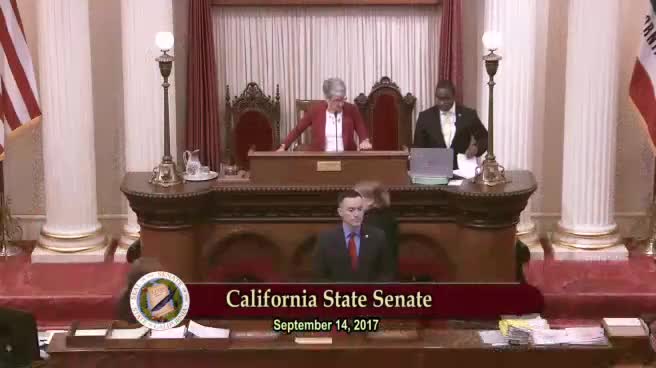 1MIN
Senate Floor
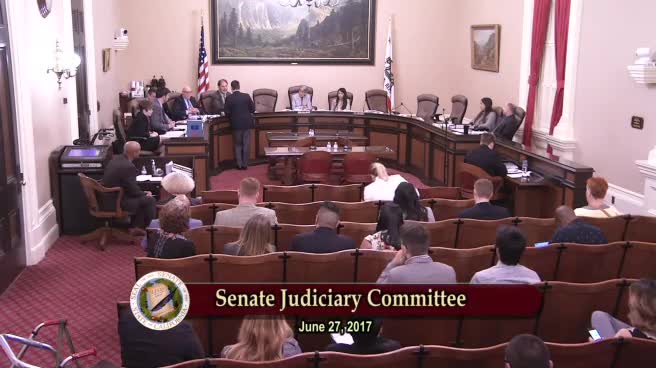 3MIN
Senate Standing Committee on Judiciary
 1MIN
Assembly Floor
 15MIN
Assembly Standing Committee on Judiciary
 6MIN
Assembly Standing Committee on Judiciary
Bill Author

Bill Co-Author(s):