AB 3: Firearms: age restrictions.
- Session Year: 2017-2018
- House: Assembly
- Latest Version Date: 2018-03-07
Existing law requires the transfer of a firearm to be made through a licensed dealer, except as specifically exempted. Existing law prohibits the sale or transfer of a handgun, except as specifically exempted, to any person below the age of 21 years. Existing law also prohibits the sale or transfer of a firearm, other than a handgun, except as specifically exempted, to any person below the age of 18 years. A violation of this prohibition by a dealer is a crime.
This bill would prohibit the sale or transfer of any firearm by a licensed dealer to any person under 21 years of age.
The bill would also make conforming changes to age restrictions on the purchase of ammunition and the issuance of a serial number by the Department of Justice for an assembled firearm.
By expanding the scope of an existing crime, this bill would impose a state-mandated local program.
The California Constitution requires the state to reimburse local agencies and school districts for certain costs mandated by the state. Statutory provisions establish procedures for making that reimbursement.
This bill would provide that no reimbursement is required by this act for a specified reason.
Under existing law, grand theft is the theft of anything of a value exceeding $950, with exceptions, and is punished as either a misdemeanor or a felony. Existing law, the Safe Neighborhoods and Schools Act, enacted as an initiative statute by Proposition 47, as approved by the voters at the November 4, 2014, statewide general election, makes the theft of money, labor, or property petty theft, punishable as a misdemeanor, whenever the value of the property taken does not exceed $950.This bill would make it a crime for a person to, on more than one occasion within any 180-day period, acting in concert with 2 or more other persons, receive, purchase, or possess merchandise knowing or believing it to have been stolen from a merchants premises, if the aggregated value of such merchandise received, purchased, or possessed over the 180-day period exceeds $1,500. The bill would make this crime punishable as a misdemeanor or a felony.Existing law authorizes a merchant to detain a person for a reasonable time for the purpose of conducting an investigation in a reasonable manner whenever the merchant has probable cause to believe the person to be detained is attempting to unlawfully take or has unlawfully taken merchandise from the merchants premises. Existing law authorizes the merchant to request the person to voluntarily surrender the item. Existing law authorizes the merchant to conduct a limited and reasonable search of that merchandise pursuant to certain restrictions. Upon surrender or discovery of the item, existing law authorizes the person detained to be requested, but not to be required, to provide adequate proof of his or her true identity.This bill would provide that no law precludes a merchant, directly or through an independent educational provider, from offering a person suspected of theft involving merchandise that is taken from the merchants premises an opportunity to complete a precomplaint education program in lieu of making or filing a report of theft with a law enforcement agency, from informing the person of relevant criminal and civil remedies available to the state and the merchant, or from reducing or waiving the program fee based on the persons ability to pay.Existing law establishes the proper jurisdictions of a criminal action for burglary, carjacking, robbery, theft, or embezzlement when property taken in one jurisdictional territory is brought into another, or when property is received in one jurisdictional territory with the knowledge that it has been stolen or embezzled and the property was stolen or embezzled in another jurisdictional territory, as any competent court within either jurisdictional territory, or any contiguous jurisdictional territory if the arrest is made within the contiguous territory, the prosecution secures on the record the defendants knowing, voluntary, and intelligent waiver of the right of vicinage, and the defendant is charged with one or more property crimes in the arresting territory.This bill would additionally establish the jurisdiction of a criminal action for theft or other specified crimes as including the county where an offense involving the theft or receipt of the stolen merchandise occurred, the county in which any such merchandise was recovered, or the county where any act was done by the defendant in instigating, procuring, promoting, or aiding in the commission of the offense. The bill would also, if multiple offenses of theft or other specified crimes all involving the same defendant or defendants and the same merchandise or the same defendant or defendants and the scheme or substantially similar activity occur in multiple jurisdictions, establish that any of those jurisdictions is a proper jurisdiction for all of the offenses.Existing law requires a peace officer, upon arresting a person for a misdemeanor offense, to issue him or her a notice to appear in court and to release the person, unless the individual demands to be taken before a magistrate. Existing law permits a peace officer to not release a person if, among other reasons, there were one or more outstanding arrest warrants for the person, there is reason to believe that the person would not appear at the time and place specified in the notice, or there is a reasonable likelihood that the offense or offenses would continue or resume.This bill would permit a peace officer to not release a person if there are unresolved failures to appear in court on previous misdemeanor citations. The bill would additionally permit a peace officer to not release a person if he or she has been cited, arrested, or convicted for misdemeanor or felony theft from a store or from a vehicle 2 or more times in the last 180 days. By increasing the number of persons subject to detention at the county jail, this bill would create a state-mandated local program.Existing law authorizes a court to issue a bench warrant whenever a defendant fails to appear in court as required by law, as specified.This bill would authorize the issuance of a bench warrant when a defendant has been cited or arrested for misdemeanor or felony theft from a store or vehicle and has failed to appear in court in connection with that charge or those charges 3 or more times in the last 6 months.Existing law authorizes a court, with the consent of the defendant and a waiver of the defendants speedy trial right, to postpone prosecution of a misdemeanor and place the defendant in a pretrial diversion program or a deferred entry of judgment program under specified situations.This bill would authorize a city or county prosecuting attorney or a county probation department to create a diversion or deferred entry of judgment program for persons who commit repeat theft offenses, as specified. Under a program, the prosecuting attorney would be required to refrain from or defer prosecution on the offense or offenses if the person completes program requirements such as community service, and makes adequate restitution or an appropriate substitute for restitution to the establishment or person from which property was stolen.Existing law establishes the Board of State and Community Corrections to provide statewide leadership, coordination, and technical assistance to promote effective state and local efforts and partnerships in Californias adult and juvenile criminal justice system.This bill would additionally require the board to, upon appropriation by the Legislature, award funding for a grant program to 4 or more county superior courts or county probation departments to create demonstration projects to reduce the recidivism of high-risk misdemeanor probationers through the use of risk assessments at sentencing and formal probation.Existing law allows, after being authorized by a court and when the actual inmate count exceeds the actual bed capacity of a county or city jail, the sheriff or chief of police to accelerate the release, discharge, or expiration of sentence date of sentenced inmates up to a maximum of 30 days. Existing law requires that inmates closest to their normal release, discharge, or expiration of sentence to be given accelerated release priority.This bill would authorize the sheriff, chief of police, or other person responsible for the county or city jail to consider the risk to public safety posed by the inmate, as specified, in determining whether to grant the inmate accelerated release.The California Constitution requires the state to reimburse local agencies and school districts for certain costs mandated by the state. Statutory provisions establish procedures for making that reimbursement.This bill would provide that with regard to certain mandates no reimbursement is required by this act for a specified reason.With regard to any other mandates, this bill would provide that, if the Commission on State Mandates determines that the bill contains costs so mandated by the state, reimbursement for those costs shall be made pursuant to the statutory provisions noted above.Under existing law, grand theft is the theft of anything of a value exceeding $950, with exceptions, and is punished as either a misdemeanor or a felony. Existing law, the Safe Neighborhoods and Schools Act, enacted as an initiative statute by Proposition 47, as approved by the voters at the November 4, 2014, statewide general election, makes the theft of money, labor, or property petty theft, punishable as a misdemeanor, whenever the value of the property taken does not exceed $950.
This bill would make it a crime for a person to, on more than one occasion within any 180-day period, acting in concert with 2 or more other persons, receive, purchase, or possess merchandise knowing or believing it to have been stolen from a merchants premises, if the aggregated value of such merchandise received, purchased, or possessed over the 180-day period exceeds $1,500. The bill would make this crime punishable as a misdemeanor or a felony.
Existing law authorizes a merchant to detain a person for a reasonable time for the purpose of conducting an investigation in a reasonable manner whenever the merchant has probable cause to believe the person to be detained is attempting to unlawfully take or has unlawfully taken merchandise from the merchants premises. Existing law authorizes the merchant to request the person to voluntarily surrender the item. Existing law authorizes the merchant to conduct a limited and reasonable search of that merchandise pursuant to certain restrictions. Upon surrender or discovery of the item, existing law authorizes the person detained to be requested, but not to be required, to provide adequate proof of his or her true identity.
This bill would provide that no law precludes a merchant, directly or through an independent educational provider, from offering a person suspected of theft involving merchandise that is taken from the merchants premises an opportunity to complete a precomplaint education program in lieu of making or filing a report of theft with a law enforcement agency, from informing the person of relevant criminal and civil remedies available to the state and the merchant, or from reducing or waiving the program fee based on the persons ability to pay.
Existing law establishes the proper jurisdictions of a criminal action for burglary, carjacking, robbery, theft, or embezzlement when property taken in one jurisdictional territory is brought into another, or when property is received in one jurisdictional territory with the knowledge that it has been stolen or embezzled and the property was stolen or embezzled in another jurisdictional territory, as any competent court within either jurisdictional territory, or any contiguous jurisdictional territory if the arrest is made within the contiguous territory, the prosecution secures on the record the defendants knowing, voluntary, and intelligent waiver of the right of vicinage, and the defendant is charged with one or more property crimes in the arresting territory.
This bill would additionally establish the jurisdiction of a criminal action for theft or other specified crimes as including the county where an offense involving the theft or receipt of the stolen merchandise occurred, the county in which any such merchandise was recovered, or the county where any act was done by the defendant in instigating, procuring, promoting, or aiding in the commission of the offense. The bill would also, if multiple offenses of theft or other specified crimes all involving the same defendant or defendants and the same merchandise or the same defendant or defendants and the scheme or substantially similar activity occur in multiple jurisdictions, establish that any of those jurisdictions is a proper jurisdiction for all of the offenses.
Existing law requires a peace officer, upon arresting a person for a misdemeanor offense, to issue him or her a notice to appear in court and to release the person, unless the individual demands to be taken before a magistrate. Existing law permits a peace officer to not release a person if, among other reasons, there were one or more outstanding arrest warrants for the person, there is reason to believe that the person would not appear at the time and place specified in the notice, or there is a reasonable likelihood that the offense or offenses would continue or resume.
This bill would permit a peace officer to not release a person if there are unresolved failures to appear in court on previous misdemeanor citations. The bill would additionally permit a peace officer to not release a person if he or she has been cited, arrested, or convicted for misdemeanor or felony theft from a store or from a vehicle 2 or more times in the last 180 days. By increasing the number of persons subject to detention at the county jail, this bill would create a state-mandated local program.
Existing law authorizes a court to issue a bench warrant whenever a defendant fails to appear in court as required by law, as specified.
This bill would authorize the issuance of a bench warrant when a defendant has been cited or arrested for misdemeanor or felony theft from a store or vehicle and has failed to appear in court in connection with that charge or those charges 3 or more times in the last 6 months.
Existing law authorizes a court, with the consent of the defendant and a waiver of the defendants speedy trial right, to postpone prosecution of a misdemeanor and place the defendant in a pretrial diversion program or a deferred entry of judgment program under specified situations.
This bill would authorize a city or county prosecuting attorney or a county probation department to create a diversion or deferred entry of judgment program for persons who commit repeat theft offenses, as specified. Under a program, the prosecuting attorney would be required to refrain from or defer prosecution on the offense or offenses if the person completes program requirements such as community service, and makes adequate restitution or an appropriate substitute for restitution to the establishment or person from which property was stolen.
Existing law establishes the Board of State and Community Corrections to provide statewide leadership, coordination, and technical assistance to promote effective state and local efforts and partnerships in Californias adult and juvenile criminal justice system.
This bill would additionally require the board to, upon appropriation by the Legislature, award funding for a grant program to 4 or more county superior courts or county probation departments to create demonstration projects to reduce the recidivism of high-risk misdemeanor probationers through the use of risk assessments at sentencing and formal probation.
Existing law allows, after being authorized by a court and when the actual inmate count exceeds the actual bed capacity of a county or city jail, the sheriff or chief of police to accelerate the release, discharge, or expiration of sentence date of sentenced inmates up to a maximum of 30 days. Existing law requires that inmates closest to their normal release, discharge, or expiration of sentence to be given accelerated release priority.
This bill would authorize the sheriff, chief of police, or other person responsible for the county or city jail to consider the risk to public safety posed by the inmate, as specified, in determining whether to grant the inmate accelerated release.
The California Constitution requires the state to reimburse local agencies and school districts for certain costs mandated by the state. Statutory provisions establish procedures for making that reimbursement.
This bill would provide that with regard to certain mandates no reimbursement is required by this act for a specified reason.
With regard to any other mandates, this bill would provide that, if the Commission on State Mandates determines that the bill contains costs so mandated by the state, reimbursement for those costs shall be made pursuant to the statutory provisions noted above.
Existing law designates the State Department of Social Services as the single agency with full power to supervise every phase of the administration of public social services, except health care services and medical assistance. Existing law requires the department, subject to the availability of funding, to contract with qualified nonprofit legal services organizations to provide legal services to unaccompanied undocumented minors, as defined, who are transferred to the care and custody of the federal Office of Refugee Resettlement and who are present in this state. Existing law also requires a court, prior to accepting a guilty or nolo contendere plea, to advise a defendant that, if the defendant is not a citizen, conviction of the charged offense may have the consequences of deportation, exclusion from admission to the United States, or denial of naturalization, as specified. This bill would require the department to issue requests for proposal and issue grants to qualified legal services projects or qualified support centers that meet specified requirements, for the provision of legal training, written materials, mentoring, and technical assistance to county offices of the public defender in this state and attorneys contracted by counties to provide indigent criminal defense on issues relating to the immigration consequences of criminal convictions and obtaining relief for prior invalid convictions for noncitizen defendants.This bill would additionally require the department to issue requests for proposal and issue grants to qualified legal services projects and qualified support centers for the purpose of administering funding or partnering with county offices of the public defender for those offices to hire or designate one or more attorneys who will be mentored and trained by attorneys at the qualified legal services project and qualified support centers. The bill would require the designated attorneys to be mentored or trained to advise defenders on the immigration consequences of criminal convictions for noncitizen clients and how to obtain relief for prior invalid convictions for these clients.This bill would make implementation of its provisions subject to the enactment of an appropriation for that purpose.Existing law designates the State Department of Social Services as the single agency with full power to supervise every phase of the administration of public social services, except health care services and medical assistance. Existing law requires the department, subject to the availability of funding, to contract with qualified nonprofit legal services organizations to provide legal services to unaccompanied undocumented minors, as defined, who are transferred to the care and custody of the federal Office of Refugee Resettlement and who are present in this state. Existing law also requires a court, prior to accepting a guilty or nolo contendere plea, to advise a defendant that, if the defendant is not a citizen, conviction of the charged offense may have the consequences of deportation, exclusion from admission to the United States, or denial of naturalization, as specified.
This bill would require the department to issue requests for proposal and issue grants to qualified legal services projects or qualified support centers that meet specified requirements, for the provision of legal training, written materials, mentoring, and technical assistance to county offices of the public defender in this state and attorneys contracted by counties to provide indigent criminal defense on issues relating to the immigration consequences of criminal convictions and obtaining relief for prior invalid convictions for noncitizen defendants.
This bill would additionally require the department to issue requests for proposal and issue grants to qualified legal services projects and qualified support centers for the purpose of administering funding or partnering with county offices of the public defender for those offices to hire or designate one or more attorneys who will be mentored and trained by attorneys at the qualified legal services project and qualified support centers. The bill would require the designated attorneys to be mentored or trained to advise defenders on the immigration consequences of criminal convictions for noncitizen clients and how to obtain relief for prior invalid convictions for these clients.
This bill would appropriate $14,000,000 from the General Fund to the department for the purposes of the grants awarded pursuant to this bill.This bill would make implementation of its provisions subject to the enactment of an appropriation for that purpose.
Existing law designates the State Department of Social Services as the single agency with full power to supervise every phase of the administration of public social services, except health care services and medical assistance. Existing law requires the department, subject to the availability of funding, to contract with qualified nonprofit legal services organizations to provide legal services to unaccompanied undocumented minors, as defined, who are transferred to the care and custody of the federal Office of Refugee Resettlement and who are present in this state. Existing law also requires a court, prior to accepting a guilty or nolo contendere plea, to advise a defendant that, if the defendant is not a citizen, conviction of the charged offense may have the consequences of deportation, exclusion from admission to the United States, or denial of naturalization, as specified.
This bill would require the department or a nonprofit organization contracting with the department, as provided, to issue requests for proposal and issue grants to qualified legal services projects, projects or qualified support centers, or county offices of the public defender centers that meet specified requirements, to expand their programs in order to serve as regional legal services agencies capable of providing for the provision of legal training, written materials, mentoring, and technical assistance to county offices of the public defender in this state and attorneys contracted by counties to provide indigent criminal defense on issues relating to the immigration consequences of criminal convictions. The bill would also require the department or contracted nonprofit organization, as provided, to issue requests for proposal and issue grants to qualified legal services projects, qualified support centers, or county offices of the public defender that meet specified requirements, that can act as a statewide resource center to the regional legal services agencies and county offices of the public defender to provide these regional legal services agencies and offices with ongoing training, written materials, mentoring, and technical assistance, and to coordinate a statewide collaborative to ensure efficient delivery of high quality legal services. convictions and obtaining relief for prior invalid convictions for noncitizen defendants.
This bill would additionally require the department or contracted nonprofit organization, as provided, to issue requests for proposal and issue grants to county offices of public defenders for those offices to secure new tools to enable their attorneys to competently represent noncitizen defendants in current cases and obtain relief for prior invalid convictions, as provided, and for those offices to enable deputy public defenders and paralegals to assist nonprofit organizations and private immigration attorneys serving noncitizens in removal proceedings with locating, collecting, and copying legal documents relating to the noncitizens prior criminal case. qualified legal services projects and qualified support centers for the purpose of administering funding or partnering with county offices of the public defender for those offices to hire or designate one or more attorneys who will be mentored and trained by attorneys at the qualified legal services project and qualified support centers. The bill would require the designated attorneys to be mentored or trained to advise defenders on the immigration consequences of criminal convictions for noncitizen clients and how to obtain relief for prior invalid convictions for these clients.
This bill would appropriate $____ $14,000,000 from the General Fund to the department or contracted nonprofit organization for the purposes of the grants awarded pursuant to this bill.
This bill would declare that it is to take effect immediately as an urgency statute.Existing law designates the State Department of Social Services as the single agency with full power to supervise every phase of the administration of public social services, except health care services and medical assistance. Existing law requires the department, subject to the availability of funding, to contract with qualified nonprofit legal services organizations to provide legal services to unaccompanied undocumented minors, as defined, who are transferred to the care and custody of the federal Office of Refugee Resettlement and who are present in this state. Existing law also requires a court, prior to accepting a guilty or nolo contendere plea, to advise a defendant that, if the defendant is not a citizen, conviction of the charged offense may have the consequences of deportation, exclusion from admission to the United States, or denial of naturalization, as specified.
This bill would require the department or a nonprofit organization contracting with the department, as provided, to issue requests for proposal and issue grants to qualified legal services projects, qualified support centers, or county offices of the public defender that meet specified requirements, to expand their programs in order to serve as regional centers legal services agencies capable of providing legal training, written materials, mentoring, and technical assistance to county offices of the public defender in this state on issues relating to the immigration consequences of criminal convictions. The bill would also require the department or contracted nonprofit organization, as provided, to issue requests for proposal and issue grants to qualified legal services projects, qualified support centers, or county offices of the public defender that meet specified requirements, that can act as a statewide resource center to the regional centers legal services agencies and county offices of the public defender to provide these regional centers legal services agencies and offices with ongoing training, written materials, mentoring, and technical assistance, and to coordinate a statewide collaborative to ensure efficient delivery of high quality legal services.
This bill would additionally require the department or contracted nonprofit organization, as provided, to issue requests for proposal and issue grants to county offices of public defenders for those offices to secure new tools to enable their attorneys to competently represent noncitizen defendants in current cases and obtain relief for prior invalid convictions, as provided, and for those offices to enable deputy public defenders and paralegals to assist nonprofit organizations and private immigration attorneys serving noncitizens in removal proceedings with locating, collecting, and copying legal documents relating to the noncitizens prior criminal case.
This bill would appropriate $____ from the General Fund to the department or contracted nonprofit organization for the purposes of the grants awarded pursuant to this bill.
This bill would declare that it is to take effect immediately as an urgency statute.
Existing law designates the State Department of Social Services as the single agency with full power to supervise every phase of the administration of public social services, except health care services and medical assistance. Existing law requires the department, subject to the availability of funding, to contract with qualified nonprofit legal services organizations to provide legal services to unaccompanied undocumented minors, as defined, who are transferred to the care and custody of the federal Office of Refugee Resettlement and who are present in this state. Existing law also requires a court, prior to accepting a guilty or nolo contendere plea, to advise a defendant that, if the defendant is not a citizen, conviction of the charged offense may have the consequences of deportation, exclusion from admission to the United States, or denial of naturalization, as specified.
This bill would require the department or a nonprofit organization contracting with the department, as provided, to issue requests for proposal and issue grants to qualified legal services projects, qualified support centers, or county offices of the public defender that meet specified requirements, to expand their programs in order to serve as regional centers capable of providing legal training, written materials, mentoring, and technical assistance to county offices of the public defender in this state on issues relating to the immigration consequences of criminal convictions. The bill would also require the department or contracted nonprofit organization, as provided, to issue requests for proposal and issue grants to qualified legal services projects, qualified support centers, or county offices of the public defender that meet specified requirements, that can act as a statewide resource center to the regional centers and county offices of the public defender to provide these regional centers and offices with ongoing training, written materials, mentoring, and technical assistance, and to coordinate a statewide collaborative to ensure efficient delivery of high quality legal services.
This bill would additionally require the department or contracted nonprofit organization, as provided, to issue requests for proposal and issue grants to county offices of public defenders for those offices to secure new tools to enable their attorneys to competently represent noncitizen defendants in current cases and obtain relief for prior invalid convictions, as provided, and for those offices to enable deputy public defenders and paralegals to assist nonprofit organizations and private immigration attorneys serving noncitizens in removal proceedings with locating, collecting, and copying legal documents relating to the noncitizens prior criminal case.
This bill would appropriate $____ from the General Fund to the department or contracted nonprofit organization for the purposes of the grants awarded pursuant to this bill.
This bill would declare that it is to take effect immediately as an urgency statute.
No A person licensed under Sections 26700 to 26915, inclusive, shall not sell, supply, deliver, or give possession or control of a handgun firearm to any person under the age of 21 years, or any other firearm to a person under the age of 18 years. 21 years of age.
SEC. 2.Section 29182 of the Penal Code is amended to read:29182.(a)(1)The Department of Justice shall accept applications from, and shall grant applications in the form of serial numbers pursuant to Section 23910 to, persons who wish to manufacture or assemble firearms pursuant to subdivision (b) of Section 29180.
(2)The Department of Justice shall accept applications from, and shall grant applications in the form of serial numbers pursuant to Section 23910 to, persons who wish to own a firearm described in subdivision (c) of Section 29180.
(b)An application made pursuant to subdivision (a) shall only be granted by the department if the applicant does all of the following:
(1)For each transaction, completes a personal firearms eligibility check demonstrating that the applicant is not prohibited by state or federal law from possessing, receiving, owning, or purchasing a firearm.
(2)Presents proof of age and identity as specified in Section 16400. The applicant shall be 18 21 years of age or older to obtain a unique serial number or mark of identification for a firearm that is not a handgun, and shall be 21 years of age or older to obtain a unique serial number or mark of identification for a handgun. firearm.
(3)Provides a description of the firearm that he or she owns or intends to manufacture or assemble, in a manner prescribed by the department.
(4)Has a valid firearm safety certificate or handgun safety certificate.
(c)The department shall inform applicants who are denied an application of the reasons for the denial in writing.
(d)All applications shall be granted or denied within 15 calendar days of the receipt of the application by the department.
(e)This chapter does not authorize a person to manufacture, assemble, or possess a weapon prohibited under Section 16590, an assault weapon as defined in Section 30510 or 30515, a machinegun as defined in Section 16880, a .50 BMG rifle as defined in Section 30530, or a destructive device as defined in Section 16460.
(f)The department shall adopt regulations to administer this chapter.
SEC. 3.Section 30300 of the Penal Code is amended to read:30300.(a)Any person, corporation, or dealer who does any of the following shall be punished by imprisonment in a county jail for a term not to exceed six months, or by a fine not to exceed one thousand dollars ($1,000), or by both the imprisonment and fine:
(1)Sells any ammunition or reloaded ammunition to a person under 18 21 years of age.
(2)Sells any ammunition or reloaded ammunition designed and intended for use in a handgun to a person under 21 years of age. Where ammunition or reloaded ammunition may be used in both a rifle and a handgun, it may be sold to a person who is at least 18 years of age, but less than 21 years of age, if the vendor reasonably believes that the ammunition is being acquired for use in a rifle and not a handgun.(3)(2)Supplies, delivers, or gives possession of any ammunition to any minor who the person, corporation, or dealer knows, or using reasonable care should know, is prohibited from possessing that ammunition at that time pursuant to Chapter 1 (commencing with Section 29610) of Division 9 of Title 4 of Part 6.
(b)Proof that a person, corporation, or dealer, or his or her agent or employee, demanded, was shown, and acted in reasonable reliance upon, bona fide evidence of majority and identity shall be a defense to any criminal prosecution under this section.
SEC. 4.No reimbursement is required by this act pursuant to Section 6 of Article XIIIB of the California Constitution because the only costs that may be incurred by a local agency or school district will be incurred because this act creates a new crime or infraction, eliminates a crime or infraction, or changes the penalty for a crime or infraction, within the meaning of Section 17556 of the Government Code, or changes the definition of a crime within the meaning of Section 6 of Article XIIIB of the California Constitution.
All matter omitted in this version of the bill appears in the bill as amended in the Senate, September 14, 2017. (JR11)The Legislature finds and declares all of the following:
(a)(1)Best practices in reducing offender recidivism incorporate the use of objective risk and needs assessment instruments to evaluate the risk offenders pose to continue engaging in criminal activity, and to identify individually tailored responses, programs, or sanctions that can achieve behavior change.
(2)Evaluating risk can help law enforcement and criminal justice practitioners make determinations such as whether to detain or cite and release offenders at the point of contact, whether to detain or release individuals in local jails, and whether to issue formal or informal probation requirements.
(3)Historically, in California, risk assessment has been underutilized in responding to nonviolent chronic and repeat crimes, such as repeat theft from stores or vehicles, either as misdemeanors or felonies.
(4)Risk assessment is an important tool to focus law enforcement, criminal justice, and behavioral change programs on individuals engaged in chronic and repeat theft crimes.
(b)(1)Reducing recidivism and preventing recurring criminal behavior have been, and should continue to be, key goals of the states criminal justice policy.
(2)Programs exist to provide educational opportunities to low-risk offenders who engage in retail theft, or shoplifting.
(3)Opportunities to reduce recidivism through alternatives to arrest and prosecution should be considered, as they reduce burdens on law enforcement agencies and courts.
(4)These programs offer a second chance for low-risk offenders. By keeping these persons out of the criminal justice system, these programs give them a chance to address their mistake, teach valuable skills and habits designed to prevent reoffense, and limit the resources expended by law enforcement and courts.
(5)These programs have produced demonstrable positive outcomes, including thousands of low-risk offenders avoiding prosecution, very low recidivism rates, reductions in calls for service to law enforcement, and decreased retail loss.
(6)While not precluded by any particular statute, it is appropriate to clarify that these types of educational programs, designed to give offenders a second chance and to reduce recidivism, are permitted under current law.
SEC. 2.Section 490.4 is added to the Penal Code, to read:490.4.(a)Any person who, on more than one occasion within any 180-day period, acting in concert with two or more other persons, receives, purchases, or possesses merchandise knowing or believing it to have been stolen from a merchants premises, and the aggregated value of such merchandise received, purchased, or possessed over the 180-day period exceeds one thousand five hundred dollars ($1,500), shall be punished by imprisonment in the county jail not exceeding one year or imprisonment pursuant to subdivision (h) of Section 1170.
(b)Nothing in this section shall preclude prosecution under any other law.
SEC. 3.Section 490.55 is added to the Penal Code, immediately following Section 490.5, to read:490.55.(a)Nothing in this chapter or any other law precludes a merchant, whether directly or through an independent educational provider, from doing any of the following, including while a person suspected of theft involving merchandise is detained by the merchant:
(1)Offering a person suspected of theft involving merchandise that is taken from the merchants premises an opportunity to complete a precomplaint education program in lieu of making or filing a report of theft with a law enforcement agency.
(2)Informing the person described in paragraph (1) of relevant criminal and civil remedies available to the state and the merchant.
(3)Reducing or waiving the fee for the precomplaint education program based on the persons ability to pay.
(b)For purposes of this section, the following definitions apply:
(1)Merchant has the same meaning as provided in subdivision (g) of Section 490.5.
(2)Merchandise has the same meaning as provided in subdivision (g) of Section 490.5.
SEC. 4.Section 786.5 is added to the Penal Code, to read:786.5.The jurisdiction of a criminal action for theft, as defined in subdivision (a) of Section 484, or a violation of Section 490.4 or Section 496, shall also include the county where an offense involving the theft or receipt of the stolen merchandise occurred, the county in which any such merchandise was recovered, or the county where any act was done by the defendant in instigating, procuring, promoting, or aiding in the commission of a theft offense or a violation of Section 490.4 or Section 496 or in abetting the parties concerned therein. If multiple offenses of theft or violations of Section 490.4 or Section 496, either all involving the same defendant or defendants and the same merchandise, or all involving the same defendant or defendants and the same scheme or substantially similar activity, occur in multiple jurisdictions, then any of those jurisdictions is a proper jurisdiction for all of the offenses. Jurisdiction also extends to all associated offenses connected together in their commission to the underlying theft offenses or violations of Section 490.4 or Section 496.
SEC. 5.Section 853.6 of the Penal Code is amended to read:853.6.(a)(1)In any case in which a person is arrested for an offense declared to be a misdemeanor, including a violation of any city or county ordinance, and does not demand to be taken before a magistrate, that person shall, instead of being taken before a magistrate, be released according to the procedures set forth by this chapter, although nothing prevents an officer from first booking an arrestee pursuant to subdivision (g). If the person is released, the officer or his or her superior shall prepare in duplicate a written notice to appear in court, containing the name and address of the person, the offense charged, and the time when, and place where, the person shall appear in court. If, pursuant to subdivision (i), the person is not released prior to being booked and the officer in charge of the booking or his or her superior determines that the person should be released, the officer or his or her superior shall prepare a written notice to appear in a court.
(2)In any case in which a person is arrested for a misdemeanor violation of a protective court order involving domestic violence, as defined in subdivision (b) of Section 13700, or arrested pursuant to a policy, as described in Section 13701, the person shall be taken before a magistrate instead of being released according to the procedures set forth in this chapter, unless the arresting officer determines that there is not a reasonable likelihood that the offense will continue or resume or that the safety of persons or property would be imminently endangered by release of the person arrested. Prior to adopting these provisions, each city, county, or city and county shall develop a protocol to assist officers to determine when arrest and release is appropriate, rather than taking the arrested person before a magistrate. The county shall establish a committee to develop the protocol, consisting of, at a minimum, the police chief or county sheriff within the jurisdiction, the district attorney, county counsel, city attorney, representatives from domestic violence shelters, domestic violence councils, and other relevant community agencies.
(3)This subdivision shall not apply to the crimes specified in Section 1270.1, including crimes defined in each of the following:
(A)Paragraph (1) of subdivision (e) of Section 243.
(B)Section 273.5.
(C)Section 273.6, if the detained person made threats to kill or harm, has engaged in violence against, or has gone to the residence or workplace of, the protected party.
(D)Section 646.9.
(4)Nothing in this subdivision shall be construed to affect a defendants ability to be released on bail or on his or her own recognizance, except as specified in Section 1270.1.
(b)Unless waived by the person, the time specified in the notice to appear shall be at least 10 days after arrest if the duplicate notice is to be filed by the officer with the magistrate.
(c)The place specified in the notice shall be the court of the magistrate before whom the person would be taken if the requirement of taking an arrested person before a magistrate were complied with, or shall be an officer authorized by that court to receive a deposit of bail.
(d)The officer shall deliver one copy of the notice to appear to the arrested person, and the arrested person, in order to secure release, shall give his or her written promise to appear in court as specified in the notice by signing the duplicate notice which shall be retained by the officer, and the officer may require the arrested person, if he or she has no satisfactory identification, to place a right thumbprint, or a left thumbprint or fingerprint if the person has a missing or disfigured right thumb, on the notice to appear. Except for law enforcement purposes relating to the identity of the arrestee, no person or entity may sell, give away, allow the distribution of, include in a database, or create a database with, this print. Upon the signing of the duplicate notice, the arresting officer shall immediately release the person arrested from custody.
(e)The officer shall, as soon as practicable, file the duplicate notice, as follows:
(1)It shall be filed with the magistrate if the offense charged is an infraction.
(2)It shall be filed with the magistrate if the prosecuting attorney has previously directed the officer to do so.
(3)The duplicate notice and underlying police reports in support of the charge or charges shall be filed with the prosecuting attorney in cases other than those specified in paragraphs (1) and (2).
If the duplicate notice is filed with the prosecuting attorney, he or she, within his or her discretion, may initiate prosecution by filing the notice or a formal complaint with the magistrate specified in the duplicate notice within 25 days from the time of arrest. If the prosecution is not to be initiated, the prosecutor shall send notice to the person arrested at the address on the notice to appear. The failure by the prosecutor to file the notice or formal complaint within 25 days of the time of the arrest shall not bar further prosecution of the misdemeanor charged in the notice to appear. However, any further prosecution shall be preceded by a new and separate citation or an arrest warrant.
Upon the filing of the notice with the magistrate by the officer, or the filing of the notice or formal complaint by the prosecutor, the magistrate may fix the amount of bail that in his or her judgment, in accordance with Section 1275, is reasonable and sufficient for the appearance of the defendant and shall endorse upon the notice a statement signed by him or her in the form set forth in Section 815a. The defendant may, prior to the date upon which he or she promised to appear in court, deposit with the magistrate the amount of bail set by the magistrate. At the time the case is called for arraignment before the magistrate, if the defendant does not appear, either in person or by counsel, the magistrate may declare the bail forfeited, and may, in his or her discretion, order that no further proceedings shall be had in the case, unless the defendant has been charged with a violation of Section 374.3 or 374.7 of this code or of Section 11357, 11360, or 13002 of the Health and Safety Code, or a violation punishable under Section 5008.7 of the Public Resources Code, and he or she has previously been convicted of a violation of that section or a violation that is punishable under that section, except in cases where the magistrate finds that undue hardship will be imposed upon the defendant by requiring him or her to appear, the magistrate may declare the bail forfeited and order that no further proceedings be had in the case.
Upon the making of the order that no further proceedings be had, all sums deposited as bail shall immediately be paid into the county treasury for distribution pursuant to Section 1463.
(f)No warrant shall be issued for the arrest of a person who has given a written promise to appear in court, unless and until he or she has violated that promise or has failed to deposit bail, to appear for arraignment, trial, or judgment or to comply with the terms and provisions of the judgment, as required by law.
(g)The officer may book the arrested person at the scene or at the arresting agency prior to release or indicate on the citation that the arrested person shall appear at the arresting agency to be booked or indicate on the citation that the arrested person shall appear at the arresting agency to be fingerprinted prior to the date the arrested person appears in court. If it is indicated on the citation that the arrested person shall be booked or fingerprinted prior to the date of the persons court appearance, the arresting agency at the time of booking or fingerprinting shall provide the arrested person with verification of the booking or fingerprinting by making an entry on the citation. If it is indicated on the citation that the arrested person is to be booked or fingerprinted, the magistrate, judge, or court shall, before the proceedings begin, order the defendant to provide verification that he or she was booked or fingerprinted by the arresting agency. If the defendant cannot produce the verification, the magistrate, judge, or court shall require that the defendant be booked or fingerprinted by the arresting agency before the next court appearance, and that the defendant provide the verification at the next court appearance unless both parties stipulate that booking or fingerprinting is not necessary.
(h)A peace officer shall use the written notice to appear procedure set forth in this section for any misdemeanor offense in which the officer has arrested a person without a warrant pursuant to Section 836 or in which he or she has taken custody of a person pursuant to Section 847.
(i)Whenever any person is arrested by a peace officer for a misdemeanor, that person shall be released according to the procedures set forth by this chapter unless one or more of the following is a reason for nonrelease, in which case the arresting officer may release the person, except as provided in subdivision (a), or the arresting officer shall indicate, on a form to be established by his or her employing law enforcement agency, which of the following was a reason for the nonrelease:
(1)The person arrested was so intoxicated that he or she could have been a danger to himself or herself or to others.
(2)The person arrested required medical examination or medical care or was otherwise unable to care for his or her own safety.
(3)The person was arrested under one or more of the circumstances listed in Sections 40302 and 40303 of the Vehicle Code.
(4)There were one or more outstanding arrest warrants or failures to appear in court on previous misdemeanor citations that have not been resolved for the person.
(5)The person could not provide satisfactory evidence of personal identification.
(6)The prosecution of the offense or offenses for which the person was arrested, or the prosecution of any other offense or offenses, would be jeopardized by immediate release of the person arrested.
(7)There was a reasonable likelihood that the offense or offenses would continue or resume, or that the safety of persons or property would be imminently endangered by release of the person arrested.
(8)The person arrested demanded to be taken before a magistrate or refused to sign the notice to appear.
(9)There is reason to believe that the person would not appear at the time and place specified in the notice. The basis for this determination shall be specifically stated. An arrest warrant or failure to appear that is pending at the time of the current offense shall constitute reason to believe that the person would not appear as specified in the notice.
(10)The person was subject to Section 1270.1.
(11)The person has been cited, arrested, or convicted for misdemeanor or felony theft from a store or from a vehicle two or more times in the last 180 days.
The form shall be filed with the arresting agency as soon as practicable and shall be made available to any party having custody of the arrested person, subsequent to the arresting officer, and to any person authorized by law to release him or her from custody before trial.
(j)Once the arresting officer has prepared the written notice to appear and has delivered a copy to the person arrested, the officer shall deliver the remaining original and all copies as provided by subdivision (e).
Any person, including the arresting officer and any member of the officers department or agency, or any peace officer, who alters, conceals, modifies, nullifies, or destroys, or causes to be altered, concealed, modified, nullified, or destroyed, the face side of the remaining original or any copy of a citation that was retained by the officer, for any reason, before it is filed with the magistrate or with a person authorized by the magistrate to receive deposit of bail, is guilty of a misdemeanor.
If, after an arrested person has signed and received a copy of a notice to appear, the arresting officer determines that, in the interest of justice, the citation or notice should be dismissed, the arresting agency may recommend, in writing, to the magistrate that the charges be dismissed. The recommendation shall cite the reasons for the recommendation and shall be filed with the court.
If the magistrate makes a finding that there are grounds for dismissal, the finding shall be entered in the record and the charges dismissed.
Under no circumstances shall a personal relationship with any officer, public official, or law enforcement agency be grounds for dismissal.
(k)(1)A person contesting a charge by claiming under penalty of perjury not to be the person issued the notice to appear may choose to submit a right thumbprint, or a left thumbprint if the person has a missing or disfigured right thumb, to the issuing court through his or her local law enforcement agency for comparison with the one placed on the notice to appear. A local law enforcement agency providing this service may charge the requester no more than the actual costs. The issuing court may refer the thumbprint submitted and the notice to appear to the prosecuting attorney for comparison of the thumbprints. When there is no thumbprint or fingerprint on the notice to appear, or when the comparison of thumbprints is inconclusive, the court shall refer the notice to appear or copy thereof back to the issuing agency for further investigation, unless the court finds that referral is not in the interest of justice.
(2)Upon initiation of the investigation or comparison process by referral of the court, the court shall continue the case and the speedy trial period shall be tolled for 45 days.
(3)Upon receipt of the issuing agencys or prosecuting attorneys response, the court may make a finding of factual innocence pursuant to Section 530.6 if the court determines that there is insufficient evidence that the person cited is the person charged and shall immediately notify the Department of Motor Vehicles of its determination. If the Department of Motor Vehicles determines the citation or citations in question formed the basis of a suspension or revocation of the persons driving privilege, the department shall immediately set aside the action.
(4)If the prosecuting attorney or issuing agency fails to respond to a court referral within 45 days, the court shall make a finding of factual innocence pursuant to Section 530.6, unless the court finds that a finding of factual innocence is not in the interest of justice.
(5)The citation or notice to appear may be held by the prosecuting attorney or issuing agency for future adjudication should the arrestee who received the citation or notice to appear be found.
(l)For purposes of this section, the term arresting agency includes any other agency designated by the arresting agency to provide booking or fingerprinting services.
SEC. 6.Section 978.5 of the Penal Code is amended to read:978.5.(a)A bench warrant of arrest may be issued whenever a defendant fails to appear in court as required by law including, but not limited to, the following situations:
(1)If the defendant is ordered by a judge or magistrate to personally appear in court at a specific time and place.
(2)If the defendant is released from custody on bail and is ordered by a judge or magistrate, or other person authorized to accept bail, to personally appear in court at a specific time and place.
(3)If the defendant is released from custody on his own recognizance and promises to personally appear in court at a specific time and place.
(4)If the defendant is released from custody or arrest upon citation by a peace officer or other person authorized to issue citations and the defendant has signed a promise to personally appear in court at a specific time and place.
(5)If a defendant is authorized to appear by counsel and the court or magistrate orders that the defendant personally appear in court at a specific time and place.
(6)If an information or indictment has been filed in the superior court and the court has fixed the date and place for the defendant personally to appear for arraignment.
(7)If a defendant has been cited or arrested for misdemeanor or felony theft from a store or vehicle and has failed to appear in court in connection with that charge or those charges three or more times in the last six months.
(b)The bench warrant may be served in any county in the same manner as a warrant of arrest.
SEC. 7.Chapter 2.9D (commencing with Section 1001.81) is added to Title 6 of Part 2 of the Penal Code, to read:2.9D.Repeat Theft Crimes Diversion or Deferred Entry of Judgment Program1001.81.(a)The city or county prosecuting attorney or county probation department may create a diversion or deferred entry of judgment program pursuant to this section for persons who commit repeat theft offenses. The program may be conducted by the prosecuting attorneys office or the county probation department or by a private entity under contract with the prosecuting attorney or county probation department or another local public agency.
(b)Except as provided in subdivision (e), this chapter does not limit the power of the prosecuting attorney to prosecute repeat theft.
(c)If a county creates a diversion or deferred entry of judgment program for individuals committing repeat theft crimes as defined in subdivision (a), on receipt of a case or at arraignment, the prosecuting attorney shall either refer the case to the county probation department to conduct a prefiling investigation report to assess the appropriateness of program placement or, if the prosecuting attorneys office operates the program, determine if the case is one that is appropriate to be referred to the program. In determining whether to refer a case to the program, the probation department or prosecuting attorney shall consider, but is not limited to, all of the following factors:
(1)Any prefiling investigation report conducted by the county probation department or nonprofit contract agency operating the program that evaluates the individuals risk and needs and the appropriateness of program placement.
(2)If the person demonstrates a willingness to engage in community service, restitution, or other mechanisms to repair the harm caused by the criminal activity and address the underlying drivers of the criminal activity.
(3)If a risk and needs assessment identifies underlying substance abuse or mental health needs or other drivers of criminal activity that can be addressed through the diversion or deferred entry of judgment program.
(4)If the person has a violent or serious prior criminal record or has previously been referred to a diversion program and failed that program.
(5)Any relevant information concerning the efficacy of the program in reducing the likelihood of participants committing future offenses.
(d)On referral of a case to the program, a notice shall be provided to or forwarded by mail to the person alleged to have committed the offense with all of the following information:
(1)The date by which the person must contact the diversion program or deferred entry of judgment program in the manner designated by the supervising agency.
(2)A statement of the penalty for the offense or offenses with which that person has been charged.
(e)The prosecuting attorney may enter into a written agreement with the person to refrain from, or defer, prosecution on the offense or offenses on the following conditions:
(1)Completion of the program requirements such as community service or courses reasonably required by the prosecuting attorney.
(2)Making adequate restitution or an appropriate substitute for restitution to the establishment or person from which property was stolen at the face value of the stolen property, if required by the program.
(f)For the purposes of this section, repeat theft offenses means being cited or convicted for misdemeanor or felony theft from a store or from a vehicle two or more times in the last 180 days and failing to appear in court when cited for these crimes or continuing to engage in these crimes after release or after conviction.
SEC. 8.Section 1210.6 is added to the Penal Code, to read:1210.6.(a)(1)Upon appropriation by the Legislature, the Board of State and Community Corrections shall award funding for a grant program to four or more county superior courts or county probation departments to create demonstration projects to reduce the recidivism of high-risk misdemeanor probationers.
(2)The demonstration projects shall use risk assessments at sentencing when a misdemeanor conviction results in a term of probation to identify high-risk misdemeanants and to place these misdemeanants on formal probation that combines supervision with individually tailored programs, graduated sanctions, or incentives that address behavioral or treatment needs to achieve rehabilitation and successful completion of probation. The formal probation program may include incentives such as shortening probation terms as probationers complete the individually tailored program or probation requirements.
(3)The demonstration projects shall evaluate the probation completion and recidivism rates for project participants and may compare them to control groups to evaluate program efficacy. The Board of State and Community Corrections shall determine criteria for awarding the grants on a competitive basis that shall take into consideration the ability of a county to conduct a formal misdemeanor probation project for high-risk misdemeanor probationers, including components that align with evidence-based practices in reducing recidivism, including, but not limited to, risk and needs assessment, programming to help with drug or alcohol abuse, mental illness, or housing, and the support of the superior court if the application is from a county probation department.
(b)The Board of State and Community Corrections shall develop reporting requirements for each county receiving a grant to report to the board the results of the demonstration project. The reports may include, but are not limited to, the use of risk assessment, the formal probation program components, the number of individuals who were placed on formal probation, the number of individuals who were placed on informal probation, and the number of individuals in each group who were subsequently convicted of a new offense.
(c)(1)The Board of State and Community Corrections shall prepare a report analyzing the effectiveness of the demonstration projects based on the reports received from county grant recipients and any other relevant information. The report shall include a recommendation, if appropriate, as to the efficacy of expanding risk-based formal probation practices for higher risk misdemeanants. The report shall be completed and distributed to the Legislature and county criminal justice officials two years after an appropriation by the Legislature for this section.
(2)A report to be submitted pursuant to paragraph (1) shall be submitted in compliance with Section 9795 of the Government Code.
SEC. 9.Section 4024.1 of the Penal Code is amended to read:4024.1.(a)The sheriff, chief of police, or any other person responsible for a county or city jail may apply to the presiding judge of the superior court to receive general authorization for a period of 30 days to release inmates pursuant to the provisions of this section.
(b)Whenever, after being authorized by a court pursuant to subdivision (a), the actual inmate count exceeds the actual bed capacity of a county or city jail, the sheriff, chief of police, or other person responsible for such county or city jail may accelerate the release, discharge, or expiration of sentence date of sentenced inmates up to a maximum of 30 days.
(c)The total number of inmates released pursuant to this section shall not exceed a number necessary to balance the inmate count and actual bed capacity.
(d)Inmates closest to their normal release, discharge, or expiration of sentence date shall be given accelerated release priority. In deciding whether to grant an inmate release, the sheriff, chief of police, or other person responsible for the jail may consider the risk to public safety posed by the inmate, including the potential danger to other persons, as determined through a review of the persons previous criminal convictions or probation modifications or revocations, the outcomes of risk and needs assessment and objectively verifiable facts regarding the inmates criminal affiliations, and whether the inmate has a recent history of repeat prior misdemeanor or felony convictions, including convictions or citations and failures to appear on those citations for misdemeanor or felony theft from a store or from a vehicle two or more times in the last 180 days.
(e)The number of days that release, discharge, or expiration of sentence is accelerated shall in no case exceed 10 percent of the particular inmates original sentence, prior to the application thereto of any other credits or benefits authorized by law.
SEC. 10.No reimbursement is required by this act pursuant to Section 6 of Article XIIIB of the California Constitution for certain costs that may be incurred by a local agency or school district because, in that regard, this act creates a new crime or infraction, eliminates a crime or infraction, or changes the penalty for a crime or infraction, within the meaning of Section 17556 of the Government Code, or changes the definition of a crime within the meaning of Section 6 of Article XIIIB of the California Constitution.
However, if the Commission on State Mandates determines that this act contains other costs mandated by the state, reimbursement to local agencies and school districts for those costs shall be made pursuant to Part 7 (commencing with Section 17500) of Division 4 of Title 2 of the Government Code.
SECTION 1.The Legislature finds and declares all of the following:(a)The immigration consequences of criminal convictions have a particularly strong impact in California. One out of every four persons living in the state is foreign-born. One out of every two children lives in a household headed by at least one foreign-born person. The majority of these children are United States citizens. It is estimated that recently 50,000 parents of children who are United States citizens in California were deported in a period of a little over two years. Once a person is deported, especially after a criminal conviction, it is extremely unlikely that he or she ever is permitted to return. (b)Avoiding deportations also would result in significant budget savings associated with the economic and social disruptions caused by deportation, which can include the following: the loss of a familys primary wage earner, which can make the family more reliant on the social services safety net and public health insurance programs; the lost tax revenue from the deported worker; the placement of children in foster care; the loss of the family home to foreclosure; and disruption in childrens school attendance. (c)In Padilla v. Kentucky, 559 U.S. 356 (2010), the United States Supreme Court held that the Sixth Amendment to the United States Constitution requires defense counsel to advise noncitizen defendants regarding the potential immigration consequences of their criminal cases. California courts have long held that defense counsel must investigate and advise regarding the immigration consequences of the available depositions, and should, when consistent with the goals of and informed consent of the defendant, and as consistent with professional standards, defend against adverse immigration consequences (People v. Soriano, 194 Cal.App.3d 1470 (1987), People v. Barocio, 216 Cal.App.3d 99 (1989), People v. Bautista, 115 Cal.App.4th 229 (2004)). In 2015, California enacted Assembly Bill 1343 (Thurmond), adding Sections 1016.2 and 1016.3 to the Penal Code, which codified the holding of Padilla v. Kentucky and the holdings of the California court decisions that defense counsel must provide a noncitizen defendant with affirmative and competent advice on the immigration consequences of a proposed disposition and, when appropriate, defend against those consequences.(d)Providing accurate advice to noncitizen defendants on immigration consequences at the time of plea will result in significant budget savings by unclogging the criminal courts. Currently, defenders without adequate resources must seek frequent continuances, as they seek to obtain an analysis. Moreover, desperate immigrants who were not adequately advised at plea, and who only later discover that the plea is a basis for deportation and permanent separation from family, are returning to California courts with time-consuming motions to overturn their convictions based upon this failure and to replead their cases. They are within their rights. On March 27, 2017, the California Supreme Court reaffirmed that defense counsels failure to provide accurate advice on the immigration consequences of a proposed plea is a basis to vacate the conviction (People v. Patterson, 2 Cal.5th 885). In the last two years, California voters and the Legislature have passed laws that provide efficient vehicles to eliminate convictions that were legally invalid due to lack of information about immigration consequences, including subdivision (b) of Section 18.5 of the Penal Code, and Sections 1203.43 and 1473.7 of the Penal Code. By providing resources to defenders, the Legislature will enable public defenders, who are government employees, to meet the Sixth Amendment requirements set out in cases such as Padilla and Patterson, and it will stem the flow of postconviction relief cases coming back to the courts.(e)With an accurate understanding of immigration consequences, many noncitizen defendants are able to plead to a conviction and sentence that satisfy the prosecution and court but that have no, or fewer, adverse immigration consequences than the original charge.(f)Providing defense counsel with access to individual consultation, written resources, and training on immigration-related matters will ensure that the counsels clients receive equal treatment under the law and are properly advised of the immigration consequences of their cases and can make informed choices.(g)Defendants who are misadvised or not advised at all of the immigration consequences of criminal charges often suffer irreparable damage to their current or potential lawful immigration status, resulting in penalties such as mandatory detention, deportation, and permanent separation from close family.(h)Once in removal proceedings, a noncitizen may be transferred to immigration detention facilities across the country. Many criminal offenses trigger mandatory detention, so that the person may not request bond. In immigration proceedings, there is no court-appointed right to counsel, and the majority of detained immigrants go unrepresented. Immigration judges often lack the power to consider whether the person should remain in the United States in light of equitable factors such as serious hardship to United States citizen family members, length of time living in the United States, or rehabilitation.SEC. 2.Chapter 5.7 (commencing with Section 13500) is added to Part 3 of Division 9 of the Welfare and Institutions Code, to read:5.7.Funding for Immigration Counsel for Defense Counsel13500.For purposes of this chapter, both of the following definitions shall apply:(a)Qualified legal services project has the same meaning as that term is defined in subdivision (a) of Section 6213 of the Business and Professions Code.(b)Qualified support center has the same meaning as that term is defined in subdivision (b) of Section 6213 of the Business and Professions Code.13501.(a)The department shall issue requests for proposals and issue grants to qualified legal services projects and qualified support centers for provision of legal training, written materials, mentoring, and technical assistance to county offices of the public defender in this state and attorneys contracted by counties to provide indigent criminal defense in this state on issues relating to the immigration consequences of criminal convictions and obtaining relief for prior invalid convictions for noncitizen defendants. (b)The department shall issue requests for proposals and issue grants to qualified legal services projects and qualified support centers for the purpose of administering funding or partnering with county offices of the public defender for those offices to hire or designate one or more attorneys who will be mentored and trained by attorneys at the qualified legal services projects and qualified support centers. These designated attorneys shall be mentored or trained to advise defenders on the immigration consequences of criminal convictions for noncitizen clients and how to obtain relief for prior invalid convictions for these clients. (c)Grant proposals funded through this program shall be funded for a period of two years.13502.Any grants awarded pursuant to subdivision (a) of Section 13501 shall only be made to a qualified legal services project or qualified support center that meets all of the following requirements:(a)Has staff with a sufficient level of experience, as determined by the department, in providing expert training, technical assistance, and written materials regarding the immigration consequences of criminal convictions to criminal defense attorneys.(b)Agrees to provide reporting, monitoring, or audits of services provided, as determined by the department. Grantees shall not be required to disclose information that is protected by attorney-client privilege.(c)Agrees to meet standards determined by the department relating to continuing legal education on the immigration consequences of criminal convictions and active participation in the statewide collaborative on this issue.(d)Agrees to maintain adequate legal malpractice insurance and to indemnify and hold the state harmless from any claims that arise from any legal services provided through the grants funded pursuant to this chapter.13503.An application for grants awarded pursuant to subdivision (b) of Section 13501 shall do all of the following:(a)Designate qualified staff to oversee the administration of funding or mentorship of defenders from county public defender offices on issues related to the immigration consequences of criminal convictions for noncitizen clients and how to obtain relief for prior invalid convictions for those clients.(b)Explain the specific purpose of the grant funds, including funding for the provision of hiring attorneys who will participate in mentoring and training by attorneys from the qualified legal service providers or qualified support center.(c)Agree to provide reporting, monitoring, or audits of services provided, as determined by the department. Grantees shall not be required to disclose information protected by attorney-client privilege.(d)Agree to maintain adequate legal malpractice insurance and to indemnify and hold the state harmless from any claims that arise from any legal services provided through the grants funded pursuant to this chapter.13504.Implementation of this chapter shall be subject to the enactment of an appropriation for that purpose in the Budget Act or another statute.13505.The provisions of this chapter are severable. If any provision of this chapter or its application is held invalid, that invalidity shall not affect other provisions or applications that can be given effect without the invalid provision or application.The Legislature finds and declares all of the following:
(a)The immigration consequences of criminal convictions have a particularly strong impact in California. One out of every four persons living in the state is foreign-born. One out of every two children lives in a household headed by at least one foreign-born person. The majority of these children are United States citizens. It is estimated that recently 50,000 parents of children who are United States citizens in California were deported in a period of a little over two years. Once a person is deported, especially after a criminal conviction, it is extremely unlikely that he or she ever is permitted to return.
(b)Avoiding deportations also would result in significant budget savings associated with the economic and social disruptions caused by deportation, which can include the following: the loss of a familys primary wage earner, which can make the family more reliant on the social services safety net and public health insurance programs; the lost tax revenue from the deported worker; the placement of children in foster care; the loss of the family home to foreclosure; and disruption in childrens school attendance.
(c)In Padilla v. Kentucky, 559 U.S. 356 (2010), the United States Supreme Court held that the Sixth Amendment to the United States Constitution requires defense counsel to advise noncitizen defendants regarding the potential immigration consequences of their criminal cases. California courts have long held that defense counsel must investigate and advise regarding the immigration consequences of the available depositions, and should, when consistent with the goals of and informed consent of the defendant, and as consistent with professional standards, defend against adverse immigration consequences (People v. Soriano, 194 Cal.App.3d 1470 (1987), People v. Barocio, 216 Cal.App.3d 99 (1989), People v. Bautista, 115 Cal.App.4th 229 (2004)). In 2015, California enacted Assembly Bill 1343 (Thurmond), adding Sections 1016.2 and 1016.3 to the Penal Code, which codified the holding of Padilla v. Kentucky and the holdings of the California court decisions that defense counsel must provide a noncitizen defendant with affirmative and competent advice on the immigration consequences of a proposed disposition and, when appropriate, defend against those consequences.
(d)Providing accurate advice to noncitizen defendants on immigration consequences at the time of plea will result in significant budget savings by unclogging the criminal courts. Currently, defenders without adequate resources must seek frequent continuances, as they seek to obtain an analysis. Moreover, desperate immigrants who were not adequately advised at plea, and who only later discover that the plea is a basis for deportation and permanent separation from family, are returning to California courts with time-consuming motions to overturn their convictions based upon this failure and to replead their cases. They are within their rights. On March 27, 2017, the California Supreme Court reaffirmed that defense counsels failure to provide accurate advice on the immigration consequences of a proposed plea is a basis to vacate the conviction (People v. Patterson, 2 Cal.5th 885). In the last two years, California voters and the Legislature have passed laws that provide efficient vehicles to eliminate convictions that were legally invalid due to lack of information about immigration consequences, including subdivision (b) of Section 18.5 of the Penal Code, and Sections 1203.43 and 1473.7 of the Penal Code. By providing resources to defenders, the Legislature will enable public defenders, who are government employees, to meet the Sixth Amendment requirements set out in cases such as Padilla and Patterson, and it will stem the flow of postconviction relief cases coming back to the courts.
(e)With an accurate understanding of immigration consequences, many noncitizen defendants are able to plead to a conviction and sentence that satisfy the prosecution and court but that have no, or fewer, adverse immigration consequences than the original charge.
(f)Providing defense counsel with access to individual consultation, written resources, and training on immigration-related matters will ensure that the counsels clients receive equal treatment under the law and are properly advised of the immigration consequences of their cases and can make informed choices.
(g)Defendants who are misadvised or not advised at all of the immigration consequences of criminal charges often suffer irreparable damage to their current or potential lawful immigration status, resulting in penalties such as mandatory detention, deportation, and permanent separation from close family.
(h)Once in removal proceedings, a noncitizen may be transferred to immigration detention facilities across the country. Many criminal offenses trigger mandatory detention, so that the person may not request bond. In immigration proceedings, there is no court-appointed right to counsel, and the majority of detained immigrants go unrepresented. Immigration judges often lack the power to consider whether the person should remain in the United States in light of equitable factors such as serious hardship to United States citizen family members, length of time living in the United States, or rehabilitation.
SEC. 2.Chapter 5.7 (commencing with Section 13500) is added to Part 3 of Division 9 of the Welfare and Institutions Code, to read:5.7.Funding for Immigration Counsel for Defense Counsel13500.For purposes of this chapter, both of the following definitions shall apply:
(a)Qualified legal services project has the same meaning as that term is defined in subdivision (a) of Section 6213 of the Business and Professions Code.
(b)Qualified support center has the same meaning as that term is defined in subdivision (b) of Section 6213 of the Business and Professions Code.
13501.(a)The department shall issue requests for proposals and issue grants to qualified legal services projects and qualified support centers for provision of legal training, written materials, mentoring, and technical assistance to county offices of the public defender in this state and attorneys contracted by counties to provide indigent criminal defense in this state on issues relating to the immigration consequences of criminal convictions and obtaining relief for prior invalid convictions for noncitizen defendants.
(b)The department shall issue requests for proposals and issue grants to qualified legal services projects and qualified support centers for the purpose of administering funding or partnering with county offices of the public defender for those offices to hire or designate one or more attorneys who will be mentored and trained by attorneys at the qualified legal services project projects and qualified support centers. These designated attorneys shall be mentored or trained to advise defenders on the immigration consequences of criminal convictions for noncitizen clients and how to obtain relief for prior invalid convictions for these clients.
(c)The amount of fourteen million dollars ($14,000,000) is hereby appropriated from the General Fund to the Controller to be allocated to the department for the purposes of the grants awarded pursuant to this chapter.(d)(c)Grant proposals funded through this program shall be funded for a period of two years.
13502.Any grants awarded pursuant to subdivision (a) of Section 13501 shall only be made to a qualified legal services project or qualified support center that meets all of the following requirements:
(a)Has staff with a sufficient level of experience, as determined by the department, in providing expert training, technical assistance, and written materials regarding the immigration consequences of criminal convictions to criminal defense attorneys.
(b)Agrees to provide reporting, monitoring, or audits of services provided, as determined by the department. Grantees shall not be required to disclose information that is protected by attorney-client privilege.
(c)Agrees to meet standards determined by the department relating to continuing legal education on the immigration consequences of criminal convictions and active participation in the statewide collaborative on this issue.
(d)Agrees to maintain adequate legal malpractice insurance and to indemnify and hold the state harmless from any claims that arise from any legal services provided through the grants funded pursuant to this chapter.
13503.An application for grants awarded pursuant to subdivision (b) of Section 13501 shall do all of the following:
(a)Designate qualified staff to oversee the administration of funding or mentorship of defenders from county public defender offices on issues related to the immigration consequences of criminal convictions for noncitizen clients and how to obtain relief for prior invalid convictions for those clients.
(b)Explain the specific purpose of the grant funds, including funding for the provision of hiring attorneys who will participate in mentoring and training by attorneys from the qualified legal service providers or qualified support center.
(c)Agree to provide reporting, monitoring, or audits of services provided, as determined by the department. Grantees shall not be required to disclose information protected by attorney-client privilege.
(d)Agree to maintain adequate legal malpractice insurance and to indemnify and hold the state harmless from any claims that arise from any legal services provided through the grants funded pursuant to this chapter.
13504.Implementation of this chapter shall be subject to the enactment of an appropriation for that purpose in the Budget Act or another statute.
13504. 13505.The provisions of this chapter are severable. If any provision of this chapter or its application is held invalid, that invalidity shall not affect other provisions or applications that can be given effect without the invalid provision or application.
The Legislature finds and declares all of the following:
(a)The immigration consequences of criminal convictions have a particularly strong impact in California. One out of every four persons living in the state is foreign-born. One out of every two children lives in a household headed by at least one foreign born foreign-born person. The majority of these children are United States citizens. It is estimated that recently 50,000 parents of children who are United States citizens in California were deported in a period of a little over two years. Once a person is deported, especially after a criminal conviction, it is extremely unlikely that he or she ever is permitted to return.
(b)Avoiding deportations also would result in significant budget savings associated with the economic and social disruptions caused by deportation, which can include the following: the loss of a familys primary wage earner, which can make the family more reliant on the social services safety net and public health insurance programs; the lost tax revenue from the deported worker; the placement of children in foster care; the loss of the family home to foreclosure; and disruption in childrens school attendance.
(c)In Padilla v. Kentucky, 559 U.S. 356 (2010), the United States Supreme Court held that the Sixth Amendment to the United States Constitution requires defense counsel to advise noncitizen defendants regarding the potential immigration consequences of their criminal cases. California courts have also long held that defense counsel must investigate and advise regarding the immigration consequences of the available depositions, and should, when consistent with the goals of and informed consent of the defendant, and as consistent with professional standards, defend against adverse immigration consequences (People v. Soriano, 194 Cal.App.3d 1470 (1987), People v. Barocio, 216 Cal.App.3d 99 (1989), People v. Bautista, 115 Cal.App.4th 229 (2004)). In 2015, California enacted Assembly Bill 1343 (Thurmond), adding Sections 1016.2 and 1016.3 to the Penal Code, which codified the holding of Padilla v. Kentucky and the holdings of the California court decisions that defense counsel must provide a noncitizen defendant with affirmative and competent advice on the immigration consequences of a proposed disposition and, when appropriate, defend against those consequences. In
(d)Providing accurate advice to noncitizen defendants on immigration consequences at the time of plea will result in significant budget savings by unclogging the criminal courts. Currently, defenders without adequate resources must seek frequent continuances, as they seek to obtain an analysis. Moreover, desperate immigrants who were not adequately advised at plea, and who only later discover that the plea is a basis for deportation and permanent separation from family, are returning to California courts with time-consuming motions to overturn their convictions based upon this failure and to replead their cases. They are within their rights. On March 27, 2017, the California Supreme Court reaffirmed that defense counsels failure to provide accurate advice on the immigration consequences of a proposed plea is a basis to vacate the conviction (People v. Patterson, 2 Cal.5th 885). In the last two years, California voters and the Legislature have passed laws that provide efficient vehicles to eliminate convictions that were legally invalid due to lack of information about immigration consequences, including subdivision (b) of Section 18.5 of the Penal Code, and Sections 1203.43 and 1473.7 of the Penal Code. By providing resources to defenders, the Legislature will enable public defenders, who are government employees, to meet the Sixth Amendment requirements set out in cases such as Padilla and Patterson, and it will stem the flow of postconviction relief cases coming back to the courts.
(d)(e)With an accurate understanding of immigration consequences, many noncitizen defendants are able to plead to a conviction and sentence that satisfy the prosecution and court but that have no, or fewer, adverse immigration consequences than the original charge.
(e)(f)Providing defense counsel with access to individual consultation, written resources, and training on immigration-related matters will ensure that the counsels clients receive equal treatment under the law and are properly advised of the immigration consequences of their cases and can make informed choices.
(f)(g)Defendants who are misadvised or not advised at all of the immigration consequences of criminal charges often suffer irreparable damage to their current or potential lawful immigration status, resulting in penalties such as mandatory detention, deportation, and permanent separation from close family.
(g)(h)Once in removal proceedings, a noncitizen may be transferred to immigration detention facilities across the country. Many criminal offenses trigger mandatory detention, so that the person may not request bond. In immigration proceedings, there is no court-appointed right to counsel, and the majority of detained immigrants go unrepresented. Immigration judges often lack the power to consider whether the person should remain in the United States in light of equitable factors such as serious hardship to United States citizen family members, length of time living in the United States, or rehabilitation.
SEC. 2.Chapter 5.7 (commencing with Section 13500) is added to Part 3 of Division 9 of the Welfare and Institutions Code, to read:5.7.Funding for Immigration Counsel for Defense Counsel13500.For purposes of this chapter, both of the following definitions shall apply:
(a)Qualified legal services project has the same meaning as that term is defined in subdivision (a) of Section 6213 of the Business and Professions Code.
(b)Qualified support center has the same meaning as that term is defined in subdivision (b) of Section 6213 of the Business and Professions Code.
13501.(a)The department shall issue requests for proposal proposals and issue grants to qualified legal services projects, projects and qualified support centers, or county offices of the public defender, to expand their programs in order to serve as regional legal services agencies capable of providing centers for provision of legal training, written materials, mentoring, and technical assistance to county offices of the public defender in this state on issues relating to the immigration consequences of criminal convictions. and attorneys contracted by counties to provide indigent criminal defense in this state on issues relating to the immigration consequences of criminal convictions and obtaining relief for prior invalid convictions for noncitizen defendants.
(b)The department shall issue requests for proposal and issue grants to one or more qualified legal services projects, qualified support centers, or county offices of the public defender that can act as a statewide resource center to the regional legal services agencies and county offices of the public defender to provide these regional legal services agencies and offices with ongoing training, written materials, mentoring, and technical assistance, and to coordinate a statewide collaborative to ensure efficient delivery of high quality legal services. (c)(b)The department shall issue requests for proposal proposals and issue grants to qualified legal services projects and qualified support centers for the purpose of administering funding or partnering with county offices of the public defender for those offices to secure new tools to enable criminal defense attorneys to competently represent noncitizen defendants in current cases and obtain relief for prior invalid convictions, by hiring staff or by arranging for assistance from qualified advisers such as a regional legal services agency, statewide resource center, or private experienced immigration attorneys, or both hiring staff and arranging for that assistance. hire or designate one or more attorneys who will be mentored and trained by attorneys at the qualified legal services project and qualified support centers. These designated attorneys shall be mentored or trained to advise defenders on the immigration consequences of criminal convictions for noncitizen clients and how to obtain relief for prior invalid convictions for these clients.
(d)The department shall issue requests for proposal and issue grants to county offices of the public defender for those offices to enable deputy public defenders and paralegals to assist nonprofit organizations and private immigration attorneys serving noncitizens in removal proceedings with locating, collecting, and copying legal documents relating to the noncitizens prior criminal case, including, but not limited to, the public defenders file. (e)Notwithstanding subdivisions (a) to (d), inclusive, if the standards specified in Article 4 (commencing with Section 19130) of Chapter 5 of Part 2 of Division 5 of Title 2 of the Government Code for the use of personal service contracts can be established, the department may, in compliance with Article 4 (commencing with Section 19130) of Chapter 5 of Part 2 of Division 5 of Title 2 of the Government Code and any applicable competitive bidding requirements set forth in the Public Contract Code, contract with a nonprofit organization to carry out those duties specified in subdivisions (a) to (d), inclusive.(f)(c)The amount of ____ fourteen million dollars ($____) ($14,000,000) is hereby appropriated from the General Fund to the Controller to be allocated to the department or contracted nonprofit organization for the purposes of the grants awarded pursuant to this chapter.
(d)Grant proposals funded through this program shall be funded for a period of two years.
13502.Any grants awarded pursuant to subdivision (a) of Section 13501 to be a regional legal services agency shall only be made to a qualified legal services project, project or qualified support center, or county office of the public defender center that meets all of the following requirements:
(a)Has staff with a sufficient level of experience, as determined by the department, in providing expert training, technical assistance, and written materials regarding the immigration consequences of criminal convictions to criminal defense attorneys.
(b)Agrees to provide reporting, monitoring, or audits of services provided, as determined by the department. Grantees shall not be required to disclose information that is protected by attorney-client privilege.
(c)Agrees to meet standards determined by the department relating to continuing legal education on the immigration consequences of criminal convictions and active participation in the statewide collaborative on this issue.
(d)Agrees to maintain adequate legal malpractice insurance and to indemnify and hold the state harmless from any claims that arise from any legal services provided through the grants funded pursuant to this chapter.
13503.Any grants awarded pursuant to subdivision (b) of Section 13501 to be a statewide resource center shall only be made to a qualified legal services project, qualified support center, or county office of the public defender that meets all of the following requirements:(a)Has staff with a sufficient level of experience, as determined by the department, in providing expert training, technical assistance, and written materials regarding the immigration consequences of criminal convictions both to criminal defense attorneys and immigration attorneys.(b)Agrees to provide reporting, monitoring, or audits of services provided, as determined by the department.(c)Agrees to maintain adequate legal malpractice insurance and to indemnify and hold the state harmless from any claims that arise from any legal services provided through the grants funded pursuant to this chapter.13504. Any13503.An application for grants awarded pursuant to subdivision (c) of Section 13501 to a county office of the public defender shall only be made to an office that meets all of the following requirements: (b) of Section 13501 shall do all of the following:
(a)Agrees to retain staff to provide technical assistance or to obtain technical assistance for attorneys from a regional legal services agency, statewide resource center, or private experienced immigration attorney who has a sufficient level of experience, as determined by the department, in providing expert training, technical assistance, and written materials regarding the immigration consequences of criminal convictions to criminal defense attorneys, or agrees to provide that technical assistance and to obtain that technical assistance.(b)Agrees to document the terms of the support provided by a regional legal services agency, statewide resource center, or private experienced immigration attorney.(a)Designate qualified staff to oversee the administration of funding or mentorship of defenders from county public defender offices on issues related to the immigration consequences of criminal convictions for noncitizen clients and how to obtain relief for prior invalid convictions for those clients.
(b)Explain the specific purpose of the grant funds, including funding for the provision of hiring attorneys who will participate in mentoring and training by attorneys from the qualified legal service providers or qualified support center.
(c)Agrees Agree to provide reporting, monitoring, or audits of services provided, as determined by the department. Grantees shall not be required to disclose information protected by attorney-client privilege.
(d)Agrees Agree to maintain adequate legal malpractice insurance and to indemnify and hold the state harmless from any claims that arise from any legal services provided through the grants funded pursuant to this chapter.
13505.(a)The department shall adopt regulations to implement this chapter no later than sixty days after the effective date of the act adding this chapter. The adoption or readoption of a regulation authorized by this section is deemed to address an emergency, for purposes of Sections 11346.1 and 11349.6 of the Government Code, and the department is hereby exempted for this purpose from the requirements of subdivision (b) of Section 11346.1 of the Government Code.(b)Notwithstanding subdivision (h) of Section 11346.1 of the Government Code, the department may readopt any emergency regulation authorized by this section that is the same as, or substantially equivalent to, any emergency regulation previously adopted pursuant to this section, and the initial emergency regulations and the one readoption of emergency regulations authorized by this section shall be exempt from review by the Office of Administrative Law. Notwithstanding subdivision (e) of Section 11346.1 of the Government Code, the initial emergency regulations and the one readoption of emergency regulations authorized by this section shall be submitted to the Office of Administrative Law for filing with the Secretary of State and each shall remain in effect for no more than 180 days, by which time final regulations shall be adopted in compliance with Chapter 3.5 (commencing with Section 11340) of Part 1 of Division 3 of Title 2 of the Government Code.13506.13504.The provisions of this chapter are severable. If any provision of this chapter or its application is held invalid, that invalidity shall not affect other provisions or applications that can be given effect without the invalid provision or application.
SEC. 3.This act is an urgency statute necessary for the immediate preservation of the public peace, health, or safety within the meaning of Article IV of the California Constitution and shall go into immediate effect. The facts constituting the necessity are:In order to ensure that Californians are not unnecessarily caught up in the federal governments expected expansion of deportation policies that will have a significant impact on the states population because of inadequate defense counsel, it is necessary that this act take effect immediately.The Legislature finds and declares all of the following:
(a)The immigration consequences of criminal convictions have a particularly strong impact in California. One out of every four persons living in the state is foreign-born. One out of every two children lives in a household headed by at least one foreign born person. The majority of these children are United States citizens. It is estimated that recently 50,000 parents of children who are United States citizens in California were deported in a period of a little over two years. Once a person is deported, especially after a criminal conviction, it is extremely unlikely that he or she ever is permitted to return.
(b)Avoiding deportations also would result in significant budget savings associated with the economic and social disruptions caused by deportation, which can include the following: the loss of a familys primary wage earner, which can make the family more reliant on the social services safety net and public health insurance programs; the lost tax revenue from the deported worker; the placement of children in foster care; the loss of the family home to foreclosure; and disruption in childrens school attendance.
(c)In Padilla v. Kentucky, 559 U.S. 356 (2010), the United States Supreme Court held that the Sixth Amendment to the United States Constitution requires defense counsel to advise noncitizen defendants regarding the potential immigration consequences of their criminal cases. California courts have also held that defense counsel must investigate and advise regarding the immigration consequences of the available depositions, and should, when consistent with the goals of and informed consent of the defendant, and as consistent with professional standards, defend against adverse immigration consequences (People v. Soriano, 194 Cal.App.3d 1470 (1987), People v. Barocio, 216 Cal.App.3d 99 (1989), People v. Bautista, 115 Cal.App.4th 229 (2004)). In 2015, California enacted Assembly Bill 1343 (Thurmond), adding Sections 1016.2 and 1016.3 to the Penal Code, which codified the holding of Padilla v. Kentucky and the holdings of the California court decisions that defense counsel must provide a noncitizen defendant with affirmative and competent advice on the immigration consequences of a proposed disposition and, when appropriate, defend against those consequences. In the last two years, California voters and the Legislature have passed laws that provide efficient vehicles to eliminate convictions that were legally invalid due to lack of information about immigration consequences, including subdivision (b) of Section 18.5 of the Penal Code, and Sections 1203.43 and 1473.7 of the Penal Code.
(d)With an accurate understanding of immigration consequences, many noncitizen defendants are able to plead to a conviction and sentence that satisfy the prosecution and court but that have no, or fewer, adverse immigration consequences than the original charge.
(e)Providing defense counsel with access to individual consultation, written resources, and training on immigration-related matters will ensure that the counsels clients receive equal treatment under the law and are properly advised of the immigration consequences of their cases and can make informed choices.
(f)Defendants who are misadvised or not advised at all of the immigration consequences of criminal charges often suffer irreparable damage to their current or potential lawful immigration status, resulting in penalties such as mandatory detention, deportation, and permanent separation from close family.
(g)Once in removal proceedings, a noncitizen may be transferred to immigration detention facilities across the country. Many criminal offenses trigger mandatory detention, so that the person may not request bond. In immigration proceedings, there is no court-appointed right to counsel, and the majority of detained immigrants go unrepresented. Immigration judges often lack the power to consider whether the person should remain in the United States in light of equitable factors such as serious hardship to United States citizen family members, length of time living in the United States, or rehabilitation.
SEC. 2.Chapter 5.7 (commencing with Section 13500) is added to Part 3 of Division 9 of the Welfare and Institutions Code, to read:5.7.Funding for Immigration Counsel for Defense Counsel13500.For purposes of this chapter, both of the following definitions shall apply:
(a)Qualified legal services project has the same meaning as that term is defined in subdivision (a) of Section 6213 of the Business and Professions Code.
(b)Qualified support center has the same meaning as that term is defined in subdivision (b) of Section 6213 of the Business and Professions Code.
13501.(a)The department shall issue requests for proposal and issue grants to qualified legal services projects, qualified support centers, or county offices of the public defender, to expand their programs in order to serve as regional centers legal services agencies capable of providing legal training, written materials, mentoring, and technical assistance to county offices of the public defender in this state on issues relating to the immigration consequences of criminal convictions.
(b)The department shall issue requests for proposal and issue grants to one or more qualified legal services projects, qualified support centers, or county offices of the public defender that can act as a statewide resource center to the regional centers legal services agencies and county offices of the public defender to provide these regional centers legal services agencies and offices with ongoing training, written materials, mentoring, and technical assistance, and to coordinate a statewide collaborative to ensure efficient delivery of high quality legal services.
(c)The department shall issue requests for proposal and issue grants to county offices of the public defender for those offices to secure new tools to enable criminal defense attorneys to competently represent noncitizen defendants in current cases and obtain relief for prior invalid convictions, by hiring staff or by arranging for assistance from qualified advisers such as a regional center, legal services agency, statewide resource center, or private experienced immigration attorneys, or both hiring staff and arranging for that assistance.
(d)The department shall issue requests for proposal and issue grants to county offices of the public defender for those offices to enable deputy public defenders and paralegals to assist nonprofit organizations and private immigration attorneys serving noncitizens in removal proceedings with locating, collecting, and copying legal documents relating to the noncitizens prior criminal case, including, but not limited to, the public defenders file.
(e)Notwithstanding subdivisions (a) to (d), inclusive, if the standards specified in Article 4 (commencing with Section 19130) of Chapter 5 of Part 2 of Division 5 of Title 2 of the Government Code for the use of personal service contracts can be established, the department may, in compliance with Article 4 (commencing with Section 19130) of Chapter 5 of Part 2 of Division 5 of Title 2 of the Government Code and any applicable competitive bidding requirements set forth in the Public Contract Code, contract with a nonprofit organization to carry out those duties specified in subdivisions (a) to (d), inclusive.
(f)The amount of ____ dollars ($____) is hereby appropriated from the General Fund to the Controller to be allocated to the department or contracted nonprofit organization for the purposes of the grants awarded pursuant to this chapter.
13502.Any grants awarded pursuant to subdivision (a) of Section 13501 to be a regional center legal services agency shall only be made to a qualified legal services project, qualified support center, or county office of the public defender that meets all of the following requirements:
(a)Has staff with a sufficient level of experience, as determined by the department, in providing expert training, technical assistance, and written materials regarding the immigration consequences of criminal convictions to criminal defense attorneys.
(b)Agrees to provide reporting, monitoring, or audits of services provided, as determined by the department.
(c)Agrees to meet standards determined by the department relating to continuing legal education on the immigration consequences of criminal convictions and active participation in the statewide collaborative on this issue.
(d)Agrees to maintain adequate legal malpractice insurance and to indemnify and hold the state harmless from any claims that arise from any legal services provided through the grants funded pursuant to this chapter.
13503.Any grants awarded pursuant to subdivision (b) of Section 13501 to be a statewide resource center shall only be made to a qualified legal services project, qualified support center, or county office of the public defender that meets all of the following requirements:
(a)Has staff with a sufficient level of experience, as determined by the department, in providing expert training, technical assistance, and written materials regarding the immigration consequences of criminal convictions both to criminal defense attorneys and immigration attorneys.
(b)Agrees to provide reporting, monitoring, or audits of services provided, as determined by the department.
(c)Agrees to maintain adequate legal malpractice insurance and to indemnify and hold the state harmless from any claims that arise from any legal services provided through the grants funded pursuant to this chapter.
13504.Any grants awarded pursuant to subdivision (c) of Section 13501 to a county office of the public defender shall only be made to an office that meets all of the following requirements:
(a)Agrees to retain staff to provide technical assistance or to obtain technical assistance for attorneys from a regional center, legal services agency, statewide resource center, or private experienced immigration attorney who has a sufficient level of experience, as determined by the department, in providing expert training, technical assistance, and written materials regarding the immigration consequences of criminal convictions to criminal defense attorneys, or agrees to provide that technical assistance and to obtain that technical assistance.
(b)Agrees to document the terms of the support provided by a regional center, legal services agency, statewide resource center, or private experienced immigration attorney.
(c)Agrees to provide reporting, monitoring, or audits of services provided, as determined by the department.
(d)Agrees to maintain adequate legal malpractice insurance and to indemnify and hold the state harmless from any claims that arise from any legal services provided through the grants funded pursuant to this chapter.
13505.(a)The department shall adopt regulations to implement this chapter no later than sixty days after the effective date of the act adding this chapter. The adoption or readoption of a regulation authorized by this section is deemed to address an emergency, for purposes of Sections 11346.1 and 11349.6 of the Government Code, and the department is hereby exempted for this purpose from the requirements of subdivision (b) of Section 11346.1 of the Government Code.
(b)Notwithstanding subdivision (h) of Section 11346.1 of the Government Code, the department may readopt any emergency regulation authorized by this section that is the same as, or substantially equivalent to, any emergency regulation previously adopted pursuant to this section, and the initial emergency regulations and the one readoption of emergency regulations authorized by this section shall be exempt from review by the Office of Administrative Law. Notwithstanding subdivision (e) of Section 11346.1 of the Government Code, the initial emergency regulations and the one readoption of emergency regulations authorized by this section shall be submitted to the Office of Administrative Law for filing with the Secretary of State and each shall remain in effect for no more than 180 days, by which time final regulations shall be adopted in compliance with Chapter 3.5 (commencing with Section 11340) of Part 1 of Division 3 of Title 2 of the Government Code.
13506.The provisions of this chapter are severable. If any provision of this chapter or its application is held invalid, that invalidity shall not affect other provisions or applications that can be given effect without the invalid provision or application.
SEC. 3.This act is an urgency statute necessary for the immediate preservation of the public peace, health, or safety within the meaning of Article IV of the California Constitution and shall go into immediate effect. The facts constituting the necessity are:
In order to ensure that Californians are not unnecessarily caught up in the federal governments expected expansion of deportation policies that will have a significant impact on the states population because of inadequate defense counsel, it is necessary that this act take effect immediately.
The Legislature finds and declares all of the following:
(a)The immigration consequences of criminal convictions have a particularly strong impact in California. One out of every four persons living in the state is foreign-born. One out of every two children lives in a household headed by at least one foreign born person. The majority of these children are United States citizens. It is estimated that recently 50,000 parents of children who are United States citizens in California were deported in a period of a little over two years. Once a person is deported, especially after a criminal conviction, it is extremely unlikely that he or she ever is permitted to return.
(b)Avoiding deportations also would result in significant budget savings associated with the economic and social disruptions caused by deportation, which can include the following: the loss of a familys primary wage earner, which can make the family more reliant on the social services safety net and public health insurance programs; the lost tax revenue from the deported worker; the placement of children in foster care; the loss of the family home to foreclosure; and disruption in children's school attendance.
(c)In Padilla v. Kentucky, 559 U.S. 356 (2010), the United States Supreme Court held that the Sixth Amendment to the United states Constitution requires defense counsel to advise noncitizen defendants regarding the potential immigration consequences of their criminal cases. California courts have also held that defense counsel must investigate and advise regarding the immigration consequences of the available depositions, and should, when consistent with the goals of and informed consent of the defendant, and as consistent with professional standards, defend against adverse immigration consequences (People v. Soriano, 194 Cal.App.3d 1470 (1987), People v. Barocio, 216 Cal.App.3d 99 (1989), People v. Bautista, 115 Cal.App.4th 229 (2004)). In 2015, California enacted Assembly Bill 1343 (Thurmond), adding Sections 1016.2 and 1016.3 to the Penal Code, which codified the holding of Padilla v. Kentucky and the holdings of the California court decisions that defense counsel must provide a noncitizen defendant with affirmative and competent advice on the immigration consequences of a proposed disposition and, when appropriate, defend against those consequences. In the last two years, California voters and the Legislature have passed laws that provide efficient vehicles to eliminate convictions that were legally invalid due to lack of information about immigration consequences, including subdivision (b) of Section 18.5 of the Penal Code, and Sections 1203.43 and 1473.7 of the Penal Code.
(d)With an accurate understanding of immigration consequences, many noncitizen defendants are able to plead to a conviction and sentence that satisfy the prosecution and court but that have no, or fewer, adverse immigration consequences than the original charge.
(e)Providing defense counsel with access to individual consultation, written resources, and training on immigration-related matters will ensure that the counsels clients receive equal treatment under the law and are properly advised of the immigration consequences of their cases and can make informed choices.
(f)Defendants who are misadvised or not advised at all of the immigration consequences of criminal charges often suffer irreparable damage to their current or potential lawful immigration status, resulting in penalties such as mandatory detention, deportation, and permanent separation from close family.
(g)Once in removal proceedings, a noncitizen may be transferred to immigration detention facilities across the country. Many criminal offenses trigger mandatory detention, so that the person may not request bond. In immigration proceedings, there is no court-appointed right to counsel, and the majority of detained immigrants go unrepresented. Immigration judges often lack the power to consider whether the person should remain in the United States in light of equitable factors such as serious hardship to United States citizen family members, length of time living in the United States, or rehabilitation.
SEC. 2.Chapter 5.7 (commencing with Section 13500) is added to Part 3 of Division 9 of the Welfare and Institutions Code, to read:5.7.Funding for Immigration Counsel for Defense Counsel13500.For purposes of this chapter, both of the following definitions shall apply:
(a)Qualified legal services project has the same meaning as that term is defined in subdivision (a) of Section 6213 of the Business and Professions Code.
(b)Qualified support center has the same meaning as that term is defined in subdivision (b) of Section 6213 of the Business and Professions Code.
13501.(a)The department shall issue requests for proposal and issue grants to qualified legal services projects, qualified support centers, or county offices of the public defender, to expand their programs in order to serve as regional centers capable of providing legal training, written materials, mentoring, and technical assistance to county offices of the public defender in this state on issues relating to the immigration consequences of criminal convictions.
(b)The department shall issue requests for proposal and issue grants to one or more qualified legal services projects, qualified support centers, or county offices of the public defender that can act as a statewide resource center to the regional centers and county offices of the public defender to provide these regional centers and offices with ongoing training, written materials, mentoring, and technical assistance, and to coordinate a statewide collaborative to ensure efficient delivery of high quality legal services.
(c)The department shall issue requests for proposal and issue grants to county offices of the public defender for those offices to secure new tools to enable criminal defense attorneys to competently represent noncitizen defendants in current cases and obtain relief for prior invalid convictions, by hiring staff or by arranging for assistance from qualified advisers such as a regional center, statewide resource center, or private experienced immigration attorneys, or both hiring staff and arranging for that assistance.
(d)The department shall issue requests for proposal and issue grants to county offices of the public defender for those offices to enable deputy public defenders and paralegals to assist nonprofit organizations and private immigration attorneys serving noncitizens in removal proceedings with locating, collecting, and copying legal documents relating to the noncitizens prior criminal case, including, but not limited to, the public defenders file.
(e)Notwithstanding subdivisions (a) to (d), inclusive, if the standards specified in Article 4 (commencing with Section 19130) of Chapter 5 of Part 2 of Division 5 of Title 2 of the Government Code for the use of personal service contracts can be established, the department may, in compliance with Article 4 (commencing with Section 19130) of Chapter 5 of Part 2 of Division 5 of Title 2 of the Government Code and any applicable competitive bidding requirements set forth in the Public Contract Code, contract with a nonprofit organization to carry out those duties specified in subdivisions (a) to (d), inclusive.
(f)The amount of ____ dollars ($____) is hereby appropriated from the General Fund to the Controller to be allocated to the department or contracted nonprofit organization for the purposes of the grants awarded pursuant to this chapter.
13502.Any grants awarded pursuant to subdivision (a) of Section 13501 to be a regional center shall only be made to a qualified legal services project, qualified support center, or county office of the public defender that meets all of the following requirements:
(a)Has staff with a sufficient level of experience, as determined by the department, in providing expert training, technical assistance, and written materials regarding the immigration consequences of criminal convictions to criminal defense attorneys.
(b)Agrees to provide reporting, monitoring, or audits of services provided, as determined by the department.
(c)Agrees to meet standards determined by the department relating to continuing legal education on the immigration consequences of criminal convictions and active participation in the statewide collaborative on this issue.
(d)Agrees to maintain adequate legal malpractice insurance and to indemnify and hold the state harmless from any claims that arise from any legal services provided through the grants funded pursuant to this chapter.
13503.Any grants awarded pursuant to subdivision (b) of Section 13501 to be a statewide resource center shall only be made to a qualified legal services project, qualified support center, or county office of the public defender that meets all of the following requirements:
(a)Has staff with a sufficient level of experience, as determined by the department, in providing expert training, technical assistance, and written materials regarding the immigration consequences of criminal convictions both to criminal defense attorneys and immigration attorneys.
(b)Agrees to provide reporting, monitoring, or audits of services provided, as determined by the department.
(c)Agrees to maintain adequate legal malpractice insurance and to indemnify and hold the state harmless from any claims that arise from any legal services provided through the grants funded pursuant to this chapter.
13504.Any grants awarded pursuant to subdivision (c) of Section 13501 to a county office of the public defender shall only be made to an office that meets all of the following requirements:
(a)Agrees to retain staff to provide technical assistance or to obtain technical assistance for attorneys from a regional center, statewide resource center, or private experienced immigration attorney who has a sufficient level of experience, as determined by the department, in providing expert training, technical assistance, and written materials regarding the immigration consequences of criminal convictions to criminal defense attorneys, or agrees to provide that technical assistance and to obtain that technical assistance.
(b)Agrees to document the terms of the support provided by a regional center, statewide resource center, or private experienced immigration attorney.
(c)Agrees to provide reporting, monitoring, or audits of services provided, as determined by the department.
(d)Agrees to maintain adequate legal malpractice insurance and to indemnify and hold the state harmless from any claims that arise from any legal services provided through the grants funded pursuant to this chapter.
13505.(a)The department shall adopt regulations to implement this chapter no later than sixty days after the effective date of the act adding this chapter. The adoption or readoption of a regulation authorized by this section is deemed to address an emergency, for purposes of Sections 11346.1 and 11349.6 of the Government Code, and the department is hereby exempted for this purpose from the requirements of subdivision (b) of Section 11346.1 of the Government Code.
(b)Notwithstanding subdivision (h) of Section 11346.1 of the Government Code, the department may readopt any emergency regulation authorized by this section that is the same as, or substantially equivalent to, any emergency regulation previously adopted pursuant to this section, and the initial emergency regulations and the one readoption of emergency regulations authorized by this section shall be exempt from review by the Office of Administrative Law. Notwithstanding subdivision (e) of Section 11346.1 of the Government Code, the initial emergency regulations and the one readoption of emergency regulations authorized by this section shall be submitted to the Office of Administrative Law for filing with the Secretary of State and each shall remain in effect for no more than 180 days, by which time final regulations shall be adopted in compliance with Chapter 3.5 (commencing with Section 11340) of Part 1 of Division 3 of Title 2 of the Government Code.
13506.The provisions of this chapter are severable. If any provision of this chapter or its application is held invalid, that invalidity shall not affect other provisions or applications that can be given effect without the invalid provision or application.
SEC. 3.This act is an urgency statute necessary for the immediate preservation of the public peace, health, or safety within the meaning of Article IV of the California Constitution and shall go into immediate effect. The facts constituting the necessity are:
In order to ensure that Californians are not unnecessarily caught up in the federal governments expected expansion of deportation policies that will have a significant impact on the states population because of inadequate defense counsel, it is necessary that this act take effect immediately.
|
Date
|
Status
|
|---|---|
| Aug 16, 2018 | In committee: Held under submission. |
| Jul 2, 2018 | In committee: Referred to APPR. suspense file. |
| Jun 20, 2018 | From committee: Do pass and re-refer to Com. on APPR. (Ayes 5. Noes 2.) (June 19). Re-referred to Com. on APPR. |
| Jun 11, 2018 | In committee: Hearing postponed by committee. |
| Mar 7, 2018 | From committee chair, with author's amendments: Amend, and re-refer to committee. Read second time, amended, and re-referred to Com. on PUB. S. |
| Sep 15, 2017 | Withdrawn from committee. |
| Sep 14, 2017 | From committee chair, with author's amendments: Amend, and re-refer to committee. Read second time, amended, and re-referred to Com. on HUMAN S. |
| Sep 14, 2017 | Senate Rule 29.3(b) suspended. (Ayes 27. Noes 13.) |
| Jun 14, 2017 | Referred to Coms. on HUMAN S. and PUB. S. |
| Jun 5, 2017 | In Senate. Read first time. To Com. on RLS. for assignment. |
| Jun 1, 2017 | Read third time. Passed. Ordered to the Senate. (Ayes 53. Noes 24. Page 2062.) |
| May 30, 2017 | Read second time and amended. Ordered returned to second reading. |
| May 26, 2017 | From committee: Amend, and do pass as amended. (Ayes 11. Noes 6.) (May 26). |
| May 17, 2017 | In committee: Set, first hearing. Referred to APPR. suspense file. |
| May 10, 2017 | Re-referred to Com. on APPR. |
| May 9, 2017 | From committee chair, with author's amendments: Amend, and re-refer to Com. on APPR. Read second time and amended. |
| Feb 21, 2017 | Re-referred to Com. on APPR. |
| Feb 17, 2017 | Read second time and amended. |
| Feb 16, 2017 | From committee: Amend, and do pass as amended and re-refer to Com. on APPR. (Ayes 4. Noes 1.) (February 14). |
| Feb 7, 2017 | From committee: Do pass and re-refer to Com. on HUM. S. (Ayes 5. Noes 0.) (February 7). Re-referred to Com. on HUM. S. |
| Jan 19, 2017 | Referred to Coms. on PUB. S. and HUM. S. |
| Dec 6, 2016 | From printer. May be heard in committee January 5. |
| Dec 5, 2016 | Read first time. To print. |
|
Date
|
Description
|
Location
|
Votes
|
|
|---|---|---|---|---|
| Jul 2, 2018 | Placed on suspense file | Senate Standing Committee on Appropriations |
Passed |
|
| Jun 19, 2018 | Do pass, but first be re-referred to the Committee on [Appropriations] | Senate Standing Committee on Public Safety |
Passed |
|
| Jun 1, 2017 | AB 3 BONTA Assembly Third Reading | Assembly Floor |
Passed |
|
| May 26, 2017 | Do pass as amended. | Assembly Standing Committee on Appropriations |
Passed |
|
| Feb 14, 2017 | Do pass as amended and be re-referred to the Committee on [Appropriations] | Assembly Standing Committee on Human Services |
Passed |
|
| Feb 7, 2017 | Do pass and be re-referred to the Committee on [Human Services] | Assembly Standing Committee on Public Safety |
Passed |
This list shows positions taken on this bill by organizations on the date displayed, which is linked to the original source.
Positions by individuals are not included.
|
Organization
|
Position
|
Date
|
|---|---|---|
| Access Women's Health Justice | ** Support | Feb 10, 2017 |
| Access Womens Health Justice | ** Support | Feb 10, 2017 |
| Alameda County Democratic Party | ** Support | Feb 10, 2017 |
| Alliance for Boys and Men of Color | ** Support | Feb 10, 2017 |
| American Civil Liberties Union of California | ** Support | Feb 10, 2017 |
| Asian American Criminal Trial Lawyers Association | ** Support | Feb 10, 2017 |
| Asian Americans Advancing Justice California | ** Support | Feb 10, 2017 |
| Asian Americans Advancing Justice - California | ** Support | Feb 10, 2017 |
| Asian Pacific American Legal Center/California Immigrant Policy Center | * Indeterminate | Feb 14, 2017 |
| Assembly Floor Vote: Not Relevant | ** Against | Jun 18, 2018 |
| Black Women Organized for Political Action | ** Support | Feb 10, 2017 |
| Board of Supervisors Santa Cruz County | * Support | Jun 19, 2018 |
| Brady Campaign to Prevent Gun Violence | * Support | Jun 19, 2018 |
| California Attorneys For Criminal Justice | * Indeterminate | Feb 7, 2017 |
| California Brady Campaign to Prevent Gun Violence | * Indeterminate | Jun 19, 2018 |
| California Health Plus Advocates | * Support | Feb 14, 2017 |
| California Immigrant Policy Center | ** Support | Feb 10, 2017 |
| California Latinas for Reproductive Justice | ** Support | Feb 10, 2017 |
| California Public Defenders Association | ** Support | Feb 10, 2017 |
| California Rural Legal Assistance Foundation | ** Support | Feb 10, 2017 |
| Children'S Defense Fund - California | ** Support | Feb 10, 2017 |
| ChildrenS Defense Fund California | ** Support | Feb 10, 2017 |
| Coleman Advocates for Children and Youth | ** Support | Feb 10, 2017 |
| Council on American-Islamic Relations, CA | ** Support | Feb 10, 2017 |
| Courage Campaign | ** Support | Feb 10, 2017 |
| East Bay Children's Law Office | ** Support | Feb 10, 2017 |
| East Bay Childrens Law Office | ** Support | Feb 10, 2017 |
| Equality California | * Indeterminate | Feb 14, 2017 |
| Filipino Bar Association of Northern California | ** Support | Feb 10, 2017 |
| Firearms Policy Coalition | * Against | Jun 19, 2018 |
| Friends Committee on Legislation | * Indeterminate | Feb 14, 2017 |
| Gun Owners California | * Against | Jun 19, 2018 |
| Immigrant Legal Resource Center | ** Support | Feb 10, 2017 |
| Law Center to Prevent Gun Violence | * Support | Jun 19, 2018 |
| Legal Services for Prisoners with Children | ** Support | Feb 10, 2017 |
| Mexican American Legal Defense and Education Fund | * Support | Feb 14, 2017 |
| Mi Familia Vota | ** Support | Feb 10, 2017 |
| National Association of Social Work | * Indeterminate | Feb 14, 2017 |
| National Association of Social Workers, CA Chapter | ** Support | Feb 10, 2017 |
| National Employment Law Project | ** Support | Feb 10, 2017 |
| National Immigration Law Center | ** Support | Feb 10, 2017 |
| National Rifle Assocation | * Against | Jun 19, 2018 |
| Pangea Legal Services | ** Support | Feb 10, 2017 |
| Parent Voices California | ** Support | Feb 10, 2017 |
| PolicyLink | ** Support | Feb 10, 2017 |
| Public Counsel | ** Support | Feb 10, 2017 |
| PURPOSE | ** Against | Jun 18, 2018 |
| Root & Rebound | ** Support | Feb 10, 2017 |
| Service Employees International Union | ** Support | Feb 10, 2017 |
| South Asian Bar Association of Northern California | ** Support | Feb 10, 2017 |
| The Inland Coalition for Immigrant Justice | ** Support | Feb 10, 2017 |
| The South Asian Bar Association of Northern California | ** Support | Feb 6, 2017 |
| Wester Center of Law and Poverty | * Support | Feb 14, 2017 |
SENATE COMMITTEE ON APPROPRIATIONS
Senator Anthony Portantino, Chair
2017 - 2018 Regular Session
AB 3 (Bonta) - Firearms: age restrictions
Version: March 7, 2018 | Policy Vote: PUB. S. 5 - 2 |
Urgency: No | Mandate: Yes |
Hearing Date: July 2, 2018 | Consultant: Shaun Naidu |
This bill meets the criteria for referral to the Suspense File.
Bill Summary:
AB 3 would increase the minimum age requirement to purchase a long gun from 18 to 21 years of age.
Fiscal Impact:
- Department of Justice (DOJ): One-time costs of about $350,000 to modify the various firearm databases impacted by this measure and minor and absorbable ongoing costs. (Special fund*/General Fund)
- Revenue loss: The Bureau of Firearms within DOJ estimates an anticipated decrease in revenue of about $200,000 annually Dealer Record of Sale (DROS) Account and an estimated loss of revenue of approximately $350,000 annually to the Firearms Safety and Enforcement Fund because of a higher age restriction on long gun purchases. (Special funds)
Additionally, there would be an unknown, potentially-significant loss of sales tax revenue due to an expansion of the purchase age restriction for long guns. (General Fund, various funds)
- Court: Unknown, potentially-significant cost pressures to the court to adjudicate charges brought against dealers who sell or transfer a long gun to a person under age 21, except of specified, as proscribed by this measure. While the superior courts are not funded on a workload basis, an increase in workload could result in delayed court services and would put pressure on the General Fund to fund additional staff and resources. (General Fund**)
- Prosecution & incarceration: Unknown potential increase in non-reimbursable local enforcement and incarceration costs (local funds) to prosecute and incarcerate those charged with and found guilty of conduct proscribed by this bill. Costs would be offset, to a degree, by fee and assessment revenue.
*DROS Account—Staff notes that this account is structurally imbalanced.
**Trial Court Trust Fund
Background:
A firearms dealer is prohibited from selling, supplying, delivering, or giving possession or control of a handgun to a person under 21 years of age or any other firearm to a person under 18 years of age. A violation of this prohibition is a felony that is punishable by imprisonment for two, three, or four years pursuant to the 2011 Realignment Legislation if the firearm was delivered to someone who the dealer knew or should have known is a minor or a misdemeanor that is punishable by imprisonment in county jail for up to one year and/or a base fine of up to $1,000 regarding the delivery of a handgun. The punishment is increased to an alternate felony/misdemeanor if the transferred firearm was used in a subsequent felony for which a person was convicted and a sentence was imposed.
Proposed Law:
This bill would prohibit the sale or transfer of any firearm by a licensed dealer, except as specified, to any person younger than 21 years of age. Additionally, it would make conforming changes to age restrictions on the purchase of ammunition and the issuance of a serial number by DOJ for an assembled firearm, colloquially known as a ghost gun.
Related Legislation:
SB 1100 (Portantino, 2018) would increase the minimum age requirement to purchase a long gun from 18 to 21 years of age, except as specified. SB 1100 is pending in the Assembly Committee on Appropriations.
Staff Comments:
All implementation costs borne by DOJ resulting from this measure would be funded through the DROS Account, which is structurally imbalanced. The 2018-19 proposed expenditure from the account exceeds the estimated revenue by over $700,000, leaving a diminished estimated reserve of $5.5 million. As DOJ estimates a loss of $200,000 in revenue to the DROS Account due to the higher age restriction on purchasing long guns should this bill become law, another funding source, potentially the General Fund, may be needed to backfill the current and any new workload requirements funded from the DROS Account due to the imbalance of the fund.
-- END --
SENATE COMMITTEE ON PUBLIC SAFETY
Senator Nancy Skinner, Chair
2017 - 2018 Regular
Bill No: AB 3 Hearing Date: June 19, 2018
Author: | Bonta | ||
Version: | March 7, 2018 | ||
Urgency: | No | Fiscal: | Yes |
Consultant: | GC | ||
Subject: Firearms: Age Restrictions
HISTORY
Source: California Chapters of the Brady Campaign
Prior Legislation: None known
Support: Bay Area Student Activists; California State PTA; Gifford’s Law Center to Prevent Gun Violence; Insurance Commissioner Dave Jones; Laguna Woods Democratic Club; Physicians for Social Responsibility – SF Bay Area Chapter; Santa Barbara Women’s Political Committee; Santa Cruz County Sheriff-Coroner; Women Against Gun Violence
Opposition: California Sportsmen’s Lobby; California Waterfowl; Firearms Policy Coalition; National Rifle Association; National Shooting Sports Foundation; Outdoor Sportsmen’s Coalition of California; Safari Club International
Assembly Floor Vote: Not relevant
PURPOSE
The purpose of this bill is to prohibit the sale or transfer by a licensed dealer of a long gun to a person below the age of 21 years, increasing the age from 18 years to 21 years of age.
Existing law prohibits the sale or transfer of a handgun, except as specifically exempted, to any person below the age of 21 years. (Pen. Code § 27510.)
Existing law also prohibits the sale or transfer of a firearm, other than a handgun, except as specifically exempted, to any person below the age of 18 years. (Pen. Code § 27510.)
This bill prohibits the sale or transfer by a licensed dealer of a long gun to a person below the age of 21 years, increasing the age from 18 years to 21 years of age.
COMMENTS
- Need for This Bill
According to the author:
California law currently requires a person to be over the age of 21 to purchase a handgun, but only requires a person to be 18 to purchase all other guns. Today’s semi-automatic rifles are more powerful and lethal than they were years ago and are often times more dangerous than handguns. It’s time to extend that common-sense age-restriction law to long guns (rifles, shotguns and lower receivers) and ammunition in order to enhance public safety.
AB 3 would bring parity to California gun laws and recognize the fact that young adults ages 18 to 20 are statistically far more likely to commit homicides than older adults. According to the 2015 FBI Supplementary Homicides Reports, adults 18 to 20 represent 4 percent of the population but commit 17 percent of gun homicide. A recent report published by the Giffords Law Center to Prevent Gun Violence expressed the need for this legislation. This is because two of the worst school shootings in American history--Parkland and Sandy Hook—were committed by perpetrators under the age of 21.
California has enacted laws that distinguish rights for people between ages 18 and 21. For example, you cannot purchase alcohol, cigarettes, or adult-use cannabis until you are 21. We take these steps for important health and safety reasons. We must do everything we can to reduce the number of gun homicides and mass shootings. AB 3 is sound policy and will make a difference. It will help save the lives of our families, friends and community members.
- Increasing the Age for Purchase of Long Guns
This bill would increase the minimum age from 18 to 21 years for a person to purchase all firearms in California. The age restriction would also impact the ability to transfer a weapon. Under current law a person must be 21 years of age to purchase a handgun, and this bill applies those same rules to the purchase and transfer of all firearms (including long guns).
On February 14, 2018 Nikolas Cruz shot and killed seventeen people and wounded an additional seventeen people at Marjory Stoneman Douglas High School in Parkland, Florida. The perpetrator was 19-years old at the time of the incident, and he used assault rifles. Following the incident Florida passed legislation to increase the minimum age for buying rifles to 21-years. The National Rifle Association challenged the law and filed a lawsuit in the United States District court for the Northern District of Florida alleging that the ban on gun sales to people under 21 years of age is unconstitutional because it violates their rights under the Second and Fourteenth Amendments to the U.S. Constitution because 18-year-olds are classified as adults.
On March 1, 2018 George Skelton wrote an editorial for the LA Times[1] on a similar bill, SB 1100 (Portantino). He stated the following regarding this provision:
In Sacramento, state Sen. Anthony Portantino (D-La Cañada Flintridge) proposes taking an even bigger step. He introduced legislation Wednesday to increase the legal age to 21 in California for buying any gun, including a shotgun or rifle with low ammo capacity. A shooter with a hunting license would be exempt because he'd taken a gun safety course.
What about a skeet shooter? Or someone who just likes to plink tin cans out by the barn?
Doesn't make sense that an 18-year-old can enlist in the Army and be armed with an automatic M-16 to fight terrorists, but can't buy a bolt-action plinker back home until he's 21.
In Florida, where the gun lobby usually prevails in the Legislature, a House committee bucked the NRA on Tuesday and approved a bill to raise the rifle-buying age from 18 to 21. This came after emotional testimony from parents of students killed in the school shooting.
The committee also voted to allow arming of teachers. But it rejected a ban on assault weapons.
Everyone needs to get their priorities straight: Let the teachers teach. Treat 18-year-olds like adults. Get rid of all assault weapons.
However, there are a number of instances when lawmakers have limited the ability of person’s under the age of 21 to engage in activities which are otherwise lawful. Notably, persons under the age of 21 are not allowed to ingest alcohol or marijuana under California law.
- Related Legislation, SB 1100 (Portantino)
SB 1100 (Portantino), was passed by this committee on April 17, 2018 and was passed on the Senate floor on May29, 2018. SB 1100 contains the provisions to this legislation. In addition, SB 1100 specifies that persons may not purchase more than one long gun a month in California. Additionally, SB 1100 contains an exemption for persons under 21-years of age to possess long guns. The exemption for persons under 21-years of age in SB 1100 is when the person possesses a valid hunting license. In order to obtain a hunting license in California a person must:
- Complete the California Hunter Education Certification requirements
- Choose the correct type of hunting license.
- Purchase a license through the California Department of Fish and Wildlife website or a California approved agent.
The Official California Hunter Safety Course is an online course that costs $28.95. There is no minimum age for the course. The course requires a follow-up course that is a 4-hour review of the online course with a certified hunter education instructor. The course includes a student demonstration of safe firearm handling and a test. Following completion of the follow-up course the enrollee receives a Hunter Education Certificate.
The bill presently before the committee does not contain a hunting license exemption.
- Argument in Support
According to the Women Against Gun Violence:
WAGV works closely with both the Los Angeles County Sheriff’s Department, the Los Angeles Police Department and other law enforcement officials who deal with firearms on a daily basis. Based upon its experience and those of the public safety agencies it works with, WAGV believes that further limits on the legal permissible age for acquiring firearms makes good policy and common sense. Indeed, two major retailers, Walmart and Dick’s Sporting Goods, announced voluntary restrictions on sales of guns to those under 21 after the Parkland, Florida massacre.
- Argument in Opposition
According to the California Sportsmen’s Lobby:
Rather than raise the minimum age for lawful individuals to purchase a rifle or a shotgun experience with mass homicides and other crimes involving firearms has clearly shown that the focus should be on preventing criminals and individuals suffering from mental illness from acquiring firearms, not on those who are not a part of the problem.
-- END –
http://www.latimes.com/politics/la-pol-ca-skelton-guns-schools-teachers-20180301-story.html ↑
SENATE COMMITTEE ON PUBLIC SAFETY
Senator Nancy Skinner, Chair
2017 - 2018 Regular
Bill No: AB 3 Hearing Date: June 12, 2018
Author: | Bonta | ||
Version: | March 7, 2018 | ||
Urgency: | No | Fiscal: | Yes |
Consultant: | GC | ||
Subject: Firearms: Age Restrictions
HISTORY
Source: California Chapters of the Brady Campaign
Prior Legislation: None known
Support: Bay Area Student Activists; California State PTA; Gifford’s Law Center to Prevent Gun Violence; Insurance Commissioner Dave Jones; Laguna Woods Democratic Club; Physicians for Social Responsibility – SF Bay Area Chapter; Santa Barbara Women’s Political Committee; Santa Cruz County Sheriff-Coroner; Women Against Gun Violence
Opposition: California Sportsmen’s Lobby; California Waterfowl; Firearms Policy Coalition; National Rifle Association; National Shooting Sports Foundation; Outdoor Sportsmen’s Coalition of California; Safari Club International
Assembly Floor Vote: Not relevant
PURPOSE
The purpose of this bill is to prohibit the sale or transfer by a licensed dealer of a long gun to a person below the age of 21 years, increasing the age from 18 years to 21 years of age.
Existing law prohibits the sale or transfer of a handgun, except as specifically exempted, to any person below the age of 21 years. (Pen. Code § 27510.)
Existing law also prohibits the sale or transfer of a firearm, other than a handgun, except as specifically exempted, to any person below the age of 18 years. (Pen. Code § 27510.)
This bill prohibits the sale or transfer by a licensed dealer of a long gun to a person below the age of 21 years, increasing the age from 18 years to 21 years of age.
COMMENTS
- Need for This Bill
According to the author:
California law currently requires a person to be over the age of 21 to purchase a handgun, but only requires a person to be 18 to purchase all other guns. Today’s semi-automatic rifles are more powerful and lethal than they were years ago and are often times more dangerous than handguns. It’s time to extend that common-sense age-restriction law to long guns (rifles, shotguns and lower receivers) and ammunition in order to enhance public safety.
AB 3 would bring parity to California gun laws and recognize the fact that young adults ages 18 to 20 are statistically far more likely to commit homicides than older adults. According to the 2015 FBI Supplementary Homicides Reports, adults 18 to 20 represent 4 percent of the population but commit 17 percent of gun homicide. A recent report published by the Giffords Law Center to Prevent Gun Violence expressed the need for this legislation. This is because two of the worst school shootings in American history--Parkland and Sandy Hook—were committed by perpetrators under the age of 21.
California has enacted laws that distinguish rights for people between ages 18 and 21. For example, you cannot purchase alcohol, cigarettes, or adult-use cannabis until you are 21. We take these steps for important health and safety reasons. We must do everything we can to reduce the number of gun homicides and mass shootings. AB 3 is sound policy and will make a difference. It will help save the lives of our families, friends and community members.
- Increasing the Age for Purchase of Long Guns
This bill would increase the minimum age from 18 to 21 years for a person to purchase all firearms in California. The age restriction would also impact the ability to transfer a weapon. Under current law a person must be 21 years of age to purchase a handgun, and this bill applies those same rules to the purchase and transfer of all firearms (including long guns).
On February 14, 2018 Nikolas Cruz shot and killed seventeen people and wounded an additional seventeen people at Marjory Stoneman Douglas High School in Parkland, Florida. The perpetrator was 19-years old at the time of the incident, and he used assault rifles. Following the incident Florida passed legislation to increase the minimum age for buying rifles to 21-years. The National Rifle Association challenged the law and filed a lawsuit in the United States District court for the Northern District of Florida alleging that the ban on gun sales to people under 21 years of age is unconstitutional because it violates their rights under the Second and Fourteenth Amendments to the U.S. Constitution because 18-year-olds are classified as adults.
On March 1, 2018 George Skelton wrote an editorial for the LA Times[1] on a similar bill, SB 1100 (Portantino). He stated the following regarding this provision:
In Sacramento, state Sen. Anthony Portantino (D-La Cañada Flintridge) proposes taking an even bigger step. He introduced legislation Wednesday to increase the legal age to 21 in California for buying any gun, including a shotgun or rifle with low ammo capacity. A shooter with a hunting license would be exempt because he'd taken a gun safety course.
What about a skeet shooter? Or someone who just likes to plink tin cans out by the barn?
Doesn't make sense that an 18-year-old can enlist in the Army and be armed with an automatic M-16 to fight terrorists, but can't buy a bolt-action plinker back home until he's 21.
In Florida, where the gun lobby usually prevails in the Legislature, a House committee bucked the NRA on Tuesday and approved a bill to raise the rifle-buying age from 18 to 21. This came after emotional testimony from parents of students killed in the school shooting.
The committee also voted to allow arming of teachers. But it rejected a ban on assault weapons.
Everyone needs to get their priorities straight: Let the teachers teach. Treat 18-year-olds like adults. Get rid of all assault weapons.
However, there are a number of instances when lawmakers have limited the ability of person’s under the age of 21 to engage in activities which are otherwise lawful. Notably, persons under the age of 21 are not allowed to ingest alcohol or marijuana under California law.
- Related Legislation, SB 1100 (Portantino)
SB 1100 (Portantino), was passed by this committee on April 17, 2018 and was passed on the Senate floor on May29, 2018. SB 1100 contains the provisions to this legislation. In addition, SB 1100 specifies that persons may not purchase more than one long gun a month in California. Additionally, SB 1100 contains an exemption for persons under 21-years of age to possess long guns. The exemption for persons under 21-years of age in SB 1100 is when the person possesses a valid hunting license. In order to obtain a hunting license in California a person must:
- Complete the California Hunter Education Certification requirements
- Choose the correct type of hunting license.
- Purchase a license through the California Department of Fish and Wildlife website or a California approved agent.
The Official California Hunter Safety Course is an online course that costs $28.95. There is no minimum age for the course. The course requires a follow-up course that is a 4-hour review of the online course with a certified hunter education instructor. The course includes a student demonstration of safe firearm handling and a test. Following completion of the follow-up course the enrollee receives a Hunter Education Certificate.
The bill presently before the committee does not contain a hunting license exemption.
- Argument in Support
According to the Women Against Gun Violence:
WAGV works closely with both the Los Angeles County Sheriff’s Department, the Los Angeles Police Department and other law enforcement officials who deal with firearms on a daily basis. Based upon its experience and those of the public safety agencies it works with, WAGV believes that further limits on the legal permissible age for acquiring firearms makes good policy and common sense. Indeed, two major retailers, Walmart and Dick’s Sporting Goods, announced voluntary restrictions on sales of guns to those under 21 after the Parkland, Florida massacre.
- Argument in Opposition
According to the California Sportsmen’s Lobby:
Rather than raise the minimum age for lawful individuals to purchase a rifle or a shotgun experience with mass homicides and other crimes involving firearms has clearly shown that the focus should be on preventing criminals and individuals suffering from mental illness from acquiring firearms, not on those who are not a part of the problem.
-- END –
http://www.latimes.com/politics/la-pol-ca-skelton-guns-schools-teachers-20180301-story.html ↑
ASSEMBLY THIRD READING
ATR Bill Id:AB 3
Author:(Bonta)
As Amended Ver:May 30, 2017
Majority
Committee | Votes | Ayes | Noes |
Public Safety | 5-0 | Jones-Sawyer, Gonzalez Fletcher, Quirk, Rubio, Santiago | |
Human Services | 4-1 | Rubio, Arambula, Gonzalez Fletcher, Thurmond | Choi |
Appropriations | 11-6 | Gonzalez Fletcher, Bloom, Bocanegra, Bonta, Calderon, McCarty, Quirk, Friedman, Eduardo Garcia, Muratsuchi, Reyes | Bigelow, Brough, Fong, Gallagher, Gray, Obernolte |
SUMMARY: Directs the California Department of Social Services (DSS) to issue grants to specified legal organizations to provide training and assistance, to attorneys representing indigent defendants, on issues relating to the immigration consequences of criminal convictions and obtaining relief for prior invalid convictions of noncitizen defendants. Requires an appropriation in the Budget Act or other statute to implement this bill. Specifically, this bill:
- Directs DSS to issue requests for proposals and issue grants to qualified legal services projects and qualified support centers for provision of legal training, written materials, mentoring, and technical assistance to county offices of the public defender in this state and attorneys contracted by counties to provide indigent criminal defense in this state on issues relating to the immigration consequences of criminal convictions and obtaining relief for prior invalid convictions for noncitizen defendants.
- Directs DSS to issue requests for proposals and issue grants to qualified legal services projects and qualified support centers for the purpose of administering funding or partnering with county offices of the public defender for those offices to hire or designate one or more attorneys who will be mentored and trained by attorneys at the qualified legal services project and qualified support centers.
- Specifies that the designated attorneys shall be mentored or trained to advise defenders on the immigration consequences of criminal convictions for noncitizen clients and how to obtain relief for prior invalid convictions for these clients.
- Requires an appropriation in the Budget Act or other statute to implement this bill.
- Specifies that the grant proposals funded through this bill shall be funded for a period of two years.
- Requires grants awarded for legal training, written materials, mentoring, and technical assistance, as provided by this bill, be made to a qualified legal services project or qualified support center that meets all of the following requirements:
- Has staff with a sufficient level of experience, as determined by the department, in providing expert training, technical assistance, and written materials regarding the immigration consequences of criminal convictions to criminal defense attorneys;
- Agrees to provide reporting, monitoring, or audits of services provided, as determined by the department. Grantees shall not be required to disclose information that is protected by attorney-client privilege;
- Agrees to meet standards determined by the department relating to continuing legal education on the immigration consequences of criminal convictions and active participation in the statewide collaborative on this issue;
- Agrees to maintain adequate legal malpractice insurance and to indemnify and hold the state harmless from any claims that arise from any legal services provided through the grants funded pursuant to this chapter.
- Requires an application for grants awarded for the purpose of administering funding or partnering with county offices of the public defender for those offices to hire or designate one or more attorneys who will be mentored and trained, to meet the following requirements:
- Designate qualified staff to oversee the administration of funding or mentorship of defenders from county public defender offices on issues related to the immigration consequences of criminal convictions for noncitizen clients and how to obtain relief for prior invalid convictions for those clients;
- Explain the specific purpose of the grant funds, including funding for the provision of hiring attorneys who will participate in mentoring and training by attorneys from the qualified legal service providers or qualified support center;
- Agree to provide reporting, monitoring, or audits of services provided, as determined by the department. Grantees shall not be required to disclose information protected by attorney-client privilege; and
- Agree to maintain adequate legal malpractice insurance and to indemnify and hold the state harmless from any claims that arise from any legal services provided through the grants funded pursuant to this chapter.
- Defines "qualified legal services projects" and "qualified support centers" for purposes of this bill.
EXISTING LAW:
- Defines "Qualified Legal Services Project" as:
- A nonprofit project incorporated and operated exclusively in California that provides as its primary purpose and function legal services without charge to indigent persons and that has quality control procedures approved by the State Bar of California.
- A program operated exclusively in California by a nonprofit law school accredited by the State Bar of California that meets the following requirements:
- The program shall have operated for at least two years at a cost of at least $20,000 per year as an identifiable law school unit with a primary purpose and function of providing legal services without charge to indigent persons.
- The program shall have quality control procedures approved by the State Bar of California.
- Defines "Qualified Support Center" as an incorporated nonprofit legal services center that has as its primary purpose and function the provision of legal training, legal technical assistance, or advocacy support without charge and which actually provides through an office in California a significant level of legal training, legal technical assistance, or advocacy support without charge to qualified legal services projects on a statewide basis in California.
- Requires that defense counsel provide accurate advice about the immigration consequences of a proposed plea agreement, and when consistent with the goals of the defendant, and consistent with professional standards, defend against those consequences.
- Directs the prosecution, in the interests of justice, and in furtherance of specified findings and declarations, to consider the avoidance of adverse immigration consequences in the plea negotiation process as one factor in an effort to reach a just resolution.
- Requires, prior to acceptance of a plea of guilty or nolo contendere to any offense punishable as a crime under state law, the court shall administer the following advisement on the record to the defendant: "[i]f you are not a citizen, you are hereby advised that conviction of the offense for which you have been charged may have the consequences of deportation, exclusion from admission to the United States, or denial of naturalization pursuant to the laws of the United States."
- States that upon request, the court shall allow the defendant additional time to consider the appropriateness of the plea in light of the advisement as described in this section.
- Provides if the court fails to advise the defendant as required and the defendant shows that conviction of the offense to which defendant pleaded guilty or nolo contendere may have the consequences for the defendant of deportation, exclusion from admission to the United States, or denial of naturalization pursuant to the laws of the United States, the court, on defendant's motion, shall vacate the judgment and permit the defendant to withdraw the plea of guilty or nolo contendere, and enter a plea of not guilty.
- States that absent a record that the court provided the advisement required by this section, the defendant shall be presumed not to have received the required advisement.
- Provides that with respect to pleas entered prior to January 1, 1978, it is not the intent of the Legislature that a court's failure to provide the required advisement should require the vacation of judgment and withdrawal of the plea or constitute grounds for finding a prior conviction invalid.
- States that it is the intent of the Legislature that at the time of the plea no defendant shall be required to disclose his or her legal status to the court.
- Provides that subject to the availability of funding, DSS shall contract, as specified, with qualified nonprofit legal services organizations to provide legal services to unaccompanied undocumented minors who are transferred to the care and custody of the federal Office of Refugee Resettlement and who are present in this state.
- States that subject to the availability of funding, as specified, DSS shall provide grants, to specified organizations for the purpose of providing one or more of the following services, as determined by DSS:
- Services to persons living in California, including all of the following:
- Services to assist with the application process for initial or renewal requests of deferred action under the Deferred Action for Childhood Arrivals (DACA) policy with the United States Citizenship and Immigration Services.
- Services to assist with the application process for initial or renewal requests of deferred action under the Deferred Action for Parents of Americans (DAPA) policy with the United States Citizenship and Immigration Services, as federally established.
- Services to help obtain other immigration remedies for people receiving DACA or DAPA application assistance.
- Services to assist with the application process for naturalization and any appeals arising from the process.
- Services to provide legal training and technical assistance to other organizations, as specified.
- Services to persons living in California, including all of the following:
FISCAL EFFECT: Unknown.
COMMENTS: According to the author, "The new administration in Washington has signaled its intent to pursue massive deportations of immigrants from our communities. As a result, it's necessary for our state to ensure our legal system is properly prepared to defend and uphold the rights of our immigrant population. Given the complexity of immigration law and with California being home to the most immigrants in the country, the stakes are extremely high. We have a responsibility to give our frontline public defenders the best training and tools to properly represent all of their clients, including immigrants. Having access to additional support and expertise on the complexities of immigration law will allow these attorneys to better avoid unnecessary deportations. We must do everything within our power to ensure California's families aren't torn apart and that contributing members of our communities aren't unfairly or unlawfully deported."
Analysis Prepared by: David Billingsley / PUB. S. / (916) 319-3744 FN: 0000588
Date of Hearing: May 17, 2017
ASSEMBLY COMMITTEE ON APPROPRIATIONS
Lorena Gonzalez Fletcher, Chair
ABPCA Bill Id:AB 3
Author:(Bonta) – As Amended Ver:May 9, 2017
Policy Committee: | Public Safety | Vote: | 5 - 0 |
Human Services | 4 - 1 | ||
|
|
Urgency: No State Mandated Local Program: No Reimbursable: No
SUMMARY:
This bill requires the Department of Social Services (DSS) to issue grants to provide legal training and assistance to public defenders, or other specified entities that provide legal services, on issues relating to the immigration consequences of criminal convictions.
FISCAL EFFECT:
This bill appropriates $14 million (General Fund) to the DSS to provide specified grants.
COMMENTS:
- Background: The Sixth Amendment of the U.S. Constitution entitles a defendant to effective assistance of counsel; a defendant has the right in a criminal case to be informed by defense counsel of the direct consequences of a guilty plea – i.e., the nature of the criminal charge and the sentence. In 2010, the U.S. Supreme Court (Padilla v. Kentucky, 559 U.S. 356) held that defense counsel’s failure to inform a noncitizen defendant of the potential immigration consequences of a criminal conviction prior to entering into a plea agreement constituted ineffective assistance of counsel per this Sixth Amendment obligation.
Current state law requires defense counsel to provide accurate and affirmative advice about the immigration consequences of a proposed disposition and to defend against those consequences, when consistent with the goals of the defendant and with professional standards. According to the American Civil Liberties Union of California, under current law, even a single conviction of a misdemeanor offense can result in an individual’s permanent, automatic deportation regardless of the immigrant’s length of residence in the United States, community ties, depended United States citizen children, and/or military service.
Current law, subject to the availability of funding, requires DSS to:
- Contract with qualified nonprofit legal services organizations to provide legal services to unaccompanied undocumented minors who are transferred to the care and custody of the federal Office of Refugee Resettlement and who are present in California, and establishes requirements and eligibility criteria for contracts and funded organizations, as specified; and
- Issue grants to nonprofit organizations for the purposes of providing services, including but not limited to, assisting with the application process and providing assistance for and education and outreach related to Deferred Action for Childhood Arrivals (DACA), Deferred Actions for Parents of Americans and Lawful Permanent Residents (DAPA), and naturalization applicants, and further establishes requirements and eligibility criteria for contracts and funded organizations, as specified.
- Purpose. According to the author, “The new administration in Washington has signaled its intent to pursue massive deportations of immigrants from our communities. As a result, it’s necessary for our state to ensure our legal system is properly prepared to defend and uphold the rights of our immigrant population. Given the complexity of immigration law and with California being home to the most immigrants in the country, the stakes are extremely high. We have a responsibility to give our frontline public defenders the best training and tools to properly represent all of their clients, including immigrants. Having access to additional support and expertise on the complexities of immigration law will allow these attorneys to better avoid unnecessary deportations. We must do everything within our power to ensure California’s families aren’t torn apart and that contributing members of our communities aren’t unfairly or unlawfully deported.”
AB 3 requires DSS to provide grants to ensure legal counsel, responsible for defending noncitizens in criminal proceedings is aware of the immigration-related ramifications of court proceedings, such as plea agreements or convictions.
On March 27, 2017, the California Supreme Court reaffirmed that defense counsel’s failure to provide accurate advice on the immigration consequences of a proposed plea is a basis to vacate the conviction (People v. Patterson).
- Related Legislation. SB 6 (Hueso) establishes the Expanding Due Process Act, creating a DSS-administered program to contract for the provision of legal services to California immigrants facing deportation, and appropriates $12 million. This bill is pending referral in the Assembly.
SB 31 (Lara) establishes the California Religious Freedom Act, directing state and local governments to refrain from initiating, participating in, or assisting with any program to establish a religious list, registry, or database, or using information about people’s national origin or ethnicity to do the same. This bill is pending referral in the Assembly.
SB 54 (De León) establishes the California Values Act, and prohibits local and state law enforcement agencies from using monies and other resources to investigate, interrogate, detain, detect, or arrest persons for immigration enforcement purposes. This bill is pending referral in the Assembly.
- Prior Legislation. AB 1343 (Thurmond), Chapter 705, Statutes of 2015, among other things, required defense counsel to provide accurate advice on the potential immigration consequences of a proposed plea agreement, and required defense counsel to attempt to defend against those consequences, in line with the goals of the defendant.
SB 79 (Senate Committee on Budget and Fiscal Review), Chapter 20, Statutes of 2015, among other things, required DSS to, subject to availability of funds, contract with qualified nonprofit organizations to provide assistance and services to assist specific individuals, including applicants for Deferred Action for Childhood Arrivals (DACA), Deferred Action for Parents of Americans and Lawful Permanent Residents (DAPA), and naturalization.
SB 873 (Senate Committee on Budget and Fiscal Review), Chapter 685, Statutes of 2014, among other things, required DSS to, subject to the availability of funding, contract with qualified nonprofit legal services organizations to provide specified legal representation and services for unaccompanied undocumented minors.
Analysis Prepared by: Pedro Reyes / APPR. /
Date of Hearing: February 14, 2017
ASSEMBLY COMMITTEE ON HUMAN SERVICES
Blanca Rubio, Chair
ABPCA Bill Id:AB 3 (
Author:Bonta) – As Introduced Ver:December 5, 2016
SUBJECT: Public defenders: legal counsel: immigration consequences: grants
SUMMARY: Requires the Department of Social Services (DSS) to issue grants to enable a number of activities aimed at supporting county offices of the public defender and other specified entities in the provision of services related to the immigration consequences of criminal convictions.
Specifically, this bill:
- Makes a number of Legislative findings and declarations, including that: the immigration consequences of criminal convictions have a strong impact in California, where a significant portion of the population is foreign-born; avoiding deportations, and the economic and social disruptions they cause, would result in budget savings; federal and state court rulings and state law require defense counsel to provide noncitizen defendants with affirmative and competent advice regarding the potential immigration consequences of their criminal cases, and state court rulings and law require defense counsel to, when appropriate, defend against those consequences; many noncitizen defendants are able to plead to a conviction and sentence that have no, or fewer, adverse immigration consequences than the original charge when they have an accurate understanding of the immigration consequences at stake; providing defense council with the proper resources on immigration-related matters will ensure noncitizen clients’ equal treatment under the law and proper advisement regarding immigration consequences related to their cases; irreparable damage to a client’s current or potential lawful immigration status may result from being misadvised or not advised of the immigration consequences of criminal charges; and severe circumstances, including detention, can be faced by a noncitizen once in removal proceedings.
- Defines “qualified legal services project” to mean either:
- A nonprofit project that is incorporated and operated exclusively in California and that provides as its primary purpose and function free legal services to low-income and other individuals, as specified, and that has quality control procedures approved by the State Bar of California; or
- A program that is operated exclusively in California by a nonprofit law school that is accredited, and has quality control procedures approved, by the State Bar of California and that has operated for at least two years, for at least $20,000 annually, as an identifiable law school unit with a primary purpose and function of providing legal services to low-income and other individuals, as specified.
- Defines “qualified support center” to mean an incorporated nonprofit legal services center that provides as its primary purpose and function free legal training, legal technical assistance, or advocacy support through an office in California to qualified legal services projects on a stateside basis in California.
- Requires DSS to issue requests for proposal and grants to do all of the following:
- Enable qualified legal services projects, qualified support centers, or county offices of the public defender to serve as regional centers that are capable of providing legal training, written materials, mentoring, and technical assistance to county offices of the public defender regarding the immigration consequences of criminal convictions;
- Designate one or more qualified legal services projects, qualified support centers, or county offices of the public defender to act as a statewide resource center to coordinate a statewide collaborative to ensure the efficient delivery of high-quality legal services, and to provide regional centers and county offices of the public defender with resources and support, as specified;
- Allow county offices of the public defender to acquire new tools to enable criminal defense attorneys to represent noncitizen defendants by hiring staff and/or arranging for assistance from qualified advisers, as specified; and
- Permit deputy public defenders and paralegals in county offices of the public defender to assist nonprofit organizations and private immigration attorneys serving noncitizens in removal proceedings with acquisition of legal documents relating to the noncitizen’s prior criminal case, as specified.
- Permits DSS, if standards for the use of personal services contracts can be established, to contract with a nonprofit organization to carry out the duties funded by the grants proposed by this bill, as specified.
- Appropriates an unspecified amount of funds from the General Fund to the Controller to be allocated to DSS or a contracted nonprofit organization for the purposes of the grants proposed by this bill.
- Permits grants enabling the establishment of regional centers to provide resources, as specified, regarding the immigration consequences of criminal convictions to county offices of public defenders to only be made to eligible grantees who meet all of the following requirements:
- Have staff with a sufficient level of appropriate expertise, as specified and as determined by DSS;
- Agree to provide reporting, monitoring, or audits of services provided, as determined by DSS;
- Agree to meet standards regarding continuing legal education on the immigration consequences of criminal convictions and active participation in the statewide collaborative, as specified and as determined by DSS; and
- Agree to maintain adequate legal malpractice insurance and indemnify and hold the state harmless from any claims arising from any legal services provided through the grants proposed by this bill.
- Allows grants supporting a statewide resource center to coordinate the provision of resources and support, as specified, to only be made to eligible grantees who meet all of the following requirements:
- Have staff with a sufficient level of appropriate expertise, as specified and as determined by DSS;
- Agree to provide reporting, monitoring, or audits of services provided, as determined by DSS; and
- Agree to maintain adequate legal malpractice insurance and indemnify and hold the state harmless from any claims arising from any legal services provided through the grants proposed by this bill.
- Authorizes grants enabling county offices of the public defender to hire staff and/or arrange for assistance from qualified advisers, as specified, to only be made to eligible grantees who meet all of the following requirements:
- Agree to retain staff to provide technical assistance or to obtain technical assistance, as specified, or to provide and obtain technical assistance;
- Agree to document the terms of support provided by a regional center, statewide resource center, or private experienced immigration attorney;
- Agree to provide reporting, monitoring, or audits of services provided, as determined by DSS; and
- Agree to maintain adequate legal malpractice insurance and indemnify and hold the state harmless from any claims arising from any legal services provided through the grants proposed by this bill.
- Requires DSS to adopt regulations to implement the provisions of this bill no later than 60 days after its effective date, and further deems the adoption or readoption of any such regulation to address an emergency, and be subject to applicable exemptions in the administrative regulation and rulemaking process, as specified.
- Permits DSS to readopt any emergency regulation authorized by the relevant section of this bill that is the same as, or substantially similar to, any emergency regulation previously adopted pursuant to the relevant section of this bill, and exempts the initial emergency regulations and the one readoption of emergency regulations from review by the Office of Administrative Law (OAL), but requires them to be submitted to OAL for filing with the Secretary of State.
- Requires the initial emergency regulations and one readoption of emergency regulations to be in effect for no more than 180 days, by which time final regulations must be adopted, as specified.
- States that the provisions of this bill are severable and requires that, if any provision of this bill or its application is held invalid, such invalidity not affect other provisions or applications that can be given effect without the invalid provision or application.
- Provides that the proposed act is an urgency statute necessary for the immediate preservation of the public peace, health, or safety, as specified, in order to ensure that Californians are not unnecessarily impacted by potential federal policies that could impact that state’s population due to inadequate defense counsel.
EXISTING LAW:
- Requires DSS to, subject to the availability of funding, contract with qualified nonprofit legal services organizations to provide legal services to unaccompanied undocumented minors who are transferred to the care and custody of the federal Office of Refugee Resettlement and who are present in California, and establishes requirements and eligibility criteria for contracts and funded organizations, as specified. (WIC 13300 – 13302)
- Requires DSS to, subject to the availability of funding, issue grants to nonprofit organizations for the purposes of providing services, included but not limited to, assisting with the application process and providing assistance for and education and outreach related to Deferred Action for Childhood Arrivals (DACA), Deferred Actions for Parents of Americans and Lawful Permanent Residents (DAPA), and naturalization applicants, and further establishes requirements and eligibility criteria for contracts and funded organizations, as specified. (WIC 13303 – 13306)
- Makes a number of Legislative findings and declarations related to Padilla v. Kentucky, 559 U.S. 356 (2010), the impacts of the immigration consequences of criminal convictions, and the Legislature’s intent to codify Padilla v. Kentucky and related California case law and to encourage the growth of such case law in furtherance of justice and these findings and declarations. (PEN 1016.2)
- Requires defense counsel to provide accurate and affirmative advice about the immigration consequences of a proposed disposition and to defend against those consequences, when consistent with the goals of the defendant and with professional standards. (PEN 1016.3 (a))
- Requires the prosecution to consider the avoidance of adverse immigration consequences in the plea negotiation process as one factor in an effort to reach a just resolution, as specified. (PEN 1016.3 (b))
FISCAL EFFECT: Unknown.
COMMENTS:
Immigration consequences of criminal convictions: There are a number of crimes for which, if convicted, a noncitizen may be deported, whether or not he or she is undocumented or a lawful permanent resident. The Sixth Amendment of the U.S. Constitution entitles a defendant to effective assistance of counsel; a defendant has the right in a criminal case to be informed by defense counsel of the direct consequences of a guilty plea – i.e., the nature of the criminal charge and the sentence. In 2010, the U.S. Supreme Court (Padilla v. Kentucky, 559 U.S. 356) held that defense counsel’s failure to inform a noncitizen defendant of the potential immigration consequences of a criminal conviction prior to entering into a plea agreement constituted ineffective assistance of counsel per this Sixth Amendment obligation.
AB 1343 (Thurmond), Chapter 705, Statutes of 2015, codified this Supreme Court holding, requiring defense counsel to provide competent advice on the potential immigration consequences of a proposed plea agreement, and required defense counsel to attempt to defend against those consequences, in line with the goals of the defendant. AB 1343 also required the prosecution and defense counsel to consider immigration consequences during plea negotiations.
Impacts of deportation: Deportation, and threats thereof, can have wide-ranging impacts on families, communities, and the economy. There are health and mental health impacts; for example, a 2015 report by the Urban Institute and the Migration Policy Institute found the following regarding Hispanic populations in the U.S.:
“…children in Hispanic immigrant families may suffer psychological distress after seeing their peers separated from parents, and may experience economic dislocation in communities deeply affected by deportation. Hispanic adolescents in focus groups identified many sources of stress related to perceived discrimination and cultural differences. They also cited significant levels of stress associated with immigration-related issues such as separation from family members, leaving relatives and friends behind in the home country, and learning English…These stressors may be exacerbated in settings where Hispanic children have seen and heard about the arrests and deportation of parents of their classmates, friends, and fellow community members.
…concerns about deportation are widespread among U.S. Hispanics regardless of legal status. A study of legal and unauthorized Hispanic immigrants in two Texas cities found similar levels of fear of deportation in both groups…And a 2008 national survey suggested that a majority of Hispanics (57%), including 35% of those who were native born and 72% of those who were foreign born worried (some or a lot) that they or their family members would get deported…These fears may be related to the fact that both [lawful permanent residents] and unauthorized immigrants can be deported for certain crimes, as well as the fact that many households are mixed-status.”
There are also economic impacts that result from detainment and deportation. Looking solely at unauthorized immigrants (and thus not including the economic contributions of the large population of lawful permanent residents in the state and country), the National Bureau of Economic Research determined in November 2016 that “the economic contribution of unauthorized workers to the U.S. economy is substantial, at approximately 3% of private-sector [Gross Domestic Product] annually, which amounts to close to $5 trillion over a 10-year period.”
A report from the University of California, Los Angeles’ Institute on Labor and Employment describes the results of a 2013-14 survey of 562 immigrants who had been detained in Southern California for at least six months. This report found that “long-term detention produces financial insecurity at the individual and household levels, and removes millions of dollars from local communities in the form of lost wages.” Specific findings included the following:
- Approximately 90% of the detainees were employed in the six months prior to detention, resulting in estimated lost wages of approximately $43,457 per day;
- 69% of the detainees had a U.S. citizen or lawful permanent resident spouse or child;
- 94% reported being a source of financial and/or emotional support for their families prior to detention;
- 64% of the detainees who considered themselves a source of financial support for their families reported that, while they were detained, their family had been late paying rent, the mortgage, or utility bills;
- 42% of the detainees who considered themselves a source of financial support for their families stated that, while they were in detention, their families had been unable to pay for necessary medical care; and
- 37% of the detainees who considered themselves a source of financial support for their families reported that their families had been unable to pay for food during their detention.
Immigration services provided by the Department of Social Services: DSS houses an Immigration Branch responsible for the development and implementation of programs and funding initiatives that support various immigrant integration efforts. Recent state budget actions have adopted targeted grant programs to be administered by DSS. SB 873 (Senate Committee on Budget and Fiscal Review), Chapter 685, Statutes of 2014, required DSS to, subject to the availability of funding, contract with qualified nonprofit legal services organizations to provide specified legal representation and services for unaccompanied undocumented minors. Three million dollars is allocated annually for these contracts and services; DSS estimates that 725 individuals were served in 2014-15 and 580 in 2015-16.
SB 79 (Senate Committee on Budget and Fiscal Review), Chapter 20, Statutes of 2015, required DSS to, subject to availability of funds, contract with qualified nonprofit organizations to provide assistance and services to aid specific individuals, including applicants for Deferred Action for Childhood Arrivals (DACA), Deferred Action for Parents of Americans and Lawful Permanent Residents (DAPA), and naturalization. Fifteen million dollars was authorized for 2015-16 and $30 million for 2016-17. Sixty-one nonprofit organizations were awarded funding for the period of January 1, 2016, through June 30, 2017, and it was anticipated by DSS, as of March 2016, that 16,438 DACA applicants and 7,254 naturalization applicants would be served.
Need for the bill: According to the author, “The new administration in Washington has signaled its intent to pursue massive deportations of immigrants from our communities. As a result, it’s necessary for our state to ensure our legal system is properly prepared to defend and uphold the rights of our immigrant population. Given the complexity of immigration law and with California being home to the most immigrants in the country, the stakes are extremely high. We have a responsibility to give our frontline public defenders the best training and tools to properly represent all of their clients, including immigrants. Having access to additional support and expertise on the complexities of immigration law will allow these attorneys to better avoid unnecessary deportations. We must do everything within our power to ensure California’s families aren’t torn apart and that contributing members of our communities aren’t unfairly or unlawfully deported.”
Writing in support as a co-sponsor of this bill, the American Civil Liberties Union of California states that:
“Under current law, even a single conviction for a misdemeanor offense can result in an individual’s permanent, automatic deportation regardless of the immigrant’s length of residence in the United States, community ties, dependent United States citizen children, rehabilitation progress, and/or military service. Accordingly, long-term Californians are being permanently ripped from their homes and families. [This bill] provides critical funding to public defenders, who serve as the first line of defense for immigrants navigating our criminal legal system. Public defenders are often the first and last lawyer that most immigrants will see, and their guidance will directly influence a person’s risk of deportation. When public defenders have access to training and resources regarding the immigration consequences of criminal convictions, they can help avoid unnecessary deportations and other adverse immigration consequences, while still meeting the requirements set out by the prosecutor and the court.
Providing this support will not only ease the pressure on the already overburdened court system, it will also result in significant state budget savings by avoiding a cascade of economic and social disruptions caused by mass deportation, including the loss of a family’s primary wage earner, which can make the family more reliant on the social services safety net and public health insurance programs; the lost tax revenue from the deported worker; the placement of children in foster care; and disruption in children’s school attendance.”
Recommended amendments: Since the 1960s, “regional centers” have existed in California to help connect individuals with developmental disabilities to services and supports. Today, there exists a well-known and -established network of 21 regional centers across the state; these are private nonprofit corporations that contract with the Department of Developmental Services and that have multiple offices across California which help provide or coordinate services for consumers and their families. Using the term “regional center” to refer to an entity carrying out the state-funded activities proposed by this bill will likely create unnecessary confusion. Renaming the “regional centers” proposed by this bill would help prevent such confusion. Therefore, committee staff recommends the following amendments:
Replace all references to “regional center” in the bill with “regional legal services agency.”
SECOND COMMITTEE OF REFERENCE. This bill was previously heard in the Assembly Committee on Public Safety on February 7, 2017, and was approved on a 5-0 vote.
RELATED AND PRIOR LEGISLATION:
SB 6 (Hueso), 2017, establishes the Due Process for All Act, creating a DSS-administered program to contract for the provision of legal services to California immigrants facing deportation. This bill is awaiting hearing in the Senate Human Services Committee.
SB 31 (Lara), 2017, establishes the California Religious Freedom Act, directing state and local governments to refrain from initiating, participating in, or assisting with any program to establish a religious list, registry, or database, or using information about people’s national origin or ethnicity to do the same. This bill is awaiting hearing in the Senate Appropriations Committee.
SB 54 (De León), 2017, prohibits local and state law enforcement agencies from using moneys and other resources to investigate, interrogate, detain, detect, or arrest persons for immigration enforcement purposes. This bill is awaiting hearing in the Senate Appropriations Committee.
AB 1343 (Thurmond), Chapter 705, Statutes of 2015, among other things, required defense counsel to provide accurate advice on the potential immigration consequences of a proposed plea agreement, and required defense counsel to attempt to defend against those consequences, in line with the goals of the defendant.
SB 79 (Senate Committee on Budget and Fiscal Review), Chapter 20, Statutes of 2015, among other things, required DSS to, subject to availability of funds, contract with qualified nonprofit organizations to provide assistance and services to assist specific individuals, including applicants for Deferred Action for Childhood Arrivals (DACA), Deferred Action for Parents of Americans and Lawful Permanent Residents (DAPA), and naturalization.
SB 873 (Senate Committee on Budget and Fiscal Review), Chapter 685, Statutes of 2014, among other things, required DSS to, subject to the availability of funding, contract with qualified nonprofit legal services organizations to provide specified legal representation and services for unaccompanied undocumented minors.
REGISTERED SUPPORT / OPPOSITION:
Support
California Immigrant Policy Center (Sponsor)
American Civil Liberties Union of California (Co-sponsor)
California Public Defenders Association (CPDA) (Co-sponsor)
Immigrant Legal Resource Center (Co-sponsor)
ACCESS Women’s Health Justice
Alameda County Democratic Party
Alliance for Boys and Men of Color
American Federation of State, County and Municipal Employees (AFSCME), AFL-CIO
Asian American Criminal Trial Lawyers Association (AACTL)
Asian Americans Advancing Justice – California
Black Women Organized for Political Action
California Latinas for Reproductive Justice (CLRJ)
California Rural Legal Assistance Foundation (CRLAF)
Children’s Defense Fund – California (CDF-CA)
Coleman Advocates for Children and Youth
Council on American-Islamic Relations, CA (CAIR-CA)
Courage Campaign
East Bay Children’s Law Office (EBCLO)
Equality California (EQCA)
Filipino Bar Association of Northern California (FBANC)
Friends Committee on Legislation of CA (FCLCA)
Legal Services for Prisoners with Children (LSPC)
Mexican American Legal Defense and Educational Fund (MALDEF)
Mi Familia Vota
National Association of Social Workers, CA Chapter (NASW-CA)
National Association of Social Workers, California – Women’s Council
National Employment Law Project (NELP)
National Immigration Law Center (NILC)
Pangea Legal Services
Parent Voices California
PolicyLink
Public Counsel
Root & Rebound
Service Employees International Union (SEIU)
South Asian Bar Association of Northern California
The Inland Coalition for Immigrant Justice
Western Center on Law and Poverty
Opposition
None on file.
Analysis Prepared by: Daphne Hunt / HUM. S. / (916) 319-2089
Date of Hearing: February 7, 2017
Counsel: David Billingsley
ASSEMBLY COMMITTEE ON
Reginald Byron Jones-Sawyer, Sr., Chair
ABPCA Bill Id:
Author:() – As Ver:
SUMMARY: Requires the California Department of Social Services (DSS) to issue grants to provide legal training and assistance to county public defenders on issues relating to the immigration consequences of criminal convictions. Specifically, this bill:
- Requires the DSS to issue grants to specified organizations, to serve as a statewide center and as regional centers capable of providing legal training and assistance to county offices of the public defender on issues relating to the immigration consequences of criminal convictions.
- Requires the DSS to issue grants to county public defenders to enable their attorneys to competently represent noncitizen defendants and obtain relief for prior invalid convictions, and for those offices to assist nonprofit organizations and private immigration attorneys serving noncitizens in removal proceedings with locating, collecting, and copying legal documents relating to the noncitizen’s prior criminal case.
- States that DSS shall issue requests for proposal and issue grants to qualified legal services projects, qualified support centers, or county public defender offices, to expand their programs in order to serve as regional centers capable of providing legal training, written materials, mentoring, and technical assistance to county offices of the public defender on issues relating to the immigration consequences of criminal convictions.
- Directs DSS to issue requests for proposal and issue grants to one or more qualified legal services projects, qualified support centers, or a county public defender that can act as a statewide resource center to the regional centers and county public defender offices to provide these regional centers and offices with ongoing training, written materials, mentoring, and technical assistance, and to coordinate a statewide collaborative to ensure efficient delivery of high quality legal services.
- Specifies that DSS shall issue requests for proposal and issue grants to county offices of the public defender for those offices to secure new tools to enable criminal defense attorneys to competently represent noncitizen defendants in current cases and obtain relief for prior invalid convictions, by hiring staff or by arranging for assistance or both ,from qualified advisers such as a regional center, statewide resource center, or private experienced immigration attorneys, or both hiring staff and arranging for that assistance.
- States that DSS shall issue requests for proposal and issue grants to county public defender offices to enable deputy public defenders and paralegals to assist nonprofit organizations and private immigration attorneys serving noncitizens in removal proceedings with locating, collecting, and copying legal documents relating to the noncitizen’s prior criminal case, including, but not limited to, the public defender’s file.
- Specifies that DSS may, in compliance with specified codes and any applicable competitive bidding requirements set forth in the Public Contract Code, contract with a nonprofit organization to carry out those duties in this bill.
- Appropriates an unspecified sum of money from the General Fund to the Controller to be allocated to the department or contracted nonprofit organization for the purposes of the grants awarded pursuant to this chapter
- States that any grants awarded to be a regional center shall only be made to a qualified legal services project, qualified support center, or county office of the public defender that meets all of the following requirements:
- Has staff with a sufficient level of experience, as determined by DSS, in providing expert training, technical assistance, and written materials regarding the immigration consequences of criminal convictions to criminal defense attorneys;
- Agrees to provide reporting, monitoring, or audits of services provided, as determined by DSS;
- Agrees to meet standards determined by DSS relating to continuing legal education on the immigration consequences of criminal convictions and active participation in the statewide collaborative on this issue; and,
- Agrees to maintain adequate legal malpractice insurance and to indemnify and hold the state harmless from any claims that arise from any legal services provided through the grants funded pursuant to this chapter.
- Has staff with a sufficient level of experience, as determined by DSS, in providing expert training, technical assistance, and written materials regarding the immigration consequences of criminal convictions to criminal defense attorneys;
- States that any grants awarded to be a statewide resource center shall only be made to a qualified legal services project, qualified support center, or county office of the public defender that meets all of the following requirements:
- Has staff with a sufficient level of experience, as determined by DSS, in providing expert training, technical assistance, and written materials regarding the immigration consequences of criminal convictions both to criminal defense attorneys and immigration attorneys.
- Agrees to provide reporting, monitoring, or audits of services provided, as determined by DSS.
- Agrees to maintain adequate legal malpractice insurance and to indemnify and hold the state harmless from any claims that arise from any legal services provided through the grants funded pursuant to this chapter.
- Has staff with a sufficient level of experience, as determined by DSS, in providing expert training, technical assistance, and written materials regarding the immigration consequences of criminal convictions both to criminal defense attorneys and immigration attorneys.
- States that any grants awarded to a county public defender shall only be made to an office that meets all of the following requirements:
- Agrees to retain staff to provide technical assistance or to obtain technical assistance for attorneys from a regional center, statewide resource center, or private experienced immigration attorney who has a sufficient level of experience, as determined by the department, in providing expert training, technical assistance, and written materials regarding the immigration consequences of criminal convictions to criminal defense attorneys, or agrees to provide that technical assistance and to obtain that technical assistance;
- Agrees to document the terms of the support provided by a regional center, statewide resource center, or private experienced immigration attorney;
- Agrees to provide reporting, monitoring, or audits of services provided, as determined by the department; and,
- Agrees to maintain adequate legal malpractice insurance and to indemnify and hold the state harmless from any claims that arise from any legal services provided through the grants funded pursuant to this chapter.
- Agrees to retain staff to provide technical assistance or to obtain technical assistance for attorneys from a regional center, statewide resource center, or private experienced immigration attorney who has a sufficient level of experience, as determined by the department, in providing expert training, technical assistance, and written materials regarding the immigration consequences of criminal convictions to criminal defense attorneys, or agrees to provide that technical assistance and to obtain that technical assistance;
- Requires DSS to adopt regulations to implement this bill no later than sixty days after the effective date of the act adding this bill. The adoption or readoption of a regulation authorized by this section is deemed to address an emergency, as specified, and the department is exempted for this purpose from specified requirements of the Government Code.
- States that DSS may readopt any emergency regulation authorized by this section that is the same as, or substantially equivalent to, any emergency regulation previously adopted pursuant to this section, and the initial emergency regulations and the one readoption of emergency regulations authorized by this section shall be exempt from review by the Office of Administrative Law. The initial emergency regulations and the one readoption of emergency regulations authorized by this section shall be submitted to the Office of Administrative Law for filing with the Secretary of State and each shall remain in effect for no more than 180 days, by which time final regulations shall be adopted as specified.
EXISTING LAW:
- Defines “Qualified Legal Services Project” as:
- A nonprofit project incorporated and operated exclusively in California that provides as its primary purpose and function legal services without charge to indigent persons and that has quality control procedures approved by the State Bar of California.
- A program operated exclusively in California by a nonprofit law school accredited by the State Bar of California that meets the following requirements:
- The program shall have operated for at least two years at a cost of at least twenty thousand dollars ($20,000) per year as an identifiable law school unit with a primary purpose and function of providing legal services without charge to indigent persons.
- The program shall have quality control procedures approved by the State Bar of California. (Bus. & Prof. Code, § 6213, subd. (a).)
- The program shall have operated for at least two years at a cost of at least twenty thousand dollars ($20,000) per year as an identifiable law school unit with a primary purpose and function of providing legal services without charge to indigent persons.
- A nonprofit project incorporated and operated exclusively in California that provides as its primary purpose and function legal services without charge to indigent persons and that has quality control procedures approved by the State Bar of California.
- Defines “Qualified Support Center” as an incorporated nonprofit legal services center that has as its primary purpose and function the provision of legal training, legal technical assistance, or advocacy support without charge and which actually provides through an office in California a significant level of legal training, legal technical assistance, or advocacy support without charge to qualified legal services projects on a statewide basis in California. (Bus. & Prof. Code, § 6213, subd. (b).)
- Requires that defense counsel provide accurate advice about the immigration consequences of a proposed plea agreement, and when consistent with the goals of the defendant, and consistent with professional standards, defend against those consequences. (Pen. Code, § 1016.3, subd. (a).)
- Directs the prosecution, in the interests of justice, and in furtherance of specified findings and declarations, to consider the avoidance of adverse immigration consequences in the plea negotiation process as one factor in an effort to reach a just resolution. (Pen. Code, § 1016.3, subd. (b).)
- Requires, prior to acceptance of a plea of guilty or nolo contendere to any offense punishable as a crime under state law, the court shall administer the following advisement on the record to the defendant: "[i]f you are not a citizen, you are hereby advised that conviction of the offense for which you have been charged may have the consequences of deportation, exclusion from admission to the United States, or denial of naturalization pursuant to the laws of the United States.” (Pen. Code, § 1016.5, subd. (a).)
- States that upon request, the court shall allow the defendant additional time to consider the appropriateness of the plea in light of the advisement as described in this section. (Pen. Code, § 1016.5, subd. (b).)
- Provides if the court fails to advise the defendant as required and the defendant shows that conviction of the offense to which defendant pleaded guilty or nolo contendere may have the consequences for the defendant of deportation, exclusion from admission to the United States, or denial of naturalization pursuant to the laws of the United States, the court, on defendant’s motion, shall vacate the judgment and permit the defendant to withdraw the plea of guilty or nolo contendere, and enter a plea of not guilty. (Pen. Code, § 1016.5, subd. (b).)
- States that absent a record that the court provided the advisement required by this section, the defendant shall be presumed not to have received the required advisement. (Pen. Code, § 1016.5, subd. (b).)
- Provides that with respect to pleas entered prior to January 1, 1978, it is not the intent of the Legislature that a court's failure to provide the required advisement should require the vacation of judgment and withdrawal of the plea or constitute grounds for finding a prior conviction invalid. (Pen. Code, § 1016.5, subd. (c).)
- States that it is the intent of the Legislature that at the time of the plea no defendant shall be required to disclose his or her legal status to the court. (Pen. Code, § 1016.5, subd. (d).)
- Provides that subject to the availability of funding, DSS shall contract, as specified, with qualified nonprofit legal services organizations to provide legal services to unaccompanied undocumented minors who are transferred to the care and custody of the federal Office of Refugee Resettlement and who are present in this state. (Wel. & Inst. Code, 13300, subd. (a).)
- States that subject to the availability of funding, as specified, DSS shall provide grants, to specified organizations for the purpose of providing one or more of the following services, as determined by DSS:
- Services to persons living in California, including all of the following:
- Services to assist with the application process for initial or renewal requests of deferred action under the Deferred Action for Childhood Arrivals (DACA) policy with the United States Citizenship and Immigration Services; (Wel. And Inst. Code, § 13303, subd. (b)(A).)
- Services to assist with the application process for initial or renewal requests of deferred action under the Deferred Action for Parents of Americans (DAPA) policy with the United States Citizenship and Immigration Services, as federally established; (Wel. And Inst. Code, § 13303, subd. (b)(B).)
- Services to help obtain other immigration remedies for people receiving DACA or DAPA application assistance; and, (Wel. And Inst. Code, § 13303, subd. (b)(C).)
- Services to assist with the application process for naturalization and any appeals arising from the process. (Wel. And Inst. Code, § 13303, subd. (b)(D).)
- Services to assist with the application process for initial or renewal requests of deferred action under the Deferred Action for Childhood Arrivals (DACA) policy with the United States Citizenship and Immigration Services; (Wel. And Inst. Code, § 13303, subd. (b)(A).)
- Services to provide legal training and technical assistance to other organizations, as specified. (Wel. And Inst. Code, § 13303, subd. (c).)
- Services to persons living in California, including all of the following:
FISCAL EFFECT: Unknown
COMMENTS:
- Author's Statement: According to the author, "The new administration in Washington has signaled its intent to pursue massive deportations of immigrants from our communities. As a result, it’s necessary for our state to ensure our legal system is properly prepared to defend and uphold the rights of our immigrant population. Given the complexity of immigration law and with California being home to the most immigrants in the country, the stakes are extremely high. We have a responsibility to give our frontline public defenders the best training and tools to properly represent all of their clients, including immigrants. Having access to additional support and expertise on the complexities of immigration law will allow these attorneys to better avoid unnecessary deportations. We must do everything within our power to ensure California’s families aren’t torn apart and that contributing members of our communities aren’t unfairly or unlawfully deported.”
- The U.S. Supreme Court and the State of California Have Both Recognized the Critical Importance of Effective Legal Assistance for Defendants Facing Potential Immigration Consequences: In Padilla v. Kentucky (2010), 559 U.S. 356, the U.S. Supreme Court held that the Sixth Amendment requires defense counsel to provide affirmative and competent advice to noncitizen defendants regarding the potential immigration consequences of their criminal cases. In order for the consideration of immigration consequences to have meaning, it is important for both the prosecution and defense to consider immigration consequences in plea negotiations. The U.S. Supreme Court sanctioned this practice, stating that “informed consideration of possible deportation can only benefit both the State and noncitizen defendants during the plea-bargaining process.” Padilla, 559 U.S. at 373. The California Legislature recognized the importance of the policy underlying the Court’s decision in Padilla when it codified that U.S. Supreme Court Ruling by enacting AB 1343 (Thurmond), Chapter 705, Statutes of 2015. The following language was included in the findings and declarations of the Legislature in connection with AB 1343.
In Padilla v. Kentucky, the United States Supreme Court found that for noncitizens, deportation is an integral part of the penalty imposed for criminal convictions. Deportation may result from serious offenses or a single minor offense. It may be by far the most serious penalty flowing from the conviction.
With an accurate understanding of immigration consequences, many noncitizen defendants are able to plead to a conviction and sentence that satisfy the prosecution and court, but that have no, or fewer, adverse immigration consequences than the original charge.
Defendants who are misadvised or not advised at all of the immigration consequences of criminal charges often suffer irreparable damage to their current or potential lawful immigration status, resulting in penalties such as mandatory detention, deportation, and permanent separation from close family. In some cases, these consequences could have been avoided had counsel provided informed advice and attempted to defend against such consequences.
. . . The immigration consequences of criminal convictions have a particularly strong impact in California. One out of every four persons living in the state is foreign-born. One out of every two children lives in a household headed by at least one foreign-born person. The majority of these children are United States citizens. It is estimated that 50,000 parents of California United States citizen children were deported in a little over two years. Once a person is deported, especially after a criminal conviction, it is extremely unlikely that he or she ever is permitted to return.
- There is Wide Variation Among County Public Defenders Regarding the Resources Available for Immigration Issues: Some Counties have already devoted resources to assist their public defenders with handling immigration consequences related to criminal convictions. San Bernadino County Public Defender and Alameda County Public Defender have full time immigration specialists as part of their offices. Those attorneys provide advice for other attorneys in the office on immigration policy and also conduct trainings. Other counties such as Los Angeles and Sacramento County Public Defenders have part-time and contract immigration specialists, respectively. (Protocols for Ensuring Effective Defense of Noncitizen Defendants in California, The Immigrant Legal Resource Center, October 2015.) In contrast, many other counties provide little in the way of supplemental resources to ensure that their public defender attorneys have access to top quality immigration advice.
The fact that some counties have taken steps ensure access to specialized immigration advice does not mean that the State should not take steps to provide broader access or supplemental help to public defender offices that have a mandate to provide accurate immigration advice as it pertains to outcomes in criminal cases.
Public Defender Offices are funded at the county level and offices make individual decisions about how to allocate the resources they receive from the county. As a result, it is to be expected that there will be variation from county to county regarding all aspects criminal defense. The Legislature must decide if this is an issue in which the state should take action to provide resources to help ensure that the mandate for defense counsel to provide competent advice regarding the potential immigration consequences is met. Public Defender Offices are funded at the county level and offices make individual decisions about how to allocate the resources they receive from the county. As a result, it is to be expected that there will be variation from county to county regarding all aspects criminal defense. The Legislature must decide if this is an issue in which the state should take action to provide resources to help ensure that the mandate for defense counsel to provide competent advice regarding the potential immigration consequences is met.
- This Bill Does Not Include Immigration Resources for Defendants that are Not Represented by County Public Defenders: This bill only provides grants to for additional immigration resources with respect to county public defenders. Many defendants in California are represented by private attorneys that they have personally retained or private attorneys that have been appointed by the court to represent an indigent defendant. Those defense attorneys, who are not part of a county public defender’s office, represent defendants on criminal charges where the defendants face potential immigration consequences. All defense attorneys have a legal responsibility under California Law and Padilla v. Kentucky, to provide affirmative and competent advice to noncitizen defendants regarding the potential immigration consequences of their criminal cases.
The decision to limit the grants in connection with public defenders might reflect a policy choice based on the fact that public defenders represent indigent clients. Those indigent defendants lack the resources to obtain additional legal advice as to how a potential criminal resolution might affect their immigration status. Clients with the means to retain a private attorney might not face the same constraints to seek supplemental legal advice regarding how their criminal case might affect their immigration status.
However, this bill does not provide immigration resources for many of the indigent clients facing criminal charges in California. County public defender offices do not represent all indigent clients in the state. Many counties do not have public defender offices. Only 34 of California’s 58 Counties have public defender offices. In counties without public defender offices, the indigent defendants are represented by attorneys that are paid by the county for the cases they handle.
Even counties that have a public defender office generally have a panel of attorneys that handle cases where the public defender has a conflict of interest. Most frequently that happens in a case in which there are one or more co-defendants. The public defender office can only represent one of the indigent defendants and the others must be represented by attorneys from the conflict panel. The attorneys from the conflict panel are paid for their legal services by the county.
This bill makes no provisions to provide additional immigration resources for those attorneys that represent indigent clients, but are not part of a public defender office. To the extent that this bill only provides immigration resources to indigent clients that are represented by a county public defender that would result in unequal treatment of similarly situated indigent defendants. - Under Existing Law the Department of Social Services is Providing Grants to Organizations Providing Legal Advice and Legal Services on Immigration Issues: In the budgets of 2014 and 1015, California provided funding for some types of immigration legal services.
SB 873 (Budget Committee), Chapter 685, Statutes of 2014, requires the State Department of Social Services, subject to the availability of funding, to contract with qualified nonprofit legal services organizations to provide legal services to unaccompanied undocumented minors, as defined, who are transferred to the care and custody of the federal Office of Refugee Resettlement and who are present in this state.
SB 79 (Budget Committee), Chapter 20, Statutes of 2015, requires the State Department of Social Services, subject to the availability of funding, to provide grants to qualified organizations, as specified, to be used to provide persons living in California with specified services, including services to assist with the application process for initial or renewal requests of deferred action under the DACA and DAPA policies, and to provide legal training and technical assistance to other qualified organizations.
This bill would make the Department of Social Services the agency responsible for disbursing grants for the purposes of this bill. To the extent that Department of Social Services is responsible for funding other immigration related legal services, it is consistent to use them as the agency to oversee the funding and grant process in this bill.
- County Public Defenders Might Not Receive Grants Because They Do Not Necessarily Have Malpractice Insurance: This bill requires that any grants shall only be made to a qualified legal services project, qualified support center, or county office of the public defender that meets specified requirements which include that the organization “agrees to maintain adequate legal malpractice insurance and to indemnify and hold the state harmless from any claims that arise from any legal services provided through the grants funded pursuant to this chapter.”
The requirement for malpractice insurance makes sense for qualified legal services projects and qualified support center, but not necessarily county public defenders. Requiring malpractice insurance is a mechanism to insure that organizations have sufficient financial backing to pay legal claims. In the case of county public defender offices, malpractice insurance is not needed from a financial standpoint, because the county has sufficient resources to deal with any legal claims.
Many public defender offices do not carry malpractice insurance. The counties are self insured. Rather than maintaining insurance, the county pays for any legal claims or judgments out county funds. The author might want to consider modifying the language requiring county public defenders to carry malpractice insurance. - Public Defenders Already Have an Obligation to Provide Documents From the Public Defender’s File To a Client at the Request of the Client: This bill allows DSS to issue grants to county public defenders for those offices to assist immigration attorneys representing individuals in immigration removal proceedings with “locating, collecting, and copying legal documents relating to the noncitizen’s prior criminal case, including, but not limited to, the public defender’s file.”
To the extent that a client needs access to the contents of their file, attorneys, including public defenders, already have a responsibility to provide those documents.
The California Rules of Professional Conduct state:
“A member whose employment has terminated shall: Subject to any protective order or non-disclosure agreement, promptly release to the client, at the request of the client, all the client papers and property. ‘Client papers and property" includes correspondence, pleadings, deposition transcripts, exhibits, physical evidence, expert's reports, and other items reasonably necessary to the client's representation, whether the client has paid for them or not; …’ (California Rules of Professional Conduct 3 – 700, California State Bar.)
In addition to documents from their attorney’s file, an individual in immigration removal proceedings might need public documents that are part of the court file related to a criminal case. Unlike contents of the attorney’s file, an attorney that represented a client on a criminal case does not have an affirmative responsibility to go to the court clerk and obtain court documents on behalf of a client. To the extent that this bill provides grants for that purpose, those grants could be used to defray the cost of time and resources that a public defender office might expend if they chose to provide assistance in obtaining court documents.
- Argument in Support: According to Root and Rebound, "Public defenders are the first line of defense for immigrants navigating our criminal legal system. Because our immigration system does not yet provide access to representation, these public defenders are often the first and last lawyer that most immigrants will see, and their guidance will directly influence a person’s risk of deportation. When public defenders have access to training and resources regarding the immigration consequences of criminal convictions, they can often carefully craft disposition that lessens or avoids these consequences for their immigrant clients and avoid unnecessary deportations, while still meeting the requirements set out by the prosecutor and court.
“AB 3 provides critical funding at a time where a wide number of criminal convictions result in the additional and irreversible punishment of mandatory deportation. Immigration judges have been greatly stripped of their discretion in these cases, putting the right to a fair day in court out of reach for the permanent residents and undocumented immigrants alike, who have already served their time in our criminal legal system. Currently, even a single misdemeanor conviction can result in someone’s automatic and permanent deportation, even if they’ve lived in California for decades, are raising their families here, or have served in the U.S. military. As a result, long-term Californians are being ripped from their homes and families. Providing this constitutionally-mandated support will not only ease the pressure on the already overburdened court system, it will also save California money by avoiding the shared costs of deportation (such as the loss of tax revenue and increased reliance on foster care and other social services after the deportation of a family’s primary wage earner).” - Related Legislation:
- SB 6 (Hueso), would require the Department of Social Services to contract with specified organizations to provide legal services to individuals facing deportation proceedings who are not otherwise entitled to legal representation. SB 6 is awaiting hearing in the Senate Human Services Committee.
- SB 54 (De León), would prohibit state and local law enforcement agencies and school police and security departments from using resources to investigate, interrogate, detain, detect, or arrest persons for immigration enforcement purposes. SB 54 is awaiting hearing in the Senate Appropriations Committee.
- SB 31 (Lara), would prohibit a state or local agency or a public employee from providing or disclosing to the federal government personally identifiable information regarding a person’s religious beliefs, practices, or affiliation, as specified, when the information is sought for compiling a database of individuals based on religious belief, practice or affiliation, national origin, or ethnicity for law enforcement or immigration purposes. SB 31 is awaiting hearing in the Senate Appropriations Committee.
- SB 6 (Hueso), would require the Department of Social Services to contract with specified organizations to provide legal services to individuals facing deportation proceedings who are not otherwise entitled to legal representation. SB 6 is awaiting hearing in the Senate Human Services Committee.
- Prior Legislation:
- SB 873 (Budget Committee), Chapter 685, Statutes of 2014, requires the State Department of Social Services, subject to the availability of funding, to contract with qualified nonprofit legal services organizations to provide legal services to unaccompanied undocumented minors, as defined, who are transferred to the care and custody of the federal Office of Refugee Resettlement and who are present in this state.
- SB 79 (Budget Committee), Chapter 20, Statutes of 2015, requires the State Department of Social Services, subject to the availability of funding, to provide grants to qualified organizations, as specified, to be used to provide persons living in California with specified services, including services to assist with the application process for initial or renewal requests of deferred action under the DACA and DAPA policies, and to provide legal training and technical assistance to other qualified organizations.
- AB 1343 (Thurmond), Chapter 705, Statutes of 2015, requires defense counsel to provide accurate and affirmative advice about the immigration consequences of a proposed disposition, defend against those consequences, as specified. Requires the prosecution, in the interests of justice, to consider the avoidance of adverse immigration consequences in the plea negotiation process as one factor in an effort to reach a just resolution.
- SB 873 (Budget Committee), Chapter 685, Statutes of 2014, requires the State Department of Social Services, subject to the availability of funding, to contract with qualified nonprofit legal services organizations to provide legal services to unaccompanied undocumented minors, as defined, who are transferred to the care and custody of the federal Office of Refugee Resettlement and who are present in this state.
REGISTERED SUPPORT / OPPOSITION:
Support
American Civil Liberties Union of California (Co-Sponsor)
California Immigrant Policy Center (Co-Sponsor)
California Public Defenders Association (Co-Sponsor)
Immigrant Legal Resource Center (Co-Sponsor)
ACCESS Women’s Health Justice
American Federation of State, County, and Municipal Employees, ACSFME
Alliance for Boys and Men of Color
Asian Americans Advancing Justice - California
Asian American Criminal Trial Lawyers Association
Black Women Organized for Political Action
California Rural Legal Assistance Foundation
Children’s Defense Fund – California
Coleman Advocates for Children and Youth
Council on American-Islamic Relations, California
Courage Campaign
East Bay Children’s Law Office
Equality California
Filipino Bar Association of Northern California
Friends Committee on Legislation of California
Inland Coalition for Immigrant Justice
Legal Services for Prisoners with Children
Mexican American Legal Defense and Educational Fund
Mi Familia Vota
National Association of Social Workers, California – Women’s Council
National Employment Law Project
National Immigration Law Center
Pangea Legal Services
Parent Voices California
PolicyLink
Public Counsel
Root & Rebound
Service Employees International Union
The South Asian Bar Association of Northern California
Western Center for Law and Poverty
Opposition
None
Analysis Prepared by:
Discussed in Hearing
 1H
Senate Standing Committee on Appropriations
 17MIN
Senate Standing Committee on Public Safety
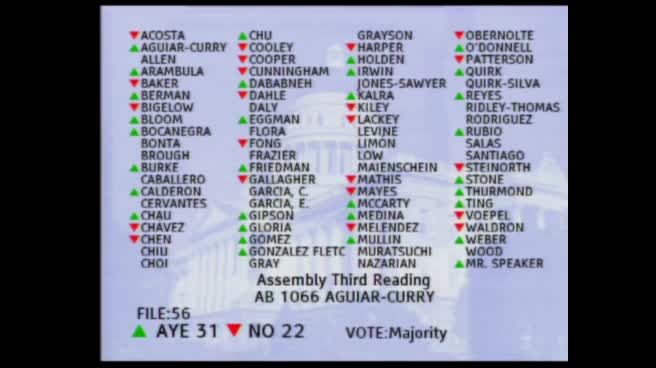 1MIN
Assembly Floor
 1H
Assembly Standing Committee on Appropriations
 24MIN
Assembly Standing Committee on Human Services
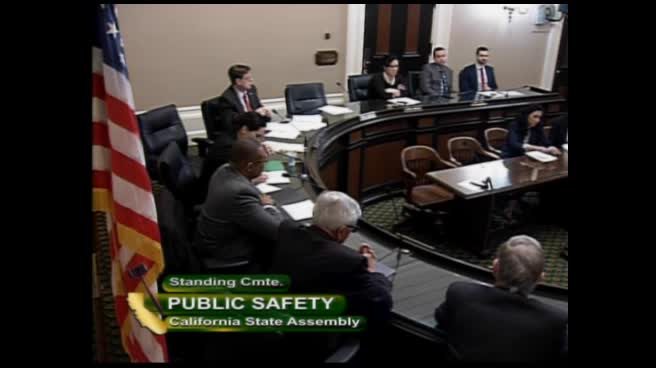 19MIN
Assembly Standing Committee on Public Safety
Bill Author