AB 3022: Retroactive grant of high school diplomas: departed and deported pupils.
- Session Year: 2017-2018
- House: Assembly
- Latest Version Date: 2018-09-26
Existing law authorizes a high school district, unified school district, or county office of education to retroactively grant a high school diploma to persons interned by order of the federal government during World War II, and to veterans of World War II, the Korean War, or the Vietnam War, under specified conditions.
This bill would also authorize the retroactive grant of a high school diploma to a person who has departed California against his or her will, as defined, and, at the time of his or her departure, was enrolled in grade 12 of a high school operated by a school district, by or under the jurisdiction of a county office of education, or by a charter school, who did not receive a high school diploma because his or her education was interrupted due to his or her departure, and who was in good academic standing at the time of his or her departure, as specified.
Existing law authorizes a high school district, unified school district, or county office of education to retroactively grant a high school diploma to persons interned by order of the federal government during World War II, and to veterans of World War II, the Korean War, or the Vietnam War, under specified conditions.
This bill would also authorize the retroactive grant of a high school diploma to a person who was deported, voluntarily or otherwise, by order of the federal government and, at the time of the deportation, has departed California against his or her will, as defined, and, at the time of his or her departure, was enrolled in grade 12 of a high school operated by a school district, by or under the jurisdiction of a county office of education, or by a charter school, who did not receive a high school diploma because his or her education was interrupted due to his or her deportation, departure, and who was in good academic standing at the time of his or her deportation, departure, as specified.
Existing law authorizes a high school district, unified school district, or county office of education to retroactively grant a high school diploma to persons interned by order of the federal government during World War II, and to veterans of World War II, the Korean War, or the Vietnam War, under specified conditions.
This bill would also authorize the retroactive grant of a high school diploma to a person who was deported, voluntarily or otherwise, by order of the federal government and, at the time of the deportation, was enrolled in grade 12 of a high school operated by the a school district district, by or under the jurisdiction of the a county office of education, or by a charter school, who did not receive a high school diploma because his or her education was interrupted due to his or her deportation, and who was in good academic standing at the time of his or her deportation, as specified.
Existing law authorizes a high school district, unified school district, or county office of education to retroactively grant a high school diploma to persons interned by order of the federal government during World War II, and to veterans of World War II, the Korean War, or the Vietnam War, under specified conditions.
This bill would also authorize the retroactive grant of a high school diploma to a person who was deported, voluntarily or otherwise, by order of the federal government and, at the time of the deportation, was enrolled in grade 12 of a high school operated by the school district or under the jurisdiction of the county office of education, did not receive a high school diploma because his or her education was interrupted due to his or her deportation, and was in good academic standing at the time of his or her deportation, as specified.
(a)Notwithstanding any other law, a high school district, unified school district, county office of education, or the governing body of a charter school may retroactively grant a high school diploma to a person who has not received a high school diploma if he or she meets any of the following conditions:
(1)The person was interned by order of the federal government during World War II and was enrolled in a high school operated by the school district or under the jurisdiction of the county office of education immediately preceding his or her internment and did not receive a high school diploma because his or her education was interrupted due to his or her internment during World War II.
(2)The person is a veteran of World War II, the Korean War, or the Vietnam War, was honorably discharged from his or her military service, was enrolled in a high school operated by the school district or under the jurisdiction of the county office of education immediately preceding his or her military service in those wars, and did not receive a high school diploma because his or her education was interrupted due to his or her military service in those wars.
(3)The person has departed California against his or her will, as defined in subdivision (d) of Section 48204.4, and, at the time of his or her departure, was enrolled in grade 12 of a high school operated by the school district, by or under the jurisdiction of the county office of education, or by the charter school, did not receive a high school diploma because his or her education was interrupted due to his or her departure, and was in good academic standing at the time of his or her departure. In making an evaluation as to whether to award a high school diploma to a pupil who meets the conditions of this paragraph, a school district, county office of education, or charter school shall consider any coursework that may have been completed by the pupil outside of the United States or that may have been completed by the pupil through online or virtual courses.
(b)A high school district, unified school district, or county office of education may retroactively grant a high school diploma to a deceased person who meets the conditions of paragraph (1) or (2) of subdivision (a), to be received by the next of kin of the deceased person.
(a)Notwithstanding any other law, a high school district, unified school district, county office of education, or the governing body of a charter school may retroactively grant a high school diploma to a person who has not received a high school diploma if he or she meets any of the following conditions:
(1)The person was interned by order of the federal government during World War II and was enrolled in a high school operated by the school district or under the jurisdiction of the county office of education immediately preceding his or her internment and did not receive a high school diploma because his or her education was interrupted due to his or her internment during World War II.
(2)The person is a veteran of World War II, the Korean War, or the Vietnam War, was honorably discharged from his or her military service, was enrolled in a high school operated by the school district or under the jurisdiction of the county office of education immediately preceding his or her military service in those wars, and did not receive a high school diploma because his or her education was interrupted due to his or her military service in those wars.
(3)The person was deported, voluntarily or otherwise, by order of the federal government has departed California against his or her will, as defined in subdivision (d) of Section 48204.4, and, at the time of the deportation, time of his or her departure, was enrolled in grade 12 of a high school operated by the school district, by or under the jurisdiction of the county office of education, or by the charter school, did not receive a high school diploma because his or her education was interrupted due to his or her deportation, departure, and was in good academic standing at the time of his or her deportation. departure. In making an evaluation as to whether to award a high school diploma to a pupil who meets the conditions of this paragraph, a school district, county office of education, or charter school shall consider any coursework that may have been completed by the pupil outside of the United States or that may have been completed by the pupil through online or virtual courses.
(b)A high school district, unified school district, or county office of education may retroactively grant a high school diploma to a deceased person who meets the conditions of paragraph (1) or (2) of subdivision (a), to be received by the next of kin of the deceased person.
(a)Notwithstanding any other law, a high school district, unified school district, or county office of education, or the governing body of a charter school may retroactively grant a high school diploma to a person who has not received a high school diploma if he or she meets any of the following conditions:
(1)The person was interned by order of the federal government during World War II and was enrolled in a high school operated by the school district or under the jurisdiction of the county office of education immediately preceding his or her internment and did not receive a high school diploma because his or her education was interrupted due to his or her internment during World War II.
(2)The person is a veteran of World War II, the Korean War, or the Vietnam War, was honorably discharged from his or her military service, was enrolled in a high school operated by the school district or under the jurisdiction of the county office of education immediately preceding his or her military service in those wars, and did not receive a high school diploma because his or her education was interrupted due to his or her military service in those wars.
(3)The person was deported, voluntarily or otherwise, by order of the federal government and, at the time of the deportation, was enrolled in grade 12 of a high school operated by the school district district, by or under the jurisdiction of the county office of education, or by the charter school, did not receive a high school diploma because his or her education was interrupted due to his or her deportation, and was in good academic standing at the time of his or her deportation. In making an evaluation as to whether to award a high school diploma to a pupil who meets the conditions of this paragraph, a school district or district, county office of education education, or charter school shall consider any coursework that may have been completed by the pupil outside of the United States or that may have been completed by the pupil through online or virtual courses.
(b)A high school district, unified school district, or county office of education may retroactively grant a high school diploma to a deceased person who meets the conditions of paragraph (1) or (2) of subdivision (a), to be received by the next of kin of the deceased person.
(a)Notwithstanding any other provision of law, a high school district, unified school district, or county office of education, may retroactively grant a high school diploma to a person who has not received a high school diploma if he or she meets either any of the following conditions:
(1)The person was interned by order of the federal government during World War II and was enrolled in a high school operated by the school district or under the jurisdiction of the county office of education immediately preceding his or her internment and did not receive a high school diploma because his or her education was interrupted due to his or her internment during World War II.
(2)The person is a veteran of World War II, the Korean War, or the Vietnam War, was honorably discharged from his or her military service, was enrolled in a high school operated by the school district or under the jurisdiction of the county office of education immediately preceding his or her military service in those wars, and did not receive a high school diploma because his or her education was interrupted due to his or her military service in those wars.
(3)The person was deported, voluntarily or otherwise, by order of the federal government and, at the time of the deportation, was enrolled in grade 12 of a high school operated by the school district or under the jurisdiction of the county office of education, did not receive a high school diploma because his or her education was interrupted due to his or her deportation, and was in good academic standing at the time of his or her deportation. In making an evaluation as to whether to award a high school diploma to a pupil who meets the conditions of this paragraph, a school district or county office of education shall consider any coursework that may have been completed by the pupil outside of the United States or that may have been completed by the pupil through online or virtual courses.
(b)A high school district, unified school district, or county office of education may retroactively grant a high school diploma to a deceased person who meets the conditions of paragraph (1) or (2) of subdivision (a), to be received by the next of kin of the deceased person.
|
Date
|
Status
|
|---|---|
| Sep 26, 2018 | Chaptered by Secretary of State - Chapter 772, Statutes of 2018. |
| Sep 26, 2018 | Approved by the Governor. |
| Aug 27, 2018 | Enrolled and presented to the Governor at 3 p.m. |
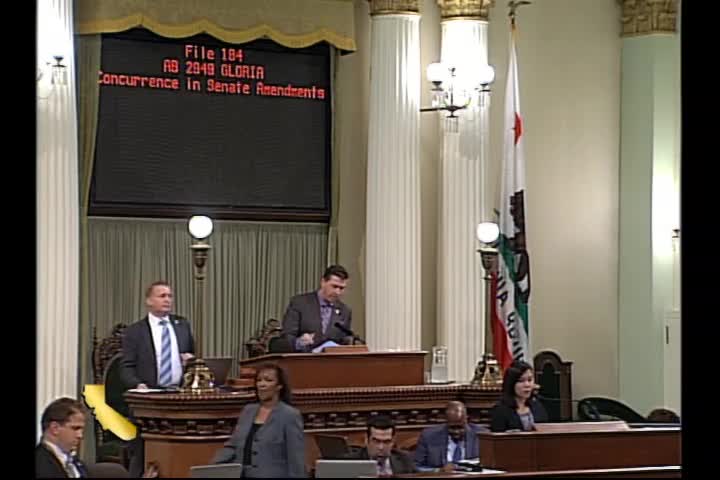
| Aug 20, 2018 | Senate amendments concurred in. To Engrossing and Enrolling. |
| Aug 14, 2018 | In Assembly. Concurrence in Senate amendments pending. May be considered on or after August 16 pursuant to Assembly Rule 77. |
| Aug 13, 2018 | Read third time. Passed. Ordered to the Assembly. |
| Aug 7, 2018 | Read second time. Ordered to third reading. |
| Aug 6, 2018 | Read third time and amended. Ordered to second reading. |
| Jun 14, 2018 | Read second time. Ordered to third reading. |
| Jun 13, 2018 | From committee: Do pass. (Ayes 7. Noes 0.) (June 13). |
| May 30, 2018 | Referred to Com. on ED. |
| May 22, 2018 | In Senate. Read first time. To Com. on RLS. for assignment. |
| May 21, 2018 | Read third time. Passed. Ordered to the Senate. |
| May 17, 2018 | Read second time. Ordered to third reading. |
| May 16, 2018 | Read second time and amended. Ordered returned to second reading. |
| May 15, 2018 | From committee: Amend, and do pass as amended. (Ayes 6. Noes 0.) (May 9). |
| Apr 11, 2018 | In committee: Hearing postponed by committee. |
| Mar 12, 2018 | Referred to Com. on ED. |
| Feb 17, 2018 | From printer. May be heard in committee March 19. |
| Feb 16, 2018 | Read first time. To print. |
|
Date
|
Description
|
Location
|
Votes
|
|
|---|---|---|---|---|
| Aug 20, 2018 | AB 3022 GONZALEZ FLETCHER Concurrence in Senate Amendments | Assembly Floor |
Passed |
|
| Aug 13, 2018 | Assembly 3rd Reading AB3022 Gonzalez Fletcher By Lara | Senate Floor |
Passed |
|
| Jun 13, 2018 | Do pass | Senate Standing Committee on Education |
Passed |
|
| May 21, 2018 | AB 3022 GONZALEZ FLETCHER Assembly Third Reading | Assembly Floor |
Passed |
|
| May 9, 2018 | Do pass as amended. | Assembly Standing Committee on Education |
Passed |
This list shows positions taken on this bill by organizations on the date displayed, which is linked to the original source.
Positions by individuals are not included.
|
Organization
|
Position
|
Date
|
|---|---|---|
| ACLU of California | ** Support | Aug 8, 2018 |
| Alameda County Office Of Education | ** Support | Aug 8, 2018 |
| Association Of California School Administrators | ** Support | May 7, 2018 |
| California Charter Schools Association | ** Support | Aug 8, 2018 |
| California Federation Of Teachers | ** Support | Aug 8, 2018 |
| California Immigrant Policy Center | ** Support | Aug 8, 2018 |
| California School Boards Association | ** Support | Aug 8, 2018 |
| California Teachers Association | ** Support | Aug 8, 2018 |
| Coalition for Humane Immigrant Rights | ** Support | Aug 8, 2018 |
| Common Sense Kids Action | ** Support | Aug 8, 2018 |
| Dreamer Fund | ** Support | May 7, 2018 |
| Hispanic Association Of Colleges And Universities | ** Support | Aug 8, 2018 |
| Los Angeles Unified School District | ** Support | Aug 8, 2018 |
| National Association Of Social Workers, California Chapter | ** Support | Aug 8, 2018 |
| Sacramento City Unified School District | ** Support | Aug 8, 2018 |
| San Diego County Office of Education | ** Support | Aug 8, 2018 |
| San Francisco Unified School District | ** Support | Aug 8, 2018 |
| San Fransisco Unified School District | * Support | Jun 13, 2018 |
| Santa Clara County Office Of Education | ** Support | Aug 8, 2018 |
| State Superintendent of Public Instruction | ** Support | Aug 8, 2018 |
CONCURRENCE IN SENATE AMENDMENTS
CSA1 Bill Id:AB 3022
Author:(Gonzalez Fletcher)
As Amended Ver:August 6, 2018
Majority vote
ASSEMBLY: | 68-2 | (May 21, 2018) | SENATE: | 35-1 | (August 13, 2018) |
Original Committee Reference: ED.
SUMMARY: Authorizes school districts, county offices of education, or charter schools to retroactively grant a high school diploma to a person who departed California against his or her will, and at the time of departure, was enrolled in grade 12 and was in good academic standing. Requires schools to consider any coursework that may have been completed by the pupil through online or virtual courses in considering whether to award a high school diploma to a pupil.
The Senate amendments:
- Remove the reference to a person who has been "deported, voluntarily or otherwise, by order of the federal government."
- Redefines the provisions of this bill to apply to a person who has "departed California against his or her will", as defined under the following circumstances:
- The person was in custody of a government agency and was transferred to another state.
- The person was subject to a lawful order from a court or government agency that authorized the person's removal from California.
- The person was subject to a lawful order pursuant to subparagraph (2) and was permitted to depart California before being removed from California pursuant to the lawful order.
- The person was removed or is permitted to depart voluntarily pursuant to the federal Immigration and Nationality Act (8 United States Code Section 1229(c)).
- A school district may determine additional circumstances that are consistent with the purposes of this section."
FISCAL EFFECT: This bill has been keyed non-fiscal by the Legislative Counsel.
COMMENTS: Need for this bill. According to the author, "the goal of this bill is to provide students who have been deported, voluntarily or otherwise, an opportunity to complete their high school diploma. While there are no official numbers, CDE estimates that there are approximately 300,000 undocumented students attending California schools. Many of these students came to the United States (U.S.) as young children, and grew up speaking English and attending California schools. A lot of these students have also never known their country of origin or have spoken or written, in an academic setting, in the language of their country of origin. Without the language acquisition to read and write, if these students are deported they would not be able to continue their education at the same level. These students would be at a significant disadvantage in not having completed a standard of education as they struggle to adjust to a new country and compete for employment opportunities.
A precedent exists for providing a diploma to a high school senior in good standing who is unable to complete their final year of high school. During the Vietnam War, War in Korea and World War II, high school seniors who were drafted into the military before they could complete their high school courses were awarded diplomas if they left for their military service in good standing at school. The same benefit was also extended to internees during the Second World War."
Unclear how many students would qualify. According to the CDE, California has approximately 300,000 students who are undocumented as well as about one million students who live with a parent or guardian who are undocumented. It has been suggested that, as of 2015, approximately 25,000 undocumented students graduated from California schools annually.
The Department of Homeland Security, reports that between 1998 and 2007, the U.S. conducted 108,434 alien removals of parents of U.S. citizen children nationally. The 2010 National Census in Mexico identified 597,000 U.S.-born children and adolescents living in Mexico. It is not clear how many of these returned to Mexico due to the deportation of the parent or guardian.
The amended version of this bill expands the definition of who would qualify to be awarded a retroactive diploma beyond students who have been deported to include other categories of departures against a person's will. Data is not available to estimate the number of individuals that may qualify under these additional circumstances.
Analysis Prepared by: Debbie Look / ED. / (916) 319-2087 FN: 0003867
Office of Senate Floor Analyses (916) 651-1520 Fax: (916) 327-4478 | AB |
THIRD READING
Bill No: AB 3022
:
SENATE EDUCATION COMMITTEE: 7-0, 6/13/18
AYES: Allen, Wilk, Galgiani, Leyva, McGuire, Pan, Vidak
ASSEMBLY FLOOR: 68-2, 5/21/18 - See last page for vote
SOURCE: State Superintendent of Public Instruction
DIGEST:
This bill authorizes schools to retroactively grant a high school diploma to a person who has departed California against his or her will, and was enrolled in grade 12 but did not receive a high school diploma because his or her education was interrupted due to the departure.
Senate Floor Amendments of 8/6/18 change references from “deportation” to “departure.”
Existing law:
- Authorizes a high school district, unified school district, or county office of education to retroactively grant a high school diploma to a person who has not received a high school diploma if he or she meets either of the following conditions:
- The person was interned by order of the federal government during World War II and was enrolled in a high school operated by the school district or under the jurisdiction of the county office of education immediately preceding his or her internment and did not receive a high school diploma because his or her education was interrupted due to his or her internment during World War II.
- The person is a veteran of World War II, the Korean War, or the Vietnam War, was honorably discharged from his or her military service, was enrolled in a high school operated by the school district or under the jurisdiction of the county office of education immediately preceding his or her military service in those wars, and did not receive a high school diploma because his or her education was interrupted due to his or her military service in those wars. (Education Code § 51430)
- Authorizes a high school district, unified school district, or county office of education to retroactively grant a high school diploma to a deceased person who meets the conditions listed above. (EC § 51430)
- Authorizes a high school district, unified school district, or county office of education maintaining a four-year high school or senior high school, for a person who has not received a high school diploma described in 4) below, to:
- Evaluate classes completed in any high school, community college, or state college.
- Grant credit toward graduation for military service and training received while in the military service of the United States.
- If satisfied that person has completed the equivalent of the requirements for graduation from high school, grant him or her a diploma of graduation. (EC § 51440)
- Provides that people who may be granted a diploma pursuant to 3) above, are:
- A former member of the Armed Forces who is a resident of California and who has received an honorable discharge.
- A member of the Armed Forces who is, and on the date he or she entered the Armed Forces was, a resident of California. (EC § 51440)
- Requires that a veteran who entered the military service of the United States while a student in grade 12 of a high school and who at the time of his or her entrance into military service had satisfactorily completed the first half of the work required for grade 12 be granted a diploma of graduation from that high school. (EC § 51440)
- Authorizes the governing board of any school district maintaining a high school to confer honorary high school diplomas upon foreign exchange students from other countries who have not completed the course of study ordinarily required for graduation, and who are returning to their home countries following the completion of one academic school year in a school district in the state. Existing law requires honorary high school diplomas to be clearly distinguishable from the regular diplomas of graduation awarded by the district. (EC § 51225.5)
- Provides that a person has “departed California against his or her will” if any of the following circumstances apply:
- The person was in custody of a government agency and was transferred to another state.
- The person was subject to a lawful order from a court or government agency that authorized the person’s removal from California.
- The person was subject to a lawful order from a court or government agency and was permitted to depart California before being removed from California pursuant to the lawful order.
- The person was removed or is permitted to depart voluntarily pursuant to the federal Immigration and Nationality Act. (EC § 48204.4)
This bill:
- Authorizes a high school district, unified school district, county office of education, or the governing body of a charter school to retroactively grant a high school diploma to a person who has not received a high school diploma if he or she:
- Has departed California against his or her will, as currently defined in the Education Code.
- Was enrolled, at the time of the departure, in grade 12 of a high school operated by the school district, by or under the jurisdiction of the county office of education, or by the charter school.
- Did not receive a high school diploma because his or her education was interrupted due to his or her departure.
- Was in good academic standing at the time of his or her departure.
- Requires a school district, county office of education, or charter school, in making an evaluation as to whether to award a high school diploma, to consider any coursework that may have been completed by the student outside of the United States or that may have been completed by the student through online or virtual courses.
- Applies existing law related to the granting of retroactive high school diplomas to people who were interned during World War II or who were veterans of World War II, the Korean War, or the Vietnam War, to include charter schools.
Comments
Need for the bill. According to the author, “While there are no official numbers, the California Department of Education estimates that there are approximately 300,000 undocumented students attending California schools. Many of these students came to the United States as young children, and grew up speaking English and attending California schools. A lot of these students have also never known their country of origin or have spoken or written, in an academic setting, in the language of their country of origin. Without the language acquisition to read and write, if these students are deported they would not be able to continue their education at the same level. These students would be at a significant disadvantage in not having completed a standard of education as they struggle to adjust to a new country and compete for employment opportunities. Ensuring that these students have an opportunity to attain a high school diploma not only helps improve their economic futures, but also helps to ensure that if those students return as adults, they will have skills and educational certification to help them succeed.”
Consideration of additional coursework. This bill requires a school, in making an evaluation as to whether to award a high school diploma, to consider any coursework that may have been completed by the student outside of the United States or that may have been completed by the student through online or virtual courses. It is unclear how schools would have access to such information, and how difficult it may be to schools to evaluate such coursework.
FISCAL EFFECT: Appropriation: Fiscal Com.: Local:
State Superintendent of Public Instruction (source)
ACLU of California
Alameda County Office of Education
California Charter Schools Association
California Federation of Teachers
California Immigrant Policy Center
California School Boards Association
California Teachers Association
Coalition for Humane Immigrant Rights
Common Sense Kids Action
Hispanic Association of Colleges and Universities
Los Angeles Unified School District
National Association of Social Workers, California Chapter
Sacramento City Unified School District
San Diego County Office of Education
San Francisco Unified School District
Santa Clara County Office of Education
None received
ASSEMBLY FLOOR: 68-2, 5/21/18
AYES: Acosta, Aguiar-Curry, Arambula, Baker, Berman, Bigelow, Bloom, Bonta, Brough, Burke, Caballero, Calderon, Carrillo, Cervantes, Chau, Chávez, Chen, Chiu, Choi, Chu, Cooley, Cooper, Cunningham, Dahle, Daly, Frazier, Friedman, Gallagher, Gipson, Gloria, Gonzalez Fletcher, Grayson, Holden, Irwin, Jones-Sawyer, Kalra, Kamlager-Dove, Kiley, Lackey, Levine, Limón, Low, Maienschein, Mathis, Mayes, McCarty, Medina, Melendez, Mullin, Muratsuchi, Nazarian, O'Donnell, Quirk, Quirk-Silva, Reyes, Rodriguez, Rubio, Salas, Santiago, Steinorth, Mark Stone, Thurmond, Ting, Voepel, Waldron, Weber, Wood, Rendon
NOES: Travis Allen, Harper
NO VOTE RECORDED: Eggman, Flora, Fong, Cristina Garcia, Eduardo Garcia, Gray, Obernolte, Patterson
8/8/18 10:42:10
**** END ****
Office of Senate Floor Analyses (916) 651-1520 Fax: (916) 327-4478 | AB |
THIRD READING
Bill No: AB 3022
:
SENATE EDUCATION COMMITTEE: 7-0, 6/13/18
AYES: Allen, Wilk, Galgiani, Leyva, McGuire, Pan, Vidak
ASSEMBLY FLOOR: 68-2, 5/21/18 - See last page for vote
SOURCE: State Superintendent of Public Instruction
DIGEST:
This bill authorizes schools to retroactively grant a high school diploma to a person who was deported by order of the federal government and was enrolled in grade 12 but did not receive a high school diploma because his or her education was interrupted due to the deportation.
Existing law:
- Authorizes a high school district, unified school district, or county office of education to retroactively grant a high school diploma to a person who has not received a high school diploma if he or she meets either of the following conditions:
- The person was interned by order of the federal government during World War II and was enrolled in a high school operated by the school district or under the jurisdiction of the county office of education immediately preceding his or her internment and did not receive a high school diploma because his or her education was interrupted due to his or her internment during World War II.
- The person is a veteran of World War II, the Korean War, or the Vietnam War, was honorably discharged from his or her military service, was enrolled in a high school operated by the school district or under the jurisdiction of the county office of education immediately preceding his or her military service in those wars, and did not receive a high school diploma because his or her education was interrupted due to his or her military service in those wars. (Education Code § 51430)
- Authorizes a high school district, unified school district, or county office of education to retroactively grant a high school diploma to a deceased person who meets the conditions listed above. (EC § 51430)
- Authorizes a high school district, unified school district, or county office of education maintaining a four-year high school or senior high school, for a person who has not received a high school diploma described in 4) below, to:
- Evaluate classes completed in any high school, community college, or state college.
- Grant credit toward graduation for military service and training received while in the military service of the United States.
- If satisfied that person has completed the equivalent of the requirements for graduation from high school, grant him or her a diploma of graduation. (EC § 51440)
- Provides that people who may be granted a diploma pursuant to 3) above, are:
- A former member of the Armed Forces who is a resident of California and who has received an honorable discharge.
- A member of the Armed Forces who is, and on the date he or she entered the Armed Forces was, a resident of California. (EC § 51440)
- Requires that a veteran who entered the military service of the United States while a student in grade 12 of a high school and who at the time of his or her entrance into military service had satisfactorily completed the first half of the work required for grade 12 be granted a diploma of graduation from that high school. (EC § 51440)
- Authorizes the governing board of any school district maintaining a high school to confer honorary high school diplomas upon foreign exchange students from other countries who have not completed the course of study ordinarily required for graduation, and who are returning to their home countries following the completion of one academic school year in a school district in the state. Existing law requires honorary high school diplomas to be clearly distinguishable from the regular diplomas of graduation awarded by the district. (EC § 51225.5)
This bill:
- Authorizes a high school district, unified school district, county office of education, or the governing body of a charter school to retroactively grant a high school diploma to a person who has not received a high school diploma if he or she:
- Was deported, voluntarily or otherwise, by order of the federal government.
- Was enrolled, at the time of the deportation, in grade 12 of a high school operated by the school district, by or under the jurisdiction of the county office of education, or by the charter school.
- Did not receive a high school diploma because his or her education was interrupted due to his or her deportation.
- Was in good academic standing at the time of his or her deportation.
- Requires a school district, county office of education, or charter school, in making an evaluation as to whether to award a high school diploma, to consider any coursework that may have been completed by the student outside of the United States or that may have been completed by the student through online or virtual courses.
- Applies existing law related to the granting of retroactive high school diplomas to people who were interned during World War II or who were veterans of World War II, the Korean War, or the Vietnam War, to include charter schools.
Comments
Need for the bill. According to the author, “While there are no official numbers, the California Department of Education estimates that there are approximately 300,000 undocumented students attending California schools. Many of these students came to the United States as young children, and grew up speaking English and attending California schools. A lot of these students have also never known their country of origin or have spoken or written, in an academic setting, in the language of their country of origin. Without the language acquisition to read and write, if these students are deported they would not be able to continue their education at the same level. These students would be at a significant disadvantage in not having completed a standard of education as they struggle to adjust to a new country and compete for employment opportunities. Ensuring that these students have an opportunity to attain a high school diploma not only helps improve their economic futures, but also helps to ensure that if those students return as adults, they will have skills and educational certification to help them succeed.”
Consideration of additional coursework. This bill requires a school, in making an evaluation as to whether to award a high school diploma, to consider any coursework that may have been completed by the student outside of the United States or that may have been completed by the student through online or virtual courses. It is unclear how schools would have access to such information, and how difficult it may be to schools to evaluate such coursework.
FISCAL EFFECT: Appropriation: Fiscal Com.: Local:
State Superintendent of Public Instruction (source)
ACLU of California
Alameda County Office of Education
California Charter Schools Association
California Federation of Teachers
California Immigrant Policy Center
California School Boards Association
California Teachers Association
Coalition for Humane Immigrant Rights
Common Sense Kids Action
Hispanic Association of Colleges and Universities
Los Angeles Unified School District
National Association of Social Workers, California Chapter
Sacramento City Unified School District
San Diego County Office of Education
San Francisco Unified School District
Santa Clara County Office of Education
OPPOSITION: (Verified 6/13/18)
None received
ASSEMBLY FLOOR: 68-2, 5/21/18
AYES: Acosta, Aguiar-Curry, Arambula, Baker, Berman, Bigelow, Bloom, Bonta, Brough, Burke, Caballero, Calderon, Carrillo, Cervantes, Chau, Chávez, Chen, Chiu, Choi, Chu, Cooley, Cooper, Cunningham, Dahle, Daly, Frazier, Friedman, Gallagher, Gipson, Gloria, Gonzalez Fletcher, Grayson, Holden, Irwin, Jones-Sawyer, Kalra, Kamlager-Dove, Kiley, Lackey, Levine, Limón, Low, Maienschein, Mathis, Mayes, McCarty, Medina, Melendez, Mullin, Muratsuchi, Nazarian, O'Donnell, Quirk, Quirk-Silva, Reyes, Rodriguez, Rubio, Salas, Santiago, Steinorth, Mark Stone, Thurmond, Ting, Voepel, Waldron, Weber, Wood, Rendon
NOES: Travis Allen, Harper
NO VOTE RECORDED: Eggman, Flora, Fong, Cristina Garcia, Eduardo Garcia, Gray, Obernolte, Patterson
6/15/18 10:53:05
**** END ****
SENATE COMMITTEE ON EDUCATION
Senator Benjamin Allen, Chair
2017 - 2018 Regular
Bill No: AB 3022 Hearing Date: June 13, 2018
Author: | |||
Version: | May 16, 2018 | ||
Urgency: | No | Fiscal: | No |
Consultant: | Lynn Lorber | ||
Subject: Retroactive grant of high school diplomas: deported pupils.
SUMMARY
This bill authorizes schools to retroactively grant a high school diploma to a person who was deported by order of the federal government and was enrolled in grade 12 but did not receive a high school diploma because his or her education was interrupted due to the deportation.
BACKGROUND
Existing law:
- Authorizes a high school district, unified school district, or county office of education to retroactively grant a high school diploma to a person who has not received a high school diploma if he or she meets either of the following conditions:
- The person was interned by order of the federal government during World War II and was enrolled in a high school operated by the school district or under the jurisdiction of the county office of education immediately preceding his or her internment and did not receive a high school diploma because his or her education was interrupted due to his or her internment during World War II.
- The person is a veteran of World War II, the Korean War, or the Vietnam War, was honorably discharged from his or her military service, was enrolled in a high school operated by the school district or under the jurisdiction of the county office of education immediately preceding his or her military service in those wars, and did not receive a high school diploma because his or her education was interrupted due to his or her military service in those wars. (Education Code § 51430)
- The person was interned by order of the federal government during World War II and was enrolled in a high school operated by the school district or under the jurisdiction of the county office of education immediately preceding his or her internment and did not receive a high school diploma because his or her education was interrupted due to his or her internment during World War II.
- Authorizes a high school district, unified school district, or county office of education to retroactively grant a high school diploma to a deceased person who meets the conditions listed above. (EC § 51430)
- Authorize a high school district, unified school district, or county office of education maintaining a four-year high school or senior high school, for a person who has not received a high school diploma described in # 4, to:
- Evaluate classes completed in any high school, community college, or state college.
- Grant credit toward graduation for military service and training received while in the military service of the United States.
- If satisfied that person has completed the equivalent of the requirements for graduation from high school, grant him or her a diploma of graduation. (EC § 51440)
- Evaluate classes completed in any high school, community college, or state college.
- Provides that people who may be granted a diploma pursuant to # 3 are:
- A former member of the Armed Forces who is a resident of California and who has received an honorable discharge.
- A member of the Armed Forces who is, and on the date he or she entered the Armed Forces was, a resident of California. (EC § 51440)
- A former member of the Armed Forces who is a resident of California and who has received an honorable discharge.
- Requires that a veteran who entered the military service of the United States while a student in grade 12 of a high school and who at the time of his or her entrance into military service had satisfactorily completed the first half of the work required for grade 12 be granted a diploma of graduation from that high school. (EC § 51440)
- Authorizes the governing board of any school district maintaining a high school to confer honorary high school diplomas upon foreign exchange students from other countries who have not completed the course of study ordinarily required for graduation, and who are returning to their home countries following the completion of one academic school year in a school district in the state. Existing law requires honorary high school diplomas to be clearly distinguishable from the regular diplomas of graduation awarded by the district. (EC § 51225.5)
ANALYSIS
This bill:
- Authorizes a high school district, unified school district, county office of education, or the governing body of a charter school to retroactively grant a high school diploma to a person who has not received a high school diploma if he or she:
- Was deported, voluntarily or otherwise, by order of the federal government.
- At the time of the deportation was enrolled in grade 12 of a high school operated by the school district, by or under the jurisdiction of the county office of education, or by the charter school.
- Did not receive a high school diploma because his or her education was interrupted due to his or her deportation.
- Was in good academic standing at the time of his or her deportation.
- Was deported, voluntarily or otherwise, by order of the federal government.
- Requires a school district, county office of education, or charter school, in making an evaluation as to whether to award a high school diploma, to consider any coursework that may have been completed by the student outside of the United States or that may have been completed by the student through online or virtual courses.
- Applies existing law related to the granting of retroactive high school diplomas to people who were interned during World War II or who were veterans of World War II, the Korean War, or the Vietnam War, to include charter schools.
STAFF COMMENTS
- Need for the bill. According to the author, “While there are no official numbers, the California Department of Education estimates that there are approximately 300,000 undocumented students attending California schools. Many of these students came to the United States as young children, and grew up speaking English and attending California schools. A lot of these students have also never known their country of origin or have spoken or written, in an academic setting, in the language of their country of origin. Without the language acquisition to read and write, if these students are deported they would not be able to continue their education at the same level. These students would be at a significant disadvantage in not having completed a standard of education as they struggle to adjust to a new country and compete for employment opportunities. Ensuring that these students have an opportunity to attain a high school diploma not only helps improve their economic futures, but also helps to ensure that if those students return as adults, they will have skills and educational certification to help them succeed.”
- Consideration of additional coursework. This bill requires a school, in making an evaluation as to whether to award a high school diploma, to consider any coursework that may have been completed by the student outside of the United States or that may have been completed by the student through online or virtual courses. It is unclear how schools would have access to such information, and how difficult it may be to schools to evaluate such coursework.
- Related legislation. AB 2121 (Caballero) extends to students who are migratory children and to students participating in a newcomer program certain rights regarding exemptions from local graduation requirements and acceptance of partial credit that are currently afforded to other groups of highly mobile students, and extends the applicability of those provisions to charter schools. AB 2121 is pending in the Senate Appropriations Committee.
AB 2109 (O’Donnell) among other things, authorizes the governing board of a school district or county office of education, and the governing body of a charter school maintaining a high school to confer an honorary high school diploma upon a student who is terminally ill. AB 2109 is pending in the Senate Appropriations Committee.
SUPPORT
State Superintendent of Public Instruction (sponsor)
ACLU of California
Alameda County Office of Education
California Charter Schools Association
California Federation of Teachers
Coalition for Humane Immigrant Rights
California Immigrant Policy Center
California School Boards Association
California Teachers Association
Common Sense Kids Action
Hispanic Association of Colleges and Universities
Los Angeles Unified School District
National Association of Social Workers, California Chapter
Sacramento City Unified School District
San Diego County Office of Education
San Francisco Unified School District
Santa Clara County Office of Education
OPPOSITION
None received
-- END --
ASSEMBLY THIRD READING
ATR Bill Id:AB 3022
Author:(Gonzalez Fletcher)
As Amended Ver:May 16, 2018
Majority vote
Committee | Votes | Ayes | Noes |
Education | 6-0 | O'Donnell, Kiley, Kalra, Steinorth, Thurmond, Weber |
SUMMARY: Authorizes specified high schools to retroactively grant a high school diploma to a pupil who was deported if that pupil was enrolled in grade 12 and was in good academic standing at the time of deportation. Specifically, this bill:
- Authorizes a high school district, unified school district, county office of education, or the governing board of a charter school to retroactively grant a high school diploma to a person who has not received a high school diploma because his or her education was interrupted due to his or her deportation, by order of the federal government, voluntarily or otherwise.
- Specifies that a pupil qualifies under these provisions if he or she was enrolled in grade 12 and in good academic standing at the time of his or her deportation.
- Requires a school district or county office of education, in evaluating whether to award a high school diploma to a pupil under these circumstances, to consider any coursework that may have been completed by the pupil outside of the United States or through online or virtual courses.
FISCAL EFFECT: This bill is keyed non-fiscal by the Legislative Counsel.
COMMENTS: According to the author: "The goal of this bill is to provide students who have been deported, voluntarily or otherwise, an opportunity to complete their high school diploma. While there are no official numbers, CDE [California Department of Education] estimates that there are approximately 300,000 undocumented students attending California schools. Many of these students came to the U.S. [United States] as young children, and grew up speaking English and attending California schools. A lot of these students have also never known their country of origin or have spoken or written, in an academic setting, in the language of their country of origin. Without the language acquisition to read and write, if these students are deported they would not be able to continue their education at the same level. These students would be at a significant disadvantage in not having completed a standard of education as they struggle to adjust to a new country and compete for employment opportunities. Ensuring that these students have an opportunity to attain a high school diploma not only helps improve their economic futures, but also helps to ensure that if those students return as adults, they will have skills and educational certification to help them succeed.
A precedent exists for providing a diploma to a high school senior in good standing who is unable to complete their final year of high school. During the Vietnam War, War in Korea and World War II, high school seniors who were drafted into the military before they could complete their high school courses were awarded diplomas if they left for their military service in good standing at school. The same benefit was also extended to internees during the Second World War."
Unclear how many students would qualify. The 1984 Supreme Court decision Plyler v. Doe requires schools to enroll all eligible children regardless of their citizenship or immigration status. According to the CDE, California has approximately 300,000 students who are undocumented as well as about one million students who live with a parent or guardian who are undocumented. It has been suggested that, as of 2015, approximately 25,000 undocumented students graduated from California schools annually.
According to the Department of Homeland Security, between 1998 and 2007, the U.S. conducted 108,434 alien removals of parents of U.S. citizen children nationally. The 2010 National Census in Mexico identified 597,000 U.S.-born children and adolescents living in Mexico. It is not clear how many of these returned to Mexico due to the deportation of the parent or guardian. This bill does not currently apply to children of parents who are deported.
Analysis Prepared by: Debbie Look / ED. / (916) 319-2087 FN: 0002979
Date of Hearing: May 9, 2018
ASSEMBLY COMMITTEE ON EDUCATION
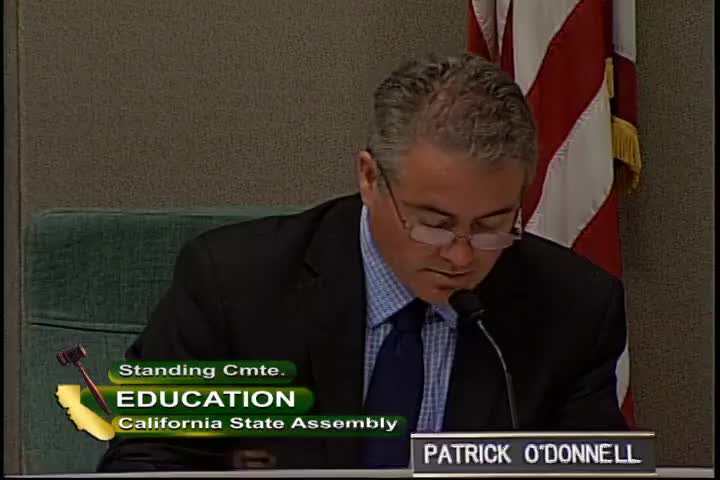
Patrick O'Donnell, Chair
ABPCA Bill Id:AB 3022 (
Author:Gonzalez Fletcher) – As Introduced Ver:February 16, 2018
SUBJECT: Retroactive grant of high school diplomas: deported pupils
SUMMARY: Authorizes specified high schools to retroactively grant a high school diploma to a pupil who was deported if that pupil was enrolled in grade 12 and was in good academic standing at the time of deportation. Specifically, this bill:
- Authorizes a high school district, unified school district, or county office of education to retroactively grant a high school diploma to a person who has not received a high school diploma because his or her education was interrupted due to his or her deportation, by order of the federal government, voluntarily or otherwise.
- Specifies that a pupil qualifies under these provisions if he or she was enrolled in grade 12 and in good academic standing at the time of his or her deportation.
- Requires a school district or county office of education, in evaluating whether to award a high school diploma to a pupil under these circumstances, to consider any coursework that may have been completed by the pupil outside of the United States or through online or virtual courses.
EXISTING LAW:
- A high school district, unified school district, or county office of education, may retroactively grant a high school diploma to a person who has not received a high school diploma if he or she meets either of the following conditions:
- The person was interned by order of the federal government during World War II and was enrolled in a high school operated by the school district or under the jurisdiction of the county office of education immediately preceding his or her internment and did not receive a high school diploma because his or her education was interrupted due to his or her internment during World War II.
- The person is a veteran of World War II, the Korean War, or the Vietnam War, was honorably discharged from his or her military service, was enrolled in a high school operated by the school district or under the jurisdiction of the county office of education immediately preceding his or her military service in those wars, and did not receive a high school diploma because his or her education was interrupted due to his or her military service in those wars (EC 51430).
- A high school district, unified school district, or county office of education may retroactively grant a high school diploma to a deceased person to be received by the next of kin of the deceased person (EC 51430).
- Authorizes the governing board of any school district maintaining a high school to confer honorary high school diplomas upon foreign exchange students from other countries who have not completed the course of study ordinarily required for graduation, and who are returning to their home countries following the completion of one academic school year in a school district in the state. Honorary high school diplomas awarded pursuant to this section shall be clearly distinguishable from the regular diplomas of graduation awarded by the district (EC 51225.5).
- A pupil complies with the residency requirements for school attendance in a school district if he or she is a pupil whose parent or parents were residents of this state and have departed California against their will, and, if the pupil seeks admission to a school of a school district, shall be admitted by the governing board of the school district regardless of his or her current residency, if that pupil meets both of the following requirements: (EC 48204.4).
- The pupil has a parent or guardian who departed California against his or her will.
- The pupil moved outside of California as a result of his or her parent or guardian departing California against his or her will and the pupil lived in California and was enrolled in a California school immediately before moving outside of California.
- Defines a person has “departed California against his or her will” if any of the following circumstances apply: (EC 48204.4)
- The person was in custody of a government agency and was transferred to another state.
- The person was subject to a lawful order from a court or government agency that authorized the person’s removal from California.
- The person was subject to a lawful order pursuant to subparagraph (b) and was permitted to depart California before being removed from California pursuant to the lawful order.
- The person was removed or is permitted to depart voluntarily pursuant to the federal Immigration and Nationality Act (8 U.S.C. Sec. 1229c).
FISCAL EFFECT: The Office of Legislative Counsel has keyed this bill as non-fiscal.
COMMENTS: Need for the bill. According to the author:
“The goal of this bill is to provide students who have been deported, voluntarily or otherwise, an opportunity to complete their high school diploma. While there are no official numbers, CDE estimates that there are approximately 300,000 undocumented students attending California schools. Many of these students came to the U.S. as young children, and grew up speaking English and attending California schools. A lot of these students have also never known their country of origin or have spoken or written, in an academic setting, in the language of their country of origin. Without the language acquisition to read and write, if these students are deported they would not be able to continue their education at the same level. These students would be at a significant disadvantage in not having completed a standard of education as they struggle to adjust to a new country and compete for employment opportunities.
Despite the on-going legal challenges surrounding immigration reform, the Trump Administration has continued to enforce deportation orders, and has publically scaled-up efforts to detain and deport undocumented individuals. Ensuring that these students have an opportunity to attain a high school diploma not only helps improve their economic futures, but also helps to ensure that if those students return as adults, they will have skills and educational certification to help them succeed.
A precedent exists for providing a diploma to a high school senior in good standing who is unable to complete their final year of high school. During the Vietnam War, War in Korea and World War II, high school seniors who were drafted into the military before they could complete their high school courses were awarded diplomas if they left for their military service in good standing at school. The same benefit was also extended to internees during the Second World War.”
Unclear how many students would qualify. The 1984 Supreme Court decision Plyler v. Doe requires schools to enroll all eligible children regardless of their citizenship or immigration status. According to the CDE, California has approximately 300,000 students who are undocumented as well as about one million students who live with a parent or guardian who are undocumented. It has been suggested that, as of 2015, approximately 25,000 undocumented students graduated from California schools annually.
According to the Department of Homeland Security, between 1998 and 2007, the U.S. conducted 108,434 alien removals of parents of U.S. citizen children nationally. The 2010 National Census in Mexico identified 597,000 U.S.-born children and adolescents living in Mexico. It is not clear how many of these returned to Mexico due to the deportation of the parent or guardian. This bill does not currently apply to children of parents who are deported.
Reviewing additional coursework. This bill requires that, in evaluating whether to award a high school diploma to a pupil who has been deported, that the school district or county office of education must consider any coursework that the pupil has completed outside of the U.S. or through online or virtual courses. Although this requirement may possibly ensure that the pupil has completed the necessary coursework to qualify to receive a California high school diploma, it would likely prove difficult for schools to conduct such evaluations.
Inclusion of charter schools. This bill authorizes school districts and county offices of education to grant retroactive high school diplomas. Committee staff recommends that the bill be amended to add charter schools to those entities authorized to grant diplomas under these provisions.
Prior legislation. SB 257 (Lara) Chapter 498, Statutes of 2017 deems that a student meets residency requirements for school attendance in a school district if he or she is a student whose parent(s), were residents of California and have departed California against their will.
REGISTERED SUPPORT / OPPOSITION:
Support
State Superintendent of Public Instruction Tom Torlakson (Sponsor)
ACLU of California
Association of California School Administrators
California Federation of Teachers
California Immigrant Policy Center
California Teachers Association
Dreamer Fund
Los Angeles Unified School District
National Association of Social Workers – California Chapter
Sacramento City Unified School District
San Diego County Office of Education
San Francisco Unified School District
Santa Clara County Office of Education
Opposition
None on file
Analysis Prepared by: Debbie Look / ED. / (916) 319-2087
Bill Author






