AB 3057: Corporation taxes: exempt organizations: mutual ditch or irrigation companies.
- Session Year: 2017-2018
- House: Assembly
- Latest Version Date: 2018-03-13
The Corporation Tax Law, in modified conformity with federal income tax laws, exempts various types of organizations from taxes imposed by that law.
This bill, in further conformity with federal income tax laws, for taxable years beginning on or after January 1, 2018, would exempt from the taxes imposed by the Corporation Tax Law a mutual ditch or irrigation company, as provided. This bill would make additional conforming changes.
This bill would also take effect immediately as a tax levy.
Existing law prohibits a provision in a settlement agreement that prevents the disclosure of factual information related to the action in a civil action with a factual foundation establishing a cause of action for civil damages for certain enumerated sexual offenses. Existing law prohibits a court from entering an order in any of these types of civil actions that restricts disclosure of this information, as specified, and it makes a provision in a settlement agreement that prevents the disclosure of factual information related to the action, entered into on or after January 1, 2017, void as a matter of law and against public policy.This bill would expand this prohibition to cover a settlement agreement in an action with a factual foundation establishing a cause of action for sexual abuse or harassment.Existing law prohibits a provision in a settlement agreement that prevents the disclosure of factual information related to the action in a civil action with a factual foundation establishing a cause of action for civil damages for certain enumerated sexual offenses. Existing law prohibits a court from entering an order in any of these types of civil actions that restricts disclosure of this information, as specified, and it makes a provision in a settlement agreement that prevents the disclosure of factual information related to the action, entered into on or after January 1, 2017, void as a matter of law and against public policy.
This bill would expand this prohibition to cover a settlement agreement in an action with a factual foundation establishing a cause of action for sexual abuse or harassment.
For taxable years beginning on or after January 1, 2018, mutual ditch or irrigation companies subject to the limitations and as described in Section 501(c)(12) of the Internal Revenue Code.
SEC. 2.Section 24473 of the Revenue and Taxation Code is amended to read:24473.Notwithstanding any other provision of law, the contribution or other transfer of the assets of a mutual water company established prior to September 26, 1977, that is tax exempt under Section 501(c)(12) of the Internal Revenue Code, but is a taxable entity under California Law, law, for taxable years beginning before January 1, 2018, including its lands, easements, rights, and obligations to act as sole agent of the stockholders in exercising the riparian rights of the stockholders, and rights relating to the ownership, operation, and maintenance of a water system and facilities serving the customers of the company, to a community services district formed pursuant to Part 1 (commencing with Section 61100) 61000) of Division 3 of Title 6 of the Government Code, is not a transfer subject to taxes imposed by this part if all of the following requirements are met:
(a)The consideration for the transfer of all or substantially all of the assets is the assumption by the district of the companys liability to provide service to the companys stockholders.
(b)The legal or beneficial title to all or substantially all of the companys assets is vested in the district on or before January 1, 2008.
(c)For the one-year period immediately prior to commencement of the transfer and continuing until the transfer is completed, 85 percent or more of the companys income consists of amounts collected from stockholders for the sole purpose of meeting losses and expenses.
SEC. 3.This act provides for a tax levy within the meaning of Article IV of the California Constitution and shall go into immediate effect.
SECTION 1.Section 1002 of the Code of Civil Procedure is amended to read:1002.(a)Notwithstanding any other law, a provision within a settlement agreement that prevents the disclosure of factual information related to the action is prohibited in any civil action the factual foundation for which establishes a cause of action for civil damages for any of the following:(1)An act that may be prosecuted as a felony sex offense.(2)An act of childhood sexual abuse, as defined in Section 340.1.(3)An act of sexual exploitation of a minor, as defined in Section 11165.1 of the Penal Code, or conduct prohibited with respect to a minor pursuant to Section 311.1, 311.5, or 311.6 of the Penal Code.(4)An act of sexual assault, as defined in paragraphs (1) to (9), inclusive, of subdivision (e) of Section 15610.63 of the Welfare and Institutions Code, against an elder or dependent adult, as defined in Sections 15610.23 and 15610.27 of the Welfare and Institutions Code.(5)An act of sexual abuse or harassment that is not otherwise governed by this subdivision.(b)Notwithstanding any other law, in a civil action described in paragraphs (1) to (5), inclusive, of subdivision (a), a court shall not enter, by stipulation or otherwise, an order that restricts the disclosure of information in a manner that conflicts with subdivision (a).(c)Subdivisions (a) and (b) do not preclude an agreement preventing the disclosure of any medical information or personal identifying information, as defined in subdivision (b) of Section 530.55 of the Penal Code, regarding the victim of the offense listed in subdivision (a) or of any information revealing the nature of the relationship between the victim and the defendant. This subdivision shall not be construed to limit the right of a crime victim to disclose this information.(d)Except as authorized by subdivision (c), a provision within a settlement agreement that prevents the disclosure of factual information related to the action described in subdivision (a) that is entered into on or after January 1, 2017, is void as a matter of law and against public policy.(e)An attorneys failure to comply with the requirements of this section by demanding that a provision be included in a settlement agreement that prevents the disclosure of factual information related to the action described in subdivision (a) that is not otherwise authorized by subdivision (c) as a condition of settlement, or advising a client to sign an agreement that includes such a provision, may be grounds for professional discipline and the State Bar of California shall investigate and take appropriate action in any such case brought to its attention.(a)Notwithstanding any other law, a provision within a settlement agreement that prevents the disclosure of factual information related to the action is prohibited in any civil action the factual foundation for which establishes a cause of action for civil damages for any of the following:
(1)An act that may be prosecuted as a felony sex offense.
(2)An act of childhood sexual abuse, as defined in Section 340.1.
(3)An act of sexual exploitation of a minor, as defined in Section 11165.1 of the Penal Code, or conduct prohibited with respect to a minor pursuant to Section 311.1, 311.5, or 311.6 of the Penal Code.
(4)An act of sexual assault, as defined in paragraphs (1) to (9), inclusive, of subdivision (e) of Section 15610.63 of the Welfare and Institutions Code, against an elder or dependent adult, as defined in Sections 15610.23 and 15610.27 of the Welfare and Institutions Code.
(5)An act of sexual abuse or harassment that is not otherwise governed by this subdivision.
(b)Notwithstanding any other law, in a civil action described in paragraphs (1) to (4), (5), inclusive, of subdivision (a), a court shall not enter, by stipulation or otherwise, an order that restricts the disclosure of information in a manner that conflicts with subdivision (a).
(c)Subdivisions (a) and (b) do not preclude an agreement preventing the disclosure of any medical information or personal identifying information, as defined in subdivision (b) of Section 530.55 of the Penal Code, regarding the victim of the offense listed in subdivision (a) or of any information revealing the nature of the relationship between the victim and the defendant. This subdivision shall not be construed to limit the right of a crime victim to disclose this information.
(d)Except as authorized by subdivision (c), a provision within a settlement agreement that prevents the disclosure of factual information related to the action described in subdivision (a) that is entered into on or after January 1, 2017, is void as a matter of law and against public policy.
(e)An attorneys failure to comply with the requirements of this section by demanding that a provision be included in a settlement agreement that prevents the disclosure of factual information related to the action described in subdivision (a) that is not otherwise authorized by subdivision (c) as a condition of settlement, or advising a client to sign an agreement that includes such a provision, may be grounds for professional discipline and the State Bar of California shall investigate and take appropriate action in any such case brought to its attention.
|
Date
|
Status
|
|---|---|
| May 25, 2018 | In committee: Held under submission. |
| May 16, 2018 | In committee: Set, first hearing. Referred to APPR. suspense file. |
| May 8, 2018 | From committee: Do pass and re-refer to Com. on APPR. (Ayes 10. Noes 0.) (May 7). Re-referred to Com. on APPR. |
| Mar 14, 2018 | Re-referred to Com. on REV. & TAX. |
| Mar 13, 2018 | From committee chair, with author's amendments: Amend, and re-refer to Com. on REV. & TAX. Read second time and amended. |
| Mar 12, 2018 | Referred to Com. on REV. & TAX. |
| Feb 17, 2018 | From printer. May be heard in committee March 19. |
| Feb 16, 2018 | Read first time. To print. |
|
Date
|
Description
|
Location
|
Votes
|
|
|---|---|---|---|---|
| May 7, 2018 | Do pass and be re-referred to the Committee on [Appropriations] | Assembly Standing Committee on Revenue and Taxation |
Passed |
This list shows positions taken on this bill by organizations on the date displayed, which is linked to the original source.
Positions by individuals are not included.
|
Organization
|
Position
|
Date
|
|---|---|---|
| Atascadero Mutual Water Company | ** Support | May 4, 2018 |
| Averydale Mutual Water Company | ** Support | May 4, 2018 |
| Bellflower Somerset Mutual Water Company | ** Support | May 4, 2018 |
| Bizfed Central Valley | ** Support | May 4, 2018 |
| Blue Lake Springs Mutual Water Company | ** Support | May 4, 2018 |
| California Association Of Mutual Water Companies | * Support | May 7, 2018 |
| California Domestic Water Company | ** Support | May 4, 2018 |
| Calmutuals | ** Support | May 4, 2018 |
| Cherry Valley Mutual Water Company | ** Support | May 4, 2018 |
| Eastern Municipal Water District | * Support | May 7, 2018 |
| Farm Mutual Water Company | ** Support | May 4, 2018 |
| Jubilee Mutual Water Company | ** Support | May 4, 2018 |
| Las Cumbres Mutual Water Company | ** Support | May 4, 2018 |
| Lincoln Avenue Water Company | ** Support | May 4, 2018 |
| Lone Tree Mutual Water Company | ** Support | May 4, 2018 |
| Maywood Mutual Water Company #1 | ** Support | May 4, 2018 |
| Midway City Mutual Water Company | ** Support | May 4, 2018 |
| Milky Way Water Company | ** Support | May 4, 2018 |
| Montebello Land & Water Company | ** Support | May 4, 2018 |
| Northern California Water Association | ** Support | May 4, 2018 |
| Oak Tail Ranch Mutual Water Company | ** Support | May 4, 2018 |
| Olide Water Company | ** Support | May 4, 2018 |
| Page Avenue Mutual Water Company | ** Support | May 4, 2018 |
| Roseview Heights Mutual Water Company | ** Support | May 4, 2018 |
| Rubio Canon Land And Water Association | ** Support | May 4, 2018 |
| Self Help Enterprise | ** Support | May 4, 2018 |
| South Mesa Water Company | ** Support | May 4, 2018 |
| South Midway City Mutual Water Company | ** Support | May 4, 2018 |
| Sundale Mutual Water Company | ** Support | May 4, 2018 |
| Sunny Slope Water Company | ** Support | May 4, 2018 |
| Tract 180 Mutual Water Company | ** Support | May 4, 2018 |
| Valencia Heights Water Company | ** Support | May 4, 2018 |
| Valley Water Company | ** Support | May 4, 2018 |
| Varian Ranch Mutual Water Company | ** Support | May 4, 2018 |
| Vaughn Water Company | ** Support | May 4, 2018 |
| Villa Glen Mutual Water Company | ** Support | May 4, 2018 |
| Western Heights Water Company | ** Support | May 4, 2018 |
Date of Hearing: May 16, 2018
ASSEMBLY COMMITTEE ON APPROPRIATIONS
Lorena Gonzalez Fletcher, Chair
ABPCA Bill Id:AB 3057
Author:(Quirk-Silva) – As Amended Ver:March 13, 2018
Policy Committee: | Revenue and Taxation | Vote: | 10 - 0 |
|
| ||
|
|
Urgency: No State Mandated Local Program: No Reimbursable: No
SUMMARY:
This bill conforms, with specified modifications, to federal law regarding the tax treatment of mutual water companies, as defined, for tax years beginning on or after January 1, 2018.
FISCAL EFFECT:
Annual General Fund revenue loss of $3.7 million in 2018-19, $3.3 million in 2019-20, and $3.1 million in 2021.
COMMENTS:
- Background. Mutual water companies are private corporations or associations organized for the purpose of delivering water to members or stockholders at cost. Federal law provides mutual water companies tax exempt status if at least 85% of the income collected from members is for the sole purposes of meeting losses and expenses. California law does not conform to this provision in federal law, but a mutual water company may obtain tax-exempt status is it qualifies as a homeowners’ association.
- Cooperatives and mutual associations. A mutual water company may substantially reduce taxable income if it operates as a cooperative or mutual association, which allows it to deduct income resulting from business activities with its members and even deduct income done with nonmembers if done on a nonprofit basis. Because of this, many mutual water companies operating as cooperatives or mutual associations can effectively eliminate almost all taxable income. However, these deductions do not provide tax-exempt status, and the companies must pay other tax obligations such as the minimum franchise tax (MFT).
- Purpose. According to the author, AB 3057 will allow mutual water companies to be eligible for certain state grants and loans by aligning state law with federal law. Proponents point out that without tax-exempt status at the state level, mutual water companies are ineligible for grants allowing them to improve their water systems. Moreover, confusion about their tax exempt status has led to some mutual water companies failing to pay the MFT, which has resulted in FTB suspending them.
Analysis Prepared by: Luke Reidenbach / APPR. / (916) 319-2081
Date of Hearing: May 7, 2018
ASSEMBLY COMMITTEE ON REVENUE AND TAXATION
Autumn R. Burke, Chairwoman
ABPCA Bill Id:AB 3057 (
Author:Quirk-Silva) – As Amended Ver:March 13, 2018
Majority vote. Tax levy. Fiscal committee.
SUBJECT: Corporation taxes: exempt organizations: mutual ditch or irrigation companies
SUMMARY: Conforms, with specified modifications, to Internal Revenue Code (IRC) Section 501(c)(12), relating to mutual ditch or irrigation companies (mutual water companies). Specifically, this bill:
- Conforms, beginning on or after January 1, 2018, to the federal income tax treatment of mutual water companies as specified under IRC Section 501(c)(12).
- Provides that Revenue and Taxation Code (R&TC) Section 24473, related to the contribution or other transfer of assets to a mutual water company, applies to taxable years beginning on or before January 1, 2018.
- Takes effect immediately as a tax levy.
EXISTING FEDERAL LAW exempts mutual water companies from taxation, but only if 85% or more of income consists of amounts collected from members for the sole purpose of meeting losses and expenses, under IRC Section 501(c)(12).
EXISTING STATE LAW:
- Fails to conform to IRC Section 501(c)(12).
- Allows mutual water companies to qualify for tax-exempt status as a Homeowners' Association (HOA) if certain requirements are met.
- Allows cooperative or mutual associations to deduct all income resulting from business activities with their members, or when done on a nonprofit basis with nonmembers. The deduction does not apply if income is principally derived from the sale in the regular course of business of tangible personal property other than water, agricultural products, or food sold at wholesale.
- Provides that the contribution or other transfer of the assets of a mutual water company to a community services district is not a transfer subject to tax if the following requirements are met:
- The consideration for the transfer of the assets is the assumption by the district of the company's liability to provide service to the company's stockholders;
- The title to all of the company's assets is vested in the district on or before January 1, 2008; and,
- For the one-year period immediately prior to commencement of the transfer and continuing until the transfer is completed, 85% or more of the company’s income consists of amounts collected from stockholders for the sole purpose of meeting losses and expenses.
FISCAL EFFECT: The Franchise Tax Board estimates General Fund revenue losses of $3.7 million in fiscal year (FY) 2018-19, $3.3 million in FY 2019-20, and $3.1 million in FY 2020-21.
COMMENTS:
- The author has provided the following statement in support of this bill:
Mutual water, mutual ditch and irrigation companies in California are currently able to obtain tax-exemption at the federal level, but no similar statutory authority is now available under California law.
In order to be eligible for certain state grants and loans dedicated to small water systems, such as mutual water companies, a company must attest to its tax-exempt status. No California authority applies that enables mutual water companies to obtain that status at the state level.
By amending current California Revenue and Taxation Code to conform to the tax-exemption provided under the Internal Revenue Code, AB 3057 will help the state expedite grants to help small water systems through improvements and/or consolidations, as well as remove current disincentives to water efficiency measures.
- Proponents state that "[t]o qualify for tax-exemption at the federal level under Internal Revenue Code Section 501(c)(12), mutual water companies must derive 85% or more of their revenue from serving their communities, and are limited to charging only for the cost of service. Mutual water companies in California are currently able to obtain tax-exemption at the federal level under Section 501(c)(12), but no similar statutory authority is now available under California law." Furthermore, this bill "would amend the California Revenue and Taxation Code to conform to federal income tax law (i.e., Section 501(c)(12) of the Internal Revenue Code) by exempting not-for-profit mutual water, mutual ditch, or irrigation corporations from California income taxes and franchise fees beginning on January 1, 2018." By doing so, proponents argue that this bill will ultimately "help the state expedite grants to help small water systems with infrastructure improvements, as well as remove current disincentives to water-efficiency measures."
- Committee Staff Comments:
- Tax status of mutual water companies: Federal law exempts mutual water companies from taxation under IRC Section 501(c)(12), but only if 85% or more of the income consists of amounts collected from members for the sole purpose of meeting losses and expenses. California does not specifically conform to this federal provision. However, existing state law provides two ways in which a mutual water company may become tax exempt or substantially reduce its tax liability.
First, mutual water companies may qualify for tax-exempt status as an HOA. To qualify for tax-exempt status as an HOA, a mutual water company must first meet the general "organizational" and "operational" tests for all HOAs. More specifically, a mutual water company must also meet the following requirements: (i) members' use of water is for residential purposes only; (ii) mutual water companies must charge members for water on an equal basis or based on the size or value of each member's property; and, (iii) if water meters are in use, income from metered assessments may not exceed 40% of total receipts.
Second, mutual water companies may substantially reduce income if they operate as a cooperative or mutual association. Mutual water companies that operate as cooperatives or mutual associations can deduct all income resulting from business activities with their members and even deduct income done with nonmembers if done on a nonprofit basis. Additionally, amounts transferred into a reserve may also be deducted. As such, many mutual water companies operating as cooperatives or mutual associations can effectively eliminate almost all taxable income. However, the deduction allowed when operating as a cooperative or mutual association does not provide tax-exempt status; it simply eliminates most, if not all, taxable income.
- Stated need for this bill: As explained by the author's office, to be eligible for certain state grants and loans dedicated to small water systems, a mutual water company must attest to its tax-exempt status. According to the author's office, this is problematic because there is no state equivalent to the federal 501(c)(12) tax-exempt status. Additionally, that author states that because mutual water companies are tax exempt at the federal level, many believe that they are also tax exempt at the state level, which has led to instances where mutual water companies have failed to pay the annual franchise tax and have become suspended. The suspension makes them ineligible for grant funds. According to the author's office, the minimum franchise tax is creating the biggest problem for mutual water companies.
- Changing landscape: Over the last few years, policies have changed the way mutual water companies operate. Specifically, existing law requires all urban water suppliers to install water meters on all service connections on or before January 1, 2025. As noted earlier, a mutual water company that wishes to be tax exempt as an HOA must, in addition to other requirements, keep income generated by water meters to less than 40% of total receipts. Clearly, this is a problem for mutual water companies wanting to maintain their tax-exempt status as an HOA at a time when the state is mandating that all services connections have a water meter. As such, it appears that by 2025, no urban water supplier that is a mutual water company will be able to utilize the HOA tax-exempt status.
The loss of the tax-exempt status, however, does not necessarily mean that mutual water companies are now subject to tax. As noted earlier, state law allows a cooperative or a mutual association to deduct all income resulting from business activities with their members. Unfortunately, unlike an HOA, mutual water companies operating as a cooperative are subject to the minimum franchise tax of $800. According to proponents of this bill, the imposition of the $800 has become a problem for many mutual water companies primarily because they are unaware that they owe the minimum franchise tax. As a result, some mutual water companies have been suspended by the FTB. Proponents argue that the suspension of their business entity status makes them ineligible for grants and loans under California's Proposition 1 (2014), Safe, Clean, and Reliable Water Supply Act.
- Conformity: Businesses and individuals generally prefer conformity to federal tax laws because it reduces state tax compliance costs. Failure to conform to federal law in some areas may lead to improper tax reporting to California and extra costs to the taxpayers. Conformity legislation is also important to state agencies, as it eases the burden, and reduces the costs, of tax administration because the state may rely on federal audits, federal case law, and regulations. However, while state conformity to federal income tax provisions offers certain advantages and reduces tax compliance costs, it can also significantly impact state revenues.
- Camel's nose: This bill conforms only to the IRC Section 501(c)(12) provisions related to mutual water companies. The federal exemption, however, also applies to benevolent life insurance associations of a purely local character, mutual or cooperative telephone companies, and mutual or cooperative electric companies. If this bill were to be enacted, some of the other entities covered by 501(c)(12) may seek to be added.
- Prior legislation: SB 1977 (Johannessen), Chapter 1108, Statutes of 2002, specified that a transfer of assets from a mutual water company to a community services district is not subject to tax. It is the only provision that specifically exempts mutual water companies from any tax, and SB 1977 was enacted specifically for the transfer of assets from Lake Shastina Mutual Water Company to Lake Shastina Community Services District. Analyses for SB 1977 attempted to discern why California had not conformed to federal law, but no clear answer was found. Perhaps it is due to the fact that many mutual water companies have operated as HOAs and, as a practical matter, have not needed the additional tax benefits affordable under federal law. Or perhaps it is due to the fact that most income can be deducted when operating as a cooperative. Whatever the reason, the shift in policy towards greater use of water meters may require a change in the way mutual water companies are treated for tax purposes.
REGISTERED SUPPORT / OPPOSITION:
Support
Atascadero Mutual Water Company
Averydale Mutual Water Company
Bellflower Somerset Mutual Water Company
BizFed Central Valley
Blue Lake Springs Mutual Water Company
CalMutuals
California Domestic Water Company
Cherry Valley Mutual Water Company
Eastern Municipal Water District
Farm Mutual Water Company
Jubilee Mutual Water Company
Las Cumbres Mutual Water Company
Lincoln Avenue Water Company
Lone Tree Mutual Water Company
Maywood Mutual Water Company #1
Midway City Mutual Water Company
Milky Way Water Company
Montebello Land & Water Company
Northern California Water Association
Oak Tail Ranch Mutual Water Company
Olide Water Company
Page Avenue Mutual Water Company
Roseview Heights Mutual Water Company
Rubio Canon Land and Water Association
Self Help Enterprise
South Mesa Water Company
South Midway City Mutual Water Company
Sundale Mutual Water Company
Sunny Slope Water Company
Tract 180 Mutual Water Company
Valencia Heights Water Company
Valley Water Company
Varian Ranch Mutual Water Company
Vaughn Water Company
Villa Glen Mutual Water Company
Western Heights Water Company
Opposition
Unknown
Analysis Prepared by: Carlos Anguiano / REV. & TAX. / (916) 319-2098
Discussed in Hearing
 3MIN
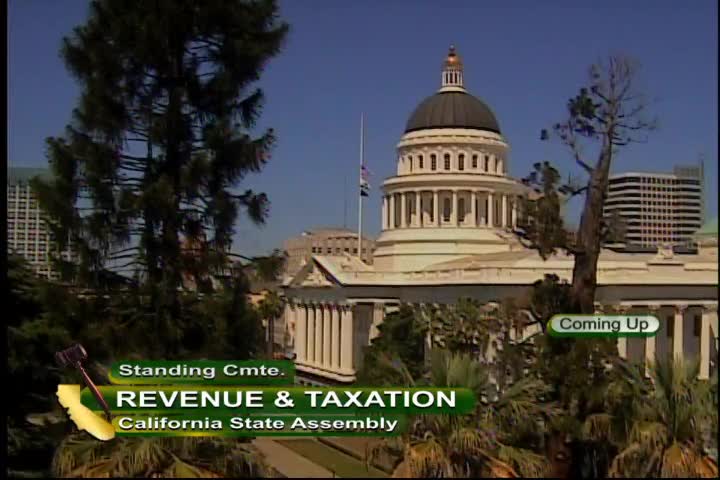
Assembly Standing Committee on Revenue and Taxation
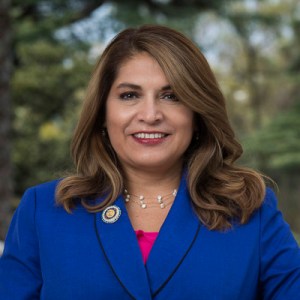
Bill Author
Bill Co-Author(s):