AB 3082: In-home supportive services.
- Session Year: 2017-2018
- House: Assembly
- Latest Version Date: 2018-09-30
Existing law establishes the In-Home Supportive Services (IHSS) program, administered by the State Department of Social Services and counties, under which qualified aged, blind, and disabled persons receive services enabling them to remain in their own homes. Existing law requires a prospective IHSS provider to complete a provider orientation at the time of enrollment that includes, among other things, the requirements to be an eligible IHSS provider, a description of the IHSS program, and the rules, regulations, and provider-related processes and procedures under the IHSS program.
This bill would require the department, in consultation with interested stakeholders, to develop, or otherwise identify, standard educational material about sexual harassment and the prevention thereof to be made available to IHSS providers and recipients and a proposed method for uniform data collection to identify the prevalence of sexual harassment in the IHSS program. The bill would require the department, on or before September 30, 2019, to provide a copy of the educational material and a description of the proposed method for uniform data collection to the relevant budget and policy committees of the Legislature.
Existing law establishes the In-Home Supportive Services (IHSS) program, administered by the State Department of Social Services and counties, under which qualified aged, blind, and disabled persons receive services enabling them to remain in their own homes. Existing law requires a prospective IHSS provider to complete a provider orientation at the time of enrollment that includes, among other things, the requirements to be an eligible IHSS provider, a description of the IHSS program, and the rules, regulations, and provider-related processes and procedures under the IHSS program.
This bill would require the department, in consultation with interested stakeholders, to develop a plan to address the issue of sexual harassment of IHSS providers and recipients. The bill would require the plan to include a recommended uniform method to track reports and outcomes of sexual harassment cases in the program and standardized sexual harassment education for providers and recipients, as specified. develop, or otherwise identify, standard educational material about sexual harassment and the prevention thereof to be made available to IHSS providers and recipients and a proposed method for uniform data collection to identify the prevalence of sexual harassment in the IHSS program. The bill would require the department, on or before September 30, 2019, and in consultation with the interested stakeholders, to submit a report to the Legislature summarizing the plan. to provide a copy of the educational material and a description of the proposed method for uniform data collection to the relevant budget and policy committees of the Legislature.
Existing law establishes the In-Home Supportive Services (IHSS) program, administered by the State Department of Social Services and counties, under which qualified aged, blind, and disabled persons receive services enabling them to remain in their own homes. Existing law requires a prospective IHSS provider to complete a provider orientation at the time of enrollment that includes, among other things, the requirements to be an eligible IHSS provider, a description of the IHSS program, and the rules, regulations, and provider-related processes and procedures under the IHSS program.
This bill would require the department, in consultation with interested stakeholders, to develop a policy plan to address the issue of sexual harassment of IHSS providers. providers and recipients. The bill would require the policy plan to include uniform data collection that includes a mechanism to track reports of sexual harassment a recommended uniform method to track reports and outcomes of sexual harassment cases in the program and standardized sexual harassment education for providers and recipients. recipients, as specified. The bill would require the department, on or before September 30, 2019, and in consultation with the interested stakeholders, to submit a report to the Legislature summarizing the policy. plan.
Existing law establishes the In-Home Supportive Services (IHSS) program, administered by the State Department of Social Services and counties, under which qualified aged, blind, and disabled persons receive services enabling them to remain in their own homes. Existing law requires a prospective IHSS provider to complete a provider orientation at the time of enrollment that includes, among other things, the requirements to be an eligible IHSS provider, a description of the IHSS program, and the rules, regulations, and provider-related processes and procedures under the IHSS program.
This bill would require the department, on or before July 1, 2019, in consultation with interested stakeholders, to develop a program policy to address the issue of sexual harassment of IHSS providers. The bill would require the program policy to include a uniform statewide protocol to follow whenever a provider reports sexual harassment, a continuing program of uniform data collection that includes a mechanism to track reports of sexual harassment in the program and standardized sexual harassment education for providers and recipients, a procedure for providers to report sexual harassment with guidelines and timelines for investigation, and a procedure to ensure protection against retaliation. recipients. The bill would require the department, on or before July 1, 2020, and annually thereafter, September 30, 2019, and in consultation with the interested stakeholders, to submit a report to the Legislature summarizing the outcomes of the program. policy.
Existing law establishes the In-Home Supportive Services (IHSS) program, administered by the State Department of Social Services and counties, under which qualified aged, blind, and disabled persons receive services enabling them to remain in their own homes. Existing law requires a prospective IHSS provider to complete a provider orientation at the time of enrollment that includes, among other things, the requirements to be an eligible IHSS provider, a description of the IHSS program, and the rules, regulations, and provider-related processes and procedures under the IHSS program.
This bill would require the department, on or before July 1, 2019, in consultation with interested stakeholders, to develop a program to address the issue of sexual harassment of IHSS providers. The bill would require the program to include, among other things, include a uniform statewide protocol to follow whenever a provider reports sexual harassment, a requirement that providers attend sexual harassment education as part of their provider orientation, continuing program of sexual harassment education for providers and recipients, a procedure for providers to report sexual harassment with guidelines and timelines for investigation, and a procedure to ensure protection against retaliation. The bill would require the department, on or before July 1, 2020, and annually thereafter, to submit a report to the Legislature summarizing the outcomes of the program.
Existing law establishes the In-Home Supportive Services (IHSS) program, administered by the State Department of Social Services and counties, under which qualified aged, blind, and disabled persons receive services enabling them to remain in their own homes. Existing law requires a prospective IHSS provider to complete a provider orientation at the time of enrollment that includes, among other things, the requirements to be an eligible IHSS provider, a description of the IHSS program, and the rules, regulations, and provider-related processes and procedures under the IHSS program.
This bill would require the department, on or before July 1, 2019, in consultation with interested stakeholders, to develop a program to address the issue of sexual harassment of IHSS providers. The bill would require the program to include, among other things, a uniform statewide protocol to follow whenever a provider reports sexual harassment, a requirement that providers attend sexual harassment education as part of their provider orientation, a procedure for providers to report sexual harassment with guidelines and timelines for investigation, and a procedure to ensure protection against retaliation. The bill would require the department, on or before July 1, 2020, and annually thereafter, to submit a report to the Legislature summarizing the outcomes of the program.
Existing law specifies that the purpose of certain provisions related to public social services is to provide for the protection, care, and assistance to the people of the state in need thereof, and to promote the welfare and happiness of all of the people of the state by providing appropriate aid and services to all of its needy and distressed. Existing law also declares the intent of the Legislature that aid be administered and services provided promptly and humanely, with due regard for the preservation of family life, and without discrimination on account of specified characteristics.This bill would make a technical, nonsubstantive change to those provisions.Existing law specifies that the purpose of certain provisions related to public social services is to provide for the protection, care, and assistance to the people of the state in need thereof, and to promote the welfare and happiness of all of the people of the state by providing appropriate aid and services to all of its needy and distressed. Existing law also declares the intent of the Legislature that aid be administered and services provided promptly and humanely, with due regard for the preservation of family life, and without discrimination on account of specified characteristics.
This bill would make a technical, nonsubstantive change to those provisions.
(a)The State Department of Social Services shall, in consultation with interested stakeholders, develop, or otherwise identify, both of the following:
(1)Standard educational material about sexual harassment and the prevention thereof to be made available to providers and recipients of in-home supportive services.
(2)A proposed method for uniform data collection to identify the prevalence of sexual harassment in the In-Home Supportive Services program.
(b)The department shall convene its first meeting with the interested stakeholders no later than February 1, 2019, and shall meet regularly thereafter.
(c)The department shall, on or before September 30, 2019, provide a copy of the educational material and a description of the proposed method for uniform data collection to the relevant budget and policy committees of the Legislature.
(d)This section does not change the nature of any employment relationship between providers and the county, public authority, nonprofit consortium, or state.
(a)The State Department of Social Services shall, in consultation with interested stakeholders, develop a plan to address the issue of sexual harassment of in-home supportive services providers and recipients that includes, but is not limited to, develop, or otherwise identify, both of the following:
(1)A recommended uniform method to track reports and outcomes of sexual harassment cases in the program and the recommended entity responsible for collecting that data. The recommended uniform method shall comply with applicable state and federal confidentiality laws.(2)Standardized education on sexual harassment for providers and recipients, the responsible entity for providing the education, and a process through which the education will be provided.(1)Standard educational material about sexual harassment and the prevention thereof to be made available to providers and recipients of in-home supportive services.
(2)A proposed method for uniform data collection to identify the prevalence of sexual harassment in the In-Home Supportive Services program.
(b)The department shall convene its first meeting with the interested stakeholders to develop the plan no later than February 1, 2019, and shall meet regularly thereafter.
(c)The department shall, on or before September 30, 2019, and in consultation with interested stakeholders, submit a report to the Legislature summarizing the plan developed pursuant to subdivision (a). The report shall be submitted in compliance with Section 9795 of the Government Code. provide a copy of the educational material and a description of the proposed method for uniform data collection to the relevant budget and policy committees of the Legislature.
(d)This section does not change the nature of the any employment relationship between providers and the county or public authority or nonprofit consortium that serves as the employer of the in-home supportive services personnel referred to recipients under paragraph (3) of subdivision (e) of Section 12301.6 within the meaning of Chapter 10 (commencing with Section 3500) of Division 4 of Title 1 of the Government Code. county, public authority, nonprofit consortium, or state.
(a)The State Department of Social Services shall, in consultation with interested stakeholders, develop a policy plan to address the issue of sexual harassment of in-home supportive services providers and recipients that includes, but is not limited to, both of the following:
(1)Uniform data collection that includes a mechanism to track reports of sexual harassment in the program.(1)A recommended uniform method to track reports and outcomes of sexual harassment cases in the program and the recommended entity responsible for collecting that data. The recommended uniform method shall comply with applicable state and federal confidentiality laws.
(2)Standardized education on sexual harassment for providers and recipients. recipients, the responsible entity for providing the education, and a process through which the education will be provided.
(b)The department shall convene its first meeting with the interested stakeholders to develop the policy plan no later than February 1, 2019, and shall meet regularly thereafter.
(c)The department shall, on or before September 30, 2019, and in consultation with interested stakeholders, submit a report to the Legislature summarizing the policy plan developed pursuant to subdivision (a). The report shall be submitted in compliance with Section 9795 of the Government Code.
(d)This section does not change the nature of the employment relationship between providers and the county or public authority or nonprofit consortium that serves as the employer of the in-home supportive services personnel referred to recipients under paragraph (3) of subdivision (e) of Section 12301.6 within the meaning of Chapter 10 (commencing with Section 3500) of Division 4 of Title 1 of the Government Code.
(a)On or before July 1, 2019, the The State Department of Social Services shall, in consultation with interested stakeholders, develop a program policy to address the issue of sexual harassment of in-home supportive services providers that includes all includes, but is not limited to, both of the following:
(1)A uniform statewide protocol to follow whenever a provider reports sexual harassment, that includes clear guidelines for the state, counties, public authorities, providers, and recipients.(2)A continuing program of sexual harassment education for providers and recipients.(3)A procedure for providers to report sexual harassment, with guidelines and timelines for investigation. The procedure shall include due process protections for recipients, specify remedial options, and establish guidelines for coordination with law enforcement agencies, if appropriate.(4)A procedure to ensure protection against retaliation for a provider who reports sexual harassment, including, but not limited to, ensuring that the provider receives payment for services rendered.(1)Uniform data collection that includes a mechanism to track reports of sexual harassment in the program.
(2)Standardized education on sexual harassment for providers and recipients.
(b)The department shall convene its first meeting with the interested stakeholders to develop the policy no later than February 1, 2019, and shall meet regularly thereafter.
(b)(c)The department shall, on or before July 1, 2020, and annually thereafter, September 30, 2019, and in consultation with interested stakeholders, submit a report to the Legislature summarizing the outcomes of the program policy developed pursuant to subdivision (a). The report shall be submitted in compliance with Section 9795 of the Government Code.
(a)On or before July 1, 2019, the State Department of Social Services shall, in consultation with interested stakeholders, develop a program to address the issue of sexual harassment of in-home supportive services providers that includes all of the following:
(1)A uniform statewide protocol to follow whenever a provider reports sexual harassment, that includes clear guidelines for the state, counties, public authorities, providers, and recipients.
(2)A requirement that providers attend sexual harassment education as part of the provider orientation required pursuant to Section 12301.24.(3)(2)A continuing program of sexual harassment education for providers and recipients.
(4)(3)A procedure for providers to report sexual harassment, with guidelines and timelines for investigation. The procedure shall include due process protections for recipients, specify remedial options, and establish guidelines for coordination with law enforcement agencies, if appropriate.
(5)(4)A procedure to ensure protection against retaliation for a provider who reports sexual harassment, including, but not limited to, ensuring that the provider receives payment for services rendered, especially in a case in which a recipient withholds approval of a timesheet in the context of sexual harassment or retaliation. rendered.
(b)The department shall, on or before July 1, 2020, and annually thereafter, submit a report to the Legislature summarizing the outcomes of the program developed pursuant to subdivision (a). The report shall be submitted in compliance with Section 9795 of the Government Code.
(a)On or before July 1, 2019, the State Department of Social Services shall, in consultation with interested stakeholders, develop a program to address the issue of sexual harassment of in-home supportive services providers that includes all of the following:
(1)A uniform statewide protocol to follow whenever a provider reports sexual harassment, that includes clear guidelines for the state, counties, public authorities, providers, and recipients.
(2)A requirement that providers attend sexual harassment education as part of the provider orientation required pursuant to Section 12301.24.
(3)A continuing program of sexual harassment education for providers and recipients.
(4)A procedure for providers to report sexual harassment, with guidelines and timelines for investigation. The procedure shall include due process protections for recipients, specify remedial options, and establish guidelines for coordination with law enforcement agencies, if appropriate.
(5)A procedure to ensure protection against retaliation for a provider who reports sexual harassment, including, but not limited to, ensuring that the provider receives payment for services rendered, especially in a case in which a recipient withholds approval of a timesheet in the context of sexual harassment or retaliation.
(b)The department shall, on or before July 1, 2020, and annually thereafter, submit a report to the Legislature summarizing the outcomes of the program developed pursuant to subdivision (a). The report shall be submitted in compliance with Section 9795 of the Government Code.
SECTION 1.Section 10000 of the Welfare and Institutions Code is amended to read:10000.The purpose of this division is to provide for protection, care, and assistance to the people of the state in need thereof, and to promote the welfare and happiness of all of the people of the state by providing appropriate aid and services to all of its needy and distressed. It is the intent of the Legislature that aid shall be administered and services provided promptly and humanely, with due regard for the preservation of family life, and without discrimination on account of ancestry, marital status, political affiliation, or any characteristic listed or defined in Section 11135 of the Government Code. That aid shall be so administered and services so provided, to the extent not in conflict with federal law, as to encourage self-respect, self-reliance, and the desire to be a good citizen, useful to society.The purpose of this division is to provide for protection, care, and assistance to the people of the state in need thereof, and to promote the welfare and happiness of all of the people of the state by providing appropriate aid and services to all of its needy and distressed. It is the legislative intent intent of the Legislature that aid shall be administered and services provided promptly and humanely, with due regard for the preservation of family life, and without discrimination on account of ancestry, marital status, political affiliation, or any characteristic listed or defined in Section 11135 of the Government Code. That aid shall be so administered and services so provided, to the extent not in conflict with federal law, as to encourage self-respect, self-reliance, and the desire to be a good citizen, useful to society.
|
Date
|
Status
|
|---|---|
| Sep 30, 2018 | Chaptered by Secretary of State - Chapter 948, Statutes of 2018. |
| Sep 30, 2018 | Approved by the Governor. |
| Sep 5, 2018 | Enrolled and presented to the Governor at 3 p.m. |
| Aug 27, 2018 | Senate amendments concurred in. To Engrossing and Enrolling. |
| Aug 22, 2018 | In Assembly. Concurrence in Senate amendments pending. May be considered on or after August 24 pursuant to Assembly Rule 77. |
| Aug 21, 2018 | Read third time. Passed. Ordered to the Assembly. |
| Aug 20, 2018 | Read second time. Ordered to third reading. |
| Aug 17, 2018 | Read second time and amended. Ordered returned to second reading. |
| Aug 6, 2018 | In committee: Referred to APPR. suspense file. |
| Jun 28, 2018 | Read second time and amended. Re-referred to Com. on APPR. |
| Jun 27, 2018 | From committee: Amend, and do pass as amended and re-refer to Com. on APPR. (Ayes 6. Noes 0.) (June 26). |
| Jun 13, 2018 | Referred to Com. on HUMAN S. |
| May 31, 2018 | In Senate. Read first time. To Com. on RLS. for assignment. |
| May 30, 2018 | Read third time. Passed. Ordered to the Senate. |
| May 29, 2018 | Read second time. Ordered to third reading. |
| May 25, 2018 | From committee: Amend, and do pass as amended. (Ayes 16. Noes 0.) (May 25). |
| May 16, 2018 | In committee: Set, first hearing. Referred to APPR. suspense file. |
| Apr 17, 2018 | From committee: Do pass and re-refer to Com. on APPR. with recommendation: To Consent Calendar. (Ayes 10. Noes 0.) (April 17). Re-referred to Com. on APPR. |
| Apr 11, 2018 | From committee: Do pass and re-refer to Com. on JUD. with recommendation: To Consent Calendar. (Ayes 7. Noes 0.) (April 10). Re-referred to Com. on JUD. |
| Apr 3, 2018 | Re-referred to Com. on HUM. S. |
| Apr 2, 2018 | From committee chair, with author's amendments: Amend, and re-refer to Com. on HUM. S. Read second time and amended. |
| Apr 2, 2018 | Re-referred to Com. on HUM. S. |
| Mar 22, 2018 | From committee chair, with author's amendments: Amend, and re-refer to Com. on HUM. S. Read second time and amended. |
| Feb 17, 2018 | From printer. May be heard in committee March 19. |
| Feb 16, 2018 | Read first time. To print. |
|
Date
|
Description
|
Location
|
Votes
|
|
|---|---|---|---|---|
| Aug 27, 2018 | AB 3082 GONZALEZ FLETCHER Concurrence in Senate Amendments | Assembly Floor |
Passed |
|
| Aug 21, 2018 | Assembly 3rd Reading AB3082 Gonzalez Fletcher By Mitchell | Senate Floor |
Passed |
|
| Aug 16, 2018 | Do pass as amended | Senate Standing Committee on Appropriations |
Passed |
|
| Aug 6, 2018 | Placed on suspense file | Senate Standing Committee on Appropriations |
Passed |
|
| Jun 26, 2018 | Do pass as amended, but first amend, and re-refer to the Committee on [Appropriations] | Senate Standing Committee on Human Services |
Passed |
|
| May 30, 2018 | AB 3082 GONZALEZ FLETCHER Assembly Third Reading | Assembly Floor |
Passed |
|
| May 25, 2018 | Do pass as amended. | Assembly Standing Committee on Appropriations |
Passed |
|
| Apr 17, 2018 | Do pass and be re-referred to the Committee on [Appropriations] with recommendation: To Consent Calendar | Assembly Standing Committee on Judiciary |
Passed |
|
| Apr 10, 2018 | Do pass and be re-referred to the Committee on [Judiciary] with recommendation: To Consent Calendar | Assembly Standing Committee on Human Services |
Passed |
This list shows positions taken on this bill by organizations on the date displayed, which is linked to the original source.
Positions by individuals are not included.
|
Organization
|
Position
|
Date
|
|---|---|---|
| AFSCME Local 3930 | ** Support | Aug 19, 2018 |
| California Association Of Public Authorities For Ihss | ** Support | Aug 19, 2018 |
| California Department of Finance | ** Against | Aug 19, 2018 |
| California Labor Federation | ** Support | Aug 19, 2018 |
| Congress of California Seniors | ** Support | Aug 19, 2018 |
| SEIU California | ** Support | Aug 19, 2018 |
| The California Association Of Public Authorities For Ihss | ** Support | Jun 22, 2018 |
| The Congress Of California Seniors | ** Support | Jun 22, 2018 |
CONCURRENCE IN SENATE AMENDMENTS
CSA1 Bill Id:AB 3082
Author:(Gonzalez Fletcher)
As Amended Ver:August 17, 2018
Majority vote
ASSEMBLY: | 77-0 | (May 30, 2018) | SENATE: | 39-0 | (August 21, 2018) |
Original Committee Reference: HUM. S.
SUMMARY: Requires the Department of Social Services (DSS) to develop or otherwise identify standard educational material and a proposed method for uniform data collection addressing sexual harassment of providers of in-home supportive services (IHSS) and to provide these materials to appropriate Legislative committees.
Specifically, this bill:
- Requires DSS, in consultation with interested stakeholders through regular meetings that are to begin convening by February 1, 2019, to develop or otherwise identify:
- Standard education material about sexual harassment and the prevention thereof to be made available to providers and recipients of IHSS; and
- A proposed method for uniform data collection to identify the prevalence of sexual harassment in the IHSS program.
- Requires DSS to, by September 30, 2019, provide a copy of the educational material and a description of the proposed method for uniform data collection to the relevant budget and policy committees of the Legislature.
- Prohibits the provisions of this bill from changing the nature of the employment relationship between providers and the county, public authority, or state.
The Senate amendments:
- Delete language requiring DSS to develop a policy regarding the sexual harassment of IHSS providers.
- Revise the requirement that DSS develop a policy to address standardized education on sexual harassment for IHSS providers and recipients by:
- Stipulating that, instead of being part of a policy, such material be developed or otherwise identified;
- Requiring the education material to also address the prevention of sexual harassment; and
- Requiring the material to be made available to IHSS providers and recipients.
- Revise the requirement that DSS develop a policy to address uniform data collection by:
- Stipulating that, instead of being part of a policy, a proposed method for uniform data collection be developed or otherwise identified;
- Deleting the requirement for the development of a mechanism to track reports of sexual harassment in the IHSS program and instead, requiring the proposed method to identify the prevalence of sexual harassment in the program.
- Delete the requirement that DSS provide a report that summarizes a policy regarding sexual harassment in the IHSS program to the Legislature and, instead, require DSS to provide a copy of the educational material and a description of the proposed method for uniform data collection to the relevant budget and policy committees of the Legislature.
- Add language prohibiting the provisions of this bill from changing the nature of the employment relationship between providers and the county, public authority, or state.
EXISTING LAW:
- Establishes the IHSS program to provide supportive services, including domestic, protective supervision, personal care, and paramedical services as specified, to individuals who are aged, blind, or living with disabilities, and who are unable to perform the services themselves or remain safely in their homes without receiving these services. (Welfare and Institutions Code Section (WIC) 12300 et seq.)
- Authorizes counties to choose to contract with a nonprofit consortium or establish a public authority for the provision of IHSS services. Requires nonprofit consortia and public authorities to, among other things, establish a registry to assist recipients in locating IHSS providers, and to investigate the background and qualifications of potential providers, as specified. (WIC 12301.6)
- Maintains an IHSS recipient's right to hire, fire, and supervise the work of any IHSS provider, regardless of the employer responsibilities of a public authority or nonprofit consortium, as specified. (WIC 12301.6 (c))
- Makes unlawful the harassment of an employee, applicant, unpaid intern or volunteer, or contracted service provider and stipulates that an employer may be responsible for the acts of nonemployees with respect to the sexual harassment of any of these individuals if the employer, or its agents or supervisors, knows or should have known of the conduct and fails to take immediate and appropriate corrective actions, as specified. (Government Code (GOV) 12940 (j))
- Permits any person claiming to be aggrieved by an alleged unlawful practice to file a verified complaint, in writing, with the Department of Fair Employment and Housing, and provides for noticing, investigation, and remediation processes, as specified. (GOV 12960-12976)
FISCAL EFFECT: According to the Senate Appropriations Committee, this bill may result in one-time costs to DSS likely in the hundreds of thousands of dollars to develop standard educational material and a method for data collection, and to report the Legislature. (General Fund)
COMMENTS:
In-Home Supportive Services: The IHSS program assists eligible low-income individuals in California who are at least 65 years old, living with disabilities, or blind by providing for services that enable them to remain in their own homes. The program pays care providers to assist with personal care services (such as bathing, toileting, and grooming), domestic and related services (meal preparation, housecleaning, and the like), paramedical services, and protective supervision. As of January, there were 570,838 Californians who received IHSS; 98.5% of these individuals received it as a Medicaid benefit.
The IHSS program is overseen by DSS, and administered at the county level. After applying, applicants are assessed by a county social worker for eligibility and need. If determined eligible, an individual is authorized for certain services and number of hours of care. IHSS recipients are responsible for selecting, hiring, firing, directing, and supervising their IHSS workers. These responsibilities also include some administrative duties, such as scheduling and signing timesheets; however, the state handles payroll. As of January, there were 485,411 IHSS providers in California; 69% of these providers were relatives and 53% of these providers lived in the same residence as the recipient. Providers must complete an enrollment process that includes providing fingerprint images and submitting to a criminal background check. Prospective IHSS providers are also required to participate in an on-site orientation developed by DSS and the counties prior to receiving payment for services.
Sexual harassment and the home care industry:
According to the U.S. Equal Employment Opportunity Commission (EEOC):
It is unlawful to harass a person (an applicant or employee) because of that person's sex. Harassment can include 'sexual harassment' or unwelcome sexual advances, requests for sexual favors, and other verbal or physical harassment of a sexual nature. Harassment does not have to be of a sexual nature, however, and can include offensive remarks about a person's sex. For example, it is illegal to harass a woman by making offensive comments about women in general. Both victim and the harasser can be either a woman or a man, and the victim and harasser can be the same sex. Although the law doesn't prohibit simple teasing, offhand comments, or isolated incidents that are not very serious, harassment is illegal when it is so frequent or severe that it creates a hostile or offensive work environment or when it results in an adverse employment decision (such as the victim being fired or demoted). The harasser can be the victim's supervisor, a supervisor in another area, a co-worker, or someone who is not an employee of the employer, such as a client or customer.
Sexual harassment is a form of sex discrimination, and therefore violates the federal Civil Rights Act of 1964 Title VII and the California Fair Employment and Housing Act. Retaliation against an individual who has complained about harassment or participated in an investigation of a complaint is also unlawful and subject to disciplinary action.
Home care workers – including IHSS providers, other home care aides, and home health aides – can be especially vulnerable to sexual harassment because they often work alone in the client's home. In the IHSS program, the recipient has the right to hire, fire, and supervise the work of any IHSS provider. Regarding a 2017 lawsuit against an in-home senior care provider by the EEOC for sex and race harassment of a caregiver by a client, an EEOC San Francisco District Director commented that, "The customer is not always right. The law requires employers to ensure that workers are protected from sexual harassment, even when that workplace is non-traditional, like a client's home, and even when the alleged harasser is a customer or client. Like farmworkers and janitorial workers, in-home caregivers can be particularly vulnerable to harassment, and it is one of the EEOC's top priorities to defend vulnerable workers against discrimination."
Yet, home care workers, along with many other low-wage workers, may struggle to pursue and access the recourse and remedies available to them. A 2015 report in the Berkeley Journal of Employment and Labor Law noted that:
Unfortunately, low-wage workers face a wide-range of overlapping barriers when seeking justice for workplace harassment. Although workers who are harassed in the workplace know the injustice of the situations they face and want to better these poor conditions for themselves and others, they may not know where to turn for help. Low-wage workers have little information about their legal rights and where to seek justice. A survey conducted by the Brennan Center for Justice found that only 18% of low-wage workers surveyed could even identify the minimum wage let alone other important workplace rights. One Justice, a California nonprofit focused on access to legal services, reports that 'over [eight] million low-income Californians face legal barriers to life necessities.' Workers lack information about what their rights are and where to enforce these rights.
Even if a worker is able to find assistance, logistical problems often prevent workers from pursuing meaningful remedies for harassment and workplace violence. Many low-wage workers are not located geographically near legal services, cannot communicate with service providers due to language and cultural barriers, lack financial support to seek justice, and are frustrated by the lengthy and ineffective process of administrative and litigation remedies. Undocumented workers confront additional challenges in seeking justice. Despite workplace laws' explicit protections against retaliation, undocumented and other low-wage workers fear and often actually face retaliation when they report violations.
Some states have worked to address issues of sexual harassment of home care workers in various ways. For example, Illinois addresses sexual harassment in its Domestic Workers Bill of Rights, passed in 2016 (Public Act 099-0758). New York, in a law adopted in 2010 (A1470B), declares that, "It shall be an unlawful discriminatory practice for an employer to a) engage in unwelcome sexual advances, requests for sexual favors, or other verbal or physical conduct of a sexual nature to a domestic worker when: (i) submission to such conduct is made either explicitly or implicitly a term or condition of an individual's employment; (ii) submission to or rejection of such conduct by an individual is used as the basis for employment decisions affecting such individual; or (iii) such conduct has the purpose or effect of unreasonably interfering with an individual's work performance by creating an intimidating, hostile, or offensive working environment; and b) subject a domestic worker to unwelcome harassment based on gender, race, religion or national origin, where such harassment has the purpose or effect of unreasonably interfering with an individual's work performance by creating an intimidating, hostile, or offensive working environment." Chapter 457 of Oregon Laws of 2015 prohibits a person that employs a domestic worker from subjecting that worker to harassment.
Need for this bill: According to the author, "Experts have continuously stated that the women at the bottom of the labor market suffer sexual harassment and assault in the workplace most often and are least likely to see, or even pursue, justice. In-home supportive services (IHSS) providers are highly vulnerable to sexual harassment, especially due to their isolated working environments. These workers do not have a direct supervisor present onsite that can be held responsible for protecting the provider's right to work in an environment free of sexual harassment. Without any protocols in place for addressing sexual harassment, these workers are basically expected to endure some degree of indignity as a term of their employment. To begin addressing this glaring lack of protections, [this bill] would require the Department of Social Services (DSS) in consultation with stakeholders to establish a uniform statewide protocol on sexual harassment for IHSS providers."
Analysis Prepared by: FN: 0004571
Office of Senate Floor Analyses (916) 651-1520 Fax: (916) 327-4478 | AB |
THIRD READING
Bill No: AB 3082
Amended: 8/17/18 in Senate
SENATE HUMAN SERVICES COMMITTEE: 6-0, 6/26/18
AYES: Wiener, Glazer, Leyva, McGuire, Nguyen, Portantino
NO VOTE RECORDED: Berryhill
SENATE APPROPRIATIONS COMMITTEE: 7-0, 8/16/18
AYES: Portantino, Bates, Beall, Bradford, Hill, Nielsen, Wiener
ASSEMBLY FLOOR: 77-0, 5/30/18 - See last page for vote
UDW/AFSCME Local 3930
DIGEST:
This bill requires the California Department of Social Services (CDSS) to develop or identify educational material about sexual harassment and the prevention thereof to be made available to In-Home Supportive Services (IHSS) providers and recipients; requires CDSS to develop or identify a proposed method for uniform data collection to identify the prevalence of sexual harassment in the IHSS program; and requires CDSS to provide information regarding the educational materials and the data collection method to the Legislature, as specified.
Existing law:
- Establishes the IHSS program to provide supportive services, including domestic, protective supervision, personal care, and paramedical services as specified, to individuals who are aged, blind, or living with disabilities, and who are unable to perform the services themselves or remain safely in their homes without receiving these services. (WIC 12300 et seq.)
- Authorizes counties to choose to contract with a nonprofit consortium or establish a public authority for the provision of IHSS services. Requires nonprofit consortia and public authorities to, among other things, establish a registry to assist recipients in locating IHSS providers, and to investigate the background and qualifications of potential providers, as specified. (WIC 12301.6)
- Provides that public authorities shall be deemed to be the employer of IHSS personnel, as specified and maintains an IHSS recipient's right to hire, fire, and supervise the work of any IHSS provider, regardless of the employer responsibilities of a public authority or nonprofit consortium, as specified. (WIC 12301.6 (c))
- Requires all prospective IHSS providers, at the time of enrollment, to complete an orientation developed by CDSS in consultation with counties, and stipulates items that must be included in the orientation, including, among other things, a description of the IHSS program and the requirements, rules, regulations, policies, and procedures related to being an IHSS provider. (WIC 12301.24)
- Makes unlawful the harassment of an employee, applicant, unpaid intern or volunteer, or contracted service provider and stipulates that an employer may be responsible for the acts of nonemployees with respect to the sexual harassment of any of these individuals if the employer, or its agents or supervisors, knows or should have known of the conduct and fails to take immediate and appropriate corrective actions, as specified. (GOV 12940 (j))
- Permits any person claiming to be aggrieved by an alleged unlawful practice to file a verified complaint, in writing, with the Department of Fair Employment and Housing, and provides for noticing, investigation, and remediation processes, as specified. (GOV 12960-12976)
This bill:
- Requires CDSS, in consultation with interested stakeholders, to develop or otherwise identify, both of the following:
- Standard educational material about sexual harassment and the prevention thereof to be made available to providers and recipients in IHSS.
- A proposed method for uniform data collection to identify the prevalence of sexual harassment in the IHSS program.
- Requires CDSS to convene its first meeting the interested stakeholders no later than February 1, 2019, and meet regularly thereafter.
- Requires CDSS to, by September 30, 2019, provide a copy of the educational material and a description of the proposed method for uniform data collection to the relevant budget and policy committees of the Legislature.
- Provides that the bill does not change the nature of any employment relationship between providers and the county, public authority, nonprofit consortium, or state.
Background
According to the author, “women in low-wage jobs suffer sexual harassment and assault in the workplace often and they are less likely to see, or even pursue, justice. IIHSS providers are highly vulnerable to sexual harassment, especially due to their isolated working environments. These workers do not have a direct supervisor present onsite that can be held responsible for protecting the provider’s right to work in an environment free of sexual harassment. Without any protocols in place for addressing sexual harassment, these workers are basically expected to endure some degree of indignity as a term of their employment.” This bill proposes to require CDSS to work with stakeholders to develop educational material about sexual harassment and the prevention thereof and a proposed data tracking method to identify the prevalence of sexual harassment in the IHSS program.
In-Home Supportive Services (IHSS)
The IHSS program provides in-home services for low-income aged, blind and disabled individuals who are unable to perform certain tasks themselves and who cannot safely remain in their homes unless these services are provided. IHSS is administered at the state level by CDSS and at the local level by counties.
The program pays care providers to assist with personal care services (such as bathing, toileting, and grooming), domestic and related services (meal preparation, housecleaning, and the like), paramedical services, and protective supervision. IHSS services also may include accompaniment to medical appointments, protective supervision for mentally-impaired recipients who may place themselves at risk of injury, hazard or accident and paramedical services, when directed by a physician.
Applicants for IHSS services must undergo an initial application and review process, during which a social worker will conduct a home visit and a needs assessment. Upon determining that an individual is eligible for IHSS services, the county social worker will notify the recipient of the monthly maximum authorized hours of care. IHSS recipients are responsible for selecting, hiring, firing, directing, and supervising their IHSS workers. These responsibilities also include some administrative duties, such as scheduling and signing timesheets; however, the state handles payroll.
As of January 2018, over 570,000 Californians were receiving in-home care through IHSS, 98.5 percent of whom received it as a Medicaid benefit.
Applicants to be IHSS providers must complete an enrollment process, which includes submitting the necessary forms to the county and submitting fingerprint images to the Department of Justice for a criminal background check. Prospective IHSS providers are also required to participate in an on-site orientation developed by CDSS and the counties prior to receiving payment for services. Mandated content for the orientation includes: a description of the IHSS program; the rules, regulations, and provider-related processes and procedures, including timesheets; the consequences of committing fraud in the IHSS program; the Medi-Cal toll-free telephone fraud hotline and Internet Web site for reporting suspected fraud or abuse in the provision or receipt of supportive services; and the applicable federal and state requirements regarding minimum wage and overtime pay, including paid travel time and wait time, as specified. The orientation is not required to provide information regarding sexual harassment protections.
As of January, there were over 485,000 IHSS providers in California. Of those, 69 percent were relatives of the IHSS recipients and 53 percent lived in the same residence as the recipient.
Sexual Harassment and the Home Care Industry
Sexual harassment is a form of sex discrimination, and therefore violates the federal Civil Rights Act of 1964 Title VII and the California Fair Employment and Housing Act. Retaliation against an individual who has complained about harassment or participated in an investigation of a complaint is also unlawful and subject to disciplinary action.
According to the U.S. Equal Employment Opportunity Commission (EEOC):
It is unlawful to harass a person (an applicant or employee) because of that person's sex. Harassment can include 'sexual harassment' or unwelcome sexual advances, requests for sexual favors, and other verbal or physical harassment of a sexual nature. Harassment does not have to be of a sexual nature, however, and can include offensive remarks about a person's sex. For example, it is illegal to harass a woman by making offensive comments about women in general. Both victim and the harasser can be either a woman or a man, and the victim and harasser can be the same sex. Although the law doesn't prohibit simple teasing, offhand comments, or isolated incidents that are not very serious, harassment is illegal when it is so frequent or severe that it creates a hostile or offensive work environment or when it results in an adverse employment decision (such as the victim being fired or demoted). The harasser can be the victim's supervisor, a supervisor in another area, a co-worker, or someone who is not an employee of the employer, such as a client or customer.
Home care workers – including IHSS providers, home care aides, and home health aides – can be especially vulnerable to workplace harassment because they work alone and in intimate environments. According to a report by the Berkeley Journal of Employment and Labor Law titled, Workplace Violence and Harassment of Low-Wage Workers, “Domestic workers perform their jobs in private homes and remain invisible to outside organizations, attorneys, and consumers. Many domestic workers are immigrants who may be unfamiliar with the language and culture in the United States. Nearly all domestic workers work alone, and many feel isolated and lonely…As a result, domestic workers are exposed to harassment and abuse.”[1]
In 2017, an EEOC lawsuit charged that a senior care company violated federal law when it ignored sexual harassment and racial harassment by an elderly client. The lawsuit further alleges that the company retaliated against one of its employee caregivers who reported the conduct. The EEOC San Francisco District Director commented that, "The customer is not always right. The law requires employers to ensure that workers are protected from sexual harassment, even when that workplace is non-traditional, like a client's home, and even when the alleged harasser is a customer or client. Like farmworkers and janitorial workers, in-home caregivers can be particularly vulnerable to harassment, and it is one of the EEOC's top priorities to defend vulnerable workers against discrimination.” EEOC Senior Trial Attorney Raymond T. Cheung added, "The senior-care industry represents one of the fastest-growing employers in the United States, with the nation's changing age demographics and the increasing health care and assistance needs of the baby boomer generation. These care providers are particularly vulnerable because they must go alone to the homes of clients, away from the support of a care facility. It is important for the EEOC to send a message to the industry that their employees need to be protected from abusive behavior."[2]
FISCAL EFFECT: Appropriation: Fiscal Com.: Local:
According to the Senate Appropriations Committee analysis dated August 16, 2018, this bill will likely generated one-time costs to CDSS in the hundreds of thousands of dollars to develop standard educational material and a method for data collection, and to report the Legislature. (GF)
SEIU California (co-source)
UDW/AFSCME Local 3930 (co-source)
AFSCME
California Association of Public Authorities for IHSS
California Labor Federation
Congress of California Seniors
OPPOSITION: (Verified 8/16/18)
California Department of Finance
ARGUMENTS IN SUPPORT: SEIU California, one of the sponsors of this bill, writes the following in support of AB 3082, “California’s IHSS program lacks processes, procedures, and protections to address workforce sexual harassment. There is no mechanism in the program for workers to report, resolve, or prevent the reoccurrence of sexual harassment. Currently, the IHSS program serves over 550,000 recipients with the help of almost 500,000 providers. Caseload is expected to increase substantially in the next decade as our population ages. More specifically, IHSS providers are 85% female and 70% non-White. These workers are particularly vulnerable to sexual harassment due to the job’s physical isolation and low wages.”
ARGUMENTS IN OPPOSITION: The Department of Finance is opposed to the June 28, 2018 version of this bill for the following reasons:
- This bill results in a General Fund impact and may create a significant cost pressure after a plan is developed to implement its recommendations.
- The bill could result in the unintended consequence in which the state may be viewed as the employer of IHSS providers for the purposes of state labor laws, which will exponentially increase state obligations and costs.
ASSEMBLY FLOOR: 77-0, 5/30/18
AYES: Acosta, Travis Allen, Arambula, Baker, Berman, Bigelow, Bloom, Bonta, Brough, Burke, Caballero, Calderon, Carrillo, Cervantes, Chau, Chávez, Chen, Chiu, Choi, Chu, Cooley, Cooper, Cunningham, Dahle, Daly, Eggman, Flora, Fong, Frazier, Friedman, Gallagher, Cristina Garcia, Eduardo Garcia, Gipson, Gloria, Gonzalez Fletcher, Gray, Grayson, Harper, Holden, Irwin, Jones-Sawyer, Kalra, Kamlager-Dove, Kiley, Lackey, Levine, Limón, Low, Maienschein, Mathis, Mayes, McCarty, Medina, Melendez, Mullin, Muratsuchi, Nazarian, Obernolte, O'Donnell, Patterson, Quirk, Quirk-Silva, Reyes, Rodriguez, Rubio, Salas, Santiago, Steinorth, Mark Stone, Thurmond, Ting, Voepel, Waldron, Weber, Wood, Rendon
NO VOTE RECORDED: Aguiar-Curry
8/19/18 13:37:33
**** END ****
SENATE COMMITTEE ON APPROPRIATIONS
Senator Anthony Portantino, Chair
2017 - 2018 Regular Session
AB 3082 (Gonzalez Fletcher) - In-home supportive services
Version: June 28, 2018 | Policy Vote: HUMAN S. 6 - 0 |
Urgency: No | Mandate: No |
Hearing Date: August 16, 2018 | Consultant: Debra Cooper |
Bill Summary:
AB 3082 would require the California Department of Social Services (CDSS) to develop a plan to address sexual harassment of providers and recipients of In-home Supportive Services (IHSS) and to report the summary of this plan to the Legislature by September 30, 2019.
*********** ANALYSIS ADDENDUM – SUSPENSE FILE ***********
The following information is revised to reflect amendments
adopted by the committee on August 16, 2018
Fiscal Impact:
One-time costs to CDSS likely in the hundreds of thousands of dollars to develop standard educational material and a method for data collection, and to report the Legislature. (GF)
Author Amendments:
Strike the development of the plan. Require CDSS to develop standard educational material and a data collection method. Also require CDSS to submit to the Legislature a copy of the educational material and a description of the data collection method.
-- END --
SENATE COMMITTEE ON APPROPRIATIONS
Senator Anthony Portantino, Chair
2017 - 2018 Regular Session
AB 3082 (Gonzalez Fletcher) - In-home supportive services
Version: June 28, 2018 | Policy Vote: HUMAN S. 6 - 0 |
Urgency: No | Mandate: No |
Hearing Date: August 6, 2018 | Consultant: Debra Cooper |
This bill meets the criteria for referral to the Suspense File.
Bill Summary:
AB 3082 would require the California Department of Social Services (CDSS) to develop a plan to address sexual harassment of providers and recipients of In-home Supportive Services (IHSS) and to report the summary of this plan to the Legislature by September 30, 2019.
Fiscal Impact:
- One-time costs to CDSS likely less than $100,000 to develop the plan as described, and to produce and submit a report to the Legislature summarizing the plan. (GF)
- Future, ongoing, significant cost pressure for CDSS to implement the elements of the plan.
Background:
The IHSS program provides in-home services for low-income aged, blind and disabled individuals who are unable to perform certain tasks themselves and who cannot safely remain in their homes unless these services are provided. IHSS is administered at the state level by CDSS and at the local level by counties.
Sexual harassment is a form of sex discrimination, and therefore violates the federal Civil Rights Act of 1964 Title VII and the California Fair Employment and Housing Act. Retaliation against an individual who has complained about harassment or participated in an investigation of a complaint is also unlawful and subject to disciplinary action.
Home care workers – including IHSS providers, home care aides, and home health aides – can be especially vulnerable to workplace harassment because they work alone and in intimate environments. According to a report by the Berkeley Journal of Employment and Labor Law titled, Workplace Violence and Harassment of Low-Wage Workers, “Domestic workers perform their jobs in private homes and remain invisible to outside organizations, attorneys, and consumers. Many domestic workers are immigrants who may be unfamiliar with the language and culture in the United States. Nearly all domestic workers work alone, and many feel isolated and lonely…As a result, domestic workers are exposed to harassment and abuse.” In 2017, an Equal Employment Opportunity Commission lawsuit charged that a senior care company violated federal law when it ignored sexual harassment and racial harassment by an elderly client. The lawsuit further alleges that the company retaliated against one of its employee caregivers who reported the conduct.
Proposed Law:
This bill would require CDSS, in consultation with interested stakeholders, to develop a plan to address the issue of sexual harassment of IHSS providers and recipients, as specified. CDSS would be required to convene its first meeting with the interested stakeholders to develop the plan no later than February 1, 2019, and shall meet regularly thereafter. Lastly, CDSS would be required, by September 30, 2019, and in consultation with interested stakeholders, to submit a report to the Legislature summarizing the plan.
Staff Comments:
Although existing law prohibits the sexual harassment of IHSS workers, just as it prohibits the harassment of any other worker, the IHSS program lacks clear procedures for reporting, resolving, and preventing sexual harassment for these uniquely situated workers. According to the author's office, the IHSS program lacks basic processes, procedures and protections to address workforce sexual harassment statewide. There is no formal mechanism in the program for workers to report, resolve, or prevent the reoccurrence of sexual harassment. The author's office contends California should take the lead in crafting policy to deal with sexual harassment of providers that is uniform, comprehensive, and applicable to all involved.
-- END --
SENATE COMMITTEE ON HUMAN SERVICES
Senator Wiener, Chair
2017 - 2018 Regular
Bill No: AB 3082
Author: | Gonzalez Fletcher | ||
Version: | May 25, 2018 | Hearing Date: | June 26, 2018 |
Urgency: | No | Fiscal: | Yes |
Consultant: | Taryn Smith | ||
Subject: In-home supportive services
SUMMARY
This bill requires the California Department of Social Services (CDSS) to establish a policy to address sexual harassment of providers of In-Home Supportive Services (IHSS) and to report a summary of this policy to the Legislature.
ABSTRACT
Existing law:
- Establishes the IHSS program to provide supportive services, including domestic, protective supervision, personal care, and paramedical services as specified, to individuals who are aged, blind, or living with disabilities, and who are unable to perform the services themselves or remain safely in their homes without receiving these services. (WIC 12300 et seq.)
- Authorizes counties to choose to contract with a nonprofit consortium or establish a public authority for the provision of IHSS services. Requires nonprofit consortia and public authorities to, among other things, establish a registry to assist recipients in locating IHSS providers, and to investigate the background and qualifications of potential providers, as specified. (WIC 12301.6)
- Provides that public authorities shall be deemed to be the employer of IHSS personnel, as specified and maintains an IHSS recipient's right to hire, fire, and supervise the work of any IHSS provider, regardless of the employer responsibilities of a public authority or nonprofit consortium, as specified. (WIC 12301.6 (c))
- Requires all prospective IHSS providers, at the time of enrollment, to complete an orientation developed by CDSS in consultation with counties, and stipulates items that must be included in the orientation, including, among other things, a description of the IHSS program and the requirements, rules, regulations, policies, and procedures related to being an IHSS provider. (WIC 12301.24)
- Makes unlawful the harassment of an employee, applicant, unpaid intern or volunteer, or contracted service provider and stipulates that an employer may be responsible for the acts of nonemployees with respect to the sexual harassment of any of these individuals if the employer, or its agents or supervisors, knows or should have known of the conduct and fails to take immediate and appropriate corrective actions, as specified. (GOV 12940 (j))
- Permits any person claiming to be aggrieved by an alleged unlawful practice to file a verified complaint, in writing, with the Department of Fair Employment and Housing, and provides for noticing, investigation, and remediation processes, as specified. (GOV 12960-12976)
This bill:
- Requires CDSS, in consultation with interested stakeholders through regular meetings that are to begin convening by February 1, 2019, to develop a policy that addresses the issue of sexual harassment of IHSS providers, that includes, but is not limited to:
- Uniform data collection that includes a mechanism to track reports of sexual harassment in the program; and
- Standardized education on sexual harassment for providers and recipients.
- Requires CDSS to, by September 30, 2019, and in consultation with interested stakeholders, submit a report to the Legislature summarizing the policy developed pursuant to provisions of this bill, as specified.
FISCAL IMPACT
According to the Assembly Committee on Appropriations, this bill could result in one-time costs to CDSS, likely in the range of $50,000 to $75,000, to meet with stakeholders to develop a policy regarding uniform data collection and standardized education on sexual harassment for providers and recipients, and to produce and submit a report to the Legislature.
BACKGROUND AND DISCUSSION
Purpose of the bill:
According to the author, “women in low-wage jobs suffer sexual harassment and assault in the workplace often and they are less likely to see, or even pursue, justice. IIHSS providers are highly vulnerable to sexual harassment, especially due to their isolated working environments. These workers do not have a direct supervisor present onsite that can be held responsible for protecting the provider’s right to work in an environment free of sexual harassment. Without any protocols in place for addressing sexual harassment, these workers are basically expected to endure some degree of indignity as a term of their employment.” This bill proposes to require CDSS to work with stakeholders to develop a policy that will address the issue of sexual harassment within the IHSS program.
In-Home Supportive Services (IHSS)
The IHSS program provides in-home services for low-income aged, blind and disabled individuals who are unable to perform certain tasks themselves and who cannot safely remain in their homes unless these services are provided. IHSS is administered at the state level by CDSS and at the local level by counties.
The program pays care providers to assist with personal care services (such as bathing, toileting, and grooming), domestic and related services (meal preparation, housecleaning, and the like), paramedical services, and protective supervision. IHSS services also may include accompaniment to medical appointments, protective supervision for mentally-impaired recipients who may place themselves at risk of injury, hazard or accident and paramedical services, when directed by a physician.
Applicants for IHSS services must undergo an initial application and review process, during which a social worker will conduct a home visit and a needs assessment. Upon determining that an individual is eligible for IHSS services, the county social worker will notify the recipient of the monthly maximum authorized hours of care. IHSS recipients are responsible for selecting, hiring, firing, directing, and supervising their IHSS workers. These responsibilities also include some administrative duties, such as scheduling and signing timesheets; however, the state handles payroll. As of January 2018, over 570,000 Californians were receiving in-home care through IHSS, 98.5 percent of whom received it as a Medicaid benefit.
Applicants to be IHSS providers must complete an enrollment process, which includes submitting the necessary forms to the county and submitting fingerprint images to the Department of Justice for a criminal background check.
Prospective IHSS providers are also required to participate in an on-site orientation developed by CDSS and the counties prior to receiving payment for services. Mandated content for the orientation includes: a description of the IHSS program; the rules, regulations, and provider-related processes and procedures, including timesheets; the consequences of committing fraud in the IHSS program; the Medi-Cal toll-free telephone fraud hotline and Internet Web site for reporting suspected fraud or abuse in the provision or receipt of supportive services; and the applicable federal and state requirements regarding minimum wage and overtime pay, including paid travel time and wait time, as specified. The orientation is not required to provide information regarding sexual harassment protections.
As of January, there were over 485,000 IHSS providers in California. Of those, 69 percent were relatives of the IHSS recipients and 53 percent lived in the same residence as the recipient.
Sexual Harassment and the Home Care Industry
Sexual harassment is a form of sex discrimination, and therefore violates the federal Civil Rights Act of 1964 Title VII and the California Fair Employment and Housing Act. Retaliation against an individual who has complained about harassment or participated in an investigation of a complaint is also unlawful and subject to disciplinary action.
According to the U.S. Equal Employment Opportunity Commission (EEOC):
It is unlawful to harass a person (an applicant or employee) because of that person's sex. Harassment can include 'sexual harassment' or unwelcome sexual advances, requests for sexual favors, and other verbal or physical harassment of a sexual nature. Harassment does not have to be of a sexual nature, however, and can include offensive remarks about a person's sex. For example, it is illegal to harass a woman by making offensive comments about women in general. Both victim and the harasser can be either a woman or a man, and the victim and harasser can be the same sex. Although the law doesn't prohibit simple teasing, offhand comments, or isolated incidents that are not very serious, harassment is illegal when it is so frequent or severe that it creates a hostile or offensive work environment or when it results in an adverse employment decision (such as the victim being fired or demoted). The harasser can be the victim's supervisor, a supervisor in another area, a co-worker, or someone who is not an employee of the employer, such as a client or customer.
Home care workers – including IHSS providers, home care aides, and home health aides – can be especially vulnerable to workplace harassment because they work alone and in intimate environments. According to a report by the Berkeley Journal of Employment and Labor Law titled, Workplace Violence and Harassment of Low-Wage Workers, “Domestic workers perform their jobs in private homes and remain invisible to outside organizations, attorneys, and consumers. Many domestic workers are immigrants who may be unfamiliar with the language and culture in the United States. Nearly all domestic workers work alone, and many feel isolated and lonely…As a result, domestic workers are exposed to harassment and abuse.”[1]
In 2017, an EEOC lawsuit charged that a senior care company violated federal law when it ignored sexual harassment and racial harassment by an elderly client. The lawsuit further alleges that the company retaliated against one of its employee caregivers who reported the conduct. The EEOC San Francisco District Director commented that, "The customer is not always right. The law requires employers to ensure that workers are protected from sexual harassment, even when that workplace is non-traditional, like a client's home, and even when the alleged harasser is a customer or client. Like farmworkers and janitorial workers, in-home caregivers can be particularly vulnerable to harassment, and it is one of the EEOC's top priorities to defend vulnerable workers against discrimination.”[2]
COMMENTS
Although existing law prohibits the sexual harassment of IHSS workers, just as it prohibits the harassment of any other worker, the IHSS program lacks clear procedures for reporting, resolving, and preventing sexual harassment for these uniquely situated workers. The IHSS program is administered at the county level with guidance and direction coming from the state.
There are different definitions in state law that determine who is the employer of individual providers of IHSS for various purposes. By law, IHSS recipients retain the right to hire, fire, and supervise the work of IHSS providers, but providers are paid through the IHSS program. However, according to the California State Association of Counties, California Welfare Directors Association, the California Association of Public Authorities, “A joint employment relationship exists for purposes of federal and state wage and hour claims. Hence, the consumer, the state and the local Public Authority have been deemed joint employers for purposes of the Fair Labor Standards Act. However, consumers are typically deemed the employer when the U.S. Equal Employment Opportunity Commission (EEOC) or California Department of Fair Employment and Housing (DEFH) receives a charge alleging sexual harassment has been perpetrated by an IHSS consumer against their IHSS provider.” This is the reasoning for the amendment to add section (d) below.
This structure does not neatly align with current discourse around sexual harassment policy and procedure, as it may be unclear to program participants what recourse they have in the event of on the job sexual harassment. This could be a topic for the stakeholder group to consider.
Additionally, the author may wish to consider the following amendments which would clarify that the stakeholders will work with CDSS to develop a plan, not a policy, to address sexual harassment issues for providers and recipients that would be submitted to the legislature. Additionally, these amendments clarify that the workgroup would be charged with determining what entity would be responsible for sexual harassment data collection and training. The amendment would also protect the privacy of IHSS providers and recipients and preserve the existing relationship between providers and the public agencies.
On page 2, line 3:
12318. (a) The State Department of Social Services shall, in consultation with interested stakeholders, develop a policy plan to address the issue of sexual harassment of in-home supportive services providers and recipients that includes, but is not limited to, both of the following:
(1) Uniform data collection that includes a mechanism to Recommended uniform method to track reports and outcomes of sexual harassment cases in the program, and the recommended entity responsible for collecting such data. The recommended uniform method shall comply with applicable state and federal confidentiality laws.
(2) Standardized education on sexual harassment for providers and recipients, the responsible entity for providing the education and a process through which the education will be provided.
(b) The department shall convene its first meeting with the interested stakeholders to develop the policy plan no later than February 1, 2019, and shall meet regularly thereafter.
(c) The department shall, on or before September 30, 2019, and in consultation with interested stakeholders, submit a report to the Legislature summarizing the policy plan developed pursuant to subdivision (a). The report shall be submitted in compliance with Section 9795 of the Government Code.
(d) Nothing in this section is intended to change the nature of the employment relationship between providers and public agencies that serve as employer of in-home supportive services personnel referred to recipients under paragraph (3) of subdivision (e) within the meaning of Chapter 10 (commencing with Section 3500) of Division 4 of Title 1 of the Government Code.
PRIOR VOTES
Assembly Floor: | 77 - 0 |
Assembly Appropriations Committee: | 16 - 0 |
Assembly Human Services Committee: | 7 - 0 |
POSITIONS
Support:
SEIU California (Sponsor)
UDW/AFSCME Local 3930 (Co-Sponsor)
AFSCME
The California Association of Public Authorities for IHSS (CAPA)
The California Labor Federation
The Congress of California Seniors
Oppose:
None received
-- END --
ASSEMBLY THIRD READING
ATR Bill Id:AB 3082
Author:(Gonzalez Fletcher)
As Amended Ver:May 25, 2018
Majority vote
Committee | Votes | Ayes | Noes |
Human Services | 7-0 | Rubio, Choi, Arambula, Maienschein, Reyes, Mark Stone, Thurmond | |
Judiciary | 10-0 | Mark Stone, Cunningham, Chau, Chiu, Gonzalez Fletcher, Holden, Kalra, Kiley, Maienschein, Reyes | |
Appropriations | 16-0 | Gonzalez Fletcher, Bigelow, Bloom, Bonta, Calderon, Carrillo, Chau, Eggman, Fong, Friedman, Gallagher, Eduardo Garcia, Nazarian, Obernolte, Quirk, Reyes |
|
SUMMARY: Requires the Department of Social Services (DSS) to establish a policy to address sexual harassment of providers of in-home supportive services (IHSS) and to report a summary of this policy to the Legislature.
Specifically, this bill:
- Requires DSS, in consultation with interested stakeholders through regular meetings that are to begin convening by February 1, 2019, to develop a policy that addresses the issue of sexual harassment of IHSS providers, to include, but not be limited to, both of the following:
- Uniform data collection that includes a mechanism to track reports of sexual harassment in the program; and
- Standardized education on sexual harassment for providers and recipients.
- Requires DSS to, by September 30, 2019, and in consultation with interested stakeholders, submit a report to the Legislature summarizing the policy developed pursuant to provisions of this bill, as specified.
EXISTING LAW:
- Establishes the IHSS program to provide supportive services, including domestic, protective supervision, personal care, and paramedical services as specified, to individuals who are aged, blind, or living with disabilities, and who are unable to perform the services themselves or remain safely in their homes without receiving these services. (Welfare and Institutions Code Section (WIC) 12300 et seq.)
- Authorizes counties to choose to contract with a nonprofit consortium or establish a public authority for the provision of IHSS services. Requires nonprofit consortia and public authorities to, among other things, establish a registry to assist recipients in locating IHSS providers, and to investigate the background and qualifications of potential providers, as specified. (WIC 12301.6)
- Maintains an IHSS recipient's right to hire, fire, and supervise the work of any IHSS provider, regardless of the employer responsibilities of a public authority or nonprofit consortium, as specified. (WIC 12301.6 (c))
- Makes unlawful the harassment of an employee, applicant, unpaid intern or volunteer, or contracted service provider and stipulates that an employer may be responsible for the acts of nonemployees with respect to the sexual harassment of any of these individuals if the employer, or its agents or supervisors, knows or should have known of the conduct and fails to take immediate and appropriate corrective actions, as specified. (Government Code (GOV) 12940 (j))
- Permits any person claiming to be aggrieved by an alleged unlawful practice to file a verified complaint, in writing, with the Department of Fair Employment and Housing, and provides for noticing, investigation, and remediation processes, as specified. (GOV 12960-12976)
FISCAL EFFECT: According to the Assembly Appropriations Committee, this bill could result in one-time costs to DSS, likely in the range of $50,000 to $75,000, to meet with stakeholders to develop a policy regarding uniform data collection and standardized education on sexual harassment for providers and recipients, and to produce and submit a report to the Legislature.
COMMENTS:
In-Home Supportive Services: The IHSS program assists eligible low-income individuals in California who are at least 65 years old, living with disabilities, or blind by providing for services that enable them to remain in their own homes. The program pays care providers to assist with personal care services (such as bathing, toileting, and grooming), domestic and related services (meal preparation, housecleaning, and the like), paramedical services, and protective supervision. As of January, there were 570,838 Californians who received IHSS; 98.5% of these individuals received it as a Medicaid benefit.
The IHSS program is overseen by DSS, and administered at the county level. After applying, applicants are assessed by a county social worker for eligibility and need. If determined eligible, an individual is authorized for certain services and number of hours of care. IHSS recipients are responsible for selecting, hiring, firing, directing, and supervising their IHSS workers. These responsibilities also include some administrative duties, such as scheduling and signing timesheets; however, the state handles payroll. As of January, there were 485,411 IHSS providers in California; 69% of these providers were relatives and 53% of these providers lived in the same residence as the recipient. Providers must complete an enrollment process that includes providing fingerprint images and submitting to a criminal background check. Prospective IHSS providers are also required to participate in an on-site orientation developed by DSS and the counties prior to receiving payment for services.
Sexual harassment and the home care industry:
According to the U.S. Equal Employment Opportunity Commission (EEOC):
It is unlawful to harass a person (an applicant or employee) because of that person's sex. Harassment can include 'sexual harassment' or unwelcome sexual advances, requests for sexual favors, and other verbal or physical harassment of a sexual nature. Harassment does not have to be of a sexual nature, however, and can include offensive remarks about a person's sex. For example, it is illegal to harass a woman by making offensive comments about women in general. Both victim and the harasser can be either a woman or a man, and the victim and harasser can be the same sex. Although the law doesn't prohibit simple teasing, offhand comments, or isolated incidents that are not very serious, harassment is illegal when it is so frequent or severe that it creates a hostile or offensive work environment or when it results in an adverse employment decision (such as the victim being fired or demoted). The harasser can be the victim's supervisor, a supervisor in another area, a co-worker, or someone who is not an employee of the employer, such as a client or customer.
Sexual harassment is a form of sex discrimination, and therefore violates the federal Civil Rights Act of 1964 Title VII and the California Fair Employment and Housing Act. Retaliation against an individual who has complained about harassment or participated in an investigation of a complaint is also unlawful and subject to disciplinary action.
Home care workers – including IHSS providers, other home care aides, and home health aides – can be especially vulnerable to sexual harassment because they often work alone in the client's home. In the IHSS program, the recipient has the right to hire, fire, and supervise the work of any IHSS provider. Regarding a 2017 lawsuit against an in-home senior care provider by the EEOC for sex and race harassment of a caregiver by a client, an EEOC San Francisco District Director commented that, "The customer is not always right. The law requires employers to ensure that workers are protected from sexual harassment, even when that workplace is non-traditional, like a client's home, and even when the alleged harasser is a customer or client. Like farmworkers and janitorial workers, in-home caregivers can be particularly vulnerable to harassment, and it is one of the EEOC's top priorities to defend vulnerable workers against discrimination."
Yet, home care workers, along with many other low-wage workers, may struggle to pursue and access the recourse and remedies available to them. A 2015 report in the Berkeley Journal of Employment and Labor Law noted that:
Unfortunately, low-wage workers face a wide-range of overlapping barriers when seeking justice for workplace harassment. Although workers who are harassed in the workplace know the injustice of the situations they face and want to better these poor conditions for themselves and others, they may not know where to turn for help. Low-wage workers have little information about their legal rights and where to seek justice. A survey conducted by the Brennan Center for Justice found that only 18% of low-wage workers surveyed could even identify the minimum wage let alone other important workplace rights. One Justice, a California nonprofit focused on access to legal services, reports that 'over [eight] million low-income Californians face legal barriers to life necessities.' Workers lack information about what their rights are and where to enforce these rights.
Even if a worker is able to find assistance, logistical problems often prevent workers from pursuing meaningful remedies for harassment and workplace violence. Many low-wage workers are not located geographically near legal services, cannot communicate with service providers due to language and cultural barriers, lack financial support to seek justice, and are frustrated by the lengthy and ineffective process of administrative and litigation remedies. Undocumented workers confront additional challenges in seeking justice. Despite workplace laws' explicit protections against retaliation, undocumented and other low-wage workers fear and often actually face retaliation when they report violations.
Some states have worked to address issues of sexual harassment of home care workers in various ways. For example, Illinois addresses sexual harassment in its Domestic Workers Bill of Rights, passed in 2016 (Public Act 099-0758). New York, in a law adopted in 2010 (A1470B), declares that, "It shall be an unlawful discriminatory practice for an employer to a) engage in unwelcome sexual advances, requests for sexual favors, or other verbal or physical conduct of a sexual nature to a domestic worker when: (i) submission to such conduct is made either explicitly or implicitly a term or condition of an individual's employment; (ii) submission to or rejection of such conduct by an individual is used as the basis for employment decisions affecting such individual; or (iii) such conduct has the purpose or effect of unreasonably interfering with an individual's work performance by creating an intimidating, hostile, or offensive working environment; and b) subject a domestic worker to unwelcome harassment based on gender, race, religion or national origin, where such harassment has the purpose or effect of unreasonably interfering with an individual's work performance by creating an intimidating, hostile, or offensive working environment." Chapter 457 of Oregon Laws of 2015 prohibits a person that employs a domestic worker from subjecting that worker to harassment.
Need for this bill: According to the author, "Experts have continuously stated that the women at the bottom of the labor market suffer sexual harassment and assault in the workplace most often and are least likely to see, or even pursue, justice. In-home supportive services (IHSS) providers are highly vulnerable to sexual harassment, especially due to their isolated working environments. These workers do not have a direct supervisor present onsite that can be held responsible for protecting the provider's right to work in an environment free of sexual harassment. Without any protocols in place for addressing sexual harassment, these workers are basically expected to endure some degree of indignity as a term of their employment. To begin addressing this glaring lack of protections, [this bill] would require the Department of Social Services (DSS) in consultation with stakeholders to establish a uniform statewide protocol on sexual harassment for IHSS providers."
Analysis Prepared by: Daphne Hunt / HUM. S. / (916) 319-2089 FN: 0003406
Date of Hearing: May 16, 2018
ASSEMBLY COMMITTEE ON APPROPRIATIONS
Lorena Gonzalez Fletcher, Chair
ABPCA Bill Id:AB 3082
Author:(Gonzalez Fletcher) – As Amended Ver:April 2, 2018
Policy Committee: | Human Services | Vote: | 7 - 0 |
Judiciary | 10 - 0 | ||
|
|
Urgency: No State Mandated Local Program: No Reimbursable: No
SUMMARY:
This bill requires the Department of Social Services (DSS) to establish a program to address the problem of sexual harassment of providers of in-home supportive services (IHSS) and to report on outcomes of this program to the Legislature. Specifically, this bill:
- Requires DSS, on or before July 1, 2019, and in consultation with interested stakeholders, to develop a program that addresses the issue of sexual harassment of IHSS providers. The program must include all of the following:
- A uniform statewide protocol for responding to reports of sexual harassment that includes clear guidelines for the state, counties, public authorities, providers, and recipients.
- A continuing program of sexual harassment education for providers and recipients.
- A procedure for providers to report sexual harassment, including guidelines and timelines for investigation. Specifies that the procedure shall include due process protections for recipients, specify remedial options, and establish guidelines for coordination with law enforcement, if appropriate.
- A procedure to protect providers who report sexual harassment from retaliation, including ensuring that the provider receives payment for services rendered.
- Requires DSS, on or before July 1, 2020, and each year thereafter, to submit a report to the Legislature, as specified.
FISCAL EFFECT:
- Onetime costs to DSS, likely in the range of $50,000 to $75,000, to develop the program as required, include developing guidelines for statewide response protocols, continuing education for providers and recipients, procedures for reporting and investigating sexual harassment claims, and procedures for protection from retaliation.
- Ongoing annual costs, beginning July 1, 2019, of approximately $400,000 (GF) to DSS for additional staff to perform statewide investigation activities and provide appropriate remedies.
- Ongoing minor costs to DSS to submit annual reports to the Legislature.
COMMENTS:
- Purpose. This bill seeks to establish uniform sexual harassment processes, procedures, and protections for IHSS providers. According to the author:
IHSS providers are highly vulnerable to sexual harassment, especially due to their isolated working environments. These workers do not have a direct supervisor present onsite that can be held responsible for protecting the provider’s right to work in an environment free of sexual harassment. Without any protocols in place for addressing sexual harassment, these workers are basically expected to endure some degree of indignity as a term of their employment.
- Background.
California's In-Home Supportive Services program (IHSS program) is a county-administered program that provides in-home domestic and personal care to more than 500,000 Californians who are aged, blind, or living with disabilities. These services allow recipients to stay in their homes and avoid institutionalization.
Prior legislation has attempted to protect the recipients of care by, among other things, requiring criminal background checks of service providers. This bill, on the other hand, seeks to protect the IHSS providers from sexual harassment, presumably by recipients of care and other household members. Studies show the mostly female and low-paid workers who perform this work are particularly vulnerable to sexual harassment due to the isolated and private nature of their workplaces. Despite studies suggesting a high incidence of sexual harassment of IHSS providers, the author and sponsors contend that the existing IHSS program lacks clear, uniform, and statewide procedures for reporting, investigating, remedying, and preventing sexual harassment.
Some states have worked to address issues of sexual harassment of home care workers. For example, Illinois addresses sexual harassment in its 2016 Domestic Workers Bill of Rights. Oregon Law, passed in 2015, prohibits a person that employs a domestic worker from subjecting that worker to harassment.
In order to better address the vulnerabilities of this particular group of workers, this bill requires the Department of Social Services (DSS) to develop, in consultation with interested stakeholders, a fair, effective, uniform, and statewide program on sexual harassment prevention.
Analysis Prepared by: Jennifer Swenson / APPR. / (916) 319-2081
Date of Hearing: April 17, 2018
ASSEMBLY COMMITTEE ON JUDICIARY
Mark Stone, Chair
ABPCA Bill Id:AB 3082
Author:(Gonzalez Fletcher) – As Amended Ver:April 2, 2018
PROPOSED CONSENT
SUBJECT: In-home supportive services
KEY ISSUE: Should the department of social services develop a program to address the issue of sexual harassment of in-home Supportive Services providers?
SYNOPSIS
This non-controversial bill requires the Department of Social Services (DSS) to establish a program to address the problem of sexual harassment of in-home supportive services workers. California's In-Home Supportive Services (IHSS) program is a county-administered program that provides in-home domestic and personal care to more than 500,000 Californians who are aged, blind, or living with disabilities. These services allow recipients to stay in their homes and avoid institutionalization. However, the mostly female and low-paid workers who perform this work are particularly vulnerable to sexual harassment due to the isolated and private nature of their workplaces. Despite studies suggesting a high incidence of sexual harassment of IHSS providers, the author and sponsors contend that the existing IHSS program lacks clear, uniform, and statewide procedures for reporting, investigating, remedying, and preventing sexual harassment. This bill requires DSS to develop a program to address the issue of sexual harassment. The program must include protocols and procedures for reporting sexual harassment, investigating and resolving complaints, and establishing programs of sexual harassment prevention education for both providers and recipients. The bill also requires DSS to make regular reports to the Legislature on its progress, both upon completion of the development of the program and annually thereafter. The bill is co-sponsored by the United Domestic Workers/AFSCME Local 3930 and the Service Employees International Union (SEIU) of California. There is no known opposition to this bill.
SUMMARY: Requires the Department of Social Services (DSS) to establish a program to address the problem of sexual harassment of providers of in-home supportive services (IHSS) and to report on outcomes of this program to the Legislature. Specifically, this bill:
- Requires DSS, on or before July 1, 2019, and in consultation with interested stakeholders, to develop a program that addresses the issue of sexual harassment of IHSS providers. The program must include all of the following:
- A uniform statewide protocol for responding to reports of sexual harassment that includes clear guidelines for the state, counties, public authorities, providers, and recipients.
- A continuing program of sexual harassment education for providers and recipients.
- A procedure for providers to report sexual harassment, including guidelines and timelines for investigation. Specifies that the procedure shall include due process protections for recipients, specify remedial options, and establish guidelines for coordination with law enforcement, if appropriate.
- A procedure to protect providers who report sexual harassment from retaliation, including ensuring that the provider receives payment for services rendered.
- Requires DSS, on or before July 1, 2020, and each year thereafter, to submit a report to the Legislature, as specified.
EXISTING LAW:
- Establishes the IHSS program to provide in-home supportive services, including domestic, personal, and paramedical services, as specified, to individuals who are aged, blind, or disabled and who are unable to perform the services themselves or remain safely in their homes without these services. (Welfare & Institutions Code Section 12300 et seq.)
- Prohibits harassment of an employee, applicant, unpaid intern or volunteer, or contracted service provider and stipulates that an employer may be responsible for the acts of nonemployees with respect to the sexual harassment of any of these individuals if the employer, or its agents or supervisors, knows or should have known of the conduct and fails to take immediate and appropriate corrective actions, as specified. (Government Code Section 12940 (a) and (j).)
FISCAL EFFECT: As currently in print this bill is keyed fiscal.
COMMENTS: Existing law established a county-administered In-Home Supportive Services (IHSS) program, under which aged, blind, and persons living with disabilities receive services enabling them to remain in their own homes and avoid institutionalization. According to SEIU California, there are currently about 500,000 providers in the state who assist program recipients with an array of domestic and personal care services. Prior legislation has attempted to protect the recipients of care by, among other things, requiring criminal background checks of service providers. This bill, on the other hand, seeks to protect the in-home services providers from sexual harassment, presumably by recipients of care and other household members. The author and co-sponsors cite studies showing that in-home service providers are especially vulnerable to sexual harassment, and even violent sexual assault, because they work in relative isolation within the confines of private homes. IHSS workers are also more likely to experience sexual harassment than other workers, in part because more than 85% are female. Although existing law prohibits the sexual harassment of IHSS workers, just as it prohibits the harassment of any other worker, the author and sponsors contend that the IHSS program lacks clear procedures for reporting, resolving, and preventing the recurrence of sexual harassment for these uniquely situated workers.
In order to better address the vulnerabilities of this particular group of workers, this bill requires the Department of Social Services (DSS) to develop, in consultation with interested stakeholders, a fair, effective, uniform, and statewide program on sexual harassment prevention. The program must include clear timelines and guidelines for reporting, investigating, and resolving complaints. The program must also contain other elements, including procedures protecting providers who report sexual harassment from retaliation, while at the same time ensuring due process protections for recipients or others accused of sexual harassment. Finally, the bill requires DSS, on or before July 1, 2020, and annually thereafter, to submit a report to the Legislature summarizing the outcomes of the program developed pursuant to this bill.
ARGUMENTS IN SUPPORT: The United Domestic Workers, AFSCME Local 3930 (UDW), which represents over 100,000 IHSS providers, is one of the co-sponsors of this bill. UDW notes that their members are "particularly vulnerable to sexual harassment due to the job's physical isolation and low wages." UDW notes research which "indicates that low-wage female workers, including homecare workers, experience unlawful harassment and violence at alarming rates" and, making matters worse, the workers often "face overwhelming financial, language, and other barriers that prevent them from seeking legal remedies." UDW contends that the "IHSS program lacks adequate and uniform processes and procedures to prevent and intervene in cases of sexual harassment. Without standard procedures to report, document, and investigation sexual harassment claims in IHSS, providers are left without meaningful protection." UDW believes that this measure will help to establish clear and uniform procedures by which complaints may be reported and remedied, as well as providing "preventive safety programs." Co-sponsor SEIU California supports this bill for substantially the same reasons.
REGISTERED SUPPORT / OPPOSITION:
Support
SEIU (co-sponsor)
UDW/AFSCME Local 3930 (co-sponsor)
Opposition
None on file
Analysis Prepared by: Thomas Clark / JUD. / (916) 319-2334
Date of Hearing: April 10, 2018
ASSEMBLY COMMITTEE ON HUMAN SERVICES
Blanca Rubio, Chair
ABPCA Bill Id:AB 3082 (
Author:Gonzalez Fletcher) – As Amended Ver:April 2, 2018
SUBJECT: In-home supportive services
SUMMARY: Requires the Department of Social Services (DSS) to establish a program to address sexual harassment of providers of in-home supportive services (IHSS) and to report on outcomes of this program to the Legislature.
Specifically, this bill:
- Requires DSS, by July 1, 2019, and in consultation with interested stakeholders, to develop a program that addresses the issue of sexual harassment of IHSS providers, to include all of the following, as specified:
- A uniform statewide protocol, to be followed any time a provider reports sexual harassment, that delineates clear guidelines for the state, counties, public authorities, providers, and recipients;
- A sexual harassment education program for providers and recipients;
- A procedure through which providers can report sexual harassment, including: guidelines and timelines for investigation; due process protections for recipients; the specification of remedial options; and the establishment of guidelines for coordination with law enforcement agencies, if appropriate; and
- A procedure to protect a provider from any retaliation resulting from reporting sexual harassment.
- Requires DSS to, by July 1, 2020, and each year thereafter, submit a report to the Legislature summarizing outcomes of the program developed pursuant to this bill, as specified.
EXISTING LAW:
- Establishes the IHSS program to provide supportive services, including domestic, protective supervision, personal care, and paramedical services as specified, to individuals who are aged, blind, or living with disabilities, and who are unable to perform the services themselves or remain safely in their homes without receiving these services. (WIC 12300 et seq.)
- Authorizes counties to choose to contract with a nonprofit consortium or establish a public authority for the provision of IHSS services. Requires nonprofit consortia and public authorities to, among other things, establish a registry to assist recipients in locating IHSS providers, and to investigate the background and qualifications of potential providers, as specified. (WIC 12301.6)
- Maintains an IHSS recipient’s right to hire, fire, and supervise the work of any IHSS provider, regardless of the employer responsibilities of a public authority or nonprofit consortium, as specified. (WIC 12301.6 (c))
- Makes unlawful the harassment of an employee, applicant, unpaid intern or volunteer, or contracted service provider and stipulates that an employer may be responsible for the acts of nonemployees with respect to the sexual harassment of any of these individuals if the employer, or its agents or supervisors, knows or should have known of the conduct and fails to take immediate and appropriate corrective actions, as specified. (GOV 12940 (j))
- Permits any person claiming to be aggrieved by an alleged unlawful practice to file a verified complaint, in writing, with the Department of Fair Employment and Housing, and provides for noticing, investigation, and remediation processes, as specified. (GOV 12960-12976)
FISCAL EFFECT: Unknown.
COMMENTS:
In-Home Supportive Services: The IHSS program assists eligible low-income individuals in California who are at least 65 years old, living with disabilities, or blind by providing for services that enable them to remain in their own homes. The program pays care providers to assist with personal care services (such as bathing, toileting, and grooming), domestic and related services (meal preparation, housecleaning, and the like), paramedical services, and protective supervision. As of January, there were 570,838 Californians who received IHSS; 98.5% of these individuals received it as a Medicaid benefit.
The IHSS program is overseen by DSS, and administered at the county level. After applying, applicants are assessed by a county social worker for eligibility and need. If determined eligible, an individual is authorized for certain services and number of hours of care. IHSS recipients are responsible for selecting, hiring, firing, directing, and supervising their IHSS workers. These responsibilities also include some administrative duties, such as scheduling and signing timesheets; however, the state handles payroll. As of January, there were 485,411 IHSS providers in California; 69% of these providers were relatives and 53% of these providers lived in the same residence as the recipient. Providers must complete an enrollment process that includes providing fingerprint images and submitting to a criminal background check. Prospective IHSS providers are also required to participate in an on-site orientation developed by DSS and the counties prior to receiving payment for services.
Sexual harassment and the home care industry:
According to the U.S. Equal Employment Opportunity Commission (EEOC):
“It is unlawful to harass a person (an applicant or employee) because of that person’s sex. Harassment can include ‘sexual harassment’ or unwelcome sexual advances, requests for sexual favors, and other verbal or physical harassment of a sexual nature. Harassment does not have to be of a sexual nature, however, and can include offensive remarks about a person’s sex. For example, it is illegal to harass a woman by making offensive comments about women in general. Both victim and the harasser can be either a woman or a man, and the victim and harasser can be the same sex. Although the law doesn’t prohibit simple teasing, offhand comments, or isolated incidents that are not very serious, harassment is illegal when it is so frequent or severe that it creates a hostile or offensive work environment or when it results in an adverse employment decision (such as the victim being fired or demoted). The harasser can be the victim's supervisor, a supervisor in another area, a co-worker, or someone who is not an employee of the employer, such as a client or customer.”
Sexual harassment is a form of sex discrimination, and therefore violates Title VII of the federal Civil Rights Act of 1964 and the California Fair Employment and Housing Act. Retaliation against an individual who has complained about harassment or participated in an investigation of a complaint is also unlawful and subject to disciplinary action.
Home care workers – including IHSS providers, other home care aides, and home health aides – can be especially vulnerable to sexual harassment because they often work alone in the client’s home. In the IHSS program, the recipient has the right to hire, fire, and supervise the work of any IHSS provider. Regarding a 2017 lawsuit against an in-home senior care provider by the EEOC for sex and race harassment of a caregiver by a client, an EEOC San Francisco District Director commented that, “The customer is not always right. The law requires employers to ensure that workers are protected from sexual harassment, even when that workplace is non-traditional, like a client's home, and even when the alleged harasser is a customer or client. Like farmworkers and janitorial workers, in-home caregivers can be particularly vulnerable to harassment, and it is one of the EEOC's top priorities to defend vulnerable workers against discrimination.”
Yet, home care workers, along with many other low-wage workers, may struggle to pursue and access the recourse and remedies available to them. A 2015 report in the Berkeley Journal of Employment and Labor Law noted that:
“Unfortunately, low-wage workers face a wide-range of overlapping barriers when seeking justice for workplace harassment. Although workers who are harassed in the workplace know the injustice of the situations they face and want to better these poor conditions for themselves and others, they may not know where to turn for help. Low-wage workers have little information about their legal rights and where to seek justice. A survey conducted by the Brennan Center for Justice found that only 18% of low-wage workers surveyed could even identify the minimum wage let alone other important workplace rights. One Justice, a California nonprofit focused on access to legal services, reports that ‘over [eight] million low-income Californians face legal barriers to life necessities.’ Workers lack information about what their rights are and where to enforce these rights.
Even if a worker is able to find assistance, logistical problems often prevent workers from pursuing meaningful remedies for harassment and workplace violence. Many low-wage workers are not located geographically near legal services, cannot communicate with service providers due to language and cultural barriers, lack financial support to seek justice, and are frustrated by the lengthy and ineffective process of administrative and litigation remedies. Undocumented workers confront additional challenges in seeking justice. Despite workplace laws’ explicit protections against retaliation, undocumented and other low-wage workers fear and often actually face retaliation when they report violations.”
Some states have worked to address issues of sexual harassment of home care workers in various ways. For example, Illinois addresses sexual harassment in its Domestic Workers Bill of Rights, passed in 2016 (Public Act 099-0758). New York, in a law adopted in 2010 (A1470B), declares that, “It shall be an unlawful discriminatory practice for an employer to a) engage in unwelcome sexual advances, requests for sexual favors, or other verbal or physical conduct of a sexual nature to a domestic worker when: (i) submission to such conduct is made either explicitly or implicitly a term or condition of an individual's employment; (ii) submission to or rejection of such conduct by an individual is used as the basis for employment decisions affecting such individual; or (iii) such conduct has the purpose or effect of unreasonably interfering with an individual's work performance by creating an intimidating, hostile, or offensive working environment; and b) subject a domestic worker to unwelcome harassment based on gender, race, religion or national origin, where such harassment has the purpose or effect of unreasonably interfering with an individual's work performance by creating an intimidating, hostile, or offensive working environment.” Chapter 457 of Oregon Laws of 2015 prohibits a person that employs a domestic worker from subjecting that worker to harassment.
Need for this bill: According to the author, “Experts have continuously stated that the women at the bottom of the labor market suffer sexual harassment and assault in the workplace most often and are least likely to see, or even pursue, justice. In-home supportive services (IHSS) providers are highly vulnerable to sexual harassment, especially due to their isolated working environments. These workers do not have a direct supervisor present onsite that can be held responsible for protecting the provider’s right to work in an environment free of sexual harassment. Without any protocols in place for addressing sexual harassment, these workers are basically expected to endure some degree of indignity as a term of their employment.
To begin addressing this glaring lack of protections, [this bill] would require the Department of Social Services (DSS) in consultation with stakeholders to establish a uniform statewide protocol on sexual harassment for IHSS providers. The protocol would include a requirement for procedures to ensure providers are appropriately compensated for hours worked in cases of sexual harassment, and procedures to protect providers who report sexual harassment from retaliation.”
DOUBLE REFERRAL. This bill has been double-referred. Should this bill pass out of this committee, it will be referred to the Assembly Judiciary Committee.
REGISTERED SUPPORT / OPPOSITION:
Support
American Federation of State County and Municipal Employees
SEIU California, sponsor
UDW/AFSCME Local 3930 - cosponsor
Opposition
None on file.
Analysis Prepared by: Daphne Hunt / HUM. S. / (916) 319-2089
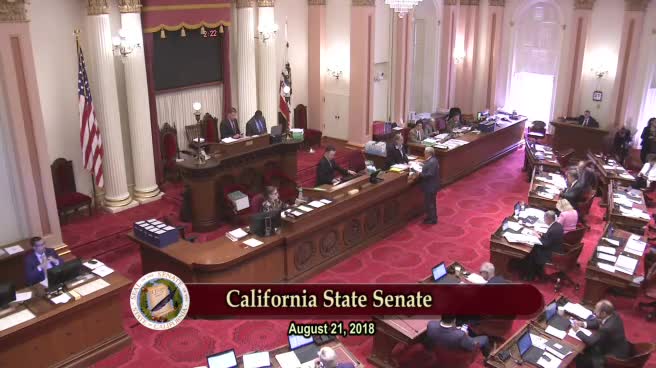

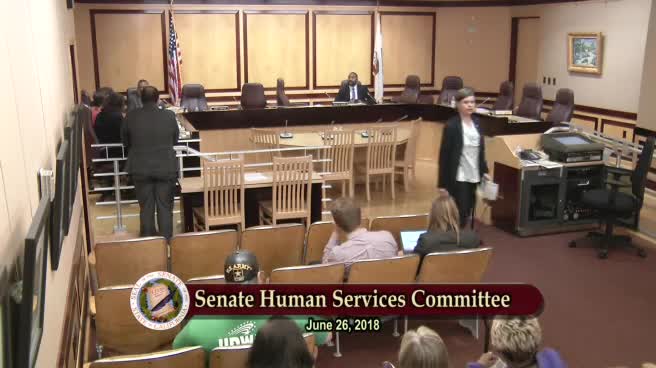
Bill Author

Bill Co-Author(s):