AB 3086: Interdistrict attendance: prohibition on transfers by a school district of residence.
- Session Year: 2017-2018
- House: Assembly
- Latest Version Date: 2018-08-24
Existing law authorizes the governing boards of 2 or more school districts to enter into an agreement, for a term not to exceed 5 school years, for the interdistrict attendance of pupils who are residents of the school districts. Existing law, regardless of whether there is an agreement or permit, prohibits a school district of residence from prohibiting the transfer of a pupil who is a child of an active military duty parent to the school district of proposed enrollment if the school district of proposed enrollment approves the application for transfer.
This bill would also prohibit a school district of residence from prohibiting the transfer of a pupil who is a homeless child or youth or has been a homeless child or youth within the previous 5 school years, a currently migratory child or former migratory child, a foster youth, or a victim of an act of bullying to the school district of proposed enrollment if the school district of proposed enrollment approves the transfer application. The bill would require a school district of proposed enrollment that elects to accept an interdistrict transfer pursuant to these provisions to accept all pupils who apply to transfer under these provisions until the school district is at maximum capacity and to ensure that pupils admitted under these provisions are selected through an unbiased process that prohibits an inquiry into or evaluation or consideration of whether or not a pupil should be enrolled based on his or her academic or athletic performance, physical condition, proficiency in English, family income, or any of specified individual characteristics, including, among others, race or ethnicity, gender, gender identity, gender expression, and immigration status. The bill would require, upon request of the parent or guardian, a school district of enrollment to provide transportation assistance for a pupil in one of these categories, and a pupil who is a child of an active military duty parent, if the pupil is also eligible for free or reduced-price meals. The bill would otherwise authorize a school district of enrollment to provide transportation assistance for a pupil in one of those categories.
This bill would incorporate additional changes to Section 46600 of the Education Code proposed by AB 2826 to be operative only if this bill and AB 2826 are enacted and this bill is enacted last.
Existing law authorizes the governing boards of 2 or more school districts to enter into an agreement, for a term not to exceed 5 school years, for the interdistrict attendance of pupils who are residents of the school districts. Existing law, regardless of whether there is an agreement or permit, prohibits a school district of residence from prohibiting the transfer of a pupil who is a child of an active military duty parent to the school district of proposed enrollment if the school district of proposed enrollment approves the application for transfer.
This bill would also prohibit a school district of residence from prohibiting the transfer of a pupil who is a homeless child or youth or has been a homeless child or youth within the previous 5 school years, a currently migratory child or former migratory child, a foster youth, or a victim of an act of bullying to the school district of proposed enrollment if the school district of proposed enrollment approves the transfer application. The bill would require a school district of proposed enrollment that elects to accept an interdistrict transfer pursuant to these provisions to accept all pupils who apply to transfer under these provisions until the school district is at maximum capacity and to ensure that pupils admitted under these provisions are selected through an unbiased process that prohibits an inquiry into or evaluation or consideration of whether or not a pupil should be enrolled based on his or her academic or athletic performance, physical condition, proficiency in English, family income, or any of specified individual characteristics, including, among others, race or ethnicity, gender, gender identity, gender expression, and immigration status. The bill would require, upon request of the parent or guardian, a school district of enrollment to provide transportation assistance for a pupil in one of these categories, and a pupil who is a child of an active military duty parent, if the pupil is also eligible for free or reduced-price meals. The bill would otherwise authorize a school district of enrollment to provide transportation assistance for a pupil in one of those categories.
Existing law authorizes the governing boards of 2 or more school districts to enter into an agreement, for a term not to exceed 5 school years, for the interdistrict attendance of pupils who are residents of the school districts. Existing law, regardless of whether there is an agreement or permit, prohibits a school district of residence from prohibiting the transfer of a pupil who is a child of an active military duty parent to the school district of proposed enrollment if the school district of proposed enrollment approves the application for transfer.
This bill would also prohibit a school district of residence from prohibiting the transfer of a pupil who is a homeless child or youth or has been a homeless child or youth within the previous 5 school years, a currently migratory child or former migratory child, a foster youth, or a victim of an act of bullying to the school district of proposed enrollment if the school district of proposed enrollment approves the transfer application. The bill would require, upon request of the parent or guardian, a school district of enrollment to provide transportation assistance for a pupil in one of these categories, and a pupil who is a child of an active military duty parent, if the pupil is also eligible for free or reduced-price meals. The bill would otherwise authorize a school district of enrollment to provide transportation assistance for a pupil in one of those categories.
(a)(1)The governing boards of two or more school districts may enter into an agreement, for a term not to exceed five school years, for the interdistrict attendance of pupils who are residents of the school districts. The agreement may provide for the admission to a school district other than the school district of residence of a pupil who requests a permit to attend a school district that is a party to the agreement and that maintains schools and classes in kindergarten or any of grades 1 to 12, inclusive, to which the pupil requests admission. Once a pupil in kindergarten or any of grades 1 to 12, inclusive, is enrolled in a school pursuant to this chapter, the pupil shall not have to reapply for an interdistrict transfer, and the governing board of the school district of enrollment shall allow the pupil to continue to attend the school in which he or she is enrolled, except as specified in paragraphs (2) and (4).
(2)The agreement shall stipulate the terms and conditions under which interdistrict attendance shall be permitted or denied. The agreement may contain standards for reapplication agreed to by the school district of residence and the school district of enrollment that differ from the requirements prescribed by paragraph (1). The agreement may stipulate terms and conditions established by the school district of residence and the school district of enrollment under which the permit may be revoked.
(3)The supervisor of attendance of the school district of residence shall issue an individual permit verifying the school districts approval, pursuant to policies of the governing board of the school district and terms of the agreement for the transfer. A permit shall be valid upon concurring endorsement by the designee of the governing board of the school district of proposed enrollment. The stipulation of the terms and conditions under which the permit may be revoked is the responsibility of the school district of enrollment.
(4)Notwithstanding paragraph (2), a school district of residence or school district of enrollment shall not rescind existing transfer permits for pupils entering grade 11 or 12 in the subsequent school year.
(b)A pupil who has been determined by personnel of either the school district of residence or the school district of proposed enrollment to have been the victim of an act of bullying, as defined in subdivision (r) of Section 48900, committed by a pupil of the school district of residence shall, at the request of the person having legal custody of the pupil, be given priority for interdistrict attendance under any existing interdistrict attendance agreement or, in the absence of an agreement, be given additional consideration for the creation of an interdistrict attendance agreement.
(c)In addition to the requirements of subdivision (e) of Section 48915.1, and regardless of whether an agreement exists or a permit is issued pursuant to this section, any school district may admit a pupil expelled from another school district in which the pupil continues to reside.
(d)(1)Notwithstanding any other law, and regardless of whether an agreement exists or a permit is issued pursuant to this section, a school district of residence shall not prohibit the transfer of a pupil to a school district of proposed enrollment if the school district of proposed enrollment approves the application for transfer and the pupil is any of the following:
(A)Currently, or at any time within the previous five school years, a homeless child or youth, as defined in the McKinney-Vento Homeless Assistance Act (42 U.S.C. Sec. 11434a(2)).
(B)A currently migratory child or former migratory child, as those terms are defined in Section 54441.
(C)A foster youth.
(D)A victim of an act of bullying.
(E)A child of an active military duty parent.
(2)A school district of proposed enrollment that elects to accept an interdistrict transfer pursuant to this subdivision shall accept all pupils who apply to transfer under this subdivision until the school district is at maximum capacity and shall ensure that pupils admitted under this subdivision are selected through an unbiased process that prohibits an inquiry into or evaluation or consideration of whether or not a pupil should be enrolled based on his or her academic or athletic performance, physical condition, proficiency in English, family income, or any of the individual characteristics set forth in Section 220, including, but not limited to, race or ethnicity, gender, gender identity, gender expression, and immigration status.
(3)(A)For purposes of this subdivision, active military duty parent means a parent with full-time military duty status in the active uniformed service of the United States, including members of the National Guard and the State Military Reserve on active duty orders pursuant to Chapter 1209 (commencing with Section 12301) and Chapter 1211 (commencing with Section 12401) of Part II of Subtitle E of Title 10 of the United States Code.
(B)For purposes of this subdivision, parent means the natural or adoptive parent or guardian of a dependent child.
(C)For purposes of this subdivision, a victim of an act of bullying means a pupil that has been determined to have been a victim of bullying by an investigation pursuant to the complaint process described in Section 234.1 and the bullying was committed by any pupil in the school district of residence, and the parent of the pupil has filed a written complaint regarding the bullying with the school, school district personnel, or a local law enforcement agency.
(4)(A)Upon request of the parent or guardian on behalf of a pupil eligible for transfer pursuant to this subdivision, a school district of enrollment shall provide transportation assistance to a pupil who is eligible for free or reduced-price meals.
(B)A school district of enrollment may provide transportation assistance to any pupil admitted under this subdivision.
(C)It is the intent of the Legislature that the amount of transportation assistance provided to a pupil pursuant to subparagraph (A) or (B) not exceed the supplemental grant received, if any, for the pupil pursuant to subdivision (e) of Section 42238.02.
SEC. 1.5.Section 46600 of the Education Code is amended to read:46600.(a)(1)The governing boards of two or more school districts may enter into an agreement, for a term not to exceed five school years, for the interdistrict attendance of pupils who are residents of the school districts. The agreement may provide for the admission to a school district other than the school district of residence of a pupil who requests a permit to attend a school district of proposed enrollment that is a party to the agreement and that maintains schools and classes in transitional kindergarten, kindergarten, or any of grades 1 to 12, inclusive, to which the pupil requests admission. Once a pupil in transitional kindergarten, kindergarten, or any of grades 1 to 12, inclusive, is enrolled in a school pursuant to this chapter, the pupil shall not have to reapply for an interdistrict transfer, and the governing board of the school district of enrollment shall allow the pupil to continue to attend the school in which he or she is enrolled, except as specified in paragraphs (2) and (4).
(2)The agreement shall stipulate the terms and conditions under which interdistrict attendance shall be permitted or denied. The agreement may contain standards for reapplication agreed to by the school district of residence and the school district of enrollment that differ from the requirements prescribed by paragraph (1). The agreement may stipulate terms and conditions established by the school district of residence and the school district of enrollment under which the permit may be revoked.
(3)The designee of the superintendent of the school district of residence shall issue an individual permit verifying the school districts approval, pursuant to policies of the governing board of the school district and terms of the agreement for the transfer. A permit shall be valid upon concurring endorsement by the designee of the governing board of the school district of proposed enrollment. The stipulation of the terms and conditions under which the permit may be revoked is the responsibility of the school district of enrollment.
(4)Notwithstanding paragraph (2), a school district of residence or school district of enrollment shall not rescind existing transfer permits for pupils after June 30 following the completion of grade 10, or for pupils in grade 11 or 12.
(b)A pupil who has been determined by personnel of either the school district of residence or the school district of proposed enrollment to have been the victim of an act of bullying, as defined in subdivision (r) of Section 48900, committed by a pupil of the school district of residence shall, at the request of the parent, be given priority for interdistrict attendance.
(c)In addition to the requirements of subdivision (e) of Section 48915.1, and regardless of whether an agreement exists or a permit is issued pursuant to this section, any school district may admit a pupil expelled from another school district in which the pupil continues to reside.
(d)(1)Notwithstanding any other law, and regardless of whether an agreement exists or a permit is issued pursuant to this section, a school district of residence shall not prohibit the transfer of a pupil to a school district of proposed enrollment if the school district of proposed enrollment approves the application for transfer and the pupil is any of the following:
(A)Currently, or at any time within the previous five school years, a homeless child or youth, as defined in the McKinney-Vento Homeless Assistance Act (42 U.S.C. Sec. 11434a(2)).
(B)A currently migratory child or former migratory child, as those terms are defined in Section 54441.
(C)A foster youth.
(D)A victim of an act of bullying.
(E)A child of an active military duty parent.
(2)A school district of proposed enrollment that elects to accept an interdistrict transfer pursuant to this subdivision shall accept all pupils who apply to transfer under this subdivision until the school district is at maximum capacity and shall ensure that pupils admitted under this subdivision are selected through an unbiased process that prohibits an inquiry into or evaluation or consideration of whether or not a pupil should be enrolled based on his or her academic or athletic performance, physical condition, proficiency in English, family income, or any of the individual characteristics set forth in Section 220, including, but not limited to, race or ethnicity, gender, gender identity, gender expression, and immigration status.
(3)(A)For purposes of this subdivision, active military duty parent means a parent with full-time military duty status in the active uniformed service of the United States, including members of the National Guard and the State Military Reserve on active duty orders pursuant to Chapter 1209 (commencing with Section 12301) and Chapter 1211 (commencing with Section 12401) of Part II of Subtitle E of Title 10 of the United States Code.
(B)For purposes of this subdivision, a victim of an act of bullying means a pupil that has been determined to have been a victim of bullying by an investigation pursuant to the complaint process described in Section 234.1 and the bullying was committed by any pupil in the school district of residence, and the parent of the pupil has filed a written complaint regarding the bullying with the school, school district personnel, or a local law enforcement agency.
(4)(A)Upon request of the parent or guardian on behalf of a pupil eligible for transfer pursuant to this subdivision, a school district of enrollment shall provide transportation assistance to a pupil who is eligible for free or reduced-price meals.
(B)A school district of enrollment may provide transportation assistance to any pupil admitted under this subdivision.
(C)It is the intent of the Legislature that the amount of transportation assistance provided to a pupil pursuant to subparagraph (A) or (B) not exceed the supplemental grant received, if any, for the pupil pursuant to subdivision (e) of Section 42238.02.
SEC. 2.Section 1.5 of this bill incorporates amendments to Section 46600 of the Education Code proposed by both this bill and Assembly Bill 2826. That section shall only become operative if (1) both bills are enacted and become effective on or before January 1, 2019, (2) each bill amends Section 46600 of the Education Code, and (3) this bill is enacted after Assembly Bill 2826, in which case Section 1 of this bill shall not become operative.
(a)(1)The governing boards of two or more school districts may enter into an agreement, for a term not to exceed five school years, for the interdistrict attendance of pupils who are residents of the school districts. The agreement may provide for the admission to a school district other than the school district of residence of a pupil who requests a permit to attend a school district that is a party to the agreement and that maintains schools and classes in kindergarten or any of grades 1 to 12, inclusive, to which the pupil requests admission. Once a pupil in kindergarten or any of grades 1 to 12, inclusive, is enrolled in a school pursuant to this chapter, the pupil shall not have to reapply for an interdistrict transfer, and the governing board of the school district of enrollment shall allow the pupil to continue to attend the school in which he or she is enrolled, except as specified in paragraphs (2) and (4).
(2)The agreement shall stipulate the terms and conditions under which interdistrict attendance shall be permitted or denied. The agreement may contain standards for reapplication agreed to by the school district of residence and the school district of enrollment that differ from the requirements prescribed by paragraph (1). The agreement may stipulate terms and conditions established by the school district of residence and the school district of enrollment under which the permit may be revoked.
(3)The supervisor of attendance of the school district of residence shall issue an individual permit verifying the school districts approval, pursuant to policies of the governing board of the school district and terms of the agreement for the transfer. A permit shall be valid upon concurring endorsement by the designee of the governing board of the school district of proposed enrollment. The stipulation of the terms and conditions under which the permit may be revoked is the responsibility of the school district of enrollment.
(4)Notwithstanding paragraph (2), a school district of residence or school district of enrollment shall not rescind existing transfer permits for pupils entering grade 11 or 12 in the subsequent school year.
(b)A pupil who has been determined by personnel of either the school district of residence or the school district of proposed enrollment to have been the victim of an act of bullying, as defined in subdivision (r) of Section 48900, committed by a pupil of the school district of residence shall, at the request of the person having legal custody of the pupil, be given priority for interdistrict attendance under any existing interdistrict attendance agreement or, in the absence of an agreement, be given additional consideration for the creation of an interdistrict attendance agreement.
(c)In addition to the requirements of subdivision (e) of Section 48915.1, and regardless of whether an agreement exists or a permit is issued pursuant to this section, any school district may admit a pupil expelled from another school district in which the pupil continues to reside.
(d)(1)Notwithstanding any other law, and regardless of whether an agreement exists or a permit is issued pursuant to this section, a school district of residence shall not prohibit the transfer of a pupil to a school district of proposed enrollment if the school district of proposed enrollment approves the application for transfer and the pupil is any of the following:
(A)Currently, or at any time within the previous five school years, a homeless child or youth, as defined in the McKinney-Vento Homeless Assistance Act (42 U.S.C. Sec. 11434a(2)).
(B)A currently migratory child or former migratory child, as those terms are defined in Section 54441.
(C)A foster youth.
(D)A victim of an act of bullying.
(E)A child of an active military duty parent.
(2)A school district of proposed enrollment that elects to accept an interdistrict transfer pursuant to this subdivision shall accept all pupils who apply to transfer under this subdivision until the school district is at maximum capacity and shall ensure that pupils admitted under this subdivision are selected through an unbiased process that prohibits an inquiry into or evaluation or consideration of whether or not a pupil should be enrolled based on his or her academic or athletic performance, physical condition, proficiency in English, family income, or any of the individual characteristics set forth in Section 220, including, but not limited to, race or ethnicity, gender, gender identity, gender expression, and immigration status.
(3)(A)For purposes of this subdivision, active military duty parent means a parent with full-time military duty status in the active uniformed service of the United States, including members of the National Guard and the State Military Reserve on active duty orders pursuant to Chapter 1209 (commencing with Section 12301) and Chapter 1211 (commencing with Section 12401) of Part II of Subtitle E of Title 10 of the United States Code.
(B)For purposes of this subdivision, parent means the natural or adoptive parent or guardian of a dependent child.
(C)For purposes of this subdivision, a victim of an act of bullying means a pupil that has been determined to have been a victim of bullying by an investigation pursuant to the complaint process described in Section 234.1 and the bullying was committed by any pupil in the school district of residence, and the parent of the pupil has filed a written complaint regarding the bullying with the school, school district personnel, or a local law enforcement agency.
(4)(A)Upon request of the parent or guardian on behalf of a pupil eligible for transfer pursuant to this subdivision, a school district of enrollment shall provide transportation assistance to a pupil who is eligible for free or reduced-price meals.
(B)A school district of enrollment may provide transportation assistance to any pupil admitted under this subdivision.
(C)It is the intent of the Legislature that the amount of transportation assistance provided to a pupil pursuant to subparagraph (A) or (B) not exceed the supplemental grant received, if any, for the pupil pursuant to subdivision (e) of Section 42238.02.
SEC. 1.5.Section 46600 of the Education Code is amended to read:46600.(a)(1)The governing boards of two or more school districts may enter into an agreement, for a term not to exceed five school years, for the interdistrict attendance of pupils who are residents of the school districts. The agreement may provide for the admission to a school district other than the school district of residence of a pupil who requests a permit to attend a school district of proposed enrollment that is a party to the agreement and that maintains schools and classes in kindergarten transitional kindergarten, kindergarten, or any of grades 1 to 12, inclusive, to which the pupil requests admission. Once a pupil in kindergarten transitional kindergarten, kindergarten, or any of grades 1 to 12, inclusive, is enrolled in a school pursuant to this chapter, the pupil shall not have to reapply for an interdistrict transfer, and the governing board of the school district of enrollment shall allow the pupil to continue to attend the school in which he or she is enrolled, except as specified in paragraphs (2) and (4).
(2)The agreement shall stipulate the terms and conditions under which interdistrict attendance shall be permitted or denied. The agreement may contain standards for reapplication agreed to by the school district of residence and the school district of enrollment that differ from the requirements prescribed by paragraph (1). The agreement may stipulate terms and conditions established by the school district of residence and the school district of enrollment under which the permit may be revoked.
(3)The supervisor of attendance designee of the superintendent of the school district of residence shall issue an individual permit verifying the school districts approval, pursuant to policies of the governing board of the school district and terms of the agreement for the transfer. A permit shall be valid upon concurring endorsement by the designee of the governing board of the school district of proposed enrollment. The stipulation of the terms and conditions under which the permit may be revoked is the responsibility of the school district of enrollment.
(4)Notwithstanding paragraph (2), a school district of residence or school district of enrollment shall not rescind existing transfer permits for pupils entering grade 11 or 12 in the subsequent school year. after June 30 following the completion of grade 10, or for pupils in grade 11 or 12.
(b)A pupil who has been determined by personnel of either the school district of residence or the school district of proposed enrollment to have been the victim of an act of bullying, as defined in subdivision (r) of Section 48900, committed by a pupil of the school district of residence shall, at the request of the person having legal custody of the pupil, parent, be given priority for interdistrict attendance under any existing interdistrict attendance agreement or, in the absence of an agreement, be given additional consideration for the creation of an interdistrict attendance agreement. attendance.
(c)In addition to the requirements of subdivision (e) of Section 48915.1, and regardless of whether an agreement exists or a permit is issued pursuant to this section, any school district may admit a pupil expelled from another school district in which the pupil continues to reside.
(d)(1)Notwithstanding any other law, and regardless of whether an agreement exists or a permit is issued pursuant to this section, a school district of residence shall not prohibit the transfer of a pupil who is a child of an active military duty parent to a school district of proposed enrollment if the school district of proposed enrollment approves the application for transfer. transfer and the pupil is any of the following:
(A)Currently, or at any time within the previous five school years, a homeless child or youth, as defined in the McKinney-Vento Homeless Assistance Act (42 U.S.C. Sec. 11434a(2)).
(B)A currently migratory child or former migratory child, as those terms are defined in Section 54441.
(C)A foster youth.
(D)A victim of an act of bullying.
(E)A child of an active military duty parent.
(2)A school district of proposed enrollment that elects to accept an interdistrict transfer pursuant to this subdivision shall accept all pupils who apply to transfer under this subdivision until the school district is at maximum capacity and shall ensure that pupils admitted under this subdivision are selected through an unbiased process that prohibits an inquiry into or evaluation or consideration of whether or not a pupil should be enrolled based on his or her academic or athletic performance, physical condition, proficiency in English, family income, or any of the individual characteristics set forth in Section 220, including, but not limited to, race or ethnicity, gender, gender identity, gender expression, and immigration status.
(2)(3)(A)For purposes of this subdivision, active military duty parent means a parent with full-time military duty status in the active uniformed service of the United States, including members of the National Guard and the State Military Reserve on active duty orders pursuant to Chapter 1209 (commencing with Section 12301) and Chapter 1211 (commencing with Section 12401) of Part II of Subtitle E of Title 10 of the United States Code.
(B)For purposes of this subdivision, parent means the natural or adoptive parent or guardian of a dependent child.(B)For purposes of this subdivision, a victim of an act of bullying means a pupil that has been determined to have been a victim of bullying by an investigation pursuant to the complaint process described in Section 234.1 and the bullying was committed by any pupil in the school district of residence, and the parent of the pupil has filed a written complaint regarding the bullying with the school, school district personnel, or a local law enforcement agency.
(4)(A)Upon request of the parent or guardian on behalf of a pupil eligible for transfer pursuant to this subdivision, a school district of enrollment shall provide transportation assistance to a pupil who is eligible for free or reduced-price meals.
(B)A school district of enrollment may provide transportation assistance to any pupil admitted under this subdivision.
(C)It is the intent of the Legislature that the amount of transportation assistance provided to a pupil pursuant to subparagraph (A) or (B) not exceed the supplemental grant received, if any, for the pupil pursuant to subdivision (e) of Section 42238.02.
SEC. 2.Section 1.5 of this bill incorporates amendments to Section 46600 of the Education Code proposed by both this bill and Assembly Bill 2826. That section shall only become operative if (1) both bills are enacted and become effective on or before January 1, 2019, (2) each bill amends Section 46600 of the Education Code, and (3) this bill is enacted after Assembly Bill 2826, in which case Section 1 of this bill shall not become operative.
(a)(1)The governing boards of two or more school districts may enter into an agreement, for a term not to exceed five school years, for the interdistrict attendance of pupils who are residents of the school districts. The agreement may provide for the admission to a school district other than the school district of residence of a pupil who requests a permit to attend a school district that is a party to the agreement and that maintains schools and classes in kindergarten or any of grades 1 to 12, inclusive, to which the pupil requests admission. Once a pupil in kindergarten or any of grades 1 to 12, inclusive, is enrolled in a school pursuant to this chapter, the pupil shall not have to reapply for an interdistrict transfer, and the governing board of the school district of enrollment shall allow the pupil to continue to attend the school in which he or she is enrolled, except as specified in paragraphs (2) and (4).
(2)The agreement shall stipulate the terms and conditions under which interdistrict attendance shall be permitted or denied. The agreement may contain standards for reapplication agreed to by the school district of residence and the school district of enrollment that differ from the requirements prescribed by paragraph (1). The agreement may stipulate terms and conditions established by the school district of residence and the school district of enrollment under which the permit may be revoked.
(3)The supervisor of attendance of the school district of residence shall issue an individual permit verifying the school districts approval, pursuant to policies of the governing board of the school district and terms of the agreement for the transfer. A permit shall be valid upon concurring endorsement by the designee of the governing board of the school district of proposed enrollment. The stipulation of the terms and conditions under which the permit may be revoked is the responsibility of the school district of enrollment.
(4)Notwithstanding paragraph (2), a school district of residence or school district of enrollment shall not rescind existing transfer permits for pupils entering grade 11 or 12 in the subsequent school year.
(b)A pupil who has been determined by personnel of either the school district of residence or the school district of proposed enrollment to have been the victim of an act of bullying, as defined in subdivision (r) of Section 48900, committed by a pupil of the school district of residence shall, at the request of the person having legal custody of the pupil, be given priority for interdistrict attendance under any existing interdistrict attendance agreement or, in the absence of an agreement, be given additional consideration for the creation of an interdistrict attendance agreement.
(c)In addition to the requirements of subdivision (e) of Section 48915.1, and regardless of whether an agreement exists or a permit is issued pursuant to this section, any school district may admit a pupil expelled from another school district in which the pupil continues to reside.
(d)(1)Notwithstanding any other law, and regardless of whether an agreement exists or a permit is issued pursuant to this section, a school district of residence shall not prohibit the transfer of a pupil to a school district of proposed enrollment if the school district of proposed enrollment approves the application for transfer and the pupil is any of the following:
(A)Currently, or at any time within the previous five school years, a homeless child or youth, as defined in the McKinney-Vento Homeless Assistance Act (42 U.S.C. Sec. 11434a(2)).
(B)A currently migratory child or former migratory child, as those terms are defined in Section 54441.
(C)A foster youth.
(D)A victim of an act of bullying.
(E)A child of an active military duty parent.
(2)A school district of proposed enrollment that elects to accept an interdistrict transfer pursuant to this subdivision shall accept all pupils who apply to transfer under this subdivision until the school district is at maximum capacity and shall ensure that pupils admitted under this subdivision are selected through an unbiased process that prohibits an inquiry into or evaluation or consideration of whether or not a pupil should be enrolled based on his or her academic or athletic performance, physical condition, proficiency in English, family income, or any of the individual characteristics set forth in Section 220, including, but not limited to, race or ethnicity, gender, gender identity, gender expression, and immigration status.
(2)(3)(A)For purposes of this subdivision, active military duty parent means a parent with full-time military duty status in the active uniformed service of the United States, including members of the National Guard and the State Military Reserve on active duty orders pursuant to Chapter 1209 (commencing with Section 12301) and Chapter 1211 (commencing with Section 12401) of Part II of Subtitle E of Title 10 of the United States Code.
(B)For purposes of this subdivision, parent means the natural or adoptive parent or guardian of a dependent child.
(C)For purposes of this subdivision, a pupil is a victim of an act of bullying if the means a pupil was subject to bullying, as defined in subdivision (r) of Section 48900, that has been determined to have been a victim of bullying by an investigation pursuant to the complaint process described in Section 234.1 and the bullying was committed by an individual within the attendance zone of the victims assigned school in the school district of residence, or by any pupil in the school district of residence, and the parent of the pupil has filed a written complaint regarding the bullying with the school, school district personnel, or a local law enforcement agency.
(3)(4)(A)Upon request of the parent or guardian on behalf of a pupil eligible for transfer pursuant to this subdivision, a school district of enrollment shall provide transportation assistance to a pupil who is eligible for free or reduced-price meals.
(B)A school district of enrollment may provide transportation assistance to any pupil admitted under this subdivision.
(C)It is the intent of the Legislature that the amount of transportation assistance provided to a pupil pursuant to subparagraph (A) or (C) (B) not exceed the supplemental grant received, if any, for the pupil pursuant to subdivision (e) of Section 42238.02.
(a)(1)The governing boards of two or more school districts may enter into an agreement, for a term not to exceed five school years, for the interdistrict attendance of pupils who are residents of the school districts. The agreement may provide for the admission to a school district other than the school district of residence of a pupil who requests a permit to attend a school district that is a party to the agreement and that maintains schools and classes in kindergarten or any of grades 1 to 12, inclusive, to which the pupil requests admission. Once a pupil in kindergarten or any of grades 1 to 12, inclusive, is enrolled in a school pursuant to this chapter, the pupil shall not have to reapply for an interdistrict transfer, and the governing board of the school district of enrollment shall allow the pupil to continue to attend the school in which he or she is enrolled, except as specified in paragraphs (2) and (4).
(2)The agreement shall stipulate the terms and conditions under which interdistrict attendance shall be permitted or denied. The agreement may contain standards for reapplication agreed to by the school district of residence and the school district of enrollment that differ from the requirements prescribed by paragraph (1). The agreement may stipulate terms and conditions established by the school district of residence and the school district of enrollment under which the permit may be revoked.
(3)The supervisor of attendance of the school district of residence shall issue an individual permit verifying the school districts approval, pursuant to policies of the governing board of the school district and terms of the agreement for the transfer. A permit shall be valid upon concurring endorsement by the designee of the governing board of the school district of proposed enrollment. The stipulation of the terms and conditions under which the permit may be revoked is the responsibility of the school district of enrollment.
(4)Notwithstanding paragraph (2), a school district of residence or school district of enrollment shall not rescind existing transfer permits for pupils entering grade 11 or 12 in the subsequent school year.
(b)A pupil who has been determined by personnel of either the school district of residence or the school district of proposed enrollment to have been the victim of an act of bullying, as defined in subdivision (r) of Section 48900, committed by a pupil of the school district of residence shall, at the request of the person having legal custody of the pupil, be given priority for interdistrict attendance under any existing interdistrict attendance agreement or, in the absence of an agreement, be given additional consideration for the creation of an interdistrict attendance agreement.
(c)In addition to the requirements of subdivision (e) of Section 48915.1, and regardless of whether an agreement exists or a permit is issued pursuant to this section, any school district may admit a pupil expelled from another school district in which the pupil continues to reside.
(d)(1)Notwithstanding any other law, and regardless of whether an agreement exists or a permit is issued pursuant to this section, a school district of residence shall not prohibit the transfer of a pupil who is a to a school district of proposed enrollment if the school district of proposed enrollment approves the application for transfer and the pupil is any of the following:
(A)Currently, or at any time within the previous five school years, a homeless child or youth, as defined in the McKinney-Vento Homeless Assistance Act (42 U.S.C. Sec. 11434a(2)).
(B)A currently migratory child or former migratory child, as those terms are defined in Section 54441.
(C)A foster youth.
(D)A victim of an act of bullying.
(E)A child of an active military duty parent to a school district of proposed enrollment if the school district of proposed enrollment approves the application for transfer. parent.
(2)(A)For purposes of this subdivision, active military duty parent means a parent with full-time military duty status in the active uniformed service of the United States, including members of the National Guard and the State Military Reserve on active duty orders pursuant to Chapter 1209 (commencing with Section 12301) and Chapter 1211 (commencing with Section 12401) of Part II of Subtitle E of Title 10 of the United States Code.
(B)For purposes of this subdivision, parent means the natural or adoptive parent or guardian of a dependent child.
(C)For purposes of this subdivision, a pupil is a victim of an act of bullying if the pupil was subject to bullying, as defined in subdivision (r) of Section 48900, and the bullying was committed by an individual within the attendance zone of the victims assigned school in the school district of residence, or by any pupil in the school district of residence, and the parent of the pupil has filed a written complaint regarding the bullying with the school, school district personnel, or a local law enforcement agency.
(3)(A)Upon request of the parent or guardian on behalf of a pupil eligible for transfer pursuant to this subdivision, a school district of enrollment shall provide transportation assistance to a pupil who is eligible for free or reduced-price meals.
(B)A school district of enrollment may provide transportation assistance to any pupil admitted under this subdivision.
(C)It is the intent of the Legislature that the amount of transportation assistance provided to a pupil pursuant to subparagraph (A) or (C) not exceed the supplemental grant received, if any, for the pupil pursuant to subdivision (e) of Section 42238.02.
|
Date
|
Status
|
|---|---|
| Sep 21, 2018 | Vetoed by Governor. |
| Aug 29, 2018 | Enrolled and presented to the Governor at 4 p.m. |
| Aug 23, 2018 | Senate amendments concurred in. To Engrossing and Enrolling. |
| Aug 20, 2018 | In Assembly. Concurrence in Senate amendments pending. May be considered on or after August 22 pursuant to Assembly Rule 77. |
| Aug 20, 2018 | Read third time. Passed. Ordered to the Assembly. |
| Aug 14, 2018 | Read second time. Ordered to third reading. |
| Aug 13, 2018 | Read third time and amended. Ordered to second reading. |
| Jun 18, 2018 | From Consent Calendar. |
| Jun 14, 2018 | Read second time. Ordered to Consent Calendar. |
| Jun 13, 2018 | From committee: Do pass. To Consent Calendar. (Ayes 7. Noes 0.) (June 13). |
| May 30, 2018 | Referred to Com. on ED. |
| May 22, 2018 | In Senate. Read first time. To Com. on RLS. for assignment. |
| May 21, 2018 | Read third time. Passed. Ordered to the Senate. |
| May 17, 2018 | Read second time. Ordered to third reading. |
| May 16, 2018 | Read second time and amended. Ordered returned to second reading. |
| May 15, 2018 | From committee: Amend, and do pass as amended. (Ayes 6. Noes 0.) (May 9). |
| Mar 12, 2018 | Referred to Com. on ED. |
| Feb 17, 2018 | From printer. May be heard in committee March 19. |
| Feb 16, 2018 | Read first time. To print. |
|
Date
|
Description
|
Location
|
Votes
|
|
|---|---|---|---|---|
| Aug 23, 2018 | AB 3086 KILEY Concurrence in Senate Amendments | Assembly Floor |
Passed |
|
| Aug 20, 2018 | Assembly 3rd Reading AB3086 Kiley By Galgiani | Senate Floor |
Passed |
|
| Jun 13, 2018 | Do pass and be ordered to the Consent Calendar | Senate Standing Committee on Education |
Passed |
|
| May 21, 2018 | AB 3086 KILEY Assembly Third Reading | Assembly Floor |
Passed |
|
| May 9, 2018 | Do pass as amended. | Assembly Standing Committee on Education |
Passed |
This list shows positions taken on this bill by organizations on the date displayed, which is linked to the original source.
Positions by individuals are not included.
|
Organization
|
Position
|
Date
|
|---|---|---|
| Alliance for A Better Community | ** Support | Aug 14, 2018 |
| California Catholic Conference | ** Support | Aug 14, 2018 |
| Common Sense Kids Action | ** Support | Aug 14, 2018 |
| Crystal Stairs, Inc. | ** Support | Aug 14, 2018 |
| Edvoice | ** Support | Aug 14, 2018 |
| Families and Schools | * Support | May 9, 2018 |
| Families In Schools | ** Support | Aug 14, 2018 |
| Great Public Schools Now | ** Support | Aug 14, 2018 |
| InnerCity Struggle | ** Support | Aug 14, 2018 |
| Innovate Public Schools | ** Support | Aug 14, 2018 |
| Kids Coalition | ** Support | Aug 14, 2018 |
| Learning Rights Law Center | ** Support | Aug 14, 2018 |
| Parent Revolution | ** Support | Aug 14, 2018 |
| SHIELDS for Families | ** Support | Aug 14, 2018 |
| Speak Up | ** Support | Aug 14, 2018 |
| United Parents & Students | ** Support | Aug 14, 2018 |
| United Way of Greater Los Angeles | ** Support | Aug 14, 2018 |
GOVERNOR'S VETO
GV Bill Id:AB 3086
Author:(Kiley)
As Enrolled Ver:August 29, 2018
2/3 vote
ASSEMBLY: | 74-0 | (May 21, 2018) | SENATE: | 39-0 | (August 20, 2018) |
ASSEMBLY: | 76-0 | (August 23, 2018) |
|
|
|
Original Committee Reference: ED.
SUMMARY: Extends inter-district, open enrollment to pupils who are either homeless, in foster care, migrant, or victims of bullying. Specifically, this bill:
- Provides that, notwithstanding any other law, and regardless of whether an agreement exists or a permit is issued, a school district of residence shall not prohibit the transfer of a pupil to a school district of proposed enrollment if the school district of proposed enrollment approves the application for transfer and the pupil is any of the following:
- Currently, or at any time within the previous five school years, a homeless child or youth, as defined in the federal McKinney-Vento Homeless Assistance ;
- A currently migratory child or former migratory child, as those terms are defined in Education Code Section 54441;
- A foster youth; or
- A victim of an act of bullying.
- Requires a school district of proposed enrollment that elects to accept an interdistrict transfer to accept all pupils who apply to transfer under until the school district is at maximum capacity and to ensure that pupils admitted are selected through an unbiased process that prohibits an inquiry into or evaluation or consideration of whether or not a pupil should be enrolled based on his or her academic or athletic performance, physical condition, proficiency in English, family income, or any of the individual characteristics set forth in Education Code Section 220, including, but not limited to, race or ethnicity, gender, gender identity, gender expression, and immigration status.
- Defines a "victim of an act of bullying" to mean a pupil that has been determined to have been a victim of bullying by an investigation pursuant to the complaint process described in Education Code Section 234.1 and the bullying was committed by any pupil in the school district of residence, and the parent of the pupil has filed a written complaint regarding the bullying with the school, school district personnel, or a local law enforcement agency.
- Provides that, upon request of the parent or guardian on behalf of a pupil eligible for transfer, a school district of enrollment shall provide transportation assistance to a pupil who is eligible for free or reduced-price meals.
- Provides that a school district of enrollment may provide transportation assistance to any pupil admitted under this subdivision.
- States the intent of the Legislature that the amount of transportation assistance provided to a pupil not exceed the Local Control Funding Formula (LCFF) supplemental grant received, if any, for the pupil.
The Senate amendments Add double-jointing language to avoid chaptering out issues with AB 2826 (Friedman) of the current legislative session.
EXISTING LAW:
- Authorizes the governing boards of two or more school districts to enter into an agreement, for a term not to exceed five school years, for the interdistrict attendance of pupils who are residents of the school districts. The agreement may provide for the admission to a school district other than the school district of residence of a pupil who requests a permit to attend a school district that is a party to the agreement and that maintains schools and classes in kindergarten or any of grades 1 to 12, inclusive, to which the pupil requests admission.
- Requires the agreement to stipulate the terms and conditions under which interdistrict attendance shall be permitted or denied. The agreement may stipulate terms and conditions established by the school district of residence and the school district of enrollment under which the permit may be revoked.
- Requires interdistrict transfer priority be given to pupils who have been the victim of bullying.
- Prohibits a district of residence from prohibiting the out-of-district transfer of the child of an active military duty parent.
- Authorizes school districts to operate as a district of choice. Districts of choice may accept transfer students from other districts without the approval of the district of residence, subject to specified conditions and restrictions.
FISCAL EFFECT: This bill is keyed nonfiscal by the Legislative Counsel.
COMMENTS: Existing transfer options. Existing law authorizes school districts to enter into interdistrict attendance agreements whereby a pupil may enroll in a district other than his or her district of residence. Such agreements must stipulate the terms and conditions under which interdistrict attendance shall be permitted or denied. Existing law also requires interdistrict attendance agreements to give priory to victims of bullying for interdistrict attendance.
Absent an interdistrict attendance agreement, a district of residence can deny a request to transfer to another district, unless the district of proposed attendance is a district of choice. If a district declares itself to be a district of choice, then the district of residence cannot deny a transfer request. A district that elects to operate as a district of choice must register as such with the Superintendent of Public Instruction and accept all pupils who apply to transfer until it is at maximum capacity. If the number of transfer requests exceeds the district's capacity, then the transfers must be selected through a random drawing. Districts of choice are specifically prohibited from accepting transfers on the basis of academic performance, athletic performance, physical condition, or English proficiency. Amendments adopted by the Education Committee apply these same prohibitions against discrimination the transfer provisions of this bill.
This bill prohibits a school district of residence from denying the transfer out of the district for students who are homeless, in foster care, or victims of bullying. The bill requires the district of enrollment to provide transportation to these transfer students and admit all students until the school district is at maximum capacity.
It is unclear what problem this bill is trying to solve and whether there is a statewide issue requiring a solution. There are already many other existing school choice options available to parents. This bill will only further complicate an already complicated array of statutes without evidence that parents need or will utilize this option.
Analysis Prepared by: Rick Pratt / ED. / (916) 319-2087 FN: 0005276
CONCURRENCE IN SENATE AMENDMENTS
CSA1 Bill Id:AB 3086
Author:(Kiley)
As Amended Ver:August 13, 2018
Majority vote
ASSEMBLY: | 74-0 | (May 21, 2018) | SENATE: | 39-0 | (August 20, 2018) |
Original Committee Reference: ED.
SUMMARY: Extends inter-district, open enrollment to pupils who are either homeless, in foster care, migrant, or victims of bullying. Specifically, this bill:
- Provides that, notwithstanding any other law, and regardless of whether an agreement exists or a permit is issued, a school district of residence shall not prohibit the transfer of a pupil to a school district of proposed enrollment if the school district of proposed enrollment approves the application for transfer and the pupil is any of the following:
- Currently, or at any time within the previous five school years, a homeless child or youth, as defined in the federal McKinney-Vento Homeless Assistance ;
- A currently migratory child or former migratory child, as those terms are defined in Education Code Section 54441;
- A foster youth; or
- A victim of an act of bullying.
- Requires a school district of proposed enrollment that elects to accept an interdistrict transfer to accept all pupils who apply to transfer under until the school district is at maximum capacity and to ensure that pupils admitted are selected through an unbiased process that prohibits an inquiry into or evaluation or consideration of whether or not a pupil should be enrolled based on his or her academic or athletic performance, physical condition, proficiency in English, family income, or any of the individual characteristics set forth in Education Code Section 220, including, but not limited to, race or ethnicity, gender, gender identity, gender expression, and immigration status.
- Defines a "victim of an act of bullying" to mean a pupil that has been determined to have been a victim of bullying by an investigation pursuant to the complaint process described in Education Code Section 234.1 and the bullying was committed by any pupil in the school district of residence, and the parent of the pupil has filed a written complaint regarding the bullying with the school, school district personnel, or a local law enforcement agency.
- Provides that, upon request of the parent or guardian on behalf of a pupil eligible for transfer, a school district of enrollment shall provide transportation assistance to a pupil who is eligible for free or reduced-price meals.
- Provides that a school district of enrollment may provide transportation assistance to any pupil admitted under this subdivision.
- States the intent of the Legislature that the amount of transportation assistance provided to a pupil not exceed the Local Control Funding Formula (LCFF) supplemental grant received, if any, for the pupil.
The Senate amendments add double-jointing language to avoid chaptering out issues with AB 2826 (Friedman) of the current legislative session.
EXISTING LAW:
- Authorizes the governing boards of two or more school districts to enter into an agreement, for a term not to exceed five school years, for the interdistrict attendance of pupils who are residents of the school districts. The agreement may provide for the admission to a school district other than the school district of residence of a pupil who requests a permit to attend a school district that is a party to the agreement and that maintains schools and classes in kindergarten or any of grades one to 12, inclusive, to which the pupil requests admission.
- Requires the agreement to stipulate the terms and conditions under which interdistrict attendance shall be permitted or denied. The agreement may stipulate terms and conditions established by the school district of residence and the school district of enrollment under which the permit may be revoked.
- Requires interdistrict transfer priority be given to pupils who have been the victim of bullying.
- Prohibits a district of residence from prohibiting the out-of-district transfer of the child of an active military duty parent.
- Authorizes school districts to operate as a district of choice. Districts of choice may accept transfer students from other districts without the approval of the district of residence, subject to specified conditions and restrictions.
FISCAL EFFECT: This bill is keyed non-fiscal by the Legislative Counsel.
COMMENTS: Existing transfer options. Existing law authorizes school districts to enter into interdistrict attendance agreements whereby a pupil may enroll in a district other than his or her district of residence. Such agreements must stipulate the terms and conditions under which interdistrict attendance shall be permitted or denied. Existing law also requires interdistrict attendance agreements to give priory to victims of bullying for interdistrict attendance.
Absent an interdistrict attendance agreement, a district of residence can deny a request to transfer to another district, unless the district of proposed attendance is a district of choice. If a district declares itself to be a district of choice, then the district of residence cannot deny a transfer request. A district that elects to operate as a district of choice must register as such with the Superintendent of Public Instruction and accept all pupils who apply to transfer until it is at maximum capacity. If the number of transfer requests exceeds the district's capacity, then the transfers must be selected through a random drawing. Districts of choice are specifically prohibited from accepting transfers on the basis of academic performance, athletic performance, physical condition, or English proficiency. Amendments adopted by the Education Committee apply these same prohibitions against discrimination the transfer provisions of this bill.
Analysis Prepared by: Rick Pratt / ED. / (916) 319-2087 FN: 0004066
Office of Senate Floor Analyses (916) 651-1520 Fax: (916) 327-4478 | AB |
THIRD READING
Bill No: AB 3086
:
SENATE EDUCATION COMMITTEE: 7-0, 6/13/18
AYES: Allen, Wilk, Galgiani, Leyva, McGuire, Pan, Vidak
ASSEMBLY FLOOR: 74-0, 5/21/18 - See last page for vote
DIGEST:
This bill prohibits a school district of residence from denying the transfer to another school for students who are homeless, in foster care, migratory, or victims of bullying.
Senate Floor Amendments of 8/13/18 resolve chaptering issues.
Existing law:
Residency Requirements
- Requires each person between the ages of 6 and 18 years to attend public school for the full length of the schoolday as designated by the governing board of the school district in which the residency of either the parent or legal guardian is located. (Education Code § 48200)
- Requires a parent or guardian of a minor between the ages of 6 and 16 years who removes the minor from a school district before the completion of the current school term to enroll the minor in a public full-time school of the school district to which the minor is moved. (EC § 48201)
- Provides that a student complies with the residency requirements for school attendance in a school district if he or she is any of the following:
- A student placed within the boundaries of that school district in a regularly established licensed children’s institution, a licensed foster home, or a family home.
- A student who is a foster child who remains in his or her school of origin.
- A student for whom interdistrict attendance has been approved.
- An emancipated student whose residence is located within the boundaries of that school district.
- A student who lives in the home of a caregiving adult that is located within the boundaries of that school district.
- A student residing in a state hospital located within the boundaries of that school district. (EC § 48204) Existing law provides that a student with a temporary disability residing in a hospital or other residential health facility, excluding a state hospital, which is located outside of the school district in which the parent or guardian resides is deemed to have complied with the residency requirements for school attendance in the school district in which the hospital is located. (EC § 48207)
- A student whose parent or legal guardian resides outside of the boundaries of that school district but is employed and lives with the student at the place of his or her employment within the boundaries of the school district for a minimum of three days during the school week. (EC § 48204)
- Authorizes a school district to deem a student to have complied with the residency requirements for school attendance if at least one parent or the legal guardian is physically employed within the boundaries of that school district for a minimum of 10 hours during the school week. (EC § 48204)
- Authorizes the school district of residence or the receiving school district to prohibit the transfer if the school district determines that the transfer would negatively impact the court-ordered or voluntary desegregation plan of the school district. (EC § 48204)
- Authorizes the receiving school district to prohibit the transfer if the school district determines that the additional cost of educating the student would exceed the amount of additional state aid received as a result of the transfer. (EC § 48204)
- Provides that a student complies with the residency requirements for school attendance in a school district if he or she is a student whose parent is transferred or is pending transfer to a military installation within the state while on active military duty pursuant to an official military order. Existing law requires a school district to accept applications by electronic means for enrollment, including enrollment in a specific school or program within the school district, and course registration. (EC § 48204.3)
Interdistrict Transfer
- Authorizes two or more school districts to enter into an agreement, for a term not to exceed five school years, for the interdistrict attendance of students to a school district other than the school district of residence. Existing law requires the agreement to stipulate the terms and conditions under which interdistrict attendance shall be permitted or denied. (EC § 46600)
- Requires that a student who has been determined by personnel of either the school district of residence or the receiving school district to have been the victim of an act of bullying committed by a student of the school district of residence to be given priority for interdistrict attendance under any existing interdistrict attendance agreement or, in the absence of an agreement, be given additional consideration for the creation of an interdistrict attendance agreement. (EC § 46600)
- Prohibits a school district of residence, regardless of whether an agreement exists or a permit is issued pursuant to this section, from denying the transfer of a student who is a child of an active military duty parent if the receiving school district approves the application for transfer. (EC § 46600)
- Provides for a process to appeal a request for an interdistrict transfer.
(EC § 46601) - Authorizes a unified school district, whose boundaries are coterminous with the boundaries of a county and is contiguous to an adjoining state, to provide for the education of all or any number of the high school students who reside in the district by the attendance of these students at the schools of an adjoining state by agreement. (EC § 46609)
This bill:
- Prohibits a school district of residence, regardless of whether an interdistrict transfer agreement or permit exists, from prohibiting the transfer of a student to a school district of proposed enrollment if the receiving school district approves the application for transfer and the student is any of the following:
- Currently, or at any time within the previous five school years, a homeless child or youth (as defined by the federal McKinney-Vento Homeless Assistance Act).
- A currently migratory child or former migratory child (as defined by existing law).
- A victim of an act of bullying.
- Requires a school district of proposed enrollment that elects to accept an interdistrict transfer to accept all students who apply to transfer until the school district is at maximum capacity.
- Requires a school district of proposed enrollment to ensure that students admitted are selected through an unbiased process that prohibits an inquiry into, or evaluation or consideration of, whether or not a student should be enrolled based on his or her academic or athletic performance, physical condition, proficiency in English, family income, or any of the individual characteristics protected by law, including but not limited to race or ethnicity, gender, gender identity, gender expression, and immigration status.
- Requires a school district of enrollment to provide transportation assistance to a student who is eligible for free or reduced-price meals, upon request of the parent or guardian on behalf of a student who is eligible for transfer.
- Authorizes a school district of enrollment to provide transportation assistance to any student admitted pursuant to interdistrict transfer.
- Defines “victim of an act of bullying” as a student that has been determined to have been a victim of bullying by an investigation pursuant to an existing complaint process and the bullying was committed by any student in the school district of residence, and the parent has filed a written complaint regarding the bullying with the school, school district personnel, or a local law enforcement agency.
- States legislative intent that the amount of transportation assistance provided to a student not exceed the supplemental grant received, if any, for the student.
- Includes double-jointing language to avoid chaptering issues with AB 2826 (Friedman).
Comments
Need for the bill. According to the author, “Interdistrict transfers are not a guaranteed method for school transfer to all who apply to the school of their choice, even when the school district of enrollment is willing to have them, other than children of active military duty parents. This is because under current law, the school district of residence is authorized to veto a transfer request unless the school of enrollment is in the parent or guardian’s zip code of employment or if the student is a child of active military duty parents. Public school students struggling to attend school, and struggling to find the alternative best-fit public school to meet their needs should not be red-lined info school attendance based on zip-code or school district boundary lines. Children and families with foster, homeless, migratory or bullied youth struggle to address the extra burdens and challenges in their lives while finding stability in the public school that best meets their child’s needs.”
Expands existing law. Existing law prohibits a school district of residence, regardless of whether an interdistrict transfer agreement or permit exists, from prohibiting the transfer of a student who is a child of an active military duty parent. Existing law requires schools to give priority for interdistrict attendance to a student who has been the victim of bullying. This bill prohibits schools from denying the interdistrict transfer of students who have been victims of bullying, as well as students who are homeless, migratory, or in foster care.
FISCAL EFFECT: Appropriation: Fiscal Com.: Local:
EdVoice (source)
Alliance for a Better Community
California Catholic Conference
Common Sense Kids Action
Crystal Stairs, Inc.
Families in Schools
Great Public Schools Now
InnerCity Struggle
Innovate Public Schools
Kids Coalition
Learning Rights Law Center
Parent Revolution
SHIELDS For Families
Speak Up
United Parents & Students
United Way of Greater Los Angeles
OPPOSITION: (Verified 8/13/18)
None received
ASSEMBLY FLOOR: 74-0, 5/21/18
AYES: Acosta, Aguiar-Curry, Travis Allen, Arambula, Baker, Berman, Bigelow, Bloom, Bonta, Brough, Burke, Caballero, Calderon, Carrillo, Cervantes, Chau, Chávez, Chen, Chiu, Choi, Chu, Cooley, Cooper, Cunningham, Dahle, Daly, Flora, Fong, Frazier, Friedman, Gallagher, Gipson, Gloria, Gonzalez Fletcher, Grayson, Harper, Holden, Irwin, Jones-Sawyer, Kalra, Kamlager-Dove, Kiley, Lackey, Levine, Limón, Low, Maienschein, Mathis, Mayes, McCarty, Medina, Melendez, Mullin, Muratsuchi, Nazarian, Obernolte, O'Donnell, Patterson, Quirk, Quirk-Silva, Reyes, Rodriguez, Rubio, Salas, Santiago, Steinorth, Mark Stone, Thurmond, Ting, Voepel, Waldron, Weber, Wood, Rendon
NO VOTE RECORDED: Eggman, Cristina Garcia, Eduardo Garcia, Gray
8/14/18 15:17:04
**** END ****
Office of Senate Floor Analyses (916) 651-1520 Fax: (916) 327-4478 | AB |
THIRD READING
Bill No: AB 3086
:
SENATE EDUCATION COMMITTEE: 7-0, 6/13/18
AYES: Allen, Wilk, Galgiani, Leyva, McGuire, Pan, Vidak
ASSEMBLY FLOOR: 74-0, 5/21/18 - See last page for vote
DIGEST:
This bill prohibits a school district of residence from denying the transfer to another school for students who are homeless, in foster care, migratory, or victims of bullying.
Existing law:
Residency Requirements
- Requires each person between the ages of 6 and 18 years to attend public school for the full length of the schoolday as designated by the governing board of the school district in which the residency of either the parent or legal guardian is located. (Education Code § 48200)
- Requires a parent or guardian of a minor between the ages of 6 and 16 years who removes the minor from a school district before the completion of the current school term to enroll the minor in a public full-time school of the school district to which the minor is moved. (EC § 48201)
- Provides that a student complies with the residency requirements for school attendance in a school district if he or she is any of the following:
- A student placed within the boundaries of that school district in a regularly established licensed children’s institution, a licensed foster home, or a family home.
- A student who is a foster child who remains in his or her school of origin.
- A student for whom interdistrict attendance has been approved.
- An emancipated student whose residence is located within the boundaries of that school district.
- A student who lives in the home of a caregiving adult that is located within the boundaries of that school district.
- A student residing in a state hospital located within the boundaries of that school district. (EC § 48204) Existing law provides that a student with a temporary disability residing in a hospital or other residential health facility, excluding a state hospital, which is located outside of the school district in which the parent or guardian resides is deemed to have complied with the residency requirements for school attendance in the school district in which the hospital is located. (EC § 48207)
- A student whose parent or legal guardian resides outside of the boundaries of that school district but is employed and lives with the student at the place of his or her employment within the boundaries of the school district for a minimum of three days during the school week. (EC § 48204)
- Authorizes a school district to deem a student to have complied with the residency requirements for school attendance if at least one parent or the legal guardian is physically employed within the boundaries of that school district for a minimum of 10 hours during the school week. (EC § 48204)
- Authorizes the school district of residence or the receiving school district to prohibit the transfer if the school district determines that the transfer would negatively impact the court-ordered or voluntary desegregation plan of the school district. (EC § 48204)
- Authorizes the receiving school district to prohibit the transfer if the school district determines that the additional cost of educating the student would exceed the amount of additional state aid received as a result of the transfer. (EC § 48204)
- Provides that a student complies with the residency requirements for school attendance in a school district if he or she is a student whose parent is transferred or is pending transfer to a military installation within the state while on active military duty pursuant to an official military order. Existing law requires a school district to accept applications by electronic means for enrollment, including enrollment in a specific school or program within the school district, and course registration. (EC § 48204.3)
Interdistrict Transfer
- Authorizes two or more school districts to enter into an agreement, for a term not to exceed five school years, for the interdistrict attendance of students to a school district other than the school district of residence. Existing law requires the agreement to stipulate the terms and conditions under which interdistrict attendance shall be permitted or denied. (EC § 46600)
- Requires that a student who has been determined by personnel of either the school district of residence or the receiving school district to have been the victim of an act of bullying committed by a student of the school district of residence to be given priority for interdistrict attendance under any existing interdistrict attendance agreement or, in the absence of an agreement, be given additional consideration for the creation of an interdistrict attendance agreement. (EC § 46600)
- Prohibits a school district of residence, regardless of whether an agreement exists or a permit is issued pursuant to this section, from denying the transfer of a student who is a child of an active military duty parent if the receiving school district approves the application for transfer. (EC § 46600)
- Provides for a process to appeal a request for an interdistrict transfer.
(EC § 46601) - Authorizes a unified school district, whose boundaries are coterminous with the boundaries of a county and is contiguous to an adjoining state, to provide for the education of all or any number of the high school students who reside in the district by the attendance of these students at the schools of an adjoining state by agreement. (EC § 46609)
This bill:
- Prohibits a school district of residence, regardless of whether an interdistrict transfer agreement or permit exists, from prohibiting the transfer of a student to a school district of proposed enrollment if the receiving school district approves the application for transfer and the student is any of the following:
- Currently, or at any time within the previous five school years, a homeless child or youth (as defined by the federal McKinney-Vento Homeless Assistance Act).
- A currently migratory child or former migratory child (as defined by existing law).
- A victim of an act of bullying.
- Requires a school district of proposed enrollment that elects to accept an interdistrict transfer to accept all students who apply to transfer until the school district is at maximum capacity.
- Requires a school district of proposed enrollment to ensure that students admitted are selected through an unbiased process that prohibits an inquiry into, or evaluation or consideration of, whether or not a student should be enrolled based on his or her academic or athletic performance, physical condition, proficiency in English, family income, or any of the individual characteristics protected by law, including but not limited to race or ethnicity, gender, gender identity, gender expression, and immigration status.
- Requires a school district of enrollment to provide transportation assistance to a student who is eligible for free or reduced-price meals, upon request of the parent or guardian on behalf of a student who is eligible for transfer.
- Authorizes a school district of enrollment to provide transportation assistance to any student admitted pursuant to interdistrict transfer.
- Defines “victim of an act of bullying” as a student that has been determined to have been a victim of bullying by an investigation pursuant to an existing complaint process and the bullying was committed by any student in the school district of residence, and the parent has filed a written complaint regarding the bullying with the school, school district personnel, or a local law enforcement agency.
- States legislative intent that the amount of transportation assistance provided to a student not exceed the supplemental grant received, if any, for the student.
Comments
Need for the bill. According to the author, “Interdistrict transfers are not a guaranteed method for school transfer to all who apply to the school of their choice, even when the school district of enrollment is willing to have them, other than children of active military duty parents. This is because under current law, the school district of residence is authorized to veto a transfer request unless the school of enrollment is in the parent or guardian’s zip code of employment or if the student is a child of active military duty parents. Public school students struggling to attend school, and struggling to find the alternative best-fit public school to meet their needs should not be red-lined info school attendance based on zip-code or school district boundary lines. Children and families with foster, homeless, migratory or bullied youth struggle to address the extra burdens and challenges in their lives while finding stability in the public school that best meets their child’s needs.”
Expands existing law. Existing law prohibits a school district of residence, regardless of whether an interdistrict transfer agreement or permit exists, from prohibiting the transfer of a student who is a child of an active military duty parent. Existing law requires schools to give priority for interdistrict attendance to a student who has been the victim of bullying. This bill prohibits schools from denying the interdistrict transfer of students who have been victims of bullying, as well as students who are homeless, migratory, or in foster care.
FISCAL EFFECT: Appropriation: Fiscal Com.: Local:
EdVoice (source)
Alliance for a Better Community
California Catholic Conference
Common Sense Kids Action
Crystal Stairs, Inc.
Families in Schools
Great Public Schools Now
InnerCity Struggle
Innovate Public Schools
Kids Coalition
Learning Rights Law Center
Parent Revolution
SHIELDS For Families
Speak Up
United Parents & Students
United Way of Greater Los Angeles
OPPOSITION: (Verified 6/13/18)
None received
ASSEMBLY FLOOR: 74-0, 5/21/18
AYES: Acosta, Aguiar-Curry, Travis Allen, Arambula, Baker, Berman, Bigelow, Bloom, Bonta, Brough, Burke, Caballero, Calderon, Carrillo, Cervantes, Chau, Chávez, Chen, Chiu, Choi, Chu, Cooley, Cooper, Cunningham, Dahle, Daly, Flora, Fong, Frazier, Friedman, Gallagher, Gipson, Gloria, Gonzalez Fletcher, Grayson, Harper, Holden, Irwin, Jones-Sawyer, Kalra, Kamlager-Dove, Kiley, Lackey, Levine, Limón, Low, Maienschein, Mathis, Mayes, McCarty, Medina, Melendez, Mullin, Muratsuchi, Nazarian, Obernolte, O'Donnell, Patterson, Quirk, Quirk-Silva, Reyes, Rodriguez, Rubio, Salas, Santiago, Steinorth, Mark Stone, Thurmond, Ting, Voepel, Waldron, Weber, Wood, Rendon
NO VOTE RECORDED: Eggman, Cristina Garcia, Eduardo Garcia, Gray
6/19/18 9:34:08
**** END ****
SENATE COMMITTEE ON EDUCATION
Senator Benjamin Allen, Chair
2017 - 2018 Regular
Bill No: Hearing Date: June 13, 2018
Author: | Kiley | ||
Version: |
| ||
Urgency: | Fiscal: | ||
Consultant: | |||
Subject:
SUMMARY
This bill prohibits a school district of residence from denying the transfer to another school for students who are homeless, in foster care, migratory, or victims of bullying.
BACKGROUND
Existing law:
Residency requirements
- Requires each person between the ages of 6 and 18 years to attend public school for the full length of the schoolday as designated by the governing board of the school district in which the residency of either the parent or legal guardian is located. (Education Code § 48200)
- Requires a parent or guardian of a minor between the ages of 6 and 16 years who removes the minor from a school district before the completion of the current school term to enroll the minor in a public full-time school of the school district to which the minor is moved. (EC § 48201)
- Provides that a student complies with the residency requirements for school attendance in a school district if he or she is any of the following:
- A student placed within the boundaries of that school district in a regularly established licensed children’s institution, a licensed foster home, or a family home.
- A student who is a foster child who remains in his or her school of origin.
- A student for whom interdistrict attendance has been approved.
- An emancipated student whose residence is located within the boundaries of that school district.
- A student who lives in the home of a caregiving adult that is located within the boundaries of that school district.
- A student residing in a state hospital located within the boundaries of that school district. (EC § 48204) Existing law provides that a student with a temporary disability residing in a hospital or other residential health facility, excluding a state hospital, which is located outside of the school district in which the parent or guardian resides is deemed to have complied with the residency requirements for school attendance in the school district in which the hospital is located. (EC § 48207)
- A student whose parent or legal guardian resides outside of the boundaries of that school district but is employed and lives with the student at the place of his or her employment within the boundaries of the school district for a minimum of three days during the school week.
(EC § 48204)
- A student placed within the boundaries of that school district in a regularly established licensed children’s institution, a licensed foster home, or a family home.
- Authorizes a school district to deem a student to have complied with the residency requirements for school attendance if at least one parent or the legal guardian is physically employed within the boundaries of that school district for a minimum of 10 hours during the school week. (EC § 48204)
- Authorizes the school district of residence or the receiving school district to prohibit the transfer if the school district determines that the transfer would negatively impact the court-ordered or voluntary desegregation plan of the school district. (EC § 48204)
- Authorizes the receiving school district to prohibit the transfer if the school district determines that the additional cost of educating the student would exceed the amount of additional state aid received as a result of the transfer. (EC § 48204)
- Provides that a student complies with the residency requirements for school attendance in a school district if he or she is a student whose parent is transferred or is pending transfer to a military installation within the state while on active military duty pursuant to an official military order. Existing law requires a school district to accept applications by electronic means for enrollment, including enrollment in a specific school or program within the school district, and course registration. (EC § 48204.3)
Interdistrict transfer
- Authorizes two or more school districts to enter into an agreement, for a term not to exceed five school years, for the interdistrict attendance of students to a school district other than the school district of residence. Existing law requires the agreement to stipulate the terms and conditions under which interdistrict attendance shall be permitted or denied. (EC § 46600)
- Requires that a student who has been determined by personnel of either the school district of residence or the receiving school district to have been the victim of an act of bullying committed by a student of the school district of residence to be given priority for interdistrict attendance under any existing interdistrict
attendance agreement or, in the absence of an agreement, be given additional consideration for the creation of an interdistrict attendance agreement.
(EC § 46600) - Prohibits a school district of residence, regardless of whether an agreement exists or a permit is issued pursuant to this section, from denying the transfer of a student who is a child of an active military duty parent if the receiving school district approves the application for transfer. (EC § 46600)
- Provides for a process to appeal a request for an interdistrict transfer.
(EC § 46601) - Authorizes a unified school district, whose boundaries are coterminous with the boundaries of a county and is contiguous to an adjoining state, to provide for the education of all or any number of the high school students who reside in the district by the attendance of these students at the schools of an adjoining state by agreement. (EC § 46609)
ANALYSIS
This bill:
- Prohibits a school district of residence, regardless of whether an interdistrict transfer agreement or permit exists, from prohibiting the transfer of a student to a school district of proposed enrollment if the receiving school district approves the application for transfer and the student is any of the following:
- Currently, or at any time within the previous five school years, a homeless child or youth (as defined by the federal McKinney-Vento Homeless Assistance Act).
- A currently migratory child or former migratory child (as defined by existing law).
- A victim of an act of bullying.
- Currently, or at any time within the previous five school years, a homeless child or youth (as defined by the federal McKinney-Vento Homeless Assistance Act).
- Requires a school district of proposed enrollment that elects to accept an interdistrict transfer to accept all students who apply to transfer until the school district is at maximum capacity.
- Requires a school district of proposed enrollment to ensure that students admitted are selected through an unbiased process that prohibits an inquiry into, or evaluation or consideration of, whether or not a student should be enrolled based on his or her academic or athletic performance, physical condition, proficiency in English, family income, or any of the individual characteristics protected by law, including but not limited to race or ethnicity, gender, gender identity, gender expression, and immigration status.
- Requires a school district of enrollment to provide transportation assistance to a student who is eligible for free or reduced-price meals, upon request of the parent or guardian on behalf of a student who is eligible for transfer.
- Authorizes a school district of enrollment to provide transportation assistance to any student admitted pursuant to interdistrict transfer.
- Defines “victim of an act of bullying: as a student that has been determined to have been a victim of bullying by an investigation pursuant to an existing complaint process and the bullying was committed by any student in the school district of residence, and the parent has filed a written complaint regarding the bullying with the school, school district personnel, or a local law enforcement agency.
- States legislative intent that the amount of transportation assistance provided to a student not exceed the supplemental grant received, if any, for the student.
STAFF COMMENTS
- Need for the bill. According to the author, “Interdistrict transfers are not a guaranteed method for school transfer to all who apply to the school of their choice, even when the school district of enrollment is willing to have them, other than children of active military duty parents. This is because under current law, the school district of residence is authorized to veto a transfer request unless the school of enrollment is in the parent or guardian’s zip code of employment or if the student is a child of active military duty parents. Public school students struggling to attend school, and struggling to find the alternative best-fit public school to meet their needs should not be red-lined info school attendance based on zip-code or school district boundary lines. Children and families with foster, homeless, migratory or bullied youth struggle to address the extra burdens and challenges in their lives while finding stability in the public school that best meets their child’s needs.”
- Expands existing law. Existing law prohibits a school district of residence, regardless of whether an interdistrict transfer agreement or permit exists, from prohibiting the transfer of a student who is a child of an active military duty parent. Existing law requires schools to give priority for interdistrict attendance to a student who has been the victim of bullying. This bill prohibits schools from denying the interdistrict transfer of students who have been victims of bullying, as well as students who are homeless, migratory, or in foster care.
- Existing school choice options. This bill relates to interdistrict transfers. Existing law provides the following public school options:
- Charter Schools. There are over 1,000 public charter schools in the state that provide instruction in any combination of grades kindergarten through grade 12. Parents, teachers, or community members may initiate a charter petition, which includes the specific goals and operating procedures for the charter school. While most charter schools offer traditional, classroom-based instruction, about 20 percent offer some form of independent study, such as distance learning or home study.
- Magnet Schools. Magnet schools are designed by local authorities to attract parents, guardians, and students who are free to choose the school in which they enroll. These programs and schools are established by district governing boards that can make a wide range of choices depending upon their local needs and resources. Magnet schools and programs include those that provide unique instruction in the arts, in various sciences, and in career education. Others reflect a district strategy to achieve racial and ethnic balance. When one or more magnets are established at a particular school, students from across the district may select the magnet subject to available space.
- District of Choice (DOC) Program. This program allows a student to transfer to any district that has deemed itself a DOC and agreed to accept a specified number of transfers. DOC may not use a selective admissions process. Transfer students generally do not need the consent of their home districts.
- Interdistrict Permits. These allow a student to transfer from one district to another district provided both districts consent to the transfer and the student meets any locally determined conditions. Districts receiving these transfer students may require students to meet certain attendance and/or academic standards.
- Parental employment transfers. These allow a student to transfer into a district if at least one parent is employed within the boundaries of that district and that district has chosen to accept parental employment transfers. Transfer students generally do not need the consent of their home districts.
- The Open Enrollment Act. This option, for low-performing schools, allows a student attending a school with low performance on state tests to transfer to another school inside or outside the district that has a higher level of performance and space available. Transfer students generally do not need the consent of their home districts.
Beyond the public school options, about 7.5 percent of California students are enrolled in private schools, a proportion that has gradually dropped over the past two decades from about 10 percent.
- Related legislation. AB 1482 (Kiley, 2017) prohibited a school district of residence from denying the transfer of a student who is an English learner, eligible for a free or reduced-price meal, or a foster youth to a district of proposed enrollment if the school district of proposed enrollment approves the application for transfer. AB 1482 failed passage in the Assembly Education Committee.
AB 2826 (Friedman) clarifies definitions and timelines in existing law relating to interdistrict transfers, requires school districts to post specified information on their website, requires specified notifications to parents to be in writing, and places limits on provisional enrollment. AB 2826 is pending in this Committee.
SUPPORT
Alliance for a Better Community
California Catholic Conference
Common Sense Kids Action
EdVoice
Families in Schools
Great Public Schools Now
InnerCity Struggle
Innovate Public Schools
Kids Coalition
Learning Rights Law Center
Parent Revolution
SHIELDS For Families
Speak Up
United Parents & Students
United Way of Greater Los Angeles
OPPOSITION
None received
-- END --
ASSEMBLY THIRD READING
ATR Bill Id:AB 3086
Author:(Kiley)
As Amended Ver:May 16, 2018
Majority vote
Committee | Votes | Ayes | Noes |
Education | 6-0 | O'Donnell, Kiley, Kalra, Steinorth, Thurmond, Weber |
SUMMARY: Extends inter-district, open enrollment to pupils who are either homeless, in foster care, migrant, or victims of bullying. Specifically, this bill:
- Provides that, notwithstanding any other law, and regardless of whether an agreement exists or a permit is issued, a school district of residence shall not prohibit the transfer of a pupil to a school district of proposed enrollment if the school district of proposed enrollment approves the application for transfer and the pupil is any of the following:
- Currently, or at any time within the previous five school years, a homeless child or youth, as defined in the federal McKinney-Vento Homeless Assistance ;
- A currently migratory child or former migratory child, as those terms are defined in Education Code Section 54441;
- A foster youth; or
- A victim of an act of bullying.
- Requires a school district of proposed enrollment that elects to accept an interdistrict transfer to accept all pupils who apply to transfer under until the school district is at maximum capacity and to ensure that pupils admitted are selected through an unbiased process that prohibits an inquiry into or evaluation or consideration of whether or not a pupil should be enrolled based on his or her academic or athletic performance, physical condition, proficiency in English, family income, or any of the individual characteristics set forth in Education Code Section 220, including, but not limited to, race or ethnicity, gender, gender identity, gender expression, and immigration status.
- Defines a "victim of an act of bullying" to mean a pupil that has been determined to have been a victim of bullying by an investigation pursuant to the complaint process described in Education Code Section 234.1 and the bullying was committed by any pupil in the school district of residence, and the parent of the pupil has filed a written complaint regarding the bullying with the school, school district personnel, or a local law enforcement agency.
- Provides that, upon request of the parent or guardian on behalf of a pupil eligible for transfer, a school district of enrollment shall provide transportation assistance to a pupil who is eligible for free or reduced-price meals.
- Provides that a school district of enrollment may provide transportation assistance to any pupil admitted under this subdivision.
- States the intent of the Legislature that the amount of transportation assistance provided to a pupil not exceed the Local Control Funding Formula (LCFF) supplemental grant received, if any, for the pupil.
EXISTING LAW:
- Authorizes the governing boards of two or more school districts to enter into an agreement, for a term not to exceed five school years, for the interdistrict attendance of pupils who are residents of the school districts. The agreement may provide for the admission to a school district other than the school district of residence of a pupil who requests a permit to attend a school district that is a party to the agreement and that maintains schools and classes in kindergarten or any of grades 1 to 12, inclusive, to which the pupil requests admission.
- Requires the agreement to stipulate the terms and conditions under which interdistrict attendance shall be permitted or denied. The agreement may stipulate terms and conditions established by the school district of residence and the school district of enrollment under which the permit may be revoked.
- Requires interdistrict transfer priority be given to pupils who have been the victim of bullying.
- Prohibits a district of residence from prohibiting the out-of-district transfer of the child of an active military duty parent.
- Authorizes school districts to operate as a district of choice. Districts of choice may accept transfer students from other districts without the approval of the district of residence, subject to specified conditions and restrictions.
FISCAL EFFECT: This bill is keyed non-fiscal by the Legislative Counsel.
COMMENTS: Existing transfer options. Existing law authorizes school districts to enter into interdistrict attendance agreements whereby a pupil may enroll in a district other than his or her district of residence. Such agreements must stipulate the terms and conditions under which interdistrict attendance shall be permitted or denied. Existing law also requires interdistrict attendance agreements to give priory to victims of bullying for interdistrict attendance.
Absent an interdistrict attendance agreement, a district of residence can deny a request to transfer to another district, unless the district of proposed attendance is a district of choice. If a district declares itself to be a district of choice, then the district of residence cannot deny a transfer request. A district that elects to operate as a district of choice must register as such with the Superintendent of Public Instruction and accept all pupils who apply to transfer until it is at maximum capacity. If the number of transfer requests exceeds the district's capacity, then the transfers must be selected through a random drawing. Districts of choice are specifically prohibited from accepting transfers on the basis of academic performance, athletic performance, physical condition, or English proficiency. Amendments adopted by the Education Committee apply these same prohibitions against discrimination the transfer provisions of this bill.
Analysis Prepared by: Rick Pratt / ED. / (916) 319-2087 FN: 0002973
Date of Hearing: May 9, 2018
ASSEMBLY COMMITTEE ON EDUCATION
Patrick O'Donnell, Chair
ABPCA Bill Id:AB 3086 (
Author:Kiley) – As Introduced Ver:February 16, 2018
SUBJECT: Interdistrict attendance: prohibition on transfers by a school district of residence
SUMMARY: Extends inter-district, open enrollment to pupils who are either homeless, in foster care, migrant, or victims of bullying. Specifically, this bill:
- Provides that, notwithstanding any other law, and regardless of whether an agreement exists or a permit is issued, a school district of residence shall not prohibit the transfer of a pupil to a school district of proposed enrollment if the school district of proposed enrollment approves the application for transfer and the pupil is any of the following:
- Currently, or at any time within the previous five school years, a homeless child or youth, as defined in the federal McKinney-Vento Homeless Assistance ;
- A currently migratory child or former migratory child, as those terms are defined in Education Code Section 54441;
- A foster youth; or
- A victim of an act of bullying.
- Defines a “victim of an act of bullying” to mean a pupil that was subject to bullying, as defined in subdivision (r) of Education Code Section 48900, and the bullying was committed by an individual within the attendance zone of the victim’s assigned school in the school district of residence, or by any pupil in the school district of residence, and the parent of the pupil has filed a written complaint regarding the bullying with the school, school district personnel, or a local law enforcement agency.
- Provides that, upon request of the parent or guardian on behalf of a pupil eligible for transfer, a school district of enrollment shall provide transportation assistance to a pupil who is eligible for free or reduced-price meals.
- Provides that a school district of enrollment may provide transportation assistance to any pupil admitted under this subdivision.
- States the intent of the Legislature that the amount of transportation assistance provided to a pupil not exceed the Local Control Funding Formula (LCFF) supplemental grant received, if any, for the pupil.
EXISTING LAW:
- Authorizes the governing boards of two or more school districts to enter into an agreement, for a term not to exceed five school years, for the interdistrict attendance of pupils who are residents of the school districts. The agreement may provide for the admission to a school district other than the school district of residence of a pupil who requests a permit to attend a school district that is a party to the agreement and that maintains schools and classes in kindergarten or any of grades 1 to 12, inclusive, to which the pupil requests admission.
- Requires the agreement to stipulate the terms and conditions under which interdistrict attendance shall be permitted or denied. The agreement may stipulate terms and conditions established by the school district of residence and the school district of enrollment under which the permit may be revoked.
- Requires interdistrict transfer priority be given to pupils who have been the victim of bullying.
- Prohibits a district of residence from prohibiting the out-of-district transfer of the child of an active military duty parent.
- Authorizes school districts to operate as a district of choice. Districts of choice may accept transfer students from other districts without the approval of the district of residence, subject to specified conditions and restrictions.
FISCAL EFFECT: This bill is keyed nonfiscal
COMMENTS: Existing transfer options. Existing law authorizes school districts to enter into interdistrict attendance agreements whereby a pupil may enroll in a district other than his or her district of residence. Such agreements must stipulate the terms and conditions under which interdistrict attendance shall be permitted or denied. Existing law also requires interdistrict attendance agreements to give priory to victims of bullying for interdistrict attendance.
Absent an interdistrict attendance agreement, a district of residence can deny a request to transfer to another district, unless the district of proposed attendance is a district of choice. If a district declares itself to be a district of choice, then the district of residence cannot deny a transfer request. A district that elects to operate as a district of choice must register as such with the Superintendent of Public Instruction and accept all pupils who apply to transfer until it is at maximum capacity. If the number of transfer requests exceeds the district's capacity, then the transfers must be selected through a random drawing. Districts of choice are specifically prohibited from accepting transfers on the basis of academic performance, athletic performance, physical condition, or English proficiency.
Existing law also governs the manner in which a district of choice can market itself to neighboring districts. Specifically, all communications must be factual and cannot target individual parents or neighborhoods on the basis of students' actual or perceived academic or athletic ability or other personal characteristics. To prevent discrimination against special needs students, districts of choice are prohibited from denying a transfer based on a determination that the cost of servicing a student would exceed the funding received for that student.
Accordingly, existing law already provides a solution to the problem addressed by this bill. Specifically, if a district of proposed enrollment accepts a student who is homeless, in foster care, a migrant, or a victim of bullying, and the district of residence does not approve the transfer, then the district of proposed enrollment can simply become a district of choice. But by circumventing the existing district of choice option, this bill would allow districts to "cherry pick" the students they choose to accept as transfers by discrimination on the basis of characteristics such as academic or athletic ability, English proficiency, or special education status. To avoid this, staff recommends that the bill be amended include the same prohibitions against discrimination as apply to districts of choice.
The definition of "bullying." This bill defines "bullying" by reference to Education Code §48900, which lists bullying among the reasons for suspension or expulsion and defines it to mean:
"… any severe or pervasive physical or verbal act or conduct, including communications made in writing or by means of an electronic act, and including one or more acts committed by a pupil or group of pupils…directed toward one or more pupils that has or can be reasonably predicted to have the effect of one or more of the following:
(A) Placing a reasonable pupil or pupils in fear of harm to that pupil’s or those pupils’ person or property.
(B) Causing a reasonable pupil to experience a substantially detrimental effect on his or her physical or mental health.
(C) Causing a reasonable pupil to experience substantial interference with his or her academic performance.
(D) Causing a reasonable pupil to experience substantial interference with his or her ability to participate in or benefit from the services, activities, or privileges provided by a school."
While this section defines bullying, it does not distinguish between an allegation of bullying and a finding that bullying has actually occurred. By contrast, Education Code §234.1 establishes a procedure and timelines to investigate and resolve complaints of bullying. This section is also more expansive in that it addresses, in addition to bullying, complaints of discrimination, harassment, and intimidation. It prohibits discrimination, harassment, intimidation, and bullying on the basis of specified characteristics, including:
- Disability;
- Gender, gender identity, and gender expression;
- Nationality;
- Race or ethnicity;
- Religion;
- Sexual orientation; and
- Immigration status.
Staff recommends that this bill be amended to strike the reference to Education Code §48900 and instead permit the transfer of a pupil who has been determined to be a victim of discrimination, harassment, intimidation, and bullying pursuant to the complaint process required by Education Code §234.1.
Bullying by "individuals." This bill entitles a victim of bullying to transfer to another district if the bullying was committed by an individual within the attendance zone of the victim’s assigned school. This means any individual, including an individual who is not a student in the victim's school or district or even a resident of the district, if the act of bullying occurred in the attendance area of the victim's school. This goes beyond the purported purpose of this bill, which is to keep pupils safe from bullying while at school or a school function, and the transfer option created by this bill would do nothing to resolve neighborhood bullying by individuals who are not connected to the victim's school. Therefore, staff recommends that the bill be amended to strike this provision.
REGISTERED SUPPORT / OPPOSITION:
Support
Alliance for a Better Community
EdVoice
Families in Schools
Great Public Schools Now
Innovate Public Schools
Kids Coalition
Learning Rights
Parent Revolution
Shields for Families
Speak Up
United Parents and Students
Opposition
None received
Analysis Prepared by: Rick Pratt / ED. / (916) 319-2087
Discussed in Hearing
 49SEC
Assembly Floor
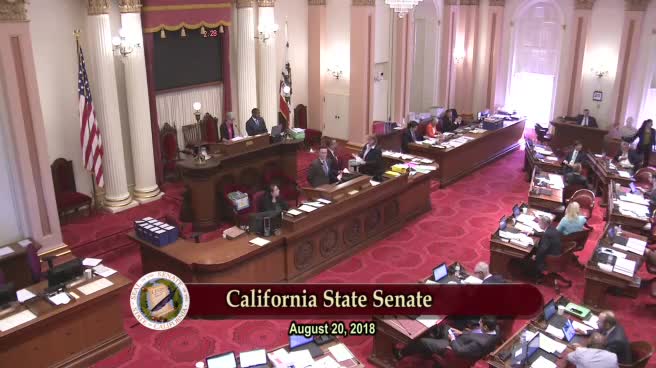 1MIN
Senate Floor
 1MIN
Assembly Floor
 8MIN
Assembly Standing Committee on Education
Bill Author

Bill Co-Author(s):