AB 3098: Residential care facilities for the elderly: emergency and disaster plans.
- Session Year: 2017-2018
- House: Assembly
- Latest Version Date: 2018-09-11
Existing law provides for the licensure and regulation of residential care facilities for the elderly by the State Department of Social Services. Existing law requires a facility to have an emergency plan that includes specified provisions and is available, upon request, to residents onsite and available to local emergency responders. Existing law exempts a facility that has obtained a certificate of authority to offer continuing care contracts from this requirement. A violation of these provisions is punishable as a misdemeanor.
This bill would repeal the above-described provision exempting a facility that has obtained a certificate of authority to offer continuing care contracts from the requirement of having an emergency plan. The bill would require the emergency and disaster plan to include additional elements, including a contact information list and at least 2 shelter locations for housing residents during an evacuation. The bill would require a facility to provide training on the emergency and disaster plan to each staff member upon hire and annually thereafter. The bill would also require a facility to review and make updates to the emergency and disaster plan annually, as specified, and to conduct a drill for various emergency situations at least once quarterly for each shift. The bill would require the facility to make the emergency and disaster plan available, upon request, to any responsible party for a resident and the local long-term care ombudsman, and would require an applicant seeking a license for a new facility to submit the emergency and disaster plan with the initial license application. The bill would require the departments Community Care Licensing Division to confirm, during annual visits, that the emergency and disaster plan is on file at the facility and includes required content and would encourage the facility to have the plan reviewed by local emergency authorities. Because a violation of these provisions would be a crime, this bill would impose a state-mandated local program.
The California Constitution requires the state to reimburse local agencies and school districts for certain costs mandated by the state. Statutory provisions establish procedures for making that reimbursement.
This bill would provide that no reimbursement is required by this act for a specified reason.
Existing law provides for the licensure and regulation of residential care facilities for the elderly by the State Department of Social Services. Existing law requires a facility to have an emergency plan that includes specified provisions and is available, upon request, to residents onsite and available to local emergency responders. Existing law exempts a facility that has obtained a certificate of authority to offer continuing care contracts from this requirement. A violation of these provisions is punishable as a misdemeanor.
This bill would repeal the above-described provision exempting a facility that has obtained a certificate of authority to offer continuing care contracts from the requirement of having an emergency plan. The bill would require the emergency and disaster plan to include additional elements, including a contact information list and at least 2 shelter locations for housing residents during an evacuation. The bill would require a facility to provide training on the emergency and disaster plan to each staff member upon hire and annually thereafter. The bill would also require a facility to review the and make updates to the emergency and disaster plan annually, as specified, and to conduct a drill for various emergency situations at least once quarterly for each shift. The bill would require the facility to make the emergency and disaster plan available, upon request, to any responsible party for a resident and the local long-term care ombudsman, and would require a person an applicant seeking a license for a new facility to submit the emergency and disaster plan with the initial license application. The bill would require the departments Community Care Licensing Division to confirm, during annual visits, that the emergency and disaster plan is on file at the facility and includes required content and would encourage the facility to have the plan reviewed by local emergency authorities. Because a violation of these provisions would be a crime, this bill would impose a state-mandated local program.
The California Constitution requires the state to reimburse local agencies and school districts for certain costs mandated by the state. Statutory provisions establish procedures for making that reimbursement.
This bill would provide that no reimbursement is required by this act for a specified reason.
Existing law provides for the licensure and regulation of residential care facilities for the elderly by the State Department of Social Services. Existing law requires a facility to have an emergency plan that includes specified provisions and is available, upon request, to residents onsite and available to local emergency responders. Existing law exempts a facility that has obtained a certificate of authority to offer continuing care contracts from this requirement. A violation of these provisions is punishable as a misdemeanor.
This bill would repeal the above-described provision exempting a facility that has obtained a certificate of authority to offer continuing care contracts from the requirement of having an emergency plan. The bill would require the emergency plan to include additional elements, including a contact information list and at least two 2 shelter locations for housing residents during an evacuation. The bill would require a facility to provide training on the emergency plan to each staff member upon hire and annually thereafter. The bill would also require a facility to review the plan annually, as specified, and to conduct a drill for various emergency situations at least once quarterly for each shift. The bill would require the facility to make the emergency plan available, upon request, to any responsible party for a resident and the local long-term care ombudsman, and would require a person seeking a license for a new facility to submit the emergency plan with the initial license application. Because a violation of these provisions would be a crime, this bill would impose a state-mandated local program.
The California Constitution requires the state to reimburse local agencies and school districts for certain costs mandated by the state. Statutory provisions establish procedures for making that reimbursement.
This bill would provide that no reimbursement is required by this act for a specified reason.
Existing law provides for the licensure and regulation of residential care facilities for the elderly by the State Department of Social Services. Existing law requires a facility to have an emergency plan that includes specified provisions and is available, upon request, to residents onsite and available to local emergency responders. Existing law exempts a facility that has obtained a certificate of authority to offer continuing care contracts from this requirement. A violation of these provisions is punishable as a misdemeanor.
This bill would repeal the above-described provision exempting a facility that has obtained a certificate of authority to offer continuing care contracts from the requirement of having an emergency plan. The bill would require the emergency plan to include additional elements, including a contact information list and at least two shelter locations for housing residents during an evacuation. The bill would require a licensee facility to provide training on the emergency plan to each staff member upon hire and annually thereafter. The bill would also require a licensee facility to review the plan annually, as specified, and to conduct drills a drill for various emergency situations at least once every 3 months quarterly for each shift. The bill would require the facility to make the emergency plan available, upon request, to any responsible party for a resident and the local long-term care ombudsman, and would require a person seeking a license for a new facility to submit the emergency plan with the initial license application. Because a violation of these provisions would be a crime, this bill would impose a state-mandated local program.
The California Constitution requires the state to reimburse local agencies and school districts for certain costs mandated by the state. Statutory provisions establish procedures for making that reimbursement.
This bill would provide that no reimbursement is required by this act for a specified reason.
Existing law provides for the licensure and regulation of residential care facilities for the elderly by the State Department of Social Services. Existing law requires a facility to have an emergency plan that includes specified provisions and is available, upon request, to residents onsite and available to local emergency responders. A violation of these provisions is punishable as a misdemeanor.
This bill would require a licensee to provide training on the emergency plan to each staff member upon hire and annually thereafter. The bill would also require a licensee to review the plan annually, as specified, and to conduct drills for various emergency situations at least once every 3 months for each shift. Because a violation of these provisions would be a crime, this bill would impose a state-mandated local program.
The California Constitution requires the state to reimburse local agencies and school districts for certain costs mandated by the state. Statutory provisions establish procedures for making that reimbursement.
This bill would provide that no reimbursement is required by this act for a specified reason.
(a)In addition to any other requirement of this chapter, a residential care facility for the elderly shall have an emergency and disaster plan that shall include, but not be limited to, all of the following:
(1)Evacuation procedures, including identification of an assembly point or points that shall be included in the facility sketch.
(2)Plans for the facility to be self-reliant for a period of not less than 72 hours immediately following any emergency or disaster, including, but not limited to, a short-term or long-term power failure. If the facility plans to shelter in place and one or more utilities, including water, sewer, gas, or electricity, is not available, the facility shall have a plan and supplies available to provide alternative resources during an outage.
(3)Transportation needs and evacuation procedures to ensure that the facility can communicate with emergency response personnel or can access the information necessary in order to check the emergency routes to be used at the time of an evacuation and relocation necessitated by a disaster. If the transportation plan includes the use of a vehicle owned or operated by the facility, the keys to the vehicle shall be available to staff on all shifts.
(4)A contact information list of all of the following:
(A)Emergency response personnel.
(B)The Community Care Licensing Division within the State Department of Social Services.
(C)The local long-term care ombudsman.
(D)Transportation providers.
(5)At least two appropriate shelter locations that can house facility residents during an evacuation. One of the locations shall be outside of the immediate area.
(6)The location of utility shut-off valves and instructions for use.
(7)Procedures that address, but are not limited to, all of the following:
(A)Provision of emergency power that could include identification of suppliers of backup generators. If a permanently installed generator is used, the plan shall include its location and a description of how it will be used. If a portable generator is used, the manufacturers operating instructions shall be followed.
(B)Responding to an individual residents needs if the emergency call buttons are inoperable.
(C)Process for communicating with residents, families, hospice providers, and others, as appropriate, that might include landline telephones, cellular telephones, or walkie-talkies. A backup process shall also be established. Residents and their responsible parties shall be informed of the process for communicating during an emergency.
(D)Assistance with, and administration of, medications.
(E)Storage and preservation of medications, including the storage of medications that require refrigeration.
(F)The operation of assistive medical devices that need electric power for their operation, including, but not limited to, oxygen equipment and wheelchairs.
(G)A process for identifying residents with special needs, such as hospice, and a plan for meeting those needs.
(H)Procedures for confirming the location of each resident during an emergency response.
(b)A facility shall provide training on the plan to each staff member upon hire and annually thereafter. The training shall include staff responsibilities during an emergency or disaster.
(c)A facility shall conduct a drill at least quarterly for each shift. The type of emergency covered in a drill shall vary from quarter to quarter, taking into account different emergency scenarios. An actual evacuation of residents is not required during a drill. While a facility may provide an opportunity for residents to participate in a drill, it shall not require any resident participation. Documentation of the drills shall include the date, the type of emergency covered by the drill, and the names of staff participating in the drill.
(d)A facility shall review the plan annually and make updates as necessary, including changes in floor plans and the population served. The licensee or administrator shall sign and date documentation to indicate that the plan has been reviewed and updated as necessary.
(e)A facility shall have all of the following information readily available to facility staff during an emergency:
(1)A resident roster with the date of birth for each resident.
(2)An appraisal of resident needs and services plan for each resident.
(3)A resident medication list for residents with centrally stored medications.
(4)Contact information for the responsible party and physician for each resident.
(f)A facility shall have both of the following in place:
(1)An evacuation chair at each stairwell, on or before July 1, 2019.
(2)A set of keys available to facility staff on each shift for use during an evacuation that provides access to all of the following:
(A)All occupied resident units.
(B)All facility vehicles.
(C)All facility exit doors.
(D)All facility cabinets and cupboards or files that contain elements of the emergency and disaster plan, including, but not limited to, food supplies and protective shelter supplies.
(g)A facility shall make the plan available upon request to residents onsite, any responsible party for a resident, the local long-term care ombudsman, and local emergency responders. Resident and employee information shall be kept confidential.
(h)An applicant seeking a license for a new facility shall submit the emergency and disaster plan with the initial license application required under Section 1569.15.
(i)The departments Community Care Licensing Division shall confirm, during annual licensing visits, that the emergency and disaster plan is on file at the facility and includes required content.
(j)A facility is encouraged to have the emergency and disaster plan reviewed by local emergency authorities.
(k)Nothing in this section shall create a new or additional requirement for the department to evaluate the emergency and disaster plan.
SEC. 2.No reimbursement is required by this act pursuant to Section 6 of Article XIIIB of the California Constitution because the only costs that may be incurred by a local agency or school district will be incurred because this act creates a new crime or infraction, eliminates a crime or infraction, or changes the penalty for a crime or infraction, within the meaning of Section 17556 of the Government Code, or changes the definition of a crime within the meaning of Section 6 of Article XIIIB of the California Constitution.
(a)In addition to any other requirement of this chapter, a residential care facility for the elderly shall have an emergency and disaster plan that shall include, but not be limited to, all of the following:
(1)Evacuation procedures. procedures, including identification of an assembly point or points that shall be included in the facility sketch.
(2)Plans for the facility to be self-reliant for a period of not less than 72 hours immediately following any emergency or disaster, including, but not limited to, a short-term or long-term power failure. If the facility plans to shelter in place and one or more utilities, including water, sewer, gas, or electricity, is not available, the facility shall have a plan and supplies available to provide alternative resources during an outage.
(3)Transportation needs and evacuation procedures to ensure that the facility can communicate with emergency response personnel or can access the information necessary in order to check the emergency routes to be used at the time of an evacuation and relocation necessitated by a disaster. If the transportation plan includes the use of a vehicle owned or operated by the facility, the keys to the vehicle shall be available to staff on all shifts.
(4)A contact information list of all of the following:
(A)Emergency response personnel.
(B)The Community Care Licensing Division within the State Department of Social Services.
(C)The local long-term care ombudsman.
(D)Transportation providers.
(5)At least two appropriate shelter locations that can house facility residents during an evacuation. One of the locations shall be outside of the immediate area.
(6)The location of utility shut-off valves and instructions for use.
(6)(7)Procedures that address, but are not limited to, all of the following:
(A)Provision of emergency power that could include identification of suppliers of backup generators. If a permanently installed generator is used, the plan shall include its location and a description of how it will be used. If a portable generator is used, the manufacturers operating instructions shall be followed.
(B)Responding to an individual residents needs if the emergency call buttons are inoperable.
(C)Process for communicating with residents, families, hospice providers, and others, as appropriate, that might include landline telephones, cellular telephones, or walkie-talkies. A backup process shall also be established. Residents and their responsible parties shall be informed of the process for communicating during an emergency.
(D)Assistance with, and administration of, medications.
(E)Storage and preservation of medications, including the storage of medications that require refrigeration.
(F)The operation of assistive medical devices that need electric power for their operation, including, but not limited to, oxygen equipment and wheelchairs.
(G)A process for identifying residents with special needs, such as hospice, and a plan for meeting those needs.
(H)Procedures for confirming the location of each resident during an emergency response.
(b)A facility shall provide training on the plan to each staff member upon hire and annually thereafter. The training shall include staff responsibilities during an emergency or disaster.
(c)A facility shall conduct a drill at least quarterly for each shift. The type of emergency covered in a drill shall vary from quarter to quarter, taking into account different emergency scenarios. An actual evacuation of residents is not required during a drill. While a facility may provide an opportunity for residents to participate in a drill, it shall not require any resident participation. Documentation of the drills shall include the date, the type of emergency covered by the drill, and the names of staff participating in the drill.
(d)A facility shall review the plan annually and document the name of the person reviewing the plan and the date of the review. make updates as necessary, including changes in floor plans and the population served. The licensee or administrator shall sign and date documentation to indicate that the plan has been reviewed and updated as necessary.
(e)A facility shall have all of the following information readily available to facility staff during an emergency:
(1)A resident roster with the date of birth for each resident.
(2)A resident needs or services appraisal An appraisal of resident needs and services plan for each resident.
(3)A resident medication list for residents with centrally stored medications.
(4)Contact information for the responsible party and physician for each resident.
(f)A facility shall have both of the following in place:
(1)An evacuation chair at each stairwell. stairwell, on or before July 1, 2019.
(2)A set of keys available to facility staff on each shift for use during an evacuation that provides access to all of the following:
(A)All occupied resident units.
(B)All facility vehicles.
(C)All facility exit doors.
(D)All facility cabinets and cupboards or files that contain elements of the emergency and disaster plan, including, but not limited to, food supplies and protective shelter supplies.
(g)A facility shall make the plan available upon request to residents onsite, any responsible party for a resident, the local long-term care ombudsman, and local emergency responders. Resident and employee information shall be kept confidential.
(h)A person An applicant seeking a license for a new facility shall submit the emergency and disaster plan with the initial license application required under Section 1569.15.
(i)The departments Community Care Licensing Division shall confirm, during comprehensive annual licensing visits, that the emergency and disaster plan is on file at the facility. facility and includes required content.
(j)A facility is encouraged to have the emergency and disaster plan reviewed by local emergency authorities.
(k)Nothing in this section shall create a new or additional requirement for the department to evaluate the emergency plan. The department shall only verify that the plan is on file at the time of the comprehensive inspection. and disaster plan.
SEC. 2.No reimbursement is required by this act pursuant to Section 6 of Article XIIIB of the California Constitution because the only costs that may be incurred by a local agency or school district will be incurred because this act creates a new crime or infraction, eliminates a crime or infraction, or changes the penalty for a crime or infraction, within the meaning of Section 17556 of the Government Code, or changes the definition of a crime within the meaning of Section 6 of Article XIIIB of the California Constitution.
(a)In addition to any other requirement of this chapter, a residential care facility for the elderly shall have an emergency plan that shall include, but not be limited to, all of the following:
(1)Evacuation procedures.
(2)Plans for the facility to be self-reliant for a period of not less than 72 hours immediately following any emergency or disaster, including, but not limited to, a short-term or long-term power failure. If the facility plans to shelter in place and one or more utilities, including water, sewer, gas, or electricity, is not available, the facility shall have a plan and supplies available to provide alternative resources during an outage.
(3)Transportation needs and evacuation procedures to ensure that the facility can communicate with emergency response personnel or can access the information necessary in order to check the emergency routes to be used at the time of an evacuation and relocation necessitated by a disaster. If the transportation plan includes the use of a vehicle owned or operated by the facility, the keys to the vehicle shall be available to staff on all shifts.
(4)A contact information list of all of the following:
(A)Emergency response personnel.
(B)The Community Care Licensing Division within the State Department of Social Services.
(C)The local long-term care ombudsman.
(D)Transportation providers.
(5)At least two appropriate shelter locations that can house facility residents during an evacuation. One of the locations shall be outside of the immediate area.
(6)Procedures that address, but are not limited to, all of the following:
(A)Provision of emergency power that could include identification of suppliers of backup generators.
(B)Responding to an individual residents needs if the emergency call buttons are inoperable.
(C)Process for communicating with residents, families, hospice providers, and others, as appropriate, that might include landline telephones, cellular telephones, or walkie-talkies.
(D)Assistance with, and administration of, medications.
(E)Storage and preservation of medications, including the storage of medications that require refrigeration.
(F)The operation of assistive medical devices that need electric power for their operation, including, but not limited to, oxygen equipment and wheelchairs.
(G)A process for identifying residents with special needs, such as hospice, and a plan for meeting those needs.
(H)Procedures for confirming the location of each resident during an emergency response.
(b)A facility shall provide training on the plan to each staff member upon hire and annually thereafter.
(c)A facility shall conduct a drill at least quarterly for each shift. The type of emergency covered in a drill shall vary from quarter to quarter, taking into account different emergency scenarios. An actual evacuation of residents is not required during a drill.
(d)A facility shall review the plan annually and document the name of the person reviewing the plan and the date of the review.
(e)A facility shall have all of the following information readily available to facility staff during an emergency:
(1)A resident roster with the date of birth for each resident.
(2)A resident needs or services appraisal plan for each resident.
(3)A resident medication list. list for residents with centrally stored medications.
(4)Contact information for the responsible party and physician for each resident.
(f)A facility shall have both of the following in place:
(1)An evacuation chair at each stairwell.
(2)A set of keys available to facility staff on each shift for use during an evacuation that provides access to all of the following:
(A)All occupied resident units.
(B)All facility vehicles.
(C)All facility exit doors.
(D)All facility cabinets and cupboards or files that contain elements of the emergency plan, including, but not limited to, food supplies and protective shelter supplies.
(g)A facility shall make the plan available upon request to residents onsite, any responsible party for a resident, the local long-term care ombudsman, and local emergency responders.
(h)A person seeking a license for a new facility shall submit the emergency plan with the initial license application required under Section 1569.15.
(i)The departments Community Care Licensing Division shall confirm, during comprehensive licensing visits, that the plan is on file at the facility.
(j)A facility is encouraged to have the emergency plan reviewed by local emergency authorities.
(k)Nothing in this section shall create a new or additional requirement for the department to evaluate the emergency plan. The department shall only verify that the plan is on file at the time of the comprehensive inspection.
SEC. 2.No reimbursement is required by this act pursuant to Section 6 of Article XIIIB of the California Constitution because the only costs that may be incurred by a local agency or school district will be incurred because this act creates a new crime or infraction, eliminates a crime or infraction, or changes the penalty for a crime or infraction, within the meaning of Section 17556 of the Government Code, or changes the definition of a crime within the meaning of Section 6 of Article XIIIB of the California Constitution.
(a)In addition to any other requirement of this chapter, a residential care facility for the elderly shall have an emergency plan that shall include, but not be limited to, all of the following:
(1)Evacuation procedures.
(2)Plans for the facility to be self-reliant for a period of not less than 72 hours immediately following any emergency or disaster, including, but not limited to, a short-term or long-term power failure. failure. If the facility plans to shelter in place and one or more utilities, including water, sewer, gas, or electricity, is not available, the facility shall have a plan and supplies available to provide alternative resources during an outage.
(3)Transportation needs and evacuation procedures to ensure that the facility can communicate with emergency response personnel or can access the information necessary in order to check the emergency routes to be used at the time of an evacuation and relocation necessitated by a disaster. If the transportation plan includes the use of a vehicle owned or operated by the facility, the keys to the vehicle shall be available to staff on all shifts.
(4)A contact information list of all of the following:
(A)Emergency response personnel.
(B)The Community Care Licensing Division within the State Department of Social Services.
(C)The local long-term care ombudsman.
(D)Transportation providers.
(5)At least two appropriate shelter locations that can house facility residents during an evacuation. One of the locations shall be outside of the immediate area.
(4)(6)Procedures that address, but are not limited to, all of the following:
(A)Provision of emergency power that could include identification of suppliers of backup generators.
(B)Responding to an individual residents needs if the emergency call buttons are inoperable.
(C)Process for communicating with residents, families, hospice providers, and others, as appropriate, that might include landline telephones, cellular telephones, or walkie-talkies.
(D)Assistance with, and administration of, medications.
(E)Storage and preservation of medications. medications, including the storage of medications that require refrigeration.
(F)The operation of assistive medical devices that need electric power for their operation, including, but not limited to, oxygen equipment and wheelchairs.
(G)A process for identifying residents with special needs, such as hospice, and a plan for meeting those needs.
(H)Procedures for confirming the location of each resident during an emergency response.
(b)A licensee facility shall provide training on the plan to each staff member upon hire and annually thereafter.
(c)A licensee shall conduct drills for various emergency situations at least once every three months for each shift. facility shall conduct a drill at least quarterly for each shift. The type of emergency covered in a drill shall vary from quarter to quarter, taking into account different emergency scenarios. An actual evacuation of residents is not required during a drill.
(d)A licensee facility shall review the plan annually and document the name of the person reviewing the plan and the date of the review.
(e)A facility shall have all of the following information readily available to facility staff during an emergency:
(1)A resident roster with the date of birth for each resident.
(2)A resident needs or services appraisal plan for each resident.
(3)A resident medication list.
(4)Contact information for the responsible party and physician for each resident.
(f)A facility shall have both of the following in place:
(1)An evacuation chair at each stairwell.
(2)A set of keys available to facility staff on each shift for use during an evacuation that provides access to all of the following:
(A)All occupied resident units.
(B)All facility vehicles.
(C)All facility exit doors.
(D)All facility cabinets and cupboards or files that contain elements of the emergency plan, including, but not limited to, food supplies and protective shelter supplies.
(e)Each facility subject to this section(g)A facility shall make the plan available upon request to residents onsite and available to onsite, any responsible party for a resident, the local long-term care ombudsman, and local emergency responders.
(h)A person seeking a license for a new facility shall submit the emergency plan with the initial license application required under Section 1569.15.
(f)(i)The departments Community Care Licensing Division shall confirm, during comprehensive licensing visits, that the plan is on file at the facility.
(j)A facility is encouraged to have the emergency plan reviewed by local emergency authorities.
(g)(k)Nothing in this section shall create a new or additional requirement for the department to evaluate the emergency plan. The department shall only verify that the plan is on file at the time of the comprehensive inspection.
(h)This subdivision shall not apply to residential care facilities for the elderly that have obtained a certificate of authority to offer continuing care contracts, as defined in paragraph (5) of subdivision (c) of Section 1771.SEC. 2.No reimbursement is required by this act pursuant to Section 6 of Article XIIIB of the California Constitution because the only costs that may be incurred by a local agency or school district will be incurred because this act creates a new crime or infraction, eliminates a crime or infraction, or changes the penalty for a crime or infraction, within the meaning of Section 17556 of the Government Code, or changes the definition of a crime within the meaning of Section 6 of Article XIIIB of the California Constitution.
(a)In addition to any other requirement of this chapter, a residential care facility for the elderly shall have an emergency plan that shall include, but not be limited to, all of the following:
(1)Evacuation procedures.
(2)Plans for the facility to be self-reliant for a period of not less than 72 hours immediately following any emergency or disaster, including, but not limited to, a long-term power failure.
(3)Transportation needs and evacuation procedures to ensure that the facility can communicate with emergency response personnel or can access the information necessary in order to check the emergency routes to be used at the time of an evacuation and relocation necessitated by a disaster.
(4)Procedures that address, but are not limited to, all of the following:
(A)Provision of emergency power that could include identification of suppliers of backup generators.
(B)Responding to an individual residents residents needs in the event if the emergency call buttons are inoperable.
(C)Process for communicating with residents, families, hospice providers, and others, as appropriate, that might include landline telephones, cellular telephones, or walkie-talkies.
(D)Assistance with, and administration of, medications.
(E)Storage and preservation of medications.
(F)The operation of assistive medical devices that need electric power for their operation, including, but not limited to, oxygen equipment and wheelchairs.
(G)A process for identifying residents with special needs, such as hospice, and a plan for meeting those needs.
(b)A licensee shall provide training on the plan to each staff member upon hire and annually thereafter.
(c)A licensee shall conduct drills for various emergency situations at least once every three months for each shift. An actual evacuation of residents is not required during a drill.
(d)A licensee shall review the plan annually and document the name of the person reviewing the plan and the date of the review.
(b)(e)Each facility subject to this section shall make the plan available upon request to residents onsite and available to local emergency responders.
(c)(f)The departments Community Care Licensing Division shall confirm, during comprehensive licensing visits, that the plan is on file at the facility.
(d)(g)Nothing in this section shall create a new or additional requirement for the department to evaluate the emergency plan. The department shall only verify that the plan is on file at the time of the comprehensive inspection.
(e)(h)This subdivision shall not apply to residential care facilities for the elderly that have obtained a certificate of authority to offer continuing care contracts, as defined in paragraph (5) of subdivision (c) of Section 1771.
(f)This section shall become operative on March 1, 2009.SEC. 2.No reimbursement is required by this act pursuant to Section 6 of Article XIIIB of the California Constitution because the only costs that may be incurred by a local agency or school district will be incurred because this act creates a new crime or infraction, eliminates a crime or infraction, or changes the penalty for a crime or infraction, within the meaning of Section 17556 of the Government Code, or changes the definition of a crime within the meaning of Section 6 of Article XIIIB of the California Constitution.
|
Date
|
Status
|
|---|---|
| Sep 11, 2018 | Chaptered by Secretary of State - Chapter 348, Statutes of 2018. |
| Sep 11, 2018 | Approved by the Governor. |
| Sep 7, 2018 | Enrolled and presented to the Governor at 2:30 p.m. |
| Aug 29, 2018 | Senate amendments concurred in. To Engrossing and Enrolling. |
| Aug 27, 2018 | In Assembly. Concurrence in Senate amendments pending. May be considered on or after August 29 pursuant to Assembly Rule 77. |
| Aug 27, 2018 | Read third time. Passed. Ordered to the Assembly. |
| Aug 23, 2018 | Read second time. Ordered to third reading. |
| Aug 22, 2018 | Read third time and amended. Ordered to second reading. |
| Jul 3, 2018 | Read second time. Ordered to third reading. |
| Jul 2, 2018 | From committee: Be ordered to second reading pursuant to Senate Rule 28.8. |
| Jun 14, 2018 | Read second time and amended. Re-referred to Com. on APPR. |
| Jun 13, 2018 | From committee: Amend, and do pass as amended and re-refer to Com. on APPR. (Ayes 6. Noes 0.) (June 12). |
| Jun 7, 2018 | Referred to Com. on HUMAN S. |
| May 30, 2018 | In Senate. Read first time. To Com. on RLS. for assignment. |
| May 29, 2018 | Read third time. Passed. Ordered to the Senate. |
| May 24, 2018 | Read second time. Ordered to Consent Calendar. |
| May 23, 2018 | From committee: Do pass. To Consent Calendar. (Ayes 16. Noes 0.) (May 23). |
| Apr 25, 2018 | From committee: Do pass and re-refer to Com. on APPR. with recommendation: To Consent Calendar. (Ayes 7. Noes 0.) (April 24). Re-referred to Com. on APPR. |
| Apr 24, 2018 | In committee: Hearing postponed by committee. |
| Apr 18, 2018 | From committee: Do pass and re-refer to Com. on HUM. S. (Ayes 5. Noes 0.) (April 17). Re-referred to Com. on HUM. S. |
| Apr 10, 2018 | Re-referred to Com. on AGING & L.T.C. |
| Apr 9, 2018 | From committee chair, with author's amendments: Amend, and re-refer to Com. on AGING & L.T.C. Read second time and amended. |
| Mar 12, 2018 | Referred to Coms. on AGING & L.T.C. and HUM. S. |
| Feb 17, 2018 | From printer. May be heard in committee March 19. |
| Feb 16, 2018 | Read first time. To print. |
|
Date
|
Description
|
Location
|
Votes
|
|
|---|---|---|---|---|
| Aug 29, 2018 | AB 3098 FRIEDMAN Concurrence in Senate Amendments | Assembly Floor |
Passed |
|
| Aug 27, 2018 | Assembly 3rd Reading AB3098 Friedman By Wiener | Senate Floor |
Passed |
|
| Jun 12, 2018 | Do pass as amended, but first amend, and re-refer to the Committee on [Appropriations] | Senate Standing Committee on Human Services |
Passed |
|
| May 29, 2018 | AB 3098 FRIEDMAN Consent Calendar Second Day Regular Session | Assembly Floor |
Passed |
|
| May 23, 2018 | Do pass. To Consent Calendar. | Assembly Standing Committee on Appropriations |
Passed |
|
| Apr 24, 2018 | Do pass and be re-referred to the Committee on [Appropriations] with recommendation: To Consent Calendar | Assembly Standing Committee on Human Services |
Passed |
|
| Apr 17, 2018 | Do pass and be re-referred to the Committee on [Human Services] | Assembly Standing Committee on Aging and Long-Term Care |
Passed |
This list shows positions taken on this bill by organizations on the date displayed, which is linked to the original source.
Positions by individuals are not included.
|
Organization
|
Position
|
Date
|
|---|---|---|
| 6BEDS, Inc. | ** Support | Aug 23, 2018 |
| Area Agency On Aging Advisory Council | ** Support | Aug 23, 2018 |
| California Advocates for Nursing Home Reform | ** Support | Aug 23, 2018 |
| California Assisted Living Association | ** Support | Aug 23, 2018 |
| California Assistive Living Association | * Support | Jun 12, 2018 |
| County Of San Diego | ** Support | Aug 23, 2018 |
| Leading Age California | ** Support | Aug 23, 2018 |
| RCFE | * Support | Apr 17, 2018 |
| The Alzheimer'S Association | ** Support | Aug 23, 2018 |
| the county of san diego | ** Support | Jun 8, 2018 |
CONCURRENCE IN SENATE AMENDMENTS
CSA1 Bill Id:AB 3098
Author:(Friedman)
As Amended Ver:August 22, 2018
Majority vote
ASSEMBLY: | 78-0 | (May 29, 2018) | SENATE: | 39-0 | (August 27, 2018) |
Original Committee Reference: AGING & L.T.C.
SUMMARY: This bill requires a residential care facility for the elderly to have an emergency and disaster plan. Specifically, this bill:
- Requires a residential care facility for the elderly (RCFE) to have an emergency plan.
- Requires the emergency plan to include at least two shelter locations for housing residents during an evacuation, with one of the locations being outside of the immediate area.
- Requires plans for the facility to be self-reliant for a period of not less than 72 hours immediately following any emergency or disaster, including, but not limited to, a short-term or long-term power failure.
- Requires procedures for the storage and preservation of medications, including the storage of medications that require refrigeration.
- Requires a licensee facility to provide training on the emergency plan to each staff member upon hire, and annually thereafter.
- Requires that if the facility plans to shelter in place and one or more utilities, including water, sewer, gas, or electricity, is not available, the facility shall have a plan and supplies available to provide alternative resources during an outage.
- Requires the facility to make the emergency plan available on site to residents, and upon request, to any responsible party of a resident and the local long-term care ombudsman.
- Encourages a facility to have the emergency plan reviewed by local emergency authorities.
The Senate amendments:
- Clarifies that a resident medication list, will be a list for residents with centrally stored medications.
- Requires a licensee facility to review the plan annually and make updates as necessary, including changes in floor plans and the population served. The licensee or administrator shall sign and date documentation to indicate that the plan has been reviewed and updated as necessary.
- The California Department of Social Services Community Care Licensing Division shall confirm, during annual licensing visits, that the emergency and disaster plan is on file at the facility and includes required content.
- Other technical and clarifying minor amendments.
EXISTING LAW:
- Provides for the licensure and regulation of residential care facilities for the elderly by the California State Department of Social Services.
- Requires a facility to have an emergency plan that includes specified provisions and is available, upon request, to resident's onsite and available to local emergency responders.
- Exempts a facility that has obtained a certificate of authority to offer continuing care contracts from this requirement. A violation of these provisions is punishable as a misdemeanor.
FISCAL EFFECT: According to the Assembly Appropriations Committee, minor and absorbable costs to the Department of Social Services (DSS).
COMMENTS:
Author's Statement: "California's residential care facilities for the elderly serve tens of thousands older adults and adults with disabilities in communities across the state. While every facility is required to have a disaster plan in place whether they serve 6 or 600 residents, that plan is only effective if staff and residents know what to do during an emergency. AB 3098 is a straightforward bill that requires all facilities to hold drills on a regular basis to ensure that when disaster strikes, whether it's a wildfire, earthquake, or a flood, everyone is ready."
BACKGROUND:
California's network of RCFEs consists of small homes serving a handful of residents to larger assisted living facilities that can house over 100 residents in communities across the state. Facilities provide a special combination of housing, personalized supportive services, and 24-hour staff designed to respond to the individual needs of those who require help with activities of daily living.
RCFEs are licensed through the California Department of Social Services and governed by a robust set of laws and regulations. The regulatory framework is designed to promote resident independence and self-direction to the greatest extent possible in a residential, non-medical setting. The oversight extends to how facilities function in the event of an emergency.
RCFEs are required to have thorough disaster plans in place prior to opening their doors to residents as part of their licensing process. During the wildfires and natural disasters in 2017, RCFEs in both Northern and Southern California had to put their preparedness plans to the test through full-scale evacuations and coordination with local emergency responders.
Argument in Support: In a letter from the California Assisted Living Association, LeadingAge California, and 6Beds, Inc., they state "RCFE staff and residents responded heroically to the unprecedented natural disasters California experienced last year. …We are all grateful for everyone's planning and hard work and seek to build on this experience.
"As we reflect on what contributed to a successful response and areas that could be strengthened, our organizations have identified approaches that should be incorporated statewide for all RCFEs. Appropriate emergency response varies depending upon type and scope of emergency, geographic location, facility size and building type, and instruction from local emergency personnel. What is consistent, however, is the value of advance planning, practice, and process. This bill represents a collaborative effort to build upon prior legislation and further strengthen emergency preparedness."
Argument in Opposition: None.
Analysis Prepared by: Barry Brewer / AGING & L.T.C. / (916) 319-3990 FN: 0004958
Office of Senate Floor Analyses (916) 651-1520 Fax: (916) 327-4478 | AB |
THIRD READING
Bill No: AB 3098
Amended: 8/22/18 in Senate
SENATE HUMAN SERVICES COMMITTEE: 6-0, 6/12/18
AYES: Wiener, Glazer, Leyva, McGuire, Nguyen, Portantino
NO VOTE RECORDED: Berryhill
SENATE APPROPRIATIONS COMMITTEE: Senate Rule 28.8
ASSEMBLY FLOOR: 78-0, 5/29/18 (Consent) - See last page for vote
SUBJECT: Residential care facilities for the elderly: emergency and disaster plans
California Assisted Living Association
Leading Age California
DIGEST:
This bill makes updates to the required content for a Residential Care Facility for the Elderly’s (RCFE) emergency and disaster plan and requires the California Department of Social Services (CDSS) to confirm that the plan is on file and includes the required content. The bill also encourages RCFEs to have the emergency plan reviewed by local emergency authorities, requires RCFEs to conduct quarterly disaster drills and establishes other requirements related to emergency and disaster plans.
Senate Floor Amendments of 8/22/18 rename the “emergency plan” required in the bill to “emergency and disaster plan,” require evacuation procedures to include an assembly point, establish requirements for power generators, require a backup process for communication during an emergency, set new staff training requirements, prohibit a facility from requiring a resident to participate in emergency drills, delay requirement for an evacuation chair at each stairwell until July 1, 2019, require resident and employee information to be kept confidential, and make other technical changes.
Existing law:
- Establishes the California Community Care Facilities Act, which provides regulatory structure for coordinated and comprehensive statewide system of care for people, who are mentally ill, developmentally and physically disabled, and children and adults who require care or services provided by licensed community care facilities. (HSC 1500 et seq.)
- Provides for the licensure and regulation of RCFEs by the CDSS’s Community Care Licensing Division (CCLD) via the RCFE Act, which requires facilities that provide personal care and supervision, protective supervision or health related services for persons 60 years of age or older who voluntarily chooses to reside in that facility to be licensed by CDSS. (HSC 1569, et seq.)
- Defines a “residential care facility for the elderly” as a housing arrangement chosen voluntarily by persons 60 years of age or older, or their authorized representative, where varying levels and intensities of care and supervision, protective supervision, or personal care are provided, based upon their varying needs, as determined in order to be admitted and to remain in the facility. (HSC 1569.2 (o))
- Requires any person seeking a license for an RCFE to comply with certain requirements related to the applicant’s character, affiliations, financial resources, and other factors, as specified. (HSC 1569.15)
- Requires an RCFE to have an emergency plan, that includes certain components, including, but not limited to: evacuation procedures; storage and preservation of medications; operation of assistive medical devices that require electric power, as specified; and a process for identifying residents with special needs, among others. (HSC 1569.695(a))
- Requires that each facility make the emergency plan available upon request to residents and local emergency responders. (HSC 1569.695 (b))
- Specifies that RCFEs that have obtained a certificate of authority to offer continuing care contracts, as specified, are not required to meet the emergency plan requirements. (HSC 1569.695 (e))
- Defines a “certificate of authority” as the certificate issued by the department, properly executed and bearing the State Seal, authorizing a specified provider to enter into one or more continuing care contracts at a single specified continuing care retirement community. (HSC 1771 (c)(5))
This bill:
- Renames the mandated “emergency plans” for RCFEs to “emergency and disaster plans” and expands the requirements for the plans to include:
- A facility sketch that includes identification of an assembly point or points within the evacuation procedure.
- A plan for short-term power failure;
- A plan and available supplies to provide resources during an outage if an RCFE has plans to shelter in place and one or more utilities, including water, sewer, gas, or electricity is unavailable;
- Vehicle keys that are available to staff on all shifts, if the transportation plan includes the use of a vehicle owned or operated by the facility.
- A contact list of emergency personnel; CCLD within CDSS; the local long-term care ombudsman; and transportation providers;
- At least two appropriate shelter locations that can house facility residents during an evacuation, of which at least one must be outside of the immediate area;
- The location of utility shut-off valves and instruction for use;
- Procedures that address the location and description of how a permanently installed generator is used or, if a portable generated is used, the manufacturer’s operating instructions shall be followed.
- Procedures that address a backup communication process. Residents and their responsible parties shall be informed of the process for communicating during an emergency.
- A way to store medications that require refrigeration and a process for confirming the location of each resident during an emergency response.
- Requires an RCFE to provide training on its emergency plan to each staff member when they are hired and on an annual basis thereafter. The training shall include staff responsibilities during an emergency or disaster.
- Mandates that an RCFE conduct a drill at least quarterly for each shift, as specified.
- Permits a facility to provide an opportunity for residents to participate in a drill and prohibits the facility from requiring any resident participation.
- Requires documentation of the drills to include the date, the type of emergency covered by the drill, and the names of staff participating in the drill.
- Requires a facility to review the plan annually and make updates as necessary, including changes in floor plans and the population served. Requires the licensee or administrator to sign and date documentation to indicate that the plan has been reviewed and updated as necessary.
- Requires certain information to be available to facility staff during an emergency, including: a resident roster with the date of birth for each resident; an appraisal of resident needs and services plan for each resident; a resident medication list for residents with centrally stored medications; and contact information for the responsible party and physician for each resident.
- Mandates that a facility have an evacuation chair in place at each stairwell, on or before July 1, 2019, and a set of keys available to facility staff that provide access to facility vehicles and to various parts of the facility, as specified.
- Includes any responsible party for a resident and the local long-term care ombudsman among the entities to whom a facility must make the emergency plan available upon request. Requires that resident and employee information shall be kept confidential.
- Mandates that an applicant seeking licensure for new facilities submit an emergency and disaster plan with the initial license application, as specified.
- Requires CCLD to confirm, during annual licensing visits, that the emergency and disaster plan is on file at the facility and include required content.
- Encourages a facility to have its emergency and disaster plan reviewed by local emergency authorities.
- Deletes the requirements that CDSS shall only verify that the plan is on file at the time of the comprehensive inspection.
- Deletes the exemption for RCFEs that have obtained a certificate of authority to offer continuing care contracts, as specified, from complying with emergency plan requirements.
- Makes technical changes.
Background
According to the author, “California’s residential care facilities for the elderly serve tens of thousands of older adults and adults with disabilities in communities across the state. While every facility is required to have a general disaster plan whether they serve 6 or 600 residents, that plan is only effective if staff and residents know what to do during an emergency. [This bill] is a straightforward bill that requires all facilities have detailed disaster plans in place and to hold drills on a regular basis to ensure that, when disaster strikes, whether it’s a wildfire, earthquake, or a flood, everyone is ready.”
CCLD
CDSS’s CCLD is responsible for regulating the facilities it licenses and protecting the health and safety of children, adults, and seniors who are cared for within those facilities. CCLD licenses and oversees more than 70,000 community care facilities—including child care facilities, foster family homes, and care facilities for the elderly—throughout California. These facilities typically provide non-medical care and supervision for children and adults in need, which includes persons with disabilities, seniors in need of residential care, children in foster care and at-risk children needing shelter services, families in need of child and adult care services.
As of June 30, 2017, CCLD licensed approximately 72,400 facilities with the total capacity to serve almost 1.4 million Californians.
RCFEs
Sometimes referred to as “assisted living facilities,” RCFEs are responsible for providing housing, care, supervision, and assistance with activities of daily living to individuals ages 60 and older, as well as individuals under the age of 60 with similar needs. California’s network of RCFEs consists of small homes serving a handful of residents to larger assisted living facilities that can house over 100 residents in communities across the state. Facilities provide a special combination of housing, personalized supportive services, and 24-hour staff designed to respond to the individual needs of those who require help with activities of daily living.
RCFEs are considered a housing alternative for individuals, rather than a medical facility, such as skilled nursing facilities; however, medical services can be provided in an RCFE under certain specialized care plans. Costs of RCFEs can vary widely in California, and in 2015, the monthly cost for a one-bedroom single occupancy unit was estimated to range from $700 to $10,650. The median monthly cost for a private, one-bedroom residence in an RCFE in 2017 was $4,275. As of June 30, 2017, 7,282 RCFEs were licensed to operate in California, with the capacity to serve 152,352 residents.
Current law requires RCFEs to have an emergency plan in place, which is required to include evacuation procedures, plans for the facility to be self-reliant for a period of no less than 72 hours following an emergency or disaster, and processes to meet and provide for the transportation needs of individuals in the event of an evacuation. Emergency plans must also include procedures that address the provision of emergency power, processes for communicating with residents, families, and hospice providers, and assistance with and administration of medications.
During the wildfires and natural disasters in 2017, RCFEs in both Northern and Southern California had to put their preparedness plans to the test through full-scale evacuations and coordination with local emergency responders. During those disasters, hundreds of RCFEs, and other CCLD-licensed facilities were evacuated. The following chart shows the number of licensed facilities, as of December 1, 2017, that were evacuated, the number that were eventually repopulated, and the number of facilities destroyed:
Adult & Senior Care (including RCFEs) | Child Care | Children’s Residential | Total | |
Evacuated | 306 | 1,195 | 161 | 1,662 |
Repopulated | 295 | 1,164 | 160 | 1,619* |
Destroyed | 9 | 14 | 0 | 23 |
*20 facilities had not reported as of December 1, 2017
While state law requires each RCFE to have disaster plans in place, the guidance for those plans as well as any training requirements is minimal, according to the author.
Related/Prior Legislation
AB 749 (Wolk, Chapter 477, Statutes of 2008) required RCFEs to have an emergency plan available to residents and to local emergency responders.
AB 2101 (Wolk, 2008) would have required CDSS to develop a training curriculum for RCFE staff on emergency preparedness and the facility’s emergency plan. The bill was held in the Assembly Appropriations Committee.
FISCAL EFFECT: Appropriation: Fiscal Com.: Local:
6Beds, Inc. (co-source)
California Assisted Living Association (co-source)
Leading Age California (co-source)
Area Agency on Aging Advisory Council
California Advocates for Nursing Home Reform
County of San Diego
The Alzheimer’s Association
OPPOSITION: (Verified 8/22/18)
None received
ASSEMBLY FLOOR: 78-0, 5/29/18
AYES: Acosta, Aguiar-Curry, Travis Allen, Arambula, Baker, Berman, Bigelow, Bloom, Bonta, Brough, Burke, Caballero, Calderon, Carrillo, Cervantes, Chau, Chávez, Chen, Chiu, Choi, Chu, Cooley, Cooper, Cunningham, Dahle, Daly, Eggman, Flora, Fong, Frazier, Friedman, Gallagher, Cristina Garcia, Eduardo Garcia, Gipson, Gloria, Gonzalez Fletcher, Gray, Grayson, Harper, Holden, Irwin, Jones-Sawyer, Kalra, Kamlager-Dove, Kiley, Lackey, Levine, Limón, Low, Maienschein, Mathis, Mayes, McCarty, Medina, Melendez, Mullin, Muratsuchi, Nazarian, Obernolte, O'Donnell, Patterson, Quirk, Quirk-Silva, Reyes, Rodriguez, Rubio, Salas, Santiago, Steinorth, Mark Stone, Thurmond, Ting, Voepel, Waldron, Weber, Wood, Rendon
8/23/18 16:04:26
**** END ****
Office of Senate Floor Analyses (916) 651-1520 Fax: (916) 327-4478 | AB |
THIRD READING
Bill No: AB 3098
:
SENATE HUMAN SERVICES COMMITTEE: 6-0, 6/12/18
AYES: Wiener, Glazer, Leyva, McGuire, Nguyen, Portantino
NO VOTE RECORDED: Berryhill
SENATE APPROPRIATIONS COMMITTEE: Senate Rule 28.8
ASSEMBLY FLOOR: 78-0, 5/29/18 (Consent) - See last page for vote
DIGEST:
This bill makes updates to the required components for a Residential Care Facility for the Elderly’s (RCFE) emergency plan, requires RCFEs to conduct quarterly drills, requires the emergency plan to be made available upon request to any responsible party for a resident and the local long-term care ombudsman, and encourages the facility to have the emergency plan reviewed by local emergency authorities, among other requirements.
Existing law:
- Establishes the California Community Care Facilities Act, which provides regulatory structure for coordinated and comprehensive statewide system of care for people, who are mentally ill, developmentally and physically disabled, and children and adults who require care or services provided by licensed community care facilities. (HSC 1500 et seq.)
- Provides for the licensure and regulation of RCFEs by the California Department of Social Services (CDSS) via the RCFE Act, which requires facilities that provide personal care and supervision, protective supervision or health related services for persons 60 years of age or older who voluntarily chooses to reside in that facility to be licensed by CDSS. (HSC 1569, et seq.)
- Defines a “residential care facility for the elderly” as a housing arrangement chosen voluntarily by persons 60 years of age or older, or their authorized representative, where varying levels and intensities of care and supervision, protective supervision, or personal care are provided, based upon their varying needs, as determined in order to be admitted and to remain in the facility. (HSC 1569.2 (o))
- Requires any person seeking a license for an RCFE to comply with certain requirements related to the applicant’s character, affiliations, financial resources, and other factors, as specified. (HSC 1569.15)
- Requires an RCFE to have an emergency plan, that includes certain components, including, but not limited to: evacuation procedures; storage and preservation of medications; operation of assistive medical devices that require electric power, as specified; and a process for identifying residents with special needs, among others. (HSC 1569.695(a))
- Requires that each facility make the emergency plan available upon request to residents and local emergency responders. (HSC 1569.695 (b))
- Specifies that RCFEs that have obtained a certificate of authority to offer continuing care contracts, as specified, are not required to meet the emergency plan requirements. (HSC 1569.695 (e))
- Defines a “certificate of authority” as the certificate issued by the department, properly executed and bearing the State Seal, authorizing a specified provider to enter into one or more continuing care contracts at a single specified continuing care retirement community. (HSC 1771 (c)(5))
This bill:
- Expands requirements for emergency plans that RCFEs are mandated by current law to have by additionally requiring a RCFE’s emergency plan to:
- Include a plan for short-term power failure;
- Have a plan and available supplies to provide resources during an outage if an RCFE has plans to shelter in place and one or more utilities, including water, sewer, gas, or electricity is unavailable;
- Ensure, if a transportation plan includes the use of a vehicle, as specified, the keys to the vehicle are available to staff on all shifts;
- Include a contact list of: emergency personnel; the Community Care Licensing Division (CCLD) within CDSS; the local long-term care ombudsman; and transportation providers;
- Include at least two appropriate shelter locations that can house facility residents during an evacuation, of which at least one must be outside of the immediate area; and
- Include in its procedures a way to store medications that require refrigeration and a process for confirming the location of each resident during an emergency response.
- Requires an RCFE to provide training on its emergency plan to each staff member when they are hired and on an annual basis thereafter.
- Mandates that an RCFE conduct a drill at least quarterly for each shift, as specified.
- Requires a facility to annually review the emergency plan, document the name of the individual reviewing the plan, and the date of the review.
- Requires certain information be available to facility staff during an emergency, including: a resident roster with the date of birth for each resident; a resident needs or services appraisal plan for each resident; a resident medication list for residents with centrally stored medications; and contact information for the responsible party and physician for each resident.
- Mandates that a facility have an evacuation chair in place at each stairwell and a set of keys available to facility staff that provide access to facility vehicles and to various parts of the facility, as specified.
- Includes any responsible party for a resident and the local long-term care ombudsman among the entities to whom a facility must make the emergency plan available upon request.
- Mandates that individuals seeking licensure for new facilities submit an emergency plan with the initial license application, as specified.
- Encourages a facility to have its emergency plan reviewed by local emergency authorities.
- Deletes the exemption for RCFEs that have obtained a certificate of authority to offer continuing care contracts, as specified, from complying with emergency plan requirements.
- Makes technical changes.
Background
According to the author, “California’s residential care facilities for the elderly serve tens of thousands of older adults and adults with disabilities in communities across the state. While every facility is required to have a general disaster plan whether they serve 6 or 600 residents, that plan is only effective if staff and residents know what to do during an emergency. [This bill] is a straightforward bill that requires all facilities have detailed disaster plans in place and to hold drills on a regular basis to ensure that, when disaster strikes, whether it’s a wildfire, earthquake, or a flood, everyone is ready.”
CCLD
CDSS’s CCLD is responsible for regulating the facilities it licenses and protecting the health and safety of children, adults, and seniors who are cared for within those facilities. CCLD licenses and oversees more than 70,000 community care facilities—including child care facilities, foster family homes, and care facilities for the elderly—throughout California. These facilities typically provide non-medical care and supervision for children and adults in need, which includes persons with disabilities, seniors in need of residential care, children in foster care and at-risk children needing shelter services, families in need of child and adult care services.
As of June 30, 2017, CCLD licensed approximately 72,400 facilities with the total capacity to serve almost 1.4 million Californians.
RCFEs
Sometimes referred to as “assisted living facilities,” RCFEs are responsible for providing housing, care, supervision, and assistance with activities of daily living to individuals ages 60 and older, as well as individuals under the age of 60 with similar needs. California’s network of RCFEs consists of small homes serving a handful of residents to larger assisted living facilities that can house over 100 residents in communities across the state. Facilities provide a special combination of housing, personalized supportive services, and 24-hour staff designed to respond to the individual needs of those who require help with activities of daily living.
RCFEs are considered a housing alternative for individuals, rather than a medical facility, such as skilled nursing facilities; however, medical services can be provided in an RCFE under certain specialized care plans. Costs of RCFEs can vary widely in California, and in 2015, the monthly cost for a one-bedroom single occupancy unit was estimated to range from $700 to $10,650. The median monthly cost for a private, one-bedroom residence in an RCFE in 2017 was $4,275. As of June 30, 2017, 7,282 RCFEs were licensed to operate in California, with the capacity to serve 152,352 residents.
Current law requires RCFEs to have an emergency plan in place, which is required to include evacuation procedures, plans for the facility to be self-reliant for a period of no less than 72 hours following an emergency or disaster, and processes to meet and provide for the transportation needs of individuals in the event of an evacuation. Emergency plans must also include procedures that address the provision of emergency power, processes for communicating with residents, families, and hospice providers, and assistance with and administration of medications.
During the wildfires and natural disasters in 2017, RCFEs in both Northern and Southern California had to put their preparedness plans to the test through full-scale evacuations and coordination with local emergency responders. During those disasters, hundreds of RCFEs, and other CCLD-licensed facilities were evacuated. The following chart shows the number of licensed facilities, as of December 1, 2017, that were evacuated, the number that were eventually repopulated, and the number of facilities destroyed:
Adult & Senior Care (including RCFEs) | Child Care | Children’s Residential | Total | |
Evacuated | 306 | 1,195 | 161 | 1,662 |
Repopulated | 295 | 1,164 | 160 | 1,619* |
Destroyed | 9 | 14 | 0 | 23 |
*20 facilities had not reported as of December 1, 2017
While state law requires each RCFE to have disaster plans in place, the guidance for those plans as well as any training requirements is minimal, according to the author.
Related/Prior Legislation
AB 749 (Wolk, Chapter 477, Statutes of 2008) required RCFEs to have an emergency plan available to residents and to local emergency responders.
AB 2101 (Wolk, 2008) would have required CDSS to develop a training curriculum for RCFE staff on emergency preparedness and the facility’s emergency plan. The bill was held in the Assembly Appropriations Committee.
FISCAL EFFECT: Appropriation: Fiscal Com.: Local:
Area Agency on Aging Advisory Council
California Advocates for Nursing Home Reform
California Assisted Living Association/Leading Age California/6Beds, Inc
County of San Diego
The Alzheimer’s Association
None received
ASSEMBLY FLOOR: 78-0, 5/29/18
AYES: Acosta, Aguiar-Curry, Travis Allen, Arambula, Baker, Berman, Bigelow, Bloom, Bonta, Brough, Burke, Caballero, Calderon, Carrillo, Cervantes, Chau, Chávez, Chen, Chiu, Choi, Chu, Cooley, Cooper, Cunningham, Dahle, Daly, Eggman, Flora, Fong, Frazier, Friedman, Gallagher, Cristina Garcia, Eduardo Garcia, Gipson, Gloria, Gonzalez Fletcher, Gray, Grayson, Harper, Holden, Irwin, Jones-Sawyer, Kalra, Kamlager-Dove, Kiley, Lackey, Levine, Limón, Low, Maienschein, Mathis, Mayes, McCarty, Medina, Melendez, Mullin, Muratsuchi, Nazarian, Obernolte, O'Donnell, Patterson, Quirk, Quirk-Silva, Reyes, Rodriguez, Rubio, Salas, Santiago, Steinorth, Mark Stone, Thurmond, Ting, Voepel, Waldron, Weber, Wood, Rendon
7/3/18 15:40:27
**** END ****
SENATE COMMITTEE ON HUMAN SERVICES
Senator Wiener, Chair
2017 - 2018 Regular
Bill No: AB 3098
Author: | Friedman | ||
Version: | April 9, 2018 | Hearing Date: | June 12, 2018 |
Urgency: | No | Fiscal: | Yes |
Consultant: | Taryn Smith | ||
Subject: Residential care facilities for the elderly: emergency plans.
SUMMARY
This bill makes updates the required components for a Residential Care Facility for the Elderly’s (RCFE) emergency plan, requires RCFEs to conduct quarterly drills, requires the emergency plan to be made available upon request to any responsible party for a resident and the local long-term care ombudsman, and encourages the facility to have the emergency plan reviewed by local emergency authorities, among other requirements.
ABSTRACT
Existing law:
- Establishes the California Community Care Facilities Act, which provides regulatory structure for coordinated and comprehensive statewide system of care for people, who are mentally ill, developmentally and physically disabled, and children and adults who require care or services provided by licensed community care facilities. (HSC 1500 et seq.)
- Provides for the licensure and regulation of RCFEs by the California Department of Social Services (CDSS) via the RCFE Act, which requires facilities that provide personal care and supervision, protective supervision or health related services for persons 60 years of age or older who voluntarily chooses to reside in that facility to be licensed by CDSS. (HSC 1569, et seq.)
- Defines a “residential care facility for the elderly” as a housing arrangement chosen voluntarily by persons 60 years of age or older, or their authorized representative, where varying levels and intensities of care and supervision, protective supervision, or personal care are provided, based upon their varying needs, as determined in order to be admitted and to remain in the facility. (HSC 1569.2 (o))
- Requires any person seeking a license for an RCFE to comply with certain requirements related to the applicant’s character, affiliations, financial resources, and other factors, as specified. (HSC 1569.15)
- Requires an RCFE to have an emergency plan, that includes certain components, including, but not limited to: evacuation procedures; storage and preservation of medications; operation of assistive medical devices that require electric power, as specified; and a process for identifying residents with special needs, among others. (HSC 1569.695(a))
- Requires that each facility make the emergency plan available upon request to residents and local emergency responders. (HSC 1569.695 (b))
- Specifies that RCFEs that have obtained a certificate of authority to offer continuing care contracts, as specified, are not required to meet the emergency plan requirements1. (HSC 1569.695 (e))
- Defines a “certificate of authority” as the certificate issued by the department, properly executed and bearing the State Seal, authorizing a specified provider to enter into one or more continuing care contracts at a single specified continuing care retirement community. (HSC 1771 (c)(5))
This bill:
- Expands requirements for emergency plans that RCFEs are mandated by current law to have by additionally requiring a RCFE’s emergency plan to:
- Include a plan for short-term power failure;
- Have a plan and available supplies to provide resources during an outage if an RCFE has plans to shelter in place and one or more utilities, including water, sewer, gas, or electricity is unavailable;
- Ensure, if a transportation plan includes the use of a vehicle, as specified, the keys to the vehicle are available to staff on all shifts;
- Include a contact list of: emergency personnel; CCLD within CDSS; the local long-term care ombudsman; and transportation providers;
- Include at least two appropriate shelter locations that can house facility residents during an evacuation, of which at least one must be outside of the immediate area; and
- Include in its procedures a way to store medications that require refrigeration and a process for confirming the location of each resident during an emergency response.
- Requires an RCFE to provide training on its emergency plan to each staff member when they are hired and on an annual basis thereafter.
- Mandates that an RCFE conduct a drill at least quarterly for each shift, as specified.
- Requires a facility to annually review the emergency plan, document the name of the individual reviewing the plan, and the date of the review.
- Requires certain information be available to facility staff during an emergency, including: a resident roster with the date of birth for each resident; a resident needs or services appraisal plan for each resident; a resident medication list; and contact information for the responsible party and physician for each resident.
- Mandates that a facility have an evacuation chair in place at each stairwell and a set of keys available to facility staff that provide access to facility vehicles and to various parts of the facility, as specified.
- Includes any responsible party for a resident and the local long-term care ombudsman among the entities to whom a facility must make the emergency plan available upon request.
- Mandates that individuals seeking licensure for new facilities submit an emergency plan with the initial license application, as specified.
- Encourages a facility to have its emergency plan reviewed by local emergency authorities.
- Deletes the exemption for RCFEs that have obtained a certificate of authority to offer continuing care contracts, as specified, from complying with emergency plan requirements.
- Makes technical changes.
FISCAL IMPACT
According to an analysis prepared by the Assembly Committee on Appropriations, this bill will likely generate minor and absorbable costs to CDSS.
BACKGROUND AND DISCUSSION
Purpose of the bill:
According to the author, “California’s residential care facilities for the elderly serve tens of thousands of older adults and adults with disabilities in communities across the state. While every facility is required to have a general disaster plan whether they serve 6 or 600 residents, that plan is only effective if staff and residents know what to do during an emergency. [This bill] is a straightforward bill that requires all facilities have detailed disaster plans in place and to hold drills on a regular basis to ensure that, when disaster strikes, whether it’s a wildfire, earthquake, or a flood, everyone is ready.”
Community Care Licensing Division (CCLD)
The Community Care Licensing Division (CCLD) within CDSS is responsible for regulating the facilities it licenses and protecting the health and safety of children, adults, and seniors who are cared for within those facilities. CCLD licenses and oversees more than 70,000 community care facilities—including child care facilities, foster family homes, and care facilities for the elderly—throughout California. These facilities typically provide non-medical care and supervision for children and adults in need, which includes persons with disabilities, seniors in need of residential care, children in foster care and at-risk children needing shelter services, families in need of child and adult care services. In addition to licensing community care facilities, CDSS is also responsible for investigating all complaints against those facilities.
As of June 30, 2017, CCLD licensed approximately 72,400 facilities with the total capacity to serve almost 1.4 million Californians.
Residential Care Facilities for the Elderly (RCFE)
Sometimes referred to as “assisted living facilities,” RCFEs are responsible for providing housing, care, supervision, and assistance with activities of daily living to individuals ages 60 and older, as well as individuals under the age of 60 with similar needs.
California’s network of RCFEs consists of small homes serving a handful of residents to larger assisted living facilities that can house over 100 residents in communities across the state. Facilities provide a special combination of housing, personalized supportive services, and 24-hour staff designed to respond to the individual needs of those who require help with activities of daily living.
RCFEs are considered a housing alternative for individuals, rather than a medical facility, such as Skilled Nursing Facilities (SNFs); however, medical services can be provided in an RCFE under certain specialized care plans. Costs of RCFEs can vary widely in California, and in 2015, the monthly cost for a one-bedroom single occupancy unit was estimated to range from $700 to $10,650. The median monthly cost for a private, one-bedroom residence in an RCFE in 2017 was $4,275. As of June 30, 2017, 7,282 RCFEs were licensed to operate in California, with the capacity to serve 152,352 residents.
Current law requires RCFEs to have an emergency plan in place, which is required to include evacuation procedures, plans for the facility to be self-reliant for a period of no less than 72 hours following an emergency or disaster, and processes to meet and provide for the transportation needs of individuals in the event of an evacuation. Emergency plans must also include procedures that address the provision of emergency power, processes for communicating with residents, families, and hospice providers, and assistance with and administration of medications.
During the wildfires and natural disasters in 2017, RCFEs in both Northern and Southern California had to put their preparedness plans to the test through full-scale evacuations and coordination with local emergency responders.
During those disasters, hundreds of RCFEs, and other CCLD-licensed facilities were evacuated. The following chart shows the number of licensed facilities, as of December 1, 2017, that were evacuated, the number that were eventually repopulated, and the number of facilities destroyed:
Adult and Senior Care (including RCFEs) | Child Care | Children’s Residential | TOTAL | |
Facilities Evacuated | 306 | 1,195 | 161 | 1,662 |
Facilities Repopulated | 295 | 1,164 | 160 | 1,619* |
Facilities Destroyed | 9 | 14 | 0 | 23 |
*20 facilities had not reported as of December 1, 2017
While state law requires each RCFE to have disaster plans in place, the guidance for those plans as well as any training requirements is minimal, according to the author.
Related legislation:
AB 749 (Wolk, Chapter 477, Statutes of 2008) requires RCFEs to have an emergency plan available to residents and to local emergency responders.
AB 2101 (Wolk, 2008) would have required CDSS to develop a training curriculum for RCFE staff on emergency preparedness and the facility’s emergency plan. It was held in the Assembly Appropriations Committee.
COMMENTS
For purposes of clarification, the committee recommends the author consider the following amendment:
On page 3, line 39:
(e) A facility shall have all of the following information readily available to facility staff during an emergency:
(1) A resident roster with the date of birth for each resident.
(2) A resident needs or services appraisal plan for each resident.
(3) A resident medication list for residents with centrally stored medications.
(4) Contact information for the responsible party and physician for each resident.
PRIOR VOTES
Assembly Floor: | 78 - 0 |
Assembly Appropriations Committee: | 16 - 0 |
Assembly Aging and Long Term Care Committee: | 5 - 0 |
POSITIONS
Support:
California Assisted Living Association/Leading Age California/6Beds, Inc.
The County of San Diego
Oppose:
None received
-- END --
Date of Hearing: May 23, 2018
ASSEMBLY COMMITTEE ON APPROPRIATIONS
Lorena Gonzalez Fletcher, Chair
ABPCA Bill Id:AB 3098
Author:(Friedman) – As Amended Ver:April 9, 2018
Policy Committee: | Aging and Long Term Care | Vote: | 5 - 0 |
Human Services | 7 - 0 |
Urgency: No State Mandated Local Program: Yes Reimbursable: No
SUMMARY:
This bill revises and expands the required components of an emergency plan of a Residential Care Facility for the Elderly (RCFE). This bill requires RCFEs to conduct quarterly drills, provide training for staff, and make the emergency plan available upon request to resident’s responsible party and to the local long-term care ombudsman, and encourages the facility to have the emergency plan reviewed by local emergency authorities, among other requirements.
FISCAL EFFECT:
Minor and absorbable costs to the Department of Social Services (DSS).
COMMENTS:
- Purpose. This bill seeks to ensure the safety of residents by improving emergency preparedness of RCFEs. According to the author:
While every facility is required to have a general disaster plan whether they serve 6 or 600 residents, that plan is only effective if staff and residents know what to do during an emergency. [This bill] is a straightforward bill that requires all facilities have detailed disaster plans in place and to hold drills on a regular basis to ensure that, when disaster strikes, whether it’s a wildfire, earthquake, or a flood, everyone is ready.
- Background. RCFEs are licensed through the DSS and are designed to promote resident independence and self-direction to the greatest extent possible in a residential, non-medical setting. Sometimes referred to as “assisted living facilities,” RCFEs are responsible for providing housing, care, supervision, and assistance with activities of daily living to individuals ages 60 and older, as well as individuals under the age of 60 with similar needs. As of June 30, 2017, there were 7,282 RCFEs licensed to operate in California, with the capacity to serve 152,352 residents.
Existing law requires RCFEs to have an emergency plan in place that includes evacuation procedures, a plan for self-reliance for at least 72 hours following an emergency or disaster, and processes to provide transportation for residents in the event of an evacuation. Emergency plans must also include procedures that address emergency power, communication with residents, families, and hospice providers, and administering medications.
This bill adds elements to the emergency plans to better ensure the safety of residents in the event of an emergency.
- Prior Legislation.
AB 749 (Wolk), Chapter 477, Statutes of 2008, required RCFEs to have an emergency plan available to residents and to local emergency responders.
AB 2101 (Wolk), of the 2007-08 Legislative Session, would have required DSS to develop a training curriculum for RCFE staff on emergency preparedness and the facility’s emergency plan. It was held on the Suspense File of this committee.
Analysis Prepared by: Jennifer Swenson/ APPR. / (916) 319-2081
Date of Hearing: April 24, 2018
ASSEMBLY COMMITTEE ON HUMAN SERVICES
Blanca Rubio, Chair
ABPCA Bill Id:AB 3098 (
Author:Friedman) – As Amended Ver:April 9, 2018
SUBJECT: Residential care facilities for the elderly: emergency plans.
SUMMARY: Makes a number of changes to the required components for a Residential Care Facility for the Elderly’s (RCFE) emergency plan, and requires RCFEs to conduct quarterly drills, requires the emergency plan to be made available upon request to any responsible party for a resident and the local long-term care ombudsman, and encourages the facility to have the emergency plan reviewed by local emergency authorities, among other requirements.
Specifically, this bill:
- Expands requirements for emergency plans that RCFEs are mandated by current law to have by additionally requiring a RCFE’s emergency plan to:
- Include a plan for short-term power failure;
- Have a plan and available supplies to provide resources during an outage if an RCFE has plans to shelter in place and one or more utilities, including water, sewer, gas, or electricity is unavailable;
- Ensure, if a transportation plan includes the use of a vehicle, as specified, the keys to the vehicle are available to staff on all shifts;
- Include a contact list of: emergency personnel; the Community Care Licensing Division (CCLD) within the Department of Social Services (DSS); the local long-term care ombudsman; and transportation providers;
- Include at least two appropriate shelter locations that can house facility residents during an evacuation, of which at least one must be outside of the immediate area; and
- Include in its procedures a way to store medications that require refrigeration and a process for confirming the location of each resident during an emergency response.
- Requires an RCFE to provide training on its emergency plan to each staff member when they are hired and on an annual basis thereafter.
- Mandates that an RCFE conduct a drill at least quarterly for each shift, as specified.
- Requires a facility to annually review the emergency plan, document the name of the individual reviewing the plan, and the date of the review.
- Requires certain information be available to facility staff during an emergency, including: a resident roster with the date of birth for each resident; a resident needs or services appraisal plan for each resident; a resident medication list; and contact information for the responsible party and physician for each resident.
- Mandates that a facility have an evacuation chair in place at each stairwell and a set of keys available to facility staff that provide access to facility vehicles and to various parts of the facility, as specified.
- Includes any responsible party for a resident and the local long-term care ombudsman among the entities to whom a facility must make the emergency plan available upon request.
- Mandates that individuals seeking licensure for new facilities submit an emergency plan with the initial license application, as specified.
- Encourages a facility to have its emergency plan reviewed by local emergency authorities.
- Deletes the exemption for RCFEs that have obtained a certificate of authority to offer continuing care contracts, as specified, from complying with emergency plan requirements.
- Makes technical changes.
EXISTING LAW:
- Establishes the Community Care Facilities Act, which allows for the licensure and oversight of out of home placements for abused and neglected children by DSS. (HSC 1500 et seq.)
- Establishes CCLD within DSS and requires DSS to license group care facilities, private foster family agencies, and foster family homes in order to place children who are in the child welfare system. (HSC 1502 and 1522)
- Establishes the California RCFE Act, which requires facilities that provide personal care and supervision, protective supervision or health related services for persons 60 years of age or older who voluntarily choose to reside in that facility to be licensed by DSS. (HSC 1569 et seq.)
- Defines a “residential care facility for the elderly” as a housing arrangement chosen voluntarily by persons 60 years of age or older, or their authorized representative, where varying levels and intensities of care and supervision, protective supervision, or personal care are provided, based upon their varying needs, as determined in order to be admitted and to remain in the facility. (HSC 1569.2 (o))
- Requires an RCFE to have an emergency plan, that includes certain components, including, but not limited to: evacuation procedures; storage and preservation of medications; operation of assistive medical devices that require electric power, as specified; and a process for identifying residents with special needs, among others. (HSC 1569.695 (a))
- Requires that each facility make the plan available upon request to residents and local emergency responders. (HSC 1569.695 (b))
- Requires any person seeking a license for an RCFE to comply with certain requirements related to the applicant’s character, affiliations, financial resources, and other factors, as specified. (HSC 1569.15)
- Specifies that RCFEs that have obtained a certificate of authority to offer continuing care contracts, as defined by HSC 1771, from the emergency plan requirements, as specified. (HSC 1569.695 (e))
- Defines a “certificate of authority” as the certificate issued by the department, properly executed and bearing the State Seal, authorizing a specified provider to enter into one or more continuing care contracts at a single specified continuing care retirement community. (HSC 1771 (c)(5))
FISCAL EFFECT: Unknown.
COMMENTS:
DSS Community Care Licensing Division (CCLD): CCLD is tasked with the responsibility of licensing and investigating complaints against facilities within its jurisdiction, which include Residential Care Facilities for the Elderly (RCFEs) and child care facilities, among others. These facilities typically provide non-medical care and supervision for children and adults in need, which includes adult care services, families in need of early childhood education (child care), children in foster care and at-risk youth needing shelter services, seniors in need of residential care, and individuals with disabilities. CCLD is responsible for screening and inspecting facilities to ensure facilities comply with applicable laws and regulations, as well as overseeing any necessary corrective actions in the event of noncompliance. As of June 30, 2017, CCLD licensed approximately 72,400 facilities with the total capacity to serve almost 1.4 million Californians.
Residential Care Facilities for the Elderly (RCFEs): Sometimes referred to as “assisted living facilities,” RCFEs are responsible for providing housing, care, supervision, and assistance with activities of daily living to individuals ages 60 and older, as well as individuals under the age of 60 with similar needs. RCFEs are considered a housing alternative for individuals, rather than a medical facility, such as Skilled Nursing Facilities (SNFs); however, medical services can be provided in an RCFE under certain specialized care plans. Costs of RCFEs can vary widely in California, and in 2015, the monthly cost for a one-bedroom single occupancy unit was estimated to range from $700 to $10,650. The median monthly cost for a private, one-bedroom residence in an RCFE in 2017 was $4,275. As of June 30, 2017, 7,282 RCFEs were licensed to operate in California, with the capacity to serve 152,352 residents.
Current law requires RCFEs to have an emergency plan in place, which is required to include evacuation procedures, plans for the facility to be self-reliant for a period of no less than 72 hours following an emergency or disaster, and processes to meet and provide for the transportation needs of individuals in the event of an evacuation. Emergency plans must also include procedures that address the provision of emergency power, processes for communicating with residents, families, and hospice providers, and assistance with and administration of medications.
Need for this bill: According to the author, “California’s residential care facilities for the elderly serve tens of thousands of older adults and adults with disabilities in communities across the state. While every facility is required to have a general disaster plan whether they serve 6 or 600 residents, that plan is only effective if staff and residents know what to do during an emergency. [This bill] is a straightforward bill that requires all facilities have detailed disaster plans in place and to hold drills on a regular basis to ensure that, when disaster strikes, whether it’s a wildfire, earthquake, or a flood, everyone is ready.”
PRIOR LEGISLATION:
AB 749 (Wolk), Chapter 477, Statutes of 2008, required RCFEs to have an emergency plan available to residents and to local emergency responders.
AB 2101 (Wolk), 2008, would have required DSS to develop a training curriculum for RCFE staff on emergency preparedness and the facility’s emergency plan. It was held in the Assembly Appropriations Committee.
SECOND COMMITTEE OF REFERENCE. This bill was previously heard in the Assembly Committee on Aging and Long Term Care on April 17, 2018 and was approved on a 5-0 vote.
REGISTERED SUPPORT / OPPOSITION:
Support
County of San Diego
California Assisted Living Association
Leading Age CA
6Beds, Inc.
Opposition
None on file.
Analysis Prepared by: Kelsy Castillo / HUM. S. / (916) 319-2089
Date of Hearing: April 17, 2018
ASSEMBLY COMMITTEE ON AGING AND LONG-TERM CARE
Ash Kalra, Chair
ABPCA Bill Id:AB 3098 (
Author:Friedman) – As Amended Ver:April 9, 2018
SUBJECT: Residential care facilities for the elderly: emergency plans.
SUMMARY: This bill requires a residential care facility for the elderly shall have an emergency plan. Specifically, this bill:
- Requires a residential care facility for the elderly (RCFE) shall have an emergency plan.
- Requires the emergency plan to include at least two shelter locations for housing residents during an evacuation, with one of the locations being outside of the immediate area.
- Requires plans for the facility to be self-reliant for a period of not less than 72 hours immediately following any emergency or disaster, including, but not limited to, a short-term or long-term power failure.
- Requires procedures for the storage and preservation of medications, including the storage of medications that require refrigeration.
- Requires a licensee facility to provide training on the emergency plan to each staff member upon hire, and annually thereafter.
- Requires that if the facility plans to shelter in place and one or more utilities, including water, sewer, gas, or electricity, is not available, the facility shall have a plan and supplies available to provide alternative resources during an outage.
- Requires a licensee facility to review the plan annually, as specified, and to conduct drills for various emergency situations at least once every 3 months quarterly for each shift.
- Requires the facility to make the emergency plan available on site to residents, and upon request, to any responsible party of a resident and the local long-term care ombudsman.
- Encourages a facility to have the emergency plan reviewed by local emergency authorities.
EXISTING LAW:
- Provides for the licensure and regulation of residential care facilities for the elderly by the California State Department of Social Services.
- Requires a facility to have an emergency plan that includes specified provisions and is available, upon request, to resident’s onsite and available to local emergency responders.
- Exempts a facility that has obtained a certificate of authority to offer continuing care contracts from this requirement. A violation of these provisions is punishable as a misdemeanor.
FISCAL EFFECT: This bill has not yet been analyzed by a fiscal committee.
COMMENTS:
Author’s Statement: “California’s residential care facilities for the elderly serve tens of thousands older adults and adults with disabilities in communities across the state. While every facility is required to have a disaster plan in place whether they serve 6 or 600 residents, that plan is only effective if staff and residents know what to do during an emergency. AB 3098 is a straightforward bill that requires all facilities to hold drills on a regular basis to ensure that when disaster strikes, whether it’s a wildfire, earthquake, or a flood, everyone is ready.”
BACKGROUND:
California’s network of RCFEs consists of small homes serving a handful of residents to larger assisted living facilities that can house over 100 residents in communities across the state. Facilities provide a special combination of housing, personalized supportive services, and 24-hour staff designed to respond to the individual needs of those who require help with activities of daily living.
RCFEs are licensed through the California Department of Social Services and governed by a robust set of laws and regulations. The regulatory framework is designed to promote resident independence and self-direction to the greatest extent possible in a residential, non-medical setting. The oversight extends to how facilities function in the event of an emergency.
RCFEs are required to have thorough disaster plans in place prior to opening their doors to residents as part of their licensing process. During the wildfires and natural disasters in 2017, RCFEs in both Northern and Southern California had to put their preparedness plans to the test through full-scale evacuations and coordination with local emergency responders.
Argument in Support: In a letter from the California Assisted Living Association, LeadingAge California, and 6Beds, Inc., they state “RCFE staff and residents responded heroically to the unprecedented natural disasters California experienced last year. …We are all grateful for everyone’s planning and hard work and seek to build on this experience.
“As we reflect on what contributed to a successful response and areas that could be strengthened, our organizations have identified approaches that should be incorporated statewide for all RCFEs. Appropriate emergency response varies depending upon type and scope of emergency, geographic location, facility size and building type, and instruction from local emergency personnel. What is consistent, however, is the value of advance planning, practice, and process. This bill represents a collaborative effort to build upon prior legislation and further strengthen emergency preparedness.”
Argument in Opposition: None.
REGISTERED SUPPORT / OPPOSITION:
Support
Alzheimer’s Association
California Assisted Living Association (CALA) – Co-Sponsor
LeadingAge California – Co-Sponsor
6Beds, Inc. – Co-Sponsor
County of San Diego
Opposition
None on file.
Analysis Prepared by: Barry Brewer / AGING & L.T.C. / (916) 319-3990
Discussed in Hearing
 1MIN
Assembly Floor
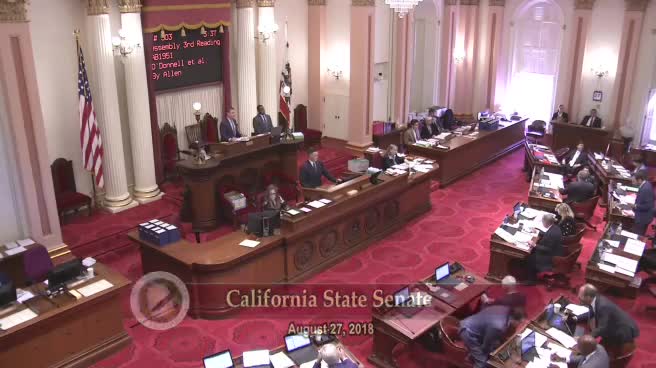 2MIN
Senate Floor
 3MIN
Senate Standing Committee on Human Services
 4MIN
Assembly Standing Committee on Aging and Long-Term Care
Bill Author

Bill Co-Author(s):