AB 3104: Murder.
- Session Year: 2017-2018
- House: Assembly
- Latest Version Date: 2018-03-22
Existing law defines first degree murder, in part, as all murder that is committed in the perpetration of, or attempt to perpetrate, specified felonies, including arson, rape, carjacking, robbery, burglary, mayhem, and kidnapping. Existing law, as enacted by Proposition 7, approved by the voters at the November 7, 1978, statewide general election, prescribes a penalty for that crime of death, imprisonment in the state prison for life without the possibility of parole, or imprisonment in the state prison for a term of 25 years to life. Existing law, as amended by Proposition 115 as approved by the voters at the June 5, 1990, statewide primary election, requires the sentence of life without the possibility of parole or death to be imposed when specified special circumstances have been found to be true, including when the murder was committed while the defendant was engaged in, or was an accomplice in, the commission of, attempted commission of, or the immediate flight after committing, or attempting to commit, specified felonies. Existing law, also as amended by Proposition 115, requires that every person, not the actual killer, who, with reckless indifference to human life and as a major participant, aids, abets, counsels, commands, induces, solicits, requests, or assists in the commission of an enumerated felony that results in the death of some person or persons, and who is found guilty of murder in the first degree therefor, be punished by death or imprisonment in the state prison for life without the possibility of parole.
Existing law defines 2nd degree murder as all murder that is not in the first degree and imposes a penalty of imprisonment in the state prison for a term of 15 years to life.
Existing law, as amended by Proposition 115 as approved by the voters at the June 5, 1990, statewide primary election, provides that a murder committed by certain means or under certain circumstances is murder in the first degree, and all other kinds of murder are of the second degree. The Legislature may amend Proposition 115 by a statute passed in each house by rollcall vote entered in the journal, 2/3 of the membership concurring, or by a statute that becomes effective only when approved by the electors.
This bill would amend various propositions by limiting the sentence for specified instances of first degree murder to 25 years to life, specifically where the person is not the actual killer but acts with specified intent. The bill would define as 2nd degree murder, punishable by 15 years to life in state prison, a person who is not the actual killer and who does not act with reckless indifference to human life and is not a major participant in the crime, but who aids, abets, counsels, commands, induces, solicits, requests, or assists an actor in the commission or attempted commission of an enumerated crime that results in the death of a person.
This bill would provide a means for a person to petition for recall and resentencing when he or she was sentenced to an indeterminate term of imprisonment in the state prison for life without the possibility of parole when he or she was not the actual killer, did not act with reckless indifference to human life, and was not a major participant in the underlying felony. The bill would require the petitions for recall and resentencing to be filed on or before January 1, 2024.
This bill would make technical, nonsubstantive changes to that provision.Existing law, as amended by Proposition 115 as approved by the voters at the June 5, 1990, statewide primary election, provides that a murder committed by certain means or under certain circumstances is murder in the first degree, and all other kinds of murder are of the second degree. The Legislature may amend Proposition 115 by a statute passed in each house by rollcall vote entered in the journal, 2/3 of the membership concurring, or by a statute that becomes effective only when approved by the electors.
This bill would make technical, nonsubstantive changes to that provision.
(a)All murder which that is perpetrated by means of a destructive device or explosive, a weapon of mass destruction, knowing use of ammunition designed primarily to penetrate metal or armor, poison, lying in wait, torture, or by any other kind of willful, deliberate, and premeditated killing, or which that is committed in the perpetration of, or attempt to perpetrate, arson, rape, carjacking, robbery, burglary, mayhem, kidnapping, train wrecking, or any act punishable under Section 206, 286, 288, 288a, or 289, or any murder which is perpetrated by means of discharging a firearm from a motor vehicle, intentionally at another person outside of the vehicle with the intent to inflict death, a crime listed in subdivision (d) is murder of the first degree. All other kinds of murders are of the second degree.
As(b)As used in this section, destructive the following definitions shall apply:
(1)Destructive device means any a destructive device as defined in Section 16460, and explosive 16460.
(2)Explosive means any an explosive as defined in Section 12000 of the Health and Safety Code.
As used in this section, weapon(3)Weapon of mass destruction means any an item defined in Section 11417.
To(c)To prove the killing was deliberate deliberate and premeditated, premeditated, it shall not be is not necessary to prove the defendant maturely and meaningfully reflected upon the gravity of his or her act.
(d)Subdivision (a) applies to the following crimes:
(1)Arson.
(2)Rape.
(3)Carjacking.
(4)Robbery.
(5)Burglary.
(6)Mayhem.
(7)Kidnapping.
(8)Train wrecking.
(9)An act punishable pursuant to Section 206, 286, 288, 288a, or 289.
(10)Discharge of a firearm from a motor vehicle, intentionally at another person outside the vehicle with the intent to inflict death.
SEC. 2.Section 190 of the Penal Code is amended to read:190.(a)Every A person guilty of murder in the first degree shall be punished by death, imprisonment in the state prison for life without the possibility of parole, or imprisonment in the state prison for a term of 25 years to life. The penalty to be applied shall be determined as provided in Sections 190.1, 190.2, 190.3, 190.4, and 190.5. 190.5, except that a person guilty of murder in the first degree pursuant to Section 190.01 shall be imprisoned in the state prison for 25 years to life.
Except as provided in subdivision (b), (c), or (d), every person guilty of murder in the second degree shall be punished by imprisonment in the state prison for a term of 15 years to life.
(b)Except as provided in subdivision (c), every a person guilty of murder in the second degree shall be punished by imprisonment in the state prison for a term of 25 years to life if the victim was a peace officer, as defined in subdivision (a) of Section 830.1, subdivision (a), (b), or (c) of Section 830.2, subdivision (a) of Section 830.33, or Section 830.5, who was killed while engaged in the performance of his or her duties, and the defendant knew, or reasonably should have known, that the victim was a peace officer engaged in the performance of his or her duties.
(c)Every A person guilty of murder in the second degree shall be punished by imprisonment in the state prison for a term of life without the possibility of parole if the victim was a peace officer, as defined in subdivision (a) of Section 830.1, subdivision (a), (b), or (c) of Section 830.2, subdivision (a) of Section 830.33, or Section 830.5, who was killed while engaged in the performance of his or her duties, and the defendant knew, or reasonably should have known, that the victim was a peace officer engaged in the performance of his or her duties, and any of the following facts has been charged and found true:
(1)The defendant specifically intended to kill the peace officer.
(2)The defendant specifically intended to inflict great bodily injury, as defined in Section 12022.7, on a peace officer.
(3)The defendant personally used a dangerous or deadly weapon in the commission of the offense, in violation of subdivision (b) of Section 12022.
(4)The defendant personally used a firearm in the commission of the offense, in violation of Section 12022.5.
(d)Every A person guilty of murder in the second degree shall be punished by imprisonment in the state prison for a term of 20 years to life if the killing was perpetrated by means of shooting a firearm from a motor vehicle, intentionally at another person outside of the vehicle with the intent to inflict great bodily injury.
(e)Article 2.5 (commencing with Section 2930) of Chapter 7 of Title 1 of Part 3 shall not apply to reduce any minimum term of a sentence imposed pursuant to this section. A person sentenced pursuant to this section shall not be released on parole prior to serving the minimum term of confinement prescribed by this section.
SEC. 3.Section 190.01 is added to the Penal Code, to read:190.01.(a)Notwithstanding Section 189, a person who is not the actual killer and who, with the intent to kill, aids, abets, counsels, commands, induces, solicits, requests, or assists an actor in the commission or attempted commission of the crimes listed in subdivision (d) of Section 189 that results in the death of a person is guilty of murder in the first degree.
(b)Notwithstanding Section 189 and subdivision (a), a person who is not the actual killer but who with reckless indifference to human life and as a major participant, aids, abets, counsels, commands, induces, solicits, requests, or assists an actor in the commission or attempted commission of a crime listed in subdivision (d) of Section 189 that results in the death of a person is guilty of murder in the first degree.
(c)Notwithstanding Section 189, a person who is not the actual killer and who does not act with reckless indifference to human life and is not a major participant in the crime, aids, abets, counsels, commands, induces, solicits, requests, or assists an actor in the commission or attempted commission of a crime listed in subdivision (d) of Section 189 that results in the death of a person is guilty of murder in the second degree.
(d)This section does not apply to a crime in which the victim is a peace officer, as defined in subdivision (a) of Section 830.1, subdivision (a), (b), or (c) of Section 830.2, subdivision (a) of Section 830.33, or Section 830.5, who was killed while engaged in the performance of his or her duties, and the defendant knew or reasonably should have known that the victim was a peace officer engaged in the performance of his or her duties.
SEC. 4.Section 190.2 of the Penal Code is amended to read:190.2.(a)The penalty for a defendant who is found guilty of murder in the first degree is death or imprisonment in the state prison for life without the possibility of parole if one or more of the following special circumstances has been found under Section 190.4 to be true:
(1)The murder was intentional and carried out for financial gain.
(2)The defendant was convicted previously of murder in the first or second degree. For the purpose of this paragraph, an offense committed in another jurisdiction, which if committed in California would be punishable as first or second degree murder, shall be deemed murder in the first or second degree.
(3)The defendant, in this proceeding, has been convicted of more than one offense of murder in the first or second degree.
(4)The murder was committed by means of a destructive device, bomb, or explosive planted, hidden, or concealed in any place, area, dwelling, building, or structure, and the defendant knew, or reasonably should have known, that his or her act or acts would create a great risk of death to one or more human beings.
(5)The murder was committed for the purpose of avoiding or preventing a lawful arrest, or perfecting or attempting to perfect, an escape from lawful custody.
(6)The murder was committed by means of a destructive device, bomb, or explosive that the defendant mailed or delivered, attempted to mail or deliver, or caused to be mailed or delivered, and the defendant knew, or reasonably should have known, that his or her act or acts would create a great risk of death to one or more human beings.
(7)The victim was a peace officer, as defined in Section 830.1, 830.2, 830.3, 830.31, 830.32, 830.33, 830.34, 830.35, 830.36, 830.37, 830.4, 830.5, 830.6, 830.10, 830.11, or 830.12, who, while engaged in the course of the performance of his or her duties, was intentionally killed, and the defendant knew, or reasonably should have known, that the victim was a peace officer engaged in the performance of his or her duties; or the victim was a peace officer, as defined in the above-enumerated sections, or a former peace officer under any of those sections, and was intentionally killed in retaliation for the performance of his or her official duties.
(8)The victim was a federal law enforcement officer or agent who, while engaged in the course of the performance of his or her duties, was intentionally killed, and the defendant knew, or reasonably should have known, that the victim was a federal law enforcement officer or agent engaged in the performance of his or her duties; or the victim was a federal law enforcement officer or agent, and was intentionally killed in retaliation for the performance of his or her official duties.
(9)The victim was a firefighter, as defined in Section 245.1, who, while engaged in the course of the performance of his or her duties, was intentionally killed, and the defendant knew, or reasonably should have known, that the victim was a firefighter engaged in the performance of his or her duties.
(10)The victim was a witness to a crime who was intentionally killed for the purpose of preventing his or her testimony in any criminal or juvenile proceeding, and the killing was not committed during the commission or attempted commission, of the crime to which he or she was a witness; or the victim was a witness to a crime and was intentionally killed in retaliation for his or her testimony in any criminal or juvenile proceeding. As used in this paragraph, juvenile proceeding means a proceeding brought pursuant to Section 602 or 707 of the Welfare and Institutions Code.
(11)The victim was a prosecutor or assistant prosecutor or a former prosecutor or assistant prosecutor of any local or state prosecutors office in this or any other state, or of a federal prosecutors office, and the murder was intentionally carried out in retaliation for, or to prevent the performance of, the victims official duties.
(12)The victim was a judge or former judge of any court of record in the local, state, or federal system in this or any other state, and the murder was intentionally carried out in retaliation for, or to prevent the performance of, the victims official duties.
(13)The victim was an elected or appointed official or former official of the federal government, or of any local or state government of this or any other state, and the killing was intentionally carried out in retaliation for, or to prevent the performance of, the victims official duties.
(14)The murder was especially heinous, atrocious, or cruel, manifesting exceptional depravity. As used in this section, the phrase especially heinous, atrocious, or cruel, manifesting exceptional depravity means a conscienceless or pitiless crime that is unnecessarily torturous to the victim.
(15)The defendant intentionally killed the victim by means of lying in wait.
(16)The victim was intentionally killed because of his or her race, color, religion, nationality, or country of origin.
(17)The murder was committed while the defendant was engaged in, or was an accomplice in, the commission of, attempted commission of, or the immediate flight after committing, or attempting to commit, the following felonies:
(A)Robbery in violation of Section 211 or 212.5.
(B)Kidnapping in violation of Section 207, 209, or 209.5.
(C)Rape in violation of Section 261.
(D)Sodomy in violation of Section 286.
(E)The performance of a lewd or lascivious act upon the person of a child under the age of 14 years in violation of Section 288.
(F)Oral copulation in violation of Section 288a.
(G)Burglary in the first or second degree in violation of Section 460.
(H)Arson in violation of subdivision (b) of Section 451.
(I)Train wrecking in violation of Section 219.
(J)Mayhem in violation of Section 203.
(K)Rape by instrument in violation of Section 289.
(L)Carjacking, as defined in Section 215.
(M)To prove the special circumstances of kidnapping in subparagraph (B), or arson in subparagraph (H), if there is specific intent to kill, it is only required that there be proof of the elements of those felonies. If so established, those two special circumstances are proven even if the felony of kidnapping or arson is committed primarily or solely for the purpose of facilitating the murder.
(18)The murder was intentional and involved the infliction of torture.
(19)The defendant intentionally killed the victim by the administration of poison.
(20)The victim was a juror in any court of record in the local, state, or federal system in this or any other state, and the murder was intentionally carried out in retaliation for, or to prevent the performance of, the victims official duties.
(21)The murder was intentional and perpetrated by means of discharging a firearm from a motor vehicle, intentionally at another person or persons outside the vehicle with the intent to inflict death. For purposes of this paragraph, motor vehicle means any vehicle as defined in Section 415 of the Vehicle Code.
(22)The defendant intentionally killed the victim while the defendant was an active participant in a criminal street gang, as defined in subdivision (f) of Section 186.22, and the murder was carried out to further the activities of the criminal street gang.
(b)Unless an intent to kill is specifically required under subdivision (a) for a special circumstance enumerated therein, an actual killer, as to whom the special circumstance has been found to be true under Section 190.4, need not have had any intent to kill at the time of the commission of the offense which is the basis of the special circumstance in order to suffer death or confinement in the state prison for life without the possibility of parole.
(c)Every person, not the actual killer, who, with the intent to kill, aids, abets, counsels, commands, induces, solicits, requests, or assists any actor in the commission of murder in the first degree shall be punished by death or imprisonment in the state prison for life without the possibility of parole if one or more of the special circumstances enumerated in subdivision (a) has been found to be true under Section 190.4.
(d)Notwithstanding subdivision (c), every person, not the actual killer, who, with reckless indifference to human life and as a major participant, aids, abets, counsels, commands, induces, solicits, requests, or assists in the commission of a felony enumerated in paragraph (17) of subdivision (a) which results in the death of some person or persons, and who is found guilty of murder in the first degree therefor, shall be punished by death or imprisonment in the state prison for life without the possibility of parole if a special circumstance enumerated in paragraph (17) of subdivision (a) has been found to be true under Section 190.4.The penalty shall be determined as provided in this section and Sections 190.1, 190.3, 190.4, and 190.5.SEC. 5.Section 1170.127 is added to the Penal Code, to read:1170.127.(a)A defendant may submit a request for resentencing when all of the following conditions apply:
(1)The person was sentenced to an indeterminate term of imprisonment in the state prison for life without the possibility of parole pursuant to paragraph (17) of subdivision (a) and former subdivision (d) of Section 190.2.
(2)The person was not the actual killer.
(3)The person did not act with reckless indifference to human life and was not a major participant in the underlying felony.
(4)The victim was not a peace officer engaged in the performance of his or her duties, pursuant to paragraph (7) of subdivision (a) of Section 190.2.
(b)The petition for recall and resentencing shall be addressed to the court that originally sentenced the petitioner. If the court that originally sentenced the petitioner is not available to resentence, the presiding judge shall designate another judge to rule on the petition. The petition shall include all of the felonies for which the petitioner is currently serving a sentence that meet the criteria of subdivision (a).
(c)(1)Upon receiving a petition for recall and resentencing pursuant to this section, the court shall conduct an evidentiary hearing to determine whether the petitioner satisfies the criteria in subdivision (a). The petitioner shall bear the burden of proving his or her eligibility for resentencing by clear and convincing evidence.
(2)If the court finds the petitioner is eligible, the petitioner shall be resentenced pursuant to Section 190.01, unless the court, in its discretion, determines that resentencing the petitioner would present an unreasonable risk to public safety. In no case shall the term be longer than the original sentence.
(3)A hearing ordered pursuant to this subdivision is a post-conviction release proceeding for purposes of paragraph (7) of subdivision (b) of Section 28 of Article I of the California Constitution.
(d)Notwithstanding subdivision (b) of Section 977, the petitioner may waive his or her appearance in court for the resentencing hearing, provided that the accusatory pleading is not amended at the resentencing and that a new trial is not going to occur. The waiver shall be in writing and signed by the petitioner.
(e)Petitions for relief pursuant to this section shall be filed on or before January 1, 2024.
SECTION 1.Section 189 of the Penal Code is amended to read:189.A murder which is perpetrated by means of a destructive device or explosive, a weapon of mass destruction, knowing use of ammunition designed primarily to penetrate metal or armor, poison, lying in wait, torture, or by any other kind of willful, deliberate, and premeditated killing, or which is committed in the perpetration of, or attempt to perpetrate, arson, rape, carjacking, robbery, burglary, mayhem, kidnapping, train wrecking, or an act punishable under Section 206, 286, 288, 288a, or 289, or a murder which is perpetrated by means of discharging a firearm from a motor vehicle, intentionally at another person outside of the vehicle with the intent to inflict death, is murder of the first degree. All other kinds of murders are of the second degree.As used in this section, destructive device means a destructive device as defined in Section 16460, and explosive means an explosive as defined in Section 12000 of the Health and Safety Code.As used in this section, weapon of mass destruction means an item defined in Section 11417.To prove the killing was deliberate and premeditated, it is not necessary to prove the defendant maturely and meaningfully reflected upon the gravity of his or her act.All A murder which is perpetrated by means of a destructive device or explosive, a weapon of mass destruction, knowing use of ammunition designed primarily to penetrate metal or armor, poison, lying in wait, torture, or by any other kind of willful, deliberate, and premeditated killing, or which is committed in the perpetration of, or attempt to perpetrate, arson, rape, carjacking, robbery, burglary, mayhem, kidnapping, train wrecking, or any an act punishable under Section 206, 286, 288, 288a, or 289, or any a murder which is perpetrated by means of discharging a firearm from a motor vehicle, intentionally at another person outside of the vehicle with the intent to inflict death, is murder of the first degree. All other kinds of murders are of the second degree.
As used in this section, destructive device means any a destructive device as defined in Section 16460, and explosive means any an explosive as defined in Section 12000 of the Health and Safety Code.
As used in this section, weapon of mass destruction means any an item defined in Section 11417.
To prove the killing was deliberate and premeditated, it shall not be is not necessary to prove the defendant maturely and meaningfully reflected upon the gravity of his or her act.
|
Date
|
Status
|
|---|---|
| May 31, 2018 | Ordered to inactive file at the request of Assembly Member Cooper. |
| Apr 26, 2018 | Read second time. Ordered to third reading. |
| Apr 25, 2018 | From committee: Do pass. (Ayes 6. Noes 1.) (April 24). |
| Apr 17, 2018 | In committee: Set, first hearing. Hearing canceled at the request of author. |
| Apr 2, 2018 | Re-referred to Com. on PUB. S. |
| Mar 22, 2018 | Referred to Com. on PUB. S. |
| Feb 17, 2018 | From printer. May be heard in committee March 19. |
| Feb 16, 2018 | Read first time. To print. |
|
Date
|
Description
|
Location
|
Votes
|
|
|---|---|---|---|---|
| Apr 24, 2018 | Do pass. | Assembly Standing Committee on Public Safety |
Passed |
This list shows positions taken on this bill by organizations on the date displayed, which is linked to the original source.
Positions by individuals are not included.
|
Organization
|
Position
|
Date
|
|---|---|---|
| California District Attorneys Association | * Support | Apr 24, 2018 |
| California Peace Officers Association | * Support | Apr 24, 2018 |
| Riverside Sheriffs Association | * Support | Apr 24, 2018 |
ASSEMBLY THIRD READING
ATR Bill Id:AB 3104
Author:(Cooper)
As Amended Ver:March 22, 2018
2/3 vote
Committee | Votes | Ayes | Noes |
Public Safety | 6-1 | Jones-Sawyer, Lackey, Carrillo, Kamlager-Dove, Quirk, Santiago | Kiley |
SUMMARY: Limits the sentence for specified first degree murder convictions where the person is not the actual killer, but participated in specified felonies, to 25 years to life. Specifies that a person who is not the actual killer and who does not act with reckless indifference to human life and is not a major participant in the crime, but who is an accomplice in a specified felony that results in the death of a person, is guilty of second degree murder, punishable by 15 years to life. Specifically, this bill:
- States that a person who is not the actual killer and who, with the intent to kill, aids or assists an actor in the commission of specified dangerous felonies that result in the death of a person is guilty of murder in the first degree, punishable by 25 years to life.
- States that a person who is not the actual killer, but who with reckless indifference to human life and as a major participant, aids or assists an actor in the commission of specified dangerous felonies that result in the death of a person, is guilty of murder in the first degree, punishable by 25 years to life.
- States that a person who is not the actual killer and who does not act with reckless indifference to human life and is not a major participant in the crime, aids or assists an actor in the commission of specified dangerous felonies that result in the death of a person is guilty of murder in the second degree, punishable by 15 years to life.
- Specifies that the provisions of this bill do not apply to a crime in which the victim is a peace officer, who was killed while engaged in the performance of his or her duties, and the defendant knew or reasonably should have known that the victim was a peace officer engaged in the performance of his or her duties.
- Allows a defendant may submit a request for resentencing when all of the following conditions apply:
- The person was sentenced to an indeterminate term of imprisonment in the state prison for life without the possibility of parole, as specified;
- The person was not the actual killer;
- The person did not act with reckless indifference to human life and was not a major participant in the underlying felony; and,
- The victim was not a peace officer engaged in the performance of his or her duties, as specified in this bill.
- Provides that petition for recall and resentencing shall be addressed to the court that originally sentenced the petitioner.
- Specifies that if the court that originally sentenced the petitioner is not available to resentence, the presiding judge shall designate another judge to rule on the petition. The petition shall include all of the felonies for which the petitioner is currently serving a sentence that meet the criteria for recall and resentencing.
- Requires the court to conduct an evidentiary hearing to determine whether the petitioner satisfies the criteria for recall and resentencing, upon receiving a petition.
- Requires the petitioner to bear the burden of proving his or her eligibility for resentencing by clear and convincing evidence.
- States that if the court finds the petitioner is eligible, the petitioner shall be resentenced pursuant to the provisions of this bill, unless the court, in its discretion, determines that resentencing the petitioner would present an unreasonable risk to public safety.
- Specifies that a hearing ordered pursuant to this bill is a post-conviction release proceeding for purposes of the California Constitution.
- Allows the petitioner may waive his or her appearance in court for the resentencing hearing, provided that the accusatory pleading is not amended at the resentencing and that a new trial is not going to occur.
- Requires petitions for relief pursuant to this section shall be filed on or before January 1, 2024.
EXISTING LAW:
- Provides that all murder which is perpetrated by means of a destructive device or explosive, a weapon of mass destruction, knowing use of ammunition designed primarily to penetrate metal or armor, poison, lying in wait, torture, or by any other kind of willful, deliberate, and premeditated killing, or which is committed in the perpetration of, or attempt to perpetrate, arson, rape, carjacking, robbery, burglary, mayhem, kidnapping, train wrecking, torture, sodomy, lewd and lascivious act upon a child under the age of 14 years, oral copulation, or penetration by a foreign object, or any murder which is perpetrated by means of discharging a firearm from a motor vehicle, intentionally at another person outside of the vehicle with the intent to inflict death, is murder of the first degree.
- Provides that the penalty for a defendant who is found guilty of murder in the first degree is death or imprisonment in the state prison for life without the possibility of parole if one or more special circumstances is found to be true.
- States that special circumstances include that the murder was committed while the defendant was engaged in, or was an accomplice in, the commission of, attempted commission of, or the immediate flight after committing, or attempting to commit arson, rape, carjacking, robbery, burglary, mayhem, kidnapping, train wrecking, torture, sodomy, lewd and lascivious act upon a child under the age of 14 years, oral copulation, or penetration by a foreign object, or any murder which is perpetrated by means of discharging a firearm from a motor vehicle, intentionally at another person outside of the vehicle with the intent to inflict death.
- Specifies that every person, not the actual killer, who, with reckless indifference to human life and as a major participant, aids, abets, counsels, commands, induces, solicits, requests, or assists in the commission of a felony listed above, which results in the death of some person or persons, and who is found guilty of murder in the first degree therefor, shall be punished by death or imprisonment in the state prison for life without the possibility of parole.
- Provides that one who aids and abets another in the commission of a crime is a principal and is just as culpable as the principal offender.
- States that every person guilty of murder in the first degree shall be punished by death, imprisonment in the state prison for life without the possibility of parole, or imprisonment in the state prison for a term of 25 years to life.
- Except as otherwise provided, every person guilty of murder in the second degree shall be punished by imprisonment in the state prison for a term of 15 years to life.
- States the penalty for a defendant who is found guilty of murder in the first degree is death or imprisonment in the state prison for life without the possibility of parole if one or special circumstances has been found be true.
- Special circumstances include a murder that was committed while the defendant was engaged in, or was an accomplice in, the commission of, attempted commission of, or the immediate flight after committing, or attempting to commit robbery, kidnapping, rape, sodomy, lewd or lascivious act upon the person of a child under the age of 14 years, oral copulation, burglary, arson, train wrecking, mayhem, rape, or carjacking.
- Specifies that every person, not the actual killer, who, with reckless indifference to human life and as a major participant, aids or abets in the commission of a specified felony which results in the death of a person or persons, and who is found guilty of murder in the first degree therefor, shall be punished by death or imprisonment in the state prison for life without the possibility of parole if a special circumstance involving commission of specified felonies has been found to be true.
FISCAL EFFECT: Unknown. This bill is keyed non-fiscal by the Legislative Counsel.
Please see the policy committee analysis for a full discussion of this bill.
Analysis Prepared by: David Billingsley / PUB. S. / (916) 319-3744 FN: 0002733
Date of Hearing:
Counsel: David Billingsley
ASSEMBLY COMMITTEE ON PUBLIC SAFETY
Reginald Byron Jones-Sawyer, Sr., Chair
ABPCA Bill Id:AB 3104
Author:(Cooper) – As Amended Ver:March 22, 2018
SUMMARY: Limits the sentence for specified first degree murder convictions where the person is not the actual killer, but participated in specified felonies, to 25 years to life. Specifies that a person who is not the actual killer and who does not act with reckless indifference to human life and is not a major participant in the crime, but who is an accomplice in a specified felony that results in the death of a person, is guilty of second degree murder, punishable by 15 years to life. Specifically, this bill:
- States that a person who is not the actual killer and who, with the intent to kill, aids or assists an actor in the commission of specified dangerous felonies that result in the death of a person is guilty of murder in the first degree, punishable by 25 years to life.
- States that a person who is not the actual killer, but who with reckless indifference to human life and as a major participant, aids or assists an actor in the commission of specified dangerous felonies that result in the death of a person, is guilty of murder in the first degree, punishable by 25 years to life.
- States that a person who is not the actual killer and who does not act with reckless indifference to human life and is not a major participant in the crime, aids or assists an actor in the commission of specified dangerous felonies that result in the death of a person is guilty of murder in the second degree, punishable by 15 years to life.
- Specifies that the provisions of this bill do not apply to a crime in which the victim is a peace officer, who was killed while engaged in the performance of his or her duties, and the defendant knew or reasonably should have known that the victim was a peace officer engaged in the performance of his or her duties.
- Allows a defendant may submit a request for resentencing when all of the following conditions apply:
- The person was sentenced to an indeterminate term of imprisonment in the state prison for life without the possibility of parole, as specified;
- The person was not the actual killer;
- The person did not act with reckless indifference to human life and was not a major participant in the underlying felony; and,
- The victim was not a peace officer engaged in the performance of his or her duties, as specified in this bill.
- The person was sentenced to an indeterminate term of imprisonment in the state prison for life without the possibility of parole, as specified;
- Provides that petition for recall and resentencing shall be addressed to the court that originally sentenced the petitioner.
- Specifies that if the court that originally sentenced the petitioner is not available to resentence, the presiding judge shall designate another judge to rule on the petition. The petition shall include all of the felonies for which the petitioner is currently serving a sentence that meet the criteria for recall and resentencing.
- Requires the court to conduct an evidentiary hearing to determine whether the petitioner satisfies the criteria for recall and resentencing, upon receiving a petition.
- Requires the petitioner to bear the burden of proving his or her eligibility for resentencing by clear and convincing evidence.
- States that if the court finds the petitioner is eligible, the petitioner shall be resentenced pursuant to the provisions of this bill, unless the court, in its discretion, determines that resentencing the petitioner would present an unreasonable risk to public safety.
- Specifies that a hearing ordered pursuant to this bill is a post-conviction release proceeding for purposes of the California Constitution.
- Allows the petitioner may waive his or her appearance in court for the resentencing hearing, provided that the accusatory pleading is not amended at the resentencing and that a new trial is not going to occur.
- Requires petitions for relief pursuant to this section shall be filed on or before January 1, 2024.
EXISTING LAW:
- Provides that all murder which is perpetrated by means of a destructive device or explosive, a weapon of mass destruction, knowing use of ammunition designed primarily to penetrate metal or armor, poison, lying in wait, torture, or by any other kind of willful, deliberate, and premeditated killing, or which is committed in the perpetration of, or attempt to perpetrate, arson, rape, carjacking, robbery, burglary, mayhem, kidnapping, train wrecking, torture, sodomy, lewd and lascivious act upon a child under the age of 14 years, oral copulation, or penetration by a foreign object, or any murder which is perpetrated by means of discharging a firearm from a motor vehicle, intentionally at another person outside of the vehicle with the intent to inflict death, is murder of the first degree. (Pen. Code, § 189.)
- Provides that the penalty for a defendant who is found guilty of murder in the first degree is death or imprisonment in the state prison for life without the possibility of parole if one or more special circumstances is found to be true.
- States that special circumstances include that the murder was committed while the defendant was engaged in, or was an accomplice in, the commission of, attempted commission of, or the immediate flight after committing, or attempting to commit arson, rape, carjacking, robbery, burglary, mayhem, kidnapping, train wrecking, torture, sodomy, lewd and lascivious act upon a child under the age of 14 years, oral copulation, or penetration by a foreign object, or any murder which is perpetrated by means of discharging a firearm from a motor vehicle, intentionally at another person outside of the vehicle with the intent to inflict death. (Penal Code §190.2, subd. (a)(17).)
- Specifies that every person, not the actual killer, who, with reckless indifference to human life and as a major participant, aids, abets, counsels, commands, induces, solicits, requests, or assists in the commission of a felony listed above, which results in the death of some person or persons, and who is found guilty of murder in the first degree therefor, shall be punished by death or imprisonment in the state prison for life without the possibility of parole. (Penal Code §190.2, subd. (d).)
- Provides that one who aids and abets another in the commission of a crime is a principal and is just as culpable as the principal offender. (Pen. Code, § 31.)
- States that every person guilty of murder in the first degree shall be punished by death, imprisonment in the state prison for life without the possibility of parole, or imprisonment in the state prison for a term of 25 years to life. (Pen. Code, § 190, subd. (a).)
- Except as otherwise provided, every person guilty of murder in the second degree shall be punished by imprisonment in the state prison for a term of 15 years to life. (Pen. Code, § 190, subd. (a).)
- States the penalty for a defendant who is found guilty of murder in the first degree is death or imprisonment in the state prison for life without the possibility of parole if one or special circumstances has been found be true. (Pen. Code, § 190.2.)
- Special circumstances include a murder that was committed while the defendant was engaged in, or was an accomplice in, the commission of, attempted commission of, or the immediate flight after committing, or attempting to commit robbery, kidnapping , rape, sodomy, lewd or lascivious act upon the person of a child under the age of 14 years, oral copulation, burglary, arson, train wrecking, mayhem, rape, or carjacking. (Pen. Code, § 190.2, subd(a)(17).)
- Specifies that every person, not the actual killer, who, with reckless indifference to human life and as a major participant, aids or abets in the commission of a specified felony which results in the death of a person or persons, and who is found guilty of murder in the first degree therefor, shall be punished by death or imprisonment in the state prison for life without the possibility of parole if a special circumstance involving commission of specified felonies has been found to be true. (Pen. Code, § 190.2.)
FISCAL EFFECT:
Unknown
COMMENTS:
- Author's Statement: None submitted.
- Felony Murder Rule: The felony murder rule is a legal doctrine that excludes considerations of context and intention in a murder-crime: when someone is killed during the commission of a felony, regardless of how or by whom they are killed, the person engaged in the felony is charged with murder. The United States is the only country in the world to use the felony murder rule. Hawaii and Kentucky have banned the felony murder rule by statute and in Michigan through the Supreme Court. In Michigan, the Supreme Court noted when it abolished the felony murder rule: “Whatever reasons can be gleaned from the dubious origin of the felony-murder rule to explain its existence, those reasons no longer exist today. Indeed, most states, including our own, have recognized the harshness and inequity of the rule as is evidenced by the numerous restrictions placed on it. The felony-murder doctrine is unnecessary and in many cases, unjust in that it violates the basic premise of individual moral culpability upon which our criminal law is based.”
Under the current felony murder rule in California, criminal liability for a homicide is very broad. A defendant may be convicted of first-degree murder under the felony-murder rule if the defendant is involved in the commission, attempted commission, or flight following the commission or attempted commission of a statutorily-enumerated felony (Penal Code § 189), even if the defendant did not do the killing, and even if the killing was unintentional, accidental, or negligent. First degree murder carries a sentence of 25 years to life. A first degree murder accompanied by one or more special circumstances is punishable by death or life without parole. Special circumstances include the participation in one of the same statutorily-enumerated felonies which qualified the crime as first degree murder. If the accomplice was not the actual killer, the accomplice is still punishable with death or life without parole if the accomplice was a major participant in the crime and acted with reckless indifference to human life.
A defendant may be convicted of second-degree felony murder if a killing happened during the commission, attempted commission, or flight following the commission or attempted commission of an “inherently dangerous felony” even if the defendant did not do the killing, and even if the killing was unintentional, accidental, or negligent. Second degree murder carries a sentence of 15 years to life.
This bill would narrow the application of the 1st degree felony murder rule. This bill would limit the sentence for specified 1st degree murder convictions where the person is not the actual killer, but participated in certain felonies, to 25 years to life. This bill would also redefine as 2nd degree murder, punishable by 15 years to life, a person who is not the actual killer and who does not act with reckless indifference to human life and is not a major participant in the crime, but who is an accomplice in a specified felony that results in the death of a person. - Concept of Felony Murder/Felony Murder and Culpability: Felony murder relies on the concept that an individual who participates in a felony should be responsible for a death that occurs during the course of that felony regardless of how that death occurred. But for the commission of the crime, the death would not have occurred. Based on that concept, the person that participated in the felony is responsible for the death of another, even if the death is unintentional, accidental, or committed by another person.
The broadest version of the doctrine of felony murder makes even an accidental killing-one caused by non-negligent conduct a murder. If a death is accidental, then by definition the state can prove no mental fault (not even negligence, the least culpable recognized state of mind) with regard to the element of causing the death of another human being. (https://scholarlycommons.law.wlu.edu/cgi/viewcontent.cgi?referer=https://www.google.com/&httpsredir=1&article=1696&context=wlulr) Under California criminal law, the general rule to be found guilty of murder is that the person must intend to kill or act with conscious disregard for human life. The felony murder rule has been broadly criticized because it does not require a defendant to have that state of mind which is generally required to establish culpability for a murder. - Felony-Murder Rule Does Not Necessarily Act as a Deterrent: In California conviction for murder, requires proof of intent to kill or action taken with conscious disregard for human life. Under the felony murder rule, a person can be convicted of murder without proof of any intent to kill or conscious disregard of human life, if the death at issue occurred during the commission of a felony. Proponents of the rule argue that it encourages criminals to reduce the number of felonies they commit and to take greater care to avoid causing death while committing a felony. Opponents argue that criminals are unaware of the felony murder rule and, more importantly, that it is impossible to deter criminals from committing unintentional acts. Critics also argue that the felony murder rule distorts marginal deterrence incentives— once a felon has accidentally caused one death, there is less to deter him from intentionally killing other witnesses to the crime. (http://www.law.virginia.edu/pdf/malani/felonymurder021111rand.pdf)
Anup Malani, published a paper in 2002, which examined data related to the felony-murder rule. Ms. Malani concluded that the felony murder rule does not provide an effective deterrent to criminal behavior. Ms. Malani compared the difference in average crime rates in states and years with and without the rule (defined as states that do and do not punish felony murder as first-degree murder, respectively) during the 1968-98 period. Ms. Malani found that the felony murder rule does not substantially improve crime rates. Based on her research, Ms. Malani suggested that if the primary rational for a state to retain the felony murder rate is to reduce crime, the state should reconsider the rule. (Id.) - Argument in Support: According to the California Peace Officers’ Association, “Our members are both supervisorial and frontline peace officers who want to ensure that the criminal justice system is holding murder participants, both the actual killer(s) and their accomplices accountable for their role in the crime(s). Often a participant in a murder event may not ‘deal the blow’ but had intent for a killing nonetheless. Those persons need to be held accountable by first degree murder.
“By specifying which roles are reserved for 2nd degree murder, AB 3104 also provides justice for those without specified recklessness, but aids and abets the commission of the crime.
“Felony murder has long need to be cleaned up and clarified, and we believe that this bill accomplishes that goal.” - Related Legislation:
- SB 1437 (Skinner), would prohibit a participant in the perpetration of one of the specified first degree murder felonies in which a death occurs from being liable for murder, unless the person personally committed the homicidal act, the person acted with premeditated intent to aid and abet an act wherein a death would occur, or the person was a major participant in the underlying felony and acted with reckless indifference to human life. SB 1437 is awaiting hearing in the Senate Public Safety Committee.
- SB 971 (Nguyen), would additionally include among those special circumstances that the victim was intentionally killed because of his or her sexual orientation or gender, as defined. SB 971 is set for hearing in the Senate Public Safety Committee on April 10, 2018.
- SB 1437 (Skinner), would prohibit a participant in the perpetration of one of the specified first degree murder felonies in which a death occurs from being liable for murder, unless the person personally committed the homicidal act, the person acted with premeditated intent to aid and abet an act wherein a death would occur, or the person was a major participant in the underlying felony and acted with reckless indifference to human life. SB 1437 is awaiting hearing in the Senate Public Safety Committee.
- Prior Legislation:
- AB 2195 (Bonilla), of the 2015-2016 Legislative Session, would have require the district attorney of each county to collect data on the number of persons charged with and convicted of felony murder, disaggregated by race and gender, and, beginning July 1, 2017, to report that data to the Department of Justice. AB 2195 was held on the Assembly Appropriations Committee Suspense File.
- SB 878 (Hayden), of the 1999-2000 Legislative Session, would have required the court in a case involving felony murder with a defendant who did not physically or directly commit the murder, whether imposition of a sentence of first degree murder is proportionate to the offense committed and to the defendant’s culpability in committing that offense by considering specified criteria and to state its reasons on the record. SB 878 failed passage on the Senate Floor.
- AB 2195 (Bonilla), of the 2015-2016 Legislative Session, would have require the district attorney of each county to collect data on the number of persons charged with and convicted of felony murder, disaggregated by race and gender, and, beginning July 1, 2017, to report that data to the Department of Justice. AB 2195 was held on the Assembly Appropriations Committee Suspense File.
REGISTERED SUPPORT / OPPOSITION:
Support
California Peace Officers Association
Opposition
None
Analysis Prepared by:
David Billingsley / PUB. S. / (916) 319-3744
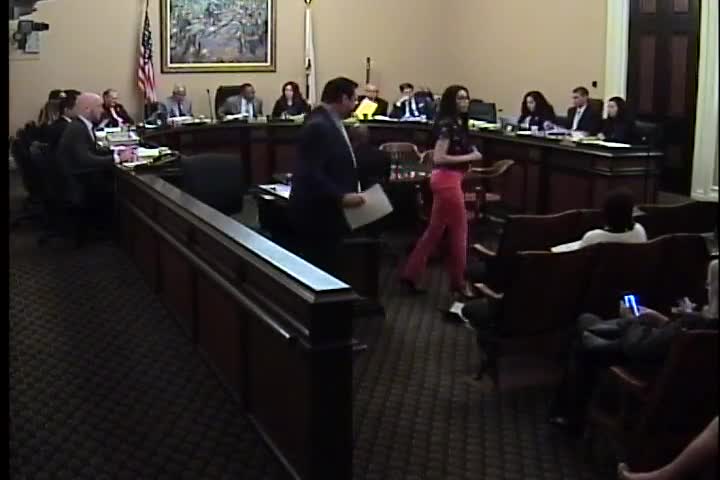
Discussed in Hearing
 1MIN
Assembly Standing Committee on Public Safety
Bill Author

Bill Co-Author(s):