AB 3127: Income taxes: credit: employees with disabilities.
- Session Year: 2017-2018
- House: Assembly
- Latest Version Date: 2018-02-16
The Personal Income Tax Law and the Corporation Tax Law allow various credits against the taxes imposed by those laws.
This bill, for taxable years beginning on and after January 1, 2019, and before January 1, 2024, would allow a credit under those laws to a qualified employer that pays or incurs to a qualified employee a wage equal to or exceeding the minimum wage during the taxable year, as provided. The bill would define a qualified employee as an individual with a disability who may be paid a special minimum wage under existing state or federal law. The credit would be allowed in an amount equal to the difference between the special minimum wage and the minimum wage, multiplied by the hours worked by the qualified employee. The bill would require the Franchise Tax Board to submit a report containing specified data relating to these credits to the Legislature by June 1, 2024.
This bill would take effect immediately as a tax levy.
(a)For taxable years beginning on or after January 1, 2019, and before January 1, 2024, there shall be allowed a credit against the net tax, as defined by Section 17039, in an amount as set forth in subdivision (b), to a qualified employer that pays a qualified employee a wage during the taxable year that equals or exceeds the minimum wage.
(b)The credit shall be in an amount that is equal to the difference between the special minimum wage paid or incurred to the qualified employee and the minimum wage, multiplied by the number of hours worked by the qualified employee for the qualified employer during the taxable year.
(c)For purposes of this section, the following definitions shall apply:
(1)Minimum wage means the wage established by the Industrial Welfare Commission as provided for in Chapter 1 (commencing with Section 1171) of Part 4 of Division 2 of the Labor Code.
(2)Qualified employee means an individual who may be paid a special minimum wage pursuant to Section 214(c) of Title 29 of the United States Code or Section 1191 or 1191.5 of the Labor Code that is subject to withholding pursuant to Division 6 (commencing with Section 13000) of the Unemployment Insurance Code.
(3)(A)Qualified employer means a taxpayer that employs a qualified employee in this state.
(B)In the case of any pass-thru entity, the determination of whether a taxpayer is a qualified employer under this section shall be made at the entity level, and any credit under this section or Section 23675 shall be allowed to the pass-thru entity and passed through to the partners or shareholders in accordance with applicable provisions of this part or Part 11 (commencing with Section 23001). For purposes of this section, the term pass-thru entity means any partnership or S Corporation.
(d)A qualified employer shall do both of the following:
(1)Obtain from the Industrial Welfare Commission a certification that a qualified employee meets the eligibility requirements of paragraph (2) of subdivision (c). The certification shall include the dollar amount of special minimum wage applicable to each qualified employee.
(2)Retain the certification and provide a copy of it upon request to the Franchise Tax Board.
(e)The Franchise Tax Board may prescribe rules, guidelines, or procedures necessary or appropriate to carry out the purposes of this section. Chapter 3.5 (commencing with Section 11340) of Part 1 of Division 3 of Title 2 of the Government Code does not apply to any standard, criterion, procedure, determination, rule, notice, or guideline established or issued by the Franchise Tax Board pursuant to this section.
(f)In the case where any credit allowed by this section exceeds the net tax, the excess may be carried over to reduce the net tax in the following year, and succeeding four years if necessary.
(g)Any deduction otherwise allowed under this part for any amount paid or incurred by the qualified employer upon which the credit is based shall be reduced by the amount of the credit allowed under this section.
(h)On or before June 1, 2024, the Franchise Tax Board shall submit a report to the Legislature in compliance with Section 9795 of the Government Code that contains the following:
(1)The number of Californians with developmental disabilities employed during each year of the operative period of this section and Section 23675.
(2)The number of employers who used and applied for a credit authorized by this section and Section 23675 each year.
(3)The number of employees for whom a credit authorized by this section and Section 23675 was claimed.
(i)This section shall remain in effect only until December 1, 2024, and as of that date is repealed.
SEC. 2.Section 23675 is added to the Revenue and Taxation Code, to read:23675.(a)For taxable years beginning on or after January 1, 2019, and before January 1, 2024, there shall be allowed a credit against the tax, as defined by Section 23036, in an amount as set forth in subdivision (b), to a qualified employer that pays a qualified employee a wage during the taxable year that equals or exceeds the minimum wage.
(b)The credit shall be in an amount that is equal to the difference between the special minimum wage paid or incurred to the qualified employee and the minimum wage, multiplied by the number of hours worked by the qualified employee for the qualified employer during the taxable year.
(c)For purposes of this section, the following definitions shall apply:
(1)Minimum wage means the wage established by the Industrial Welfare Commission as provided for in Chapter 1 (commencing with Section 1171) of Part 4 of Division 2 of the Labor Code.
(2)Qualified employee means an individual who may be paid a special minimum wage pursuant to Section 214(c) of Title 29 of the United States Code or Section 1191 or 1191.5 of the Labor Code that is subject to withholding pursuant to Division 6 (commencing with Section 13000) of the Unemployment Insurance Code.
(3)(A)Qualified employer means a taxpayer that employs a qualified employee in this state.
(B)In the case of any pass-thru entity, the determination of whether a taxpayer is a qualified employer under this section shall be made at the entity level, and any credit under this section or Section 17053.75 shall be allowed to the pass-thru entity and passed through to the partners in accordance with applicable provisions of this part or Part 10 (commencing with Section 17001). For purposes of this section, the term pass-thru entity means any partnership.
(d)A qualified employer shall do both of the following:
(1)Obtain from the Industrial Welfare Commission a certification that a qualified employee meets the eligibility requirements of paragraph (2) of subdivision (c). The certification shall include the dollar amount of special minimum wage applicable to each qualified employee.
(2)Retain the certification and provide a copy of it upon request to the Franchise Tax Board.
(e)The Franchise Tax Board may prescribe rules, guidelines, or procedures necessary or appropriate to carry out the purposes of this section. Chapter 3.5 (commencing with Section 11340) of Part 1 of Division 3 of Title 2 of the Government Code does not apply to any standard, criterion, procedure, determination, rule, notice, or guideline established or issued by the Franchise Tax Board pursuant to this section.
(f)In the case where any credit allowed by this section exceeds the tax, the excess may be carried over to reduce the tax in the following year, and succeeding four years if necessary.
(g)Any deduction otherwise allowed under this part for any amount paid or incurred by the qualified employer upon which the credit is based shall be reduced by the amount of the credit allowed under this section.
(h)On or before June 1, 2024, the Franchise Tax Board shall submit a report to the Legislature in compliance with Section 9795 of the Government Code that contains the following:
(1)The number of Californians with developmental disabilities employed during each year of the operative period of this section and Section 17053.75.
(2)The number of employers who used and applied for a credit authorized by this section and Section 17053.75 each year.
(3)The number of employees for whom a credit authorized by this section and Section 17053.75 was claimed.
(i)This section shall remain in effect only until December 1, 2024, and as of that date is repealed.
SEC. 3.It is the intent of the Legislature to comply with Section 41 of the Revenue and Taxation Code.
SEC. 4.This act provides for a tax levy within the meaning of Article IV of the California Constitution and shall go into immediate effect.
|
Date
|
Status
|
|---|---|
| May 25, 2018 | In committee: Held under submission. |
| Apr 18, 2018 | In committee: Set, first hearing. Referred to APPR. suspense file. |
| Apr 11, 2018 | From committee: Do pass and re-refer to Com. on APPR. (Ayes 7. Noes 0.) (April 9). Re-referred to Com. on APPR. |
| Mar 12, 2018 | Referred to Com. on REV. & TAX. |
| Feb 17, 2018 | From printer. May be heard in committee March 19. |
| Feb 16, 2018 | Read first time. To print. |
|
Date
|
Description
|
Location
|
Votes
|
|
|---|---|---|---|---|
| Apr 9, 2018 | Do pass and be re-referred to the Committee on [Appropriations] | Assembly Standing Committee on Revenue and Taxation |
Passed |
This list shows positions taken on this bill by organizations on the date displayed, which is linked to the original source.
Positions by individuals are not included.
|
Organization
|
Position
|
Date
|
|---|---|---|
| California Disability Services Association | * Support | Apr 9, 2018 |
| California Grocers Association | ** Support | Apr 6, 2018 |
| The Arc, California | ** Support | Apr 6, 2018 |
| UCP California collaboration | * Support | Apr 9, 2018 |
| United Cerebral Palsy, California | ** Support | Apr 6, 2018 |
Date of Hearing: April 18, 2018
ASSEMBLY COMMITTEE ON APPROPRIATIONS
Lorena Gonzalez Fletcher, Chair
ABPCA Bill Id:AB 3127
Author:(Acosta) – As Introduced Ver:February 16, 2018
Policy Committee: | Revenue and Taxation | Vote: | 7 - 0 |
|
| ||
|
|
Urgency: No State Mandated Local Program: No Reimbursable: No
SUMMARY:
This bill creates a tax credit, under both the Personal Income Tax (PIT) law and the Corporation Tax (CT) law, for employers who pay certain individuals with disabilities an hourly wage that is the statewide minimum wage or higher. Specifically, this bill:
- Allows a credit, for taxable years beginning in 2019 through 2023, equal to the difference between the state minimum wage and the special minimum wage provided to an employee, multiplied by that employee’s hours worked.
- Requires the Franchise Tax Board (FTB) to report to the Legislature on the number of employed Californians with developmental disabilities, the number of employers who used and applied for a credit, and the number of employees for whom a credit was claimed.
FISCAL EFFECT:
- Annual General Fund revenue loss of $1.3 million in 2018-19, $5 million in 2019-20, and $10 million in 2020-21.
- Unknown, but likely modest, costs to FTB for reporting to the Legislature on the proposed credit.
COMMENTS:
- Background. Under federal law, employers may pay persons with disabilities less than the minimum wage. This is meant to allow for more employment opportunities for workers who would otherwise be excluded in the labor market. In order to pay this “special minimum wage,” employers must receive a certificate from the US Department of Labor, and the wage level is determined on a case-by-case basis. Similarly, an employer may pay a special minimum wage under existing state law provided the employer receives a proper license from the Industrial Welfare Commission.
- Purpose. According to the author, AB 3127 will create an incentive for employers to offer full wage jobs to persons with intellectual developmental disabilities (IDD) who would otherwise receive less than the minimum wage. Supporters of the bill point to the challenges people with IDD face when trying to enter the workforce as a key reason for this bill.
- Recent legislation. AB 1629 (Maienschein), of the 2017-18 Legislative Session, and AB 2582 (Maienschein), of the 2015-16 Legislative Session, would have created a similar tax credit as this bill. Both bills were held on this committee’s Suspense File.
Analysis Prepared by: Luke Reidenbach / APPR. / (916) 319-2081
Date of Hearing: April 9, 2018
ASSEMBLY COMMITTEE ON REVENUE AND TAXATION
Autumn R. Burke, Chairwoman
ABPCA Bill Id:AB 3127 (
Author:Acosta) – As Introduced Ver:February 16, 2018
Majority vote. Tax levy. Fiscal committee.
SUBJECT: Income taxes: credit: employees with disabilities
SUMMARY: Allows a credit, under both the Personal Income Tax (PIT) Law and the Corporation Tax (CT) Law, to a "qualified employer" that pays a "qualified employee" a wage during the taxable year that equals or exceeds the "minimum wage." Specifically, this bill:
- Allows the credit for taxable years beginning on or after January 1, 2019, and before January 1, 2024.
- Calculates the credit as an amount equal to the difference between the special minimum wage paid or incurred to the "qualified employee" and the minimum wage, multiplied by the number of hours worked by the "qualified employee" for the "qualified employer" during the taxable year.
- Defines a "qualified employer" as a taxpayer that employs a "qualified employee" in this state.
- Defines a "qualified employee" as an individual who may be paid a special minimum wage pursuant to United States Code, Title 29, Section 214(c) or Labor Code Section 1191 or 1191.5 that is subject to withholding under Unemployment Insurance Code Section 13000 et seq.
- Defines "minimum wage" as the wage established by the Industrial Welfare Commission as provided for in Labor Code Section 1171 et seq.
- Provides that in the case of any pass-thru entity, the determination of whether a taxpayer is a qualified employer under this section shall be made at the entity level, and any credit shall be allowed to the pass-thru entity and passed through to the partners or shareholders, as specified.
- Requires a "qualified employer" to do all of the following:
- Obtain a certification from the Industrial Welfare Commission that a "qualified employee" meets the eligibility requirements of this bill. The certification shall include a dollar amount of special minimum wage applicable to each qualified employee; and,
- Retain the certification and provide a copy of it upon request to the Franchise Tax Board (FTB).
- Authorizes the FTB to prescribe rules, guidelines, or procedures necessary or appropriate to carry out the administration of this credit.
- Provides that in cases where the credit amount exceeds the taxpayer's tax liability, the excess may be carried over to the following year, and succeeding four years if necessary.
- Provides that any deduction otherwise allowed for any amounts paid or incurred by the qualified employer upon which the credit is based shall be reduced by the amount of the credit.
- Requires the FTB, on or before June 1, 2024, to submit a report to the Legislature that contains the following:
- The number of Californians with developmental disabilities employed during each year of the operative period of this credit;
- The number of employers who used and applied for a credit each year; and,
- The number of employees for whom a credit was claimed.
- Takes immediate effect as a tax levy.
- Repeals the credit provisions on December 1, 2024.
- Provides that it is the intent of the Legislature to comply with Revenue and Taxation Code (R&TC) Section 41.
EXISTING LAW:
- Allows various tax credits under both the PIT Law and the CT Law. These credits are generally designed to encourage socially beneficial behavior or to provide relief to taxpayers who incur specified expenses.
- Allows a New Employment Credit to qualified taxpayers that hire a qualified full-time employee, have an overall net increase in employment, and pay or incur qualified wages attributable to work performed by a qualified full-time employee in a designated census tract or former Enterprise Zone. The qualified taxpayer must receive a tentative credit reservation from the FTB for the qualified full-time employee.
- Provides that a qualified full-time employee must meet at least one of the following conditions upon commencement of employment:
- Unemployed for six months immediately preceding employment;
- Veteran separated from the Armed Forces in the preceding 12 months;
- Recipient of the Earned Income Tax Credit in the previous taxable year;
- Ex-offender convicted of a felony; and,
- Current recipient of California Work Opportunity and Responsibilities to Kids (CalWORKS) or general assistance.
- Provides that, as of January 1, 2018, the state minimum wage is generally $10.50 per hour.
- Requires any bill authorizing a new credit to contain all of the following:
- Specific goals, purposes, and objectives that the tax credit will achieve;
- Detailed performance indicators for the Legislature to use when measuring whether the tax credit meets the goals, purposes, and objectives stated in the bill; and,
- Data collection requirements to enable the Legislature to determine whether the tax credit is meeting, failing to meet, or exceeding those specific goals, purposes, and objectives. The requirements shall include the specific data and baseline measurements to be collected and remitted in each year the credit is in effect, for the Legislature to measure the change in performance indicators, and the specific taxpayers, state agencies, or other entities required to collect and remit data. (R&TC Section 41.)
FISCAL EFFECT: The FTB estimates General Fund revenue losses of $1.3 million in fiscal year (FY) 2018-19, $5 million in FY 2019-20, and $10 million in FY 2020-21.
COMMENTS:
- The author has provided the following statement in support of this bill:
AB 3127 creates a tax credit that will incentivize employers to offer full wage jobs to persons with [intellectual developmental disabilities (IDD)] who could otherwise receive less than minimum wage under the FLSA.
This bill creates an offset/credit between the minimum wage paid and what the person could be paid using FLSA productivity measurements. Community-based programs would provide support, including productivity measurements that would serve as the basis of determining the amount of credit allowed for the employer and continue to measure the employee’s growth in job-related tasks.
AB 3127 encourages employers to hire people with IDD into at least Minimum Wage positions, while also assuring that employers will receive commensurate productivity for the work performed. This also creates another employment option where allows consumers are not in the position of choosing between sub-minimum wage jobs or no job at all.
This bill is a critical measure that strikes a balance between alleviating the high rate of unemployment among persons with disabilities and not overburdening the employer with added expenses.
- Supporters state that "[t]here is a significant body of literature that reflects the challenges and disadvantage people with IDD face when trying to enter the workforce, so much so that national, state and local advisory boards have been mandated through legislation to address the lack of opportunity for people with IDD. This bill is an important step toward, and consistent with recommendations in the California Competitive Integrated Employment Blueprint, creating state level initiatives that create and cultivate environments to support [competitive integrated environments]."
- Committee Staff Comments:
- What is a "tax expenditure"? Existing law provides various credits, deductions, exclusions, and exemptions for particular taxpayer groups. In the late 1960s, U.S. Treasury officials began arguing that these features of the tax law should be referred to as "expenditures" since they are generally enacted to accomplish some governmental purpose and there is a determinable cost associated with each (in the form of foregone revenues).
- How is a tax expenditure different from a direct expenditure? As the Department of Finance notes in its annual Tax Expenditure Report, there are several key differences between tax expenditures and direct expenditures. First, tax expenditures are reviewed less frequently than direct expenditures once they are put in place. Second, there is generally no control over the amount of revenue losses associated with any given tax expenditure. Finally, it should also be noted that, once enacted, it takes a two-thirds vote to rescind an existing tax expenditure absent a sunset date. This effectively results in a "one-way ratchet" whereby tax expenditures can be conferred by majority vote, but cannot be rescinded, irrespective of their efficacy or cost, without a supermajority vote.
- Federal minimum wage requirements and Section 14(c): The federal minimum wage for covered, nonexempt employees is $7.25 per hour effective July 24, 2009. However, the federal Fair Labor Standards Act (FLSA) authorizes employers, after receiving a certificate from the Wage and Hour Division of the Federal Department of Labor, to pay a "special minimum wage" to individuals whose earning or productive capacity is impaired by a physical or mental disability, including one related to age or injury. A special minimum wage is less than the federal minimum wage and is determined on a case-by-case basis.
For many years, the special minimum wage certification program has generated heated debate on both sides of the issue, highlighting concerns regarding the efficacy and integrity of the Section 14(c) wage certificate program.[1] In 2014, Congress enacted the Workforce Innovation and Opportunity Act (WIOA), which was signed by President Obama. Under the new law, individuals with disabilities age 24 and younger will no longer be allowed to work for less than the federal minimum wage, unless they first are provided pre-employment transition services and attempt vocational rehabilitation services first. - California's special minimum wage requirements: Many states also have minimum wage laws. Where an employee is subject to both the state and federal minimum wage laws, the employee is entitled to the higher minimum wage rate. As of January 1, 2018, the minimum wage in California is generally $11.00 per hour but allows for a lower minimum wage of $10.50 per hour for employers with 25 employees or less.
- What is a "tax expenditure"? Existing law provides various credits, deductions, exclusions, and exemptions for particular taxpayer groups. In the late 1960s, U.S. Treasury officials began arguing that these features of the tax law should be referred to as "expenditures" since they are generally enacted to accomplish some governmental purpose and there is a determinable cost associated with each (in the form of foregone revenues).
California law, however, allows the Industrial Welfare Commission to issue a license to an employee who is mentally or physically handicapped, or both, authorizing the employment of the licensee for a period not to exceed one year from date of issue, at a wage less than the legal minimum wage.[2] The commission may also issue a special license to a nonprofit organization such as a "sheltered workshop"[3] or rehabilitation facility to permit the employment of those employees without requiring individual licenses.
In recent years, several states have announced initiatives to transition from "sheltered workshops" to focus more on "integrated employment." This effort involves preparing people with disabilities to work in integrated settings (as opposed to isolated workshops employing primarily disabled individuals) earning a livable wage. This trend is sometimes referred to as "competitive integrated employment." In January 2015, the California Department of Rehabilitation, the Department of Developmental Services, and Department of Education, in collaboration with Disability Rights California, announced plans to join other states in transforming the provision of employment services to people with intellectual and developmental disabilities. The agencies announced the development of a blueprint that, among other things, states that employment in integrated, competitive settings is preferred for individuals with disabilities, and calls for the establishment of measurable goals and benchmarks. In making this move, California joined several other states, including New York, Massachusetts, Pennsylvania and Rhode Island, which have announced efforts to transition from "sheltered workshops" to "integrated employment."
- What does this bill do? This bill creates a new income tax credit for employers who hire workers with developmental disabilities, provided that the workers are paid at least the state minimum wage during the taxable year. The proposed amount of credit would equal the difference between the special minimum wage and the state minimum wage, multiplied by the number of hours worked by the qualified employee during the taxable year. According to FTB staff, the number of workers paid special minimum wages in California in 2016 was approximately 26,000. It is estimated, based on studies prepared by the U.S. General Accounting Office that the average special minimum wage worker in California is paid 50% of the state minimum wage rate.
- A subsidy or an incentive? According to the author's office, the unemployment rate for Californians with developmental disabilities is well over 80%. As a way of encouraging the hiring of individuals with developmental disabilities, this bill proposes a tax incentive. However, it is unclear to Committee staff whether this bill is intended to create an incentive for employers to hire individuals who otherwise would not be hired or a subsidy to pay the state's minimum wage to the individuals who would have been hired even in the absence of this credit. While this proposed tax credit is available only to employers that hire persons with disabilities and pay them the state minimum wage, it fully compensates those employers for the difference between the state minimum wage and the special minimum wage. In effect, as long as a qualified employer has adequate income tax liability to utilize the credit, the employer that has paid the state minimum wage, instead of the special minimum wage, will have spent none of its money to pay for the wage increase afforded to individuals with development disabilities. Essentially, this bill simply serves as a vehicle for transferring moneys from the General Fund to qualified employers, who in turn will pay the state minimum wage to their employees. Generally, a hiring tax credit is structured to compensate a qualified employer only for a percentage of the additional hiring costs incurred. The Committee may wish to consider whether the amount of the proposed credit should be reduced to equal only a percentage (less than 100%) of the difference between the state minimum wage and the special minimum wage paid to qualified employees.
REGISTERED SUPPORT / OPPOSITION:
Support
The Arc, California
California Disability Service Association
California Grocers Association
United Cerebral Palsy, California
Opposition
None on file
Analysis Prepared by: Carlos Anguiano / REV. & TAX. / (916) 319-2098
"Some believe this program may keep disabled employees in isolated workshop environments and often allows them to be paid less than the federal minimum wage. Others believe that some form of financial support is essential to creating and maintaining jobs for people with disabilities. The initial legislation was passed to give individuals with disabilities a chance to work when the perspective on disability was very different than it is today. As views have changed, this program seems to no longer be fully aligned with the national disability agenda. Although Section 14(c) gives individuals with disabilities the experience of working, it allows them to be paid less than prevailing wage, and in some instances isolates them and fails to integrate them fully with their non-disabled peers. Federal legislation was introduced that would repeal Section 14(c) and prohibit the payment of special minimum wages. While this legislation will potentially leave hundreds of thousands of workers without employment, opponents argue that special minimum wage certificates are antithetical to current national disability policy promoting integration and financial independence for individuals with disabilities." [Nye, Gretchen. "The Uncertain Future of Section 14(c) of the Fair Labor Standards Act," The George Washington University School of Public Health and Health Services, Department of Health Policy, (June 2013).] ↑
The Labor Code contains two specific provisions related to the payment of subminimum wages to individuals with disabilities: Section 1191 and Section 1191.5. Section 1191 provides as follows: "For any occupation in which a minimum wage has been established, the commission may issue to an employee who is mentally or physically handicapped, or both, a special license authorizing the employment of the licensee for a period not to exceed one year from date of issue, at a wage less than the legal minimum wage. The commission shall fix a special minimum wage for the licensee. Such license may be renewed on a yearly basis." Section 1191.5 states that "Notwithstanding the provisions of Section 1191, the commission may issue a special license to a nonprofit organization such as a sheltered workshop or rehabilitation facility to permit the employment of employees who have been determined by the commission to meet the requirements in Section 1191 without requiring individual licenses of such employees. The commission shall fix a special minimum wage for such employees. The special license for the nonprofit corporation shall be renewed on a yearly basis, or more frequently as determined by the commission." ↑
Employers that have obtained special certificates to pay a subminimum wage to disabled workers have traditionally been referred to as "sheltered workshops." However, the term "sheltered workshop" is seen by some as offensive and obsolete, and has become generally disfavored. Unfortunately, many statutes, including FEHA, continue to use the term "sheltered workshop." ↑
Discussed in Hearing
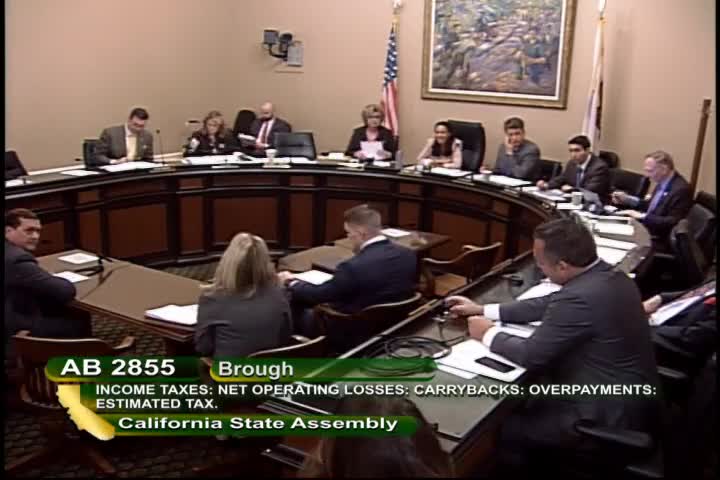 11MIN
Assembly Standing Committee on Revenue and Taxation
Bill Author

Bill Co-Author(s):