AB 3135: Traffic safety: state funding.
- Session Year: 2017-2018
- House: Assembly
- Latest Version Date: 2018-09-04
(1)The California Constitution requires the Governor to submit a budget for the ensuing fiscal year to the Legislature within the first 10 days of each regular session. Existing law requires that budget to contain a complete plan and itemized statement of all proposed expenditures of the state provided by existing law or recommended by the Governor, and of all estimated revenues, as specified. Existing law creates the Department of Finance and provides that the department has general powers of supervision over all matters concerning the financial and business policies of the state.
Existing law establishes the Department of the California Highway Patrol to enforce all laws regulating the operation of vehicles and the use of the highways.
This bill would require the annual budget proposed by the Governor, for the 201920 fiscal year to the 202324 fiscal year, inclusive, to include the level of funding and position authority necessary for the Department of the California Highway Patrol to add 120 approved officer positions each of those fiscal years.
(2)The California Constitution restricts the expenditure of revenues from taxes imposed by the state on fuels used in motor vehicles upon public streets and highways to street and highway and certain mass transit purposes, and restricts the expenditure of revenues from fees and taxes imposed by the state on vehicles or their use or operation to state administration and enforcement of laws regulating the use, operation, or registration of vehicles used on the public streets and highways, including the enforcement of traffic and vehicle laws by state agencies and the mitigation of the environmental effects of motor vehicle operation due to air and sound emissions, as well as to street and highway and certain mass transit purposes.
Existing law imposes certain registration fees on vehicles, with revenues from these fees deposited into the Motor Vehicle Account and used, among other things, to fund the Department of Motor Vehicles and the Department of the California Highway Patrol. Existing law provides for the monthly transfer of excess balances in the Motor Vehicle Account to the State Highway Account.
This bill would establish as a first priority the use of motor vehicle revenues deposited into the Motor Vehicle Account for the state administration and enforcement of laws regulating the use, operation, or registration of vehicles used on the public streets and highways of this state, including the enforcement of traffic and vehicle laws by state agencies.
(1)The California Constitution requires the Governor to submit a budget for the ensuing fiscal year to the Legislature within the first 10 days of each regular session. Existing law requires that budget to contain a complete plan and itemized statement of all proposed expenditures of the state provided by existing law or recommended by the Governor, and of all estimated revenues, as specified. Existing law creates the Department of Finance and provides that the department has general powers of supervision over all matters concerning the financial and business policies of the state.
Existing law establishes the Department of the California Highway Patrol to enforce all laws regulating the operation of vehicles and the use of the highways.
This bill would require the Department of Finance to calculate the ratio of the number of officer positions at the Department of the California Highway Patrol authorized in the annual budget act to the state population for each fiscal year beginning in the 200708 fiscal year to the 201718 fiscal year, inclusive, to determine the highest ratio. The bill would require the annual budget proposed by the Governor, for each fiscal year following the enactment of this bill, the 201920 fiscal year to the 202324 fiscal year, inclusive, to include the level of funding and position authority necessary for the Department of the California Highway Patrol to meet or exceed the highest ratio. The bill would require the Department of Finance, if the ratio of the officer positions authorized in the annual budget act to the state population does not meet or exceed the highest ratio, to adjust the funding and position authority in the Governors proposed budget to come into compliance within 3 fiscal years. add 120 approved officer positions each of those fiscal years.
(2)The California Constitution restricts the expenditure of revenues from taxes imposed by the state on fuels used in motor vehicles upon public streets and highways to street and highway and certain mass transit purposes, and restricts the expenditure of revenues from fees and taxes imposed by the state on vehicles or their use or operation to state administration and enforcement of laws regulating the use, operation, or registration of vehicles used on the public streets and highways, including the enforcement of traffic and vehicle laws by state agencies and the mitigation of the environmental effects of motor vehicle operation due to air and sound emissions, as well as to street and highway and certain mass transit purposes.
Existing law imposes certain registration fees on vehicles, with revenues from these fees deposited into the Motor Vehicle Account and used, among other things, to fund the Department of Motor Vehicles and the Department of the California Highway Patrol. Existing law provides for the monthly transfer of excess balances in the Motor Vehicle Account to the State Highway Account.
This bill would establish as a first priority the use of motor vehicle revenues deposited into the Motor Vehicle Account for the state administration and enforcement of laws regulating the use, operation, or registration of vehicles used on the public streets and highways of this state, including the enforcement of traffic and vehicle laws by state agencies. The bill would provide that any remaining balance in the Motor Vehicle Account, after fulfilling the first-priority responsibilities, may be used for other authorized purposes under the California Constitution.
(1)The California Constitution requires the Governor to submit a budget for the ensuing fiscal year to the Legislature within the first 10 days of each regular session. Existing law requires that budget to contain a complete plan and itemized statement of all proposed expenditures of the state provided by existing law or recommended by the Governor, and of all estimated revenues, as specified. Existing law creates the Department of Finance and provides that the department has general powers of supervision over all matters concerning the financial and business policies of the state.
Existing law establishes the Department of the California Highway Patrol to enforce all laws regulating the operation of vehicles and the use of the highways.
This bill would require the Department of Finance to calculate the ratio of the number of officer positions at the Department of the California Highway Patrol authorized in the annual budget act to the state population for each fiscal year beginning in the 200708 fiscal year to the 201718 fiscal year, inclusive, to determine the highest ratio. The bill would require the annual budget proposed by the Governor, for each fiscal year following the enactment of this bill, to include the level of funding and position authority necessary for the Department of the California Highway Patrol to meet or exceed the highest ratio. The bill would require the Department of Finance, if the ratio of the officer positions authorized in the annual budget act to the state population does not meet or exceed the highest ratio, to adjust the funding and position authority in the Governors proposed budget to come into compliance within 3 fiscal years.
(2)The California Constitution restricts the expenditure of revenues from taxes imposed by the state on fuels used in motor vehicles upon public streets and highways to street and highway and certain mass transit purposes, and restricts the expenditure of revenues from fees and taxes imposed by the state on vehicles or their use or operation to state administration and enforcement of laws regulating the use, operation, or registration of vehicles used on the public streets and highways, including the enforcement of traffic and vehicle laws by state agencies and the mitigation of the environmental effects of motor vehicle operation due to air and sound emissions, as well as to street and highway and certain mass transit purposes.
Existing law imposes certain registration fees on vehicles, with revenues from these fees deposited into the Motor Vehicle Account and used, among other things, to fund the Department of Motor Vehicles and the Department of the California Highway Patrol. Existing law provides for the monthly transfer of excess balances in the Motor Vehicle Account to the State Highway Account.
This bill would establish as a first priority the use of motor vehicle revenues deposited into the Motor Vehicle Account for the state administration and enforcement of laws regulating the use, operation, or registration of vehicles used on the public streets and highways of this state, including the enforcement of traffic and vehicle laws by state agencies. The bill would provide that any remaining balance in the Motor Vehicle Account, after fulfilling the first-priority responsibilities, may be used for other authorized purposes under the California Constitution.
Existing law, the California High-Speed Rail Act, creates the High-Speed Rail Authority to develop and implement a high-speed rail system in the state, with specified powers and duties, including the power to acquire rights-of-way through purchase or eminent domain.Existing law establishes the Department of the California Highway Patrol to enforce all laws regulating the operation of vehicles and the use of the highways. Existing law also provides that the Department of the California Highway Patrol has jurisdiction over those matters related to the security of state officers, property, and occupants of state property.This bill would authorize the High-Speed Rail Authority to contract with the Department of the California Highway Patrol to provide any necessary security services for property acquired by the state as a right-of-way for high-speed rail purposes.Existing law, the California High-Speed Rail Act, creates the High-Speed Rail Authority to develop and implement a high-speed rail system in the state, with specified powers and duties. Existing law provides for the authority to appoint an executive director, exempt from civil service, who serves at the pleasure of the authority. duties, including the power to acquire rights-of-way through purchase or eminent domain.
Existing law establishes the Department of the California Highway Patrol to enforce all laws regulating the operation of vehicles and the use of the highways. Existing law also provides that the Department of the California Highway Patrol has jurisdiction over those matters related to the security of state officers, property, and occupants of state property.
This bill would make nonsubstantive changes to these provisions. authorize the High-Speed Rail Authority to contract with the Department of the California Highway Patrol to provide any necessary security services for property acquired by the state as a right-of-way for high-speed rail purposes.
Existing law, the California High-Speed Rail Act, creates the High-Speed Rail Authority to develop and implement a high-speed rail system in the state, with specified powers and duties. Existing law provides for the authority to appoint an executive director, exempt from civil service, who serves at the pleasure of the authority.
This bill would make nonsubstantive changes to these provisions.
The Legislature finds and declares all of the following:
(a)Since 2010, Californias population has increased 8 percent, while registered vehicles and licensed drivers in the state have increased over 11 percent. Meanwhile, the number of approved officer positions in the Department of the California Highway Patrol enforcing traffic laws on our highways has decreased 7 percent.
(b)In that same time, the number of crashes on the state highway system has increased 29 percent, and the fatality rate per mile driven has increased 27 percent.
(c)Studies show that, in the absence of enforcement, drivers are less likely to follow the law and maintain safe traveling behaviors.
(d)It is clear that the presence of law enforcement on our highways deters unsafe driving. For too long, it has been too easy for reckless drivers to speed, drive while impaired or distracted, or make other unsafe choices.
(e)The Legislature is ultimately responsible for dedicating the necessary state resources to the administration of programs that ensure the safety and security of all Californians.
(f)Over 80 years ago, California voters approved an initiative amending the California State Constitution to guarantee that the state uses vehicle registration and license fees for either the administration and enforcement of all laws related to the use of public roads or the construction of those roads.
(g)California is making an investment to repair and improve transportation infrastructure statewide. Traffic enforcement is critical to ensure this infrastructure operates efficiently and safely.
(h)It is the intent of the Legislature to restore the approved officer positions in the Department of the California Highway Patrol that were lost during the Great Recession of 2008 and then evaluate future staffing needs to align approved officer positions with workload.
SEC. 2.Section 13312 is added to the Government Code, to read:13312.For the 201920 fiscal year to the 202324 fiscal year, inclusive, the annual budget proposed by the Governor shall include the level of funding and position authority necessary for the Department of the California Highway Patrol to add 120 approved officer positions each of those fiscal years.
SEC. 3.Section 42272.1 is added to the Vehicle Code, to read:42272.1.Notwithstanding any other law, revenues deposited into the Motor Vehicle Account derived from fees and taxes imposed by the state upon vehicles or their use or operation, over and above the costs of collection and any refunds authorized by law, shall be used first for the state administration and enforcement of laws regulating the use, operation, or registration of vehicles used on the public streets and highways of this state, including the enforcement of traffic and vehicle laws by state agencies.
The Legislature finds and declares all of the following:
(a)Since 2010, Californias population has increased 8 percent, while registered vehicles and licensed drivers in the state have increased over 11 percent. Meanwhile, the number of officers of approved officer positions in the Department of the California Highway Patrol enforcing traffic laws on our highways has decreased 5 7 percent.
(b)In that same time, the number of crashes on the state highway system has increased 29 percent, and the fatality rate per mile driven has increased 27 percent.
(c)Studies show that, in the absence of enforcement, drivers are less likely to follow the law and maintain safe traveling behaviors.
(d)It is clear that the presence of law enforcement on our highways deters unsafe driving. For too long, it has been too easy for reckless drivers to speed, drive while impaired or distracted, or make other unsafe choices.
(e)The Legislature is ultimately responsible for dedicating the necessary state resources to the administration of programs that ensure the safety and security of all Californians.
(f)Over 80 years ago, California voters approved an initiative amending the California State Constitution to guarantee that the state uses vehicle registration and license fees for either the administration and enforcement of all laws related to the use of public roads or the construction of those roads.
(g)California is making an investment to repair and improve transportation infrastructure statewide. Traffic enforcement is critical to ensure this infrastructure operates efficiently and safely.
(h)It is the intent of the Legislature to restore the approved officer positions in the Department of the California Highway Patrol that were lost during the Great Recession of 2008 and then evaluate future staffing needs to align approved officer positions with workload.
SEC. 2.Section 13312 is added to the Government Code, to read:13312.(a)The Department of Finance shall calculate the ratio of the number of officer positions at the Department of the California Highway Patrol authorized in the annual budget act to the state population for each fiscal year beginning in the 200708 fiscal year to the 201718 fiscal year, inclusive, to determine the highest ratio.(b)For each fiscal year following the enactment of this section,For the 201920 fiscal year to the 202324 fiscal year, inclusive, the annual budget proposed by the Governor shall include the level of funding and position authority necessary for the Department of the California Highway Patrol to meet or exceed the highest ratio, as determined pursuant to subdivision (a). add 120 approved officer positions each of those fiscal years.
(c)If, upon enactment of this section, the ratio of the officer positions authorized in the annual budget act to the state population does not comply with subdivision (b), the Department of Finance shall adjust the funding and position authority of the Department of the California Highway Patrol in the Governors proposed budget to come into compliance with subdivision (b) within three fiscal years.SEC. 3.Section 42272.1 is added to the Vehicle Code, to read:42272.1.(a)Notwithstanding any other law, revenues deposited into the Motor Vehicle Account derived from fees and taxes imposed by the state upon vehicles or their use or operation, over and above the costs of collection and any refunds authorized by law, shall be used first for the state administration and enforcement of laws regulating the use, operation, or registration of vehicles used on the public streets and highways of this state, including the enforcement of traffic and vehicle laws by state agencies.
(b)Any remaining balance in the Motor Vehicle Account after fulfilling the responsibilities of subdivision (a) may be used for other purposes as permitted by Article XIX of the California Constitution.The Legislature finds and declares all of the following:
(a)Since 2010, Californias population has increased 8 percent, while registered vehicles and licensed drivers in the state have increased over 11 percent. Meanwhile, the number of officers of the Department of the California Highway Patrol enforcing traffic laws on our highways has decreased 5 percent.
(b)In that same time, the number of crashes on the state highway system has increased 29 percent, and the fatality rate per mile driven has increased 27 percent.
(c)Studies show that, in the absence of enforcement, drivers are less likely to follow the law and maintain safe traveling behaviors.
(d)It is clear that the presence of law enforcement on our highways deters unsafe driving. For too long, it has been too easy for reckless drivers to speed, drive while impaired or distracted, or make other unsafe choices.
(e)The Legislature is ultimately responsible for dedicating the necessary state resources to the administration of programs that ensure the safety and security of all Californians.
(f)Over 80 years ago, California voters approved an initiative amending the California State Constitution to guarantee that the state uses vehicle registration and license fees for either the administration and enforcement of all laws related to the use of public roads or the construction of those roads.
SEC. 2.Section 13312 is added to the Government Code, to read:13312.(a)The Department of Finance shall calculate the ratio of the number of officer positions at the Department of the California Highway Patrol authorized in the annual budget act to the state population for each fiscal year beginning in the 200708 fiscal year to the 201718 fiscal year, inclusive, to determine the highest ratio.
(b)For each fiscal year following the enactment of this section, the annual budget proposed by the Governor shall include the level of funding and position authority necessary for the Department of the California Highway Patrol to meet or exceed the highest ratio, as determined pursuant to subdivision (a).
(c)If, upon enactment of this section, the ratio of the officer positions authorized in the annual budget act to the state population does not comply with subdivision (b), the Department of Finance shall adjust the funding and position authority of the Department of the California Highway Patrol in the Governors proposed budget to come into compliance with subdivision (b) within three fiscal years.
SEC. 3.Section 42272.1 is added to the Vehicle Code, to read:42272.1.(a)Notwithstanding any other law, revenues deposited into the Motor Vehicle Account derived from fees and taxes imposed by the state upon vehicles or their use or operation, over and above the costs of collection and any refunds authorized by law, shall be used first for the state administration and enforcement of laws regulating the use, operation, or registration of vehicles used on the public streets and highways of this state, including the enforcement of traffic and vehicle laws by state agencies.
(b)Any remaining balance in the Motor Vehicle Account after fulfilling the responsibilities of subdivision (a) may be used for other purposes as permitted by Article XIX of the California Constitution.
SECTION 1.Section 185046 is added to the Public Utilities Code, to read:185046.The authority may contract with the Department of the California Highway Patrol to provide any necessary security services for property acquired by the state as a right-of-way for high-speed rail purposes.The authority may contract with the Department of the California Highway Patrol to provide any necessary security services for property acquired by the state as a right-of-way for high-speed rail purposes.
SECTION 1.Section 185024 of the Public Utilities Code is amended to read:185024.(a)The authority shall appoint an executive director, exempt from civil service, who shall serve at the pleasure of the authority, to administer the affairs of the authority as directed by the authority.(b)For purposes of managing and administering the ongoing work of the authority in implementing the high-speed train project, the Governor, upon the recommendation of the executive director, may appoint up to six additional individuals, exempt from civil service, who shall serve at the pleasure of the executive director. Pursuant to this subdivision, the Governor may appoint persons only for the following positions:(1)Chief program manager.(2)Up to three regional directors.(3)Chief financial officer.(4)Director of risk management and project controls.(c)The compensation of the executive director and the additional persons authorized by subdivision (b) shall be established by the authority, and approved by the Department of Human Resources, in an amount that is reasonably necessary, in the discretion of the authority, to attract and hold a person of superior qualifications. The authority shall cause to be conducted, through the use of independent outside advisers, a salary survey to determine the compensation for the positions under this subdivision. The Department of Human Resources may, in its discretion, accept a previously completed salary survey that meets the requirements of this subdivision, and shall review the methodology used in the survey. The salary survey shall consider both of the following:(1)Other state, regional, and local transportation agencies that are most comparable to the authority and its responsibilities.(2)Other relevant labor pools.(d)The compensation set by the authority shall not exceed the highest comparable compensation for a position of that type, as determined by the salary survey. Based on the salary survey, these positions shall be paid a salary established by the authority and approved by the Department of Human Resources.(e)The executive director may, as authorized by the authority, appoint necessary staff to carry out the provisions of this part.(a)The authority shall appoint an executive director, exempt from civil service, who shall serve at the pleasure of the authority, to administer the affairs of the authority as directed by the authority.
(b)For purposes of managing and administering the ongoing work of the authority in implementing the high-speed train project, the Governor, upon the recommendation of the executive director, may appoint up to six additional individuals, exempt from civil service, who shall serve at the pleasure of the executive director. Pursuant to this subdivision, the Governor may appoint persons only for the following positions:
(1)Chief program manager.
(2)Up to three regional directors.
(3)Chief financial officer.
(4)Director of risk management and project controls.
(c)The compensation of the executive director and the additional persons authorized by subdivision (b) shall be established by the authority, and approved by the Department of Human Resources, in an amount that is reasonably necessary, in the discretion of the authority, to attract and hold a person of superior qualifications. The authority shall cause to be conducted, through the use of independent outside advisers, a salary survey to determine the compensation for the positions under this subdivision. The Department of Human Resources may, in its discretion, accept a previously completed salary survey that meets the requirements of this subdivision, and shall review the methodology used in the survey. The salary survey shall consider both of the following:
(1)Other state, regional, and local transportation agencies that are most comparable to the authority and its responsibilities.
(2)Other relevant labor pools.
The
(d)The compensation set by the authority shall not exceed the highest comparable compensation for a position of that type, as determined by the salary survey. Based on the salary survey, these positions shall be paid a salary established by the authority and approved by the Department of Human Resources.
(d)(e)The executive director may, as authorized by the authority, appoint necessary staff to carry out the provisions of this part.
|
Date
|
Status
|
|---|---|
| Sep 19, 2018 | Vetoed by Governor. |
| Sep 11, 2018 | Enrolled and presented to the Governor at 4:30 p.m. |
| Aug 30, 2018 | Senate amendments concurred in. To Engrossing and Enrolling. |
| Aug 29, 2018 | From committee: That the Senate amendments be concurred in. (Ayes 14. Noes 0.) (August 29). |
| Aug 28, 2018 | Joint Rule 62(a), file notice suspended. |
| Aug 24, 2018 | Re-referred to Com. on TRANS. pursuant to Assembly Rule 77.2. |
| Aug 22, 2018 | In Assembly. Concurrence in Senate amendments pending. May be considered on or after August 24 pursuant to Assembly Rule 77. |
| Aug 21, 2018 | Read third time. Passed. Ordered to the Assembly. |
| Aug 17, 2018 | From committee: Do pass. (Ayes 6. Noes 0.) (August 16). |
| Aug 17, 2018 | Read second time. Ordered to third reading. |
| Aug 13, 2018 | In committee: Referred to APPR. suspense file. |
| Aug 6, 2018 | In committee: Hearing postponed by committee. |
| Aug 6, 2018 | From committee chair, with author's amendments: Amend, and re-refer to committee. Read second time, amended, and re-referred to Com. on APPR. |
| Jun 27, 2018 | From committee: Do pass and re-refer to Com. on APPR. (Ayes 10. Noes 2.) (June 26). Re-referred to Com. on APPR. |
| Jun 11, 2018 | From committee chair, with author's amendments: Amend, and re-refer to committee. Read second time, amended, and re-referred to Com. on T. & H. |
| May 24, 2018 | Referred to Com. on T. & H. |
| May 10, 2018 | In Senate. Read first time. To Com. on RLS. for assignment. |
| May 10, 2018 | Read third time. Passed. Ordered to the Senate. |
| May 3, 2018 | Read second time. Ordered to third reading. |
| May 2, 2018 | From committee: Do pass. (Ayes 12. Noes 4.) (May 2). |
| Apr 17, 2018 | From committee: Do pass and re-refer to Com. on APPR. (Ayes 10. Noes 3.) (April 16). Re-referred to Com. on APPR. |
| Apr 2, 2018 | Re-referred to Com. on TRANS. |
| Mar 22, 2018 | Referred to Com. on TRANS. |
| Feb 17, 2018 | From printer. May be heard in committee March 19. |
| Feb 16, 2018 | Read first time. To print. |
|
Date
|
Description
|
Location
|
Votes
|
|
|---|---|---|---|---|
| Aug 30, 2018 | AB 3135 FRAZIER Concurrence in Senate Amendments | Assembly Floor |
Passed |
|
| Aug 29, 2018 | With recommendation: That Senate amendments be concurred in. | Assembly Standing Committee on Transportation |
Passed |
|
| Aug 21, 2018 | Assembly 3rd Reading AB3135 Frazier By Beall | Senate Floor |
Passed |
|
| Aug 16, 2018 | Do pass | Senate Standing Committee on Appropriations |
Passed |
|
| Aug 13, 2018 | Placed on suspense file | Senate Standing Committee on Appropriations |
Passed |
|
| Jun 26, 2018 | Do pass, but first be re-referred to the Committee on [Appropriations] | Senate Standing Committee on Transportation and Housing |
Passed |
|
| May 10, 2018 | AB 3135 FRAZIER Assembly Third Reading | Assembly Floor |
Passed |
|
| May 2, 2018 | Do pass. | Assembly Standing Committee on Appropriations |
Passed |
|
| Apr 16, 2018 | Do pass and be re-referred to the Committee on [Appropriations] | Assembly Standing Committee on Transportation |
Passed |
This list shows positions taken on this bill by organizations on the date displayed, which is linked to the original source.
Positions by individuals are not included.
|
Organization
|
Position
|
Date
|
|---|---|---|
| ASUC | * Support | Jun 20, 2018 |
| California Association Of Highway Patrolmen | * Support | Aug 29, 2018 |
| California State University | * Support | Jun 20, 2018 |
| Campaign For College Opportunity | * Support | Jun 20, 2018 |
| UC Santa Cruz | * Support | Jun 20, 2018 |
| UCSA | * Support | Jun 20, 2018 |
| University of California | * Support | Jun 20, 2018 |
GOVERNOR'S VETO
GV Bill Id:AB 3135
Author:(Frazier)
As Enrolled Ver:September 11, 2018
2/3 vote
ASSEMBLY: |
| (May 10, 2018) | SENATE: | 33-4 | (August 21, 2018) |
(vote not relevant)
COMMITTEE VOTE: | 14-0 | (August 29, 2018) | RECOMMENDATION: | concur |
(TRANS.)
ASSEMBLY: | 79-0 | (August 30, 2018) |
|
|
|
Original Committee Reference: TRANS.
SUMMARY: Requires the Governor to include in his annual state budget proposal funding for additional California Highway Patrol (CHP) officers over five fiscal years, as specified.
The Senate amendments delete the Assembly version of the bill and instead:
- Require the Governor to include in his annual budget proposal, for fiscal years 2019-20 to 2023-24 inclusive, funding and position authority for an additional 120 approved officer positions each fiscal year.
- Prioritize revenues deposited into the Motor Vehicle Account (MVA) for the state administration and enforcement of laws regulating the use, operation, or registration of vehicles used on the public streets and highways, including traffic enforcement.
EXISTING LAW:
- Establishes CHP to enforce all laws regulating the operation of vehicles and the use of the highways.
- Imposes certain registration fees on vehicles, with revenues from these fees deposited into the MVA and used, among other things, to fund the Department of Motor Vehicles (DMV) and CHP.
- Restricts, pursuant to California Constitution Article 19, the expenditure of revenues from fees and taxes imposed by the state on vehicles or their use or operation to state administration and enforcement of laws regulating the use, operation, or registration of vehicles used on the public streets and highways, including the enforcement of traffic and vehicle laws by state agencies and the mitigation of the environmental effects of motor vehicle operation due to air and sound emissions.
- Through budget appropriations, annually redirects significant sums of funding in the MVA to other purposes, such as roughly $130 million to the California Air Resources Board and $90 million to the General Fund.
AS PASSED BY THE ASSEMBLY, this bill authorized the California High-Speed Rail Authority to contract with CHP to provide any necessary security services for property purchased by the state for future high-speed rail right-of-way.
FISCAL EFFECT: According to the Senate Appropriations Committee, the addition of 120 additional CHP officers each year for the next five years would result in additional expenditures of approximately $26.4 million in 2019-20, $52.8 million in in 2020-21, $79.2 million in 2021-22, $105.6 million in 2022-23, and $132 million annually thereafter. (Motor Vehicle Account)
COMMENTS: The relationship between increased officer patrolling/enforcement and reductions in vehicle accidents has been widely reported. As far back as 2005, the Legislative Analyst's Office reported that, in regards to safety enhancing proactive patrols, increases in the number of traffic accidents combined with relatively little growth in road patrol staffing have resulted in officers spending increasing amounts of their work hours responding to accidents rather than conducting proactive patrols and providing enforcement and other safety-related services that aim to reduce accidents. Another recent study, conducted in Fresno, California, found that increased traffic enforcement decreased the number of motor vehicle collisions, crash fatalities, and fatalities related to speed.
Since 2010, California's population has increased 8%, while registered vehicles and licensed drivers in the state have increased over 11%. Meanwhile, the number of approved officer positions in CHP enforcing traffic laws on our highways has decreased 7%. In that same time, the number of crashes on the state highway system has increased 29%, and the fatality rate per mile driven has increased 27%. For the 2016 calendar year, CHP reported that 3,839 persons were killed in vehicle accidents, and 278,169 persons were injured in California.
CHP notes that 507 authorized officer positions were cut during the 2011-12 and 2012-13 fiscal years as a part of the Governor's across-the-board 5% reduction in the state work force during the recession, and none of those positions has been restored. This bill is intended to restore those cuts and enhance CHP's budget to increase public safety.
According to the author, "For too long, the administration has used for other purposes the funding meant for ensuring our safe roads. AB 3135 requires the administration to acknowledge the state's need for CHP officers and to fund them first from the monies intended for this purpose. If we don't act now, our roads will continue to grow less safe and more people will needlessly die on our highways."
This bill requires the annual Governor's budget, each year for the next five years, to include funding and position authority for additional California Highway Patrol officers. The bill also requires the first priority for Motor Vehicle Account revenues to be the administration and enforcement of laws regulating the use, operation, or registration of vehicles used on streets and highways, including the enforcement of traffic and vehicle laws.
This bill mandates a specific proposal be included in the annual Governor's Budget, which limits the next Governor's discretion in setting forth priorities in this area. Given the bill's ongoing fiscal impact, the annual budget process is the appropriate venue to evaluate this issue.
Analysis Prepared by: Eric Thronson / TRANS. / (916) 319-2093 FN: 0005248
CONCURRENCE IN SENATE AMENDMENTS
CSA2 Bill Id:AB 3135
Author:(Frazier)
As Amended Ver:August 6, 2018
Majority vote
ASSEMBLY: |
| (May 10, 2018) | SENATE: | 33-4 | (August 21, 2018) |
(vote not relevant)
COMMITTEE VOTE: | 14-0 | (August 29, 2018) | RECOMMENDATION: | concur |
(TRANS.)
Original Committee Reference: TRANS.
SUMMARY: Requires the Governor to include in his annual state budget proposal funding for additional California Highway Patrol (CHP) officers over five fiscal years, as specified.
The Senate amendments delete the Assembly version of the bill and instead:
- Require the Governor to include in his annual budget proposal, for fiscal years 2019-20 to 2023-24 inclusive, funding and position authority for an additional 120 approved officer positions each fiscal year.
- Prioritize revenues deposited into the Motor Vehicle Account (MVA) for the state administration and enforcement of laws regulating the use, operation, or registration of vehicles used on the public streets and highways, including traffic enforcement.
EXISTING LAW:
- Establishes CHP to enforce all laws regulating the operation of vehicles and the use of the highways.
- Imposes certain registration fees on vehicles, with revenues from these fees deposited into the MVA and used, among other things, to fund the Department of Motor Vehicles (DMV) and CHP.
- Restricts, pursuant to California Constitution Article 19, the expenditure of revenues from fees and taxes imposed by the state on vehicles or their use or operation to state administration and enforcement of laws regulating the use, operation, or registration of vehicles used on the public streets and highways, including the enforcement of traffic and vehicle laws by state agencies and the mitigation of the environmental effects of motor vehicle operation due to air and sound emissions.
- Through budget appropriations, annually redirects significant sums of funding in the MVA to other purposes, such as roughly $130 million to the California Air Resources Board and $90 million to the General Fund.
AS PASSED BY THE ASSEMBLY, this bill authorized the California High-Speed Rail Authority to contract with CHP to provide any necessary security services for property purchased by the state for future high-speed rail right-of-way.
FISCAL EFFECT: According to the Senate Appropriations Committee, the addition of 120 additional CHP officers each year for the next five years would result in additional expenditures of approximately $26.4 million in 2019-20, $52.8 million in in 2020-21, $79.2 million in 2021-22, $105.6 million in 2022-23, and $132 million annually thereafter. (Motor Vehicle Account)
COMMENTS: The relationship between increased officer patrolling/enforcement and reductions in vehicle accidents has been widely reported. As far back as 2005, the Legislative Analyst's Office reported that, in regards to safety enhancing proactive patrols, increases in the number of traffic accidents combined with relatively little growth in road patrol staffing have resulted in officers spending increasing amounts of their work hours responding to accidents rather than conducting proactive patrols and providing enforcement and other safety-related services that aim to reduce accidents. Another recent study, conducted in Fresno, California, found that increased traffic enforcement decreased the number of motor vehicle collisions, crash fatalities, and fatalities related to speed.
Since 2010, California's population has increased 8%, while registered vehicles and licensed drivers in the state have increased over 11%. Meanwhile, the number of approved officer positions in CHP enforcing traffic laws on our highways has decreased 7%. In that same time, the number of crashes on the state highway system has increased 29%, and the fatality rate per mile driven has increased 27%. For the 2016 calendar year, CHP reported that 3,839 persons were killed in vehicle accidents, and 278,169 persons were injured in California.
CHP notes that 507 authorized officer positions were cut during the 2011-12 and 2012-13 fiscal years as a part of the Governor’s across-the-board 5% reduction in the state work force during the recession, and none of those positions has been restored. This bill is intended to restore those cuts and enhance CHP's budget to increase public safety.
According to the author, "For too long, the administration has used for other purposes the funding meant for ensuring our safe roads. AB 3135 requires the administration to acknowledge the state's need for CHP officers and to fund them first from the monies intended for this purpose. If we don’t act now, our roads will continue to grow less safe and more people will needlessly die on our highways."
Analysis Prepared by: Eric Thronson / TRANS. / (916) 319-2093 FN: 0005126
CONCURRENCE IN SENATE AMENDMENTS
CSA1 Bill Id:AB 3135
Author:(Frazier)
As Amended Ver:August 6, 2018
Majority vote
ASSEMBLY: | 51-20 | (May 10, 2018) | SENATE: | 33-4 | (August 21, 2018) |
Original Committee Reference: TRANS.
SUMMARY: Requires the Governor to include in his annual state budget proposal funding for additional California Highway Patrol (CHP) officers over five fiscal years, as specified.
The Senate amendments delete the Assembly version of the bill and instead:
- Require the Governor to include in his annual budget proposal, for fiscal years 2019-20 to 2023-24 inclusive, funding and position authority for an additional 120 approved officer positions each fiscal year.
- Prioritize revenues deposited into the Motor Vehicle Account (MVA) for the state administration and enforcement of laws regulating the use, operation, or registration of vehicles used on the public streets and highways, including traffic enforcement.
EXISTING LAW:
- Establishes CHP to enforce all laws regulating the operation of vehicles and the use of the highways.
- Imposes certain registration fees on vehicles, with revenues from these fees deposited into the MVA and used, among other things, to fund the Department of Motor Vehicles (DMV) and CHP.
- Restricts, pursuant to California Constitution Article 19, the expenditure of revenues from fees and taxes imposed by the state on vehicles or their use or operation to state administration and enforcement of laws regulating the use, operation, or registration of vehicles used on the public streets and highways, including the enforcement of traffic and vehicle laws by state agencies and the mitigation of the environmental effects of motor vehicle operation due to air and sound emissions.
- Through budget appropriations, annually redirects significant sums of funding in the MVA to other purposes, such as roughly $130 million to the California Air Resources Board and $90 million to the General Fund.
AS PASSED BY THE ASSEMBLY, this bill authorized the California High-Speed Rail Authority to contract with CHP to provide any necessary security services for property purchased by the state for future high-speed rail right-of-way.
FISCAL EFFECT: According to the Senate Appropriations Committee, the addition of 120 additional CHP officers each year for the next five years would result in additional expenditures of approximately $26.4 million in 2019-20, $52.8 million in in 2020-21, $79.2 million in 2021-22, $105.6 million in 2022-23, and $132 million annually thereafter. (Motor Vehicle Account)
COMMENTS: The relationship between increased officer patrolling/enforcement and reductions in vehicle accidents has been widely reported. As far back as 2005, the Legislative Analyst's Office reported that, in regards to safety enhancing proactive patrols, increases in the number of traffic accidents combined with relatively little growth in road patrol staffing have resulted in officers spending increasing amounts of their work hours responding to accidents rather than conducting proactive patrols and providing enforcement and other safety-related services that aim to reduce accidents. Another recent study, conducted in Fresno, California, found that increased traffic enforcement decreased the number of motor vehicle collisions, crash fatalities, and fatalities related to speed.
Since 2010, California's population has increased 8%, while registered vehicles and licensed drivers in the state have increased over 11%. Meanwhile, the number of approved officer positions in CHP enforcing traffic laws on our highways has decreased 7%. In that same time, the number of crashes on the state highway system has increased 29%, and the fatality rate per mile driven has increased 27%. For the 2016 calendar year, CHP reported that 3,839 persons were killed in vehicle accidents, and 278,169 persons were injured in California.
CHP notes that 507 authorized officer positions were cut during the 2011-12 and 2012-13 fiscal years as a part of the Governor’s across-the-board 5% reduction in the state work force during the recession, and none of those positions has been restored. This bill is intended to restore those cuts and enhance CHP's budget to increase public safety.
According to the author, "For too long, the administration has used for other purposes the funding meant for ensuring our safe roads. AB 3135 requires the administration to acknowledge the state's need for CHP officers and to fund them first from the monies intended for this purpose. If we don’t act now, our roads will continue to grow less safe and more people will needlessly die on our highways."
Analysis Prepared by: Eric Thronson / TRANS. / (916) 319-2093 FN: 0004339
Office of Senate Floor Analyses (916) 651-1520 Fax: (916) 327-4478 | AB |
THIRD READING
Bill No: AB 3135
:
SENATE TRANS. & HOUSING COMMITTEE: 10-2, 6/26/18
AYES: Beall, Cannella, Allen, Dodd, Galgiani, McGuire, Roth, Skinner, Vidak, Wiener
NOES: Gaines, Morrell
NO VOTE RECORDED: Wieckowski
SENATE APPROPRIATIONS COMMITTEE: 6-0, 8/16/18
AYES: Portantino, Beall, Bradford, Hill, Nielsen, Wiener
NO VOTE RECORDED: Bates
ASSEMBLY FLOOR: 51-20, 5/10/18 - See last page for vote
DIGEST:
This bill requires the annual state budget proposal provided by the Governor to include funding for additional California Highway Patrol (CHP) officers over five fiscal years, as specified.
Existing law:
- Establishes the Department of the California Highway Patrol to enforce all laws regulating the operation of vehicles and the use of the highways.
- Imposes certain registration fees on vehicles, with revenues from these fees deposited into the Motor Vehicle Account (MVA) and used, among other things, to fund the Department of Motor Vehicles (DMV) and CHP.
- Provides for the monthly transfer of excess balances in the MVA to the State Highway Account.
- Requires, pursuant to the California Constitution, the Governor to submit a budget for the ensuing fiscal year to the Legislature within the first 10 days of each regular session. Existing law further requires that budget to contain a complete plan and itemized statement of all proposed expenditures of the state provided by existing law or recommended by the Governor, and of all estimated revenues, as specified.
- Restricts, pursuant to Article 19 of the California Constitution, the expenditure of revenues from taxes imposed by the state on fuels used in motor vehicles upon public streets and highways to street and highway and certain mass transit purposes.
- Restricts further, pursuant to Article 19, the expenditure of revenues from fees and taxes imposed by the state on vehicles or their use or operation to state administration and enforcement of laws regulating the use, operation, or registration of vehicles used on the public streets and highways, including the enforcement of traffic and vehicle laws by state agencies and the mitigation of the environmental effects of motor vehicle operation due to air and sound emissions, as well as to street and highway and certain mass transit purposes.
This bill:
- Makes legislative findings and declarations regarding the need for additional CHP officers to ensure public safety on the state’s roads and highways.
- Requires the annual budget proposed by the Governor, for fiscal years 2019-20 to 2023-24 inclusive, to include funding for an additional 120 approved officer positions for each fiscal year.
- Prioritizes revenues deposited into the MVA for the state administration and enforcement of laws regulating the use, operation, or registration of vehicles used on the public streets and highways, including traffic enforcement, as specified.
Comments
- Purpose. According to the author, “for too long, the administration has used for other purposes the funding meant for ensuring our safe roads. AB 3135 requires the administration to identify the state’s need for CHP officers and to fund them first from the monies intended for this purpose. If we don’t act now, our roads will continue to grow less safe and more people will needlessly die on our highways.”
- Road Safety. The relationship between increased officer patrolling/enforcement and reductions in vehicle accidents has been widely reported. As far back as 2005, the Legislative Analyst Office (LAO) reported that, in regards to safety enhancing proactive patrols, increases in the number of traffic accidents combined with relatively little growth in road patrol staffing have resulted in officers spending increasing amounts of their work hours responding to accidents rather than conducting proactive patrols and providing enforcement and other safety-related services that aim to reduce accidents. Another study reported by the Journal of Trauma: Injury, Infection, and Critical Care (May 2006), which was conducted in Fresno, California, found that increased traffic enforcement decreased the number of motor vehicle collisions, crash fatalities, and fatalities related to speed.
For the 2016 calendar year, CHP reported that 3,839 persons were killed in vehicle accidents, 278,169 persons were injured, and 997 were killed where alcohol was involved.
- Staffing levels. Both the author’s office and advocates assert that the staffing levels for CHP officers have not kept pace with the growing number of licensed drivers and registered motor vehicles on the road. In April of this year the author of this bill submitted a budget letter requesting additional funding from the MVA to increase CHP officer staffing levels. The letter notes that while the state’s population has increased 8.4% since 2010, registered vehicles have increased 11.6%, and the mileage death rate has increased 27%, CHP’s officer staff levels have decreased 5%. This request for additional funding was ultimately not included in the 2018-2019 fiscal year budget.
- MVA Priorities? This bill requires the Governor’s proposed state budget to include funding for an additional 120 CHP officers for five fiscal years starting in 2019-20 and ending in 2023-24. Provisions specified in this bill also prioritizes MVA funding to first fund CHP officers before funding all other MVA expenditures. Understandably, public safety on the state’s highway system should be of top importance for the state. For example, AB 268 (Chapter 756, Statutes of 2008) increased vehicle registration fees by $11 to fund the number and cost of additional CHP officers while keeping the MVA solvent. However, it may be prudent to carry out a full evaluation of all MVA funding obligations for the state before prioritizing officer staffing levels above all other MVA funding obligations.
FISCAL EFFECT: Appropriation: Fiscal Com.: Local:
According to the Senate Appropriations Committee:
- The addition of 120 additional CHP officers each year for the next five years would result in additional expenditures of approximately $26.4 million in 2019-20, $52.8 million in in 2020-21, $79.2 million in 2021-22, $105.6 million in 2022-23, and $132 million annually thereafter.
None received
OPPOSITION: (Verified 8/16/18)
None received
ASSEMBLY FLOOR: 51-20, 5/10/18
AYES: Aguiar-Curry, Arambula, Berman, Bloom, Bonta, Burke, Caballero, Calderon, Carrillo, Cervantes, Chau, Chiu, Chu, Cooper, Daly, Eggman, Frazier, Eduardo Garcia, Gipson, Gloria, Gonzalez Fletcher, Gray, Grayson, Holden, Irwin, Jones-Sawyer, Kalra, Kamlager-Dove, Lackey, Levine, Limón, Low, Maienschein, McCarty, Medina, Mullin, Muratsuchi, Nazarian, O'Donnell, Quirk, Quirk-Silva, Reyes, Rodriguez, Rubio, Santiago, Mark Stone, Thurmond, Ting, Weber, Wood, Rendon
NOES: Acosta, Baker, Bigelow, Brough, Chávez, Chen, Cunningham, Dahle, Flora, Fong, Gallagher, Harper, Kiley, Mathis, Mayes, Melendez, Patterson, Salas, Voepel, Waldron
NO VOTE RECORDED: Travis Allen, Choi, Cooley, Friedman, Cristina Garcia, Obernolte, Steinorth
8/18/18 14:55:27
**** END ****
SENATE COMMITTEE ON
Senator Anthony Portantino, Chair
2017 - 2018 Regular Session
AB 3135 (Frazier) - Traffic safety: state funding
Version: | Policy Vote: |
Urgency: | Mandate: |
Hearing Date: | Consultant: |
This bill meets the criteria for referral to the Suspense File.
Bill Summary:
AB 3135 would require the Governor’s proposed budget to include sufficient funding and position authority to add 120 California Highway Patrol (CHP) officer positions each year for the next five fiscal years. The bill would also prioritize funding in the Motor Vehicle Account for certain purposes specified in Article XIX of the California Constitution.
Fiscal Impact:
- The addition of 120 additional CHP officers each year for the next five years would result in additional expenditures of approximately $26.4 million in 2019-20, $52.8 million in in 2020-21, $79.2 million in 2021-22, $105.6 million in 2022-23, and $132 million annually thereafter. (Motor Vehicle Account)
Background:
Existing law imposes specified fees for the registration of motor vehicles, including a $53 registration fee, a $24 CHP fee, and a $3 pollution fee. These fees generate over $3 billion annually, which are deposited into the Motor Vehicle Account and are used primarily to fund the operations of the Department of Motor Vehicles (approximately $1.1 billion) and the CHP (approximately $2.2 billion).
Section 3 of Article XIX of the California Constitution requires revenues from fees and taxes imposed by the state on vehicles or their use or operation to be used for state administration and enforcement of laws regulating the use, operation, or registration of vehicles used on the public streets and highways of this state, including the enforcement of traffic and vehicle laws by state agencies and the mitigation of the environmental effects of motor vehicle operation due to air and sound emissions, as well as for public streets and highways and certain mass transit purposes.
The California Constitution requires the Governor to submit a budget for the ensuing fiscal year to the Legislature within the first 10 days of each year. Existing law further requires that budget to contain a complete plan and itemized statement of all proposed expenditures of the state provided by existing law or recommended by the Governor, and of all estimated revenues, as specified.
Existing law establishes the CHP to enforce all laws regulating the operation of vehicles and the use of the highways. The department has over 10,800 employees, including over 7,600 sworn officers.
Proposed Law:
AB 3135 would require the Governor’s proposed budget for the 2019-20 fiscal year to the 2023-24 fiscal year, inclusive, to include sufficient funding and position authority for the CHP to add 120 approved officer positions for each of those fiscal years.
The bill would also require revenues deposited into the Motor Vehicle Account derived from fees and taxes imposed by the state upon vehicles or their use or operation, less any costs for collections or refunds, to be used first for the state administration and enforcement of laws regulating the use, operation, or registration of vehicles used on public streets and highways of this state, including the enforcement of traffic and vehicle laws by state agencies.
Staff Comments:
The CHP notes that 507 authorized officer positions were cut during the 2011-12 and 2012-13 fiscal years as a part of the Governor’s across-the-board 5% reduction in the state work force during the recession, and none of those positions has been restored. This bill is intended to restore those cuts and enhance CHP’s budget to increase public safety.
The CHP indicates that the cost of an officer position, including benefits and overhead, is approximately $220,000 per year. If the enacted budget from 2019-20 through 2023-24 included an additional 120 officers per year, this bill would result in increased expenditures of approximately $132 million per year by 2023-24.
According to the 2018-19 Budget, the Motor Vehicle Account (MVA) is projected to have total revenues of approximately $3.75 billion and expenditures of $3.97 billion in the budget year, with a reserve of approximately $227 million at the end of the year. Staff notes that vehicle registration fees were raised by $10 in 2017 to address a structural imbalance in the fund. In order to fund the additional officer positions proposed by this bill, there would have to be proportionate funding cuts to other MVA expenditures, or vehicle registration fees would have to be further increased.
The bill requires MVA funding from vehicle fees to be prioritized for the administration and enforcement of laws regulating the use, operation, or registration of vehicles, at the possible expense of other specified constitutionally-authorized uses of those funds, such as the mitigation of the environmental effects of motor vehicle operation. Staff notes that approximately $133 million in MVA funds are currently directed to the California Air Resources Board for those purposes in the 2018-19 Budget, which is about the same amount that would be required to fully fund the 600 officers specified in the bill by 2023-24.
-- END --
SENATE COMMITTEE ON TRANSPORTATION AND HOUSING
Senator Jim Beall, Chair
2017 - 2018 Regular
Bill No: Hearing Date: 6/26/2018
Author: | Frazier | ||
Version: | 6/11/2018 Amended | ||
Urgency: | No | Fiscal: | Yes |
Consultant: | Manny Leon | ||
SUBJECT:
DIGEST: This bill establishes a staffing formula and prioritizes funding for officer staffing levels of the California Highway Patrol (CHP), as specified.
ANALYSIS:
The CHP serves as the highway enforcement and state police for California and has jurisdiction everywhere in the state. The primary mission of the CHP is to enforce all traffic laws on the state’s highways and in unincorporated areas within California. Established by the State Legislature in 1929, the CHP ultimately merged with State Police in 1995 and assumed their responsibilities.
The CHP promotes traffic safety by inspecting commercial vehicles, as well as inspecting and certifying school buses, ambulances, and other specialized vehicles. In addition to vehicle and traffic enforcement and inspection of vehicles, CHP also provides other services including protecting state buildings and facilities and providing protection detail for state officials. The CHP also works with municipal law enforcement agencies, providing assistance in investigations, patrol, and other aspects of law enforcement. The operations of the CHP are divided across eight geographic divisions throughout the state.
The California Highway Patrol is the largest state police agency in the United States, with more than 10,500 employees, 7,608 of whom are sworn officers.
Existing law:
- Establishes the Department of the California Highway Patrol to enforce all laws regulating the operation of vehicles and the use of the highways.
- Imposes certain registration fees on vehicles, with revenues from these fees deposited into the Motor Vehicle Account (MVA) and used, among other things, to fund the Department of Motor Vehicles (DMV) and CHP.
- Provides for the monthly transfer of excess balances in the MVA to the State Highway Account.
- The California Constitution requires the Governor to submit a budget for the ensuing fiscal year to the Legislature within the first 10 days of each regular session. Existing law further requires that budget to contain a complete plan and itemized statement of all proposed expenditures of the state provided by existing law or recommended by the Governor, and of all estimated revenues, as specified.
- Article 19 of the California Constitution restricts the expenditure of revenues from taxes imposed by the state on fuels used in motor vehicles upon public streets and highways to street and highway and certain mass transit purposes.
- Article 19 further restricts the expenditure of revenues from fees and taxes imposed by the state on vehicles or their use or operation to state administration and enforcement of laws regulating the use, operation, or registration of vehicles used on the public streets and highways, including the enforcement of traffic and vehicle laws by state agencies and the mitigation of the environmental effects of motor vehicle operation due to air and sound emissions, as well as to street and highway and certain mass transit purposes.
This bill:
- Makes legislative findings and declarations regarding the need for additional CHP officers to ensure public safety on the state’s roads and highways.
- Requires the Department of Finance (DOF) to calculate the ratio of the number of officer positions at CHP authorized in the annual budget act to the state population for each fiscal year beginning in the 2007–08 fiscal year to the 2017–18 fiscal year in order to determine the highest staffing ratio.
- Requires the annual budget proposed by the Governor, for each fiscal year following the enactment of this bill, to include the level of funding and position authority necessary for CHP to meet or exceed the highest staffing ratio.
- Requires DOF, if the ratio of the officer positions authorized in the annual budget act to the state population does not meet or exceed the highest ratio, to adjust the funding and position authority in the Governor’s proposed budget to come into compliance with the highest ratio within three fiscal years.
- Prioritizes revenues deposited into the MVA for the state administration and enforcement of laws regulating the use, operation, or registration of vehicles used on the public streets and highways, including traffic enforcement, as specified.
- Provides that any remaining balance in the MVA, after fulfilling the first-priority as stated above, may be used for other authorized purposes under the California Constitution.
COMMENTS
- Purpose. According to the author, “for too long, the administration has used for other purposes the funding meant for ensuring our safe roads. AB 3135 requires the administration to identify the state’s need for CHP officers and to fund them first from the monies intended for this purpose. If we don’t act now, our roads will continue to grow less safe and more people will needlessly die on our highways.”
- Road Safety. The relationship between increased officer patrolling/enforcement and reductions in vehicle accidents has been widely reported. As far back as 2005, the Legislative Analyst Office (LAO) reported that, in regards to safety enhancing proactive patrols, increases in the number of traffic accidents combined with relatively little growth in road patrol staffing have resulted in officers spending increasing amounts of their work hours responding to accidents rather than conducting proactive patrols and providing enforcement and other safety-related services that aim to reduce accidents. Another study reported by the Journal of Trauma: Injury, Infection, and Critical Care (May 2006), which was conducted in Fresno, California, found that increased traffic enforcement decreased the number of motor vehicle collisions, crash fatalities, and fatalities related to speed.
For the 2016 calendar year, CHP reported that 3,839 persons were killed in vehicle accidents, 278,169 persons were injured, and 997 were killed where alcohol was involved.
- Staffing levels. Both the author’s office and advocates assert that the staffing levels for CHP officers have not kept pace with the growing number of licensed drivers and registered motor vehicles on the road. In April of this year the author of this bill submitted a budget letter requesting additional funding from the MVA to increase CHP officer staffing levels. The letter notes that while the state’s population has increased 8.4% since 2010, registered vehicles have increased 11.6%, and the mileage death rate has increased 27%, CHP’s officer staff levels have decreased 5%. This request for additional funding was ultimately not included in the 2018-2019 fiscal year budget.
- MVA Priorities? This bill directs DOF to calculate CHP officer staffing levels using a specified ratio and then prioritizes MVA funding to first fund sufficient CHP staffing levels based on the DOF’s calculation before allocating funding for all other MVA expenditures. Understandably, public safety on the state’s highway system should be of top importance for the state. For example, AB 268 (Chapter 756, Statutes of 2008) increased vehicle registration fees by $11 to fund the number and cost of additional CHP officers while keeping the MVA solvent. However, the author may wish to provide the committee with further explanation as to why officer staffing levels should take priority over all other MVA expenditures rather than generally increasing MVA funding and designating the increased funding to boost officer staffing numbers.
FISCAL EFFECT: Appropriation: No Fiscal Com.: Yes Local: No
POSITIONS: (Communicated to the committee before noon on Wednesday,
June 20, 2018.)
SUPPORT:
None received.
OPPOSITION:
None received.
-- END --
SENATE COMMITTEE ON TRANSPORTATION AND HOUSING
Senator Jim Beall, Chair
2017 - 2018 Regular
Bill No: AB 3135 Hearing Date: 6/26/2018
Author: | Frazier | ||
Version: | 6/11/2018 Amended | ||
Urgency: | No | Fiscal: | Yes |
Consultant: | Manny Leon | ||
SUBJECT: Traffic safety: state funding
DIGEST: This bill establishes a staffing formula and prioritizes funding for officer staffing levels of the California Highway Patrol (CHP), as specified.
ANALYSIS:
The CHP serves as the highway enforcement and state police for California and has jurisdiction anywhere in the state. The primary mission of the CHP is to enforce all traffic laws on the state’s highways and unincorporated areas within California. Established by the State Legislature in 1929, the CHP ultimately merged with State Police in 1995 and assumed their responsibilities.
The CHP promotes traffic safety by inspecting commercial vehicles, as well as inspecting and certifying school buses, ambulances, and other specialized vehicles. In addition to vehicle and traffic enforcement and inspection of vehicles, CHP also provides other services including protecting state buildings and facilities and providing protection detail for state officials. The CHP also works with municipal law enforcement agencies, providing assistance in investigations, patrol, and other aspects of law enforcement. The operations of the CHP are divided across eight geographic divisions throughout the state.
The California Highway Patrol is the largest state police agency in the United States, with more than 10,500 employees, 7,608 of whom are sworn officers.
Existing law:
- Existing law establishes the Department of the California Highway Patrol to enforce all laws regulating the operation of vehicles and the use of the highways.
- Existing law imposes certain registration fees on vehicles, with revenues from these fees deposited into the Motor Vehicle Account (MVA) and used, among other things, to fund the Department of Motor Vehicles (DMV) and CHP.
- Existing law provides for the monthly transfer of excess balances in the MVA to the State Highway Account.
- The California Constitution requires the Governor to submit a budget for the ensuing fiscal year to the Legislature within the first 10 days of each regular session. Existing law further requires that budget to contain a complete plan and itemized statement of all proposed expenditures of the state provided by existing law or recommended by the Governor, and of all estimated revenues, as specified.
- Article 19 of the California Constitution restricts the expenditure of revenues from taxes imposed by the state on fuels used in motor vehicles upon public streets and highways to street and highway and certain mass transit purposes.
- Article 19 further restricts the expenditure of revenues from fees and taxes imposed by the state on vehicles or their use or operation to state administration and enforcement of laws regulating the use, operation, or registration of vehicles. used on the public streets and highways, including the enforcement of traffic and vehicle laws by state agencies and the mitigation of the environmental effects of motor vehicle operation due to air and sound emissions, as well as to street and highway and certain mass transit purposes.
This bill:
- Makes legislative findings and declarations regarding the need for additional CHP officers to ensure public safety on the state’s roads and highways.
- Requires the Department of Finance (DOF) to calculate the ratio of the number of officer positions at CHP authorized in the annual budget act to the state population for each fiscal year beginning in the 2007–08 fiscal year to the 2017–18 fiscal year in order to determine the highest staffing ratio.
- Requires the annual budget proposed by the Governor, for each fiscal year following the enactment of this bill, to include the level of funding and position authority necessary for CHP to meet or exceed the highest staffing ratio.
- Requires DOF, if the ratio of the officer positions authorized in the annual budget act to the state population does not meet or exceed the highest ratio, to adjust the funding and position authority in the Governor’s proposed budget to come into compliance with the highest ratio within three fiscal years.
- Prioritizes revenues deposited into the MVA for the state administration and enforcement of laws regulating the use, operation, or registration of vehicles used on the public streets and highways, including traffic enforcement, as specified.
- Provides that any remaining balance in the MVA, after fulfilling the first-priority as stated above, may be used for other authorized purposes under the California Constitution.
COMMENTS
- Purpose. According to the author, “for too long, the administration has used for other purposes the funding meant for ensuring our safe roads. AB 3135 requires the administration to identify the state’s need for CHP officers and to fund them first from the monies intended for this purpose. If we don’t act now, our roads will continue to grow less safe and more people will needlessly die on our highways.”
- Road Safety. The relationship between increased officer patrolling/enforcement and reductions in vehicle accidents have been widely reported. As far back as 2005, the Legislative Analyst Office (LAO) reported that in regards to safety enhancing proactive patrols, the LAO found that increases in the number of traffic accidents combined with relatively little growth in road patrol staffing have resulted in officers spending increasing amounts of their work hours responding to accidents rather than conducting proactive patrols and providing enforcement and other safety-related services that aim to reduce accidents. Another study reported by the Journal of Trauma: Injury, Infection, and Critical Care (May 2006), which was conducted in Fresno, California, found that increased traffic enforcement decreased the number of motor vehicle collisions, crash fatalities, and fatalities related to speed.
- For the 2016 calendar year, CHP reported that 3,839 persons were killed in vehicle accidents, 278,169 persons were injured, and 997 were killed where alcohol was involved.
- Staffing levels. Both the author’s office and advocates assert that the staffing levels for CHP officers have not kept pace with the growing number of licensed drivers and registered motor vehicles on the road. In April of this year the author of this bill submitted a budget letter requesting additional funding from the MVA to increase CHP officer staffing levels. The letter notes that while the state’s population has increased 8.4% since 2010, registered vehicles have increased 11.6%, and the mileage death rate has increased 27%, CHP’s officer staff levels have decreased 5%. This request for additional funding was ultimately not included in the 2018-2019 fiscal year budget.
- MVA Priorities? This bill directs DOF to calculate CHP officer staffing levels using a specified ratio and then prioritizes MVA funding to first fund sufficient CHP staffing levels based on the DOF’s calculation before allocating funding for all other MVA expenditures. Understandably, public safety on the state’s highway system should be of top importance for the state. However, the author may wish to provide the committee with further explanation as to why officer staffing levels should take priority over all other MVA expenditures rather than generally increasing MVA funding and designating the increased funding to boost officer staffing numbers.
FISCAL EFFECT: Appropriation: Fiscal Com.: Local:
POSITIONS: (Communicated to the committee before noon on Wednesday,
June 20, 2018.)
SUPPORT:
None received.
OPPOSITION:
None received.
-- END --
ASSEMBLY THIRD READING
ATR Bill Id:AB 3135
Author:(Frazier)
As Amended Ver:March 22, 2018
Majority vote
Committee | Votes | Ayes | Noes |
Transportation | 10-3 | Frazier, Aguiar-Curry, Berman, Chu, Daly, Friedman, Gipson, Medina, Nazarian, O'Donnell | Baker, Harper, Mathis |
Appropriations | 12-4 | Gonzalez Fletcher, Bloom, Bonta, Calderon, Carrillo, Chau, Eggman, Friedman, Eduardo Garcia, Nazarian, Quirk, Reyes | Bigelow, Brough, Gallagher, Obernolte |
SUMMARY: Authorizes the California High-Speed Rail Authority (Authority) to contract with the California Highway Patrol (CHP) to provide any necessary security services for property purchased by the state for future high-speed rail right-of-way.
EXISTING LAW:
- Establishes the Authority to direct the development and implementation of intercity high-speed rail service that is fully integrated with the state's existing intercity rail and bus network.
- Authorizes the Authority to acquire rights-of-way through purchase or eminent domain, and to enter into contracts with private or public entities for the design, construction, and operation of high-speed trains.
- Creates CHP and assigns it the duty and responsibility to, among other things, provide protection to certain state properties and employees, as specified.
FISCAL EFFECT: According to the Assembly Appropriations Committee, negligible fiscal effect.
COMMENTS: The California high-speed rail system is expected to be primarily a dedicated rail line separate from all other service, which means it will need to be almost exclusively built on land not currently used for transportation purposes. This new right-of-way will be purchased mostly from private property owners along its proposed 800-mile network.
In the Central Valley, along the 119-mile initial construction segment, the Authority has purchased roughly 1,300 parcels of land which now include abandoned commercial buildings, vacant lots, orchards, and boarded up homes. The Authority expects to need 500 more parcels for this first construction segment. To complete the initial operating segment to the Bay Area, the Authority will need to acquire thousands more parcels.
Most of these properties, once purchased, are owned by the state and sit empty for some time before construction begins. Empty buildings and lots are at best an eyesore and can often be a magnet for criminal activity which impacts not only the state-owned property but the surrounding areas. Many areas in the Central Valley are currently suffering the impacts of these vacant state-owned properties.
Authority staff state that security for these properties in the Central Valley are the responsibility of the construction contractors once a contract is let. However, due to the challenges and cost increases resulting from contractor claims, the Authority states that it plans to own all the property necessary for construction before letting any future contracts. That means the Authority will be responsible for securing the state-owned properties until all parcels necessary for each construction contract are purchased. It could take years to acquire all the property and let a contract for any new segment of the project, and these properties need to be secure during that time.
The author believes that it is critical that the state be a good neighbor in order to maintain public support for the high-speed rail project. This bill encourages the Authority to be that good neighbor by authorizing them to contract with CHP to ensure the safety and security of the properties it purchases as it continues constructing the proposed system.
Committee Comment. The Authority's plan to purchase all of the necessary right-of-way before letting construction contracts will help mitigate some of the risk involved with potential construction delays due to slow land acquisition. The challenge, though, is that the public agency typically needs to achieve environmental clearance and a significant amount of a project's design before it can identify all necessary parcels of land. This is in conflict to one of the primary benefits of utilizing design-build construction contracts upon which the Authority is counting, namely passing design risk to the private sector partner. The Authority will need to balance these competing challenges in order to maximize benefits and minimize risks.
Analysis Prepared by: Eric Thronson / TRANS. / (916) 319-2093 FN: 0002781
Date of Hearing: May 2, 2018
ASSEMBLY COMMITTEE ON APPROPRIATIONS
Lorena Gonzalez Fletcher, Chair
ABPCA Bill Id:AB 3135
Author:(Frazier) – As Amended Ver:March 22, 2018
Policy Committee: | Transportation | Vote: | 10 - 3 |
|
| ||
|
|
Urgency: No State Mandated Local Program: No Reimbursable: No
SUMMARY:
This bill allows the California High-Speed Rail Authority (HSRA) to contract with the California Highway Patrol (CHP) for security services at property purchased by the state for high-speed rail right-of-way.
FISCAL EFFECT:
Negligible fiscal effect.
COMMENTS:
Background and purpose. HSRA already contracts with CHP for security services, however explicit authority to do so does not currently exist in law. This bill codifies this existing practice of HSRA contracting with CHP and makes it clear that such interagency agreements are allowable.
Analysis Prepared by: Jessica Peters / APPR. / (916) 319-2081
Date of Hearing: April 16, 2018
ASSEMBLY COMMITTEE ON TRANSPORTATION
Jim Frazier, Chair
ABPCA Bill Id:AB 3135 (
Author:Frazier) – As Amended Ver:March 22, 2018
SUBJECT: High-Speed Rail Authority: rights-of-way: security: Department of the California Highway Patrol
SUMMARY: Authorizes the California High-Speed Rail Authority (Authority) to contract with the California Highway Patrol (CHP) to provide any necessary security services for property purchased by the state for future high-speed rail right-of-way.
EXISTING LAW:
- Establishes the Authority to direct the development and implementation of intercity high-speed rail service that is fully integrated with the state’s existing intercity rail and bus network.
- Authorizes the Authority to acquire rights-of-way through purchase or eminent domain, and to enter into contracts with private or public entities for the design, construction, and operation of high-speed trains.
- Creates CHP and assigns it the duty and responsibility to, among other things, provide protection to certain state properties and employees, as specified.
FISCAL EFFECT: Unknown
COMMENTS: The California high-speed rail system is expected to be primarily a dedicated rail line separate from all other service, which means it will need to be almost exclusively built on land not currently used for transportation purposes. This new right-of-way will be purchased mostly from private property owners along its proposed 800-mile network.
In the Central Valley, along the 119-mile initial construction segment, the Authority has purchased roughly 1,300 parcels of land which now include abandoned commercial buildings, vacant lots, orchards, and boarded up homes. The Authority expects to need 500 more parcels for this first construction segment. To complete the initial operating segment to the Bay Area, the Authority will need to acquire thousands more parcels.
Most of these properties, once purchased, are owned by the state and sit empty for some time before construction begins. Empty buildings and lots are at best an eyesore and can often be a magnet for criminal activity which impacts not only the state-owned property but the surrounding areas. Many areas in the Central Valley are currently suffering the impacts of these vacant state-owned properties.
Authority staff state that security for these properties in the Central Valley are the responsibility of the construction contractors once a contract is let. However, due to the challenges and cost increases resulting from contractor claims, the Authority states that it plans to own all the property necessary for construction before letting any future contracts. That means the Authority will be responsible for securing the state-owned properties until all parcels necessary for each construction contract are purchased. It could take years to acquire all the property and let a contract for any new segment of the project, and these properties need to be secure during that time.
The author believes that it is critical that the state be a good neighbor in order to maintain public support for the high-speed rail project. This bill encourages the Authority to be that good neighbor by authorizing them to contract with CHP to ensure the safety and security of the properties it purchases as it continues constructing the proposed system.
Committee Comment. The Authority’s plan to purchase all of the necessary right-of-way before letting construction contracts will help mitigate some of the risk involved with potential construction delays due to slow land acquisition. The challenge, though, is that the public agency typically needs to achieve environmental clearance and a significant amount of a project’s design before it can identify all necessary parcels of land. This is in conflict to one of the primary benefits of utilizing design-build construction contracts upon which the Authority is counting, namely passing design risk to the private sector partner. The Authority will need to balance these competing challenges in order to maximize benefits and minimize risks.
REGISTERED SUPPORT / OPPOSITION:
Support
None on File
Opposition
None on File
Analysis Prepared by: Eric Thronson / TRANS. / (916) 319-2093
Discussed in Hearing
 3MIN
Assembly Floor
 4MIN
Assembly Standing Committee on Transportation
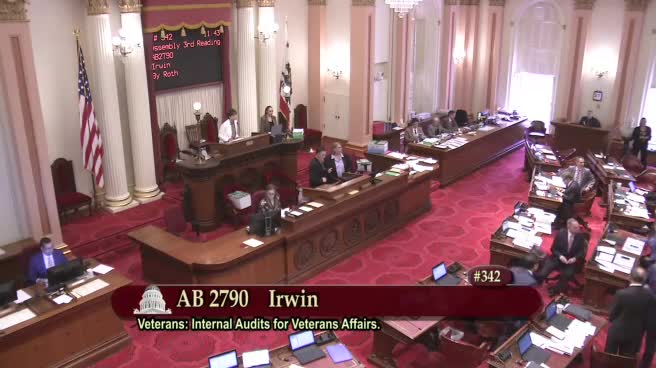 4MIN
Senate Floor
 1H
Senate Standing Committee on Appropriations
 4MIN
Senate Standing Committee on Transportation and Housing
 4MIN
Senate Standing Committee on Education
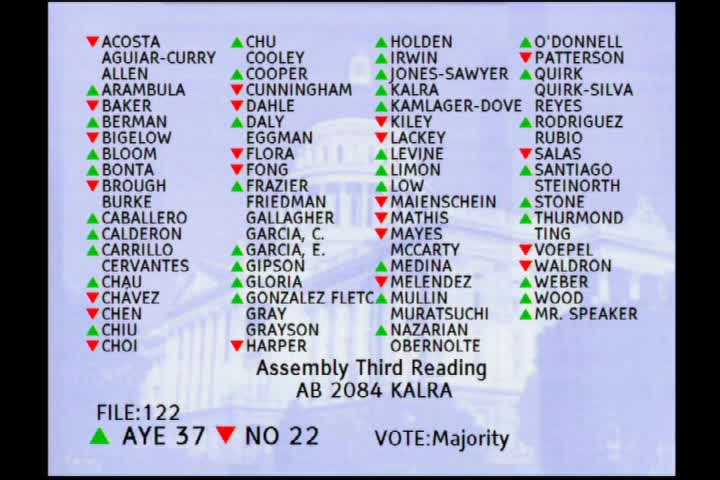 54SEC
Assembly Floor
 1MIN
Assembly Standing Committee on Appropriations
Bill Author

Bill Co-Author(s):