AB 3186: Public postsecondary education: University of California: California Community Colleges: competitive bidding: best value.
- Session Year: 2017-2018
- House: Assembly
- Latest Version Date: 2018-09-23
Existing law establishes the University of California, under the administration of the Regents of the University of California, and the California Community Colleges, under the administration of the Board of Governors of the California Community College, as 2 of the segments of public postsecondary education in this state. Existing law establishes community college districts, administered by governing boards, throughout the state, to provide instruction to students.
Existing law requires the Regents of the University of California, except as provided, to let all contracts involving an expenditure of more than $100,000 annually for goods and materials or services to the lowest responsible bidder meeting certain specifications, or to reject all bids. Existing law requires the governing board of any community college district to let specified contracts involving an expenditure of more than $50,000 to the lowest responsible bidder meeting certain specifications, or else reject all bids. Existing law, until January 1, 2019, provides that the bid evaluation and selection for these contracts may be determined by the best value for the University of California or the community college district, as specified. Existing law makes a violation of these provisions relating to the University of California a crime. Existing law provides for the University of California and the California Community Colleges to report to the Legislative Analyst regarding the use of best value procurement, and requires the Legislative Analyst to report to the Legislature in this regard by February 1, 2018.
This bill would delete the January 1, 2019, repeal date applicable to best value procurement authority, thereby extending operation of these provisions indefinitely and would delete the references to the reports described above regarding use of best value procurement by the University of California and community college districts. By extending these provisions relating to the University of California indefinitely, the bill would expand an existing crime, thereby imposing a state-mandated local program.
The California Constitution requires the state to reimburse local agencies and school districts for certain costs mandated by the state. Statutory provisions establish procedures for making that reimbursement.
This bill would provide that no reimbursement is required by this act for a specified reason.
(a)As provided for in this article, when the University of California determines that it can expect long-term savings through the use of life-cycle cost methodology, the use of more sustainable goods and materials, and reduced administrative costs, the lowest responsible bidder may be selected on the basis of the best value to the university. In order to implement this method of selection, the Regents of the University of California shall adopt and publish policies and guidelines for evaluating bidders that ensure that best value selections by the university are conducted in a fair and impartial manner. These policies and guidelines shall conform to the requirements of subdivisions (c) and (d) and shall be applicable to the university when using best value as the bid evaluation methodology.
(b)For the purposes of this section, the following definitions apply:
(1)Best value means the most advantageous balance of price, quality, service, performance, and other elements, as defined by the university, achieved through methods in accordance with this section and determined by objective performance criteria that may include price, features, long-term functionality, life-cycle costs, overall sustainability, and required services.
(2)Best value agreement means an agreement entered into pursuant to the provisions of this section.
(3)Best value awardee means the lowest responsible bidder or bidders that are awarded an agreement for goods, materials, or services that was awarded through the use of best value for the bid evaluation methodology.
(4)Best value criteria means those criteria set forth in subdivision (d).
(5)University means all current campuses and locations of the University of California, including the medical centers, the national laboratories, and any future University of California campuses and locations.
(c)(1)The university shall consider all of the following when adopting policies and guidelines pursuant to subdivision (a):
(A)Price and service proposals that reduce the universitys overall operating costs.
(B)Supply and material standards that support the universitys strategic sourcing initiatives.
(C)A procedure for bid protest and resolution.
(2)The university shall award a best value agreement as follows:
(A)The university shall evaluate bidders based solely upon the best value criteria set forth in the solicitation documents. Solicitation for bids shall describe the best value criteria that the university will consider in evaluating the bidders by overall category and by specific attributes.
(B)The university shall award the agreement to the lowest responsible bidder or bidders whose bid or bids are determined by the university to be the best value in terms of price, quality, service, and performance, and that meet the universitys requirements.
(C)Bid participants that are not awarded a best value agreement shall be notified in writing at the end of the agreement award process.
(d)For the purposes of this section, the university may take into consideration any of the following best value criteria when awarding a best value agreement for goods, materials, and services:
(1)The total cost to the university of its use or consumption of goods, materials, and services.
(2)The operational cost or benefit incurred by the university as a result of a contract award.
(3)The added value to the university, as defined in the request for proposal, of vendor-added services.
(4)The quality and effectiveness of goods, materials, and services.
(5)The use of more sustainable goods and materials in the manufacturing of the goods and materials and the packaging of these products.
(6)The reliability and timeliness of delivery and installation.
(7)The terms and conditions of product warranties, maintenance, and vendor guarantees.
(8)The vendors quality assurance, continuous improvement, and business resumption programs and their benefit to the university.
(9)The vendors experience with the timely provision of goods, materials, and services.
(10)The consistency of quality and availability of the vendors proposed supplies, materials, and services with the universitys overall procurement program.
(11)The economic benefits to the local community, including, but not limited to, job creation or retention and the support of small and local businesses.
(e)The university shall ensure that all businesses have a fair and equitable opportunity to compete for, and participate in, the university best value bids and shall also ensure that discrimination in the award and performance of the agreement does not occur on the basis of gender, marital status, ancestry, medical condition, or any characteristic listed or defined in Section 11135 of the Government Code, or retaliation for having filed a discrimination complaint or protest in the performance of university contractual obligations.
(f)This section applies solely to the procurement of goods, materials, or services and shall not apply to construction contracts.
(g)Except as otherwise provided in this article, this article is not intended to change in any manner any guideline, criteria, procedure, or requirement of the Regents of the University of California to let any contract for goods, materials, or services to the lowest responsible bidder meeting certain specifications or to reject all bids.
SEC. 2.Section 20651.7 of the Public Contract Code is amended to read:20651.7.(a)For the purposes of bid evaluation and selection pursuant to subdivision (a) of Section 20651, when a community college district determines that it can expect long-term savings through the use of life-cycle cost methodology, the use of more sustainable goods and materials, and reduced administrative costs, the community college district may provide for the selection of the lowest responsible bidder on the basis of best value pursuant to policies and procedures adopted by the governing board in accordance with this section.
(b)For purposes of this section, best value means the most advantageous balance of price, quality, service, performance, and other elements, as defined by the governing board, achieved through methods in accordance with this section and determined by objective performance criteria that may include price, features, long-term functionality, life-cycle costs, overall sustainability, and required services.
(c)A community college district shall consider all of the following when adopting best value policies pursuant to subdivision (a):
(1)Price and service level proposals that reduce the districts overall operating costs, including end-of-life expenditures and impact.
(2)Equipment, services, supplies, and materials standards that support the community college districts strategic acquisition and management program direction.
(3)A procedure for protest and resolution.
(d)A community college district may consider any of the following factors if adopting policies and procedures pursuant to subdivision (c):
(1)The total cost to the community college district of its purchase, use, and consumption of equipment, supplies, and materials.
(2)The operational cost or benefit incurred by the community college district as a result of a contract award.
(3)The added value to the community college district, as defined in the request for proposal, of vendor-added services.
(4)The quality and effectiveness of equipment, supplies, materials, and services.
(5)The reliability of delivery and installation schedules.
(6)The terms and conditions of product warranties and vendor guarantees.
(7)The financial stability of the vendor.
(8)The vendors quality assurance program.
(9)The vendors experience with the provisions of equipment, supplies, materials, and services within the institutional marketplace.
(10)The consistency of the vendors proposed equipment, supplies, materials, and services with the districts overall supplies and materials procurement program.
(11)The economic benefits to the local community, including, but not limited to, job creation and retention.
(12)The environmental benefits to the local community.
(e)A community college district awarding a contract under this section shall award a contract to the lowest responsible bidder whose proposal is determined, in writing by the community college district, to be the best value to the community college district based solely on the criteria set forth in the request for proposal.
(f)The governing board of a community college district shall issue a written notice of intent to award supporting its contract award and stating in detail the basis of the award. The notice of the intent to award and the contract file must be sufficient to satisfy an external audit.
(g)The governing board of a community college district shall publicly announce its award, identifying the bidder to which the award is made, the price proposal of the contractor awarded the contract, and the overall combined rating on the request for proposal evaluation factors. The announcement shall also include the ranking of the contractor awarded the contract in relation to all other responsive bidders and their respective price proposals and summary of the rationale for the contract award.
(h)The community college district shall ensure that all businesses have a fair and equitable opportunity to compete for, and participate in, district contracts and shall also ensure that discrimination, as described in subdivision (e) of Section 12751.3 of the Public Utilities Code, in the award and performance of contracts does not occur.
SEC. 3.No reimbursement is required by this act pursuant to Section 6 of Article XIIIB of the California Constitution because the only costs that may be incurred by a local agency or school district will be incurred because this act creates a new crime or infraction, eliminates a crime or infraction, or changes the penalty for a crime or infraction, within the meaning of Section 17556 of the Government Code, or changes the definition of a crime within the meaning of Section 6 of Article XIIIB of the California Constitution.
(a)As provided for in this article, when the University of California determines that it can expect long-term savings through the use of life-cycle cost methodology, the use of more sustainable goods and materials, and reduced administrative costs, the lowest responsible bidder may be selected on the basis of the best value to the university. In order to implement this method of selection, the Regents of the University of California shall adopt and publish policies and guidelines for evaluating bidders that ensure that best value selections by the university are conducted in a fair and impartial manner. These policies and guidelines shall conform to the requirements of subdivisions (c) and (d) and shall be applicable to the university when using best value as the bid evaluation methodology.
(b)For the purposes of this section, the following definitions apply:
(1)Best value means the most advantageous balance of price, quality, service, performance, and other elements, as defined by the university, achieved through methods in accordance with this section and determined by objective performance criteria that may include price, features, long-term functionality, life-cycle costs, overall sustainability, and required services.
(2)Best value agreement means an agreement entered into pursuant to the provisions of this section.
(3)Best value awardee means the lowest responsible bidder or bidders that are awarded an agreement for goods, materials, or services that was awarded through the use of best value for the bid evaluation methodology.
(4)Best value criteria means those criteria set forth in subdivision (d).
(5)University means all current campuses and locations of the University of California, including the medical centers, the national laboratories, and any future University of California campuses and locations.
(c)(1)The university shall consider all of the following when adopting policies and guidelines pursuant to subdivision (a):
(A)Price and service proposals that reduce the universitys overall operating costs.
(B)Supply and material standards that support the universitys strategic sourcing initiatives.
(C)A procedure for bid protest and resolution.
(2)The university shall award a best value agreement as follows:
(A)The university shall evaluate bidders based solely upon the best value criteria set forth in the solicitation documents. Solicitation for bids shall describe the best value criteria that the university will consider in evaluating the bidders by overall category and by specific attributes.
(B)The university shall award the agreement to the lowest responsible bidder or bidders whose bid or bids are determined by the university to be the best value in terms of price, quality, service, and performance, and that meet the universitys requirements.
(C)Bid participants that are not awarded a best value agreement shall be notified in writing at the end of the agreement award process.
(d)For the purposes of this section, the university may take into consideration any of the following best value criteria when awarding a best value agreement for goods, materials, and services:
(1)The total cost to the university of its use or consumption of goods, materials, and services.
(2)The operational cost or benefit incurred by the university as a result of a contract award.
(3)The added value to the university, as defined in the request for proposal, of vendor-added services.
(4)The quality and effectiveness of goods, materials, and services.
(5)The use of more sustainable goods and materials in the manufacturing of the goods and materials and the packaging of these products.
(6)The reliability and timeliness of delivery and installation.
(7)The terms and conditions of product warranties, maintenance, and vendor guarantees.
(8)The vendors quality assurance, continuous improvement, and business resumption programs and their benefit to the university.
(9)The vendors experience with the timely provision of goods, materials, and services.
(10)The consistency of quality and availability of the vendors proposed supplies, materials, and services with the universitys overall procurement program.
(11)The economic benefits to the local community, including, but not limited to, job creation or retention and the support of small and local businesses.
(e)The university shall ensure that all businesses have a fair and equitable opportunity to compete for, and participate in, the university best value bids and shall also ensure that discrimination in the award and performance of the agreement does not occur on the basis of gender, marital status, ancestry, medical condition, or any characteristic listed or defined in Section 11135 of the Government Code, or retaliation for having filed a discrimination complaint or protest in the performance of university contractual obligations.
(f)(1)On or before July 1, 2016, the University of California shall provide the Legislative Analysts Office with a list of the policies and procedures adopted pursuant to subdivision (a). In addition, the university shall also collect and provide the following information to the Legislative Analysts Office for each contract involving an expenditure of more than one hundred thousand dollars ($100,000) for goods, materials, or services that was entered into on or after the effective date of this section:(A)Whether the contract was awarded to the lowest responsible bidder or using best value.(B)A description of the products, commodities, or services as defined in the bid solicitation.(C)The names of the awardee or awardees of the agreement or agreements.(D)The actual volume resulting from the agreements, or estimated volume if the agreements are less than one year old, of all purchases.(E)A description of any written bid protest or protests concerning an aspect of the solicitation, bid, or award of the agreement, including the resolution of the protest.(F)For each contract awarded using best value, the criteria used to evaluate the bids, as well as a summary of the rationale for awarding the contract.(G)For each contract awarded using best value, a summary of any additional economic benefit other than the price of the contract, including an explanation of whether those benefits were realized as expected.(H)For each contract awarded using best value, the university shall identify one or more comparable contracts awarded using the traditional lowest responsible bidder method, including, but not limited to, contracts awarded prior to the adoption of the best value acquisition policies.(2)On or before February 1, 2018, the Legislative Analyst shall report to the Legislature on the use of best value procurement by the University of California. The Legislative Analyst shall use the information provided by the university to report all of the following:(A)An assessment of any benefits or disadvantages of best value acquisition as compared to bids awarded to the lowest responsible bidder.(B)An assessment of whether the use of best value procurement has led to a difference in the number of disputes as compared to contracts awarded using the traditional lowest responsible bidder method.(C)An assessment of the policies adopted by the university pursuant to subdivision (a), as well as an assessment of the performance criteria used by the university to evaluate the bids and the effectiveness of the methodology.(D)A comparison of the overall cost of contracts let under best value acquisition pursuant to this section to similar contracts let under traditional low bid procurement practices.(E)Recommendations as to whether the best value at lowest cost acquisition procurement authority should be continued.(g)(f)This section applies solely to the procurement of goods, materials, or services and shall not apply to construction contracts.
(h)This section shall remain in effect only until January 1, 2019, and as of that date is repealed.(i)(g)Except as otherwise provided in this article, this article is not intended to change in any manner any guideline, criteria, procedure, or requirement of the Regents of the University of California to let any contract for goods, materials, or services to the lowest responsible bidder meeting certain specifications or to reject all bids.
SEC. 2.Section 20651.7 of the Public Contract Code is amended to read:20651.7.(a)For the purposes of bid evaluation and selection pursuant to subdivision (a) of Section 20651, when a community college district determines that it can expect long-term savings through the use of life-cycle cost methodology, the use of more sustainable goods and materials, and reduced administrative costs, the community college district may provide for the selection of the lowest responsible bidder on the basis of best value pursuant to policies and procedures adopted by the governing board in accordance with this section.
(b)For purposes of this section, best value means the most advantageous balance of price, quality, service, performance, and other elements, as defined by the governing board, achieved through methods in accordance with this section and determined by objective performance criteria that may include price, features, long-term functionality, life-cycle costs, overall sustainability, and required services.
(c)A community college district shall consider all of the following when adopting best value policies pursuant to subdivision (a):
(1)Price and service level proposals that reduce the districts overall operating costs, including end-of-life expenditures and impact.
(2)Equipment, services, supplies, and materials standards that support the community college districts strategic acquisition and management program direction.
(3)A procedure for protest and resolution.
(d)A community college district may consider any of the following factors if adopting policies and procedures pursuant to subdivision (c):
(1)The total cost to the community college district of its purchase, use, and consumption of equipment, supplies, and materials.
(2)The operational cost or benefit incurred by the community college district as a result of a contract award.
(3)The added value to the community college district, as defined in the request for proposal, of vendor-added services.
(4)The quality and effectiveness of equipment, supplies, materials, and services.
(5)The reliability of delivery and installation schedules.
(6)The terms and conditions of product warranties and vendor guarantees.
(7)The financial stability of the vendor.
(8)The vendors quality assurance program.
(9)The vendors experience with the provisions of equipment, supplies, materials, and services within the institutional marketplace.
(10)The consistency of the vendors proposed equipment, supplies, materials, and services with the districts overall supplies and materials procurement program.
(11)The economic benefits to the local community, including, but not limited to, job creation and retention.
(12)The environmental benefits to the local community.
(e)A community college district awarding a contract under this section shall award a contract to the lowest responsible bidder whose proposal is determined, in writing by the community college district, to be the best value to the community college district based solely on the criteria set forth in the request for proposal.
(f)The governing board of a community college district shall issue a written notice of intent to award supporting its contract award and stating in detail the basis of the award. The notice of the intent to award and the contract file must be sufficient to satisfy an external audit.
(g)The governing board of a community college district shall publicly announce its award, identifying the bidder to which the award is made, the price proposal of the contractor awarded the contract, and the overall combined rating on the request for proposal evaluation factors. The announcement shall also include the ranking of the contractor awarded the contract in relation to all other responsive bidders and their respective price proposals and summary of the rationale for the contract award.
(h)The community college district shall ensure that all businesses have a fair and equitable opportunity to compete for, and participate in, district contracts and shall also ensure that discrimination, as described in subdivision (e) of Section 12751.3 of the Public Utilities Code, in the award and performance of contracts does not occur.
(i)(1)If a community college district elects to purchase equipment, materials, supplies, and services by contract, let in accordance with this section, the community college district shall submit the following information to the Chancellor of the California Community Colleges on or before January 1, 2016:(A)The community college districts policies adopted pursuant to subdivision (a).(B)An annual list of district procurements for contracts with a brief description of the contract, the winning bid, the cost, and if the contract was done under best value acquisition policies.(C)For a contract awarded under the best value acquisition policies, the bid announcement announcing the bidder to which the award was made, including that bidders scoring rating compared to other bidders, the winning contractors price proposal, the overall combined rating on the request for proposal evaluation factors, a description of the products, commodities, or services sought, and a summary of the rationale for the contract award.(D)For each contract awarded using the best value acquisition policies at least one bid award announcement for a comparably priced contract using the traditional lowest responsible bidder process that specifies the bidder to which the contract was awarded, the amount of the award, and the request for bid for that contract that includes a description of the products, commodities, or services sought for at least one comparably sized contract, to the best value contract being let, awarded pursuant to the traditional lowest responsible bidder process including contracts awarded by the district in the three years prior to the adoption of best value acquisition policies by the district.(E)For contracts awarded using best value, a summary of any additional economic benefit other than the price of the contract obtained, including an explanation of whether these benefits were realized as expected.(F)The total number of bid protests or protests concerning an aspect of the solicitation, bid, or award of the agreement since the district adopted policies pursuant to subdivision (a) and the number of those protests that occurred under best value.(G)A description of any written bid protest or protests concerning an aspect of the solicitation, bid, or award of the agreement including the resolution of the protest for any contract submitted pursuant to this section.(2)The Legislative Analyst shall request the chancellor to provide the information specified in paragraph (1) to the Legislative Analyst on or before July 1, 2016. On or before February 1, 2018, the Legislative Analyst shall report to the Legislature on the use of competitive means for obtaining best value procurement by community college districts. The Legislative Analyst shall use the information provided by the chancellor to report all of the following:(A)A summary of the overall benefits of best value acquisition.(B)A comparison of the overall cost of contracts let under best value acquisition pursuant to this section to similar contracts let under traditional low bid procurement practices.(C)An assessment of any benefits or disadvantages of best value procurement practices as compared to bids awarded to the lowest responsible bidder.(D)An assessment of whether the use of best value procurement has led to a difference in the number of disputes as compared to contracts awarded using the traditional lowest responsible bidder method.(E)An assessment of the policies adopted by the community college districts pursuant to subdivision (a) as well as an assessment of the overall performance criteria used to evaluate the bids and the effectiveness of the methodology.(F)Recommendations as to whether the best value at lowest cost acquisition procurement authority should be continued.(j)This section shall remain in effect only until January 1, 2019, and as of that date is repealed.SEC. 3.No reimbursement is required by this act pursuant to Section 6 of Article XIIIB of the California Constitution because the only costs that may be incurred by a local agency or school district will be incurred because this act creates a new crime or infraction, eliminates a crime or infraction, or changes the penalty for a crime or infraction, within the meaning of Section 17556 of the Government Code, or changes the definition of a crime within the meaning of Section 6 of Article XIIIB of the California Constitution.
|
Date
|
Status
|
|---|---|
| Sep 23, 2018 | Chaptered by Secretary of State - Chapter 725, Statutes of 2018. |
| Sep 23, 2018 | Approved by the Governor. |
| Sep 5, 2018 | Enrolled and presented to the Governor at 3 p.m. |
| Aug 27, 2018 | In Assembly. Ordered to Engrossing and Enrolling. |
| Aug 27, 2018 | Read third time. Passed. Ordered to the Assembly. |
| Aug 17, 2018 | From committee: Do pass. (Ayes 5. Noes 2.) (August 16). |
| Aug 6, 2018 | In committee: Referred to APPR. suspense file. |
| Jun 28, 2018 | From committee: Do pass and re-refer to Com. on APPR. (Ayes 6. Noes 1.) (June 27). Re-referred to Com. on APPR. |
| Jun 13, 2018 | Referred to Com. on ED. |
| May 31, 2018 | In Senate. Read first time. To Com. on RLS. for assignment. |
| May 30, 2018 | Read third time. Passed. Ordered to the Senate. |
| May 25, 2018 | Read second time. Ordered to third reading. |
| May 2, 2018 | In committee: Set, first hearing. Referred to APPR. suspense file. |
| Apr 18, 2018 | From committee: Do pass and re-refer to Com. on APPR. (Ayes 9. Noes 4.) (April 17). Re-referred to Com. on APPR. |
| Apr 3, 2018 | In committee: Set, first hearing. Hearing canceled at the request of author. |
| Mar 12, 2018 | Referred to Com. on HIGHER ED. |
| Feb 17, 2018 | From printer. May be heard in committee March 19. |
| Feb 16, 2018 | Read first time. To print. |
|
Date
|
Description
|
Location
|
Votes
|
|
|---|---|---|---|---|
| Aug 27, 2018 | Assembly 3rd Reading AB3186 Medina By McGuire | Senate Floor |
Passed |
|
| Aug 16, 2018 | Do pass | Senate Standing Committee on Appropriations |
Passed |
|
| Aug 6, 2018 | Placed on suspense file | Senate Standing Committee on Appropriations |
Passed |
|
| Jun 27, 2018 | Do pass, but first be re-referred to the Committee on [Appropriations] | Senate Standing Committee on Education |
Passed |
|
| May 30, 2018 | AB 3186 MEDINA Assembly Third Reading | Assembly Floor |
Passed |
|
| May 25, 2018 | Do pass. | Assembly Standing Committee on Appropriations |
Passed |
|
| Apr 17, 2018 | Do pass and be re-referred to the Committee on [Appropriations] | Assembly Standing Committee on Higher Education |
Passed |
This list shows positions taken on this bill by organizations on the date displayed, which is linked to the original source.
Positions by individuals are not included.
|
Organization
|
Position
|
Date
|
|---|---|---|
| California Community College League | * Support | Apr 17, 2018 |
| California Teachers Association | ** Support | Aug 18, 2018 |
| Catesol | ** Support | Aug 18, 2018 |
| Community College Facility Coalition | * Support | Jun 27, 2018 |
| Education Trust-West | ** Support | Aug 18, 2018 |
| Los Rios Community College District | * Support | Jun 27, 2018 |
| Mccallum Group, Inc. | ** Support | Jun 27, 2018 |
| Quest Diagnostics | * Indeterminate | Apr 17, 2018 |
| The Campaign for College Opportunity | ** Support | Aug 18, 2018 |
| University of California | ** Support | Jun 26, 2018 |
Office of Senate Floor Analyses (916) 651-1520 Fax: (916) 327-4478 | AB |
THIRD READING
Bill No: AB 3186
:
SENATE EDUCATION COMMITTEE: 6-1, 6/27/18
AYES: Allen, Galgiani, Leyva, McGuire, Pan, Vidak
NOES: Wilk
SENATE APPROPRIATIONS COMMITTEE: 5-2, 8/16/18
AYES: Portantino, Beall, Bradford, Hill, Wiener
NOES: Bates, Nielsen
ASSEMBLY FLOOR: 56-21, 5/30/18 - See last page for vote
DIGEST:
This bill authorizes the University of California (UC) and California Community Colleges (CCC) to continue using best value contracting for the procurement of certain goods and services by eliminating the January 1, 2019, repeal date of the program pilot and removing related reporting requirements.
Existing law:
- Requires the Regents of the UC, except as provided, to let all contracts involving an expenditure of more than $100,000 annually for goods and materials or services to the lowest responsible bidder meeting certain specifications, or to reject all bids. (Public Contract Code (PCC) § 10507.8.)
- Requires the governing board of any community college district to let specified contracts involving an expenditure of more than $50,000 to the lowest responsible bidder meeting certain specifications, or else reject all bids. Existing law, until January 1, 2019, provides that the bid evaluation and selection for these contracts may be determined by the best value for the UC or the community college district, as specified. Existing law makes a violation of these provisions relating to the UC a crime. (PCC § 20651.7.)
- Provides for the UC and the CCC to report to the Legislative Analyst regarding the use of best value procurement, and requires the Legislative Analyst to report to the Legislature in this regard by February 1, 2018. (PCC § 10507.8. and 20651.7.)
- Requires a CCC governing board to let any contract involving an expenditure of $50,000 or more for purchase of equipment, materials, supplies repairs and services, other than construction services, to the lowest responsible bidder or to reject all bids. (PCC § 20651)
- Requires that the UC Regents let any contract involving an expenditure of $100,000 or more for purchase of equipment, materials, supplies repairs and services, other than construction services, to the lowest responsible bidder or to reject all bids. (PCC § 10507.7)
- Authorizes University of California (UC) to use best value for construction projects valued over $1 million. (PCC § 10506.4)
This bill authorizes the UC and CCC to continue using best value contracting for the procurement of certain goods and services, by eliminating the January 1, 2019, repeal date of the program pilot and removing related reporting requirements.
Comments
- How it works. According to the Legislative Analyst’s office, when procuring goods and services, the state seeks to promote fair and open competition that is free from bias and favoritism. To this end, statute includes various requirements for the procurement of goods and services, particularly those of significant monetary value. Specifically, statute sets certain monetary thresholds above which agencies generally must use a competitive bidding process to advertise and solicit bids before selecting a vendor. Statute sets the competitive bidding threshold at $50,000 for CCC. Pursuant to statute, CCC’s level is adjusted annually for inflation and is currently at $88,300. Statute sets the threshold for UC at $100,000. Under the best value approach, the state issues a solicitation for proposals. The state then verifies that the bidders are responsible and responsive. The proposals are then evaluated and scored based on cost as well as other criteria. The best value criteria can include factors such as lifetime costs, use of sustainable materials or practices, experience, timeliness, terms and conditions, or economic benefits to the community. The bidder with the highest score (not necessarily the lowest bid) receives the contract. Though not without its draw backs, best value procurement potentially can yield long‑term state savings while avoiding the hassle of hiring vendors unlikely to perform adequately.
This bill proposes to permanently allow UC and CCC to utilize best value contracting for the acquisition of goods and services.
- Legislative Analyst’s Office (LAO) evaluation of UC and CCC best value pilot program. SB 1280 (Pavely, Chapter, statutes of 2012) required community college districts and UC to develop best value policies and report information about contracts procured during the pilot period. It further required the LAO to evaluate the pilots and recommend to the Legislature whether to continue CCC’s and UC’s best value authority after the January 1, 2019 sunset. In its 2017 statutorily required report, “An Evaluation of Best Value Procurement Pilot Programs,” on the use of best value procurement by UC and CCC districts, the LAO finds and recommends the following:
University of California
- Make UC’s best value authority permanent but require UC to include additional best value best practices in its procurement policies.
- Have UC phase out alternative procumbent method.
- UC’s overall procurement policies and specific best value policies are generally reasonable.
- UC’s policies should include some additional guidance about best value best practices to help campuses implement the approach.
- UC generally selected best value vendors using a core set of reasonable evaluation criteria.
- Majority of best value contracts awarded to the lowest bidder.
- Remainder of best value contracts cost more up front but likely have long‑term savings or qualitative benefits.
- Bid protests are rare.
California Community College (CCC) districts
- Extend, rather than make permanent, the CCC pilot program and clarify statute to indicate that consideration of noncost factors in any procurement constitutes participation in the pilot.
- Simplify reporting requirements and require CCC to develop systemwide best value policies to promote the use of best practices among districts.
- No CCC districts participated in the best value pilot program.
This bill’s provisions mirror the LAO recommendation for UC but not for CCC. As noted in the report best value procurement practices at CCC were not adequately vetted for lack of participation in the program and as such the report concludes that the CCC pilot be granted an extension rather than permanency.
FISCAL EFFECT: Appropriation: Fiscal Com.: Local:
According to Senate Appropriations Committee:
- To the extent that UC and community college districts successfully implement best value purchasing and use it more broadly, significant savings could be realized over time. Community college districts did not utilize best value contracting during the pilot program.
- UC indicates that as the use of best value contracting grows with the removal of the sunset date, UC savings will be in the low millions of dollars annually, potentially reaching $10 million to $15 million per year in the future. This estimate assumes that UC saves in the range of two to three percent of the overall contract value for best value procurements. However, UC may incur higher upfront costs to award certain contracts using this procurement method rather than awarding contracts to the lowest bidder. For example, during the pilot program, the best value contracts that UC awarded had upfront costs that, on average, were 16 percent more expensive than those that were awarded based on the lowest cost.
California Teachers Association
CATESOL
Education Trust-West
The Campaign for College Opportunity
OPPOSITION: (Verified 8/17/18)
None received
ASSEMBLY FLOOR: 56-21, 5/30/18
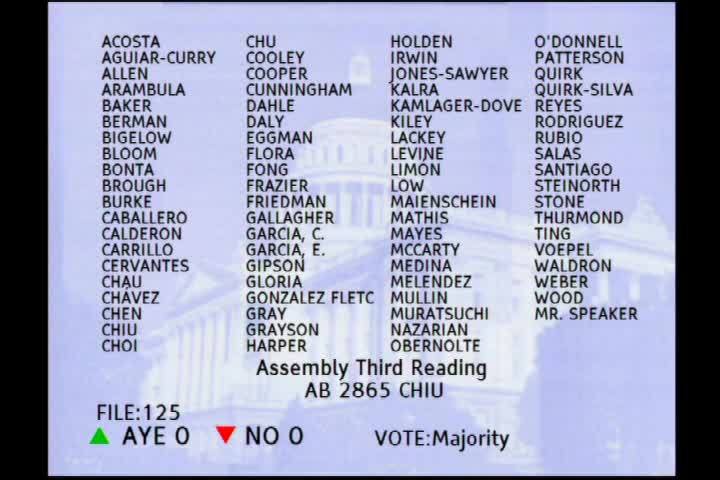
AYES: Aguiar-Curry, Arambula, Berman, Bloom, Bonta, Burke, Caballero, Calderon, Carrillo, Cervantes, Chau, Chiu, Chu, Cooley, Cooper, Daly, Eggman, Frazier, Friedman, Gallagher, Cristina Garcia, Eduardo Garcia, Gipson, Gloria, Gonzalez Fletcher, Gray, Grayson, Holden, Irwin, Jones-Sawyer, Kalra, Kamlager-Dove, Lackey, Levine, Limón, Low, Maienschein, McCarty, Medina, Mullin, Muratsuchi, Nazarian, O'Donnell, Quirk, Quirk-Silva, Reyes, Rodriguez, Rubio, Salas, Santiago, Mark Stone, Thurmond, Ting, Weber, Wood, Rendon
NOES: Acosta, Travis Allen, Baker, Bigelow, Brough, Chávez, Chen, Choi, Cunningham, Dahle, Flora, Fong, Harper, Kiley, Mathis, Mayes, Melendez, Obernolte, Steinorth, Voepel, Waldron
NO VOTE RECORDED: Patterson
8/18/18 14:56:58
**** END ****
SENATE COMMITTEE ON APPROPRIATIONS
Senator Anthony Portantino, Chair
2017 - 2018 Regular Session
AB 3186 (Medina) - Public postsecondary education: University of California: California Community Colleges: competitive bidding: best value
Version: February 16, 2018 | Policy Vote: ED. 6 - 1 |
Urgency: No | Mandate: Yes |
Hearing Date: August 6, 2018 | Consultant: Lenin Del Castillo |
This bill meets the criteria for referral to the Suspense File.
Bill Summary:
This bill allows the University of California (UC) and the California Community Colleges to continue using best value (BV) contracting for the procurement of certain goods and services by eliminating the January 1, 2019 repeal date of the program pilot and removing related reporting requirements.
Fiscal Impact:
- To the extent that UC and community college districts successfully implement BV purchasing and use it more broadly, significant savings could be realized over time. Community college districts did not utilize BV contracting during the pilot program.
- UC indicates that as the use of BV contracting grows with the removal of the sunset date, UC savings will be in the low millions of dollars annually, potentially reaching $10 million to $15 million per year in the future. This estimate assumes that UC saves in the range of two to three percent of the overall contract value for BV procurements. However, UC may incur higher upfront costs to award certain contracts using this procurement method rather than awarding contracts to the lowest bidder. For example, during the pilot program, the BV contracts that UC awarded had upfront costs that, on average, were 16 percent more expensive than those that were awarded based on the lowest cost.
Background:
Existing law provides that when procuring goods and services, the state seeks to promote fair and open competition that is free from bias and favoritism. Existing law includes various requirements for the procurement of goods and services, particularly those of significant monetary value. Specifically, the law sets certain monetary thresholds above which agencies generally must use a competitive bidding process to advertise and solicit bids before selecting a vendor. Statute sets the competitive bidding threshold at $50,000 for the California Community Colleges. This level is adjusted annually for inflation and is currently at $88,300. Statute sets the threshold for UC at $100,000. Under the best value approach, the state issues a solicitation for proposals. The state then verifies that the bidders are responsible and responsive. The proposals are then evaluated and scored based on cost as well as other criteria. The best value criteria can include factors such as lifetime costs, use of sustainable materials or practices, experience, timeliness, terms and conditions, or economic benefits to the community. The bidder with the highest score (not necessarily the lowest bid) receives the contract.
Existing law, until January 1, 2019, provides that the bid evaluation and selection for these contracts may be determined by the BV for the UC or the community college district, as specified. Existing law makes a violation of these provisions relating to the UC a crime.
Existing law provides for the UC and the CCC to report to the Legislative Analyst regarding the use of best value procurement, and requires the Legislative Analyst to report to the Legislature in this regard by February 1, 2018.
Proposed Law:
This bill allows, for the procurement of certain goods and services, the UC and California Community Colleges (CCC) to continue using best value contracting for goods by eliminating the January 1, 2019, repeal date of the program pilot and removing related reporting requirements.
Related Legislation:
SB 1280 (Pavely, Chapter 708, Statutes of 2012) authorizes, until January 1, 2018, a community college district and the UC to let any contract for expenditures greater than $50,000 and $100,000, respectively, for the purchase of supplies and materials in accordance with “best value” policies.
-- END --
SENATE COMMITTEE ON EDUCATION
Senator Benjamin Allen, Chair
2017 - 2018 Regular
Bill No: Hearing Date: June 27, 2018
Author: | Medina | ||
Version: |
| ||
Urgency: | Fiscal: | ||
Consultant: | |||
Subject:
SUMMARY
This bill allows, for the procurement of certain goods and services, the University of California (UC) and California Community Colleges (CCC) to continue using best value contracting for goods by eliminating the January 1, 2019, repeal date of the program pilot and removing related reporting requirements.
BACKGROUND
Existing law:
- Requires the Regents of the UC, except as provided, to let all contracts involving an expenditure of more than $100,000 annually for goods and materials or services to the lowest responsible bidder meeting certain specifications, or to reject all bids. (Public Contract Code (PCC) § 10507.8.)
- Requires the governing board of any community college district to let specified contracts involving an expenditure of more than $50,000 to the lowest responsible bidder meeting certain specifications, or else reject all bids. Existing law, until January 1, 2019, provides that the bid evaluation and selection for these contracts may be determined by the best value for the UC or the community college district, as specified. Existing law makes a violation of these provisions relating to the UC a crime. (PCC § 20651.7.)
- Provides for the UC and the CCC to report to the Legislative Analyst regarding the use of best value procurement, and requires the Legislative Analyst to report to the Legislature in this regard by February 1, 2018. (PCC § 10507.8. and 20651.7.)
- Requires a CCC governing board to let any contract involving an expenditure of $50,000 or more for purchase of equipment, materials, supplies repairs and services, other than construction services, to the lowest responsible bidder or to reject all bids. (PCC § 20651)
- Requires that the UC Regents let any contract involving an expenditure of $100,000 or more for purchase of equipment, materials, supplies repairs and services, other than construction services, to the lowest responsible bidder or to reject all bids. (PCC § 10507.7)
- Authorizes University of California (UC) to use best value for construction projects valued over $1 million. (PCC § 10506.4)
- Authorizes school districts to consider, in addition to price, factors such as vendor financing, performance reliability, standardization, life-cycle costs, delivery timetables, support logistics, the broadest possible range of competing products and materials available, fitness of purchase, manufacturer’s warranties, and similar factors in the award of contracts for technology, telecommunications, related equipment, software, and services, in recognition of the highly specialized and unique nature of these items and services, and the rapid technological changes they undergo. Existing law specifically limits this authority to the procurement of this type of equipment and prohibits its application to contracts for construction or the procurement of any product available in substantial quantities to the general public. (PCC § 20118.2.)
- Authorizes Municipal Utility Districts to let contracts for the purchase of supplies and materials in excess of $50,000 in accordance with “best value at the lowest cost acquisition” policies adopted by the local governing board and outlines specific elements to be included in these policies. (Public Utilities Code § 12751.3)
ANALYSIS
This bill allows, for the procurement of certain goods and services, the UC and California Community Colleges (CCC) to continue using best value contracting for goods by eliminating the January 1, 2019, repeal date of the program pilot and removing related reporting requirements.
STAFF COMMENTS
- Need for the bill. According to the author, “best value is an alternative to a lowest cost procurement methodology that is increasingly being used by other entities for certain goods and services. According to a study by LAO on prior to the passage of SB 1280 (Pavely), the Sacrament Utility District 6, using the same UC best value procurement practices proposed in this bill, experience $8 million in economic benefits over 13 contracts totaling $27 million dollars. With lowest cost procurement, organizations ironically often pay more over time if the quality of a good or service is poor. Additionally, other factors that were not calculated into the price of the product during the bid evaluation process will increase cost over time. UC estimates that if they were allowed to use best value procurement they would save $3 million annually. Should the program sunset at the end of 2019, UC would no longer be able to use this method of best value selection.”
This bill proposes to permanently allow UC and CCC to utilize best value contracting for the acquisition of goods and services.
- How it works. According to the Legislative Analyst’s office, when procuring goods and services, the state seeks to promote fair and open competition that is free from bias and favoritism. To this end, statute includes various requirements for the procurement of goods and services, particularly those of significant monetary value. Specifically, statute sets certain monetary thresholds above which agencies generally must use a competitive bidding process to advertise and solicit bids before selecting a vendor. Statute sets the competitive bidding threshold at $50,000 for California Community Colleges (CCC). Pursuant to statute, CCC’s level is adjusted annually for inflation and is currently at $88,300. Statute sets the threshold for University of California (UC) at $100,000. Under the best value approach, the state issues a solicitation for proposals. The state then verifies that the bidders are responsible and responsive. The proposals are then evaluated and scored based on cost as well as other criteria. The best value criteria can include factors such as lifetime costs, use of sustainable materials or practices, experience, timeliness, terms and conditions, or economic benefits to the community. The bidder with the highest score (not necessarily the lowest bid) receives the contract. Though not without its draw backs, best value procurement potentially can yield long‑term state savings while avoiding the hassle of hiring vendors unlikely to perform adequately.
- Legislative Analyst’s Office (LAO) evaluation of UC and CCC best value pilot program. SB 1280 (Pavely, Chapter, statutes of 2012) required community college districts and UC to develop best value policies and report information about contracts procured during the pilot period. It further required the LAO to evaluate the pilots and recommend to the Legislature whether to continue CCC’s and UC’s best value authority after the January 1, 2019 sunset. In its 2017 statutorily required report, “An Evaluation of Best Value Procurement Pilot Programs,” on the use of best value procurement by UC and CCC districts, the LAO finds and recommends the following:
UC
- Make UC’s best value authority permanent but require UC to include additional best value best practices in its procurement policies.
- Have UC phase out alternative procumbent method.
- UC’s overall procurement policies and specific best value policies are generally reasonable.
- UC’s policies should include some additional guidance about best value best practices to help campuses implement the approach.
- UC generally selected best value vendors using a core set of reasonable evaluation criteria.
- Majority of best value contracts awarded to the lowest bidder.
- Remainder of best value contracts cost more up front but likely have long‑term savings or qualitative benefits.
- Bid protests are rare
California Community College (CCC) districts
- Extend, rather than make permanent, the CCC pilot program and clarify statute to indicate that consideration of noncost factors in any procurement constitutes participation in the pilot.
- Simplify reporting requirements and require CCC to develop systemwide best value policies to promote the use of best practices among districts.
- No CCC districts participated in the best value pilot program. CCC provided Legislative Analyst’s Office (LAO), three primary reasons for not reporting the statutorily required information to our office:
- Since none of the districts reported changing procurement practices to use their new best value authority, they believed it was not necessary to report contract information.
- Districts found the reporting requirements too cumbersome, particularly collecting information about past comparable lowest bidder contracts.
- Some districts lacked the staff, expertise, and data systems necessary to compile the required information.
This bill’s provisions mirror the LAO recommendation for UC but not for CCC. Given that CCC districts best value procurement practices were not adequately vetted at CCC for lack of participation as noted in the LAO report and as such performance of best value contracting at CCCs could not be evaluated, the committee may wish to consider extending the sunset rather than making CCC authority permanent.
- Prior legislation.
SB 1280 (Pavely, 2012) authorized, until January 1, 2018, authorizes a CCC district and the UC to let any contract for expenditures greater than $50,000 and $100,000, respectively for the purchase of supplies and materials in accordance with “best value” policies as adopted by the local governing board, and UC Regents, respectively.
SB 1280 (Pavely, 2012) almost identical to AB 2448 (Furutani, 2010) and AB 2550 (Furutani, 2008), with the exception that these bills did not include the provisions regarding the UC. Both bills were vetoed by the Governor whose veto messages read, in pertinent part:
AB 2448 (Furutani, 2010) - This bill is substantially the same as legislation I have vetoed in the past because it may allow subjective methods to govern the bidding process for procurement of supplies and materials, which could be more open to manipulation and abuse in the ultimate bid selection. Such abuse could lead to non-competitive bidding and higher costs to the State's taxpayers and community college students.
AB 2550 (Furutani, 2008) - I support the notion that best value contracting is a reasonable alternative for construction projects which allows projects to be awarded based on a combination of best price and qualifications because construction projects represent a large, long term investment of resources. However, I am concerned that this legislation may allow subjective methods to govern the bidding process for procurement of supplies and materials with a relatively short life cycle, which could be more open to manipulation and abuse in the bid selection process.
SUPPORT
University of California
Community College Facility Coalition
Los Rios Community College District
OPPOSITION
None received
-- END --
ASSEMBLY THIRD READING
ATR Bill Id:AB 3186
Author:(Medina)
As Introduced Ver:February 16, 2018
Majority vote
Committee | Votes | Ayes | Noes |
Higher Education | 9-4 | Medina, Arambula, Bloom, Irwin, Levine, Low, Quirk-Silva, Santiago, Weber | Baker, Chávez, Kiley, Patterson |
Appropriations | 12-3 | Gonzalez Fletcher, Bloom, Bonta, Calderon, Carrillo, Chau, Eggman, Friedman, Eduardo Garcia, Nazarian, Quirk, Reyes | Bigelow, Fong, Obernolte |
SUMMARY: Allows the University of California (UC) and California Community Colleges (CCC) to continue using best value contracting by eliminating the January 1, 2019, repeal date and removing reporting requirements.
FISCAL EFFECT: According to the Assembly Committee on Appropriations, there may be potentially higher General Fund costs to UC of about $2 million annually to award certain contracts using multiple best value variables, instead of awarding contracts to the lowest bidder.
If and when best value becomes used more broadly within UC, the estimated cost savings are in the low millions of dollars annually. Costs to CCC to use best value contracting are unknown because CCC did not use best value during the pilot program. Based on UC's participation, there will likely be higher upfront General Fund costs to CCC of about 16% of contract value, with longer-term cost savings of 2% to 3% percent of total best value contracting annually.
COMMENTS: Need for the bill. According to the author, "AB 3186 seeks to allow the CCC's and UC's to continue using the best value procurement method by eliminating the sunset date. The ability for UC's and CCC's to structure a competitive bid process that recognizes life cycle cost, sustainable characteristics and efficiency in acquisition process will allow them to stretch scarce funds as far as possible by giving them the flexibility to make wise procurement decisions."
Background. SB 1280 (Pavley), Chapter 708, Statutes of 2012, authorized the CCC and the UC to use best value procurement methodology on a pilot basis for five years. The best value procurement methodology pilots allowed CCC and UC to consider non-cost factors, such as quality and experience, when selecting vendors, rather than having to select the lowest-cost bidder. The current statute required CCC and UC to develop best value policies specifically to the procurement of goods, materials or services and report information about contracts produced during the pilot period. The Legislative Analyst Office (LAO) was required to review the pilot program, and that report was issued in December of 2017.
LAO report findings. The LAO's report, titled "An Evaluation of Best Value Procurement Pilot Programs" found that UC considered non-cost factors in the procurement of goods and services before the pilot. Prior to the pilot, UC used an alternative procurement method called "Cost Per Quality Point" (CPQP). During the pilot period, UC continued to use CPQP, using it more frequently than best value. Specifically, CPQP accounted for 42 percent of reported contracts during the period, while best value accounted for 14 percent of such contracts. Though UC did not heavily rely on best value during the pilot period, the LAO believed UC's use of it was reasonable and generally recommended making UC's best value authority permanent.
That LAO's support of UC's use of best value did come with some recommendations. LAO noted that UC to develop a more comprehensive written set of policies that reflect best practices for BV procurement. To promote transparency in procurement, LAO recommended this revised policy should be available on UC's website for the vendor community and public to access. The LAO also recommended that UC phase out the CPQP alternative procurement method.
The LAO also reported that no CCC's chose to participate in the pilot, and thus did not report any findings to LAO. Citing the benefits that best value procurement can have in some cases, the LAO recommended continuing to authorize the CCC to offer best value on a pilot basis.
Prior legislation. SB 1280 (Pavley) Chapter 708, Statutes of 2012, is described above in the "Background" section of this analysis.
SB 1280 was almost identical to AB 2448 (Furutani) of 2010) and AB 2550 (Furutani) of 2008), with the exception that these bills did not include the provisions regarding UC. Both bills were vetoed by the Governor Schwarzenegger, whose veto messages read, in pertinent part:
AB 2448: The bill is substantially the same as legislation I have vetoed in the past because it may allow subjective methods to govern the bidding process for procurement of supplies and materials, which could be more open to manipulation and abuse in the ultimate bid selection. Such abuse could lead to non-competitive bidding and higher costs to the State's taxpayers and community college students.
AB 2550: I support the notion that best value contracting is a reasonable alternative for construction projects which allows projects to be awarded based on a combination of best price and qualifications because construction projects represent a large, long term investment of resources. However, I am concerned that this legislation may allow subjective methods to govern the bidding process for procurement of supplies and materials with a relatively short life cycle, which could be more open to manipulation and abuse in the bid selection process.
Analysis Prepared by: Kevin J. Powers / HIGHER ED. / (916) 319-3960 FN: 0003216
Date of Hearing: May 2, 2018
ASSEMBLY COMMITTEE ON APPROPRIATIONS
Lorena Gonzalez Fletcher, Chair
ABPCA Bill Id:AB 3186
Author:(Medina) – As Introduced Ver:February 16, 2018
Policy Committee: | Higher Education | Vote: | 9 - 4 |
|
| ||
|
|
Urgency: No State Mandated Local Program: Yes Reimbursable: No
SUMMARY: This bill allows, for the procurement of certain goods and services, the University of California (UC) and California Community Colleges (CCC) to continue using best value (BV) contracting for goods by eliminating the January 1, 2019, repeal date of the program pilot and removing reporting requirements.
FISCAL EFFECT:
- Potentially higher General Fund costs to UC of about $2 million annually to award certain contracts using multiple BV variables, instead of awarding contracts to the lowest bidder. (Estimate assumes UC uses BV for 15 projects annually averaging $855,000 each, consistent with the pilot program. During the pilot, the BV contracts UC awarded based on cost and other variables had upfront costs on average 16% more expensive than those that were awarded based on lowest cost.) If and when BV becomes used more broadly within UC, estimated cost savings in the low millions of dollars annually (2% to 3% of total BV contract value).
- Costs to CCC to use BV contracting are unknown because CCC did not use BV during the pilot program. Based on UC’s participation, likely higher upfront General Fund costs to CCC of about 16% of contract value, with longer-term cost savings of 2% to 3% percent of total BV contract value annually.
COMMENTS:
- Lowest Responsible Bidder Versus Best Value Contracting. For contracts over a certain monetary threshold, agencies generally must use a competitive bidding process to advertise and solicit bids before selecting a vendor. The state uses two main competitive bid approaches in these cases: lowest responsible bidder (LBR) and best value (BV).
Under LRB, the state issues a solicitation seeking bidders. The state then verifies the bidders meet the solicitation’s minimum qualifications, but assigns no score to the applications. The state then awards the contract to the qualified bidder offering the lowest price. LRB is best used when the features of the desired good or service are easy to specify and there is little variation in observed quality across vendors. However, LRB can sometimes be an inflexible approach when features or quality of a desired good or service are hard to define or the upfront price does not reflect the longer-term costs.
Under BV, the state issues a solicitation for proposals. Similar to LRB, the state then verifies the bidders meet minimum qualifications. Unlike LRB, the proposals are then evaluated and scored based on cost as well as other criteria. The BV criteria must be specified in the solicitation for proposals and can include factors such as lifetime costs, use of sustainable materials or practices, experience, timeliness, terms and conditions, or economic benefits to the community. The bidder with the highest total score receives the contract.
BV is best used in situations where it is difficult to define up front the quality or features of a good or service to be procured. Although most state procurement has used the LBR approach, the state has allowed certain agencies to use BV for goods and services, including the California Department of Technology and the California State University. BV is best used in situations where it is difficult to define up front the quality or features of a good or service to be procured. While the BV approach and can yield longer-term state savings, upfront costs can be higher. Moreover, procurement staff and customers generally need more intensive training on how to carry out BV procurement successfully, because the process it is more complex than LBR.
- Best Value Pilot Program. SB 1280 (Pavley) Chapter 708, Statutes of 2012, authorized the UC and the CCC to use BV on a pilot basis for five years for goods and services (not construction contracts). The pilot’s authorizing statute required UC and CCC to develop BV policies and report information about contracts produced during the pilot period.
- Best Value Pilot Program Evaluation. The Legislative Analyst’s Office (LAO) issued an evaluation of the pilot program in late 2017.
The evaluation found UC used BV for few purchases during the pilot period and instead used a BV-like approach or LBR more often. The evaluation found that even with BV contracts, the majority of BV contracts were awarded to the lowest bidder. In cases where BV contracts considered various factors, upfront costs were on average 16% more than the lowest bid. The LAO recommended granting permanent authority to UC to use BV, with some modifications. Specifically, it recommended the Legislature require UC to develop more comprehensive policies for BV and phase out its BV-like approach.
The evaluation indicated no CCCs participated in the pilot program The LAO recommended extending the BV pilot for CCC and made additional recommendations, such as requiring CCC to adopt a set of system-wide BV policies.
- Purpose. According to the author:
AB 3186 seeks to allow the CCC’s and UC’s to continue using the best value procurement method by eliminating the sunset date. The ability for UC’s and CCC’s to structure a competitive bid process that recognizes life cycle cost, sustainable characteristics and efficiency in acquisition process will allow them to stretch scarce funds as far as possible by giving them the flexibility to make wise procurement decisions.
Analysis Prepared by: Natasha Collins / APPR. / (916) 319-2081
Date of Hearing: April 17, 2018
ASSEMBLY COMMITTEE ON HIGHER EDUCATION
Jose Medina, Chair
ABPCA Bill Id:AB 3186 (
Author:Medina) – As Introduced Ver:February 16, 2018
SUBJECT: Public postsecondary education: University of California: California Community Colleges: competitive bidding: best value
SUMMARY: Allows the University of California (UC) and California Community Colleges (CCC) to continue using best value contracting by eliminating the January 1, 2019 repeal date and removing reporting requirements.
EXISTING LAW:
- Requires the Regents of the University of California, except as provided, to let all contracts involving an expenditure of more than $100,000 annually for goods and materials or services to the lowest responsible bidder meeting certain specifications, or to reject all bids. (Public Contract Code (PCC) Section 10507.8.)
- Existing law requires the governing board of any community college district to let specified contracts involving an expenditure of more than $50,000 to the lowest responsible bidder meeting certain specifications, or else reject all bids. Existing law, until January 1, 2019, provides that the bid evaluation and selection for these contracts may be determined by the best value for the University of California or the community college district, as specified. Existing law makes a violation of these provisions relating to the University of California a crime. (PCC Section 20651.7.)
- Existing law provides for the University of California and the California Community Colleges to report to the Legislative Analyst regarding the use of best value procurement, and requires the Legislative Analyst to report to the Legislature in this regard by February 1, 2018. (PCC Sections 10507.8. and 20651.7.)
- Requires a CCC governing board to let any contract involving an expenditure of $50,000 or more for purchase of equipment, materials, supplies repairs and services, other than construction services, to the lowest responsible bidder or to reject all bids. (Public Contract Code Section 20651)
- Requires that the UC Regents let any contract involving an expenditure of $100,000 or more for purchase of equipment, materials, supplies repairs and services, other than construction services, to the lowest responsible bidder or to reject all bids. (PCC § 10507.7)
- Authorizes UC to use best value for construction projects valued over $1 million. (PCC Section 10506.4)
- Authorizes school districts to consider, in addition to price, factors such as vendor financing, performance reliability, standardization, life-cycle costs, delivery timetables, support logistics, the broadest possible range of competing products and materials available, fitness of purchase, manufacturer’s warranties, and similar factors in the award of contracts for technology, telecommunications, related equipment, software, and services, in recognition of the highly specialized and unique nature of these items and services, and the rapid technological changes they undergo. Existing law specifically limits this authority to the procurement this type of equipment and prohibits its application to contracts for construction or the procurement of any product available in substantial quantities to the general public. (PCC Section 20118.2.)
- Authorizes Municipal Utility Districts to let contracts for the purchase of supplies and materials in excess of $50,000 in accordance with “best value at the lowest cost acquisition” policies adopted by the local governing board and outlines specific elements to be included in these policies. (Public Utilities Code § 12751.3)
FISCAL EFFECT: Unknown. This bill is keyed fiscal.
COMMENTS: Need for the bill. According to the author, “AB 3186 seeks to allow the CCC’s and UC’s to continue using the best value procurement method by eliminating the sunset date. The ability for UC’s and CCC’s to structure a competitive bid process that recognizes life cycle cost, sustainable characteristics and efficiency in acquisition process will allow them to stretch scarce funds as far as possible by giving them the flexibility to make wise procurement decisions.”
Background. SB 1280 (Pavley) Chapter 708, Statutes of 2012, authorized the CCC and the UC to use best value procurement methodology on a pilot basis for five years. The best value procurement methodology pilots allowed CCC and UC to consider non-cost factors, such as quality and experience, when selecting vendors, rather than having to select the lowest-cost bidder. The current statute required CCC and UC to develop best value policies specifically to the procurement of goods, materials or services and report information about contracts produced during the pilot period. The Legislative Analyst Office (LAO) was required to review the pilot program, and that report was issued in December of 2017.
LAO report findings. The LAO’s report, titled “An Evaluation of Best Value Procurement Pilot Programs” found that UC considered non-cost factors in the procurement of goods and services before the pilot. Prior to the pilot, UC used an alternative procurement method called “Cost Per Quality Point” (CPQP). During the pilot period, UC continued to use CPQP, using it more frequently than best value. Specifically, CPQP accounted for 42 percent of reported contracts during the period, while best value accounted for 14 percent of such contracts. Though UC did not heavily rely on best value during the pilot period, the LAO believed UC’s use of it was reasonable and generally recommended making UC’s best value authority permanent.
That LAO’s support of UC’s use of best value did come with some recommendations. LAO noted that UC to develop a more comprehensive written set of policies that reflect best practices for BV procurement. To promote transparency in procurement, LAO recommended this revised policy should be available on UC’s website for the vendor community and public to access. The LAO also recommended that UC phase out the CPQP alternative procurement method.
The LAO also reported that no CCC’s chose to participate in the pilot, and thus did not report any findings to LAO. Citing the benefits that best value procurement can have in some cases, the LAO recommended continuing to authorize the CCC to offer best value on a pilot basis.
Arguments in support. UC is the sponsor of this legislation, and writes that “…under traditional procurement processes, the University is required to award contracts to the lowest responsible bidder, thereby limiting its consideration to lowest price as the primary factor. Best Value is an alternative procurement methodology that is increasingly being used by other entities for certain types of goods and services where consideration of criteria other than the lowest unit cost would significantly improve the total value of a purchase.
With lowest price procurement methodology, organizations often pay more over time if the quality of a good or service is poor, or if additional factors that were not calculated into the price of a product during the bid evaluation process increase costs over time. These factors include but are not limited to: freight, delivery, maintenance, warranty terms, service, training, energy usage, payment terms and end-of-life disposal costs… The LAO completed their review in December of 2017, concluding that UC had implemented the pilot program effectively – and recommended that the Best Value authority be granted to the University on a permanent basis.
Prior legislation. SB 1280 (Pavley) Chapter 708, Statutes of 2012, is described above in the “Background” section of this analysis.
SB 1280 was almost identical to AB 2448 (Furutani, 2010) and AB 2550 (Furutani, 2008), with the exception that these bills did not include the provisions regarding UC. Both bills were vetoed by the Governor Schwarzenegger, whose veto messages read, in pertinent part:
AB 2448 (Furutani, 2010): This bill is substantially the same as legislation I have vetoed in the past because it may allow subjective methods to govern the bidding process for procurement of supplies and materials, which could be more open to manipulation and abuse in the ultimate bid selection. Such abuse could lead to non-competitive bidding and higher costs to the State's taxpayers and community college students.
AB 2550 (Furutani, 2008): I support the notion that best value contracting is a reasonable alternative for construction projects which allows projects to be awarded based on a combination of best price and qualifications because construction projects represent a large, long term investment of resources. However, I am concerned that this legislation may allow subjective methods to govern the bidding process for procurement of supplies and materials with a relatively short life cycle, which could be more open to manipulation and abuse in the bid selection process.
REGISTERED SUPPORT / OPPOSITION:
Support
Los Rios Community College District
University of California (Sponsor)
Opposition
None on file
Analysis Prepared by: Kevin J. Powers / HIGHER ED. / (916) 319-3960

Bill Author

Bill Co-Author(s):