AB 3209: Property tax: exemption: principal residence: disabled veterans and their unmarried surviving spouses.
- Session Year: 2017-2018
- House: Assembly
- Latest Version Date: 2018-04-30
Existing property tax law, pursuant to the authorization of the California Constitution, provides a disabled veterans property tax exemption for the principal place of residence of a veteran, veteran that is owned by the veteran, the veterans spouse, or the veteran and veterans spouse jointly, if the veteran, because of injury or disease incurred in military service, is blind in both eyes, has lost the use of 2 or more limbs, or is totally disabled, as those terms are defined. Existing law exempts that part of the full value of the residence that does not exceed $100,000, or $150,000, if the veterans household income does not exceed $40,000, adjusted for inflation, as specified. if the veteran is blind in both eyes, has lost the use of 2 or more limbs, or is totally disabled as a result of injury or disease incurred in military. Existing property tax law also exempts property that is owned by, and that constitutes the principal place of residence of, the unmarried surviving spouse of a veteran, as provided. Existing law exempts that part of the full value of the residence that does not exceed $100,000, or $150,000, depending on whether the household income of the veteran or the unmarried surviving spouse of a veteran exceeds $40,000, adjusted for inflation, as specified.
This bill, beginning with the 201920 fiscal year and for each fiscal year thereafter, would fully exempt from taxation the principal residence of a veteran who is totally disabled as a result of injury or disease incurred in military service. would instead exempt the full value of the principal place of residence of a veteran and the unmarried surviving spouse of a veteran.
Existing law requires the state to reimburse local agencies annually for certain property tax revenues lost as a result of any exemption or classification of property for purposes of ad valorem property taxation.
This bill would provide that, notwithstanding those provisions, no appropriation is made and the state shall not reimburse local agencies for property tax revenues lost by them pursuant to the bill.
This bill would take effect immediately as a tax levy.
Existing property tax law, pursuant to the authorization of the California Constitution, provides a disabled veterans property tax exemption for the principal place of residence of a veteran, the veterans spouse, or the veteran and veterans spouse jointly, if the veteran, because of injury or disease incurred in military service, is blind in both eyes, has lost the use of 2 or more limbs, or is totally disabled, as those terms are defined. Existing law exempts that part of the full value of the residence that does not exceed $100,000, or $150,000, if the veterans household income does not exceed $40,000, adjusted for inflation, as specified.
This bill, beginning with the 201920 fiscal year and for each fiscal year thereafter, would fully exempt from taxation the principal residence of a veteran who is totally disabled as a result of injury or disease incurred in military service.
Existing law requires the state to reimburse local agencies annually for certain property tax revenues lost as a result of any exemption or classification of property for purposes of ad valorem property taxation.
This bill would provide that, notwithstanding those provisions, no appropriation is made and the state shall not reimburse local agencies for property tax revenues lost by them pursuant to the bill.
This bill would take effect immediately as a tax levy.
(a)Property that constitutes the principal place of residence of a veteran, that is owned by the veteran, the veterans spouse, or the veteran and the veterans spouse jointly, if the veteran is blind in both eyes, has lost the use of two or more limbs, or if the veteran is totally disabled as a result of injury or disease incurred in military is exempted from taxation on the following: as follows:
(1)(A)On that part of the full value of the residence that does not exceed one hundred thousand dollars ($100,000), as adjusted for the relevant assessment year as provided in subdivision (h), through the 201819 fiscal year.
(1)Except as otherwise provided in paragraph (2), that part of the full value of the residence that does not exceed one hundred thousand dollars ($100,000), as adjusted for the relevant assessment year as provided in subdivision (h), if the veteran is blind in both eyes, has lost the use of two or more limbs, or if the veteran is totally disabled as a result of injury or disease incurred in military service. The(B)The one hundred thousand dollar ($100,000) exemption shall be one hundred fifty thousand dollars ($150,000), as adjusted for the relevant assessment year as provided in subdivision (h), in the case of an eligible veteran whose household income does not exceed the amount of forty thousand dollars ($40,000), as adjusted for the relevant assessment year as provided in subdivision (g).
(2)Beginning with the 201920 fiscal year and for each fiscal year thereafter, the full value of the residence if the veteran is totally disabled as a result of injury or disease incurred in military service. residence.
(b)(1)For purposes of this section, veteran means either of the following:
(A)A person who is serving in or has served in and has been discharged under other than dishonorable conditions from service in the United States Army, Navy, Air Force, Marine Corps, or Coast Guard, and served either in time of war or in time of peace in a campaign or expedition for which a medal has been issued by Congress, or in time of peace and because of a service-connected disability was released from active duty, and who has been determined by the United States Department of Veterans Affairs to be eligible for federal veterans health and medical benefits.
(B)Any person who would qualify as a veteran pursuant to subparagraph (A) except that he or she has, as a result of a service-connected injury or disease, died while on active duty in military service. The United States Department of Veterans Affairs shall determine whether an injury or disease is service connected.
(2)For purposes of this section, property is deemed to be the principal place of residence of a veteran, disabled as described in subdivision (a), who is confined to a hospital or other care facility, if that property would be that veterans principal place of residence were it not for his or her confinement to a hospital or other care facility, provided that the residence is not rented or leased to a third party. For purposes of this paragraph, a family member who resides at the residence is not a third party.
(c)(1)(A)Property that is owned by, and that constitutes the principal place of residence of, the unmarried surviving spouse of a deceased veteran is exempt from taxation on that part of the full value of the residence that does not exceed one hundred thousand dollars ($100,000), as adjusted for the relevant assessment year as provided in subdivision (h), as provided in subparagraph (B), in the case of a veteran who was blind in both eyes, had lost the use of two or more limbs, or was totally disabled provided that either of the following conditions is met:
(A)(i)The deceased veteran during his or her lifetime qualified for the exemption pursuant to subdivision (a), or would have qualified for the exemption under the laws effective on January 1, 1977, except that the veteran died prior to January 1, 1977.
(B)(ii)The veteran died from a disease that was service connected as determined by the United States Department of Veterans Affairs.
(B)The exemption is in the following amounts:
(i)(I)On that part of the full value of the residence that does not exceed one hundred thousand dollars ($100,000), as adjusted for the relevant assessment year as provided in subdivision (h), through the 201819 fiscal year.
The(II)The one hundred thousand dollar ($100,000) exemption shall be one hundred fifty thousand dollars ($150,000), as adjusted for the relevant assessment year as provided in subdivision (h), in the case of an eligible unmarried surviving spouse whose household income does not exceed the amount of forty thousand dollars ($40,000), as adjusted for the relevant assessment year as provided in subdivision (g).
(ii)Beginning with the 201920 fiscal year and for each fiscal year thereafter, the full value of the residence.
(2)Commencing (A)Beginning with the 199495 fiscal year, to the 201819 fiscal year, inclusive, property that is owned by, and that constitutes the principal place of residence of, the unmarried surviving spouse of a veteran as described in subparagraph (B) of paragraph (1) of subdivision (b) is exempt from taxation on that part of the full value of the residence that does not exceed one hundred thousand dollars ($100,000), as adjusted for the relevant assessment year as provided in subdivision (h). The one hundred thousand dollar ($100,000) exemption shall be one hundred fifty thousand dollars ($150,000), as adjusted for the relevant assessment year as provided in subdivision (h), in the case of an eligible unmarried surviving spouse whose household income does not exceed the amount of forty thousand dollars ($40,000), as adjusted for the relevant assessment year as provided in subdivision (g).
(B)Beginning with the 201920 fiscal year and for each fiscal year thereafter, property that is owned by, and that constitutes the principal place of residence of, the unmarried surviving spouse of a veteran described in subparagraph (B) of paragraph (1) of subdivision (b) is exempt from taxation.
(3)Beginning with the 201213 fiscal year and for each fiscal year thereafter, property is deemed to be the principal place of residence of the unmarried surviving spouse of a deceased veteran, who is confined to a hospital or other care facility, if that property would be the unmarried surviving spouses principal place of residence were it not for his or her confinement to a hospital or other care facility, provided that the residence is not rented or leased to a third party. For purposes of this paragraph, a family member who resides at the residence is not a third party.
(d)As used in this section, property that is owned by a veteran or property that is owned by the veterans unmarried surviving spouse includes all of the following:
(1)Property owned by the veteran with the veterans spouse as a joint tenancy, tenancy in common, or as community property.
(2)Property owned by the veteran or the veterans spouse as separate property.
(3)Property owned with one or more other persons to the extent of the interest owned by the veteran, the veterans spouse, or both the veteran and the veterans spouse.
(4)Property owned by the veterans unmarried surviving spouse with one or more other persons to the extent of the interest owned by the veterans unmarried surviving spouse.
(5)That portion of the property of a corporation that constitutes the principal place of residence of a veteran or a veterans unmarried surviving spouse when the veteran, or the veterans spouse, or the veterans unmarried surviving spouse is a shareholder of the corporation and the rights of shareholding entitle one to the possession of property, legal title to which is owned by the corporation. The exemption provided by this paragraph shall be shown on the local roll and shall reduce the full value of the corporate property. Notwithstanding any law or articles of incorporation or bylaws of a corporation described in this paragraph, any reduction of property taxes paid by the corporation shall reflect an equal reduction in any charges by the corporation to the person who, by reason of qualifying for the exemption, made possible the reduction for the corporation.
(e)For purposes of this section, being blind in both eyes means having a visual acuity of 5/200 or less, or concentric contraction of the visual field to 5 degrees or less; losing the use of a limb means that the limb has been amputated or its use has been lost by reason of ankylosis, progressive muscular dystrophies, or paralysis; and being totally disabled means that the United States Department of Veterans Affairs or the military service from which the veteran was discharged has rated the disability at 100 percent or has rated the disability compensation at 100 percent by reason of being unable to secure or follow a substantially gainful occupation.
(f)An exemption granted to a claimant pursuant to this section shall be in lieu of the veterans exemption provided by subdivisions (o), (p), (q), and (r) of Section 3 of Article XIII of the California Constitution and any other real property tax exemption to which the claimant may be entitled. No other real property tax exemption may be granted to any other person with respect to the same residence for which an exemption has been granted pursuant to this section; provided, that if two or more veterans qualified pursuant to this section coown a property in which they reside, each is entitled to the exemption to the extent of his or her interest.
(g)Commencing on January 1, 2002, and for each assessment year thereafter, until January 1, 2018, the household income limit shall be compounded annually by an inflation factor that is the annual percentage change, measured from February to February of the two previous assessment years, rounded to the nearest one-thousandth of 1 percent, in the California Consumer Price Index for all items, as determined by the California Department of Industrial Relations.
(h)Commencing on January 1, 2006, and for each assessment year thereafter, until January 1, 2018, the exemption amounts set forth in subdivisions (a) and (c) shall be compounded annually by an inflation factor that is the annual percentage change, measured from February to February of the two previous assessment years, rounded to the nearest one-thousandth of 1 percent, in the California Consumer Price Index for all items, as determined by the California Department of Industrial Relations.
(i)The amendments made to this section by Chapter 871 of the Statutes of 2016 shall apply for property tax lien dates for the 201718 fiscal year and for each fiscal year thereafter.
SEC. 2.Notwithstanding Section 2229 of the Revenue and Taxation Code, no appropriation is made by this act and the state shall not reimburse any local agency for any property tax revenues lost by it pursuant to this act.
SEC. 3.This act provides for a tax levy within the meaning of Article IV of the California Constitution and shall go into immediate effect.
(a)Property that constitutes the principal place of residence of a veteran, that is owned by the veteran, the veterans spouse, or the veteran and the veterans spouse jointly, is exempted from taxation on on the following:
(1)Except as otherwise provided in paragraph (2), that part of the full value of the residence that does not exceed one hundred thousand dollars ($100,000), as adjusted for the relevant assessment year as provided in subdivision (h), if the veteran is blind in both eyes, has lost the use of two or more limbs, or if the veteran is totally disabled as a result of injury or disease incurred in military service. The one hundred thousand dollar ($100,000) exemption shall be one hundred fifty thousand dollars ($150,000), as adjusted for the relevant assessment year as provided in subdivision (h), in the case of an eligible veteran whose household income does not exceed the amount of forty thousand dollars ($40,000), as adjusted for the relevant assessment year as provided in subdivision (g).
(2)Beginning with the 201920 fiscal year and for each fiscal year thereafter, the full value of the residence if the veteran is totally disabled as a result of injury or disease incurred in military service.
(b)(1)For purposes of this section, veteran means either of the following:
(A)A person who is serving in or has served in and has been discharged under other than dishonorable conditions from service in the United States Army, Navy, Air Force, Marine Corps, or Coast Guard, and served either in time of war or in time of peace in a campaign or expedition for which a medal has been issued by Congress, or in time of peace and because of a service-connected disability was released from active duty, and who has been determined by the United States Department of Veterans Affairs to be eligible for federal veterans health and medical benefits.
(B)Any person who would qualify as a veteran pursuant to subparagraph (A) except that he or she has, as a result of a service-connected injury or disease, died while on active duty in military service. The United States Department of Veterans Affairs shall determine whether an injury or disease is service connected.
(2)For purposes of this section, property is deemed to be the principal place of residence of a veteran, disabled as described in subdivision (a), who is confined to a hospital or other care facility, if that property would be that veterans principal place of residence were it not for his or her confinement to a hospital or other care facility, provided that the residence is not rented or leased to a third party. For purposes of this paragraph, a family member who resides at the residence is not a third party.
(c)(1)Property that is owned by, and that constitutes the principal place of residence of, the unmarried surviving spouse of a deceased veteran is exempt from taxation on that part of the full value of the residence that does not exceed one hundred thousand dollars ($100,000), as adjusted for the relevant assessment year as provided in subdivision (h), in the case of a veteran who was blind in both eyes, had lost the use of two or more limbs, or was totally disabled provided that either of the following conditions is met:
(A)The deceased veteran during his or her lifetime qualified for the exemption pursuant to subdivision (a), or would have qualified for the exemption under the laws effective on January 1, 1977, except that the veteran died prior to January 1, 1977.
(B)The veteran died from a disease that was service connected as determined by the United States Department of Veterans Affairs.
The one hundred thousand dollar ($100,000) exemption shall be one hundred fifty thousand dollars ($150,000), as adjusted for the relevant assessment year as provided in subdivision (h), in the case of an eligible unmarried surviving spouse whose household income does not exceed the amount of forty thousand dollars ($40,000), as adjusted for the relevant assessment year as provided in subdivision (g).
(2)Commencing with the 199495 fiscal year, property that is owned by, and that constitutes the principal place of residence of, the unmarried surviving spouse of a veteran as described in subparagraph (B) of paragraph (1) of subdivision (b) is exempt from taxation on that part of the full value of the residence that does not exceed one hundred thousand dollars ($100,000), as adjusted for the relevant assessment year as provided in subdivision (h). The one hundred thousand dollar ($100,000) exemption shall be one hundred fifty thousand dollars ($150,000), as adjusted for the relevant assessment year as provided in subdivision (h), in the case of an eligible unmarried surviving spouse whose household income does not exceed the amount of forty thousand dollars ($40,000), as adjusted for the relevant assessment year as provided in subdivision (g).
(3)Beginning with the 201213 fiscal year and for each fiscal year thereafter, property is deemed to be the principal place of residence of the unmarried surviving spouse of a deceased veteran, who is confined to a hospital or other care facility, if that property would be the unmarried surviving spouses principal place of residence were it not for his or her confinement to a hospital or other care facility, provided that the residence is not rented or leased to a third party. For purposes of this paragraph, a family member who resides at the residence is not a third party.
(d)As used in this section, property that is owned by a veteran or property that is owned by the veterans unmarried surviving spouse includes all of the following:
(1)Property owned by the veteran with the veterans spouse as a joint tenancy, tenancy in common, or as community property.
(2)Property owned by the veteran or the veterans spouse as separate property.
(3)Property owned with one or more other persons to the extent of the interest owned by the veteran, the veterans spouse, or both the veteran and the veterans spouse.
(4)Property owned by the veterans unmarried surviving spouse with one or more other persons to the extent of the interest owned by the veterans unmarried surviving spouse.
(5)So much That portion of the property of a corporation as that constitutes the principal place of residence of a veteran or a veterans unmarried surviving spouse when the veteran, or the veterans spouse, or the veterans unmarried surviving spouse is a shareholder of the corporation and the rights of shareholding entitle one to the possession of property, legal title to which is owned by the corporation. The exemption provided by this paragraph shall be shown on the local roll and shall reduce the full value of the corporate property. Notwithstanding any law or articles of incorporation or bylaws of a corporation described in this paragraph, any reduction of property taxes paid by the corporation shall reflect an equal reduction in any charges by the corporation to the person who, by reason of qualifying for the exemption, made possible the reduction for the corporation.
(e)For purposes of this section, being blind in both eyes means having a visual acuity of 5/200 or less, or concentric contraction of the visual field to 5 degrees or less; losing the use of a limb means that the limb has been amputated or its use has been lost by reason of ankylosis, progressive muscular dystrophies, or paralysis; and being totally disabled means that the United States Department of Veterans Affairs or the military service from which the veteran was discharged has rated the disability at 100 percent or has rated the disability compensation at 100 percent by reason of being unable to secure or follow a substantially gainful occupation.
(f)An exemption granted to a claimant pursuant to this section shall be in lieu of the veterans exemption provided by subdivisions (o), (p), (q), and (r) of Section 3 of Article XIII of the California Constitution and any other real property tax exemption to which the claimant may be entitled. No other real property tax exemption may be granted to any other person with respect to the same residence for which an exemption has been granted pursuant to this section; provided, that if two or more veterans qualified pursuant to this section coown a property in which they reside, each is entitled to the exemption to the extent of his or her interest.
(g)Commencing on January 1, 2002, and for each assessment year thereafter, the household income limit shall be compounded annually by an inflation factor that is the annual percentage change, measured from February to February of the two previous assessment years, rounded to the nearest one-thousandth of 1 percent, in the California Consumer Price Index for all items, as determined by the California Department of Industrial Relations.
(h)Commencing on January 1, 2006, and for each assessment year thereafter, the exemption amounts set forth in subdivisions (a) and (c) shall be compounded annually by an inflation factor that is the annual percentage change, measured from February to February of the two previous assessment years, rounded to the nearest one-thousandth of 1 percent, in the California Consumer Price Index for all items, as determined by the California Department of Industrial Relations.
(i)The amendments made to this section by the act adding this subdivision Chapter 871 of the Statutes of 2016 shall apply for property tax lien dates for the 201718 fiscal year and for each fiscal year thereafter.
SEC. 2.Notwithstanding Section 2229 of the Revenue and Taxation Code, no appropriation is made by this act and the state shall not reimburse any local agency for any property tax revenues lost by it pursuant to this act.
SEC. 3.This act provides for a tax levy within the meaning of Article IV of the California Constitution and shall go into immediate effect.
|
Date
|
Status
|
|---|---|
| May 25, 2018 | In committee: Held under submission. |
| May 16, 2018 | In committee: Set, first hearing. Referred to APPR. suspense file. |
| May 9, 2018 | From committee: Do pass and re-refer to Com. on APPR. (Ayes 8. Noes 0.) (May 8). Re-referred to Com. on APPR. |
| May 1, 2018 | Re-referred to Com. on V.A. |
| Apr 30, 2018 | Read second time and amended. |
| Apr 26, 2018 | From committee: Amend, and do pass as amended and re-refer to Com. on V.A. (Ayes 10. Noes 0.) (April 23). |
| Apr 16, 2018 | In committee: Set, first hearing. Hearing canceled at the request of author. |
| Mar 15, 2018 | Referred to Coms. on REV. & TAX. and V.A. |
| Feb 17, 2018 | From printer. May be heard in committee March 19. |
| Feb 16, 2018 | Read first time. To print. |
|
Date
|
Description
|
Location
|
Votes
|
|
|---|---|---|---|---|
| May 8, 2018 | Do pass and be re-referred to the Committee on [Appropriations] | Assembly Standing Committee on Veterans Affairs |
Passed |
|
| Apr 23, 2018 | Do pass as amended and be re-referred to the Committee on [Veterans Affairs] | Assembly Standing Committee on Revenue and Taxation |
Passed |
This list shows positions taken on this bill by organizations on the date displayed, which is linked to the original source.
Positions by individuals are not included.
|
Organization
|
Position
|
Date
|
|---|---|---|
| ... | * Support | May 8, 2018 |
| American GI Forum of California | ** Support | May 8, 2018 |
| American Legion Department Of California | ** Support | May 8, 2018 |
| California Association of County Veteran Service Officers | * Support | May 8, 2018 |
| California State Commanderes Veteran Council | ** Support | May 8, 2018 |
| California State Commanders Veterans Council | ** Support | May 7, 2018 |
| Disabled American Veterans | * Support | May 8, 2018 |
| Military Officers Association Of America California Council Of Chapters | ** Support | May 8, 2018 |
Date of Hearing: May 16, 2018
ASSEMBLY COMMITTEE ON APPROPRIATIONS
Lorena Gonzalez Fletcher, Chair
ABPCA Bill Id:AB 3209
Author:(Frazier) – As Amended Ver:April 30, 2018
Policy Committee: | Revenue and Taxation | Vote: | 10 - 0 |
Veterans Affairs | 8 - 0 | ||
|
|
Urgency: No State Mandated Local Program: No Reimbursable: No
SUMMARY:
This bill exempts from property tax the principal residence of any person eligible for the disabled veterans' exemption.
FISCAL EFFECT:
- Annual local property tax revenue loss of $91.1 million starting in 2019-20, resulting in General Fund (GF) costs of approximately $45 million as a result of the Proposition 98 guarantee.
- The state does not reimburse local governments for the property tax revenue loss from the Disabled Veterans’ Exemption. Therefore, this bill will result in significant revenue losses for local governments. According to the Board of Equalization (BOE), the counties with the most Disabled Veterans’ Exemption claims are: San Diego (5,868), Riverside (4,316), Los Angeles (2,770), San Bernardino (2,642), and Sacramento (2,518).
COMMENTS:
- Background and purpose. The Disabled Veterans’ Exemption provides a partial property tax exemption for qualified disabled veterans and their spouses, meaning a portion of their home’s assessed value is not included in the calculation of their property tax liability. Prior to 2006, this exemption was $150,000 for low-income disabled veterans and their spouses and $100,000 for all other qualified households. Beginning in 2006, these amounts were adjusted annually for inflation, and today those exemption amounts are $202,060 for qualified low-income disabled veterans and their spouses and $134,706 for all other qualified households.
According to the author, AB 3209 will help ensure disabled veterans remain in California by providing a significant tax benefit.
- Related Legislation. AB 2254 (Lackey), of the 2017-18 Legislative Session, expands the Disabled Veterans’ Exemption by exempting fully from property tax the personal residence of an eligible disabled veteran or his or her unmarried surviving spouse. AB 2254 is pending in this committee’s Suspense File.
- Recent Legislation. There have been a number of similar efforts to expand the Disabled Veterans’ Exemption:
SB 404 (Stone), of the 2017-18 Legislative Session, provides a full exemption. SB 404 was held on the Senate Appropriations Committee’s Suspense File.
SB 1104 (Stone), of the 2015-16 Legislative Session, would have similarly provided a full exemption. SB 1104 was held on the Senate Appropriations Committee’s Suspense File.
AB 1556 (Mathis), of the 2015-16 Legislative Session, would have increased the exemption amount to $2.1 million of assessed value. AB 1556 was held on this committee’s Suspense File.
SB 1183 (Bates), of the 2015-16 Legislative Session, would have increased the exemption amount to $1 million of assessed value. SB 1183 was held on the Senate Appropriations Committee’s Suspense File.
Analysis Prepared by: Luke Reidenbach / APPR. / (916) 319-2081
Date of Hearing: May 8, 2018
ASSEMBLY COMMITTEE ON VETERANS AFFAIRS
Jacqui Irwin, Chair
ABPCA Bill Id:AB 3209 (
Author:Frazier) – As Amended Ver:April 30, 2018
SUBJECT: Property tax: exemption: principal residence: disabled veterans and their unmarried surviving spouses
SUMMARY: Exempts from property tax the personal residence of a totally disabled veteran, or the unmarried surviving spouse of a totally disabled veteran. Specifically, this bill:
- Exempts the full value of a totally disabled veteran's residence, owned by the veteran, the veteran’s spouse or by both jointly, from the ad valorem property tax.
- Exempts the full value of the personal residence of the unmarried surviving spouse of a totally disabled veteran who is deceased, from the ad valorem property tax.
- Makes other technical and conforming changes to the disabled veterans' property tax provisions.
- Specifies that no appropriation is made and the state will not reimburse local agencies for property tax revenues lost by them pursuant to this bill.
- Takes effect immediately as a tax levy, but applies beginning with fiscal year (FY) 2019-20.
EXISTING LAW:
- Authorizes the Legislature to provide a full or partial exemption from property tax for the home of a veteran who is totally disabled because of injury or disease incurred in military service and, after the veteran's death, to the home of his/her unmarried surviving spouse (called the disabled veterans' exemption). Existing law also extends the exemption to include the unmarried surviving spouse of a person who died as a result of service-connected injuries while on active military duty. (Article XIII, Section 4, California Constitution.)
- Implements the constitutional authorization by providing a flat exemption amount depending on household income. (Revenue and Taxation Code (R&TC) Section 205.5.)
- The "basic" exemption amount is $100,000, adjusted annually for inflation ($134,706 for FY 2018-19).
- The "low-income" exemption amount is $150,000, adjusted annually for inflation ($202,060 for FY 2018-19). The low-income exemption applies if the veteran's household income does not exceed $40,000, adjusted annually for inflation (below $60,490 for FY 2018-19).
- Defines a "totally disabled veteran" as a veteran who has a disability rating at 100% from the United States Department of Veterans Affairs (USDVA), or the military service from which the veteran was discharged, or has a disability compensation rating at 100% because the veteran is unable to secure or follow a substantially gainful occupation.
- Extends the constitutional exemption by statute to the surviving unmarried spouse of a non-100% rated disabled veteran, if the veteran's subsequent death is service-connected, as determined by the USDVA.
- Requires one-time claim filing with the local county assessor to receive the basic exemption.
- Requires annual claim filing to receive the low-income exemption to verify continued income eligibility.
FISCAL EFFECT: The State Board of Equalization (BOE) estimates this bill, as introduced, would result in a statewide annual property tax revenue loss of $91.1 million. Recent amendments expanded the exemption to the surviving spouses of qualifying veterans, but an updated estimate of costs was not available at the time of this analysis.
COMMENTS:
According to the author:
“This measure would provide a significant benefit to those veterans that were seriously injured in service to the nation and to their families. California must recognize the sacrifice of those who served our nation and create opportunities and support for surviving spouses and their families to remain in California. AB 3209 would help ensure our disabled veterans remain in California and that the option of living near medical and base facilities, as well as cemeteries and places of final interment is balanced against the cost of living in California. This bill’s proposed increase to the state’s existing property tax exemption will help our veterans and families remain in our Golden State.”
In its analysis of the bill, the Assembly Committee on Revenue and Taxation provided useful detail on the value of the current exemption and the number of veteran households claiming it:
- Current disabled veterans' exemption amounts – $134,706 and $202,060: For FY 2017-18, the basic exemption applied to a home's assessed value is $134,706. For the low-income exemption (household income below $60,490), the exemption increases to $202,060 of assessed value. For some, the current exemption amounts suffice to provide a full exemption. BOE estimates that about 21% of homes receiving the basic exemption, and 24% of the homes receiving the low-income exemption, are exempt under current levels.
- California's average assessed value versus home price – $394,000 v. $527,800: BOE estimates that for FY 2017-18, the statewide average assessed value of homes receiving the homeowners' exemption was about $394,000. The California Association of Realtors® reports the January 2018 statewide median home price was $527,800.
- Homes receiving the disabled veterans' exemption – 45,000: For FY 2017-18, about 45,000 exemptions were granted to homes owned by eligible disabled veterans or their spouses, with just over 9% of the homes receiving the greater exemption amount for low-income households. To provide a reference point, about 5.1 million homes receive the general homeowners' exemption of $7,000 of assessed value available to any homeowner.
- Counties with the highest number of claimants: The five counties with the greatest number of homes receiving the disabled veterans' exemption in descending order are San Diego, Riverside, Los Angeles, San Bernardino, and Sacramento.
Disability Rating and Compensation by the U.S. Department of Veterans Affairs (USDVA):
Disability ratings are assigned in 10 point increments, from 10 to 100 percent. A 100-percent disabled veteran is very likely going to depend heavily upon disability compensation from the USDVA. The amount of compensation is based on the severity of the disability, and the size of the veteran’s household, including dependent parents. Under current compensation rates, a 100 percent disabled veteran with no spouse or dependents would receive a base monthly compensation of $2973.86, while a 100 percent disabled veteran with a spouse and one child would receive $3,261.10. This is only a base rate, and does not include Special Monthly Compensation (SMC) that may be awarded based on additional needs, including the need for attendance or for a specific disability.
Related legislation:
- AB 2254 (Lackey) would exempt fully from property tax the personal residence for both a totally disabled veteran and the veteran's unmarried surviving spouse. AB 2254 is pending hearing by the Assembly Appropriations Committee.
- SB 404 (Stone) would have similarly provided a full exemption for both parties. SB 404 was held on the Senate Appropriations Committee's Suspense File.
Prior legislation:
- SB 1104 (Stone), of the 2015-16 Legislative Session, would have similarly provided a full exemption for both parties. SB 1104 was held on the Senate Appropriations Committee's Suspense File.
- AB 1556 (Mathis), of the 2015-16 Legislative Session, would have increased the exemption amount to $2.1 million of assessed value to both parties. AB 1556 was held on the Assembly Appropriations Committee's Suspense File.
- SB 1183 (Bates), of the 2015-16 Legislative Session, would have increased the exemption amount to $1 million of assessed value to both parties. SB 1183 was held on the Senate Appropriations Committee’s Suspense File.
REGISTERED SUPPORT / OPPOSITION:
Support
American GI Forum of California
American Legion- Department of California
California Association of County Veterans Service Officers
California State Commanders Veterans Council
Military Officers Association of America- California Council of Chapters
Opposition
None on file.
Analysis Prepared by: Christian Burkin / V.A. / (916) 319-3550
Date of Hearing: April 23, 2018
ASSEMBLY COMMITTEE ON REVENUE AND TAXATION
Autumn R. Burke, Chairwoman
ABPCA Bill Id:AB 3209 (
Author:Frazier) – As Introduced Ver:February 16, 2018
Majority vote. Tax levy. Fiscal committee.
SUBJECT: Property tax: exemption: principal residence: disabled veterans
SUMMARY: Exempts from property tax the personal residence of a totally disabled veteran. Specifically, this bill:
- Exempts the full value of a totally disabled veteran's residence from the ad valorem property tax.
- Retains the existing partial exemption for an unmarried surviving spouse's residence in the amount of $100,000 or $150,000 (for low-income households) of assessed value.
- Makes other technical and conforming changes to the disabled veterans' property tax provisions.
- Specifies that no appropriation is made and the state will not reimburse local agencies for property tax revenues lost by them pursuant to this bill.
- Takes effect immediately as a tax levy, but applies beginning with fiscal year (FY) 2019-20.
EXISTING LAW:
- Authorizes the Legislature to provide a full or partial exemption from property tax for the home of a veteran who is totally disabled because of injury or disease incurred in military service and, after the veteran's death, to the home of his/her unmarried surviving spouse (called the disabled veterans' exemption). Existing law also extends the exemption to include the unmarried surviving spouse of a person who died as a result of service-connected injuries while on active military duty. (Article XIII, Section 4, California Constitution.)
- Implements the constitutional authorization by providing a flat exemption amount depending on household income. (Revenue and Taxation Code (R&TC) Section 205.5.)
- The "basic" exemption amount is $100,000, adjusted annually for inflation ($134,706 for FY 2018-19).
- The "low-income" exemption amount is $150,000, adjusted annually for inflation ($202,060 for FY 2018-19). The low-income exemption applies if the veteran's household income does not exceed $40,000, adjusted annually for inflation (below $60,490 for FY 2018-19).
- Defines a "totally disabled veteran" as a veteran who has a disability rating at 100% from the United States Department of Veterans Affairs (USDVA), or the military service from which the veteran was discharged, or has a disability compensation rating at 100% because the veteran is unable to secure or follow a substantially gainful occupation.
- Extends the constitutional exemption by statute to the surviving unmarried spouse of a non-100% rated disabled veteran, if the veteran's subsequent death is service-connected, as determined by the USDVA.
- Requires one-time claim filing with the local county assessor to receive the basic exemption.
- Requires annual claim filing to receive the low-income exemption to verify continued income eligibility.
FISCAL EFFECT: The State Board of Equalization (BOE) estimates this bill will result in a statewide annual property tax revenue loss of $91.1 million.
COMMENTS:
- The author has provided the following statement in support of this bill:
This measure would provide a significant benefit to those veterans that were seriously injured in service to this nation and to their families. California must recognize the sacrifice of those who served our nation and create opportunities and support for surviving spouses and their families to remain in California. AB 3209 would help ensure our disabled veterans remain in California and that the option of living near medical and base facilities, as well as cemeteries and places of final interment is balanced against the cost of living in California. This bill's proposed increase to the state's exiting property tax exemption will help our veterans and families remain in our Golden State.
- Committee Staff Comments:
- Current disabled veterans' exemption amounts – $134,706 and $202,060: For FY 2017-18, the basic exemption applied to a home's assessed value is $134,706. For the low-income exemption (household income below $60,490), the exemption increases to $202,060 of assessed value. For some, the current exemption amounts suffice to provide a full exemption. BOE estimates that about 21% of homes receiving the basic exemption, and 24% of the homes receiving the low-income exemption, are exempt under current levels.
- California's average assessed value versus home price – $394,000 v. $527,800: BOE estimates that for FY 2017-18, the statewide average assessed value of homes receiving the homeowners' exemption was about $394,000. The California Association of Realtors® reports the January 2018 statewide median home price was $527,800.
- Homes receiving the disabled veterans' exemption – 45,000: For FY 2017-18, about 45,000 exemptions were granted to homes owned by eligible disabled veterans or their spouses, with just over 9% of the homes receiving the greater exemption amount for low-income households. To provide a reference point, about 5.1 million homes receive the general homeowners' exemption of $7,000 of assessed value available to any homeowner.
- Excludes unmarried surviving spouses: This bill does not expand the disabled veterans' exemption from a partial exemption to a full exemption for unmarried surviving spouses. In practical terms, this means that after a 100% disabled veteran dies, the exemption amount on the home would drop from a full exemption to the partial amount of current law, resulting in increased property tax liability for the newly widowed spouse. Also, this means that a spouse of a person who dies on military service active duty (i.e., a non-veteran) will not benefit from a full property tax exemption. Committee staff recommends that this bill be amended to extend its provisions to unmarried surviving spouses.
- The scope of the disabled veterans' exemption: This bill would eliminate only the ad valorem property tax imposed on a disabled veteran's home, but not the direct levies, special taxes, and special assessments that might be due on the property and collected via the annual property tax bill.
- Eliminates annual filing requirements for low-income exemption: This bill provides a full exemption to all eligible disabled veterans regardless of household income, eliminating the need for low-income households to refile annually to verify continued income eligibility.
- The fiscal impact on local governments: Unlike for the homeowners' exemption, the California constitution does not require the state to reimburse property tax revenue recipients for the lost tax revenue resulting from the disabled veterans' exemption. This bill would most significantly impact those local governments in counties that have a large number of eligible disabled veterans and surviving spouses.
- Counties with the highest number of claimants: The five counties with the greatest number of homes receiving the disabled veterans' exemption in descending order are San Diego, Riverside, Los Angeles, San Bernardino, and Sacramento.
- Related legislation:
- AB 2254 (Lackey) would exempt fully from property tax the personal residence for both a totally disabled veteran and the veteran's unmarried surviving spouse. AB 2254 is pending hearing by the Assembly Appropriations Committee.
- SB 404 (Stone) would have similarly provided a full exemption for both parties. SB 404 was held on the Senate Appropriations Committee's Suspense File.
- Prior legislation:
- SB 1104 (Stone), of the 2015-16 Legislative Session, would have similarly provided a full exemption for both parties. SB 1104 was held on the Senate Appropriations Committee's Suspense File.
- AB 1556 (Mathis), of the 2015-16 Legislative Session, would have increased the exemption amount to $2.1 million of assessed value to both parties. AB 1556 was held on the Assembly Appropriations Committee's Suspense File.
- SB 1183 (Bates), of the 2015-16 Legislative Session, would have increased the exemption amount to $1 million of assessed value to both parties. SB 1183 was held on the Senate Appropriations Committee’s Suspense File.
REGISTERED SUPPORT / OPPOSITION:
Support
None on file
Opposition
None on file
Analysis Prepared by: Rose Marie Kinnee / REV. & TAX. / (916) 319-2098
Discussed in Hearing
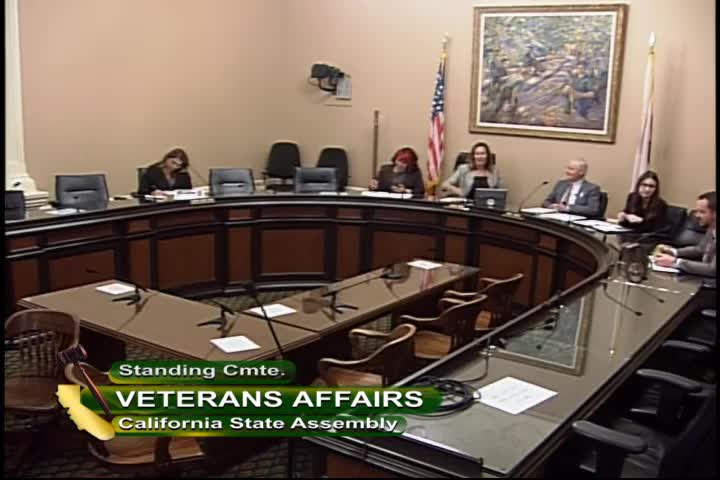 19MIN
Assembly Standing Committee on Veterans Affairs
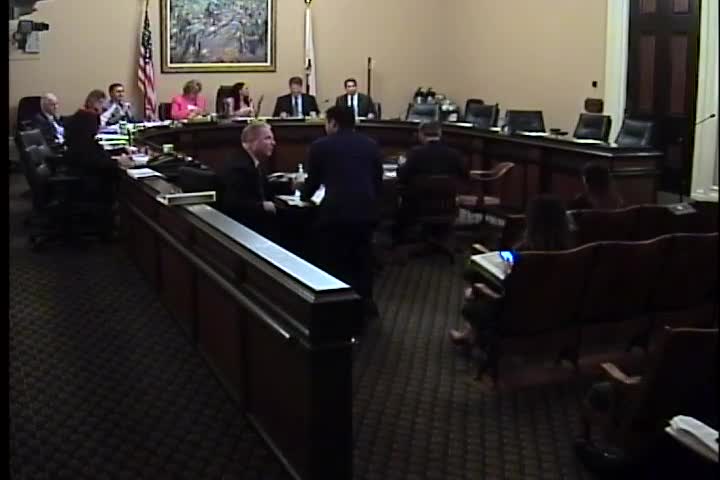 3MIN
Assembly Standing Committee on Revenue and Taxation
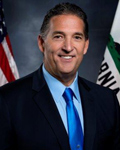
Bill Author
Bill Co-Author(s):