AB 3248: Judiciary omnibus.
- Session Year: 2017-2018
- House: Assembly
- Latest Version Date: 2018-09-18
(1)Existing law continues the parental duty to support an unmarried child who has attained 18 years of age, is a full-time high school student, and who is not self-supporting, until the time the child completes the 12th grade or attains 19 years of age, whichever occurs first.
This bill would excuse a child from the requirement to be a full-time high school student for purposes of these provisions if the child has a medical condition documented by a physician that prevents full-time school attendance.
(2)Existing law provides various procedures for the collection of child support and establishes, within the Department of Child Support Services, the State Disbursement Unit for the collection and disbursement of payments pursuant to support orders. Existing law also provides for the collection of child support by private child support collectors and requires those entities to take specified actions, including establishing a direct deposit account with the State Disbursement Unit and, within 2 business days from the date the funds are disbursed from the State Disbursement Unit to the private child support collector, if a portion of the funds constitute an obligors fee, to notify the department of the portion of each collection that constitutes a fee.
This bill would remove the requirement that a private child support collector establish a direct deposit account with the State Disbursement Unit and would remove the notification requirement. The bill would require any payment required to be made to a family through the State Disbursement Unit to be made directly to the obligee parent in the child support order requiring the payment, a special needs trust for the benefit of the obligee parent, or other specified individuals.
The bill would also remove requirements relating to the transfer of child support collection and distribution functions to the state, including a requirement that all child support collections remaining undisbursed, with interest earned on these funds, be transferred to the department for deposit in the Child Support Payment Trust Fund.
(3)The Uniform Parentage Act authorizes a hearing or trial held under its provisions to be held in closed court without admittance of any person other than those necessary to the action or proceeding. Under the act, all papers and records, other than the final judgment, pertaining to an action or proceeding are subject to inspection and copying only in exceptional cases upon an order of the court for good cause shown, except as specified.
This bill would authorize the papers and records relating to establishing paternity and establishing and enforcing child support orders in a proceeding under the act to be subject to inspection and copying by any local child support agency.
(4)Existing law authorizes a trial court to, by local rule, require the electronic filing and service of documents in civil actions, subject to certain conditions. Existing law exempts, until January 1, 2019, a local child support agency from a trial courts mandatory electronic filing and service requirements, unless the Department of Child Support Services and the local child support agency determine it has the capacity and functionality to comply with those requirements.
This bill would extend the above-described exemption for a local child support agency until January 1, 2021.
Existing law, until July 1, 2019, establishes procedures for conducting mandatory expedited jury trials in limited civil cases, as specified. This bill would remove the repeal date of July 1, 2019, and would extend these provisions indefinitely.Existing law, until July 1, 2019, establishes procedures for conducting mandatory expedited jury trials in limited civil cases, as specified.
This bill would remove the repeal date of July 1, 2019, and would extend these provisions indefinitely.
(a)A document may be served electronically in an action filed with the court as provided in this section, in accordance with rules adopted pursuant to subdivision (e).
(1)For purposes of this section:
(A)Electronic service means service of a document, on a party or other person, by either electronic transmission or electronic notification. Electronic service may be performed directly by a party or other person, by an agent of a party or other person, including the party or other persons attorney, or through an electronic filing service provider.
(B)Electronic transmission means the transmission of a document by electronic means to the electronic service address at or through which a party or other person has authorized electronic service.
(C)Electronic notification means the notification of the party or other person that a document is served by sending an electronic message to the electronic address at or through which the party or other person has authorized electronic service, specifying the exact name of the document served, and providing a hyperlink at which the served document may be viewed and downloaded.
(2)(A)(i)For cases filed on or before December 31, 2018, if a document may be served by mail, express mail, overnight delivery, or facsimile transmission, electronic service of the document is not authorized unless a party or other person has agreed to accept electronic service in that specific action or the court has ordered electronic service on a represented party or other represented person under subdivision (c) or (d).
(ii)For cases filed on or after January 1, 2019, if a document may be served by mail, express mail, overnight delivery, or facsimile transmission, electronic service of the document is not authorized unless a party or other person has expressly consented to receive electronic service in that specific action or the court has ordered electronic service on a represented party or other represented person under subdivision (c) or (d). Express consent to electronic service may be accomplished either by (I) serving a notice on all the parties and filing the notice with the court, or (II) manifesting affirmative consent through electronic means with the court or the courts electronic filing service provider, and concurrently providing the partys electronic address with that consent for the purpose of receiving electronic service. The act of electronic filing shall not be construed as express consent.
(B)If a document is required to be served by certified or registered mail, electronic service of the document is not authorized.
(3)In any action in which a party or other person has agreed or provided express consent, as applicable, to accept electronic service under paragraph (2), or in which the court has ordered electronic service on a represented party or other represented person under subdivision (c) or (d), the court may electronically serve any document issued by the court that is not required to be personally served in the same manner that parties electronically serve documents. The electronic service of documents by the court shall have the same legal effect as service by mail, except as provided in paragraph (4).
(4)(A)If a document may be served by mail, express mail, overnight delivery, or facsimile transmission, electronic service of that document is deemed complete at the time of the electronic transmission of the document or at the time that the electronic notification of service of the document is sent.
(B)Any period of notice, or any right or duty to do any act or make any response within any period or on a date certain after the service of the document, which time period or date is prescribed by statute or rule of court, shall be extended after service by electronic means by two court days, but the extension shall not apply to extend the time for filing any of the following:
(i)A notice of intention to move for new trial.
(ii)A notice of intention to move to vacate judgment under Section 663a.
(iii)A notice of appeal.
(C)This extension applies in the absence of a specific exception provided by any other statute or rule of court.
(5)Any document that is served electronically between 12:00 a.m. and 11:59:59 p.m. on a court day shall be deemed served on that court day. Any document that is served electronically on a noncourt day shall be deemed served on the next court day.
(6)A party or other person who has provided express consent to accept service electronically may withdraw consent at any time by completing and filing with the court the appropriate Judicial Council form. The Judicial Council shall create the form by January 1, 2019.
(7)Consent, or the withdrawal of consent, to receive electronic service may only be completed by a party or other person entitled to service or that persons attorney.
(8)Confidential or sealed records shall be electronically served through encrypted methods to ensure that the documents are not improperly disclosed.
(b)A trial court may adopt local rules permitting electronic filing of documents, subject to rules adopted pursuant to subdivision (e) and the following conditions:
(1)A document that is filed electronically shall have the same legal effect as an original paper document.
(2)(A)When a document to be filed requires the signature of any person, not under penalty of perjury, the document shall be deemed to have been signed by the person who filed the document electronically.
(B)When a document to be filed requires the signature, under penalty of perjury, of any person, the document shall be deemed to have been signed by that person if filed electronically and if either of the following conditions is satisfied:
(i)The person has signed a printed form of the document before, or on the same day as, the date of filing. The attorney or other person filing the document represents, by the act of filing, that the declarant has complied with this section. The attorney or other person filing the document shall maintain the printed form of the document bearing the original signature until final disposition of the case, as defined in subdivision (c) of Section 68151 of the Government Code, and make it available for review and copying upon the request of the court or any party to the action or proceeding in which it is filed.
(ii)The person has signed the document using a computer or other technology pursuant to the procedure set forth in a rule of court adopted by the Judicial Council by January 1, 2019.
(3)Any document received electronically by the court between 12:00 a.m. and 11:59:59 p.m. on a court day shall be deemed filed on that court day. Any document that is received electronically on a noncourt day shall be deemed filed on the next court day.
(4)The court receiving a document filed electronically shall issue a confirmation that the document has been received and filed. The confirmation shall serve as proof that the document has been filed.
(5)Upon electronic filing of a complaint, petition, or other document that must be served with a summons, a trial court, upon request of the party filing the action, shall issue a summons with the court seal and the case number. The court shall keep the summons in its records and may electronically transmit a copy of the summons to the requesting party. Personal service of a printed form of the electronic summons shall have the same legal effect as personal service of an original summons. If a trial court plans to electronically transmit a summons to the party filing a complaint, the court shall immediately, upon receipt of the complaint, notify the attorney or party that a summons will be electronically transmitted to the electronic address given by the person filing the complaint.
(6)The court shall permit a party or attorney to file an application for waiver of court fees and costs, in lieu of requiring the payment of the filing fee, as part of the process involving the electronic filing of a document. The court shall consider and determine the application in accordance with Article 6 (commencing with Section 68630) of Chapter 2 of Title 8 of the Government Code and shall not require the party or attorney to submit any documentation other than that set forth in Article 6 (commencing with Section 68630) of Chapter 2 of Title 8 of the Government Code. Nothing in this section shall require the court to waive a filing fee that is not otherwise waivable.
(7)A fee, if any, charged by the court, an electronic filing manager, or an electronic filing service provider to process a payment for filing fees and other court fees shall not exceed the costs incurred in processing the payment.
(c)If a trial court adopts rules conforming to subdivision (b), it may provide by order that all parties to an action file and serve documents electronically in a class action, a consolidated action, a group of actions, a coordinated action, or an action that is deemed complex under Judicial Council rules, provided that the trial courts order does not cause undue hardship or significant prejudice to any party in the action.
(d)A trial court may, by local rule, require electronic filing and service in civil actions, subject to the requirements and conditions stated in subdivision (b), the rules adopted by the Judicial Council under subdivision (f), and the following conditions:
(1)The court shall have the ability to maintain the official court record in electronic format for all cases where electronic filing is required.
(2)The court and the parties shall have access to more than one electronic filing service provider capable of electronically filing documents with the court or to electronic filing access directly through the court. The court may charge fees of no more than the actual cost of the electronic filing and service of the documents. Any fees charged by an electronic filing service provider shall be reasonable. The court, an electronic filing manager, or an electronic filing service provider shall waive any fees charged if the court deems a waiver appropriate, including in instances where a party has received a fee waiver.
(3)The court shall have a procedure for the filing of nonelectronic documents in order to prevent the program from causing undue hardship or significant prejudice to any party in an action, including, but not limited to, unrepresented parties. The Judicial Council shall make a form available to allow a party to seek an exemption from mandatory electronic filing and service on the grounds provided in this paragraph.
(4)Unrepresented persons are exempt from mandatory electronic filing and service.
(5)Until January 1, 2021, a local child support agency, as defined in subdivision (h) of Section 17000 of the Family Code, is exempt from a trial courts mandatory electronic filing and service requirements, unless the Department of Child Support Services and the local child support agency determine it has the capacity and functionality to comply with the trial courts mandatory electronic filing and service requirements.
(e)The Judicial Council shall adopt uniform rules for the electronic filing and service of documents in the trial courts of the state, which shall include statewide policies on vendor contracts, privacy, and access to public records, and rules relating to the integrity of electronic service. These rules shall conform to the conditions set forth in this section, as amended from time to time.
(f)The Judicial Council shall adopt uniform rules to permit the mandatory electronic filing and service of documents for specified civil actions in the trial courts of the state, which shall include statewide policies on vendor contracts, privacy, access to public records, unrepresented parties, parties with fee waivers, hardships, reasonable exceptions to electronic filing, and rules relating to the integrity of electronic service. These rules shall conform to the conditions set forth in this section, as amended from time to time.
(g)(1)The Judicial Council shall adopt uniform rules to implement this subdivision as soon as practicable, but no later than June 30, 2019.
(2)Any system for the electronic filing and service of documents, including any information technology applications, Internet Web sites, and Web-based applications, used by an electronic service provider or any other vendor or contractor that provides an electronic filing and service system to a trial court, regardless of the case management system used by the trial court, shall satisfy both of the following requirements:
(A)The system shall be accessible to individuals with disabilities, including parties and attorneys with disabilities, in accordance with Section 508 of the federal Rehabilitation Act of 1973 (29 U.S.C. Sec. 794d), as amended, the regulations implementing that act set forth in Part 1194 of Title 36 of the Code of Federal Regulations and Appendices A, C, and D of that part, and the federal Americans with Disabilities Act of 1990 (42 U.S.C. Sec. 12101 et seq.).
(B)The system shall comply with the Web Content Accessibility Guidelines 2.0 at a Level AA success criteria.
(3)A vendor or contractor that provides an electronic filing and service system to a trial court shall comply with paragraph (2) as soon as practicable, but no later than June 30, 2019. Commencing on June 27, 2017, the vendor or contractor shall provide an accommodation to an individual with a disability in accordance with subparagraph (D) of paragraph (4).
(4)A trial court that contracts with an entity for the provision of a system for electronic filing and service of documents shall require the entity, in the trial courts contract with the entity, to do all of the following:
(A)Test and verify that the entitys system complies with this subdivision and provide the verification to the Judicial Council no later than June 30, 2019.
(B)Respond to, and resolve, any complaints regarding the accessibility of the system that are brought to the attention of the entity.
(C)Designate a lead individual to whom any complaints concerning accessibility may be addressed and post the individuals name and contact information on the entitys Internet Web site.
(D)Provide to an individual with a disability, upon request, an accommodation to enable the individual to file and serve documents electronically at no additional charge for any time period that the entity is not compliant with paragraph (2) of this subdivision. Exempting an individual with a disability from mandatory electronic filing and service of documents shall not be deemed an accommodation unless the person chooses that as an accommodation. The vendor or contractor shall clearly state in its Internet Web site that an individual with a disability may request an accommodation and the process for submitting a request for an accommodation.
(5)A trial court that provides electronic filing and service of documents directly to the public shall comply with this subdivision to the same extent as a vendor or contractor that provides electronic filing and services to a trial court.
(6)(A)The Judicial Council shall submit four reports to the appropriate committees of the Legislature relating to the trial courts that have implemented a system of electronic filing and service of documents. The first report is due by June 30, 2018; the second report is due by December 31, 2019; the third report is due by December 31, 2021; and the fourth report is due by December 31, 2023.
(B)The Judicial Councils reports shall include all of the following information:
(i)The name of each court that has implemented a system of electronic filing and service of documents.
(ii)A description of the system of electronic filing and service.
(iii)The name of the entity or entities providing the system.
(iv)A statement as to whether the system complies with this subdivision and, if the system is not fully compliant, a description of the actions that have been taken to make the system compliant.
(7)An entity that contracts with a trial court to provide a system for electronic filing and service of documents shall cooperate with the Judicial Council by providing all information, and by permitting all testing, necessary for the Judicial Council to prepare its reports to the Legislature in a complete and timely manner.
SEC. 2.Section 3901 of the Family Code is amended to read:3901.(a)(1)The duty of support imposed by Section 3900 continues as to an unmarried child who has attained 18 years of age, is a full-time high school student, unless excused pursuant to paragraph (2), and who is not self-supporting, until the time the child completes the 12th grade or attains 19 years of age, whichever occurs first.
(2)A child is excused from the requirement to be a full-time high school student for purposes of paragraph (1) if the child has a medical condition documented by a physician that prevents full-time school attendance.
(b)This section does not limit a parents ability to agree to provide additional support or the courts power to inquire whether an agreement to provide additional support has been made.
SEC. 3.Section 5614 of the Family Code is amended to read:5614.(a)A private child support collector shall do all of the following:
(1)(A)Provide to an obligee all of the following information:
(i)The name of, and any other identifying information relating to, an obligor who made child support payments collected by the private child support collector.
(ii)The amount of support collected by the private child support collector.
(iii)The date on which each amount was received by the private child support collector.
(iv)The date on which each amount received by the private child support collector was sent to the obligee.
(v)The amount of the payment sent to the obligee.
(vi)The source of payment of support collected and the actions affirmatively taken by the private child support collector that resulted in the payment.
(vii)The amount and percentage of each payment kept by the private child support collector as its fee.
(B)The information required by subparagraph (A) shall be made available, at the option of the obligee, by mail, telephone, or via secure Internet access. If provided by mail, the notice shall be sent at least quarterly and, if provided by any other method, the information shall be updated and made available at least monthly. Information accessed by telephone and the Internet shall be up to date.
(2)Maintain records of all child support collections made on behalf of a client who is an obligee. The records required under this section shall be maintained by the private child support collector for the duration of the contract plus a period of four years and four months from the date of the last child support payment collected by the private child support collector on behalf of an obligee. In addition to information required by paragraph (1), the private child support collector shall maintain the following:
(A)A copy of the order establishing the child support obligation under which a collection was made by the private child support collector.
(B)Records of all correspondence between the private child support collector and the obligee or obligor in a case.
(C)Any other pertinent information relating to the child support obligation, including any case, cause, or docket number of the court having jurisdiction over the matter and official government payment records obtained by the private child support collector on behalf of, and at the request of, the obligee.
(3)Safeguard case records in a manner reasonably expected to prevent intentional or accidental disclosure of confidential information pertaining to the obligee or obligor, including providing necessary protections for records maintained in an automated system.
(4)Ensure that every person who contracts with a private child support collector has the right to review all files and documents, both paper and electronic, in the possession of the private child support collector for the information specified in this paragraph regarding that obligees case that are not required by law to be kept confidential. The obligee, during regular business hours, shall be provided reasonable access to and copies of the files and records of the private child support collector regarding all moneys received, collection attempts made, fees retained or paid to the private child support collector, and moneys disbursed to the obligee. The private child support collector may not charge a fee for access to the files and records, but may require the obligee to pay up to three cents ($0.03) per page for the copies prior to their release.
(5)Provide, prior to commencing collection activities, written notice of a contract with an obligee to the local child support agency that is enforcing the obligees support order, if known, or the local child support agency for the county in which the obligee resides as of the time the contract is signed by the obligee. The notice shall identify the obligee, the obligor, and the amount of the arrearage claimed by the obligee.
(b)A private child support collector shall not do any of the following:
(1)Charge fees on current support if the obligee received any current child support during the six months preceding execution of the contract with the private child support collector. A private child support collector shall inquire of the obligee and record the month and year of the last current support payment and may rely on information provided by the obligee in determining whether a fee may be charged on current support.
(2)Improperly retain fees from collections that are primarily attributable to the actions of a governmental entity. The private child support collector shall refund all of those fees to the obligee immediately upon discovery or notice of the improper retention of fees.
(3)Collect or attempt to collect child support by means of conduct that is prohibited of a debt collector collecting a consumer debt under Sections 1788.10 to 1788.16, inclusive, of the Civil Code. This chapter does not modify, alter, or amend the definition of a debt or a debt collector under the Rosenthal Fair Debt Collection Practices Act (Title 1.6C (commencing with Section 1788) of Part 4 of Division 3 of the Civil Code).
(4)Misstate the amount of the fee that may be lawfully paid to the private child support collector for the performance of the contract or the identity of the person who is obligated to pay that fee.
(5)Make a false representation of the amount of child support to be collected. A private child support collector is not in violation of this paragraph if it reasonably relied on sufficient documentation provided by the government entity collecting child support, a court with jurisdiction over the support obligation, or from the obligee, or upon sufficient documentation provided by the obligor.
(6)Ask a party other than the obligor to pay the child support obligation, unless that party is legally responsible for the obligation or is the legal representative of the obligor.
(7)On or after January 1, 2007, require, as a condition of providing services to the obligee, that the obligee waive any right or procedure provided for in state law regarding the right to file and pursue a civil action, or that the obligee agree to resolve disputes in a jurisdiction outside of California or to the application of laws other than those of California, as provided by law. Any waiver by the obligee of the right to file and pursue a civil action, the right to file and pursue a civil action in California, or the right to rely upon California law as provided by law must be knowing, voluntary, and not made a condition of doing business with the private child support collector. Any waiver, including, but not limited to, an agreement to arbitrate or regarding choice of forum or choice of law, that is required as a condition of doing business with the private child support collector, shall be presumed involuntary, unconscionable, against public policy, and unenforceable. The private child support collector has the burden of proving that any waiver of rights, including an agreement to arbitrate a claim or regarding choice of forum or choice of law, was knowing, voluntary, and not made a condition of the contract with the obligee.
SEC. 4.Section 7643 of the Family Code is amended to read:7643.(a)Notwithstanding any other law concerning public hearings and records, a hearing or trial held under this part may be held in closed court without admittance of any person other than those necessary to the action or proceeding. Except as provided in subdivision (b), all papers and records, other than the final judgment, pertaining to the action or proceeding, whether part of the permanent record of the court or of a file in a public agency or elsewhere, are subject to inspection and copying only in exceptional cases upon an order of the court for good cause shown.
(b)(1)Papers and records pertaining to the action or proceeding that are part of the permanent record of the court are subject to inspection and copying by the parties to the action, their attorneys, and by agents acting pursuant to written authorization from the parties to the action or their attorneys. An attorney shall obtain the consent of the party to the action prior to authorizing an agent to inspect and copy the permanent record. An attorney shall also state on the written authorization that he or she has obtained the consent of the party to authorize an agent to inspect and copy the permanent record.
(2)For purposes of establishing parentage and establishing and enforcing child support orders, papers and records pertaining to the action or proceeding that are part of the permanent record of the court are subject to inspection and copying by any local child support agency, as defined in subdivision (h) of Section 17000.
SEC. 5.Section 17311.7 of the Family Code is repealed.SEC. 6.Section 17311.7 is added to the Family Code, to read:17311.7.(a)Any payment required to be made to a family through the State Disbursement Unit shall be made directly to the obligee parent in the child support order requiring the payment, the conservator or guardian of the obligee parent, a special needs trust for the benefit of the obligee parent, the guardian of the person and the estate of the child subject to the order, any caregiver relative having custody or responsibility for the child, pursuant to a written record, or an alternate caregiver to whom the obligee under the child support order directs, in a written record, that payments be made.
(b)For purposes of this section, alternate caregiver means a nonrelative caregiver who is designated in writing by the obligee parent to take care of the child for a limited time.
(a)A document may be served electronically in an action filed with the court as provided in this section, in accordance with rules adopted pursuant to subdivision (e).
(1)For purposes of this section:
(A)Electronic service means service of a document, on a party or other person, by either electronic transmission or electronic notification. Electronic service may be performed directly by a party or other person, by an agent of a party or other person, including the party or other persons attorney, or through an electronic filing service provider.
(B)Electronic transmission means the transmission of a document by electronic means to the electronic service address at or through which a party or other person has authorized electronic service.
(C)Electronic notification means the notification of the party or other person that a document is served by sending an electronic message to the electronic address at or through which the party or other person has authorized electronic service, specifying the exact name of the document served, and providing a hyperlink at which the served document may be viewed and downloaded.
(2)(A)(i)For cases filed on or before December 31, 2018, if a document may be served by mail, express mail, overnight delivery, or facsimile transmission, electronic service of the document is not authorized unless a party or other person has agreed to accept electronic service in that specific action or the court has ordered electronic service on a represented party or other represented person under subdivision (c) or (d).
(ii)For cases filed on or after January 1, 2019, if a document may be served by mail, express mail, overnight delivery, or facsimile transmission, electronic service of the document is not authorized unless a party or other person has expressly consented to receive electronic service in that specific action or the court has ordered electronic service on a represented party or other represented person under subdivision (c) or (d). Express consent to electronic service may be accomplished either by (I) serving a notice on all the parties and filing the notice with the court, or (II) manifesting affirmative consent through electronic means with the court or the courts electronic filing service provider, and concurrently providing the partys electronic address with that consent for the purpose of receiving electronic service. The act of electronic filing shall not be construed as express consent.
(B)If a document is required to be served by certified or registered mail, electronic service of the document is not authorized.
(3)In any action in which a party or other person has agreed or provided express consent, as applicable, to accept electronic service under paragraph (2), or in which the court has ordered electronic service on a represented party or other represented person under subdivision (c) or (d), the court may electronically serve any document issued by the court that is not required to be personally served in the same manner that parties electronically serve documents. The electronic service of documents by the court shall have the same legal effect as service by mail, except as provided in paragraph (4).
(4)(A)If a document may be served by mail, express mail, overnight delivery, or facsimile transmission, electronic service of that document is deemed complete at the time of the electronic transmission of the document or at the time that the electronic notification of service of the document is sent.
(B)Any period of notice, or any right or duty to do any act or make any response within any period or on a date certain after the service of the document, which time period or date is prescribed by statute or rule of court, shall be extended after service by electronic means by two court days, but the extension shall not apply to extend the time for filing any of the following:
(i)A notice of intention to move for new trial.
(ii)A notice of intention to move to vacate judgment under Section 663a.
(iii)A notice of appeal.
(C)This extension applies in the absence of a specific exception provided by any other statute or rule of court.
(5)Any document that is served electronically between 12:00 a.m. and 11:59:59 p.m. on a court day shall be deemed served on that court day. Any document that is served electronically on a noncourt day shall be deemed served on the next court day.
(6)A party or other person who has provided express consent to accept service electronically may withdraw consent at any time by completing and filing with the court the appropriate Judicial Council form. The Judicial Council shall create the form by January 1, 2019.
(7)Consent, or the withdrawal of consent, to receive electronic service may only be completed by a party or other person entitled to service or that persons attorney.
(8)Confidential or sealed records shall be electronically served through encrypted methods to ensure that the documents are not improperly disclosed.
(b)A trial court may adopt local rules permitting electronic filing of documents, subject to rules adopted pursuant to subdivision (e) and the following conditions:
(1)A document that is filed electronically shall have the same legal effect as an original paper document.
(2)(A)When a document to be filed requires the signature of any person, not under penalty of perjury, the document shall be deemed to have been signed by the person who filed the document electronically.
(B)When a document to be filed requires the signature, under penalty of perjury, of any person, the document shall be deemed to have been signed by that person if filed electronically and if either of the following conditions is satisfied:
(i)The person has signed a printed form of the document before, or on the same day as, the date of filing. The attorney or other person filing the document represents, by the act of filing, that the declarant has complied with this section. The attorney or other person filing the document shall maintain the printed form of the document bearing the original signature until final disposition of the case, as defined in subdivision (c) of Section 68151 of the Government Code, and make it available for review and copying upon the request of the court or any party to the action or proceeding in which it is filed.
(ii)The person has signed the document using a computer or other technology pursuant to the procedure set forth in a rule of court adopted by the Judicial Council by January 1, 2019.
(3)Any document received electronically by the court between 12:00 a.m. and 11:59:59 p.m. on a court day shall be deemed filed on that court day. Any document that is received electronically on a noncourt day shall be deemed filed on the next court day.
(4)The court receiving a document filed electronically shall issue a confirmation that the document has been received and filed. The confirmation shall serve as proof that the document has been filed.
(5)Upon electronic filing of a complaint, petition, or other document that must be served with a summons, a trial court, upon request of the party filing the action, shall issue a summons with the court seal and the case number. The court shall keep the summons in its records and may electronically transmit a copy of the summons to the requesting party. Personal service of a printed form of the electronic summons shall have the same legal effect as personal service of an original summons. If a trial court plans to electronically transmit a summons to the party filing a complaint, the court shall immediately, upon receipt of the complaint, notify the attorney or party that a summons will be electronically transmitted to the electronic address given by the person filing the complaint.
(6)The court shall permit a party or attorney to file an application for waiver of court fees and costs, in lieu of requiring the payment of the filing fee, as part of the process involving the electronic filing of a document. The court shall consider and determine the application in accordance with Article 6 (commencing with Section 68630) of Chapter 2 of Title 8 of the Government Code and shall not require the party or attorney to submit any documentation other than that set forth in Article 6 (commencing with Section 68630) of Chapter 2 of Title 8 of the Government Code. Nothing in this section shall require the court to waive a filing fee that is not otherwise waivable.
(7)A fee, if any, charged by the court, an electronic filing manager, or an electronic filing service provider to process a payment for filing fees and other court fees shall not exceed the costs incurred in processing the payment.
(c)If a trial court adopts rules conforming to subdivision (b), it may provide by order that all parties to an action file and serve documents electronically in a class action, a consolidated action, a group of actions, a coordinated action, or an action that is deemed complex under Judicial Council rules, provided that the trial courts order does not cause undue hardship or significant prejudice to any party in the action.
(d)A trial court may, by local rule, require electronic filing and service in civil actions, subject to the requirements and conditions stated in subdivision (b), the rules adopted by the Judicial Council under subdivision (f), and the following conditions:
(1)The court shall have the ability to maintain the official court record in electronic format for all cases where electronic filing is required.
(2)The court and the parties shall have access to more than one electronic filing service provider capable of electronically filing documents with the court or to electronic filing access directly through the court. The court may charge fees of no more than the actual cost of the electronic filing and service of the documents. Any fees charged by an electronic filing service provider shall be reasonable. The court, an electronic filing manager, or an electronic filing service provider shall waive any fees charged if the court deems a waiver appropriate, including in instances where a party has received a fee waiver.
(3)The court shall have a procedure for the filing of nonelectronic documents in order to prevent the program from causing undue hardship or significant prejudice to any party in an action, including, but not limited to, unrepresented parties. The Judicial Council shall make a form available to allow a party to seek an exemption from mandatory electronic filing and service on the grounds provided in this paragraph.
(4)Unrepresented persons are exempt from mandatory electronic filing and service.
(5)Until January 1, 2019, 2021, a local child support agency, as defined in subdivision (h) of Section 17000 of the Family Code, is exempt from a trial courts mandatory electronic filing and service requirements, unless the Department of Child Support Services and the local child support agency determine it has the capacity and functionality to comply with the trial courts mandatory electronic filing and service requirements.
(e)The Judicial Council shall adopt uniform rules for the electronic filing and service of documents in the trial courts of the state, which shall include statewide policies on vendor contracts, privacy, and access to public records, and rules relating to the integrity of electronic service. These rules shall conform to the conditions set forth in this section, as amended from time to time.
(f)The Judicial Council shall adopt uniform rules to permit the mandatory electronic filing and service of documents for specified civil actions in the trial courts of the state, which shall include statewide policies on vendor contracts, privacy, access to public records, unrepresented parties, parties with fee waivers, hardships, reasonable exceptions to electronic filing, and rules relating to the integrity of electronic service. These rules shall conform to the conditions set forth in this section, as amended from time to time.
(g)(1)The Judicial Council shall adopt uniform rules to implement this subdivision as soon as practicable, but no later than June 30, 2019.
(2)Any system for the electronic filing and service of documents, including any information technology applications, Internet Web sites, and Web-based applications, used by an electronic service provider or any other vendor or contractor that provides an electronic filing and service system to a trial court, regardless of the case management system used by the trial court, shall satisfy both of the following requirements:
(A)The system shall be accessible to individuals with disabilities, including parties and attorneys with disabilities, in accordance with Section 508 of the federal Rehabilitation Act of 1973 (29 U.S.C. Sec. 794d), as amended, the regulations implementing that act set forth in Part 1194 of Title 36 of the Code of Federal Regulations and Appendices A, C, and D of that part, and the federal Americans with Disabilities Act of 1990 (42 U.S.C. Sec. 12101 et seq.).
(B)The system shall comply with the Web Content Accessibility Guidelines 2.0 at a Level AA success criteria.
(3)A vendor or contractor that provides an electronic filing and service system to a trial court shall comply with paragraph (2) as soon as practicable, but no later than June 30, 2019. Commencing on June 27, 2017, the vendor or contractor shall provide an accommodation to an individual with a disability in accordance with subparagraph (D) of paragraph (4).
(4)A trial court that contracts with an entity for the provision of a system for electronic filing and service of documents shall require the entity, in the trial courts contract with the entity, to do all of the following:
(A)Test and verify that the entitys system complies with this subdivision and provide the verification to the Judicial Council no later than June 30, 2019.
(B)Respond to, and resolve, any complaints regarding the accessibility of the system that are brought to the attention of the entity.
(C)Designate a lead individual to whom any complaints concerning accessibility may be addressed and post the individuals name and contact information on the entitys Internet Web site.
(D)Provide to an individual with a disability, upon request, an accommodation to enable the individual to file and serve documents electronically at no additional charge for any time period that the entity is not compliant with paragraph (2) of this subdivision. Exempting an individual with a disability from mandatory electronic filing and service of documents shall not be deemed an accommodation unless the person chooses that as an accommodation. The vendor or contractor shall clearly state in its Internet Web site that an individual with a disability may request an accommodation and the process for submitting a request for an accommodation.
(5)A trial court that provides electronic filing and service of documents directly to the public shall comply with this subdivision to the same extent as a vendor or contractor that provides electronic filing and services to a trial court.
(6)(A)The Judicial Council shall submit four reports to the appropriate committees of the Legislature relating to the trial courts that have implemented a system of electronic filing and service of documents. The first report is due by June 30, 2018; the second report is due by December 31, 2019; the third report is due by December 31, 2021; and the fourth report is due by December 31, 2023.
(B)The Judicial Councils reports shall include all of the following information:
(i)The name of each court that has implemented a system of electronic filing and service of documents.
(ii)A description of the system of electronic filing and service.
(iii)The name of the entity or entities providing the system.
(iv)A statement as to whether the system complies with this subdivision and, if the system is not fully compliant, a description of the actions that have been taken to make the system compliant.
(7)An entity that contracts with a trial court to provide a system for electronic filing and service of documents shall cooperate with the Judicial Council by providing all information, and by permitting all testing, necessary for the Judicial Council to prepare its reports to the Legislature in a complete and timely manner.
SEC. 2.Section 3901 of the Family Code is amended to read:3901.(a)(1)The duty of support imposed by Section 3900 continues as to an unmarried child who has attained the age of 18 years, 18 years of age, is a full-time high school student, unless excused pursuant to paragraph (2), and who is not self-supporting, until the time the child completes the 12th grade or attains the age of 19 years, 19 years of age, whichever occurs first.
(2)A child is excused from the requirement to be a full-time high school student for purposes of paragraph (1) if the child has a medical condition documented by a physician that prevents full-time school attendance.
(b)Nothing in this section limits This section does not limit a parents ability to agree to provide additional support or the courts power to inquire whether an agreement to provide additional support has been made.
SEC. 3.Section 5614 of the Family Code is amended to read:5614.(a)A private child support collector shall do all of the following:
(1)(A)Provide to an obligee all of the following information:
(i)The name of, and any other identifying information relating to, any an obligor who made child support payments collected by the private child support collector.
(ii)The amount of support collected by the private child support collector.
(iii)The date on which each amount was received by the private child support collector.
(iv)The date on which each amount received by the private child support collector was sent to the obligee.
(v)The amount of the payment sent to the obligee.
(vi)The source of payment of support collected and the actions affirmatively taken by the private child support collector that resulted in the payment.
(vii)The amount and percentage of each payment kept by the private child support collector as its fee.
(B)The information required by paragraph subparagraph (A) shall be made available, at the option of the obligee, by mail, telephone, or via secure Internet access. If provided by mail, the notice shall be sent at least quarterly and, if provided by any other method, the information shall be updated and made available at least monthly. Information accessed by telephone and the Internet shall be up to date.
(2)Establish a direct deposit account with the state disbursement unit and shall within two business days from the date the funds are disbursed from the state disbursement unit to the private child support collector, if a portion of the funds constitute an obligors fee, notify the Department of Child Support Services of the portion of each collection that constitutes a fee. The notification shall be sent by the private child support collector to the department in an electronic format to be determined by the department.(3)(2)Maintain records of all child support collections made on behalf of a client who is an obligee. The records required under this section shall be maintained by the private child support collector for the duration of the contract plus a period of four years and four months from the date of the last child support payment collected by the private child support collector on behalf of an obligee. In addition to information required by paragraph (1), the private child support collector shall maintain the following:
(A)A copy of the order establishing the child support obligation under which a collection was made by the private child support collector.
(B)Records of all correspondence between the private child support collector and the obligee or obligor in a case.
(C)Any other pertinent information relating to the child support obligation, including any case, cause, or docket number of the court having jurisdiction over the matter and official government payment records obtained by the private child support collector on behalf of, and at the request of, the obligee.
(4)(3)Safeguard case records in a manner reasonably expected to prevent intentional or accidental disclosure of confidential information pertaining to the obligee or obligor, including providing necessary protections for records maintained in an automated system.
(5)(4)Ensure that every person who contracts with a private child support collector has the right to review all files and documents, both paper and electronic, in the possession of the private child support collector for the information specified in this paragraph regarding that obligees case that are not required by law to be kept confidential. The obligee, during regular business hours, shall be provided reasonable access to and copies of the files and records of the private child support collector regarding all moneys received, collection attempts made, fees retained or paid to the private child support collector, and moneys disbursed to the obligee. The private child support collector may not charge a fee for access to the files and records, but may require the obligee to pay up to three cents ($0.03) per page for the copies prior to their release.
(6)(5)Provide, prior to commencing collection activities, written notice of any a contract with an obligee to the local child support agency that is enforcing the obligees support order, if known, or the local child support agency for the county in which the obligee resides as of the time the contract is signed by the obligee. The notice shall identify the obligee, the obligor, and the amount of the arrearage claimed by the obligee.
(b)A private child support collector shall not do any of the following:
(1)Charge fees on current support if the obligee received any current child support during the six months preceding execution of the contract with the private child support collector. A private child support collector shall inquire of the obligee and record the month and year of the last current support payment and may rely on information provided by the obligee in determining whether a fee may be charged on current support.
(2)Improperly retain fees from collections that are primarily attributable to the actions of a governmental entity. The private child support collector shall refund all of those fees to the obligee immediately upon discovery or notice of the improper retention of fees.
(3)Collect or attempt to collect child support by means of any conduct that is prohibited of a debt collector collecting a consumer debt under Sections 1788.10 to 1788.16, inclusive, of the Civil Code. This chapter does not modify, alter, or amend the definition of a debt or a debt collector under the Rosenthal Fair Debt Collection Practices Act (Title 1.6C (commencing with Section 1788) of Part 4 of Division 3 of the Civil Code).
(4)Misstate the amount of the fee that may be lawfully paid to the private child support collector for the performance of the contract or the identity of the person who is obligated to pay that fee.
(5)Make a false representation of the amount of child support to be collected. A private child support collector is not in violation of this paragraph if it reasonably relied on sufficient documentation provided by the government entity collecting child support, a court with jurisdiction over the support obligation, or from the obligee, or upon sufficient documentation provided by the obligor.
(6)Ask any a party other than the obligor to pay the child support obligation, unless that party is legally responsible for the obligation or is the legal representative of the obligor.
(7)Require, on On or after January 1, 2007, require, as a condition of providing services to the obligee, that the obligee waive any right or procedure provided for in any state law regarding the right to file and pursue a civil action, or that the obligee agree to resolve disputes in a jurisdiction outside of California or to the application of laws other than those of California, as provided by law. Any waiver by the obligee of the right to file and pursue a civil action, the right to file and pursue a civil action in California, or the right to rely upon California law as provided by law must be knowing, voluntary, and not made a condition of doing business with the private child support collector. Any waiver, including, but not limited to, an agreement to arbitrate or regarding choice of forum or choice of law, that is required as a condition of doing business with the private child support collector, shall be presumed involuntary, unconscionable, against public policy, and unenforceable. The private child support collector has the burden of proving that any waiver of rights, including any an agreement to arbitrate a claim or regarding choice of forum or choice of law, was knowing, voluntary, and not made a condition of the contract with the obligee.
SEC. 4.Section 7643 of the Family Code is amended to read:7643.(a)Notwithstanding any other law concerning public hearings and records, a hearing or trial held under this part may be held in closed court without admittance of any person other than those necessary to the action or proceeding. Except as provided in subdivision (b), all papers and records, other than the final judgment, pertaining to the action or proceeding, whether part of the permanent record of the court or of a file in a public agency or elsewhere, are subject to inspection and copying only in exceptional cases upon an order of the court for good cause shown.
(b)(1)Papers and records pertaining to the action or proceeding that are part of the permanent record of the court are subject to inspection and copying by the parties to the action, their attorneys, and by agents acting pursuant to written authorization from the parties to the action or their attorneys. An attorney shall obtain the consent of the party to the action prior to authorizing an agent to inspect and copy the permanent record. An attorney shall also state on the written authorization that he or she has obtained the consent of the party to authorize an agent to inspect and copy the permanent record.
(2)For purposes of establishing parentage and establishing and enforcing child support orders, papers and records pertaining to the action or proceeding that are part of the permanent record of the court are subject to inspection and copying by any local child support agency, as defined in subdivision (h) of Section 17000.
SEC. 5.Section 17311.7 of the Family Code is repealed.17311.7.(a)Upon the transfer of collection and disbursement activities from each county to the State Disbursement Unit, the auditor and controller of each county shall perform closeout activities as directed by the Department of Child Support Services to ensure accounting for all collections, obligations, and payments. All child support collections remaining undisbursed and interest earned on these funds shall be transferred to the Department of Child Support Services for deposit in the Child Support Payment Trust Fund. The local child support agency director and auditor and controller shall perform these activities based on guidelines provided by the department and shall certify the results of these activities in a report submitted to the department within one year of transfer of collection and distribution functions to the state.(b)The department may contract for the audit of each county report submitted under subdivision (a). Each audit shall be completed within one year after the receipt of the report from the county.SEC. 6.Section 17311.7 is added to the Family Code, to read:17311.7.(a)Any payment required to be made to a family through the State Disbursement Unit shall be made directly to the obligee parent in the child support order requiring the payment, the conservator or guardian of the obligee parent, a special needs trust for the benefit of the obligee parent, the guardian of the person and the estate of the child subject to the order, any caregiver relative having custody or responsibility for the child, pursuant to a written record, or an alternate caregiver to whom the obligee under the child support order directs, in a written record, that payments be made.
(b)For purposes of this section, alternate caregiver means a nonrelative caregiver who is designated in writing by the obligee parent to take care of the child for a limited time.
SECTION 1.Section 630.30 of the Code of Civil Procedure is repealed.|
Date
|
Status
|
|---|---|
| Sep 18, 2018 | Chaptered by Secretary of State - Chapter 504, Statutes of 2018. |
| Sep 18, 2018 | Approved by the Governor. |
| Sep 12, 2018 | Enrolled and presented to the Governor at 12 p.m. |
| Aug 31, 2018 | Senate amendments concurred in. To Engrossing and Enrolling. |
| Aug 30, 2018 | From committee: That the Senate amendments be concurred in. (Ayes 8. Noes 0.) (August 30). |
| Aug 29, 2018 | Re-referred to Com. on JUD. pursuant to Assembly Rule 77.2. |
| Aug 28, 2018 | In Assembly. Concurrence in Senate amendments pending. May be considered on or after August 30 pursuant to Assembly Rule 77. |
| Aug 28, 2018 | Read third time. Passed. Ordered to the Assembly. |
| Aug 24, 2018 | Read second time. Ordered to third reading. |
| Aug 23, 2018 | Read third time and amended. Ordered to second reading. |
| Jun 21, 2018 | From Consent Calendar. |
| Jun 14, 2018 | Read second time. Ordered to Consent Calendar. |
| Jun 13, 2018 | From committee: Do pass. To Consent Calendar. (Ayes 7. Noes 0.) (June 12). |
| May 17, 2018 | Referred to Com. on JUD. |
| May 7, 2018 | In Senate. Read first time. To Com. on RLS. for assignment. |
| May 7, 2018 | Read third time. Passed. Ordered to the Senate. |
| May 2, 2018 | Read second time. Ordered to Consent Calendar. |
| May 1, 2018 | From committee: Do pass. To Consent Calendar. (Ayes 10. Noes 0.) (May 1). |
| Mar 22, 2018 | Referred to Com. on JUD. |
| Feb 28, 2018 | From printer. May be heard in committee March 30. |
| Feb 27, 2018 | Read first time. To print. |
|
Date
|
Description
|
Location
|
Votes
|
|
|---|---|---|---|---|
| Aug 31, 2018 | AB 3248 JUD. Concurrence in Senate Amendments By STONE | Assembly Floor |
Passed |
|
| Aug 30, 2018 | With recommendation: That Senate amendments be concurred in. | Assembly Standing Committee on Judiciary |
Passed |
|
| Aug 28, 2018 | Assembly 3rd Reading AB3248 JUD. (Stone) By Jackson | Senate Floor |
Passed |
|
| Jun 12, 2018 | Do pass and be ordered to the Consent Calendar | Senate Standing Committee on Judiciary |
Passed |
|
| May 7, 2018 | AB 3248 JUD. Consent Calendar Second Day Regular Session | Assembly Floor |
Passed |
|
| May 1, 2018 | Do pass. To Consent Calendar. | Assembly Standing Committee on Judiciary |
Passed |
This list shows positions taken on this bill by organizations on the date displayed, which is linked to the original source.
Positions by individuals are not included.
|
Organization
|
Position
|
Date
|
|---|---|---|
| California Defense Counsel | ** Support | Jun 21, 2018 |
| California Judges Association | ** Support | Jun 21, 2018 |
| Consumer Attorneys Of California | ** Support | Jun 21, 2018 |
| Judicial Council | ** Support | Jun 21, 2018 |
| Santa Barbara County Board of Supervisors | ** Support | Aug 28, 2018 |
CONCURRENCE IN SENATE AMENDMENTS
CSA2 Bill Id:AB 3248
Author:(Committee on Judiciary)
As Amended Ver:August 23, 2018
Majority vote
ASSEMBLY: |
| (May 7, 2018) | SENATE: | 39-0 | (August 28, 2018) |
(vote not relevant)
COMMITTEE VOTE: | 8-0 | (August 30, 2018) | RECOMMENDATION: | concur |
(Jud.)
Original Committee Reference: JUD.
SUMMARY: Makes technical and non-controversial changes to various child support provisions in the Family Code. Specifically, this bill:
- Exempts, from the requirement that a child be a full-time high school student in order to receive mandated child support until the age of 19, a child who has a medical condition, documented by a physician, that prevents the child from full-time school attendance.
- Authorizes that papers and records relating to a proceeding under the Uniform Parentage Act be subject to inspection and copying by a local child support agency for purposes of establishing parentage and establishing and enforcing child support orders.
- Extends a local child support agency's exemption from a trial court's mandatory electronic filing and service requirements for two years, from January 1, 2019, to January 1, 2021, unless the Department of Child Support Services (DCSS) and the local child support agency determine it has the capacity and functionality to comply with the trial court’s mandatory electronic filing and service requirements.
- Removes the requirement that a private child support collector establish a direct deposit account with the State Disbursement Unit and removes the requirement that the private child support collector notify DCSS about its fees.
- Removes now obsolete requirements relating to the transfer of child support collection and distribution functions from the counties to the State Disbursement Unit.
- Requires that any support payment required to be made to a family through the State Disbursement Unit be made directly to the oblige parent in the child support order requiring the payment, the conservator or guardian of the obligee parent, a special needs trust for the benefit of the obligee parent, the guardian of the person and the estate of the child subject to the order, any caregiver relative having custody or responsibility for the child, pursuant to a written record, or an alternate caregiver, as defined, to whom the obligee under the child support order directs, in a written record, that payments be made.
The Senate amendments delete the Assembly version of this bill, and instead add the above family law provisions.
EXISTING LAW:
- Continues the parental duty to support an unmarried child who has attained 18 years of age and is not self-supporting until the child completes the 12th grade or attains 19 years of age, whichever occurs first, provided the child is a full-time high school student. (Family Code Section 3901. Unless stated otherwise, all further statutory citations are to that code.)
- Authorizes a hearing or trial held under the Uniform Parentage Act to be held in closed court without admittance of any person other than those necessary to the action or proceeding. Provides that all papers and records, other than the final judgment, pertaining to an action or proceeding under the Uniform Parentage Act are subject to inspection and copying only in exceptional cases upon an order of the court for good cause shown, except as specified. (Section 7643.)
- Upon adoption of a local rule of court, requires that parties comply with a trial court's mandatory electronic court filing requirements. Grants a local child support agency, until January 1, 2019, an exemption from a trial court's mandatory electronic filing and service requirements, unless the Department of Child Support Services and the local child support agency determine it has the capacity and functionality to comply with the trial court’s mandatory electronic filing and service requirements. (Code of Civil Procedure Section 1010.6.)
- Establishes, within DCSS, the State Disbursement Unit for the collection and disbursement of payments pursuant to support orders. (Sections 17307 and 17309 et seq.)
- Provides for the collection of child support by private child support collectors and requires those entities to take specified actions, including establishing a direct deposit account with the State Disbursement Unit and, within two business days from the date funds are disbursed from the State Disbursement Unit to the private child support collector, if a portion of the funds constitute the obligor’s fee, to notify DCSS of the portion of each collection that constitutes such fee. (Sections 5610 et seq., 5614.)
- Requires, upon the transfer of child support collection and disbursement activities from each county to the State Disbursement Unit, the auditor and controller of each county to perform closeout activities as directed by DCSS to ensure accounting for all collections, obligations, and payments. (Section 17311.7.)
FISCAL EFFECT: Unknown
COMMENTS: This bill is the annual family law omnibus bill, which makes technical and non-controversial changes to the Family Code. This year's bill focuses entirely on child support. In particular, this bill makes changes to the duty of support for children between 18 and 19 who have not yet completed high school, provides local child support agencies with access to confidential parentage files, extends the local child support agencies exemption from complying with mandatory electronic court filing and service requirements for two years, and makes other changes to the Department of Child Support Services' State Disbursement Unit to comply with federal regulations.
Analysis Prepared by: Leora Gershenzon / JUD. / (916) 319-2334 FN: 0005179 FN:
Date of Hearing: August 30, 2018
ASSEMBLY COMMITTEE ON JUDICIARY
Mark Stone, Chair
ABPCA Bill Id:AB 3248
Author:(Committee on Judiciary) – As Amended Ver:August 23, 2018
FOR CONCURRENCE
SUBJECT: FAMILY LAW OMNIBUS
KEY ISSUE: SHOULD VARIOUS NON-CONTROVERSIAL CHANGES TO THE FAMILY CODE be made, INCLUDING implementing CERTAIN FEDERAL CHILD SUPPORT COMPLIANCE PROVISIONS, EXTENDing THE TIME THAT LOCAL CHILD SUPPORT AGENCIES HAVE TO COME INTO COMPLIANCE WITH TRIAL COURT EFILING MANDATES, AND ALLOWing LOCAL CHILD SUPPORT AGENCIES TO ACCESS CONFIDENTIAL PARENTAGE FILES FOR PURPosES OF ESTABlISHING PARENTAGE AND CHILD SUPPORT ORDERS?
SYNOPSIS
This bill is the annual family law omnibus bill, which makes technical and non-controversial changes to the Family Code. This year's bill focuses entirely on child support. In particular, this bill make changes to the duty of support for children between 18 and 19 who have not yet completed high school, provides local child support agencies with access to confidential parentage files, extends the local child support agencies exemption from complying with mandatory electronic court filing and service requirements for two years, and makes other changes to the Department of Child Support Services' State Disbursement Unit to comply with federal regulations. The bill is supported by the Santa Barbara County Board of Supervisors and there is no reported opposition to the bill.
SUMMARY: Makes various technical and non-controversial changes to child support provisions in the Family Code. Specifically, this bill:
- Exempts, from the requirement that a child be a full-time high school student in order to receive mandated child support until the age of 19, a child who has a medical condition, documented by a physician, that prevents the child from full-time school attendance.
- Authorizes that papers and records which are part of the permanent court record in a proceeding under the Uniform Parentage Act are subject to inspection and copying by a local child support agency for purposes of establishing parentage and establishing and enforcing child support orders.
- Extends a local child support agency's exemption from a trial court's mandatory electronic filing and service requirements for two years, from January 1, 2019 to January 1, 2021, unless the Department of Child Support Services (DCSS) and the local child support agency determine it has the capacity and functionality to comply with the trial court’s mandatory electronic filing and service requirements.
- Removes the requirement that a private child support collector establish a direct deposit account with the State Disbursement Unit (SDU) and removes the requirement that the private child support collector notify DCSS about its fees.
- Removes now obsolete requirements relating to the transfer of child support collection and distribution functions from the counties to the SDU.
- Requires that any support payment required to be made to a family through the SDU be made directly to the oblige parent in the child support order requiring the payment, the conservator or guardian of the obligee parent, a special needs trust for the benefit of the obligee parent, the guardian of the person and the estate of the child subject to the order, any caregiver relative having custody or responsibility for the child, pursuant to a written record, or an alternate caregiver, as defined, to whom the obligee under the child support order directs, in a written record, that payments be made.
EXISTING LAW:
- Continues the parental duty to support an unmarried child who has attained 18 years of age and is not self-supporting until the child completes the 12th grade or attains 19 years of age, whichever occurs first, provided the child is a full-time high school student. (Family Code Section 3901. Unless stated otherwise, all further statutory citations are to that code.)
- Authorizes a hearing or trial held under the Uniform Parentage Act to be held in closed court without admittance of any person other than those necessary to the action or proceeding. Provides that all papers and records, other than the final judgment, pertaining to an action or proceeding under the Uniform parentage Act are subject to inspection and copying only in exceptional cases upon an order of the court for good cause shown, except as specified. (Section 7643.)
- Upon adoption of a local rule of court, requires that parties comply with a trial court's mandatory electronic court filing requirements. Grants a local child support agency, until January 1, 2019, an exemption from a trial court's mandatory electronic filing and service requirements, unless the Department of Child Support Services and the local child support agency determine it has the capacity and functionality to comply with the trial court’s mandatory electronic filing and service requirements. (Code of Civil Procedure Section 1010.6.)
- Establishes, within the DCSS, the SDU for the collection and disbursement of payments pursuant to support orders. (Sections 17307 and 17309 et seq.)
- Provides for the collection of child support by private child support collectors and requires those entities to take specified actions, including establishing a direct deposit account with the SDU and, within two business days from the date funds are disbursed from the SDU to the private child support collector, if a portion of the funds constitute the obligor’s fee, to notify DCSS of the portion of each collection that constitutes such fee. (Sections 5610 et seq., 5614.)
- Requires, upon the transfer of child support collection and disbursement activities from each county to the SDU, the auditor and controller of each county to perform closeout activities as directed by DCSS to ensure accounting for all collections, obligations, and payments. (Section 17311.7.)
FISCAL EFFECT: As currently in print this bill is keyed fiscal.
COMMENTS: This bill is the annual family law omnibus bill, which makes technical and non-controversial changes to the Family Code. This year's bill focuses entirely on child support. In particular, this bill makes changes to the duty of support for children between 18 and 19 who have not yet completed high school, provides local child support agencies with access to confidential parentage files, extends the local child support agencies exemption from complying with mandatory electronic court filing and service requirements for two years, and makes other changes to the Department of Child Support Services' State Disbursement Unit to comply with federal regulations.
Providing child support for children with documented medical conditions. Under existing law, parents have a duty to support their unmarried child who has attained 18 years of age as long as that child is a full-time high school student and is not self-supporting. The obligation lasts only until the child completes the 12th grade or attains 19 years of age, whichever occurs first. There are circumstances, however, when a child, because of a medical condition, cannot attend high school full-time. This bill excuses a child from the requirement to be a full-time high school student for purposes of these provisions if the child has a medical condition, documented by a physician, that prevents full-time school attendance, thus helping ensure that those unable to attend school full time, but who still have not graduated high school and are under 19 years of age, will not lose their financial support, at least until they turn 19.
Granting local child support agencies access to parentage files. Parentage actions have historically been closed to the public to protect children who were born outside of wedlock. In particular, Section 7643 provides that a hearing or trial held under the Uniform Parentage Act may be held in closed court and all papers and records in that action, other than the final judgment, can only be inspected and copied in exceptional cases upon an order of the court for good cause shown, as provided.
This confidentiality has created hurdles for local child support agencies trying to establish parentage and establish and enforce child support orders, as required by law. This bill would eliminate those unnecessary hurdles by authorizing local child support agencies to inspect and copy Uniform Parentage Act case files for purposes of establishing paternity and establishing and enforcing child support orders.
Extending the Department of Child Support Services’ exemption from e-filing. Last year, AB 976 (Berman), Chap. 319, Stats. 2017, allowed trial courts, which establish an electronic court filing system and enact a rule of court, to require litigants to electronically file court papers. Local child support agencies were granted a one-year exemption from the e-filing requirement, until January 1, 2019, to allow them to update their systems so as to comply with the local requirements. According to the DCSS, they and the local agencies have made extensive efforts to meet the January 1, 2019 date. However, notwithstanding their apparent full focus and diligence, they will not meet that deadline to be able to electronically file over 60 form sets, along with the functionality of the guideline calculation for child support. DCSS anticipates rolling-out the electronic court filing at approximately 24 courts per year, prioritizing based on the readiness of the courts. Thus, at the request of DCSS, this bill extends the exemption to trial court e-filing requirements for two years, until January 1, 2021. The extension should provide the additional time DCSS states that it needs to fully comply with trial court efiling requirements.
Complying with federal child support regulations and general child support code clean-up. In response to an Executive Order from the Obama Administration, federal agencies were required to review regulations "to determine whether they should be modified, streamlined, expanded, or repealed so as to make the agency’s regulatory program more effective or less burdensome in achieving regulatory objectives.” (81 Fed. Reg. 244, p. 93493 (Dec. 10, 2016).) The federal Office of Child Support Enforcement released their final rule, Flexibility, Efficiency, and Modernization in Child Support Enforcement Programs, which became final on January 19, 2017. States had additional time to comply with revised regulations that required legislative changes.
This bill implements two changes required by the new federal child support regulations for child support collections. First, existing state law established legislative oversight of private child support collectors, including requirements for opening accounts with the SDU. (Section 5610 et seq., enacted by AB 278 (Leno), Chap. 797, Stats. 2006.) Among other provisions, the statute's regulatory scheme requires that the SDU also provides for the collection of child support by private child support collectors and requires those entities to take specified actions, including establishing a direct deposit account with the SDU and, within two business days from the date the funds are disbursed from the SDU to the private child support collector, if a portion of the funds constitute an obligor’s fee, to notify DCSS of the portion of each collection that constitutes a fee. While the oversight of private child support collectors remains an important state issue to ensure that desperate families do not lose their child support to collections agencies that may offer no more than the no-cost local child support agencies, the new federal regulations, also seeking to protect parents from private collectors, prohibit states from distributing child support to private child support collectors. This bill brings state law into conformity with the new federal regulations by removing the provisions that allow for any interaction between the SDU and a private child support collector.
Second, as required by the new federal regulations, this bill provides that any support payment required to be made to a family through the SDU be made directly to the oblige parent, the conservator or guardian of the obligee parent, a special needs trust for the benefit of the obligee parent, the guardian of the child subject to the order, any caregiver relative having custody or responsibility for the child, pursuant to a written record, or an alternate caregiver, as defined, to whom the obligee under the child support order directs, in a written record, that payments be made. This provision complies with new federal regulations, which specifically require:
The State plan shall provide that any payment required to be made . . . to a family will be made directly to the resident parent, legal guardian, caretaker relative having custody of or responsibility for the child or children, judicially-appointed conservator with a legal and fiduciary duty to the custodial parent and the child, or alternate caretaker designated in a record by the custodial parent. An alternate caretaker is a nonrelative caretaker who is designated in a record by the custodial parent to take care of the children for a temporary time period. (45 CFR 302.38.)
The minor differences between the federal regulation and the language in this bill are due to specifics in California law, but still meet the federal requirements.
This bill also eliminates a provision of the Family Code that specified how child support collections and distributions were to be shifted from the counties to the SDU and the required audit after the transfer. The federal government required that all states have a state disbursement unit for all child support collected through DCSS and the local child support agencies and for all support collected through wage withholding as part of the 1988 federal Family Support Act. California’s SDU has been operational for well over a decade and the required audits of county collections were, according to DCSS, completed years ago. This bill therefore eliminates this now obsolete section of the Family Code.
REGISTERED SUPPORT / OPPOSITION:
Support
Santa Barbara County Board of Supervisors
Opposition
None on file
Analysis Prepared by: Leora Gershenzon / JUD. / (916) 319-2334
CONCURRENCE IN SENATE AMENDMENTS
CSA1 Bill Id:AB 3248
Author:(Committee on Judiciary)
As Amended Ver:August 23, 2018
Majority vote
ASSEMBLY: |
| (May 7, 2018) | SENATE: | 39-0 | (August 28, 2018) |
(vote not relevant)
Original Committee Reference: JUD.
SUMMARY: Makes technical and non-controversial changes to various child support provisions in the Family Code. Specifically, this bill:
- Exempts, from the requirement that a child be a full-time high school student in order to receive mandated child support until the age of 19, a child who has a medical condition, documented by a physician, that prevents the child from full-time school attendance.
- Authorizes that papers and records relating to a proceeding under the Uniform Parentage Act be subject to inspection and copying by a local child support agency for purposes of establishing parentage and establishing and enforcing child support orders.
- Extends a local child support agency's exemption from a trial court's mandatory electronic filing and service requirements for two years, from January 1, 2019, to January 1, 2021, unless the Department of Child Support Services (DCSS) and the local child support agency determine it has the capacity and functionality to comply with the trial court’s mandatory electronic filing and service requirements.
- Removes the requirement that a private child support collector establish a direct deposit account with the State Disbursement Unit and removes the requirement that the private child support collector notify DCSS about its fees.
- Removes now obsolete requirements relating to the transfer of child support collection and distribution functions from the counties to the State Disbursement Unit.
- Requires that any support payment required to be made to a family through the State Disbursement Unit be made directly to the oblige parent in the child support order requiring the payment, the conservator or guardian of the obligee parent, a special needs trust for the benefit of the obligee parent, the guardian of the person and the estate of the child subject to the order, any caregiver relative having custody or responsibility for the child, pursuant to a written record, or an alternate caregiver, as defined, to whom the obligee under the child support order directs, in a written record, that payments be made.
The Senate amendments delete the Assembly version of this bill, and instead add the above family law provisions.
EXISTING LAW:
- Continues the parental duty to support an unmarried child who has attained 18 years of age and is not self-supporting until the child completes the 12th grade or attains 19 years of age, whichever occurs first, provided the child is a full-time high school student. (Family Code Section 3901. Unless stated otherwise, all further statutory citations are to that code.)
- Authorizes a hearing or trial held under the Uniform Parentage Act to be held in closed court without admittance of any person other than those necessary to the action or proceeding. Provides that all papers and records, other than the final judgment, pertaining to an action or proceeding under the Uniform Parentage Act are subject to inspection and copying only in exceptional cases upon an order of the court for good cause shown, except as specified. (Section 7643.)
- Upon adoption of a local rule of court, requires that parties comply with a trial court's mandatory electronic court filing requirements. Grants a local child support agency, until January 1, 2019, an exemption from a trial court's mandatory electronic filing and service requirements, unless the Department of Child Support Services and the local child support agency determine it has the capacity and functionality to comply with the trial court’s mandatory electronic filing and service requirements. (Code of Civil Procedure Section 1010.6.)
- Establishes, within DCSS, the State Disbursement Unit for the collection and disbursement of payments pursuant to support orders. (Sections 17307 and 17309 et seq.)
- Provides for the collection of child support by private child support collectors and requires those entities to take specified actions, including establishing a direct deposit account with the State Disbursement Unit and, within two business days from the date funds are disbursed from the State Disbursement Unit to the private child support collector, if a portion of the funds constitute the obligor’s fee, to notify DCSS of the portion of each collection that constitutes such fee. (Sections 5610 et seq., 5614.)
- Requires, upon the transfer of child support collection and disbursement activities from each county to the State Disbursement Unit, the auditor and controller of each county to perform closeout activities as directed by DCSS to ensure accounting for all collections, obligations, and payments. (Section 17311.7.)
FISCAL EFFECT: Unknown
COMMENTS: This bill is the annual family law omnibus bill, which makes technical and non-controversial changes to the Family Code. This year's bill focuses entirely on child support. In particular, this bill makes changes to the duty of support for children between 18 and 19 who have not yet completed high school, provides local child support agencies with access to confidential parentage files, extends the local child support agencies exemption from complying with mandatory electronic court filing and service requirements for two years, and makes other changes to the Department of Child Support Services' State Disbursement Unit to comply with federal regulations.
Analysis Prepared by: Leora Gershenzon / JUD. / (916) 319-2334 FN: 0004928
Office of Senate Floor Analyses (916) 651-1520 Fax: (916) 327-4478 | AB |
THIRD READING
Bill No: AB 3248
:
PRIOR VOTES NOT RELEVANT
DIGEST:
This bill, the Committee on Judiciary omnibus bill, makes noncontroversial changes to the family law.
Senate Floor Amendments of 8/23/18 make noncontroversial changes to family law providing that for purposes of a parent’s obligation to support a child, a child is excused from the requirement to be a full-time high school student if the child has a medical condition documented by a physician that prevents full-time school attendance; authorizing the papers and records relating to establishing paternity and establishing and enforcing child support orders in a proceeding under the Uniform Parentage Act to be subject to inspection and copying by any local child support agency; and extending the Department of Child Support Services’ (DCSS) exemption from e-filing requirements to January 1, 2021.
Existing law:
- Continues the parental duty to support an unmarried child who has attained 18 years of age, is a full-time high school student, and who is not self-supporting, until the time the child completes the 12th grade or attains 19 years of age, whichever occurs first. (Fam. Code Sec. 3901.)
- Provides various procedures for the collection of child support and establishes, within DCSS, the State Disbursement Unit for the collection and disbursement of payments pursuant to support orders. (Fam. Code Secs. 4200 et seq., 4500 et seq., 17000 et seq., 17307, & 17309.) Provides for the collection of child support by private child support collectors and requires those entities to take specified actions, including establishing a direct deposit account with the State Disbursement Unit and, within two business days from the date the funds are disbursed from the State Disbursement Unit to the private child support collector, if a portion of the funds constitute an obligor’s fee, to notify the department of the portion of each collection that constitutes a fee. (Fam. Code Secs. 5610 et seq., 5614, & 17311.7.)
- Authorizes, pursuant to the Uniform Parentage Act, a hearing or trial held under its provisions to be held in closed court without admittance of any person other than those necessary to the action or proceeding. Under the act, all papers and records, other than the final judgment, pertaining to an action or proceeding are subject to inspection and copying only in exceptional cases upon an order of the court for good cause shown, except as specified. (Fam. Code Sec. 7643.)
- Requires electronic court filing upon adoption of a local rule of court. The DCSS was granted an exemption from the e-filing requirement. The exemption is set to expire on January 1, 2019.
This bill:
- Continues the parental duty to support an unmarried child who has attained 18 years of age, is a full-time high school student, and who is not self-supporting, until the time the child completes the 12th grade or attains 19 years of age, whichever occurs first. Excuses a child from the requirement to be a full-time high school student for purposes of these provisions if the child has a medical condition documented by a physician that prevents full-time school attendance.
- Removes the requirement that a private child support collector establish a direct deposit account with the State Disbursement Unit and removes a specified notification requirement. Removes requirements related to the transfer of child support collection and distribution functions to the state, including a requirement that all child support collections remaining undisbursed, with interest earned on these funds, be transferred to the department for deposit in the Child Support Payment Trust Fund. Provide that payment required to be made to a family through the State Disbursement Unit shall be made directly to the oblige parent in the child support order requiring the payment, the conservator or guardian of the oblige parent, a special needs trust for the benefit of the oblige parent, the guardian of the person and the estate of the child subject to the order, any caregiver relative having custody or responsibility for the child, pursuant to a written record, or an alternate caregiver, as defined, to whom the oblige under the child support order directs, in a written record, that payments be made.
- Authorizes the papers and records relating to establishing paternity and establishing and enforcing child support orders in a proceeding under the act to be subject to inspection and copying by any local child support agency.
- Extends the DCSS exemption from the e-filing requirements to January 1, 2021.
- Makes technical and nonsubstantive changes.
This bill makes clarifying and/or technical changes to family law. To be considered for inclusion in the family law omnibus bill, each provision must be non-controversial. If a non-controversial provision later becomes controversial, that provision will be removed from this bill.
Comments
The author writes, “This Committee bill makes several non-controversial changes to family law. This bill would provide that for purposes of a parent’s obligation to support a child, a child is excused from the requirement to be a full-time high school student if the child has a medical condition documented by a physician that prevents full-time school attendance. This bill would authorize the papers and records relating to establishing paternity and establishing and enforcing child support orders in a proceeding under the Uniform Parentage Act to be subject to inspection and copying by any local child support agency. This bill would extend the Department of Child Support Services’ exemption from e-filing requirements to January 1, 2021.”
FISCAL EFFECT: Appropriation: Fiscal Com.: Local:
None received
OPPOSITION: (Verified 8/24/18)
None received
8/24/18 15:52:14
Office of Senate Floor Analyses (916) 651-1520 Fax: (916) 327-4478 | AB |
THIRD READING
Bill No: AB 3248
:
SENATE JUDICIARY COMMITTEE: 7-0, 6/12/18
AYES: Jackson, Moorlach, Anderson, Hertzberg, Monning, Stern, Wieckowski
ASSEMBLY FLOOR: 72-0, 5/7/18 (Consent) - See last page for vote
DIGEST:
This bill removes the sunset date from the chapter of the Code of Civil Procedure providing for mandatory expedited jury trials in limited civil cases.
Existing law:
- Allows cases in which the demand, exclusive of interest, or the value of the property in controversy amounts to $25,000 or less to be tried as a limited civil case with informal trial requirements. (Code Civ. Proc. Sec. 86.)
- Requires a jury to consist of 12 people, unless a lesser number is agreed upon by the parties in open court. (Cal. Const., Art. I, Sec. 16; Code Civ. Proc. Sec. 220.) Existing law further states that in civil causes other than causes within the appellate jurisdiction of the court of appeal, the Legislature may provide that the jury shall consist of eight persons or a lesser number agreed on by the parties in open court. (Cal. Const., Art. I, Sec. 16.)
- Allows each party to a civil action a limit of six peremptory challenges of the jury panel, with additional challenges allotted where more parties are involved. (Code Civ. Proc. Sec. 231(c).)
- Establishes the Expedited Jury Trials Act (the Act) and defines “expedited jury trial” to mean a consensual, binding jury trial before a reduced jury panel and a judicial officer. (Code Civ. Proc. Sec. 630.01(a).) Existing law defines “high/low agreement” to mean a written agreement entered into by the parties that specifies a minimum amount of damages that a plaintiff is guaranteed to receive from the defendant, and a maximum amount of damages that the defendant will be liable for, regardless of the ultimate verdict returned by the jury. Existing law provides that neither the existence of, nor the amounts contained in, any high/low agreements may be disclosed to the jury. (Code Civ. Proc. Sec. 630.01(b).) Existing law provides that the term “post-trial motions” does not include motions relating to costs and attorney’s fees, motions to correct a judgment for a clerical error, and motions to enforce a judgment. (Code Civ. Proc. Sec. 630.01(c).)
- Provides that all parties agreeing to participate in an expedited jury trial (EJT) and, if represented, their counsel, must sign a proposed consent order granting an EJT. (Code Civ. Proc. Sec. 630.03(a).) Existing law provides that the proposed consent order submitted to the court must contain, among other things, the parties’ agreement to various conditions, include waiver of appeal rights and other limitations. (Code Civ. Proc. Sec. 630.03.)
- Provides that the verdict in an EJT case is binding, subject to any written high/low agreement or other stipulations concerning the amount of the award agreed upon by the parties. Existing law provides that a vote of six of the eight jurors is required for a verdict, unless the parties stipulate otherwise. (Code Civ. Proc. Sec. 630.07.)
- Provides that, except where court approval is required under specified law, the agreement to participate in the EJT process is binding upon the parties, unless either of the following occurs: (a) all parties stipulate to end the agreement to participate; or (b) the court, on its own motion or at the request of a party by noticed motion, finds that good cause exists for the action not to proceed under the rules of the Act. (Code Civ. Proc. Sec. 630.03(b).)
- Provides that by agreeing to participate in the EJT process, the parties agree to waive the right to bring post-trial motions or to appeal from the determination of the matter, except as provided in this section. The only grounds on which a party may move for a new trial or appeal are: (a) judicial misconduct that materially affected the substantial rights of a party; (b) misconduct of the jury; or (c) corruption, fraud, or other undue means employed in the proceedings of the court, jury, or adverse party that prevented a party from having a fair trial. (Code Civ. Proc. Sec. 630.09(a).)
- Requires court approval for the use of an EJT and any high/low agreements or other stipulations for an EJT involving either: (a) a self-represented litigant; or (b) a minor, an incompetent person, or a person for whom a conservator has been appointed. (Code Civ. Proc. Sec. 630.03(d).)
- Requires that the court issue the consent order as proposed by the parties, unless the court finds good cause why the action should not proceed through the EJT process, in which case the court must deny the proposed consent order in its entirety. (Code Civ. Proc. Sec. 630.03(e).)
- Specifies that juries in EJT cases shall be composed of eight jurors, unless the parties have agreed to fewer and that no alternates shall be selected. (Code Civ. Proc. Sec. 630.04(a).)
- Requires the court to allow each side three peremptory challenges. If there are more than two parties in a case and more than two sides, as determined by the court under specified law, the parties may request one additional peremptory challenge each, which is to be granted by the court as the interests of justice may require. (Code Civ. Proc. Sec. 630.04(b).)
- Provides that nothing in this chapter is intended to preclude a jury from deliberating as long as needed. (Code Civ. Proc. Sec. 630.05.)
- Provides that the rules of evidence apply in EJTs, unless the parties stipulate otherwise, and that the right to issue subpoenas and notices to appear to secure the attendance of witnesses or the production of documents at trial shall be in accordance with the Code of Civil Procedure. Existing law further provides that any stipulation by the parties to use relaxed rules of evidence may not be construed to eliminate, or in any way affect, the right of a witness or party to invoke any applicable privilege or other law protecting confidentiality. (Code Civ. Proc. Sec. 630.06.)
- Provides that all statutes and rules governing costs and attorney’s fees shall apply in EJTs, unless the parties agree otherwise in the consent order. (Code Civ. Proc. Sec. 630.10.)
- Requires the Judicial Council to adopt rules and forms to establish uniform procedures implementing these provisions. (Code Civ. Proc. Sec. 630.11.)
- Requires that an action or special proceeding treated as a limited civil case, including an action or special proceeding initially filed as a limited civil case or remanded as one thereafter, be conducted as a mandatory EJT, except as provided. (Code Civ. Proc. Sec. 630.20(a).)
- Provides that mandatory EJTs may be appealed to the appellate division of the superior court. The provisions governing mandatory EJTs do not apply to proceedings in forcible entry or forcible or unlawful detainer. In addition, either party to a case may opt out of these procedures if any of the following criteria is met:
- punitive damages are sought;
- damages in excess of insurance policy limits are sought;
- a party’s insurer is providing a legal defense subject to a reservation of rights;
- the case involves a claim reportable to a governmental entity;
- the case involves a claim of moral turpitude that may affect an individual’s professional licensing;
- the case involves claims of intentional conduct;
- the case has been reclassified as unlimited pursuant to Section 403.020;
- the complaint contains a demand for attorney’s fees, unless those fees are sought pursuant to Section 1717 of the Civil Code (dealing with contractual attorney’s fees); and
- the judge finds good cause exists for the action not to proceed under the rules of this chapter. Good cause includes, but is not limited to, a showing that a party needs more than five hours to present or defend the action and that the parties have been unable to stipulate to additional time. (Code Civ. Proc. Sec. 630.20.)
- Provides the following rules for mandatory EJTs:
- each side shall have up to five hours in which to complete voir dire and to present its case;
- the jury shall be composed of eight jurors and one alternate, unless the parties have agreed to fewer jurors;
- each side shall be limited to four peremptory challenges, unless the court permits an additional challenge in cases with more than two sides. If there are more than two parties in a case and more than two sides, as specified, the parties may request one additional peremptory challenge each, which is to be granted by the court as the interests of justice may require;
- the parties may agree to modify the rules and procedures specified in this chapter and the implementing rules of court, subject to the court’s approval;
- the rules of evidence apply, unless otherwise stipulated, not to affect the invocation of privilege or other confidentiality laws;
- the right to issue subpoenas and notices to appear to secure the attendance of witnesses or the production of documents at trial shall be in accordance with the Code of Civil Procedure;
- a vote of six of the eight jurors is required for a verdict, unless otherwise stipulated;
- the verdict shall be appealable and subject to any written high/low agreement or other relevant stipulation;
- all statutes and rules governing costs and attorney’s fees shall apply, unless otherwise stipulated; and
- the Judicial Council is required to adopt rules and forms to establish uniform procedures. (Code Civ. Proc. Secs. 630.23, 630.25, 630.26, 630.28.)
- Provides that the chapter governing mandatory EJTs became operative on July 1, 2016, and is repealed as of July 1, 2019. (Code Civ. Proc. Secs. 630.29, 630.30.)
This bill removes the sunset date on the chapter governing mandatory EJTs.
Background
AB 2284 (Evans, Chapter 674, Statutes of 2010) enacted the Expedited Jury Trials Act in California. Sponsored by the California Defense Counsel and Consumer Attorneys of California, AB 2284 generally established the procedures for the state’s expedited civil jury trial process and required the Judicial Council to adopt rules and forms to establish uniform procedures implementing the provisions of the Act. Under the streamlined process provided for under AB 2284, an EJT, as compared to a regular jury trial, was shorter in length (at three hours total, separate from voir dire), smaller in jury size (with eight as opposed to 12 jurors), and had a faster jury selection process (allowing for only three peremptory challenges per side). Perhaps most importantly, there is no right to an appeal, thereby resulting in finality of the judgment earlier than in many regular jury trials. The Act was set to sunset on January 1, 2016.
In 2015, AB 555 (Alejo, Chapter 330, Statutes of 2015) was enacted to increase the use of EJTs. Sponsored again by the Consumer Attorneys of California and the California Defense Counsel, AB 555 deleted the sunset date, thereby extending the operation of the Act indefinitely. AB 555 also made some changes to the Act, including a provision that allotted each party up to five hours to complete voir dire and present its case.
Relevant here, AB 555 made expedited trial procedures mandatory for most limited civil cases. It provided an operative date of July 1, 2016, for these new mandatory expedited trial provisions and set a sunset date of July 1, 2019. This bill deletes that sunset date.
Comments
The author states:
This non-controversial measure eliminates the sunset date on provisions of the Code of Civil Procedure that authorize the popular program that mandates the use of expedited jury trial procedures in limited civil cases. The expedited jury trial procedures provide for time-limited trials for cases in which the amount of damages in question is less than $25,000. The expedited procedures limit certain motions and the use of challenges to juror selections. These procedures thus ensure that most trials last little more than one day, while simultaneously affording the litigants with their full complement of evidentiary rights, although the time for presenting evidence is limited to five hours per side. The limited duration of the expedited trials saves litigants significant costs while sparing jurors a needlessly prolonged trial.
Removing the sunset on mandatory EJTs
Current law provides for mandatory EJTs in limited civil cases, as specified, with a number of exceptions. In these mandatory EJTs, each side is limited to five hours to empanel a jury and to present its case. There are smaller juries and more limited peremptory challenges. The rules of evidence and all statutes and rules governing costs and attorney’s fees apply. However, the parties may agree to modify the rules and procedures and the implementing rules of court, subject to the court’s approval.
The chapter governing mandatory EJTs became operative on July 1, 2016, so it has been in operation for almost two years. The chapter is set to sunset on July 1, 2019. This bill removes that sunset date and indefinitely installs the mandatory EJT provisions into law.
One concern with mandatory EJTs is that parties are unfairly forced into streamlined procedures that arguably limit their access to the full benefits of the civil justice system. However, there are safeguards that mitigate these concerns and various exceptions and opportunities to opt out. First, verdicts in mandatory EJTs, as opposed to the rule for voluntary EJTs, are appealable to the appellate division of the superior court. Therefore, litigants have the opportunity to have their cases considered by another tribunal if they feel it appropriate. Secondly, the provisions governing mandatory EJTs do not apply to proceedings in forcible entry or forcible or unlawful detainer.
In addition, either party to a case subject to mandatory EJTs may opt out of these procedures when certain criteria are met:
- punitive damages are sought;
- damages in excess of insurance policy limits are sought;
- a party’s insurer is providing a legal defense subject to a reservation of rights;
- the case involves a claim reportable to a governmental entity;
- the case involves a claim of moral turpitude that may affect an individual’s professional licensing;
- the case involves claims of intentional conduct;
- the case has been reclassified as unlimited pursuant to Section 403.020;
- the complaint contains a demand for attorney’s fees, unless those fees are sought pursuant to Section 1717 of the Civil Code (dealing with contractual attorney’s fees); and
- the judge finds good cause exists for the action not to proceed under the rules of this chapter.
These opportunities to opt out allow parties to avoid mandatory EJTs in cases that may have higher stakes that might not necessarily be appropriate for the streamlined procedures. This further mitigates concerns about making these procedures mandatory.
FISCAL EFFECT: Appropriation: Fiscal Com.: Local:
California Defense Counsel
California Judges Association
Consumer Attorneys of California
Judicial Council
OPPOSITION: (Verified 6/13/18)
None received
ARGUMENTS IN SUPPORT: Writing in joint support, the California Defense Counsel and the California Judges Association state: “Permanently enacting the mandatory expedited procedures for limited civil cases will continue to help reduce fees and costs expended by each party. The expedited system also helps litigants move through the limited civil trial process faster and obtain resolution of their disputes more efficiently.”
ASSEMBLY FLOOR: 72-0, 5/7/18
AYES: Acosta, Aguiar-Curry, Travis Allen, Arambula, Baker, Berman, Bigelow, Bloom, Brough, Burke, Caballero, Calderon, Carrillo, Cervantes, Chau, Chávez, Chiu, Choi, Chu, Cooley, Cooper, Dahle, Daly, Flora, Fong, Frazier, Friedman, Gallagher, Eduardo Garcia, Gipson, Gloria, Gonzalez Fletcher, Gray, Grayson, Harper, Holden, Irwin, Jones-Sawyer, Kalra, Kamlager-Dove, Kiley, Lackey, Levine, Limón, Low, Maienschein, Mathis, Mayes, Medina, Melendez, Mullin, Muratsuchi, Nazarian, Obernolte, O'Donnell, Patterson, Quirk, Quirk-Silva, Reyes, Rodriguez, Rubio, Salas, Santiago, Steinorth, Mark Stone, Thurmond, Ting, Voepel, Waldron, Weber, Wood, Rendon
NO VOTE RECORDED: Bonta, Chen, Cunningham, Eggman, Cristina Garcia, McCarty
6/21/18 11:24:26
Senator Hannah-Beth Jackson, Chair
2017-2018 Regular Session
Bill No: AB 3248 (Author:Committee on Judiciary)
Version: February 27, 2018
Hearing Date: June 12, 2018
Fiscal: No
Urgency: No
Consultant: CK
SUBJECT
Civil actions: mandatory expedited jury trials
DESCRIPTION
This bill would remove the sunset date from the chapter of the Code of Civil Procedure providing for mandatory expedited jury trials in limited civil cases.
BACKGROUND
In the late 1990s, the plaintiff and defense bars in Charleston County, South Carolina, developed a model, labeled the “summary jury trial program,” for expediting jury trials. This summary jury trial program is voluntary, inexpensive, accessible, and binding. This program uses a reduced jury size, has flexibility including relaxed rules of evidence, and often includes high/low agreements on the scope of damages. The Charleston County model gained acclaim for enhancing access to courts, reducing costs for litigants, and increasing court efficiency. (See Steven Croley, Summary Jury Trials in Charleston County, South Carolina, 41 Loy. L. Rev. 1585.)
Using the Charleston County program for guidance, the Judicial Council’s Small Civil Cases Working Group developed a streamlined method for use in California civil courts. The Judicial Council prepared a proposal for implementation of an expedited jury trial. (See Judicial Council Civil and Small Claims Advisory Committee, Civil Trials: Expedited Jury Trials, Invitation to Comment (Mar. 30, 2010) <http://www.courts.ca.gov/ documents/spr10-16.pdf> [as of May 25, 2018].)
AB 2284 (Evans, Ch. 674, Stats. 2010) was subsequently proposed to enact the Expedited Jury Trials Act (the Act) in California. Sponsored by the California Defense Counsel and Consumer Attorneys of California, AB 2284 generally established the procedures for the state’s expedited civil jury trial process and required the Judicial Council to adopt rules and forms to establish uniform procedures implementing the provisions of the Act. Under the streamlined process provided for under AB 2284, an expedited jury trial (EJT), as compared to a regular jury trial, was shorter in length (at three hours total, separate from voir dire), smaller in jury size (with eight as opposed to 12 jurors), and had a faster jury selection process (allowing for only three peremptory challenges per side). Perhaps most importantly, there is no right to an appeal, thereby resulting in finality of the judgment earlier than in many regular jury trials. The Act was set to sunset on January 1, 2016.
Before that date, the Judicial Council submitted a report to the Legislature on the number of EJTs that had been conducted pursuant to the Act since it took effect. According to that report, of the 58 superior courts, 39 (or 67 percent) reported data on the use of EJTs. Of those, 25 courts reported that EJTs had not been used in any cases during the reporting period, while the remaining 14 courts reported using EJTs in one or more cases during the reporting period. The 14 courts included the Superior Courts of Alameda, Los Angeles, Monterey, Orange, Riverside, San Bernardino, San Francisco, San Joaquin, San Mateo, Santa Barbara, Santa Clara, Solano, Tulare, and Ventura counties. Collectively these 14 courts reported a total of 156 EJTs over the entire reporting period. This represents 4.3 percent of the total civil jury trials that took place in these 14 courts during the reporting period, and 4.0 percent of all the jury trials in the 39 reporting counties. (Judicial Council, Trial Courts: Report on Expedited Jury Trials (Jan. 30, 2015) <http://www.courts.ca.gov/documents/jc-20150219-info4.pdf> [as of May 25, 2018].)
Interestingly, according to the Council’s report, in terms of disposition of the EJTs in comparison to regular jury trials, the Council found the following:
Based on a 2005 Civil Justice Survey of State Courts, plaintiffs won in 53 [percent] of jury trials overall. [Footnote omitted.] Although our data reflects a similar pattern, it is difficult to say with certainty whether EJT dispositions match dispositions in overall jury trials due to the small reporting numbers and because many courts had two or fewer EJTs in the reporting period.
However, if we look only at those courts with greater than 10 EJTs, the percentage breakdown reflects 55 [percent] judgment for plaintiff and 45 [percent] judgment for defendant. Additionally, if we look at the court with the highest reported number of EJTs (n=62), the breakdown shifts slightly but still reflects an almost 50/50 breakdown at 52 [percent] judgment for defendant and 48 [percent] judgment for plaintiff.
In 2015, AB 555 (Alejo, Ch. 330, Stats. 2015) was enacted to increase the use of EJTs. Sponsored again by the Consumer Attorneys of California and the California Defense Counsel, AB 555 deleted the sunset date, thereby extending the operation of the Act indefinitely. AB 555 also made some changes to the Act, including a provision that allotted each party up to five hours to complete voir dire and present its case.
Relevant here, AB 555 made expedited trial procedures mandatory for most limited civil cases. It provided an operative date of July 1, 2016, for these new mandatory expedited trial provisions and set a sunset date of July 1, 2019. This bill would delete that sunset date.
CHANGES TO EXISTING LAW
Existing law allows cases in which the demand, exclusive of interest, or the value of the property in controversy amounts to $25,000 or less to be tried as a limited civil case with informal trial requirements. (Code Civ. Proc. Sec. 86.)
Existing law requires a jury to consist of 12 people, unless a lesser number is agreed upon by the parties in open court. (Cal. Const., art. I, Sec. 16; Code Civ. Proc. Sec. 220.) Existing law further states that in civil causes other than causes within the appellate jurisdiction of the court of appeal, the Legislature may provide that the jury shall consist of eight persons or a lesser number agreed on by the parties in open court. (Cal. Const., art. I, Sec. 16.)
Existing law generally allows each party to a civil action a limit of six peremptory challenges of the jury panel, with additional challenges allotted where more parties are involved. (Code Civ. Proc. Sec. 231(c).)
Existing law establishes the Expedited Jury Trials Act (the Act) and defines “expedited jury trial” to mean a consensual, binding jury trial before a reduced jury panel and a judicial officer. (Code Civ. Proc. Sec. 630.01(a).) Existing law defines “high/low agreement” to mean a written agreement entered into by the parties that specifies a minimum amount of damages that a plaintiff is guaranteed to receive from the defendant, and a maximum amount of damages that the defendant will be liable for, regardless of the ultimate verdict returned by the jury. Existing law provides that neither the existence of, nor the amounts contained in, any high/low agreements may be disclosed to the jury. (Code Civ. Proc. Sec. 630.01(b).) Existing law provides that the term “post-trial motions” does not include motions relating to costs and attorney’s fees, motions to correct a judgment for a clerical error, and motions to enforce a judgment. (Code Civ. Proc. Sec. 630.01(c).)
Existing law provides that all parties agreeing to participate in an expedited jury trial (EJT) and, if represented, their counsel, must sign a proposed consent order granting an EJT. (Code Civ. Proc. Sec. 630.03(a).) Existing law provides that the proposed consent order submitted to the court must contain, among other things, the parties’ agreement to all of the following:
- that all parties waive all rights to appeal and move for directed verdict or make any post-trial motions, as defined, except as specified;
- that each side shall have up to five hours in which to complete voir dire and to present its case;
- that the jury shall be composed of eight or fewer jurors with no alternates;
- that each side shall be limited to three peremptory challenges, unless the court permits an additional challenge in cases with more than two sides as specified; and
- that the trial and pretrial matters will be proceeding under the above limits on ability to appeal, time to present the case, jurors, and peremptory challenges, and unless the parties expressly agree otherwise in the proposed consent order, under all the provisions in this Act and in the implementing rules of court. (Code Civ. Proc. Sec. 630.03(e).)
Existing law provides that the verdict in an expedited jury trial case is binding, subject to any written high/low agreement or other stipulations concerning the amount of the award agreed upon by the parties. Existing law provides that a vote of six of the eight jurors is required for a verdict, unless the parties stipulate otherwise. (Code Civ. Proc. Sec. 630.07.)
Existing law provides that, except where court approval is required under specified law, the agreement to participate in the EJT process is binding upon the parties, unless either of the following occurs: (1) all parties stipulate to end the agreement to participate; or (2) the court, on its own motion or at the request of a party by noticed motion, finds that good cause exists for the action not to proceed under the rules of the Act. (Code Civ. Proc. Sec. 630.03(b).)
Existing law provides that by agreeing to participate in the EJT process, the parties agree to waive any motions for directed verdict, motions to set aside the verdict or any judgment rendered by the jury, or motions for a new trial on the basis of inadequate or excessive damages. (Code Civ. Proc. Sec. 630.08(a).)
Existing law further provides that by agreeing to participate in the EJT process, the parties agree to waive the right to bring post-trial motions or to appeal from the determination of the matter, except as provided in this section. The only grounds on which a party may move for a new trial or appeal are: (1) judicial misconduct that materially affected the substantial rights of a party; (2) misconduct of the jury; or (3) corruption, fraud, or other undue means employed in the proceedings of the court, jury, or adverse party that prevented a party from having a fair trial. (Code Civ. Proc. Sec. 630.09(a).)
Existing law requires court approval for the use of an EJT and any high/low agreements or other stipulations for an EJT involving either: (1) a self-represented litigant; or (2) a minor, an incompetent person, or a person for whom a conservator has been appointed. (Code Civ. Proc. Sec. 630.03(d).)
Existing law requires that the court issue the consent order as proposed by the parties, unless the court finds good cause why the action should not proceed through the EJT process, in which case the court must deny the proposed consent order in its entirety. (Code Civ. Proc. Sec. 630.03(e).)
Existing law specifies that juries in EJT cases shall be composed of eight jurors, unless the parties have agreed to fewer and that no alternates shall be selected. (Code Civ. Proc. Sec. 630.04(a).)
Existing law requires the court to allow each side three peremptory challenges. If there are more than two parties in a case and more than two sides, as determined by the court under specified law, the parties may request one additional peremptory challenge each, which is to be granted by the court as the interests of justice may require. (Code Civ. Proc. Sec. 630.04(b).)
Existing law provides that nothing in this chapter is intended to preclude a jury from deliberating as long as needed. (Code Civ. Proc. Sec. 630.05.)
Existing law provides that the rules of evidence apply in expedited jury trials, unless the parties stipulate otherwise, and that the right to issue subpoenas and notices to appear to secure the attendance of witnesses or the production of documents at trial shall be in accordance with the Code of Civil Procedure. Existing law further provides that any stipulation by the parties to use relaxed rules of evidence may not be construed to eliminate, or in any way affect, the right of a witness or party to invoke any applicable privilege or other law protecting confidentiality. (Code Civ. Proc. Sec. 630.06.)
Existing law provides that all statutes and rules governing costs and attorney’s fees shall apply in expedited jury trials, unless the parties agree otherwise in the consent order. (Code Civ. Proc. Sec. 630.10.)
Existing law requires the Judicial Council to adopt rules and forms to establish uniform procedures implementing the provisions of this chapter, including, but not limited to, rules for all of the following:
- additional content of proposed consent orders;
- pretrial exchanges and submissions;
- pretrial conferences;
- time limits for presentation of evidence and testimony;
- presentation of evidence and testimony; and
- any other procedures necessary to implement the provisions of the Act. (Code Civ. Proc. Sec. 630.11.)
Existing law requires that an action or special proceeding treated as a limited civil case, including an action or special proceeding initially filed as a limited civil case or remanded as one thereafter, be conducted as a mandatory EJT, except as provided. (Code Civ. Proc. Sec. 630.20(a).)
Existing law provides that mandatory EJTs may be appealed to the appellate division of the superior court. The provisions governing mandatory EJTs do not apply to proceedings in forcible entry or forcible or unlawful detainer. In addition, either party to a case may opt out of these procedures if any of the following criteria is met:
- punitive damages are sought;
- damages in excess of insurance policy limits are sought;
- a party’s insurer is providing a legal defense subject to a reservation of rights;
- the case involves a claim reportable to a governmental entity;
- the case involves a claim of moral turpitude that may affect an individual’s professional licensing;
- the case involves claims of intentional conduct;
- the case has been reclassified as unlimited pursuant to Section 403.020;
- the complaint contains a demand for attorney’s fees, unless those fees are sought pursuant to Section 1717 of the Civil Code (dealing with contractual attorney’s fees);
- the judge finds good cause exists for the action not to proceed under the rules of this chapter. Good cause includes, but is not limited to, a showing that a party needs more than five hours to present or defend the action and that the parties have been unable to stipulate to additional time. (Code Civ. Proc. Sec. 630.20.)
Existing law provides the following rules for mandatory EJTs:
- each side shall have up to five hours in which to complete voir dire and to present its case;
- the jury shall be composed of eight jurors and one alternate, unless the parties have agreed to fewer jurors;
- each side shall be limited to four peremptory challenges, unless the court permits an additional challenge in cases with more than two sides. If there are more than two parties in a case and more than two sides, as specified, the parties may request one additional peremptory challenge each, which is to be granted by the court as the interests of justice may require;
- the parties may agree to modify the rules and procedures specified in this chapter and the implementing rules of court, subject to the court’s approval;
- the rules of evidence apply, unless otherwise stipulated, not to affect the invocation of privilege or other confidentiality laws;
- the right to issue subpoenas and notices to appear to secure the attendance of witnesses or the production of documents at trial shall be in accordance with the Code of Civil Procedure;
- a vote of six of the eight jurors is required for a verdict, unless otherwise stipulated;
- the verdict shall be appealable and subject to any written high/low agreement or other relevant stipulation;
- all statutes and rules governing costs and attorney’s fees shall apply, unless otherwise stipulated; and
- the Judicial Council is required to adopt rules and forms to establish uniform procedures. (Code Civ. Proc. Secs. 630.23, 630.25, 630.26, 630.28.)
Existing law provides that the chapter governing mandatory EJTs became operative on July 1, 2016, and is repealed as of July 1, 2019. (Code Civ. Proc. Secs. 630.29, 630.30.)
This bill would remove the sunset date on the chapter governing mandatory EJTs.
COMMENT
1. Stated need for the bill
According to the author:
This non-controversial measure eliminates the sunset date on provisions of the Code of Civil Procedure that authorize the popular program that mandates the use of expedited jury trial procedures in limited civil cases. The expedited jury trial procedures provide for time-limited trials for cases in which the amount of damages in question is less than $25,000. The expedited procedures limit certain motions and the use of challenges to juror selections. These procedures thus ensure that most trials last little more than one day, while simultaneously affording the litigants with their full complement of evidentiary rights, although the time for presenting evidence is limited to five hours per side. The limited duration of the expedited trials saves litigants significant costs while sparing jurors a needlessly prolonged trial.
2. Removing the sunset on mandatory expedited jury trials
Current law provides for mandatory expedited jury trials (EJTs) in limited civil cases, as specified, with a number of exceptions. In these mandatory EJTs, each side is limited to five hours to empanel a jury and to present its case. There are smaller juries and more limited peremptory challenges. The rules of evidence and all statutes and rules governing costs and attorney’s fees apply. However, the parties may agree to modify the rules and procedures and the implementing rules of court, subject to the court’s approval.
The chapter governing mandatory EJTs became operative on July 1, 2016, so it has been in operation for almost two years. The chapter is set to sunset on July 1, 2019. This bill would remove that sunset date and indefinitely install the mandatory EJT provisions into law.
One concern with mandatory EJTs is that parties are unfairly forced into streamlined procedures that arguably limit their access to the full benefits of the civil justice system. However, there are safeguards that mitigate these concerns and various exceptions and opportunities to opt out. First, verdicts in mandatory EJTs, as opposed to the rule for voluntary EJTs, are appealable to the appellate division of the superior court. Therefore, litigants have the opportunity to have their cases considered by another tribunal if they feel it appropriate. Secondly, the provisions governing mandatory EJTs do not apply to proceedings in forcible entry or forcible or unlawful detainer.
In addition, either party to a case subject to mandatory EJTs may opt out of these procedures when certain criteria are met:
- punitive damages are sought;
- damages in excess of insurance policy limits are sought;
- a party’s insurer is providing a legal defense subject to a reservation of rights;
- the case involves a claim reportable to a governmental entity;
- the case involves a claim of moral turpitude that may affect an individual’s professional licensing;
- the case involves claims of intentional conduct;
- the case has been reclassified as unlimited pursuant to Section 403.020;
- the complaint contains a demand for attorney’s fees, unless those fees are sought pursuant to Section 1717 of the Civil Code (dealing with contractual attorney’s fees);
- the judge finds good cause exists for the action not to proceed under the rules of this chapter.
These opportunities to opt out allow parties to avoid mandatory EJTs in cases that may have higher stakes that might not necessarily be appropriate for the streamlined procedures. This further mitigates concerns about making these procedures mandatory. It should be noted, that by making EJTs mandatory for most limited civil cases in this state, the law arguably creates much-needed court efficiencies and can decrease the time between when a case is brought and a judgment is obtained, especially in light of the budgetary constraints felt by the courts and the resulting delays.
In fact, the Judicial Council writes in support that it “believes that expedited jury trials provide important efficiencies for both litigants and the courts.” It points to a preliminary survey of the courts regarding both voluntary and mandatory EJTs, which it states “showed positive results in terms of equitable outcomes.” The Judicial Council also states that it has received “anecdotal reports of overall satisfaction of the parties and jurors, with significant cost savings for litigants and the courts.”
Writing in joint support, the California Defense Counsel and the California Judges Association state: “Permanently enacting the mandatory expedited procedures for limited civil cases will continue to help reduce fees and costs expended by each party. The expedited system also helps litigants move through the limited civil trial process faster and obtain resolution of their disputes more efficiently.”
Support: California Defense Counsel; California Judges Association; Consumer Attorneys of California; Judicial Council
Opposition: None Known
HISTORY
Source: Assembly Judiciary Committee
Related Pending Legislation: None Known
Prior Legislation:
AB 2284 (Evans, Ch. 674, Stats. 2010) See Background.
AB 555 (Alejo, Ch. 330, Stats. 2015) See Background.
Prior Vote:
Assembly Floor (Ayes 72, Noes 0)
Assembly Judiciary Committee (Ayes 10, Noes 0)
**************
Date of Hearing: May 1, 2018
ASSEMBLY COMMITTEE ON JUDICIARY
Mark Stone, Chair
ABPCA Bill Id:AB 3248
Author:(Committee on Judiciary) – As Introduced Ver:February 27, 2018
PROPOSED CONSENT
SUBJECT: Civil actions: mandatory expedited jury trials
KEY ISSUE: SHOULD THE SUNSET DATE ON THE AUTHORIZATION FOR MANDATED EXPEDITED JURY TRIALS IN LIMITED CIVIL CASES BE ELIMINATED?
SYNOPSIS
This non-controversial measure eliminates the sunset date on provisions of the Code of Civil Procedure that authorize the popular program that mandates the use of expedited jury trial procedures in limited civil cases. The expedited jury trial procedures provide for time-limited trials for cases in which the amount of damages in question is less than $25,000. The expedited procedures limit certain motions and the use of challenges to juror selections. These procedures thus ensure that most trials last little more than one day, while simultaneously affording the litigants with their full complement of evidentiary rights, although the time for presenting evidence is limited to five hours per side. The limited duration of the expedited trials saves litigants significant costs while sparing jurors a needlessly prolonged trial.
This measure is supported by a broad array of participants in the civil trial process including the Consumer Attorneys of California, the California Defense Counsel, the California Judges Association, and the Judicial Council who uniformly praise the efficient procedures for saving litigants and the courts the costs of a prolonged trial. This bill builds on the success of the existing program by making the program permanent. This bill has no known opposition.
SUMMARY: Removes the July 1, 2019 sunset date on provisions mandating expedited jury trial procedures in limited civil cases.
EXISTING LAW:
- States that an action or special proceeding shall be treated as a limited civil case if the amount in controversy does not exceed $25,000 and the relief sought is a type that may be granted using limited jury procedures. (Code of Civil Procedure Section 85.)
- Requires an action or special proceeding treated as a limited civil case pursuant to 1), above, to be conducted as a mandatory expedited jury trial. (Civil Code Section 630.20 (a).)
- Provides either party the ability to opt out of the mandatory use of an expedited jury trial if any of the following criteria is met:
- Punitive damages are sought;
- Damages in excess of insurance policy limits are sought;
- A party’s insurer is providing a legal defense subject to a reservation of rights;
- The case involves a claim reportable to a governmental entity;
- The case involves a claim of moral turpitude that may affect an individual’s professional licensing;
- The case involves claims of intentional conduct;
- The case has been reclassified as unlimited;
- The complaint contains a demand for attorney’s fees generally; or
- The judge finds good cause exists for the action not to proceed under the rules of this chapter. Good cause includes, but is not limited to, a showing that a party needs more than five hours to present or defend the action and that the parties have been unable to stipulate to additional time. (Code of Civil Procedure Section 630.20 (b).)
- Provides that the mandatory use of an expedited jury trial does not apply to any proceeding involving forcible entry or forcible or unlawful detainer. (Code of Civil Procedure Section 630.20 (c).)
- Provides that the following rules and procedures apply to mandatory expedited jury trials:
- Each side shall have up to five hours in which to complete voir dire and to present its case;
- The jury shall be composed of eight jurors and one alternate, unless the parties have agreed to fewer jurors;
- Each side shall be limited to four peremptory challenges, unless the court permits an additional challenge in cases with more than two sides. If there are more than two parties in a case and more than two sides, as determined by the court, allows the parties to request one additional peremptory challenge each, which is to be granted by the court as the interests of justice may require; and
- The parties may agree to modify the statutory rules and procedures and the implementing rules of court, subject to the court’s approval. (Code of Civil Procedure Section 630.23.)
- Provides that a vote of six of the eight jurors is required for a verdict in a mandatory expedited jury trial, unless the parties stipulate otherwise. (Code of Civil Procedure Section 630.26.)
- Provides that the parties may enter into a “high/low agreement” for damages, notwithstanding the jury verdict. (Code of Civil Procedure Section 630.26.)
- Defines a “high/low agreement” as a written agreement entered into by the parties that specifies a minimum amount of damages that a plaintiff is guaranteed to receive from the defendant, and a maximum amount of damages that the defendant will be liable for, regardless of the ultimate verdict returned by the jury. (Code of Civil Procedure Section 630.21.)
- Provides that the rules of evidence apply to mandatory expedited jury trials conducted in limited civil cases, unless the parties stipulate otherwise. (Code of Civil Procedure Section 630.24.)
- Permits a judgment in a limited civil case conducted as a mandatory expedited jury trial to be appealed to the appellate division of the superior court in which the case was tried. (Code of Civil Procedure Section 630.20 (d).)
- Repeals the provisions of 2) through 9) on July 1, 2019. (Code of Civil Procedure Section 630.30.)
FISCAL EFFECT: As currently in print this bill is keyed non-fiscal.
COMMENTS: The use of expedited jury trial procedures in civil litigation saves litigants time and money, especially for relatively small disputes. To that end, the procedure was temporarily made mandatory in limited civil trials in 2015. After several years of successfully implementing the program in California courts, this bill seeks to eliminate the sunset on the mandatory use of expedited jury trials in limited civil cases and make the program permanent.
Seeking to save time and money, California adopted an expedited jury trial process. At the height of California’s budget crisis, the Legislature sought ways to save California courts and litigants time and money when adjudicating civil cases. In furtherance of this goal, in 2010, the Legislature enacted AB 2284 (Evans, Chap. 674, Stats. 2010) to provide a framework for the voluntary utilization of expedited jury trials in civil proceedings. AB 2284 was modeled after a system in South Carolina that successfully limited costs for all parties by enabling the relatively expedient adjudication of claims. That system limited the time parties could present cases to juries, limited attorneys’ ability to preemptively challenge witnesses, and provided a high/low agreement clause that guaranteed that plaintiffs get paid a minimum amount and that defendants can cap their liability.
Despite the popularity of the provisions for many in the legal community, few litigants took advantage of the expedited procedures. To increase the usage of the expedited civil jury trial procedures, in 2015, the Legislature enacted AB 555 (Alejo, Chap. 330, Stats. 2015), which mandated the use of expedited jury trials in limited civil cases, unless one of the parties decided to opt out of the use of the procedures for one of the reasons provided in statute. To address concerns that the limited trial procedures might unintentionally result in jury verdicts that frequently favored plaintiffs or defendants, the mandate to use the expedited procedures was authorized only for a limited period of time to study the matter. The mandatory provisions sunset on July 1, 2019.
This bill. Since 2016, courts across California mandated the use of expedited jury trials in limited civil trials. In that time, 12 of California’s superior courts held at least one civil trial utilizing the expedited jury trial procedures. According to data provided by the Judicial Council, between 2015 and 2017, in cases that were sent to the jury for deliberations after utilizing the expedited procedures, the plaintiff prevailed in 47.4 percent of cases, the defendant prevailed in 44.7 percent of cases, and the remaining 7.9 percent of cases resulted in a settlement prior to a verdict being rendered or a mistrial. This data would suggest that the use of expedited jury trials is not producing verdicts heavily skewed in favor of any party to a case. Given the growing acceptance of expedited jury trials, and the generally balanced results rendered in these cases, this bill seeks to eliminate the sunset on expedited jury trials in limited civil cases.
Expedited jury trials are efficient, cost-effective, and preserve parties’ procedural rights. The most noticeable procedural limits imposed by expedited jury trials are the eight-person jury, limited preemptory challenges, and five-hour time limits on presenting each party’s case. Despite these limits unique to the expedited jury trial process, parties retain significant rights and due process. As noted by the supporters, claims for amounts of less than $25,000 do not involve catastrophic and rarely involve complex legal issues. Accordingly, the limited procedures are well suited for these relatively simple legal matters. Additionally, according to the Judicial Council, antidotal evidence suggests the limited duration and generally straightforward nature of expedited civil trials is highly popular with jurors, allowing them to participate in the process without putting their lives on hold for a prolonged period of time.
To safeguard all parties’ due process rights, existing procedures presume that all rules of evidence apply; however, the existing program permits parties to mutually agree to waive or modify certain rules of evidence. Furthermore, parties are able to agree to a range of potential damages prior to conducting the trial, thus ensuring a minimum recovery for plaintiffs and limiting damages for defendants, notwithstanding the verdict of the jury. Despite these modified procedures, the mandated expedited jury trial statute permits the parties to appeal any decision to the appellate division of the superior court in which the case was tried, thereby providing parties the ability to contest the decision in the event errors do occur. Finally, should a party qualify for an exemption from the mandated use of expedited jury trials they may request the case be tried using traditional procedures. Overall, the Judicial Council’s preliminary data appears to suggest the growing popularity of expedited jury trials.
Eliminating the sunset on mandated expedited jury trials promotes the continued growth of this cost-effective program. When the voluntary expedited jury trial program was initially implemented by the Judicial Council few litigants opted to participate. In 2015, the final year the program was wholly voluntary, only 21 expedited trials took place across California. In the first year following the imposition of mandatory expedited trials in limited civil cases only 26 expedited trials were reported to the Judicial Council. However, by 2017 that number more than doubled to 62 trials. Furthermore, data from the Judicial Council suggest that two counties, Orange and Los Angeles, have led the way in deploying expedited trials over the past several years, but as time goes on more counties are embracing the procedures. The growing acceptance of the program is further demonstrated by the broad support it has gained. The Consumer Attorneys of California (plaintiffs), the California Defense Counsel (defendants), and the California Judges Association (trial judges) have all written in support of eliminating the sunset provisions of existing law and continuing the mandated use of expedited jury trials in limited civil cases.
ARGUMENTS IN SUPPORT: In support of this measure, a broad coalition representing trial attorneys, judges, and the courts highlight the cost-benefits provided to litigants associated with expedited jury trials. Representative of the coalition of supporters, the California Defense Counsel and the California Judges Association jointly note:
Permanently enacting the mandatory expedited procedures for limited civil cases will continue to help reduce fees and costs expended by each party. The expedited system also helps litigants move through the limited civil trial process faster and obtain resolution of their disputes more efficiently.
Additionally, the Consumer Attorneys of California suggest:
Mandatory Expedited Jury Trials provide for resolution of cases while saving time, expense and court resources; thus, the sunset should be removed to allow this process to continue.
REGISTERED SUPPORT / OPPOSITION:
Support
California Defense Counsel
California Judges Association
Consumer Attorneys of California
Judicial Council of California
Opposition
None on file
Analysis Prepared by: Nicholas Liedtke / JUD. / (916) 319-2334
Discussed in Hearing
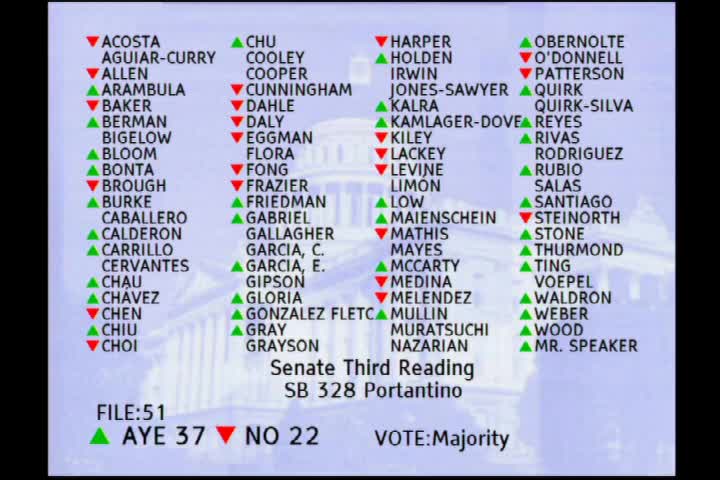 38SEC
Assembly Floor
 3MIN
Assembly Standing Committee on Judiciary
 1MIN
Senate Floor
Bill Author
Bill Co-Author(s):