AB 3262: Tribal gaming: compact ratification.
- Session Year: 2017-2018
- House: Assembly
- Latest Version Date: 2018-09-27
Existing federal law, the Indian Gaming Regulatory Act of 1988, provides for the negotiation and execution of tribal-state gaming compacts for the purpose of authorizing certain types of gaming on Indian lands within a state. The California Constitution authorizes the Governor to negotiate and conclude those compacts, subject to ratification by the Legislature. Existing law expressly ratifies a number of tribal-state gaming compacts, and amendments to tribal-state gaming compacts, between the State of California and specified Indian tribes.
The California Environmental Quality Act (CEQA) requires a lead agency to prepare, or cause to be prepared, and certify the completion of, an environmental impact report on a project, as defined, that it proposes to carry out or approve that may have a significant effect on the environment, as defined, or to adopt a negative declaration if it finds that the project will not have that effect.
This bill would ratify the first amendment to the tribal-state gaming compact entered into between the State of California and the Santa Ynez Band of Mission Indians, executed on August 1, 2018. The bill would provide that, in deference to tribal sovereignty, certain actions are not projects for the purposes of CEQA.
This bill would declare that it is to take effect immediately as an urgency statute.
Existing law creates in the State Treasury the Indian Gaming Special Distribution Fund for the receipt and deposit of moneys received by the state from certain Indian tribes pursuant to the terms of gaming compacts entered into with the state. Existing law authorizes moneys in that fund to be used for specified purposes, including for grants for the support of state and local government agencies impacted by tribal government gaming. Existing law, until January 1, 2021, creates a County Tribal Casino Account in the treasury of each county that contains a tribal casino, which is funded according to specified formulas, and further divided into a separate account, known as an Individual Tribal Casino Account, for each tribe that operates a casino within the county. Existing law establishes an Indian Gaming Local Community Benefit Committee in each county in which gaming is conducted and requires that committee to make the selection of grants from the casino accounts.Existing law requires funds not allocated from a County Tribal Casino Account or an Individual Tribal Casino Account for the grants by the end of each fiscal year to revert back to the Indian Gaming Special Distribution Fund.This bill would delete obsolete provisions relating to allocations made in specified fiscal years, and would make additional technical, nonsubstantive changes.Existing law creates in the State Treasury the Indian Gaming Special Distribution Fund for the receipt and deposit of moneys received by the state from certain Indian tribes pursuant to the terms of gaming compacts entered into with the state. Existing law authorizes moneys in that fund to be used for specified purposes, including for grants for the support of state and local government agencies impacted by tribal government gaming. Existing law, until January 1, 2021, creates a County Tribal Casino Account in the treasury of each county that contains a tribal casino, which is funded according to specified formulas, and further divided into a separate account, known as an Individual Tribal Casino Account, for each tribe that operates a casino within the county. Existing law establishes an Indian Gaming Local Community Benefit Committee in each county in which gaming is conducted and requires that committee to make the selection of grants from the casino accounts.
Existing law requires funds not allocated from a County Tribal Casino Account or an Individual Tribal Casino Account for the grants by the end of each fiscal year to revert back to the Indian Gaming Special Distribution Fund.
This bill would delete obsolete provisions relating to allocations made in specified fiscal years, and would make additional technical, nonsubstantive changes.
(a)The first amendment to the tribal-state gaming compact entered into in accordance with the federal Indian Gaming Regulatory Act of 1988 (18 U.S.C. Secs. 1166 to 1168, inclusive, and 25 U.S.C. Sec. 2701 et seq.) between the State of California and the Santa Ynez Band of Mission Indians, executed on August 1, 2018, is hereby ratified.
(b)(1)In deference to tribal sovereignty, none of the following shall be deemed a project for purposes of the California Environmental Quality Act (Division 13 (commencing with Section 21000) of the Public Resources Code):
(A)The execution of the first amendment to the tribal-state gaming compact ratified by this section.
(B)The execution of the amended tribal-state gaming compact ratified by this section.
(C)The execution of an intergovernmental agreement between a tribe and a county or city government negotiated pursuant to the express authority of, or as expressly referenced in, the amended tribal-state gaming compact ratified by this section.
(D)The execution of an intergovernmental agreement between a tribe and the Department of Transportation negotiated pursuant to the express authority of, or as expressly referenced in, the amended tribal-state gaming compact ratified by this section.
(E)The on-reservation impacts of compliance with the terms of the amended tribal-state gaming compact ratified by this section.
(2)Except as expressly provided in this section, this subdivision does not exempt a city, county, or city and county, or the Department of Transportation, from the requirements of the California Environmental Quality Act.
SEC. 2.This act is an urgency statute necessary for the immediate preservation of the public peace, health, or safety within the meaning of Article IV of the California Constitution and shall go into immediate effect. The facts constituting the necessity are:
In order to enhance the economic development, stability, and self-sufficiency of the Santa Ynez Band of Mission Indians and to protect the interests of the tribe and its members, the surrounding community, and the California public at the earliest possible time, it is necessary that this act take effect immediately.
All matter omitted in this version of the bill appears in the bill as introduced in the Assembly April 5, 2018. (JR11)(a)The Controller, acting in consultation with the California Gambling Control Commission, shall divide the County Tribal Casino Account for each county that has gaming devices that are subject to an obligation to make contributions to the Indian Gaming Special Distribution Fund into a separate account for each tribe that operates a casino within the county. These accounts shall be known as Individual Tribal Casino Accounts, and funds may be released from these accounts to make grants selected by an Indian Gaming Local Community Benefit Committee pursuant to the method established by this section to local jurisdictions impacted by tribal casinos. Each Individual Tribal Casino Account shall be funded in proportion to the amount that each individual tribe paid in the prior fiscal year to the Indian Gaming Special Distribution Fund.
(b)(1)There is hereby created in each county in which Indian gaming is conducted an Indian Gaming Local Community Benefit Committee. The selection of all grants from each Individual Tribal Casino Account or County Tribal Casino Account shall be made by each countys Indian Gaming Local Community Benefit Committee. In selecting grants, the Indian Gaming Local Community Benefit Committee shall follow the priorities established in subdivision (g) and the requirements specified in subdivision (h). This committee has the following additional responsibilities:
(A)Establishing all application policies and procedures for grants from the Individual Tribal Casino Account or County Tribal Casino Account. Each grant application shall clearly show how the grant will mitigate the impact of the casino on the grant applicant.
(B)Assessing the eligibility of applications for grants from local jurisdictions impacted by tribal gaming operations.
(C)Determining the appropriate amount for reimbursement from the aggregate county tribal account of the demonstrated costs incurred by the county for administering the grant programs. The reimbursement for county administrative costs may not exceed 2 percent of the aggregate county tribal account in any given fiscal year.
(2)Except as provided in Section 12715.5, the Indian Gaming Local Community Benefit Committee shall be composed of seven representatives, consisting of the following:
(A)Two representatives from the county, selected by the county board of supervisors.
(B)Three elected representatives from cities located within four miles of a tribal casino in the county, selected by the county board of supervisors. In the event that If there are no cities located within four miles of a tribal casino in the county, other local representatives may be selected upon mutual agreement by the county board of supervisors and a majority of the tribes paying into the Indian Gaming Special Distribution Fund in the county. When If there are no cities within four miles of a tribal casino in the county, and when if the Indian Gaming Local Community Benefit Committee acts on behalf of a county where in which no tribes pay into the Indian Gaming Special Distribution Fund, other local representatives may be selected upon mutual agreement by the county board of supervisors and a majority of the tribes operating casinos in the county. However, if only one city is within four miles of a tribal casino and that same casino is located entirely within the unincorporated area of that particular county, only one elected representative from that city shall be included on the Indian Gaming Local Community Benefit Committee.
(C)Two representatives selected upon the recommendation of a majority of the tribes paying into the Indian Gaming Special Distribution Fund in each county. When If an Indian Gaming Local Community Benefit Committee acts on behalf of a county where in which no tribes pay into the Indian Gaming Special Distribution Fund, the two representatives may be selected upon the recommendation of the tribes operating casinos in the county.
(c)Sixty percent of each Individual Tribal Casino Account shall be available for nexus grants on a yearly basis to cities and counties impacted by tribes that are paying into the Indian Gaming Special Distribution Fund, according to the four-part nexus test described in paragraph (1). Grant awards shall be selected by each countys Indian Gaming Local Community Benefit Committee and shall be administered by the county. Grants may be awarded on a multiyear basis, and these multiyear grants shall be accounted for in the grant process for each year.
(1)A nexus test based on the geographical proximity of a local government jurisdiction to an individual Indian land upon which a tribal casino is located shall be used by each countys Indian Gaming Local Community Benefit Committee to determine the relative priority for grants, using the following criteria:
(A)Whether the local government jurisdiction borders the Indian lands on all sides.
(B)Whether the local government jurisdiction partially borders Indian lands.
(C)Whether the local government jurisdiction maintains a highway, road, or other thoroughfare that is the predominant access route to a casino that is located within four miles.
(D)Whether all or a portion of the local government jurisdiction is located within four miles of a casino.
(2)Fifty percent of the amount specified in subdivision (c) this subdivision shall be awarded in equal proportions to local government jurisdictions that meet all four of the nexus test criteria in paragraph (1). If no eligible local government jurisdiction satisfies this requirement, the amount specified in this paragraph shall be made available for nexus grants in equal proportions to local government jurisdictions meeting the requirements of paragraph (3) or (4).
(3)Thirty percent of the amount specified in subdivision (c) this subdivision shall be awarded in equal proportions to local government jurisdictions that meet three of the nexus test criteria in paragraph (1). If no eligible local government jurisdiction satisfies this requirement, the amount specified in this paragraph shall be made available for nexus grants in equal proportions to local government jurisdictions meeting the requirements of paragraph (2) or (4).
(4)Twenty percent of the amount specified in subdivision (c) this subdivision shall be awarded in equal proportions to local government jurisdictions that meet two of the nexus test criteria in paragraph (1). If no eligible local government jurisdiction satisfies this requirement, the amount specified in this paragraph shall be made available for nexus grants in equal proportions to local government jurisdictions meeting the requirements of paragraph (2) or (3).
(d)Twenty percent of each Individual Tribal Casino Account shall be available for discretionary grants to local jurisdictions impacted by tribes that are paying into the Indian Gaming Special Distribution Fund. These discretionary grants shall be made available to all local jurisdictions in the county irrespective of any nexus to impacts from any particular tribal casino, as described in paragraph (1) of subdivision (c). Grant awards shall be selected by each countys Indian Gaming Local Community Benefit Committee and shall be administered by the county. Grants may be awarded on a multiyear basis, and these multiyear grants shall be accounted for in the grant process for each year.
(e)(1)Twenty percent of each Individual Tribal Casino Account shall be available for discretionary grants to local jurisdictions impacted by tribes that are not paying into the Indian Gaming Special Distribution Fund. These grants shall be made available to local jurisdictions in the county irrespective of any nexus to impacts from any particular tribal casino, as described in paragraph (1) of subdivision (c), and irrespective of whether the impacts presented are from a tribal casino that is not paying into the Indian Gaming Special Distribution Fund. Grant awards shall be selected by each countys Indian Gaming Local Community Benefit Committee and shall be administered by the county. Grants may be awarded on a multiyear basis, and these multiyear grants shall be accounted for in the grant process for each year.
(A)Grants awarded pursuant to this subdivision are limited to addressing service-oriented impacts and providing assistance with one-time large capital projects related to Indian gaming impacts.
(B)Grants shall be subject to the sole sponsorship of the tribe that pays into the Indian Gaming Special Distribution Fund and the recommendations of the Indian Gaming Local Community Benefit Committee for that county.
(2)If an eligible county does not have a tribal casino operated by a tribe that does not pay into the Indian Gaming Special Distribution Fund, the moneys available for discretionary grants under this subdivision shall be available for distribution pursuant to subdivision (d).
(f)(1)For each county that does not have gaming devices subject to an obligation to make payments to the Indian Gaming Special Distribution Fund, funds may be released from the countys County Tribal Casino Account to make grants selected by the countys Indian Gaming Local Community Benefit Committee pursuant to the method established by this section to local jurisdictions impacted by tribal casinos. These grants shall be made available to local jurisdictions in the county irrespective of any nexus to any particular tribal casino. These grants shall follow the priorities specified in subdivision (g) and the requirements specified in subdivision (h).
(2)Funds not allocated from a county tribal casino account County Tribal Casino Account by the end of each fiscal year shall revert back to the Indian Gaming Special Distribution Fund. Moneys allocated for the 200304 fiscal year shall be eligible for expenditure through December 31, 2004.
(g)The following uses shall be the priorities for the receipt of grant moneys from Individual Tribal Casino Accounts: law enforcement, fire services, emergency medical services, environmental impacts, water supplies, waste disposal, behavioral, health, planning and adjacent land uses, public health, roads, recreation and youth programs, and child care programs.
(h)In selecting grants pursuant to subdivision (b), an Indian Gaming Local Community Benefit Committee shall select only grant applications that mitigate impacts from casinos on local jurisdictions. If a local jurisdiction uses a grant selected pursuant to subdivision (b) for any unrelated purpose, the grant shall terminate immediately and any moneys not yet spent shall revert to the Indian Gaming Special Distribution Fund. If a local jurisdiction approves an expenditure that mitigates an impact from a casino on a local jurisdiction and that also provides other benefits to the local jurisdiction, the grant selected pursuant to subdivision (b) shall be used to finance only the proportionate share of the expenditure that mitigates the impact from the casino.
(i)All grants from Individual Tribal Casino Accounts shall be made only upon the affirmative sponsorship of the tribe paying into the Indian Gaming Special Distribution Fund from whose Individual Tribal Casino Account the grant moneys are available for distribution. Tribal sponsorship shall confirm that the grant application has a reasonable relationship to a casino impact and satisfies at least one of the priorities listed in subdivision (g). A grant may not be made for any purpose that would support or fund, directly or indirectly, any effort related to the opposition or challenge to Indian gaming in the state, and, to the extent any awarded grant is utilized for any prohibited purpose by any local government, upon notice given to the county by any tribe from whose Individual Tribal Casino Account the awarded grant went toward that prohibited use, the grant shall terminate immediately and any moneys not yet used shall again be made available for qualified nexus grants.
(j)A local government jurisdiction that is a recipient of a grant from an Individual Tribal Casino Account or a County Tribal Casino Account shall provide notice to the public, either through a slogan, signage, or other mechanism, stating that the local government project has received funding from the Indian Gaming Special Distribution Fund and further identifying the particular Individual Tribal Casino Account from which the grant derives.
(k)(1)Each countys Indian Gaming Local Community Benefit Committee shall submit to the Controller a list of approved projects for funding from Individual Tribal Casino Accounts. Upon receipt of this list, the Controller shall release the funds directly to the local government entities for which a grant has been approved by the committee.
(2)Funds not allocated from an Individual Tribal Casino Account by the end of each fiscal year shall revert back to the Indian Gaming Special Distribution Fund. Moneys allocated for the 200304 fiscal year shall be eligible for expenditure through December 31, 2004. Moneys allocated for the 200809 fiscal year shall be eligible for expenditure through December 31, 2009.
(l)Notwithstanding any other law, a local government jurisdiction that receives a grant from an Individual Tribal Casino Account shall deposit all funds received in an interest-bearing account and use the interest from those funds only for the purpose of mitigating an impact from a casino. If any portion of the funds in the account is used for any other purpose, the remaining portion shall revert to the Indian Gaming Special Distribution Fund. As a condition of receiving further funds under this section, a local government jurisdiction, upon request of the county, shall demonstrate to the county that all expenditures made from the account have been in compliance with the requirements of this section.
|
Date
|
Status
|
|---|---|
| Sep 27, 2018 | Chaptered by Secretary of State - Chapter 834, Statutes of 2018. |
| Sep 27, 2018 | Approved by the Governor. |
| Sep 7, 2018 | Enrolled and presented to the Governor at 2:30 p.m. |
| Aug 29, 2018 | Urgency clause adopted. Senate amendments concurred in. To Engrossing and Enrolling. |
| Aug 27, 2018 | In Assembly. Concurrence in Senate amendments pending. May be considered on or after August 29 pursuant to Assembly Rule 77. |
| Aug 27, 2018 | Read third time. Urgency clause adopted. Passed. Ordered to the Assembly. |
| Aug 23, 2018 | Read second time. Ordered to third reading. |
| Aug 22, 2018 | Read third time and amended. Ordered to second reading. |
| Jun 28, 2018 | From Consent Calendar. |
| Jun 27, 2018 | Read second time. Ordered to Consent Calendar. |
| Jun 26, 2018 | From committee: Do pass. To Consent Calendar. (Ayes 13. Noes 0.) (June 26). |
| May 30, 2018 | Referred to Com. on G.O. |
| May 17, 2018 | In Senate. Read first time. To Com. on RLS. for assignment. |
| May 17, 2018 | Read third time. Passed. Ordered to the Senate. |
| May 14, 2018 | Read second time. Ordered to Consent Calendar. |
| May 10, 2018 | From committee: Do pass. To Consent Calendar. (Ayes 17. Noes 0.) (May 10). |
| Apr 16, 2018 | Referred to Com. on G.O. |
| Apr 6, 2018 | From printer. May be heard in committee May 6. |
| Apr 5, 2018 | Read first time. To print. |
|
Date
|
Description
|
Location
|
Votes
|
|
|---|---|---|---|---|
| Aug 29, 2018 | AB 3262 GRAY Concurrence - Urgency Added | Assembly Floor |
Passed |
|
| Aug 27, 2018 | Assembly 3rd Reading AB3262 Gray et al. By Lara Urgency Clause | Senate Floor |
Passed |
|
| Jun 26, 2018 | Do pass and be ordered to the Consent Calendar | Senate Standing Committee on Governmental Organization |
Passed |
|
| May 17, 2018 | AB 3262 G.O. Consent Calendar Second Day Regular Session | Assembly Floor |
Passed |
|
| May 10, 2018 | Do pass. To Consent Calendar. | Assembly Standing Committee on Governmental Organization |
Passed |
This list shows positions taken on this bill by organizations on the date displayed, which is linked to the original source.
Positions by individuals are not included.
|
Organization
|
Position
|
Date
|
|---|---|---|
| California Tribal Business Alliance | ** Support | Aug 27, 2018 |
| Pala Band Of Mission Indians | ** Support | Aug 27, 2018 |
| Picayune Rancheria of the Chukchansi Indians | ** Support | Aug 27, 2018 |
| Torres Martinez Desert Cahuilla Indians | ** Support | Aug 27, 2018 |
Office of Senate Floor Analyses (916) 651-1520 Fax: (916) 327-4478 | AB |
THIRD READING
Bill No: AB 3262
:
PRIOR VOTES NOT RELEVANT
NOTE: On August 22, 2018, the Senate Governmental Organization Committee held an informational hearing on the amended tribal-state gaming compact between the State of California and the Santa Ynez Band of Mission Indians.
SUBJECT: Tribal gaming: compact ratification
DIGEST:
This bill ratifies the amended tribal-state gaming compact (Compact) entered into between the State of California and the Santa Ynez Band of Mission Indians, executed on August 1, 2018 (hereafter “Tribe”).
Senate Floor Amendments of 8/22/18
delete the contents of this bill and instead add language pertaining to ratification of the Santa Ynez Band of Mission Indians amended compact.
Existing law:
- Provides, under the Indian Gaming Regulatory Act (IGRA), for the negotiation and conclusion of compacts between federally recognized Indian tribes and the State for the purpose of conducting Class III gaming activities on Indian lands within a State as a means of promoting tribal economic development, self-sufficiency, and strong tribal governments.
- Authorizes expressly a number of tribal-state gaming compacts between the State of California and specified Indian tribes.
- Authorizes the conduct of Class III gaming activities to the extent such activities are permitted by state law, a gaming compact has been concluded by a federally recognized tribe and the State, and the compact has been approved by the Secretary of the Interior.
- Limits the operation of Class III gaming activities to Indian lands acquired on or before October 17, 1988. Provides for certain exceptions to conduct gaming activities on Indian lands acquired after October 17, 1988.
- Defines “Indian lands” to mean all lands within the limits of any Indian reservation, and any lands title to which is either held in trust by the United States for the benefit of any Indian tribe, or individual, or held by any Indian tribe or individual subject to restriction by the U.S. against alienation and over which an Indian tribe exercises governmental power.
- Requires the State to negotiate to conclude a compact in good faith with an Indian tribe having jurisdiction over the Indian lands upon which the Class III gaming activity is to be conducted. Provides the U.S. district courts with jurisdiction over any cause of action initiated by a tribal government alleging that the State failed to negotiate in good faith to conclude a compact. Prescribes the remedy, mediation supervised by the courts, if it is found that the State failed to negotiate in good faith to conclude a compact.
- Authorizes the Governor, under the California Constitution, to negotiate and conclude compacts, subject to ratification by the Legislature.
This bill:
- Ratifies the Compact between the State of California and the Tribe executed on August 1, 2018.
- Provides that in deference to tribal sovereignty, certain actions are not deemed projects for purposes of the California Environmental Quality Act (CEQA).
- Stipulates, except as expressly provided, that none of the provisions shall be construed to exempt a city, county, or city, and county, or the Department of Transportation, or any state agency or local jurisdictions, from CEQA requirements.
- Contains an urgency clause.
Background
The Amendment to the Tribal-State Gaming Compact (hereafter “Amended Compact”) between the State of California and the Santa Ynez Band of Mission Indians (hereafter “Tribe”) was executed on August 1, 2018. The Amended Compact allows the Tribe to operate an off-track horseracing wagering facility and clarifies that nothing in any other tribal compact should be a factor in construing the terms of this Amended Compact. These changes are consistent with recent compacts.
In 2015, the Tribe entered into a new tribal-state compact [ratified by AB 1540 (Gray, Chapter 531, Statutes of 2015)] that authorized the Tribe to operate up to 2,500 slot machines at no more than two gaming facilities located on eligible Indian lands held in trust for the Tribe, and located within the boundaries of the Tribe’s Reservation.
Under the 2015 Compact, the Tribe agreed to pay the State its pro rata share of the costs the State incurs for the performance of its duties under the Compact as well as 6% of the casino’s net win, to be shared with tribes that are not gaming or that otherwise are not substantially benefiting from gaming. Additionally, the Compact provided a framework for the sharing of gaming revenue with the County of Santa Barbara and other local jurisdictions.
Currently, the Tribe operates the Chumash Casino Resort. The Casino has approximately 2,000 slot machines, offers over 50 table games, restaurants, a 1,400 seat entertainment venue, and a 320-room hotel and spa. In 2014, the Tribe broke ground on a casino expansion development project. This expansion project was completed in May of 2016 and included the addition of a 12-story hotel tower, a 20,000 square foot gaming floor expansion, and a six-story parking structure.
Brief history of the Tribe. The Santa Ynez Band of Chumash Indians is the only federally-recognized Chumash tribe in the nation. The Santa Ynez Reservation is located in Santa Barbara County, and was established on December 27, 1901.
In 1999, the Tribe and the State entered into a tribal-state compact which enabled the Tribe, through revenues generated by its gaming operation, to improve the governance, environment, education, health, safety, and general welfare of its citizens, and to promote a strong tribal government, self-sufficiency, and to provide essential government services to its citizens. In 2015, the Tribe entered into a new Compact which allowed it to operate up to 2,500 slot machines.
For many years, few tribal members lived on the Reservation. A housing program was established in 1979 which increased the number of tribal members living on both the lower and upper Reservation. Additionally, revenue generated from the Tribe’s Chumash Casino Resort has encouraged members to live on the Reservation. Today there are approximately 249 residents and 97 homes on the Santa Ynez Reservation, and others live in homes in the surrounding communities.
The Chumash people once numbered in the tens of thousands and lived along the southern coast of California. At one time, Chumash territory encompassed 7,000 square miles that spanned from the beaches of Malibu to Paso Robles. The people of Santa Ynez spoke a version of Chumash language called Samala, also known as Inseño.
The Tribe’s current casino operation, known as the Chumash Casino Resort, has approximately 2,000 slot machines, offers over 50 table games, restaurants, a 1,400 seat entertainment venue, and a 320-room hotel and spa. In 2014, the Tribe broke ground on a casino expansion development project. This expansion project was completed in May of 2016 and included the addition of a 12-story hotel tower, a 20,000 square foot gaming floor expansion, and a six-story parking structure.
In addition, the Tribe has a diversified business portfolio – it owns or has ownership interests in a variety of businesses both on and off of the Santa Ynez Reservation including three hotels nearby in Solvang; an office building in Buellton, which houses various tribal business functions; and, a federally qualified health clinic.
The Tribe reports that today, through decades of hard work, tribal families have increased opportunities for education, better health care, and access to cultural offerings that respect and build upon their past. Additionally, the Tribe states that it is dedicated to being good neighbors, and states that it has donated more than $20 million to more than 700 nonprofit organizations.
DETAILS OF THE AMENDED COMPACT
Satellite wagering facility. This Amended Compact allows the tribe to provide off-track wagering on horse races at a satellite wagering facility. The Tribe is required to follow the same regulations as other satellite wagering facilities in the state as prescribed by the California Horse Racing Board.
Construction. Similar to other compacts, this Amended Compact specifies that neither the presence nor omission in another tribal-state Class III Gaming of language that is present in this Amended Compact shall be a factor in construing the terms of this Amended Compact.
ADDITIONAL BACKGROUND INFORMATION
Indian Gaming Regulatory Act. In 1988, Congress enacted IGRA to provide a statutory basis for the operation and regulation of gaming on Indian lands. IGRA provides that an Indian tribe may conduct gaming activity on Indian lands if the activity “is not specifically prohibited by federal law and is conducted within a State which does not prohibit such gaming activity.”
IGRA distinguishes between three classes of gaming (Class I, Class II, and Class III) and provides for different forms of regulation for each class. Class I gaming includes “social games” for minor prizes or “traditional forms of Indian gaming.” Class II gaming is defined to include bingo and card games that are explicitly authorized by the laws of the state, or that are not explicitly prohibited by the laws of the state and are played at any location in the State, so long as the card games are played in conformity with those laws and regulations. Class III gaming includes such things as slot machines, casino games, and banked card games such as black jack and baccarat. Class III gaming may only be conducted under terms of a compact negotiated between an Indian tribe and a State.
IGRA was enacted against a legal background in which Indian tribes and individuals generally are exempt from state taxation within their own territory. IGRA provides that with the exception of assessments permitted under the statute, to defray the State’s costs of regulating gaming activity, IGRA shall not be interpreted as conferring upon a State authority to impose any tax, fee, charge, or other assessment upon an Indian tribe to engage in Class III activity. Nor may a State refuse to enter into negotiations based on the lack of authority to impose such a tax, fee, charge, or other assessment.
When a tribe requests negotiations for a Class III compact, IGRA requires the State to negotiate with the Indian tribe in good faith. IGRA provides a comprehensive process to prevent an impasse in compact negotiations, which is triggered when a tribe files suit alleging that the State has refused to negotiate or has failed to negotiate in good faith.
Before 2000, the California Constitution prohibited Class III gaming. In 2000, California voters approved Proposition 1A, which had been proposed by the Governor and passed by the Legislature. Proposition 1A amended the California Constitution to permit the State to negotiate compacts with federally recognized Indian tribes for certain Class III gaming activities. Because non-Indian parties were still forbidden from operating gaming facilities, Proposition 1A granted Indian tribes a “constitutionally protected monopoly on most types of Class III games in California.”
Treasury the Revenue Sharing Trust Fund (RSTF) for the receipt and deposit of moneys derived from gaming device license fees that are paid into the RSTF pursuant to the terms of specified tribal-state gaming compacts for the purpose of making distributions to non-compacted California tribes (e.g., federally-recognized non-gaming tribes and tribes that operate casinos with fewer than 350 slot machines).
Revenue in the RSTF is available to the California Gambling Control Commission, upon appropriation by the Legislature, for making distributions of $1.1 million annually to non-compact tribes. The RSTF was created as part of the 1999 compacts, which, in conjunction with the passage of Proposition 1A, created gaming compacts with approximately 60 California tribes. Non-compact tribes are considered third-party beneficiaries of the 1999 compacts.
Tribal Nation Grant Fund. This particular fund (referenced in recent compacts) was created to complement the RSTF and provides for the distribution of funds to non-gaming tribes, upon application of such tribes for purposes related to effective self-governance, self-determined community, and economic development. Payments from this fund are intended to be made to non-gaming tribes on a “need” basis, upon application. Payments from the Tribal Nation Grant Fund are expected to begin in 2018.
Related/Prior Legislation
AB 1433 (Wood, Chapter 11, Statutes of 2018) ratified the tribal-state gaming compact entered into between the State of California and the Elk Valley, Rancheria, executed on August 31, 2017.
SB 6 (Hueso, Chapter 455, Statutes of 2017) ratified the tribal-state gaming compact entered into between the State of California and the Quechan Tribe of the Fort Yuma Indian Reservation, executed on August 31, 2017.
SB 585 (McGuire and Mendoza, Chapter 464, Statutes of 2017) ratified the tribal-state gaming compact entered into between the State of California and the Dry Creek Rancheria Band of Pomo Indians, executed on August 18, 2017.
SB 626 (Dodd, Chapter 465, Statutes of 2017) ratified the amendment to the tribal-state gaming compact entered into between the State of California and the Federated Indians of Graton Rancheria, executed on August 18, 2017.
AB 174 (Bigelow, Chapter 435, Statutes of 2017) ratified the tribal-state gaming compact entered into between the State of California and the United Auburn Indian Community, executed on August 18, 2017.
AB 253 (Bigelow, Chapter 437, Statutes of 2017) ratified the tribal-state gaming compact entered into between the State of California and the Tuolumne Band of Me-Wuk Indians, executed on August 18, 2017.
AB 394 (Mathis, Chapter 440, Statures of 2017) ratified the tribal-state gaming compact entered into between the State of California and the Tule River Indian Tribe of California, executed on August 31, 2017.
AB 891 (Mayes, Chapter 447, Statutes 2017) ratified the tribal-state gaming compact entered into between the State of California and the Morongo Band of Mission Indians executed on September 6, 2017.
AB 1378 (Gray, Chapter 450, Statutes of 2017) ratified the amendment to the tribal-state gaming compact entered into between the State of California and the San Manuel Band of Mission Indians executed on August 18, 2017.
AB 1606 (Cooper, Chapter 453, Statutes of 2017) ratified the tribal-state gaming compact entered into between the State of California and the Wilton Rancheria, executed on July 19, 2017.
AB 1540 (Gray, Chapter 531, Statutes of 2015) ratified the tribal-state gaming compact entered into between the State of California and the Santa Ynez Band of Mission Indians, executed on August 26, 2015.
FISCAL EFFECT: Appropriation: Fiscal Com.: Local:
California Tribal Business Alliance
Pala Band of Mission Indians
Picayune Rancheria of the Chukchansi Indians
Torres Martinez Desert Cahuilla Indians
OPPOSITION: (Verified 8/23/18)
8/27/18 16:17:32
**** END ****
CONCURRENCE IN SENATE AMENDMENTS
CSA1 Bill Id:AB 3262
Author:(Gray)
As Amended Ver:August 22, 2018
2/3 vote. Urgency
ASSEMBLY: |
| (May 17, 2018) | SENATE: | 27-12 | (August 27, 2018) |
(vote not relevant)
Original Committee Reference: G.O.
SUMMARY: Would ratify an amended tribal-state gaming compact (Amended Compact) entered into between the State of California and the Santa Ynez Band of Mission Indians (Tribe), executed on August 1, 2018.
The Senate amendments delete the Assembly version of this bill, and instead:
- Ratify an amended tribal-state gaming compact entered into between the State of California and the Santa Ynez Band of Mission Indians, executed on August 1, 2018.
- Provide that the Tribe is authorized to establish and operate off-track wagering on horse races in a satellite wagering facility (satellite facility) upon the Santa Ynez Indian Reservation within its gaming facility. California Horse Racing Law and regulations of the California Horse Racing Board (CHRB) that are specific to the conduct of off-track wagering on horse races at a satellite wagering facility, shall be applicable to the operation of satellite wagering on horse racing at the Tribe's gaming facility.
- Specify that neither the presence nor omission in another tribal-state Class III gaming of language that is present in this Amended Compact shall be a factor in construing the terms of this Amended Compact.
- Authorize the Tribe to enter into agreements with an organization that disseminates the audiovisual signal of, and operates satellite wagering on horse racing in California, as defined.
- Provide the Tribe shall deduct from the total handle derived from pari-mutuel wagers at the satellite facility an amount equal to that as provided by California Horse Racing Law and CHRB regulations for satellite wagering. Similarly, this "take-out" from handle shall be distributed in a like manner as that provided by California Horse Racing Law – for commissions, purses, payments to the horsemen and horsewomen, breeders' programs, etc.
- Provide under Horse Racing Law that the local government in which a satellite facility is located is entitled to 0.33-percent of the handle as an "in-lieu" of local taxes fee, as described. The Compact Amendment provides that the Tribe shall be deemed the equivalent of the county for the purposes of this "in-lieu" fee and is entitled to the 0.33-percent of the handle that normally would be distributed to the local government.
- State, "the Tribe and the State each recognize the sovereign authority and interests of the other in regulating gaming activities within their respective areas of jurisdiction and in ensuring that off-track wagering on horse races is conducted fairly, honestly, professionally and in a manner that promotes the California horse racing industry."
- Provide that, in deference to tribal sovereignty, certain actions are not deemed projects for purposes of the California Environmental Quality Act (CEQA); and, stipulate, except as expressly provided, that none of the provisions shall be construed to exempt a city, county, or city and county, or the Department of Transportation from CEQA requirements.
- Contain an urgency clause, allowing this bill to take effect immediately upon enactment.
EXISTING LAW:
- Provides, under the Federal Indian Gaming Regulatory Act (IGRA), for the negotiation and conclusion of compacts between federally recognized Indian tribes and the State for the purpose of conducting Class III gaming activities on Indian lands within a State as a means of promoting tribal economic development, self-sufficiency, and strong tribal governments.
- Authorizes expressly a number of tribal-state gaming compacts between the State of California and specified Indian tribes.
- Authorizes the conduct of Class III gaming activities to the extent such activities are permitted by state law, a gaming compact has been concluded by a federally recognized tribe and the State, and the compact has been approved by the Secretary of the Interior.
- Limits the operation of Class III gaming activities to Indian lands acquired on or before October 17, 1988. Provides exceptions to conduct gaming activities on Indian lands acquired after October 17, 1988.
- Defines Indian lands to mean all lands within the limits of any Indian reservation, and any lands title to which is either held in trust by the United States (U.S.) for the benefit of any Indian tribe, or individual, or held by any Indian tribe or individual subject to restriction by the U.S. against alienation and over which an Indian tribe exercises governmental power.
- Requires the State to negotiate to conclude a compact in good faith with an Indian tribe having jurisdiction over the Indian lands upon which the Class III gaming activity is to be conducted. Provides the U.S. district courts with jurisdiction over any cause of action initiated by a tribal government alleging that the State failed to negotiate in good faith to conclude a compact. Prescribes the remedy, mediation supervised by the courts, if it is found that the State failed to negotiate in good faith to conclude a compact.
- Authorizes the Governor, under the California Constitution, to negotiate and conclude compacts, subject to ratification by the Legislature.
FISCAL EFFECT: Unknown
COMMENTS: On August 22, 2018, the Assembly Governmental Organization Committee held an informational hearing on the amended tribal-state gaming compact between the State of California and the Santa Ynez Band of Mission Indians.
Brief History and Background: The Santa Ynez Band of Chumash Indians is the only federally recognized Chumash tribe in the nation. The Santa Ynez Reservation is located in Santa Barbara County, and was established on December 27, 1901.
The Chumash people once numbered in the tens of thousands and lived along the southern coast of California. At one time, Chumash territory encompassed 7,000 square miles that spanned from the beaches of Malibu to Paso Robles. The people of Santa Ynez spoke a version of Chumash language called Samala, also known as Inseño.
For many years, few tribal members lived on the Reservation. A housing program was established in 1979, which increased the number of tribal members living on both the lower and upper Reservation. Additionally, revenue generated from the Tribe's Chumash Casino Resort has encouraged members to live on the Reservation. Today there are approximately 249 residents and 97 homes on the Santa Ynez Reservation, and others live in homes in the surrounding communities.
The Tribe is governed by a general council composed of all tribal members age 21 and older, and a Tribal Business Council of five members, elected every two years. The council includes a chairperson, a vice-chairperson, and a secretary-treasurer. Tribal government services include the Santa Ynez Tribal Health Clinic, the Chumash Fire Department, the Santa Ynez Chumash Environmental Office, and an education department.
In 1999, the Tribe and the State entered into a tribal-state compact, which enabled the Tribe, through revenues generated by its gaming operation, to improve the governance, environment, education, health, safety, and general welfare of its citizens, and to promote a strong tribal government, self-sufficiency, and to provide essential government services to its citizens.
In 2015, the Tribe entered into a new tribal-state compact [ratified by AB 1540 (Gray, Chapter 531, Statutes of 2015)] that authorized the Tribe to operate up to 2,500 slot machines at no more than two gaming facilities located on eligible Indian lands held in trust for the Tribe, and located within the boundaries of the Tribe's Reservation.
Under the 2015 Compact, the Tribe agreed to pay the State its pro rata share of the costs the State incurs for the performance of its duties under the Compact as well as 6% of the casino's "Net Win", to be shared with tribes that are not gaming or that otherwise are not substantially benefiting from gaming. Additionally, the Compact provided a framework for the sharing of gaming revenue with the County of Santa Barbara and other local jurisdictions.
The Tribe owns and operates the Chumash Casino Resort, which is located on the Tribe's reservation on Highway 246 in Santa Ynez, California. The Casino has approximately 2,000 slot machines, offers over 50 table games, restaurants, a 1,400-seat entertainment venue, and a 320-room hotel and spa. In 2014, the Tribe broke ground on a casino expansion development project. This expansion project was completed in May of 2016 and included the addition of a 12-story hotel tower, a 20,000 square foot gaming floor expansion, and a six-story parking structure. The Tribe also owns Hotel Corque, Root 246 and the Hadsten House in Solvang and two gas stations in Santa Ynez. The tribe employs more than 1,800 residents of Santa Barbara County.
The Tribe reports that today, through decades of hard work, tribal families have increased opportunities for education, better health care, and access to cultural offerings that respect and build upon their past. Additionally, the Tribe states that it is dedicated to being good neighbors, and states that it has donated more than $20 million to more than 700 non-profit organizations.
Key Provisions of the Amended Compact:
Satellite Wagering Facility: Allows the Tribe to provide off-track wagering on horse races at a satellite wagering facility. The Tribe is required to follow the same regulations as other satellite wagering facilities in the state as prescribed by the California Horse Racing Board (CHRB).
Construction: This Amended Compact specifies that neither the presence nor omission in another tribal-state Class III Gaming of language that is present in this Amended Compact shall be a factor in construing the terms of this Amended Compact.
Additional Background Information:
Compact Ratification: The State Constitution, as amended by Proposition 1A of March 2000, permits Indian tribes to conduct and operate slot machines, lottery games, and banked and percentage card games on Indian land. These gambling activities shall only occur if:
- The Governor and an Indian tribe reach agreement on a compact;
- The Legislature approves the compact, and
- The federal government approves the compact.
The Governor is the designated State officer responsible for negotiating and executing, on behalf of the State, Tribal-State gaming compacts with federally recognized Indian tribes located within the State of California. Following completion of negotiations, the Governor shall submit a copy of any executed Tribal-State compact to both houses of the Legislature for ratification and shall submit a copy of the executed compact to the Secretary of State. This Compact provides that it shall not be presented to the Legislature for a ratification vote until the Tribe has provided the written proof and will provide written proof to the Governor the tribal governing body has ratified it.
The Federal Indian Gaming Regulatory Act (IGRA) of 1988: Established the jurisdictional framework that presently governs Indian gaming. Under IGRA, before a tribe may lawfully conduct class III gaming (games commonly played at casinos, such as slot machines and black jack), the following conditions must be met: (1) The particular form of class III gaming must be permitted in the state; (2) The tribe and the state must have negotiated a compact that has been approved by the Secretary of the Interior; and (3) The tribe must have adopted a tribal gaming ordinance that has been approved by the chairman of the National Indian Gaming Commission.
Rincon Decision: In 2004, the Rincon Band of Mission Indians sued the State in federal court after negotiations for a new gambling agreement with then-Governor Schwarzenegger came to a standstill. The Tribe believed the Governor was violating federal law by insisting that tribes pay money into the state's General Fund in exchange for more slot machines.
In July 2011, the United States Supreme Court declined to review a Ninth Circuit Court's decision that ruled the state could not require the Rincon Band tribe to pay a percentage of slot machine revenue into California's General Fund for more gaming devices. The Ninth Circuit had affirmed a lower court decision that the new financial concessions were nothing more than a state tax on tribal casino revenues, which is prohibited by IGRA. The court concluded that a "non-negotiable, mandatory payment of 10% of net win into the State treasury for unrestricted use yields public revenue and is [therefore] a tax and that the court was therefore required to consider the State's demand as evidence of bad faith under IGRA's statutes."
The Rincon decision has changed the dynamics of tribal-state compact negotiations in California.
Special Distribution Fund: Existing law creates the SDF in the State Treasury for the receipt of revenue contributions made by tribal governments pursuant to the terms of the 1999 model Tribal-State Gaming compacts and authorizes the Legislature to appropriate money from the SDF for the following purposes: 1) grants for programs designed to address gambling addiction; 2) grants for the support of state and local government agencies impacted by tribal government gaming; 3) compensation for regulatory costs incurred by CGCC and the Department of Justice (DOJ) in connection with the implementation and administration of compacts; 4) payment of shortfalls that may occur in the Indian Gaming RSTF; 5) disbursements for the purpose of implementing the terms of tribal labor relations ordinances promulgated in accordance with the terms of the 1999 compacts; and, 6) any other purpose specified by law. The distribution formula "sunsets" on January 1, 2021.
Revenue Sharing Trust Fund: Existing law also creates in the State Treasury the RSTF for the receipt and deposit of moneys derived from gaming device license fees that are paid into the RSTF pursuant to the terms of specified tribal-state gaming compacts for the purpose of making distributions to non-compacted tribes (e.g., federally-recognized non-gaming and tribes that operate casinos with fewer than 350 slot machines). Revenue in the RSTF is available to CGCC, upon appropriation by the Legislature, for making distributions of $1.1 million annually to non-compact tribes. The RSTF was created as part of the 1999 compacts, which, in conjunction with the passage of Proposition 1A (2000), created gaming compacts with approximately 60 California tribes. Non-compact tribes are considered third-party beneficiaries of the 1999 compacts.
Tribal Nation Grant Fund: The TNGF was created in the Graton Rancheria compact (AB 517 (Hall), Chapter 12, Statutes of 2012), as a new destination for gaming revenue for distribution of funds to non-gaming and limited-gaming tribes, upon application of such tribes for purposes related to effective self-governance, self-determined community, and economic development. The fund is designed to be fluid and payments are intended to be made to non-gaming tribes on a "need" basis, upon application by non-gaming tribes. The TNGF currently does not receive funding.
Related legislation: AB 1965 (Aguiar-Curry) of the current legislative session. Would ratify a tribal state gaming compact between the State of California and the Big Valley Band of Pomo Indians of the Big Valley Rancheria executed on August 16, 2018. Furthermore, would ratify amendments to the current tribal-state gaming compact between the State of California and the Habematolel Pomo of Upper Lake, executed on August 16, 2018. (Pending on the Senate Floor.)
SB 3262 (Dodd) of the current legislative session. Would ratify separate tribal-state gaming compacts between the State of California and the La Jolla Band of Luiseño Indians, executed on August 1, 2018; the Mechoopda Indian Tribe of Chico Rancheria, executed on August 8, 2018; the San Pasqual Band of Mission Indians, executed on August 8, 2018; the Torres Martinez Band of Desert Cahuilla Indians, executed on August 16, 2018; the Twenty-Nine Palms Band of Mission Indians, executed on August 8, 2018; as well as amendments to current tribal-state gaming compacts with the Dry Creek Rancheria Band of Pomo Indians, executed on August 1, 2018 and the Karuk Tribe, executed on August 1, 2018. (Pending on the Assembly Floor)
Recent/Prior legislation: AB 1433 (Wood), Chapter 11, Statutes of 2018. Ratified the tribal state compact entered into between the State of California and the Elk Valley Rancheria, California, executed on August 31, 2017.
SB 6 (Hueso), Chapter 455, Statutes of 2017. Ratified the amendment to the tribal-state gaming compact entered into between the State of California and the Quechan Tribe of the Fort Yuma Indian Reservation, executed on August 31, 2017.
SB 626 (Dodd), Chapter 465, Statutes of 2017. Ratified the amendment to the tribal-state gaming compact entered into between the State of California and the Federated Indians of Graton Rancheria, executed on August 18, 2017.
SB 585 (Mendoza and McGuire), Chapter 464, Statutes of 2017. Ratified the amendment to the tribal-state gaming compact entered into between the State of California and the Dry Creek Rancheria Band of Pomo Indians, executed on August 18, 2017.
AB 174 (Bigelow), Chapter 435, Statutes of 2017. Ratified the tribal-state gaming compact entered into between the State of California and the United Auburn Indian Community, executed on August 18, 2017.
AB 253 (Bigelow), Chapter 437, Statutes of 2017. Ratified the tribal-state gaming compact entered into between the State of California and the Tuolumne Band of Me-Wuk Indians, executed on August 18, 2017.
AB 394 (Mathis), Chapter 440, Statutes of 2017. Ratified a tribal-State gaming compact entered into between the State of California and the Tule River Indian Tribe of California, executed on August 31, 2017.
AB 891 (Mayes), Chapter 447, Statutes of 2017. Ratified the tribal-state gaming compact entered into between the State of California and the Morongo Band of Mission Indians, executed on September 6, 2017.
AB 1606 (Cooper), Chapter 453, Statutes of 2017. Ratified the tribal-state gaming compact entered into between the State of California and the Wilton Rancheria, executed on July 19, 2017.
AB 1378 (Gray), Chapter 450, Statutes of 2017. Ratified an amendment to the tribal-state gaming compact entered into between the State of California and the San Manuel Band of Mission Indians, executed on August 18, 2017.
Proposition 1A (Adopted by the People of California on March 7, 2000) modified the prohibition against casinos and lotteries in the California Constitution to authorize the Governor to negotiate compacts, subject to legislative ratification, for the operation of slot machines, lottery games, and banking and percentage card games by federally recognized Indian tribes on Indian lands in California, in accordance with federal law. Authorized slot machines, lottery games, and banking and percentage card games to be conducted and operated on Indian lands subject to the compacts.
AB 1385 (Battin), Chapter 874, Statutes of 1999. Designated the Governor as the state officer responsible for negotiating and executing compacts between the state and federally recognized Indian tribes located in the state. Also, ratified 57 compacts (Tule River Indian Tribe of California) and created two special funds in the State Treasury (SDF and RSTF), as specified.
Proposition 5 (Adopted by the People of California on November 3, 1998) specified the terms and conditions of mandatory compacts between the State and tribal governments for class III gambling on Indian lands; amended California law to allow slot machines and banked card games at tribal casinos; provided for contributions to trust funds benefiting non-gaming tribes, statewide emergency medical care programs, and programs benefiting communities near tribes; and, allowed tribes to retain a monopoly on authorized gambling. Proposition 5 was found to be unconstitutional because it amended a provision of the Government Code and did not amend the Constitution. The proposition was invalidated in its entirety, save the final sentence of Government Code Section 98005, containing the state's consent to federal suits brought by California tribes pursuant to IGRA.
SB 287 (Burton) Chapter 409, Statutes of 1998. Ratified 11 compacts negotiated between the State of California and Indian tribes that permitted class III video gaming devices on tribal lands and established a process for ratifying other compacts.
Analysis Prepared by: Eric Johnson / G.O. / (916) 319-2531/ G.O. / (916) 319-2531 FN: 0004872
Office of Senate Floor Analyses (916) 651-1520 Fax: (916) 327-4478 | AB |
THIRD READING
Bill No: AB 3262
:
SENATE GOVERNMENTAL ORG. COMMITTEE: 13-0, 6/26/18
AYES: Dodd, Wilk, Bradford, Cannella, Gaines, Galgiani, Glazer, Hill, Hueso, Lara, Portantino, Vidak, Wiener
ASSEMBLY FLOOR: 73-0, 5/17/18 (Consent) - See last page for vote
DIGEST: This bill deletes obsolete allocation provisions relating to the Indian Gaming Special Distribution Fund (SDF) and makes other code maintenance changes.
ANALYSIS:
Existing law:
- Creates in the State Treasury the SDF for the receipt and deposit of moneys received by the state from certain Indian tribes pursuant to the terms of gaming compacts entered into with the state.
- Authorizes money in the SDF to be used for: backfilling shortfalls in the Revenue Sharing Trust Fund (RSTF); programs addressing gambling addiction and related gambling regulatory activities of the California Gambling Control Commission (Commission) and the Department of Justice (DOJ); grants for the support of state and local government agencies impacted by tribal casinos; and other gambling related purposes.
- Creates, until January 1, 2021, a County Tribal Casino Account in the treasury of each county that contains a tribal casino, which is funded according to specified formulas, known as an Individual Tribal Casino Account, for each tribe that operates a casino within the county.
- Establishes an Indian Gaming Local Community Benefit Committee in each county in which gaming is conducted and requires that committee to make the selection of grants from the casino accounts.
This bill deletes obsolete allocation provisions relating to the SDF and makes other code maintenance changes.
Comments
Purpose of this bill. According to the author’s office, this bill is simply intended to make technical, clarifying and conforming changes to update and condense where possible, current statutes pertaining to the SDF.
Special Distribution Fund. Existing law creates the SDF in the State Treasury for the receipt of revenue contributions made by tribal governments pursuant to the terms of the Tribal-State Gaming Compacts and authorizes the Legislature to appropriate money from the SDF for the following purposes: grants for programs designed to address gambling addiction; grants for the support of state and local government agencies impacted by tribal government gaming; compensation for regulatory costs incurred by the Commission and DOJ in connection with the implementation and administration of compacts; payment of shortfalls that may occur in the RSTF; disbursements for the purpose of implementing the terms of tribal labor relations ordinances promulgated in accordance with the terms of the compacts; and any other purpose specified by law.
Current law establishes a method of calculating the distribution of appropriations from the SDF for grants to local government agencies impacted by tribal gaming. This method includes a requirement that the State Controller, in consultation with the Commission, deposit funds into County Tribal Casino Accounts and Individual Tribal Casino Accounts based upon a process that takes into consideration whether the county has tribes that pay, or do not pay, into the SDF.
Related/Prior Legislation
AB 1355 (Gray, Chapter 118, Statutes of 2016) specified that the Tribal Nation Grant Fund reflects a vision of facilitating the development of tribal institutions and improving the quality of life of tribal people throughout the state.
AB 2914 (Committee on Governmental Organization, Chapter 110, Statutes of 2016) clarified provisions in current law relating to the RSTF for the purpose of making distributions to eligible Indian tribes.
FISCAL EFFECT: Appropriation: Fiscal Com.: Local:
None received
OPPOSITION: (Verified 6/27/18)
None received
ASSEMBLY FLOOR: 73-0, 5/17/18
AYES: Acosta, Aguiar-Curry, Travis Allen, Arambula, Baker, Berman, Bigelow, Bloom, Bonta, Brough, Burke, Caballero, Calderon, Carrillo, Cervantes, Chau, Chávez, Chen, Chiu, Choi, Chu, Cooley, Cooper, Cunningham, Dahle, Daly, Eggman, Flora, Fong, Frazier, Friedman, Gallagher, Eduardo Garcia, Gipson, Gloria, Gonzalez Fletcher, Gray, Grayson, Harper, Holden, Irwin, Jones-Sawyer, Kalra, Kamlager-Dove, Kiley, Lackey, Levine, Limón, Low, Maienschein, Mathis, Mayes, McCarty, Medina, Mullin, Nazarian, Obernolte, O'Donnell, Patterson, Quirk, Quirk-Silva, Reyes, Rodriguez, Rubio, Salas, Mark Stone, Thurmond, Ting, Voepel, Waldron, Weber, Wood, Rendon
NO VOTE RECORDED: Cristina Garcia, Melendez, Muratsuchi, Santiago, Steinorth
6/28/18 13:32:31
**** END ****
SENATE COMMITTEE ON GOVERNMENTAL ORGANIZATION
Senator Bill Dodd
Chair
2017 - 2018 Regular
Bill No: AB Hearing Date: 6/26/2018
Author: | Committee on Governmental Organization | ||
Version: | Introduced | ||
Urgency: | Fiscal: | ||
Consultant: | |||
SUBJECT:
DIGEST: This bill deletes obsolete allocation provisions relating to the Indian Gaming Special Distribution Fund (SDF) and makes other code maintenance changes.
ANALYSIS:
Existing law:
- Creates in the State Treasury the SDF for the receipt and deposit of moneys received by the state from certain Indian tribes pursuant to the terms of gaming compacts entered into with the state.
- Authorizes money in the SDF to be used for: backfilling shortfalls in the Revenue Sharing Trust Fund (RSTF); programs addressing gambling addiction and related gambling regulatory activities of the California Gambling Control Commission (Commission) and the Department of Justice (DOJ); grants for the support of state and local government agencies impacted by tribal casinos; and other gambling related purposes.
- Creates, until January 1, 2021, a County Tribal Casino Account in the treasury of each county that contains a tribal casino, which is funded according to specified formulas, known as an Individual Tribal Casino Account, for each tribe that operates a casino within the county.
- Establishes an Indian Gaming Local Community Benefit Committee in each county in which gaming is conducted and requires that committee to make the selection of grants from the casino accounts.
This bill deletes obsolete allocation provisions relating to the SDF and makes other code maintenance changes.
Background
Purpose of the bill. According to the author’s office, this measure is simply intended to make technical, clarifying and conforming changes to update and condense where possible, current statutes pertaining to the SDF.
Special Distribution Fund. Existing law creates the SDF in the State Treasury for the receipt of revenue contributions made by tribal governments pursuant to the terms of the Tribal-State Gaming Compacts and authorizes the Legislature to appropriate money from the SDF for the following purposes: grants for programs designed to address gambling addiction; grants for the support of state and local government agencies impacted by tribal government gaming; compensation for regulatory costs incurred by the Commission and DOJ in connection with the implementation and administration of compacts; payment of shortfalls that may occur in the RSTF; disbursements for the purpose of implementing the terms of tribal labor relations ordinances promulgated in accordance with the terms of the compacts; and any other purpose specified by law.
Current law establishes a method of calculating the distribution of appropriations from the SDF for grants to local government agencies impacted by tribal gaming. This method includes a requirement that the State Controller, in consultation with the Commission, deposit funds into County Tribal Casino Accounts and Individual Tribal Casino Accounts based upon a process that takes into consideration whether the county has tribes that pay, or do not pay, into the SDF.
Prior/Related Legislation
AB 888 (Gray, 2018) establishes the Tribal Nation Grant Panel and the Tribal Nation Grant Fund (TNGF) Program and authorizes the Panel to award grants from available funds in the TNGF to nongaming and limited-gaming tribes, as specified. In addition, the bill establishes the office of the Governor’s Tribal Advisor. (Pending in the Senate Governmental Organization Committee)
AB 1355 (Gray, Chapter 118, Statutes of 2016) specified that the TNGF reflects a vision of facilitating the development of tribal institutions and improving the quality of life of tribal people throughout the state.
AB 2914 (Committee on Governmental Organization, Chapter 110, Statutes of 2016) clarified provisions in current law relating to the RSTF for the purpose of making distributions to eligible Indian tribes.
AB 1916 (Hall, Chapter 600, Statutes of 2014) created the TNGF in the State Treasury, to be administered by the Commission, for the receipt and deposit of moneys received by the state from Indian tribes, pursuant to the terms of tribal-state gaming compacts.
AB 1042 (Hall, Chapter 746, Statutes of 2013) required the Department of Finance (DOF), in consultation with the Commission, to calculate the total revenue in the SDF that will be available for the current budget year for local government agencies impacted by tribal gaming. In addition, the bill appropriated $13 million from the SDF to the Commission to provide grants to local agencies for the 2013-14 fiscal years.
AB 2515 (Hall, Chapter 704, Statutes of 2012) required each grant applicant to show how the grant will mitigate the impact of the casino on the grant applicant. The bill also appropriated $9.1 million from the SDF to the Commission to provide grants to local agencies for the 2012-13 fiscal years.
AB 1417 (Hall, Chapter 736, Statutes of 2011) appropriated $9.1 million from the SDF to the Commission to provide grants to local agencies for grants to mitigate the impact of tribal gaming on local governments.
SB 856 (Budget and Fiscal Review, Chapter 719, Statutes of 2010) appropriated $30 million from the SDF to restore funding deleted from the Budget Act of 2007 for grants to mitigate the impact of tribal gaming on local governments.
SB 288 (Battin, Chapter 13, Statutes of 2006) appropriated $20 million from the SDF for grants to local jurisdictions impacted by tribal gaming.
SB 621 (Battin, Chapter 858, Statutes of 2003) established, until January 2, 2009, priorities and procedures for specified funding to local governments from the SDF for mitigating impacts from tribal casinos and appropriated $25 million from the SDF to mitigate the impact of tribal gaming on local governments.
AB 673 (J. Horton, Chapter 210, Statutes of 2003) provided that money in the SDF may be used to make payment of shortfalls that may occur in the RSTF and specified that payment for those shortfalls in the RSTF shall be the priority use of moneys in the SDF. The bill also appropriated $50.6 million for the purpose of making payments to eligible Indian tribes for the preceding fiscal year.
AB 1385 (Battin, Chapter 874, Statutes of 1999) among other things, ratified 57 tribal-state gaming compacts and created two special funds in the State Treasury (SDF and RSTF) for the deposit of revenues derived from Indian gaming and gaming device licensing fees.
FISCAL EFFECT: Appropriation: No Fiscal Com.: No Local: No
SUPPORT:
None received
OPPOSITION:
None received
Date of Hearing: May 10, 2018
ASSEMBLY COMMITTEE ON GOVERNMENTAL ORGANIZATION
Adam Gray, Chair
ABPCA Bill Id:AB 3262 (
Author:Committee on Governmental Organization) – As Introduced Ver:April 5, 2018
SUBJECT: Tribal gaming: local agencies
SUMMARY: Deletes obsolete allocation provisions relating to the Indian Gaming Special Distribution Fund (SDF) and makes other code maintenance changes.
EXISTING LAW:
1) Creates in the State Treasury two special funds derived from revenues from tribal gambling – the Indian Gaming Revenue Sharing Trust Fund (RSTF) and the Indian Gaming Special Distribution Fund (SDF). The RSTF is used to provide payments to tribes ($1.1 million per tribe) that operate fewer than 350 machines. The SDF is used for: (1) backfilling shortfalls in the RSTF; (2) programs addressing gambling addiction and related problems; (3) gambling regulatory activities of the California Gambling Control Commission (CGCC) and the Department of Justice (DOJ); (4) ) grants for the support of state and local government agencies impacted by tribal casinos; and, (5) other gambling-related purposes.
2) Provides that the Department of Finance (DOF), in consultation with the CGCC, shall calculate the total revenue in the SDF that will be available for the current budget year for local government agencies impacted by tribal gaming. DOF is required to include this information in the May budget revision.
3) Establishes a method of calculating the distribution of appropriations from the SDF for grants to local government agencies impacted by tribal gaming. This method includes a requirement that the State Controller, in consultation with the CGCC, deposit funds into County Tribal Casino Accounts and Individual Tribal Casino Accounts based upon a process that takes into consideration whether the county has tribes that pay, or not pay, into the SDF. The distribution formula "sunsets" on January 1, 2021.
4) Establishes an Indian Gaming Local Community Benefit Committee in each county in which gaming is conducted, specifies the composition and responsibilities of that committee, and requires the committee to make the selection of grants from the casino accounts. Among other things, the committee is responsible for establishing all application policies and procedures for grants from the casino accounts.
5) Requires the State Auditor to conduct an audit every three years and report its findings to the Legislature regarding the allocation and use of SDF grant monies.
FISCAL EFFECT: This bill is keyed non-fiscal by Legislative Counsel.
COMMENTS:
Purpose of the bill. According to the author’s office, this measure is simply intended to make technical, clarifying and conforming changes to update and condense where possible, current statutes pertaining to the SDF.
Prior legislation. AB 1042 (Hall, Chapter 746, Statutes of 2013) required DOF, in consultation with the CGCC, to calculate the total revenue in the SDF that will be available for the current budget year for local government agencies impacted by tribal gaming. In addition, appropriated $13 million from the SDF to the CGCC to provide grants to local agencies for the 2013-14 fiscal years.
AB 2515 (Hall, Chapter 704, Statutes of 2012) required each grant applicant to show how the grant will mitigate the impact of the casino on the grant applicant. Also, appropriated $9.1 million from the SDF to the CGCC to provide grants to local agencies for the 2012-13 fiscal years.
AB 1417 (Hall, Chapter 736, Statutes of 2011) appropriated $9.1 million from the SDF to the CGCC to provide grants to local agencies for grants to mitigate the impact of tribal gaming on local governments.
SB 856 (Budget and Fiscal Review, Chapter 719, Statutes of 2010) appropriated $30 million from the SDF to restore funding deleted from the Budget Act of 2007 for grants to mitigate the impact of tribal gaming on local governments.
AB 158 (Torrico, Chapter 754, Statutes of 2008) enacted several recommendations proposed by the BSA relative to the allocation and use of proceeds from the SDF.
SB 288 (Battin, Chapter 13, Statutes of 2006) appropriated $20 million from the SDF for grants to local jurisdictions impacted by tribal gaming.
SB 621 (Battin, Chapter 858, Statutes of 2003) established, until 1/1/2009, priorities and procedures for specified funding to local governments from the SDF for mitigating impacts from tribal casinos and appropriated $25 million from the SDF to mitigate the impact of tribal gaming on local governments.
AB 673 (J. Horton, Chapter 210, Statutes of 2003) provided that money in the SDF may be used to make payment of shortfalls that may occur in the RSTF and specified that payment for those shortfalls in the RSTF shall be the priority use of moneys in the SDF. Also, appropriated the sum of $50.6 million for the purpose of making payments to eligible Indian tribes for the preceding fiscal year. In addition, established and provided for the funding of the Office of Problem and Pathological Gambling in the Department of Alcohol and Drug Programs.
AB 1385 (Battin, Chapter 874, Statutes of 1999) among other things, ratified 57 tribal-state gaming compacts and created two special funds in the State Treasury (SDF and RSTF) for the deposit of revenues derived from Indian gaming and gaming device licensing fees.
REGISTERED SUPPORT / OPPOSITION:
Support
None on file
Opposition
None on file
Analysis Prepared by: Eric Johnson / G.O. / (916) 319-2531
Discussed in Hearing
View Older Hearings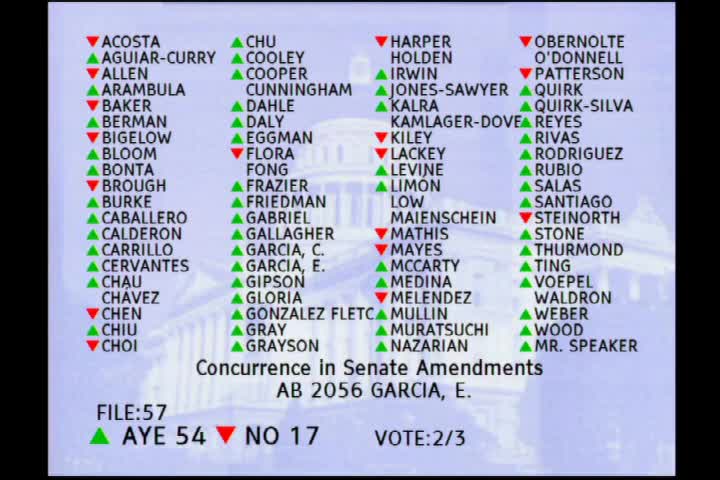
Bill Author

Bill Co-Author(s):