AB 349: Drug Medi-Cal Treatment Program: ratesetting process.
- Session Year: 2017-2018
- House: Assembly
- Latest Version Date: 2018-09-21
Existing law provides for the Medi-Cal program, which is administered by the State Department of Health Care Services and under which qualified low-income persons receive health care benefits. The Medi-Cal program is, in part, governed and funded by federal Medicaid provisions.
Existing law also provides for the Drug Medi-Cal Treatment Program (Drug Medi-Cal), under which each county enters into contracts with the State Department of Health Care Services to provide various drug treatment services to Medi-Cal recipients, or the department directly arranges to provide these services if a county elects not to do so. Existing law specifies the method of determining the maximum allowable reimbursement rates for Drug Medi-Cal and group outpatient drug free services, and requires the department to adopt any necessary regulations to implement those provisions, including emergency regulations, as specified.
This bill would instead authorize the department to implement, interpret, or make specific those provisions until the time that necessary regulations are adopted. The bill would require the department to adopt regulations by July 1, 2020, and to provide semiannual status reports to the Legislature until the regulations are adopted, as specified. The bill would authorize the department to annually establish and update the statewide maximum allowable reimbursement rates described above by means of bulletins or similar instructions.
Existing law provides for the Medi-Cal program, which is administered by the State Department of Health Care Services and under which qualified low-income persons receive health care benefits. The Medi-Cal program is, in part, governed and funded by federal Medicaid provisions.
Existing law also provides for the Drug Medi-Cal Treatment Program (Drug Medi-Cal), under which each county enters into contracts with the State Department of Health Care Services to provide various drug treatment services to Medi-Cal recipients, or the department directly arranges to provide these services if a county elects not to do so. Existing law specifies the method of determining the maximum allowable reimbursement rates for Drug Medi-Cal and group outpatient drug free services, and requires the department to adopt any necessary regulations to implement those provisions, including emergency regulations, as specified.
This bill would instead authorize the department to implement, interpret, or make specific those provisions until the time that necessary regulations are adopted. The bill would require the department to adopt regulations by July 1, 2020, and to provide semi-annual status reports to the Legislature until the regulations are adopted, as specified. The bill would authorize the department to annually establish and update the statewide maximum allowable reimbursement rates described above by means of bulletins or similar instructions.
Existing provisions of the State Civil Service Act require that, whenever any veteran, widow or widower of a veteran, or spouse of a 100% disabled veteran achieves a passing score on an entrance examination, he or she be ranked in the top rank of the resulting civil service eligibility list.This bill would require a person who assisted the United States military and was issued a specified special immigrant visa and who achieves a passing score on an entrance examination to be ranked in the top of the resulting eligibility list unless a veteran, widow, or widower of a veteran, or the spouse of a 100% disabled veteran is in the top rank pursuant to the provisions described above, in which case, the special immigrant visa holder shall be ranked in the next highest rank.Existing provisions of the State Civil Service Act require that, whenever any veteran, widow or widower of a veteran, or spouse of a 100% disabled veteran achieves a passing score on an entrance examination, he or she be ranked in the top rank of the resulting civil service eligibility list.
This bill would, except as described above, require any would require a person who assisted the United States military and was issued a specified special immigrant visa also to and who achieves a passing score on an entrance examination to be ranked in the top of the resulting eligibility list if he or she achieves a passing score on an entrance examination. unless a veteran, widow, or widower of a veteran, or the spouse of a 100% disabled veteran is in the top rank pursuant to the provisions described above, in which case, the special immigrant visa holder shall be ranked in the next highest rank.
Existing provisions of the State Civil Service Act require that, whenever any veteran, widow or widower of a veteran, or spouse of a 100% disabled veteran achieves a passing score on an entrance examination, he or she be ranked in the top rank of the resulting civil service eligibility list.
This bill would authorize would, except as described above, require any person who assisted the United States military and was issued a specified special immigrant visa also to be ranked in the top of the resulting eligibility list if he or she achieves a passing score on an entrance examination.
Existing law defines the term veteran for purposes of provisions of the State Civil Service Act that require that, whenever any veteran, widow or widower of a veteran, or spouse of a 100% disabled veteran achieves a passing score on an entrance examination, he or she be ranked in the top rank of the resulting civil service eligibility list, unless the veteran was dishonorably discharged or released, as any person who has served full time in the Armed Forces in time of national emergency or state military emergency or during any expedition of the Armed Forces and who has been discharged or released under conditions other than dishonorable. list.
This bill would expand the definition of veteran for these purposes to include authorize any person who assisted the United States military and was issued a specified special immigrant visa. also to be ranked in the top of the resulting eligibility list if he or she achieves a passing score on an entrance examination.
Existing law defines the term veteran for purposes of provisions of the State Civil Service Act that require that, whenever any veteran, widow or widower of a veteran, or spouse of a 100% disabled veteran achieves a passing score on an entrance examination, he or she be ranked in the top rank of the resulting civil service eligibility list, unless the veteran was dishonorably discharged or released, as any person who has served full time in the Armed Forces in time of national emergency or state military emergency or during any expedition of the Armed Forces and who has been discharged or released under conditions other than dishonorable.
This bill would expand the definition of veteran for these purposes to include any person who assisted the United States military and was issued a specified special immigrant visa.
Existing law provides for the licensure and regulation of various professions and vocations by boards within the Department of Consumer Affairs. Existing law prohibits a board within the department from denying licensure to an applicant based on his or her citizenship status or immigration status. At the time of issuance of the license, existing law requires individual applicants to these boards to provide a taxpayer identification number or social security number.This bill, on and after July 1, 2018, would require a board within the department to expedite, and would authorize a board to assist with, the initial licensure process for an applicant who supplies satisfactory evidence to the board that the applicant was issued a specified special immigrant visa. The bill, on and after July 1, 2018, would additionally require such a board to accept a special immigrant visa case number if the applicant is an individual for licensure application purposes.Existing law provides for the licensure and regulation of various professions and vocations by boards within the Department of Consumer Affairs. Existing law prohibits a board within the department from denying licensure to an applicant based on his or her citizenship status or immigration status. At the time of issuance of the license, existing law requires individual applicants to these boards to provide a taxpayer identification number or social security number.
This bill, on and after July 1, 2018, would require a board within the department to expedite, and would authorize a board to assist with, the initial licensure process for an applicant who supplies satisfactory evidence to the board that the applicant was issued a specified special immigrant visa. The bill, on and after July 1, 2018, would additionally require such a board to accept a special immigrant visa case number if the applicant is an individual for licensure application purposes.
(a)For the fiscal years prior to fiscal year 200405, and subject to the requirements of federal law, the maximum allowable rates for the Drug Medi-Cal Treatment Program shall be determined by computing the median rate from available cost data by modality from the fiscal year that is two years prior to the year for which the rate is being established.
(b)(1)For the fiscal year 200708, and subsequent fiscal years, and subject to the requirements of federal law, the maximum allowable rates for the Drug Medi-Cal Treatment Program shall be determined by computing the median rate from the most recently completed cost reports, by specific service codes that are consistent with the federal Health Insurance Portability and Accountability Act of 1996 (42 U.S.C. Sec. 300gg).
(2)For the fiscal years 200506 and 200607, if the State Department of Health Care Services determines that reasonably reliable and complete cost report data are available, the methodology specified in this subdivision shall be applied to either or both of those years. If reasonably reliable and complete cost report data are not available, the State Department of Health Care Services shall establish rates for either or both of those years based upon the usual, customary, and reasonable charge for the services to be provided, as the department may determine in its discretion. This subdivision is not intended to modify subdivision (h) of Section 14124.24, which requires certain providers to submit performance reports.
(c)Notwithstanding subdivision (a), for the 199697 fiscal year, the rates for nonperinatal outpatient methadone maintenance services shall be set at the rate established for the 199596 fiscal year.
(d)Notwithstanding subdivision (a), the maximum allowable rate for group outpatient drug free services shall be set on a per person basis. A group shall consist of a minimum of 2 and a maximum of 12 individuals, at least one of which shall be a Medi-Cal eligible beneficiary. For groups consisting of two individuals, if one of the individuals is ineligible for Medi-Cal, the individual who is ineligible for Medi-Cal shall be receiving outpatient drug free services for a substance use disorder diagnosed by a physician.
(e)The department shall develop individual and group rates for extensive counseling for outpatient drug free treatment, based on a 50-minute individual or a 90-minute group hour, not to exceed the total rate established for subdivision (d).
(f)(1)Notwithstanding Chapter 3.5 (commencing with Section 11340) of Part 1 of Division 3 of Title 2 of the Government Code, the department may implement, interpret, or make specific this section by means of bulletins or similar instructions until the time any necessary regulations are adopted. The department shall adopt regulations by July 1, 2020, in accordance with the requirements of Chapter 3.5 (commencing with Section 11340) of Part 1 of Division 3 of Title 2 of the Government Code. Beginning six months after the effective date of the act that added this paragraph, and notwithstanding Section 10231.5 of the Government Code, the department shall, on a semi-annual basis and in compliance with Section 9795 of the Government Code, provide a status report to the Legislature until the regulations have been adopted.
(2)Notwithstanding paragraph (1) and Chapter 3.5 (commencing with Section 11340) of Part 1 of Division 3 of Title 2 of the Government Code, the department may annually establish and update the statewide maximum allowable reimbursement rates specified in this section by means of bulletins or similar instructions.
(g)Bills for services under the Drug Medi-Cal Treatment Program shall be submitted no later than six months from the date of service.
(a)For the fiscal years prior to fiscal year 200405, and subject to the requirements of federal law, the maximum allowable rates for the Drug Medi-Cal Treatment Program shall be determined by computing the median rate from available cost data by modality from the fiscal year that is two years prior to the year for which the rate is being established.
(b)(1)For the fiscal year 200708, and subsequent fiscal years, and subject to the requirements of federal law, the maximum allowable rates for the Drug Medi-Cal Treatment Program shall be determined by computing the median rate from the most recently completed cost reports, by specific service codes that are consistent with the federal Health Insurance Portability and Accountability Act of 1996 (42 U.S.C. Sec. 300gg).
(2)For the fiscal years 200506 and 200607, if the State Department of Health Care Services determines that reasonably reliable and complete cost report data are available, the methodology specified in this subdivision shall be applied to either or both of those years. If reasonably reliable and complete cost report data are not available, the State Department of Health Care Services shall establish rates for either or both of those years based upon the usual, customary, and reasonable charge for the services to be provided, as the department may determine in its discretion. This subdivision is not intended to modify subdivision (h) of Section 14124.24, which requires certain providers to submit performance reports.
(c)Notwithstanding subdivision (a), for the 199697 fiscal year, the rates for nonperinatal outpatient methadone maintenance services shall be set at the rate established for the 199596 fiscal year.
(d)Notwithstanding subdivision (a), the maximum allowable rate for group outpatient drug free services shall be set on a per person basis. A group shall consist of a minimum of 2 and a maximum of 12 individuals, at least one of which shall be a Medi-Cal eligible beneficiary. For groups consisting of two individuals, if one of the individuals is ineligible for Medi-Cal, the individual who is ineligible for Medi-Cal shall be receiving outpatient drug free services for a substance use disorder diagnosed by a physician.
(e)The department shall develop individual and group rates for extensive counseling for outpatient drug free treatment, based on a 50-minute individual or a 90-minute group hour, not to exceed the total rate established for subdivision (d).
(f)The department may adopt regulations as necessary to implement subdivisions (a), (b), and (c), or to implement cost containment procedures. These regulations may be adopted as emergency regulations in accordance with Chapter 3.5 (commencing with Section 11340) of Part 1 of Division 3 of Title 2 of the Government Code. The adoption of these emergency regulations shall be deemed an emergency necessary for the immediate preservation of the public peace, health and safety, or general welfare.(f)(1)Notwithstanding Chapter 3.5 (commencing with Section 11340) of Part 1 of Division 3 of Title 2 of the Government Code, the department may implement, interpret, or make specific this section by means of bulletins or similar instructions until the time any necessary regulations are adopted. The department shall adopt regulations by July 1, 2020, in accordance with the requirements of Chapter 3.5 (commencing with Section 11340) of Part 1 of Division 3 of Title 2 of the Government Code. Beginning six months after the effective date of the act that added this paragraph, and notwithstanding Section 10231.5 of the Government Code, the department shall, on a semi-annual basis and in compliance with Section 9795 of the Government Code, provide a status report to the Legislature until the regulations have been adopted.
(2)Notwithstanding paragraph (1) and Chapter 3.5 (commencing with Section 11340) of Part 1 of Division 3 of Title 2 of the Government Code, the department may annually establish and update the statewide maximum allowable reimbursement rates specified in this section by means of bulletins or similar instructions.
(g)Bills for services under the Drug Medi-Cal Treatment Program shall be submitted no later than six months from the date of service.
SECTION 1.Article 4.5 (commencing with Section 18980) is added to Chapter 4 of Part 2 of Division 5 of Title 2 of the Government Code, to read:4.5.Special Immigrant Visa Holders Preference18980.For purposes of this article, SIV holder means any person who assisted the United States military and was issued a special immigrant visa pursuant to Section 1059 of the National Defense Authorization Act for Fiscal Year 2006 (Public Law 109-163) or Section 1244 of the National Defense Authorization Act for Fiscal Year 2008 (Public Law 110-181).18981.Whenever an SIV holder achieves a passing score on an entrance examination, he or she shall be ranked in the top rank of the resulting eligibility list unless a veteran, widow, or widower of a veteran, or the spouse of a 100 percent disabled veteran is in the top rank pursuant to Section 18973.1, in which case, the SIV holder shall be ranked in the next highest rank.18982.(a)For purposes of this article, an entrance examination is any open competitive examination.(b)No SIV preference under this article shall be awarded to permanent civil service employees.18983.An SIV holder who successfully passes any state civil service examination and whose name, as a result, is placed on an employment list and who within 12 months after the establishment of the employment list for which the examination was given qualified for SIV preference as provided for in this article shall be allowed the appropriate SIV credit to the same effect as though he or she were entitled to that credit at the time of the establishment of the employment list.18984.Request for and proof of eligibility for SIV holder preference shall be submitted by the SIV holder to the department or to the designated appointing authority conducting the employment examination. The procedures and time of filing the request shall be subject to rules promulgated by the department.For purposes of this article, SIV holder means any person who assisted the United States military and was issued a special immigrant visa pursuant to Section 1059 of the National Defense Authorization Act for Fiscal Year 2006 (Public Law 109-163) or Section 1244 of the National Defense Authorization Act for Fiscal Year 2008 (Public Law 110-181).
18981.Except as provided in Section 18973.1, whenever Whenever an SIV holder achieves a passing score on an entrance examination, he or she shall be ranked in the top rank of the resulting eligibility list. list unless a veteran, widow, or widower of a veteran, or the spouse of a 100 percent disabled veteran is in the top rank pursuant to Section 18973.1, in which case, the SIV holder shall be ranked in the next highest rank.
18982.(a)For purposes of this article, an entrance examination is any open competitive examination.
(b)No SIV preference under this article shall be awarded to permanent civil service employees.
18983.An SIV holder who successfully passes any state civil service examination and whose name, as a result, is placed on an employment list and who within 12 months after the establishment of the employment list for which the examination was given qualified for SIV preference as provided for in this article shall be allowed the appropriate SIV credit to the same effect as though he or she were entitled to that credit at the time of the establishment of the employment list.
18984.Request for and proof of eligibility for SIV holder preference shall be submitted by the SIV holder to the department or to the designated appointing authority conducting the employment examination. The procedures and time of filing the request shall be subject to rules promulgated by the department.
For purposes of this article, SIV holder means any person who assisted the United States military and was issued a special immigrant visa pursuant to Section 1059 of the National Defense Authorization Act for Fiscal Year 2006 (Public Law 109-163) or Section 1244 of the National Defense Authorization Act for Fiscal Year 2008 (Public Law 110-181).
18981.Whenever a Except as provided in Section 18973.1, whenever an SIV holder achieves a passing score on an entrance examination, he or she shall be ranked in the top rank of the resulting eligibility list.
18982.(a)For purposes of this article, an entrance examination is any open competitive examination.
(b)No SIV preference under this article shall be awarded to permanent civil service employees.
18983.A An SIV holder who successfully passes any state civil service examination and whose name, as a result, is placed on an employment list and who within 12 months after the establishment of the employment list for which the examination was given qualified for SIV preference as provided for in this article shall be allowed the appropriate SIV credit to the same effect as though he or she were entitled to that credit at the time of the establishment of the employment list.
18984.Request for and proof of eligibility for SIV holder preference shall be submitted by the SIV holder to the department or to the designated appointing authority conducting the employment examination. The procedures and time of filing the request shall be subject to rules promulgated by the department.
For purposes of this article, SIV holder means any person who assisted the United States military and was issued a special immigrant visa pursuant to Section 1059 of the National Defense Authorization Act for Fiscal Year 2006 (Public Law 109-163) or Section 1244 of the National Defense Authorization Act for Fiscal Year 2008 (Public Law 110-181).
18981.Whenever a SIV holder achieves a passing score on an entrance examination, he or she shall be ranked in the top rank of the resulting eligibility list.
18982.(a)For purposes of this article, an entrance examination is any open competitive examination.
(b)No SIV preference under this article shall be awarded to permanent civil service employees.
18983.A SIV holder who successfully passes any state civil service examination and whose name, as a result, is placed on an employment list and who within 12 months after the establishment of the employment list for which the examination was given qualified for SIV preference as provided for in this article shall be allowed the appropriate SIV credit to the same effect as though he or she were entitled to that credit at the time of the establishment of the employment list.
18984.Request for and proof of eligibility for SIV holder preference shall be submitted by the SIV holder to the department or to the designated appointing authority conducting the employment examination. The procedures and time of filing the request shall be subject to rules promulgated by the department.
SECTION 1.Section 18973 of the Government Code is amended to read:18973.For purposes of this article, the following definitions shall apply:(a)Veteran means any person who has served full time in the Armed Forces in time of national emergency or state military emergency or during any expedition of the Armed Forces and who has been discharged or released under conditions other than dishonorable or any person who assisted the United States military and was issued a special immigrant visa pursuant to Section 1059 of the National Defense Authorization Act for Fiscal Year 2006 (Public Law 109-163) or Section 1244 of the National Defense Authorization Act for Fiscal Year 2008 (Public Law 110-181).(b)Disabled veteran means any veteran as defined in subdivision (a) who is currently declared by the United States Veterans Administration to be 10 percent or more disabled as a result of service in the Armed Forces. Proof of disability shall be deemed conclusive if it is of record in the United States Veterans Administration.(c)100 percent disabled veteran means any veteran as defined in this section who is currently declared by the United States Veterans Administration to be 100 percent disabled as a result of his or her service.For purposes of this article, the following definitions shall apply:
(a)Veteran has the same meaning as defined in Section 18540.4. means any person who has served full time in the Armed Forces in time of national emergency or state military emergency or during any expedition of the Armed Forces and who has been discharged or released under conditions other than dishonorable or any person who assisted the United States military and was issued a special immigrant visa pursuant to Section 1059 of the National Defense Authorization Act for Fiscal Year 2006 (Public Law 109-163) or Section 1244 of the National Defense Authorization Act for Fiscal Year 2008 (Public Law 110-181).
(b)Disabled veteran has the same meaning as defined in Section 18541. means any veteran as defined in subdivision (a) who is currently declared by the United States Veterans Administration to be 10 percent or more disabled as a result of service in the Armed Forces. Proof of disability shall be deemed conclusive if it is of record in the United States Veterans Administration.
(c)100 percent disabled veteran means any veteran as defined in this section who is currently declared by the United States Veterans Administration to be 100 percent disabled as a result of his or her service.
SECTION 1.Section 117 is added to the Business and Professions Code, to read:117.(a)Notwithstanding any other law, on and after July 1, 2018, a board within the department shall expedite, and may assist with, the initial licensure process for an applicant who supplies satisfactory evidence to the board that the applicant was issued a special immigrant visa pursuant to Section 1059 of the National Defense Authorization Act for Fiscal Year 2006 (Public Law 109-163) or the National Defense Authorization Act for Fiscal Year 2008 (Public Law 110-181 of January 28, 2008).(b)Notwithstanding subdivision (a) of Section 30, on and after July 1, 2018, a board within the department shall accept a special immigrant visa case number if the applicant for initial licensure is an individual.(c)A board may adopt regulations necessary to administer this section.(a)Notwithstanding any other law, on and after July 1, 2018, a board within the department shall expedite, and may assist with, the initial licensure process for an applicant who supplies satisfactory evidence to the board that the applicant was issued a special immigrant visa pursuant to Section 1059 of the National Defense Authorization Act for Fiscal Year 2006 (Public Law 109-163) or the National Defense Authorization Act for Fiscal Year 2008 (Public Law 110-181 of January 28, 2008).
(b)Notwithstanding subdivision (a) of Section 30, on and after July 1, 2018, a board within the department shall accept a special immigrant visa case number if the applicant for initial licensure is an individual.
(c)A board may adopt regulations necessary to administer this section.
|
Date
|
Status
|
|---|---|
| Sep 21, 2018 | Chaptered by Secretary of State - Chapter 643, Statutes of 2018. |
| Sep 21, 2018 | Approved by the Governor. |
| Sep 10, 2018 | Enrolled and presented to the Governor at 3:30 p.m. |
| Aug 29, 2018 | Senate amendments concurred in. To Engrossing and Enrolling. |
| Aug 27, 2018 | From committee: That the Senate amendments be concurred in. (Ayes 12. Noes 0.) (August 27). |
| Aug 23, 2018 | Re-referred to Com. on HEALTH. pursuant to Assembly Rule 77.2. |
| Aug 20, 2018 | In Assembly. Concurrence in Senate amendments pending. May be considered on or after August 22 pursuant to Assembly Rule 77. |
| Aug 20, 2018 | Read third time. Passed. Ordered to the Assembly. |
| Aug 7, 2018 | Read second time. Ordered to third reading. |
| Aug 6, 2018 | From committee: Be ordered to second reading pursuant to Senate Rule 28.8. |
| Jun 28, 2018 | From committee: Do pass and re-refer to Com. on APPR. (Ayes 9. Noes 0.) (June 27). Re-referred to Com. on APPR. |
| Jun 20, 2018 | Re-referred to Com. on HEALTH. |
| Jun 11, 2018 | Withdrawn from committee. |
| Jun 7, 2018 | From committee chair, with author's amendments: Amend, and re-refer to committee. Read second time, amended, and re-referred to Com. on JUD. |
| Jun 21, 2017 | In committee: Set, first hearing. Hearing canceled at the request of author. |
| Jun 14, 2017 | Read second time and amended. Re-referred to Com. on JUD. |
| Jun 13, 2017 | From committee: Amend, and do pass as amended and re-refer to Com. on JUD. (Ayes 4. Noes 1.) (June 12). |
| Jun 5, 2017 | From committee chair, with author's amendments: Amend, and re-refer to committee. Read second time, amended, and re-referred to Com. on P.E. & R. |
| May 24, 2017 | Referred to Coms. on P.E. & R. and JUD. |
| May 15, 2017 | In Senate. Read first time. To Com. on RLS. for assignment. |
| May 15, 2017 | Read third time. Passed. Ordered to the Senate. (Ayes 41. Noes 30. Page 1547.) |
| May 11, 2017 | Read second time. Ordered to third reading. |
| May 10, 2017 | From committee: Do pass. (Ayes 12. Noes 5.) (May 10). |
| Apr 27, 2017 | From committee: Do pass and re-refer to Com. on APPR. (Ayes 4. Noes 0.) (April 27). Re-referred to Com. on APPR. |
| Apr 20, 2017 | Re-referred to Com. on P.E., R., & S.S. pursuant to Assembly Rule 96. |
| Apr 19, 2017 | From committee chair, with author's amendments: Amend, and re-refer to Com. on V.A. Read second time and amended. |
| Apr 6, 2017 | From committee: Be re-referred to Coms. on V.A. and P.E., R., & S.S. (Ayes 9. Noes 0.) (April 6). Re-referred to Com. on V.A. |
| Mar 30, 2017 | Re-referred to Com. on RLS. pursuant to Assembly Rule 96. |
| Mar 23, 2017 | Re-referred to Com. on B. & P. |
| Mar 22, 2017 | From committee chair, with author's amendments: Amend, and re-refer to Com. on B. & P. Read second time and amended. |
| Feb 21, 2017 | Referred to Com. on B. & P. |
| Feb 9, 2017 | From printer. May be heard in committee March 11. |
| Feb 8, 2017 | Read first time. To print. |
|
Date
|
Description
|
Location
|
Votes
|
|
|---|---|---|---|---|
| Aug 29, 2018 | AB 349 MCCARTY Concurrence in Senate Amendments | Assembly Floor |
Passed |
|
| Aug 27, 2018 | With recommendation: That Senate amendments be concurred in. | Assembly Standing Committee on Health |
Passed |
|
| Aug 20, 2018 | Assembly 3rd Reading AB349 McCarty By Pan | Senate Floor |
Passed |
|
| Jun 27, 2018 | Do pass, but first be re-referred to the Committee on [Appropriations] | Senate Standing Committee on Health |
Passed |
|
| Jun 12, 2017 | Do pass as amended, but first amend, and re-refer to the Committee on [Judiciary] | Senate Standing Committee on Public Employment and Retirement |
Passed |
|
| May 15, 2017 | AB 349 MCCARTY Assembly Third Reading | Assembly Floor |
Passed |
|
| May 10, 2017 | Do pass. | Assembly Standing Committee on Appropriations |
Passed |
|
| Apr 27, 2017 | Do pass and be re-referred to the Committee on [Appropriations] | Assembly Standing Committee on Public Employees, Retirement, and Social Security |
Passed |
|
| Apr 6, 2017 | Be re-referred to the Committees on [Veterans Affairs] and [Public Employees, Retirement, and Social Security] | Assembly Standing Committee on Rules |
Passed |
This list shows positions taken on this bill by organizations on the date displayed, which is linked to the original source.
Positions by individuals are not included.
|
Organization
|
Position
|
Date
|
|---|---|---|
| California Immigrant Policy Center | ** Support | Jun 12, 2017 |
| California Opiod Maintenance Providers | * Support | Jun 27, 2018 |
| California Opioid Maintenance Providers | ** Support | Aug 8, 2018 |
| Department of Health Care Services | ** Support | Aug 8, 2018 |
| International Rescue Committee | ** Support | Jun 12, 2017 |
| Nile Sisters Development Initiative | ** Support | Jun 12, 2017 |
| Office of World Relief | * Support | May 10, 2017 |
| opening doors inc. | ** Support | Jun 12, 2017 |
| Service Employees International Union, Local 1000 | ** Against | Apr 26, 2017 |
| Service Employees International Union, Local 1000 | ** Against | Apr 26, 2017 |
| Western Pacific Truck Schools | * Support | Jun 27, 2018 |
| world relief | ** Support | Jun 12, 2017 |
| World Relief, Sacramento Field Office | ** Support | Apr 26, 2017 |
| World Relief, Sacramento Field Office | ** Support | Apr 26, 2017 |
CONCURRENCE IN SENATE AMENDMENTS
CSA2 Bill Id:AB 349
Author:(McCarty)
As Amended Ver:June 7, 2018
Majority vote
ASSEMBLY: | 41-30 | (May 15, 2017) | SENATE: | 39-0 | (August 20, 2018) |
COMMITTEE VOTE: | 12-0 | (August 27, 2018) | RECOMMENDATION: | concur |
Original Committee Reference: HEALTH
SUMMARY: Grants permanent authority for the Department of Health Care Services (DHCS) to annually establish and update the statewide maximum allowable reimbursement rates for Drug Medi-Cal (DMC) by means of bulletins or similar instructions. Authorizes DHCS to annually establish and update the DMC statewide maximum allowable reimbursement rates by means of bulletins or similar instructions without being required to adopt regulations until July 1, 2020.
The Senate amendments delete the Assembly-approved version of this bill, and instead:
- Grant permanent authority for DHCS to annually establish and update the statewide maximum allowable reimbursement rates for DMC by means of bulletins or similar instructions.
- Permit DHCS to implement, interpret, or make specific the annual establishment and updating of the DMC statewide maximum allowable reimbursement rates, by means of bulletins or similar instructions until the time any necessary regulations are adopted. Require DHCS to adopt regulations by July 1, 2020, in accordance with the requirements of the Administrative Procedures Act (APA). Requires, beginning six months after the effective date of this bill, DHCS to provide a status report to the Legislature on a semi-annual basis until the regulations have been adopted.
- Delete obsolete provisions that authorize DHCS to adopt regulations (including emergency regulations) relating to the computation of DMC allowable rates, or to implement cost containment procedures.
EXISTING LAW:
- Establishes the Medi-Cal program, administered by DHCS, under which low income individuals are eligible for medical coverage.
- Requires DHCS, subject to the requirements of federal law, to determine the maximum allowable rates for DMC by computing the median rate from the most recently completed cost reports, by specific service codes that are consistent with the federal Health Insurance Portability and Accountability Act of 1996.
- Requires the maximum allowable rate for group outpatient drug free services to be set on a per person basis. Requires a group to consist of a minimum of two and a maximum of 12 individuals, at least one of whom is a Medi-Cal eligible beneficiary. Requires, for groups consisting of two individuals, if one of the individuals is ineligible for Medi-Cal, the individual who is ineligible for Medi-Cal to be receiving outpatient drug free services for a substance use disorder diagnosed by a physician.
- Requires DHCS to develop individual and group rates for extensive counseling for outpatient drug free treatment, based on a 50-minute individual or a 90-minute group hour, not to exceed the total rate established in 3), above.
- Permits DHCS to adopt regulations as necessary to implement the provision of 2) to 4) above, or to implement cost containment procedures. Permits these regulations to be adopted as emergency regulations in accordance with the Administrative Procedure Act (APA).
- Prohibits, pursuant to the APA, a state agency from issuing, utilizing, enforcing, or attempting to enforce any guideline, criterion, bulletin, manual, instruction, order, standard of general application, or other rule, which is a regulation, unless the guideline, criterion, bulletin, manual, instruction, order, standard of general application, or other rule has been adopted as a regulation and filed with the Secretary of State.
- Establishes, pursuant to the APA, requirements for adopting regulations and emergency regulations, including public notice, a statement of reasons for the proposed regulation, the statutory authority for the proposed regulations and provisions intended to establish basic minimum procedural requirements for the adoption, amendment, or repeal of administrative regulations.
AS PASSED BY THE ASSEMBLY, this bill authorized nationals of Iraq and Afghanistan who assisted the United States (U.S.) Armed Forces as translators and who are holders of a Special Immigrant Visa, for purposes of state employment, to be ranked in the top of the resulting eligibility list if the individual achieves a passing score on the state civil service entrance examination, similar to what is provided to veterans of the U.S. military.
FISCAL EFFECT: According to the Senate Appropriations Committee, pursuant to Senate Rule 28.8., negligible costs.
COMMENTS: According to the author, in the midst of the ongoing opioid crisis, we must ensure that clinics in our communities receive sufficient and timely funding, so that they can provide services to people struggling with addiction. This bill aims to streamline the rate setting process for all providers in the DMC program to reduce administrative inefficiencies. By allowing DHCS to publish proposed rates by way of bulletin authority rather than in emergency regulations, the language will improve administrative efficiencies and permit more timely notification of rate adjustments.
- DMC Rate Setting. DMC is Medi-Cal's drug treatment program which is "carved out" of the traditional coverage offered to beneficiaries. Medi-Cal beneficiaries can receive the following DMC services: Outpatient Drug Free Treatment, Intensive Outpatient Treatment, Naltrexone Treatment, Peri-Natal Residential substance use disorder Services, Detoxification Hospitalization, and Narcotic Treatment Program services. DHCS indicates that DMC rates are updated annually through regulations based on the cumulative growth in the implicit price deflator for the costs of goods and services to governmental agencies. The annual rates are based either on the developed rates for use in the next fiscal year or the 2009-10 Budget Act rates adjusted for the deflator, whichever is lower. The DMC rate setting process involves a lengthy process that requires yearly updates via emergency regulations that have the sole purpose of officially changing the rates.
- APA. The APA establishes rulemaking procedures and standards for state agencies in California. The requirements set forth in the APA are designed to provide the public with a meaningful opportunity to participate in the adoption of state regulations and to ensure that regulations are clear, necessary and legally valid. Generally, there are two types of rulemaking procedures that a state agency can pursue: regular or emergency. The regular rulemaking process requires that a state agency meet certain public hearing and notice requirements. The Emergency Rulemaking Process has different requirements but generally includes a brief public notice period, a brief public comment period, review by the Office of Administrative Law (OAL) and an OAL decision. Every state agency (unless exempted) must have their regulations approved by the OAL prior to being filed with the Secretary of State. The purpose of OAL review is to make sure the regulations are in compliance with the APA and consistent with the statutes the Legislature enacted.
DHCS routinely proposes in its own trailer bill legislation and seeks amendments on other legislative proposal to exempt itself from the requirement to adopt regulations pursuant to the APA. The reasons typically cited by DHCS are the length of time it takes DHCS to adopt regulations (18-24 months is typically cited), the need to implement budget-related changes quickly, and administrative efficiency.
Earlier this year, DHCS proposed the language in this bill as part of a committee bill to streamline the rate setting process for all providers in the DMC program and to reduce administrative inefficiencies. DHCS argues that by allowing it to publish proposed rates by way of bulletin authority rather than in emergency regulations, the proposed language would permit more timely notification of rate adjustments. DHCS indicates that other fee-for-service Medi-Cal provider rates (such as the Family Planning, Access, Care and Treatment program and pharmacy benefits) cannot exceed a maximum set in statute but changes to those rates are announced through provider bulletin and updated on the fee schedule.
- Support. DHCS and the California Opioid Maintenance Providers indicate in support that this bill would streamline the lengthy rate setting process by allowing it to publish the new rate more expeditiously in order to reduce administrative inefficiencies while permitting more timely notification of rate adjustments.
- Opposition. There is no known opposition to this bill.
Analysis Prepared by: 0004892
CONCURRENCE IN SENATE AMENDMENTS
CSA1 Bill Id:AB 349
Author:(McCarty)
As Amended Ver:June 7, 2018
Majority vote
ASSEMBLY: | 41-30 | (May 15, 2017) | SENATE: | 39-0 | (August 20, 2018) |
Original Committee Reference: HEALTH
SUMMARY: Grants permanent authority for the Department of Health Care Services (DHCS) to annually establish and update the statewide maximum allowable reimbursement rates for Drug Medi-Cal (DMC) by means of bulletins or similar instructions. Authorizes DHCS to annually establish and update the DMC statewide maximum allowable reimbursement rates by means of bulletins or similar instructions without being required to adopt regulations until July 1, 2020.
The Senate amendments delete the Assembly-approved version of this bill, and instead:
- Grant permanent authority for DHCS to annually establish and update the statewide maximum allowable reimbursement rates for DMC by means of bulletins or similar instructions.
- Permit DHCS to implement, interpret, or make specific the annual establishment and updating of the DMC statewide maximum allowable reimbursement rates, by means of bulletins or similar instructions until the time any necessary regulations are adopted. Require DHCS to adopt regulations by July 1, 2020, in accordance with the requirements of the Administrative Procedures Act (APA). Requires, beginning six months after the effective date of this bill, DHCS to provide a status report to the Legislature on a semi-annual basis until the regulations have been adopted.
- Delete obsolete provisions that authorize DHCS to adopt regulations (including emergency regulations) relating to the computation of DMC allowable rates, or to implement cost containment procedures.
EXISTING LAW:
- Establishes the Medi-Cal program, administered by DHCS, under which low income individuals are eligible for medical coverage.
- Requires DHCS, subject to the requirements of federal law, to determine the maximum allowable rates for DMC by computing the median rate from the most recently completed cost reports, by specific service codes that are consistent with the federal Health Insurance Portability and Accountability Act of 1996.
- Requires the maximum allowable rate for group outpatient drug free services to be set on a per person basis. Requires a group to consist of a minimum of two and a maximum of 12 individuals, at least one of whom is a Medi-Cal eligible beneficiary. Requires, for groups consisting of two individuals, if one of the individuals is ineligible for Medi-Cal, the individual who is ineligible for Medi-Cal to be receiving outpatient drug free services for a substance use disorder diagnosed by a physician.
- Requires DHCS to develop individual and group rates for extensive counseling for outpatient drug free treatment, based on a 50-minute individual or a 90-minute group hour, not to exceed the total rate established in 3), above.
- Permits DHCS to adopt regulations as necessary to implement the provision of 2) to 4) above, or to implement cost containment procedures. Permits these regulations to be adopted as emergency regulations in accordance with the Administrative Procedure Act (APA).
- Prohibits, pursuant to the APA, a state agency from issuing, utilizing, enforcing, or attempting to enforce any guideline, criterion, bulletin, manual, instruction, order, standard of general application, or other rule, which is a regulation, unless the guideline, criterion, bulletin, manual, instruction, order, standard of general application, or other rule has been adopted as a regulation and filed with the Secretary of State.
- Establishes, pursuant to the APA, requirements for adopting regulations and emergency regulations, including public notice, a statement of reasons for the proposed regulation, the statutory authority for the proposed regulations and provisions intended to establish basic minimum procedural requirements for the adoption, amendment, or repeal of administrative regulations.
AS PASSED BY THE ASSEMBLY, this bill authorized nationals of Iraq and Afghanistan who assisted the United States (U.S.) Armed Forces as translators and who are holders of a Special Immigrant Visa, for purposes of state employment, to be ranked in the top of the resulting eligibility list if the individual achieves a passing score on the state civil service entrance examination, similar to what is provided to veterans of the U.S. military.
FISCAL EFFECT: According to the Senate Appropriations Committee, pursuant to Senate Rule 28.8., negligible costs.
COMMENTS: According to the author, in the midst of the ongoing opioid crisis, we must ensure that clinics in our communities receive sufficient and timely funding, so that they can provide services to people struggling with addiction. This bill aims to streamline the rate setting process for all providers in the DMC program to reduce administrative inefficiencies. By allowing DHCS to publish proposed rates by way of bulletin authority rather than in emergency regulations, the language will improve administrative efficiencies and permit more timely notification of rate adjustments.
- DMC Rate Setting. DMC is Medi-Cal's drug treatment program which is "carved out" of the traditional coverage offered to beneficiaries. Medi-Cal beneficiaries can receive the following DMC services: Outpatient Drug Free Treatment, Intensive Outpatient Treatment, Naltrexone Treatment, Peri-Natal Residential substance use disorder Services, Detoxification Hospitalization, and Narcotic Treatment Program services. DHCS indicates that DMC rates are updated annually through regulations based on the cumulative growth in the implicit price deflator for the costs of goods and services to governmental agencies. The annual rates are based either on the developed rates for use in the next fiscal year or the 2009-10 Budget Act rates adjusted for the deflator, whichever is lower. The DMC rate setting process involves a lengthy process that requires yearly updates via emergency regulations that have the sole purpose of officially changing the rates.
- APA. The APA establishes rulemaking procedures and standards for state agencies in California. The requirements set forth in the APA are designed to provide the public with a meaningful opportunity to participate in the adoption of state regulations and to ensure that regulations are clear, necessary and legally valid. Generally, there are two types of rulemaking procedures that a state agency can pursue: regular or emergency. The regular rulemaking process requires that a state agency meet certain public hearing and notice requirements. The Emergency Rulemaking Process has different requirements but generally includes a brief public notice period, a brief public comment period, review by the Office of Administrative Law (OAL) and an OAL decision. Every state agency (unless exempted) must have their regulations approved by the OAL prior to being filed with the Secretary of State. The purpose of OAL review is to make sure the regulations are in compliance with the APA and consistent with the statutes the Legislature enacted.
DHCS routinely proposes in its own trailer bill legislation and seeks amendments on other legislative proposal to exempt itself from the requirement to adopt regulations pursuant to the APA. The reasons typically cited by DHCS are the length of time it takes DHCS to adopt regulations (18-24 months is typically cited), the need to implement budget-related changes quickly, and administrative efficiency.
Earlier this year, DHCS proposed the language in this bill as part of a committee bill to streamline the rate setting process for all providers in the DMC program and to reduce administrative inefficiencies. DHCS argues that by allowing it to publish proposed rates by way of bulletin authority rather than in emergency regulations, the proposed language would permit more timely notification of rate adjustments. DHCS indicates that other fee-for-service Medi-Cal provider rates (such as the Family Planning, Access, Care and Treatment program and pharmacy benefits) cannot exceed a maximum set in statute but changes to those rates are announced through provider bulletin and updated on the fee schedule.
- Support. DHCS and the California Opioid Maintenance Providers indicate in support that this bill would streamline the lengthy rate setting process by allowing it to publish the new rate more expeditiously in order to reduce administrative inefficiencies while permitting more timely notification of rate adjustments.
- Opposition. There is no known opposition to this bill.
Analysis Prepared by: Rosielyn Pulmano / HEALTH / (916) 319-2097 FN: 0004889
CONCURRENCE IN SENATE AMENDMENTS
CSA1 Bill Id:AB 349
Author:(McCarty)
As Amended Ver:June 7, 2018
Majority vote
ASSEMBLY: |
| (May 15, 2017) | SENATE: | 39-0 | (August 20, 2018) |
(vote not relevant)
Original Committee Reference: HEALTH
SUMMARY: Grants permanent authority for the Department of Health Care Services (DHCS) to annually establish and update the statewide maximum allowable reimbursement rates for Drug Medi-Cal (DMC) by means of bulletins or similar instructions. Authorizes DHCS to annually establish and update the DMC statewide maximum allowable reimbursement rates by means of bulletins or similar instructions without being required to adopt regulations until July 1, 2020.
The Senate amendments delete the Assembly-approved version of this bill, and instead:
- Grant permanent authority for DHCS to annually establish and update the statewide maximum allowable reimbursement rates for DMC by means of bulletins or similar instructions.
- Permit DHCS to implement, interpret, or make specific the annual establishment and updating of the DMC statewide maximum allowable reimbursement rates, by means of bulletins or similar instructions until the time any necessary regulations are adopted. Require DHCS to adopt regulations by July 1, 2020, in accordance with the requirements of the Administrative Procedures Act (APA). Requires, beginning six months after the effective date of this bill, DHCS to provide a status report to the Legislature on a semi-annual basis until the regulations have been adopted.
- Delete obsolete provisions that authorize DHCS to adopt regulations (including emergency regulations) relating to the computation of DMC allowable rates, or to implement cost containment procedures.
EXISTING LAW:
- Establishes the Medi-Cal program, administered by DHCS, under which low income individuals are eligible for medical coverage.
- Requires DHCS, subject to the requirements of federal law, to determine the maximum allowable rates for DMC by computing the median rate from the most recently completed cost reports, by specific service codes that are consistent with the federal Health Insurance Portability and Accountability Act of 1996.
- Requires the maximum allowable rate for group outpatient drug free services to be set on a per person basis. Requires a group to consist of a minimum of two and a maximum of 12 individuals, at least one of whom is a Medi-Cal eligible beneficiary. Requires, for groups consisting of two individuals, if one of the individuals is ineligible for Medi-Cal, the individual who is ineligible for Medi-Cal to be receiving outpatient drug free services for a substance use disorder diagnosed by a physician.
- Requires DHCS to develop individual and group rates for extensive counseling for outpatient drug free treatment, based on a 50-minute individual or a 90-minute group hour, not to exceed the total rate established in 3), above.
- Permits DHCS to adopt regulations as necessary to implement the provision of 2) to 4) ,above, or to implement cost containment procedures. Permits these regulations to be adopted as emergency regulations in accordance with the APA.
- Prohibits, pursuant to the APA, a state agency from issuing, utilizing, enforcing, or attempting to enforce any guideline, criterion, bulletin, manual, instruction, order, standard of general application, or other rule, which is a regulation, unless the guideline, criterion, bulletin, manual, instruction, order, standard of general application, or other rule has been adopted as a regulation and filed with the Secretary of State.
- Establishes, pursuant to the APA, requirements for adopting regulations and emergency regulations, including public notice, a statement of reasons for the proposed regulation, the statutory authority for the proposed regulations and provisions intended to establish basic minimum procedural requirements for the adoption, amendment, or repeal of administrative regulations.
AS PASSED BY THE ASSEMBLY, this bill authorized nationals of Iraq and Afghanistan who assisted the United States (U.S.) Armed Forces as translators and who are holders of a Special Immigrant Visa, for purposes of state employment, to be ranked in the top of the resulting eligibility list if the individual achieves a passing score on the state civil service entrance examination, similar to what is provided to veterans of the U.S. military.
FISCAL EFFECT: According to the Senate Appropriations Committee, pursuant to Senate Rule 28.8., negligible costs.
COMMENTS:
- PURPOSE OF THIS BILL. According to the author, in the midst of the ongoing opioid crisis, we must ensure that clinics in our communities receive sufficient and timely funding, so that they can provide services to people struggling with addiction. This bill aims to streamline the rate setting process for all providers in the DMC program to reduce administrative inefficiencies. By allowing DHCS to publish proposed rates by way of bulletin authority rather than in emergency regulations, the language will improve administrative efficiencies and permit more timely notification of rate adjustments.
- BACKGROUND.
- DMC Rate Setting. DMC is Medi-Cal's drug treatment program which is "carved out" of the traditional coverage offered to beneficiaries. Medi-Cal beneficiaries can receive the following DMC services: Outpatient Drug Free Treatment, Intensive Outpatient Treatment, Naltrexone Treatment, Peri-Natal Residential substance use disorder Services, Detoxification Hospitalization, and Narcotic Treatment Program services.
DHCS indicates that DMC rates are updated annually through regulations based on the cumulative growth in the implicit price deflator for the costs of goods and services to governmental agencies. The annual rates are based either on the developed rates for use in the next fiscal year or the 2009-10 Budget Act rates adjusted for the deflator, whichever is lower. The DMC rate setting process involves a lengthy process that requires yearly updates via emergency regulations that have the sole purpose of officially changing the rates.
- APA. The APA establishes rulemaking procedures and standards for state agencies in California. The requirements set forth in the APA are designed to provide the public with a meaningful opportunity to participate in the adoption of state regulations and to ensure that regulations are clear, necessary and legally valid. Generally, there are two types of rulemaking procedures that a state agency can pursue: regular or emergency. The regular rulemaking process requires that a state agency meet certain public hearing and notice requirements. The Emergency Rulemaking Process has different requirements but generally includes a brief public notice period, a brief public comment period, review by the Office of Administrative Law (OAL) and an OAL decision. Every state agency (unless exempted) must have their regulations approved by the OAL prior to being filed with the Secretary of State. The purpose of OAL review is to make sure the regulations are in compliance with the APA and consistent with the statutes the Legislature enacted.
DHCS routinely proposes in its own trailer bill legislation and seeks amendments on other legislative proposal to exempt itself from the requirement to adopt regulations pursuant to the APA. The reasons typically cited by DHCS are the length of time it takes DHCS to adopt regulations (18-24 months is typically cited), the need to implement budget-related changes quickly, and administrative efficiency.
Earlier this year, DHCS proposed the language in this bill as part of a committee bill to streamline the rate setting process for all providers in the DMC program and to reduce administrative inefficiencies. DHCS argues that by allowing it to publish proposed rates by way of bulletin authority rather than in emergency regulations, the proposed language would permit more timely notification of rate adjustments. DHCS indicates that other fee-for-service Medi-Cal provider rates (such as the Family Planning, Access, Care and Treatment program and pharmacy benefits) cannot exceed a maximum set in statute but changes to those rates are announced through provider bulletin and updated on the fee schedule.
- SUPPORT. DHCS and the California Opioid Maintenance Providers indicate in support that this bill would streamline the lengthy rate setting process by allowing it to publish the new rate more expeditiously in order to reduce administrative inefficiencies while permitting more timely notification of rate adjustments.
Analysis Prepared by: Rosielyn Pulmano / HEALTH / (916) 319-2097 FN: 0004455
Office of Senate Floor Analyses (916) 651-1520 Fax: (916) 327-4478 | AB |
THIRD READING
Bill No: AB 349
:
PRIOR VOTES NOT RELEVANT
SENATE HEALTH COMMITTEE: 9-0, 6/27/18
AYES: Pan, Nguyen, Beall, Hernandez, Leyva, Mitchell, Monning, Nielsen, Roth
SENATE APPROPRIATIONS COMMITTEE: Senate Rule 28.8
SOURCE: California Opioid Maintenance Providers
DIGEST: This bill permits the Department of Health Care Services to annually establish and update the Drug-Medi-Cal statewide maximum allowable reimbursement rates by means of bulletins or similar instructions without being required to adopt regulations until July 1, 2020.
Existing law:
- Establishes the Medi-Cal program, administered by the Department of Health Care Services (DHCS), under which low income individuals are eligible for medical coverage. [WIC §14000, et seq.]
- Requires DHCS, subject to the requirements of federal law, to determine the maximum allowable rates for Drug Medi-Cal (DMC) by computing the median rate from the most recently completed cost reports, by specific service codes that are consistent with the federal Health Insurance Portability and Accountability Act of 1996. [WIC §14021.6]
- Requires the maximum allowable rate for group outpatient drug free services to be set on a per person basis. Requires a group to consist of a minimum of two and a maximum of 12 individuals, at least one of whom is a Medi-Cal eligible beneficiary. Requires, for groups consisting of two individuals, if one of the individuals is ineligible for Medi-Cal, the individual who is ineligible for Medi-Cal to be receiving outpatient drug free services for a substance use disorder diagnosed by a physician. [WIC §14021.6]
- Requires DHCS to develop individual and group rates for extensive counseling for outpatient drug free treatment, based on a 50-minute individual or a 90-minute group hour, not to exceed the total rate established in 3) above. [WIC §14021.6]
- Permits DHCS to adopt regulations as necessary to implement the provision of 2) to 4) above, or to implement cost containment procedures. Permits these regulations be adopted as emergency regulations in accordance with the Administrative Procedures Act (APA). [WIC §14021.6]
- Prohibits, pursuant to the APA, a state agency from issuing, utilizing, enforcing, or attempting to enforce any guideline, criterion, bulletin, manual, instruction, order, standard of general application, or other rule, which is a regulation, unless the guideline, criterion, bulletin, manual, instruction, order, standard of general application, or other rule has been adopted as a regulation and filed with the Secretary of State. [GC §11340.5]
- Establishes, pursuant to the APA, requirements for the adopting of regulations and emergency regulations, including public notice, a statement of reasons for the proposed regulation, the statutory authority for the proposed regulations and provisions intended to establish basic minimum procedural requirements for the adoption, amendment, or repeal of administrative regulations. [GC §11340, et seq.]
This bill:
- Permits DHCS to implement, interpret, or make specific the above-described DMC provisions, including the annual establishment and updating of the DMC statewide maximum allowable reimbursement rates, by means of bulletins or similar instructions until the time any necessary regulations are adopted.
- Deletes the authorization for DHCS to adopt regulations (including emergency regulations) as necessary to implement the above-described existing law provisions, or to implement cost containment procedures.
- Requires DHCS to adopt regulations by July 1, 2020, in accordance with the requirements of the APA. Requires, beginning six months after the effective date of this bill, DHCS to provide a status report to the Legislature on a semi-annual basis until the regulations have been adopted.
Comments
- Author’s statement. According to the author, in the midst of our ongoing opioid crisis, we must ensure that clinics in our communities receive sufficient and timely funding, so that they can provide services to people struggling with addiction. This bill aims to streamline the rate setting process for all providers in the DMC program to reduce administrative inefficiencies. By allowing DHCS to publish proposed rates by way of bulletin authority rather than in emergency regulations, the language will improve administrative efficiencies and permit more timely notification of rate adjustments.
- DMC Rate Setting. DMC is the name of Medi-Cal’s drug treatment program which is “carved out” of the traditional coverage offered to beneficiaries. Medi-Cal beneficiaries can receive the following DMC services: Outpatient Drug Free Treatment, Intensive Outpatient Treatment, Naltrexone Treatment, Peri-Natal Residential substance use disorder Services, Detoxification Hospitalization, and Narcotic Treatment Program services.
DHCS indicates that DMC rates are updated annually through regulations based on the cumulative growth in the implicit price deflator for the costs of goods and services to governmental agencies. The annual rates are based either on the developed rates for use in the next fiscal year or the 2009-10 Budget Act rates adjusted for the deflator, whichever is lower. The DMC rate setting process involves a lengthy process that requires yearly updates via emergency regulations that have the sole purpose of officially changing the rates.
- APA. The APA establishes rulemaking procedures and standards for state agencies in California. The requirements set forth in the APA are designed to provide the public with a meaningful opportunity to participate in the adoption of state regulations and to ensure that regulations are clear, necessary and legally valid. Generally, there are two types of rulemaking procedures that a state agency can pursue: regular or emergency. The regular rulemaking process requires that a state agency meet certain public hearing and notice requirements. The Emergency Rulemaking Process has different requirements but generally includes a brief public notice period, a brief public comment period, review by the Office of Administrative Law (OAL) and an OAL decision. Every state agency (unless exempted) must have their regulations approved by the OAL prior to being filed with the Secretary of State. The purpose of OAL review is to make sure the regulations are in compliance with the APA and consistent with the statutes the Legislature enacted.
DHCS routinely proposes in its own trailer bill legislation and seeks amendments on other legislative proposal to exempt itself from the requirement to adopt regulations pursuant to the APA. The reasons typically cited by DHCS are the length of time it takes DHCS to adopt regulations (18-24 months is typically cited), the need to implement budget-related changes quickly, and administrative efficiency.
Earlier this year, DHCS proposed the language in this bill as part of a committee bill to streamline the rate setting process for all providers in the DMC program and to reduce administrative inefficiencies. DHCS argues allowing it to publish proposed rates by way of bulletin authority rather than in emergency regulations, the proposed language would permit more timely notification of rate adjustments. DHCS indicates that other fee-for-service Medi-Cal provider rates (such as Family PACT and pharmacy benefits) cannot exceed a maximum set in statute but changes to those rates are announced through provider bulletin and updated on the fee schedule.
FISCAL EFFECT: Appropriation: Fiscal Com.: Local:
California Opioid Maintenance Providers (source)
Department of Health Care Services
None received
ARGUMENTS IN SUPPORT: This bill is sponsored by the California Opioid Maintenance Providers (COMP), who states that under existing law, Drug Medi-Cal rates for narcotic treatment programs (NTPs) are established through a lengthy process that requires yearly updates via emergency regulations that have the sole purpose of officially changing the rates. This bill would streamline the rate setting process by allowing DHCS to publish the proposed rates through bulletins, rather than in emergency regulations. This change will allow providers to receive more timely notification of rate changes for the upcoming year.
DHCS also writes in support this bill would streamline the lengthy rate setting process for DMC by allowing DHCS to publish the new rate more expeditiously in order to reduce administrative inefficiencies. DHCS writes that, while it would establish the reimbursement rate setting methodology for all providers in the DMC program by promulgating regulations, this bill would allow DHCS to publish proposed rates by way of information notice rather than in emergency regulations. In doing so, this bill would improve administrative efficiencies and permit more timely notification of rate adjustments.
8/8/18 10:01:07
**** END ****
SENATE COMMITTEE ON HEALTH
Senator Dr. Richard Pan, Chair
BILL NO: AB 349
AUTHOR: | McCarty | ||
VERSION: | June 7, 2018 | ||
HEARING DATE: | June 27, 2018 | ||
CONSULTANT: | Scott Bain | ||
SUBJECT: Drug Medi-Cal Treatment Program: rate setting process.
SUMMARY:
Permits the Department of Health Care Services to annually establish and update the Drug-Medi-Cal statewide maximum allowable reimbursement rates by means of bulletins or similar instructions without being required to adopt regulations until July 1, 2020.
Existing law:
- Establishes the Medi-Cal program, administered by the Department of Health Care Services (DHCS), under which low income individuals are eligible for medical coverage. [WIC §14000, et seq.]
- Requires DHCS, subject to the requirements of federal law, to determine the maximum allowable rates for Drug Medi-Cal (DMC) by computing the median rate from the most recently completed cost reports, by specific service codes that are consistent with the federal Health Insurance Portability and Accountability Act of 1996. [WIC §14021.6]
- Requires the maximum allowable rate for group outpatient drug free services to be set on a per person basis. Requires a group to consist of a minimum of two and a maximum of 12 individuals, at least one of whom is a Medi-Cal eligible beneficiary. Requires, for groups consisting of two individuals, if one of the individuals is ineligible for Medi-Cal, the individual who is ineligible for Medi-Cal to be receiving outpatient drug free services for a substance use disorder diagnosed by a physician. [WIC §14021.6]
- Requires DHCS to develop individual and group rates for extensive counseling for outpatient drug free treatment, based on a 50-minute individual or a 90-minute group hour, not to exceed the total rate established in 3) above. [WIC §14021.6]
- Permits DHCS to adopt regulations as necessary to implement the provision of 2) to 4) above, or to implement cost containment procedures. Permits these regulations be adopted as emergency regulations in accordance with the Administrative Procedures Act (APA). [WIC §14021.6]
- Prohibits, pursuant to the Administrative Procedure Act (APA), a state agency from issuing, utilizing, enforcing, or attempting to enforce any guideline, criterion, bulletin, manual, instruction, order, standard of general application, or other rule, which is a regulation, unless the guideline, criterion, bulletin, manual, instruction, order, standard of general application, or other rule has been adopted as a regulation and filed with the Secretary of State. [GC §11340.5]
- Establishes, pursuant to the APA, requirements for the adopting of regulations and emergency regulations, including public notice, a statement of reasons for the proposed regulation, the statutory authority for the proposed regulations and provisions intended to establish basic minimum procedural requirements for the adoption, amendment, or repeal of administrative regulations [GC §11340, et seq.]
This bill:
- Permits DHCS to implement, interpret, or make specific the above-described DMC provisions, including the annual establishment and updating of the DMC statewide maximum allowable reimbursement rates, by means of bulletins or similar instructions until the time any necessary regulations are adopted.
- Deletes the authorization for DHCS to adopt regulations (including emergency regulations) as necessary to implement the above-described existing law provisions, or to implement cost containment procedures.
- Requires DHCS to adopt regulations by July 1, 2020, in accordance with the requirements of the APA. Requires, beginning six months after the effective date of this bill, DHCS to provide a status report to the Legislature on a semi-annual basis until the regulations have been adopted.
FISCAL EFFECT:
This bill has not been analyzed by a fiscal committee.
PRIOR VOTES:
Not relevant.
COMMENTS:
- Author’s statement. According to the author, in the midst of our ongoing opioid crisis, we must ensure that clinics in our communities receive sufficient and timely funding, so that they can provide services to people struggling with addiction. This bill aims to streamline the rate setting process for all providers in the DMC program to reduce administrative inefficiencies. By allowing DHCS to publish proposed rates by way of bulletin authority rather than in emergency regulations, the language will improve administrative efficiencies and permit more timely notification of rate adjustments.
- DMC Ratesetting. DMC is the name of Medi-Cal’s drug treatment program which is “carved out” of the traditional coverage offered to beneficiaries. Medi-Cal beneficiaries can receive the following DMC services: Outpatient Drug Free Treatment, Intensive Outpatient Treatment, Naltrexone Treatment, Peri-Natal Residential substance use disorder (SUD) Services, Detoxification Hospitalization, and Narcotic Treatment Program (NTP) services.
DHCS indicates that DMC rates are updated annually through regulations based on the cumulative growth in the implicit price deflator for the costs of goods and services to governmental agencies. The annual rates are based either on the developed rates for use in the next fiscal year or the 2009-10 Budget Act rates adjusted for the deflator, whichever is lower. The DMC rate setting process involves a lengthy process that requires yearly updates via emergency regulations that have the sole purpose of officially changing the rates.
- APA. The APA establishes rulemaking procedures and standards for state agencies in California. The requirements set forth in the APA are designed to provide the public with a meaningful opportunity to participate in the adoption of state regulations and to ensure that regulations are clear, necessary and legally valid. Generally, there are two types of rulemaking procedures that a state agency can pursue: regular or emergency. The regular rulemaking process requires that a state agency meet certain public hearing and notice requirements. The Emergency Rulemaking Process has different requirements but generally includes a brief public notice period, a brief public comment period, review by the Office of Administrative Law (OAL) and an OAL decision. Every state agency (unless exempted) must have their regulations approved by the OAL prior to being filed with the Secretary of State. The purpose of OAL review is to make sure the regulations are in compliance with the APA and consistent with the statutes the Legislature enacted.
DHCS routinely proposes in its own trailer bill legislation and seeks amendments on other legislative proposal to exempt itself from the requirement to adopt regulations pursuant to the APA. The reasons typically cited by DHCS are the length of time it takes DHCS to adopt regulations (18-24 months is typically cited), the need to implement budget-related changes quickly, and administrative efficiency.
Earlier this year, DHCS proposed the language in this bill as part of a committee bill to streamline the rate setting process for all providers in the DMC program and to reduce administrative inefficiencies. DHCS argues allowing it to publish proposed rates by way of bulletin authority rather than in emergency regulations, the proposed language would permit more timely notification of rate adjustments. DHCS indicates that other fee-for-service Medi-Cal provider rates (such as Family PACT and pharmacy benefits) cannot exceed a maximum set in statute but changes to those rates are announced through provider bulletin and updated on the fee schedule.
- Support. This bill is sponsored by the California Opioid Maintenance Providers (COMP), who states that under existing law, Drug Medi-Cal rates for narcotic treatment programs (NTPs) are established through a lengthy process that requires yearly updates via emergency regulations that have the sole purpose of officially changing the rates. This bill would streamline the rate setting process by allowing DHCS to publish the proposed rates through bulletins, rather than in emergency regulations. This change will allow providers to receive more timely notification of rate changes for the upcoming year.
DHCS also writes in support this bill would streamline the lengthy rate setting process for DMC by allowing DHCS to publish the new rate more expeditiously in order to reduce administrative inefficiencies. DHCS writes that, while it would establish the reimbursement rate setting methodology for all providers in the DMC program by promulgating regulations, this bill would allow DHCS to publish proposed rates by way of information notice rather than in emergency regulations. In doing so, this bill would improve administrative efficiencies and permit more timely notification of rate adjustments. - Policy issue. The APA promotes the principle of notice and provides an opportunity for public comment and participation in the regulatory process, ensures regulations are consistent with underlying statute, and requires that rules are written down in a one central location (the California Code of Regulation), which promotes transparent government and lets affected entities know the rules of state programs. The Legislature has routinely granted exemptions from the APA to DHCS in order to implement statutory changes on a timely basis, and in response to DHCS workload considerations, but has required that regulations be ultimately adopted by a date certain, as this bill proposes.
SUPPORT AND OPPOSITION:
Support: California Opioid Maintenance Providers (sponsor)
Department of Health Care Services
Oppose: None received
-- END --
SENATE COMMITTEE ON
PUBLIC EMPLOYMENT AND RETIREMENT
Dr. Richard Pan, Chair
2017 - 2018 Regular
Bill No: AB 349 Hearing Date: 6/12/17
Author: | McCarty | ||
Version: | 6/5/17 As amended | ||
Urgency: | No | Fiscal: | Yes |
Consultant: | Korinne Sugasawara | ||
Subject: Civil service: preference: special immigrant visa holder
SOURCE: Author
ASSEMBLY VOTES:
Assembly Floor: | 41 - 30 |
Assembly Appropriations Committee: | 12 - 5 |
Assembly Rules Committee: | 9 - 0 |
DIGEST: This bill seeks to provide that when an Iraqi or Afghan individual who has been issued a Special Immigrant Visa for their assistance to the United States passes any entrance exam for state civil service, their name shall be placed in the top rank of the resulting eligibility list, but not above an applicant with veteran’s preference.
ANALYSIS:
Existing Federal law:
Immigration and Nationality Act, Section 1059 of the National Defense Authorization Act for Fiscal Year 2006 (Public Law 109-163)
- Authorizes the Secretary of Homeland Security to issue a Special Immigrant Visa (SIV) provided the individual meets the following criteria:
- Is a national of Iraq or Afghanistan;
- Worked directly with the United States Armed Forces as a translator for at least 12 months;
- Received a favorable written recommendation from a general or flag officer in the chain of command in the United States Armed Forces Unit supported by the individual;
- Before filing a petition for SIV status with the Secretary of Homeland Security, clears a background check and screening by a general or flag officer in the chain of command of the United States Armed Forces Unit supported by the individual;
- Is otherwise eligible to receive an immigration visa;
- Is otherwise admissible to the United States for permanent residence.
- Authorizes the Secretary of Homeland Security to grant SIV status to the spouse or children of the principal SIV holder.
- Allows the issuance of fifty SIVs per fiscal year for Iraqi and Afghan translators and interpreters who assisted the United States military.
Immigration and Nationality Act, Section 1244 of the National Defense Authorization Act for Fiscal Year 2008 (Public Law 110-181)
- Authorizes the Secretary of Homeland Security to issue a Special Immigrant Visa (SIV) provided the individual meets the following criteria:
- Is an Iraqi citizen;
- Was employed for at least a year by the United States government in Iraq on or after March 20, 2003;
- Provided faithful and valuable service as documented by a favorable written recommendation from a senior supervisor, or a person currently occupying that position if the original supervisor has left the employer or Iraq;
- Is experiencing an ongoing serious threat as consequence of their employment by the United States government;
- Is otherwise eligible to receive an immigration visa;
- Is otherwise admissible to the United States for permanent residence;
- Clears a background check and appropriate screening, as specified.
- Authorizes the Secretary of Homeland Security to grant SIV status to a spouse or child who is accompanying or following to join the principal SIV holder.
- Grants SIV status to a spouse or child of a principal SIV holder whose petition for SIV status would have been approved, but was revoked or terminated due to the death of the principal SIV holder.
- Restricts the number of Iraqi individuals or citizens who may be provided special immigrant status to 5,000 per fiscal year, up to 5 fiscal years after the enactment of the National Defense Authorization Act (NDAA) for Fiscal Year 2008.
- Prohibits the Secretary of State and Secretary of Homeland Security from charging any fee in connection with an application for, or issuance of, an SIV.
Existing State law:
- Provides pursuant to Article VII, Section 1 of the California Constitution that permanent appointments and promotions of civil service workers shall be made under a competitive examination and merit-based system.
- Provides, pursuant to Article VII, Section 6 of the California Constitution that the Legislature may provide preferences in civil service for veterans, their spouses, and widows or widowers of veterans.
- Requires, pursuant to the Civil Service Act, that state employment be based on the merit principle; that appointments are based upon merit and fitness as ascertained through practical and competitive examination; and that tenure of civil service employment is subject to good behavior.
- Requires the California Department of Human Resources (CalHR) and the Department of Fair Employment and Housing work cooperatively to develop uniform employment forms where possible, pursuant to the provisions of the Civil Service Act, and coordinate their enforcement of the Civil Service Act.
- Identifies certain groups of individuals who receive additional points based on their status or prior experience after becoming eligible for inclusion on a hiring list by obtaining a passing score on an open, non-promotional examination.
- Includes a number of provisions that provide additional entrance exam points to veterans, disabled veterans, spouses of 100 percent disabled veterans, and widows or widowers of veterans who obtain passing scores. Specifies that a veteran who has been dishonorably discharged or released does not qualify for veteran’s preference.
This bill:
- Authorizes any person who holds an SIV, as specified, to be ranked at the top of the eligibility list for state employment if he or she achieves a passing score on the state civil service entrance exam.
- Stipulates that an SIV holder who achieves a passing score on an entrance exam shall not be ranked on the resulting eligibility list above a United States veteran, widow or widower of a veteran, or spouse of a 100 percent disabled veteran.
- Defines an “SIV holder” as any person who assisted the United States military and was issued a special immigration visa pursuant to Section 1059 of the National Defense Authorization Act for Fiscal Year 2006 (Public Law 109-163) or Section 1244 of the National Defense Authorization Act for Fiscal Year 2008 (Public Law 110-181).
- Specifies that for the purposes of this bill, an “entrance examination” is any open competitive examination.
- Stipulates that no SIV preference shall be awarded to current permanent civil service employees.
- Provides that an SIV holder who successfully passes any state civil service examination; whose name is placed on an employment list; and who within 12 months after the establishment of the employment list for which the examination was given, qualified for SIV preference, as specified, shall be allotted the appropriate SIV credit as though he or she were entitled to that credit at the time of the establishment of the employment list.
- Provides that requests for, and proof of eligibility for, SIV holder preference shall be submitted by the SIV holder to the department or the designated appointing authority conducting the employment examination. The procedures and time of filing the request shall be subject to rules promulgated by the department.
Background
SIV Applicants
Current federal law enables Iraqi and Afghan nationals who worked for the United States government or assisted the United States military to be eligible for a SIV.
SIV applicants undergo a through screening process that has been described by a 2016 Congressional Research Service (CRS) report as “subject to much criticism” for its opaque and lengthy procedures. Applicants must apply for Chief of Mission approval, submit a petition to the Department of Homeland Security, be otherwise eligible for an immigration visa, and admissible to the United States. Upon approval of the petition, an applicant residing abroad must have an in-person visa interview at a U.S. consulate or embassy. Upon admission to the United States, an SIV holder is granted lawful permanent residence status, and is eligible for the same resettlement assistance and federal public benefits as refugees.
According to a 2016 CRS report, approximately 37,000 individuals have been granted SIVs through programs specific to either Iraqi or Afghan nationals. Of this number 15,000 are principal applicants; the rest are dependent spouses and children. Fiscal Year 2016 data from the California Department of Social Services record over 4,000 SIV holders in California, with the majority residing in the counties of Sacramento, San Diego, and Alameda.
Many SIV holders, despite possessing a high level of education and English fluency, face difficulties securing employment that fully utilizes their skills. A 2010 Government Accountability Office (GAO) report on Iraqi refugees and SIV holders noted “the U.S. resettlement program does not take into account refugees’ prior work experience and education in job placements. Rather, the focus of the program is on securing early employment.”
Civil Service Exam Preferences
The California Constitution provides that in the civil service, permanent appointments and promotions must be made based on merit, as ascertained by competitive examination. The Constitution also specifies that the Legislature may provide preferences for veterans and their spouses, as specified.
Clarifying Amendments
This bill’s current language is unclear as to what would occur in the event an applicant with veteran’s preference and an applicant who holds an SIV visa both obtained a passing score on a civil service entrance examination. While it is clear that the SIV holder may not be ranked above a veteran, the language does not specify if the SIV holder would continue to receive a preference. Recommended amendments would clarify the author’s intent as to where on the resulting eligibility list a SIV holder may be ranked when a veteran has also achieved a passing score.
Related/Prior Legislation
None known.
FISCAL EFFECT: Appropriation: No Fiscal Com.: Yes Local: No
According to the Assembly Appropriations Committee, this bill would result in increased costs of approximately $50,000 for CalHR to update the Examination and Certification Online System.
SUPPORT:
California Immigrant Policy Center
International Rescue Committee
Nile Sisters Development Initiative
Opening Doors Inc.
World Relief
OPPOSITION:
None received.
ARGUMENTS IN SUPPORT:
According to the author’s office, “A large number of individuals with SIVs have come to California…Many of these families have escaped war and persecution in order to improve the lives of their family. Many SIVs and refugees face numerous barriers assimilating in the U.S., including finding employment in a similar occupation as in their country of origin. SIVs have difficulty in navigating how to determine which parts of their education and work experience is applicable to meet the licensure requirements of California. This barrier and others force many SIVs to work in different occupations and causes financial hardships as they assimilate to the United States.”
The International Rescue Committee writes, “In recent years, the state of California has welcomed over 6,000 refugees through the Special Immigration Visa program. Beneficiaries of this program have a strong command of the English language and were highly trained in their home countries…despite these skills, SIV recipients often face challenges accessing employment commensurate with their training.”
California Immigrant Policy Center notes, “AB 349 will play a key role in supporting refugees as they train for and enter the U.S. workforce by expanding their access to key employment opportunities.”
ASSEMBLY THIRD READING
ATR Bill Id:AB 349
Author:()
As Amended Ver:
Majority vote
Committee | Votes | Ayes | Noes |
Rules | 9-0 | Cunningham, Berman, Brough, Cervantes, Chen, Grayson, Levine, Nazarian, Waldron | |
Public Employee | 4-0 | Rodriguez, Bonta, Cooper, O'Donnell | |
Appropriations | 12-5 | Gonzalez Fletcher, Bloom, Bocanegra, Bonta, Calderon, Chau, Eggman, Friedman, Eduardo Garcia, Gray, Muratsuchi, Reyes | Bigelow, Brough, Fong, Gallagher, Obernolte |
SUMMARY: Authorizes nationals of Iraq and Afghanistan who assisted the United States (U.S.) Armed Forces as translators and who are holders of a Special Immigrant Visa (SIV), for purposes of state employment, to be ranked in the top of the resulting eligibility list if the individual achieves a passing score on the state civil service entrance examination, similar to what is provided to veterans of the U.S. military. Specifically, this bill:
- Authorizes any person who holds an SIV to be ranked in the top of the resulting eligibility list for state employment, if the individual achieves a passing score on the state civil service entrance exam.
- Defines "SIV holder" to mean any person who assisted the U.S. military and was issued an SIV pursuant to Section 1059 of the National Defense Authorization Act (NDAA) of Fiscal Year 2006 (Public Law 109-163) and Section 1244 of the NDAA of Fiscal Year 2008 (Public Law 110-181).
- Specifies that an entrance examination is any open competitive exam for state civil service, and that no SIV preference is to be awarded to permanent civil service employees.
- Provides that an SIV holder who successfully passes any state civil service examination, has their name placed on an employment list and who, within 12 months after the establishment of the employment list for which the examination was given, qualified for SIV preference, must be a allotted the appropriate SIV credit as though they were entitled to that credit at the time of the establishment of the employment list.
- Provides that requests for, and proof of eligibility for SIV holder preference must be submitted by the SIV holder to the department or to the designated appointing authority conducting the employment examination, and that the procedures and time of filing the request must be subject to rules promulgated by the department.
EXISTING LAW:
- State:
- Provides, pursuant to the California Constitution Article VII Section 1, that the civil service includes every officer and employee of the state except as otherwise provided, and that in the civil service, permanent appointment and promotion be made under a general system based on merit ascertained by competitive examination.
- Requires, pursuant to the Civil Service Act, state employment to be based on the merit principle; that appointments are based upon merit and fitness ascertained through practical and competitive examination; and that tenure of civil service employment is subject to good behavior.
- Requires the California Department of Human Resources (CalHR) and the Department of Fair Employment and Housing to work cooperatively to develop uniform employment forms where possible pursuant to the provisions of the Civil Service Act and coordinate their enforcement of the Civil Service Act.
- Establishes provisions that provide additional exam points for veterans, disabled veterans, spouses of 100% disabled veterans, and widows and widowers of veterans who obtain passing scores on state civil service exams.
- Federal:
- For purposes of the Immigration and Nationality Act, Section 1059 of the National Defense Authorization Act (NDAA) for Fiscal Year 2006 (Public Law 109-163):
- Authorizes the Secretary of Homeland Security to provide an Iraqi or Afghan national with the status of a special immigrant and SIV holder if the following conditions are satisfied:
- The individual is a national of Iraq or Afghanistan.
- The individual worked directly with United States (U.S.) Armed Forces as a translator for at least 12 months.
- The individual received a favorable written recommendation from a general or flag officer in the chain of command of the U.S. Armed Forces Unit supported by the foreign national.
- Prior to filing a petition for the SIV status, the foreign national must clear a background check and screening by the U.S. Armed Forces Unit that was supported by the foreign national.
- Authorizes the Secretary of Homeland to grant SIV status to the spouse or child of the principal SIV holder.
- Restricts the number of foreign nationals who may be provided SIV status to 50 each fiscal year.
- For purposes of the Immigration and Nationality Act, Section 1244 of the NDAA for Fiscal Year 2008 (Public Law 110-181):
- Authorizes the Secretary of Homeland Security, or Secretary of State in consultation with the Secretary of Homeland Security, to provide a foreign national or citizen of Iraq with an SIV status if:
- The foreign national or foreign nationals' agent submits a petition for the classification.
- Is eligible to receive an immigrant visa.
- Is admissible to the U.S. for permanent residence.
- Cleared a background check and screening.
- Specifies that the petitioner must have been employed by, or on behalf of the U.S. government in Iraq on or after March 20, 2003, for at least one year; provided faithful and valuable service that is documented in a positive recommendation or evaluation, and has experienced or is experiencing an ongoing serious threat as a result of employment by the U.S. government.
- Authorizes such status to a spouse or child of the principal SIV holder under the NDAA of Fiscal Year 2006.
- Restricts the number of Iraqi nationals or citizens who may be provided SIV status to 5,000 per fiscal year, up to 5 fiscal years after enactment of the NDAA for Fiscal Year 2008.
- Authorizes the Secretary of Homeland Security, or Secretary of State in consultation with the Secretary of Homeland Security, to provide a foreign national or citizen of Iraq with an SIV status if:
FISCAL EFFECT: According to the Assembly Appropriations Committee, this bill would result in increased costs of approximately $50,000 for the CalHR to update the Examination and Certification Online System (ECOS).
COMMENTS: According to the author, "California is home to one of the largest refugee and SIV populations in the nation. During the conflicts in Afghanistan and Iraq, many SIVs served as a translators or advisors to the U.S. military – often putting their lives and the lives of their family in danger. This measure recognizes their sacrifices by providing a civil service eligibility preference, similar to what is available to those who served in the armed forces."
Assembly Public Employment, Retirement and Social Security Committee comments:
- Section 6 of Article VII of the California Constitution provides that the Legislature may provide preferences for veterans and their surviving spouses. Moreover, by special rule, the State Personnel Board (SPB) may permit persons in exempt positions who are brought into civil service by constitutional provision, to qualify to continue in their positions.
Since preference to veterans and their surviving spouses is specifically provided for in the state Constitution, and the SPB is granted certain authority thereunder, this bill may be viewed as an attempt to circumvent the process to amend the California Constitution to include another class of individuals for preference related to state civil service employment.
- Passed by voters in 1996, Proposition 209 amended the California Constitution to prohibit state government from considering race, sex or ethnicity in the areas of public employment, contracting and education.
This bill does not specifically provide for preference based on ethnicity or national origin. However, the potential exists for a legal challenge and arguments that a nexus exists, direct or indirect, to state employment based on national origin or ethnicity due to the measure's provisions that grant a preference, for purposes of state employment, to a certain group of individuals who are holders of an SIV from specific countries under federal law.
- Creating another special class of individuals who are afforded a benefit for employment opportunity, of which others are not, might result in inquiries or litigation as to whether the state's civil service entrance examination is indeed competitively fair; meets the standard of a merit-based system pursuant to the California Constitution, and is a venue of equal opportunity among all individuals seeking employment by the state.
Analysis Prepared by: Michael Bolden / P.E.,R., & S.S. / (916) 319-3957 FN: 0000354
Date of Hearing: May 10, 2017
ASSEMBLY COMMITTEE ON APPROPRIATIONS
Lorena Gonzalez Fletcher, Chair
ABPCA Bill Id:AB 349
Author:(McCarty) – As Amended Ver:April 19, 2017
Policy Committee: | Public Employees, Retirement/Soc Sec | Vote: | 4 - 0 |
|
|
Urgency: No State Mandated Local Program: No Reimbursable: No
SUMMARY:
This bill authorizes any person holding a Special Immigrant Visa (SIV), as specified, to be ranked in the top of eligibility list for state employment if he or she achieves a passing score on the state civil service entrance exam.
FISCAL EFFECT:
Increased costs of approximately $50,000 for the California Department of Human Resources (CalHR) to update the Examination and Certification Online System (ECOS).
COMMENTS:
- SIV Programs. Over the last decade, the U.S. Congress has enacted a series of legislative provisions that allow certain Afghan and Iraqi nationals to become US lawful permanent residents. Typically, these provisions allow certain Iraqis and Afghans who have helped the US, either by being directly employed by the US government or by working as interpreters and translators, to be eligible for a SIV. The process to obtain a SIV is time-consuming, complex, and difficult for applicants A 2016 Congressional Research Service (CRS) report on the challenge of obtaining a SIV describes the process as follows:
“In a 2010 assessment of the SIV program for Iraqis who have worked for, or on behalf of, the U.S. government, another observer characterized the application process as a series of procedural barriers and argued that it was impossible to navigate the process without English-speaking legal assistance. Anecdotal reports describe years-long waits for approval, layers of bureaucracy, and unexpected denials.”
Since 2006, approximately 37,000 individuals have been granted SIVs through a number of different programs specific to either Iraqi or Afghan nationals. Of these 37,000, 15,000 were the principal applicants, and the remaining were children or souses. Supporters of this bill have stated that over 6,000 refugees have been brought to California through the SIV program.
- Veteran preference in state civil service. The California Constitution provides that in the civil service, permanent appointment and promotion must be made under a general system based on merit ascertained by competitive examination. However, the Constitution also specifies that the Legislature may provide preferences for veterans and their surviving spouses. As a result, under existing law, whenever any veteran achieves a passing score on an entrance exam, the veteran is put at the top rank of the resulting eligibility list.
- Purpose. According to the author, AB 349 will help SIV holders – individuals who often put their lives in danger to help the US military – by providing them civil service eligibility preferences. The author notes that this preference is similar to that already provided to US veterans. Supporters of AB 349 argue that with limited federal financial support, refugees often take on multiple low-wage jobs, and these individuals have difficulty finding jobs that are commensurate with their training.
- Opposition. AB 349 is opposed by SEIU Local 1000, who notes that prior similar efforts “dilute the merit system to stray away from merit by conferring preferential hiring status to additional groups.”
- Prior legislation. AB 671 (Beall), of the 2007-08 Legislative Session, prior to substantive amendments that gutted and amended the bill, would have provided foster and former foster youth preference points for civil service employment. This bill was held by the Senate Appropriations Committee.
Analysis Prepared by: Luke Reidenbach / APPR. / (916) 319-2081
Discussed in Hearing
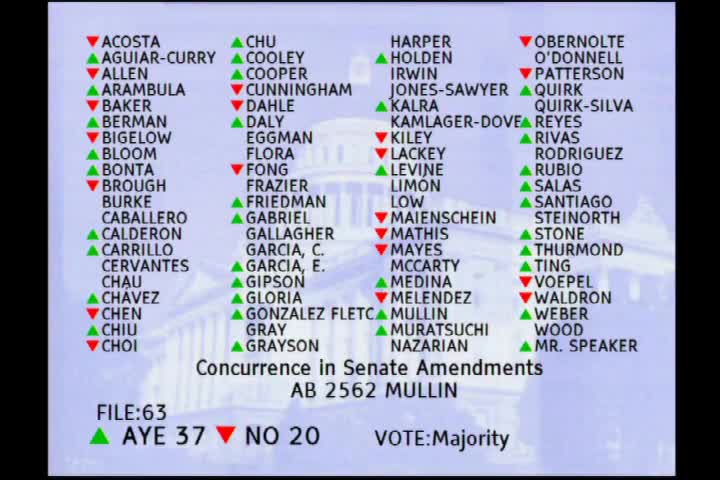 1MIN
Assembly Floor
 4MIN
Assembly Standing Committee on Health
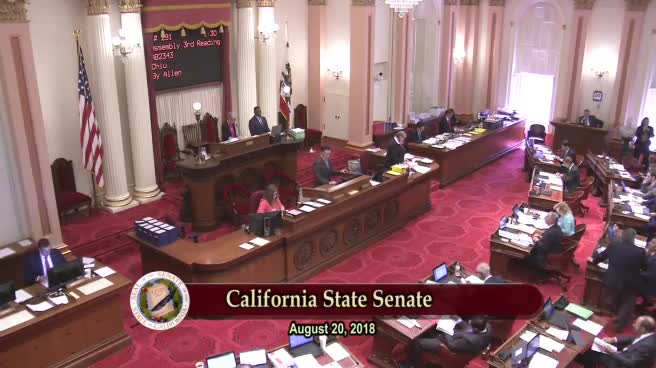 2MIN
Senate Floor
 1MIN
Senate Standing Committee on Health
 8MIN
Senate Standing Committee on Public Employment and Retirement
 1MIN
Assembly Floor
 3MIN
Assembly Standing Committee on Appropriations
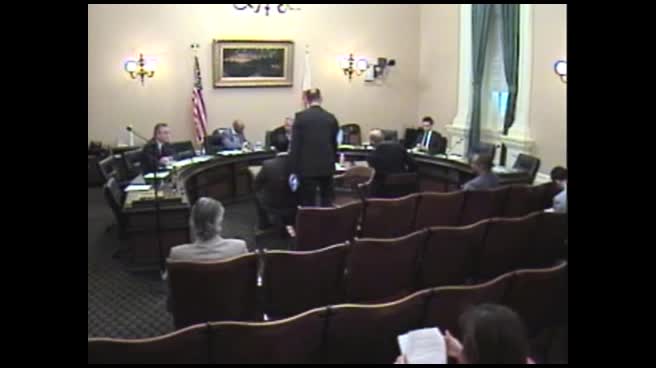 16MIN
Assembly Standing Committee on Public Employees, Retirement, and Social Security



Bill Co-Author(s):