AB 377: Child care subsidy plans: Counties of San Diego and Solano.
- Session Year: 2017-2018
- House: Assembly
- Latest Version Date: 2017-10-12
The Child Care and Development Services Act has a purpose of providing a comprehensive, coordinated, and cost-effective system of child care and development services for children from infancy to 13 years of age and their parents, including a full range of supervision, health, and support services through full- and part-time programs. Existing law requires the Superintendent of Public Instruction to develop standards for the implementation of quality child care programs. Existing law authorizes the Counties of Alameda and Santa Clara, as a pilot project, to develop an individualized county child care subsidy plan, as provided.
This bill would authorize, until January 1, 2023, the Counties of San Diego and Solano to develop and implement individualized county child care subsidy plans, as specified. The bill would require the plans to be submitted by the counties to their local planning council and their respective county board of supervisors for approval, as specified. The bill would require the Early Education and Support Division of the State Department of Education to review and approve or disapprove the plans and any subsequent modifications to the plans and, in specified situations, would require the State Department of Social Services to only review the plans. The bill would require the counties to annually prepare and submit to the Legislature, the State Department of Social Services, and the State Department of Education a report that contains specified information relating to the success of the counties plans.
This bill would make legislative findings and declarations as to the necessity of a special statute for the Counties of San Diego and Solano.
The Child Care and Development Services Act has a purpose of providing a comprehensive, coordinated, and cost-effective system of child care and development services for children from infancy to 13 years of age and their parents, including a full range of supervision, health, and support services through full- and part-time programs. Existing law requires the Superintendent of Public Instruction to develop standards for the implementation of quality child care programs. Existing law authorizes the Counties of Alameda and Santa Clara, as a pilot project, to develop an individualized county child care subsidy plan, as provided.
This bill would authorize, until January 1, 2023, the Counties of San Diego and Solano to develop and implement individualized county child care subsidy plans, as specified. The bill would require the plans to be submitted by the counties to their local planning council and their respective county board of supervisors for approval, as specified. The bill would require the Early Education and Support Division of the State Department of Education to review and approve or disapprove the plans and any subsequent modifications to the plans. plans and, in specified situations, would require the State Department of Social Services to only review the plans. The bill would require the counties to annually prepare and submit to the Legislature, the State Department of Social Services, and the State Department of Education a report that contains specified information relating to the success of the counties plans.
This bill would make legislative findings and declarations as to the necessity of a special statute for the Counties of San Diego and Solano.
The Child Care and Development Services Act has a purpose of providing a comprehensive, coordinated, and cost-effective system of child care and development services for children from infancy to 13 years of age and their parents, including a full range of supervision, health, and support services through full- and part-time programs. Existing law requires the Superintendent of Public Instruction to develop standards for the implementation of quality child care programs. Existing law authorizes the Counties of Alameda and Santa Clara, as a pilot project, to develop an individualized county child care subsidy plan, as provided.
This bill would authorize, until January 1, 2023, the Counties of San Diego and Solano to develop and implement individualized county child care subsidy plans, as specified. The bill would require the plans to be submitted by the counties to their local planning council and their respective county board of supervisors for approval, as specified. The bill would require the Early Education and Support Division of the State Department of Education to review and approve or disapprove the plans and any subsequent modifications to the plans. The bill would require the counties to annually prepare and submit to the Legislature, the State Department of Social Services, and the State Department of Education a report that contains specified information relating to the success of the counties plans.
This bill would make legislative findings and declarations as to the necessity of a special statute for the Counties of San Diego and Solano.
The Child Care and Development Services Act has a purpose of providing a comprehensive, coordinated, and cost-effective system of child care and development services for children from infancy to 13 years of age and their parents, including a full range of supervision, health, and support services through full- and part-time programs. Existing law requires the Superintendent of Public Instruction to develop standards for the implementation of quality child care programs. Existing law authorizes the Counties of Alameda and Santa Clara, as a pilot project, to develop an individualized county child care subsidy plan, as provided.
This bill would authorize, until January 1, 2025, 2023, the Counties of San Diego and Solano to develop and implement individualized county child care subsidy plans, as specified. The bill would require the plans to be submitted by the counties to their local planning council and their respective county board of supervisors for approval, as specified. The bill would require the Early Education and Support Division of the State Department of Education to review and approve or disapprove the plans and any subsequent modifications to the plans. The bill would require the counties to annually prepare and submit to the Legislature, the State Department of Social Services, and the State Department of Education a report that contains specified information relating to the success of the counties plans.
This bill would make legislative findings and declarations as to the necessity of a special statute for the Counties of San Diego and Solano.
The Child Care and Development Services Act has a purpose of providing a comprehensive, coordinated, and cost-effective system of child care and development services for children from infancy to 13 years of age and their parents, including a full range of supervision, health, and support services through full- and part-time programs. Existing law requires the Superintendent of Public Instruction to develop standards for the implementation of quality child care programs. Existing law authorizes the Counties of Alameda and Santa Clara, as a pilot project, to develop an individualized county child care subsidy plan, as provided.
This bill would authorize, until January 1, 2025, the Counties of San Diego and Solano to develop and implement individualized county child care subsidy plans, as specified. The bill would require the plans to be submitted to the by the counties to their local planning council and their respective county boards board of supervisors for approval, as specified. The bill would require the Early Education and Support Division of the State Department of Education to review and approve or disapprove the plans and any subsequent modifications to the plans. The bill would require the counties to annually prepare and submit to the Legislature, the State Department of Social Services, and the State Department of Education a report that contains specified information relating to the success of the countiess counties plans.
This bill would make legislative findings and declarations as to the necessity of a special statute for the Counties of San Diego and Solano.
The Child Care and Development Services Act has a purpose of providing a comprehensive, coordinated, and cost-effective system of child care and development services for children from infancy to 13 years of age and their parents, including a full range of supervision, health, and support services through full- and part-time programs. Existing law requires the Superintendent of Public Instruction to develop standards for the implementation of quality child care programs. Existing law authorizes the County of Alameda, Counties of Alameda and Santa Clara, as a pilot project, to develop an individualized county child care subsidy plan, as provided.
This bill would authorize, until January 1, 2023 2025, the County of Counties of San Diego and Solano to develop and implement an individualized county child care subsidy plan plans, as specified. The bill would require the plan plans to be submitted to the local planning council and the Solano County Board of Supervisors their respective county boards of supervisors for approval, as specified. The bill would require the Early Education and Support Division of the State Department of Education to review and approve or disapprove the plan plans and any subsequent modifications to the plan plans. The bill would require the County of Solano counties to annually prepare and submit to the Legislature, the State Department of Social Services, and the State Department of Education a report that contains specified information relating to the success of the countys plan. countiess plans.
This bill would make legislative findings and declarations as to the necessity of a special statute for County of the Counties of San Diego and Solano.
The Child Care and Development Services Act has a purpose of providing a comprehensive, coordinated, and cost-effective system of child care and development services for children from infancy to 13 years of age and their parents, including a full range of supervision, health, and support services through full- and part-time programs. Existing law requires the Superintendent of Public Instruction to develop standards for the implementation of quality child care programs. Existing law authorizes the County of Alameda, as a pilot project, to develop an individualized county child care subsidy plan, as provided.
This bill would authorize, until January 1, 2023, the County of Solano to develop and implement an individualized county child care subsidy plan, as specified. The bill would require the plan to be submitted to the local planning council and the Solano County Board of Supervisors for approval, as specified. The bill would require the Early Education and Support Division of the State Department of Education to review and approve or disapprove the plan and any subsequent modifications to the plan. The bill would require the County of Solano to annually prepare and submit to the Legislature, the State Department of Social Services, and the State Department of Education a report that contains specified information relating to the success of the countys plan.
This bill would make legislative findings and declarations as to the necessity of a special statute for County of Solano.
It is the intent of the Legislature to build a stable, comprehensive, and adequately funded high-quality early learning and educational support system for children from birth to five years of age, inclusive, with alignment and integration into the K12 education system by strategically using state and federal funds, and engaging all early care and education stakeholders, including K12 education stakeholders, in an effort to provide access to affordable, high-quality services supported by adequate rates, integrated data systems, and a strong infrastructure that supports children and the educators who serve them.
SEC. 2.Article 15.4.2 (commencing with Section 8349) is added to Chapter 2 of Part 6 of Division 1 of Title 1 of the Education Code, to read:15.4.2.Individualized County Child Care Subsidy Plans for the Counties of San Diego and Solano8349.The counties of San Diego and Solano may individually, as pilot projects, develop and implement an individualized county child care subsidy plan. The plans shall ensure that child care subsidies received by these counties are used to address local needs, conditions, and priorities of working families in the respective communities.
8349.1.For purposes of this article, county means the Counties of San Diego and Solano.
8349.2.(a)For purposes of this article, plan means an individualized county child care subsidy plan developed and approved under the pilot project described in Section 8349, which includes all of the following:
(1)An assessment to identify the countys goals for its subsidized child care system. The assessment shall examine whether the current structure of subsidized child care funding adequately supports working families in the county and whether the countys child care goals coincide with the states requirements for funding, eligibility, priority, and reimbursement. The assessment shall also identify barriers in the states child care subsidy system that inhibit the county from meeting its child care goals. In conducting the assessment, the county shall consider all of the following:
(A)The general demographics of families who are in need of child care, including employment, income, language, ethnic, and family composition.
(B)The current supply of available subsidized child care.
(C)The level of need for various types of subsidized child care services, including, but not limited to, infant care, after-hours care, and care for children with exceptional needs.
(D)The countys self-sufficiency income level.
(E)Income eligibility levels for subsidized child care.
(F)Family fees.
(G)The cost of providing child care.
(H)The regional market rates, as established by the department, for different types of child care.
(I)The standard reimbursement rate or state per diem for centers operating under contracts with the department.
(J)Trends in the countys unemployment rate and housing affordability index.
(2)(A)Development of a local policy to eliminate state-imposed regulatory barriers to the countys achievement of its desired outcomes for subsidized child care.
(B)The local policy shall do all of the following:
(i)Prioritize lowest income families first.
(ii)Follow the family fee schedule established pursuant to Section 8273 for those families who are income eligible, as defined by Section 8263.1, and provide the exemptions for family fees specified in Section 8273.1.
(iii)Meet local goals that are consistent with the states child care goals.
(iv)Identify existing policies that would be affected by the countys plan.
(v)(I)Authorize an agency that provides child care and development services in the county through a contract with the department to apply to the department to amend existing contracts in order to benefit from the local policy.
(II)The department shall approve an application to amend an existing contract if the plan is modified pursuant to Section 8349.3.
(III)The contract of a department contractor that does not elect to request an amendment to its contract remains operative and enforceable.
(vi)Provide a family that qualifies for the second or third stage of child care services pursuant to Article 15.5 (commencing with Section 8350), for purposes of eligibility, fees, and reimbursements, the same or higher level of benefit as a family that qualifies for subsidized child care on another basis pursuant to the local policy, except as otherwise provided in Article 15.5 (commencing with Section 8350). Nothing in this section shall be interpreted to impact or reduce any element in the second or third stage of child care services pursuant to Article 15.5 (commencing with Section 8350) that provides a greater benefit to participating families than is provided for in the local policy.
(C)The local policy may supersede state law concerning child care subsidy programs with regard only to the following factors:
(i)Eligibility criteria, including, but not limited to, age, family size, time limits, income level, and special needs considerations.
(ii)Fees, including, but not limited to, family fees, sliding scale fees, and copayments for those families who are not income eligible, as defined by Section 8263.1.
(iii)Reimbursement rates.
(iv)Methods of maximizing the efficient use of subsidy funds, including, but not limited to, multiyear contracting with the department for center-based child care, and interagency agreements that allow for flexible and temporary transfer of funds among agencies.
(3)Recognition that all funding sources utilized by contractors that provide child care and development services in the county are eligible to be included in the countys plan.
(4)Establishment of measurable outcomes to evaluate the success of the plan to achieve the countys child care goals, and to overcome any barriers identified in the states child care subsidy system.
(b)A plan may also include stage one child care services and all voucher based child care programs.
(c)Nothing in this section shall be construed to permit the county to change the regional market rate survey results for the county.
8349.3.(a)The plan shall be submitted to the local planning council, as defined in subdivision (g) of Section 8499, for approval. Upon approval of the plan by the local planning council, the board of supervisors of the county shall hold at least one public hearing on the plan. Following the hearing, if the board votes in favor of the plan, the plan shall be submitted to the Early Education and Support Division of the department for review. If the plan includes stage one child care services, the plan shall also be submitted to the State Department of Social Services for review only.
(b)Within 30 days of receiving the plan, the Early Education and Support Division shall review and either approve or disapprove the plan.
(c)Within 30 days of receiving a modification to the plan, the Early Education and Support Division shall review and either approve or disapprove that modification to the plan.
(d)The Early Education and Support Division may disapprove only those portions of modifications to the plan that are not in conformance with this article or that are in conflict with federal law.
8349.4.The county shall, by the end of the first fiscal year of operation under the approved child care subsidy plan, demonstrate, in the report required pursuant to Section 8349.5, an increase in the aggregate days a child is enrolled in child care in the county as compared to the enrollment in the final quarter of the 201617 fiscal year.
8349.5.(a)The county shall annually prepare and submit to the Legislature, the State Department of Social Services, and the department a report that summarizes the success of the countys plan, and the countys ability to maximize the use of funds and to improve and stabilize child care in the county.
(b)The department shall review the report submitted pursuant to subdivision (a), along with any applicable programmatic and fiscal compliance records submitted by the contracting agencies participating in the plan, and determine whether to allow the county to continue with the plan without change, or whether to require modifications to be made to the plan.
(c)The county shall, by the end of the first fiscal year of operation under the approved plan, demonstrate, in the report required pursuant to this section, that there was no reduction in the number of children served as compared to the number of children served before the implementation of the plan.
(d)A report to be submitted to the Legislature pursuant to subdivision (a) shall be submitted in compliance with Section 9795 of the Government Code.
8349.6.A participating contractor shall receive an increase or decrease in funding that the contractor would have received if the contractor had not participated in the plan.
8349.7.This article shall remain in effect only until January 1, 2023, and as of that date is repealed, unless a later enacted statute that is enacted before January 1, 2023, deletes or extends that date.
SEC. 3.The Legislature finds and declares that a special statute is necessary and that a general statute cannot be made applicable within the meaning of Section 16 of Article IV of the California Constitution because of the unique circumstances in the Counties of San Diego and Solano. Existing law does not reflect the fiscal reality of living in these high-cost counties where the cost of living is well beyond the state median level, resulting in reduced access to quality child care. In recognition of the unintended consequences of living in these high-cost counties, this act is necessary to provide children and families in the Counties of San Diego and Solano proper access to child care through individualized county child care subsidy plans.
It is the intent of the Legislature to build a stable, comprehensive, and adequately funded high-quality early learning and educational support system for children from birth to five years of age, inclusive, with alignment and integration into the K12 education system by strategically using state and federal funds, and engaging all early care and education stakeholders, including K12 education stakeholders, in an effort to provide access to affordable, high-quality services supported by adequate rates, integrated data systems, and a strong infrastructure that supports children and the educators who serve them.
SEC. 2.Article 15.4.2 (commencing with Section 8349) is added to Chapter 2 of Part 6 of Division 1 of Title 1 of the Education Code, to read:15.4.2.Individualized County Child Care Subsidy Plans for the Counties of San Diego and Solano8349.The counties of San Diego and Solano may individually, as pilot projects, develop and implement an individualized county child care subsidy plan. The plans shall ensure that child care subsidies received by these counties are used to address local needs, conditions, and priorities of working families in the respective communities.
8349.1.For purposes of this article, county means the Counties of San Diego and Solano.
8349.2.(a)For purposes of this article, plan means an individualized county child care subsidy plan developed and approved under the pilot project described in Section 8349, which includes all of the following:
(1)An assessment to identify the countys goals for its subsidized child care system. The assessment shall examine whether the current structure of subsidized child care funding adequately supports working families in the county and whether the countys child care goals coincide with the states requirements for funding, eligibility, priority, and reimbursement. The assessment shall also identify barriers in the states child care subsidy system that inhibit the county from meeting its child care goals. In conducting the assessment, the county shall consider all of the following:
(A)The general demographics of families who are in need of child care, including employment, income, language, ethnic, and family composition.
(B)The current supply of available subsidized child care.
(C)The level of need for various types of subsidized child care services, including, but not limited to, infant care, after-hours care, and care for children with exceptional needs.
(D)The countys self-sufficiency income level.
(E)Income eligibility levels for subsidized child care.
(F)Family fees.
(G)The cost of providing child care.
(H)The regional market rates, as established by the department, for different types of child care.
(I)The standard reimbursement rate or state per diem for centers operating under contracts with the department.
(J)Trends in the countys unemployment rate and housing affordability index.
(2)(A)Development of a local policy to eliminate state-imposed regulatory barriers to the countys achievement of its desired outcomes for subsidized child care.
(B)The local policy shall do all of the following:
(i)Prioritize lowest income families first.
(ii)Follow the family fee schedule established pursuant to Section 8273 for those families who are income eligible, as defined by Section 8263.1, and provide the exemptions for family fees specified in Section 8273.1.
(iii)Meet local goals that are consistent with the states child care goals.
(iv)Identify existing policies that would be affected by the countys plan.
(v)(I)Authorize an agency that provides child care and development services in the county through a contract with the department to apply to the department to amend existing contracts in order to benefit from the local policy.
(II)The department shall approve an application to amend an existing contract if the plan is modified pursuant to Section 8349.3.
(III)The contract of a department contractor that does not elect to request an amendment to its contract remains operative and enforceable.
(vi)Provide a family that qualifies for the second or third stage of child care services pursuant to Article 15.5 (commencing with Section 8350), for purposes of eligibility, fees, and reimbursements, the same or higher level of benefit as a family that qualifies for subsidized child care on another basis pursuant to the local policy, except as otherwise provided in Article 15.5 (commencing with Section 8350). Nothing in this section shall be interpreted to impact or reduce any element in the second or third stage of child care services pursuant to Article 15.5 (commencing with Section 8350) that provides a greater benefit to participating families than is provided for in the local policy.
(C)The local policy may supersede state law concerning child care subsidy programs with regard only to the following factors:
(i)Eligibility criteria, including, but not limited to, age, family size, time limits, income level, and special needs considerations.
(ii)Fees, including, but not limited to, family fees, sliding scale fees, and copayments for those families who are not income eligible, as defined by Section 8263.1.
(iii)Reimbursement rates.
(iv)Methods of maximizing the efficient use of subsidy funds, including, but not limited to, multiyear contracting with the department for center-based child care, and interagency agreements that allow for flexible and temporary transfer of funds among agencies.
(3)Recognition that all funding sources utilized by contractors that provide child care and development services in the county are eligible to be included in the countys plan.
(4)Establishment of measurable outcomes to evaluate the success of the plan to achieve the countys child care goals, and to overcome any barriers identified in the states child care subsidy system.
(b)A plan may also include stage one child care services and all voucher based child care programs.
(b)(c)Nothing in this section shall be construed to permit the county to change the regional market rate survey results for the county.
8349.3.(a)The plan shall be submitted to the local planning council, as defined in subdivision (g) of Section 8499, for approval. Upon approval of the plan by the local planning council, the board of supervisors of the county shall hold at least one public hearing on the plan. Following the hearing, if the board votes in favor of the plan, the plan shall be submitted to the Early Education and Support Division of the department for review. If the plan includes stage one child care services, the plan shall also be submitted to the State Department of Social Services for review only.
(b)Within 30 days of receiving the plan, the Early Education and Support Division shall review and either approve or disapprove the plan.
(c)Within 30 days of receiving a modification to the plan, the Early Education and Support Division shall review and either approve or disapprove that modification to the plan.
(d)The Early Education and Support Division may disapprove only those portions of modifications to the plan that are not in conformance with this article or that are in conflict with federal law.
8349.4.The county shall, by the end of the first fiscal year of operation under the approved child care subsidy plan, demonstrate, in the report required pursuant to Section 8349.5, an increase in the aggregate days a child is enrolled in child care in the county as compared to the enrollment in the final quarter of the 201617 fiscal year.
8349.5.(a)The county shall annually prepare and submit to the Legislature, the State Department of Social Services, and the department a report that summarizes the success of the countys plan, and the countys ability to maximize the use of funds and to improve and stabilize child care in the county.
(b)The department shall review the report submitted pursuant to subdivision (a), along with any applicable programmatic and fiscal compliance records submitted by the contracting agencies participating in the plan, and determine whether to allow the county to continue with the plan without change, or whether to require modifications to be made to the plan.
(c)The county shall, by the end of the first fiscal year of operation under the approved plan, demonstrate, in the report required pursuant to this section, that there was no reduction in the number of children served as compared to the number of children served before the implementation of the plan.
(c)(d)A report to be submitted to the Legislature pursuant to subdivision (a) shall be submitted in compliance with Section 9795 of the Government Code.
8349.6.A participating contractor shall receive an increase or decrease in funding that the contractor would have received if the contractor had not participated in the plan.
8349.7.This article shall remain in effect only until January 1, 2023, and as of that date is repealed, unless a later enacted statute that is enacted before January 1, 2023, deletes or extends that date.
SEC. 3.The Legislature finds and declares that a special statute is necessary and that a general statute cannot be made applicable within the meaning of Section 16 of Article IV of the California Constitution because of the unique circumstances in the Counties of San Diego and Solano. Existing law does not reflect the fiscal reality of living in these high-cost counties where the cost of living is well beyond the state median level, resulting in reduced access to quality child care. In recognition of the unintended consequences of living in these high-cost counties, this act is necessary to provide children and families in the Counties of San Diego and Solano proper access to child care through individualized county child care subsidy plans.
It is the intent of the Legislature to build a stable, comprehensive, and adequately funded high-quality early learning and educational support system for children from birth to five years of age, inclusive, with alignment and integration into the K12 education system by strategically using state and federal funds, and engaging all early care and education stakeholders, including K12 education stakeholders, in an effort to provide access to affordable, high-quality services supported by adequate rates, integrated data systems, and a strong infrastructure that supports children and the educators who serve them.
SEC. 2.Article 15.4.2 (commencing with Section 8349) is added to Chapter 2 of Part 6 of Division 1 of Title 1 of the Education Code, to read:15.4.2.Individualized County Child Care Subsidy Plans for the Counties of San Diego and Solano8349.The counties of San Diego and Solano may individually, as pilot projects, develop and implement an individualized county child care subsidy plan. The plans shall ensure that child care subsidies received by these counties are used to address local needs, conditions, and priorities of working families in the respective communities.
8349.1.For purposes of this article, county means the Counties of San Diego and Solano.
8349.2.(a)For purposes of this article, plan means an individualized county child care subsidy plan developed and approved under the pilot project described in Section 8349, which includes all of the following:
(1)An assessment to identify the countys goals for its subsidized child care system. The assessment shall examine whether the current structure of subsidized child care funding adequately supports working families in the county and whether the countys child care goals coincide with the states requirements for funding, eligibility, priority, and reimbursement. The assessment shall also identify barriers in the states child care subsidy system that inhibit the county from meeting its child care goals. In conducting the assessment, the county shall consider all of the following:
(A)The general demographics of families who are in need of child care, including employment, income, language, ethnic, and family composition.
(B)The current supply of available subsidized child care.
(C)The level of need for various types of subsidized child care services, including, but not limited to, infant care, after-hours care, and care for children with exceptional needs.
(D)The countys self-sufficiency income level.
(E)Income eligibility levels for subsidized child care.
(F)Family fees.
(G)The cost of providing child care.
(H)The regional market rates, as established by the department, for different types of child care.
(I)The standard reimbursement rate or state per diem for centers operating under contracts with the department.
(J)Trends in the countys unemployment rate and housing affordability index.
(2)(A)Development of a local policy to eliminate state-imposed regulatory barriers to the countys achievement of its desired outcomes for subsidized child care.
(B)The local policy shall do all of the following:
(i)Prioritize lowest income families first.
(ii)Follow the family fee schedule established pursuant to Section 8273 for those families who are income eligible, as defined by Section 8263.1, and provide the exemptions for family fees specified in Section 8273.1.
(iii)Meet local goals that are consistent with the states child care goals.
(iv)Identify existing policies that would be affected by the countys plan.
(v)(I)Authorize an agency that provides child care and development services in the county through a contract with the department to apply to the department to amend existing contracts in order to benefit from the local policy.
(II)The department shall approve an application to amend an existing contract if the plan is modified pursuant to Section 8349.3.
(III)The contract of a department contractor that does not elect to request an amendment to its contract remains operative and enforceable.
(vi)Provide a family that qualifies for the second or third stage of child care services pursuant to Article 15.5 (commencing with Section 8350), for purposes of eligibility, fees, and reimbursements, the same or higher level of benefit as a family that qualifies for subsidized child care on another basis pursuant to the local policy, except as otherwise provided in Article 15.5 (commencing with Section 8350). Nothing in this section shall be interpreted to impact or reduce any element in the second or third stage of child care services pursuant to Article 15.5 (commencing with Section 8350) that provides a greater benefit to participating families than is provided for in the local policy.
(C)The local policy may supersede state law concerning child care subsidy programs with regard only to the following factors:
(i)Eligibility criteria, including, but not limited to, age, family size, time limits, income level, and special needs considerations.
(ii)Fees, including, but not limited to, family fees, sliding scale fees, and copayments for those families who are not income eligible, as defined by Section 8263.1.
(iii)Reimbursement rates.
(iv)Methods of maximizing the efficient use of subsidy funds, including, but not limited to, multiyear contracting with the department for center-based child care, and interagency agreements that allow for flexible and temporary transfer of funds among agencies.
(3)Recognition that all funding sources utilized by contractors that provide child care and development services in the county are eligible to be included in the countys plan.
(4)Establishment of measurable outcomes to evaluate the success of the plan to achieve the countys child care goals, and to overcome any barriers identified in the states child care subsidy system.
(b)Nothing in this section shall be construed to permit the county to change the regional market rate survey results for the county.
8349.3.(a)The plan shall be submitted to the local planning council, as defined in subdivision (g) of Section 8499, for approval. Upon approval of the plan by the local planning council, the board of supervisors of the county shall hold at least one public hearing on the plan. Following the hearing, if the board votes in favor of the plan, the plan shall be submitted to the Early Education and Support Division of the department for review.
(b)Within 30 days of receiving the plan, the Early Education and Support Division shall review and either approve or disapprove the plan.
(c)Within 30 days of receiving a modification to the plan, the Early Education and Support Division shall review and either approve or disapprove that modification to the plan.
(d)The Early Education and Support Division may disapprove only those portions of modifications to the plan that are not in conformance with this article or that are in conflict with federal law.
8349.4.The county shall, by the end of the first fiscal year of operation under the approved child care subsidy plan, demonstrate, in the report required pursuant to Section 8349.5, an increase in the aggregate days a child is enrolled in child care in the county as compared to the enrollment in the final quarter of the 201617 fiscal year.
8349.5.(a)The county shall annually prepare and submit to the Legislature, the State Department of Social Services, and the department a report that summarizes the success of the countys plan, and the countys ability to maximize the use of funds and to improve and stabilize child care in the county.
(b)The department shall review the report submitted pursuant to subdivision (a), along with any applicable programmatic and fiscal compliance records submitted by the contracting agencies participating in the plan, and determine whether to allow the county to continue with the plan without change, or whether to require modifications to be made to the plan.
(b)(c)A report to be submitted to the Legislature pursuant to subdivision (a) shall be submitted in compliance with Section 9795 of the Government Code.
8349.6.A participating contractor shall receive an increase or decrease in funding that the contractor would have received if the contractor had not participated in the plan.
8349.7.This article shall remain in effect only until January 1, 2023, and as of that date is repealed, unless a later enacted statute that is enacted before January 1, 2023, deletes or extends that date.
SEC. 3.The Legislature finds and declares that a special statute is necessary and that a general statute cannot be made applicable within the meaning of Section 16 of Article IV of the California Constitution because of the unique circumstances in the Counties of San Diego and Solano. Existing law does not reflect the fiscal reality of living in these high-cost counties where the cost of living is well beyond the state median level, resulting in reduced access to quality child care. In recognition of the unintended consequences of living in these high-cost counties, this act is necessary to provide children and families in the Counties of San Diego and Solano proper access to child care through individualized county child care subsidy plans.
It is the intent of the Legislature to build a stable, comprehensive, and adequately funded high-quality early learning and educational support system for children from birth to five years of age, inclusive, with alignment and integration into the K12 education system by strategically using state and federal funds, and engaging all early care and education stakeholders, including K12 education stakeholders, in an effort to provide access to affordable, high-quality services supported by adequate rates, integrated data systems, and a strong infrastructure that supports children and the educators who serve them.
SEC. 2.Article 15.4.2 (commencing with Section 8349) is added to Chapter 2 of Part 6 of Division 1 of Title 1 of the Education Code, to read:15.4.2.Individualized County Child Care Subsidy Plans for the Counties of San Diego and Solano8349.The counties of San Diego and Solano may individually, as pilot projects, develop and implement an individualized county child care subsidy plan. The plans shall ensure that child care subsidies received by these counties are used to address local needs, conditions, and priorities of working families in the respective communities.
8349.1.For purposes of this article, county means the Counties of San Diego and Solano.
8349.2.(a)For purposes of this article, plan means an individualized county child care subsidy plan developed and approved under the pilot project described in Section 8349, which includes all of the following:
(1)An assessment to identify the countys goals for its subsidized child care system. The assessment shall examine whether the current structure of subsidized child care funding adequately supports working families in the county and whether the countys child care goals coincide with the states requirements for funding, eligibility, priority, and reimbursement. The assessment shall also identify barriers in the states child care subsidy system that inhibit the county from meeting its child care goals. In conducting the assessment, the county shall consider all of the following:
(A)The general demographics of families who are in need of child care, including employment, income, language, ethnic, and family composition.
(B)The current supply of available subsidized child care.
(C)The level of need for various types of subsidized child care services, including, but not limited to, infant care, after-hours care, and care for children with exceptional needs.
(D)The countys self-sufficiency income level.
(E)Income eligibility levels for subsidized child care.
(F)Family fees.
(G)The cost of providing child care.
(H)The regional market rates, as established by the department, for different types of child care.
(I)The standard reimbursement rate or state per diem for centers operating under contracts with the department.
(J)Trends in the countys unemployment rate and housing affordability index.
(2)(A)Development of a local policy to eliminate state-imposed regulatory barriers to the countys achievement of its desired outcomes for subsidized child care.
(B)The local policy shall do all of the following:
(i)Prioritize lowest income families first.
(ii)Follow the family fee schedule established pursuant to Section 8273 for those families that who are income eligible, as defined by Section 8263.1, and provide the exemptions for family fees specified in Section 8273.1.
(iii)Meet local goals that are consistent with the states child care goals.
(iv)Identify existing policies that would be affected by the countys plan.
(v)(I)Authorize an agency that provides child care and development services in the county through a contract with the department to apply to the department to amend existing contracts in order to benefit from the local policy.
(II)The department shall approve an application to amend an existing contract if the plan is modified pursuant to Section 8349.3.
(III)The contract of a department contractor that does not elect to request an amendment to its contract remains operative and enforceable.
(vi)Provide a family that qualifies for the second or third stage of child care services pursuant to Article 15.5 (commencing with Section 8350), for purposes of eligibility, fees, and reimbursements, the same or higher level of benefit as a family that qualifies for subsidized child care on another basis pursuant to the local policy, except as otherwise provided in Article 15.5 (commencing with Section 8350). Nothing in this section shall be interpreted to impact or reduce any element in the second or third stage of child care services pursuant to Article 15.5 (commencing with Section 8350) that provides a greater benefit to participating families than is provided for in the local policy.
(C)The local policy may supersede state law concerning child care subsidy programs with regard only to the following factors:
(i)Eligibility criteria, including, but not limited to, age, family size, time limits, income level, and special needs considerations.
(ii)Fees, including, but not limited to, family fees, sliding scale fees, and copayments for those families that who are not income eligible, as defined by Section 8263.1.
(iii)Reimbursement rates.
(iv)Methods of maximizing the efficient use of subsidy funds, including, but not limited to, multiyear contracting with the department for center-based child care, and interagency agreements that allow for flexible and temporary transfer of funds among agencies.
(3)Recognition that all funding sources utilized by contractors that provide child care and development services in the county are eligible to be included in the countys plan.
(4)Establishment of measurable outcomes to evaluate the success of the plan to achieve the countys child care goals, and to overcome any barriers identified in the states child care subsidy system.
(b)Nothing in this section shall be construed to permit the county to change the regional market rate survey results for the county.
8349.3.(a)The plan shall be submitted to the local planning council, as defined in subdivision (g) of Section 8499, for approval. Upon approval of the plan by the local planning council, the board of supervisors of the county shall hold at least one public hearing on the plan. Following the hearing, if the board votes in favor of the plan, the plan shall be submitted to the Early Education and Support Division of the department for review.
(b)Within 30 days of receiving the plan, the Early Education and Support Division shall review and either approve or disapprove the plan.
(c)Within 30 days of receiving a modification to the plan, the Early Education and Support Division shall review and either approve or disapprove that modification to the plan.
(d)The Early Education and Support Division may disapprove only those portions of modifications to the plan that are not in conformance with this article or that are in conflict with federal law.
8349.4.The county shall, by the end of the first fiscal year of operation under the approved child care subsidy plan, demonstrate, in the report required pursuant to Section 8349.5, an increase in the aggregate days a child is enrolled in child care in the county as compared to the enrollment in the final quarter of the 201617 fiscal year.
8349.5.(a)The county shall annually prepare and submit to the Legislature, the State Department of Social Services, and the department a report that summarizes the success of the countys plan, and the countys ability to maximize the use of funds and to improve and stabilize child care in the county.
(b)A report to be submitted pursuant to subdivision (a) shall be submitted in compliance with Section 9795 of the Government Code.
8349.6.A participating contractor shall receive an increase or decrease in funding that the contractor would have received if the contractor had not participated in the plan.
8349.7.This article shall remain in effect only until January 1, 2025, 2023, and as of that date is repealed, unless a later enacted statute, statute that is enacted before January 1, 2025, 2023, deletes or extends that date.
SEC. 3.The Legislature finds and declares that a special statute is necessary and that a general statute cannot be made applicable within the meaning of Section 16 of Article IV of the California Constitution because of the unique circumstances in the Counties of San Diego and Solano. Existing law does not reflect the fiscal reality of living in these high-cost counties where the cost of living is well beyond the state median level, resulting in reduced access to quality child care. In recognition of the unintended consequences of living in these high-cost counties, this act is necessary to provide children and families in the Counties of San Diego and Solano proper access to child care through individualized county child care subsidy plans.
It is the intent of the Legislature to build a stable, comprehensive, and adequately funded high-quality early learning and educational support system for children from birth to five years of age, inclusive, with alignment and integration into the K12 education system by strategically using state and federal funds, and engaging all early care and education stakeholders, including K12 education stakeholders, in an effort to provide access to affordable, high-quality services supported by adequate rates, integrated data systems, and a strong infrastructure that supports children and the educators who serve them.
SEC. 2.Article 15.4.2 (commencing with Section 8349) is added to Chapter 2 of Part 6 of Division 1 of Title 1 of the Education Code, to read:15.4.2.Individualized County Child Care Subsidy Plans for the Counties of San Diego and Solano8349.The counties of San Diego and Solano may individually, as pilot projects, develop and implement an individualized county child care subsidy plan. The plans shall ensure that child care subsidies received by these counties are used to address local needs, conditions, and priorities of working families in the respective communities.
8349.1.For purposes of this article, county means the Counties of San Diego and Solano.
8349.2.(a)For purposes of this article, plan means an individualized county child care subsidy plan developed and approved under the pilot project described in Section 8349, which includes all of the following:
(1)An assessment to identify the countys goals for its subsidized child care system. The assessment shall examine whether the current structure of subsidized child care funding adequately supports working families in the county and whether the countys child care goals coincide with the states requirements for funding, eligibility, priority, and reimbursement. The assessment shall also identify barriers in the states child care subsidy system that inhibit the county from meeting its child care goals. In conducting the assessment, the county shall consider all of the following:
(A)The general demographics of families who are in need of child care, including employment, income, language, ethnic, and family composition.
(B)The current supply of available subsidized child care.
(C)The level of need for various types of subsidized child care services, including, but not limited to, infant care, after-hours care, and care for children with exceptional needs.
(D)The countys self-sufficiency income level.
(E)Income eligibility levels for subsidized child care.
(F)Family fees.
(G)The cost of providing child care.
(H)The regional market rates, as established by the department, for different types of child care.
(I)The standard reimbursement rate or state per diem for centers operating under contracts with the department.
(J)Trends in the countys unemployment rate and housing affordability index.
(2)(A) Development of a local policy to eliminate state-imposed regulatory barriers to the countys achievement of its desired outcomes for subsidized child care.
(B)The local policy shall do all of the following:
(i)Prioritize lowest income families first.
(ii)Follow the family fee schedule established pursuant to Section 8273 for those families that are income eligible, as defined by Section 8263.1. 8263.1, and provide the exemptions for family fees specified in Section 8273.1.
(iii)Meet local goals that are consistent with the states child care goals.
(iv)Identify existing policies that would be affected by the countys plan.
(v)(I) Authorize an agency that provides child care and development services in the county through a contract with the department to apply to the department to amend existing contracts in order to benefit from the local policy.
(II)The department shall approve an application to amend an existing contract if the plan is modified pursuant to Section 8349.3.
(III)The contract of a department contractor that does not elect to request an amendment to its contract remains operative and enforceable.
(vi)Provide a family that qualifies for the second or third stage of child care services pursuant to Article 15.5 (commencing with Section 8350), for purposes of eligibility, fees, and reimbursements, the same or higher level of benefit as a family that qualifies for subsidized child care on another basis pursuant to the local policy, except as otherwise provided in Article 15.5 (commencing with Section 8350). Nothing in this section shall be interpreted to impact or reduce any element in the second or third stage of child care services pursuant to Article 15.5 (commencing with Section 8350) that provides a greater benefit to participating families than is provided for in the local policy.
(C)The local policy may supersede state law concerning child care subsidy programs with regard only to the following factors:
(i)Eligibility criteria, including, but not limited to, age, family size, time limits, income level, inclusion of former and current CalWORKs participants, and special needs considerations, except that the local policy shall not deny or reduce eligibility of a family that qualifies for child care pursuant to Section 8353. Under the local policy, a family that qualifies for child care pursuant to Section 8354 shall be treated for purposes of eligibility and fees in the same manner as a family that qualifies for subsidized child care on another basis pursuant to the local policy. considerations.
(ii)Fees, including, but not limited to, family fees, sliding scale fees, and copayments for those families that are not income eligible, as defined by Section 8263.1.
(iii)Reimbursement rates.
(iv)Methods of maximizing the efficient use of subsidy funds, including, but not limited to, multiyear contracting with the department for center-based child care, and interagency agreements that allow for flexible and temporary transfer of funds among agencies.
(3)Recognition that all funding sources utilized by contractors that provide child care and development services in the county are eligible to be included in the countys plan.
(4)Establishment of measurable outcomes to evaluate the success of the plan to achieve the countys child care goals, and to overcome any barriers identified in the states child care subsidy system.
(b)Nothing in this section shall be construed to permit the county to change the regional market rate survey results for the county.
8349.3.(a)The plan shall be submitted to the local planning council, as defined in subdivision (g) of Section 8499, for approval. Upon approval of the plan by the local planning council, the board of supervisors of the county shall hold at least one public hearing on the plan. Following the hearing, if the board votes in favor of the plan, the plan shall be submitted to the Early Education and Support Division of the department for review.
(b)Within 30 days of receiving the plan, the Early Education and Support Division shall review and either approve or disapprove the plan.
(c)Within 30 days of receiving a modification to the plan, the Early Education and Support Division shall review and either approve or disapprove that modification to the plan.
(d)The Early Education and Support Division may disapprove only those portions of modifications to the plan that are not in conformance with this article or that are in conflict with federal law.
8349.4.The county shall, by the end of the first fiscal year of operation under the approved child care subsidy plan, demonstrate, in the report required pursuant to Section 8349.5, an increase in the aggregate days a child is enrolled in child care in the county as compared to the enrollment in the final quarter of the 201617 fiscal year.
8349.5.(a)The county shall annually prepare and submit to the Legislature, the State Department of Social Services, and the department a report that summarizes the success of the countys plan, and the countys ability to maximize the use of funds and to improve and stabilize child care in the county.
(b)A report to be submitted pursuant to subdivision (a) shall be submitted in compliance with Section 9795 of the Government Code.
8349.6.A participating contractor shall receive an increase or decrease in funding that the contractor would have received if the contractor had not participated in the plan.
8349.7.This article shall remain in effect only until January 1, 2025, and as of that date is repealed, unless a later enacted statute, that is enacted before January 1, 2025, deletes or extends that date.
SEC. 3.The Legislature finds and declares that a special statute is necessary and that a general statute cannot be made applicable within the meaning of Section 16 of Article IV of the California Constitution because of the unique circumstances in the Counties of San Diego and Solano. Existing law does not reflect the fiscal reality of living in these high-cost counties where the cost of living is well beyond the state median level, resulting in reduced access to quality child care. In recognition of the unintended consequences of living in these high-cost counties, this act is necessary to provide children and families in the Counties of San Diego and Solano proper access to child care through individualized county child care subsidy plans.
It is the intent of the Legislature to build a stable, comprehensive, and adequately funded high-quality early learning and educational support system for children from birth to five years of age, inclusive, with alignment and integration into the K12 education system by strategically using state and federal funds, and engaging all early care and education stakeholders, including K12 education stakeholders, in an effort to provide access to affordable, high-quality services supported by adequate rates, integrated data systems, and a strong infrastructure that supports children and the educators that who serve them.
SEC. 2.Article 15.4.2 (commencing with Section 8349) is added to Chapter 2 of Part 6 of Division 1 of Title 1 of the Education Code, to read:15.4.2.Individualized County of Child Care Subsidy Plans for the Counties of San Diego and Solano Child Care Subsidy Plan8349.The County counties of San Diego and Solano may individually, as a pilot project projects, develop and implement an individualized county child care subsidy plan. The plan plans shall ensure that child care subsidies received by the County of Solano these counties are used to address local needs, conditions, and priorities of working families in the community respective communities.
8349.1.For purposes of this article, county means the County of Counties of San Diego and Solano.
8349.2.(a)For purposes of this article, plan means an individualized county child care subsidy plan developed and approved under the pilot project described in Section 8349, which includes all of the following:
(1)An assessment to identify the countys goals for its subsidized child care system. The assessment shall examine whether the current structure of subsidized child care funding adequately supports working families in the county and whether the countys child care goals coincide with the states requirements for funding, eligibility, priority, and reimbursement. The assessment shall also identify barriers in the states child care subsidy system that inhibit the county from meeting its child care goals. In conducting the assessment, the county shall consider all of the following:
(A)The general demographics of families who are in need of child care, including employment, income, language, ethnic, and family composition.
(B)The current supply of available subsidized child care.
(C)The level of need for various types of subsidized child care services, including, but not limited to, infant care, after-hours care, and care for children with exceptional needs.
(D)The countys self-sufficiency income level.
(E)Income eligibility levels for subsidized child care.
(F)Family fees.
(G)The cost of providing child care.
(H)The regional market rates, as established by the department, for different types of child care.
(I)The standard reimbursement rate or state per diem for centers operating under contracts with the department.
(J)Trends in the countys unemployment rate and housing affordability index.
(2)(A) Development of a local policy to eliminate state-imposed regulatory barriers to the countys achievement of its desired outcomes for subsidized child care.
(B)The local policy shall do all of the following:
(i)Prioritize lowest income families first.
(ii)Follow the family fee schedule established pursuant to Section 8273 for those families that are income eligible, as defined by Section 8263.1.
(iii)Meet local goals that are consistent with the states child care goals.
(iv)Identify existing policies that would be affected by the countys plan.
(v)(I) Authorize an agency that provides child care and development services in the county through a contract with the department and either provides direct services or contracts with licensed providers or centers to apply to the department to amend existing contracts in order to benefit from the local policy.
(II)The department shall approve an application to amend an existing contract if the plan is modified pursuant to Section 8349.3.
(III)The contract of a department contractor who that does not elect to request an amendment to its contract remains operative and enforceable.
(C)The local policy may supersede state law concerning child care subsidy programs with regard only to the following factors:
(i)Eligibility criteria, including, but not limited to, age, family size, time limits, income level, inclusion of former and current CalWORKs participants, and special needs considerations, except that the local policy shall not deny or reduce eligibility of a family that qualifies for child care pursuant to Section 8353. Under the local policy, a family that qualifies for child care pursuant to Section 8354 shall be treated for purposes of eligibility and fees in the same manner as a family that qualifies for subsidized child care on another basis pursuant to the local policy.
(ii)Fees, including, but not limited to, family fees, sliding scale fees, and copayments for those families that are not income eligible, as defined by Section 8263.1.
(iii)Reimbursement rates.
(iv)Methods of maximizing the efficient use of subsidy funds, including, but not limited to, multiyear contracting with the department for center-based child care, and interagency agreements that allow for flexible and temporary transfer of funds among agencies.
(3)Recognition that all funding sources utilized by direct service contractors that provide child care and development services in the county and contractors that contract with licensed providers and centers are eligible to be included in the countys plan.
(4)Establishment of measurable outcomes to evaluate the success of the plan to achieve the countys child care goals, and to overcome any barriers identified in the states child care subsidy system.
(b)Nothing in this section shall be construed to permit the county to change the regional market rate survey results for the county.
8349.3.(a)The plan shall be submitted to the local planning council, as defined in subdivision (g) of Section 8499, for approval. Upon approval of the plan by the local planning council, the Board board of Supervisors supervisors of the County of Solano county shall hold at least one public hearing on the plan. Following the hearing, if the board votes in favor of the plan, the plan shall be submitted to the Early Education and Support Division of the department for review.
(b)Within 30 days of receiving the plan, the Early Education and Support Division shall review and either approve or disapprove the plan.
(c)Within 30 days of receiving a modification to the plan, the Early Education and Support Division shall review and either approve or disapprove that modification to the plan.
(d)The Early Education and Support Division may disapprove only those portions of modifications to the plan that are not in conformance with this article or that are in conflict with federal law.
8349.4.The county shall, by the end of the first fiscal year of operation under the approved child care subsidy plan, demonstrate, in the report required pursuant to Section 8349.5, an increase in the aggregate days a child is enrolled in child care in the county as compared to the enrollment in the final quarter of the 201617 fiscal year.
8349.5.(a)The county shall annually prepare and submit to the Legislature, the State Department of Social Services, and the department a report that summarizes the success of the countys plan, and the countys ability to maximize the use of funds and to improve and stabilize child care in the county.
(b)A report to be submitted pursuant to subdivision (a) shall be submitted in compliance with Section 9795 of the Government Code.
8349.6.A participating contractor shall receive an increase or decrease in funding that the contractor would have received if the contractor had not participated in the plan.
8349.7.This article shall remain in effect only until January 1, 2023 2025, and as of that date is repealed, unless a later enacted statute, that is enacted before January 1, 2023 2025, deletes or extends that date.
SEC. 3.The Legislature finds and declares that a special statute is necessary and that a general statute cannot be made applicable within the meaning of Section 16 of Article IV of the California Constitution because of the unique circumstances in the County of Counties of San Diego and Solano. Existing law does not reflect the fiscal reality of living in the County of Solano, a these high-cost county counties where the cost of living is well beyond the state median level, resulting in reduced access to quality child care. In recognition of the unintended consequences of living in a these high-cost county counties, this act is necessary to provide children and families in the County of Counties of San Diego and Solano proper access to child care through an individualized county child care subsidy plan plans.
It is the intent of the Legislature to build a stable, comprehensive, and adequately funded high-quality early learning and educational support system for children from birth to five years of age, inclusive, with alignment and integration into the K12 education system by strategically using state and federal funds, and engaging all early care and education stakeholders, including K12 education stakeholders, in an effort to provide access to affordable, high-quality services supported by adequate rates, integrated data systems, and a strong infrastructure that supports children and the educators that serve them.
SEC. 2.Article 15.4.2 (commencing with Section 8349) is added to Chapter 2 of Part 6 of Division 1 of Title 1 of the Education Code, to read:15.4.2.Individualized County of Solano Child Care Subsidy Plan8349.The County of Solano may, as a pilot project, develop and implement an individualized county child care subsidy plan. The plan shall ensure that child care subsidies received by the County of Solano are used to address local needs, conditions, and priorities of working families in the community.
8349.1.For purposes of this article, county means the County of Solano.
8349.2.(a)For purposes of this article, plan means an individualized county child care subsidy plan developed and approved under the pilot project described in Section 8349, which includes all of the following:
(1)An assessment to identify the countys goals for its subsidized child care system. The assessment shall examine whether the current structure of subsidized child care funding adequately supports working families in the county and whether the countys child care goals coincide with the states requirements for funding, eligibility, priority, and reimbursement. The assessment shall also identify barriers in the states child care subsidy system that inhibit the county from meeting its child care goals. In conducting the assessment, the county shall consider all of the following:
(A)The general demographics of families who are in need of child care, including employment, income, language, ethnic, and family composition.
(B)The current supply of available subsidized child care.
(C)The level of need for various types of subsidized child care services, including, but not limited to, infant care, after-hours care, and care for children with exceptional needs.
(D)The countys self-sufficiency income level.
(E)Income eligibility levels for subsidized child care.
(F)Family fees.
(G)The cost of providing child care.
(H)The regional market rates, as established by the department, for different types of child care.
(I)The standard reimbursement rate or state per diem for centers operating under contracts with the department.
(J)Trends in the countys unemployment rate and housing affordability index.
(2)(A) Development of a local policy to eliminate state-imposed regulatory barriers to the countys achievement of its desired outcomes for subsidized child care.
(B)The local policy shall do all of the following:
(i)Prioritize lowest income families first.
(ii)Follow the family fee schedule established pursuant to Section 8273 for those families that are income eligible, as defined by Section 8263.1.
(iii)Meet local goals that are consistent with the states child care goals.
(iv)Identify existing policies that would be affected by the countys plan.
(v)(I) Authorize an agency that provides child care and development services in the county through a contract with the department and either provides direct services or contracts with licensed providers or centers to apply to the department to amend existing contracts in order to benefit from the local policy.
(II)The department shall approve an application to amend an existing contract if the plan is modified pursuant to Section 8349.3.
(III)The contract of a department contractor who does not elect to request an amendment to its contract remains operative and enforceable.
(C)The local policy may supersede state law concerning child care subsidy programs with regard only to the following factors:
(i)Eligibility criteria, including, but not limited to, age, family size, time limits, income level, inclusion of former and current CalWORKs participants, and special needs considerations, except that the local policy shall not deny or reduce eligibility of a family that qualifies for child care pursuant to Section 8353. Under the local policy, a family that qualifies for child care pursuant to Section 8354 shall be treated for purposes of eligibility and fees in the same manner as a family that qualifies for subsidized child care on another basis pursuant to the local policy.
(ii)Fees, including, but not limited to, family fees, sliding scale fees, and copayments for those families that are not income eligible, as defined by Section 8263.1.
(iii)Reimbursement rates.
(iv)Methods of maximizing the efficient use of subsidy funds, including, but not limited to, multiyear contracting with the department for center-based child care, and interagency agreements that allow for flexible and temporary transfer of funds among agencies.
(3)Recognition that all funding sources utilized by direct service contractors that provide child care and development services in the county and contractors that contract with licensed providers and centers are eligible to be included in the countys plan.
(4)Establishment of measurable outcomes to evaluate the success of the plan to achieve the countys child care goals, and to overcome any barriers identified in the states child care subsidy system.
(b)Nothing in this section shall be construed to permit the county to change the regional market rate survey results for the county.
8349.3.(a)The plan shall be submitted to the local planning council, as defined in subdivision (g) of Section 8499, for approval. Upon approval of the plan by the local planning council, the Board of Supervisors of the County of Solano shall hold at least one public hearing on the plan. Following the hearing, if the board votes in favor of the plan, the plan shall be submitted to the Early Education and Support Division of the department for review.
(b)Within 30 days of receiving the plan, the Early Education and Support Division shall review and either approve or disapprove the plan.
(c)Within 30 days of receiving a modification to the plan, the Early Education and Support Division shall review and either approve or disapprove that modification to the plan.
(d)The Early Education and Support Division may disapprove only those portions of modifications to the plan that are not in conformance with this article or that are in conflict with federal law.
8349.4.The county shall, by the end of the first fiscal year of operation under the approved child care subsidy plan, demonstrate, in the report required pursuant to Section 8349.5, an increase in the aggregate days a child is enrolled in child care in the county as compared to the enrollment in the final quarter of the 201617 fiscal year.
8349.5.(a)The county shall annually prepare and submit to the Legislature, the State Department of Social Services, and the department a report that summarizes the success of the countys plan, and the countys ability to maximize the use of funds and to improve and stabilize child care in the county.
(b)A report to be submitted pursuant to subdivision (a) shall be submitted in compliance with Section 9795 of the Government Code.
8349.6.A participating contractor shall receive an increase or decrease in funding that the contractor would have received if the contractor had not participated in the plan.
8349.7.This article shall remain in effect only until January 1, 2023, and as of that date is repealed, unless a later enacted statute, that is enacted before January 1, 2023, deletes or extends that date.
SEC. 3.The Legislature finds and declares that a special statute is necessary and that a general statute cannot be made applicable within the meaning of Section 16 of Article IV of the California Constitution because of the unique circumstances in the County of Solano. Existing law does not reflect the fiscal reality of living in the County of Solano, a high-cost county where the cost of living is well beyond the state median level, resulting in reduced access to quality child care. In recognition of the unintended consequences of living in a high-cost county, this act is necessary to provide children and families in the County of Solano proper access to child care through an individualized county child care subsidy plan.
|
Date
|
Status
|
|---|---|
| Oct 12, 2017 | Chaptered by Secretary of State - Chapter 701, Statutes of 2017. |
| Oct 12, 2017 | Approved by the Governor. |
| Sep 25, 2017 | Enrolled and presented to the Governor at 12 p.m. |
| Sep 14, 2017 | Senate amendments concurred in. To Engrossing and Enrolling. |
| Sep 14, 2017 | In Assembly. Concurrence in Senate amendments pending. |
| Sep 14, 2017 | Read third time. Passed. Ordered to the Assembly. |
| Sep 12, 2017 | Ordered to special consent calendar. |
| Sep 11, 2017 | Read second time. Ordered to third reading. |
| Sep 8, 2017 | Read third time and amended. Ordered to second reading. |
| Sep 5, 2017 | Read second time. Ordered to third reading. |
| Sep 1, 2017 | From committee: Do pass. (Ayes 7. Noes 0.) (September 1). |
| Aug 21, 2017 | In committee: Referred to APPR. suspense file. |
| Jul 13, 2017 | Read second time and amended. Re-referred to Com. on APPR. |
| Jul 12, 2017 | From committee: Amend, and do pass as amended and re-refer to Com. on APPR. (Ayes 7. Noes 0.) (July 11). |
| Jun 28, 2017 | Read second time and amended. Re-referred to Com. on HUMAN S. |
| Jun 27, 2017 | From committee: Amend, and do pass as amended and re-refer to Com. on HUMAN S. (Ayes 5. Noes 0.) (June 21). |
| Jun 8, 2017 | Referred to Coms. on ED. and HUMAN S. |
| May 30, 2017 | In Senate. Read first time. To Com. on RLS. for assignment. |
| May 30, 2017 | Read third time. Passed. Ordered to the Senate. (Ayes 77. Noes 0. Page 1816.) |
| May 26, 2017 | From committee: Do pass. (Ayes 17. Noes 0.) (May 26). |
| May 17, 2017 | In committee: Set, first hearing. Referred to APPR. suspense file. |
| May 3, 2017 | Re-referred to Com. on APPR. |
| May 2, 2017 | Read second time and amended. |
| May 1, 2017 | From committee: Amend, and do pass as amended and re-refer to Com. on APPR. (Ayes 7. Noes 0.) (April 25). |
| Mar 21, 2017 | Re-referred to Com. on HUM. S. |
| Mar 20, 2017 | From committee chair, with author's amendments: Amend, and re-refer to Com. on HUM. S. Read second time and amended. |
| Feb 21, 2017 | Referred to Com. on HUM. S. |
| Feb 10, 2017 | From printer. May be heard in committee March 12. |
| Feb 9, 2017 | Read first time. To print. |
|
Date
|
Description
|
Location
|
Votes
|
|
|---|---|---|---|---|
| Sep 14, 2017 | AB 377 Frazier Special Consent Calendar 1st Day Regular Session | Assembly Floor |
Passed |
|
| Sep 14, 2017 | Special Consent Calendar # AB377 | Senate Floor |
Passed |
|
| Sep 1, 2017 | Do pass | Senate Standing Committee on Appropriations |
Passed |
|
| Aug 21, 2017 | Placed on suspense file | Senate Standing Committee on Appropriations |
Passed |
|
| Jul 11, 2017 | Do pass as amended, but first amend, and re-refer to the Committee on [Appropriations] | Senate Standing Committee on Human Services |
Passed |
|
| Jun 21, 2017 | Do pass as amended, but first amend, and re-refer to the Committee on [Human Services] | Senate Standing Committee on Education |
Passed |
|
| May 30, 2017 | AB 377 FRAZIER Assembly Third Reading | Assembly Floor |
Passed |
|
| May 26, 2017 | Do pass. | Assembly Standing Committee on Appropriations |
Passed |
|
| Apr 25, 2017 | Do pass as amended and be re-referred to the Committee on [Appropriations] | Assembly Standing Committee on Human Services |
Passed |
This list shows positions taken on this bill by organizations on the date displayed, which is linked to the original source.
Positions by individuals are not included.
|
Organization
|
Position
|
Date
|
|---|---|---|
| Alameda County Board of Supervisors | ** Support | Sep 11, 2017 |
| California Child Care Coordinators Association | * Indeterminate | Apr 25, 2017 |
| California Child Development Administrators Association | ** Against | Sep 11, 2017 |
| Child Care Alliance Los Angeles | ** Against | Sep 11, 2017 |
| Child Care Law Center | * Against | Jul 11, 2017 |
| Childcare Alliance of Los Angeles | * Against | Jul 11, 2017 |
| Children Now | ** Support | Sep 11, 2017 |
| Children's Network Of Solano County | * Support | Jul 11, 2017 |
| County Of San Diego | ** Support | Sep 11, 2017 |
| Early Edge California | ** Support | Sep 11, 2017 |
| educational enrichments systems, inc. | ** Support | Jul 7, 2017 |
| escondido union school district preschool program | ** Support | Jul 7, 2017 |
| First 5 California | ** Support | Sep 11, 2017 |
| First 5 Solano Children and Families Commission | ** Support | Sep 11, 2017 |
| Fresno County of Education | * Support | Apr 25, 2017 |
| Lemon Grove School District | ** Support | Jul 7, 2017 |
| local child care planning council | ** Support | Sep 11, 2017 |
| Marin County Local Planning Council | * Support | Apr 25, 2017 |
| Monterey County Child Care Planning Council | * Support | Apr 25, 2017 |
| Parent Voices California | * Against | Jul 11, 2017 |
| San Diego County Office of Education | ** Support | Sep 11, 2017 |
| San Diego County Office of Edutcation | * Support | Jul 11, 2017 |
| San Diego Unified School District | ** Support | Sep 11, 2017 |
| solano children's network | ** Support | Jul 7, 2017 |
| Solano County Board of Supervisors | ** Support | Sep 11, 2017 |
| solano county superintendent of schools | ** Support | Jul 7, 2017 |
| Solano Family and Children's Services | * Support | Apr 25, 2017 |
CONCURRENCE IN SENATE AMENDMENTS
CSA1 Bill Id:AB 377
Author:(Frazier and Gonzalez Fletcher)
As Amended Ver:September 8, 2017
Majority vote
ASSEMBLY: | 77-0 | (May 30, 2017) | SENATE: | 40-0 | (September 14, 2017) |
Original Committee Reference: HUM. S.
SUMMARY: Establishes subsidized child care pilot programs in San Diego and Solano Counties.
Specifically, this bill:
- States Legislative intent to build a stable, comprehensive, and adequately funded high-quality early learning and educational support system.
- Permits San Diego County and Solano County to individually, as pilot projects, develop and implement an individualized county child care subsidy plan, as specified, to include the following:
- An assessment to identify the county's goals, and barriers to meeting its goals, for its subsidized child care system, as specified;
- Development of a local policy to eliminate state-imposed regulatory barriers to the county's achievement of its desired outcomes for subsidized child care, that, among other things, ensures that families qualifying for California Work Opportunity and Responsibility to Kids (CalWORKs) Stages 2 and 3 child care are provided the same or higher level of benefit as families that qualify for other subsidized child care programs, as specified;
- Recognition that all funding sources utilized by contractors that provide child care and development services in the county are eligible to be included in the county's plan; and
- Establishment of measurable outcomes to evaluate the success of the plan to achieve the county's child care goals and to overcome any barriers identified in the state's child care subsidy system.
- Allows the plan to include Stage 1 child care services and all voucher-based child care programs.
- States that the plan, and requirements regarding it, shall not be construed to permit the county to change the regional market rate survey results for the county.
- Requires the plan to be submitted to the local planning council, as specified, for approval and, upon approval, requires the board of supervisors of the county to hold at least one public hearing on the plan. Further, requires the plan, should the board vote in favor of it after this hearing, to be submitted to the California Department of Education's (CDE's) Early Education and Support Division to review the plan and, within 30 days of receiving it, to approve or disapprove it.
- Requires the plan, if it includes Stage 1 child care services, to also be submitted to the Department of Social Services (DSS).
- Requires the Early Education and Support Division to review and either approve or deny any modification of the plan within 30 days of receiving it. Further specifies that the Early Education and Support Division may only deny those portions of modifications to the plan that are not in conformance with the provisions of this bill or that are in conflict with federal law.
- Requires the county, by the end of the first fiscal year of operation under the approved child care subsidy plan, to demonstrate, as specified, an increase in the aggregate days a child is enrolled in child care in the county as compared to the enrollment in the final quarter of the 2016-17 Fiscal Year.
- Requires the county to prepare and submit a report summarizing the success of the county's plan and the county's ability to maximize the use of funds and to improve and stabilize child care in the county to the Legislature, the Department of Social Services (DSS), and CDE each year, as specified.
- Requires CDE to review the report submitted pursuant to provisions of this bill, along with any applicable programmatic and fiscal compliance records, as specified, and determine whether to allow the county to continue with the plan without change, or whether to require modifications to be made to the plan.
- Requires the county, by the end of the first fiscal year of operation under the approved plan, to demonstrate that there was not a reduction in the number of children served as a result of implementation of the plan.
- Requires a participating contractor to receive an increase or decrease in funding that the contractor would have received had the contractor not participated in the plan.
- Repeals the provisions of this bill as of January 1, 2023.
- Declares Legislative findings that a special law is necessary and that a general law cannot be made applicable because of the unique circumstances in San Diego County and Solano County, as specified.
The Senate amendments:
- Add language allowing the plan to include Stage 1 child care services and all voucher-based child care programs.
- Add language requiring the individualized county child care subsidy plan, if it includes Stage 1 child care services, to also be submitted to DSS.
- Add language requiring CDE to review the report submitted pursuant to provisions of this bill, along with any applicable programmatic and fiscal compliance records, as specified, and determine whether to allow the county to continue with the plan without change, or whether to require modifications to be made to the plan.
- Add language requiring the county, by the end of the first fiscal year of operation under the approved plan, to demonstrate that there was not a reduction in the number of children served as a result of implementation of the plan.
- Change the sunset date from January 1, 2025, to January 1, 2023.
- Make technical changes.
EXISTING LAW:
- Establishes the Child Care and Development Services Act to provide child care and development services as part of a coordinated, comprehensive, and cost-effective system serving children from birth to 13 years old and their parents, and including a full range of supervision, health, and support services through full- and part-time programs. (Education Code Section (EDC) 8200 et seq.)
- Defines "child care and development services" to mean services designed to meet a wide variety of children's and families' needs while parents and guardians are working, in training, seeking employment, incapacitated, or in need of respite. (EDC 8208)
- States the intent of the Legislature that all families have access to child care and development services, through resource and referral where appropriate, and regardless of demographic background or special needs, and that families are provided the opportunity to attain financial stability through employment, while maximizing growth and development of their children, and enhancing their parenting skills through participation in child care and development programs. (EDC 8202)
- Requires the Superintendent of Public Instruction to administer general child care and development programs to include, among other things as specified, age- and developmentally-appropriate activities, supervision, parenting education and involvement, and nutrition. Further allows such programs to be designed to meet child-related needs identified by parents or guardians, as specified. (EDC 8240 and 8241)
- To allow for maximum parental choice, authorizes the operation of Alternative Payment Programs (APPs) and provision of alternative payments and support services to parents and child care providers by local government agencies or non-profit organizations that contract with CDE. (EDC 8220)
- Establishes rules and requirements for APPs and providers, as contracted agencies with CDE, to observe, including but not limited to accounting and auditing requirements, attendance monitoring requirements, referral requirements where applicable, and reimbursement and payment procedures. (EDC 8220 et seq.)
- Requires the Superintendent of Public Instruction to adopt rules and regulations regarding eligibility, enrollment, and priority of services. (EDC 8263)
- Requires the Superintendent to adopt rules, regulations, and guidelines to facilitate funding and reimbursement procedures for subsidized child care. (EDC 8269)
- Requires the Superintendent to establish a family fee schedule for subsidized child care, as specified, contingent on income and subject to a cap. (EDC 8273)
- Establishes the San Mateo County, San Francisco, Alameda County, and Santa Clara County individualized county child care subsidy plan pilot projects. (EDC 8347 et seq., 8335 et seq., 8340 et seq., and 8332 et seq.)
FISCAL EFFECT: According to the Senate Appropriations Committee on August 21, 2017, this bill may result in the following costs:
- Potential loss of savings in the millions to the extent that the individualized child care subsidy plans for the two counties allow more of their funding allocations to be expended, rather than the funds being reverted to the General Fund; and
- CDE estimates General Fund costs of up to $158,000 in the first year of the pilot and up to $291,000 thereafter until the pilot ends for implementation, monitoring, and oversight activities for each of the two counties, bringing the total cost to $316,000 for the first year and $582,000 for the remaining four years. This estimate includes the cost for increased oversight activities as well as system modifications necessary for data collection.
COMMENTS:
Child care in San Diego County: In San Diego County, 27,044 children are served by subsidized child care programs. $12.7 million in subsidized child care funds were returned to the state for fiscal year 2014-15.
Child care in Solano County: In Solano County, 5,967 children are served by subsidized child care programs. It is estimated that 22,368 eligible children in the county are not being served. $254,878 in subsidized child care funds were returned to the state for fiscal year 2014-15.
Other county pilot programs: AB 1326 (Simitian), Chapter 691, Statutes of 2003, established the San Mateo County individualized county child care subsidy plan pilot project and SB 701 (Migden), Chapter 725, Statutes of 2005, established the San Francisco individualized county child care subsidy plan pilot project. Both pilots were developed to address two significant issues facing subsidized child care in high-cost counties: 1) that low-income families earning just enough to afford housing in a high-cost area may be deemed to earn too much to qualify for assistance with child care by statewide eligibility standards, and 2) that the statewide standard reimbursement rate (SRR) paid to contracted child care centers and family child care homes is often not sufficient to cover program costs and overhead, particularly in high-cost areas. Both counties would see a portion of their child care subsidy funds go unused as low-income families failed to qualify for eligibility by uniform statewide criteria, and as provider reimbursement rates made offering subsidized care untenable for some providers.
San Mateo County's and San Francisco's pilot programs, still in operation today, offer them the limited local flexibility to revise eligibility rules and adjust provider rates and family fees within the context of local evaluation and assessment and heightened state oversight. Thus, the counties are able to reinvest otherwise-unused funds through increased reimbursement rates. Both San Mateo County and San Francisco are also allowed flexibility regarding eligibility rules. San Mateo County and San Francisco currently set their income eligibility thresholds at 85% of the current State Median Income, compared to 70% as the state does. Both the San Mateo County and San Francisco pilot programs have shown success in meeting several of their identified goals; while San Francisco's pilot initially met with some challenges, it was reviewed and adjusted, and "Pilot 2.0" has also shown success in meeting goals.
Alameda County recently adopted its own individualized county child care subsidy plan pilot project in 2015, with the passage of AB 833 (Bonta), Chapter 563, Statutes of 2015. The plan was developed over the course of a year, and was approved by CDE in October 2016. Santa Clara County also adopted an individualized county child care subsidy plan pilot project last year; its local planning council very recently approved the plan.
Need for this bill: According to the author:
Child Care funding allocated by the legislature often goes unused by counties, including Solano County because of requirements that fail to meet the needs of local families and child care providers. Solano County has given back up to $500,000 to the state, and most recently, $150,000. Yet, the unmet need for child care services in Solano County remains very high. For instance, income-eligible families with infants and toddlers are consistently not served by subsidized child care programs. [This bill] will allow Solano County to create a childcare subsidy plan that can best address the needs of local families and child care providers.
RELATED AND PRIOR LEGISLATION:
AB 258 (Arambula), of the current legislative session, would establish the Fresno County individualized county child care subsidy plan pilot project, to sunset 2023. It is currently on the Senate Floor.
AB 300 (Caballero), of the current legislative session, would establish the Monterey County, San Benito County, and Santa Cruz County individualized county child care subsidy plan pilot projects, to sunset 2023, and would make changes to Santa Clara County's subsidized child care pilot program. It is currently on the Senate Floor.
AB 435 (Thurmond), of the current legislative session, would establish the Contra Costa County, Marin County, and Sonoma County individualized county child care subsidy plan pilot projects, to sunset 2023, and would make changes to Alameda County's subsidized child care pilot program. It is currently on the Senate Floor.
AB 2368 (Gordon), Chapter 574, Statutes of 2016, established the Santa Clara County individualized county child care subsidy plan pilot project, to sunset in 2022.
AB 833 (Bonta), Chapter 563, Statutes of 2015, established the Alameda County individualized county child care subsidy plan pilot project, to sunset in 2021.
AB 104 (Budget Committee), Chapter 13, Statutes of 2015, eliminated the July 1, 2018, sunset on the San Francisco individualized county child care subsidy pilot program and removed language referring to the San Francisco plan as a pilot project.
SB 103 (Budget and Fiscal Review Committee), Chapter 324, Statutes of 2015, eliminated the January 1, 2018, sunset of the San Mateo County child care subsidy plan and related reporting requirements and removed language referring to the San Mateo plan as a pilot project.
AB 260 (Gordon), Chapter 731, Statutes of 2013, extended the sunset dates of the San Francisco and San Mateo County individualized county child care subsidy plans to 2016 and 2018, respectively.
AB 86 (Budget Committee), Chapter 48, Statutes of 2013, extended the sunset data of the San Francisco individualized county child care subsidy plan to 2015.
SB 1016 (Budget and Fiscal Review Committee), Chapter 38, Statutes of 2012, extended the sunset date of the San Francisco individualized county child care subsidy plan to 2014.
AB 1610 (Budget Committee), Chapter 724, Statutes of 2010, extended the sunset date of the San Francisco individualized county child care subsidy plan to 2013.
SB 1225 (Yee), of 2010, would have extended the sunset date of the San Francisco individualized county child care subsidy plan to 2016. It died in the Senate Appropriations Committee.
SB 1304 (Simitian), Chapter 61, Statutes of 2008, extended the sunset data of the San Mateo County individualized county child care subsidy plan to 2014.
SB 701 (Migden), Chapter 725, Statutes of 2005, established the San Francisco individualized county child care subsidy plan pilot project, to sunset in 2011.
AB 1326 (Simitian), Chapter 691, Statutes of 2003, established the San Mateo County individualized county child care subsidy plan pilot project, to sunset in 2009.
Analysis Prepared by: Daphne Hunt / HUM. S. / (916) 319-2089 FN:0002403 0002403
Office of Senate Floor Analyses (916) 651-1520 Fax: (916) 327-4478 | AB |
THIRD READING
Bill No: AB 377
Amended: 9/8/17 in Senate
SENATE EDUCATION COMMITTEE: 5-0, 6/21/17
AYES: Allen, Galgiani, Leyva, Mendoza, Vidak
NO VOTE RECORDED: Wilk, Pan
SENATE HUMAN SERVICES COMMITTEE: 7-0, 7/11/17
AYES: Wiener, Berryhill, Glazer, Leyva, McGuire, Nguyen, Portantino
SENATE APPROPRIATIONS COMMITTEE: 7-0, 9/1/17
AYES: Lara, Bates, Beall, Bradford, Hill, Nielsen, Wiener
ASSEMBLY FLOOR: 77-0, 5/30/17 - See last page for vote
DIGEST:
This bill authorizes the Counties of San Diego and Solano to establish a five-year pilot program for purposes of developing and implementing an individualized county child care subsidy plan that meets the particular needs of families in those counties.
Senate Floor Amendments of 9/8/17 provide that a county plan may include stage one child care services and all voucher-based child care programs and allow the Department of Social Services to review a plan that includes stage one services. The amendments additionally require counties to demonstrate there was no reduction in the number of children served prior to the implementation of the plan.
Existing law:
- Establishes the Child Care and Development Services Act to provide child care and development services as part of a coordinated, comprehensive, and cost-effective system serving children from birth to 13 years old and their parents, and including a full range of supervision, health, and support services through full-and part-time programs. (Education Code Section (EC) § 8200 et seq.)
- Defines "child care and development services" to mean services designed to meet a wide variety of children's and families' needs while parents and guardians are working, in training, seeking employment, incapacitated, or in need of respite. (EC § 8208)
- Establishes several programs providing subsidized child care and development services that serve low-income families who are working, seeking work, in training, or providing community service. These programs are administered by the California Department of Education (CDE) and require the Superintendent of Public Instruction (SPI) to adopt rules and regulations on eligibility, enrollment, family fees, provider rates, and priority services. (EC § 8235 and 8263)
- Requires the SPI to administer general child care and development programs to include, among other things as specified, age- and developmentally-appropriate activities, supervision, parenting education and involvement, and nutrition. Further allows such programs to be designed to meet child-related needs identified by parents or guardians, as specified. (EC § 8240 and 8241)
- Authorizes, to allow for maximum parental choice, the operation of Alternative Payment Programs (APPs) and provision of alternative payments and support services to parents and child care providers by local government agencies or non-profit organizations that contract with the CDE. (EC § 8220)
- Establishes rules and requirements for APPs and providers, as contracted agencies with CDE, to observe, including but not limited to accounting and auditing requirements, attendance monitoring requirements, referral requirements where applicable, and reimbursement and payment procedures. (EC § 8220 et seq.)
- Requires the SPI to establish a family fee schedule for subsidized child care, as specified, contingent on income and subject to a cap. (EC § 8273)
- Establishes the San Mateo County, San Francisco, Alameda County, and Santa Clara County individualized county child care subsidy plan pilot projects. (EC § 8347 et seq., 8335 et seq., 8340 et seq., and 8332 et seq.)
This bill:
- Authorizes the Counties of San Diego and Solano to establish a five-year pilot program through the development of an individualized county child care subsidy plan that meets the particular needs of families in those counties that include all of the following:
- An assessment to identify the county’s goal for its subsidized child care system as described.
- A local policy to eliminate state-imposed regulatory barriers to the county’s achievement of its desired outcomes for subsidized child care. This bill requires that local policy, among other things, to supersede state law concerning child care subsidy programs with regard only to the following factors:
- Eligibility criteria, including, but not limited to, age, family size, time limits income level, and special needs considerations.
- Fees, including, but not limited to, families fees, sliding scale fees, and copayments for those families.
- Reimbursement rates.
- Recognition that all funding sources utilized by contracts that provide child care and development services in the county are eligible to be included in the county’s plan.
- Establishment of measurable outcomes to evaluate the success of the plan to achieve the county’s child care goals and overcome any barriers identified in the state’s child care subsidy system.
- States that the plan, and requirements regarding it, shall not be construed to permit the county to change the regional market rate survey results for the county.
- Requires that the plan be submitted to the specified local planning council for approval and upon approval the county board of supervisors is required to do all of the following:
- Hold at least one public hearing on the plan.
- Submit an approved plan to the CDE Early Education and Support Division (EESD) for review provided that the board votes in its favor.
- Requires the EESD to review and either approve or disapprove any modification of the plan within 30 days of receiving it. Specifies that the EESD may only disapprove those portions of the plan that are not in conformance with the provisions of this or that are in conflict with federal law. If the plan includes stage one children care services, the plan must be submitted to the Department of Social Services for review only.
- Requires the county to annually prepare and submit to the Legislature, the Department of Social Services, and CDE a report that summarizes the success of the county’s plan, and the county’s ability to maximize the use of funds and to improve and stabilize child care in the county.
- Requires CDE to review the report above in paragraph 4) and other specified records, and determine whether to allow the county to continue with the plan without change, or whether to require that modifications be made to the plan.
- Requires the county, by the end of the first fiscal year of operation under the approved plan, demonstrate, in the required report, that there was no reduction in the number of children serviced as compared to the number of children served before the implementation of the plan.
- Requires the county, by the end of the first fiscal year of operation under the approved child care subsidy plan, to demonstrate an increase in the aggregate days a child is enrolled in child care as compared to the enrollment in the final quarter of the 2016-17 fiscal year.
- Requires a participating contractor to receive any increases or decreases in funding that the contractor would have received had the contract not participated in the plan.
- Makes various legislative findings and declarations related to the unique circumstances in the Counties of San Diego and Solano that condition a special law including the high-cost of living.
- States legislative intent to build a stable, comprehensive, and adequately funded high-quality early learning and educational support system.
- Defines various terms for the purpose of this bill.
- Sunsets the provisions of this bill on January 1, 2023.
Comments
- Need for the bill. According to the author, “Child care funding allocated by the legislature often goes unused by counties, including Solano County because of requirements that fail to meet the needs of local families and child care providers. Solano County has given back up to $500,000 to the state, and most recently, $150,000.” According to the San Diego Office of Education, “San Diego is unique with the highest amount of unused state preschool funds. Due to high local minimum wage and high number of military families receiving “housing allowance,” families are not meeting current eligibility.”
This bill seeks to provide the Counties of San Diego and Solano limited local flexibility to assess and address local conditions of working families in the county through a child care subsidy pilot plan.
- Local policy supersedes state law. This bill provides that the adopted local policy may supersede state law concerning child care subsidy programs with regard to eligibility criteria, fees, reimbursement rates and methods of maximizing efficient use of subsidy funds. Because the details of the policy will be developed as part of a local planning process, this bill does not specify these new criteria. The only state approval of the plan is with the EESD of the CDE.
- Forgone savings in San Diego and Solano County. This bill does not result in additional state costs. This bill allows San Diego and Solano Counties to retain unspent child care funds that otherwise would revert to the General Fund. As demonstrated by the existing bay area pilot projects, providing the higher reimbursement rates or child care slots for children from families with higher income, within existing funds, is possible by using unspent funds that would otherwise be returned to the state. Reverted funds result in “savings” to the state but would also result in fewer children served through subsidized child care in that particular county.
In addition to Counties of San Diego and Solano, six other counties are seeking a similar authority that would allow each of them the flexibility to change local policies different than what is permitted under current law. Concerns have been raised that providing relief to individual counties may delay statewide fixes to the broader system and create unnecessary complexities in the already wide reaching structure. While allowing counties to preserve funds for child care purposes is reasonable, the issues raised (i.e. single statewide income eligibility criteria, reimbursement and fund restrictions) with regard to the state’s child care subsidy system are not necessarily unique to those counties but impact counties across the state.
- Related budget activity. Budget trailer bill AB 99 (Ting, 2017) proposes a series of changes for Child Care and Early Education to increase flexibility with programs and increase provider reimbursement rates. Among other things, these changes include the following: (a) updating the state median income for various family sizes; (b) changing the eligibility determination and re-determination requirements for subsidized child care to promote continuity of services for no less than 12 months; (c) raising the regional market rate ceiling the 75th percentile of the 2016 regional market rate survey; and (d) increasing the standard reimbursement rate to reflect increased costs to providers resulting from increases in the state minimum wage.
- Existing county level child care subsidy plans. Current law has authorized four Bay Area pilot projects in the counties of San Mateo, San Francisco, Alameda and Santa Clara in recognition of the high-cost of living in those counties. AB 1326 (Simitian, Chapter 691, Statutes of 2003) established the San Mateo County individualized county child care subsidy plan pilot project and SB 701 (Migden, Chapter 725, Statutes of 2005) established the San Francisco individualized county child care subsidy plan pilot project. San Mateo County’s and San Francisco’s programs offer them the limited local flexibility to revise eligibility rules and adjust provider rates and family fees within the context of local evaluation and assessment and heightened state oversight. Thus, the counties are able to reinvest otherwise-unused funds through increased reimbursement rates. San Mateo County and San Francisco currently set their income eligibility thresholds at 85 percent of the current state median income, compared to 70 percent as the state does. These two pilots were made permanent in those counties.
Alameda County recently adopted its own individualized county child care subsidy plan pilot project in 2015, with the passage of AB 833 (Bonta, Chapter 563, Statutes of 2015). The plan was developed over the course of a year, and was approved by the CDE in October 2016. Santa Clara County also adopted an individualized county child care subsidy plan pilot project last year; its local planning council very recently approved the plan.
FISCAL EFFECT: Appropriation: Fiscal Com.: Local:
According to the Senate Appropriations Committee:
- Potential loss of savings in the millions to the extent that the individualized child care subsidy plans for the two counties allow more of their funding allocations to be expended, rather than the funds being reverted to the General Fund.
- The CDE estimates General Fund costs of up to $158,000 in the first year of the pilot and up to $291,000 thereafter until the pilot ends for implementation, monitoring, and oversight activities for each of the two counties, bringing the total cost to $316,000 for the first year and $582,000 for the remaining four years. This estimate includes the cost for increased oversight activities as well as system modifications necessary for data collection.
Alameda County Board of Supervisors
Children Now
County of San Diego
Early Edge California
First 5 California
First 5 Solano Children and Families Commission
Local Child Care Planning Council
San Diego County Office of Education
San Diego Unified School District
Solano County Board of Supervisors
OPPOSITION: (Verified 9/11/17)
California Child Development Administrators Association
Child Care Alliance Los Angeles
ASSEMBLY FLOOR: 77-0, 5/30/17
AYES: Acosta, Aguiar-Curry, Travis Allen, Arambula, Baker, Berman, Bigelow, Bloom, Bocanegra, Bonta, Brough, Burke, Caballero, Calderon, Cervantes, Chávez, Chen, Chiu, Chu, Cooley, Cooper, Cunningham, Dababneh, Dahle, Daly, Flora, Fong, Frazier, Friedman, Gallagher, Cristina Garcia, Eduardo Garcia, Gipson, Gloria, Gomez, Gonzalez Fletcher, Gray, Grayson, Harper, Holden, Irwin, Jones-Sawyer, Kalra, Kiley, Lackey, Levine, Limón, Low, Maienschein, Mathis, Mayes, McCarty, Medina, Melendez, Mullin, Muratsuchi, Nazarian, Obernolte, O'Donnell, Patterson, Quirk, Quirk-Silva, Reyes, Ridley-Thomas, Rodriguez, Rubio, Salas, Santiago, Steinorth, Mark Stone, Thurmond, Ting, Voepel, Waldron, Weber, Wood, Rendon
NO VOTE RECORDED: Chau, Choi, Eggman
9/11/17 20:05:47
Office of Senate Floor Analyses (916) 651-1520 Fax: (916) 327-4478 | AB |
THIRD READING
Bill No: AB 377
:
SENATE EDUCATION COMMITTEE: 5-0, 6/21/17
AYES: Allen, Galgiani, Leyva, Mendoza, Vidak
NO VOTE RECORDED: Wilk, Pan
SENATE HUMAN SERVICES COMMITTEE: 7-0, 7/11/17
AYES: Wiener, Berryhill, Glazer, Leyva, McGuire, Nguyen, Portantino
SENATE APPROPRIATIONS COMMITTEE: 7-0, 9/1/17
AYES: Lara, Bates, Beall, Bradford, Hill, Nielsen, Wiener
ASSEMBLY FLOOR: 77-0, 5/30/17 - See last page for vote
DIGEST:
This bill authorizes the Counties of San Diego and Solano to establish a five-year pilot program for purposes of developing and implementing an individualized county child care subsidy plan that meets the particular needs of families in those counties.
Existing law:
- Establishes the Child Care and Development Services Act to provide child care and development services as part of a coordinated, comprehensive, and cost-effective system serving children from birth to 13 years old and their parents, and including a full range of supervision, health, and support services through full-and part-time programs. (Education Code Section (EC) § 8200 et seq.)
- Defines "child care and development services" to mean services designed to meet a wide variety of children's and families' needs while parents and guardians are working, in training, seeking employment, incapacitated, or in need of respite. (EC § 8208)
- Establishes several programs providing subsidized child care and development services that serve low-income families who are working, seeking work, in training, or providing community service. These programs are administered by the California Department of Education (CDE) and require the Superintendent of Public Instruction (SPI) to adopt rules and regulations on eligibility, enrollment, family fees, provider rates, and priority services. (EC § 8235 and 8263)
- Requires the SPI to administer general child care and development programs to include, among other things as specified, age- and developmentally-appropriate activities, supervision, parenting education and involvement, and nutrition. Further allows such programs to be designed to meet child-related needs identified by parents or guardians, as specified. (EC § 8240 and 8241)
- Authorizes, to allow for maximum parental choice, the operation of Alternative Payment Programs (APPs) and provision of alternative payments and support services to parents and child care providers by local government agencies or non-profit organizations that contract with the CDE. (EC § 8220)
- Establishes rules and requirements for APPs and providers, as contracted agencies with CDE, to observe, including but not limited to accounting and auditing requirements, attendance monitoring requirements, referral requirements where applicable, and reimbursement and payment procedures. (EC § 8220 et seq.)
- Requires the SPI to establish a family fee schedule for subsidized child care, as specified, contingent on income and subject to a cap. (EC § 8273)
- Establishes the San Mateo County, San Francisco, Alameda County, and Santa Clara County individualized county child care subsidy plan pilot projects. (EC § 8347 et seq., 8335 et seq., 8340 et seq., and 8332 et seq.)
This bill:
- Authorizes the Counties of San Diego and Solano to establish a five-year pilot program through the development of an individualized county child care subsidy plan that meets the particular needs of families in those counties that include all of the following:
- An assessment to identify the county’s goal for its subsidized child care system as described.
- A local policy to eliminate state-imposed regulatory barriers to the county’s achievement of its desired outcomes for subsidized child care. This bill requires that local policy, among other things, to supersede state law concerning child care subsidy programs with regard only to the following factors:
- Eligibility criteria, including, but not limited to, age, family size, time limits income level, and special needs considerations.
- Fees, including, but not limited to, families fees, sliding scale fees, and copayments for those families.
- Reimbursement rates.
- Recognition that all funding sources utilized by contracts that provide child care and development services in the county are eligible to be included in the county’s plan.
- Establishment of measurable outcomes to evaluate the success of the plan to achieve the county’s child care goals and overcome any barriers identified in the state’s child care subsidy system.
- States that the plan, and requirements regarding it, shall not be construed to permit the county to change the regional market rate survey results for the county.
- Requires that the plan be submitted to the specified local planning council for approval and upon approval the county board of supervisors is required to do all of the following:
- Hold at least one public hearing on the plan.
- Submit an approved plan to the CDE Early Education and Support Division (EESD) for review provided that the board votes in its favor.
- Requires the EESD to review and either approve or disapprove any modification of the plan within 30 days of receiving it. Specifies that the EESD may only disapprove those portions of the plan that are not in conformance with the provisions of this or that are in conflict with federal law.
- Requires the county to annually prepare and submit to the Legislature, the State Department of Social Services, and CDE a report that summarizes the success of the county’s plan, and the county’s ability to maximize the use of funds and to improve and stabilize child care in the county.
- Requires CDE to review the report above in paragraph 4) and other specified records, and determine whether to allow the county to continue with the plan without change, or whether to require that modifications be made to the plan.
- Requires the county, by the end of the first fiscal year of operation under the approved child care subsidy plan, to demonstrate an increase in the aggregate days a child is enrolled in child care as compared to the enrollment in the final quarter of the 2016-17 fiscal year.
- Requires a participating contractor to receive any increases or decreases in funding that the contractor would have received had the contract not participated in the plan.
- Makes various legislative findings and declarations related to the unique circumstances in the Counties of San Diego and Solano that condition a special law including the high-cost of living.
- States legislative intent to build a stable, comprehensive, and adequately funded high-quality early learning and educational support system.
- Defines various terms for the purpose of this bill.
- Sunsets the provisions of this bill on January 1, 2023.
Comments
- Need for the bill. According to the author, “Child care funding allocated by the legislature often goes unused by counties, including Solano County because of requirements that fail to meet the needs of local families and child care providers. Solano County has given back up to $500,000 to the state, and most recently, $150,000.” According to the San Diego Office of Education, “San Diego is unique with the highest amount of unused state preschool funds. Due to high local minimum wage and high number of military families receiving “housing allowance,” families are not meeting current eligibility.”
This bill seeks to provide the Counties of San Diego and Solano limited local flexibility to assess and address local conditions of working families in the county through a child care subsidy pilot plan.
- Local policy supersedes state law. This bill provides that the adopted local policy may supersede state law concerning child care subsidy programs with regard to eligibility criteria, fees, reimbursement rates and methods of maximizing efficient use of subsidy funds. Because the details of the policy will be developed as part of a local planning process, this bill does not specify these new criteria. The only state approval of the plan is with the EESD of the CDE.
- State subsidized child care. Families may be eligible for state and federally subsidized child care through participation in CalWORKs or based on income and need for child care services, including state preschool. Income eligibility for families that are not current recipients of CalWORKs is established at 70 percent of the state median income as calculated in 2007-2008 ($42,216 for a family of three) or if they are recipients of child protective services and if they can show a need for child care services.
The state’s subsidized child care and development services are delivered to eligible families through two categories of providers, providers with a direct service contract with the CDE (licensed Title 5 programs) and Title 22 (APP/vouchers) licensed and licensed-exempt general child care providers. California has established two methodologies for determining the reimbursement rates for child care and development services. Title 22 providers are reimbursed at the RMR. The RMR is determined by the RMR survey and varies depending on the geographical location of the provider. The RMR is based on a survey of licensed centers and family child care homes measuring child care rates of similar socioeconomic conditions. The RMR is currently set to the 75th percentile of the 2014 RMR survey, thereby providing a lower rate than if based on the most recent survey. Title 5 providers (General Child Care, Migrant Child Care and State Preschool) are reimbursed at the Standard Reimbursement Rate (SRR), which is a specific rate established in statute. Since January 1, 2017, the SRR is $42.12 per child per day of enrollment.
Many in the field argue that provider reimbursement rates do not keep pace with the actual cost-of-living and reimbursements are insufficient to cover the cost of care and services particularly in counties where the cost-of-living is well beyond the state median.
- Forgone savings in San Diego and Solano County. This bill does not result in additional state costs. This bill allows San Diego and Solano Counties to retain unspent child care funds that otherwise would revert to the General Fund. As demonstrated by the existing bay area pilot projects, providing the higher reimbursement rates or child care slots for children from families with higher income, within existing funds, is possible by using unspent funds that would otherwise be returned to the state. Reverted funds result in “savings” to the state but would also result in fewer children served through subsidized child care in that particular county.
In addition to Counties of San Diego and Solano, six other counties are seeking a similar authority that would allow each of them the flexibility to change local policies different than what is permitted under current law. Concerns have been raised that providing relief to individual counties may delay statewide fixes to the broader system and create unnecessary complexities in the already wide reaching structure. While allowing counties to preserve funds for child care purposes is reasonable, the issues raised (i.e. single statewide income eligibility criteria, reimbursement and fund restrictions) with regard to the state’s child care subsidy system are not necessarily unique to those counties but impact counties across the state.
- Related budget activity. Budget trailer bill AB 99 (Ting, 2017) proposes a series of changes for Child Care and Early Education to increase flexibility with programs and increase provider reimbursement rates. Among other things, these changes include the following; (a) updating the state median income for various family sizes; (b) changing the eligibility determination and re-determination requirements for subsidized child care to promote continuity of services for no less than 12 months; (c) raising the regional market rate ceiling the 75th percentile of the 2016 regional market rate survey; and (d) increasing the standard reimbursement rate to reflect increased costs to providers resulting from increases in the state minimum wage.
- Existing county level child care subsidy plans. Current law has authorized four Bay Area pilot projects in the counties of San Mateo, San Francisco, Alameda and Santa Clara in recognition of the high-cost of living in those counties. AB 1326 (Simitian, Chapter 691, Statutes of 2003) established the San Mateo County individualized county child care subsidy plan pilot project and SB 701 (Migden, Chapter 725, Statutes of 2005) established the San Francisco individualized county child care subsidy plan pilot project. San Mateo County’s and San Francisco’s programs offer them the limited local flexibility to revise eligibility rules and adjust provider rates and family fees within the context of local evaluation and assessment and heightened state oversight. Thus, the counties are able to reinvest otherwise-unused funds through increased reimbursement rates. San Mateo County and San Francisco currently set their income eligibility thresholds at 85 percent of the current state median income, compared to 70 percent as the state does. These two pilots were made permanent in those counties.
Alameda County recently adopted its own individualized county child care subsidy plan pilot project in 2015, with the passage of AB 833 (Bonta, Chapter 563, Statutes of 2015). The plan was developed over the course of a year, and was approved by the CDE in October 2016. Santa Clara County also adopted an individualized county child care subsidy plan pilot project last year; its local planning council very recently approved the plan.
FISCAL EFFECT: Appropriation: Fiscal Com.: Local:
According to the Senate Appropriations Committee:
- Potential loss of savings in the millions to the extent that the individualized child care subsidy plans for the two counties allow more of their funding allocations to be expended, rather than the funds being reverted to the General Fund.
- The CDE estimates General Fund costs of up to $158,000 in the first year of the pilot and up to $291,000 thereafter until the pilot ends for implementation, monitoring, and oversight activities for each of the two counties, bringing the total cost to $316,000 for the first year and $582,000 for the remaining four years. This estimate includes the cost for increased oversight activities as well as system modifications necessary for data collection.
Alameda County Board of Supervisors
Children Now
County of San Diego
Early Edge California
First 5 California
First 5 Solano Children and Families Commission
Local Child Care Planning Council
San Diego County Office of Education
San Diego Unified School District
Solano County Board of Supervisors
California Child Development Administrators Association
Child Care Alliance Los Angeles
ASSEMBLY FLOOR: 77-0, 5/30/17
AYES: Acosta, Aguiar-Curry, Travis Allen, Arambula, Baker, Berman, Bigelow, Bloom, Bocanegra, Bonta, Brough, Burke, Caballero, Calderon, Cervantes, Chávez, Chen, Chiu, Chu, Cooley, Cooper, Cunningham, Dababneh, Dahle, Daly, Flora, Fong, Frazier, Friedman, Gallagher, Cristina Garcia, Eduardo Garcia, Gipson, Gloria, Gomez, Gonzalez Fletcher, Gray, Grayson, Harper, Holden, Irwin, Jones-Sawyer, Kalra, Kiley, Lackey, Levine, Limón, Low, Maienschein, Mathis, Mayes, McCarty, Medina, Melendez, Mullin, Muratsuchi, Nazarian, Obernolte, O'Donnell, Patterson, Quirk, Quirk-Silva, Reyes, Ridley-Thomas, Rodriguez, Rubio, Salas, Santiago, Steinorth, Mark Stone, Thurmond, Ting, Voepel, Waldron, Weber, Wood, Rendon
NO VOTE RECORDED: Chau, Choi, Eggman
9/6/17 10:06:20
SENATE COMMITTEE ON
Senator Ricardo Lara, Chair
2017 - 2018 Regular Session
AB 377 (Frazier) - Child care subsidy plans: Counties of San Diego and Solano
Version: | Policy Vote: |
Urgency: | Mandate: |
Hearing Date: | Consultant: |
This bill meets the criteria for referral to the Suspense File.
Bill Summary:
This bill authorizes the Counties of San Diego and Solano to establish a five-year pilot program for purposes of developing and implementing an individualized county child care subsidy plan that meets the specific needs of families in those counties.
Fiscal Impact:
- Potential loss of savings in the millions to the extent that the individualized child care subsidy plans for the two counties allow more of their funding allocations to be expended, rather than the funds being reverted to the General Fund.
- The CDE estimates General Fund costs of up to $158,000 in the first year of the pilot and up to $291,000 thereafter until the pilot ends for implementation, monitoring, and oversight activities for each of the two counties, bringing the total cost to $316,000 for the first year and $582,000 for the remaining four years. This estimate includes the cost for increased oversight activities as well as system modifications necessary for data collection.
Background:
Existing law establishes the Child Care and Developmental Services Act to provide child care and development services as part of a coordinated, comprehensive, and cost-effective system serving children from birth to 13 years old and their parents including a full range of supervision, health, and support services through full- and part-time programs.
Existing law states legislative intent that all families have access to child care and development services, regardless of demographic background or special needs, that families are provided the opportunity to attain financial stability through employment, while maximizing growth and development of their children, and enhancing their parenting skills through participation in child care and development programs, among other things.
Further, existing law establishes several programs providing subsidized child care and development services that service low-income families who are working, seeking work, in training, or providing community service. These programs are administered by the State Department of Education (SDE) and require the Superintendent of Public Instruction (SPI) to adopt rules and regulations on eligibility, enrollment, family fees, provider rates, and priority services.
Existing law authorizes a pilot project in San Mateo County (since 2004) and San Francisco City and County (since 2006) that allows the counties to develop and implement an individualized county child care subsidy plan in recognition of the high-cost of living in those counties.
Proposed Law:
This bill authorizes the Counties of San Diego and Solano to establish a five-year pilot program through the development of an individualized county child care subsidy plan that meets local needs, conditions, and priorities of working families in their respective communities. Each plan shall include all of the following:
- An assessment to identify the county’s goal for its subsidized child care system as described, including an examination of whether the current structure of subsidized child care funding adequately supports working families and the identification of barriers in the state’s child care subsidy system that inhibit the county from meeting its child care goals, as specified.
- A local policy to eliminate state-imposed regulatory barriers to the county’s achievement of its desired outcomes for subsidized child care. This bill requires that the local policy, among other things, supersede state law concerning child care subsidy programs with regards to the following factors: eligibility criteria, including, but not limited to, age, family size, time limits income level, and special needs considerations; fees, including, but not limited to, families fees, sliding scale fees, and copayments for those families who are not income eligible; reimbursement rates, and methods of maximizing the efficient use of subsidy funds.
The local policy shall also prioritize the lowest income families first; follow the established family fee schedule, as specified; meet local goals consistent with the state’s child care goals; identify existing policies that would be affected by the county’s plan; authorize an agency that provided child care and development services in the county through a contract with the department to apply to amend existing contracts in order to benefit from the local policy, as specified; provide a family that qualifies for the second or third stage of child care services, as specified, the same or higher level of benefit as a family that qualifies for subsidized child care on another basis pursuant to the local policy, as specified.
- Recognition that all funding sources utilized by contracts that provide child care and development services in the county are eligible to be included in the county’s plan.
- Establishment of measurable outcomes to evaluate the success of the plan to achieve the county’s child care goals and overcome any barriers identified in the state’s child care subsidy system.
This bill states that the plan shall not be construed to permit the county to change the regional market rate survey results for the county.
This bill requires that the plan be submitted to the specified local planning council for approval and upon approval, the county board of supervisors shall do all of the following: hold at least one public hearing on the plan; and submit an approved plan to the CDE for review.
Further, this bill requires the CDE to review and either approve or disapprove any modification of the plan within 30 days of receiving it. The bill specifies that the CDE may only disapprove those portions of the plan that are not in conformance with the provisions of this or that are in conflict with federal law.
This bill requires the county, by the end of the first fiscal year of operation under the approved child care subsidy plan, to demonstrate an increase in the aggregate days a child is enrolled in child care as compared to the enrollment in the final quarter of the 2016-17 fiscal year.
This bill also requires the county to annually prepare and submit to the Legislature, the Department of Social Services, and the CDE a report that summarizes the success of the county’s plan, and the county’s ability to maximize the use of the funds and improve and stabilize child care in the county. The CDE shall review the report and determine whether to allow the county to continue with the plan without change, or whether to require modifications to be made to the plan.
Further, this bill requires a participating contractor to receive any increases or decreases in funding that the contractor would have received had the contract not participated in the plan.
This bill makes various legislative findings and declarations related to the unique circumstances in the counties including the high cost of living in these counties, and states the Legislature’s intent to build a stable, comprehensive, and adequately funded high-quality early learning and educational support system.
This bill defines various terms and sunsets its provisions on January 1, 2023.
Related Legislation:
AB 258 (Arambula, 2017) would establish the Fresno County individualized county child care subsidy plan pilot. This bill is also scheduled to be heard by this Committee on August 21, 2017.
AB 300 (Caballero, 2017) would establish individualized county child care subsidy pilot plans for the Counties of Monterey, San Benito, and Santa Cruz that meet the specific needs of families in those counties, and also modifies the existing pilot in Santa Clara County to conform to the new pilots. This bill is also scheduled to be heard by this Committee on August 21, 2017.
AB 435 (Thurmond, 2017) would establish the Contra Costa County, Marin County, and Sonoma County individualized county child care subsidy plan pilot projects, and make changes to Alameda County’s subsidized child care pilot program. This bill is also scheduled to be heard by this Committee on August 21, 2017.
Staff Comments:
Current law has authorized four Bay Area pilot projects in recognition of the high-cost of living in those counties. AB 1326 (Simitian, Chapter 691, Statutes of 2003), established the San Mateo County individualized county child care subsidy plan pilot project and SB 701 (Migden, Chapter 725, Statutes of 2005), established the San Francisco individualized county child care subsidy plan pilot project.
The pilot programs for San Mateo and San Francisco were established to increase subsidized child care access and options. Under the pilots, both counties’ local policies approved by the CDE allowed them the flexibility to provide subsidized child care to families whose income levels would have made them ineligible in other parts of the state, to pay increased reimbursement rates to child care providers, and to temporarily reallocate funds among providers when one provider was not going to be able to fully expend the funding in its contract to maximize county-level use of the contract dollars and services. The pilot program did not provide the counties additional funding for subsidized child care; it simply made it easier for the two counties to spend the funding they were allocated annually. As intended, the pilot resulted in more subsidized child care money being spent on subsidized child care in those counties, and less reverting back to the state General Fund.
In 2002-03, the year before the pilot began, San Mateo County was unable to spend 15 percent of its allocation, and returned that money to the General Fund. By contrast, in 2011-12, it was unable to spend only 3.6 percent of its allocation, and returned $652,580 to the state. San Francisco County returned $1,134,639 – 2.3 percent of its allocation, in 2011-12.
According to the CDE for the 2014-15 and 2015-16 fiscal years, San Diego County returned $13.7 million and $17.5 million of its contracted child care dollars to the state and Solano County returned $486,000 and $1.4 million. If the outcomes of this pilot are similar to those in San Mateo County and San Francisco County, these counties could potentially retain these funds to provide additional services, which averages over the two years to be about $16.5 million.
-- END --
SENATE COMMITTEE ON HUMAN SERVICES
Senator Wiener, Chair
2017 - 2018 Regular
Bill No: AB 377
Author: | Frazier | ||
Version: | June 28, 2017 | Hearing Date: | July 11, 2017 |
Urgency: | No | Fiscal: | Yes |
Consultant: | Mareva Brown | ||
Subject: Child care subsidy plans: Counties of San Diego and Solano
SUMMARY
This bill authorizes the counties of San Diego and Solano to each establish a five-year pilot program to develop and implement an individualized county child care subsidy plan that meets the particular needs of families in those counties.
ABSTRACT
Existing law:
- Establishes the Child Care and Development Services Act to provide a coordinated, comprehensive, and cost-effective system of child care and development services to children from birth to 13 years old and their parents, and including a full range of supervision, health, and support services through full-and part-time programs. (EDC 8200 et seq.)
- States Legislative intent that all families have access to child care and development services, through resource and referral where appropriate, and regardless of demographic background or special needs, and that families are provided the opportunity to attain financial stability through employment, while maximizing growth and development of their children, and enhancing their parenting skills through participation in child care and development programs. (EDC 8202)
- Establishes several programs providing subsidized child care and development services that serve low-income families who are working, seeking work, in training, or providing community service. These programs are administered by the California Department of Education (CDE) and require the Superintendent of Public Instruction to adopt rules and regulations on eligibility, enrollment, family fees, provider rates, and priority services. (EDC 8235 and 8263, 8269)
- Requires that the Superintendent shall administer all California state preschool programs. Those programs shall include, but not be limited to, part-day age and developmentally appropriate programs designed to facilitate the transition to kindergarten for three- and four-year-old children in educational development, health services, social services, nutritional services, parent education and parent participation, evaluation, and staff development. (EDC 8235)
- Establishes enrollment priority for accepting children into subsidized child care for abused or neglected children who are recipients of child welfare services, or are at risk of such and income-eligible families based on a calculation of family size and income, including families who are recipients of CalWORKs aid and engaged in work or job search, as specified. (EDC 8235, EDC 8263)
- Requires the Superintendent to administer general child care and development programs to include, among other things as specified, age-and developmentally-appropriate activities, supervision, parenting education and involvement, and nutrition. Further allows such programs to be designed to meet child-related needs identified by parents or guardians, as specified. (EDC 8240, EDC 8241)
- Authorizes the operation of Alternative Payment Programs (APPs) that contract with CDE to allow for maximum parental choice, and permits a subsidy to follow a family from one provider to another, secure child care during weekends, evenings and split-shifts, and permits payments to family day care homes, general center-based programs and others, under specified conditions. (EDC 8220)
- Requires the Superintendent to establish a family fee schedule for subsidized child care, as specified, contingent on income and subject to a cap. (EDC 8273)
- Establishes the San Mateo County, San Francisco, Alameda County, and Santa Clara County individualized county child care subsidy plan pilot projects. (EDC 8347 et seq., EDC 8335 et seq., EDC 8340 et seq., and EDC 8332 et seq.)
This bill:
- States the Legislature’s intent to build a stable, comprehensive, and adequately funded high-quality early learning and educational support system for children from birth to age 5, as specified.
- Authorizes the counties of San Diego and Solano to individually establish five-year pilot programs through the development of an individualized county child care subsidy plan to address the needs of working families in those counties. Sunsets the provisions of this bill on January 1, 2023.
- Requires the plan to include an assessment to identify the county’s goal for its subsidized child care system as described, including an examination of barriers in the state’s child care subsidy system that inhibit the county from meeting its child care goals.
- Requires that the plan include development of a local policy to eliminate state-imposed regulatory barriers to the county’s achievement of its desired outcomes for subsidized child care. Requires the local policy do the following:
- Prioritize the lowest income families first
- Follow the established family fee schedule, as specified.
- Meet local goals consistent with the state’s child care goals.
- Identify existing policies that would be affected by the county’s plan.
- Requires that the local policy authorize an agency that provides child care and development services in the county through a contract with CDE to apply to CDE to amend existing contracts in order to benefit from the local policy, and requires CDE to approve an application to amend an existing contract if it is modified consistent with statute, as defined.
- Requires that the local plan provide a family in Stage 2 or 3 of the CalWORKs program the same or higher level of benefit as a family that qualifies for subsidized child care on another bases, as specified.
- Permits the local plan to supersede state law concerning child care subsidy programs with regard only to the following factors:
- Eligibility criteria, including, but not limited to, age, family size, time limits, income level, and special needs considerations.
- Fees, including, but not limited to, families fees, sliding scale fees, and copayments for those families.
- Reimbursement rates.
- Methods of maximizing the efficient use of subsidy funds.
- Requires the local plan to recognize that all funding sources utilized by contracts that provide child care and development services in the county are eligible to be included in the county’s plan.
- Requires that the plan establish measurable outcomes to evaluate the plan’s success to achieve the county’s child care goals and overcome any barriers identified in the state’s child care subsidy system.
- States that the plan, and requirements regarding it, shall not be construed to permit the county to change the regional market rate survey results for the county.
- Requires that the plan be submitted to the specified local planning council for approval and upon approval, requires the county board of supervisors to hold at least one public hearing on the plan, prior to holding a board vote. If the board approves the plan, requires the county submit it to CDE’s Early Education and Support Division.
- Requires the Early Education and Support Division to review the plan, and take specified action within specified timelines, and permits CDE to disapprove only portions of the plan that are out of conformance with state or federal law, as specified.
- Requires a pilot county, by the end of the first fiscal year of operation under the approved child care subsidy plan, to demonstrate an increase in the aggregate days a child is enrolled in child care as compared to the enrollment in the final quarter of the 2016-17 fiscal year.
- Requires a participating contractor to receive any increases or decreases in funding that the contractor would have received had the contractor not participated in the plan.
- States Legislative findings and declarations that there are unique circumstances in San Diego and Solano counties, and that existing law does not reflect the fiscal reality of living in these high-cost counties where the cost of living is well beyond the state median level, resulting in reduced access to quality child care.
FISCAL IMPACT
An analysis by the Assembly Appropriations Committee noted that this bill would allow San Diego and Solano Counties to retain unspent child care funds that otherwise would revert to the General Fund. Approximately $12.9 million in subsidized child care funds was returned to the state by these three counties. That funding is a combination of GF, Prop 98 funding and federal funds. Historically, such reversions have been redistributed for child care purposes in subsequent budget years.
The Appropriations Committee identified costs to the Division in CDE of $260,000 (GF) in FY 2017-18 and $190,000 (GF) ongoing for plan review and approval, including plan modifications for the two counties combined.
BACKGROUND AND DISCUSSION
Purpose of the bill:
According to the author, child care funding allocated by the Legislature often goes unused by counties, including Solano County, because of program requirements that fail to meet the needs of local families and service providers. Solano County has given back up to $500,000 to the state. Yet, the unmet need for child care services in Solano County remains very high, the author states. “For instance, income-eligible families with infants and toddlers are consistently not served by subsidized child care programs. AB 377 will allow Solano County to create a childcare subsidy plan that can best address the needs of local families and child care providers.”
Background
California’s subsidized child care system is designed to support low-income parents and guardians who are working, in training, seeking employment, incapacitated, or in need of respite. In 2016-2017, the state allocated nearly $3.76 billion to provide 434,000 children with subsidized child care and preschool.
About 12 percent of children in care are ages 2 or younger; 59 percent are aged 3 and 4 and 29 percent are aged 5 or older, according to the Legislative Analyst’s Office.[1] This number does not include children who are enrolled in federally funded Head Start and other programs.
Families are generally eligible for subsidized child care if their income is less than 70 percent of the 2007-08 State Median Income (about $42,000 per year for a family of three), and if the parents have a need for child care because they are working, in job training, or in school. Care is available for children are up to 12 years old, or up to 21 years old for youth with exceptional needs. There are approximately 190,000 slots statewide in various subsidized child care programs, and another 163,000 slots in State Preschool centers.
The following table shows current income eligibility ceilings by family size:
Family Size | Family Monthly Income | Family Yearly Income |
1-2 | $3,283 | $39,396 |
3 | $3,518 | $42,216 |
4 | $3,908 | $46,896 |
5 | $4,534 | $54,408 |
6 | $5,159 | $61,908 |
7 | $5,276 | $63,312 |
8 | $5,394 | $64,728 |
9 | $5,511 | $66,132 |
10 | $5,628 | $67,536 |
11 | $5,745 | $68,940 |
12 | $5,863 | $70,356 |
California Department of Education
Among the groups of people with priority for subsidized child care are parents participating in the California Work Opportunity and Responsibility to Kids (CalWORKs) program, including those who are transitioning from the program and into work. Additionally, CDE administers non-CalWORKs child care, which includes General Child Care in contracted centers and family child care homes; the California State Preschool Program, which provides developmentally, culturally, and linguistically appropriate curriculum to eligible three- and four-year olds; and the APPs, which provide vouchers that can be used to obtain child care in a center, family child care home, or from a license-exempt provider. Many families on CalWORKs also use vouchered providers for care. Waitlists for non-CalWORKs child care are common.
Provider Rates and Family Fees
Rates for child care are generally broken into two categories based on the funding source. Many in the field argue that provider reimbursement rates are insufficient to cover the cost of care and services particularly in counties where the cost-of-living is well beyond the state median. In most programs, parents additionally must pay a fee to the state if they are making above 40 percent of the State Median Income in 2007, which translates to about $24,000 per year for a family of three. Fees range from $21 to $373 per month.
Standard Reimbursement Rate (SRR)
Providers that have direct contracts with the CDE generally are funded with the standard reimbursement rate. These include General Child Care, contract-based Migrant Child Care and State Preschool, and specific rates are established in statute. These programs receive the same reimbursement rate based on the age of the child no matter where in the state the program is located. Since January 1, 2017, the SRR is $42.12 per child per day of enrollment. Adjustments to the rate may be made for child-specific characteristics, such as disability or proficiency in speaking English. California relies more heavily on contracted providers than do other states, according to the LAO.
The Regional Market Rate (RMR)
A survey of market rates for child care in each of California’s 58 counties is used to establish maximum child care reimbursement rates for child care services for families in various APPs or other voucher child care programs. The RMR is based on a survey of private licensed day care centers and family child care homes in each region and will vary within a county based on a child’s age and other unique factors, such as disability. States are required to conduct a market rate survey every two years, but are not required to use the most recent survey to set rates.
The RMR is currently set to the 75th percentile of the 2014 RMR survey, and budget trailer bill recently updated this rate to the 75th percentile of the 2016 RMR survey. (AB 99, Committee on Budget, Chapter 15, Statutes of 2017) Families may choose a child care provider that charges a rate above the RMR, but the provider would only be reimbursed at the RMR.
License-exempt providers are reimbursed at 70 percent of the Family Child Care Home ceilings. In Los Angeles County, for example, the full-time daily RMR for a preschool-age child in a child care center is $64.21. For that same child in a family child care home, the RMR is $50.44, and with a license-exempt provider, the RMR is $35.31.
Family fees
The Superintendent is required to establish a fee schedule for families depending on their income. For a family of three, for example, subsidized child care remains at no cost for families earning less than $1,950 per month. However, with incomes between $1,950 and the income ceiling of $3,518, a family fee is charged on a sliding scale, but never to surpass 10 percent of a family’s income. For a family of three with a monthly income of $1,950, the monthly family fee for full-time care is $42; for a family of three earning $3,518 per month, this fee is $345.
Reverted funds
Each year, counties return funds that were allocated for subsidized child care. According to an LAO report on child care spending, $101 million in state preschool funding allocated to providers was “unearned” in 2014-2015, or 12 percent of all preschool funding. According to the LAO, this rate is almost double the unearned rate for other contract-based child care programs, which have a 7 percent unspent rate. It also was 77 percent higher than the unearned amount for the program a year earlier.
Advocates for the pilots say that the salaries of families who need care may be just above the eligibility limit for subsidized care and therefore unable to use the subsidy dollars. Other barriers may include a lack of flexibility in funding type. The LAO speculated that factors leading to unused slots may include that providers are unable to expand or open new sites quickly enough to accommodate the rapid increase in slots since 2014-2015. Additionally, the increase in enrollment of other large competing programs for four-year-olds, such as Transitional Kindergarten, may be pulling eligible students from state preschool – which is earmarked for 3- and 4-year olds.
San Diego County
In San Diego County, 27,044 children are served each month by the subsidized child care programs noted in the chart below. $12.7 million in subsidized child care funds were returned to the state for fiscal year 2014-15.
Alternative Payment Programs | 2,214 |
CalWORKs Stage 1 | 2,625 |
CalWORKs Stage 2 | 4,394 |
CalWORKs Stage 3 | 2,085 |
General Child Care | 2,022 |
Migrant Child Care | 41 |
State Preschool | 13,753 |
Solano County
In Solano County, 5,967 children are served by the subsidized child care programs noted in the chart below.
Alternative Payment Programs | 452 |
CalWORKs Stage 1 | 1,008 |
CalWORKs Stage 2 and Stage 3 | 2,276 |
General Child Care | 1,055 |
Migrant Child Care | 146 |
State Preschool | 1,030 |
It is estimated that 22,368 eligible children in the county are not being served. $254,878 in subsidized child care funds were returned to the state for fiscal year 2014-15.
Existing pilots
Currently, four Bay Area counties have pilot projects that were authorized in statute, beginning with AB 1326 (Simitian, Chapter 691, Statutes of 2003), which established the San Mateo County individualized county child care subsidy plan pilot project. Two years later, SB 701 (Migden, Chapter 725, Statutes of 2005) established the San Francisco individualized county child care subsidy plan pilot project.
The pilots were developed to address two significant issues facing subsidized child care in high-cost counties: 1) that low-income families earning just enough to afford housing in a high-cost area may be deemed to earn too much to qualify for assistance with child care by statewide eligibility standards, and 2) that the statewide Standard Reimbursement Rate (SRR) paid to contracted child care centers and family child care homes is often not sufficient to cover program costs and overhead, particularly in high-cost areas. Ultimately, these two pilots were made permanent in those counties.
The local flexibility allows those counties to revise eligibility rules, so that families earning just above the eligibility ceiling can qualify for subsidized care. San Mateo County and San Francisco currently set their income eligibility thresholds at 85 percent of the current state median income, compared to 70 percent of SMI in the non-pilot counties. The individualized programs also allow these two counties to adjust provider rates and family fees using funds that would otherwise be unspent.
Alameda County recently adopted its own individualized county child care subsidy plan pilot project in 2015, with the passage of AB 833 (Bonta, Chapter 563, Statutes of 2015). The plan was developed locally and was approved by CDE in October 2016. Santa Clara County also adopted an individualized county child care subsidy plan pilot project last year; its local planning council very recently approved the plan.
Budget trailer bill
Various changes to the state child care programs were made in the 2017-2018 budget trailer bill, which was signed in June by Gov. Brown (AB 99, Committee on Budget, Chapter 15, Statutes of 2017). Among the changes were increases to the SRR and the RMR rates. Also included in those changes are expansion of eligibility from six to 12 months, and establishment of a new definition of eligibility to be “ongoing income eligible” for purposes of establishing ongoing income eligibility for services under the act.
The bill also requires income eligibility and ongoing income eligibility calculations to be adjusted for family size, and that the Department of Finance calculate the state median income for various family sizes for this purpose, as provided, and to update those calculations and provide them to CDE no later than May 1 of each fiscal year.
Related legislation:
AB 258 (Arambula) would establish the Fresno County individualized county child care subsidy plan pilot project through 2023.
AB 300 (Caballero, 2017) would establish the Monterey County, San Benito County, and Santa Cruz County individualized county child care subsidy plan pilot projects, and would make changes to Santa Clara County’s existing pilot program.
AB 435 (Thurmond, 2017) would establish the Contra Costa, Marin and Sonoma child care pilots and make conforming changes to the existing pilot in Alameda County.
AB 2368 (Gordon, Chapter 574, Statutes of 2016) established the Santa Clara County pilot.
AB 833 (Bonta, Chapter 563, Statutes of 2015) established Alameda County’s pilot project.
SB 701 (Migden, Chapter 725, Statutes of 2005) established the San Francisco pilot.
AB 1326 (Simitian, Chapter 691, Statutes of 2003) established the San Mateo County pilot.
Arguments in Support:
The Escondido Union School District writes in support of this bill that the cost of living in San Diego County is well above the state median, housing costs are in the top 20 percent in the state and due to statewide income eligibility, many of San Diego’s clearly deserving children are not allowed to participate in the state’s subsidized early care and education programs. The District writes that this bill recognizes “the fiscal realities of living in a high-cost county, (and) allows San Diego and Solano Counties limited local flexibility to maximize funding and efficiently use child care subsidy funds to serve more children and their working families.”
Arguments in Opposition:
The Child Care Alliance Los Angeles writes that while it appreciates the efforts to maximize services within the existing child care subsidy system, it has “grave concerns” that the proposed pilot projects do not fix system-wide issues which hamper the effectiveness of these programs statewide. “In fact, from our perspective, they delay the fixes to the broader system and create unnecessary complexities in the already wide reaching system. … We believe it is critical to address the full system for all California children and families rather than working county by county on pilot solutions.”
COMMENTS
More than 6.6 million children in California are under the age of 13, and about 60 percent of those children live in families where all the parents or guardians work or are attending school. Child care is a critical need, yet according to kidsdata.org[2] the state has licensed child care available to meet just 25 percent of the potential demand. At the same time, child care providers are returning $101 million annually in unspent subsidized child care dollars because they are unable to spend the money on existing need.
This is one of four bills this session that would create pilots to allow the flexible use of child care funding after indications of high reversion rates. If these four bills pass and are signed, it will bring to 13 the number of counties with individual child care pilot projects. Discussions in prior committees about a need for a statewide solution, however one has not emerged.
Members of the Senate Education Committee asked the authors to include additional state oversight in their bills. The oversight language will be taken in this committee. Staff recommends the following amendment:
EDC 8349.5 (a) The county shall annually prepare and submit to the Legislature, the State Department of Social Services, and the department a report that summarizes the success of the county’s plan, and the county’s ability to maximize the use of funds and to improve and stabilize child care in the county.
(b) A report to be submitted pursuant to subdivision (a) shall be submitted in compliance with Section 9795 of the Government Code.
(c) The department shall review the report submitted pursuant to subsection (a), along with any applicable programmatic and fiscal compliance records submitted by the contracting agencies participating in the subsidized pilot plan, and shall determine whether to allow the county to continue with the subsidized plan in its current form or whether to require modifications be made to the plan.
PRIOR VOTES
Senate Education Committee: 5 - 0
Assembly Floor: | 77 - 0 |
Assembly Appropriations Committee: | 17 - 0 |
Assembly Human Services Committee: | 7 - 0 |
POSITIONS
Support:
Solano Children’s Network (Co-sponsor)
Solano County Superintendent of Schools
First 5 Association of California
First 5 California
First 5 Solano Children and Families Commission
Alameda County Board of Supervisors
Early Edge California
San Diego Unified School District
Lemon Grove School District
Educational Enrichments Systems, Inc.
San Diego County Office of Education
Escondido Union School District Preschool Program
Oppose:
Child Care Alliance Los Angeles
-- END --
SENATE COMMITTEE ON EDUCATION
Senator Benjamin Allen, Chair
2017 - 2018 Regular
Bill No: Hearing Date: June 21, 2017
Author: | Frazier and Gonzalez Fletcher | ||
Version: |
| ||
Urgency: | Fiscal: | ||
Consultant: | |||
Subject:
NOTE: This bill has been referred to the Committees on Education and Human Services. A "do pass" motion should include referral to the Committee on Human Services.
SUMMARY
This bill authorizes the Counties of San Diego and Solano to establish a seven-year pilot program for purposes of developing and implementing an individualized county child care subsidy plan that meets the particular needs of families in those counties.
BACKGROUND
Existing law:
- Establishes the Child Care and Development Services Act to provide child care and development services as part of a coordinated, comprehensive, and cost-effective system serving children from birth to 13 years old and their parents, and including a full range of supervision, health, and support services through full-and part-time programs. (Education Code Section (EC) § 8200 et seq.)
- Defines "child care and development services" to mean services designed to meet a wide variety of children's and families' needs while parents and guardians are working, in training, seeking employment, incapacitated, or in need of respite. (EC § 8208)
- States the intent of the Legislature that all families have access to child care and development services, through resource and referral where appropriate, and regardless of demographic background or special needs, and that families are provided the opportunity to attain financial stability through employment, while maximizing growth and development of their children, and enhancing their parenting skills through participation in child care and development programs. (EC § 8202)
- Establishes several programs providing subsidized child care and development services that serve low-income families who are working, seeking work, in training, or providing community service. These programs are administered by the California Department of Education and require the Superintendent of Public Instruction to adopt rules and regulations on eligibility, enrollment, family fees, provider rates, and priority services. (EC § 8235 and 8263)
- Requires the Superintendent of Public Instruction to administer general child care and development programs to include, among other things as specified, age- and developmentally-appropriate activities, supervision, parenting education and involvement, and nutrition. Further allows such programs to be designed to meet child-related needs identified by parents or guardians, as specified. (EC § 8240 and 8241)
- To allow for maximum parental choice, authorizes the operation of Alternative Payment Programs (APPs) and provision of alternative payments and support services to parents and child care providers by local government agencies or non-profit organizations that contract with the California Department of Education (CDE). (EC § 8220)
- Establishes rules and requirements for APPs and providers, as contracted agencies with CDE, to observe, including but not limited to accounting and auditing requirements, attendance monitoring requirements, referral requirements where applicable, and reimbursement and payment procedures. (EC § 8220 et seq.)
- Requires the Superintendent to establish a family fee schedule for subsidized child care, as specified, contingent on income and subject to a cap. (EC § 8273)
- Establishes the San Mateo County, San Francisco, Alameda County, and Santa Clara County individualized county child care subsidy plan pilot projects. (EC § 8347 et seq., 8335 et seq., 8340 et seq., and 8332 et seq.)
ANALYSIS
This bill:
- Authorizes the Counties of San Diego and Solano to establish a seven-year pilot program through the development of an individualized county child care subsidy plan that meets the particular needs of families in those counties that include all of the following:
- An assessment to identify the county’s goal for its subsidized child care system as described.
- A local policy to eliminate state-imposed regulatory barriers to the county’s achievement of its desired outcomes for subsidized child care. This bill requires that local policy, among other things, to supersede state law concerning child care subsidy programs with regard only to the following factors:
- Eligibility criteria, including, but not limited to, age, family size, time
limits income level, and special needs considerations.
- Fees, including, but not limited to, families fees, sliding scale fees,
and copayments for those families.
- Reimbursement rates.
- Recognition that all funding sources utilized by contracts that provide child care and development services in the county are eligible to be included in the county’s plan.
- Establishment of measurable outcomes to evaluate the success of the plan to achieve the county’s child care goals and overcome any barriers identified in the state’s child care subsidy system.
- States that the plan, and requirements regarding it, shall not be construed to permit the county to change the regional market rate survey results for the county.
- Requires that the plan be submitted to the specified local planning council for approval and upon approval the county board of supervisors is required to do all of the following:
- Hold at least one public hearing on the plan.
- Submit an approved plan to the California Department of Education’s
(CDE) Early Education and Support Division (EESD) for review provided
that the board votes in its favor.
- Requires the EESD to review and either approve or disapprove any modification of the plan within 30 days of receiving it. Specifies that the EESD may only disapprove those portions of the plan that are not in conformance with the provisions of this or that are in conflict with federal law.
- Requires the county, by the end of the first fiscal year of operation under the approved child care subsidy plan, to demonstrate an increase in the aggregate days a child is enrolled in child care as compared to the enrollment in the final quarter of the 2016-17 fiscal year.
- Requires a participating contractor to receive any increases or decreases in funding that the contractor would have received had the contract not participated in the plan.
- Makes various legislative findings and declarations related to the unique circumstances in the Counties of San Diego and Solano that condition a special law including the high-cost of living.
- States legislative intent to build a stable, comprehensive, and adequately funded high-quality early learning and educational support system.
- Defines various terms for the purpose of this bill.
- Sunsets the provisions of this bill on January 1, 2025.
STAFF COMMENTS
- Need for the bill. According to the author, “Child care funding allocated by the legislature often goes unused by counties, including Solano County because of requirements that fail to meet the needs of local families and child care providers. Solano County has given back up to $500,000 to the state, and most recently, $150,000.” According to the San Diego Office of Education, “San Diego is unique with the highest amount of unused state preschool funds. Due to high local minimum wage and high number of military families receiving “housing allowance,” families are not meeting current eligibility.”
This bill seeks to provide the Counties of San Diego and Solano limited local flexibility to assess and address local conditions of working families in the county through a child care subsidy pilot plan.
- Local policy supersedes state law. The bill provides that the adopted local policy may supersede state law concerning child care subsidy programs with regard to eligibility criteria, fees, reimbursement rates and methods of maximizing efficient use of subsidy funds. Because the details of the policy will be developed as part of a local planning process, the bill does not specify these new criteria. The only state approval of the plan is with the Early Education and Support Division of the California Department of Education (CDE).
- State subsidized child care. Families may be eligible for state and federally subsidized child care through participation in CalWORKs or based on income and need for child care services, including state preschool. Income eligibility for families that are not current recipients of CalWORKs is established at 70 percent of the state median income as calculated in 2007-2008 ($42,216 for a family of three) or if they are recipients of child protective services and if they can show a need for child care services.
The state’s subsidized child care and development services are delivered to eligible families through two categories of providers, providers with a direct service contract with the CDE (licensed Title 5 programs) and Title 22 (Alternative Payment Programs/vouchers) licensed and licensed-exempt general child care providers. Title 5 child care providers must meet education and training standards that exceed those of Title 22 child care providers (licensed and license-exempt), as well as provide an educational component. Existing law specifies that children are eligible for subsidized child care if the family currently receives aid, meets specified income eligibility requirements, is homeless, or if the child is the recipient of protective services, or has been identified as neglected, abused or exploited (or at risk of such). In addition, the family must be in need of the child care services due to specified social service circumstances, employment training, or other specified needs.
- Provider Reimbursement Rates. California has established two methodologies for determining the reimbursement rates for child care and development services:
- The Regional Market Rate (RMR) Title 22 providers are reimbursed at the RMR. The RMR is determined by the RMR survey and varies depending on the geographical location of the provider. The RMR is based on a survey of licensed centers and family child care homes measuring child care rates of similar socioeconomic conditions. Rate ceilings are established for each county according to estimates of the 755th percentile of rates for the various types of child care settings. The county rate ceilings are differentiated by the age of the child (infant, preschool, school age), full-day or part-day care, and frequency of care (days per week). Families may choose a child care provider that charges a rate above the Regional Market Rate (RMR), but the provider would only be reimbursed at the RMR. Current law requires the RMR survey to be updated every two years. The RMR is currently set to the 75th percentile of the 2014 RMR survey, thereby providing a lower rate than if based on the most recent survey. This formula is an attempt to ensure that low-income families can receive similar levels of child care service as higher-income families in the same region.
- Standard Reimbursement Rate (SRR). Title 5 providers (General Child Care, Migrant Child Care and State Preschool) are reimbursed at the Standard Reimbursement Rate, which is a specific rate established in statute. Child care and development providers that contract directly with the California Department of Education (CDE) must meet Title 5 requirements in addition to those of Title 22 (have units in Early Childhood Education, provide an educational component to child care). Title 5 programs contract with, and receive payments directly from, CDE. These programs receive the same reimbursement rate (depending on the age of the child), no matter where in the state the program is located. Since January 1, 2017, the SRR is $42.12 per child per day of enrollment.
Many in the field argue that provider reimbursement rates do not keep pace with the actual cost-of-living and reimbursements are insufficient to cover the cost of care and services particularly in counties where the cost-of-living is well beyond the state median.
- Forgone savings in San Diego and Solano County. This bill would not result in additional state costs. This bill would allow San Diego and Solano Counties to retain unspent child care funds that otherwise would revert to the General Fund. As demonstrated by the existing bay area pilot projects, providing the higher reimbursement rates or child care slots for children from families with higher income, within existing funds, is possible by using unspent funds that would otherwise be returned to the state. Reverted funds result in “savings” to the state but would also result in fewer children served through subsidized child care in that particular county.
According to the Assembly Appropriations Committee fiscal impact statement, “approximately $12.9 million in subsidized child care funds was returned to the state by these counties. That funding is a combination of GF, Prop 98 funding and federal funds. Historically, such reversions have been redistributed for child care purposes in subsequent budget years.”
- Is this the appropriate remedy? Concerns have been raised that providing relief to individual counties may delay statewide fixes to the broader system and create unnecessary complexities in the already wide reaching structure. In addition to Counties of San Diego and Solano, six other counties are seeking a similar authority that would allow each of them the flexibility to change local policies different than what is permitted under current law. It is likely that in the years to come other counties will follow suit. While allowing counties to preserve funds for child care purposes is reasonable, the issues raised (i.e. single statewide income eligibility criteria, reimbursement and fund restrictions) with regard to the state’s child care subsidy system are not necessarily unique to those counties but impact counties across the state.
The committee may wish to consider all of the following:
- Whether a county by county exemption from state law is the appropriate remedy or whether a comprehensive solution is warranted so that every county in the state may benefit from flexibility for local concerns?
- Whether the legislature should continue to authorize county level pilots thereby enabling a bifurcated child care subsidy system where some counties operate under a local plan and others under the state criteria.
- Would a county by county exemption undermine any incentive for a statewide solution to the state’s child care system?
- Is the county level model feasible for all counties such as those serving a large geographic area (i.e. County of Los Angeles) or a rural county that may not have the infrastructure to administer its own plan?
- Related budget activity. Budget trailer bill AB 99 (Ting, 2017) proposes a series of changes for Child Care and Early Education to increase flexibility with programs and increase provider reimbursement rates. Among other things, these changes include the following; 1) updating the state median income for various family sizes; 2) changing the eligibility determination and re-determination requirements for subsidized child care to promote continuity of services for no less than 12 months; 3) raising the regional market rate ceiling the 75th percentile of the 2016 regional market rate survey; and 4) increasing the standard reimbursement rate to reflect increased costs to providers resulting from increases in the state minimum wage.
The committee may wish to consider whether to authorize additional county level plans prior to implementation of the changes proposed in AB 99 (Ting, 2017).
- Existing county level child care subsidy plans. Current law has authorized four Bay Area pilot projects in recognition of the high-cost of living in those counties. AB 1326 (Simitian), Chapter 691, Statutes of 2003, established the San Mateo County individualized county child care subsidy plan pilot project and SB 701 (Migden), Chapter 725, Statutes of 2005, established the San Francisco individualized county child care subsidy plan pilot project. Both pilots were developed to address two significant issues facing subsidized child care in high-cost counties: 1) that low-income families earning just enough to afford housing in a high-cost area may be deemed to earn too much to qualify for assistance with child care by statewide eligibility standards, and 2) that the statewide SRR paid to contracted child care centers and family child care homes is often not sufficient to cover program costs and overhead, particularly in high-cost areas. Both counties would see a portion of their child care subsidy funds go unused as low-income families failed to qualify for eligibility by uniform statewide criteria, and as provider reimbursement rates made offering subsidized care untenable for some providers.
San Mateo County’s and San Francisco’s pilot programs, still in operation today, offer them the limited local flexibility to revise eligibility rules and adjust provider rates and family fees within the context of local evaluation and assessment and heightened state oversight. Thus, the counties are able to reinvest otherwise-unused funds through increased reimbursement rates. Both San Mateo County and San Francisco are also allowed flexibility regarding eligibility rules. San Mateo County and San Francisco currently set their income eligibility thresholds at 85 percent of the current state median income, compared to 70 percent as the state does.
Both the San Mateo County and San Francisco pilot programs have shown success in meeting several of their identified goals; while San Francisco’s pilot initially met with some challenges, it was reviewed and adjusted, and “Pilot 2.0” has also shown success in meeting goals.
Alameda County recently adopted its own individualized county child care subsidy plan pilot project in 2015, with the passage of AB 833 (Bonta), Chapter 563, Statutes of 2015. The plan was developed over the course of a year, and was approved by the California Department of Education in October 2016. Santa Clara County also adopted an individualized county child care subsidy plan pilot project last year; its local planning council very recently approved the plan.
- Related legislation.
AB 258 (Arambula, 2017) would authorize the County of Fresno to establish a 7-year pilot program for purposes of developing and implementing an individualized county child care subsidy plan that meets the particular needs of families in those counties. It is currently set to be heard in Senate Education Committee on June 21, 2017.
AB 300 (Caballero, 2017) would establish the Monterey County, San Benito County, and Santa Cruz County individualized county child care subsidy plan pilot projects, to sunset 2025, and would make changes to Santa Clara County’s subsidized child care pilot program. It is currently set to be heard in Senate Education Committee on June 21, 2017.
AB 435 (Thurmond, 2017) would establish the Contra Costa County, Marin County, and Sonoma County individualized county child care subsidy plan pilot projects, to sunset 2025, and would make changes to Alameda County’s subsidized child care pilot program. It is currently set to be heard in the Senate Education Committee on June 21, 2017.
SUPPORT
Alameda County Board of Supervisors
Children Now
First 5 California
First 5 Solano Children and Families Commission
Local Child Care Planning Council
San Diego County Office of Education
San Diego Unified School District
Solano County Board of Supervisors
OPPOSITION
California Child Development Administrators Association
Child Care Alliance Los Angeles
-- END --
ASSEMBLY THIRD READING
ATR Bill Id:AB 377
Author:(Frazier and Gonzalez Fletcher)
As Amended Ver:May 2, 2017
Majority vote
Committee | Votes | Ayes | Noes |
Human Services | 7-0 | Rubio, Choi, Arambula, Maienschein, Reyes, Mark Stone, Gonzalez Fletcher | |
Appropriations | 17-0 | Gonzalez Fletcher, Bigelow, Bloom, Bocanegra, Bonta, Brough, Calderon, McCarty, Quirk, Fong, Friedman, Gallagher, Eduardo Garcia, Gray, Muratsuchi, Obernolte, Reyes |
|
SUMMARY: Establishes subsidized child care pilot programs in San Diego and Solano Counties. Specifically, this bill:
- States Legislative intent to build a stable, comprehensive, and adequately funded high-quality early learning and educational support system.
- Permits San Diego County and Solano County to individually, as pilot projects, develop and implement an individualized county child care subsidy plan, as specified, to include the following:
- An assessment to identify the county's goals, and barriers to meeting its goals, for its subsidized child care system, as specified;
- Development of a local policy to eliminate state-imposed regulatory barriers to the county's achievement of its desired outcomes for subsidized child care, that, among other things, ensures that families qualifying for California Work Opportunity and Responsibility to Kids (CalWORKs) Stages 2 and 3 child care are provided the same or higher level of benefit as families that qualify for other subsidized child care programs, as specified;
- Recognition that all funding sources utilized by contractors that provide child care and development services in the county are eligible to be included in the county's plan; and
- Establishment of measurable outcomes to evaluate the success of the plan to achieve the county's child care goals and to overcome any barriers identified in the state's child care subsidy system.
- States that the plan, and requirements regarding it, shall not be construed to permit the county to change the regional market rate survey results for the county.
- Requires the plan to be submitted to the local planning council, as specified, for approval and, upon approval, requires the board of supervisors of the county to hold at least one public hearing on the plan. Further, requires the plan, should the board vote in favor of it after this hearing, to be submitted to the California Department of Education's (CDE's) Early Education and Support Division to review the plan and, within 30 days of receiving it, to approve or disapprove it.
- Requires the Early Education and Support Division to review and either approve or deny any modification of the plan within 30 days of receiving it. Further specifies that the Early Education and Support Division may only deny those portions of modifications to the plan that are not in conformance with the provisions of this bill or that are in conflict with federal law.
- Requires the county, by the end of the first fiscal year of operation under the approved child care subsidy plan, to demonstrate, as specified, an increase in the aggregate days a child is enrolled in child care in the county as compared to the enrollment in the final quarter of the 2016-17 Fiscal Year.
- Requires the county to prepare and submit a report summarizing the success of the county's plan and the county's ability to maximize the use of funds and to improve and stabilize child care in the county to the Legislature, the Department of Social Services (DSS), and CDE each year, as specified.
- Requires a participating contractor to receive an increase or decrease in funding that the contractor would have received had the contractor not participated in the plan.
- Repeals the provisions of this bill as of January 1, 2025.
- Declares Legislative findings that a special law is necessary and that a general law cannot be made applicable because of the unique circumstances in San Diego County and Solano County, as specified.
EXISTING LAW:
- Establishes the Child Care and Development Services Act to provide child care and development services as part of a coordinated, comprehensive, and cost-effective system serving children from birth to 13 years old and their parents, and including a full range of supervision, health, and support services through full- and part-time programs. (Education Code Section (EDC) 8200 et seq.)
- Defines "child care and development services" to mean services designed to meet a wide variety of children's and families' needs while parents and guardians are working, in training, seeking employment, incapacitated, or in need of respite. (EDC 8208)
- States the intent of the Legislature that all families have access to child care and development services, through resource and referral where appropriate, and regardless of demographic background or special needs, and that families are provided the opportunity to attain financial stability through employment, while maximizing growth and development of their children, and enhancing their parenting skills through participation in child care and development programs. (EDC 8202)
- Requires the Superintendent of Public Instruction to administer general child care and development programs to include, among other things as specified, age- and developmentally-appropriate activities, supervision, parenting education and involvement, and nutrition. Further allows such programs to be designed to meet child-related needs identified by parents or guardians, as specified. (EDC 8240 and 8241)
- To allow for maximum parental choice, authorizes the operation of Alternative Payment Programs (APPs) and provision of alternative payments and support services to parents and child care providers by local government agencies or non-profit organizations that contract with CDE. (EDC 8220)
- Establishes rules and requirements for APPs and providers, as contracted agencies with CDE, to observe, including but not limited to accounting and auditing requirements, attendance monitoring requirements, referral requirements where applicable, and reimbursement and payment procedures. (EDC 8220 et seq.)
- Requires the Superintendent of Public Instruction to adopt rules and regulations regarding eligibility, enrollment, and priority of services. (EDC 8263)
- Requires the Superintendent to adopt rules, regulations, and guidelines to facilitate funding and reimbursement procedures for subsidized child care. (EDC 8269)
- Requires the Superintendent to establish a family fee schedule for subsidized child care, as specified, contingent on income and subject to a cap. (EDC 8273)
- Establishes the San Mateo County, San Francisco, Alameda County, and Santa Clara County individualized county child care subsidy plan pilot projects. (EDC 8347 et seq., 8335 et seq., 8340 et seq., and 8332 et seq.)
FISCAL EFFECT: According to the Assembly Appropriations Committee, this bill:
- Would allow San Diego and Solano Counties to retain unspent child care funds that otherwise would revert to the General Fund. Approximately $12.9 million in subsidized child care funds was returned to the state by these two counties. That funding is a combination of General Fund, Prop 98 funding and federal funds. Historically, such reversions have been redistributed for child care purposes in subsequent budget years; and
- May result in costs to the Division in CDE of $260,000 (General Fund) in Fiscal Year 2017-18 and $190,000 (General Fund) ongoing for plan review and approval, including plan modifications for the three counties combined.
COMMENTS:
Child care in San Diego County: In San Diego County, 27,044 children are served by subsidized child care programs. $12.7 million in subsidized child care funds were returned to the state for fiscal year 2014-15.
Child care in Solano County: In Solano County, 5,967 children are served by subsidized child care programs. It is estimated that 22,368 eligible children in the county are not being served. $254,878 in subsidized child care funds were returned to the state for fiscal year 2014-15.
Other county pilot programs: AB 1326 (Simitian), Chapter 691, Statutes of 2003, established the San Mateo County individualized county child care subsidy plan pilot project and SB 701 (Migden), Chapter 725, Statutes of 2005, established the San Francisco individualized county child care subsidy plan pilot project. Both pilots were developed to address two significant issues facing subsidized child care in high-cost counties: 1) that low-income families earning just enough to afford housing in a high-cost area may be deemed to earn too much to qualify for assistance with child care by statewide eligibility standards, and 2) that the statewide SRR paid to contracted child care centers and family child care homes is often not sufficient to cover program costs and overhead, particularly in high-cost areas. Both counties would see a portion of their child care subsidy funds go unused as low-income families failed to qualify for eligibility by uniform statewide criteria, and as provider reimbursement rates made offering subsidized care untenable for some providers.
San Mateo County's and San Francisco's pilot programs, still in operation today, offer them the limited local flexibility to revise eligibility rules and adjust provider rates and family fees within the context of local evaluation and assessment and heightened state oversight. Thus, the counties are able to reinvest otherwise-unused funds through increased reimbursement rates. Both San Mateo County and San Francisco are also allowed flexibility regarding eligibility rules. San Mateo County and San Francisco currently set their income eligibility thresholds at 85% of the current State Median Income, compared to 70% as the state does. Both the San Mateo County and San Francisco pilot programs have shown success in meeting several of their identified goals; while San Francisco's pilot initially met with some challenges, it was reviewed and adjusted, and "Pilot 2.0" has also shown success in meeting goals.
Alameda County recently adopted its own individualized county child care subsidy plan pilot project in 2015, with the passage of AB 833 (Bonta), Chapter 563, Statutes of 2015. The plan was developed over the course of a year, and was approved by CDE in October 2016. Santa Clara County also adopted an individualized county child care subsidy plan pilot project last year; its local planning council very recently approved the plan.
Need for this bill: According to the author:
Child Care funding allocated by the legislature often goes unused by counties, including Solano County because of requirements that fail to meet the needs of local families and child care providers. Solano County has given back up to $500,000 to the state, and most recently, $150,000. Yet, the unmet need for child care services in Solano County remains very high. For instance, income-eligible families with infants and toddlers are consistently not served by subsidized child care programs. [This bill] will allow Solano County to create a childcare subsidy plan that can best address the needs of local families and child care providers.
RELATED AND PRIOR LEGISLATION:
AB 258 (Arambula), of the current legislative session, would establish the Fresno County individualized county child care subsidy plan pilot project, to sunset 2025. It is currently on the Assembly Floor.
AB 300 (Caballero), of the current legislative session, would establish the Monterey County, San Benito County, and Santa Cruz County individualized county child care subsidy plan pilot projects, to sunset 2025, and would make changes to Santa Clara County's subsidized child care pilot program. It is currently on the Assembly Floor.
AB 435 (Thurmond), of the current legislative session, would establish the Contra Costa County, Marin County, and Sonoma County individualized county child care subsidy plan pilot projects, to sunset 2023, and would make changes to Alameda County's subsidized child care pilot program. It is currently on the Assembly Floor.
AB 2368 (Gordon), Chapter 574, Statutes of 2016, established the Santa Clara County individualized county child care subsidy plan pilot project, to sunset in 2022.
AB 833 (Bonta), Chapter 563, Statutes of 2015, established the Alameda County individualized county child care subsidy plan pilot project, to sunset in 2021.
AB 104 (Assembly Committee on Budget), Chapter 13, Statutes of 2015, eliminated the July 1, 2018, sunset on the San Francisco individualized county child care subsidy pilot program and removed language referring to the San Francisco plan as a pilot project.
SB 103 (Senate Committee on Budget and Fiscal Review), Chapter 324, Statutes of 2015, eliminated the January 1, 2018, sunset of the San Mateo County child care subsidy plan and related reporting requirements and removed language referring to the San Mateo plan as a pilot project.
AB 260 (Gordon), Chapter 731, Statutes of 2013, extended the sunset dates of the San Francisco and San Mateo County individualized county child care subsidy plans to 2016 and 2018, respectively.
AB 86 (Committee on Budget), Chapter 48, Statutes of 2013, extended the sunset data of the San Francisco individualized county child care subsidy plan to 2015.
SB 1016 (Committee on Budget and Fiscal Review), Chapter 38, Statutes of 2012, extended the sunset date of the San Francisco individualized county child care subsidy plan to 2014.
AB 1610 (Committee on Budget), Chapter 724, Statutes of 2010, extended the sunset date of the San Francisco individualized county child care subsidy plan to 2013.
SB 1225 (Yee), of 2010, would have extended the sunset date of the San Francisco individualized county child care subsidy plan to 2016. It died in the Senate Appropriations Committee.
AB 1304 (Simitian), Chapter 61, Statutes of 2008, extended the sunset data of the San Mateo County individualized county child care subsidy plan to 2014.
SB 701 (Migden), Chapter 725, Statutes of 2005, established the San Francisco individualized county child care subsidy plan pilot project, to sunset in 2011.
AB 1326 (Simitian), Chapter 691, Statutes of 2003, established the San Mateo County individualized county child care subsidy plan pilot project, to sunset in 2009.
Analysis Prepared by: Daphne Hunt / HUM. S. / (916) 319-2089 FN: 0000726
Date of Hearing: May 17, 2017
ASSEMBLY COMMITTEE ON APPROPRIATIONS
Lorena Gonzalez Fletcher, Chair
ABPCA Bill Id:AB 377
Author:(Frazier) – As Amended Ver:May 2, 2017
Policy Committee: | Human Services | Vote: | 7 - 0 |
|
| ||
|
|
Urgency: No State Mandated Local Program: No Reimbursable: No
SUMMARY:
This bill establishes subsidized child care pilot programs in San Diego and Solano Counties. Specifically, this bill:
- Permits San Diego County and Solano County to individually, as pilot projects, develop and implement an individualized county child care subsidy plan, as specified.
- Requires the plan, once approved locally, to be submitted to CDE’s Early Education and Support Division (Division) to review and either approve or deny any modification of the plan within 30 days of receiving it.
- Requires the county to submit a report regarding the success of the county's plan to the Legislature, the Department of Social Services (DSS), and CDE each year, as specified.
- Repeals the provisions of this bill as of January 1, 2025.
FISCAL EFFECT:
- This bill would allow San Diego and Solano Counties to retain unspent child care funds that otherwise would revert to the General Fund. Approximately $12.9 million in subsidized child care funds was returned to the state by these three counties. That funding is a combination of GF, Prop 98 funding and federal funds. Historically, such reversions have been redistributed for child care purposes in subsequent budget years.
- Costs to the Division in CDE of $260,000 (GF) in FY 2017-18 and $190,000 (GF) ongoing for plan review and approval, including plan modifications for the three counties combined.
COMMENTS:
- Purpose. According to the author, “Child Care funding allocated by the legislature often goes unused by counties, including Solano County because of requirements that fail to meet the needs of local families and child care providers. Solano County has given back up to $500,000 to the state, and most recently, $150,000. Yet, the unmet need for child care services in Solano County remains very high. For instance, income-eligible families with infants and toddlers are consistently not served by subsidized child care programs. [This bill] will allow Solano County [and San Diego County] to create a childcare subsidy plan that can best address the needs of local families and child care providers.”
- Background. California’s subsidized child care system provides assistance to parents and guardians who are working, in training, seeking employment, incapacitated, or in need of respite. Across the various subsidized child care programs, it is estimated there are over 190,000 slots (not including State Preschool). State Preschool contains over 163,000 additional slots.
Families are typically eligible for subsidized child care if their income is less than 70% of the 2007-08 State Median Income (about $42,000 per year for a family of 3), if the parents have a need related to work, training, or education, and if the children are up to 12 years old (or 21 years old for youth with exceptional needs).
Contracted providers are funded through the receipt of the Standard Reimbursement Rate (SRR) based on the number of children enrolled and the hours of care provided. Families may also be required to pay a family fee if they earn above a certain threshold income for their family size.
- Other county pilot programs. Both San Mateo County (2003), and San Francisco (2005), established successful pilots that are now permanent. Both pilots were developed to address two issues facing subsidized child care in high-cost counties: 1) that low-income families earning just enough to afford housing in a high-cost area may earn too much to qualify for child care assistance by statewide eligibility standards, and 2) that the statewide SRR paid to contracted child care centers and family child care homes is often not sufficient to cover program costs and overhead, particularly in high-cost areas. Both counties were seeing a portion of their child care subsidy funds go unused as low-income families failed to qualify for eligibility by uniform statewide criteria, and as provider reimbursement rates made offering subsidized care untenable for some providers.
San Mateo County’s and San Francisco’s pilot programs offer them limited local flexibility to revise eligibility rules and adjust provider rates and family fees within the context of local evaluation and assessment and heightened state oversight. Thus, the counties are able to reinvest otherwise-unused funds through increased reimbursement rates. Both counties are also allowed flexibility regarding eligibility rules, and currently set their income eligibility thresholds at 85% of the current State Median Income, compared to 70% as the state does.
Alameda County recently adopted its own individualized county child care subsidy plan pilot project in 2015. The plan was approved by CDE in October 2016. Santa Clara County also adopted an individualized county child care subsidy plan pilot project last year; it is in the approval process.
- Child care in San Diego, and Solano Counties. Although not considered high cost counties, both have substantial waiting lists, and, similar to San Mateo and San Francisco prior to their pilot programs, have returned a portion of their subsidized child care funds to the state because they can’t utilize them under the current state guidelines.
In San Diego County, 27,044 children are served by subsidized child care programs, including 213,753 in State Preschool. $12.7 million in subsidized child care funds were returned to the state for fiscal year 2014-15.
In Solano County, 5,967 children are served by subsidized child care programs, including 1,030 in State Preschool. It is estimated that 22,368 eligible children in the county are not being served. $254,878 in subsidized child care funds were returned to the state for fiscal year 2014-15.
- Arguments in Support. Organizations in support recognize the fiscal realities of living in high-cost counties, and assert that [this bill] allows Monterey, San Benito, and Santa Cruz limited local flexibility to maximize funding and efficiently use child care subsidy funds to serve more children and their working families. They also advocate for statewide eligibility reform, but recognize that this bill adds additional, needed flexibility in counties most impacted by the region’s high cost of providing care.
- Opposition. Organizations in opposition to the bill worry that the continued establishment of individualized county subsidized child care plans detracts from addressing the greater statewide need for reform.
- Related Legislation. There are three additional bills before this Committee today that authorize pilot programs in seven additional counties that are nearly identical to the pilot in this bill:
- AB 258 (Arambula) establishes the Fresno County individualized county child care subsidy plan pilot project, to sunset 2025.
- AB 300 (Caballero) establishes the Monterey County, San Benito County, and Santa Cruz County individualized county child care subsidy plan pilot projects, to sunset 2025, and makes changes to Santa Clara County’s subsidized child care pilot program.
- AB 435 (Thurmond) establishes the Contra Costa County Marin County, and Sonoma County individualized county child care subsidy plan pilot projects, to sunset 2025, and makes changes to Alameda County’s subsidized child care pilot program.
AB 60 (Santiago) changes eligibility determination and redetermination for subsidized child care statewide. This bill, also before this Committee today, provides a statewide approach to the issues being addressed in the proposed pilots.
AB 26 (Caballero) requires CDE to establish and administer a pilot program to support license-exempt child care providers in Monterey, San Benito, Santa Clara, and Santa Cruz Counties. This bill is also before this Committee today.
- Selected Prior Legislation. AB 2368 (Gordon), Chapter 574, Statutes of 2016, established the Santa Clara County individualized county child care subsidy plan pilot project, to sunset in 2022.
AB 833 (Bonta), Chapter 563, Statutes of 2015, established the Alameda County individualized county child care subsidy plan pilot project, to sunset in 2021.
AB 104 (Assembly Committee on Budget), Chapter 13, Statutes of 2015, eliminated the July 1, 2018, sunset on the San Francisco individualized county child care subsidy pilot program.
SB 103 (Senate Committee on Budget and Fiscal Review), Chapter 324, Statutes of 2015, eliminated the January 1, 2018, sunset of the San Mateo County child care subsidy plan.
Analysis Prepared by: Jennifer Swenson / APPR. / (916) 319-2081
Date of Hearing: April 25, 2017
ASSEMBLY COMMITTEE ON HUMAN SERVICES
Blanca Rubio, Chair
ABPCA Bill Id:AB 377 (
Author:Frazier/Gonzalez Fletcher) – As Amended Ver:March 20, 2017
SUBJECT: Child care subsidy plans: Counties of San Diego and Solano
SUMMARY: Establishes subsidized child care pilot programs in San Diego and Solano Counties.
Specifically, this bill:
- States Legislative intent to build a stable, comprehensive, and adequately funded high-quality early learning and educational support system.
- Permits San Diego County and Solano County to individually, as pilot projects, develop and implement an individualized county child care subsidy plan, as specified, to include the following:
- An assessment to identify the county's goals, and barriers to meeting its goals, for its subsidized child care system, as specified;
- Development of a local policy to eliminate state-imposed regulatory barriers to the county's achievement of its desired outcomes for subsidized child care, as specified;
- Recognition that all funding sources utilized by contractors that provide child care and development services in the county are eligible to be included in the county's plan; and
- Establishment of measurable outcomes to evaluate the success of the plan to achieve the county's child care goals and to overcome any barriers identified in the state's child care subsidy system.
- States that the plan, and requirements regarding it, shall not be construed to permit the county to change the regional market rate survey results for the county.
- Requires the plan to be submitted to the local planning council, as specified, for approval and, upon approval, requires the board of supervisors of the county to hold at least one public hearing on the plan. Further, requires the plan, should the board vote in favor of it after this hearing, to be submitted to the California Department of Education's (CDE's) Early Education and Support Division to review the plan and, within 30 days of receiving it, to approve or disapprove it.
- Requires the Early Education and Support Division to review and either approve or deny any modification of the plan within 30 days of receiving it. Further specifies that the Early Education and Support Division may only deny those portions of modifications to the plan that are not in conformance with the provisions of this bill or that are in conflict with federal law.
- Requires the county, by the end of the first fiscal year of operation under the approved child care subsidy plan, to demonstrate, as specified, an increase in the aggregate days a child is enrolled in child care in the county as compared to the enrollment in the final quarter of the 2016-17 Fiscal Year.
- Requires the county to prepare and submit a report summarizing the success of the county's plan and the county’s ability to maximize the use of funds and to improve and stabilize child care in the county to the Legislature, the Department of Social Services (DSS), and CDE each year, as specified.
- Requires a participating contractor to receive an increase or decrease in funding that the contractor would have received had the contractor not participated in the plan.
- Repeals the provisions of this bill as of January 1, 2025.
- Declares Legislative findings that a special law is necessary and that a general law cannot be made applicable because of the unique circumstances in San Diego County and Solano County, as specified.
EXISTING LAW:
- Establishes the Child Care and Development Services Act to provide child care and development services as part of a coordinated, comprehensive, and cost-effective system serving children from birth to 13 years old and their parents, and including a full range of supervision, health, and support services through full- and part-time programs. (EDC 8200 et seq.)
- Defines “child care and development services” to mean services designed to meet a wide variety of children’s and families’ needs while parents and guardians are working, in training, seeking employment, incapacitated, or in need of respite. (EDC 8208)
- States the intent of the Legislature that all families have access to child care and development services, through resource and referral where appropriate, and regardless of demographic background or special needs, and that families are provided the opportunity to attain financial stability through employment, while maximizing growth and development of their children, and enhancing their parenting skills through participation in child care and development programs. (EDC 8202)
- Requires the Superintendent of Public Instruction to administer general child care and development programs to include, among other things as specified, age- and developmentally-appropriate activities, supervision, parenting education and involvement, and nutrition. Further allows such programs to be designed to meet child-related needs identified by parents or guardians, as specified. (EDC 8240 and 8241)
- To allow for maximum parental choice, authorizes the operation of Alternative Payment Programs (APPs) and provision of alternative payments and support services to parents and child care providers by local government agencies or non-profit organizations that contract with CDE. (EDC 8220)
- Establishes rules and requirements for APPs and providers, as contracted agencies with CDE, to observe, including but not limited to accounting and auditing requirements, attendance monitoring requirements, referral requirements where applicable, and reimbursement and payment procedures. (EDC 8220 et seq.)
- Requires the Superintendent of Public Instruction to adopt rules and regulations regarding eligibility, enrollment, and priority of services. (EDC 8263)
- Requires the Superintendent to adopt rules, regulations, and guidelines to facilitate funding and reimbursement procedures for subsidized child care. (EDC 8269)
- Requires the Superintendent to establish a family fee schedule for subsidized child care, as specified, contingent on income and subject to a cap. (EDC 8273)
- Establishes the San Mateo County, San Francisco, Alameda County, and Santa Clara County individualized county child care subsidy plan pilot projects. (EDC 8347 et seq., 8335 et seq., 8340 et seq., and 8332 et seq.)
FISCAL EFFECT: Unknown.
COMMENTS:
Subsidized child care: California’s subsidized child care system is designed to provide assistance to parents and guardians who are working, in training, seeking employment, incapacitated, or in need of respite. This child care is available through a number of programs; additionally, California offers State Preschool Programs to eligible three-and four-year-olds.
Parents participating in the California Work Opportunity and Responsibility to Kids (CalWORKs) program, as well as families transitioning off of and no longer receiving CalWORKs aid, can be eligible for child care, which is offered in three “stages.” DSS administers Stage 1, and CDE administers Stages 2 and 3. CDE also administers non-CalWORKs child care. The largest programs are: General Child Care, which includes contracted centers and family child care homes; the California State Preschool Program, which provides developmentally, culturally, and linguistically appropriate curriculum to eligible three- and four-year olds; and APPs, which provide vouchers that can be used to obtain child care in a center, family child care home, or from a license-exempt provider. Waitlists for non-CalWORKs child care are common.
Contracted providers are funded through the receipt of the Standard Reimbursement Rate (SRR) based on the number of children enrolled and the hours of care provided. Families may also be required to pay a family fee if they earn above a certain threshold income for their family size. The SRR for general child care programs adopted in the Budget Act of 2016 (SB 826 [Leno], Chapter 23, Statutes of 2016) was $42.12 per child per full day of care, effective January 1, 2017; however, due to challenges with implementing two rates in the same contract year, CDE adopted a policy to average the approved rate ($38.29) and the adjusted rate ($42.12) into a blended rate ($40.20), until July 1, 2017, when the adjusted rate of $42.12 will be utilized for the entire year. Additionally, adjustment factors are applied to the SRR in some instances to reflect the increased cost of care for the different ages and needs of children.
The Regional Market Rate (RMR) survey calculates the market rates for child care in each of California’s 58 counties and uses these to establish maximum child care reimbursement rates for child care services for families in various APPs or other voucher child care programs. States are required to conduct a market rate survey every two years, but are not currently required to use the most recent survey to set rates. Reimbursement rates for licensed providers accepting vouchers are currently derived by selecting the higher of the following: 1) the 75th percentile of the 2014 RMR survey, or 2) the RMR ceilings as they existed prior to 2017. (As of July 1, 2018, the RMR for licensed providers will be set at the 75th percentile of the 2014 RMR survey.) License-exempt providers are reimbursed at 70% of the Family Child Care Home ceilings. In Los Angeles County, for example, the full-time daily RMR for a preschool-age child in a child care center is $64.21. For that same child in a family child care home, the RMR is $50.44, and with a license-exempt provider, the RMR is $35.31.
Families are typically eligible for subsidized child care if their income is less than 70% of the 2007-08 State Median Income (about $42,000 per year for a family of 3), if the parents have a need related to work, training, or education, and if the children are up to 12 years old (or 21 years old for youth with exceptional needs). The following table shows current income ceilings by family size:
Family Size | Family Monthly Income | Family Yearly Income |
1-2 | $3,283 | $39,396 |
3 | $3,518 | $42,216 |
4 | $3,908 | $46,896 |
5 | $4,534 | $54,408 |
6 | $5,159 | $61,908 |
7 | $5,276 | $63,312 |
8 | $5,394 | $64,728 |
9 | $5,511 | $66,132 |
10 | $5,628 | $67,536 |
11 | $5,745 | $68,940 |
12 | $5,863 | $70,356 |
(Source: California Department of Education)
The Superintendent of Public Instruction is required to establish a fee schedule whereby families may be charged a “family fee” depending on their income. For a family of 3, for example, subsidized child care remains at no cost for families earning less than $1,950 per month. However, with incomes between $1,950 a month and the monthly income ceiling of $3,518, a family fee is charged, the amount of which increases with income, but never to surpass 10% of a family’s income. For a family of three with a monthly income of $1,950, the family fee per month for full-time care is $42; for a family of three earning $3,518 per month, this fee is $345.
Across the various subsidized child care programs, there are estimated to be over 190,000 slots (not including State Preschool). State Preschool contains over 163,000 additional slots.
Child care in San Diego County: In San Diego County, 27,044 children are served by subsidized child care programs, with enrollment across programs broken out as follows:
Alternative Payment Programs: 2,214
CalWORKs Stage 1: 2,625
CalWORKs Stage 2: 4,394
CalWORKs Stage 3: 2,085
General Child Care: 2,022
Migrant Child Care: 41
State Preschool: 13,753
$12.7 million in subsidized child care funds were returned to the state for fiscal year 2014-15.
Child care in Solano County: In Solano County, 5,967 children are served by subsidized child care programs, with enrollment across programs broken out as follows:
Alternative Payment Programs: 452
CalWORKs Stage 1: 1,008
CalWORKs Stages 2 and 3: 2,276
General Child Care: 1,055
Migrant Child Care: 146
State Preschool: 1,030
It is estimated that 22,368 eligible children in the county are not being served. $254,878 in subsidized child care funds were returned to the state for fiscal year 2014-15.
Other county pilot programs: AB 1326 (Simitian), Chapter 691, Statutes of 2003, established the San Mateo County individualized county child care subsidy plan pilot project and SB 701 (Migden), Chapter 725, Statutes of 2005, established the San Francisco individualized county child care subsidy plan pilot project. Both pilots were developed to address two significant issues facing subsidized child care in high-cost counties: 1) that low-income families earning just enough to afford housing in a high-cost area may be deemed to earn too much to qualify for assistance with child care by statewide eligibility standards, and 2) that the statewide SRR paid to contracted child care centers and family child care homes is often not sufficient to cover program costs and overhead, particularly in high-cost areas. Both counties would see a portion of their child care subsidy funds go unused as low-income families failed to qualify for eligibility by uniform statewide criteria, and as provider reimbursement rates made offering subsidized care untenable for some providers.
San Mateo County’s and San Francisco’s pilot programs, still in operation today, offer them the limited local flexibility to revise eligibility rules and adjust provider rates and family fees within the context of local evaluation and assessment and heightened state oversight. Thus, the counties are able to reinvest otherwise-unused funds through increased reimbursement rates. Both San Mateo County and San Francisco are also allowed flexibility regarding eligibility rules. San Mateo County and San Francisco currently set their income eligibility thresholds at 85% of the current State Median Income, compared to 70% as the state does.
Both the San Mateo County and San Francisco pilot programs have shown success in meeting several of their identified goals; while San Francisco’s pilot initially met with some challenges, it was reviewed and adjusted, and “Pilot 2.0” has also shown success in meeting goals.
Alameda County recently adopted its own individualized county child care subsidy plan pilot project in 2015, with the passage of AB 833 (Bonta), Chapter 563, Statutes of 2015. The plan was developed over the course of a year, and was approved by CDE in October 2016. Santa Clara County also adopted an individualized county child care subsidy plan pilot project last year; its local planning council very recently approved the plan, and now it awaits public hearing by the board of supervisors on April 25th.
Need for this bill: According to the author:
“Child Care funding allocated by the legislature often goes unused by counties, including Solano County because of requirements that fail to meet the needs of local families and child care providers. Solano County has given back up to $500,000 to the state, and most recently, $150,000. Yet, the unmet need for child care services in Solano County remains very high. For instance, income-eligible families with infants and toddlers are consistently not served by subsidized child care programs. [This bill] will allow Solano County to create a childcare subsidy plan that can best address the needs of local families and child care providers.”
Writing in support, the First 5 Association of California states that:
“The cost of living in Solano and San Diego are well above the statewide average. Families who earn just enough to meet housing costs are deemed ineligible for subsidized child care and in turn struggle to meet basic needs. Agencies that receive state reimbursement rates to provide child care are unable to cover programming and operational costs, and therefore close or stop serving children who qualify for the subsidy.
Recognizing the fiscal realities of living in high-cost counties, [this bill] allows Solano and San Diego limited local flexibility to maximize funding and efficiently use child care subsidy funds to serve more children and their working families. [This bill] is a modest, yet crucial, approach to addressing inequities in the state’s subsidized system and does not increase state costs or take funding from other counties.
…While we advocate for statewide eligibility reform, [this bill] adds additional, needed flexibility in counties most impacted by the region’s high cost of providing care. AB 377 is a pragmatic approach to stretch already allocated child care dollars to serve the most families in need.”
Opposition: Organizations writing in opposition to the bill raise two main sets of concerns: one, that the continued establishment of individualized county subsidized child care plans detracts from addressing the greater statewide need for reform; and two, that, left unaddressed, potential exists for inequitable treatment of families receiving child care through CalWORKs.
Regarding this first concern, the Child Care Alliance of Los Angeles states:
“While we appreciate the efforts and intention of our colleagues in these counties and the work they are doing to maximize services within the existing child care subsidy system, we must express our grave concerns. While providing some relief at the specific county level, these pilots do nothing to fix the systemwide issues which hamper the effectiveness of these programs throughout the state. In fact, from our perspective, they delay the fixes to the broader system and create unnecessary complexities in the already wide reaching system.
California’s child care subsidy system is in dire need of statewide updating of both family eligibility levels…and increases to provider reimbursement rates which reflect the cost of care throughout California.
We believe it is critical to address the full system for all California children and families, rather than working county by county on pilot solutions. It is our assessment that the pilot concept is not an effective approach for most California counties, particularly large complex counties like Los Angeles where a pilot is not practical to administer and small rural counties who do not have the infrastructure to administer such a pilot.”
Regarding the treatment of families participating in CalWORKs, the Child Care Law Center states:
“The proposed legislation would create insurmountable problems for CalWORKs families by:
- Establishing inconsistent family eligibility requirements that would depend on what child care ‘door’ you entered;
- Encouraging discrimination against families who receive CalWORKs child care. Child care providers, especially good quality providers who invest more in their programs and have higher costs, may be more inclined to accept families with non-CalWORKs vouchers because they can rely on more stable reimbursement from those families. Pilot families will meet the income requirements for longer and benefit from longer eligibility periods. Moreover, child care providers will get paid a higher reimbursement rate to care for the non-CalWORKs children;
- Subverting the intent of the CalWORKs program to help parents achieve self-sufficiency by consigning them to stay in the lowest paid jobs and refusing job promotions in order to remain eligible for essential child care.”
Staff comments: Access to child care is crucial for working families. This bill’s goal of enabling San Diego and Solano Counties to better serve their low-income working families in obtaining and maintaining subsidized child care is an important one. However, the issues faced by the nine counties seeking to establish their own individualized county child care subsidy plans this year are not anomalous to those counties, nor to the four counties which currently have such plans. Families and child care programs across the state struggle with the state’s outdated eligibility standards and provider rates that have not kept pace with the cost of living.
Whereas two counties established pilots (that have since become permanent) 14 years ago (San Mateo) and 12 years ago (San Francisco) in order to address the fact that the cost of living in those counties was disproportionately high compared to other counties in the state, today, the impetus behind establishing pilots is, seemingly, not so much about addressing county-to-county disparities as it is about confronting state-level inaction in serving the subsidized child care needs across California. Arguably, such a piece-meal approach does not best serve the interests of California’s families, as they may face varying chances of access to and affordability of child care depending on which of the 58 counties they happen to reside in.
Related, families may face unequal treatment, as described by some opponents of this bill, depending on which system they try to access subsidized child care through. Parents participating in CalWORKs face a four-year lifetime limit during which to participate in the program and engage in their welfare-to-work plan activities of securing education, training, and/or employment with the goal of eventually achieving self-sufficiency for themselves and their families. These families should not be disadvantaged because of their entry-point into subsidized child care, but should instead be supported alongside the state’s other working families.
Recommended amendments: In order to ensure that all individualized county subsidized child care plans must offer families participating in CalWORKs Stage 2 and Stage 3 child care the same treatment and benefits as families accessing other types of subsidized child care, committee staff recommends the following amendments:
- Insert the following, beginning on line 3 of page 4 of the bill:
1
(ii) Follow the family fee schedule established pursuant to
2
Section 8273 for those families that are income eligible, as defined
3
by Section 8263.1., and provide the exemptions from family fees specified in Section 8273.1.
- Insert the following after line 17 of page 4 of the bill:
15
(III) The contract of a department contractor who that does not
16
elect to request an amendment to its contract remains operative
17
and enforceable.
(vi) Include all families who qualify for CalWORKs Stage 2 or Stage 3 child care services, and treat them for the purposes of eligibility, fees and reimbursement in at least the same manner as families who qualify for subsidized child care on another basis pursuant to the local policy, except as provided in Education Code Title 1, Division 1, Article 15.5, Child Care for Recipients of the CalWORKs Program. Nothing in this section shall be interpreted to impact or reduce any existing elements of CalWORKs Stage 2 or Stage 3 child care that provide greater benefit to participating families than those elements contained in a county’s local policy.
- Make the following amendments beginning on line 21 of page 4 of the bill:
18
(C) The local policy may supersede state law concerning child
19
care subsidy programs with regard only to the following factors:
20
(i) Eligibility criteria, including, but not limited to, age, family
21
size, time limits, income level, inclusion of former and current
22
CalWORKs participants, and special needs considerations, except
23
that the local policy shall not deny or reduce eligibility of a family
24
that qualifies for child care pursuant to Section 8353. Under the
25
local policy, a family that qualifies for child care pursuant to
26
Section 8354 shall be treated for purposes of eligibility and fees
27
in the same manner as a family that qualifies for subsidized child
28
care on another basis pursuant to the local policy.
RELATED AND PRIOR LEGISLATION:
AB 258 (Arambula), 2017, would establish the Fresno County individualized county child care subsidy plan pilot project, to sunset 2025. It is currently set to be heard in the Assembly Human Services Committee on April 25, 2017.
AB 300 (Caballero), 2017, would establish the Monterey County, San Benito County, and Santa Cruz County individualized county child care subsidy plan pilot projects, to sunset 2025, and would make changes to Santa Clara County’s subsidized child care pilot program. It is currently set to be heard in the Assembly Human Services Committee on April 25, 2017.
AB 435 (Thurmond), 2017, would establish the Contra Costa County, Marin County, and Sonoma County individualized county child care subsidy plan pilot projects, to sunset 2023, and would make changes to Alameda County’s subsidized child care pilot program. It is currently set to be heard in the Assembly Human Services Committee on April 25, 2017.
AB 2368 (Gordon), Chapter 574, Statutes of 2016, established the Santa Clara County individualized county child care subsidy plan pilot project, to sunset in 2022.
AB 833 (Bonta), Chapter 563, Statutes of 2015, established the Alameda County individualized county child care subsidy plan pilot project, to sunset in 2021.
AB 104 (Assembly Committee on Budget), Chapter 13, Statutes of 2015, eliminated the July 1, 2018, sunset on the San Francisco individualized county child care subsidy pilot program and removed language referring to the San Francisco plan as a pilot project.
SB 103 (Senate Committee on Budget and Fiscal Review), Chapter 324, Statutes of 2015, eliminated the January 1, 2018, sunset of the San Mateo County child care subsidy plan and related reporting requirements and removed language referring to the San Mateo plan as a pilot project.
AB 260 (Gordon), Chapter 731, Statutes of 2013, extended the sunset dates of the San Francisco and San Mateo County individualized county child care subsidy plans to 2016 and 2018, respectively.
AB 86 (Committee on Budget), Chapter 48, Statutes of 2013, extended the sunset data of the San Francisco individualized county child care subsidy plan to 2015.
SB 1016 (Committee on Budget and Fiscal Review), Chapter 38, Statutes of 2012, extended the sunset date of the San Francisco individualized county child care subsidy plan to 2014.
AB 1610 (Committee on Budget), Chapter 724, Statutes of 2010, extended the sunset date of the San Francisco individualized county child care subsidy plan to 2013.
SB 1225 (Yee), 2010, would have extended the sunset date of the San Francisco individualized county child care subsidy plan to 2016. It died in the Senate Appropriations Committee.
AB 1304 (Simitian), Chapter 61, Statutes of 2008, extended the sunset data of the San Mateo County individualized county child care subsidy plan to 2014.
SB 701 (Migden), Chapter 725, Statutes of 2005, established the San Francisco individualized county child care subsidy plan pilot project, to sunset in 2011.
AB 1326 (Simitian), Chapter 691, Statutes of 2003, established the San Mateo County individualized county child care subsidy plan pilot project, to sunset in 2009.
REGISTERED SUPPORT / OPPOSITION:
Support
First 5 Association of CA
Early Edge California
Solano County Board of Supervisors
Opposition
Child Care Alliance of Los Angeles
Child Care Law Center
Parent Voices California
Analysis Prepared by: Daphne Hunt / HUM. S. / (916) 319-2089
Discussed in Hearing
 1H
Senate Standing Committee on Appropriations
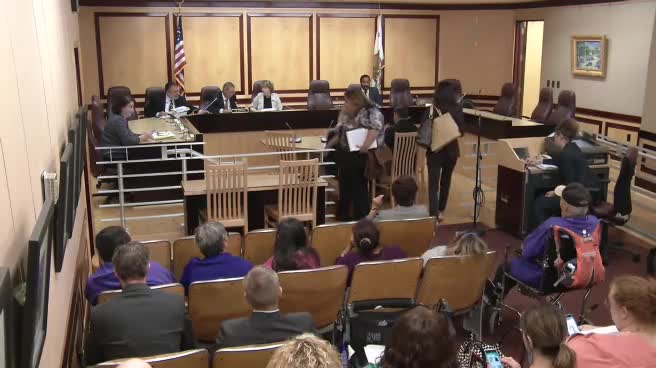 9MIN
Senate Standing Committee on Human Services
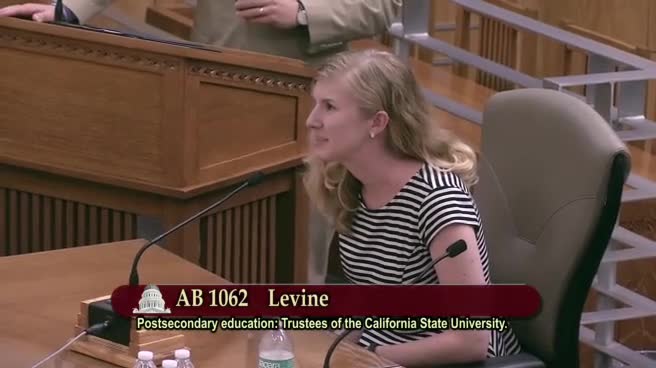 8MIN
Senate Standing Committee on Education
 1MIN
Assembly Floor
 1H
Assembly Standing Committee on Appropriations
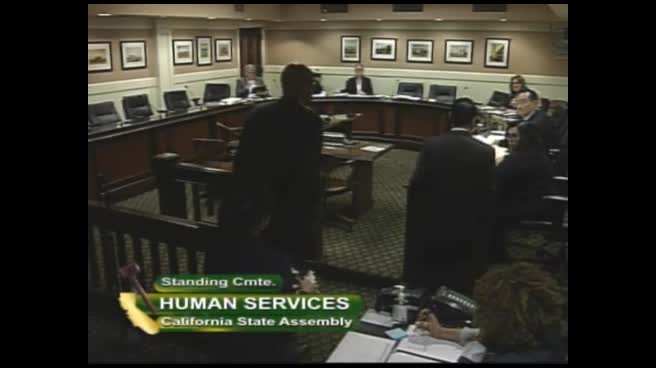 12MIN
Assembly Standing Committee on Human Services


Bill Co-Author(s):