AB 383: Civil actions: discovery status conference.
- Session Year: 2017-2018
- House: Assembly
- Latest Version Date: 2017-09-01
Existing law establishes the Civil Discovery Act, which governs the rules and procedures related to discovery in all civil cases, and specifies, among other things, the time for completion of discovery. The act authorizes a party to resolve certain discovery disputes by filing a noticed motion.
This bill, until January 1, 2023, would authorize a court to conduct an informal discovery conference between the parties to a civil action upon request by a party or on the courts own motion to discuss discovery matters in dispute between the parties, as specified. The bill would authorize a court that grants or orders an informal discovery conference to toll the deadline for filing a discovery motion, or make any other appropriate discovery order. If an informal discovery conference is not held within 30 calendar days from the date the court granted the request, the bill would require that the request for an informal discovery conference be deemed denied, and that any tolling period previously ordered by the court would continue to apply. The bill would further provide that the outcome of an informal discovery conference does not bar a party from filing a discovery motion or prejudice the disposition of a discovery motion.
Existing law establishes the Civil Discovery Act, which governs the rules and procedures related to discovery in all civil cases, and specifies, among other things, the time for completion of discovery. The act authorizes a party to resolve certain discovery disputes by filing a noticed motion.
This bill would authorize a court to conduct an informal discovery conference between the parties to a civil action upon request by a party or on the courts own motion to discuss discovery matters in dispute between the parties, as specified. The bill would authorize a court that grants or orders an informal discovery conference to toll the deadline for filing a discovery motion. motion, or make any other appropriate discovery order. If an informal discovery conference is not held within 30 calendar days from the date the court granted the request, the bill would require that the request for an informal discovery conference be deemed denied, and that any tolling period previously ordered by the court would continue to apply. The bill would further provide that the outcome of an informal discovery conference does not bar a party from filing a discovery motion or prejudice the disposition of a discovery motion.
Existing law establishes the Civil Discovery Act, which governs the rules and procedures related to discovery in all civil cases, and specifies, among other things, the time for completion of discovery. The act authorizes a party to resolve certain discovery disputes by filing a noticed motion.
This bill would authorize a court to require the parties to an action or proceeding to attend a conduct an informal discovery conference between the parties to a civil action upon request by a party or on the courts own motion to discuss discovery matters, including matters in dispute between the parties. parties, as specified. The bill would also authorize the court to extend the time for a party to notice a motion with regard to any discovery matter that is not resolved by the status conference. authorize a court that grants or orders an informal discovery conference to toll the deadline for filing a discovery motion. If an informal discovery conference is not held within 30 calendar days from the date the court granted the request, the bill would require that the request for an informal discovery conference be deemed denied, and that any tolling period previously ordered by the court would continue to apply. The bill would further provide that the outcome of an informal discovery conference does not bar a party from filing a discovery motion or prejudice the disposition of a discovery motion.
Existing law establishes the Civil Discovery Act, which governs the rules and procedures related to discovery in all civil cases, and specifies, among other things, the time for completion of discovery. The act authorizes a party to resolve certain discovery disputes by filing a noticed motion.
This bill would authorize a court to require the parties to an action or proceeding to attend a conference to discuss discovery matters, including matters in dispute between the parties. The bill would also authorize the court to extend the time for a party to notice a motion with regard to any discovery matter that is not resolved by the status conference.
(a)If an informal resolution is not reached by the parties, as described in Section 2016.040, the court may conduct an informal discovery conference upon request by a party or on the courts own motion for the purpose of discussing discovery matters in dispute between the parties.
(b)If a party requests an informal discovery conference, the party shall file a declaration described in Section 2016.040 with the court. Any party may file a response to a declaration filed pursuant to this subdivision. If a court is in session and does not grant, deny, or schedule the partys request within 10 calendar days after the initial request, the request shall be deemed denied.
(c)(1)If a court grants or orders an informal discovery conference, the court may schedule and hold the conference no later than 30 calendar days after the court granted the request or issued its order, and before the discovery cut-off date.
(2)If an informal discovery conference is granted or ordered, the court may toll the deadline for filing a discovery motion or make any other appropriate discovery order.
(d)If an informal discovery conference is not held within 30 calendar days from the date the court granted the request, the request for an informal discovery conference shall be deemed denied, and any tolling period previously ordered by the court shall continue to apply to that action.
(e)The outcome of an informal discovery conference does not bar a party from filing a discovery motion or prejudice the disposition of a discovery motion.
(f)This section does not prevent the parties from stipulating to the timing of discovery proceedings as described in Section 2024.060.
(g)This section shall remain in effect only until January 1, 2023, and as of that date is repealed, unless a later enacted statute that is enacted before January 1, 2023, deletes or extends that date.
(a)If an informal resolution is not reached by the parties, as described in Section 2016.040, the court may conduct an informal discovery conference upon request by a party or on the courts own motion for the purpose of discussing discovery matters in dispute between the parties.
(b)If a party requests an informal discovery conference, the party shall file a declaration described in Section 2016.040 with the court. Any party may file a response to a declaration filed pursuant to this subdivision. If the a court is in session and does not grant, deny, or schedule the partys request within 10 calendar days after the initial request, the request shall be deemed denied.
(c)(1)If a court grants or orders an informal discovery conference, the court may schedule and hold the conference no later than 30 calendar days after the court granted the request or issued its order, and before the discovery cut-off date.
(2)If an informal discovery conference is granted or ordered, the court may toll the deadline for filing a discovery motion or make any other appropriate discovery order.
(d)If an informal discovery conference is not held within 30 calendar days from the date the court granted the request, the request for an informal discovery conference shall be deemed denied, and any tolling period previously ordered by the court shall continue to apply to that action.
(e)The outcome of an informal discovery conference does not bar a party from filing a discovery motion or prejudice the disposition of a discovery motion.
(f)This section does not prevent the parties from stipulating to the timing of discovery proceedings as described in Section 2024.060.
(g)This section shall remain in effect only until January 1, 2023, and as of that date is repealed, unless a later enacted statute that is enacted before January 1, 2023, deletes or extends that date.
(a)If an informal resolution is not reached by the parties, as described in Section 2016.040, the court may conduct an informal discovery conference upon request by a party or on the courts own motion for the purpose of discussing discovery matters in dispute between the parties.
(b)If a party requests an informal discovery conference, the party shall file a declaration described in Section 2016.040 with the court. Any party may file a response to a declaration filed pursuant to this subdivision. If the court does not grant, deny, or schedule the partys request within ten (10) 10 calendar days after the initial request, the request shall be deemed denied.
(c)(1)If a court grants or orders an informal discovery conference, the court may schedule and hold the conference no later than thirty (30) 30 calendar days after the court granted the request or issued its order, and before the discovery cut-off date.
(2)If an informal discovery conference is granted or ordered, the court may toll the deadline for filing a discovery motion or make any other appropriate discovery order.
(d)If an informal discovery conference is not held within thirty (30) 30 calendar days from the date the court granted the request, the request for an informal discovery conference shall be deemed denied, and any tolling period previously ordered by the court shall continue to apply to that action.
(e)The outcome of an informal discovery conference does not bar a party from filing a discovery motion or prejudice the disposition of a discovery motion.
(f)This section does not prevent the parties from stipulating to the timing of discovery proceedings as described in Section 2024.060.
(g)This section shall remain in effect only until January 1, 2023, and as of that date is repealed, unless a later enacted statute that is enacted before January 1, 2023, deletes or extends that date.
(a)If an informal resolution is not reached by the parties, as described in Section 2016.040, the court may conduct an informal discovery conference upon request by a party or on the courts own motion for the purpose of discussing discovery matters in dispute between the parties.
(b)If a party requests an informal discovery conference, the party shall file a declaration described in Section 2016.040 with the court. Any party may file a response to a declaration filed pursuant to this subdivision. If the court does not grant, deny, or schedule the partys request within ten (10) calendar days, days after the initial request, the request shall be deemed denied.
(c)(1)If a court grants or orders an informal discovery conference, the court may schedule and hold the conference no later than thirty (30) calendar days after the court granted the request or issued its order, and before the discovery cut-off date. If an informal discovery conference is granted or ordered, the court may toll the deadline for filing a discovery motion.
(2)If an informal discovery conference is granted or ordered, the court may toll the deadline for filing a discovery motion or make any other appropriate discovery order.
(d)If an informal discovery conference is not held within thirty (30) calendar days from the date the court granted the request, the request for an informal discovery conference shall be deemed denied, and any tolling period previously ordered by the court shall continue to apply to that action.
(e)The outcome of an informal discovery conference does not bar a party from filing a discovery motion or prejudice the disposition of a discovery motion.
(f)This section does not prevent the parties from stipulating to the timing of discovery proceedings as described in Section 2024.060.
CORRECTIONS: HeadingLast amended date.(a)If an informal resolution is not reached by the parties, as described in Section 2016.040, the court may conduct an informal discovery conference upon request by a party or on the courts own motion for the purpose of discussing discovery matters in dispute between the parties.
(b)If a party requests an informal discovery conference, the party shall file a declaration described in Section 2016.040 with the court. If the court does not grant, deny, or schedule the partys request within ten (10) calendar days, the request shall be deemed denied.
(c)If a court grants or orders an informal discovery conference, the court may schedule and hold the conference no later than thirty (30) calendar days after the court granted the request or issued its order, and before the discovery cut-off date. If an informal discovery conference is granted or ordered, the court may toll the deadline for filing a discovery motion.
(d)If an informal discovery conference is not held within thirty (30) calendar days from the date the court granted the request, the request for an informal discovery conference shall be deemed denied, and any tolling period previously ordered by the court shall continue to apply to that action.
(e)The outcome of an informal discovery conference does not bar a party from filing a discovery motion or prejudice the disposition of a discovery motion.
(f)This section does not prevent the parties from stipulating to the timing of discovery proceedings as described in Section 2024.060.
SECTION 1.Section 2016.080 is added to the Code of Civil Procedure, to read:2016.080.A court may require the parties to an action or proceeding to attend a conference for the purpose of discussing discovery matters, including matters in dispute between the parties. The court may, following the discovery conference, extend the time for a party to notice a motion with regard to any discovery matter not resolved by the discovery conference.A court may require the parties to an action or proceeding to attend a conference for the purpose of discussing discovery matters, including matters in dispute between the parties. The court may, following the discovery conference, extend the time for a party to notice a motion with regard to any discovery matter not resolved by the discovery conference.
|
Date
|
Status
|
|---|---|
| Sep 1, 2017 | Chaptered by Secretary of State - Chapter 189, Statutes of 2017. |
| Sep 1, 2017 | Approved by the Governor. |
| Aug 25, 2017 | Enrolled and presented to the Governor at 3 p.m. |
| Aug 21, 2017 | Senate amendments concurred in. To Engrossing and Enrolling. |
| Jul 17, 2017 | In Assembly. Concurrence in Senate amendments pending. May be considered on or after July 19 pursuant to Assembly Rule 77. |
| Jul 17, 2017 | Read third time. Passed. Ordered to the Assembly. |
| Jul 10, 2017 | Read second time. Ordered to third reading. |
| Jul 6, 2017 | Read third time and amended. Ordered to second reading. |
| Jun 29, 2017 | From Consent Calendar. |
| Jun 27, 2017 | Read second time and amended. Ordered to consent calendar. |
| Jun 26, 2017 | From committee: Amend, and do pass as amended. To Consent Calendar. (Ayes 7. Noes 0.) (June 20). |
| Jun 13, 2017 | Measure version as amended on June 12 corrected. |
| Jun 12, 2017 | From committee chair, with author's amendments: Amend, and re-refer to committee. Read second time, amended, and re-referred to Com. on JUD. |
| May 31, 2017 | In committee: Set, first hearing. Hearing canceled at the request of author. |
| May 10, 2017 | Referred to Com. on JUD. |
| Mar 23, 2017 | In Senate. Read first time. To Com. on RLS. for assignment. |
| Mar 23, 2017 | Read third time. Passed. Ordered to the Senate. (Ayes 76. Noes 0. Page 722.) |
| Mar 20, 2017 | Read second time. Ordered to third reading. |
| Mar 16, 2017 | Read second time and amended. Ordered returned to second reading. |
| Mar 15, 2017 | From committee: Amend, and do pass as amended. (Ayes 11. Noes 0.) (March 14). |
| Feb 21, 2017 | Referred to Com. on JUD. |
| Feb 10, 2017 | From printer. May be heard in committee March 12. |
| Feb 9, 2017 | Read first time. To print. |
|
Date
|
Description
|
Location
|
Votes
|
|
|---|---|---|---|---|
| Aug 21, 2017 | AB 383 CHAU Concurrence in Senate Amendments | Assembly Floor |
Passed |
|
| Jul 17, 2017 | A1 - 104498, Amendment, Second Reading | Senate Floor |
Passed |
|
| Jun 20, 2017 | Do pass as amended, and be ordered to the Consent Calendar | Senate Standing Committee on Judiciary |
Passed |
|
| Mar 23, 2017 | AB 383 CHAU Assembly Third Reading | Assembly Floor |
Passed |
|
| Mar 14, 2017 | Do pass as amended. | Assembly Standing Committee on Judiciary |
Passed |
This list shows positions taken on this bill by organizations on the date displayed, which is linked to the original source.
Positions by individuals are not included.
|
Organization
|
Position
|
Date
|
|---|---|---|
| California Association Of Joint Powers Authorities | ** Support | Jul 12, 2017 |
| Conference of California Bar Associations | ** Support | Jul 12, 2017 |
| Consumer Attorney's of California | * Support | Mar 14, 2017 |
| Women Lawyers Association of Los Angeles | ** Support | Jul 12, 2017 |
CONCURRENCE IN SENATE AMENDMENTS
CSA1 Bill Id:AB 383
Author:(Chau)
As Amended Ver:July 6, 2017
Majority vote
ASSEMBLY: | 76-0 | (March 23, 2017) | SENATE: | 40-0 | (July 17, 2017) |
Original Committee Reference: JUD.
SUMMARY: Creates a process by which the parties — after the meet and confer process — may request an informal discovery conference with the court to assist the parties in mediating and working through a discovery dispute. Specifically, this bill:
- Provides that if an informal resolution is not reached by the parties, as provided, the court may conduct an informal discovery conference upon request by a party or on the court's own motion for the purpose of discussing discovery matters in dispute between the parties.
- Provides that if a party requests for an informal discovery conference, the party shall file a meet and confer declaration with the court. Allows a party to file a response to this declaration.
- If the court is in session and does not grant, deny, or schedule the party's request within 10 calendar days after the initial request, the request shall be deemed denied.
- States that if a court grants or orders an informal discovery conference, the court may schedule and hold the conference no later than 30 calendar days after the court granted the request or issued its order, and before the discovery cut-off date. Allows the court to toll the deadline for filing a discovery motion or other appropriate discovery order.
- Provides that if an informal discovery conference is not held within 30 calendar days from the date the court granted the request, the request for an informal discovery conference shall be deemed denied, and any tolling period previously ordered by the court shall continue to apply to that action.
- Prohibits the outcome of an informal discovery conference from barring a party from filing a discovery motion or prejudicing the disposition of a discovery motion.
- Provides that the bill does not prevent the parties from stipulating to the timing of discovery proceedings as provided.
- Sunsets this bill on January 1, 2023.
The Senate amendments:
- Allow a party to file a response to a declaration attached to a request seeking an informal discovery conference.
- Clarify that if the court is in session and does not grant, deny, or schedule the party's request within 10 calendar days after the initial request, the request shall be deemed denied.
- Clarify that the court may toll the deadline for filing a discovery motion or other appropriate discovery order.
- Add a five-year sunset by repealing the provisions on January 1, 2023.
EXISTING LAW:
- Establishes the Civil Discovery Act, which provides the manner in which parties may engage in discovery. (Code of Civil Procedure Section 2016.010 et seq. Unless provided otherwise, all other statutory references are to this code.)
- Allows a party to a civil action to obtain discovery by various methods that includes oral or written depositions, interrogatories, inspections of documents, physical and mental examinations, requests for admissions, or the simultaneous exchange of expert trial witness information. (Section 2019.010 et seq.)
- Requires that, before a party files a discovery motion, the parties must meet and confer and make a reasonable and good faith attempt at an informal resolution. (Section 2016.040.)
- Provides that failing to confer as provided with an opposing party or attorney in a reasonable and good faith attempt to resolve informally any dispute concerning discovery, as specified, is a misuse of the discovery process. (Section 2023.010.)
- Requires the court to impose a monetary sanction ordering that any party or attorney who fails to confer as required pay the reasonable expenses, including attorney's fees, incurred by anyone as a result of that conduct. (Section 2023.020.)
- Allows the court to impose sanctions on any party or attorney — after notice and after opportunity for hearing — who engages in conduct that is a misuse of the discovery process, as provided. (Section 2023.030.)
FISCAL EFFECT: None
COMMENTS: This bill creates a process where parties — after the meet and confer process — may request an informal discovery conference with the court to assist parties in mediating and working through a discovery dispute. Additionally, this bill establishes a scheduling timeframe for the informal discovery conference, and maintains a party's ability to file a discovery motion after an informal discovery conference, regardless of the outcome of the conference.
Background. The Civil Discovery Act (Act) provides the manner in which a party to a civil action may engage in discovery. The Act authorizes parties to use depositions, interrogatories, inspection of documents, physical and mental examinations, request for admissions, and exchange of expert witness information during discovery.
California's discovery rules are meant to be self-executing; in other words, civil discovery is intended to operate "without judicial involvement." (Clement v. Alegre (2009) 177 Cal.App.4th 1277, 1291.) But of course, that doesn't always happen. As we have come to expect, litigants tend to disagree — including during the course of discovery. Sometimes, parties fail to respond to discovery requests. At other times, parties provide incomplete or evasive responses. To minimize judicial involvement in discovery disputes, the law requires parties to "meet and confer" and to make a reasonable and good faith attempt at an informal resolution. In fact, parties who fail to meet and confer may be monetarily sanctioned by the court.
It will come as no surprise that the "meet and confer" process does not always bring about a resolution to a dispute about discovery. In this instance, judicial involvement may become necessary. After a party files a discovery motion (e.g., motion to compel; motion for protective order), the court will assign and review the motion, hold a hearing, and rule on the motion. The problem, however, is that discovery motions are often burdensome and quite long. It is well-known among legal practitioners that discovery motions take-up a tremendous amount of judicial, legal, and financial resources. In an effort to conserve judicial resources, some local courts have implemented informal discovery conferences to allow judges to help parties resolve discovery disputes before and after a discovery motion is filed. For example, Los Angeles Superior Court has adopted an effective model which allows parties to stipulate that they will not file a discovery motion unless the party first requests an informal discovery conference.
This bill does not affect a party's ability to file a discovery motion after a discovery conference. To ensure that parties still have the opportunity to formally brief a discovery issue, this bill specifically states that the outcome of the informal discovery conference shall not bar a party from filing a discovery motion. Furthermore, this bill provides that the outcome of the informal discovery conference shall not prejudice the disposition of a discovery motion that is filed after the conference.
This bill reasonably ensures that parties do not use the informal discovery conference to further delay the litigation. To discourage game-playing, this bill provides timelines for when conference requests can be made, and when the court must schedule the conference. For example, this bill requires parties to meet-and-confer before making a request for a conference. It also provides that the court — when it is in session — must grant, deny, or schedule a party's request within 10 calendar days from the date of the request; otherwise, the request is deemed denied. After the court grants the conference, this bill requires the court to schedule the conference within 30 days of its order and before the discovery cut-off. If a conference is not held within 30 calendar days from when the court granted the request, the request shall be deemed denied. Of course, this bill does not prevent a court from tolling filing deadlines, nor does it prevent parties from stipulating to certain timing issues allowed under existing law. But the bill appears to reasonably prevent a conference from interrupting the normal course of litigation unless the court or parties agree to it.
This bill provides each court with discretion to determine whether to use an informal discovery conference to resolve a discovery dispute. To maximize a judge's discretion in managing his or her calendar, this bill creates a presumption that a request for an informal discovery conference will be denied except under certain circumstances, specifically if one of the following applies: 1) the judge grants a request for a conference; 2) the judge schedules the conference; or 3) on the court's own motion, the court orders a conference. This bill also allows a court, on its own motion, to order a discovery conference. Practically speaking, a court would probably only rely on this provision after a party has filed a discovery motion. This is because the court is usually not aware of a discovery dispute until after a motion has been filed. Given that parties can still file a formal discovery motion after a conference (and cannot be prejudiced for filing it), the court's authority under this bill does not appear to infringe on a party's existing right to have discovery motions heard by the court.
This bill considers the various ways in which an informal discovery conference may be requested by a party. Given that each of the 58 counties operate slightly differently when it comes to scheduling court matters, this bill's broad treatment of "request" allows for flexibility between the various courts. For example, in Los Angeles County, parties use an electronic system to schedule meetings and conferences with assigned judges. In smaller counties, parties might make a request ex parte or over the phone. Indeed, a party could make a request for a conference upon the filing of a discovery motion (e.g., when a party is running up against a discovery deadline, and the party must file the discovery motion to preserve certain rights). To maximize flexibility, this bill allows parties to make the request based on the needs of a particular court. The caveat, however, is that parties must — upon making a request — file a meet-and-confer declaration with the court.
Analysis Prepared by: Eric Dang / JUD. / (916) 319-2334 FN: 0001121
Office of Senate Floor Analyses (916) 651-1520 Fax: (916) 327-4478 | AB |
THIRD READING
Bill No: AB 383
:
SENATE JUDICIARY COMMITTEE: 7-0, 6/20/17
AYES: Jackson, Moorlach, Anderson, Hertzberg, Monning, Stern, Wieckowski
ASSEMBLY FLOOR: 76-0, 3/23/17 - See last page for vote
SOURCE: Conference of California Bar Associations
DIGEST:
This bill gives courts discretion to hold informal discovery conferences upon request of a party or on their own motion to discuss disputed discovery issues. This bill provides the procedures and timelines for such conferences. The outcome of such a discovery conference does not preclude the filing of any discovery motion or prejudice the disposition of such a motion.
Senate Floor Amendments of 7/6/17 make clear that the 10-day timeline for a court to respond to a request for an informal discovery conference runs only when the court is in session.
Existing law:
- Provides, pursuant to the Civil Discovery Act, procedures by which parties to a civil action conduct and obtain “discovery.” (Code Civ. Proc. Sec. 2016.010 et seq.)
- Provides that, unless otherwise limited by order of the court, any party may obtain discovery regarding any matter, not privileged, that is relevant to the subject matter involved in the pending action or to the determination of any motion made in that action, if the matter either is itself admissible in evidence or appears reasonably calculated to lead to the discovery of admissible evidence. Discovery may relate to the claim or defense of the party seeking discovery or of any other party to the action. Discovery may be obtained of the identity and location of persons having knowledge of any discoverable matter, as well as of the existence, description, nature, custody, condition, and location of any document, electronically stored information, tangible thing, or land or other property. (Code Civ. Proc. Sec. 2017.010.)
- Provides that a meet-and-confer declaration in support of a motion shall state facts showing a reasonable and good faith attempt at an informal resolution of each issue presented by the motion. (Code Civ. Proc. Sec. 2016.040.)
- Provides that a propounding party may move for an order compelling a further response to certain interrogatories, requests for inspection, or requests for admission, if the propounding party deems that, among other things, an answer to a particular request or question is evasive or incomplete or an objection to a particular request is without merit or too general. (Code Civ. Proc. Secs. 2030.300, 2031.310, 2033.290.)
This bill:
- Allows a court to conduct an informal discovery conference, if an informal resolution is not reached by the parties, upon request of a party, or on its own motion, for the purpose of discussing discovery matters in dispute between the parties.
- Requires a party requesting an informal discovery conference to file a meet-and-confer declaration in compliance with Code of Civil Procedure Section 2016.040. Any party is permitted to file a response to the declaration.
- Provides that if the court is in session and does not grant, deny, or schedule the party’s request within 10 calendar days after the initial request, the request shall be deemed denied. If a court grants or orders an informal discovery conference pursuant to this bill, the court is permitted to schedule and hold the conference no later than 30 calendar days after the court granted the request or issued its order, and before the discovery cut-off date. If the conference is not held within 30 days, the request for a conference is deemed denied.
- Provides that if an informal discovery conference is granted or ordered, the court may toll the deadline for filing a discovery motion or make any other appropriate discovery order.
- Provides that the outcome of an informal discovery conference does not bar any party from filing a discovery motion or prejudice the disposition of a discovery motion.
- Remains in effect until January 1, 2023, and as of that date is repealed, unless a later enacted statute deletes or extends that date.
Background
The Civil Discovery Act (“the Act”) applies to every civil action and special proceeding of a civil nature, unless there is a statutory exception. The Act permits any party to a civil action to obtain discovery regarding any matter, not privileged, that is relevant to the subject matter in the pending action or to the determination of any motion made in that action, if the matter either is admissible in evidence or appears reasonably calculated to lead to the discovery of admissible evidence. The intention of California’s broad discovery statutes is to make discovery a “simple, convenient, and inexpensive” means of revealing the truth and exposing false claims, to “educate the parties concerning their claims and defenses so as to encourage settlements and to expedite and facilitate trial,” and eliminate surprise. Moreover, California courts have reiterated that discovery provisions are to be liberally construed in favor of disclosure.
Under the Act, discovery can be obtained by inspecting documents, electronically stored information, tangible things, and land or other property in the possession of any other party to the action. Primary devices to conduct discovery include interrogatories, depositions, requests for admissions, and requests for production. The party who receives an interrogatory, demand for inspection, copying, testing or sampling of documents, or request for admission, must respond to the request within 30 days and must verify their response. Upon receipt of a response to a party’s request for interrogatories, production of evidence, and admissions, the requesting party may move to compel further response under certain circumstances, such as where the response was incomplete or evasive. The requesting party, however, must make the motion to compel further response within 45 days of service of the verified response or verified supplemental response to their request, or else will be deemed to have waived any right to make this motion. (See Code Civ. Proc. Secs. 2030.300, 2031.310, 2033.290.)
In order to address discovery issues between parties before resorting to formal motions, including motions to compel, this bill gives courts discretion to hold informal discovery conferences upon request of a party or on its own motion to discuss disputed discovery issues. This bill provides the procedures and timelines for such conferences. The outcome of such a discovery conference does not preclude the filing of any discovery motion or prejudice the disposition of such a motion.
Comments
The author writes:
Informal Discovery Conferences (IDCs) are cost-effective and efficient ways for the judge in a case to quickly look at a controversy during the discovery process, and try to resolve disputes without the filing of massive motions, which drain court resources and client funds.
IDCs are used in some California courts, and have been incredibly effective and cost-efficient. However, there is no clear statutory authority for courts to establish – or judges to use – these programs, raising some question as to their validity – and, more importantly, discouraging other courts from establishing such programs.
AB 383 will provide that clear statutory authority and help improve court efficiency by making IDCs an available tool for judges and parties to use in resolving disputes and moving a case forward, rather than relying solely on motions to compel, as an action of first choice.
Creating judicial economy and streamlining discovery
This bill benefits parties by allowing for a less time-consuming and more cost-effective method for addressing discovery disputes. Motions to compel further responses to discovery are the main targets of this bill. These motions require extensive documentation. Each motion is required to include certain declarations and a separate statement laying out each discovery request at issue. A moving party is also required to provide points and authorities in support of the motion. The responding party is then required to fully respond to all of the claims made and to lay out its own arguments. These briefs are often accompanied by extensive exhibits and require a thorough detailing of an otherwise fairly informal process. This lengthy motion work can increase costs and delay justice for litigants.
The core principle of the Act is that discovery be “essentially self-executing” and generally operated without judicial involvement. (Clement v. Alegre (2009) 177 Cal. App. 4th 1277, 1291.) Granting courts the discretion to conduct informal, brief discovery conferences in the hopes of obviating resort to motions to compel, which can often be drawn-out disputes, is consistent with the legislative scheme governing discovery in California and furthers the goal of limiting judicial involvement. These informal conferences are an intermediate step between the “self-executing” process that is envisioned and the more tedious participation of the court in the minutiae of the discovery process that results from discovery motions.
Maintaining flexibility and judicial discretion
This bill does not mandate courts require informal discovery conferences, rather, it adds an additional tool that courts can use to streamline discovery when they deem it appropriate. As indicated by the sponsor, “[b]y encouraging – but not mandating – [informal discovery conferences] and providing a procedural framework for their use, AB 383 takes an important step towards improving the administration of justice in California.” Additionally, this bill continues to provide judges ample discretion over the discovery process when an informal discovery conference is granted, explicitly providing that a court is able to toll the deadline for filing a discovery motion or make any other appropriate discovery orders.
Additionally, although these conferences often work to benefit the parties to the litigation, they are not bound by their outcome. Instead, parties maintain their ability to subsequently file a discovery motion without the outcome of an informal discovery conference prejudicing the disposition of that discovery motion. The timelines that are attached to the requesting, granting, and scheduling of the informal discovery conferences ensure that the discovery process is not stalled by this new tool. If a court is in session and does not act on a motion within 10 days or grants a conference but one is not held within 30 days, the motion for an informal discovery conference will be deemed denied. Discovery then shifts back to its normal process.
Expanding an existing and successful practice
These conferences are already conducted in some superior courts in California. For example, the Los Angeles County Superior Court currently conducts informal discovery conferences. These are usually held in the judge’s chambers and take approximately 30 minutes. The goal there is to help resolve discovery disputes informally to reduce the number of discovery motions in the courts.
To accomplish this end, judges suggest amendments to narrow the scope of discovery requests, provide amended responses that better explain the responding party’s compliance, or use an alternative, more efficient means of discovery. The court’s Web site indicates that the judges who conduct these conferences report that “in nearly every case, their investment of half an hour in an [informal discovery conference] resolves the dispute and spares the court (and counsel) the significant time and expense involved in litigating discovery motions.”
FISCAL EFFECT: Appropriation: Fiscal Com.: Local:
Conference of California Bar Associations (source)
California Association of Joint Powers Authorities
Women Lawyers Association of Los Angeles
OPPOSITION: (Verified 7/10/17)
None received
ARGUMENTS IN SUPPORT: The sponsor of this bill, the Conference of California Bar Associations, writes:
AB 383 would authorize courts to order parties in litigation who have a dispute in their case over what evidence must be produced in response to discovery demands to participate in Informal Discovery Conferences (IDC). IDC are a cost-effective and efficient way for the judge in a case to quickly look at the controversy, and to try to resolve disputes without the hundreds or thousands of pages of notices, motions, points and authorities and separate statements, exhibits, oppositions and replies that are generally required for a motion to compel discovery. The bill also would authorize courts to adopt local rules regarding IDC.
ASSEMBLY FLOOR: 76-0, 3/23/17
AYES: Acosta, Aguiar-Curry, Travis Allen, Arambula, Baker, Berman, Bigelow, Bloom, Bocanegra, Bonta, Brough, Caballero, Calderon, Cervantes, Chau, Chávez, Chen, Chiu, Choi, Chu, Cooley, Cooper, Cunningham, Dahle, Daly, Eggman, Flora, Fong, Frazier, Friedman, Gallagher, Cristina Garcia, Eduardo Garcia, Gipson, Gloria, Gomez, Gonzalez Fletcher, Gray, Grayson, Harper, Holden, Irwin, Jones-Sawyer, Kalra, Kiley, Lackey, Levine, Limón, Low, Maienschein, Mathis, Mayes, McCarty, Medina, Melendez, Mullin, Muratsuchi, Nazarian, Obernolte, O'Donnell, Patterson, Quirk, Quirk-Silva, Rodriguez, Rubio, Salas, Santiago, Steinorth, Mark Stone, Thurmond, Ting, Voepel, Waldron, Weber, Wood, Rendon
NO VOTE RECORDED: Burke, Dababneh, Reyes, Ridley-Thomas
Prepared by: Christian Kurpiewski / JUD. / (916) 651-4113
7/12/17 11:34:34
Office of Senate Floor Analyses (916) 651-1520 Fax: (916) 327-4478 | AB |
THIRD READING
Bill No: AB 383
:
SENATE JUDICIARY COMMITTEE: 7-0, 6/20/17
AYES: Jackson, Moorlach, Anderson, Hertzberg, Monning, Stern, Wieckowski
ASSEMBLY FLOOR: 76-0, 3/23/17 - See last page for vote
SOURCE: Conference of California Bar Associations
DIGEST:
This bill gives courts discretion to hold informal discovery conferences upon request of a party or on their own motion to discuss disputed discovery issues. This bill provides the procedures and timelines for such conferences. The outcome of such a discovery conference does not preclude the filing of any discovery motion or prejudice the disposition of such a motion.
Existing law:
- Provides, pursuant to the Civil Discovery Act, procedures by which parties to a civil action conduct and obtain “discovery.” (Code Civ. Proc. Sec. 2016.010 et seq.)
- Provides that, unless otherwise limited by order of the court, any party may obtain discovery regarding any matter, not privileged, that is relevant to the subject matter involved in the pending action or to the determination of any motion made in that action, if the matter either is itself admissible in evidence or appears reasonably calculated to lead to the discovery of admissible evidence. Discovery may relate to the claim or defense of the party seeking discovery or of any other party to the action. Discovery may be obtained of the identity and location of persons having knowledge of any discoverable matter, as well as of the existence, description, nature, custody, condition, and location of any document, electronically stored information, tangible thing, or land or other property. (Code Civ. Proc. Sec. 2017.010.)
- Provides that a meet-and-confer declaration in support of a motion shall state facts showing a reasonable and good faith attempt at an informal resolution of each issue presented by the motion. (Code Civ. Proc. Sec. 2016.040.)
- Provides that a propounding party may move for an order compelling a further response to certain interrogatories, requests for inspection, or requests for admission, if the propounding party deems that, among other things, an answer to a particular request or question is evasive or incomplete or an objection to a particular request is without merit or too general. (Code Civ. Proc. Secs. 2030.300, 2031.310, 2033.290.)
This bill:
- Allows a court to conduct an informal discovery conference, if an informal resolution is not reached by the parties, upon request of a party, or on its own motion, for the purpose of discussing discovery matters in dispute between the parties.
- Requires a party requesting an informal discovery conference to file a meet-and-confer declaration in compliance with Code of Civil Procedure Section 2016.040. Any party is permitted to file a response to the declaration.
- Provides that if the court does not grant, deny, or schedule the party’s request within 10 calendar days after the initial request, the request shall be deemed denied. If a court grants or orders an informal discovery conference pursuant to this bill, the court is permitted to schedule and hold the conference no later than 30 calendar days after the court granted the request or issued its order, and before the discovery cut-off date. If the conference is not held within 30 days, the request for a conference is deemed denied.
- Provides that if an informal discovery conference is granted or ordered, the court may toll the deadline for filing a discovery motion or make any other appropriate discovery order.
- Provides that the outcome of an informal discovery conference does not bar any party from filing a discovery motion or prejudice the disposition of a discovery motion.
- Remains in effect until January 1, 2023, and as of that date is repealed, unless a later enacted statute deletes or extends that date.
Background
The Civil Discovery Act (“the Act”) applies to every civil action and special proceeding of a civil nature, unless there is a statutory exception. The Act permits any party to a civil action to obtain discovery regarding any matter, not privileged, that is relevant to the subject matter in the pending action or to the determination of any motion made in that action, if the matter either is admissible in evidence or appears reasonably calculated to lead to the discovery of admissible evidence. The intention of California’s broad discovery statutes is to make discovery a “simple, convenient, and inexpensive” means of revealing the truth and exposing false claims, to “educate the parties concerning their claims and defenses so as to encourage settlements and to expedite and facilitate trial,” and eliminate surprise. Moreover, California courts have reiterated that discovery provisions are to be liberally construed in favor of disclosure.
Under the Act, discovery can be obtained by inspecting documents, electronically stored information, tangible things, and land or other property in the possession of any other party to the action. Primary devices to conduct discovery include interrogatories, depositions, requests for admissions, and requests for production. The party who receives an interrogatory, demand for inspection, copying, testing or sampling of documents, or request for admission, must respond to the request within 30 days and must verify their response. Upon receipt of a response to a party’s request for interrogatories, production of evidence, and admissions, the requesting party may move to compel further response under certain circumstances, such as where the response was incomplete or evasive. The requesting party, however, must make the motion to compel further response within 45 days of service of the verified response or verified supplemental response to their request, or else will be deemed to have waived any right to make this motion. (See Code Civ. Proc. Secs. 2030.300, 2031.310, 2033.290.)
In order to address discovery issues between parties before resorting to formal motions, including motions to compel, this bill gives courts discretion to hold informal discovery conferences upon request of a party or on its own motion to discuss disputed discovery issues. This bill provides the procedures and timelines for such conferences. The outcome of such a discovery conference does not preclude the filing of any discovery motion or prejudice the disposition of such a motion.
Comments
The author writes:
Informal Discovery Conferences (IDCs) are cost-effective and efficient ways for the judge in a case to quickly look at a controversy during the discovery process, and try to resolve disputes without the filing of massive motions, which drain court resources and client funds.
IDCs are used in some California courts, and have been incredibly effective and cost-efficient. However, there is no clear statutory authority for courts to establish – or judges to use – these programs, raising some question as to their validity – and, more importantly, discouraging other courts from establishing such programs.
AB 383 will provide that clear statutory authority and help improve court efficiency by making IDCs an available tool for judges and parties to use in resolving disputes and moving a case forward, rather than relying solely on motions to compel, as an action of first choice.
Creating judicial economy and streamlining discovery
This bill benefits parties by allowing for a less time-consuming and more cost-effective method for addressing discovery disputes. Motions to compel further responses to discovery are the main targets of this bill. These motions require extensive documentation. Each motion is required to include certain declarations and a separate statement laying out each discovery request at issue. A moving party is also required to provide points and authorities in support of the motion. The responding party is then required to fully respond to all of the claims made and to lay out its own arguments. These briefs are often accompanied by extensive exhibits and require a thorough detailing of an otherwise fairly informal process. This lengthy motion work can increase costs and delay justice for litigants.
The core principle of the Act is that discovery be “essentially self-executing” and generally operated without judicial involvement. (Clement v. Alegre (2009) 177 Cal. App. 4th 1277, 1291.) Granting courts the discretion to conduct informal, brief discovery conferences in the hopes of obviating resort to motions to compel, which can often be drawn-out disputes, is consistent with the legislative scheme governing discovery in California and furthers the goal of limiting judicial involvement. These informal conferences are an intermediate step between the “self-executing” process that is envisioned and the more tedious participation of the court in the minutiae of the discovery process that results from discovery motions.
Maintaining flexibility and judicial discretion
This bill does not mandate courts require informal discovery conferences, rather, it adds an additional tool that courts can use to streamline discovery when they deem it appropriate. As indicated by the sponsor, “[b]y encouraging – but not mandating – [informal discovery conferences] and providing a procedural framework for their use, AB 383 takes an important step towards improving the administration of justice in California.” Additionally, this bill continues to provide judges ample discretion over the discovery process when an informal discovery conference is granted, explicitly providing that a court is able to toll the deadline for filing a discovery motion or make any other appropriate discovery orders.
Additionally, although these conferences often work to benefit the parties to the litigation, they are not bound by their outcome. Instead, parties maintain their ability to subsequently file a discovery motion without the outcome of an informal discovery conference prejudicing the disposition of that discovery motion. The timelines that are attached to the requesting, granting, and scheduling of the informal discovery conferences ensure that the discovery process is not stalled by this new tool. If a court does not act on a motion within 10 days or grants a conference but one is not held within 30 days, the motion for an informal discovery conference will be deemed denied. Discovery then shifts back to its normal process.
Expanding an existing and successful practice
These conferences are already conducted in some superior courts in California. For example, the Los Angeles County Superior Court currently conducts informal discovery conferences. These are usually held in the judge’s chambers and take approximately 30 minutes. The goal there is to help resolve discovery disputes informally to reduce the number of discovery motions in the courts.
To accomplish this end, judges suggest amendments to narrow the scope of discovery requests, provide amended responses that better explain the responding party’s compliance, or use an alternative, more efficient means of discovery. The court’s Web site indicates that the judges who conduct these conferences report that “in nearly every case, their investment of half an hour in an [informal discovery conference] resolves the dispute and spares the court (and counsel) the significant time and expense involved in litigating discovery motions.”
FISCAL EFFECT: Appropriation: Fiscal Com.: Local:
Conference of California Bar Associations (source)
California Association of Joint Powers Authorities
Women Lawyers Association of Los Angeles
OPPOSITION: (Verified 6/26/17)
None received
ARGUMENTS IN SUPPORT: The sponsor of this bill, the Conference of California Bar Associations, writes:
AB 383 would authorize courts to order parties in litigation who have a dispute in their case over what evidence must be produced in response to discovery demands to participate in Informal Discovery Conferences (IDC). IDC are a cost-effective and efficient way for the judge in a case to quickly look at the controversy, and to try to resolve disputes without the hundreds or thousands of pages of notices, motions, points and authorities and separate statements, exhibits, oppositions and replies that are generally required for a motion to compel discovery. The bill also would authorize courts to adopt local rules regarding IDC.
ASSEMBLY FLOOR: 76-0, 3/23/17
AYES: Acosta, Aguiar-Curry, Travis Allen, Arambula, Baker, Berman, Bigelow, Bloom, Bocanegra, Bonta, Brough, Caballero, Calderon, Cervantes, Chau, Chávez, Chen, Chiu, Choi, Chu, Cooley, Cooper, Cunningham, Dahle, Daly, Eggman, Flora, Fong, Frazier, Friedman, Gallagher, Cristina Garcia, Eduardo Garcia, Gipson, Gloria, Gomez, Gonzalez Fletcher, Gray, Grayson, Harper, Holden, Irwin, Jones-Sawyer, Kalra, Kiley, Lackey, Levine, Limón, Low, Maienschein, Mathis, Mayes, McCarty, Medina, Melendez, Mullin, Muratsuchi, Nazarian, Obernolte, O'Donnell, Patterson, Quirk, Quirk-Silva, Rodriguez, Rubio, Salas, Santiago, Steinorth, Mark Stone, Thurmond, Ting, Voepel, Waldron, Weber, Wood, Rendon
NO VOTE RECORDED: Burke, Dababneh, Reyes, Ridley-Thomas
Prepared by: Christian Kurpiewski / JUD. / (916) 651-4113
6/29/17 10:27:09
Office of Senate Floor Analyses (916) 651-1520 Fax: (916) 327-4478 | AB |
CONSENT
Bill No: AB 383
:
SENATE JUDICIARY COMMITTEE: 7-0, 6/20/17
AYES: Jackson, Moorlach, Anderson, Hertzberg, Monning, Stern, Wieckowski
ASSEMBLY FLOOR: 76-0, 3/23/17 - See last page for vote
SOURCE: Conference of California Bar Associations
DIGEST:
This bill gives courts discretion to hold informal discovery conferences upon request of a party or on their own motion to discuss disputed discovery issues. This bill provides the procedures and timelines for such conferences. The outcome of such a discovery conference does not preclude the filing of any discovery motion or prejudice the disposition of such a motion.
Existing law:
- Provides, pursuant to the Civil Discovery Act, procedures by which parties to a civil action conduct and obtain “discovery.” (Code Civ. Proc. Sec. 2016.010 et seq.)
- Provides that, unless otherwise limited by order of the court, any party may obtain discovery regarding any matter, not privileged, that is relevant to the subject matter involved in the pending action or to the determination of any motion made in that action, if the matter either is itself admissible in evidence or appears reasonably calculated to lead to the discovery of admissible evidence. Discovery may relate to the claim or defense of the party seeking discovery or of any other party to the action. Discovery may be obtained of the identity and location of persons having knowledge of any discoverable matter, as well as of the existence, description, nature, custody, condition, and location of any document, electronically stored information, tangible thing, or land or other property. (Code Civ. Proc. Sec. 2017.010.)
- Provides that a meet-and-confer declaration in support of a motion shall state facts showing a reasonable and good faith attempt at an informal resolution of each issue presented by the motion. (Code Civ. Proc. Sec. 2016.040.)
- Provides that a propounding party may move for an order compelling a further response to certain interrogatories, requests for inspection, or requests for admission, if the propounding party deems that, among other things, an answer to a particular request or question is evasive or incomplete or an objection to a particular request is without merit or too general. (Code Civ. Proc. Secs. 2030.300, 2031.310, 2033.290.)
This bill:
- Allows a court to conduct an informal discovery conference, if an informal resolution is not reached by the parties, upon request of a party, or on its own motion, for the purpose of discussing discovery matters in dispute between the parties.
- Requires a party requesting an informal discovery conference to file a meet-and-confer declaration in compliance with Code of Civil Procedure Section 2016.040. Any party is permitted to file a response to the declaration.
- Provides that if the court does not grant, deny, or schedule the party’s request within 10 calendar days after the initial request, the request shall be deemed denied. If a court grants or orders an informal discovery conference pursuant to this bill, the court is permitted to schedule and hold the conference no later than 30 calendar days after the court granted the request or issued its order, and before the discovery cut-off date. If the conference is not held within 30 days, the request for a conference is deemed denied.
- Provides that if an informal discovery conference is granted or ordered, the court may toll the deadline for filing a discovery motion or make any other appropriate discovery order.
- Provides that the outcome of an informal discovery conference does not bar any party from filing a discovery motion or prejudice the disposition of a discovery motion.
- Remains in effect until January 1, 2023, and as of that date is repealed, unless a later enacted statute deletes or extends that date.
Background
The Civil Discovery Act (“the Act”) applies to every civil action and special proceeding of a civil nature, unless there is a statutory exception. The Act permits any party to a civil action to obtain discovery regarding any matter, not privileged, that is relevant to the subject matter in the pending action or to the determination of any motion made in that action, if the matter either is admissible in evidence or appears reasonably calculated to lead to the discovery of admissible evidence. The intention of California’s broad discovery statutes is to make discovery a “simple, convenient, and inexpensive” means of revealing the truth and exposing false claims, to “educate the parties concerning their claims and defenses so as to encourage settlements and to expedite and facilitate trial,” and eliminate surprise. Moreover, California courts have reiterated that discovery provisions are to be liberally construed in favor of disclosure.
Under the Act, discovery can be obtained by inspecting documents, electronically stored information, tangible things, and land or other property in the possession of any other party to the action. Primary devices to conduct discovery include interrogatories, depositions, requests for admissions, and requests for production. The party who receives an interrogatory, demand for inspection, copying, testing or sampling of documents, or request for admission, must respond to the request within 30 days and must verify their response. Upon receipt of a response to a party’s request for interrogatories, production of evidence, and admissions, the requesting party may move to compel further response under certain circumstances, such as where the response was incomplete or evasive. The requesting party, however, must make the motion to compel further response within 45 days of service of the verified response or verified supplemental response to their request, or else will be deemed to have waived any right to make this motion. (See Code Civ. Proc. Secs. 2030.300, 2031.310, 2033.290.)
In order to address discovery issues between parties before resorting to formal motions, including motions to compel, this bill gives courts discretion to hold informal discovery conferences upon request of a party or on its own motion to discuss disputed discovery issues. This bill provides the procedures and timelines for such conferences. The outcome of such a discovery conference does not preclude the filing of any discovery motion or prejudice the disposition of such a motion.
Comments
The author writes:
Informal Discovery Conferences (IDCs) are cost-effective and efficient ways for the judge in a case to quickly look at a controversy during the discovery process, and try to resolve disputes without the filing of massive motions, which drain court resources and client funds.
IDCs are used in some California courts, and have been incredibly effective and cost-efficient. However, there is no clear statutory authority for courts to establish – or judges to use – these programs, raising some question as to their validity – and, more importantly, discouraging other courts from establishing such programs.
AB 383 will provide that clear statutory authority and help improve court efficiency by making IDCs an available tool for judges and parties to use in resolving disputes and moving a case forward, rather than relying solely on motions to compel, as an action of first choice.
Creating judicial economy and streamlining discovery
This bill benefits parties by allowing for a less time-consuming and more cost-effective method for addressing discovery disputes. Motions to compel further responses to discovery are the main targets of this bill. These motions require extensive documentation. Each motion is required to include certain declarations and a separate statement laying out each discovery request at issue. A moving party is also required to provide points and authorities in support of the motion. The responding party is then required to fully respond to all of the claims made and to lay out its own arguments. These briefs are often accompanied by extensive exhibits and require a thorough detailing of an otherwise fairly informal process. This lengthy motion work can increase costs and delay justice for litigants.
The core principle of the Act is that discovery be “essentially self-executing” and generally operated without judicial involvement. (Clement v. Alegre (2009) 177 Cal. App. 4th 1277, 1291.) Granting courts the discretion to conduct informal, brief discovery conferences in the hopes of obviating resort to motions to compel, which can often be drawn-out disputes, is consistent with the legislative scheme governing discovery in California and furthers the goal of limiting judicial involvement. These informal conferences are an intermediate step between the “self-executing” process that is envisioned and the more tedious participation of the court in the minutiae of the discovery process that results from discovery motions.
Maintaining flexibility and judicial discretion
This bill does not mandate courts require informal discovery conferences, rather, it adds an additional tool that courts can use to streamline discovery when they deem it appropriate. As indicated by the sponsor, “[b]y encouraging – but not mandating – [informal discovery conferences] and providing a procedural framework for their use, AB 383 takes an important step towards improving the administration of justice in California.” Additionally, this bill continues to provide judges ample discretion over the discovery process when an informal discovery conference is granted, explicitly providing that a court is able to toll the deadline for filing a discovery motion or make any other appropriate discovery orders.
Additionally, although these conferences often work to benefit the parties to the litigation, they are not bound by their outcome. Instead, parties maintain their ability to subsequently file a discovery motion without the outcome of an informal discovery conference prejudicing the disposition of that discovery motion. The timelines that are attached to the requesting, granting, and scheduling of the informal discovery conferences ensure that the discovery process is not stalled by this new tool. If a court does not act on a motion within 10 days or grants a conference but one is not held within 30 days, the motion for an informal discovery conference will be deemed denied. Discovery then shifts back to its normal process.
Expanding an existing and successful practice
These conferences are already conducted in some superior courts in California. For example, the Los Angeles County Superior Court currently conducts informal discovery conferences. These are usually held in the judge’s chambers and take approximately 30 minutes. The goal there is to help resolve discovery disputes informally to reduce the number of discovery motions in the courts.
To accomplish this end, judges suggest amendments to narrow the scope of discovery requests, provide amended responses that better explain the responding party’s compliance, or use an alternative, more efficient means of discovery. The court’s Web site indicates that the judges who conduct these conferences report that “in nearly every case, their investment of half an hour in an [informal discovery conference] resolves the dispute and spares the court (and counsel) the significant time and expense involved in litigating discovery motions.”
FISCAL EFFECT: Appropriation: Fiscal Com.: Local:
Conference of California Bar Associations (source)
California Association of Joint Powers Authorities
Women Lawyers Association of Los Angeles
OPPOSITION: (Verified 6/26/17)
None received
ARGUMENTS IN SUPPORT: The sponsor of this bill, the Conference of California Bar Associations, writes:
AB 383 would authorize courts to order parties in litigation who have a dispute in their case over what evidence must be produced in response to discovery demands to participate in Informal Discovery Conferences (IDC). IDC are a cost-effective and efficient way for the judge in a case to quickly look at the controversy, and to try to resolve disputes without the hundreds or thousands of pages of notices, motions, points and authorities and separate statements, exhibits, oppositions and replies that are generally required for a motion to compel discovery. The bill also would authorize courts to adopt local rules regarding IDC.
ASSEMBLY FLOOR: 76-0, 3/23/17
AYES: Acosta, Aguiar-Curry, Travis Allen, Arambula, Baker, Berman, Bigelow, Bloom, Bocanegra, Bonta, Brough, Caballero, Calderon, Cervantes, Chau, Chávez, Chen, Chiu, Choi, Chu, Cooley, Cooper, Cunningham, Dahle, Daly, Eggman, Flora, Fong, Frazier, Friedman, Gallagher, Cristina Garcia, Eduardo Garcia, Gipson, Gloria, Gomez, Gonzalez Fletcher, Gray, Grayson, Harper, Holden, Irwin, Jones-Sawyer, Kalra, Kiley, Lackey, Levine, Limón, Low, Maienschein, Mathis, Mayes, McCarty, Medina, Melendez, Mullin, Muratsuchi, Nazarian, Obernolte, O'Donnell, Patterson, Quirk, Quirk-Silva, Rodriguez, Rubio, Salas, Santiago, Steinorth, Mark Stone, Thurmond, Ting, Voepel, Waldron, Weber, Wood, Rendon
NO VOTE RECORDED: Burke, Dababneh, Reyes, Ridley-Thomas
6/28/17 15:02:03
Senator Hannah-Beth Jackson, Chair
2017-2018 Regular Session
Bill No: AB 383 (Author:Chau)
Version: June 12, 2017
Hearing Date: June 20, 2017
Fiscal: No
Urgency: No
Consultant: CK
SUBJECT
Civil actions: discovery status conference
DESCRIPTION
This bill would give courts discretion to hold informal discovery conferences upon request of a party or on their own motion to discuss disputed discovery issues. This bill would provide the procedures and timelines for such conferences. The outcome of such a discovery conference would not preclude the filing of any discovery motion or prejudice the disposition of such a motion.
BACKGROUND
The Civil Discovery Act (“the Act”) applies to every civil action and special proceeding of a civil nature, unless there is a statutory exception. Discovery is the formal exchange of evidentiary information and materials between parties to a pending action. Generally, the Act permits any party to a civil action to obtain discovery regarding any matter, not privileged, that is relevant to the subject matter in the pending action or to the determination of any motion made in that action, if the matter either is admissible in evidence or appears reasonably calculated to lead to the discovery of admissible evidence. The intention of California’s broad discovery statutes is to make discovery a “simple, convenient, and inexpensive” means of revealing the truth and exposing false claims, to “educate the parties concerning their claims and defenses so as to encourage settlements and to expedite and facilitate trial,” and eliminate surprise. Moreover, California courts have reiterated that discovery provisions are to be liberally construed in favor of disclosure.
Under the Act, discovery can be obtained by inspecting documents, electronically stored information, tangible things, and land or other property in the possession of any other party to the action. Primary devices to conduct discovery include interrogatories, depositions, requests for admissions, and requests for production. The party who receives an interrogatory, demand for inspection, copying, testing or sampling of documents, or request for admission, must respond to the request within 30 days and must verify their response. Upon receipt of a response to a party’s request for interrogatories, production of evidence, and admissions, the requesting party may move to compel further response under certain circumstances, such as where the response was incomplete or evasive. The requesting party, however, must make the motion to compel further response within 45 days of service of the verified response or verified supplemental response to their request, or else will be deemed to have waived any right to make this motion. (See Code Civ. Proc. Secs. 2030.300, 2031.310, 2033.290.)
In order to address discovery issues between parties before resorting to formal motions, including motions to compel, this bill would give courts discretion to hold informal discovery conferences upon request of a party or on its own motion to discuss disputed discovery issues. This bill would provide the procedures and timelines for such conferences. The outcome of such a discovery conference would not preclude the filing of any discovery motion or prejudice the disposition of such a motion.
CHANGES TO EXISTING LAW
Existing law, the Civil Discovery Act, provides procedures by which parties to a civil action conduct and obtain “discovery.” (Code Civ. Proc. Sec. 2016.010 et seq.)
Existing law provides that, unless otherwise limited by order of the court, any party may obtain discovery regarding any matter, not privileged, that is relevant to the subject matter involved in the pending action or to the determination of any motion made in that action, if the matter either is itself admissible in evidence or appears reasonably calculated to lead to the discovery of admissible evidence. Discovery may relate to the claim or defense of the party seeking discovery or of any other party to the action. Discovery may be obtained of the identity and location of persons having knowledge of any discoverable matter, as well as of the existence, description, nature, custody, condition, and location of any document, electronically stored information, tangible thing, or land or other property. (Code Civ. Proc. Sec. 2017.010.)
Existing law provides that a meet-and-confer declaration in support of a motion shall state facts showing a reasonable and good faith attempt at an informal resolution of each issue presented by the motion. (Code Civ. Proc. Sec. 2016.040.)
Existing law provides that a propounding party may move for an order compelling a further response to certain interrogatories, requests for inspection, or requests for admission, if the propounding party deems that, among other things, an answer to a particular request or question is evasive or incomplete or an objection to a particular request is without merit or too general. (Code Civ. Proc. Secs. 2030.300, 2031.310, 2033.290.)
This bill would allow a court to conduct an informal discovery conference, if an informal resolution is not reached by the parties, upon request of a party, or on its own motion, for the purpose of discussing discovery matters in dispute between the parties.
This bill would require a party requesting an informal discovery conference to file a meet-and-confer declaration in compliance with Code of Civil Procedure Section 2016.040. Any party would be permitted to file a response to the declaration.
This bill would provide that if the court does not grant, deny, or schedule the party’s request within 10 calendar days after the initial request, the request shall be deemed denied. If a court grants or orders an informal discovery conference pursuant to this bill, the court would be permitted to schedule and hold the conference no later than 30 calendar days after the court granted the request or issued its order, and before the discovery cut-off date. If the conference is not held within 30 days, the request for a conference would be deemed denied.
This bill would provide that if an informal discovery conference is granted or ordered, the court may toll the deadline for filing a discovery motion or make any other appropriate discovery order.
This bill would provide that the outcome of an informal discovery conference does not bar any party from filing a discovery motion or prejudice the disposition of a discovery motion.
COMMENT
1. Stated need for the bill
According to the author:
Informal Discovery Conferences (IDCs) are cost-effective and efficient ways for the judge in a case to quickly look at a controversy during the discovery process, and try to resolve disputes without the filing of massive motions, which drain court resources and client funds.
IDCs are used in some California courts, and have been incredibly effective and cost-efficient. However, there is no clear statutory authority for courts to establish – or judges to use – these programs, raising some question as to their validity – and, more importantly, discouraging other courts from establishing such programs.
AB 383 will provide that clear statutory authority and help improve court efficiency by making IDCs an available tool for judges and parties to use in resolving disputes and moving a case forward, rather than relying solely on motions to compel, as an action of first choice.
The sponsor of this bill, the Conference of California Bar Associations, writes:
AB 383 would authorize courts to order parties in litigation who have a dispute in their case over what evidence must be produced in response to discovery demands to participate in Informal Discovery Conferences (IDC). IDC are a cost-effective and efficient way for the judge in a case to quickly look at the controversy, and to try to resolve disputes without the hundreds or thousands of pages of notices, motions, points and authorities and separate statements, exhibits, oppositions and replies that are generally required for a motion to compel discovery. The bill also would authorize courts to adopt local rules regarding IDC.
2. Creating judicial economy and streamlining discovery through informal mechanisms
The bill would benefit parties by allowing for a less time-consuming and more cost-effective method for addressing discovery disputes. Motions to compel further responses to discovery are the main targets of this bill. These motions require extensive documentation. Each motion is required to include certain declarations and a separate statement laying out each discovery request at issue. A moving party is also required to provide points and authorities in support of the motion. The responding party is then required to fully respond to all of the claims made and to lay out its own arguments. These briefs are often accompanied by extensive exhibits and require a thorough detailing of an otherwise fairly informal process. This lengthy motion work can increase costs and delay justice for litigants.
The core principle of the California Discovery Act is that discovery be “essentially self-executing” and generally operated without judicial involvement. (Clement v. Alegre (2009) 177 Cal. App. 4th 1277, 1291.) Granting courts the discretion to conduct informal, brief discovery conferences in the hopes of obviating resort to motions to compel, which can often be drawn-out disputes, is consistent with the legislative scheme governing discovery in California and furthers the goal of limiting judicial involvement. These informal conferences would be an intermediate step between the “self-executing” process that is envisioned and the more tedious participation of the court in the minutiae of the discovery process that results from discovery motions.
Writing in support of the bill, the California Association of Joint Powers Authorities (CAJPA) states:
AB 383 will streamline civil procedures, making litigation of civil claims more efficient and less costly for public entities by authorizing courts to conduct informal discovery conferences in order to assist parties in working through discovery disputes. CAJPA believe [informal discovery conferences] are a cost-effective and efficient way for the judge in the case to get a quick look at the controversy and to try to resolve disputes without the hundreds or thousands of pages of notices, motions, points and authorities and separate statements, exhibits, oppositions and replies generally required for a motion to compel.
3. Maintaining flexibility and judicial discretion
This bill does not mandate courts require informal discovery conferences, rather, it adds an additional tool that courts can use to streamline discovery when they deem it appropriate. As indicated by the sponsor, “[b]y encouraging – but not mandating – [informal discovery conferences] and providing a procedural framework for their use, AB 383 takes an important step towards improving the administration of justice in California.” Additionally, this bill would continue to provide judges ample discretion over the discovery process when an informal discovery conference is granted, explicitly providing that a court would be able to toll the deadline for filing a discovery motion or make any other appropriate discovery orders.
Additionally, although these conferences would often work to benefit the parties to the litigation, they would not be bound by their outcome. Instead, parties would maintain their ability to subsequently file a discovery motion without the outcome of an informal discovery conference prejudicing the disposition of that discovery motion. The Women Lawyers Association of Los Angeles writes in support that this bill “protects the parties from delays in the discovery process resulting from court calendar congestion, and provides that the parties preserve their right to file motions to compel if the [informal discovery conference] does not resolve the entire discovery dispute.”
The timelines that are attached to the requesting, granting, and scheduling of the informal discovery conferences would ensure that the discovery process is not stalled by this new tool. If a court does not act on a motion within 10 days or grants a conference but one is not held within 30 days, the motion for an informal discovery conference will be deemed denied. Discovery would then shift back to its normal process.
4. Expanding an existing and successful practice
These conferences are already conducted in some superior courts in California. For example, the Los Angeles County Superior Court currently conducts informal discovery conferences. These are usually held in the judge’s chambers and take approximately 30 minutes. The goal there is to help resolve discovery disputes informally to reduce the number of discovery motions in the courts.
To accomplish this end, judges suggest amendments to narrow the scope of discovery requests, provide amended responses that better explain the responding party’s compliance, or use an alternative, more efficient means of discovery. The court’s Web site indicates that the judges who conduct these conferences report that “in nearly every case, their investment of half an hour in an [informal discovery conference] resolves the dispute and spares the court (and counsel) the significant time and expense involved in litigating discovery motions.”
5. Committee Amendment
In order to ensure these conferences operate as intended and further the stated goals, the Committee proposes the following amendment that would allow the Legislature and the various stakeholders to revisit the provisions of this newly created statute in five years:
Committee Amendment
On page 3, after subdivision (f), insert:
(g) This section shall remain in effect only until January 1, 2023, and as of that date is repealed, unless a later enacted statute deletes or extends that date.
Support: California Association of Joint Powers Authorities; Women Lawyers Association of Los Angeles
Opposition: None Known
HISTORY
Source: Conference of California Bar Associations
Related Pending Legislation: SB 632 (Monning, 2017) would limit the deposition of a deponent in asbestos litigation to seven hours of total testimony when a physician attests that the deponent is either over 70 years of age and the deponent’s health is such that a deposition of more than seven hours will prejudice the deponent’s well-being, or that, without regard to age of the deponent, the deponent suffers from an illness or condition that raises substantial medical doubt of the survival of the deponent beyond six months. This bill is in the Assembly Judiciary Committee.
Prior Legislation: None Known
Prior Vote:
Assembly Floor (Ayes 76, Noes 0)
Assembly Judiciary Committee (Ayes 11, Noes 0)
**************
ASSEMBLY THIRD READING
ATR Bill Id:AB 383
Author:(Chau)
As Amended Ver:March 16, 2017
Majority vote
Committee | Votes | Ayes | Noes |
Judiciary | 11-0 | Mark Stone, Cunningham, Chau, Chiu, Cristina Garcia, Holden, Kalra, Kiley, Maienschein, Reyes, Ting |
|
SUMMARY: Creates a process by which the parties—after the meet and confer process—may request an informal discovery conference with the court to assist the parties in mediating and working through a discovery dispute. Specifically, this bill:
- Provides that if an informal resolution is not reached by the parties, as provided, the court may conduct an informal discovery conference upon request by a party or on the court's own motion for the purpose of discussing discovery matters in dispute between the parties.
- Provides that if a party requests for an informal discovery conference, the party shall file a meet and confer declaration with the court. If the court does not grant, deny, or schedule the party's request within 10 calendar days, the request shall be deemed denied.
- States that if a court grants or orders an informal discovery conference, the court may schedule and hold the conference no later than 30 calendar days after the court granted the request or issued its order, and before the discovery cut-off date. If an informal discovery conference is granted or ordered, the court may toll the filing deadline for a discovery motion.
- Provides that if an informal discovery conference is not held within 30 calendar days from the date the court granted the request, the request for an informal discovery conference shall be deemed denied, and any tolling period previously ordered by the court shall continue to apply to that action.
- Prohibits the outcome of an informal discovery conference from barring a party from filing a discovery motion or prejudicing the disposition of a discovery motion.
- Provides that the bill does not prevent the parties from stipulating to the timing of discovery proceedings as provided.
EXISTING LAW:
- Establishes the Civil Discovery Act, which provides the manner in which parties may engage in discovery. (Code of Civil Procedure Section 2016.010 et seq. Unless provided otherwise, all other statutory references are to this code.)
- Allows a party to a civil action to obtain discovery by various methods that includes oral or written depositions, interrogatories, inspections of documents, physical and mental examinations, requests for admissions, or the simultaneous exchange of expert trial witness information. (Section 2019.010 et seq.)
- Requires that, before a party files a discovery motion, the parties must meet and confer and make a reasonable and good faith attempt at an informal resolution. (Section 2016.040.)
- Provides that failing to confer as provided with an opposing party or attorney in a reasonable and good faith attempt to resolve informally any dispute concerning discovery, as specified, is a misuse of the discovery process. (Section 2023.010.)
- Requires the court to impose a monetary sanction ordering that any party or attorney who fails to confer as required pay the reasonable expenses, including attorney's fees, incurred by anyone as a result of that conduct. (Section 2023.020.)
- Allows the court to impose sanctions on any party or attorney—after notice and after opportunity for hearing—who engages in conduct that is a misuse of the discovery process, as provided. (Section 2023.030.)
FISCAL EFFECT: None
COMMENTS: This bill creates a process where parties—after the meet and confer process—may request an informal discovery conference with the court to assist parties in mediating and working through a discovery dispute. Additionally, this bill establishes a scheduling timeframe for the informal discovery conference, and maintains a party's ability to file a discovery motion after an informal discovery conference, regardless of the outcome of the conference.
Background. The Civil Discovery Act (Act) provides the manner in which a party to a civil action may engage in discovery. The Act authorizes parties to use depositions, interrogatories, inspection of documents, physical and mental examinations, request for admissions, and exchange of expert witness information during discovery.
California's discovery rules are meant to be self-executing; in other words, civil discovery is intended to operate "without judicial involvement." (Clement v. Alegre (2009) 177 Cal.App.4th 1277, 1291.) But of course, that doesn't always happen. As we have come to expect, litigants tend to disagree—including during the course of discovery. Sometimes, parties fail to respond to discovery requests. At other times, parties provide incomplete or evasive responses. To minimize judicial involvement in discovery disputes, the law requires parties to "meet and confer" and to make a reasonable and good faith attempt at an informal resolution. In fact, parties who fail to meet and confer may be monetarily sanctioned by the court.
It will come as no surprise that the "meet and confer" process does not always bring about a resolution to a dispute about discovery. In this instance, judicial involvement may become necessary. After a party files a discovery motion (e.g., motion to compel; motion for protective order), the court will assign and review the motion, hold a hearing, and rule on the motion. The problem, however, is that discovery motions are often burdensome and quite long. It is well-known among legal practitioners that discovery motions take-up a tremendous amount of judicial, legal, and financial resources. In an effort to conserve judicial resources, some local courts have implemented informal discovery conferences to allow judges to help parties resolve discovery disputes before and after a discovery motion is filed. For example, Los Angeles Superior Court has adopted an effective model which allows parties to stipulate that they will not file a discovery motion unless the party first requests an informal discovery conference.
This bill does not affect a party's ability to file a discovery motion after a discovery conference. To ensure that parties still have the opportunity to formally brief a discovery issue, this bill specifically states that the outcome of the informal discovery conference shall not bar a party from filing a discovery motion. Furthermore, this bill provides that the outcome of the informal discovery conference shall not prejudice the disposition of a discovery motion that is filed after the conference.
This bill reasonably ensures that parties do not use the informal discovery conference to further delay the litigation. To discourage game-playing, this bill provides timelines for when conference requests can be made, and when the court must schedule the conference. For example, this bill requires parties to meet-and-confer before making a request for a conference. It also provides that the court must grant, deny, or schedule a party's request within 10 calendar days from the date of the request; otherwise, the request is deemed denied. After the court grants the conference, this bill requires the court to schedule the conference within 30 days of its order and before the discovery cut-off. If a conference is not held within 30 calendar days from when the court granted the request, the request shall be deemed denied. Of course, this bill does not prevent a court from tolling filing deadlines, nor does it prevent parties from stipulating to certain timing issues allowed under existing law. But the bill appears to reasonably prevent a conference from interrupting the normal course of litigation unless the court or parties agree to it.
This bill provides each court with discretion to determine whether to use an informal discovery conference to resolve a discovery dispute. To maximize a judge's discretion in managing his or her calendar, this bill creates a presumption that a request for an informal discovery conference will be denied except under certain circumstances, specifically if one of the following applies: 1) the judge grants a request for a conference; 2) the judge schedules the conference; or 3) on the court's own motion, the court orders a conference. This bill also allows a court, on its own motion, to order a discovery conference. Practically speaking, a court would probably only rely on this provision after a party has filed a discovery motion. This is because the court is usually not aware of a discovery dispute until after a motion has been filed. Given that parties can still file a formal discovery motion after a conference (and cannot be prejudiced for filing it), the court's authority under this bill does not appear to infringe on a party's existing right to have discovery motions heard by the court.
This bill considers the various ways in which an informal discovery conference may be requested by a party. Given that each of the 58 counties operate slightly differently when it comes to scheduling court matters, this bill's broad treatment of "request" allows for flexibility between the various courts. For example, in Los Angeles County, parties use an electronic system to schedule meetings and conferences with assigned judges. In smaller counties, parties might make a request ex parte or over the phone. Indeed, a party could make a request for a conference upon the filing of a discovery motion (e.g., when a party is running up against a discovery deadline, and the party must file the discovery motion to preserve certain rights). To maximize flexibility, this bill allows parties to make the request based on the needs of a particular court. The caveat, however, is that parties must—upon making a request—file a meet-and-confer declaration with the court.
Analysis Prepared by: Eric Dang / JUD. / (916) 319-2334 FN: 0000038
Date of Hearing: March 14, 2017
ASSEMBLY COMMITTEE ON JUDICIARY
Mark Stone, Chair
ABPCA Bill Id:AB 383
Author:(Chau) – As Introduced Ver:February 9, 2017
As Proposed to be Amended
SUBJECT: CIVIL ACTIONS: INFORMAL DISCOVERY CONFERENCE
KEY ISSUE: IN ORDER TO PROMOTE CIVILITY IN LITIGATION, REDUCE DELAY DURING DISCOVERY, and CONSERVE JUDICIAL RESOURCES, SHOULD PARTIES BE ALLOWED TO request INFORMAL DISCOVERY CONFERENCES with the courts in order TO RESOLVE DISCOVERY DISPUTES?
SYNOPSIS
The Civil Discovery Act provides the manner in which a party to a civil action may engage in discovery. California’s discovery rules are meant to be self-executing; in other words, civil discovery is intended to operate “without judicial involvement.” However, sometimes there is a disagreement between parties about discovery and judicial involvement is required to resolve the dispute. Under current law, parties resolve their disputes by filing and briefing a formal discovery motion before the court. It is well known, however, that many discovery motions are burdensome and can take a long time for counsel to prepare and for the court to review.
This bill creates a process that would allow parties to request the court for an informal discovery conference to assist parties in mediating and working through a discovery dispute before parties file any discovery motions. To protect the parties against potential abuse of judicial discretion, this bill preserves a party’s right to file a discovery motion after an informal discovery conference—regardless of the outcome of that conference. The bill is sponsored by the Conference of California Bar Associations and has no opposition on file.
SUMMARY: Creates a process by which the parties—after the meet and confer process—may request an informal discovery conference with the court to assist the parties in mediating and working through a discovery dispute. Specifically, this bill:
- Provides that if an informal resolution is not reached by the parties, as provided, the court may conduct an informal discovery conference upon request by a party or on the court’s own motion for the purpose of discussing discovery matters in dispute between the parties.
- Provides that upon a party’s request for an informal discovery conference, the requesting party shall file a meet and confer declaration. If the court does not grant, deny, or schedule the party’s request within ten (10) calendar days, the request shall be deemed denied.
- States that if a court grants or orders an informal discovery conference, the court may schedule and hold the conference no later than thirty (30) calendar days after the court granted the request or issued its order, and before the discovery cut-off. If an informal discovery conference is granted or ordered, the court may toll the filing deadline for a discovery motion.
- Provides that if an informal discovery conference is not held within thirty (30) calendar days from the date the court granted the request, the request for an informal discovery conference shall be deemed denied, and any tolling period previously ordered by the court shall continue to apply to that action.
- Prohibits the outcome of an informal discovery conference from barring a party from filing a discovery motion or prejudicing the disposition of a discovery motion.
- Provides that the bill does not prevent the parties from stipulating to the timing of discovery proceedings as provided.
EXISTING LAW:
- Establishes the Civil Discovery Act, which provides the manner in which parties may engage in discovery. (Code of Civil Procedure Section 2016.010 et seq. Unless provided otherwise, all other statutory references are to this code.)
- Allows a party to a civil action to obtain discovery by various methods that includes oral or written depositions, interrogatories, inspections of documents, physical and mental examinations, requests for admissions, or the simultaneous exchange of expert trial witness information. (Section 2019.010 et seq.)
- Requires that, before a party files a discovery motion, the parties must meet and confer and make a reasonable and good faith attempt at an informal resolution. (Section 2016.040.)
- Provides that failing to confer as provided with an opposing party or attorney in a reasonable and good faith attempt to resolve informally any dispute concerning discovery, as specified, is a misuse of the discovery process. (Section 2023.010.)
- Requires the court to impose a monetary sanction ordering that any party or attorney who fails to confer as required pay the reasonable expenses, including attorney’s fees, incurred by anyone as a result of that conduct. (Section 2023.020.)
- Allows the court to impose sanctions on any party or attorney—after notice and after opportunity for hearing—who engages in conduct that is a misuse of the discovery process, as provided. (Section 2023.030.)
FISCAL EFFECT: As currently in print this bill is keyed non-fiscal.
COMMENTS: The Civil Discovery Act (Act) provides the manner in which a party to a civil action may engage in discovery. Generally, California’s discovery rules are liberally construed in favor of disclosure in order to promote the following policy goals: “(1) to give greater assistance to the parties in ascertaining the truth and in checking and preventing perjury; (2) to provide an effective means of detecting and exposing false, fraudulent and sham claims and defenses; (3) to make available, in a simple, convenient and inexpensive way, facts which otherwise could not be proved except with great difficulty; (4) to educate the parties in advance of trial as to the real value of their claims and defenses, thereby encouraging settlements; (5) to expedite litigation; (6) to safeguard against surprise; (7) to prevent delay; (8) to simplify and narrow the issues; and, (9) to expedite and facilitate both preparation and trial.” (Greyhound Corp v. Superior Court (1961) 56 Cal.2d 355, 376.) To that end, the Act authorizes parties to use depositions, interrogatories, inspection of documents, physical and mental examinations, request for admissions, and exchange of expert witness information during discovery.
California’s discovery rules are meant to be self-executing; in other words, civil discovery is intended to operate “without judicial involvement.” (Clement v. Alegre (2009) 177 Cal.App.4th 1277, 1291.) But of course, that doesn’t always happen. As we have come to expect, litigants tend to disagree—including during the course of discovery. Sometimes, parties fail to respond to discovery requests. At other times, parties provide incomplete or evasive responses. To minimize judicial involvement in discovery disputes, the law requires parties to “meet and confer” and to make a reasonable and good faith attempt at an informal resolution. In fact, parties who fail to meet and confer may be monetarily sanctioned by the court.
It will come as no surprise that the “meet and confer” process does not always bring about a resolution to a dispute about discovery. As one court puts it, “[l]ike Hotspur on the field of battle, counsel can become blinded by the combative nature of the proceeding and be rendered incapable of informally resolving a disagreement.” (Townsend v. Superior Court (1998) 61 Cal.App.4th 1431, 1436.) In this instance, judicial involvement may become necessary.
After a party files a discovery motion (e.g., motion to compel; motion for protective order), the court will assign and review the motion, hold a hearing, and rule on the motion. The problem, however, is that discovery motions are often burdensome and quite long. It is well-known among legal practitioners that discovery motions take-up a tremendous amount of judicial, legal, and financial resources. In an effort to conserve judicial resources, some local courts have implemented informal discovery conferences to allow judges to help parties resolve discovery disputes before and after a discovery motion is filed. For example, Los Angeles Superior Court has adopted an effective model which allows parties to stipulate that they will not file a discovery motion unless the party first requests an informal discovery conference. A recent article in Los Angeles Lawyer describes the benefit of an informal discovery conference:
With a docket of approximately 7,500 cases in each personal injury court and the potential for a significant backlog in motion hearings, the personal injury courts, pursuant to a 2011 general (standing) order, formally adopted [informal discovery conferences] as the preferred method of resolving discovery disputes. The goal of this new procedure was to invest judicial time in the mediation of discovery disputes before any motions were filed and thereby reduce the backlog by minimizing or eliminating motions to compel further discovery. (Jessner et al., Streamlining Discovery: Judges Find that Informal Discovery Conferences Often Facilitate Discovery Disputes and May Resolve the Entire Case (October 2016) 39 Los Angeles Lawyer 18, 19-20.)
Summary of this bill. This bill creates a process where parties—after the meet and confer process—may request an informal discovery conference with the court to assist parties in mediating and working through a discovery dispute. Additionally, this bill establishes a scheduling timeframe for the informal discovery conference, and maintains a party’s ability to file a discovery motion after an informal discovery conference, regardless of the outcome of the conference.
Author’s intent. In support of the bill, the author writes:
Discovery conferences are a cost-effective and efficient way for the judge in the case to get a quick look at the controversy and try to resolve disputes without the hundreds or thousands of pages of notices, motions, points and authorities and separate statements, exhibits, oppositions and replies generally required for a motion to compel. These conferences work in the vast majority of the cases and resolve the matter without anyone needing to file a motion to compel thus saving the courts and the parties time, money, and resources. This procedure may lead to a more efficient resolution of discovery disputes by reducing the expense and delay associated with formal discovery motions.
Some trial courts have either required or offered to have the parties come before the Court for an Informal Discovery Conference before filing a motion to compel discovery. In jurisdictions that conduct informal discovery conferences, the courts and parties report that the conference often resolves all or most of the issues thus eliminating the need to file motions to compel, saving the parties time and money, and conserving judicial resources. However, there is no statutory authority to allow a court to require an Informal Discovery Conference.
AB 383 would help improve court efficiency by allowing parties to resolve disputes regarding discovery in an informal conference with a judge, eliminating the need to file motions to compel in many cases.
This bill does not affect a party’s ability to file a discovery motion after a discovery conference. To ensure that parties still have the opportunity to formally brief a discovery issue, this bill specifically states that the outcome of the informal discovery conference shall not bar a party from filing a discovery motion. Furthermore, this bill provides that the outcome of the informal discovery conference shall not prejudice the disposition of a discovery motion that is filed after the conference. Some argue that the opportunity to file a formal motion should be limited only to instances when the informal discovery conference fails to achieve a resolution. The reasoning behind this argument is that parties are unlikely to file a formal motion in the event of a successful conference, and to encourage parties to file a motion after a successful conference would be a waste of judicial resources.
While it is probably true that attorneys are unlikely to file a formal motion after a successful conference, the intent of the relevant provision in this bill is to ensure that the discovery conference remains informal and non-binding. Limiting the instances when a discovery motion can be filed would create a de facto binding discovery resolution process, and could lead to an abuse of judicial discretion— especially if the court could order the parties to a conference on its own motion. Accordingly, to protect the rights of the parties, this bill rightfully allows parties to file a formal discovery motion regardless of the outcome of the informal discovery conference.
This bill reasonably ensures that parties do not use the informal discovery conference to further delay the litigation. To discourage game-playing, this bill provides timelines for when conference requests can be made, and when the court must schedule the conference. For example, this bill requires parties to meet-and-confer before making a request for a conference. It also provides that the court must grant, deny, or schedule a party’s request within ten calendars days from the date of the request; otherwise, the request is deemed denied. After the court grants the conference, this bill requires the court to schedule the conference within 30 days of its order and before the discovery cut-off. If a conference is not held within 30 calendar days from when the court granted the request, the request shall be deemed denied. Of course, this bill does not prevent a court from tolling filing deadlines, nor does it prevent parties from stipulating to certain timing issues allowed under existing law. But the bill appears to reasonably prevent a conference from interrupting the normal course of litigation unless the court or parties agree to it.
This bill provides each court with discretion to determine whether to use an informal discovery conference to resolve a discovery dispute. To maximize a judge’s discretion in managing his or her calendar, this bill creates a presumption that a request for an informal discovery conference will be denied except under certain circumstances, specifically if one of the following applies: (1) the judge grants a request for a conference; (2) the judge schedules the conference; or (3) on the court’s own motion, the court orders a conference. According to Los Angeles Lawyer, “[n]ot all judges are persuaded that [informal discovery conferences] (IDC) provide a more efficient alternative for solving discovery disputes. Some regard the time to prepare and conduct an IDC as more burdensome than preparing for and hearing a motion. [Some] believe that parties are less likely to try to work through the issues themselves when they can instead rely on the IDC judge to help resolve their dispute.” (Jessner, supra, 39 Los Angeles Lawyer at 20.) Indeed, it seems that a statutory requirement for every party to go through an informal discovery conference when both the parties and the court may not want it, would be counterproductive. Accordingly, this bill does not affect a judge’s ability to continue to hear discovery motions in the manner provided by existing law.
This bill also allows a court, on its own motion, to order a discovery conference. Practically speaking, a court would probably only rely on this provision after a party has filed a discovery motion. This is because the court is usually not aware of a discovery dispute until after a motion has been filed. Given that parties can still file a formal discovery motion after a conference (and cannot be prejudiced for filing it), the court’s authority under this bill does not appear to infringe on a party’s existing right to have discovery motions heard by the court.
This bill considers the various ways in which an informal discovery conference may be requested by a party. Given that each of the 58 counties operate slightly differently when it comes to scheduling court matters, this bill’s broad treatment of “request” allows for flexibility between the various courts. For example, in Los Angeles County, parties use an electronic system to schedule meetings and conferences with assigned judges. In smaller counties, parties might make a request ex parte or over the phone. Indeed, a party could make a request for a conference upon the filing of a discovery motion (e.g., when a party is running up against a discovery deadline, and the party must file the discovery motion to preserve certain rights). To maximize flexibility, this bill allows parties to make the request based on the needs of a particular court. The caveat, however, is that parties must—upon making a request—file a meet-and-confer declaration with the court.
This bill promotes the policy goal consistently advanced by this Committee of improving civil litigation practice and increasing civility between parties. Because this bill continues to ensure that parties meet and confer as required under existing law, this bill may improve civil litigation practice, even in instances when there is no request for an informal discovery conference. According to Los Angeles Lawyer, judges have found that the possibility of an informal discovery conference forces attorneys to take the meet and confer requirement more seriously, and “invest more time meaningfully meeting and conferring, knowing that a judge will expect them to explain why they are at an impasse and the nature and extent of their efforts to resolve the dispute.” (Jessner, supra, 39 Los Angeles Lawyer at 20.) In other words, the looming possibility of judicial oversight is sufficient to encourage parties to behave a little more civilly with one another.
REGISTERED SUPPORT / OPPOSITION:
Support
Conference of California Bar Associations (sponsor)
Opposition
None on file
Analysis Prepared by: Eric Dang / JUD. / (916) 319-2334
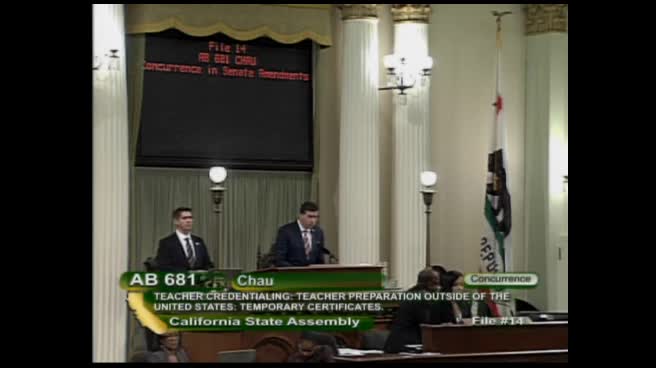
Bill Author

Bill Co-Author(s):