AB 413: Confidential communications: domestic violence.
- Session Year: 2017-2018
- House: Assembly
- Latest Version Date: 2017-09-01
Existing law makes it a crime, subject to specified exemptions, for a person to intentionally eavesdrop upon or record a confidential communication by means of an electronic amplifying or recording device without the consent of all parties to the confidential communication. Existing law exempts from the prohibition the recording of a confidential communication made for the purpose of obtaining evidence reasonably believed to relate to the commission by another party to the communication of certain crimes, including any felony involving violence against the person making the recording. Existing law also allows a judge to include a provision in a domestic violence restraining order permitting a victim of domestic violence to record any prohibited communication made to him or her by the perpetrator.
This bill would allow a party to a confidential communication to record the communication for the purpose of obtaining evidence reasonably believed to relate to domestic violence, as specified, and the evidence so obtained would not be rendered inadmissible in a prosecution against the perpetrator for domestic violence.
The bill would also authorize a victim of domestic violence who is seeking a domestic violence restraining order from a court to record specified communications made by the perpetrator for the exclusive purpose and use of providing the evidence to the court.
Existing law makes it a crime, subject to specified exemptions, for a person to intentionally eavesdrop upon or record a confidential communication by means of an electronic amplifying or recording device without the consent of all parties to the confidential communication. Existing law exempts from the prohibition the recording of a confidential communication made for the purpose of obtaining evidence reasonably believed to relate to the commission by another party to the communication of certain crimes, including any felony involving violence against the person making the recording. Existing law also allows a judge to include a provision in a domestic violence restraining order permitting a victim of domestic violence to record any prohibited communication made to him or her by the perpetrator.
This bill would allow a party to a confidential communication to record the communication for the purpose of obtaining evidence reasonably believed to relate to domestic violence, as specified. specified, and the evidence so obtained would not be rendered inadmissible in a prosecution against the perpetrator for domestic violence.
The bill would also authorize a victim of domestic violence who is seeking a domestic violence restraining order from a court to record specified communications made by the perpetrator for the exclusive purpose and use of providing the evidence to the court.
Existing law makes it a crime, subject to specified exemptions, for a person to intentionally eavesdrop upon or record a confidential communication by means of an electronic amplifying or recording device without the consent of all parties to the confidential communication. Existing law exempts from the prohibition the recording of a confidential communication made for the purpose of obtaining evidence reasonably believed to relate to the commission by another party to the communication of certain crimes, including any felony involving violence against the person making the recording. Existing law also allows a judge to include a provision in a domestic violence restraining order permitting a victim of domestic violence to record any prohibited communication made to him or her by the perpetrator.
This bill would allow a party to a confidential communication to record the communication for the purpose of obtaining evidence reasonably believed to relate to domestic violence, as specified.
Sections 631, 632, 632.5, 632.6, and 632.7 do not prohibit one party to a confidential communication from recording the communication for the purpose of obtaining evidence reasonably believed to relate to the commission by another party to the communication of the crime of extortion, kidnapping, bribery, any felony involving violence against the person, including, but not limited to, human trafficking, as defined in Section 236.1, or a violation of Section 653m, or domestic violence as defined in Section 13700. Sections 631, 632, 632.5, 632.6, and 632.7 do not render any evidence so obtained inadmissible in a prosecution for extortion, kidnapping, bribery, any felony involving violence against the person, including, but not limited to, human trafficking, as defined in Section 236.1, a violation of Section 653m, or domestic violence as defined in Section 13700, or any crime in connection therewith.
SEC. 2.Section 633.6 of the Penal Code is amended to read:633.6.(a)Notwithstanding the provisions of this chapter, and in accordance with federal law, upon the request of a victim of domestic violence who is seeking a domestic violence restraining order, a judge issuing the order may include a provision in the order that permits the victim to record any prohibited communication made to him or her by the perpetrator.
(b)Notwithstanding the provisions of this chapter, and in accordance with federal law, a victim of domestic violence who is seeking a domestic violence restraining order from a court, and who reasonably believes that a confidential communication made to him or her by the perpetrator may contain evidence germane to that restraining order, may record that communication for the exclusive purpose and use of providing that evidence to the court.
(c)The Judicial Council shall amend its domestic violence prevention application and order forms to incorporate the provisions of this section.
Nothing in Section Sections 631, 632, 632.5, 632.6, or and 632.7 prohibits do not prohibit one party to a confidential communication from recording the communication for the purpose of obtaining evidence reasonably believed to relate to the commission by another party to the communication of the crime of extortion, kidnapping, bribery, any felony involving violence against the person, including, but not limited to, human trafficking, as defined in Section 236.1, or a violation of Section 653m, or domestic violence as defined in Section 13700. Sections 631, 632, 632.5, 632.6, and 632.7 do not render any evidence so obtained inadmissible in a prosecution for extortion, kidnapping, bribery, any felony involving violence against the person, including, but not limited to, human trafficking, as defined in Section 236.1, a violation of Section 653m, or domestic violence as defined in Section 13700, or any crime in connection therewith.
SEC. 2.Section 633.6 of the Penal Code is amended to read:633.6.(a)Notwithstanding the provisions of this chapter, and in accordance with federal law, upon the request of a victim of domestic violence who is seeking a domestic violence restraining order, a judge issuing the order may include a provision in the order that permits the victim to record any prohibited communication made to him or her by the perpetrator.
(b)Notwithstanding the provisions of this chapter, and in accordance with federal law, a victim of domestic violence who is seeking a domestic violence restraining order from a court, and who reasonably believes that a confidential communication made to him or her by the perpetrator may contain evidence germane to that restraining order, may record that communication for the exclusive purpose and use of providing that evidence to the court.
(c)The Judicial Council shall amend its domestic violence prevention application and order forms to incorporate the provisions of this section.
Nothing in Section 631, 632, 632.5, 632.6, or 632.7 prohibits one party to a confidential communication from recording the communication for the purpose of obtaining evidence reasonably believed to relate to the commission by another party to the communication of the crime of extortion, kidnapping, bribery, any felony involving violence against the person, including, but not limited to, human trafficking, as defined in Section 231.6, 236.1, or a violation of Section 653m. 653m, or domestic violence as defined in Section 13700. Sections 631, 632, 632.5, 632.6, and 632.7 do not render any evidence so obtained inadmissible in a prosecution for extortion, kidnapping, bribery, any felony involving violence against the person, including, but not limited to, human trafficking, as defined in Section 231.6, 236.1, a violation of Section 653m, or domestic violence as defined in Section 13700, or any crime in connection therewith.
SEC. 2.Section 633.6 of the Penal Code is amended to read:633.6.(a)Notwithstanding the provisions of this chapter, and in accordance with federal law, upon the request of a victim of domestic violence who is seeking a domestic violence restraining order, a judge issuing the order may include a provision in the order that permits the victim to record any prohibited communication made to him or her by the perpetrator.
(b)Notwithstanding the provisions of this chapter, and in accordance with federal law, a victim of domestic violence who is seeking a domestic violence restraining order from a court, and who reasonably believes that a confidential communication made to him or her by the perpetrator may contain evidence germane to that restraining order, may record that communication for the exclusive purpose and use of providing that evidence to the court.
(b)(c)The Judicial Council shall amend its domestic violence prevention application and order forms to incorporate the provisions of this section.
SECTION 1.Section 633.4 is added to the Penal Code, to read:633.4.(a)Notwithstanding the provisions of this chapter, and in accordance with federal law, a party to a confidential communication may record the communication for the purpose of obtaining evidence reasonably believed to relate to domestic violence as defined in Section 6211 of the Family Code.(b)Evidence obtained in compliance with subdivision (a) is not rendered inadmissible by any provision of this chapter.(c)The recorded party may not bring an action pursuant to Section 637.2 against the person who recorded the communication in compliance with subdivision (a).(d)An individual found to be falsifying recordings for evidence may be subject to Sections 132 and 134.(a)Notwithstanding the provisions of this chapter, and in accordance with federal law, a party to a confidential communication may record the communication for the purpose of obtaining evidence reasonably believed to relate to domestic violence as defined in Section 6211 of the Family Code.
(b)Evidence obtained in compliance with subdivision (a) is not rendered inadmissible by any provision of this chapter.
(c)The recorded party may not bring an action pursuant to Section 637.2 against the person who recorded the communication in compliance with subdivision (a).
(d)An individual found to be falsifying recordings for evidence may be subject to Sections 132 and 134.
|
Date
|
Status
|
|---|---|
| Sep 1, 2017 | Chaptered by Secretary of State - Chapter 191, Statutes of 2017. |
| Sep 1, 2017 | Approved by the Governor. |
| Aug 25, 2017 | Enrolled and presented to the Governor at 3 p.m. |
| Aug 21, 2017 | Senate amendments concurred in. To Engrossing and Enrolling. |
| Jul 17, 2017 | In Assembly. Concurrence in Senate amendments pending. May be considered on or after July 19 pursuant to Assembly Rule 77. |
| Jul 17, 2017 | Read third time. Passed. Ordered to the Assembly. |
| Jul 12, 2017 | Read second time. Ordered to third reading. |
| Jul 11, 2017 | Ordered to special consent calendar. |
| Jun 22, 2017 | Read second time. Ordered to third reading. |
| Jun 21, 2017 | Withdrawn from committee. |
| Jun 6, 2017 | From committee: Do pass and re-refer to Com. on APPR. (Ayes 7. Noes 0.) (June 6). Re-referred to Com. on APPR. |
| May 10, 2017 | Referred to Coms. on PUB. S. and APPR. |
| Mar 30, 2017 | In Senate. Read first time. To Com. on RLS. for assignment. |
| Mar 30, 2017 | Read third time. Passed. Ordered to the Senate. (Ayes 74. Noes 0. Page 840.) |
| Mar 23, 2017 | Read second time. Ordered to third reading. |
| Mar 22, 2017 | Read second time and amended. Ordered returned to second reading. |
| Mar 21, 2017 | From committee: Amend, and do pass as amended. (Ayes 7. Noes 0.) (March 14). |
| Feb 21, 2017 | Referred to Com. on PUB. S. |
| Feb 10, 2017 | From printer. May be heard in committee March 12. |
| Feb 9, 2017 | Read first time. To print. |
|
Date
|
Description
|
Location
|
Votes
|
|
|---|---|---|---|---|
| Aug 21, 2017 | AB 413 EGGMAN Concurrence in Senate Amendments | Assembly Floor |
Passed |
|
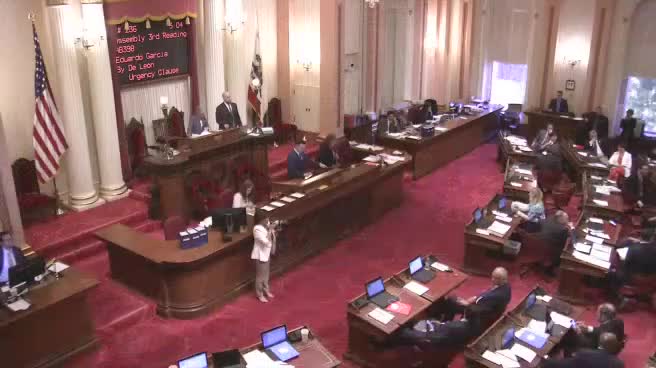
| Jul 17, 2017 | Assembly 3rd Reading AB413 Eggman et al. By Skinner | Senate Floor |
Passed |
|
| Jun 6, 2017 | Do pass, but first be re-referred to the Committee on [Appropriations] | Senate Standing Committee on Public Safety |
Passed |
|
| Mar 30, 2017 | AB 413 EGGMAN Assembly Third Reading | Assembly Floor |
Passed |
|
| Mar 14, 2017 | Do pass as amended. | Assembly Standing Committee on Public Safety |
Passed |
This list shows positions taken on this bill by organizations on the date displayed, which is linked to the original source.
Positions by individuals are not included.
|
Organization
|
Position
|
Date
|
|---|---|---|
| 1 individual | ** Support | Jul 14, 2017 |
| 1 Private Individual | ** Support | Mar 13, 2017 |
| Alameda County District Attorney's Office | ** Support | Jul 14, 2017 |
| Association For Los Angeles Deputy Sheriffs | ** Support | Jul 14, 2017 |
| California Association Of Code Enforcement Officers | ** Support | Jul 14, 2017 |
| California Attorneys For Criminal Justice | ** Against | Mar 13, 2017 |
| California College And University Police Chiefs Association | ** Support | Jul 14, 2017 |
| California District Attorneys Association | * Support | Jun 6, 2017 |
| California Federation of Teachers, AFT, AFL-CIO | ** Support | Jul 14, 2017 |
| California Narcotic Officers Association | ** Support | Jul 14, 2017 |
| California Public Defenders Association | ** Against | Mar 13, 2017 |
| Consumer Federation Of California | ** Support | Jul 14, 2017 |
| Empower Yolo | ** Support | Jul 14, 2017 |
| Los Angeles County Deputy Sheriffs | * Support | Jun 6, 2017 |
| Los Angeles County Professional Peace Officers Association | ** Support | Jul 14, 2017 |
| Los Angeles Police Protective League | ** Support | Jul 14, 2017 |
| McGeorge Legislative and Public Policy Clinic | ** Support | Jul 14, 2017 |
| McGoerge Legislative and Public Policy Clinic | ** Support | Mar 13, 2017 |
| Peace Officers Research Association Of California | ** Support | Jul 14, 2017 |
| Riverside Sheriffs' Association | ** Support | Jul 14, 2017 |
CONCURRENCE IN SENATE AMENDMENTS
CSA1 Bill Id:AB 413
Author:(Eggman and Cristina Garcia)
As Amended Ver:July 11, 2017
Majority vote
ASSEMBLY: | 74-0 | (March 30, 2017) | SENATE: | 37-0 | (July 17, 2017) |
Original Committee Reference: PUB. S.
SUMMARY: Allows a party to a confidential communication to record the conversation for the purpose of obtaining information reasonably believed to relate to the crime of domestic violence.
The Senate amendments make a non-substantive technical change.
EXISTING LAW:
- States that the Legislature hereby declares that advances in science and technology have led to the development of new devices and techniques for the purpose of eavesdropping upon private communications and that the invasion of privacy resulting from the continual and increasing use of such devices and techniques has created a serious threat to the free exercise of personal liberties and cannot be tolerated in a free and civilized society. The Legislature by this chapter intends to protect the right of privacy of the people of this state. The Legislature recognizes that law enforcement agencies have a legitimate need to employ modern listening devices and techniques in the investigation of criminal conduct and the apprehension of lawbreakers. Therefore, it is not the intent of the Legislature to place greater restraints on the use of listening devices and techniques by law enforcement agencies than existed prior to the effective date of this chapter.
- Provides that every person who, without the consent of all parties to a communication, intercepts or receives and intentionally records, or assists in the interception or reception and intentional recordation of, a communication transmitted between two cellular radio telephones, a cellular radio telephone and a landline telephone, two cordless telephones, a cordless telephone and a landline telephone, or a cordless telephone and a cellular radio telephone, shall be punished by a fine not exceeding $2,500, or by imprisonment in a county jail not exceeding one year, or in the state prison, or by both that fine and imprisonment. If the person has been convicted previously of a violation of specified unauthorized recording sections, the person shall be punished by a fine not exceeding 10,000, by imprisonment in a county jail not exceeding one year, or in the state prison, or by both that fine and imprisonment. Exempts the following from these provisions:
- Any public utility engaged in the business of providing communications services and facilities, or to the officers, employees, or agents thereof, where the acts otherwise prohibited are for the purpose of construction, maintenance, conduct, or operation of the services and facilities of the public utility;
- The use of any instrument, equipment, facility, or service furnished and used pursuant to the tariffs of the public utility; and
- Any telephonic communication system used for communication exclusively within a state, county, city and county, or city correctional facility.
- Provides that every person who, intentionally and without the consent of all parties to a confidential communication, by means of any electronic amplifying or recording device, eavesdrops upon or records the confidential communication, whether the communication is carried on among the parties in the presence of one another or by means of a telegraph, telephone, or other device, except a radio, shall be punished by a fine not exceeding 2,500, or imprisonment in the county jail not exceeding one year, or in the state prison, or by both that fine and imprisonment. If the person has previously been convicted of a violation of specified eavesdropping sections, the person shall be punished by a fine not exceeding $10,000, by imprisonment in the county jail not exceeding one year, or in the state prison, or by both that fine and imprisonment.
- Specifies that the term "person" includes an individual, business association, partnership, corporation, limited liability company, or other legal entity, and an individual acting or purporting to act for or on behalf of any government or subdivision thereof, whether federal, state, or local, but excludes an individual known by all parties to a confidential communication to be overhearing or recording the communication.
- States that the term "confidential communication" includes any communication carried on in circumstances as may reasonably indicate that any party to the communication desires it to be confined to the parties thereto, but excludes a communication made in a public gathering or in any legislative, judicial, executive or administrative proceeding open to the public, or in any other circumstance in which the parties to the communication may reasonably expect that the communication may be overheard or recorded.
- Provides that except as proof in an action or prosecution for violation of this section, no evidence obtained as a result of eavesdropping upon or recording a confidential communication in violation of this section shall be admissible in any judicial, administrative, legislative, or other proceeding.
- States that this section does not apply to:
- Any public utility engaged in the business of providing communications services and facilities, or to the officers, employees or agents thereof, where the acts otherwise prohibited by this section are for the purpose of construction, maintenance, conduct or operation of the services and facilities of the public utility; or
- To the use of any instrument, equipment, facility, or service furnished and used pursuant to the tariffs of a public utility; or
- To any telephonic communication system used for communication exclusively within a state, county, city and county, or city correctional facility.
- Provides that this section does not apply to the use of hearing aids and similar devices, by persons afflicted with impaired hearing, for the purpose of overcoming the impairment to permit the hearing of sounds ordinarily audible to the human ear.
AS PASSED BY THE ASSEMBLY, this bill allowed a party to a confidential communication to record the conversation for the purpose of obtaining information reasonably believed to relate to the crime of domestic violence
FISCAL EFFECT: Unknown. This bill is keyed non-fiscal by the Legislative Counsel.
COMMENTS: "California is one of only 11 states that does not allow a domestic violence survivor to use recorded evidence of her abuse in a courtroom unless the abuser gives consent to being recorded.
"If a survivor tries to admit these recordings into evidence the survivor can be sued in civil court by the abusive party and charged criminally by the state.
"Survivors of domestic violence who are brave enough to face their abusers in court are in danger of not receiving the help they need from our court system. Domestic violence abuse is defined in California law as physical, emotional, or psychological abuse (Family Code §§ 6203, 6211).
"California law does allow a survivor to introduce recordings of domestic violence abuse that amount to a violent felony; however, most domestic violence crimes, such as battery and assault, are only charged as misdemeanors (Penal Code §§ 630–638). Therefore, the argument in court becomes a "he-said, she-said," leaving out recordings that are the most reliable types of evidence.
"California has a long history of balancing an individual's privacy, and California's interests in establishing necessary protections for vulnerable individuals. California already has an exception in the Evidence Code for domestic violence survivors, but has yet to close the loophole within the Penal Code that would allow protection for all domestic violence crimes.
"This bill would allow individuals that are a party to a confidential communication to record evidence of domestic violence abuse and allow the survivor of that domestic violence to submit those recordings as evidence in a court proceeding—without fear of being sued by the abusive party for invasion of privacy. This would allow a judge to use her discretion to determine the relevance and admissibility of the recording."
Analysis Prepared by: Gregory Pagan / PUB. S. / (916) 319-3744 FN: 0001207
Office of Senate Floor Analyses (916) 651-1520 Fax: (916) 327-4478 | AB |
THIRD READING
Bill No: AB 413
: in Senate
SENATE PUBLIC SAFETY COMMITTEE: 7-0, 6/6/17
AYES: Skinner, Anderson, Bradford, Jackson, Mitchell, Stone, Wiener
ASSEMBLY FLOOR: 74-0, 3/30/17 - See last page for vote
SOURCE: McGeorge Legislative and Public Policy Clinic
DIGEST:
This bill allows a party to a confidential communication to record the conversation for the purpose of obtaining information reasonably believed to relate to the crime of domestic violence. This bill also allows a victim of domestic violence seeking a domestic violence restraining order to record a confidential communication made to him or her by the perpetrator for the purpose of providing that evidence to the court.
Senate Floor Amendments of 7/11/17 make technical amendments and add co-authors.
Existing law:
- Defines “domestic violence” as abuse committed against an adult or a minor who is a spouse, former spouse, cohabitant, former cohabitant, or person with whom the suspect has had a child or is having or has had a dating or engagement relationship. (Pen. Code, § 13700.)
- Provides that a person who, intentionally and without the consent of all parties to a confidential communication, by means of any electronic amplifying or recording device, eavesdrops upon or records the confidential communication, whether the communication is carried on among the parties in the presence of one another or by means of a telegraph, telephone, or other device, except a radio, shall be punished by a fine not exceeding two thousand five hundred dollars ($2,500), or imprisonment in the county jail not exceeding one year, or in the state prison, or by both that fine and imprisonment. (Pen. Code, § 632.)
- Defines a “person” as an individual, business association, partnership, corporation, limited liability company, or other legal entity, and an individual acting or purporting to act for or on behalf of any government or subdivision thereof, whether federal, state, or local, but excludes an individual known by all parties to a confidential communication to be overhearing or recording the communication. (Pen. Code, § 632, subd. (b).)
- Defines a “confidential communication” as any communication carried on in circumstances as may reasonably indicate that any party to the communication desires it to be confined to the parties thereto, but excludes a communication made in a public gathering or in any legislative, judicial, executive or administrative proceeding open to the public, or in any other circumstance in which the parties to the communication may reasonably expect that the communication may be overheard or recorded. (Pen. Code, § 632, subd. (c).)
- Provides that except as proof in an action or prosecution for violation of this section, no evidence obtained as a result of eavesdropping upon or recording a confidential communication in violation of this section shall be admissible in any judicial, administrative, legislative, or other proceeding. (Pen. Code, § 632, subd. (d).)
- States that this section does not apply to:
- Any public utility engaged in the business of providing communications services and facilities, or to the officers, employees or agents thereof, where the acts otherwise prohibited by this section are for the purpose of construction, maintenance, conduct or operation of the services and facilities of the public utility; or
- To the use of any instrument, equipment, facility, or service furnished and used pursuant to the tariffs of a public utility; or
- To any telephonic communication system used for communication exclusively within a state, county, city and county, or city correctional facility. (Pen. Code § 632, subd. (e).)
- Defines a “person” as an individual, business association, partnership, corporation, limited liability company, or other legal entity, and an individual acting or purporting to act for or on behalf of any government or subdivision thereof, whether federal, state, or local, but excludes an individual known by all parties to a confidential communication to be overhearing or recording the communication. (Pen. Code, § 632, subd. (b).)
- Provides that every person who, without the consent of all parties to a communication, intercepts or receives and intentionally records, or assists in the interception or reception and intentional recordation of, a communication transmitted between two cellular radio telephones, a cellular radio telephone and a landline telephone, two cordless telephones, a cordless telephone and a landline telephone, or a cordless telephone and a cellular radio telephone, shall be punished by a fine not exceeding two thousand five hundred dollars ($2,500), or by imprisonment in a county jail not exceeding one year, or in the state prison, or by both that fine and imprisonment. (Pen. Code, § 632.7.) The following are exempted from these provisions:
- Any public utility engaged in the business of providing communications services and facilities, or to the officers, employees, or agents thereof, where the acts otherwise prohibited are for the purpose of construction, maintenance, conduct, or operation of the services and facilities of the public utility;
- The use of any instrument, equipment, facility, or service furnished and used pursuant to the tariffs of the public utility; and
- Any telephonic communication system used for communication exclusively within a state, county, city and county, or city correctional facility.
- Exempts the recording of a confidential communication made for the purpose of obtaining evidence reasonably believed to be related to the commission by another party to the communication of certain crimes, including extortion, kidnapping, bribery, and any felony involving violence against the person from the general prohibition against recording a person without the person’s consent. Existing law provides that this evidence is admissible in a prosecution for these crimes. (Pen. Code, § 633.5.)
- Allows a judge to include a provision in a domestic violence restraining order permitting a victim of domestic violence to record any prohibited communication made to him or her by the perpetrator. (Pen. Code, § 633.6.)
This bill:
- Allows a party to a confidential communication to record the communication for the purpose of obtaining evidence reasonably believed to relate to the commission of domestic violence by another party to the communication. The recordings would be admissible in court.
- Permits a victim of domestic violence who is seeking a domestic restraining order from a court, and who reasonably believes that a confidential communication made to him or her by the perpetrator may contain evidence germane to that restraining order, to record that communication for the exclusive purpose and use of providing that evidence to the court.
FISCAL EFFECT: Appropriation: Fiscal Com.: Local:
McGeorge Legislative and Public Policy Clinic (source)
Alameda County District Attorney’s Office
Association for Los Angeles Deputy Sheriffs
California Association of Code Enforcement Officers
California College and University Police Chiefs Association
California Federation of Teachers, AFT, AFL-CIO
California Narcotic Officers Association
Consumer Federation of California
Empower Yolo
Los Angeles County Professional Peace Officers Association
Los Angeles Police Protective League
Peace Officers Research Association of California
Riverside Sheriffs’ Association
1 individual
OPPOSITION: (Verified 7/12/17)
None received
ARGUMENTS IN SUPPORT: Empower Yolo supports this bill stating:
California is one of only eleven states that prohibit a domestic violence survivor from using recorded evidence of abuse unless the abuser consents to being recorded. If a survivor tries to submit ex parte recordings into evidence, she could be sued in civil court by the abusive party and charged criminally by the state.
Current criminal law in California allows a survivor to introduce recordings of domestic violence abuse to support evidence of a violent felony; however, most domestic violence crimes, such as battery and assault, are charged as misdemeanors. (Penal Code §§ 630-638)
AB 413 is intended to close a loophole in current two-party consent exceptions. Courts can allow a two-party consent exception for recordings of domestic violence abuse as evidence of a DVRO violation. However, domestic violence survivors are not allowed to use the recording of domestic violence as evidence to obtain the initial restraining order. AB 413 closes that loophole by allowing all recordings of domestic violence abuse to be offered as evidence, not just those in violation of an existing restraining order.
…We believe that AB 413 solves an obvious problem that will continue to cause harm to victims of domestic violence unless they are allowed to present ex parte recorded evidence of the abuse. It makes sense that such recordings could provide useful evidence to support the initial restraining order. The majority of states allow this type of evidence in domestic violence cases. California should be a leader in this regard.
ASSEMBLY FLOOR: 74-0, 3/30/17
AYES: Acosta, Aguiar-Curry, Arambula, Baker, Berman, Bigelow, Bloom, Bocanegra, Bonta, Brough, Burke, Caballero, Calderon, Cervantes, Chau, Chávez, Chen, Chiu, Choi, Chu, Cooley, Cooper, Cunningham, Dahle, Daly, Eggman, Flora, Fong, Friedman, Gallagher, Cristina Garcia, Eduardo Garcia, Gipson, Gloria, Gomez, Gonzalez Fletcher, Gray, Grayson, Harper, Holden, Irwin, Jones-Sawyer, Kalra, Kiley, Lackey, Levine, Limón, Low, Maienschein, Mathis, Mayes, McCarty, Melendez, Mullin, Muratsuchi, Nazarian, Obernolte, O'Donnell, Patterson, Quirk-Silva, Reyes, Ridley-Thomas, Rodriguez, Rubio, Salas, Santiago, Steinorth, Mark Stone, Thurmond, Ting, Voepel, Waldron, Weber, Wood
NO VOTE RECORDED: Travis Allen, Dababneh, Frazier, Medina, Quirk, Rendon
7/14/17 14:42:28
Office of Senate Floor Analyses (916) 651-1520 Fax: (916) 327-4478 | AB |
THIRD READING
Bill No: AB 413
:
SENATE PUBLIC SAFETY COMMITTEE: 7-0, 6/6/17
AYES: Skinner, Anderson, Bradford, Jackson, Mitchell, Stone, Wiener
ASSEMBLY FLOOR: 74-0, 3/30/17 - See last page for vote
SOURCE: McGeorge Legislative and Public Policy Clinic
DIGEST:
This bill allows a party to a confidential communication to record the conversation for the purpose of obtaining information reasonably believed to relate to the crime of domestic violence. This bill also allows a victim of domestic violence seeking a domestic violence restraining order to record a confidential communication made to him or her by the perpetrator for the purpose of providing that evidence to the court.
Existing law:
- Defines “domestic violence” as abuse committed against an adult or a minor who is a spouse, former spouse, cohabitant, former cohabitant, or person with whom the suspect has had a child or is having or has had a dating or engagement relationship. (Pen. Code, § 13700.)
- Provides that a person who, intentionally and without the consent of all parties to a confidential communication, by means of any electronic amplifying or recording device, eavesdrops upon or records the confidential communication, whether the communication is carried on among the parties in the presence of one another or by means of a telegraph, telephone, or other device, except a radio, shall be punished by a fine not exceeding two thousand five hundred dollars ($2,500), or imprisonment in the county jail not exceeding one year, or in the state prison, or by both that fine and imprisonment. (Pen. Code, § 632.)
- Defines a “person” as an individual, business association, partnership, corporation, limited liability company, or other legal entity, and an individual acting or purporting to act for or on behalf of any government or subdivision thereof, whether federal, state, or local, but excludes an individual known by all parties to a confidential communication to be overhearing or recording the communication. (Pen. Code, § 632, subd. (b).)
- Defines a “confidential communication” as any communication carried on in circumstances as may reasonably indicate that any party to the communication desires it to be confined to the parties thereto, but excludes a communication made in a public gathering or in any legislative, judicial, executive or administrative proceeding open to the public, or in any other circumstance in which the parties to the communication may reasonably expect that the communication may be overheard or recorded. (Pen. Code, § 632, subd. (c).)
- Provides that except as proof in an action or prosecution for violation of this section, no evidence obtained as a result of eavesdropping upon or recording a confidential communication in violation of this section shall be admissible in any judicial, administrative, legislative, or other proceeding. (Pen. Code, § 632, subd. (d).)
- States that this section does not apply to:
- Any public utility engaged in the business of providing communications services and facilities, or to the officers, employees or agents thereof, where the acts otherwise prohibited by this section are for the purpose of construction, maintenance, conduct or operation of the services and facilities of the public utility; or
- To the use of any instrument, equipment, facility, or service furnished and used pursuant to the tariffs of a public utility; or
- To any telephonic communication system used for communication exclusively within a state, county, city and county, or city correctional facility. (Pen. Code § 632, subd. (e).)
- Defines a “person” as an individual, business association, partnership, corporation, limited liability company, or other legal entity, and an individual acting or purporting to act for or on behalf of any government or subdivision thereof, whether federal, state, or local, but excludes an individual known by all parties to a confidential communication to be overhearing or recording the communication. (Pen. Code, § 632, subd. (b).)
- Provides that every person who, without the consent of all parties to a communication, intercepts or receives and intentionally records, or assists in the interception or reception and intentional recordation of, a communication transmitted between two cellular radio telephones, a cellular radio telephone and a landline telephone, two cordless telephones, a cordless telephone and a landline telephone, or a cordless telephone and a cellular radio telephone, shall be punished by a fine not exceeding two thousand five hundred dollars ($2,500), or by imprisonment in a county jail not exceeding one year, or in the state prison, or by both that fine and imprisonment. (Pen. Code, § 632.7.) The following are exempted from these provisions:
- Any public utility engaged in the business of providing communications services and facilities, or to the officers, employees, or agents thereof, where the acts otherwise prohibited are for the purpose of construction, maintenance, conduct, or operation of the services and facilities of the public utility;
- The use of any instrument, equipment, facility, or service furnished and used pursuant to the tariffs of the public utility; and
- Any telephonic communication system used for communication exclusively within a state, county, city and county, or city correctional facility.
4) Exempts the recording of a confidential communication made for the purpose of obtaining evidence reasonably believed to be related to the commission by another party to the communication of certain crimes, including extortion, kidnapping, bribery, and any felony involving violence against the person from the general prohibition against recording a person without the person’s consent. Existing law provides that this evidence is admissible in a prosecution for these crimes. (Pen. Code, § 633.5.)
5) Allows a judge to include a provision in a domestic violence restraining order permitting a victim of domestic violence to record any prohibited communication made to him or her by the perpetrator. (Pen. Code, § 633.6.)
This bill:
- Allows a party to a confidential communication to record the communication for the purpose of obtaining evidence reasonably believed to relate to the commission of domestic violence by another party to the communication. The recordings would be admissible in court.
- Permits a victim of domestic violence who is seeking a domestic restraining order from a court, and who reasonably believes that a confidential communication made to him or her by the perpetrator may contain evidence germane to that restraining order, to record that communication for the exclusive purpose and use of providing that evidence to the court.
FISCAL EFFECT: Appropriation: Fiscal Com.: Local:
McGeorge Legislative and Public Policy Clinic (source)
Alameda County District Attorney’s Office
Association for Los Angeles Deputy Sheriffs
California Association of Code Enforcement Officers
California College and University Police Chiefs Association
California Federation of Teachers, AFT, AFL-CIO
California Narcotic Officers Association
Consumer Federation of California
Empower Yolo
Los Angeles County Professional Peace Officers Association
Los Angeles Police Protective League
Peace Officers Research Association of California
Riverside Sheriffs’ Association
1 individual
OPPOSITION: (Verified 6/21/17)
None received
ARGUMENT IN SUPPORT: Empower Yolo supports this bill stating:
California is one of only eleven states that prohibit a domestic violence survivor from using recorded evidence of abuse unless the abuser consents to being recorded. If a survivor tries to submit ex parte recordings into evidence, she could be sued in civil court by the abusive party and charged criminally by the state.
Current criminal law in California allows a survivor to introduce recordings of domestic violence abuse to support evidence of a violent felony; however, most domestic violence crimes, such as battery and assault, are charged as misdemeanors. (Penal Code §§ 630-638)
AB 413 is intended to close a loophole in current two-party consent exceptions. Courts can allow a two-party consent exception for recordings of domestic violence abuse as evidence of a DVRO violation. However, domestic violence survivors are not allowed to use the recording of domestic violence as evidence to obtain the initial restraining order. AB 413 closes that loophole by allowing all recordings of domestic violence abuse to be offered as evidence, not just those in violation of an existing restraining order.
…We believe that AB 413 solves an obvious problem that will continue to cause harm to victims of domestic violence unless they are allowed to present ex parte recorded evidence of the abuse. It makes sense that such recordings could provide useful evidence to support the initial restraining order. The majority of states allow this type of evidence in domestic violence cases. California should be a leader in this regard.
ASSEMBLY FLOOR: 74-0, 3/30/17
AYES: Acosta, Aguiar-Curry, Arambula, Baker, Berman, Bigelow, Bloom, Bocanegra, Bonta, Brough, Burke, Caballero, Calderon, Cervantes, Chau, Chávez, Chen, Chiu, Choi, Chu, Cooley, Cooper, Cunningham, Dahle, Daly, Eggman, Flora, Fong, Friedman, Gallagher, Cristina Garcia, Eduardo Garcia, Gipson, Gloria, Gomez, Gonzalez Fletcher, Gray, Grayson, Harper, Holden, Irwin, Jones-Sawyer, Kalra, Kiley, Lackey, Levine, Limón, Low, Maienschein, Mathis, Mayes, McCarty, Melendez, Mullin, Muratsuchi, Nazarian, Obernolte, O'Donnell, Patterson, Quirk-Silva, Reyes, Ridley-Thomas, Rodriguez, Rubio, Salas, Santiago, Steinorth, Mark Stone, Thurmond, Ting, Voepel, Waldron, Weber, Wood
NO VOTE RECORDED: Travis Allen, Dababneh, Frazier, Medina, Quirk, Rendon
Prepared by: Stephanie Jordan / PUB. S. /
7/7/17 15:35:05
SENATE COMMITTEE ON PUBLIC SAFETY
Senator Nancy Skinner, Chair
2017 - 2018 Regular
Bill No: AB 413 Hearing Date: June 6, 2017
Author: | Eggman | ||
Version: | March 22, 2017 | ||
Urgency: | No | Fiscal: | No |
Consultant: | SJ | ||
Subject: Confidential Communications: Domestic Violence
HISTORY
Source: McGeorge Legislative and Public Policy Clinic
Prior Legislation: AB 1671 (Gomez) Ch. 855, Stats. of 2016
SB 424 (Pan) Ch. 159, Stats. of 2015
SB 1010 (Furtani) Ch. 659, Stats. of 2011
Support: Association for Los Angeles Deputy Sheriffs; California Association of Code Enforcement Officers; California College and University Police Chiefs Association; California Federation of Teachers, AFT, AFL-CIO; California Narcotic Officers Association; Empower Yolo; Los Angeles County Professional Peace Officers Association; Los Angeles Police Protective League; Police Officers Research Association of California; Riverside Sheriffs’ Association; 1 individual
Opposition: None known
Assembly Floor Vote: 74 - 0
PURPOSE
The purpose of this bill is to allow a party to a confidential communication to record the conversation for the purpose of obtaining information reasonably believed to relate to the crime of domestic violence. This bill also allows a victim of domestic violence seeking a domestic violence restraining order to record a confidential communication made to him or her by the perpetrator for the purpose of providing that evidence to the court.
Existing law defines “domestic violence” as abuse committed against an adult or a minor who is a spouse, former spouse, cohabitant, former cohabitant, or person with whom the suspect has had a child or is having or has had a dating or engagement relationship. (Pen. Code § 13700.)
Existing law provides that a person who, intentionally and without the consent of all parties to a confidential communication, by means of any electronic amplifying or recording device, eavesdrops upon or records the confidential communication, whether the communication is carried on among the parties in the presence of one another or by means of a telegraph, telephone, or other device, except a radio, shall be punished by a fine not exceeding two thousand five hundred dollars ($2,500), or imprisonment in the county jail not exceeding one year, or in the state prison, or by both that fine and imprisonment. (Pen. Code § 632.)
- Defines a “person” as an individual, business association, partnership, corporation, limited liability company, or other legal entity, and an individual acting or purporting to act for or on behalf of any government or subdivision thereof, whether federal, state, or local, but excludes an individual known by all parties to a confidential communication to be overhearing or recording the communication. (Pen. Code § 632, subd. (b).)
- Defines a “confidential communication” as any communication carried on in circumstances as may reasonably indicate that any party to the communication desires it to be confined to the parties thereto, but excludes a communication made in a public gathering or in any legislative, judicial, executive or administrative proceeding open to the public, or in any other circumstance in which the parties to the communication may reasonably expect that the communication may be overheard or recorded. (Pen. Code § 632, subd. (c).)
- Provides that except as proof in an action or prosecution for violation of this section, no evidence obtained as a result of eavesdropping upon or recording a confidential communication in violation of this section shall be admissible in any judicial, administrative, legislative, or other proceeding. (Pen. Code § 632, subd. (d).)
- States that this section does not apply to:
- Any public utility engaged in the business of providing communications services and facilities, or to the officers, employees or agents thereof, where the acts otherwise prohibited by this section are for the purpose of construction, maintenance, conduct or operation of the services and facilities of the public utility; or
- To the use of any instrument, equipment, facility, or service furnished and used pursuant to the tariffs of a public utility; or
- To any telephonic communication system used for communication exclusively within a state, county, city and county, or city correctional facility. (Pen. Code § 632, subd. (e).)
- Any public utility engaged in the business of providing communications services and facilities, or to the officers, employees or agents thereof, where the acts otherwise prohibited by this section are for the purpose of construction, maintenance, conduct or operation of the services and facilities of the public utility; or
- Defines a “person” as an individual, business association, partnership, corporation, limited liability company, or other legal entity, and an individual acting or purporting to act for or on behalf of any government or subdivision thereof, whether federal, state, or local, but excludes an individual known by all parties to a confidential communication to be overhearing or recording the communication. (Pen. Code § 632, subd. (b).)
Existing law provides that every person who, without the consent of all parties to a communication, intercepts or receives and intentionally records, or assists in the interception or reception and intentional recordation of, a communication transmitted between two cellular radio telephones, a cellular radio telephone and a landline telephone, two cordless telephones, a cordless telephone and a landline telephone, or a cordless telephone and a cellular radio telephone, shall be punished by a fine not exceeding two thousand five hundred dollars ($2,500), or by imprisonment in a county jail not exceeding one year, or in the state prison, or by both that fine and imprisonment. (Pen. Code § 632.7.) The following are exempted from these provisions:
- Any public utility engaged in the business of providing communications services and facilities, or to the officers, employees, or agents thereof, where the acts otherwise prohibited are for the purpose of construction, maintenance, conduct, or operation of the services and facilities of the public utility;
- The use of any instrument, equipment, facility, or service furnished and used pursuant to the tariffs of the public utility; and
- Any telephonic communication system used for communication exclusively within a state, county, city and county, or city correctional facility.
Existing law exempts the recording of a confidential communication made for the purpose of obtaining evidence reasonably believed to be related to the commission by another party to the communication of certain crimes, including extortion, kidnapping, bribery, and any felony involving violence against the person from the general prohibition against recording a person without the person’s consent. Existing law provides that this evidence is admissible in a prosecution for these crimes. (Pen. Code § 633.5.)
Existing law allows a judge to include a provision in a domestic violence restraining order permitting a victim of domestic violence to record any prohibited communication made to him or her by the perpetrator. (Pen. Code § 633.6.)
This bill would add domestic violence to this section to allow a party to a confidential communication to record the communication for the purpose of obtaining evidence reasonably believed to relate to the commission of domestic violence by another party to the communication. The recordings would be admissible in court.
This bill would also permit a victim of domestic violence who is seeking a domestic restraining order from a court, and who reasonably believes that a confidential communication made to him or her by the perpetrator may contain evidence germane to that restraining order, to record that communication for the exclusive purpose and use of providing that evidence to the court.
COMMENTS
1. Need for This Bill
According to the author:
California does not allow a domestic violence survivor to use recorded evidence of abuse in a courtroom unless the abuser gives consent to being recorded. When a survivor tries to admit these recordings into evidence the survivor can be sued in civil court by the abusive party and charged criminally by the state under the current eavesdropping statute. This bill will allow survivors of domestic violence to record their abuse and submit those recordings as evidence in a court proceeding without fear of being sued by the abusive party for invasion of privacy. It also allows a judge to use her discretion to determine the relevance and admissibility of the recording.
2. Existing Exceptions to Recording a Confidential Communication
Under existing law, exceptions to recording a confidential communication exist for communicating with another party regarding to following criminal offenses:
- Extortion;
- Kidnapping;
- Bribery; and
- Any felony involving violence against the person, including, but not limited to specified offenses. (Pen. Code § 633.5.)
Additionally, Penal Code section 633.5 does not render any evidence obtained by those recordings inadmissible in a prosecution for the above referenced offenses.
3. Argument in Support
Empower Yolo supports this bill stating:
California is one of only eleven states that prohibit a domestic violence survivor from using recorded evidence of abuse unless the abuser consents to being recorded. If a survivor tries to submit ex parte recordings into evidence, she could be sued in civil court by the abusive party and charged criminally by the state.
Current criminal law in California allows a survivor to introduce recordings of domestic violence abuse to support evidence of a violent felony; however, most domestic violence crimes, such as battery and assault, are charged as misdemeanors (Penal Code §§ 630-638).
AB 413 is intended to close a loophole in current two-party consent exceptions. Courts can allow a two-party consent exception for recordings of domestic violence abuse as evidence of a DVRO violation. However, domestic violence survivors are not allowed to use the recording of domestic violence as evidence to obtain the initial restraining order. AB 413 closes that loophole by allowing all recordings of domestic violence abuse to be offered as evidence, not just those in violation of an existing restraining order.
…We believe that AB 413 solves an obvious problem that will continue to cause harm to victims of domestic violence unless they are allowed to present ex parte recorded evidence of the abuse. It makes sense that such recordings could provide useful evidence to support the initial restraining order. The majority of states allow this type of evidence in domestic violence cases. California should be a leader in this regard.
-- END –
ASSEMBLY THIRD READING
ATR Bill Id:AB 413
Author:()
As Amended Ver:March 22, 2017
Majority vote
Committee | Votes | Ayes | Noes |
Public Safety | 7-0 | Jones-Sawyer, Lackey, Cunningham, Gonzalez Fletcher, Quirk, Rubio, Santiago |
SUMMARY: Allows a party to a confidential communication to record the conversation for the purpose of obtaining information reasonably believed to relate to the crime of domestic violence.
EXISTING LAW:
- States that the Legislature hereby declares that advances in science and technology have led to the development of new devices and techniques for the purpose of eavesdropping upon private communications and that the invasion of privacy resulting from the continual and increasing use of such devices and techniques has created a serious threat to the free exercise of personal liberties and cannot be tolerated in a free and civilized society. The Legislature by this chapter intends to protect the right of privacy of the people of this state. The Legislature recognizes that law enforcement agencies have a legitimate need to employ modern listening devices and techniques in the investigation of criminal conduct and the apprehension of lawbreakers. Therefore, it is not the intent of the Legislature to place greater restraints on the use of listening devices and techniques by law enforcement agencies than existed prior to the effective date of this chapter.
- Provides that every person who, without the consent of all parties to a communication, intercepts or receives and intentionally records, or assists in the interception or reception and intentional recordation of, a communication transmitted between two cellular radio telephones, a cellular radio telephone and a landline telephone, two cordless telephones, a cordless telephone and a landline telephone, or a cordless telephone and a cellular radio telephone, shall be punished by a fine not exceeding $2,500, or by imprisonment in a county jail not exceeding one year, or in the state prison, or by both that fine and imprisonment. If the person has been convicted previously of a violation of specified unauthorized recording sections, the person shall be punished by a fine not exceeding 10,000, by imprisonment in a county jail not exceeding one year, or in the state prison, or by both that fine and imprisonment. Exempts the following from these provisions:
- Any public utility engaged in the business of providing communications services and facilities, or to the officers, employees, or agents thereof, where the acts otherwise prohibited are for the purpose of construction, maintenance, conduct, or operation of the services and facilities of the public utility;
- The use of any instrument, equipment, facility, or service furnished and used pursuant to the tariffs of the public utility; and
- Any telephonic communication system used for communication exclusively within a state, county, city and county, or city correctional facility.
- Provides that every person who, intentionally and without the consent of all parties to a confidential communication, by means of any electronic amplifying or recording device, eavesdrops upon or records the confidential communication, whether the communication is carried on among the parties in the presence of one another or by means of a telegraph, telephone, or other device, except a radio, shall be punished by a fine not exceeding 2,500, or imprisonment in the county jail not exceeding one year, or in the state prison, or by both that fine and imprisonment. If the person has previously been convicted of a violation of specified eavesdropping sections, the person shall be punished by a fine not exceeding $10,000, by imprisonment in the county jail not exceeding one year, or in the state prison, or by both that fine and imprisonment.
- Specifies that the term "person" includes an individual, business association, partnership, corporation, limited liability company, or other legal entity, and an individual acting or purporting to act for or on behalf of any government or subdivision thereof, whether federal, state, or local, but excludes an individual known by all parties to a confidential communication to be overhearing or recording the communication.
- States that the term "confidential communication" includes any communication carried on in circumstances as may reasonably indicate that any party to the communication desires it to be confined to the parties thereto, but excludes a communication made in a public gathering or in any legislative, judicial, executive or administrative proceeding open to the public, or in any other circumstance in which the parties to the communication may reasonably expect that the communication may be overheard or recorded.
- Provides that except as proof in an action or prosecution for violation of this section, no evidence obtained as a result of eavesdropping upon or recording a confidential communication in violation of this section shall be admissible in any judicial, administrative, legislative, or other proceeding.
- States that this section does not apply to:
- Any public utility engaged in the business of providing communications services and facilities, or to the officers, employees or agents thereof, where the acts otherwise prohibited by this section are for the purpose of construction, maintenance, conduct or operation of the services and facilities of the public utility; or
- To the use of any instrument, equipment, facility, or service furnished and used pursuant to the tariffs of a public utility; or
- To any telephonic communication system used for communication exclusively within a state, county, city and county, or city correctional facility.
- Provides that this section does not apply to the use of hearing aids and similar devices, by persons afflicted with impaired hearing, for the purpose of overcoming the impairment to permit the hearing of sounds ordinarily audible to the human ear.
FISCAL EFFECT: Unknown. This bill is keyed non-fiscal by the Legislative Counsel.
COMMENTS: "California is one of only 11 states that does not allow a domestic violence survivor to use recorded evidence of her abuse in a courtroom unless the abuser gives consent to being recorded.
"If a survivor tries to admit these recordings into evidence the survivor can be sued in civil court by the abusive party and charged criminally by the state.
"Survivors of domestic violence who are brave enough to face their abusers in court are in danger of not receiving the help they need from our court system. Domestic violence abuse is defined in California law as physical, emotional, or psychological abuse (Family Code §§ 6203, 6211).
"California law does allow a survivor to introduce recordings of domestic violence abuse that amount to a violent felony; however, most domestic violence crimes, such as battery and assault, are only charged as misdemeanors (Penal Code §§ 630–638). Therefore, the argument in court becomes a "he-said, she-said," leaving out recordings that are the most reliable types of evidence.
"California has a long history of balancing an individual's privacy, and California's interests in establishing necessary protections for vulnerable individuals. California already has an exception in the Evidence Code for domestic violence survivors, but has yet to close the loophole within the Penal Code that would allow protection for all domestic violence crimes.
"This bill would allow individuals that are a party to a confidential communication to record evidence of domestic violence abuse and allow the survivor of that domestic violence to submit those recordings as evidence in a court proceeding—without fear of being sued by the abusive party for invasion of privacy. This would allow a judge to use her discretion to determine the relevance and admissibility of the recording."
Analysis Prepared by: Gregory Pagan / PUB. S. / (916) 319-3744 FN: 0000047
Date of Hearing:
Chief Counsel: Gregory Pagan
ASSEMBLY COMMITTEE ON PUBLIC SAFETY
Reginald Byron Jones-Sawyer, Sr., Chair
ABPCA Bill Id:AB 413
Author:(Eggman) – As Introduced Ver:February 9, 2017
SUMMARY:
Allows a party to a confidential communication to record the conversation for the purpose of obtaining information reasonably believed to relate to the crime of domestic violence.
EXISTING LAW:
- Defines "domestic violence" in the California Family Code as abuse perpetrated against any of the following persons: (Cal. Fam. Code, § 6211.)
- A spouse or former spouse;
- A cohabitant or former cohabitant;
- A person with whom the respondent is having or has had a dating or engagement relationship;
- A person with whom the respondent has had a child, where the presumption applies that the male parent is the father of the child of the female parent;
- A child of a party or a child where the presumption applies that the male parent is the father of the child to be protected; and
- Any other person related by consanguinity or affinity within the second degree.
- A spouse or former spouse;
- States that the Legislature hereby declares that advances in science and technology have led to the development of new devices and techniques for the purpose of eavesdropping upon private communications and that the invasion of privacy resulting from the continual and increasing use of such devices and techniques has created a serious threat to the free exercise of personal liberties and cannot be tolerated in a free and civilized society. The Legislature by this chapter intends to protect the right of privacy of the people of this state. The Legislature recognizes that law enforcement agencies have a legitimate need to employ modern listening devices and techniques in the investigation of criminal conduct and the apprehension of lawbreakers. Therefore, it is not the intent of the Legislature to place greater restraints on the use of listening devices and techniques by law enforcement agencies than existed prior to the effective date of this chapter. (Pen. Code, § 630.)
- Provides that every person who, without the consent of all parties to a communication, intercepts or receives and intentionally records, or assists in the interception or reception and intentional recordation of, a communication transmitted between two cellular radio telephones, a cellular radio telephone and a landline telephone, two cordless telephones, a cordless telephone and a landline telephone, or a cordless telephone and a cellular radio telephone, shall be punished by a fine not exceeding two thousand five hundred dollars ($2,500), or by imprisonment in a county jail not exceeding one year, or in the state prison, or by both that fine and imprisonment. If the person has been convicted previously of a violation of specified unauthorized recording sections, the person shall be punished by a fine not exceeding ten thousand dollars ($10,000), by imprisonment in a county jail not exceeding one year, or in the state prison, or by both that fine and imprisonment. (Pen. Code, § 632.7.) Exempts the following from these provisions:
- Any public utility engaged in the business of providing communications services and facilities, or to the officers, employees, or agents thereof, where the acts otherwise prohibited are for the purpose of construction, maintenance, conduct, or operation of the services and facilities of the public utility;
- The use of any instrument, equipment, facility, or service furnished and used pursuant to the tariffs of the public utility; and
- Any telephonic communication system used for communication exclusively within a state, county, city and county, or city correctional facility.
- Any public utility engaged in the business of providing communications services and facilities, or to the officers, employees, or agents thereof, where the acts otherwise prohibited are for the purpose of construction, maintenance, conduct, or operation of the services and facilities of the public utility;
- Provides that every person who, intentionally and without the consent of all parties to a confidential communication, by means of any electronic amplifying or recording device, eavesdrops upon or records the confidential communication, whether the communication is carried on among the parties in the presence of one another or by means of a telegraph, telephone, or other device, except a radio, shall be punished by a fine not exceeding two thousand five hundred dollars ($2,500), or imprisonment in the county jail not exceeding one year, or in the state prison, or by both that fine and imprisonment. If the person has previously been convicted of a violation of specified eavesdropping sections, the person shall be punished by a fine not exceeding ten thousand dollars ($10,000), by imprisonment in the county jail not exceeding one year, or in the state prison, or by both that fine and imprisonment. (Pen. Code, § 632.)
- Specifies that the term "person" includes an individual, business association, partnership, corporation, limited liability company, or other legal entity, and an individual acting or purporting to act for or on behalf of any government or subdivision thereof, whether federal, state, or local, but excludes an individual known by all parties to a confidential communication to be overhearing or recording the communication. (Pen. Code, § 632, subd. (b).)
- States that the term "confidential communication" includes any communication carried on in circumstances as may reasonably indicate that any party to the communication desires it to be confined to the parties thereto, but excludes a communication made in a public gathering or in any legislative, judicial, executive or administrative proceeding open to the public, or in any other circumstance in which the parties to the communication may reasonably expect that the communication may be overheard or recorded. (Pen. Code, § 632, subd. (c).)
- Provides that except as proof in an action or prosecution for violation of this section, no evidence obtained as a result of eavesdropping upon or recording a confidential communication in violation of this section shall be admissible in any judicial, administrative, legislative, or other proceeding. (Pen. Code, § 632, subd. (d).)
- States that this section does not apply to: (Pen. Code, § 632, subd. (e).)
- Any public utility engaged in the business of providing communications services and facilities, or to the officers, employees or agents thereof, where the acts otherwise prohibited by this section are for the purpose of construction, maintenance, conduct or operation of the services and facilities of the public utility; or
- To the use of any instrument, equipment, facility, or service furnished and used pursuant to the tariffs of a public utility; or
- To any telephonic communication system used for communication exclusively within a state, county, city and county, or city correctional facility.
- Any public utility engaged in the business of providing communications services and facilities, or to the officers, employees or agents thereof, where the acts otherwise prohibited by this section are for the purpose of construction, maintenance, conduct or operation of the services and facilities of the public utility; or
- Provides that this section does not apply to the use of hearing aids and similar devices, by persons afflicted with impaired hearing, for the purpose of overcoming the impairment to permit the hearing of sounds ordinarily audible to the human ear. (Pen. Code, § 632, subd. (f).)
- Specifies that the term "person" includes an individual, business association, partnership, corporation, limited liability company, or other legal entity, and an individual acting or purporting to act for or on behalf of any government or subdivision thereof, whether federal, state, or local, but excludes an individual known by all parties to a confidential communication to be overhearing or recording the communication. (Pen. Code, § 632, subd. (b).)
FISCAL EFFECT:
Unknown
COMMENTS:
- Author's Statement: According to the author, "California is 1 of only 11 states that does not allow a domestic violence survivor to use recorded evidence of her abuse in a courtroom unless the abuser gives consent to being recorded.
"If a survivor tries to admit these recordings into evidence the survivor can be sued in civil court by the abusive party and charged criminally by the state.
"Survivors of domestic violence who are brave enough to face their abusers in court are in danger of not receiving the help they need from our court system. Domestic violence abuse is defined in California law as physical, emotional, or psychological abuse (Family Code §§ 6203, 6211).
"California law does allow a survivor to introduce recordings of domestic violence abuse that amount to a violent felony; however, most domestic violence crimes, such as battery and assault, are only charged as misdemeanors (Penal Code §§ 630–638). Therefore, the argument in court becomes a “he-said, she-said,” leaving out recordings that are the most reliable types of evidence.
"California has a long history of balancing an individual’s privacy, and California’s interests in establishing necessary protections for vulnerable individuals. California already has an exception in the Evidence Code for domestic violence survivors, but has yet to close the loophole within the Penal Code that would allow protection for all domestic violence crimes.
"This bill would allow individuals that are a party to a confidential communication to record evidence of domestic violence abuse and allow the survivor of that domestic violence to submit those recordings as evidence in a court proceeding—without fear of being sued by the abusive party for invasion of privacy. This would allow a judge to use her discretion to determine the relevance and admissibility of the recording."
- Existing Exception for Felony Domestic Violence: Under existing law, exceptions to recording a confidential communication exist for communicating with another party regarding to following criminal offenses: (Pen. Code § 633.5.)
- Extortion;
- Kidnapping;
- Bribery; and
- Any felony involving violence against the person, including, but not limited to specified offenses. (emphasis added.)
- Extortion;
Additionally, Pen. Code § 633.5 does not render any evidence obtained by those recordings inadmissible in a prosecution for the above referenced offenses.
This bill would create a separate and distinct Penal Code Section, wherein the code would specifically permit the recordings by any party for the purposes of gaining evidence of "domestic violence" as defined in the Family Code. The recordings would be admissible in court.
- Use of the Family Code Definition of Domestic Violence as Opposed to Penal Code Definition: The author has chosen to utilize the definition of domestic violence codified in the Family Code. However, there is a definition of domestic which is codified in the Penal Code. Unlike the Penal Code definition, the Family Code definition fails to define what constitutes "abuse."
- Family Code Domestic Violence Definition: "Domestic violence" is abuse perpetrated against any of the following persons: (a) A spouse or former spouse. (b) A cohabitant or former cohabitant, as defined in Section 6209. (c) A person with whom the respondent is having or has had a dating or engagement relationship. (d) A person with whom the respondent has had a child, where the presumption applies that the male parent is the father of the child of the female parent under the Uniform Parentage Act (Part 3 (commencing with Section 7600) of Division 12). (e) A child of a party or a child who is the subject of an action under the Uniform Parentage Act, where the presumption applies that the male parent is the father of the child to be protected. (f) Any other person related by consanguinity or affinity within the second degree. (Cal. Fam. Code, § 6211.)
- Penal Code Domestic Violence Definition: (Pen. Code § 13700.)
- Provides that "abuse" means intentionally or recklessly causing or attempting to cause bodily injury, or placing another person in reasonable apprehension of imminent serious bodily injury to himself or herself, or another.
- Defines "domestic violence" as abuse committed against an adult or a minor who is a spouse, former spouse, cohabitant, former cohabitant, or person with whom the suspect has had a child or is having or has had a dating or engagement relationship. For purposes of this subdivision, "cohabitant" means two unrelated adult persons living together for a substantial period of time, resulting in some permanency of relationship. Factors that may determine whether persons are cohabiting include, but are not limited to, (1) sexual relations between the parties while sharing the same living quarters, (2) sharing of income or expenses, (3) joint use or ownership of property, (4) whether the parties hold themselves out as spouses, (5) the continuity of the relationship, and (6) the length of the relationship.
- Specifies "victim" as a person who is a victim of domestic violence.
- Provides that "abuse" means intentionally or recklessly causing or attempting to cause bodily injury, or placing another person in reasonable apprehension of imminent serious bodily injury to himself or herself, or another.
- Family Code Domestic Violence Definition: "Domestic violence" is abuse perpetrated against any of the following persons: (a) A spouse or former spouse. (b) A cohabitant or former cohabitant, as defined in Section 6209. (c) A person with whom the respondent is having or has had a dating or engagement relationship. (d) A person with whom the respondent has had a child, where the presumption applies that the male parent is the father of the child of the female parent under the Uniform Parentage Act (Part 3 (commencing with Section 7600) of Division 12). (e) A child of a party or a child who is the subject of an action under the Uniform Parentage Act, where the presumption applies that the male parent is the father of the child to be protected. (f) Any other person related by consanguinity or affinity within the second degree. (Cal. Fam. Code, § 6211.)
This bill's use of the Family Code definition, as opposed to cross-referencing the existing Penal Code definition creates issues related to the broad applicability of permitting the recording of confidential communications, as well as creating a wide exception to what evidence is admissible in both civil and criminal cases.
The Family Code definition provided fails to define "abuse" in statutory language. The Penal Code defines "abuse" in a manner that would more reasonably restrict the invasion of Californians' privacy. The Penal Code definition still defines abuse in a relatively broad fashion as, "intentionally or recklessly causing or attempting to cause bodily injury, or placing another person in reasonable apprehension of imminent serious bodily injury to himself or herself, or another." Under this standard, the application of this exception to confidential recordings would only apply when a person was under a reasonable belief that the conversation related to abuse which caused or attempted to cause bodily injury, or placed the victim under the reasonable apprehension of serious bodily injury to themselves or another.
- Any Party: The bill specifically states that "any party to a confidential communication may record the communication for the purpose of obtaining evidence reasonably believed to relate to domestic violence." Any party is a very broad exception to the bar on recording confidential communications. Any party could include such things as an insurance company or a media outlet. Those parties could call an individual and inquire about an incident that is "reasonably related" in some manner to a domestic violence incident and record those conversations without the knowledge of the person being recorded. Opponents of this legislation have suggested limiting the applicability to the victim of the alleged incident. The "victim" could be defined if the author chose to use the definition contained in Cal. Pen. Code § 13700, subd. (d), which specifies the "person who is a victim of domestic violence."
- Concerns of the Consumer Federation: The Consumer Federation has written in to the committee with the following concerns about the bill. They would support the bill with narrowing amendments. The concerns of the Consumer Federation are as follows: "without clarifying and narrowing amendments, AB 413 would permit unfettered surreptitious recording and use of any content of telephone conversations under the pretext that the recording might contain evidence of domestic violence.
"California’s Invasion of Privacy Law, Penal Code §§ 630 – 638.55, is vital to our personal privacy. It provides, among other things, that all parties to any phone conversation involving a cellular or cordless telephone must be informed of or consent to the recording of the conversation. This is often called 'two-party consent.' This law does not preclude recording; it merely prohibits a party from secretly or surreptitiously recording the conversation, that is, from recording the conversation without first informing all parties to the conversation that the conversation is being recorded.
"Almost all businesses that record telephone calls comply with this law by announcing, usually in a pre-recorded statement at the beginning of the call, that the call 'may be recorded." [1] This standard introductory announcement is sufficient to establish notice and consent for the recording of the conversation that follows that announcement.
"The law also applies to non-commercial phone conversations in California. Lawmakers have permitted exceptions to the two party consent law in extremely limited circumstances for obtaining evidence for the prosecution of violent felonies, including domestic violence. In 1999, California amended the Invasion of Privacy Act to allow a victim of domestic violence who is seeking a restraining order against the perpetrator to secretly record phone calls from the perpetrator, pursuant to a court order. A 2016 amendment further clarified that new criminal penalties that were imposed for the distribution or publication of a confidential communication with a health care provider do not apply to the disclosures of recorded communications by a domestic violence perpetrator under the limited exception of a court approved domestic violence restraining order.
"It is our understanding that the intent of AB 413 is to enable a victim of domestic violence to record a phone call from the perpetrator to gather evidence for the purpose of obtaining a domestic violence restraining order, or for prosecuting a crime of domestic violence. This can be accomplished by adding at the end of the list of crimes enumerated under section 633.5, “or domestic violence as defined in Penal Code Section 13700, and by amending Section 633.6 to add a new subsection (b) and renumbering the current subsection (b) as subsection (c), as follows:
"Proposed text: 633.6. (b) Notwithstanding the provisions of this chapter, and in accordance with federal law, a victim of domestic violence who is seeking a domestic violence restraining order from a court, and who reasonably believes that a confidential communication made to him or her by the perpetrator may contain evidence germane to such restraining order, may record that communication for the exclusive purpose and use of providing such evidence to the court.
"This would accomplish the goals of the bill, and at the same time prevent the claim of a 'reasonable belief' to enable the secret recording and use of the content of a recorded call for purposes unrelated to securing a domestic violence restraining order.
"In its current form, AB 413 would entitle any party that 'reasonably believes' he or she is obtaining evidence of domestic violence to secretly record any phone call with any person, including the suspected perpetrator or anyone else. The bill language gives no further guidance regarding how a person would establish such a 'reasonable belief,' nor does it restrict which phone call content may be recorded, stored, shared or used. The bill exempts a victim of a secret recording made under a reasonable belief of domestic violence evidence collection from any redress under the provisions of Section 637.2. This section is essential to the efficacy of this law because it exposes violators to damages in a private action, and has led almost every business to comply effortlessly with the law’s notice requirement.
"It is not difficult to anticipate the abuses of personal privacy that would result should AB 413 become law without amendments. California’s domestic violence law covers relationships between current and former spouses, cohabitants and persons in a current or former dating relationship, among others. Interpersonal relationships are not always pleasant and friendly. Relationships and former relationships may include arguments, separations, divorce, disagreements about assets, arguments about care of children, and other adversarial circumstances. These unfriendly circumstances can produce strained, or hostile exchanges. An angry party can entertain thoughts of getting revenge – whether or not domestic violence is at issue.
"It would be an unfortunate and unintended result to arm a party to a contested divorce, a disagreement about shared parental duties, or other adverse situations with all the contents of any conversation that may be recorded under the claim that a 'reasonable belief’ that evidence of domestic violence may be obtained. Since the bill places no restriction on what content may be recorded, saved, or used, information about a spouse, or partner’s financial information could be obtained for use in a divorce proceeding. Information about a person’s drug use, sexual activities, or other potentially embarrassing and damaging information not germane to domestic violence could be recorded, used or shared without restriction and without the consent or knowledge of the person who is recorded. A secretly recorded discussion between feuding current of former spouses or people in a dating relationship could include conversation about undocumented adults or children. A vindictive recorder of the phone call would be free under AB 413 to share that information with federal authorities and may facilitate the detention up of these adults or children.
"A phone call with a celebrity, recorded under the “reasonable belief” of domestic violence evidence, but that includes embarrassing disclosures about drug use, sexual activities and the like, could be handed over to tabloids, or a recording by a former spouse or lover of any other person could be handed over to the victim’s friends or family, and the person making the recording would be immunized from damages or other penalties.
"We are certain that this is not the intent behind AB 413. We share the worthy goal of protecting domestic violence victims, and believe this can be accomplished through the amendments we have proposed. We look forward to working with Assemblymember Eggman, and anticipate that we will support an amended version of this bill. We appreciate your consideration of our views."
- Argument in Support: According to the McGeorge Legislative and Public Policy Clinic, "AB 413 would allow individuals that are party to a confidential communication to record evidence of domestic violence abuse and allow the survivor of that domestic violence to submit those recordings as evidence in a court proceeding. The judge retains discretion to determine the relevance and admissibility of the recording.
"AB 413 closes a loophole in California law. Currently, a domestic violence survivor may not use recordings of the abuse to obtain a restraining order, but once the survivor has the restraining order, she can offer recordings of the abuse as evidence of a restraining order violation. Additionally, California law allows a survivor to introduce recordings of domestic violence abuse that amount to a violent felony; however, most domestic violence crimes, such as battery and assault, are only charged as misdemeanors. Therefore, the argument in court becomes a "he-said, she-said," leaving out recordings that are the most reliable types of evidence.
"As students in the McGeorge Clinic, we have the unique opportunity to engage in significant legal research with Professor John Myers, who specializes in Family Law and continues to work pro bono in the Yolo Family Court system. The inadmissibility of domestic violence abuse recordings is a problem he frequently sees in the courtroom. Our research uncovered that California is one of only eleven states not to allow a domestic violence survivor to use recorded evidence of her abuse in a courtroom unless the abuser gives consent to being recorded.
"Right now, survivors of domestic violence who are brave enough to face their abusers in court are in danger of not receiving the help they need from our court system. AB 413 seeks to close a loophole that, if left open, will continue to cause harm to victims of domestic violence."
- Argument in Opposition: According to the California Public Defenders Association, "AB 413 would add Penal Code 633.4 to allow a party to a confidential communication to record the communication in order to secure evidence of domestic violence. Under existing law, Penal Code section 633.5 provides that a party to a confidential communication may record the communication reasonably related to any felony involving violence against the person. AB 413 is not needed since individuals including victims of felony domestic violence are already allowed to record their confidential communications. (Penal Code section 633.5.) In crafting Penal Code section 633.5, the Legislature balanced the general policy of confidentiality against the need to protect the parties from serious crimes. Given the nature and possible misuse of such confidential recordings, the Legislature saw fit to limit it to felony crimes.
"Rather than address the underlying causes of domestic violence, AB 413 attacks the fundamental right of Californians to privacy. All people are by nature free and independent and have inalienable rights. Among these are enjoying and defending life and liberty, acquiring, possessing, and protecting property, and pursuing and obtaining safety, happiness, and privacy. (California Constitution, Article 1 Declaration of Rights, Section 1.) (Sec. 1 added Nov. 5, 1974, by Proposition 7. Resolution Chapter 90, 1974.) AB 413 proposes to expand this to all domestic violence. Since AB 413 defines domestic violence (Family Code section 6211) generally as any abuse by spouses and former spouses, family members, former boyfriends and girlfriends, and parents against each other, allowing the parties to record their confidential communications opens a veritable Pandora’s box. Under AB 413 children may record their parents’ threats to discipline them. Parents may record their children’s temper tantrums. Potentially all kinds of arguments will be recorded in order to secure advantage in the relationship."
REGISTERED SUPPORT / OPPOSITION:
Support
Association for Los Angeles Deputy Sheriffs
California Association of Code Enforcement Officers
California College and University Police Chiefs Association
California Narcotic Officers Association
Los Angeles County Professional Peace Officers Association
Los Angeles Police Protective League
Empower Yolo
McGoerge Legislative and Public Policy Clinic
Peace Officers Research Association of California
Riverside Sheriffs' Association
1 private individual
Opposition
California Attorneys for Criminal Justice
California Public Defenders Association
Analysis Prepared by:
Gregory Pagan / PUB. S. /
A party may also comply by sounding a beep repeatedly during the call. ↑