AB 427: California Aerospace and Aviation Commission.
- Session Year: 2017-2018
- House: Assembly
- Latest Version Date: 2018-08-29
Existing law establishes the Spaceport Office in the Department of Transportation to seek and obtain federal funding for the commercialization of private space activities in the state. Existing law, for the January 1, 2014, lien date to, and including, the January 1, 2024, lien date, exempts from taxation qualified property, as defined, for use in space flight. Existing law authorizes airport districts to provide and maintain spaceports and landing places for space reentry traffic.
Existing law establishes the Governors Office of Business and Economic Development (office), which is administered by a director appointed by the Governor. The office serves the Governor as the lead entity for economic strategy and the marketing of California on issues relating to business development, private sector investment, and economic growth.
This bill would establish the California Aerospace and Aviation Commission consisting of 17 members, as specified, to serve as a central point of contact for businesses engaged in the aerospace and aviation industries and to support the health and competitiveness of these industries in California. The bill would require the commission to make recommendations on legislative and administrative action that may be necessary or helpful to maintain or improve the states aerospace and aviation industries and would require the commission to report and provide recommendations to the Governor and the Legislature, as specified. The bill would require the commission to have offices contained within existing operations of the office, as specified, and would require the operations of the commission to be supported through nonstate moneys. The bill would also require that funds received by the commission be deposited in the Aerospace and Aviation Account, which the bill would create in the California Economic Development Fund, to be used by the commission upon appropriation by the Legislature, and would preclude any actions by the office relating to the commission until a determination is made and reported regarding the sufficiency of funds received. The bill would enact other related provisions.
Existing law establishes the Spaceport Office in the Department of Transportation to seek and obtain federal funding for the commercialization of private space activities in the state. Existing law, for the January 1, 2014, lien date to, and including, the January 1, 2024, lien date, exempts from taxation qualified property, as defined, for use in space flight. Existing law authorizes airport districts to provide and maintain spaceports and landing places for space reentry traffic.
Existing law establishes the Governors Office of Business and Economic Development (office), which is administered by a director appointed by the Governor. The office serves the Governor as the lead entity for economic strategy and the marketing of California on issues relating to business development, private sector investment, and economic growth.
This bill would establish the California Aerospace and Aviation Commission consisting of 16 17 members, as specified, to serve as a central point of contact for businesses engaged in the aerospace and aviation industries and to support the health and competitiveness of these industries in California. The bill would require the commission to make recommendations on legislative and administrative action that may be necessary or helpful to maintain or improve the states aerospace and aviation industries and would require the commission to report and provide recommendations to the Governor and the Legislature, as specified. The bill would require the commission to have at least 2 offices contained within existing operations of the state, office, as specified, and would require the operations of the commission to be supported through nonstate moneys. The bill would also require that funds received by the commission be deposited in the Aerospace and Aviation Account, which the bill would create in the California Economic Development Fund, to be used by the commission upon appropriation by the Legislature. Legislature, and would preclude any actions by the office relating to the commission until a determination is made and reported regarding the sufficiency of funds received. The bill would enact other related provisions.
Existing law establishes the Spaceport Office in the Department of Transportation to seek and obtain federal funding for the commercialization of private space activities in the state. Existing law, for the January 1, 2014, lien date to, and including, the January 1, 2024, lien date, exempts from taxation qualified property, as defined, for use in space flight. Existing law authorizes airport districts to provide and maintain spaceports and landing places for space reentry traffic.
Existing law establishes the Governors Office of Business and Economic Development (office), which is administered by a director appointed by the Governor. The office serves the Governor as the lead entity for economic strategy and the marketing of California on issues relating to business development, private sector investment, and economic growth.
This bill would establish the California Aerospace and Aviation Commission consisting of 16 members, as specified, to serve as a central point of contact for businesses engaged in the aerospace and aviation industries and to support the health and competitiveness of these industries in California. The bill would require the commission to make recommendations on legislative and administrative action that may be necessary or helpful to maintain or improve the states aerospace and aviation industries and would require the commission to report and provide recommendations to the Governor and the Legislature, as specified. The bill would require the commission to have at least 2 offices within existing operations of the state, as specified, and would require the operations of the commission to be supported through nonstate moneys. The bill would also require that funds received by the commission be deposited in the Aerospace and Aviation Account, which the bill would create in the California Economic Development Fund, to be used by the commission upon appropriation by the Legislature. The bill would enact other related provisions.
Existing law establishes the Spaceport Office in the Department of Transportation to seek and obtain federal funding for the commercialization of private space activities in the state. Existing law, for the January 1, 2014, lien date to, and including, the January 1, 2024, lien date, exempts from taxation qualified property, as defined, for use in space flight. Existing law authorizes airport districts to provide and maintain spaceports and landing places for space reentry traffic.
Existing law establishes the Governors Office of Business and Economic Development (office), which is administered by a director appointed by the Governor. The office serves the Governor as the lead entity for economic strategy and the marketing of California on issues relating to business development, private sector investment, and economic growth.
This bill would establish the California Aerospace and Aviation Commission consisting of 19 16 members, as specified, to serve as a central point of contact for businesses engaged in the aerospace and aviation industries and to support the health and competitiveness of these industries in California. The bill would require the commission to make recommendations on legislative and administrative action that may be necessary or helpful to maintain or improve the states aerospace and aviation industries and would require the commission to report and provide recommendations to the Governor and the Legislature, as specified. The bill would require operations of the commission to have at least 2 offices within existing operations of the state, as specified, and would require the operations of the commission to be supported through nonstate moneys and moneys. The bill would also require that funds received by the commission be deposited in the Aerospace and Aviation Account, which the bill would create in the California Economic Development Fund, to be used by the commission upon appropriation by the Legislature. The bill would enact other related provisions.
Existing law establishes the Spaceport Office in the Department of Transportation to seek and obtain federal funding for the commercialization of private space activities in the state. Existing law, for the January 1, 2014, lien date to, and including, the January 1, 2024, lien date, exempts from taxation qualified property, as defined, for use in space flight. Existing law authorizes airport districts to provide and maintain spaceports and landing places for space reentry traffic.
Existing law establishes the Governors Office of Business and Economic Development (office), which is administered by a director appointed by the Governor. The office serves the Governor as the lead entity for economic strategy and the marketing of California on issues relating to business development, private sector investment, and economic growth.
This bill would establish the California Aerospace and Aviation Commission consisting of 17 19 members, as specified, to serve as a central point of contact for businesses engaged in the aerospace and aviation industries and to support the health and competitiveness of these industries in California. The bill would require the commission to make recommendations on legislative and administrative action that may be necessary or helpful to maintain or improve the states aerospace and aviation industries and would require the commission to report and provide recommendations to the Governor and the Legislature, as specified. The bill would require operations of the commission be supported through nonstate moneys and would require that funds received by the commission be deposited in the Aerospace and Aviation Account, which the bill would create in the California Economic Development Fund, to be used by the commission upon appropriation by the Legislature. The bill would enact other related provisions.
Existing law establishes the Spaceport Office in the Department of Transportation to seek and obtain federal funding for the commercialization of private space activities in the state. Existing law, for the January 1, 2014, lien date to, and including, the January 1, 2024, lien date, exempts from taxation qualified property, as defined, for use in space flight. Existing law authorizes airport districts to provide and maintain spaceports and landing places for space reentry traffic.
Existing law establishes the Governors Office of Business and Economic Development (office), which is administered by a director appointed by the Governor. The office serves the Governor as the lead entity for economic strategy and the marketing of California on issues relating to business development, private sector investment, and economic growth.
This bill would establish the California Aerospace and Aviation Commission consisting of 15 17 members, as specified, to serve as a central point of contact for businesses engaged in the aerospace and aviation industries and to support the health and competitiveness of these industries in California. The bill would require the commission to make recommendations on legislative and administrative action that may be necessary or helpful to maintain or improve the states aerospace and aviation industries and would require the commission to report and provide recommendations to the Governor and the Legislature, as specified. The bill would require operations of the commission be supported through nonstate moneys and would require that funds received by the commission be deposited in the Aerospace and Aviation Account, which the bill would create in the California Economic Development Fund, to be used by the commission upon appropriation by the Legislature. The bill would enact other related provisions.
Existing law establishes the Spaceport Office in the Department of Transportation to seek and obtain federal funding for the commercialization of private space activities in the state. Existing law, for the January 1, 2014, lien date to, and including, the January 1, 2024, lien date, exempts from taxation qualified property, as defined, for use in space flight. Existing law authorizes airport districts to provide and maintain spaceports and landing places for space reentry traffic.
Existing law establishes the Governors Office of Business and Economic Development (office), which is administered by a director appointed by the Governor. The office serves the Governor as the lead entity for economic strategy and the marketing of California on issues relating to business development, private sector investment, and economic growth.
This bill would establish the California Aerospace and Aviation Commission to foster the development of activities in California related to aerospace, including, but not limited to, aviation, commercial and governmental space travel, unmanned aerial vehicles, aerospace education and job training, infrastructure and research launches, manufacturing, academic research, applied research, economic diversification, business development, tourism, and education. consisting of 15 members, as specified, to serve as a central point of contact for businesses engaged in the aerospace and aviation industries and to support the health and competitiveness of these industries in California. The bill would specify various related duties of the commission. The bill require the commission to make recommendations on legislative and administrative action that may be necessary or helpful to maintain or improve the states aerospace and aviation industries and would require the bill commission to report and provide recommendation recommendations to the Governor and the Legislature Legislature, as specified. The bill would require that funds received by the commission be deposited in the Aerospace and Aviation Account, which the bill would create in the California Economic Development Fund, to be used by the commission upon appropriation by the Legislature. The bill would enact other related provisions.
Existing law establishes the Spaceport Office in the Department of Transportation to seek and obtain federal funding for the commercialization of private space activities in the state. Existing law, for the January 1, 2014, lien date to, and including, the January 1, 2024, lien date, exempts from taxation qualified property, as defined, for use in space flight. Existing law authorizes airport districts to provide and maintain spaceports and landing places for space reentry traffic.
Existing law establishes the Governors Office of Business and Economic Development (office), which is administered by a director appointed by the Governor. The office serves the Governor as the lead entity for economic strategy and the marketing of California on issues relating to business development, private sector investment, and economic growth.
This bill would establish the California Aerospace Commission to foster the development of activities in California related to aerospace, including, but not limited to, aviation, commercial and governmental space travel, unmanned aerial vehicles, aerospace education and job training, infrastructure and research launches, manufacturing, academic research, applied research, economic diversification, business development, tourism, and education. The bill would specify various related duties of the commission. The bill would require the bill to report and provide recommendation to the Governor and the Legislature as specified.
(a)The Legislature finds and declares that, in 2016, the aerospace and defense industry within the United States provided, produced, or generated the following:
(1)Support for 1.7 million jobs within both businesses that produce end-user goods and services and within the industrys supply chain.
(2)Approximately 2 percent of the nations employment base and 13 percent of the nations manufacturing employment base.
(3)Approximately $300 billion in economic value, representing 1.8 percent of total nominal gross domestic product in the United States, and 10 percent of total manufacturing output.
(4)Labor income of approximately 44 percent above the national average, at $93,000 average labor income per job, reflecting the highly skilled nature of the workforce.
(5)Tax receipts to federal, state, and local governments from companies and their employees of $63 billion, or about 1.7 percent of total tax revenues.
(b)The Legislature further finds and declares all of the following:
(1)Aerospace is one of Californias largest industries, with a total economic impact in 2014 of more than $100 billion annually, including $38.8 billion in indirect revenues that support related industries.
(2)California is a global leader in space instrumentation, satellite services and manufacturing, and engineering services. The state provides more than 50 percent of all aerospace engineering services and 59 percent of aircraft search, detection, navigation, guidance, and nautical instrumentation.
(3)The California aerospace industry employs 230,000 workers directly and supports 511,000 jobs across related industry sectors, including finance, construction, and transportation.
(4)Key California strengths include having a capable and skilled workforce, with numerous technical universities to provide a pipeline for the industry, ideal climate conditions for flight-testing, large restricted airspace, high concentration of military operations, easy access to international manufacturing as an aerospace industry legacy, major international shipping ports, and an emerging startup scene, which has introduced new players such as SpaceX, Orbital ATK, and Virgin Galactic, among others, into the area.
(5)Californias position as a global leader, however, is being increasingly challenged. Primary industry challenges have been identified to include competition from abroad in aerospace manufacturing, a declining in-state customer base with government contracts, and state tax credits that need modification to match incentives in other states.
SEC. 2.Part 6.8 (commencing with Section 15375) is added to Division 3 of Title 2 of the Government Code, to read:6.8.California Aerospace and Aviation Commission15375.This part shall be known, and may be cited, as the California Aerospace and Aviation Act of 2018.
15376.(a)The Legislature finds that the aerospace and aviation industries in California provide unique and significant contributions to the economy and history of California.
(b)The Legislature further finds that the significant benefits provided to California by the aerospace and aviation industries are in jeopardy as a result of the concerted efforts of other states and countries to lure the industry away from California.
(c)The Legislature declares that there is a need for a concerted and collaborative effort by the state and local governments within the state to provide an environment supportive of, and conducive to, the undertakings of the aerospace and aviation industries in this state.
15377.(a)There is in the Governors Office of Business and Economic Development, the California Aerospace and Aviation Commission consisting of 17 members. Any reference in this part to the commission shall be deemed to refer to the California Aerospace and Aviation Commission. The Governor, the Senate Committee on Rules, and the Speaker of the Assembly shall appoint the voting members, as provided in subdivisions (c) to (e), inclusive.
(b)(1)All members of the commission, other than the ex officio nonvoting members, shall serve at the pleasure of the appointing authority for a term of two years from the effective date of the appointment, except that the initial term of a member appointed prior to January 1, 2020, pursuant to paragraphs (2), (4), (5), and (6), inclusive, of subdivision (c) shall be three years.
(2)An individual shall not serve more than three terms on the commission.
(c)The members appointed by the Governor shall be as follows:
(1)Three members shall be from large aerospace or aviation corporations.
(2)Two members shall be from small- and medium-size aerospace or aviation businesses.
(3)One member shall be from a local or regional economic development corporation.
(4)One member shall be from a seaport that exports aerospace or aviation equipment.
(5)One member shall be from the aerospace or aviation industry supply chain.
(6)One member shall be from a general aviation airport.
(7)One member shall have workforce development experience from an aerospace or aviation-related field.
(8)One member shall be from a commercial airport.(d)The members appointed by the Speaker of the Assembly shall be as follows:
(1)One member shall be from Californias higher education system.
(2)One member shall be a member or an employee of a union or guild of aerospace or aviation employees.
(e)The members appointed by the Senate Committee on Rules shall be as follows:
(1)One member shall be a representative of investment and incubators of the aerospace or aviation industry.
(2)One member shall be a member or an employee of a union or guild of aerospace or aviation employees.
(f)The ex officio nonvoting members of the commission shall be as follows:
(1)The Director of the Governors Office of Business and Economic Development, who may designate a representative to serve on his or her behalf.
(2)The Director of the California Military Department, who may designate a representative to serve on his or her behalf.
15378.(a)The Governor shall appoint the director of the commission. The commission may submit a list of recommended candidates for the position of director to the Governor for consideration.
(b)The director of the commission shall report to the Director of the Governors Office of Business and Economic Development and shall receive a salary to be determined by the Department of Human Resources.
(c)The Director of the Governors Office of Business and Economic Development, or his or her designee, shall act as the commission director during a vacancy in that position and during a temporary absence, disability, or unavailability of the director to perform his or her duties.
15379.(a)The commission shall meet at least four times a year, with the first meeting being scheduled on or before May 1, 2019.
(b)The commission shall select a chairperson and a vice chairperson from among its members. The vice chairperson shall act as chairperson in the chairpersons absence.
(c)Each commission member shall serve without compensation. Actual and necessary travel expenses for each commission member while on official business of the commission shall be reimbursed.
15380.The commission is authorized to contract for consultants and appoint an advisory board. A member of the advisory board shall not receive any compensation, or use the name of the commission on any letterhead, business card, or identification badge except to the extent that the person is authorized to do so by the commission.
15381.(a)(1)The director of the commission shall provide staff support to the commission. The Director of the Governors Office of Business and Economic Development may assign additional staff on a temporary or permanent basis to support the work of the commission.
(2)Commission offices shall be contained within existing operations of the Governors Office of Business and Economic Development, except that the commission may use additional office and meeting space donated by a nonprofit entity.
(b)Operations of the commission shall be supported through nonstate moneys.
(c)(1)Unless otherwise specified, all moneys received by the commission shall be deposited in the Aerospace and Aviation Account, which is hereby created within the California Economic Development Fund, established pursuant to Section 13997.6. Moneys in the Aerospace and Aviation Account shall, upon appropriation by the Legislature, be used by the commission for purposes of this part.
(2)All funds deposited in the Aerospace and Aviation Account shall be under the control of the Director of the Governors Office of Business and Economic Development or his or her designee.
(3)(A)The commission may accept nonstate moneys, including, but not limited to, federal funds and private donations, for the purposes of operating the commission and undertaking commission activities, subject to the Political Reform Act of 1974 (Title 9 (commencing with Section 81000)).
(B)The commission shall not accept a private donation from a single donor in excess of 25 percent of the annual budget of the commission in a calendar year.
(C)For each private donation that the commission receives to fund the work of the commission, the commission shall post a report on its Internet Web site within 30 days of receiving that donation. The report shall contain all of the following information: name and address of the donor; amount of the donation; date the donation was made; name and address of the entity receiving or using the donation; a brief description of the goods or services provided or purchased, if any; and a description of the specific purpose or event for which the donation was made, if any.
(D)Nothing in this section shall affect any requirement of the Political Reform Act of 1974 (Title 9 (commencing with Section 81000)).
(d)The director of the Governors Office of Business and Economic Development shall notify the Department of Finance once he or she determines that a sufficient amount of nonstate money has been deposited in the Aerospace and Aviation Account to support the operations of the commission. Activities related to the commission shall not be undertaken by the Governors Office of Business and Economic Development until the director makes this determination.15382.(a)The purpose of the commission is to serve as a central point of contact for businesses engaged in the aerospace and aviation industries and to support the health and competitiveness of these industries in California.
(b)The commission shall make recommendations to the Legislature, the Governor, the Governors Office of Business and Economic Development, and other state agencies on legislative or administrative actions that may be necessary or helpful to maintain and improve the position of the states aerospace and aviation industries in the national and world markets.
(c)In undertaking its mission and responsibilities, the commission may do all of the following:
(1)Advise the Legislature and the Governor on issues relating to the aerospace and aviation industries.
(2)Hold hearings, meetings, and other activities designed to solicit information from aerospace and aviation businesses and related stakeholders.
(3)Host and participate in trade shows.
(4)Approve or modify any marketing and promotion plan developed by the director to promote aerospace and aviation industries in the state.
(5)Adopt operational rules and procedures, consistent with the authorities and requirements of this part, the Governors Office of Business and Economic Development, and general operating procedures of the state.
(6)Request and obtain any information from state entities necessary to carry out the purposes of this part.
(7)Accept grant moneys for the purpose of implementing this part.
(8)Accept gifts and donations for the purpose of implementing this part.
15383.(a)Notwithstanding Section 10231.5, the commission shall annually report on its activities. At a minimum, the report shall include a list of activities, outcomes of those activities, trends impacting the competitiveness of Californias aerospace and aviation industry, and key economic data about the industry.
(b)The report shall be available through a link on the commissions Internet Web site no later than 90 days following the close of the fiscal year. A notice that this requirement has been met shall be provided to the Chief Clerk of the Assembly, the Secretary of the Senate, and the relevant policy and fiscal committees of both houses of the Legislature. Reports and recommendations provided to the Legislature pursuant to this part shall be submitted pursuant to Section 9795.
(a)The Legislature finds and declares that, in 2016, the aerospace and defense industry within the United States provided, produced, or generated the following:
(1)Support for 1.7 million jobs within both businesses that produce end-user goods and services and within the industrys supply chain.
(2)Approximately 2 percent of the nations employment base and 13 percent of the nations manufacturing employment base.
(3)Approximately $300 billion in economic value, representing 1.8 percent of total nominal gross domestic product in the United States, and 10 percent of total manufacturing output.
(4)Labor income of approximately 44 percent above the national average, at $93,000 average labor income per job, reflecting the highly skilled nature of the workforce.
(5)Tax receipts to federal, state, and local governments from companies and their employees of $63 billion, or about 1.7 percent of total tax revenues.
(b)The Legislature further finds and declares all of the following:
(1)Aerospace is one of Californias largest industries, with a total economic impact in 2014 of more than $100 billion annually, including $38.8 billion in indirect revenues that support related industries.
(2)California is a global leader in space instrumentation, satellite services and manufacturing, and engineering services. The state provides more than 50 percent of all aerospace engineering services and 59 percent of aircraft search, detection, navigation, guidance, and nautical instrumentation.
(3)The California aerospace industry employs 230,000 workers directly and supports 511,000 jobs across related industry sectors, including finance, construction, and transportation.
(4)Key California strengths include having a capable and skilled workforce, with numerous technical universities to provide a pipeline for the industry, ideal climate conditions for flight-testing, large restricted airspace, high concentration of military operations, easy access to international manufacturing as an aerospace industry legacy, major international shipping ports, and an emerging startup scene, which has introduced new players such as SpaceX, Orbital ATK, and Virgin Galactic, among others, into the area.
(5)Californias position as a global leader, however, is being increasingly challenged. Primary industry challenges have been identified to include competition from abroad in aerospace manufacturing, a declining in-state customer base with government contracts, and state tax credits that need modification to match incentives in other states.
SEC. 2.Part 6.8 (commencing with Section 15375) is added to Division 3 of Title 2 of the Government Code, to read:6.8.California Aerospace and Aviation Commission15375.This part shall be known, and may be cited, as the California Aerospace and Aviation Act of 2018.
15376.(a)The Legislature finds that the aerospace and aviation industries in California provide unique and significant contributions to the economy and history of California.
(b)The Legislature further finds that the significant benefits provided to California by the aerospace and aviation industries are in jeopardy as a result of the concerted efforts of other states and countries to lure the industry away from California.
(c)The Legislature declares that there is a need for a concerted and collaborative effort by the state and local governments within the state to provide an environment supportive of, and conducive to, the undertakings of the aerospace and aviation industries in this state.
15377.(a)There is in the Governors Office of Business and Economic Development, the California Aerospace and Aviation Commission consisting of 16 17 members. Any reference in this part to the commission shall be deemed to refer to the California Aerospace and Aviation Commission. The Governor, the Senate Committee on Rules, and the Speaker of the Assembly shall appoint the voting members, as provided in subdivisions (c) to (e), inclusive.
(b)(1)All members of the commission, other than the ex officio nonvoting members, shall serve at the pleasure of the appointing authority for a term of two years from the effective date of the appointment, except that the initial term of a member appointed prior to January 1, 2020, pursuant to paragraph paragraphs (2), (4), (5), or and (6), inclusive, of subdivision (c) shall be three years.
(2)An individual shall not serve more than three terms on the commission.
(c)The members appointed by the Governor shall be as follows:
(1)Three members shall be from large aerospace or aviation corporations.
(2)Two members shall be from small- and medium-size aerospace or aviation businesses.
(3)One member shall be from a local or regional economic development corporation.
(4)One member shall be from a seaport that exports aerospace or aviation equipment.
(5)One member shall be from the aerospace or aviation industry supply chain.
(6)One member shall be from a general aviation airport.
(7)One member shall have workforce development experience from an aerospace or aviation-related field.
(8)One member shall be from a commercial airport.(d)The members appointed by the Speaker of the Assembly shall be as follows:
(1)One member shall be from Californias higher education system.
(2)One member shall be a member or an employee of a union or guild of aerospace or aviation employees.
(e)The members appointed by the Senate Committee on Rules shall be as follows:
(1)One member shall be a representative of investment and incubators of the aerospace or aviation industry.
(2)One member shall be a member or an employee of a union or guild of aerospace or aviation employees.
(f)The ex officio nonvoting members of the commission shall be as follows:
(1)The Director of the Governors Office of Business and Economic Development, who may designate a representative to serve on his or her behalf.
(2)The Director of the California Military Department, who may designate a representative to serve on his or her behalf.
15378.(a)The Governor shall appoint the director of the commission. The commission may submit a list of recommended candidates for the position of director to the Governor for consideration.
(b)The director of the commission shall report to the Director of the Governors Office of Business and Economic Development and shall receive a salary to be determined by the Department of Human Resources.
(c)The Director of the Governors Office of Business and Economic Development, or his or her designee, shall act as the commission director during a vacancy in that position and during a temporary absence, disability, or unavailability of the director to perform his or her duties.
15379.(a)The commission shall meet at least four times a year, with the first meeting being scheduled on or before May 1, 2019.
(b)The commission shall select a chairperson and a vice chairperson from among its members. The vice chairperson shall act as chairperson in the chairpersons absence.
(c)Each commission member shall serve without compensation. Actual and necessary travel expenses for each commission member while on official business of the commission shall be reimbursed.
15380.The commission is authorized to contract for consultants and appoint an advisory board. A member of the advisory board shall not receive any compensation, or use the name of the commission on any letterhead, business card, or identification badge except to the extent that the person is authorized to do so by the commission.
15381.(a)(1)The director of the commission shall provide staff support to the commission. The Director of the Governors Office of Business and Economic Development may assign additional staff on a temporary or permanent basis to support the work of the commission.
(2)The commission shall have at least two offices strategically located within the state, one within northern California and one within southern California. These offices Commission offices shall be contained within existing operations of the Governors Office of Business and Economic Development. Development, except that the commission may use additional office and meeting space donated by a nonprofit entity.
(b)Operations of the commission shall be supported through nonstate moneys.
(c)(1)Unless otherwise specified, all moneys received by the commission shall be deposited in the Aerospace and Aviation Account, which is hereby created within the California Economic Development Fund, established pursuant to Section 13997.6. Moneys in the Aerospace and Aviation Account shall, upon appropriation by the Legislature, be used by the commission for purposes of this part.
(2)Any funds appropriated to, or for use by, the commission for purposes of this part All funds deposited in the Aerospace and Aviation Account shall be under the control of the Director of the Governors Office of Business and Economic Development or his or her designee.
(3)(A)The commission may accept nonstate moneys, including, but not limited to, federal funds and private donations, for the purposes of operating the commission and undertaking commission activities, subject to the Political Reform Act of 1974 (Title 9 (commencing with Section 81000)).
(B)The commission shall not accept a private donation from a single donor in excess of 25 percent of the annual budget of the commission in a calendar year.
(C)For each private donation that the commission receives to fund the work of the commission, the commission shall post a report on its Internet Web site within 30 days of receiving that donation. The report shall contain all of the following information: name and address of the donor; amount of the donation; date the donation was made; name and address of the entity receiving or using the donation; a brief description of the goods or services provided or purchased, if any; and a description of the specific purpose or event for which the donation was made, if any.
(D)Nothing in this section shall affect any requirement of the Political Reform Act of 1974 (Title 9 (commencing with Section 81000)).
(d)The director of the Governors Office of Business and Economic Development shall notify the Department of Finance once he or she determines that a sufficient amount of nonstate money has been deposited in the Aerospace and Aviation Account to support the operations of the commission. Activities related to the commission shall not be undertaken by the Governors Office of Business and Economic Development until the director makes this determination.15382.(a)The purpose of the commission is to serve as a central point of contact for businesses engaged in the aerospace and aviation industries and to support the health and competitiveness of these industries in California.
(b)The commission shall make recommendations to the Legislature, the Governor, the Governors Office of Business and Economic Development, and other state agencies on legislative or administrative actions that may be necessary or helpful to maintain and improve the position of the states aerospace and aviation industries in the national and world markets.
(c)In undertaking its mission and responsibilities, the commission may do all of the following:
(1)Advise the Legislature and the Governor on issues relating to the aerospace and aviation industries.
(2)Hold hearings, meetings, and other activities designed to solicit information from aerospace and aviation businesses and related stakeholders.
(3)Host and participate in trade shows.
(4)Approve or modify any marketing and promotion plan developed by the director to promote aerospace and aviation industries in the state.
(5)Adopt operational rules and procedures, consistent with the authorities and requirements of this part, the Governors Office of Business and Economic Development, and general operating procedures of the state.
(6)Request and obtain any information from state entities necessary to carry out the purposes of this part.
(7)Accept grant moneys for the purpose of implementing this part.
(8)Accept gifts and donations for the purpose of implementing this part.
15383.(a)Notwithstanding Section 10231.5, the commission shall annually report on its activities. At a minimum, the report shall include a list of activities, outcomes of those activities, trends impacting the competitiveness of Californias aerospace and aviation industry, and key economic data about the industry.
(b)The report shall be available through a link on the commissions Internet Web site no later than 90 days following the close of the fiscal year. A notice that this requirement has been met shall be provided to the Chief Clerk of the Assembly, the Secretary of the Senate, and the relevant policy and fiscal committees of both houses of the Legislature. Reports and recommendations provided to the Legislature pursuant to this part shall be submitted pursuant to Section 9795.
(a)The Legislature finds and declares that, in 2016, the aerospace and defense industry within the United States provided, produced, or generated the following:
(1)Support for 1.7 million jobs within both businesses that produce end-user goods and services and within the industrys supply chain.
(2)Approximately 2 percent of the nations employment base and 13 percent of the nations manufacturing employment base.
(3)Approximately $300 billion in economic value, representing 1.8 percent of total nominal gross domestic product in the United States, and 10 percent of total manufacturing output.
(4)Labor income of approximately 44 percent above the national average, at $93,000 average labor income per job, reflecting the highly skilled nature of the workforce.
(5)Tax receipts to federal, state, and local governments from companies and their employees of $63 billion, or about 1.7 percent of total tax revenues.
(b)The Legislature further finds and declares all of the following:
(1)Aerospace is one of Californias largest industries, with a total economic impact in 2014 of more than $100 billion annually, including $38.8 billion in indirect revenues that support related industries.
(2)California is a global leader in space instrumentation, satellite services and manufacturing, and engineering services. The state provides more than 50 percent of all aerospace engineering services and 59 percent of aircraft search, detection, navigation, guidance, and nautical instrumentation.
(3)The California aerospace industry employs 230,000 workers directly and supports 511,000 jobs across related industry sectors, including finance, construction, and transportation.
(4)Key California strengths include having a capable and skilled workforce, with numerous technical universities to provide a pipeline for the industry, ideal climate conditions for flight-testing, large restricted airspace, high concentration of military operations, easy access to international manufacturing as an aerospace industry legacy, major international shipping ports, and an emerging startup scene, which has introduced new players such as SpaceX, Orbital ATK, and Virgin Galactic, among others, into the area.
(5)Californias position as a global leader, however, is being increasingly challenged. Primary industry challenges have been identified to include competition from abroad in aerospace manufacturing, a declining in-state customer base with government contracts, and state tax credits that need modification to match incentives in other states.
SEC. 2.Part 6.8 (commencing with Section 15375) is added to Division 3 of Title 2 of the Government Code, to read:6.8.California Aerospace and Aviation Commission15375.This part shall be known, and may be cited, as the California Aerospace and Aviation Act of 2018.
15376.(a)The Legislature finds that the aerospace and aviation industries in California provide unique and significant contributions to the economy and history of California.
(b)The Legislature further finds that the significant benefits provided to California by the aerospace and aviation industries are in jeopardy as a result of the concerted efforts of other states and countries to lure the industry away from California.
(c)The Legislature declares that there is a need for a concerted and collaborative effort by the state and local governments within the state to provide an environment supportive of, and conducive to, the undertakings of the aerospace and aviation industries in this state.
15377.(a)There is in the Governors Office of Business and Economic Development, the California Aerospace and Aviation Commission consisting of 16 members. Any reference in this part to the commission shall be deemed to refer to the California Aerospace and Aviation Commission. The Governor, the Senate Committee on Rules, and the Speaker of the Assembly shall appoint the voting members, as provided in subdivisions (c) to (e), inclusive.
(b)(1)All members of the commission, other than the ex officio nonvoting members, shall serve at the pleasure of the appointing authority for a term of two years from the effective date of the appointment, except that the initial term of a member appointed prior to January 1, 2020, pursuant to paragraph (2), (4), (5), or (6), inclusive, of subdivision (c) shall be three years.
(2)An individual shall not serve more than three terms on the commission.
(c)The members appointed by the Governor shall be as follows:
(1)Three members shall be from large aerospace or aviation corporations.
(2)Two members shall be from small- and medium-size aerospace or aviation businesses.
(3)One member shall be from a local or regional economic development corporation.
(4)One member shall be from a seaport that exports aerospace or aviation equipment.
(5)One member shall be from the aerospace or aviation industry supply chain.
(6)One member shall be from a general aviation airport.
(7)One member shall have workforce development experience from an aerospace or aviation-related field.
(d)The members appointed by the Speaker of the Assembly shall be as follows:
(1)One member shall be from Californias higher education system.
(2)One member shall be a member or an employee of a union or guild of aerospace or aviation employees.
(e)The members appointed by the Senate Committee on Rules shall be as follows:
(1)One member shall be a representative of investment and incubators of the aerospace or aviation industry.
(2)One member shall be a member or an employee of a union or guild of aerospace or aviation employees.
(f)The ex officio nonvoting members of the commission shall be as follows:
(1)The Director of the Governors Office of Business and Economic Development, who may designate a representative to serve on his or her behalf.
(2)The Director of the California Military Department, who may designate a representative to serve on his or her behalf.
15378.(a)The Governor shall appoint the director of the commission. The commission may submit a list of recommended candidates for the position of director to the Governor for consideration.
(b)The director of the commission shall report to the Director of the Governors Office of Business and Economic Development and shall receive a salary to be determined by the Department of Human Resources.
(c)The Director of the Governors Office of Business and Economic Development, or his or her designee, shall act as the commission director during a vacancy in that position and during a temporary absence, disability, or unavailability of the director to perform his or her duties.
15379.(a)The commission shall meet at least four times a year, with the first meeting being scheduled on or before May 1, 2019.
(b)Commission meetings may be held in person, via the Internet, or via telephone. The commission may meet without a quorum for the purpose of taking testimony. No official acts may be approved by the commission without a quorum being present.(c)(b)The commission shall select a chairperson and a vice chairperson from among its members. The vice chairperson shall act as chairperson in the chairpersons absence.(d)(c)Each commission member shall serve without compensation. Actual and necessary travel expenses for each commission member while on official business of the commission shall be reimbursed.15380.The commission is authorized to contract for consultants and appoint an advisory board. A member of the advisory board shall not receive any compensation, or use the name of the commission on any letterhead, business card, or identification badge except to the extent that the person is authorized to do so by the commission.
15381.(a)(1)The director of the commission shall provide staff support to the commission. The Director of the Governors Office of Business and Economic Development may assign additional staff on a temporary or permanent basis to support the work of the commission.
(2)The commission shall have at least two offices strategically located within the state, one within northern California and one within southern California. These offices shall be contained within existing operations of the Governors Office of Business and Economic Development.
(b)Operations of the commission shall be supported through nonstate moneys.
(c)(1)Unless otherwise specified, all moneys received by the commission shall be deposited in the Aerospace and Aviation Account, which is hereby created within the California Economic Development Fund, established pursuant to Section 13997.6. Moneys in the Aerospace and Aviation Account shall, upon appropriation by the Legislature, be used by the commission for purposes of this part.
(2)Any funds appropriated to, or for use by, the commission for purposes of this part shall be under the control of the Director of the Governors Office of Business and Economic Development or his or her designee.
(3)(A)The commission may accept nonstate moneys, including, but not limited to, federal funds and private donations, for the purposes of operating the commission and undertaking commission activities, subject to the Political Reform Act of 1974 (Title 9 (commencing with Section 81000)).
(B)The commission shall not accept a private donation from a single donor in excess of 25 percent of the annual budget of the commission in a calendar year.
(C)For each private donation that the commission receives to fund the work of the commission, the commission shall post a report on its Internet Web site within 30 days of receiving that donation. The report shall contain all of the following information: name and address of the donor; amount of the donation; date the donation was made; name and address of the entity receiving or using the donation; a brief description of the goods or services provided or purchased, if any; and a description of the specific purpose or event for which the donation was made, if any.
(D)Nothing in this section shall affect any requirement of the Political Reform Act of 1974 (Title 9 (commencing with Section 81000)).
15382.(a)The purpose of the commission is to serve as a central point of contact for businesses engaged in the aerospace and aviation industries and to support the health and competitiveness of these industries in California.
(b)The commission shall make recommendations to the Legislature, the Governor, the Governors Office of Business and Economic Development, and other state agencies on legislative or administrative actions that may be necessary or helpful to maintain and improve the position of the states aerospace and aviation industries in the national and world markets.
(c)In undertaking its mission and responsibilities, the commission may do all of the following:
(1)Advise the Legislature and the Governor on issues relating to the aerospace and aviation industries.
(2)Hold hearings, meetings, and other activities designed to solicit information from aerospace and aviation businesses and related stakeholders.
(3)Host and participate in trade shows.
(4)Approve or modify any marketing and promotion plan developed by the director to promote aerospace and aviation industries in the state.
(5)Adopt operational rules and procedures, consistent with the authorities and requirements of this part, the Governors Office of Business and Economic Development, and general operating procedures of the state.
(6)Request and obtain any information from state entities necessary to carry out the purposes of this part.
(7)Accept grant moneys for the purpose of implementing this part.
(8)Accept gifts and donations for the purpose of implementing this part.
15383.(a)Notwithstanding Section 10231.5, the commission shall annually report on its activities. At a minimum, the report shall include a list of activities, outcomes of those activities, trends impacting the competitiveness of Californias aerospace and aviation industry, and key economic data about the industry.
(b)The report shall be available through a link on the commissions Internet Web site no later than 90 days following the close of the fiscal year. A notice that this requirement has been met shall be provided to the Chief Clerk of the Assembly, the Secretary of the Senate, and the relevant policy and fiscal committees of both houses of the Legislature. Reports and recommendations provided to the Legislature pursuant to this part shall be submitted pursuant to Section 9795.
(a)The Legislature finds and declares that, in 2016, the aerospace and defense industry within the United States provided, produced, or generated the following:
(1)Support for 1.7 million jobs within both businesses that produce end-user goods and services and within the industrys supply chain.
(2)Approximately 2 percent of the nations employment base and 13 percent of the nations manufacturing employment base.
(3)Approximately $300 billion in economic value, representing 1.8 percent of total nominal gross domestic product in the United States, and 10 percent of total manufacturing output.
(4)Labor income of approximately 44 percent above the national average, at $93,000 average labor income per job, reflecting the highly skilled nature of the workforce.
(5)Tax receipts to federal, state, and local governments from companies and their employees of $63 billion, or about 1.7 percent of total tax revenues.
(b)The Legislature further finds and declares all of the following:
(1)Aerospace is one of Californias largest industries, with a total economic impact in 2014 of more than $100 billion annually, including $38.8 billion in indirect revenues that support related industries.
(2)California is a global leader in space instrumentation, satellite services and manufacturing, and engineering services. The state provides more than 50 percent of all aerospace engineering services and 59 percent of aircraft search, detection, navigation, guidance, and nautical instrumentation.
(3)The California aerospace industry employs 230,000 workers directly and supports 511,000 jobs across related industry sectors, including finance, construction, and transportation.
(4)Key California strengths include having a capable and skilled workforce, with numerous technical universities to provide a pipeline for the industry, ideal climate conditions for flight-testing, large restricted airspace, high concentration of military operations, easy access to international manufacturing as an aerospace industry legacy, major international shipping ports, and an emerging startup scene, which has introduced new players such as SpaceX, Orbital ATK, and Virgin Galactic, among others, into the area.
(5)Californias position as a global leader, however, is being increasingly challenged. Primary industry challenges have been identified to include competition from abroad in aerospace manufacturing, a declining in-state customer base with government contracts, and state tax credits that need modification to match incentives in other states.
SEC. 2.Part 6.8 (commencing with Section 15375) is added to Division 3 of Title 2 of the Government Code, to read:6.8.California Aerospace and Aviation Commission15375.This part shall be known, and may be cited, as the California Aerospace and Aviation Act of 2018.
15376.(a)The Legislature finds that the aerospace and aviation industries in California provide unique and significant contributions to the economy and history of California.
(b)The Legislature further finds that the significant benefits provided to California by the aerospace and aviation industries are in jeopardy as a result of the concerted efforts of other states and countries to lure the industry away from California.
(c)The Legislature declares that there is a need for a concerted and collaborative effort by the state and local governments within the state to provide an environment supportive of, and conducive to, the undertakings of the aerospace and aviation industries in this state.
15377.(a)There is in the Governors Office of Business and Economic Development, the California Aerospace and Aviation Commission consisting of 16 members. Any reference in this part to the commission shall be deemed to refer to the California Aerospace and Aviation Commission. The Governor, the Senate Committee on Rules, and the Speaker of the Assembly shall appoint the voting members, as provided in subdivisions (c) to (e), inclusive.
(b)(1)All members of the commission, other than the ex officio nonvoting members, shall serve at the pleasure of the appointing authority for a term of two years from the effective date of the appointment, except that the initial term of a member appointed prior to January 1, 2020, pursuant to paragraph (2), (4), (5), or (6), inclusive, of subdivision (c) shall be three years.
(2)An individual shall not serve more than three terms on the commission.
(c)The members appointed by the Governor shall be as follows:
(1)Three members shall be from large aerospace or aviation corporations.
(2)Two members shall be from small- and medium-size aerospace or aviation businesses.
(3)One member shall be from a local or regional economic development corporation.
(4)One member shall be from a seaport that exports aerospace or aviation equipment.
(5)One member shall be from the aerospace or aviation industry supply chain.
(6)One member shall be from a general aviation airport.
(7)One member shall have workforce development experience from an aerospace or aviation-related field.(d)The members appointed by the Speaker of the Assembly shall be as follows:
(1)One member shall be from Californias higher education system.
(2)Two members One member shall be members or employees a member or an employee of a union or guild of aerospace or aviation employees.
(e)The members appointed by the Senate Committee on Rules shall be as follows:
(1)One member shall be a representative of investment and incubators of the aerospace or aviation industry.
(2)One member shall have workforce development experience from an aerospace or aviation-related field. be a member or an employee of a union or guild of aerospace or aviation employees.
(f)The ex officio nonvoting members of the commission shall be as follows:
(1)The Director of the Governors Office of Business and Economic Development, who may designate a representative to serve on his or her behalf.
(2)The Director of the California Military Department, who may designate a representative to serve on his or her behalf.
15378.(a)The Governor shall appoint the director of the commission. The commission may submit a list of recommended candidates for the position of director to the Governor for consideration.
(b)The director of the commission shall report to the Director of the Governors Office of Business and Economic Development and shall receive a salary to be determined by the Department of Human Resources.
(c)The Director of the Governors Office of Business and Economic Development, or his or her designee, shall act as the commission director during a vacancy in that position and during a temporary absence, disability, or unavailability of the director to perform his or her duties.
15379.(a)The commission shall meet at least four times a year, with the first meeting being scheduled on or before May 1, 2019.
(b)Commission meetings may be held in person, via the Internet, or via telephone. The commission may meet without a quorum for the purpose of taking testimony. No official acts may be approved by the commission without a quorum being present.
(c)The commission shall select a chairperson and a vice chairperson from among its members. The vice chairperson shall act as chairperson in the chairpersons absence.
(d)Each commission member shall serve without compensation. Actual and necessary travel expenses for each commission member while on official business of the commission shall be reimbursed.
15380.The commission is authorized to contract for consultants and appoint an advisory board. A member of the advisory board shall not receive any compensation, or use the name of the commission on any letterhead, business card, or identification badge except to the extent that the person is authorized to do so by the commission.
15381.(a)(1)The director of the commission shall provide staff support to the commission. The Director of the Governors Office of Business and Economic Development may assign additional staff on a temporary or permanent basis to support the work of the commission.
(2)The commission shall have at least two offices strategically located within the state, one within northern California and one within southern California. These offices shall be contained within existing operations of the Governors Office of Business and Economic Development.
(b)Operations of the commission shall be supported through nonstate moneys.
(c)(1)Unless otherwise specified, all moneys received by the commission shall be deposited in the Aerospace and Aviation Account, which is hereby created within the California Economic Development Fund, established pursuant to Section 13997.6. Moneys in the Aerospace and Aviation Account shall, upon appropriation by the Legislature, be used by the commission for purposes of this part.
(2)Any funds appropriated to, or for use by, the commission for purposes of this part shall be under the control of the Director of the Governors Office of Business and Economic Development or his or her designee.
(3)(A)The commission may accept nonstate moneys, including, but not limited to, federal funds and private donations, for the purposes of operating the commission and undertaking commission activities, subject to the Political Reform Act of 1974 (Title 9 (commencing with Section 81000)).
(B)The commission shall not accept a private donation from a single donor in excess of 25 percent of the annual budget of the commission in a calendar year.
(C)For each private donation that the commission receives to fund the work of the commission, the commission shall post a report on its Internet Web site within 30 days of receiving that donation. The report shall contain all of the following information: name and address of the donor; amount of the donation; date the donation was made; name and address of the entity receiving or using the donation; a brief description of the goods or services provided or purchased, if any; and a description of the specific purpose or event for which the donation was made, if any.
(D)Nothing in this section shall affect any requirement of the Political Reform Act of 1974 (Title 9 (commencing with Section 81000)).
15382.(a)The purpose of the commission is to serve as a central point of contact for businesses engaged in the aerospace and aviation industries and to support the health and competitiveness of these industries in California.
(b)The commission shall make recommendations to the Legislature, the Governor, the Governors Office of Business and Economic Development, and other state agencies on legislative or administrative actions that may be necessary or helpful to maintain and improve the position of the states aerospace and aviation industries in the national and world markets.
(c)In undertaking its mission and responsibilities, the commission may do all of the following:
(1)Advise the Legislature and the Governor on issues relating to the aerospace and aviation industries.
(2)Hold hearings, meetings, and other activities designed to solicit information from aerospace and aviation businesses and related stakeholders.
(3)Host and participate in trade shows.
(4)Approve or modify any marketing and promotion plan developed by the director to promote aerospace and aviation industries in the state.
(5)Adopt operational rules and procedures, consistent with the authorities and requirements of this part, the Governors Office of Business and Economic Development, and general operating procedures of the state.
(6)Request and obtain any information from state entities necessary to carry out the purposes of this part.
(7)Accept grant moneys for the purpose of implementing this part.
(8)Accept gifts and donations for the purpose of implementing this part.
15383.(a)Notwithstanding Section 10231.5, the commission shall annually report on its activities. At a minimum, the report shall include a list of activities, outcomes of those activities, trends impacting the competitiveness of Californias aerospace and aviation industry, and key economic data about the industry.
(b)The report shall be available through a link on the commissions Internet Web site no later than 90 days following the close of the fiscal year. A notice that this requirement has been met shall be provided to the Chief Clerk of the Assembly, the Secretary of the Senate, and the relevant policy and fiscal committees of both houses of the Legislature. Reports and recommendations provided to the Legislature pursuant to this part shall be submitted pursuant to Section 9795.
(a)The Legislature finds and declares that, in 2016, the aerospace and defense industry within the United States provided, produced, or generated the following:
(1)Support for 1.7 million jobs within both businesses that produce end-user goods and services and within the industrys supply chain.
(2)Approximately 2 percent of the nations employment base and 13 percent of the nations manufacturing employment base.
(3)Approximately $300 billion in economic value, representing 1.8 percent of total nominal gross domestic product in the United States, and 10 percent of total manufacturing output.
(4)Labor income of approximately 44 percent above the national average, at $93,000 average labor income per job, reflecting the highly skilled nature of the workforce.
(5)Tax receipts to federal, state, and local governments from companies and their employees of $63 billion, or about 1.7 percent of total tax revenues.
(b)The Legislature further finds and declares all of the following:
(1)Aerospace is one of Californias largest industries, with a total economic impact in 2014 of more than $100 billion annually, including $38.8 billion in indirect revenues that support related industries.
(2)California is a global leader in space instrumentation, satellite services and manufacturing, and engineering services. The state provides more than 50 percent of all aerospace engineering services and 59 percent of aircraft search, detection, navigation, guidance, and nautical instrumentation.
(3)The California aerospace industry employs 230,000 workers directly and supports 511,000 jobs across related industry sectors, including finance, construction, and transportation.
(4)Key California strengths include having a capable and skilled workforce, with numerous technical universities to provide a pipeline for the industry, ideal climate conditions for flight-testing, large restricted airspace, high concentration of military operations, easy access to international manufacturing as an aerospace industry legacy, major international shipping ports, and an emerging startup scene, which has introduced new players such as SpaceX, Orbital ATK, and Virgin Galactic, among others, into the area.
(5)Californias position as a global leader, however, is being increasingly challenged. Primary industry challenges have been identified to include competition from abroad in aerospace manufacturing, a declining in-state customer base with government contracts, and state tax credits that need modification to match incentives in other states.
SEC. 2.Part 6.8 (commencing with Section 15375) is added to Division 3 of Title 2 of the Government Code, to read:6.8.California Aerospace and Aviation Commission15375.This part shall be known, and may be cited, as the California Aerospace and Aviation Act of 2018.
15376.(a)The Legislature finds that the aerospace and aviation industries in California provide unique and significant contributions to the economy and history of California.
(b)The Legislature further finds that the significant benefits provided to California by the aerospace and aviation industries are in jeopardy as a result of the concerted efforts of other states and countries to lure the industry away from California.
(c)The Legislature declares that there is a need for a concerted and collaborative effort by the state and local governments within the state to provide an environment supportive of, and conducive to, the undertakings of the aerospace and aviation industries in this state.
15377.(a)There is in the Governors Office of Business and Economic Development, the California Aerospace and Aviation Commission consisting of 19 16 members. Any reference in this part to the commission shall be deemed to refer to the California Aerospace and Aviation Commission. The Governor shall appoint eleven members, the Senate Committee on Rules shall appoint two members, the Speaker of the Assembly shall appoint two members, and two members shall be ex officio nonvoting members. Governor, the Senate Committee on Rules, and the Speaker of the Assembly shall appoint the voting members, as provided in subdivisions (c) to (e), inclusive.
(b)(1)All members of the commission, other than the ex officio nonvoting members, shall serve at the pleasure of the appointing authority for a term of two years from the effective date of the appointment, except that the initial term of a member appointed prior to January 1, 2020, pursuant to paragraph (2), (4), (5), or (6), inclusive, of subdivision (c) shall be three years.
(2)An individual shall not serve more than three terms on the commission.
(c)The members appointed by the Governor shall be as follows:
(1)Three members shall be from large aerospace or aviation corporations.
(2)Two members shall be from small- and medium-size aerospace or aviation businesses.
(3)One member shall be from a local or regional economic development corporation.
(4)One member shall be from a seaport that exports aerospace or aviation equipment.
(5)One member shall be from the aerospace or aviation industry supply chain.
(6)One member shall be from Californias higher education system.(7)Two members shall be members or employees of a union or guild of aerospace or aviation employees.(8)One member shall have workforce development experience from an aerospace or aviation-related field.(9)(6)One member shall be from a general aviation airport.(d)The members appointed by the Speaker of the Assembly shall be as follows:(1)One member shall be from Californias higher education system.(2)Two members shall be members or employees of a union or guild of aerospace or aviation employees.(e)The members appointed by the Senate Committee on Rules shall be as follows:(1)One member shall be a representative of investment and incubators of the aerospace or aviation industry.(2)One member shall have workforce development experience from an aerospace or aviation-related field.(d)(f)The ex officio nonvoting members of the commission shall be the following: as follows:(1)The Director of the Governors Office of Business and Economic Development, who may designate a representative to serve on his or her behalf.
(2)The Director of the California Military Department, who may designate a representative to serve on his or her behalf.
15378.(a)The Governor shall appoint the director of the commission. The commission may submit a list of recommended candidates for the position of director to the Governor for consideration.
(b)The director of the commission shall report to the Director of the Governors Office of Business and Economic Development and shall receive a salary to be determined by the Department of Human Resources.
(c)The Director of the Governors Office of Business and Economic Development, or his or her designee, shall act as the commission director during a vacancy in that position and during a temporary absence, disability, or unavailability of the director to perform his or her duties.
15379.(a)The commission shall meet at least four times a year, with the first meeting being scheduled on or before May 1, 2019.
(b)Commission meetings may be held in person, via the Internet, or via telephone. The commission may meet without a quorum for the purpose of talking taking testimony. No official acts may be approved by the commission without a quorum being present.
(c)The commission shall select a chairperson and a vice chairperson from among its members. The vice chairperson shall act as chairperson in the chairpersons absence.
(d)Each commission member shall serve without compensation. Actual and necessary travel expenses for each commission member while on official business of the commission shall be reimbursed.
15380.The commission is authorized to contract for consultants and appoint an advisory board. A member of the advisory board shall not receive any compensation, or use the name of the commission on any letterhead, business card, or identification badge except to the extent that the person is authorized to do so by the commission.
15381.(a)(1)The director of the commission shall provide staff support to the commission. The Director of the Governors Office of Business and Economic Development may assign additional staff on a temporary or permanent basis to support the work of the commission.
(2)The commission shall have at least two offices strategically located within the state, one within northern California and one within southern California. These offices shall be contained within existing operations of the Governors Office of Business and Economic Development.(b)Operations of the commission shall be supported through nonstate moneys.
(c)(1)Unless otherwise specified, all moneys received by the commission shall be deposited in the Aerospace and Aviation Account, which is hereby created within the California Economic Development Fund, established pursuant to Section 13997.6. Moneys in the Aerospace and Aviation Account shall, upon appropriation by the Legislature, be used by the commission for purposes of this part.
(2)Any funds appropriated to, or for use by, the commission for purposes of this part shall be under the control of the Director of the Governors Office of Business and Economic Development or his or her designee.
(3)(A)The commission may accept nonstate moneys, including, but not limited to, federal funds and private donations, for the purposes of operating the commission and undertaking commission activities, subject to the Political Reform Act of 1974 (Title 9 (commencing with Section 81000)).
(B)The commission shall not accept a private donation from a single donor in excess of 25 percent of the annual budget of the commission in a calendar year.
(C)For each private donation that the commission receives to fund the work of the commission, the commission shall post a report on its Internet Web site within 30 days of receiving that donation. The report shall contain all of the following information: name and address of the donor; amount of the donation; date the donation was made; name and address of the entity receiving or using the donation; a brief description of the goods or services provided or purchased, if any; and a description of the specific purpose or event for which the donation was made, if any.
(D)Nothing in this section shall affect any requirement of the Political Reform Act of 1974 (Title 9 (commencing with Section 81000)).
15382.(a)The purpose of the commission is to serve as a central point of contact for businesses engaged in the aerospace and aviation industries and to support the health and competitiveness of these industries in California.
(b)The commission shall make recommendations to the Legislature, the Governor, the Governors Office of Business and Economic Development, and other state agencies on legislative or administrative actions that may be necessary or helpful to maintain and improve the position of the states aerospace and aviation industries in the national and world markets.
(c)In undertaking its mission and responsibilities, the commission may do all of the following:
(1)Advise the Legislature and the Governor on issues relating to the aerospace and aviation industries.
(2)Hold hearings, meetings, and other activities designed to solicit information from aerospace and aviation businesses and related stakeholders.
(3)Host and participate in trade shows.
(4)Approve or modify any marketing and promotion plan developed by the director to promote aerospace and aviation industries in the state.
(5)Adopt operational rules and procedures, consistent with the authorities and requirements of this part, the Governors Office of Business and Economic Development, and general operating procedures of the state.
(6)Request and obtain any information from state entities necessary to carry out the purposes of this part.
(7)Accept grant moneys for the purpose of implementing this part.
(8)Accept gifts and donations for the purpose of implementing this part.
15383.(a)Notwithstanding Section 10231.5, the commission shall annually report on its activities. At a minimum, the report shall include a list of activities, outcomes of those activities, trends impacting the competitiveness of Californias aerospace and aviation industry, and key economic data about the industry.
(b)The report shall be available through a link on the commissions Internet Web site no later than 90 days following the close of the fiscal year. A notice that this requirement has been met shall be provided to the Chief Clerk of the Assembly, the Secretary of the Senate, and the relevant policy and fiscal committees of both houses of the Legislature. Reports and recommendations provided to the Legislature pursuant to this part shall be submitted pursuant to Section 9795.
(a)The Legislature finds and declares that, in 2016, the aerospace and defense industry within the United States provided, produced, or generated the following:
(1)Support for 1.7 million jobs within both businesses that produce end-user goods and services and within the industrys supply chain.
(2)Approximately 2 percent of the nations employment base and 13 percent of the nations manufacturing employment base.
(3)Approximately $300 billion in economic value, representing 1.8 percent of total nominal gross domestic product in the United States, and 10 percent of total manufacturing output.
(4)Labor income of approximately 44 percent above the national average, at $93,000 average labor income per job, reflecting the highly skilled nature of the workforce.
(5)Tax receipts to federal, state, and local governments from companies and their employees of $63 billion, or about 1.7 percent of total tax revenues.
(b)The Legislature further finds and declares all of the following:
(1)Aerospace is one of Californias largest industries, with a total economic impact in 2014 of more than $100 billion annually, including $38.8 billion in indirect revenues that support related industries.
(2)California is a global leader in space instrumentation, satellite services and manufacturing, and engineering services. The state provides more than 50 percent of all aerospace engineering services and 59 percent of aircraft search, detection, navigation, guidance, and nautical instrumentation.
(3)The California aerospace industry employs 230,000 workers directly and supports 511,000 jobs across related industry sectors, including finance, construction, and transportation.
(4)Key California strengths include having a capable and skilled workforce, with numerous technical universities to provide a pipeline for the industry, ideal climate conditions for flight-testing, large restricted airspace, high concentration of military operations, easy access to international manufacturing as an aerospace industry legacy, major international shipping ports, and an emerging startup scene, which has introduced new players such as SpaceX, Orbital ATK, and Virgin Galactic, among others, into the area.
(5)Californias position as a global leader, however, is being increasingly challenged. Primary industry challenges have been identified to include competition from abroad in aerospace manufacturing, a declining in-state customer base with government contracts, and state tax credits that need modification to match incentives in other states.
SEC. 2.Part 6.8 (commencing with Section 15375) is added to Division 3 of Title 2 of the Government Code, to read:6.8.California Aerospace and Aviation Commission15375.This part shall be known, and may be cited, as the California Aerospace and Aviation Act of 2018.
15376.(a)The Legislature finds that the aerospace and aviation industries in California provide unique and significant contributions to the economy and history of California.
(b)The Legislature further finds that the significant benefits provided to California by the aerospace and aviation industries are in jeopardy as a result of the concerted efforts of other states and countries to lure the industry away from California.
(c)The Legislature declares that there is a need for a concerted and collaborative effort by the state and local governments within the state to provide an environment supportive of, and conducive to, the undertakings of the aerospace and aviation industries in this state.
15377.(a)There is in the Governors Office of Business and Economic Development, the California Aerospace and Aviation Commission consisting of 17 19 members. Any reference in this part to the commission shall be deemed to refer to the California Aerospace and Aviation Commission. The Governor shall appoint eleven members, the Senate Committee on Rules shall appoint two members, the Speaker of the Assembly shall appoint two members, and two members shall be ex officio nonvoting members.
(b)(1)All members of the commission, other than the ex officio nonvoting members, shall serve at the pleasure of the appointing authority for a term of two years from the effective date of the appointment, except that the initial term of a member appointed prior to January 1, 2020, pursuant to paragraph (2), (4), (5), or (6), inclusive, of subdivision (c) shall be three years.
(2)An individual shall not serve more than three terms on the commission.
(c)The members appointed by the Governor shall be as follows:
(1)Two Three members shall be from large aerospace or aviation corporations.
(2)Two members shall be from small- and medium-size aerospace or aviation businesses.
(3)One member shall be from a local or regional economic development corporation.
(4)One member shall be from a seaport that exports aerospace or aviation equipment.
(5)One member shall be from the aerospace or aviation industry supply chain.
(6)One member shall be from Californias higher education system.
(7)Two members shall be members or employees of a union or guild of aerospace or aviation employees.
(8)One member shall have workforce development experience from an aerospace or aviation-related field.
(9)One member shall be from a general aviation airport.(d)The ex officio nonvoting members of the commission shall be the following:
(1)The Director of the Governors Office of Business and Economic Development, who may designate a representative to serve on his or her behalf.
(2)The Director of the California Military Department, who may designate a representative to serve on his or her behalf.
15378.(a)The Governor shall appoint the director of the commission. The commission may submit a list of recommended candidates for the position of director to the Governor for consideration.
(b)The director of the commission shall report to the Director of the Governors Office of Business and Economic Development and shall receive a salary to be determined by the Department of Human Resources.
(c)The Director of the Governors Office of Business and Economic Development, or his or her designee, shall act as the commission director during a vacancy in that position and during a temporary absence, disability, or unavailability of the director to perform his or her duties.
15379.(a)The commission shall meet at least four times a year, with the first meeting being scheduled on or before May 1, 2019.
(b)Commission meetings may be held in person, via the Internet, or via telephone. The commission may meet without a quorum for the purpose of talking testimony. No official acts may be approved by the commission without a quorum being present.
(c)The commission shall select a chairperson and a vice chairperson from among its members. The vice chairperson shall act as chairperson in the chairpersons absence.
(d)Each commission member shall serve without compensation. Actual and necessary travel expenses for each commission member while on official business of the commission shall be reimbursed.
15380.The commission is authorized to contract for consultants and appoint an advisory board. A member of the advisory board shall not receive any compensation, or use the name of the commission on any letterhead, business card, or identification badge except to the extent that the person is authorized to do so by the commission.
15381.(a)The director of the commission shall provide staff support to the commission. The Director of the Governors Office of Business and Economic Development may assign additional staff on a temporary or permanent basis to support the work of the commission.
(b)Operations of the commission shall be supported through nonstate moneys.
(c)(1)Unless otherwise specified, all moneys received by the commission shall be deposited in the Aerospace and Aviation Account, which is hereby created within the California Economic Development Fund, established pursuant to Section 13997.6. Moneys in the Aerospace and Aviation Account shall, upon appropriation by the Legislature, be used by the commission for purposes of this part.
(2)Any funds appropriated to, or for use by, the commission for purposes of this part shall be under the control of the Director of the Governors Office of Business and Economic Development or his or her designee.
(3)(A)The commission may accept nonstate moneys, including, but not limited to, federal funds and private donations, for the purposes of operating the commission and undertaking commission activities, subject to the Political Reform Act of 1974 (Title 9 (commencing with Section 81000)).
(B)The commission shall not accept a private donation from a single donor in excess of 25 percent of the annual budget of the commission in a calendar year.
(C)For each private donation that the commission receives to fund the work of the commission, the commission shall post a report on its Internet Web site within 30 days of receiving that donation. The report shall contain all of the following information: name and address of the donor; amount of the donation; date the donation was made; name and address of the entity receiving or using the donation; a brief description of the goods or services provided or purchased, if any; and a description of the specific purpose or event for which the donation was made, if any.
(D)Nothing in this section shall affect any requirement of the Political Reform Act of 1974 (Title 9 (commencing with Section 81000)).
15382.(a)The purpose of the commission is to serve as a central point of contact for businesses engaged in the aerospace and aviation industries and to support the health and competitiveness of these industries in California.
(b)The commission shall make recommendations to the Legislature, the Governor, the Governors Office of Business and Economic Development, and other state agencies on legislative or administrative actions that may be necessary or helpful to maintain and improve the position of the states aerospace and aviation industries in the national and world markets.
(c)In undertaking its mission and responsibilities, the commission may do all of the following:
(1)Advise the Legislature and the Governor on issues relating to the aerospace and aviation industries.
(2)Hold hearings, meetings, and other activities designed to solicit information from aerospace and aviation businesses and related stakeholders.
(3)Host and participate in trade shows.
(4)Approve or modify any marketing and promotion plan developed by the director to promote aerospace and aviation industries in the state.
(5)Adopt operational rules and procedures, consistent with the authorities and requirements of this part, the Governors Office of Business and Economic Development, and general operating procedures of the state.
(6)Request and obtain any information from state entities necessary to carry out the purposes of this part.
(7)Accept grant moneys for the purpose of implementing this part.
(8)Accept gifts and donations for the purpose of implementing this part.
15383.(a)Notwithstanding Section 10231.5, the commission shall annually report on its activities. At a minimum, the report shall include a list of activities, outcomes of those activities, trends impacting the competitiveness of Californias aerospace and aviation industry, and key economic data about the industry.
(b)The report shall be available through a link on the commissions Internet Web site no later than 90 days following the close of the fiscal year. A notice that this requirement has been met shall be provided to the Chief Clerk of the Assembly, the Secretary of the Senate, and the relevant policy and fiscal committees of both houses of the Legislature. Reports and recommendations provided to the Legislature pursuant to this part shall be submitted pursuant to Section 9795.
(a)The Legislature finds and declares that, in 2016, the aerospace and defense industry within the United States provided, produced, or generated the following:
(1)Support for 1.7 million jobs within both businesses that produce end-user goods and services and within the industrys supply chain.
(2)Approximately 2 percent of the nations employment base and 13 percent of the nations manufacturing employment base.
(3)Approximately $300 billion in economic value, representing 1.8 percent of total nominal gross domestic product in the United States, and 10 percent of total manufacturing output.
(4)Labor income of approximately 44 percent above the national average, at $93,000 average labor income per job, reflecting the highly skilled nature of the workforce.
(5)Tax receipts to federal, state, and local governments from companies and their employees of $63 billion, or about 1.7 percent of total tax revenues.
(b)The Legislature further finds and declares all of the following:
(1)Aerospace is one of Californias largest industries, with a total economic impact in 2014 of more than $100 billion annually, including $38.8 billion in indirect revenues that support related industries.
(2)California is a global leader in space instrumentation, satellite services and manufacturing, and engineering services. The state provides more than 50 percent of all aerospace engineering services and 59 percent of aircraft search, detection, navigation, guidance, and nautical instrumentation.
(3)The California aerospace industry employs 230,000 workers directly and supports 511,000 jobs across related industry sectors, including finance, construction, and transportation.
(4)Key California strengths include having a capable and skilled workforce, with numerous technical universities to provide a pipeline for the industry, ideal climate conditions for flight-testing, large restricted airspace, high concentration of military operations, easy access to international manufacturing as an aerospace industry legacy, major international shipping ports, and an emerging startup scene, which has introduced new players such as SpaceX, Orbital ATK, and Virgin Galactic, among others, into the area.
(5)Californias position as a global leader, however, is being increasingly challenged. Primary industry challenges have been identified to include competition from abroad in aerospace manufacturing, a declining in-state customer base with government contracts, and state tax credits that need modification to match incentives in other states.
SEC. 2.Part 6.8 (commencing with Section 15375) is added to Division 3 of Title 2 of the Government Code, to read:6.8.California Aerospace and Aviation Commission15375.This part shall be known, and may be cited, as the California Aerospace and Aviation Act of 2018.
15376.(a)The Legislature finds that the aerospace and aviation industries in California provide unique and significant contributions to the economy and history of California.
(b)The Legislature further finds that the significant benefits provided to California by the aerospace and aviation industries are in jeopardy as a result of the concerted efforts of other states and countries to lure the industry away from California.
(c)The Legislature declares that there is a need for a concerted and collaborative effort by the state and local governments within the state to provide an environment supportive of, and conducive to, the undertakings of the aerospace and aviation industries in this state.
15377.(a)There is in the Governors Office of Business and Economic Development, the California Aerospace and Aviation Commission consisting of 15 17 members. Any reference in this part to the commission shall be deemed to refer to the California Aerospace and Aviation Commission. The Governor shall appoint nine eleven members, the Senate Committee on Rules shall appoint two members, the Speaker of the Assembly shall appoint two members, and two members shall be ex officio nonvoting members.
All(b)(1)All members of the commission, other than the ex officio nonvoting members, shall serve at the pleasure of the appointing authority for a term of two years from the effective date of the appointment. appointment, except that the initial term of a member appointed prior to January 1, 2020, pursuant to paragraph (2), (4), (5), or (6), inclusive, of subdivision (c) shall be three years.(2)An individual shall not serve more than three terms on the commission.(b)(c)The members appointed by the Governor shall be as follows:(1)Two members shall be from major large aerospace or aviation corporations.
(2)One Two members shall be from a small- and medium-size aerospace or aviation business. businesses.
(3)One member shall be from a local or regional economic development corporation.
(4)One member shall be from a seaport that exports aerospace or aviation equipment.
(5)One member shall be from the aerospace or aviation industry supply chain.
(6)One member shall be from Californias higher education system.
(7)Two members shall be members or employees of a union or guild of aerospace or aviation employees.
(8)One member shall have workforce development experience from an aerospace or aviation-related field.(c)(d)The ex officio nonvoting members of the commission shall be the following:(1)The Director of the Governors Office of Business and Economic Development, who may designate a representative to serve on his or her behalf.
(2)The Director of the California Military Department, who may designate a representative to serve on his or her behalf.
15378.(a)The Governor shall appoint the director of the commission. The commission may submit a list of recommended candidates for the position of director to the Governor for consideration.
(b)The director of the commission shall report to the Director of the Governors Office of Business and Economic Development and shall receive a salary to be determined by the Department of Human Resources.
(c)The Director of the Governors Office of Business and Economic Development, or his or her designee, shall act as the commission director during a vacancy in that position and during a temporary absence, disability, or unavailability of the director to perform his or her duties.
15379.(a)The commission shall meet at least four times a year, with the first meeting being scheduled on or before May 1, 2019.
(b)Commission meetings may be held in person, via the Internet, or via telephone. The commission may meet without a quorum for the purpose of talking testimony. No official acts may be approved by the commission without a quorum being present.
(c)The commission shall select a chairperson and a vice chairperson from among its members. The vice chairperson shall act as chairperson in the chairpersons absence.
(d)Each commission member shall serve without compensation. Actual and necessary travel expenses for each commission member while on official business of the commission shall be reimbursed.
15380.The commission is authorized to contract for consultants and appoint an advisory board. A member of the advisory board shall not receive any compensation, or use the name of the commission on any letterhead, business card, or identification badge except to the extent that the person is authorized to do so by the commission.
15381.(a)The director of the commission shall provide staff support to the commission. The Director of the Governors Office of Business and Economic Development may assign additional staff on a temporary or permanent basis to support the work of the commission.
(b)Operations of the commission shall be supported through nonstate moneys.(b)(c)(1)Unless otherwise specified, all moneys received by the commission shall be deposited in the Aerospace and Aviation Account, which is hereby created with within the California Economic Development Fund, established pursuant to Section 13997.6. Moneys in the Aerospace and Aviation Account shall, upon appropriation by the Legislature, be used by the commission for purposes of this part.(2)Any funds appropriated to, or for use by, the commission for purposes of this part shall be under the control of the Director of the Governors Office of Business and Economic Development or his or her designee.
(3)(A)The commission may accept nonstate moneys, including, but not limited to, federal funds and private donations, for the purposes of operating the commission and undertaking commission activities, subject to the Political Reform Act of 1974 (Title 9 (commencing with Section 81000)).
(B)The commission shall not accept a private donation from a single donor in excess of 25 percent of the annual budget of the commission in a calendar year.
(C)For each private donation that the commission receives to fund the work of the commission, the commission shall post a report on its Internet Web site within 30 days of receiving that donation. The report shall contain all of the following information: name and address of the donor; amount of the donation; date the donation was made; name and address of the entity receiving or using the donation; a brief description of the goods or services provided or purchased, if any; and a description of the specific purpose or event for which the donation was made, if any.
(D)Nothing in this section shall affect any requirement of the Political Reform Act of 1974 (Title 9 (commencing with Section 81000)).
15382.(a)The purpose of the commission is to serve as a central point of contact for businesses engaged in the aerospace and aviation industries and to support the health and competitiveness of these industries in California.
(b)The commission shall make recommendations to the Legislature, the Governor, the Governors Office of Business and Economic Development, and other state agencies on legislative or administrative actions that may be necessary or helpful to maintain and improve the position of the states aerospace and aviation industries in the national and world markets.
(c)In undertaking its mission and responsibilities, the commission may do all of the following:
(1)Advise the Legislature and the Governor on issues relating to the aerospace and aviation industries.
(2)Hold hearings, meetings, and other activities designed to solicit information from aerospace and aviation businesses and related stakeholders.
(3)Host and participate in trade shows.
(4)Approve or modify any marketing and promotion plan developed by the director to promote aerospace and aviation industries in the state.
(5)Adopt operational rules and procedures, consistent with the authorities and requirements of this part, the Governors Office of Business and Economic Development, and general operating procedures of the state.
(6)Request and obtain any information from state entities necessary to carry out the purposes of this part.
(7)Accept grant moneys for the purpose of implementing this part.
(8)Accept gifts and donations for the purpose of implementing this part.
15383.(a)Notwithstanding Section 10231.5, the commission shall annually report on its activities. At a minimum, the report shall include a list of activities, outcomes of those activities, trends impacting the competitiveness of Californias aerospace and aviation industry, and key economic data about the industry.
(b)The report shall be available through a link on the commissions Internet Web site no later than 90 days following the close of the fiscal year. A notice that this requirement has been met shall be provided to the Chief Clerk of the Assembly, the Secretary of the Senate, and the relevant policy and fiscal committees of both houses of the Legislature. Reports and recommendations provided to the Legislature pursuant to this part shall be submitted pursuant to Section 9795.
(a)The Legislature finds and declares that, in 2016, the aerospace and defense industry within the United States provided, produced, or generated the following:
(1)Support for 1.7 million jobs within both businesses that produce end-user goods and services and within the industrys supply chain.
(2)Approximately 2 percent of the nations employment base and 13 percent of the nations manufacturing employment base.
(3)Approximately $300 billion in economic value, representing 1.8 percent of total nominal gross domestic product in the United States, and 10 percent of total manufacturing output.
(4)Labor income of approximately 44 percent above the national average, at $93,000 average labor income per job, reflecting the highly skilled nature of the workforce.
(5)Tax receipts to federal, state, and local governments from companies and their employees of $63 billion, or about 1.7 percent of total tax revenues.
(b)The Legislature further finds and declares all of the following:
(1)Aerospace is one of Californias largest industries, with a total economic impact in 2014 of more than $100 billion annually, including $38.8 billion in indirect revenues that support related industries.
(2)California is a global leader in space instrumentation, satellite services and manufacturing, and engineering services. The state provides more than 50 percent of all aerospace engineering services and 59 percent of aircraft search, detection, navigation, guidance, and nautical instrumentation.
(3)The California aerospace industry employs 230,000 workers directly and supports 511,000 jobs across related industry sectors, including finance, construction, and transportation.
(4)Key California strengths include having a capable and skilled workforce, with numerous technical universities to provide a pipeline for the industry, ideal climate conditions for flight-testing, large restricted airspace, high concentration of military operations, easy access to international manufacturing as an aerospace industry legacy, major international shipping ports, and an emerging startup scene, which has introduced new players such as SpaceX, Orbital ATK, and Virgin Galactic, among others, into the area.
(5)Californias position as a global leader, however, is being increasingly challenged. Primary industry challenges have been identified to include competition from abroad in aerospace manufacturing, a declining in-state customer base with government contracts, and state tax credits that need modification to match incentives in other states.
SECTION 1.SEC. 2.Part 6.8 (commencing with Section 15375) is added to Division 3 of Title 2 of the Government Code, to read:6.8.California Aerospace Commission15375.(a)The California Aerospace Commission is hereby established to foster the development of activities in California related to aerospace, including, but not limited to, aviation, commercial and governmental space travel, unmanned aerial vehicles, aerospace education and job training, infrastructure and research launches, manufacturing, academic research, applied research, economic diversification, business development, tourism, and education.(b)The commission shall be an official recipient of grants from state or local government sources or from private businesses or individuals, for California aerospace-related activities, including, but not limited to, studies, services, infrastructure improvements, and modernization.(c)The commission shall be an advocate in support of California aerospace-related activities, including, but not limited to, the businesses, facilities, programs, developments, alterations, modifications, educational activities, and other programs impacting those activities.(d)The commission shall identify and recommend changes in federal, state, and local statutes and regulations that will enhance the development of California aerospace-related activities.(e)Notwithstanding Section 10231.5, the commission shall report on the economic and employment impacts of California aerospace-related activities to the Governor and the Legislature and other state agencies and commissions that adopt regulations or make decisions or determinations that affect those activities.(f)Notwithstanding Section 10231.5, the commission shall recommend to the Governor and the Legislature appropriate state funding mechanisms and amounts to promote development of California aerospace-related activities.(g)With regard to the development of California aerospace-related activities, the commission shall provide recommendations to the Governor and the Legislature in the form of strategic planning documents.(h)The commission shall act as a clearinghouse for aerospace-related issues and information.(i)The commission shall foster and promote activities related to aerospace in all parts of California.(j)Reports and recommendations provided to the Legislation pursuant to this part shall be submitted pursuant to section 9795.6.8.California Aerospace and Aviation Commission15375.This part shall be known, and may be cited, as the California Aerospace and Aviation Act of 2018.15376.(a)The Legislature finds that the aerospace and aviation industries in California provide unique and significant contributions to the economy and history of California.(b)The Legislature further finds that the significant benefits provided to California by the aerospace and aviation industries are in jeopardy as a result of the concerted efforts of other states and countries to lure the industry away from California.(c)The Legislature declares that there is a need for a concerted and collaborative effort by the state and local governments within the state to provide an environment supportive of, and conducive to, the undertakings of the aerospace and aviation industries in this state.15377.(a)There is in the Governors Office of Business and Economic Development, the California Aerospace and Aviation Commission consisting of 15 members. Any reference in this part to the commission shall be deemed to refer to the California Aerospace and Aviation Commission. The Governor shall appoint nine members, the Senate Committee on Rules shall appoint two members, the Speaker of the Assembly shall appoint two members, and two members shall be ex officio nonvoting members.All members of the commission, other than the ex officio nonvoting members, shall serve at the pleasure of the appointing authority for a term of two years from the effective date of the appointment.(b)The members appointed by the Governor shall be as follows:(1)Two shall be from major aerospace or aviation corporations.(2)One shall be from a small- and medium-size aerospace or aviation business.(3)One shall be from a local or regional economic development corporation.(4)One shall be from a seaport that exports aerospace or aviation equipment.(5)One shall be from the aerospace or aviation industry supply chain.(6)One shall be from Californias higher education system.(7)Two shall be members or employees of a union or guild of aerospace or aviation employees.(c)The ex officio nonvoting members of the commission shall be the following:(1)The Director of the Governors Office of Business and Economic Development, who may designate a representative to serve on his or her behalf.(2)The Director of the California Military Department, who may designate a representative to serve on his or her behalf.15378.(a)The Governor shall appoint the director of the commission. The commission may submit a list of recommended candidates for the position of director to the Governor for consideration.(b)The director of the commission shall report to the Director of the Governors Office of Business and Economic Development and shall receive a salary to be determined by the Department of Human Resources.(c)The Director of the Governors Office of Business and Economic Development, or his or her designee, shall act as the commission director during a vacancy in that position and during a temporary absence, disability, or unavailability of the director to perform his or her duties.15379.(a)The commission shall meet at least four times a year, with the first meeting being scheduled on or before May 1, 2019.(b)Commission meetings may be held in person, via the Internet, or via telephone. The commission may meet without a quorum for the purpose of talking testimony. No official acts may be approved by the commission without a quorum being present.(c)The commission shall select a chairperson and a vice chairperson from among its members. The vice chairperson shall act as chairperson in the chairpersons absence.(d)Each commission member shall serve without compensation. Actual and necessary travel expenses for each commission member while on official business of the commission shall be reimbursed.15380.The commission is authorized to contract for consultants and appoint an advisory board. A member of the advisory board shall not receive any compensation, or use the name of the commission on any letterhead, business card, or identification badge except to the extent that the person is authorized to do so by the commission.15381.(a)The director of the commission shall provide staff support to the commission. The Director of the Governors Office of Business and Economic Development may assign additional staff on a temporary or permanent basis to support the work of the commission.(b)(1)Unless otherwise specified, all moneys received by the commission shall be deposited in the Aerospace and Aviation Account, which is hereby created with the California Economic Development Fund, established pursuant to Section 13997.6. Moneys in the Aerospace and Aviation Account shall, upon appropriation by the Legislature, be used by the commission for purposes of this part.(2)Any funds appropriated to, or for use by, the commission for purposes of this part shall be under the control of the Director of the Governors Office of Business and Economic Development or his or her designee.(3)(A)The commission may accept nonstate moneys, including, but not limited to, federal funds and private donations, for the purposes of operating the commission and undertaking commission activities, subject to the Political Reform Act of 1974 (Title 9 (commencing with Section 81000)).(B)The commission shall not accept a private donation from a single donor in excess of 25 percent of the annual budget of the commission in a calendar year.(C)For each private donation that the commission receives to fund the work of the commission, the commission shall post a report on its Internet Web site within 30 days of receiving that donation. The report shall contain all of the following information: name and address of the donor; amount of the donation; date the donation was made; name and address of the entity receiving or using the donation; a brief description of the goods or services provided or purchased, if any; and a description of the specific purpose or event for which the donation was made, if any.(D)Nothing in this section shall affect any requirement of the Political Reform Act of 1974 (Title 9 (commencing with Section 81000)).15382.(a)The purpose of the commission is to serve as a central point of contact for businesses engaged in the aerospace and aviation industries and to support the health and competitiveness of these industries in California.(b)The commission shall make recommendations to the Legislature, the Governor, the Governors Office of Business and Economic Development, and other state agencies on legislative or administrative actions that may be necessary or helpful to maintain and improve the position of the states aerospace and aviation industries in the national and world markets.(c)In undertaking its mission and responsibilities, the commission may do all of the following:(1)Advise the Legislature and the Governor on issues relating to the aerospace and aviation industries.(2)Hold hearings, meetings, and other activities designed to solicit information from aerospace and aviation businesses and related stakeholders.(3)Host and participate in trade shows.(4)Approve or modify any marketing and promotion plan developed by the director to promote aerospace and aviation industries in the state.(5)Adopt operational rules and procedures, consistent with the authorities and requirements of this part, the Governors Office of Business and Economic Development, and general operating procedures of the state.(6)Request and obtain any information from state entities necessary to carry out the purposes of this part.(7)Accept grant moneys for the purpose of implementing this part.(8)Accept gifts and donations for the purpose of implementing this part.15383.(a)Notwithstanding Section 10231.5, the commission shall annually report on its activities. At a minimum, the report shall include a list of activities, outcomes of those activities, trends impacting the competitiveness of Californias aerospace and aviation industry, and key economic data about the industry.(b)The report shall be available through a link on the commissions Internet Web site no later than 90 days following the close of the fiscal year. A notice that this requirement has been met shall be provided to the Chief Clerk of the Assembly, the Secretary of the Senate, and the relevant policy and fiscal committees of both houses of the Legislature. Reports and recommendations provided to the Legislature pursuant to this part shall be submitted pursuant to Section 9795.(a)The California Aerospace Commission is hereby established to foster the development of activities in California related to aerospace, including, but not limited to, aviation, commercial and governmental space travel, unmanned aerial vehicles, aerospace education and job training, infrastructure and research launches, manufacturing, academic research, applied research, economic diversification, business development, tourism, and education.
(b)The commission shall be an official recipient of grants from state or local government sources or from private businesses or individuals, for California aerospace-related activities, including, but not limited to, studies, services, infrastructure improvements, and modernization.
(c)The commission shall be an advocate in support of California aerospace-related activities, including, but not limited to, the businesses, facilities, programs, developments, alterations, modifications, educational activities, and other programs impacting those activities.
(d)The commission shall identify and recommend changes in federal, state, and local statutes and regulations that will enhance the development of California aerospace-related activities.
(e)Notwithstanding Section 10231.5, the commission shall report on the economic and employment impacts of California aerospace-related activities to the Governor and the Legislature and other state agencies and commissions that adopt regulations or make decisions or determinations that affect those activities.
(f)Notwithstanding Section 10231.5, the commission shall recommend to the Governor and the Legislature appropriate state funding mechanisms and amounts to promote development of California aerospace-related activities.
(g)With regard to the development of California aerospace-related activities, the commission shall provide recommendations to the Governor and the Legislature in the form of strategic planning documents.
(h)The commission shall act as a clearinghouse for aerospace-related issues and information.
(i)The commission shall foster and promote activities related to aerospace in all parts of California.
(j)Reports and recommendations provided to the Legislation pursuant to this part shall be submitted pursuant to section 9795.
|
Date
|
Status
|
|---|---|
| Sep 23, 2018 | Vetoed by Governor. |
| Sep 4, 2018 | Enrolled and presented to the Governor at 3 p.m. |
| Aug 27, 2018 | Senate amendments concurred in. To Engrossing and Enrolling. |
| Aug 22, 2018 | In Assembly. Concurrence in Senate amendments pending. May be considered on or after August 24 pursuant to Assembly Rule 77. |
| Aug 21, 2018 | Read third time. Passed. Ordered to the Assembly. |
| Aug 20, 2018 | Read second time. Ordered to third reading. |
| Aug 17, 2018 | From committee: Amend, and do pass as amended. (Ayes 7. Noes 0.) (August 16). |
| Aug 6, 2018 | In committee: Referred to APPR. suspense file. |
| Jun 21, 2018 | Withdrawn from committee. |
| Jun 20, 2018 | In committee: Hearing postponed by committee. |
| Jun 20, 2018 | From committee chair, with author's amendments: Amend, and re-refer to committee. Read second time, amended, and re-referred to Com. on JUD. |
| Jun 18, 2018 | From committee chair, with author's amendments: Amend, and re-refer to committee. Read second time, amended, and re-referred to Com. on JUD. |
| May 8, 2018 | Read second time and amended. Re-referred to Com. on JUD. |
| May 7, 2018 | From committee: Amend, and do pass as amended and re-refer to Com. on JUD. (Ayes 8. Noes 0.) (May 7). |
| Apr 26, 2018 | From committee chair, with author's amendments: Amend, and re-refer to committee. Read second time, amended, and re-referred to Com. on B., P. & E.D. |
| Apr 19, 2018 | Referred to Coms. on B., P. & E.D. and JUD. |
| Jan 29, 2018 | In Senate. Read first time. To Com. on RLS. for assignment. |
| Jan 29, 2018 | Read third time. Passed. Ordered to the Senate. |
| Jan 22, 2018 | Read second time. Ordered to third reading. |
| Jan 18, 2018 | In committee: Set, first hearing. Referred to APPR. suspense file. |
| Jan 12, 2018 | Re-referred to Com. on APPR. |
| Jan 11, 2018 | Read second time and amended. |
| Jan 10, 2018 | From committee: Amend, and do pass as amended and re-refer to Com. on APPR. (Ayes 6. Noes 0.) (January 9). |
| Jan 4, 2018 | From committee: Be re-referred to Com. on J., E.D., & E. Re-referred. (Ayes 9. Noes 0.) (January 4). Re-referred to Com. on J., E.D., & E. |
| Jan 3, 2018 | From committee chair, with author's amendments: Amend, and re-refer to Com. on TRANS. Read second time and amended. |
| Apr 24, 2017 | In committee: Set, first hearing. Hearing canceled at the request of author. |
| Apr 5, 2017 | From committee: Do pass and re-refer to Com. on TRANS. (Ayes 6. Noes 0.) (April 5). Re-referred to Com. on TRANS. |
| Feb 21, 2017 | Referred to Coms. on A.,E.,S.,T., & I.M. and TRANS. |
| Feb 10, 2017 | From printer. May be heard in committee March 12. |
| Feb 9, 2017 | Read first time. To print. |
|
Date
|
Description
|
Location
|
Votes
|
|
|---|---|---|---|---|
| Aug 27, 2018 | AB 427 MURATSUCHI Concurrence in Senate Amendments | Assembly Floor |
Passed |
|
| Aug 21, 2018 | Assembly 3rd Reading AB427 Muratsuchi et al. By Allen | Senate Floor |
Passed |
|
| Aug 16, 2018 | Do pass as amended | Senate Standing Committee on Appropriations |
Passed |
|
| Aug 6, 2018 | Placed on suspense file | Senate Standing Committee on Appropriations |
Passed |
|
| May 7, 2018 | Do pass as amended, but first amend, and re-refer to the Committee on [Judiciary] | Senate Standing Committee on Business, Professions and Economic Development |
Passed |
|
| Jan 29, 2018 | AB 427 MURATSUCHI Assembly Third Reading | Assembly Floor |
Passed |
|
| Jan 18, 2018 | Do pass. | Assembly Standing Committee on Appropriations |
Passed |
|
| Jan 9, 2018 | Do pass as amended and be re-referred to the Committee on [Appropriations] | Assembly Standing Committee on Jobs, Economic Development, and the Economy |
Passed |
|
| Jan 4, 2018 | Be re-referred to the Committee on [Jobs, Economic Development, and the Economy] | Assembly Standing Committee on Rules |
Passed |
|
| Apr 5, 2017 | Do pass and be re-referred to the Committee on [Transportation] | Assembly Standing Committee on Arts, Entertainment, Sports, Tourism, and Internet Media |
Passed |
This list shows positions taken on this bill by organizations on the date displayed, which is linked to the original source.
Positions by individuals are not included.
|
Organization
|
Position
|
Date
|
|---|---|---|
| Aircraft Owners and Pilots Association | ** Support | Aug 20, 2018 |
| American Institute of Aeronautics and Astronautics | ** Support | Aug 20, 2018 |
| Association of California Airports | ** Support | Aug 20, 2018 |
| Board of Supervisors county of ventura | * Support | May 7, 2018 |
| boeing company | ** Support | Aug 20, 2018 |
| California Asian Pacific Chamber Of Commerce | ** Support | Aug 20, 2018 |
| California Business Properties Association | ** Support | Aug 20, 2018 |
| California Chamber Of Commerce | ** Support | Aug 20, 2018 |
| California Manufacturers & Technology Association | ** Support | Aug 20, 2018 |
| California Metals Coalition | ** Support | Aug 20, 2018 |
| California Pilots Association | ** Support | Aug 20, 2018 |
| California State University, Long Beach | ** Support | Aug 20, 2018 |
| City of Long Beach | ** Support | Aug 20, 2018 |
| City Of Palmdale | ** Support | Aug 20, 2018 |
| Clancyjg International | ** Support | Aug 20, 2018 |
| Los Angeles County Economic Development Corporation | * Support | May 7, 2018 |
| Redondo Beach Chamber of Commerce | ** Support | Aug 20, 2018 |
| San Gabriel Valley Economic Partnership | ** Support | Aug 20, 2018 |
| South Bay Cities Council of Governments | ** Support | Aug 20, 2018 |
| Space and Satellite Professionals International- Silicon Valley Chapter | * Support | May 7, 2018 |
| Ventura County Board of Supervisors | ** Support | Aug 20, 2018 |
| Virgin Galactic | ** Support | May 3, 2018 |
| Virgin Galactic & Virgin Orbit | ** Support | Aug 20, 2018 |
| Virgin Orbit | ** Support | May 3, 2018 |
GOVERNOR'S VETO
GV Bill Id:AB 427
Author:(Muratsuchi)
As Enrolled Ver:September 4, 2018
2/3 vote
ASSEMBLY: | 75-0 | (January 29, 2018) | SENATE: | 39-0 | (August 21, 2018) |
ASSEMBLY: | 79-0 | (August 27, 2018) |
Original Committee Reference: J., E.D., & E.
SUMMARY: Enacts the California Aerospace and Aviation Act of 2018, which establishes the 17-member California Aerospace and Aviation Commission (Commission) for the purpose of serving as a central point of contact for related industries and supporting the health and competitiveness of these industries in California. More specifically, this bill:
- Specifies that members of the Commission are to be appointed by the Governor, the Assembly Speaker, and the Senate Rules Committee as follows:
- The Governor appoints:
- Three members from large aerospace or aviation corporations;
- Two members from small or medium-size aerospace or aviation businesses;
- One member from a local or regional economic development corporation;
- One member from a seaport that exports aerospace or aviation equipment;
- One member from the aerospace or aviation industry supply chain;
- One member from a general aviation airport; and
- One member who has workforce development experience from an aerospace or aviation-related field.
- The Speaker of the Assembly appoints one member from California's higher education system and one member currently an employee or member of a union or guild of aerospace or aviation employees.
- The Senate Committee on Rules appoints one member who represents investors and incubators of the aerospace or aviation industry and one member currently an employee or member of a union or guild of aerospace or aviation employees.
- The Director of the Governor's Office of Business and Economic Development (GO-Biz) and the Director of the California Military Department serve as nonvoting members of the Commission.
- The Governor appoints:
- Specifies that the Commission is located under the administrative authority of the Governor's Office of Business and Economic Development (GO-Biz).
The Senate amendments:
- Increase the membership of the Commission from 13 to 17 by adding the following positions:
- An individual, appointed by the Governor, who is from a large aerospace or aviation corporation.
- An individual, appointed by the Governor, who is from a general aviation airport.
- An individual, appointed by the Governor, who is from a commercial aviation airport.
- An individual, appointed by the Senate Committee on Rules, who will serve as a representative of investors and incubators of the aerospace or aviation industry.
- Transfer responsibility from the Governor to the Speaker of the Assembly for appointing the Commission member from a higher education system.
- Transfer responsibility for appointing the two Commission members who are employees or members of a union or guild of aerospace or aviation employees from the Governor to the Speaker of the Assembly and the Senate Committee on Rules, who will each appoint one person.
- Authorize the Commission to use supplemental office space donated by a nonprofit entity.
- Remove the specific authority for the Commission to:
- Hold meetings via the Internet or telephone; and
- Meet without a quorum for the purpose of taking testimony.
- Prohibit the Commission from convening until the Director of GO-Biz determines that sufficient nonstate moneys have been deposited in the Aerospace and Aviation Account of the California Economic Development Fund to support the operations of the Commission, as specified.
FISCAL EFFECT: According to the Senate Appropriations Committee analysis, GO-Biz indicates that it would incur annual costs of $540,000 to implement the provisions of the bill. Although the bill indicates that operation of the Commission would be supported by non-state funds, GO-Biz indicates that state funding would be necessary in the event the Commission were unable to raise sufficient operating monies.
COMMENTS: California has historically been a global aerospace leader, holding 9% of the combined space and aircraft market in the world in 2016. The aerospace industry is, however, being transformed by new technologies, commercial opportunities, and innovation centers within regions previously considered too remote or technologically undeveloped. In short, California's dominance is being challenged. In order to maintain the state's competitiveness, California may need a new framework from which the state can better facilitate and align public and private sector actions. Among other challenges, the state needs to prepare for a potential new round of military base closures, shifts in funding priorities at NASA, and implementation of the recently released National Security Plan, to name only a few.
This bill proposes the creation of an industry-focused commission to help guide the state's economic and workforce development activities. Able to be industry-funded, this Commission could provide a unique component to the state's existing economic framework, which currently focuses on regional economies and integrated economic development networks.
Economic Impact of Aerospace Industry: Aerospace is one of California's largest industries, with a total economic impact of more than $100 billion annually including $38.8 billion in indirect revenues that support related industries. The aerospace market sector includes two primary components:
- Space industry: Launch Services, Satellite Manufacturing, Ground Equipment, Engineering Services, and Satellite Services.
- Aircraft Industry: Aircraft; Engine and Parts; Search, Detection, Navigation, Guidance, and Nautical (SDNGN) Instruments; and Maintenance Repair and Overhaul.
California is a global leader in space instrumentation, satellite services and manufacturing, and engineering services. The state provides more than 50% of all aerospace engineering services and 59% of aircraft SDNGN instrumentation.
The California aerospace industry employs 230,000 workers directly and supports 511,000 jobs across related industry sectors. Other related industry sectors include Finance, Construction, and Transportation.
This bill enacts the California Aerospace and Aviation Act of 2018, which establishes the California Aerospace and Aviation Commission within the Governor's Office of Business and Economic Development.
While the value of the aviation and aerospace industry is critical to the economy of this state, this bill would create a new bureaucracy that replicates many of the things the state is already doing. I think the goals of this bill can be easily handled under current law by the Governor's Office of Business and Economic Development.
Analysis Prepared by: Toni Symonds / J., E.D., & E. / (916) 319-2090 FN: 0005265
CONCURRENCE IN SENATE AMENDMENTS
CSA1 Bill Id:AB 427
Author:(Muratsuchi)
As Amended Ver: August 17, 2018
Majority vote
ASSEMBLY: | 75-0 | (January 29, 2018) | SENATE: | 39-0 | (August 21, 2018) |
Original Committee Reference: J., E.D., & E.
SUMMARY: Enacts the California Aerospace and Aviation Act of 2018, which establishes the 17-member California Aerospace and Aviation Commission (Commission) for the purpose of serving as a central point of contact for related industries and supporting the health and competitiveness of these industries in California. More specifically, the bill:
- Specifies that members of the Commission are to be appointed by the Governor, the Assembly Speaker, and the Senate Rules Committee as follows:
- The Governor appoints:
- Three members from large aerospace or aviation corporations;
- Two members from small or medium-size aerospace or aviation businesses;
- One member from a local or regional economic development corporation;
- One member from a seaport that exports aerospace or aviation equipment;
- One member from the aerospace or aviation industry supply chain;
- One member from a general aviation airport; and
- One member who has workforce development experience from an aerospace or aviation-related field.
- The Speaker of the Assembly appoints one member from California's higher education system and one member currently an employee or member of a union or guild of aerospace or aviation employees.
- The Senate Committee on Rules appoints one member who represents investors and incubators of the aerospace or aviation industry and one member currently an employee or member of a union or guild of aerospace or aviation employees.
- The Director of the Governor's Office of Business and Economic Development (GO-Biz) and the Director of the California Military Department serve as nonvoting members of the Commission.
- The Governor appoints:
- Specifies that the Commission is located under the administrative authority of the Governor's Office of Business and Economic Development (GO-Biz).
The Senate amendments:
- Increase the membership of the Commission from 13 to 17 by adding the following positions:
- An individual, appointed by the Governor, who is from a large aerospace or aviation corporation.
- An individual, appointed by the Governor, who is from a general aviation airport.
- An individual, appointed by the Governor, who is from a commercial aviation airport.
- An individual, appointed by the Senate Committee on Rules, who will serve as a representative of investors and incubators of the aerospace or aviation industry.
- Transfer responsibility from the Governor to the Speaker of the Assembly for appointing the Commission member from a higher education system.
- Transfer responsibility for appointing the two Commission members who are employees or members of a union or guild of aerospace or aviation employees from the Governor to the Speaker of the Assembly and the Senate Committee on Rules, who will each appoint one person.
- Authorize the Commission to use supplemental office space donated by a nonprofit entity.
- Remove the specific authority for the Commission to:
- Hold meetings via the Internet or telephone; and
- Meet without a quorum for the purpose of taking testimony.
- Prohibit the Commission from convening until the Director of GO-Biz determines that sufficient nonstate moneys have been deposited in the Aerospace and Aviation Account of the California Economic Development Fund to support the operations of the Commission, as specified.
FISCAL EFFECT: According to the Senate Appropriations Committee analysis, GO-Biz indicates that it would incur annual costs of $540,000 to implement the provisions of the bill. Although the bill indicates that operation of the Commission would be supported by non-state funds, GO-Biz indicates that state funding would be necessary in the event the Commission were unable to raise sufficient operating monies.
COMMENTS: California has historically been a global aerospace leader, holding 9% of the combined space and aircraft market in the world in 2016. The aerospace industry is, however, being transformed by new technologies, commercial opportunities, and innovation centers within regions previously considered too remote or technologically undeveloped. In short, California's dominance is being challenged. In order to maintain the state's competitiveness, California may need a new framework from which the state can better facilitate and align public and private sector actions. Among other challenges, the state needs to prepare for a potential new round of military base closures, shifts in funding priorities at NASA, and implementation of the recently released National Security Plan, to name only a few.
This bill proposes the creation of an industry-focused commission to help guide the state's economic and workforce development activities. Able to be industry-funded, this Commission could provide a unique component to the state's existing economic framework, which currently focuses on regional economies and integrated economic development networks.
Economic Impact of Aerospace Industry: Aerospace is one of California's largest industries, with a total economic impact of more than $100 billion annually including $38.8 billion in indirect revenues that support related industries. The aerospace market sector includes two primary components:
- Space industry: Launch Services, Satellite Manufacturing, Ground Equipment, Engineering Services, and Satellite Services.
- Aircraft Industry: Aircraft; Engine and Parts; Search, Detection, Navigation, Guidance, and Nautical (SDNGN) Instruments; and Maintenance Repair and Overhaul.
California is a global leader in space instrumentation, satellite services and manufacturing, and engineering services. The state provides more than 50% of all aerospace engineering services and 59% of aircraft SDNGN instrumentation.
The California aerospace industry employs 230,000 workers directly and supports 511,000 jobs across related industry sectors. Other related industry sectors include Finance, Construction, and Transportation.
Analysis Prepared by: Toni Symonds / J., E.D., & E. / (916) 319-2090 FN: 0004288
Office of Senate Floor Analyses (916) 651-1520 Fax: (916) 327-4478 | AB |
THIRD READING
Bill No: AB 427
:
SENATE BUS., PROF. & ECON. DEV. COMMITTEE: 8-0, 5/7/18
AYES: Hill, Fuller, Dodd, Galgiani, Glazer, Hernandez, Newman, Pan
NO VOTE RECORDED: Wilk
SENATE APPROPRIATIONS COMMITTEE: 7-0, 8/16/18
AYES: Portantino, Bates, Beall, Bradford, Hill, Nielsen, Wiener
ASSEMBLY FLOOR: 75-0, 1/29/18 - See last page for vote
DIGEST:
This bill establishes the California Aerospace and Aviation Commission (Commission) within the Governor’s Office of Business and Economic Development (GO-Biz) to support and serve as a central point of contact for businesses engaging in the aerospace and aviation industries in California.
Existing law:
- Establishes the Spaceport Office in the Department of Transportation to seek and obtain federal funding for the commercialization of private space activities in the state. (Government Code (GC) § 14007.2)
- Establishes GO-Biz within the Governor's Office for the purpose of serving as the lead state entity for economic strategy and marketing of California on issues relating to business development, private sector investment and economic growth. (Government Code (GC) §§ 12096 – 12098.5)
This bill:
- Makes findings and declarations: that the aerospace and aviation industries in California provide unique and significant contributions to the economy and history of California; that the significant benefits provided to California by the aerospace and aviation industries are in jeopardy as a result of the concerted efforts of other states and countries to lure the industry away from California; and that there is a need for a concerted and collaborative effort by the state and local governments within the state to provide an environment supportive of, and conducive to, the undertakings of the aerospace and aviation industries in this state.
- Establishes a 17-member Commission within GO-Biz to serve as a central point of contact for and support the competitiveness of businesses engaging in the aerospace and aviation industries in California, with the responsibility of making recommendations to the Legislature, the Governor, GO-Biz, and other state agencies on actions that may be necessary to maintain and improve the position of the state’s aerospace and aviation industries in the national and world market.
- Requires the Commission, in undertaking its mission and responsibilities, to advise the Legislature and Governor on issues relating to the aerospace and aviation industries; hold hearings, meetings and other informational activities; host and participate in trade shows; approve or modify any marketing and promotion plan; adopt operation rules and procedures; request and obtain any necessary information from state entities; and accept grant money, gifts and donations.
- Requires the Commission to report its activities annually and specifies that the report shall be made available through a link on the Commission’s website no later than 90 days following the close of the fiscal year.
- Requires the operations of the Commission to be supported through non-state moneys and requires the Director of GO-Biz to notify the Department of Finance once he or she determines that a sufficient amount of non-state money is available to support the operations of the Commission. Specifies that Commission activities shall not be undertaken by GO-Biz until the Director makes this determination.
Background
History of Aerospace in California. In the early 1990s, there were efforts to retain many of California's aerospace companies and jobs through the development of commercial space activities on California's Central Coast at Vandenberg Air Force Base. These efforts generated legislation (AB 279, 1993) to designate the California Spaceport Authority (Authority). The Authority was originally created to recognize the support and unique services required for operations related to space flight. A nonprofit corporation was designated as the Authority with a mission of developing the commercial space industry in California and assisting with defense conversion efforts. AB 1475 (Bordonaro, Chapter 938, Statutes of 1997) then designated a new nonprofit corporation as the Authority and also created two grant programs to foster space flight-related infrastructure and associated activities – The Space Flight Competitive Grant Program and the Highway to Space Competitive Grant Program.
In 2003, all space flight related promotions and programs were consolidated under one entity and grant program with the passage of AB 1532 (Nakano, Chapter 627, Statutes of 2003), which tasked the Authority with responsibility for attraction and promotion of space flight industries in California and the administration of the space enterprise development program. Following the 2008 economic downturn, state and private funding for the Authority became limited. In 2010, the nonprofit corporation selected to administer the space enterprise development program shuttered, and no action was taken to select another nonprofit to administer the program. Language in the Government Code related to the Space Enterprise Development Program under the Business, Transportation and Housing Agency was repealed in 2014.
Current Status of Aerospace Industry. According to a brief prepared by the California Research Bureau, aerospace is one of the nation’s standout industries. Its workforce is highly skilled and well paid; its exports grow our economy, and it serves as a continuing source of innovation. Aerospace encompasses a diverse range of productive activities, including the manufacturing of both civilian and military aircraft, space vehicles, guided missiles and associated parts. In 2011, the aerospace industry produced more than $183 billion in goods nationally. With over $31 billion worth of goods produced, California’s aerospace industry represents 17 percent of this total. New technological trends are diversifying aerospace beyond military, defense, and commercial air travel markets. The expansion of unmanned aerial vehicles (UAVs, or drones) from purely military to law enforcement and civilian uses is one such trend. The other is the growth of commercial spaceflight.
However, California has faced challenges in retaining even some California-based companies’ manufacturing, testing and launching activities. For example, the Mojave-based XCOR Aerospace moved its commercial space research and development center headquarters to Midland, Texas and will be establishing an operational and manufacturing site at the Kennedy Space Center in Florida with the assistance of Space Florida. SpaceX, based in Hawthorne, selected a site in Texas for a new launch facility and currently launches its Falcon 9 rockets from a Florida site, although it has also used Vandenberg Air Force Base in Lompoc, California. Since 2003, SpaceX has tested rockets at McGregor Air Force Base in Texas. While Virgin Galactic has facilities in Mojave, Los Angeles, and Long Beach, it also has plans to launch from New Mexico’s Spaceport America.
Comments
The author notes that “California’s aerospace industry boasts a gross domestic product exceeding that of the state’s film and television and agricultural industries. Over 200,000 Californians are directly employed by the industry, and more than 500,000 are employed in related fields. California’s highly skilled aerospace workforce continues to lead the nation and the world in innovation and advanced manufacturing. Despite the aerospace industry’s significance in our state’s economy, there is currently no official, statewide voice advocating specifically for the industry.” This bill “enacts the California Aerospace and Aviation Act of 2018, which establishes the 19-member California Aerospace and Aviation Commission (Commission) to provide statewide, public-private leadership for policy recommendations to the Governor and Legislature in support of California’s aerospace industry…The Commission will work to reinvigorate California’s aerospace industry and continue its global and national leadership in innovation, advanced manufacturing, and job creation.”
FISCAL EFFECT: Appropriation: Fiscal Com.: Local:
According to the Senate Appropriations Committee, GO-Biz indicates that it would incur annual costs of $540,000 to implement the provisions of the bill. Although the bill indicates that operation of the Commission would be supported by non-state funds, GO-Biz indicates that state funding would be necessary in the event the Commission were unable to raise sufficient operating monies.
Aircraft Owners and Pilots Association
American Institute of Aeronautics and Astronautics
Association of California Airports
Boeing Company
California Asian Pacific Chamber of Commerce
California Business Properties Association
California Chamber of Commerce
California Manufacturers & Technology Association
California Metals Coalition
California Pilots Association
California State University, Long Beach
City of Long Beach
City of Palmdale
ClancyJG International
Redondo Beach Chamber of Commerce
San Gabriel Valley Economic Partnership
South Bay Cities Council of Governments
Southwest Chapter of the American Association of Airport Executives
Ventura County Board of Supervisors
Virgin Galactic & Virgin Orbit
OPPOSITION: (Verified 8/17/18)
None received
ARGUMENTS IN SUPPORT: Supporters of this bill believe that establishing the Commission will help support the health and competitiveness of California’s aerospace manufacturing sector. According to supporters, the aerospace and defense industry accounts for at least 1.7 million jobs in the United States, which generates more than $100 billion annually for the State of California and the industry has become a vital part of technology advancement in the state, making California a global leader in the aerospace industry. Supporters note that the aerospace industry sustains high-paying jobs and creates state revenue directly thought a wide range of industries, including research, development, engineering, manufacturing, logistics, and indirectly through goods and services.
Supporters write that Texas, Georgia, and Michigan have already created or are in the process of creating aerospace commissions completely dedicated to growing their state’s aerospace industries. California has long benefited from the economic strength of the aerospace sector and should create the Commission with dedicated funding and resources to support its continued vitality and innovation and enhance its global competitiveness. Supporters state that the Commission will play an important role by making recommendations on legislative and administrative actions that may be necessary to maintain or improve the industry in California.
ASSEMBLY FLOOR: 75-0, 1/29/18
AYES: Acosta, Aguiar-Curry, Travis Allen, Arambula, Baker, Berman, Bigelow, Bloom, Bonta, Burke, Caballero, Calderon, Carrillo, Cervantes, Chau, Chávez, Chen, Chiu, Choi, Chu, Cooley, Cooper, Cunningham, Dahle, Daly, Eggman, Flora, Fong, Frazier, Friedman, Gallagher, Cristina Garcia, Eduardo Garcia, Gipson, Gloria, Gonzalez Fletcher, Gray, Grayson, Harper, Holden, Irwin, Jones-Sawyer, Kalra, Kiley, Lackey, Levine, Limón, Low, Maienschein, Mathis, Mayes, Medina, Melendez, Mullin, Muratsuchi, Nazarian, Obernolte, O'Donnell, Patterson, Quirk, Quirk-Silva, Reyes, Rodriguez, Rubio, Salas, Santiago, Steinorth, Mark Stone, Thurmond, Ting, Voepel, Waldron, Weber, Wood, Rendon
NO VOTE RECORDED: Brough, McCarty
8/20/18 9:55:45
**** END ****
SENATE COMMITTEE ON
Senator Anthony Portantino, Chair
2017 - 2018 Regular Session
AB 427 (Muratsuchi) - California Aerospace and Aviation Commission
Version: | Policy Vote: |
Urgency: | Mandate: |
Hearing Date: | Consultant: |
Bill Summary:
AB 427 would establish the California Aerospace and Aviation Commission (Commission) within the Governor’s Office of Business and Economic Development (GO-Biz).
*********** ANALYSIS ADDENDUM – SUSPENSE FILE ***********
The following information is revised to reflect amendments
adopted by the committee on August 16, 2018
Fiscal Impact:
GO-Biz indicates that it would incur annual costs of $540,000 to implement the provisions of the bill. Although the bill indicates that operation of the Commission would be supported by non-state funds, GO-Biz indicates that state funding would be necessary in the event the Commission were unable to raise sufficient operating monies.
Author Amendments:
Require the Commission to be contained within existing GO-Biz operations.
-- END --
SENATE COMMITTEE ON APPROPRIATIONS
Senator Anthony Portantino, Chair
2017 - 2018 Regular Session
AB 427 (Muratsuchi) - California Aerospace and Aviation Commission
Version: June 20, 2018 | Policy Vote: B., P. & E.D. 8 - 0 |
Urgency: No | Mandate: No |
Hearing Date: August 6, 2018 | Consultant: Robert Ingenito |
This bill meets the criteria for referral to the Suspense File.
Bill Summary:
AB 427 would establish the California Aerospace and Aviation Commission (Commission) within the Governor’s Office of Business and Economic Development (GO-Biz).
Fiscal Impact:
GO-Biz indicates that it would incur annual costs of $540,000 to implement the provisions of the bill. Although the bill indicates that operation of the Commission would be supported by non-state funds, GO-Biz indicates that state funding would be necessary in the event the Commission were unable to raise sufficient operating monies.
Background:
The aircraft industry grew more rapidly over the first half of the twentieth century than any other segment of the California economy. In 1910, William Randolph Hearst offered $50,000 to the first pilot who could fly from California to the East Coast in thirty days or less; however, no one claimed the prize. That same year saw the nation’s first public aviation meet, which occurred on Dominguez Ranch near Los Angeles. This event drew over 200,000 people, and the meet established initial aviation speed and endurance records. After World War I, Southern California’s airplane designers and manufacturers began to construct a variety of aircraft. By 1935, the output of California’s aircraft industry totaled $20 million annually ($340 million in 2013 dollars).
The industry steadily grew through World War II and during the Cold War, encompassing a wide range of activities, including military and civilian aircraft, reconnaissance and communications satellites, strategic missiles, and space exploration. The region’s economy became linked to the ebbs and flows of defense spending. By the early 1960s, roughly 40 percent of the $6.1 billion U.S. Department of Defense prime contracts for development, test and research work went to California. That proportion continued into the 1980s, and the industry employed roughly 500,000. One of the region's strongest selling points for aerospace was its environment: the clear blue skies and ample open spaces were ideal for testing new aircraft. California also was home to a variety of related industries, particularly petroleum, as well as leading research universities and a large labor pool.
Defense spending peaked at $557 billion in 1985 (in constant 2009 dollars) and then began a downward trend. The federal government conducted four rounds of Base Realignment and Closure (BRAC) closures between late 1988 and 1993. Nationally, that process led to (1) the closing of 350 large and small military bases, and (2) 55 major realignments. Reportedly, this saved federal taxpayers in excess of $16 billion through 2001 and six billion dollars more each subsequent year.
Prior to 1988, California had, by far, the largest military presence of any state, and was home 15 percent of the Department of Defense's (DoD’s) total 275,264 personnel and 18 percent of the major military bases around the country. Correspondingly, the base closures over those four rounds hit the State disproportionately hard.
Prior to the mid 1990's, California's response to BRAC was primarily focused on assisting local communities in the reuse of shuttered military bases. In 1994, Governor Wilson issued an Executive Order (W-87-94) which directed the Office of Planning and Research to coordinate the state's effort to assist local communities in developing strategies to protect California bases from further closings, as a means of focusing on the importance military bases have on the state’s economy.
Subsequent legislation (AB 639, Alby, 1998 and SB 1099, Knight, 1999) codified an Office of Military Base Retention and Reuse (OMBRR), placing it within the Technology, Trade and Commerce Agency (TTCA) and outlining the responsibilities of the office, including the creation of a Defense Retention Grant Program. The grant program aided local communities in preparing for future BRAC rounds. SB 926 (Knight and Ashburn, 2004) then renamed OMBRR to the Office of Military and Aerospace Support (OMAS), signifying the close relationship between military and aerospace activities. OMAS exited through the 2005 BRAC round and subsequently sunsetted in January of 2007.
Unlike previous rounds, the fifth BRAC round (2005) focused more on realignment than closure. Along with saving money, a top priority was military force readiness, consolidating assets onto centralized installations from which they can be deployed rapidly and flexibly in support of an evolving global situation, and joint service missions. Implementation of the 2005 BRAC recommendations was completed in 2011.
The collapse of the Soviet Union and the end the Cold War led to more than 50 major defense companies consolidating into only six. Employment Development Department (EDD) employment data indicate that the Aerospace Production and Manufacturing sector declined from 214,200 in 1990 to 71,900 in 2013, an average annual decline of 8.7 percent; Los Angeles County’s aerospace employment comprises roughly 60 percent of the statewide total, and shrank proportionately over the same time period. Most of the declines occurred before 2004. However, further job decline is possible to the extent that reduced defense spending results from federal budget cuts.
Proposed Law:
This bill would create the California Aerospace and Aviation Commission within GO-Biz. Specifically, the bill would do the following:
- Establish the Commission, as specified.
- Require the Commission to meet at least four times per year, as specified.
- Permit the Commission to contract with consultants and appoint an advisory board.
- Require the Commission to have two offices, one in Northern California, and one in Southern California.
- Require the operations of the Commission to be supported through non-state moneys that shall be deposited in the Aerospace and Aviation Account within the California Economic Development Fund, unless otherwise specified, and require the Commission to post a report on its website for each private donation within 30 days of receiving the donation.
- State that the purpose of the Commission is to serve as a central point of contact for and support the competitiveness of businesses engaging in the aerospace and aviation industries in California, with the responsibility of making recommendations to the Legislature, the Governor, GO-Biz, and other state agencies on actions that may be necessary to maintain and improve the position of the state’s aerospace and aviation industries in the national and world market.
- Authorize the Commission, in undertaking its mission and responsibilities, to advise the Legislature and Governor on issues relating to the aerospace and aviation industries; hold hearings, meetings and other informational activities; host and participate in trade shows; approve or modify any marketing and promotion plan; adopt operation rules and procedures; request and obtain any necessary information from state entities; and accept grant money, gifts and donations.
- Require the Commission to report its activities annually and specify that the report shall be made available through a link on the Commission’s website no later than 90 days following the close of the fiscal year.
Related Legislation:
- SB 1215 (Allen, 2016) would have established the California Aerospace Commission to foster the development of activities in California related to the aerospace industry. The bill was held under submission on the Suspense File of this Committee.
- AB 2600 (Lackey, 2016) would have requested the University of California Regents establish the California Institute for Aerospace. The bill was held under submission on the Suspense File of the Assembly Appropriations Committee.
- SB 506 (Fuller, 2015) would have established a military and aerospace program within GO-Biz, tasked with activities related to state and local defense retention, conversion and base reuse activities and urged local governments impacted by military installations to cooperate in efforts to retain these installations and recognizes a local retention authority for each active military installation in the state. The bill was held under submission on the Suspense File of this Committee.
Staff Comments:
GO-Biz estimates the cost for staffing and operations needs for the Commission (including managing 4 meetings annually) to be approximately $540,000. This amount includes (1) salaries, benefits, operating expenses, and equipment for three staff, and (2) cost to support travel for 14 board members.
As noted above, the bill specifies that the operation of the Commission would be supported through non-state funds. However, there still likely would be significant cost pressures with respect to the Commission’s start-up and operation. State dollars could be needed to fund the initial implementation of this bill, and there could be significant cost pressures to continue the Commission’s work if there were not sufficient private or federal dollars to cover operation costs. Additional costs that could be borne by the State would include reimbursements to Commission members for travel related to official business of the Commission, contracting with consultants for analysis or marketing, and the cost of hosting trade shows.
-- END --
SENATE COMMITTEE ON
BUSINESS, PROFESSIONS AND ECONOMIC DEVELOPMENT
Senator Jerry Hill, Chair
2017 - 2018 Regular
Bill No: AB 427 Hearing Date: May 7, 2018
Author: | Muratsuchi | ||
Version: |
| ||
Urgency: | Fiscal: | ||
Consultant: | |||
Subject: California Aerospace Commission
SUMMARY:
Establishes the California Aerospace and Aviation Commission (Commission) within the Governor’s Office of Business and Economic Development (GO-Biz) to support and serve as a central point of contact for businesses engaging in the aerospace and aviation industries in California.
Existing law:
- Establishes the Spaceport Office in the Department of Transportation to seek and obtain federal funding for the commercialization of private space activities in the state. (Government Code (GC) § 14007.2)
- Establishes GO-Biz within the Governor's Office for the purpose of serving as the lead state entity for economic strategy and marketing of California on issues relating to business development, private sector investment and economic growth. (Government Code (GC) §§ 12096 – 12098.5)
- Authorizes GO-Biz as the lead entity for economic strategy and the marketing of California on issues relating to business development, private sector investment, and economic growth. Authorizes GO-Biz, in this capacity, to coordinate the development of policies and criteria to ensure that federal grants administered or directly expended by state government advance statewide economic goals and objectives. Authorizes GO-Biz to market the business and investment opportunities available in California by working in partnership with local, regional, federal, and other state public and private institutions to encourage business development and investment in the state. Authorizes GO-Biz to support small businesses by providing information about accessing capital, complying with regulations, and supporting state initiatives that support small business. (GC § 12096.3)
- Requires GO-Biz to designate Innovation Hubs (iHubs) within the state to stimulate partnerships, economic development, and job creation by leveraging assets to provide an innovation platform for startup businesses, economic development organizations, business groups, and venture capitalists. (GC § 12099.1)
This bill:
- Makes findings and declarations: that the aerospace and aviation industries in California provide unique and significant contributions to the economy and history of California; that the significant benefits provided to California by the aerospace and aviation industries are in jeopardy as a result of the concerted efforts of other states and countries to lure the industry away from California; and that there is a need for a concerted and collaborative effort by the state and local governments within the state to provide an environment supportive of, and conducive to, the undertakings of the aerospace and aviation industries in this state.
- Establishes the 19-member Commission within GO-Biz, made up of:
- Thirteen appointments by the Governor, including: three members from large aerospace or aviation corporations; two members from small- and medium-size aerospace or aviation businesses; one member from a local or regional economic development corporation; one member from a seaport that exports aerospace or aviation equipment; one member from the aerospace or aviation industry supply chain; one member from California’s higher education system; two members that are members or employees of a union or guild of aerospace or aviation employees; one member with workforce development experience from an aerospace or aviation-related field and; and one member from a general aviation airport.
- Two appointments each by the Senate Rules Committee and the Speaker of the Assembly.
- Two ex officio nonvoting members, the director of GO-Biz and the director of the California Military Department, or their designees.
- Requires the Governor to appoint the director of the Commission, who reports to the director of GO-Biz. Permits the director of the Commission and the director of GO-Biz to assign staff to support the Commission.
- Requires the Commission to meet at least four times per year, either in person, via the Internet, or via telephone and meet with a quorum present to approve official acts.
- Permits the Commission to contract with consultants and appoint an advisory board.
- Requires the operations of the Commission to be supported through non-state moneys that shall be deposited in the Aerospace and Aviation Account within the California Economic Development Fund, unless otherwise specified, and requires the Commission to post a report on its website for each private donation within
30 days of receiving the donation. - States that the purpose of the Commission is to serve as a central point of contact for and support the competitiveness of businesses engaging in the aerospace and aviation industries in California, with the responsibility of making recommendations to the Legislature, the Governor, GO-Biz, and other state agencies on actions that may be necessary to maintain and improve the position of the state’s aerospace and aviation industries in the national and world market.
- Requires the Commission, in undertaking its mission and responsibilities, to advise the Legislature and Governor on issues relating to the aerospace and aviation industries; hold hearings, meetings and other informational activities; host and participate in trade shows; approve or modify any marketing and promotion plan; adopt operation rules and procedures; request and obtain any necessary information from state entities; and accept grant money, gifts and donations.
- Requires the Commission to report its activities annually and specifies that the report shall be made available through a link on the Commission’s website no later than 90 days following the close of the fiscal year.
FISCAL EFFECT: This bill is keyed fiscal by Legislative Counsel. According to the Assembly Appropriations Committee analysis dated January 18, 2018, this bill has costs ranges from $240,000 to $260,000 from General Fund for GO-Biz to staff and operate the Commission.
COMMENTS:
- Purpose. The Author is the sponsor of this bill. According to the Author, “California’s aerospace industry boasts a gross domestic product exceeding that of the state’s film and television and agricultural industries. Over 200,000 Californians are directly employed by the industry, and more than 500,000 are employed in related fields. California’s highly skilled aerospace workforce continues to lead the nation and the world in innovation and advanced manufacturing. Despite the aerospace industry’s significance in our state’s economy, there is currently no official, statewide voice advocating specifically for the industry.” This bill “enacts the California Aerospace and Aviation Act of 2018, which establishes the 19-member California Aerospace and Aviation Commission (Commission) to provide statewide, public-private leadership for policy recommendations to the Governor and Legislature in support of California’s aerospace industry…The Commission will work to reinvigorate California’s aerospace industry and continue its global and national leadership in innovation, advanced manufacturing, and job creation.”
- History of Aerospace in California. California’s robust aerospace industry suffered a significant downsizing and restructuring with the decline in military spending following the end of the Cold War and as a result of numerous Defense Base Realignment and Closure rounds. In the early 1990s, there were efforts to retain many of California's aerospace companies and jobs through the development of commercial space activities on California's Central Coast at Vandenberg Air Force Base. These efforts generated legislation (AB 279, 1993) to designate the California Spaceport Authority (Authority).
The Authority was originally created to recognize the support and unique services required for operations related to space flight. A nonprofit corporation was designated as the Authority with a mission of developing the commercial space industry in California and assisting with defense conversion efforts. AB 1475 (Bordonaro, Chapter 938, Statutes of 1997) then designated a new nonprofit corporation as the Authority and also created two grant programs to foster space flight-related infrastructure and associated activities – The Space Flight Competitive Grant Program and the Highway to Space Competitive Grant Program. These grant programs were ultimately administered by two separate nonprofit entities; however, both were responsible for the promotion of commercial space flight activities in the state.
In 2003, all space flight related promotions and programs were consolidated under one entity and grant program with the passage of AB 1532 (Nakano, Chapter 627, Statutes of 2003), which tasked the Authority with responsibility for attraction and promotion of space flight industries in California and the administration of the space enterprise development program. Following the 2008 economic downturn, state and private funding for the Authority became limited. In 2010, the nonprofit corporation selected to administer the space enterprise development program shuttered, and no action was taken to select another nonprofit to administer the program. Language in the Government Code related to the Space Enterprise Development Program under the Business, Transportation and Housing Agency was repealed in 2014.
- Current Status of Aerospace Industry. According to the 2016 report by the Los Angeles Economic Development Corporation (LAEDC), The Changing Face of Aerospace in Southern California, the aerospace industry includes aerospace (aircrafts, guided missiles, space vehicles) products and parts manufacturing as well as search detection, navigation, guidance, aeronautical, and nautical system and instrument manufacturing. The report notes that the aerospace industry has historically been dependent on government-funded contracts, but because the U.S. government has not initiated as many significant new weapons programs as once was common for the industry, the aerospace is facing budget constraints. However, the report also notes that while there continues to be a demand for the platforms and systems that have been typical of the current industry, such as aircraft, missiles, and satellites, there is an increasing demand for emerging technologies that are being driven by industries, such as autonomy, artificial intelligence, and cybersecurity, and funded by commercial investments rather than defense.
According to a brief prepared by the California Research Bureau, aerospace is one of the nation’s standout industries. Its workforce is highly skilled and well paid; its exports grow our economy, and it serves as a continuing source of innovation. Aerospace encompasses a diverse range of productive activities, including the manufacturing of both civilian and military aircraft, space vehicles, guided missiles and associated parts. In 2011, the aerospace industry produced more than
$183 billion in goods nationally. With over $31 billion worth of goods produced, California’s aerospace industry represents 17 percent of this total. Overall, aerospace represented more than 72 percent of all transportation equipment manufacturing in California in 2011. Across all manufacturing sectors, aerospace contributed more than 6.3 percent of the $495 billion in manufactured goods produced in California in 2011.
Aerospace is particularly attractive for economic development due to the various “spillover effects” the industry brings with it. This can represent the promotion of related industries through the supply chain, such as engine and engine parts, electrical components, hydraulics and fluid power subassemblies, intake and exhaust systems, even including seating and interior trim manufacturing. Other support services such as transportation and logistics support, managerial services, construction, and utilities also see an increase in demand due to California’s large aerospace industry.
New technological trends are diversifying aerospace beyond military, defense, and commercial air travel markets. The expansion of unmanned aerial vehicles (UAVs, or drones) from purely military to law enforcement and civilian uses is one such trend. The other is the growth of commercial spaceflight. Two big names in commercial space are SpaceX and Scaled Composites, both of which were founded in and are based in California, with manufacturing facilities located in the state. SpaceX was the first private entity to launch a liquid fueled rocket into orbit, the first to successfully attach a craft to the International Space Station (ISS), and is currently fulfilling a $1.6 billion contract to supply the ISS. The first facility in the country to be certified by the FAA as a spaceport is also in California, the Mojave Air & Space Port. This has been the test site for many competitors in the Ansari X Prize—a $10 million prize for the first nongovernmental organization to successfully launch and recover a reusable manned spacecraft twice within a two-week period. The winner of the X Prize, Scaled Composites, is based in Mojave and uses the spaceport as the initial test site for its projects. A spinoff called the Spaceship Company is currently under contract with Virgin Galactic to build the first private fleet of space vehicles for space tourism.
However, California has faced challenges in retaining even some California-based companies’ manufacturing, testing and launching activities. For example, the Mojave-based XCOR Aerospace moved its commercial space research and development center headquarters to Midland, Texas and will be establishing an operational and manufacturing site at the Kennedy Space Center in Florida with the assistance of Space Florida. SpaceX, based in Hawthorne, selected a site in Texas for a new launch facility and currently launches its Falcon 9 rockets from a Florida site, although it has also used Vandenberg Air Force Base in Lompoc, California. Since 2003, SpaceX has tested rockets at McGregor Air Force Base in Texas. While Virgin Galactic has facilities in Mojave, Los Angeles, and Long Beach, it also has plans to launch from New Mexico’s Spaceport America.
- Governor’s Office of Business and Economic Development (GO-Biz) and Current Aerospace Development Efforts. In February 2010, the Little Hoover Commission undertook a review of the state's economic and workforce development programs. In its final report, Making up for Lost Ground: Creating a Governor's Office of Economic Development, it analyzed the status and effectiveness of current programs since the 2003 demise of the Technology, Trade and Commerce Agency and recommended the creation of a new governmental entity to fill the void left by the dismantled agency.
The report called for a single entity that would promote greater economic development, foster job creation, serve as a policy advisor and deliver specific services (i.e., permitting, tax, regulatory, and other information) directly to the California business community. In April 2010, Governor Schwarzenegger issued Executive Order S-05-10 as a means to operationalize the report recommendations including the creation of the Governor's Office of Economic Development (GOED).
In October 2011,Governor Brown signed AB 29 (John A. Pérez, Chapter 475, Statutes of 2011), which effectively codified GOED and changed its name to GO-Biz. Since its inception, the office has served thousands of businesses, 95 percent of which are small businesses. The most frequent types of assistance include help with permit streamlining, starting a business, relocation and expansion of businesses, and regulatory challenges.
In March 2012, Governor Brown initiated a reorganization process to realign the state's administrative structure. Key changes include dismantling of the Business, Transportation and Housing Agency and the shifting of a number of key programs to GO-Biz including the Small Business Loan Guarantee Program, the California Travel and Tourism Commission, the California Film Commission, the Film California First Program and the IBank. GO-Biz administers the “Made In California” program for the purpose of encouraging consumer product awareness and to foster the purchases of products manufactured in California. A key initiative of GO-Biz is the "strike teams" which can be mobilized to help attract and/or retain specific businesses.
GO-Biz also administers the California Competes Tax Credit Program under which “businesses who want to come, stay, or grow in California”, as noted on the GO-Biz website, can receive and income tax credit. Tax credit agreements are negotiated between GO-Biz and the taxpayer, and approved by a committee, consisting of the State Treasurer, the Director of the Department of Finance, the Director of GO-Biz, and one appointee each by the Speaker of the Assembly and Senate Committee on Rules. Allocations are based on certain specified factors, but mainly focus on the amount of investment, the impact of a project, and the number of jobs the taxpayer will create or retain in California. The program is open to taxpayers of all sizes but creates preferential treatment for “small businesses”, defined as those making less than $2 million in revenue per year.
GO-Biz also has authority for undertaking international trade and foreign investment activities, including establishing any international trade and investment office. The International Trade and Investment Strategy prepared by GO-Biz in 2014 notes that as part of meeting its strategic objective to “develop a comprehensive, coordinated and cohesive strategy development framework with a clear vision to expand trade and investment which includes other relevant state agencies”, GO-Biz engaged in ongoing efforts to “identify foreign markets with the greatest potential for export expansion including our top trading partners such as Canada, Mexico and China…[and] utilize the public-private sector trade and investment working group to identify and target new foreign sources of investment with likely potential to invest in California.” GO-Biz has partnered with the Bay Area Council to open a California-China Trade and Investment office (CCTO) in Shanghai's downtown Yangpu district. The 2015 CCTO Annual Report noted that “In fulfilling this mission the CCTO engages with California companies seeking to enter into or expand in the Chinese market as well as with Chinese entities looking to invest in California. The CCTO has had direct engagement with 69 entities between January 2014 and October 2015.” The report outlined efforts to expand opportunities and to increase the state’s presence in China to other cities and provide a broader representation of regions in California.
Under the Control, Regulate and Tax Adult Use of Marijuana Act (AUMA) enacted by voters through Proposition 64 in 2016, GO-Biz is responsible for administering a community reinvestments grants program to local health departments and at least 50 percent to qualified community-based nonprofit organizations to support job placement, mental health treatment, substance use disorder treatment, system navigation services, legal services to address barriers to reentry and linkages to medical care for communities disproportionately affected by past federal and state drug policies. GO-Biz must solicit input from community-based job skills, job placement, and legal service providers with relevant expertise as to the administration of the grants program, as well as periodically evaluate the programs, and it’s funding to determine the effectiveness of the programs, spending no more than four percent for administrative costs related to implementation, evaluation and oversight of the programs.
Among these other programs, GO-Biz also administers the Innovation Hub (iHub) program, an effort to harness and enhance California's innovative spirit. The iHubs aim to improve the state's national and global competitiveness by stimulating partnerships, economic development, and job creation around specific research clusters through state-designated iHubs. According to GO-Biz, in the spring of 2010, the state launched its new, forward-thinking iHub program in an effort to harness and enhance California's Innovative spirit. The iHubs improve the state's national and global competitiveness by stimulating partnerships, economic development, and job creation around specific research clusters through state-designated iHubs. The iHubs leverage assets such as research parks, technology incubators, universities, and federal laboratories to provide an innovation platform for startup companies, economic development organizations, business groups, and venture capitalists.
AB 250 (Holden, Chapter 530, Statutes of 2013) codified the iHub program at GO-Biz and expanded the program. According to GO-Biz’s website, there are currently 14 regional iHubs located throughout the state.
- OCTANe OC in Aliso Viejo
- ChicoStart iHub in Chico
- Central California iHub in Fresno
- iHub San Diego – CONNECT in San Diego
- iGATE iHub in Livermore
- LA iHub –Los Angeles Cleantech Incubator
- Palm Springs iHub + Coachella Valley Economic Partnership
- iDEA iHub – AERO Institute in Palmdale
- Inland SoCal Link iHub – County of Riverside
- San Francisco iHub – San Francisco Center for Economic Development
- San Jose/Silicon Valley Emerging Technology Innovation Hub
- iHub San Joaquin
- California Network for Manufacturing Innovation (CNMI) iHub – CMTC
- Sacramento iHub – I/O Labs
California’s iHub for Defense, Energy and Aerospace, named iDEA Hub (referenced above), was founded in October 2013. Based in Ridgecrest the iDEA Hub’s region encompasses California’s Kern, Ventura, Orange, Los Angeles, and San Diego Counties and provides an ideal backdrop to encourage defense, energy, and aerospace technology and businesses. The iDEA Hub provides a focus both on small emerging technology companies and university research teams, as well as established high-tech businesses. The iDEA Hub in Ridgecrest facilitates advancement of the aerospace industry by: promoting the region’s innovation ecosystem nation- and world-wide, facilitating partnerships between government, industry, and academia, connecting private sector capital with technology commercialization opportunities, pursuing funded research opportunities, promoting and hosting STEM activities in the region, and helping businesses attract and retain a qualified workforce.
- Arguments in Support. Supporters of this bill believe that establishing the Commission will help support the health and competitiveness of California’s aerospace manufacturing sector. According to supporters, the aerospace and defense industry accounts for at least 1.7 million jobs in the United States, which generates more than $100 billion annually for the State of California and the industry has become a vital part of technology advancement in the state, making California a global leader in the aerospace industry. Supporters note that the aerospace industry sustains high-paying jobs and creates state revenue directly thought a wide range of industries, including research, development, engineering, manufacturing, logistics, and indirectly through goods and services.
Supporters write that Texas, Georgia, and Michigan have already created or are in the process of creating aerospace commissions completely dedicated to growing their state’s aerospace industries. California has long benefited from the economic strength of the aerospace sector and should create the Commission with dedicated funding and resources to support its continued vitality and innovation and enhance its global competitiveness. Supporters state that the Commission will play an important role by making recommendations on legislative and administrative actions that may be necessary to maintain or improve the industry in California.
- Prior Related Legislation. SB 1215 (Allen) of 2016 would have established the California Aerospace Commission to foster the development of activities in California related to the aerospace industry. (Status: The bill was held in Senate Appropriations Committee.)
AB 2600 (Lackey) of 2016 would have requested the University of California Regents establish the California Institute for Aerospace. (Status: This bill was held in Assembly Appropriations Committee.)
SB 506 (Fuller) of 2015 would have established a military and aerospace program within GO-Biz, tasked with activities related to state and local defense retention, conversion and base reuse activities and urged local governments impacted by military installations to cooperate in efforts to retain these installations and recognizes a local retention authority for each active military installation in the state. (Status: The bill was held in the Senate Committee on Appropriations.)
AB 250 (Holden, Chapter 530, Statutes of 2013) codified the iHub program at GO-Biz and expanded the program.
AB 1997 (Gorrell) of 2013 would have provided that tax exemptions for persons engaged in aircraft manufacturing, for use primarily in manufacturing, processing, refining, fabricating, or recycling of property, or research and development also applies to local sales and use taxes and those specified state taxes with respect to qualified tangible personal property purchased by a qualified person that is engaged in aircraft manufacturing of unmanned aerial vehicles. (Status: The bill was never heard in a policy committee of the Legislature.)
- Proposed Author’s Amendments and Suggested Technical Amendment.
- The Author is proposing amendments to add an additional appointee to the commission to represent incubators, venture capitals, and investment banking and to authorize the Commission to establish offices in Northern and Southern California.
- There appears to be a technical drafting error and as such, the Author should amend the bill to correct the error.
On page, 5, in line 29, strike “talking” and replace with “taking.”
29 quorum for the purpose of talking taking testimony. No official acts may
NOTE:
Double-referral to Senate Committee on Judiciary, second.
SUPPORT AND OPPOSITION:
Support:
California Manufacturers & Technology Association
California Business Properties Association
California Chamber of Commerce
California Metals Coalition
American Institute of Aeronautics and Astronautics, Los Angeles-Las Vegas Section
California Pilots Association
Boeing Company
ClancyJG International
Virgin Galactic
Virgin Orbit
California Asian Pacific Chamber of Commerce
San Gabriel Valley Economic Partnership
Redondo Beach Chamber of Commerce
County of Ventura
City of Palmdale
City of Long Beach
Opposition: None on file as of May 1, 2018.
-- END –
ASSEMBLY THIRD READING
ATR Bill Id:AB 427
Author:(Muratsuchi)
As Amended Ver:January 11, 2018
Majority vote
Committee | Votes | Ayes | Noes |
Arts | 6-0 | Chu, Waldron, Chiu, Friedman, Medina, Nazarian | |
Jobs | 6-0 | Quirk-Silva, Travis Allen, Berman, Cervantes, Patterson, Rodriguez | |
Appropriations | 17-0 | Gonzalez Fletcher, Bigelow, Bloom, Bonta, Brough, Calderon, Carrillo, Chau, Eggman, Fong, Friedman, Gallagher, Eduardo Garcia, Jones-Sawyer, Obernolte, Quirk, Reyes |
SUMMARY: Enacts the California Aerospace and Aviation Act of 2018, which establishes the 17-member California Aerospace and Aviation Commission (Commission) for the purpose of serving as a central point of contact for related industries and to support the health and competitiveness of these industries in California. The Commission would be located under the administrative authority of the Governor's Office of Business and Economic Development (GO-Biz).
EXISTING LAW establishes GO-Biz to serve as the state's primary agency for issues of economic and business development. Among other entities within GO-Biz' oversight are the California Business Investment Services Program, the Office of the Small Business Advocate, the International Trade and Investment Program, and the California Infrastructure and Economic Development Bank.
FISCAL EFFECT: According to the Assembly Appropriations Committee, annual General Fund (GF) cost pressures in the range of $240,000 to $260,000 for GO-Biz to staff and operate the Commission. While the bill specifies that the operation of the Commission will be supported through non-state funds, state dollars could still eventually be used if there aren't sufficient non-state funds or in the initial years of implementing the bill.
COMMENTS: California has historically been a global Aerospace leader, holding 9% of the combined space and aircraft market in the world in 2016. The aerospace industry is, however, being transformed by new technologies, commercial opportunities, and innovation centers within regions previously considered too remote or technologically undeveloped. In short, California's dominance is being challenged. In order to maintain the state's competitiveness, California may need a new framework from which the state can better facilitate and align public and private sector actions. Among other challenges, the state needs to prepare for a potential new round of military base closures, shifts in funding priorities at NASA, and implementation of the recently released National Security Plan, to name just a few.
This bill proposes the creation of an industry–focused commission to help guide the state's economic and workforce development activities. Able to be industry-funded, this Commission could provide a unique component to the state's existing economic framework, which currently focuses on regional economies and integrated economic development networks.
Economic Impact of Aerospace Industry: Aerospace is one of California's largest industries, with a total economic impact of more than $100 billion annually including $38.8 billion in indirect revenues that support related industries. The aerospace market sector includes two primary components:
- Space industry: Launch Services; Satellite Manufacturing; Ground Equipment; Engineering Services; and Satellite Services.
- Aircraft Industry: Aircraft; Engine and Parts; Search, Detection, Navigation, Guidance, and Nautical (SDNGN) Instruments; and Maintenance Repair, and Overhaul.
California is a global leader in in space instrumentation, satellite services and manufacturing, and engineering services. The state provides more than 50% of all aerospace engineering services and 59% of aircraft SDNGN instrumentation.
The California aerospace industry employs 230,000 workers directly and supports 511,000 jobs across related industry sectors. Other related industry sectors include Finance, Construction, and Transportation.
Analysis Prepared by: Toni Symonds / J., E.D., & E. / (916) 319-2090 FN: 0002540
Date of Hearing: January 18, 2018
ASSEMBLY COMMITTEE ON APPROPRIATIONS
Lorena Gonzalez Fletcher, Chair
ABPCA Bill Id:AB 427
Author:(Muratsuchi) – As Amended Ver:January 11, 2018
Policy Committee: | Jobs, Economic Development, and the Economy | Vote: | 6 - 0 |
|
Urgency: No State Mandated Local Program: No Reimbursable: No
SUMMARY:
This bill creates California Aerospace and Aviation Commission (Commission) within the Governor’s Office of Business and Economic Development (GO-Biz). Specifically, this bill:
- Specifies the terms and membership of the 17-member Commission and defines its goals.
- Requires the Governor to appoint a director to the Commission and specifies that his or her salary is to be set by the Department of Human Services, as specified.
- Requires all funds received by the Commission to be deposited in the Aerospace and Aviation Account, and specifies that operations of the Commission will be supported by non-state funds.
- Limits any one private donation to no more than 25% of the annual budget of the Commission in calendar year.
FISCAL EFFECT:
Annual General Fund (GF) cost pressures in the range of $240,000 to $260,000 for GO-Biz to staff and operate the Commission. While the bill specifies that the operation of the Commission will be supported through non-state funds, state dollars could still eventually be used if there aren’t sufficient non-state funds or in the initial years of implementing the bill (See Comment #3).
COMMENTS:
- Background and Purpose. California has historically been a global leader in the aerospace and aviation industry, with approximately 9% of the industry market being located in the state. However, as the Assembly Committee on Jobs and Economic Development (JEDE) analysis notes, California’s dominance in this industry is being challenged given new technologies and innovation centers within regions previously considered too remote.
AB 427 proposes the creation of an industry–focused commission to help guide the state's economic and workforce development activities. According to the bill’s language, the purpose of this Commission is to serve as a central point of contact for businesses engaged in the aerospace and aviation industries and to support their health and competitiveness
- Related legislation. AB 427 follows a collection of recent bills in the 2017-18 Legislative Session that aim to promote and bolster California’s aerospace industry. AB 240 (Lackey) would have created the California Institute for Aerospace within the University of California to help promote new job opportunities in the industry. This bill was held in on suspense in this committee. AB 1071 (Brough) would have created a hiring tax credit for aerospace entities. This bill is pending in the Assembly Committee on Revenue and Taxation.
- Staff comment. Recent committee amendments to this bill significantly limit the state’s financial obligations in managing and operating the proposed Commission. The cost of operating the Commission would now be supported by non-state funding sources, such as private donations or federal dollars. However, there will still likely be some significant cost pressures in the starting up and continued operation of the Commission. State dollars could be needed to fund the initial implementation of this bill, and there could be significant cost pressures to continue the Commission’s work if there were not sufficient private or federal dollars to cover operation costs.
Analysis Prepared by: Luke Reidenbach / APPR. / (916) 319-2081
Date of Hearing: January 9, 2018
ASSEMBLY COMMITTEE ON JOBS, ECONOMIC DEVELOPMENT, AND THE ECONOMY
Sharon Quirk-Silva, Chair
ABPCA Bill Id:AB 427 (
Author:Muratsuchi) – As Amended Ver:January 3, 2018
SUBJECT: California Aerospace Commission
SUMMARY: Enacts the California Aerospace and Aviation Act of 2018, which establishes the California Aerospace and Aviation Commission (Commission) for the purpose of serving as a central point of contact for related industries and to support the health and competitiveness of these industries in California. Specifically, this bill:
- Expresses findings and declaration of the Legislature that include, but are not limited to:
- 2016 the U.S. aerospace and defense industry contributed the following:
- Supported 1.7 million jobs within businesses producing end-user goods and services and within the industry’s supply chain;
- Represented approximately 2% of the nation’s employment base and 13% of the nation’s manufacturing employment base;
- Generated $300 billion in economic value, representing 1.8% of total nominal GDP in the US, and 10% of total manufacturing output;
- Produced labor income approximately 44% above the national average – $93,000 average labor income per job – reflecting the highly skilled nature of the workforce; and
- Provided tax receipts to federal, state and local governments from companies and their employees of $63 billion, or about 1.7% of total tax revenues.
- Aerospace is one of California's largest industries, with a total economic impact in 2014 of more than $100 billion annually including $38.8 billion in indirect revenues that support related industries;
- 2016 the U.S. aerospace and defense industry contributed the following:
- California's position as a global leader, however, is being increasingly challenged. Primary industry challenges have been identified, including: competition from abroad in aerospace manufacturing; a declining in-state customer base with government contracts; and state tax credits that need modification to match incentives in other states;
- The significant benefits provided to California by the aerospace and aviation industries are in jeopardy as a result of the concerted efforts of other states and countries to lure the industry away from California; and
- The Legislature declares that there is a need for a concerted and collaborative effort by California state and local governments to provide an environment supportive of, and conducive to, the undertakings of the aerospace and aviation industries in this state.
- Establishes a 15-member Commission located under the administrative authority of the Governor's Office of Business and Economic Development (GO-Biz).
- Provides that the purpose of the Commission is to serve as a central point of contact for businesses engaged in the aerospace and aviation industries and to support the health and competiveness of these industries in California.
- Requires the Commission to make recommendations to the Legislature, the Governor, GO-Biz, and other state agencies on legislative or administrative actions that may be necessary or helpful to maintain and improve the position of the state’s aerospace and aviation industries in the national and world markets. In undertaking its mission and responsibilities, the commission is authorized to do all of the following:
- Hold hearings, meetings, and other activities designed to solicit information from aerospace and aviation businesses and related stakeholders;
- Host and participate in trade shows;
- Approve or modify any marketing and promotion plan developed by the director to promote aerospace and aviation industries in the state;
- Adopt operational rules and procedures, consistent with the authorities and requirements of this chapter, the GO-Biz, and general operating procedures of the state;
- Request and obtain any information from state entities necessary to carry out the purposes of this chapter;
- Accept grant moneys for the purpose of implementing this chapter; and
- Accept gifts and donations, as specified.
- Provides for the following Commission membership:
- Nine appointments by the Governor including:
- Two members who are from major aerospace or aviation corporations;
- One member who is from a small- and medium-size aerospace or aviation business;
- One member who is from a local or regional economic development corporation;
- One member who is from a seaport that exports aerospace or aviation equipment;
- One member who is from the aerospace or aviation industry supply chain;
- One member from California's higher education system; and
- Two members who are members or employees of a union or guild of aerospace or aviation employees.
- Two appointments each by the Senate Rules Committee and the Speaker of the Assembly; and
- Two ex officio, nonvoting members comprised of the GO-Biz Director and the Director of the California Military Department or their designees.
- Nine appointments by the Governor including:
- Requires the Governor to appoint a director to the Commission and specifies that his or her salary is to be set by the Department of Human Services, as specified. In addition, bill provides for the following relating to the selection and actions of the Commission Director:
- The Commission is authorized to submit a list of qualified director candidates to the Governor for his or her consideration;
- The Commission Director is to report to the Director of GO-Biz;
- The Commission Director is required to provide staff support to the commission and GO-Biz may supply additional staff on a permanent or temporary basis; and
- The GO-Biz Director is required to act as the Commission Director during a vacancy in that position and during a temporary absence, disability, or unavailability of the Commission Director to perform his or her duties.
- Requires the chairperson and vice chairperson to be selected by the Commission members from among the Commission membership. In addition, the bill specifies the following:
- The vice chairperson severs as the chairperson in the chairperson's absence;
- The members of the commission serve without compensation; and
- Members of the Commission are required to receive the actual and necessary travel expenses while on official Commission business.
- Requires the Commission to meet at least four times a year. In addition, the bill provides the following related to Commission meetings:
- Meetings may be held in person, via the Internet, or via telephone;
- A quorum is not necessary to meet to hear testimony; and
- A quorum is necessary to approve official acts.
- Authorizes the Commission to contract for consultants and appoint an advisory board. Members of the advisory board are to serve without compensation and are prohibited from using the name of the commission on any letterhead, business card, or identification badge without expressed authority from the Commission.
- Requires all funds received by the Commission to be deposited in the Aerospace and Aviation Account, which is created by this bill. In addition, the bill provides the following related to these contributions:
- The Commission is allowed to accept nonstate funds for the purpose of operating the Commission and undertaking Commission activities;
- Moneys in the account are subject to appropriation by the Legislation;
- Moneys in the account are under the direct control of the Director of GO-Biz or his or her designee;
- No donation may be larger than 25% of the annual budget of the Commission; and
- For each private donation, the Commission is required to post specified information on its website. This requirement is in addition and does not supplant any requirements of the Political Reform Act of 1974, as specified.
- Requires the Commission to annually report, as specified, on its activities. At a minimum, the report is required to include:
- A list of Commission activities;
- Outcomes of those activities;
- Trends impacting the competitiveness of California's aerospace and aviation industries; and
- Key economic data about the industries.
EXISTING LAW establishes GO-Biz to serve as the state's primary agency for issues of economic and business development. Among other entities within GO-Biz' oversight are the California Business Investment Services Program, the Office of the Small Business Advocate, the International Trade and Investment Program, and the California Infrastructure and Economic Development Bank.
FISCAL EFFECT: Unknown
POLICY FRAME: California has historically been a global Aerospace leader, holding 9% of the combined space and aircraft market in the world in 2016. The aerospace industry is, however, being transformed by new technologies, commercial opportunities, and innovation centers within regions previously considered too remote or technologically undeveloped. In short, California's dominance is being challenged. In order to maintain the state's competitiveness, California may need a new framework from which the state can better facilitate and align public and private sector actions. Among other challenges, the state needs to prepare for a potential new round of military base closures, shifts in funding priorities at NASA, and implementation of the recently released National Security Plan, to name just a few.
AB 427 proposes the creation of an industry–focused commission to help guide the state's economic and workforce development activities. Able to be industry-funded, this Commission could provide a unique component to the state's existing economic framework, which currently focuses on regional economies and integrated economic development networks.
The analysis includes information on the California economy and the importance of the aerospace industry to the state. Suggested technical amendments are included in Comment 4.
COMMENTS:
- California Economy: California is home to over 39 million people, providing the state with one of the most diverse populations in the world, often comprising the single largest concentration of nationals outside their native country. In 2016, this diverse group of business owners and workers produced $2.6 trillion in goods and services, ranking the size of the state economy as sixth largest in the world.
The state's significance in the global marketplace results from a variety of factors: including its strategic west coast location; its economically diverse regional economies; its skilled workforce; and its culture of innovation and entrepreneurship, particularly in the area of technology. California has the largest workforce in the nation, comprised of 19.3 million people who are comparatively younger and more educated than the national average. As an example, over 30% of the working age population in California holds at least a bachelor's degree.
Many policy makers and economists describe California as having not a single economy, but having a highly integrated network of regional industry clusters that provide access points to other areas of the U.S. and across the world. While biotech has a comparative advantage in some regions, information technology drives growth in others. Driving this economic vitality are both global fortune 250 companies with California headquarters and other facilities, as well as the state's robust small business sector, which employees half of all workers and is comprised of more than 98% of all businesses in the state.
California's well diversified small business base also provides an economic advantage by meeting the niche needs of the state's dominant and emerging innovation-based industry sectors. The chart below displays California 2016 GDP as reported by industry sector.
The Finance and Insurance sector is consistently the largest contributor to state GDP, providing 21.7% to the California economy in 2016, including 14% of all jobs in the state. The state's two primary industry sectors in terms of GDP, Finance & Insurance and Professional & Business Services, provide a foundation to other industry sectors, including Manufacturing and Information. As shown in the chart below, these same industry sectors represent a significant number of employees.
Global and domestic markets are constantly evolving. The pace of this change is increasing as digitization, among other trends, causes the radical reordering of "traditional" industry boundaries and interrelationships. For aviation and aerospace, these new technologies offer opportunities, but also challenges as other areas of the U.S. and the world develop their own capabilities and expertise.
National space policy is in flux and a shift away from satellite technologies, as an area in which California excels, to manned commercial missions to mars could have a significant ripple effect on a range of California industry sectors as federal and private research and development dollars go elsewhere.
- Economic Impact of Aerospace Industry: In 2016, the American Aerospace Association published a report on the economic impact aerospace and defense industry, which found that these industries:
- Supported 1.7 million jobs within businesses producing end-user goods and services and within the industry’s supply chain, with about 531,000 jobs in the industry’s commercial aerospace segment (e.g. civil and general aviation aircraft, helicopters and space systems) and 511,000 jobs in the defense and national security segment of the industry (e.g. military aircraft, ground and sea systems, armaments and space systems).
- Represented approximately 2% of the nation’s employment base and 13% of the nation’s manufacturing employment base.
- Generated $300 billion in economic value, representing 1.8% of total nominal GDP in the US, and 10% of manufacturing output.
- Produced labor income approximately 44% above the national average – $93,000 average labor income per job – reflecting the highly skilled nature of the workforce.
- Provided tax receipts to federal, state and local governments from companies and their employees of $63 billion, or about 1.7% of total tax revenues.
Recent California data was difficult to find, with most government, economic development, and business associations citing research by A. T. Kearney. This 2014 report notes that aerospace is one of California's largest industries, with a total economic impact of more than $100 billion annually including $38.8 billion in indirect revenues that support related industries.
In this report, the aerospace market sector includes:
- Space industry: Launch Services; Satellite Manufacturing; Ground Equipment; Engineering Services; and Satellite Services.
- Aircraft Industry: Aircraft; Engine and Parts; Search, Detection, Navigation, Guidance, and Nautical (SDNGN) Instruments; and Maintenance Repair, and Overhaul.
California is a global leader in in space instrumentation, satellite services and manufacturing, and engineering services. The state provides more than 50% of all aerospace engineering services and 59% of aircraft SDNGN instrumentation.
The California aerospace industry employs 230,000 workers directly and supports 511,000 jobs across related industry sectors. Other related industry sectors include Finance, Construction, and Transportation.
Key California strengths include having a capable and skilled workforce, with numerous technical universities to provide a pipeline for the industry. These advantages are identified as weakening, however, as well as siting several industry challenges. The report identifies several, including:
- Competition from abroad in aerospace manufacturing;
- A declining in-state customer base with government contracts; and
- State tax credits (reviewed in 2012) that need modification to match incentives in other states.
The report does note that wage differences between competitive states are equalizing and that there is an increasingly supportive political environment in the Assembly and among California's US Congressional delegation. In 2014, the Legislature approved an enhanced tax credit and tax exemption for Lockheed Martin and Northrop Grumman, who were competing for federal Department of Defense contracts. The incentives provided a tax credit of 17.5% of wages paid to its workers, potentially worth $420 million over the 15-year life of the deal, and exempts from property tax tangible personal property having space flight capacity, AB 2389 (Fox), Chapter 116, Statutes of 2014 and AB 777 (Muratsuchi), Chapter 13, Statutes of 2014.
In 2016, the Legislature approved the extension of the sales and use tax exemption on equipment used in manufacturing through 2023, AB 398 (E Garcia), Chapter 135, Statutes of 2017.
With average wages in aerospace being over $100,000 per year and more than 60% of the jobs in Southern California requiring specialized training, but less than a four-year degree, the aerospace and aviation business sector offer the state a unique strategy for supporting business expansion by both large and small businesses and upward mobility for workers.
- National Security Strategy: In December, the Trump Administration released the National Security Strategy (Strategy), which could have far reaching funding implications on California's aerospace and aviation industries.
Among other things the Strategy “commits the U.S. government to partnering with private industry to explore space and defend U.S. assets there" and declares that the U.S. “must maintain our leadership and freedom of action in space,” and directs the government to work with industry to “improve the resiliency of our space architecture.
The Strategy notes that space-based systems and information are playing an ever increasing role in military and intelligence systems, communications and financial networks, weather monitoring, and navigation. "As U.S. dependence on space has increased, other actors have gained access to space-based systems and information." Better technology and lower costs have allowed other governments and the private sector to obtain "imagery, communications, and geolocation services" which are possibly "resulting in a challenge to U.S. military operations."
The Strategy suggests that a robust manufacturing sector is also key to national security. More specifically that the ability of the military to respond to an emergency will depend on the nation’s ability to produce needed parts and systems; support healthy and secure supply chains; and provide a skilled U.S. workforce.
In promoting greater investment, "the U.S. Government will work with industry partners to strengthen U.S. competitiveness in key technologies and manufacturing capabilities. In addition, we will reform regulations and processes to facilitate the export of U.S. military equipment." The Strategy also commits to supporting technical colleges and apprenticeship programs that link to targeted national security technologies.
AB 427 proposes the establishment of a commission of experts from the public and private sector to assist California law makers in evaluating and developing responses to changes and opportunities that arise as the federal government begins to implement this new Strategy.
- Proposed Amendments: Below is a list of technical amendments staff recommends to further the purposes of the bill.
- Add Assembly Member Fong as a co-author.
- Set a two-year term for members of the Commission appointed by the Governor, except that certain initial appointments will be for three years in order to provide for a more stable board structure.
- Authorize the reappointment of the Commission members.
- Limit commission members from serving more than three terms.
- Add two additional members to the Commission, including a workforce development professional and another small and medium-size aerospace or aviation industry representative.
- Operations of the commission shall be supported through nonstate funds.
- Related Legislation: Below is a list of related legislation.
- AB 14 (Waldron) Unmanned Aircraft Systems (UAS) Task Force: This bill establishes the Unmanned Aircraft Systems (UAS) Task Force to develop a comprehensive policy for the use of UAS in California, including the use of UAS to promote aviation, aerospace, agricultural, public safety and technology industry uses throughout the state. Status: Failed Passage in the Assembly Committee on Transportation, 2015.
- AB 240 (Lackey) California Institute for Aerospace: This bill would have requested the University of California Regents to establish the California Institute for Aerospace in order to achieve specified goals, including: a) creating new opportunities for jobs in aerospace research; b) design and using public-private partnerships to perform innovative research in aerospace technology; and c) develop California’s next generation of engineers and technicians through expanded research opportunities within the aerospace industry. The bill requested the Regents to locate the institute at a satellite campus within 20 miles of Edwards Air Force Base or United States Air Force Plant 42, so that it will be close to a large part of the state's current aerospace research and development. Status: Held on the Suspense File in Assembly Appropriations, 2017.
- AB 1071 (Brough) Aerospace Hirer Credit: This bill authorizes a tax credit for a qualified taxpayer, defined as an aerospace entity, in an amount equal to 17.5% of qualified wages paid or incurred during the taxable year to a qualified employee, not to exceed $25,000,000 per taxpayer per taxable year. Status: Pending in the Assembly Revenue and Taxation Committee.
- AB 2237 (Olsen) Science, Technology, Engineering, and Mathematics Partnership Academies: This bill would have established Science, Technology, Engineering, and Mathematics (STEM) Partnership Academies for the purpose of providing grants to school districts to establish up to 100 academies in STEM occupations including application software developer, computer user support specialist, computer programmer, computer hardware engineer, industrial engineer, civil engineer, architectural engineer, aerospace engineer, dietetic technician, medical scientist, microbiologist, general medical practitioner, dental services provider, and chemist. Status: Held on the Suspense File of the Assembly Committee on Appropriations, 2016.
- AB 2600 (Lackey) California Institute for Aerospace: This bill would have requested the University of California Regents to establish the California Institute for Aerospace in order to achieve specified goals, including: a) creating new opportunities for jobs in aerospace research; b) design and using public-private partnerships to perform innovative research in aerospace technology; and c) develop California’s next generation of engineers and technicians through expanded research opportunities within the aerospace industry. The bill requested the Regents to locate the institute at a satellite campus within 20 miles of Edwards Air Force Base or United States Air Force Plant 42, so that it will be close to a large part of the state's current aerospace research and development. Status: Held on the Suspense File in Assembly Appropriations, 2016.
- AB 2664 (Irwin) UC Entrepreneurship: This bill requires the University of California (UC) to make one-time expenditures on activities, using the $22 million General Fund provided in the Budget Act of 2016, to expand or accelerate economic development in the state in ways that support innovation and entrepreneurship, including in the areas of aerospace, .Status: Singed by the Governor, Chapter 826, Statutes of 2015.
- ACR 43 (O'Donnell) California Aerospace Week: This resolution proclaims the week of March 23 through March 27, 2015, as California Aerospace Week and recognizes the contributions of the aerospace industry to the history, economy, security, and educational system of California. Status: Adopted, Res. Chapter 27, Statutes of 2015.
- AJR 13 (Lackey) National Aeronautics and Space Administration: Expresses the Legislature's advocacy for the President and the US Congress to continue to place an emphasis on increasing funding to National Aeronautics and Space Administration's (NASA) budget and encouraging the expansive use of public-private partnerships to propel the industry forward into the next generation of advancement. Status: Adopted by the Legislature, Resolutions Chapter 144, Statutes of 2017.
- HR 37 (O'Donnell) California Aerospace Days: This resolution proclaims the days of February 29, 2016, and March 1, 2016, as California Aerospace Days. Status: Adopted, 2016.
- HR 58 (Muratsuchi) California Manufacturing Day: This resolution declares Friday, October 6, 2017, as California Manufacturing Day. Status: Adopted, 2017.
- SB 1138 (Hueso) Space Day: This bill requires the Governor to proclaim the first Friday in May of each year to be Space Day and to encourage public schools and educational institutions to conduct suitable commemorative exercises on that date. Status: Signed by the Governor, Chapter 196, Statutes of 2016.
- SB 1215 (Allen) California Aerospace Commission: This bill would have established the California Aerospace Commission to foster the development of aerospace-related activities including, but not limited to, aviation, commercial and governmental space travel, unmanned aerial vehicles, aerospace education and job training, infrastructure and research launches, manufacturing, academic research, applied research, economic diversification, business development, tourism, and education. Status: Held on the Suspense File in Senate Appropriations, 2016.
- SR 19 (Fuller) California Aerospace Week: This resolution recognizes the contributions of the aerospace industry by proclaiming the week of March 23-March 27, 2015, as California Aerospace Week. Status: Adopted, 2015.
- SR 60 California Aerospace Days: This resolution recognizes the contributions of the aerospace industry to the history, economy, security, and educational system of California, its communities, and its citizens by proclaiming the days of February 29, 2016, and March 1, 2016, as California Aerospace Days. Status: Adopted, 2016.
REGISTERED SUPPORT / OPPOSITION:
Support
California Manufactures and Technology Association
Opposition
None on File
Analysis Prepared by: Toni Symonds / J., E.D., & E. / (916) 319-2090
Date of Hearing: April 24, 2017
ASSEMBLY COMMITTEE ON TRANSPORTATION
Jim Frazier, Chair
ABPCA Bill Id:AB 427 (
Author:Muratsuchi) – As Introduced Ver:February 9, 2017
SUBJECT: California Aerospace Commission
SUMMARY: Establishes the California Aerospace Commission (CAC) to foster the development of California’s aerospace industry. Specifically, this bill:
- Establishes CAC to foster the development of activities in California related to aerospace, including, but not limited to, aviation, commercial and governmental space travel, unmanned aerial vehicles, aerospace education and job training, infrastructure and research launches, manufacturing, academic research, applied research, economic diversification, business development, tourism, and education.
- Requires CAC to be an official recipient of grants from state or local government sources or from private businesses or individuals, for California aerospace-related activities, including, but not limited to, studies, services, infrastructure improvements, and modernization.
- Requires CAC to be an advocate in support of California aerospace-related activities, including, but not limited to, the businesses, facilities, programs, developments, alterations, modifications, educational activities, and other programs impacting those activities.
- Requires CAC to identify and recommend changes in federal, state, and local statutes and regulations that will enhance the development of California aerospace-related activities.
- Requires CAC to report on the economic and employment impacts of California aerospace-related activities and make recommend appropriate state funding mechanisms and amounts to promote development of California aerospace-related activities to the Governor and the Legislature, as specified.
- Requires CAC to act as a clearinghouse for aerospace-related issues and information and foster and promote activities related to aerospace in all parts of California.
EXISTING LAW:
- Establishes the Spaceport Office in the California Department of Transportation (Caltrans) with the primary responsibility to seek and obtain federal funding for the commercialization of private space activities in the state.
- Establishes the Governor’s Office of Business and Economic Development (GO-Biz), which is administered by a director appointed by the Governor, with the purpose of serving as the lead entity for economic strategy and the marketing of California on issues relating to business development, private sector investment and economic growth.
- Establishes within GO-Biz the California Film Commission, the Office of Tourism and California Travel and Tourism Commission, and elsewhere within state government, various other boards and commissions.
FISCAL EFFECT: Unknown
COMMENTS: Since the early part of the 20th century, aerospace has been a major industry in California, beginning with a few aircraft builders around World War I, and then vastly expanding in the mobilization for World War II. The industry steadily grew during the Cold War encompassing a wide range of activities, including military and civilian aircraft, reconnaissance and communications satellites, strategic missiles, and space exploration. By the 1980s, about 40% of the aerospace business resided in southern California, and the industry employed close to a half-million people. After the Cold War, declining military spending resulted in significant downsizing of the aerospace industry, and the 2008 economic downturn led to a reduction in state and private funding for aerospace ventures through the Space Enterprise Development Program, which was abolished when the functions of the now-defunct Business, Transportation, and Housing Agency (BTH) were re-assigned in 2014. While existing law creates the Spaceport Office housed in Caltrans with the primary responsibility to seek and obtain federal funding for the commercialization of private space activities in the state, there are currently no personnel assigned to this program.
Despite changes in the industry, according to the author, aerospace in California boasts a gross domestic product exceeding that of the state’s film, television, and agricultural industries combined, with over 200,000 Californians directly employed by the industry, and more than 500,000 employed in related fields.
This bill would create CAC to reinvigorate California’s aerospace industry by fostering development of aerospace-related activities and recommending and advocating for changes to state policy to enhance the development of those activities.
Committee concerns: This bill does not provide much direction on how CAC would be structured or how it would function on a day-to-day basis. It is not clear where this new state entity would be housed. The makeup of commission members is not addressed. The bill does not specify if CAC would be authorized to hire staff or if it would rely on existing state resources, and it does not identify any funding source for its activities.
Proposed author’s amendments:
- To address the question of this entity’s proper placement and configuration in state government, the author proposes to amend this bill to specify that CAC be housed in GO-Biz, which already acts as the lead state agency on business development, private sector investment and economic growth. GO-Biz already houses several similar commissions, including the California Film Commission and the California Travel and Tourism Commission, to conduct similar activities in their respective industries.
- The author proposes to make a technical correction on page 3, line 15 of the bill, replacing the word “Legislation” with the word “Legislature.”
Double-referral: This bill passed out of the Assembly Arts, Entertainment, Sports, Tourism, and Internet Media Committee on April 5, 2017, with a 6-0 vote.
Previous legislation: AB 2600 (Lackey) of 2016, would have requested the Regents of the University of California to establish the California Institute for Aerospace to achieve specified goals relating to the development of the aerospace industry in the state and would request the regents to locate the California Institute for Aerospace at a satellite campus within 20 miles of Edwards Air Force Base or United States Air Force Plant. AB 2600 was held on the Assembly Appropriations Committee Suspense File.
SB 1215 (Allen) of 2016 was substantially similar to this bill and was held on the Senate Appropriations Committee Suspense File.
SB 506 (Fuller) of 2015 would have established a military and aerospace program within GO-Biz tasked with activities related to state and local defense retention, conversion and base reuse activities and urged local governments impacted by military installations to cooperate in efforts to retain these installations and recognizes a local retention authority for each active military installation in the state. SB 506 was held in the Senate Appropriations Committee Suspense File.
AB 2763 (Committee on Accountability and Administrative Review), Chapter 401, Statutes of 2014, reallocated specific duties of the abolished BTH Agency to GO-Biz and the California State Transportation Agency and eliminated language regarding the Space Enterprise Development Program
REGISTERED SUPPORT / OPPOSITION:
Support
None on file
Opposition
None on file
Analysis Prepared by: Justin Behrens / TRANS. /
Date of Hearing: April 5, 2017
ASSEMBLY COMMITTEE ON ARTS, ENTERTAINMENT, SPORTS, TOURISM, AND INTERNET MEDIA
Kansen Chu, Chair
ABPCA Bill Id:AB 427 (
Author:Muratsuchi) – As Introduced Ver:February 9, 2017
SUBJECT: California Aerospace Commission.
SUMMARY: Would establish the California Aerospace Commission to foster the development of activities in California related to the aerospace industry. Specifically, this bill:
- Creates the California Aerospace Commission (Commission) to foster the development of activities in California related to aerospace, including, but not limited to, aviation, commercial and governmental space travel, unmanned aerial vehicles, aerospace education and job training, infrastructure and research launches, manufacturing, academic research, applied research, economic diversification, business development, tourism, and education.
- Provides that the Commission shall:
- Be an official recipient of grants from state or local government sources or from private businesses or individuals, for California aerospace-related activities, including, but not limited to, studies, services, infrastructure improvements, and modernization.
- Be an advocate in support of California aerospace-related activities, including, but not limited to, the businesses, facilities, programs, developments, alterations, modifications, educational activities, and other programs impacting those activities.
- Identify and recommend changes in federal, state, and local statutes and regulations that will enhance the development of California aerospace-related activities.
- Notwithstanding Section 10231.5,
- Report on the economic and employment impacts of California aerospace-related activities to the Governor and the Legislature and other state agencies and commissions that adopt regulations or make decisions or determinations that affect those activities.
- Recommend to the Governor and the Legislature appropriate state funding mechanisms and amounts to promote development of California aerospace-related activities.
- With regard to the development of California aerospace-related activities, the commission shall provide recommendations to the Governor and the Legislature in the form of strategic planning documents.
- Act as a clearinghouse for aerospace-related issues and information.
- Foster and promote activities related to aerospace in all parts of California.
- Requires that reports and recommendations provided to the Legislation (sic) pursuant to this part shall be submitted pursuant to section 9795.
EXISTING LAW:
- Establishes the Spaceport Office in the Department of Transportation to seek and obtain federal funding for the commercialization of private space activities in the state. (Government Code (GC) 14007.2)
- Establishes the Governor’s Office of Business and Economic Development (GO-Biz), which is administered by a director appointed by the Governor for the purpose of serving as the lead state entity for economic strategy and marketing of California on issues relating to business development, private sector investment and economic growth. (GC 12096 – 12098.5)
- Authorizes GO-Biz as the lead entity for economic strategy and the marketing of California on issues relating to business development, private sector investment, and economic growth. Authorizes GO-Biz, in this capacity, to coordinate the development of policies and criteria to ensure that federal grants administered or directly expended by state government advance statewide economic goals and objectives. Authorizes GO-Biz to market the business and investment opportunities available in California by working in partnership with local, regional, federal, and other state public and private institutions to encourage business development and investment in the state. Authorizes GO-Biz to support small businesses by providing information about accessing capital, complying with regulations, and supporting state initiatives that support small business. (GC 12096.3)
- Requires GO-Biz to designate Innovation Hubs (iHubs) within the state to stimulate partnerships, economic development, and job creation by leveraging assets to provide an innovation platform for startup businesses, economic development organizations, business groups, and venture capitalists. (GC 12099.1)
FISCAL EFFECT: Unknown. This bill is keyed “fiscal” by Legislative Counsel.
COMMENTS:
- Author's statement and support for legislation.
According to the author, "California’s aerospace industry boasts a gross domestic product exceeding that of the state’s film and television and agricultural industries. Over 200,000 Californians directly employed by the industry, and more than 500,000 are employed in related fields. California’s highly skilled aerospace workforce continues to lead the nation and the world in innovation and advanced manufacturing.
"Despite the aerospace industry’s significance in our state’s economy, there is currently no official, statewide voice advocating specifically for the industry. Several state commissions already exist for other major industries such as the California Film Commission and the California Travel and Tourism Commission. Previously, the California Space Authority served a similar purpose, but due to decreased federal funding, this entity was dissolved in 2011. AB 427 will help to reinvigorate California’s aerospace industry by ensuring the State’s leadership in innovation, research, investment, manufacturing, and job creation. The Commission it creates will serve as the single point of contact for all aerospace-related functions in California, will be an advocate in support of California aerospace-related activities, and will make recommendations to the Governor and Legislature ensuring that California remains a national, and world leader in aerospace."
The California Manufactures and Technology Association add their support based upon perceived economic benefit, stating, "The aerospace industry represents a broad sector of manufacturers and R&D companies that cover a large geographical area in California from San Diego and the High Desert to the greater Los Angeles/Orange County area and Silicon Valley. California aerospace employment totals over 200,000 jobs according to a 2014 report from ATKearney for the Los Angeles Economic Development Corporation. With the reshoring of manufacturing jobs, California has an opportunity to seize some additional jobs and create more employment options that help rebuild the middle class."
- Background:
- History of Aerospace in California. According to information provided by the author and committee analysis of SB 1215 (Allen) and AB 2600 (Lackey) of 2016, the aerospace industry began in California with a few aircraft builders around World War I, and then vastly expanded in the mobilization for World War II. The industry steadily grew during the Cold War encompassing a wide range of activities, including military and civilian aircraft, reconnaissance and communications satellites, strategic missiles, and space exploration. By the 1980s, about 40% of the aerospace business resided in southern California, and the industry employed close to a half-million people. One of the region's strongest selling points for aerospace was its environment: the clear blue skies and ample open spaces were ideal for testing new aircraft. California also was home to a variety of related industries, particularly petroleum, as well as top-notch research universities and a large labor pool.
Defense spending peaked at $557 billion in 1985 (in constant fiscal 2009 dollars) and then began a downward trend. The collapse of the Soviet Union and the end the Cold War led to more than 50 major defense companies consolidating into only six. According to the Employment Development Department's Labor Market Information Division, employment in the Aerospace Production and Manufacturing sector declined from 139,300 in 1993 to 70,800 in 2013.
California’s robust aerospace industry suffered a significant downsizing and restructuring with the decline in military spending following the end of the Cold War and as a result of numerous Defense Base Realignment and Closure rounds. In the early 1990s, there were efforts to retain many of California's aerospace companies and jobs through the development of commercial space activities on California's Central Coast at Vandenberg Air Force Base. These efforts generated legislation AB 279 (Seastrand), Chapter 1003 of 1993 to designate the California Spaceport Authority (Authority).
The Authority was originally created to recognize the support and unique services required for operations related to space flight. A nonprofit corporation was designated as the Authority with a mission of developing the commercial space industry in California and assisting with defense conversion efforts. AB 1475 (Bordonaro), Chapter 938, Statutes of 1997, then designated a new nonprofit corporation as the Authority and also created two grant programs to foster space flight-related infrastructure and associated activities – The Space Flight Competitive Grant Program and the Highway to Space Competitive Grant Program. These grant programs were ultimately administered by two separate nonprofit entities; however, both were responsible for the promotion of commercial space flight activities in the state.
In 2003, all space flight related promotions and programs were consolidated under one entity and grant program with the passage of AB 1532 (Nakano) Chapter 627, Statutes of 2003, which tasked the Authority with responsibility for attraction and promotion of space flight industries in California and the administration of the space enterprise development program. Following the 2008 economic downturn, state and private funding for the Authority became limited. In 2010, the nonprofit corporation selected to administer the space enterprise development program shuttered, and no action was taken to select another nonprofit to administer the program. Language in the Government Code related to the Space Enterprise Development Program under the Business, Transportation and Housing Agency was repealed in 2014.
b) Current Status of Aerospace Industry. According to a 2012 report by the Los Angeles Economic Development Corporation (LAEDC), the aerospace industry is comprised of companies that manufacture aircraft (civil and military), missiles, satellites, and other space vehicles and the companies that manufacture and distribute parts and components. Buyers of these products include private industry, the military, and government space administrations. The report notes that, today, aerospace is a highly concentrated industry, dominated by a small number of large firms that are supported by a large number of smaller contractors. Profitability within this capital intensive industry depends largely on technical expertise, innovation, and the ability to accurately price long-term contracts for programs that may take years to design, develop, and build.
According to a brief prepared by the California Research Bureau, aerospace is one of the nation’s standout industries. Its workforce is highly skilled and well paid; its exports grow our economy, and it serves as a continuing source of innovation. Aerospace encompasses a diverse range of productive activities, including the manufacturing of both civilian and military aircraft, space vehicles, guided missiles and associated parts. In 2011, the aerospace industry produced more than $183 billion in goods nationally. With over $31 billion worth of goods produced, California’s aerospace industry represents 17% of this total. Overall, aerospace represented more than 72 % of all transportation equipment manufacturing in California in 2011. Across all manufacturing sectors, aerospace contributed more than 6.3 % of the $495 billion in manufactured goods produced in California in 2011.
Aerospace is particularly attractive for economic development due to the various “spillover effects” the industry brings with it. This can represent the promotion of related industries through the supply chain, such as engine and engine parts, electrical components, hydraulics and fluid power subassemblies, intake and exhaust systems, even including seating and interior trim manufacturing. Other support services such as transportation and logistics support, managerial services, construction, and utilities also see an increase in demand due to California’s large aerospace industry.
New technological trends are diversifying aerospace beyond military, defense, and commercial air travel markets. The expansion of unmanned aerial vehicles (UAVs, or drones) from purely military to law enforcement and civilian uses is one such trend. The other is the growth of commercial spaceflight. Two big names in commercial space are SpaceX and Scaled Composites, both of which were founded in and are based in California, with manufacturing facilities located in the state. SpaceX was the first private entity to launch a liquid fueled rocket into orbit, the first to successfully attach a craft to the International Space Station (ISS), and is currently fulfilling a $1.6 billion contract to supply the ISS. The first facility in the country to be certified by the FAA as a spaceport is also in California, the Mojave Air & Space Port. This has been the test site for many competitors in the Ansari X Prize—a $10 million prize for the first nongovernmental organization to successfully launch and recover a reusable manned spacecraft twice within a two-week period. The winner of the X Prize, Scaled Composites, is based in Mojave and uses the spaceport as the initial test site for its projects. A spin-off called the Spaceship Company is currently under contract with Virgin Galactic to build the first private fleet of space vehicles for space tourism.
However, California has faced challenges in retaining even some California-based companies’ manufacturing, testing and launching activities. For example, the Mojave-based XCOR Aerospace moved its commercial space research and development center headquarters to Midland, Texas and will be establishing an operational and manufacturing site at the Kennedy Space Center in Florida with the assistance of Space Florida. SpaceX, based in Hawthorne, selected a site in Texas for a new launch facility and currently launches its Falcon 9 rockets from a Florida site, although it has also used Vandenberg Air Force Base in Lompoc, California. Since 2003, SpaceX has tested rockets at McGregor Air Force Base in Texas. While Virgin Galactic has facilities in Mojave, Los Angeles, and Long Beach, it also has plans to launch from New Mexico’s Spaceport America.
c) Governor's Office of Business and Economic Development (GO-Biz) and Current Aerospace Development Efforts. In February 2010, the Little Hoover Commission undertook a review of the state's economic and workforce development programs. In its final report, “Making up for Lost Ground: Creating a Governor's Office of Economic Development,” it analyzed the status and effectiveness of current programs since the 2003 demise of the Technology, Trade and Commerce Agency (TTCA) and recommended the creation of a new governmental entity to fill the void left by the dismantled agency.
The report called for a single entity that would promote greater economic development, foster job creation, serve as a policy advisor, and deliver specific services directly to the California business community. In April 2010, Governor Schwarzenegger issued Executive Order S-05-10 as a means to operationalize the report recommendations including the creation of the Governor's Office of Economic Development (GOED).
In October 2011, the Governor signed AB 29 (John A. Pérez) Chapter 475, Statutes of 2011, which effectively codified GOED and changed its name to GO-Biz. Since its inception, the office has served thousands of businesses, 95% of which are small. The most frequent types of assistance include help with permit streamlining, starting a business, relocation and expansion of businesses, and regulatory challenges.
In March 2012, Governor Brown initiated a reorganization process to realign the state's administrative structure. Key changes include dismantling of the Business, Transportation and Housing Agency (BTH) and the shifting of a number of key programs to GO-Biz including the Small Business Loan Guarantee Program, the California Travel and Tourism Commission, the California Film Commission, the Film California First Program, and the Infrastructure and Economic Development Bank (I-Bank). GO-Biz also administers the “Made in California” program for the purpose of encouraging consumer product awareness and to foster the purchases of products manufactured in California. GO-Biz also now has authority for undertaking international trade and foreign investment activities, including establishing any international trade and investment office (AB 2012, (Perez) Chapter 294, Statutes of 2012). GO-Biz has partnered with the Bay Area Council to open a California-China Trade and Investment office in Shanghai and is authorized under current law to accept private monies to establish, fund, and operate these offices.
A key initiative of GO-Biz is the "strike teams" which can be mobilized to help attract and/or retain specific businesses. Strike teams are especially well suited to engage with major employers and have been successfully activated to assist Bayer Healthcare, Jazz Semiconductor, and Baxter Pharmaceutical to locate and/or expand in California.
Among these other programs, GO-Biz also administers the Innovation Hub (iHub) program. According to GO-Biz, in the spring of 2010, the state launched its new, forward-thinking iHub program in an effort to harness and enhance California's Innovative spirit. The iHubs improve the state's national and global competitiveness by stimulating partnerships, economic development, and job creation around specific research clusters through state-designated iHubs. The iHubs leverage assets such as research parks, technology incubators, universities, and federal laboratories to provide an innovation platform for startup companies, economic development organizations, business groups, and venture capitalists. AB 250 (Holden) Chapter 530, Statutes of 2013 codified the iHub program at GO-Biz and expanded the program. There are currently 16 regional iHubs located throughout the state.
• CalValley Tech iHub in the Central Valley
• Cleantech Los Angeles iHub
• Coachella Valley iHub
• CNMI iHub in Torrance
• East Bay Green Corridor iHub
• iDEA iHub in Ridgecrest
• i-GATE iHub in Livermore
• iHub San Diego
• iHub San Joaquin in San Joaquin County
• Inland SoCal Link iHub in Riverside
• Innovate North State iHub in Chico
• North Bay iHub in Santa Rosa
• OCTANe iHub in Orange County
• Sacramento iHub in the Sacramento Region
• San Jose/Silicon Valley iHub
• SF iHub in San Francisco
California’s iHub for Defense, Energy and Aerospace, named iDEA Hub (referenced above), was founded in October 2013. Based in Ridgecrest the iDEA Hub’s region encompasses California’s Kern, Ventura, Orange, Los Angeles, and San Diego Counties and provides an ideal backdrop to encourage defense, energy, and aerospace technology and businesses. The iDEA Hub provides a focus both on small emerging technology companies and university research teams, as well as established high-tech businesses. The iDEA Hub in Ridgecrest facilitates advancement of the aerospace industry by: promoting the region’s innovation ecosystem nation- and world-wide, facilitating partnerships between government, industry, and academia, connecting private sector capital with technology commercialization opportunities, pursuing funded research opportunities, promoting and hosting STEM activities in the region, and helping businesses attract and retain a qualified workforce.
- Cross references explained.
Proposed language at GC section 15375 subsections (e) and (f) each provide exemptions from the existing provisions of GC section 10231.5. To wit:
(e) Notwithstanding Section 10231.5, the commission shall report on the economic and employment impacts of California aerospace-related activities to the Governor and the Legislature and other state agencies and commissions that adopt regulations or make decisions or determinations that affect those activities.
(f) Notwithstanding Section 10231.5, the commission shall recommend to the Governor and the Legislature appropriate state funding mechanisms and amounts to promote development of California aerospace-related activities.
Government Code section 10231.5 states that:
"(a) A bill that, as introduced or amended in either house of the Legislature, would require a state agency to submit a report on any subject to either house of the Legislature generally, a committee or office of either house of the Legislature, or the Legislative Counsel Bureau shall include a provision that repeals the reporting requirement, or makes the requirement inoperative, no later than a date four years following the date upon which the bill, as enacted, becomes operative or four years after the due date of any report required every four or more years. If the bill requires that the report be submitted to either house of the Legislature generally, it shall also include a provision that requires the report to be submitted pursuant to Section 9795.
(b) The Legislative Counsel, in drafting a bill for introduction or an amendment to a bill that would impose a reporting requirement described in subdivision (a), shall include a provision that repeals the reporting requirement, or makes the reporting requirement inoperative, four years after the date on which the requirement becomes operative, unless the person requesting the bill or amendment directs the Legislative Counsel to do otherwise. If the bill requires that the report be submitted to either house of the Legislature generally, the Legislative Counsel shall also include a provision that requires the report to be submitted pursuant to Section 9795."
In further keeping with the requirements of GC 10231.5, AB 427 also provides in subsection (j) that, "Reports and recommendations provided to the Legislation pursuant to this part shall be submitted pursuant to section 9795."
- Technical amendment needed.
On page 3, line 15 of the bill the language reads, " (j) Reports and recommendations provided to the Legislation pursuant to this part shall be submitted pursuant to section 9795."
The language should instead read: (j) Reports and recommendations provided to the Legislature pursuant to this part shall be submitted pursuant to section 9795."
- Prior related legislation.
- SB 1215 (Allen) of 2016, was substantially similar to the present measure under consideration. The bill was held in the Senate Committee on Appropriations.
- AB 2600 (Lackey) of 2016, would have requested the Regents of the University of California to establish the California Institute for Aerospace to achieve specified goals relating to the development of the aerospace industry in the state and would request the regents to locate the California Institute for Aerospace at a satellite campus within 20 miles of Edwards Air Force Base or United States Air Force Plant. The bill was held in the Assembly Committee on Appropriations.
- SB 506 (Fuller) of 2015 would have established a military and aerospace program within the Governor’s Office of Business and Economic Development (GO-Biz), tasked with activities related to state and local defense retention, conversion and base reuse activities and urged local governments impacted by military installations to cooperate in efforts to retain these installations and recognizes a local retention authority for each active military installation in the state. The bill was held in the Senate Committee on Appropriations.
- AB 2763 (Committee on Accountability and Administrative Review), Chapter 401, Statutes of 2014, reallocated specific duties of the abolished Business, Transportation and Housing Agency to GO-Biz and the Transportation Agency and eliminated language regarding the Space Enterprise Development Program.
- AB 250 (Holden), Chapter 530, Statutes of 2013, codified the iHub program at GO-Biz and expanded the program. See Comment 2c for discussion of iHub program.
- AB 737 (Fox) of 2013, would have required GO-Biz to prepare and submit a proposal for an unmanned aircraft test site to the FAA on or before May 6, 2013. The bill was held in Senate policy committee.
- AB 1997 (Gorrell) of 2013, would have provided that tax exemptions for persons engaged in aircraft manufacturing, for use primarily in manufacturing, processing, refining, fabricating, or recycling of property, or research and development also applies to local sales and use taxes and those specified state taxes with respect to qualified tangible personal property purchased by a qualified person that is engaged in aircraft manufacturing of unmanned aerial vehicles. The bill was held in Assembly policy committee.
- AB 29 (John A. Pérez), Chapter 475, Statutes of 2011, established GO-Biz within the Governor's Office for the purpose of serving as the lead entity for economic strategy and marketing of California on issues relating to business development, private sector investment and economic growth.
- SB 1698 (Ashburn), Chapter 681, Statutes of 2006, extended the authority for Office of Military and Aerospace Support for two years, until January 1, 2009, and expanded its duties to include outreach to the aerospace industry for the purpose of fostering aerospace enterprises in California.
- AB 1532 (Nakano), Chapter 627, Statutes of 2003, transferred the Technology Planning Program, California Space Enterprise Competitive Grant Program, and the Challenge Grant Program in the TTCA to the Business, Transportation and Housing Agency and referred to these programs as the Space Enterprise Development Program.
- AB 1475 (Bordonaro), Chapter 938, Statutes of 1997, established the California Space and Technology Alliance as the primary California Space Authority to oversee the operations of the California Space Flight Competitive Grant Program and the Highway to Space Program.
REGISTERED SUPPORT / OPPOSITION:
Support
California Manufacturing and Technology Association
Opposition
There is no opposition on file.
Analysis Prepared by: Dana Mitchell / A.,E.,S.,T., & I.M. / (916) 319-3450
Discussed in Hearing
 1MIN
Assembly Floor
 2MIN
Senate Floor
 1H
Senate Standing Committee on Appropriations
 11MIN
Senate Standing Committee on Business, Professions and Economic Development
 2MIN
Assembly Floor
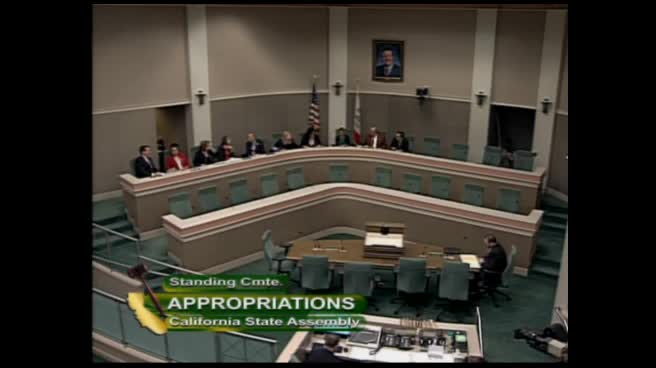 21MIN
Assembly Standing Committee on Appropriations
 7MIN
Assembly Standing Committee on Arts, Entertainment, Sports, Tourism, and Internet Media
Bill Author










