AB 428: Local government: the Ralph M. Brown Act.
- Session Year: 2017-2018
- House: Assembly
- Latest Version Date: 2017-07-31
The Ralph M. Brown Act requires that all meetings of a legislative body of a local agency be open and public, except that closed sessions may be held under prescribed circumstances. Existing law authorizes the legislative body of a local agency to use teleconferencing for the benefit of the public and the legislative body of a local agency in connection with any meeting or proceeding authorized by law provided that the teleconferenced meeting or proceeding complies with all otherwise applicable requirements and provisions of law relating to a specific type of meeting or proceeding. Existing law, until January 1, 2018, authorizes a health authority that conducts a teleconference meeting to count members who are outside the jurisdiction of the authority toward the establishment of a quorum when participating in the teleconference if at least 50% of the number of members that would establish a quorum are present within the boundaries of the territory over which the authority exercises jurisdiction, and the health authority provides a teleconference number, and associated access codes, if any, that allows any person to call in to participate in the meeting, as specified.
This bill would extend the operation of these provisions relating to the establishment of a quorum for teleconferenced meetings of a health authority indefinitely.
The California Constitution requires local agencies, for the purpose of ensuring public access to the meetings of public bodies and the writings of public officials and agencies, to comply with a statutory enactment that amends or enacts laws relating to public records or open meetings and contains findings demonstrating that the enactment furthers the constitutional requirements relating to this purpose.
This bill would make legislative findings to that effect.
(a)All meetings of the legislative body of a local agency shall be open and public, and all persons shall be permitted to attend any meeting of the legislative body of a local agency, except as otherwise provided in this chapter.
(b)(1)Notwithstanding any other provision of law, the legislative body of a local agency may use teleconferencing for the benefit of the public and the legislative body of a local agency in connection with any meeting or proceeding authorized by law. The teleconferenced meeting or proceeding shall comply with all requirements of this chapter and all otherwise applicable provisions of law relating to a specific type of meeting or proceeding.
(2)Teleconferencing, as authorized by this section, may be used for all purposes in connection with any meeting within the subject matter jurisdiction of the legislative body. All votes taken during a teleconferenced meeting shall be by rollcall.
(3)If the legislative body of a local agency elects to use teleconferencing, it shall post agendas at all teleconference locations and conduct teleconference meetings in a manner that protects the statutory and constitutional rights of the parties or the public appearing before the legislative body of a local agency. Each teleconference location shall be identified in the notice and agenda of the meeting or proceeding, and each teleconference location shall be accessible to the public. During the teleconference, at least a quorum of the members of the legislative body shall participate from locations within the boundaries of the territory over which the local agency exercises jurisdiction, except as provided in subdivision (d). The agenda shall provide an opportunity for members of the public to address the legislative body directly pursuant to Section 54954.3 at each teleconference location.
(4)For the purposes of this section, teleconference means a meeting of a legislative body, the members of which are in different locations, connected by electronic means, through either audio or video, or both. Nothing in this section shall prohibit a local agency from providing the public with additional teleconference locations.
(c)(1)No legislative body shall take action by secret ballot, whether preliminary or final.
(2)The legislative body of a local agency shall publicly report any action taken and the vote or abstention on that action of each member present for the action.
(3)Prior to taking final action, the legislative body shall orally report a summary of a recommendation for a final action on the salaries, salary schedules, or compensation paid in the form of fringe benefits of a local agency executive, as defined in subdivision (d) of Section 3511.1, during the open meeting in which the final action is to be taken. This paragraph shall not affect the publics right under the California Public Records Act (Chapter 3.5 (commencing with Section 6250) of Division 7 of Title 1) to inspect or copy records created or received in the process of developing the recommendation.
(d)(1)Notwithstanding the provisions relating to a quorum in paragraph (3) of subdivision (b), if a health authority conducts a teleconference meeting, members who are outside the jurisdiction of the authority may be counted toward the establishment of a quorum when participating in the teleconference if at least 50 percent of the number of members that would establish a quorum are present within the boundaries of the territory over which the authority exercises jurisdiction, and the health authority provides a teleconference number, and associated access codes, if any, that allows any person to call in to participate in the meeting and the number and access codes are identified in the notice and agenda of the meeting.
(2)Nothing in this subdivision shall be construed as discouraging health authority members from regularly meeting at a common physical site within the jurisdiction of the authority or from using teleconference locations within or near the jurisdiction of the authority. A teleconference meeting for which a quorum is established pursuant to this subdivision shall be subject to all other requirements of this section.
(3)For purposes of this subdivision, a health authority means any entity created pursuant to Sections 14018.7, 14087.31, 14087.35, 14087.36, 14087.38, and 14087.9605 of the Welfare and Institutions Code, any joint powers authority created pursuant to Article 1 (commencing with Section 6500) of Chapter 5 of Division 7 for the purpose of contracting pursuant to Section 14087.3 of the Welfare and Institutions Code, and any advisory committee to a county sponsored health plan licensed pursuant to Chapter 2.2 (commencing with Section 1340) of Division 2 of the Health and Safety Code if the advisory committee has 12 or more members.
SEC. 2.The Legislature finds and declares that Section 1 of this act, which amends Section 54953 of the Government Code, furthers, within the meaning of paragraph (7) of subdivision (b) of Section 3 of Article I of the California Constitution, the purposes of that constitutional section as it relates to the right of public access to the meetings of local public bodies or the writings of local public officials and local agencies. Pursuant to paragraph (7) of subdivision (b) of Section 3 of Article I of the California Constitution, the Legislature makes the following findings:
This act strikes an appropriate balance between the publics right to access information about the conduct of their government agencies and the need to facilitate the work of health authorities through the use of teleconference meetings.
(a)All meetings of the legislative body of a local agency shall be open and public, and all persons shall be permitted to attend any meeting of the legislative body of a local agency, except as otherwise provided in this chapter.
(b)(1)Notwithstanding any other provision of law, the legislative body of a local agency may use teleconferencing for the benefit of the public and the legislative body of a local agency in connection with any meeting or proceeding authorized by law. The teleconferenced meeting or proceeding shall comply with all requirements of this chapter and all otherwise applicable provisions of law relating to a specific type of meeting or proceeding.
(2)Teleconferencing, as authorized by this section, may be used for all purposes in connection with any meeting within the subject matter jurisdiction of the legislative body. All votes taken during a teleconferenced meeting shall be by rollcall.
(3)If the legislative body of a local agency elects to use teleconferencing, it shall post agendas at all teleconference locations and conduct teleconference meetings in a manner that protects the statutory and constitutional rights of the parties or the public appearing before the legislative body of a local agency. Each teleconference location shall be identified in the notice and agenda of the meeting or proceeding, and each teleconference location shall be accessible to the public. During the teleconference, at least a quorum of the members of the legislative body shall participate from locations within the boundaries of the territory over which the local agency exercises jurisdiction, except as provided in subdivision (d). The agenda shall provide an opportunity for members of the public to address the legislative body directly pursuant to Section 54954.3 at each teleconference location.
(4)For the purposes of this section, teleconference means a meeting of a legislative body, the members of which are in different locations, connected by electronic means, through either audio or video, or both. Nothing in this section shall prohibit a local agency from providing the public with additional teleconference locations.
(c)(1)No legislative body shall take action by secret ballot, whether preliminary or final.
(2)The legislative body of a local agency shall publicly report any action taken and the vote or abstention on that action of each member present for the action.
(3)Prior to taking final action, the legislative body shall orally report a summary of a recommendation for a final action on the salaries, salary schedules, or compensation paid in the form of fringe benefits of a local agency executive, as defined in subdivision (d) of Section 3511.1, during the open meeting in which the final action is to be taken. This paragraph shall not affect the publics right under the California Public Records Act (Chapter 3.5 (commencing with Section 6250) of Division 7 of Title 1) to inspect or copy records created or received in the process of developing the recommendation.
(d)(1)Notwithstanding the provisions relating to a quorum in paragraph (3) of subdivision (b), when if a health authority conducts a teleconference meeting, members who are outside the jurisdiction of the authority may be counted toward the establishment of a quorum when participating in the teleconference if at least 50 percent of the number of members that would establish a quorum are present within the boundaries of the territory over which the authority exercises jurisdiction, and the health authority provides a teleconference number, and associated access codes, if any, that allows any person to call in to participate in the meeting and that the number and access codes are identified in the notice and agenda of the meeting.
(2)Nothing in this subdivision shall be construed as discouraging health authority members from regularly meeting at a common physical site within the jurisdiction of the authority or from using teleconference locations within or near the jurisdiction of the authority. A teleconference meeting for which a quorum is established pursuant to this subdivision shall be subject to all other requirements of this section.
(3)For purposes of this subdivision, a health authority means any entity created pursuant to Sections 14018.7, 14087.31, 14087.35, 14087.36, 14087.38, and 14087.9605 of the Welfare and Institutions Code, any joint powers authority created pursuant to Article 1 (commencing with Section 6500) of Chapter 5 of Division 7 for the purpose of contracting pursuant to Section 14087.3 of the Welfare and Institutions Code, and any advisory committee to a county sponsored health plan licensed pursuant to Chapter 2.2 (commencing with Section 1340) of Division 2 of the Health and Safety Code if the advisory committee has 12 or more members.
(4)This subdivision shall remain in effect only until January 1, 2018.SEC. 2.The Legislature finds and declares that Section 1 of this act, which amends Section 54953 of the Government Code, furthers, within the meaning of paragraph (7) of subdivision (b) of Section 3 of Article I of the California Constitution, the purposes of that constitutional section as it relates to the right of public access to the meetings of local public bodies or the writings of local public officials and local agencies. Pursuant to paragraph (7) of subdivision (b) of Section 3 of Article I of the California Constitution, the Legislature makes the following findings:
This act strikes an appropriate balance between the publics right to access information about the conduct of their government agencies and the need to facilitate the work of health authorities through the use of teleconference meetings.
|
Date
|
Status
|
|---|---|
| Jul 31, 2017 | Chaptered by Secretary of State - Chapter 137, Statutes of 2017. |
| Jul 31, 2017 | Approved by the Governor. |
| Jul 21, 2017 | Enrolled and presented to the Governor at 4 p.m. |
| Jul 17, 2017 | In Assembly. Ordered to Engrossing and Enrolling. |
| Jul 17, 2017 | Read third time. Passed. Ordered to the Assembly. |
| Jul 13, 2017 | Read third time. Passed. Ordered to the Assembly. |
| Jul 11, 2017 | Ordered to special consent calendar. |
| Jun 29, 2017 | Read second time. Ordered to third reading. |
| Jun 28, 2017 | From committee: Do pass. (Ayes 7. Noes 0.) (June 28). |
| Jun 8, 2017 | Referred to Com. on GOV. & F. |
| May 26, 2017 | In Senate. Read first time. To Com. on RLS. for assignment. |
| May 26, 2017 | Read third time. Passed. Ordered to the Senate. (Ayes 76. Noes 0. Page 1711.) |
| May 15, 2017 | Read second time. Ordered to third reading. |
| May 11, 2017 | From committee: Do pass. (Ayes 9. Noes 0.) (May 10). |
| Apr 5, 2017 | In committee: Set, first hearing. Hearing canceled at the request of author. |
| Feb 21, 2017 | Referred to Com. on L. GOV. |
| Feb 10, 2017 | From printer. May be heard in committee March 12. |
| Feb 9, 2017 | Read first time. To print. |
|
Date
|
Description
|
Location
|
Votes
|
|
|---|---|---|---|---|
| Jul 17, 2017 | Special Consent Calendar # AB428 | Senate Floor |
Passed |
|
| Jun 28, 2017 | Do pass | Senate Standing Committee on Governance and Finance |
Passed |
|
| May 26, 2017 | AB 428 RIDLEY-THOMAS Assembly Third Reading | Assembly Floor |
Passed |
|
| May 10, 2017 | Do pass. | Assembly Standing Committee on Local Government |
Passed |
This list shows positions taken on this bill by organizations on the date displayed, which is linked to the original source.
Positions by individuals are not included.
|
Organization
|
Position
|
Date
|
|---|---|---|
| LA Care | ** Support | Jun 30, 2017 |
| La Care ; Local Health Plans Of California. | ** Support | Jun 23, 2017 |
| LA Care Health Plan [SPONSOR] | ** Support | May 9, 2017 |
| Local Health Plans Of California | ** Support | Jun 30, 2017 |
| Unknown. | ** Against | Jun 23, 2017 |
Office of Senate Floor Analyses (916) 651-1520 Fax: (916) 327-4478 | AB |
THIRD READING
Bill No: AB 428
:
SENATE GOVERNANCE & FIN. COMMITTEE: 7-0, 6/28/17
AYES: McGuire, Nguyen, Beall, Hernandez, Hertzberg, Lara, Moorlach
ASSEMBLY FLOOR: 76-0, 5/26/17 - See last page for vote
DIGEST:
This bill repeals the January 1, 2018 sunset date for health authorities’ lower quorum requirements when teleconferencing under the Brown Act.
Existing law:
- Establishes the public’s right to attend and participate in local legislative bodies’ meetings under the Ralph M. Brown Act (Brown Act).
- Establishes procedures to ensure public access to information maintained by local agencies and that the decisions made by public agencies are done in an open and transparent fashion to retain public control over those agencies.
- Applies the Brown Act to local agencies including cities, charter cities, counties, school districts, special districts, and other political subdivisions of the state.
- Requires a local agency to post an agenda for a regular meeting of its legislative body at least 72 hours before the meeting in a location that is freely accessible to members of the public.
- Requires the legislative body to publicly report the action taken and the votes cast.
- Allows local agencies’ governing bodies to use teleconferencing for their meetings as long as they post agendas at all teleconference locations, take all votes by rollcall, and accommodate persons wishing to address the governing body.
- Requires at least a quorum of the members of the governing body must participate from locations within the boundaries of the local government’s jurisdiction for a teleconferenced meeting (SB 139, Kopp, Chapter 260, Statutes of 1998).
- Requires Local Initiative health plan board meetings to comply with the Brown Act.
- Allows, until January 1, 2018, health authority board members who are participating in a teleconference meeting from outside the jurisdiction of the authority to be counted to establish a quorum if:
- At least 50 percent of the number of members needed for a quorum are present within the boundaries of the authority’s jurisdiction;
- The health authority provides a teleconference number to the public that allows any person to call in to participate in the meeting, and;
- The health authority identifies the teleconference number in the notice and agenda of the meeting.
This bill repeals the January 1, 2018 sunset date for health authorities’ lower quorum requirements.
Background
In the early 1990s, Governor Wilson sought to control the costs of Medi-Cal through a more comprehensive program of managed care. One model for delivering managed care is the “Two-Plan Model,” which is used in 14 counties: Alameda, Contra Costa, Fresno, Kern, Kings, Los Angeles, Madera, Riverside, San Bernardino, San Francisco, San Joaquin, Santa Clara, Stanislaus, and Tulare. Those counties must enroll Medi-Cal beneficiaries in one of two managed care plans. One plan is a commercial plan selected by the State Department of Health Care Services, the other a locally sponsored public plan, called a Local Initiative health plan, with greater obligations to contract with safety net providers. The plans compete to foster more efficient services for the recipients.
Nine Local Initiative health plans operate in the 14 two-plan model counties: some health plans serve multiple counties. The Local Initiative health plans serve more than 5.1 million Californians—nearly all of which are Medi-Cal beneficiaries. Eight of the plans are public, not-for-profit organizations with governing boards that include doctors, hospitals, labor unions, Medi-Cal beneficiaries, consumer advocates, county supervisors, community clinics, and county health departments. In Contra Costa County, the Board of Supervisors governs the Local Initiative health plan but has an advisory committee offering input and advice on policy matters. The Local Initiative health plans’ governing boards are subject to the Brown Act.
These governing boards range in size from seven to 17 members and sometimes include persons living or working outside of the board’s jurisdiction. Because some of these boards found it difficult to meet quorum requirements either in person or through teleconferencing, the Legislature provided an exception to the Brown Act’s quorum requirement for health authorities conducting teleconference meetings (AB 1438, Salinas, Chapter 540, Statutes of 2005). However, a sunset date made AB 1438’s provisions ineffective in 2009. The Legislature reauthorized those provisions in 2012, this time with a January 1, 2018 sunset (SB 475, Wright, Chapter 209, Statutes of 2012). Local Initiative health plan officials want the Legislature to eliminate this sunset.
Comments
- Purpose of the bill. Local Initiative health plans’ governing boards consist of doctors, hospitals, Medi-Cal beneficiaries, consumer advocates, county supervisors, community clinics, and county health departments. Most of these representatives have fulltime jobs outside of their board duties and very demanding schedules. Even with regularly scheduled monthly or bi-monthly meetings, some boards find it hard to meet quorum requirements. These plans also have to compete with private health plans that aren’t subject to the same requirements. By allowing half of the members necessary to establish a quorum to call in from outside the board’s jurisdiction during teleconference meetings, state law has made it easier for health plan boards to meet and conduct business on a regular basis—a goal consistent with the Brown Act. Health plans make judicious use of this reduced quorum requirement. For example, LA Care has 43 meetings annually, including 10 full board meetings and 33 subcommittee meetings. Since June 2015, LA Care has made use of this provision five times—all for subcommittee meetings. But this authority sunsets on January 1, 2018. By repealing the sunset, AB 428 ensures that health plan boards can continue to use this important provision as needed to ensure high quality and responsive service is provided to county Medi-Cal beneficiaries.
- Phoning it in. Members of the public deserve the right to look their representatives in the eye as those representatives take actions that affect their lives. Accordingly, California’s local governments all have governing boards that are subject to the Brown Act’s requirements for teleconferencing. Although they are not truly governmental entities, Local Initiative health plans deliver integral governmental services and need to be responsible to county residents much like public officials. Many public officials contend with similar challenges to Local Initiative health plan board members: they are often part time officials with day jobs who may not even receive a per-diem for their participation, and officials in expansive counties face difficulties traversing their territory. But compliance with the full Brown Act is taken as a given by those officials. If local officials can make it work, why not Local Initiative health plan board members?
FISCAL EFFECT: Appropriation: Fiscal Com.: Local:
LA Care (source)
Local Health Plans of California
OPPOSITION: (Verified 6/30/17)
None received
ASSEMBLY FLOOR: 76-0, 5/26/17
AYES: Acosta, Aguiar-Curry, Travis Allen, Arambula, Baker, Berman, Bigelow, Bloom, Bocanegra, Bonta, Brough, Burke, Caballero, Calderon, Cervantes, Chávez, Chen, Chiu, Choi, Chu, Cooley, Cooper, Cunningham, Dababneh, Dahle, Daly, Flora, Fong, Frazier, Friedman, Gallagher, Cristina Garcia, Eduardo Garcia, Gipson, Gloria, Gomez, Gonzalez Fletcher, Gray, Grayson, Harper, Holden, Irwin, Jones-Sawyer, Kalra, Kiley, Lackey, Levine, Limón, Low, Maienschein, Mathis, Mayes, McCarty, Medina, Melendez, Mullin, Muratsuchi, Nazarian, Obernolte, O'Donnell, Patterson, Quirk, Quirk-Silva, Reyes, Ridley-Thomas, Rodriguez, Rubio, Salas, Santiago, Mark Stone, Thurmond, Ting, Voepel, Weber, Wood, Rendon
NO VOTE RECORDED: Chau, Eggman, Steinorth, Waldron
6/30/17 11:02:05
**** END ****
SENATE COMMITTEE ON GOVERNANCE AND FINANCE
Senator Mike McGuire, Chair
2017 - 2018 Regular
Bill No: | AB 428 | Hearing Date: | 6/28/17 |
Author: | Ridley-Thomas | Tax Levy: | No |
Version: | 2/9/17 | Fiscal: | No |
Consultant: | Favorini-Csorba | ||
Local government: the Ralph M. Brown Act
Repeals the January 1, 2018 sunset date for health authorities’ lower quorum requirements when teleconferencing under the Brown Act.
Background
The Ralph M. Brown Act (Brown Act), first enacted by the Legislature in 1953, is the set of state laws which guarantees the public’s right to attend and participate in local legislative bodies’ meetings. The Brown Act establishes procedures to ensure public access to information maintained by local agencies and that the decisions made by public agencies are done in an open and transparent fashion to retain public control over those agencies. Local agencies subject to the Brown Act include cities, charter cities, counties, school districts, special districts, and other political subdivisions of the state.
Among other things, the Brown Act requires a local agency to post an agenda for a regular meeting of its legislative body at least 72 hours before the meeting in a location that is freely accessible to members of the public. The Brown Act establishes the presumption that business of local agencies’ legislative bodies must be conducted in open and public meetings. No action may be taken by secret ballot, and the legislative body must publicly report the action taken and the votes cast.
The Brown Act allows local agencies’ governing bodies to use teleconferencing for their meetings as long as they post agendas at all teleconference locations, take all votes by rollcall, and accommodate persons wishing to address the governing body. Each teleconference location must be identified in the notice and agenda of the meeting and must be accessible to the public. During a teleconference, at least a quorum of the members of the governing body must participate from locations within the boundaries of the local government’s jurisdiction (SB 139, Kopp, 1998).
In the early 1990s, Governor Wilson sought to control the costs of Medi-Cal through a more comprehensive program of managed care. One model for delivering managed care is the “Two-Plan Model,” which is used in 14 counties: Alameda, Contra Costa, Fresno, Kern, Kings, Los Angeles, Madera, Riverside, San Bernardino, San Francisco, San Joaquin, Santa Clara, Stanislaus, and Tulare. Those counties must enroll Medi-Cal beneficiaries in one of two managed care plans. One plan is a commercial plan selected by the State Department of Health Care Services, the other a locally sponsored public plan, called a Local Initiative health plan, with greater obligations to contract with safety net providers. The plans compete to foster more efficient services for the recipients.
Nine Local Initiative health plans operate in the 14 two-plan model counties: some health plans serve multiple counties. The Local Initiative health plans serve more than 5.1 million Californians—nearly all of which are Medi-Cal beneficiaries. Eight of the plans are public, not-for-profit organizations with governing boards that include doctors, hospitals, labor unions, Medi-Cal beneficiaries, consumer advocates, county supervisors, community clinics, and county health departments. In Contra Costa County, the Board of Supervisors governs the Local Initiative health plan but has an advisory committee offering input and advice on policy matters. The Local Initiative health plans’ governing boards are subject to the Brown Act.
These governing boards range in size from seven to 17 members and sometimes include persons living or working outside of the board’s jurisdiction. Because some of these boards found it difficult to meet quorum requirements either in person or through teleconferencing, the Legislature provided an exception to the Brown Act’s quorum requirement for health authorities conducting teleconference meetings (AB 1438, Salinas, 2005).
Specifically, AB 1438 allowed health authority board members who are participating in a teleconference meeting from outside the jurisdiction of the authority to be counted to establish a quorum if:
- At least 50 percent of the number of members needed for a quorum are present within the boundaries of the authority’s jurisdiction;
- The health authority provides a teleconference number to the public that allows any person to call in to participate in the meeting, and;
- The health authority identifies the teleconference number in the notice and agenda of the meeting.
However, a sunset date made AB 1438’s provisions ineffective in 2009. The Legislature reauthorized those provisions in 2012, this time with a January 1, 2018 sunset (SB 475, Wright, 2012). Local Initiative health plan officials want the Legislature to eliminate this sunset.
Proposed Law
Senate Bill 428 repeals the January 1, 2018 sunset date for health authorities’ lower quorum requirements when teleconferencing under the Brown Act.
State Revenue Impact
No estimate.
Comments
1. Purpose of the bill. Local Initiative health plans’ governing boards consist of doctors, hospitals, Medi-Cal beneficiaries, consumer advocates, county supervisors, community clinics, and county health departments. Most of these representatives have fulltime jobs outside of their board duties and very demanding schedules. Even with regularly scheduled monthly or bi-monthly meetings, some boards find it hard to meet quorum requirements. These plans also have to compete with private health plans that aren’t subject to the same requirements. By allowing half of the members necessary to establish a quorum to call in from outside the board’s jurisdiction during teleconference meetings, state law has made it easier for health plan boards to meet and conduct business on a regular basis—a goal consistent with the Brown Act. Health plans make judicious use of this reduced quorum requirement. For example, LA Care has 43 meetings annually, including 10 full board meetings and 33 subcommittee meetings. Since June 2015, LA Care has made use of this provision five times—all for subcommittee meetings. But this authority sunsets on January 1, 2018. By repealing the sunset, AB 428 ensures that health plan boards can continue to use this important provision as needed to ensure high quality and responsive service is provided to county Medi-Cal beneficiaries.
2. Phoning it in. Members of the public deserve the right to look their representatives in the eye as those representatives take actions that affect their lives. Accordingly, California’s local governments all have governing boards that are subject to the Brown Act’s requirements for teleconferencing. Although they are not truly governmental entities, Local Initiative health plans deliver integral governmental services and need to be responsible to county residents much like public officials. Many public officials contend with similar challenges to Local Initiative health plan board members: they are often part time officials with day jobs who may not even receive a per-diem for their participation, and officials in expansive counties face difficulties traversing their territory. But compliance with the full Brown Act is taken as a given by those officials. If local officials can make it work, why not Local Initiative health plan board members?
Assembly Actions
Assembly Local Government Committee: 9-0
Assembly Floor: 76-0
Support and Opposition
(6/22/17)
Support: LA Care (sponsor); Local Health Plans of California.
Opposition: Unknown.
-- END --
ASSEMBLY THIRD READING
ATR Bill Id:AB 428
Author:(Ridley-Thomas)
As Introduced Ver:February 9, 2017
Majority vote
Committee | Votes | Ayes | Noes |
Local Government | 9-0 | Aguiar-Curry, Waldron, Bloom, Caballero, Gonzalez Fletcher, Grayson, Lackey, Ridley-Thomas, Voepel |
SUMMARY: Eliminates a January 1, 2018, sunset date in existing law that allows county health authorities to establish a quorum pursuant to the Ralph M. Brown Act (Brown Act) when meeting via teleconference if at least 50% of the board members constituting the quorum are physically present within the boundaries of the authority's jurisdiction and other conditions are met, thereby extending this provision indefinitely.
EXISTING LAW:
- Requires, pursuant to the Brown Act, all meetings of the legislative body of a local agency to be open and public, and requires all persons to be permitted to attend any such meetings, with specified exceptions.
- Allows the legislative body of a local agency to use teleconferencing for the benefit of the public and the legislative body in connection with any meeting or proceeding authorized by law, and requires teleconferenced meetings or proceedings to comply with all requirements of the Brown Act and all applicable laws.
- Requires the legislative body of a local agency that uses teleconferencing to post agendas at all teleconference locations and conduct teleconference meetings in a manner that protects the statutory and constitutional rights of the parties or the public appearing before the legislative body.
- Requires each teleconference location to be identified in the notice and agenda of the meeting or proceeding, and each teleconference location to be accessible to the public.
- Requires, during a teleconferenced meeting, at least a quorum of the members of the legislative body to participate from locations within the boundaries of the territory over which the local agency exercises jurisdiction.
- Grants county health authorities, until January 1, 2018, an exception to the quorum requirements of a teleconferenced meeting by providing that, if a health authority conducts a teleconference meeting, members who are outside the jurisdiction of the authority may be counted toward the establishment of a quorum when participating in the teleconference if the following conditions are met:
- At least 50% of the number of members that would establish a quorum are present within the boundaries of the territory over which the authority exercises jurisdiction;
- The authority provides a teleconference number, and any associated access codes, that allows any person to call in to participate in the meeting; and,
- The number and access codes are identified in the notice and agenda of the meeting.
- Authorizes specified counties, as well as counties selected by the Director of the Department of Health Care Services (DHCS) with the concurrence of the county, to establish health authorities in order to meet the problems of delivery of publicly-assisted medical care in each county, and to demonstrate ways of promoting quality care and cost efficiency.
FISCAL EFFECT: None
COMMENTS:
- Bill Summary. This bill eliminates a January 1, 2018, sunset date in existing law that allows county health authorities to establish a quorum under the Brown Act when meeting via teleconference if at least 50% of the board members constituting the quorum are physically present within the boundaries of the authority's jurisdiction, and other specified conditions are met, thereby extending this provision indefinitely. This bill is sponsored by LA Care Health Plan.
- Author's Statement. According to the author, "Local Health Authorities (also known as Local Health Plans) consists of 16 plans that serve approximately 10 million Medi-Cal patients, which consists approximately 70% of beneficiaries throughout California. The Local Health Plans are public, not-for-profit organizations with governing boards consisting of representatives from hospitals, labor unions, consumer advocates, county supervisors, community clinics, safety net providers and county health departments.
"As many of the governing board members of the Local Health Authorities frequently travel outside the jurisdiction, some boards have found it difficult to meet quorum requirements. As a result, the boards are restricted from meeting on a regular basis and addressing the needs of the public they serve."
- Background. The Brown Act requires local governments' meetings to be "open and public," in order to promote citizen involvement in and oversight of their local legislative bodies. Local officials must post agendas 72 hours before their regular meetings and they are prohibited from discussing or making decisions about topics that are not on the agenda.
The Brown Act allows local governments' legislative bodies to use teleconferencing for their meetings as long as they post agendas at all teleconference locations, take all votes by roll call, and accommodate persons wishing to address the governing body. Each teleconference location must be identified in the notice and agenda of the meeting and must be accessible to the public.
In 1998, the Legislature added a requirement for local government meetings conducted with teleconferencing. SB 139 (Kopp), Chapter 260, Statutes of 1998, required teleconferenced meetings to have at least a quorum of the members of the governing body participating from locations within the boundaries of the local government's jurisdiction. The aim was to require a sufficient number of board members to remain in the physical jurisdiction during the meeting in order to ensure that at least one physical teleconference site was available for members of the public to participate more easily.
In 2005, the Legislature created an exception to this quorum requirement for teleconferenced meetings. AB 1438 (Salinas), Chapter 540, Statutes of 2005, allowed county health authorities to reach a teleconference meeting quorum by counting members not physically within the authority's boundaries as long as those outside members constituted a minority of the quorum. AB 1438 contained a January 1, 2009, sunset date that went into effect until SB 475 (Wright and Emmerson), Chapter 209, Statutes of 2012, re-established the special authorization for health authorities to meet their quorum requirement for teleconferenced meetings. SB 475 contained a January 1, 2018, sunset date, which this bill eliminates.
- Arguments in Support. LA Care Health Plan, sponsor of this measure, states, "Local health plans' governing boards consist of… representatives (who) have full-time jobs outside of their board duties and very demanding schedules. Even with regularly scheduled monthly or bi-monthly meetings, local health plan boards find it challenging to meet quorum requirements… By allowing half of the members necessary to establish a quorum to call in from outside the board's jurisdiction during teleconferenced meetings, AB 428 will allow local health plan boards to meet and conduct business on a regular basis with the benefit of the continued participation by their highly qualified – and busy – board members."
- Arguments in Opposition. None on file.
Analysis Prepared by: Angela Mapp / L. GOV. / (916) 319-3958 FN: 0000339
Date of Hearing: May 10, 2017
ASSEMBLY COMMITTEE ON LOCAL GOVERNMENT
Cecilia Aguiar-Curry, Chair
ABPCA Bill Id:AB 428 (
Author:Ridley-Thomas) – As Introduced Ver:February 9, 2017
SUBJECT: Local government: the Ralph M. Brown Act.
SUMMARY: Eliminates a January 1, 2018, sunset date in existing law that allows county health authorities to establish a quorum pursuant to the Ralph M. Brown Act (Brown Act) when meeting via teleconference if at least 50% of the board members constituting the quorum are physically present within the boundaries of the authority's jurisdiction and other conditions are met, thereby extending this provision indefinitely.
EXISTING LAW:
- Requires, pursuant to the Brown Act, all meetings of the legislative body of a local agency to be open and public, and requires all persons to be permitted to attend any such meetings, with specified exceptions.
- Allows the legislative body of a local agency to use teleconferencing for the benefit of the public and the legislative body in connection with any meeting or proceeding authorized by law, and requires teleconferenced meetings or proceedings to comply with all requirements of the Brown Act and all applicable laws.
- Requires the legislative body of a local agency that uses teleconferencing to post agendas at all teleconference locations and conduct teleconference meetings in a manner that protects the statutory and constitutional rights of the parties or the public appearing before the legislative body.
- Requires each teleconference location to be identified in the notice and agenda of the meeting or proceeding, and each teleconference location to be accessible to the public.
- Requires, during a teleconferenced meeting, at least a quorum of the members of the legislative body to participate from locations within the boundaries of the territory over which the local agency exercises jurisdiction.
- Grants county health authorities, until January 1, 2018, an exception to the quorum requirements of a teleconferenced meeting by providing that, if a health authority conducts a teleconference meeting, members who are outside the jurisdiction of the authority may be counted toward the establishment of a quorum when participating in the teleconference if the following conditions are met:
- At least 50% of the number of members that would establish a quorum are present within the boundaries of the territory over which the authority exercises jurisdiction;
- The authority provides a teleconference number, and any associated access codes, that allows any person to call in to participate in the meeting; and,
- The number and access codes are identified in the notice and agenda of the meeting.
- Authorizes specified counties, as well as counties selected by the Director of the Department of Health Care Services (DHCS) with the concurrence of the county, to establish health authorities in order to meet the problems of delivery of publicly-assisted medical care in each county, and to demonstrate ways of promoting quality care and cost efficiency.
FISCAL EFFECT: None
COMMENTS:
- Bill Summary. This bill eliminates a January 1, 2018, sunset date in existing law that allows county health authorities to establish a quorum under the Brown Act when meeting via teleconference if at least 50% of the board members constituting the quorum are physically present within the boundaries of the authority's jurisdiction, and other specified conditions are met, thereby extending this provision indefinitely. This bill is sponsored by LA Care Health Plan.
- Author's Statement. According to the author, "Local Health Authorities (also known as Local Health Plans) consists of 16 plans that serve approximately 10 million Medi-Cal patients, which consists approximately 70 percent of beneficiaries throughout California. The Local Health Plans are public, not-for-profit organizations with governing boards consisting of representatives from hospitals, labor unions, consumer advocates, county supervisors, community clinics, safety net providers and county health departments.
"As many of the governing board members of the Local Health Authorities frequently travel outside the jurisdiction, some boards have found it difficult to meet quorum requirements. As a result, the boards are restricted from meeting on a regular basis and addressing the needs of the public they serve."
- Background. The Brown Act requires local governments' meetings to be "open and public," in order to promote citizen involvement in and oversight of their local legislative bodies. Local officials must post agendas 72 hours before their regular meetings and they are prohibited from discussing or making decisions about topics that are not on the agenda.
The Brown Act allows local governments' legislative bodies to use teleconferencing for their meetings as long as they post agendas at all teleconference locations, take all votes by roll call, and accommodate persons wishing to address the governing body. Each teleconference location must be identified in the notice and agenda of the meeting and must be accessible to the public.
In 1998, the Legislature added a requirement for local government meetings conducted with teleconferencing. SB 139 (Kopp), Chapter 260, Statutes of 1998, required teleconferenced meetings to have at least a quorum of the members of the governing body participating from locations within the boundaries of the local government's jurisdiction. The aim was to require a sufficient number of board members to remain in the physical jurisdiction during the meeting in order to ensure that at least one physical teleconference site was available for members of the public to participate more easily.
In 2005, the Legislature created an exception to this quorum requirement for teleconferenced meetings. AB 1438 (Salinas), Chapter 540, Statutes of 2005, allowed county health authorities to reach a teleconference meeting quorum by counting members not physically within the authority's boundaries as long as those outside members constituted a minority of the quorum. AB 1438 contained a January 1, 2009, sunset date that went into effect until
SB 475 (Wright and Emmerson), Chapter 209, Statutes of 2012, re-established the special authorization for health authorities to meet their quorum requirement for teleconferenced meetings. SB 475 contained a January 1, 2018, sunset date, which this bill eliminates.
- Arguments in Support. LA Care Health Plan, sponsor of this measure, states, "Local health plans' governing boards consist of…representatives (who) have full-time jobs outside of their board duties and very demanding schedules. Even with regularly scheduled monthly or bi-monthly meetings, local health plan boards find it challenging to meet quorum requirements…By allowing half of the members necessary to establish a quorum to call in from outside the board's jurisdiction during teleconferenced meetings, AB 428 will allow local health plan boards to meet and conduct business on a regular basis with the benefit of the continued participation by their highly qualified – and busy – board members."
- Arguments in Opposition. None on file.
REGISTERED SUPPORT / OPPOSITION:
Support
LA Care Health Plan [SPONSOR]
Local Health Plans of California
Opposition
None on file
Analysis Prepared by: Angela Mapp / L. GOV. / (916) 319-3958
Date of Hearing: April 5, 2017
ASSEMBLY COMMITTEE ON LOCAL GOVERNMENT
Cecilia Aguiar-Curry, Chair
ABPCA Bill Id:AB 428 (
Author:Ridley-Thomas) – As Introduced Ver:February 9, 2017
SUBJECT: Local government: the Ralph M. Brown Act.
SUMMARY: Eliminates a January 1, 2018, sunset date in existing law that allows county health authorities to establish a quorum pursuant to the Ralph M. Brown Act (Brown Act) when meeting via teleconference if at least 50% of the board members constituting the quorum are physically present within the boundaries of the authority's jurisdiction and other conditions are met, thereby extending this provision indefinitely.
EXISTING LAW:
- Requires, pursuant to the Brown Act, all meetings of the legislative body of a local agency to be open and public, and requires all persons to be permitted to attend any such meetings, with specified exceptions.
- Allows the legislative body of a local agency to use teleconferencing for the benefit of the public and the legislative body in connection with any meeting or proceeding authorized by law, and requires teleconferenced meetings or proceedings to comply with all requirements of the Brown Act and all applicable laws.
- Requires the legislative body of a local agency that uses teleconferencing to post agendas at all teleconference locations and conduct teleconference meetings in a manner that protects the statutory and constitutional rights of the parties or the public appearing before the legislative body.
- Requires each teleconference location to be identified in the notice and agenda of the meeting or proceeding, and each teleconference location to be accessible to the public.
- Requires, during a teleconferenced meeting, at least a quorum of the members of the legislative body to participate from locations within the boundaries of the territory over which the local agency exercises jurisdiction.
- Grants county health authorities, until January 1, 2018, an exception to the quorum requirements of a teleconferenced meeting by providing that, if a health authority conducts a teleconference meeting, members who are outside the jurisdiction of the authority may be counted toward the establishment of a quorum when participating in the teleconference if the following conditions are met:
- At least 50% of the number of members that would establish a quorum are present within the boundaries of the territory over which the authority exercises jurisdiction;
- The authority provides a teleconference number, and any associated access codes, that allows any person to call in to participate in the meeting; and,
- The number and access codes are identified in the notice and agenda of the meeting.
- Authorizes specified counties, as well as counties selected by the Director of the Department of Health Care Services (DHCS) with the concurrence of the county, to establish health authorities in order to meet the problems of delivery of publicly-assisted medical care in each county, and to demonstrate ways of promoting quality care and cost efficiency.
FISCAL EFFECT: None
COMMENTS:
- Bill Summary. This bill eliminates a January 1, 2018, sunset date in existing law that allows county health authorities to establish a quorum under the Brown Act when meeting via teleconference if at least 50% of the board members constituting the quorum are physically present within the boundaries of the authority's jurisdiction, and other specified conditions are met, thereby extending this provision indefinitely. This bill is sponsored by LA Care Health Plan.
- Author's Statement. According to the author, "Local Health Authorities (also known as Local Health Plans) consists of 16 plans that serve approximately 10 million Medi-Cal patients, which consists approximately 70 percent of beneficiaries throughout California. The Local Health Plans are public, not-for-profit organizations with governing boards consisting of representatives from hospitals, labor unions, consumer advocates, county supervisors, community clinics, safety net providers and county health departments.
"As many of the governing board members of the Local Health Authorities frequently travel outside the jurisdiction, some boards have found it difficult to meet quorum requirements. As a result, the boards are restricted from meeting on a regular basis and addressing the needs of the public they serve."
- Background. The Brown Act requires local governments' meetings to be "open and public," in order to promote citizen involvement in and oversight of their local legislative bodies. Local officials must post agendas 72 hours before their regular meetings and they are prohibited from discussing or making decisions about topics that are not on the agenda.
The Brown Act allows local governments' legislative bodies to use teleconferencing for their meetings as long as they post agendas at all teleconference locations, take all votes by roll call, and accommodate persons wishing to address the governing body. Each teleconference location must be identified in the notice and agenda of the meeting and must be accessible to the public.
In 1998, the Legislature added a requirement for local government meetings conducted with teleconferencing. SB 139 (Kopp), Chapter 260, Statutes of 1998, required teleconferenced meetings to have at least a quorum of the members of the governing body participating from locations within the boundaries of the local government's jurisdiction. The aim was to require a sufficient number of board members to remain in the physical jurisdiction during the meeting in order to ensure that at least one physical teleconference site was available for members of the public to participate more easily.
In 2005, the Legislature created an exception to this quorum requirement for teleconferenced meetings. AB 1438 (Salinas), Chapter 540, Statutes of 2005, allowed county health authorities to reach a teleconference meeting quorum by counting members not physically within the authority's boundaries as long as those outside members constituted a minority of the quorum. AB 1438 contained a January 1, 2009, sunset date that went into effect until
SB 475 (Wright and Emmerson), Chapter 209, Statutes of 2012, re-established the special authorization for health authorities to meet their quorum requirement for teleconferenced meetings. SB 475 contained a January 1, 2018, sunset date, which this bill eliminates.
- Arguments in Support. LA Care Health Plan, sponsor of this measure, states, "Local health plans' governing boards consist of…representatives (who) have full-time jobs outside of their board duties and very demanding schedules. Even with regularly scheduled monthly or bi-monthly meetings, local health plan boards find it challenging to meet quorum requirements…By allowing half of the members necessary to establish a quorum to call in from outside the board's jurisdiction during teleconferenced meetings, AB 428 will allow local health plan boards to meet and conduct business on a regular basis with the benefit of the continued participation by their highly qualified – and busy – board members."
- Arguments in Opposition. None on file.
REGISTERED SUPPORT / OPPOSITION:
Support
LA Care Health Plan [SPONSOR]
Local Health Plans of California
Opposition
None on file
Analysis Prepared by: Angela Mapp / L. GOV. / (916) 319-3958
Discussed in Hearing
View Older Hearings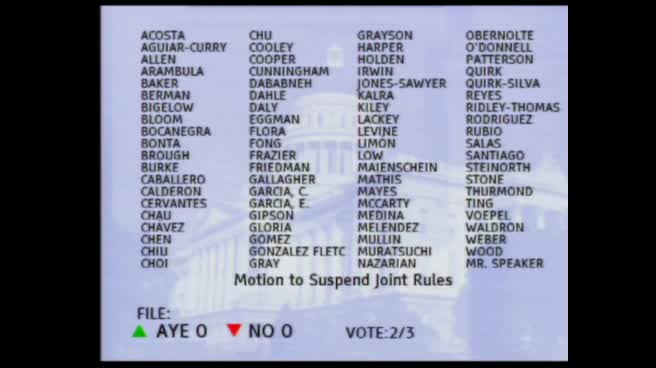
Bill Author

Bill Co-Author(s):