AB 45: California School Employee Housing Assistance Grant Program.
- Session Year: 2017-2018
- House: Assembly
- Latest Version Date: 2017-09-15
Existing law establishes the Department of Housing and Community Development (HCD) and requires it to administer various housing programs.
This bill would require HCD to administer a program to provide financing assistance, as specified, to a qualified school district, as defined, and to a qualified developer, as defined, for the creation of affordable rental housing for school employees, as defined. The bill would require a qualified school district and a qualified developer to apply for this financing assistance. The bill would require the State Department of Education and HCD to certify that a school district seeking a grant meets the definition of qualified school district, as provided. The bill would create in the State Treasury the California School Employee Housing Assistance Fund and make implementation of its provisions subject to appropriation by the Legislature for that purpose.
Existing law establishes the Department of Housing and Community Development (HCD) and requires it to administer various housing programs.
This bill would require HCD to administer a program to provide financing assistance, as specified, to a qualified school district, as defined, and to a qualified developer, as defined, for the creation of affordable rental housing for school employees, as defined. The bill would require a qualified school district and a qualified developer to apply for this financing assistance. The bill would require the State Department of Education and HCD to certify that a school district seeking a grant meets the definition of qualified school district, as provided. The bill would create in the State Treasury the California School Employee Housing Assistance Fund and make implementation of its provisions subject to the enactment of an appropriation of up to $25,000,000 by the Legislature for that purpose.
Existing law requires the California Housing Finance Agency establishes the Department of Housing and Community Development (HCD) and requires it to administer various housing programs.
This bill would require the California Housing Finance Agency HCD to administer a program to provide financing assistance, as specified, to a qualified school district, as defined, and to a qualified developer, as defined, for the creation of affordable rental housing for school employees, including teachers. as defined. The bill would require a qualified school district and a qualified developer to apply for this financing assistance. The bill would require the State Department of Education and HCD to certify that a school district seeking a grant meets the definition of qualified school district, as provided. The bill would create in the State Treasury the California School Employee Housing Assistance fund. The bill would Fund and make implementation of its provisions subject to the enactment of an appropriation of up to $25,000,000 for that purpose.
Existing law requires the California Housing Finance Agency to administer various housing programs.
This bill would require the California Housing Finance Agency to administer a program to provide financing assistance, as specified, to a qualified school district, as defined, and to a qualified developer, as defined, for the creation of affordable rental housing for school employees, including teachers. The bill would require a qualified school district and a qualified developer to apply for this financing assistance. The bill would require the State Department of Education to certify that a school district seeking a grant meets the definition of qualified school district, as provided. The bill would transfer $100,000,000 from the General Fund to create in the State Treasury the California School Employee Housing Assistance Fund, which this bill would create, and would appropriate those moneys to the agency for the purposes described above and to reimburse the agency and the State Department of Education for costs incurred in the administration of the program. This bill would state that funds appropriated by this bill would not be applied toward the minimum funding requirements for school districts and community college districts imposed by Section 8 of Article XVI of the California Constitution. The bill would require qualified school districts and qualified developers to apply for the financing assistance, as provided. fund. The bill would make implementation of its provisions subject to the enactment of an appropriation of up to $25,000,000 for that purpose.
Existing law requires the California Housing Finance Agency to administer various housing programs.
This bill would require the California Housing Finance Agency to administer a program to provide financing assistance, as specified, to a qualified school district, as defined, and to a qualified developer, as defined, for the creation of affordable rental housing for school employees, including teachers. The bill would require the State Department of Education to certify that a school district seeking a grant meets the definition of qualified school district, as provided. The bill would transfer $100,000,000 from the General Fund to the California School Employee Housing Assistance Fund, which this bill would create, and would appropriate those moneys to the agency for the purposes described above and to reimburse the agency and the State Department of Education for costs incurred in the administration of the program. This bill would state that funds appropriated by this bill would not be applied toward the minimum funding requirements for school districts and community college districts imposed by Section 8 of Article XVI of the California Constitution. The bill would require qualified school districts and qualified developers to apply for the financing assistance, as provided.
Existing law requires the California Housing Finance Agency to administer various housing programs.
This bill would require the California Housing Finance Agency to administer a program to provide financing assistance, as specified, to a qualified school district, as defined, and to a qualified developer, as defined, for the creation of affordable rental housing for school employees, including teachers. The bill would require the State Department of Education to certify that a school district seeking a grant meets the definition of qualified school district. district, as provided. The bill would transfer $100,000,000 from the General Fund to the California School Employee Housing Assistance Fund, which this bill would create, and would appropriate those moneys to the agency for the purposes described above and to reimburse the agency and the State Department of Education for costs incurred in the administration of the program. This bill would state that funds appropriated by this bill would not be applied toward the minimum funding requirements for school districts and community college districts imposed by Section 8 of Article XVI of the California Constitution. The bill would require qualified school districts and qualified developers to apply for the financing assistance, as provided.
Existing law requires the California Housing Finance Agency to administer various housing programs.
This bill would require the California Housing Finance Agency to administer a program to provide financing assistance, as specified, to a qualified school district, as defined, and to a qualified developer, as defined, for the creation of affordable rental housing for school employees, including teachers. The bill would require the State Department of Education to certify that a school district seeking a grant meets the definition of qualified school district. The bill would transfer $100,000,000 from the General Fund to the California School Employee Housing Assistance Fund, which this bill would create, and would appropriate those moneys to the agency for the purposes described above and to reimburse the agency and the State Department of Education for costs incurred in the administration of the program. This bill would state that funds appropriated by this bill would not be applied toward the minimum funding requirements for school districts and community college districts imposed by Section 8 of Article XVI of the California Constitution. The bill would require qualified school districts and qualified developers to apply for the financing assistance, as provided.
For purposes of this chapter, all of the following shall apply:
(a)Affordable rental housing means housing that serves persons and families of low or moderate income as defined by Section 50093.
(b)Qualified developer means a developer that has partnered with a qualified school district to create affordable rental housing for school district employees.
(c)Qualified school district means a school district that satisfies all of the following:
(1)Has acquired land that may be used to engage in a lease and development agreement, including, but not limited to, a joint occupancy agreement, for the purposes of design, construction, financing, and long-term operation of a housing development and amenities, from any of the following:
(A)A school district.
(B)A special district.
(C)A city.
(2)Demonstrates to the State Department of Education evidence which shows a trend, over a minimum of three years, that the school has a problem recruiting or retaining teachers, or both, using documented data, including, but not limited to, the following:
(A)A high percentage of teachers not teaching in the academic subjects or grade levels that the teachers were trained to teach.
(B)A high percentage of teachers with emergency, provisional, or temporary certification or licensing.
(C)Exit interviews of school employees.
(D)High local rental housing costs.
(E)High district costs associated with recruiting teachers.
(F)The median time of teachers being employed by the district.
(3)Demonstrates to the department that any project funded through a predevelopment grant pursuant to this chapter meets both of the following requirements:
(A)The project is subject to a project labor agreement, as defined in paragraph (1) of subdivision (b) of Section 2500 of the Public Contract Code.
(B)The project either is a public work for purposes of Article 2 (commencing with Section 1770) of Chapter 1 of Part 7 of Division 2 of the Labor Code or is otherwise subject to a legally binding requirement that prevailing wages be paid to all workers employed on the project.
(d)School district employees means any employees of the school district, including teachers, and any employees of an entity described in subdivision (b) of Section 52295.10 of the Education Code that is located within the jurisdictional boundaries of the school district.
50571.(a)The department shall administer a program to provide financing assistance for the creation of affordable rental housing for school district employees. The financing assistance shall be in both of the following forms:
(1)Predevelopment grants to developers partnered with qualified school districts. A developer may partner with a qualified school district by entering into a memorandum of understanding with the qualified school district to create affordable rental housing for school district employees.
(2)Loans to qualified developers.
(b)The department shall do all of the following:
(1)Be responsible for overseeing the program.
(2)Award predevelopment grants as follows:
(A)Grants shall be awarded to qualified school districts and qualified developers in partnership.
(B)Grants shall be based on the accomplishment of predevelopment milestones, as determined by the department, including, but not limited to, engineering studies, architectural plans, application fees, legal services, permits, bonding, and site preparation.
(C)The department shall give priority to partnerships in which the qualified school district has 60 percent or more of its students participating in the National School Lunch Program.
(3)Make loans to qualified developers.
(4)Publish deadlines and written procedures for qualified school districts and qualified developers to apply for financing assistance.
(5)Require the affordability of units built with financing assistance pursuant to this chapter to be restricted for at least 55 years.
(c)A qualified school district seeking a grant shall do both of the following:
(1)Apply for a predevelopment grant, in partnership with a qualified developer, in the form and manner prescribed by the department.
(2)Submit the certification provided by the State Department of Education pursuant to Section 50572 to the department.
(d)A qualified developer seeking a loan shall apply for a loan in the form and manner prescribed by the department.
50572.(a)A school district seeking a predevelopment grant in partnership with a qualified developer shall apply to the State Department of Education, in the form and manner prescribed by the department, for certification as a qualified school district.
(b)(1)The State Department of Education shall certify that a school district seeking a predevelopment grant in partnership with a qualified developer meets the requirements of paragraphs (1) and (2) of subdivision (c) of Section 50570 and provide the qualified school district with the certification.
(2)The department shall certify that the school district has satisfied the requirements of paragraph (3) of subdivision (c) of Section 50570 and provide the qualified school district with the certification.
50573.(a)There is hereby created in the State Treasury the California School Employee Housing Assistance Fund. Moneys in the fund shall only be available for purposes of this chapter upon appropriation by the Legislature.
(b)For purposes of making the computations required by Section 8 of Article XVI of the California Constitution, an appropriation of funds from the California School Employee Housing Assistance Fund for purposes of this chapter shall not be deemed to be General Fund revenues appropriated for school districts, as defined in subdivision (c) of Section 41202 of the Education Code, for the 201718 fiscal year and annually thereafter, and shall not be included within the total allocations to school districts and community college districts from General Fund proceeds of taxes appropriated pursuant to Article XIII B, as defined in subdivision (e) of Section 41202 of the Education Code, for the 201617 fiscal year and annually thereafter.
50574.(a)The department shall make loans to qualified developers using a project selection process established by the department that meets all of the following requirements:
(1)To the extent feasible, ensures a reasonable geographic distribution of funds.
(2)Requires applications for projects to meet minimum threshold requirements, including, but not limited to, all of the following:
(A)The proposed project is located within reasonable proximity to public transportation and services.
(B)Development costs for the proposed project are reasonable compared to costs of comparable projects in the area.
(C)The proposed project is feasible.
(3)The proposed project leverages other funds where they are available.
(b)(1)Loans made pursuant to this section shall be for a term of not less than 55 years.
(2)Principal and accumulated interest is due and payable upon completion of the term of the loan. The loan shall bear simple interest at the rate of 3 percent per annum on the unpaid principal balance. The department shall require annual loan payments in a minimum amount necessary to cover the costs of project monitoring. For the first 30 years of the loan term, the amount of the required loan payments shall not exceed 0.42 percent per annum.
(3)Any moneys that the department receives in repayment of the loans, including interest, shall be deposited in the California School Employee Housing Assistance Fund. These moneys shall be used for the purposes of this chapter.
(c)Each project shall be eligible for a loan not to exceed ten million dollars ($10,000,000).
50575.Implementation of this chapter shall be subject to appropriation by the Legislature for the purposes of this chapter in the Budget Act or another statute.
For purposes of this chapter, all of the following shall apply:
(a)Affordable rental housing means housing that serves persons and families of low or moderate income as defined by Section 50093.
(b)Qualified developer means a developer that has partnered with a qualified school district to create affordable rental housing for school district employees.
(c)Qualified school district means a school district that satisfies all of the following:
(1)Has acquired land that may be used to engage in a lease and development agreement, including, but not limited to, a joint occupancy agreement, for the purposes of design, construction, financing, and long-term operation of a housing development and amenities, from any of the following:
(A)A school district.
(B)A special district.
(C)A city.
(2)Demonstrates to the State Department of Education evidence which shows a trend, over a minimum of three years, that the school has a problem recruiting or retaining teachers, or both, using documented data, including, but not limited to, the following:
(A)A high percentage of teachers not teaching in the academic subjects or grade levels that the teachers were trained to teach.
(B)A high percentage of teachers with emergency, provisional, or temporary certification or licensing.
(C)Exit interviews of school employees.
(D)High local rental housing costs.
(E)High district costs associated with recruiting teachers.
(F)The median time of teachers being employed by the district.
(3)Demonstrates to the State Department of Education department that any project funded through a predevelopment grant pursuant to this chapter meets both of the following requirements:
(A)The project is subject to a project labor agreement, as defined in paragraph (1) of subdivision (b) of Section 2500 of the Public Contract Code.
(B)The project either is a public work for purposes of Article 2 (commencing with Section 1770) of Chapter 1 of Part 7 of Division 2 of the Labor Code or is otherwise subject to a legally binding requirement that prevailing wages be paid to all workers employed on the project.
(d)School district employees means any employees of the school district, including teachers, and any employees of an entity described in subdivision (b) of Section 52295.10 of the Education Code that is located within the jurisdictional boundaries of the school district.
50571.(a)The department shall administer a program to provide financing assistance for the creation of affordable rental housing for school district employees. The financing assistance shall be in both of the following forms:
(1)Predevelopment grants to developers partnered with qualified school districts. A developer may partner with a qualified school district by entering into a memorandum of understanding with the qualified school district to create affordable rental housing for school district employees.
(2)Loans to qualified developers.
(b)The department shall do all of the following:
(1)Be responsible for overseeing the program.
(2)Award predevelopment grants as follows:
(A)Grants shall be awarded to qualified school districts and qualified developers in partnership.
(B)Grants shall be based on the accomplishment of predevelopment milestones, as determined by the department, including, but not limited to, engineering studies, architectural plans, application fees, legal services, permits, bonding, and site preparation.
(C)The department shall give priority to partnerships in which the qualified school district has 60 percent or more of its students participating in the National School Lunch Program.
(3)Make loans to qualified developers.
(4)Publish deadlines and written procedures for qualified school districts and qualified developers to apply for financing assistance.
(5)Require the affordability of units built with financing assistance pursuant to this chapter to be restricted for at least 55 years.
(c)A qualified school district seeking a grant shall do both of the following:
(1)Apply for a predevelopment grant, in partnership with a qualified developer, in the form and manner prescribed by the department.
(2)Submit the certification provided by the State Department of Education pursuant to Section 50572 to the department.
(d)A qualified developer seeking a loan shall apply for a loan in the form and manner prescribed by the department.
50572.(a)A school district seeking a predevelopment grant in partnership with a qualified developer shall apply to the State Department of Education, in the form and manner prescribed by the department, for certification as a qualified school district.
(b)(1)The State Department of Education shall certify that a school district seeking a predevelopment grant in partnership with a qualified developer meets the requirements of paragraphs (1) and (2) of subdivision (c) of Section 50570 and provide the qualified school district with the certification.
(2)The department shall certify that the school district has satisfied the requirements of paragraph (3) of subdivision (c) of Section 50570 and provide the qualified school district with the certification.
50573.(a)There is hereby created in the State Treasury the California School Employee Housing Assistance Fund. Moneys in the fund shall only be available for purposes of this chapter upon appropriation by the Legislature.
(b)For purposes of making the computations required by Section 8 of Article XVI of the California Constitution, an appropriation of funds from the California School Employee Housing Assistance Fund for purposes of this chapter shall not be deemed to be General Fund revenues appropriated for school districts, as defined in subdivision (c) of Section 41202 of the Education Code, for the 201718 fiscal year and annually thereafter, and shall not be included within the total allocations to school districts and community college districts from General Fund proceeds of taxes appropriated pursuant to Article XIII B, as defined in subdivision (e) of Section 41202 of the Education Code, for the 201617 fiscal year and annually thereafter.
50574.(a)The department shall make loans to qualified developers using a project selection process established by the department that meets all of the following requirements:
(1)To the extent feasible, ensures a reasonable geographic distribution of funds.
(2)Requires applications for projects to meet minimum threshold requirements, including, but not limited to, all of the following:
(A)The proposed project is located within reasonable proximity to public transportation and services.
(B)Development costs for the proposed project are reasonable compared to costs of comparable projects in the area.
(C)The proposed project is feasible.
(3)The proposed project leverages other funds where they are available.
(b)(1)Loans made pursuant to this section shall be for a term of not less than 55 years.
(2)Principal and accumulated interest is due and payable upon completion of the term of the loan. The loan shall bear simple interest at the rate of 3 percent per annum on the unpaid principal balance. The department shall require annual loan payments in a minimum amount necessary to cover the costs of project monitoring. For the first 30 years of the loan term, the amount of the required loan payments shall not exceed 0.42 percent per annum.
(3)Any moneys that the department receives in repayment of the loans, including interest, shall be deposited in the California School Employee Housing Assistance Fund. These moneys shall be used for the purposes of this chapter.
(c)Each project shall be eligible for a loan not to exceed ten million dollars ($10,000,000).
50575.Implementation of this chapter shall be subject to the enactment of an appropriation of up to twenty-five million dollars ($25,000,000) for that purpose by the Legislature for the purposes of this chapter in the Budget Act or another statute.
For purposes of this chapter, all of the following shall apply:
(a)Affordable rental housing means housing that serves persons and families of low or moderate income as defined by Section 50093.
(b)Qualified developer means a developer that has partnered with a qualified school district to create affordable rental housing for school district employees.
(c)Qualified school district means a school district that satisfies all of the following:
(1)Has acquired land that may be used to engage in a lease and development agreement, including, but not limited to, a joint occupancy agreement, for the purposes of design, construction, financing, and long-term operation of a housing development and amenities, from any of the following:
(A)A school district.
(B)A special district.
(C)A city.
(2)Demonstrates to the State Department of Education evidence which shows a trend, over a minimum of three years, that the school has a problem recruiting or retaining teachers, or both, using documented data, including, but not limited to, the following:
(A)A high percentage of teachers not teaching in the academic subjects or grade levels that the teachers were trained to teach.
(B)A high percentage of teachers with emergency, provisional, or temporary certification or licensing.
(C)Exit interviews of school employees.
(D)High local rental housing costs.
(E)High district costs associated with recruiting teachers.
(F)The median time of teachers being employed by the district.
(3)Demonstrates to the State Department of Education that any project funded through a predevelopment grant pursuant to this chapter meets both of the following requirements:
(A)The project is subject to a project labor agreement, as defined in paragraph (1) of subdivision (b) of Section 2500 of the Public Contract Code.
(B)The project either is a public work for purposes of Article 2 (commencing with Section 1770) of Chapter 1 of Part 7 of Division 2 of the Labor Code or is otherwise subject to a legally binding requirement that prevailing wages be paid to all workers employed on the project.
(d)School district employees means any employees of the school district, including teachers, and any employees of an entity described in subdivision (b) of Section 52295.10 of the Education Code that is located within the jurisdictional boundaries of the school district.
50571.(a)The department shall administer a program to provide financing assistance for the creation of affordable rental housing for school district employees. The financing assistance shall be in both of the following forms:
(1)Predevelopment grants to developers partnered with qualified school districts. A developer may partner with a qualified school district by entering into a memorandum of understanding with the qualified school district to create affordable rental housing for school district employees.
(2)Loans to qualified developers.
(b)The department shall do all of the following:
(1)Be responsible for overseeing the program.
(2)Award predevelopment grants as follows:
(A)Grants shall be awarded to qualified school districts and qualified developers in partnership.
(B)Grants shall be based on the accomplishment of predevelopment milestones, as determined by the department, including, but not limited to, engineering studies, architectural plans, application fees, legal services, permits, bonding, and site preparation.
(C)The department shall give priority to partnerships in which the qualified school district has 60 percent or more of its students participating in the National School Lunch Program.
(3)Make loans to qualified developers.
(4)Publish deadlines and written procedures for qualified school districts and qualified developers to apply for financing assistance.
(5)Require the affordability of units built with financing assistance pursuant to this chapter to be restricted for at least 55 years.
(c)A qualified school district seeking a grant shall do both of the following:
(1)Apply for a predevelopment grant, in partnership with a qualified developer, in the form and manner prescribed by the department.
(2)Submit the certification provided by the State Department of Education pursuant to Section 50572 to the department.
(d)A qualified developer seeking a loan shall apply for a loan in the form and manner prescribed by the department.
50572.(a)A school district seeking a predevelopment grant in partnership with a qualified developer shall apply to the State Department of Education, in the form and manner prescribed by the department, for certification as a qualified school district.
(b)(1)The State Department of Education shall certify that a school district seeking a predevelopment grant in partnership with a qualified developer meets the requirements of paragraphs (1) and (2) of subdivision (c) of Section 50570 and provide the qualified school district with the certification.
(2)The department shall certify that the school district has satisfied the requirements of paragraph (3) of subdivision (c) of Section 50570 and provide the qualified school district with the certification.
50573.(a)There is hereby created in the State Treasury the California School Employee Housing Assistance Fund. Moneys in the fund shall only be available for purposes of this chapter upon appropriation by the Legislature.
(b)For purposes of making the computations required by Section 8 of Article XVI of the California Constitution, an appropriation of funds from the California School Employee Housing Assistance Fund for purposes of this chapter shall not be deemed to be General Fund revenues appropriated for school districts, as defined in subdivision (c) of Section 41202 of the Education Code, for the 201718 fiscal year and annually thereafter, and shall not be included within the total allocations to school districts and community college districts from General Fund proceeds of taxes appropriated pursuant to Article XIII B, as defined in subdivision (e) of Section 41202 of the Education Code, for the 201617 fiscal year and annually thereafter.
50574.(a)The department shall make loans to qualified developers using a project selection process established by the department that meets all of the following requirements:
(1)To the extent feasible, ensures a reasonable geographic distribution of funds.
(2)Requires applications for projects to meet minimum threshold requirements, including, but not limited to, all of the following:
(A)The proposed project is located within reasonable proximity to public transportation and services.
(B)Development costs for the proposed project are reasonable compared to costs of comparable projects in the area.
(C)The proposed project is feasible.
(3)The proposed project leverages other funds where they are available.
(b)(1)Loans made pursuant to this section shall be for a term of not less than 55 years.
(2)Principal and accumulated interest is due and payable upon completion of the term of the loan. The loan shall bear simple interest at the rate of 3 percent per annum on the unpaid principal balance. The department shall require annual loan payments in a minimum amount necessary to cover the costs of project monitoring. For the first 30 years of the loan term, the amount of the required loan payments shall not exceed 0.42 percent per annum.
(3)Any moneys that the department receives in repayment of the loans, including interest, shall be deposited in the California School Employee Housing Assistance Fund. These moneys shall be used for the purposes of this chapter.
(c)Each project shall be eligible for a loan not to exceed ten million dollars ($10,000,000).
50575.Implementation of this chapter shall be subject to the enactment of an appropriation of up to twenty-five million dollars ($25,000,000) for that purpose in the Budget Act or another statute.
SECTION 1.Chapter 12 (commencing with Section 51520) is added to Part 3 of Division 31 of the Health and Safety Code, to read:12.California School Employee Housing Assistance Program51520.For purposes of this chapter, all of the following shall apply:(a)Affordable rental housing means housing that serves persons and families of low or moderate income as defined by Section 50093.(b)Qualified developer means a developer that has partnered with a qualified school district to create affordable rental housing for school district employees.(c)Qualified school district means a school district that satisfies all of the following:(1)Has acquired land that may be used to engage in a lease and development agreement, including, but not limited to, a joint occupancy agreement, for the purposes of design, construction, financing, and long-term operation of a housing development and amenities, from any of the following:(A)A school district.(B)A special district.(C)A city.(2)Has a high percentage, as determined by the State Department of Education, of teachers with intern credentials, permits, and waivers based upon the most recent report published by the Commission on Teacher Credentialing at the time that the school district has submitted an application pursuant to Section 51521.5.(3)Demonstrates to the State Department of Education that any project funded through a predevelopment grant pursuant to this chapter meets both of the following requirements:(A)The project is subject to a project labor agreement, as defined in paragraph (1) of subdivision (b) of Section 2500 of the Public Contract Code.(B)The project either is a public work for purposes of Article 2 (commencing with Section 1770) of Chapter 1 of Part 7 of Division 2 of the Labor Code or is otherwise subject to a legally binding requirement that prevailing wages be paid to all workers employed on the project.(d)School district employees means any employees of the school district, including teachers, and any employees of an entity described in subdivision (b) of Section 52295.10 of the Education Code that is located within the jurisdictional boundaries of the school district.51521.(a)The agency shall administer a program to provide financing assistance for the creation of affordable rental housing for school district employees. The financing assistance shall be in both of the following forms:(1)Predevelopment grants to qualified school districts.(2)Loans to qualified developers.(b)The agency shall do all of the following:(1)Be responsible for overseeing the program.(2)Award predevelopment grants as follows:(A)Grants shall be awarded to qualified school districts and qualified developers in partnership.(B)Grants shall be based on the accomplishment of predevelopment milestones, as determined by the agency, including, but not limited to, engineering studies, architectural plans, application fees, legal services, permits, bonding, and site preparation.(C)The agency shall give priority to partnerships in which the qualified school district has 60 percent or more of its students participating in the National School Lunch Program.(3)Make loans to qualified developers.(4)Publish deadlines and written procedures for qualified school districts and qualified developers to apply for financing assistance.(5)Require the affordability of units built with financing assistance pursuant to this chapter to be restricted for at least 55 years.(c)A qualified school district seeking a grant shall do both of the following:(1)Apply for a predevelopment grant, in partnership with a qualified developer, in the form and manner prescribed by the agency.(2)Submit the certification provided by the State Department of Education pursuant to Section 51521.5 to the agency.(d)A qualified developer seeking a loan shall apply for a loan in the form and manner prescribed by the agency.51521.5.(a)A school district seeking a predevelopment grant in partnership with a qualified developer shall apply to the State Department of Education, in the form and manner prescribed by the department, for certification as a qualified school district.(b)(1)Subject to paragraph (2), the State Department of Education shall certify that a school district seeking a predevelopment grant in partnership with a qualified developer meets the definition of qualified school district as defined by Section 51520 and provide the qualified school district with the certification.(2)The State Department of Education shall consult with the agency in determining whether a school district has satisfied the requirements of paragraph (3) of subdivision (c) of Section 51520.51522.There is hereby created in the State Treasury the California School Employee Housing Assistance Fund.51523.(a)The agency shall make loans to qualified developers using a project selection process established by the agency that meets all of the following requirements:(1)To the extent feasible, ensures a reasonable geographic distribution of funds.(2)Requires applications for projects to meet minimum threshold requirements, including, but not limited to, all of the following:(A)The proposed project is located within reasonable proximity to public transportation and services.(B)Development costs for the proposed project are reasonable compared to costs of comparable projects in the area.(C)The proposed project is feasible.(3)The proposed project leverages other funds where they are available.(b)(1)Loans made pursuant to this section shall be for a term of not less than 55 years.(2)Principal and accumulated interest is due and payable upon completion of the term of the loan. The loan shall bear simple interest at the rate of 3 percent per annum on the unpaid principal balance. The agency shall require annual loan payments in a minimum amount necessary to cover the costs of project monitoring. For the first 30 years of the loan term, the amount of the required loan payments shall not exceed 0.42 percent per annum.(3)Any moneys that the agency receives in repayment of the loans, including interest, shall be deposited in the California School Employee Housing Assistance Fund. These moneys shall be used for the purposes of this chapter.(c)Each project shall be eligible for a loan not to exceed ten million dollars ($10,000,000).51525.Implementation of this chapter shall be subject to the enactment of an appropriation of up to twenty-five million dollars ($25,000,000) for that purpose in the Budget Act or another statute.For purposes of this chapter, all of the following shall apply:
(a)Affordable rental housing means housing that serves persons and families of low or moderate income as defined by Section 50093.
(b)Qualified developer means a developer that has partnered with a qualified school district to create affordable rental housing for school district employees, including teachers. employees.
(c)Qualified school district means a school district that satisfies all of the following:
(1)Has acquired land that may be used to engage in a lease and development agreement, including, but not limited to, a joint occupancy agreement, for the purposes of design, construction, financing, and long-term operation of a housing development and amenities, from any of the following:
(A)A school district.
(B)A special district.
(C)A city.
(2)Has a high percentage, as determined by the State Department of Education, of teachers with intern credentials, permits, and waivers based upon the most recent report published by the Commission on Teacher Credentialing at the time that the school district has submitted an application pursuant to Section 51521.5.
(3)Demonstrates to the State Department of Education that any project funded through a predevelopment grant pursuant to this chapter meets both of the following requirements:
(A)The project is subject to a project labor agreement, as defined in paragraph (1) of subdivision (b) of Section 2500 of the Public Contract Code.
(B)The project either is a public work for purposes of Article 2 (commencing with Section 1770) of Chapter 1 of Part 7 of Division 2 of the Labor Code or is otherwise subject to a legally binding requirement that prevailing wages be paid to all workers employed on the project.
(d)School district employees means any employees of the school district, including teachers, and any employees of an entity described in subdivision (b) of Section 52295.10 of the Education Code that is located within the jurisdictional boundaries of the school district.
51521.(a)The agency shall administer a program to provide financing assistance for the creation of affordable rental housing for school district employees, including teachers. employees. The financing assistance shall be in both of the following forms:
(1)Predevelopment grants to qualified school districts.
(2)Loans to qualified developers.
(b)The agency shall do all of the following:
(1)Be responsible for overseeing the program.
(2)Award predevelopment grants as follows:
(A)Grants shall be awarded to qualified school districts and qualified developers in partnership.
(B)Grants shall be based on the accomplishment of predevelopment milestones, as determined by the agency. agency, including, but not limited to, engineering studies, architectural plans, application fees, legal services, permits, bonding, and site preparation.
(C)The agency shall give priority to partnerships in which the qualified school district has 60 percent or more of its students participating in the National School Lunch Program.
(3)Make loans to qualified developers.
(4)Publish deadlines and written procedures for qualified school districts and qualified developers to apply for financing assistance.
(5)Require the affordability of units built with financing assistance pursuant to this chapter to be restricted for at least 55 years.
(c)A qualified school district seeking a grant shall do both of the following:
(1)Apply for a predevelopment grant, in partnership with a qualified developer, in the form and manner prescribed by the agency.
(2)Submit the certification provided by the State Department of Education pursuant to Section 51521.5 to the agency.
(d)A qualified developer seeking a loan shall apply for a loan in the form and manner prescribed by the agency.
51521.5.(a)A school district seeking a predevelopment grant in partnership with a qualified developer shall apply to the State Department of Education, in the form and manner prescribed by the department, for certification as a qualified school district.
(b)(1)Subject to paragraph (2), the State Department of Education shall certify that a school district seeking a predevelopment grant in partnership with a qualified developer meets the definition of qualified school district as defined by Section 51520 and provide the qualified school district with the certification.
(2)The State Department of Education shall consult with the agency in determining whether a school district has satisfied the requirements of paragraph (3) of subdivision (c) of Section 51520.
51522.(a)There is hereby transferred from the General Fund to created in the State Treasury the California School Employee Housing Assistance Fund, which is hereby created in the State Treasury, the sum of one hundred million dollars ($100,000,000). Fund.
(b)The moneys in the fund are hereby appropriated to the agency for all of the following purposes:(1)To reimburse the agency for any administrative costs incurred in the administration of this chapter. This amount shall not exceed 5 percent of the amount appropriated to the agency pursuant to this section.(2)To reimburse the State Department of Education for the costs of certifying qualified school districts pursuant to Section 51521.5. This amount shall not exceed ____ percent of the amount appropriated to the agency pursuant to this section.(3)For making predevelopment grants to partnerships of qualified school districts and qualified developers. This amount shall not exceed 20 percent of the amount appropriated to the agency pursuant to this section.(4)For making loans to qualified developers.(c)For purposes of making the computations required by Section 8 of Article XVI of the California Constitution, the appropriation made by this section shall not be deemed to be General Fund revenues appropriated for school districts, as defined in subdivision (c) of Section 41202 of the Education Code, for the 201718 fiscal year and annually thereafter, and shall not be included within the total allocations to school districts and community college districts from General Fund proceeds of taxes appropriated pursuant to Article XIII B, as defined in subdivision (e) of Section 41202 of the Education Code, for the 201617 fiscal year and annually thereafter.51523.(a)The agency shall make loans to qualified developers using a project selection process established by the agency that meets all of the following requirements:
(1)To the extent feasible, ensures a reasonable geographic distribution of funds.
(2)Requires applications for projects to meet minimum threshold requirements, including, but not limited to, all of the following:
(A)The proposed project is located within reasonable proximity to public transportation and services.
(B)Development costs for the proposed project are reasonable compared to costs of comparable projects in the area.
(C)The proposed project is feasible.
(3)The proposed project leverages other funds where they are available.
(b)(1)Loans made pursuant to this section shall be for a term of not less than 55 years.
(2)Principal and accumulated interest is due and payable upon completion of the term of the loan. The loan shall bear simple interest at the rate of 3 percent per annum on the unpaid principal balance. The agency shall require annual loan payments in a minimum amount necessary to cover the costs of project monitoring. For the first 30 years of the loan term, the amount of the required loan payments shall not exceed 0.42 percent per annum.
(3)Any moneys that the agency receives in repayment of the loans, including interest, shall be deposited in the California School Employee Housing Assistance Fund. These moneys shall be used for the purposes of this chapter.
(c)Each project shall be eligible for a loan not to exceed ten million dollars ($10,000,000).
51525.Implementation of this chapter shall be subject to the enactment of an appropriation of up to twenty-five million dollars ($25,000,000) for that purpose in the Budget Act or another statute.
For purposes of this chapter, all of the following shall apply:
(a)Affordable rental housing means housing that serves persons and families of low or moderate income as defined by Section 50093.
(b)Qualified developer means a developer that has partnered with a qualified school district to create affordable rental housing for school district employees, including teachers.
(c)Qualified school district means a school district that satisfies all of the following:
(1)Has acquired land that may be used to engage in a lease and development agreement, including, but not limited to, a joint occupancy agreement, for the purposes of design, construction, financing, and long-term operation of a housing development and amenities, from any of the following:
(A)A school district.
(B)A special district.
(C)A city.
(2)Has a high percentage, as determined by the State Department of Education, of teachers with intern credentials, permits, and waivers based upon the most recent report published by the Commission on Teacher Credentialing at the time that the school district has submitted an application pursuant to Section 51521.5.
(3)Demonstrates to the State Department of Education that any project funded through a predevelopment grant pursuant to this chapter meets both of the following requirements:
(A)The project is subject to a project labor agreement, as defined in paragraph (1) of subdivision (b) of Section 2500 of the Public Contract Code.
(B)The project either is a public work for purposes of Article 2 (commencing with Section 1770) of Chapter 1 of Part 7 of Division 2 of the Labor Code or is otherwise subject to a legally binding requirement that prevailing wages be paid to all workers employed on the project.
51521.(a)The agency shall administer a program to provide financing assistance for the creation of affordable rental housing for school district employees, including teachers. The financing assistance shall be in both of the following forms:
(1)Predevelopment grants to qualified school districts.
(2)Loans to qualified developers.
(b)The agency shall do all of the following:
(1)Be responsible for overseeing the program.
(2)Award predevelopment grants as follows:
(A)Grants shall be awarded to qualified school districts and qualified developers in partnership.
(B)Grants shall be based on the accomplishment of predevelopment milestones, as determined by the agency.
(C)The agency shall give priority to partnerships in which the qualified school district has 60 percent or more of its students participating in the National School Lunch Program.
(3)Make loans to qualified developers.
(4)Publish deadlines and written procedures for qualified school districts and qualified developers to apply for financing assistance.
(5)Require the affordability of units built with financing assistance pursuant to this chapter to be restricted for at least 55 years.
(c)A qualified school district seeking a grant shall do both of the following:
(1)Apply for a predevelopment grant, in partnership with a qualified developer, in the form and manner prescribed by the agency.
(2)Submit the certification provided by the State Department of Education pursuant to Section 51521.5 to the agency.
(d)A qualified developer seeking a loan shall apply for a loan in the form and manner prescribed by the agency.
51521.5.(a)A school district seeking a predevelopment grant in partnership with a qualified developer shall apply to the State Department of Education, in the form and manner prescribed by the department, for certification as a qualified school district.
(b)(1)Subject to paragraph (2), the State Department of Education shall certify that a school district seeking a predevelopment grant in partnership with a qualified developer meets the definition of qualified school district as defined by Section 51520 and provide the qualified school district with the certification.
(2)The State Department of Education shall consult with the agency in determining whether a school district has satisfied the requirements of paragraph (3) of subdivision (c) of Section 51520.
51522.(a)There is hereby transferred from the General Fund to the California School Employee Housing Assistance Fund, which is hereby created in the State Treasury, the sum of one hundred million dollars ($100,000,000).
(b)The moneys in the fund are hereby appropriated to the agency for all of the following purposes:
(1)To reimburse the agency for any administrative costs incurred in the administration of this chapter. This amount shall not exceed 5 percent of the amount appropriated to the agency pursuant to this section.
(2)To reimburse the State Department of Education for the costs of certifying qualified school districts pursuant to Section 51521.5. This amount shall not exceed ____ percent of the amount appropriated to the agency pursuant to this section.
(3)For making predevelopment grants to partnerships of qualified school districts and qualified developers. This amount shall not exceed 20 percent of the amount appropriated to the agency pursuant to this section.
(4)For making loans to qualified developers.
(c)For purposes of making the computations required by Section 8 of Article XVI of the California Constitution, the appropriation made by this section shall not be deemed to be General Fund revenues appropriated for school districts, as defined in subdivision (c) of Section 41202 of the Education Code, for the 201718 fiscal year and annually thereafter, and shall not be included within the total allocations to school districts and community college districts from General Fund proceeds of taxes appropriated pursuant to Article XIII B, as defined in subdivision (e) of Section 41202 of the Education Code, for the 201617 fiscal year and annually thereafter.
51523.(a)The agency shall make loans to qualified developers using a project selection process established by the agency that meets all of the following requirements:
(1)To the extent feasible, ensures a reasonable geographic distribution of funds.
(2)Requires applications for projects to meet minimum threshold requirements, including, but not limited to, all of the following:
(A)The proposed project is located within reasonable proximity to public transportation and services.
(B)Development costs for the proposed project are reasonable compared to costs of comparable projects in the area.
(C)The proposed project is feasible.
(3)The proposed project leverages other funds where they are available.
(b)(1)Loans made pursuant to this section shall be for a term of not less than 55 years.
(2)Principal and accumulated interest is due and payable upon completion of the term of the loan. The loan shall bear simple interest at the rate of 3 percent per annum on the unpaid principal balance. The agency shall require annual loan payments in a minimum amount necessary to cover the costs of project monitoring. For the first 30 years of the loan term, the amount of the required loan payments shall not exceed 0.42 percent per annum.
(3)Any moneys that the agency receives in repayment of the loans, including interest, shall be deposited in the California School Employee Housing Assistance Fund. These moneys shall be used for the purposes of this chapter.
(c)Each project shall be eligible for a loan not to exceed ten million dollars ($10,000,000).
For purposes of this chapter, all of the following shall apply:
(a)Affordable rental housing means housing that serves persons and families of low or moderate income as defined by Section 50093 of the Health and Safety Code. 50093.
(b)Qualified developer means a developer that has partnered with a qualified school district to create affordable rental housing for school district employees, including teachers.
(c)Qualified school district means a school district that satisfies all of the following:
(1)Has acquired land that may be used to engage in a lease and development agreement, including, but not limited to, a joint occupancy agreement, for the purposes of design, construction, financing, and long-term operation of a housing development and amenities, from any of the following:
(A)A school district.
(B)A special district.
(C)A city.
(2)Has a high percentage, as determined by the State Department of Education, of teachers with intern credentials, permits, and waivers based upon the most recent report published by the Commission on Teacher Credentialing at the time that the school district has submitted an application pursuant to Section 51521.5.
(3)Demonstrates to the State Department of Education that any project funded through a predevelopment grant pursuant to this chapter meets both of the following requirements:
(A)The project is subject to a project labor agreement, as defined in paragraph (1) of subdivision (b) of Section 2500 of the Public Contract Code.
(B)The project either is a public work for purposes of Article 2 (commencing with Section 1770) of Chapter 1 of Part 7 of Division 2 of the Labor Code or is otherwise subject to a legally binding requirement that prevailing wages be paid to all workers employed on the project.
51521.(a)The agency shall administer a program to provide financing assistance for the creation of affordable rental housing for school district employees, including teachers. The financing assistance shall be in both of the following forms:
(1)Predevelopment grants to qualified school districts.
(2)Loans to qualified developers.
(b)The agency shall do all of the following:
(1)Be responsible for overseeing the program.
(2)Award predevelopment grants as follows:
(A)Grants shall be awarded to qualified school districts and qualified developers in partnership.
(B)Grants shall be based on the accomplishment of predevelopment milestones, as determined by the agency.
(C)The agency shall give priority to partnerships in which the qualified school district has 60 percent or more of its students participating in the National School Lunch Program.
(3)Make loans to qualified developers.
(4)Publish deadlines and written procedures for qualified school districts and qualified developers to apply for financing assistance.
(5)Require the affordability of units built with financing assistance pursuant to this chapter to be restricted for at least 55 years.
(c)A qualified school district seeking a grant shall do both of the following:
(1)Apply for a predevelopment grant, in partnership with a qualified developer, in the form and manner prescribed by the agency.
(2)Submit the certification provided by the State Department of Education pursuant to Section 51521.5 to the agency.
(d)A qualified developer seeking a loan shall apply for a loan in the form and manner prescribed by the agency.
51521.5.(a)A school district seeking a predevelopment grant in partnership with a qualified developer shall apply to the State Department of Education, in the form and manner prescribed by the department, for certification as a qualified school district.
(b)The (1)Subject to paragraph (2), the State Department of Education shall certify that a school district seeking a predevelopment grant in partnership with a qualified developer meets the definition of qualified school district as defined by Section 51520 and provide the qualified school district with the certification.
(2)The State Department of Education shall consult with the agency in determining whether a school district has satisfied the requirements of paragraph (3) of subdivision (c) of Section 51520.
51522.(a)There is hereby transferred from the General Fund to the California School Employee Housing Assistance Fund, which is hereby created in the State Treasury, the sum of one hundred million dollars ($100,000,000).
(b)The moneys in the fund are hereby appropriated to the agency for all of the following purposes:
(1)To reimburse the agency for any administrative costs incurred in the administration of this chapter. This amount shall not exceed 5 percent of the amount appropriated to the agency pursuant to this section.
(2)To reimburse the State Department of Education for the costs of certifying qualified school districts pursuant to Section 51521.5. This amount shall not exceed ____ percent of the amount appropriated to the agency pursuant to this section.
(3)For making predevelopment grants to partnerships of qualified school districts and qualified developers. This amount shall not exceed 20 percent of the amount appropriated to the agency pursuant to this section.
(4)For making loans to qualified developers.
(c)For purposes of making the computations required by Section 8 of Article XVI of the California Constitution, the appropriation made by this section shall not be deemed to be General Fund revenues appropriated for school districts, as defined in subdivision (c) of Section 41202 of the Education Code, for the 201718 fiscal year and annually thereafter, and shall not be included within the total allocations to school districts and community college districts from General Fund proceeds of taxes appropriated pursuant to Article XIII B, as defined in subdivision (e) of Section 41202 of the Education Code, for the 201617 fiscal year and annually thereafter.
51523.(a)The agency shall make loans to qualified developers using a project selection process established by the agency that meets all of the following requirements:
(1)To the extent feasible, ensures a reasonable geographic distribution of funds.
(2)Requires applications for projects to meet minimum threshold requirements, including, but not limited to, all of the following:
(A)The proposed project is located within reasonable proximity to public transportation and services.
(B)Development costs for the proposed project are reasonable compared to costs of comparable projects in the area.
(C)The proposed project is feasible.
(3)The proposed project leverages other funds where they are available.
(b)(1)Loans made pursuant to this section shall be for a term of not less than 55 years.
(2)Principal and accumulated interest is due and payable upon completion of the term of the loan. The loan shall bear simple interest at the rate of 3 percent per annum on the unpaid principal balance.
(3)Any moneys that the agency receives in repayment of the loans, including interest, shall be deposited in the School Employee Housing Assistance Fund. These moneys shall be used for the purposes of this chapter.
(c)Each project shall be eligible for a loan not to exceed ten million dollars ($10,000,000).
For purposes of this chapter, all of the following shall apply:
(a)Affordable rental housing means housing that serves persons and families of low or moderate income as defined by Section 50093 of the Health and Safety Code.
(b)Qualified developer means a developer that has partnered with a qualified school district to create affordable rental housing for school district employees, including teachers.
(c)Qualified school district means a school district that satisfies all of the following:
(1)Has acquired land that may be used to engage in a lease and development agreement, including, but not limited to, a joint occupancy agreement, for the purposes of design, construction, financing, and long-term operation of a housing development and amenities, from any of the following:
(A)A school district.
(B)A special district.
(C)A city.
(2)Has a high percentage, as determined by the State Department of Education, of teachers with intern credentials, permits, and waivers based upon the most recent report published by the Commission on Teacher Credentialing at the time that the school district has submitted an application pursuant to Section 51521.5.
51521.(a)The agency shall administer a program to provide financing assistance for the creation of affordable rental housing for school district employees, including teachers. The financing assistance shall be in both of the following forms:
(1)Predevelopment grants to qualified school districts.
(2)Loans to qualified developers.
(b)The agency shall do all of the following:
(1)Be responsible for overseeing the program.
(2)Award predevelopment grants as follows:
(A)Grants shall be awarded to qualified school districts and qualified developers in partnership.
(B)Grants shall be based on the accomplishment of predevelopment milestones, as determined by the agency.
(C)The agency shall give priority to partnerships in which the qualified school district has 60 percent or more of its students participating in the National School Lunch Program.
(3)Make loans to qualified developers.
(4)Publish deadlines and written procedures for qualified school districts and qualified developers to apply for financing assistance.(5)Require the affordability of units built with financing assistance pursuant to this chapter to be restricted for at least 55 years.
(c)A qualified school district seeking a grant shall do both of the following:
(1)Apply for a predevelopment grant, in partnership with a qualified developer, in the form and manner prescribed by the agency.
(2)Submit the certification provided by the State Department of Education pursuant to Section 51521.5 to the agency.
(d)A qualified developer seeking a loan shall apply for a loan in the form and manner prescribed by the agency.
51521.5.(a)A school district seeking a predevelopment grant in partnership with a qualified developer shall apply to the State Department of Education, in the form and manner prescribed by the department, for certification as a qualified school district.
(b)The State Department of Education shall certify that a school district seeking a predevelopment grant in partnership with a qualified developer meets the definition of qualified school district as defined by Section 51520 and provide the qualified school district with the certification.
51522.(a)There is hereby transferred from the General Fund to the California School Employee Housing Assistance Fund, which is hereby created in the State Treasury, the sum of one hundred million dollars ($100,000,000).
(b)The moneys in the fund are hereby appropriated to the agency for all of the following purposes:
(1)To reimburse the agency for any administrative costs incurred in the administration of this chapter. This amount shall not exceed 5 percent of the amount appropriated to the agency pursuant to this section.
(2)To reimburse the State Department of Education for the costs of certifying qualified school districts pursuant to Section 51521.5. This amount shall not exceed ____ percent of the amount appropriated to the agency pursuant to this section.
(3)For making predevelopment grants to partnerships of qualified school districts and qualified developers. This amount shall not exceed 20 percent of the amount appropriated to the agency pursuant to this section.
(4)For making loans to qualified developers.
(c)For purposes of making the computations required by Section 8 of Article XVI of the California Constitution, the appropriation made by this section shall not be deemed to be General Fund revenues appropriated for school districts, as defined in subdivision (c) of Section 41202 of the Education Code, for the 201718 fiscal year and annually thereafter, and shall not be included within the total allocations to school districts and community college districts from General Fund proceeds of taxes appropriated pursuant to Article XIII B, as defined in subdivision (e) of Section 41202 of the Education Code, for the 201617 fiscal year and annually thereafter.
51523.(a)The agency shall make loans to qualified developers using a project selection process established by the agency that meets all of the following requirements:
(1)To the extent feasible, ensures a reasonable geographic distribution of funds.
(2)Requires applications for projects to meet minimum threshold requirements, including, but not limited to, all of the following:
(A)The proposed project is located within reasonable proximity to public transportation and services.
(B)Development costs for the proposed project are reasonable compared to costs of comparable projects in the area.
(C)The proposed project is feasible.
(3)The proposed project leverages other funds where they are available.
(b)(1)Loans made pursuant to this section shall be for a term of not less than 55 years.
(2)Principal and accumulated interest is due and payable upon completion of the term of the loan. The loan shall bear simple interest at the rate of 3 percent per annum on the unpaid principal balance.
(3)Any moneys that the agency receives in repayment of the loans, including interest, shall be deposited in the School Employee Housing Assistance Fund. These moneys shall be used for the purposes of this chapter.
(c)Each project shall be eligible for a loan not to exceed ten million dollars ($10,000,000).
|
Date
|
Status
|
|---|---|
| Jan 12, 2018 | Stricken from file. |
| Jan 3, 2018 | Consideration of Governor's veto pending. |
| Oct 15, 2017 | Vetoed by Governor. |
| Sep 25, 2017 | Enrolled and presented to the Governor at 12 p.m. |
| Sep 14, 2017 | In Assembly. Concurrence in Senate amendments pending. |
| Sep 13, 2017 | Read third time. Passed. Ordered to the Assembly. |
| Sep 5, 2017 | Read second time. Ordered to third reading. |
| Sep 1, 2017 | From committee: Amend, and do pass as amended. (Ayes 5. Noes 2.) (September 1). |
| Aug 21, 2017 | In committee: Referred to APPR. suspense file. |
| Jul 12, 2017 | From committee: Do pass and re-refer to Com. on APPR. (Ayes 5. Noes 2.) (July 12). Re-referred to Com. on APPR. |
| Jun 29, 2017 | Read second time and amended. Re-referred to Com. on ED. |
| Jun 28, 2017 | From committee: Amend, and do pass as amended and re-refer to Com. on ED. (Ayes 9. Noes 3.) (June 27). |
| Jun 14, 2017 | Referred to Coms. on T. & H. and ED. |
| Jun 1, 2017 | In Senate. Read first time. To Com. on RLS. for assignment. |
| May 31, 2017 | Read third time. Passed. Ordered to the Senate. (Ayes 53. Noes 19. Page 1950.) |
| May 30, 2017 | Read second time and amended. Ordered returned to second reading. |
| May 26, 2017 | From committee: Amend, and do pass as amended. (Ayes 12. Noes 5.) (May 26). |
| May 3, 2017 | In committee: Set, first hearing. Referred to APPR. suspense file. |
| Apr 20, 2017 | From committee: Do pass and re-refer to Com. on APPR. (Ayes 5. Noes 2.) (April 19). Re-referred to Com. on APPR. |
| Apr 17, 2017 | Re-referred to Com. on ED. |
| Apr 6, 2017 | Read second time and amended. |
| Apr 5, 2017 | From committee: Amend, and do pass as amended and re-refer to Com. on ED. (Ayes 7. Noes 0.) (April 5). |
| Mar 16, 2017 | In committee: Hearing postponed by committee. |
| Feb 22, 2017 | Re-referred to Com. on H. & C.D. |
| Feb 21, 2017 | From committee chair, with author's amendments: Amend, and re-refer to Com. on H. & C.D. Read second time and amended. |
| Jan 19, 2017 | Referred to Coms. on H. & C.D. and ED. |
| Dec 6, 2016 | From printer. May be heard in committee January 5. |
| Dec 5, 2016 | Read first time. To print. |
|
Date
|
Description
|
Location
|
Votes
|
|
|---|---|---|---|---|
| Sep 14, 2017 | AB 45 Thurmond Concurrence in Senate Amendments | Assembly Floor |
Passed |
|
| Sep 13, 2017 | Assembly 3rd Reading AB45 Thurmond By Lara | Senate Floor |
Passed |
|
| Sep 1, 2017 | Do pass as amended | Senate Standing Committee on Appropriations |
Passed |
|
| Aug 21, 2017 | Placed on suspense file | Senate Standing Committee on Appropriations |
Passed |
|
| Jul 12, 2017 | Do pass, but first be re-referred to the Committee on [Appropriations] | Senate Standing Committee on Education |
Passed |
|
| Jun 27, 2017 | Do pass as amended, but first amend, and re-refer to the Committee on [Education] | Senate Standing Committee on Transportation and Housing |
Passed |
|
| May 31, 2017 | AB 45 THURMOND Assembly Third Reading | Assembly Floor |
Passed |
|
| May 26, 2017 | Do pass as amended. | Assembly Standing Committee on Appropriations |
Passed |
|
| Apr 19, 2017 | Do pass and be re-referred to the Committee on [Appropriations] | Assembly Standing Committee on Education |
Passed |
|
| Apr 5, 2017 | Do pass as amended and be re-referred to the Committee on [Education] | Assembly Standing Committee on Housing and Community Development |
Passed |
This list shows positions taken on this bill by organizations on the date displayed, which is linked to the original source.
Positions by individuals are not included.
|
Organization
|
Position
|
Date
|
|---|---|---|
| afl-cio housing investment trust | ** Support | Sep 4, 2017 |
| American Fire Sprinkler Association | ** Against | Jul 11, 2017 |
| Brad Heart Middle School | * Support | Jul 12, 2017 |
| California Apartment Association | ** Support | Sep 4, 2017 |
| California Association Of Realtors | ** Support | Sep 4, 2017 |
| California Charter Schools Association | * Against Unless Amend | Apr 5, 2017 |
| California Faculty Association | ** Support | Sep 4, 2017 |
| California Federation Of Teachers | ** Support | Sep 4, 2017 |
| california fire sprinkler association | ** Against | Sep 4, 2017 |
| California School Employees Association | ** Support | Sep 4, 2017 |
| California State Pipe Trades Council | * Support | Jul 12, 2017 |
| California Teachers Association | ** Support | Sep 4, 2017 |
| Central Valley Association Builders And Contractors | ** Against | Sep 4, 2017 |
| Coalinga-Huron Unified School District | * Support | Jul 12, 2017 |
| Common Sense Kids Action | ** Support | Sep 4, 2017 |
| Compton Unified School District | ** Support | Sep 4, 2017 |
| congressmember mark desaulnier, 11th district | ** Support | Sep 4, 2017 |
| Contra Costa County | ** Support | Jul 11, 2017 |
| contra costa supervisor john gioia | ** Support | Sep 4, 2017 |
| Independent Roofing Contractors of California | ** Against | Sep 4, 2017 |
| League Of California Cities | ** Support | Sep 4, 2017 |
| Plumbing-Heating-Cooling Contractors Association of California | ** Against | Sep 4, 2017 |
| San Diego Associated Builders And Contractors | ** Against | Sep 4, 2017 |
| San Francisco Unified School District | ** Support | Sep 4, 2017 |
| Santa Clara County Office Of Education | ** Support | Sep 4, 2017 |
| Southern California Associated Builders And Contractors | ** Against | Sep 4, 2017 |
| state building trades and construction council | ** Support | Sep 4, 2017 |
| The Arc and United Cerebral Palsy Collaboration | ** Support | Sep 4, 2017 |
| United Teachers of Richmond | ** Support | Sep 4, 2017 |
| West Contra Costa Unified School District | ** Support | Sep 4, 2017 |
| Western Electrical Contractors Association | ** Against | Sep 4, 2017 |
| Western States Council Of Sheet Metal Workers | * Support | Jul 12, 2017 |
GOVERNOR'S VETO
GV Bill Id:AB 45
Author:(Thurmond)
As Enrolled Ver:September 15, 2017
2/3 vote
ASSEMBLY: | 53-19 | (May 31, 2017) | SENATE: | 27-12 | (September 13, 2017) |
ASSEMBLY: | 56-23 | (September 14, 2017) |
|
|
Original Committee Reference: H. & C.D.
SUMMARY: Requires the Department of Housing and Community Development (HCD) to administer the California School Employee Housing Assistance Program (Program), a predevelopment grant and loan program, to fund the creation of affordable housing for school district employees, including teachers. Specifically, this bill:
- Defines "affordable housing" to mean housing that serves persons and families that make up to 120% of the area median income (AMI).
- Defines "qualified developer" to mean a developer that has partnered with a "qualified school district."
- Defines "school district employee" to mean employees of a public or charter school district, including teachers located in the jurisdiction boundaries of the school district.
- Defines "qualified school district" to mean a school district that satisfies all of the following:
- Has acquired land from a school district, special district, or city that may be used to engage in a lease and development agreement, including but not limited to, a joint occupancy agreement for the purposes of design, construction, financing, and long-term operation of a housing development and amenities;
- The State Department of Education has determined there is a high percentage of teachers with intern credentials, permits and waivers based on the most recent report published by the Commission on Teach Credentialing at the time that the school district submits its application; and
- Demonstrates to the State Department of Education that any project funded by a predevelopment grant is subject to a project labor agreement and is either a public work or is subject to a legally binding requirement that prevailing wages be paid to all workers.
- Requires a school district seeking a predevelopment loan to apply to the State Department of Education for certification as a "qualified school district."
- Requires HCD to make predevelopment grants as follows:
- Grants shall be awarded to qualified school districts and qualified developers in partnership;
- Grants shall be based on the accomplishment of predevelopment milestones as determined by HCD; and
- Priority shall be given to partnerships in which qualified school districts have 60% or more of the students participating in the National School Lunch Program.
- Requires the affordability of units financed using predevelopment grants and loans be restricted for 55 years.
- Limits the amount that can be used for predevelopment grants to 20% of the total amount appropriated to the Program.
- Authorizes an unspecified amount of funding to reimburse the State Department of Education for the cost of certifying qualified school districts.
- Requires HCD to make loans to qualified developers using a project selection process that meets the following requirements:
- Ensures, to the extent feasible, a reasonable geographic distribution of funds;
- The proposed project is located within a reasonable proximity to public transportation and services;
- Development costs for the proposed project are reasonable compared to the cost of comparable projects in the area; and
- The proposed project is feasible.
- Provides that loans are for a term of not less than 55 years and principal and interest are due and payable upon completion of the loan. The loan shall bear simple interest at the rate of 3% per year on the unpaid principal balance.
- Limits the loan amount per project to $10 million.
- Provides that implementation of the program is subject to appropriation in the Budget Act or another bill.
- Provides that appropriations made to the Program are not deemed "General Fund revenues appropriated for school districts" for the purposes of Proposition 98.
The Senate amendments:
- Require HCD rather than the California Housing Finance Agency (CalHFA) to administer the program.
- Delete reference to the need for a $25 million appropriation necessary to implement the program.
FISCAL EFFECT: According to the Senate Appropriations Committee:
- General Fund cost pressures in the tens of millions annually to provide ongoing funding for the California School Employee Housing Assistance Grant Program. (General Fund)
- HCD would incur ongoing costs in the hundreds of thousands annually to administer the program. Actual costs would depend upon the level of funding provided. For illustrative purposes, HCD estimates costs of approximately $873,000 for 6.2 Personnel Years of staff time to develop and administer a new program, assuming a one-time appropriation of $25 million. (General Fund).
- Ongoing HCD compliance monitoring costs, initially in the low hundreds of thousands and growing over time, to the extent funding is provided for the program, which would be partially covered by residual loan payments. (California School Employee Housing Assistance Fund)
- Ongoing CDE costs of at least $60,000 annually for staff time to certify that a school district is eligible for funding, including verification that the district has a problem recruiting and/or retaining teachers. (General Fund)
COMMENTS:
Background: California has seen a drastic decline in funding to support the construction of affordable housing for very low-, low- and moderate-income families. Historically, the state has invested in low- and moderate-income housing primarily by providing funding for construction. Because of the high cost of land and construction and the subsidy needed to keep housing affordable to residents, affordable housing is complicated to build. Developers typically use multiple sources of financing, including voter-approved housing bonds, state and federal low-income housing tax credits, private bank financing, and local matching dollars.
Voter-approved bonds have been an important source of funding to support the construction of affordable housing. Proposition 46 of 2002 and Proposition 1C of 2006 together provided $4.95 billion for affordable housing. These funds financed the construction, rehabilitation, and preservation of 57,220 affordable apartments, including 2,500 supportive homes for people experiencing homelessness, and over 11,600 shelter spaces. In addition, these funds have helped 57,290 families become or remain homeowners. Nearly all of these funds have been awarded. In addition, prior to their dissolutions, redevelopment agencies generated as much as $1.1 billion a year in local funding to support affordable housing.
HCD, the state's affordable housing bank, provides down payment assistance to qualified low- and moderate-income buyers through a loan secured on the property that is repaid when a home sells. In addition, HCD provides loans to multifamily housing developers to construct affordable housing. HCD does not receive funding from the General Fund and pays for its programs by issuing bonds which are then repaid from loan proceeds.
HCD operates a variety of programs that support the acquisition, rehabilitation and construction of affordable housing to very low-, low- and moderate-income households. The MHP provides gap financing to affordable housing developers. Developments financed using MHP or CalHFA's multi-family loans agree to provide the housing for a term of 55 years. The loans are made for 55 years at 3% interest per year on the outstanding balance of the loan. If the development cash flows it is required to pay on the outstanding debt. HCD also operates a predevelopment loan program that provides loans up to $100,000 to non-profit housing developers, local governments, housing cooperates or limited liability companies in which all the members are non-profits. The loans may be used for control, site acquisition for future low-income housing development, engineering studies, architectural plans, application fees, legal services, permits, bonding, and site preparation.
This bill would require HCD to create and administer the California School Employee Housing Assistance Program to provide both predevelopment grants and development loans to qualified school districts and developers for the creation of affordable rental housing for school employees, including teachers.
Purpose of the bill: According to the author, "there are two reasons why this bill is needed: lack of predevelopment financing and inadequate funding sources. The predevelopment process, which includes feasibility studies, entitlements, environmental impact reports, among other activities, requires funds that many cash-strapped school districts cannot cover up-front. This bill would provide funding necessary to begin development.
Furthermore, current funding for the development phase of such housing is inadequate for school districts in high-cost areas. State and federal subsidies are effectively capped at 60% Area Median Income (AMI), which for some school districts, is only slightly above the income for a starting teacher. The consequence of this threshold, as was experienced by the Los Angeles Unified School District, is that teachers in such districts would not qualify. This bill would provide the development financing needed to subsidize units above the existing threshold of 60% AMI
This bill establishes a new program under the Department of Housing and Community Development for the purpose of providing predevelopment grants and loans to developers for the creation of affordable rental housing for school district employees.
I recently signed Senate Bill 2 into law which provides an ongoing funding source for housing. In the first year, SB 2 directs 50% of the funding to be made available to local governments for planning purposes. In subsequent years, 70% of the funding is directly allocated to local governments so they can address their own unique housing needs and 15% of the funding will be targeted towards workforce housing through the California Housing Financing Authority.
Rather than creating a new program at this time, I encourage the author to work with the local governments in his district and collaborate with the California Housing Financing Authority to maximize the funding in SB 2.
Analysis Prepared by: Lisa Engel / H. & C.D. / (916) 319-2085 FN: 0002499
CONCURRENCE IN SENATE AMENDMENTS
CSA1 Bill Id:AB 45
Author:(Thurmond)
As Amended Ver:September 1, 2017
Majority vote
ASSEMBLY: | 53-19 | (May 31, 2017) | SENATE: | 27-12 | (September 13, 2017) |
Original Committee Reference: H. & C.D.
SUMMARY: Requires the Department of Housing and Community Development (HCD) to administer the California School Employee Housing Assistance Program (Program), a predevelopment grant and loan program, to fund the creation of affordable housing for school district employees, including teachers. Specifically, this bill:
- Defines "affordable housing" to mean housing that serves persons and families that make up to 120% of the area median income (AMI).
- Defines "qualified developer" to mean a developer that has partnered with a "qualified school district."
- Defines "school district employee" to mean employees of a public or charter school district, including teachers located in the jurisdiction boundaries of the school district.
- Defines "qualified school district" to mean a school district that satisfies all of the following:
- Has acquired land from a school district, special district, or city that may be used to engage in a lease and development agreement, including but not limited to, a joint occupancy agreement for the purposes of design, construction, financing, and long-term operation of a housing development and amenities;
- The State Department of Education has determined there is a high percentage of teachers with intern credentials, permits and waivers based on the most recent report published by the Commission on Teach Credentialing at the time that the school district submits its application; and
- Demonstrates to the State Department of Education that any project funded by a predevelopment grant is subject to a project labor agreement and is either a public work or is subject to a legally binding requirement that prevailing wages be paid to all workers.
- Requires a school district seeking a predevelopment loan to apply to the State Department of Education for certification as a "qualified school district."
- Requires HCD to make predevelopment grants as follows:
- Grants shall be awarded to qualified school districts and qualified developers in partnership;
- Grants shall be based on the accomplishment of predevelopment milestones as determined by HCD; and
- Priority shall be given to partnerships in which qualified school districts have 60% or more of the students participating in the National School Lunch Program.
- Requires the affordability of units financed using predevelopment grants and loans be restricted for 55 years.
- Limits the amount that can be used for predevelopment grants to 20% of the total amount appropriated to the Program.
- Authorizes an unspecified amount of funding to reimburse the State Department of Education for the cost of certifying qualified school districts.
- Requires HCD to make loans to qualified developers using a project selection process that meets the following requirements:
- Ensures, to the extent feasible, a reasonable geographic distribution of funds;
- The proposed project is located within a reasonable proximity to public transportation and services;
- Development costs for the proposed project are reasonable compared to the cost of comparable projects in the area; and
- The proposed project is feasible.
- Provides that loans are for a term of not less than 55 years and principal and interest are due and payable upon completion of the loan. The loan shall bear simple interest at the rate of 3% per year on the unpaid principal balance.
- Limits the loan amount per project to $10 million.
- Provides that implementation of the program is subject to appropriation in the Budget Act or another bill.
- Provides that appropriations made to the Program are not deemed "General Fund revenues appropriated for school districts" for the purposes of Proposition 98.
The Senate amendments:
- Require HCD rather than the California Housing Finance Agency (CalHFA) to administer the program.
- Delete reference to the need for a $25 million appropriation necessary to implement the program.
FISCAL EFFECT: According to the Senate Appropriations Committee:
- General Fund cost pressures in the tens of millions annually to provide ongoing funding for the California School Employee Housing Assistance Grant Program. (General Fund)
- HCD would incur ongoing costs in the hundreds of thousands annually to administer the program. Actual costs would depend upon the level of funding provided. For illustrative purposes, HCD estimates costs of approximately $873,000 for 6.2 Personnel Years of staff time to develop and administer a new program, assuming a one-time appropriation of $25 million. (General Fund).
- Ongoing HCD compliance monitoring costs, initially in the low hundreds of thousands and growing over time, to the extent funding is provided for the program, which would be partially covered by residual loan payments. (California School Employee Housing Assistance Fund)
- Ongoing CDE costs of at least $60,000 annually for staff time to certify that a school district is eligible for funding, including verification that the district has a problem recruiting and/or retaining teachers. (General Fund)
COMMENTS:
Background: California has seen a drastic decline in funding to support the construction of affordable housing for very low-, low- and moderate-income families. Historically, the state has invested in low- and moderate-income housing primarily by providing funding for construction. Because of the high cost of land and construction and the subsidy needed to keep housing affordable to residents, affordable housing is complicated to build. Developers typically use multiple sources of financing, including voter-approved housing bonds, state and federal low-income housing tax credits, private bank financing, and local matching dollars.
Voter-approved bonds have been an important source of funding to support the construction of affordable housing. Proposition 46 of 2002 and Proposition 1C of 2006 together provided $4.95 billion for affordable housing. These funds financed the construction, rehabilitation, and preservation of 57,220 affordable apartments, including 2,500 supportive homes for people experiencing homelessness, and over 11,600 shelter spaces. In addition, these funds have helped 57,290 families become or remain homeowners. Nearly all of these funds have been awarded. In addition, prior to their dissolutions redevelopment agencies generated as much as $1.1 billion a year in local funding to support affordable housing.
HCD, the state's affordable housing bank, provides down payment assistance to qualified low- and moderate-income buyers through a loan secured on the property that is repaid when a home sells. In addition, HCD provides loans to multifamily housing developers to construct affordable housing. HCD does not receive funding from the General Fund and pays for its programs by issuing bonds which are then repaid from loan proceeds.
HCD operates a variety of programs that support the acquisition, rehabilitation and construction of affordable housing to very low-, low- and moderate-income households. The MHP provides gap financing to affordable housing developers. Developments financed using MHP or CalHFA's multi-family loans agree to provide the housing for a term of 55 years. The loans are made for 55 years at 3% interest per year on the outstanding balance of the loan. If the development cash flows it is required to pay on the outstanding debt. HCD also operates a predevelopment loan program that provides loans up to $100,000 to non-profit housing developers, local governments, housing cooperates or limited liability companies in which all the members are non-profits. The loans may be used for control, site acquisition for future low-income housing development, engineering studies, architectural plans, application fees, legal services, permits, bonding, and site preparation.
This bill would require HCD to create and administer the California School Employee Housing Assistance Program to provide both predevelopment grants and development loans to qualified school districts and developers for the creation of affordable rental housing for school employees, including teachers.
Purpose of the bill: According to the author, "there are two reasons why this bill is needed: lack of predevelopment financing and inadequate funding sources. The predevelopment process, which includes feasibility studies, entitlements, environmental impact reports, among other activities, requires funds that many cash-strapped school districts cannot cover up-front. This bill would provide funding necessary to begin development.
"Furthermore, current funding for the development phase of such housing is inadequate for school districts in high-cost areas. State and federal subsidies are effectively capped at 60% Area Median Income (AMI), which for some school districts, is only slightly above the income for a starting teacher. The consequence of this threshold, as was experienced by the Los Angeles Unified School District, is that teachers in such districts would not qualify. This bill would provide the development financing needed to subsidize units above the existing threshold of 60% AMI."
Analysis Prepared by: Lisa Engel / H. & C.D. / (916) 319-2085 FN: 0001823
SENATE COMMITTEE ON
Senator Ricardo Lara, Chair
2017 - 2018 Regular Session
AB 45 (Thurmond) - California School Employee Housing Assistance Grant Program
Version: | Policy Vote: |
Urgency: | Mandate: |
Hearing Date: | Consultant: |
*********** ANALYSIS ADDENDUM – SUSPENSE FILE ***********
The following information is revised to reflect amendments
adopted by the committee on September 1, 2017
Bill Summary:
AB 45 would require the Department of Housing and Community Development (HCD) to administer the California School Employee Housing Assistance (CSEHA) Program to provide predevelopment grants and loans to developers that partner with school districts for the creation of affordable rental housing for school district employees. Implementation of the bill would be contingent upon an appropriation by the Legislature of up to $25 million.
Fiscal Impact:
- General Fund cost pressures in the tens of millions annually to provide ongoing funding for the CSEHA Program. (General Fund)
- HCD would incur ongoing costs in the hundreds of thousands annually to administer the program. Actual costs would depend upon the level of funding provided. For illustrative purposes, HCD estimates costs of approximately $873,000 for 6.2 PY of staff time to develop and administer a new program, assuming a one-time appropriation of $25 million. (General Fund).
- Ongoing HCD compliance monitoring costs, initially in the low hundreds of thousands and growing over time, to the extent funding is provided for the program, which would be partially covered by residual loan payments. (California School Employee Housing Assistance Fund)
- Ongoing Department of Education (CDE) costs of at least $60,000 annually for staff time to certify that a school district is eligible for funding, including verification that the district has a problem recruiting and/or retaining teachers. (General Fund)
Author Amendments:
Specify that HCD, rather than CDE, would be responsible for certifying that a project receiving grant funding is subject to a project labor agreement or a legally binding requirement that prevailing wages are paid to all workers employed on the project. The amendments also delete the language specifying that implementation of the program is subject to enactment of an appropriation of up to $25 million, and instead make implementation contingent upon an appropriation by the Legislature.
-- END --
Office of Senate Floor Analyses (916) 651-1520 Fax: (916) 327-4478 | AB |
THIRD READING
Bill No: AB 45
Amended: 9/1/17 in Senate
SENATE TRANS. & HOUSING COMMITTEE: 9-3, 6/27/17
AYES: Beall, Cannella, Allen, Atkins, McGuire, Mendoza, Roth, Skinner, Wiener
NOES: Bates, Gaines, Morrell
NO VOTE RECORDED: Wieckowski
SENATE EDUCATION COMMITTEE: 5-2, 7/12/17
AYES: Allen, Galgiani, Leyva, Mendoza, Pan
NOES: Wilk, Vidak
SENATE APPROPRIATIONS COMMITTEE: 5-2, 9/1/17
AYES: Lara, Beall, Bradford, Hill, Wiener
NOES: Bates, Nielsen
ASSEMBLY FLOOR: 53-19, 5/31/17 - See last page for vote
SOURCE: California Federation of Teachers
California Teachers Association
State Building Trades and Construction Council
DIGEST:
This bill requires the California Housing Finance Agency (CalHFA) to administer the California School Employee Housing Assistance Grant Program, a predevelopment grant and loan program, to fund the creation of affordable housing for school district employees, including teachers.
ANALYSIS: Existing law establishes a number of programs at the Department of Housing and Community Development (HCD) to make housing more affordable to California families and individuals, including the following main programs:
- Multifamily Housing Program, which funds the new construction, rehabilitation, and preservation of permanent and transitional rental homes for lower income households through loans to local governments, non-profit developers, and for-profit developers.
- CalHome Program, which funds downpayment assistance, home rehabilitation, counseling, self-help mortgage assistance programs and technical assistance for self-help and shared housing through grants and loans.
This bill:
- Requires HCD to administer a program to provide financing assistance for the creation of affordable rental housing, defined as serving persons and families of low- or moderate-income, for school district employees. The financing shall be in the form of predevelopment grants to qualified school districts and loans to qualified developers.
- Defines “qualified developer” as a developer that has partnered with a qualified school district to create affordable rental housing for school district employees.
- Defines “qualified school district” as a school district that satisfies the following:
- Has acquired land that may be used to engage in a lease and development agreement, including, but not limited to, a joint occupancy agreement, for the purposes of design, construction, financing, and long-term operation of a housing development and amenities from a school district, special district or a city.
- Has a high percentage, as determined by the California Department of Education (CDE) of teachers with intern credentials, permits, and waivers, based upon the most recent report published by the Commission on Teacher Credentialing at the time the school district has submitted an application, as specified.
- Demonstrates to the CDE that the project is both subject to a project labor agreement and is either a public work or otherwise subject to a legally binding requirement that prevailing wages be paid to all workers employed by the project.
- Requires HCD to oversee the program, make loans to qualified developers, publish deadlines and procedures for applicants, require affordability of units to be restricted to 55 years, and award predevelopment grants, as specified.
- Requires HCD to make loans to qualified developers using a project selection process established by HCD that meets all of the following requirements:
- To the extent feasible, ensure a reasonable geographic distribution of funds.
- Require applications for projects to meet minimum threshold requirements, including but not limited to all of the following:
- The proposed project is located within reasonable proximity to public transportation and services.
- Development costs for the proposed project are reasonable compared to costs of comparable projects in the area.
- The proposed project is feasible.
- The proposed project leverages other funds where they are available.
- Each project shall be eligible for a loan not to exceed $10 million.
- Requires loans made pursuant to this program to be for a term of not less than 55 years. Principal and interest is due and payable upon completion of the term of the loan and the loan shall bear simple interest at the rate of 3% per year on the unpaid principal balance. HCD shall require annual loan payments in a minimum amount necessary to cover the costs of project monitoring. For the first 30 years of the loan term, the amount of the required loan payments shall not exceed .42% per year. Any money received in repayment of the loans shall be deposited in the Fund.
- States that implementation is subject to appropriation by the Legislature.
Background
- Housing Financing. Historically, the state has funded housing programs through the sale of general obligations bonds. Most recently, the voters approved a $2.1 billion bond through Proposition 46 in 2002 and then a $2.85 billion bond through Proposition 1C in 2006. These funds financed the construction, rehabilitation, and preservation of 183,000 units, including shelter spaces and permanent supportive housing for the homeless. HCD has awarded almost all of the funds made available under these propositions, particularly in its main programs. Additionally with the loss of redevelopment funding, California has lost an estimated $1.5 - $1.7 billion per year in funding for affordable housing.
- Appropriations Amendments. This bill was amended in Assembly Appropriations to require the implementation of this program to be subject to appropriation by the Legislature, removing a $25 million appropriation.
FISCAL EFFECT: Appropriation: Fiscal Com.: Local:
According to the Senate Appropriations Committee:
- General Fund cost pressures in the tens of millions annually to provide ongoing funding for the California School Employee Housing Assistance Grant Program. (General Fund)
- HCD would incur ongoing costs in the hundreds of thousands annually to administer the program. Actual costs would depend upon the level of funding provided. For illustrative purposes, HCD estimates costs of approximately $873,000 for 6.2 PY of staff time to develop and administer a new program, assuming a one-time appropriation of $25 million. (General Fund).
- Ongoing HCD compliance monitoring costs, initially in the low hundreds of thousands and growing over time, to the extent funding is provided for the program, which would be partially covered by residual loan payments. (California School Employee Housing Assistance Fund)
- Ongoing CDE costs of at least $60,000 annually for staff time to certify that a school district is eligible for funding, including verification that the district has a problem recruiting and/or retaining teachers. (General Fund)
California Federation of Teachers (co-source)
California Teachers Association (co-source)
State Building Trades and Construction Council (co-source)
AFL-CIO Housing Investment Trust
California Apartment Association
California Association of Realtors
California Faculty Association
California School Employees Association
Common Sense Kids Action
Compton Unified School District
Congressmember Mark DeSaulnier, 11th District
Contra Costa Supervisor John Gioia
League of California Cities
San Francisco Unified School District
Santa Clara County Office of Education
The Arc and United Cerebral Palsy Collaboration
United Teachers of Richmond
West Contra Costa Unified School District
California Fire Sprinkler Association
Central Valley Association Builders and Contractors
Independent Roofing Contractors of California
Plumbing-Heating-Cooling Contractors Association of California
San Diego Associated Builders and Contractors
Southern California Associated Builders and Contractors
Western Electrical Contractors Association
ARGUMENTS IN SUPPORT: According to the author, “AB 45 is a solution that works to provide a balance of jobs and housing that will support and strengthen our diverse communities. Housing for our school employees has proven to be a solution in various districts both within and outside this state. Providing a mechanism for school districts to provide affordable housing and improve student outcomes is a win for community and for our kids.”
ARGUMENTS IN OPPOSITION: A coalition of builders and contractors is opposed to this bill due to the requirement in the bill that any project funded by a predevelopment grant is subject to a project labor agreement (PLA). The opposition states that supporters of PLAs justify them in complex, major projects comprised of many trades, but point out that building affordable housing is not complex. The opposition also points to studies that demonstrated PLAs result in higher bidding and construction costs.
ASSEMBLY FLOOR: 53-19, 5/31/17
AYES: Aguiar-Curry, Arambula, Berman, Bloom, Bocanegra, Bonta, Burke, Caballero, Calderon, Cervantes, Chau, Chiu, Chu, Cooley, Cooper, Dababneh, Frazier, Friedman, Cristina Garcia, Eduardo Garcia, Gipson, Gloria, Gomez, Gonzalez Fletcher, Gray, Holden, Irwin, Jones-Sawyer, Kalra, Levine, Limón, Low, McCarty, Medina, Mullin, Muratsuchi, Nazarian, O'Donnell, Quirk, Quirk-Silva, Reyes, Ridley-Thomas, Rodriguez, Rubio, Salas, Santiago, Steinorth, Mark Stone, Thurmond, Ting, Weber, Wood, Rendon
NOES: Acosta, Travis Allen, Baker, Bigelow, Brough, Chávez, Dahle, Flora, Fong, Gallagher, Harper, Kiley, Lackey, Mathis, Mayes, Obernolte, Patterson, Voepel, Waldron
NO VOTE RECORDED: Chen, Choi, Cunningham, Daly, Eggman, Grayson, Maienschein, Melendez
9/4/17 12:33:27
**** END ****
SENATE COMMITTEE ON
Senator Ricardo Lara, Chair
2017 - 2018 Regular Session
AB 45 (Thurmond) - California School Employee Housing Assistance Grant Program
Version: | Policy Vote: |
Urgency: | Mandate: |
Hearing Date: | Consultant: |
This bill meets the criteria for referral to the Suspense File.
Bill Summary:
AB 45 would require the Department of Housing and Community Development (HCD) to administer the California School Employee Housing Assistance (CSEHA) Program to provide predevelopment grants and loans to developers that partner with school districts for the creation of affordable rental housing for school district employees. Implementation of the bill would be contingent upon an appropriation by the Legislature of up to $25 million.
Fiscal Impact:
- General Fund costs and cost pressures in the tens of millions annually to provide ongoing funding for the CSEHA Program. Initial implementation is contingent upon an appropriation up to $25 million, but there would be ongoing annual cost pressures to provide additional funding for the program. (General Fund)
- HCD estimates costs of approximately $873,000 for 6.2 PY of staff time to develop and administer a new program, assuming a one-time appropriation of $25 million. While initial costs to establish the program are fixed, actual ongoing administrative costs would depend on the level of funding provided. (General Fund).
- Ongoing HCD compliance monitoring costs, initially in the low hundreds of thousands and growing over time if future funding is provided, which would be partially covered by residual loan payments. (California School Employee Housing Assistance Fund)
- Ongoing Department of Education (CDE) costs of at least $60,000 annually for staff time to certify that a school district is eligible for funding, including verification that the district has a problem recruiting and/or retaining teachers. (General Fund)
Background:
The California Housing Financing Authority (CalHFA), the state's affordable housing bank, provides down payment assistance to qualified low- and moderate-income buyers through a loan secured on the property that is repaid when a home sells. CalHFA also provides loans to multifamily housing developers to construct affordable housing. CalHFA programs are funded through the issuance of bonds that are paid off with borrower loan payments.
HCD operates a variety of programs that support the acquisition, rehabilitation and construction of affordable housing to very low-, low- and moderate-income households. Existing law establishes the Multi-family Housing Program (MHP) to provide loans to fund the acquisition, rehabilitation, and construction of multi-family housing for low-income persons (at or below 60% area median income). MHP loans have a term of 55 years and a simple interest rate of 3% per annum on the outstanding balance of the loan. HCD only requires annual loan payments in the minimum amount necessary to cover the costs of project monitoring; for the first 30 years of the loan term, payments of 0.42% are due annually with the balance of principal and interest due and payable upon completion of the loan term.
HCD also administers a predevelopment loan program that provides loans up to $100,000 to non-profit housing developers, local governments, housing cooperatives or limited liability companies in which all the members are non-profits. The loans may be used for control, site acquisition for future low-income housing development, engineering studies, architectural plans, application fees, legal services, permits, bonding, and site preparation.
Proposed Law:
AB 45 would establish the CSEHA Program to provide grants and loans to developers partnering with qualified school districts to create affordable rental housing for school district employees, including teachers. Specifically, this bill would:
- Define a “qualified school district” as district that satisfies all of the following:
- Has acquired land that may be used to engage in a lease and development agreement, as specified, for the purposes of design, construction, financing, and long-term operation of a housing development and amenities from a school district, a special district, or a city.
- Demonstrates to CDE evidence showing a trend over at least three years that the school has problems recruiting and/or retaining teachers using documented data, as specified.
- Demonstrates to CDE that any project funded through a predevelopment grant is subject to a project labor agreement and is either a public work or otherwise subject to prevailing wage requirements, as specified.
- Require HCD to administer and oversee the program, award predevelopment grants to qualified school districts partnered with developers, make loans to developers, publish deadlines and procedures for applicants, and require affordability of units to be restricted for at least 55 years.
- Require HCD, when awarding predevelopment grants, to give priority to partnerships in which the school district has 60% or more of its students participating in the National School Lunch Program.
- Require CDE to provide certification for school districts seeking predevelopment grants that the district has satisfied the requirements specified above as a “qualified school district.” This provision also requires HCD to certify that a proposed project is subject to a project labor agreement and prevailing wage requirements.
- Require HCD, when making loans to qualified developers, to use a project selection process that ensures a reasonable geographic distribution of funds, requires applications to meet minimum specified requirements, and requires proposed projects to leverage other funds, when available.
- Specify a maximum loan amount of $10 million per project and require loans to have a minimum term of 55 years and a simple interest rate of 3% per annum on the outstanding balance of the loan. HCD would require annual loan payments in the minimum amount necessary to cover the costs of project monitoring; for the first 30 years of the loan term, loan payments would not exceed 0.42% per annum. Loan payments would be deposited into the CSEHA Fund.
- Make the implementation of the program contingent upon the enactment of an appropriation of up to $25 million in the Budget Act or another statute.
- Establish the CSEHA Fund in the State Treasury, specify that availability of moneys in the fund are subject to an appropriation by the Legislature, and specify that appropriations from the fund for purposes of the program are not deemed “General Fund revenues appropriated to school districts” for the purposes of Proposition 98.
Related Legislation:
AB 2220 (Thurmond), which was held on the Assembly Appropriations Committee’s Suspense File last year, was substantially similar to this bill, except that bill required CalHFA to administer the program, rather than HCD.
SB 1413 (Leno), Chap. 732/2016, established the Teacher Housing Act of 2016, which included an explicit authorization that housing provided exclusively for teachers could receive funding from the Low Income Housing Tax Credit Program.
Staff Comments:
This bill would establish a new program to provide predevelopment grants to certified school districts partnering with developers, and loans to developers, for the creation of affordable housing for school district employees. Implementation of the CSEHA Program would be contingent upon an appropriation of up to $25 million.
The bill would require HCD to establish the program, including up-front costs to develop written procedures for applicants, develop and adopt program guidelines, and draft a Notice of Funding Availability. Ongoing administration of the program would require HCD to determine specified predevelopment milestones, review program applications, including determining priority status, award grants and loans, and conduct ongoing monitoring of affordability requirements over 55 years. HCD estimates a need for 6.2 positions to implement and administer the program (1.7 PY of legal staff time and 4.5 PY of administrative staff time) at a cost of $873,332, based on the assumption of a one-time General Fund appropriation of $25 million for the program. Implementation costs to establish the program would be fixed, regardless of the amount of the initial appropriation, but ongoing administrative costs and staffing needs would depend upon the level of funding provided initially, and in future fiscal years. The bill requires residual loan repayments to cover ongoing oversight and monitoring costs related to CSEHA Program loans, but staff notes that funding is not provided for ongoing monitoring of affordability restrictions on projects receiving predevelopment grants.
CDE indicates it would need at least ½ PY of staff, at a cost of at least $60,000 annually, to review and verify data provided by school districts to demonstrate issues of teacher recruitment and/or retention, and provide certification for districts meeting eligibility requirements.
Recommended Amendments:
The bill contains an inconsistency regarding the requirement that a proposed project funded through a predevelopment agreement be subject to a project labor agreement and be a public work or subject to prevailing wage requirements. Specifically, page 3, lines 7-17 of the bill require a district to demonstrate to CDE that it meets the requirement, while page 4, lines 31-34 of the bill requires “the department” (HCD) to certify that a school district has satisfied that requirement. Staff recommends that the bill be amended to clarify that CDE, rather than HCD, would make that certification.
-- END --
SENATE COMMITTEE ON EDUCATION
Senator Benjamin Allen, Chair
2017 - 2018 Regular
Bill No: AB 45 Hearing Date: July 12, 2017
Author: | |||
Version: | June 29, 2017 | ||
Urgency: | No | Fiscal: | Yes |
Consultant: | Ian Johnson | ||
Subject: California School Employee Housing Assistance Grant Program
SUMMARY
This bill requires the California Department of Housing and Community Development (HCD) to administer the California School Employee Housing Assistance Program, a predevelopment grant and loan program, to fund the creation of affordable housing for school district employees and teachers.
BACKGROUND
Existing law:
- Establishes various housing programs, such as the Multifamily Housing Program and Joe Serna Jr. Farmworker Housing Grant Program administered by the HCD and the Low-Income Housing Tax Credit Program administered by the Tax Credit Allocation Committee within the State Treasurer’s Office, to help low-income families and other specified groups.
- Defines “rental housing development” as a structure or set of structures with common financing, ownership, and management, and which collectively contain five or more dwelling units, including efficiency units. No more than one of the dwelling units may be occupied as a primary residence by a person or household who is the owner of the structure or structures.
- Establishes the Teacher Housing Act of 2016 to facilitate the acquisition, construction, rehabilitation, and preservation of affordable rental housing for teachers, school district employees, and their families to allow teachers or school district employees to access and maintain housing stability.
ANALYSIS
This bill:
- Defines "affordable housing" to mean housing that serves persons and families that make up to 120 percent of the area median income.
- Defines "qualified developer" to mean a developer that has partnered with a "qualified school district."
- Defines "school district employee" to mean employees of a public or charter school district, including teachers located in the jurisdiction boundaries of the school district.
- Defines "qualified school district" to mean a school district that satisfies all of the following:
- Has acquired land from a school district, special district, or city that may be used to engage in a lease and development agreement, including but not limited to, a joint occupancy agreement for the purposes of design, construction, financing, and long-term operation of a housing development and amenities.
- Demonstrates to the State Department of Education evidence which shows a trend, over a minimum of three years, that the school has a problem recruiting or retaining teachers, or both, using documented data, including, but not limited to, the following:
- A high percentage of teachers not teaching in the academic subjects or grade levels that the teachers were trained to teach.
- A high percentage of teachers with emergency, provisional, or temporary certification or licensing.
- Exit interviews of school employees.
- High local rental housing costs.
- High district costs associated with recruiting teachers.
- The median time of teachers being employed by the district.
- Demonstrates to the State Department of Education that any project funded by a predevelopment grant is subject to a project labor agreement and is either a public work or is subject to a legally binding requirement that prevailing wages be paid to all workers.
- Requires a school district seeking a predevelopment loan to apply to the State Department of Education for certification as a "qualified school district."
- Requires the California Department of Housing and Community Development (HCD) to make predevelopment grants as follows:
- Grants shall be awarded to qualified school districts and qualified developers in partnership.
- Grants shall be based on the accomplishment of predevelopment milestones as determined by HCD.
- Priority shall be given to partnerships in which qualified school districts have 60 percent or more of the students participating in the National School Lunch Program.
- Requires the affordability of units financed using predevelopment grants and loans be restricted for 55 years.
- Requires the California Department of Housing and Community Development (HCD) to make loans to qualified developers using a project selection process that meets the following requirements:
- Ensures, to the extent feasible, a reasonable geographic distribution of funds.
- The proposed project is located within a reasonable proximity to public transportation and services.
- Development costs for the proposed project are reasonable compared to the cost of comparable projects in the area.
- The proposed project is feasible.
- Provides that loans are for a term of not less than 55 years and principal and interest are due and payable upon completion of the loan. The loan shall bear simple interest at the rate of 3 percent per year on the unpaid principal balance.
- Limits the loan amount per project to $10 million.
- Provides that implementation of the program is subject to a $25 million appropriation in the Budget Act or another bill.
- Provides that appropriations made to the Program are not deemed "General Fund revenues appropriated for school districts" for the purposes of Proposition 98.
STAFF COMMENTS
- Need for the bill. According to the author, "…there are two reasons why this bill is needed: lack of predevelopment financing and inadequate funding sources. The predevelopment process, which includes feasibility studies, entitlements, environmental impact reports, among other activities, requires funds that many cash-strapped school districts cannot cover up-front. This bill would provide funding necessary to begin development.
Furthermore, current funding for the development phase of such housing is inadequate for school districts in high-cost areas. State and federal subsidies are effectively capped at 60 percent Area Median Income (AMI), which for some school districts, is only slightly above the income for a starting teacher. The consequence of this threshold, as was experienced by the Los Angeles Unified School District, is that teachers in such districts would not qualify. This bill would provide the development financing needed to subsidize units above the existing threshold of 60 percent area median income (AMI)."
- Affordable housing programs in California. California has seen a decline in funding to support the construction of affordable housing for very low-, low- and moderate-income families. Historically, the state has invested in low- and moderate-income housing primarily by providing funding for construction. Because of the high cost of land and construction and the subsidy needed to keep housing affordable to residents, affordable housing is complicated to build. Developers typically use multiple sources of financing, including voter-approved housing bonds, state and federal low-income housing tax credits, private bank financing, and local matching dollars.
The California Housing Finance Agency (CalHFA) is the state's affordable housing bank, providing down payment assistance to qualified low- and moderate-income buyers through a loan secured on the property that is repaid when a home sells. In addition, CalHFA provides loans to multifamily housing developers to construct affordable housing. CalHFA does not receive funding from the General Fund and pays for its programs by issuing bonds which are then repaid from loan proceeds.
The California Department of Housing and Community Development (HCD) operates a variety of programs that support the acquisition, rehabilitation and construction of affordable housing to very low-, low- and moderate-income households. The Multifamily Housing Program (MHP) provides gap financing to affordable housing developers. Developments financed using MHP or CalHFA's multi-family loans agree to provide the housing for a term of 55 years. The loans are made for 55 years at 3 percent annual interest on the outstanding balance of the loan. The HCD also operates a predevelopment loan program that provides loans up to $100,000 to non-profit housing developers, local governments, housing cooperates, or limited liability companies in which all the members are non-profits. The loans may be used for control, site acquisition for future low-income housing development, engineering studies, architectural plans, application fees, legal services, permits, bonding, and site preparation.
- Legislative Analyst Office (LAO) report on housing costs. In its March 2015 report “California’s High Housing Costs: Causes and Consequences”, the LAO cites that “Housing in California has long been more expensive than most of the rest of the country. Beginning in about 1970, however, the gap between California’s home prices and those in the rest of the country started to widen. Between 1970 and 1980, California home prices went from 30 percent above U.S. levels to more than 80 percent higher. This trend has continued. Today, an average California home costs $440,000, about two-and-a-half times the average national home price ($180,000). Also, California’s average monthly rent is about $1,240, 50 percent higher than the rest of the country ($840 per month).”
The LAO also cites that California’s housing problems warrant attention from state leaders and that the Legislature should, among other things, recognize the targeted role of affordable housing programs. According to the report, “These programs play an important role in assuring housing access for many Californians with unmet housing needs. We note, however, that the scale of these programs—even if greatly increased—could not meet the magnitude of new housing required that we identify in this report. Accordingly, we recommend the Legislature consider how targeted programs could supplement more private housing construction by assisting those with limited access to market rate housing, such as people experiencing homelessness, those with mental and/or physical health challenges, and those with very low incomes.”
- Double-referral. This bill was heard in the Senate Transportation and Housing Committee on June 27, 2017.
- Related Legislation.
SB 765 (Wiener) requires school districts seeking to sell, lease, or jointly occupy property for non-educational purposes to first offer the property to a charter school, except property intended to be used for teacher housing. SB 765 passed this Committee on April 26, 2017, and is currently pending before the Assembly Education Committee.
AB 1157 (Mullin) excuses school districts that sell, lease, or rent excess real property to be used for teacher or school district employee housing from being required to appoint an advisory committee related to surplus property, and allows school districts to use proceeds from the sale or lease of school district property to construct, reconstruct, or renovate rental housing facilities for teachers and school district employees. AB 1157 passed this Committee on June 28, 2017, and is currently pending before the Senate Governance and Finance Committee.
SUPPORT
California Federation of Teachers (co-sponsor)
California Teachers Association (co-sponsor)
State Building and Construction Trades Council, AFL-CIO (co-sponsor)
California Apartment Association
California Association of Realtors
California School Employees Association
Common Sense Kids Action
Compton Unified School District
Contra Costa County
League of California Cities
San Francisco Unified School District
Santa Clara County Office of Education
The Arc
United Cerebral Palsy California Collaboration
United Teachers of Richmond
West Contra Costa Unified School District
OPPOSITION
American Fire Sprinkler Association
Associated Builders and Contractors
Independent Roofing Contractors of California, Inc.
Plumbing-Heating-Cooling Contractors Association of California
Western Electrical Contractors Association
-- END --
SENATE COMMITTEE ON TRANSPORTATION AND HOUSING
Senator Jim Beall, Chair
2017 - 2018 Regular
Bill No: AB 45 Hearing Date: 6/27/2017
Author: | Thurmond | ||
Version: | 5/30/2017 Amended | ||
Urgency: | No | Fiscal: | Yes |
Consultant: | Alison Hughes | ||
SUBJECT: California School Employee Housing Assistance Grant Program.
DIGEST: This bill requires the California Housing Finance Agency (CalHFA) to administer the California School Employee Housing Assistance Grant Program, a predevelopment grant and loan program, to fund the creation of affordable housing for school district employees, including teachers.
ANALYSIS:
Existing law:
- Establishes a number of programs at the Department of Housing and Community Development (HCD) to make housing more affordable to California families and individuals, including the following main programs:
- Multifamily Housing Program (MHP), which funds the new construction, rehabilitation, and preservation of permanent and transitional rental homes for lower income households through loans to local governments, non-profit developers, and for-profit developers.
- CalHome Program, which funds downpayment assistance, home rehabilitation, counseling, self-help mortgage assistance programs and technical assistance for self-help and shared housing through grants and loans.
- Establishes CalHFA, which serves as the state’s affordable housing bank.
This bill:
- Requires CalHFA to administer a program to provide financing assistance for the creation of affordable rental housing, defined as serving persons and families of low- or moderate-income, for school district employees. The financing shall be in the form of predevelopment grants to qualified school districts and loans to qualified developers.
- Defines “qualified developer” as a developer that has partnered with a qualified school district to create affordable rental housing for school district employees.
- Defines “qualified school district” as a school district that satisfies the following:
- Has acquired land that may be used to engage in a lease and development agreement, including, but not limited to, a joint occupancy agreement, for the purposes of design, construction, financing, and long-term operation of a housing development and amenities from a school district, special district or a city.
- Has a high percentage, as determined by the California Department of Education (CDE) of teachers with intern credentials, permits, and waivers, based upon the most recent report published by the Commission on Teacher Credentialing at the time the school district has submitted an application, as specified.
- Demonstrates to the CDE that the project is both subject to a project labor agreement and is either a public work or otherwise subject to a legally binding requirement that prevailing wages be paid to all workers employed by the project.
- Requires CalHFA to oversee the program, make loans to qualified developers, publish deadlines and procedures for applicants, require affordability of units to be restricted to 55 years, and award predevelopment grants, as specified.
- Creates a California School Employee Housing Assistance Fund, with a $25 million appropriation.
- Requires CalHFA to make loans to qualified developers using a project selection process established by the agency that meets all of the following requirements:
- To the extent feasible, ensure a reasonable geographic distribution of funds.
- Require applications for projects to meet minimum threshold requirements, including but not limited to all of the following:
- The proposed project is located within reasonable proximity to public transportation and services.
- Development costs for the proposed project are reasonable compared to costs of comparable projects in the area.
- The proposed project is feasible.
- The proposed project leverages other funds where they are available.
- Each project shall be eligible for a loan not to exceed $10 million.
- Requires loans made pursuant to this program to be for a term of not less than 55 years. Principal and interest is due and payable upon completion of the term of the loan and the loan shall bear simple interest at the rate of 3% per year on the unpaid principal balance. The agency shall require annual loan payments in a minimum amount necessary to cover the costs of project monitoring. For the first 30 years of the loan term, the amount of the required loan payments shall not exceed .42% per year. Any money received in repayment of the loans shall be deposited in the Fund.
COMMENTS:
- Purpose of the bill. According to the author, “AB 45 is a solution that works to provide a balance of jobs and housing that will support and strengthen our diverse communities. Housing for our school employees has proven to be a solution in various districts both within and outside this state. Providing a mechanism for school districts to provide affordable housing and improve student outcomes is a win for community and for our kids.”
- Housing Financing Background. Historically, the state has funded housing programs through the sale of general obligations bonds. Most recently, the voters approved a $2.1 billion bond through Proposition 46 in 2002 and then a $2.85 billion bond through Proposition 1C in 2006. These funds financed the construction, rehabilitation, and preservation of 183,000 units, including shelter spaces and permanent supportive housing for the homeless. HCD has awarded almost all of the funds made available under these propositions, particularly in its main programs. Additionally with the loss of redevelopment funding, California has lost an estimated $1.5 - $1.7 billion per year in funding for affordable housing.
- CalHFA and HCD. CalHFA, the state’s affordable housing bank, provides down payment assistance to qualified low- and moderate-income buyers through a loan secured on the property that is repaid when a home sells. In addition, CalHFA provides loans to multifamily housing developers to construct affordable housing. CalHFA does not receive funding from the General Fund and pays for its programs by issuing bonds, which are then repaid from loan proceeds.
HCD operates a variety of programs that support the acquisition, rehabilitation and construction of affordable housing to very low-, low- and moderate-income households. MHP provides gap financing to affordable housing developers. Developments financed using MHP or CalHFA's multifamily loans agree to provide the housing for a term of 55 years. The loans are made for 55 years at 3% interest per year on the outstanding balance of the loan. HCD also operates a predevelopment loan program that provides loans up to $100,000 to non-profit housing developers, local governments, housing cooperates or limited liability companies in which all the members are non-profits. The loans may be used for control, site acquisition for future low-income housing development, engineering studies, architectural plans, application fees, legal services, permits, bonding, and site preparation.
Given that this bill proposes to provide general funds for the creation of affordable rental housing for school employees, the author has agreed to require HCD, instead of CalHFA, to administer the California School Employee Housing Assistance Program.
- Special populations. It is no secret that California currently faces an affordable housing crisis. A person earning minimum wage must work three jobs on average to pay the rent for a two-bedroom unit. Housing units affordable to low-income earners, if available, are often in serious states of disrepair. A recent report by HCD highlighted the depths of the resulting housing shortage, showing that statewide for low-, very low-, and extremely low- households, California is short about 3.5 million rental units. That same report showed that for moderate- and above moderate-income levels, there was a sufficient number of rental housing, at least on a statewide average basis, indicating that the focus should be on the poorest households.
While school employees are adversely affected by the high cost of housing in California, so are many other populations. Are school employees more deserving of housing than children aging out of the foster care system, homeless LGBTQ individuals, and single-mothers with children working multiple jobs, veterans, or domestic violence survivors? The committee may wish to consider whether this program should focus more broadly on finding investments to fund housing affordable to all vulnerable, lower-income populations, rather than single-out individual groups to the detriment of others.
- Opposition and labor provisions. A coalition of builders and contractors is opposed to this bill due to the requirement in the bill that any project funded by a predevelopment grant is subject to a project labor agreement (PLA). The opposition states that supporters of PLAs justify them in complex, major projects comprised of many trades, but point out that building affordable housing is not complex. The opposition also points to studies that demonstrated PLAs result in higher bidding and construction costs.
According to the Nonprofit Housing Association of Northern California (NPH), who removed their support from this bill following the PLA amendment, the provision would be the most far-reaching and expansive labor requirement in any of the affordable housing funding bills in the Legislature this session. NPH has suggested that, similar to other proposals from the building trades, this bill should instead create a baseline of requiring prevailing wages and leave the imposition of a PLA requirement up to the local jurisdictions that would actually be helping to finance the project. Some school districts, especially in suburban and rural areas, would want to do a relatively small teacher-housing building with stick construction, surface parking and stairs (no elevators). NPH states that it doesn't make sense to have a 30- or 40-unit project have to try to administer a PLA as if it were a large public works project.
- Funding. This bill proposes to make a $25 million appropriation, but it is not clear where that funding would come from.
- Author’s Amendments. The author is proposing to make several relatively technical amendments to the bill, which would do the following: (1) permit school districts to submit documentation to CDE and for CDE to assess whether the school has a recruitment and retention problem; clarify that predevelopment grants are to go to developers, not school districts; provide that no funds will count towards the Proposition 98 funding guarantee; and require HCD to certify that any project funded through a predevelopment grant meets specified requirements.
- Double-referral. This bill is double-referred to the Senate Education Committee.
RELATED LEGISLATION:
AB 2200 (Thurmond, 2016) — Would have required California Housing Finance Agency (CalHFA) to administer a grant program to provide development financing assistance to qualified school districts for the creation of affordable rental housing for school districts employees, including teachers. This bill was held on the Assembly Appropriations suspense file.
SB 1413 (Leno, Chapter 732, Statutes of 2016) — Established the Teacher Housing Act of 2016 to, among other things, make clear that housing provided exclusively for teachers could receive funding from the Low Income Housing Tax Credit program.
Assembly Votes:
Floor: 53-19
Appr: 12-5
Ed.: 5-2
H&CD: 7-0
FISCAL EFFECT: Appropriation: Fiscal Com.: Local:
POSITIONS: (Communicated to the committee before noon on Wednesday,
June 21, 2017.)
SUPPORT:
California Federation of Teachers (co-sponsor)
California Teachers Association (co-sponsor)
State Building Trades and Construction Council (co-sponsor)
AFL-CIO Housing Investment Trust
California Apartment Association
California Association of Realtors
California Faculty Association
California School Employees Association
Common Sense Kids Action
Compton Unified School District
Congressmember Mark DeSaulnier, 11th District
Contra Costa Supervisor John Gioia
League of California Cities
San Francisco Unified School District
Santa Clara County Office of Education
The Arc and United Cerebral Palsy Collaboration
United Teachers of Richmond
West Contra Costa Unified School District
OPPOSITION:
California Fire Sprinkler Association
Central Valley Association Builders and Contractors
Independent Roofing Contractors of California
Plumbing-Heating-Cooling Contractors Association of California
San Diego Associated Builders and Contractors
Southern California Associated Builders and Contractors
Western Electrical Contractors Association
-- END --
ASSEMBLY THIRD READING
ATR Bill Id:AB 45
Author:(Thurmond)
As Amended Ver:May 30, 2017
Majority vote
Committee | Votes | Ayes | Noes |
Housing | 7-0 | Chiu, Steinorth, Bocanegra, Chau, Choi, Kalra, Limón | |
Education | 5-2 | O'Donnell, Gloria, McCarty, Thurmond, Weber | Chávez, Kiley |
Appropriations | 12-5 | Gonzalez Fletcher, Bloom, Bocanegra, Bonta, Calderon, McCarty, Quirk, Friedman, Eduardo Garcia, Gray, Muratsuchi, Reyes | Bigelow, Brough, Fong, Gallagher, Obernolte |
SUMMARY: Requires the California Housing Finance Agency (CalHFA) to administer the California School Employee Housing Assistance Program (Program), a predevelopment grant and loan program, to fund the creation of affordable housing for school district employees, including teachers. Specifically, this bill:
- Defines "affordable housing" to mean housing that serves persons and families that make up to 120% of the area median income (AMI).
- Defines "qualified developer" to mean a developer that has partnered with a "qualified school district."
- Defines "school district employee" to mean employees of a public or charter school district, including teachers located in the jurisdiction boundaries of the school district.
- Defines "qualified school district" to mean a school district that satisfies all of the following:
- Has acquired land from a school district, special district, or city that may be used to engage in a lease and development agreement, including but not limited to, a joint occupancy agreement for the purposes of design, construction, financing, and long-term operation of a housing development and amenities;
- The State Department of Education has determined there is a high percentage of teachers with intern credentials, permits and waivers based on the most recent report published by the Commission on Teach Credentialing at the time that the school district submits its application; and
- Demonstrates to the State Department of Education that any project funded by a predevelopment grant is subject to a project labor agreement and is either a public work or is subject to a legally binding requirement that prevailing wages be paid to all workers.
- Requires a school district seeking a predevelopment loan to apply to the State Department of Education for certification as a "qualified school district."
- Requires CalHFA to make predevelopment grants as follows:
- Grants shall be awarded to qualified school districts and qualified developers in partnership;
- Grants shall be based on the accomplishment of predevelopment milestones as determined by CalHFA; and
- Priority shall be given to partnerships in which qualified school districts have 60% or more of the students participating in the National School Lunch Program.
- Requires the affordability of units financed using predevelopment grants and loans be restricted for 55 years.
- Limits the amount that can be used for predevelopment grants to 20% of the total amount appropriated to the Program.
- Authorizes an unspecified amount of funding to reimburse the State Department of Education for the cost of certifying qualified school districts.
- Requires CalHFA to make loans to qualified developers using a project selection process that meets the following requirements:
- Ensures, to the extent feasible, a reasonable geographic distribution of funds;
- The proposed project is located within a reasonable proximity to public transportation and services;
- Development costs for the proposed project are reasonable compared to the cost of comparable projects in the area; and
- The proposed project is feasible.
- Provides that loans are for a term of not less than 55 years and principal and interest are due and payable upon completion of the loan. The loan shall bear simple interest at the rate of 3% per year on the unpaid principal balance.
- Limits the loan amount per project to $10 million.
- Provides that implementation of the program is subject to a $25 million appropriation in the Budget Act or another bill.
- Provides that appropriations made to the Program are not deemed "General Fund revenues appropriated for school districts" for the purposes of Proposition 98.
EXISTING LAW: Establishes the Multi-family Housing Program (MHP) to provide loans at a rate of 3% simple interest per year to fund the acquisition, rehabilitation, and construction of multi-family housing for persons at or below 60% area median income. (c) Principal and accumulated interest is due and payable upon completion of the term of the loan. Department of Housing and Community Development (HCD) is authorized to forgive that portion of that loan that is used to cover costs of developing child care facilities. HCD requires annual loan payments in the minimum amount necessary to cover the costs of project monitoring. For the first 30 years of the loan term, the amount of the required loan payments shall not exceed forty-two hundredths of 1% (.42%) per annum.
FISCAL EFFECT: According to the Assembly Appropriations Committee, implementation of this bill is contingent upon an appropriation of up to $25 million (General Fund).
COMMENTS:
Background: California has seen a drastic decline in funding to support the construction of affordable housing for very low-, low- and moderate-income families. Historically, the state has invested in low- and moderate-income housing primarily by providing funding for construction. Because of the high cost of land and construction and the subsidy needed to keep housing affordable to residents, affordable housing is complicated to build. Developers typically use multiple sources of financing, including voter-approved housing bonds, state and federal low-income housing tax credits, private bank financing, and local matching dollars.
Voter-approved bonds have been an important source of funding to support the construction of affordable housing. Proposition 46 of 2002 and Proposition 1C of 2006 together provided $4.95 billion for affordable housing. These funds financed the construction, rehabilitation, and preservation of 57,220 affordable apartments, including 2,500 supportive homes for people experiencing homelessness, and over 11,600 shelter spaces. In addition, these funds have helped 57,290 families become or remain homeowners. Nearly all of these funds have been awarded. In addition, prior to their dissolutions= redevelopment agencies generated as much as $1.1 billion a year in local funding to support affordable housing.
CalHFA, the state's affordable housing bank, provides down payment assistance to qualified low- and moderate-income buyers through a loan secured on the property that is repaid when a home sells. In addition, CalHFA provides loans to multifamily housing developers to construct affordable housing. CalHFA does not receive funding from the General Fund and pays for its programs by issuing bonds which are then repaid from loan proceeds.
HCD operates a variety of programs that support the acquisition, rehabilitation and construction of affordable housing to very low-, low- and moderate-income households. The MHP provides gap financing to affordable housing developers. Developments financed using MHP or CalHFA's multi-family loans agree to provide the housing for a term of 55 years. The loans are made for 55 years at 3% interest per year on the outstanding balance of the loan. If the development cash flows it is required to pay on the outstanding debt. HCD also operates a predevelopment loan program that provides loans up to $100,000 to non-profit housing developers, local governments, housing cooperates or limited liability companies in which all the members are non-profits. The loans may be used for control, site acquisition for future low-income housing development, engineering studies, architectural plans, application fees, legal services, permits, bonding, and site preparation.
This bill would require CalHFA to create and administer the California School Employee Housing Assistance Program to provide both predevelopment grants and development loans to qualified school districts and developers for the creation of affordable rental housing for school employees, including teachers.
Purpose of the bill: According to the author, "there are two reasons why this bill is needed: lack of predevelopment financing and inadequate funding sources. The predevelopment process, which includes feasibility studies, entitlements, environmental impact reports, among other activities, requires funds that many cash-strapped school districts cannot cover up-front. This bill would provide funding necessary to begin development.
Furthermore, current funding for the development phase of such housing is inadequate for school districts in high-cost areas. State and federal subsidies are effectively capped at 60% Area Median Income (AMI), which for some school districts, is only slightly above the income for a starting teacher. The consequence of this threshold, as was experienced by the Los Angeles Unified School District, is that teachers in such districts would not qualify. This bill would provide the development financing needed to subsidize units above the existing threshold of 60% AMI."
Related legislation: This bill is substantially similar to AB 2200 (Thurmond) of 2016 which passed this committee with committee amendments with a vote of 5-1. AB 2200 was held on the suspense file in the Assembly Appropriations Committee.
SB 1413 (Leno) Chapter 732, Statutes of 2016, established the Teacher Housing Act of 2016 to among other things make clear that housing provided exclusively for teachers could receive funding from the Low Income Housing Tax Credit program.
Analysis Prepared by: Lisa Engel / H. & C.D. / (916) 319-2085 FN: 0000910
Date of Hearing: May 3, 2017
ASSEMBLY COMMITTEE ON APPROPRIATIONS
Lorena Gonzalez Fletcher, Chair
ABPCA Bill Id:AB 45
Author:(Thurmond) – As Amended Ver:April 6, 2017
Policy Committee: | Housing and Community Development | Vote: | 7 - 0 |
Education | 5 - 2 | ||
|
|
Urgency: No State Mandated Local Program: No Reimbursable: No
SUMMARY: This bill requires the California Housing Finance Agency (CalHFA) to administer the California School Employee Housing Assistance Program (Program), a predevelopment grant and loan program, to fund the creation of affordable housing for school district employees, including teachers.
FISCAL EFFECT:
- This bill appropriates $100 million (GF) to the newly created School Employee Housing Assistance Fund.
- This bill requires money in the Fund to be appropriated to CalHFA for the following purposes:
- to reimburse the agency for administrative costs, not to exceed 5% of the total appropriation ($5 million);
- to reimburse the State Department of Education for the costs of certifying qualified school districts, not to exceed and unspecified percent of the total appropriation; and
- to make predevelopment grants to qualified school districts, not to exceed 20% of the total appropriation ($20 million). Because the original source of the grants would be the General Fund, any predevelopment grants awarded to qualified school districts likely would count toward the Proposition 98 minimum school funding guarantee. To avoid this, the bill provides that appropriations made to the Program are not deemed "General Fund revenues appropriated for school districts" for the purposes of Proposition 98.
COMMENTS:
- Purpose. According to the author, "there are two reasons why this bill is needed: lack of predevelopment financing and inadequate funding sources. The predevelopment process, which includes feasibility studies, entitlements, environmental impact reports, among other activities, requires funds that many cash-strapped school districts cannot cover up-front. This bill would provide funding necessary to begin development.
Furthermore, current funding for the development phase of such housing is inadequate for school districts in high-cost areas. State and federal subsidies are effectively capped at 60% Area Median Income (AMI), which for some school districts, is only slightly above the income for a starting teacher. The consequence of this threshold, as was experienced by the Los Angeles Unified School District, is that teachers in such districts would not qualify. This bill would provide the development financing needed to subsidize units above the existing threshold of 60% AMI."
- Background. CalHFA, the state's affordable housing bank, provides down payment assistance to qualified low- and moderate-income buyers through a loan secured on the property that is repaid when a home sells. In addition, CalHFA provides loans to multifamily housing developers to construct affordable housing. CalHFA does not receive funding from the General Fund and pays for its programs by issuing bonds which are then repaid from loan proceeds.
HCD operates a variety of programs that support the acquisition, rehabilitation and construction of affordable housing to very low-, low- and moderate-income households. The MHP provides gap financing to affordable housing developers. Developments financed using MHP or CalHFA's multi-family loans agree to provide the housing for a term of 55 years. The loans are made for 55 years at 3% interest per year on the outstanding balance of the loan. HCD also operates a predevelopment loan program that provides loans up to $100,000 to non-profit housing developers, local governments, housing cooperatives or limited liability companies in which all the members are non-profits. The loans may be used for control, site acquisition for future low-income housing development, engineering studies, architectural plans, application fees, legal services, permits, bonding, and site preparation.
This bill requires CalHFA to create and administer the California School Employee Housing Assistance Program for the creation of affordable rental housing for school employees, including teachers.
- Prior Legislation.
This bill is substantially similar to AB 2200 (Thurmond), of the 2015-16 Legislative Session, which was held on this Committee's Suspense.
SB 1413 (Leno), Chapter 732, Statutes of 2016, established the Teacher Housing Act of 2016 to among other things, make clear that housing provided exclusively for teachers could receive funding from the Low Income Housing Tax Credit program.
Analysis Prepared by: Jennifer Swenson / APPR. / (916) 319-2081
Date of Hearing: April 19, 2017
ASSEMBLY COMMITTEE ON EDUCATION
Patrick O'Donnell, Chair
ABPCA Bill Id:AB 45 (
Author:Thurmond) – As Amended Ver:April 6, 2017
[Note: This bill was double-referred to the Assembly Committee on Housing and Community Development and was heard by that committee as it relates to issues under its jurisdiction.]
SUBJECT: California School Employee Housing Assistance Grant Program
SUMMARY: Requires the California Housing Finance Agency (CalHFA) to administer the California School Employee Housing Assistance Program (Program), a predevelopment grant and loan program, to fund the creation of affordable housing for school district employees, including teachers. Specifically, this bill:
- Defines "affordable housing" to mean housing that serves persons and families that make up to 120% of the area median income (AMI).
- Defines "qualified developer" to mean a developer that has partnered with a "qualified school district."
- Defines "qualified school district" to mean a school district that satisfies all of the following:
- Has acquired land from a school district, special district, or city that may be used to engage in a lease and development agreement, including but not limited to, a joint occupancy agreement for the purposes of design, construction, financing, and long-term operation of a housing development and amenities;
- The State Department of Education has determined there is a high percentage of teachers with intern credentials, permits and waivers based on the most recent report published by the Commission on Teach Credentialing at the time that the school district submits its application; and
- Demonstrates to the State Department of Education that any project funded by a predevelopment grant is subject to a project labor agreement and is either a public work or is subject to a legally binding requirement that prevailing wages be paid to all workers.
- Requires a school district seeking a predevelopment loan to apply to the State Department of Education for certification as a "qualified school district."
- Requires CalHFA to make predevelopment grants as follows:
- Grants shall be awarded to qualified school districts and qualified developers in partnership;
- Grants shall be based on the accomplishment of predevelopment milestones as determined by CalHFA; and
- Priority shall be given to partnerships in which qualified school districts have 60% or more of the students participating in the National School Lunch Program.
- Requires the affordability of units financed using predevelopment grants and loans be restricted for 55 years.
- Limits the amount that can be used for predevelopment grants to 20% of the total amount appropriated to the Program.
- Authorizes CalHFA to use up to 5% of funding to reimburse the agency for administrative costs.
- Authorizes an unspecified amount of funding to reimburse the State Department of Education for the cost of certifying qualified school districts.
- Requires CalHFA to make loans to qualified developers using a project selection process that meets the following requirements:
- Ensures, to the extent feasible, a reasonable geographic distribution of funds;
- The proposed project is located within a reasonable proximity to public transportation and services;
- Development costs for the proposed project are reasonable compared to the cost of comparable projects in the area; and
- The proposed project is feasible.
- Provides that loans are for a term of not less than 55 years and principal and interest are due and payable upon completion of the loan. The loan shall bear simple interest at the rate of 3% per year on the unpaid principal balance.
- Requires CalHFA to require annual loan payments in a minimum amount necessary to cover the costs of project monitoring. For the first 30 years of the loan term, the amount of the required loan payments shall not exceed 0.42% per year.
- Limits the loan amount per project to $10 million.
- Appropriates $100 million from the General Fund to the California School Employee Housing Assistance Fund for the Program.
- Provides that appropriations made to the Program are not deemed "General Fund revenues appropriated for school districts" for the purposes of Proposition 98.
EXISTING LAW: Establishes the Multi-family Housing Program (MHP) to provide loans at a rate of 3% simple interest per year to fund the acquisition, rehabilitation, and construction of multi-family housing for persons at or below 60% area median income. (c) Principal and accumulated interest is due and payable upon completion of the term of the loan. Department of Housing and Community Development (HCD) is authorized to forgive that portion of that loan that is used to cover costs of developing child care facilities. HCD requires annual loan payments in the minimum amount necessary to cover the costs of project monitoring. For the first 30 years of the loan term, the amount of the required loan payments shall not exceed forty-two hundredths of 1 percent (.42%) per annum.
FISCAL EFFECT: Unknown
COMMENTS:
Purpose of the bill. According to information provided by the author's office, this bill is intended to help recruit and retain teachers in hard-to-staff districts and districts in high cost areas. Projects in North Carolina and West Virginia suggest that the availability of affordable housing influences the decision to teach in a district. Although some school districts in California (Los Angeles, Santa Clara, and San Francisco) have already building affordable housing for school employees or are in the process of doing so, the author's office argues that most districts cannot afford predevelopment costs, which includes feasibility studies, entitlements, and environmental impact reports. This bill provides financing for such costs.
Affordable housing in California. California has seen a drastic decline in funding to support the construction of affordable housing for very low-, low- and moderate-income families. Historically, the state has invested in low- and moderate-income housing primarily by providing funding for construction. Because of the high cost of land and construction and the subsidy needed to keep housing affordable to residents, affordable housing is complicated to build. Developers typically use multiple sources of financing, including voter-approved housing bonds, state and federal low-income housing tax credits, private bank financing, and local matching dollars.
CalHFA, the state's affordable housing bank, provides down payment assistance to qualified low- and moderate-income buyers through a loan secured on the property that is repaid when a home sells. In addition, CalHFA provides loans to multifamily housing developers to construct affordable housing. CalHFA does not receive funding from the General Fund and pays for its programs by issuing bonds which are then repaid from loan proceeds.
HCD operates a variety of programs that support the acquisition, rehabilitation and construction of affordable housing to very low-, low- and moderate-income households. The MHP provides gap financing to affordable housing developers. Developments financed using MHP or CalHFA's multi-family loans agree to provide the housing for a term of 55 years. The loans are made for 55 years at 3% interest per year on the outstanding balance of the loan. HCD also operates a predevelopment loan program that provides loans up to $100,000 to non-profit housing developers, local governments, housing cooperates or limited liability companies in which all the members are non-profits. The loans may be used for control, site acquisition for future low-income housing development, engineering studies, architectural plans, application fees, legal services, permits, bonding, and site preparation.
This bill requires CalHFA to create and administer the California School Employee Housing Assistance Program to provide both predevelopment grants and development loans to qualified school districts and developers for the creation of affordable rental housing for school employees, including teachers.
Determining eligibility. This bill defines a "qualified school district" as one that has acquired the necessary land from a school district, special district, or city and that has a high percentage of teachers with intern credentials, permits, and waivers (i.e., "underqualified teachers") based on the most recent bi-annual report published by the California Commission on Teacher Credentialing (CTC). The presumption is that these are the districts that have the most difficulty recruiting and/or retaining fully credentialed teachers and that the lack of affordable housing may be a contributing factor.
Although the program established by this bill would provide affordable housing for 55 years, district eligibility is based on data from a single point in time. In some cases, a relatively high percentage of underqualified teachers in a district may be a temporary, short-lived condition, caused by circumstances such as a sudden increase in enrollment or an unusually large number of retirements. Accordingly, the committee may wish to consider if eligibility should be based on the prior two or three bi-annual CTC reports, instead of only the most recent one.
In addition, while the author's office states that a purpose of this bill is to assist school districts in areas with high housing costs, the local cost of housing is not a factor in determining eligibility. This means that, all other factors being equal, two districts with different housing costs would be equally eligible for assistance. This may be mitigated somewhat by the bill's requirement that priority be given to districts in which at least 60% of the students enrolled are eligible for free or reduced-price meals (FRPM—the statewide average is just under 60%). This is because some districts with a high FRPM enrollment also have high housing costs. But this is not always the case. Some districts with the highest housing costs in the state would not receive priority under this criterion. In addition, all districts that exceed 60% FRPM enrollment would have equal priority, even though they may have significantly different housing costs. For these reasons, the committee may wish to consider whether the bill should be amended to add local housing costs as a factor for determining eligibility.
Related legislation. This bill is substantially similar to last year's AB 2200 (Thurmond), which passed this committee with committee amendments with a vote of 5-0 and was held on the suspense file in the Assembly Appropriations Committee.
SB 1413 (Leno, Chapter 732, Statutes of 2016) established the Teacher Housing Act of 2016 to among other things make clear that housing provided exclusively for teachers could receive funding from the Low Income Housing Tax Credit program.
REGISTERED SUPPORT / OPPOSITION:
Support
California Federation of Teachers
Common Sense Kids Action
California School Employees Association
California Teachers Association
San Francisco Unified School District
Opposition
None received
Analysis Prepared by: Rick Pratt / ED. / (916) 319-2087
Date of Hearing: April 5, 2017
ASSEMBLY COMMITTEE ON HOUSING AND COMMUNITY DEVELOPMENT
David Chiu, Chair
ABPCA Bill Id:AB 45 (
Author:Thurmond) – As Amended Ver:February 21, 2017
SUBJECT: California School Employee Housing Assistance Grant Program
SUMMARY: Requires the California Housing Finance Agency (CalHFA) to administer the California School Employee Housing Assistance Program (Program), a predevelopment grant and loan program, to fund the creation of affordable housing for school district employees, including teachers. Specifically, this bill:
- Defines "affordable housing" to mean housing that serves persons and families that make up to 120% of the area median income (AMI).
- Defines "qualified developer" to mean a developer that has partnered with a "qualified school district."
- Defines "qualified school district" to mean a school district that satisfies all of the following:
- Has acquired land from a school district, special district, or city that may be used to engage in a lease and development agreement, including but not limited to, a joint occupancy agreement for the purposes of design, construction, financing, and long-term operation of a housing development and amenities;
- The State Department of Education has determined there is a high percentage of teachers with intern credentials, permits and waivers based on the most recent report published by the Commission on Teach Credentialing at the time that the school district submits its application; and
- Demonstrates to the State Department of Education that any project funded by a predevelopment grant is subject to a project labor agreement and is either a public work or is subject to a legally binding requirement that prevailing wages be paid to all workers.
- Requires a school district seeking a predevelopment loan to apply to the State Department of Education for certification as a "qualified school district."
- Requires CalHFA to make predevelopment grants as follows:
- Grants shall be awarded to qualified school districts and qualified developers in partnership;
- Grants shall be based on the accomplishment of predevelopment milestones as determined by CalHFA; and
- Priority shall be given to partnerships in which qualified school districts have 60% or more of the students participating in the National School Lunch Program.
- Requires the affordability of units financed using predevelopment grants and loans be restricted for 55 years.
- Limits the amount that can be used for predevelopment grants to 20% of the total amount appropriated to the Program.
- Authorizes CalHFA to use up to 5% of funding to reimburse the agency for administrative costs.
- Authorizes an unspecified amount of funding to reimburse the State Department of Education for the cost of certifying qualified school districts.
- Requires CalHFA to make loans to qualified developers using a project selection process that meets the following requirements:
- Ensures, to the extent feasible, a reasonable geographic distribution of funds;
- The proposed project is located within a reasonable proximity to public transportation and services;
- Development costs for the proposed project are reasonable compared to the cost of comparable projects in the area; and
- The proposed project is feasible.
- Provides that loans are for a term of not less than 55 years and principal and interest are due and payable upon completion of the loan. The loan shall bear simple interest at the rate of 3% per year on the unpaid principal balance.
- Limits the loan amount per project to $10 million.
- Appropriates $100 million from the General Fund to the California School Employee Housing Assistance Fund for the Program.
- Provides that appropriations made to the Program are not deemed "General Fund revenues appropriated for school districts" for the purposes of Proposition 98.
EXISTING LAW: Establishes the Multi-family Housing Program (MHP) to provide loans at a rate of 3% simple interest per year to fund the acquisition, rehabilitation, and construction of multi-family housing for persons at or below 60% area median income. (c) Principal and accumulated interest is due and payable upon completion of the term of the loan. Department of Housing and Community Development (HCD) is authorized to forgive that portion of that loan that is used to cover costs of developing child care facilities. HCD requires annual loan payments in the minimum amount necessary to cover the costs of project monitoring. For the first 30 years of the loan term, the amount of the required loan payments shall not exceed forty-two hundredths of 1 percent (.42%) per annum.
FISCAL EFFECT: Unknown.
COMMENTS:
Background:
California has seen a drastic decline in funding to support the construction of affordable housing for very low-, low- and moderate-income families. Historically, the state has invested in low- and moderate-income housing primarily by providing funding for construction. Because of the high cost of land and construction and the subsidy needed to keep housing affordable to residents, affordable housing is complicated to build. Developers typically use multiple sources of financing, including voter-approved housing bonds, state and federal low-income housing tax credits, private bank financing, and local matching dollars.
Voter-approved bonds have been an important source of funding to support the construction of affordable housing. Proposition 46 of 2002 and Proposition 1C of 2006 together provided $4.95 billion for affordable housing. These funds financed the construction, rehabilitation, and preservation of 57,220 affordable apartments, including 2,500 supportive homes for people experiencing homelessness, and over 11,600 shelter spaces. In addition, these funds have helped 57,290 families become or remain homeowners. Nearly all of these funds have been awarded. In addition, prior to their dissolutions= redevelopment agencies generated as much as $1.1 billion a year in local funding to support affordable housing.
CalHFA, the state's affordable housing bank, provides down payment assistance to qualified low- and moderate-income buyers through a loan secured on the property that is repaid when a home sells. In addition, CalHFA provides loans to multifamily housing developers to construct affordable housing. CalHFA does not receive funding from the General Fund and pays for its programs by issuing bonds which are then repaid from loan proceeds.
HCD operates a variety of programs that support the acquisition, rehabilitation and construction of affordable housing to very low-, low- and moderate-income households. The MHP provides gap financing to affordable housing developers. Developments financed using MHP or CalHFA's multi-family loans agree to provide the housing for a term of 55 years. The loans are made for 55 years at 3% interest per year on the outstanding balance of the loan. If the development cash flows it is required to pay on the outstanding debt. HCD also operates a predevelopment loan program that provides loans up to $100,000 to non-profit housing developers, local governments, housing cooperates or limited liability companies in which all the members are non-profits. The loans may be used for control, site acquisition for future low-income housing development, engineering studies, architectural plans, application fees, legal services, permits, bonding, and site preparation.
This bill would require CalHFA to create and administer the California School Employee Housing Assistance Program to provide both predevelopment grants and development loans to qualified school districts and developers for the creation of affordable rental housing for school employees, including teachers.
Purpose of the bill: According to the author, "there are two reasons why this bill is needed: lack of predevelopment financing and inadequate funding sources. The predevelopment process, which includes feasibility studies, entitlements, environmental impact reports, among other activities, requires funds that many cash-strapped school districts cannot cover up-front. This bill would provide funding necessary to begin development.
Furthermore, current funding for the development phase of such housing is inadequate for school districts in high-cost areas. State and federal subsidies are effectively capped at 60% Area Median Income (AMI), which for some school districts, is only slightly above the income for a starting teacher. The consequence of this threshold, as was experienced by the Los Angeles Unified School District, is that teachers in such districts would not qualify. This bill would provide the development financing needed to subsidize units above the existing threshold of 60% AMI."
Related legislation: This bill is substantially similar to AB 2200 (Thurmond) (2016) which passed this committee with committee amendments with a vote of 5-1. AB 2200 was held on the suspense file in the Assembly Appropriations Committee.
SB 1413 (Leno) Chapter 732, Statutes of 2016 established the Teacher Housing Act of 2016 to among other things make clear that housing provided exclusively for teachers could receive funding from the Low Income Housing Tax Credit program.
Committee amendment:
The committee may wish to consider an amendment to require payment on outstanding loans when a project has cash flow. Similar to the MHP program, the proposed program would require monitoring to ensure enforcement of the affordability restrictions. HCD relies upon the limited cash flow from projects to support monitoring.
On page 5, line 26 after "balance" insert the following: "The department shall require annual loan payments in the minimum amount necessary to cover the costs of project monitoring. For the first 30 years of the loan term, the amount of the required loan payments shall not exceed forty-two hundredths of 1 percent (.42%) per annum."
Double referred: If AB 45 passes this committee, the bill will be referred to the Committee on Education.
REGISTERED SUPPORT / OPPOSITION:
Support
California Federation of Teachers (co-sponsor)
State Building and Construction Trades Council, AFL-CIO (co-sponsor)
California Apartment Association
California Association of Realtors
California School Employees Association, AFL-CIO
Commons Sense Kids, Action
San Francisco Unified School District
Opposition
California Charter School Association
Analysis Prepared by: Lisa Engel / H. & C.D. / 916-319-2085
Discussed in Hearing
 1MIN
Assembly Floor
 1MIN
Senate Floor
 1H
Senate Standing Committee on Appropriations
 20MIN
Senate Standing Committee on Education
 22MIN
Senate Standing Committee on Transportation and Housing
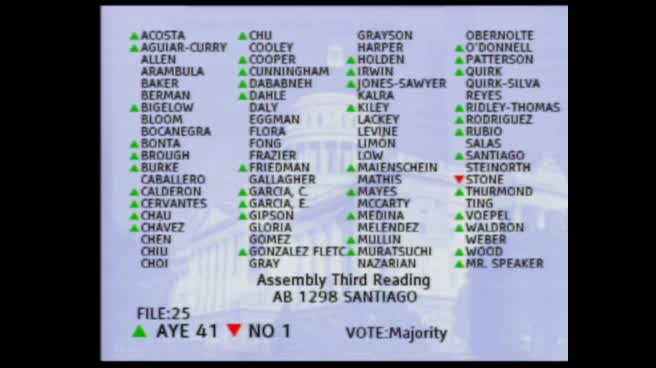 2MIN
Assembly Floor
 1H
Assembly Standing Committee on Appropriations
 6MIN
Assembly Standing Committee on Education
Bill Author

Bill Co-Author(s):