AB 454: Personal income taxes: exclusion: wrongfully incarcerated individuals.
- Session Year: 2017-2018
- House: Assembly
- Latest Version Date: 2017-10-11
The Personal Income Tax Law imposes a tax on taxpayers measured by the taxpayers taxable income for the taxable year, but excludes certain items of income from the computation of tax, including an exclusion for a specified amount received as compensation for having been the victim of a miscarriage of justice by a specific individual that was wrongfully convicted.
Various provisions of the Personal Income Tax Law conform, or conform as modified, to provisions of the Internal Revenue Code as of January 1, 2015. By law enacted December 18, 2015, the Internal Revenue Code excludes from gross income certain amounts received by wrongfully incarcerated individuals.
This bill would conform state law to that provision of the Internal Revenue Code. The bill would apply this conformity to taxable years beginning before, on, or after January 1, 2018. The bill would make legislative findings regarding the public purpose served by this bill.
The Personal Income Tax Law imposes a tax on taxpayers measured by the taxpayers taxable income for the taxable year, but excludes certain items of income from the computation of tax, including an exclusion for a specified amount received as compensation for having been the victim of a miscarriage of justice by a specific individual that was wrongfully convicted.
Various provisions of the Personal Income Tax Law conform, or conform as modified, to provisions of the Internal Revenue Code as of January 1, 2015. By law enacted December 18, 2015, the Internal Revenue Code excludes from gross income certain amounts received by wrongfully incarcerated individuals.
This bill would conform state law to that provision of the Internal Revenue Code. The bill would apply this conformity to taxable years beginning before, on, or after January 1, 2018. The bill would make legislative findings regarding the public purpose served by this bill.
The Personal Income Tax Law imposes a tax on taxpayers measured by the taxpayers taxable income for the taxable year, but excludes certain items of income from the computation of tax, including an exclusion for an a specified amount received as compensation for having been the victim of a miscarriage of justice by a specific individual that was wrongfully convicted. The
Various provisions of the Personal Income Tax Law conform, or conform as modified, to provisions of the Internal Revenue Code as of January 1, 2015. By law enacted December 18, 2015, the Internal Revenue Code excludes from gross income certain amounts received by wrongfully incarcerated individuals.
This bill, for taxable years beginning on or after January 1, 2017, bill would conform state law to that provision of the Internal Revenue Code. The bill would apply this conformity to taxable years beginning before, on, or after January 1, 2018. The bill would make legislative findings regarding the public purpose served by this bill.
This bill would take effect immediately as a tax levy.The Personal Income Tax Law imposes a tax on taxpayers measured by the taxpayers taxable income for the taxable year, but excludes certain items of income from the computation of tax, including an exclusion for an amount received as compensation for having been the victim of a miscarriage of justice by a specific individual that was wrongfully convicted. The Internal Revenue Code excludes from gross income certain amounts received by wrongfully incarcerated individuals.
This bill, for taxable years beginning on or after January 1, 2017, would conform state law to that provision of the Internal Revenue Code.
This bill would take effect immediately as a tax levy.
(a)Section 304(a) as added by Public Law 114-113, which is codified as Section 139F of the Internal Revenue Code, relating to certain amounts received by wrongfully incarcerated individuals, shall apply.
(b)This section shall apply to taxable years beginning before, on, or after January 1, 2018.
(c)If the credit or refund of any overpayment of tax resulting from the application of this section to a period before January 1, 2018, is prevented as of such date by the operation of any law or rule of law (including res judicata), such credit or refund may nevertheless be allowed or made if the claim therefor is filed before the close of the one-year period beginning on January 1, 2018.
SEC. 2.The Legislature hereby declares that compensation to victims of a miscarriage of justice due to wrongful incarceration constitutes a public purpose and is not a gift of public funds within the meaning of Section 6 of Article XVI of the California Constitution.
(a)Section 304(a) as added by Public Law 114-113, which is codified as Section 139F of the Internal Revenue Code, relating to certain amounts received by wrongfully incarcerated individuals, shall apply.
(b)This section shall apply to taxable years beginning before, on, or after January 1, 2018.
(c)If the credit or refund of any overpayment of tax resulting from the application of this section to a period before January 1, 2018, is prevented as of such date by the operation of any law or rule of law (including res judicata), such credit or refund may nevertheless be allowed or made if the claim therefor is filed before the close of the one-year period beginning on January 1, 2018.
SEC. 2.The Legislature hereby declares that compensation to victims of a miscarriage of justice due to wrongful incarceration constitutes a public purpose and is not a gift of public funds within the meaning of Section 6 of Article XVI of the California Constitution.
(a)Section 304(a) as added by Public Law 114-113, which is codified as Section 139F of the Internal Revenue Code, relating to certain amounts received by wrongfully incarcerated individuals, shall apply.
(b)This section shall apply to taxable years beginning before, on, or after January 1, 2018.
(c)If the credit or refund of any overpayment of tax resulting from the application of this section to a period before January 1, 2018, is prevented as of such date by the operation of any law or rule of law (including res judicata), such credit or refund may nevertheless be allowed or made if the claim therefor is filed before the close of the one-year period beginning on January 1, 2018.
SEC. 2.The Legislature hereby declares that compensation to victims of a miscarriage of justice due to wrongful incarceration constitutes a public purpose and is not a gift of public funds within the meaning of Section 6 of Article XVI of the California Constitution.
SECTION 1.Section 17156.1 is added to the Revenue and Taxation Code, to read:17156.1.For taxable years beginning on or after January 1, 2017, Section 139F of the Internal Revenue Code, relating to certain amounts received by wrongfully incarcerated individuals, shall apply.SEC. 2.This act provides for a tax levy within the meaning of Article IV of the California Constitution and shall go into immediate effect.For taxable years beginning on or after January 1, 2017, Section 139F of the Internal Revenue Code, relating to certain amounts received by wrongfully incarcerated individuals, shall apply.
SEC. 2.This act provides for a tax levy within the meaning of Article IV of the California Constitution and shall go into immediate effect.
|
Date
|
Status
|
|---|---|
| Oct 11, 2017 | Chaptered by Secretary of State - Chapter 655, Statutes of 2017. |
| Oct 11, 2017 | Approved by the Governor. |
| Sep 25, 2017 | Enrolled and presented to the Governor at 12 p.m. |
| Sep 14, 2017 | Senate amendments concurred in. To Engrossing and Enrolling. |
| Sep 14, 2017 | In Assembly. Concurrence in Senate amendments pending. |
| Sep 14, 2017 | Read third time. Passed. Ordered to the Assembly. |
| Sep 12, 2017 | Ordered to special consent calendar. |
| Sep 5, 2017 | Read second time. Ordered to third reading. |
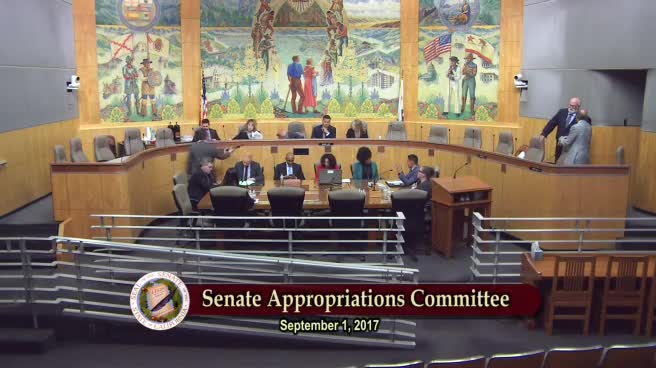
| Sep 1, 2017 | From committee: Do pass. (Ayes 7. Noes 0.) (September 1). |
| Jul 17, 2017 | In committee: Referred to APPR. suspense file. |
| Jul 6, 2017 | Read second time and amended. Re-referred to Com. on APPR. |
| Jul 5, 2017 | From committee: Amend, and do pass as amended and re-refer to Com. on APPR. (Ayes 7. Noes 0.) (June 28). |
| Jun 6, 2017 | In committee: Set, first hearing. Hearing canceled at the request of author. |
| May 10, 2017 | Referred to Com. on GOV. & F. |
| Apr 20, 2017 | In Senate. Read first time. To Com. on RLS. for assignment. |
| Apr 20, 2017 | Read third time. Passed. Ordered to the Senate. (Ayes 74. Noes 0. Page 1143.) |
| Apr 6, 2017 | Read second time. Ordered to Consent Calendar. |
| Apr 5, 2017 | From committee: Do pass. To Consent Calendar. (Ayes 17. Noes 0.) (April 5). |
| Mar 28, 2017 | From committee: Do pass and re-refer to Com. on APPR. with recommendation: To Consent Calendar. (Ayes 10. Noes 0.) (March 27). Re-referred to Com. on APPR. |
| Mar 20, 2017 | In committee: Hearing postponed by committee. |
| Feb 27, 2017 | Referred to Com. on REV. & TAX. |
| Feb 14, 2017 | From printer. May be heard in committee March 16. |
| Feb 13, 2017 | Read first time. To print. |
|
Date
|
Description
|
Location
|
Votes
|
|
|---|---|---|---|---|
| Sep 14, 2017 | AB 454 Ridley-Thomas Special Consent Calendar 1st Day Regular Session | Assembly Floor |
Passed |
|
| Sep 14, 2017 | Special Consent Calendar # AB454 | Senate Floor |
Passed |
|
| Sep 1, 2017 | Do pass | Senate Standing Committee on Appropriations |
Passed |
|
| Jul 17, 2017 | Placed on suspense file | Senate Standing Committee on Appropriations |
Passed |
|
| Jun 28, 2017 | Do pass as amended, but first amend, and re-refer to the Committee on [Appropriations] | Senate Standing Committee on Governance and Finance |
Passed |
|
| Apr 20, 2017 | Favorable With Committee Substitute (Oversight, Transparency & Administration Subcommittee) | Assembly Floor |
Passed |
|
| Apr 5, 2017 | Do pass. To Consent Calendar. | Assembly Standing Committee on Appropriations |
Passed |
|
| Mar 27, 2017 | Do pass and be re-referred to the Committee on [Appropriations] with recommendation: To Consent Calendar | Assembly Standing Committee on Revenue and Taxation |
Passed |
This list shows positions taken on this bill by organizations on the date displayed, which is linked to the original source.
Positions by individuals are not included.
|
Organization
|
Position
|
Date
|
|---|---|---|
| Association of Los Angeles Deputy Sheriffs | ** Support | Sep 4, 2017 |
| California Association Of Code Enforcement Officers | ** Support | Sep 4, 2017 |
| California College And University Police Chiefs Association | ** Support | Sep 4, 2017 |
| California Narcotic Officers Association | ** Support | Sep 4, 2017 |
| California Taxpayers Association | ** Support | Sep 4, 2017 |
| Friends Committee on Legislation | ** Support | Sep 4, 2017 |
| Los Angeles County Professional Peace Officers Association | ** Support | Sep 4, 2017 |
| Los Angeles Police Protective League | ** Support | Sep 4, 2017 |
| Riverside Sheriffs' Association | ** Support | Sep 4, 2017 |
| Unknown. | ** Against | Jun 23, 2017 |
CONCURRENCE IN SENATE AMENDMENTS
CSA1 Bill Id:AB 454
Author:(Ridley-Thomas)
As Amended Ver:July 6, 2017
Majority vote
ASSEMBLY: | 74-0 | (April 20, 2017) | SENATE: | 40-0 | (September 14, 2017) |
Original Committee Reference: REV. & TAX.
SUMMARY: Assists individuals who have been wrongfully convicted of a crime and incarcerated by excluding from taxation any monetary awards they receive in connection with their wrongful incarceration.
The Senate amendments:
- Specify that the exclusion relief shall apply to taxable years beginning before, on, or after January 1, 2018.
- Provide that if the credit or refund of any overpayment of tax resulting from application of this bill to a period before January 1, 2018, is prevented as of such date by the operation of law, such credit or refund may nevertheless be allowed or made if the claim is filed before the close of the one-year period beginning on January 1, 2018.
- Add legislative findings.
EXISTING LAW:
- Imposes a tax under the Personal Income Tax (PIT) Law measured by the taxpayer's taxable income for the year.
- Excludes certain items of income from the computation of tax under the PIT Law.
AS PASSED BY THE ASSEMBLY, this bill:
- Provided that, for taxable years beginning on or after January 1, 2017, Internal Revenue Code (IRC) Section 139F, relating to certain amounts received by wrongfully incarcerated individuals, shall apply.
- Took immediate effect as a tax levy.
FISCAL EFFECT: According to the Senate Appropriations Committee, the Franchise Tax Board (FTB) estimates that this bill would result in General Fund revenue losses of $60,000 in 2016-17, $60,000 in 2017-18, $30,000 in 2018-19, and $30,000 in 2019-20. The FTB would incur minor administrative expenses.
COMMENTS:
- The author has provided the following statement in support of this bill:
This bill would provide both certainty and uniformity by clearly exempting awards for wrongful incarceration from state taxation. When an individual receives compensation for a wrongful conviction and incarceration, the federal government has recognized that the award should be tax-free; California should do the same. Those who have suffered a miscarriage of justice deserve no less.
- Committee staff comments:
- The wrongfully incarcerated: According to the National Registry of Exonerations, 172 individuals have been exonerated in California after serving time in California prisons for crimes they did not commit. Some of these individuals have received monetary awards for the years they lost, either by filing a statutory compensation claim under Penal Code Section 4900 et seq. or through a civil lawsuit.
- Congress takes action: In 2015, President Obama signed legislation providing a gross income exclusion for amounts received as restitution for a wrongful criminal conviction and incarceration. As such, such awards are no longer subject to federal income tax.
California, however, has not yet conformed to this provision of federal law. As a result, criminal justice advocates report that awards for wrongful conviction and incarceration are not treated evenly under state law. Specifically, advocates note that awards obtained through a statutory claim for compensation are not considered income. (See Penal Code Section 4904.) Awards obtained from any other source, however, are potentially subject to income tax under state law.
- What would this bill do? This bill would assist individuals who have been wrongfully convicted of a crime and incarcerated by excluding from taxation any monetary awards they receive in connection with their wrongful incarceration. This bill does so by conforming to the federal exclusion contained in IRC Section 139F.
- What is IRC Section 139F? In 2015, Congress enacted a new exclusion from income under IRC Section 139F. Under this federal exclusion, a wrongfully incarcerated individual does not include any civil damages, restitution, or any other monetary award received for his or her incarceration in income.
IRC Section 139F defines a "wrongfully incarcerated individual" as a person convicted of a covered offense, who served all or part of a sentence of imprisonment for the offense, and who meets any one of the following three requirements:
- The individual was pardoned, granted clemency, or granted amnesty for the covered offense because of the individual's innocence;
- The judgement of conviction for the covered offense was reversed or vacated and the indictment, information, or other accusatory instrument for the covered offense was dismissed; or,
- The judgment of conviction for the individual for the covered offense was reversed or vacated and the individual was found not guilty at a new trial.
Federal law defines a "covered offense", in turn, as any criminal offense under federal or state law, and includes any criminal offense arising from the same course of conduct as that criminal offense.
Analysis Prepared by: M. David Ruff / REV. & TAX. / (916) 319-2098 FN: 0001980
Office of Senate Floor Analyses (916) 651-1520 Fax: (916) 327-4478 | AB |
THIRD READING
Bill No: AB 454
:
SENATE GOVERNANCE & FIN. COMMITTEE: 7-0, 6/28/17
AYES: McGuire, Nguyen, Beall, Hernandez, Hertzberg, Lara, Moorlach
SENATE APPROPRIATIONS COMMITTEE: 7-0, 9/1/17
AYES: Lara, Bates, Beall, Bradford, Hill, Nielsen, Wiener
ASSEMBLY FLOOR: 74-0, 4/20/17 (Consent) - See last page for vote
DIGEST:
This bill conforms state law to the federal law’s exclusion from income for any civil damages, restitution, or other monetary award made to a wrongfully convicted individual.
Existing law:
- Does not automatically conform to changes to federal tax law, except for specific retirement provisions.
- Conforms to federal law as of a specified date, currently January 1, 2015 (AB 154, Ting, Chapter 359, Statutes of 2015).
- Excludes from income for state tax purposes any amount received in any taxable year by a claimant pursuant to Section 4904 of the California Penal Code, which only applies to state appropriations made to a wrongfully convicted individual, but not any civil damages, restitution, or other monetary award relating to an individual’s wrongful incarceration (AB 1799, Baugh, Chapter 630, Statutes of 2000).
This bill:
- Conforms state law to federal law’s exclusion from income for any civil damages, restitution, or other monetary award made to a wrongfully convicted individual.
- Applies to taxable years beginning on, before, or after, January 1, 2018.
- Allows for refunds for taxes previously paid on this income without regard to operation of law, including res judicata, so long as a claim for refund is filed within a one year period commencing January 1, 2018.
- Makes legislative findings and declarations stating that the measure’s retroactive effect is not a gift of public funds.
Background
Enacted by Congress and signed by former President Obama on December 18, 2015, the Protecting Americans from Tax Hikes (PATH) Act added new Internal Revenue Code (IRC) Section 139F, which enacts a new income exclusion for any civil damages, restitution, or other monetary award (including compensatory or statutory damages and restitution imposed in a criminal matter) received by a wrongfully incarcerated individual. Federal law defines a wrongfully incarcerated individual as someone who:
- Was pardoned, granted clemency, or granted amnesty for that covered offense, because the individual was innocent of that covered offense; or
- Whose judgment of conviction was reversed or vacated, and the indictment, information, or other accusatory instrument for that covered offense was dismissed; or
- Whose judgment of conviction was reversed or vacated, and the individual was found not guilty at a new trial after the judgment of conviction for that covered offense was reversed or vacated.
The PATH Act allows wrongfully incarcerated individuals to make a claim for credit or refund of any overpayment of tax resulting from the exclusion, so long as the individual files the refund claim before the close of the one-year period beginning on December 18, 2015.
FISCAL EFFECT: Appropriation: Fiscal Com.: Local:
According to the Senate Appropriations Committee, the Franchise Tax Board (FTB) estimates that this bill would result in General Fund revenue losses of $60,000 in 2016-17, $60,000 in 2017-18, $30,000 in 2018-19, and $30,000 in 2019-20. FTB would incur minor administrative expenses
Association of Los Angeles Deputy Sheriffs
California Association of Code Enforcement Officers
California College and University Police Chiefs Association
California Narcotic Officers Association
California Taxpayers Association
Friends Committee on Legislation
Los Angeles County Professional Peace Officers Association
Los Angeles Police Protective League
Riverside Sheriffs’ Association
None received
ARGUMENTS IN SUPPORT: According to the author, “This bill would provide both certainty and uniformity by clearly exempting awards for wrongful incarceration from state taxation. When an individual receives compensation for a wrongful conviction and incarceration, the federal government has recognized that the award should be tax-free; California should do the same. Those who have suffered a miscarriage of justice deserve no less.”
ASSEMBLY FLOOR: 74-0, 4/20/17
AYES: Acosta, Aguiar-Curry, Travis Allen, Arambula, Baker, Berman, Bigelow, Bloom, Bocanegra, Bonta, Burke, Caballero, Calderon, Cervantes, Chau, Chávez, Chen, Chiu, Chu, Cooley, Cooper, Cunningham, Dababneh, Dahle, Daly, Eggman, Flora, Fong, Frazier, Friedman, Cristina Garcia, Eduardo Garcia, Gipson, Gloria, Gomez, Gonzalez Fletcher, Gray, Grayson, Harper, Holden, Irwin, Jones-Sawyer, Kalra, Kiley, Lackey, Levine, Limón, Low, Maienschein, Mayes, McCarty, Medina, Melendez, Mullin, Muratsuchi, Nazarian, Obernolte, O'Donnell, Quirk, Quirk-Silva, Reyes, Rodriguez, Rubio, Salas, Santiago, Steinorth, Mark Stone, Thurmond, Ting, Voepel, Waldron, Weber, Wood, Rendon
NO VOTE RECORDED: Brough, Choi, Gallagher, Mathis, Patterson, Ridley-Thomas
9/4/17 13:02:55
**** END ****
SENATE COMMITTEE ON APPROPRIATIONS
Senator Ricardo Lara, Chair
2017 - 2018 Regular Session
AB 454 (Ridley-Thomas) - Personal income taxes: exclusion: wrongfully incarcerated individuals
Version: July 6, 2017 | Policy Vote: GOV. & F. 7 - 0 |
Urgency: No | Mandate: No |
Hearing Date: July 17, 2017 | Consultant: Robert Ingenito |
This bill meets the criteria for referral to the Suspense File.
Bill Summary:
AB 454 would conform state law to federal law’s exclusion from income for any civil damages, restitution, or other monetary award made to a wrongfully convicted individual.
Fiscal Impact:
The Franchise Tax Board (FTB) estimates that the bill would result in General Fund revenue losses of $60,000 in 2016-17, $60,000 in 2017-18, $30,000 in 2018-19, and $30,000 in 2019-20. FTB would incur minor administrative expenses.
Background:
In 2015, federal tax law was modified to provide a gross income exclusion for amounts received as restitution for a wrongful criminal conviction and incarceration. Consequently, these monetary awards are no longer subject to federal income tax. California, however, has not conformed to this provision of federal law.
Proposed Law:
This bill would, under the Personal Income Tax Law, for amounts received before, on, or after January 1, 2018, conform to Internal Revenue Code §139F, that excludes from gross income certain amounts received by wrongly incarcerated individuals.
Additionally, any credit or refund that would be barred by statute or rule of law would be allowed if claimed before the close of the one-year period beginning on the effective date of this bill.
Related Legislation:
AB 1799 (Baugh, Chapter 630, Statutes of 2000) excludes from gross income certain amounts received by individuals from the state due to erroneous criminal conviction and incarceration.
Staff Comments:
The State’s personal income tax is linked to federal tax law, importing hundreds of definitions, rules, and procedures, among other items. Conformity eases the compliance and administrative burden of tax preparation for taxpayers, tax preparers, and FTB. Consequently, any difference between State and federal law can increase cost, complexity, and noncompliance. This bill would increase conformity by conforming state law to Congress’s addition of Internal Revenue Code §139F
FTB’s revenue estimate of the bill drives off of the Joint Committee on Taxation (JCT) estimate for the Protecting Americans from Tax Hikes Act of 2015 for exclusion for wrongly incarcerated individuals. Specifically, in December 2015, JCT estimated the federal revenue impact of the exclusion to be a $1 million loss in fiscal year 2018.
To determine California’s share of the federal loss, FTB considered data from The National Registry of Exonerations to calculate that approximately 10 percent of exonerations take place in California. FTB then reduced the estimate by 70 percent to reflect the differences between federal and state tax rates. The equivalent loss to California is estimated to be $30,000.
Finally, FTB assumes that individuals that received payments prior to the enactment of this bill would amend their returns to exclude income received.
-- END --
SENATE COMMITTEE ON GOVERNANCE AND FINANCE
Senator Mike McGuire, Chair
2017 - 2018 Regular
Bill No: | AB 454 | Hearing Date: | 6/28/17 |
Author: | Ridley-Thomas | Tax Levy: | Yes |
Version: | 2/13/17 | Fiscal: | Yes |
Consultant: | Grinnell | ||
Personal income taxes: exclusion: wrongfully convicted individuals
Conforms state law to the federal law’s exclusion from income for any civil damages, restitution, or other monetary award made to a wrongfully convicted individual.
Background
California law does not automatically conform to changes to federal tax law, except for specific retirement provisions. Instead, the Legislature must affirmatively conform to federal changes. Conformity legislation is introduced either as individual bills to conform to specific federal tax changes, like the Regulated Investment Company Modernization Act (AB 1423, Perea, 2011), or as one omnibus bill that provides that state law conforms to federal law as of a specified date, currently January 1, 2015 (AB 154, Ting, 2015).
Enacted by Congress and signed by former President Obama on December 18, 2015, the Protecting Americans from Tax Hikes (PATH) Act added new Internal Revenue Code (IRC) §139F, which enacts a new income exclusion for any civil damages, restitution, or other monetary award (including compensatory or statutory damages and restitution imposed in a criminal matter) received by a wrongfully incarcerated individual. Federal law defines a wrongfully incarcerated individual as someone who:
- Was pardoned, granted clemency, or granted amnesty for that covered offense, because the individual was innocent of that covered offense; or
- Whose judgment of conviction was reversed or vacated, and the indictment, information, or other accusatory instrument for that covered offense was dismissed; or
- Whose judgment of conviction was reversed or vacated, and the individual was found not guilty at a new trial after the judgment of conviction for that covered offense was reversed or vacated.
The PATH Act allows wrongfully incarcerated individuals to make a claim for credit or refund of any overpayment of tax resulting from the exclusion, so long as the individual files the refund claim before the close of the one-year period beginning on December 18, 2015.
California generally conforms to amounts includible in and excludible from income; however, it only does so through the current conformity date of January 1, 2015, before the PATH Act was enacted. California does exclude income for any amount received in any taxable year by a claimant pursuant to Section 4904 of the California Penal Code, but that section only applies to state appropriations made to the individual, but not other civil damages, restitution, or other monetary award relating to an individual’s wrongful incarceration (AB 1799, Baugh, 2000). The author wants to conform state law to the PATH Act’s addition of IRC §139F.
Proposed Law
Assembly Bill 454 conforms state law to the federal law’s exclusion from income for any civil damages, restitution, or other monetary award made to a wrongfully convicted individual. The exclusion applies beginning in the 2017 taxable year. However, unlike federal law, the measure does not allow for wrongfully convicted individuals to file amended returns to claim refunds on taxes paid on income received in prior taxable years.
State Revenue Impact
According to the Franchise Tax Board (FTB), AB 454 results in revenue losses of $60,000 in 2017-18, and $30,000 in 2018-19 and 2019-2020.
Comments
1. Purpose of the bill. “This bill would provide both certainty and uniformity by clearly exempting awards for wrongful incarceration from state taxation. When an individual receives compensation for a wrongful conviction and incarceration, the federal government has recognized that the award should be tax-free; California should do the same. Those who have suffered a miscarriage of justice deserve no less.”
2. Revenue loss. AB 454 adds a new income tax exclusion for specified payments made to wrongfully incarcerated individuals. As a result, the state will have to reduce spending or increase taxes to match the amount of foregone revenue.
3. Wrongfully incarcerated individuals. According to the National Registry of Exonerations, 172 individuals have been exonerated in California after serving time in California prisons for crimes they did not commit. Some of these individuals have received monetary awards for the years they lost, either by filing a statutory compensation claim under Penal Code Section 4900 et seq. or through a civil lawsuit.
4. Conformity. California’s personal income tax significantly relies on the IRC, importing hundreds of definitions, rules, and procedures, among other items. Conformity eases the compliance and administrative burden of tax preparation for taxpayers, tax preparers, and FTB. As a result, any difference between state and federal law can increase cost, complexity, and noncompliance. AB 454 advances conformity by conforming state law to Congress’s addition of IRC §139F; however, state law only generally conforms to federal changes as of January 1, 2015, and as a result, remains out-of-step with any federal changes made since then.
5. Not retroactive. AB 454’s income tax exclusion applies to payments made to wrongfully incarcerated individuals received in the 2017 taxable year and thereafter. However, federal law applied this change retroactively, thereby allowing qualified individuals to file amended returns to claim refunds on previous taxes paid on these payments. While adding a retroactive application would potentially benefit some individuals, the refund period under federal law already expired. However, doing so would allow wrongly incarcerated individuals to claim refunds on any taxes they previously paid based on this income. The Committee may wish to consider whether AB 454 should apply retroactively.
Assembly Actions
Assembly Revenue and Taxation 10-0
Assembly Appropriations 17-0
Assembly Floor 74-0
Support and Opposition
6/23/17)
Support: Association of Los Angeles Deputy Sheriffs; California Association of Code Enforcement Officers, California College and University Police Chiefs Association, California Narcotic Officers Association, California Taxpayers Association, Los Angeles Professional Peace Officers Association; Los Angeles Police Protective League; Riverside Sheriffs’ Association.
Opposition: Unknown.
-- END --
SENATE COMMITTEE ON GOVERNANCE AND FINANCE
Senator Mike McGuire, Chair
2017 - 2018 Regular
Bill No: | AB 454 | Hearing Date: | 6/7/17 |
Author: | Ridley-Thomas | Tax Levy: | Yes |
Version: | 2/13/17 | Fiscal: | Yes |
Consultant: | Grinnell | ||
Personal income taxes: exclusion: wrongfully convicted individuals
Conforms state law to the federal law’s exclusion from income for any civil damages, restitution, or other monetary award made to a wrongfully convicted individual.
Background
California law does not automatically conform to changes to federal tax law, except for specific retirement provisions. Instead, the Legislature must affirmatively conform to federal changes. Conformity legislation is introduced either as individual bills to conform to specific federal tax changes, like the Regulated Investment Company Modernization Act (AB 1423, Perea, 2011), or as one omnibus bill that provides that state law conforms to federal law as of a specified date, currently January 1, 2015 (AB 154, Ting, 2015).
Enacted by Congress and signed by former President Obama on December 18, 2015, the Protecting Americans from Tax Hikes (PATH) Act added new Internal Revenue Code (IRC) §139F, which enacts a new income exclusion for any civil damages, restitution, or other monetary award (including compensatory or statutory damages and restitution imposed in a criminal matter) received by a wrongfully incarcerated individual. Federal law defines a wrongfully incarcerated individual as someone who:
- Was pardoned, granted clemency, or granted amnesty for that covered offense, because the individual was innocent of that covered offense; or
- Whose judgment of conviction was reversed or vacated, and the indictment, information, or other accusatory instrument for that covered offense was dismissed; or
- Whose judgment of conviction was reversed or vacated, and the individual was found not guilty at a new trial after the judgment of conviction for that covered offense was reversed or vacated.
The PATH Act allows wrongfully incarcerated individuals to make a claim for credit or refund of any overpayment of tax resulting from the exclusion, so long as the individual files the refund claim before the close of the one-year period beginning on December 18, 2015.
California generally conforms to amounts includible in and excludible from income; however, it only does so through the current conformity date of January 1, 2015, before the PATH Act was enacted. California does exclude income for any amount received in any taxable year by a claimant pursuant to Section 4904 of the California Penal Code, but that section only applies to state appropriations made to the individual, but not other civil damages, restitution, or other monetary award relating to an individual’s wrongful incarceration (AB 1799, Baugh, 2000). The author wants to conform state law to the PATH Act’s addition of IRC 139F.
Proposed Law
Assembly Bill 454 conforms state law to the federal law’s exclusion from income for any civil damages, restitution, or other monetary award made to a wrongfully convicted individual. The exclusion applies beginning in the 2017 taxable year. However, unlike federal law, the measure does not allow for wrongfully convicted individuals to file amended returns to claim refunds on taxes paid on income received in prior taxable years.
State Revenue Impact
According to the Franchise Tax Board (FTB), AB 454 results in revenue losses of $60,000 in 2017-18, and $30,000 in 2018-19 and 2019-2020.
Comments
1. Purpose of the bill. “This bill would provide both certainty and uniformity by clearly exempting awards for wrongful incarceration from state taxation. When an individual receives compensation for a wrongful conviction and incarceration, the federal government has recognized that the award should be tax-free; California should do the same. Those who have suffered a miscarriage of justice deserve no less.”
2. Revenue loss. AB 454 adds a new income tax exclusion for specified payments made to wrongfully incarcerated individuals. As a result, the state will have to reduce spending or increase taxes to match the amount of foregone revenue.
3. Wrongfully incarcerated individuals. According to the National Registry of Exonerations, 172 individuals have been exonerated in California after serving time in California prisons for crimes they did not commit. Some of these individuals have received monetary awards for the years they lost, either by filing a statutory compensation claim under Penal Code Section 4900 et seq. or through a civil lawsuit.
4. Conformity. California’s personal income tax significantly relies on the IRC, importing hundreds of definitions, rules, and procedures, among other items. Conformity eases the compliance and administrative burden of tax preparation for taxpayers, tax preparers, and FTB. As a result, any difference between state and federal law can increase cost, complexity, and noncompliance. AB 454 advances conformity by conforming state law to Congress’s addition of IRC §139F; however, state law only generally conforms to federal changes as of January 1, 2015, and as a result, remains out-of-step with any federal changes made since then.
5. Not retroactive. AB 454’s income tax exclusion applies to payments made to wrongfully incarcerated individuals received in the 2017 taxable year and thereafter. However, federal law applied this change retroactively, thereby allowing qualified individuals to file amended returns to claim refunds on previous taxes paid on these payments. While adding a retroactive application would potentially benefit some individuals, the refund period under federal law already expired.
Assembly Actions
Assembly Revenue and Taxation 10-0
Assembly Appropriations 17-0
Assembly Floor 74-0
Support and Opposition
6/1/17)
Support: California Association of Code Enforcement Officers, California College and University Police Chiefs Association, California Narcotic Officers Association, California Taxpayers Association, Los Angeles Professional Peace Officers Association.
Opposition: Unknown.
-- END --
Date of Hearing: April 5, 2017
ASSEMBLY COMMITTEE ON APPROPRIATIONS
Lorena Gonzalez Fletcher, Chair
ABPCA Bill Id:AB 454
Author:(Ridley-Thomas) – As Introduced Ver:February 13, 2017
Policy Committee: | Revenue and Taxation | Vote: | 10 - 0 |
|
| ||
|
|
Urgency: No State Mandated Local Program: No Reimbursable: No
SUMMARY:
This bill conforms state law to Internal Revenue Code (IRC) Section 139F, which excludes from federal income taxation the monetary awards received by wrongfully incarcerated individuals.
FISCAL EFFECT:
- General Fund (GF) revenue losses of $60,000 in 2017-18, $30,000 in 2018-19, and $30,000 in 2019-20.
- Minor and absorbable costs to the Franchise Tax Board (FTB) for implementation of this bill.
COMMENTS:
Background and Purpose. In 2015, President Obama signed legislation providing a gross income exclusion for amounts received as restitution for a wrongful criminal conviction and incarceration. As a result, these monetary awards are no longer subject to federal income tax.
California, however, has not yet conformed to this provision of federal law.
According to supporters, AB 454 will ensure that wrongfully convinced individuals are treated evenly under federal and state law. While monetary awards obtained through a statutory claim for compensation are not considered income, awards obtained from other sources, such as a civil lawsuit, are potentially subject to income tax under current California law.
Analysis Prepared by: Luke Reidenbach / APPR. / (916) 319-2081
Date of Hearing: March 27, 2017
ASSEMBLY COMMITTEE ON REVENUE AND TAXATION
Sebastian Ridley-Thomas, Chair
ABPCA Bill Id:AB 454 (
Author:Ridley-Thomas) – As Introduced Ver:February 13, 2017
Majority vote. Tax levy. Fiscal committee.
SUBJECT: Personal income taxes: exclusion: wrongfully convicted individuals
SUMMARY: Assists individuals who have been wrongfully convicted of a crime and incarcerated by excluding from taxation any monetary awards they receive in connection with their wrongful incarceration. Specifically, this bill:
- Provides that, for taxable years beginning on or after January 1, 2017, Internal Revenue Code (IRC) Section 139F, relating to certain amounts received by wrongfully incarcerated individuals, shall apply.
- Takes immediate effect as a tax levy.
EXISTING LAW:
- Imposes a tax under the Personal Income Tax (PIT) Law measured by the taxpayer's taxable income for the year.
- Excludes certain items of income from the computation of tax under the PIT Law.
FISCAL EFFECT: The Franchise Tax Board (FTB) estimates that this bill would result in General Fund revenue losses of $60,000 in fiscal year (FY) 2017-18, $30,000 in FY 2018-19, and $30,000 in FY 2019-20.
COMMENTS:
- The author has provided the following statement in support of this bill:
This bill would provide both certainty and uniformity by clearly exempting awards for wrongful incarceration from state taxation. When an individual receives compensation for a wrongful conviction and incarceration, the federal government has recognized that the award should be tax-free; California should do the same. Those who have suffered a miscarriage of justice deserve no less.
- This bill is supported by the California Taxpayers Association, which notes the following:
There is perhaps no injustice as severe as wrongful imprisonment, and every penny of compensation should go to the victim of the injustice. Forcing a wrongfully imprisoned Californian to pay a percentage of the compensation to the government that incarcerated him or her simply adds insult to injury, and this practice should be eliminated.
Additionally, CalTax generally is supportive of conformity legislation as a way to provide taxpayers with fair and equitable treatment, and simplify tax preparation. The Franchise Tax Board's Taxpayer Advocate reports that lack of conformity to federal tax laws is the leading cause of errors on the state tax return.
- The FTB notes the following in its staff analysis of this bill:
- "California generally conforms to amounts includible in gross income under IRC section 61, and generally conforms to federal exclusions provided in Part III of Subchapter B of Chapter 1 of the IRC, Items Specifically Excluded from Gross Income (commencing with IRC section 101), as of the "specified date" of conformity of January 1, 2015. IRC Section 139F was enacted into law on December 18, 2015, thus, California does not conform to the federal exclusion for wrongfully incarcerated individuals."
- "This bill would, for amounts received on or after January 1, 2017, conform to IRC section 139F, that excludes from gross income certain amounts received by wrongly incarcerated individuals. However, because the bill does not expressly conform to Section 304(d) of Public Law (PL) 114-113, relating to waiver of limitations, the federal provision that allowed retroactive claims for a limited time period would be unavailable."
- Committee staff comments:
- The wrongfully incarcerated: According to the National Registry of Exonerations, 172 individuals have been exonerated in California after serving time in California prisons for crimes they did not commit. Some of these individuals have received monetary awards for the years they lost, either by filing a statutory compensation claim under Penal Code Section 4900 et seq. or through a civil lawsuit.
- Congress takes action: In 2015, President Obama signed legislation providing a gross income exclusion for amounts received as restitution for a wrongful criminal conviction and incarceration. As such, such awards are no longer subject to federal income tax.
California, however, has not yet conformed to this provision of federal law. As a result, criminal justice advocates report that awards for wrongful conviction and incarceration are not treated evenly under state law. Specifically, advocates note that awards obtained through a statutory claim for compensation are not considered income. (See Penal Code Section 4904.) Awards obtained from any other source, however, are potentially subject to income tax under state law.
- What would this bill do? This bill would assist individuals who have been wrongfully convicted of a crime and incarcerated by excluding from taxation any monetary awards they receive in connection with their wrongful incarceration. This bill does so by conforming to the federal exclusion contained in IRC Section 139F for taxable years beginning on or after January 1, 2017.
- What is IRC Section 139F? In 2015, Congress enacted a new exclusion from income under IRC Section 139F. Under this federal exclusion, a wrongfully incarcerated individual does not include any civil damages, restitution, or any other monetary award received for his or her incarceration in income.
IRC Section 139F defines a "wrongfully incarcerated individual" as a person convicted of a covered offense, who served all or part of a sentence of imprisonment for the offense, and who meets any one of the following three requirements:
- The individual was pardoned, granted clemency, or granted amnesty for the covered offense because of the individual's innocence;
- The judgement of conviction for the covered offense was reversed or vacated and the indictment, information, or other accusatory instrument for the covered offense was dismissed; or,
- The judgment of conviction for the individual for the covered offense was reversed or vacated and the individual was found not guilty at a new trial.
- The individual was pardoned, granted clemency, or granted amnesty for the covered offense because of the individual's innocence;
Federal law defines a "covered offense", in turn, as any criminal offense under federal or state law, and includes any criminal offense arising from the same course of conduct as that criminal offense.
REGISTERED SUPPORT / OPPOSITION:
Support
Association for Los Angeles Deputy Sheriffs
California Association of Code Enforcement Officers
California College and University Police Chiefs Association
California Narcotic Officers Association
California Taxpayers Association
Los Angeles County Professional Peace Officers Association
Los Angeles Police Protective League
Riverside Sheriffs' Association
Opposition
None on file
Analysis Prepared by: M. David Ruff / REV. & TAX. / (916) 319-2098
Bill Author

Bill Co-Author(s):