AB 458: Vehicle registration.
- Session Year: 2017-2018
- House: Assembly
- Latest Version Date: 2017-10-03
Existing law authorizes the Department of Motor Vehicles to enter into contracts with qualified private industry partners to provide services that include processing and payment programs for vehicle registration and titling transactions, and services related to reporting vehicle sales and producing temporary license plates. Existing law requires the department to charge a $3 transaction fee for providing those services and that information. Existing law authorizes a private industry partner to pass that fee to the customer, as specified.
This bill would authorize the department to adopt regulations to establish exemptions from the transaction fee for transactions other than an original registration or transfer of ownership.
Existing law authorizes an owner or lessee of a fleet of commercial or passenger vehicles, as specified, to apply for license plates, permanent decals, and registration cards for those vehicles. Existing law requires a fleet to consist of at least 50 motor vehicles to qualify for the program, but also allows the Department of Motor Vehicles to provide permanent fleet registration through an association providing a combination of fleets of motor vehicles of 250 or more vehicles, provided that no individual fleet has fewer than 25 vehicles.
This bill would reduce the size of the fleets eligible for that program to a fleet of at least 25 motor vehicles, or through an association providing a combination of fleets of motor vehicles of 125 or more vehicles, provided that no individual fleet has fewer than 25 vehicles.
Existing law requires a vehicle registered under the fleet program to display in a conspicuous place on both sides of the vehicle the name, trademark, or logo of the company, as specified, and authorizes vehicles weighing less than 6,000 pounds that are owned or leased by a public utility to be registered under the fleet program if the vehicle displays the permanent fleet registration number on both sides of the vehicle, or on the front and rear of the vehicle, as specified.
This bill would delete those display requirements. The bill would make additional technical, nonsubstantive changes.
Existing law authorizes the Department of Motor Vehicles to enter into contracts with qualified private industry partners to provide services that include processing and payment programs for vehicle registration and titling transactions, and services related to reporting vehicle sales and producing temporary license plates. Existing law requires the department to charge a $3 transaction fee for providing those services and that information. Existing law authorizes a private industry partner to pass that fee to the customer, as specified.
This bill would instead require the department to charge a $3 fee for every original registration and transfer of ownership, and would authorize the department to charge a separate $3 fee for providing that specified information and those services described above. The bill would authorize a private industry partner to pass both fees to the customer, as specified. authorize the department to adopt regulations to establish exemptions from the transaction fee for transactions other than an original registration or transfer of ownership.
Existing law authorizes an owner or lessee of a fleet of commercial or passenger vehicles, as specified, to apply for license plates, permanent decals, and registration cards for those vehicles. Existing law requires a fleet to consist of at least 50 motor vehicles to qualify for the program, but also allows the Department of Motor Vehicles to provide permanent fleet registration through an association providing a combination of fleets of motor vehicles of 250 or more vehicles, provided that no individual fleet has fewer than 25 vehicles.
This bill would reduce the size of the fleets eligible for that program to a fleet of at least 25 motor vehicles, or through an association providing a combination of fleets of motor vehicles of 125 or more vehicles, provided that no individual fleet has fewer than 25 vehicles.
Existing law requires a vehicle registered under the fleet program to display in a conspicuous place on both sides of the vehicle the name, trademark, or logo of the company, as specified, and authorizes vehicles weighing less than 6,000 pounds that are owned or leased by a public utility to be registered under the fleet program if the vehicle displays the permanent fleet registration number on both sides of the vehicle, or on the front and rear of the vehicle, as specified.
This bill would delete those display requirements. The bill would make additional technical, nonsubstantive changes.
Existing law authorizes the Department of Motor Vehicles to enter into contracts with qualified private industry partners to provide services that include processing and payment programs for vehicle registration and titling transactions, and services related to reporting vehicle sales and producing temporary license plates. Existing law requires the department to charge a $3 transaction fee for providing those services and that information. Existing law authorizes a private industry partner to pass that fee to the customer, as specified.
This bill would instead require the department to charge a $3 fee for every original registration and transfer of ownership, and would authorize the department to charge a separate $3 fee for providing that specified information and those services described above. The bill would authorize a private industry partner to pass both fees to the customer, as specified.
Existing law authorizes an owner or lessee of a fleet of commercial or passenger vehicles, as specified, to apply for license plates, permanent decals, and registration cards for those vehicles. Existing law requires a fleet to consist of at least 50 motor vehicles to qualify for the program, but also allows the Department of Motor Vehicles to provide permanent fleet registration through an association providing a combination of fleets of motor vehicles of 250 or more vehicles, provided that no individual fleet has fewer than 25 vehicles.
This bill would reduce the size of the fleets eligible for that program to a fleet of at least 5 25 motor vehicles, or through an association providing a combination of fleets of motor vehicles of 25 125 or more vehicles, provided that no individual fleet has fewer than 5 25 vehicles.
Existing law requires a vehicle registered under the fleet program to display in a conspicuous place on both sides of the vehicle the name, trademark, or logo of the company, as specified, and authorizes vehicles weighing less than 6,000 pounds that are owned or leased by a public utility to be registered under the fleet program if the vehicle displays the permanent fleet registration number on both sides of the vehicle, or on the front and rear of the vehicle, as specified.
This bill would delete those display requirements. The bill would make additional technical, nonsubstantive changes.
Existing law authorizes an owner or lessee of a fleet of commercial or passenger vehicles, as specified, to apply for license plates, permanent decals, and registration cards for those vehicles. Existing law requires a fleet to consist of at least 50 motor vehicles to qualify for the program, but also allows the Department of Motor Vehicles to provide permanent fleet registration through an association providing a combination of fleets of motor vehicles of 250 or more vehicles, provided that no individual fleet has fewer than 25 vehicles.
This bill would reduce the size of the fleets eligible for that program to a fleet of at least 5 motor vehicles, or through an association providing a combination of fleets of motor vehicles of 25 or more vehicles, provided that no individual fleet has fewer than 5 vehicles.
Existing law requires a vehicle registered under the fleet program to display in a conspicuous place on both sides of the vehicle the name, trademark, or logo of the company, as specified, and authorizes vehicles weighing less than 6,000 pounds that are owned or leased by a public utility to be registered under the fleet program if the vehicle displays the permanent fleet registration number on both sides of the vehicle, or on the front and rear of the vehicle, as specified.
This bill would delete those display requirements. The bill would make additional technical, nonsubstantive changes.
Existing law authorizes the Department of Motor Vehicles to establish contracts for electronic programs that allow qualified private industry partners to join the department in providing services that include processing and payment programs for vehicle registration and titling transactions. Existing law requires the department to annually report to the Legislature on these partners, including, among other things, a listing of all business partners, the volume of transactions completed, by type, and the total amount of funds, by transaction type, collected by business partners. This bill would additionally require the department to also report the average processing time, by transaction type, for transactions executed by these business partners.Existing law authorizes the Department of Motor Vehicles to establish contracts for electronic programs that allow qualified private industry partners to join the department in providing services that include processing and payment programs for vehicle registration and titling transactions. Existing law requires the department to annually report to the Legislature on these partners, including, among other things, a listing of all business partners, the volume of transactions completed, by type, and the total amount of funds, by transaction type, collected by business partners.
This bill would additionally require the department to also report the average processing time, by transaction type, for transactions executed by these business partners.
(a)In order to continue improving the quality of products and services it provides to its customers, the department, in conformance with Article 4 (commencing with Section 19130) of Chapter 5 of Part 2 of Division 5 of Title 2 of the Government Code, may establish contracts for electronic programs that allow qualified private industry partners to join the department in providing services that include processing and payment programs for vehicle registration and titling transactions, and services related to reporting vehicle sales and producing temporary license plates pursuant to Sections 4456 and 4456.2.
(b)(1)The department may enter into contractual agreements with qualified private industry partners. There are the following three types of private industry partnerships authorized under this section:
(A)First-line business partner is an industry partner that receives data directly from the department and uses it to complete registration and titling activities for that partners own business purposes.
(B)First-line service provider is an industry partner that receives information from the department and then transmits it to another authorized industry partner.
(C)Second-line business partner is a partner that receives information from a first-line service provider.
(2)The private industry partner contractual agreements shall include the following minimum requirements:
(A)Filing of an application and payment of an application fee, as established by the department.
(B)Submission of information, including, but not limited to, fingerprints and personal history statements, focusing on and concerning the applicants character, honesty, integrity, and reputation as the department may consider necessary.
(C)Posting a bond in an amount consistent with Section 1815.
(3)The department shall, through regulations, establish any additional requirements for the purpose of safeguarding privacy and protecting the information authorized for release under this section.
(c)The director may establish, through the adoption of regulations, the maximum amount that a qualified private industry partner may charge its customers in providing the services authorized under subdivision (a).
(d)The department shall charge a three-dollar ($3) transaction fee for the information and services provided pursuant to subdivision (a). The private industry partner may pass the transaction fee to the customer, but the total charge to a customer may not exceed the amount established by the director under subdivision (c). The department may establish, through the adoption of regulations, exemptions from the transaction fee for transactions other than an original registration or transfer of ownership.
(e)All fees collected by the department pursuant to subdivision (d) shall be deposited in the Motor Vehicle Account. On January 1 of each year, the department shall adjust the fee in accordance with the California Consumer Price Index. The amount of the fee shall be rounded to the nearest whole dollar, with amounts equal to, or greater than, fifty cents ($0.50) rounded to the next highest whole dollar.
(f)The department shall adopt regulations and procedures that ensure adequate oversight and monitoring of qualified private industry partners to protect vehicle owners from the improper use of vehicle records. These regulations and procedures shall include provisions for qualified private industry partners to periodically submit records to the department, and the department shall review those records as necessary. The regulations shall also include provisions for the dedication of department resources to program monitoring and oversight; the protection of confidential records in the departments files and databases; and the duration and nature of the contracts with qualified private industry partners.
(g)The department shall, annually, by October 1, provide a report to the Legislature that shall include all of the following information gathered during the fiscal year immediately preceding the report date:
(1)Listing of all qualified private industry partners, including names and business addresses.
(2)Volume of transactions, by type, completed by business partners.
(3)Total amount of funds, by transaction type, collected by business partners.
(4)Total amount of funds received by the department.
(5)Description of any fraudulent activities identified by the department.
(6)Evaluation of the benefits of the program.
(7)Recommendations for any administrative or statutory changes that may be needed to improve the program.
(h)Nothing in this section impairs or limits the authority provided in Section 4610 or Section 12155 of the Insurance Code.
SEC. 2.Section 5301 of the Vehicle Code is amended to read:5301.(a)Notwithstanding any other provision of this code and Part 5 (commencing with Section 10701) of Division 2 of the Revenue and Taxation Code, the registered owner or lessee of a fleet of vehicles consisting of commercial motor vehicles base plated in the state, or passenger automobiles may, upon payment of appropriate fees, apply to the department for license plates, permanent decals, and registration cards.
(b)(1)Fleets shall consist of at least 25 motor vehicles to qualify for this program. However, the department may provide for permanent fleet registration through an association providing a combination of fleets of motor vehicles of 125 or more vehicles with no individual fleet of fewer than 25 motor vehicles.
(2)An association submitting an application of participation in the program shall provide within the overall application a listing identifying the registered owner of each fleet and the motor vehicles within each fleet. Identification of the motor vehicles as provided in this article applies to the ownership of the motor vehicles and not the association submitting the application.
(c)With the concurrence of both the department and the participant, the changes made in this section by the enactment of the Commercial Vehicle Registration Act of 2001 shall not affect those participants who were lawfully participating in the permanent fleet registration program on December 31, 2001. Any fleet that qualifies for permanent fleet registration as of December 31, 2001, will continue to count trailers to qualify as a fleet until January 1, 2007. However, five years following the implementation of the permanent trailer identification program, all participants in the permanent fleet registration program shall meet the requirements of this section in order to continue enrollment in the program described in this section.
SEC. 3.Section 5302 of the Vehicle Code is amended to read:5302.(a)Motor vehicles registered in any state other than California are not permitted to participate in this program.
(b)Section 4604 does not apply to vehicles registered under this article.
(c)The department may conduct an audit of the records of each fleet owner or lessee of the vehicle fleets electing to participate in the program. The department shall be fully reimbursed by the fleet owner or lessee for the costs of conducting the audits.
(a)In order to continue improving the quality of products and services it provides to its customers, the department, in conformance with Article 4 (commencing with Section 19130) of Chapter 5 of Part 2 of Division 5 of Title 2 of the Government Code, may establish contracts for electronic programs that allow qualified private industry partners to join the department in providing services that include processing and payment programs for vehicle registration and titling transactions, and services related to reporting vehicle sales and producing temporary license plates pursuant to Sections 4456 and 4456.2.
(b)(1)The department may enter into contractual agreements with qualified private industry partners. There are the following three types of private industry partnerships authorized under this section:
(A)First-line business partner is an industry partner that receives data directly from the department and uses it to complete registration and titling activities for that partners own business purposes.
(B)First-line service provider is an industry partner that receives information from the department and then transmits it to another authorized industry partner.
(C)Second-line business partner is a partner that receives information from a first-line service provider.
(2)The private industry partner contractual agreements shall include the following minimum requirements:
(A)Filing of an application and payment of an application fee, as established by the department.
(B)Submission of information, including, but not limited to, fingerprints and personal history statements, focusing on and concerning the applicants character, honesty, integrity, and reputation as the department may consider necessary.
(C)Posting a bond in an amount consistent with Section 1815.
(3)The department shall, through regulations, establish any additional requirements for the purpose of safeguarding privacy and protecting the information authorized for release under this section.
(c)The director may establish, through the adoption of regulations, the maximum amount that a qualified private industry partner may charge its customers in providing the services authorized under subdivision (a).
(d)The department shall charge a three-dollar ($3) transaction fee for every original registration and transfer of ownership. The department may, at its discretion, charge a three-dollar ($3) fee for other the information and services provided pursuant to subdivision (a). The private industry partner may pass those fees the transaction fee to the customer, but the total charge to a customer may not exceed the amount established by the director under subdivision (c). The department may establish, through the adoption of regulations, exemptions from the transaction fee for transactions other than an original registration or transfer of ownership.
(e)All fees collected by the department pursuant to subdivision (d) shall be deposited in the Motor Vehicle Account. On January 1 of each year, the department shall adjust the fee in accordance with the California Consumer Price Index. The amount of the fee shall be rounded to the nearest whole dollar, with amounts equal to, or greater than, fifty cents ($0.50) rounded to the next highest whole dollar.
(f)The department shall adopt regulations and procedures that ensure adequate oversight and monitoring of qualified private industry partners to protect vehicle owners from the improper use of vehicle records. These regulations and procedures shall include provisions for qualified private industry partners to periodically submit records to the department, and the department shall review those records as necessary. The regulations shall also include provisions for the dedication of department resources to program monitoring and oversight; the protection of confidential records in the departments files and databases; and the duration and nature of the contracts with qualified private industry partners.
(g)The department shall, annually, by October 1, provide a report to the Legislature that shall include all of the following information gathered during the fiscal year immediately preceding the report date:
(1)Listing of all qualified private industry partners, including names and business addresses.
(2)Volume of transactions, by type, completed by business partners.
(3)Total amount of funds, by transaction type, collected by business partners.
(4)Total amount of funds received by the department.
(5)Description of any fraudulent activities identified by the department.
(6)Evaluation of the benefits of the program.
(7)Recommendations for any administrative or statutory changes that may be needed to improve the program.
(h)Nothing in this section impairs or limits the authority provided in Section 4610 or Section 12155 of the Insurance Code.
SEC. 2.Section 5301 of the Vehicle Code is amended to read:5301.(a)Notwithstanding any other provision of this code and Part 5 (commencing with Section 10701) of Division 2 of the Revenue and Taxation Code, the registered owner or lessee of a fleet of vehicles consisting of commercial motor vehicles base plated in the state, or passenger automobiles may, upon payment of appropriate fees, apply to the department for license plates, permanent decals, and registration cards.
(b)(1)Fleets shall consist of at least 25 motor vehicles to qualify for this program. However, the department may provide for permanent fleet registration through an association providing a combination of fleets of motor vehicles of 125 or more vehicles with no individual fleet of fewer than 25 motor vehicles.
(2)An association submitting an application of participation in the program shall provide within the overall application a listing identifying the registered owner of each fleet and the motor vehicles within each fleet. Identification of the motor vehicles as provided in this article applies to the ownership of the motor vehicles and not the association submitting the application.
(c)With the concurrence of both the department and the participant, the changes made in this section by the enactment of the Commercial Vehicle Registration Act of 2001 shall not affect those participants who were lawfully participating in the permanent fleet registration program on December 31, 2001. Any fleet that qualifies for permanent fleet registration as of December 31, 2001, will continue to count trailers to qualify as a fleet until January 1, 2007. However, five years following the implementation of the permanent trailer identification program, all participants in the permanent fleet registration program shall meet the requirements of this section in order to continue enrollment in the program described in this section.
SEC. 3.Section 5302 of the Vehicle Code is amended to read:5302.(a)Motor vehicles registered in any state other than California are not permitted to participate in this program.
(b)Section 4604 does not apply to vehicles registered under this article.
(c)The department may conduct an audit of the records of each fleet owner or lessee of the vehicle fleets electing to participate in the program. The department shall be fully reimbursed by the fleet owner or lessee for the costs of conducting the audits.
(a)In order to continue improving the quality of products and services it provides to its customers, the department, in conformance with Article 4 (commencing with Section 19130) of Chapter 5 of Part 2 of Division 5 of Title 2 of the Government Code, may establish contracts for electronic programs that allow qualified private industry partners to join the department in providing services that include processing and payment programs for vehicle registration and titling transactions, and services related to reporting vehicle sales and producing temporary license plates pursuant to Sections 4456 and 4456.2.
(b)(1)The department may enter into contractual agreements with qualified private industry partners. There are the following three types of private industry partnerships authorized under this section:
(A)First-line business partner is an industry partner that receives data directly from the department and uses it to complete registration and titling activities for that partners own business purposes.
(B)First-line service provider is an industry partner that receives information from the department and then transmits it to another authorized industry partner.
(C)Second-line business partner is a partner that receives information from a first-line service provider.
(2)The private industry partner contractual agreements shall include the following minimum requirements:
(A)Filing of an application and payment of an application fee, as established by the department.
(B)Submission of information, including, but not limited to, fingerprints and personal history statements, focusing on and concerning the applicants character, honesty, integrity, and reputation as the department may consider necessary.
(C)Posting a bond in an amount consistent with Section 1815.
(3)The department shall, through regulations, establish any additional requirements for the purpose of safeguarding privacy and protecting the information authorized for release under this section.
(c)The director may establish, through the adoption of regulations, the maximum amount that a qualified private industry partner may charge its customers in providing the services authorized under subdivision (a).
(d)The department shall charge a three-dollar ($3) transaction fee for the information and services provided under subdivision (a). every original registration and transfer of ownership. The department may, at its discretion, charge a three-dollar ($3) fee for other information and services provided pursuant to subdivision (a). The private industry partner may pass the transaction fee those fees to the customer, but the total charge to a customer may not exceed the amount established by the director under subdivision (c).
(e)All fees collected by the department pursuant to subdivision (d) shall be deposited in the Motor Vehicle Account. On January 1 of each year, the department shall adjust the fee in accordance with the California Consumer Price Index. The amount of the fee shall be rounded to the nearest whole dollar, with amounts equal to, or greater than, fifty cents ($0.50) rounded to the next highest whole dollar.
(f)The department shall adopt regulations and procedures that ensure adequate oversight and monitoring of qualified private industry partners to protect vehicle owners from the improper use of vehicle records. These regulations and procedures shall include provisions for qualified private industry partners to periodically submit records to the department, and the department shall review those records as necessary. The regulations shall also include provisions for the dedication of department resources to program monitoring and oversight; the protection of confidential records in the departments files and databases; and the duration and nature of the contracts with qualified private industry partners.
(g)The department shall, annually, by October 1, provide a report to the Legislature that shall include all of the following information gathered during the fiscal year immediately preceding the report date:
(1)Listing of all qualified private industry partners, including names and business addresses.
(2)Volume of transactions, by type, completed by business partners.
(3)Total amount of funds, by transaction type, collected by business partners.
(4)Total amount of funds received by the department.
(5)Description of any fraudulent activities identified by the department.
(6)Evaluation of the benefits of the program.
(7)Recommendations for any administrative or statutory changes that may be needed to improve the program.
(h)Nothing in this section impairs or limits the authority provided in Section 4610 or Section 12155 of the Insurance Code.
SECTION 1.SEC. 2.Section 5301 of the Vehicle Code is amended to read:5301.(a)Notwithstanding any other provision of this code and Part 5 (commencing with Section 10701) of Division 2 of the Revenue and Taxation Code, the registered owner or lessee of a fleet of vehicles consisting of commercial motor vehicles base plated in the state, or passenger automobiles may, upon payment of appropriate fees, apply to the department for license plates, permanent decals, and registration cards.
(b)(1)Fleets shall consist of at least five 25 motor vehicles to qualify for this program. However, the department may provide for permanent fleet registration through an association providing a combination of fleets of motor vehicles of 25 125 or more vehicles with no individual fleet of fewer than five 25 motor vehicles.
(2)An association submitting an application of participation in the program shall provide within the overall application a listing identifying the registered owner of each fleet and the motor vehicles within each fleet. Identification of the motor vehicles as provided in this article applies to the ownership of the motor vehicles and not the association submitting the application.
(c)With the concurrence of both the department and the participant, the changes made in this section by the enactment of the Commercial Vehicle Registration Act of 2001 shall not affect those participants who were lawfully participating in the permanent fleet registration program on December 31, 2001. Any fleet that qualifies for permanent fleet registration as of December 31, 2001, will continue to count trailers to qualify as a fleet until January 1, 2007. However, five years following the implementation of the permanent trailer identification program, all participants in the permanent fleet registration program shall meet the requirements of this section in order to continue enrollment in the program described in this section.
SEC. 2.SEC. 3.Section 5302 of the Vehicle Code is amended to read:5302.(a)Motor vehicles registered in any state other than California are not permitted to participate in this program.
(b)Section 4604 does not apply to vehicles registered under this article.
(c)The department may conduct an audit of the records of each fleet owner or lessee of the vehicle fleets electing to participate in the program. The department shall be fully reimbursed by the fleet owner or lessee for the costs of conducting the audits.
(a)Notwithstanding any other provision of this code and Part 5 (commencing with Section 10701) of Division 2 of the Revenue and Taxation Code, the registered owner or lessee of a fleet of vehicles consisting of commercial motor vehicles base plated in the state, or passenger automobiles may, upon payment of appropriate fees, apply to the department for license plates, permanent decals, and registration cards.
(b)(1)Fleets shall consist of at least 50 five motor vehicles to qualify for this program. However, the department may provide for permanent fleet registration through an association providing a combination of fleets of motor vehicles of 250 25 or more vehicles with no individual fleet of fewer than 25 five motor vehicles.
(2)An association submitting an application of participation in the program shall provide within the overall application a listing identifying the registered owner of each fleet and the motor vehicles within each fleet. Identification of the motor vehicles as provided in this article applies to the ownership of the motor vehicles and not the association submitting the application.
(c)With the concurrence of both the department and the participant, the changes made in this section by the enactment of the Commercial Vehicle Registration Act of 2001 shall not affect those participants who were lawfully participating in the permanent fleet registration program on December 31, 2001. Any fleet that qualifies for permanent fleet registration as of December 31, 2001, will continue to count trailers to qualify as a fleet until January 1, 2007. However, five years following the implementation of the permanent trailer identification program, all participants in the permanent fleet registration program shall meet the requirements of this section in order to continue enrollment in the program described in this section.
SEC. 2.Section 5302 of the Vehicle Code is amended to read:5302.(a)Motor vehicles registered in any state other than California shall not be are not permitted to participate in this program.
(b)Section 4604 does not apply to vehicles registered under this article.
(c)The department may conduct an audit of the records of each fleet owner or lessee of the vehicle fleets electing to participate in the program. The department shall be fully reimbursed by the fleet owner or lessee for the costs of conducting the audits.
(d)Vehicles registered under this article shall display in a conspicuous place on both the right and the left side of each motor vehicle the name, trademark, or logo of the company. The display of the name, trademark, or logo shall be in letters in sharp contrast to the background and shall be of a size, shape, and color that is readily legible during daylight hours from a distance of 50 feet.(e)A motor vehicle under 6,000 pounds unladen weight that is owned or leased by a public utility may be registered under this article by displaying the permanent fleet registration number on both the right and left side or on the front and rear of the motor vehicle. The display shall be in sharp contrast to the background and shall be of a size, shape, and color that is readily legible during daylight hours from a distance of 50 feet.SECTION 1.Section 1685 of the Vehicle Code is amended to read:1685.(a)In order to continue improving the quality of products and services it provides to its customers, the department, in conformance with Article 4 (commencing with Section 19130) of Chapter 5 of Part 2 of Division 5 of Title 2 of the Government Code, may establish contracts for electronic programs that allow qualified private industry partners to join the department in providing services that include processing and payment programs for vehicle registration and titling transactions, and services related to reporting vehicle sales and producing temporary license plates pursuant to Sections 4456 and 4456.2.(b)(1)The department may enter into contractual agreements with qualified private industry partners. There are the following three types of private industry partnerships authorized under this section:(A)First-line business partner is an industry partner that receives data directly from the department and uses it to complete registration and titling activities for that partners own business purposes.(B)First-line service provider is an industry partner that receives information from the department and then transmits it to another authorized industry partner.(C)Second-line business partner is a partner that receives information from a first-line service provider.(2)The private industry partner contractual agreements shall include the following minimum requirements:(A)Filing of an application and payment of an application fee, as established by the department.(B)Submission of information, including, but not limited to, fingerprints and personal history statements, focusing on and concerning the applicants character, honesty, integrity, and reputation as the department may consider necessary.(C)Posting a bond in an amount consistent with Section 1815.(3)The department shall, through regulations, establish any additional requirements for the purpose of safeguarding privacy and protecting the information authorized for release under this section.(c)The director may establish, through the adoption of regulations, the maximum amount that a qualified private industry partner may charge its customers in providing the services authorized under subdivision (a).(d)The department shall charge a three-dollar ($3) transaction fee for the information and services provided under subdivision (a). The private industry partner may pass the transaction fee to the customer, but the total charge to a customer may not exceed the amount established by the director under subdivision (c).(e)All fees collected by the department pursuant to subdivision (d) shall be deposited in the Motor Vehicle Account. On January 1 of each year, the department shall adjust the fee in accordance with the California Consumer Price Index. The amount of the fee shall be rounded to the nearest whole dollar, with amounts equal to, or greater than, fifty cents ($0.50) rounded to the next highest whole dollar.(f)The department shall adopt regulations and procedures that ensure adequate oversight and monitoring of qualified private industry partners to protect vehicle owners from the improper use of vehicle records. These regulations and procedures shall include provisions for qualified private industry partners to periodically submit records to the department, and the department shall review those records as necessary. The regulations shall also include provisions for the dedication of department resources to program monitoring and oversight, for the protection of confidential records in the departments files and databases, and for the duration and nature of the contracts with qualified private industry partners.(g)The department shall, annually, by October 1, provide a report to the Legislature that shall include all of the following information gathered during the fiscal year immediately preceding the report date:(1)Listing of all qualified private industry partners, including names and business addresses.(2)Volume of transactions, by type, completed by business partners.(3)Total amount of funds, by transaction type, collected by business partners.(4)Total amount of funds received by the department.(5)The average processing time, by transaction type, for transactions executed by business partners.(6)Description of any fraudulent activities identified by the department.(7)Evaluation of the benefits of the program.(8)Recommendations for any administrative or statutory changes that may be needed to improve the program.(h)This section does not impair or limit the authority provided in Section 4610 or Section 12155 of the Insurance Code.(a)In order to continue improving the quality of products and services it provides to its customers, the department, in conformance with Article 4 (commencing with Section 19130) of Chapter 5 of Part 2 of Division 5 of Title 2 of the Government Code, may establish contracts for electronic programs that allow qualified private industry partners to join the department in providing services that include processing and payment programs for vehicle registration and titling transactions, and services related to reporting vehicle sales and producing temporary license plates pursuant to Sections 4456 and 4456.2.
(b)(1)The department may enter into contractual agreements with qualified private industry partners. There are the following three types of private industry partnerships authorized under this section:
(A)First-line business partner is an industry partner that receives data directly from the department and uses it to complete registration and titling activities for that partners own business purposes.
(B)First-line service provider is an industry partner that receives information from the department and then transmits it to another authorized industry partner.
(C)Second-line business partner is a partner that receives information from a first-line service provider.
(2)The private industry partner contractual agreements shall include the following minimum requirements:
(A)Filing of an application and payment of an application fee, as established by the department.
(B)Submission of information, including, but not limited to, fingerprints and personal history statements, focusing on and concerning the applicants character, honesty, integrity, and reputation as the department may consider necessary.
(C)Posting a bond in an amount consistent with Section 1815.
(3)The department shall, through regulations, establish any additional requirements for the purpose of safeguarding privacy and protecting the information authorized for release under this section.
(c)The director may establish, through the adoption of regulations, the maximum amount that a qualified private industry partner may charge its customers in providing the services authorized under subdivision (a).
(d)The department shall charge a three-dollar ($3) transaction fee for the information and services provided under subdivision (a). The private industry partner may pass the transaction fee to the customer, but the total charge to a customer may not exceed the amount established by the director under subdivision (c).
(e)All fees collected by the department pursuant to subdivision (d) shall be deposited in the Motor Vehicle Account. On January 1 of each year, the department shall adjust the fee in accordance with the California Consumer Price Index. The amount of the fee shall be rounded to the nearest whole dollar, with amounts equal to, or greater than, fifty cents ($0.50) rounded to the next highest whole dollar.
(f)The department shall adopt regulations and procedures that ensure adequate oversight and monitoring of qualified private industry partners to protect vehicle owners from the improper use of vehicle records. These regulations and procedures shall include provisions for qualified private industry partners to periodically submit records to the department, and the department shall review those records as necessary. The regulations shall also include provisions for the dedication of department resources to program monitoring and oversight; oversight, for the protection of confidential records in the departments files and databases; and databases, and for the duration and nature of the contracts with qualified private industry partners.
(g)The department shall, annually, by October 1, provide a report to the Legislature that shall include all of the following information gathered during the fiscal year immediately preceding the report date:
(1)Listing of all qualified private industry partners, including names and business addresses.
(2)Volume of transactions, by type, completed by business partners.
(3)Total amount of funds, by transaction type, collected by business partners.
(4)Total amount of funds received by the department.
(5)The average processing time, by transaction type, for transactions executed by business partners.
(5)
(6)Description of any fraudulent activities identified by the department.
(6)
(7)Evaluation of the benefits of the program.
(7)
(8)Recommendations for any administrative or statutory changes that may be needed to improve the program.
(h)Nothing in this section impairs or limits This section does not impair or limit the authority provided in Section 4610 or Section 12155 of the Insurance Code.
|
Date
|
Status
|
|---|---|
| Oct 3, 2017 | Chaptered by Secretary of State - Chapter 441, Statutes of 2017. |
| Oct 3, 2017 | Approved by the Governor. |
| Sep 20, 2017 | Enrolled and presented to the Governor at 4:30 p.m. |
| Sep 13, 2017 | Senate amendments concurred in. To Engrossing and Enrolling. |
| Sep 12, 2017 | In Assembly. Concurrence in Senate amendments pending. May be considered on or after September 14 pursuant to Assembly Rule 77. |
| Sep 11, 2017 | Read third time. Passed. Ordered to the Assembly. |
| Sep 5, 2017 | Read second time. Ordered to third reading. |
| Sep 1, 2017 | From committee: Do pass. (Ayes 7. Noes 0.) (September 1). |
| Aug 23, 2017 | From committee chair, with author's amendments: Amend, and re-refer to committee. Read second time, amended, and re-referred to Com. on APPR. |
| Aug 21, 2017 | In committee: Referred to APPR. suspense file. |
| Jul 12, 2017 | From committee: Do pass and re-refer to Com. on APPR. with recommendation: To Consent Calendar. (Ayes 11. Noes 0.) (July 11). Re-referred to Com. on APPR. |
| Jul 3, 2017 | From committee chair, with author's amendments: Amend, and re-refer to committee. Read second time, amended, and re-referred to Com. on T. & H. |
| May 24, 2017 | Referred to Com. on T. & H. |
| May 11, 2017 | In Senate. Read first time. To Com. on RLS. for assignment. |
| May 11, 2017 | Read third time. Passed. Ordered to the Senate. (Ayes 77. Noes 0. Page 1487.) |
| May 4, 2017 | Read second time. Ordered to Consent Calendar. |
| May 3, 2017 | From committee: Do pass. To Consent Calendar. (Ayes 16. Noes 0.) (May 3). |
| Apr 25, 2017 | From committee: Do pass and re-refer to Com. on APPR. (Ayes 13. Noes 0.) (April 24). Re-referred to Com. on APPR. |
| Apr 19, 2017 | Re-referred to Com. on TRANS. |
| Apr 18, 2017 | From committee chair, with author's amendments: Amend, and re-refer to Com. on TRANS. Read second time and amended. |
| Feb 27, 2017 | Referred to Com. on TRANS. |
| Feb 14, 2017 | From printer. May be heard in committee March 16. |
| Feb 13, 2017 | Read first time. To print. |
|
Date
|
Description
|
Location
|
Votes
|
|
|---|---|---|---|---|
| Sep 13, 2017 | AB 458 FRAZIER Concurrence in Senate Amendments | Assembly Floor |
Passed |
|
| Sep 11, 2017 | Assembly 3rd Reading AB458 Frazier By Hernandez | Senate Floor |
Passed |
|
| Sep 1, 2017 | Do pass | Senate Standing Committee on Appropriations |
Passed |
|
| Aug 21, 2017 | Placed on suspense file | Senate Standing Committee on Appropriations |
Passed |
|
| Jul 11, 2017 | Do pass, but first be re-referred to the Committee on [Appropriations] with the recommendation: To Consent Calendar | Senate Standing Committee on Transportation and Housing |
Passed |
|
| May 11, 2017 | AB 458 FRAZIER Consent Calendar Second Day Regular Session | Assembly Floor |
Passed |
|
| May 3, 2017 | Do pass. To Consent Calendar. | Assembly Standing Committee on Appropriations |
Passed |
|
| Apr 24, 2017 | Do pass and be re-referred to the Committee on [Appropriations] | Assembly Standing Committee on Transportation |
Passed |
This list shows positions taken on this bill by organizations on the date displayed, which is linked to the original source.
Positions by individuals are not included.
|
Organization
|
Position
|
Date
|
|---|---|---|
| California Trucking Association | ** Support | Sep 4, 2017 |
| dealertrack registration and titling solutions | ** Support | Sep 4, 2017 |
| motor vehicle software association | ** Support | Sep 4, 2017 |
| Motor Vehicle Software Corporation | * Support | Apr 24, 2017 |
CONCURRENCE IN SENATE AMENDMENTS
CSA1 Bill Id:AB 458
Author:(Frazier)
As Amended Ver:August 23, 2017
Majority vote
ASSEMBLY: | 77-0 | (May 11, 2017) | SENATE: | 39-0 | (September 11, 2017) |
Original Committee Reference: TRANS.
SUMMARY: Reduces the minimum fleet size required to participate in the Department of Motor Vehicles' (DMV) Permanent Fleet Registration Program (PFR), deletes the requirement that vehicles registered display a company's name or logo, and authorizes DMV to waive certain fees.
The Senate amendments:
- Changes the PFR fleet size from five to 25 for individual fleets and from 25 to 125 for fleets managed by an association, and restores current law that each should be fleet no smaller than 25 vehicles.
- Authorizes DMV to establish, through regulations, exemptions from the $3 transaction fee for transactions other than an original registration or transfer of ownership.
EXISTING LAW:
- Authorizes DMV to establish contracts for electronic programs that allow qualified private industry partners to provide services that include processing and payment programs for vehicle registration and titling transactions, and services related to reporting vehicle sales and producing temporary license plates, as specified, and requires DMV to charge a $3 fee for those specified services.
- Authorizes the registered owner or lessee of a fleet of vehicles consisting of commercial vehicles base plated in the state or passenger automobiles to apply to DMV for license plates, permanent decals, and registration cards under the PFR program.
- Requires fleets to consist of at least 50 motor vehicles to qualify for this program, except for associations providing combinations of fleets of motor vehicles of 250 or more vehicles, with no individual fleet of fewer than 25 motor vehicles.
- Requires an association submitting an application for the PFR program to provide a listing identifying the registered owner of each fleet and the motor vehicles within each fleet.
- Prohibits any motor vehicles registered outside California from participating in the PFR program.
- Requires vehicles registered under the PFR program to display in a conspicuous place on both the right and the left side of each motor vehicle the name, trademark, or logo of the company, as specified.
- Authorizes a motor vehicle under 6,000 pounds unladen weight that is owned or leased by a public utility to be registered under the PFR program by displaying the permanent fleet registration number on both the right and left side or on the front and rear of the motor vehicle, as specified.
- Requires DMV to issue a distinguishing license plate or decal indicating that a vehicle has been registered under the PFR program, and provides that the distinguishing license plate or decal and registration card shall constitute prima facie evidence that the vehicle is currently registered.
AS PASSED BY THE ASSEMBLY, this bill:
- Reduced the minimum fleet size required to participate in DMV's PFR from 50 to five for individual fleets, and 250 to 25 for combinations of fleets registered by an association with each fleet no smaller than five vehicles.
- Deleted the requirement that vehicles registered under the PFR display a company's name or logo, as specified in existing law.
FISCAL EFFECT: According to the Senate Appropriations Committee,
COMMENTS: DMV's PFR program allows the department to handle registration transactions for large fleets of commercial vehicles simply and efficiently. When registered by a fleet owner or fleet-managing association, each vehicle receives a permanent registration decal, reducing the need to re-register each vehicle individually, year after year. Each vehicle must also conspicuously display the owning company’s name or logo on the left and ride sides of the vehicle. Under existing law, an individual fleet must consist of at least 50 vehicles, and a combination of fleets managed by an association must total at least 250 vehicles, with each individual fleet comprising at least 25 vehicles.
According to the author, this program has been successful for large fleets, but smaller fleets that could benefit from the streamlined registration process are left out due to the minimum fleet size requirements.
This bill would reduce that minimum fleet size requirement from 50 vehicles to 25 vehicles for individual fleets, and from 250 vehicles to 125 vehicles to association-managed combinations of fleets. This reduction would include many smaller fleets that are excluded from the current PFR program.
This bill would also delete the requirement that participating vehicles display identifying information. According to the author, this requirement is undesirable for the fleet owners, and prevents them from using the PFR program.
Because existing law requires fleet owners and fleet-managing associations to submit information regarding each vehicle's owner when applying under the PFR program, it will still be possible to identify a vehicle's owner, based on the permanent registration decal and the vehicle's license plate number.
This bill will also allow DMV to establish, through regulations, exemptions from the $3 transaction fee for transactions conducted by private industry partners discretionary in order to encourage further use of those business partner systems and alleviate DMV workload.
Analysis Prepared by: Justin Behrens / TRANS. / (916) 319-2093 FN: 0001730
Office of Senate Floor Analyses (916) 651-1520 Fax: (916) 327-4478 | AB |
THIRD READING
Bill No: AB 458
:
SENATE TRANS. & HOUSING COMMITTEE: 11-0, 7/11/17
AYES: Beall, Cannella, Allen, Atkins, Gaines, McGuire, Mendoza, Morrell, Roth, Vidak, Wiener
NO VOTE RECORDED: Skinner, Wieckowski
SENATE APPROPRIATIONS COMMITTEE: 7-0, 9/1/17
AYES: Lara, Bates, Beall, Bradford, Hill, Nielsen, Wiener
ASSEMBLY FLOOR: 77-0, 5/11/17 (Consent) - See last page for vote
DIGEST:
This bill reduces the minimum fleet size eligibility requirement for the Permanent Fleet Registration (PFR) program.
Existing law:
- Authorizes the registered owner or lessee of a fleet of commercial or passenger vehicles to apply to the Department of Motor Vehicles (DMV) for license plates, permanent decals, and registration cards through PFR.
- Provides that an eligible fleet consists of at least 50 vehicles. Provides that an association managing a combination of fleets of 250 or more vehicles is also eligible, as long as each individual fleet includes at least 25 vehicles. Requires an association applying for PFR to provide to DMV a list of the registered owner of each fleet and the vehicles within each fleet.
- Prohibits vehicles registered outside California from participating in PFR.
- Authorizes DMV to conduct an audit of the records of each fleet owner or lessee of the fleets participating in PFR. Requires the owner or lessee of the fleet to fully reimburse DMV for the costs of conducting the audit.
- Requires the name, trademark, or logo of the company to be conspicuously displayed, as specified, on each vehicle that participates in PFR. Authorizes a vehicle under 6,000 pounds that is owned or leased by a public utility to conspicuously display the PFR number on the vehicle, as specified.
- Requires DMV, upon receipt of an initial PFR application, to issue a distinguishing license plate or decal. Authorizes DMV to collect an additional $1 fee for each fleet vehicle at initial application and at annual registration renewal.
- Requires DMV to charge a $3 fee to cover vehicle registration processing and payment and titling transactions, as well as services related to reporting vehicle sales and producing temporary license plates, under the Business Partner Automation (BPA) program.
This bill:
- Reduces the fleet eligibility requirement for PFR from fleets of at least 50 vehicles, to fleets of at least 25 vehicles.
- Reduces the combination fleet eligibility requirement from fleets of at least 250 vehicles, to fleets of at least 125 vehicles but maintains the requirement for an individual fleet within a combination fleet to be at least 25 vehicles.
- Removes the requirement for vehicles participating in PFR to display the name, trademark, or logo of the company.
- Removes the requirement for a vehicle participating in PFR that is owned or leased by a public utility to display the PFR number.
- Maintains the requirement for DMV to charge the for registrations and renewals under PFR, as well as the authorization for private industry partners under the BPA program to pass on that fee to customers, but authorizes DMV to establish exemptions from the fee for transactions other than an original registration or transfer of ownership.
Background
PFR provides a convenient way for owners of large fleets to maintain their vehicle registration. Under this program, DMV sends monthly notifications to fleet owners listing the vehicles expiring that month, in place of individual vehicle registration renewal notices. Instead of an annual registration sticker, PFR vehicles are issued a California PFR fleet sticker for the license plate and a permanent registration card with the month of expiration. A vehicle’s registration remains valid for as long as it owned or leased to the fleet owner, but registration must be renewed every year.
Under the BPA program, DMV contracts with qualified private industry business partners – including car dealers, vehicle dismantlers, smog test centers, auto insurers, and rental car companies – to provide services including processing of transactions such as vehicle registrations, titling transactions, and issuance of license plates. This is intended to help DMV improve its customer service and increase efficiencies by moving these transactions out of DMV field offices. Existing state law authorizes DMV to charge a $3 transaction fee (which has risen to $4 through a statutory inflation adjustment) for each transaction processed through the BPA program, which business partners may pass to customers.
Comments
- Purpose. The author states that although the PFR program has been successful for large fleets, there remains a vast number of smaller fleets that could benefit from the program but are not large enough to qualify and aren’t associated with a management group.
- Changing times. PFR originally targeted large commercial fleets such as utility or rental fleets, but now larger corporate fleet management companies have begun to source and manage fleets on behalf of California businesses. ARI, Enterprise Fleet, and GE Fleet, among other companies, manage tens of thousands of vehicles in California. However in many cases these companies are unable to participate in PFR because the individual fleets within their pool are too small to qualify. Many of the vehicles in these fleets remain in a company’s management for five to eight years, so making them eligible for PFR could significantly improve efficiency for both the companies and for DMV.
- Eliminating the “outdated” logo requirement. The author states that many corporate fleets choose not to participate in PFR because it requires vehicles to clearly display a company logo. Most corporate fleets no longer want their vehicles identified; for example, rental car companies generally choose not to visibly advertise a logo on their vehicles in order to guard against theft and other criminal activity. In addition, it would seem impractical for a small fleet that is managed by a larger company to have to advertise the management company on its vehicles.
- Facilitating the BPA program. The author states that there is little BPA participation in services related to registration renewals, salvaged vehicles, and junk transactions because in addition to the service price itself, BPA services are assessed with credit card fees and a mandatory $4 BPA fee. This bill allows DMV to establish, through regulation, exemptions from the $4 BPA fee. The author notes that DMV would more than cover its costs because DMV currently absorbs about 2% in credit card fees on every vehicle registration renewal. In addition, more transactions would be moved out of DMV field offices.
- REAL ID workload. The federal REAL ID Act of 2005 establishes new standards for driver’s licenses and identification (ID) cards and will require a federally compliant license or ID card in order to board an airplane or enter a federal building by October 1, 2020. In California, beginning in January 2018, individuals will have the option to obtain a federally compliant driver’s license or ID card when applying for an original or renewal at a DMV field office. There are currently 29.5 million license and ID card holders in the state; DMV estimates 62% of current and new applicants will choose to have a federally compliant card over the next five years. The recently approved state budget includes increased positions and funding for this purpose. It is clear that REAL ID compliance will significantly increase DMV’s workload, and could affect its ability to meet current and new workload demands. This bill could help in that it would reduce DMV’s workload.
FISCAL EFFECT: Appropriation: Fiscal Com.: Local:
According to the Senate Appropriations Committee:
- One-time costs of up to $50,000 in 2017-18 to revise regulations for both the BPA and PFR programs, provide guidance to program participants, and update forms and publications. (Motor Vehicle Account)
- Unknown savings related to administrative efficiencies gained through increased participation in the PFR program. (Motor Vehicle Account)
- Unknown potentially significant revenue losses, to the extent DMV decides to waive the current fee for specified services provided through the BPA program. These revenue losses could be partially offset to the extent this bill results in more transactions being processed through the BPA program, rather than directly through DMV. (Motor Vehicle Account)
California Trucking Association
Dealertrack Registration and Titling Solutions
Motor Vehicle Software Association
None received
ARGUMENTS IN SUPPORT: The California Trucking Association states that this bill will expand upon an already successful program to improve customer service and create significant efficiencies for fleets and the DMV.
ASSEMBLY FLOOR: 77-0, 5/11/17
AYES: Acosta, Aguiar-Curry, Travis Allen, Arambula, Baker, Berman, Bigelow, Bloom, Bocanegra, Bonta, Brough, Burke, Caballero, Calderon, Cervantes, Chau, Chávez, Chen, Chiu, Choi, Chu, Cooley, Cooper, Cunningham, Dababneh, Daly, Eggman, Flora, Fong, Frazier, Friedman, Gallagher, Cristina Garcia, Eduardo Garcia, Gipson, Gloria, Gomez, Gonzalez Fletcher, Gray, Grayson, Harper, Holden, Irwin, Jones-Sawyer, Kalra, Kiley, Lackey, Levine, Limón, Low, Maienschein, Mathis, Mayes, McCarty, Medina, Melendez, Mullin, Muratsuchi, Nazarian, Obernolte, Quirk, Quirk-Silva, Reyes, Ridley-Thomas, Rodriguez, Rubio, Salas, Santiago, Steinorth, Mark Stone, Thurmond, Ting, Voepel, Waldron, Weber, Wood, Rendon
NO VOTE RECORDED: Dahle, O'Donnell, Patterson
9/4/17 13:02:55
**** END ****
SENATE COMMITTEE ON
Senator Ricardo Lara, Chair
2017 - 2018 Regular Session
AB 458 (Frazier) - Vehicle registration
Version: | Policy Vote: |
Urgency: | Mandate: |
Hearing Date: | Consultant: |
This bill meets the criteria for referral to the Suspense File.
Bill Summary:
AB 458 would authorize, rather than require, the Department of Motor Vehicles (DMV) to charge a $3 fee for certain services and information provided through the Business Partner Automation (BPA) program. The bill would also reduce the minimum vehicle fleet size required for participation in the Permanent Fleet Registration (PFR) program, as specified.
Fiscal Impact:
- One-time costs of up to $50,000 in 2017-18 to revise regulations for both the BPA and PFR programs, provide guidance to program participants, and update forms and publications. (Motor Vehicle Account)
- Unknown savings related to administrative efficiencies gained through increased participation in the PFR program. (Motor Vehicle Account)
- Unknown potentially significant revenue losses, to the extent DMV decides to waive the current fee for specified services provided through the BPA program. These revenue losses could be partially offset to the extent the bill results in more transactions being processed through the BPA program, rather than directly through DMV. See staff comments. (Motor Vehicle Account)
Background:
Existing law authorizes the registered owner or lessee of a fleet of commercial or passenger vehicles to apply to DMV for license plates, permanent decals, and registration cards under the PFR program. An individual company must have a fleet of at least 50 vehicles in order to participate, but an association providing a combination of fleets that includes 250 or more vehicles may also participate in the PFR program, as long as each individual fleet consists of at least 25 vehicles. Vehicles participating in the program must display the name, trademark, and logo of the fleet company on the sides of the vehicle, and public utility company fleet vehicles must display the PFR number on the sides or on the front and rear of the vehicle, as specified.
PFR is intended to provide a convenient way for owners of large fleets to maintain their vehicle registration. Under this program, DMV sends monthly notifications to fleet owners listing the vehicles expiring that month, in place of individual vehicle registration renewal notices. Instead of an annual registration sticker, PFR vehicles are issued a California PFR fleet sticker for the license plate and a permanent registration card with the month of expiration. A vehicle’s registration remains valid for as long as it owned or leased to the fleet owner, but registration must be renewed every year. DMV charges an additional $1 fee for each fleet vehicle upon the initial and renewal of registration. DMV indicates that approximately 400 fleets consisting of 70,000 vehicles currently participate in the PFR program.
Existing law, through the BPA program, authorizes DMV to enter into contracts with qualified private industry business partners, including car dealers, vehicle dismantlers, smog test centers, auto insurers, and rental car companies, to provide services that include processing and payment programs for vehicle registration and titling transactions, and services related to reporting vehicle sales and producing temporary license plates. Existing law requires DMV to charge a $3 transaction fee (which is currently $4 due to a statutory inflation adjustment) for each transaction conducted through the BPA program, and authorizes the business partner to pass the transaction fee on to the customer, as specified. DMV is required to submit an annual report to the Legislature on the BPA program, including the volume of transactions, by type, the amount of funds and fees collected through the program, and an evaluation of the benefits of the BPA program.
Proposed Law:
AB 458 would revise the fee structure for transactions that occur through the BPA program, and reduce the minimum fleet size required for participation in the PFR program. Specifically, this bill would:
- Revise the mandatory fee structure for the BPA program by requiring DMV to charge a transaction fee for every original registration and transfer of ownership, and authorize DMV, at its discretion, to charge a $3 for other information and services provided through the program.
- Reduce the minimum fleet size required for participation in the PFR program from 50 vehicles to 25 for individual fleets, and from 250 to 125 for a combination of fleets registered through an association, as specified.
- Deletes a requirement that vehicles registered under the PFR program must display the name, trademark, and logo of the company that owns the vehicle, as specified.
- Delete the authority to register a vehicle owned or leased by a public utility company under the PFR program by displaying the PFR number on the vehicle, as specified.
Staff Comments:
According to the 2015-16 fiscal year report on the BPA program, business partners processed approximately 6 million transactions, collected approximately $1.46 billion in revenues, and participants paid approximately $21.65 million in transaction fees. The reported benefits of the program include a reduction of workload in DMV field offices, and an elimination of state costs associated with dishonored payments because all fees are paid via EFT from business partners, who absorb the risk associated with invalid customer payments. In addition, DMV is not responsible for any credit card fees (usually about 2% of the transaction) that would otherwise be associated with payments processed through a DMV field office or internet transaction.
This bill would give DMV the authority to waive the $4 fee for certain transactions that occur through the BPA program, excluding those related to original registrations or transfers of ownership. The transactions subject to the potential fee waiver represent approximately 1.65 million of the 6 million transactions reported in 2015-16, and include those related to registration renewals, duplicate titles, non-revivable junked vehicles, salvage vehicles, and vessels. To the extent DMV authorizes a fee waiver on all of these transactions, there could be a significant loss of transaction fee revenues. However, to the extent the bill results in an increase in volume of transactions that are conducted through the BPA program, rather than directly through DMV, there could be savings related to avoided credit card fees as well as administrative savings by moving transactions out of field offices. The overall net impact is unquantifiable.
Proposed Author Amendments:
The author has provided amendments to clarify the intent of the BPA provisions by reverting the fee language to existing law and adding a provision that explicitly authorizes DMV to establish, through regulations, exemptions from the transaction fee for transactions other than an original registration or transfer of ownership.
-- END --
SENATE COMMITTEE ON TRANSPORTATION AND HOUSING
Senator Jim Beall, Chair
2017 - 2018 Regular
Bill No: AB 458 Hearing Date: 7/11/2017
Author: | Frazier | ||
Version: | 7/5/17 Amended | ||
Urgency: | No | Fiscal: | Yes |
Consultant: | Erin Riches | ||
SUBJECT: Vehicle registration: fleet vehicles
DIGEST: This bill reduces the minimum fleet size eligibility requirement for the Permanent Fleet Registration (PFR) program.
ANALYSIS:
Existing law:
- Authorizes the registered owner or lessee of a fleet of commercial or passenger vehicles to apply to DMV for license plates, permanent decals, and registration cards (the PFR program).
- Provides that an eligible fleet consists of at least 50 vehicles. However, DMV may provide for PFR through an association providing a combination of fleets of 250 or more vehicles, with no individual fleet numbering fewer than 25 vehicles. Requires an association applying for PFR to provide to DMV a list of the registered owner of each fleet and the vehicles within each fleet.
- Prohibits vehicles registered outside California from participating in PFR.
- Authorizes DMV to conduct an audit of the records of each fleet owner or lessee of the fleets participating in PFR. Requires the owner or lessee of the fleet to fully reimburse DMV for the costs of conducting the audit.
- Requires vehicles participating in PFR to display in a conspicuous place on the right and left side of each vehicle the name, trademark, or logo of the company. The display shall be in letters in sharp contrast to the background and shall be of a size, shape, and color that is readily legible during daylight hours from a distance of 50 feet.
- Authorizes a vehicle under 6,000 pounds that is owned or leased by a public utility to display the PFR number on the right and left side, or on the front and rear, of the vehicle. Requires the display to be in sharp contrast to the background and to be of a size, shape, and color that is readily legible during daylight hours from a distance of 50 feet.
- Requires DMV, upon receipt of an initial PFR application, to issue a distinguishing license plate or decal. Provides that renewal fees shall be paid pursuant to a schedule established by DMV. Authorizes DMV to collect an additional $1 fee for each fleet vehicle at initial application and registration renewal.
- Requires DMV to charge a $3 fee (which has risen to $4 through a statutory inflation adjustment) to cover vehicle registration processing and payment and titling transactions, as well as services related to reporting vehicle sales and producing temporary license plates. Authorizes a private industry partner to pass on that fee to the customer.
This bill:
- Reduces the fleet eligibility requirement for PFR from fleets of at least 50 vehicles, to fleets of at least 25 vehicles.
- Reduces the combination fleet eligibility requirement from fleets of at least 250 vehicles, to fleets of at least 125 vehicles. Maintains the requirement for an individual fleet within a combination fleet to be at least 25 vehicles.
- Requires DMV to charge a $3 fee for each original registration and renewal under PFR and authorizes that fee to be passed on.
- Removes the requirement for vehicles participating in PFR to display the name, trademark, or logo of the company.
- Removes the requirement for a vehicle participating in PFR that is owned or leased by a public utility to display the PFR number.
- Authorizes, rather than requires, DMV to charge a $3 fee to cover vehicle registration processing and payment and titling transactions, as well as services related to reporting vehicle sales and producing temporary license plates.
COMMENTS:
- Purpose. The author states that although the PFR program has been successful for large fleets, there remains a vast numbers of smaller fleets that could benefit from the program but are not large enough to qualify and aren’t associated with a management group.
- Background: the PFR program. PFR is intended to provide a convenient way for owners of large fleets to maintain their vehicle registration. Under this program, DMV sends monthly notifications to fleet owners listing the vehicles expiring that month, in place of individual vehicle registration renewal notices. Instead of an annual registration sticker, PFR vehicles are issued a California PFR fleet sticker for the license plate, a permanent registration card with the month of expiration. A vehicle’s registration remains valid for as long as it owned or leased to the fleet owner, but registration must be renewed every year.
- Changing times. PFR originally targeted large commercial fleets such as utility or rental fleets, but now larger corporate fleet management companies have begun to source and manage fleets on behalf of California businesses. ARI, Enterprise Fleet, and GE Fleet, among other companies, manage tens of thousands of vehicles in California. However in many cases these companies are unable to participate in PFR because the individual fleets within their pool are too small to qualify. Many of the vehicles in these fleets remain in a company’s management for five to eight years, so making them eligible for PFR could significantly improve efficiency for both the companies and for DMV.
- Eliminating the “outdated” logo requirement. The author states that many corporate fleets choose not to participate in PFR because it requires vehicles to clearly display a company logo. Most corporate fleets no longer want their vehicles identified; for example, rental car companies generally choose not to visibly advertise a logo on their vehicles in order to guard against theft and other criminal activity. In addition, it would seem impractical for a small fleet that is managed by a larger company to have to advertise the management company on its vehicles.
- Facilitating the Business Partner Automation (BPA) program. Over the past decade or so, DMV has made efforts to improve customer service and increase efficiencies. Under the BPA program, DMV contracts with qualified business partners – including car dealers, vehicle dismantlers, smog test centers, auto insurers, and rental car companies – for the electronic processing of transactions such as vehicle registrations, titling transactions, and issuance of license plates. Existing state law authorizes DMV to charge a $4 transaction fee for each transaction processed through the BPA program; business partners may pass on this fee to customers. The author states that there is little BPA participation in services related to registration renewals, salvaged vehicles, and junk transactions because in addition to the service price itself, BPA services are assessed with credit card fees and a mandatory $4 BPA fee. This bill would give DMV the option to eliminate the $4 BPA fee by making it optional, and instead require DMV to charge per-vehicle registration and renewal fees. The author notes that DMV would more than cover its costs because DMV currently absorbs about 2% in credit card fees on every vehicle registration renewal, in addition to moving more transactions out of DMV field offices.
- REAL ID workload. The federal REAL ID Act of 2005 establishes new standards for driver’s licenses and identification (ID) cards and will require a federally compliant license or ID card in order to board an airplane or enter a federal building by October 1, 2020. In California, beginning in January 2018, individuals will have the option to obtain a federally compliant driver’s license or ID card when applying for an original or renewal at a DMV field office. There are currently 29.5 million license and ID card holders in the state; DMV estimates 62% of current and new applicants will choose to have a federally compliant card over the next five years. The recently approved state budget includes 218 positions and $23 million in funding for 2017-18, and 550 positions and $47 million in funding for 2018-19, for this purpose. It is clear that REAL ID compliance will significantly increase DMV’s workload, and could affect its ability to meet current and new workload demands. This bill would actually help reduce DMV workload.
Assembly Votes:
Floor: 77-0
Appr: 16-0
Trans: 13-0
FISCAL EFFECT: Appropriation: Fiscal Com.: Local:
POSITIONS: (Communicated to the committee before noon on Wednesday,
July 5, 2017.)
SUPPORT:
California Trucking Association
Dealertrack Registration and Titling Solutions
Motor Vehicle Software Association
OPPOSITION:
None received.
-- END --
Date of Hearing: May 3, 2017
ASSEMBLY COMMITTEE ON APPROPRIATIONS
Lorena Gonzalez Fletcher, Chair
ABPCA Bill Id:AB 458
Author:(Frazier) – As Amended Ver:April 18, 2017
Policy Committee: | Transportation | Vote: | 13 - 0 |
|
| ||
|
|
Urgency: No State Mandated Local Program: No Reimbursable: No
SUMMARY:
This bill reduces the minimum fleet size required to participate in the Department of Motor Vehicles (DMV) Permanent Fleet Registration program (PFR) from 50 motor vehicles to 5 for individual fleets, and 250 to 25 for combinations of fleets registered by an association, with each fleet being no smaller than 5 vehicles instead of 25. In addition, this bill deletes the requirement that vehicles registered under the PFR display a company’s name or logo, as specified in existing law.
FISCAL EFFECT:
Potential minor savings to DMV because registering vehicles through the PFR program generally requires less workload. However, these savings could be offset initially by one-time costs to update forms and publications.
COMMENTS:
- Background. Existing law authorizes the registered owner or lessee of a fleet of vehicles consisting of commercial vehicles base plated in the state or passenger automobiles to apply to DMV for license plates, permanent decals, and registration cards under the PFR program. Requires fleets to consist of at least 50 motor vehicles to qualify for this program, except for associations providing combinations of fleets of motor vehicles of 250 or more vehicles, with no individual fleet of fewer than 25 motor vehicles.
- Purpose. According to the author, this program has been successful for large fleets, but smaller fleets that could benefit from the streamlined registration process are left out due to the minimum fleet size requirements. This bill would also delete the requirement that participating vehicles display identifying information. According to the author, this requirement is undesirable for some fleet owners, and prevents them from using the PFR program.
Analysis Prepared by: Jessica Peters / APPR. / (916) 319-2081
Date of Hearing: April 24, 2017
ASSEMBLY COMMITTEE ON TRANSPORTATION
Jim Frazier, Chair
ABPCA Bill Id:AB 458 (
Author:Frazier) – As Amended Ver:April 18, 2017
SUBJECT: Vehicle registration: fleet vehicles
SUMMARY: Reduces the minimum fleet size required to participate in the Department of Motor Vehicles’ (DMV) Permanent Fleet Registration Program (PFR) from 50 to 5 for individual fleets, and 250 to 25 for combinations of fleets registered by an association, with each no smaller than vehicles instead of 25, and deletes the requirement that vehicles registered under the PFR display a company’s name or logo, as specified in existing law.
EXISTING LAW:
- Authorizes the registered owner or lessee of a fleet of vehicles consisting of commercial vehicles base plated in the state or passenger automobiles to apply to DMV for license plates, permanent decals, and registration cards under the PFR program.
- Requires fleets to consist of at least 50 motor vehicles to qualify for this program, except for associations providing combinations of fleets of motor vehicles of 250 or more vehicles, with no individual fleet of fewer than 25 motor vehicles.
- Requires an association submitting an application for the PFR program to provide a listing identifying the registered owner of each fleet and the motor vehicles within each fleet.
- Prohibits any motor vehicles registered outside California from participating in the PFR program.
- Requires vehicles registered under the PFR program to display in a conspicuous place on both the right and the left side of each motor vehicle the name, trademark, or logo of the company, as specified.
- Authorizes a motor vehicle under 6,000 pounds unladen weight that is owned or leased by a public utility to be registered under the PFR program by displaying the permanent fleet registration number on both the right and left side or on the front and rear of the motor vehicle, as specified.
- Requires DMV to issue a distinguishing license plate or decal indicating that a vehicle has been registered under the PFR program, and provides that the distinguishing license plate or decal and registration card shall constitute prima facie evidence that the vehicle is currently registered.
FISCAL EFFECT: Unknown
COMMENTS: DMV’s PFR program allows the department to handle registration transactions for large fleets of commercial vehicles simply and efficiently. When registered by a fleet owner or fleet-managing association, each vehicle receives a permanent registration decal, reducing the need to re-register each vehicle individually, year after year. Each vehicle must also conspicuously display the owning company’s name or logo on the left and ride sides of the vehicle. Under existing law, an individual fleet must consist of at least 50 vehicles, and a combination of fleets managed by an association must total at least 250 vehicles, with each individual fleet comprising at least 25 vehicles.
According to the author, this program has been successful for large fleets, but smaller fleets that could benefit from the streamlined registration process are left out due to the minimum fleet size requirements.
This bill would reduce that minimum fleet size requirement from 50 vehicles to 5 vehicles for individual fleets, and from 250 vehicles to 25 vehicles to association-managed combinations of fleets, with each individual fleet comprising 5 vehicles instead of 25. This reduction would include many smaller fleets that are excluded from the current PFR program.
This bill would also delete the requirement that participating vehicles display identifying information. According to the author, this requirement is undesirable for the fleet owners, and prevents them from using the PFR program.
Because existing law requires fleet owners and fleet-managing associations to submit information regarding each vehicle’s owner when applying under the PFR program, it will still be possible to identify a vehicle’s owner, based on the permanent registration decal and the vehicle’s license plate number.
REGISTERED SUPPORT / OPPOSITION:
Support
California Trucking Association
Motor Vehicle Software Corporation
Opposition
None on file
Analysis Prepared by: Justin Behrens / TRANS. /
Discussed in Hearing
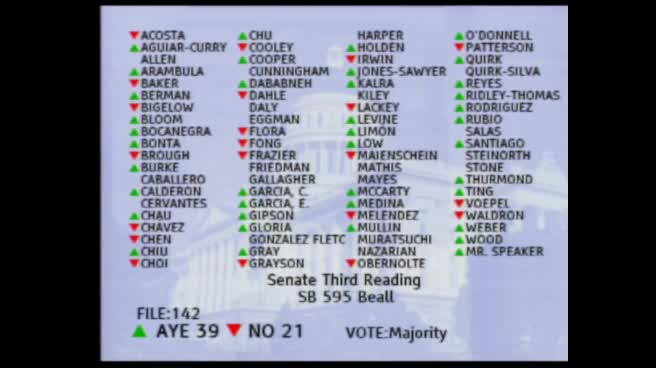 44SEC
Assembly Floor
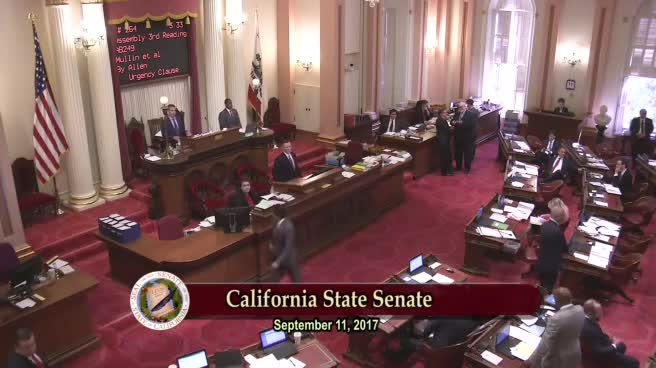 2MIN
Senate Floor
 1H
Senate Standing Committee on Appropriations
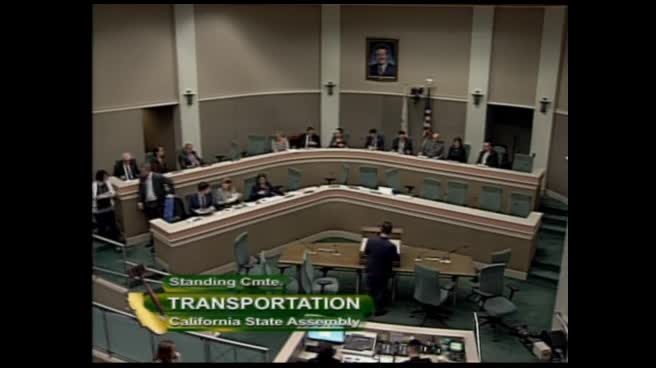 13MIN
Assembly Standing Committee on Transportation
Bill Author

Bill Co-Author(s):