AB 461: Personal income taxes: exclusion: forgiven student loan debt.
- Session Year: 2017-2018
- House: Assembly
- Latest Version Date: 2017-10-06
The Personal Income Tax Law provides various exclusions from gross income in determining tax liability, including an exclusion for the amount of student loan indebtedness repaid or canceled pursuant to a specified federal law, relating to income-based repayment.
This bill would, for taxable years beginning on or after January 1, 2017, and before January 1, 2022, revise this exclusion to include student loan indebtedness canceled, pursuant to federal law, that includes other repayment plans.
This bill would take effect immediately as a tax levy.
The Personal Income Tax Law provides various exclusions from gross income in determining tax liability, including an exclusion for the amount of student loan indebtedness repaid or canceled pursuant to a specified federal law, relating to income-based repayment.
This bill would, for taxable years beginning on or after January 1, 2017, and before January 1, 2022, revise this exclusion to include student loan indebtedness canceled, pursuant to federal law, that includes other repayment plans.
This bill would take effect immediately as a tax levy.
The Personal Income Tax Law provides various exclusions from gross income in determining tax liability, including an exclusion for the amount of student loan indebtedness repaid or canceled pursuant to a specified federal law, relating to income-based repayment.
This bill would, for taxable years beginning on or after January 1, 2017, and before January 1, 2022, revise this exclusion to include student loan indebtedness canceled, pursuant to federal law, that includes other repayment plans.
This bill would take effect immediately as a tax levy.
The Personal Income Tax Law provides various exclusions from gross income in determining tax liability, including an exclusion for the amount of student loan indebtedness repaid or canceled pursuant to a specified federal law, relating to income-based repayment.
This bill would, for taxable years beginning on or after January 1, 2017, expand and before January 1, 2022, revise this exclusion to include student loan indebtedness canceled, pursuant to federal law, that includes other repayment plans.
This bill would take effect immediately as a tax levy.
The Personal Income Tax Law provides various exclusions from gross income in determining tax liability, including an exclusion for the amount of student loan indebtedness repaid or canceled pursuant to a specified federal law, relating to income-based repayment.
This bill would, for taxable years beginning on or after January 1, 2017, expand this exclusion to include student loan indebtedness canceled, pursuant to federal law, that includes other repayment plans.
This bill would take effect immediately as a tax levy.
(a)For taxable years beginning on or after January 1, 2014, gross income shall not include any loan amount repaid by the United States Secretary of Education or canceled pursuant to Section 1098e of Title 20 of the United States Code.
(b)For taxable years beginning on or after January 1, 2017, and before January 1, 2022, gross income shall not include any loan amount repaid by the United States Secretary of Education or canceled pursuant to Section 1087e(e) of Title 20 of the United States Code.
SEC. 2.This act provides for a tax levy within the meaning of Article IV of the California Constitution and shall go into immediate effect.
(a)For taxable years beginning on or after January 1, 2014, gross income shall not include any loan amount repaid by the United States Secretary of Education or canceled pursuant to Section 1098e of Title 20 of the United States Code.
(b)For taxable years beginning on or after January 1, 2017, and before January 1, 2022, gross income shall not include any loan amount repaid by the United States Secretary of Education or canceled pursuant to Section 1087e(e) of Title 20 of the United States Code.
SEC. 2.This act provides for a tax levy within the meaning of Article IV of the California Constitution and shall go into immediate effect.
(a)For taxable years beginning on or after January 1, 2014, gross income shall not include any loan amount repaid by the United States Secretary of Education or canceled pursuant to Section 1098e of Title 20 of the United States Code.
(b)For taxable years beginning on or after January 1, 2017, and before January 1, 2022, gross income shall not include any loan amount repaid by the United States Secretary of Education or canceled pursuant to Section 1087e 1087e(e) of Title 20 of the United States Code.
SEC. 2.This act provides for a tax levy within the meaning of Article IV of the California Constitution and shall go into immediate effect.
(a)For taxable years beginning on or after January 1, 2014, and before January 1, 2017, gross income shall not include any loan amount repaid by the United States Secretary of Education or canceled pursuant to Section 1098e of Title 20 of the United States Code.
(b)For taxable years beginning on or after January 1, 2017, and before January 1, 2022, gross income shall not include any loan amount repaid by the United States Secretary of Education or canceled pursuant to Section 1087e or 1098e of Title 20 of the United States Code.
SEC. 2.This act provides for a tax levy within the meaning of Article IV of the California Constitution and shall go into immediate effect.
(a)For taxable years beginning on or after January 1, 2014, and before January 1, 2017, gross income shall not include any loan amount repaid by the United States Secretary of Education or canceled pursuant to Section 1098e of Title 20 of the United States Code.
(b)For taxable years beginning on or after January 1, 2017, gross income shall not include any loan amount repaid by the United States Secretary of Education or canceled pursuant to Section 1087e or 1098e of Title 20 of the United States Code.
SEC. 2.This act provides for a tax levy within the meaning of Article IV of the California Constitution and shall go into immediate effect.
|
Date
|
Status
|
|---|---|
| Oct 6, 2017 | Chaptered by Secretary of State - Chapter 525, Statutes of 2017. |
| Oct 6, 2017 | Approved by the Governor. |
| Sep 25, 2017 | Enrolled and presented to the Governor at 12 p.m. |
| Sep 14, 2017 | In Assembly. Ordered to Engrossing and Enrolling. |
| Sep 14, 2017 | Read third time. Passed. Ordered to the Assembly. |
| Sep 12, 2017 | Ordered to special consent calendar. |
| Sep 5, 2017 | Read second time. Ordered to third reading. |
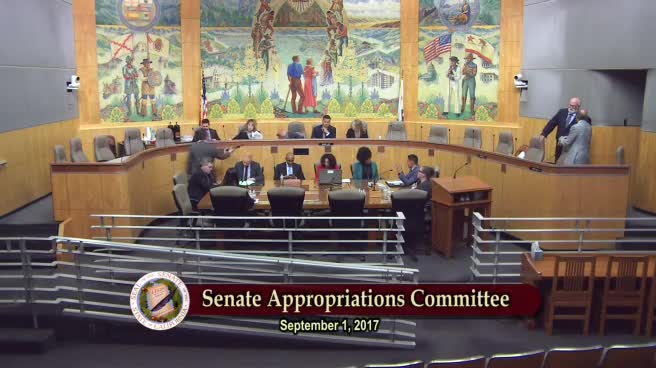
| Sep 1, 2017 | From committee: Do pass. (Ayes 7. Noes 0.) (September 1). |
| Jul 17, 2017 | In committee: Referred to APPR. suspense file. |
| Jul 5, 2017 | From committee: Do pass and re-refer to Com. on APPR. (Ayes 7. Noes 0.) (July 5). Re-referred to Com. on APPR. |
| Jun 14, 2017 | Referred to Com. on GOV. & F. |
| Jun 1, 2017 | In Senate. Read first time. To Com. on RLS. for assignment. |
| May 31, 2017 | Read third time. Passed. Ordered to the Senate. (Ayes 76. Noes 0. Page 1982.) |
| May 30, 2017 | Read second time. Ordered to third reading. |
| May 26, 2017 | From committee: Amend, and do pass as amended. (Ayes 16. Noes 0.) (May 26). |
| Apr 26, 2017 | In committee: Set, first hearing. Referred to APPR. suspense file. |
| Apr 17, 2017 | Re-referred to Com. on APPR. |
| Apr 6, 2017 | Read second time and amended. |
| Apr 5, 2017 | From committee: Amend, and do pass as amended and re-refer to Com. on APPR. with recommendation: To Consent Calendar. (Ayes 10. Noes 0.) (March 27). |
| Mar 20, 2017 | In committee: Hearing postponed by committee. |
| Feb 27, 2017 | Referred to Com. on REV. & TAX. |
| Feb 14, 2017 | From printer. May be heard in committee March 16. |
| Feb 13, 2017 | Read first time. To print. |
|
Date
|
Description
|
Location
|
Votes
|
|
|---|---|---|---|---|
| Sep 14, 2017 | Special Consent Calendar # AB461 | Senate Floor |
Passed |
|
| Sep 1, 2017 | Do pass | Senate Standing Committee on Appropriations |
Passed |
|
| Jul 17, 2017 | Placed on suspense file | Senate Standing Committee on Appropriations |
Passed |
|
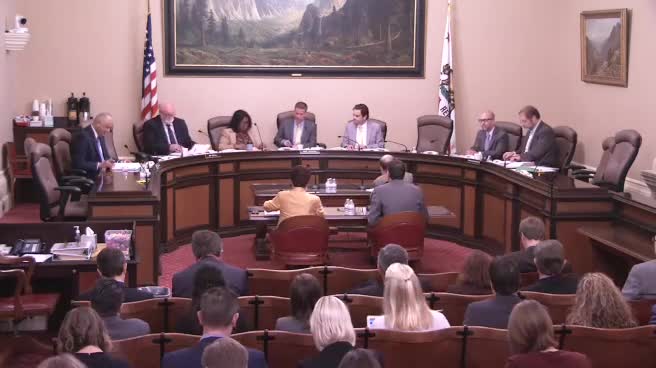
| Jul 5, 2017 | Do pass, but first be re-referred to the Committee on [Appropriations] | Senate Standing Committee on Governance and Finance |
Passed |
|
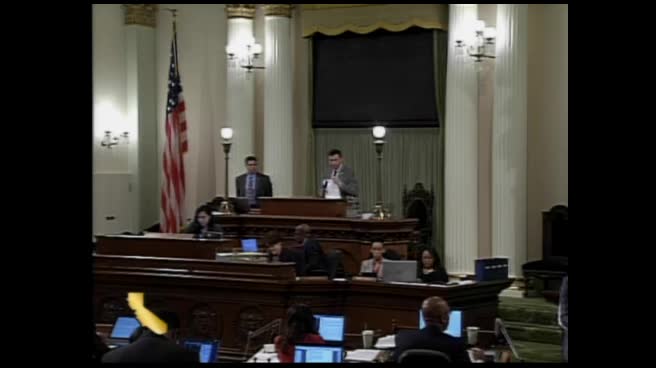
| May 31, 2017 | AB 461 MURATSUCHI Assembly Third Reading | Assembly Floor |
Passed |
|
| May 26, 2017 | Do pass as amended. | Assembly Standing Committee on Appropriations |
Passed |
|
| Mar 27, 2017 | Do pass as amended, and be re-referred to the Committee on [Appropriations] with recommendation: To Consent Calendar | Assembly Standing Committee on Revenue and Taxation |
Passed |
This list shows positions taken on this bill by organizations on the date displayed, which is linked to the original source.
Positions by individuals are not included.
|
Organization
|
Position
|
Date
|
|---|---|---|
| California Academy Of Family Physicians | ** Support | Sep 5, 2017 |
| California Association Of Nonprofits | ** Support | Sep 5, 2017 |
| Faculty Association Of California Community Colleges | ** Support | Sep 5, 2017 |
| The Institute for College Access & Success | ** Support | Sep 5, 2017 |
| Unknown. | ** Against | Jun 30, 2017 |
Office of Senate Floor Analyses (916) 651-1520 Fax: (916) 327-4478 | AB |
THIRD READING
Bill No: AB 461
:
SENATE GOVERNANCE & FIN. COMMITTEE: 7-0, 7/5/17
AYES: McGuire, Nguyen, Beall, Hernandez, Hertzberg, Lara, Moorlach
SENATE APPROPRIATIONS COMMITTEE: 7-0, 9/1/17
AYES: Lara, Bates, Beall, Bradford, Hill, Nielsen, Wiener
ASSEMBLY FLOOR: 76-0, 5/31/17 - See last page for vote
DIGEST:
This bill excludes from gross income, for taxable years beginning on or after January 1, 2017, and before January 1, 2022, student loan debt that is cancelled under income contingent repayment plans for public service and other employees administered by the United States Secretary of Education.
ANALYSIS: Existing law provides, under the Personal Income Tax Law, various exclusions from gross income in determining tax liability, including an exclusion for the amount of student loan indebtedness repaid or canceled pursuant to a specified federal law, relating to income-based repayment.
This bill excludes from gross income, for taxable years beginning on or after January 1, 2017, and before January 1, 2022, student loan debt that is cancelled under ICR plans for public service and other employees administered by the United States Secretary of Education.
Background
Under federal and state law, gross income generally includes the discharge of indebtedness of the taxpayer. Taxpayers do not include borrowed funds in income in the year he or she receives loan proceeds because of the obligation to repay the loan; the taxpayer is financially no better off because the loan must be repaid. When a lender reduces the repayable amount, the taxpayer realizes a gain in his or her financial situation because a portion of the loan proceeds already received and not previously taxed need not be repaid, thereby increasing the taxpayer’s net worth. The taxpayer’s income has increased by the amount forgiven plus interest.
As an exception to this general rule, gross income does not include any amount from the forgiveness (in whole or in part) of certain student loans, provided that the forgiveness is contingent on the student’s working for a certain period of time in certain professions for any of a broad class of employers. California conforms to federal income tax rules with respect to cancellation of student loans as of January 1, 2015 (SB 401, Wolk, 2010)
Income-Based Repayment (IBR) Plans are repayment plans for federal student loans made under the Federal Family Education Loan program and the William D. Ford Federal Direct Loan program that allow borrowers to make payments based on their federal student loan debt and their discretionary income. A borrower qualifies for IBR if he or she has a "partial financial hardship," which may occur if total annual payments, as calculated according to a standard 10-year repayment schedule, are greater than 15% of the amount by which the borrower's adjusted gross (AGI) income exceeds 150% of the poverty line applicable to the borrower's family size. If the borrower has a federal student loan balance remaining after repaying according to the IBR plan for 25 years, the remaining balance will be forgiven. Most debt forgiveness under the IBR is excluded from gross income under federal and state law.
In recent years, the federal government has enacted through law and regulation Income Contingent Repayment (ICR) plans that are similar to the IBR plans but vary in the types of loans that may qualify under the program, and the percentages for calculating a monthly payment. Any borrower can qualify so long as the borrower has eligible loans. Payments are calculated every year based on income, family size, and student loan indebtedness. The maximum repayment period is 25 years. The ICR plans are not excluded from gross income under federal or state law.
The new ICR student loan payment plans intended to be covered by this bill - which include the Pay As You Earn (PAYE) and Revised Pay As You Earn (REPAYE) Plans - have significantly increased the number of individuals participating in loan forgiveness programs. Both PAYE and REPAYE are income driven repayment plans that generally limit a borrower’s payments to 10 percent of discretionary income. Discretionary income is defined as AGI minus 150 percent of the state poverty guideline for the borrower’s state. Remaining balances are generally forgiven under both PAYE and RPAYE after 20 years but are extended to 25 years under the RPAYE if the borrower has a graduate loan.
FISCAL EFFECT: Appropriation: Fiscal Com.: Local:
According to the Senate Appropriations Committee, the Franchise Tax Board estimates that this bill would result in a General Fund revenue loss of $6,000 in 2018-19, $30,000 in 2019-20, and $30,000 in 2020-21.
The debt forgiveness under this bill’s student loan repayment plans does not occur until the borrower has successfully completed the program. Thus, the bulk of this debt forgiveness cannot be determined until 2032, which is the first year debt can be forgiven under the programs. Because this bill sunsets on January 1, 2022, it would not grant a state income exclusion for debt forgiven under these plans. However, it would create a cost pressure as it would establish an expectation that the state ultimately will exclude the debt forgiveness from income at that time.
California Academy of Family Physicians
California Association of Nonprofits
Faculty Association of California Community Colleges
The Institute for College Access & Success
OPPOSITION: (Verified 8/29/17)
ASSEMBLY FLOOR: 76-0, 5/31/17
AYES: Acosta, Aguiar-Curry, Travis Allen, Arambula, Baker, Berman, Bigelow, Bloom, Bocanegra, Bonta, Brough, Burke, Caballero, Calderon, Cervantes, Chau, Chávez, Chiu, Chu, Cooley, Cooper, Cunningham, Dababneh, Dahle, Daly, Flora, Fong, Frazier, Friedman, Gallagher, Cristina Garcia, Eduardo Garcia, Gipson, Gloria, Gomez, Gonzalez Fletcher, Gray, Grayson, Harper, Holden, Irwin, Jones-Sawyer, Kalra, Kiley, Lackey, Levine, Limón, Low, Maienschein, Mathis, Mayes, McCarty, Medina, Mullin, Muratsuchi, Nazarian, Obernolte, O'Donnell, Patterson, Quirk, Quirk-Silva, Reyes, Ridley-Thomas, Rodriguez, Rubio, Salas, Santiago, Steinorth, Mark Stone, Thurmond, Ting, Voepel, Waldron, Weber, Wood, Rendon
NO VOTE RECORDED: Chen, Choi, Eggman, Melendez
9/5/17 9:48:32
**** END ****
SENATE COMMITTEE ON
Senator Ricardo Lara, Chair
2017 - 2018 Regular Session
AB 461 (Muratsuchi) - Personal income taxes: exclusion: forgiven student loan debt
Version: | Policy Vote: |
Urgency: | Mandate: |
Hearing Date: | Consultant: |
This bill meets the criteria for referral to the Suspense File.
Bill Summary:
AB 461 would exclude from gross income, for taxable years 2017 through 2021, student loan debt that is cancelled under income-contingent repayment plans for public service employees that are administered by the United States Secretary of Education.
Fiscal Impact:
The Franchise Tax Board (FTB) estimates that this bill would result in a General Fund revenue loss of $6,000 in 2018-19, $30,000 in 2019-20, and $30,000 in 2020-21.
The debt forgiveness under the bill’s student loan repayment plans does not occur until the borrower has successfully completed the program. Thus, the bulk of this debt forgiveness cannot be determined until 2032, which is the first year debt can be forgiven under the programs. Because this bill would sunset on January 1, 2022, it would not grant a state income exclusion for debt forgiven under these plans. However, it would create a cost pressure as it would establish an expectation that the state ultimately will exclude the debt forgiveness from income at that time.
Background:
Under federal and state tax law, gross income generally includes the discharge of taxpayer indebtedness. Taxpayers do not include borrowed funds in income in the year they receive loan proceeds because of the obligation to repay the loan; thus, the taxpayer is financially no better off because the loan must be repaid. When lenders reduce the repayable amount, taxpayers realize a gain in their financial situation because a portion of the loan proceeds already received and not previously taxed need not be repaid, thereby increasing the taxpayer’s net worth.
As an exception to this general rule, gross income does not include any amount from the forgiveness (in whole or in part) of certain student loans, provided that the forgiveness is contingent on the student’s working for a certain period of time in certain professions for any of a broad class of employers. California conforms to federal income tax rules with respect to cancellation of student loans as of January 1, 2015.
Income-Based Repayment (IBR) plans are repayment plans for federal student loans made under the Federal Family Education Loan (FFEL) program and the William D. Ford Federal Direct Loan program that allow borrowers to make payments based on (1) their federal student loan debt, and (2) their discretionary income. Borrowers qualify for IBR if they have a "partial financial hardship," which may occur if total annual payments, as calculated according to a standard 10-year repayment schedule, are greater than 15 percent of the amount by which the borrower's adjusted gross (AGI) income exceeds 150 percent of the poverty line applicable to the borrower's family size. If the borrower has a federal student loan balance remaining after repaying according to the IBR plan for 25 years, the remaining balance will be forgiven. Most debt forgiveness under the IBR is excluded from gross income under federal and state law.
In recent years, the federal government has enacted Income Contingent Repayment (ICR) Plans that are similar to the IBR plans but vary in (1) the types of loans that may qualify under the program, and (2) the percentages for calculating a monthly payment. Any borrower can qualify so long as the borrower has eligible loans. Payments are calculated every year based on income, family size, and student loan indebtedness. The ICR plans are not excluded from gross income under federal or state law.
The new ICR student loan payment plans intended to be covered by this bill - which include the Pay As You Earn (PAYE) and Revised Pay As You Earn (REPAYE) Plans - have significantly increased the number of individuals participating in loan forgiveness programs. Both PAYE and REPAYE are income driven repayment plans that generally limit a borrower’s payments to 10 percent of discretionary income. Discretionary income is defined as AGI minus 150 percent of the state poverty guideline for the borrower’s state. Remaining balances are generally forgiven under both PAYE and RPAYE after 20 years but are extended to 25 years under the RPAYE if the borrower has a graduate loan.
Proposed Law:
This bill would exclude from gross income, for taxable years 2017 through 2021, student loan debt that is cancelled under ICR plans for public service employees that are administered by the United States Secretary of Education.
Staff Comments:
Under federal law, the earliest point that qualified student debt may be forgiven under this type of repayment plan is 2019; consequently, revenues would not be impacted until 2018-19. Based on a proration of the Joint Committee on Taxation (JCT) estimates, FTB estimates that the revenue loss to California from this proposal would be approximately $6,000 in 2018-19, $30,000 in 2019-20, $30,000 in 2020-21, and $10,000 in 2021-22.
As noted above, this bill would sunset on January 1, 2022. The first year that eligible students using ICR, PAYE or REPAYE plans can have remaining unpaid student loan debt discharged will be 2032; consequently, the bill would not provide tax relief to anyone using these plans. However, this bill would create the expectation that such debt relief will be provided in the future, therefore creating cost pressures on the State.
-- END --
SENATE COMMITTEE ON GOVERNANCE AND FINANCE
Senator Mike McGuire, Chair
2017 - 2018 Regular
Bill No: | AB 461 | Hearing Date: | 7/5/17 |
Author: | Muratsuchi | Tax Levy: | Yes |
Version: | 5/26/17 | Fiscal: | Yes |
Consultant: | Shea | ||
Personal income taxes: exclusion: forgiven student loan debt
Excludes from gross income, for the 2017 until 2022 taxable years, beginning on or after January 1, 2017, and before January 1, 2022, student loan debt that is cancelled under income-contingent repayment plans for public service employees that are administered by the United States Secretary of Education (SSE).
Background
Under federal and state law, gross income generally includes the discharge of indebtedness of the taxpayer. Taxpayers do not include borrowed funds in income in the year he or she receives loan proceeds because of the obligation to repay the loan; the taxpayer is financially no better off because the loan must be repaid. When lenders reduce the repayable amount, the taxpayer realizes a gain in his or her financial situation because a portion of the loan proceeds already received and not previously taxed need not be repaid, thereby increasing the taxpayer’s net worth. The taxpayer’s income has increased by the amount forgiven plus interest.
As an exception to this general rule, gross income does not include any amount from the forgiveness (in whole or in part) of certain student loans, provided that the forgiveness is contingent on the student’s working for a certain period of time in certain professions for any of a broad class of employers. California conforms to federal income tax rules with respect to cancellation of student loans as of January 1, 2015 (SB 401, Wolk, 2010)
Income-Based Repayment (IBR) Plans. The IBR plans are repayment plans for federal student loans made under the Federal Family Education Loan (FFEL) program and the William D. Ford Federal Direct Loan program that allow borrowers to make payments based on their federal student loan debt and their discretionary income. A borrower qualifies for IBR if he or she has a "partial financial hardship," which may occur if total annual payments, as calculated according to a standard 10-year repayment schedule, are greater than 15% of the amount by which the borrower's adjusted gross (AGI) income exceeds 150% of the poverty line applicable to the borrower's family size. If the borrower has a federal student loan balance remaining after repaying according to the IBR plan for 25 years, the remaining balance will be forgiven. Most debt forgiveness under the IBR is excluded from gross income under federal and state law.
Income Contingent Repayment (ICR) Plans. In recent years, the federal government has enacted through law and regulation, ICR plans that are similar to the IBR plans but vary in the types of loans that may qualify under the program, and the percentages for calculating a monthly payment. Any borrower can qualify so long as the borrower has eligible loans. Payments are calculated every year based on income, family size, and student loan indebtedness. Specifically, payments are the lesser of 20% of discretionary income divided by 12 or what the borrower would have paid on a repayment plan with a fixed payment over the course of 12 years. The maximum repayment period is 25 years. The ICR plans are not excluded from gross income under federal or state law.
The new ICR student loan payment plans intended to be covered by this bill - which include the Pay As You Earn (PAYE) and Revised Pay As You Earn (REPAYE) Plans - have significantly increased the number of individuals participating in loan forgiveness programs. The author wants to exclude debt forgiveness under these programs from state taxation.
Proposed Law
Assembly Bill 461 excludes from gross income, for taxable years beginning on or after January 1, 2017, and before January 1, 2022, student loan debt that is cancelled under ICR plans for public service employees that are administered by the United States Secretary of Education (SSE).
State Revenue Impact
Technically, the debt forgiveness under the ICR student loan repayment plans intended to be covered by this bill does not occur until the borrower has successfully completed the program. The bulk of this debt forgiveness, under the PAYE and REPAYE programs, cannot be determined until 2032, which is the first year debt can be forgiven under the program. Inasmuch as this bill sunsets on January 1, 2022, it would not grant a state income exclusion for debt forgiven under the ICR plans. However, the bill would establish an expectation that the state ultimately will exclude the debt forgiveness from income.
FTB estimates that a modest amount of debt forgiveness would occur under other ICR programs that would have a minor effect on state revenues in 2018-19 ($6,000) and 2019-20 ($30,000).
Comments
1. Purpose of the bill. According to the author, “Student loan debt is a growing concern in our state and nation. Several student loan forgiveness programs are offered by the U.S. Department of Education, which cancel outstanding loan debt once a maximum repayment period has been reached. Students who are enrolling in federal Pay As You Earn (PAYE) and Revised Pay As You Earn (REPAYE) plans frequently have a partial financial hardship, meaning that the standard loan payment would exceed a certain portion of their discretionary income. These individuals usually do not possess the financial means to make full or regular payments on their loans and enroll in these programs to get a lowered payment immediately to help them stay afloat. AB 461 would ensure that individuals will not incur a state tax liability once their loans.
2. Out of Conformity. Generally, when the federal government changes its tax laws, California enacts its own conformity legislation to reduce differences between the two codes, thereby easing the tax preparation burden on taxpayers, tax preparers, and the Franchise Tax Board (FTB). As noted above, California conforms to federal law with respect to the taxability of student loan forgiveness. In general, state conformity with federal law promotes greater simplicity and eases administration of complex tax laws. By excluding all loan amounts repaid by the SSE or cancelled pursuant to IRC 1087e(e) from gross income, this bill would take California out of conformity with federal law. Student borrowers would still be liable for federal taxes. AB 461’s extension a state benefit in absence of similar federal treatment may confuse taxpayers, who are not used to different treatment of the same income. The Committee may wish to consider whether the precedent AB 461 creates, and whether the distance it creates between federal and state tax law is worth the benefit for affected taxpayers.
Assembly Actions
Assembly Revenue and Taxation 10-0
Assembly Appropriations 16-0
Assembly Floor 76-0
Support and Opposition
(6/29/17)
Support: California Association of Nonprofits; California Academy of Family Physicians; Faculty Association of California Community Colleges; The Institute for College Access & Success
Opposition: Unknown.
-- END --
ASSEMBLY THIRD READING
ATR Bill Id:AB 461
Author:(Muratsuchi)
As Amended Ver:May 26, 2017
Majority vote. Tax levy
Committee | Votes | Ayes | Noes |
Revenue & Taxation | 10-0 | Ridley-Thomas, Brough, Travis Allen, Bocanegra, Burke, Chen, Dababneh, Gipson, Mullin, Quirk | |
Appropriations | 16-0 | Gonzalez Fletcher, Bigelow, Bloom, Bocanegra, Bonta, Brough, Calderon, McCarty, Quirk, Fong, Friedman, Gallagher, Eduardo Garcia, Gray, Muratsuchi, Reyes |
|
SUMMARY: Excludes loan amounts repaid by the United States Secretary of Education (SSE) or canceled pursuant to Education Code (EC) Section 1087e(e) from gross income. Specifically, this bill provides that gross income shall not include amounts canceled, on or after January 1, 2017, and before January 1, 2022, pursuant to United State Code, Title 20, EC Section 1087e(e).
EXISTING FEDERAL LAW:
- Provides that "gross income" includes all income from whatever source derived, including compensation for services, business income, gains from property, interest, dividends, rents, and royalties, unless specifically excluded.
- Provides, under the Public Service Loan Forgiveness (PSLF) program, for the cancellation of debt if a borrower, with eligible student loan debt, has made 120 monthly payments while employed in a public service job (EC Section 1087(e).)
- Provides that in the case of an individual, gross income does not include any amount that would be included by reason of discharge of any student debt if such discharge was pursuant to a provision of such loan under which all or part of the indebtedness of the individual would be discharged if the individual worked for a certain period of time in certain professions for any of a broad class of employers. (Internal Revenue Code (IRC) Section 108(f).)
EXISTING STATE LAW
- Conforms, with some modifications, to federal income tax rules relating to the cancellation of student loans as of a specified date. (Revenue and Taxation Code (R&TC) Sections 17024.5 and 17132)
- Excludes loan amounts repaid by the SSE or canceled pursuant to EC Section 1098(e), relating to Income Based Repayment (IBR).
FISCAL EFFECT: According to the Assembly Appropriations Committee, modest ongoing General Fund cost pressures in excess of $150,000 by 2032-33 that reflect potential revenue loss associated with student loan debt forgiveness. Specifically:
- The new student loan payment plans intended to be covered by this bill – the Income Contingent Repayment (ICR) Plan and the Pay As You Earn (PAYE) and Revised Pay As You Earn (REPAYE) Plans – have significantly increased the number of individuals participating in loan forgiveness programs. However, it cannot yet be determined the amount of forgiven debt there will be because 2032 will be the first year any student may be eligible under these payment plans.
However, evidence from other student loan repayment plans suggests that costs will be in excess of $150,000. This bill is similar to SB 1271 (Evans), Chapter 841, Statutes of 2014, which excluded from gross income the student debt forgiven under the Income Based Repayment (IBR). The costs associated with that bill are expected to exceed $100,000 by 2023-24. However, since the enactment of SB 1271, the number of students participating in loan forgiveness programs has increased substantially, suggesting that costs will be considerably higher overall for AB 461.
- This bill will sunset on January 1, 2022. Because the first year that eligible students using ICR, PAYE or REPAYE Plans can have remaining unpaid student loan debt discharged will be 2032, this bill, as drafted, does not provide tax relief to anyone. However, this bill will create the expectation that such debt relief will exist, therefore creating cost pressures on the state.
COMMENTS:
- The author has provided the following statement in support of this bill:
Student loan debt is a growing concern in our state and nation. Several student loan forgiveness programs are offered by the U.S. Department of Education, which cancel outstanding loan debt once a maximum repayment period has been reached. Students who are enrolling in federal Pay As You Earn (PAYE) and Revised Pay As You Earn (REPAYE) plans frequently have a partial financial hardship, meaning that the standard loan payment would exceed a certain portion of their discretionary income. These individuals usually do not possess the financial means to make full or regular payments on their loans and enroll in these programs to get a lowered payment immediately to help them stay afloat. AB 461 would ensure that individuals will not incur a state tax liability once their loans are forgiven under these federal programs.
- Supporters state that an "estimated 180,000 nonprofit employees in California alone carry student debt. Under current law, when most student loans are forgiven, the forgiven debt is viewed as taxable income. This creates an added financial hardship, especially for lower-income students." According to supporters, this bill "would greatly help those who are least able to pay their student loan debt."
- Committee Staff Comments:
- What Does this Bill Do? Existing law already excludes from gross income debt that is forgiven under IBR. This bill would extend that exclusion for amounts canceled under the Income Driven Repayment (IDR) Plans, which include the Income Contingent Repayment (ICR) plan, the PAYE plan, and the RPAYE plan.
- IBR Programs: The IBR plan is a repayment plan for federal student loans made under the Federal Family Education Loan (FFEL) program and the William D. Ford Federal Direct Loan program that allows borrowers to make payments based on their federal student loan debt and their discretionary income. A borrower qualifies for IBR if he or she has a "partial financial hardship," which may occur if total annual payments, as calculated according to a standard 10-year repayment schedule, are greater than 15% of the amount by which the borrower's adjusted gross (AGI) income exceeds 150% of the poverty line applicable to the borrower's family size. If a borrower's AGI increases to the point where the borrower no longer has a partial financial hardship, the borrower's monthly payment will increase to the amount that would have been required based on a standard 10-year repayment schedule. If the borrower has a federal student loan balance remaining after repaying according to the IBR plan for 25 years, the remaining balance will be forgiven. California law provides that amounts forgiven under IBR will be excluded from gross income.
- ICR Program: The ICR plan is similar to the IBR plan but varies in the types of loans that may qualify under the program and the percentages for calculating a monthly payment. Specifically, unlike the IBR program, loans made under the FFEL are not eligible. Any borrower can qualify so long as the borrower has eligible loans. Payments are calculated every year based on income, family size, and student loan indebtedness. Specifically, payments are the lesser of 20% of discretionary income divided by 12 or what the borrower would have paid on a repayment plan with a fixed payment over the course of 12 years. The maximum repayment period is 25 years.
- Pay as You Earn (PAYE)/Revised Pay as You Earn (RPAYE): Both PAYE and RPAYE are income driven repayment plans that generally limit a borrower's payments to 10% of discretionary income. Discretionary income is defined as AGI minus 150% of the state poverty guideline for the borrower's state. Remaining balances are generally forgiven under both PAYE and RPAYE after 20 years but are extended to 25 years under the RPAYE if the borrower has a graduate loan.
- Taxable/Non-Taxable Loan Forgiveness: In general, the IDR plans allow borrowers to have their loans forgiven within 25 years depending on when the loans were taken out and the specific repayment plan that is elected. Existing law defines "gross income" as including all income from whatever source derived unless specifically excluded. IRC Section 108(f) provides that gross income does not include a discharge of student debt if it is dependent upon the borrower working for a certain period of time in certain professions for a broad class of employers.
Under the PSLF program, individuals are encouraged to enter full-time public service employment by forgiving the remaining balance of their qualifying student loans after they have made 120 qualifying payments while employed full-time by a public service organization or governmental entity. As such, loans forgiven as part of the PSLF program, which can include IDR plans, are not taxable because the program requires a borrower to work for certain employers for a specified period of time. On the other hand, because the IDR plans, by themselves, do not require a borrower to work for a specified period of time or for a specified employer, loans forgiven after the maximum 25 year payment plan are includible in gross income and subject to tax.
- Rationale for Taxing Forgiven Debt: The practice of taxing debt cancellation reflects sound tax policy because it recognizes the fact that an individual's net worth has increased by the cancellation of debt. According to Commissioner v. Glenshaw, the Court defined "income" as an accession to wealth that is clearly realized and over which the taxpayer has complete dominion. (Commissioner v. Glenshaw Glass Co., 348 U.S. 426, 431 (1955).) When debt is cancelled, money that would have been used to pay that loan is now free to be used on whatever the taxpayer wants. Therefore, because certain assets have been freed, the taxpayer has experienced an accession to wealth.
Additionally, under the rule of symmetry, a loan is not considered income to the borrower nor is it a deduction to the lender. A borrower's increased wealth when the loan is taken out is also offset by the obligation to pay the same amount. If the debt is cancelled, the symmetry is destroyed. The borrower is in a much better position after the debt is cancelled. Additionally, as noted by Debora A. Grier, Professor of Law of Cleveland State University, in her statement before the United States Senate Committee on Finance, without this tax rule, "the borrower will have received permanently tax-free cash in the year of the original receipt," i.e. the year in which the borrower received the loan.
- Out of Conformity. As noted above, California conforms to federal law with respect to the taxability of student loan forgiveness. In general, state conformity with federal law promotes greater simplicity and eases administration of complex tax laws. By excluding all loan amounts repaid by the SSE or cancelled pursuant to EC Section 1087e(e) from gross income, this bill would take California out of conformity with federal law. Student borrowers would still be liable for federal taxes.
Analysis Prepared by: Carlos Anguiano / REV. & TAX. / (916) 319-2098 FN: 0000851
Date of Hearing: April 26, 2017
ASSEMBLY COMMITTEE ON APPROPRIATIONS
Lorena Gonzalez Fletcher, Chair
ABPCA Bill Id:AB 461
Author:(Muratsuchi) – As Amended Ver:April 6, 2017
Policy Committee: | Revenue and Taxation | Vote: | 10 - 0 |
Urgency: No State Mandated Local Program: No Reimbursable: No
SUMMARY:
This bill excludes, beginning on or after January 1, 2017, and before January 1, 2022, student loan amounts repaid by the United States Secretary of Education (SSE) or canceled pursuant to Education Code (EC) Section 1087(e), from gross income.
FISCAL EFFECT:
Modest ongoing General Fund cost pressures in excess of $150,000 by 2032-33 that reflect potential revenue loss associated with student loan debt forgiveness. Specifically:
- The new student loan payment plans intended to be covered by this bill – theIncome Contingent Repayment (ICR) Plan and the Pay As You Earn (PAYE) and Revised Pay As You Earn (REPAYE) Plans– have significantly increased the number of individuals participating in loan forgiveness programs. However, it cannot yet be determined the amount of forgiven debt there will be because 2032 will be the first year any student may be eligible under these payment plans.
However, evidence from other student loan repayment plans suggests that costs will be in excess of $150,000. AB 461 is similar to SB 1271 (Evans), Chapter 841, Statutes of 2014, which excluded from gross income the student debt forgiven under the Income Based Repayment (IBR). The costs associated with that bill are expected to exceed $100,000 by 2023-24. However, since the enactment of SB 1271, the number of students participating in loan forgiveness programs has increased substantially, suggesting that costs will be considerably higher overall for AB 461.
- This bill will sunset on January 1, 2022. Because the first year that eligible students using ICR, PAYE or REPAYE Plans can have remaining unpaid student loan debt discharged will be 2032, AB 461, as drafted, does not provide tax relief to anyone. However, this bill will create the expectation that such debt relief will exist, therefore creating cost pressures on the state.
COMMENTS:
- Background. Students face a confusing patchwork of student loan repayment options. Depending on which repayment option a student uses, the debt relief that is provided at the end of the repayment plan may be subject to state income tax or not. For example, the Income Based Repayment (IBR) plan applies to student loans made under the Federal Family Education Loan (FFEL) program and the William D. Ford Federal Loan program, and the IBR plan allows certain borrowers with financial hardship to pay an amount based on their discretionary income. After 25 years, the remaining balance will be forgiven and California law provides that this amount is not taxable. The same rule applies to students repaying their debt as part of the Public Service Loan Forgiveness Plan (PSLF), which forgives remaining debt after 120 monthly payments made while working for qualified public service employers. That forgiven debt, like for the IBR Plan, is not subject to state income tax.
- ICR. The ICR plan is similar to the IBR plan but varies in the types of loans that may qualify under the program and the percentages for calculating a monthly payment, and any borrower can qualify so long as the borrower has eligible loans. Payments are calculated every year based on income, family size, and student loan indebtedness. Specifically, payments are the lesser of 20% of discretionary income divided by 12 or what the borrower would have paid on a repayment plan with a fixed payment over the course of 12 years. The maximum repayment period is 25 years.
- PAYE and REPAYE. Both PAYE and REPAYE are income driven repayment plans that generally limit a borrower’s payments to 10% of discretionary income. Discretionary income is defined as AGI minus 150% of the state poverty guideline for the borrower’s state. Remaining balances are generally forgiven under both PAYE and RPAYE after 20 years but are extended to 25 years under the RPAYE if the borrower has a graduate loan.
- Staff Comments.
- As drafted, it is unclear if AB 461 will result in tax-free discharged student debt for the repayment plans targeted. For instance, the PAYE and REPAYE repayment plans were created through the regulatory process, not legislative, and the regulations establishing those repayment plans do not refer exclusively the code section referenced in this bill.
- Recent policy committee amendments added a sunset provision to AB 461. Because there will not be any eligible student loan forgiveness within the next five years under the programs that AB 461 aims to reach, this sunset provision means that no tax relief will actually be provided. However, experiences with other tax expenditures with sunsets indicate that this sunset will be extended. As a result, there is an expectation that this tax expenditure will exist in future years when student loan debt will be forgiven, thereby creating cost pressures for the state.
Analysis Prepared by: Luke Reidenbach / APPR. / (916) 319-2081
Date of Hearing: March 27, 2017
ASSEMBLY COMMITTEE ON REVENUE AND TAXATION
Sebastian Ridley-Thomas, Chair
ABPCA Bill Id:AB 461 (
Author:Muratsuchi) – As Introduced Ver:February 13, 2017
Majority vote. Tax Levy. Fiscal committee.
SUBJECT: Personal income taxes: exclusion: forgiven student loan debt
SUMMARY: Excludes, beginning on or after January 1, 2017, loan amounts repaid by the United States Secretary of Education (SSE) or canceled pursuant to Education Code (EC) Section 1087(e) from gross income. Specifically, this bill provides that gross income shall not include amounts canceled, on or after January 1, 2017, pursuant to United State Code, Title 20, EC Section 1087(e).
EXISTING FEDERAL LAW:
- Provides that "gross income" includes all income from whatever source derived, including compensation for services, business income, gains from property, interest, dividends, rents, and royalties, unless specifically excluded.
- Provides, under the Public Service Loan Forgiveness (PSLF) program, for the cancellation of debt if a borrower, with eligible student loan debt, has made 120 monthly payments while employed in a public service job (EC Section 1087(e).)
- Provides that in the case of an individual, gross income does not include any amount that would be included by reason of discharge of any student debt if such discharge was pursuant to a provision of such loan under which all or part of the indebtedness of the individual would be discharged if the individual worked for a certain period of time in certain professions for any of a broad class of employers. (Internal Revenue Code (IRC) Section 108(f).)
EXISTING STATE LAW
- Conforms, with some modifications, to federal income tax rules relating to the cancellation of student loans as of a specified date. (Revenue and Taxation Code (R&TC) Sections 17024.5 and 17132)
- Excludes loan amounts repaid by the SSE or canceled pursuant to EC Section 1098(e), relating to Income Based Repayment (IBR).
FISCAL EFFECT: The Franchise Tax Board’s revenue estimate for this bill is currently pending.
COMMENTS:
- The author has provided the following statement in support of this bill:
Student loan debt is a growing concern in our state and nation. Several student loan forgiveness programs are offered by the U.S. Department of Education, which cancel outstanding loan debt once a maximum repayment period has been reached. Students who are enrolling in federal Pay As You Earn (PAYE) and Revised Pay As You Earn (REPAYE) plans frequently have a partial financial hardship, meaning that the standard loan payment would exceed a certain portion of their discretionary income. These individuals usually do not possess the financial means to make full or regular payments on their loans and enroll in these programs to get a lowered payment immediately to help them stay afloat. AB 461 would ensure that individuals will not incur a state tax liability once their loans are forgiven under these federal programs.
- Supporters state that an “estimated 180,000 nonprofit employees in California alone carry student debt. Under current law, when most student loans are forgiven, the forgiven debt is viewed as taxable income. This creates an added financial hardship, especially for lower-income students.” According to supporters, this bill “would greatly help those who are least able to pay their student loan debt.”
- Committee Staff Comments:
- What Does this Bill Do? Existing law already excludes from gross income debt that is forgiven under IBR. This bill would extend that exclusion for amounts canceled under the Income Driven Repayment (IDR) Plans, which include the Income Contingent Repayment (ICR) plan, the PAYE plan, and the RPAYE plan. Unfortunately, concerns have been raised with respect to whether EC Section 1087(e) appropriately covers ICR, PAYE, and RPAYE. Regulations establishing PAYE and RPAYE refer to the entire William D. Ford Direct Student Loan Program (EC Sections 1087(a)-(j)). As such, the author may wish to provide clarity with respect to the programs that are to be included within this exclusion.
- IBR Programs: The IBR plan is a repayment plan for federal student loans made under the Federal Family Education Loan (FFEL) program and the William D. Ford Federal Direct Loan program that allows borrowers to make payments based on their federal student loan debt and their discretionary income. A borrower qualifies for IBR if he or she has a "partial financial hardship," which may occur if total annual payments, as calculated according to a standard 10-year repayment schedule, are greater than 15% of the amount by which the borrower’s adjusted gross (AGI) income exceeds 150% of the poverty line applicable to the borrower’s family size. If a borrower's AGI increases to the point where the borrower no longer has a partial financial hardship, the borrower's monthly payment will increase to the amount that would have been required based on a standard 10-year repayment schedule. If the borrower has a federal student loan balance remaining after repaying according to the IBR plan for 25 years, the remaining balance will be forgiven. California law provides that amounts forgiven under IBR will be excluded from gross income.
- ICR Program: The ICR plan is similar to the IBR plan but varies in the types of loans that may qualify under the program and the percentages for calculating a monthly payment. Specifically, unlike the IBR program, loans made under the FFEL are not eligible. Any borrower can qualify so long as the borrower has eligible loans. Payments are calculated every year based on income, family size, and student loan indebtedness. Specifically, payments are the lesser of 20% of discretionary income divided by 12 or what the borrower would have paid on a repayment plan with a fixed payment over the course of 12 years. The maximum repayment period is 25 years.
- Pay as You Earn (PAYE)/Revised Pay as You Earn (RPAYE): Both PAYE and RPAYE are income driven repayment plans that generally limit a borrower’s payments to 10% of discretionary income. Discretionary income is defined as AGI minus 150% of the state poverty guideline for the borrower’s state. Remaining balances are generally forgiven under both PAYE and RPAYE after 20 years but are extended to 25 years under the RPAYE if the borrower has a graduate loan.
- Taxable/Non-Taxable Loan Forgiveness: In general, the IDR plans allow borrowers to have their loans forgiven within 25 years depending on when the loans were taken out and the specific repayment plan that is elected. Existing law defines "gross income" as including all income from whatever source derived unless specifically excluded. IRC Section 108(f) provides that gross income does not include a discharge of student debt if it is dependent upon the borrower working for a certain period of time in certain professions for a broad class of employers.
Under the PSLF program, individuals are encouraged to enter full-time public service employment by forgiving the remaining balance of their qualifying student loans after they have made 120 qualifying payments while employed full-time by a public service organization or governmental entity. As such, loans forgiven as part of the PSLF program, which can include IDR plans, are not taxable because the program requires a borrower to work for certain employers for a specified period of time. On the other hand, because the IDR plans, by themselves, do not require a borrower to work for a specified period of time or for a specified employer, loans forgiven after the maximum 25 year payment plan are includible in gross income and subject to tax.
- Rationale for Taxing Forgiven Debt: The practice of taxing debt cancellation reflects sound tax policy because it recognizes the fact that an individual's net worth has increased by the cancellation of debt. According to Commissioner v. Glenshaw, the Court defined "income" as an accession to wealth that is clearly realized and over which the taxpayer has complete dominion. (Commissioner v. Glenshaw Glass Co., 348 U.S. 426, 431 (1955).) When debt is cancelled, money that would have been used to pay that loan is now free to be used on whatever the taxpayer wants. Therefore, because certain assets have been freed, the taxpayer has experienced an accession to wealth.
Additionally, under the rule of symmetry, a loan is not considered income to the borrower nor is it a deduction to the lender. A borrower's increased wealth when the loan is taken out is also offset by the obligation to pay the same amount. If the debt is cancelled, the symmetry is destroyed. The borrower is in a much better position after the debt is cancelled. Additionally, as noted by Debora A. Grier, Professor of Law of Cleveland State University, in her statement before the United States Senate Committee on Finance, without this tax rule, "the borrower will have received permanently tax-free cash in the year of the original receipt," i.e. the year in which the borrower received the loan.
- Out of Conformity. As noted above, California conforms to federal law with respect to the taxability of student loan forgiveness. In general, state conformity with federal law promotes greater simplicity and eases administration of complex tax laws. By excluding all loan amounts repaid by the SSE or cancelled pursuant to EC Section 1087(e) from gross income, this bill would take California out of conformity with federal law. Student borrowers would still be liable for federal taxes.
REGISTERED SUPPORT / OPPOSITION:
Support
California Association of Nonprofits
Opposition
None on file
Analysis Prepared by: Carlos Anguiano / REV. & TAX. / (916) 319-2098
Discussed in Hearing
 1H
Senate Standing Committee on Appropriations
 4MIN
Senate Standing Committee on Governance and Finance
 1MIN
Assembly Floor
 1H
Assembly Standing Committee on Appropriations
Bill Author
Bill Co-Author(s):