AB 471: Alcoholic beverages: licenses: new original on-sale general licenses for bona fide public eating places: neighborhood-restricted special on-sale general licenses.
- Session Year: 2017-2018
- House: Assembly
- Latest Version Date: 2017-10-03
The Alcoholic Beverage Control Act, administered by the Department of Alcoholic Beverage Control, regulates the sale and distribution of alcoholic beverages and the granting of licenses for the manufacture, distribution, and sale of alcoholic beverages within the state. The act also provides for a limitation on the amount of on-sale general licenses that may be issued by the department based on the population of the county in which the licensed premises are located, as provided. Existing law provides an exception to this limitation for the County of Napa and authorizes the department to issue 5 additional new original on-sale general licenses per year for bona fide public eating places with a seating capacity for 25 or more diners, for a period of one year. Existing law, beginning January 1, 2017, also provides an exception to the license limitation for a county of the 6th class, as specified, for 5 new original neighborhood-restricted special on-sale general licenses for premises located within specified census tracts in that county, subject to specified requirements. Existing law requires an applicant to, among other things, submit a signed verification by the local government body that states that the applicant has completed a required preapplication meeting regarding the issuance of the license.
This bill, beginning January 1, 2018, would provide for an exception to the limitation for the County of Napa and authorize the department to issue no more than 5 additional new original on-sale general licenses to bona fide public eating places per year with a seating capacity for 25 or more diners, for a period of 4 years.
This bill would revise the exception relating to a county of the 6th class by authorizing the department to issue 5 new original neighborhood-restricted special on-sale general licenses, as specified, each year until a total of 30 of these licenses are issued and sets a limit to how many neighborhood-restricted special on-sale general licenses may be issued per a census tract or tracts within that county. The bill would include additional restrictions as to who may apply for the license and would authorize, with regard to the signed verification described above, the verification to be signed by the designated subordinate officer or body of the local governing body.
This bill would make legislative findings and declarations as to the necessity of a special statute for the County of Napa and for the City and County of San Francisco.
The Alcoholic Beverage Control Act, administered by the Department of Alcoholic Beverage Control, regulates the sale and distribution of alcoholic beverages and the granting of licenses for the manufacture, distribution, and sale of alcoholic beverages within the state. The act also provides for a limitation on the amount of on-sale general licenses that may be issued by the department based on the population of the county in which the licensed premises are located, as provided. Existing law provides an exception to this limitation for the County of Napa and authorizes the department to issue 5 additional new original on-sale general licenses per year for bona fide public eating places with a seating capacity for 25 or more diners, for a period of one year. Existing law, beginning January 1, 2017, also provides an exception to the license limitation for a county of the 6th class, as specified, for 5 new original neighborhood-restricted special on-sale general licenses for premises located within specified census tracts in that county, subject to specified requirements. Existing law requires an applicant to, among other things, submit a signed verification by the local government body that states that the applicant has completed a required preapplication meeting regarding the issuance of the license.
This bill, beginning January 1, 2018, would provide for an exception to the limitation for the County of Napa and authorize the department to issue no more than 5 additional new original on-sale general licenses to bona fide public eating places per year with a seating capacity for 25 or more diners, for a period of 4 years.
This bill would revise this exception the exception relating to a county of the 6th class by authorizing the department to issue 5 new original neighborhood-restricted special on-sale general licenses, as specified, each year until a total of 30 of these licenses are issued and sets a limit to how many neighborhood-restricted special on-sale general licenses may be issued per a census tract or tracts within that county. The bill would include additional restrictions as to who may apply for the license and would authorize, with regard to the signed verification described above, the verification to be signed by the designated subordinate officer or body of the local governing body.
This bill would make legislative findings and declarations as to the necessity of a special statute for the City and County of San Francisco.This bill would make legislative findings and declarations as to the necessity of a special statute for the County of Napa and for the City and County of San Francisco.
The Alcoholic Beverage Control Act, administered by the Department of Alcoholic Beverage Control, regulates the sale and distribution of alcoholic beverages and the granting of licenses for the manufacture, distribution, and sale of alcoholic beverages within the state. The act also provides for a limitation on the amount of on-sale general licenses that may be issued by the department based on the population of the county in which the licensed premises are located, as provided. Existing law, beginning January 1, 2017, provides an exception to the license limitation for a county of the 6th class, as specified, for 5 new original neighborhood-restricted special on-sale general licenses for premises located within specified census tracts in that county, subject to specified requirements. Existing law requires an applicant to, among other things, submit a signed verification by the local government body that states that the applicant has completed a required preapplication meeting regarding the issuance of the license.
This bill would revise this exception by authorizing the department to issue 5 new original neighborhood-restricted special on-sale general licenses, as specified, each year until a total of 30 of these licenses are issued and sets a limit to how many neighborhood-restricted special on-sale general licenses may be issued per a census tract or tracts within that county. The bill would include additional restrictions as to who may apply for the license and would authorize, with regard to the signed verification described above, the verification to be signed by the designated subordinate officer or body of the local governing body.
This bill would make legislative findings and declarations as to the necessity of a special statute for the City and County of San Francisco.
The Alcoholic Beverage Control Act, administered by the Department of Alcoholic Beverage Control, regulates the sale and distribution of alcoholic beverages and the granting of licenses for the manufacture, distribution, and sale of alcoholic beverages within the state. The act also provides for a limitation on the amount of on-sale general licenses that may be issued by the department based on the population of the county in which the licensed premises are located, as provided. Existing law, beginning January 1, 2017, provides an exception to the license limitation for a county of the 6th class, as specified, for 5 new original neighborhood-restricted special on-sale general licenses for premises located within specified census tracts in that county, subject to specified requirements. Existing law requires an applicant to, among other things, submit a signed verification by the local government body that states that the applicant has completed a required preapplication meeting regarding the issuance of the license.
This bill would revise this exception by authorizing the department to issue 5 new original neighborhood-restricted special on-sale general licenses, as specified, each year until a total of 30 of these licenses are issued and sets a limit to how many neighborhood-restricted special on-sale general licenses may be issued per a census tract or tracts within that county. The bill would include additional restrictions as to who may apply for the license and would require, authorize, with regard to the signed verification described above, that the San Francisco Police Department provided the signed verification. the verification to be signed by the designated subordinate officer or body of the local governing body.
This bill would make legislative findings and declarations as to the necessity of a special statute for the City and County of San Francisco.
By imposing additional duties on the San Francisco Police Department, this bill would impose a state-mandated local program.The California Constitution requires the state to reimburse local agencies and school districts for certain costs mandated by the state. Statutory provisions establish procedures for making that reimbursement.This bill would provide that, if the Commission on State Mandates determines that the bill contains costs mandated by the state, reimbursement for those costs shall be made pursuant to the statutory provisions noted above.The Alcoholic Beverage Control Act, administered by the Department of Alcoholic Beverage Control, regulates the sale and distribution of alcoholic beverages and the granting of licenses for the manufacture, distribution, and sale of alcoholic beverages within the state. The act also provides for a limitation on the amount of on-sale general licenses that may be issued by the department based on the population of the county in which the licensed premises are located, as provided. Existing law, beginning January 1, 2017, provides an exception to the license limitation for a county of the 6th class, as specified, for 5 new original neighborhood-restricted special on-sale general licenses for premises located within specified census tracts in that county, subject to specified requirements. Existing law requires an applicant to, among other things, submit a signed verification by the local government body that states that the applicant has completed a required preapplication meeting regarding the issuance of the license.
This bill would revise this exception by authorizing the department to issue 5 new original neighborhood-restricted special on-sale general licenses, as specified, each year until a total of 30 of these licenses are issued. issued and sets a limit to how many neighborhood-restricted special on-sale general licenses may be issued per a census tract or tracts within that county. The bill would include additional restrictions as to who may apply for the license and would require, with regard to the signed verification described above, that the San Francisco Police Department provided the signed verification.
This bill would make legislative findings and declarations as to the necessity of a special statute for the City and County of San Francisco.
By imposing additional duties on the San Francisco Police Department, this bill would impose a state-mandated local program.
The California Constitution requires the state to reimburse local agencies and school districts for certain costs mandated by the state. Statutory provisions establish procedures for making that reimbursement.
This bill would provide that, if the Commission on State Mandates determines that the bill contains costs mandated by the state, reimbursement for those costs shall be made pursuant to the statutory provisions noted above.
The Alcoholic Beverage Control Act, administered by the Department of Alcoholic Beverage Control, regulates the sale and distribution of alcoholic beverages and the granting of licenses for the manufacture, distribution, and sale of alcoholic beverages within the state. The act also provides for a limitation on the amount of on-sale general licenses that may be issued by the department based on the population of the county in which the licensed premises are located, as provided. Existing law, beginning January 1, 2017, provides an exception to the license limitation for a county of the 6th class, as specified, for 5 new original neighborhood-restricted special on-sale general licenses for premises located within specified census tracts in that county, subject to specified requirements.
This bill would revise this exception by authorizing the department to issue 5 new original neighborhood-restricted special on-sale general licenses, as specified, each year until a total of 30 of these licenses are issued.
This bill would make legislative findings and declarations as to the necessity of a special statute for the City and County of San Francisco.
(a)(1)Notwithstanding any other provision of this chapter, in any county of the 29th class, commencing January 1, 2009, the department may issue five additional new original on-sale general licenses for bona fide public eating places per year, for a period of three years. Any premises to qualify for a license under this paragraph shall have a seating capacity for 50 or more diners. In no event shall more than 15 on-sale general licenses for bona fide eating places be issued under this paragraph.
(2)Notwithstanding any other provision of this chapter, in any county of the 29th class, the department, in addition to those licenses issued pursuant to paragraph (1), may issue no more than a total of five additional new original on-sale general licenses for bona fide public eating places from January 1, 2017, to December 31, 2017, inclusive. Any premises to qualify for a license under this paragraph shall have a seating capacity for 25 or more diners.
(3)Notwithstanding any other provision of this chapter, in any county of the 29th class, commencing January 1, 2018, in addition to those licenses issued pursuant to paragraphs (1) and (2), the department may issue five additional new original on-sale general licenses for bona fide public eating places per year, for a period of four years. Any premises to qualify for a license under this paragraph shall have a seating capacity for 25 or more diners. In no event shall more than 20 on-sale general licenses for bona fide eating places be issued under this paragraph.
(b)In issuing the licenses provided for in this section, the department shall follow the procedure set forth in Section 23961.
(c)Nothing in this chapter shall prohibit a person who currently holds a valid on-sale general license for seasonal business from applying for an original on-sale general license pursuant to this section.
(d)A license issued under this section shall not be transferred from one county to another nor shall it be transferred to any premises not qualifying under this section.
SEC. 2.Section 23826.13 of the Business and Professions Code is amended to read:23826.13.(a)Notwithstanding any other provision of this chapter, in any county of the sixth class, the department may issue no more than a total of five new original neighborhood-restricted special on-sale general licenses to premises located in any of the census tracts listed in subdivision (b) per year beginning on January 1, 2017, until a total of 30 new licenses authorized by this section are issued.
(b)To qualify for a license issued pursuant to this section, the premises for which the license would apply shall be located within one of the following United States Bureau of Census census tracts located within the City and County of San Francisco, subject to the following limitations:
(1)United States Bureau of the Census census tract 612000, 232000, 234000, 233000, or 230030. No more than a total of five neighborhood-restricted special on-sale general licenses shall be concurrently held at premises located within all of these tracts.
(2)United States Bureau of the Census census tract 258000 or 257020. No more than a total of four neighborhood-restricted special on-sale general licenses shall be concurrently held at premises located within all of these tracts.
(3)United States Bureau of the Census census tract 264030. No more than a total of two neighborhood-restricted special on-sale general licenses shall be concurrently held at premises located within this tract.
(4)United States Bureau of the Census census tract 255000, 256000, 260020, 260010, 260040, 261000, or 263010. No more than a total of five neighborhood-restricted special on-sale general licenses shall be concurrently held at premises located within all of these tracts.
(5)United States Bureau of the Census census tract 309000, 310000, or 312010. No more than a total of four neighborhood-restricted special on-sale general licenses shall be concurrently held at premises located within all of these tracts.
(6)United States Bureau of the Census census tract 330000, 329010, 328010, 353000, or 354000. No more than a total of five neighborhood-restricted special on-sale general licenses shall be concurrently held at premises located within all of these tracts.
(7)United States Bureau of the Census census tract 328020, 329020, 351000, or 352010. No more than a total of five neighborhood-restricted special on-sale general licenses shall be concurrently held at premises located within all of these tracts.
(c)In issuing the licenses pursuant to this section, the department shall follow the procedure set forth in Section 23961. A license shall not be issued pursuant to this section to an applicant until any existing on-sale licenses issued to the applicant for the same premises are canceled.
(d)(1)A person who currently holds an on-sale general license for a premises, who currently holds any interest in an on-sale general license for a premises, who has held an on-sale general license for a premises within the 12 months prior to the date of the drawing required by Section 23961, or who has held any interest in an on-sale general license for a premises within the 12 months prior to the date of the drawing required by Section 23961, shall not apply for a license issued pursuant to this section for that licensed premises.
(2)In addition to the other requirements of this section, an application for a neighborhood-restricted on-sale general license shall be subject to all the requirements that apply to an on-sale general license for a bona fide eating place.
(3)Prior to submitting an application for a license issued pursuant to this section, the applicant shall conduct a minimum of one preapplication meeting to discuss the application with neighbors and members of the community within the census tract in which the premises are located.
(A)The applicant shall hold the meeting either on the premises or at an alternate location within a one-mile radius of the premises.
(B)The applicant shall mail notification of the preapplication meeting to all of the following individuals and organizations at least 14 calendar days before the meeting:
(i)Each resident within a 500-foot radius of the premises for which the license is to be issued.
(ii)Any relevant neighborhood associations for the neighborhood in which the premises is located, as identified on a list maintained by the Planning Department of the City and County of San Francisco.
(iii)The Chief of Police for the San Francisco Police Department.
(C)Applicants for a neighborhood-restricted special on-sale general license shall submit, on a form provided by the department, signed verification by the local governing body of the area in which the applicant premises are located, or its designated subordinated officer or body, that states the applicant has completed the preapplication meeting pursuant to this section.
(e)(1)A license issued pursuant to this section shall not be transferred between counties.
(2)A license issued pursuant to this section shall not be transferred to any other premises. This provision shall not apply to any licensee whose premises have been destroyed as a result of fire or any act of God or other force beyond the control of the licensee, for whom the provisions of Section 24081 shall apply.
(3)A license issued pursuant to this section shall not be transferred to any person, partnership, limited partnership, limited liability company, or corporation. This provision shall not apply to licenses transferred under Section 24071, 24071.1, or 24071.2.
(f)Following the cancellation or revocation of a license issued pursuant to this section, the department may issue one additional new original neighborhood-restricted special on-sale general license following the procedure set forth in Section 23961 and the provisions of this section.
(g)A person that holds a neighborhood-restricted special on-sale general license issued pursuant to this section shall not exchange his or her license for an on-sale license for public premises.
(h)Except as specified herein, a neighborhood-restricted special on-sale general license may exercise all of the privileges, and is subject to all the restrictions, of an on-sale general license for a bona fide eating place.
(i)A neighborhood-restricted special on-sale general license issued pursuant to this section shall not, with respect to beer and wine, authorize the exercise of the rights and privileges granted by an off-sale beer and wine license.
(j)(1)The original and annual fees, and any additional fees and surcharges, shall be the same as those imposed upon an on-sale general license for a bona fide eating place.
(2)All moneys collected from the fees imposed pursuant to this section shall be deposited in the Alcohol Beverage Control Fund, pursuant to Section 25761.
(k)The department shall adopt rules and regulations to enforce the provisions of this section.
SEC. 3.The Legislature finds and declares that a special statute is necessary and that a general statute cannot be made applicable within the meaning of Section 16 of Article IV of the California Constitution because of the unique circumstances of the economy in the County of Napa.
SEC. 4.The Legislature finds and declares that a special statute is necessary and that a general statute cannot be made applicable within the meaning of Section 16 of Article IV of the California Constitution because of the unique distribution and market conditions of liquor licenses in the City and County of San Francisco, that apply only to the City and County of San Francisco.
(a)(1)Notwithstanding any other provision of this chapter, in any county of the 29th class, commencing January 1, 2009, the department may issue five additional new original on-sale general licenses for bona fide public eating places per year, for a period of three years. Any premises to qualify for a license under this paragraph shall have a seating capacity for 50 or more diners. In no event shall more than 15 on-sale general licenses for bona fide eating places be issued under this paragraph.
(2)Notwithstanding any other provision of this chapter, in any county of the 29th class, the department, in addition to those licenses issued pursuant to paragraph (1), may issue no more than a total of five additional new original on-sale general licenses for bona fide public eating places from January 1, 2017, to December 31, 2017, inclusive. Any premises to qualify for a license under this paragraph shall have a seating capacity for 25 or more diners.
(3)Notwithstanding any other provision of this chapter, in any county of the 29th class, commencing January 1, 2018, in addition to those licenses issued pursuant to paragraphs (1) and (2), the department may issue five additional new original on-sale general licenses for bona fide public eating places per year, for a period of four years. Any premises to qualify for a license under this paragraph shall have a seating capacity for 25 or more diners. In no event shall more than 20 on-sale general licenses for bona fide eating places be issued under this paragraph.
(b)In issuing the licenses provided for in this section, the department shall follow the procedure set forth in Section 23961.
(c)Nothing in this chapter shall prohibit a person who currently holds a valid on-sale general license for seasonal business from applying for an original on-sale general license pursuant to this section.
(d)A license issued under this section shall not be transferred from one county to another nor shall it be transferred to any premises not qualifying under this section.
SECTION 1.SEC. 2.Section 23826.13 of the Business and Professions Code is amended to read:23826.13.(a)Notwithstanding any other provision of this chapter, in any county of the sixth class, the department may issue no more than a total of five new original neighborhood-restricted special on-sale general licenses to premises located in any of the census tracts listed in subdivision (b) per year beginning on January 1, 2017, until a total of 30 new licenses authorized by this section are issued.
(b)To qualify for a license issued pursuant to this section, the premises for which the license would apply shall be located within one of the following United States Bureau of Census census tracts located within the City and County of San Francisco, subject to the following limitations:
(1)United States Bureau of the Census census tract 612000, 232000, 234000, 233000, or 230030. No more than a total of five neighborhood-restricted special on-sale general licenses shall be concurrently held at premises located within all of these tracts.
(2)United States Bureau of the Census census tract 258000 or 257020. No more than a total of four neighborhood-restricted special on-sale general licenses shall be concurrently held at premises located within all of these tracts.
(3)United States Bureau of the Census census tract 264030. No more than a total of two neighborhood-restricted special on-sale general licenses shall be concurrently held at premises located within this tract.
(4)United States Bureau of the Census census tract 255000, 256000, 260020, 260010, 260040, 261000, or 263010. No more than a total of five neighborhood-restricted special on-sale general licenses shall be concurrently held at premises located within all of these tracts.
(5)United States Bureau of the Census census tract 309000, 310000, or 312010. No more than a total of four neighborhood-restricted special on-sale general licenses shall be concurrently held at premises located within all of these tracts.
(6)United States Bureau of the Census census tract 330000, 329010, 328010, 353000, or 354000. No more than a total of five neighborhood-restricted special on-sale general licenses shall be concurrently held at premises located within all of these tracts.
(7)United States Bureau of the Census census tract 328020, 329020, 351000, or 352010. No more than a total of five neighborhood-restricted special on-sale general licenses shall be concurrently held at premises located within all of these tracts.
(c)In issuing the licenses pursuant to this section, the department shall follow the procedure set forth in Section 23961. A license shall not be issued pursuant to this section to an applicant until any existing on-sale licenses issued to the applicant for the same premises are canceled.
(d)(1)A person who currently holds an on-sale general license for a premises, who currently holds any interest in an on-sale general license for a premises, who has held an on-sale general license for a premises within the 12 months prior to the date of the drawing required by Section 23961, or who has held any interest in an on-sale general license for a premises within the 12 months prior to the date of the drawing required by Section 23961, shall not apply for a license issued pursuant to this section for that licensed premises.
(2)In addition to the other requirements of this section, an application for a neighborhood-restricted on-sale general license shall be subject to all the requirements that apply to an on-sale general license for a bona fide eating place.
(3)Prior to submitting an application for a license issued pursuant to this section, the applicant shall conduct a minimum of one preapplication meeting to discuss the application with neighbors and members of the community within the census tract in which the premises are located.
(A)The applicant shall hold the meeting either on the premises or at an alternate location within a one-mile radius of the premises.
(B)The applicant shall mail notification of the preapplication meeting to all of the following individuals and organizations at least 14 calendar days before the meeting:
(i)Each resident within a 500-foot radius of the premises for which the license is to be issued.
(ii)Any relevant neighborhood associations for the neighborhood in which the premises is located, as identified on a list maintained by the Planning Department of the City and County of San Francisco.
(iii)The Chief of Police for the San Francisco Police Department.
(C)Applicants for a neighborhood-restricted special on-sale general license shall submit, on a form provided by the department, signed verification by the local governing body of the area in which the applicant premises are located, or its designated subordinated officer or body, that states the applicant has completed the preapplication meeting pursuant to this section.
(e)(1)A license issued pursuant to this section shall not be transferred between counties.
(2)A license issued pursuant to this section shall not be transferred to any other premises. This provision shall not apply to any licensee whose premises have been destroyed as a result of fire or any act of God or other force beyond the control of the licensee, for whom the provisions of Section 24081 shall apply.
(3)A license issued pursuant to this section shall not be transferred to any person, partnership, limited partnership, limited liability company, or corporation. This provision shall not apply to licenses transferred under Section 24071, 24071.1, or 24071.2.
(f)Following the cancellation or revocation of a license issued pursuant to this section, the department may issue one additional new original neighborhood-restricted special on-sale general license following the procedure set forth in Section 23961 and the provisions of this section.
(g)A person that holds a neighborhood-restricted special on-sale general license issued pursuant to this section shall not exchange his or her license for an on-sale license for public premises.
(h)Except as specified herein, a neighborhood-restricted special on-sale general license may exercise all of the privileges, and is subject to all the restrictions, of an on-sale general license for a bona fide eating place.
(i)A neighborhood-restricted special on-sale general license issued pursuant to this section shall not, with respect to beer and wine, authorize the exercise of the rights and privileges granted by an off-sale beer and wine license.
(j)(1)The original and annual fees, and any additional fees and surcharges, shall be the same as those imposed upon an on-sale general license for a bona fide eating place.
(2)All moneys collected from the fees imposed pursuant to this section shall be deposited in the Alcohol Beverage Control Fund, pursuant to Section 25761.
(k)The department shall adopt rules and regulations to enforce the provisions of this section.
SEC. 2.The Legislature finds and declares that a special law is necessary and that a general law cannot be made applicable within the meaning of Section 16 of Article IV of the California Constitution because of the unique distribution and market conditions of liquor licenses in the City and County of San Francisco, that apply only to the City and County of San Francisco.SEC. 3.The Legislature finds and declares that a special statute is necessary and that a general statute cannot be made applicable within the meaning of Section 16 of Article IV of the California Constitution because of the unique circumstances of the economy in the County of Napa.
SEC. 4.The Legislature finds and declares that a special statute is necessary and that a general statute cannot be made applicable within the meaning of Section 16 of Article IV of the California Constitution because of the unique distribution and market conditions of liquor licenses in the City and County of San Francisco, that apply only to the City and County of San Francisco.
(a)Notwithstanding any other provision of this chapter, in any county of the sixth class, the department may issue no more than a total of five new original neighborhood-restricted special on-sale general licenses to premises located in any of the census tracts listed in subdivision (b) per year beginning on January 1, 2017, until a total of 30 new licenses authorized by this section are issued.
(b)To qualify for a license issued pursuant to this section, the premises for which the license would apply shall be located within one of the following United States Bureau of Census census tracts located within the City and County of San Francisco, subject to the following limitations:
(1)United States Bureau of the Census census tract 612000, 232000, 234000, 233000, or 230030. No more than a total of five neighborhood-restricted special on-sale general licenses shall be concurrently held at premises located within all of these tracts.
(2)United States Bureau of the Census census tract 258000 or 257020. No more than a total of four neighborhood-restricted special on-sale general licenses shall be concurrently held at premises located within all of these tracts.
(3)United States Bureau of the Census census tract 264030. No more than a total of two neighborhood-restricted special on-sale general licenses shall be concurrently held at premises located within this tract.
(4)United States Bureau of the Census census tract 255000, 256000, 260020, 260010, 260040, 261000, or 263010. No more than a total of five neighborhood-restricted special on-sale general licenses shall be concurrently held at premises located within all of these tracts.
(5)United States Bureau of the Census census tract 309000, 310000, or 312010. No more than a total of four neighborhood-restricted special on-sale general licenses shall be concurrently held at premises located within all of these tracts.
(6)United States Bureau of the Census census tract 330000, 329010, 328010, 353000, or 354000. No more than a total of five neighborhood-restricted special on-sale general licenses shall be concurrently held at premises located within all of these tracts.
(7)United States Bureau of the Census census tract 328020, 329020, 351000, or 352010. No more than a total of five neighborhood-restricted special on-sale general licenses shall be concurrently held at premises located within all of these tracts.
(c)In issuing the licenses pursuant to this section, the department shall follow the procedure set forth in Section 23961. A license shall not be issued pursuant to this section to an applicant until any existing on-sale licenses issued to the applicant for the same premises are canceled.
(d)(1)A person who currently holds an on-sale general license for a premises, who currently holds any interest in an on-sale general license for a premises, who has held an on-sale general license, license for a premises within the 12 months prior to the date of the drawing required by Section 23961, or who has held any interest in an on-sale general license for a premises within the 12 months prior to the date of the drawing required by Section 23961, shall not apply for a license issued pursuant to this section for that licensed premises.
(2)In addition to the other requirements of this section, an application for a neighborhood-restricted on-sale general license shall be subject to all the requirements that apply to an on-sale general license for a bona fide eating place.
(3)Prior to submitting an application for a license issued pursuant to this section, the applicant shall conduct a minimum of one preapplication meeting to discuss the application with neighbors and members of the community within the census tract in which the premises are located.
(A)The applicant shall hold the meeting either on the premises or at an alternate location within a one-mile radius of the premises.
(B)The applicant shall mail notification of the preapplication meeting to all of the following individuals and organizations at least 14 calendar days before the meeting:
(i)Each resident within a 500-foot radius of the premises for which the license is to be issued.
(ii)Any relevant neighborhood associations for the neighborhood in which the premises is located, as identified on a list maintained by the Planning Department of the City and County of San Francisco.
(iii)The Chief of Police for the San Francisco Police Department.
(C)Applicants for a neighborhood-restricted special on-sale general license shall submit, on a form provided by the department, signed verification by the local governing body of the area in which the applicant premises are located, or its designated subordinated officer or body, that states the applicant has completed the preapplication meeting pursuant to this section.
(e)(1)A license issued pursuant to this section shall not be transferred between counties.
(2)A license issued pursuant to this section shall not be transferred to any other premises. This provision shall not apply to any licensee whose premises have been destroyed as a result of fire or any act of God or other force beyond the control of the licensee, for whom the provisions of Section 24081 shall apply.
(3)A license issued pursuant to this section shall not be transferred to any person, partnership, limited partnership, limited liability company, or corporation. This provision shall not apply to licenses transferred under Section 24071, 24071.1, or 24071.2.
(f)Following the cancellation or revocation of a license issued pursuant to this section, the department may issue one additional new original neighborhood-restricted special on-sale general license following the procedure set forth in Section 23961 and the provisions of this section.
(g)A person that holds a neighborhood-restricted special on-sale general license issued pursuant to this section shall not exchange his or her license for an on-sale license for public premises.
(h)Except as specified herein, a neighborhood-restricted special on-sale general license may exercise all of the privileges, and is subject to all the restrictions, of an on-sale general license for a bona fide eating place.
(i)A neighborhood-restricted special on-sale general license issued pursuant to this section shall not, with respect to beer and wine, authorize the exercise of the rights and privileges granted by an off-sale beer and wine license.
(j)(1)The original and annual fees, and any additional fees and surcharges, shall be the same as those imposed upon an on-sale general license for a bona fide eating place.
(2)All moneys collected from the fees imposed pursuant to this section shall be deposited in the Alcohol Beverage Control Fund, pursuant to Section 25761.
(k)The department shall adopt rules and regulations to enforce the provisions of this section.
SEC. 2.The Legislature finds and declares that a special law is necessary and that a general law cannot be made applicable within the meaning of Section 16 of Article IV of the California Constitution because of the unique distribution and market conditions of liquor licenses in the City and County of San Francisco, that apply only to the City and County of San Francisco.
(a)Notwithstanding any other provision of this chapter, in any county of the sixth class, the department may issue no more than a total of five new original neighborhood-restricted special on-sale general licenses to premises located in any of the census tracts listed in subdivision (b) per year beginning on January 1, 2017, until a total of 30 new licenses authorized by this section are issued.
(b)To qualify for a license issued pursuant to this section, the premises for which the license would apply shall be located within one of the following United States Bureau of Census census tracts located within the City and County of San Francisco, subject to the following limitations:
(1)United States Bureau of the Census census tract 612000, 232000, 234000, 233000, or 230030. No more than a total of five neighborhood-restricted special on-sale general licenses shall be concurrently held at premises located within all of these tracts.
(2)United States Bureau of the Census census tract 258000 or 257020. No more than a total of four neighborhood-restricted special on-sale general licenses shall be concurrently held at premises located within all of these tracts.
(3)United States Bureau of the Census census tract 264030. No more than a total of two neighborhood-restricted special on-sale general licenses shall be concurrently held at premises located within this tract.
(4)United States Bureau of the Census census tract 255000, 256000, 260020, 260010, 260040, 261000, or 263010. No more than a total of five neighborhood-restricted special on-sale general licenses shall be concurrently held at premises located within all of these tracts.
(5)United States Bureau of the Census census tract 309000, 310000, or 312010. No more than a total of four neighborhood-restricted special on-sale general licenses shall be concurrently held at premises located within all of these tracts.
(6)United States Bureau of the Census census tract 330000, 329010, 328010, 353000, or 354000. No more than a total of five neighborhood-restricted special on-sale general licenses shall be concurrently held at premises located within all of these tracts.
(7)United States Bureau of the Census census tract 328020, 329020, 351000, or 352010. No more than a total of five neighborhood-restricted special on-sale general licenses shall be concurrently held at premises located within all of these tracts.
(c)In issuing the licenses pursuant to this section, the department shall follow the procedure set forth in Section 23961. A license shall not be issued pursuant to this section to an applicant until any existing on-sale licenses issued to the applicant for the same premises are canceled.
(d)(1)A person who currently holds an on-sale general license for a premises, who currently holds any interest in an on-sale general license for a premises, who has held an on-sale general license, or who has held any interest in an on-sale general license for a premises within the 12 months prior to the date of the drawing required by Section 23961, shall not apply for a license issued pursuant to this section for that licensed premises.
(2)In addition to the other requirements of this section, an application for a neighborhood-restricted on-sale general license shall be subject to all the requirements that apply to an on-sale general license for a bona fide eating place.
(3)Prior to the issuance of a license submitting an application for a license issued pursuant to this section, the applicant shall conduct a minimum of one preapplication meeting to discuss the application with neighbors and members of the community within the census tract in which the premises are located.
(A)The applicant shall hold the meeting either on the premises or at an alternate location within a one-mile radius of the premises.
(B)The applicant shall mail notification of the preapplication meeting to all of the following individuals and organizations at least 14 calendar days before the meeting:
(i)Each resident within a 500-foot radius of the premises for which the license is to be issued.
(ii)Any relevant neighborhood associations for the neighborhood in which the premises is located, as identified on a list maintained by the Planning Department of the City and County of San Francisco.
(iii)The Chief of Police for the San Francisco Police Department.
(C)Applicants for a neighborhood-restricted special on-sale general license shall submit, on a form provided by the department, signed verification by the San Francisco Police Department local governing body of the area in which the applicant premises are located, or its designated subordinated officer or body, that states the applicant has completed the preapplication meeting pursuant to this section.
(e)(1)A license issued pursuant to this section shall not be transferred between counties.
(2)A license issued pursuant to this section shall not be transferred to any other premises. This provision shall not apply to any licensee whose premises have been destroyed as a result of fire or any act of God or other force beyond the control of the licensee, for whom the provisions of Section 24081 shall apply.
(3)A license issued pursuant to this section shall not be transferred to any person, partnership, limited partnership, limited liability company, or corporation. This provision shall not apply to licenses transferred under Section 24071, 24071.1, or 24071.2.
(f)Following the cancellation or revocation of a license issued pursuant to this section, the department may issue one additional new original neighborhood-restricted special on-sale general license following the procedure set forth in Section 23961 and the provisions of this section.
(g)A person that holds a neighborhood-restricted special on-sale general license issued pursuant to this section shall not exchange his or her license for an on-sale license for public premises.
(h)Except as specified herein, a neighborhood-restricted special on-sale general license may exercise all of the privileges, and is subject to all the restrictions, of an on-sale general license for a bona fide eating place.
(i)A neighborhood-restricted special on-sale general license issued pursuant to this section shall not, with respect to beer and wine, authorize the exercise of the rights and privileges granted by an off-sale beer and wine license.
(j)(1)The original and annual fees, and any additional fees and surcharges, shall be the same as those imposed upon an on-sale general license for a bona fide eating place.
(2)All moneys collected from the fees imposed pursuant to this section shall be deposited in the Alcohol Beverage Control Fund, pursuant to Section 25761.
(k)The department shall adopt rules and regulations to enforce the provisions of this section.
SEC. 2.The Legislature finds and declares that a special law is necessary and that a general law cannot be made applicable within the meaning of Section 16 of Article IV of the California Constitution because of the unique distribution and market conditions of liquor licenses in the City and County of San Francisco, that apply only to the City and County of San Francisco.
SEC. 3.If the Commission on State Mandates determines that this act contains costs mandated by the state, reimbursement to local agencies and school districts for those costs shall be made pursuant to Part 7 (commencing with Section 17500) of Division 4 of Title 2 of the Government Code.(a)Notwithstanding any other provision of this chapter, in any county of the sixth class, the department may issue no more than a total of five new original neighborhood-restricted special on-sale general licenses to premises located in any of the census tracts listed in subdivision (b) per year beginning on January 1, 2017, until a total of 30 new licenses authorized by this section are issued.
(b)To qualify for a license issued pursuant to this section, the premises for which the license would apply shall be located within one of the following United States Bureau of Census census tracts located within the City and County of San Francisco: Francisco, subject to the following limitations:
(1)United States Bureau of the Census census tracts tract 612000, 232000, 234000, 233000, or 230030. No more than a total of five neighborhood-restricted special on-sale general licenses shall be concurrently held at premises located within all of these tracts.
(2)United States Bureau of the Census census tracts tract 258000 or 257020. No more than a total of four neighborhood-restricted special on-sale general licenses shall be concurrently held at premises located within all of these tracts.
(3)United States Bureau of the Census census tract 264030. No more than a total of two neighborhood-restricted special on-sale general licenses shall be concurrently held at premises located within this tract.
(4)United States Bureau of the Census census tracts tract 255000, 256000, 260020, 260010, 260040, 261000, or 263010. No more than a total of five neighborhood-restricted special on-sale general licenses shall be concurrently held at premises located within all of these tracts.
(5)United States Bureau of the Census census tracts tract 309000, 310000, or 312010. No more than a total of four neighborhood-restricted special on-sale general licenses shall be concurrently held at premises located within all of these tracts.
(6)United States Bureau of the Census census tracts tract 330000, 329010, 328010, 353000, or 354000. No more than a total of five neighborhood-restricted special on-sale general licenses shall be concurrently held at premises located within all of these tracts.
(7)United States Bureau of the Census census tracts tract 328020, 329020, 351000, or 352010. No more than a total of five neighborhood-restricted special on-sale general licenses shall be concurrently held at premises located within all of these tracts.
(c)In issuing the licenses pursuant to this section, the department shall follow the procedure set forth in Section 23961. A license shall not be issued pursuant to this section to an applicant until any existing on-sale licenses issued to the applicant for the same premises are canceled.
(d)(1)A person who currently holds an on-sale general license for a premises premises, who currently holds any interest in an on-sale general license for a premises, who has held an on-sale general license, or who has held any interest in an on-sale general license for a premises within the 12 months prior to the date of the drawing required by Section 23961, shall not apply for a license issued pursuant to this section for that licensed premises.
(2)In addition to the other requirements of this section, an application for a neighborhood-restricted on-sale general license shall be subject to all the requirements that apply to an on-sale general license for a bona fide eating place.
(3)Prior to submitting an application for a license issued the issuance of a license pursuant to this section, the applicant shall conduct a minimum of one preapplication meeting to discuss the application with neighbors and members of the community within the census tract in which the premises are located.
(A)The applicant shall hold the meeting either on the premises or at an alternate location within a one-mile radius of the premises.
(B)The applicant shall mail notification of the preapplication meeting to all of the following individuals and organizations at least 14 calendar days before the meeting:
(i)Each resident within a 500-foot radius of the premises for which the license is to be issued.
(ii)Any relevant neighborhood associations for the neighborhood in which the premises is located, as identified on a list maintained by the Planning Department of the City and County of San Francisco.
(iii)The Chief of Police for the San Francisco Police Department.
(C)Applicants for a neighborhood-restricted special on-sale general license shall submit, on a form provided by the department, signed verification by the local government body San Francisco Police Department that states the applicant has completed the preapplication meeting pursuant to this section.
(e)(1)A license issued pursuant to this section shall not be transferred between counties.
(2)A license issued pursuant to this section shall not be transferred to any other premises. This provision shall not apply to any licensee whose premises have been destroyed as a result of fire or any act of God or other force beyond the control of the licensee, for whom the provisions of Section 24081 shall apply.
(3)A license issued pursuant to this section shall not be transferred to any person, partnership, limited partnership, limited liability company, or corporation. This provision shall not apply to licenses transferred under Section 24071, 24071.1, or 24071.2.
(f)Upon the cancellation of any Following the cancellation or revocation of a license issued pursuant to this section, the license shall be returned to the department for issuance to a new applicant department may issue one additional new original neighborhood-restricted special on-sale general license following the procedure set forth in Section 23961 and the provisions of this section.
(g)A person that holds a neighborhood-restricted special on-sale general license issued pursuant to this section shall not exchange his or her license for an on-sale license for public premises.
(h)Except as specified herein, a neighborhood-restricted special on-sale general license may exercise all of the privileges, and is subject to all the restrictions, of an on-sale general license for a bona fide eating place.
(i)A neighborhood-restricted special on-sale general license issued pursuant to this section shall not, with respect to beer and wine, authorize the exercise of the rights and privileges granted by an off-sale beer and wine license.
(j)(1)The original and annual fees, and any additional fees and surcharges, shall be the same as those imposed upon an on-sale general license for a bona fide eating place.
(2)All moneys collected from the fees imposed pursuant to this section shall be deposited in the Alcohol Beverage Control Fund, pursuant to Section 25761.
(k)The department shall adopt rules and regulations to enforce the provisions of this section.
SEC. 2.The Legislature finds and declares that a special law is necessary and that a general law cannot be made applicable within the meaning of Section 16 of Article IV of the California Constitution because of the unique distribution and market conditions of liquor licenses in the City and County of San Francisco, that apply only to the City and County of San Francisco.
SEC. 3.If the Commission on State Mandates determines that this act contains costs mandated by the state, reimbursement to local agencies and school districts for those costs shall be made pursuant to Part 7 (commencing with Section 17500) of Division 4 of Title 2 of the Government Code.
(a)Notwithstanding any other provision of this chapter, in any county of the sixth class, the department may issue no more than a total of five new original neighborhood-restricted special on-sale general licenses to premises located in any of the census tracts listed in subdivision (b) per year beginning on January 1, 2017. 2017, until a total of 30 new licenses authorized by this section are issued.
(b)To qualify for a license issued pursuant to this section, the premises for which the license would apply shall be located within one of the following United States Bureau of Census census tracts located within the City and County of San Francisco:
(1)United States Bureau of the Census census tracts 612000, 232000, 234000, 233000, or 230030.
(2)United States Bureau of the Census census tracts 258000 or 257020.
(3)United States Bureau of the Census census tract 264030.
(4)United States Bureau of the Census census tracts 255000, 256000, 260020, 260010, 260040, 261000, or 263010.
(5)United States Bureau of the Census census tracts 309000, 310000, or 312010.
(6)United States Bureau of the Census census tracts 330000, 329010, 328010, 353000, or 354000.
(7)United States Bureau of the Census census tracts 328020, 329020, 351000, or 352010.
(c)In issuing the licenses pursuant to this section, the department shall follow the procedure set forth in Section 23961. A license shall not be issued pursuant to this section to an applicant until any existing on-sale licenses issued to the applicant for the same premises are canceled.
(d)(1)A person who currently holds an on-sale general license for a premises shall not apply for a license issued pursuant to this section for that licensed premises.
(2)In addition to the other requirements of this section, an application for a neighborhood-restricted on-sale general license shall be subject to all the requirements that apply to an on-sale general license for a bona fide eating place.
(3)Prior to submitting an application for a license issued pursuant to this section, the applicant shall conduct a minimum of one preapplication meeting to discuss the application with neighbors and members of the community within the census tract in which the premises are located.
(A)The applicant shall hold the meeting either on the premises or at an alternate location within a one-mile radius of the premises.
(B)The applicant shall mail notification of the preapplication meeting to all of the following individuals and organizations at least 14 calendar days before the meeting:
(i)Each resident within a 500-foot radius of the premises for which the license is to be issued.
(ii)Any relevant neighborhood associations for the neighborhood in which the premises is located, as identified on a list maintained by the Planning Department of the City and County of San Francisco.
(iii)The Chief of Police for the San Francisco Police Department.
(C)Applicants for a neighborhood-restricted special on-sale general license shall submit, on a form provided by the department, signed verification by the local government body that states the applicant has completed the preapplication meeting pursuant to this section.
(e)(1)A license issued pursuant to this section shall not be transferred between counties.
(2)A license issued pursuant to this section shall not be transferred to any other premises. This provision shall not apply to any licensee whose premises have been destroyed as a result of fire or any act of God or other force beyond the control of the licensee, for whom the provisions of Section 24081 shall apply.
(3)A license issued pursuant to this section shall not be transferred to any person, partnership, limited partnership, limited liability company, or corporation. This provision shall not apply to licenses transferred under Section 24071, 24071.1, or 24071.2.
(f)Upon the cancellation of any license issued pursuant to this section, the license shall be returned to the department for issuance to a new applicant following the procedure set forth in Section 23961 and the provisions of this section.
(g)A person that holds a neighborhood-restricted special on-sale general license issued pursuant to this section shall not exchange his or her license for an on-sale license for public premises.
(h)Except as specified herein, a neighborhood-restricted special on-sale general license may exercise all of the privileges, and is subject to all the restrictions, of an on-sale general license for a bona fide eating place.
(i)A neighborhood-restricted special on-sale general license issued pursuant to this section shall not, with respect to beer and wine, authorize the exercise of the rights and privileges granted by an off-sale beer and wine license.
(j)(1)The original and annual fees, and any additional fees and surcharges, shall be the same as those imposed upon an on-sale general license for a bona fide eating place.
(2)All moneys collected from the fees imposed pursuant to this section shall be deposited in the Alcohol Beverage Control Fund, pursuant to Section 25761.
(k)The department shall adopt rules and regulations to enforce the provisions of this section.
SEC. 2.The Legislature finds and declares that a special law is necessary and that a general law cannot be made applicable within the meaning of Section 16 of Article IV of the California Constitution because of the unique distribution and market conditions of liquor licenses in the City and County of San Francisco, that apply only to the City and County of San Francisco.
|
Date
|
Status
|
|---|---|
| Oct 3, 2017 | Chaptered by Secretary of State - Chapter 442, Statutes of 2017. |
| Oct 3, 2017 | Approved by the Governor. |
| Sep 25, 2017 | Enrolled and presented to the Governor at 12 p.m. |
| Sep 14, 2017 | Senate amendments concurred in. To Engrossing and Enrolling. |
| Sep 13, 2017 | From committee: That the Senate amendments be concurred in. (Ayes 16. Noes 0.) (September 13). |
| Sep 11, 2017 | Joint Rule 62(a), file notice suspended. |
| Sep 5, 2017 | Re-referred to Com. on G.O. pursuant to Assembly Rule 77.2. |
| Aug 31, 2017 | In Assembly. Concurrence in Senate amendments pending. May be considered on or after September 2 pursuant to Assembly Rule 77. |
| Aug 31, 2017 | Read third time. Passed. Ordered to the Assembly. |
| Aug 22, 2017 | Read second time. Ordered to third reading. |
| Aug 21, 2017 | From committee: Be ordered to second reading pursuant to Senate Rule 28.8. |
| Jul 11, 2017 | From committee: Do pass and re-refer to Com. on APPR. (Ayes 13. Noes 0.) (July 11). Re-referred to Com. on APPR. |
| Jun 27, 2017 | In committee: Set, first hearing. Hearing canceled at the request of author. |
| Jun 27, 2017 | From committee chair, with author's amendments: Amend, and re-refer to committee. Read second time, amended, and re-referred to Com. on G.O. |
| Jun 26, 2017 | In committee: Set, first hearing. Hearing canceled at the request of author. |
| Jun 7, 2017 | From committee chair, with author's amendments: Amend, and re-refer to committee. Read second time, amended, and re-referred to Com. on G.O. |
| May 24, 2017 | Referred to Com. on G.O. |
| May 11, 2017 | In Senate. Read first time. To Com. on RLS. for assignment. |
| May 11, 2017 | Read third time. Passed. Ordered to the Senate. (Ayes 77. Noes 0. Page 1487.) |
| May 4, 2017 | Read second time. Ordered to Consent Calendar. |
| May 3, 2017 | From committee: Do pass. To Consent Calendar. (Ayes 16. Noes 0.) (May 3). |
| Apr 26, 2017 | Re-referred to Com. on APPR. |
| Apr 25, 2017 | Read second time and amended. |
| Apr 24, 2017 | From committee: Amend, and do pass as amended and re-refer to Com. on APPR. (Ayes 18. Noes 0.) (April 19). |
| Apr 17, 2017 | Re-referred to Com. on G.O. |
| Apr 6, 2017 | From committee chair, with author's amendments: Amend, and re-refer to Com. on G.O. Read second time and amended. |
| Feb 27, 2017 | Referred to Com. on G.O. |
| Feb 14, 2017 | From printer. May be heard in committee March 16. |
| Feb 13, 2017 | Read first time. To print. |
|
Date
|
Description
|
Location
|
Votes
|
|
|---|---|---|---|---|
| Sep 14, 2017 | AB 471 TING Concurrence in Senate Amendments | Assembly Floor |
Passed |
|
| Sep 13, 2017 | With recommendation: That Senate amendments be concurred in. | Assembly Standing Committee on Governmental Organization |
Passed |
|
| Aug 31, 2017 | Assembly 3rd Reading AB471 Ting et al. By Dodd | Senate Floor |
Passed |
|
| Jul 11, 2017 | Do pass, but first be re-referred to the Committee on [Appropriations] | Senate Standing Committee on Governmental Organization |
Passed |
|
| May 11, 2017 | AB 471 TING Consent Calendar Second Day Regular Session | Assembly Floor |
Passed |
|
| May 3, 2017 | Do pass. To Consent Calendar. | Assembly Standing Committee on Appropriations |
Passed |
|
| Apr 19, 2017 | Do pass as amended and be re-referred to the Committee on [Appropriations] | Assembly Standing Committee on Governmental Organization |
Passed |
This list shows positions taken on this bill by organizations on the date displayed, which is linked to the original source.
Positions by individuals are not included.
|
Organization
|
Position
|
Date
|
|---|---|---|
| Alcohol Justice | ** Against | Aug 28, 2017 |
| California Council on Alcohol Problems | ** Against | Apr 18, 2017 |
| california music alcohol and cannabis | ** Support | Aug 28, 2017 |
| California Restaurant Association | ** Support | Aug 28, 2017 |
| City and County of San Francisco | ** Support | Aug 28, 2017 |
| City of Napa | ** Support | Aug 28, 2017 |
| Downtown Napa Association | ** Support | Aug 28, 2017 |
| Family Winemakers Of California | ** Support | Aug 28, 2017 |
| Golden Gate Restaurant Association | ** Support | Aug 28, 2017 |
| Napa County Board of Supervisors | ** Support | Aug 28, 2017 |
| Napa Property Based Improvement District Committee | ** Support | Aug 28, 2017 |
| Napa Valley Development Corporation | ** Support | Aug 28, 2017 |
| San Francisco Chamber of Commerce | ** Support | Aug 28, 2017 |
| Zapolski Real Estate Llc | ** Support | Aug 28, 2017 |
CONCURRENCE IN SENATE AMENDMENTS
CSA2 Bill Id:AB 471
Author:(Ting)
As Amended Ver:June 27, 2017
Majority vote
ASSEMBLY: | 77-0 | (May 11, 2017) | SENATE: | 38-0 | (August 31, 2017) |
COMMITTEE VOTE: | 16-0 | (September 13, 2017) | RECOMMENDATION: | concur |
(G.O.)
Original Committee Reference: G.O.
SUMMARY: Revises an existing exception in law by authorizing the Department of Alcoholic Beverage Control (ABC) to issue no more than five new original neighborhood-restricted special on-sale general licenses per year, until a total of 30 licenses are issued, to premises located in any of the census tracts, as specified, within the City and County of San Francisco. Additionally, this bill authorizes ABC to issue a maximum of 20 new original on-sale general licenses, over a four-year period, in the County of Napa, as specified.
The Senate amendments:
- Provide that beginning January 1, 2018, would provide for an exception to the limitation for the County of Napa and authorize the department to issue no more than five additional new original on-sale general licenses to bona fide public eating-places per year with a seating capacity for 25 or more diners, for a period of four years.
- Prohibit a person who currently holds an on-sale general license for a premises, who currently holds any interest in an on-sale general license for a premises, who has held an on-sale general license for a premises within the 12 months prior to the date of the required drawing, or who has held any interest in an on-sale general license for a premises within the 12 months prior to the date of the required drawing, from applying for a license issued pursuant to this bill for that licensed premises.
- Make legislative findings and declarations as to the necessity of a special statute for the County of Napa and for the City and County of San Francisco.
FISCAL EFFECT: According to the Senate Appropriations Committee, pursuant to Senate Rule 28.8, negligible state costs.
COMMENTS:
Purpose of the bill: According to the author's office, "despite a strong economy, some commercial corridors in San Francisco's outer neighborhoods are struggling to both support existing restaurants and to attract new ones to vacant storefronts. One barrier that hinders the success of businesses in these neighborhoods is the prohibitively high cost of a full liquor license that allows a restaurant to serve spirits in addition to beer and wine."
The author's office adds that this bill is in response to widespread interest in the special neighborhood-restricted liquor license program and builds on last year's legislation by adding five new licenses each year until a total of 30 new licenses have been issued.
Additionally, as it pertains to the additional licenses for Napa County provided under this bill, it should be noted that the number of visitors to Napa continues to increase while the population of the county has not grown. In 2016, the Napa Valley welcomed a total of 3.5 million visitors. Further, in 2016, the Napa Valley visitor industry generated $1.9 billion in total visitor spending inside the county, most of which was generated from local hotel guests ($1.32 billion, or 69.5% of the total).
The limited number of licenses in Napa County does not reflect the tourist population. As mentioned, under current law, the number of liquor licenses issued in a given county is tied to the population of that county which creates a problem for restaurants and hotels in Napa that would like to cater to a large number of visitors in the area. In particular, many smaller restaurants are seeking to be eligible for such a license. Under this bill, restaurants that seat 25 or more diners would be eligible for a license.
SB 1285 (Leno), Chapter 790, Statutes of 2016, provided an exception beginning January 1, 2017, to the license limitation for the City and County of San Francisco. Specifically, the bill allowed for five new original neighborhood-restricted special on-sale general licenses for premises located within specified census tracts (neighborhoods) in the county.
At the time, these neighborhoods were selected in line with the City's Invest in Neighborhoods strategy, which is an interagency partnership to strengthen and revitalize certain neighborhood commercial districts around San Francisco. Specifically, the census tracts were selected by comparing the map of current Type 47 licenses scattered across the City of San Francisco with the Invest in Neighborhood corridors and identifying the areas with few or no such licenses.
It should also be noted that at the time proponents of SB 1285 emphasized that the neighborhood-specific limits attached to these new licenses would prevent any overconcentration of alcohol licenses in corridors that already have a substantial amount of nightlife. Additionally, it was stated that the bill would not diminish the value of any existing liquor license because these new licenses would not be transferrable to a new business owner or a new location. Owners of existing full liquor licenses across the City of San Francisco would remain able to sell or transfer their licenses citywide and reap the value of their investment on the private market.
This bill seeks to revise the exception granted in SB 1285 by authorizing ABC to issue five new original neighborhood-restricted special on-sale general licenses, each year until a total of 30 of these licenses are issued. Additionally, the bill sets a limit to how many neighborhood-restricted special on-sale general licenses may be issued per specific grouping of census tracts.
Additionally, AB 1670 (Dodd), Chapter 347, Statutes of 2016, authorized ABC to issue a maximum of five new original on-sale general licenses, over a one-year period, for bona fide public eating-places in the County of Napa. Proponents of this bill argued that Napa County has become immensely popular over the past few years as a tourist location. At the time, the author's office cited data from Destination Analysts Inc., indicating that the number of tourists that visited Napa increased from 2.94 million people in 2012 to 3.3 million people in 2014. While a majority of the visitors to Napa Valley take day trips, nearly 950,000 of these visitors spend at least one night in local lodgings. Tourism has, therefore, become one of the major economic drivers in the region, generating approximately $1.6 billion in 2014 in the Napa Valley.
This bill seeks to revise the exception granted in AB 1670 by authorizing ABC, commencing January 1, 2018, to issue a maximum of 20 new original on-sale general licenses, over a four-year period, for bona fide public eating-places in the County of Napa.
License limitation: Existing law provides for a limitation on the number of new on-sale general licenses that may be issued in a given year by the ABC based on the population growth of the county in which the licensed premises are located. The ratio is one on-sale general license for each 2,000 residents.
Thus, if a county grows by 10,000 people in a given year, ABC will issue five new licenses in that county. If the number of applicants within a county for a particular type of license is equal to or less than the number of licenses available, all applicants will be notified that they have 90 days to complete a formal application for their specific premises. If ABC receives more applications than there are licenses available, a public drawing will be held. To participate in such a drawing, an applicant must have been a resident of California for at least 90 days prior to the date of the scheduled drawing. Successful drawing participants will be notified that they have 90 days to complete a formal application for their specific premises. The cost of these new licenses is $13,800 each.
According to ABC, currently, there are approximately 15,617 on-sale general (Type 47) licenses statewide. Individuals seeking to open a full-service restaurant with a bar or cocktail menu who fail to obtain a liquor license through this process typically must locate an existing licensed owner willing to sell his/her license. Usually, that is done by contacting a liquor license broker. The cost of obtaining a license on the secondary market is driven by supply and demand.
In support: The Napa County Board of Supervisors states that, "tourism is one of the major economic drivers for San Francisco and Napa County, generating billions of dollars each year in visitor revenue. The limited number of liquor licenses allowed by the Department of ABC hinders the earning potential of local restaurants, hotels, and other establishments that contribute to the Bay Area economy."
In opposition: Alcohol Justice states that, "San Francisco already is the most over-concentrated county of California. Increasing the availability of alcohol is associated with increased alcohol-related harm. Expanding the number of locations where licenses may be issued, no matter how minimal, will increase availability and therefore impact public health."
Prior Legislation: SB 1285 (Leno), Chapter 790, Statutes of 2016, authorized, beginning January 1, 2017, the Department of ABC to issue no more than a total of five new original "neighborhood-restricted" special on-sale general licenses, for premises located within specified City and County of San Francisco neighborhoods, subject to certain requirements and restrictions.
AB 1670 (Dodd), Chapter 347, Statutes of 2016, authorized the Department of ABC to issue a maximum of five new original on-sale general licenses, over a one-year period, for bona fide public eating-places in the County of Napa, as specified.
AB 2266 (Evans), Chapter 130, Statutes of 2008, authorizes the ABC to issue a maximum of 15 new original on-sale general licenses, over a three-year period, for bona fide public eating places in the County of Napa.
Analysis Prepared by: Eric Johnson / G.O. / (916) 319-2531 FN: 0002367
CONCURRENCE IN SENATE AMENDMENTS
CSA1 Bill Id:AB 471
Author:(Ting)
As Amended Ver:June 27, 2017
Majority vote
ASSEMBLY: | 77-0 | (May 11, 2017) | SENATE: | 38-0 | (August 31, 2017) |
Original Committee Reference: G.O.
SUMMARY: Revises an existing exception in law by authorizing the Department of Alcoholic Beverage Control (ABC) to issue no more than five new original neighborhood-restricted special on-sale general licenses per year, until a total of 30 licenses are issued, to premises located in any of the census tracts, as specified, within the City and County of San Francisco. Additionally, this bill authorizes ABC to issue a maximum of 20 new original on-sale general licenses, over a four-year period, in the County of Napa, as specified.
The Senate amendments:
- Provide that beginning January 1, 2018, would provide for an exception to the limitation for the County of Napa and authorize the department to issue no more than five additional new original on-sale general licenses to bona fide public eating-places per year with a seating capacity for 25 or more diners, for a period of four years.
- Prohibit a person who currently holds an on-sale general license for a premises, who currently holds any interest in an on-sale general license for a premises, who has held an on-sale general license for a premises within the 12 months prior to the date of the required drawing, or who has held any interest in an on-sale general license for a premises within the 12 months prior to the date of the required drawing, from applying for a license issued pursuant to this bill for that licensed premises.
- Make legislative findings and declarations as to the necessity of a special statute for the County of Napa and for the City and County of San Francisco.
FISCAL EFFECT: According to the Senate Appropriations Committee, pursuant to Senate Rule 28.8, negligible state costs.
COMMENTS: This bill, as amended in the Senate is inconsistent with Assembly actions.
Purpose of the bill: According to the author's office, "despite a strong economy, some commercial corridors in San Francisco's outer neighborhoods are struggling to both support existing restaurants and to attract new ones to vacant storefronts. One barrier that hinders the success of businesses in these neighborhoods is the prohibitively high cost of a full liquor license that allows a restaurant to serve spirits in addition to beer and wine."
The author's office adds that this bill is in response to widespread interest in the special neighborhood-restricted liquor license program and builds on last year's legislation by adding five new licenses each year until a total of 30 new licenses have been issued.
Additionally, as it pertains to the additional licenses for Napa County provided under this bill, it should be noted that the number of visitors to Napa continues to increase while the population of the county has not grown. In 2016, the Napa Valley welcomed a total of 3.5 million visitors. Further, in 2016, the Napa Valley visitor industry generated $1.9 billion in total visitor spending inside the county, most of which was generated from local hotel guests ($1.32 billion, or 69.5% of the total).
The limited number of licenses in Napa County does not reflect the tourist population. As mentioned, under current law, the number of liquor licenses issued in a given county is tied to the population of that county which creates a problem for restaurants and hotels in Napa that would like to cater to a large number of visitors in the area. In particular, many smaller restaurants are seeking to be eligible for such a license. Under this bill, restaurants that seat 25 or more diners would be eligible for a license.
SB 1285 (Leno), Chapter 790, Statutes of 2016, provided an exception beginning January 1, 2017, to the license limitation for the City and County of San Francisco. Specifically, the bill allowed for five new original neighborhood-restricted special on-sale general licenses for premises located within specified census tracts (neighborhoods) in the county.
At the time, these neighborhoods were selected in line with the City's Invest in Neighborhoods strategy, which is an interagency partnership to strengthen and revitalize certain neighborhood commercial districts around San Francisco. Specifically, the census tracts were selected by comparing the map of current Type 47 licenses scattered across the City of San Francisco with the Invest in Neighborhood corridors and identifying the areas with few or no such licenses.
It should also be noted that at the time proponents of SB 1285 emphasized that the neighborhood-specific limits attached to these new licenses would prevent any overconcentration of alcohol licenses in corridors that already have a substantial amount of nightlife. Additionally, it was stated that the bill would not diminish the value of any existing liquor license because these new licenses would not be transferrable to a new business owner or a new location. Owners of existing full liquor licenses across the City of San Francisco would remain able to sell or transfer their licenses citywide and reap the value of their investment on the private market.
This bill seeks to revise the exception granted in SB 1285 by authorizing ABC to issue five new original neighborhood-restricted special on-sale general licenses, each year until a total of 30 of these licenses are issued. Additionally, the bill sets a limit to how many neighborhood-restricted special on-sale general licenses may be issued per specific grouping of census tracts.
Additionally, AB 1670 (Dodd), Chapter 347, Statutes of 2016, authorized ABC to issue a maximum of five new original on-sale general licenses, over a one-year period, for bona fide public eating-places in the County of Napa. Proponents of this bill argued that Napa County has become immensely popular over the past few years as a tourist location. At the time, the author’s office cited data from Destination Analysts Inc., indicating that the number of tourists that visited Napa increased from 2.94 million people in 2012 to 3.3 million people in 2014. While a majority of the visitors to Napa Valley take day trips, nearly 950,000 of these visitors spend at least one night in local lodgings. Tourism has, therefore, become one of the major economic drivers in the region, generating approximately $1.6 billion in 2014 in the Napa Valley.
This bill seeks to revise the exception granted in AB 1670 by authorizing ABC, commencing January 1, 2018, to issue a maximum of 20 new original on-sale general licenses, over a four-year period, for bona fide public eating-places in the County of Napa.
License limitation: Existing law provides for a limitation on the number of new on-sale general licenses that may be issued in a given year by the ABC based on the population growth of the county in which the licensed premises are located. The ratio is one on-sale general license for each 2,000 residents.
Thus, if a county grows by 10,000 people in a given year, ABC will issue five new licenses in that county. If the number of applicants within a county for a particular type of license is equal to or less than the number of licenses available, all applicants will be notified that they have 90 days to complete a formal application for their specific premises. If ABC receives more applications than there are licenses available, a public drawing will be held. To participate in such a drawing, an applicant must have been a resident of California for at least 90 days prior to the date of the scheduled drawing. Successful drawing participants will be notified that they have 90 days to complete a formal application for their specific premises. The cost of these new licenses is $13,800 each.
According to ABC, currently, there are approximately 15,617 on-sale general (Type 47) licenses statewide. Individuals seeking to open a full-service restaurant with a bar or cocktail menu who fail to obtain a liquor license through this process typically must locate an existing licensed owner willing to sell his/her license. Usually, that is done by contacting a liquor license broker. The cost of obtaining a license on the secondary market is driven by supply and demand.
In support: The Napa County Board of Supervisors states that, "tourism is one of the major economic drivers for San Francisco and Napa County, generating billions of dollars each year in visitor revenue. The limited number of liquor licenses allowed by the Department of ABC hinders the earning potential of local restaurants, hotels, and other establishments that contribute to the Bay Area economy."
In opposition: Alcohol Justice states that, "San Francisco already is the most over-concentrated county of California. Increasing the availability of alcohol is associated with increased alcohol-related harm. Expanding the number of locations where licenses may be issued, no matter how minimal, will increase availability and therefore impact public health."
Prior Legislation: SB 1285 (Leno), Chapter 790, Statutes of 2016, authorized, beginning January 1, 2017, the Department of ABC to issue no more than a total of five new original "neighborhood-restricted" special on-sale general licenses, for premises located within specified City and County of San Francisco neighborhoods, subject to certain requirements and restrictions.
AB 1670 (Dodd), Chapter 347, Statutes of 2016, authorized the Department of ABC to issue a maximum of five new original on-sale general licenses, over a one-year period, for bona fide public eating-places in the County of Napa, as specified.
AB 2266 (Evans), Chapter 130, Statutes of 2008, authorizes the Department of ABC to issue a maximum of 15 new original on-sale general licenses, over a three-year period, for bona fide public eating places in the County of Napa.
Analysis Prepared by: Eric Johnson / G.O. / (916) 319-2531 FN: 0001622
Office of Senate Floor Analyses (916) 651-1520 Fax: (916) 327-4478 | AB |
THIRD READING
Bill No: AB 471
:
SENATE GOVERNMENTAL ORG. COMMITTEE: 13-0, 7/11/17
AYES: Dodd, Berryhill, Bradford, Cannella, Gaines, Galgiani, Glazer, Hill, Hueso, Lara, Mendoza, Portantino, Vidak
SENATE APPROPRIATIONS COMMITTEE: Senate Rule 28.8
ASSEMBLY FLOOR: 77-0, 5/11/17 (Consent) - See last page for vote
SOURCE: City and County of San Francisco
DIGEST: This bill revises an existing exception in law by authorizing the Department of Alcoholic Beverage Control (ABC) to issue no more than five new original neighborhood-restricted special on-sale general licenses per year, until a total of 30 licenses are issued, to premises located in any of the census tracts, as specified, within the City and County of San Francisco. Additionally, this bill authorizes the Department of ABC to issue a maximum of 20 new original on-sale general licenses, over a four-year period, in the County of Napa, as specified.
ANALYSIS:
Existing law:
- Establishes the Department of ABC and grants it exclusive authority to administer the provisions of the ABC Act in accordance with laws enacted by the Legislature.
- Provides that the Department of ABC must deny an application for a license if issuance would create a law enforcement problem, or if issuance would result in, or add to, an undue concentration of licenses in the area where the license is desired. However, for liquor stores and other specified retail licenses, the Department of ABC is authorized to issue a license if the respective local government determines that public convenience or necessity would be served by granting the license.
- Caps the number of new on-sale and off-sale general licenses issued by the Department of ABC. The ratios are one on-sale general license for each 2,000 persons in the county in which the premises are situated and one off-sale general license for each 2,500 persons.
- Defines an “on-sale” license as authorizing the sale of all types of alcoholic beverages: namely, beer, wine and distilled spirits, for consumption on the premises (such as at a restaurant or bar) and an “off-sale” license as authorizing the sale of all types of alcoholic beverages for consumption off the premises in original, sealed containers.
- Defines “bona fide public eating place” to mean a place which is regularly and in a bona fide manner used and kept open for the serving of meals to guests for compensation and which has suitable kitchen facilities connected therewith, containing conveniences for cooking an assortment of foods which may be required for ordinary meals, the kitchen of which must be kept in a sanitary condition with the proper amount of refrigeration for keeping of food on said premises and must comply with all the regulations of the local Department of Health.
- Authorizes, beginning January 1, 2017, the Department of ABC to issue no more than five new original neighborhood-restricted special on-sale general licenses, for premises located within specified City and County of San Francisco neighborhoods, subject to certain requirements and restrictions.
- Provides that in Napa County, from January 1, 2017, to December 31, 2017, ABC, in addition to those licenses currently issued under the law may issue no more than five additional new original on-sale general licenses for bona fide public eating places. Any premises to qualify for a license shall have a seating capacity for 25 or more diners.
- Provides for 58 counties and 58 "classes" of counties – one county to each class based on their 1970 Census populations – the City and County of San Francisco is a county of the sixth class and the County of Napa is the 29th class.
This bill:
- Authorizes the Department of ABC to issue no more than a total of five new original neighborhood-restricted special on-sale general licenses per year, beginning on January 1, 2017, until a total of 30 new licenses are issued, in the City and County of San Francisco.
- States that to qualify for a license issued pursuant to this bill, the premises shall be located within one of the specified United States Bureau of Census census tracts located within the City and County of San Francisco.
- Provides the total number of neighborhood-restricted special on-sale general licenses that shall be concurrently held at premises located within a specific grouping of census tracts as prescribed in the bill.
- Prohibits a person who currently holds an on-sale general license for a premises, who currently holds any interest in an on-sale general license for a premises, who has held an on-sale general license for a premises within the 12 months prior to the date of the required drawing, or who has held any interest in an on-sale general license for a premises within the 12 months prior to the date of the required drawing, from applying for a license issued pursuant to this bill for that licensed premises.
- Provides, in addition to the other aforementioned requirements, an application for a neighborhood-restricted on-sale general license shall be subject to all the requirements that apply to an on-sale general license for a bona fide eating place.
- Provides that prior to submitting an application for a license issued pursuant to this bill, the applicant shall conduct a minimum of one preapplication meeting, as specified, to discuss the application with neighbors and members of the community within the census tract in which the premises are located.
- Requires applicants for a neighborhood-restricted special on-sale general license to submit, on a form provided by the Department of ABC, signed verification by the local governing body of the area in which the applicant premises are located, or its designated subordinated officer or body, that states the applicant has completed the preapplication meeting.
- Prohibits a license issued pursuant to this bill from being transferred between counties. Also, prohibits a license issued pursuant to this bill from being transferred to any other premises and to any person, partnership, limited partnership, limited liability company, or corporation; unless the premises have been destroyed as a result of fire or any act of God or other force beyond the control of the licensee, as specified.
- Provides that following the cancellation or revocation of a license issued pursuant to this bill, the Department of ABC may issue one additional new original neighborhood-restricted special on-sale general license following the procedure described.
- Specifies that a person that holds a neighborhood-restricted special on-sale general license issued pursuant to this bill shall not exchange his or her license for an on-sale license for public premises.
- Provides that, except as specified, a neighborhood-restricted special on-sale general license may exercise all of the privileges, and is subject to all the restrictions, of an on-sale general license for a bona fide eating place.
- States that a neighborhood-restricted special on-sale general license issued pursuant to this bill shall not authorize the ability to exercise the rights and privileges granted to an off-sale beer and wine license.
- Provides that the original and annual fees, and any additional fees and surcharges, shall be the same as those imposed upon an on-sale general license for a bona fide eating place. All moneys collected from the fees imposed shall be deposited in the ABC Fund.
- Authorizes, commencing January 1, 2018, the Department of ABC to issue, along with those licenses currently issued under the law, five additional new original on-sale general licenses for bona fide public eating places per year, for a period of four years in the County of Napa. Any premises to qualify for a license under this section of the bill shall have a seating capacity for 25 or more diners.
- Finds and declares that a special law is necessary because of the unique circumstances in the City and County of San Francisco and in the County of Napa.
Background
Purpose of the bill. According to the author’s office, “despite a strong economy, some commercial corridors in San Francisco’s outer neighborhoods are struggling to both support existing restaurants and to attract new ones to vacant storefronts. One barrier that hinders the success of businesses in these neighborhoods is the prohibitively high cost of a full liquor license that allows a restaurant to serve spirits in addition to beer and wine.”
The author’s office adds that this bill is in response to widespread interest in the special neighborhood-restricted liquor license program and builds on last year's legislation by adding five new licenses each year until a total of 30 new licenses have been issued.
Additionally, as it pertains to the additional licenses for Napa County provided under this bill, it should be noted that the number of visitors to Napa continues to increase while the population of the county has not grown. In 2016, the Napa Valley welcomed a total of 3.5 million visitors. Further, in 2016, the Napa Valley visitor industry generated $1.9 billion in total visitor spending inside the county, most of which was generated from local hotel guests ($1.32 billion, or 69.5 percent of the total).
The limited number of licenses in Napa County does not reflect the tourist population. As mentioned, under current law, the number of liquor licenses issued in a given county is tied to the population of that county which creates a problem for restaurants and hotels in Napa that would like to cater to a large number of visitors in the area. In particular, many smaller restaurants are seeking to be eligible for such a license. Under this bill, restaurants that seat 25 or more diners would be eligible for a license.
Previous legislation. SB 1285 (Leno, Chapter 790, Statutes of 2016) provided an exception beginning January 1, 2017, to the license limitation for the City and County of San Francisco. Specifically, the bill allowed for five new original neighborhood-restricted special on-sale general licenses for premises located within specified census tracts (neighborhoods) in the county.
At the time, these neighborhoods were selected in line with the City’s Invest in Neighborhoods strategy, which is an interagency partnership to strengthen and revitalize certain neighborhood commercial districts around San Francisco. Specifically, the census tracts were selected by comparing the map of current Type 47 licenses scattered across the City of San Francisco with the Invest in Neighborhood corridors and identifying the areas with few or no such licenses.
It should also be noted that at the time proponents of SB 1285 emphasized that the neighborhood-specific limits attached to these new licenses would prevent any overconcentration of alcohol licenses in corridors that already have a substantial amount of nightlife. Additionally, it was stated that the bill would not diminish the value of any existing liquor license because these new licenses would not be transferrable to a new business owner or a new location. Owners of existing full liquor licenses across the City of San Francisco would remain able to sell or transfer their licenses citywide and reap the value of their investment on the private market.
AB 471 seeks to revise the exception granted in SB 1285 by authorizing the Department of ABC to issue five new original neighborhood-restricted special on-sale general licenses, each year until a total of 30 of these licenses are issued. Additionally, the bill sets a limit to how many neighborhood-restricted special on-sale general licenses may be issued per specific grouping of census tracts.
Additionally, AB 1670 (Dodd, Chapter 347, Statutes of 2016) authorized the Department of ABC to issue a maximum of five new original on-sale general licenses, over a one-year period, for bona fide public eating-places in the County of Napa. Proponents of this bill argued that Napa County has become immensely popular over the past few years as a tourist location. At the time, the author’s office cited data from Destination Analysts Inc., indicating that the number of tourists that visited Napa increased from 2.94 million people in 2012 to 3.3 million people in 2014. While a majority of the visitors to Napa Valley take day trips, nearly 950,000 of these visitors spend at least one night in local lodgings. Tourism has, therefore, become one of the major economic drivers in the region, generating approximately $1.6 billion in 2014 in the Napa Valley.
AB 471 seeks to revise the exception granted in AB 1670 by authorizing the Department of ABC, commencing January 1, 2018, to issue a maximum of 20 new original on-sale general licenses, over a four-year period, for bona fide public eating-places in the County of Napa.
License limitation. Existing law provides for a limitation on the number of new on-sale general licenses that may be issued in a given year by the Department of ABC based on the population growth of the county in which the licensed premises are located. The ratio is one on-sale general license for each 2,000 residents.
Thus, if a county grows by 10,000 people in a given year, the Department of ABC will issue five new licenses in that county. If the number of applicants within a county for a particular type of license is equal to or less than the number of licenses available, all applicants will be notified that they have 90 days to complete a formal application for their specific premises. If the Department of ABC receives more applications than there are licenses available, a public drawing will be held. To participate in such a drawing, an applicant must have been a resident of California for at least 90 days prior to the date of the scheduled drawing. Successful drawing participants will be notified that they have 90 days to complete a formal application for their specific premises. The cost of these new licenses is $13,800 each.
According to ABC, currently, there are approximately 15,617 on-sale general (Type 47) licenses statewide. Individuals seeking to open a full-service restaurant with a bar or cocktail menu who fail to obtain a liquor license through this process typically must locate an existing licensed owner willing to sell his/her license. Usually, that is done by contacting a liquor license broker. The cost of obtaining a license on the secondary market is driven by supply and demand.
Related/Prior Legislation
SB 1285 (Leno, Chapter 790, Statutes of 2016) authorized, beginning January 1, 2017, the Department of ABC to issue no more than a total of five new original “neighborhood-restricted” special on-sale general licenses, for premises located within specified City and County of San Francisco neighborhoods, subject to certain requirements and restrictions.
AB 1670 (Dodd, Chapter 347, Statutes of 2016) authorized the Department of ABC to issue a maximum of five new original on-sale general licenses, over a one-year period, for bona fide public eating-places in the County of Napa, as specified.
AB 2266 (Evans, Chapter 130, Statutes of 2008) authorizes the Department of ABC to issue a maximum of 15 new original on-sale general licenses, over a three-year period, for bona fide public eating places in the County of Napa.
FISCAL EFFECT: Appropriation: Fiscal Com.: Local:
City and County of San Francisco (source)
California Music Alcohol and Cannabis
California Restaurant Association
City of Napa
Napa County Board of Supervisors
Downtown Napa Association
Family Winemakers of California
Golden Gate Restaurant Association
Napa Property Based Improvement District Committee
Napa Valley Development Corporation
San Francisco Chamber of Commerce
Zapolski Real Estate LLC
OPPOSITION: (Verified 8/28/17)
Alcohol Justice
ARGUMENTS IN SUPPORT: The Napa County Board of Supervisors states that, “tourism is one of the major economic drivers for San Francisco and Napa County, generating billions of dollars each year in visitor revenue. The limited number of liquor licenses allowed by the Department of ABC hinders the earning potential of local restaurants, hotels, and other establishments that contribute to the Bay Area economy.”
ARGUMENTS IN OPPOSITION: Alcohol Justice states that, “San Francisco already is the most over-concentrated county of California. Increasing the availability of alcohol is associated with increased alcohol-related harm. Expanding the number of locations where licenses may be issued, no matter how minimal, will increase availability and therefore impact public health.”
ASSEMBLY FLOOR: 77-0, 5/11/17
AYES: Acosta, Aguiar-Curry, Travis Allen, Arambula, Baker, Berman, Bigelow, Bloom, Bocanegra, Bonta, Brough, Burke, Caballero, Calderon, Cervantes, Chau, Chávez, Chen, Chiu, Choi, Chu, Cooley, Cooper, Cunningham, Dababneh, Daly, Eggman, Flora, Fong, Frazier, Friedman, Gallagher, Cristina Garcia, Eduardo Garcia, Gipson, Gloria, Gomez, Gonzalez Fletcher, Gray, Grayson, Harper, Holden, Irwin, Jones-Sawyer, Kalra, Kiley, Lackey, Levine, Limón, Low, Maienschein, Mathis, Mayes, McCarty, Medina, Melendez, Mullin, Muratsuchi, Nazarian, Obernolte, Quirk, Quirk-Silva, Reyes, Ridley-Thomas, Rodriguez, Rubio, Salas, Santiago, Steinorth, Mark Stone, Thurmond, Ting, Voepel, Waldron, Weber, Wood, Rendon
NO VOTE RECORDED: Dahle, O'Donnell, Patterson
8/28/17 9:39:53
**** END ****
SENATE COMMITTEE ON GOVERNMENTAL ORGANIZATION
Senator Bill Dodd
Chair
2017 - 2018 Regular
Bill No: AB Hearing Date: 7/11/2017
Author: | Ting, et. al | ||
Version: | 6/27/2017 Amended | ||
Urgency: | Fiscal: | ||
Consultant: | |||
SUBJECT:
DIGEST: This bill revises an existing exception in law by authorizing the Department of Alcoholic Beverage Control (ABC) to issue no more than five new original neighborhood-restricted special on-sale general licenses per year, until a total of 30 licenses are issued, to premises located in any of the census tracts, as specified, within the City and County of San Francisco. Additionally, this bill authorizes the Department of ABC to issue a maximum of 20 new original on-sale general licenses, over a four-year period, for bona fide public eating-places in the County of Napa, as specified.
ANALYSIS:
Existing law:
- Establishes the Department of ABC and grants it exclusive authority to administer the provisions of the ABC Act in accordance with laws enacted by the Legislature. This involves licensing individuals and businesses associated with the manufacture, importation, and sale of alcoholic beverages in this state and the collection of license fees.
- Provides that the Department of ABC must deny an application for a license if issuance would create a law enforcement problem, or if issuance would result in, or add to, an undue concentration of licenses in the area where the license is desired. However, for liquor stores and other specified retail licenses, the Department of ABC is authorized to issue a license if the respective local government determines that public convenience or necessity would be served by granting the license.
- Caps the number of new on-sale and off-sale general licenses issued by the Department of ABC. The ratios are one on-sale general license for each 2,000 persons in the county in which the premises are situated and one off-sale general license for each 2,500 persons.
- Defines an “on-sale” license as authorizing the sale of all types of alcoholic beverages: namely, beer, wine and distilled spirits, for consumption on the premises (such as at a restaurant or bar) and an “off-sale” license as authorizing the sale of all types of alcoholic beverages for consumption off the premises in original, sealed containers.
- Defines “bona fide public eating place” to mean a place which is regularly and in a bona fide manner used and kept open for the serving of meals to guests for compensation and which has suitable kitchen facilities connected therewith, containing conveniences for cooking an assortment of foods which may be required for ordinary meals, the kitchen of which must be kept in a sanitary condition with the proper amount of refrigeration for keeping of food on said premises and must comply with all the regulations of the local Department of Health.
- Authorizes, beginning January 1, 2017, the Department of ABC to issue no more than five new original neighborhood-restricted special on-sale general licenses, for premises located within specified City and County of San Francisco neighborhoods, subject to certain requirements and restrictions.
- Provides that in Napa County, from January 1, 2017, to December 31, 2017, ABC, in addition to those licenses currently issued under the law may issue no more than five additional new original on-sale general licenses for bona fide public eating places. Any premises to qualify for a license shall have a seating capacity for 25 or more diners.
- Provides for 58 counties and 58 "classes" of counties – one county to each class based on their 1970 Census populations – the City and County of San Francisco is a county of the sixth class and the County of Napa is the 29th class.
This bill:
- Authorizes the Department of ABC to issue no more than a total of five new original neighborhood-restricted special on-sale general licenses per year, beginning on January 1, 2017, until a total of 30 new licenses are issued, in the City and County of San Francisco.
- States that to qualify for a license issued pursuant to this bill, the premises shall be located within one of the specified United States Bureau of Census census tracts located within the City and County of San Francisco.
- Provides the total number of neighborhood-restricted special on-sale general licenses that shall be concurrently held at premises located within a specific grouping of census tracts as prescribed in the bill.
- Prohibits a person who currently holds an on-sale general license for a premises, who currently holds any interest in an on-sale general license for a premises, who has held an on-sale general license for a premises within the 12 months prior to the date of the required drawing, or who has held any interest in an on-sale general license for a premises within the 12 months prior to the date of the required drawing, from applying for a license issued pursuant to this bill for that licensed premises.
- Provides, in addition to the other aforementioned requirements, an application for a neighborhood-restricted on-sale general license shall be subject to all the requirements that apply to an on-sale general license for a bona fide eating place.
- Provides that prior to submitting an application for a license issued pursuant to this bill, the applicant shall conduct a minimum of one preapplication meeting, as specified, to discuss the application with neighbors and members of the community within the census tract in which the premises are located.
- Requires applicants for a neighborhood-restricted special on-sale general license to submit, on a form provided by the Department of ABC, signed verification by the local governing body of the area in which the applicant premises are located, or its designated subordinated officer or body, that states the applicant has completed the preapplication meeting.
- Prohibits a license issued pursuant to this bill from being transferred between counties. Also, prohibits a license issued pursuant to this bill from being transferred to any other premises and to any person, partnership, limited partnership, limited liability company, or corporation; unless the premises have been destroyed as a result of fire or any act of God or other force beyond the control of the licensee, as specified.
- Provides that following the cancellation or revocation of a license issued pursuant to this bill, the Department of ABC may issue one additional new original neighborhood-restricted special on-sale general license following the procedure described.
- Specifies that a person that holds a neighborhood-restricted special on-sale general license issued pursuant to this bill shall not exchange his or her license for an on-sale license for public premises.
- Provides that, except as specified, a neighborhood-restricted special on-sale general license may exercise all of the privileges, and is subject to all the restrictions, of an on-sale general license for a bona fide eating place.
- States that a neighborhood-restricted special on-sale general license issued pursuant to this bill shall not authorize the ability to exercise the rights and privileges granted to an off-sale beer and wine license.
- Provides that the original and annual fees, and any additional fees and surcharges, shall be the same as those imposed upon an on-sale general license for a bona fide eating place. All moneys collected from the fees imposed shall be deposited in the ABC Fund.
- Authorizes, commencing January 1, 2018, the Department of ABC to issue, along with those licenses currently issued under the law, five additional new original on-sale general licenses for bona fide public eating places per year, for a period of four years in the County of Napa. Any premises to qualify for a license under this section of the bill shall have a seating capacity for 25 or more diners.
- Finds and declares that a special law is necessary because of the unique circumstances in the City and County of San Francisco and in the County of Napa.
Background
Purpose of the bill. According to the author’s office, “despite a strong economy, some commercial corridors in San Francisco’s outer neighborhoods are struggling to both support existing restaurants and to attract new ones to vacant storefronts. One barrier that hinders the success of businesses in these neighborhoods is the prohibitively high cost of a full liquor license that allows a restaurant to serve spirits in addition to beer and wine.”
Further, the author’s office notes that “because state law has capped the number of full liquor licenses available in San Francisco, licenses can only be purchased from existing business owners in the City. Due to this scarcity, full liquor licenses are currently being sold for around $300,000, which makes full liquor licenses inaccessible to small business owners in the City’s outer neighborhoods where lower foot traffic and lower prices prevent the high revenues needed to recoup such an investment.”
The author’s office adds that this bill is in response to widespread interest in the special neighborhood-restricted liquor license program and builds on last year's legislation by adding five new licenses each year until a total of 30 new licenses have been issued.
Additionally, as it pertains to the additional licenses for Napa County provided under this bill, it should be noted that the number of visitors to Napa continues to increase while the population of the county has not grown. In 2016, the Napa Valley welcomed a total of 3.5 million visitors. Further, in 2016, the Napa Valley visitor industry generated $1.9 billion in total visitor spending inside the county, most of which was generated from local hotel guests ($1.32 billion, or 69.5 percent of the total).
The limited number of licenses in Napa County does not reflect the tourist population. As mentioned, under current law, the number of liquor licenses issued in a given county is tied to the population of that county which creates a problem for restaurants and hotels in Napa that would like to cater to the large number of visitors in the area. In particular, many smaller restaurants are seeking to be eligible for such a license. Under this bill, restaurants that seat 25 or more diners would be eligible for a license.
Previous legislation. SB 1285 (Leno, Chapter 790, Statutes of 2016) provided an exception beginning January 1, 2017, to the license limitation for the City and County of San Francisco. Specifically, the bill allowed for five new original neighborhood-restricted special on-sale general licenses for premises located within specified census tracts (neighborhoods) in the county. Those census tracts were described as follows: (1) Third Street in Bayview; (2) San Bruno Avenue in Portola; (3) Leland Street and Bayshore in Visitacion Valley; (4) Mission Street in the Excelsior; (5) Ocean Avenue; (6) Taraval Street in the Sunset; and, (7) Noriega Street in the Sunset.
At the time, these neighborhoods were selected in line with the City’s Invest in Neighborhoods strategy, which is an interagency partnership to strengthen and revitalize certain neighborhood commercial districts around San Francisco. Specifically, the census tracts were selected by comparing the map of current Type 47 licenses scattered across the City of San Francisco with the Invest in Neighborhood corridors and identifying the areas with few or no such licenses.
It should also be noted that at the time proponents of SB 1285 emphasized that the neighborhood-specific limits attached to these new licenses would prevent any overconcentration of alcohol licenses in corridors that already have a substantial amount of nightlife. Additionally, proponents maintained that the bill was structured to ensure that the applicants who pursue these licenses will engage with the local community through a pre-application vetting process. Lastly, it was stated that the bill would not diminish the value of any existing liquor license because these new licenses would not be transferrable to a new business owner or a new location. Owners of existing full liquor licenses across the City of San Francisco would remain able to sell or transfer their licenses citywide and reap the value of their investment on the private market.
AB 471 seeks to revise the exception granted in SB 1285 by authorizing the Department of ABC to issue five new original neighborhood-restricted special on-sale general licenses, each year until a total of 30 of these licenses are issued. Additionally, the bill sets a limit to how many neighborhood-restricted special on-sale general licenses may be issued per specific grouping of census tracts.
Additionally, AB 1670 (Dodd, Chapter 347, Statutes of 2016) authorized the Department of ABC to issue a maximum of five new original on-sale general licenses, over a one-year period, for bona fide public eating-places in the County of Napa. Proponents of this bill argued that Napa County has become immensely popular over the past few years as a tourist location. At the time, the author’s office cited data from Destination Analysts Inc., indicating that the number of tourists that visited Napa increased from 2.94 million people in 2012 to 3.3 million people in 2014. While a majority of the visitors to Napa Valley take day trips, nearly 950,000 of these visitors spend at least one night in local lodgings. Tourism has, therefore, become one of the major economic drivers in the region, generating approximately $1.6 billion in 2014 in the Napa Valley.
AB 471 seeks to revise the exception granted in AB 1670 by authorizing the Department of ABC, commencing January 1, 2018, to issue a maximum of 20 new original on-sale general licenses, over a four-year period, for bona fide public eating-places in the County of Napa.
License limitation. Existing law provides for a limitation on the number of new on-sale general licenses that may be issued in a given year by the Department of ABC based on the population growth of the county in which the licensed premises are located. The ratio is one on-sale general license for each 2,000 residents.
Thus, if a county grows by 10,000 people in a given year, the Department ABC will issue five new licenses in that county. If the number of applicants within a county for a particular type of license is equal to or less than the number of licenses available, all applicants will be notified that they have 90 days to complete a formal application for their specific premises. If the Department of ABC receives more applications than there are licenses available, a public drawing will be held. To participate in such a drawing, an applicant must have been a resident of California for at least 90 days prior to the date of the scheduled drawing. Successful drawing participants will be notified that they have 90 days to complete a formal application for their specific premises. The cost of these new licenses is $13,800 each.
According to ABC, currently, there are approximately 15,617 on-sale general (Type 47) licenses statewide. Individuals seeking to open a full-service restaurant with a bar or cocktail menu who fail to obtain a liquor license through this process typically must locate an existing licensed owner willing to sell his/her license. Usually, that is done by contacting a liquor license broker. The cost of obtaining a license on the secondary market is driven by supply and demand.
Prior/Related Legislation
SB 1285 (Leno, Chapter 790, Statutes of 2016) authorized, beginning January 1, 2017, the Department of ABC to issue no more than a total of five new original “neighborhood-restricted” special on-sale general licenses, for premises located within specified City and County of San Francisco neighborhoods, subject to certain requirements and restrictions.
AB 1670 (Dodd, Chapter 347, Statutes of 2016) authorized the Department of ABC to issue a maximum of five new original on-sale general licenses, over a one-year period, for bona fide public eating-places in the County of Napa, as specified.
AB 1558 (Mathis, Chapter 256, Statutes of 2016) authorized the Department of ABC to issue, over a two-year period, five additional new on-sale general licenses for restaurants, with a seating capacity of 50 or more, in Inyo County.
AB 461 (Achadjian, Chapter 110, Statutes of 2013) authorized the Department of ABC to issue no more than a total of five new original on-sale general licenses, over a three-year period, for bona fide public eating-places in the County of San Luis Obispo.
AB 1320 (Allen, Chapter 467, Statutes of 2012) authorized the Department of ABC to issue a maximum of 15 new original on-sale general licenses, over a three-year period, for bona fide public eating-places in the County of Marin.
AB 2266 (Evans, Chapter 130, Statutes of 2008) authorizes the Department of ABC to issue a maximum of 15 new original on-sale general licenses, over a three-year period, for bona fide public eating places in the County of Napa.
SB 762 (Cox, Chapter 193, Statutes of 2007) authorized the Department of ABC to issue 10 new original on-sale general licenses for bona fide public eating-places in the County of Mono.
FISCAL EFFECT: Appropriation: No Fiscal Com.: Yes Local: No
SUPPORT:
City and County of San Francisco (Source)
California Music Alcohol and Cannabis
Family Winemakers of California
Golden Gate Restaurant Association
San Francisco Chamber of Commerce
OPPOSITION:
Alcohol Justice
ARGUMENTS IN SUPPORT: The City and County of San Francisco states that, “San Francisco is committed to ensuring that every commercial corridor within the City has all the elements of a heathy and vibrant neighborhood, including successful neighborhood restaurants. One of the biggest challenges for neighborhood restaurants is the high cost of a full liquor license. Because state law has capped the number of full liquor licenses available in San Francisco, licenses can only be purchased on the secondary market at incredibly high prices that are out of reach for small business owners and entrepreneurs.”
Additionally, the Family Winemakers of California note that, “by offering a new allocation of neighborhood-restricted, non-transferable liquor licenses to restaurants located in only targeted commercial corridors in San Francisco’s outer neighborhoods, this bill will improve the probability of success for current businesses and fashion enticement for the opening of new restaurants in underdeveloped areas.”
ARGUMENTS IN OPPOSITION: Alcohol Justice states that, “San Francisco already is the most over-concentrated county of California. Increasing the availability of alcohol is associated with increased alcohol-related harm. Expanding the number of locations where licenses may be issued, no matter how minimal, will increase availability and therefore impact public health.”
Date of Hearing: May 3, 2017
ASSEMBLY COMMITTEE ON APPROPRIATIONS
Lorena Gonzalez Fletcher, Chair
ABPCA Bill Id:AB 471
Author:(Ting) – As Amended Ver:April 25, 2017
Policy Committee: | Governmental Organization | Vote: | 18 - 0 |
|
| ||
|
|
Urgency: No State Mandated Local Program: No Reimbursable: No
SUMMARY:
This bill allows the Department of Alcoholic Beverage Control (ABC) to issue up to five new special on-sale general licenses per year, until a total of 30 is reached, for premises located in certain neighborhoods in San Francisco, as defined. Each neighborhood is allowed a specified number of new licenses.
FISCAL EFFECT:
No additional fiscal costs.
COMMENTS:
Background and Purpose. Existing law limits the number of new on-sale general licenses that may be issued in a given year based on population growth of the county in which the premise is located. One license for every 2,000 residents may be issued, and ABC holds a drawing when there are more buyers than available licenses. As a result, many individuals seeking to open a full-service restaurant with a bar or cocktail menu must locate an existing licensed owner willing to sell their license. The market price for these secondary market licenses can be in the range of $150,000 to $200,000.
SB 1285 (Leno), Chapter 709, Statutes of 2016, created an exemption to these limitations for certain neighborhoods in San Francisco. That bill allowed for a maximum of 5 new on-sale general licenses overall.
According to the author, AB 471 will allow commercial corridors in San Francisco’s outer neighborhood to attract new restaurants to vacant storefronts. This bill expands the provisions of SB 1285 by increasing the number of licenses available, thereby giving potential restaurant owners relief from the expensive secondary market for liquor licenses.
Analysis Prepared by: Luke Reidenbach / APPR. / (916) 319-2081
Date of Hearing: April 19, 2017
ASSEMBLY COMMITTEE ON GOVERNMENTAL ORGANIZATION
Adam Gray, Chair
ABPCA Bill Id:AB 471 (
Author:Ting) – As Amended Ver:April 6, 2017
SUBJECT: Alcoholic beverages: neighborhood-restricted special on-sale general licenses
SUMMARY: Beginning on January 1, 2017, in the City and County of San Francisco, the Department of Alcoholic Beverage Control (ABC) may issue no more than a total of five new original neighborhood-restricted special on-sale general licenses per year to premises located in any of the census tracts, as defined, until a total of 30 licenses are issued. Specifically, this bill:
1) States that in any county of the sixth class, ABC may issue no more than a total of five new original neighborhood-restricted special on-sale general licenses to premises located in any of the census tracts, as defined, per year beginning on January 1, 2017, until a total of 30 new licenses are issued.
2) Specifies the total number neighborhood-restricted special on-sale general licenses that shall be concurrently held at premises located within a grouping of census tracts, as defined in the bill.
3) States a person who currently holds an on-sale general license for a premises, who currently holds any interest in an on-sale general license for a premises, who has held an on-sale general license, or who has held any interest in an on-sale general license for a premises within the 12 months prior to the date of the drawing, as required, shall not apply for a license issued pursuant to this section for that licensed premises.
4) States prior to the issuance of a license, the applicant shall conduct a minimum of one pre-application meeting to discuss the application with neighbors and members of the community within the census tract in which the premises are located.
5) Provides that following the cancellation or revocation of a license issued pursuant to this section, ABC may issue one additional new original neighborhood-restricted special on-sale general license, as defined.
EXISTING LAW:
1) Establishes ABC and grants it exclusive authority to administer the provisions of the Alcoholic Beverage Control Act in accordance with laws enacted by the Legislature. This involves licensing individuals and businesses associated with the manufacture, importation and sale of alcoholic beverages in this state and the collection of license fees.
2) Provides that the ABC must deny an application for a license if issuance would create a law enforcement problem, or if issuance would result in, or add to, an undue concentration of licenses in the area where the license is desired. For liquor stores and other specified retail licenses, however, the ABC is authorized to issue a license if the respective local government determines that public convenience or necessity would be served by granting the license.
3) Caps the number of new on and off-sale general licenses issued by ABC at one for every 2,500 inhabitants of the county where the establishment is located (2,000:1 for on-sale licenses). 4) If no licenses are available from the state due to the population restrictions, those people interested in obtaining a liquor license may purchase one from an existing licensee, for whatever price the market bears. In 1994, the Legislature approved a three-year moratorium on the issuance of new off-sale beer and wine licenses, which at the time was not bound by any population to license restriction. In 1997, this moratorium was made permanent.
5) Defines “bona fide public eating place” to mean a place which is regularly and in a bona fide manner used and kept open for the serving of meals to guests for compensation and which has suitable kitchen facilities connected therewith, containing conveniences for cooking an assortment of foods which may be required for ordinary meals, the kitchen of which must be kept in a sanitary condition with the proper amount of refrigeration for keeping of food on said premises and must comply with all the regulations of the local Department of Health.
6) Defines an “on-sale” license as authorizing the sale of all types of alcoholic beverages: namely, beer, wine and distilled spirits, for consumption on the premises (such as at a restaurant or bar). An “off-sale” license authorizes the sale of all types of alcoholic beverages for consumption off the premises in original, sealed containers.
8) Authorized, beginning January 1, 2017, ABC to issue no more than a total of five new original “neighborhood-restricted” special on-sale general licenses, for premises located within specified City and County of San Francisco neighborhoods, subject to certain requirements and restrictions.
9) Provides for 58 counties and 58 "classes" of counties – one county to each class based on their 1970 Census populations – the City and County of San Francisco is a county of the 6th class. (Government Code Section 28020)
FISCAL EFFECT: Unknown
COMMENTS:
Background. As noted above, existing law provides for a limitation on the number of new on-sale general licenses that may be issued in a given year by ABC based on the population growth of the county in which the licensed premises are located (one licensee for every 2,000 residents). Thus, if a county grows by 10,000 people in a given year, ABC will sell five new licenses in that county. ABC holds a drawing if there are more buyers than licenses available. The cost of these new licenses is $13,800 each. According to ABC, currently there are approximately 15,360 (Type 47) licenses statewide. Individuals seeking to open a full-service restaurant with a bar or cocktail menu who fail to obtain a liquor license through this process typically must locate an existing licensed owner willing to sell his/her license. Usually, that is done by contacting a liquor license broker. The cost of obtaining a license on the secondary market is driven by supply and demand and potential sellers may ask for $150,000 to $200,000.
In 1995, the Act was amended to allow a local government to comment on a pending alcohol license application. This raised the standard for an on-sale or off-sale licensee in an area of high crime or an over-concentrated census tract to get their license application approved. ABC license applicants need to have the local government indicate that the pending license is a public convenience or necessity. Before a license can be issued, ABC requires an applicant to obtain any zoning permits that may be required by a local municipality. These zoning permits are most often called Conditional Use Permits (CUP) and, the CUP process may occur concurrently with the state process.
SB 1285 (Leno), Chapter 790, Statutes of 2016, granted an exception beginning January 1, 2017, to the license limitation for a county of the 6th class, as specified, for 5 new original neighborhood-restricted special on-sale general licenses for premises located within specified census tracts (neighborhoods) in that county. The bill provided that the new general license may exercise all of the privileges, and be subject to all the restrictions, of an on-sale general license for a bona fide eating place. The census tracts are as follows: (1) Third Street in Bayview; (2) San Bruno Avenue in Portola; (3) Leland Street and Bayshore in Visitacion Valley; (4) Mission Street in the Excelsior; (5) Ocean Avenue; (6) Taraval Street in the Sunset; and, (7) Noriega Street in the Sunset.

AB 471 seeks to revise this exception by authorizing ABC to issue 5 new original neighborhood-restricted special on-sale general licenses, each year until a total of 30 of these licenses are issued and sets a limit to how many neighborhood-restricted special on-sale general licenses may be issued per a census tract or tracts within that county. AB 471 would include additional restrictions as to who may apply for the license.
Purpose of the bill. According to the author's office, despite a strong economy, some commercial corridors in San Francisco’s outer neighborhoods are struggling to both support existing restaurants and to attract new ones to vacant storefronts. One barrier that hinders the success of businesses in these neighborhoods is the prohibitively high cost of a full liquor license that allows a restaurant to serve spirits in addition to beer and wine.
Because state law has capped the number of full liquor licenses available in San Francisco, licenses can only be purchased from existing business owners in the city. Due to this scarcity, full liquor licenses are currently being sold for around $300,000, which makes full liquor licenses inaccessible to small business owners in the city’s outer neighborhoods where lower foot traffic and lower prices prevent the high revenues needed to recoup such an investment.
The author adds that this bill is in response to widespread interest in the special neighborhood-restricted liquor license program and simply builds on last year's legislation by adding five new licenses each year until a total of 30 new licenses have been issued.
The author states, in San Francisco, our outer neighborhoods need an economic boost. Successful restaurants help build our communities by creating jobs, fueling foot traffic for small businesses, and providing important spaces for neighbors to meet. Restaurants located in our outer corridors require a liquor license to compete but need relief from affordability challenges.
In support. The City and County of San Francisco writes in support, San Francisco is committed to ensuring that every commercial corridor within the city has all the elements of a heathy and vibrant neighborhood, including successful neighborhood restaurants. One of the biggest challenges for neighborhood restaurants is the high cost of a full liquor license. These licenses will be directly available from the ABC for a reasonable application fee; additionally, they are not transferable, so that when a license holder closes his or her business, the license must be returned to ABC's pool of available neighborhood-restricted licenses. This legislation holds the promise of stimulating economic activity and creating vibrant neighborhoods.
In opposition. The California Council on Alcohol Problems states, "our members are concerned about expanding the current state limits on undue concentration of alcohol on-sale outlets. The limitation to only San Francisco does not change our policy concerns. Nor do we believe ABC has sufficient resources to monitor even more on-sale premises in our state, particularly in highly concentrated San Francisco."
Policy statement. It should be noted, this bill would not diminish the value of any existing liquor license because these new licenses would not be transferrable to a new business owner or a new location. Furthermore, the owners of existing full liquor licenses across San Francisco would remain able to sell or transfer their licenses citywide and reap the value of their investment on the private market.
Policy consideration. The author might consider revisiting the requirement for an applicant to, among other things, "submit signed verification that states that the applicant has completed a required pre-application meeting regarding the issuance of the license." AB 471 changes the signed verification from the "local government body" to "San Francisco Police Department". This is rather broad and could induce an administrative conflict. In order to stay consistent with how CUPs are dealt with at the local level, the bill should be amended to state that the signed verification form should be signed by "the local governing body of the area in which the applicant premises are located, or its designated subordinate officer or body”
In addition, the current version of the bill changes the requirement of when the applicant shall conduct at least pre-application meeting to discuss the application with neighbors and members of the community within the census tract in which the premises is located from "prior to submitting the application" to "prior to the issuance" by ABC. AB 471 is inconsistent with the goal of last year's bill, which was structured to ensure that the applicants who pursue these licenses would engage with the local community through a pre-application vetting process, as specified. To ensure local community input from the start of the process, the author should consider amending this provision back to current law.
Prior legislation. SB 1285 (Leno), Chapter 790, Statutes of 2016. Authorized, beginning January 1, 2017, ABC to issue no more than a total of five (5) new original “neighborhood-restricted” special on-sale general licenses, for premises located within specified City and County of San Francisco neighborhoods, subject to certain requirements and restrictions.
AB 1558 (Mathis), Chapter 256, Statutes of 2016. Authorized ABC to issue, over a two-year period, five additional new on-sale general licenses for restaurants, with a seating capacity of 50 or more, in Inyo County.
AB 1670 (Dodd), Chapter 347, Statutes of 2016. Authorized ABC to issue a maximum of five new original on-sale general licenses, over a one-year period, for bona fide public eating-places in the County of Napa.
AB 461 (Achadjian, Chapter 110, Statutes of 2013). Authorized ABC to issue no more than a total of five new original on-sale general licenses, over a three-year period, for bona fide public eating-places in the County of San Luis Obispo.
AB 1320 (Allen, Chapter 467, Statutes of 2012). Authorized ABC to issue a maximum of 15 new original on-sale general licenses, over a three-year period, for bona fide public eating-places in the County of Marin.
AB 2266 (Evans, Chapter 130, Statutes of 2008). Authorized ABC to issue five additional new original on-sale licenses, per year for a period of three years, for bona fide public eating-places having a seating capacity for 50 or more diners in Napa County.
SB 762 (Cox, Chapter 193, Statutes of 2007). Authorized ABC to issue 10 new original on-sale general licenses for bona fide public eating-places in the County of Mono.
AB 1252 (N. Waters, Chapter 753, Statutes of 1977). Permitted ABC to authorize the conversion of any on-sale general license for “seasonal business” to an on-sale general license, as specified.
SB 1092 (Berryhill, Chapter 571, Statutes of 1975). Authorized ABC to issue five additional new original on-sale general licenses for bona fide public eating places (seating for 100 or more diners) in any county where the inhabitants number less than 5,000 but more than 3,000 (Mono County) according to the 1970 federal census and where the major economy of that county is dependent upon the year-round use of that county’s recreational facilities.
SB 784 (Berryhill, Chapter 407, Statutes of 1975). Authorized ABC to issue three additional original off-sale general licenses in a county of the 58th class (Alpine County).
REGISTERED SUPPORT / OPPOSITION:
Support
City and County of San Francisco
Family Winemakers of California
Opposition
Alcohol Justice
California Council on Alcohol Problems
Analysis Prepared by: Eric Johnson / G.O. / (916) 319-2531
Discussed in Hearing
 1MIN
Assembly Floor
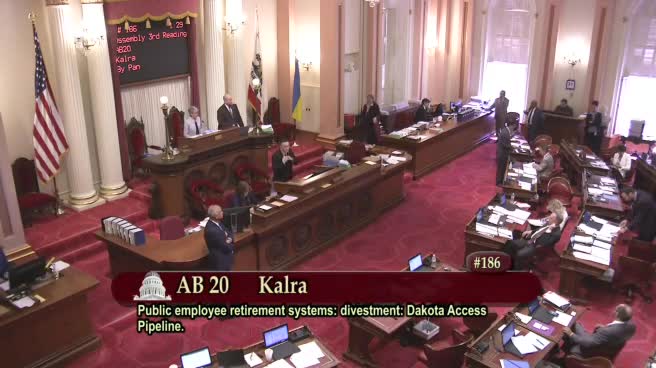 1MIN
Senate Floor
 4MIN
Senate Standing Committee on Governmental Organization
 8MIN
Assembly Standing Committee on Governmental Organization
Bill Author

Bill Co-Author(s):
