AB 476: Vehicular air pollution: heavy-duty vehicles.
- Session Year: 2017-2018
- House: Assembly
- Latest Version Date: 2017-04-17
Existing law imposes various limitations on emissions of air contaminants for the control of air pollution from vehicular and nonvehicular sources. Existing law generally designates the State Air Resources Board as the state agency with the primary responsibility for the control of vehicular air pollution. Existing law defines a heavy-duty vehicle as having a manufacturers maximum gross vehicle weight rating of 6,001 or more pounds, a light-duty vehicle as having a manufacturers gross vehicle weight rating of under 6,001 pounds, and a medium duty vehicle as a heavy-duty vehicle having a manufacturers gross vehicle weight rating under a limit established by the state board.
This bill instead would define a heavy-duty vehicle as having a manufacturers maximum gross vehicle weight rating of 26,001 or more pounds, a light-duty vehicle as having a manufacturers gross vehicle weight rating of under 10,001 pounds, and a medium duty vehicle as having a manufacturers gross vehicle weight rating of between 10,001 and 26,000 pounds.
Heavy-duty means having a manufacturers maximum gross vehicle weight rating of 26,001 or more pounds.
SEC. 2.Section 39035 of the Health and Safety Code is amended to read:39035.Light-duty means having a manufacturers maximum gross vehicle weight rating of under 10,001 pounds.SEC. 3.Section 39037.5 of the Health and Safety Code is amended to read:39037.5.Medium duty means having a manufacturers gross vehicle weight rating of between 10,001 and 26,000 pounds, inclusive.Heavy-duty means having a manufacturers maximum gross vehicle weight rating of 6,001 26,001 or more pounds.
SEC. 2.Section 39035 of the Health and Safety Code is amended to read:39035.Light-duty means having a manufacturers maximum gross vehicle weight rating of under 6,001 10,001 pounds.
SEC. 3.Section 39037.5 of the Health and Safety Code is amended to read:39037.5.Medium duty means a heavy-duty vehicle having a manufacturers gross vehicle weight rating under a limit established by the state board. of between 10,001 and 26,000 pounds, inclusive.
|
Date
|
Status
|
|---|---|
| Feb 1, 2018 | From committee: Filed with the Chief Clerk pursuant to Joint Rule 56. |
| Jan 31, 2018 | Died pursuant to Art. IV, Sec. 10(c) of the Constitution. |
| Apr 25, 2017 | In committee: Set, second hearing. Failed passage. Reconsideration granted. |
| Apr 18, 2017 | Re-referred to Com. on TRANS. |
| Apr 17, 2017 | In committee: Set, first hearing. Hearing canceled at the request of author. |
| Mar 29, 2017 | In committee: Hearing postponed by committee. |
| Feb 27, 2017 | Referred to Com. on TRANS. |
| Feb 14, 2017 | From printer. May be heard in committee March 16. |
| Feb 13, 2017 | Read first time. To print. |
|
Date
|
Description
|
Location
|
Votes
|
|
|---|---|---|---|---|
| Apr 24, 2017 | Reconsideration. | Assembly Standing Committee on Transportation |
Passed |
|
| Apr 24, 2017 | Do pass as amended and be re-referred to the Committee on [Appropriations] | Assembly Standing Committee on Transportation |
Failed |
This list shows positions taken on this bill by organizations on the date displayed, which is linked to the original source.
Positions by individuals are not included.
|
Organization
|
Position
|
Date
|
|---|---|---|
| American Lung Association in California | ** Against | Apr 21, 2017 |
| Atlas Disposal | ** Support | Apr 21, 2017 |
| California Air Pollution Control Officers' Association | * Against | Apr 24, 2017 |
| California Natural Gas Vehicle Coalition | * Support | Apr 24, 2017 |
| Center for Energy Efficiency and Renewable Technologies | ** Against | Apr 21, 2017 |
| Clean Energy | * Support | Apr 24, 2017 |
| Coalition For Renewable Natural Gas | ** Support | Apr 21, 2017 |
| Fastech | ** Support | Apr 21, 2017 |
| Gladstein Neandross & Associates | ** Support | Apr 21, 2017 |
| Motive Power Systems | * Against | Apr 24, 2017 |
| Natural Resources Defense Council | ** Against | Apr 21, 2017 |
| Penske | ** Support | Apr 21, 2017 |
| Refuel Energy Partners | ** Support | Apr 21, 2017 |
| Sierra Club California | ** Against | Apr 21, 2017 |
| Union Of Concerned Scientists | ** Against | Apr 21, 2017 |
Date of Hearing: April 24, 2017
ASSEMBLY COMMITTEE ON TRANSPORTATION
Jim Frazier, Chair
ABPCA Bill Id:AB 476 (
Author:Gipson) – As Amended Ver:April 17, 2017
SUBJECT: Vehicular air pollution: heavy-duty vehicles
SUMMARY: Redefines "heavy duty" vehicles, for the purposes of the California Air Resources Board (ARB) programs, as a vehicle with a gross vehicle weight rating (GVWR) of 26,001 or more pounds.
EXISTING LAW:
- Establishes the Air Quality Improvement Program (AQIP), administered by ARB, to fund projects that reduce criteria air pollutants, improve air quality, and provide research for alternative fuels and vehicles, vessels, and equipment technologies. The two primary programs adopted by ARB pursuant to AQIP are the Clean Vehicle Rebate Project and the Hybrid and Zero Emissions Truck and Bus Voucher Incentive Program (HVIP)
- Establishes the Alternative and Renewable Fuel and Vehicle Technology Program, administered by the California Energy Commission, to provide grants and other financial incentives to accelerate the development and deployment of clean, efficient, low carbon alternative fuels and technologies.
- Establishes the Carl Moyer Memorial Air Quality Standards Attainment Program, administered by ARB and local air districts, to fund the incremental cost of cleaner-than-required vehicles, engines, and equipment. The primary objective of the program is to achieve air quality emission reductions that would not otherwise occur through regulations or other legal mandates.
- Requires ARB, pursuant to California Global Warming Solutions Act of 2006 [AB 32 (Núñez), Chapter 488, Statutes of 2006], to adopt a statewide greenhouse gas (GHG) emissions limit equivalent to 1990 levels by 2020 and adopt regulations to achieve maximum technologically feasible and cost-effective GHG emission reductions. AB 32 authorizes ARB to permit the use of market-based compliance mechanisms to comply with GHG reduction regulations, once specified conditions are met.
- Requires ARB, pursuant to SB 32 (Pavley), Chapter 249, Statutes of 2016, to ensure that statewide GHG emissions are reduced to at least 40% below 1990 levels by 2030.
- Establishes the Greenhouse Gas Reduction Fund (GGRF) and requires all moneys, except for fines and penalties, collected by ARB from the auction or sale of allowances pursuant to a market-based compliance mechanism (i.e., the cap-and-trade program adopted by ARB under AB 32) to be deposited in the GGRF and available for appropriation by the Legislature.
- Establishes the GGRF Investment Plan and Communities Revitalization Act [AB 1532 (John A. Pérez), Chapter 807, Statutes of 2012] to set procedures for the investment of GHG allowance auction revenues.
- Requires, pursuant to SB 535 (de León), Chapter 830, Statutes of 2012, that the GGRF Investment Plan allocate a minimum of 25% of the available moneys in the GGRF to projects that provide benefits to identified disadvantaged communities and a minimum of 10% of the available moneys to projects located within identified disadvantaged communities.
- Establishes the Clean Truck Program pursuant to SB 1204 (Lara), Chapter 524, Statutes of 2014, to use GGRF funds for development, demonstration, pre-commercial pilot, and early commercial deployment of zero- and near-zero-emission truck, bus, and off-road vehicle and equipment technologies including, but not necessarily limited to, medium- and heavy-duty trucks, vocational trucks, short-haul and long-haul trucks, buses, and off-road vehicles and equipment, port equipment, agricultural equipment, marine equipment, and rail equipment.
- Defines “heavy-duty” vehicles, for the purposes of ARB's programs, as vehicles having a manufacturer’s maximum GVWR of 6,001 or more pounds.
FISCAL EFFECT: Unknown
COMMENTS: Trucks are typically classified by weight with Class 1 vehicles weighing 6,000 pounds or less (e.g., utility vans and full-size pickups); Class 2 vehicles weighing 6001-10,000 pounds (e.g., utility and step vans); Class 3-6 vehicles weighing between 10,001 pounds and 26,000 pounds (e.g., city delivery trucks, beverage trucks, and school buses); and Class 7 and 8 trucks weighing 26,001 pound or more (e.g., city transit buses, tractor trailers, dump trucks). ARB, however, differentiates its programs more broadly into heavy-duty and light-duty categories with light-duty programs targeting passenger fleet vehicles weighing 6,000 pounds or less and heavy-duty vehicle programs targeting larger vehicles such as buses and trucks, weighing 6,001 or more pounds. For their heavy-duty vehicle regulatory and incentive programs, ARB sets regulatory parameters, as well as incentive funding limits, according to more specific truck weight categories that include vehicles weighing 6,001-14,000 pounds (e.g., Class 1- 3), 14,001-26,000 pounds (e.g., Class 4-6), and 26,000 pounds and up (Class 7 and 8).
ARB oversees a wide variety of programs designed to address the transportation sector with a number of those programs tailored to specifically target heavy-duty vehicles. While ARB broadly defines heavy-duty vehicles as having a GVWR of 6,000 pounds or more, regulatory and incentive program guidelines generally provide a more tailored definition of the individual weight classes to ensure that investments are made to reduce emissions as well as spur technology, provide benefits to disadvantaged communities, encourage manufacturing and fleet acceptance of advanced technology vehicles, and improve production volumes which helps the state meet its air quality and climate change goals.
According to the author, despite progress in cleaner fuels and emission standards, diesel engines in heavy-duty trucks remain one of the largest sources of air pollutants such as fine particulate matter (PM) and oxides of nitrogen (NOx). The author notes that PM is particularly prevalent in communities that exist along major transportation corridors that have a prevalence of heavy-duty (Class 7-8) trucks. The author contends that it is critical that the state’s investment in “heavy-duty” truck technology be specifically targeted toward trucks that represent the greatest concern as far as air pollution, noting that doing so would provide the highest return on investment in meeting the state's air quality and emissions reduction goals.
The author contends that the overly broad definitions used by ARB to define its heavy-duty truck regulatory and incentive programs have resulted in diluting the focus that should be placed on the heaviest (Class 7 and 8) trucks. He points out that the current broad definition used by ARB for heavy-duty trucks allows for the inclusion of medium-duty (Class 4-6) trucks in incentive programs and as a result, monies are being spent to clean up this sector of trucks to the detriment of cleaning up heaviest (Class 7 and 8) trucks that have the greatest impact on improving air quality and reducing climate change emissions.
To address this issue, the author has introduced this bill which would revise ARB's statutory definition for the heavy-duty vehicle weight classes to more narrowly define heavy-duty truck to include only the heaviest (Class 7 and 8) trucks weighing 26,001 pounds or more. The author contends that narrowing this overly broad definition will require that ARB expend clean truck incentive funding only on the heaviest and dirtiest trucks. The author points out that this bill is not intended prioritize one truck weight class over the other, but rather to develop a clear strategy for improving emissions.
Writing in support of this bill, CleanEnergy, North America's largest provider of natural gas and renewable natural gas transportation fuel, notes that natural gas is an abundant and cost-effective fuel that lowers fuel costs, increases energy security, and benefits the environment by reducing carbon emissions and smog forming pollutants. They point out that redefining the heavy-duty vehicle weight class will help to maximize the use of cleaner trucks, such as those powered by natural gas, to help California reach its emissions reduction goals.
Writing in opposition to this bill, the California Air Pollution Control Officers Association (CAPCOA) notes that this bill appears to secure a dramatically increased share of limited incentive funds in ARB's Technology Program for natural gas engines with low NOx emissions. CAPCOA notes that the Technology Program, as well as HVIP, incentivizes a wide range of vehicle weights, including delivery vehicles and step-vans. They note that by changing the definition to include only the heaviest (Class 7 and 8) trucks would take monies away from what are more traditionally viewed as medium-duty vehicles to fund only the largest (Class 7 and 8) trucks and, in doing so, eliminate the diversity of funding across vehicle weight classes, which, they argue, allows the most cost-effective projects with the highest potential for emissions reductions and air quality improvements to be funded. CAPCOA argues that this proposal would cut many Class 2-6 trucks, weighing less than GVWR 26,000 pounds, out of competition for incentive funding.
Committee Concerns:
- By changing the definition of heavy-duty vehicles to include only the heaviest (Class 7 and 8) trucks, this bill would increase in the limited share of truck program incentive funding for Class 7 and 8 trucks while, and at the same time, decrease funding currently designated for trucks in the Class 2-6 weight classes (such as freight delivery trucks, step vans, and school buses).
It is important to note that ARB uses truck incentive programs to spur innovation, improve technology, and increase deployment of cleaner trucks. ARB has found that predominantly, these technology innovations happen in lower, less costly truck weight classes and then these innovations "trickle up" to the heavier, more costly vehicles in the Class 7 and 8 categories. Therefore, by changing ARB's general definition of heavy-duty vehicles, many Class 2-6 trucks that currently receive incentive funding would not have access to these funds with the unintended consequence of reducing emissions reductions for these vehicles that are used primarily used in community settings (such as school buses an delivery vans) and also stifling innovation and technology improvements that typically take place within the lower truck weight categories that ultimately benefit the heavier weight vehicle classes and help achieve California's climate change and clean air goals.
- Because this bill would change the definition that the majority of ARB's transportation-related regulatory and incentive programs rely upon, this bill has the potential to make sweeping changes to a number of ARB's programs. ARB reports that, at a minimum, this bill would likely expand the regulatory "reach" of various light-duty vehicle programs by shifting some vehicles and engines into programs with more stringent emissions requirements.
- ARB also notes that programs, such as HVIP, that support the heaviest trucks (Class 7 and 8) are typically undersubscribed while funding for lower truck weight categories are consistently oversubscribed with long wait lists generated at each funding cycle. This bill would have the effect of withholding monies from lower weight class trucks only to leave money "on the table" due to the lack of demand in the higher truck weight categories.
Author's amendment: The author intends to take an amendment to add an operative date of January 1, 2020.
Related legislation: AB 1073 (Garcia) extend by five years, until January 1, 2023, the requirement that the ARB dedicate 20% of California Clean Truck, Bus, and Off-Road Vehicle and Equipment Technology Program (Technology Program) to support early commercial deployment of existing zero- and near-zero-emission heavy-duty trucks. AB 1073 passed out of this committee on April 4, 2017, with a vote of 13-0 vote and is set to be heard by the Assembly Natural Resources Committee on April 24, 2017.
Previous legislation: AB 32 (Núñez), Chapter 488, Statutes of 2006, required ARB to develop a plan of how to reduce emissions to 1990 levels by the year 2020 and also required ARB to ensure that, to the extent feasible, GHGs reduction requirement and programs direct public and private investment toward the most disadvantaged communities.
SB 1204 (Lara), Chapter 524, Statutes of 2014, created the Technology Program to fund development, demonstration, pre-commercial pilot, and early commercial deployment of zero- and near-zero-emission truck, bus, and off-road vehicle and equipment technologies.
AB 857 (Perea) of 2015 would have reserved 50% or $100 million annually, whichever is greater, of GGRF monies that are allocated to the Technology Program to support the commercial deployment of existing zero- and near-zero emission heavy-duty truck technology that meets or exceeds the ARB’s optional low NOx standard between 2018 and 2023. AB 857 was amended to deal with firearms.
AB 2415 (Garcia) of 2016 would have reserved 50% or $100 million annually, whichever is greater, of GGRF monies allocated to the Technology Program to support the commercial deployment of existing zero- and near-zero emission heavy duty truck technology between 2018 and 2023. AB 2415 included a heavy-duty truck vehicle weight definition similar to this bill.
AB 2415 was held on the Assembly Appropriations Committee Suspense File.
SB 535 (de León), Chapter 830, Statutes of 2012, required the investment plan related to the GGRF allocate a minimum of 25% of the available moneys in the fund to projects that provide benefits to identified disadvantaged communities and a minimum of 10% of the available moneys in the fund to projects located within identified disadvantaged communities.
SB 32 (Pavley), Chapter 249, Statutes of 2016, required ARB to ensure that statewide GHG emissions are reduced at least 40% below 1990 levels by 2030.
REGISTERED SUPPORT / OPPOSITION:
Support
Atlas Disposal
Clean Energy
Coalition for Renewable Natural Gas
Fastech
Gladstein Neandross & Associates
Penske
ReFuel Energy Partners
Opposition
American Lung Association in California
California Air Pollution Control Officers Association
Center for Energy Efficiency and Renewable Technologies
Natural Resources Defense Council
Sierra Club California
Union of Concerned Scientists
Analysis Prepared by: Victoria Alvarez / TRANS. / (916) 319-2093
Date of Hearing: April 17, 2017
ASSEMBLY COMMITTEE ON TRANSPORTATION
Jim Frazier, Chair
ABPCA Bill Id:AB 476 (
Author:Gipson) – As Amended Ver:April 17, 2017
SUBJECT: Vehicular air pollution
SUMMARY: Redefines "heavy duty" vehicles, for the purposes of the California Air Resources Board (ARB) programs, as a vehicle with a gross vehicle weight rating (GVWR) of 26,001 or more pounds.
EXISTING LAW:
- Establishes the Air Quality Improvement Program (AQIP), administered by ARB, to fund projects that reduce criteria air pollutants, improve air quality, and provide research for alternative fuels and vehicles, vessels, and equipment technologies. The two primary programs adopted by ARB pursuant to AQIP are the Clean Vehicle Rebate Project and the Hybrid and Zero Emissions Truck and Bus Voucher Incentive Program (HVIP)
- Establishes the Alternative and Renewable Fuel and Vehicle Technology Program, administered by the California Energy Commission, to provide grants and other financial incentives to accelerate the development and deployment of clean, efficient, low carbon alternative fuels and technologies.
- Establishes the Carl Moyer Memorial Air Quality Standards Attainment Program, administered by ARB and local air districts, to fund the incremental cost of cleaner-than-required vehicles, engines, and equipment. The primary objective of the program is to achieve air quality emission reductions that would not otherwise occur through regulations or other legal mandates.
- Requires ARB, pursuant to California Global Warming Solutions Act of 2006 [AB 32 (Núñez), Chapter 488, Statutes of 2006], to adopt a statewide greenhouse gas (GHG) emissions limit equivalent to 1990 levels by 2020 and adopt regulations to achieve maximum technologically feasible and cost-effective GHG emission reductions. AB 32 authorizes ARB to permit the use of market-based compliance mechanisms to comply with GHG reduction regulations, once specified conditions are met.
- Requires ARB, pursuant to SB 32 (Pavley), Chapter 249, Statutes of 2016, to ensure that statewide GHG emissions are reduced to at least 40% below 1990 levels by 2030.
- Establishes the Greenhouse Gas Reduction Fund (GGRF) and requires all moneys, except for fines and penalties, collected by ARB from the auction or sale of allowances pursuant to a market-based compliance mechanism (i.e., the cap-and-trade program adopted by ARB under AB 32) to be deposited in the GGRF and available for appropriation by the Legislature.
- Establishes the GGRF Investment Plan and Communities Revitalization Act [AB 1532 (John A. Pérez), Chapter 807, Statutes of 2012] to set procedures for the investment of GHG allowance auction revenues.
- Requires, pursuant to SB 535 (de León), Chapter 830, Statutes of 2012, that the GGRF Investment Plan allocate a minimum of 25% of the available moneys in the GGRF to projects that provide benefits to identified disadvantaged communities and a minimum of 10% of the available moneys to projects located within identified disadvantaged communities.
- Establishes the Clean Truck Program pursuant to SB 1204 (Lara), Chapter 524, Statutes of 2014, to use GGRF funds for development, demonstration, pre-commercial pilot, and early commercial deployment of zero- and near-zero-emission truck, bus, and off-road vehicle and equipment technologies including, but not necessarily limited to, medium- and heavy-duty trucks, vocational trucks, short-haul and long-haul trucks, buses, and off-road vehicles and equipment, port equipment, agricultural equipment, marine equipment, and rail equipment.
- Defines “heavy-duty” vehicles, for the purposes of ARB's programs, as vehicles having a manufacturer’s maximum GVWR of 6,001 or more pounds.
FISCAL EFFECT: Unknown
COMMENTS: Trucks are typically classified by weight with Class 1 vehicles weighing 6,000 pounds or less (e.g., utility vans and full-size pickups); Class 2 vehicles weighing 6001-10,000 pounds (e.g., utility and step vans); Class 3-6 vehicles weighing between 10,001 pounds and 26,000 pounds (e.g., city delivery trucks, beverage trucks, and school buses); and Class 7 and 8 trucks weighing 26,001 pound or more (e.g., city transit buses, tractor trailers, dump trucks). ARB, however, differentiates its programs more broadly into heavy-duty and light-duty categories with light-duty programs targeting passenger fleet vehicles weighing 6,000 pounds or less and heavy-duty vehicle programs targeting larger vehicles such as buses and trucks, weighing 6,001 or more pounds. For their heavy-duty vehicle regulatory and incentive programs, ARB sets regulatory parameters, as well as incentive funding limits, according to more specific truck weight categories that include vehicles weighing 6,001-14,000 pounds (e.g., Class 1- 3), 14,001-26,000 pounds (e.g., Class 4-6), and 26,000 pounds and up (Class 7 and 8).
ARB oversees a wide variety of programs designed to address the transportation sector with a number of those programs tailored to specifically target heavy-duty vehicles. While ARB broadly defines heavy-duty vehicles as having a GVWR of 6,000 pounds or more, regulatory and incentive program guidelines generally provide a more tailored definition of the individual weight classes to ensure that investments are made to reduce emissions as well as spur technology, provide benefits to disadvantaged communities, encourage manufacturing and fleet acceptance of advanced technology vehicles, and improve production volumes which helps the state meet its air quality and climate change goals.
According to the author, despite progress in cleaner fuels and emission standards, diesel engines in heavy-duty trucks remain one of the largest sources of air pollutants such as fine particulate matter (PM) and oxides of nitrogen (NOx). The author notes that PM is particularly prevalent in communities that exist along major transportation corridors that have a prevalence of heavy-duty (Class 7-8) trucks. The author contends that it is critical that the state’s investment in “heavy-duty” truck technology be specifically targeted toward trucks that represent the greatest concern as far as air pollution, noting that doing so would provide the highest return on investment in meeting the state's air quality and emissions reduction goals.
The author contends that the overly broad definitions used by ARB to define its heavy-duty truck regulatory and incentive programs have resulted in diluting the focus that should be placed on the heaviest (Class 7 and 8) trucks. He points out that the current broad definition used by ARB for heavy-duty trucks allows for the inclusion of medium-duty (Class 4-6) trucks in incentive programs and as a result, monies are being spent to clean up this sector of trucks to the detriment of cleaning up heaviest (Class 7 and 8) trucks that have the greatest impact on improving air quality and reducing climate change emissions.
To address this issue, the author has introduced this bill which would revise ARB's statutory definition for the heavy-duty vehicle weight classes to more narrowly define heavy-duty truck to include only the heaviest (Class 7 and 8) trucks weighing 26,001 pounds or more. The author contends that narrowing this overly broad definition will require that ARB expend clean truck incentive funding only on the heaviest and dirtiest trucks. The author points out that this bill is not intended prioritize one truck weight class over the other, but rather to develop a clear strategy for improving emissions.
Writing in support of this bill, CleanEnergy, North America's largest provider of natural gas and renewable natural gas transportation fuel, notes that natural gas is an abundant and cost-effective fuel that lowers fuel costs, increases energy security, and benefits the environment by reducing carbon emissions and smog forming pollutants. They point out that redefining the heavy-duty vehicle weight class will help to maximize the use of cleaner trucks, such as those powered by natural gas, to help California reach its emissions reduction goals.
Writing in opposition to this bill, the California Air Pollution Control Officers Association (CAPCOA) notes that this bill appears to secure a dramatically increased share of limited incentive funds in ARB's Technology Program for natural gas engines with low NOx emissions. CAPCOA notes that the Technology Program, as well as HVIP, incentivizes a wide range of vehicle weights, including delivery vehicles and step-vans. They note that by changing the definition to include only the heaviest (Class 7 and 8) trucks would take monies away from what are more traditionally viewed as medium-duty vehicles to fund only the largest (Class 7 and 8) trucks and, in doing so, eliminate the diversity of funding across vehicle weight classes, which, they argue, allows the most cost-effective projects with the highest potential for emissions reductions and air quality improvements to be funded. CAPCOA argues that this proposal would cut many Class 2-6 trucks, weighing less than GVWR 26,000 pounds, out of competition for incentive funding.
Committee Concerns:
- By changing the definition of heavy-duty vehicles to include only the heaviest (Class 7 and 8) trucks, this bill would increase in the limited share of truck program incentive funding for Class 7 and 8 trucks while, and at the same time, decrease funding currently designated for trucks in the Class 2-6 weight classes (such as freight delivery trucks, step vans, and school buses).
It is important to note that ARB uses truck incentive programs to spur innovation, improve technology, and increase deployment of cleaner trucks. ARB has found that predominantly, these technology innovations happen in lower, less costly truck weight classes and then these innovations "trickle up" to the heavier, more costly vehicles in the Class 7 and 8 categories. Therefore, by changing ARB's general definition of heavy-duty vehicles, many Class 2-6 trucks that currently receive incentive funding would not have access to these funds with the unintended consequence of reducing emissions reductions for these vehicles that are used primarily used in community settings (such as school buses an delivery vans) and also stifling innovation and technology improvements that typically take place within the lower truck weight categories that ultimately benefit the heavier weight vehicle classes and help achieve California's climate change and clean air goals.
- Because this bill would change the definition that the majority of ARB's transportation-related regulatory and incentive programs rely upon, this bill has the potential to make sweeping changes to a number of ARB's programs. ARB reports that, at a minimum, this bill would likely expand the regulatory "reach" of various light-duty vehicle programs by shifting some vehicles and engines into programs with more stringent emissions requirements.
- ARB also notes that programs, such as HVIP, that support the heaviest trucks (Class 7 and 8) are typically undersubscribed while funding for lower truck weight categories are consistently oversubscribed with long wait lists generated at each funding cycle. This bill would have the effect of withholding monies from lower weight class trucks only to leave money "on the table" due to the lack of demand in the higher truck weight categories.
Related legislation: AB 1073 (Garcia) extend by five years, until January 1, 2023, the requirement that the ARB dedicate 20% of California Clean Truck, Bus, and Off-Road Vehicle and Equipment Technology Program (Technology Program) to support early commercial deployment of existing zero- and near-zero-emission heavy-duty trucks. AB 1073 passed out of this committee on April 4, 2017, with a vote of 13-0 vote and is set to be heard by the Assembly Natural Resources Committee on April 24, 2017.
Previous legislation: AB 32 (Núñez), Chapter 488, Statutes of 2006, required ARB to develop a plan of how to reduce emissions to 1990 levels by the year 2020 and also required ARB to ensure that, to the extent feasible, GHGs reduction requirement and programs direct public and private investment toward the most disadvantaged communities.
SB 1204 (Lara), Chapter 524, Statutes of 2014, created the Technology Program to fund development, demonstration, pre-commercial pilot, and early commercial deployment of zero- and near-zero-emission truck, bus, and off-road vehicle and equipment technologies.
AB 857 (Perea) of 2015 would have reserved 50% or $100 million annually, whichever is greater, of GGRF monies that are allocated to the Technology Program to support the commercial deployment of existing zero- and near-zero emission heavy-duty truck technology that meets or exceeds the ARB’s optional low NOx standard between 2018 and 2023. AB 857 was amended to deal with firearms.
AB 2415 (Garcia) of 2016 would have reserved 50% or $100 million annually, whichever is greater, of GGRF monies allocated to the Technology Program to support the commercial deployment of existing zero- and near-zero emission heavy duty truck technology between 2018 and 2023. AB 2415 included a heavy-duty truck vehicle weight definition similar to this bill.
AB 2415 was held on the Assembly Appropriations Committee Suspense File.
SB 535 (de Leon), Chapter 830, Statutes of 2012, required the investment plan related to the GGRF allocate a minimum of 25% of the available moneys in the fund to projects that provide benefits to identified disadvantaged communities and a minimum of 10% of the available moneys in the fund to projects located within identified disadvantaged communities.
SB 32 (Pavley), Chapter 249, Statutes of 2016, required ARB to ensure that statewide GHG emissions are reduced at least 40% below 1990 levels by 2030.
REGISTERED SUPPORT / OPPOSITION:
Support
Atlas Disposal
Clean Energy
ReFuel Energy Partners
The Coalition for Renewable Natural Gas
Opposition
American Lung Association in California
California Air Pollution Control Officers Association
Center for Energy Efficiency and Renewable Technologies
Natural Resources Defense Council
Sierra Club California
Union of Concerned Scientists
Analysis Prepared by: Victoria Alvarez / TRANS. /
Discussed in Hearing
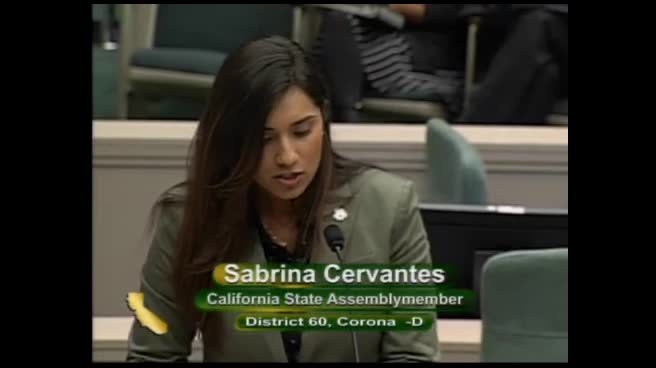 20MIN
Assembly Standing Committee on Transportation
Bill Author

Bill Co-Author(s):