AB 480: CalWORKs: welfare-to-work: necessary supportive services.
- Session Year: 2017-2018
- House: Assembly
- Latest Version Date: 2017-10-12
Existing law provides for the California Work Opportunity and Responsibility to Kids (CalWORKs) program, under which each county provides cash assistance and other benefits to qualified low-income families and individuals. Existing law generally requires a recipient of CalWORKs benefits to participate in welfare-to-work activities as a condition of eligibility for aid. Existing law requires that necessary supportive services be available to participants in welfare-to-work activities, including child care, personal counseling, transportation costs, and ancillary expenses.
This bill would, on and after April 1, 2018, require the above-described supportive services to additionally include the costs of diapers. The bill would make a participant who is participating in a welfare-to-work plan eligible for $30 per month to assist with diaper costs for each child who is under 36 months of age. The bill would require the State Department of Social Services to implement this provision through all-county letters until regulations are adopted by January 1, 2020. By increasing the duties of counties administering the CalWORKs program, this bill would impose a state-mandated local program.
Existing law continuously appropriates moneys from the General Fund to defray a portion of county costs under the CalWORKs program.
This bill would instead provide that the continuous appropriation would not be made for purposes of implementing the bill.
The California Constitution requires the state to reimburse local agencies and school districts for certain costs mandated by the state. Statutory provisions establish procedures for making that reimbursement.
This bill would provide that, if the Commission on State Mandates determines that the bill contains costs mandated by the state, reimbursement for those costs shall be made pursuant to the statutory provisions noted above.
Existing law provides for the California Work Opportunity and Responsibility to Kids (CalWORKs) program, under which each county provides cash assistance and other benefits to qualified low-income families and individuals. Existing law generally requires a recipient of CalWORKs benefits to participate in welfare-to-work activities as a condition of eligibility for aid. Existing law requires that necessary supportive services be available to participants in welfare-to-work activities, including child care, personal counseling, transportation costs, and ancillary expenses.
This bill would, on and after April 1, 2018, require the above-described supportive services to additionally include the cost costs of diapers. The bill would make a participant who is participating in a welfare-to-work plan eligible for $30 per month to assist with diaper costs for each child who is under 36 months of age. The bill would require the State Department of Social Services to implement this provision through all-county letters until regulations are adopted by January 1, 2020. By increasing the duties of counties administering the CalWORKs program, this bill would impose a state-mandated local program.
Existing law continuously appropriates moneys from the General Fund to defray a portion of county costs under the CalWORKs program.
This bill would instead provide that the continuous appropriation would not be made for purposes of implementing the bill.
The California Constitution requires the state to reimburse local agencies and school districts for certain costs mandated by the state. Statutory provisions establish procedures for making that reimbursement.
This bill would provide that, if the Commission on State Mandates determines that the bill contains costs mandated by the state, reimbursement for those costs shall be made pursuant to the statutory provisions noted above.
Existing law provides for the California Work Opportunity and Responsibility to Kids (CalWORKs) program, under which each county provides cash assistance and other benefits to qualified low-income families and individuals. Existing law generally requires a recipient of CalWORKs benefits to participate in welfare-to-work activities as a condition of eligibility for aid. Existing law requires that necessary supportive services be available to participants in welfare-to-work activities, including child care, personal counseling, transportation costs, and ancillary expenses. Existing law requires ancillary expenses to include the cost of books, tools, clothing specifically required for the job, fees, and other necessary costs.
This bill would, commencing July 1, 2018, require the above-described ancillary expenses to additionally include the cost of infant and toddler diapers. on and after April 1, 2018, require the above-described supportive services to additionally include the cost of diapers. The bill would make a participant who is participating in a welfare-to-work plan eligible for $30 per month to assist with diaper costs for each child who is under 36 months of age. The bill would require the State Department of Social Services to implement this provision through all-county letters until regulations are adopted by January 1, 2020. By increasing the duties of counties administering the CalWORKs program, this bill would impose a state-mandated local program.
Existing law continuously appropriates moneys from the General Fund to defray a portion of county costs under the CalWORKs program.
This bill would instead provide that the continuous appropriation would not be made for purposes of implementing the bill.
The California Constitution requires the state to reimburse local agencies and school districts for certain costs mandated by the state. Statutory provisions establish procedures for making that reimbursement.
This bill would provide that, if the Commission on State Mandates determines that the bill contains costs mandated by the state, reimbursement for those costs shall be made pursuant to the statutory provisions noted above.
Existing law provides for the California Work Opportunity and Responsibility to Kids (CalWORKs) program, under which each county provides cash assistance and other benefits to qualified low-income families and individuals. Existing law generally requires a recipient of CalWORKs benefits to participate in welfare-to-work activities as a condition of eligibility for aid. Existing law requires that necessary supportive services be available to participants in welfare-to-work activities, including child care, personal counseling, transportation costs, and ancillary expenses. Existing law requires ancillary expenses to include the cost of books, tools, clothing specifically required for the job, fees, and other necessary costs.
This bill would would, commencing July 1, 2018, require the above-described ancillary expenses to additionally include the cost of infant and toddler diapers. The bill would require the State Department of Social Services to implement this provision through all-county letters until regulations are adopted by January 1, 2020. By increasing the duties of counties administering the CalWORKs program, this bill would impose a state-mandated local program.
Existing law continuously appropriates moneys from the General Fund to defray a portion of county costs under the CalWORKs program.
This bill would instead provide that the continuous appropriation would not be made for purposes of implementing the bill.
The California Constitution requires the state to reimburse local agencies and school districts for certain costs mandated by the state. Statutory provisions establish procedures for making that reimbursement.
This bill would provide that, if the Commission on State Mandates determines that the bill contains costs mandated by the state, reimbursement for those costs shall be made pursuant to the statutory provisions noted above.
Existing law provides for the California Work Opportunity and Responsibility to Kids (CalWORKs) program, under which each county provides cash assistance and other benefits to qualified low-income families and individuals. Existing law generally requires a recipient of CalWORKs benefits to participate in welfare-to-work activities as a condition of eligibility for aid. Existing law requires that necessary supportive services be available to participants in welfare-to-work activities, including child care. care, personal counseling, transportation costs, and ancillary expenses. Existing law requires ancillary expenses to include the cost of books, tools, clothing specifically required for the job, fees, and other necessary costs.
This bill would make technical, nonsubstantive changes to the above provision. require the above-described ancillary expenses to additionally include the cost of infant and toddler diapers. By increasing the duties of counties administering the CalWORKs program, this bill would impose a state-mandated local program.
Existing law continuously appropriates moneys from the General Fund to defray a portion of county costs under the CalWORKs program.
This bill would instead provide that the continuous appropriation would not be made for purposes of implementing the bill.
The California Constitution requires the state to reimburse local agencies and school districts for certain costs mandated by the state. Statutory provisions establish procedures for making that reimbursement.
This bill would provide that, if the Commission on State Mandates determines that the bill contains costs mandated by the state, reimbursement for those costs shall be made pursuant to the statutory provisions noted above.
Existing law provides for the California Work Opportunity and Responsibility to Kids (CalWORKs) program, under which each county provides cash assistance and other benefits to qualified low-income families and individuals. Existing law generally requires a recipient of CalWORKs benefits to participate in welfare-to-work activities as a condition of eligibility for aid. Existing law requires that necessary supportive services be available to participants in welfare-to-work activities, including child care.
This bill would make technical, nonsubstantive changes to the above provision.
(a)Necessary supportive services shall be available to every participant in order to participate in the program activity that he or she is assigned to or to accept employment or the participant shall have good cause for not participating under subdivision (f) of Section 11320.3. As provided in the welfare-to-work plan entered into between the county and participant pursuant to this article, supportive services shall include all of the following:
(1)Child care.
(A)Paid child care shall be available to every participant with a dependent child in the assistance unit who needs paid child care if the child is 10 years of age or under, or requires child care or supervision due to a physical, mental, or developmental disability or other similar condition as verified by the county welfare department, or who is under court supervision.
(B)To the extent funds are available, paid child care shall be available to a participant with a dependent child in the assistance unit who needs paid child care if the child is 11 or 12 years of age.
(C)Necessary child care services shall be available to every former recipient for up to two years, pursuant to Article 15.5 (commencing with Section 8350) of Chapter 2 of Part 6 of Division 1 of Title 1 of the Education Code.
(D)A child in foster care receiving benefits under Title IV-E of the federal Social Security Act (42 U.S.C. Sec. 670 et seq.) or a child who would become a dependent child except for the receipt of federal Supplemental Security Income benefits pursuant to Title XVI of the federal Social Security Act (42 U.S.C. Sec. 1381 et seq.) shall be deemed to be a dependent child for the purposes of this paragraph.
(E)The provision of care and payment rates under this paragraph shall be governed by Article 15.5 (commencing with Section 8350) of Chapter 2 of Part 6 of Division 1 of Title 1 of the Education Code. Parent fees shall be governed by Sections 8263 and 8273.1 of the Education Code.
(2)Diaper costs.
(A)On and after April 1, 2018, a participant who is participating in a welfare-to-work plan shall be eligible for thirty dollars ($30) per month to assist with diaper costs for each child who is under 36 months of age.
(B)The department shall adopt regulations by January 1, 2020, to implement this paragraph. Notwithstanding the rulemaking provisions of the Administrative Procedure Act (Chapter 3.5 (commencing with Section 11340) of Part 1 of Division 3 of Title 2 of the Government Code), the department shall implement this paragraph through all-county letters until regulations are adopted.
(3)Transportation costs, which shall be governed by regional market rates as determined in accordance with regulations established by the department.
(4)Ancillary expenses, which shall include the cost of books, tools, clothing specifically required for the job, fees, and other necessary costs.
(5)Personal counseling. A participant who has personal or family problems that would affect the outcome of the welfare-to-work plan entered into pursuant to this article shall, to the extent available, receive necessary counseling or therapy to help him or her and his or her family adjust to his or her job or training assignment.
(b)If provided in a county plan, the county may continue to provide case management and supportive services under this section to former participants who become employed. The county may provide these services for up to the first 12 months of employment to the extent they are not available from other sources and are needed for the individual to retain the employment.
SEC. 2.No appropriation pursuant to Section 15200 of the Welfare and Institutions Code shall be made for purposes of implementing this act.
SEC. 3.If the Commission on State Mandates determines that this act contains costs mandated by the state, reimbursement to local agencies and school districts for those costs shall be made pursuant to Part 7 (commencing with Section 17500) of Division 4 of Title 2 of the Government Code.
(a)Necessary supportive services shall be available to every participant in order to participate in the program activity to which that he or she is assigned to or to accept employment or the participant shall have good cause for not participating under subdivision (f) of Section 11320.3. As provided in the welfare-to-work plan entered into between the county and participant pursuant to this article, supportive services shall include all of the following:
(1)Child care.
(A)Paid child care shall be available to every participant with a dependent child in the assistance unit who needs paid child care if the child is 10 years of age or under, or requires child care or supervision due to a physical, mental, or developmental disability or other similar condition as verified by the county welfare department, or who is under court supervision.
(B)To the extent funds are available, paid child care shall be available to a participant with a dependent child in the assistance unit who needs paid child care if the child is 11 or 12 years of age.
(C)Necessary child care services shall be available to every former recipient for up to two years, pursuant to Article 15.5 (commencing with Section 8350) of Chapter 2 of Part 6 of Division 1 of Title 1 of the Education Code.
(D)A child in foster care receiving benefits under Title IV-E of the federal Social Security Act (42 U.S.C. Sec. 670 et seq.) or a child who would become a dependent child except for the receipt of federal Supplemental Security Income benefits pursuant to Title XVI of the federal Social Security Act (42 U.S.C. Sec. 1381 et seq.) shall be deemed to be a dependent child for the purposes of this paragraph.
(E)The provision of care and payment rates under this paragraph shall be governed by Article 15.5 (commencing with Section 8350) of Chapter 2 of Part 6 of Division 1 of Title 1 of the Education Code. Parent fees shall be governed by Sections 8263 and 8273.1 of the Education Code.
(2)Diaper costs.
(A)On and after April 1, 2018, a participant who is participating in a welfare-to-work plan shall be eligible for thirty dollars ($30) per month to assist with diaper costs for each child who is under 36 months of age.
(B)The department shall adopt regulations by January 1, 2020, to implement this paragraph. Notwithstanding the rulemaking provisions of the Administrative Procedure Act (Chapter 3.5 (commencing with Section 11340) of Part 1 of Division 3 of Title 2 of the Government Code), the department shall implement this paragraph through all-county letters until regulations are adopted.
(2)(3)Transportation costs, which shall be governed by regional market rates as determined in accordance with regulations established by the department.
(3)(4)Ancillary expenses, which shall include the cost of books, tools, clothing specifically required for the job, fees, and other necessary costs.
(4)(5)Personal counseling. A participant who has personal or family problems that would affect the outcome of the welfare-to-work plan entered into pursuant to this article shall, to the extent available, receive necessary counseling or therapy to help him or her and his or her family adjust to his or her job or training assignment.
(b)If provided in a county plan, the county may continue to provide case management and supportive services under this section to former participants who become employed. The county may provide these services for up to the first 12 months of employment to the extent they are not available from other sources and are needed for the individual to retain the employment.
SEC. 2.No appropriation pursuant to Section 15200 of the Welfare and Institutions Code shall be made for purposes of implementing this act.
SEC. 3.If the Commission on State Mandates determines that this act contains costs mandated by the state, reimbursement to local agencies and school districts for those costs shall be made pursuant to Part 7 (commencing with Section 17500) of Division 4 of Title 2 of the Government Code.
(a)Necessary supportive services shall be available to every participant in order to participate in the program activity that he or she is assigned to or to accept employment or the participant shall have good cause for not participating under subdivision (f) of Section 11320.3. As provided in the welfare-to-work plan entered into between the county and participant pursuant to this article, supportive services shall include all of the following:
(1)Child care.
(A)Paid child care shall be available to every participant with a dependent child in the assistance unit who needs paid child care if the child is 10 years of age or under, or requires child care or supervision due to a physical, mental, or developmental disability or other similar condition as verified by the county welfare department, or who is under court supervision.
(B)To the extent funds are available, paid child care shall be available to a participant with a dependent child in the assistance unit who needs paid child care if the child is 11 or 12 years of age.
(C)Necessary child care services shall be available to every former recipient for up to two years, pursuant to Article 15.5 (commencing with Section 8350) of Chapter 2 of Part 6 of Division 1 of Title 1 of the Education Code.
(D)A child in foster care receiving benefits under Title IV-E of the federal Social Security Act (42 U.S.C. Sec. 670 et seq.) or a child who would become a dependent child except for the receipt of federal Supplemental Security Income benefits pursuant to Title XVI of the federal Social Security Act (42 U.S.C. Sec. 1381 et seq.) shall be deemed to be a dependent child for the purposes of this paragraph.
(E)The provision of care and payment rates under this paragraph shall be governed by Article 15.5 (commencing with Section 8350) of Chapter 2 of Part 6 of Division 1 of Title 1 of the Education Code. Parent fees shall be governed by subdivisions (g) and (h) of Section 8263 of the Education Code.
(2)Diaper costs.
(A)On and after April 1, 2018, a participant who is participating in a welfare-to-work plan shall be eligible for thirty dollars ($30) per month to assist with diaper costs for each child who is under 36 months of age.
(B)The department shall adopt regulations by January 1, 2020, to implement this subparagraph. Notwithstanding the rulemaking provisions of the Administrative Procedure Act (Chapter 3.5 (commencing with Section 11340) of Part 1 of Division 3 of Title 2 of the Government Code), the department shall implement this subparagraph through all-county letters until regulations are adopted.
(2)(3)Transportation costs, which shall be governed by regional market rates as determined in accordance with regulations established by the department.
(3)(4)Ancillary expenses, which shall include all of the following: the cost of books, tools, clothing specifically required for the job, fees, and other necessary costs.
(A)The cost of books, tools, clothing specifically required for the job, fees, and other necessary costs.(B)(i)Commencing July 1, 2018, the cost of infant and toddler diapers.(ii)The department shall adopt regulations by January 1, 2020, to implement this subparagraph. Notwithstanding the rulemaking provisions of the Administrative Procedure Act (Chapter 3.5 (commencing with Section 11340) of Part 1 of Division 3 of Title 2 of the Government Code), the department shall implement this subparagraph through all-county letters until regulations are adopted.(4)(5)Personal counseling. A participant who has personal or family problems that would affect the outcome of the welfare-to-work plan entered into pursuant to this article shall, to the extent available, receive necessary counseling or therapy to help him or her and his or her family adjust to his or her job or training assignment.
(b)If provided in a county plan, the county may continue to provide case management and supportive services under this section to former participants who become employed. The county may provide these services for up to the first 12 months of employment to the extent they are not available from other sources and are needed for the individual to retain the employment.
SEC. 2.No appropriation pursuant to Section 15200 of the Welfare and Institutions Code shall be made for purposes of implementing this act.
SEC. 3.If the Commission on State Mandates determines that this act contains costs mandated by the state, reimbursement to local agencies and school districts for those costs shall be made pursuant to Part 7 (commencing with Section 17500) of Division 4 of Title 2 of the Government Code.
(a)Necessary supportive services shall be available to every participant in order to participate in the program activity that he or she is assigned to or to accept employment or the participant shall have good cause for not participating under subdivision (f) of Section 11320.3. As provided in the welfare-to-work plan entered into between the county and participant pursuant to this article, supportive services shall include all of the following:
(1)Child care.
(A)Paid child care shall be available to every participant with a dependent child in the assistance unit who needs paid child care if the child is 10 years of age or under, or requires child care or supervision due to a physical, mental, or developmental disability or other similar condition as verified by the county welfare department, or who is under court supervision.
(B)To the extent funds are available, paid child care shall be available to a participant with a dependent child in the assistance unit who needs paid child care if the child is 11 or 12 years of age.
(C)Necessary child care services shall be available to every former recipient for up to two years, pursuant to Article 15.5 (commencing with Section 8350) of Chapter 2 of Part 6 of Division 1 of Title 1 of the Education Code.
(D)A child in foster care receiving benefits under Title IV-E of the federal Social Security Act (42 U.S.C. Sec. 670 et seq.) or a child who would become a dependent child except for the receipt of federal Supplemental Security Income benefits pursuant to Title XVI of the federal Social Security Act (42 U.S.C. Sec. 1381 et seq.) shall be deemed to be a dependent child for the purposes of this paragraph.
(E)The provision of care and payment rates under this paragraph shall be governed by Article 15.5 (commencing with Section 8350) of Chapter 2 of Part 6 of Division 1 of Title 1 of the Education Code. Parent fees shall be governed by subdivisions (g) and (h) of Section 8263 of the Education Code.
(2)Transportation costs, which shall be governed by regional market rates as determined in accordance with regulations established by the department.
(3)Ancillary expenses, which shall include the all of the following:
(A)The cost of books, tools, clothing specifically required for the job, infant and toddler diapers, fees, and other necessary costs.
(B)(i)Commencing July 1, 2018, the cost of infant and toddler diapers.
(ii)The department shall adopt regulations by January 1, 2020, to implement this subparagraph. Notwithstanding the rulemaking provisions of the Administrative Procedure Act (Chapter 3.5 (commencing with Section 11340) of Part 1 of Division 3 of Title 2 of the Government Code), the department shall implement this subparagraph through all-county letters until regulations are adopted.
(4)Personal counseling. A participant who has personal or family problems that would affect the outcome of the welfare-to-work plan entered into pursuant to this article shall, to the extent available, receive necessary counseling or therapy to help him or her and his or her family adjust to his or her job or training assignment.
(b)If provided in a county plan, the county may continue to provide case management and supportive services under this section to former participants who become employed. The county may provide these services for up to the first 12 months of employment to the extent they are not available from other sources and are needed for the individual to retain the employment.
SEC. 2.No appropriation pursuant to Section 15200 of the Welfare and Institutions Code shall be made for purposes of implementing this act.
SEC. 3.If the Commission on State Mandates determines that this act contains costs mandated by the state, reimbursement to local agencies and school districts for those costs shall be made pursuant to Part 7 (commencing with Section 17500) of Division 4 of Title 2 of the Government Code.
REVISIONS: HeadingLine 3.(a)Necessary supportive services shall be available to every participant in order to participate in the program activity that he or she is assigned to or to accept employment or the participant shall have good cause for not participating under subdivision (f) of Section 11320.3. As provided in the welfare-to-work plan entered into between the county and participant pursuant to this article, supportive services shall include all of the following:
(1)Child care.
(A)Paid child care shall be available to every participant with a dependent child in the assistance unit who needs paid child care if the child is 10 years of age or under, or requires child care or supervision due to a physical, mental, or developmental disability or other similar condition as verified by the county welfare department, or who is under court supervision.
(B)To the extent funds are available, paid child care shall be available to a participant with a dependent child in the assistance unit who needs paid child care if the child is 11 or 12 years of age.
(C)Necessary child care services shall be available to every former recipient for up to two years, pursuant to Article 15.5 (commencing with Section 8350) of Chapter 2 of Part 6 of Division 1 of Title 1 of the Education Code.
(D)A child in foster care receiving benefits under Title IV-E of the federal Social Security Act (42 U.S.C. Sec. 670 et seq.) or a child who would become a dependent child except for the receipt of federal Supplemental Security Income benefits pursuant to Title XVI of the federal Social Security Act (42 U.S.C. Sec. 1381 et seq.) shall be deemed to be a dependent child for the purposes of this paragraph.
(E)The provision of care and payment rates under this paragraph shall be governed by Article 15.5 (commencing with Section 8350) of Chapter 2 of Part 6 of Division 1 of Title 1 of the Education Code. Parent fees shall be governed by subdivisions (g) and (h) of Section 8263 of the Education Code.
(2)Transportation costs, which shall be governed by regional market rates as determined in accordance with regulations established by the department.
(3)Ancillary expenses, which shall include the cost of books, tools, clothing specifically required for the job, infant and toddler diapers, fees, and other necessary costs.
(4)Personal counseling, which shall include a counseling. A participant who has personal or family problems that would affect the outcome of the welfare-to-work plan entered into pursuant to this article shall, to the extent available, receive necessary counseling or therapy to help him or her and his or her family adjust to his or her job or training assignment.
(b)If provided in a county plan, the county may continue to provide case management and supportive services under this section to former participants who become employed. The county may provide these services for up to the first 12 months of employment to the extent they are not available from other sources and are needed for the individual to retain the employment.
SEC. 2.No appropriation pursuant to Section 15200 of the Welfare and Institutions Code shall be made for purposes of implementing this act.
SEC. 3.If the Commission on State Mandates determines that this act contains costs mandated by the state, reimbursement to local agencies and school districts for those costs shall be made pursuant to Part 7 (commencing with Section 17500) of Division 4 of Title 2 of the Government Code.
(a)Necessary supportive services shall be available to every participant in order to participate in the program activity to which that he or she is assigned to or to accept employment or the participant shall have good cause for not participating under subdivision (f) of Section 11320.3. As provided in the welfare-to-work plan entered into between the county and participant pursuant to this article, supportive services shall include all of the following:
(1)Child care.
(A)Paid child care shall be available to every participant with a dependent child in the assistance unit who needs paid child care if the child is 10 years of age or under, or requires child care or supervision due to a physical, mental, or developmental disability or other similar condition as verified by the county welfare department, or who is under court supervision.
(B)To the extent funds are available available, paid child care shall be available to a participant with a dependent child in the assistance unit who needs paid child care if the child is 11 or 12 years of age.
(C)Necessary child care services shall be available to every former recipient for up to two years, pursuant to Article 15.5 (commencing with Section 8350) of Chapter 2 of Part 6 of Division 1 of Title 1 of the Education Code.
(D)A child in foster care receiving benefits under Title IV-E of the federal Social Security Act (42 U.S.C. Sec. 670 et seq.) or a child who would become a dependent child except for the receipt of federal Supplemental Security Income benefits pursuant to Title XVI of the federal Social Security Act (42 U.S.C. Sec. 1381 et seq.) shall be deemed to be a dependent child for the purposes of this paragraph.
(E)The provision of care and payment rates under this paragraph shall be governed by Article 15.5 (commencing with Section 8350) of Chapter 2 of Part 6 of Division 1 of Title 1 of the Education Code. Parent fees shall be governed by subdivisions (g) and (h) of Section 8263 of the Education Code.
(2)Transportation costs, which shall be governed by regional market rates as determined in accordance with regulations established by the department.
(3)Ancillary expenses, which shall include the cost of books, tools, clothing specifically required for the job, fees, and other necessary costs.
(4)Personal counseling. A counseling, which shall include a participant who has personal or family problems that would affect the outcome of the welfare-to-work plan entered into pursuant to this article shall, to the extent available, receive necessary counseling or therapy to help him or her and his or her family adjust to his or her job or training assignment.
(b)If provided in a county plan, the county may continue to provide case management and supportive services under this section to former participants who become employed. The county may provide these services for up to the first 12 months of employment to the extent they are not available from other sources and are needed for the individual to retain the employment.
|
Date
|
Status
|
|---|---|
| Oct 12, 2017 | Chaptered by Secretary of State - Chapter 690, Statutes of 2017. |
| Oct 12, 2017 | Approved by the Governor. |
| Sep 25, 2017 | Enrolled and presented to the Governor at 12 p.m. |
| Sep 14, 2017 | In Assembly. Concurrence in Senate amendments pending. |
| Sep 13, 2017 | Read third time. Passed. Ordered to the Assembly. |
| Sep 5, 2017 | Read second time. Ordered to third reading. |
| Sep 1, 2017 | From committee: Amend, and do pass as amended. (Ayes 7. Noes 0.) (September 1). |
| Jul 10, 2017 | In committee: Referred to APPR. suspense file. |
| Jun 28, 2017 | From committee: Do pass and re-refer to Com. on APPR. (Ayes 5. Noes 0.) (June 27). Re-referred to Com. on APPR. |
| Jun 20, 2017 | From committee chair, with author's amendments: Amend, and re-refer to committee. Read second time, amended, and re-referred to Com. on HUMAN S. |
| Jun 14, 2017 | Referred to Com. on HUMAN S. |
| Jun 1, 2017 | In Senate. Read first time. To Com. on RLS. for assignment. |
| May 31, 2017 | Read third time. Passed. Ordered to the Senate. (Ayes 71. Noes 1. Page 1907.) |
| May 30, 2017 | Read second time. Ordered to third reading. |
| May 26, 2017 | Coauthors revised. |
| May 17, 2017 | In committee: Set, first hearing. Referred to APPR. suspense file. |
| May 3, 2017 | Re-referred to Com. on APPR. |
| May 2, 2017 | Read second time and amended. |
| May 1, 2017 | From committee: Amend, and do pass as amended and re-refer to Com. on APPR. (Ayes 6. Noes 1.) (April 25). |
| Apr 3, 2017 | Re-referred to Com. on HUM. S. |
| Mar 30, 2017 | From committee chair, with author's amendments: Amend, and re-refer to Com. on HUM. S. Read second time and amended. |
| Mar 30, 2017 | Referred to Com. on HUM. S. |
| Feb 14, 2017 | From printer. May be heard in committee March 16. |
| Feb 13, 2017 | Read first time. To print. |
|
Date
|
Description
|
Location
|
Votes
|
|
|---|---|---|---|---|
| Sep 14, 2017 | AB 480 Gonzalez Fletcher Concurrence in Senate Amendments | Assembly Floor |
Passed |
|
| Sep 13, 2017 | Assembly 3rd Reading AB480 Gonzalez Fletcher By Pan | Senate Floor |
Passed |
|
| Sep 1, 2017 | Do pass as amended | Senate Standing Committee on Appropriations |
Passed |
|
| Jul 10, 2017 | Placed on suspense file | Senate Standing Committee on Appropriations |
Passed |
|
| Jun 27, 2017 | Do pass, but first be re-referred to the Committee on [Appropriations] | Senate Standing Committee on Human Services |
Passed |
|
| May 31, 2017 | AB 480 GONZALEZ FLETCHER Assembly Third Reading | Assembly Floor |
Passed |
|
| May 26, 2017 | Do pass. | Assembly Standing Committee on Appropriations |
Passed |
|
| Apr 25, 2017 | Do pass as amended and be re-referred to the Committee on [Appropriations] | Assembly Standing Committee on Human Services |
Passed |
This list shows positions taken on this bill by organizations on the date displayed, which is linked to the original source.
Positions by individuals are not included.
|
Organization
|
Position
|
Date
|
|---|---|---|
| Alameda County Board of Supervisors | ** Support | Sep 5, 2017 |
| American Academy of Pediatrics | ** Support | Sep 5, 2017 |
| California Latinas for Reproductive Justice | ** Support | Sep 5, 2017 |
| California Legislative Women's Caucus | ** Support | Sep 5, 2017 |
| California Right to Life Committee, Inc. | ** Against | Apr 21, 2017 |
| California State PTA | ** Support | Sep 5, 2017 |
| children's defense fund, ca | ** Support | Apr 21, 2017 |
| Childrens Defense Fund, CA | ** Support | Apr 21, 2017 |
| Coalition of California Welfare Rights Organizations, Inc. | ** Support | Sep 5, 2017 |
| County Welfare Directors Association of California | ** Support | Sep 5, 2017 |
| Department Of Finance | ** Against | Sep 5, 2017 |
| Equal Rights Advocates | ** Support | Sep 5, 2017 |
| Families Now | ** Support | Sep 5, 2017 |
| first 5 | ** Support | Sep 5, 2017 |
| Help a Mother Out | ** Support | Sep 5, 2017 |
| NARAL Pro-Choice California | ** Support | Sep 5, 2017 |
| National Diaper Bank Network | ** Support | Sep 5, 2017 |
| supply bank.org | ** Support | Sep 5, 2017 |
| western center on law and poverty | ** Support | Sep 5, 2017 |
CONCURRENCE IN SENATE AMENDMENTS
CSA1 Bill Id:AB 480
Author:(Gonzalez Fletcher)
As Amended Ver:September 1, 2017
Majority vote
ASSEMBLY: | 71-1 | (May 31, 2017) | SENATE: | 38-0 | (September 13, 2017) |
Original Committee Reference: HUM. S.
SUMMARY: Includes a thirty-dollar-per-month benefit to assist with diaper costs for each child under three years old as a necessary supportive service pursuant to a California Work Opportunity and Responsibility to Kids (CalWORKs) participant's welfare-to-work plan, requires the Department of Social Services (DSS) to develop implementing regulations by January 1, 2020, provides that no continuous appropriation for public assistance shall be made to implement the provisions of this bill, and makes technical changes, as specified.
The Senate amendments:
- Remove language that included infant and toddler diapers among ancillary expenses that a county is required to provide as a necessary supportive service pursuant to a California Work Opportunity and Responsibility to Kids (CalWORKs) participant's welfare-to-work plan, and instead add language that includes a thirty-dollar-per-month benefit to assist with diaper costs for each child under three years old as a necessary supportive service pursuant to a participant's welfare-to-work plan.
- Make technical changes.
EXISTING LAW:
- Establishes under federal law the Temporary Assistance for Needy Families (TANF) program to provide aid and welfare-to-work services to eligible families and, in California, provides that TANF funds for welfare-to-work services are administered through the CalWORKs program. (42 (United States Code (U.S.C.) 601 et seq., Welfare and Institutions Code (WIC) Section 11200 et seq.)
- Establishes income, asset and real property limits used to determine eligibility for the program, including net income below the Maximum Aid Payment (MAP), based on family size and county of residence. (WIC Section 11150 to 11160, 11450 et seq.)
- Establishes a 48-month lifetime limit on CalWORKs benefits for eligible adults, including a period beyond the "24 month clock" during which a recipient must meet federal work requirements in order to retain eligibility. (WIC Section 11454, 11322.85)
- Requires all individuals over 16 years of age, unless they are otherwise exempt, to participate in welfare-to-work activities as a condition of eligibility for CalWORKs. (WIC Section 11320.3, 11322.6)
- Establishes the number of weekly hours of welfare-to-work participation necessary to remain eligible for aid, as specified. (WIC Section 11322.8)
- Requires necessary supportive services to be available to every CalWORKs participant in order to participate in an assigned program activity or to accept employment, to include child care, transportation costs, ancillary expenses – which include the cost of books, tools, clothing specifically required for the job, fees, and other necessary costs – and personal counseling, as specified. (WIC Section 11323.2)
- Authorizes a CalWORKs recipient to be excused from program participation for good cause when the county has found that there is a condition or circumstance temporarily hindering the recipient's ability to be regularly employed or participate in welfare-to-work activities, and directs the county welfare department to review the good cause determination at least once every three months, as specified. (WIC Section 11320.3 (f))
FISCAL EFFECT: According to the Senate Appropriations Committee on September 1, 2017, this bill may result in significant costs of approximately $6.7 million ($6.5 million TANF, $221,000 General Fund) in Fiscal Year 2017-18 and ongoing costs of $23 million ($22.8 million TANF, $885,000 General Fund) annually. This includes:
- Annual costs for the diaper benefit. According to DSS estimates, this bill would impact approximately 58,000 CalWORKS families with children under age three per month. A $30 monthly voucher would cost up to $5.2 million in Fiscal Year 2017-18 and $20.8 million annually ongoing if all eligible participants received the benefit;
- One-time automation costs of approximately $800,000 for updating the Statewide Automated Welfare System (SAWS); and
- Ongoing reimbursable administrative costs to the county for authorizing and administering the diaper benefit and checking receipts monthly.
COMMENTS:
CalWORKs: The CalWORKs program provides monthly income assistance and employment-related services aimed at moving children out of poverty and helping families meet basic needs. Federal funding for CalWORKs comes from the TANF block grant. The average 2016-17 monthly CalWORKs cash grant is $533.67 per household, and the maximum monthly grant amount for a family of three, if the family has no other income and lives in a high-cost county, is currently $714, yielding an amount of $8,568 per year. The current federal poverty threshold for a family of three is $20,420 per year.
According to recent data from DSS, over 508,000 families rely on CalWORKs, including close to one million children. As of April 2016, DSS reported that, out of a baseline of 487,000 welfare-to-work and non-welfare-to-work cases, 138,000 of those cases contained a child under the age of three (the total number of children under the age of three was 156,000).
Welfare-to-Work requirements: Welfare-to-work activities within the CalWORKs program include public or private sector subsidized or unsubsidized employment; on-the-job training; community service; secondary school, adult basic education and vocational education and training when the education is needed for the recipient to become employed; specific mental health, substance abuse, or domestic violence services if they are necessary to obtain or retain employment; and a number of other activities necessary to assist a recipient in obtaining unsubsidized employment.
Unless they are exempt, single parent adults with a child under the age of six must participate for 20 hours per week in welfare-to-work activities, single parent adults with no children under six years old must participate for at least 30 hours per week in welfare-to-work activities, and the minimum participation requirement for two-parent families is 35 hours per week. After receiving aid for up to a maximum of 24 months, adults without an exemption must meet federal work requirements, with more restrictive employment settings and allowable employment activities. If a CalWORKs recipient who is not exempt from participation does not meet his or her welfare-to-work requirements, the recipient is sanctioned for noncompliance, and that recipient’s portion of the family's grant is subtracted from the amount provided to the family to meet basic needs.
CalWORKs supportive services: As part of the CalWORKs program, supportive services are made available to families participating in welfare to work activities in order to facilitate that participation; if necessary supportive services are not available, the participant has good cause for not participating. Supportive services include the following:
- Transportation services, which are typically provided as payment by the county for mileage reimbursement and public transportation, although counties may offer transportation vouchers, vehicle repair programs, commuter programs, and the like;
- Behavioral health services for participants in need of treatment for mental health, substance abuse, and domestic violence;
- Child care; and
- Ancillary expenses, which include the cost of books, tools, clothing specifically required for the job, fees, and other necessary costs.
In the first quarter of 2015-16, the average number of CalWORKs recipients receiving child care each month was 26,195; the average number receiving transportation services was 66,062, and the average number receiving ancillary services was 15,150.
Necessity and cost of diapers: Research indicates that toilet training of children in the United States typically starts between 21 and 36 months of age, and can often take three to six months. Access to a sufficient supply of diapers during infancy and early toddlerhood is essential: diapers not only ensure the hygiene and health of young children, but may also be linked to the mental health of mothers. A recent study from the Yale School of Medicine found that not being able to afford an adequate supply of diapers was correlated with increased maternal depression and anxiety – factors which, in turn, can contribute to negative mental health impacts for their children.
Lack of access to diapers can not only impact parents' mental health, but it can also create a barrier to their employment. Many child care providers and facilities do not provide diapers (and if they do, the cost is often reflected in the child care fees); parents can be required to supply a sufficient amount of diapers for their child to be in care. This means that, if parents are unable to purchase diapers, they may find that they cannot leave their child or children at day care in order to attend their jobs.
Benefit programs such as CalFresh (formerly known as food stamps) or Special Supplemental Nutrition Program for Women, Infants, and Children (WIC) do not provide for diapers, which often cost families at least $70 to $80 per month (equal to 13% to 15% of the average monthly CalWORKs grant). What's more, a 2016 initiative by the White House found that close to one in three families struggle to afford diapers, and low-income families may wind up paying twice as much for diapers as other families that have access to transportation, bulk purchasing options, the internet, and other conveniences.
2016-17 Budget Act Supplemental Report: The following Supplemental Reporting Language was adopted during the 2016-17 budget deliberations:
The Department of Social Services, with the Office of Systems Integration and the Department of Public Health, in collaboration with stakeholders, including the County Welfare Directors Association of California and legislative staff, shall consider and inform the Legislature of options to provide diaper purchase assistance to low-income families. Approaches for consideration shall include, but not be limited to, the following: (a) options for delivering the benefit by way of a paper voucher system or other distribution approach for the larger California Work Opportunity and Responsibility to Kids (CalWORKs) population, (b) ways to provide this as a supportive service to the CalWORKs welfare-to-work caseload, potentially using a voucher or ancillary expense benefit approach, and (c) the feasibility of providing this as an automated benefit long-term, to include a range of potential options based upon functionality for the commodity-based delivery of a CalWORKs benefit. The involved state agencies shall provide the Legislature with a summary of the various approaches and automation options, and, to the extent available, their initial estimated costs by February 1, 2017.
In January 2017, DSS released "Summary of Options for the Provision of Diaper Assistance to Low-Income Families" pursuant to this Supplemental Report. In order to inform the summary, DSS convened three stakeholder workgroup meetings between October and December of 2016. The workgroup initially considered seven methods for delivery of a diaper benefit, but determined that two of these seven options – namely, delivery through Medi-Cal and as a benefit added to the forthcoming Electronic Benefit Transfer (EBT) for WIC – were not possible due to existing restrictions.
One of the options explored in the report is reflected in the approach proposed by this bill: to provide a diaper benefit as a welfare-to-work supportive service. The DSS report notes that:
Under this option, diapers would become an additional supportive service. At the option of the county, these services are issued via electronic benefit transfer (EBT), check, or direct provision from the county to participant. Generally, supportive services require participants to purchase the most reasonably priced item and/or provide receipts. The diaper benefit as a supportive service could include an advanced payment for eligible welfare-to-work participants to cover the cost of diapers. Participants may then be required to provide receipts showing that they used that money to purchase diapers.
Need for this bill: A key component of the federal welfare reform of the mid-1990s – which created the Temporary Assistance to Needy Families (TANF) program at the federal level and subsequently lead to the establishment of CalWORKs in California – was the encouragement of job training and employment. The provision of necessary supportive services in the CalWORKs program supports this encouragement of training and employment by recognizing, and providing for, costs and services such as transportation and child care, the lack of which can present barriers to parent participation in these activities. The coverage of ancillary expenses such as work clothing, books, and tools is an important component of the supportive services provided. As discussed earlier, inability to afford diapers can create a direct barrier to parental participation in education, training, and employment if diapers are required at a family's place of child care. The lack of diapers can also create indirect barriers, according to recent research, by contributing to parental stress, anxiety, and depression. Arguably, then, the provision of a diaper benefit constitutes a necessary supportive service.
According to the author, "Diapers aren't optional for babies, and they aren't free at daycare centers. Parents on CalWORKs should be able to claim reimbursement because a lack of diapers is a barrier to work. We should be removing barriers to self-sufficiency and that means making diapers more affordable for CalWORKs parents."
PRIOR LEGISLATION:
AB 492 (Gonzalez) of 2016, would have provided, starting on October 1, 2020, a monthly $50 diaper benefit issued through an EBT system for each child two years of age or younger in a CalWORKs assistance unit that is enrolled in child care as a supportive service. It was vetoed by the Governor.
AB 1516 (Gonzalez) of 2014, would have provided CalWORKs recipients an $80 per month young child special needs assessment, for the purpose of purchasing diapers, for every child age two years or younger in the assistance unit. It died in the Senate Appropriations Committee.
Analysis Prepared by: Daphne Hunt / HUM. S. / (916) 319-2089 FN: 0001869
Office of Senate Floor Analyses (916) 651-1520 Fax: (916) 327-4478 | AB |
THIRD READING
Bill No: AB 480
: 9/1/17
SENATE HUMAN SERVICES COMMITTEE: 5-0, 6/27/17
AYES: Wiener, Berryhill, Glazer, Newman, Nguyen
SENATE APPROPRIATIONS COMMITTEE: 7-0, 9/1/17
AYES: Lara, Bates, Beall, Bradford, Hill, Nielsen, Wiener
ASSEMBLY FLOOR: 71-1, 5/31/17 - See last page for vote
DIGEST:
This bill adds diaper costs of up to $30 a month to the list of supportive services available to CalWORKs recipients who are Welfare to Work (WTW) participants.
Existing law:
- Establishes the federal Temporary Assistance for Needy Families (TANF) program, which permits states to implement the program under a state plan.
- Establishes in state law the California Work Opportunity and Responsibility to Kids (CalWORKs) program to provide cash assistance and other social services for low-income families through the federal TANF program. Under CalWORKs, each county provides assistance through a combination of state, county and federal TANF funds.
- Establishes income, asset and real property limits to determine eligibility for CalWORKs program participants based on family size and county of residence.
- Establishes a 48-month lifetime limit on CalWORKs benefits for eligible adults, including a “24-month time clock” (24 cumulative, but not necessarily consecutive, months) during which a recipient has a range of permissible activities in which he or she can participate. After that time, a recipient must meet more stringent federal work requirements to retain eligibility for benefits.
- Requires a recipient of CalWORKs benefits to participate in WTW activities as a condition of eligibility for aid, as specified.
- Establishes qualifying WTW activities to include employment, on-the-job training, community service, adult basic education, and other specified activities, and requires a specified number of weekly hours of WTW participation to remain eligible for aid.
- Requires necessary supportive services to be available to every CalWORKs participant in order to participate in an assigned program activity or to accept employment, to include child care, transportation costs, ancillary expenses – which include the cost of books, tools, clothing specifically required for the job, fees, and other necessary costs – and personal counseling, as specified.
This bill:
- Adds diaper costs to the list of necessary supportive services that shall be available to every participant in order to participate in the WTW program activity to which he or she is assigned.
- Requires that, on and after April 1, 2018, a participant who is participating in a WTW plan shall be eligible for $30 per month to assist with diaper costs for each child who is under 36 months of age.
- Requires the California Department of Social Services (CDSS) to adopt regulations by January 1, 2020, to implement the diaper benefit and to implement the benefit through all-county letters until the regulations are adopted.
- Makes technical changes.
Comments
According to the author, "Diapers aren't optional for babies, and they aren't free at daycare centers. Parents on CalWORKs should be able to claim reimbursement because a lack of diapers is a barrier to work. We should be removing barriers to self-sufficiency and that means making diapers more affordable for CalWORKs parents."
Diapers are a daily necessity with a monthly cost ranging between about $70 and $100 per child. However, diapers are not provided for in any public assistance programs for low income families. Despite the fact that diapers are critical to the health and hygiene of young children, one in three families in California lacks a sufficient supply of diapers to keep their children clean and dry, a condition known as diaper need.
Poverty
According to the Public Policy Institute of California, 15.3 percent of Californians lacked enough resources—about $24,000 per year for a family of four—to meet basic needs in 2015. However, this rate does not account for California’s housing costs or other critical family expenses and resources. The California Poverty Measure (CPM) accounts for the cost of living and a range of family needs and resources, including social safety net benefits. According to the CPM, 20.6 percent of Californians lacked enough resources—about $30,000 per year for a family of four—to meet basic needs in 2014.
CalWORKs
The CalWORKs program is one of California’s largest anti-poverty programs. It provides cash assistance to approximately 500,000 families – including more than one million children, about 156,000 of whom are under the age of three. The CalWORKs program provides monthly cash assistance and employment-related services aimed at moving children out of poverty and helping families meet basic needs. The CalWORKs program is funded with a mix of federal TANF money, state, and county funds.
In order to be eligible for CalWORKs, families must meet income and asset tests. For example, a family of three would qualify if their monthly income is no more than $1,282. According to the CalWORKs Annual Summary dated January 2017, the average CalWORKs grant in Fiscal Year 2016-17 was $514 per month. At this rate, a family of three receives $17.13 per day to meet basic needs, including rent, clothing, utility bills, food, and anything else a family needs to ensure children can be cared for at home and safely remain with their families. This grant amount puts the annual household income at $6,168 per year. Federal Poverty Guidelines show that 100 percent of poverty for a family of three is more than three times that – at $20,160 per year.
Welfare-to-Work Requirements
A key component of the federal welfare reform of the mid-1990s – which created TANF program at the federal level and led to the establishment of CalWORKs in California – was an emphasis on job training and employment. Current CalWORKs rules reflect this focus on training and employment by limiting the amount of time adults may receive benefits and requiring recipients to perform certain activities as a condition of receiving benefits.
Under the CalWORKs program rules, adults may not receive CalWORKs benefits for more than 48-months throughout the entirety of their lifetime. During those 48 months, adults may receive a total of 24 months of WTW services and activities, if they meet program requirements. These activities are designed to promote job readiness and self-sufficiency. WTW activities include subsidized and unsubsidized employment, community service, adult basic education, community college, job skills, training, mental health counseling, substance abuse treatment and other activities necessary to assist recipients in obtaining employment.
Depending on their circumstances, parents who are receiving CalWORKs benefits are required to participate in WTW activities, federally defined work-related activities, or actual work for 20 to 35 hours per week, unless they are exempt. If a CalWORKs recipient who is not exempt from participation does not meet these requirements, the recipient’s cash aid may be reduced.
Diaper Necessity and Costs
Not having sufficient diapers, often called diaper need, can make it difficult or impossible for CalWORKs recipients to meet their participation requirements and ultimately obtain gainful employment. This is because most child care providers require diapers to be provided with the child. Parents who are unable to purchase diapers may find that they cannot leave their child or children at day care in order to attend school, jobs, or other WTW activities.
A study available through the National Institutes of Health found lack of child care to be the number one barrier to work for single mothers. While child care is among the supportive services available to participants in the CalWORKs WTW program, diaper benefits are not. Currently, no state or federal child safety-net program allocates dollars specifically for the purchase of diapers.
An adequate supply of diapers is essential for the health and hygiene of young children and an insufficient supply of diapers puts parents in the position of changing diapers less often than needed. This can cause painful rashes and infections. According a study performed for the Office of Statewide Health Planning and Development, over 42,000 cases of diaper dermatitis, urinary tract infection, and the related bacterial infection candidiasis were seen throughout California in 2015. More than 75 percent of these medical visits took place in an emergency room, causing additional expenses for families and the health care system, including Medi-Cal.
CDSS Report on Diaper Assistance
In January 2017, CDSS released a report titled, “Summary of Options for the Provision of Diaper Assistance to Low-Income Families.” This report was generated in response to Supplemental Reporting Language in the 2016-17 budget.
The report identified issuing diaper benefits as a supplemental CalWORKs benefit, as proposed in this bill, as a convenient option that would not negatively impact the receipt of other benefits, such as CalFresh. The report also notes that:
Under this option, diapers would become an additional supportive service. At the option of the county, these services are issued via EBT, check, or direct provision from the county to participant. Generally, supportive services require participants to purchase the most reasonably priced item and/or provide receipts. The diaper benefit as a supportive service could include an advanced payment for eligible welfare-to-work participants to cover the cost of diapers. Participants may then be required to provide receipts showing that they used that money to purchase diapers.
Related/Prior Legislation
AB 492 (Gonzalez, 2016) would have provided, starting on October 1, 2020, a monthly $50 diaper benefit issued through an electronic benefits transfer system for each child two years of age or younger in a CalWORKs assistance unit that is enrolled in child care as a supportive service. It was vetoed by the Governor.
AB 1516 (Gonzalez, 2014) would have provided CalWORKs recipients an $80 per month young child special needs assessment, for the purpose of purchasing diapers, for every child age two years or younger in the assistance unit. It did not pass out of the Senate Appropriations Committee.
FISCAL EFFECT: Appropriation: Fiscal Com.: Local:
According to the Senate Appropriations Committee, significant costs of approximately $6.7 million ($6.5 million TANF; $221,000 GF) in FY 2017-18 and ongoing costs of $23 million ($22.8 million TANF; $885,000 GF) annually. This includes:
- Annual costs for the diaper benefit. According to CDSS estimates, this bill would impact approximately 58,000 CalWORKS families with children under age 3 per month. A $30 monthly voucher would cost up to $5.2 million in FY 2017-18 and $20.8 million annually ongoing if all eligible participants received the benefit.
- One-time automation costs of approximately $800,000 for updating the Statewide Automated Welfare System.
- Ongoing reimbursable administrative costs to the county for authorizing and administering the diaper benefit and checking receipts monthly.
Alameda County Board of Supervisors
American Academy of Pediatrics
California Commission on the Status of Women and Girls
California Latinas for Reproductive Justice
California Legislative Women’s Caucus
California State PTA
Coalition of California Welfare Rights Organizations, Inc.
County Welfare Directors Association of California
Equal Rights Advocates
Families Now
First 5
Help a Mother Out
NARAL Pro-Choice California
National Diaper Bank Network
Supply Bank.Org
Western Center on Law and Poverty
OPPOSITION: (Verified 8/31/17)
Department of Finance
ARGUMENTS IN SUPPORT: The California Welfare Directors Association of California writes in support of this bill, “For CalWORKs parents, whose children often are in subsidized child care, ensuring they have sufficient diapers on hand for each child is a further challenge because the payments made by the state to centers do not cover the cost of diapers. AB 480 would provide that the cost of diapers is a necessary expense to be covered by the CalWORKs program for parents whose children are in care due to their participation in the Welfare to Work program.”
ARGUMENTS IN OPPOSITION: The Department of Finance opposes this bill, “because it creates significant new ongoing General Fund costs to the state, thereby placing significant pressure on the state’s budget, which remains precariously balanced after paying for existing obligations.”
ASSEMBLY FLOOR: 71-1, 5/31/17
AYES: Acosta, Aguiar-Curry, Travis Allen, Arambula, Baker, Berman, Bloom, Bocanegra, Bonta, Brough, Burke, Caballero, Calderon, Cervantes, Chau, Chiu, Chu, Cooley, Cooper, Cunningham, Dababneh, Dahle, Daly, Flora, Frazier, Friedman, Gallagher, Cristina Garcia, Eduardo Garcia, Gipson, Gloria, Gomez, Gonzalez Fletcher, Gray, Grayson, Holden, Irwin, Jones-Sawyer, Kalra, Kiley, Lackey, Levine, Limón, Low, Maienschein, Mathis, Mayes, McCarty, Medina, Mullin, Muratsuchi, Nazarian, O'Donnell, Patterson, Quirk, Quirk-Silva, Reyes, Ridley-Thomas, Rodriguez, Rubio, Salas, Santiago, Steinorth, Mark Stone, Thurmond, Ting, Voepel, Waldron, Weber, Wood, Rendon
NOES: Harper
NO VOTE RECORDED: Bigelow, Chávez, Chen, Choi, Eggman, Fong, Melendez, Obernolte
9/5/17 9:41:25
**** END ****
SENATE COMMITTEE ON APPROPRIATIONS
Senator Ricardo Lara, Chair
2017 - 2018 Regular Session
AB 480 (Gonzalez Fletcher) - CalWORKs: welfare-to-work: necessary supportive services
Version: June 20, 2017 | Policy Vote: HUMAN S. 5 - 0 |
Urgency: No | Mandate: Yes |
Hearing Date: September 1, 2017 | Consultant: Debra Cooper |
*********** ANALYSIS ADDENDUM – SUSPENSE FILE ***********
The following information is revised to reflect amendments
adopted by the committee on September 1, 2017
Bill Summary:
AB 480 would add diaper costs of up to $30 per month to the list of supportive services available to CalWORKs recipients who are Welfare to Work (WTW) participants.
Fiscal Impact:
Significant costs of approximately $6.7 million ($6.5 million TANF; $221,000 GF) in FY 2017-18 and ongoing costs of $23 million ($22.8 million TANF; $885,000 GF) annually. This includes:
- Annual costs for the diaper benefit. According to CDSS estimates, this bill would impact approximately 58,000 CalWORKS families with children under age 3 per month. A $30 monthly voucher would cost up to $5.2 million in FY 2017-18 and $20.8 million annually ongoing if all eligible participants received the benefit.
- One-time automation costs of approximately $800,000 for updating the Statewide Automated Welfare System (SAWS).
- Ongoing reimbursable administrative costs to the county for authorizing and administering the diaper benefit and checking receipts monthly.
Author Amendments:
Adds coauthors.
-- END --
SENATE COMMITTEE ON APPROPRIATIONS
Senator Ricardo Lara, Chair
2017 - 2018 Regular Session
AB 480 (Gonzalez Fletcher) - CalWORKs: welfare-to-work: necessary supportive services
Version: June 20, 2017 | Policy Vote: HUMAN S. 5 - 0 |
Urgency: No | Mandate: Yes |
Hearing Date: July 10, 2017 | Consultant: Debra Cooper |
This bill meets the criteria for referral to the Suspense File.
Bill Summary:
AB 480 would add diaper costs of up to $30 per month to the list of supportive services available to CalWORKs recipients who are Welfare to Work (WTW) participants.
Fiscal Impact:
Significant costs of approximately $6.7 million ($6.5 million TANF; $221,000 GF) in FY 2017-18 and ongoing costs of $23 million ($22.8 million TANF; $885,000 GF) annually. This includes:
- Annual costs for the diaper benefit. According to CDSS estimates, this bill would impact approximately 58,000 CalWORKS families with children under age 3 per month. A $30 monthly voucher would cost up to $5.2 million in FY 2017-18 and $20.8 million annually ongoing if all eligible participants received the benefit.
- One-time automation costs of approximately $800,000 for updating the Statewide Automated Welfare System (SAWS).
- Ongoing reimbursable administrative costs to the county for authorizing and administering the diaper benefit and checking receipts monthly.
Background:
The CalWORKS program provides monthly income assistance and employment-related services aimed at moving children out of poverty and helping families meet basic needs. Federal funding for CalWORKS comes from the Temporary Assistance for Needy Families (TANF) block grant. The average monthly cash grant for a family of three (one parent and two children) on CalWORKS is $497 to meet basic needs such as rent, clothing, utility bills, food, and other items. This grant amount puts the average annual household income of a family on CalWORKS at $5,964 per year, which is 30% of the federal poverty level (Federal Poverty Guidelines for 2017 report that 100% of poverty for a family of three is $20,420 per year).
State law provides for a cumulative 48-month lifetime on cash aid for adults on CalWORKs. During those 48 months, adults may receive a total of 24 months of WTW services and activities including subsidized and unsubsidized employment, community service, adult basic education, community college, job skills, training, mental health counseling, substance abuse treatment and other activities necessary to assist in obtaining employment. Unless exempt, an adult in a one-parent assistance unit is required to participate in WTW activities for an average of 30 hours per week or an average of 20 hours per week for a parent with a child under age six. In a two-parent assistance unit, one or both adults must participate in WTW activities for a combined average of 35 hours per week.
According to CDSS, nearly 497,000 families will rely on CalWORKS in FY 2016-17, including over one million children. Nearly 60% of cases include children 6 years old or younger and about 12% of cases include children younger than one year old.
According to the National Diaper Bank Network, infants require up to 12 diapers per day and toddlers require about 8 diapers per day. This costs about $70 to $80 per month per baby. The Network also reports that 1 in 3 American families report experiencing diaper need. Currently, diapers are among a number of items excluded for purchase under state and federal assistance programs such as CalFresh, the Women Infant and Children (WIC) program and Medi-Cal. The Diaper Bank reports that the majority of licensed day care centers require parents and caregivers to provide a steady supply of disposable diapers, and low-income parents cannot take advantage of free or subsidized childcare if they cannot afford to leave disposable diapers at childcare centers.
In January 2017, in response to Supplemental Reporting Language in the 2016-17 Budget, CDSS released a report titled, “Summary of Options for the Provision of Diaper Assistance to Low-Income Families.” According to the report, CDSS’s workgroup on diaper assistance initially considered seven methods for delivery of a diaper benefit and identified issuing diaper benefits as a supplemental CalWORKs benefit, as proposed in this bill, as a convenient option that would not negatively impact the receipt of other benefits.
Proposed Law:
This bill would:
- Add diaper costs to the list of necessary supportive services that shall be available to every participant in order to participate in the WTW program activity that he or she is assigned;
- Require that, on or after April 1, 2018, a participant who is participating in a WTW plan be eligible for $30 per month to assist with diaper costs for each child who is under 36 months of age;
- Require CDSS to adopt regulations by January 1, 2020, to implement the diaper benefit and to implement the benefit though all-county letters until the regulations are adopted.
Related Legislation:
AB 492 (Gonzalez, 2016) would have provided, starting on October 1, 2020, a monthly $50 diaper benefit issued through an EBT system for each child two years of age or younger in a CalWORKs assistance unit that is enrolled in child care as a supportive service. This bill was vetoed by Governor Brown.
AB 1516 (Gonzalez, 2014) would have provided CalWORKs recipients an $80 per month young child special needs assessment, for the purpose of purchasing diapers, for every child age two years or younger in the assistance unit. This bill was held in the Senate Appropriations Committee.
Staff Comments:
Staff notes that a diaper assistance benefit was pursued in the 2017 Budget as a Legislative augmentation; however, the benefit was not included in the final Budget.
-- END --
SENATE COMMITTEE ON HUMAN SERVICES
Senator Wiener, Chair
2017 - 2018 Regular
Bill No: AB 480
Author: | Gonzalez Fletcher | ||
Version: | June 20, 2017 | Hearing Date: | June 27, 2017 |
Urgency: | No | Fiscal: | Yes |
Consultant: | Taryn Smith | ||
Subject: CalWORKs: welfare-to-work: necessary supportive services
SUMMARY
This bill adds diaper costs of up to $30 a month to the list of supportive services available to CalWORKs recipients who are Welfare to Work (WTW) participants.
ABSTRACT
Existing law:
- Establishes the federal Temporary Assistance for Needy Families (TANF) program, which permits states to implement the program under a state plan. (42 USC 601 et seq.)
- Establishes in state law the California Work Opportunity and Responsibility to Kids (CalWORKs) program to provide cash assistance and other social services for low-income families through the federal TANF program. Under CalWORKs, each county provides assistance through a combination of state, county and federal TANF funds. (WIC 10530, 11200)
- Establishes income, asset and real property limits to determine eligibility for CalWORKs program participants, including net income below the Maximum Aid Payment (MAP), based on family size and county of residence which is around 40 percent of the Federal Poverty Level. (WIC 11150 et seq., 11450 et seq.)
- Establishes a 48-month lifetime limit on CalWORKs benefits for eligible adults, including a “24-month time clock” (24 cumulative, but not necessarily consecutive, months) during which a recipient has a broader range of permissible activities in which he or she can participate, and after which, a recipient must meet the more stringent federal work requirements in order to retain eligibility. (WIC 11454, 11322.85)
- Generally requires a recipient of CalWORKs benefits to participate in welfare-to-work activities as a condition of eligibility for aid. (WIC 11320 et seq.)
- Establishes qualifying welfare-to-work activities to include employment, on-the-job training, community service, adult basic education, and other specified activities, and requires a specified number of weekly hours of welfare-to-work participation to remain eligible for aid. (WIC 11322.6)
- Establishes the number of weekly hours of welfare-to-work participation necessary to remain eligible for aid, as specified. (WIC Section 11322.8)
- Requires necessary supportive services to be available to every CalWORKs participant in order to participate in an assigned program activity or to accept employment, to include child care, transportation costs, ancillary expenses – which include the cost of books, tools, clothing specifically required for the job, fees, and other necessary costs – and personal counseling, as specified. (WIC Section 11323.2)
This bill:
- Adds diaper costs to the list of necessary supportive services that shall be available to every participant in order to participate in the welfare-to-work program activity to which that he or she is assigned.
- Requires that, on and after April 1, 2018, a participant who is participating in a welfare-to-work plan shall be eligible for thirty dollars per month to assist with diaper costs for each child who is under 36 months of age.
- Requires CDSS to adopt regulations by January 1, 2020, to implement the diaper benefit and to implement the benefit through all-county letters until the regulations are adopted.
- Makes technical changes.
FISCAL IMPACT
According to the Assembly Appropriations Committee, the May 2, 2017 version of this bill would have resulted in the following costs:
- One-time automation cost in the range of $700,000 to $800,000 (General Fund/federal funds) to update the Statewide Automated Welfare System (SAWS);
- Ongoing costs, in the range of $8 million to $11 million (General Fund/federal funds) annually, for the diaper benefit, assuming a 50% to 70% participation rate among the eligible caseload and an average $300 monthly benefit; and
- Ongoing reimbursable administrative costs to counties of approximately $13 million (General Fund/federal funds) annually to administer the benefit, including authorizing the benefit and checking receipts monthly. With the six month delayed implementation in the bill, this estimate assumes the necessary automation is in place by July 1, 2018.
BACKGROUND AND DISCUSSION
Purpose of the bill:
Diapers are a daily necessity with a monthly cost of $72 to $100 per child.[1] However, diapers are not provided for in any public assistance programs for low income families. Despite the fact that diapers are critical to the health and hygiene of young children, one in three families in California lacks a sufficient supply of diapers to keep their children clean and dry, a condition known as diaper need.
According to the author, "Diapers aren't optional for babies, and they aren't free at daycare centers. Parents on CalWORKs should be able to claim reimbursement because a lack of diapers is a barrier to work. We should be removing barriers to self-sufficiency and that means making diapers more affordable for CalWORKs parents."
Background
The United States Census Bureau reports that, in 2015, the national poverty rate for children under age 18 was 19.7 percent. Poverty rates for people aged 18 to 64 was at 12.4 percent and for people aged 65 and older was at 8.8 percent.
According to the PPIC, 15.3 percent of Californians lacked enough resources—about $24,000 per year for a family of four—to meet basic needs in 2015. However, this rate does not account for California’s housing costs or other critical family expenses and resources. The California Poverty Measure (CPM) accounts for the cost of living and a range of family needs and resources, including social safety net benefits. According to the CPM, 20.6 percent of Californians lacked enough resources—about $30,000 per year for a family of four—to meet basic needs in 2014. At 23 percent, the poverty rate was highest among children.
CalWORKs
The CalWORKs program is one of California’s largest anti-poverty programs. It provides cash assistance to approximately 500,000 families – including more than 1 million children, about 156,000 of whom are under the age of three. The CalWORKs program provides monthly cash assistance and employment-related services aimed at moving children out of poverty and helping families meet basic needs. The CalWORKs program is funded with a mix of federal TANF money, state, and county funds. CDSS is the designated state agency responsible for program supervision at the state level. The counties are responsible for administering the caseloads at the local level.
In order to be eligible for CalWORKs, families must meet income and asset tests. For example, a family of three would qualify if their monthly income is no more than $1,282. According to the CalWORKs Annual Summary dated January 2017, the average CalWORKs grant in Fiscal Year 2016-17 was $514 per month. At this rate, a family of three receives $17.13 per day to meet basic needs, including rent, clothing, utility bills, food, and anything else a family needs to ensure children can be cared for at home and safely remain with their families. This grant amount puts the annual household income at $6,168 per year. Federal Poverty Guidelines show that 100 percent of poverty for a family of three is more than three times that – at $20,160 per year.
Welfare-to-Work Requirements
A key component of the federal welfare reform of the mid-1990s – which created TANF program at the federal level and led to the establishment of CalWORKs in California – was the encouragement of job training and employment. Current CalWORKs rules reflect this focus on training and employment by limiting the time period adults may receive benefits and requiring recipients to perform certain activities as a condition of receiving benefits.
Under the CalWORKs program rules, adults may not receive CalWORKs benefits for more than 48-months throughout the entirety of their lifetime. During those 48 months, adults may receive a total of 24 months of Welfare-to-Work (WTW) services and activities, if they meet program requirements. These activities are designed to promote job readiness and self-sufficiency. WTW activities include subsidized and unsubsidized employment, community service, adult basic education, community college, job skills, training, mental health counseling, substance abuse treatment and other activities necessary to assist recipients in obtaining employment.
Unless they are exempt, an adult in a one-parent assistance unit is required to participate in WTW activities for an average of 30 hours per week during the month or an average of 20 hours per week for a parent with a child under age six. In a two-parent assistance unit, one or both adults must participate in WTW activities for a combined average of 35 hours per week. If a CalWORKs recipient who is not exempt from participation does not meet the WTW requirements, the recipient may be sanctioned, and that recipient’s portion of the family’s grant may be subtracted from the amount provided to the family.
In order to continue receiving CalWORKs benefits after the 24 months of WTW activities have been exhausted, adults must meet stricter federal work participation requirements (20, 30, or 35 hours weekly, depending on family composition) unless they are exempt or receive an extension for the remainder of their 48 month lifetime limit. If a CalWORKs recipient who is not exempt from participation does not meet the WTW requirements, the recipient may be sanctioned, and that recipient’s portion of the family’s grant may be subtracted.
Diaper necessity and costs
An adequate supply of diapers is essential for the health and hygiene of young children and an insufficient supply of diapers puts parents in the position of changing diapers less often than needed. This can cause painful rashes and infections. According a study performed for the Office of Statewide Health Planning and Development, over 42,000 cases of diaper dermatitis, urinary tract infection, and the related bacterial infection candidiasis were seen throughout California in 2015. More than 75 percent of these medical visits took place in an emergency room, causing additional expenses for families and the health care system, including Medi-Cal.
According to the National Diaper Bank Network, infants require up to 12 diapers per day and toddlers require about 8 diapers per day. Studies show that disposable diapers cost at least $70 per month per baby and one in three families struggles to purchase diapers.
Not having sufficient diapers, often called diaper need, also creates a barrier between parents and gainful employment because most child care providers require diapers to be provided with the child. Regulatory standards mandate that child care centers ensure each infant has sufficient changes of clothing and diapers, and that each infant's clothing and diapers are to be changed as often as necessary to ensure that each infant is kept clean and dry at all times. Most licensed child care providers require the parent to provide sufficient diapers to keep a child clean and dry as a condition of attendance. Parents who are unable to purchase diapers may find that they cannot leave their child or children at day care in order to attend school or their jobs.
A study available through the National Institutes of Health found lack of child care to be the number one barrier to work for single mothers. While child care is among the supportive services available to participants in the CalWORKs WTW program, diaper benefits are not. Currently, no state or federal child safety-net program allocates dollars specifically for the purchase of diapers.
CDSS report on diaper assistance
In January 2017, CDSS released a report titled, “Summary of Options for the Provision of Diaper Assistance to Low-Income Families.” This report was generated in response to Supplemental Reporting Language in the 2016-17 budget.
According to the report, CDSS’s workgroup on diaper assistance initially considered seven methods for delivery of a diaper benefit, but determined that two of these seven options –delivery through Medi-Cal and as a benefit added to the forthcoming Electronic Benefit Transfer (EBT) for WIC – were not possible due to existing restrictions. However, the report identified issuing diaper benefits as a supplemental CalWORKs benefit, as proposed in this bill, as a convenient option that would not negatively impact the receipt of other benefits, such as CalFresh. The report also notes that:
Under this option, diapers would become an additional supportive service. At the option of the county, these services are issued via EBT, check, or direct provision from the county to participant. Generally, supportive services require participants to purchase the most reasonably priced item and/or provide receipts. The diaper benefit as a supportive service could include an advanced payment for eligible welfare-to-work participants to cover the cost of diapers. Participants may then be required to provide receipts showing that they used that money to purchase diapers.
This bill was recently amended to add diaper costs to the list of allowable supportive services, as discussed in the CDSS report.
Related legislation:
AB 492 (Gonzalez, 2016) would have provided, starting on October 1, 2020, a monthly $50 diaper benefit issued through an EBT system for each child two years of age or younger in a CalWORKs assistance unit that is enrolled in child care as a supportive service. It was vetoed by the Governor.
AB 1516 (Gonzalez, 2014) would have provided CalWORKs recipients an $80 per month young child special needs assessment, for the purpose of purchasing diapers, for every child age two years or younger in the assistance unit. It did not pass out of the Senate Appropriations Committee.
PRIOR VOTES
Assembly Floor: | 71 - 1 |
Assembly Appropriations Committee: | 13 - 4 |
Assembly Human Services Committee: | 6 - 1 |
POSITIONS
Support:
Alameda County Board of Supervisors
American Academy of Pediatrics
California Latinas for Reproductive Justice
California Legislative Women’s Caucus
California State PTA
County Welfare Directors Association of California
First 5
Help a Mother Out
NARAL Pro-Choice California
National Diaper Bank Network
Supply Bank.Org
Western Center on Law and Poverty
Oppose:
None received.
-- END --
Low estimate: Dr. Raver, C. et al., “Huggies Every Little Bottom Study: Diaper need in the U.S. and Canada” (2010). And, http://www.babycenter.com/baby-cost-calculator. High estimate: http://nationaldiaperbanknetwork.org/diapergap.html ↑
ASSEMBLY THIRD READING
ATR Bill Id:AB 480
Author:(Gonzalez Fletcher)
As Amended Ver:May 2, 2017
Majority vote
Committee | Votes | Ayes | Noes |
Human Services | 6-1 | Rubio, Arambula, Maienschein, Reyes, Mark Stone, Gonzalez Fletcher | Choi |
Appropriations | 13-4 | Gonzalez Fletcher, Bloom, Bocanegra, Bonta, Calderon, McCarty, Quirk, Friedman, Gallagher, Eduardo Garcia, Gray, Muratsuchi, Reyes | Bigelow, Brough, Fong, Obernolte |
SUMMARY: Includes infant and toddler diapers among ancillary expenses that a county is required to provide as a necessary supportive service pursuant to a California Work Opportunity and Responsibility to Kids (CalWORKs) participant's welfare-to-work plan, requires the Department of Social Services (DSS) to develop implementing regulations by January 1, 2020, and provides that no continuous appropriation for public assistance shall be made to implement the provisions of this bill, as specified.
EXISTING LAW:
- Establishes under federal law the Temporary Assistance for Needy Families (TANF) program to provide aid and welfare-to-work services to eligible families and, in California, provides that TANF funds for welfare-to-work services are administered through the CalWORKs program. (42 (United States Code (U.S.C.) 601 et seq., Welfare and Institutions Code (WIC) Section 11200 et seq.)
- Establishes income, asset and real property limits used to determine eligibility for the program, including net income below the Maximum Aid Payment (MAP), based on family size and county of residence. (WIC Section 11150 to 11160, 11450 et seq.)
- Establishes a 48-month lifetime limit on CalWORKs benefits for eligible adults, including a period beyond the "24 month clock" during which a recipient must meet federal work requirements in order to retain eligibility. (WIC Section 11454, 11322.85)
- Requires all individuals over 16 years of age, unless they are otherwise exempt, to participate in welfare-to-work activities as a condition of eligibility for CalWORKs. (WIC Section 11320.3, 11322.6)
- Establishes the number of weekly hours of welfare-to-work participation necessary to remain eligible for aid, as specified. (WIC Section 11322.8)
- Requires necessary supportive services to be available to every CalWORKs participant in order to participate in an assigned program activity or to accept employment, to include child care, transportation costs, ancillary expenses – which include the cost of books, tools, clothing specifically required for the job, fees, and other necessary costs – and personal counseling, as specified. (WIC Section 11323.2)
- Authorizes a CalWORKs recipient to be excused from program participation for good cause when the county has found that there is a condition or circumstance temporarily hindering the recipient’s ability to be regularly employed or participate in welfare-to-work activities, and directs the county welfare department to review the good cause determination at least once every three months, as specified. (WIC Section 11320.3 (f))
FISCAL EFFECT: According to the Assembly Appropriations Committee, this bill may result in the following costs:
- One-time automation cost in the range of $700,000 to $800,000 (General Fund/federal funds) to update the Statewide Automated Welfare System (SAWS);
- Ongoing costs, in the range of $8 million to $11 million (General Fund/federal funds) annually, for the diaper benefit, assuming a 50% to 70% participation rate among the eligible caseload and an average $300 monthly benefit; and
- Ongoing reimbursable administrative costs to counties of approximately $13 million (General Fund/federal funds) annually to administer the benefit, including authorizing the benefit and checking receipts monthly. With the six month delayed implementation in the bill, this estimate assumes the necessary automation is in place by July 1, 2018.
Staff notes the Assembly Budget Subcommitte on Health and Human Services adopted the creation of a Diaper Assistance Benefit in the CalWORKs benefit, starting April 1, 2018 to allow for start-up time. This is estimated to cost $3.6 million General Fund in 2017-18 and $13 million on-going. Assuming 50% of eligible families participating, including CalLearn parents, approximately 28,325 infants and toddlers would receive diaper assistance under this proposal.
COMMENTS:
CalWORKs: The CalWORKs program provides monthly income assistance and employment-related services aimed at moving children out of poverty and helping families meet basic needs. Federal funding for CalWORKs comes from the TANF block grant. The average 2016-17 monthly CalWORKs cash grant is $533.67 per household, and the maximum monthly grant amount for a family of three, if the family has no other income and lives in a high-cost county, is currently $714, yielding an amount of $8,568 per year. The current federal poverty threshold for a family of three is $20,420 per year.
According to recent data from DSS, over 508,000 families rely on CalWORKs, including close to one million children. As of April 2016, DSS reported that, out of a baseline of 487,000 welfare-to-work and non-welfare-to-work cases, 138,000 of those cases contained a child under the age of three (the total number of children under the age of three was 156,000).
Welfare-to-Work requirements: Welfare-to-work activities within the CalWORKs program include public or private sector subsidized or unsubsidized employment; on-the-job training; community service; secondary school, adult basic education and vocational education and training when the education is needed for the recipient to become employed; specific mental health, substance abuse, or domestic violence services if they are necessary to obtain or retain employment; and a number of other activities necessary to assist a recipient in obtaining unsubsidized employment.
Unless they are exempt, single parent adults with a child under the age of six must participate for 20 hours per week in welfare-to-work activities, single parent adults with no children under six years old must participate for at least 30 hours per week in welfare-to-work activities, and the minimum participation requirement for two-parent families is 35 hours per week. After receiving aid for up to a maximum of 24 months, adults without an exemption must meet federal work requirements, with more restrictive employment settings and allowable employment activities. If a CalWORKs recipient who is not exempt from participation does not meet his or her welfare-to-work requirements, the recipient is sanctioned for noncompliance, and that recipient’s portion of the family's grant is subtracted from the amount provided to the family to meet basic needs.
CalWORKs ancillary expenses: As part of the CalWORKs program, supportive services are made available to families participating in welfare to work activities in order to facilitate that participation; if necessary supportive services are not available, the participant has good cause for not participating. Supportive services include the following:
- Transportation services, which are typically provided as payment by the county for mileage reimbursement and public transportation, although counties may offer transportation vouchers, vehicle repair programs, commuter programs, and the like;
- Behavioral health services for participants in need of treatment for mental health, substance abuse, and domestic violence;
- Child care; and
- Ancillary expenses, which include the cost of books, tools, clothing specifically required for the job, fees, and other necessary costs.
In the first quarter of 2015-16, the average number of CalWORKs recipients receiving child care each month was 26,195; the average number receiving transportation services was 66,062, and the average number receiving ancillary services was 15,150.
Necessity and cost of diapers: Research indicates that toilet training of children in the United States typically starts between 21 and 36 months of age, and can often take three to six months. Access to a sufficient supply of diapers during infancy and early toddlerhood is essential: diapers not only ensure the hygiene and health of young children, but may also be linked to the mental health of mothers. A recent study from the Yale School of Medicine found that not being able to afford an adequate supply of diapers was correlated with increased maternal depression and anxiety – factors which, in turn, can contribute to negative mental health impacts for their children.
Lack of access to diapers can not only impact parents' mental health, but it can also create a barrier to their employment. Many child care providers and facilities do not provide diapers (and if they do, the cost is often reflected in the child care fees); parents can be required to supply a sufficient amount of diapers for their child to be in care. This means that, if parents are unable to purchase diapers, they may find that they cannot leave their child or children at day care in order to attend their jobs.
Benefit programs such as CalFresh (formerly known as food stamps) or Special Supplemental Nutrition Program for Women, Infants, and Children (WIC) do not provide for diapers, which often cost families at least $70 to $80 per month (equal to 13% to 15% of the average monthly CalWORKs grant). What’s more, a 2016 initiative by the White House found that close to 1 in 3 families struggle to afford diapers, and low-income families may wind up paying twice as much for diapers as other families that have access to transportation, bulk purchasing options, the internet, and other conveniences.
2016-17 Budget Act Supplemental Report: The following Supplemental Reporting Language was adopted during the 2016-17 budget deliberations:
The Department of Social Services, with the Office of Systems Integration and the Department of Public Health, in collaboration with stakeholders, including the County Welfare Directors Association of California and legislative staff, shall consider and inform the Legislature of options to provide diaper purchase assistance to low-income families. Approaches for consideration shall include, but not be limited to, the following: (a) options for delivering the benefit by way of a paper voucher system or other distribution approach for the larger California Work Opportunity and Responsibility to Kids (CalWORKs) population, (b) ways to provide this as a supportive service to the CalWORKs welfare-to-work caseload, potentially using a voucher or ancillary expense benefit approach, and (c) the feasibility of providing this as an automated benefit long-term, to include a range of potential options based upon functionality for the commodity-based delivery of a CalWORKs benefit. The involved state agencies shall provide the Legislature with a summary of the various approaches and automation options, and, to the extent available, their initial estimated costs by February 1, 2017.
In January 2017, DSS released "Summary of Options for the Provision of Diaper Assistance to Low-Income Families" pursuant to this Supplemental Report. In order to inform the summary, DSS convened three stakeholder workgroup meetings between October and December of 2016. The workgroup initially considered seven methods for delivery of a diaper benefit, but determined that two of these seven options – namely, delivery through Medi-Cal and as a benefit added to the forthcoming Electronic Benefit Transfer (EBT) for WIC – were not possible due to existing restrictions.
One of the options explored in the report is reflected in the approach proposed by this bill: to provide a diaper benefit as a welfare-to-work supportive service. The DSS report notes that:
Under this option, diapers would become an additional supportive service. At the option of the county, these services are issued via electronic benefit transfer (EBT), check, or direct provision from the county to participant. Generally, supportive services require participants to purchase the most reasonably priced item and/or provide receipts. The diaper benefit as a supportive service could include an advanced payment for eligible welfare-to-work participants to cover the cost of diapers. Participants may then be required to provide receipts showing that they used that money to purchase diapers.
Need for this bill: A key component of the federal welfare reform of the mid-1990s – which created the Temporary Assistance to Needy Families (TANF) program at the federal level and subsequently lead to the establishment of CalWORKs in California – was the encouragement of job training and employment. The provision of necessary supportive services in the CalWORKs program supports this encouragement of training and employment by recognizing, and providing for, costs and services such as transportation and child care, the lack of which can present barriers to parent participation in these activities. The coverage of ancillary expenses such as work clothing, books, and tools is an important component of the supportive services provided. As discussed earlier, inability to afford diapers can create a direct barrier to parental participation in education, training, and employment if diapers are required at a family's place of child care. The lack of diapers can also create indirect barriers, according to recent research, by contributing to parental stress, anxiety, and depression. Arguably, then, the provision of a diaper benefit constitutes a necessary supportive service.
According to the author, "Diapers aren't optional for babies, and they aren't free at daycare centers. Parents on CalWORKs should be able to claim reimbursement because a lack of diapers is a barrier to work. We should be removing barriers to self-sufficiency and that means making diapers more affordable for CalWORKs parents."
PRIOR LEGISLATION:
AB 492 (Gonzalez) of 2016, would have provided, starting on October 1, 2020, a monthly $50 diaper benefit issued through an EBT system for each child two years of age or younger in a CalWORKs assistance unit that is enrolled in child care as a supportive service. It was vetoed by the Governor.
AB 1516 (Gonzalez) of 2014, would have provided CalWORKs recipients an $80 per month young child special needs assessment, for the purpose of purchasing diapers, for every child age two years or younger in the assistance unit. It died in the Senate Appropriations Committee.
Analysis Prepared by: Daphne Hunt / HUM. S. / (916) 319-2089 FN: 0000732
Date of Hearing: May 17, 2017
ASSEMBLY COMMITTEE ON APPROPRIATIONS
Lorena Gonzalez Fletcher, Chair
ABPCA Bill Id:AB 480
Author:(Gonzalez Fletcher) – As Amended Ver:May 2, 2017
Policy Committee: | Human Services | Vote: | 6 - 1 |
|
| ||
|
|
Urgency: No State Mandated Local Program: Yes Reimbursable: Yes
SUMMARY:
This bill, beginning July 1, 2018, includes infant and toddler diapers among ancillary expenses that a county is required to provide as a necessary supportive service pursuant to a California Work Opportunity and Responsibility to Kids (CalWORKs) participant’s welfare-to-work plan. Requires the Department of Social Services (DSS) to adopt necessary regulations by January 1, 2020.
FISCAL EFFECT:
- One-time automation cost in the range of $700,000 to $800,000 (GF/federal funds) to update the Statewide Automated Welfare System (SAWS).
- Ongoing costs, in the range of $8 million to $11 million (GF/federal funds) annually, for the diaper benefit, assuming a 50% to 70% participation rate among the eligible caseload and an average $300 monthly benefit.
- Ongoing reimbursable administrative costs to counties of approximately $13 million (GF/federal funds) annually to administer the benefit, including authorizing the benefit and checking receipts monthly. With the six month delayed implementation in the bill, this estimate assumes the necessary automation is in place by July 1, 2018.
Staff notes this benefit is also being pursued in the Budget as a Legislative augmentation. It was considered by the Assembly Budget Subcommitte on Health and Human Services (Sub 1) on May 3, 2017.
COMMENTS:
- Purpose. A key component of the CalWORKs program is the encouragement of job training and employment. An inability to afford diapers can create a direct barrier to parental participation in education, training, and employment if diapers are required at a family’s place of child care. This bill seeks to reduce barriers to recipients participating in welfare-to-work activities by covering the cost of diapers as an ancillary expense under CalWORKs.
According to the author, “Diapers aren't optional for babies, and they aren't free at daycare centers. Parents on CalWORKs should be able to claim reimbursement because a lack of diapers is a barrier to work. We should be removing barriers to self-sufficiency and that means making diapers more affordable for CalWORKs parents.”
- Background. Unless they are exempt, as part of the CalWORKs program, parents must participate in welfare-to-work activities, or lose a portion of the family’s grant. Supportive services are available to families participating in welfare to work activities in order to facilitate that participation; if necessary supportive services are not available, the participant has good cause for not participating. Supportive services include transportation services, behavioral health services for treatment for mental health, substance abuse, and domestic violence, child care, and ancillary expenses, which include the cost of books, tools, clothing specifically required for the job, fees, and other necessary costs.
In the first quarter of 2015-16, the average number of CalWORKs recipients receiving child care each month was 26,195; the average number receiving transportation services was 66,062, and the average number receiving ancillary services was 15,150.
A 2016 White House initiative found that close to one in three families struggle to afford diapers. Access to a sufficient supply of diapers is essential for many health reasons, but a lack of access to diapers can also create a barrier to employment. Many child care providers and facilities do not provide diapers (and if they do, the cost is often reflected in the child care fees); parents can be required to supply a sufficient amount of diapers for their child to be in care. If parents are unable to purchase diapers, they may not be able to leave their child or children at day care to attend their jobs.
Benefit programs such as CalFresh or Special Supplemental Nutrition Program for Women, Infants, and Children (WIC) do not provide for diapers, which often cost families at least $70 to $80 per month (equal to 13% to 15% of the average monthly CalWORKs grant). Further, low-income families may pay more for diapers than families who have access to transportation, bulk purchasing options, the internet, and other conveniences.
Pursuant to the 2016-17 Budget Act Supplemental Report, DSS released the “Summary of Options for the Provision of Diaper Assistance to Low-Income Families” in January 2017. In order to inform the summary, DSS convened three stakeholder workgroup meetings between October and December of 2016. The workgroup considered seven methods for delivery of a diaper benefit. This bill reflects one of those options, namely, adding the cost of diapers to the list of ancillary expenses available as a necessary supportive service under CalWORKs.
- Prior Legislation. AB 492 (Gonzalez), of the 2015-16 Legislative Session, would have provided, starting on October 1, 2020, a monthly $50 diaper benefit issued through an EBT system for each child two years of age or younger in a CalWORKs assistance unit that is enrolled in child care as a supportive service. This bill was vetoed by the Governor.
AB 1516 (Gonzalez), of the 2013-14 Legislative Session, would have provided CalWORKs recipients an $80 per month young child special needs assessment, for the purpose of purchasing diapers, for every child age 2 years or younger in the assistance unit. This bill was held on Suspense in the Senate Appropriations Committee.
Analysis Prepared by: Jennifer Swenson / APPR. / (916) 319-2081
Date of Hearing: April 25, 2017
ASSEMBLY COMMITTEE ON HUMAN SERVICES
Blanca Rubio, Chair
ABPCA Bill Id:AB 480 (
Author:Gonzalez Fletcher) – As Amended Ver:March 30, 2017
SUBJECT: CalWORKs: welfare-to-work: necessary supportive services
SUMMARY: Includes infant and toddler diapers among ancillary expenses that a county is required to provide as a necessary supportive service pursuant to a California Work Opportunity and Responsibility to Kids (CalWORKs) participant’s welfare-to-work plan and provides that no continuous appropriation for public assistance shall be made to implement the provisions of this bill, as specified.
EXISTING LAW:
- Establishes under federal law the Temporary Assistance for Needy Families (TANF) program to provide aid and welfare-to-work services to eligible families and, in California, provides that TANF funds for welfare-to-work services are administered through the CalWORKs program. (42 U.S.C. 601 et seq., WIC 11200 et seq.)
- Establishes income, asset and real property limits used to determine eligibility for the program, including net income below the Maximum Aid Payment (MAP), based on family size and county of residence. (WIC 11150 to 11160, 11450 et seq.)
- Establishes a 48-month lifetime limit on CalWORKs benefits for eligible adults, including a period beyond the “24 month clock” during which a recipient must meet federal work requirements in order to retain eligibility. (WIC 11454, 11322.85)
- Requires all individuals over 16 years of age, unless they are otherwise exempt, to participate in welfare-to-work activities as a condition of eligibility for CalWORKs. (WIC 11320.3, 11322.6)
- Establishes the number of weekly hours of welfare-to-work participation necessary to remain eligible for aid, as specified. (WIC 11322.8)
- Requires necessary supportive services to be available to every CalWORKs participant in order to participate in an assigned program activity or to accept employment, to include child care, transportation costs, ancillary expenses – which include the cost of books, tools, clothing specifically required for the job, fees, and other necessary costs – and personal counseling, as specified. (WIC 11323.2)
- Authorizes a CalWORKs recipient to be excused from program participation for good cause when the county has found that there is a condition or circumstance temporarily hindering the recipient’s ability to be regularly employed or participate in welfare-to-work activities, and directs the county welfare department to review the good cause determination at least once every three months, as specified. (WIC 11320.3 (f))
FISCAL EFFECT: Unknown
COMMENTS:
CalWORKs: The CalWORKs program provides monthly income assistance and employment-related services aimed at moving children out of poverty and helping families meet basic needs. Federal funding for CalWORKs comes from the TANF block grant. The average 2016-17 monthly CalWORKs cash grant is $533.67 per household, and the maximum monthly grant amount for a family of three, if the family has no other income and lives in a high-cost county, is currently $714, yielding an amount of $8,568 per year. The current federal poverty threshold for a family of three is $20,420 per year.
According to recent data from the Department of Social Services (DSS), over 508,000 families rely on CalWORKs, including close to one million children. As of April 2016, DSS reported that, out of a baseline of 487,000 welfare-to-work and non-welfare-to-work cases, 138,000 of those cases contained a child under the age of 3 (the total number of children under the age of 3 was 156,000).
Welfare-to-Work requirements: Welfare-to-work activities within the CalWORKs program include public or private sector subsidized or unsubsidized employment; on-the-job training; community service; secondary school, adult basic education and vocational education and training when the education is needed for the recipient to become employed; specific mental health, substance abuse, or domestic violence services if they are necessary to obtain or retain employment; and a number of other activities necessary to assist a recipient in obtaining unsubsidized employment.
Unless they are exempt, single parent adults with a child under the age of 6 must participate for 20 hours per week in welfare-to-work activities, single parent adults with no children under 6 years old must participate for at least 30 hours per week in welfare-to-work activities, and the minimum participation requirement for two-parent families is 35 hours per week. After receiving aid for up to a maximum of 24 months, adults without an exemption must meet federal work requirements, with more restrictive employment settings and allowable employment activities. If a CalWORKs recipient who is not exempt from participation does not meet his or her welfare-to-work requirements, the recipient is sanctioned for noncompliance, and that recipient’s portion of the family’s grant is subtracted from the amount provided to the family to meet basic needs.
CalWORKs ancillary expenses: As part of the CalWORKs program, supportive services are made available to families participating in welfare to work activities in order to facilitate that participation; if necessary supportive services are not available, the participant has good cause for not participating. Supportive services include the following:
- Transportation services, which are typically provided as payment by the county for mileage reimbursement and public transportation, although counties may offer transportation vouchers, vehicle repair programs, commuter programs, and the like;
- Behavioral health services for participants in need of treatment for mental health, substance abuse, and domestic violence;
- Child care; and
- Ancillary expenses, which include the cost of books, tools, clothing specifically required for the job, fees, and other necessary costs.
In the first quarter of 2015-16, the average number of CalWORKs recipients receiving child care each month was 26,195; the average number receiving transportation services was 66,062, and the average number receiving ancillary services was 15,150.
Necessity and cost of diapers: Research indicates that toilet training of children in the United States typically starts between 21 and 36 months of age, and can often take three to six months. Access to a sufficient supply of diapers during infancy and early toddlerhood is essential: diapers not only ensure the hygiene and health of young children, but may also be linked to the mental health of mothers. A recent study from the Yale School of Medicine found that not being able to afford an adequate supply of diapers was correlated with increased maternal depression and anxiety – factors which, in turn, can contribute to negative mental health impacts for their children.
Lack of access to diapers can not only impact parents’ mental health, but it can also create a barrier to their employment. Many child care providers and facilities do not provide diapers (and if they do, the cost is often reflected in the child care fees); parents can be required to supply a sufficient amount of diapers for their child to be in care. This means that, if parents are unable to purchase diapers, they may find that they cannot leave their child or children at day care in order to attend their jobs.
Benefit programs such as CalFresh (formerly known as food stamps) or Special Supplemental Nutrition Program for Women, Infants, and Children (WIC) do not provide for diapers, which often cost families at least $70 to $80 per month (equal to 13% to 15% of the average monthly CalWORKs grant). What’s more, a 2016 initiative by the White House found that close to 1 in 3 families struggle to afford diapers, and low-income families may wind up paying twice as much for diapers as other families that have access to transportation, bulk purchasing options, the internet, and other conveniences.
2016-17 Budget Act Supplemental Report: The following Supplemental Reporting Language was adopted during the 2016-17 budget deliberations:
“The Department of Social Services, with the Office of Systems Integration and the Department of Public Health, in collaboration with stakeholders, including the County Welfare Directors Association of California and legislative staff, shall consider and inform the Legislature of options to provide diaper purchase assistance to low-income families. Approaches for consideration shall include, but not be limited to, the following: (a) options for delivering the benefit by way of a paper voucher system or other distribution approach for the larger California Work Opportunity and Responsibility to Kids (CalWORKs) population, (b) ways to provide this as a supportive service to the CalWORKs welfare-to-work caseload, potentially using a voucher or ancillary expense benefit approach, and (c) the feasibility of providing this as an automated benefit long-term, to include a range of potential options based upon functionality for the commodity-based delivery of a CalWORKs benefit. The involved state agencies shall provide the Legislature with a summary of the various approaches and automation options, and, to the extent available, their initial estimated costs by February 1, 2017.”
In January 2017, DSS released “Summary of Options for the Provision of Diaper Assistance to Low-Income Families” pursuant to this Supplemental Report. In order to inform the summary, DSS convened three stakeholder workgroup meetings between October and December of 2016. The workgroup initially considered seven methods for delivery of a diaper benefit, but determined that two of these seven options – namely, delivery through Medi-Cal and as a benefit added to the forthcoming Electronic Benefit Transfer (EBT) for WIC – were not possible due to existing restrictions.
One of the options explored in the report is reflected in the approach proposed by this bill: to provide a diaper benefit as a welfare-to-work supportive service. The DSS report notes that:
“Under this option, diapers would become an additional supportive service. At the option of the county, these services are issued via electronic benefit transfer (EBT), check, or direct provision from the county to participant. Generally, supportive services require participants to purchase the most reasonably priced item and/or provide receipts. The diaper benefit as a supportive service could include an advanced payment for eligible welfare-to-work participants to cover the cost of diapers. Participants may then be required to provide receipts showing that they used that money to purchase diapers.”
Need for this bill: A key component of the federal welfare reform of the mid-1990s – which created the Temporary Assistance to Needy Families (TANF) program at the federal level and subsequently lead to the establishment of CalWORKs in California – was the encouragement of job training and employment. The provision of necessary supportive services in the CalWORKs program supports this encouragement of training and employment by recognizing, and providing for, costs and services such as transportation and child care, the lack of which can present barriers to parent participation in these activities. The coverage of ancillary expenses such as work clothing, books, and tools is an important component of the supportive services provided. As discussed earlier, inability to afford diapers can create a direct barrier to parental participation in education, training, and employment if diapers are required at a family’s place of child care. The lack of diapers can also create indirect barriers, according to recent research, by contributing to parental stress, anxiety, and depression. Arguably, then, the provision of a diaper benefit constitutes a necessary supportive service.
According to the author, “Diapers aren't optional for babies, and they aren't free at daycare centers. Parents on CalWORKs should be able to claim reimbursement because a lack of diapers is a barrier to work. We should be removing barriers to self-sufficiency and that means making diapers more affordable for CalWORKs parents.”
Recommended amendments: DSS’s “Summary of Options for the Provision of Diaper Assistance to Low-Income Families” stated that implementation of the option proposed by this bill would take at least three months to develop the All County Letter (ACL) and County Fiscal Letter, and at least three months for counties to implement after the ACL, and 18 months for the promulgation of regulations. Therefore, committee staff recommends the following amendments:
- Delay the implementation of the provisions of this bill by six months to July 1, 2018.
- Insert the following after line 30 of page 3 of the bill:
(c) The State Department of Social Services shall adopt regulations by January 1, 2020, to implement this section. Notwithstanding the rulemaking provisions of the Administrative Procedure Act (Chapter 3.5 (commencing with Section 11340) of Part 1 of Division 3 of Title 2 of the Government Code), the State Department of Social Services shall implement the changes made by this legislation through all-county letters until regulations are adopted.
PRIOR LEGISLATION:
AB 492 (Gonzalez), 2016, would have provided, starting on October 1, 2020, a monthly $50 diaper benefit issued through an EBT system for each child two years of age or younger in a CalWORKs assistance unit that is enrolled in child care as a supportive service. It was vetoed by the Governor.
AB 1516 (Gonzalez), 2014, would have provided CalWORKs recipients an $80 per month young child special needs assessment, for the purpose of purchasing diapers, for every child age 2 years or younger in the assistance unit. It died in the Senate Appropriations Committee.
REGISTERED SUPPORT / OPPOSITION:
Support
Coalition of California Welfare Rights Organizations, Inc.
Western Center on Law and Poverty
American Academy of Pediatrics
National Diaper Bank Network
Help a Mother Out
Children’s Defense Fund, CA
Equal Rights Advocates
Opposition
California Right to Life Committee, Inc.
Analysis Prepared by: Daphne Hunt / HUM. S. / (916) 319-2089
Discussed in Hearing
 1MIN
Assembly Floor
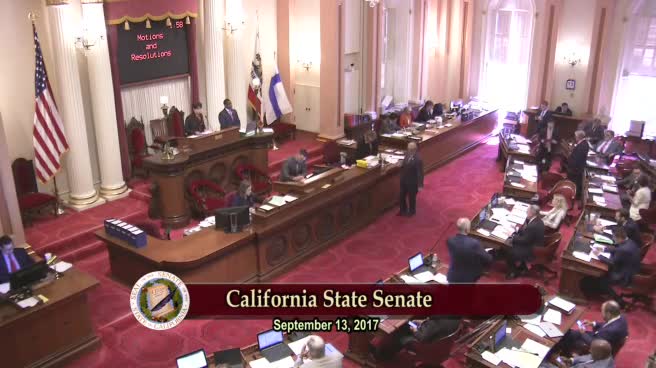 3MIN
Senate Floor
 1H
Senate Standing Committee on Appropriations
 3MIN
Assembly Floor
 1H
Assembly Standing Committee on Appropriations
 6MIN
Assembly Standing Committee on Human Services
Bill Author

Bill Co-Author(s):