AB 491: California Civil Liberties Public Education Act.
- Session Year: 2017-2018
- House: Assembly
- Latest Version Date: 2017-09-26
The California Civil Liberties Public Education Act establishes a grant program, administered by the State Librarian, for the stated purpose of sponsoring educational activities and the development of educational materials to ensure that the events surrounding the exclusion, forced removal, and internment of citizens and permanent residents of Japanese ancestry will be remembered and so that the causes and circumstances of this and similar events may be illuminated and understood. The act requires the State Librarian to select as grant recipients applicants who meet certain criteria, and the act lists criteria that grant applicants are encouraged to meet. The act provides a list of entities that are eligible to apply for a grant. The act provides that funding for the grant program is subject to an appropriation in the annual Budget Act or other measure.
This bill would revise the act to, among other things, expand the scope of the grant program to include content linking the exclusion, forced removal, and internment of citizens and permanent residents of Japanese ancestry with current civil liberties challenges, as specified. The bill would revise the criteria that a project is required to meet, and criteria that applicants are encouraged to meet, in order to be awarded a grant. The bill would also revise the list of the entities that are eligible to apply for a grant.
This bill would establish an advisory committee, as specified, to evaluate and make recommendations to the State Librarian based on grant applications.
This bill would require the State Librarian to submit a specified report to the Legislature and the Governor.
The California Civil Liberties Public Education Act establishes a grant program, administered by the State Librarian, for the stated purpose of sponsoring educational activities and the development of educational materials to ensure that the events surrounding the exclusion, forced removal, and internment of citizens and permanent residents of Japanese ancestry will be remembered and so that the causes and circumstances of this and similar events may be illuminated and understood. The act provides that funding for the grant program is subject to an appropriation in the annual Budget Act or other act. The act requires the State Librarian to select as grant recipients applicants who meet certain criteria, and the act lists criteria that grant applicants are encouraged to meet. The act provides a list of entities that are eligible to apply for a grant.
This bill instead would appropriate $3,000,000 from the General Fund to the State Librarian for the purposes of the grant program, to be expended over 3 specified fiscal years, thereby making an appropriation.This bill would revise the act to, among other things, expand the scope of the grant program to include content linking the exclusion, forced removal, and internment of citizens and permanent residents of Japanese ancestry with current civil liberties challenges, as specified. The bill would revise the criteria that a project is required to meet, and criteria that applicants are encouraged to meet, in order to be awarded a grant. The bill would also revise the list of the entities that are eligible to apply for a grant.
This bill would establish an advisory committee, as specified, to evaluate and make recommendations to the State Librarian based on grant applications.
This bill would require the State Librarian to submit a specified report to the Legislature and the Governor.
The California Civil Liberties Public Education Act establishes a grant program, administered by the State Librarian, for the stated purpose of sponsoring educational activities and the development of educational materials to ensure that the events surrounding the exclusion, forced removal, and internment of citizens and permanent residents of Japanese ancestry will be remembered and so that the causes and circumstances of this and similar events may be illuminated and understood. The act provides that funding for the grant program is subject to an appropriation in the annual Budget Act or other act.
This bill instead would continuously appropriate $1,000,000 $3,000,000 from the General Fund for each of 3 specified fiscal years to the State Librarian for the purposes of the grant program, to be expended over 3 specified fiscal years, thereby making an appropriation.
The California Civil Liberties Public Education Act establishes a grant program, administered by the State Librarian, for the stated purpose of sponsoring educational activities and the development of educational materials to ensure that the events surrounding the exclusion, forced removal, and internment of citizens and permanent residents of Japanese ancestry will be remembered and so that the causes and circumstances of this and similar events may be illuminated and understood. The act provides that funding for the grant program is subject to an appropriation in the annual Budget Act or other act.
This bill instead would continuously appropriate $1,000,000 from the General Fund for each of 3 specified fiscal years to the State Librarian for the purposes of the grant program, thereby making an appropriation.
(a)This part shall be known and may be cited as the California Civil Liberties Public Education Act. The purpose of the California Civil Liberties Public Education Act is to sponsor public educational activities and the development of educational materials to ensure that the events surrounding the exclusion, forced removal, and internment of citizens and permanent residents of Japanese ancestry will be remembered, and so that the causes and circumstances of this and similar events may be illuminated and understood.
(b)The Legislature finds and declares that the federal Commission on Wartime Relocation and Internment of Civilians (CWRIC) was established by Congress in 1980 to review the facts and circumstances surrounding Executive Order 9066, issued in February 19, 1942, and the impact of such Executive Order on American citizens and permanent residents... and to recommend appropriate remedies. The CWRIC issued a report of its findings in 1983 with the reports Personal Justice Denied and Personal Justice Denied-Part II, Recommendations. The reports were based on information gathered through 20 days of hearings in cities across the country, particularly the West Coast, hearing testimony from more than 750 witnesses: evacuees, former government officials, public figures, interested citizens, and historians and other professionals who have studied the subjects of Commission inquiry.
(c)The lessons to be learned from the internment of Japanese Americans during World War II are embodied in Personal Justice Denied-Part II, Recommendations. The CWRIC concluded as follows: In sum, Executive Order 9066 was not justified by military necessity, and the decisions that followed from it-exclusion, detention, the ending of detention and the ending of exclusion-were not founded upon military considerations. The broad historical causes that shaped these decisions were race prejudice, war hysteria, and a failure of political leadership. Widespread ignorance about Americans of Japanese descent contributed to a policy conceived in haste and executed in an atmosphere of fear and anger at Japan. A grave personal injustice was done to the American citizens and resident aliens of Japanese ancestry who, without individual review or any probative evidence against them were excluded, removed and detained by the United States during World War II.
(d)The Legislature finds and declares that President Ronald Reagan signed into law the federal Civil Liberties Act of 1988 and declared during the signing ceremony that This is a great day for America. In that act the Congress declared as follows:
The Congress recognizes that, as described in the Commission on Wartime Relocation and Internment of Civilians, a grave injustice was done to both citizens and permanent residents of Japanese ancestry by the evacuation, relocation, and internment of civilians during World War II. As the Commission documents, these actions were carried out without adequate security reasons and without any acts of espionage or sabotage documented by the Commission, and were motivated largely by racial prejudice, wartime hysteria, and a failure of political leadership. The excluded individuals of Japanese ancestry suffered enormous damages, both material and intangible, and there were incalculable losses in education and job training, all of which resulted in significant human suffering for which appropriate compensation has not been made. For these fundamental violations of the basic civil liberties and constitutional rights of these individuals of Japanese ancestry, the Congress apologizes on behalf of the Nation.
(e)The Legislature further finds and declares that, just as in 1942 when President Franklin Roosevelt issued Executive Order 9066 calling for the exclusion and incarceration of Japanese Americans as national security threats, so in 2017 President Donald Trump has issued executive orders calling for a travel ban for immigrants and refugees from Muslim-majority countries on the basis of national security. Moreover, during the 2016 presidential campaign, President Trump called for a total and complete shutdown of Muslims entering the United States, as well as for a national Muslim registry. These actions and proposed actions made 75 years after the issuance of Executive Order 9066 highlight the ongoing need for public educational activities and the development of educational materials to ensure that the exclusion and incarceration of Japanese Americans will not only be remembered, but also properly understood, so that no group or community is ever again unjustly targeted as Japanese Americans were during World War II.
SEC. 2.Section 13015 of the Education Code is amended to read:13015.(a)The State Librarian shall allocate grants pursuant to the program established by this part. The grants awarded under the program shall be awarded on a competitive basis.
(b)The State Librarian may contract with service providers or vendors to further the intent of the program established by this part.
(c)An advisory panel is hereby established and will be appointed to evaluate and make recommendations to the State Librarian based on grant applications. The members of the advisory panel shall be appointed as follows:
(1)The Governor shall appoint five members.
(2)The Speaker of the Assembly shall appoint two members.
(3)The Senate Committee on Rules shall appoint two members.
(d)The State Librarian shall award grants for applications that meet all of the following criteria:
(1)Applicants demonstrate the capability to administer and complete the proposed project within specified deadlines and within the specified budget.
(2)Applicants have the experience, knowledge, and qualifications to conduct quality educational activities regarding the exclusion and detention of Japanese Americans during World War II and to link that period of history with current civil liberties challenges, including, but not limited to, civil rights violations or civil liberties injustices that are perpetrated on the basis of an individuals race, national origin, immigration status, religion, gender, or sexual orientation.
(3)Projects link the Japanese American exclusion and detention experience with the experiences of other communities or populations so that the cause and circumstances of this and similar violations of civil rights or acts of injustice may be illuminated and understood and link those experiences with current civil liberties challenges, including, but not limited to, civil liberties injustices that are perpetrated on the basis of an individuals race, national origin, immigration status, religion, gender, or sexual orientation.
(4)Projects are designed to maximize the long-term educational impact of this chapter.
(5)Projects build upon, contribute to, and expand upon the existing body of educational and research materials on the exclusion and detention of Japanese Americans during World War II or similar violations of civil rights or acts of injustice carried out against a particular community or population.
(6)Projects include the variety of experiences regarding the exclusion and detention of Japanese Americans and its impact before, during, and after World War II, including those Japanese Americans who served in the military and those who were incarcerated in Department of Justice camps, and link those experiences with current civil liberties challenges, including, but not limited to, civil liberties injustices that are perpetrated on the basis of an individuals race, national origin, immigration status, religion, gender, or sexual orientation.
(e)Applicants for grants pursuant to this section are encouraged to do each of the following:
(1)Involve former detainees, those excluded from the military area, and their descendants in the development and implementation of projects.
(2)Involve individuals and their descendants from communities or populations that have experienced civil rights violations or acts of injustice in the development and implementation of projects.
(3)Develop a strategy and plan for raising the level of awareness and understanding among the American public regarding the exclusion and detention of Japanese Americans during World War II so that the causes and circumstances of this and similar events may be illuminated and understood.
(4)Develop a strategy and plan in the development and implementation of projects for raising the level of awareness and understanding among the American public regarding current civil liberties challenges, including, but not limited to, civil rights violations or civil liberties injustices that are perpetrated on the basis of an individuals race, national origin, immigration status, religion, gender, or sexual orientation.
(5)Develop a strategy and plan for reaching the broad, multicultural population through project activities.
(6)Develop local and regional consortia of organizations and individuals engaged in similar educational, research, and development efforts.
(7)Coordinate and collaborate with organizations and individuals engaging in similar educational, research, and development endeavors to maximize the effect of projects.
(8)Utilize creative and innovative methods and approaches in the research, development, and implementation of their projects.
(9)Seek matching funds, in-kind contributions, or other sources of support to supplement their proposal.
(10)Use a variety of media, including new technology, and the arts to creatively and strategically appeal to a broad American public while enhancing and enriching community-based educational efforts.
(11)Include in the grant application scholarly inquiry related to the variety of experiences and impact of the exclusion and detention of persons of Japanese ancestry during World War II, as well as its relationship to the experience of other populations so that the causes, circumstances, lessons, and contemporary applications of this and similar events will be illuminated and understood.
(12)Include in the grant application scholarly inquiry related to the variety of experiences and impact of civil rights violations or acts of injustice carried out against a particular community or population, as well as their relationship to the experience of other communities or populations so that the causes, circumstances, lessons, and contemporary applications of this and similar events will be illuminated and understood.
(13)Add relevant materials to or catalogue relevant materials in libraries and other repositories for the creation, publication, and distribution of bibliographies, curriculum guides, oral histories, and other resource directories and supporting the continued development of scholarly work on this subject by making a broad range of archival, library, and research materials more accessible to the American public.
(f)The State Librarian may adopt other criteria as he or she deems appropriate for his or her review of grant proposals. In reviewing projects for funding, scoring shall be based on an evaluation of all application materials: narratives, attachments, support letters, supplementary materials, and other materials that may be requested of applicants.
SEC. 3.Section 13020 of the Education Code is amended to read:13020.(a)In the review process, the State Librarian shall assign the following order of priority to the criteria set forth in subdivision (d) of Section 13015:
(1)Criteria set forth in paragraphs (1) to (4), inclusive, shall be given highest priority.
(2)Criteria set forth in paragraphs (5) and (6) shall be given second priority.
(b)The State Librarian shall consider the overall breadth and variety of the field of applicants to determine the projects that would best fulfill its program and mission. Final grant awards may be for the full amount of the grant requests or for a portion of the grant request.
(c)Applicants for grants pursuant to this section may include any of the following:
(1)Nonprofit organizations exempt from taxation pursuant to Section 501(c)(3) of the Internal Revenue Code, including, but not limited to, cultural institutions, arts organizations, and community organizations.
(2)Four-year colleges and universities.
(3)Individual artists, writers, journalists, scholars, and educators who are fiscally sponsored by nonprofit organizations exempt from taxation pursuant to Section 501(c)(3) of the Internal Revenue Code.
(4)Units of government.
(5)Consortia composed of any of the entities described in paragraphs (1) to (4), inclusive.
(d)Grants allocated pursuant to this section shall be provided for the general purpose of establishing a legacy of remembrance as part of a continuing process of recovery from World War II exclusion and detention, as well as similar civil rights violations or civil liberties injustices that have been carried out against other communities or populations, and specifically to do the following:
(1)Educate the public regarding the history and the lessons of the World War II exclusion, removal, and detention of persons of Japanese ancestry through the development, coordination, and distribution of new educational materials and the development of curriculum materials to complement and augment resources currently available on this subject matter.
(2)Educate the public through the development, coordination, and distribution of new educational materials and the development of curriculum materials to complement and augment resources currently available on this subject matter regarding the history and the lessons of civil rights violations or civil liberties injustices that have been carried out against other communities or populations, including, but not limited to, civil rights violations or civil liberties injustices that are perpetrated on the basis of an individuals race, national origin, immigration status, religion, gender, or sexual orientation.
(3)Link historic civil rights violations or civil liberties injustices with current civil liberties challenges.
(4)Develop videos, plays, presentations, speaker bureaus, and exhibitions for presentation to elementary, secondary, and community college audiences.
SEC. 4.Section 13025 of the Education Code is amended to read:13025.(a)On or before January 1, 2021, the State Librarian shall report to the Governor and the appropriate fiscal and policy committees of each house of the Legislature on the types of grants awarded and the accomplishments of the program established pursuant to this part.
(b)(1)The requirement for submitting a report imposed under subdivision (a) is inoperative on January 1, 2025, pursuant to Section 10231.5 of the Government Code.
(2)A report prepared pursuant to subdivision (a) shall be submitted in compliance with Section 9795 of the Government Code.
SEC. 5.Section 13030 of the Education Code is amended to read:13030.(a)Funding for this program is subject to an appropriation in the annual Budget Act or other measure for this purpose.
(b)Subject to an appropriation in the annual Budget Act or other measure for this purpose, the State Librarian shall review and identify programs with similar goals that may be combined with this project in the future.
(c)Subject to an appropriation in the annual Budget Act or other measure for this purpose, the State Librarian shall report to the Legislature by November 1, 2021, on the progress of the program and on the results of the review required by subdivision (a).
(a)This part shall be known and may be cited as the California Civil Liberties Public Education Act. The purpose of the California Civil Liberties Public Education Act is to sponsor public educational activities and the development of educational materials to ensure that the events surrounding the exclusion, forced removal, and internment of citizens and permanent residents of Japanese ancestry will be remembered, and so that the causes and circumstances of this and similar events may be illuminated and understood.
(b)The Legislature finds and declares that the federal Commission on Wartime Relocation and Internment of Civilians (CWRIC) was established by Congress in 1980 to review the facts and circumstances surrounding Executive Order 9066, issued in February 19, 1942, and the impact of such Executive Order on American citizens and permanent residents... and to recommend appropriate remedies. The CWRIC issued a report of its findings in 1983 with the reports Personal Justice Denied and Personal Justice Denied-Part II, Recommendations. The reports were based on information gathered through 20 days of hearings in cities across the country, particularly the West Coast, hearing testimony from more than 750 witnesses: evacuees, former government officials, public figures, interested citizens, and historians and other professionals who have studied the subjects of Commission inquiry.
(c)The lessons to be learned from the internment of Japanese Americans during World War II are embodied in Personal Justice Denied-Part II, Recommendations. The CWRIC concluded as follows: In sum, Executive Order 9066 was not justified by military necessity, and the decisions that followed from it-exclusion, detention, the ending of detention and the ending of exclusion-were not founded upon military considerations. The broad historical causes that shaped these decisions were race prejudice, war hysteria, and a failure of political leadership. Widespread ignorance about Americans of Japanese descent contributed to a policy conceived in haste and executed in an atmosphere of fear and anger at Japan. A grave personal injustice was done to the American citizens and resident aliens of Japanese ancestry who, without individual review or any probative evidence against them were excluded, removed and detained by the United States during World War II.
(d)The Legislature finds and declares that President Ronald Reagan signed into law the federal Civil Liberties Act of 1988 and declared during the signing ceremony that This is a great day for America. In that act the Congress declared as follows:
The Congress recognizes that, as described in the Commission on Wartime Relocation and Internment of Civilians, a grave injustice was done to both citizens and permanent residents of Japanese ancestry by the evacuation, relocation, and internment of civilians during World War II. As the Commission documents, these actions were carried out without adequate security reasons and without any acts of espionage or sabotage documented by the Commission, and were motivated largely by racial prejudice, wartime hysteria, and a failure of political leadership. The excluded individuals of Japanese ancestry suffered enormous damages, both material and intangible, and there were incalculable loses losses in education and job training, all of which resulted in significant human suffering for which appropriate compensation has not been made. For these fundamental violations of the basic civil liberties and constitutional rights of these individuals of Japanese ancestry, the Congress apologizes on behalf of the Nation.
(e)The Legislature further finds and declares that, just as in 1942 when President Franklin Roosevelt issued Executive Order 9066 calling for the exclusion and incarceration of Japanese Americans as national security threats, so in 2017 President Donald Trump has issued executive orders calling for a travel ban for immigrants and refugees from Muslim-majority countries on the basis of national security. Moreover, during the 2016 presidential campaign, President Trump called for a total and complete shutdown of Muslims entering the United States, as well as for a national Muslim registry. These actions and proposed actions made 75 years after the issuance of Executive Order 9066 highlight the ongoing need for public educational activities and the development of educational materials to ensure that the exclusion and incarceration of Japanese Americans will not only be remembered, but also properly understood, so that no group or community is ever again unjustly targeted as Japanese Americans were during World War II.
SEC. 2.Section 13015 of the Education Code is amended to read:13015.(a)The State Librarian shall allocate grants pursuant to the program established by this part. The grants awarded under the program shall be awarded on a competitive basis.
(b)The State Librarian may contract with service providers or vendors to further the intent of the program established by this part.
(c)An advisory panel is hereby established and will be appointed to evaluate and make recommendations to the State Librarian based on grant applications. The members of the advisory panel shall be appointed as follows:
(1)The Governor shall appoint five members.
(2)The Speaker of the Assembly shall appoint two members.
(3)The Senate Committee on Rules shall appoint two members.
(d)The State Librarian shall award grants for applications that meet all of the following criteria:
(1)Applicants demonstrate the capability to administer and complete the proposed project within specified deadlines and within the specified budget.
(2)Applicants have the experience, knowledge, and qualifications to conduct quality educational activities regarding the exclusion and detention of Japanese Americans during World War II and to link that period of history with current civil liberties challenges, including, but not limited to, civil rights violations or civil liberties injustices that are perpetrated on the basis of an individuals race, national origin, immigration status, religion, gender, or sexual orientation.
(3)Projects link the Japanese American exclusion and detention experience with the experiences of other communities or populations so that the cause and circumstances of this and similar violations of civil rights or acts of injustice may be illuminated and understood and link those experiences with current civil liberties challenges, including, but not limited to, civil liberties injustices that are perpetrated on the basis of an individuals race, national origin, immigration status, religion, gender, or sexual orientation.
(4)Projects are designed to maximize the long-term educational impact of this chapter.
(5)Projects build upon, contribute to, and expand upon the existing body of educational and research materials on the exclusion and detention of Japanese Americans during World War II or similar violations of civil rights or acts of injustice carried out against a particular community or population.
(6)Projects include the variety of experiences regarding the exclusion and detention of Japanese Americans and its impact before, during, and after World War II, including those Japanese Americans who served in the military and those who were incarcerated in Department of Justice camps, and link those experiences with current civil liberties challenges, including, but not limited to, civil liberties injustices that are perpetrated on the basis of an individuals race, national origin, immigration status, religion, gender, or sexual orientation.
(e)Applicants for grants pursuant to this section are encouraged to do each of the following:
(1)Involve former detainees, those excluded from the military area, and their descendants in the development and implementation of projects.
(2)Involve individuals and their descendants from communities or populations that have experienced civil rights violations or acts of injustice in the development and implementation of projects.
(3)Develop a strategy and plan for raising the level of awareness and understanding among the American public regarding the exclusion and detention of Japanese Americans during World War II so that the causes and circumstances of this and similar events may be illuminated and understood.
(4)Develop a strategy and plan in the development and implementation of projects for raising the level of awareness and understanding among the American public regarding current civil liberties challenges, including, but not limited to, civil rights violations or civil liberties injustices that are perpetrated on the basis of an individuals race, national origin, immigration status, religion, gender, or sexual orientation.
(5)Develop a strategy and plan for reaching the broad, multicultural population through project activities.
(6)Develop local and regional consortia of organizations and individuals engaged in similar educational, research, and development efforts.
(7)Coordinate and collaborate with organizations and individuals engaging in similar educational, research, and development endeavors to maximize the effect of projects.
(8)Utilize creative and innovative methods and approaches in the research, development, and implementation of their projects.
(9)Seek matching funds, in-kind contributions, or other sources of support to supplement their proposal.
(10)Use a variety of media, including new technology, and the arts to creatively and strategically appeal to a broad American public while enhancing and enriching community-based educational efforts.
(11)Include in the grant application scholarly inquiry related to the variety of experiences and impact of the exclusion and detention of persons of Japanese ancestry during World War II, as well as its relationship to the experience of other populations so that the causes, circumstances, lessons, and contemporary applications of this and similar events will be illuminated and understood.
(12)Include in the grant application scholarly inquiry related to the variety of experiences and impact of civil rights violations or acts of injustice carried out against a particular community or population, as well as their relationship to the experience of other communities or populations so that the causes, circumstances, lessons, and contemporary applications of this and similar events will be illuminated and understood.
(13)Add relevant materials to or catalogue relevant materials in libraries and other repositories for the creation, publication, and distribution of bibliographies, curriculum guides, oral histories, and other resource directories and supporting the continued development of scholarly work on this subject by making a broad range of archival, library, and research materials more accessible to the American public.
(f)The State Librarian may adopt other criteria as he or she deems appropriate for his or her review of grant proposals. In reviewing projects for funding, scoring shall be based on an evaluation of all application materials: narratives, attachments, support letters, supplementary materials, and other materials that may be requested of applicants.
SEC. 3.Section 13020 of the Education Code is amended to read:13020.(a)In the review process, the State Librarian shall assign the following order of priority to the criteria set forth in subdivision (d) of Section 13015:
(1)Criteria set forth in paragraphs (1) to (4), inclusive, shall be given highest priority.
(2)Criteria set forth in paragraphs (5) and (6) shall be given second priority.
(b)The State Librarian shall consider the overall breadth and variety of the field of applicants to determine the projects that would best fulfill its program and mission. Final grant awards may be for the full amount of the grant requests or for a portion of the grant request.
(c)Applicants for grants pursuant to this section may include any of the following:
(1)Nonprofit organizations exempt from taxation pursuant to Section 501(c)(3) of the Internal Revenue Code, including, but not limited to, cultural institutions, arts organizations, and community organizations.
(2)Four-year colleges and universities.
(3)Individual artists, writers, journalists, scholars, and educators who are fiscally sponsored by nonprofit organizations exempt from taxation pursuant to Section 501(c)(3) of the Internal Revenue Code.
(4)Units of government.
(5)Consortia composed of any of the entities described in paragraphs (1) to (4), inclusive.
(d)Grants allocated pursuant to this section shall be provided for the general purpose of establishing a legacy of remembrance as part of a continuing process of recovery from World War II exclusion and detention, as well as similar civil rights violations or civil liberties injustices that have been carried out against other communities or populations, and specifically to do the following:
(1)Educate the public regarding the history and the lessons of the World War II exclusion, removal, and detention of persons of Japanese ancestry through the development, coordination, and distribution of new educational materials and the development of curriculum materials to complement and augment resources currently available on this subject matter.
(2)Educate the public through the development, coordination, and distribution of new educational materials and the development of curriculum materials to complement and augment resources currently available on this subject matter regarding the history and the lessons of civil rights violations or civil liberties injustices that have been carried out against other communities or populations, including, but not limited to, civil rights violations or civil liberties injustices that are perpetrated on the basis of an individuals race, national origin, immigration status, religion, gender, or sexual orientation.
(3)Link historic civil rights violations or civil liberties injustices with current civil liberties challenges.
(4)Develop videos, plays, presentations, speaker bureaus, and exhibitions for presentation to elementary, secondary, and community college audiences.
SEC. 4.Section 13025 of the Education Code is amended to read:13025.(a)On or before January 1, 2021, the State Librarian shall report to the Governor and the appropriate fiscal and policy committees of each house of the Legislature on the types of grants awarded and the accomplishments of the program established pursuant to this part.
(b)(1)The requirement for submitting a report imposed under subdivision (a) is inoperative on January 1, 2025, pursuant to Section 10231.5 of the Government Code.
(2)A report prepared pursuant to subdivision (a) shall be submitted in compliance with Section 9795 of the Government Code.
SEC. 5.Section 13030 of the Education Code is amended to read:13030.(a)Subject Funding for this program is subject to an appropriation in the annual Budget Act or other measure for this purpose.
(b)Subject to an appropriation in the annual Budget Act or other measure for this purpose, the State Librarian shall review and identify programs with similar goals that may be combined with this project in the future.
(b)(c)Subject to an appropriation in the annual Budget Act or other measure for this purpose, the State Librarian shall report to the Legislature by November 1, 2021, on the progress of the program and on the results of the review required by subdivision (a).
(a)This part shall be known and may be cited as the California Civil Liberties Public Education Act. The purpose of the California Civil Liberties Public Education Act is to sponsor public educational activities and the development of educational materials to ensure that the events surrounding the exclusion, forced removal, and internment of citizens and permanent residents of Japanese ancestry will be remembered, and so that the causes and circumstances of this and similar events may be illuminated and understood.
(b)The Legislature finds and declares that the federal Commission on Wartime Relocation and Internment of Civilians (CWRIC) was established by Congress in 1980 to review the facts and circumstances surrounding Executive Order 9066, issued in February 19, 1942, and the impact of such Executive Order on American citizens and permanent residents... and to recommend appropriate remedies. The CWRIC issued a report of its findings in 1983 with the reports Personal Justice Denied and Personal Justice Denied-Part II, Recommendations. The reports were based on information gathered through 20 days of hearings in cities across the country, particularly the West Coast, hearing testimony from more than 750 witnesses: evacuees, former government officials, public figures, interested citizens, and historians and other professionals who have studied the subjects of Commission inquiry.
(c)The lessons to be learned from the internment of Japanese-Americans Japanese Americans during World War II are embodied in Personal Justice Denied-Part II, Recommendations. The CWRIC concluded as follows: In sum, Executive Order 9066 was not justified by military necessity, and the decisions that followed from it-exclusion, detention, the ending of detention and the ending of exclusion-were not founded upon military considerations. The broad historical causes that shaped these decisions were race prejudice, war hysteria, and a failure of political leadership. Widespread ignorance about Americans of Japanese descent contributed to a policy conceived in haste and executed in an atmosphere of fear and anger at Japan. A grave personal injustice was done to the American citizens and resident aliens of Japanese ancestry who, without individual review or any probative evidence against them were excluded, removed and detained by the United States during World War II.
(d)The Legislature further finds and declares that President Ronald Reagan signed into law the federal Civil Liberties Act of 1988 and declared during the signing ceremony that This is a great day for America. In that act the Congress declared as follows:
The Congress recognizes that, as described in the Commission on Wartime Relocation and Internment of Civilians, a grave injustice was done to both citizens and permanent residents of Japanese ancestry by the evacuation, relocation, and internment of civilians during World War II. As the Commission documents, these actions were carried out without adequate security reasons and without any acts of espionage or sabotage documented by the Commission, and were motivated largely by racial prejudice, wartime hysteria, and a failure of political leadership. The excluded individuals of Japanese ancestry suffered enormous damages, both material and intangible, and there were incalculable loses in education and job training, all of which resulted in significant human suffering for which appropriate compensation has not been made. For these fundamental violations of the basic civil liberties and constitutional rights of these individuals of Japanese ancestry, the Congress apologizes on behalf of the Nation.
(e)The Legislature further finds and declares that, just as in 1942 when President Franklin Roosevelt issued Executive Order 9066 calling for the exclusion and incarceration of Japanese Americans as national security threats, so in 2017 President Donald Trump has issued executive orders calling for a travel ban for immigrants and refugees from Muslim-majority countries on the basis of national security. Moreover, during the 2016 presidential campaign, President Trump called for a total and complete shutdown of Muslims entering the United States, as well as for a national Muslim registry. These actions and proposed actions made 75 years after the issuance of Executive Order 9066 highlight the ongoing need for public educational activities and the development of educational materials to ensure that the exclusion and incarceration of Japanese Americans will not only be remembered, but also properly understood, so that no group or community is ever again unjustly targeted as Japanese Americans were during World War II.
SEC. 2.Section 13015 of the Education Code is amended to read:13015.(a)The State Librarian shall allocate grants pursuant to the program established by this part. The grants awarded under the program shall be awarded on a competitive basis.
(b)The State Librarian may contract with independent review panelists and establish an advisory panel to evaluate and make recommendations to the State Librarian based on grant applications. service providers or vendors to further the intent of the program established by this part.
(c)An advisory panel is hereby established and will be appointed to evaluate and make recommendations to the State Librarian based on grant applications. The members of the advisory panel shall be appointed as follows:
(1)The Governor shall appoint five members.
(2)The Speaker of the Assembly shall appoint two members.
(3)The Senate Committee on Rules shall appoint two members.
(c)(d)The State Librarian shall select as grant recipients applicants who award grants for applications that meet all of the following criteria:
(1)Applicants demonstrate the capability to, to administer and complete the proposed project within specified deadlines and within the specified budget.
(2)Applicants have the experience, knowledge, and qualifications to conduct quality educational activities regarding the exclusion and detention of Japanese-Americans Japanese Americans during World War II. II and to link that period of history with current civil liberties challenges, including, but not limited to, civil rights violations or civil liberties injustices that are perpetrated on the basis of an individuals race, national origin, immigration status, religion, gender, or sexual orientation.
(3)Projects link the Japanese-American Japanese American exclusion and detention experience with the experiences of other communities or populations so that the cause and circumstances of this and similar violations of civil rights or acts of injustice may be illuminated and understood. understood and link those experiences with current civil liberties challenges, including, but not limited to, civil liberties injustices that are perpetrated on the basis of an individuals race, national origin, immigration status, religion, gender, or sexual orientation.
(4)Projects are designed to maximize the long-term educational impact of this chapter.
(5)Projects build upon, contribute to, and expand upon, upon the existing body of educational and research materials on the exclusion and detention of Japanese-Americans Japanese Americans during World War II. II or similar violations of civil rights or acts of injustice carried out against a particular community or population.
(6)Projects include the variety of experiences regarding the exclusion and detention of Japanese-Americans Japanese Americans and its impact before, during, and after, after World War II II, including those Japanese-Americans Japanese Americans who served in the military and those who were interned incarcerated in Department of Justice camps. camps, and link those experiences with current civil liberties challenges, including, but not limited to, civil liberties injustices that are perpetrated on the basis of an individuals race, national origin, immigration status, religion, gender, or sexual orientation.
(d)(e)Applicants for grants pursuant to this section are encouraged to do each of the following:
(1)Involve former detainees, those excluded from the military area, and their descendants in the development and implementation of projects.
(2)Involve individuals and their descendants from communities or populations that have experienced civil rights violations or acts of injustice in the development and implementation of projects.
(2)(3)Develop a strategy and plan for raising the level of awareness and understanding among the American public regarding the exclusion and detention of Japanese-Americans Japanese Americans during World War II so that the causes and circumstances of this and similar events may be illuminated and understood.
(4)Develop a strategy and plan in the development and implementation of projects for raising the level of awareness and understanding among the American public regarding current civil liberties challenges, including, but not limited to, civil rights violations or civil liberties injustices that are perpetrated on the basis of an individuals race, national origin, immigration status, religion, gender, or sexual orientation.
(3)(5)Develop a strategy and plan for reaching the broad, multicultural population through project activities.
(4)(6)Develop local and regional consortia of organizations and individuals engaged in similar educational, research, and development efforts.
(5)(7)Coordinate and collaborate with organizations and individuals engaging in similar educational, research, and development endeavors to maximize the effect of grants. projects.
(6)(8)Utilize creative and innovative methods and approaches in the research, development, and implementation of their projects.
(7)(9)Seek matching funds, in-kind contributions, or other sources of support to supplement their proposal.
(8)(10)Use a variety of media, including new technology, and the arts to creatively and strategically appeal to a broad American public while enhancing and enriching community-based educational efforts.
(9)(11)Include in the grant application scholarly inquiry related to the variety of experiences and impact of the exclusion and detention of persons of Japanese ancestry during World War II, as well as its relationship to the experience of other populations so that the causes, circumstances, lessons, and contemporary applications of this and similar events will be illuminated and understood.
(12)Include in the grant application scholarly inquiry related to the variety of experiences and impact of civil rights violations or acts of injustice carried out against a particular community or population, as well as their relationship to the experience of other communities or populations so that the causes, circumstances, lessons, and contemporary applications of this and similar events will be illuminated and understood.
(10)(13)Add relevant materials to or catalogue relevant materials in libraries and other repositories for the creation, publication, and distribution of bibliographies, curriculum guides, oral histories, and other resource directories and supporting the continued development of scholarly work on this subject by making a broad range of archival, library, and research materials more accessible to the American public.
(e)(f)The State Librarian may adopt other criteria as it he or she deems appropriate for its his or her review of grant proposals. In reviewing projects for funding, scoring shall be based on an evaluation of all application materials: narratives, attachments, support letters, supplementary materials, and other materials that may be requested of applicants.
SEC. 3.Section 13020 of the Education Code is amended to read:13020.(a)In the review process, the State Librarian shall assign the following order of priority to the criteria set forth in subdivision (c) (d) of Section 13015:
(1)Criteria set forth in paragraphs (1) to (4), inclusive, shall be given highest priority.
(2)Criteria set forth in paragraphs (5) to (6), inclusive, and (6) shall be given second priority.
(b)The State Librarian shall consider the overall breadth and variety of the field of applicants to determine the projects that would best fulfill its program and mission. Final grant awards may be for the full amount of the grant requests or for a portion of the grant request.
(c)Applicants for grants pursuant to this section may include any of the following:
(1)Nonprofit organizations exempt from taxation pursuant to Section 501(c)(3) of the Internal Revenue Code. Code, including, but not limited to, cultural institutions, arts organizations, and community organizations.
(2)Four-year colleges and universities.
(3)Cultural institutions, arts organizations, and community organizations.(4)(3)Individual artists, writers, journalists, scholars, and educators. educators who are fiscally sponsored by nonprofit organizations exempt from taxation pursuant to Section 501(c)(3) of the Internal Revenue Code.
(5)(4)Units of government.
(6)(5)Consortia composed of any of the entities described in paragraphs (1) to (5), (4), inclusive.
(d)Grants allocated pursuant to this section shall be provided for the general purpose of establishing a legacy of remembrance as part of a continuing process of recovery from World War II exclusion and detention detention, as well as similar civil rights violations or civil liberties injustices that have been carried out against other communities or populations, and specifically to do one or both of the following:
(1)Educate the public regarding the history and the lessons of the World War II exclusion, removal, and detention of persons of Japanese ancestry through the development, coordination, and distribution of new educational materials and the development of curriculum materials to complement and augment resources currently available on this subject matter.
(2)Educate the public through the development, coordination, and distribution of new educational materials and the development of curriculum materials to complement and augment resources currently available on this subject matter regarding the history and the lessons of civil rights violations or civil liberties injustices that have been carried out against other communities or populations, including, but not limited to, civil rights violations or civil liberties injustices that are perpetrated on the basis of an individuals race, national origin, immigration status, religion, gender, or sexual orientation.
(3)Link historic civil rights violations or civil liberties injustices with current civil liberties challenges.
(2)(4)Develop videos, plays, presentations, speaker bureaus, and exhibitions for presentation to elementary, secondary, and community college audiences.
SEC. 4.Section 13025 of the Education Code is amended to read:13025.(a)On or before January 1, 2001, 2021, the State Librarian shall report to the Governor and the appropriate fiscal and policy committees of each house of the Legislature on the types of grants awarded and the accomplishments of the program established pursuant to this part.
(b)(1)The requirement for submitting a report imposed under subdivision (a) is inoperative on January 1, 2025, pursuant to Section 10231.5 of the Government Code.
(2)A report prepared pursuant to subdivision (a) shall be submitted in compliance with Section 9795 of the Government Code.
SECTION 1.SEC. 5.Section 13030 of the Education Code is amended to read:13030.(a)Subject to an appropriation in the annual Budget Act or other measure for this purpose, the State Librarian shall review and identify programs with similar goals that may be combined with this project in the future.
(b)Subject to an appropriation in the annual Budget Act or other measure for this purpose, the State Librarian shall report to the Legislature by November 1, 2021, on the progress of the program and on the results of the review required by subdivision (a).
SEC. 2.The sum of three million dollars ($3,000,000) is hereby appropriated from the General Fund to the State Librarian for the purposes of the California Civil Liberties Public Education Act (Part 8.5 (commencing with Section 13000) of Division 1 of Title 1 of the Education Code), to be expended over the 201718, 201819, and 20192020 fiscal years.(a)Subject to an appropriation in the annual Budget Act or other measure for this purpose, the State Librarian shall review and identify programs with similar goals that may be combined with this project in the future.
(c)(b)Subject to an appropriation in the annual Budget Act or other measure for this purpose, the State Librarian shall report to the Legislature by November 1, 2021, on the progress of the program and on the results of the review required by subdivision (b). (a).
SEC. 2.The sum of three million dollars ($3,000,000) is hereby appropriated from the General Fund to the State Librarian for the purposes of the California Civil Liberties Public Education Act (Part 8.5 (commencing with Section 13000) of Division 1 of Title 1 of the Education Code), to be expended over the 201718, 201819, and 20192020 fiscal years.
(a)Notwithstanding Section 13340 of the Government Code, the sum of one million dollars ($1,000,000) is hereby continuously appropriated for each of the fiscal years 201718, 201819, and 201920 from the General Fund to the State Librarian for the purposes of this chapter.
(b)Subject to an appropriation for this purpose in the annual Budget Act or other measure, measure for this purpose, the State Librarian shall review and identify programs with similar goals that may be combined with this project in the future.
(c)Subject to an appropriation in the annual Budget Act or other measure for this purpose, the State Librarian shall report to the Legislature by November 1, 2004, 2021, on the progress of the program and on the results of the review required by subdivision (b).
|
Date
|
Status
|
|---|---|
| Sep 26, 2017 | Chaptered by Secretary of State - Chapter 292, Statutes of 2017. |
| Sep 26, 2017 | Approved by the Governor. |
| Sep 20, 2017 | Enrolled and presented to the Governor at 4:30 p.m. |
| Sep 13, 2017 | Assembly Rule 77(a) suspended. |
| Sep 12, 2017 | In Assembly. Concurrence in Senate amendments pending. May be considered on or after September 14 pursuant to Assembly Rule 77. |
| Sep 11, 2017 | Read third time. Passed. Ordered to the Assembly. |
| Sep 5, 2017 | Read second time. Ordered to third reading. |
| Sep 1, 2017 | From committee: Amend, and do pass as amended. (Ayes 5. Noes 2.) (September 1). |
| Aug 21, 2017 | In committee: Referred to APPR. suspense file. |
| Jul 12, 2017 | From committee: Do pass and re-refer to Com. on APPR. (Ayes 6. Noes 1.) (July 12). Re-referred to Com. on APPR. |
| Jul 3, 2017 | From committee chair, with author's amendments: Amend, and re-refer to committee. Read second time, amended, and re-referred to Com. on ED. |
| Jun 26, 2017 | In committee: Set, first hearing. Hearing canceled at the request of author. |
| Jun 14, 2017 | Referred to Com. on ED. |
| Jun 1, 2017 | In Senate. Read first time. To Com. on RLS. for assignment. |
| May 31, 2017 | Read third time. Passed. Ordered to the Senate. (Ayes 73. Noes 0. Page 1894.) |
| May 26, 2017 | From committee: Do pass. (Ayes 17. Noes 0.) (May 26). |
| Apr 26, 2017 | In committee: Set, first hearing. Referred to APPR. suspense file. |
| Apr 4, 2017 | Re-referred to Com. on APPR. |
| Apr 3, 2017 | Read second time and amended. |
| Mar 30, 2017 | From committee: Amend, and do pass as amended and re-refer to Com. on APPR. (Ayes 7. Noes 0.) (March 22). |
| Feb 27, 2017 | Referred to Com. on ED. |
| Feb 14, 2017 | From printer. May be heard in committee March 16. |
| Feb 13, 2017 | Read first time. To print. |
|
Date
|
Description
|
Location
|
Votes
|
|
|---|---|---|---|---|
| Sep 13, 2017 | AB 491 MURATSUCHI Concurrence in Senate Amendments | Assembly Floor |
Passed |
|
| Sep 11, 2017 | Assembly 3rd Reading AB491 Muratsuchi By Pan | Senate Floor |
Passed |
|
| Sep 1, 2017 | Do pass as amended | Senate Standing Committee on Appropriations |
Passed |
|
| Aug 21, 2017 | Placed on suspense file | Senate Standing Committee on Appropriations |
Passed |
|
| Jul 12, 2017 | Do pass, but first be re-referred to the Committee on [Appropriations] | Senate Standing Committee on Education |
Passed |
|
| May 31, 2017 | AB 491 MURATSUCHI Assembly Third Reading | Assembly Floor |
Passed |
|
| May 26, 2017 | Do pass. | Assembly Standing Committee on Appropriations |
Passed |
|
| Mar 22, 2017 | Do pass as amended and be re-referred to the Committee on [Appropriations] | Assembly Standing Committee on Education |
Passed |
This list shows positions taken on this bill by organizations on the date displayed, which is linked to the original source.
Positions by individuals are not included.
|
Organization
|
Position
|
Date
|
|---|---|---|
| Asian Pacific Policy and Planning Council | ** Support | Sep 5, 2017 |
| berkeley japanese american citizens league | ** Support | Sep 5, 2017 |
| California Right to Life Committee | ** Against | Sep 5, 2017 |
| Council on American-Islamic Relations, California | ** Support | Sep 5, 2017 |
| florin japanese american citizens league | ** Support | Sep 5, 2017 |
| Japanese American Citizens League, Northern California-Western Nevada-Pacific District | ** Support | Sep 5, 2017 |
| japanese american citizens league, pacific southwest district | ** Support | Sep 5, 2017 |
| japanese american cultural & community center | ** Support | Sep 5, 2017 |
| Japanese Community Youth Council of San Francisco | ** Support | Sep 5, 2017 |
| National Association Of Social Workers, California Chapter | ** Support | Sep 5, 2017 |
| national japanese american historical society | ** Support | Sep 5, 2017 |
| Numerous individuals | ** Support | Sep 5, 2017 |
| Several individuals | ** Support | Mar 20, 2017 |
| Tanforan Assembly Center Memorial Committee | ** Support | Sep 5, 2017 |
| Tule Lake Committee | ** Support | Sep 5, 2017 |
| Veterans of Foreign Wars Nisei Post 8985 | * Support | Jul 12, 2017 |
CONCURRENCE IN SENATE AMENDMENTS
CSA1 Bill Id:AB 491
Author:(Muratsuchi)
As Amended Ver:September 1, 2017
Majority vote
ASSEMBLY: | 73-0 | (May 31, 2017) | SENATE: | 28-10 | (September 11, 2017) |
Original Committee Reference: ED.
SUMMARY: Expands the purpose of grants made through the California Civil Liberties Public Education grant program to include links between the World War II exclusion, removal, and detention of persons of Japanese ancestry and civil rights violations or civil liberties injustices that have been carried out against other communities or populations.
The Senate amendments:
- Permit the State Librarian to contract with service providers or vendors to further the intent of the California Civil Liberties Public Education grant program.
- Establish an advisory panel to evaluate and make recommendations to the State Librarian on grant applications, and require the advisory panel to include members as follows:
- five members appointed by the Governor
- two members appointed by the Assembly Speaker
- two members appointed by the Senate
- Require that applicants selected for grant funding have the experience, knowledge and qualifications to link the Japanese American exclusion and detention experience with civil rights violations or civil liberties injustices that are perpetrated on the basis of an individual's race, national origin, immigration status, religion, gender, or sexual orientation.
- Require that projects link the Japanese American exclusion and detention experience with current civil liberties challenges, including civil liberties injustices that are perpetrated on the basis of an individual's race, national origin, immigration status, religion, gender, or sexual orientation.
- Allow projects to build upon, contribute to, and expand upon similar violations of civil rights or acts of injustice carried out against a particular community or population.
- Encourage applicants to:
- involve, in the development and implementation of projects, individuals and their descendants from communities or populations that have experienced civil rights violations or acts of injustice.
- develop a strategy and plan for raising the level of awareness and understanding among the American public regarding current civil liberties challenges, including civil rights violations or civil liberties injustices that are perpetrated on the basis of an individual’s race, national origin, immigration status, religion, gender, or sexual orientation.
- Include in the grant application scholarly inquiry related to the variety of experiences and impact of civil rights violations or acts of injustice carried out against a particular community or population, as well as their relationship to the experience of other communities or populations so that the causes, circumstances, lessons, and contemporary applications of this and similar events will be illuminated and understood.
- Require that individual artists, writers, journalists, scholars, and educators be fiscally sponsored by nonprofit organizations in order to be eligible to apply for grants.
- Require that cultural institutions, arts organizations, and community organizations be nonprofit organizations in order to be eligible to apply for funding.
- State that the general purpose of grants includes:
- educating the public through the development, coordination, and distribution of new educational materials and the development of curriculum materials to complement and augment resources currently available on this subject matter regarding the history and the lessons of civil rights violations or civil liberties injustices that have been carried out against other communities or populations, including, but not limited to, civil rights violations or civil liberties injustices that are perpetrated on the basis of an individual's race, national origin, immigration status, religion, gender, or sexual orientation
- linking historic civil rights violations or civil liberties injustices with current civil liberties challenges
- Extends the date by which an existing reporting requirement must be met, to January 1, 2021, and sunsets the reporting requirement.
- Make the provisions of the measure operative only if an appropriation for its purposes is provided in the annual Budget Act or another statute.
FISCAL EFFECT: According to the Senate Appropriations Committee:
- Approximately $150,000 to the California State Library to administer the program. However, the budget allows the State Librarian to use up to five percent of the amount appropriated for the program ($3 million included in the 2017 Budget Act) for administration of the program.
- This bill could also result in additional unknown General Fund costs, likely in the tens of thousands of dollars to up to one hundred thousand dollars, to conduct the required review of programs and complete the report to the Legislature. These provisions are subject to an appropriation.
COMMENTS:
Need for the bill. According to the author, "The California Civil Liberties Public Education Program was established in 1998 with the passage of AB 1915 for the purpose of sponsoring public educational activities and development of educational materials to ensure that the events surrounding the exclusion, forced removal, and internment of civilians and permanent resident aliens of Japanese ancestry will be remembered, and so that the causes and circumstance of this and similar events may be illuminated and understood.
Given the nation's current political climate, the continuation of the California Civil Liberties Public Education Program is more important than ever. The program was established to ensure that the mistakes of the past are never forgotten or repeated and it is important that this valuable program is maintained and continues to thrive."
Program funding history. The California Civil Liberties Public Education Program was established in 1998 and received $1 million in annual funding until 2011. According to the State Library, 366 grants were awarded, totaling over $8.8 million.
The 2016-17 Budget Act included one-time funding of $1 million for the program. The State Librarian issued a press release on May 2, 2017, announcing that more than $922,000 was awarded to 29 organizations ranging from community groups to the California State University system. The press release notes that projects totaling more than $4 million vied for $1 million in one-time funds.
AB 97 (Ting), Chapter 14, the 2017 Budget Act, allocates $3 million to the California State Library for the California Civil Liberties Public Education program, authorizes the State Librarian to use up to 5% for administration of the program, and requires funds to be available only until June 30, 2020.
Analysis Prepared by: Tanya Lieberman / ED. / (916) 319-2087 FN: 0001984
Office of Senate Floor Analyses (916) 651-1520 Fax: (916) 327-4478 | AB |
THIRD READING
Bill No: AB 491
: 9/1/17
SENATE EDUCATION COMMITTEE: 6-1, 7/12/17
AYES: Allen, Wilk, Galgiani, Leyva, Mendoza, Pan
NOES: Vidak
SENATE APPROPRIATIONS COMMITTEE: 5-2, 9/1/17
AYES: Lara, Beall, Bradford, Hill, Wiener
NOES: Bates, Nielsen
ASSEMBLY FLOOR: 73-0, 5/31/17 - See last page for vote
DIGEST:
This bill establishes the framework for the use of funds provided in the 2017 Budget Act for the administration of the California Civil Liberties Public Education grant program by the State Librarian to educate the public regarding the history and the lessons of the World War II exclusion, removal, and detention of persons of Japanese ancestry, and of civil rights violations or civil liberties injustices that have been carried out against other communities.
Existing law:
- Establishes the California Civil Liberties Public Education Act for the purpose of sponsoring public educational activities and development of educational materials to ensure that the events surrounding the exclusion, forced removal, and internments of citizens and permanent residents of Japanese ancestry will be remembered, and so that the causes and circumstances of this and similar events may be illuminated and understood. (Education Code § 13000)
- Requires the State Librarian to allocate grants, on a competitive basis, for the general purpose of establishing a legacy of remembrance as part of a continuing process of recovery from World War II exclusion and detention and specifically to do one or both of the following:
- Educate the public regarding the history and the lessons of the World War II exclusion, removal, and detention of persons of Japanese ancestry through the development, coordination, and distribution of new educational materials and the development of curriculum materials to complement and augment resources currently available on this subject matter.
- Develop videos, plays, presentations, speaker bureaus, and exhibitions for presentation to elementary, secondary, and community college audiences. (EC § 13015 and 13020)
- Requires the State Librarian to select as grant recipients applicants who meet all of the following criteria:
- Applicants demonstrate the capability to administer and complete the proposed project within specified deadlines and within the specified budget.
- Applicants have the experience, knowledge, and qualifications to conduct quality educational activities regarding the exclusion and detention of Japanese-Americans during World War II.
- Projects link the Japanese-American exclusion and detention experience with the experiences of other populations so that the cause and circumstances of this and similar violations of civil rights or acts of injustice may be illuminated and understood.
- Projects are designed to maximize the long-term educational impact of this chapter.
- Projects build upon, contribute to, and expand upon, the existing body of educational and research materials on the exclusion and detention of Japanese-Americans during World War II.
- Projects include the variety of experiences regarding the exclusion and detention of Japanese-Americans and its impact before, during, and after, World War II including those Japanese-Americans who served in the military and those who were interned in Department of Justice camps. (EC § 13015)
- Requires the State Librarian to assign the following order of priority to the criteria listed in # 3 as follows:
- Highest priority shall be for criteria listed in # 3 a) – d).
- Second priority shall be for criteria listed in # 3 e) – f). (EC § 13020)
- Authorizes applicants for grants to include non-profit organizations (501(c)(3)); four-year colleges and universities; cultural institutions, arts organizations, and community organizations; individual artists, writers, journalists, scholars, and educators; units of government; consortia composed of any of the entities described above. (EC § 13020)
- Requires the State Librarian to report by January 1, 2001, to the Governor and the appropriate fiscal and policy committees of each house of the Legislature on the types of grants awarded and the accomplishments of the program. (EC § 13025)
- Requires the State Librarian, subject to an appropriation for this purpose, to review and identify programs with similar goals that may be combined with this project in the future; and, report to the Legislature by November 1, 2004, on the progress of the program and on the results of the review described above. (EC § 13030)
This bill establishes the framework for the use of funds provided in the 2017 Budget Act for the administration of the California Civil Liberties Public Education grant program by the State Librarian to educate the public regarding the history and the lessons of the World War II exclusion, removal, and detention of persons of Japanese ancestry, and of civil rights violations or civil liberties injustices that have been carried out against other communities. Specifically, this bill:
- Expands the general purpose of the California Civil Liberties Public Education grant program to:
- Include similar civil rights violations or civil liberties injustices that have been carried out against other communities or populations.
- Educate the public regarding the history and the lessons of civil rights violations or civil liberties injustices that have been carried out against other communities or populations, including but not limited to, civil rights violations or civil liberties injustices that are perpetrated on the basis of an individual’s race, national origin, immigration status, religion, gender, or sexual orientation. This bill provides that educating the public is to be accomplished through the development, coordination, and distribution of new educational materials and the development of curriculum materials to complement and augment resources currently available on this subject matter.
- Link historic civil rights violations or civil liberties injustices with current civil liberties challenges.
- Modifies the type of entities that may apply for grant funds as follows:
- Specifically authorizes 501(c)(3) non-profit organizations to include cultural institutions, arts organizations, and community organizations.
- Limits the existing authority for applicants who are individual artists, writers, journalists, scholars, and educators to those who are fiscally sponsored by a 501 (c)(3) nonprofit organization.
- Expands the criteria by which grant applicants are selected by the State Librarian, and thereby assigned priority for receipt of grant funds, as follows:
Adds to first priority criteria
- Applicants have the experience, knowledge, and qualifications to link this period of history with current civil liberties challenges including but not limited to, civil rights violations or civil liberties injustices that are perpetrated on the basis of an individual’s race, national origin, immigration status, religion, gender, or sexual orientation.
- Projects that also link this period of history with current civil liberties challenges described above.
Adds to second priority criteria
- Projects build upon, contribute to, and expand upon, the existing body of educational and research materials on similar violations of civil rights or acts of injustice carried out against a particular community or population.
- Projects that also link this period of history with current civil liberties challenges, including but not limited to civil liberties injustices that are perpetrated on the basis of an individual’s race, national origin, immigration status, religion, gender or sexual orientation.
- Adds to the activities that applicants for grants are encouraged to do to include:
- Involvement of individuals and their descendants from communities or populations that have experienced civil rights violations or acts of injustice in the development and implementation of projects.
- Develop a strategy and plan for raising the level of awareness and understanding among the American public regarding current civil liberties challenges including but not limited to, civil rights violations or civil liberties injustices that are perpetrated on the basis of an individual’s race, national origin, immigration status, religion, gender, or sexual orientation in the development and implementation of projects.
- Include in the grant application scholarly inquiry related to the variety of experiences and impact of civil rights violations or acts of injustice carried out against a particular community or population, as well as their relationship to the experience of other communities or populations so that the causes, circumstances, lessons, and contemporary applications of this and similar events will be illuminated and understood.
- Modifies the existing authority of the State Librarian to establish an advisory panel to evaluate and make recommendations to the State Librarian based on grant applications to require, rather than authorize, the establishment of an advisory panel, and establishes the panel’s membership as follows:
- Five members appointed by the Governor.
- Two members appointed by the Speaker of the Assembly.
- Two members appointed by the Senate Rules Committee.
- Authorizes the State Librarian to contract directly with service providers or vendors.
- Reestablishes that funding for this program is subject to an appropriation in the annual Budget Act or other measure for this purpose.
- Adds findings and declarations that draw similarities between Executive Order 9066 calling for the exclusion and incarceration of Japanese Americans and recent executive orders calling for a travel ban for immigrants and refugees from Muslim-majority countries.
- Changes references from “internment” to “incarceration.”
- Updates existing deadlines for reports relative to the Civil Liberties Public Education grant program, by extending due dates to 2021.
Comments
- California Civil Liberties Public Education grant program. This grant program was funded from the 1998-99 through 2010-11 fiscal years. During this time, 366 grants were awarded, totaling $8,845,303. Funding was eliminated beginning July 1, 2011. The 2016 Budget Act included $1 million in one-time funds for the grant program. According to the 2016-17 grant application guidelines, grant requests may be made for one of two categories:
- Major Preservation Projects or Public Media Projects, with a maximum grant request of $150,000.
- Community Projects, with a maximum grant request of $40,000.
This bill expands the scope of this grant program by adding to the criteria that an applicant must meet, and thereby affecting priority for funding, to include projects that link the Japanese American exclusion and detention experience with current civil liberties challenges including injustices perpetrated on the basis of an individual’s race, national origin, immigration status, religion, gender, or sexual orientation. This bill also states legislative findings and declarations that draw similarities between Executive Order 9066 calling for the exclusion and incarceration of Japanese Americans and recent executive orders calling for a travel ban for immigrants and refugees from Muslim-majority countries.
- Recent grant awards. The State Librarian issued a press release on May 2, 2017, announcing that more than $922,000 was awarded to 29 organizations ranging from community groups to the California State University system. The press release notes that projects totaling more than $4 million vied for $1 million in one-time funds. [http://www.library.ca.gov/pressreleases/pdf/CivilLibertiesGrantees2016-17PRESS-RELEASE.pdf]
- Related Budget activity. AB 97 (Ting, Chapter 14, Statutes of 2017), the 2017 Budget Act, allocates $3 million to the California State Library for the California Civil Liberties Public Education program, authorizes the State Librarian to use up to five percent for administration of the program, and requires funds to be available only until June 30, 2020. The Budget Act does not provide language specific to the components of the program, nor is the appropriation contingent upon legislation. Therefore, it does not appear that this bill is inconsistent any agreement in relation to the Budget Act.
FISCAL EFFECT: Appropriation: Fiscal Com.: Local:
According to the Senate Appropriations Committee:
- Approximately $150,000 to the California State Library to administer the program. However, the budget allows the State Librarian to use up to five percent of the amount appropriated for the program ($3 million included in the 2017 Budget Act) for administration of the program.
- This bill could also result in additional unknown General Fund costs, likely in the tens of thousands of dollars to up to one hundred thousand dollars, to conduct the required review of programs and complete the report to the Legislature. These provisions are subject to an appropriation.
Asian Pacific Policy and Planning Council
Berkeley Japanese American Citizens League
Council on American-Islamic Relations, California
Florin Japanese American Citizens League
Japanese American Citizens League, Northern California-Western Nevada-Pacific District
Japanese American Citizens League, Pacific Southwest District
Japanese American Cultural & Community Center
Japanese Community Youth Council of San Francisco
Loyola Marymount University, Department of Asian and Asian American Studies
National Association of Social Workers, California Chapter
National Japanese American Historical Society
Tanforan Assembly Center Memorial Committee
Tule Lake Committee
Numerous individuals
California Right to Life Committee
ASSEMBLY FLOOR: 73-0, 5/31/17
AYES: Acosta, Aguiar-Curry, Travis Allen, Arambula, Baker, Berman, Bigelow, Bloom, Bocanegra, Bonta, Brough, Burke, Caballero, Calderon, Cervantes, Chau, Chávez, Chen, Chiu, Chu, Cooley, Cooper, Cunningham, Dababneh, Dahle, Daly, Flora, Fong, Frazier, Friedman, Cristina Garcia, Eduardo Garcia, Gipson, Gloria, Gomez, Gonzalez Fletcher, Gray, Grayson, Holden, Irwin, Jones-Sawyer, Kalra, Kiley, Lackey, Levine, Limón, Low, Maienschein, Mathis, McCarty, Medina, Mullin, Muratsuchi, Nazarian, O'Donnell, Patterson, Quirk, Quirk-Silva, Reyes, Ridley-Thomas, Rodriguez, Rubio, Salas, Santiago, Steinorth, Mark Stone, Thurmond, Ting, Voepel, Waldron, Weber, Wood, Rendon
NO VOTE RECORDED: Choi, Eggman, Gallagher, Harper, Mayes, Melendez, Obernolte
9/5/17 9:41:26
**** END ****
SENATE COMMITTEE ON APPROPRIATIONS
Senator Ricardo Lara, Chair
2017 - 2018 Regular Session
AB 491 (Muratsuchi) - California Civil Liberties Public Education Act
Version: July 3, 2017 | Policy Vote: ED. 6 - 1 |
Urgency: No | Mandate: No |
Hearing Date: September 1, 2017 | Consultant: Lenin Del Castillo |
Bill Summary:
This bill modifies the California Civil Liberties Public Education program to educate the public regarding the history and the lessons of the World War II exclusion, removal, and detention of persons of Japanese ancestry, and of civil rights violations or civil liberties injustices that have been carried out against other communities.
*********** ANALYSIS ADDENDUM – SUSPENSE FILE ***********
The following information is revised to reflect amendments
adopted by the committee on September 1, 2017
Fiscal Impact:
- Approximately $150,000 to the California State Library to administer the program. However, the budget allows the State Librarian to use up to five percent of the amount appropriated for the program ($3 million included in the 2017 Budget Act) for administration of the program.
- This bill could also result in additional unknown General Fund costs, likely in the tens of thousands of dollars to up to one hundred thousands of dollars, to conduct the required review of programs and complete the report to the Legislature. These provisions are subject to an appropriation.
Committee Amendments:
Reinsert the provision requiring that funding for the program is subject to an appropriation in the budget.
-- END --
SENATE COMMITTEE ON
Senator Ricardo Lara, Chair
2017 - 2018 Regular Session
AB 491 (Muratsuchi) - California Civil Liberties Public Education Act
Version: | Policy Vote: |
Urgency: | Mandate: |
Hearing Date: | Consultant: |
This bill meets the criteria for referral to the Suspense File.
Bill Summary:
This bill modifies the California Civil Liberties Public Education program to educate the public regarding the history and the lessons of the World War II exclusion, removal, and detention of persons of Japanese ancestry, and of civil rights violations or civil liberties injustices that have been carried out against other communities.
Fiscal Impact:
- Cost pressure of approximately $1 million in General Fund each year to fund the California Civil Liberties Public Education program. The 2017 Budget Act includes $3 million for this purpose over a three-year period.
- Approximately $150,000 to the California State Library to administer the program. The budget allows the State Librarian to use up to five percent of the amount appropriated for the program for administration of the program.
- This bill could also result in additional unknown General Fund costs, likely in the tens of thousands of dollars to up to one hundred thousands of dollars, to conduct the required review of programs and complete the report to the Legislature. These provisions are subject to an appropriation.
Background:
Existing law establishes the California Civil Liberties Public Education Act for the purpose of sponsoring public educational activities and development of educational materials to ensure that the events surrounding the exclusion, forced removal, and internments of citizens and permanent residents of Japanese ancestry will be remembered, and so that the causes and circumstances of this and similar events may be illuminated and understood.
Existing law requires the State Librarian to allocate grants, on a competitive basis, for the general purpose of establishing a legacy of remembrance as part of a continuing process of recovery from World War II exclusion and detention and specifically to do one or both of the following:
- Educate the public regarding the history and the lessons of the World War II exclusion, removal, and detention of persons of Japanese ancestry through the development, coordination, and distribution of new educational materials and the development of curriculum materials to complement and augment resources currently available on this subject matter.
- Develop videos, plays, presentations, speaker bureaus, and exhibitions for presentation to elementary, secondary, and community college audiences.
Further, the State Librarian is required to select as grant recipients applicants who meet specified criteria, including: applicants who demonstrate the capability to administer and complete the proposed project within specified deadlines and within the specified budget; applicants who have the experience, knowledge, and qualifications to conduct quality educational activities regarding the exclusion and detention of Japanese-Americans during World War II; and projects that link the Japanese-American exclusion and detention experience with the experiences of other populations so that the cause and circumstances of this and similar violations of civil rights or acts of injustice may be illuminated and understood.
Existing law requires the State Librarian to assign an order of priority to the grant applications, as specified, and authorizes applicants to include any of the following: non-profit organizations (501(c)(3)), four-year colleges and universities, cultural institutions, arts organizations, and community organizations, individual artists, writers, journalists, scholars, and educators, units of government, and consortia composed of any of the entities described above.
Proposed Law:
This bill establishes the framework for the use of funds provided in the 2017 Budget Act for the administration of the California Civil Liberties Public Education grant program by the State Librarian to educate the public regarding the history and the lessons of the World War II exclusion, removal, and detention of persons of Japanese ancestry, and of civil rights violations or civil liberties injustices that have been carried out against other communities. Specifically, this bill:
- Expands the purpose of the California Civil Liberties Public Education program to:
- Include similar civil rights violations or civil liberties injustices that have been carried out against other communities or populations.
- Educate the public regarding the history and the lessons of civil rights violations or civil liberties injustices that have been carried out against other communities or populations, including but not limited to, civil rights violations or civil liberties injustices that are perpetrated on the basis of an individual’s race, national origin, immigration status, religion, gender, or sexual orientation. This bill provides that educating the public is to be accomplished through the development, coordination, and distribution of new educational materials and the development of curriculum materials to complement and augment resources currently available on this subject matter.
- Link historic civil rights violations or civil liberties injustices with current civil liberties challenges.
- Include similar civil rights violations or civil liberties injustices that have been carried out against other communities or populations.
- Modifies the type of entities that may apply for grant funds as follows:
- Authorizes 501(c)(3) non-profit organizations to include cultural institutions, arts organizations, and community organizations.
- Limits the existing authority for applicants who are individual artists, writers, journalists, scholars, and educators to those who are fiscally sponsored by a 501(c)(3) nonprofit organization.
- Authorizes 501(c)(3) non-profit organizations to include cultural institutions, arts organizations, and community organizations.
- Expands the criteria by which grant applicants are selected by the State Librarian, and thereby assigned priority for receipt of grant funds, as follows:
- Adds to first priority criteria: applicants have the experience, knowledge, and qualifications to link this period of history with current civil liberties challenges including but not limited to, civil rights violations or civil liberties injustices that are perpetrated on the basis of an individual’s race, national origin, immigration status, religion, gender, or sexual orientation, and projects that also link this period of history with current civil liberties challenges described above.
- Adds to second priority criteria: projects build upon, contribute to, and expand upon, the existing body of educational and research materials on similar violations of civil rights or acts of injustice carried out against a particular community or population, and projects that also link this period of history with current civil liberties challenges, including but not limited to civil liberties injustices that are perpetrated on the basis of an individual’s race, national origin, immigration status, religion, gender or sexual orientation.
- Adds to first priority criteria: applicants have the experience, knowledge, and qualifications to link this period of history with current civil liberties challenges including but not limited to, civil rights violations or civil liberties injustices that are perpetrated on the basis of an individual’s race, national origin, immigration status, religion, gender, or sexual orientation, and projects that also link this period of history with current civil liberties challenges described above.
- Provides that the activities that applicants for grants are encouraged to do include:
- Involvement of individuals and their descendants from communities or populations that have experienced civil rights violations or acts of injustice in the development and implementation of projects.
- Develop a strategy and plan for raising the level of awareness and understanding among the American public regarding current civil liberties challenges including but not limited to, civil rights violations or civil liberties injustices that are perpetrated on the basis of an individual’s race, national origin, immigration status, religion, gender, or sexual orientation in the development and implementation of projects.
- Include in the grant application scholarly inquiry related to the variety of experiences and impact of civil rights violations or acts of injustice carried out against a particular community or population, as well as their relationship to the experience of other communities or populations so that the causes, circumstances, lessons, and contemporary applications of this and similar events will be illuminated and understood.
- Involvement of individuals and their descendants from communities or populations that have experienced civil rights violations or acts of injustice in the development and implementation of projects.
- Modifies the existing authority of the State Librarian to establish an advisory panel to evaluate and make recommendations to the State Librarian based on grant applications to require, rather than authorize, the establishment of an advisory panel, and establishes the panel’s membership as follows:
- Five members appointed by the Governor.
- Two members appointed by the Speaker of the Assembly.
- Two members appointed by the Senate Rules Committee.
- Five members appointed by the Governor.
- Authorizes the State Librarian to contract directly with service providers or vendors.
- Adds findings and declarations that draw similarities between Executive Order 9066 calling for the exclusion and incarceration of Japanese Americans and recent executive orders calling for a travel ban for immigrants and refugees from Muslim-majority countries.
- Changes references from “internment” to “incarceration.”
- Updates existing deadlines for reports relative to the Civil Liberties Public Education program, by extending due dates to 2021.
- Removes the program’s existing contingency language.
Related Legislation:
AB 97 (Ting, Chapter 14, 2017), the 2017 Budget Act, allocates $3 million to the California State Library for the California Civil Liberties Public Education program, authorizes the State Librarian to use up to 5 percent for administration of the program, and requires funds to be available only until June 30, 2020.
-- END --
SENATE COMMITTEE ON EDUCATION
Senator Benjamin Allen, Chair
2017 - 2018 Regular
Bill No: Hearing Date: July 12, 2017
Author: | Muratsuchi | ||
Version: |
| ||
Urgency: | Fiscal: | ||
Consultant: | |||
Subject:
NOTE: This bill was significantly amended on July 3; this is the first time the bill is being heard in its current form.
SUMMARY
This bill establishes the framework for the use of funds provided in the 2017 Budget Act for the administration of the California Civil Liberties Public Education grant program by the State Librarian to educate the public regarding the history and the lessons of the World War II exclusion, removal, and detention of persons of Japanese ancestry, and of civil rights violations or civil liberties injustices that have been carried out against other communities.
BACKGROUND
Existing law:
- Establishes the California Civil Liberties Public Education Act for the purpose of sponsoring public educational activities and development of educational materials to ensure that the events surrounding the exclusion, forced removal, and internments of citizens and permanent residents of Japanese ancestry will be remembered, and so that the causes and circumstances of this and similar events may be illuminated and understood. (Education Code § 13000)
- Requires the State Librarian to allocate grants, on a competitive basis, for the general purpose of establishing a legacy of remembrance as part of a continuing process of recovery from World War II exclusion and detention and specifically to do one or both of the following:
- Educate the public regarding the history and the lessons of the World War II exclusion, removal, and detention of persons of Japanese ancestry through the development, coordination, and distribution of new educational materials and the development of curriculum materials to complement and augment resources currently available on this subject matter.
- Develop videos, plays, presentations, speaker bureaus, and exhibitions for presentation to elementary, secondary, and community college audiences. (EC § 13015 and 13020)
- Educate the public regarding the history and the lessons of the World War II exclusion, removal, and detention of persons of Japanese ancestry through the development, coordination, and distribution of new educational materials and the development of curriculum materials to complement and augment resources currently available on this subject matter.
- Requires the State Librarian to select as grant recipients applicants who meet all of the following criteria:
- Applicants demonstrate the capability to administer and complete the proposed project within specified deadlines and within the specified budget.
- Applicants have the experience, knowledge, and qualifications to conduct quality educational activities regarding the exclusion and detention of Japanese-Americans during World War II.
- Projects link the Japanese-American exclusion and detention experience with the experiences of other populations so that the cause and circumstances of this and similar violations of civil rights or acts of injustice may be illuminated and understood.
- Projects are designed to maximize the long-term educational impact of this chapter.
- Projects build upon, contribute to, and expand upon, the existing body of educational and research materials on the exclusion and detention of Japanese-Americans during World War II.
- Projects include the variety of experiences regarding the exclusion and detention of Japanese-Americans and its impact before, during, and after, World War II including those Japanese-Americans who served in the military and those who were interned in Department of Justice camps. (EC § 13015)
- Applicants demonstrate the capability to administer and complete the proposed project within specified deadlines and within the specified budget.
- Requires the State Librarian to assign the following order of priority to the criteria listed in # 3 as follows:
- Highest priority shall be for criteria listed in # 3 a) – d).
- Second priority shall be for criteria listed in # 3 e) – f). (EC § 13020)
- Highest priority shall be for criteria listed in # 3 a) – d).
- Authorizes applicants for grants to include any of the following:
- Non-profit organizations (501(c)(3)).
- Four-year colleges and universities.
- Cultural institutions, arts organizations, and community organizations.
- Individual artists, writers, journalists, scholars, and educators.
- Units of government.
- Consortia composed of any of the entities described above. (EC § 13020)
- Non-profit organizations (501(c)(3)).
- Requires the State Librarian to report by January 1, 2001, to the Governor and the appropriate fiscal and policy committees of each house of the Legislature on the types of grants awarded and the accomplishments of the program. (EC § 13025)
- Requires the State Librarian, subject to an appropriation for this purpose, to:
- Review and identify programs with similar goals that may be combined with this project in the future.
- Report to the Legislature by November 1, 2004, on the progress of the program and on the results of the review described above. (EC § 13030)
- Review and identify programs with similar goals that may be combined with this project in the future.
ANALYSIS
This bill establishes the framework for the use of funds provided in the 2017 Budget Act for the administration of the California Civil Liberties Public Education grant program by the State Librarian to educate the public regarding the history and the lessons of the World War II exclusion, removal, and detention of persons of Japanese ancestry, and of civil rights violations or civil liberties injustices that have been carried out against other communities. Specifically, this bill:
- Expands the general purpose of the California Civil Liberties Public Education grant program to:
- Include similar civil rights violations or civil liberties injustices that have been carried out against other communities or populations.
- Educate the public regarding the history and the lessons of civil rights violations or civil liberties injustices that have been carried out against other communities or populations, including but not limited to, civil rights violations or civil liberties injustices that are perpetrated on the basis of an individual’s race, national origin, immigration status, religion, gender, or sexual orientation. This bill provides that educating the public is to be accomplished through the development, coordination, and distribution of new educational materials and the development of curriculum materials to complement and augment resources currently available on this subject matter.
- Link historic civil rights violations or civil liberties injustices with current civil liberties challenges.
- Include similar civil rights violations or civil liberties injustices that have been carried out against other communities or populations.
- Modifies the type of entities that may apply for grant funds as follows:
- Specifically authorizes 501(c)(3) non-profit organizations to include cultural institutions, arts organizations, and community organizations.
- Limits the existing authority for applicants who are individual artists, writers, journalists, scholars, and educators to those who are fiscally sponsored by a 501 (c)(3) nonprofit organization.
- Specifically authorizes 501(c)(3) non-profit organizations to include cultural institutions, arts organizations, and community organizations.
- Expands the criteria by which grant applicants are selected by the State Librarian, and thereby assigned priority for receipt of grant funds, as follows:
Adds to first priority criteria
- Applicants have the experience, knowledge, and qualifications to link this period of history with current civil liberties challenges including but not limited to, civil rights violations or civil liberties injustices that are perpetrated on the basis of an individual’s race, national origin, immigration status, religion, gender, or sexual orientation.
- Projects that also link this period of history with current civil liberties challenges described above.
- Applicants have the experience, knowledge, and qualifications to link this period of history with current civil liberties challenges including but not limited to, civil rights violations or civil liberties injustices that are perpetrated on the basis of an individual’s race, national origin, immigration status, religion, gender, or sexual orientation.
Adds to second priority criteria
- Projects build upon, contribute to, and expand upon, the existing body of educational and research materials on similar violations of civil rights or acts of injustice carried out against a particular community or population.
- Projects that also link this period of history with current civil liberties challenges, including but not limited to civil liberties injustices that are perpetrated on the basis of an individual’s race, national origin, immigration status, religion, gender or sexual orientation.
- Projects build upon, contribute to, and expand upon, the existing body of educational and research materials on similar violations of civil rights or acts of injustice carried out against a particular community or population.
- Adds to the activities that applicants for grants are encouraged to do to include:
- Involvement of individuals and their descendants from communities or populations that have experienced civil rights violations or acts of injustice in the development and implementation of projects.
- Develop a strategy and plan for raising the level of awareness and understanding among the American public regarding current civil liberties challenges including but not limited to, civil rights violations or civil liberties injustices that are perpetrated on the basis of an individual’s race, national origin, immigration status, religion, gender, or sexual orientation in the development and implementation of projects.
- Include in the grant application scholarly inquiry related to the variety of experiences and impact of civil rights violations or acts of injustice carried out against a particular community or population, as well as their relationship to the experience of other communities or populations so that the causes, circumstances, lessons, and contemporary applications of this and similar events will be illuminated and understood.
- Involvement of individuals and their descendants from communities or populations that have experienced civil rights violations or acts of injustice in the development and implementation of projects.
- Modifies the existing authority of the State Librarian to establish an advisory panel to evaluate and make recommendations to the State Librarian based on grant applications to require, rather than authorize, the establishment of an advisory panel, and establishes the panel’s membership as follows:
- Five members appointed by the Governor.
- Two members appointed by the Speaker of the Assembly.
- Two members appointed by the Senate Rules Committee.
- Five members appointed by the Governor.
- Authorizes the State Librarian to contract directly with service providers or vendors.
- Adds findings and declarations that draw similarities between Executive Order 9066 calling for the exclusion and incarceration of Japanese Americans and recent executive orders calling for a travel ban for immigrants and refugees from Muslim-majority countries.
- Changes references from “internment” to “incarceration.”
- Updates existing deadlines for reports relative to the Civil Liberties Public Education grant program, by extending due dates to 2021.
STAFF COMMENTS
- Need for the bill. According to the author, “As the Civil Liberties program continues, it is important that the program continues to evolve and makes clear connections with modern civil liberties challenges that are being faced by communities today. The proposed amendments to the criteria of the California Civil Liberties Public Education Program will ensure that Japanese American incarceration is linked with modern civil rights violations and civil liberties challenges. This will also ensure that other communities are able to relate the history of the challenges they have faced, so that just as in the case of the Japanese American incarceration, the causes and circumstance of these events may be illuminated and understood. Given our nation’s current political climate, the continuation of the California Civil Liberties Public Education Program is more important than ever. The program was established to ensure that the mistakes of the past are never forgotten or repeated and it is important that this valuable program is maintained and continues to thrive.”
- California Civil Liberties Public Education grant program. This grant program was funded from the 1998-99 through 2010-11 fiscal years. During this time, 366 grants were awarded, totaling $8,845,303. Funding was eliminated beginning July 1, 2011. The 2016 Budget Act included $1 million in one-time funds for the grant program. According to the 2016-17 grant application guidelines, grant requests may be made for one of two categories:
- Major Preservation Projects or Public Media Projects, with a maximum grant request of $150,000.
- Community Projects, with a maximum grant request of $40,000.
- Major Preservation Projects or Public Media Projects, with a maximum grant request of $150,000.
This bill expands the scope of this grant program by adding to the criteria that an applicant must meet, and thereby affecting priority for funding, to include projects that link the Japanese American exclusion and detention experience with current civil liberties challenges including injustices perpetrated on the basis of an individual’s race, national origin, immigration status, religion, gender, or sexual orientation. This bill also states legislative findings and declarations that draw similarities between Executive Order 9066 calling for the exclusion and incarceration of Japanese Americans and recent executive orders calling for a travel ban for immigrants and refugees from Muslim-majority countries. The Committee may wish to consider whether this is an appropriate expansion of the California Civil Liberties Public Education Act.
- Recent grant awards. The State Librarian issued a press release on May 2, 2017, announcing that more than $922,000 was awarded to 29 organizations ranging from community groups to the California State University system. The press release notes that projects totaling more than $4 million vied for $1 million in one-time funds. http://www.library.ca.gov/pressreleases/pdf/CivilLibertiesGrantees2016-17PRESS-RELEASE.pdf
- Related Budget activity. AB 97 (Ting, Chapter 14, 2017), the 2017 Budget Act, allocates $3 million to the California State Library for the California Civil Liberties Public Education program, authorizes the State Librarian to use up to 5 percent for administration of the program, and requires funds to be available only until June 30, 2020. The Budget Act does not provide language specific to the components of the program, nor is the appropriation contingent upon legislation. Therefore, committee staff does not believe this bill is inconsistent any agreement in relation to the Budget Act.
SUPPORT
Asian Pacific Policy and Planning Council
Berkeley Japanese American Citizens League
Council on American-Islamic Relations, California
Florin Japanese American Citizens League
Japanese American Citizens League, Northern California-Western Nevada-Pacific District
Japanese American Citizens League, Pacific Southwest District
Japanese American Cultural & Community Center
Japanese Community Youth Council of San Francisco
Loyola Marymount University, Department of Asian and Asian American Studies
National Association of Social Workers, California Chapter
National Japanese American Historical Society
Tanforan Assembly Center Memorial Committee
Tule Lake Committee
Numerous individuals
OPPOSITION
California Right to Life Committee
-- END --
ASSEMBLY THIRD READING
ATR Bill Id:AB 491
Author:(Muratsuchi)
As Amended Ver:April 3, 2017
2/3 vote
Committee | Votes | Ayes | Noes |
Education | 7-0 | O'Donnell, Chávez, Gloria, Kiley, McCarty, Thurmond, Weber | |
Appropriations | 15-0 | Gonzalez Fletcher, Bigelow, Bloom, Bocanegra, Bonta, Brough, Calderon, McCarty, Quirk, Fong, Friedman, Eduardo Garcia, Gray, Muratsuchi, Reyes |
|
SUMMARY: Appropriates $3 million to the State Librarian for the purposes of the California Civil Liberties Public Education Act, to be expended over three fiscal years, and requires the State Librarian to submit a report to the Legislature by November 1, 2021, on the progress of the program.
FISCAL EFFECT: According to the Assembly Appropriations Committee:
- $3 million GF to be expended over three fiscal years.
- Unknown cost to the State Librarian, subject to an appropriation for this purpose, to report to the Legislature on the progress of the program.
COMMENTS:
Need for the bill. According to the author, "AB 491 extends funding for the California Civil Liberties Public Education Program through the continuous appropriation of $1,000,000 from the General Fund to the State Librarian for three consecutive fiscal years. The California Civil Liberties Public Education Program was established in 1998 with the passage of AB 1915 for the purpose of sponsoring public educational activities and development of educational materials to ensure that the events surrounding the exclusion, forced removal, and internment of civilians and permanent resident aliens of Japanese ancestry will be remembered, and so that the causes and circumstance of this and similar events may be illuminated and understood.
Given the nation's current political climate, the continuation of the California Civil Liberties Public Education Program is more important than ever. The program was established to ensure that the mistakes of the past are never forgotten or repeated and it is important that this valuable program is maintained and continues to thrive."
Program funding history. The California Civil Liberties Public Education Program was established in 1998 and received $1 million in annual funding until 2011. According to the State Library, 366 grants were awarded, totaling over $8.8 million. The 2016-17 Budget Act included one-time funding of $1 million for the program. The funds have not yet been awarded, but the State Library received 57 applications this year.
Analysis Prepared by: Tanya Lieberman / ED. / (916) 319-2087 FN: 0000568
Date of Hearing: April 26, 2017
ASSEMBLY COMMITTEE ON APPROPRIATIONS
Lorena Gonzalez Fletcher, Chair
ABPCA Bill Id:AB 491
Author:(Muratsuchi) – As Amended Ver:April 3, 2017
Policy Committee: | Education | Vote: | 7 - 0 |
|
| ||
|
|
Urgency: No State Mandated Local Program: No Reimbursable: No
SUMMARY:
This bill appropriates $3 million general fund (GF) to the State Librarian for the purposes of the California Civil Liberties Public Education Act, to be expended over the 2017–18, 2018–19, and 2019–2020 fiscal years. The bill also requires the State Librarian to submit a report to the Legislature by November 1, 2021, on the progress of the program.
FISCAL EFFECT:
$3 million GF to be expended over three fiscal years.
Unknown cost to the State Librarian, subject to an appropriation for this purpose, to report to the Legislature on the progress of the program.
COMMENTS:
- Purpose. According to the author, “AB 491 extends funding for the California Civil Liberties Public Education Program through the continuous appropriation of $1,000,000 from the General Fund to the State Librarian for three consecutive fiscal years. The California Civil Liberties Public Education Program was established in 1998 with the passage of AB 1915 for the purpose of sponsoring public educational activities and development of educational materials to ensure that the events surrounding the exclusion, forced removal, and internment of civilians and permanent resident aliens of Japanese ancestry will be remembered, and so that the causes and circumstance of this and similar events may be illuminated and understood. Given the nation’s current political climate, the continuation of the California Civil Liberties Public Education Program is more important than ever. The program was established to ensure that the mistakes of the past are never forgotten or repeated and it is important that this valuable program is maintained and continues to thrive.”
- Background. When the California Civil Liberties Public Education Program was established in 1998, the program received $1 million in annual funding until 2011. According to the State Library, 366 grants were awarded, totaling over $8.8 million. The 2016-17 Budget Act included one-time funding of $1 million for the program. The funds have not been awarded, but the State Library received 57 applications this year.
Analysis Prepared by: Daisy Gonzales / APPR. / (916) 319-2081
Date of Hearing: March 22, 2017
ASSEMBLY COMMITTEE ON EDUCATION
Patrick O'Donnell, Chair
ABPCA Bill Id:AB 491 (
Author:Muratsuchi) – As Introduced Ver:February 13, 2017
SUBJECT: California Civil Liberties Public Education Act
SUMMARY: Continuously appropriates $1 million, in each of three years, to the State Librarian for support of the California Civil Liberties Public Education Act, which supports educational programs related to the Japanese American Internment during World War II. Specifically, this bill:
- Continuously appropriates $1 million for the fiscal years 2017–18, 2018–19, and 2019–20 to the State Librarian for the purposes of the California Civil Liberties Public Education Act.
- Eliminates the requirement that the program receive funding contingent upon an appropriation in the Budget Act or other legislation.
- Requires the State Librarian, subject to an appropriation for this purpose, to report to the Legislature by November 1, 2021, on the progress of the program and its review of other programs with similar goals that might be combined with this project in the future.
EXISTING LAW:
- Establishes the California Civil Liberties Public Education Act, for the purpose of sponsoring public educational activities and development of educational materials to ensure that the events surrounding the exclusion, forced removal, and internment of citizens and permanent residents of Japanese ancestry are remembered, and so that the causes and circumstances of that and similar events is illuminated and understood. (EC section 13000)
- Requires the State Librarian to allocate grants on a competitive basis and shall be provided for the general purpose of establishing a legacy of remembrance as part of a continuing process of recovery from World War II exclusion and detention and specifically to do one or both of the following:
- educate the public regarding the history and the lessons of the World War II exclusion, removal, and detention of persons of Japanese ancestry through the development, coordination, and distribution of new educational materials and the development of curriculum materials to complement and augment resources currently available on this subject matter
- develop videos, plays, presentations, speaker bureaus, and exhibitions for presentation to elementary, secondary, and community college audiences
- Authorizes the State Librarian to contract with independent review panelists and establish an advisory panel to evaluate and make recommendations to the State Librarian based on grant applications.
- States that applicants for grants may be nonprofit organizations, four-year colleges and universities, cultural institutions, arts organizations, community organizations, artists, writers, journalists, scholars, educators, units of government, and consortia composed of any of the above entities.
- Requires the State Librarian to select as grant recipients applicants who meet specified criteria, including (limited list shown below):
- experience, knowledge, and qualifications to conduct quality educational activities regarding the exclusion and detention of Japanese-Americans during World War II
- projects which link the Japanese-American exclusion and detention experience with the experiences of other populations so that the cause and circumstances of this and similar violations of civil rights or acts of injustice may be illuminated and understood
- projects designed to maximize long-term educational impact
- projects include the variety of experiences regarding the exclusion and detention of Japanese-Americans and its impact before, during, and after, World War II including those Japanese-Americans who served in the military and those who were interned in Department of Justice camps
- Encourages applicants for grants to conduct specified activities, including involve former detainees, those excluded from the military area, and their descendants in the projects, use a variety of media, include in the grant application scholarly inquiry related to a variety of experiences and impact of the exclusion and detention of persons of Japanese ancestry during World War II, as well as its relationship to the experience of other populations, and add relevant materials to or catalogue relevant materials in libraries and other repositories
- Requires, by January 1, 2001, the State Librarian to report to the Governor and the appropriate fiscal and policy committees of each house of the Legislature on the types of grants awarded and the accomplishments of the program.
- States that funding for this program is subject to an appropriation for this purpose in the annual Budget Act or other act.
- Requires, subject to an appropriation for this purpose in the annual Budget Act or other measure, the State Librarian to review and identify programs with similar goals that may be combined with this project in the future.
- Requires, subject to an appropriation in the annual Budget Act or other measure, the State Librarian to report to the Legislature by November 1, 2004, on the progress of the program and on the results of the above review.
- States the intent of the Legislature to provide accurate instructional materials to schools on specified topics, including the internment in the United States of persons of Japanese origin and its impact on Japanese American citizens, the Armenian genocide, the World War II internment, relocation, and restriction in the United States of persons of Italian origin and its impact on the Italian American community.
- States that the Legislature finds that films and video recordings giving a historically accurate depiction of the internment in the United States of persons of Japanese origin during World War II, the Armenian genocide, and the World War II internment, relocation, and restriction of persons of Italian origin should be made in order that pupils will recognize these events for the horror they represented, and encourages teachers to use these films and video recordings as a resource in teaching students about these three important historical events.
- Requires that films or video recordings on these topics be submitted to the Curriculum Development and Supplemental Materials Commission (now the Instructional Quality Commission) for review, and may be made available to schools only upon adoption by the Curriculum Development and Supplemental Materials Commission.
- Requires the California Department of Education to make available the films or video recordings produced pursuant to this article to schools.
FISCAL EFFECT: Unknown
COMMENTS:
Need for the bill. According to the author, “AB 491 extends funding for the California Civil Liberties Public Education Program through the continuous appropriation of $1,000,000 from the General Fund to the State Librarian for three consecutive fiscal years. The California Civil Liberties Public Education Program was established in 1998 with the passage of AB 1915 for the purpose of sponsoring public educational activities and development of educational materials to ensure that the events surrounding the exclusion, forced removal, and internment of civilians and permanent resident aliens of Japanese ancestry will be remembered, and so that the causes and circumstance of this and similar events may be illuminated and understood.
Given the nation’s current political climate, the continuation of the California Civil Liberties Public Education Program is more important than ever. The program was established to ensure that the mistakes of the past are never forgotten or repeated and it is important that this valuable program is maintained and continues to thrive.”
Program funding history. The California Civil Liberties Public Education Program was established in 1998 and received $1 million in annual funding until 2011. According to the State Library, 366 grants were awarded, totaling over $8.8 million.
The 2016-17 Budget Act included one-time funding of $1 million for the program. The State Library is now accepting applications for this funding, and grants are scheduled to be awarded in April of this year.
Continuous appropriation. Current law states that funding for the program is subject to an appropriation for this purpose in the annual Budget Act or other act. This bill proposes to provide funding for this program through a continuous appropriation. Funding for education programs is done through Budget Act and trailer bill appropriation, so this represents a departure from current practice. Staff recommends that the bill be amended to instead appropriate $3 million for the purpose of this program, to be spent over the course of the next three fiscal years.
Prior legislation. AB 1598 (Ting, Budget Act of 2016) appropriated $1 million from the General Fund for the purpose of the California Civil Liberties Public Education Program and authorized up to 5% of the funds to be used for administration by the California State Library.
AB 1850 (E. Garcia), Chapter 69, Statutes of 2015 replaces the term “resident aliens” with “permanent residents” in provisions of the Education Code relative to the internment of persons of Japanese ancestry during World War II.
AB 1754 (Committee on Budget), Chapter 227, Statutes of 2003 made funding for the California Civil Liberties Public Education Program contingent upon funding in the budget act.
AB 1914 (Nakano), Chapter 132, Statutes of 2000 expressed the intent of the Legislature to provide funding for the program through the 2002-03 fiscal year, required, subject to an appropriation, the State Librarian to review and identify programs with similar goals that may be combined with the project in the future, and to report to the Legislature, by November 1, 2004.
AB 1915 (Honda), Chapter 570, Statutes of 1998 established the California Civil Liberties Public Education Program, for the purpose of for the purpose of sponsoring public educational activities and development of educational materials to ensure that the events surrounding the exclusion, forced removal, and internment of citizens and permanent residents of Japanese ancestry are remembered, and so that the causes and circumstances of that and similar events is illuminated and understood.
REGISTERED SUPPORT / OPPOSITION:
Support
Japanese American Citizens League, Northern California-Western Nevada-Pacific District
Japanese Community Youth Council of San Francisco
National Japanese American Historical Society, Inc.
Tanforan Assembly Center Memorial Committee
Tule Lake Committee
Several individuals
Opposition
California Right to Life Committee, Inc.
Analysis Prepared by: Tanya Lieberman / ED. / (916) 319-2087
Discussed in Hearing
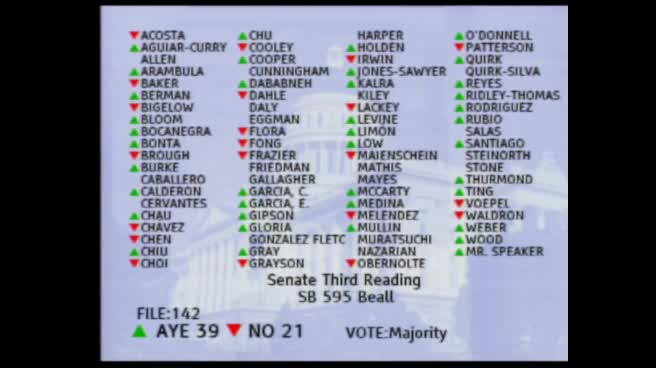 1MIN
Assembly Floor
 2MIN
Senate Floor
 1H
Senate Standing Committee on Appropriations
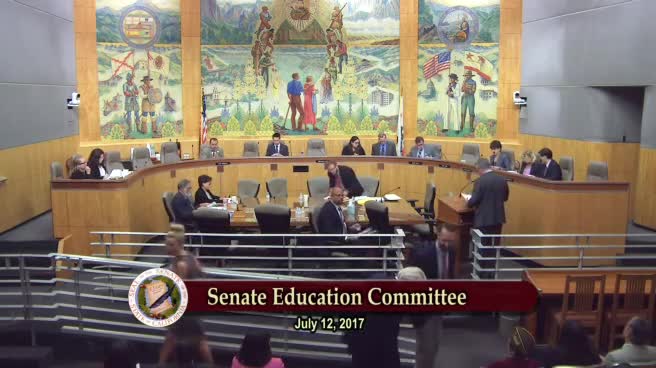 13MIN
Senate Standing Committee on Education
 1MIN
Assembly Floor
 1H
Assembly Standing Committee on Appropriations
Bill Author

Bill Co-Author(s):