AB 492: Advertising and solicitations: government documents.
- Session Year: 2017-2018
- House: Assembly
- Latest Version Date: 2017-09-26
Existing law makes it unlawful for a person, firm, corporation, or association that is a nongovernmental entity to use a seal, emblem, insignia, trade or brand name, or any term, symbol, or content that reasonably could be interpreted or construed as implying any federal, state, or local government, military veteran entity, or military or veteran service organization connection, approval, or endorsement of a product or service, unless certain criteria are met. This provision includes financial products, goods, or services, including mailings, electronic messages, Internet Web sites, periodicals, or television commercials disseminated unless the nongovernmental entity has an expressed connection with or approval of that governmental entity.
Existing law, despite that general prohibition, permits a nongovernmental entity, as specified, to advertise or promote an event, presentation, seminar, workshop, or other public gathering using a seal, emblem, insignia, trade or brand name, or any other term, symbol, or content, if that nongovernmental entity has an expressed connection with, or the approval or endorsement of, a federal, state, or local government, military veteran entity, or military or veteran service organization. Existing law authorizes a nongovernmental entity to solicit information, solicit the purchase of or payment for a product or service, or solicit the contribution of funds or membership fees, by any means, including, but not limited to, a mailing, electronic message, Internet Web site, periodical, or television commercial disseminated in this state, using a seal, emblem, insignia, trade or brand name, or any other term, symbol, or content, if the person, firm, corporation, or association that is a nongovernmental entity meets certain requirements, including prominently disclosing that the product or service has not been approved or endorsed by any governmental agency.
This bill would permit a person, firm, corporation, or association that is a nongovernmental entity to solicit a fee for providing a copy of a public record if that solicitation meets specified requirements. Those requirements would include a certain disclosure requirement stating that the document is an advertisement, the fee or cost charged by the relevant state or local government agency to obtain a copy of the record that the solicitation is offering to obtain, and information necessary to contact the state or local agency with custody of the record. The bill would define solicit for purposes of these provisions. The bill would authorize the Attorney General, a district attorney, or a city attorney to bring an action against a person who violates this provision and would authorize the court to order the person in violation to refund all of the moneys paid to the victim. The bill would require the court to impose a civil penalty in an amount of not more than $100 for each unlawful solicitation document distributed, and not more than $200 for each subsequent document distributed in violation of this provision. The bill would include related legislature findings.
The California Public Records Act requires state and local agencies to make their records available for public inspection, unless an exemption from disclosure applies. Existing law also requires prompt disclosure of reasonably identifiable records to a person upon payment of fees covering the direct costs of duplication, or a statutory fee if applicable.This bill would require a business or individual soliciting a fee for providing a copy of a public record to state on the top of the document to be used for solicitation that the solicitation is not from a state or local agency; that no action is legally required by the person being solicited; the fee for, or the cost of, obtaining a copy of the record; and other specified information. The bill would authorize the Attorney General, a district attorney, or a city attorney to bring an action against a person who violates this provision and would authorize the court to order the person in violation to refund all of the moneys paid to the victim. The bill would require the court to impose a civil penalty in an amount of not more than $100 for each unlawful solicitation document distributed, and not more than $200 for each subsequent document distributed in violation of this provision.The California Public Records Act requires state and local agencies to make their records available for public inspection, unless an exemption from disclosure applies. Existing law also requires prompt disclosure of reasonably identifiable records to a person upon payment of fees covering the direct costs of duplication, or a statutory fee if applicable. Existing law establishes the Department of Consumer Affairs and charges it with licensing and regulating various business and professions.
This bill would require a business or individual soliciting a fee for providing a copy of a public record to state on the top of the document to be used for solicitation that the solicitation is not from a state or local agency; that no action is legally required by the person being solicited; the fee for, or the cost of, obtaining a copy of the record; and other specified information. The bill would authorize the Department of Consumer Affairs to promulgate rules specifying the contents and form of the solicitation document.
The bill would also prohibit a business or individual soliciting a fee for providing a copy of a public record from charging a fee of more than 4 times the amount charged by the state or local agency that has custody of the record for a copy of the same record.The bill would require businesses and individuals soliciting fees from property owners for providing a deed of property to furnish the office of the county recorder of the county where the solicitations are to be distributed with a copy of the document that will be used for those solicitations not less than 15 days before distribution. By increasing the level of service provided by local government agencies, the bill would impose a state-mandated local program.The bill additionally would authorize the department to investigate violations, and to bring actions or request the Department of Justice or a district attorney to bring an action against any person in violation of those provisions. The bill also would authorize a court to order penalties for violations of those provisions of no more than $100 for each solicitation document for a first violation, and $200 for each subsequent violation. The California Constitution requires the state to reimburse local agencies and school districts for certain costs mandated by the state. Statutory provisions establish procedures for making that reimbursement.This bill would provide that, if the Commission on State Mandates determines that the bill contains costs mandated by the state, reimbursement for those costs shall be made pursuant to the statutory provisions noted above.The bill would authorize the Attorney General, a district attorney, or a city attorney to bring an action against a person who violates this provision and would authorize the court to order the person in violation to refund all of the moneys paid to the victim. The bill would require the court to impose a civil penalty in an amount of not more than $100 for each unlawful solicitation document distributed, and not more than $200 for each subsequent document distributed in violation of this provision.
The California Public Records Act requires state and local agencies to make their records available for public inspection, unless an exemption from disclosure applies. Existing law also requires prompt disclosure of reasonably identifiable records to a person upon payment of fees covering the direct costs of duplication, or a statutory fee if applicable. Existing law establishes the Department of Consumer Affairs and charges it with licensing and regulating various business and professions.
This bill would require a business or individual soliciting a fee for providing a copy of a public record to state on the top of the document to be used for solicitation that the solicitation is not from a state or local agency; that no action is legally required by the person being solicited; the fee for, or the cost of, obtaining a copy of the record; and other specified information. The bill would authorize the Department of Consumer Affairs to promulgate rules specifying the contents and form of the solicitation document.
The bill would also prohibit a business or individual soliciting a fee for providing a copy of a public record from charging a fee of more than 4 times the amount charged by the state or local agency that has custody of the record for a copy of the same record.
The bill would require businesses and individuals soliciting fees from property owners for providing a deed of property to furnish the office of the county recorder of the county where the solicitations are to be distributed with a copy of the document that will be used for those solicitations not less than 15 days before distribution. By increasing the level of service provided by local government agencies, the bill would impose a state-mandated local program.
The bill additionally would authorize the department to investigate violations, and to bring actions or request the Department of Justice or a district attorney to bring an action against any person in violation of those provisions. The bill also would authorize a court to order penalties for violations of those provisions of no more than $100 for each solicitation document for a first violation, and $200 for each subsequent violation.
The California Constitution requires the state to reimburse local agencies and school districts for certain costs mandated by the state. Statutory provisions establish procedures for making that reimbursement.
This bill would provide that, if the Commission on State Mandates determines that the bill contains costs mandated by the state, reimbursement for those costs shall be made pursuant to the statutory provisions noted above.
(a)The Legislature hereby finds and declares the following:
(1)There have been an increasing number of complaints to the Department of Justice in California regarding solicitation mailings to consumers at private residences.
(2)The Department of Justice keeps track of complaints for misleading solicitations. In 2012, the department received 561 complaints, yet by 2015, it had received 2,337 complaints, and in 2016, it received 1,563.
(3)Most of these complaints involve companies that impersonate the office of the Secretary of State and claim that consumers need to pay them to file or renew corporate documents.
(b)It is the intent of the Legislature in enacting this act to prevent these misleading and deceptive business practices and increase consumer protection.
(c)It is not the intent of this act to restrict, or create barriers to, the ability of individuals to obtain public records pursuant to the California Public Records Act.
(d)Rather, this act aims to address consumer concerns by strengthening safeguards against falsely presented documents that do not align with the intent of the California Public Records Act to enhance the publics right of access to public information.
SEC. 2.Section 17533.6.5 is added to the Business and Professions Code, to read:17533.6.5.(a)Notwithstanding any other law, a person, firm, corporation, or association that is a nongovernmental entity may solicit a fee for providing a copy of a public record if that solicitation meets all of the requirements set forth in paragraphs (1) to (3), inclusive:
(1)Contains at the top of the solicitation, in at least 24-point type, all of the following:
(A)The following disclosure statement: THIS IS AN ADVERTISEMENT. THIS OFFER IS NOT BEING MADE BY, OR ON BEHALF OF, ANY GOVERNMENT AGENCY. YOU ARE NOT REQUIRED TO MAKE ANY PAYMENT OR TAKE ANY OTHER ACTION IN RESPONSE TO THIS OFFER.
(B)The fee or cost charged by the relevant state or local agency to obtain a copy of the record that the solicitation is offering to obtain.
(C)The information necessary to contact the state or local agency that has custody of the record.
(D)The name and physical address of the nongovernmental entity soliciting the fee.
(2)The disclosures in paragraph (1) shall not be preceded, followed, or surrounded by symbols, terms, or other content that result in the disclosures not being conspicuous or that introduce, modify, qualify, or explain the text of those disclosures.
(3)A solicitation subject to this subdivision shall not be in a form, use deadline dates, or contain other language or content that reasonably could be interpreted or construed as implying:
(A)That it was issued by a state or local government agency or is otherwise connected, approved, or endorsed by a state or local government agency.
(B)A legal duty on the person being solicited, that any payment to the nongovernmental entity is mandatory or required by law, or that penalties, fines, or other consequences will occur if payment is not made by that person.
(b)The Attorney General, a district attorney, or a city attorney may bring an action against any person who violates this section. The court may order the person who violates this section to refund all of the moneys paid to the victim. The court shall impose a civil penalty of not more than one hundred dollars ($100) for each solicitation document distributed in violation of this section, and not more than two hundred dollars ($200) for each subsequent document distributed in violation of this section. The civil penalty shall be payable to the general fund of whichever governmental entity brought the action to assess the civil penalty.
(c)As used in this section, solicit means to directly advertise or market through writing or graphics and via mail, telefax, or email to an individually identified person, residence, or business location. Solicit does not include any of the following:
(1)Communicating through a mass advertisement, including a catalog, a radio or television broadcast, or an Internet Web site.
(2)Communicating via telephone, mail, or electronic communication, if initiated by the consumer.
(3)Advertising the sale of public data to other businesses and entities for a legitimate business purpose, including to research and reporting firms, government agencies, government procurement officers, and government contractors who receive value-added benefits for the purchase and use of public data.
(d)This section does not apply to a title insurance company authorized to do business in this state or its authorized agent.
(e)This section is not subject to Section 17534 or any other criminal penalty provision.
(a)The Legislature hereby finds and declares the following:
(1)There have been an increasing number of complaints to the Department of Justice in California regarding solicitation mailings to consumers at private residences.
(2)The Department of Justice keeps track of complaints for misleading solicitations. In 2012, the department received 561 complaints, yet by 2015, it had received 2,337 complaints, and in 2016, it received 1,563.
(3)Most of these complaints involve companies that impersonate the Office office of the Secretary of State and claim that consumers need to pay them to file or renew corporate documents.
(b)It is the intent of the Legislature in enacting this act to prevent these misleading and deceptive business practices and increase consumer protection.
(c)It is not the intent of this act to restrict, or create barriers to, the ability of individuals to obtain public records pursuant to the California Public Records Act.
(d)Rather, this act aims to address consumer concerns by strengthening safeguards against falsely presented documents that do not align with the intent of the California Public Records Act to enhance the publics right of access to public information.
SEC. 2.Section 17533.6.5 is added to the Business and Professions Code, to read:17533.6.5.(a)Notwithstanding any other law, a person, firm, corporation, or association that is a nongovernmental entity may solicit a fee for providing a copy of a public record if that solicitation meets all of the requirements set forth in paragraphs (1) to (3), inclusive:
(1)Contains at the top of the solicitation, in at least 24-point type, all of the following:
(A)The following disclosure statement: THIS IS AN ADVERTISEMENT. THIS OFFER IS NOT BEING MADE BY, OR ON BEHALF OF, ANY GOVERNMENT AGENCY. YOU ARE NOT REQUIRED TO MAKE ANY PAYMENT OR TAKE ANY OTHER ACTION IN RESPONSE TO THIS OFFER.
(B)The fee or cost charged by the relevant state or local agency to obtain a copy of the record that the solicitation is offering to obtain.
(C)The information necessary to contact the state or local agency that has custody of the record.
(D)The name and physical address of the nongovernmental entity soliciting the fee.
(2)The disclosures in paragraph (1) shall not be preceded, followed, or surrounded by symbols, terms, or other content that result in the disclosures not being conspicuous or that introduce, modify, qualify, or explain the text of those disclosures.
(3)A solicitation subject to this subdivision shall not be in a form, use deadline dates, or contain other language or content that reasonably could be interpreted or construed as implying:
(A)That it was issued by a state or local government agency or is otherwise connected, approved, or endorsed by a state or local government agency.
(B)A legal duty on the person being solicited, that any payment to the nongovernmental entity is mandatory or required by law, or that penalties, fines, or other consequences will occur if payment is not made by that person.
(b)The Attorney General, a district attorney, or a city attorney may bring an action against any person who violates this section. The court may order the person who violates this section to refund all of the moneys paid to the victim. The court shall impose a civil penalty of not more than one hundred dollars ($100) for each solicitation document distributed in violation of this section, and not more than two hundred dollars ($200) for each subsequent document distributed in violation of this section. The civil penalty shall be payable to the general fund of whichever governmental entity brought the action to assess the civil penalty.
(c)As used in this section, solicit means to directly advertise or market through writing or graphics and via mail, telefax, or email to an individually identified person, residence, or business location. Solicit does not include any of the following:
(1)Communicating through a mass advertisement, including a catalog, a radio or television broadcast, or an Internet Web site.
(2)Communicating via telephone, mail, or electronic communication, if initiated by the consumer.
(3)Advertising the sale of public data to other businesses and entities for a legitimate business purpose, including to research and reporting firms, government agencies, government procurement officers, and government contractors who receive value-added benefits for the purchase and use of public data.
(d)This section does not apply to a title insurance company authorized to do business in this state or its authorized agent.
(e)This section is not subject to Section 17534 or any other criminal penalty provision.
(a)The Legislature hereby finds and declares the following:
(1)There have been an increasing number of complaints to the Department of Justice in California regarding solicitation mailings to consumers at private residences.
(2)The Department of Justice keeps track of complaints for misleading solicitations. In 2012, the department received 561 complaints, yet by 2015, it had received 2,337 complaints, and in 2016, it received 1,563.
(3)Most of these complaints involve companies that impersonate the Office of the Secretary of State and claim consumers need to pay them to file or renew corporate documents.
(b)It is the intent of the Legislature in enacting this act to prevent these misleading and deceptive business practices and increase consumer protection.
(c)It is not the intent of this act to restrict, or create barriers to, the ability of individuals to obtain public records pursuant to the California Public Records Act.
(d)Rather, this act aims to address consumer concerns by strengthening safeguards against falsely presented documents that do not align with the intent of the California Public Records Act to enhance the publics right of access to public information.
SEC. 2.Section 17533.6.5 is added to the Business and Professions Code, to read:17533.6.5.(a)Notwithstanding any other law, a person, firm, corporation, or association that is a nongovernmental entity may solicit a fee for providing a copy of a public record if that solicitation meets all of the requirements set forth in paragraphs (1) to (3), inclusive:
(1)Contains at the top of the solicitation, in at least 24-point type, all of the following:
(A)The following disclosure statement: THIS IS AN ADVERTISEMENT. THIS OFFER IS NOT BEING MADE BY, OR ON BEHALF OF, ANY GOVERNMENT AGENCY. YOU ARE NOT REQUIRED TO MAKE ANY PAYMENT OR TAKE ANY OTHER ACTION IN RESPONSE TO THIS OFFER.
(B)The fee or cost charged by the relevant state or local agency to obtain a copy of the record that the solicitation is offering to obtain.
(C)The information necessary to contact the state or local agency that has custody of the record.
(D)The name and physical address of the nongovernmental entity soliciting the fee.
(2)The disclosures in paragraph (1) shall not be preceded, followed, or surrounded by symbols, terms, or other content that result in the disclosures not being conspicuous or that introduce, modify, qualify, or explain the text of those disclosures.
(3)A solicitation subject to this subdivision shall not be in a form, use deadline dates, or contain other language or content that reasonably could be interpreted or construed as implying:
(A)That it was issued by a state or local government agency or is otherwise connected, approved, or endorsed by a state or local government agency.
(B)A legal duty on the person being solicited, that any payment to the nongovernmental entity is mandatory or required by law, or that penalties, fines, or other consequences will occur if payment is not made by that person.
(b)The Attorney General, a district attorney, or a city attorney may bring an action against any person who violates this section. The court may order the person who violates this section to refund all of the moneys paid to the victim. The court shall impose a civil penalty of not more than one hundred dollars ($100) for each solicitation document distributed in violation of this section, and not more than two hundred dollars ($200) for each subsequent document distributed in violation of this section. The civil penalty shall be payable to the general fund of whichever governmental entity brought the action to assess the civil penalty.
(c)As used in this section, solicit means to directly advertise or market through writing or graphics and via mail, telefax, or email to an individually identified person, residence, or business location. Solicit does not include any of the following:
(1)Communicating through a mass advertisement, including a catalog, a radio or television broadcast, or an Internet Web site.
(2)Communicating via telephone, mail, or electronic communication, if initiated by the consumer.
(3)Advertising the sale of public data to other businesses and entities for a legitimate business purpose, including to research and reporting firms, government agencies, government procurement officers, and government contractors who receive value-added benefits for the purchase and use of public data.
(d)This section does not apply to a title insurance company authorized to do business in this state or its authorized agent.
(e)This section is not subject to Section 17534 or any other criminal penalty provision.
SECTION 1.Article 1.5 (commencing with Section 6271) is added to Chapter 3.5 of Division 7 of Title 1 of the Government Code, to read:1.5.Public Records: Solicitation Fees6271.(a)A business or individual soliciting a fee for providing a copy of a public record shall state on the top of the document used for the solicitation, in at least 24-point type, all of the following:(1)That the solicitation is not from a state or local agency.(2)That no action is legally required by the person being solicited.(3)The fee for, or the cost of, obtaining a copy of the record from the state or local agency that has custody of the record.(4)The information necessary to contact the state or local agency that has custody of the record.(5)The name and physical address of the business or individual soliciting the fee.(b)The document used for a solicitation under this section may not be in a form or use deadline dates or other language that makes the document appear to be a document issued by a state or local agency or that appears to impose a legal duty on the person being solicited.(c)The Attorney General, a district attorney, or a city attorney may bring an action against any person who violates this section. The court may order the person who violates this section to refund all of the moneys paid to the victim. The court shall impose a civil penalty of not more than one hundred dollars ($100) for each solicitation document distributed in violation of this section, and not more than two hundred dollars ($200) for each subsequent document distributed in violation of this section. The civil penalty shall be payable to the general fund of whichever governmental entity brought the action to assess the civil penalty.(d)This section does not apply to a title insurance company authorized to do business in this state or its authorized agent.(e)As used in this section, solicit means to directly advertise or market through writing or graphics and via mail, telefax, or email to an individually identified person, residence, or business location. Solicit does not include any of the following:(1)Communicating through a mass advertisement, including a catalog, a radio or television broadcast, or an Internet Web site.(2)Communicating via telephone, mail, or electronic communication, if initiated by the consumer.(3)Advertising and marketing to those with whom the solicitor has a preexisting business relationship.(a)A business or individual soliciting a fee for providing a copy of a public record shall state on the top of the document used for the solicitation, in at least 24-point type, all of the following:
(1)That the solicitation is not from a state or local agency.
(2)That no action is legally required by the person being solicited.
(3)The fee for, or the cost of, obtaining a copy of the record from the state or local agency that has custody of the record.
(4)The information necessary to contact the state or local agency that has custody of the record.
(5)The name and physical address of the business or individual soliciting the fee.
(b)The document used for a solicitation under this section may not be in a form or use deadline dates or other language that makes the document appear to be a document issued by a state or local agency or that appears to impose a legal duty on the person being solicited. The department may promulgate rules specifying the contents and form of the solicitation document.
(c)A business or individual soliciting a fee for providing a copy of a public record may not charge a fee of more than four times the amount charged by the state or local agency that has custody of the record for a copy of the same record.(d)A business or individual soliciting a fee from property owners for providing a copy of a deed shall furnish the office of the county recorder where the solicitations are to be distributed with a copy of the document that will be used for those solicitations not less than 15 days before distribution.(e)The department may investigate violations of this section. The department may bring an action or request that the Department of Justice or a district attorney bring an action against any person who violates this section. The court may order the person who violates this section to refund all of the moneys paid to the violator and to forfeit, for a first violation, not more than one hundred dollars ($100) for each solicitation document distributed in violation of this section, and not more than two hundred dollars ($200) for each subsequent document distributed in violation of this section.(c)The Attorney General, a district attorney, or a city attorney may bring an action against any person who violates this section. The court may order the person who violates this section to refund all of the moneys paid to the victim. The court shall impose a civil penalty of not more than one hundred dollars ($100) for each solicitation document distributed in violation of this section, and not more than two hundred dollars ($200) for each subsequent document distributed in violation of this section. The civil penalty shall be payable to the general fund of whichever governmental entity brought the action to assess the civil penalty.
(f)(d)This section does not apply to a title insurance company authorized to do business in this state or its authorized agent.
(g)As used in this section, the following definitions apply:(1)Department means the Department of Consumer Affairs.(2)Solicit means(e)As used in this section, solicit means to directly advertise or market through writing or graphics and via mail, telefax, or email to an individually identified person, residence, or business location. Solicit does not include any of the following:
(A)(1)Communicating through a mass advertisement, including a catalog, a radio or television broadcast, or an Internet Web site.
(B)(2)Communicating via telephone, mail, or electronic communication, if initiated by the consumer.
(C)(3)Advertising and marketing to those with whom the solicitor has a preexisting business relationship.
SEC. 2.If the Commission on State Mandates determines that this act contains costs mandated by the state, reimbursement to local agencies and school districts for those costs shall be made pursuant to Part 7 (commencing with Section 17500) of Division 4 of Title 2 of the Government Code.(a)A business or individual soliciting a fee for providing a copy of a public record shall state on the top of the document used for the solicitation, in at least 24-point type, all of the following:
(1)That the solicitation is not from a state or local agency.
(2)That no action is legally required by the person being solicited.
(3)The fee for, or the cost of, obtaining a copy of the record from the state or local agency that has custody of the record.
(4)The information necessary to contact the state or local agency that has custody of the record.
(5)The name and physical address of the business or individual soliciting the fee.
(b)The document used for a solicitation under this section may not be in a form or use deadline dates or other language that makes the document appear to be a document issued by a state or local agency or that appears to impose a legal duty on the person being solicited. The department may promulgate rules specifying the contents and form of the solicitation document.
(c)A business or individual soliciting a fee for providing a copy of a public record may not charge a fee of more than four times the amount charged by the state or local agency that has custody of the record for a copy of the same record.
(d)A business or individual soliciting a fee from property owners for providing a copy of a deed shall furnish the office of the county recorder where the solicitations are to be distributed with a copy of the document that will be used for those solicitations not less than 15 days before distribution.
(e)The department may investigate violations of this section. The department may bring an action or request that the Department of Justice or a district attorney bring an action against any person who violates this section. The court may order the person who violates this section to refund all of the moneys paid to the violator and to forfeit, for a first violation, not more than one hundred dollars ($100) for each solicitation document distributed in violation of this section, and not more than two hundred dollars ($200) for each subsequent document distributed in violation of this section.
(f)This section does not apply to a title insurance company authorized to do business in this state or its authorized agent.
(g)As used in this section, the following definitions apply:
(1)Department means the Department of Consumer Affairs.
(2)Solicit means to directly advertise or market through writing or graphics and via mail, telefax, or email to an individually identified person, residence, or business location. Solicit does not include any of the following:
(A)Communicating through a mass advertisement, including a catalog, a radio or television broadcast, or an Internet Web site.
(B)Communicating via telephone, mail, or electronic communication, if initiated by the consumer.
(C)Advertising and marketing to those with whom the solicitor has a preexisting business relationship.
SEC. 2.If the Commission on State Mandates determines that this act contains costs mandated by the state, reimbursement to local agencies and school districts for those costs shall be made pursuant to Part 7 (commencing with Section 17500) of Division 4 of Title 2 of the Government Code.
|
Date
|
Status
|
|---|---|
| Sep 26, 2017 | Chaptered by Secretary of State - Chapter 293, Statutes of 2017. |
| Sep 26, 2017 | Approved by the Governor. |
| Sep 12, 2017 | Enrolled and presented to the Governor at 2:30 p.m. |
| Sep 5, 2017 | Senate amendments concurred in. To Engrossing and Enrolling. (Ayes 73. Noes 3.). |
| Aug 31, 2017 | In Assembly. Concurrence in Senate amendments pending. May be considered on or after September 2 pursuant to Assembly Rule 77. |
| Aug 31, 2017 | Read third time. Passed. Ordered to the Assembly. |
| Aug 28, 2017 | Read second time. Ordered to third reading. |
| Aug 24, 2017 | Read third time and amended. Ordered to second reading. |
| Jul 18, 2017 | Read second time. Ordered to third reading. |
| Jul 17, 2017 | From committee: Be ordered to second reading pursuant to Senate Rule 28.8. |
| Jun 28, 2017 | From committee: Do pass and re-refer to Com. on APPR. (Ayes 5. Noes 1.) (June 27). Re-referred to Com. on APPR. |
| Jun 19, 2017 | From committee chair, with author's amendments: Amend, and re-refer to committee. Read second time, amended, and re-referred to Com. on JUD. |
| Jun 6, 2017 | In committee: Set, first hearing. Hearing canceled at the request of author. |
| May 18, 2017 | Referred to Com. on JUD. |
| May 4, 2017 | In Senate. Read first time. To Com. on RLS. for assignment. |
| May 4, 2017 | Read third time. Passed. Ordered to the Senate. (Ayes 76. Noes 0. Page 1390.) |
| Apr 27, 2017 | Read second time. Ordered to Consent Calendar. |
| Apr 26, 2017 | From committee: Do pass. To Consent Calendar. (Ayes 16. Noes 0.) (April 26). |
| Mar 30, 2017 | Re-referred to Com. on APPR. |
| Mar 29, 2017 | Read second time and amended. |
| Mar 28, 2017 | From committee: Amend, and do pass as amended and re-refer to Com. on APPR. (Ayes 11. Noes 0.) (March 21). |
| Feb 27, 2017 | Referred to Com. on JUD. |
| Feb 14, 2017 | From printer. May be heard in committee March 16. |
| Feb 13, 2017 | Read first time. To print. |
|
Date
|
Description
|
Location
|
Votes
|
|
|---|---|---|---|---|
| Sep 5, 2017 | AB 492 GRAYSON Concurrence in Senate Amendments | Assembly Floor |
Passed |
|
| Aug 31, 2017 | Assembly 3rd Reading AB492 Grayson et al. By Jackson | Senate Floor |
Passed |
|
| Jun 27, 2017 | Do pass, but first be re-referred to the Committee on [Appropriations] | Senate Standing Committee on Judiciary |
Passed |
|
| May 4, 2017 | AB 492 GRAYSON Consent Calendar Second Day Regular Session | Assembly Floor |
Passed |
|
| Apr 26, 2017 | Do pass. To Consent Calendar. | Assembly Standing Committee on Appropriations |
Passed |
|
| Mar 21, 2017 | Do pass as amended and be re-referred to the Committee on [Appropriations] | Assembly Standing Committee on Judiciary |
Passed |
This list shows positions taken on this bill by organizations on the date displayed, which is linked to the original source.
Positions by individuals are not included.
|
Organization
|
Position
|
Date
|
|---|---|---|
| California Association of County Treasurers and Tax Collectors | ** Support | Aug 29, 2017 |
| California Special Districts Association | ** Support | Aug 29, 2017 |
| California State Association Of Counties | ** Support | Aug 29, 2017 |
| Congress of California Seniors | ** Support | Aug 29, 2017 |
| County Recorders Association | ** Against | Mar 18, 2017 |
| Electronic Frontier Foundation | ** Against | Aug 29, 2017 |
| League Of California Cities | ** Support | Aug 29, 2017 |
| Rural County Representatives of California | ** Support | Aug 29, 2017 |
CONCURRENCE IN SENATE AMENDMENTS
CSA1 Bill Id:AB 492
Author:(Grayson)
As Amended Ver:August 24, 2017
Majority vote
ASSEMBLY: | 76-0 | (May 4, 2017) | SENATE: | 37-0 | (August 31, 2017) |
Original Committee Reference: JUD.
SUMMARY: Permits a person, business, or nongovernmental entity to solicit a fee for providing a copy of a public record so long as the solicitation is accompanied by specified disclosures. Specifically, this bill:
- Permits a person, business, or nongovernmental entity to solicit, as defined, a fee for providing a copy of a public record so long as the solicitation contains, state on the top of the document and in at least 24-point type, all of the following:
- A prescribed statement declaring that the solicitation is an advertisement and not from or on behalf of a government agency, and that no action is required by the person being solicited.
- The fee or cost charged by the relevant state or local agency that has custody of the record.
- The information necessary to contact the state or local agency that has custody of the record.
- The name and physical address of the business or individual soliciting the fee.
- Provides that the solicitation described above shall not be preceded, followed, or surrounded by symbols, terms, or other content that result in the disclosures not being conspicuous or that modify the required disclosures. Specifies further that the solicitation shall not be in the form, use deadline dates, or use other language that could reasonably be construed to imply that the solicitation was issued or approved by a government entity or that the person solicited has a legal duty to respond or will be subject to any fine, penalty, or other consequence for failure to respond.
- Permits the Attorney General, or a district attorney or city attorney, to bring an action against any person who violates the provisions of this bill. Subjects the person or business that violates the provisions of this bill to civil penalty, as specified, and permits the court to order the violator to refund any moneys paid by the person solicited.
- Specifies that the provisions of this bill do not apply to a title insurance company authorized to do business in this state or its authorized agent.
The Senate amendments delete the contents of the bill, recast its provisions as a permissive authorization, and move the bill text from the Government Code to the Business & Professions Code (BPC).
EXISTING LAW makes it unlawful, except as specified, for any person or entity that is a nongovernmental entity to solicit information, contributions, or payment for service or product by means of a mailing, electronic message, or Internet Web site that contains a seal, emblem, insignia, or other symbol or content that reasonably could be construed as implying any federal, state, or local government connection, approval, or endorsement, unless the solicitation meets certain requirements and the government entity has, in fact, approved or endorsed the solicitation. (BPC Section 17533.6.)
FISCAL EFFECT: According to the Senate Appropriations Committee, pursuant to Senate Rule 28.8, negligible state costs.
COMMENTS: The California Public Records Act (CPRA) requires state and local agency to make public records available for inspection and copying upon request, unless the public record is exempted from disclosure by a specific statutory provision. CPRA requires the agency to make reasonable efforts to assist a person making a public records request to identify records relevant to the request. Although a public entity may not charge for the time it takes to locate and retrieve the records, it is entitled to charge the requester a fee that covers the costs of copying those records.
Nothing in existing law prohibits a person or business from offering to obtain public records on another person's behalf, or from obtaining public records for the cost of duplication and then selling the records for a profit. However, according to author, many businesses abuse existing law by sending misleading solicitation letters. For example, some letters may appear to be official government documents, or the content of a solicitation may suggest that the person who is solicited has a legal obligation to obtain the public record. The author reports that many homeowners, for example, "have received official looking-documents that recommend they obtain a deed to prove their ownership of the property when there is actually no obligation to respond."
The author believes that this bill will protect consumers by requiring a person or business making the solicitation to provide certain disclosures. Specifically, the bill would require a statement at the top of the solicitation document, in 24-point font, that states all of the following: 1) that the solicitation is not from a state or local agency; 2) that no action is legally required on the part of person solicited; 3) the cost of obtaining the record from the agency that has custody of the record and the contact information for that agency; and 4) the name and physical address of the person or business soliciting the fee. In addition to requiring these disclosures, the bill would also prohibit the solicitation from using forms, deadline dates, or other language that makes the document appear to be issued by a state or local agency or suggesting that the recipient has a legal duty to obtain the record.
Existing law prohibits mimicking government documents. According to the author, some businesses solicit fees with "official looking" forms that mimic those issued by government agencies. Existing law already prohibits a "non-governmental entity" from sending documents that contain seals, insignia, or any other symbols or content suggesting that the document is from a government agency, unless it has some connection with, or has received the approval or endorsement of, the government agency. (BPC Section 17533.6.) However, this bill goes beyond existing law in important ways. First, not all of the examples presented by the author contain actual symbols or insignia of government agencies, and therefore may not be covered by existing law, even though they are still misleading. Second, this bill targets a specific kind of solicitation – that is, those offering to obtain public records for a fee. As such, this bill also requires the solicitation to include the costs charged by the agency for the same public record and the contact information for that agency, so that the consumer can decide whether the service provided is worth the difference between the solicitation fee and agency fee. Third, this bill also contains additional restrictions not in existing law, including clearly informing the recipient that he or she is under no legal obligation to obtain the documents.
Analysis Prepared by: Thomas Clark / JUD. / (916) 319-2334 FN: 0001528
Office of Senate Floor Analyses (916) 651-1520 Fax: (916) 327-4478 | AB |
THIRD READING
Bill No: AB 492
:
SENATE JUDICIARY COMMITTEE: 5-1, 6/27/17
AYES: Jackson, Moorlach, Hertzberg, Stern, Wieckowski
NOES: Anderson
NO VOTE RECORDED: Monning
SENATE APPROPRIATIONS COMMITTEE: Senate Rule 28.8
ASSEMBLY FLOOR: 76-0, 5/4/17 (Consent) - See last page for vote
SUBJECT: Advertising and solicitations: government documents
DIGEST:
This bill provides that, notwithstanding any other law, a nongovernmental entity may solicit a fee for providing a copy of a public record only if that solicitation contains certain disclosures. This bill only applies to direct solicitation of an individually identified person, residence, or business location.
Senate Floor Amendments of 8/24/17 make slight technical changes and add a coauthor.
Existing law:
- Declares, in the California Constitution, that the people have the right of access to information concerning the conduct of the people’s business, and therefore, the meetings of public bodies and the writings of public officials and agencies shall be open to public scrutiny. (Cal. Const., art. I, Sec. 3.)
- Provides individuals an express right to privacy specifically designed to “prevent government . . . from collecting and stockpiling unnecessary information about us and misusing information gathered for one purpose in order to serve another purpose.” (Cal. Const., art. I., Sec. 1; White v. Davis (1975) 13 Cal.3d 757, 774.)
- Governs, through the California Public Records Act (CPRA), the public disclosure of information collected and maintained by public agencies. (Gov. Code Sec. 6250 et seq.) Generally, all public records are accessible to the public upon request, unless the record requested is exempt from public disclosure. (Gov. Code Sec. 6254.) There are 30 general categories of documents or information that are exempt from disclosure, essentially due to the character of the information, and unless it is shown that the public’s interest in disclosure outweighs the public’s interest in non-disclosure of the information, the exempt information may be withheld by the public agency with custody of the information. (Gov. Code Sec. 6254 et seq.)
- Requires, in the California Constitution, that a statute that limits the right of access to the meetings of public bodies or the writings of public officials and agencies be adopted with findings demonstrating the interest protected by the limitation and the need for protecting that interest. (Cal. Const., art. 1, Sec. 3.)
- Makes it unlawful, except in limited circumstances, for any person, firm, corporation, or association that is a nongovernmental entity to use a seal, emblem, insignia, trade or brand name, or any other term, symbol, or content that reasonably could be interpreted or construed as implying any federal, state, or local government, military veteran entity, or military or veteran service organization connection, approval, or endorsement of any product or service, including, but not limited to, any financial product, goods, or services, by any means, including, but not limited to, a mailing, electronic message, Internet Web site, periodical, or television commercial disseminated in this state, unless the nongovernmental entity has an expressed connection with, or the approval or endorsement of, a federal, state, or local government, military veteran entity, or military or veteran service organization. (Bus. & Prof. Code Sec. 17533.6.)
- Provides that a nongovernmental entity may solicit the purchase of or payment for a product or service by any means, including through use of the above tactics if the solicitation meets the following requirements:
- The solicitation conspicuously displays the following disclosure on the front and back of every page of the solicitation and immediately below each portion of the solicitation that reasonably could be construed to specify an amount due and payable by the recipient:
“THIS PRODUCT OR SERVICE HAS NOT BEEN APPROVED OR ENDORSED BY ANY GOVERNMENTAL AGENCY, AND THIS OFFER IS NOT BEING MADE BY AN AGENCY OF THE GOVERNMENT.”
- In the case of a mailed solicitation, the front of the envelope, outside cover, or wrapper in which the matter is mailed (and the area immediately below the envelope, outside cover, or wrapper that is used for a return address) conspicuously displays the following disclosure:
“THIS IS NOT A GOVERNMENT DOCUMENT.”
- If permitted by other provisions of law, in the case of a television commercial disseminated in this state, the solicitation conspicuously displays the following disclosure at the top of the television screen for the entire duration of the television commercial:
“THIS PRODUCT OR SERVICE HAS NOT BEEN APPROVED OR ENDORSED BY ANY GOVERNMENTAL AGENCY, AND THIS OFFER IS NOT BEING MADE BY AN AGENCY OF THE GOVERNMENT.”
- These disclosures are not preceded, followed, or surrounded by symbols, terms, or other content that result in the disclosures not being conspicuous or that introduce, modify, qualify, or explain the text of those disclosures.
- The solicitation does not use a title or trade or brand name that reasonably could be interpreted or construed as implying any federal, state, or local government connection, approval, or endorsement, as specified.
- The solicitation does not specify a date or time period when payment to the soliciting nongovernmental person, firm, corporation, or association is due, including, but not limited to, use of the terms “due date,” “due now,” “remit by,” “remit immediately,” “payment due,” “pay now,” “pay immediately,” or “pay no later than,” unless the solicitation displays, in the same sentence as the date or time period specified, how the information being solicited will be used, a description of the product or service that is to be provided and to what government agency it shall be rendered, or how the solicited funds or membership fees will be used, as applicable.
- The solicitation does not state or imply that payment to any person, firm, corporation, or association that is not a government entity is mandatory or required by law, or state or imply that penalties, fines, or consequences will occur if payment is not made to the soliciting nongovernmental person, firm, corporation, or association. (Bus. & Prof. Code Sec. 17533.6(c)(2)(A).)
- Defines “conspicuous” or “conspicuously” for the above provisions to mean displayed apart from other print on the page, envelope, outside cover, or wrapper and in not less than 12-point boldface font type in capital letters that is at least 2-point boldface font type sizes larger than the next largest print on the page, envelope, outside cover, or wrapper and in contrasting type, layout, font, or color in a manner that clearly calls attention to the language. (Bus. & Prof. Code Sec. 17533.6(f).)
- Provides that any violation of the above provisions is a misdemeanor punishable by imprisonment in a county jail not exceeding six months, or by a fine not exceeding $2,500, or by both that fine and imprisonment. Any person who is harmed as a result of a violation of this section shall be entitled to recover, in addition to any other available remedies, damages in an amount equal to three times the amount solicited. (Bus. & Prof. Code Sec. 17533.6(d), (e).)
This bill:
- Provides that, notwithstanding any other law, a nongovernmental entity may solicit a fee for providing a copy of a public record if that solicitation contains certain disclosures and is not in a form, and does not use deadline dates, or contain other language or content that reasonably could be interpreted or construed as implying the following:
- That it was issued by, or otherwise connected, approved, or endorsed by, a state or local government agency; or
- A legal duty on the person being solicited that any payment to the nongovernmental entity is mandatory or required by law, or that penalties, fines, or other consequences will occur if payment is not made by that person.
- Requires solicitations regarding the provision of copies of public records to contain the following disclosures at the top of the solicitation, in at least 24-point type, which shall not be preceded, followed, or surrounded by symbols, terms, or other content that result in the disclosures not being conspicuous or that introduce, modify, qualify, or explain the text of those disclosures:
- The following statement: “THIS IS AN ADVERTISEMENT. THIS OFFER IS NOT BEING MADE BY, OR ON BEHALF OF, ANY GOVERNMENT AGENCY. YOU ARE NOT REQUIRED TO MAKE ANY PAYMENT OR TAKE ANY OTHER ACTION IN RESPONSE TO THIS OFFER”;
- The fee or cost charged by the relevant state or local agency to obtain a copy of the record that the solicitation is offering to obtain;
- The information necessary to contact the state or local agency that has custody of the record; and
- The name and physical address of the nongovernmental entity soliciting the fee.
- Defines “solicit” to mean to directly advertise or market through writing or graphics and via mail, telefax, or email to an individually identified person, residence, or business location. The term would not include communications through a mass advertisement or when initiated by a consumer. The definition would also exclude advertising the sale of public data to other businesses and entities for a legitimate business purpose.
- Does not apply to title insurance companies authorized to do business in this state or their authorized agents and would not be subject to any criminal penalty provision.
- Authorizes the Attorney General, a district attorney, or a city attorney to bring an action against any person who violates its provisions. Such actions would be able to seek full refunds for persons affected and civil penalties of not more than $100 for each document distributed in violation and not more than $200 for each subsequent document in violation.
- Makes legislative findings indicating the intent of this bill is to protect consumers and not to restrict access to public records.
Background
Section 17533.6 of the Business and Professions Code addresses the use of terms, symbols, or content indicating a governmental connection in solicitations. It requires certain disclosures to be conspicuously displayed on nongovernmental product or service solicitations. Over recent years, a number of amendments have been made to the statute in response to unsavory business practices. This bill expands the law around deceptive solicitations again in response to concerns about prevalent, unfair business practices. It creates a new statute providing that a nongovernmental entity may only solicit a fee for providing a copy of a public record if that solicitation meets certain requirements. It provides a public right of action for any violations thereof. (For a more thorough background, please see the Senate Judiciary Committee analysis of this bill.)
Comments
The author writes:
AB 492 will help protect consumers from deceptive solicitation practices by demanding transparency and clear disclosure. This bill simply requires that documents used by businesses to solicit people to buy copies of public records clearly display disclaimers so that consumers know they are solicitations and can make informed decisions. Currently, solicitations sent out to unsuspecting residents often mimic official documents to alarm consumers. They often have the appearance of being from a government office, and many seem to require payment by a false “respond by” date meant to make the company seem legitimate and pressure the consumer into paying an exorbitant fee for a document. This bill will protect consumers and reduce the ability of solicitors to target consumers with unfair business practices.
Protecting consumers from a specific business practice
This bill seeks to address a very specific business practice involving companies targeting consumers with solicitations to purchase a variety of public records. The CPRA generally makes public records accessible for a relatively nominal fee. The practice involves businesses obtaining these documents and selling them to consumers at a profit. Although at its base legal, many of the solicitations apparently use deceptive language or imagery that give the impression that the solicitations are coming from a governmental agency. This includes language that implies a legal obligation on the targeted consumer to purchase the public record.
This bill ensures that these solicitations do not mislead consumers by requiring a large disclosure statement to be placed at the top of the solicitation that makes that clear. This bill also ensures that consumers are told they are under no obligation to make any payment or take any other action in response to the solicitation. This bill also prohibits the solicitation from being in a form or using language, content, or deadlines to imply any non-existent governmental connection or any legal duties to respond or make payment.
This bill partially overlaps with Section 17533.6 of the Business and Professions Code. It is possible that disclosures have to be made pursuant to both sections under certain circumstances. However, this bill targets a specific business practice with provisions that specifically address the unique and concerning elements of that practice. For instance, this bill requires the nongovernmental entity to provide information on each solicitation about the cost of obtaining the public records from a public agency and to provide contact information for that public agency.
The disclosures required by this bill have to be in 24-point type at the top of each solicitation. The analogous provisions in Section 17533.6 require a “conspicuous” disclosure, defining that term to mean language set apart from other print and in not less than 12-point boldface font type in capital letters that is at least 2-point boldface font type sizes larger than the next largest print. This bill requires language twice as large and would require much more information to be disclosed. Given the amount of information required by this bill, the disclosures could often take up a significant portion of the page.
In 2013, Wisconsin enacted a law upon which this bill is modelled. (See Wis. Stat. Sec. 100.313.) In that statute, a business or individual soliciting a fee for providing a copy of a record is required to state on the top of the document used for the solicitation, in at least 24-point type, all of the following:
- That the solicitation is not from a state agency or local unit of government;
- That no action is legally required by the person being solicited;
- The fee for, or the cost of, obtaining a copy of the record from the state agency or local unit of government that has custody of the record;
- The information necessary to contact the state agency or local unit of government that has custody of the record; and
- The name and physical address of the business or individual soliciting the fee.
FISCAL EFFECT: Appropriation: Fiscal Com.: Local:
California Association of County Treasurers and Tax Collectors
California Special Districts Association
California State Association of Counties
Congress of California Seniors
League of California Cities
Rural County Representatives of California
OPPOSITION: (Verified 8/24/17)
Electronic Frontier Foundation
ARGUMENTS IN SUPPORT: The Congress of California Seniors writes, “AB 492 will help protect consumers from these deceptive solicitation practices by requiring that the solicitations clearly display disclaimers so that consumers know they are solicitations requiring no response.”
ARGUMENTS IN OPPOSITION: The Electronic Frontier Foundation argues that this bill “raises significant First Amendment concerns and threatens the free speech and transparency principles enshrined in the California Constitution.”
ASSEMBLY FLOOR: 76-0, 5/4/17
AYES: Acosta, Aguiar-Curry, Arambula, Baker, Berman, Bloom, Bocanegra, Bonta, Brough, Burke, Caballero, Calderon, Cervantes, Chau, Chávez, Chen, Chiu, Choi, Chu, Cooley, Cooper, Cunningham, Dababneh, Dahle, Daly, Eggman, Flora, Fong, Frazier, Friedman, Gallagher, Eduardo Garcia, Gipson, Gloria, Gomez, Gonzalez Fletcher, Gray, Grayson, Harper, Holden, Irwin, Jones-Sawyer, Kalra, Kiley, Lackey, Levine, Limón, Low, Maienschein, Mathis, Mayes, McCarty, Medina, Melendez, Mullin, Muratsuchi, Nazarian, Obernolte, O'Donnell, Quirk, Quirk-Silva, Reyes, Ridley-Thomas, Rodriguez, Rubio, Salas, Santiago, Steinorth, Mark Stone, Thurmond, Ting, Voepel, Waldron, Weber, Wood, Rendon
NO VOTE RECORDED: Travis Allen, Bigelow, Cristina Garcia, Patterson
Prepared by: Christian Kurpiewski / JUD. / (916) 651-4113
8/29/17 15:51:04
**** END ****
Office of Senate Floor Analyses (916) 651-1520 Fax: (916) 327-4478 | AB |
THIRD READING
Bill No: AB 492
:
SENATE JUDICIARY COMMITTEE: 5-1, 6/27/17
AYES: Jackson, Moorlach, Hertzberg, Stern, Wieckowski
NOES: Anderson
NO VOTE RECORDED: Monning
SENATE APPROPRIATIONS COMMITTEE: Senate Rule 28.8
ASSEMBLY FLOOR: 76-0, 5/4/17 (Consent) - See last page for vote
DIGEST:
This bill provides that, notwithstanding any other law, a nongovernmental entity may solicit a fee for providing a copy of a public record only if that solicitation contains certain disclosures. This bill only applies to direct solicitation of an individually identified person, residence, or business location.
Existing law:
- Declares, in the California Constitution, that the people have the right of access to information concerning the conduct of the people’s business, and therefore, the meetings of public bodies and the writings of public officials and agencies shall be open to public scrutiny. (Cal. Const., art. I, Sec. 3.)
- Provides individuals an express right to privacy specifically designed to “prevent government . . . from collecting and stockpiling unnecessary information about us and misusing information gathered for one purpose in order to serve another purpose.” (Cal. Const., art. I., Sec. 1; White v. Davis (1975) 13 Cal.3d 757, 774.)
- Governs, through the California Public Records Act (CPRA), the public disclosure of information collected and maintained by public agencies. (Gov. Code Sec. 6250 et seq.) Generally, all public records are accessible to the public upon request, unless the record requested is exempt from public disclosure. (Gov. Code Sec. 6254.) There are 30 general categories of documents or information that are exempt from disclosure, essentially due to the character of the information, and unless it is shown that the public’s interest in disclosure outweighs the public’s interest in non-disclosure of the information, the exempt information may be withheld by the public agency with custody of the information. (Gov. Code Sec. 6254 et seq.)
- Requires, in the California Constitution, that a statute that limits the right of access to the meetings of public bodies or the writings of public officials and agencies be adopted with findings demonstrating the interest protected by the limitation and the need for protecting that interest. (Cal. Const., art. 1, Sec. 3.)
- Makes it unlawful, except in limited circumstances, for any person, firm, corporation, or association that is a nongovernmental entity to use a seal, emblem, insignia, trade or brand name, or any other term, symbol, or content that reasonably could be interpreted or construed as implying any federal, state, or local government, military veteran entity, or military or veteran service organization connection, approval, or endorsement of any product or service, including, but not limited to, any financial product, goods, or services, by any means, including, but not limited to, a mailing, electronic message, Internet Web site, periodical, or television commercial disseminated in this state, unless the nongovernmental entity has an expressed connection with, or the approval or endorsement of, a federal, state, or local government, military veteran entity, or military or veteran service organization. (Bus. & Prof. Code Sec. 17533.6.)
- Provides that a nongovernmental entity may solicit the purchase of or payment for a product or service by any means, including through use of the above tactics if the solicitation meets the following requirements:
- The solicitation conspicuously displays the following disclosure on the front and back of every page of the solicitation and immediately below each portion of the solicitation that reasonably could be construed to specify an amount due and payable by the recipient:
“THIS PRODUCT OR SERVICE HAS NOT BEEN APPROVED OR ENDORSED BY ANY GOVERNMENTAL AGENCY, AND THIS OFFER IS NOT BEING MADE BY AN AGENCY OF THE GOVERNMENT.”
- In the case of a mailed solicitation, the front of the envelope, outside cover, or wrapper in which the matter is mailed (and the area immediately below the envelope, outside cover, or wrapper that is used for a return address) conspicuously displays the following disclosure:
“THIS IS NOT A GOVERNMENT DOCUMENT.”
- If permitted by other provisions of law, in the case of a television commercial disseminated in this state, the solicitation conspicuously displays the following disclosure at the top of the television screen for the entire duration of the television commercial:
“THIS PRODUCT OR SERVICE HAS NOT BEEN APPROVED OR ENDORSED BY ANY GOVERNMENTAL AGENCY, AND THIS OFFER IS NOT BEING MADE BY AN AGENCY OF THE GOVERNMENT.”
- These disclosures are not preceded, followed, or surrounded by symbols, terms, or other content that result in the disclosures not being conspicuous or that introduce, modify, qualify, or explain the text of those disclosures.
- The solicitation does not use a title or trade or brand name that reasonably could be interpreted or construed as implying any federal, state, or local government connection, approval, or endorsement, as specified.
- The solicitation does not specify a date or time period when payment to the soliciting nongovernmental person, firm, corporation, or association is due, including, but not limited to, use of the terms “due date,” “due now,” “remit by,” “remit immediately,” “payment due,” “pay now,” “pay immediately,” or “pay no later than,” unless the solicitation displays, in the same sentence as the date or time period specified, how the information being solicited will be used, a description of the product or service that is to be provided and to what government agency it shall be rendered, or how the solicited funds or membership fees will be used, as applicable.
- The solicitation does not state or imply that payment to any person, firm, corporation, or association that is not a government entity is mandatory or required by law, or state or imply that penalties, fines, or consequences will occur if payment is not made to the soliciting nongovernmental person, firm, corporation, or association. (Bus. & Prof. Code Sec. 17533.6(c)(2)(A).)
- Defines “conspicuous” or “conspicuously” for the above provisions to mean displayed apart from other print on the page, envelope, outside cover, or wrapper and in not less than 12-point boldface font type in capital letters that is at least 2-point boldface font type sizes larger than the next largest print on the page, envelope, outside cover, or wrapper and in contrasting type, layout, font, or color in a manner that clearly calls attention to the language. (Bus. & Prof. Code Sec. 17533.6(f).)
- Provides that any violation of the above provisions is a misdemeanor punishable by imprisonment in a county jail not exceeding six months, or by a fine not exceeding $2,500, or by both that fine and imprisonment. Any person who is harmed as a result of a violation of this section shall be entitled to recover, in addition to any other available remedies, damages in an amount equal to three times the amount solicited. (Bus. & Prof. Code Sec. 17533.6(d), (e).)
This bill:
- Provides that, notwithstanding any other law, a nongovernmental entity may solicit a fee for providing a copy of a public record if that solicitation contains certain disclosures and is not in a form, and does not use deadline dates, or contain other language or content that reasonably could be interpreted or construed as implying the following:
- That it was issued by, or otherwise connected, approved, or endorsed by, a state or local government agency; or
- A legal duty on the person being solicited that any payment to the nongovernmental entity is mandatory or required by law, or that penalties, fines, or other consequences will occur if payment is not made by that person.
- Requires solicitations regarding the provision of copies of public records to contain the following disclosures at the top of the solicitation, in at least 24-point type, which shall not be preceded, followed, or surrounded by symbols, terms, or other content that result in the disclosures not being conspicuous or that introduce, modify, qualify, or explain the text of those disclosures:
- The following statement: “THIS IS AN ADVERTISEMENT. THIS OFFER IS NOT BEING MADE BY, OR ON BEHALF OF, ANY GOVERNMENT AGENCY. YOU ARE NOT REQUIRED TO MAKE ANY PAYMENT OR TAKE ANY OTHER ACTION IN RESPONSE TO THIS OFFER”;
- The fee or cost charged by the relevant state or local agency to obtain a copy of the record that the solicitation is offering to obtain;
- The information necessary to contact the state or local agency that has custody of the record; and
- The name and physical address of the nongovernmental entity soliciting the fee.
- Defines “solicit” to mean to directly advertise or market through writing or graphics and via mail, telefax, or email to an individually identified person, residence, or business location. The term would not include communications through a mass advertisement or when initiated by a consumer. The definition would also exclude advertising the sale of public data to other businesses and entities for a legitimate business purpose.
- Does not apply to title insurance companies authorized to do business in this state or their authorized agents and would not be subject to any criminal penalty provision.
- Authorizes the Attorney General, a district attorney, or a city attorney to bring an action against any person who violates its provisions. Such actions would be able to seek full refunds for persons affected and civil penalties of not more than $100 for each document distributed in violation and not more than $200 for each subsequent document in violation.
- Makes legislative findings indicating the intent of this bill is to protect consumers and not to restrict access to public records.
Background
Section 17533.6 of the Business and Professions Code addresses the use of terms, symbols, or content indicating a governmental connection in solicitations. It requires certain disclosures to be conspicuously displayed on nongovernmental product or service solicitations. Over recent years, a number of amendments have been made to the statute in response to unsavory business practices. This bill expands the law around deceptive solicitations again in response to concerns about prevalent, unfair business practices. It creates a new statute providing that a nongovernmental entity may only solicit a fee for providing a copy of a public record if that solicitation meets certain requirements. It provides a public right of action for any violations thereof. (For a more thorough background, please see the Senate Judiciary Committee analysis of this bill.)
Comments
The author writes:
AB 492 will help protect consumers from deceptive solicitation practices by demanding transparency and clear disclosure. This bill simply requires that documents used by businesses to solicit people to buy copies of public records clearly display disclaimers so that consumers know they are solicitations and can make informed decisions. Currently, solicitations sent out to unsuspecting residents often mimic official documents to alarm consumers. They often have the appearance of being from a government office, and many seem to require payment by a false “respond by” date meant to make the company seem legitimate and pressure the consumer into paying an exorbitant fee for a document. This bill will protect consumers and reduce the ability of solicitors to target consumers with unfair business practices.
Protecting consumers from a specific business practice
This bill seeks to address a very specific business practice involving companies targeting consumers with solicitations to purchase a variety of public records. The CPRA generally makes public records accessible for a relatively nominal fee. The practice involves businesses obtaining these documents and selling them to consumers at a profit. Although at its base legal, many of the solicitations apparently use deceptive language or imagery that give the impression that the solicitations are coming from a governmental agency. This includes language that implies a legal obligation on the targeted consumer to purchase the public record.
This bill ensures that these solicitations do not mislead consumers by requiring a large disclosure statement to be placed at the top of the solicitation that makes that clear. This bill also ensures that consumers are told they are under no obligation to make any payment or take any other action in response to the solicitation. This bill also prohibits the solicitation from being in a form or using language, content, or deadlines to imply any non-existent governmental connection or any legal duties to respond or make payment.
This bill partially overlaps with Section 17533.6 of the Business and Professions Code. It is possible that disclosures have to be made pursuant to both sections under certain circumstances. However, this bill targets a specific business practice with provisions that specifically address the unique and concerning elements of that practice. For instance, this bill requires the nongovernmental entity to provide information on each solicitation about the cost of obtaining the public records from a public agency and to provide contact information for that public agency.
The disclosures required by this bill have to be in 24-point type at the top of each solicitation. The analogous provisions in Section 17533.6 require a “conspicuous” disclosure, defining that term to mean language set apart from other print and in not less than 12-point boldface font type in capital letters that is at least 2-point boldface font type sizes larger than the next largest print. This bill requires language twice as large and would require much more information to be disclosed. Given the amount of information required by this bill, the disclosures could often take up a significant portion of the page.
In 2013, Wisconsin enacted a law upon which this bill is modelled. (See Wis. Stat. Sec. 100.313.) In that statute, a business or individual soliciting a fee for providing a copy of a record is required to state on the top of the document used for the solicitation, in at least 24-point type, all of the following:
- That the solicitation is not from a state agency or local unit of government;
- That no action is legally required by the person being solicited;
- The fee for, or the cost of, obtaining a copy of the record from the state agency or local unit of government that has custody of the record;
- The information necessary to contact the state agency or local unit of government that has custody of the record; and
- The name and physical address of the business or individual soliciting the fee.
FISCAL EFFECT: Appropriation: Fiscal Com.: Local:
California Association of County Treasurers and Tax Collectors
California Special Districts Association
California State Association of Counties
Congress of California Seniors
League of California Cities
Rural County Representatives of California
OPPOSITION: (Verified 7/19/17)
Electronic Frontier Foundation
ARGUMENTS IN SUPPORT: The Congress of California Seniors writes, “AB 492 will help protect consumers from these deceptive solicitation practices by requiring that the solicitations clearly display disclaimers so that consumers know they are solicitations requiring no response.”
ARGUMENTS IN OPPOSITION: The Electronic Frontier Foundation argues that this bill “raises significant First Amendment concerns and threatens the free speech and transparency principles enshrined in the California Constitution.”
ASSEMBLY FLOOR: 76-0, 5/4/17
AYES: Acosta, Aguiar-Curry, Arambula, Baker, Berman, Bloom, Bocanegra, Bonta, Brough, Burke, Caballero, Calderon, Cervantes, Chau, Chávez, Chen, Chiu, Choi, Chu, Cooley, Cooper, Cunningham, Dababneh, Dahle, Daly, Eggman, Flora, Fong, Frazier, Friedman, Gallagher, Eduardo Garcia, Gipson, Gloria, Gomez, Gonzalez Fletcher, Gray, Grayson, Harper, Holden, Irwin, Jones-Sawyer, Kalra, Kiley, Lackey, Levine, Limón, Low, Maienschein, Mathis, Mayes, McCarty, Medina, Melendez, Mullin, Muratsuchi, Nazarian, Obernolte, O'Donnell, Quirk, Quirk-Silva, Reyes, Ridley-Thomas, Rodriguez, Rubio, Salas, Santiago, Steinorth, Mark Stone, Thurmond, Ting, Voepel, Waldron, Weber, Wood, Rendon
NO VOTE RECORDED: Travis Allen, Bigelow, Cristina Garcia, Patterson
7/19/17 15:19:57
**** END ****
Senator Hannah-Beth Jackson, Chair
2017-2018 Regular Session
Bill No: AB 492 (Author:Grayson)
Version: June 19, 2017
Hearing Date: June 27, 2017
Fiscal: Yes
Urgency: No
Consultant: CK
SUBJECT
Public records: Department of Consumer Affairs: solicitation fees
DESCRIPTION
This bill would provide that, notwithstanding any other law, a nongovernmental entity may solicit a fee for providing a copy of a public record only if that solicitation contains certain disclosures. This bill would only apply to direct solicitation of an individually identified person, residence, or business location.
BACKGROUND
Section 17533.6 of the Business and Professions Code addresses the use of terms, symbols, or content indicating a governmental connection in solicitations. It requires certain disclosures to be conspicuously displayed on nongovernmental product or service solicitations.
Over recent years, a number of amendments have been made to the statute in response to unsavory business practices. In 2011, AB 75 (Hill, Ch. 269, Stats. 2011) clarified the disclosure requirements for these nongovernmental solicitations in response to reports that private vendors were sending deceptive solicitations that appeared to be official government documents, and in some cases, threatening penalties if the solicitation recipient did not utilize the vendor’s services. AB 75 required vendors to conspicuously disclose, as defined, that the vendor is not a governmental entity and the product or service being solicited has not been approved or endorsed by any government agency. It also added criminal penalties and a private right of action for violations of the solicitation requirements in Section 17533.6 in order to deter prohibited solicitations and protect California citizens from financial predators.
In 2013, SB 272 (Corbett, Ch. 695, Stats. 2013) further bolstered the law by explicitly declaring unlawful a nongovernmental entity’s use of various markers or content that might be interpreted to imply a governmental connection with a service or product by various means, including mailings, electronic communications, and television commercials where the nongovernmental entity does not have such a connection. SB 272 was in response to various scams targeting seniors and veterans. It also provided that, for purposes of a television commercial solicitation, the disclosure requirements for mailed solicitations apply and the following must be disclosed at the top of the television screen for the entire duration of the commercial:
“THIS PRODUCT OR SERVICE HAS NOT BEEN APPROVED OR ENDORSED BY ANY GOVERNMENT AGENCY, AND THIS OFFER IS NOT BEING MADE BY AN AGENCY OF THE GOVERNMENT.”
This bill would expand the law around deceptive solicitations again in response to concerns about prevalent, unfair business practices. It would create a new statute providing that a nongovernmental entity may only solicit a fee for providing a copy of a public record if that solicitation meets certain requirements. It would provide a public right of action for any violations thereof.
CHANGES TO EXISTING LAW
Existing law, the California Constitution, declares the people have the right of access to information concerning the conduct of the people’s business, and therefore, the meetings of public bodies and the writings of public officials and agencies shall be open to public scrutiny. (Cal. Const., art. I, Sec. 3.)
Existing law provides individuals an express right to privacy specifically designed to “prevent government . . . from collecting and stockpiling unnecessary information about us and misusing information gathered for one purpose in order to serve another purpose.” (Cal. Const., art. I., Sec. 1; White v. Davis (1975) 13 Cal.3d 757, 774.)
Existing law, the California Public Records Act (CPRA), governs the public disclosure of information collected and maintained by public agencies. (Gov. Code Sec. 6250 et seq.) Generally, all public records are accessible to the public upon request, unless the record requested is exempt from public disclosure. (Gov. Code Sec. 6254.) There are 30 general categories of documents or information that are exempt from disclosure, essentially due to the character of the information, and unless it is shown that the public’s interest in disclosure outweighs the public’s interest in non-disclosure of the information, the exempt information may be withheld by the public agency with custody of the information. (Gov. Code Sec. 6254 et seq.)
Existing law, the California Constitution, requires that a statute that limits the right of access to the meetings of public bodies or the writings of public officials and agencies be adopted with findings demonstrating the interest protected by the limitation and the need for protecting that interest. (Cal. Const., art. 1, Sec. 3.)
Existing law makes it unlawful, except in limited circumstances, for any person, firm, corporation, or association that is a nongovernmental entity to use a seal, emblem, insignia, trade or brand name, or any other term, symbol, or content that reasonably could be interpreted or construed as implying any federal, state, or local government, military veteran entity, or military or veteran service organization connection, approval, or endorsement of any product or service, including, but not limited to, any financial product, goods, or services, by any means, including, but not limited to, a mailing, electronic message, Internet Web site, periodical, or television commercial disseminated in this state, unless the nongovernmental entity has an expressed connection with, or the approval or endorsement of, a federal, state, or local government, military veteran entity, or military or veteran service organization. (Bus. & Prof. Code Sec. 17533.6.)
Existing law provides that a nongovernmental entity may solicit the purchase of or payment for a product or service by any means, including through use of the above tactics if the solicitation meets the following requirements:
- the solicitation conspicuously displays the following disclosure on the front and back of every page of the solicitation and immediately below each portion of the solicitation that reasonably could be construed to specify an amount due and payable by the recipient:
“THIS PRODUCT OR SERVICE HAS NOT BEEN APPROVED OR ENDORSED BY ANY GOVERNMENTAL AGENCY, AND THIS OFFER IS NOT BEING MADE BY AN AGENCY OF THE GOVERNMENT.”
- in the case of a mailed solicitation, the front of the envelope, outside cover, or wrapper in which the matter is mailed (and the area immediately below the envelope, outside cover, or wrapper that is used for a return address) conspicuously displays the following disclosure:
“THIS IS NOT A GOVERNMENT DOCUMENT.”
- if permitted by other provisions of law, in the case of a television commercial disseminated in this state, the solicitation conspicuously displays the following disclosure at the top of the television screen for the entire duration of the television commercial:
“THIS PRODUCT OR SERVICE HAS NOT BEEN APPROVED OR ENDORSED BY ANY GOVERNMENTAL AGENCY, AND THIS OFFER IS NOT BEING MADE BY AN AGENCY OF THE GOVERNMENT.”
- these disclosures are not preceded, followed, or surrounded by symbols, terms, or other content that result in the disclosures not being conspicuous or that introduce, modify, qualify, or explain the text of those disclosures;
- the solicitation does not use a title or trade or brand name that reasonably could be interpreted or construed as implying any federal, state, or local government connection, approval, or endorsement, as specified;
- the solicitation does not specify a date or time period when payment to the soliciting nongovernmental person, firm, corporation, or association is due, including, but not limited to, use of the terms “due date,” “due now,” “remit by,” “remit immediately,” “payment due,” “pay now,” “pay immediately,” or “pay no later than,” unless the solicitation displays, in the same sentence as the date or time period specified, how the information being solicited will be used, a description of the product or service that is to be provided and to what government agency it shall be rendered, or how the solicited funds or membership fees will be used, as applicable;
- the solicitation does not state or imply that payment to any person, firm, corporation, or association that is not a government entity is mandatory or required by law, or state or imply that penalties, fines, or consequences will occur if payment is not made to the soliciting nongovernmental person, firm, corporation, or association. (Bus. & Prof. Code Sec. 17533.6(c)(2)(A).)
Existing law defines “conspicuous” or “conspicuously” for the above provisions to mean displayed apart from other print on the page, envelope, outside cover, or wrapper and in not less than 12-point boldface font type in capital letters that is at least 2-point boldface font type sizes larger than the next largest print on the page, envelope, outside cover, or wrapper and in contrasting type, layout, font, or color in a manner that clearly calls attention to the language. (Bus. & Prof. Code Sec. 17533.6(f).)
Existing law provides that any violation of the above provisions is a misdemeanor punishable by imprisonment in a county jail not exceeding six months, or by a fine not exceeding two thousand five hundred dollars ($2,500), or by both that fine and imprisonment. Any person who is harmed as a result of a violation of this section shall be entitled to recover, in addition to any other available remedies, damages in an amount equal to three times the amount solicited. (Bus. & Prof. Code Sec. 17533.6(d), (e).)
This bill would provide that, notwithstanding any other law, a nongovernmental entity may solicit a fee for providing a copy of a public record if that solicitation contains certain disclosures and is not in a form, and does not use deadline dates, or contain other language or content that reasonably could be interpreted or construed as implying the following:
- that it was issued by, or otherwise connected, approved, or endorsed by, a state or local government agency; or
- a legal duty on the person being solicited that any payment to the nongovernmental entity is mandatory or required by law, or that penalties, fines, or other consequences will occur if payment is not made by that person.
This bill would require solicitations regarding the provision of copies of public records to contain the following disclosures at the top of the solicitation, in at least 24-point type, which shall not be preceded, followed, or surrounded by symbols, terms, or other content that result in the disclosures not being conspicuous or that introduce, modify, qualify, or explain the text of those disclosures:
- the following statement: “THIS IS AN ADVERTISEMENT. THIS OFFER IS NOT BEING MADE BY, OR ON BEHALF OF, ANY GOVERNMENT AGENCY. YOU ARE NOT REQUIRED TO MAKE ANY PAYMENT OR TAKE ANY OTHER ACTION IN RESPONSE TO THIS OFFER”;
- the fee or cost charged by the relevant state or local agency to obtain a copy of the record that the solicitation is offering to obtain;
- the information necessary to contact the state or local agency that has custody of the record; and
- the name and physical address of the nongovernmental entity soliciting the fee.
This bill would define “solicit” to mean to directly advertise or market through writing or graphics and via mail, telefax, or email to an individually identified person, residence, or business location. The term would not include communications through a mass advertisement or when initiated by a consumer. The definition would also exclude advertising the sale of public data to other businesses and entities for a legitimate business purpose.
This bill would not apply to title insurance companies authorized to do business in this state or their authorized agents and would not be subject to any criminal penalty provision.
This bill would authorize the Attorney General, a district attorney, or a city attorney to bring an action against any person who violates its provisions. Such actions would be able to seek full refunds for persons affected and civil penalties of not more than $100 for each document distributed in violation and not more than $200 for each subsequent document in violation.
This bill would make Legislative findings indicting the intent of the bill is to protect consumers and not to restrict access to public records.
COMMENT
1. Stated need for the bill
According to the author:
AB 492 will help protect consumers from deceptive solicitation practices by demanding transparency and clear disclosure. This bill simply requires that documents used by businesses to solicit people to buy copies of public records clearly display disclaimers so that consumers know they are solicitations and can make informed decisions. Currently, solicitations sent out to unsuspecting residents often mimic official documents to alarm consumers. They often have the appearance of being from a government office, and many seem to require payment by a false ‘respond by’ date meant to make the company seem legitimate and pressure the consumer into paying an exorbitant fee for a document. This bill will protect consumers and reduce the ability of solicitors to target consumers with unfair business practices.
The Congress of California Seniors writes: “AB 492 will help protect consumers from these deceptive solicitation practices by requiring that the solicitations clearly display disclaimers so that consumers know they are solicitations requiring no response.”
2. Protecting consumers from a specific business practice
This bill seeks to address a very specific business practice involving companies targeting consumers with solicitations to purchase a variety of public records. The California Public Records Act generally makes public records accessible to the public for a relatively nominal fee. The practice involves businesses obtaining these documents and selling them to consumers at a profit. Although this practice is at its base legal, many of the solicitations apparently use deceptive language or imagery that give the impression that the solicitations are coming from a governmental agency. This includes language that implies a legal obligation on the part of the targeted consumer to purchase the public record.
Writing in support, the Congress of California Seniors states:
Many unsuspecting consumers, especially seniors, are misled into buying copies of public records for exorbitantly high prices when they could easily obtain them at a local government agency for just a few dollars. Currently, solicitations sent out to unsuspecting residents mimic official documents to alarm consumers. They often have the appearance of being from a government office, and many require payment by a false ‘respond by’ date meant to make the company seem legitimate and pressure the consumer into paying.
This bill would ensure that these solicitations do not mislead consumers into thinking the solicitations are from government agencies by requiring a large disclosure statement to be placed at the top of the solicitation that makes that clear. This bill would also ensure that consumers are told they are under no obligation to make any payment or take any other action in response to the solicitation. This bill would also prohibit the solicitation from being in a form or using language, content, or deadlines to imply any non-existent governmental connection or any legal duties to respond or make payment.
The California Association of County Treasurers and Tax Collectors (CACTTC) writes in support of the bill:
The problem AB 492 seeks to solve – false and misleading advertisements about the availability and cost of public records that a business may wish to obtain – is real and witnessed on a regular basis by tax collectors. . . . Seeing business[es] fall prey to misleading advertisements is worrisome and also erodes trust between taxpayers and government bodies.
This bill would partially overlap with the provisions of Section 17533.6 of the Business and Professions Code discussed above. In fact, it is possible that disclosures would have to be made pursuant to both sections under certain circumstances. However, this bill targets a specific business practice with provisions that specifically address the unique and concerning elements of that practice. For instance, this bill would require the nongovernmental entity to provide information on each solicitation about the cost of obtaining the relevant public records from a public agency and to provide contact information for that public agency.
The disclosures required by this bill would have to be in 24-point type at the top of each solicitation. The analogous provisions in Section 17533.6 require a “conspicuous” disclosure, defining that term to mean language set apart from other print and in not less than 12-point boldface font type in capital letters that is at least 2-point boldface font type sizes larger than the next largest print. This bill would require language twice as large and would require much more information to be disclosed. The Committee may wish to consider whether this requirement is excessive and whether the font requirement should also be defined, at least in part, in relation to the size of the surrounding text. Given the amount of information required by the bill, the disclosures would often take up a significant portion of the page.
In 2013, Wisconsin enacted a law upon which this bill is modelled. (See Wis. Stat. Sec. 100.313.) In that statute, a business or individual soliciting a fee for providing a copy of a record is required to state on the top of the document used for the solicitation, in at least 24-point type, all of the following:
- that the solicitation is not from a state agency or local unit of government;
- that no action is legally required by the person being solicited;
- the fee for, or the cost of, obtaining a copy of the record from the state agency or local unit of government that has custody of the record;
- the information necessary to contact the state agency or local unit of government that has custody of the record; and
- the name and physical address of the business or individual soliciting the fee.
3. Opposition
Although this bill passed through the Assembly without opposition or a single “no” vote, the Electronic Frontier Foundation (EFF) has written in strong opposition to the bill. While some of its concerns appear to have been addressed by recent amendments to the bill, it remains in opposition.
EFF argues that the bill “raises significant First Amendment concerns and threatens the free speech and transparency principles enshrined in the California Constitution.” EFF contends the bill is unduly restricting dissemination of public records. However, this bill does not impede in any way the ability of the public to access records from governmental agencies. Rather, it seeks to regulate a specific business practice to protect the public from deceptive solicitations. Just as with other goods that are sold by private entities, public policy supports restricting a business’ ability to mislead consumers through its advertising and solicitations.
In response to EFF’s concern that this bill is overbroad and could unnecessarily and improperly restrict legitimate business interests, this bill was recently amended to now narrowly target solicitations of individually identified persons, residences, and businesses and specifically exclude application to solicitations involving the sale of public data to other businesses and entities for a legitimate business purpose, including sale to research and reporting firms, government agencies, government procurement officers, and government contractors who receive value-added benefits for the purchase and use of public data. These changes ensure that the bill focuses on the root of the problem and does not have unintended consequences. This bill is also further narrowed in that it does not apply to mass advertisements.
Support: California Association of County Treasurers and Tax Collectors; California Special Districts Association; California State Association of Counties; Congress of California Seniors; League of California Cities
Opposition: Electronic Frontier Foundation
HISTORY
Source: Author
Related Pending Legislation: None Known
Prior Legislation:
SB 272 (Corbett, Ch. 695, Stats. 2013) See Background.
AB 75 (Hill, Ch. 269, Stats. 2011) See Background.
Prior Vote:
Assembly Floor (Ayes 76, Noes 0)
Assembly Appropriations Committee (Ayes 16, Noes 0)
Assembly Judiciary Committee (Ayes 11, Noes 0)
**************
Date of Hearing: April 26, 2017
ASSEMBLY COMMITTEE ON APPROPRIATIONS
Lorena Gonzalez Fletcher, Chair
ABPCA Bill Id:AB 492
Author:(Grayson) – As Amended Ver:March 29, 2017
Policy Committee: | Judiciary | Vote: | 11 - 0 |
|
| ||
|
|
Urgency: No State Mandated Local Program: No Reimbursable: No
SUMMARY:
This bill requires a person or business soliciting a fee for providing a copy of a public record to make specified disclosures. Specifically, this bill:
- Requires a business or individual soliciting a fee for providing a copy of a public record to state on the top of the document, in at least 24-point type, all of the following:
- That the solicitation is not from a government agency;
- That no action is legally required by the person being solicited;
- The fee for, or cost of, obtaining a copy of the record from the state or local agency that has custody of the record;
- The information necessary to contact the state or local agency that has custody of the record; and
- The name and physical address of the business or individual soliciting the fee.
- Provides that the document used for solicitation may not be in a form, or use deadline dates or other language, that makes the document appear to be a document issued by a state or local agency or that appears to impose a legal duty on the person solicited.
- Permits the Attorney General, or a district attorney or city attorney, to bring an action against any person who violates the provisions of this bill. Subjects the person or business that violates the provisions of this bill to civil penalty, as specified, and permits the court to order the violator to refund any moneys paid by the person solicited.
FISCAL EFFECT:
Minor cost pressure for the Attorney General if he or she decides to prosecute violations of the requirements of this bill.
COMMENTS:
Purpose and Background. This bill seeks to address the problem of private persons or businesses sending solicitation letters (or other forms of communication) to individuals or businesses offering to obtain (for a fee) copies of public records that may be relevant to the person solicited. While there may be nothing wrong with a business offering to request a public record on another's behalf for a fee, the author cites examples of abuse as some of the solicitation letters appear to come from an official government agency, suggesting that the person solicited has some urgent need or legal duty to possess a copy of the public record.
For example, according to the author some homeowners have received official-looking documents that recommend they obtain a deed to prove their ownership of the property when there is actually no obligation to respond. The author believes that this bill will protect consumers by requiring a person or business making the solicitation to provide certain disclosures.
Analysis Prepared by: Jessica Peters / APPR. / (916) 319-2081
Date of Hearing: March 21, 2017
ASSEMBLY COMMITTEE ON JUDICIARY
Mark Stone, Chair
ABPCA Bill Id:AB 492
Author:(Grayson) – As Introduced Ver:February 13, 2017
As Proposed to be Amended
SUBJECT: Public records: Department of Consumer Affairs: solicitation fees
KEY ISSUE: should a business that solicits a fee for providing a copy of a public record make certain disclosures in the soliciTation letter, including a statement that the solicitation is not from a government agency and that public records may be obtained directly from the agency that has custody of the record?
SYNOPSIS
This bill addresses the problem of private persons or businesses sending solicitation letters (or other forms of communication) to individuals or businesses offering to obtain (for a fee) copies of public records that may be relevant to the person solicited. While there may be nothing wrong with a business offering to request a public record on another's behalf for a fee, the author cites examples of abuse. For example, some of the solicitation letters appear to come from an official government agency, suggesting that the person solicited has some urgent need or legal duty to possess a copy of the public record. This bill would reduce potential abuse by requiring the person or business sending the solicitation to make conspicuous disclosures on the solicitation form or letter. Specifically, any letter soliciting a fee to provide a public record must state, in 24-point font at the top of the document that the document is not from a government agency. In addition, the required notice would make it clear that the person solicited has no legal obligation to obtain the record. Finally, the notice must inform the person solicited that public records are available, for the cost of duplication, from the government agency having custody of the public record. The bill authorizes the Attorney General, or any district attorney or city attorney, to bring an action against a violator for a civil penalty of not more than $100 for each document in violation of this bill. For second and subsequent violations the civil penalty would rise to $200 for each document in violation. Finally, a court could order the violator to refund any moneys paid to the violator by the person solicited. The author will take amendments in this Committee; these amendments are reflected in the summary and analysis. As noted in the analysis, the amendments remove initial concerns raised by the Department of Consumer Affairs and the California County Recorders Association. There does not appear to be any remaining opposition to this bill.
SUMMARY: Requires a person or business soliciting a fee for providing a copy of a public record to make specified disclosures. Specifically, this bill:
- Requires a business or individual soliciting a fee for providing a copy of a public record to state on the top of the document, in at least 24-point type, all of the following:
- That the solicitation is not from a government agency.
- That no action is legally required by the person being solicited.
- The fee for, or cost of, obtaining a copy of the record from the state or local agency that has custody of the record.
- The information necessary to contact the state or local agency that has custody of the record.
- The name and physical address of the business or individual soliciting the fee.
- Provides that the document used for solicitation may not be in a form or use deadline dates or other language that makes the document appear to be a document issued by a state or local agency or that appears to impose a legal duty on the person solicited.
- Permits the Attorney General, or a district attorney or city attorney, to bring an action against any person who violates the provisions of this bill. Subjects the person or business that violates the provisions of this bill to civil penalty, as specified, and permits the court to order the violator to refund any moneys paid by the person solicited.
- Specifies that the provisions of this bill do not apply to a title insurance company authorized to do business in this state or its authorized agent.
EXISTING LAW:
- Requires state and local agencies to make public records available for copying or public inspection, unless a statute exempts the records from public disclosure. Requires a public agency to make reasonably diligent efforts to identify and locate records relevant to the public records request. Permits a public agency to charge a reasonable fee to cover the direct costs of duplicating public records. (Government Code Section 6250 et seq.)
- Makes it unlawful for any person or entity that is a nongovernmental entity to solicit information, contributions, or payment for service or product by means of a mailing, electronic message, or Internet Web site that contains a seal, emblem, insignia, or other symbol or content that reasonably could be construed as implying any federal, state, or local government connection, approval, or endorsement, unless the solicitation meets certain requirements and the government entity has, in fact, approved or endorsed the solicitation. (Business and Professions Code Section 17533.6.)
FISCAL EFFECT: As currently in print this bill is keyed fiscal.
COMMENTS: The California Public Records Act (CPRA) requires state and local agency to make public records available for inspection and copying upon request, unless the public record is exempted from disclosure by a specific statutory provision. CPRA requires the agency to make reasonable efforts to assist a person making a public records request to identify records relevant to the request. Although a public entity may not charge for the time it takes to locate and retrieve the records, it is entitled to charge the requester a fee that covers the costs of copying those records.
Nothing in existing law prohibits a person or business from offering to obtain public records on another person's behalf, or from obtaining public records for the cost of duplication and then selling the records for a profit. However, according to author, many businesses abuse existing law by sending misleading solicitation letters. For example, some letters may appear to be official government documents, or the content of a solicitation may suggest that the person who is solicited has a legal obligation to obtain the public record. The author reports that many homeowners, for example, "have received official looking-documents that recommend they obtain a deed to prove their ownership of the property when there is actually no obligation to respond."
The author believes that this bill will protect consumers by requiring a person or business making the solicitation to provide certain disclosures. Specifically, the bill would require a statement at the top of the solicitation document, in 24-point font, that states all of the following: (1) that the solicitation is not from a state or local agency; (2) that no action is legally required on the part of person solicited; (3) the cost of obtaining the record from the agency that has custody of the record and the contact information for that agency; and (4) the name and physical address of the person or business soliciting the fee. In addition to requiring these disclosures, the bill would also prohibit the solicitation from using forms, deadline dates, or other language that makes the document appear to be issued by a state or local agency or suggesting that the recipient has a legal duty to obtain the record.
Existing law prohibits mimicking government documents. According to the author, some businesses solicit fees with "official looking" forms that mimic those issued by government agencies. Existing law already prohibits a "non-governmental entity" from sending documents that contain seals, insignia, or any other symbols or content suggesting that the document is from a government agency, unless it has some connection with, or has received the approval or endorsement of, the government agency. (Business & Professions Code Section 17533.6.) Therefore, some of the examples presented by the author may already be unlawful under existing law. However, this bill goes beyond existing law in important ways that add additional protections. First, not all of the examples presented by the author contain actual symbols or insignia of government agencies, and therefore may not be covered by existing law, even though they are still misleading. Second, this bill targets a specific kind of solicitation – that is, those offering to obtain public records for a fee. As such, this bill also requires the solicitation to include the costs charged by the agency for the same public record and the contact information for that agency, so that the consumer can decide whether the service provided is worth the difference between the solicitation fee and agency fee. Third, this bill also contains additional restrictions not in existing law, including clearly informing the recipient that he or she is under no legal obligation to obtain the documents.
Proposed Author Amendments: The author will amend the bill in this Committee to do the following, and for the following reasons: (1) In order to address concerns raised by the Department of Consumer Affairs (DCA), the author will eliminate provisions of the bill that give DCA investigatory and rule-making authority relating to the solicitation requirements; (2) In order to address concerns raised by the County Recorders Association of California, the author will eliminate a provision that requires filing a solicitation document with the county recorder if the solicitation is related to a deed; and (3) Finally, the author will eliminate the provision that restricts the solicitation fee to no more than four times the amount of fee charged by the agency. Because agency fees may be quite low for copying a short document, a consumer may be willing to pay more than four times that amount in order to have someone else obtain the document on his or her behalf. (For example, if the cost of duplicating a short document is only $1.00 from the agency, a consumer may be more than willing to pay more than $4.00, and perhaps considerably more, to have someone do the work of obtaining it.) Specifically, the author will take the following amendments in this Committee:
- On page 3, lines 13-14 delete "The department may promulgate rules specifying the contents and form of the solicitation document."
- On page 3, delete lines 15-33, and insert: The Attorney General, or a district attorney or a city attorney, may bring an action against any person who violates this section. The court may order the person who violates this section to refund all of the moneys paid to the violator. The court shall impose a civil penalty of not more than one hundred dollars ($100) for each solicitation document distributed in violation of this section, and not more than two hundred dollars ($200) for each subsequent document distributed in violation of this section. The civil penalty shall be payable to the general fund of whichever governmental entity brought the action to assess the civil penalty.
- On page 3, delete line 37 and re-number and re-letter accordingly.
ARGUMENTS IN SUPPORT: According to the author, this measure "will end deceptive solicitation practices by demanding transparency and clear disclosure. Currently, it is legal for a third-party intermediary to obtain public records and sell them at a profit by sending solicitation letters through the mail or electronic means to residences and business locations. Although legal, these solicitation documents are often misleading. Homeowners, for example, have received official-looking documents that recommend they obtain a deed to prove their ownership in the property when there is actually no obligation to respond." The author claims that the California Secretary of State and county offices have received a growing number of complaints about private companies mailing misleading solicitations meant to "fool unsuspecting consumers into purchasing unnecessary and overpriced services. Soliciting companies charge as much as $83 for a public record that could be obtained at a local government agency, such as the County Registrar or Clerk, for only two to four dollars a copy."
The author believes that the bill "ensures that documents used by businesses to solicit people to buy copies of public records clearly display disclaimers that give consumers complete, honest information. This bill will protect consumers and reduce the ability of solicitors to target consumers with unfair business practices."
ARGUMENTS IN OPPOSITION (Unless Amended): The County Recorders Association of California (CRAC) opposed the introduced version of this bill unless amended to remove a provision requiring that a copy of any solicitation letter offering to provide a copy of a property deed be filed with the county recorder. CRAC pointed out that a county recorder has neither the staff nor the authority to verify the contents of documents that will be used for solicitation. [NOTE: This provision will be removed by the amendments taken in Committee today, which will presumably remove CRAC's opposition.]
REGISTERED SUPPORT / OPPOSITION:
Support
None on file
Opposition
County Recorders Association (unless amended to pre-amended version)
Analysis Prepared by: Thomas Clark / JUD. / (916) 319-2334
Discussed in Hearing
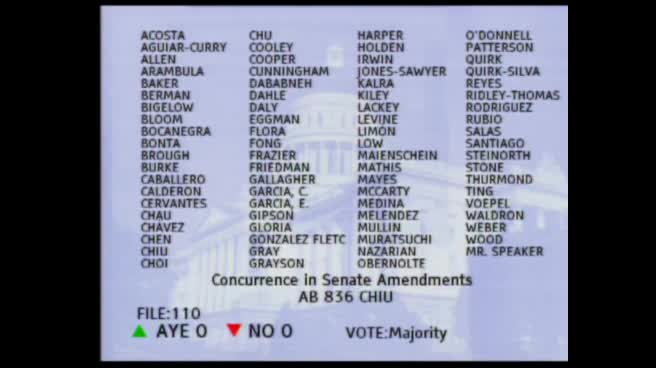 1MIN
Assembly Floor
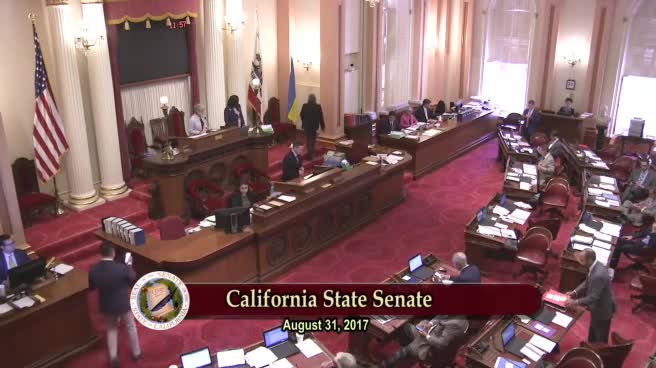 6MIN
Senate Floor
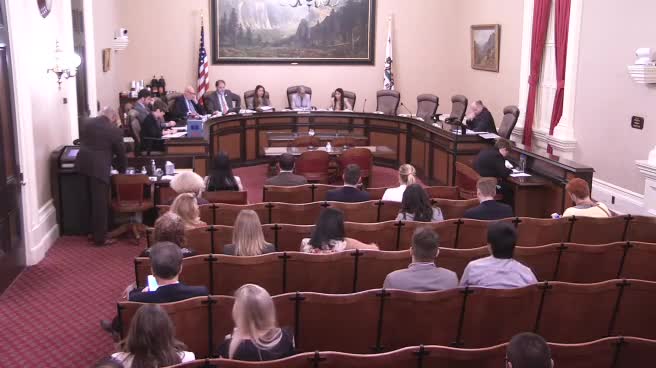 6MIN
Senate Standing Committee on Judiciary
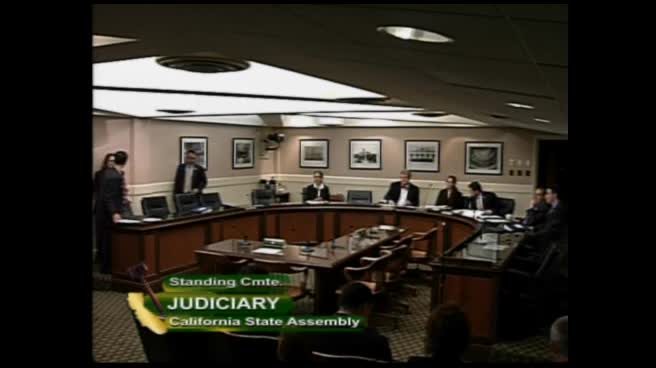 8MIN
Assembly Standing Committee on Judiciary
Bill Author

Bill Co-Author(s):
