AB 546: Land use: local ordinances: energy systems.
- Session Year: 2017-2018
- House: Assembly
- Latest Version Date: 2017-09-30
Existing law, the Planning and Zoning Law, among other things, requires the legislative body of each county and city to adopt a general plan for the physical development of the county or city and authorizes the adoption and administration of zoning laws, ordinances, rules, and regulations by counties and cities.
Existing law requires a city, county, or city and county to approve an application for the installation of electric vehicle charging stations, as defined, through the issuance of specified permits unless the city or county makes specified written findings. Existing law provides that the implementation of consistent statewide standards to achieve the timely and cost-effective installation of electric vehicle charging stations is a matter of statewide concern.
This bill would, on or before September 30, 2018, for a city, including a charter city, county, or city and county with a population of 200,000 or more residents, or January 31, 2019, for a city, including a charter city, county, or city and county with a population of less than 200,000 residents, require the city, county, or city and county to make all documentation and forms associated with the permitting of advanced energy storage, as defined, available on a publicly accessible Internet Web site, as specified. The bill would require a city, county, or city and county to allow for the electronic submittal of a permit application and associated documentation, except as specified.
The bill would authorize the Governors Office of Planning and Research to provide guidance on energy storage permitting, including streamlining, best practices, and potential factors for consideration by local government in establishing fees for permitting and inspection, as specified.
This bill would make findings and declarations that implementation of consistent statewide standards to achieve the timely and cost-effective installation of energy storage systems is a matter of statewide concern.
By increasing the duties of local officials, this bill would create a state-mandated local program.
The California Constitution requires the state to reimburse local agencies and school districts for certain costs mandated by the state. Statutory provisions establish procedures for making that reimbursement.
This bill would provide that no reimbursement is required by this act for a specified reason.
Existing law, the Planning and Zoning Law, among other things, requires the legislative body of each county and city to adopt a general plan for the physical development of the county or city and authorizes the adoption and administration of zoning laws, ordinances, rules, and regulations by counties and cities.
Existing law requires a city, county, or city and county to approve an application for the installation of electric vehicle charging stations, as defined, through the issuance of specified permits unless the city or county makes specified written findings. Existing law provides that the implementation of consistent statewide standards to achieve the timely and cost-effective installation of electric vehicle charging stations is a matter of statewide concern.
This bill would, on or before September 30, 2018, for a city, county, or city and county with a population of 200,000 or more residents, or January 31, 2019, for a city, county, or city and county with a population of less than 200,000 residents, require the city, county, or city and county to make all documentation and forms associated with the permitting of advanced energy storage, as defined, available on a publicly accessible Internet Web site, as specified. The bill would require a city, county, or city and county to allow for the electronic submittal of a permit application and associated documentation, as specified. The bill would prohibit the calculation of a fee associated with the permitting or inspection of an advanced energy storage installation from being calculated based on the value of the installation or any other factor not directly associated with the cost to issue the permit and inspect the advanced energy storage installation.
The bill would require authorize the Governors Office of Planning and Research, on or before January 1, 2020, Research to create a California Energy Storage Permitting Guidebook, provide guidance on energy storage permitting, including streamlining, best practices, and potential factors for consideration by local government in establishing fees for permitting and inspection, as specified.
By increasing the duties of local officials, this bill would create a state-mandated local program.
The California Constitution requires the state to reimburse local agencies and school districts for certain costs mandated by the state. Statutory provisions establish procedures for making that reimbursement.
This bill would provide that no reimbursement is required by this act for a specified reason.
Existing law, the Planning and Zoning Law, among other things, requires the legislative body of each county and city to adopt a general plan for the physical development of the county or city and authorizes the adoption and administration of zoning laws, ordinances, rules, and regulations by counties and cities.
Existing law requires a city, county, or city and county to approve an application for the installation of electric vehicle charging stations, as defined, through the issuance of specified permits unless the city or county makes specified written findings. Existing law provides that the implementation of consistent statewide standards to achieve the timely and cost-effective installation of electric vehicle charging stations is a matter of statewide concern.
This bill would, on or before September 30, 2018, for a city, county, or city and county with a population of 200,000 or more residents, or January 31, 2019, for a city, county, or city and county with a population of less than 200,000 residents, require the city, county, or city and county to make all documentation and forms associated with the permitting of advanced energy storage, as defined, available on a publicly accessible Internet Web site, as specified. The bill would require a city, county, or city and county to allow for the electronic submittal of a permit application and associated documentation, as specified. The bill would prohibit the calculation of a fee associated with the permitting or inspection of an advanced energy storage installation from being calculated based on the value of the installation or any other factor not directly associated with the cost to issue the permit and inspect the advanced energy storage installation.
The bill would require the Governors Office of Planning and Research, on or before January 1, 2020, to create a California Energy Storage Permitting Guidebook, as specified.
By increasing the duties of local officials, this bill would create a state-mandated local program.
The California Constitution requires the state to reimburse local agencies and school districts for certain costs mandated by the state. Statutory provisions establish procedures for making that reimbursement.
This bill would provide that no reimbursement is required by this act for a specified reason.
The Legislature finds and declares all of the following:
(a)It is the policy of the state to promote and encourage the installation of advanced energy storage and to limit obstacles to its use.
(b)It is further the intent of the Legislature that the applicable state agencies, including the Governors Office of Planning and Research, extend and expand the existing initiative being conducted by the Public Utilities Commission to further note best practices in the safe permitting of advanced energy storage.
(c)That implementation of consistent statewide standards to achieve the timely and cost-effective installation of energy storage systems is not a municipal affair, but is a matter of statewide concern.
SEC. 2.Section 65850.8 is added to the Government Code, to read:65850.8.(a)(1)On or before September 30, 2018, every city, including a charter city, county, or city and county with a population of 200,000 or more residents, and on or before January 31, 2019, every city, including a charter city, county, or city and county with a population of less than 200,000 residents, shall make all documentation and forms associated with the permitting of advanced energy storage available on a publicly accessible Internet Web site, if the city, county, or city and county has an Internet Web site.
(2)The city, county, or city and county shall allow for electronic submission of a permit application and associated documentation. The city, county, or city and county shall also authorize the electronic signature on all forms, applications, and other documentation in lieu of a wet signature by an applicant, unless the city, county, or city and county determines that it is unable to accept an electronic signature on all forms, applications, and other documents and makes a finding that states the reasons for that inability.
(b)The Governors Office of Planning and Research may, in consultation with local building officials, the State Fire Marshal, the storage industry, labor representatives from the utility and construction industries, licensed electrical contractors, electrical corporations, publicly owned utilities, the Public Utilities Commission, and other stakeholders, provide guidance on energy storage permitting, including streamlining, best practices, and potential factors for consideration by local government in establishing fees for permitting and inspection.
(c)For purposes of this section, the following terms have the following meanings:
(1)Advanced energy storage means an energy storage system, as defined in Section 2835 of the Public Utilities Code, as well as an energy storage system that is designed to provide backup energy services in the event of a grid outage, that is limited to both of the following:
(A)Electrochemical energy storage in nonventing packages.
(B)Customer-sited installations.
(2)Customer sited means the system is interconnected to the electrical grid through an existing retail customer interconnection.
(3)Electronic submittal means the utilization of one or more of the following:
(A)Email.
(B)The Internet.
(C)Facsimile.
SEC. 3.No reimbursement is required by this act pursuant to Section 6 of Article XIIIB of the California Constitution because a local agency or school district has the authority to levy service charges, fees, or assessments sufficient to pay for the program or level of service mandated by this act, within the meaning of Section 17556 of the Government Code.
The Legislature finds and declares that all of the following:
(a)It is the policy of the state to promote and encourage the installation of advanced energy storage and to limit obstacles to its use.
(b)It is further the intent of the Legislature that the applicable state agencies, including the Governors Office of Planning and Research, extend and expand the existing initiative being conducted by the Public Utilities Commission to further note best practices in the safe permitting of advanced energy storage.
(c)That implementation of consistent statewide standards to achieve the timely and cost-effective installation of energy storage systems is not a municipal affair, but is a matter of statewide concern.
SEC. 2.Section 65850.8 is added to the Government Code, to read:65850.8.(a)The Legislature finds and declares both of the following:(1)It is the policy of the state to promote and encourage the installation of advanced energy storage and to limit obstacles to its use.(2)It is further the intent of the Legislature that the applicable state agencies, including the Governors Office of Planning and Research, extend and expand the existing initiative being conducted by the Public Utilities Commission to further note best practices in the safe permitting of advanced energy storage.(b)65850.8.(a)(1)On or before September 30, 2018, every city, including a charter city, county, or city and county with a population of 200,000 or more residents, and on or before January 31, 2019, every city, including a charter city, county, or city and county with a population of less than 200,000 residents, shall make all documentation and forms associated with the permitting of advanced energy storage available on a publicly accessible Internet Web site, if the city, county, or city and county has an Internet Web site.
(2)The city, county, or city and county shall allow for electronic submission of a permit application and associated documentation. The city, county, or city and county shall also authorize the electronic signature on all forms, applications, and other documentation in lieu of a wet signature by an applicant, unless the city, county, or city and county determines that it is unable to accept an electronic signature on all forms, applications, and other documents and makes a finding that states the reasons for that inability.
(c)(b)The Governors Office of Planning and Research may, in consultation with local building officials, the State Fire Marshal, the storage industry, labor representatives from the utility and construction industries, licensed electrical contractors, electrical corporations, publicly owned utilities, the Public Utilities Commission, and other stakeholders, provide guidance on energy storage permitting, including streamlining, best practices, and potential factors for consideration by local government in establishing fees for permitting and inspection.
(d)(c)For purposes of this section, the following terms have the following meanings:
(1)Advanced energy storage means an energy storage system, as defined in Section 2835 of the Public Utilities Code, as well as an energy storage system that is designed to provide backup energy services in the event of a grid outage, that is limited to both of the following:
(A)Electrochemical energy storage in nonventing packages.
(B)Customer-sited installations.
(2)Customer sited means the system is interconnected to the electrical grid through an existing retail customer interconnection.
(3)Electronic submittal means the utilization of one or more of the following:
(A)Email.
(B)The Internet.
(C)Facsimile.
SEC. 3.No reimbursement is required by this act pursuant to Section 6 of Article XIIIB of the California Constitution because a local agency or school district has the authority to levy service charges, fees, or assessments sufficient to pay for the program or level of service mandated by this act, within the meaning of Section 17556 of the Government Code.
The Legislature finds and declares that implementation of consistent statewide standards to achieve the timely and cost-effective installation of energy storage systems is not a municipal affair, but is a matter of statewide concern.
SECTION 1.SEC. 2.Section 65850.8 is added to the Government Code, to read:65850.8.(a)The Legislature finds and declares both of the following:
(1)It is the policy of the state to promote and encourage the installation of advanced energy storage and to limit obstacles to its use.
(2)It is further the intent of the Legislature that the applicable state agencies, including the Governors Office of Planning and Research, extend and expand the existing initiative being conducted by the Public Utilities Commission to further note best practices in the safe permitting of advanced energy storage.
(b)(1)On or before September 30, 2018, every city, including a charter city, county, or city and county with a population of 200,000 or more residents, and on or before January 31, 2019, every city, including a charter city, county, or city and county with a population of less than 200,000 residents, shall make all documentation and forms associated with the permitting of advanced energy storage available on a publicly accessible Internet Web site, if the city, county, or city and county has an Internet Web site. The
(2)The city, county, or city and county shall allow for electronic submission of a permit application and associated documentation, and documentation. The city, county, or city and county shall also authorize the electronic signature on all forms, applications, and other documentation in lieu of a wet signature by an applicant. applicant, unless the city, county, or city and county determines that it is unable to accept an electronic signature on all forms, applications, and other documents and makes a finding that states the reasons for that inability.
(c)The Governors Office of Planning and Research may, in consultation with local building officials, the State Fire Marshal, the storage industry, labor representatives from the utility and construction industries, licensed electrical contractors, electrical corporations, publicly owned utilities, the Public Utilities Commission, and other stakeholders, provide guidance on energy storage permitting, including streamlining, best practices, and potential factors for consideration by local government in establishing fees for permitting and inspection.
(d)For purposes of this section, the following terms have the following meanings:
(1)Advanced energy storage means an energy storage system, as defined in Section 2835 of the Public Utilities Code, as well as an energy storage system that is designed to provide backup energy services in the event of a grid outage, that is limited to both of the following:
(A)Electrochemical energy storage in nonventing packages.
(B)Customer-sited installations.
(2)Customer sited means the system is interconnected to the electrical grid through an existing retail customer interconnection.
(3)Electronic submittal means the utilization of one or more of the following:
(A)Email.
(B)The Internet.
(C)Facsimile.
SEC. 2.SEC. 3.No reimbursement is required by this act pursuant to Section 6 of Article XIIIB of the California Constitution because a local agency or school district has the authority to levy service charges, fees, or assessments sufficient to pay for the program or level of service mandated by this act, within the meaning of Section 17556 of the Government Code.
(a)The Legislature finds and declares both of the following:
(1)It is the policy of the state to promote and encourage the installation of advanced energy storage and to limit obstacles to its use.
(2)It is further the intent of the Legislature that the applicable state agencies, including the Governors Office of Planning and Research, extend and expand the existing initiative being conducted by the Public Utilities Commission to further note best practices in the safe permitting of advanced energy storage. That effort should ultimately produce an Advanced Energy Storage Permitting Guidebook, taking advantage of the efforts and lessons learned in creating the streamlined permitting processes and modeling in part after the California Solar Permitting Guidebook.
(b)On or before September 30, 2018, every city, county, or city and county with a population of 200,000 or more residents, and on or before January 31, 2019, every city, county, or city and county with a population of less than 200,000 residents, shall make all documentation and forms associated with the permitting of advanced energy storage available on a publicly accessible Internet Web site, if the city, county, or city and county has an Internet Web site. The city, county, or city and county shall allow for electronic submission of a permit application and associated documentation, and shall authorize the electronic signature on all forms, applications, and other documentation in lieu of a wet signature by an applicant.
(c)Any fee charged for the permitting or inspection of an advanced energy storage installation shall not be calculated based on the value of the installation or any other factor not directly associated with the cost to issue the permit and inspect the advanced energy storage installation.(d)On or before January 1, 2020, the(c)The Governors Office of Planning and Research shall, may, in consultation with local building officials, the State Fire Marshal, the storage industry, labor representatives from the utility and construction industries, licensed electrical contractors, electrical corporations, publicly owned utilities, the Public Utilities Commission, and other stakeholders, and through review of any existing streamlined permitting practices used by cities, counties, or city and counties, create a California Energy Storage Permitting Guidebook modeled substantially on the California Solar Permitting Guidebook. provide guidance on energy storage permitting, including streamlining, best practices, and potential factors for consideration by local government in establishing fees for permitting and inspection.
(e)In developing the California Energy Storage Permitting Guidebook, the Governors Office of Planning and Research shall not include provisions that are in conflict with or are inconsistent with provisions of the California Building Standards Code, the California Electrical Code, or any other model code adopted by the California Building Standards Commission pursuant to the California Building Standards Law (Part 2.5 (commencing with Section 18901) of Division 13 of the Health and Safety Code). (f)(d)For purposes of this section, the following terms have the following meanings:
(1)Advanced energy storage means an energy storage system, as defined in Section 2835 of the Public Utilities Code, as well as an energy storage system that is designed to provide backup energy services in the event of a grid outage, that is limited to both of the following:
(A)Electrochemical energy storage in nonventing packages.
(B)Customer sited Customer-sited installations.
(2)Customer sited means the system is interconnected to the electrical grid through an existing retail customer interconnection.
(3)Electronic submittal means the utilization of one or more of the following:
(A)Email.
(B)The Internet.
(C)Facsimile.
SEC. 2.No reimbursement is required by this act pursuant to Section 6 of Article XIIIB of the California Constitution because a local agency or school district has the authority to levy service charges, fees, or assessments sufficient to pay for the program or level of service mandated by this act, within the meaning of Section 17556 of the Government Code.
(a)The Legislature finds and declares both of the following:
(1)It is the policy of the state to promote and encourage the installation of advanced energy storage and to limit obstacles to its use.
(2)It is further the intent of the Legislature that the applicable state agencies, including the Governors Office of Planning and Research, extend and expand the existing initiative being conducted by the Public Utilities Commission to further note best practices in the safe permitting of advanced energy storage. That effort should ultimately produce an Advanced Energy Storage Permitting Guidebook, taking advantage of the efforts and lessons learned in creating the streamlined permitting processes and modeling in part after the California Solar Permitting Guidebook.
(b)On or before September 30, 2018, every city, county, or city and county with a population of 200,000 or more residents, and on or before January 31, 2019, every city, county, or city and county with a population of less than 200,000 residents, shall make all documentation and forms associated with the permitting of advanced energy storage available on a publicly accessible Internet Web site, if the city, county, or city and county has an Internet Web site. The city, county, or city and county shall allow for electronic submission of a permit application and associated documentation, and shall authorize the electronic signature on all forms, applications, and other documentation in lieu of a wet signature by an applicant.
(c)Any fee charged for the permitting or inspection of an advanced energy storage installation shall not be calculated based on the value of the installation or any other factor not directly associated with the cost to issue the permit and inspect the advanced energy storage installation.
(d)On or before January 1, 2020, the Governors Office of Planning and Research shall, in consultation with local building officials, the State Fire Marshal, the storage industry, labor representatives from the utility and construction industries, licensed electrical contractors, electrical corporations, publicly owned utilities, the Public Utilities Commission, and other stakeholders, and through review of any existing streamlined permitting practices used by cities, counties, or city and counties, create a California Energy Storage Permitting Guidebook modeled substantially on the California Solar Permitting Guidebook.
(e)In developing the California Energy Storage Permitting Guidebook, the Governors Office of Planning and Research shall not include provisions that are in conflict with or are inconsistent with provisions of the California Building Standards Code, the California Electrical Code, or any other model code adopted by the California Building Standards Commission pursuant to the California Building Standards Law (Part 2.5 (commencing with Section 18901) of Division 13 of the Health and Safety Code).
(f)For purposes of this section, the following terms have the following meanings:
(1)Advanced energy storage means an energy storage system, as defined in Section 2835 of the Public Utilities Code, as well as an energy storage system that is designed to provide backup energy services in the event of a grid outage, that is limited to both of the following:
(A)Electrochemical energy storage in nonventing packages.
(B)Customer sited installations.
(2)Customer sited means the system is interconnected to the electrical grid through an existing retail customer interconnection.
(3)Electronic submittal means the utilization of one or more of the following:
(A)Email.
(B)The Internet.
(C)Facsimile.
SEC. 2.No reimbursement is required by this act pursuant to Section 6 of Article XIIIB of the California Constitution because a local agency or school district has the authority to levy service charges, fees, or assessments sufficient to pay for the program or level of service mandated by this act, within the meaning of Section 17556 of the Government Code.
|
Date
|
Status
|
|---|---|
| Sep 30, 2017 | Chaptered by Secretary of State - Chapter 380, Statutes of 2017. |
| Sep 30, 2017 | Approved by the Governor. |
| Sep 13, 2017 | Enrolled and presented to the Governor at 4 p.m. |
| Sep 7, 2017 | Senate amendments concurred in. To Engrossing and Enrolling. |
| Sep 5, 2017 | In Assembly. Concurrence in Senate amendments pending. May be considered on or after September 7 pursuant to Assembly Rule 77. |
| Sep 5, 2017 | Read third time. Passed. Ordered to the Assembly. |
| Aug 30, 2017 | Read second time. Ordered to third reading. |
| Aug 29, 2017 | Read third time and amended. Ordered to second reading. |
| Aug 22, 2017 | Read second time. Ordered to third reading. |
| Aug 21, 2017 | From committee: Be ordered to second reading pursuant to Senate Rule 28.8. |
| Jul 12, 2017 | Read second time and amended. Re-referred to Com. on APPR. |
| Jul 11, 2017 | From committee: Amend, and do pass as amended and re-refer to Com. on APPR. (Ayes 7. Noes 0.) (July 5). |
| Jun 14, 2017 | Referred to Com. on GOV. & F. |
| Jun 1, 2017 | In Senate. Read first time. To Com. on RLS. for assignment. |
| May 31, 2017 | Read third time. Passed. Ordered to the Senate. (Ayes 75. Noes 0. Page 1955.) |
| May 30, 2017 | Read second time and amended. Ordered returned to second reading. |
| May 26, 2017 | From committee: Amend, and do pass as amended. (Ayes 12. Noes 0.) (May 26). |
| May 3, 2017 | In committee: Set, first hearing. Referred to APPR. suspense file. |
| Apr 20, 2017 | From committee: Do pass and re-refer to Com. on APPR. (Ayes 14. Noes 0.) (April 19). Re-referred to Com. on APPR. |
| Apr 6, 2017 | From committee: Do pass and re-refer to Com. on U. & E. (Ayes 8. Noes 0.) (April 5). Re-referred to Com. on U. & E. |
| Feb 27, 2017 | Referred to Coms. on L. GOV. and U. & E. |
| Feb 15, 2017 | From printer. May be heard in committee March 17. |
| Feb 14, 2017 | Read first time. To print. |
|
Date
|
Description
|
Location
|
Votes
|
|
|---|---|---|---|---|
| Sep 7, 2017 | AB 546 CHIU Concurrence in Senate Amendments | Assembly Floor |
Passed |
|
| Sep 5, 2017 | Assembly 3rd Reading AB546 Chiu By Allen | Senate Floor |
Passed |
|
| Jul 5, 2017 | Do pass as amended, but first amend, and re-refer to the Committee on [Appropriations] | Senate Standing Committee on Governance and Finance |
Passed |
|
| May 31, 2017 | AB 546 CHIU Assembly Third Reading | Assembly Floor |
Passed |
|
| May 26, 2017 | Do pass as amended. | Assembly Standing Committee on Appropriations |
Passed |
|
| Apr 19, 2017 | Do pass and be re-referred to the Committee on [Appropriations] | Assembly Standing Committee on Utilities and Energy |
Passed |
|
| Apr 5, 2017 | Do pass and be re-referred to the Committee on [Utilities and Energy] | Assembly Standing Committee on Local Government |
Passed |
This list shows positions taken on this bill by organizations on the date displayed, which is linked to the original source.
Positions by individuals are not included.
|
Organization
|
Position
|
Date
|
|---|---|---|
| Adara Power | ** Support | Aug 30, 2017 |
| Advanced Energy Economy | ** Support | Apr 17, 2017 |
| Advanced Microgrid Solutions | ** Support | Aug 30, 2017 |
| Brightsource | ** Support | Aug 30, 2017 |
| California Building Industry Association | ** Support | Aug 30, 2017 |
| California Business Properties Association | ** Support | Aug 30, 2017 |
| California Chamber Of Commerce | ** Support | Aug 30, 2017 |
| California Energy Storage Alliance | ** Support | Aug 30, 2017 |
| California Solar Energy Industries Association | ** Support | Aug 30, 2017 |
| Enel Green Power | ** Support | Aug 30, 2017 |
| Green Charge Networks | ** Support | Aug 30, 2017 |
| Hitachi Chemical | ** Support | Aug 30, 2017 |
| Mercedes-Benz Energy | ** Support | Aug 30, 2017 |
| OutBack Power | ** Support | Aug 30, 2017 |
| Parker | ** Support | Aug 30, 2017 |
| Recurrent Energy | ** Support | Aug 30, 2017 |
| Silicon Valley Leadership Group | ** Support | Aug 30, 2017 |
| Stem | ** Support | Aug 30, 2017 |
| Sunverge | ** Support | Aug 30, 2017 |
| Technet | ** Support | Aug 30, 2017 |
| Tesla | ** Support | Aug 30, 2017 |
| Unknown. | ** Against | Jun 30, 2017 |
CONCURRENCE IN SENATE AMENDMENTS
CSA1 Bill Id:AB 546
Author:(Chiu)
As Amended Ver:August 29, 2017
Majority vote
ASSEMBLY: | 75-0 | (May 31, 2017) | SENATE: | 40-0 | (September 5, 2017) |
Original Committee Reference: L. GOV.
SUMMARY: Requires cities, including charter cities, and counties to accept electronic submissions of permit applications for advanced energy storage installations, and to make documentation for such permitting available on their Internet Web sites.
The Senate amendments:
- Apply the provisions of the bill to charter cities, and find and declare that implementation of consistent statewide standards to achieve the timely and cost-effective installation of energy storage systems is not a municipal affair, but is a matter of statewide concern.
- Provide a city or a county an exception to the bill's requirement to authorize electronic signatures if the city or county determines that it is unable to accept an electronic signature on all forms, applications, and other documents and makes a finding that states the reasons for that inability.
- Move findings and declarations from a codified section to an uncodified section.
FISCAL EFFECT: According to the Senate Appropriations Committee, pursuant to Senate Rule 28.8, negligible state costs.
COMMENTS:
- Bill Summary. This bill requires cities, including charter cities, and counties to make all documentation and forms associated with permitting of advanced energy storage available on the city or county website, if it has one. Cities and counties with 200,000 or more residents would have to comply by September 30, 2018, while cities and counties with less than 200,000 residents have until January 31, 2019, to comply. This bill also requires cities and counties to allow for electronic submission of permit applications and associated documentation for advanced energy storage installations, including electronic signatures, unless the city or county determines that it is unable to accept an electronic signature on all forms, applications, and other documents and makes a finding that states the reasons for that inability.
This bill also allows the Governor's Office of Planning and Research (OPR) to provide guidance on energy storage permitting, including streamlining, best practices, and potential factors for consideration by local government in establishing fees for permitting and inspection. OPR may do so in consultation with local building officials, the State Fire Marshall, the storage industry, labor representatives from the utility and construction industries, licensed electrical contractors, electrical corporations, publicly owned utilities, the Public Utilities Commission (PUC), and other stakeholders. This bill also contains a number of findings, declarations and definitions supporting its purpose. This bill is sponsored by the California Energy Storage Alliance.
- Author's Statement. According to the author, "As the state becomes increasingly reliant on renewable energy resources, energy storage will become a large part of managing intermittent electricity supply. To that end, California has adopted policies within the last few years that promote and fund energy storage. However, anecdotal observations from the energy storage industry confirm that permitting can be a barrier to timely and cost effective installation of energy storage systems. Permitting can vary between jurisdictions and a confusing patchwork of requirements makes installing energy storage more expensive and slows the expansion of this technology…Electronic submission of documents increases the efficiency and cost effectiveness of the permit process. These changes improve the deployment of energy storage in California communities and expand the many benefits provided by this technology."
- Background. AB 2514 (Skinner), Chapter 469, Statutes of 2010, directed the Public Utilities Commission (PUC) to set energy storage procurement targets for California investor-owned utilities (IOUs) and other load serving entities. AB 2514 required load serving entities to meet any targets adopted by the PUC by 2015 and 2020, and required publicly-owned utilities (POUs) to set their own targets for the procurement of energy storage and to meet those targets by 2016 and 2021. In October 2013, the PUC issued Decision 13-10-040 requiring the three California IOUs to procure an aggregate of 1,325 megawatt (MW) of energy storage by the end of 2020, with installations by the end of 2024.
One of the distinctive characteristics of the electric power sector is that the amount of electricity that can be generated is relatively fixed over short periods of time, although demand for electricity fluctuates throughout the day. Developing technology to store electricity so it can be available to meet demand whenever needed represents a major breakthrough in electricity distribution. Helping to try and meet this goal, electricity storage devices can manage the amount of power required to supply customers at times when need is greatest, which is during peak load. These devices can also help make renewable energy, the output of which cannot be controlled by grid operators, smooth and easy to dispatch. Storage devices can provide frequency regulation to maintain the balance between the network's load and power generated. Thus, energy storage holds substantial promise for transforming the electric power industry. There are several types of energy storage. This bill is limited to battery storage only.
- Previous Legislation. AB 2713 (Chiu) of 2016 was similar to this bill. AB 2713 passed the Assembly Local Government Committee on April 13, 2016, on a 9-0 vote but was held in the Assembly Appropriations Committee.
AB 2868 (Gatto), Chapter 681, Statutes of 2016, requires IOUs to file applications with the PUC for programs and investments to accelerate widespread deployment of distributed energy storage systems.
AB 1236 (Chiu), Chapter 598, Statutes of 2015, required counties and cities, including charter cities, to create an expedited permitting and inspection process for electric vehicle charging stations.
AB 2188 (Muratsuchi), Chapter 521, Statutes of 2014, required every city or county to adopt an ordinance that creates an expedited permitting process for small, residential rooftop solar energy systems, altered the definition of what is a reasonable restriction on a solar energy system, and made additional changes to the Solar Rights Act of 1978.
- Arguments in Support. The California Energy Storage Alliance, sponsor of this bill, writes, "Energy storage solutions are a growing part of California's grid and provide customers with key choices in how to manage their energy. Storage supports clean energy and greenhouse gas emissions reduction goals by capturing and discharging energy from renewables. Electricity customers use storage to manage and optimize their energy use and reduce costs. Storage also supports grid needs such as ramping and voltage support, and reduces the need to rely on high emissions power sources. California's existing procurement requirement for energy storage has attracted significant investment and progress in new projects, driving new in-state job creation and the need for greater statewide collaboration."
- Arguments in Opposition. None on file.
Analysis Prepared by: Angela Mapp / L. GOV. / (916) 319-3958 FN: 0001554
Office of Senate Floor Analyses (916) 651-1520 Fax: (916) 327-4478 | AB |
THIRD READING
Bill No: AB 546
:
SENATE GOVERNANCE & FIN. COMMITTEE: 7-0, 7/5/17
AYES: McGuire, Nguyen, Beall, Hernandez, Hertzberg, Lara, Moorlach
SENATE APPROPRIATIONS COMMITTEE: Senate Rule 28.8
ASSEMBLY FLOOR: 75-0, 5/31/17 - See last page for vote
SOURCE: California Energy Storage Alliance
DIGEST:
This bill requires cities and counties to post online the materials required for permitting of energy storage systems.
Senate Floor Amendments of 8/29/17 consolidate the bill’s findings and declarations in an uncodified section.
Existing law:
- Provides for the adoption and administration of zoning laws, ordinances, rules, and regulations by counties and cities.
- Requires every city or county to adopt an ordinance that creates an expedited permitting process for small, residential rooftop solar energy systems and for electric vehicle charging stations.
- Requires the California Public Utilities Commission (CPUC) to determine appropriate targets, if any, for load serving entities to procure energy storage systems, requires load serving entities to meet any targets adopted by the CPUC by 2015 and 2020, and requires publicly-owned utilities to set their own targets for the procurement of energy storage and meet those targets by 2016 and 2020.
- Defines, for the purposes of energy storage system targets, "energy storage system" to mean a commercially available technology that is capable of absorbing energy, storing it for a period of time, and thereafter dispatching the energy.
- Allows an energy storage system to have any of the following characteristics:
- Be either centralized or distributed; and,
- Be either owned by a load-serving entity or local publicly-owned electric utility, a customer of a load-serving entity or local publicly-owned electric utility, or a third party, or jointly owned by two or more of the above.
- Requires an energy storage system to be cost effective and either reduce emissions of greenhouse gases, reduce demand for peak electrical generation, defer or substitute for an investment in generation, transmission, or distribution assets, or improve the reliable operation of the electrical transmission or distribution grid.
- Requires an energy storage system to do one or more of the following:
- Use mechanical, chemical, or thermal processes to store energy that was generated at one time for use at a later time;
- Store thermal energy for direct use for heating or cooling at a later time in a manner that avoids the need to use electricity at that later time;
- Use mechanical, chemical, or thermal processes to store energy generated from renewable resources for use at a later time; or,
- Use mechanical, chemical, or thermal processes to store energy generated from mechanical processes that would otherwise be wasted for delivery at a later time.
This bill:
- Requires a city, county, or city and county, including charter cities, to make all documentation and forms associated with the permitting of advanced energy storage available on its public website, if the city or county has one. A city or county with a population of 200,000 or greater must comply by September 30, 2018, while a city or county with a population of less than 200,000 has until January 31, 2019.
- Requires a city or county to allow for electronic submittal—via email, the internet, or fax—of a permit application and required documentation, as well as an electronic signature in lieu of a wet signature, unless the city or county makes a finding that it is unable to accept electronic signatures.
- Allows the Office of Planning and Research to provide guidance to local governments on energy storage permitting, in consultation with stakeholders such as local building officials, the State Fire Marshal, the CPUC, investor-owned utilities (IOUs), and labor representatives.
- Provides that it applies only to advanced energy storage systems that use batteries and are interconnected to the electrical grid through an existing retail customer connection.
Background
One of the distinctive characteristics of the electric power sector is that the amount of electricity that can be generated is relatively fixed over short periods of time, although demand for electricity fluctuates throughout the day. Developing technology to store electricity so it can be available to meet demand whenever needed represents a major breakthrough in electricity distribution. Helping to try and meet this goal, electricity storage devices can manage the amount of power required to supply customers at times when need is greatest, which is during peak load. These devices can also help make renewable energy, the output of which cannot be controlled by grid operators, smooth and easy to dispatch. Storage devices can provide frequency regulation to maintain the balance between the network's load and power generated. Thus, energy storage holds substantial promise for transforming the electric power industry.
The state has enacted several other policies intended to shape how local governments promote clean energy development, including:
- The Solar Rights Act, which required local governments to ministerially approve solar energy systems and generally grants the right to install a solar system on residential property.
- The Solar Permitting Guidebook, which was developed by the Governor’s Office of Planning and Research (OPR) to provide local governments and so with information and strategies to improve the permitting process and enable more solar energy generation in California communities.
- SB 1222 (Leno, Chapter 614, Statutes of 2012), which caps the permit fees that local governments may charge for residential and commercial rooftop solar photovoltaic systems.
- AB 2188 (Muratsuchi, Chapter 521, Statutes of 2014), which requires every city or county to adopt an ordinance that creates an expedited permitting process, consistent with the procedures in the Solar Permitting Guidebook, for small residential rooftop solar energy systems and to post all required documentation needed for permitting online. These ordinances had to be adopted by September 30, 2015.
- The Zero-Emission Vehicle Guidebook, which was developed by OPR to guide permit applicants and building department staff through the process of charging station installation.
- AB 1236 (Chiu, Chapter 598, Statutes of 2015), which requires cities and counties to ministerially approve permits for electric vehicle charging stations that meet specified criteria and post all documentation required for permitting online. AB 1236 also required cities and counties to develop streamlined, expedited permitting processes for permitting electric vehicles by September 30, 2016, in jurisdictions with 200,000 or more residents and by September 30, 2017, in jurisdictions with less than 200,000 residents.
As the amount of renewable energy generated in California increases, the need for storage increases as well. At the same time, lower cost storage systems are coming onto the market, such as the Tesla Powerwall and other home batteries. But according to some practitioners, permitting requirements for energy storage system vary across California’s cities and counties. The California Energy Storage Alliance wants to make it easier for utility users to apply for the local permits needed to install energy storage.
Comments
- Purpose of the bill. California leads the nation in the procurement of clean, renewable energy. In 2015, the three major IOUs collectively served almost 28% of their electricity demand through renewable energy, and the state is on track to meet the 50% standard by 2030 set in current law. But renewable energy is intermittent—it isn’t always being generated when the demand is greatest. In order to continue to make advances, California will have to expand its ability to store energy. Although there are many forms of storage, distributed battery storage—located at the point of end use, will be a key way to meet this need. Deploying this storage requires getting permits from the 540 cities and counties in California, and these permitting processes vary widely. AB 546 takes a small but important step towards speeding up deployment of energy storage batteries near the retail user by requiring local governments to make their energy storage permitting materials available in the first place most people go to look for them: online. It provides a ramp-up period for smaller jurisdictions by giving them an extra year to post their permitting materials online, and those jurisdictions that don’t have websites don’t need to post them. AB 546 also helps cities, counties, and the energy storage industry learn from best practices by making clear that OPR can provide guidance on energy storage permitting, thereby supporting the rapid deployment of this needed technology.
- It keeps going and going and going. Cities and counties have seen this pattern before: the Legislature or the administration directs the development of guidelines for local permitting of solar energy systems or electric vehicle charging stations, then mandates the adoption of permitting processes based on those guidelines, requires electronic submittal of applications, mandates ministerial approval, and in some cases, caps permit fees. AB 546 treads this same path by requiring electronic submittal of applications for certain battery-based energy storage systems and allowing OPR to provide guidance to local governments and energy storage providers on permitting and installation. The next logical step will be to require compliance with any guidelines for energy storage that are developed by OPR. This phased approach may make sense given the increasing interest in this relatively nascent industry, but cities and counties shouldn’t be surprised when the relatively light requirements in this bill become mandates in the near future.
FISCAL EFFECT: Appropriation: Fiscal Com.: Local:
California Energy Storage Alliance (source)
Adara Power
Advanced Microgrid Solutions
BrightSource
California Building Industry Association
California Business Properties Association
California Chamber of Commerce
California Solar Energy Industries Association
Enel Green Power
Green Charge Networks
Hitachi Chemical
Mercedes-Benz Energy
Outback Power
Parker
Recurrent Energy
Silicon Valley Leadership Group
STEM
SunVerge
Technet
Tesla
OPPOSITION: (Verified 8/30/17)
None received
ASSEMBLY FLOOR: 75-0, 5/31/17
AYES: Acosta, Aguiar-Curry, Travis Allen, Arambula, Baker, Berman, Bigelow, Bloom, Bocanegra, Bonta, Brough, Burke, Caballero, Calderon, Cervantes, Chau, Chávez, Chiu, Chu, Cooley, Cooper, Cunningham, Dababneh, Dahle, Daly, Flora, Fong, Frazier, Friedman, Cristina Garcia, Eduardo Garcia, Gipson, Gloria, Gomez, Gonzalez Fletcher, Gray, Grayson, Harper, Holden, Irwin, Jones-Sawyer, Kalra, Kiley, Lackey, Levine, Limón, Low, Maienschein, Mathis, Mayes, McCarty, Medina, Mullin, Muratsuchi, Nazarian, Obernolte, O'Donnell, Patterson, Quirk, Quirk-Silva, Reyes, Ridley-Thomas, Rodriguez, Rubio, Salas, Santiago, Steinorth, Mark Stone, Thurmond, Ting, Voepel, Waldron, Weber, Wood, Rendon
NO VOTE RECORDED: Chen, Choi, Eggman, Gallagher, Melendez
8/30/17 13:49:56
**** END ****
Office of Senate Floor Analyses (916) 651-1520 Fax: (916) 327-4478 | AB |
THIRD READING
Bill No: AB 546
:
SENATE GOVERNANCE & FIN. COMMITTEE: 7-0, 7/5/17
AYES: McGuire, Nguyen, Beall, Hernandez, Hertzberg, Lara, Moorlach
SENATE APPROPRIATIONS COMMITTEE: Senate Rule 28.8
ASSEMBLY FLOOR: 75-0, 5/31/17 - See last page for vote
SOURCE: California Energy Storage Alliance
DIGEST:
This bill requires cities and counties to post online the materials required for permitting of energy storage systems.
Existing law:
- Provides for the adoption and administration of zoning laws, ordinances, rules, and regulations by counties and cities.
- Requires every city or county to adopt an ordinance that creates an expedited permitting process for small, residential rooftop solar energy systems and for electric vehicle charging stations.
- Requires the California Public Utilities Commission (CPUC) to determine appropriate targets, if any, for load serving entities to procure energy storage systems, requires load serving entities to meet any targets adopted by the CPUC by 2015 and 2020, and requires publicly-owned utilities to set their own targets for the procurement of energy storage and meet those targets by 2016 and 2020.
- Defines, for the purposes of energy storage system targets, "energy storage system" to mean a commercially available technology that is capable of absorbing energy, storing it for a period of time, and thereafter dispatching the energy.
- Allows an energy storage system to have any of the following characteristics:
- Be either centralized or distributed; and,
- Be either owned by a load-serving entity or local publicly-owned electric utility, a customer of a load-serving entity or local publicly-owned electric utility, or a third party, or jointly owned by two or more of the above.
- Requires an energy storage system to be cost effective and either reduce emissions of greenhouse gases, reduce demand for peak electrical generation, defer or substitute for an investment in generation, transmission, or distribution assets, or improve the reliable operation of the electrical transmission or distribution grid.
- Requires an energy storage system to do one or more of the following:
- Use mechanical, chemical, or thermal processes to store energy that was generated at one time for use at a later time;
- Store thermal energy for direct use for heating or cooling at a later time in a manner that avoids the need to use electricity at that later time;
- Use mechanical, chemical, or thermal processes to store energy generated from renewable resources for use at a later time; or,
- Use mechanical, chemical, or thermal processes to store energy generated from mechanical processes that would otherwise be wasted for delivery at a later time.
This bill:
- Requires a city, county, or city and county, including charter cities, to make all documentation and forms associated with the permitting of advanced energy storage available on its public website, if the city or county has one. A city or county with a population of 200,000 or greater must comply by September 30, 2018, while a city or county with a population of less than 200,000 has until January 31, 2019.
- Requires a city or county to allow for electronic submittal—via email, the internet, or fax—of a permit application and required documentation, as well as an electronic signature in lieu of a wet signature, unless the city or county makes a finding that it is unable to accept electronic signatures.
- Allows the Office of Planning and Research to provide guidance to local governments on energy storage permitting, in consultation with stakeholders such as local building officials, the State Fire Marshal, the CPUC, investor-owned utilities (IOUs), and labor representatives.
- Provides that it applies only to advanced energy storage systems that use batteries and are interconnected to the electrical grid through an existing retail customer connection.
Background
One of the distinctive characteristics of the electric power sector is that the amount of electricity that can be generated is relatively fixed over short periods of time, although demand for electricity fluctuates throughout the day. Developing technology to store electricity so it can be available to meet demand whenever needed represents a major breakthrough in electricity distribution. Helping to try and meet this goal, electricity storage devices can manage the amount of power required to supply customers at times when need is greatest, which is during peak load. These devices can also help make renewable energy, the output of which cannot be controlled by grid operators, smooth and easy to dispatch. Storage devices can provide frequency regulation to maintain the balance between the network's load and power generated. Thus, energy storage holds substantial promise for transforming the electric power industry.
The state has enacted several other policies intended to shape how local governments promote clean energy development, including:
- The Solar Rights Act, which required local governments to ministerially approve solar energy systems and generally grants the right to install a solar system on residential property.
- The Solar Permitting Guidebook, which was developed by the Governor’s Office of Planning and Research (OPR) to provide local governments and so with information and strategies to improve the permitting process and enable more solar energy generation in California communities.
- SB 1222 (Leno, Chapter 614, Statutes of 2012), which caps the permit fees that local governments may charge for residential and commercial rooftop solar photovoltaic systems.
- AB 2188 (Muratsuchi, Chapter 521, Statutes of 2014), which requires every city or county to adopt an ordinance that creates an expedited permitting process, consistent with the procedures in the Solar Permitting Guidebook, for small residential rooftop solar energy systems and to post all required documentation needed for permitting online. These ordinances had to be adopted by September 30, 2015.
- The Zero-Emission Vehicle Guidebook, which was developed by OPR to guide permit applicants and building department staff through the process of charging station installation.
- AB 1236 (Chiu, Chapter 598, Statutes of 2015), which requires cities and counties to ministerially approve permits for electric vehicle charging stations that meet specified criteria and post all documentation required for permitting online. AB 1236 also required cities and counties to develop streamlined, expedited permitting processes for permitting electric vehicles by September 30, 2016, in jurisdictions with 200,000 or more residents and by September 30, 2017, in jurisdictions with less than 200,000 residents.
As the amount of renewable energy generated in California increases, the need for storage increases as well. At the same time, lower cost storage systems are coming onto the market, such as the Tesla Powerwall and other home batteries. But according to some practitioners, permitting requirements for energy storage system vary across California’s cities and counties. The California Energy Storage Alliance wants to make it easier for utility users to apply for the local permits needed to install energy storage.
Comments
- Purpose of the bill. California leads the nation in the procurement of clean, renewable energy. In 2015, the three major IOUs collectively served almost 28% of their electricity demand through renewable energy, and the state is on track to meet the 50% standard by 2030 set in current law. But renewable energy is intermittent—it isn’t always being generated when the demand is greatest. In order to continue to make advances, California will have to expand its ability to store energy. Although there are many forms of storage, distributed battery storage—located at the point of end use, will be a key way to meet this need. Deploying this storage requires getting permits from the 540 cities and counties in California, and these permitting processes vary widely. AB 546 takes a small but important step towards speeding up deployment of energy storage batteries near the retail user by requiring local governments to make their energy storage permitting materials available in the first place most people go to look for them: online. It provides a ramp-up period for smaller jurisdictions by giving them an extra year to post their permitting materials online, and those jurisdictions that don’t have websites don’t need to post them. AB 546 also helps cities, counties, and the energy storage industry learn from best practices by making clear that OPR can provide guidance on energy storage permitting, thereby supporting the rapid deployment of this needed technology.
- It keeps going and going and going. Cities and counties have seen this pattern before: the Legislature or the administration directs the development of guidelines for local permitting of solar energy systems or electric vehicle charging stations, then mandates the adoption of permitting processes based on those guidelines, requires electronic submittal of applications, mandates ministerial approval, and in some cases, caps permit fees. AB 546 treads this same path by requiring electronic submittal of applications for certain battery-based energy storage systems and allowing OPR to provide guidance to local governments and energy storage providers on permitting and installation. The next logical step will be to require compliance with any guidelines for energy storage that are developed by OPR. This phased approach may make sense given the increasing interest in this relatively nascent industry, but cities and counties shouldn’t be surprised when the relatively light requirements in this bill become mandates in the near future.
FISCAL EFFECT: Appropriation: Fiscal Com.: Local:
California Energy Storage Alliance (source)
Adara Power
Advanced Microgrid Solutions
BrightSource
California Building Industry Association
California Business Properties Association
California Chamber of Commerce
California Solar Energy Industries Association
Enel Green Power
Green Charge Networks
Hitachi Chemical
Mercedes-Benz Energy
Outback Power
Parker
Recurrent Energy
Silicon Valley Leadership Group
STEM
SunVerge
Technet
Tesla
OPPOSITION: (Verified 8/23/17)
None received
ASSEMBLY FLOOR: 75-0, 5/31/17
AYES: Acosta, Aguiar-Curry, Travis Allen, Arambula, Baker, Berman, Bigelow, Bloom, Bocanegra, Bonta, Brough, Burke, Caballero, Calderon, Cervantes, Chau, Chávez, Chiu, Chu, Cooley, Cooper, Cunningham, Dababneh, Dahle, Daly, Flora, Fong, Frazier, Friedman, Cristina Garcia, Eduardo Garcia, Gipson, Gloria, Gomez, Gonzalez Fletcher, Gray, Grayson, Harper, Holden, Irwin, Jones-Sawyer, Kalra, Kiley, Lackey, Levine, Limón, Low, Maienschein, Mathis, Mayes, McCarty, Medina, Mullin, Muratsuchi, Nazarian, Obernolte, O'Donnell, Patterson, Quirk, Quirk-Silva, Reyes, Ridley-Thomas, Rodriguez, Rubio, Salas, Santiago, Steinorth, Mark Stone, Thurmond, Ting, Voepel, Waldron, Weber, Wood, Rendon
NO VOTE RECORDED: Chen, Choi, Eggman, Gallagher, Melendez
8/23/17 15:26:56
**** END ****
SENATE COMMITTEE ON GOVERNANCE AND FINANCE
Senator Mike McGuire, Chair
2017 - 2018 Regular
Bill No: | AB 546 | Hearing Date: | 7/5/17 |
Author: | Chiu | Tax Levy: | No |
Version: | 5/30/17 | Fiscal: | Yes |
Consultant: | Favorini-Csorba | ||
Land use: local ordinances: energy systems
Requires cities and counties to post online the materials required for permitting of energy storage systems.
Background
One of the distinctive characteristics of the electric power sector is that the amount of electricity that can be generated is relatively fixed over short periods of time, although demand for electricity fluctuates throughout the day. Developing technology to store electricity so it can be available to meet demand whenever needed represents a major breakthrough in electricity distribution. Helping to try and meet this goal, electricity storage devices can manage the amount of power required to supply customers at times when need is greatest, which is during peak load. These devices can also help make renewable energy, the output of which cannot be controlled by grid operators, smooth and easy to dispatch. Storage devices can provide frequency regulation to maintain the balance between the network's load and power generated. Thus, energy storage holds substantial promise for transforming the electric power industry.
In 2010, the Legislature directed the California Public Utilities Commission (CPUC) to determine appropriate targets, if any, for investor-owned utilities (IOUs) to procure energy storage systems and required those utilities to meet any targets adopted by the CPUC by 2015 and 2020 (AB 2514, Skinner). AB 2514 also required publicly-owned utilities to set their own targets for the procurement of energy storage and meet those targets by 2016 and 2020. In October 2013, the CPUC required the three California IOUs to procure an aggregate of 1,325 MW of energy storage by the end of 2020, with installations by the end of 2024. AB 2514 defined an energy storage system to mean commercially available technology that is capable of absorbing energy, storing it for a period of time, and thereafter dispatching the energy for specified purposes, including to:
- Reduce emissions of greenhouse gases;
- Reduce demand for peak electrical generation;
- Defer or substitute for an investment in generation, transmission, or distribution assets, or;
- Improve the reliable operation of the electrical transmission or distribution grid.
The state has enacted several other policies intended to shape how local governments promote clean energy development, including:
- The Solar Rights Act, which required local governments to ministerially approve solar energy systems and generally grants the right to install a solar system on residential property.
- The Solar Permitting Guidebook, which was developed by the Governor’s Office of Planning and Research (OPR) to provide local governments and so with information and strategies to improve the permitting process and enable more solar energy generation in California communities.
- SB 1222 (Leno, 2012), which caps the permit fees that local governments may charge for residential and commercial rooftop solar photovoltaic systems.
- AB 2188 (Muratsuchi, 2014), which requires every city or county to adopt an ordinance that creates an expedited permitting process, consistent with the procedures in the Solar Permitting Guidebook, for small residential rooftop solar energy systems and to post all required documentation needed for permitting online. These ordinances had to be adopted by September 30, 2015.
- The Zero-Emission Vehicle Guidebook, which was developed by OPR to guide permit applicants and building department staff through the process of charging station installation.
- AB 1236 (Chiu, 2015), which requires cities and counties to ministerially approve permits for electric vehicle charging stations that meet specified criteria and post all documentation required for permitting online. AB 1236 also required cities and counties to develop streamlined, expedited permitting processes for permitting electric vehicles by September 30, 2016, in jurisdictions with 200,000 or more residents and by September 30, 2017, in jurisdictions with less than 200,000 residents.
As the amount of renewable energy generated in California increases, the need for storage increases as well. At the same time, lower cost storage systems are coming onto the market, such as the Tesla Powerwall and other home batteries. But according to some practitioners, permitting requirements for energy storage system vary across California’s cities and counties. The California Energy Storage Alliance wants to make it easier for utility users to apply for the local permits needed to install energy storage.
Proposed Law
Assembly Bill 546 requires a city, county, or city and county to make all documentation and forms associated with the permitting of advanced energy storage available on its public website, if the city or county has one. A city or county with a population of 200,000 or greater must comply by September 30, 2018, while a city or county with a population of less than 200,000 has until January 31, 2019. The city or county must allow for electronic submittal—via email, the internet, or fax—of a permit application and required documentation, as well as an electronic signature in lieu of a wet signature.
AB 546 also allows OPR to provide guidance to local governments on energy storage permitting, in consultation with stakeholders such as local building officials, the State Fire Marshal, the CPUC, IOUs, and labor representatives.
AB 546 applies only to advanced energy storage systems that use batteries and are interconnected to the electrical grid through an existing retail customer connection.
State Revenue Impact
No estimate.
Comments
1. Purpose of the bill. California leads the nation in the procurement of clean, renewable energy. In 2015, the three major IOUs collectively served almost 28% of their electricity demand through renewable energy, and the state is on track to meet the 50% standard by 2030 set in current law. But renewable energy is intermittent—it isn’t always being generated when the demand is greatest. In order to continue to make advances, California will have to expand its ability to store energy. Although there are many forms of storage, distributed battery storage—located at the point of end use, will be a key way to meet this need. Deploying this storage requires getting permits from the 540 cities and counties in California, and these permitting processes vary widely. AB 546 takes a small but important step towards speeding up deployment of energy storage batteries near the retail user by requiring local governments to make their energy storage permitting materials available in the first place most people go to look for them: online. It provides a ramp-up period for smaller jurisdictions by giving them an extra year to post their permitting materials online, and those jurisdictions that don’t have websites don’t need to post them. AB 546 also helps cities, counties, and the energy storage industry learn from best practices by making clear that OPR can provide guidance on energy storage permitting, thereby supporting the rapid deployment of this needed technology.
2. It keeps going and going and going. Cities and counties have seen this pattern before: the Legislature or the administration directs the development of guidelines for local permitting of solar energy systems or electric vehicle charging stations, then mandates the adoption of permitting processes based on those guidelines, requires electronic submittal of applications, mandates ministerial approval, and in some cases, caps permit fees. AB 546 treads this same path by requiring electronic submittal of applications for certain battery-based energy storage systems and allowing OPR to provide guidance to local governments and energy storage providers on permitting and installation. The next logical step will be to require compliance with any guidelines for energy storage that are developed by OPR. This phased approach may make sense given the increasing interest in this relatively nascent industry, but cities and counties shouldn’t be surprised when the relatively light requirements in this bill become mandates in the near future.
3. Off-ramp. Both AB 2188 and AB 1236 similarly required local governments to accept electronic signatures for energy-related permit applications. However, unlike AB 546, these bills allowed local governments to escape this requirement upon making a finding, based on substantial evidence, that they cannot accept electronic signatures. To maintain consistency with the processes established in the two previous streamlining bills, the Committee may wish to consider amending AB 546 to allow local governments a similar off-ramp.
3. Charter cities? The California Constitution allows cities that adopt charters to control their own “municipal affairs.” In all other matters, charter cities must follow the general, statewide laws. Because the Constitution doesn’t define “municipal affairs,” the courts determine whether a topic is a municipal affair or whether it’s an issue of statewide concern. Because AB 546 doesn’t include the necessary findings and declarations that energy storage is a matter of statewide concern, the bill doesn’t apply to charter cities. In order to ensure that this bill stimulates energy storage development more broadly, the Committee may wish to consider amending AB 546 to apply to charter cities.
4. Mandate. The California Constitution generally requires the state to reimburse local agencies for their costs when the state imposes new programs or additional duties on them. According to the Legislative Counsel’s Office, AB 546 creates a new state-mandated local program because it increases the duties of local officials. AB 546 disclaims this liability by stating that no reimbursement is required under the Constitution because local agencies have the authority to levy fees sufficient to cover the cost of the increased services.
6. Related legislation. AB 1414 (Friedman), which the Committee will also hear at its July 5th, 2017 hearing, would cap permit fees until 2025 for solar photovoltaic and solar thermal energy systems.
Assembly Actions
Assembly Local Government Committee: 8-0
Assembly Utilities and Energy Committee: 14-0
Assembly Appropriations Committee: 12-0
Assembly Floor: 75-0
Support and Opposition
(6/29/17)
Support: California Energy Storage Alliance (sponsor); Adara Power; Advanced Microgrid Solutions; BrightSource; California Building Industry Association; California Business Properties Association; California Chamber of Commerce; California Solar Energy Industries Association; Enel Green Power; Green Charge Networks; Hitachi Chemical; Mercedes-Benz Energy; Outback Power; Parker; Recurrent Energy; Silicon Valley Leadership Group; STEM; SunVerge; Technet; Tesla.
Opposition: Unknown.
-- END --
ASSEMBLY THIRD READING
ATR Bill Id:AB 546
Author:(Chiu)
As Amended Ver:
Majority vote
Committee | Votes | Ayes | Noes |
Local Government | 8-0 | Aguiar-Curry, Waldron, Bloom, Caballero, Gonzalez Fletcher, Grayson, Lackey, Voepel | |
Utilities | 14-0 | Holden, Patterson, Burke, Chávez, Chen, Dahle, Fong, Cristina Garcia, Eduardo Garcia, Muratsuchi, Quirk, Reyes, Santiago, Ting | |
Appropriations | 12-0 | Gonzalez Fletcher, Bloom, Bocanegra, Bonta, Calderon, McCarty, Quirk, Friedman, Eduardo Garcia, Gray, Muratsuchi, Reyes |
|
SUMMARY: Requires cities and counties to accept electronic submissions of permit applications for advanced energy storage installations, and to make documentation for such permitting available on their websites. Specifically, this bill:
- Requires, on or before September 30, 2018, every city, county, or city and county (city or county) with a population of 200,000 or more residents, and on or before January 31, 2019, every city or county with a population of less than 200,000 residents, to make all documentation and forms associated with the permitting of advanced energy storage available on a publicly accessible Internet Web site (website), if the city or county has a website.
- Requires every city or county to allow for electronic submission of a permit application and associated documentation for advanced energy storage installations, and to authorize the electronic signature on all forms, applications, and other documentation in lieu of a wet signature by an applicant.
- Allows the Governor's Office of Planning and Research (OPR), in consultation with local building officials, the State Fire Marshall, the storage industry, labor representatives from the utility and construction industries, licensed electrical contractors, electrical corporations, publicly owned utilities, the Public Utilities Commission (PUC), and other stakeholders, to provide guidance on energy storage permitting, including streamlining, best practices, and potential factors for consideration by local government in establishing fees for permitting and inspection.
- Provides the following definitions:
- "Advanced energy storage" means an energy storage system, as defined in current law governing energy storage procurement targets for load-serving entities and publicly-owned utilities, as well as an energy storage system that is designed to provide backup energy services in the event of a grid outage, that is limited to both of the following:
- Electrochemical energy storage in nonventing packages; and,
- Customer-sited installations;
- "Customer sited" means the system is interconnected to the electrical grid through an existing retail customer interconnection; and,
- "Electronic submittal" means the utilization of one or more of the following: Email, the Internet, or facsimile.
- "Advanced energy storage" means an energy storage system, as defined in current law governing energy storage procurement targets for load-serving entities and publicly-owned utilities, as well as an energy storage system that is designed to provide backup energy services in the event of a grid outage, that is limited to both of the following:
- Makes the following findings and declarations:
- It is the policy of the state to promote and encourage the installation of advanced energy storage and to limit obstacles to its use; and,
- It is further the intent of the Legislature that the applicable state agencies, including OPR, extend and expand the existing initiative being conducted by the PUC to further note best practices in the safe permitting of advanced energy storage.
- Provides that no reimbursement is required by this bill, pursuant to the California Constitution Section 6 of Article XIII B, because a local agency has the authority to levy service charges, fees, or assessments sufficient to pay for the program or level of service mandated by this bill.
FISCAL EFFECT: According to the Assembly Appropriations Committee:
- Unknown ongoing costs, likely minor, to OPR (GF) to develop guidance and other information, should they choose to do so.
- Unknown costs to other state agencies to consult with OPR regarding guidance and best practices. This may include the State Fire Marshal, PUC, Building Standards Commission, Department of General Services, and others.
- Non-reimbursable costs to cities and counties to make documentation and forms associated with the permitting of advanced energy storage available on their websites, to allow electronic submissions of the applications, and authorize electronic signatures, likely fully offset by fees cities and counties are authorized to charge for these activities.
COMMENTS:
- Bill Summary. This bill requires cities and counties to make all documentation and forms associated with permitting of advanced energy storage available on the city or county website, if it has one. Cities with 200,000 or more residents would have to comply by September 30, 2018, while cities with less than 200,000 residents have until January 31, 2019, to comply. This bill also requires cities and counties to allow for electronic submission of permit applications and associated documentation for advanced energy storage installations, including electronic signatures.
This bill also allows OPR to provide guidance on energy storage permitting, including streamlining, best practices, and potential factors for consideration by local government in establishing fees for permitting and inspection. OPR may do so in consultation with local building officials, the State Fire Marshall, the storage industry, labor representatives from the utility and construction industries, licensed electrical contractors, electrical corporations, publicly owned utilities, the PUC, and other stakeholders.
This bill is sponsored by the California Energy Storage Alliance.
- Author's Statement. According to the author, "As the state becomes increasingly reliant on renewable energy resources, energy storage will become a large part of managing intermittent electricity supply. To that end, California has adopted policies within the last few years that promote and fund energy storage. However, anecdotal observations from the energy storage industry confirm that permitting can be a barrier to timely and cost effective installation of energy storage systems. Permitting can vary between jurisdictions and a confusing patchwork of requirements makes installing energy storage more expensive and slows the expansion of this technology…Electronic submission of documents increases the efficiency and cost effectiveness of the permit process. These changes improve the deployment of energy storage in California communities and expand the many benefits provided by this technology."
- Background. AB 2514 (Skinner), Chapter 469, Statutes of 2010, directed the PUC to set energy storage procurement targets for California investor-owned utilities (IOUs) and other load serving entities. AB 2514 required load serving entities to meet any targets adopted by the PUC by 2015 and 2020, and required publicly-owned utilities (POUs) to set their own targets for the procurement of energy storage and to meet those targets by 2016 and 2021. In October 2013, the PUC issued Decision 13-10-040 requiring the three California IOUs to procure an aggregate of 1,325 MW of energy storage by the end of 2020, with installations by the end of 2024.
One of the distinctive characteristics of the electric power sector is that the amount of electricity that can be generated is relatively fixed over short periods of time, although demand for electricity fluctuates throughout the day. Developing technology to store electricity so it can be available to meet demand whenever needed represents a major breakthrough in electricity distribution. Helping to try and meet this goal, electricity storage devices can manage the amount of power required to supply customers at times when need is greatest, which is during peak load. These devices can also help make renewable energy, the output of which cannot be controlled by grid operators, smooth and easy to dispatch. Storage devices can provide frequency regulation to maintain the balance between the network's load and power generated. Thus, energy storage holds substantial promise for transforming the electric power industry. There are several types of energy storage. This bill is limited to battery storage only.
- Previous Legislation. AB 2713 (Chiu) of 2016 was similar to this bill. AB 2713 passed the Assembly Local Government Committee on April 13, 2016, on a 9-0 vote but was held in the Assembly Appropriations Committee.
AB 2868 (Gatto), Chapter 681, Statutes of 2016, requires IOUs to file applications with the PUC for programs and investments to accelerate widespread deployment of distributed energy storage systems.
AB 1236 (Chiu and Low), Chapter 598, Statutes of 2015, required counties and cities, including charter cities, to create an expedited permitting and inspection process for electric vehicle charging stations.
AB 2188 (Muratsuchi), Chapter 521, Statutes of 2014, required every city or county to adopt an ordinance that creates an expedited permitting process for small, residential rooftop solar energy systems, altered the definition of what is a reasonable restriction on a solar energy system, and made additional changes to the Solar Rights Act of 1978.
- Arguments in Support. The California Energy Storage Alliance, sponsor of this bill, writes, "Energy storage solutions are a growing part of California's grid and provide customers with key choices in how to manage their energy. Storage supports clean energy and greenhouse gas emissions reduction goals by capturing and discharging energy from renewables. Electricity customers use storage to manage and optimize their energy use and reduce costs. Storage also supports grid needs such as ramping and voltage support, and reduces the need to rely on high emissions power sources. California's existing procurement requirement for energy storage has attracted significant investment and progress in new projects, driving new in-state job creation and the need for greater statewide collaboration."
- Arguments in Opposition. None on file.
Analysis Prepared by: Angela Mapp / L. GOV. / (916) 319-3958 FN: 0000629
Date of Hearing: May 3, 2017
ASSEMBLY COMMITTEE ON APPROPRIATIONS
Lorena Gonzalez Fletcher, Chair
ABPCA Bill Id:AB 546
Author:(Chiu) – As Introduced Ver:February 14, 2017
Policy Committee: | Local Government | Vote: | 8 - 0 |
Utilities and Energy | 14 - 0 |
Urgency: No State Mandated Local Program: Yes Reimbursable: No
SUMMARY: This bill requires cities and counties to accept electronic submissions of permit applications for advanced energy storage installations, and requires the Governor's Office of Planning and Research (OPR) to create a California Energy Storage Permitting Guidebook (Guidebook). Specifically, this bill:
- Requires, by September 30, 2018, every city, county, or city and county with a population of 200,000 or more residents, and by January 31, 2019, every city, county, or city and county with a population of less than 200,000 residents, to make all documentation and forms associated with the permitting of advanced energy storage available on a publicly accessible website, if the city, county, or city and county has a website.
- Requires every city, county, or city and county to allow for electronic submission of a permit application and associated documentation, and to authorize the electronic signature on all forms, applications, and other documentation in lieu of a wet signature by an applicant.
- Prohibits any fee charged for the permitting or inspection of an advanced energy storage installation to be calculated based on the value of the installation or any other factor not directly associated with the cost to issue the permit and inspect the installation.
- Requires, by January 1, 2020, OPR to create the Guidebook modeled substantially on the California Solar Permitting Guidebook, in consultation with local building officials, the State Fire Marshal, the storage industry, labor representative from the utility and construction industries, licensed electrical contractors, electrical corporations, publically owned utilities, the California Public Utilities Commission (CPUC), and other stakeholders, and through review of any existing streamlined permitting practices used by cities, counties, or city and counties.
- Prohibits OPR, in developing the Guidebook, from including provisions that are in conflict with or inconsistent with provisions of the California Building standards Code, the California Electrical Code, or any other model code adopted by the California Building Standards Commission pursuant to the California Building Standards Law.
FISCAL EFFECT:
- Annual costs of at least $110,000 to OPR (GF) for two years to consult with experts and stakeholders and develop the required guidelines and other information necessary to create the guidebook. This includes approximately $45,000 for Senior Counsel (1/3 PY) and $60,000 to $70,000 for a program analyst (1 PY).
- Unknown, but likely significant costs to other state agencies to consult with OPR regarding guideline development. This may include the State Fire Marshal, CPUC, Building Standards Commission, Department of General Services, and others.
- One-time costs of approximately $300,000 (GF) for OPR to develop and print the Guidebook. Staff notes that past guidebooks were paid for by outside groups. There is no such arrangement in this case.
- Non-reimbursable costs to cities and counties to make documentation and forms associated with the permitting of advanced energy storage available on their websites, to allow electronic submissions of the applications, and authorize electronic signatures, likely fully offset by fees cities and counties are authorized to charge for these activities.
COMMENTS:
- Purpose. According to the author, "As the state becomes increasingly reliant on renewable energy resources, energy storage will become a large part of managing intermittent electricity supply. To that end, California has adopted policies within the last few years that promote and fund energy storage. However, anecdotal observations from the energy storage industry confirm that permitting can be a barrier to timely and cost effective installation of energy storage systems. Permitting can vary between jurisdictions and a confusing patchwork of requirements makes installing energy storage more expensive and slows the expansion of this technology.
"A guidebook for energy storage permitting that draws information from existing best practices can reduce permitting time frames without sacrificing important safety protections. Electronic submission of documents increases the efficiency and cost effectiveness of the permit process. These changes improve the deployment of energy storage in California communities and expand the many benefits provided by this technology.”
- Background. AB 2514 (Skinner), Chapter 469, Statutes of 2010, directed the CPUC to set energy storage procurement targets for California investor-owned utilities (IOUs) and other load serving entities. In October 2013, the CPUC issued Decision 13-10-040 requiring the three large electrical IOUs to procure an aggregate of 1,325 MW of energy storage by the end of 2020, with installations by the end of 2024. AB 2514 also required publicly-owned utilities to set their own targets for the procurement of energy storage and meet those targets by 2016 and 2020.
Because the amount of electric generation is relatively fixed over short periods of time, even though demand for electricity fluctuates throughout the day, developing energy storage technologies can help the state manage the electric grid during peak demand periods. Energy storage devices can help make renewable energy, which are energy outputs that cannot be controlled by grid operators, easier to dispatch. The most common form of energy storage devices are batteries. However, there are no commercially available batteries that could cost-effectively store the large amount of electricity that can be produced by large scale wind and solar facilities. Utilities are continuing to engage in projects to determine the viability of different energy storage projects.
- Energy Storage Permitting Guidebook. The California Solar Permitting Guidebook was developed for local governments and permitting agencies to facilitate installation of small solar energy systems. The guidebook provides recommendations in which local governments can reduce permit processing times and increase their output while facilitating local economic development. This bill requires OPR, by January 1, 2020, to create a Guidebook modeled substantially on the California Solar Permitting Guidebook.
Unlike past efforts by OPR to develop guidebooks, where much guidance and best practices existed and on which OPR had been working for several years prior to the specific request, there is very little comparable existing information on energy storage on which to draw. Federal guidance has not yet been released, there are few, if any local model ordinances, OPR has no topic experts on staff, and outside groups are not yet actively engaged. Much of the relevant information that OPR gathered and compiled in the past, will have to be developed in this case, at much greater expense than in the past.
- Prior Legislation.
AB 2713 (Chiu) of the 2015-16 Legislative Session, was nearly identical to this bill. That bill was held on this Committee’s Suspense.
AB 2868 (Gatto), Chapter 681, Statutes of 2016, requires investor-owned utilities to file applications with the PUC for programs and investments to accelerate widespread deployment of distributed energy storage systems.
AB 1236 (Chiu and Low), Chapter 598, Statutes of 2015, required counties and cities, including charter cities, to create an expedited permitting and inspection process for electric vehicle charging stations.
Analysis Prepared by: Jennifer Swenson / APPR. / (916) 319-2081
Date of Hearing: April 19, 2017
ASSEMBLY COMMITTEE ON UTILITIES AND ENERGY
Chris Holden, Chair
ABPCA Bill Id:AB 546 (
Author:Chiu) – As Introduced Ver:February 14, 2017
SUBJECT: Land use: local ordinances: energy systems
SUMMARY: Requires cities and counties to accept electronic submissions of permit applications for advanced energy storage installations and requires the creation of a California Energy Storage Permitting Guidebook. Specifically, this bill:
- Requires, on or before September 30, 2018, every city, county, or city and county with a population of 200,000 or more residents, and on or before January 31, 2019, every city, county, or city and county with a population of less than 200,000 residents, to make all documentation and forms associated with the permitting of advanced energy storage available on a publicly accessible Internet Web site (website), if the city, county, or city and county has a website.
- Requires every city, county, or city and county to allow for electronic submission of a permit application and associated documentation for advanced energy storage installations, and to authorize the electronic signature on all forms, applications, and other documentation in lieu of a wet signature by an applicant.
- Prohibits any fee charged for the permitting or inspection of an advanced energy storage installation from being calculated based on the value of the installation or any other factor not directly associated with the cost to issue the permit and inspect the advanced energy storage installation.
- Requires, on or before January 1, 2020, the Governor’s Office of Planning and Research (OPR) to create a California Energy Storage Permitting Guidebook (Energy Storage Guidebook) modeled substantially on the California Solar Permitting Guidebook (Solar Guidebook), in consultation with local building officials, the State Fire Marshall, the storage industry, labor representatives from the utility and construction industries, licensed electrical contractors, electrical corporations, publicly owned utilities, the California Public Utilities Commission (CPUC), and other stakeholders, and through review of any existing streamlined permitting practices used by cities, counties, or city and counties.
- Prohibits OPR, in developing the Energy Storage Guidebook, from including provisions that are in conflict with or are inconsistent with provisions of the California Building Standards Code, the California Electrical Code, or any other model code adopted by the California Building Standards Commission pursuant to the California Building Standards Law, as specified.
- Provides the following definitions:
- “Advanced energy storage” means an energy storage system, as defined in current law governing energy storage procurement targets for load-serving entities and publicly-owned utilities, as well as an energy storage system that is designed to provide backup energy services in the event of a grid outage, that is limited to both of the following:
- Electrochemical energy storage in non-venting packages; and,
- Customer sited installations;
- “Customer sited” means the system is interconnected to the electrical grid through an existing retail customer interconnection; and,
- “Electronic submittal” means the utilization of one or more of the following: Email, the Internet, or facsimile.
- “Advanced energy storage” means an energy storage system, as defined in current law governing energy storage procurement targets for load-serving entities and publicly-owned utilities, as well as an energy storage system that is designed to provide backup energy services in the event of a grid outage, that is limited to both of the following:
- Makes the following findings:
- It is the policy of the state to promote and encourage the installation of advanced energy storage and to limit obstacles to its use; and,
- It is further the intent of the Legislature that the applicable state agencies, including OPR, extend and expand the existing initiative being conducted by the PUC to further note best practices in the safe permitting of advanced energy storage. That effort should ultimately produce an Energy Storage Guidebook, taking advantage of the efforts and lessons learned in creating the streamlined permitting processes and modeling in part after the Solar Guidebook.
EXISTING LAW:
- Provides for the adoption and administration of zoning laws, ordinances, rules, and regulations by counties and cities.
- Requires every city or county to adopt an ordinance that creates an expedited permitting process for small, residential rooftop solar energy systems and for electric vehicle charging stations. (GOV § 65850.5)
- Requires the CPUC to determine appropriate targets, if any, for load serving entities to procure energy storage systems, requires load serving entities to meet any targets adopted by the CPUC by 2015 and 2020, and requires publicly-owned utilities to set their own targets for the procurement of energy storage and meet those targets by 2016 and 2020. (PUC§ 2836)
- Defines, for the purposes of energy storage system targets, "energy storage system" to mean a commercially available technology that is capable of absorbing energy, storing it for a period of time, and thereafter dispatching the energy. (PUC § 2835)
- Allows an energy storage system to have any of the following characteristics:
- Be either centralized or distributed; and,
- Be either owned by a load-serving entity or local publicly-owned electric utility, a customer of a load-serving entity or local publicly-owned electric utility, or a third party, or jointly owned by two or more of the above. (PUC § 2835)
- Requires an energy storage system to be cost effective and either reduce emissions of greenhouse gases, reduce demand for peak electrical generation, defer or substitute for an investment in generation, transmission, or distribution assets, or improve the reliable operation of the electrical transmission or distribution grid.
- Requires an energy storage system to do one or more of the following:
- Use mechanical, chemical, or thermal processes to store energy that was generated at one time for use at a later time;
- Store thermal energy for direct use for heating or cooling at a later time in a manner that avoids the need to use electricity at that later time;
- Use mechanical, chemical, or thermal processes to store energy generated from renewable resources for use at a later time; or,
- Use mechanical, chemical, or thermal processes to store energy generated from mechanical processes that would otherwise be wasted for delivery at a later time. (PUC § 2835)
FISCAL EFFECT: This bill is keyed fiscal and contains a state-mandated local program.
BACKGROUND:
At the end of 2010, the California Legislature enacted AB 2514, directing the CPUC to set energy storage procurement targets for California investor-owned utilities (IOUs) and other load serving entities. In October 2013, the CPUC issued Decision 13-10-040 requiring the three large electrical IOUs to procure an aggregate of 1,325 MW of energy storage by the end of 2020, with installations by the end of 2024. AB 2514 also required publicly-owned utilities to set their own targets for the procurement of energy storage and meet those targets by 2016 and 2020.
Demand for electricity fluctuates throughout the day but the amount of electricity that can be generated is relatively fixed over short periods of time. Developing technology to store electricity so it can be available to meet demand whenever needed represents a major breakthrough in electricity distribution. Electricity storage devices can manage the amount of power required to supply customers at times when need is greatest, which is during peak load. These devices can also help make renewable energy, the output of which cannot be controlled by grid operators, smooth and easy to dispatch. Storage devices can provide frequency regulation to maintain the balance between the network's load and power generated. Thus, energy storage holds substantial promise for transforming the electric power industry. There are several types of energy storage.
The Self-Generation Incentive Program (SGIP) California’s Self-Generation Incentive Program (SGIP) was established in 2001 by the Commission in Decision (D.) 01-03-073 in response to Assembly Bill (AB) 970 (Ducheny, Stats. 2000, Ch. 329). AB 970 directed the Commission to provide incentives for distributed generation resources to reduce peak energy demand. Since 2001, the Legislature has refined and extended SGIP several times. During 2014 and 2015, the Commission acted to extend SGIP funding through 2019 and updated program eligibility criteria related to greenhouse gas (GHG) emissions, pursuant to SB 861 (Committee on Budget and Fiscal Review, 2014). In 2016, the Commission adopted D.16-06-055, which made significant programmatic changes for how SGIP incentive dollars are awarded and other program refinements. On September 26, 2016, Governor Brown signed AB 1637 (Low, 2016), which authorized the CPUC to increase collections for SGIP.
AB 1637 allocated additional funding to SGIP for the energy storage incentive budget category. 85% of the AB 1637 funds ($196,834,500) are available for the energy storage category. Of which 90% are allocated for projects greater than 10 kilowatts in size, and 10% are allocated to the existing carve-out for residential energy storage projects less than or equal to 10 kilowatts in size.[1]
Solar Guidebook. The California Solar Permitting Guidebook was developed for local governments and permitting agencies to facilitate installation of small solar energy systems. The guidebook provides recommendations in which local governments can reduce permit processing times and increase their output.
COMMENTS:
- Author’s Statement. According to the author’s office, “As the state becomes increasingly reliant on renewable energy resources, energy storage will become a large part of managing intermittent electricity supply. To that end, California has adopted policies within the last few years that promote and fund energy storage. However, anecdotal observations from the energy storage industry confirm that permitting can be a barrier to timely and cost effective installation of energy storage systems. Permitting can vary between jurisdictions and a confusing patchwork of requirements makes installing energy storage more expensive and slows the expansion of this technology.
A guidebook for energy storage permitting that draws information from existing best practices can reduce permitting time frames without sacrificing important safety protections. Electronic submission of documents increases the efficiency and cost effectiveness of the permit process. These changes improve the deployment of energy storage in California communities and expand the many benefits provided by this technology.”
- Storage Function. Although the purpose of energy storage is obvious – to store electricity, there are two distinct functions associated with storage on the grid today. First, to allow customers to store electricity onsite and use that stored electricity to offset load or provide back-up to the grid which means that the stored electricity is not exported. The second type of storage is that which stores electricity and exports that stored electricity to the grid. This storage could be on the customer’s side of the meter or on the wholesale or utility side of the meter. Current tariffs and programs of the CPUC and IOUs do not include customer-controlled export of stored electricity to the grid. The export of power triggers a heightened level of engineering, costs, and grid impacts.
- Related Legislation:
AB 1030 (Ting) requires the PUC to establish a program to incentivize residential and commercial customers to adopt energy storage systems. AB 1030 is pending in the Assembly Utilities and Energy Committee.
SB 700 (Wiener) requires the PUC to establish the Energy Storage Initiative to provide rebates to customers of electrical corporations for the installation of energy storage systems meeting certain requirements. SB 700 is pending in the Senate Rules Committee.
- Prior Legislation:
AB 2713 (Chiu) of 2016 was nearly identical to this bill. AB 2713 passed the Assembly Local Government Committee on April 13, 2016, on a 9-0 vote but was held in the Assembly Appropriations Committee.
AB 2868 (Gatto), Chapter 681, Statutes of 2016, requires investor-owned utilities to file applications with the PUC for programs and investments to accelerate widespread deployment of distributed energy storage systems.
AB 1236 (Chiu and Low), Chapter 598, Statutes of 2015, required counties and cities, including charter cities, to create an expedited permitting and inspection process for electric vehicle charging stations.
AB 2188 (Muratsuchi), Chapter 521, Statutes of 2014, required every city or county to adopt an ordinance that creates an expedited permitting process for small, residential rooftop solar energy systems, altered the definition of what is a reasonable restriction on a solar energy system, and made additional changes to the Solar Rights Act of 1978.
AB 2514 (Skinner), Chapter 469, Statutes of 2010, required the PUC to determine appropriate targets, if any, for load serving entities to procure energy storage systems, required load serving entities to meet any targets adopted by the PUC by 2015 and 2020, and required publicly-owned utilities to set their own targets for the procurement of energy storage and meet those targets by 2016 and 2020.
REGISTERED SUPPORT / OPPOSITION:
Support
California Energy Storage Alliance (CESA) Sponsor
Advanced Energy Economy
Advanced Microgrid Solutions, Inc.
California Solar Energy Industries Association
Stem
Sunverge
Tesla, Inc.
Opposition
None on file.
Analysis Prepared by: Elle Hoxworth / U. & E. /
http://docs.cpuc.ca.gov/PublishedDocs/Published/G000/M183/K286/183286157.PDF ↑
Date of Hearing: April 5, 2017
ASSEMBLY COMMITTEE ON LOCAL GOVERNMENT
Cecilia Aguiar-Curry, Chair
ABPCA Bill Id:AB 546 (
Author:Chiu) – As Introduced Ver:February 14, 2017
SUBJECT: Land use: local ordinances: energy systems.
SUMMARY: Requires cities and counties to accept electronic submissions of permit applications for advanced energy storage installations, and requires the creation of a California Energy Storage Permitting Guidebook. Specifically, this bill:
- Requires, on or before September 30, 2018, every city, county, or city and county with a population of 200,000 or more residents, and on or before January 31, 2019, every city, county, or city and county with a population of less than 200,000 residents, to make all documentation and forms associated with the permitting of advanced energy storage available on a publicly accessible Internet Web site (website), if the city, county, or city and county has a website.
- Requires every city, county, or city and county to allow for electronic submission of a permit application and associated documentation for advanced energy storage installations, and to authorize the electronic signature on all forms, applications, and other documentation in lieu of a wet signature by an applicant.
- Prohibits any fee charged for the permitting or inspection of an advanced energy storage installation from being calculated based on the value of the installation or any other factor not directly associated with the cost to issue the permit and inspect the advanced energy storage installation.
- Requires, on or before January 1, 2020, the Governor’s Office of Planning and Research (OPR) to create a California Energy Storage Permitting Guidebook (Energy Storage Guidebook) modeled substantially on the California Solar Permitting Guidebook (Solar Guidebook), in consultation with local building officials, the State Fire Marshall, the storage industry, labor representatives from the utility and construction industries, licensed electrical contractors, electrical corporations, publicly owned utilities, the Public Utilities Commission (PUC), and other stakeholders, and through review of any existing streamlined permitting practices used by cities, counties, or city and counties.
- Prohibits OPR, in developing the Energy Storage Guidebook, from including provisions that are in conflict with or are inconsistent with provisions of the California Building Standards Code, the California Electrical Code, or any other model code adopted by the California Building Standards Commission pursuant to the California Building Standards Law, as specified.
- Provides the following definitions:
- “Advanced energy storage” means an energy storage system, as defined in current law governing energy storage procurement targets for load-serving entities and publicly-owned utilities, as well as an energy storage system that is designed to provide backup energy services in the event of a grid outage, that is limited to both of the following:
- Electrochemical energy storage in nonventing packages; and,
- Customer sited installations;
- “Customer sited” means the system is interconnected to the electrical grid through an existing retail customer interconnection; and,
- “Electronic submittal” means the utilization of one or more of the following: Email, the Internet, or facsimile.
- “Advanced energy storage” means an energy storage system, as defined in current law governing energy storage procurement targets for load-serving entities and publicly-owned utilities, as well as an energy storage system that is designed to provide backup energy services in the event of a grid outage, that is limited to both of the following:
- Makes the following findings:
- It is the policy of the state to promote and encourage the installation of advanced energy storage and to limit obstacles to its use; and,
- It is further the intent of the Legislature that the applicable state agencies, including OPR, extend and expand the existing initiative being conducted by the PUC to further note best practices in the safe permitting of advanced energy storage. That effort should ultimately produce an Energy Storage Guidebook, taking advantage of the efforts and lessons learned in creating the streamlined permitting processes and modeling in part after the Solar Guidebook.
- Provides that no reimbursement is required by this bill, pursuant to Section 6 of Article XIII B of the California Constitution, because a local agency has the authority to levy service charges, fees, or assessments sufficient to pay for the program or level of service mandated by this bill.
EXISTING LAW:
- Provides for the adoption and administration of zoning laws, ordinances, rules, and regulations by counties and cities.
- Requires every city or county to adopt an ordinance that creates an expedited permitting process for small, residential rooftop solar energy systems and for electric vehicle charging stations.
- Requires the PUC to determine appropriate targets, if any, for load serving entities to procure energy storage systems, requires load serving entities to meet any targets adopted by the PUC by 2015 and 2020, and requires publicly-owned utilities to set their own targets for the procurement of energy storage and meet those targets by 2016 and 2020.
- Defines, for the purposes of energy storage system targets, "energy storage system" to mean a commercially available technology that is capable of absorbing energy, storing it for a period of time, and thereafter dispatching the energy.
- Allows an energy storage system to have any of the following characteristics:
- Be either centralized or distributed; and,
- Be either owned by a load-serving entity or local publicly-owned electric utility, a customer of a load-serving entity or local publicly-owned electric utility, or a third party, or jointly owned by two or more of the above.
- Requires an energy storage system to be cost effective and either reduce emissions of greenhouse gases, reduce demand for peak electrical generation, defer or substitute for an investment in generation, transmission, or distribution assets, or improve the reliable operation of the electrical transmission or distribution grid.
- Requires an energy storage system to do one or more of the following:
- Use mechanical, chemical, or thermal processes to store energy that was generated at one time for use at a later time;
- Store thermal energy for direct use for heating or cooling at a later time in a manner that avoids the need to use electricity at that later time;
- Use mechanical, chemical, or thermal processes to store energy generated from renewable resources for use at a later time; or,
- Use mechanical, chemical, or thermal processes to store energy generated from mechanical processes that would otherwise be wasted for delivery at a later time.
FISCAL EFFECT: This bill is keyed fiscal and contains a state-mandated local program.
COMMENTS:
- Bill Summary. This bill requires cities and counties to make all documentation and forms associated with permitting of advanced energy storage available on the city or county website, if it has one. Cities with 200,000 or more residents would have to comply by September 30, 2018, while cities with less than 200,000 residents have until January 31, 2019, to comply. This bill also requires cities and counties to allow for electronic submission of permit applications and associated documentation for advanced energy storage installations, including electronic signatures. This bill prohibits any fee charged for permitting or inspection of an advanced energy storage installation from being calculated based on the value of the installation or any other factor not directly associated with the cost to issue the permit and inspect the installation.
This bill also requires OPR to create an Energy Storage Guidebook by January 1, 2020. This guidebook must be modeled substantially on the existing Solar Guidebook and developed in consultation with local building officials, the State Fire Marshall, the storage industry, labor representatives from the utility and construction industries, licensed electrical contractors, electrical corporations, publicly owned utilities, the PUC, and other stakeholders. Review of any existing streamlined permitting practices used by cities or counties must also be included in the process of developing the Energy Storage Guidebook.
This bill is sponsored by the California Energy Storage Alliance.
- Author's Statement. According to the author, "As the state becomes increasingly reliant on renewable energy resources, energy storage will become a large part of managing intermittent electricity supply. To that end, California has adopted policies within the last few years that promote and fund energy storage. However, anecdotal observations from the energy storage industry confirm that permitting can be a barrier to timely and cost effective installation of energy storage systems. Permitting can vary between jurisdictions and a confusing patchwork of requirements makes installing energy storage more expensive and slows the expansion of this technology.
"A guidebook for energy storage permitting that draws information from existing best practices can reduce permitting time frames without sacrificing important safety protections. Electronic submission of documents increases the efficiency and cost effectiveness of the permit process. These changes improve the deployment of energy storage in California communities and expand the many benefits provided by this technology.”
- Background. At the end of 2010, the California Legislature enacted AB 2514, directing the PUC to set energy storage procurement targets for California investor-owned utilities (IOUs) and other load serving entities. In October 2013, the PUC issued Decision 13-10-040 requiring the three California IOUs to procure an aggregate of 1,325 MW of energy storage by the end of 2020, with installations by the end of 2024. AB 2514 also required publicly-owned utilities to set their own targets for the procurement of energy storage and meet those targets by 2016 and 2020.
One of the distinctive characteristics of the electric power sector is that the amount of electricity that can be generated is relatively fixed over short periods of time, although demand for electricity fluctuates throughout the day. Developing technology to store electricity so it can be available to meet demand whenever needed represents a major breakthrough in electricity distribution. Helping to try and meet this goal, electricity storage devices can manage the amount of power required to supply customers at times when need is greatest, which is during peak load. These devices can also help make renewable energy, the output of which cannot be controlled by grid operators, smooth and easy to dispatch. Storage devices can provide frequency regulation to maintain the balance between the network's load and power generated. Thus, energy storage holds substantial promise for transforming the electric power industry. There are several types of energy storage. This bill is limited to battery storage only.
- Related Legislation. AB 1030 (Ting) requires the PUC to establish a program to incentivize residential and commercial customers to adopt energy storage systems. AB 1030 is pending in the Assembly Utilities and Energy Committee.
SB 700 (Wiener) requires the PUC to establish the Energy Storage Initiative to provide rebates to customers of electrical corporations for the installation of energy storage systems meeting certain requirements. SB 700 is pending in the Senate Rules Committee.
- Previous Legislation. AB 2713 (Chiu) of 2016 was nearly identical to this bill. AB 2713 passed the Assembly Local Government Committee on April 13, 2016, on a 9-0 vote but was held in the Assembly Appropriations Committee.
AB 2868 (Gatto), Chapter 681, Statutes of 2016, requires investor-owned utilities to file applications with the PUC for programs and investments to accelerate widespread deployment of distributed energy storage systems.
AB 1236 (Chiu and Low), Chapter 598, Statutes of 2015, required counties and cities, including charter cities, to create an expedited permitting and inspection process for electric vehicle charging stations.
AB 2188 (Muratsuchi), Chapter 521, Statutes of 2014, required every city or county to adopt an ordinance that creates an expedited permitting process for small, residential rooftop solar energy systems, altered the definition of what is a reasonable restriction on a solar energy system, and made additional changes to the Solar Rights Act of 1978.
AB 2514 (Skinner), Chapter 469, Statutes of 2010, required the PUC to determine appropriate targets, if any, for load serving entities to procure energy storage systems, required load serving entities to meet any targets adopted by the PUC by 2015 and 2020, and required publicly-owned utilities to set their own targets for the procurement of energy storage and meet those targets by 2016 and 2020.
- Arguments in Support. The California Energy Storage Alliance, sponsor of this bill, writes, "AB 546 supports the state’s cities and counties by directing the development of a handbook of permitting best practices which will inform cities and counties in their permitting processes. Additional stipulations in the bill, such as reasonable application fees will support the smoother, safer and timely deployments of energy storage. As the number of energy storage projects deploying in California is rapidly increasing, and energy storage is key to achieving many clean energy and grid goals and improvements it is thus imperative to develop tools to support permitting needs for the deployment of these projects.
"Energy storage solutions are a growing part of California’s grid and provide customers with key choices in how to manage their energy. Storage supports clean energy and greenhouse gas emissions reduction goals by capturing and discharging energy from renewables. Electricity customers use storage to manage and optimize their energy use and reduce costs. Storage also supports grid needs such as ramping and voltage support, and reduces the need to rely on high emissions power sources. California’s existing procurement requirement for energy storage has attracted significant investment and progress in new projects, driving new in-state job creation and the need for greater statewide collaboration."
- Arguments in Opposition. None on file.
- Double-Referral. This bill is double-referred to the Utilities and Energy Committee.
REGISTERED SUPPORT / OPPOSITION:
Support
California Energy Storage Alliance [SPONSOR]
Green Charge Networks
Silicon Valley Leadership Group
Stem
Opposition
None on file
Analysis Prepared by: Angela Mapp / L. GOV. / (916) 319-3958
Discussed in Hearing
 1MIN
Assembly Floor
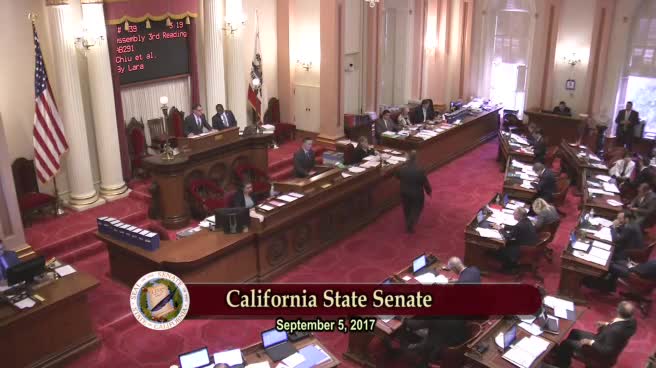 1MIN
Senate Floor
 3MIN
Senate Standing Committee on Governance and Finance
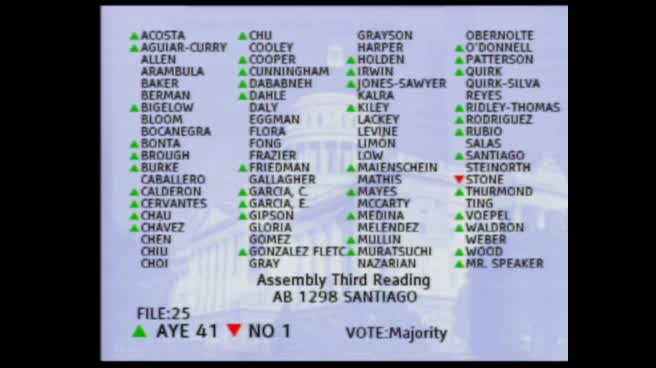 1MIN
Assembly Floor
 1H
Assembly Standing Committee on Appropriations
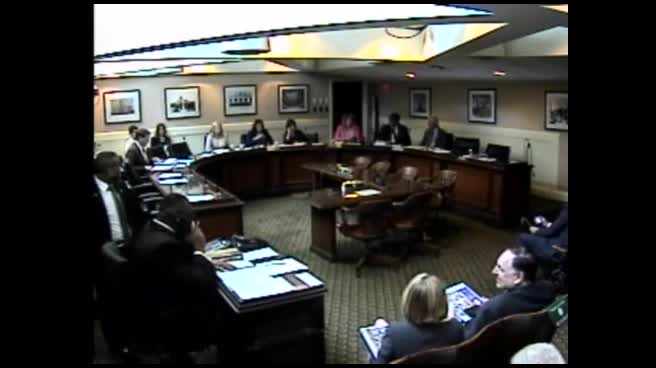 6MIN
Assembly Standing Committee on Local Government
Bill Author

Bill Co-Author(s):