AB 552: United Water Conservation District.
- Session Year: 2017-2018
- House: Assembly
- Latest Version Date: 2017-09-26
(1)Existing law, the Water Conservation District Law of 1931, authorizes a water conservation district to be organized and established by a county board of supervisors, with specified powers and purposes.
This bill would authorize the United Water Conservation District to inspect any water-producing facility within its boundaries with the consent of the operator of the water-producing facility or with a duly issued inspection warrant, as prescribed. Because the willful refusal of an inspection lawfully authorized by an inspection warrant is a misdemeanor, this bill would impose a state-mandated local program by expanding the application of a crime.
(2)The law permits a water conservation district to levy groundwater charges and requires a district to cause to be made annually an engineering investigation and report on groundwater conditions of the district. The law requires the district board to hold a hearing on the report and then authorizes the board to make a determination to levy a groundwater charge. The law requires, when a water-producing facility in a zone with a groundwater charge is permanently abandoned, that the operator of the facility give written notice of the abandonment to the district.
This bill would authorize the United Water Conservation District to affix seals to an abandoned water-producing facility.
(3)The law requires a district, if any operator of a water-producing facility fails to pay the groundwater charge when due, to charge interest at the rate of 1% each month on the delinquent amount. The law requires a district, if any operator of a water-producing facility fails to register the facility or fails to file required water production statements, to additionally assess a penalty charge against the operator in an amount of 10% of the amount due.
This bill would authorize the United Water Conservation District to assess an administrative charge to recover the cost of collection of delinquent unpaid charges and would authorize the district to adopt an ordinance to provide that in excusable or justifiable circumstances, the administrative charge may be reduced or waived.
(4)The law authorizes a district to bring a suit against any operator, as defined, of a water-producing facility within the district for the collection of any delinquent groundwater charge. The law authorizes a court, in addition to allowing recovery of costs to the district, to fix and allow as part of the judgment interest and penalties, as specified.
This bill would authorize the United Water Conservation District to seek a writ of attachment against the property of any named defendant in an above-described suit, as specified. This bill would authorize the district to recover administrative charges in these suits brought against an operator. This bill would authorize, as an alternative to bringing a suit, the district to collect any delinquent groundwater charge and any interest, penalties, costs, and administrative charges in the same manner as delinquent assessments, water charges, or tolls. The bill would authorize as an additional remedy, after specified notice and a public hearing, the district to order an operator to cease extraction of groundwater from a water-producing facility until all delinquent fees and charges are paid.
(5)The law authorizes a court in a suit by a district against an operator of a water-producing facility within the district for the collection of any delinquent groundwater charge to issue and grant an injunction restraining and prohibiting the defendant from the operation of any water-producing facility when it is established at the hearing that the defendant has failed to register the facility with the district or that the defendant is delinquent in payment of groundwater charges for the facility.
This bill would authorize the United Water Conservation District, following the issuance of the injunction, as a condition of allowing future operation of the water-producing facility, to require the operator to post a cash deposit or bond with the district, as prescribed.
(6)This bill would make legislative findings and declarations as to the necessity of a special statute for the United Water Conservation District.
(7)The California Constitution requires the state to reimburse local agencies and school districts for certain costs mandated by the state. Statutory provisions establish procedures for making that reimbursement.
This bill would provide that no reimbursement is required by this act for a specified reason.
(1)Existing law, the Water Conservation District Law of 1931, authorizes a water conservation district to be organized and established by a county board of supervisors, with specified powers and purposes. The
This bill would authorize the United Water Conservation District to inspect any water-producing facility within its boundaries with the consent of the operator of the water-producing facility or with a duly issued inspection warrant, as prescribed. Because the willful refusal of an inspection lawfully authorized by an inspection warrant is a misdemeanor, this bill would impose a state-mandated local program by expanding the application of a crime.
(2)The law permits a water conservation district to levy groundwater charges and requires a district to cause to be made annually an engineering investigation and report on groundwater conditions of the district. The law requires the district board to hold a hearing on the report and then authorizes the board to make a determination to levy a groundwater charge. The law requires, when a water-producing facility in a zone with a groundwater charge is permanently abandoned, that the operator of the facility give written notice of the abandonment to the district.
This bill would authorize the United Water Conservation District to affix seals to an abandoned water-producing facility.
(2)(3)The law requires a district, if any operator of a water-producing facility fails to pay the groundwater charge when due, to charge interest at the rate of 1% each month on the delinquent amount. The law requires a district, if any operator of a water-producing facility fails to register the facility or fails to file required water production statements, to additionally assess a penalty charge against the operator in an amount of 10% of the amount due.
This bill would authorize the United Water Conservation District to assess an administrative charge to recover the cost of collection of delinquent unpaid charges and would authorize the district to adopt an ordinance to provide that in excusable or justifiable circumstances, the administrative charge may be reduced or waived.
(3)(4)The law authorizes a district to bring a suit against any operator, as defined, of a water-producing facility within the district for the collection of any delinquent groundwater charge. The law authorizes a court, in addition to allowing recovery of costs to the district, to fix and allow as part of the judgment interest and penalties, as specified.
This bill would authorize the United Water Conservation District to seek a writ of attachment against the property of any named defendant in an above-described suit, as specified. This bill would authorize, as an alternative to bringing a suit, the district to collect any delinquent groundwater charge and any interest, penalties, costs, and administrative charges in the same manner as delinquent assessments, water charges, or tolls. The bill would authorize as an additional remedy, after specified notice and a public hearing, the district to order an operator to cease extraction of groundwater from a water-producing facility until all delinquent fees and charges are paid.
(5)The law authorizes a court in a suit by a district against an operator of a water-producing facility within the district for the collection of any delinquent groundwater charge to issue and grant an injunction restraining and prohibiting the defendant from the operation of any water-producing facility when it is established at the hearing that the defendant has failed to register the facility with the district or that the defendant is delinquent in payment of groundwater charges for the facility.
This bill would authorize the United Water Conservation District, following the issuance of the injunction, as a condition of allowing future operation of the water-producing facility, to require the operator to post a cash deposit or bond with the district, as prescribed.
(4)(6)This bill would make legislative findings and declarations as to the necessity of a special statute for the United Water Conservation District.
(7)The California Constitution requires the state to reimburse local agencies and school districts for certain costs mandated by the state. Statutory provisions establish procedures for making that reimbursement.
This bill would provide that no reimbursement is required by this act for a specified reason.
(1)Existing law, the Water Conservation District Law of 1931, authorizes a water conservation district to be organized and established by a county board of supervisors, with specified powers and purposes. The law permits a water conservation district to levy groundwater charges and requires a district to cause to be made annually an engineering investigation and report on groundwater conditions of the district. The law requires the district board to hold a hearing on the report and then authorizes the board to make a determination to levy a groundwater charge. The law requires, when a water-producing facility in a zone with a groundwater charge is permanently abandoned, that the operator of the facility give written notice of the abandonment to the district.
This bill would authorize the United Water Conservation District to affix seals to an abandoned water-producing facility.
(2)The law requires a district, if any operator of a water-producing facility fails to pay the groundwater charge when due, to charge interest at the rate of 1% each month on the delinquent amount. The law requires a district, if any operator of a water-producing facility fails to register the facility or fails to file required water production statements, to additionally assess a penalty charge against the operator in an amount of 10% of the amount due.
This bill would authorize the United Water Conservation District to assess an administrative charge to recover the cost of collection of delinquent unpaid charges and would authorize the district to adopt an ordinance to provide that in excusable or justifiable circumstances, the administrative charge may be reduced or waived.
(3)The law authorizes a district to bring a suit against any operator, as defined, of a water-producing facility within the district for the collection of any delinquent groundwater charge. The law authorizes a court, in addition to allowing recovery of costs to the district, to fix and allow as part of the judgment interest and penalties, as specified.
This bill would authorize, as an alternative to bringing a suit, the district to collect any delinquent groundwater charge and any interest, penalties, costs, and administrative charges in the same manner as delinquent assessments, water charges, or tolls. The bill would authorize as an additional remedy, after specified notice and a public hearing, the district to order an operator to cease extraction of groundwater from a water-producing facility until all delinquent fees and charges are paid.
(4)This bill would make legislative findings and declarations as to the necessity of a special statute for the United Water Conservation District.
Existing law declares that resource conservation is of fundamental importance to the prosperity and welfare of the people of this state, and provides for the formation and powers of resource conservation districts.This bill would declare the intent of the Legislature to enact legislation that would protect the states land and water resources.Existing law declares that resource conservation is of fundamental importance to the prosperity and welfare of the people of this state, and provides for the formation and powers of resource conservation districts.
This bill would declare the intent of the Legislature to enact legislation that would protect the states land and water resources.
For the purposes of this article, district means the United Water Conservation District.
75634.5.For the purpose of investigating compliance with any provisions of this division or any district ordinance, the district may inspect any water-producing facility within the boundaries of the district. The district shall give notice to the operator by certified mail not less than 15 days in advance of the scheduled inspection. The inspection shall be made with the consent of the operator of the water-producing facility or, if consent is refused, with a warrant duly issued pursuant to Title 13 (commencing with Section 1822.50) of Part 3 of the Code of Civil Procedure.
75635.In addition to those remedies set forth in Sections 75615 and 75616, if the operator of a water-producing facility fails to file a water production statement or pay delinquent groundwater charges when due, the district may assess an administrative charge to recover the cost of collection of delinquent unpaid charges. The board may provide by ordinance that in excusable or justifiable circumstances, the administrative charge may be reduced or waived.
75635.5.(a)In addition to the districts right to bring a suit against any operator of a water-producing facility within the district for the collection of any delinquent groundwater charges, interest, and penalties as provided in Section 75633, as a provisional remedy in the action the district may seek a writ of attachment against the property of any named defendant in the suit and the district shall not be required to furnish a bond or other undertaking as provided in The Attachment Law (Title 6.5 (commencing with Section 481.010) of Part 2 of the Code of Civil Procedure).
(b)The district may recover costs and administrative charges in a suit against any operator of a water-producing facility within the district for the collection of any delinquent groundwater charges, interest, and penalties in accordance with Section 75633 or as otherwise provided in this article.
75636.In accordance with Section 75614, when an operator provides notice to the district of the abandonment of a water-producing facility or a water-producing facility is in fact abandoned, the district may affix seals to the facility.
75637.(a)As an alternative to bringing suit pursuant to Section 75633, the district may collect any delinquent groundwater charges and any interest, penalties, costs, and administrative charges. The collection shall be in the same manner as would be applicable to the collection of delinquent assessments, water charges, or tolls.
(b)As an additional remedy, the district may order, after a public hearing, an operator to cease extraction of groundwater from a water-producing facility until all delinquent fees and charges are paid. The district shall give notice to the operator by certified mail not less than 15 days in advance of the public hearing.
(c)The remedies specified in this section for the collection and enforcement of fees are cumulative, and the district may pursue them alternatively or use them consecutively as determined by the board.
75637.5.Following the issuance of an injunction restraining the operation of a water-producing facility in accordance with Section 75631 and the termination of any stay, as a condition of allowing future operation of the facility, the district may require the operator to post a cash deposit or bond with the district providing future assurance of payment of delinquent groundwater charges. The district may require the cash deposit or bond to be in an amount equal to the amount of delinquent groundwater charges due for the preceding six-month period.
75638.The remedies specified in this article are cumulative and the district may pursue them alternatively or use them concurrently as determined by the board of directors of the district.
SEC. 2.The Legislature finds and declares that a special statute is necessary and that a general statute cannot be made applicable within the meaning of Section 16 of Article IV of the California Constitution because of the unique circumstances associated with the United Water Conservation District.
SEC. 3.No reimbursement is required by this act pursuant to Section 6 of Article XIIIB of the California Constitution because the only costs that may be incurred by a local agency or school district will be incurred because this act creates a new crime or infraction, eliminates a crime or infraction, or changes the penalty for a crime or infraction, within the meaning of Section 17556 of the Government Code, or changes the definition of a crime within the meaning of Section 6 of Article XIIIB of the California Constitution.
For the purposes of this article, district means the United Water Conservation District.
75634.5.For the purpose of investigating compliance with any provisions of this division or any district ordinance, the district may inspect any water-producing facility within the boundaries of the district. The district shall give notice to the operator by certified mail not less than 15 days in advance of the scheduled inspection. The inspection shall be made with the consent of the operator of the water-producing facility or, if consent is refused, with a warrant duly issued pursuant to Title 13 (commencing with Section 1822.50) of Part 3 of the Code of Civil Procedure.
75635.In addition to those remedies set forth in Sections 75615 and 75616, if the operator of a water-producing facility fails to file a water production statement or pay delinquent groundwater charges when due, the district may assess an administrative charge to recover the cost of collection of delinquent unpaid charges. The board may provide by ordinance that in excusable or justifiable circumstances, the administrative charge may be reduced or waived.
75635.5.(a)In addition to the districts right to bring a suit against any operator of a water-producing facility within the district for the collection of any delinquent groundwater charges, interest, and penalties as provided in Section 75633, as a provisional remedy in the action the district may seek a writ of attachment against the property of any named defendant in the suit and the district shall not be required to furnish a bond or other undertaking as provided in The Attachment Law (Title 6.5 (commencing with Section 481.010) of Part 2 of the Code of Civil Procedure).
(b)In addition to allowing for the recovery of costs, administrative charges, interest, and penalties to the district The district may recover costs and administrative charges in a suit against any operator of a water-producing facility within the district for the collection of any delinquent groundwater charges, interest, and penalties in accordance with Section 75633 or as otherwise provided in this article, a court may award attorneys fees and costs to the prevailing party. article.
75636.In accordance with Section 75614, when an operator provides notice to the district of the abandonment of a water-producing facility or a water-producing facility is in fact abandoned, the district may affix seals to the facility.
75637.(a)As an alternative to bringing suit pursuant to Section 75633, the district may collect any delinquent groundwater charges and any interest, penalties, costs, and administrative charges. The collection shall be in the same manner as would be applicable to the collection of delinquent assessments, water charges, or tolls.
(b)As an additional remedy, the district may order, after a public hearing, an operator to cease extraction of groundwater from a water-producing facility until all delinquent fees and charges are paid. The district shall give notice to the operator by certified mail not less than 15 days in advance of the public hearing.
(c)The remedies specified in this section for the collection and enforcement of fees are cumulative, and the district may pursue them alternatively or use them consecutively as determined by the board.
75637.5.Following the issuance of an injunction restraining the operation of a water-producing facility in accordance with Section 75631 and the termination of any stay, as a condition of allowing future operation of the facility, the district may require the operator to post a cash deposit or bond with the district providing future assurance of payment of delinquent groundwater charges. The district may require the cash deposit or bond to be in an amount equal to the amount of delinquent groundwater charges due for the preceding six-month period.
75638.The remedies specified in this article are cumulative and the district may pursue them alternatively or use them concurrently as determined by the board of directors of the district.
SEC. 2.The Legislature finds and declares that a special statute is necessary and that a general statute cannot be made applicable within the meaning of Section 16 of Article IV of the California Constitution because of the unique circumstances associated with the United Water Conservation District.
SEC. 3.No reimbursement is required by this act pursuant to Section 6 of Article XIIIB of the California Constitution because the only costs that may be incurred by a local agency or school district will be incurred because this act creates a new crime or infraction, eliminates a crime or infraction, or changes the penalty for a crime or infraction, within the meaning of Section 17556 of the Government Code, or changes the definition of a crime within the meaning of Section 6 of Article XIIIB of the California Constitution.
For the purposes of this article, district means the United Water Conservation District.
75634.5.For the purpose of investigating compliance with any provisions of this division or any district ordinance, the district may inspect any water-producing facility within the boundaries of the district. The district shall give notice to the operator by certified mail not less than 15 days in advance of the scheduled inspection. The inspection shall be made with the consent of the operator of the water-producing facility or, if consent is refused, with a warrant duly issued pursuant to Title 13 (commencing with Section 1822.50) of Part 3 of the Code of Civil Procedure.
75635.In addition to those remedies set forth in Sections 75615 and 75616, if the operator of a water-producing facility fails to file a water production statement or pay delinquent groundwater charges when due, the district may assess an administrative charge to recover the cost of collection of delinquent unpaid charges. The board may provide by ordinance that in excusable or justifiable circumstances, the administrative charge may be reduced or waived.
75635.5.(a)In addition to the districts right to bring a suit against any operator of a water-producing facility within the district for the collection of any delinquent groundwater charges, interest, and penalties as provided in Section 75633, as a provisional remedy in the action the district may seek a writ of attachment against the property of any named defendant in the suit and the district shall not be required to furnish a bond or other undertaking as provided in The Attachment Law (Title 6.5 (commencing with Section 481.010) of Part 2 of the Code of Civil Procedure).
(b)In addition to allowing for the recovery of costs, administrative charges, interest, and penalties to the district in a suit against any operator of a water-producing facility within the district for the collection of any delinquent groundwater charges, interest, and penalties in accordance with Section 75633 or as otherwise provided in this article, a court may award attorneys fees and costs to the prevailing party.
75636.In accordance with Section 75614, when an operator provides notice to the district of the abandonment of a water-producing facility or a water-producing facility is in fact abandoned, the district may affix seals to the facility.
75637.(a)As an alternative to bringing suit pursuant to Section 75633, the district may collect any delinquent groundwater charges and any interest, penalties, costs, and administrative charges. The collection shall be in the same manner as would be applicable to the collection of delinquent assessments, water charges, or tolls.
(b)As an additional remedy, the district may order, after a public hearing, an operator to cease extraction of groundwater from a water-producing facility until all delinquent fees and charges are paid. The district shall give notice to the operator by certified mail not less than 15 days in advance of the public hearing.
(c)The remedies specified in this section for the collection and enforcement of fees are cumulative, and the district may pursue them alternatively or use them consecutively as determined by the board.
75637.5.Following the issuance of an injunction restraining the operation of a water-producing facility in accordance with Section 75631 and the termination of any stay, as a condition of allowing future operation of the facility, the district may require the operator to post a cash deposit or bond with the district providing future assurance of payment of delinquent groundwater charges. The district may require the cash deposit or bond to be in an amount equal to the amount of delinquent groundwater charges due for the preceding six-month period.
75638.The remedies specified in this article are cumulative and the district may pursue them alternatively or use them concurrently as determined by the board of directors of the district.
SEC. 2.The Legislature finds and declares that a special statute is necessary and that a general statute cannot be made applicable within the meaning of Section 16 of Article IV of the California Constitution because of the unique circumstances associated with the United Water Conservation District.
SEC. 3.No reimbursement is required by this act pursuant to Section 6 of Article XIIIB of the California Constitution because the only costs that may be incurred by a local agency or school district will be incurred because this act creates a new crime or infraction, eliminates a crime or infraction, or changes the penalty for a crime or infraction, within the meaning of Section 17556 of the Government Code, or changes the definition of a crime within the meaning of Section 6 of Article XIIIB of the California Constitution.
For the purposes of this article, district means the United Water Conservation District.
75635.In addition to those remedies set forth in Sections 75615 and 75616, if the operator of a water-producing facility fails to file a water production statement or pay delinquent groundwater charges when due, the district may assess an administrative charge to recover the cost of collection of delinquent unpaid charges. The board may provide by ordinance that in excusable or justifiable circumstances, the administrative charge may be reduced or waived.
75636.In accordance with Section 75614, when an operator provides notice to the district of the abandonment of a water-producing facility or a water-producing facility is in fact abandoned, the district may affix seals to the facility.
75637.(a)As an alternative to bringing suit pursuant to Section 75633, the district may collect any delinquent groundwater charges and any interest, penalties, costs, and administrative charges. The collection shall be in the same manner as would be applicable to the collection of delinquent assessments, water charges, or tolls.
(b)As an additional remedy, the district may order, after a public hearing, an operator to cease extraction of groundwater from a water-producing facility until all delinquent fees and charges are paid. The district shall give notice to the operator by certified mail not less than 15 days in advance of the public hearing.
(c)The remedies specified in this section for the collection and enforcement of fees are cumulative, and the district may pursue them alternatively or use them consecutively as determined by the board.
SEC. 2.The Legislature finds and declares that a special statute is necessary and that a general statute cannot be made applicable within the meaning of Section 16 of Article IV of the California Constitution because of the unique circumstances associated with the United Water Conservation District.
SECTION 1.It is the intent of the Legislature to enact legislation that would protect the states land and water resources.It is the intent of the Legislature to enact legislation that would protect the states land and water resources.
|
Date
|
Status
|
|---|---|
| Sep 26, 2017 | Chaptered by Secretary of State - Chapter 294, Statutes of 2017. |
| Sep 26, 2017 | Approved by the Governor. |
| Sep 12, 2017 | Enrolled and presented to the Governor at 2:30 p.m. |
| Sep 5, 2017 | Senate amendments concurred in. To Engrossing and Enrolling. (Ayes 60. Noes 16.). |
| Aug 31, 2017 | In Assembly. Concurrence in Senate amendments pending. May be considered on or after September 2 pursuant to Assembly Rule 77. |
| Aug 31, 2017 | Read third time. Passed. Ordered to the Assembly. |
| Aug 22, 2017 | Read second time. Ordered to third reading. |
| Aug 21, 2017 | From committee: Be ordered to second reading pursuant to Senate Rule 28.8. |
| Jul 18, 2017 | Read second time and amended. Re-referred to Com. on APPR. |
| Jul 17, 2017 | From committee: Amend, and do pass as amended and re-refer to Com. on APPR. (Ayes 6. Noes 1.) (July 11). |
| Jun 5, 2017 | Withdrawn from committee. |
| May 24, 2017 | Referred to Coms. on N.R. & W. and JUD. |
| May 15, 2017 | In Senate. Read first time. To Com. on RLS. for assignment. |
| May 15, 2017 | Read third time. Passed. Ordered to the Senate. (Ayes 59. Noes 15. Page 1538.) |
| May 11, 2017 | Read second time. Ordered to third reading. |
| May 10, 2017 | From committee: Do pass. (Ayes 13. Noes 3.) (May 10). |
| Apr 27, 2017 | From committee: Do pass and re-refer to Com. on APPR. (Ayes 7. Noes 0.) (April 26). Re-referred to Com. on APPR. |
| Apr 5, 2017 | Re-referred to Com. on L. GOV. |
| Apr 4, 2017 | From committee chair, with author's amendments: Amend, and re-refer to Com. on L. GOV. Read second time and amended. |
| Mar 27, 2017 | Re-referred to Com. on L. GOV. |
| Mar 23, 2017 | Referred to Com. on L. GOV. |
| Feb 15, 2017 | From printer. May be heard in committee March 17. |
| Feb 14, 2017 | Read first time. To print. |
|
Date
|
Description
|
Location
|
Votes
|
|
|---|---|---|---|---|
| Sep 5, 2017 | AB 552 IRWIN Concurrence in Senate Amendments | Assembly Floor |
Passed |
|
| Aug 31, 2017 | Assembly 3rd Reading AB552 Irwin By Jackson | Senate Floor |
Passed |
|
| Jul 11, 2017 | Do pass as amended, but first amend, and re-refer to the Committee on [Appropriations] | Senate Standing Committee on Judiciary |
Passed |
|
| May 15, 2017 | AB 552 IRWIN Assembly Third Reading | Assembly Floor |
Passed |
|
| May 10, 2017 | Do pass. | Assembly Standing Committee on Appropriations |
Passed |
|
| Apr 26, 2017 | Do pass and be re-referred to the Committee on [Appropriations] | Assembly Standing Committee on Local Government |
Passed |
This list shows positions taken on this bill by organizations on the date displayed, which is linked to the original source.
Positions by individuals are not included.
|
Organization
|
Position
|
Date
|
|---|---|---|
| Association Of California Water Agencies | ** Support | Aug 22, 2017 |
| United Water Conservation District | ** Support | Aug 22, 2017 |
| United Water Conservation District [SPONSOR] | ** Support | Apr 25, 2017 |
CONCURRENCE IN SENATE AMENDMENTS
CSA1 Bill Id:AB 552
Author:(Irwin)
As Amended Ver:July 18, 2017
Majority vote
ASSEMBLY: | 59-15 | (May 15, 2017) | SENATE: | 28-10 | (August 31, 2017) |
Original Committee Reference: L. GOV.
SUMMARY: Expands the remedies granted to the United Water Conservation District (District) for the enforcement and collection of delinquent groundwater charges.
The Senate amendments refine the authority granted by this bill to a court to award costs, administrative charges, interest, and penalties to the District in a civil action.
EXISTING LAW:
- Establishes the principal act for water conservation districts, the Water Conservation District Law of 1931, which defines the following terms:
- "Water-producing facility" to mean any device or method, mechanical or otherwise, for the production of water from the groundwater supplies within the District;
- "Groundwater" for the purposes of the District to mean "all water beneath the earth's surface, but does not include water that is produced with oil in the production of oil and gas, in a bona fide mining operation, during the construction operations, or from gravity or natural springs, which includes water produced from artesian wells, as specified;"
- "Production" or "producing" to mean the act of extracting ground water by pumping or otherwise; and,
- "Operator" or "owner" to also mean "the person to whom a water-producing facility is assessed by the county assessor of an affected county, or, if not separately assessed, the person who owns the land upon which a water-producing facility is located."
- Establishes the Sustainable Groundwater Management Agency (SGMA) to provide local groundwater agencies with the authority and the technical and financial assistance necessary to sustainably manage groundwater, and requires, by specified dates, all basins designed as high- or medium-priority basins that are subject to critical conditions of overdraft, to be managed under a groundwater sustainability plan or coordinated groundwater sustainability plans. Authorizes any local agency or combination of local agencies overlying a groundwater basin to elect to be a groundwater sustainability agency (GSA) for that basin, except as specified.
AS PASSED BY THE ASSEMBLY, this bill:
- Authorized the District, as an alternative to bringing suit pursuant to existing law, to collect any delinquent groundwater changes and any interest, penalties, or costs, and administrative changes. Required the collection to be in the same manner as applicable to the collection of delinquent assessments, water charges, or tolls.
- Authorized the District, as an additional remedy, to order an operator to cease extraction of groundwater from a water-producing facility until all delinquent fees and charges are paid.
- Required the District to give notice to the operator by certified mail no less than 15 days in advance of the public hearing.
- Authorized the District to require an operator to post a cash deposit or bond with the District providing the future assurance of payment of delinquent groundwater charges following the issuance of an injunction, restraining the operation of a water-producing facility and the termination of any stay, as a condition of allowing future operation of the facility.
- Allowed the District to require the cash deposit or bond to be in an amount equal to the amount of delinquent groundwater charges due for the preceding six-month period.
- Authorized the District, in addition to the District's right to bring suit against an operator for delinquent charges under existing law as a provisional remedy in the action, to seek a writ of attachment against the property of any named defendant in the suit and provides that the District shall not be required to furnish a bond or other undertaking, as provided in the Attachment Law in the Code of Civil Procedure.
- Provided that a court may award attorneys' fees and costs to the prevailing party, in addition to allowing for the recovery of costs, administrative charges, interest, and penalties to the District in a suit against any operator of a water-producing facility for the collection of delinquent groundwater charges.
- Authorized the District to assess an administrative charge if the operator of a water-producing facility fails to file a water production statement or pay delinquent charges when due, to recover the cost of collection of delinquent unpaid charges.
- Authorized the Board to provide by ordinance the excusable or justifiable circumstances in which administrative charges may be reduced or waived.
- Authorized the District to inspect any water-producing facility within the boundaries of the District, for the purpose of investigating compliance with or enforcing any provisions of the principal act for water conservation districts or any District ordinance.
- Required the District to give notice to the operator by certified mail no less than 15 days in advance of the scheduled inspection.
- Required the inspection to be made with the consent of the operator of the water-producing facility, or, if consent is refused, with an inspection warrant duly issued, pursuant to existing law.
- Authorized the District to affix seals to a facility, in accordance with existing law, when an operator provides notice to the District of the abandonment of a water-producing facility or a water-producing facility is abandoned.
- Provided that the remedies specified in this bill and by existing law, pursuant to the principal act for water conservation districts, are cumulative and authorizes the District to pursue them alternatively or to use them concurrently as determined by the Board.
- Stated that no reimbursement is required because the only costs that may be incurred by a local agency or school district will be incurred because this act creates a new crime or infraction, eliminates a crime or infraction, or changes the penalty for a crime or infraction, as specified.
FISCAL EFFECT: According to the Senate Appropriations Committee, pursuant to Senate Rule 28.8, negligible state costs.
COMMENTS:
- United Water Conservation District. The District was formed by the voters in 1950 to conserve and enhance the water resources of the Santa Clara River while protecting the river's natural features. According to the District, it enhances water supplies through groundwater replenishment, and through the construction and operation of water supply and delivery systems. The District is governed by a seven-member elected Board and by the principal act for water conservation districts. Located in Ventura County the District covers approximately 214,000 acres along the lower Santa Clara River valley and the Oxnard Plain. All or portions of eight groundwater basins lie within the District.
According to the District, it serves as the conservator of groundwater resources that are utilized by a number of cities, as well as several mutual water companies and number farms and individual pumpers, and provides surface water for agricultural irrigation and treated drinking water to a few cities. The district is funded by property taxes, water delivery charges, and groundwater pumping charges. Existing law authorizes the District to determine rates for groundwater charges for two classes of use, water used for agricultural purposes and water used for other purposes, like drinking water or irrigating a park. The operators of water-producing facilities who are charged the groundwater extraction charges in the District are mainly farmers with wells for agricultural purposes and municipalities like cities. The District currently has a case before the California Supreme Court regarding whether the District, when imposing groundwater charges, is subject to the Constitutional requirements established by Proposition 218 (1996) and Proposition 26 (2010).
Existing law grants the District a number of remedies if the operators of a water-producing facility are delinquent in the payment of a ground water charge. Current law authorizes the District to file a petition or complaint in Superior Court seeking a temporary restraining order and injunctive relief against an operator of a water-producing facility which has not been registered with the District or who is delinquent in paying a ground water charge. Additionally, the District may bring suit in any court having jurisdiction against any operator of a water-producing facility within the District for the collection of any delinquent groundwater charge. Current law authorizes the court, in addition to allowing recovery of costs to the District, to also include any interest and penalties to the District. Existing law authorizes the District to charge interest (1% each month) on delinquent ground water charges. Additionally, if an operator of a water-producing facility fails to register the facility or to file the water production statements then, the District may assess a penalty, in addition to interest, of 10% of the amount determined by the District to be due.
- Bill Summary. This bill expands the remedies available to the District when an operator of a water-producing facility is delinquent in the payment of a ground water extraction charge (also referred to as pumping fee or groundwater charge). This bill provides that the remedies for the collection and enforcement of groundwater charges are cumulative, and authorizes the District to pursue them alternatively or consecutively as determined by the Board. This bill is sponsored by the District.
Attachment is an order by a court, while a civil action is pending, directing that money or property of the defendant be held as security for the eventual satisfaction of a judgment, if one is obtained. This bill authorizes the District, in addition to the District's right to bring suit against an operator for the collection of delinquent groundwater charges, to seek a writ of attachment against this property of any named defendant in the suit. Under this bill, the District would not be required to furnish a bond similar to the authority granted to a groundwater sustainability agency (GSA) under SGMA and to the Santa Clara Valley Water District. Senate amendments refined what the District may recover in a civil action brought pursuant to this bill. This bill authorizes a court to award the District costs, administrative charges, interest, and penalties in such suits.
- Author's Statement. According to the author this bill "…would provide the District with additional enforcement remedies for the collection of groundwater extraction fees. Under current law, [United Water Conservation District] UWCD has a limited number of enforcement remedies for the collection of groundwater extraction fees from delinquent water operators. For example, UWCD can bring action in Superior Court for delinquent charges, in addition to interest and penalties. UWCD can also seek an injunction or temporary restraining order against a water operator that is not paying for water extracted. As noted above, in order for UWCD to take action against a water operator, it must sue the delinquent party in court or send them to collections, both of which are costly and time consuming. AB 552 would grant UCWD additional remedies to address delinquent water operators without having to sue in court."
- Policy Consideration. The Legislature may wish to consider that remedies granted by this bill are precedent setting in the sense that the Legislature has only granted this authority to GSAs, and not to individual districts. The District includes several groundwater basins in which the District will be party to a JPA that will serve as the GSA. Additionally, the District includes a basin that is within the Fox Canyon Agency and a basin that is subject to a court judgment in which the District is one entity of a designated Watermaster. The Legislature may wish to consider if there will be implementation challenges if the District has additional remedies that Fox Canyon, other entities party to a JPA that serves as the GSA, or a GSA does not possess. The Legislature may wish to consider if some of these enforcement mechanisms are appropriately granted to the District given the statutory purpose and powers of the District in contrast to a GSA.
- Arguments in Support. The United Water Conservation District argues, "This bill is vital to the District's efforts to move expeditiously and cost-effectively to properly maintain the viability of our basin's precious water recourses. Other types of water agencies may pursue enforcement remedies not currently available to UWCD."
- Arguments in Opposition. None on file.
Analysis Prepared by: Misa Lennox / L. GOV. / (916) 319-3958 FN: 0001442
Office of Senate Floor Analyses (916) 651-1520 Fax: (916) 327-4478 | AB |
THIRD READING
Bill No: AB 552
:
SENATE JUDICIARY COMMITTEE: 6-1, 7/11/17
AYES: Jackson, Anderson, Hertzberg, Monning, Stern, Wieckowski
NOES: Moorlach
SENATE APPROPRIATIONS COMMITTEE: Senate Rule 28.8
ASSEMBLY FLOOR: 59-15, 5/15/17 - See last page for vote
SOURCE: United Water Conservation District
DIGEST:
This bill authorizes the United Water Conservation District to seek a variety of additional remedies against water-producing facilities that are delinquent in payment of groundwater charges or otherwise in non-compliance.
Existing law:
- Governs, through the Water Conservation District Law of 1931, the creation and operation of water conservation districts. (Wat. Code Sec. 74000 et seq.)
- Provides that a water conservation district may be organized and established by the board of supervisors of any county in this state, as provided, and may exercise the powers expressly granted by statute, or necessarily implied. (Wat. Code Sec. 74030.)
- Authorizes a water conservation district to levy and collect a ground water charge for the production of water from the ground water supplies within the district or within a zone or zones thereof. (Wat. Code Sec. 74508.)
- Provides that the ground water charges are authorized to be levied upon the production of ground water from all water-producing facilities, whether public or private, within the district or a zone or zones thereof for the benefit of all who rely directly or indirectly upon the ground water supplies of the district or a zone or zones thereof and water imported into the district or a zone or zones thereof. (Wat. Code Sec. 75522.)
- Provides that the ground water charge is payable to the district on or before the last date upon which the water production statement is required to be filed and is computed by multiplying the production in acre-feet of water for each classification as disclosed in the statement by the ground water charge for each classification of water. (Wat. Code Sec. 75613.)
- Provides that if any operator of a water-producing facility fails to pay the ground water charge when due, the district shall charge interest at the rate of one percent each month on the delinquent amount of the ground water charge. (Wat. Code Sec. 75615.)
- Provides that if any operator of a water-producing facility fails to register the water-producing facility, or fails to file the water production statements as required by this article, the district shall, in addition to charging interest as provided in Section 75615 of the Water Code, assess a penalty charge against such operator in an amount of 10 percent of the amount found by the district to be due. (Wat. Code Sec. 75616.)
- Authorizes a water conservation district to bring a suit in any court having jurisdiction against any operator of a water-producing facility within the district for the collection of any delinquent groundwater charges. The court may, in addition to allowing recovery of costs to the district as allowed by law, fix and allow as part of the judgment interest and penalties as provided in Sections 75615 and 75616 of the Water Code. (Wat. Code Sec. 75633.)
- Provides that if a district has probable cause to believe that the production of water from any water-producing facility is in excess of that disclosed by the sworn statements covering such water-producing facility, or if no statements are filed covering any water-producing facility, the district may cause an investigation and report to be made concerning the production of water from such water-producing facility. (Wat. Code Sec. 75619.)
This bill:
- Allows the United Water Conservation District (UWCD) to conduct compliance inspections at any water-producing facility within its boundaries with the consent of the facility operator. If consent is refused, UWCD may seek an inspection warrant pursuant to Section 1822.50 et seq. of the Code of Civil Procedure.
- Provides that if the operator of a water-producing facility fails to file a water production statement or pay delinquent groundwater charges when due, the district may assess an administrative charge to recover the cost of collection of delinquent unpaid charges. The UWCD board may provide by ordinance that in excusable or justifiable circumstances, the administrative charge may be reduced or waived. This bill also authorizes UWCD to collect delinquent groundwater charges, interest, penalties, costs, and administrative charges in the same manner as delinquent assessments, water charges, or tolls.
- Authorizes UWCD to order, after a public hearing, an operator to cease extraction of groundwater from a water-producing facility until all delinquent fees and charges are paid. UWCD is required to give notice to the operator by certified mail not less than 15 days in advance of the public hearing.
- Authorizes UWCD to seek a writ of attachment against the property of a defendant in a suit for collection of delinquent groundwater charges, interest, and penalties, as a provisional remedy. This bill also authorizes a court to award UWCD costs, administrative charges, interest, and penalties in such suits.
- Provides that following the issuance of an injunction restraining the operation of a water-producing facility in accordance with Section 75631 of the Water Code and the termination of any stay, as a condition of allowing future operation of the facility, UWCD is authorized to require the operator to post a cash deposit or bond with the district providing future assurance of payment of delinquent groundwater charges. Such cash deposit or bond can be in an amount equal to the amount of delinquent groundwater charges due for the preceding six-month period.
- Provides that all the remedies authorized therein are cumulative, and UWCD may pursue them alternatively or use them consecutively.
- Authorizes UWCD to affix seals to a water-producing facility when the operator provides notice of abandonment or when the facility is in fact abandoned.
Background
The UWCD is organized and operated pursuant to the Water Conservation District Law of 1931, Water Code Section 74000 et seq. UWCD’s stated purpose is to manage, protect, conserve and enhance the water resources of the Santa Clara River, its tributaries and associated aquifers, in the most cost effective and environmentally balanced manner. The Water Code authorizes UWCD to engage in a number of activities to carry out that mission, including conducting water resource investigations; appropriating, acquiring, and conserving water and water rights; building facilities to conserve, store, spread, and sink water; constructing and operating wells, pumps, and pipelines for water deliveries; and commence actions involving water rights and water use. UWCD covers a vast area in central Ventura County that comprises portions of several groundwater basins.
UWCD is authorized to fund these activities through various sources, including groundwater charges. UWCD currently has the ability to seek temporary injunctions and other injunctive relief and is authorized to bring suit against water-producing facilities when those facilities are delinquent in their payment of groundwater charges. This bill adds to both the investigatory tools available to UWCD as well as expands the powers of UWCD to go after delinquent water-producing facilities.
Comments
The author writes:
AB 552 would provide the United Water Conservation District (UWCD) with additional enforcement remedies for the collection of groundwater extraction fees. Under current law, UWCD has a limited number of enforcement remedies for the collection of groundwater extraction fees from delinquent water operators. For example, UWCD can bring action in Superior Court for delinquent charges, in addition to interest and penalties. UWCD can also seek an injunction or temporary restraining order against a water operator that is not paying for water extracted.
As noted above, in order for UWCD to take action against a water operator, it must sue the delinquent party in court or send them to collections, both of which are costly and time consuming.
AB 552 would grant UCWD additional remedies to address delinquent water operators without having to sue in court.
Expansion of UWCD’s enforcement powers
Currently, when a water-producing facility is delinquent in paying groundwater charges, UWCD is authorized to charge one percent of that amount for interest and to assess an additional 10 percent of that amount as a penalty. UWCD is further authorized to seek temporary restraining orders and other injunctive relief against water-producing facilities that are not properly registered or that are delinquent in their payment of ground water charges imposed by UWCD. UWCD is authorized to file suit in a court with jurisdiction against the offending facility operator for the delinquent amounts, the charged interest, and the assessed penalty. This bill broadly expands UWCD’s powers, including the relief it may seek and the costs and conditions it may impose.
In addition to interest and penalties, this bill allows UWCD to assess an administrative charge to recover the cost of collecting delinquent unpaid groundwater charges. In the suits already authorized, UWCD is entitled to seek a writ of attachment against a named defendant without having to post a bond or other undertaking. This is similar to the remedy afforded the Santa Clara Valley Water District. UWCD is also entitled to recover costs, administrative charges, interest, and penalties in such actions.
Under existing law, a court can grant an injunction restraining and prohibiting a facility from operating when proper evidence establishes the facility has failed to register or is delinquent in payment of groundwater charges. The injunction is stayed 10 days to allow for compliance. This bill authorizes UWCD, upon the imposition of such an injunction and the lifting of the stay, to require such a facility to post a cash deposit or bond in an amount equal to six months of delinquent charges due as a condition of a facility’s resuming operations. Generally, groundwater charges are assessed on six-month timetables.
This bill further allows UWCD to order an operator to cease all groundwater extraction until fees and charges are paid after a public hearing. Although the bill makes clear that 15-days’ notice must be given to the operator of the facility, there are no other parameters set for when UWCD could exercise such a broad power. Currently, groundwater sustainability agencies are afforded this power.
This bill also provides UWCD another alternative to bringing suit. It allows UWCD to collect any delinquent charges and attendant interest, penalties, costs, and administrative charges in the same manner as applicable to the collection of delinquent assessments, water charges, or tolls.
Other powers include the right to conduct inspections and affix seals to abandoned wells. Currently, UWCD has the power to investigate and make a report on the production of water from a water-producing facility when UWCD has probable cause to believe that the production of water from that facility is in excess of that disclosed by the facility, or if no such statements are filed. This bill allows UWCD to inspect such facilities for the purpose of investigating compliance. However, it needs either the consent of the facility’s operator or an inspection warrant. This same inspection power was recently granted to the Fox Canyon Groundwater Management Agency pursuant to SB 988 (Jackson, Chapter 121, Statutes of 2014).
It should be noted that UWCD is currently involved in litigation before the California Supreme Court. City of San Buenaventura v. United Water Conservation District (2015) 235 Cal.App.4th 228 involved the City of San Buenaventura’s constitutional challenge to groundwater extraction charges imposed by UWCD. This bill will not likely affect the outcome of that litigation.
FISCAL EFFECT: Appropriation: Fiscal Com.: Local:
United Water Conservation District (source)
Association of California Water Agencies
OPPOSITION: (Verified 8/21/17)
None received
ARGUMENTS IN SUPPORT: The Association of California Water Agencies states: “The provisions in this bill would allow UWCD to effectively manage water-producing facilities within their boundaries and expand the remedies necessary to ensure compliance of water-producing facilities when the payment for groundwater extraction is delinquent.”
ASSEMBLY FLOOR: 59-15, 5/15/17
AYES: Aguiar-Curry, Arambula, Baker, Berman, Bloom, Bocanegra, Bonta, Burke, Caballero, Calderon, Cervantes, Chau, Chiu, Chu, Cooley, Cooper, Cunningham, Dababneh, Daly, Frazier, Friedman, Cristina Garcia, Eduardo Garcia, Gipson, Gloria, Gomez, Gonzalez Fletcher, Gray, Grayson, Irwin, Jones-Sawyer, Kalra, Lackey, Levine, Limón, Low, Maienschein, McCarty, Medina, Mullin, Muratsuchi, Nazarian, Obernolte, O'Donnell, Quirk, Quirk-Silva, Reyes, Ridley-Thomas, Rodriguez, Rubio, Salas, Santiago, Steinorth, Mark Stone, Thurmond, Ting, Weber, Wood, Rendon
NOES: Travis Allen, Bigelow, Brough, Chávez, Chen, Choi, Dahle, Flora, Fong, Harper, Mathis, Melendez, Patterson, Voepel, Waldron
NO VOTE RECORDED: Acosta, Eggman, Gallagher, Holden, Kiley, Mayes
8/22/17 16:24:49
**** END ****
Senator Hannah-Beth Jackson, Chair
2017-2018 Regular Session
Bill No: AB 552 (Author:Irwin)
Version: April 4, 2017
Hearing Date: July 11, 2017
Fiscal: Yes
Urgency: No
Consultant: CK
SUBJECT
United Water Conservation District
DESCRIPTION
This bill would authorize the United Water Conservation District to seek a variety of additional remedies against water-producing facilities that are delinquent in payment of groundwater charges or otherwise in non-compliance.
(This analysis reflects author’s amendments to be taken in Committee. These amendments rework the provision of the bill governing what the United Water Conservation District may recover in a civil action brought pursuant to this bill.)
BACKGROUND
The United Water Conservation District (UWCD) is organized and operated pursuant to the Water Conservation District Law of 1931, Water Code Section 74000 et seq. UWCD’s stated purpose is to manage, protect, conserve and enhance the water resources of the Santa Clara River, its tributaries and associated aquifers, in the most cost effective and environmentally balanced manner. The Water Code authorizes UWCD to engage in a number of activities to carry out that mission, including conducting water resource investigations; appropriating, acquiring, and conserving water and water rights; building facilities to conserve, store, spread, and sink water; constructing and operating wells, pumps, and pipelines for water deliveries; and commence actions involving water rights and water use. UWCD covers a vast area in central Ventura County that comprises portions of several groundwater basins.
UWCD is authorized to fund these activities through various sources, including groundwater charges. UWCD currently has the ability to seek temporary injunctions and other injunctive relief and is authorized to bring suit against water-producing facilities when those facilities are delinquent in their payment of groundwater charges. This bill would add to both the investigatory tools available to UWCD as well as expand the powers of UWCD to go after delinquent water-producing facilities.
CHANGES TO EXISTING LAW
Existing law, the Water Conservation District Law of 1931, governs the creation and operation of water conservation districts. (Wat. Code Sec. 74000 et seq.)
Existing law provides that a water conservation district may be organized and established by the board of supervisors of any county in this state, as provided, and may exercise the powers expressly granted by statute, or necessarily implied. (Wat. Code Sec. 74030.)
Existing law authorizes a water conservation district to levy and collect a ground water charge for the production of water from the ground water supplies within the district or within a zone or zones thereof. (Wat. Code Sec. 74508.)
Existing law provides that the ground water charges are authorized to be levied upon the production of ground water from all water-producing facilities, whether public or private, within the district or a zone or zones thereof for the benefit of all who rely directly or indirectly upon the ground water supplies of the district or a zone or zones thereof and water imported into the district or a zone or zones thereof. (Wat. Code Sec. 75522.)
Existing law provides that the ground water charge is payable to the district on or before the last date upon which the water production statement is required to be filed and is computed by multiplying the production in acre-feet of water for each classification as disclosed in the statement by the ground water charge for each classification of water. (Wat. Code Sec. 75613.)
Existing law provides that if any operator of a water-producing facility fails to pay the ground water charge when due, the district shall charge interest at the rate of one percent each month on the delinquent amount of the ground water charge. (Wat. Code Sec. 75615.)
Existing law provides that if any operator of a water-producing facility fails to register the water-producing facility, or fails to file the water production statements as required by this article, the district shall, in addition to charging interest as provided in Section 75615 of the Water Code, assess a penalty charge against such operator in an amount of 10 percent of the amount found by the district to be due. (Wat. Code Sec. 75616.)
Existing law authorizes a water conservation district to bring a suit in any court having jurisdiction against any operator of a water-producing facility within the district for the collection of any delinquent groundwater charges. The court may, in addition to allowing recovery of costs to the district as allowed by law, fix and allow as part of the judgment interest and penalties as provided in Sections 75615 and 75616 of the Water Code. (Wat. Code Sec. 75633.)
Existing law provides that if a district has probable cause to believe that the production of water from any water-producing facility is in excess of that disclosed by the sworn statements covering such water-producing facility, or if no statements are filed covering any water-producing facility, the district may cause an investigation and report to be made concerning the production of water from such water-producing facility. (Wat. Code Sec. 75619.)
This bill would allow the United Water Conservation District (UWCD) to conduct compliance inspections at any water-producing facility within its boundaries with the consent of the facility operator. If consent is refused, UWCD may seek an inspection warrant pursuant to Section 1822.50 et seq. of the Code of Civil Procedure.
This bill would provide that if the operator of a water-producing facility fails to file a water production statement or pay delinquent groundwater charges when due, the district may assess an administrative charge to recover the cost of collection of delinquent unpaid charges. The UWCD board may provide by ordinance that in excusable or justifiable circumstances, the administrative charge may be reduced or waived. This bill also authorizes UWCD to collect delinquent groundwater charges, interest, penalties, costs, and administrative charges in the same manner as delinquent assessments, water charges, or tolls.
This bill would authorize UWCD to order, after a public hearing, an operator to cease extraction of groundwater from a water-producing facility until all delinquent fees and charges are paid. UWCD would be required to give notice to the operator by certified mail not less than 15 days in advance of the public hearing.
This bill would authorize UWCD to seek a writ of attachment against the property of a defendant in a suit for collection of delinquent groundwater charges, interest, and penalties, as a provisional remedy. This bill would also authorize a court to award UWCD costs, administrative charges, interest, and penalties in such suits.
This bill would provide that following the issuance of an injunction restraining the operation of a water-producing facility in accordance with Section 75631 of the Water Code and the termination of any stay, as a condition of allowing future operation of the facility, UWCD is authorized to require the operator to post a cash deposit or bond with the district providing future assurance of payment of delinquent groundwater charges. Such cash deposit or bond could be in an amount equal to the amount of delinquent groundwater charges due for the preceding six-month period.
This bill would provide that all the remedies authorized therein are cumulative, and UWCD may pursue them alternatively or use them consecutively.
This bill authorizes UWCD to affix seals to a water-producing facility when the operator provides notice of abandonment or when the facility is in fact abandoned.
COMMENT
1. Stated need for the bill
According to the author:
AB 552 would provide the United Water Conservation District (UWCD) with additional enforcement remedies for the collection of groundwater extraction fees. Under current law, UWCD has a limited number of enforcement remedies for the collection of groundwater extraction fees from delinquent water operators. For example, UWCD can bring action in Superior Court for delinquent charges, in addition to interest and penalties. UWCD can also seek an injunction or temporary restraining order against a water operator that is not paying for water extracted.
As noted above, in order for UWCD to take action against a water operator, it must sue the delinquent party in court or send them to collections, both of which are costly and time consuming.
AB 552 would grant UCWD additional remedies to address delinquent water operators without having to sue in court.
2. Expansion of UWCD’s enforcement powers
Currently, when a water-producing facility is delinquent in paying groundwater charges, UWCD is authorized to charge one percent of that amount for interest and to assess an additional 10 percent of that amount as a penalty. UWCD is further authorized to seek temporary restraining orders and other injunctive relief against water-producing facilities that are not properly registered or that are delinquent in their payment of ground water charges imposed by UWCD. UWCD is authorized to file suit in a court with jurisdiction against the offending facility operator for the delinquent amounts, the charged interest, and the assessed penalty. This bill would broadly expand UWCD’s powers, including the relief it may seek and the costs and conditions it may impose.
In addition to interest and penalties, this bill would allow UWCD to assess an administrative charge to recover the cost of collecting delinquent unpaid groundwater charges. In the suits already authorized, UWCD would be entitled to seek a writ of attachment against a named defendant without having to post a bond or other undertaking. This is similar to the remedy afforded the Santa Clara Valley Water District. UWCD would also be entitled to recover costs, administrative charges, interest, and penalties in such actions.
Under existing law, a court can grant an injunction restraining and prohibiting a facility from operating when proper evidence establishes the facility has failed to register or is delinquent in payment of groundwater charges. The injunction is stayed 10 days to allow for compliance. This bill would authorize UWCD, upon the imposition of such an injunction and the lifting of the stay, to require such a facility to post a cash deposit or bond in an amount equal to six months of delinquent charges due as a condition of a facility’s resuming operations. Generally, groundwater charges are assessed on six-month timetables.
This bill would further allow UWCD to order an operator to cease all groundwater extraction until fees and charges are paid after a public hearing. Although the bill makes clear that 15-days’ notice must be given to the operator of the facility, there are no other parameters set for when UWCD could exercise such a broad power. Currently, groundwater sustainability agencies are afforded this power. However, the Committee may wish to consider whether this power should be more narrowly circumscribed and the conditions under which it may be exercised laid out in more detail when exercised by a water conservation district such as UWCD.
This bill would also provide UWCD another alternative to bringing suit. It would allow UWCD to collect any delinquent charges and attendant interest, penalties, costs, and administrative charges in the same manner as applicable to the collection of delinquent assessments, water charges, or tolls.
Other powers include the right to conduct inspections and affix seals to abandoned wells. Currently, UWCD has the power to investigate and make a report on the production of water from a water-producing facility when UWCD has probable cause to believe that the production of water from that facility is in excess of that disclosed by the facility, or if no such statements are filed. This bill would allow UWCD to inspect such facilities for the purpose of investigating compliance. However, it would need either the consent of the facility’s operator or an inspection warrant. This same inspection power was recently granted to the Fox Canyon Groundwater Management Agency pursuant to SB 988 (Jackson, Ch. 121, Stats. 2014).
Writing in support, the Association of California Water Agencies states: “The provisions in this bill would allow UWCD to effectively manage water-producing facilities within their boundaries and expand the remedies necessary to ensure compliance of water-producing facilities when the payment for groundwater extraction is delinquent.”
It should be noted that UWCD is currently involved in litigation before the California Supreme Court. City of San Buenaventura v. United Water Conservation District (2015) 235 Cal.App.4th 228 involved the City of San Buenaventura’s constitutional challenge to groundwater extraction charges imposed by UWCD. This bill would likely not affect the outcome of that litigation.
3. Author’s Amendments
The following author’s amendments are to be taken in Committee:
Author’s amendments
On page 4, lines 19-20, delete “In addition to allowing for the recovery of costs, administrative charges, interest, and penalties to the district” and insert “The district may recover costs and administrative charges”
On page 4, lines 24-25, delete “article, a court may award attorneys’ fees and costs to the prevailing party.” and insert “article.”
Support: Association of California Water Agencies
Opposition: None Known
HISTORY
Source: United Water Conservation District
Related Pending Legislation:
SB 519 (Beall, 2017) would require the Santa Clara Valley Water District’s board members to be a qualified voter within the electoral district they represent when filling a vacancy. It would also authorize the district to engage in acts to reduce the impacts of camping, construction, and disposal of waste in and around waterways. This bill is currently in the Senate Governance and Finance Committee.
SB 634 (Wilk, 2017) would reorganize the Castaic Lake Water Agency and Newhall County Water District into the Santa Clarita Valley Water District. This bill is currently in the Assembly Local Government Committee.
Prior Legislation:
SB 988 (Jackson, Ch. 121, Stats. 2014) See Comment 2.
SB 1168 (Pavley, Ch. 346, Stats. 2014) enacted the Sustainable Groundwater Management Act to provide for the sustainable management of groundwater basins.
AB 1739 (Dickinson, Ch. 347, Stats. 2014) provided authority to the groundwater sustainability agencies established by SB 1168 to impose certain fees and instilled certain powers in these agencies. Together with SB 1168 this bill formed the Sustainable Groundwater Management Act.
Prior Vote:
Assembly Floor (Ayes 59, Noes 15)
Assembly Appropriations Committee (Ayes 13, Noes 3)
Assembly Local Government Committee (Ayes 7, Noes 0)
**************
ASSEMBLY THIRD READING
ATR Bill Id:AB 552
Author:(Irwin)
As Amended Ver:April 4, 2017
Majority vote
Committee | Votes | Ayes | Noes |
Local Government | 7-0 | Aguiar-Curry, Bloom, Caballero, Gonzalez Fletcher, Grayson, Lackey, Ridley-Thomas | |
Appropriations | 13-3 | Gonzalez Fletcher, Bloom, Bocanegra, Bonta, Calderon, Chau, Eggman, Friedman, Eduardo Garcia, Gray, Muratsuchi, Obernolte, Reyes | Bigelow, Brough, Fong |
SUMMARY: Expands the remedies granted to the United Water Conservation District for the enforcement and collection of delinquent groundwater charges. Specifically, this bill:
- Authorizes the United Water Conservation District (District), as an alternative to bringing suit pursuant to existing law, to collect any delinquent groundwater changes and any interest, penalties, or costs, and administrative changes. Requires the collection to be in the same manner as applicable to the collection of delinquent assessments, water charges, or tolls.
- Authorizes the District, as an additional remedy, to order an operator to cease extraction of groundwater from a water-producing facility until all delinquent fees and charges are paid.
- Requires the District to give notice to the operator by certified mail no less than 15 days in advance of the public hearing.
- Provides that the remedies specified in 1), 2), and 3) above, for the collection and enforcement of fees are cumulative and authorizes the District to pursue them alternatively or to use them consecutively as determined by the District's governing board (Board).
- Authorizes the District to require an operator to post a cash deposit or bond with the District providing the future assurance of payment of delinquent groundwater changes following the issuance of an injunction, restraining the operation of a water-producing facility and the termination of any stay, as a condition of allowing future operation of the facility.
- Allows the District to require the cash deposit or bond to be in an amount equal to the amount of delinquent groundwater charges due for the preceding six-month period.
- Authorizes the District, in addition to the District's right to bring suit against an operator for delinquent charges under existing law as a provisional remedy in the action, to seek a writ of attachment against the property of any named defendant in the suit and provides that the District shall not be required to furnish a bond or other undertaking, as provided in the Attachment Law in the Code of Civil Procedure.
- Provides that a court may award attorneys' fees and costs to the prevailing party, in addition to allowing for the recovery of costs, administrative charges, interest, and penalties to the District in a suit against any operator of a water-producing facility for the collection of delinquent groundwater charges.
- Authorizes the District to assess an administrative charge if the operator of a water-producing facility fails to file a water production statement or pay delinquent charges when due, to recover the cost of collection of delinquent unpaid charges.
- Authorizes the Board to provide by ordinance the excusable or justifiable circumstances in which administrative charges may be reduced or waived.
- Authorizes the District to inspect any water-producing facility within the boundaries of the District, for the purpose of investigating compliance with or enforcing any provisions of the principal act for water conservation districts or any District ordinance.
- Requires the District to give notice to the operator by certified mail no less than 15 days in advance of the scheduled inspection.
- Requires the inspection to be made with the consent of the operator of the water-producing facility, or, if consent is refused, with an inspection warrant duly issued, pursuant to existing law.
- Authorizes the District to affix seals to a facility, in accordance with existing law, when an operator provides notice to the District of the abandonment of a water-producing facility or a water-producing facility is abandoned.
- Provides that the remedies specified in this bill and by existing law, pursuant to the principal act for water conservation districts, are cumulative and authorizes the District to pursue them alternatively or to use them concurrently as determined by the Board.
- Makes legislative findings and declarations that a special statute is necessary and that a general statute cannot be made applicable, pursuant to the California Constitution, because of the unique circumstances associated with the District.
- States that no reimbursement is required because the only costs that may be incurred by a local agency or school district will be incurred because this act creates a new crime or infraction, eliminates a crime or infraction, or changes the penalty for a crime or infraction, as specified.
EXISTING LAW:
- Establishes the principal act for water conservation districts, the Water Conservation District Law of 1931, which defines the following terms:
- "Water-producing facility" to mean any device or method, mechanical or otherwise, for the production of water from the groundwater supplies within the District;
- "Groundwater" for the purposes of the District to mean "all water beneath the earth's surface, but does not include water that is produced with oil in the production of oil and gas, in a bona fide mining operation, during the construction operations, or from gravity or natural springs, which includes water produced from artesian wells, as specified;"
- "Production" or "producing" to mean the act of extracting ground water by pumping or otherwise; and,
- "Operator" or "owner" to also mean "the person to whom a water-producing facility is assessed by the county assessor of an affected county, or, if not separately assessed, the person who owns the land upon which a water-producing facility is located."
- Establishes the Sustainable Groundwater Management Agency (SGMA) to provide local groundwater agencies with the authority and the technical and financial assistance necessary to sustainably manage groundwater, and requires, by specified dates, all basins designed as high- or medium-priority basins that are subject to critical conditions of overdraft, to be managed under a groundwater sustainability plan or coordinated groundwater sustainability plans. Authorizes any local agency or combination of local agencies overlying a groundwater basin to elect to be a groundwater sustainability agency (GSA) for that basin, except as specified.
FISCAL EFFECT: According to Assembly Appropriations Committee, this bill contains minor, non-reimbursable costs to the District.
COMMENTS:
- United Water Conservation District. The District was formed by the voters in 1950 to conserve and enhance the water resources of the Santa Clara River while protecting the river's natural features. According to the District, it enhances water supplies through groundwater replenishment, and through the construction and operation of water supply and delivery systems. The District is governed by a seven-member elected Board and by the principal act for water conservation districts. Located in Ventura County the District covers approximately 214,000 acres along the lower Santa Clara River valley and the Oxnard Plain. All or portions of eight groundwater basins lie within the District.
According to the District, it serves as the conservator of groundwater resources that are utilized by the cities of Oxnard, Port Hueneme, Ventura, Santa Paula, and Fillmore, as well as several mutual water companies and number farms and individual pumpers, and provides surface water for agricultural irrigation and treated drinking water to the cities of Oxnard and Port Hueneme. The District is funded by property taxes, water delivery charges, and groundwater pumping charges. Existing law authorizes the District to determine rates for groundwater charges for two classes of use, water used for agricultural purposes and water used for other purposes, like drinking water or irrigating a park. The operators of water-producing facilities who are charged the groundwater extraction charges in the District are mainly farmers with wells for agricultural purposes and municipalities like cities. The District currently has a case before the California Supreme Court regarding whether the District, when imposing groundwater charges, is subject to the Constitutional requirements established by Proposition 218 (1996) and Proposition 26 (2010).
Existing law grants the District a number of remedies if the operators of a water-producing facility are delinquent in the payment of a ground water charge. Current law authorizes the District to file a petition or complaint in Superior Court seeking a temporary restraining order and injunctive relief against an operator of a water-producing facility which has not been registered with the District or who is delinquent in paying a ground water charge. Additionally, the District may bring suit in any court having jurisdiction against any operator of a water-producing facility within the District for the collection of any delinquent groundwater charge. Current law authorizes the court, in addition to allowing recovery of costs to the District, to also include any interest and penalties to the District. Existing law authorizes the District to charge interest (1% each month) on delinquent ground water charges. Additionally, if an operator of a water-producing facility fails to register the facility or to file the water production statements then, the District may assess a penalty, in addition to interest, of 10% of the amount determined by the District to be due.
- Bill Summary. This bill expands the remedies available to the District when an operator of a water-producing facility is delinquent in the payment of a ground water extraction charge (also referred to as pumping fee or groundwater charge). This bill provides that the remedies for the collection and enforcement of groundwater charges are cumulative, and authorizes the District to pursue them alternatively or consecutively as determined by the Board. This bill is sponsored by the District.
- Collection. This bill provides that as an alternative to bringing suit in court that the District may collect any delinquent groundwater charges, and any interest, penalties, costs, and administrative charges in the same manner as the collection of delinquent assessments, water charges, or tolls. This bill authorizes the District to impose administrative charges if an operator fails to file a water production statement of pay delinquent charges when due.
- Order to Cease Extraction of Groundwater. This bill authorizes the District, after a public hearing, to order an operator to cease extraction of groundwater until all delinquent fees and charges are paid. Under this bill, the District would give notice to the operator no less than 15 days before the public hearing. The Legislature has granted GSAs with this authority.
- Cash Deposit or Bond. This bill authorizes the District, as a condition of allowing future operation of a water-producing facility, to require an operator to post a cash deposit or bond as assurance of payment for future delinquent groundwater charges, following a court issuing an injunction restraining the operation of a water-producing facility and the termination of any stay.
- Writ of Attachment. Attachment is an order by a court, while a civil action is pending, directing that money or property of the defendant be held as security for the eventual satisfaction of a judgment, if one is obtained. This bill authorizes the District, in addition to the District's right to bring suit against an operator for the collection of delinquent groundwater charges, to seek a writ of attachment against this property of any named defendant in the suit. Under this bill, the District would not be required to furnish a bond similar to the authority granted to a groundwater sustainability agency (GSA) under SGMA and to the Santa Clara Valley Water District.
- Attorney Fees. This bill also authorizes a court to award attorneys' fees and costs to the prevailing party. The Legislature has granted similar authority to the Water Replenishment District of Southern California (WRD), pursuant to SB 620 (Wright), Chapter 638, Statutes 2013, which requires the court to award to WRD or operator of a water-producing facility the reasonable attorney's fees and costs relating to a motion seeking injunctive relief whenever WRD or an operator of a water-producing facility prevails on a petition or complaint.
- Inspection. This bill authorizes the District to inspect any groundwater extraction facility within its boundaries with the consent of the facility operator. This bill provides that if the operator refuses to consent, the District has the authority to seek an inspection warrant allowing it to inspect the facility. Most recently, the Legislature granted this authority to the Fox Canyon Groundwater Management Agency, pursuant to SB 988 (Jackson), Chapter 121, Statutes of 2014.
- Author's Statement. According to the author this bill "…would provide the District with additional enforcement remedies for the collection of groundwater extraction fees. Under current law, UWCD has a limited number of enforcement remedies for the collection of groundwater extraction fees from delinquent water operators. For example, UWCD can bring action in Superior Court for delinquent charges, in addition to interest and penalties. UWCD can also seek an injunction or temporary restraining order against a water operator that is not paying for water extracted. As noted above, in order for UWCD to take action against a water operator, it must sue the delinquent party in court or send them to collections, both of which are costly and time consuming. AB 552 would grant UCWD additional remedies to address delinquent water operators without having to sue in court."
- Policy Consideration. The Legislature may wish to consider that several remedies granted by this bill are precedent setting in the sense that the Legislature has only granted this authority to GSAs, and not to individual districts. According to the District, in several of the basins within the District, the District is currently working towards the formation of the GSA pursuant to the creation of a Joint Power Authority (JPA) which the District will be party to. Additionally, the District includes a basin that is within the Fox Canyon Agency and a basin that is subject to a court judgment in which the District is one entity of a designated Watermaster. The Legislature may wish to consider if there will be implementation challenges if the District has additional remedies that Fox Canyon, other entities party to a JPA that serves as the GSA, or a GSA does not possess. The Legislature may wish to consider if some of these enforcement mechanisms are appropriately granted to the District given the statutory purpose and powers of the District in contrast to a GSA.
- Arguments in Support. The United Water Conservation District argues, "This bill is vital to the District's efforts to move expeditiously and cost-effectively to properly maintain the viability of our basin's precious water recourses. Other types of water agencies may pursue enforcement remedies not currently available to UWCD."
- Arguments in Opposition. None on file.
Analysis Prepared by: Misa Lennox / L. GOV. / (916) 319-3958 FN: 0000325
Date of Hearing: May 10, 2017
ASSEMBLY COMMITTEE ON APPROPRIATIONS
Lorena Gonzalez Fletcher, Chair
ABPCA Bill Id:AB 552
Author:(Irwin) – As Amended Ver:April 4, 2017
Policy Committee: | Local Government | Vote: | 7 - 0 |
|
| ||
|
|
Urgency: No State Mandated Local Program: Yes Reimbursable: No
SUMMARY: This bill expands the remedies available to the United Water Conservation District (District) for the enforcement and collection of delinquent groundwater charges. Specifically, this bill, among other provisions:
- Authorizes the District, as an alternative to bringing suit, to collect any delinquent groundwater charges and any interest, penalties, or costs, and administrative charges. Requires the collection to be in the same manner as applicable to the collection of delinquent assessments, water charges, or tolls.
- Authorizes the District to order an operator to cease extraction of groundwater from a water-producing facility until all delinquent fees and charges are paid.
- Authorizes the District to require an operator to post a cash deposit or bond with the District providing the future assurance of payment of delinquent groundwater charges following the issuance of an injunction, restraining the operation of a water-producing facility and the termination of any stay, as a condition of allowing future operation of the facility.
- Authorizes the District, in addition to the District's right to bring suit, to seek a writ of attachment against the property of any named defendant in the suit and provides that the District shall not be required to furnish a bond or other undertaking, as provided in the Attachment Law in the Code of Civil Procedure.
- Provides that a court may award attorneys' fees and costs to the prevailing party, in addition to allowing for the recovery of costs, administrative charges, interest, and penalties to the District in a suit against any operator of a water-producing facility for the collection of delinquent groundwater charges.
- Authorizes the District to inspect any water-producing facility within the boundaries of the District, for the purpose of investigating compliance with or enforcing any provisions of the principal act for water conservation districts or any District ordinance.
FISCAL EFFECT:
Minor, non-reimbursable costs to the District.
COMMENTS:
- Purpose. According to the author this bill "…would provide the District with additional enforcement remedies for the collection of groundwater extraction fees. Under current law, the District has a limited number of enforcement remedies for the collection of groundwater extraction fees from delinquent water operators. In order for the District to take action against a water operator, it must sue the delinquent party in court or send them to collections, both of which are costly and time consuming. AB 552 would grant the District additional remedies to address delinquent water operators without having to sue in court."
- Background. Located in Ventura County, the District covers approximately 214,000 acres along the lower Santa Clara River valley and the Oxnard Plain. Four basins, Fillmore, Santa Paula, Oxnard Forebay, and Oxnard Plain, are located completely within the boundaries of the District. Most of Mound and Piru basins and a portion of Pleasant Valley and Las Posas basins are also in the District. The District serves as the conservator of groundwater resources used by the cities of Oxnard, Port Hueneme, Ventura, Santa Paula, and Fillmore, several mutual water companies and a number farms and individual pumpers, and provides surface water for agricultural irrigation and treated drinking water to the cities of Oxnard and Port Hueneme.
The District is funded by property taxes, water delivery charges, and groundwater pumping charges. Existing law authorizes the District to determine rates for groundwater charges for two classes of use, agricultural and other purposes (e.g. drinking water). The operators of water-producing facilities who are charged the groundwater extraction charges in the District are mainly farmers with wells for agricultural purposes, and municipalities. The District currently has a case before the California Supreme Court regarding whether the District, when imposing groundwater charges, is subject to the Constitutional requirements established by Proposition 218 (1996) and Proposition 26 (2010).
Existing law authorizes the District to file a petition or complaint in Superior Court seeking a temporary restraining order and injunctive relief against an operator of a water-producing facility which has not been registered with the District or who is delinquent in paying a ground water charge. Additionally, the District may bring suit in any court having jurisdiction for the collection of any delinquent groundwater charge. The District may charge interest (1% each month) on delinquent ground water charges. Additionally, if an operator of a water-producing facility fails to register the facility or to file the water production statements, the District may assess a penalty, in addition to interest, of 10% of the amount determined by the District to be due.
Analysis Prepared by: Jennifer Swenson / APPR. / (916) 319-2081
Date of Hearing: April 26, 2017
ASSEMBLY COMMITTEE ON LOCAL GOVERNMENT
Cecilia Aguiar-Curry, Chair
ABPCA Bill Id:AB 552 (
Author:Irwin) – As Amended Ver:April 4, 2017
SUBJECT: United Water Conservation District.
SUMMARY: Expands the remedies granted to the United Water Conservation District for the enforcement and collection of delinquent groundwater charges. Specifically, this bill:
- Authorizes the United Water Conservation District (District), as an alternative to bringing suit pursuant to existing law, to collect any delinquent groundwater changes and any interest, penalties, or costs, and administrative changes. Requires the collection to be in the same manner as applicable to the collection of delinquent assessments, water charges, or tolls.
- Authorizes the District, as an additional remedy, to order an operator to cease extraction of groundwater from a water-producing facility until all delinquent fees and charges are paid.
- Requires the District to give notice to the operator by certified mail no less than 15 days in advance of the public hearing.
- Provides that the remedies specified in 1), 2), and 3) above, for the collection and enforcement of fees are cumulative and authorizes the District to pursue them alternatively or to use them consecutively as determined by the Board.
- Authorizes the District to require an operator to post a cash deposit or bond with the District providing the future assurance of payment of delinquent groundwater changes following the issuance of an injunction, restraining the operation of a water-producing facility and the termination of any stay, as a condition of allowing future operation of the facility.
- Allows the District to require the cash deposit or bond to be in an amount equal to the amount of delinquent groundwater charges due for the preceding six-month period.
- Authorizes the District, in addition to the District's right to bring suit against an operator for delinquent charges under existing law as a provisional remedy in the action, to seek a writ of attachment against the property of any named defendant in the suit and provides that the District shall not be required to furnish a bond or other undertaking, as provided in the Attachment Law in the Code of Civil Procedure.
- Provides that a court may award attorneys' fees and costs to the prevailing party, in addition to allowing for the recovery of costs, administrative charges, interest, and penalties to the District in a suit against any operator of a water-producing facility for the collection of delinquent groundwater charges.
- Authorizes the District to assess an administrative charge if the operator of a water-producing facility fails to file a water production statement or pay delinquent charges when due, to recover the cost of collection of delinquent unpaid charges.
- Authorizes the District's governing board (Board) to provide by ordinance the excusable or justifiable circumstances in which administrative charges may be reduced or waived.
- Authorizes the District to inspect any water-producing facility within the boundaries of the District, for the purpose of investigating compliance with or enforcing any provisions of the principal act for water conservation districts or any District ordinance.
- Requires the District to give notice to the operator by certified mail no less than 15 days in advance of the scheduled inspection.
- Requires the inspection to be made with the consent of the operator of the water-producing facility, or, if consent is refused, with an inspection warrant duly issued, pursuant to existing law.
- Authorizes the District to affix seals to a facility, in accordance with existing law, when an operator provides notice to the District of the abandonment of a water-producing facility or a water-producing facility is abandoned.
- Provides that the remedies specified in this bill and by existing law, pursuant to the principal act for water conservation districts, are cumulative and authorizes the District to pursue them alternatively or to use them concurrently as determined by the Board.
- Makes legislative findings and declarations that a special statute is necessary and that a general statute cannot be made applicable, pursuant to the California Constitution, because of the unique circumstances associated with the District.
- States that no reimbursement is required because the only costs that may be incurred by a local agency or school district will be incurred because this act creates a new crime or infraction, eliminates a crime or infraction, or changes the penalty for a crime or infraction, as specified.
EXISTING LAW:
- Establishes the principal act for water conservation districts, the Water Conservation District Law of 1931.
- Defines the following terms:
- "Water-producing facility" to mean any device or method, mechanical or otherwise, for the production of water from the groundwater supplies within the District;
- "Groundwater" for the purposes of the District to mean "all water beneath the earth's surface, but does not include water that is produced with oil in the production of oil and gas, in a bona fide mining operation, during the construction operations, or from gravity or natural springs, which includes water produced from artesian wells, as specified;"
- "Production" or "producing" to mean the act of extracting ground water by pumping or otherwise;
- "Operator" or "owner" to also mean "the person to whom a water-producing facility is assessed by the county assessor of an affected county, or, if not separately assessed, the person who owns the land upon which a water-producing facility is located;" and,
- "Person" or "operator" to mean "public agencies, federal, state, and local, private corporations, firms, partnerships, limited liability companies, individuals, or groups of individuals, whether legally organized or not."
- Establishes the Sustainable Groundwater Management Agency (SGMA) to provide local groundwater agencies with the authority and the technical and financial assistance necessary to sustainably manage groundwater.
- Requires, by specified dates, all basins designed as high- or medium-priority basins, as basins that are subject to critical conditions of overdraft, to be managed under a groundwater sustainability plan or coordinated groundwater sustainability plans.
- Authorizes any local agency or combination of local agencies overlying a groundwater basin to elect to be a groundwater sustainability agency (GSA) for that basin, except as specified.
FISCAL EFFECT: This bill is keyed fiscal and contains a state-mandated local program.
COMMENTS:
- United Water Conservation District. The District was formed by the voters in 1950 to conserve and enhance the water resources of the Santa Clara River while protecting the river's natural features. According to the District, it enhances water supplies through groundwater replenishment, and through the construction and operation of water supply and delivery systems. The District is governed by a seven-member elected Board and by the principal act for water conservation districts. Located in Ventura County the District covers approximately 214,000 acres along the lower Santa Clara River valley and the Oxnard Plain. All or portions of eight groundwater basins lie within the District. There are four basins that are located completely within the boundaries of the district: Fillmore, Santa Paula, Oxnard Forebay, and Oxnard Plain. The District also includes most of Mound and Piru basins and a portion of Pleasant Valley and Las Posas basins.
According to the District, it serves as the conservator of groundwater resources that are utilized by the cities of Oxnard, Port Hueneme, Ventura, Santa Paula, and Fillmore, as well as several mutual water companies and number farms and individual pumpers, and provides surface water for agricultural irrigation and treated drinking water to the cities of Oxnard and Port Hueneme. The district is funded by property taxes, water delivery charges, and groundwater pumping charges. Existing law authorizes the District to determine rates for groundwater charges for two classes of use, water used for agricultural purposes and water used for other purposes, like drinking water or irrigating a park. The operators of water-producing facilities who are charged the groundwater extraction charges in the District are mainly farmers with wells for agricultural purposes and municipalities like cities. The District currently has a case before the California Supreme Court regarding whether the District, when imposing groundwater charges, is subject to the Constitutional requirements established by Proposition 218 (1996) and Proposition 26 (2010).
Existing law grants the District a number of remedies if the operators of a water-producing facility are delinquent in the payment of a ground water charge. Current law authorizes the District to file a petition or complaint in Superior Court seeking a temporary restraining order and injunctive relief against an operator of a water-producing facility which has not been registered with the District or who is delinquent in paying a ground water charge. Additionally, the District may bring suit in any court having jurisdiction against any operator of a water-producing facility within the District for the collection of any delinquent groundwater charge. Current law authorizes the court, in addition to allowing recovery of costs to the District, to also include any interest and penalties to the District. Existing law authorizes the District to charge interest (1% each month) on delinquent ground water charges. Additionally, if an operator of a water-producing facility fails to register the facility or to file the water production statements then, the District may assess a penalty, in addition to interest, of 10% of the amount determined by the District to be due.
- Bill Summary. This bill expands the remedies available to the District when an operator of a water-producing facility is delinquent in the payment of a ground water extraction charge (also referred to as pumping fee or groundwater charge). This bill provides that the remedies for the collection and enforcement of groundwater charges are cumulative, and authorizes the District to pursue them alternatively or consecutively as determined by the Board. This bill is sponsored by the District.
- Collection. This bill provides that as an alternative to bringing suit in court that the District may collect any delinquent groundwater charges, and any interest, penalties, costs, and administrative charges in the same manner as the collection of delinquent assessments, water charges, or tolls. This bill authorizes the District to impose administrative charges if an operator fails to file a water production statement of pay delinquent charges when due.
- Order to Cease Extraction of Groundwater. This bill authorizes the District, after a public hearing, to order an operator to cease extraction of groundwater until all delinquent fees and charges are paid. Under this bill, the District would give notice to the operator no less than 15 days before the public hearing. The Legislature has granted GSAs with this authority.
- Cash Deposit or Bond. This bill authorizes the District, as a condition of allowing future operation of a water-producing facility, to require an operator to post a cash deposit or bond as assurance of payment for future delinquent groundwater charges, following a court issuing an injunction restraining the operation of a water-producing facility and the termination of any stay.
- Writ of Attachment. Attachment is an order by a court, while a civil action is pending, directing that money or property of the defendant be held as security for the eventual satisfaction of a judgment, if one is obtained. In other words, attachment is a provisional remedy to aid the plaintiff in the collection of a money judgment by seizure of the defendant's money or property in advance of a trial or judgment. It is ordered when a court, after a hearing on an application for a writ of attachment, finds that the plaintiff has established the probable validity of the claim, and that other requirements have been met. This bill authorizes the District, in addition to the District's right to bring suit against an operator for the collection of delinquent groundwater charges, to seek a writ of attachment against this property of any named defendant in the suit. Under this bill, the District would not be required to furnish a bond similar to the authority granted to a groundwater sustainability agency (GSA) under SGMA and to the Santa Clara Valley Water District.
- Attorney Fees. This bill also authorizes a court to award attorneys' fees and costs to the prevailing party. The Legislature has granted similar authority to the Water Replenishment District of Southern California (WRD), pursuant to SB 620 (Wright), Chapter 638, Statutes 2013, which requires the court to award to WRD or operator of a water-producing facility the reasonable attorney's fees and costs relating to a motion seeking injunctive relief whenever WRD or an operator of a water-producing facility prevails on a petition or complaint. SB 620 exempted specified pending litigation from the provisions of the bill that increased the penalty and award attorney's fees.
- Inspection. This bill authorizes the District to inspect any groundwater extraction facility within its boundaries with the consent of the facility operator. The bill provides that if the operator refuses to consent, the District has the authority to seek an inspection warrant allowing it to inspect the facility. Most recently, the Legislature granted this authority to the Fox Canyon Groundwater Management Agency, pursuant to SB 988 (Jackson), Chapter 121, Statutes of 2014.
- Author's Statement. According to the author this bill "…would provide the United Water Conservation District with additional enforcement remedies for the collection of groundwater extraction fees. Under current law, UWCD has a limited number of enforcement remedies for the collection of groundwater extraction fees from delinquent water operators. For example, UWCD can bring action in Superior Court for delinquent charges, in addition to interest and penalties. UWCD can also seek an injunction or temporary restraining order against a water operator that is not paying for water extracted. As noted above, in order for UWCD to take action against a water operator, it must sue the delinquent party in court or send them to collections, both of which are costly and time consuming. AB 552 would grant UCWD additional remedies to address delinquent water operators without having to sue in court."
- Policy Consideration. The Committee may wish to consider that several remedies granted by this bill are precedent setting in the sense that the Legislature has only granted this authority to GSAs, and not to individual districts. According to the District, in several of the basins within the District, the District is currently working towards the formation of the GSA pursuant to the creation of a JPA which the District will be party to. Additionally, the District includes a basin that is within the Fox Canyon Agency and a basin that is subject to a court judgement in which the District is one entity of a designated Watermaster. The Committee may wish to consider if there will be implementation challenges if the District has additional remedies that Fox Canyon, other entities party to a JPA that serves as the GSA, or a GSA does not possess. The Committee may wish to consider if some of these enforcement mechanisms are appropriately granted to the District given the statutory purpose and powers of the District in contrast to a GSA.
- Arguments in Support. The United Water Conservation District argues, "This bill is vital to the District's efforts to move expeditiously and cost-effectively to properly maintain the viability of our basin's precious water recourses. Under current law, UWCD as a water conservation district has a limited number of enforcement remedies for the collection of groundwater extraction fees from delinquent water operators. Other types of water agencies may pursue enforcement remedies not currently available to UWCD."
- Arguments in Opposition. None on file.
REGISTERED SUPPORT / OPPOSITION:
Support
United Water Conservation District [SPONSOR]
Opposition
None on file
Analysis Prepared by: Misa Lennox / L. GOV. / (916) 319-3958
Discussed in Hearing
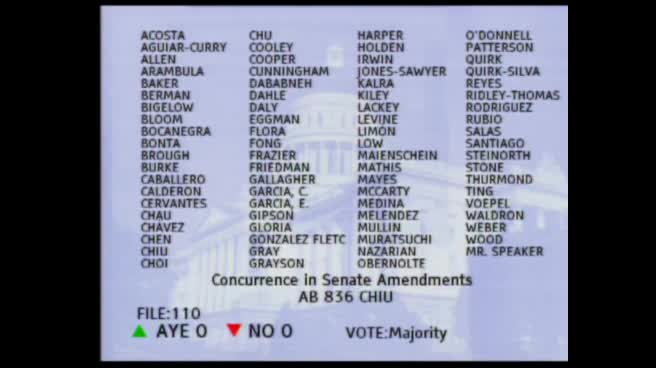 54SEC
Assembly Floor
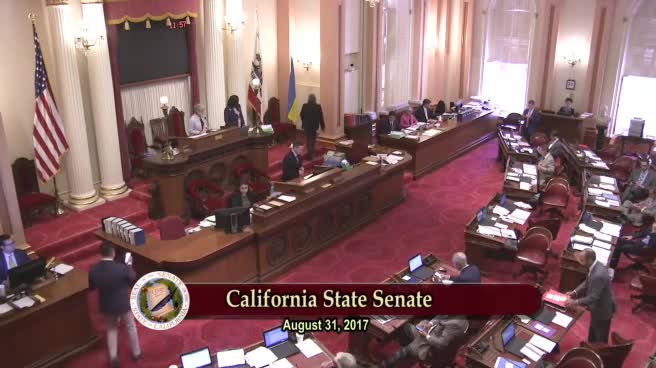 2MIN
Senate Floor
 3MIN
Senate Standing Committee on Judiciary
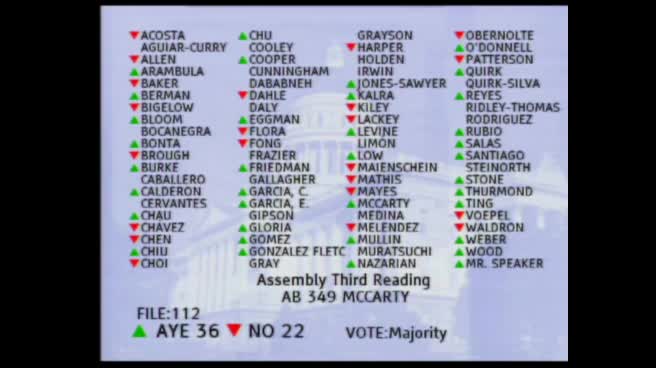 1MIN
Assembly Floor
 1MIN
Assembly Standing Committee on Appropriations
 2MIN
Assembly Standing Committee on Local Government
Bill Author

Bill Co-Author(s):