AB 554: Desalination: statewide goal.
- Session Year: 2017-2018
- House: Assembly
- Latest Version Date: 2017-03-27
Existing law, the Cobey-Porter Saline Water Conversion Law, states the policy of this state that desalination projects developed by or for public water entities be given the same opportunities for state assistance and funding as other water supply and reliability projects, and that desalination be consistent with all applicable environmental protection policies in the state. The law provides that is it the intention of the Legislature that the Department of Water Resources undertake to find economic and efficient methods of desalting saline water so that desalted water may be made available to help meet the growing water requirements of the state.
This bill would establish a goal to desalinate 300,000 acre-feet of drinking water per year by the year 2025 and 500,000 acre-feet of drinking water per year by the year 2030.
The Legislature finds and declares all of the following:
(a)The State of California is subject to periodic drought conditions and is currently in the fifth year of the most recent drought.
(b)The competing demands for traditional water resources have demonstrated that new drinking water supply options need to be added to support the California economy and the public health and safety of all Californians.
(c)There is an immediate need for safe, clean, and reliable new drinking water to provide local and regional public water suppliers all available water supply options to meet their local or regional drinking water supply needs.
(d)The Governors Water Action Plan encourages the state to maximize local and regional water supply development and calls for the streamlining of the permitting process for desalination and recycling of water.
(e)The policy of the State of California is to reduce its dependence on the Sacramento-San Joaquin Delta.
(f)Desalinated water is an important and reliable source for meeting total water demand. Continued and expanded production and distribution of desalinated water for beneficial and permitted uses can improve regional self-reliance by meeting a portion of future increased total drinking water demands.
SEC. 2.Section 12946.5 is added to the Water Code, to read:12946.5.This section establishes a statewide goal to desalinate 300,000 acre-feet of drinking water per year by the year 2025 and 500,000 acre-feet of drinking water per year by the year 2030.
REVISIONS: HeadingLine 2.The Legislature finds and declares all of the following:
(a)The State of California is subject to periodic drought conditions and is currently in the fifth year of the most recent drought.
(b)The competing demands for traditional water resources have demonstrated that new drinking water supply options need to be added to support the California economy and the public health and safety of all Californians.
(c)There is an immediate need for safe, clean, and reliable new drinking water to provide local and regional water suppliers all available water supply options to meet their local or regional drinking water supply needs.
(d)The Governors Water Action Plan encourages the state to maximize local and regional water supply development and calls for the streamlining of the permitting process for desalination and recycling of water.
(e)The policy of the State of California is to reduce its dependence on the Sacramento-San Joaquin Delta.
(f)Desalinated water is an important and reliable source for meeting total water demand. Continued and expanded production and distribution of desalinated water for beneficial and permitted uses can improve regional self-reliance by meeting a portion of future increased total drinking water demands.
SEC. 2.Section 12946.5 is added to the Water Code, to read:12946.5.This section establishes a statewide goal to desalinate 300,000 acre-feet of drinking water per year by the year 2025 and 500,000 acre-feet of drinking water per year by the year 2030.
|
Date
|
Status
|
|---|---|
| Feb 1, 2018 | From committee: Filed with the Chief Clerk pursuant to Joint Rule 56. |
| Jan 31, 2018 | Died pursuant to Art. IV, Sec. 10(c) of the Constitution. |
| Jun 20, 2017 | Coauthors revised. |
| May 26, 2017 | In committee: Held under submission. |
| Apr 26, 2017 | In committee: Set, first hearing. Referred to APPR. suspense file. |
| Mar 28, 2017 | Re-referred to Com. on APPR. |
| Mar 27, 2017 | Read second time and amended. |
| Mar 23, 2017 | From committee: Amend, and do pass as amended and re-refer to Com. on APPR. (Ayes 9. Noes 2.) (March 21). |
| Feb 27, 2017 | Referred to Com. on W.,P., & W. |
| Feb 15, 2017 | From printer. May be heard in committee March 17. |
| Feb 14, 2017 | Read first time. To print. |
|
Date
|
Description
|
Location
|
Votes
|
|
|---|---|---|---|---|
| Mar 21, 2017 | Do pass as amended and be re-referred to the Committee on [Appropriations] | Assembly Standing Committee on Water, Parks, and Wildlife |
Passed |
This list shows positions taken on this bill by organizations on the date displayed, which is linked to the original source.
Positions by individuals are not included.
|
Organization
|
Position
|
Date
|
|---|---|---|
| California Coastal Protection Network | ** Against | Mar 17, 2017 |
| California Coastkeeper Alliance | ** Against | Mar 17, 2017 |
| California League Of Conservation Voters | ** Against | Mar 17, 2017 |
| Clean Water Action | ** Against | Mar 17, 2017 |
| Clean Water Fund | ** Against | Mar 17, 2017 |
| Coastal Environmental Rights Foundation | ** Against | Mar 17, 2017 |
| Ecological Rights Foundation | ** Against | Mar 17, 2017 |
| Environmental Justice Coalition for Water | ** Against | Mar 17, 2017 |
| Heal The Bay | ** Against | Mar 17, 2017 |
| Los Angeles Waterkeeper | ** Against | Mar 17, 2017 |
| Natural Resources Defense Council | ** Against | Mar 17, 2017 |
| Orange County Coastkeeper & Inland Empire Waterkeeper | ** Against | Mar 17, 2017 |
| Poseidon Water | ** Support | Mar 17, 2017 |
| Residents for Responsible Desalination | ** Against | Mar 17, 2017 |
| San Diego Coastkeeper | ** Against | Mar 17, 2017 |
| Santa Barbara Channelkeeper | ** Against | Mar 17, 2017 |
| Seventh Generation Advisors | ** Against | Mar 17, 2017 |
| Southern California Watershed Alliance & Desal Response Group | ** Against | Mar 17, 2017 |
| Surfrider Foundation | ** Against | Mar 17, 2017 |
| Trust For Public Land, The | ** Against | Mar 17, 2017 |
| W., P., & W. | ** Against | Mar 17, 2017 |
| Wholly H2O | ** Against | Mar 17, 2017 |
Date of Hearing: April 26, 2017
ASSEMBLY COMMITTEE ON APPROPRIATIONS
Lorena Gonzalez Fletcher, Chair
ABPCA Bill Id:AB 554
Author:(Cunningham) – As Amended Ver:March 27, 2017
Policy Committee: | Water, Parks and Wildlife | Vote: | 9 - 2 |
Urgency: No State Mandated Local Program: No Reimbursable: No
SUMMARY:
This bill establishes a statewide goal to desalinate 300,000 acre-feet of water annually by 2025 and 500,000 acre-feet annually by 2030.
FISCAL EFFECT:
Potential future increased cost pressures in the tens of millions to hundreds of millions of dollars to fund desalination projects to meet the State's codified goals.
COMMENTS:
- Purpose. According to the author, desalination offers a drought-proof water supply that can be utilized almost anywhere in the State. The author further contends that that as our State continues to work through the historic drought we should pursue increases in water recycling, storage, as well as desalination projects.
- Background. Desalination refers to a wide range of processes that remove salts from water. Desalination can be performed on oceanwater, freshwater and brackish water. This bill would establish a desalination goal for drinking water, but does not identify the source of water to be desalinated. The most well established and largest source of desalinated water in the state is from brackish groundwater. The first commercial desalination plant in the state treated brackish groundwater. As of 2013, there were 23 brackish groundwater desalination plants in the state, with a combined annual capacity of 140,000 acre-feet.
Brackish water has a lower salinity than oceanwater, and as a result, requires less treatment. This lower treatment requirement translates to a lower cost per acre-foot, in the range of $1,200.
Desalinating oceanwater typically requires pulling in oceanwater through intake pipes using energy to push that oceanwater through membranes, which leaves behind equal parts fresh water, and a dense brine that is twice as salty as the ocean. Large oceanwater desalination facilities constructed or planned in the State have cost, or are estimated to cost, in the range of $1 billion. The fresh water produced from those facilities will likely cost in the range of $2,000 per acre-foot. About half of the cost of desalination comes from energy requirements
- State Actions on Desalination. The State Water Resources Control Board (SWRCB) adopted an amendment to its Water Quality Control Plan for Ocean Waters in May 2015. This amendment provides a uniform and consistent guideline for ocean water desalination facilities.
The administration, through the Water Action Plan, has taken an “all of the above” approach to improving water management in the state. The Water Action Plan lays out a multi-action agenda that includes conservation, stormwater capture, recycled water, and desalination.
Executive Order B-29-15, from April of 2015, directs permitting agencies to prioritize approval of infrastructure projects that increase local water supplies, including desalination plants. Additionally, existing law requires urban water management plans to consider the role of desalination in their water portfolios.
- Does State Funding follow State Goals? SWRCB, by resolution in January of 2013, set the goal of increasing the use of recycled water in the state over 2002 levels by at least 1,000,000 acre-feet per year by 2020, and by at least 2,000,000 acre-feet per year by 2030. That resolution built upon state law from 1991 that set the goals to recycle 700,000 acre-feet per year by 2000, and 1,000,000 acre-feet per year by 2010. As of 2012, there was an estimated 670,000 acre-feet of recycled water used annually.
Although we have fallen short of our statutory 2010 water recycling goal, it is interesting to note that while Proposition 50 (2002) only provided a portion of $100 million for which recycling projects were eligible, Proposition 1 (2014) provides $625 million for recycled water projects. When the Legislature and the Administration both took goal setting actions, increased funding followed.
While one cannot make an apple-to-apple comparison between water recycling and desalination projects, and many other factors were likely in play, it is probably safe to assume that if the State sets desalination goals in statute, the pressure to fund projects with state resources will follow.
Analysis Prepared by: Jennifer Galehouse / APPR. / (916) 319-2081
Date of Hearing: March 21, 2017
ASSEMBLY COMMITTEE ON WATER, PARKS, AND WILDLIFE
Eduardo Garcia, Chair
ABPCA Bill Id:AB 554 (
Author:Cunningham) – As Introduced Ver:February 14, 2017
SUBJECT: Desalination: statewide goal
SUMMARY: Establishes a statewide goal to desalinate 300,000 acre-feet of water a year by 2025 and 500,000 acre-feet a year by 2030. Specifically, this bill:
- Makes findings that water supplies are diminishing, that there is a need for greater certainty in access to high quality water, and that desalinated water can meet a portion of future water demands.
- Is keyed nonfiscal.
EXISTING LAW:
- Declares the state’s interest in desalination to assist in meeting future water needs. Finds that desalination is feasible to provide new water supplies from seawater, brackish water, and reclaimed water.
- Establishes a statewide goal to recycle 700,000 acre-feet of water annually by the year 2000, and 1,000,000 acre-feet by the year 2010.
- Requires all urban water suppliers to prepare and adopt an urban water management plan, and update them every five years. Among other requirements, urban water management plans must identify and quantify water resources, including desalination.
- Appropriates $50 million for oceanwater desalination and $784 million for groundwater cleanup.
FISCAL EFFECT: Unknown.
COMMENTS: This bill establishes a statewide goal to desalinate water.
- Authors Statement: Desalination offers a drought-proof water supply that can be utilized almost anywhere in the state. California is home to over 10 desalination facilities throughout our state. There are facilities from Monterey to Carlsbad, replenishing drought stricken communities with clean, drinkable water. In 2016, the recently opened Carlsbad Desalination Facility won an international award for technological and environmental achievement. The facility can provide up to 50 million gallons per day of safe, environmentally friendly, drinking water. The plant is also responsible for providing the region with up to 10% of its drinking water. As our state continues to work through this historic drought, there is an increased call for improvements in our water infrastructure. Those improvements must include an increase in water recycling, an increase in storage, as well as desalination projects. California is in need of an “all of the above” approach.
- Background: Status in the state of oceanwater desalination: The State Water Resources Control Board (State Water Board), in May 2015, adopted an amendment to its Water Quality Control Plan for Ocean Waters, providing for the first time, a uniform and consistent guideline for ocean water desalination facilities.
The factsheet on the amendment states: “There is broad agreement that the state’s water management system is currently unable to satisfactorily meet both ecological and human needs, too exposed to wet and dry climate cycles and natural disasters, and inadequate to handle additional pressures of future population growth and climate change. Solutions are complex and expensive, and they require the cooperation and sustained commitment of all Californians working together. To be sustainable, solutions must strike a balance between the need to provide for public health and safety, protect the environment and support a stable economy. Desalination is no exception.”
Desalinating oceanwater typically requires pulling in oceanwater through intake pipes using energy to push that oceanwater through membranes, which leaves behind equal parts fresh water, and a dense brine that is twice as salty as the ocean. The technology to desalinate oceanwater through this process was largely developed in the 1950’s, and first utilized on a large scale in the United States in 1977. Fundamentally, the technology has changed very little over the last 50 years, though there has been improvement in membrane efficiency and energy needs.
There is both an environmental and economic cost to desalinating oceanwater. The construction of a plant will have development impacts. The intake can have significant impact on sea life depending on its configuration. The source of power can have impacts on greenhouse gas emissions (GHG). How the brine is disposed of can have significant impacts on sea life and oceanwater quality.
The costs of traditional water sources are generally going up and are likely to continue to rise. Large oceanwater desalination facilities constructed or planned in California, have cost or are estimated to cost, in the range of $1 billion. The fresh water produced from those facilities will likely cost in the range of $2,000 per acre-foot. The cost for smaller facilities may be even greater. About half of the cost of desalination comes from energy requirements.
In comparison to the cost of oceanwater desalination, higher priced sources of urban fresh water, today, cost in the range of $1,000 per acre-foot. The cost of large scale stormwater capture projects have been estimated to be in the $600 per acre-foot range. The cost of leak repair has been estimated to be $400 per acre-foot and conserving an acre-foot of urban water is in the $100-200 range.
While there has been extensive evaluation of oceanwater desalination for decades, there has been limited adoption, due to cost and environmental considerations. There are just over a dozen facilities around the state that have been, will be, or may be constructed. At this time, there is approximately 55,000 annual acre-feet of oceanwater desalination in production, with an estimated additional 80,000 annual acre-feet likely to be desalinated in the next 5 to 10 years. The total projected volume of currently known ocean desalination sites, existing and under evaluation, are projected to be 380,000 acre-feet annually.
Not all desalination is of oceanwater: Desalination refers to a wide range of processes and refers only to the removal of salts from water. Desalination can be performed on all kinds of water including freshwater and brackish water, in addition to oceanwater. This bill would establish a desalination goal for drinking water, but does not identify the source of water to be desalinated. The most well established and largest source of desalinated water in the state is from brackish groundwater. The first commercial desalination plant in the state treated brackish groundwater. As of 2013, there were 23 brackish groundwater desalination plants in the state, with a combined annual capacity of 140,000 acre-feet.
Brackish water has a lower salinity than oceanwater, and as a result, requires less treatment. This lower treatment requirement translates to a lower cost per acre-foot, in the range of $1,200.
The state has set other water use goals: The State Water Board, by resolution, has set the goal of increasing the use of recycled water in the state over 2002 levels, by at least 1,000,000 acre-feet per year by 2020, and by at least 2,000,000 acre-feet per year by 2030. That resolution builds on law that set a goal to recycle 700,000 acre-feet per year by the year 2000, and 1,000,000 acre-feet per year by the year 2010. As of 2012, there was an estimated 670,000 acre-feet of recycled water used annually.
Existing law requires that urban water per capita use, be reduced by 20 percent over 2011 levels by 2020. In 2015, largely in response to drought, urban water use was reduced by just short of 25%.
The state has taken steps to advance desalination: The administration, through the Water Action Plan, has taken an “all of the above” approach to improving water management in the state. The Water Action Plan lays out a multi-action agenda that includes conservation, stormwater capture, recycled water, and desalination. The Water Action Plan coordinates and directs the states approach to water management.
Executive Order B-29-15, from April of 2015, directs permitting agencies to prioritize approval of infrastructure projects that increase local water supplies. Desalination plants are included in those infrastructure projects.
Existing law requires urban water suppliers, through urban water management plans, to consider the role of desalination in their water portfolio.
The Legislature appropriated $50 million of Proposition 50 (2002) for oceanwater and brackish water desalination. The Legislature has appropriated $50 million, to date, out of a total of $100 million of Proposition 1 bond funds directed toward oceanwater desalination. Additionally, some of the appropriated $784 million of Proposition 1 bond funds for ground water cleanup, could be used for brackish water desalination.
Right level of Emphasis: While the state has clearly taken an active role in promoting desalination, it has not gone further than making it a viable option. The determination of the viability of that option has, to date, been left up to local decision making. The role that desalination will play is inherently a local decision. The cost and benefit of a desalination project can best be evaluated in comparison to the relative costs and benefits of other water supply projects, such as conservation, stormwater capture, and recycling.
The ultimate effect of this legislation is to drive greater state funding toward desalination.
The committee is being asked to consider if desalination should be elevated to a higher funding priority through the establishment of a statewide goal. This could ultimately serve to reduce prioritization of, and spending on, other options such as conservation, efficiency, storage, stormwater capture, and recycled water.
Last year, the committee heard and amended AB 1925 (Chang), at the time AB 1925 was heard it was identical legislation to this. The amendments required the Department of Water Resources (DWR) to establish a statewide desalination goal. That goal was to be pursued as part of a comprehensive water plan that fully evaluated other options.
Suggested technical amendments:
On Page 2, Line 9, strike “local and regional water suppliers” and replace with “public water suppliers”
- Prior and Related Legislation:
- AB 1925 (Chang), 2016, would have required the DWR to establish a statewide desalination goal as part of a comprehensive water plan that fully evaluated other options. That bill was held in Assembly Appropriations committee.
- AB 2717 (Hertzberg), Chapter 957, Statues of 2002, convenes the California Water Desalination Task Force, to look into potential opportunities and impediments for using oceanwater and brackish water desalination.
- AB 541 (Ducheny), Chapter 833, Statues of 1997, establishes a statewide recycled water goal.
- SB7 x7 (Steinberg), Chapter 4, Statues of 2009, establishes a 20 percent urban water conservation over 2011 levels, by 2020.
- AB 1471 (Rendon), Chapter 188, Statutes of 2014, placed Proposition 1, a $7.545 billion general obligation bond for water-related projects and programs on the November 4, 2014. It passed with 67 percent of the vote.
- Supporting Arguments: The State Water Board’s current plan recognizes that seawater desalination is an important water supply that should be part of a balanced water supply portfolio. This bill would serve as a catalyst for much needed pro-desalination policies throughout the state. The State Water Action Plan calls for the development of new local water supplies, including seawater desalination that enhance regional water supply self-reliance. The plan further sets a goal of streamlining the permitting process to ensure these new supplies can come on line in a timely manner as current regulation makes it challenging. The California Ocean Plan acknowledges seawater desalination as a beneficial use. Our freshwater resources will continue to dwindle. That is why we need to look at creating new drought-proof and locally controlled sources of water. The state is counting on desalination to be a part of a balanced water portfolio to help meet future water supply and environmental needs.
- Opposing Arguments: Given the cost to the ratepayer, GHG emissions, and marine life impacts, seawater desalination should be an option of last resort and used cautiously only after water conservation, stormwater capture, and water recycling have been fully considered. Resorting to seawater desalination is equivalent to admitting that all other options have been exhausted, and that desalination is necessary regardless of the extreme costs to the ratepayer and the environment. Setting a goal to strive for this last resort is reckless. California has only begun to tap the potential for conservation, stormwater capture and water recycling. These more sustainable and affordable water sources should be California’s priorities. Instead of prioritizing resources and attention on local, resilient water supply alternatives, this bill would instead divert resources to the most expensive source of water on earth.
REGISTERED SUPPORT / OPPOSITION:
Support:
Poseidon Water
Opposition:
California Coastkeeper Alliance
California Coastal Protection Network
California League of Conservation Voters
Clean Water Action/Clean Water Fund
Coastal Environmental Rights Foundation
Ecological Rights Foundation
Environmental Justice Coalition for Water
Heal the Bay
Los Angeles Waterkeeper
Natural Resources Defense Council
Orange County Coastkeeper & Inland Empire Waterkeeper
Residents for Responsible Desalination
Santa Barbara Channelkeeper
San Diego Coastkeeper
Seventh Generation Advisors
Southern California Watershed Alliance & Desal Response Group
Surfrider Foundation
Trust for Public Land, The
Wholly H2O
Analysis Prepared by: Ryan Ojakian / W., P., & W. /
Discussed in Hearing
 1H
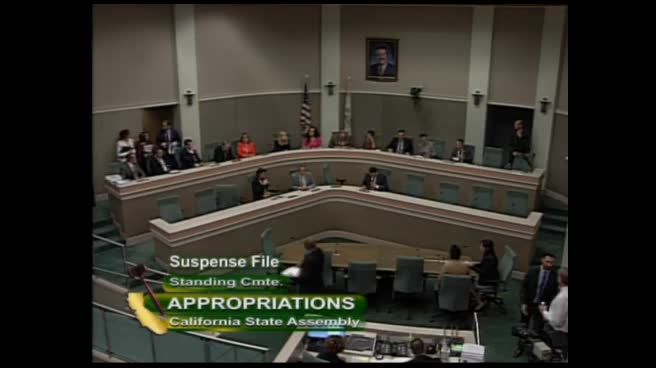
Assembly Standing Committee on Appropriations
 40MIN
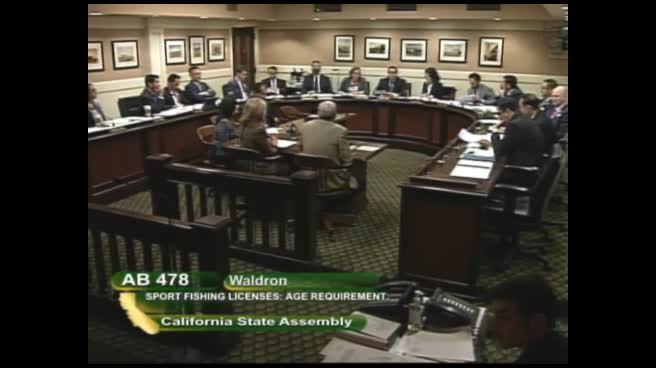
Assembly Standing Committee on Water, Parks, and Wildlife
Bill Author

Bill Co-Author(s):





