AB 562: California State Auditor: interference.
- Session Year: 2017-2018
- House: Assembly
- Latest Version Date: 2017-10-02
Existing law establishes the California State Auditors Office, headed by the California State Auditor and under the direction of the Milton Marks Little Hoover Commission on California State Government Organization and Economy, with specified duties that include, among others, conducting financial and performance audits as directed by statute. Existing law also requires the California State Auditor to conduct audits requested by the Legislatures Joint Legislative Audit Committee relating to a state or local governmental agency or other publicly created entity. Existing law requires any state or local entity or agency to permit the California State Auditor to access specified documents, and makes it a misdemeanor for any person to fail or refuse to permit access, examination, and reproduction of these documents.
This bill would specify that a state agency includes a commission for purposes of the California State Auditors authorization to access specified documents of a state agency. The bill would additionally prohibit any person, with intent to deceive or defraud, from obstructing the California State Auditor in the performance of his or her official duties relating to an audit required by statute or requested by the Joint Legislative Audit Committee. The bill would make a violation of these provisions punishable by a fine not to exceed $5,000.
Existing law establishes the California State Auditors Office, headed by the California State Auditor and under the direction of the Milton Marks Little Hoover Commission on California State Government Organization and Economy, with specified duties that include, among others, conducting financial and performance audits as directed by statute. Existing law also requires the California State Auditor to conduct audits requested by the Legislatures Joint Legislative Audit Committee relating to a state or local governmental agency or other publicly created entity. Existing law requires any state or local entity or agency to permit the California State Auditor to access specified documents, and makes it a misdemeanor for any person to fail or refuse to permit access, examination, and reproduction of these documents.
This bill would make it a crime for specify, that a state agency includes a commission for purposes of the California State Auditors authorization to access specified documents of a state agency. The bill would additionally prohibit any person, with intent to deceive or defraud, to interfere, obstruct, or impede from obstructing the California State Auditor in the performance of his or her official duties relating to an audit required by statute or requested by the Joint Legislative Audit Committee. The bill would make each violation of this crime a violation of these provisions punishable by a fine not to exceed $10,000, or by imprisonment in the county jail not exceeding one year, or by both that fine and imprisonment. $5,000.
The California Constitution requires the state to reimburse local agencies and school districts for certain costs mandated by the state. Statutory provisions establish procedures for making that reimbursement.This bill would provide that no reimbursement is required by this act for a specified reason.Existing law establishes the California State Auditors Office, headed by the California State Auditor and under the direction of the Milton Marks Little Hoover Commission on California State Government Organization and Economy, with specified duties that include, among others, conducting financial and performance audits as directed by statute. Existing law also requires the California State Auditor to conduct audits requested by the Legislatures Joint Legislative Audit Committee relating to a state or local governmental agency or other publicly created entity. Existing law requires any state or local entity or agency to permit the California State Auditor to access specified documents, and makes it a misdemeanor for any person to fail or refuse to permit access, examination, and reproduction of these documents.
This bill would make it a crime for any person, with intent to deceive or defraud, to interfere, obstruct, or impede the California State Auditor in the performance of his or her official duties relating to an audit required by statute or requested by the Joint Legislative Audit Committee. The bill would make each violation of this crime punishable by a fine not to exceed $10,000, or by imprisonment in the county jail not exceeding one year, or by both that fine and imprisonment.
The California Constitution requires the state to reimburse local agencies and school districts for certain costs mandated by the state. Statutory provisions establish procedures for making that reimbursement.
This bill would provide that no reimbursement is required by this act for a specified reason.
Existing law establishes the Commission on Correctional Peace Officer Standards and Training within the Department of Corrections and Rehabilitation and requires the commission to develop standards and training for correctional peace officers.This bill would require the commission to establish an Internet Web site to include meeting minutes, agendas, and supporting documents. The bill would require the commission to transmit live video and audio of all of its meetings via the Internet Web site. The bill would require the commission to include an archive of past meeting minutes, agendas, and supporting documents and the video and audio of past meetings. The bill would require the commission to include documents on the Internet Web site to provide employees and the public with greater access to professional development materials.Existing law establishes the Commission on Correctional Peace Officer Standards and Training within the Department of Corrections and Rehabilitation and requires the commission to develop standards and training for correctional peace officers.
This bill would require the commission to establish an Internet Web site to include meeting minutes, agendas, and supporting documents. The bill would require the commission to transmit live video and audio of all of its meetings via the Internet Web site. The bill would require the commission to include an archive of past meeting minutes, agendas, and supporting documents and the video and audio of past meetings. The bill would require the commission to include documents on the Internet Web site to provide employees and the public with greater access to professional development materials.
Under existing law, a crime or public offense is an act committed or omitted in violation of a law forbidding or commanding it, and to which is annexed, upon conviction, the punishment of death, imprisonment, fine, removal from office, or disqualification to hold and enjoy any office of honor, trust, or profit in this State. Under existing law, crimes and public offenses are either felonies, misdemeanors, or infractions.This bill would state the intent of the Legislature to enact legislation relating to the punishment of crime.Under existing law, a crime or public offense is an act committed or omitted in violation of a law forbidding or commanding it, and to which is annexed, upon conviction, the punishment of death, imprisonment, fine, removal from office, or disqualification to hold and enjoy any office of honor, trust, or profit in this State. Under existing law, crimes and public offenses are either felonies, misdemeanors, or infractions.
This bill would state the intent of the Legislature to enact legislation relating to the punishment of crime.
(a)Notwithstanding any other provision of law, the California State Auditor during regular business hours shall have access to and authority to examine and reproduce, any and all books, accounts, reports, vouchers, correspondence files, and all other records, bank accounts, and money or other property, of any agency of the state, including a commission, whether created by the California Constitution or otherwise, any local governmental entity, including any city, county, and school or special district, and any publicly created entity, for any audit or investigation. Any officer or employee of any agency or entity having these records or property in his or her possession, under his or her control, or otherwise having access to them, shall permit access to, and examination and reproduction thereof, upon the request of the California State Auditor or his or her authorized representative.
(b)For the purposes of access to and examination and reproduction of the records and property described in subdivision (a), an authorized representative of the California State Auditor is an employee or officer of the state or local governmental agency or publicly created entity involved and is subject to any limitations on release of the information as may apply to an employee or officer of the state or local governmental agency or publicly created entity. For the purpose of conducting any audit or investigation, the California State Auditor or his or her authorized representative shall have access to the records and property of any public or private entity or person subject to review or regulation by the public agency or public entity being audited or investigated to the same extent that employees or officers of that agency or public entity have access. No provision of law providing for the confidentiality of any records or property shall prevent disclosure pursuant to subdivision (a), unless the provision specifically refers to and precludes access and examination and reproduction pursuant to subdivision (a). Providing confidential information to the California State Auditor pursuant to this section, including, but not limited to, confidential information that is subject to a privilege, shall not constitute a waiver of that privilege. This subdivision does not apply to records compiled pursuant to Part 1 (commencing with Section 8900) or Part 2 (commencing with Section 10200) of Division 2.
(c)Any officer or person who fails or refuses to permit access and examination and reproduction, as required by this section, is guilty of a misdemeanor.
(d)For purposes of this section confidentiality of records or property means that the record or property may lawfully be kept confidential as a result of a statutory or common law privilege or any other provision of law.
SEC. 2.Section 8545.6 is added to the Government Code, to read:8545.6.Any officer, employee, or person who, with intent to deceive or defraud, commits obstruction of the California State Auditor in the performance of his or her official duties relating to an audit required by statute or requested by the Joint Legislative Audit Committee shall be subject to a fine not to exceed five thousand dollars ($5,000).
(a)Notwithstanding any other provision of law, the California State Auditor during regular business hours shall have access to and authority to examine and reproduce, any and all books, accounts, reports, vouchers, correspondence files, and all other records, bank accounts, and money or other property, of any agency of the state, including a commission, whether created by the California Constitution or otherwise, any local governmental entity, including any city, county, and school or special district, and any publicly created entity, for any audit or investigation. Any officer or employee of any agency or entity having these records or property in his or her possession, under his or her control, or otherwise having access to them, shall permit access to, and examination and reproduction thereof, upon the request of the California State Auditor or his or her authorized representative.
(b)For the purposes of access to and examination and reproduction of the records and property described in subdivision (a), an authorized representative of the California State Auditor is an employee or officer of the state or local governmental agency or publicly created entity involved and is subject to any limitations on release of the information as may apply to an employee or officer of the state or local governmental agency or publicly created entity. For the purpose of conducting any audit or investigation, the California State Auditor or his or her authorized representative shall have access to the records and property of any public or private entity or person subject to review or regulation by the public agency or public entity being audited or investigated to the same extent that employees or officers of that agency or public entity have access. No provision of law providing for the confidentiality of any records or property shall prevent disclosure pursuant to subdivision (a), unless the provision specifically refers to and precludes access and examination and reproduction pursuant to subdivision (a). Providing confidential information to the California State Auditor pursuant to this section, including, but not limited to, confidential information that is subject to a privilege, shall not constitute a waiver of that privilege. This subdivision does not apply to records compiled pursuant to Part 1 (commencing with Section 8900) or Part 2 (commencing with Section 10200) of Division 2.
(c)Any officer or person who fails or refuses to permit access and examination and reproduction, as required by this section, is guilty of a misdemeanor.
(d)For purposes of this section confidentiality of records or property means that the record or property may lawfully be kept confidential as a result of a statutory or common law privilege or any other provision of law.
SECTION 1.SEC. 2.Section 8545.6 is added to the Government Code, to read:8545.6.Any officer, employee, or person who, with intent to deceive or defraud, interferes, obstructs, or impedes commits obstruction of the California State Auditor in the performance of his or her official duties relating to an audit required by statute or requested by the Joint Legislative Audit Committee shall be guilty of a misdemeanor. Each act in violation of this section shall be punished by a fine not to exceed ten thousand dollars ($10,000), or by imprisonment in the county jail not exceeding one year, or by both that fine and imprisonment. subject to a fine not to exceed five thousand dollars ($5,000).
SEC. 2.No reimbursement is required by this act pursuant to Section 6 of Article XIIIB of the California Constitution because the only costs that may be incurred by a local agency or school district will be incurred because this act creates a new crime or infraction, eliminates a crime or infraction, or changes the penalty for a crime or infraction, within the meaning of Section 17556 of the Government Code, or changes the definition of a crime within the meaning of Section 6 of Article XIIIB of the California Constitution.Any person who, with intent to deceive or defraud, interferes, obstructs, or impedes the California State Auditor in the performance of his or her official duties relating to an audit required by statute or requested by the Joint Legislative Audit Committee shall be guilty of a misdemeanor. Each act in violation of this section shall be punished by a fine not to exceed ten thousand dollars ($10,000), or by imprisonment in the county jail not exceeding one year, or by both that fine and imprisonment.
SEC. 2.No reimbursement is required by this act pursuant to Section 6 of Article XIIIB of the California Constitution because the only costs that may be incurred by a local agency or school district will be incurred because this act creates a new crime or infraction, eliminates a crime or infraction, or changes the penalty for a crime or infraction, within the meaning of Section 17556 of the Government Code, or changes the definition of a crime within the meaning of Section 6 of Article XIIIB of the California Constitution.
SECTION 1.Section 13605 is added to the Penal Code, to read:13605.(a)To promote transparency and accountability, the commission shall establish and maintain an Internet Web site to include the following:(1)Meeting minutes, agendas, and related supporting documents.(2)An archive of past meeting minutes, agendas, and related supporting documents.(3)Documents to provide employees and the public with greater access to professional development materials.(b)The commission shall transmit live video and audio of all of its meetings via the Internet Web site, and shall also include an archive of the video and audio of those meetings on its Internet Web site.(a)To promote transparency and accountability, the commission shall establish and maintain an Internet Web site to include the following:
(1)Meeting minutes, agendas, and related supporting documents.
(2)An archive of past meeting minutes, agendas, and related supporting documents.
(3)Documents to provide employees and the public with greater access to professional development materials.
(b)The commission shall transmit live video and audio of all of its meetings via the Internet Web site, and shall also include an archive of the video and audio of those meetings on its Internet Web site.
SECTION 1.It is the intent of the Legislature to enact legislation relating to the punishment of crime.It is the intent of the Legislature to enact legislation relating to the punishment of crime.
|
Date
|
Status
|
|---|---|
| Oct 2, 2017 | Chaptered by Secretary of State - Chapter 406, Statutes of 2017. |
| Oct 2, 2017 | Approved by the Governor. |
| Sep 19, 2017 | Enrolled and presented to the Governor at 3 p.m. |
| Sep 11, 2017 | Senate amendments concurred in. To Engrossing and Enrolling. |
| Sep 6, 2017 | From committee: That the Senate amendments be concurred in. (Ayes 6. Noes 0.) (September 6). |
| Sep 1, 2017 | Re-referred to Com. on A. & A.R. pursuant to Assembly Rule 77.2. |
| Aug 31, 2017 | In Assembly. Concurrence in Senate amendments pending. May be considered on or after September 2 pursuant to Assembly Rule 77. |
| Aug 31, 2017 | Read third time. Passed. Ordered to the Assembly. |
| Aug 22, 2017 | Read second time. Ordered to third reading. |
| Aug 21, 2017 | From committee: Be ordered to second reading pursuant to Senate Rule 28.8. |
| Jul 18, 2017 | Read second time and amended. Re-referred to Com. on APPR. |
| Jul 17, 2017 | From committee: Amend, and do pass as amended and re-refer to Com. on APPR. (Ayes 5. Noes 1.) (July 11). |
| Jun 27, 2017 | In committee: Hearing postponed by committee. |
| Jun 20, 2017 | In committee: Set, first hearing. Hearing canceled at the request of author. |
| Jun 1, 2017 | From committee chair, with author's amendments: Amend, and re-refer to committee. Read second time, amended, and re-referred to Com. on PUB. S. |
| May 24, 2017 | Referred to Com. on PUB. S. |
| May 11, 2017 | In Senate. Read first time. To Com. on RLS. for assignment. |
| May 11, 2017 | Read third time. Passed. Ordered to the Senate. (Ayes 77. Noes 0. Page 1487.) |
| May 4, 2017 | Read second time. Ordered to Consent Calendar. |
| May 3, 2017 | From committee: Do pass. To Consent Calendar. (Ayes 16. Noes 0.) (May 3). |
| Apr 24, 2017 | From committee: Do pass and re-refer to Com. on APPR. with recommendation: To Consent Calendar. (Ayes 7. Noes 0.) (April 18). Re-referred to Com. on APPR. |
| Mar 27, 2017 | Re-referred to Com. on PUB. S. |
| Mar 23, 2017 | Referred to Com. on PUB. S. |
| Feb 15, 2017 | From printer. May be heard in committee March 17. |
| Feb 14, 2017 | Read first time. To print. |
|
Date
|
Description
|
Location
|
Votes
|
|
|---|---|---|---|---|
| Sep 11, 2017 | AB 562 MURATSUCHI Concurrence in Senate Amendments | Assembly Floor |
Passed |
|
| Sep 6, 2017 | With recommendation: That Senate amendments be concurred in. | Assembly Standing Committee on Accountability and Administrative Review |
Passed |
|
| Aug 31, 2017 | Assembly 3rd Reading AB562 Muratsuchi et al. By Hernandez | Senate Floor |
Passed |
|
| Jul 11, 2017 | Do pass as amended, but first amend, and re-refer to the Committee on [Appropriations] | Senate Standing Committee on Public Safety |
Passed |
|
| May 11, 2017 | AB 562 MURATSUCHI Consent Calendar Second Day Regular Session | Assembly Floor |
Passed |
|
| May 3, 2017 | Do pass. To Consent Calendar. | Assembly Standing Committee on Appropriations |
Passed |
|
| Apr 18, 2017 | Do pass as amended, and be re-referred to the Committee on [Appropriations] with recommendation: To Consent Calendar | Assembly Standing Committee on Public Safety |
Passed |
This list shows positions taken on this bill by organizations on the date displayed, which is linked to the original source.
Positions by individuals are not included.
|
Organization
|
Position
|
Date
|
|---|---|---|
| California Public Defenders Association | ** Support | Apr 17, 2017 |
CONCURRENCE IN SENATE AMENDMENTS
CSA2 Bill Id:AB 562
Author:(Muratsuchi, et al.)
As Amended Ver:July 18, 2017
Majority vote
ASSEMBLY: | 77-0 | (May 11, 2017) | SENATE: | 36-0 | (August 31, 2017) |
COMMITTEE VOTE: | 6-0 | (September 6, 2017) | RECOMMENDATION: | concur |
(A. & A.R.)
Original Committee Reference: A. & A.R.
SUMMARY: Subjects any officer, employee, or person who commits obstruction of the California State Auditor (Auditor), in the performance of the duties related to an audit, to a fine of as much as $5,000.
The Senate amendments delete the Assembly version of this bill, and instead:
- Subject anyone who commits obstruction of the Auditor to a fine if the person does so with the intent to deceive or defraud.
- Specify that the penalty for obstruction applies to audits required by statute or assigned by the Joint Legislative Audit Committee (JLAC).
- Specify that the Auditor has access to records of commissions.
EXISTING LAW:
- Provides the Auditor with access to state and local entities' records and specifies that those who refuse access to records are guilty of a misdemeanor.
- Allows the Auditor to subpoena witnesses and records.
- Provides that those who alter a certified copy or knowingly furnish an altered certified copy of an official state or local government record are guilty of a misdemeanor.
FISCAL EFFECT: According to the Senate Appropriations Committee, pursuant to Senate Rule 28.8, negligible state costs.
COMMENTS: This bill subjects a person who, with the intent to deceive or defraud, commits obstruction of the Auditor in the performance of the Auditor's official duties related to an audit to a maximum fine of $5,000.
According to the author, this bill is in response to concerns about the Auditor's access to staff and records during audit work. The author cited an April 25, 2017 audit of the University of California (UC). That audit, The University of California Office of the President: It Failed to Disclose Tens of Millions in Surplus Funds, and Its Budget Practices Are Misleading, was conducted by the Auditor at the request of JLAC.
Specifically, the audit cited concerns with UC during the Auditor's review, stating:
Correspondence between the Office of the President and the campuses shows that the Office of the President inappropriately reviewed campuses' survey responses, which resulted in campuses making changes to those responses prior to submitting them to us—campus statements that were critical of the Office of the President had been removed or substantially revised, and negative ratings had been changed to be more positive.
Current law allows the Auditor to subpoena witnesses and records. It also provides the Auditor, when conducting an audit or investigation, with access to state entities' records. Additionally, current law prohibits knowingly providing false government records and those who refuse access or who provide false records could be found guilty of a misdemeanor.
While this bill sets a new fine when someone "commits obstruction" during an audit, it might be worth considering if such conduct could already be prosecuted under current law.
According to the author, this bill enhances a gap in current law. The author states:
The current law does not go far enough in ensuring the integrity of our audits. AB 562 strengthens the Auditor's ability to conduct an audit, and gives the office an important tool needed to conduct legislatively approved audits. Put simply, this is a good government bill that will help us in the State Legislature, through the office of the State Auditor, to conduct oversight, and ensure that our government at all levels operates efficiently and transparently.
The Auditor supports this bill and there is no opposition on file.
Analysis Prepared by: Scott Herbstman / A. & A.R. / (916) 319-3600 FN: 0001982
CONCURRENCE IN SENATE AMENDMENTS
CSA1 Bill Id:AB 562
Author:(Muratsuchi, et al.)
As Amended Ver:July 18, 2017
Majority vote
ASSEMBLY: |
| (May 11, 2017) | SENATE: | 36-0 | (August 31, 2017) |
Vote not relevant.
Original Committee Reference: PUB. S.
SUMMARY: Subjects any officer, employee, or person who commits obstruction of the California State Auditor (Auditor), in the performance of the duties related to an audit, to a fine of as much as $5,000.
The Senate amendments delete the Assembly version of this bill, and instead:
- Subject anyone who commits obstruction of the Auditor to a fine if the person does so with the intent to deceive or defraud.
- Specify that the penalty for obstruction applies to audits required by statute or assigned by the Joint Legislative Audit Committee (JLAC).
- Specify that the Auditor has access to records of commissions.
EXISTING LAW:
- Provides the Auditor with access to state and local entities' records and specifies that those who refuse access to records are guilty of a misdemeanor.
- Allows the Auditor to subpoena witnesses and records.
- Provides that those who alter a certified copy or knowingly furnish an altered certified copy of an official state or local government record are guilty of a misdemeanor.
FISCAL EFFECT: According to the Senate Appropriations Committee, pursuant to Senate Rule 28.8, negligible state costs.
COMMENTS: This bill subjects a person who, with the intent to deceive or defraud, commits obstruction of the Auditor in the performance of the Auditor's official duties related to an audit to a maximum fine of $5,000.
According to the author, this bill is in response to concerns about the Auditor's access to staff and records during audit work. The author cited an April 25, 2017 audit of the University of California (UC). That audit, The University of California Office of the President: It Failed to Disclose Tens of Millions in Surplus Funds, and Its Budget Practices Are Misleading, was conducted by the Auditor at the request of JLAC.
Specifically, the audit cited concerns with UC during the Auditor's review, stating:
"Correspondence between the Office of the President and the campuses shows that the Office of the President inappropriately reviewed campuses’ survey responses, which resulted in campuses making changes to those responses prior to submitting them to us—campus statements that were critical of the Office of the President had been removed or substantially revised, and negative ratings had been changed to be more positive."
Current law allows the Auditor to subpoena witnesses and records. It also provides the Auditor, when conducting an audit or investigation, with access to state entities' records. Additionally, current law prohibits knowingly providing false government records and those who refuse access or who provide false records could be found guilty of a misdemeanor.
While this bill sets a new fine when someone "commits obstruction" during an audit, it might be worth considering if such conduct could already be prosecuted under current law.
According to the author, this bill enhances a gap in current law. The author states:
The current law does not go far enough in ensuring the integrity of our audits. AB 562 strengthens the Auditor's ability to conduct an audit, and gives the office an important tool needed to conduct legislatively approved audits. Put simply, this is a good government bill that will help us in the State Legislature, through the office of the State Auditor, to conduct oversight, and ensure that our government at all levels operates efficiently and transparently.
The Auditor supports this bill and there is no opposition on file.
Analysis Prepared by: Scott N. Herbstman / A. & A.R. / (916) 319-3600 FN: 0001601
Office of Senate Floor Analyses (916) 651-1520 Fax: (916) 327-4478 | AB |
THIRD READING
Bill No: AB 562
:
SENATE PUBLIC SAFETY COMMITTEE: 5-1, 7/11/17
AYES: Skinner, Anderson, Mitchell, Stone, Wiener
NOES: Jackson
NO VOTE RECORDED: Bradford
SENATE APPROPRIATIONS COMMITTEE: Senate Rule 28.8
ASSEMBLY FLOOR: 77-0, 5/11/17 (Consent) - See last page for vote
DIGEST:
This bill provides that any person who, with intent to deceive or defraud, obstructs the California State Auditor in the performance of his or her official duties, as specified, shall be subject to a fine not to exceed $5,000.
Existing law:
- Establishes the California State Auditor under the direction of the Milton Marks "Little Hoover" Commission on California State Government Organization and Economy and provides that in order to be free of organizational impairments to independence, the office shall be independent of the executive branch and legislative control. (Gov. Code, § 8543.)
- Requires the California State Auditor to conduct audits requested by the Legislature’s Joint Legislative Audit Committee relating to a state or local governmental agency or other publicly created entity. (Gov. Code, § 8546.1.)
- Authorizes the California State Auditor to issue subpoenas and the superior court has jurisdiction to compel the attendance of witnesses, the making of oral or written sworn statements, and the production of papers, books, accounts, and documents, as required by any such subpoena. (Gov. Code, § 8545.5.)
- Requires immediately upon completion of an audit, the California State Auditor to transmit a copy of the audit report to the commission. Not later than 24 hours after delivery to the commission, the California State Auditor shall deliver the report to the Legislature, appropriate committees or subcommittees of the Legislature, and the Governor. Once transmitted to these parties, the report shall be made available to the public. (Gov. Code, § 8546.1.)
- Requires the California State Auditor to request that any state agency, as defined, any local governmental agency, including any city, county, city and county, school, or special district, or any publicly created entity, that is the subject of an audit or investigation, to provide updates on its progress in implementing the recommendations made by the California State Auditor, at intervals prescribed by the California State Auditor. (Gov. Code, § 8546.2, subd. (a).)
- States, notwithstanding any other provision of law, every contract involving the expenditure of public funds in excess of $10,000 entered into by any state agency, board, commission, or department or by any other public entity, including a city, county, city and county, or district, shall be subject to the examination and audit of the California State Auditor, at the request of the public entity or as part of any audit of the public entity, for a period of three years after final payment under the contract. (Gov. Code, § 8546.7.)
- States that notwithstanding any other provision of law, the California State Auditor during regular business hours shall have access to and authority to examine and reproduce, any and all books, accounts, reports, vouchers, correspondence files, and all other records, bank accounts, and money or other property, of any agency of the state, whether created by the California Constitution or otherwise, any local governmental entity, including any city, county, and school or special district, and any publicly created entity, for any audit or investigation. (Gov. Code, § 8545.2, subd. (a).)
- Provides that any officer or employee of any agency or entity having these records or property in his or her possession, under his or her control, or otherwise having access to them, shall permit access to, and examination and reproduction thereof, upon the request of the California State Auditor or his or her authorized representative. (Id.)
This bill:
- States that any person who, with intent to deceive or defraud, commits obstruction of the California State Auditor in the performance of his or her official duties relating to an audit required by statute or requested by the Joint Legislative Audit Committee shall be subject to a fine not to exceed $5,000.
- Specifies that a state agency includes a commission for purposes of the California State Auditor’s authorization to access specified documents of a state agency.
FISCAL EFFECT: Appropriation: Fiscal Com.: Local:
None received
OPPOSITION: (Verified 8/21/17)
None received
ASSEMBLY FLOOR: 77-0, 5/11/17
AYES: Acosta, Aguiar-Curry, Travis Allen, Arambula, Baker, Berman, Bigelow, Bloom, Bocanegra, Bonta, Brough, Burke, Caballero, Calderon, Cervantes, Chau, Chávez, Chen, Chiu, Choi, Chu, Cooley, Cooper, Cunningham, Dababneh, Daly, Eggman, Flora, Fong, Frazier, Friedman, Gallagher, Cristina Garcia, Eduardo Garcia, Gipson, Gloria, Gomez, Gonzalez Fletcher, Gray, Grayson, Harper, Holden, Irwin, Jones-Sawyer, Kalra, Kiley, Lackey, Levine, Limón, Low, Maienschein, Mathis, Mayes, McCarty, Medina, Melendez, Mullin, Muratsuchi, Nazarian, Obernolte, Quirk, Quirk-Silva, Reyes, Ridley-Thomas, Rodriguez, Rubio, Salas, Santiago, Steinorth, Mark Stone, Thurmond,
Ting, Voepel, Waldron, Weber, Wood, Rendon
NO VOTE RECORDED: Dahle, O'Donnell, Patterson
8/22/17 16:44:32
SENATE COMMITTEE ON PUBLIC SAFETY
Senator Nancy Skinner, Chair
2017 - 2018 Regular
Bill No: AB 562 Hearing Date: July 11, 2017
Author: | Muratsuchi | ||
Version: | June 1, 2017 | ||
Urgency: | No | Fiscal: | Yes |
Consultant: | SC | ||
Subject: California State Auditor: Interference
HISTORY
Source: Author
Prior Legislation: SB 1395 (Rubio), Ch. 281, Stats. 2012
AB 187 (Lara) Ch. 451, Stats. 2011
SB 1452 (Speier) Ch. 452, Stats. 2006
SB 1437 (Speier) Ch. 251, Stats. 2004
SB 37 (Maddy) Ch. 12, Stats. 1993
Support: Unknown
Opposition: None known
Assembly Floor Vote: Not relevant
PURPOSE
This purpose of this bill is to create a misdemeanor for interfering, obstructing, or impeding the California State Auditor in the performance of his or her official duties relating to an audit.
Existing law establishes the California State Auditor under the direction of the Milton Marks "Little Hoover" Commission on California State Government Organization and Economy and provides that in order to be free of organizational impairments to independence, the office shall be independent of the executive branch and legislative control. (Gov. Code, § 8543.)
Existing law requires the California State Auditor to conduct audits requested by the Legislature’s Joint Legislative Audit Committee relating to a state or local governmental agency or other publicly created entity. (Gov. Code, § 8546.1.)
Existing law authorizes the California State Auditor to issue subpoenas and the superior court has jurisdiction to compel the attendance of witnesses, the making of oral or written sworn statements, and the production of papers, books, accounts, and documents, as required by any such subpoena. (Gov. Code, § 8545.5.)
Existing law requires immediately upon completion of an audit, the California State Auditor to transmit a copy of the audit report to the commission. Not later than 24 hours after delivery to the commission, the California State Auditor shall deliver the report to the Legislature, appropriate committees or subcommittees of the Legislature, and the Governor. Once transmitted to these parties, the report shall be made available to the public. (Gov. Code, § 8546.1.)
Existing law requires the California State Auditor to request that any state agency, as defined, any local governmental agency, including any city, county, city and county, school, or special district, or any publicly created entity, that is the subject of an audit or investigation, to provide updates on its progress in implementing the recommendations made by the California State Auditor, at intervals prescribed by the California State Auditor. (Gov. Code, § 8546.2, subd. (a).)
Existing law states, notwithstanding any other provision of law, every contract involving the expenditure of public funds in excess of $10,000 entered into by any state agency, board, commission, or department or by any other public entity, including a city, county, city and county, or district, shall be subject to the examination and audit of the California State Auditor, at the request of the public entity or as part of any audit of the public entity, for a period of three years after final payment under the contract. (Gov. Code, § 8546.7.)
Existing law states that notwithstanding any other provision of law, the California State Auditor during regular business hours shall have access to and authority to examine and reproduce, any and all books, accounts, reports, vouchers, correspondence files, and all other records, bank accounts, and money or other property, of any agency of the state, whether created by the California Constitution or otherwise, any local governmental entity, including any city, county, and school or special district, and any publicly created entity, for any audit or investigation. (Gov. Code, § 8545.2, subd. (a).)
Existing law provides that any officer or employee of any agency or entity having these records or property in his or her possession, under his or her control, or otherwise having access to them, shall permit access to, and examination and reproduction thereof, upon the request of the California State Auditor or his or her authorized representative. (Id.)
Existing law states that any officer or person who fails or refuses to permit access and examination and reproduction, as required, is guilty of a misdemeanor. (Gov. Code, § 8545.2, subd. (c).)
Existing law states that every officer having the custody of any record, map, or book, or of any paper or proceeding of any court, filed or deposited in any public office, or placed in his or her hands for any purpose, is punishable by imprisonment in county jail for two, three, or four years if, as to the whole or any part of the record, map, book, paper, or proceeding, the officer willfully does or permits any other person to do any of the following:
- Steal, remove, or secrete;
- Destroy, mutilate, or deface; or,
- Alter or falsify. (Gov. Code, § 6200.)
Existing law provides that any person other than an officer who is guilty of any of the acts described in Government Code section 6200 may be punished by an alternate felony-misdemeanor. (Gov. Code, § 6201.)
Existing law provides that any person who alters a certified copy of an official record, or knowingly furnishes an altered certified copy of an official record, of this state, including the executive, legislative, and judicial branches thereof, or of any city, county, city and county, district, or political subdivision thereof, is guilty of a misdemeanor. (Pen. Code, § 115.3.)
This bill provides that any person who, with intent to deceive or defraud, interferes, obstructs or impedes the California State Auditor in the performance of his or her official duties relating to an audit required by statute or requested by the Joint Legislative Audit Committee is guilty of a misdemeanor.
This bill makes the new misdemeanor punishable by a fine not to exceed $10,000, or by imprisonment in the county jail not exceeding one year, or by both that fine and imprisonment.
COMMENTS
1. Need for This Bill
According to the author:
Existing law establishes the California State Auditor (Auditor) with duties which include conducting financial and performance audits of state or local governmental agencies, or any other publicly created entity. Individuals employed by an agency or public entity being audited are required, by law, to allow access to any records or property requested in the course of an audit. Under current law, any person who fails or refuses to allow the Auditor access is guilty of a misdemeanor. Unfortunately, there are no such penalties for individuals who intentionally interfere with or obstruct an audit.
2. Recent Audit of the University of California Office of the President
Pursuant to a Joint Legislative Audit Committee request, the California State Auditor performed an audit of the University of California (UC) Office of the President. “As the systemwide headquarters of the university, the university’s Office of the President, which employed 1,667 staff in fiscal year 2015–16, serves two distinct functions for campuses: it provides certain central administrative services, and it manages systemwide initiatives that benefit multiple campuses. (California State Auditor, University of California Office of the President: It Failed to Disclose Tens of Millions in Surplus Funds and Its Budget Practices Are Misleading (April 2017) Report Number: 2016-130, p.8.) The Office of the President has a third role which is the performance of various administrative tasks for the support of its staff. These tasks include overseeing human resources, providing information technology assistance, and preparing and administering its own budget. (Id. at p. 9.) For the fiscal year 2015-16, the UC had revenues totaling $30 billion. (Ibid.)
The Auditor’s report concluded that the Office of the President “amassed substantial reserve funds, used misleading budgeting practices, provided its employees with generous salaries and atypical benefits, and failed to satisfactorily justify its spending on systemwide initiatives.” (Id., Public Letter.)
The key findings of the audit include:
- The Office of the President has accumulated more than $175 million in undisclosed restricted and discretionary reserves; as of fiscal year 2015–16, it had $83 million in its restricted reserve and $92 million in its discretionary reserve.
- More than one-third of its discretionary reserve, or $32 million, came from unspent funds from the campus assessment—an annual charge that the Office of the President levies on campuses to fund the majority of its discretionary operations.
- In certain years, the Office of the President requested and received approval from the Board of Regents (regents) to increase the campus assessment even though it had not spent all of the funds it received from campuses in prior years.
- The Office of the President did not disclose the reserves it had accumulated, nor did it inform the regents of the annual undisclosed budget that it created to spend some of those funds. The undisclosed budget ranged from $77 million to $114 million during the four years we reviewed.
- The Office of the President was unable to provide a complete listing of the systemwide initiatives, their costs, or an assessment of their continued benefit to the university.
- While it appears that the Office of the President’s administrative spending increased by 28 percent, or $80 million, from fiscal years 2012–13 through 2015–16, the Office of the President continues to lack consistent definitions of and methods for tracking the university’s administrative expenses. (Ibid.)
Also noted by the report were actions taken by the Office of the President to interfere with the audit:
Specifically, we administered two surveys to the campuses seeking their perspectives on issues such as the quality of the Office of the President’s services and programs. However, correspondence between the Office of the President and the campuses shows that the Office of the President inappropriately reviewed the campuses’ survey responses and that campuses subsequently made changes before submitting them to us. Specifically, when we compared the campuses’ original survey responses sent to the Office of the President to the later versions of their responses that they eventually sent us, we found that the campus statements that were initially critical of the Office of the President had been removed or significantly revised and that the surveys’ quality ratings had been shifted to be more positive. Because the Office of the President inappropriately inserted itself into the survey process, auditing standards prohibit us from drawing conclusions based on the survey results. As a result, the Office of the President missed an opportunity to receive feedback from its key stakeholders, and it demonstrated an unwillingness to receive constructive feedback. (Id. at pp. 4-5.)
This bill would create a new misdemeanor, punishable by imprisonment in county jail for up to one year, or a fine not to exceed $10,000, or both, for any person who, with intent to deceive or defraud, interferes, obstructs, or impedes the California State Auditor in the performance of his or her official duties relating to an audit required by statute or requested by the Joint Legislative Audit Committee.
The existing misdemeanor violations in sections of the Government Code relating to the State Auditor are punishable as misdemeanors by a fine of up to $1,000, or imprisonment in the county jail for up to six months, or both the fine and imprisonment. Does the conduct that this bill seeks to punish justify a higher penalty than what is typically proscribed for a misdemeanor violation of these sections? As described above, in the audit of the University of California Office of the President, it appears that the survey responses were reviewed by the office and subsequently the responses were changed. While this may be inappropriate, does that conduct warrant imprisonment of up to a year in county jail? Additionally, a $10,000 fine would be substantially increased ($41,225) due to penalty assessments that attach to every criminal fine. Is a fine that is ten times higher than the standard misdemeanor justified?
3. Existing Laws that Prohibit Altering or Falsifying Records
This bill creates a new crime for obstructing, impeding or interfering with the official duties of the state auditor. As described in Note 2, the impetus of this bill was the conclusion by the state auditor that the Office of the President may have interfered with a recent audit. Specifically, it was alleged that responses to surveys sent out to all of the UC campuses by the state auditor were filtered through the Office of the President and subsequently altered. Existing law contains various statutes that punish the altering or falsifying of documents.
It is a misdemeanor to alter a certified copy, or to knowingly furnish an altered certified copy, of an official record. The statute covers records of the state's executive, legislative and judicial branches, as well as records of any city, county, district or political subdivision of the state. (Pen. Code, § 115.3.)
It is a misdemeanor for any officer authorized by law to make or give any certificate or other writing to make and deliver as true any certificate or writing containing statements which he or she knows to be false. (Gov. Code, § 6203.)
It is also unlawful for a person who, having custody of any record, willfully does, or permits another person to, among other things, alter or falsify a record. (Gov. Code, §§ 6200, 6201.) The penalty can range from a misdemeanor to a felony. (Ibid.)
Could the conduct criminalized by this bill already be prosecuted under one of the existing provisions above?
-- END –
SENATE COMMITTEE ON PUBLIC SAFETY
Senator Nancy Skinner, Chair
2017 - 2018 Regular
Bill No: AB 562 Hearing Date: June 27, 2017
Author: | Muratsuchi | ||
Version: | June 1, 2017 | ||
Urgency: | No | Fiscal: | Yes |
Consultant: | SC | ||
Subject: California State Auditor: Interference
HISTORY
Source: Author
Prior Legislation: SB 1395 (Rubio), Ch. 281, Stats. 2012
AB 187 (Lara) Ch. 451, Stats. 2011
SB 1452 (Speier) Ch. 452, Stats. 2006
SB 1437 (Speier) Ch. 251, Stats. 2004
SB 37 (Maddy) Ch. 12, Stats. 1993
Support: Unknown
Opposition: None known
Assembly Floor Vote: Not relevant
PURPOSE
This purpose of this bill is to create a misdemeanor for interfering, obstructing, or impeding the California State Auditor in the performance of his or her official duties relating to an audit.
Existing law establishes the California State Auditor under the direction of the Milton Marks "Little Hoover" Commission on California State Government Organization and Economy and provides that in order to be free of organizational impairments to independence, the office shall be independent of the executive branch and legislative control. (Gov. Code, § 8543.)
Existing law requires the California State Auditor to conduct audits requested by the Legislature’s Joint Legislative Audit Committee relating to a state or local governmental agency or other publicly created entity. (Gov. Code, § 8546.1.)
Existing law authorizes the California State Auditor to issue subpoenas and the superior court has jurisdiction to compel the attendance of witnesses, the making of oral or written sworn statements, and the production of papers, books, accounts, and documents, as required by any such subpoena. (Gov. Code, § 8545.5.)
Existing law requires immediately upon completion of an audit, the California State Auditor to transmit a copy of the audit report to the commission. Not later than 24 hours after delivery to the commission, the California State Auditor shall deliver the report to the Legislature, appropriate committees or subcommittees of the Legislature, and the Governor. Once transmitted to these parties, the report shall be made available to the public. (Gov. Code, § 8546.1.)
Existing law requires the California State Auditor to request that any state agency, as defined, any local governmental agency, including any city, county, city and county, school, or special district, or any publicly created entity, that is the subject of an audit or investigation, to provide updates on its progress in implementing the recommendations made by the California State Auditor, at intervals prescribed by the California State Auditor. (Gov. Code, § 8546.2, subd. (a).)
Existing law states, notwithstanding any other provision of law, every contract involving the expenditure of public funds in excess of $10,000 entered into by any state agency, board, commission, or department or by any other public entity, including a city, county, city and county, or district, shall be subject to the examination and audit of the California State Auditor, at the request of the public entity or as part of any audit of the public entity, for a period of three years after final payment under the contract. (Gov. Code, § 8546.7.)
Existing law states that notwithstanding any other provision of law, the California State Auditor during regular business hours shall have access to and authority to examine and reproduce, any and all books, accounts, reports, vouchers, correspondence files, and all other records, bank accounts, and money or other property, of any agency of the state, whether created by the California Constitution or otherwise, any local governmental entity, including any city, county, and school or special district, and any publicly created entity, for any audit or investigation. (Gov. Code, § 8545.2, subd. (a).)
Existing law provides that any officer or employee of any agency or entity having these records or property in his or her possession, under his or her control, or otherwise having access to them, shall permit access to, and examination and reproduction thereof, upon the request of the California State Auditor or his or her authorized representative. (Id.)
Existing law states that any officer or person who fails or refuses to permit access and examination and reproduction, as required, is guilty of a misdemeanor. (Gov. Code, § 8545.2, subd. (c).)
This bill provides that any person who, with intent to deceive or defraud, interferes, obstructs or impedes the California State Auditor in the performance of his or her official duties relating to an audit required by statute or requested by the Joint Legislative Audit Committee is guilty of a misdemeanor.
This bill makes the new misdemeanor punishable by a fine not to exceed $10,000, or by imprisonment in the county jail not exceeding one year, or by both that fine and imprisonment.
COMMENTS
1. Need for This Bill
According to the author:
Existing law establishes the California State Auditor (Auditor) with duties which include conducting financial and performance audits of state or local governmental agencies, or any other publicly created entity. Individuals employed by an agency or public entity being audited are required, by law, to allow access to any records or property requested in the course of an audit. Under current law, any person who fails or refuses to allow the Auditor access is guilty of a misdemeanor. Unfortunately, there are no such penalties for individuals who intentionally interfere with or obstruct an audit.
2. Recent Audit of the University of California Office of the President
Pursuant to a Joint Legislative Audit Committee request, the California State Auditor performed an audit of the University of California (UC) Office of the President. “As the systemwide headquarters of the university, the university’s Office of the President, which employed 1,667 staff in fiscal year 2015–16, serves two distinct functions for campuses: it provides certain central administrative services, and it manages systemwide initiatives that benefit multiple campuses. (California State Auditor, University of California Office of the President: It Failed to Disclose Tens of Millions in Surplus Funds and Its Budget Practices Are Misleading (April 2017) Report Number: 2016-130, p.8.) The Office of the President has a third role which is the performance of various administrative tasks for the support of its staff. These tasks include overseeing human resources, providing information technology assistance, and preparing and administering its own budget. (Id. at p. 9.) For the fiscal year 2015-16, the UC had revenues totaling $30 billion. (Ibid.)
The Auditor’s report concluded that the Office of the President “amassed substantial reserve funds, used misleading budgeting practices, provided its employees with generous salaries and atypical benefits, and failed to satisfactorily justify its spending on systemwide initiatives.” (Id., Public Letter.)
The key findings of the audit include:
- The Office of the President has accumulated more than $175 million in undisclosed restricted and discretionary reserves; as of fiscal year 2015–16, it had $83 million in its restricted reserve and $92 million in its discretionary reserve.
- More than one-third of its discretionary reserve, or $32 million, came from unspent funds from the campus assessment—an annual charge that the Office of the President levies on campuses to fund the majority of its discretionary operations.
- In certain years, the Office of the President requested and received approval from the Board of Regents (regents) to increase the campus assessment even though it had not spent all of the funds it received from campuses in prior years.
- The Office of the President did not disclose the reserves it had accumulated, nor did it inform the regents of the annual undisclosed budget that it created to spend some of those funds. The undisclosed budget ranged from $77 million to $114 million during the four years we reviewed.
- The Office of the President was unable to provide a complete listing of the systemwide initiatives, their costs, or an assessment of their continued benefit to the university.
- While it appears that the Office of the President’s administrative spending increased by 28 percent, or $80 million, from fiscal years 2012–13 through 2015–16, the Office of the President continues to lack consistent definitions of and methods for tracking the university’s administrative expenses. (Ibid.)
Also noted by the report were actions taken by the Office of the President to intentionally interfere with the audit:
Specifically, we administered two surveys to the campuses seeking their perspectives on issues such as the quality of the Office of the President’s services and programs. However, correspondence between the Office of the President and the campuses shows that the Office of the President inappropriately reviewed the campuses’ survey responses and that campuses subsequently made changes before submitting them to us. Specifically, when we compared the campuses’ original survey responses sent to the Office of the President to the later versions of their responses that they eventually sent us, we found that the campus statements that were initially critical of the Office of the President had been removed or significantly revised and that the surveys’ quality ratings had been shifted to be more positive. Because the Office of the President inappropriately inserted itself into the survey process, auditing standards prohibit us from drawing conclusions based on the survey results. As a result, the Office of the President missed an opportunity to receive feedback from its key stakeholders, and it demonstrated an unwillingness to receive constructive feedback. (Id. at pp. 4-5.)
This bill would create a new misdemeanor, punishable by imprisonment in county jail for up to one year, or a fine not to exceed $10,000, or both, for any person who, with intent to deceive or defraud, interferes, obstructs, or impedes the California State Auditor in the performance of his or her official duties relating to an audit required by statute or requested by the Joint Legislative Audit Committee.
The existing misdemeanor violations in sections of the Government Code relating to the State Auditor are punishable as misdemeanors by a fine of up to $1,000, or imprisonment in the county jail for up to six months, or both the fine and imprisonment. Does the conduct that this bill seeks to punish justify a higher penalty than what is typically proscribed for a misdemeanor violation of these sections? As described above, in the audit of the University of California Office of the President, it appears that the survey responses were reviewed by the office and subsequently the responses were changed. While this may be inappropriate, does that warrant imprisonment of up to a year in county jail? Additionally, a $10,000 fine would be substantially increased ($41,225) due to penalty assessments that attach to every criminal fine.
Presumably, the conduct that this bill seeks to address would be any actions taken by the agency, or representatives of the agency, or any person, with the intent to deceive or defraud, that would hinder the ability of the California State Auditor to perform a complete and accurate audit. However, the bill as currently written does not provide any guidance as to what conduct is prohibited. Additionally, the bill specifies three types of violations – interference, obstruction, and impeding – which are redundant descriptions of the same type of activity.
Should the bill be amended to clearly define what kind of conduct is prohibited and to remove the redundant violations? The types of activity prohibited could include: destroying, concealing, or altering any document or record for the purpose of obstructing an audit, investigation or assessment; making or causing to be made a false or misleading record; or, unreasonable interference with access to individuals who are under the control of the agency or entity that is the subject of the audit, assessment or investigation.
-- END –
SENATE COMMITTEE ON PUBLIC SAFETY
Senator Nancy Skinner, Chair
2017 - 2018 Regular
Bill No: AB 562 Hearing Date: June 20, 2017
Author: | Muratsuchi | ||
Version: | June 1, 2017 | ||
Urgency: | No | Fiscal: | Yes |
Consultant: | SC | ||
Subject: California State Auditor: Interference
HISTORY
Source: Author
Prior Legislation: SB 1395 (Rubio), Ch. 281, Stats. 2012
AB 187 (Lara) Ch. 451, Stats. 2011
SB 1452 (Speier) Ch. 452, Stats. 2006
SB 1437 (Speier) Ch. 251, Stats. 2004
SB 37 (Maddy) Ch. 12, Stats. 1993
Support: Unknown
Opposition: None known
Assembly Floor Vote: Not relevant
THIS ANALYSIS REFLECTS THE BILL AS PROPOSED TO BE AMENDED
PURPOSE
This bill creates a misdemeanor for interfering, obstructing, or impeding the California State Auditor in the performance of his or her official duties relating to an audit.
Existing law establishes the California State Auditor under the direction of the Milton Marks "Little Hoover" Commission on California State Government Organization and Economy and provides that in order to be free of organizational impairments to independence, the office shall be independent of the executive branch and legislative control. (Gov. Code, § 8543.)
Existing law requires the California State Auditor to conduct audits requested by the Legislature’s Joint Legislative Audit Committee relating to a state or local governmental agency or other publicly created entity. (Gov. Code, § 8546.1.)
Existing law authorizes the California State Auditor to issue subpoenas and the superior court has jurisdiction to compel the attendance of witnesses, the making of oral or written sworn statements, and the production of papers, books, accounts, and documents, as required by any such subpoena. (Gov. Code, § 8545.5.)
Existing law requires immediately upon completion of an audit, the California State Auditor to transmit a copy of the audit report to the commission. Not later than 24 hours after delivery to the commission, the California State Auditor shall deliver the report to the Legislature, appropriate committees or subcommittees of the Legislature, and the Governor. Once transmitted to these parties, the report shall be made available to the public. (Gov. Code, § 8546.1.)
Existing law requires the California State Auditor to request that any state agency, as defined, any local governmental agency, including any city, county, city and county, school, or special district, or any publicly created entity, that is the subject of an audit or investigation, to provide updates on its progress in implementing the recommendations made by the California State Auditor, at intervals prescribed by the California State Auditor. (Gov. Code, § 8546.2, subd. (a).)
Existing law states, notwithstanding any other provision of law, every contract involving the expenditure of public funds in excess of $10,000 entered into by any state agency, board, commission, or department or by any other public entity, including a city, county, city and county, or district, shall be subject to the examination and audit of the California State Auditor, at the request of the public entity or as part of any audit of the public entity, for a period of three years after final payment under the contract. (Gov. Code, § 8546.7.)
Existing law states that notwithstanding any other provision of law, the California State Auditor during regular business hours shall have access to and authority to examine and reproduce, any and all books, accounts, reports, vouchers, correspondence files, and all other records, bank accounts, and money or other property, of any agency of the state, whether created by the California Constitution or otherwise, any local governmental entity, including any city, county, and school or special district, and any publicly created entity, for any audit or investigation. (Gov. Code, § 8545.2, subd. (a).)
Existing law provides that any officer or employee of any agency or entity having these records or property in his or her possession, under his or her control, or otherwise having access to them, shall permit access to, and examination and reproduction thereof, upon the request of the California State Auditor or his or her authorized representative. (Id.)
Existing law states that any officer or person who fails or refuses to permit access and examination and reproduction, as required, is guilty of a misdemeanor. (Gov. Code, § 8545.2, subd. (c).)
This bill provides that any person who, with intent to deceive or defraud, interferes, obstructs, or impedes the California State Auditor in the performance of his or her official duties relating to an audit required by statute or requested by the Joint Legislative Audit Committee is guilty of a misdemeanor.
This bill makes the new misdemeanor punishable by a fine not to exceed $1,000, or by imprisonment in the county jail not exceeding 6 months, or by both that fine and imprisonment.
COMMENTS
1. Need for This Bill
According to the author:
Existing law establishes the California State Auditor (Auditor) with duties which include conducting financial and performance audits of state or local governmental agencies, or any other publicly created entity. Individuals employed by an agency or public entity being audited are required, by law, to allow access to any records or property requested in the course of an audit. Under current law, any person who fails or refuses to allow the Auditor access is guilty of a misdemeanor. Unfortunately, there are no such penalties for individuals who intentionally interfere with or obstruct an audit.
2. Recent Audit of the University of California Office of the President
Pursuant to a Joint Legislative Audit Committee request, the California State Auditor performed an audit of the University of California (UC) Office of the President. “As the systemwide headquarters of the university, the university’s Office of the President, which employed 1,667 staff in fiscal year 2015–16, serves two distinct functions for campuses: it provides certain central administrative services, and it manages systemwide initiatives that benefit multiple campuses. (California State Auditor, University of California Office of the President: It Failed to Disclose Tens of Millions in Surplus Funds and Its Budget Practices Are Misleading (April 2017) Report Number: 2016-130, p.8.) The Office of the President has a third role which is the performance of various administrative tasks for the support of its staff. These tasks include overseeing human resources, providing information technology assistance, and preparing and administering its own budget. (Id. at p. 9.) For the fiscal year 2015-16, the UC had revenues totaling $30 billion. (Ibid.)
The Auditor’s report concluded that the Office of the President “amassed substantial reserve funds, used misleading budgeting practices, provided its employees with generous salaries and atypical benefits, and failed to satisfactorily justify its spending on systemwide initiatives.” (Id., Public Letter.)
The key findings of the audit include:
- The Office of the President has accumulated more than $175 million in undisclosed restricted and discretionary reserves; as of fiscal year 2015–16, it had $83 million in its restricted reserve and $92 million in its discretionary reserve.
- More than one-third of its discretionary reserve, or $32 million, came from unspent funds from the campus assessment—an annual charge that the Office of the President levies on campuses to fund the majority of its discretionary operations.
- In certain years, the Office of the President requested and received approval from the Board of Regents (regents) to increase the campus assessment even though it had not spent all of the funds it received from campuses in prior years.
- The Office of the President did not disclose the reserves it had accumulated, nor did it inform the regents of the annual undisclosed budget that it created to spend some of those funds. The undisclosed budget ranged from $77 million to $114 million during the four years we reviewed.
- The Office of the President was unable to provide a complete listing of the systemwide initiatives, their costs, or an assessment of their continued benefit to the university.
- While it appears that the Office of the President’s administrative spending increased by 28 percent, or $80 million, from fiscal years 2012–13 through 2015–16, the Office of the President continues to lack consistent definitions of and methods for tracking the university’s administrative expenses. (Ibid.)
Also noted by the report were actions taken by the Office of the President to intentionally interfere with the audit:
Specifically, we administered two surveys to the campuses seeking their perspectives on issues such as the quality of the Office of the President’s services and programs. However, correspondence between the Office of the President and the campuses shows that the Office of the President inappropriately reviewed the campuses’ survey responses and that campuses subsequently made changes before submitting them to us. Specifically, when we compared the campuses’ original survey responses sent to the Office of the President to the later versions of their responses that they eventually sent us, we found that the campus statements that were initially critical of the Office of the President had been removed or significantly revised and that the surveys’ quality ratings had been shifted to be more positive. Because the Office of the President inappropriately inserted itself into the survey process, auditing standards prohibit us from drawing conclusions based on the survey results. As a result, the Office of the President missed an opportunity to receive feedback from its key stakeholders, and it demonstrated an unwillingness to receive constructive feedback. (Id. at pp. 4-5.)
This bill would create a new misdemeanor, punishable by up to 6 months in county jail, or a fine not to exceed $1,000, or both, for any person who, with intent to deceive or defraud, interferes, obstructs, or impedes the California State Auditor in the performance of his or her official duties relating to an audit required by statute or requested by the Joint Legislative Audit Committee. The conduct that this bill seeks to address would be any actions taken by the agency, with the intent to deceive or defraud, that would hinder the ability of the California State Auditor to perform a complete or accurate audit. This could include denial of, or excessive delay in, access to relevant documents or individuals in the possession of or under the control of the agency, or inappropriately altering records or other documents prior to being handed over for the audit.
-- END –
Date of Hearing: May 3, 2017
ASSEMBLY COMMITTEE ON APPROPRIATIONS
Lorena Gonzalez Fletcher, Chair
ABPCA Bill Id:AB 562
Author:(Muratsuchi) – As Amended Ver:March 23, 2017
Policy Committee: | Public Safety | Vote: | 7 - 0 |
|
|
Urgency: No State Mandated Local Program: No Reimbursable: No
SUMMARY:
This bill requires the Commission on Correctional Peace Officers Standards and Training (CPOST) to establish and maintain an Internet Web site to include the following:
- Meeting minutes, agendas, and related supporting documents;
- An archive of past meeting minutes, agendas, and related supporting documents; and,
- Documents to provide employees and the public with greater access to professional development materials.
This bill also requires CPOST to transmit live video and audio of all of its meetings via the Internet Web site, and include an archive of the video and audio of those meetings on its Web site.
FISCAL EFFECT:
CPOST will incur minor costs, in the $2,500 range, for web conferencing, and additional minor costs to upload and maintain the meeting on the existing Web site.
COMMENTS:
- Background and Purpose. Current law creates CPOST within the California Department of Corrections and Rehabilitation (CDCR) to develop, approve and monitor standards for the selection and training of state correctional peace officer apprentices and states that these standards are subject to the approval of the Department of Human Resources.
CPOST currently has an area on its website for meeting minutes, past meeting minutes and agendas, and training and professional documents.
AB 562 requires CPOST to publish much more substantial meeting and training information online, including notes regarding what happens at these meetings, access to the meetings via live and archived video and audio meeting clips along with documents that highlight professional development training and techniques to current CDCR employees and other members of the public.
- Prior Legislation: SB 1127 (Hancock), of the 2015-2016 Legislative Session, was identical to this bill in that it would have required CPOST to establish an Internet Web site. SB 1127 was not set for a hearing in this Committee.
Analysis Prepared by: Pedro Reyes / APPR. / (916) 319-2081
Date of Hearing:
Chief Counsel: Gregory Pagan
ASSEMBLY COMMITTEE ON
Reginald Byron Jones-Sawyer, Sr., Chair
ABPCA Bill Id:
Author:(Muratsuchi) – As Ver:
SUMMARY:
Requires the Commission on Correctional Peace Officers Standards and Training (CPOST) to establish an Internet Web site, as specified. Specifically, this bill:
- Requires (CPOST) to establish and maintain an Internet Web site to include the following:
- Meeting minutes, agendas, and related supporting documents;
- An archive of past meeting minutes, agendas, and related supporting documents; and,
- Documents to provide employees and the public with greater access to professional development materials.
- Meeting minutes, agendas, and related supporting documents;
- Mandates (CPOST) to transmit live video and audio of all of its meetings via the Internet Web site, and shall also include an archive of the video and audio of those meetings on its Internet Web site.
EXISTING LAW:
- Makes the following legislative findings and declarations:
- The Legislature finds and declares that peace officers of the state correctional system, including youth and adult correctional facilities, fulfill responsibilities that require creation and application of sound selection criteria for applicants and standards for their training prior to assuming their duties. For the purposes of this section, correctional peace officers are peace officers as defined in Penal Code Section 830.5 and employed by the California Department of Corrections and Rehabilitation (CDCR).
- The Legislature further finds that sound applicant selection and training are essential to public safety and in carrying out CDCR's missions in the custody and care of California's offender population. The greater degree of professionalism that will result from sound screening criteria and a significant training curriculum will greatly aid CDCR in maintaining smooth, efficient, and safe operations and effective programs. (Pen. Code, § 13600, subd. (a)(1), (2).)
- The Legislature finds and declares that peace officers of the state correctional system, including youth and adult correctional facilities, fulfill responsibilities that require creation and application of sound selection criteria for applicants and standards for their training prior to assuming their duties. For the purposes of this section, correctional peace officers are peace officers as defined in Penal Code Section 830.5 and employed by the California Department of Corrections and Rehabilitation (CDCR).
- Creates CPOST within the CDCR. (Pen. Code, § 13600, subd. (b).)
- Requires that the executive board of CPOST be composed of voting members to be determined as follows:
- Three members from, appointed by, and representing the management of CDCR, one of whom shall represent the Department of Juvenile Justice (DJJ) or the Division of Rehabilitative Programming.
- Three members from, and appointed by the Governor, and representing the membership of the California Correctional Peace Officers’ Association (CCPOA). Two members shall be rank-and-file persons from State Bargaining Unit 6 and one member shall be supervisory. (Pen. Code, § 13600, subd. (c)(1)(A) &(B)
- Three members from, appointed by, and representing the management of CDCR, one of whom shall represent the Department of Juvenile Justice (DJJ) or the Division of Rehabilitative Programming.
- States that appointment to the executive board of CPOST shall be for a term of four years. (Pen. Code, § 13600, subd. (c)(1)(C).)
- Provides that the promotion of a member of CPOST shall invalidate the appointment of that member and shall require the recommendation and appointment of a new member if the member was appointed from the rank and file or supervisory personnel and promoted out of his or her respective rank and file or supervisory position during his or her term on CPOST. (Pen. Code, § 13600, subd. (c)(1)(D).)
- States that each appointing authority shall appoint one alternate member for each regular member it appoints. Every alternate member shall possess the same qualifications as a regular member and shall substitute for, and vote in place of a regular member who was appointed by the same appointing authority whenever a regular member is absent. (Pen. Code, § 13600, subd. (c)(2).)
- States the rules for voting on the executive board of CPOST as follows:
- Decisions shall be made by a majority vote;
- Proxy voting shall not be permitted; and
- Tentative approval of a decision may be taken by telephone vote. The CPOST members' decision shall be documented in writing and submitted to CPOST for confirmation at the next scheduled CPOST meeting to become part of the permanent record. (Pen. Code, § 13600, subd. (d)(1)-(3).)
- Decisions shall be made by a majority vote;
- Provides that CPOST's executive board shall adopt rules as it deems necessary for efficient operations, including, but not limited to, the appointment of advisory members for forming whatever subcommittee it deems necessary to conduct its business. These rules shall be in conformance with the rules and regulations of the State Personnel Board (SPB) and the Department of Personnel Administration, and the provisions of the State Bargaining Unit 6 Memorandum of Understanding. (Pen. Code, § 13600, subd. (e).)
- Requires CPOST to develop, approve and monitor standards for the selection and training of state correctional peace officer apprentices. States that these standards are subject to the approval of the Department of Human Resources. (Pen. Code, § 13601, subd. (a).)
- Allows CPOST to approve standards for a course in the carrying and use of firearms for correctional peace officers. (Pen. Code, § 13601, subd. (b).)
- Permits CPOST to determine the length of the probationary period for correctional peace officer apprentices, subject to approval by the State Personnel Board (SPB). (Pen. Code, § 13601, subd. (c).)
- Requires CPOST to develop, approve and monitor standards for advanced rank-and-file and supervisory state correctional peace officer and training programs for CDCR. (Pen. Code, § 13601, subd. (d).)
- Requires CPOST to develop, approve and monitor standards for training California correctional peace officers in the handling of stress associated with their duties. (Pen. Code, § 13601, subd. (e).)
- Provides that CPOST may confer with, and may avail itself of the assistance and recommendations of, other state and local agencies, boards or commissions. (Pen. Code, § 13601, subd. (f).)
- Gives CPOST the authority to design, deliver and monitor compliance of training programs, and conduct validation studies thereon. (Pen. Code, § 13601, subd. (g).)
- Allows CPOST to disapprove of any training courses created by CDCR if CPOST determines that the courses do not meet the prescribed standards. (Pen. Code, § 13601, subd. (h).)
- Mandates that CPOST annually submit an estimate of the costs to conduct inquiries and audits as may be necessary to determine whether CDCR and each of CDCR's institutions and parole regions are adhering to the standards developed by CPOST. (Pen. Code, § 13601, subd. (i).)
- States that CPOST shall establish and implement procedures for reviewing and issuing decisions concerning complaints or recommendations from interested parties. (Pen. Code, § 13601, subd. (j).)
FISCAL EFFECT:
Unknown
COMMENTS:
- Author's Statement: According to the author, " Existing law establishes the Commission on Correctional Peace Officer Standards and Training (CPOST), in order to develop, approve, and monitor standards for the selection and training of state correctional peace officer apprentices. Sound applicant selection and training are essential to public safety. A greater degree of professionalism that will result from sound screening criteria and a significant training curriculum, and will greatly aid the California Department of Corrections and Rehabilitation (CDCR) in maintaining smooth, efficient, and safe operations and effective programs.
- Prior Legislation: SB 1127 (Hancock), of the 2015-2016 Legislative Session, was identical to this bill in that it would have required CPOST to establish an Internet Web site, as specified. SB 1127 was never heard in the Assembly Appropriations Committee
REGISTERED SUPPORT / OPPOSITION:
Support
California Public Defenders Association
Opposition
None
Analysis Prepared by:
Discussed in Hearing
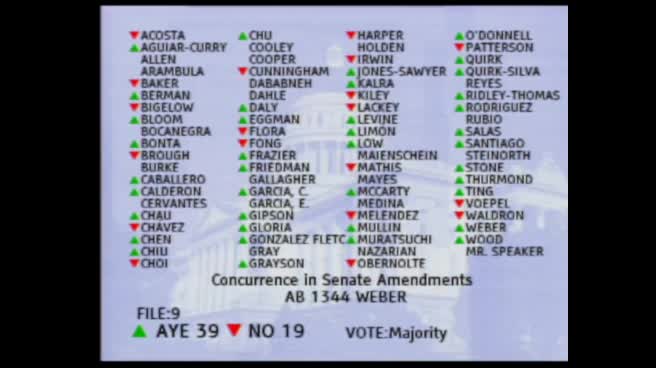 2MIN
Assembly Floor
 15MIN
Assembly Standing Committee on Accountability and Administrative Review
 3MIN
Senate Floor
 14MIN
Senate Standing Committee on Public Safety



Bill Co-Author(s):