AB 565: Building standards: live/work units.
- Session Year: 2017-2018
- House: Assembly
- Latest Version Date: 2018-09-20
The California Building Standards Law provides for the adoption of building standards by state agencies by requiring all state agencies that adopt or propose adoption of any building standard to submit the building standard to the California Building Standards Commission for approval and adoption. In the absence of a designated state agency, the commission is required to adopt specific building standards, as prescribed. Existing law requires the commission to publish, or cause to be published, editions of the code in its entirety once every 3 years.
This bill would require the Department of Housing and Community Development, commencing with the next triennial edition of the California Building Standards Code adopted after January 1, 2019, to develop and submit for approval by the California Building Standards Commission clarifications in the California Building Code and the California Residential Code pertaining to the requirements for the construction of live/work units.
The California Building Standards Law provides for the adoption of building standards by state agencies by requiring all state agencies that adopt or propose adoption of any building standard to submit the building standard to the California Building Standards Commission for approval and adoption. In the absence of a designated state agency, the commission is required to adopt specific building standards, as prescribed. Existing law requires the commission to publish, or cause to be published, editions of the code in its entirety once every 3 years.
This bill would require the Department of Housing and Community Development, commencing with the next triennial edition of the California Building Standards Code adopted after January 1, 2019, to develop and submit for approval by the California Building Standards Commission the definition of live/work unit in the California Residential Code, and to develop or update, as applicable, and submit to the commission for approval the definition of live/work unit in the California Building Code. The bill would require the department to consider in those determinations, among other things, reflecting the types of combined live and work occupancy in commercial zoning districts and home occupation occupancy in residential zoning districts. clarifications in the California Building Code and the California Residential Code pertaining to the requirements for the construction of live/work units.
The California Building Standards Law provides for the adoption of building standards by state agencies by requiring all state agencies that adopt or propose adoption of any building standard to submit the building standard to the California Building Standards Commission for approval and adoption. In the absence of a designated state agency, the commission is required to adopt specific building standards, as prescribed. Existing law requires the commission to publish, or cause to be published, editions of the code in its entirety once every 3 years.
This bill would require the commission, Department of Housing and Community Development, commencing with the next triennial edition of the California Building Standards Code adopted after January 1, 2019, to establish or revise develop and submit for approval by the California Building Standards Commission the definition of live/work unit, as applicable, and unit in the California Residential Code, and to develop or update, as applicable, and submit to the commission for approval the definition of live/work unit in the California Building Code. The bill would require the department to consider in those determinations, among other things, reflecting the types of combined live and work occupancy in commercial zoning districts and home occupation occupancy in residential zoning districts.
The California Building Standards Law provides for the adoption of building standards by state agencies by requiring all state agencies that adopt or propose adoption of any building standard to submit the building standard to the California Building Standards Commission for approval and adoption. In the absence of a designated state agency, the commission is required to adopt specific building standards, as prescribed. Existing law requires the commission to publish, or cause to be published, editions of the code in its entirety once every 3 years.
This bill would require the commission, commencing with the next triennial edition of the California Building Standards Code adopted after January 1, 2019, to establish or revise the definition of live/work unit, as applicable, and to consider in those determinations, among other things, reflecting the types of combined live and work occupancy in commercial zoning districts and home occupation occupancy in residential zoning districts.
Existing law authorizes any city or county to adopt alternative building regulations for the conversion of commercial or industrial buildings to joint living and work quarters.This bill would authorize those regulations to include provisions for housing artists, artisans, and other similarly situated individuals, as described.Existing law authorizes any city or county to adopt alternative building regulations for the conversion of commercial or industrial buildings to joint living and work quarters.
This bill, on or before ____, would require a city or county to adopt these alternative building regulations, and would specify that these regulations bill would authorize those regulations to include provisions for housing artists, artisans, and other similarly situated individuals, as described. This bill would also require a city or county that has already adopted alternative building regulations to amend those regulations, on or before ____, to include provisions for housing artists, artisans, and other similarly situated individuals.
The California Constitution requires the state to reimburse local agencies and school districts for certain costs mandated by the state. Statutory provisions establish procedures for making that reimbursement.This bill would provide that, if the Commission on State Mandates determines that the bill contains costs mandated by the state, reimbursement for those costs shall be made pursuant to the statutory provisions noted above.Existing law authorizes any city or county to adopt alternative building regulations for the conversion of commercial or industrial buildings to joint living and work quarters.
This bill, on or before ____, would require a city or county to adopt these alternative building regulations, and would specify that these regulations include provisions for housing artists, artisans, and other similarly situated individuals, as described. This bill would also require a city or county that has already adopted alternative building regulations to amend those regulations, on or before ____, to include provisions for housing artists, artisans, and other similarly situated individuals.
The California Constitution requires the state to reimburse local agencies and school districts for certain costs mandated by the state. Statutory provisions establish procedures for making that reimbursement.
This bill would provide that, if the Commission on State Mandates determines that the bill contains costs mandated by the state, reimbursement for those costs shall be made pursuant to the statutory provisions noted above.
At the next triennial building standards rulemaking cycle that commences on or after January 1, 2019, the Department of Housing and Community Development shall develop and submit for approval clarifications in the California Building Code and the California Residential Code pertaining to the requirements for the construction of live/work units.
At the next triennial building standards rulemaking cycle that commences on or after January 1, 2019, the Department of Housing and Community Development shall develop and submit for approval clarifications in the California Building Code and the California Residential Code pertaining to the requirements for the construction of live/work units.
At the next triennial building standards rulemaking cycle that commences on or after January 1, 2019, the Department of Housing and Community Development shall develop and submit for approval a definition for live/work unit in the California Residential Code and an updated definition of live/work unit in the California Building Code. The department shall also develop or update, as applicable, and submit for approval, a definition that reflects the types of combined live and work occupancy and use within residential dwelling units, including, but not limited to, live/work units, joint live/work quarters, artist lofts, artist-in-residence units, work/live units, home offices, home-based studios, workshops, or other entrepreneurial spaces. clarifications in the California Building Code and the California Residential Code pertaining to the requirements for the construction of live/work units.
(a)The commission shall, in the adoption process for the next triennial edition of the California Building Standards Code (Title 24 of the California Code of Regulations) adopted after January 1, 2019, establish At the next triennial building standards rulemaking cycle that commences on or after January 1, 2019, the Department of Housing and Community Development shall develop and submit for approval a definition for live/work unit in the California Residential Code and update the an updated definition of live/work unit in the California Building Code. The commission department shall also develop or update, as applicable, and submit for approval, a definition that reflects the types of combined live and work occupancy and use within residential dwelling units, including, but not limited to, live/work units, joint live/work quarters, artist lofts, artist-in-residence units, work/live units, home offices, home-based studios, workshops, or other entrepreneurial spaces.
(b)For purposes of subdivision (a), the commission department shall consider, but is not limited to:
(1)Clarifying the California Building Code and the California Residential Code to reflect live/work occupancy in commercial zoning districts and home occupation occupancy in residential zoning districts.
(2)Clarifying the conditions under which residential live/work dwelling units within a commercial or industrial zoning district may be constructed as a Group R-3 occupancy pursuant to the California Residential Code.
(3)Establishing, as a complement to the 3,000-square-foot in total live/work floor area in the California Building Code, a minimum floor area for the nonresidential portion of a residential live/work dwelling unit in the California Residential Code.
(4)Expanding the allowable occupancy of the residential portion of a live/work space to more accurately reflect individuals that may live and work in the live/work unit, for example property owners, building owners, unit owners in a common interest development, or business owners or their employees.
(5)Updating accessibility criteria in combined live and work situations in a manner that considers whether or not a unit is open to the general public and whether or not employees are regularly working in the nonresidential portion of the unit.
(a)The commission shall, in the adoption process for the next triennial edition of the California Building Standards Code (Title 24 of the California Code of Regulations) adopted after January 1, 2019, establish a definition for live/work unit in the California Residential Code and update the definition of live/work unit in the California Building Code. The commission shall develop or update, as applicable, a definition that reflects the types of combined live and work occupancy and use within residential dwelling units, including, but not limited to, live/work units, joint live/work quarters, artist lofts, artist-in-residence units, work/live units, home offices, home-based studios, workshops, or other entrepreneurial spaces.
(b)For purposes of subdivision (a), the commission shall consider, but is not limited to:
(1)Clarifying the California Building Code and the California Residential Code to reflect live/work occupancy in commercial zoning districts and home occupation occupancy in residential zoning districts.
(2)Clarifying the conditions under which residential live/work dwelling units within a commercial or industrial zoning district may be constructed as a Group R-3 occupancy pursuant to the California Residential Code.
(3)Establishing, as a complement to the 3,000-square-foot in total live/work floor area in the California Building Code, a minimum floor area for the nonresidential portion of a residential live/work dwelling unit in the California Residential Code.
(4)Expanding the allowable occupancy of the residential portion of a live/work space to more accurately reflect individuals that may live and work in the live/work unit, for example property owners, building owners, unit owners in a common interest development, or business owners or their employees.
(5)Updating accessibility criteria in combined live and work situations in a manner that considers whether or not a unit is open to the general public and whether or not employees are regularly working in the nonresidential portion of the unit.
SECTION 1.Section 17958.11 of the Health and Safety Code is amended to read:17958.11.(a)(1)A city or county may adopt alternative building regulations for the conversion of commercial or industrial buildings, or portions thereof, to joint living and work quarters. As used in this section, joint living and work quarters means residential occupancy by a family maintaining a common household, or by not more than four unrelated persons, of one or more rooms or floors in a building originally designed for industrial or commercial occupancy which include (1) cooking space and sanitary facilities in conformance with local building standards adopted pursuant to Section 17958 or 17958.5 and (2) adequate working space reserved for, and regularly used by, one or more persons residing therein.(2)The alternative building regulations adopted pursuant to this section shall be applicable in those geographic areas specifically designated for such occupancy, or as expressly permitted by a redevelopment plan with respect to a redevelopment project area. The alternative building regulations need not impose the same requirements as regulations adopted pursuant to Section 17922, except as otherwise provided in this section, but in permitting repairs, alterations, and additions necessary to accommodate joint living and work quarters, the alternative building regulations shall impose such requirements as will, in the determination of the local governing body, protect the public health, safety, and welfare.(3)The alternative building regulations adopted pursuant to this section may include provisions for housing for artists, artisans, or similarly situated individuals where the household may be comprised of multiple individuals, adults and children, and at least one member of the household is an artist, artisan, or similarly situated individual. The regulation shall not require that the artist, artisan, or similarly situated individual derive an income from the art or creative work.(b)The Legislature hereby finds and declares that a substantial number of manufacturing and commercial buildings in urban areas have lost manufacturing and commercial tenants to more modern manufacturing and commercial premises, and that the untenanted portions of such buildings constitute a potential resource capable, when appropriately altered, of accommodating joint living and work quarters which would be physically and economically suitable particularly for use by artists, artisans, and similarly-situated individuals. The Legislature further finds that the public will benefit by making such buildings available for joint living and work quarters for artists, artisans, and similarly-situated individuals because (1) conversion of space to joint living and work quarters provides a new use for such buildings contributing to the revitalization of central city areas, (2) such conversion results in building improvements and rehabilitation, and (3) the cultural life of cities and of the state as a whole is enhanced by the residence in such cities of large numbers of persons regularly engaged in the arts.(c)The Legislature further finds and declares that (1) persons regularly engaged in the arts require larger amounts of space for the pursuit of their artistic endeavors and for the storage of materials therefor, and of the products thereof, than are regularly found in dwellings, (2) the financial remunerations to be obtained from a career in the arts are generally small, (3) persons regularly engaged in the arts generally find it financially difficult to maintain quarters for their artistic endeavors separate and apart from their places of residence, (4) high property values and resulting rental costs make it particularly difficult for persons regularly engaged in the arts to obtain the use of the amount of space required for their work, and (5) the residential use of such space is accessory to the primary use of such space as a place of work.(d)It is the intent of the Legislature that local governments have discretion to define geographic areas which may be utilized for joint living and work quarters and to establish standards for such occupancy, consistent with the needs and conditions peculiar to the local environment. The Legislature recognizes that building code regulations applicable to residential housing may have to be relaxed to provide joint living and work quarters in buildings previously used for commercial or industrial purposes.(e)For purposes of this section, an artist, artisan, and similarly situated individual includes, but is limited to, all of the following:(1)A person who works in, or is skilled in, any of the fine arts, including, but not limited to, painting, drawing, sculpture, books arts, printmaking, and mixed media.(2)A person who creates imaginative works of aesthetic value, including, but not limited to, literature, poetry, photography, music composition, choreography, architecture, film, and video and computer arts.(3)A person who creates functional art, including, but not limited to, metal, textile, paper, wood, ceramic, glass, or plastic objects.(4)A performer or theatrical artist, including, but not limited to, singers, dancers, musicians, actors, and performance artists, and costume, lighting, sound, and set designers.(5)In all arts disciplines a designer, technician, craftsperson, teacher, or administrator who is dedicated to using their expertise within his or her community to support, promote, present, teach, or propagate their art form, or to do all of these, through events, activities, performances, and classes.(a)(1)On or before ____, a A city or county shall may adopt alternative building regulations for the conversion of commercial or industrial buildings, or portions thereof, to joint living and work quarters. As used in this section, joint living and work quarters means residential occupancy by a family maintaining a common household, or by not more than four unrelated persons, of one or more rooms or floors in a building originally designed for industrial or commercial occupancy which include (1) cooking space and sanitary facilities in conformance with local building standards adopted pursuant to Section 17958 or 17958.5 and (2) adequate working space reserved for, and regularly used by, one or more persons residing therein.
(2)The alternative building regulations adopted pursuant to this section shall be applicable in those geographic areas specifically designated for such occupancy, or as expressly permitted by a redevelopment plan with respect to a redevelopment project area. The alternative building regulations need not impose the same requirements as regulations adopted pursuant to Section 17922, except as otherwise provided in this section, but in permitting repairs, alterations, and additions necessary to accommodate joint living and work quarters, the alternative building regulations shall impose such requirements as will, in the determination of the local governing body, protect the public health, safety, and welfare.
(3)(A)The alternative building regulations adopted pursuant to this section shall may include provisions for housing for artists, artisans, or similarly situated individuals where the household may be comprised of multiple individuals, adults and children children, and at least one member of the household is an artist, artisan, or similarly situated individual. The regulation shall not require that the artist, artisan, or similarly situated individual derive an income from the art or creative work.
(B)On or before ____, a city or county that adopted alternative building regulations pursuant to paragraph (1) prior to the effective date of the act adding this paragraph shall amend those regulations to include provisions for housing for artists, artisans, or similarly situated individuals where the household may be comprised of multiple adults and children and at least one member of the household is an artist, artisan, or a similarly situated individual. The regulation shall not require that the artist, artisan, or similarly situated individual derive an income from the art or creative work.(b)The Legislature hereby finds and declares that a substantial number of manufacturing and commercial buildings in urban areas have lost manufacturing and commercial tenants to more modern manufacturing and commercial premises, and that the untenanted portions of such buildings constitute a potential resource capable, when appropriately altered, of accommodating joint living and work quarters which would be physically and economically suitable particularly for use by artists, artisans, and similarly-situated individuals. The Legislature further finds that the public will benefit by making such buildings available for joint living and work quarters for artists, artisans, and similarly-situated individuals because (1) conversion of space to joint living and work quarters provides a new use for such buildings contributing to the revitalization of central city areas, (2) such conversion results in building improvements and rehabilitation, and (3) the cultural life of cities and of the state as a whole is enhanced by the residence in such cities of large numbers of persons regularly engaged in the arts.
(c)The Legislature further finds and declares that (1) persons regularly engaged in the arts require larger amounts of space for the pursuit of their artistic endeavors and for the storage of materials therefor, and of the products thereof, than are regularly found in dwellings, (2) the financial remunerations to be obtained from a career in the arts are generally small, (3) persons regularly engaged in the arts generally find it financially difficult to maintain quarters for their artistic endeavors separate and apart from their places of residence, (4) high property values and resulting rental costs make it particularly difficult for persons regularly engaged in the arts to obtain the use of the amount of space required for their work, and (5) the residential use of such space is accessory to the primary use of such space as a place of work.
(d)It is the intent of the Legislature that local governments have discretion to define geographic areas which may be utilized for joint living and work quarters and to establish standards for such occupancy, consistent with the needs and conditions peculiar to the local environment. The Legislature recognizes that building code regulations applicable to residential housing may have to be relaxed to provide joint living and work quarters in buildings previously used for commercial or industrial purposes.
(e)For purposes of this section, an artist, artisan, and similarly situated individual includes, but is limited to, all of the following:
(1)A person who works in, or is skilled in, any of the fine arts, including, but not limited to, painting, drawing, sculpture, books arts, printmaking, and mixed media.
(2)A person who creates imaginative works of aesthetic value, including, but not limited to, literature, poetry, photography, music composition, choreography, architecture, film, and video. video and computer arts.
(3)A person who creates functional art, including, but not limited to, metal, textile, paper, wood, ceramic, glass, or plastic objects.
(4)A performer or theatrical artist, including, but not limited to, singers, dancers, musicians, actors, and performance artists, and costume, lighting, sound, and set designers.
(5)In all arts disciplines a designer, technician, craftsperson, teacher, or administrator who is dedicated to using their expertise within his or her community to support, promote, present, teach, or propagate their art form, or to do all of these, through events, activities, performances, and classes.
SEC. 2.If the Commission on State Mandates determines that this act contains costs mandated by the state, reimbursement to local agencies and school districts for those costs shall be made pursuant to Part 7 (commencing with Section 17500) of Division 4 of Title 2 of the Government Code.(a)Any (1)On or before ____, a city or county may shall adopt alternative building regulations for the conversion of commercial or industrial buildings, or portions thereof, to joint living and work quarters. As used in this section, joint living and work quarters means residential occupancy by a family maintaining a common household, or by not more than four unrelated persons, of one or more rooms or floors in a building originally designed for industrial or commercial occupancy which include (1) cooking space and sanitary facilities in conformance with local building standards adopted pursuant to Section 17958 or 17958.5 and (2) adequate working space reserved for, and regularly used by, one or more persons residing therein.
The(2)The alternative building regulations adopted pursuant to this section shall be applicable in those geographic areas specifically designated for such occupancy, or as expressly permitted by a redevelopment plan with respect to a redevelopment project area. The alternative building regulations need not impose the same requirements as regulations adopted pursuant to Section 17922, except as otherwise provided in this section, but in permitting repairs, alterations, and additions necessary to accommodate joint living and work quarters, the alternative building regulations shall impose such requirements as will, in the determination of the local governing body, protect the public health, safety, and welfare.
(3)(A)The alternative building regulations adopted pursuant to this section shall include provisions for housing for artists, artisans, or similarly situated individuals where the household may be comprised of multiple adults and children and at least one member of the household is an artist, artisan, or similarly situated individual. The regulation shall not require that the artist, artisan, or similarly situated individual derive an income from the art or creative work.
(B)On or before ____, a city or county that adopted alternative building regulations pursuant to paragraph (1) prior to the effective date of the act adding this paragraph shall amend those regulations to include provisions for housing for artists, artisans, or similarly situated individuals where the household may be comprised of multiple adults and children and at least one member of the household is an artist, artisan, or a similarly situated individual. The regulation shall not require that the artist, artisan, or similarly situated individual derive an income from the art or creative work.
(b)The Legislature hereby finds and declares that a substantial number of manufacturing and commercial buildings in urban areas have lost manufacturing and commercial tenants to more modern manufacturing and commercial premises, and that the untenanted portions of such buildings constitute a potential resource capable, when appropriately altered, of accommodating joint living and work quarters which would be physically and economically suitable particularly for use by artists, artisans, and similarly-situated individuals. The Legislature further finds that the public will benefit by making such buildings available for joint living and work quarters for artists, artisans, and similarly-situated individuals because (1) conversion of space to joint living and work quarters provides a new use for such buildings contributing to the revitalization of central city areas, (2) such conversion results in building improvements and rehabilitation, and (3) the cultural life of cities and of the state as a whole is enhanced by the residence in such cities of large numbers of persons regularly engaged in the arts.
(c)The Legislature further finds and declares that (1) persons regularly engaged in the arts require larger amounts of space for the pursuit of their artistic endeavors and for the storage of materials therefor, and of the products thereof, than are regularly found in dwellings, (2) the financial remunerations to be obtained from a career in the arts are generally small, (3) persons regularly engaged in the arts generally find it financially difficult to maintain quarters for their artistic endeavors separate and apart from their places of residence, (4) high property values and resulting rental costs make it particularly difficult for persons regularly engaged in the arts to obtain the use of the amount of space required for their work, and (5) the residential use of such space is accessory to the primary use of such space as a place of work.
It(d)It is the intent of the Legislature that local governments have discretion to define geographic areas which may be utilized for joint living and work quarters and to establish standards for such occupancy, consistent with the needs and conditions peculiar to the local environment. The Legislature recognizes that building code regulations applicable to residential housing may have to be relaxed to provide joint living and work quarters in buildings previously used for commercial or industrial purposes.
(e)For purposes of this section, an artist, artisan, and similarly situated individual includes, but is limited to, all of the following:
(1)A person who works in, or is skilled in, any of the fine arts, including, but not limited to, painting, drawing, sculpture, books arts, printmaking, and mixed media.
(2)A person who creates imaginative works of aesthetic value, including, but not limited to, literature, poetry, photography, music composition, choreography, architecture, film, and video.
(3)A person who creates functional art, including, but not limited to, metal, textile, paper, wood, ceramic, glass, or plastic objects.
(4)A performer or theatrical artist, including, but not limited to, singers, dancers, musicians, actors, and performance artists, and costume, lighting, sound, and set designers.
(5)In all arts disciplines a designer, technician, craftsperson, teacher, or administrator who is dedicated to using their expertise within his or her community to support, promote, present, teach, or propagate their art form, or to do all of these, through events, activities, performances, and classes.
SEC. 2.If the Commission on State Mandates determines that this act contains costs mandated by the state, reimbursement to local agencies and school districts for those costs shall be made pursuant to Part 7 (commencing with Section 17500) of Division 4 of Title 2 of the Government Code.
|
Date
|
Status
|
|---|---|
| Sep 20, 2018 | Chaptered by Secretary of State - Chapter 573, Statutes of 2018. |
| Sep 20, 2018 | Approved by the Governor. |
| Sep 11, 2018 | Enrolled and presented to the Governor at 4:30 p.m. |
| Aug 31, 2018 | Senate amendments concurred in. To Engrossing and Enrolling. |
| Aug 30, 2018 | Joint Rule 62(a), file notice suspended. |
| Aug 29, 2018 | In Assembly. Concurrence in Senate amendments pending. |
| Aug 29, 2018 | Read third time. Passed. Ordered to the Assembly. |
| Aug 27, 2018 | Read second time. Ordered to third reading. |
| Aug 24, 2018 | Read third time and amended. Ordered to second reading. |
| Aug 17, 2018 | From committee: Do pass. (Ayes 7. Noes 0.) (August 16). |
| Aug 6, 2018 | In committee: Referred to APPR. suspense file. |
| Jun 28, 2018 | Read second time and amended. Re-referred to Com. on APPR. |
| Jun 27, 2018 | From committee: Amend, and do pass as amended and re-refer to Com. on APPR. (Ayes 12. Noes 0.) (June 26). |
| Jun 18, 2018 | From committee chair, with author's amendments: Amend, and re-refer to committee. Read second time, amended, and re-referred to Com. on T. & H. |
| May 30, 2018 | In committee: Hearing postponed by committee. |
| May 18, 2017 | Referred to Com. on T. & H. |
| May 4, 2017 | In Senate. Read first time. To Com. on RLS. for assignment. |
| May 4, 2017 | Read third time. Passed. Ordered to the Senate. (Ayes 74. Noes 0. Page 1384.) |
| May 2, 2017 | Read second time. Ordered to third reading. |
| May 1, 2017 | Withdrawn from committee. |
| Apr 24, 2017 | Re-referred to Com. on APPR. |
| Apr 20, 2017 | Read second time and amended. |
| Apr 19, 2017 | From committee: Amend, and do pass as amended and re-refer to Com. on APPR. (Ayes 6. Noes 1.) (April 19). |
| Feb 27, 2017 | Referred to Com. on H. & C.D. |
| Feb 15, 2017 | From printer. May be heard in committee March 17. |
| Feb 14, 2017 | Read first time. To print. |
|
Date
|
Description
|
Location
|
Votes
|
|
|---|---|---|---|---|
| Aug 31, 2018 | AB 565 BLOOM Concurrence in Senate Amendments | Assembly Floor |
Passed |
|
| Aug 30, 2018 | With recommendation: That Senate amendments be concurred in. | Assembly Standing Committee on Housing and Community Development |
Passed |
|
| Aug 29, 2018 | Assembly 3rd Reading AB565 Bloom By Allen | Senate Floor |
Passed |
|
| Aug 16, 2018 | Do pass | Senate Standing Committee on Appropriations |
Passed |
|
| Aug 6, 2018 | Placed on suspense file | Senate Standing Committee on Appropriations |
Passed |
|
| Jun 26, 2018 | Do pass as amended, but first amend, and re-refer to the Committee on [Appropriations] | Senate Standing Committee on Transportation and Housing |
Passed |
|
| May 4, 2017 | AB 565 BLOOM Assembly Third Reading | Assembly Floor |
Passed |
|
| Apr 19, 2017 | Do pass as amended and be re-referred to the Committee on [Appropriations] | Assembly Standing Committee on Housing and Community Development |
Passed |
This list shows positions taken on this bill by organizations on the date displayed, which is linked to the original source.
Positions by individuals are not included.
|
Organization
|
Position
|
Date
|
|---|---|---|
| American Institute of Architects, California Council | ** Support | Aug 27, 2018 |
| California Fire Chiefs Association | ** Against | Apr 17, 2017 |
| Fire Districts Association Of California | ** Against | Apr 17, 2017 |
Date of Hearing: August 30, 2018
ASSEMBLY COMMITTEE ON HOUSING AND COMMUNITY DEVELOPMENT
David Chiu, Chair
ABPCA Bill Id:AB 565 (
Author:Bloom) – As Amended Ver:August 24, 2018
SUBJECT: Building standards: live/work units
SUMMARY: Require the Department of Housing and Community Development (HCD), in the next triennial cycle of the building code, to develop and submit clarifications to the California Building Code and Residential Building Code pertaining to the construction of live/work units.
EXISTING LAW:
- Authorizes a city or county to adopt alternative building standards for the conversion of commercial or industrial quarters to living and work quarters.
- Defines" joint living and work quarters" to mean:
- Residential occupancy by a family maintaining a common household or by not more than four unrelated persons;
- One or more rooms or floors in a building originally designed for industrial or commercial occupancy;
- Including cooking space and sanitary facilities in conformity with local building standards; and
- Adequate working space reserved for and regularly used by one or more persons living in the building.
- Provides that alternative building standards for living and work quarters shall apply in geographic areas specifically designated for their occupancy or expressly permitted in a redevelopment area.
- Provides that alternative building standards for living and work quarters are not required to comply with state building standards but must protect the public health, safety, and welfare.
- Makes legislative findings that the public will benefit by making unused manufacturing and commercial buildings in urban areas available for joint living and work quarters for artists, artisans and similarly-situated individuals because:
- Conversion of the space to joint living and work quarters provides a new use for such buildings contributing to the revitalize of central city areas;
- Such conversion results in building improvements and rehabilitation; and
- The cultural life of cities and of the state as a whole is enhanced by the residence in such cities of large numbers of person regularly engaged in the arts.
- Make legislative findings and declarations that:
- Persons regularly engaged in the arts require larger amounts of space for the pursuit of their artistic endeavors and for storage of materials than are found in regular dwellings;
- The financial remunerations to be obtained in a career in the arts are generally small;
- Persons regularly engaged in the arts generally find it financially difficult to maintain places of residence; and
- High property values and resulting rental costs make it particularly difficult for persons regularly engaged in the arts to obtain the use of the amount of space required for their work; and the residential use of such space is accessory to the primary use of such space as a place to work.
FISCAL EFFECT: According to the Senate Appropriations Committee,
- HCD estimates costs of $189,000 in 2019-20 and $175,000 in 2020-21 for one PY of staff time to research, develop, and propose a definition of “live/work unit” for adoption in the California Residential Code and Building Code. (General Fund)
- Minor and absorbable costs to the Division of the State Architect to consult with HCD on consideration of updating accessibility criteria in combined live/work situations. (Disability Access Account)
- Minor and absorbable costs to the CBSC to adopt the “live/work unit” definition during the 2021 triennial rulemaking cycle. (Building Standards Administration Revolving Fund)
COMMENTS: The California Building Standards Law establishes the California Building Standards Commission (CBSC) and the process for adopting state building standards. Statewide building standards are intended to provide uniformity in building across the state. State law specifies which departments are responsible for developing and proposing building standards. When there is no designated department then the CBSC is responsible. HCD is responsible for single family and multi-family dwellings. There are a few exemptions, which allow a local governing body, city, or county to modify state building standards. A local governing body, city, or county can adopt an ordinance or a resolution in a public meeting that finds that a local building standard must be modified from the state building standard because of local climatic, geological, or topographical conditions and file that ordinance with the CBSC. The CBSC reviews the findings of the ordinance to determine if the local governing body followed the correct procedure.
Adopted in 1979, state law gives local government's authority to adopt building standards to convert commercial or industrial buildings into living and work quarters. Living and work quarters can be occupied by a family that is maintaining a common household but not more than four unrelated persons. The space must have cooking facilities and bathrooms that meet state building standards. There must also be adequate working space reserved for and regularly used by at least one person living in the building. Commercial and industrial buildings converted to living and work quarters are not subject to all state building standards however, any alternative building standards local governments adopt must protect against public health, safety, and welfare concerns.
This bill is a gut-and-amend. When this bill left the Assembly, it made changes to the types of alternative building standards a city and county can adopt for the conversion of commercial or industrial buildings to living and work quarters. Opponents raised concerns that fire and life safety concerns might not be adequately addressed during the alternative building standard review process. Including changes to the building code in the state building code provides for standardization; in addition, state building code adoption is a formal process involving extensive stakeholder input. To address these concerns, the bill would direct HCD to develop clarifications relating to the requirements for construction of live/work units in the next building standards update.
REGISTERED SUPPORT / OPPOSITION:
Support
None on file.
Opposition
None on file.
Analysis Prepared by: Lisa Engel / H. & C.D. / (916) 319-2085
CONCURRENCE IN SENATE AMENDMENTS
CSA1 Bill Id:AB 565
Author:(Bloom)
As Amended Ver:August 24, 2018
Majority vote
ASSEMBLY: | 74-0 | (May 4, 2017) | SENATE: | 39-0 | (August 29, 2018) |
Original Committee Reference: H. & C.D.
SUMMARY: Require the Department of Housing and Community Development (HCD), in the next triennial cycle of the building code, to develop and submit clarifications to the California Building Code and Residential Building Code pertaining to the construction of live/work units.
The Senate amendments delete the contents of the bill and require the Department of Housing and Community Development (HCD), in the next triennial cycle of the building code, to develop and submit clarifications to the California Building Code and Residential Building Code pertaining to the construction of live/work units.
EXISTING LAW:
- Authorizes a city or county to adopt alternative building standards for the conversion of commercial or industrial quarters to living and work quarters.
- Defines" joint living and work quarters" to mean:
- Residential occupancy by a family maintaining a common household or by not more than four unrelated persons;
- One or more rooms or floors in a building originally designed for industrial or commercial occupancy;
- Including cooking space and sanitary facilities in conformity with local building standards; and
- Adequate working space reserved for and regularly used by one or more persons living in the building.
- Provides that alternative building standards for living and work quarters shall apply in geographic areas specifically designated for their occupancy or expressly permitted in a redevelopment area.
- Provides that alternative building standards for living and work quarters are not required to comply with state building standards but must protect the public health, safety, and welfare.
- Makes legislative findings that the public will benefit by making unused manufacturing and commercial buildings in urban areas available for joint living and work quarters for artists, artisans and similarly-situated individuals because:
- Conversion of the space to joint living and work quarters provides a new use for such buildings contributing to the revitalize of central city areas;
- Such conversion results in building improvements and rehabilitation; and
- The cultural life of cities and of the state as a whole is enhanced by the residence in such cities of large numbers of person regularly engaged in the arts.
- Make legislative findings and declarations that:
- Persons regularly engaged in the arts require larger amounts of space for the pursuit of their artistic endeavors and for storage of materials than are found in regular dwellings;
- The financial remunerations to be obtained in a career in the arts are generally small;
- Persons regularly engaged in the arts generally find it financially difficult to maintain places of residence; and
- High property values and resulting rental costs make it particularly difficult for persons regularly engaged in the arts to obtain the use of the amount of space required for their work; and the residential use of such space is accessory to the primary use of such space as a place to work.
FISCAL EFFECT: According to the Senate Appropriations Committee,
- HCD estimates costs of $189,000 in 2019-20 and $175,000 in 2020-21 for one Personnel Year of staff time to research, develop, and propose a definition of "live/work unit" for adoption in the California Residential Code and Building Code. (General Fund)
- Minor and absorbable costs to the Division of the State Architect to consult with HCD on consideration of updating accessibility criteria in combined live/work situations. (Disability Access Account)
- Minor and absorbable costs to the CBSC to adopt the "live/work unit" definition during the 2021 triennial rulemaking cycle. (Building Standards Administration Revolving Fund)
COMMENTS:
The California Building Standards Law establishes the California Building Standards Commission (CBSC) and the process for adopting state building standards. Statewide building standards are intended to provide uniformity in building across the state. State law specifies which departments are responsible for developing and proposing building standards. When there is no designated department then the CBSC is responsible. The Department of Housing and Community Development (HCD) is responsible for single family and multi-family dwellings. There are a few exemptions, which allow a local governing body, city, or county to modify state building standards. A local governing body, city, or county can adopt an ordinance or a resolution in a public meeting that finds that a local building standard must be modified from the state building standard because of local climatic, geological, or topographical conditions and file that ordinance with the CBSC. The CBSC reviews the findings of the ordinance to determine if the local governing body followed the correct procedure.
Adopted in 1979, state law gives local government's authority to adopt building standards to convert commercial or industrial buildings into living and work quarters. Living and work quarters can be occupied by a family that is maintaining a common household but not more than four unrelated persons. The space must have cooking facilities and bathrooms that meet state building standards. There must also be adequate working space reserved for and regularly used by at least one person living in the building. Commercial and industrial buildings converted to living and work quarters are not subject to all state building standards however, any alternative building standards local governments adopt must protect against public health, safety, and welfare concerns.
This bill is substantially amended. When this bill left the Assembly, it made changes to the types of alternative building standards a city and county can adopt for the conversion of commercial or industrial buildings to living and work quarters. Opponents raised concerns that fire and life safety concerns might not be adequately addressed during the alternative building standard review process. Including changes to the building code in the state building code provides for standardization; in addition, state building code adoption is a formal process involving extensive stakeholder input. To address these concerns, this bill would direct HCD to develop clarifications relating to the requirements for construction of live/work units.
Analysis Prepared by: Lisa Engel / H. & C.D. / (916) 319-2085 FN: 0005039
CONCURRENCE IN SENATE AMENDMENTS
CSA2 Bill Id:AB 565
Author:(Bloom)
As Amended Ver:August 24, 2018
Majority vote
ASSEMBLY: |
| (May 4, 2018) | SENATE: | 39-0 | (August 29, 2018) |
(vote not relevant)
COMMITTEE VOTE: | 7-0 | (August 30, 2018) | RECOMMENDATION: | concur |
(H. & C.D.)
Original Committee Reference: H. & C.D.
SUMMARY: Require the Department of Housing and Community Development (HCD), in the next triennial cycle of the building code, to develop and submit clarifications to the California Building Code and Residential Building Code pertaining to the construction of live/work units.
EXISTING LAW:
- Authorizes a city or county to adopt alternative building standards for the conversion of commercial or industrial quarters to living and work quarters.
- Defines "joint living and work quarters" to mean:
- Residential occupancy by a family maintaining a common household or by not more than four unrelated persons;
- One or more rooms or floors in a building originally designed for industrial or commercial occupancy;
- Including cooking space and sanitary facilities in conformity with local building standards; and
- Adequate working space reserved for and regularly used by one or more persons living in the building.
- Provides that alternative building standards for living and work quarters shall apply in geographic areas specifically designated for their occupancy or expressly permitted in a redevelopment area.
- Provides that alternative building standards for living and work quarters are not required to comply with state building standards but must protect the public health, safety, and welfare.
- Makes legislative findings that the public will benefit by making unused manufacturing and commercial buildings in urban areas available for joint living and work quarters for artists, artisans and similarly-situated individuals because:
- Conversion of the space to joint living and work quarters provides a new use for such buildings contributing to the revitalize of central city areas;
- Such conversion results in building improvements and rehabilitation; and
- The cultural life of cities and of the state as a whole is enhanced by the residence in such cities of large numbers of person regularly engaged in the arts.
- Make legislative findings and declarations that:
- Persons regularly engaged in the arts require larger amounts of space for the pursuit of their artistic endeavors and for storage of materials than are found in regular dwellings;
- The financial remunerations to be obtained in a career in the arts are generally small;
- Persons regularly engaged in the arts generally find it financially difficult to maintain places of residence; and
- High property values and resulting rental costs make it particularly difficult for persons regularly engaged in the arts to obtain the use of the amount of space required for their work; and the residential use of such space is accessory to the primary use of such space as a place to work.
FISCAL EFFECT: According to the Senate Appropriations Committee,
- HCD estimates costs of $189,000 in 2019-20 and $175,000 in 2020-21 for one PY of staff time to research, develop, and propose a definition of "live/work unit" for adoption in the California Residential Code and Building Code. (General Fund)
- Minor and absorbable costs to the Division of the State Architect to consult with HCD on consideration of updating accessibility criteria in combined live/work situations. (Disability Access Account)
- Minor and absorbable costs to the CBSC to adopt the "live/work unit" definition during the 2021 triennial rulemaking cycle. (Building Standards Administration Revolving Fund)
COMMENTS: The California Building Standards Law establishes the California Building Standards Commission (CBSC) and the process for adopting state building standards. Statewide building standards are intended to provide uniformity in building across the state. State law specifies which departments are responsible for developing and proposing building standards. When there is no designated department then the CBSC is responsible. HCD is responsible for single family and multi-family dwellings. There are a few exemptions, which allow a local governing body, city, or county to modify state building standards. A local governing body, city, or county can adopt an ordinance or a resolution in a public meeting that finds that a local building standard must be modified from the state building standard because of local climatic, geological, or topographical conditions and file that ordinance with the CBSC. The CBSC reviews the findings of the ordinance to determine if the local governing body followed the correct procedure.
Adopted in 1979, state law gives local government's authority to adopt building standards to convert commercial or industrial buildings into living and work quarters. Living and work quarters can be occupied by a family that is maintaining a common household but not more than four unrelated persons. The space must have cooking facilities and bathrooms that meet state building standards. There must also be adequate working space reserved for and regularly used by at least one person living in the building. Commercial and industrial buildings converted to living and work quarters are not subject to all state building standards however, any alternative building standards local governments adopt must protect against public health, safety, and welfare concerns.
This bill is substantially amended. When this bill left the Assembly, it made changes to the types of alternative building standards a city and county can adopt for the conversion of commercial or industrial buildings to living and work quarters. Opponents raised concerns that fire and life safety concerns might not be adequately addressed during the alternative building standard review process. Including changes to the building code in the state building code provides for standardization; in addition, state building code adoption is a formal process involving extensive stakeholder input. To address these concerns, this bill would direct HCD to develop clarifications relating to the requirements for construction of live/work units in the next building standards update.
Analysis Prepared by: Lisa Engel / H. & C.D. / (916) 319-2085 FN: 0005200
Office of Senate Floor Analyses (916) 651-1520 Fax: (916) 327-4478 | AB |
THIRD READING
Bill No: AB 565
:
SENATE TRANS. & HOUSING COMMITTEE: 12-0, 6/26/18
AYES: Beall, Cannella, Allen, Dodd, Gaines, Galgiani, McGuire, Morrell, Roth, Skinner, Vidak, Wiener
NO VOTE RECORDED: Wieckowski
SENATE APPROPRIATIONS COMMITTEE: 7-0, 8/16/18
AYES: Portantino, Bates, Beall, Bradford, Hill, Nielsen, Wiener
ASSEMBLY FLOOR: Not relevant
DIGEST:
This bill requires the state Department of Housing and Community Development (HCD) to develop and submit for approval to the California Building Standards Commission (CBSC) clarifications in both the California Residential Code and the California Building Code pertaining to live/work units.
Senate Floor Amendments of 8/24/18 require HCD to develop and submit to CBSC clarifications in the two codes pertaining to live/work units.
Existing law:
- Requires any building standard adopted or proposed by state agencies to be submitted to, and approved or adopted by, the CBSC prior to codification.
- Requires building standards adopted by state agencies and submitted to the CBSC to satisfy nine specific criteria, including that the public interest requires the adoption of the building standards and that the cost to the public is reasonable, based on the overall benefit to be derived from the building standards.
- Authorizes a city or county to adopt alternative building standards for the conversion of commercial or industrial quarters to living and work quarters.
- Defines "joint living and work quarters" to mean:
- Residential occupancy by a family maintaining a common household or by not more than four unrelated persons;
- One or more rooms or floors in a building originally designed for industrial or commercial occupancy;
- Including cooking space and sanitary facilities in conformity with local building standards; and
- Adequate working space reserved for and regularly used by one or more persons living in the building.
- Provides that alternative building standards for living and work quarters shall apply in geographic areas specifically designated for their occupancy or expressly permitted in a redevelopment area.
- Provides that alternative building standards for living and work quarters are not required to comply with state building standards but must protect the public health, safety, and welfare.
This bill:
- Requires HCD, at the next triennial building standards rulemaking cycle that commences on or after January 1, 2019, to develop and submit for approval to CBSC clarifications in both the California Residential Code and California Building Code pertaining to requirements for the construction of live/work units.
- Requires HCD to consider specific actions, including but not limited to:
- Clarifying the California Building Code and the California Residential Code to reflect live/work occupancy in commercial zoning districts and home occupation occupancy in residential zoning districts.
- Clarifying the conditions under which residential live/work dwelling units within a commercial or industrial zoning district may be constructed as Group R-3 occupancy pursuant to the California Residential Code.
- Establishing, as a component to the 3,000-square-foot total live/work floor area in the California Building Code, a minimum floor area for the non-residential portion of a residential live/work dwelling unit in the California Residential Code.
- Expanding the allowable occupancy of the residential portion of a live/work space to more accurately reflect individuals that may live and work in the live/work unit, for example property owners, building owners, unit owners in a common interest development, or business owners or their employees.
- Updating accessibility criteria in combined live and work situations in a manner that considers whether a unit is open to the general public and whether or not employees are regularly working in the non-residential portion of the unit.
Background
The CBSC administers a number of building codes, including the Building Standards Code, the Residential Code, the Electrical Code, the Mechanical Code, the Plumbing Code, the Energy Code, the Fire Code, the Historical Building Code, and the Green Building Standards Code. The California Building Standards Code (Title 24) serves as the basis for the design and construction of buildings in the state. California’s building codes are published in their entirety every three years. Intervening code adoption cycles produce supplement pages halfway (18 months) into each triennial period. Amendments to California’s building standards are subject to a lengthy and transparent public participation process throughout each code adoption cycle. The California Building Standards Code is a compilation of three types of building criteria from three different origins:
- Building standards that have been adopted by state agencies without change from building standards contained in national model codes;
- Building standards that have been adopted and adapted from the national model code standards to meet California conditions; and
- Building standards, authorized by the Legislature, that constitute extensive additions not covered by the model codes adopted to address particular California concerns.
Comments
- Purpose. The author states that California currently faces a severe housing shortage. To meet the state’s housing needs, we not only need to build, but to build creatively by facilitating the construction of many different kinds of housing units. One underutilized form of housing is live/work housing, which allows individuals, particularly those in creative or entrepreneurial professions, to live and work in the same unit. These units reduce the need to commute to work and encourage development of more sustainable, bicycle- and pedestrian-friendly communities. This bill aims to clarify the definitions of live/work units in the California Building Code and the California Residential Code to make it easier to build these units. The author states that just as accessory dwelling units have become a creative and unconventional housing solution in recent years; live/work housing can also help meet California’s housing needs.
- Live/work units. The author notes that the state building and residential codes have not kept up with the times or with each other. For example, although both the Building Code and the Residential Code allow live/work units, the Residential Code does not include a clear definition. As a result, detached live/work units and duplexes that are primarily residential in nature are often treated as commercial buildings, with occupancy and accessibility requirements that are not suited to residential units. The author states that updating the state building and residential codes, and encouraging locals to adopt conforming ordinances, will help facilitate the construction and development of these units.
- Gut and amend. When this bill left the Assembly, it made changes to the types of alternative building standards a city and county can adopt for the conversion of commercial or industrial buildings to living and work quarters. Opponents raised concerns that fire and life safety concerns might not be adequately addressed during the alternative building standard review process. Including changes to the building code in the state building code provides for standardization; in addition, state building code adoption is a formal process involving extensive stakeholder input. To address these concerns, this bill was amended on June 18th to instead direct HCD to develop new definitions for live/work units, including but not limited to a number of specific examples, through the state building code process. The bill was further amended on August 24th to simplify implementation by directing HCD to develop clarifications relating to the requirements for construction of live/work units.
Related/Prior Legislation
AB 1239 (Holden, 2017) would have required HCD and the BSC to research and propose for adoption mandatory building standards regarding the installation of electric vehicle capable parking spaces in existing multifamily housing projects and non-residential buildings when those buildings are being reconstructed, as specified. This bill was vetoed by the Governor.
AB 1738 (McCarty, 2016) would have required HCD to develop building standards for the construction, installation, and alteration of dark graywater systems. This bill died in the Senate Environmental Quality Committee.
FISCAL EFFECT: Appropriation: Fiscal Com.: Local:
According to the Senate Appropriations Committee:
- HCD estimates costs of $189,000 in 2019-20 and $175,000 in 2020-21 for one PY of staff time to research, develop, and propose a definition of “live/work unit” for adoption in the California Residential Code and Building Code. (General Fund)
- Minor and absorbable costs to the Division of the State Architect to consult with HCD on consideration of updating accessibility criteria in combined live/work situations. (Disability Access Account)
- Minor and absorbable costs to the CBSC to adopt the “live/work unit” definition during the 2021 triennial rulemaking cycle. (Building Standards Administration Revolving Fund)
American Institute of Architects, California Council
OPPOSITION: (Verified 8/24/18)
None received
ARGUMENTS IN SUPPORT: The American Institute of Architects, California Council states that this bill will update the California Building Standards Code to define live-work spaces, clarify intentions, and promote more certainty for building officials, architects, property owners, or developers, as well as expanding housing options for those who prefer zero-commute housing and a more sustainable living choice.
8/27/18 11:38:38
**** END ****
Office of Senate Floor Analyses (916) 651-1520 Fax: (916) 327-4478 | AB |
THIRD READING
Bill No: AB 565
:
SENATE TRANS. & HOUSING COMMITTEE: 12-0, 6/26/18
AYES: Beall, Cannella, Allen, Dodd, Gaines, Galgiani, McGuire, Morrell, Roth, Skinner, Vidak, Wiener
NO VOTE RECORDED: Wieckowski
SENATE APPROPRIATIONS COMMITTEE: 7-0, 8/16/18
AYES: Portantino, Bates, Beall, Bradford, Hill, Nielsen, Wiener
ASSEMBLY FLOOR: Not relevant
DIGEST:
This bill requires the California Building Standards Commission (CBSC) to update the California Building Standards Code to define and clarify live/work units, as specified.
Existing law:
- Requires any building standard adopted or proposed by state agencies to be submitted to, and approved or adopted by, the CBSC prior to codification.
- Requires building standards adopted by state agencies and submitted to the CBSC to satisfy nine specific criteria, including that the public interest requires the adoption of the building standards and that the cost to the public is reasonable, based on the overall benefit to be derived from the building standards.
- Authorizes a city or county to adopt alternative building standards for the conversion of commercial or industrial quarters to living and work quarters.
- Defines" joint living and work quarters" to mean:
- Residential occupancy by a family maintaining a common household or by not more than four unrelated persons;
- One or more rooms or floors in a building originally designed for industrial or commercial occupancy;
- Including cooking space and sanitary facilities in conformity with local building standards; and
- Adequate working space reserved for and regularly used by one or more persons living in the building.
- Provides that alternative building standards for living and work quarters shall apply in geographic areas specifically designated for their occupancy or expressly permitted in a redevelopment area.
- Provides that alternative building standards for living and work quarters are not required to comply with state building standards but must protect the public health, safety, and welfare.
This bill:
- Requires the state Department of Housing and Community Development (HCD), at the next triennial building standards rulemaking cycle that commences on or after January 1, 2019, to develop and submit for approval to CBSC an updated definition for “live/work unit” in the California Residential Code and an updated definition of “live/work unit” in the California Building Code.
- Requires HCD to also develop or update, as applicable, and submit to the CBSC for approval, a definition that reflects the types of combined live and work occupancy and use within residential dwelling units, including but not limited to live/work units, joint live/work quarters, artist lofts, artist-in-residence units, work/live units, home offices, home-based studios, workshops, or other entrepreneurial spaces.
- Requires HCD to consider specific actions, including but not limited to:
- Clarifying the California Building Code and the California Residential Code to reflect live/work occupancy in commercial zoning districts and home occupation occupancy in residential zoning districts.
- Clarifying the conditions under which residential live/work dwelling units within a commercial or industrial zoning district may be constructed as Group R-3 occupancy pursuant to the California Residential Code.
- Establishing, as a component to the 3,000-square-foot total live/work floor area in the California Building Code, a minimum floor area for the non-residential portion of a residential live/work dwelling unit in the California Residential Code.
- Expanding the allowable occupancy of the residential portion of a live/work space to more accurately reflect individuals that may live and work in the live/work unit, for example property owners, building owners, unit owners in a common interest development, or business owners or their employees.
- Updating accessibility criteria in combined live and work situations in a manner that considers whether a unit is open to the general public and whether or not employees are regularly working in the non-residential portion of the unit.
Background
The CBSC administers a number of building codes, including the Building Standards Code, the Residential Code, the Electrical Code, the Mechanical Code, the Plumbing Code, the Energy Code, the Fire Code, the Historical Building Code, and the Green Building Standards Code. The California Building Standards Code (Title 24) serves as the basis for the design and construction of buildings in the state. California’s building codes are published in their entirety every three years. Intervening code adoption cycles produce supplement pages halfway (18 months) into each triennial period. Amendments to California’s building standards are subject to a lengthy and transparent public participation process throughout each code adoption cycle. The California Building Standards Code is a compilation of three types of building criteria from three different origins:
- Building standards that have been adopted by state agencies without change from building standards contained in national model codes;
- Building standards that have been adopted and adapted from the national model code standards to meet California conditions; and
- Building standards, authorized by the Legislature, that constitute extensive additions not covered by the model codes adopted to address particular California concerns.
Comments
- Purpose. The author states that California currently faces a severe housing shortage. To meet the state’s housing needs, we not only need to build, but to build creatively by facilitating the construction of many different kinds of housing units. One underutilized form of housing is live/work housing, which allows individuals, particularly those in creative or entrepreneurial professions, to live and work in the same unit. These units reduce the need to commute to work and encourage development of more sustainable, bicycle- and pedestrian-friendly communities. This bill aims to clarify the definitions of live/work units in the California Building Code and the California Residential Code to make it easier to build these units. The author states that just as accessory dwelling units have become a creative and unconventional housing solution in recent years; live/work housing can also help meet California’s housing needs.
- Live/work units. The author notes that the state building and residential codes have not kept up with the times or with each other. For example, although both the Building Code and the Residential Code allow live/work units, the Residential Code does not include a clear definition. As a result, detached live/work units and duplexes that are primarily residential in nature are often treated as commercial buildings, with occupancy and accessibility requirements that are not suited to residential units. The author states that updating the state building and residential codes, and encouraging locals to adopt conforming ordinances, will help facilitate the construction and development of these units.
- Gut and amend. When this bill left the Assembly, it made changes to the types of alternative building standards a city and county can adopt for the conversion of commercial or industrial buildings to living and work quarters. Opponents raised concerns that fire and life safety concerns might not be adequately addressed during the alternative building standard review process. Including changes to the building code in the state building code provides for standardization; in addition, state building code adoption is a formal process involving extensive stakeholder input. To address these concerns, this bill was amended on June 18th to instead direct HCD to develop new definitions for live/work units through the state building code process.
Related/Prior Legislation
AB 1239 (Holden, 2017) would have required HCD and the BSC to research and propose for adoption mandatory building standards regarding the installation of electric vehicle capable parking spaces in existing multifamily housing projects and non-residential buildings when those buildings are being reconstructed, as specified. This bill was vetoed by the Governor.
AB 1738 (McCarty, 2016) would have required HCD to develop building standards for the construction, installation, and alteration of dark graywater systems. This bill died in the Senate Environmental Quality Committee.
FISCAL EFFECT: Appropriation: Fiscal Com.: Local:
According to the Senate Appropriations Committee:
- HCD estimates costs of $189,000 in 2019-20 and $175,000 in 2020-21 for one PY of staff time to research, develop, and propose a definition of “live/work unit” for adoption in the California Residential Code and Building Code. (General Fund)
- Minor and absorbable costs to the Division of the State Architect to consult with HCD on consideration of updating accessibility criteria in combined live/work situations. (Disability Access Account)
- Minor and absorbable costs to the CBSC to adopt the “live/work unit” definition during the 2021 triennial rulemaking cycle. (Building Standards Administration Revolving Fund)
American Institute of Architects, California Council
OPPOSITION: (Verified 8/16/18)
None received
ARGUMENTS IN SUPPORT: The American Institute of Architects, California Council states that this bill will update the California Building Standards Code to define live-work spaces, clarify intentions, and promote more certainty for building officials, architects, property owners, or developers, as well as expanding housing options for those who prefer zero-commute housing and a more sustainable living choice.
8/18/18 14:10:14
**** END ****
SENATE COMMITTEE ON
Senator Anthony Portantino, Chair
2017 - 2018 Regular Session
AB 565 (Bloom) - Building standards: live/work units
Version: | Policy Vote: |
Urgency: | Mandate: |
Hearing Date: | Consultant: |
This bill meets the criteria for referral to the Suspense File.
Bill Summary:
AB 565 would require the Department of Housing and Community Development (HCD) to develop and submit for approval by the Building Standards Commission (BSC) a definition for “live/work unit” in the California Residential Code, and an updated definition of “live/work unit” in the California Building Code, as specified.
Fiscal Impact:
- HCD estimates costs of $189,000 in 2019-20 and $175,000 in 2020-21 for one PY of staff time to research, develop, and propose a definition of “live/work unit” for adoption in the California Residential Code and Building Code. (General Fund)
- Minor and absorbable costs to the Division of the State Architect (DSA) to consult with HCD on consideration of updating accessibility criteria in combined live/work situations. (Disability Access Account)
- Minor and absorbable costs to the BSC to adopt the “live/work unit” definition during the 2021 triennial rulemaking cycle. (Building Standards Administration Revolving Fund)
Background:
Existing law, the California Building Standards Law, authorizes the BSC to approve and adopt building standards through a triennial rulemaking process to revise and update the California Building Standards Code. There are approximately twenty state agencies that develop building standards for submittal to the BSC for review, approval, and adoption. HCD is responsible for proposing building standards to the BSC for residential buildings including, hotels, motels, lodging houses, apartment houses, dwellings, buildings and structures. The DSA is responsible for accessibility-related building standards. In the absence of a designated state agency, the BSC is required to adopt specific building standards, as prescribed. Building standards take effect 180 days after they are published, unless a different date is specified. The most recent update to the Building Standards Code went into effect on January 1, 2017.
Existing law authorizes cities and counties to adopt alternative building regulations for the conversion of commercial or industrial buildings to joint living and work quarters. These are defined as residential occupancy by a family maintaining a common household or up to four unrelated persons in one or more rooms or floors in a building originally designed for industrial or commercial occupancy that include conforming cooking and sanitary facilities, and adequate working space reserved and regularly used by one of more residents of the space.
Existing regulations (Chapter 419 of the California Building Code) specify the requirements and limitations that apply to “live/work units,” including the following limitations: (1) the area of a live/work unit is limited to 3,000 square feet; (2) the non-residential area cannot exceed 50% of the total area; (3) the non-residential area function must be limited to the first or main floor of the unit; and (4) a maximum of five non-residential workers can occupy the non-residential area at any one time.
Proposed Law:
AB 565 would require HCD to develop and submit, during the next triennial building standards rulemaking cycle that commences on or after January 1, 2019, a definition of “live/work unit” in the California Residential Code and a revised definition of “live/work unit” in the California Building Code. The definition must reflect the types of combined live and work occupancy and use within residential dwelling units, including live/work units, joint live/work quarters, artist lofts, artist-in-residence units, work/live units, home offices, home-based studios, workshops, or other entrepreneurial spaces.
The bill requires HCD to consider the following when developing or updating the definition of “live/work unit:”
- Clarifying the California Building Code and Residential Code to reflect live/work occupancy in commercial zoning districts and home occupation occupancy in residential zoning districts.
- Clarifying the conditions under which residential live/work dwelling units within a commercial or industrial zoning district may be constructed as Group R-3 occupancy pursuant to the California Residential Code.
- Establishing, as a component to the 3,000-square-foot total live/work floor area in the California Building Code, a minimum floor area for the non-residential portion of a residential live/work dwelling unit in the California Residential Code.
- Expanding the allowable occupancy of the residential portion of a live/work space to more accurately reflect individuals that may live and work in the live/work unit, for example property owners, building owners, unit owners in a common interest development, or business owners or their employees.
- Updating accessibility criteria in combined live and work situations in a manner that considers whether a unit is open to the general public and whether or not employees are regularly working in the non-residential portion of the unit.
Staff Comments:
This bill would update the definition of “live/work unit” in both the Residential and Building Codes in an attempt to promote the construction and development of live/work spaces as one solution to help meet California’s housing needs. HCD’s costs noted above reflect the staff time necessary to research, develop, and propose a building standard for adoption by the BSC in its triennial code adoption cycle, which is a lengthy and formal process involving extensive stakeholder input. Staff notes that actual staff costs directly attributable to this measure may be lower to the extent HCD can achieve efficiencies by dedicating staff to multiple proposals for adopting standards in the next BSC code adoption cycle. Actual position authority provided to HCD for adoption of building standards will be determined through the annual budget process.
-- END --
SENATE COMMITTEE ON TRANSPORTATION AND HOUSING
Senator Jim Beall, Chair
2017 - 2018 Regular
Bill No: AB 565 Hearing Date: 6/26/2018
Author: | Bloom | ||
Version: | 6/18/2017 Amended | ||
Urgency: | No | Fiscal: | Yes |
Consultant: | Erin Riches | ||
SUBJECT: Building standards: live/work units
DIGEST: This bill requires the California Building Standards Commission (CBSC) to update the California Building Standards Code to define and clarify live/work units, as specified.
ANALYSIS:
Existing law:
- Requires any building standard adopted or proposed by state agencies to be submitted to, and approved or adopted by, the CBSC prior to codification.
- Requires building standards adopted by state agencies and submitted to the BSC to satisfy nine specific criteria, including that the public interest requires the adoption of the building standards and that the cost to the public is reasonable, based on the overall benefit to be derived from the building standards.
- Authorizes a city or county to adopt alternative building standards for the conversion of commercial or industrial quarters to living and work quarters.
- Defines" joint living and work quarters" to mean:
- Residential occupancy by a family maintaining a common household or by not more than four unrelated persons;
- One or more rooms or floors in a building originally designed for industrial or commercial occupancy;
- Including cooking space and sanitary facilities in conformity with local building standards; and
- Adequate working space reserved for and regularly used by one or more persons living in the building.
- Provides that alternative building standards for living and work quarters shall apply in geographic areas specifically designated for their occupancy or expressly permitted in a redevelopment area.
- Provides that alternative building standards for living and work quarters are not required to comply with state building standards but must protect the public health, safety, and welfare.
This bill:
- Requires the CBSC, in the adoption process for the next triennial edition of the California Building Standards Code adopted after January 1, 2019, to establish a definition for “live/work unit” in the California Residential Code and to update the definition of “live/work unit” in the California Building Code.
- Requires the CBSC to develop or update, as applicable, a definition that reflects the types of combined live and work occupancy and use within residential dwelling units, including but not limited to live/work units, joint live/work quarters, artist lofts, artist-in-residence units, work/live units, home offices, home-based studios, workshops, or other entrepreneurial spaces.
- Requires the CBSC to consider specific actions, including but not limited to:
- Clarifying the California Building Code and the California Residential Code to reflect live/work occupancy in commercial zoning districts and home occupation occupancy in residential zoning districts.
- Clarifying the conditions under which residential live/work dwelling units within a commercial or industrial zoning district may be constructed as Group R-3 occupancy pursuant to the California Residential Code.
- Establishing, as a component to the 3,000-square-foot total live/work floor area in the California Building Code, a minimum floor area for the non-residential portion of a residential live/work dwelling unit in the California Residential Code.
- Expanding the allowable occupancy of the residential portion of a live/work space to more accurately reflect individuals that may live and work in the live/work unit, for example property owners, building owners, unit owners in a common interest development, or business owners or their employees.
- Updating accessibility criteria in combined live and work situations in a manner that considers whether a unit is open to the general public and whether or not employees are regularly working in the non-residential portion of the unit.
COMMENTS
- Purpose. The author states that California currently faces a severe housing shortage. To meet the state’s housing needs, we not only need to build, but to build creatively by facilitating the construction of many different kinds of housing units. One underutilized form of housing is live/work housing, which allows individuals, particularly those in creative or entrepreneurial professions, to live and work in the same unit. These units reduce the need to commute to work and encourage development of more sustainable, bicycle- and pedestrian-friendly communities. This bill aims to clarify the definitions of live/work units in the California Building Code and the California Residential Code to make it easier to build these units. The author states that just as accessory dwelling units have become a creative and unconventional housing solution in recent years; live/work housing can also help meet California’s housing needs.
- Live/work units. The author notes that the state building and residential codes have not kept up with the times or with each other. For example, although both the Building Code and the Residential Code allow live/work units, the Residential Code does not include a clear definition. As a result, detached live/work units and duplexes that are primarily residential in nature are often treated as commercial buildings, with occupancy and accessibility requirements that are not suited to residential units. The author states that updating the state building and residential codes, and encouraging locals to adopt conforming ordinances, will help facilitate the construction and development of these units.
- State building codes. The CBSC administers a number of building codes, including the Building Standards Code, the Residential Code, the Electrical Code, the Mechanical Code, the Plumbing Code, the Energy Code, the Fire Code, the Historical Building Code, and the Green Building Standards Code. The California Building Standards Code (Title 24) serves as the basis for the design and construction of buildings in the state. California’s building codes are published in their entirety every three years. Intervening code adoption cycles produce supplement pages halfway (18 months) into each triennial period. Amendments to California’s building standards are subject to a lengthy and transparent public participation process throughout each code adoption cycle. The California Building Standards Code is a compilation of three types of building criteria from three different origins:
- Building standards that have been adopted by state agencies without change from building standards contained in national model codes;
- Building standards that have been adopted and adapted from the national model code standards to meet California conditions; and
- Building standards, authorized by the Legislature, that constitute extensive additions not covered by the model codes adopted to address particular California concerns.
- Gut and amend. When this bill left the Assembly, it made changes to the types of alternative building standards a city and county can adopt for the conversion of commercial or industrial buildings to living and work quarters. Opponents raised concerns that fire and life safety concerns might not be adequately addressed during the alternative building standard review process. Including changes to the building code in the state building code provides for standardization; in addition, state building code adoption is a formal process involving extensive stakeholder input. To address these concerns, this bill was amended on June 18th into its current form.
- Committee amendments. In its current form, this bill requires CBSC to take a number of actions related to defining and updating provisions concerning live/work units in the state building and residential codes. The author will accept committee amendments to instead direct HCD to develop proposed recommendations and submit them to the CBSC for approval, as is common practice with legislation relating to building code changes.
Related Legislation:
AB 1239 (Holden, 2017) — would have required HCD and the BSC to research and propose for adoption mandatory building standards regarding the installation of electric vehicle capable parking spaces in existing multifamily housing projects and non-residential buildings when those buildings are being reconstructed, as specified. This bill was vetoed by the Governor.
AB 1738 (McCarty, 2016) — would have required HCD to develop building standards for the construction, installation, and alteration of dark graywater systems. This bill died in the Senate Environmental Quality Committee.
Assembly votes not relevant
FISCAL EFFECT: Appropriation: Fiscal Com.: Yes Local:
POSITIONS: (Communicated to the committee before noon on Wednesday,
June 20, 2018.)
SUPPORT:
American Institute of Architects, California Council
OPPOSITION:
None received.
-- END --
ASSEMBLY THIRD READING
ATR Bill Id:AB 565
Author:(Bloom)
As Amended Ver:April 20, 2017
Majority vote
Committee | Votes | Ayes | Noes |
Housing | 6-1 | Chiu, Steinorth, Bocanegra, Chau, Kalra, Limón | Choi |
SUMMARY: Makes changes to the types of alternative building standards a city and county can adopt for the conversion of commercial or industrial buildings to living and work quarters. Specifically, this bill:
- Allows a city or county to adopt or amend existing building standards to include provisions for housing for artists, artisans, or similarly situated individuals where the household is comprised of multiple adults and children and at least one member of the household is an artist, artisan, or similarly situated individual who is not required to derive income from the art or creative work.
- Defines an artist, artisan, or similarly situated individual to include the following:
- A person who works in or is skilled in any of the fine arts including but not limited to painting, drawing, sculpture, book arts, printmaking, and mixed media;
- A person who creates imaginative works of aesthetic value including but not limited to literature, poetry, photography, music, composition, choreography, architecture, film, and video and computer arts;
- A person who creates functional art, including but not limited to metal, textile, paper, wood, ceramic, glass, or plastic art;
- A performer or theatrical artist, including but not limited to singers, dancers, musicians, actors, and performance artists, and costume, lighting, sound and set designers; and
- In all art disciplines a designer, technician, craftsperson, teacher, or administrator dedicated to using their expertise within his or her community to support, promote, present, teach or propagate their art form, through events, activities, performances and classes.
EXISTING LAW:
- Authorizes a city or county to adopt alternative building standards for the conversion of commercial or industrial quarters to living and work quarters.
- Defines "joint living and work quarters" to mean:
- Residential occupancy by a family maintaining a common household or by not more than four unrelated persons;
- One or more rooms or floors in a building originally designed for industrial or commercial occupancy;
- Including cooking space and sanitary facilities in conformity with local building standards; and
- Adequate working space reserved for and regularly used by one or more persons living in the building.
- Provides that alternative building standards for living and work quarters shall apply in geographic areas specifically designated for their occupancy or expressly permitted in a redevelopment area.
- Provides that alternative building standards for living and work quarters are not required to comply with state building standards but must protect the public health, safety, and welfare.
- Makes legislative findings that the public will benefit by making unused manufacturing and commercial buildings in urban areas available for joint living and work quarters for artists, artisans and similarly-situated individuals because:
- Conversion of the space to joint living and work quarters provides a new use for such buildings contributing to the revitalize of central city areas;
- Such conversion results in building improvements and rehabilitation; and
- The cultural life of cities and of the state as a whole is enhanced by the residence in such cities of large numbers of person regularly engaged in the arts.
- Make legislative findings and declarations that:
- Persons regularly engaged in the arts require larger amounts of space for the pursuit of their artistic endeavors and for storage of materials than are found in regular dwellings;
- The financial remunerations to be obtained in a career in the arts are generally small;
- Persons regularly engaged in the arts generally find it financially difficult to maintain places of residence; and
- High property values and resulting rental costs make it particularly difficult for persons regularly engaged in the arts to obtain the use of the amount of space required for their work; and the residential use of such space is accessory to the primary use of such space as a place to work.
FISCAL EFFECT: None.
COMMENTS:
The California Building Standards Law establishes the California Building Standards Commission (CBSC) and the process for adopting state building standards. Statewide building standards are intended to provide uniformity in building across the state. State law specifies which departments are responsible for developing and proposing building standards. When there is no designated department then the CBSC is responsible. Department of Housing and Community Development (HCD) is responsible for single family and multi-family dwellings. There are a few exemptions, which allow a local governing body, city, or county to modify state building standards. A local governing body, city, or county can adopt an ordinance or a resolution in a public meeting that finds that a local building standard must be modified from the state building standard because of local climatic, geological, or topographical conditions and file that ordinance with the CBSC. The CBSC reviews the findings of the ordinance to determine if the local governing body followed the correct procedure.
Adopted in 1979, state law gives local government's authority to adopt building standards to convert commercial or industrial buildings into living and work quarters. Living and work quarters can be occupied by a family that is maintaining a common household but not more than four unrelated persons. The space must have cooking facilities and bathrooms that meet state building standards. There must also be adequate working space reserved for and regularly used by at least one person living in the building. Commercial and industrial buildings converted to living and work quarters are not subject to all state building standards however, any alternative building standards local governments adopt must protect against public health, safety, and welfare concerns.
The statute includes findings that the public will benefit from making commercial and manufacturing buildings available for joint living and work quarter for artists and artisans because the conversion revitalizes central city areas and cities are enhanced by the residence of persons that regularly engage in the arts.
This bill would allow a city or county to adopt building standards for live and working spaces specific to artists and others living with them. The bill also adds a definition of artist or a similarly situated adult.
Purpose of the bill: According to the author, "many artists re-use under-utilized, out-of-commission industrial and commercial buildings as an economical means of creating a live/work space. However there is a lack of clarity on how to use these re-used spaces." "Clarifying the law would allow nonprofit live/work spaces to operate as small businesses and qualify for grants and funding models that would help fund and update their buildings."
Analysis Prepared by: Lisa Engel / H. & C.D. / (916) 319-2085 FN: 0000234
Date of Hearing: April 19, 2017
ASSEMBLY COMMITTEE ON HOUSING AND COMMUNITY DEVELOPMENT
David Chiu, Chair
ABPCA Bill Id:AB 565 (
Author:Bloom) – As Introduced Ver:February 14, 2017
SUBJECT: Building standards: alternative building regulations: artists’ housing
SUMMARY: Requires a city or county to adopt alternative building standards for the conversion of commercial or industrial buildings to living and work quarters for artists. Specifically, this bill:
- Requires a city or county to adopt or amend existing building standards, by an unspecified date, to include provisions for housing for artists, artisans, or similarly situated individuals where the household is comprised of multiple adults and children and at least one member of the household is an artist, artisan, or similarly situated individual who is not required to derive income from the art or creative work.
- Defines an artist, artisan, or similarly situated individual to include the following:
- A person who works in or is skilled in any of the fine arts including but not limited to painting, drawing, sculpture, book arts, printmaking, and mixed media;
- A person who creates imaginative works of aesthetic value including but not limited to literature, poetry, photography, music, composition, choreography, architecture, film, and video;
- A person who creates functional art, including but not limited to metal, textile, paper, wood, ceramic, glass, or plastic art;
- A performer or theatrical artist, including but not limited to singers, dancers, musicians, actors, and performance artists, and costume, lighting, sound and set designers; and
- In all art disciplines a designer, technician, craftsperson, teacher, or administrator dedicated to using their expertise within his or her community to support, promote, present, teach or propagate their art form, through events, activities, performances and classes.
EXISTING LAW:
- Authorizes a city or county to adopt alternative building standards for the conversion of commercial or industrial quarters to living and work quarters.
- Defines" joint living and work quarters" to mean:
- Residential occupancy by a family maintaining a common household or by not more than four unrelated persons;
- One or more rooms or floors in a building originally designed for industrial or commercial occupancy;
- Including cooking space and sanitary facilities in conformity with local building standards; and
- Adequate working space reserved for and regularly used by one or more persons living in the building.
- Provides that alternative building standards for living and work quarters shall apply in geographic areas specifically designated for their occupancy or expressly permitted in a redevelopment area.
- Provides that alternative building standards for living and work quarters are not required to comply with state building standards but must protect the public health, safety, and welfare.
- Makes legislative findings that the public will benefit by making unused manufacturing and commercial buildings in urban areas available for joint living and work quarters for artists, artisans and similarly-situated individuals because:
- Conversion of the space to joint living and work quarters provides a new use for such buildings contributing to the revitalize of central city areas;
- Such conversion results in building improvements and rehabilitation; and
- The cultural life of cities and of the state as a whole is enhanced by the residence in such cities of large numbers of person regularly engaged in the arts.
- Make legislative findings and declarations that:
- Persons regularly engaged in the arts require larger amounts of space for the pursuit of their artistic endeavors and for storage of materials than are found in regular dwellings;
- The financial remunerations to be obtained in a career in the arts are generally small;
- Persons regularly engaged in the arts generally find it financially difficult to maintain places of residence; and
- High property values and resulting rental costs make it particularly difficult for persons regularly engaged in the arts to obtain the use of the amount of space required for their work; and the residential use of such space is accessory to the primary use of such space as a place to work.
FISCAL EFFECT: Unknown.
COMMENTS:
The California Building Standards Law establishes the California Building Standards Commission (CBSC) and the process for adopting state building standards. Statewide building standards are intended to provide uniformity in building across the state. State law specifies which departments are responsible for developing and proposing building standards. When there is no designated department then the CBSC is responsible. Department of Housing and Community Development (HCD) is responsible for single family and multi-family dwellings. There are a few exemptions, which allow a local governing body, city, or county to modify state building standards. A local governing body, city, or county can adopt an ordinance or a resolution in a public meeting that finds that a local building standard must be modified from the state building standard because of local climatic, geological, or topographical conditions and file that ordinance with the CBSC. The CBSC reviews the findings of the ordinance to determine if the local governing body followed the correct procedure.
Adopted in 1979, state law gives local government's authority to adopt building standards to convert commercial or industrial buildings into living and work quarters. Living and work quarters can be occupied by a family that is maintaining a common household but not more than four unrelated persons. The space must have cooking facilities and bathrooms that meet state building standards. There must also be adequate working space reserved for and regularly used by at least one person living in the building. Commercial and industrial buildings converted to living and work quarters are not subject to all state building standards however, any alternative building standards local governments adopt must protect against public health, safety, and welfare concerns.
The statute includes findings that the public will benefit from making commercial and manufacturing buildings available for joint living and work quarter for artists and artisans because the conversion revitalizes central city areas and cities are enhanced by the residence of persons that regularly engage in the arts.
Purpose of this bill: According to the author, "many artists re-use under-utilized, out-of-commission industrial and commercial buildings as an economical means of creating a live/work space. However there is a lack of clarity on how to use these re-used spaces." "Clarifying the law would allow nonprofit live/work spaces to operate as small businesses and qualify for grants and funding models that would help fund and update their buildings."
Arguments in opposition: The California Fire Chiefs Association and the Fire Districts Association of California are concerned that fire and life safety concern will not be adequately addressed during the alternative building standard review process and living and work spaces add to the review phase for fire departments in many areas.
Staff comments: Local governments are allowed to adopt alternative building standards but they can also use the state building standards for living and work spaces. Adoption of alternative building standards for living and work spaces may not make sense in all communities and is expensive. The committee amendments would remove the requirement that cities adopt alternative building standards while also providing some additional direction in what should be included in those standards.
Committee amendments:
- Delete the requirement that cities and counties adopt alternative building standards for living and work quarters.
REGISTERED SUPPORT / OPPOSITION:
Support
None on File
Opposition
California Fire Chiefs association
Fire Districts Association of California
Analysis Prepared by: Lisa Engel / H. & C.D. / (916) 319-2085
Discussed in Hearing
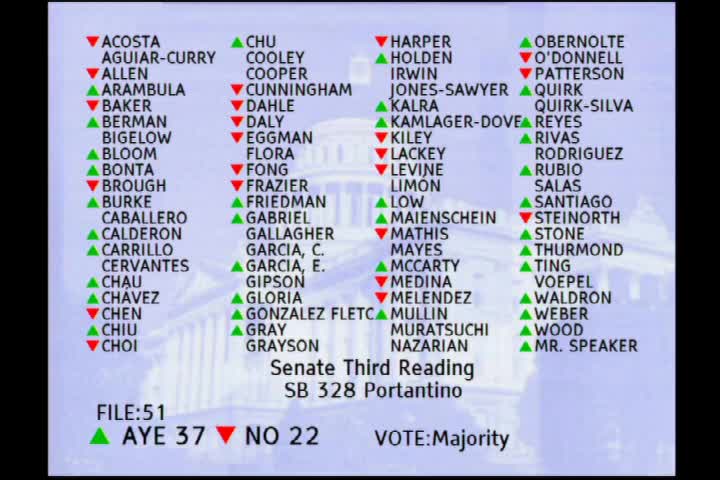 1MIN
Assembly Floor
 5MIN
Assembly Standing Committee on Housing and Community Development
 2MIN
Senate Floor
 1H
Senate Standing Committee on Appropriations
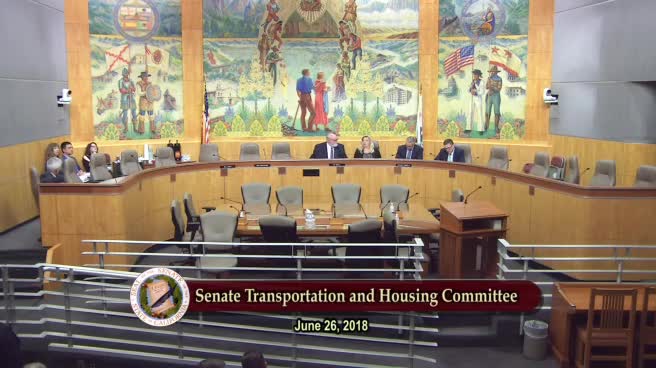 3MIN
Senate Standing Committee on Transportation and Housing
 2MIN
Assembly Floor
 3MIN
Assembly Standing Committee on Housing and Community Development
Bill Author

Bill Co-Author(s):