AB 574: Potable reuse.
- Session Year: 2017-2018
- House: Assembly
- Latest Version Date: 2017-10-06
Existing law establishes the State Water Resources Control Board and the California regional water quality control boards as the principal state agencies with authority over matters relating to water quality. Existing law required the State Department of Public Health to, on or before December 31, 2013, adopt uniform water recycling criteria for indirect potable reuse for groundwater recharge. Existing law also required the department to develop and adopt uniform water recycling criteria for surface water augmentation, as defined, by December 31, 2016, if a specified expert panel found that the criteria would adequately protect public health, and required the department to investigate the feasibility of developing uniform water recycling criteria for direct potable reuse and to provide a final report on that investigation to the Legislature by December 31, 2016. Existing law defined the terms direct potable reuse and surface water augmentation for these purposes. Existing law transferred these powers and responsibilities to the State Water Resources Control Board on July 1, 2014.
This bill would specify that direct potable reuse includes raw water augmentation and treated drinking water augmentation. The bill would change the term surface water augmentation to reservoir water augmentation and would redefine that term to mean the planned placement of recycled water into a raw surface water reservoir used as a source of domestic drinking water supply for a public water system or into a constructed system conveying water to such a reservoir.
This bill would require the state board, on or before December 31, 2023, to adopt uniform water recycling criteria for direct potable reuse through raw water augmentation, as specified. The bill would require the state board to establish and administer an expert review panel, as specified, and would require the state board, before adopting the uniform water recycling criteria, to submit the proposed criteria to the expert review panel. The bill would prohibit the state board from adopting the uniform water recycling criteria until the expert review panel adopts a finding that the proposed criteria would adequately protect public health. The bill would allow the state board to extend the date by which the uniform water recycling criteria is to be adopted if certain criteria is met. The bill would authorize the state board, after it has adopted the initial uniform water recycling criteria, to reconvene or reestablish the expert review panel.
This bill would make certain findings and declarations relating to potable reuse, including a finding that the state board, on or before June 1, 2018, should establish a framework for the regulation of potable reuse projects.
Existing law establishes the State Water Resources Control Board and the California regional water quality control boards as the principal state agencies with authority over matters relating to water quality. Existing law required the State Department of Public Health to, on or before December 31, 2013, adopt uniform water recycling criteria for indirect potable reuse for groundwater recharge. Existing law also required the department to develop and adopt uniform water recycling criteria for surface water augmentation, as defined, by December 31, 2016, if a specified expert panel found that the criteria would adequately protect public health, and required the department to investigate the feasibility of developing uniform water recycling criteria for direct potable reuse and to provide a final report on that investigation to the Legislature by December 31, 2016. Existing law defined the terms direct potable reuse and surface water augmentation for these purposes. Existing law transferred these powers and responsibilities to the State Water Resources Control Board on July 1, 2014.
This bill would specify that direct potable reuse includes raw water augmentation and treated drinking water augmentation. The bill would change the term surface water augmentation to reservoir water augmentation and would redefine that term to mean the planned placement of recycled water into a raw surface water reservoir used as a source of domestic drinking water supply for a public water system or into a constructed system conveying water to such a reservoir.
TheThis bill would require the state board, on or before December 31, 2023, to adopt uniform water recycling criteria for direct potable reuse through raw water augmentation, as specified. The bill would require the state board to establish and administer an expert review panel, as specified, and would require the state board, before adopting the uniform water recycling criteria, to submit the proposed criteria to the expert review panel. The bill would prohibit the state board from adopting the uniform water recycling criteria until the expert review panel adopts a finding that the proposed criteria would adequately protect public health. The bill would allow the state board to extend the date by which the uniform water recycling criteria is to be adopted if certain criteria is met. The bill would authorize the state board, after it has adopted the initial uniform water recycling criteria, to reconvene or reestablish the expert review panel.
This bill would make certain findings and declarations relating to potable reuse, including a finding that the state board, on or before June 1, 2018, should establish a framework for the regulation of potable reuse projects.
Existing law establishes the State Water Resources Control Board and the California regional water quality control boards as the principal state agencies with authority over matters relating to water quality. Existing law required the State Department of Public Health to, on or before December 31, 2013, adopt uniform water recycling criteria for indirect potable reuse for groundwater recharge. Existing law also required the department to develop and adopt uniform water recycling criteria for surface water augmentation, as defined, by December 31, 2016, if a specified expert panel found that the criteria would adequately protect public health, and required the department to investigate the feasibility of developing uniform water recycling criteria for direct potable reuse and to provide a final report on that investigation to the Legislature by December 31, 2016. Existing law defined the terms direct potable reuse and surface water augmentation for these purposes. Existing law transferred these powers and responsibilities to the State Water Resources Control Board on July 1, 2014.
This bill would specify that direct potable reuse includes raw water augmentation and treated drinking water augmentation. The bill would change the term surface water augmentation to reservoir water augmentation and would redefine that term to mean the planned placement of recycled water into a raw surface water reservoir used as a source of domestic drinking water supply for a public water system or into a constructed system conveying water to such a reservoir.
The bill would require the state board, on or before December 31, 2022, 2023, to adopt uniform water recycling criteria for direct potable reuse through raw water augmentation, as specified. The bill would require the state board to establish and administer an expert review panel, as specified, and would require the state board, before adopting the uniform water recycling criteria, to submit the proposed criteria to the expert review panel. The bill would prohibit the state board from adopting the uniform water recycling criteria until the expert review panel adopts a finding that the proposed criteria would adequately protect public health. The bill would allow the state board to extend the date by which the uniform water recycling criteria is to be adopted if certain criteria is met.
This bill would make certain findings and declarations relating to potable reuse, including a finding that the state board, on or before June 1, 2018, should establish a framework for the regulation of potable reuse projects.
Existing law establishes the State Water Resources Control Board and the California regional water quality control boards as the principal state agencies with authority over matters relating to water quality. Existing law required the State Department of Public Health to, on or before December 31, 2013, adopt uniform water recycling criteria for indirect potable reuse for groundwater recharge. Existing law also required the department to develop and adopt uniform water recycling criteria for surface water augmentation, as defined, by December 31, 2016, if a specified expert panel found that the criteria would adequately protect public health, and required the department to investigate the feasibility of developing uniform water recycling criteria for direct potable reuse and to provide a final report on that investigation to the Legislature by December 31, 2016. Existing law defined the terms direct potable reuse, indirect potable reuse for groundwater recharge, reuse and surface water augmentation for these purposes. Existing law transferred these powers and responsibilities to the State Water Resources Control Board on July 1, 2014.
This bill would remove certain references to direct potable reuse, indirect potable reuse for groundwater recharge, and surface water augmentation, and would instead specify the four different types of potable reuse projects as groundwater augmentation, reservoir augmentation, specify that direct potable reuse includes raw water augmentation, augmentation and treated drinking water augmentation. The bill would change the term surface water augmentation to reservoir water augmentation and would redefine that term to mean the planned placement of recycled water into a raw surface water reservoir used as a source of domestic drinking water supply for a public water system or into a constructed system conveying water to such a reservoir.
The bill would require the state board, on or before December 31, 2021, 2022, to adopt uniform water recycling criteria for direct potable reuse through raw water augmentation, as specified, and specified. The bill would require the state board to establish and administer an expert review panel, as specified, and would require the state board, before adopting the uniform water recycling criteria, to submit the proposed criteria to the expert review panel. The bill would prohibit the state board from adopting the uniform water recycling criteria until the expert review panel adopts a finding that the proposed criteria would adequately protect public health. The bill would allow the state board to extend this the date by which the uniform water recycling criteria is to be adopted if certain criteria is met. The bill would permit the state board to adopt the uniform water recycling criteria as emergency regulations, as specified.
This bill would make certain findings and declarations relating to potable reuse, including a finding that the state board, on or before June 1, 2018, should establish a framework for the regulation of potable reuse projects.
Existing law establishes the State Water Resources Control Board and the California regional water quality control boards as the principal state agencies with authority over matters relating to water quality. Existing law required the State Department of Public Health to, on or before December 31, 2013, adopt uniform water recycling criteria for indirect potable reuse for groundwater recharge. Existing law also required the department to develop and adopt uniform water recycling criteria for surface water augmentation, as defined, by December 31, 2016, if a specified expert panel found that the criteria would adequately protect public health, and required the department to investigate the feasibility of developing uniform water recycling criteria for direct potable reuse and to provide a final report on that investigation to the Legislature by December 31, 2016. Existing law defined the terms direct potable reuse, indirect potable reuse for groundwater recharge, and surface water augmentation for these purposes. Existing law transferred these powers and responsibilities to the State Water Resources Control Board on July 1, 2014.
This bill would remove certain references to direct potable reuse, indirect potable reuse for groundwater recharge, and surface water augmentation, and would instead specify the four different types of potable reuse projects as groundwater augmentation, reservoir augmentation, raw water augmentation, and treated drinking water augmentation.
The bill would require the state board, on or before December 31, 2021, to adopt uniform water recycling criteria for potable reuse through raw water augmentation, as specified, and would allow the board to extend this date if certain criteria is met. The bill would permit the state board to adopt the uniform water recycling criteria as emergency regulations, as specified.
This bill would make certain findings and declarations relating to potable reuse, including a finding that the state board, on or before June 1, 2018, should establish a framework for the regulation of potable reuse projects.
Existing law establishes the State Water Resources Control Board and the California regional water quality control boards as the principal state agencies with authority over matters relating to water quality. Existing law required the State Department of Public Health to, on or before December 31, 2013, adopt uniform water recycling criteria for indirect potable reuse for groundwater recharge. Existing law also required the department to develop and adopt uniform water recycling criteria for surface water augmentation, as defined, by December 31, 2016, if a specified expert panel found that the criteria would adequately protect public health health, and required the department to investigate the feasibility of developing uniform water recycling criteria for direct potable reuse and to provide a final report on that investigation to the Legislature by December 31, 2016. Existing law defined the terms direct potable reuse, indirect potable reuse for groundwater recharge, and surface water augmentation for these purposes. Existing law transferred these powers and responsibilities to the State Water Resources Control Board on July 1, 2014.
This bill would remove certain references to direct potable reuse, indirect potable reuse for groundwater recharge, and surface water augmentation, and would instead specify the four different types of potable reuse projects as potable reuse through groundwater augmentation, potable reuse through reservoir augmentation, potable reuse through raw water augmentation, and potable reuse through treated water augmentation. groundwater augmentation, reservoir augmentation, raw water augmentation, and treated water augmentation.
The bill would require the state board, on or before June 1, 2018, to establish a framework for the regulation of potable reuse projects that includes specified elements. The bill would require the state board, on or before December 31, 2021, to adopt uniform water recycling criteria for potable reuse through raw water augmentation, as specified, and would allow the board to extend this date if certain criteria is met. The bill would permit the state board to adopt the uniform water recycling criteria as emergency regulations, as specified.
This bill would make certain findings and declarations relating to potable reuse. reuse, including a finding that the state board, on or before June 1, 2018, should establish a framework for the regulation of potable reuse projects.
Existing law establishes the State Water Resources Control Board and the California regional water quality control boards as the principal state agencies with authority over matters relating to water quality. Existing law required the State Department of Public Health to, on or before December 31, 2013, adopt uniform water recycling criteria for indirect potable reuse for groundwater recharge. Existing law also required the department to develop and adopt uniform water recycling criteria for surface water augmentation, as defined, by December 31, 2016, if a specified expert panel found that the criteria would adequately protect public health and required the department to investigate the feasibility of developing uniform water recycling criteria for direct potable reuse and to provide a final report on that investigation to the Legislature by December 31, 2016. Existing law defined the terms direct potable reuse, indirect potable reuse for groundwater recharge, and surface water augmentation for these purposes. Existing law transferred these powers and responsibilities to the State Water Resources Control Board on July 1, 2014.
This bill would remove certain references to direct potable reuse, indirect potable reuse for groundwater recharge, and surface water augmentation, and would instead specify the four different types of potable reuse projects as potable reuse through groundwater augmentation, potable reuse through reservoir augmentation, potable reuse through raw water augmentation, and potable reuse through treated water augmentation.
The bill would require the state board, on or before June 1, 2018, to establish a framework for the regulation of potable reuse projects that includes specified elements. The bill would require the state board, on or before December 31, 2021, to adopt uniform water recycling criteria for potable reuse through raw water augmentation, as specified, and would allow the board to extend this date if certain criteria is met.
This bill would make certain findings and declarations relating to potable reuse.
The Legislature finds and declares the following:
(a)In February 2009, the state board unanimously adopted, as Resolution No. 2009-0011, an updated water recycling policy, which includes the goal of increasing the use of recycled water in the state over 2002 levels by at least 1,000,000 acre-feet per year by 2020 and by at least 2,000,000 acre-feet per year by 2030.
(b)Section 13521 requires the department to establish uniform statewide recycling criteria for each varying type of use of recycled water where the use involves the protection of public health.
(c)Achievement of the states goals depends on the timely development of uniform statewide recycling criteria for potable water reuse and of a clear pathway for approval of potable reuse projects.
(d)This chapter is not intended to delay, invalidate, or reverse any study or project, or development of regulations by the department, the state board, or the regional boards regarding the use of recycled water for potable reuse.
(e)This chapter shall not be construed to delay, invalidate, or reverse the state boards ongoing review of projects consistent with Section 116551 of the Health and Safety Code.
(f)The water recycling goals of 700,000 acre-feet of water per year by the year 2000 and 1,000,000 acre-feet of water per year by the year 2010, established in Section 13577, have not been met.
(g)It is the intent of the Legislature to encourage the development of potable reuse to mitigate the impact of long-term drought and climate change.
(h)A 2014 report by the WateReuse Research Foundation, The Opportunities and Economics of Direct Potable Reuse found that potable reuse could provide up to 1.1 million acre-feet per year of new drinking water supplies for California.
(i)The state board adopted uniform water recycling criteria for the replenishment of groundwater basins in June 2014 and is developing uniform water recycling criteria for the augmentation of surface water reservoirs pursuant to Section 13562.
(j)The state board report to the Legislature, Investigation on the Feasibility of Developing Uniform Water Recycling Criteria for Direct Potable Reuse, found that it is feasible to develop uniform water recycling criteria for direct potable reuse that is protective of public health.
(k)The state board report to the Legislature stated that the state board should develop a common framework across various types of direct potable reuse projects to help avoid discontinuities in the risk assessment and then sequentially develop uniform water recycling criteria.
SEC. 3.Section 13560.5 is added to the Water Code, to read:13560.5.The Legislature finds and declares that on or before June 1, 2018, the state board should establish a framework for the regulation of potable reuse projects. When establishing the framework, the state board should include all of the following:
(a)The consideration of recommendations provided in the state boards Investigation on the Feasibility of Developing Uniform Water Recycling Criteria for Direct Potable Reuse.
(b)A schedule for completing the recommended research described in Investigation on the Feasibility of Developing Uniform Water Recycling Criteria for Direct Potable Reuse.
(c)A regulatory framework for potable reuse projects that will be protective of public health.
(d)A process and timeline for updating, if necessary, uniform water recycling criteria for potable reuse through reservoir water augmentation.
SEC. 4.Section 13561 of the Water Code is amended to read:13561.For purposes of this chapter, the following terms have the following meanings:
(a)Department or state board means the State Water Resources Control Board.
(b)Direct potable reuse means the planned introduction of recycled water either directly into a public water system, as defined in Section 116275 of the Health and Safety Code, or into a raw water supply immediately upstream of a water treatment plant. Direct potable reuse includes, but is not limited to, the following:
(1)Raw water augmentation, which means the planned placement of recycled water into a system of pipelines or aqueducts that deliver raw water to a drinking water treatment plant that provides water to a public water system, as defined in Section 116275 of the Health and Safety Code.
(2)Treated drinking water augmentation, means the planned placement of recycled water into the water distribution system of a public water system, as defined in Section 116275 of the Health and Safety Code.
(c)Indirect potable reuse for groundwater recharge means the planned use of recycled water for replenishment of a groundwater basin or an aquifer that has been designated as a source of water supply for a public water system, as defined in Section 116275 of the Health and Safety Code.
(d)Reservoir water augmentation means the planned placement of recycled water into a raw surface water reservoir used as a source of domestic drinking water supply for a public water system, as defined in Section 116275 of the Health and Safety Code, or into a constructed system conveying water to such a reservoir.
(e)Uniform water recycling criteria has the same meaning as in Section 13521.
SEC. 5.Section 13561.2 is added to the Water Code, to read:13561.2.(a)On or before December 31, 2023, the state board shall adopt uniform water recycling criteria for direct potable reuse through raw water augmentation. In adopting the initial uniform recycling criteria for direct potable reuse through raw water augmentation, the state board shall comply with all of the following:
(1)The state board shall develop the uniform water recycling criteria for direct potable reuse through raw water augmentation using information from the recommended research described in subdivision (b) of Section 13560.5 after soliciting stakeholder input from water agencies, wastewater agencies, local public health officers, environmental organizations, environmental justice organizations, public health nongovernmental organizations, and the business community.
(2)Before adopting uniform water recycling criteria for raw water augmentation, the state board shall submit the proposed criteria to the expert review panel established pursuant to subdivision (c). The expert review panel shall review the proposed criteria and shall adopt a finding as to whether, in its expert opinion, the proposed criteria would adequately protect public health.
(3)The state board shall not adopt uniform water recycling criteria for raw water augmentation pursuant to this subdivision unless and until the expert review panel adopts a finding that the proposed criteria would adequately protect public health.
(4)If the state board finds it will be unable to adopt the uniform water recycling criteria by December 31, 2023, the state board may, by June 30, 2023, extend the uniform water recycling criteria deadline by up to 18 months.
(5)If the state board finds that it needs longer than the deadline that has been extended pursuant to paragraph (4), the state board shall do all of the following:
(A)Post on its Internet Web site the date by which it intends to adopt the uniform water recycling criteria.
(B)If the state board determines that the recommended research described in subdivision (b) of Section 13560.5 is insufficient, consult with the expert review panel described in subdivision (c) regarding the research and, if necessary, the need for additional scientific and technical research. The expert review panel shall also determine the scientific and technical research necessary for the state board to complete the uniform water recycling criteria, including an estimated timeframe needed to conduct the scientific and technical research.
(C)No later than June 30, 2024, post on its Internet Web site the findings and determinations made, if any, by the expert review panel described in subdivision (c) under subparagraph (B).
(b)Nothing in this section shall prohibit the state board from using its existing authority to permit potable reuse projects pursuant to Section 116550 of the Health and Safety Code before the adoption of uniform recycling criteria pursuant to this section.
(c)(1)Before adopting the initial uniform water recycling criteria for direct potable reuse through raw water augmentation, the state board shall establish and administer an expert review panel for purposes of subdivision (a) and, if the state board deems it necessary, to provide additional scientific and technological research or to recommend a source of either existing research or research to be produced on direct potable reuse through raw water augmentation. After the state board has adopted the initial uniform water recycling criteria for raw water augmentation, the state board may reconvene or reestablish the expert review panel, if the state board deems it necessary, to provide additional scientific and technological research or to recommend a source of either existing research or research to be produced on raw water augmentation. In establishing and administering an expert review panel, the state board may contract with public or nonprofit research entities.
(2)Each member of the expert review panel shall receive one hundred dollars ($100) for each day the member attends a meeting of the expert review panel or of the state board plus actual and necessary travel expenses, including expenses for lodging and meals, and for each day the member spends conducting other official business of the expert review panel.
The Legislature finds and declares the following:
(a)In February 2009, the state board unanimously adopted, as Resolution No. 2009-0011, an updated water recycling policy, which includes the goal of increasing the use of recycled water in the state over 2002 levels by at least 1,000,000 acre-feet per year by 2020 and by at least 2,000,000 acre-feet per year by 2030.
(b)Section 13521 requires the department to establish uniform statewide recycling criteria for each varying type of use of recycled water where the use involves the protection of public health.
(c)Achievement of the states goals depends on the timely development of uniform statewide recycling criteria for potable water reuse and of a clear pathway for approval of potable reuse projects.
(d)This chapter is not intended to delay, invalidate, or reverse any study or project, or development of regulations by the department, the state board, or the regional boards regarding the use of recycled water for potable reuse.
(e)This chapter shall not be construed to delay, invalidate, or reverse the state boards ongoing review of projects consistent with Section 116551 of the Health and Safety Code.
(f)The water recycling goals of 700,000 acre-feet of water per year by the year 2000 and 1,000,000 acre-feet of water per year by the year 2010, established in Section 13577, have not been met.
(g)It is the intent of the Legislature to encourage the development of potable reuse to mitigate the impact of long-term drought and climate change.
(h)A 2014 report by the WateReuse Research Foundation, The Opportunities and Economics of Direct Potable Reuse found that potable reuse could provide up to 1.1 million acre-feet per year of new drinking water supplies for California.
(i)The state board adopted uniform water recycling criteria for the replenishment of groundwater basins in June 2014 and is developing uniform water recycling criteria for the augmentation of surface water reservoirs pursuant to Section 13562.
(j)The state board report to the Legislature, Investigation on the Feasibility of Developing Uniform Water Recycling Criteria for Direct Potable Reuse, found that it is feasible to develop uniform water recycling criteria for direct potable reuse that is protective of public health.
(k)The state board report to the Legislature stated that the state board should develop a common framework across various types of direct potable reuse projects to help avoid discontinuities in the risk assessment and then sequentially develop uniform water recycling criteria.
SEC. 3.Section 13560.5 is added to the Water Code, to read:13560.5.The Legislature finds and declares that on or before June 1, 2018, the state board should establish a framework for the regulation of potable reuse projects. When establishing the framework, the state board should include all of the following:
(a)The consideration of recommendations provided in the state boards Investigation on the Feasibility of Developing Uniform Water Recycling Criteria for Direct Potable Reuse.
(b)A schedule for completing the recommended research described in Investigation on the Feasibility of Developing Uniform Water Recycling Criteria for Direct Potable Reuse.
(c)A regulatory framework for potable reuse projects that will be protective of public health.
(d)A process and timeline for updating, if necessary, uniform water recycling criteria for potable reuse through reservoir water augmentation.
SEC. 4.Section 13561 of the Water Code is amended to read:13561.For purposes of this chapter, the following terms have the following meanings:
(a)Department or state board means the State Water Resources Control Board.
(b)Direct potable reuse means the planned introduction of recycled water either directly into a public water system, as defined in Section 116275 of the Health and Safety Code, or into a raw water supply immediately upstream of a water treatment plant. Direct potable reuse includes, but is not limited to, the following:
(1)Raw water augmentation, which means the planned placement of recycled water into a system of pipelines or aqueducts that deliver raw water to a drinking water treatment plant that provides water to a public water system, as defined in Section 116275 of the Health and Safety Code.
(2)Treated drinking water augmentation, means the planned placement of recycled water into the water distribution system of a public water system, as defined in Section 116275 of the Health and Safety Code.
(c)Indirect potable reuse for groundwater recharge means the planned use of recycled water for replenishment of a groundwater basin or an aquifer that has been designated as a source of water supply for a public water system, as defined in Section 116275 of the Health and Safety Code.
(d)Reservoir water augmentation means the planned placement of recycled water into a raw surface water reservoir used as a source of domestic drinking water supply for a public water system, as defined in Section 116275 of the Health and Safety Code, or into a constructed system conveying water to such a reservoir.
(e)Uniform water recycling criteria has the same meaning as in Section 13521.
SEC. 5.Section 13561.2 is added to the Water Code, to read:13561.2.(a)On or before December 31, 2023, the state board shall adopt uniform water recycling criteria for direct potable reuse through raw water augmentation. In adopting the initial uniform recycling criteria for direct potable reuse through raw water augmentation, the state board shall comply with all of the following:
(1)The state board shall develop the uniform water recycling criteria for direct potable reuse through raw water augmentation using information from the recommended research described in subdivision (b) of Section 13560.5 after soliciting stakeholder input from water agencies, wastewater agencies, local public health officers, environmental organizations, environmental justice organizations, public health nongovernmental organizations, and the business community.
(2)Before adopting uniform water recycling criteria for raw water augmentation, the state board shall submit the proposed criteria to the expert review panel established pursuant to subdivision (c). The expert review panel shall review the proposed criteria and shall adopt a finding as to whether, in its expert opinion, the proposed criteria would adequately protect public health.
(3)The state board shall not adopt uniform water recycling criteria for raw water augmentation pursuant to this subdivision unless and until the expert review panel adopts a finding that the proposed criteria would adequately protect public health.
(4)If the state board finds it will be unable to adopt the uniform water recycling criteria by December 31, 2023, the state board may, by June 30, 2023, extend the uniform water recycling criteria deadline by up to 18 months.
(5)If the state board finds that it needs longer than the deadline that has been extended pursuant to paragraph (4), the state board shall do all of the following:
(A)Post on its Internet Web site the date by which it intends to adopt the uniform water recycling criteria.
(B)If the state board determines that the recommended research described in subdivision (b) of Section 13560.5 is insufficient, consult with the expert review panel described in subdivision (c) regarding the research and, if necessary, the need for additional scientific and technical research. The expert review panel shall also determine the scientific and technical research necessary for the state board to complete the uniform water recycling criteria, including an estimated timeframe needed to conduct the scientific and technical research.
(C)No later than June 30, 2024, post on its Internet Web site the findings and determinations made, if any, by the expert review panel described in subdivision (c) under subparagraph (B).
(b)Nothing in this section shall prohibit the state board from using its existing authority to permit potable reuse projects pursuant to Section 116550 of the Health and Safety Code before the adoption of uniform recycling criteria pursuant to this section.
(c)The (1)Before adopting the initial uniform water recycling criteria for direct potable reuse through raw water augmentation, the state board shall establish and administer an expert review panel for purposes of subdivision (a) and, if the state board deems it necessary, to provide additional scientific and technological research or to recommend a source of either existing research or research to be produced on direct potable reuse through raw water augmentation. After the state board has adopted the initial uniform water recycling criteria for raw water augmentation, the state board may reconvene or reestablish the expert review panel, if the state board deems it necessary, to provide additional scientific and technological research or to recommend a source of either existing research or research to be produced on raw water augmentation. In establishing the and administering an expert review panel, the state board may contract with public or private nonprofit research entities.
(2)Each member of the expert review panel shall receive one hundred dollars ($100) for each day the member attends a meeting of the expert review panel or of the state board plus actual and necessary travel expenses, including expenses for lodging and meals, and for each day the member spends conducting other official business of the expert review panel.
The Legislature finds and declares the following:
(a)In February 2009, the state board unanimously adopted, as Resolution No. 2009-0011, an updated water recycling policy, which includes the goal of increasing the use of recycled water in the state over 2002 levels by at least 1,000,000 acre-feet per year by 2020 and by at least 2,000,000 acre-feet per year by 2030.
(b)Section 13521 requires the department to establish uniform statewide recycling criteria for each varying type of use of recycled water where the use involves the protection of public health.
(c)Achievement of the states goals depends on the timely development of uniform statewide recycling criteria for potable water reuse and of a clear pathway for approval of potable reuse projects.
(d)This chapter is not intended to delay, invalidate, or reverse any study or project, or development of regulations by the department, the state board, or the regional boards regarding the use of recycled water for potable reuse.
(e)This chapter shall not be construed to delay, invalidate, or reverse the state boards ongoing review of projects consistent with Section 116551 of the Health and Safety Code.
(f)The water recycling goals of 700,000 acre-feet of water per year by the year 2000 and 1,000,000 acre-feet of water per year by the year 2010, established in Section 13577, have not been met.
(g)It is the intent of the Legislature to encourage the development of potable reuse to mitigate the impact of long-term drought and climate change.
(h)A 2014 report by the WateReuse Research Foundation, The Opportunities and Economics of Direct Potable Reuse found that potable reuse could provide up to 1.1 million acre-feet per year of new drinking water supplies for California.
(i)The state board adopted uniform water recycling criteria for the replenishment of groundwater basins in June 2014 and is developing uniform water recycling criteria for the augmentation of surface water reservoirs pursuant to Section 13562.
(j)The state board report to the Legislature, Investigation on the Feasibility of Developing Uniform Water Recycling Criteria for Direct Potable Reuse, found that it is feasible to develop uniform water recycling criteria for direct potable reuse that is protective of public health.
(k)The state board report to the Legislature stated that the state board should develop a common framework across various types of direct potable reuse projects to help avoid discontinuities in the risk assessment and then sequentially develop uniform water recycling criteria.
SEC. 3.Section 13560.5 is added to the Water Code, to read:13560.5.The Legislature finds and declares that on or before June 1, 2018, the state board should establish a framework for the regulation of potable reuse projects. When establishing the framework, the state board should include all of the following:
(a)The consideration of recommendations provided in the state boards Investigation on the Feasibility of Developing Uniform Water Recycling Criteria for Direct Potable Reuse.
(b)A schedule for completing the recommended research described in Investigation on the Feasibility of Developing Uniform Water Recycling Criteria for Direct Potable Reuse.
(c)A regulatory framework for potable reuse projects that will be protective of public health.
(d)A process and timeline for updating, if necessary, uniform water recycling criteria for potable reuse through reservoir water augmentation.
SEC. 4.Section 13561 of the Water Code is amended to read:13561.For purposes of this chapter, the following terms have the following meanings:
(a)Department or state board means the State Water Resources Control Board.
(b)Direct potable reuse means the planned introduction of recycled water either directly into a public water system, as defined in Section 116275 of the Health and Safety Code, or into a raw water supply immediately upstream of a water treatment plant. Direct potable reuse includes, but is not limited to, the following:
(1)Raw water augmentation, which means the planned placement of recycled water into a system of pipelines or aqueducts that deliver raw water to a drinking water treatment plant that provides water to a public water system, as defined in Section 116275 of the Health and Safety Code.
(2)Treated drinking water augmentation, means the planned placement of recycled water into the water distribution system of a public water system, as defined in Section 116275 of the Health and Safety Code.
(c)Indirect potable reuse for groundwater recharge means the planned use of recycled water for replenishment of a groundwater basin or an aquifer that has been designated as a source of water supply for a public water system, as defined in Section 116275 of the Health and Safety Code.
(d)Reservoir water augmentation means the planned placement of recycled water into a raw surface water reservoir used as a source of domestic drinking water supply for a public water system, as defined in Section 116275 of the Health and Safety Code, or into a constructed system conveying water to such a reservoir.
(e)Uniform water recycling criteria has the same meaning as in Section 13521.
SEC. 5.Section 13561.2 is added to the Water Code, to read:13561.2.(a)(1)On or before December 31, 2022, 2023, the state board shall adopt uniform water recycling criteria for direct potable reuse through raw water augmentation. The In adopting the initial uniform recycling criteria for direct potable reuse through raw water augmentation, the state board shall comply with all of the following:
(1)The state board shall develop the uniform water recycling criteria for direct potable reuse through raw water augmentation using information from the recommended research described in subdivision (c) (b) of Section 13560.5 after soliciting stakeholder input from water agencies, wastewater agencies, local public health officers, environmental organizations, environmental justice organizations, public health nongovernmental organizations, and the business community.
(2)Before adopting uniform water recycling criteria for raw water augmentation, the state board shall submit the proposed criteria to the expert review panel established pursuant to subdivision (c). The expert review panel shall review the proposed criteria and shall adopt a finding as to whether, in its expert opinion, the proposed criteria would adequately protect public health.
(3)The state board shall not adopt uniform water recycling criteria for raw water augmentation pursuant to paragraph (1) this subdivision unless and until the expert review panel adopts a finding that the proposed criteria would adequately protect public health.
(4)If the state board finds it will be unable to adopt the uniform water recycling criteria by December 31, 2022, 2023, the state board may, by June 30, 2022, 30, 2023, extend the uniform water recycling criteria deadline by up to 18 months.
(5)If the state board finds that it needs longer than the deadline that has been extended pursuant to paragraph (4), the state board shall do all of the following:
(A)Post on its Internet Web site the date by which it intends to adopt the uniform water recycling criteria.
(B)If the state board determines that the recommended research described in subdivision (c) (b) of Section 13560.5 is insufficient, consult with the expert review panel described in subdivision (c) regarding the research and, if necessary, the need for additional scientific and technical research. The expert review panel shall also make the following determinations:
(i)The determine the scientific and technical research necessary for the state board to complete the uniform water recycling criteria. criteria, including an estimated timeframe needed to conduct the scientific and technical research.
(ii)A revised completion date for the state board to complete the uniform water recycling criteria, based on the need for additional scientific and technical research.(C)No later than June 30, 2024, post on its Internet Web site the findings and determinations made, if any, by the expert review panel described in subdivision (c) under clauses (i) and (ii) of subparagraph (B).
(b)Nothing in this section shall prohibit the state board from using its existing authority to permit potable reuse projects pursuant to Section 116550 of the Health and Safety Code before the adoption of uniform recycling criteria pursuant to this section.
(c)The state board shall establish and administer an expert review panel to provide additional scientific and technological research or to recommend a source of either existing research or research to be produced on direct potable reuse through raw water augmentation. In establishing the expert review panel, the state board may contract with public or private entities.
The Legislature finds and declares the following:
(a)In February 2009, the state board unanimously adopted, as Resolution No. 2009-0011, an updated water recycling policy, which includes the goal of increasing the use of recycled water in the state over 2002 levels by at least 1,000,000 acre-feet per year by 2020 and by at least 2,000,000 acre-feet per year by 2030.
(b)Section 13521 requires the department to establish uniform statewide recycling criteria for each varying type of use of recycled water where the use involves the protection of public health.
(c)Achievement of the states goals depends on the timely development of uniform statewide recycling criteria for potable water reuse and of a clear pathway for approval of potable reuse projects.
(d)This chapter is not intended to delay, invalidate, or reverse any study or project, or development of regulations by the department, the state board, or the regional boards regarding the use of recycled water for potable reuse.
(e)This chapter shall not be construed to delay, invalidate, or reverse the state boards ongoing review of projects consistent with Section 116551 of the Health and Safety Code.
(f)The water recycling goals of 700,000 acre-feet of water per year by the year 2000 and 1,000,000 acre-feet of water per year by the year 2010, established in Section 13577, have not been met.
(g)It is the intent of the Legislature to encourage the development of potable reuse to mitigate the impact of long-term drought and climate change.
(h)A 2014 report by the WateReuse Research Foundation, The Opportunities and Economics of Direct Potable Reuse found that potable reuse could provide up to 1.1 million acre-feet per year of new drinking water supplies for California.
(i)The state board adopted uniform water recycling criteria for the replenishment of groundwater basins in June 2014 and is developing uniform water recycling criteria for the augmentation of surface water reservoirs pursuant to Section 13562.
(j)The state board report to the Legislature, Investigation on the Feasibility of Developing Uniform Water Recycling Criteria for Direct Potable Reuse, found that it is feasible to develop uniform water recycling criteria for direct potable reuse that is protective of public health.
(k)The state board report to the Legislature stated that the state board should develop a common framework across various types of direct potable reuse projects to help avoid discontinuities in the risk assessment and then sequentially develop uniform water recycling criteria.
SEC. 3.Section 13560.5 is added to the Water Code, to read:13560.5.The Legislature finds and declares that on or before June 1, 2018, the state board should establish a framework for the regulation of potable reuse projects. When establishing the framework, the state board should include all of the following:
(a)The consideration of recommendations provided in the state boards Investigation on the Feasibility of Developing Uniform Water Recycling Criteria for Direct Potable Reuse.
(b)A schedule for completing the recommended research described in Investigation on the Feasibility of Developing Uniform Water Recycling Criteria for Direct Potable Reuse.
(c)A regulatory framework for potable reuse projects that will be protective of public health.
(d)A process and timeline for updating, if necessary, uniform water recycling criteria for potable reuse through reservoir water augmentation.
SEC. 4.Section 13561 of the Water Code is amended to read:13561.For purposes of this chapter, the following terms have the following meanings:(a)Department or state board means the State Water Resources Control Board.(b)Potable reuse means the planned use of municipal wastewater that has gone through multiple barrier treatment processes to produce or supplement a drinking water supply that has at least an equivalent level of public health protection as other sources of water supply permitted under the California Safe Drinking Water Act (Chapter 4 (commencing with Section 116270) of Part 12 of Division 104 of the Health and Safety Code). A potable reuse project is any one of the following:(1)Groundwater augmentation means the planned placement of recycled water for replenishment of a groundwater basin or an aquifer that has been designated as the source of water supply for a public water system, as defined in Section 116275 of the Health and Safety Code.(2)Reservoir augmentation means the planned placement of recycled water into a raw surface water reservoir used as a source of domestic drinking water supply for a public water system, as defined in Section 116275 of the Health and Safety Code, or into a constructed system conveying water to such a reservoir.(3)Raw water augmentation means the planned placement of recycled water into a system of pipelines or aqueducts that deliver raw water to a drinking water treatment plant that provides water to a public water system, as defined in Section 116275 of the Health and Safety Code.(4)Treated drinking water augmentation means the planned placement of recycled water into the water distribution system of a public water system, as defined in Section 116275 of the Health and Safety Code.(c)Uniform water recycling criteria has the same meaning as in Section 13521.SEC. 4.Section 13561 of the Water Code is amended to read:13561.For purposes of this chapter, the following terms have the following meanings:
(a)Department or state board means the State Department of Public Health. Water Resources Control Board.
(b)Direct potable reuse means the planned introduction of recycled water either directly into a public water system, as defined in Section 116275 of the Health and Safety Code, or into a raw water supply immediately upstream of a water treatment plant. Direct potable reuse includes, but is not limited to, the following:
(1)Raw water augmentation, which means the planned placement of recycled water into a system of pipelines or aqueducts that deliver raw water to a drinking water treatment plant that provides water to a public water system, as defined in Section 116275 of the Health and Safety Code.
(2)Treated drinking water augmentation, means the planned placement of recycled water into the water distribution system of a public water system, as defined in Section 116275 of the Health and Safety Code.
(c)Indirect potable reuse for groundwater recharge means the planned use of recycled water for replenishment of a groundwater basin or an aquifer that has been designated as a source of water supply for a public water system, as defined in Section 116275 of the Health and Safety Code.
(d)Surface Reservoir water augmentation means the planned placement of recycled water into a raw surface water reservoir used as a source of domestic drinking water supply. supply for a public water system, as defined in Section 116275 of the Health and Safety Code, or into a constructed system conveying water to such a reservoir.
(e)Uniform water recycling criteria has the same meaning as in Section 13521.
SEC. 5.Section 13561.2 is added to the Water Code, to read:13561.2.(a)(1)On or before December 31, 2021, 2022, the state board shall adopt uniform water recycling criteria for direct potable reuse through raw water augmentation. The state board shall develop the uniform water recycling criteria for direct potable reuse through raw water augmentation using information from the recommended research described in subdivision (c) of Section 13560.5 after soliciting stakeholder input from water agencies, wastewater agencies, local public health officers, environmental organizations, environmental justice organizations, public health nongovernmental organizations, and the business community.
(2)Before adopting uniform water recycling criteria for raw water augmentation, the state board shall submit the proposed criteria to the expert review panel established pursuant to subdivision (c). The expert review panel shall review the proposed criteria and shall adopt a finding as to whether, in its expert opinion, the proposed criteria would adequately protect public health.
(3)The state board shall not adopt uniform water recycling criteria for raw water augmentation pursuant to paragraph (1) unless and until the expert review panel adopts a finding that the proposed criteria would adequately protect public health.
(2)(4)If the state board finds that the recommended research described in subdivision (b) of Section 13560.5 is insufficient it will be unable to adopt the uniform water recycling criteria by December 31, 2021, 2022, the state board may, by June 30, 2021, 2022, extend the uniform water recycling criteria deadline by up to 18 months.
(3)(5)If the state board finds that it needs longer than the date specified in paragraph (2), deadline that has been extended pursuant to paragraph (4), the state board shall do both all of the following:
(A)Post on its Internet Web site the date by which it intends to adopt the uniform water recycling criteria.
(A)Consult(B)If the state board determines that the recommended research described in subdivision (c) of Section 13560.5 is insufficient, consult with an independent the expert review panel to determine why the additional 18-month extension cannot be met. described in subdivision (c) regarding the research and, if necessary, the need for additional scientific and technical research. The expert review panel shall also make the following determinations:
(i)The outstanding tasks scientific and technical research necessary for the state board to complete the uniform water recycling criteria.
(ii)A revised completion date for the state board to complete the uniform water recycling criteria. criteria, based on the need for additional scientific and technical research.
(B)(C)No later than December 31, 2021, submit to the Legislature June 30, 2024, post on its Internet Web site the findings and determinations made made, if any, by the independent expert review panel described in subdivision (c) under clauses (i) and (ii) of subparagraph (A). (B).
(b)Nothing in this section shall prohibit the state board from using its existing authority to permit potable reuse projects pursuant to Section 116550 of the Health and Safety Code before the adoption of uniform recycling criteria pursuant to this section.
(c)Regulations adopted by the state board pursuant to this section, and any amendment thereto, shall be adopted as emergency regulations in accordance with Chapter 3.5 (commencing with Section 11340) of Part 1 of Division 3 of Title 2 of the Government Code. The adoption of these regulations is an emergency and shall be considered by the Office of Administrative Law as necessary for the immediate preservation of the public peace, health, safety, and general welfare. Notwithstanding Chapter 3.5 (commencing with Section 11340) of Part 1 of Division 3 of Title 2 of the Government Code, any emergency regulations adopted by the state board shall remain in effect until revised by the state board. Before adopting the regulations under this section, the state board shall allow for public comment and hearing. The state board shall provide an opportunity for public review and comment on the proposed regulations for at least 60 days and shall consider public comments before adopting the regulations.(c)The state board shall establish and administer an expert review panel to provide additional scientific and technological research or to recommend a source of either existing research or research to be produced on direct potable reuse through raw water augmentation. In establishing the expert review panel, the state board may contract with public or private entities.
The Legislature finds and declares the following:
(a)In February 2009, the state board unanimously adopted, as Resolution No. 2009-0011, an updated water recycling policy, which includes the goal of increasing the use of recycled water in the state over 2002 levels by at least 1,000,000 acre-feet per year by 2020 and by at least 2,000,000 acre-feet per year by 2030.
(b)Section 13521 requires the department to establish uniform statewide recycling criteria for each varying type of use of recycled water where the use involves the protection of public health.
(c)Achievement of the states goals depends on the timely development of uniform statewide recycling criteria for potable water reuse and of a clear pathway for approval of potable reuse projects.
(d)This chapter is not intended to delay, invalidate, or reverse any study or project, or development of regulations by the department, the state board, or the regional boards regarding the use of recycled water for potable reuse.
(e)This chapter shall not be construed to delay, invalidate, or reverse the state boards ongoing review of projects consistent with Section 116551 of the Health and Safety Code.
(f)The water recycling goals of 700,000 acre-feet of water per year by the year 2000 and 1,000,000 acre-feet of water per year by the year 2010, established in Section 13577, have not been met.
(g)It is the intent of the Legislature to encourage the development of potable reuse to mitigate the impact of long-term drought and climate change.
(h)A 2014 report by the WateReuse Research Foundation, The Opportunities and Economics of Direct Potable Reuse found that potable reuse could provide up to 1.1 million acre-feet per year of new drinking water supplies for California.
(i)The state board adopted uniform water recycling criteria for the replenishment of groundwater basins in June 2014 and is developing uniform water recycling criteria for the augmentation of surface water reservoirs pursuant to Section 13562.
(j)The state board report to the Legislature, Investigation on the Feasibility of Developing Uniform Water Recycling Criteria for Direct Potable Reuse, found that it is feasible to develop uniform water recycling criteria for direct potable reuse that is protective of public health.
(k)The state board report to the Legislature stated that the state board should develop a common framework across various types of direct potable reuse projects to help avoid discontinuities in the risk assessment and then sequentially develop uniform water recycling criteria.
SEC. 3.Section 13560.5 is added to the Water Code, to read:13560.5.The Legislature finds and declares that on or before June 1, 2018, the state board should establish a framework for the regulation of potable reuse projects. When establishing the framework, the state board should include all of the following:
(a)The consideration of recommendations provided in the state boards Investigation on the Feasibility of Developing Uniform Water Recycling Criteria for Direct Potable Reuse.
(b)A schedule for completing the recommended research described in Investigation on the Feasibility of Developing Uniform Water Recycling Criteria for Direct Potable Reuse.
(c)A regulatory framework for potable reuse projects that will be protective of public health.
(d)A process and timeline for updating, if necessary, uniform water recycling criteria for potable reuse through reservoir augmentation.
SEC. 4.Section 13561 of the Water Code is amended to read:13561.For purposes of this chapter, the following terms have the following meanings:
(a)Department or state board means the State Water Resources Control Board.
(b)Potable reuse means the planned use of municipal wastewater that has gone through multiple barrier treatment processes to produce or supplement a drinking water supply that has at least an equivalent level of public health protection as other sources of water supply permitted under the California Safe Drinking Water Act (Chapter 4 (commencing with Section 116270) of Part 12 of Division 104 of the Health and Safety Code). A potable reuse project is any one of the following:
(1)Groundwater augmentation means the planned placement of recycled water for replenishment of a groundwater basin or an aquifer that has been designated as the source of water supply for a public water system, as defined in Section 116275 of the Health and Safety Code.
(2)Reservoir augmentation means the planned placement of recycled water into a raw surface water reservoir used as a source of domestic drinking water supply for a public water system, as defined in Section 116275 of the Health and Safety Code. Code, or into a constructed system conveying water to such a reservoir.
(3)Raw water augmentation means the planned placement of recycled water into a system of pipelines or aqueducts that deliver raw water to a drinking water treatment plan plant that provides water to a public water system, as defined in Section 116275 of the Health and Safety Code.
(4)Treated drinking water augmentation means the planned placement of recycled water into the water distribution system of a public water system, as defined in Section 116275 of the Health and Safety Code.
(c)Uniform water recycling criteria has the same meaning as in Section 13521.
SEC. 5.Section 13561.2 is added to the Water Code, to read:13561.2.(a)(1)On or before December 31, 2021, the state board shall adopt uniform water recycling criteria for potable reuse through raw water augmentation. The state board shall develop the uniform water recycling criteria for potable reuse through raw water augmentation after soliciting stakeholder input from water agencies, wastewater agencies, local public health officers, environmental organizations, environmental justice organizations, public health nongovernmental organizations, and the business community.
(2)If the state board finds that the recommended research described in subdivision (b) of Section 13560.5 is insufficient to adopt the uniform water recycling criteria by December 31, 2021, the state board may, by June 30, 2021, extend the uniform water recycling criteria deadline by up to 18 months.
(3)If the state board finds that it needs longer than the date specified in paragraph (2), the state board shall do both of the following:
(A)Consult with an independent expert review panel to determine why the additional 18-month extension cannot be met. The review panel shall also make the following determinations:
(i)The outstanding tasks necessary for the state board to complete the uniform water recycling criteria.
(ii)A revised completion date for the state board to complete the uniform water recycling criteria.
(B)No later than December 31, 2021, submit to the Legislature the findings and determinations made by the independent expert review panel under subparagraph (A).
(b)Nothing in this section shall prohibit the state board from using its existing authority to permit potable reuse projects pursuant to Section 116550 of the Health and Safety Code before the adoption of uniform recycling criteria pursuant to this section.
(c)Regulations adopted by the state board pursuant to this section, and any amendment thereto, shall be adopted as emergency regulations in accordance with Chapter 3.5 (commencing with Section 11340) of Part 1 of Division 3 of Title 2 of the Government Code. The adoption of these regulations is an emergency and shall be considered by the Office of Administrative Law as necessary for the immediate preservation of the public peace, health, safety, and general welfare. Notwithstanding Chapter 3.5 (commencing with Section 11340) of Part 1 of Division 3 of Title 2 of the Government Code, any emergency regulations adopted by the state board shall remain in effect until revised by the state board. Before adopting the regulations under this section, the state board shall allow for public comment and hearing. The state board shall provide an opportunity for public review and comment on the proposed regulations for at least 60 days and shall consider public comments before adopting the regulations.
The Legislature finds and declares the following:
(a)In February 2009, the state board unanimously adopted, as Resolution No. 2009-0011, an updated water recycling policy, which includes the goal of increasing the use of recycled water in the state over 2002 levels by at least 1,000,000 acre-feet per year by 2020 and by at least 2,000,000 acre-feet per year by 2030.
(b)Section 13521 requires the department to establish uniform statewide recycling criteria for each varying type of use of recycled water where the use involves the protection of public health.
(c)Achievement of the states goals depends on the timely development of uniform statewide recycling criteria for potable water reuse and of a clear pathway for approval of potable reuse projects.
(d)This chapter is not intended to delay, invalidate, or reverse any study or project, or development of regulations by the department, the state board, or the regional boards regarding the use of recycled water for potable reuse.
(e)This chapter shall not be construed to delay, invalidate, or reverse the state boards ongoing review of projects consistent with Section 116551 of the Health and Safety Code.
(f)The water recycling goals of 700,000 acre-feet of water per year by the year 2000 and 1,000,000 acre-feet of water per year by the year 2010, established in Section 13577, have not been met.
(g)It is the intent of the Legislature to encourage the development of potable reuse to mitigate the impact of long-term drought and climate change.
(h)A 2014 report by the WateReuse Research Foundation, The Opportunities and Economics of Direct Potable Reuse found that potable reuse could provide up to 1.1 million acre-feet per year of new drinking water supplies for California.
(i)The state board adopted uniform water recycling criteria for the replenishment of groundwater basins in June 2014 and is developing uniform water recycling criteria for the augmentation of surface water reservoirs pursuant to Section 13562.
(j)The state board report to the Legislature titled, Legislature, Investigation on the Feasibility of Developing Uniform Water Recycling Criteria for Direct Potable Reuse Reuse, found that it is feasible to develop uniform water recycling criteria for direct potable reuse that is protective of public health.
(k)The state board report to the Legislature stated that the state board should develop a common framework across various types of direct potable reuse projects to help avoid discontinuities in the risk assessment and then sequentially develop uniform water recycling criteria.
SEC. 3.Section 13560.5 is added to the Water Code, to read:13560.5.The Legislature finds and declares that on or before June 1, 2018, the state board should establish a framework for the regulation of potable reuse projects. When establishing the framework, the state board should include all of the following:
(a)The consideration of recommendations provided in the state boards Investigation on the Feasibility of Developing Uniform Water Recycling Criteria for Direct Potable Reuse.
(b)A schedule for completing the recommended research described in Investigation on the Feasibility of Developing Uniform Water Recycling Criteria for Direct Potable Reuse.
(c)A regulatory framework for potable reuse projects that will be protective of public health.
(d)A process and timeline for updating, if necessary, uniform water recycling criteria for potable reuse through reservoir augmentation.
SEC. 3. SEC. 4.Section 13561 of the Water Code is amended to read:13561.For purposes of this chapter, the following terms have the following meanings:
(a)Department or state board means the State Water Resources Control Board.
(b)Potable reuse means the planned treatment use of municipal wastewater that has gone through multiple barrier treatment processes to produce or supplement a drinking water supply that has at least an equivalent level of public health protection as other sources of water supply permitted under the California Safe Drinking Water Act (Chapter 4 (commencing with Section 116270) of Part 12 of Division 104 of the Health and Safety Code). A potable reuse project is any one of the following:
(1)Potable reuse through groundwater Groundwater augmentation means the planned use placement of recycled water for replenishment of a groundwater basin or an aquifer that has been designated as the source of water supply for a public water system, as defined in Section 116275 of the Health and Safety Code.
(2)Potable reuse through reservoir Reservoir augmentation means the planned placement of recycled water into a raw surface water reservoir used as a source of domestic drinking water supply for a public water system, as defined in Section 116275 of the Health and Safety Code.
(3)Potable reuse through raw water augmentation means the planned placement of recycled water into a raw or untreated water distribution system serving a public water system, as defined in Section 116275 of the Health and Safety Code, upstream of a drinking water treatment plant.(3)Raw water augmentation means the planned placement of recycled water into a system of pipelines or aqueducts that deliver raw water to a drinking water treatment plan that provides water to a public water system, as defined in Section 116275 of the Health and Safety Code.
(4)Potable reuse through treated Treated water augmentation means the planned introduction placement of recycled water into the treated water distribution system of a public water system, as defined in Section 116275 of the Health and Safety Code.
(c)Uniform water recycling criteria has the same meaning as in Section 13521.
SEC. 4. SEC. 5.Section 13561.2 is added to the Water Code, to read:13561.2.(a)On or before June 1, 2018, the state board shall establish a framework for the regulation of potable reuse projects. When establishing the framework, the state board shall include all of the following:(1)The consideration of the recommendations in the state boards Investigation on the Feasibility of Developing Uniform Water Recycling Criteria for Direct Potable Reuse.(2)A schedule for completing the recommended research described in the state boards report, Investigation on the Feasibility of Developing Uniform Water Recycling Criteria for Direct Potable Reuse.(3)A regulatory framework for potable reuse projects that will be protective of public health.(4)A process and timeline for updating, if necessary, uniform water recycling criteria for potable reuse through reservoir augmentation.(5)A declaration of the state boards authority to permit potable reuse projects pursuant to Section 116550 of the Health and Safety Code before the adoption of uniform recycling criteria pursuant to subdivision (b).(b)13561.2.(a)(1)On or before December 31, 2021, the state board shall adopt uniform water recycling criteria for potable reuse through raw water augmentation. The state board shall develop the uniform water recycling criteria after soliciting stakeholder input from water agencies, wastewater agencies, local public health officers, environmental organizations, environmental justice organizations, public health nongovernmental organizations, and the business community.
(2)If the state board finds that the recommended research described in paragraph (2) of subdivision (a) (b) of Section 13560.5 is insufficient to adopt the uniform water recycling criteria by December 31, 2021, the state board may, by June 30, 2021, extend the uniform water recycling criteria deadline by up to 18 months.
(3)If the state board finds that it needs longer than the date specified in paragraph (2), the state board shall do both of the following:
(A)Consult with an independent expert review panel to determine why the additional 18-month extension cannot be met. The review panel shall also make the following determinations:
(i)The outstanding tasks necessary for the state board to complete the uniform water recycling criteria.
(ii)A revised completion date for the state board to complete the uniform water recycling criteria.
(B)No later than December 31, 2021, submit to the Legislature the findings and determinations made by the independent expert review panel under subparagraph (A).
(b)Nothing in this section shall prohibit the state board from using its existing authority to permit potable reuse projects pursuant to Section 116550 of the Health and Safety Code before the adoption of uniform recycling criteria pursuant to this section.
(c)Regulations adopted by the state board pursuant to this section, and any amendment thereto, shall be adopted as emergency regulations in accordance with Chapter 3.5 (commencing with Section 11340) of Part 1 of Division 3 of Title 2 of the Government Code. The adoption of these regulations is an emergency and shall be considered by the Office of Administrative Law as necessary for the immediate preservation of the public peace, health, safety, and general welfare. Notwithstanding Chapter 3.5 (commencing with Section 11340) of Part 1 of Division 3 of Title 2 of the Government Code, any emergency regulations adopted by the state board shall remain in effect until revised by the state board. Before adopting the regulations under this section, the state board shall allow for public comment and hearing. The state board shall provide an opportunity for public review and comment on the proposed regulations for at least 60 days and shall consider public comments before adopting the regulations.
The Legislature finds and declares the following:
(a)In February 2009, the state board unanimously adopted, as Resolution No. 2009-0011, an updated water recycling policy, which includes the goal of increasing the use of recycled water in the state over 2002 levels by at least 1,000,000 acre-feet per year by 2020 and by at least 2,000,000 acre-feet per year by 2030.
(b)Section 13521 requires the department to establish uniform statewide recycling criteria for each varying type of use of recycled water where the use involves the protection of public health.
(c)The use of recycled water for indirect potable reuse is critical to achieving the state boards goals for increased use of recycled water in the state. If direct potable reuse can be demonstrated to be safe and feasible, implementing direct potable reuse would further aid in achieving the state boards recycling goals.(d)Although there has been much scientific research on public health issues associated with indirect potable reuse through groundwater recharge, there are a number of significant unanswered questions regarding indirect potable reuse through surface water augmentation and direct potable reuse.(e)(c)Achievement of the states goals depends on the timely development of uniform statewide recycling criteria for indirect and direct potable water reuse. reuse and of a clear pathway for approval of potable reuse projects.
(f)(d)This chapter is not intended to delay, invalidate, or reverse any study or project, or development of regulations by the department, the state board, or the regional boards regarding the use of recycled water for indirect potable reuse for groundwater recharge, surface water augmentation, or direct potable reuse.
(g)(e)This chapter shall not be construed to delay, invalidate, or reverse the departments state boards ongoing review of projects consistent with Section 116551 of the Health and Safety Code.
(f)The water recycling goals of 700,000 acre-feet of water per year by the year 2000 and 1,000,000 acre-feet of water per year by the year 2010, established in Section 13577, have not been met.
(g)It is the intent of the Legislature to encourage the development of potable reuse to mitigate the impact of long-term drought and climate change.
(h)A 2014 report by the WateReuse Research Foundation, The Opportunities and Economics of Direct Potable Reuse found that potable reuse could provide up to 1.1 million acre-feet per year of new drinking water supplies for California.
(i)The state board adopted uniform water recycling criteria for the replenishment of groundwater basins in June 2014 and is developing uniform water recycling criteria for the augmentation of surface water reservoirs pursuant to Section 13562.
(j)The state board report to the Legislature titled, Investigation on the Feasibility of Developing Uniform Water Recycling Criteria for Direct Potable Reuse found that it is feasible to develop uniform water recycling criteria for direct potable reuse that is protective of public health.
(k)The state board report to the Legislature stated that the state board should develop a common framework across various types of direct potable reuse projects to help avoid discontinuities in the risk assessment and then sequentially develop uniform water recycling criteria.
SEC. 3.Section 13561 of the Water Code is amended to read:13561.For purposes of this chapter, the following terms have the following meanings:
(a)Department or state board means the State Department of Public Health. Water Resources Control Board.
(b)Direct potable reuse means the planned introduction of recycled water either directly into a public water system, as defined in Section 116275 of the Health and Safety Code, or into a raw water supply immediately upstream of a water treatment plant.(c)Indirect potable reuse for groundwater recharge means the planned use of recycled water for replenishment of a groundwater basin or an aquifer that has been designated as a source of water supply for a public water system, as defined in Section 116275 of the Health and Safety Code.(d)Surface water augmentation means the planned placement of recycled water into a surface water reservoir used as a source of domestic drinking water supply.(b)Potable reuse means the planned treatment of municipal wastewater that has gone through multiple barrier treatment processes to produce or supplement a drinking water supply that has an equivalent level of public health protection as other sources of water supply permitted under the California Safe Drinking Water Act (Chapter 4 (commencing with Section 116270) of Part 12 of Division 104 of the Health and Safety Code). A potable reuse project is any one of the following:
(1)Potable reuse through groundwater augmentation means the planned use of recycled water for replenishment of a groundwater basin or an aquifer that has been designated as the source of water supply for a public water system, as defined in Section 116275 of the Health and Safety Code.
(2)Potable reuse through reservoir augmentation means the planned placement of recycled water into a raw surface water reservoir used as a source of domestic drinking water supply for a public water system, as defined in Section 116275 of the Health and Safety Code.
(3)Potable reuse through raw water augmentation means the planned placement of recycled water into a raw or untreated water distribution system serving a public water system, as defined in Section 116275 of the Health and Safety Code, upstream of a drinking water treatment plant.
(4)Potable reuse through treated water augmentation means the planned introduction of recycled water into the treated water distribution system of a public water system, as defined in Section 116275 of the Health and Safety Code.
(e)(c)Uniform water recycling criteria has the same meaning as in Section 13521.
SEC. 4.Section 13561.2 is added to the Water Code, to read:13561.2.(a)On or before June 1, 2018, the state board shall establish a framework for the regulation of potable reuse projects. When establishing the framework, the state board shall include all of the following:
(1)The consideration of the recommendations in the state boards Investigation on the Feasibility of Developing Uniform Water Recycling Criteria for Direct Potable Reuse.
(2)A schedule for completing the recommended research described in the state boards report, Investigation on the Feasibility of Developing Uniform Water Recycling Criteria for Direct Potable Reuse.
(3)A regulatory framework for potable reuse projects that will be protective of public health.
(4)A process and timeline for updating, if necessary, uniform water recycling criteria for potable reuse through reservoir augmentation.
(5)A declaration of the state boards authority to permit potable reuse projects pursuant to Section 116550 of the Health and Safety Code before the adoption of uniform recycling criteria pursuant to subdivision (b).
(b)(1)On or before December 31, 2021, the state board shall adopt uniform water recycling criteria for potable reuse through raw water augmentation. The state board shall develop the uniform water recycling criteria after soliciting stakeholder input from water agencies, wastewater agencies, local public health officers, environmental organizations, environmental justice organizations, public health nongovernmental organizations, and the business community.
(2)If the state board finds that the recommended research described in paragraph (2) of subdivision (a) is insufficient to adopt the uniform water recycling criteria by December 31, 2021, the state board may, by June 30, 2021, extend the uniform water recycling criteria deadline by up to 18 months.
(3)If the state board finds that it needs longer than the date specified in paragraph (2), the state board shall do both of the following:
(A)Consult with an independent expert review panel to determine why the additional 18-month extension cannot be met. The review panel shall also make the following determinations:
(i)The outstanding tasks necessary for the state board to complete the uniform water recycling criteria.
(ii)A revised completion date for the state board to complete the uniform water recycling criteria.
(B)No later than December 31, 2021, submit to the Legislature the findings and determinations made by the independent expert review panel under subparagraph (A).
|
Date
|
Status
|
|---|---|
| Oct 6, 2017 | Chaptered by Secretary of State - Chapter 528, Statutes of 2017. |
| Oct 6, 2017 | Approved by the Governor. |
| Sep 19, 2017 | Enrolled and presented to the Governor at 3 p.m. |
| Sep 11, 2017 | Senate amendments concurred in. To Engrossing and Enrolling. |
| Sep 6, 2017 | In Assembly. Concurrence in Senate amendments pending. May be considered on or after September 8 pursuant to Assembly Rule 77. |
| Sep 6, 2017 | Read third time. Passed. Ordered to the Assembly. |
| Sep 5, 2017 | Read second time. Ordered to third reading. |
| Sep 1, 2017 | From committee: Amend, and do pass as amended. (Ayes 7. Noes 0.) (September 1). |
| Aug 21, 2017 | In committee: Referred to APPR. suspense file. |
| Jul 13, 2017 | Withdrawn from committee. |
| Jul 12, 2017 | Read second time and amended. Re-referred to Com. on N.R. & W. |
| Jul 11, 2017 | From committee: Amend, and do pass as amended and re-refer to Com. on N.R. & W. (Ayes 7. Noes 0.) (July 5). |
| Jun 20, 2017 | From committee chair, with author's amendments: Amend, and re-refer to committee. Read second time, amended, and re-referred to Com. on EQ. |
| Jun 13, 2017 | In committee: Hearing postponed by committee. |
| Jun 8, 2017 | Referred to Coms. on EQ. and N.R. & W. |
| May 30, 2017 | In Senate. Read first time. To Com. on RLS. for assignment. |
| May 30, 2017 | Read third time. Passed. Ordered to the Senate. (Ayes 77. Noes 0. Page 1822.) |
| May 26, 2017 | From committee: Do pass. (Ayes 17. Noes 0.) (May 26). |
| May 3, 2017 | In committee: Set, first hearing. Referred to APPR. suspense file. |
| Apr 26, 2017 | From committee: Do pass and re-refer to Com. on APPR. (Ayes 15. Noes 0.) (April 25). Re-referred to Com. on APPR. |
| Apr 19, 2017 | Re-referred to Com. on W.,P., & W. |
| Apr 18, 2017 | From committee chair, with author's amendments: Amend, and re-refer to Com. on W.,P., & W. Read second time and amended. |
| Apr 5, 2017 | From committee: Do pass and re-refer to Com. on W.,P., & W. (Ayes 7. Noes 0.) (April 4). Re-referred to Com. on W.,P., & W. |
| Mar 27, 2017 | Re-referred to Com. on E.S. & T.M. |
| Mar 23, 2017 | From committee chair, with author's amendments: Amend, and re-refer to Com. on E.S. & T.M. Read second time and amended. |
| Feb 27, 2017 | Referred to Coms. on E.S. & T.M. and W.,P., & W. |
| Feb 15, 2017 | From printer. May be heard in committee March 17. |
| Feb 14, 2017 | Read first time. To print. |
|
Date
|
Description
|
Location
|
Votes
|
|
|---|---|---|---|---|
| Sep 11, 2017 | AB 574 QUIRK Concurrence in Senate Amendments | Assembly Floor |
Passed |
|
| Sep 6, 2017 | Assembly 3rd Reading AB574 Quirk By Hertzberg | Senate Floor |
Passed |
|
| Sep 1, 2017 | Do pass as amended | Senate Standing Committee on Appropriations |
Passed |
|
| Aug 21, 2017 | Placed on suspense file | Senate Standing Committee on Appropriations |
Passed |
|
| Jul 5, 2017 | Do pass as amended, but first amend, and re-refer to the Committee on [Natural Resources and Water] | Senate Standing Committee on Environmental Quality |
Passed |
|
| May 30, 2017 | AB 574 QUIRK Assembly Third Reading | Assembly Floor |
Passed |
|
| May 26, 2017 | Do pass. | Assembly Standing Committee on Appropriations |
Passed |
|
| Apr 25, 2017 | Do pass and be re-referred to the Committee on [Appropriations] | Assembly Standing Committee on Water, Parks, and Wildlife |
Passed |
|
| Apr 4, 2017 | Do pass and be re-referred to the Committee on [Water, Parks, and Wildlife] | Assembly Standing Committee on Environmental Safety and Toxic Materials |
Passed |
This list shows positions taken on this bill by organizations on the date displayed, which is linked to the original source.
Positions by individuals are not included.
|
Organization
|
Position
|
Date
|
|---|---|---|
| Association Of California Water Agencies | ** Support | Sep 4, 2017 |
| Azul | ** Support | Sep 4, 2017 |
| CalDesal | ** Support | Sep 4, 2017 |
| California Association Of Sanitation Agencies | ** Support | Sep 4, 2017 |
| California Coastal Protection Network | ** Support | Sep 4, 2017 |
| California Coastkeeper Alliance | ** Support | Sep 4, 2017 |
| California Groundwater Coalition | ** Support | Sep 4, 2017 |
| California League Of Conservation Voters | ** Support | Sep 4, 2017 |
| California Municipal Utilities Association | ** Support | Sep 4, 2017 |
| California Municipal Utilities Association City of Oceanside | ** Support | Apr 21, 2017 |
| Carlsbad Municipal Water District | ** Support | Sep 4, 2017 |
| city of escondido | ** Support | Jul 3, 2017 |
| City Of Los Angeles | ** Support | Jul 3, 2017 |
| City of Oceanside | ** Support | Jul 3, 2017 |
| City Of San Diego | ** Support | Jul 3, 2017 |
| City of Santa Barbara | ** Support | Jul 3, 2017 |
| City of Santa Monica | ** Support | Jul 3, 2017 |
| City of Torrance | ** Support | Jul 3, 2017 |
| Clean Water Action | ** Support | Sep 4, 2017 |
| Clean Water Fund | ** Support | Sep 4, 2017 |
| Coastal Environmental Rights Foundation | ** Support | Sep 4, 2017 |
| Contra Costa Water District | ** Support | Sep 4, 2017 |
| Delta Diablo | ** Support | Sep 4, 2017 |
| Desal Response Group | ** Support | Apr 21, 2017 |
| Dublin San Ramon Services District | ** Support | Sep 4, 2017 |
| East Bay Municipal Utility District | ** Support | Sep 4, 2017 |
| Eastern Municipal Water District | ** Support | Sep 4, 2017 |
| Ecological Rights Foundation | ** Support | Sep 4, 2017 |
| El Dorado Irrigation District | ** Support | Sep 4, 2017 |
| Groundwater Resources Association Of California | ** Support | Sep 4, 2017 |
| Heal The Bay | ** Support | Sep 4, 2017 |
| Heal the Ocean | ** Support | Sep 4, 2017 |
| Inland Empire Utilities Agency | ** Support | Sep 4, 2017 |
| inland empire water keeper | ** Support | Sep 4, 2017 |
| Irvine Ranch Water District | ** Support | Sep 4, 2017 |
| Las Gallinas Valley Sanitary District | ** Support | Sep 4, 2017 |
| Las Virgenes - Triunfo Joint Powers Authority | ** Support | Apr 21, 2017 |
| Las Virgenes Triunfo Joint Powers Authority | ** Support | Sep 4, 2017 |
| League Of Women Voters Of California | ** Support | Sep 4, 2017 |
| Leucadia Wastewater District | ** Support | Sep 4, 2017 |
| Los Angeles Waterkeeper | ** Support | Sep 4, 2017 |
| Mesa Water District | ** Support | Sep 4, 2017 |
| Metropolitan Water District Of Southern California | ** Support | Sep 4, 2017 |
| Monterey Regional Water Pollution Control Agency | ** Support | Sep 4, 2017 |
| Natural Resources Defense Council | ** Support | Sep 4, 2017 |
| North Bay Water Reuse Authority | ** Support | Sep 4, 2017 |
| Olivenhain Municipal Water District | ** Support | Sep 4, 2017 |
| Orange County Coastkeeper | ** Support | Sep 4, 2017 |
| orange county coastkeeper orange county sanitation district | ** Support | Jul 3, 2017 |
| Orange County Sanitation District | ** Support | Sep 4, 2017 |
| Orange County Water District | ** Support | Sep 4, 2017 |
| regional san | ** Support | Sep 4, 2017 |
| Residents for Responsible Desalination | ** Support | Sep 4, 2017 |
| Rincon del Diablo Municipal Water District | ** Support | Sep 4, 2017 |
| San Diego Coastkeeper | ** Support | Sep 4, 2017 |
| San Diego County Water Authority | ** Support | Sep 4, 2017 |
| Sanitation Districts of Los Angeles County | ** Support | Sep 4, 2017 |
| Santa Barbara Channelkeeper | ** Support | Sep 4, 2017 |
| Santa Clara Valley Water District | ** Support | Sep 4, 2017 |
| Seventh Generation Advisors | ** Support | Sep 4, 2017 |
| Sonoma County Water Agency | ** Support | Sep 4, 2017 |
| Southern California Watershed Alliance | ** Support | Apr 21, 2017 |
| Southern California Watershed Alliance & Desal Response Group | ** Support | Sep 4, 2017 |
| Surfrider Foundation | ** Support | Sep 4, 2017 |
| U.S. Green Building Council | ** Support | Sep 4, 2017 |
| Upper San Gabriel Valley Municipal Water District | ** Support | Sep 4, 2017 |
| WateReuse California | ** Support | Sep 4, 2017 |
| West Basin Municipal Water District | ** Support | Sep 4, 2017 |
| Western Municipal Water District | ** Support | Sep 4, 2017 |
| Wholly H2O | ** Support | Sep 4, 2017 |
| Wildcoast | ** Support | Sep 4, 2017 |
CONCURRENCE IN SENATE AMENDMENTS
CSA1 Bill Id:AB 574
Author:(Quirk)
As Amended Ver:September 1, 2017
Majority vote
ASSEMBLY: | 77-0 | (May 30, 2017) | SENATE: | 40-0 | (September 6, 2017) |
Original Committee Reference: E.S. & T.M.
SUMMARY: Requires the State Water Resources Control Board (State Water Board) to, on or before December 31, 2023, adopt uniform water recycling criteria for potable reuse through raw water augmentation.
The Senate amendments:
1) Require the State Water Board to adopt uniform water recycling criteria for potable reuse through raw water augmentation by December 31, 2023, instead of December 31, 2021.
2) Restructure the definition of "direct potable re-use through raw water augmentation" to be more similar to the existing definition of direct potable re-use.
3) Authorize each member of the expert panel to receive $100 per day for each day the expert panel meets.
4) Make technical changes.
EXISTING LAW:
- Requires, on or before December 31, 2016, the State Water Board to investigate and report to the Legislature on the feasibility of developing uniform water recycling criteria for direct potable reuse. Requires the State Water Board to complete a public review draft of its report by September 1, 2016.
- Declares that it is the intent of the Legislature that the state undertake all possible steps to encourage development of water recycling facilities so that recycled water may be made available to help meet the growing water requirements of the state.
FISCAL EFFECT: According to the Senate Appropriations Committee, enactment of this bill could cost approximately $2.9 million (General Fund) to the State Water Board to develop and adopt criteria for direct potable re-use through raw water augmentation.
COMMENTS:
Need for the bill: According to the author, "California is a world leader in potable reuse, using highly purified recycled water for drinking water purposes. Potable reuse is currently used for groundwater recharge of drinking water supplies in many places in California and it will soon be used to augment surface water reservoirs that store drinking water supplies.
Currently, no regulations exist at the federal or state level for direct potable reuse. In order to meet future demands, California will need to increase and expand its use of recycled water, especially as a source of drinking water. Given the various possible types of direct potable reuse projects, a common framework will be needed to provide guidance for the safe use of direct potable reuse. AB 574 will enable additional safe uses of recycled water."
Recycled water has been used for many years in many different ways. Some early uses include using recycled water in place of potable water, such as for landscape irrigation and as a barrier for seawater intrusion. As technology advances and population grows, the uses of recycled water have expanded in type and in scale. More and more recycled water is being looked at as an option to provide additional drinking water. Many water agencies are using recycled water to recharge groundwater aquifers as a source of drinking water. Given that the State Water Board is poised to adopt regulations regarding the use of recycled water to augment surface water, the use of recycled water as a supply of drinking water could greatly expand. Eventually, as science and safeguards allow, many see the ultimate use of recycled water as a direct use for drinking. While that direct use may be many years away, one step in that direction is using recycled water mixed with raw water, which is the path of this bill. Moving towards using recycled water in a science-based and methodical way will provide the state with a positive pathway to greater uses of a valuable resource.
Analysis Prepared by: Josh Tooker / E.S. & T.M. / (916) 319-3965 FN: 0001892
SENATE COMMITTEE ON APPROPRIATIONS
Senator Ricardo Lara, Chair
2017 - 2018 Regular Session
AB 574 (Quirk) - Potable reuse
Version: July 12, 2017 | Policy Vote: E.Q. 7 - 0 |
Urgency: No | Mandate: No |
Hearing Date: September 1, 2017 | Consultant: Narisha Bonakdar |
Bill Summary:
AB 574 requires the State Water Resources Control Board (SWRCB), by December 31, 2023, to adopt uniform water recycling criteria for direct potable reuse through raw water augmentation (criteria), and specifies requirements for the development of the criteria.
*********** ANALYSIS ADDENDUM – SUSPENSE FILE ***********
The following information is revised to reflect amendments
adopted by the committee on September 1, 2017
Fiscal Impact:
Approximately $2.9 million (General Fund) to the SWRCB to develop and adopt criteria.
Author Amendments:
- Allows the SWRCB to reconvene or re-establish the expert review panel if additional scientific or technological research is needed.
- Authorize a per diem for participation ($100 per day, plus actual travel and lodging).
-- END --
Office of Senate Floor Analyses (916) 651-1520 Fax: (916) 327-4478 | AB |
THIRD READING
Bill No: AB 574
: 9/1/17
SENATE ENVIRONMENTAL QUALITY COMMITTEE: 7-0, 7/5/17
AYES: Wieckowski, Stone, Gaines, Hill, Lara, Skinner, Stern
SENATE APPROPRIATIONS COMMITTEE: 7-0, 9/1/17
AYES: Lara, Bates, Beall, Bradford, Hill, Nielsen, Wiener
ASSEMBLY FLOOR: 77-0, 5/30/17 - See last page for vote
SOURCE: California Coastkeeper Alliance
WateReuse California
DIGEST:
This bill requires the State Water Resources Control Board (SWRCB), by December 31, 2023, to adopt uniform water recycling criteria for direct potable reuse through raw water augmentation (criteria), and specifies requirements for the development of the criteria.
Existing law:
- Enacts the federal Clean Water Act, which:
- Establishes federal guidelines for surface water quality protection.
- Authorizes water quality programs; requires federal effluent limitations and state water quality standards; requires permits for the discharge of pollutants into navigable waters; provides enforcement mechanisms; and authorizes funding for wastewater treatment works, construction grants, and state revolving loan programs, as well as funding to states and tribes for their water quality programs.
- Establishes the Clean Water State Revolving Fund (CWSRF) to offer financial assistance for water quality projects.
- Enacts the federal Safe Drinking Water Act (SDWA), which:
- Establishes federal standards for contaminants in drinking water.
- Authorizes states to enter into primacy agreements with the federal United States Environmental Protection Agency (US EPA) to enforce SDWA if the state establishes drinking water standards that are at least as stringent as those developed by US EPA, as required by SDWA.
- Establishes the Safe Drinking Water State Revolving Fund (SDWSRF) to offer financial assistance for safe drinking water projects.
- Enacts the Porter-Cologne Water Quality Control Act, which:
- Establishes the State Water Resources Control Board (SWRCB) and Regional Water Quality Control Boards to regulate and protect water quality in California.
- Establishes the State Water Pollution Control Revolving Fund to, among other things, implement the federal CWSRF program.
- Transferred the Drinking Water Program and the Safe Drinking Water State Revolving Fund (SDWSRF) from the Department of Public Health to SWRCB effective July 1, 2014.
- Enacts the California Safe Drinking Water Act, which:
- Requires SWRCB to protect the public from contaminants in drinking water.
- Establishes the SDWSRF which is partially capitalized by federal contributions from the federal Safe Drinking Water Act. Specifies that the SDWSRF provide funding for public water systems to correct deficiencies and problems that pose public health risks and to meet safe drinking water standards.
This bill:
- Requires SWRCB to establish and administer an expert review panel (panels) to provide additional scientific and technological research or to recommend a source of either existing research or research to be produced on direct potable reuse through raw water augmentation, and authorizes the SWRCB to contract with public or private entities for this purpose.
- Requires SWRCB, by December 31, 2023, to adopt uniform water recycling criteria for direct potable reuse through raw water augmentation consistent with all of the following.
- Specifies that SWRCB may still use its existing authority to permit potable reuse projects authorized under statute before the adoption of criteria.
Background
- Recycled water. Water recycling is reusing treated wastewater for direct beneficial or controlled purposes, such as for agricultural and landscape irrigation, industrial processes, toilet flushing, and replenishing groundwater basins. According to the US EPA, recycled water can satisfy most water demands, as long as it is adequately treated to ensure water quality appropriate for the use. In addition to providing a dependable, locally controlled water supply, water recycling can provide environmental benefits. By providing an additional source of water, water recycling can decrease the diversion of water from sensitive ecosystems. Other benefits include decreasing wastewater discharges and reducing and preventing pollution. Recycled water can also be used to create or enhance wetlands and riparian habitats.
- State water recycling policy. In 2009, the SWRCB adopted Resolution No. 2009-0011 to update the state’s water recycling policy. This state policy includes the goal of increasing the use of recycled water in the state over 2002 levels by at least 1 million acre feet per year by 2020 and by at least 2 million acre feet per year by 2030. State law recognizes that the use of recycled water for indirect potable reuse is critical to achieving the SWRCB’s goals for increased use of recycled water for the state. State law also declares that the achievement of the state’s goals depends on the timely development of uniform statewide recycling criteria for indirect and direct potable water reuse. State law states that although there has been much scientific research on public health issues associated with indirect potable reuse through groundwater recharge, there are a number of significant unanswered questions regarding indirect potable reuse through surface water augmentation and direct potable reuse.
- Recent legislative and regulatory action on recycled water in California. SB 918 (Pavley, Chapter 700, Statutes of 2010) revised the state’s approach to regulating recycled water by requiring the Department of Public Health (DPH) to establish uniform statewide recycling criteria for each use of recycled water where the use involves the protection of public health. In 2014, all authority and responsibility for the state’s drinking water programs were transferred from DPH to SWRCB, including the recycled water program (Health and Safety Code §116271).
SB 918 required SWRCB (formerly DPH) to take action on three uses of recycled water. First, it required the SWRCB, by December 31, 2013, to adopt uniform recycled water criteria for indirect potable reuse for groundwater recharge. The SWRCB has developed uniform regulations authorizing the use of highly treated wastewater for groundwater recharge, if specified requirements are met, including a requirement that the treated wastewater must have a residence time in the ground of at least two months, before reaching drinking water intake pumps. These regulations went into effect on June 18, 2014.
Second, SB 918 required SWRCB, by December 31, 2016, to develop and adopt uniform water recycling criteria for surface water augmentation. The law also requires SWRCB to convene and administer an expert panel to advise it on public health, scientific, and technical matters regarding the development of uniform water recycling criteria for indirect potable reuse through surface water augmentation. The SWRCB reports that it is currently working with the expert panel and it is developing regulations for surface water augmentation with recycled water. It is on target to adopt these regulations by December 31, 2016.
Finally, SB 918, and later SB 322 (Hueso, Chapter 637, Statutes of 2013), required SWRCB, by December 31, 2016, to investigate and report to the Legislature on the feasibility of developing uniform water recycling criteria for direct potable reuse. Statute requires SWRCB to examine specific information, including the availability and reliability of recycled water treatment technologies necessary to ensure the protection of public health; barriers and treatment processes that may be appropriate at wastewater and water treatment facilities; available information on health effects; mechanisms that should be employed to protect public health if problems are found in recycled water that is being served to the public as a potable water supply; and, monitoring needed to ensure protection of public health. The law also requires SWRCB to convene and administer an expert panel to advise in the investigation of the feasibility of developing uniform water recycling criteria for direct potable reuse.
SWRCB and the expert panel have completed and released the required report on direct potable reuse of recycled water by December 31, 2016. The report states that it is feasible to develop uniform water recycling criteria for direct potable reuse, however more data is needed to inform how and whether it should be done.
- Analyzing and preparing for the unanticipated. Both the federal and state Safe Drinking Water Acts are structured to set standards for known contaminants that impact source waters– not emerging issues. Recycling water creates a new issue. Recycled water is wastewater that goes back into productive use. Waste water will have been far more likely if not definitely contaminated with constituents that do not have standards set in statute or regulation for treatment. For example, pharmaceutical constituents are still evading waste water and water recycling facilities from successful complete removal of all pharmaceutical constituents.
In an article published in the Washington Post on June 10, 2016, the author states that “For all the pathogens and chemicals monitored by the federal government to protect drinking water, a far broader universe of ‘emerging contaminants’ is going unregulated.”
The US EPA keeps tabs on scores of substances that have surfaced in water systems around the country, with the aim of restricting those that endanger public health. But partly because the rules that the agency must follow are complicated and contentious, officials have failed to successfully regulate any new contaminant in two decades.
Only once since the 1990s has the US EPA come close to imposing a new standard — for perchlorate, a chemical found in explosives, road flares, rocket fuel and, it turns out, the drinking water of over 16 million people.
The years of inaction, critics say, have left many Americans at potential risk from substances that few even realize might be in their water in the first place.
Recycled water may exacerbate this situation because these emerging contaminants are completely unregulated at this point.
In a recent study published in Environmental Science & Technology researchers found that the anticonvulsive epilepsy drug carbamazepine, which is released in urine, can accumulate in crops irrigated with recycled water and end up in the urine of produce-eaters not on the drugs. The study validates the long-held suspicion that pharmaceuticals may get trapped in infinite urine to food to urine loops, exposing consumers to drug doses with unknown health effects.
While the amounts of the drug in the patients’ urine were four orders of magnitude lower than what is seen in the urine of patients purposefully taking the drugs, researchers speculate that the trace amounts could still have health effects in some people, such as those with a genetic sensitivity to the drugs, pregnant women, children, and those who eat a lot of produce, such as vegetarians. And with the growing practice of reclaiming wastewater for crop irrigation—particularly in places that face water shortages such as California, Israel, and Spain—the produce contamination could become more common and more potent, the authors argue.
Water used for crop irrigation does not nearly meet the level of treatment of advanced treated purified water. The study simply illustrates that there are still concerns that need to be addressed before recycled water is used for all purposes.
Comments
- Purpose of Bill. According to the author, “California is a world leader in potable reuse, using highly purified recycled water for drinking water purposes. Potable reuse is currently used for groundwater recharge of drinking water supplies in many places in California and it will soon be used to augment surface water reservoirs that store drinking water supplies. New potable reuse projects have the potential to provide an additional 1.1 million-acre-feet of water supplies per year, enough to serve more than 8 million Californians or one-fifth of the state’s population by 2020, according to a 2014 report by the Water Environment & Reuse Foundation.”
FISCAL EFFECT: Appropriation: Fiscal Com.: Local:
According to the Senate Appropriations Committee, this bill will have a cost of approximately $2.9 million (General Fund) to the SWRCB to develop and adopt criteria. This includes $1.2 million two positions ($150,000 each per year for four years) to manage contracts, work with stakeholder groups, draft the regulations and move the regulations through the administrative and legal process and $1.7 million for the expert panel ($425,000 per year for four years).
California Coastkeeper Alliance (co-source)
WateReuse California (co-source)
Association of California Water Agencies
Azul
CalDesal
California Association of Sanitation Agencies
California Coastal Protection Network
California Groundwater Coalition
California League of Conservation Voters
California Municipal Utilities Association
Carlsbad Municipal Water District
Cities of Escondido, Los Angeles, Oceanside, San Diego, Santa Barbara, Santa Monica, and Torrance
Clean Water Action
Clean Water Fund
Coastal Environmental Rights Foundation
Contra Costa Water District
Delta Diablo
Dublin San Ramon Services District
East Bay Municipal Utility District
Eastern Municipal Water District
Ecological Rights Foundation
El Dorado Irrigation District
Groundwater Resources Association of California
Heal the Bay
Heal the Ocean
Inland Empire Utilities Agency
Inland Empire Water Keeper
Irvine Ranch Water District
Las Gallinas Valley Sanitary District
Las Virgenes Triunfo Joint Powers Authority
League of Women Voters of California
Leucadia Wastewater District
Los Angeles Waterkeeper
Mesa Water District
Metropolitan Water District of Southern California
Monterey Regional Water Pollution Control Agency
Natural Resources Defense Council
North Bay Water Reuse Authority
Olivenhain Municipal Water District
Orange County Coastkeeper
Orange County Sanitation District
Orange County Water District
Regional San
Residents for Responsible Desalination
Rincon del Diablo Municipal Water District
San Diego Coastkeeper
San Diego County Water Authority
Sanitation Districts of Los Angeles County
Santa Barbara Channelkeeper
Santa Clara Valley Water District
Seventh Generation Advisors
Sonoma County Water Agency
Southern California Watershed Alliance & Desal Response Group
Surfrider Foundation
U.S. Green Building Council
Upper San Gabriel Valley Municipal Water District
West Basin Municipal Water District
Western Municipal Water District
Wholly H2O
Wildcoast
OPPOSITION: (Verified 8/30/17)
None received
ASSEMBLY FLOOR: 77-0, 5/30/17
AYES: Acosta, Aguiar-Curry, Travis Allen, Arambula, Baker, Berman, Bigelow, Bloom, Bocanegra, Bonta, Brough, Burke, Caballero, Calderon, Cervantes, Chávez, Chen, Chiu, Chu, Cooley, Cooper, Cunningham, Dababneh, Dahle, Daly, Flora, Fong, Frazier, Friedman, Gallagher, Cristina Garcia, Eduardo Garcia, Gipson, Gloria, Gomez, Gonzalez Fletcher, Gray, Grayson, Harper, Holden, Irwin, Jones-Sawyer, Kalra, Kiley, Lackey, Levine, Limón, Low, Maienschein, Mathis, Mayes, McCarty, Medina, Melendez, Mullin, Muratsuchi, Nazarian, Obernolte, O'Donnell, Patterson, Quirk, Quirk-Silva, Reyes, Ridley-Thomas, Rodriguez, Rubio, Salas, Santiago, Steinorth, Mark Stone, Thurmond, Ting, Voepel, Waldron, Weber, Wood, Rendon
NO VOTE RECORDED: Chau, Choi, Eggman
9/4/17 12:33:32
**** END ****
SENATE COMMITTEE ON
Senator Ricardo Lara, Chair
2017 - 2018 Regular Session
AB 574 (Quirk) - Potable reuse
Version: July 12, 2017 | Policy Vote: E.Q. 7 - 0 |
Urgency: No | Mandate: No |
Hearing Date: August 21, 2017 | Consultant: Narisha Bonakdar |
This bill meets the criteria for referral to the Suspense File.
Bill Summary:
AB 574 requires the State Water Resources Control Board (SWRCB), by December 31, 2023, to adopt uniform water recycling criteria for direct potable reuse through raw water augmentation (criteria), and specifies requirements for the development of the criteria.
Fiscal Impact:
Approximately $2.9 million (General Fund) to the SWRCB to develop and adopt criteria. This includes $1.2 million two positions ($150,000 each per year for four years) to manage contracts, work with stakeholder groups, draft the regulations and move the regulations through the administrative and legal process and $1.7 million for the expert panel ($425,000 per year for four years).
Background:
Water recycling is the treating and managing of municipal, industrial, or agricultural wastewater to produce water that can be productively reused. According to the California Department of Water Resources, the state recycles between 450,000 acre-feet and 580,000 acre-feet of wastewater annually. Depending on the treatment level, recycled water can be used in a variety of ways, currently about two-thirds of the state's recycled water is used for irrigation, with about 46% used for agriculture and another 21% used for landscaping. About 14% is used for groundwater recharge, while 19% goes to all other uses.
Proposed Law:
This bill:
- Requires the SWRCB to establish and administer an expert review panel (panels) to provide additional scientific and technological research or to recommend a source of either existing research or research to be produced on direct potable reuse through raw water augmentation, and authorizes the SWRCB to contract with public or private entities for this purpose.
Requires the SWRCB, by December 31, 2023, to adopt uniform water recycling criteria for direct potable reuse through raw water augmentation consistent with all of the following:
Using the research recommended outlined in the bill after soliciting stakeholder input from water agencies, wastewater agencies, local public health officers, environmental organizations, environmental justice organizations, public health nongovernmental organizations, and the business community.
- Subject to the panel’s review and finding that the proposed criteria would adequately protect public health.
- If the SWRCB finds it will be unable to adopt the criteria by December 31, 2023, the SWRCB may, by June 30, 2023, extend the criteria deadline by up to 18 months.
- If the SWRCB finds that it needs longer than the extended deadline, it must post the date by which it intends to adopt the criteria on its website; if resulting from insufficient research, consult with the panel for determination of the scientific and technical research necessary; post the panel’s findings and determinations made, if any, on its website by June 30, 2024.
- Specifies that the SWRCB may still use its existing authority to permit potable reuse projects authorized under statute before the adoption of criteria.
Related Legislation:
SB 322 (Hueso, Chapter 637, Statutes of 2013). Adds additional requirements to the investigation and expert panel requirements in SB 918 (Pavley, Chapter 700, Statutes of 2010).
SB 918 (Pavley, Chapter 700, Statutes of 2010). Required the Department of Public Health (the responsibility for recycled water has since been transferred to the State Water Resources Control Board) to adopt uniform water recycling criteria for indirect potable water reuse for groundwater recharge by December 31, 2013; to develop and adopt uniform water recycling criteria for surface water augmentation by December 31, 2016; and, to investigate and report on the feasibility of developing uniform water recycling criteria for direct potable reuse.
Staff Comments:
Purpose. According to the author, in order to meet future demands, California will need to increase and expand its use of recycled water, especially as a source of drinking water. Given the various possible types of direct potable reuse projects, a common framework will be needed to provide guidance for the safe use of direct potable reuse. This bill will encourage the development of that framework.
Clarify purpose of unenforceable intent language. This bill “finds and declares that on or before June 1, 2018, the SWRCB should establish a framework for the regulation of potable reuse projects” that should include specified components. Given its location in intent language and uses “should” instead of “shall” as would be appropriate a mandatory activity, this is likely not operative law (or intended). However, it appears similar enough to operative to set expectations of outcomes that are not required in the bill. This is not only inconsistent with the state’s transparency and good governance policies, but can lead to costly consequences such as confusion and frustration among stakeholders, pressure to implement provision, improper implementation, increased workload resulting from contacts from stakeholders, and even litigation attempting to enforce the provision. The bill should be amended to clearly require the activities or to state the legislature’s desire for the tasks to be completed as specified.
-- END --
SENATE COMMITTEE ON ENVIRONMENTAL QUALITY
Senator Wieckowski, Chair
2017 - 2018 Regular
Bill No: AB 574
Author: | Quirk | ||
Version: | 6/20/2017 | Hearing Date: | 7/5/2017 |
Urgency: | No | Fiscal: | Yes |
Consultant: | Rachel Machi Wagoner | ||
SUBJECT: Potable reuse.
ANALYSIS:
Existing law:
- Under the federal Clean Water Act:
- Establishes federal guidelines for surface water quality protection.
- Authorizes water quality programs; requires federal effluent limitations and state water quality standards; requires permits for the discharge of pollutants into navigable waters; provides enforcement mechanisms; and authorizes funding for wastewater treatment works, construction grants, and state revolving loan programs, as well as funding to states and tribes for their water quality programs.
- Establishes the Clean Water State Revolving Fund (CWSRF) to offer financial assistance for water quality projects.
- Under the federal Safe Drinking Water Act (SDWA):
- Establishes federal standards for contaminants in drinking water,
- Authorizes states to enter into primacy agreements with the federal United States Environmental Protection Agency (US EPA) to enforce SDWA if the state establishes drinking water standards that are at least as stringent as those developed by US EPA, as required by SDWA.
- Establishes the Safe Drinking Water State Revolving Fund (SDWSRF) to offer financial assistance for safe drinking water projects.
- Under the Porter-Cologne Water Quality Control Act,
- Establishes the State Water Resources Control Board (SWRCB) and Regional Water Quality Control Boards to regulate and protect water quality in California.
- Establishes the State Water Pollution Control Revolving Fund to, among other things, implement the federal CWSRF program.
- Transferred the Drinking Water Program and the Safe Drinking Water State Revolving Fund (SDWSRF) from the Department of Public Health to SWRCB effective July 1, 2014.
- Under the California Safe Drinking Water Act,
- Requires SWRCB to protect the public from contaminants in drinking water.
- Establishes the SDWSRF which is partially capitalized by federal contributions from the federal Safe Drinking Water Act. Specifies that the SDWSRF provide funding for public water systems to correct deficiencies and problems that pose public health risks and to meet safe drinking water standards.
This bill:
- Specifies that “direct potable reuse” includes “raw water augmentation” and “treated drinking water augmentation.”
- Changes the term “surface water augmentation” to “reservoir water augmentation” and would redefine that term to mean the planned placement of recycled water into a raw surface water reservoir used as a source of domestic drinking water supply for a public water system or into a constructed system conveying water to such a reservoir.
- Requires SWRCB, on or before December 31, 2022, to adopt uniform water recycling criteria for direct potable reuse through raw water augmentation, as specified.
- Requires the state board to establish and administer an expert review panel, as specified, and would require the state board, before adopting the uniform water recycling criteria, to submit the proposed criteria to the expert review panel for review and approval. Any changes in the criteria or the timeline must be approved by the expert panel.
- Prohibits SWRCB from adopting the uniform water recycling criteria until the expert review panel adopts a finding that the proposed criteria would adequately protect public health.
- Allows SWRCB to extend the date by which the uniform water recycling criteria is to be adopted if certain criteria are met.
Background
- Recycled water: Water recycling is reusing treated wastewater for direct beneficial or controlled purposes, such as for agricultural and landscape irrigation, industrial processes, toilet flushing, and replenishing groundwater basins. According to the US EPA, recycled water can satisfy most water demands, as long as it is adequately treated to ensure water quality appropriate for the use. In addition to providing a dependable, locally controlled water supply, water recycling can provide environmental benefits. By providing an additional source of water, water recycling can decrease the diversion of water from sensitive ecosystems. Other benefits include decreasing wastewater discharges and reducing and preventing pollution. Recycled water can also be used to create or enhance wetlands and riparian habitats.
- State water recycling policy: In 2009, the SWRCB adopted Resolution No. 2009-0011 to update the state’s water recycling policy. This state policy includes the goal of increasing the use of recycled water in the state over 2002 levels by at least 1 million acre feet per year by 2020 and by at least 2 million acre feet per year by 2030. State law recognizes that the use of recycled water for indirect potable reuse is critical to achieving the SWRCB’s goals for increased use of recycled water for the state. State law also declares that the achievement of the state’s goals depends on the timely development of uniform statewide recycling criteria for indirect and direct potable water reuse. State law states that although there has been much scientific research on public health issues associated with indirect potable reuse through groundwater recharge, there are a number of significant unanswered questions regarding indirect potable reuse through surface water augmentation and direct potable reuse.
- Recent legislative and regulatory action on recycled water in California: SB 918 (Pavley, Chapter 700, Statutes of 2010) revised the state’s approach to regulating recycled water by requiring the Department of Public Health (DPH) to establish uniform statewide recycling criteria for each use of recycled water where the use involves the protection of public health. In 2014, all authority and responsibility for the state’s drinking water programs were transferred from DPH to SWRCB, including the recycled water program (Health and Safety Code §116271).
SB 918 requires SWRCB (formerly DPH) to take action on three uses of recycled water. First, it required the SWRCB, by December 31, 2013, to adopt uniform recycled water criteria for indirect potable reuse for groundwater recharge. The SWRCB has developed uniform regulations authorizing the use of highly treated wastewater for groundwater recharge, if specified requirements are met, including a requirement that the treated wastewater must have a residence time in the ground of at least two months, before reaching drinking water intake pumps. These regulations went into effect on June 18, 2014.
Second, SB 918 requires SWRCB, by December 31, 2016, to develop and adopt uniform water recycling criteria for surface water augmentation. The law also requires SWRCB to convene and administer an expert panel to advise it on public health, scientific, and technical matters regarding the development of uniform water recycling criteria for indirect potable reuse through surface water augmentation. The SWRCB reports that it is currently working with the expert panel and it is developing regulations for surface water augmentation with recycled water. It is on target to adopt these regulations by December 31, 2016.
Finally, SB 918, and later SB 322 (Hueso, Chapter 637, Statutes of 2013), require SWRCB, by December 31, 2016, to investigate and report to the Legislature on the feasibility of developing uniform water recycling criteria for direct potable reuse. Statute requires SWRCB to examine specific information, including the availability and reliability of recycled water treatment technologies necessary to ensure the protection of public health; barriers and treatment processes that may be appropriate at wastewater and water treatment facilities; available information on health effects; mechanisms that should be employed to protect public health if problems are found in recycled water that is being served to the public as a potable water supply; and, monitoring needed to ensure protection of public health. The law also requires SWRCB to convene and administer an expert panel to advise in the investigation of the feasibility of developing uniform water recycling criteria for direct potable reuse.
SWRCB and the expert panel have completed and released the required report on direct potable reuse of recycled water by December 31, 2016. The report states that it is feasible to develop uniform water recycling criteria for direct potable reuse, however more data is needed to inform how and whether it should be done.
- Analyzing and preparing for the unanticipated. Both the federal and state Safe Drinking Water Acts are structured to set standards for known contaminants that impact source waters– not emerging issues. Recycling water creates a new issue. Recycled water is wastewater that goes back into productive use. Waste water will have been far more likely if not definitely contaminated with constituents that do not have standards set in statute or regulation for treatment. For example, pharmaceutical constituents are still evading waste water and water recycling facilities from successful complete removal of all pharmaceutical constituents.
In an article published in the Washington Post on June 10, 2016, the author states that “For all the pathogens and chemicals monitored by the federal government to protect drinking water, a far broader universe of ‘emerging contaminants’ is going unregulated.”
The Environmental Protection Agency keeps tabs on scores of substances that have surfaced in water systems around the country, with the aim of restricting those that endanger public health. But partly because the rules that the agency must follow are complicated and contentious, officials have failed to successfully regulate any new contaminant in two decades.
Only once since the 1990s has the EPA come close to imposing a new standard — for perchlorate, a chemical found in explosives, road flares, rocket fuel and, it turns out, the drinking water of over 16 million people.
The years of inaction, critics say, have left many Americans at potential risk from substances that few even realize might be in their water in the first place.
Recycled water may exacerbate this situation because these emerging contaminants are completely unregulated at this point.
In a recent study published in Environmental Science & Technology researchers found that the anticonvulsive epilepsy drug carbamazepine, which is released in urine, can accumulate in crops irrigated with recycled water and end up in the urine of produce-eaters not on the drugs. The study validates the long-held suspicion that pharmaceuticals may get trapped in infinite urine to food to urine loops, exposing consumers to drug doses with unknown health effects.
While the amounts of the drug in the patients’ urine were four orders of magnitude lower than what is seen in the urine of patients purposefully taking the drugs, researchers speculate that the trace amounts could still have health effects in some people, such as those with a genetic sensitivity to the drugs, pregnant women, children, and those who eat a lot of produce, such as vegetarians. And with the growing practice of reclaiming wastewater for crop irrigation—particularly in places that face water shortages such as California, Israel, and Spain—the produce contamination could become more common and more potent, the authors argue.
Water used for crop irrigation does not nearly meet the level of treatment of advanced treated purified water. The study simply illustrates that there are still concerns that need to be addressed before recycled water is used for all purposes.
Comments
- Purpose of Bill. According to the author, “California is a world leader in potable reuse, using highly purified recycled water for drinking water purposes. Potable reuse is currently used for groundwater recharge of drinking water supplies in many places in California and it will soon be used to augment surface water reservoirs that store drinking water supplies. New potable reuse projects have the potential to provide an additional 1.1 million-acre-feet of water supplies per year, enough to serve more than 8 million Californians or one-fifth of the state’s population by 2020, according to a 2014 report by the Water Environment & Reuse Foundation.”
The author states, “in December 2016, the State Water Board issued a report to the California Legislature titled, “Investigation on the Feasibility of Developing Uniform Water Recycling Criteria for Direct Potable Reuse (Report).” In the report, the State Water Board made the finding that it is feasible to develop direct potable reuse regulations, although additional potable reuse research must be completed concurrently or before regulations are developed.”
The author asserts that “currently, no regulations exist at the federal or state level for direct potable reuse. In order to meet future demands, California will need to increase and expand its use of recycled water, especially as a source of drinking water. Given the various possible types of direct potable reuse projects, a common framework will be needed to provide guidance for the safe use of direct potable reuse. AB 574 will enable additional safe uses of recycled water.”
- Concerns about recycled water for direct consumption: While recycled water has potential for providing solutions for the state’s limited water resources, recycled water regulations are currently being developed and potential human health impacts of the direct consumption of recycled water are being studied. Numerous contaminants, such as pharmaceuticals, personal care products (antibacterial soaps, sunscreen, bath gels, etc.), flame retardants, and other constituents of emerging concern, are more likely to be present in municipal wastewater than in other water sources. Although they typically exist in small concentrations, there is growing concern about the impact of constituents of emerging concern, and other unregulated compounds, on public health and the environment. Since there are currently no state or federal drinking water standards for these constituents, allowing the direct consumption of treated recycled water, as opposed to consumption after a spatial or temporal buffer as is required with groundwater or surface water recharging, may be cause for caution.
- SDWA and the federal Clean Water Act (CWA). When SDWA and CWA were enacted, the acts contemplated addressing singular contaminants for health singular risks. It is now better understood that our drinking water is not likely to be contaminated with just one contaminant but rather many, and the impacts and risk associated can be synergistic or compound and occur at differing levels and times of exposure. SDWA and CWA did not contemplate the reuse of water as a drinking water source so the statute and regulations are not adopted to address the complexity of many different contaminants at varying levels. Proponents argue that recycled water meets the maximum contaminant levels (MCLs) as provided in federal and state law. However, this is imperfect at best. There do not exist MCLs for every contaminant or any for exposure to multiple chemical.
- Modeled after SB 918 but not exactly. If there is faith in the process that developed the ground water augmentations regulations and the surface water augmentation regulations, why does this process deviate and give the expert panel the ability to direct the water board’s criteria and timeline. This is inappropriate. Having a panel direct the activities and mandates of a state agency is inappropriate. SWRCB members are appointed by the Governor and accountable to the Governor and the Legislature. This is a delegation of authority.
An amendment is needed to clarify that the expert panel may review and advise SWRCB but not direct the board, and should the timeline need to be updated, the expert panel may be consulted but the final timeline should be set by SWRCB based on the additional research conducted or needed and other factors, including compliance with the Administrative Procedures Act.
Additionally, in SB 918 SWRCB convened an expert panel to review criteria, but did not convene a panel each time criteria were amended. This is likely to delay the process extensively if SWRCB must convene the expert panel each time the criteria is updated. Additionally, this is likely to be costly.
An amendment is needed to model SB 918 language and require the review and advice by the expert panel on criteria just once.
- Feasible vs. advisable. The expert panel report provided for in SB 918 stated that it is feasible to develop uniform water recycling criteria for direct potable reuse, however more data is needed to inform how and whether it should be done. Setting the deadline at 4 years is very aggressive timeline for completion, even with the ability to extend it. As this is a new area of regulation and is incumbent on SWRCB and the expert panel being able to adopt criteria and conduct the regulation process, does specifying an aggressive date presuppose that the additional data will determine that this is an advisable action for California at this time?
An amendment should be taken to extend the deadline by several years.
- Unclear reference. Technical Amendment:
13561.2 (B) states “If the state board determines that the recommended research described in subdivision (c) of Section 13560.5 is insufficient,” But 13560.5 (c) says “A regulatory framework for potable reuse projects that will be protective of public health.”
It appears the bill has an incorrect reference to a research requirement.
The bill needs to be amended to correct this reference from (c) to (b).
Related/Prior Legislation
SB 322 (Hueso, Chapter 637, Statutes of 2013). Adds additional requirements to the investigation and expert panel requirements in SB 918 (Pavley, Chapter 700, Statutes of 2010).
SB 918 (Pavley, Chapter 700, Statutes of 2010). Required the Department of Public Health (the responsibility for recycled water has since been transferred to the State Water Resources Control Board) to adopt uniform water recycling criteria for indirect potable water reuse for groundwater recharge by December 31, 2013; to develop and adopt uniform water recycling criteria for surface water augmentation by December 31, 2016; and, to investigate and report on the feasibility of developing uniform water recycling criteria for direct potable reuse.
SOURCE:
- California Coastkeeper Alliance
WateReuse California
SUPPORT:
Association of California Water Agencies
Azul
CalDesal
California Association of Sanitation Agencies
California Coastal Protection Network
California Groundwater Coalition
California League of Conservation Voters
California Municipal Utilities Association
Carlsbad Municipal Water District
City of Escondido
City of Los Angeles
City of Oceanside
City of San Diego
City of Santa Barbara
City of Santa Monica
City of Torrance
Clean Water Action
Clean Water Fund
Coastal Environmental Rights Foundation
Contra Costa Water District
Delta Diablo
Dublin San Ramon Services District
East Bay Municipal Utility District
Eastern Municipal Water District
Ecological Rights Foundation
El Dorado Irrigation District
Heal the Bay
Heal the Ocean
Inland Empire Utilities Agency
Inland Empire Water Keeper
Irvine Ranch Water District
Las Gallinas Valley Sanitary District
Las Virgenes Triunfo Joint Powers Authority
League of Women Voters of California
Leucadia Wastewater District
Los Angeles Waterkeeper
Mesa Water District
Metropolitan Water District of Southern California
Monterey Regional Water Pollution Control Agency
Natural Resources Defense Council
North Bay Water Reuse Authority
Olivenhain Municipal Water District
Orange County Coastkeeper
Orange County Sanitation District
Orange County Water District
Regional San
Residents for Responsible Desalination
Rincon del Diablo Municipal Water District
San Diego Coastkeeper
San Diego County Water Authority
Sanitation Districts of Los Angeles County
Santa Barbara Channelkeeper
Santa Clara Valley Water District
Seventh Generation Advisors
Sonoma County Water Agency
Southern California Watershed Alliance & Desal Response Group
Surfrider Foundation
U.S. Green Building Council
Upper San Gabriel Valley Municipal Water District
West Basin Municipal Water District
Western Municipal Water District
Wholly H2O
Wildcoast
OPPOSITION:
None received
-- END --
ASSEMBLY THIRD READING
ATR Bill Id:AB 574
Author:(Quirk)
As Amended Ver:April 18, 2017
Majority vote
Committee | Votes | Ayes | Noes |
Environmental Safety | 7-0 | Quirk, Dahle, Arambula, Chen, Cristina Garcia, Friedman, Holden | |
Water | 15-0 | Eduardo Garcia, Gallagher, Bigelow, Choi, Chu, Friedman, Gloria, Bocanegra, Harper, Levine, Mathis, Rubio, Salas, Thurmond, Wood | |
Appropriations | 17-0 | Gonzalez Fletcher, Bigelow, Bloom, Bocanegra, Bonta, Brough, Calderon, McCarty, Quirk, Fong, Friedman, Gallagher, Eduardo Garcia, Gray, Muratsuchi, Obernolte, Reyes |
|
SUMMARY: Requires the State Water Resources Control Board (State Water Board) to, on or before December 31, 2021, adopt uniform water recycling criteria for potable reuse through raw water augmentation.
EXISTING LAW:
- Requires, on or before December 31, 2016, the State Water Board to investigate and report to the Legislature on the feasibility of developing uniform water recycling criteria for direct potable reuse. Requires the State Water Board to complete a public review draft of its report by September 1, 2016. (Water Code (WC) Section 13563)
- Declares that it is the intent of the Legislature that the state undertake all possible steps to encourage development of water recycling facilities so that recycled water may be made available to help meet the growing water requirements of the state. (WC Section 13512)
FISCAL EFFECT: According to the Assembly Appropriations Committee, enactment of this bill could result in, "total cost of $2.82 million (special fund) over four years for the State Water Board to adopt uniform water recycling criteria for potable reuse through raw water augmentation. "
COMMENTS: Need for the bill: According to the author, "California is a world leader in potable reuse, using highly purified recycled water for drinking water purposes. Potable reuse is currently used for groundwater recharge of drinking water supplies in many places in California and it will soon be used to augment surface water reservoirs that store drinking water supplies.
Currently, no regulations exist at the federal or state level for direct potable reuse. In order to meet future demands, California will need to increase and expand its use of recycled water, especially as a source of drinking water. Given the various possible types of direct potable reuse projects, a common framework will be needed to provide guidance for the safe use of direct potable reuse. AB 574 will enable additional safe uses of recycled water."
Direct potable reuse: Under current law (WC Section 13563), the State Water Board was required to investigate and report to the Legislature on the feasibility of developing uniform water recycling criteria for direct potable reuse by December 31, 2016. In developing this report, the State Water Board convened two independent groups, an expert panel of scientists and engineers, and an advisory group of stakeholders, to advise the State Water Board on issues related to the investigation of the feasibility of developing uniform water recycling criteria for direct potable reuse.
According to the State Water Board’s Report, "The expert panel has determined that it is technically feasible to develop uniform water recycling criteria for direct potable reuse; however, the expert panel has also identified a range of public health research needs that would enhance the understanding and acceptance of direct potable reuse in California. While the absence of better information that will be provided by this research may not be an impediment to establishing uniform criteria for direct potable reuse, the State Water Board finds a significant benefit for the research to be conducted concurrently with the development of direct potable reuse criteria, since the research and development of new innovations should enhance the development of direct potable reuse criteria that are protective of public health, while also providing sensible and practical solutions for the regulated community."
Recycled water has been used for many years in many different ways. Some early uses include using recycled water in place of potable water, such as for landscape irrigation and as a barrier for seawater intrusion. As technology advances and population grows, the uses of recycled water have expanded in type and in scale. More and more recycled water is being looked at as an option to provide additional drinking water. Many water agencies are using recycled water to recharge groundwater aquifers as a source of drinking water. Given that the State Water Board is poised to adopt regulations regarding the use of recycled water to augment surface water, the use of recycled water as a supply of drinking water could greatly expand. Eventually, as science and safeguards allow, many see the ultimate use of recycled water as a direct use for drinking. While that direct use may be many years away, one step in that direction is using recycled water mixed with raw water, which is the path of this bill. Moving towards using recycled water in a science-based and methodical way will provide the state with a positive pathway to greater uses of a valuable resource.
Analysis Prepared by: Josh Tooker / E.S. & T.M. / (916) 319-3965 FN: 0000547
Date of Hearing: May 3, 2017
ASSEMBLY COMMITTEE ON APPROPRIATIONS
Lorena Gonzalez Fletcher, Chair
ABPCA Bill Id:AB 574
Author:(Quirk) – As Amended Ver:April 18, 2017
Policy Committee: | Environmental Safety and Toxic Materials | Vote: | 7 - 0 |
Water, Parks and Wildlife | 15 - 0 | ||
|
|
Urgency: No State Mandated Local Program: No Reimbursable: No
SUMMARY:
This bill requires the State Water Resources Control Board (SWRCB) to adopt uniform water recycling criteria for potable reuse through raw water augmentation, by December 31, 2021. However, SWRCB may extend the deadline by 18 months if it finds there is insufficient research. Additionally, this bill:
- Defines "potable reuse" as the planned use of municipal wastewater that has gone through multiple barrier treatment processes to produce or supplement a drinking water supply that has at least an equivalent level of public health protection as other sources of water supply permitted under the California Safe Drinking Water Act.
- States that a potable reuse project is any one of the following:
- "Groundwater augmentation", which is the planned placement of recycled water for replenishment of a ground water basin or aquifer that has been designated as the source of water supply for a public water system;
- "Reservoir augmentation", which is the planned placement of recycled water into a raw surface water reservoir used as a source of domestic drinking water supply for a public water system, as specified, into a constructed system conveying water to such a reservoir;
- "Raw water augmentation", which is the planned placement of recycled water into a system of pipelines or aqueducts that deliver raw water to a drinking water treatment plant that provides water to a public water system; and,
- "Treated drinking water augmentation", which is the planned placement of recycled water into the water distribution system of a public water system.
- Authorizes the SWRCB to adopt the regulations for raw water augmentation as emergency regulations. Finds and declares that on or before June 1, 2018, the SWRCB should establish a framework for the regulation of potable reuse projects, as specified.
FISCAL EFFECT:
SWRCB total cost of $2.82 million (special fund) over four years to adopt uniform water recycling criteria for potable reuse through raw water augmentation.
COMMENTS:
- Purpose. According to the author, in order to meet future demands, California will need to increase and expand its use of recycled water, especially as a source of drinking water. Given the various possible types of direct potable reuse projects, a common framework will be needed to provide guidance for the safe use of direct potable reuse. This bill will encourage the development of that framework.
- Background. Water recycling is the treating and managing of municipal, industrial, or agricultural wastewater to produce water that can be productively reused. According to the California Department of Water Resources, the state recycles anywhere from 450,000 acre-feet to 580,000 acre-feet of wastewater annually. Depending on the treatment level, recycled water can be used in a variety of ways, currently about two-thirds of the state's recycled water is used for irrigation, with about 46% used for agriculture and another 21% used for landscaping. About 14% is used for groundwater recharge, while 19% goes to all other uses.
In California, there are four levels of treatment that allow for some form of reuse. Tertiary treatment is the highest level currently defined in regulations. Tertiary water can be used for most any purpose except for potable reuse, unless the water has passed through a groundwater basin. The SWRCB is expected to provide regulations on uniform criteria for the surface water augmentation this year. This bill would require the SWRCB take the next step for the productive reuse of water by defining a new category of water reuse, raw water augmentation, and requiring the establishment of uniform criteria for potable reuse through raw water augmentation.
Analysis Prepared by: Jennifer Galehouse / APPR. / (916) 319-2081
Date of Hearing: April 25, 2017
ASSEMBLY COMMITTEE ON WATER, PARKS, AND WILDLIFE
Eduardo Garcia, Chair
ABPCA Bill Id:AB 574 (
Author:Quirk) – As Amended Ver:April 18, 2017
SUBJECT: Potable reuse
SUMMARY: Requires the State Water Resources Control Board (SWRCB) to, on or before December 31, 2021, adopt uniform water recycling criteria for potable reuse through raw water augmentation. Specifically, this bill:
- Defines "potable reuse" as the planned use of municipal wastewater that has gone through multiple barrier treatment processes to produce or supplement a drinking water supply that has at least an equivalent level of public health protection as other sources of water supply permitted under the California Safe Drinking Water Act.
- States that a potable reuse project is any one of the following:
- "Groundwater augmentation", which is the planned placement of recycled water for replenishment of a ground water basin or aquifer that has been designated as the source of water supply for a public water system;
- "Reservoir augmentation", which is the planned placement of recycled water into a raw surface water reservoir used as a source of domestic drinking water supply for a public water system, as specified, into a constructed system conveying water to such a reservoir.
- "Raw water augmentation", which is the planned placement of recycled water into a system of pipelines or aqueducts that deliver raw water to a drinking water treatment plant that provides water to a public water system; and,
- "Treated drinking water augmentation", which is the planned placement of recycled water into the water distribution system of a public water system.
- Requires the SWRCB to, on or before December 31, 2021, adopt uniform water recycling criteria for potable reuse through raw water augmentation. Allows for the SWRCB to extend the deadline by 18 months if it finds there is insufficient research.
- Authorizes the SWRCB to adopt the regulations for raw water augmentation as emergency regulations.
- Finds and declares that on or before June 1, 2018, the SWRCB should establish a framework for the regulation of potable reuse projects.
- Requires the SWRCB, in developing the framework, to consider recommendations provided in the SWRCB’s "Investigation on the Feasibility of Developing Uniform Water Recycling Criteria for Direct Potable Reuse" (Feasibility Study), including a schedule for completing the research described in the Feasibility Study, and, a regulatory framework for potable reuse projects that will be protective of public health.
EXISTING LAW:
- Establishes the SWRCB and the regional water quality control boards and provides that the SWRCB and the regional water quality control boards are the principal state agencies with authority over matters relating to water quality.
- Establishes a statewide goal to recycle 700,000 acre-feet of water annually by the year 2000, and 1,000,000 acre-feet by the year 2010.
- Declares the people of the state have a primary interest in the development of facilities to recycle water to supplement existing water supplies and to minimize the impacts of growing demand for new water on sensitive natural water bodies. Also a substantial portion of the future water requirements of the state may be economically met by the beneficial use of recycled water.
- Prohibits the use of recycled water for any purpose until water recycling requirements have been established.
- Requires the establishment of uniform statewide recycling criteria for each varying type of use of recycled water where the use involves the protection of public health.
- Defines “recycled water” as water which, as a result of treatment of waste, is suitable for a direct beneficial use or a controlled use that would not otherwise occur and is therefore considered a valuable resource
- Defines "direct potable reuse" as the planned introduction of recycled water either directly into a public water system or into a raw water supply immediately upstream of a water treatment plant.
- Defines "indirect potable reuse for groundwater recharge" as the planned use of recycled water for replenishment of a groundwater basin or an aquifer that has been designated as a source of water supply for a public water system.
- Defines "surface water augmentation" as the planned placement of recycled water into a surface water reservoir used as a source of domestic drinking water supply.
FISCAL EFFECT: Unknown.
COMMENTS: This bill creates two new definitions of potable reuse projects, including a definition of raw water augmentation. Requires the SWRCB to, on or before December 31, 2021, adopt criteria for potable reuse through raw water augmentation.
Author’s Statement.
California is a world leader in potable reuse, using highly purified recycled water for drinking water purposes. Potable reuse is currently used for groundwater recharge of drinking water supplies in many places in California and it will soon be used to augment surface water reservoirs that store drinking water supplies. New potable reuse projects have the potential to provide an additional 1.1 million-acre-feet of water supplies per year, enough to serve more than 8 million Californians or one-fifth of the state’s population by 2020.
In December 2016, the SWRCB issued a report to the California Legislature titled, “Investigation on the Feasibility of Developing Uniform Water Recycling Criteria for Direct Potable Reuse.” In the report, the SWRCB made the finding that it is feasible to develop direct potable reuse regulations, although additional potable reuse research must be completed concurrently or before regulations are developed.
Currently, no regulations exist at the federal or state level for direct potable reuse. In order to meet future demands, California will need to increase and expand its use of recycled water, especially as a source of drinking water. Given the various possible types of direct potable reuse projects, a common framework will be needed to provide guidance for the safe use of direct potable reuse. This bill will encourage the development of that framework.
This bill will establish a timeframe for the development of regulations for potable reuse that are consistent with the report. This will enable additional safe uses of recycled water. Additionally the bill will create two new subcategories of potable reuse.
Background. Recycled water. Water recycling is the treating and managing of municipal, industrial, or agricultural wastewater to produce water that can be productively reused. According to the California Department of Water Resources, the state recycles anywhere from 450,000 acre-feet to 580,000 acre-feet of wastewater annually. Depending on the treatment level, recycled water can be used in a variety of ways, currently about two-thirds of the state's recycled water is used for irrigation, with about 46% used for agriculture and another 21% used for landscaping. About 14% is used for groundwater recharge, while 19% goes to all other uses.
There are many levels of treating water for recycling; in California there are four levels of treatment that allow for some form of reuse. Tertiary treatment is the highest level currently defined in regulations. Tertiary water can be used for most any purpose except for potable reuse, unless the water has passed through a groundwater basin. The SWRCB is expected to provide regulations on uniform criteria for the surface water augmentation this year. This bill would require the SWRCB take the next step for the productive reuse of water by defining a new category of water reuse, raw water augmentation, and requiring the establishment of uniform criteria for potable reuse through raw water augmentation.
To meet emergency needs, potable reuse, similar to raw water augmentation as defined in this bill, has occurred in communities in Texas since 2013. The potable use of recycled water in Texas happened without the development of uniform criteria. In order to ensure protection of public health, as required by this bill, California would benefit from establishing uniform criteria for the use of recycled water for raw water augmentation.
SWRCB Report on Direct Potable Reuse. The SWRCB was required to report to the Legislature on the feasibility of developing uniform water recycling criteria for direct potable reuse by December 31, 2016. In developing this report, the SWRCB convened two independent groups, an expert panel of scientists and engineers, and an advisory group of stakeholders, to advise the SWRCB on issues related to the feasibility of developing uniform water recycling criteria for direct potable reuse.
According to the State Water Board’s Report, "The expert panel has determined that it is technically feasible to develop uniform water recycling criteria for direct potable reuse; however, the expert panel has also identified a range of public health research needs that would enhance the understanding and acceptance of direct potable reuse in California. While the absence of better information that will be provided by this research may not be an impediment to establishing uniform criteria for direct potable reuse, the State Water Board finds a significant benefit for the research to be conducted concurrently with the development of direct potable reuse criteria, since the research and development of new innovations should enhance the development of direct potable reuse criteria that are protective of public health, while also providing sensible and practical solutions for the regulated community."
Prior and Related Legislation.
- SB 918 (Pavley), Chapter 700, Statutes of 2010, required the adoption of uniform water recycling criteria for indirect potable water reuse for groundwater recharge by December 31, 2013, adoption of uniform water recycling criteria for surface water augmentation by December 31, 2016; and, to investigate and report on the feasibility of developing uniform water recycling criteria for direct potable reuse.
- SB 322 (Hueso), Chapter 637, Statutes of 2013, adds additional requirements to the investigation and expert panel requirements in SB 918 (Pavley), Chapter 700, Statutes of 2010.
- SB 163 (Hertzberg), 2016, would have required, by, January 1, 2033, specified entities; to beneficially reuse at least 50% of treated wastewater that would otherwise be discharged through ocean or bay outfalls. This bill was held in the Assembly Environmental Safety and Toxic Materials Committee.
- AB 2071 (Levine), Chapter 731, Statutes of 2014, requires a process for the voluntary use of tertiary treated water for animal drinking water, excluding dairy cows.
Supporting Arguments.
There is no silver bullet to California’s water management challenges, but potable reuse provides a substantial opportunity to increase communities’ water supply portfolios. In 2014, more than 1.2 billion gallons of treated wastewater per day was discharged into the ocean, bays, or estuaries. Potable reuse turns that into a resource by providing a local, resilient water supply that is cheaper and less energy intensive than many other supply options. This bill will build on the SWRCB report that found it is feasible to develop criteria for regulating direct potable reuse projects that are protective of public health. By requiring the creation of sequential regulations, the bill will help California move towards greater water reuse. Establishing a regulatory framework for potable reuse is necessary for agencies to begin the costly investment in potable reuse. The next step in developing the regulatory framework is for the SWRCB to develop regulations for projects that blend potable reuse water with raw water supplies. This will help maximize potable water reuse and provide direction to state agencies to develop water supplies through potable reuse while protecting public health and ensuring the necessary research is completed. This will assist water and wastewater agencies increase the use of recycled water and help the state meet its water recycling goals.
REGISTERED SUPPORT / OPPOSITION:
Support
Association of California Water Agencies
Azul
CalDesal
California Association of Sanitation Agencies
California Coastal Protection Network
California Coastkeeper Alliance
California League of Conservation Voters
California Municipal Utilities Association (Support if Amended)
City of Oceanside
City of Santa Barbara
City of Santa Monica
City of Torrance
Clean Water Action
Clean Water Fund
Coastal Environmental Rights Foundation
Contra Costa Water District
Delta Diablo
Desal Response Group
Dublin San Ramon Services District
East Bay Municipal Utility District
Eastern Municipal Water District
Ecological Rights Foundation
Heal The Bay
Inland Empire Utilities Agency
Inland Empire Waterkeeper
Irvine Ranch Water District
Las Gallinas Valley Sanitary District
Las Virgenes - Triunfo Joint Powers Authority
Leucadia Wastewater District
Los Angeles Waterkeeper
Metropolitan Water District of Southern California, The (Support if Amended)
Monterey Regional Water Pollution Control Agency
Natural Resources Defense Council
North Bay Water Reuse Authority
Olivenhain Municipal Water District
Orange County Coastkeeper
Residents for Responsible Desalination
Rincon del Diablo Municipal Water District
San Diego Coastkeeper
San Diego County Water Authority
Sanitation Districts of Los Angeles County
Santa Barbara Channelkeeper
Seventh Generation Advisors
Southern California Watershed Alliance
Surfrider Foundation
U.S. Green Building Council
WateReuse California
West Basin Municipal Water District
Wholly H2o
WILDCOAST
Opposition
None on file
Analysis Prepared by: Ryan Ojakian / W., P., & W. /
Date of Hearing: April 4, 2017
ASSEMBLY COMMITTEE ON ENVIRONMENTAL SAFETY AND TOXIC MATERIALS
Bill Quirk, Chair
ABPCA Bill Id:AB 574 (
Author:Quirk) – As Amended Ver:March 23, 2017
SUBJECT: Potable reuse
SUMMARY: Requires the State Water Resources Control Board (State Water Board) to, on or before December 31, 2021, adopt uniform water recycling criteria for potable reuse through raw water augmentation. Specifically, this bill:
1) Finds and declares that on or before June 1, 2018, the State Water Board should establish a framework for the regulation of potable reuse projects.
2) Requires the State Water Board, in developing the framework, to consider recommendations provided in the State Water Board’s "Investigation on the Feasibility of Developing uniform Water Recycling Criteria for Direct Potable Reuse" (Feasibility Study), including a schedule for completing the research described in the Feasibility Study, and, a regulatory framework for potable reuse projects that will be protective of public health.
3) Defines "potable reuse" as the planned use of municipal wastewater that has gone through multiple barrier treatment processes to produce or supplement a drinking water supply that has at least an equivalent level of public health protection as other sources of water supply permitted under the California Safe Drinking Water Act.
4) States that a potable reuse project is any one of the following:
- "Groundwater augmentation", which is the planned placement of recycled water for replenishment of a ground water basin or aquifer that has been designated as the source of water supply for a public water system;
- "Reservoir augmentation", which is the planned placement of recycled water into a raw surface water reservoir used as a source of domestic drinking water supply for a public water system;
- "Raw water augmentation", which is the planned placement of recycled water into a system of pipelines or aqueducts that deliver raw water to a drinking water treatment plant that provides water to a public water system; and,
- "Treated water augmentation", which is the planned placement of recycled water into the water distribution system of a public water system.
5) Requires the State Water Board to, on or before December 31, 2021, adopt uniform water recycling criteria for potable reuse through raw water augmentation.
6) States that nothing within the bill shall prohibit the State Water Board from using its existing authority to permit potable reuse projects before the adoption of uniform recycling criteria for raw water augmentation.
7) Authorizes the State Water Board to adopt the regulations for raw water augmentation as emergency regulations.
EXISTING LAW:
- Defines "direct potable reuse" as the planned introduction of recycled water either directly into a public water system or into a raw water supply immediately upstream of a water treatment plant. (Water Code (WC) § 13561 (b))
- Defines "indirect potable reuse for groundwater recharge" as the planned use of recycled water for replenishment of a groundwater basin or an aquifer that has been designated as a source of water supply for a public water system. (WC § 13561 (c))
- Defines "surface water augmentation" as the planned placement of recycled water into a surface water reservoir used as a source of domestic drinking water supply. (WC §13561 (d))
- Requires, on or before December 31, 2016, the State Water Board to investigate and report to the Legislature on the feasibility of developing uniform water recycling criteria for direct potable reuse. Requires the State Water Board to complete a public review draft of its report by September 1, 2016. (WC § 13563)
- States that no person shall recycle water or use recycled water for any purpose for which recycling criteria have been established until water recycling requirements have been established or a Regional Water Quality Control Board determines that no requirements are necessary. (WC § 13524)
- Makes legislative findings that the use of potable domestic water for nonpotable uses, including, but not limited to, cemeteries, golf courses, parks, highway landscaped areas, and industrial and irrigation uses, is a waste or an unreasonable use of the water within the California Constitution if recycled water is available which meets certain conditions, as determined by the State Water Board, after notice to any person or entity who may be ordered to use recycled water or to cease using potable water and a hearing. (WC § 13550)
- Declares that the people of the state have a primary interest in the development of facilities to recycle water containing waste to supplement existing surface and underground water supplies and to assist in meeting the future water requirements of the state. (WC § 13510)
- Makes legislative findings that a substantial portion of the future water requirements of this state may be economically met by beneficial use of recycled water. Finds that the utilization of recycled water by local communities for domestic, agricultural, industrial, recreational, and fish and wildlife purposes will contribute to the peace, health, safety and welfare of the people of the state. Use of recycled water constitutes the development of "new basic water supplies" as defined. (WC § 13511)
- Declares that it is the intent of the Legislature that the state undertake all possible steps to encourage development of water recycling facilities so that recycled water may be made available to help meet the growing water requirements of the state. (WC § 13512)
FISCAL EFFECT: Unknown.
COMMENTS:
Need for the bill: According to the author, "California is a world leader in potable reuse, using highly purified recycled water for drinking water purposes. Potable reuse is currently used for groundwater recharge of drinking water supplies in many places in California and it will soon be used to augment surface water reservoirs that store drinking water supplies. New potable reuse projects have the potential to provide an additional 1.1 million-acre-feet of water supplies per year, enough to serve more than 8 million Californians or one-fifth of the state’s population by 2020, according to a 2014 report by the Water Environment & Reuse Foundation."
In December 2016, the State Water Board issued a report to the California Legislature titled, "Investigation on the Feasibility of Developing Uniform Water Recycling Criteria for Direct Potable Reuse (Report)." In the report, the State Water Board made the finding that it is feasible to develop direct potable reuse regulations, although additional potable reuse research must be completed concurrently or before regulations are developed.
Currently, no regulations exist at the federal or state level for direct potable reuse. In order to meet future demands, California will need to increase and expand its use of recycled water, especially as a source of drinking water. Given the various possible types of direct potable reuse projects, a common framework will be needed to provide guidance for the safe use of direct potable reuse. AB 574 will enable additional safe uses of recycled water.
AB 574 will establish a statutory deadline of December 2021 for the State Water Board to develop regulations for potable reuse that are consistent with the report to the Legislature. Under the bill, the State Water Board can extend this deadline if research is not adequately completed. Also consistent with the 2016 Report, AB 574 refines the definitions of "potable reuse" – creating two new subcategories.
Direct potable reuse: Under current law (WC § 13563), the State Water Board was required to investigate and report to the Legislature on the feasibility of developing uniform water recycling criteria for direct potable reuse by December 31, 2016. In developing this report, the State Water Board convened two independent groups, an expert panel of scientists and engineers, and an advisory group of stakeholders, to advise the State Water Board on issues related to the investigation of the feasibility of developing uniform water recycling criteria for direct potable reuse.
According to the State Water Board’s Report, "The expert panel has determined that it is technically feasible to develop uniform water recycling criteria for direct potable reuse; however, the expert panel has also identified a range of public health research needs that would enhance the understanding and acceptance of direct potable reuse in California. While the absence of better information that will be provided by this research may not be an impediment to establishing uniform criteria for direct potable reuse, the State Water Board finds a significant benefit for the research to be conducted concurrently with the development of direct potable reuse criteria, since the research and development of new innovations should enhance the development of direct potable reuse criteria that are protective of public health, while also providing sensible and practical solutions for the regulated community."
Recycled water has been used for many years in many different ways. Some early uses include using recycled water in place of potable water, such as for landscape irrigation and as a barrier for seawater intrusion. As technology advances and population grows, the uses of recycled water have expanded in type and in scale. More and more recycled water is being looked at as an option to provide additional drinking water. Many water agencies are using recycled water to recharge groundwater aquifers as a source of drinking water. Given that the State Water Board is poised to adopt regulations regarding the use of recycled water to augment surface water, the use of recycled water as a supply of drinking water could greatly expand. Eventually, as science and safeguards allow, many see the ultimate use of recycled water as a direct use for drinking. While that direct use may be many years away, one step in that direction is using recycled water mixed with raw water, which is the path of AB 574. Moving towards using recycled water in a science-based and methodical way will provide the state with a positive pathway to greater uses of a valuable resource.
Related Legislation:
1) SB 163 (Hertzberg, 2016). Would have required, by January 1, 2023, holders of National Pollutant Discharge Elimination Systems (NPDES) permits to submit a plan to the State Water Board for the beneficial reuse of treated wastewater that would otherwise be discharged through ocean or bay outfalls. Would have required, by, January 1, 2033, NPDES permit holders to beneficially reuse at least 50% of treated wastewater that would otherwise be discharged through ocean or bay outfalls. This bill was held in the Assembly Environmental Safety and Toxic Materials Committee.
2) AB 1738 (McCarty, 2016). Would have required the Department of Housing and Community Development to develop building standards for the construction, installation, and alteration of dark graywater systems, as defined. This bill was held in the Senate Environmental Quality Committee.
3) AB 2022 (Gordon, Chapter 408, Statutes of 2016). Authorizes the bottling of advanced purified demonstration water, as defined, for educational purposes and to promote water recycling.
4) SB 322 (Hueso, Chapter 637, Statutes of 2013). Adds additional requirements to the investigation and expert panel requirements in SB 918 (Pavley, Chapter 700, Statutes of 2010).
5) SB 918 (Pavley, Chapter 700, Statutes of 2010). Required the Department of Public Health (the responsibility for recycled water has since been transferred to the State Water Board) to adopt uniform water recycling criteria for indirect potable water reuse for groundwater recharge by December 31, 2013; to develop and adopt uniform water recycling criteria for surface water augmentation by December 31, 2016; and, to investigate and report on the feasibility of developing uniform water recycling criteria for direct potable reuse.
Double-referral: If this bill passes out of the Assembly Environmental Safety and Toxic Materials Committee, it will be re-referred to the Assembly Water Parks and Wildlife Committee.
REGISTERED SUPPORT / OPPOSITION:
Support
California Coastkeeper Alliance (sponsor)
Watereuse California (sponsor)
Association of California Water Agencies
Azul
CalDesal
California Association of Sanitation Agencies
California Coastal Protection Network
California League of Conservation Voters
City of Santa Barbara
Clean Water Action
Clean Water Fund
Coastal Environmental Rights Foundation
Delta Diablo
Dublin San Ramon Services District
East Bay Municipal Utility District
Eastern Municipal Water District
Ecological Rights Foundation
Heal the Bay
Inland Empire Utilities Agency
Inland Empire Waterkeeper
Las Gallinas Valley Sanitary District
Las Virgenes Triunfo Joint Powers Authority
Leucadia Wastewater District
Los Angeles Waterkeeper
Metropolitan Water District of Southern California
Monterey Regional Water Pollution Control Agency
Natural Resources Defense Council
North Bay Water Reuse Authority
Olivenhain Municipal Water District
Orange County Coastkeeper
Residents for Responsible Desalination
Rincon del Diablo Municipal Water District
San Diego Coastkeeper
Sanitation Districts of Los Angeles County
Santa Barbara Channelkeeper
Seventh Generation Advisors
Southern California Watershed Alliance & Desal Response Group
Surfrider Foundation
U.S. Green Building Council
West Basin Municipal Water District
Wholly H2O
Wildcoast
Opposition
None on file.
Analysis Prepared by: Josh Tooker / E.S. & T.M. /
Date of Hearing: April 4, 2017
ASSEMBLY COMMITTEE ON ENVIRONMENTAL SAFETY AND TOXIC MATERIALS
Bill Quirk, Chair
ABPCA Bill Id:AB 574 (
Author:Quirk) – As Amended Ver:March 23, 2017
SUBJECT: Potable reuse
SUMMARY: Requires the State Water Resources Control Board (State Water Board) to, on or before December 31, 2021, adopt uniform water recycling criteria for potable reuse through raw water augmentation. Specifically, this bill:
1) Finds and declares that on or before June 1, 2018, the State Water Board should establish a framework for the regulation of potable reuse projects.
2) Requires the State Water Board, in developing the framework, to consider recommendations provided in the State Water Board’s "Investigation on the Feasibility of Developing uniform Water Recycling Criteria for Direct Potable Reuse" (Feasibility Study), including a schedule for completing the research described in the Feasibility Study, and, a regulatory framework for potable reuse projects that will be protective of public health.
3) Defines "potable reuse" as the planned use of municipal wastewater that has gone through multiple barrier treatment processes to produce or supplement a drinking water supply that has at least an equivalent level of public health protection as other sources of water supply permitted under the California Safe Drinking Water Act.
4) States that a potable reuse project is any one of the following:
- "Groundwater augmentation", which is the planned placement of recycled water for replenishment of a ground water basin or aquifer that has been designated as the source of water supply for a public water system;
- "Reservoir augmentation", which is the planned placement of recycled water into a raw surface water reservoir used as a source of domestic drinking water supply for a public water system;
- "Raw water augmentation", which is the planned placement of recycled water into a system of pipelines or aqueducts that deliver raw water to a drinking water treatment plant that provides water to a public water system; and,
- "Treated water augmentation", which is the planned placement of recycled water into the water distribution system of a public water system.
5) Requires the State Water Board to, on or before December 31, 2021, adopt uniform water recycling criteria for potable reuse through raw water augmentation.
6) States that nothing within the bill shall prohibit the State Water Board from using its existing authority to permit potable reuse projects before the adoption of uniform recycling criteria for raw water augmentation.
7) Authorizes the State Water Board to adopt the regulations for raw water augmentation as emergency regulations.
EXISTING LAW:
- Defines "direct potable reuse" as the planned introduction of recycled water either directly into a public water system or into a raw water supply immediately upstream of a water treatment plant. (Water Code (WC) § 13561 (b))
- Defines "indirect potable reuse for groundwater recharge" as the planned use of recycled water for replenishment of a groundwater basin or an aquifer that has been designated as a source of water supply for a public water system. (WC § 13561 (c))
- Defines "surface water augmentation" as the planned placement of recycled water into a surface water reservoir used as a source of domestic drinking water supply. (WC §13561 (d))
- Requires, on or before December 31, 2016, the State Water Board to investigate and report to the Legislature on the feasibility of developing uniform water recycling criteria for direct potable reuse. Requires the State Water Board to complete a public review draft of its report by September 1, 2016. (WC § 13563)
- States that no person shall recycle water or use recycled water for any purpose for which recycling criteria have been established until water recycling requirements have been established or a Regional Water Quality Control Board determines that no requirements are necessary. (WC § 13524)
- Makes legislative findings that the use of potable domestic water for nonpotable uses, including, but not limited to, cemeteries, golf courses, parks, highway landscaped areas, and industrial and irrigation uses, is a waste or an unreasonable use of the water within the California Constitution if recycled water is available which meets certain conditions, as determined by the State Water Board, after notice to any person or entity who may be ordered to use recycled water or to cease using potable water and a hearing. (WC § 13550)
- Declares that the people of the state have a primary interest in the development of facilities to recycle water containing waste to supplement existing surface and underground water supplies and to assist in meeting the future water requirements of the state. (WC § 13510)
- Makes legislative findings that a substantial portion of the future water requirements of this state may be economically met by beneficial use of recycled water. Finds that the utilization of recycled water by local communities for domestic, agricultural, industrial, recreational, and fish and wildlife purposes will contribute to the peace, health, safety and welfare of the people of the state. Use of recycled water constitutes the development of “new basic water supplies” as defined. (WC § 13511)
- Declares that it is the intent of the Legislature that the state undertake all possible steps to encourage development of water recycling facilities so that recycled water may be made available to help meet the growing water requirements of the state. (WC § 13512)
FISCAL EFFECT: Unknown.
COMMENTS:
Need for the bill: According to the author, "California is a world leader in potable reuse, using highly purified recycled water for drinking water purposes. Potable reuse is currently used for groundwater recharge of drinking water supplies in many places in California and it will soon be used to augment surface water reservoirs that store drinking water supplies. New potable reuse projects have the potential to provide an additional 1.1 million-acre-feet of water supplies per year, enough to serve more than 8 million Californians or one-fifth of the state’s population by 2020, according to a 2014 report by the Water Environment & Reuse Foundation."
In December 2016, the State Water Board issued a report to the California Legislature titled, "Investigation on the Feasibility of Developing Uniform Water Recycling Criteria for Direct Potable Reuse (Report)." In the report, the State Water Board made the finding that it is feasible to develop direct potable reuse regulations, although additional potable reuse research must be completed concurrently or before regulations are developed.
Currently, no regulations exist at the federal or state level for direct potable reuse. In order to meet future demands, California will need to increase and expand its use of recycled water, especially as a source of drinking water. Given the various possible types of direct potable reuse projects, a common framework will be needed to provide guidance for the safe use of direct potable reuse. AB 574 will enable additional safe uses of recycled water.
AB 574 will establish a statutory deadline of December 2021 for the State Water Board to develop regulations for potable reuse that are consistent with the report to the Legislature. Under the bill, the State Water Board can extend this deadline if research is not adequately completed. Also consistent with the 2016 Report, AB 574 refines the definitions of "potable reuse" – creating two new subcategories.
Direct potable reuse: Under current law (WC § 13563), the State Water Board was required to investigate and report to the Legislature on the feasibility of developing uniform water recycling criteria for direct potable reuse by December 31, 2016. In developing this report, the State Water Board convened two independent groups, an expert panel of scientists and engineers, and an advisory group of stakeholders, to advise the State Water Board on issues related to the investigation of the feasibility of developing uniform water recycling criteria for direct potable reuse.
According to the State Water Board’s Report, "The expert panel has determined that it is technically feasible to develop uniform water recycling criteria for direct potable reuse; however, the expert panel has also identified a range of public health research needs that would enhance the understanding and acceptance of direct potable reuse in California. While the absence of better information that will be provided by this research may not be an impediment to establishing uniform criteria for direct potable reuse, the State Water Board finds a significant benefit for the research to be conducted concurrently with the development of direct potable reuse criteria, since the research and development of new innovations should enhance the development of direct potable reuse criteria that are protective of public health, while also providing sensible and practical solutions for the regulated community."
Recycled water has been used for many years in many different ways. Some early uses include using recycled water in place of potable water, such as for landscape irrigation and as a barrier for seawater intrusion. As technology advances and population grows, the uses of recycled water have expanded in type and in scale. More and more recycled water is being looked at as an option to provide additional drinking water. Many water agencies are using recycled water to recharge groundwater aquifers as a source of drinking water. Given that the State Water Board is poised to adopt regulations regarding the use of recycled water to augment surface water, the use of recycled water as a supply of drinking water could greatly expand. Eventually, as science and safeguards allow, many see the ultimate use of recycled water as a direct use for drinking. While that direct use may be many years away, one step in that direction is using recycled water mixed with raw water, which is the path of AB 574. Moving towards using recycled water in a science-based and methodical way will provide the state with a positive pathway to greater uses of a valuable resource.
Related Legislation:
1) SB 163 (Hertzberg, 2016). Would have required, by January 1, 2023, holders of National Pollutant Discharge Elimination Systems (NPDES) permits to submit a plan to the State Water Board for the beneficial reuse of treated wastewater that would otherwise be discharged through ocean or bay outfalls. Would have required, by, January 1, 2033, NPDES permit holders to beneficially reuse at least 50% of treated wastewater that would otherwise be discharged through ocean or bay outfalls. This bill was held in the Assembly Environmental Safety and Toxic Materials Committee.
2) AB 1738 (McCarty, 2016). Would have required the Department of Housing and Community Development to develop building standards for the construction, installation, and alteration of dark graywater systems, as defined. This bill was held in the Senate Environmental Quality Committee.
3) AB 2022 (Gordon, Chapter 408, Statutes of 2016). Authorizes the bottling of advanced purified demonstration water, as defined, for educational purposes and to promote water recycling.
4) SB 322 (Hueso, Chapter 637, Statutes of 2013). Adds additional requirements to the investigation and expert panel requirements in SB 918 (Pavley, Chapter 700, Statutes of 2010).
5) SB 918 (Pavley, Chapter 700, Statutes of 2010). Required the Department of Public Health (the responsibility for recycled water has since been transferred to the State Water Board) to adopt uniform water recycling criteria for indirect potable water reuse for groundwater recharge by December 31, 2013; to develop and adopt uniform water recycling criteria for surface water augmentation by December 31, 2016; and, to investigate and report on the feasibility of developing uniform water recycling criteria for direct potable reuse.
Double-referral: If this bill passes out of the Assembly Environmental Safety and Toxic Materials Committee, it will be re-referred to the Assembly Water Parks and Wildlife Committee.
REGISTERED SUPPORT / OPPOSITION:
Support
California Coastkeeper Alliance (sponsor)
Watereuse California (sponsor)
Association of California Water Agencies
Azul
CalDesal
California Association of Sanitation Agencies
California Coastal Protection Network
California League of Conservation Voters
City of Santa Barbara
Clean Water Action
Clean Water Fund
Coastal Environmental Rights Foundation
Delta Diablo
Dublin San Ramon Services District
East Bay Municipal Utility District
Eastern Municipal Water District
Ecological Rights Foundation
Heal the Bay
Inland Empire Utilities Agency
Inland Empire Waterkeeper
Las Gallinas Valley Sanitary District
Las Virgenes Triunfo Joint Powers Authority
Leucadia Wastewater District
Los Angeles Waterkeeper
Metropolitan Water District of Southern California
Monterey Regional Water Pollution Control Agency
Natural Resources Defense Council
North Bay Water Reuse Authority
Olivenhain Municipal Water District
Orange County Coastkeeper
Residents for Responsible Desalination
Rincon del Diablo Municipal Water District
San Diego Coastkeeper
Sanitation Districts of Los Angeles County
Santa Barbara Channelkeeper
Seventh Generation Advisors
Southern California Watershed Alliance & Desal Response Group
Surfrider Foundation
U.S. Green Building Council
West Basin Municipal Water District
Wholly H2O
Wildcoast
Opposition
None on file.
Analysis Prepared by: Josh Tooker / E.S. & T.M. /
Discussed in Hearing
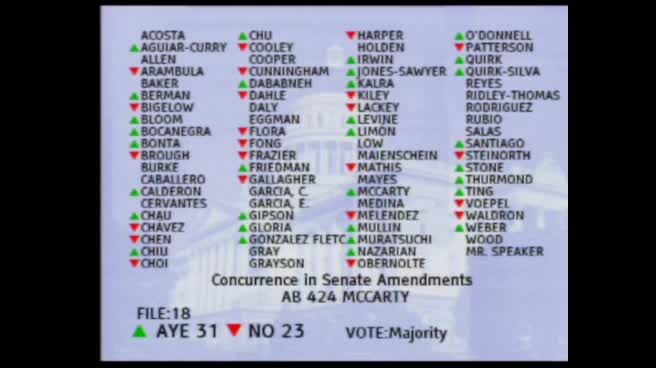 1MIN
Assembly Floor
 1MIN
Senate Floor
 1H
Senate Standing Committee on Appropriations
 6MIN
Senate Standing Committee on Environmental Quality
 1MIN
Assembly Floor
 1H
Assembly Standing Committee on Appropriations
 10MIN
Assembly Standing Committee on Environmental Safety and Toxic Materials
Bill Author

Bill Co-Author(s):