AB 587: State government: pharmaceuticals: procurement: collaborative.
- Session Year: 2017-2018
- House: Assembly
- Latest Version Date: 2017-07-12
Existing law requires specified state agencies to participate in a prescription drug bulk purchasing program, authorizes the Department of General Services to enter into exclusive or nonexclusive contracts on a bid or negotiated basis with manufacturers and suppliers of single-source or multisource drugs and to obtain from those manufacturers and suppliers discounts, rebates, or refunds based on quantities purchased insofar as permissible under federal law, and authorizes the department to appoint and contract with a pharmaceutical benefits manager, as specified. Existing law authorizes the Department of General Services to explore additional strategies for managing prescription drug costs and investigate and implement those strategies in consultation with other specified state agencies.
This bill would revise these provisions and instead require the department to convene the California Pharmaceutical Collaborative cochaired by the Deputy Director of the Procurement Division of the department and the Assistant Secretary of California Health and Human Services to address the rising cost of pharmaceuticals. The bill would require the Department of Corrections and Rehabilitation, the Department of Veterans Affairs, the California Health and Human Services Agency, the Department of Finance, the Government Operations Agency, and the Labor and Workforce Development Agency, among other entities, to each appoint a representative to the collaborative and to participate as members. The bill would also require the Speaker of the Assembly and the President pro Tempore of the Senate each to appoint one member to the collaborative.
The bill would require the collaborative to perform specified functions, including, among other things, coordinating best value clinical treatment protocols among members of the collaborative, leveraging state and local governmental efficiencies and methodologies to achieve best value procurement, purchasing, and negotiating with manufacturers for discounts on pharmaceuticals, and acting as a forum for discussion where issues of interest related to pharmaceuticals can be identified and addressed. The bill would authorize the Department of General Services to contract with manufacturers and suppliers of pharmaceuticals and to appoint and contract with a pharmaceutical benefits manager, as specified. The bill would require the State Department of State Hospitals, the Department of Corrections and Rehabilitation, and the State Department of Developmental Services to participate in the prescription drug bulk purchasing program authorized by these provisions and permit any state, district, county, city, municipal, or public agency governmental entity to elect to participate in the coordinated purchasing program. The bill would require the Department of General Services, on or before July 1, 2018, and annually until 2022, to submit a report to the appropriate policy and fiscal committees of the Legislature on the activities of the collaborative, including the number, and a description, of the contracts entered into with pharmaceutical benefits managers or other pharmaceutical drug purchasing agents, the number and a description of entities that elect to participate in pharmaceutical purchasing coordinated by the collaborative, other options and strategies that have been or will be undertaken by the collaborative, the progress made with regard to the investigation and implementation of options and strategies to achieve the greatest savings on pharmaceuticals, and the estimated cost savings attributable to activities that have been or will be undertaken by the collaborative.
Existing law requires specified state agencies to participate in a prescription drug bulk purchasing program, authorizes the Department of General Services to enter into exclusive or nonexclusive contracts on a bid or negotiated basis with manufacturers and suppliers of single-source or multisource drugs and to obtain from those manufacturers and suppliers discounts, rebates, or refunds based on quantities purchased insofar as permissible under federal law, and authorizes the department to appoint and contract with a pharmaceutical benefits manager, as specified. Existing law authorizes the Department of General Services to explore additional strategies for managing prescription drug costs and investigate and implement those strategies in consultation with other specified state agencies.
This bill would revise these provisions and instead require the department to convene the California Pharmaceutical Collaborative cochaired by the Deputy Director of the Procurement Division of the department and the Assistant Secretary of California Health and Human Services to address the rising cost of pharmaceuticals. The bill would require the Department of Corrections and Rehabilitation, the Department of Veterans Affairs, the California Health and Human Services Agency, the Department of Finance, the Government Operations Agency, and the Labor and Workforce Development Agency, among other entities, to each appoint a representative to the collaborative and to participate as members. The bill would also require the Speaker of the Assembly and the President pro Tempore of the Senate each to appoint one member to the collaborative.
The bill would require the collaborative to perform specified functions, including, among other things, coordinating best value clinical treatment protocols among members of the collaborative, leveraging state and local governmental efficiencies and methodologies to achieve best value procurement, purchasing, and negotiating with manufacturers for discounts on pharmaceuticals, and acting as a forum for discussion where issues of interest related to pharmaceuticals can be identified and addressed. The bill would authorize the Department of General Services to contract with manufacturers and suppliers of pharmaceuticals and to appoint and contract with a pharmaceutical benefits manager, in consultation with the collaborative, manager, as specified. The bill would require the Department of General Services, on or before July 1, 2018, and annually until 2022, to submit a report to the appropriate policy and fiscal committees of the Legislature on the activities of the collaborative, including the number, and a description, of the contracts entered into with pharmaceutical benefits managers or other pharmaceutical drug purchasing agents, the number and a description of entities that elect to participate in pharmaceutical purchasing coordinated by the collaborative, other options and strategies that have been or will be undertaken by the collaborative, the progress made with regard to the investigation and implementation of options and strategies to achieve the greatest savings on pharmaceuticals, and the estimated cost savings attributable to activities that have been or will be undertaken by the collaborative.
Existing law requires specified state agencies to participate in a prescription drug bulk purchasing program, authorizes the Department of General Services to enter into exclusive or nonexclusive contracts on a bid or negotiated basis with manufacturers and suppliers of single-source or multisource drugs and to obtain from those manufacturers and suppliers discounts, rebates, or refunds based on quantities purchased insofar as permissible under federal law, and authorizes the department to appoint and contract with a pharmaceutical benefits manager, as specified. Existing law authorizes the Department of General Services to explore additional strategies for managing prescription drug costs and investigate and implement those strategies in consultation with other specified state agencies.
This bill would revise these provisions and instead require the department to convene the California Pharmaceutical Collective Collaborative cochaired by the Deputy Director of the Procurement Division of the department and the Assistant Secretary of California Health and Human Services to address the rising cost of pharmaceuticals. The bill would require the Department of Corrections and Rehabilitation, the Department of Veterans Affairs, the California Health and Human Services Agency, the Department of Finance, the Government Operations Agency, and the Labor and Workforce Development Agency, among other entities, to each appoint a representative to the collective collaborative and to participate as members. The bill would also require the Speaker of the Assembly and the President pro Tempore of the Senate each to appoint one member to the collective. collaborative.
The bill would require the collective collaborative to perform specified functions, including, among other things, coordinating best value clinical treatment protocols among members of the collective, collaborative, leveraging state and local governmental efficiencies and methodologies to achieve best value procurement, purchasing, and negotiating with manufacturers for discounts on pharmaceuticals, and acting as a forum for discussion where issues of interest related to pharmaceuticals can be identified and addressed. The bill would authorize the Department of General Services to contract with manufacturers and suppliers of pharmaceuticals and to appoint and contract with a pharmaceutical benefits manager, in consultation with the collective, collaborative, as specified. The bill would require the Department of General Services, on or before July 1, 2018, and annually until 2022, to submit a report to the appropriate policy and fiscal committees of the Legislature on the activities of the collective, collaborative, including the number, and a description, of the contracts entered into with pharmaceutical benefits managers or other pharmaceutical drug purchasing agents, the number and a description of entities that elect to participate in pharmaceutical purchasing coordinated by the collective, collaborative, other options and strategies that have been or will be undertaken by the collective, collaborative, the progress made with regard to the investigation and implementation of options and strategies to achieve the greatest savings on pharmaceuticals, and the estimated cost savings attributable to activities that have been or will be undertaken by the collective. collaborative.
Existing law requires specified state agencies to participate in a prescription drug bulk purchasing program, authorizes the Department of General Services to enter into exclusive or nonexclusive contracts on a bid or negotiated basis with manufacturers and suppliers of single-source or multisource drugs and to obtain from those manufacturers and suppliers, suppliers discounts, rebates, or refunds based on quantities purchased insofar as permissible under federal law. law, and authorizes the department to appoint and contract with a pharmaceutical benefits manager, as specified. Existing law authorizes the Department of General Services to explore additional strategies for managing prescription drug costs. costs and investigate and implement those strategies in consultation with other specified state agencies.
This bill would make a nonsubstantive change to this provision. revise these provisions and instead require the department to convene the California Pharmaceutical Collective cochaired by the Deputy Director of the Procurement Division of the department and the Assistant Secretary of California Health and Human Services to address the rising cost of pharmaceuticals. The bill would require the Department of Corrections and Rehabilitation, the Department of Veterans Affairs, the California Health and Human Services Agency, the Department of Finance, the Government Operations Agency, and the Labor and Workforce Development Agency, among other entities, to each appoint a representative to the collective and to participate as members. The bill would also require the Speaker of the Assembly and the President pro Tempore of the Senate each to appoint one member to the collective.
The bill would require the collective to perform specified functions, including, among other things, coordinating best value clinical treatment protocols among members of the collective, leveraging state and local governmental efficiencies and methodologies to achieve best value procurement, purchasing, and negotiating with manufacturers for discounts on pharmaceuticals, and acting as a forum for discussion where issues of interest related to pharmaceuticals can be identified and addressed. The bill would authorize the Department of General Services to contract with manufacturers and suppliers of pharmaceuticals and to appoint and contract with a pharmaceutical benefits manager, in consultation with the collective, as specified. The bill would require the Department of General Services, on or before July 1, 2018, to submit a report to the appropriate policy and fiscal committees of the Legislature on the activities of the collective, including the number, and a description, of the contracts entered into with pharmaceutical benefits managers or other pharmaceutical drug purchasing agents, the number and a description of entities that elect to participate in pharmaceutical purchasing coordinated by the collective, other options and strategies that have been or will be undertaken by the collective, the progress made with regard to the investigation and implementation of options and strategies to achieve the greatest savings on pharmaceuticals, and the estimated cost savings attributable to activities that have been or will be undertaken by the collective.
Existing law authorizes the Department of General Services to enter into exclusive or nonexclusive contracts on a bid or negotiated basis with manufacturers and suppliers of single-source or multisource drugs and to obtain from those manufacturers and suppliers, discounts, rebates, or refunds based on quantities purchased insofar as permissible under federal law. Existing law authorizes the Department of General Services to explore additional strategies for managing prescription drug costs.
This bill would make a nonsubstantive change to this provision.
The Legislature finds and declares all of the following:
(a)Despite prior legislative attempts to encourage the participation of state and local entities in a bulk purchasing program aimed at lowering government expenses, pharmaceutical drug prices are skyrocketing, and state and local spending on these drugs is increasing.
(b)This act is intended to improve the situation by revising the organizational framework so as to better facilitate the cooperation of state and local agencies to reduce the costs of pharmaceuticals they purchase.
(c)Both state and local entities will benefit from a collaboration to track high-cost pharmaceuticals, achieve best value in procurement and pricing of pharmaceuticals, identify important issues related to prescription drug pricing and procurement, and increase the Department of General Services purchasing power.
SEC. 2.Chapter 12 (commencing with Section 14977) of Part 5.5 of Division 3 of Title 2 of the Government Code is repealed.SEC. 3.Chapter 12 (commencing with Section 14977) is added to Part 5.5 of Division 3 of Title 2 of the Government Code, to read:12.The California Pharmaceutical Collaborative14977.(a)The Department of General Services shall convene the California Pharmaceutical Collaborative pursuant to this chapter to address the rising cost of pharmaceutical drugs.
(b)The collaborative shall be cochaired by the Deputy Director of the Procurement Division of the Department of General Services and the Assistant Secretary of California Health and Human Services.
(c)The activities of the collaborative shall be coordinated by the Pharmaceutical Acquisitions Section of the Procurement Division of the Department of General Services in partnership with the Assistant Secretary of California Health and Human Services.
(d)The collaborative shall meet at least twice per year.
14977.1.The mission of the collaborative shall be to coordinate the efforts of state and local government entities to identify and implement opportunities for cost savings with regard to the purchase of pharmaceuticals, particularly pharmaceuticals that are considered high-cost drugs.
14977.2.(a)The following agencies shall be members of, and shall each appoint a representative to, the collaborative:
(1)The Department of Corrections and Rehabilitation.
(2)The Department of Veterans Affairs.
(3)The California Health and Human Services Agency.
(4)The Department of Finance.
(5)The Government Operations Agency.
(6)The Labor and Workforce Development Agency.
(7)California Correctional Health Care Services.
(8)The State Department of Industrial Relations.
(9)The State Department of Public Health.
(10)The California Public Employees Retirement System, upon the agreement of the Board of Administration of the Public Employees Retirement System.
(11)The California State Association of Counties.
(12)The Trustees of the California State University.
(13)Covered California, upon the agreement of the executive board of Covered California.
(14)The State Department of Developmental Services.
(15)The Department of General Services.
(16)The State Department of Health Care Services.
(17)The Department of Managed Health Care.
(18)The State Department of State Hospitals.
(19)The Regents of the University of California, upon the agreement of the regents.
(b)The Speaker of the Assembly and the President pro Tempore of the Senate shall each appoint a representative to the collaborative.
(c)Other state or local government agencies may also appoint a representative to the collaborative.
14977.3.(a)The collaborative shall perform all of the following functions:
(1)Coordinate best value clinical treatment protocols among members of the collaborative.
(2)Leverage state and local governmental efficiencies and methodologies to achieve best value procurement, purchasing, and negotiation with manufacturers for discounts on pharmaceuticals.
(3)Investigate and implement options and strategies to achieve the greatest savings on pharmaceuticals, including all of the following:
(A)Encourage collaborative members to develop and adopt the states Common Drug Formulary overseen by the Department of General Services.
(B)Obtain the maximum transparency possible in administering the formulary, including all forms of rebates, mail order income, and spreads.
(C)Join other state pharmaceutical purchasing programs in a consortium that is open to other private and public purchasers of pharmaceuticals.
(D)Join an independent association that produces comparative effectiveness research on pharmaceuticals using systematic reviews of scientific or medical studies that use clinical trials and are subject to peer review. The associations investigators shall comply with a conflict of interest conflict-of-interest policy that includes a formal, annual, written, self-declaration of no financial interest in any pharmaceutical company for at least the duration of the time that the person is working for the association.
(E)Obtain access to the drug discount program established under Section 340B of the federal Public Health Service Act (42 U.S.C. Sec. 256b).
(4)Establish and monitor performance and quality standards for protocols, guidelines, and contracts created for collaborative members.
(5)Work with collaborative members to track access to and state expenditures on specified high-cost drugs to inform the budget process.
(6)Recommend high-cost pharmaceuticals for cost value review by independent research organizations.
(7)Track new pharmaceuticals that are under review by the federal Food and Drug Administration, drugs that are likely to come on to the market in the near future, and drugs that may become high cost.
(8)Act as a forum for discussion where issues of interest related to pharmaceuticals can be identified and addressed.
(9)Collect information on drugs approved by the FDA that will be sold and used by members of the collaborative.
(b)Nothing in this section shall be construed to require sharing of information that is prohibited by any other provision of law or contractual agreement, or the disclosure of information that may adversely affect potential pharmaceutical procurement by any state agency.
14977.4.The collaborative shall form several workgroups in service of its goals that shall meet at least quarterly. The cochairpersons of the collaborative shall meet with the workgroup leads monthly. The workgroups formed shall include all of the following:
(a)A clinical workgroup.
(b)A policy workgroup.
(c)A procurement workgroup.
(d)A local outreach workgroup.
14977.5.(a)Notwithstanding any other provision of law, the Department of General Services, pursuant to this chapter, may enter into exclusive or nonexclusive contracts on a bid or negotiated basis with manufacturers and suppliers of single source or multisource pharmaceuticals. The department may obtain from those manufacturers and suppliers discounts, rebates, or refunds based on quantities purchased insofar as permissible under federal law. Contracts entered into pursuant to this chapter may include price discounts, rebates, refunds, or other strategies aimed at managing escalating prescription pharmaceutical drug prices.
(b)Contracts under this chapter shall be exempt from Chapter 2 (commencing with Section 10290) of Part 2 of Division 2 of the Public Contract Code.
14977.6.The Department of General Services may appoint and contract with a pharmaceutical benefits manager or other entity for purposes of facilitating the acquisition of pharmaceuticals purchased pursuant to this chapter. The pharmaceutical benefits manager or other entity may do all of the following:
(a)Negotiate price discounts, rebates, or other options that achieve the greatest savings on pharmaceuticals with pharmaceutical manufacturers and wholesalers.
(b)Purchase pharmaceuticals for participating state, district, county, or municipal governmental entities.
(c)Act as a consultant to the department and the collaborative.
14977.7.(a)The following state agencies shall participate in the prescription drug bulk purchasing program authorized under this chapter.
(1)The State Department of State Hospitals.
(2)The Department of Corrections and Rehabilitation.
(3)The State Department of Developmental Services.
(b)Any state, district, county, city, municipal, or public agency governmental entity, other than a state entity specified in subdivision (a), may elect to participate in the coordinated purchasing program.
14977.7.14977.8.(a)On or before July 1, 2018, the Department of General Services shall submit a report to the appropriate policy and fiscal committees of the Legislature on the activities of the collaborative. The report shall be filed annually until 2022. The report shall include, but not be limited to, all of the following:
(1)The number and a description of the contracts entered into with pharmaceutical benefits managers or other pharmaceutical drug purchasing agents.
(2)The number and a description of entities that elect to participate in pharmaceutical purchasing coordinated by the collaborative.
(3)The per month cost of pharmaceuticals for each member agency.
(4)Other options and strategies that have been or will be undertaken by the collaborative pursuant to this chapter.
(5)The progress made with regard to the investigation and implementation of options and strategies to achieve the greatest savings on pharmaceuticals pursuant to paragraph (3) of subdivision (a) of Section 14977.3
(6)The estimated cost savings attributable to activities that have been or will be undertaken by the collaborative.
(b)(1)A report to be submitted pursuant to subdivision (a) shall be submitted in compliance with Section 9795 of the Government Code.
(2)Pursuant to Section 10231.5 of the Government Code, this section is repealed on February 1, 2023.
The Legislature finds and declares all of the following:
(a)Despite prior legislative attempts to encourage the participation of state and local entities in a bulk purchasing program aimed at lowering government expenses, pharmaceutical drug prices are skyrocketing, and state and local spending on these drugs is increasing.
(b)This act is intended to improve the situation by revising the organizational framework so as to better facilitate the cooperation of state and local agencies to reduce the costs of pharmaceuticals they purchase.
(c)Both state and local entities will benefit from a collaboration to track high-cost pharmaceuticals, achieve best value in procurement and pricing of pharmaceuticals, identify important issues related to prescription drug pricing and procurement, and increase the Department of General Services purchasing power.
SEC. 2.Chapter 12 (commencing with Section 14977) of Part 5.5 of Division 3 of Title 2 of the Government Code is repealed.SEC. 3.Chapter 12 (commencing with Section 14977) is added to Part 5.5 of Division 3 of Title 2 of the Government Code, to read:12.The California Pharmaceutical Collaborative14977.(a)The Department of General Services shall convene the California Pharmaceutical Collaborative pursuant to this chapter to address the rising cost of pharmaceutical drugs.
(b)The collaborative shall be cochaired by the Deputy Director of the Procurement Division of the Department of General Services and the Assistant Secretary of California Health and Human Services.
(c)The activities of the collaborative shall be coordinated by the Pharmaceutical Acquisitions Section of the Procurement Division of the Department of General Services in partnership with the Assistant Secretary of California Health and Human Services.
(d)The collaborative shall meet at least twice per year.
14977.1.The mission of the collaborative shall be to coordinate the efforts of state and local government entities to identify and implement opportunities for cost savings with regard to the purchase of pharmaceuticals, particularly pharmaceuticals that are considered high-cost drugs.
14977.2.(a)The following agencies shall be members of, and shall each appoint a representative to, the collaborative:
(1)The Department of Corrections and Rehabilitation.
(2)The Department of Veterans Affairs.
(3)The California Health and Human Services Agency.
(4)The Department of Finance.
(5)The Government Operations Agency.
(6)The Labor and Workforce Development Agency.
(7)California Correctional Health Care Services.
(8)The State Department of Industrial Relations.
(9)The State Department of Public Health.
(10)The California Public Employees Retirement System, upon the agreement of the Board of Administration of the Public Employees Retirement System.
(11)The California State Association of Counties.
(12)The Trustees of the California State University.
(13)Covered California, upon the agreement of the executive board of Covered California.
(14)The State Department of Developmental Services.
(15)The Department of General Services.
(16)The State Department of Health Care Services.
(17)The Department of Managed Health Care.
(18)The State Department of State Hospitals.
(19)The Regents of the University of California, upon the agreement of the regents.
(b)The Speaker of the Assembly and the President pro Tempore of the Senate shall each appoint a representative to the collaborative.
(c)Other state or local government agencies may also appoint a representative to the collaborative.
14977.3.(a)The collaborative shall perform all of the following functions:
(1)Coordinate best value clinical treatment protocols among members of the collaborative.
(2)Leverage state and local governmental efficiencies and methodologies to achieve best value procurement, purchasing, and negotiation with manufacturers for discounts on pharmaceuticals.
(3)Investigate and implement options and strategies to achieve the greatest savings on pharmaceuticals, including all of the following:
(A)Encourage collaborative members to develop and adopt the states Common Drug Formulary overseen by the Department of General Services.
(B)Obtain the maximum transparency possible in administering the formulary, including all forms of rebates, mail order income, and spreads.
(C)Join other state pharmaceutical purchasing programs in a consortium that is open to other private and public purchasers of pharmaceuticals.
(D)Join an independent association that produces comparative effectiveness research on pharmaceuticals using systematic reviews of scientific or medical studies that use clinical trials and are subject to peer review. The associations investigators shall comply with a conflict of interest policy that includes a formal, annual, written, self-declaration of no financial interest in any pharmaceutical company for at least the duration of the time that the person is working for the association.
(E)Obtain access to the drug discount program established under Section 340B of the federal Public Health Service Act (42 U.S.C. Sec. 256b).
(4)Establish and monitor performance and quality standards for protocols, guidelines, and contracts created for collaborative members.
(5)Work with collaborative members to track access to and state expenditures on specified high-cost drugs to inform the budget process.
(6)Recommend high-cost pharmaceuticals for cost value review by independent research organizations.
(7)Track new pharmaceuticals that are under review by the federal Food and Drug Administration, drugs that are likely to come on to the market in the near future, and drugs that may become high cost.
(8)Act as a forum for discussion where issues of interest related to pharmaceuticals can be identified and addressed.
(9)Collect information on drugs approved by the FDA that will be sold and used by members of the collaborative.
(b)Nothing in this section shall be construed to require sharing of information that is prohibited by any other provision of law or contractual agreement, or the disclosure of information that may adversely affect potential pharmaceutical procurement by any state agency.
14977.4.The collaborative shall form several workgroups in service of its goals that shall meet, at least, meet at least quarterly. The cochairpersons of the collaborative shall meet with the workgroup leads monthly. The workgroups formed shall include all of the following:
(a)A clinical workgroup.
(b)A policy workgroup.
(c)A procurement workgroup.
(d)A local outreach workgroup.
14977.5.(a)Notwithstanding any other provision of law, the Department of General Services, in consultation with the collaborative, pursuant to this chapter, may enter into exclusive or nonexclusive contracts on a bid or negotiated basis with manufacturers and suppliers of single source or multisource pharmaceuticals. The department may obtain from those manufacturers and suppliers discounts, rebates, or refunds based on quantities purchased insofar as permissible under federal law. Contracts entered into pursuant to this chapter may include price discounts, rebates, refunds, or other strategies aimed at managing escalating prescription pharmaceutical drug prices.
(b)Contracts under this chapter shall be exempt from Chapter 2 (commencing with Section 10290) of Part 2 of Division 2 of the Public Contract Code.
14977.6.The Department of General Services, in consultation with the collaborative, Services may appoint and contract with a pharmaceutical benefits manager or other entity for purposes of facilitating the acquisition of pharmaceuticals purchased pursuant to this chapter. The pharmaceutical benefits manager or other entity may do all of the following:
(a)Negotiate price discounts, rebates, or other options that achieve the greatest savings on pharmaceuticals with pharmaceutical manufacturers and wholesalers.
(b)Purchase pharmaceuticals for participating state, district, county, or municipal governmental entities.
(c)Act as a consultant to the department and the collaborative.
14977.7.(a)On or before July 1, 2018, the Department of General Services shall submit a report to the appropriate policy and fiscal committees of the Legislature on the activities of the collaborative. The report shall be filed annually until 2022. The report shall include, but not be limited to, all of the following:
(1)The number and a description of the contracts entered into with pharmaceutical benefits managers or other pharmaceutical drug purchasing agents.
(2)The number and a description of entities that elect to participate in pharmaceutical purchasing coordinated by the collaborative.
(3)The per month cost of pharmaceuticals for each member agency.
(4)Other options and strategies that have been or will be undertaken by the collaborative pursuant to this chapter.
(5)The progress made with regard to the investigation and implementation of options and strategies to achieve the greatest savings on pharmaceuticals pursuant to paragraph (3) of subdivision (a) of Section 14977.3
(6)The estimated cost savings attributable to activities that have been or will be undertaken by the collaborative.
(b)(1)A report to be submitted pursuant to subdivision (a) shall be submitted in compliance with Section 9795 of the Government Code.
(2)Pursuant to Section 10231.5 of the Government Code, this section is repealed on February 1, 2023.
The Legislature finds and declares all of the following:
(a)Despite prior legislative attempts to encourage the participation of state and local entities in a bulk purchasing program aimed at lowering government expenses, pharmaceutical drug prices are skyrocketing, and state and local spending on these drugs is increasing.
(b)This act is intended to improve the situation by revising the organizational framework so as to better facilitate the cooperation of state and local agencies to reduce the costs of pharmaceuticals they purchase.
(c)Both state and local entities will benefit from a collaboration to track high-cost pharmaceuticals, achieve best value in procurement and pricing of pharmaceuticals, identify important issues related to prescription drug pricing and procurement, and increase the Department of General Services purchasing power.
SEC. 2.Chapter 12 (commencing with Section 14977) of Part 5.5 of Division 3 of Title 2 of the Government Code is repealed.SEC. 3.Chapter 12 (commencing with Section 14977) is added to Part 5.5 of Division 3 of Title 2 of the Government Code, to read:12.The California Pharmaceutical Collective Collaborative14977.(a)The Department of General Services shall convene the California Pharmaceutical Collective Collaborative pursuant to this chapter to address the rising cost of pharmaceutical drugs.
(b)The collective collaborative shall be cochaired by the Deputy Director of the Procurement Division of the Department of General Services and the Assistant Secretary of California Health and Human Services. The cochairpersons shall meet biweekly.
(c)The activities of the collective collaborative shall be coordinated by the Pharmaceutical Acquisitions Section of the Procurement Division of the Department of General Services in partnership with the Assistant Secretary of California Health and Human Services.
(d)The collective collaborative shall meet quarterly. at least twice per year.
14977.1.The mission of the collective collaborative shall be to coordinate the efforts of state and local government entities to identify and implement opportunities for cost savings with regard to the purchase of pharmaceuticals, particularly pharmaceuticals that are considered high-cost drugs.
14977.2.(a)The following agencies shall be members of, and shall each appoint a representative to, the collective: collaborative:
(1)The Department of Corrections and Rehabilitation.
(2)The Department of Veterans Affairs.
(3)The California Health and Human Services Agency.
(4)The Department of Finance.
(5)The Government Operations Agency.
(6)The Labor and Workforce Development Agency.
(7)California Correctional Health Care Services.
(8)The State Department of Industrial Relations.
(9)The State Department of Public Health.
(10)The California Public Employees Retirement System. System, upon the agreement of the Board of Administration of the Public Employees Retirement System.
(11)The California State Association of Counties.
(12)The Trustees of the California State University.
(13)Covered California. California, upon the agreement of the executive board of Covered California.
(14)The State Department of Developmental Services.
(15)The Department of General Services.
(16)The State Department of Health Care Services.
(17)The Department of Managed Health Care.
(18)The State Department of State Hospitals.
(19)The Regents of the University of California. California, upon the agreement of the regents.
(b)The Speaker of the Assembly and the President pro Tempore of the Senate shall each appoint a representative to the collective. collaborative.
(c)Other state or local government agencies or interested stakeholders may also appoint a representative to the collective. collaborative.
14977.3.(a)The collective collaborative shall perform all of the following functions:
(1)Coordinate best value clinical treatment protocols among members of the collective. collaborative.
(2)Leverage state and local governmental efficiencies and methodologies to achieve best value procurement, purchasing, and negotiation with manufacturers for discounts on pharmaceuticals.
(3)Investigate and implement options and strategies to achieve the greatest savings on pharmaceuticals, including all of the following:
(A)Encourage collective collaborative members to develop and adopt the states Common Drug Formulary overseen by the Department of General Services.
(B)Obtain the maximum transparency possible in administering the formulary. formulary, including all forms of rebates, mail order income, and spreads.
(C)Join other state pharmaceutical purchasing programs in a consortium that is open to other private and public purchasers of pharmaceuticals.
(D)Join an independent association that produces comparative effectiveness research on pharmaceuticals. pharmaceuticals using systematic reviews of scientific or medical studies that use clinical trials and are subject to peer review. The associations investigators shall comply with a conflict of interest policy that includes a formal, annual, written, self-declaration of no financial interest in any pharmaceutical company for at least the duration of the time that the person is working for the association.
(E)Obtain access to the drug discount program established under Section 340B of the federal Public Health Service Act (42 U.S.C. Sec. 256b).
(4)Establish and monitor performance and quality standards for protocols, guidelines, and contracts created for collective collaborative members.
(5)Work with collective collaborative members to track access to and state expenditures on specified high-cost drugs to inform the budget process.
(6)Recommend high-cost pharmaceuticals for cost value review by independent research organizations.
(7)Track new pharmaceuticals that are under review by the federal Food and Drug Administration, drugs that are likely to come on to the market in the near future, and drugs that may become high cost.
(8)Act as a forum for discussion where issues of interest related to pharmaceuticals can be identified and addressed.
(9)Collect information on drugs approved by the FDA that will be sold and used by members of the collaborative.
(b)Nothing in this section shall be construed to require sharing of information that is prohibited by any other provision of law or contractual agreement, or the disclosure of information that may adversely affect potential pharmaceutical procurement by any state agency.
14977.4.The collective collaborative shall form several workgroups in service of its goals that shall meet, at least, quarterly. The cochairpersons of the collective collaborative shall meet with the workgroup leads monthly. The workgroups formed shall include all of the following:
(a)A clinical workgroup.
(b)A policy workgroup.
(c)A procurement workgroup.
(d)A local outreach workgroup.
14977.5.(a)Notwithstanding any other provision of law, the Department of General Services, in consultation with the collective, collaborative, pursuant to this chapter, may enter into exclusive or nonexclusive contracts on a bid or negotiated basis with manufacturers and suppliers of single source or multisource pharmaceuticals. The department may obtain from those manufacturers and suppliers discounts, rebates, or refunds based on quantities purchased insofar as permissible under federal law. Contracts entered into pursuant to this chapter may include price discounts, rebates, refunds, or other strategies aimed at managing escalating prescription pharmaceutical drug prices.
(b)Contracts under this chapter shall be exempt from Chapter 2 (commencing with Section 10290) of Part 2 of Division 2 of the Public Contract Code.
14977.6.The Department of General Services, in consultation with the collective, collaborative, may appoint and contract with a pharmaceutical benefits manager or other entity for purposes of facilitating the acquisition of pharmaceuticals purchased pursuant to this chapter. The pharmaceutical benefits manager or other entity may do all of the following:
(a)Negotiate price discounts, rebates, or other options that achieve the greatest savings on pharmaceuticals with pharmaceutical manufacturers and wholesalers.
(b)Purchase pharmaceuticals for participating state, district, county, or municipal governmental entities.
(c)Act as a consultant to the department and the collective. collaborative.
14977.7.(a)On or before July 1, 2018, the Department of General Services shall submit a report to the appropriate policy and fiscal committees of the Legislature on the activities of the collective. collaborative. The report shall be filed annually until 2022. The report shall include, but not be limited to, all of the following:
(1)The number and a description of the contracts entered into with pharmaceutical benefits managers or other pharmaceutical drug purchasing agents.
(2)The number and a description of entities that elect to participate in pharmaceutical purchasing coordinated by the collective. collaborative.
(3)The per month cost of pharmaceuticals for each member agency.
(3)(4)Other options and strategies that have been or will be undertaken by the collective collaborative pursuant to this chapter.
(4)(5)The progress made with regard to the investigation and implementation of options and strategies to achieve the greatest savings on pharmaceuticals pursuant to paragraph (3) of subdivision (a) of Section 14977.3
(5)(6)The estimated cost savings attributable to activities that have been or will be undertaken by the collective. collaborative.
(b)(1)A report to be submitted pursuant to subdivision (a) shall be submitted in compliance with Section 9795 of the Government Code.
(2)Pursuant to Section 10231.5 of the Government Code, this section is repealed on February 1, 2023.
The Legislature finds and declares all of the following:
(a)Despite prior legislative attempts to encourage the participation of state and local entities in a bulk purchasing program aimed at lowering government expenses, pharmaceutical drug prices are skyrocketing, and state and local spending on these drugs is increasing.
(b)This act is intended to improve the situation by revising the organizational framework so as to better facilitate the cooperation of state and local agencies to reduce the costs of pharmaceuticals they purchase.
(c)Both state and local entities will benefit from a collaboration to track high-cost pharmaceuticals, achieve best value in procurement and pricing of pharmaceuticals, identify important issues related to prescription drug pricing and procurement, and increase the Department of General Services purchasing power.
SEC. 2.Chapter 12 (commencing with Section 14977) of Part 5.5 of Division 3 of Title 2 of the Government Code is repealed.SEC. 3.Chapter 12 (commencing with Section 14977) is added to Part 5.5 of Division 3 of Title 2 of the Government Code, to read:12.The California Pharmaceutical Collective14977.(a)The Department of General Services shall convene the California Pharmaceutical Collective pursuant to this chapter to address the rising cost of pharmaceutical drugs.
(b)The collective shall be cochaired by the Deputy Director of the Procurement Division of the Department of General Services and the Assistant Secretary of California Health and Human Services. The cochairpersons shall meet biweekly.
(c)The activities of the collective shall be coordinated by the Pharmaceutical Acquisitions Section of the Procurement Division of the Department of General Services in partnership with the Assistant Secretary of California Health and Human Services.
(d)The collective shall meet quarterly.
14977.1.The mission of the collective shall be to coordinate the efforts of state and local government entities to identify and implement opportunities for cost savings with regard to the purchase of pharmaceuticals, particularly pharmaceuticals that are considered high-cost drugs.
14977.2.(a)The following agencies shall be members of, and shall each appoint a representative to, the collective:
(1)The Department of Corrections and Rehabilitation.
(2)The Department of Veterans Affairs.
(3)The California Health and Human Services Agency.
(4)The Department of Finance.
(5)The Government Operations Agency.
(6)The Labor and Workforce Development Agency.
(7)California Correctional Health Care Services.
(8)The State Department of Industrial Relations.
(9)The State Department of Public Health.
(10)The California Public Employees Retirement System.
(11)The California State Association of Counties.
(12)The Trustees of the California State University.
(13)Covered California.
(14)The State Department of Developmental Services.
(15)The Department of General Services.
(16)The State Department of Health Care Services.
(17)The Department of Managed Health Care.
(18)The State Department of State Hospitals.
(19)The Regents of the University of California.
(b)The Speaker of the Assembly and the President pro Tempore of the Senate shall each appoint a representative to the collective.
(c)Other state or local government agencies or interested stakeholders may also appoint a representative to the collective.
14977.3.(a)The collective shall perform all of the following functions:
(1)Coordinate best value clinical treatment protocols among members of the collective.
(2)Leverage state and local governmental efficiencies and methodologies to achieve best value procurement, purchasing, and negotiation with manufacturers for discounts on pharmaceuticals.
(3)Investigate and implement options and strategies to achieve the greatest savings on pharmaceuticals, including all of the following:
(A)Encourage collective members to adopt the states Common Drug Formulary overseen by the Department of General Services.
(B)Obtain the maximum transparency possible in administering the formulary.
(C)Join other state pharmaceutical purchasing programs in a consortium that is open to other private and public purchasers of pharmaceuticals.
(D)Join an independent association that produces comparative effectiveness research on pharmaceuticals.
(E)Obtain access to the drug discount program established under Section 340B of the federal Public Health Service Act (42 U.S.C. Sec. 256b).
(4)Establish and monitor performance and quality standards for protocols, guidelines, and contracts created for collective members.
(5)Work with collective members to track state expenditures on specified high-cost drugs to inform the budget process.
(6)Recommend high-cost pharmaceuticals for cost value review by independent research organizations.
(7)Track new pharmaceuticals that are under review by the federal Food and Drug Administration, drugs that are likely to come on to the market in the near future, and drugs that may become high cost.
(8)Act as a forum for discussion where issues of interest related to pharmaceuticals can be identified and addressed.
(b)Nothing in this section shall be construed to require sharing of information that is prohibited by any other provision of law or contractual agreement, or the disclosure of information that may adversely affect potential pharmaceutical procurement by any state agency.
14977.4.The collective shall form several workgroups in service of its goals that shall meet, at least, quarterly. The cochairpersons of the collective shall meet with the workgroup leads monthly. The workgroups formed shall include all of the following:
(a)A clinical workgroup.
(b)A policy workgroup.
(c)A procurement workgroup.
(d)A local outreach workgroup.
14977.5.(a)Notwithstanding any other provision of law, the Department of General Services, in consultation with the collective, pursuant to this chapter, may enter into exclusive or nonexclusive contracts on a bid or negotiated basis with manufacturers and suppliers of single source or multisource pharmaceuticals. The department may obtain from those manufacturers and suppliers discounts, rebates, or refunds based on quantities purchased insofar as permissible under federal law. Contracts entered into pursuant to this chapter may include price discounts, rebates, refunds, or other strategies aimed at managing escalating prescription pharmaceutical drug prices.
(b)Contracts under this chapter shall be exempt from Chapter 2 (commencing with Section 10290) of Part 2 of Division 2 of the Public Contract Code.
14977.6.The Department of General Services, in consultation with the collective, may appoint and contract with a pharmaceutical benefits manager or other entity for purposes of facilitating the acquisition of pharmaceuticals purchased pursuant to this chapter. The pharmaceutical benefits manager or other entity may do all of the following:
(a)Negotiate price discounts, rebates, or other options that achieve the greatest savings on pharmaceuticals with pharmaceutical manufacturers and wholesalers.
(b)Purchase pharmaceuticals for participating state, district, county, or municipal governmental entities.
(c)Act as a consultant to the department and the collective.
14977.7.(a)On or before July 1, 2018, the Department of General Services shall submit a report to the appropriate policy and fiscal committees of the Legislature on the activities of the collective. The report shall include, but not be limited to, all of the following:
(1)The number and a description of the contracts entered into with pharmaceutical benefits managers or other pharmaceutical drug purchasing agents.
(2)The number and a description of entities that elect to participate in pharmaceutical purchasing coordinated by the collective.
(3)Other options and strategies that have been or will be undertaken by the collective pursuant to this chapter.
(4)The progress made with regard to the investigation and implementation of options and strategies to achieve the greatest savings on pharmaceuticals pursuant to paragraph (3) of subdivision (a) of Section 14977.3
(5)The estimated cost savings attributable to activities that have been or will be undertaken by the collective.
(b)(1)A report to be submitted pursuant to subdivision (a) shall be submitted in compliance with Section 9795 of the Government Code.
(2)Pursuant to Section 10231.5 of the Government Code, this section is repealed on February 1, 2023.
SECTION 1.Section 14980 of the Government Code is amended to read:14980.The department may investigate additional strategies for managing the increasing costs of prescription drugs, including:(a)Coordinating programs offered by pharmaceutical manufacturers that provide prescription drugs for free or at reduced prices.(b)Studying the feasibility and appropriateness of including in the bulk purchasing programs entities in the private sector, including employers, providers, and individual consumers.(c)Implementing other strategies, as permitted under state and federal law, aimed at managing escalating prescription drug prices.The department may explore investigate additional strategies for managing the increasing costs of prescription drugs, including:
(a)Coordinating programs offered by pharmaceutical manufacturers that provide prescription drugs for free or at reduced prices.
(b)Studying the feasibility and appropriateness of including in the bulk purchasing programs entities in the private sector, including employers, providers, and individual consumers.
(c)Implementing other strategies, as permitted under state and federal law, aimed at managing escalating prescription drug prices.
|
Date
|
Status
|
|---|---|
| Aug 21, 2017 | In committee: Set, first hearing. Hearing canceled at the request of author. |
| Jul 12, 2017 | Read second time and amended. Re-referred to Com. on APPR. |
| Jul 11, 2017 | From committee: Amend, and do pass as amended and re-refer to Com. on APPR. (Ayes 9. Noes 0.) (July 5). |
| Jun 14, 2017 | Referred to Com. on HEALTH. |
| Jun 1, 2017 | In Senate. Read first time. To Com. on RLS. for assignment. |
| May 31, 2017 | Read third time. Passed. Ordered to the Senate. (Ayes 73. Noes 0. Page 1957.) |
| May 30, 2017 | Read second time and amended. Ordered returned to second reading. |
| May 26, 2017 | From committee: Amend, and do pass as amended. (Ayes 12. Noes 0.) (May 26). |
| May 10, 2017 | In committee: Set, first hearing. Referred to APPR. suspense file. |
| Apr 26, 2017 | From committee: Do pass and re-refer to Com. on APPR. (Ayes 14. Noes 0.) (April 25). Re-referred to Com. on APPR. |
| Apr 19, 2017 | Re-referred to Com. on HEALTH. |
| Apr 18, 2017 | From committee chair, with author's amendments: Amend, and re-refer to Com. on HEALTH. Read second time and amended. |
| Apr 3, 2017 | Re-referred to Com. on HEALTH. |
| Mar 30, 2017 | Referred to Com. on HEALTH. |
| Feb 15, 2017 | From printer. May be heard in committee March 17. |
| Feb 14, 2017 | Read first time. To print. |
|
Date
|
Description
|
Location
|
Votes
|
|
|---|---|---|---|---|
| Jul 5, 2017 | Do pass as amended, but first amend, and re-refer to the Committee on [Appropriations] | Senate Standing Committee on Health |
Passed |
|
| May 31, 2017 | AB 587 CHIU Assembly Third Reading | Assembly Floor |
Passed |
|
| May 26, 2017 | Do pass as amended. | Assembly Standing Committee on Appropriations |
Passed |
|
| Apr 25, 2017 | Do pass and be re-referred to the Committee on [Appropriations] | Assembly Standing Committee on Health |
Passed |
This list shows positions taken on this bill by organizations on the date displayed, which is linked to the original source.
Positions by individuals are not included.
|
Organization
|
Position
|
Date
|
|---|---|---|
| Aids Healthcare Foundation | ** Support | Jul 3, 2017 |
| California Alliance For Retired Americans | ** Support | Jul 3, 2017 |
| California Labor Federation | ** Support | Jul 3, 2017 |
| California State Retirees | ** Support | Jul 3, 2017 |
| CALPIRG | ** Support | Jul 3, 2017 |
| Consumer Attorneys Of California | ** Support | Apr 21, 2017 |
| Health Access California | ** Support | Jul 3, 2017 |
SENATE COMMITTEE ON HEALTH
Senator Ed Hernandez, O.D., Chair
BILL NO: AB 587
AUTHOR: | Chiu | ||
VERSION: | May 30, 2017 | ||
HEARING DATE: | July 5, 2017 | ||
CONSULTANT: | Teri Boughton | ||
SUBJECT: State government: pharmaceuticals: procurement: collaborative
SUMMARY:
- Requires the Department of General Services (DGS) to convene the California Pharmaceutical Collaborative to address the rising cost of pharmaceutical drugs, co-chaired by the Deputy Director of the Procurement Division of DGS and the Assistant Secretary of California Health and Human Services (CHHS) and to coordinate the efforts of state and local government entities to identify and implement opportunities for cost savings with regard to the purchase of pharmaceuticals, particularly pharmaceuticals that are considered high-cost drugs.
Existing law:
- Permits, notwithstanding any other provision of law, the DGS to enter into exclusive or nonexclusive contracts on a bid or negotiated basis with manufacturers and suppliers of single source or multisource drugs.
- Permits DGS to obtain from those manufacturers and suppliers, discounts, rebates, or refunds based on quantities purchased insofar as permissible under federal law.
- Permits contracts entered into pursuant to 1) above to include price discounts, rebates, refunds, or other strategies aimed at managing escalating prescription drug prices.
- Requires these contracts to be exempt from the Public Contract Code, as specified.
- Requires the following state agencies to participate in the prescription drug bulk purchasing program:
- State Department of State Hospitals (SDSH);
- Department of Corrections;
- Department of the Youth Authority; and,
- State Department of Developmental Services (DDS).
- Permits any state, district, county, city, municipal or public agency governmental entity to elect to participate in the coordinated purchasing program.
- States legislative intent that DGS, University of California (UC), and the Public Employees’ Retirement System (PERS) to regularly meet and share information regarding each agency’s procurement of prescription drugs in an effort to identify and implement opportunities for cost savings in connection with this procurement. States legislation intent UC and PERS cooperate with DGS in order to reduce each agency’s costs for prescription drugs.
- Requires DGS to do all of the following:
- Share information on a regular basis with the UC and PERS regarding each agency’s procurement of prescription drugs, including, but not limited to, prices paid for the same or similar drugs and information regarding drug effectiveness;
- Identify opportunities for the department, UC and PERS to consolidate drug procurement or engage in other joint activities that will result in cost savings in the procurement of prescription drugs;
- Participate in at least one independent association that develops information on the relative effectiveness of prescription drugs;
- Develop strategies, in consultation with the affected agencies, for the state to achieve savings through greater use of generic drugs; and,
- Develop, no later than January 1, 2006, and annually thereafter, a work plan that includes, but is not limited to, a description of DGS’ annual activities to reduce the state’s costs for prescription drugs and an estimate of cost savings.
- Requires nothing in 7) and 8) above to be construed to require sharing of information that is prohibited by any other provision of law or contractual agreement, or the disclosure of information that may adversely affect potential drug procurement by any state agency.
This bill:
- Finds and declares that that despite prior legislative attempts to encourage the participation of state and local entities in a bulk purchasing program aimed at lowering government expenses, pharmaceutical drug prices are skyrocketing, and state and local spending on these drugs is increasing. This act is intended to improve the situation by revising the organizational framework so as to better facilitate the cooperation of state and local agencies to reduce the costs of pharmaceuticals they purchase. Both state and local entities will benefit from a collaboration to track high-cost pharmaceuticals, achieve best value in procurement and pricing of pharmaceuticals, identify important issues related to prescription drug pricing and procurement, and increase DGS’ purchasing power.
- Repeals existing law related to the purchase of prescription drugs for government agencies, including the requirement that SDHS, Department of Corrections (now CDCR), Department of Youth Authority, and DDS participate in the prescription drug bulk purchasing program.
- Requires DGS to convene the California Pharmaceutical Collaborative (CPC) to address the rising cost of pharmaceutical drugs to be co-chaired by the Deputy Director of the Procurement Division of DGS and the Assistant Secretary of CHHS.
- Requires the collaborative to meet at least twice per year and to coordinate the efforts of state and local government entities to identify and implement opportunities for cost savings with regard to the purchase of pharmaceuticals, particularly pharmaceuticals that are considered high-cost drugs.
- Requires the Speaker of the Assembly and the President pro Tempore of the Senate to each appoint a representative to the collaborative and permits other state or local government agencies to also appoint a representative to the collaborative.
- Requires the following agencies to be members of, and each appoint a representative to, the collaborative:
- The Department of Corrections and Rehabilitation;
- The Department of Veterans Affairs;
- CHHS;
- The Department of Finance;
- The Government Operations Agency;
- The Labor and Workforce Development Agency;
- California Correctional Health Care Services;
- The State Department of Industrial Relations;
- The State Department of Public Health;
- PERS, upon the agreement of the Board of Administration of the Public Employees’ Retirement System;
- The California State Association of Counties;
- The Trustees of the California State University (CSU);
- Covered California, upon the agreement of the executive board of Covered California;
- DDS;
- DGS;
- The State Department of Health Care Services;
- The Department of Managed Health Care;
- SDSH; and,
- The Regents of UC, upon the agreement of the regents.
- Requires the collaborative to perform all of the following functions:
- Coordinate best value clinical treatment protocols among members of the collaborative;
- Leverage state and local governmental efficiencies and methodologies to achieve best value procurement, purchasing, and negotiation with manufacturers for discounts on pharmaceuticals;
- Investigate and implement options and strategies to achieve the greatest savings on pharmaceuticals, including all of the following:
- Encourage collaborative members to develop and adopt the state’s Common Drug Formulary (CDF) overseen by DGS;
- Obtain the maximum transparency possible in administering the formulary, including all forms of rebates, mail order income, and spreads;
- Join other state pharmaceutical purchasing programs in a consortium that is open to other private and public purchasers of pharmaceuticals;
- Join an independent association that produces comparative effectiveness research on pharmaceuticals using systematic reviews of scientific or medical studies that use clinical trials and are subject to peer review; Requires the association’s investigators to comply with a conflict of interest policy that includes a formal, annual, written, self-declaration of no financial interest in any pharmaceutical company for at least the duration of the time that the person is working for the association; and,
- Obtain access to the drug discount program established under Section 340B of the federal Public Health Service Act (42 U.S.C. Sec. 256b).
- Establish and monitor performance and quality standards for protocols, guidelines, and contracts created for collaborative members;
- Work with collaborative members to track access to and state expenditures on specified high-cost drugs to inform the budget process;
- Recommend high-cost pharmaceuticals for cost value review by independent research organizations;
- Track new pharmaceuticals that are under review by the federal Food and Drug Administration (FDA), drugs that are likely to come on to the market in the near future, and drugs that may become high cost;
- Act as a forum for discussion where issues of interest related to pharmaceuticals can be identified and addressed; and,
- Collect information on drugs approved by the FDA that will be sold and used by members of the collaborative.
- States that nothing in 6) above be construed to require sharing of information that is prohibited by any other provision of law or contractual agreement, or the disclosure of information that may adversely affect potential pharmaceutical procurement by any state agency.
- Requires the collaborative to form several workgroups in service of its goals that meet at least quarterly. Requires the co-chairpersons of the collaborative to meet with the workgroup leads monthly. Requires the workgroups to include all of the following:
- A clinical workgroup;
- A policy workgroup;
- A procurement workgroup; and,
- A local outreach workgroup;
- Permits, notwithstanding any other provision of law, DGS, to enter into exclusive or nonexclusive contracts on a bid or negotiated basis with manufacturers and suppliers of single source or multisource pharmaceuticals. Permits DGS to obtain from those manufacturers and suppliers discounts, rebates, or refunds based on quantities purchased insofar as permissible under federal law. Permits contracts entered into pursuant to this bill to include price discounts, rebates, refunds, or other strategies aimed at managing escalating prescription pharmaceutical drug prices.
- Requires contracts under this bill to be exempt from the Public Contract Code, as specified.
- Permits DGS to appoint and contract with a pharmaceutical benefits manager (PBM) or other entity for purposes of facilitating the acquisition of pharmaceuticals purchased pursuant to this bill. Permits the pharmaceutical benefits manager or other entity to do all of the following:
- Negotiate price discounts, rebates, or other options that achieve the greatest savings on pharmaceuticals with pharmaceutical manufacturers and wholesalers;
- Purchase pharmaceuticals for participating state, district, county, or municipal governmental entities; and,
- Act as a consultant to DGS and the collaborative.
- Requires on or before July 1, 2018, DGS to submit a report to the appropriate policy and fiscal committees of the Legislature on the activities of the collaborative. Requires the report to be filed annually until 2022. Requires the report to include, but not be limited to, all of the following:
- The number and a description of the contracts entered into with PBMs or other pharmaceutical drug purchasing agents;
- The number and a description of entities that elect to participate in pharmaceutical purchasing coordinated by the collaborative;
- The per month cost of pharmaceuticals for each member agency;
- Other options and strategies that have been or will be undertaken by the collaborative pursuant to this bill;
- The progress made with regard to the investigation and implementation of options and strategies to achieve the greatest savings on pharmaceuticals, as specified; and,
- The estimated cost savings attributable to activities that have been or will be undertaken by the collaborative.
- Requires the report to be submitted pursuant to 12) above to be submitted in compliance with existing law, as specified. Repeals this requirement on February 1, 2023.
FISCAL EFFECT:
According to the Assembly Appropriations Committee:
- $1 million annually in additional costs to DGS to staff the workgroup (Service Revolving Fund). Costs include research, pharmacy, program management, and analytical staff to support the expanded needs of CPC under this bill.
- To the extent a more robust CPC is successful in its goals to reduce state drug spending, potentially significant state cost savings (various programs/funds). According to the Legislative Analyst's Office (LAO) analysis of a 2016 ballot measure related to prescription drugs, the state spent over $4 billion on drugs in fiscal year 2014-15, excluding billions more provided through Medi-Cal managed care plans.
PRIOR VOTES:
Assembly Floor: | 73 - 0 |
Assembly Appropriations Committee: | 12 - 0 |
Assembly Health Committee: | 14 - 0 |
COMMENTS:
- Author’s statement. According to the author, the nation is grappling with a prescription drug cost crisis. Six-figure price tags for medications that treat complex chronic diseases such as rheumatoid arthritis, multiple sclerosis, cancer, and Hepatitis C are becoming a regular occurrence. And while the $1,000-per-pill Hepatitis C drug, Sovaldi, and the $600 EpiPen represent important breakthroughs in treatments for patients, the prices for these drugs are a significant burden on patients, the health care system, businesses, and government. In 2002 we gave DGS the ability to bulk purchase for state and local entities. But the inadequacies of their bulk purchasing processes were brought into sharp contrast last year as prices for Sovaldi soared and California faced the monopolistic power of drug manufacturers. When our state budget appropriates $300 million for Hepatitis C treatments alone – we have an unsustainable crisis for our state. AB 587 improves the state’s bulk purchasing efforts by establishing the CPC, a workgroup of state and local agencies, to identify and implement strategies to achieve statewide cost savings on pharmaceuticals. Our health care systems must have the ability to treat all patients, and it cannot do so if current trends in prescription drug spending continue unabated. By coordinating efforts across California’s major prescription drug purchasers, government can better align strategies and increase cost savings on pharmaceuticals.
- DGS pharmaceutical purchasing. A February 14, 2017 report prepared by the LAO on DGS’ efforts to control state prescription drug spending, indicates that CDCR, SDSH, and DDS are required to procure prescription drugs through DGS, while participation for all other state or local departments and organizations is voluntary. CSU also participates. DGS primarily relies on a prescription drug wholesaler, AmerisourceBergen Drug Corporation (ABDC). There are only three wholesalers nationwide with the capacity to carry out the large-scale distribution necessary to meet the state’s needs. DGS also works with a PBM to obtain the small portion of drugs paid for under contracts that are dispensed by nonstate pharmacies. DGS controls costs through management of the state’s CDF which is the list of approximately 500 prescription drugs prescribed by medical professionals working at state departments, and directly contracting with manufacturers on certain high cost drugs. DGS has a total of 17 direct contracts with prescription drug manufacturers. The major state purchasers that do not pay for prescription drugs through DGS contracts are Medi-Cal, and PERS. These entities primarily reimburse pharmacies for the drugs for their populations. PERS uses a PBM.
- Drug costs. In 2015-16 prescription drug expenditures for these DGS participating entities exceeded $286 million. The LAO indicates that state spending on DGS purchased prescription drugs have increased at an annual rate of around 20% between 2012-13 and 2015-16. DGS directly contracts with the manufacturer of six of the 25 highest-cost prescription drugs in DGS’ total contract expenditures at a cost of over $71 million (2015-2016). Twenty-five of the most costly drugs account for 50% of state drug expenditures that occur through DGS contracts. The top six therapeutic classes of drugs make up two-thirds of state drug expenditures under DGS contracts, totaling over $186 million in 2016. According to DHCS’ Annual Medi-Cal Drug Cost and Rebate Report for state fiscal year (SFY) 2015-16, Medi-Cal spent over $3.5 billion on prescribed drugs for the fee-for-service population and for drugs carved out of the managed care capitation rate. For the Children’s Health Insurance Program there were additional drug costs of over $131 million. Over $4 million in state and federal rebates were reported for SFY 2015-16. The $4 million includes federal rebates which also apply for Medi-Cal managed care plan drug costs. For PERS, the total prescription drug costs for 2015 were $2.1 billion. Specialty drugs accounted for 28.8% ($587 million) of the total prescription drug costs.
- CPC background. According to DGS, in 2005, legislation was approved, which required DGS, UC, and PERS to regularly meet and share information. Meetings took place but had some limitations with sharing confidential pricing information. In September 2007, DGS created the Pharmacy Advisory Board (PAB) to establish relationships with other state programs to work on pharmaceutical and medical supply issues. In 2011, the PAB was replaced with the California Pharmaceutical Procurement Collaborative (CPPC). This new collaborative created a charter that was signed by directors and administrators from nine state departments. The focus being to coordinate statewide efforts to improve upon the Statewide Pharmaceutical Program (SPP), identify opportunities for additional state and local governmental entities to participate in SPP, and coordinate efforts to adopt guidelines, policies and procedures for the administration of SPP. In 2015, at the request of the Governor’s Office, the CHHS and Department of Finance began working on high-cost drug issues with various stakeholders, which included DGS. To further coordination of state and local entities around high-cost drug issues, in 2016, DGS agreed to reconfigure and expand the CPPC renaming it the CPC. The new collaborative is co-chaired by DGS and CHHS. As a result of forming the CPC, DGS decided to contract with consultants that would provide supply chain research, regulatory background, and alternative contracting practices to the CPC and its workgroups.
- DGS annual report on procurement of pharmaceuticals. The last published report prior to the repeal of the reporting requirement was January 2009. The report indicates that reports available through ABDC show entities (excluding CDCR) participating in the SPP spend $45.6 million through this agreement, with a savings of $17 million. Additional savings were realized through ABDC from a prompt payment discount, and no service charge from ABDC compared to the previous contractor. State agencies spent $23.9 million through the PBM in FY 2007-2008, with a savings of $9 million. The report indicates that the DGS was planning to increase the participation of other state entities and explore options to increase value-based purchasing. Such purchasing will require the coordination of resources among organizations and other state entities to develop or adopt clinical practice guidelines, algorithms, procedures and policies.
- Related legislation. SB 17 (Hernandez) requires health plans and health insurers that report rate information through the existing rate review process to also report information related to covered prescription drugs, as specified, to the Department of Managed Health Care (DMHC) or California Department of Insurance (CDI), respectively. Requires DMHC and CDI to compile the data reported by health plans and insurers into a report that demonstrates the overall impact of drug costs on health care premiums. Requires drug manufacturers to notify specified purchasers, in writing at least 60 days prior to the planned effective date, if it is increasing the wholesale acquisition cost (WAC) of a prescription drug by specified amounts. Requires drug manufacturers to notify the Office of Statewide Health Planning and Development (OSHPD) within three days of commercial availability if it is introducing a new prescription drug to market at a WAC that exceeds the Medicare Part D specialty drug threshold. Requires drug manufacturers to provide specified information to OSHPD related to the drug’s price. SB 17 is pending in the Assembly Appropriations Committee.
SB 790 (McGuire) prohibits or limits the offering or giving of gifts to a health care provider by a drug manufacturer. Permits a drug manufacturer to provide meals for a health care provider that do not exceed $250 per person per year in value. Requires drug company payments to health care providers for research and education to meet certain criteria. SB 790 is pending in the Assembly Appropriations Committee.
AB 265 (Wood) prohibits prescription drug manufacturers from offering discounts or other reduction in an individual's out-of-pocket expenses associated with his or her insurance coverage, if a lower cost therapeutically equivalent generic drug is available. AB 265 is pending in the Senate Health Committee on July 5, 2017.
- Prior legislation. AB 1311 (Duvall, Chapter 284, Statutes of 2009) repeals annual reporting requirements mandating DGS to report to the appropriate fiscal and policy committees of the Legislature on prescription drug purchasing programs and contracts that DGS jointly collaborates with UC and PERS.
AB 2877 (Frommer, Chapter 720, Statutes of 2006) requires the Department of Health Services to establish a Web site to facilitate purchasing prescription drugs at reduced prices. Requires the Web site to include price comparisons of at least 150 commonly prescribed prescription drugs, including typical prices charged by pharmacies in the state. Requires DGS to report to the Legislature on specified activities related to the procurement of prescription drugs.
AB 139 (Committee on Budget, Chapter 74, Statutes of 2005) establishes requirements on DGS to share information on a regular basis with UC and PERS regarding each agency’s procurement of prescription drugs, including, but not limited to, prices paid for the same or similar drugs and information regarding drug effectiveness; develop an annual work plan on DGS’ annual activities to reduce the state’s costs for prescription drugs and an estimate of cost savings; and, no later than January 10, 2006, and annually thereafter, report to the chairperson of the Joint Legislative Budget Committee and the chairs of the fiscal committees of the Legislature on any activities in connection with procurement of prescription drugs and any resulting cost savings.
SB 1315 (Sher, Chapter 483, Statutes of 2002) permits DGS to enter into contracts on behalf of state and local agencies with manufacturers and suppliers of prescription drugs. Permits these contracts to include price discounts to include price discounts, rebates, refunds, or other strategies aimed at managing escalating prescription drug prices.
- Support. The California Labor Federation writes that drug prices are hitting state and local budgets hard. In its 2015 Legislative Report, CalPERS attributed about 45% of the increase in 2016 premiums exclusively to drug prices. The state purchases large quantities of prescription drugs through various state agencies. Bulk purchasing has the potential to save the state considerable amounts on prescription drug purchases. Oregon and Washington formed the Northwest Prescription Drug Consortium in 2006 to leverage their bulk purchasing power to contain costs, maximize savings, and increase transparency in their public programs that purchase drugs. Health Access California believes the State of California should be able to get a better deal on prescription drug prices and given the escalating costs of prescription drugs, investing a small amount to get a better deal should result in net cost savings. The California Alliance for Retired Americans believes this bill would provide a better oversight body and more reports to the Legislature. CALPIRG indicates that the state has broad regulatory responsibilities for consumer protection and it is a significant purchaser of pharmaceuticals for corrections, public employees, and higher education constituents, but the inadequacies of their bulk purchasing processes have been brought into sharp contrast over the last few years as spending has skyrocketed. The AIDS Healthcare Foundation writes that drug spending increased more than 800% between 1990 and 2013, from $40.3 billion to $325.8 billion. Specialty medications (drugs used to treat HIV/AIDS, cancer and diabetes) are at the epicenter of this trend. Since 2000, the average price of new HIV/AIDS medicines has increased nearly 70%. Because the excessive drug prices ultimately impact the budget of the state of California, this bill seeks to provide additional tools and coordination for the various agencies that purchase drugs to improve their ability to negotiate prices that are more favorable to the taxpayers of California.
- Policy question. Since 2002, the State of California has been pursuing joint purchasing of prescription drugs with limited success, especially based on more recent trends. What is going to be different about this effort that will lead to the objective of achieving the best value in the procurement and pricing of drugs?
- Amendments. This bill repeals the entire chapter on purchase of prescription drugs for government agencies. Many of the repealed provisions are incorporated into this bill except for the requirement that SDHS, CDCR, Department of Youth Authority, and DDS participate in the prescription drug bulk purchasing program. The author and committee may wish to preserve this requirement and consider the possibility of including additional departments.
SUPPORT AND OPPOSITION:
Support: AIDS Healthcare Foundation
California Alliance for Retired Americans
California Labor Federation
California State Retirees
CALPIRG
Health Access California
Oppose: None received
-- END --
ASSEMBLY THIRD READING
ATR Bill Id:AB 587
Author:(Chiu)
As Amended Ver:May 30, 2017
Majority vote
Committee | Votes | Ayes | Noes |
Health | 14-0 | Wood, Maienschein, Bonta, Burke, Gallagher, Limón, McCarty, Nazarian, Patterson, Quirk-Silva, Rodriguez, Santiago, Chiu, Waldron | |
Appropriations | 12-0 | Gonzalez Fletcher, Bloom, Bocanegra, Bonta, Calderon, McCarty, Quirk, Friedman, Eduardo Garcia, Gray, Muratsuchi, Reyes |
|
SUMMARY: Requires the Department of General Services (DGS) to convene the California Pharmaceutical Collaborative (CPC) to address the rising cost of pharmaceutical drugs. Specifically, this bill:
- Requires DGS to convene the CPC to coordinate the efforts of state and local government entities to identify and implement opportunities for cost savings with regard to the purchase of pharmaceuticals, particularly pharmaceuticals that are considered high-cost drugs.
- Requires specified entities and individuals to be members of CPC and permits other state or local government agencies to appoint a representative.
- Provides that nothing in this bill is to be construed to require sharing of information that is prohibited by any other provision of law or contractual agreement, or the disclosure of information that may adversely affect potential pharmaceutical procurement by any state agency.
- Requires DGS to submit an annual report for five years to the appropriate policy and fiscal committees of the Legislature on the activities of CPC.
FISCAL EFFECT: According to the Assembly Appropriations Committee:
- $1 million annually in additional costs to DGS to staff the workgroup (Service Revolving Fund). Costs include research, pharmacy, program management, and analytical staff to support the expanded needs of the Collaborative under this bill.
- To the extent a more robust Collaborative is successful in its goals to reduce state drug spending, potentially significant state cost savings (various programs/funds). According to the Legislative Analyst's Office analysis of a 2016 ballot measure related to prescription drugs, the state spent over $4 billion on drugs in fiscal year 2014-15, excluding billions more provided through Medi-Cal managed care plans.
COMMENTS: According to the author, the nation is grappling with a prescription drug costs crisis. Six-figure price tags for medications that treat complex chronic diseases such as rheumatoid arthritis, multiple sclerosis, cancer, and hepatitis C are becoming a regular occurrence. And while drugs like the $1,000-per-pill hepatitis C drug, Sovaldi, represent important breakthroughs, the prices for these drugs are a significant burden on patients, the health care system, businesses, and government. In 2002 the Legislature gave DGS the ability to bulk purchase for state and local entities agencies with the intent of lowering overall prescription drug expenses. Despite this effort, state and local participation in the bulk purchasing program has remained stagnant while pharmaceutical prices have skyrocketed and state spending on prescription drugs purchased through DGS has increased at an annual rate of around 20%. The inadequacies of DGS' bulk purchasing processes were brought into sharp contrast last year as prices for Sovaldi soared and California faced the monopolistic power of drug manufacturers. According to the author, when our state budget appropriates $300 million for Hepatitis C treatments alone, we have an unsustainable crisis for our state. Although DGS established a CPC in response to the Governor's concern regarding the state's increased spending on prescription drugs, the author states it is important to establish that CPC in law to make it permanent, improve its transparency and clarify its responsibilities. The author argues that our health care system must have the ability to treat all patients, and it cannot do so if current trends in prescription drug spending continue unabated. By coordinating efforts across California’s major prescription drug purchasers, government can better align strategies and increase cost savings on pharmaceuticals.
In 2006, AB 2877 (Frommer), Chapter 720, Statutes of 2006, required DGS to share information on a regular basis with UC and CalPERS regarding each entity’s procurement of prescription drugs, including, but not limited to, prices paid for the same or similar drugs and information regarding drug effectiveness. According to DGS, meetings took place but there were limitations on sharing confidential pricing information. In September 2007, DGS created the Pharmacy Advisory Board to establish relationships with other state programs to work on pharmaceutical and medical supply issues. In 2011, the Pharmacy Advisory Board was replaced with the California Pharmaceutical Procurement Collaborative (CPPC).
In 2015, at the request of the Governor's Office, the California Health and Human Services Agency (CHHSA) and Department of Finance began working on high-cost drug issues with various stakeholders, which included DGS. In 2016, in order to improve coordination of state and local entities around high-cost drug issues, DGS agreed to reconfigure and expand the CPPC renaming it the CPC. The new collaborative is co-chaired by DGS and CHHSA. In addition to members of the CPPC, other entities participating in CPC include Covered California, the California State Association of Counties, and the State Departments of Finance, Industrial Relations, and The Department of Corrections and Rehabilitation. The CPC has had three meetings since it was established in 2016 and established four workgroups, identical to those required by this bill. According to DGS, options being examined to lower drug costs include adopting outcomes-based pricing, formulary alignment, collaborative sourcing of high-cost drugs with other states, annually reporting increases in a drug's list price, attempting to align pricing with major state payers such as Medi-Cal and Veterans Affairs, and exploring options to allow state entities access to federal 340B pricing. DGS has contracted with two consultants to provide supply chain research, regulatory background, and alternative contracting practices to the CPC and its workgroups.
Analysis Prepared by: John Gilman / HEALTH / (916) 319-2097 FN: 0000810
Date of Hearing: May 10, 2017
ASSEMBLY COMMITTEE ON APPROPRIATIONS
Lorena Gonzalez Fletcher, Chair
ABPCA Bill Id:AB 587
Author:(Chiu) – As Amended Ver:April 18, 2017
Policy Committee: | Health | Vote: | 14 - 0 |
Urgency: No State Mandated Local Program: No Reimbursable: No
SUMMARY:
This bill codifies and expands an existing California Pharmaceutical Collaborative convened by the Department of General Services (DGS) to coordinate bulk purchasing and cost-saving practices for provision of prescription drugs through public programs, and recasts existing, related DGS authority by inserting it into the framework of the Collaborative.
The bill specifies membership, workgroups, functions, and goals, and requires two legislative appointees. It also requires, for a five-year period beginning in 2018, an annual report to the Legislature on its activities.
FISCAL EFFECT:
- Additional annual costs of $1 million to DGS to staff the workgroup (Service Revolving Fund). Costs include research, pharmacy, program management, and analytical staff to support the expanded needs of the Collaborative under this bill.
- To the extent a more robust Collaborative is successful in its goals to reduce state drug spending, potentially significant state cost savings (various programs/funds). According to the Legislative Analyst's Office (LAO) analysis of a 2016 ballot measure related to prescription drugs, the state spent over $4 billion on drugs in fiscal year 2014-15, excluding billions more provided through Medi-Cal managed care plans.
COMMENTS:
- Purpose. According to the author, by coordinating efforts across California’s major prescription drug purchasers, government can better align strategies and increase cost savings on pharmaceuticals. Although DGS has administratively convened a collaborative, the author believes codifying the effort and expanding its charge will ensure the collaborative can better facilitate cooperation of state and local agencies to reduce drug costs. The bill is supported by consumer and retiree advocacy groups and has no opposition.
- Background. DGS has collaborated with other state departments for years with respect to pharmaceutical purchasing. According to the LAO, DGS currently executes pharmaceutical contracts on behalf of multiple participating state departments with drug spending of approximately $290 million in 2015-16.
Over the last several years, collaborative efforts have intensified and have expanded beyond the departments on behalf of which DGS purchases drugs. In 2011, an existing DGS Pharmacy Advisory Board was replaced with the California Pharmaceutical Procurement Collaborative (CPPC). This new collaborative created a charter that was signed by directors and administrators from numerous state departments and agencies. The CPPC was renamed the California Pharmaceutical Collaborative (CPC). The CPC has had three meetings since it was established in 2016 and it established four workgroups, identical to those required by this bill. According to DGS, options being examined to lower drug costs include the following: adopting outcomes-based pricing, formulary alignment, collaborative sourcing of high-cost drugs with other states, annual reporting of increases in a drug’s list price, attempting to align pricing with major state payers such as Medi-Cal and Veterans Affairs, and exploring options to allow state entities access to federal 340B pricing. This bill is generally consistent with, and appears to further, the state's current efforts.
- Related Legislation. SB 17 (Hernandez) requires drug manufacturers to notify purchasers of price increases and the introduction of high-cost drugs, and provide specified information to the Office of Statewide Health Planning and Development (OSHPD) related to the drug prices.
- Prior Legislation. SB 1010 (Hernandez), of the 2015-16 Legislative Session, was substantially similar to SB 17. SB 1010 was placed on the inactive file on the Assembly Floor.
AB 2711 (Chiu), of the 2015-16 Legislative Session, would have reinstated a previously repealed requirement for the DGS to report to the Legislature on its prescription drug bulk purchasing program. AB 2711 was held on this committee's Suspense File.
AB 463 (Chiu), of the 2015-16 Legislative Session, would have required pharmaceutical companies to file an annual report with OSHPD containing specified information regarding the development and pricing of prescription drugs. AB 463 was referred to the Assembly Health Committee; however, the hearing was canceled at the request of the author.
AB 1315 (Sher), Chapter 483, Statutes of 2002, permits DGS to enter into contracts on behalf of state and local agencies with manufacturers and suppliers of prescription drugs.
- Staff Comment. This bill somewhat restricts DGS's existing contracting authority by requiring it to consult with the Collaborative before entering into contracts. As DGS negotiates on behalf of several state departments for purposes of bulk purchasing, it is unclear whether this is a helpful change that would improve collaboration, or whether it might result in unnecessary bureaucratic delays.
Analysis Prepared by: Lisa Murawski / APPR. / (916) 319-2081
Date of Hearing: April 25, 2017
ASSEMBLY COMMITTEE ON HEALTH
Jim Wood, Chair
ABPCA Bill Id:AB 587
Author:(Chiu) – As Amended Ver:April 18, 2017
SUBJECT: State government: pharmaceuticals: procurement: collaborative.
SUMMARY: Requires the Department of General Services (DGS) to convene the California Pharmaceutical Collaborative (CPC) to address the rising cost of pharmaceutical drugs. Specifically, this bill:
- Requires DGS to convene the CPC to coordinate the efforts of state and local government entities to identify and implement opportunities for cost savings with regard to the purchase of pharmaceuticals, particularly pharmaceuticals that are considered high-cost drugs.
- Provides for CPC to meet at least twice a year and to be co-chaired by the Deputy Director of the Procurement Division of DGS and the Assistant Secretary of California Health and Human Services Agency (CHHSA).
- Requires specified entities and individuals to be members of CPC, including:
- Various state departments, as specified;
- The University of California (UC), upon agreement of the Regents;
- Covered California and the California Public Employees’ Retirement System (CalPERS), upon agreement of their respective boards; and,
- Two appointees, one each by the Speaker of the Assembly and President pro Tempore of the Senate.
- Various state departments, as specified;
- Permits other state or local government agencies to appoint a representative.
- Requires the functions of CPC to include:
- Coordinate best value clinical treatment protocols;
- Leverage state and local governmental purchasing power when negotiating with manufacturers for discounts on pharmaceuticals;
- Investigate and implement various options and strategies, including the following:
- Encourage collective members to adopt the state’s Common Drug Formulary overseen by DGS;
- Obtain the maximum possible transparency of rebates, mail order income, and spreads in administering the formulary;
- Join other state pharmaceutical purchasing programs in a consortium that is open to private and public purchasers of pharmaceuticals;
- Join an independent association that produces comparative effectiveness research on pharmaceuticals using systematic reviews of scientific and medical studies based on clinical trials that are subject to peer review, as specified; and,
- Obtain access to the federal Section 340B drug discount program, as specified.
- Encourage collective members to adopt the state’s Common Drug Formulary overseen by DGS;
- Track access to and expenditures on specified high-cost drugs to inform the budget process, and recommend high-cost pharmaceuticals for cost value review by independent research organizations.
- Coordinate best value clinical treatment protocols;
- Provides that nothing in this bill is to be construed to require sharing of information that is prohibited by any other provision of law or contractual agreement, or the disclosure of information that may adversely affect potential pharmaceutical procurement by any state agency.
- Requires CPC to form at least four workgroups focusing on the following subjects: clinical matters, policy, procurement, and local outreach. Requires workgroups to meet, at least, quarterly and the co-chairs of CPC to meet with the workgroup leaders monthly.
- Permits DGS in consultation with CPC to enter into exclusive or nonexclusive contracts on a bid or negotiated basis with manufacturers and suppliers of single source or multisource pharmaceuticals.
- Permits DGS, in consultation with CPC, to appoint and contract with a pharmaceutical benefits manager (PBM) and permits the PBM to engage in various activities.
- Requires DGS to submit an annual report for five years to the appropriate policy and fiscal committees of the Legislature on the activities of CPC.
EXISTING LAW:
- Permits DGS to enter into exclusive or nonexclusive contracts on a bid or negotiated basis with manufacturers and suppliers of single source or multisource drugs. Requires the Departments of State Hospitals (DSH), Corrections and Rehabilitation (CDCR), Developmental Services (DDS), and Youth Authority, and permits other governmental entities, to participate in prescription drug bulk purchasing by DGS.
- Permits DGS to investigate and implement other options and strategies to achieve the greatest savings on prescription drugs with prescription drug manufacturers and wholesalers.
- Permits DGS to contract with a PBM.
- Permits DGS to explore additional strategies for managing the increasing costs of prescription drugs.
- Requires DGS to do all of the following:
- Share information on a regular basis with UC and CalPERS regarding procurement of prescription drugs, including, but not limited to, prices paid for the same or similar drugs and information regarding drug effectiveness;
- Identify opportunities for DGS, UC, and CalPERS to consolidate drug procurement;
- Participate in an independent association that develops information on the relative effectiveness of prescription drugs;
- Develop strategies, in consultation with the affected agencies, for the state to achieve savings through greater use of generic drugs; and,
- Develop an annual work plan of activities to reduce the state’s costs for prescription drugs and an estimate of cost savings.
- Share information on a regular basis with UC and CalPERS regarding procurement of prescription drugs, including, but not limited to, prices paid for the same or similar drugs and information regarding drug effectiveness;
FISCAL EFFECT: This bill has not yet been analyzed by a fiscal committee.
COMMENTS:
- PURPOSE OF THIS BILL. According to the author, the nation is grappling with a prescription drug costs crisis. Six-figure price tags for medications that treat complex chronic diseases such as rheumatoid arthritis, multiple sclerosis, cancer, and hepatitis C are becoming a regular occurrence. And while drugs like the $1,000-per-pill hepatitis C drug, Sovaldi, represent important breakthroughs, the prices for these drugs are a significant burden on patients, the health care system, businesses, and government. In 2002 the Legislature gave DGS the ability to bulk purchase for state and local entities agencies with the intent of lowering overall prescription drug expenses. Despite this effort, state and local participation in the bulk purchasing program has remained stagnant while pharmaceutical prices have skyrocketed and state spending on prescription drugs purchased through DGS has increased at an annual rate of around 20%. The inadequacies of DGS’ bulk purchasing processes were brought into sharp contrast last year as prices for Sovaldi soared and California faced the monopolistic power of drug manufacturers. According to the author, when our state budget appropriates $300 million for Hepatitis C treatments alone, we have an unsustainable crisis for our state. Although DGS established a CPC in response to the Governor’s concern regarding the state’s increased spending on prescription drugs, the author states it is important to establish that CPC in law to make it permanent, improve its transparency and clarify its responsibilities. The author argues that our health care system must have the ability to treat all patients, and it cannot do so if current trends in prescription drug spending continue unabated. By coordinating efforts across California’s major prescription drug purchasers, government can better align strategies and increase cost savings on pharmaceuticals.
- BACKGROUND. In 2006, AB 2877 (Frommer), Chapter 720, Statutes of 2006, required DGS to share information on a regular basis with UC and CalPERS regarding each entity’s procurement of prescription drugs, including, but not limited to, prices paid for the same or similar drugs and information regarding drug effectiveness. According to DGS, meetings took place but there were limitations on sharing confidential pricing information. In September 2007, DGS created the Pharmacy Advisory Board to establish relationships with other state programs to work on pharmaceutical and medical supply issues. In 2011, the Pharmacy Advisory Board was replaced with the California Pharmaceutical Procurement Collaborative (CPPC). This new collaborative created a charter that was signed by directors and administrators from the following entities, in addition to DGS: DSH; DDS; CalPERS; UC; Departments of Health Care Services, Public Health, and Veterans Affairs; California State University; and, California Emergency Medical Services Authority.
According to DGS, the focus of the CPPC was centered on: a) Coordinating statewide efforts to improve upon the Statewide Pharmaceutical Program (SPP) that allows state and local government agencies access to contracts for drugs and medical supplies; b) Identifying opportunities for additional state and local governmental entities to participate in the SPP; and, c) Coordinating efforts of state and local governmental entities to adopt guidelines, policies and procedures for the administration of the SPP.
- CPC. In 2015, at the request of the Governor’s Office, CHHSA and Department of Finance began working on high-cost drug issues with various stakeholders, which included DGS. In 2016, in order to improve coordination of state and local entities around high-cost drug issues, DGS agreed to reconfigure and expand the CPPC renaming it the CPC. The new collaborative is co-chaired by DGS and CHHSA. In addition to members of the CPPC, other entities participating in CPC include Covered California, the California State Association of Counties, and the State Departments of Finance, Industrial Relations, and CDCR. The CPC has had three meetings since it was established in 2016 and established four workgroups, identical to those required by this bill. According to DGS, options being examined to lower drug costs include adopting outcomes-based pricing, formulary alignment, collaborative sourcing of high-cost drugs with other states, annually reporting increases in a drug’s list price, attempting to align pricing with major state payers such as Medi-Cal and Veterans Affairs, and exploring options to allow state entities access to federal 340B pricing. DGS has contracted with two consultants to provide supply chain research, regulatory background, and alternative contracting practices to the CPC and its workgroups.
- INFORMATIONAL HEARING. On February 14, 2017, the Assembly Health Committee held an informational hearing entitled, “Impact of Rising Drug Costs on Public and Private Payers.” At that hearing the Legislative Analyst (LAO) delivered a presentation on DGS’ effort to control state drug spending. LAO reported that DGS spent a total of $286,734,247 in 2015-16 for departments that participate in DGS pharmaceutical contracts. The breakdown of that spending by department is as follows:
- CDCR–California Correctional Health Care Services $239,454,095
- DSH 34,895,455
- DDS 8,539,096
- California State Universities 3,569,905
- CDCR–Division of Juvenile Justice 275,695
- CPC. In 2015, at the request of the Governor’s Office, CHHSA and Department of Finance began working on high-cost drug issues with various stakeholders, which included DGS. In 2016, in order to improve coordination of state and local entities around high-cost drug issues, DGS agreed to reconfigure and expand the CPPC renaming it the CPC. The new collaborative is co-chaired by DGS and CHHSA. In addition to members of the CPPC, other entities participating in CPC include Covered California, the California State Association of Counties, and the State Departments of Finance, Industrial Relations, and CDCR. The CPC has had three meetings since it was established in 2016 and established four workgroups, identical to those required by this bill. According to DGS, options being examined to lower drug costs include adopting outcomes-based pricing, formulary alignment, collaborative sourcing of high-cost drugs with other states, annually reporting increases in a drug’s list price, attempting to align pricing with major state payers such as Medi-Cal and Veterans Affairs, and exploring options to allow state entities access to federal 340B pricing. DGS has contracted with two consultants to provide supply chain research, regulatory background, and alternative contracting practices to the CPC and its workgroups.
According to LAO, prescription drugs purchased under DGS contracts account for between 5% and 10% of total state prescription drug spending. The major state spenders that do not pay for prescription drugs through DGS contracts are Medi-Cal and CalPERS. A high portion of state prescription drug expenditures under DGS contracts are for drugs that are delivered to and used at state-run facilities, in contrast to being dispensed at non-state pharmacies to state program beneficiaries with reimbursement to the pharmacy from the state. To a more limited degree, DGS works with a PBM to obtain discounts on the small proportion of drugs paid for under DGS contracts that are dispensed by non-state pharmacies. By contrast, Medi-Cal and CalPERS primarily reimburse pharmacies for the drugs they pay for. CalPERS uses a PBM for a portion of its drug expenditures while Medi-Cal does not use a PBM.
LAO notes that a limited number of high-cost prescription drugs account for a high portion of state drug expenditures under DGS contracts. Single source brand name drugs tend to have the highest prices while multi-source, generic drugs typically have lower prices. In 2016, one Hepatitis C drug, Harvoni, accounted for 15% of state drug expenditures under DGS procurement contracts. Two-thirds of state drug expenditures under DGS contracts were concentrated in the following six therapeutic classes:
Top 6 Therapeutic Classes of Drugs Make Up Two-Thirds of State Drug Expenditures Under DGS Contracts | ||
Therapeutic Class | 2016 Expenditures | Total Expenditures |
Hepatitis C inhibitors | $71,261,820 | 25% |
Antipsychotics | 42,975,163 | 15% |
Antiretrovirals | 35,591,755 | 13% |
Antireheumatoid drugs | 15,518,242 | 6% |
Anticonvulsants | 11,393,827 | 4% |
Insulins | 9,844,700 | 3% |
Totals | $186,585,507 | 66% |
Note: Total state drug expenditures under DGS contracts in 2016 are $281,660,258 | ||
- SUPPORT. Supporters argue this bill it is needed to codify the CPC and to coordinate the efforts of state and local governments to identify and implement opportunities for cost savings when purchasing prescription drugs.
- RELATED LEGISLATION. SB 17 (Hernandez), among other provisions, requires drug manufacturers to notify specified state purchasers, health plans, and health insurers, in writing at least 90 days prior to the planned effective date, if it is increasing the wholesale acquisition cost (WAC) of a prescription drug by specified amounts, to notify the Office of Statewide Health Planning and Development (OSHPD) within three days of commercial availability if it is introducing a new prescription drug to market at a WAC that exceeds the Medicare Part D specialty drug threshold, and to provide specified information to OSHPD related to the drug’s price.
- PREVIOUS LEGISLATION.
- SB 1010 (Hernandez) of 2016 was substantially similar to SB 17. SB 1010 was placed on the inactive file on the Assembly Floor.
- AB 2711 (Chiu) of 2016 would have reinstated a previously repealed requirement for the DGS to report to the Legislature on its prescription drug bulk purchasing program. AB 2711 was held on the Assembly Appropriations Committee suspense file.
- AB 463 (Chiu) of 2015 would have required pharmaceutical companies to file an annual report with OSHPD containing specified information regarding the development and pricing of prescription drugs. AB 463 was referred to the Assembly Health Committee; however, the hearing was canceled at the request of the author.
- AB 1315 (Sher), Chapter 483, Statutes of 2002, permits DGS to enter into contracts on behalf of state and local agencies with manufacturers and suppliers of prescription drugs.
- SB 1010 (Hernandez) of 2016 was substantially similar to SB 17. SB 1010 was placed on the inactive file on the Assembly Floor.
REGISTERED SUPPORT / OPPOSITION:
Support
AIDS Healthcare Foundation
California Alliance for Retired Americans
California State Retirees
CALPIRG
Consumer Attorneys of California
Health Access California
Opposition
None on file.
Analysis Prepared by: John Gilman / HEALTH / (916) 319-2097
Discussed in Hearing
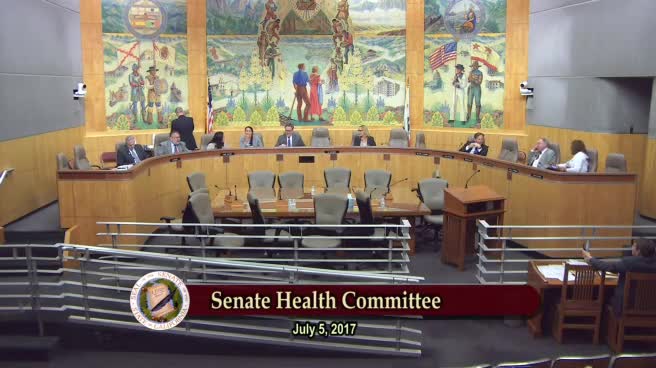 4MIN
Senate Standing Committee on Health
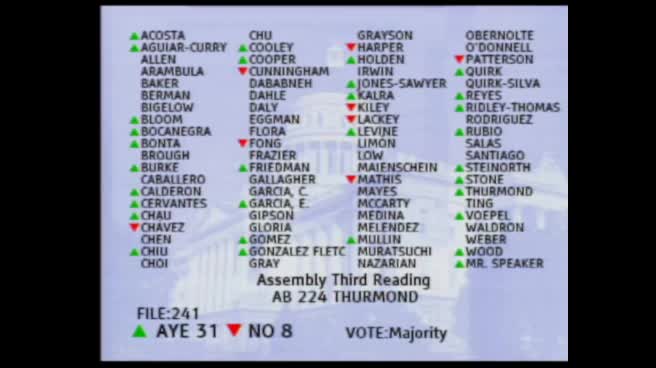 2MIN
Assembly Floor
 1H
Assembly Standing Committee on Appropriations
 11MIN
Assembly Standing Committee on Health
Bill Author

Bill Co-Author(s):