AB 597: Child abuse and neglect: information: computerized database system.
- Session Year: 2017-2018
- House: Assembly
- Latest Version Date: 2017-10-08
Existing law allows the Office of Child Abuse Prevention to fund, through allocations provided to local counties, child abuse and neglect prevention and intervention programs. Existing law provides the criteria under which a county selects agency projects and services to be funded under these provisions, including giving priority to private, nonprofit agencies. Existing law authorizes a county to establish a computerized database system within the county to allow designated provider agencies, which include schools, among other entities, to share identifying information regarding families at risk for child abuse or neglect for the purpose of forming multidisciplinary personnel teams for the prevention, identification, management, or treatment of child abuse or neglect or to provide child welfare services. Existing law makes this information confidential and accessible only to authorized persons.
This bill would authorize the Counties of Santa Clara, Santa Cruz, and San Mateo to jointly establish a computerized database system to be used between and among those counties, and would authorize that system to also share specified identifying information regarding families at risk for child abuse or neglect for research purposes. The bill would authorize the sharing of personal identifying information for research purposes only upon approval by an institutional review board. The bill would set forth various conditions for the review and approval of a research project for the purpose of protecting personal identifying information. The bill would provide that, for purposes of this jointly established system, a provider agency also includes local educational agencies. The bill would require the counties to decommission the computerized database system if the ability to share identifying information regarding families at risk for child abuse or neglect between and among the counties and for research purposes becomes available within the statewide child welfare information system. The bill would require any county that establishes a computerized database system under the provisions described above to decommission any duplicative functionality within its computerized database system if any functionality of the countys computerized database system becomes fully available and deployed within the statewide child welfare information system.
Existing law allows the Office of Child Abuse Prevention to fund, through allocations provided to local counties, child abuse and neglect prevention and intervention programs. Existing law provides the criteria under which a county selects agency projects and services to be funded under these provisions, including giving priority to private, nonprofit agencies. Existing law authorizes a county to establish a computerized database system within the county to allow designated provider agencies, which include schools, among other entities, to share identifying information regarding families at risk for child abuse or neglect for the purpose of forming multidisciplinary personnel teams for the prevention, identification, management, or treatment of child abuse or neglect or to provide child welfare services. Existing law makes this information confidential and accessible only to authorized persons.
This bill would authorize the Counties of Santa Clara, Santa Cruz, and San Mateo to jointly establish a computerized database system to be used between and among those counties, and would authorize that system to also share specified identifying information regarding families at risk for child abuse or neglect for research purposes. The bill would authorize the sharing of personal identifying information for research purposes only upon approval by an institutional review board. The bill would set forth various conditions for the review and approval of a research project for the purpose of protecting personal identifying information. The bill would provide that, for purposes of this jointly established system, a provider agency also includes local educational agencies. The bill would require the counties to decommission the computerized database system if the ability to share identifying information regarding families at risk for child abuse or neglect between and among the counties and for research purposes becomes available within the statewide child welfare information system. This The bill would require any county that establishes a computerized database system to decommission any duplicative functionality within its computerized database system if any functionality of a the countys computerized database system becomes fully available and deployed within the statewide child welfare information system.
Existing law allows the Office of Child Abuse Prevention to fund, through allocations provided to local counties, child abuse and neglect prevention and intervention programs. Existing law provides the criteria under which a county selects agency projects and services to be funded under these provisions, including giving priority to private, nonprofit agencies. Existing law authorizes a county to establish a computerized database system within the county to allow designated provider agencies, which include schools, among other entities, to share identifying information regarding families at risk for child abuse or neglect for the purpose of forming multidisciplinary personnel teams for the prevention, identification, management, or treatment of child abuse or neglect or to provide child welfare services. Existing law makes this information confidential and accessible only to authorized persons.
This bill would authorize the Counties of Santa Clara, Santa Cruz, and San Mateo to jointly establish a computerized database system to be used between and among those counties, and would authorize that system to also share specified identifying information regarding families at risk for child abuse or neglect for research purposes. The bill would authorize the sharing of personal identifying information for research purposes only upon approval by an institutional review board. The bill would set forth various conditions for the review and approval of a research project for the purpose of protecting personal identifying information. The bill would provide that, for purposes of this jointly established system, a provider agency also includes local educational agencies. The bill would require the counties to decommission the computerized database system if the ability to share identifying information regarding families at risk for child abuse or neglect between and among the counties and for research purposes becomes available within the statewide child welfare information system. This bill would require any county that establishes a computerized database system to decommission any duplicative functionality within its computerized database system if any functionality of a countys computerized database system becomes fully available and deployed within the statewide child welfare information system.
Existing law allows the Office of Child Abuse Prevention to fund, through allocations provided to local counties, child abuse and neglect prevention and intervention programs. Existing law provides the criteria under which a county selects agency projects and services to be funded under these provisions, including giving priority to private, nonprofit agencies and requiring training and technical assistance to be provided by private, nonprofit agencies, as specified. agencies. Existing law authorizes a county to establish a computerized database system within the county to allow designated provider agencies, which include schools, among other entities, to share identifying information regarding families at risk for child abuse or neglect for the purpose of forming multidisciplinary personnel teams for the prevention, identification, management, or treatment of child abuse or neglect or to provide child welfare services. Existing law makes this information confidential and accessible only to authorized persons.
This bill would authorize the Counties of Santa Clara, Santa Cruz, and San Mateo to jointly establish a computerized database system to be used between and among those counties, and would authorize that system to also share specified identifying information regarding families at risk for child abuse or neglect for research purposes. The bill would require any personally identifiable data shared for research purposes to remain confidential, and would require those participating counties to develop a confidentiality protocol. authorize the sharing of personal identifying information for research purposes only upon approval by an institutional review board. The bill would set forth various conditions for the review and approval of a research project for the purpose of protecting personal identifying information. The bill would provide that, for purposes of this jointly established system, a provider agency also includes local educational agencies. The bill would require the counties to decommission the computerized database system if the ability to share identifying information regarding families at risk for child abuse or neglect between and among the counties and for research purposes becomes available within the statewide child welfare information system.
Existing law allows the Office of Child Abuse Prevention to fund, through allocations provided to local counties, child abuse and neglect prevention and intervention programs. Existing law provides the criteria under which a county selects agency projects and services to be funded under these provisions, including giving priority to private, nonprofit agencies and requiring training and technical assistance to be provided by private, nonprofit agencies, as specified. Existing law authorizes a county to establish a computerized database system within the county to allow designated provider agencies, which include schools, among other entities, to share identifying information regarding families at risk for child abuse or neglect for the purpose of forming multidisciplinary personnel teams for the prevention, identification, management, or treatment of child abuse or neglect or to provide child welfare services.
This bill would authorize the Counties of Santa Clara, Santa Cruz, and San Mateo to jointly establish a computerized database system to be used between and among those counties, and would authorize that system to also share specified identifying information regarding families at risk for child abuse or neglect for research purposes. The bill would require any personally identifiable data shared for research purposes to remain confidential, and would require those participating counties to develop a confidentiality protocol. The bill would provide that, for purposes of this jointly established system, a provider agency also includes local educational agencies. The bill would require the counties to decommission the computerized database system if the ability to share identifying information regarding families at risk for child abuse or neglect for research purposes becomes available within the statewide child welfare information system.
Existing law allows the Office of Child Abuse Prevention to fund, through allocations provided to local counties, child abuse and neglect prevention and intervention programs. Existing law provides the criteria under which a county selects agency projects and services to be funded under these provisions, including giving priority to private, nonprofit agencies and requiring training and technical assistance to be provided by private, nonprofit agencies, as specified. Existing law authorizes a county to establish a computerized database system within the county to allow designated provider agencies, which includes include schools, among other entities, to share identifying information regarding families at risk for child abuse or neglect for the purpose of forming multidisciplinary personnel teams for the prevention, identification, management, or treatment of child abuse or neglect or to provide child welfare services.
This bill would provide that provider agencies also include local educational agencies. The bill would authorize a county to also participate with an established computerized database system between and among counties and would authorize a county to share information, as specified, for research purposes.This bill would authorize the Counties of Santa Clara, Santa Cruz, and San Mateo to jointly establish a computerized database system to be used between and among those counties, and would authorize that system to also share specified identifying information regarding families at risk for child abuse or neglect for research purposes. The bill would require any personally identifiable data shared for research purposes to remain confidential, and would require those participating counties to develop a confidentiality protocol. The bill would provide that, for purposes of this jointly established system, a provider agency also includes local educational agencies.
Existing law allows the Office of Child Abuse Prevention to fund, through allocations provided to local counties, child abuse and neglect prevention and intervention programs. Existing law provides the criteria under which a county selects agency projects and services to be funded under these provisions, including giving priority to private, nonprofit agencies and requiring training and technical assistance to be provided by private, nonprofit agencies, as specified. Existing law authorizes a county to establish a computerized database system within the county to allow designated provider agencies, which includes schools, among other entities, to share identifying information regarding families at risk for child abuse or neglect for the purpose of forming multidisciplinary personnel teams for the prevention, identification, management, or treatment of child abuse or neglect or to provide child welfare services.
This bill would provide that provider agencies also include local educational agencies. The bill would authorize a county to also participate with an established computerized database system between and among counties and would authorize a county to share information, as specified, for research purposes.
(a)Notwithstanding any other law, any county may establish a computerized database system within that county to allow provider agencies, as defined in subdivision (h), to share identifying information, as specified in subdivision (c), regarding families at risk for child abuse or neglect for all of the following purposes:
(1)Forming a multidisciplinary personnel team, as defined in either subdivision (d) of Section 18951 or paragraph (1) of subdivision (b) of Section 18961.7.
(2)The prevention, identification, management, or treatment of child abuse or neglect.
(3)The provision of child welfare services to a child or childs family.
(b)Each county shall develop its own standards for defining at risk before establishing this system. Only information about children, the families of children, and persons living in the childs home, at risk for child abuse or neglect, may be entered into a computerized database system established pursuant to this section.
(c)When a child or family has been identified as at risk for child abuse or neglect under this section, only the following information shall be entered into the system:
(1)The name, address, telephone number, and date and place of birth of family members and persons living in the childs home.
(2)The number assigned to the case by each provider agency.
(3)The name and telephone number of each employee assigned to the case, or a contact person, from each provider agency.
(4)The date or dates of contact between each provider agency and a family member or a person living in the childs home.
(d)The information may only be entered into the system by, or disclosed to, provider agency employees designated by the director of each participating provider agency. Members of the multidisciplinary personnel teams shall be drawn from these designated employees, or other persons, as specified in Section 18961. The heads of provider agencies shall establish a system by which unauthorized personnel cannot access the data contained in the system.
(e)The information obtained pursuant to this section shall be kept confidential and shall be used solely for the prevention, identification, management, or treatment of child abuse, child neglect, or both, or for the provision of child welfare services. Any person knowingly and intentionally violating this subdivision shall be subject to any administrative or civil penalties set forth in the respective statutes governing the confidentiality of the records maintained by the provider agencies.
(f)This section shall not supplant any duties required by the Child Abuse and Neglect Reporting Act (Article 2.5 (commencing with Section 11164) of Chapter 2 of Title 1 of Part 4 of the Penal Code).
(g)No employee of a provider agency that serves children and their families shall be civilly or criminally liable for furnishing or sharing information as authorized by this section.
(h)For the purposes of this section, provider agency means any governmental or other agency that has as one of its purposes the prevention, identification, management, or treatment of child abuse or neglect. The provider agencies serving children and their families that may share information under this section shall include, but not be limited to, the following entities or service agencies:
(1)Social services.
(2)Childrens services.
(3)Health services.
(4)Mental health services.
(5)Probation.
(6)Law enforcement.
(7)Schools.
(i)A county that establishes a computerized database system pursuant to this section shall install system controls to monitor system use and to detect any violations of the system controls.
(j)(1)Notwithstanding subdivision (a), the Counties of Santa Clara, Santa Cruz, and San Mateo may jointly establish a computerized database system to be used between and among those counties pursuant to this section.
(2)(A)A computerized database system established pursuant to this subdivision may, in addition to the purposes specified in subdivision (a), share identifying information, as specified in subdivision (c), regarding families at risk for child abuse or neglect for research purposes, the intent of which is to identify ways to better serve these families and to prevent abuse and neglect. The counties may enter into a memorandum of understanding with a research entity for the research purposes. The memorandum of understanding shall include an information sharing agreement. Personal identifying information may only be shared upon approval by an institutional review board. The approval required under this paragraph shall include a review and determination that all of the following criteria have been satisfied:
(i)The researcher has provided a plan sufficient to protect personal identifying information from improper use and disclosures, including sufficient administrative, physical, and technical safeguards to protect personal identifying information from reasonably anticipated threats to the security or confidentiality of the information.
(ii)The researcher has provided a sufficient plan to destroy or return all personal identifying information as soon as it is no longer needed for the research project, unless the researcher has demonstrated an ongoing need for the personal identifying information for the research project and has provided a long-term plan sufficient to protect the confidentiality of that information.
(iii)The researcher has provided sufficient written assurances that the personal identifying information will not be reused or disclosed to any other person or entity, or used in any manner, not approved in the research protocol, except as required by law or for authorized oversight of the research project.
(B)The institutional review board shall, at a minimum, accomplish all of the following as part of its review and approval of the research project for the purpose of protecting personal identifying information held in the databases established under this section:
(i)Determine whether the requested personal identifying information is needed to conduct the research.
(ii)Permit access to personal identifying information only if it is needed for the research project.
(iii)Permit access only to the minimum necessary personal identifying information needed for the research project.
(iv)Require the assignment of unique subject codes that are not derived from personal identifying information in lieu of social security numbers if the research can still be conducted without social security numbers.
(v)If feasible, and if cost, time, and technical expertise permit, require the county to conduct a portion of the data processing for the researcher to minimize the release of personal identifying information.
(C)Reasonable costs to the county associated with the countys process of protecting personal identifying information under the conditions of institutional review board approval may be billed to the researcher, including, but not limited to, an agencys costs for conducting a portion of the data processing for the researcher, removing personal identifying information, encrypting or otherwise securing personal identifying information, or assigning subject codes.
(3)The counties jointly establishing and using a computerized database system pursuant to this subdivision shall install, and be jointly responsible for, agreed-upon system controls to monitor system use and information security to detect any violations that may cause intentional or unintentional disclosure of information to unauthorized users of the system.
(4)For the purposes of a computerized database system established pursuant to this subdivision, provider agency includes local educational agencies in addition to the entities or agencies listed in subdivision (h).
(5)If the ability to share identifying information, as described in this subdivision, becomes available within the statewide child welfare information system, the counties shall decommission the computerized database system established pursuant to this subdivision.
(k)If any functionality of a countys computerized database system developed pursuant to this section becomes fully available and deployed to all counties within the statewide child welfare information system, the county shall decommission the duplicative functionality within its computerized database system.
(a)Notwithstanding any other law, any county may establish a computerized database system within that county to allow provider agencies, as defined in subdivision (h), to share identifying information, as specified in subdivision (c), regarding families at risk for child abuse or neglect for all of the following purposes:
(1)Forming a multidisciplinary personnel team, as defined in either subdivision (d) of Section 18951 or paragraph (1) of subdivision (b) of Section 18961.7.
(2)The prevention, identification, management, or treatment of child abuse or neglect.
(3)The provision of child welfare services to a child or childs family.
(b)Each county shall develop its own standards for defining at risk before establishing this system. Only information about children, the families of children, and persons living in the childs home, at risk for child abuse or neglect, may be entered into a computerized database system established pursuant to this section.
(c)When a child or family has been identified as at risk for child abuse or neglect under this section, only the following information shall be entered into the system:
(1)The name, address, telephone number, and date and place of birth of family members and persons living in the childs home.
(2)The number assigned to the case by each provider agency.
(3)The name and telephone number of each employee assigned to the case, or a contact person, from each provider agency.
(4)The date or dates of contact between each provider agency and a family member or a person living in the childs home.
(d)The information may only be entered into the system by, or disclosed to, provider agency employees designated by the director of each participating provider agency. Members of the multidisciplinary personnel teams shall be drawn from these designated employees, or other persons, as specified in Section 18961. The heads of provider agencies shall establish a system by which unauthorized personnel cannot access the data contained in the system.
(e)The information obtained pursuant to this section shall be kept confidential and shall be used solely for the prevention, identification, management, or treatment of child abuse, child neglect, or both, or for the provision of child welfare services. Any person knowingly and intentionally violating this subdivision shall be subject to any administrative or civil penalties set forth in the respective statutes governing the confidentiality of the records maintained by the provider agencies.
(f)This section shall not supplant any duties required by the Child Abuse and Neglect Reporting Act (Article 2.5 (commencing with Section 11164) of Chapter 2 of Title 1 of Part 4 of the Penal Code).
(g)No employee of a provider agency that serves children and their families shall be civilly or criminally liable for furnishing or sharing information as authorized by this section.
(h)For the purposes of this section, provider agency means any governmental or other agency that has as one of its purposes the prevention, identification, management, or treatment of child abuse or neglect. The provider agencies serving children and their families that may share information under this section shall include, but not be limited to, the following entities or service agencies:
(1)Social services.
(2)Childrens services.
(3)Health services.
(4)Mental health services.
(5)Probation.
(6)Law enforcement.
(7)Schools.
(i)A county that establishes a computerized database system pursuant to this section shall install system controls to monitor system use and to detect any violations of the system controls.
(j)(1)Notwithstanding subdivision (a), the Counties of Santa Clara, Santa Cruz, and San Mateo may jointly establish a computerized database system to be used between and among those counties pursuant to this section.
(2)(A)A computerized database system established pursuant to this subdivision may, in addition to the purposes specified in subdivision (a), share identifying information, as specified in subdivision (c), regarding families at risk for child abuse or neglect for research purposes, the intent of which is to identify ways to better serve these families and to prevent abuse and neglect. The counties may enter into a memorandum of understanding with a research entity for the research purposes. The memorandum of understanding shall include an information sharing agreement. Personal identifying information may only be shared upon approval by an institutional review board. The approval required under this paragraph shall include a review and determination that all of the following criteria have been satisfied:
(i)The researcher has provided a plan sufficient to protect personal identifying information from improper use and disclosures, including sufficient administrative, physical, and technical safeguards to protect personal identifying information from reasonably anticipated threats to the security or confidentiality of the information.
(ii)The researcher has provided a sufficient plan to destroy or return all personal identifying information as soon as it is no longer needed for the research project, unless the researcher has demonstrated an ongoing need for the personal identifying information for the research project and has provided a long-term plan sufficient to protect the confidentiality of that information.
(iii)The researcher has provided sufficient written assurances that the personal identifying information will not be reused or disclosed to any other person or entity, or used in any manner, not approved in the research protocol, except as required by law or for authorized oversight of the research project.
(B)The institutional review board shall, at a minimum, accomplish all of the following as part of its review and approval of the research project for the purpose of protecting personal identifying information held in the databases established under this section:
(i)Determine whether the requested personal identifying information is needed to conduct the research.
(ii)Permit access to personal identifying information only if it is needed for the research project.
(iii)Permit access only to the minimum necessary personal identifying information needed for the research project.
(iv)Require the assignment of unique subject codes that are not derived from personal identifying information in lieu of social security numbers if the research can still be conducted without social security numbers.
(v)If feasible, and if cost, time, and technical expertise permit, require the county to conduct a portion of the data processing for the researcher to minimize the release of personal identifying information.
(C)Reasonable costs to the county associated with the countys process of protecting personal identifying information under the conditions of institutional review board approval may be billed to the researcher, including, but not limited to, an agencys costs for conducting a portion of the data processing for the researcher, removing personal identifying information, encrypting or otherwise securing personal identifying information, or assigning subject codes.
(3)The counties jointly establishing and using a computerized database system pursuant to this subdivision shall install install, and be jointly responsible for for, agreed-upon system controls to monitor system use and information security to detect any violations that may cause intentional or unintentional disclosure of information to unauthorized users of the system.
(4)For the purposes of a computerized database system established pursuant to this subdivision, provider agency includes local educational agencies in addition to the entities or agencies listed in subdivision (h).
(5)If the ability to share identifying information, as described in this subdivision, becomes available within the statewide child welfare information system, the counties shall decommission the computerized database system established pursuant to this subdivision.
(k)If any functionality of a countys computerized database system developed pursuant to this section becomes fully available and deployed to all counties within the statewide child welfare information system, the county shall decommission the duplicative functionality within its computerized database system.
(a)Notwithstanding any other law, any county may establish a computerized database system within that county to allow provider agencies, as defined in subdivision (h), to share identifying information, as specified in subdivision (c), regarding families at risk for child abuse or neglect for all of the following purposes:
(1)Forming a multidisciplinary personnel team, as defined in either subdivision (d) of Section 18951 or paragraph (1) of subdivision (b) of Section 18961.7.
(2)The prevention, identification, management, or treatment of child abuse or neglect.
(3)The provision of child welfare services to a child or childs family.
(b)Each county shall develop its own standards for defining at risk before establishing this system. Only information about children, the families of children, and persons living in the childs home, at risk for child abuse or neglect, may be entered into a computerized database system established pursuant to this section.
(c)When a child or family has been identified as at risk for child abuse or neglect under this section, only the following information shall be entered into the system:
(1)The name, address, telephone number, and date and place of birth of family members and persons living in the childs home.
(2)The number assigned to the case by each provider agency.
(3)The name and telephone number of each employee assigned to the case, or a contact person, from each provider agency.
(4)The date or dates of contact between each provider agency and a family member or a person living in the childs home.
(d)The information may only be entered into the system by, or disclosed to, provider agency employees designated by the director of each participating provider agency. Members of the multidisciplinary personnel teams shall be drawn from these designated employees, or other persons, as specified in Section 18961. The heads of provider agencies shall establish a system by which unauthorized personnel cannot access the data contained in the system.
(e)The information obtained pursuant to this section shall be kept confidential and shall be used solely for the prevention, identification, management, or treatment of child abuse, child neglect, or both, or for the provision of child welfare services. Any person knowingly and intentionally violating this subdivision shall be subject to any administrative or civil penalties set forth in the respective statutes governing the confidentiality of the records maintained by the provider agencies.
(f)This section shall not supplant any duties required by the Child Abuse and Neglect Reporting Act (Article 2.5 (commencing with Section 11164) of Chapter 2 of Title 1 of Part 4 of the Penal Code).
(g)No employee of a provider agency that serves children and their families shall be civilly or criminally liable for furnishing or sharing information as authorized by this section.
(h)For the purposes of this section, provider agency means any governmental or other agency that has as one of its purposes the prevention, identification, management, or treatment of child abuse or neglect. The provider agencies serving children and their families that may share information under this section shall include, but not be limited to, the following entities or service agencies:
(1)Social services.
(2)Childrens services.
(3)Health services.
(4)Mental health services.
(5)Probation.
(6)Law enforcement.
(7)Schools.
(i)A county that establishes a computerized database system pursuant to this section shall install system controls to monitor system use and to detect any violations of the system controls.
(j)(1)Notwithstanding subdivision (a), the Counties of Santa Clara, Santa Cruz, and San Mateo may jointly establish a computerized database system to be used between and among those counties pursuant to this section.
(2)(A)A computerized database system established pursuant to this subdivision may, in addition to the purposes specified in subdivision (a), share identifying information, as specified in subdivision (c), regarding families at risk for child abuse or neglect for research purposes, the intent of which is to identify ways to better serve these families and to prevent abuse and neglect. The counties may enter into a memorandum of understanding with a research entity for the research purposes. The memorandum of understanding shall include an information sharing agreement. Personal identifying information may only be shared upon approval by an institutional review board. The approval required under this paragraph shall include a review and determination that all of the following criteria have been satisfied:
(i)The researcher has provided a plan sufficient to protect personal identifying information from improper use and disclosures, including sufficient administrative, physical, and technical safeguards to protect personal identifying information from reasonably anticipated threats to the security or confidentiality of the information.
(ii)The researcher has provided a sufficient plan to destroy or return all personal identifying information as soon as it is no longer needed for the research project, unless the researcher has demonstrated an ongoing need for the personal identifying information for the research project and has provided a long-term plan sufficient to protect the confidentiality of that information.
(iii)The researcher has provided sufficient written assurances that the personal identifying information will not be reused or disclosed to any other person or entity, or used in any manner, not approved in the research protocol, except as required by law or for authorized oversight of the research project.
(B)The institutional review board shall, at a minimum, accomplish all of the following as part of its review and approval of the research project for the purpose of protecting personal identifying information held in the databases established under this section:
(i)Determine whether the requested personal identifying information is needed to conduct the research.
(ii)Permit access to personal identifying information only if it is needed for the research project.
(iii)Permit access only to the minimum necessary personal identifying information needed for the research project.
(iv)Require the assignment of unique subject codes that are not derived from personal identifying information in lieu of social security numbers if the research can still be conducted without social security numbers.
(v)If feasible, and if cost, time, and technical expertise permit, require the county to conduct a portion of the data processing for the researcher to minimize the release of personal identifying information.
(C)Reasonable costs to the county associated with the countys process of protecting personal identifying information under the conditions of institutional review board approval may be billed to the researcher, including, but not limited to, an agencys costs for conducting a portion of the data processing for the researcher, removing personal identifying information, encrypting or otherwise securing personal identifying information, or assigning subject codes.
(3)The counties jointly establishing and using a computerized database system pursuant to this subdivision shall install and be jointly responsible for agreed-upon system controls to monitor system use and information security to detect any violations that may cause intentional or unintentional disclosure of information to unauthorized users of the system.
(4)For the purposes of a computerized database system established pursuant to this subdivision, provider agency includes local educational agencies in addition to the entities or agencies listed in subdivision (h).
(5)If the ability to share identifying information, as described in this subdivision, becomes available within the statewide child welfare information system, the counties shall decommission the computerized database system established pursuant to this subdivision.
(k)If any functionality of a countys computerized database system developed pursuant to this section becomes fully available and deployed to all counties within the statewide child welfare information system, the county shall decommission the duplicative functionality within its computerized database system.
(a)Notwithstanding any other law, any county may establish a computerized database system within that county to allow provider agencies, as defined in subdivision (h), to share identifying information, as specified in subdivision (c), regarding families at risk for child abuse or neglect for all of the following purposes:
(1)Forming a multidisciplinary personnel team, as defined in either subdivision (d) of Section 18951 or paragraph (2) (1) of subdivision (b) of Section 18961.7.
(2)The prevention, identification, management, or treatment of child abuse or neglect.
(3)The provision of child welfare services to a child or childs family.
(b)Each county shall develop its own standards for defining at risk before establishing this system. Only information about children, the families of children, and persons living in the childs home, at risk for child abuse or neglect, may be entered into a computerized database system established pursuant to this section.
(c)When a child or family has been identified as at risk for child abuse or neglect under this section, only the following information shall be entered into the system:
(1)The name, address, telephone number, and date and place of birth of family members and persons living in the childs home.
(2)The number assigned to the case by each provider agency.
(3)The name and telephone number of each employee assigned to the case, or a contact person, from each provider agency.
(4)The date or dates of contact between each provider agency and a family member or a person living in the childs home.
(d)The information may only be entered into the system by, or disclosed to, provider agency employees designated by the director of each participating provider agency. Members of the multidisciplinary personnel teams shall be drawn from these designated employees, or other persons, as specified in Section 18961. The heads of provider agencies shall establish a system by which unauthorized personnel cannot access the data contained in the system.
(e)The information obtained pursuant to this section shall be kept confidential and shall be used solely for the prevention, identification, management, or treatment of child abuse, child neglect, or both, or for the provision of child welfare services. Any person knowingly and intentionally violating this subdivision shall be subject to any administrative or civil penalties set forth in the respective statutes governing the confidentiality of the records maintained by the provider agencies.
(f)This section shall not supplant any duties required by the Child Abuse and Neglect Reporting Act (Article 2.5 (commencing with Section 11164) of Chapter 2 of Title 1 of Part 3 4 of the Penal Code).
(g)No employee of a provider agency which that serves children and their families shall be civilly or criminally liable for furnishing or sharing information as authorized by this section.
(h)For the purposes of this section, provider agency means any governmental or other agency that has as one of its purposes the prevention, identification, management, or treatment of child abuse or neglect. The provider agencies serving children and their families that may share information under this section shall include, but not be limited to, the following entities or service agencies:
(1)Social services.
(2)Childrens services.
(3)Health services.
(4)Mental health services.
(5)Probation.
(6)Law enforcement.
(7)Schools.
(i)A county that establishes a computerized database system pursuant to this section shall install system controls to monitor system use and to detect any violations of the system controls.
(j)(1)Notwithstanding subdivision (a), the Counties of Santa Clara, Santa Cruz, and San Mateo may jointly establish a computerized database system to be used between and among those counties pursuant to this section.
(2)(A)A computerized database system established pursuant to this subdivision may, in addition to the purposes specified in subdivision (a), share identifying information, as specified in subdivision (c), regarding families at risk for child abuse or neglect for research purposes, the intent of which is to identify ways to better serve these families and to prevent abuse and neglect. The counties may enter into a memorandum of understanding with a research entity for the research purposes. The memorandum of understanding shall include an information sharing agreement. Personal identifying information may only be shared upon approval by an institutional review board. The approval required under this paragraph shall include a review and determination that all of the following criteria have been satisfied:
(B)Any personally identifiable data shared for research purposes shall remain confidential, and participating counties shall develop a confidentiality protocol to ensure standardized processes are established for this purpose. Aggregate information that is not personally identifiable may be used for evaluation, research, and system and services improvement purposes.(i)The researcher has provided a plan sufficient to protect personal identifying information from improper use and disclosures, including sufficient administrative, physical, and technical safeguards to protect personal identifying information from reasonably anticipated threats to the security or confidentiality of the information.
(ii)The researcher has provided a sufficient plan to destroy or return all personal identifying information as soon as it is no longer needed for the research project, unless the researcher has demonstrated an ongoing need for the personal identifying information for the research project and has provided a long-term plan sufficient to protect the confidentiality of that information.
(iii)The researcher has provided sufficient written assurances that the personal identifying information will not be reused or disclosed to any other person or entity, or used in any manner, not approved in the research protocol, except as required by law or for authorized oversight of the research project.
(B)The institutional review board shall, at a minimum, accomplish all of the following as part of its review and approval of the research project for the purpose of protecting personal identifying information held in the databases established under this section:
(i)Determine whether the requested personal identifying information is needed to conduct the research.
(ii)Permit access to personal identifying information only if it is needed for the research project.
(iii)Permit access only to the minimum necessary personal identifying information needed for the research project.
(iv)Require the assignment of unique subject codes that are not derived from personal identifying information in lieu of social security numbers if the research can still be conducted without social security numbers.
(v)If feasible, and if cost, time, and technical expertise permit, require the county to conduct a portion of the data processing for the researcher to minimize the release of personal identifying information.
(C)Reasonable costs to the county associated with the countys process of protecting personal identifying information under the conditions of institutional review board approval may be billed to the researcher, including, but not limited to, an agencys costs for conducting a portion of the data processing for the researcher, removing personal identifying information, encrypting or otherwise securing personal identifying information, or assigning subject codes.
(3)The counties jointly establishing and using a computerized database system pursuant to this subdivision shall install and be jointly responsible for agreed-upon system controls to monitor system use and information security to detect any violations that may cause intentional or unintentional disclosure of information to unauthorized users of the system.
(4)For the purposes of a computerized database system established pursuant to this subdivision, provider agency includes local educational agencies in addition to the entities or agencies listed in subdivision (h).
(5)If the ability to share identifying information, as described in this subdivision, becomes available within the statewide child welfare information system, the counties shall decommission the computerized database system established pursuant to this subdivision.
(a)Notwithstanding any other law, any county may establish a computerized database system within that county to allow provider agencies, as defined in subdivision (h), to share identifying information, as specified in subdivision (c), regarding families at risk for child abuse or neglect for all of the following purposes:
(1)Forming a multidisciplinary personnel team, as defined in either subdivision (d) of Section 18951 or paragraph (2) of subdivision (b) of Section 18961.7.
(2)The prevention, identification, management, or treatment of child abuse or neglect.
(3)The provision of child welfare services to a child or childs family.
(b)Each county shall develop its own standards for defining at risk before establishing this system. Only information about children, the families of children, and persons living in the childs home, at risk for child abuse or neglect, may be entered into a computerized database system established pursuant to this section.
(c)When a child or family has been identified as at risk for child abuse or neglect under this section, only the following information shall be entered into the system:
(1)The name, address, telephone number, and date and place of birth of family members and persons living in the childs home.
(2)The number assigned to the case by each provider agency.
(3)The name and telephone number of each employee assigned to the case, or a contact person, from each provider agency.
(4)The date or dates of contact between each provider agency and a family member or a person living in the childs home.
(d)The information may only be entered into the system by, or disclosed to, provider agency employees designated by the director of each participating provider agency. Members of the multidisciplinary personnel teams shall be drawn from these designated employees, or other persons, as specified in Section 18961. The heads of provider agencies shall establish a system by which unauthorized personnel cannot access the data contained in the system.
(e)The information obtained pursuant to this section shall be kept confidential and shall be used solely for the prevention, identification, management, or treatment of child abuse, child neglect, or both, or for the provision of child welfare services. Any person knowingly and intentionally violating this subdivision shall be subject to any administrative or civil penalties set forth in the respective statutes governing the confidentiality of the records maintained by the provider agencies.
(f)This section shall not supplant any duties required by the Child Abuse and Neglect Reporting Act (Article 2.5 (commencing with Section 11164) of Chapter 2 of Title 1 of Part 3 of the Penal Code).
(g)No employee of a provider agency which serves children and their families shall be civilly or criminally liable for furnishing or sharing information as authorized by this section.
(h)For the purposes of this section, provider agency means any governmental or other agency that has as one of its purposes the prevention, identification, management, or treatment of child abuse or neglect. The provider agencies serving children and their families that may share information under this section shall include, but not be limited to, the following entities or service agencies:
(1)Social services.
(2)Childrens services.
(3)Health services.
(4)Mental health services.
(5)Probation.
(6)Law enforcement.
(7)Schools.
(i)A county that establishes a computerized database system pursuant to this section shall install system controls to monitor system use and to detect any violations of the system controls.
(j)(1)Notwithstanding subdivision (a), the Counties of Santa Clara, Santa Cruz, and San Mateo may jointly establish a computerized database system to be used between and among those counties pursuant to this section.
(2)(A)A computerized database system established pursuant to this subdivision may, in addition to the purposes specified in subdivision (a), share identifying information, as specified in subdivision (c), regarding families at risk for child abuse or neglect for research purposes, the intent of which is to identify ways to better serve these families and to prevent abuse and neglect. Any The counties may enter into a memorandum of understanding with a research entity for the research purposes. The memorandum of understanding shall include an information sharing agreement.
(B)Any personally identifiable data shared for research purposes shall remain confidential, and participating counties shall develop a confidentiality protocol to ensure standardized processes are established for this purpose. Aggregate information that is not personally identifiable may be used for evaluation, research, and system and services improvement purposes.
(3)The counties jointly establishing and using a computerized database system pursuant to this subdivision shall install and be jointly responsible for agreed-upon system controls to monitor system use and information security to detect any violations of the system controls. that may cause intentional or unintentional disclosure of information to unauthorized users of the system.
(4)For the purposes of a computerized database system established pursuant to this subdivision, provider agency includes local educational agencies in addition to the entities or agencies listed in subdivision (h).
(5)If the ability to share identifying information, as described in this subdivision, becomes available within the statewide child welfare information system, the counties shall decommission the computerized database system established pursuant to this subdivision.
(a)Notwithstanding any other law, any county may establish a computerized database system or participate with an established computerized database system between and among counties within that county to allow provider agencies, as defined in subdivision (h), to share identifying information, as specified in subdivision (c), regarding families at risk for child abuse or neglect for all of the following purposes:
(1)Forming a multidisciplinary personnel team, as defined in either subdivision (d) of Section 18951 or paragraph (2) of subdivision (b) of Section 18961.7.
(2)The prevention, identification, management, or treatment of child abuse or neglect.
(3)The provision of child welfare services to a child or childs family.
(4)Research purposes.(b)Each county shall develop its own standards for defining at risk before establishing this system. Only information about children, the families of children, and persons living in the childs home, at risk for child abuse or neglect neglect, may be entered into a computerized database system established pursuant to this section.
(c)When a child or family has been identified as at risk for child abuse or neglect under this section, only the following information shall be entered into the system:
(1)The name, address, telephone number, and date and place of birth of family members and persons living in the childs home.
(2)The number assigned to the case by each provider agency.
(3)The name and telephone number of each employee assigned to the case, or a contact person, from each provider agency.
(4)The date or dates of contact between each provider agency and a family member or a person living in the childs home.
(d)The information may only be entered into the system by, or disclosed to, provider agency employees designated by the director of each participating provider agency. Members of the multidisciplinary personnel teams shall be drawn from these designated employees, or other persons, as specified in Section 18961. The heads of provider agencies shall establish a system by which unauthorized personnel cannot access the data contained in the system.
(e)The information obtained pursuant to this section shall be kept confidential and shall be used solely for the prevention, identification, management, or treatment of child abuse, child neglect, or both, or for the provision of child welfare services. For research purposes, personally identifiable data shall remain confidential. Aggregate, nonidentifiable information may be used for evaluation, research, and system and services improvement purposes. Any person knowingly and intentionally violating this subdivision shall be subject to any administrative or civil penalties set forth in the respective statutes governing the confidentiality of the records maintained by the provider agencies.
(f)This section shall not supplant any duties required by the Child Abuse and Neglect Reporting Act (Article 2.5 (commencing with Section 11164) of Chapter 2 of Title 1 of Part 3 of the Penal Code).
(g)No employee of a provider agency which serves children and their families shall be civilly or criminally liable for furnishing or sharing information as authorized by this section.
(h)For the purposes of this section, provider agency means any governmental or other agency that has as one of its purposes the prevention, identification, management, or treatment of child abuse or neglect. The provider agencies serving children and their families that may share information under this section shall include, but not be limited to, the following entities or service agencies:
(1)Social services.
(2)Childrens services.
(3)Health services.
(4)Mental health services.
(5)Probation.
(6)Law enforcement.
(7)Schools and local educational agencies.(7)Schools.
(i)A county that establishes a computerized database system pursuant to this section shall install system controls to monitor system use and to detect any violations of the system controls.
(j)(1)Notwithstanding subdivision (a), the Counties of Santa Clara, Santa Cruz, and San Mateo may jointly establish a computerized database system to be used between and among those counties pursuant to this section.
(2)A computerized database system established pursuant to this subdivision may, in addition to the purposes specified in subdivision (a), share identifying information, as specified in subdivision (c), regarding families at risk for child abuse or neglect for research purposes, the intent of which is to identify ways to better serve these families and to prevent abuse and neglect. Any personally identifiable data shared for research purposes shall remain confidential, and participating counties shall develop a confidentiality protocol to ensure standardized processes are established for this purpose. Aggregate information that is not personally identifiable may be used for evaluation, research, and system and services improvement purposes.
(3)The counties jointly establishing and using a computerized database system pursuant to this subdivision shall install and be jointly responsible for agreed-upon system controls to monitor system use and to detect any violations of the system controls.
(4)For the purposes of a computerized database system established pursuant to this subdivision, provider agency includes local educational agencies in addition to the entities or agencies listed in subdivision (h).
(a)Notwithstanding any other provision of law, any county may establish a computerized database system within that county or participate with an established computerized database system between and among counties to allow provider agencies, as defined in subdivision (h), to share identifying information, as specified in subdivision (c), regarding families at risk for child abuse or neglect for the purposes of forming for all of the following purposes:
(1)Forming a multidisciplinary personnel team, as defined in either subdivision (d) of Section 18951 or paragraph (2) of subdivision (b) of Section 18961.7, for the 18961.7.
(2)The prevention, identification, management, or treatment of child abuse or neglect, or for the neglect.
(3)The provision of child welfare services to a child or childs family.
(4)Research purposes.
(b)Each county shall develop its own standards for defining at risk before establishing this system. Only information about children, the families of children, and persons living in the childs home, at risk for child abuse or neglect may be entered into a computerized database system established pursuant to this section.
(c)With regard to a case in which When a child or family has been identified as at risk for child abuse or neglect under this section, only the following information shall be entered into the system:
(1)The name, address, telephone number, and date and place of birth of family members and persons living in the childs home.
(2)The number assigned to the case by each provider agency.
(3)The name and telephone number of each employee assigned to the case, or a contact person, from each provider agency.
(4)The date or dates of contact between each provider agency and a family member or a person living in the childs home.
(d)The information may only be entered into the system by, or disclosed to, provider agency employees designated by the director of each participating provider agency. Members of the multidisciplinary personnel teams shall be drawn from these designated employees, or other persons, as specified in Section 18961. The heads of provider agencies shall establish a system by which unauthorized personnel cannot access the data contained in the system.
(e)The information obtained pursuant to this section shall be kept confidential and shall be used solely for the prevention, identification, management, or treatment of child abuse, child neglect, or both, or for the provision of child welfare services. For research purposes, personally identifiable data shall remain confidential. Aggregate, nonidentifiable information may be used for evaluation, research, and system and services improvement purposes. Any person knowingly and intentionally violating this subdivision shall be subject to any administrative or civil penalties set forth in the respective statutes governing the confidentiality of the records maintained by the provider agencies.
(f)This section shall not supplant any duties required by the Child Abuse and Neglect Reporting Act (Article 2.5 (commencing with Section 11164) of Chapter 2 of Title 1 of Part 3 of the Penal Code).
(g)No employee of a provider agency which serves children and their families shall be civilly or criminally liable for furnishing or sharing information as authorized by this section.
(h)For the purposes of this section, provider agency means any governmental or other agency which that has as one of its purposes the prevention, identification, management, or treatment of child abuse or neglect. The provider agencies serving children and their families which that may share information under this section shall include, but not be limited to, the following entities or service agencies:
(1)Social services.
(2)Childrens services.
(3)Health services.
(4)Mental health services.
(5)Probation.
(6)Law enforcement.
(7)Schools.(7)Schools and local educational agencies.
(i)A county that establishes a computerized database system pursuant to this section shall install system controls to monitor system use and to detect any violations of the system controls.
|
Date
|
Status
|
|---|---|
| Oct 8, 2017 | Chaptered by Secretary of State - Chapter 581, Statutes of 2017. |
| Oct 8, 2017 | Approved by the Governor. |
| Sep 20, 2017 | Enrolled and presented to the Governor at 4:30 p.m. |
| Sep 13, 2017 | Assembly Rule 77(a) suspended. |
| Sep 12, 2017 | In Assembly. Concurrence in Senate amendments pending. May be considered on or after September 14 pursuant to Assembly Rule 77. |
| Sep 11, 2017 | Read third time. Passed. Ordered to the Assembly. |
| Sep 7, 2017 | Read second time. Ordered to third reading. |
| Sep 6, 2017 | Read third time and amended. Ordered to second reading. |
| Aug 28, 2017 | Read second time. Ordered to third reading. |
| Aug 24, 2017 | Read third time and amended. Ordered to second reading. |
| Jun 29, 2017 | Read second time. Ordered to third reading. |
| Jun 28, 2017 | From committee: Do pass. (Ayes 6. Noes 0.) (June 27). |
| Jun 15, 2017 | Read second time and amended. Re-referred to Com. on JUD. |
| Jun 14, 2017 | From committee: Amend, and do pass as amended and re-refer to Com. on JUD. (Ayes 4. Noes 0.) (June 13). |
| Jun 1, 2017 | Referred to Coms. on HUMAN S. and JUD. |
| May 22, 2017 | In Senate. Read first time. To Com. on RLS. for assignment. |
| May 22, 2017 | Read third time. Passed. Ordered to the Senate. (Ayes 65. Noes 5. Page 1656.) |
| May 16, 2017 | Read second time. Ordered to third reading. |
| May 15, 2017 | Read second time and amended. Ordered returned to second reading. |
| May 11, 2017 | From committee: Amend, and do pass as amended. (Ayes 7. Noes 0.) (May 9). |
| May 4, 2017 | Re-referred to Com. on HUM. S. |
| May 3, 2017 | From committee chair, with author's amendments: Amend, and re-refer to Com. on HUM. S. Read second time and amended. |
| Feb 27, 2017 | Referred to Com. on HUM. S. |
| Feb 15, 2017 | From printer. May be heard in committee March 17. |
| Feb 14, 2017 | Read first time. To print. |
|
Date
|
Description
|
Location
|
Votes
|
|
|---|---|---|---|---|
| Sep 13, 2017 | AB 597 STONE Concurrence in Senate Amendments | Assembly Floor |
Passed |
|
| Sep 11, 2017 | Assembly 3rd Reading AB597 Mark Stone By Hill | Senate Floor |
Passed |
|
| Jun 27, 2017 | Do pass | Senate Standing Committee on Judiciary |
Passed |
|
| Jun 13, 2017 | Do pass as amended, but first amend, and re-refer to the Committee on [Judiciary] | Senate Standing Committee on Human Services |
Passed |
|
| May 22, 2017 | AB 597 STONE Assembly Third Reading | Assembly Floor |
Passed |
|
| May 9, 2017 | Do pass as amended. | Assembly Standing Committee on Human Services |
Passed |
This list shows positions taken on this bill by organizations on the date displayed, which is linked to the original source.
Positions by individuals are not included.
|
Organization
|
Position
|
Date
|
|---|---|---|
| California Right to Life Committee, Inc. | ** Against | Sep 8, 2017 |
| Santa Clara County Board of Supervisors | ** Support | Jun 26, 2017 |
| Santa Clara County Office Of Education | * Support | Jun 27, 2017 |
| Silicon Valley Regional Data Trust | ** Support | Sep 8, 2017 |
| University of California Santa Cruz | * Support | May 9, 2017 |
CONCURRENCE IN SENATE AMENDMENTS
CSA1 Bill Id:AB 597
Author:(Mark Stone)
As Amended Ver:September 6, 2017
Majority vote
ASSEMBLY: | 65-5 | (May 22, 2017) | SENATE: | 38-0 | (September 11, 2017) |
Original Committee Reference: HUM. S.
SUMMARY: Permits Santa Clara County, Santa Cruz County, and San Mateo County to jointly share information regarding families at risk for child abuse or neglect and allows, among other things, for this information to be used for research purposes intended to better serve those families and to prevent abuse and neglect, provided specified assurances regarding the confidentiality of personal identifying information are met.
Specifically, this bill:
- Authorizes Santa Clara County, Santa Cruz County, and San Mateo County to jointly establish a computerized database system to be used between and among those counties to enable provider agencies to share identifying information regarding families at risk for child abuse or neglect pursuant to current state law regarding the sharing of such information within individual counties, as specified.
- Permits the computerized database system established pursuant to the provisions of this bill to, in addition to the purposes allowed by current law for individual county computerized database systems, share identifying information regarding families at risk for child abuse or neglect for research purposes intended to better serve such families and to prevent abuse and neglect.
- Authorizes the three counties to enter into a memorandum of understanding with a research entity for research purposes, and requires that memorandum of understanding to include an information sharing agreement.
- Requires approval by an institutional review board for the sharing of personal identifying information and that requires such an approval to include a review and determination that all of the following criteria have been satisfied:
- The researcher has provided a plan sufficient to protect personal identifying information from improper use and disclosures, as specified;
- The researcher has provided a plan sufficient to destroy or return all personal identifying information as soon as it is no longer needed, unless the researcher demonstrates an ongoing need related to the research project and has provided a long-term plan to protect the confidentiality of that information; and
- The researcher has provided sufficient written assurances that the information will not be used in any manner not approved in the research protocol except as required by law or for authorized oversight of the research project, as specified.
- Requires the institutional review board to, at a minimum, do all of the following regarding the protection of personal identifying information as part of its review and approval of a research project:
- Determine whether the personal identifying information is necessary for the research;
- Permit access to personal identifying information only as necessary for the research project;
- Permit access only to the minimum necessary personal identifying information for the research project;
- Require the assignment of unique subject codes that are not derived from personal identifying information instead of social security numbers in instances where the research can still be conducted without social security numbers; and
- Require the county to conduct a portion of the data processing for the researcher, if feasible, as specified, in order to minimize the release of personal identifying information.
- Authorizes reasonable costs to the county associated with the county's process of protecting personal identifying information pursuant to institutional review board approval to be billed to the researcher, as specified.
- Requires counties jointly establishing and using a computerized database system pursuant to this bill to install and be jointly responsible for agreed-upon system controls to monitor system use and information security to detect any violations that may cause intentional or unintentional disclosure of information to unauthorized users of the system.
- Includes local educational agencies in the definition of "provider agency" found in current law related to the establishment of computerized database systems, as specified.
- Requires the counties, should the ability to share identifying information pursuant to this bill become available within the statewide child information system, to decommission the computerized database system established pursuant to this bill.
- Requires a county, if any functionality of that county's computerized database system developed pursuant to provisions of this bill becomes fully available and deployed to all counties within the statewide child welfare information system, to decommission the duplicative functionality within its computerized database system.
- Makes technical changes.
The Senate amendments:
- Delete language that:
- Allows aggregate information that is not personally identifiable to be used for evaluation, research, and system and services improvement purposes;
- Requires any personal identifiable data shared for research purposes to remain confidential; and
- Requires participating counties to develop a confidentiality protocol to ensure standardized processes are developed for this purpose.
- Add language that requires approval by an institutional review board for the sharing of personal identifying information and that requires such an approval to include a review and determination that all of the following criteria have been satisfied:
- The researcher has provided a plan sufficient to protect personal identifying information from improper use and disclosures, as specified;
- The researcher has provided a plan sufficient to destroy or return all personal identifying information as soon as it is no longer needed, unless the researcher demonstrates an ongoing need related to the research project and has provided a long-term plan to protect the confidentiality of that information; and
- The researcher has provided sufficient written assurances that the information will not be used in any manner not approved in the research protocol except as required by law or for authorized oversight of the research project, as specified.
- Add language requiring the institutional review board to, at a minimum, do all of the following regarding the protection of personal identifying information as part of its review and approval of a research project:
- Determine whether the personal identifying information is necessary for the research;
- Permit access to personal identifying information only as necessary for the research project;
- Permit access only to the minimum necessary personal identifying information needed for the research project;
- Require the assignment of unique subject codes that are not derived from personal identifying information instead of social security numbers in instances where the research can still be conducted without social security numbers; and
- Require the county to conduct a portion of the data processing for the researcher, if feasible, as specified, in order to minimize the release of personal identifying information.
- Add language authorizing reasonable costs to the county associated with the county's process of protecting personal identifying information pursuant to institutional review board approval to be billed to the researcher, as specified.
- Add language requiring a county, if any functionality of that county's computerized database system developed pursuant to provisions of this bill becomes fully available and deployed to all counties within the statewide child welfare information system, to decommission the duplicative functionality within its computerized database system.
- Make technical changes.
EXISTING LAW:
- States Legislative intent that child abuse and neglect prevention and intervention programs be encouraged by the funding of agencies addressing needs of children at high risk of abuse or neglect and their families, and provides for the establishment of child abuse prevention, intervention, and treatment projects. (Welfare and Institutions Code (WIC) Sections 18960-18964)
- Permits a county to establish a computerized database system within that county in order to enable provider agencies such as social services agencies, children's services agencies, schools, probation departments, and certain other entities, to share specified identifying information regarding families and children at risk for child abuse and neglect, as defined by the county. (WIC Section 18961.5)
- Limits the identifying information that can be entered into a county's computerized database system to, for a child or family that has been identified as being at risk for child abuse or neglect:
- The name, address, telephone number, and date and place of birth of family members living in the child's home;
- The number assigned to the case by each provider agency;
- The name and telephone number of each employee assigned to the case, or a contact person, from each provider agency; and
- The date or dates of contact between each provider agency and a family member or person living in the child's home. (WIC Section 18961.5(c))
- Limits the uses of the data to be stored in the computerized data system and the individuals who may enter or have access to such information, and establishes confidentiality and system controls requirements. (WIC Section 18961.5(d), (e), and (i))
- Defines "multidisciplinary personnel" to mean any team of three or more individuals, as specified, who are trained in the prevention, identification, management, or treatment of child abuse or neglect cases and who are qualified to provide a broad range of services related to child abuse or neglect. (WIC Section 18951(d))
- Permits a county to establish a child abuse multidisciplinary personnel team within that county to enable provider agencies such as social services agencies, children's services agencies, schools, probation departments, and certain other entities, to share confidential information in order for these agencies to investigate reports of suspected child abuse or neglect and establishes requirements for and restrictions on these multidisciplinary teams, as specified. (WIC Section 18961.7)
FISCAL EFFECT: None. This bill is keyed non-fiscal by the Legislative Counsel.
COMMENTS:
Data-sharing regarding families at risk of child abuse and neglect: A child at risk of abuse or neglect and/or that child's family may come into contact with a variety of public programs, service providers, and agencies that, due to confidentiality constraints and institutional "silos," may have little to no communication with each other. This lack of communication can result in missed opportunities to serve families in the most immediate, effective, efficient, and comprehensive way possible. The development of multidisciplinary teams was one effort to improve communication among these service touchpoints, and the authorization of computer-based data-sharing has been another.
AB 3491 (Gotch), Chapter 316, Statutes of 1992, adopted WIC Section 18961.5, which authorizes a county to establish a computerized database system within that county in order to enable "provider agencies" such as social services agencies, children's services agencies, schools, probation departments, law enforcement agencies, and health and mental health services agencies to share specified identifying information regarding families and children at risk for child abuse and neglect. Counties are permitted to define what "at risk of abuse or neglect" means, and there are restrictions placed on the data that can be shared and who can share it. Additionally, current law requires confidentiality and systems control measures to be put into place. Specific allowable purposes of a county's computerized database system include utilizing it to: form a multidisciplinary personnel team; prevent, identify, manage, or treat child abuse or neglect; or provide child welfare services to a child or child's family.
While comprehensive data on the number of counties that have established and are utilizing computerized database systems pursuant to WIC Section 18961.5 are not readily available, it is known that Los Angeles County and San Diego County do have such systems. The three counties included in the pilot proposed by this bill do not currently have individual county systems up and running.
The Silicon Valley Regional Data Trust (SVRDT), the sponsor of this bill, was formed in June 2015 by regional leaders as a collaborative between the Santa Clara County, Santa Cruz County, and San Mateo County Offices of Education and Social Services, Justice, Mental Health, and Public Health agencies and the University of California Santa Cruz. SVRDT was established in order to coordinate regional working groups responsible for developing data-sharing standards for the purposes of better serving at-risk youth. Its mission is to "provide a secure information-sharing environment, which stimulates change in the culture and practice of how data is used by education, health, and human services, in collaboration with researchers and the private sector to develop actionable and impactful solutions to critical educational, health, and social problems." The data trust seeks to link data from schools and health and human service agencies that serve the region's children and families.
ACR 120 (Stone), Resolution Chapter 97, Statutes of 2016, was a resolution that publically stated Legislative support for the development of safe and secure data sharing between public education, social service, and research entities through SVRDT as it pertains specifically to at-risk, foster, homeless, and justice-involved children and youth and their families, in order to better serve, protect, and improve the futures of these Californians.
Need for this bill: According to the author:
California has a variety of high-needs students enrolled in public school, including foster youth and justice-involved youth, who have consistently poorer educational, social, and correctional outcomes than their peers. Currently, the state does not consistently track or measure how many high-needs students in certain categories attend public schools, what their needs are, where they are enrolled, how well they fare academically, or what they do when they leave the educational system.
It is imperative for teachers to be able to address specific student needs in the classroom and create tailored educational programs for atypical students. In order to do that, teachers may benefit from appropriately-shared data about their students. With appropriate, carefully guarded information about students, teachers and educational service providers can make interventions and direct students to helpful programs earlier and with the special needs of these students in mind.
In support of the bill, the sponsor, SVRDT, states that: "SVRDT's foundation of governance, legal and technical infrastructures will ensure the security and privacy of data in accordance with local, state and federal regulations. Public schools and health and human service agencies will collaborate with university researchers to maintain ethical standards of data access and use and to analyze data to answer questions crucial to providing efficient, effective and coordinated services. [This bill] will amend state code to enable the three counties participating in SVRDT to share data across the three counties. This will enable public schools and health and human service agencies to coordinate services between counties. This is of great importance because children and families at greatest risk of negative education, health, and social outcomes often change residences, moving from city to city and county to county. If data can be shared across counties, schools and health and human service agencies will be better able to provide smooth transitions in the provision of services."
PRIOR LEGISLATION:
ACR 120 (Stone), Chapter 97, Statutes of 2016, publically stated Legislative support for the development of safe and secure data sharing between public education, social service, and research entities through SVRDT as it pertains specifically to at-risk, foster, homeless, and justice-involved children and youth and their families, in order to better serve, protect, and improve the futures of these Californians.
AB 2322 (Feuer), Chapter 551, Statutes of 2010, among other things, permitted information contained in the computerized database systems to be used for the provision of child welfare services, as specified.
AB 3491 (Gotch), Chapter 316, Statutes of 1992, authorized a county to establish a computerized database system within that county in order to enable "provider agencies," as defined, to share identifying information regarding families and children at risk for child abuse and neglect, as specified.
Analysis Prepared by: Daphne Hunt / HUM. S. / (916) 319-2089 FN: 0002060
Office of Senate Floor Analyses (916) 651-1520 Fax: (916) 327-4478 | AB |
THIRD READING
Bill No: AB 597
Amended: 9/6/17 in Senate
SENATE HUMAN SERVICES COMMITTEE: 4-0, 6/13/17
AYES: Wiener, Glazer, Newman, Nguyen
NO VOTE RECORDED: Berryhill
SENATE JUDICIARY COMMITTEE: 6-0, 6/27/17
AYES: Jackson, Moorlach, Anderson, Hertzberg, Stern, Wieckowski
NO VOTE RECORDED: Monning
ASSEMBLY FLOOR: 65-5, 5/22/17 - See last page for vote
SUBJECT: Child abuse and neglect: information: computerized database system
SOURCE: Silicon Valley Regional Data Trust
DIGEST:
This bill authorizes the Counties of Santa Clara, Santa Cruz, and San Mateo (Counties) to jointly establish a computerized database to be used by those counties, provider agencies and local education agencies to share specified identifying information about families at risk for child abuse or neglect. This bill requires any personally identifiable data shared for research purposes to remain confidential, requires participating counties to develop a confidentiality protocol, and requires the database be decommissioned if the statewide child welfare information system is able to share identifying information about families at risk for child abuse or neglect.
Senate Floor Amendments of 9/6/17 add coauthors and make minor technical changes.
Senate Floor Amendments of 8/24/17 require the Counties to decommission any functionality in the database that is subsequently developed and deployed within the statewide child welfare information system.
Existing law:
- Establishes the jurisdiction of the dependency court over children who have suffered or are at substantial risk of suffering serious physical harm inflicted non accidentally upon the child by the child’s parent or guardian or as a the result of the failure or inability of his or her parent or guardian to provide adequate supervision. (WIC 300, et seq.)
- Establishes grants to fund child abuse and neglect prevention and intervention programs, and declares legislative intent that these programs be encouraged by the funding of agencies addressing needs of children at high risk of abuse or neglect and their families. (WIC 18960)
- Establishes a priority in funding to nonprofit agencies with programs that serve the needs of children at risk of abuse or neglect and that have demonstrated effectiveness in prevention or intervention, and sets criteria for funding, as specified. (WIC 18961)
- Permits each county to establish a computerized database system within that county to allow provider agencies to share certain identifying information about families at risk for child abuse or neglect in order to form a multidisciplinary team for the prevention, identification, management, or treatment of child abuse or neglect, or for the provision of child welfare services to a child or child’s family. (WIC 18961.5)
- Requires each county to create its own standards for defining “at risk” before establishing the database system. Limits database entries to information about children, the families of children, and persons living in the child’s home, at risk for child abuse or neglect and limits the type of data that may be entered into the system. (WIC 18961.5 (b))
- Permits Los Angeles County, if it establishes a database, to include the convictions of family members and persons living in the child’s home for crimes that involved a child as a victim. (WIC 18961.6)
- Permits a county to establish a child abuse multidisciplinary personnel team to allow provider agencies to share confidential information in order for provider agencies to investigate reports of suspected child abuse or neglect, as specified, or for the purpose of child welfare agencies making a detention determination. (WIC 18961.7)
- Enables the disclosure of information to the University of California, a nonprofit educational institution or other specified research entity providing that the request for information is approved by the Committee for the Protection of Human Subjects for the California Health and Human Services Agency, or as specified. (CIV 1798.24 (t))
This bill:
- Permits the Counties of Santa Clara, Santa Cruz and San Mateo to jointly establish a computerized database system to be used between and among those counties.
- Permits such a computerized database system to share identifying information regarding families at risk for child abuse or neglect for research purposes, the intent of which is to identify ways to better serve these families and to prevent abuse and neglect.
- Permits the Counties to enter into a memorandum of understanding with a research entity for the research purposes. Requires the memorandum of understanding to include an information-sharing agreement.
- Requires any personally identifiable data shared for research purposes to remain confidential, and for participating counties to develop a confidentiality protocol to ensure the establishment of standardized processes. Permits aggregate information that is not personally identifiable to be used for evaluation, research, and system and services improvement purposes.
- Requires the Counties jointly establishing and using a computerized database system to install and be jointly responsible for agreed-upon system controls to monitor system use and information security to detect any violations that may cause intentional or unintentional disclosure of information to unauthorized users of the system.
- Defines “provider agency” for the purposes of a computerized database system established pursuant to this subdivision, to include local educational agencies in addition to other specified entities.
- Requires the database to be decommissioned by the specified counties if the ability to share identifying information, as described, becomes available within the statewide child welfare information system.
- Requires a county to decommission any duplicative functionality within the database if that functionality becomes fully available and is deployed to all counties within the statewide child welfare information system.
Background
The child welfare system oversees care of 61,000 children in California who were removed from their homes because of allegations of abuse, neglect or exploitation, as of as of October 1, 2016, according to data produced by UC Berkeley’s Child Welfare Indicators Web site. Children and youth in the child welfare system have increased rates of chronic health conditions, mental health conditions, high rates of unintended pregnancy, and poor educational achievement. National studies indicate that of 415,000 foster youth, 270,000 are students in elementary or secondary schools, and are substantially less likely to graduate on time, or at all.
Educational Outcomes
A 2013 study by the Center for the Future of Teaching and Learning at WestEd identifies foster youth as students that are more significantly at-risk than youth in any other category. About one in 150 students in California public schools is in foster care. When compared with other low socio-economic groups or others identified as at-risk, foster students are older than peers for their grade level, twice as likely to be classified as disabled, and five times more likely to be classified with an emotional disturbance than other students.
Students in foster care experienced much higher rates of school mobility than other students. Only about two-thirds of foster youth attended the same school for a full school year, while more than 90 percent of all other students were in the same school for the full year. About one in 10 students in foster care reported attending three or more schools during the school year, and foster youth had heightened rates of enrollment in nontraditional public schools. Meanwhile, foster youth scored more poorly, as a group, on standardized tests than their peers.
A subsequent study, in 2014, by the same researchers found that only about half of foster youth passed the California High School Exit Exam in grade 10, compared with 79 percent of all students and 66 percent of low-income students. Researchers found that foster youth who lived in three or more placements or were placed in group homes were more likely to be classified with a disability than other students. They also found that unplanned school changes exacerbate challenges in children’s academic progress, leaving highly mobile students more likely to fall behind academically than their less-mobile peers.
Silicon Valley Regional Data Trust. Established in June of 2015, the Silicon Valley Regional Data Trust (Trust) is a collaborative of the Santa Clara, San Mateo and Santa Cruz County Offices of Education, Social Services, Justice, Mental and Public Health agencies, the University of California-Santa Cruz and nonprofit organizations.
The Trust was designed to coordinate regional working groups charged with developing standards to use when sharing data to better serve at-risk youth. According to a paper published by the organization, most educational data lacks context. “While 70% of variance in student achievement is attributable to out-of-school factors, datasets typically are confined to in-school data.” The Trust combines data from the three participating counties’ public schools, social services agencies, mental health, juvenile justice or probation agencies and others. Results enable researchers and practitioners to identify children who “will face challenges and suffer negative outcomes,” and to assess the effectiveness of interventions and existing practices.
The research project will be used by agencies that deal directly with children – a school in one county, for example, may be able to access social services shared data from a prior county of residence for a foster youth. The data also will be used by researchers at UC Santa Cruz to assess aggregate information for trends and patterns.
Related/Prior Legislation
ACR 120 (Stone, Chapter 97, Statutes of 2016) recognized legislative support for the development of safe and secure data sharing between public education, social service, and research entities through the Trust for at-risk children.
FISCAL EFFECT: Appropriation: Fiscal Com.: Local:
Silicon Valley Regional Data Trust (source)
OPPOSITION: (Verified 8/28/17)
California Right to Life Committee, Inc.
ARGUMENTS IN SUPPORT: The Silicon Valley Regional Data Trust writes in support of this bill that sharing data from public schools and county agencies across three counties will help to provide better integrated services to the region’s most at-risk youth and families and could serve as a statewide model. “This is of great importance because children and families at greatest risk of negative education, health and social outcomes often change residences, moving from city to city and county to county. If data can be shared across counties, schools and health and human service agencies will be better able to provide smooth transitions in the provision of services.”
ARGUMENTS IN OPPOSITION: The California Right to Life Committee, Inc., writes that it opposes this bill because the concept of sharing information between the three Counties could put many children and families at risk, “in spite of the bill language to develop a protocol for confidentiality. When even our official governmental agencies and personnel can be compromised, awe must question the advisability of this pilot program. This blending of data now probably will be more encouragement for hacker types because of the concentration of more data.”
ASSEMBLY FLOOR: 65-5, 5/22/17
AYES: Acosta, Aguiar-Curry, Arambula, Baker, Berman, Bloom, Bocanegra, Burke, Caballero, Calderon, Cervantes, Chau, Chávez, Chiu, Choi, Chu, Cooley, Cooper, Cunningham, Dababneh, Dahle, Daly, Eggman, Flora, Frazier, Friedman, Cristina Garcia, Eduardo Garcia, Gipson, Gloria, Gomez, Gonzalez Fletcher, Gray, Grayson, Holden, Irwin, Jones-Sawyer, Kalra, Kiley, Lackey, Levine, Limón, Low, Maienschein, McCarty, Medina, Mullin, Muratsuchi, Obernolte, O'Donnell, Quirk, Quirk-Silva, Reyes, Ridley-Thomas, Rodriguez, Rubio, Salas, Santiago, Steinorth, Mark Stone, Thurmond, Ting, Weber, Wood, Rendon
NOES: Travis Allen, Bigelow, Gallagher, Harper, Mathis
NO VOTE RECORDED: Bonta, Brough, Chen, Fong, Mayes, Melendez, Nazarian, Patterson, Voepel, Waldron
9/8/17 10:48:56
**** END ****
Office of Senate Floor Analyses (916) 651-1520 Fax: (916) 327-4478 | AB |
THIRD READING
Bill No: AB 597
Amended: 8/24/17 in Senate
SENATE HUMAN SERVICES COMMITTEE: 4-0, 6/13/17
AYES: Wiener, Glazer, Newman, Nguyen
NO VOTE RECORDED: Berryhill
SENATE JUDICIARY COMMITTEE: 6-0, 6/27/17
AYES: Jackson, Moorlach, Anderson, Hertzberg, Stern, Wieckowski
NO VOTE RECORDED: Monning
ASSEMBLY FLOOR: 65-5, 5/22/17 - See last page for vote
SOURCE: Silicon Valley Regional Data Trust
DIGEST:
This bill authorizes the Counties of Santa Clara, Santa Cruz, and San Mateo (Counties) to jointly establish a computerized database to be used by those counties, provider agencies and local education agencies to share specified identifying information about families at risk for child abuse or neglect. This bill requires any personally identifiable data shared for research purposes to remain confidential, requires participating counties to develop a confidentiality protocol, and requires the database be decommissioned if the statewide child welfare information system is able to share identifying information about families at risk for child abuse or neglect.
Senate Floor Amendments of 8/24/17 require the Counties to decommission any functionality in the database that is subsequently developed and deployed within the statewide child welfare information system.
Existing law:
- Establishes the jurisdiction of the dependency court over children who have suffered or are at substantial risk of suffering serious physical harm inflicted non accidentally upon the child by the child’s parent or guardian or as a the result of the failure or inability of his or her parent or guardian to provide adequate supervision. (WIC 300, et seq.)
- Establishes grants to fund child abuse and neglect prevention and intervention programs, and declares Legislative intent that these programs be encouraged by the funding of agencies addressing needs of children at high risk of abuse or neglect and their families. (WIC 18960)
- Establishes a priority in funding to nonprofit agencies with programs that serve the needs of children at risk of abuse or neglect and that have demonstrated effectiveness in prevention or intervention, and sets criteria for funding, as specified. (WIC 18961)
- Permits each county to establish a computerized database system within that county to allow provider agencies to share certain identifying information about families at risk for child abuse or neglect in order to form a multidisciplinary team for the prevention, identification, management, or treatment of child abuse or neglect, or for the provision of child welfare services to a child or child’s family. (WIC 18961.5)
- Requires each county to create its own standards for defining “at risk” before establishing the database system. Limits database entries to information about children, the families of children, and persons living in the child’s home, at risk for child abuse or neglect and limits the type of data that may be entered into the system. (WIC 18961.5 (b))
- Permits Los Angeles County, if it establishes a database, to include the convictions of family members and persons living in the child’s home for crimes that involved a child as a victim. (WIC 18961.6)
- Permits a county to establish a child abuse multidisciplinary personnel team to allow provider agencies to share confidential information in order for provider agencies to investigate reports of suspected child abuse or neglect, as specified, or for the purpose of child welfare agencies making a detention determination. (WIC 18961.7)
- Enables the disclosure of information to the University of California, a nonprofit educational institution or other specified research entity providing that the request for information is approved by the Committee for the Protection of Human Subjects for the California Health and Human Services Agency, or as specified. (CIV 1798.24 (t))
This bill:
- Permits the Counties of Santa Clara, Santa Cruz and San Mateo to jointly establish a computerized database system to be used between and among those counties.
- Permits such a computerized database system to share identifying information regarding families at risk for child abuse or neglect for research purposes, the intent of which is to identify ways to better serve these families and to prevent abuse and neglect.
- Permits the Counties to enter into a memorandum of understanding with a research entity for the research purposes. Requires the memorandum of understanding to include an information-sharing agreement.
- Requires any personally identifiable data shared for research purposes to remain confidential, and for participating counties to develop a confidentiality protocol to ensure the establishment of standardized processes. Permits aggregate information that is not personally identifiable to be used for evaluation, research, and system and services improvement purposes.
- Requires the Counties jointly establishing and using a computerized database system to install and be jointly responsible for agreed-upon system controls to monitor system use and information security to detect any violations that may cause intentional or unintentional disclosure of information to unauthorized users of the system.
- Defines “provider agency” for the purposes of a computerized database system established pursuant to this subdivision, to include local educational agencies in addition to other specified entities.
- Requires the database to be decommissioned by the specified counties if the ability to share identifying information, as described, becomes available within the statewide child welfare information system.
- Requires a county to decommission any duplicative functionality within the database if that functionality becomes fully available and is deployed to all counties within the statewide child welfare information system.
Background
The child welfare system oversees care of 61,000 children in California who were removed from their homes because of allegations of abuse, neglect or exploitation, as of as of October 1, 2016, according to data produced by UC Berkeley’s Child Welfare Indicators Web site. Children and youth in the child welfare system have increased rates of chronic health conditions, mental health conditions, high rates of unintended pregnancy, and poor educational achievement. National studies indicate that of 415,000 foster youth, 270,000 are students in elementary or secondary schools, and are substantially less likely to graduate on time, or at all.
Educational Outcomes
A 2013 study by the Center for the Future of Teaching and Learning at WestEd identifies foster youth as students that are more significantly at-risk than youth in any other category. About one in 150 students in California public schools is in foster care. When compared with other low socio-economic groups or others identified as at-risk, foster students are older than peers for their grade level, twice as likely to be classified as disabled, and five times more likely to be classified with an emotional disturbance than other students.
Students in foster care experienced much higher rates of school mobility than other students. Only about two-thirds of foster youth attended the same school for a full school year, while more than 90 percent of all other students were in the same school for the full year. About one in 10 students in foster care reported attending three or more schools during the school year, and foster youth had heightened rates of enrollment in nontraditional public schools. Meanwhile, foster youth scored more poorly, as a group, on standardized tests than their peers.
A subsequent study, in 2014, by the same researchers found that only about half of foster youth passed the California High School Exit Exam in grade 10, compared with 79 percent of all students and 66 percent of low-income students. Researchers found that foster youth who lived in three or more placements or were placed in group homes were more likely to be classified with a disability than other students. They also found that unplanned school changes exacerbate challenges in children’s academic progress, leaving highly mobile students more likely to fall behind academically than their less-mobile peers.
Silicon Valley Regional Data Trust. Established in June of 2015, the Silicon Valley Regional Data Trust (Trust) is a collaborative of the Santa Clara, San Mateo and Santa Cruz County Offices of Education, Social Services, Justice, Mental and Public Health agencies, the University of California-Santa Cruz and nonprofit organizations.
The Trust was designed to coordinate regional working groups charged with developing standards to use when sharing data to better serve at-risk youth. According to a paper published by the organization, most educational data lacks context. “While 70% of variance in student achievement is attributable to out-of-school factors, datasets typically are confined to in-school data.” The Trust combines data from the three participating counties’ public schools, social services agencies, mental health, juvenile justice or probation agencies and others. Results enable researchers and practitioners to identify children who “will face challenges and suffer negative outcomes,” and to assess the effectiveness of interventions and existing practices.
The research project will be used by agencies that deal directly with children – a school in one county, for example, may be able to access social services shared data from a prior county of residence for a foster youth. The data also will be used by researchers at UC Santa Cruz to assess aggregate information for trends and patterns.
Related/Prior Legislation
ACR 120 (Stone, Chapter 97, Statutes of 2016) recognized legislative support for the development of safe and secure data sharing between public education, social service, and research entities through the Trust for at-risk children.
FISCAL EFFECT: Appropriation: Fiscal Com.: Local:
Silicon Valley Regional Data Trust (source)
OPPOSITION: (Verified 8/28/17)
California Right to Life Committee, Inc.
ARGUMENTS IN SUPPORT: The Silicon Valley Regional Data Trust writes in support of this bill that sharing data from public schools and county agencies across three counties will help to provide better integrated services to the region’s most at-risk youth and families and could serve as a statewide model. “This is of great importance because children and families at greatest risk of negative education, health and social outcomes often change residences, moving from city to city and county to county. If data can be shared across counties, schools and health and human service agencies will be better able to provide smooth transitions in the provision of services.”
ARGUMENTS IN OPPOSITION: The California Right to Life Committee, Inc., writes that it opposes this bill because the concept of sharing information between the three Counties could put many children and families at risk, “in spite of the bill language to develop a protocol for confidentiality. When even our official governmental agencies and personnel can be compromised, awe must question the advisability of this pilot program. This blending of data now probably will be more encouragement for hacker types because of the concentration of more data.”
ASSEMBLY FLOOR: 65-5, 5/22/17
AYES: Acosta, Aguiar-Curry, Arambula, Baker, Berman, Bloom, Bocanegra, Burke, Caballero, Calderon, Cervantes, Chau, Chávez, Chiu, Choi, Chu, Cooley, Cooper, Cunningham, Dababneh, Dahle, Daly, Eggman, Flora, Frazier, Friedman, Cristina Garcia, Eduardo Garcia, Gipson, Gloria, Gomez, Gonzalez Fletcher, Gray, Grayson, Holden, Irwin, Jones-Sawyer, Kalra, Kiley, Lackey, Levine, Limón, Low, Maienschein, McCarty, Medina, Mullin, Muratsuchi, Obernolte, O'Donnell, Quirk, Quirk-Silva, Reyes, Ridley-Thomas, Rodriguez, Rubio, Salas, Santiago, Steinorth, Mark Stone, Thurmond, Ting, Weber, Wood, Rendon
NOES: Travis Allen, Bigelow, Gallagher, Harper, Mathis
NO VOTE RECORDED: Bonta, Brough, Chen, Fong, Mayes, Melendez, Nazarian, Patterson, Voepel, Waldron
8/29/17 15:51:03
**** END ****
Office of Senate Floor Analyses (916) 651-1520 Fax: (916) 327-4478 | AB |
THIRD READING
Bill No: AB 597
:
SENATE HUMAN SERVICES COMMITTEE: 4-0, 6/13/17
AYES: Wiener, Glazer, Newman, Nguyen
NO VOTE RECORDED: Berryhill
SENATE JUDICIARY COMMITTEE: 6-0, 6/27/17
AYES: Jackson, Moorlach, Anderson, Hertzberg, Stern, Wieckowski
NO VOTE RECORDED: Monning
ASSEMBLY FLOOR: 65-5, 5/22/17 - See last page for vote
SOURCE: Silicon Valley Regional Data Trust
DIGEST:
This bill authorizes the Counties of Santa Clara, Santa Cruz, and San Mateo to jointly establish a computerized database to be used by those Counties, provider agencies and local education agencies to share specified identifying information about families at risk for child abuse or neglect. This bill requires any personally identifiable data shared for research purposes to remain confidential, requires participating counties to develop a confidentiality protocol, and requires the database be decommissioned if the statewide child welfare information system is able to share identifying information about families at risk for child abuse or neglect.
Existing law:
- Establishes the jurisdiction of the dependency court over children who have suffered or are at substantial risk of suffering serious physical harm inflicted non accidentally upon the child by the child’s parent or guardian or as a the result of the failure or inability of his or her parent or guardian to provide adequate supervision. (WIC 300, et seq.)
- Establishes grants to fund child abuse and neglect prevention and intervention programs, and declares Legislative intent that these programs be encouraged by the funding of agencies addressing needs of children at high risk of abuse or neglect and their families. (WIC 18960)
- Establishes a priority in funding to nonprofit agencies with programs that serve the needs of children at risk of abuse or neglect and that have demonstrated effectiveness in prevention or intervention, and sets criteria for funding, as specified. (WIC 18961)
- Permits each county to establish a computerized database system within that county to allow provider agencies to share certain identifying information about families at risk for child abuse or neglect in order to form a multidisciplinary team for the prevention, identification, management, or treatment of child abuse or neglect, or for the provision of child welfare services to a child or child’s family. (WIC 18961.5)
- Requires each county to create its own standards for defining “at risk” before establishing the database system. Limits database entries to information about children, the families of children, and persons living in the child’s home, at risk for child abuse or neglect and limits the type of data that may be entered into the system. (WIC 18961.5 (b))
- Permits Los Angeles County, if it establishes a database, to include the convictions of family members and persons living in the child’s home for crimes that involved a child as a victim. (WIC 18961.6)
- Permits a county to establish a child abuse multidisciplinary personnel team to allow provider agencies to share confidential information in order for provider agencies to investigate reports of suspected child abuse or neglect, as specified, or for the purpose of child welfare agencies making a detention determination. (WIC 18961.7)
- Enables the disclosure of information to the University of California, a nonprofit educational institution or other specified research entity providing that the request for information is approved by the Committee for the Protection of Human Subjects for the California Health and Human Services Agency, or as specified. (CIV 1798.24 (t))
This bill:
- Permits the Counties of Santa Clara, Santa Cruz and San Mateo to jointly establish a computerized database system to be used between and among those Counties.
- Permits such a computerized database system to share identifying information regarding families at risk for child abuse or neglect for research purposes, the intent of which is to identify ways to better serve these families and to prevent abuse and neglect.
- Permits the Counties to enter into a memorandum of understanding with a research entity for the research purposes. Requires the memorandum of understanding to include an information-sharing agreement.
- Requires any personally identifiable data shared for research purposes to remain confidential, and for participating counties to develop a confidentiality protocol to ensure the establishment of standardized processes. Permits aggregate information that is not personally identifiable to be used for evaluation, research, and system and services improvement purposes.
- Requires the Counties jointly establishing and using a computerized database system to install and be jointly responsible for agreed-upon system controls to monitor system use and information security to detect any violations that may cause intentional or unintentional disclosure of information to unauthorized users of the system.
- Defines “provider agency” for the purposes of a computerized database system established pursuant to this subdivision, to include local educational agencies in addition to other specified entities.
- Requires the database to be decommissioned by the specified counties if the ability to share identifying information, as described, becomes available within the statewide child welfare information system.
Background
The child welfare system oversees care of 61,000 children in California who were removed from their homes because of allegations of abuse, neglect or exploitation, as of as of October 1, 2016, according to data produced by UC Berkeley’s Child Welfare Indicators Web site. Children and youth in the child welfare system have increased rates of chronic health conditions, mental health conditions, high rates of unintended pregnancy, and poor educational achievement. National studies indicate that of 415,000 foster youth, 270,000 are students in elementary or secondary schools, and are substantially less likely to graduate on time, or at all.
Educational Outcomes
A 2013 study by the Center for the Future of Teaching and Learning at WestEd identifies foster youth as students that are more significantly at-risk than youth in any other category. About one in 150 students in California public schools is in foster care. When compared with other low socio-economic groups or others identified as at-risk, foster students are older than peers for their grade level, twice as likely to be classified as disabled, and five times more likely to be classified with an emotional disturbance than other students.
Students in foster care experienced much higher rates of school mobility than other students. Only about two-thirds of foster youth attended the same school for a full school year, while more than 90 percent of all other students were in the same school for the full year. About one in 10 students in foster care reported attending three or more schools during the school year, and foster youth had heightened rates of enrollment in nontraditional public schools. Meanwhile, foster youth scored more poorly, as a group, on standardized tests than their peers.
A subsequent study, in 2014, by the same researchers found that only about half of foster youth passed the California High School Exit Exam in grade 10, compared with 79 percent of all students and 66 percent of low-income students. Researchers found that foster youth who lived in three or more placements or were placed in group homes were more likely to be classified with a disability than other students. They also found that unplanned school changes exacerbate challenges in children’s academic progress, leaving highly mobile students more likely to fall behind academically than their less-mobile peers.
Silicon Valley Regional Data Trust. Established in June of 2015, the Silicon Valley Regional Data Trust (Trust) is a collaborative of the Santa Clara, San Mateo and Santa Cruz County Offices of Education, Social Services, Justice, Mental and Public Health agencies, the University of California-Santa Cruz and nonprofit organizations.
The Trust was designed to coordinate regional working groups charged with developing standards to use when sharing data to better serve at-risk youth. According to a paper published by the organization, most educational data lacks context. “While 70% of variance in student achievement is attributable to out-of-school factors, datasets typically are confined to in-school data.” The Trust combines data from the three participating counties’ public schools, social services agencies, mental health, juvenile justice or probation agencies and others. Results enable researchers and practitioners to identify children who “will face challenges and suffer negative outcomes,” and to assess the effectiveness of interventions and existing practices.
The research project will be used by agencies that deal directly with children – a school in one county, for example, may be able to access social services shared data from a prior county of residence for a foster youth. The data also will be used by researchers at UC Santa Cruz to assess aggregate information for trends and patterns.
Related/Prior Legislation
ACR 120 (Stone, Chapter 97, Statutes of 2016) recognized legislative support for the development of safe and secure data sharing between public education, social service, and research entities through the Trust for at-risk children.
FISCAL EFFECT: Appropriation: Fiscal Com.: Local:
Silicon Valley Regional Data Trust (source)
OPPOSITION: (Verified 6/29/17)
California Right to Life Committee, Inc.
ARGUMENTS IN SUPPORT: The Silicon Valley Regional Data Trust writes in support of this bill that sharing data from public schools and county agencies across three counties will help to provide better integrated services to the region’s most at-risk youth and families and could serve as a statewide model. “This is of great importance because children and families at greatest risk of negative education, health and social outcomes often change residences, moving from city to city and county to county. If data can be shared across counties, schools and health and human service agencies will be better able to provide smooth transitions in the provision of services.”
ARGUMENTS IN OPPOSITION: The California Right to Life Committee, Inc., writes that it opposes this bill because the concept of sharing information between the three Counties could put many children and families at risk, “in spite of the bill language to develop a protocol for confidentiality. When even our official governmental agencies and personnel can be compromised, awe must question the advisability of this pilot program. This blending of data now probably will be more encouragement for hacker types because of the concentration of more data.”
ASSEMBLY FLOOR: 65-5, 5/22/17
AYES: Acosta, Aguiar-Curry, Arambula, Baker, Berman, Bloom, Bocanegra, Burke, Caballero, Calderon, Cervantes, Chau, Chávez, Chiu, Choi, Chu, Cooley, Cooper, Cunningham, Dababneh, Dahle, Daly, Eggman, Flora, Frazier, Friedman, Cristina Garcia, Eduardo Garcia, Gipson, Gloria, Gomez, Gonzalez Fletcher, Gray, Grayson, Holden, Irwin, Jones-Sawyer, Kalra, Kiley, Lackey, Levine, Limón, Low, Maienschein, McCarty, Medina, Mullin, Muratsuchi, Obernolte, O'Donnell, Quirk, Quirk-Silva, Reyes, Ridley-Thomas, Rodriguez, Rubio, Salas, Santiago, Steinorth, Mark Stone, Thurmond, Ting, Weber, Wood, Rendon
NOES: Travis Allen, Bigelow, Gallagher, Harper, Mathis
NO VOTE RECORDED: Bonta, Brough, Chen, Fong, Mayes, Melendez, Nazarian, Patterson, Voepel, Waldron
6/30/17 10:40:04
**** END ****
Senator Hannah-Beth Jackson, Chair
2017-2018 Regular Session
Bill No: AB 597 (Author:Mark Stone)
Version: June 15, 2017
Hearing Date: June 27, 2017
Fiscal: No
Urgency: No
Consultant: MS
SUBJECT
Child abuse and neglect: information: computerized database
DESCRIPTION
This bill would permit the counties of Santa Clara, Santa Cruz, and San Mateo to jointly establish a computerized database to be used by those counties, provider agencies, and local education agencies to share specified identifying information about families at risk for child abuse or neglect. The bill requires any personally identifiable data shared for research purposes to remain confidential, requires participating counties to develop a confidentiality protocol, and requires the database be decommissioned if the statewide child welfare information system is able to share identifying information about families at risk for child abuse or neglect.
BACKGROUND
Existing California law provides for the creation of computerized databases within counties, enabling provider agencies, including child welfare agencies, social services, law enforcement, probation, and others, to share identifying information regarding families receiving child welfare services and children at risk of abuse or neglect. The information contained in these databases is available to members of multidisciplinary personnel teams (MDT) in order to prevent, identify, manage and treat child abuse and neglect within their counties. (Welf. & Inst. Code Sec. 18961.5.) MDTs are operated and organized at the county level in every one of California’s 58 counties.
In 2010, AB 2322 (Feuer, Ch. 551, Stats. 2010) broadened the scope of information that could be included in these databases. At that time, Los Angeles County was the only county utilizing a computerized database for its MDTs. This system allowed authorized users to see if another participating provider agency was in contact with the family. Thus, employees of different county agencies could know when and what services were provided to families they were also working with. This sharing of information enables county agencies to better work together in terms of services provided to children and families, allows MDTs to strategize the best system for provision of services, and has the overall goal of improving outcomes for these children and families.
In 2016, the Assembly recognized the efforts of one partnership working to improve safe and secure data sharing for the purpose of better serving, protecting, and improving the futures of at-risk, foster, homeless, and justice-involved children and youth and their families. Assembly Concurrent Resolution 120 (Mark Stone, 2016) recognized the work of the Silicon Valley Regional Data Trust (SVRDT), stating it was their mission to serve as a pilot demonstration site for addressing the needs of diverse communities and using a comprehensive data-informed approach that provides quality services and promotes a healthy, safe, and prosperous community while safeguarding sensitive personal data.
SVRDT is a partnership between the county offices of education and health and human service agencies of San Mateo, Santa Clara, and Santa Cruz Counties and the University of California, Santa Cruz. SVRDT’s goal is to link and study data from schools and health and human services agencies that serve the region’s children and families. SVRDT is currently developing governance, legal and technical infrastructure, paid for by a grant from the Chan Zuckerberg Initiative, to ensure the security and privacy of data in accordance with local, state and federal regulations. Once the infrastructure is in place, public schools and health and human service agencies will collaborate with university researchers to maintain ethical standards of data access and use, as well as, to analyze data to answer questions crucial to providing efficient, effective, and coordinated services.
Existing law creates a barrier to the SVRDT’s efforts in that there is no provision for the sharing of data from computerized databases between counties. Existing law only allows individual counties to create their own computerized databases and share the information between their county’s service providers. (Welf. & Inst. Code Sec. 18961.5.) This bill seeks to address this problem by allowing San Mateo, Santa Clara, and Santa Cruz to share data from service providers across the three counties. This would allow SVRDT and participating county service providers to track services and outcomes as families and children move across county boarders, enabling counties to provide smooth transitions in the provision of services and providing data and research that may help improve outcomes beyond the counties involved in this partnership.
Specifically, this bill would permit Santa Clara County, Santa Cruz County, and San Mateo County to jointly establish a computerized database to be used by those counties, provider agencies, and local education agencies to share specified identifying information about families at risk for child abuse or neglect. The bill would require any personally identifiable data shared for research purposes to remain confidential, would require participating counties to develop a confidentiality protocol, and would require the database be decommissioned if the statewide child welfare information system is able to share identifying information about families at risk for child abuse or neglect.
CHANGES TO EXISTING LAW
Existing law provides that the dependency court has jurisdiction over children who have suffered or are at substantial risk of suffering serious physical harm inflicted non accidentally upon the child by the child’s parent or guardian or as the result of the failure or inability of his or her parent or guardian to provide adequate supervision. (Welf. & Inst. Code Sec. 300 et seq.)
Existing law provides for grants to fund child abuse and neglect prevention and intervention programs, and declares Legislative intent that these programs be encouraged by the funding of agencies addressing the needs of children at high risk of abuse or neglect and their families. (Welf. & Inst. Code Sec. 18690.)
Existing law permits each county to establish a computerized database system within that county to allow provider agencies to share certain identifying information about families at risk for child abuse or neglect for the following purposes:
- forming a multidisciplinary personnel team;
- the prevention, identification, management, or treatment of child abuse or neglect; or
- the provision of child welfare services to a child or child’s family. (Welf. & Inst. Code Sec. 18961.5.)
Existing law requires each county to create its own standards for defining “at risk” before establishing the database. Additionally, database entries are limited to information about children, the families of the children, and persons living in the child’s home, at risk for child abuse or neglect, and limits the type of data that may be entered into the system. (Welf. & Inst. Code Sec. 18961.5(b).)
Existing law provides that only the following information shall be entered into a computerized database regarding child abuse or neglect:
- the name, address, telephone number, and date and place of birth of family members and persons living in the child’s home;
- the number assigned to the case by each provider agency;
- the name and telephone number of each employee assigned to the case, or a contact person, from each provider agency; and
- the date or dates of contact between each provider agency and a family member or a person living in the child’s home. (Welf. & Inst. Code Sec. 18961.5(c).)
Existing law defines provider agency as meaning any governmental or other agency that has as one of its purposes the prevention, identification, management, or treatment of child abuse or neglect. The following provider agencies may share personal identifying information with each other in regards to the above purposes:
- social services;
- children’s services;
- health services;
- mental health services;
- probation;
- law enforcement; and
- schools.
Existing law provides that Los Angeles County, if it establishes a database, may include the convictions of family members and persons living in the child’s home for crimes that involved a child as a victim. (Welf. & Inst. Code Sec. 18961.6.)
Existing law provides that a county may establish a child abuse multidisciplinary personnel team to allow provider agencies to share confidential information in order for provider agencies to investigate reports of suspected child abuse or neglect, as specified, or for the purpose of child welfare agencies making a detention determination. (Welf. & Inst. Code Sec. 18961.7.)
Existing law provides that the disclosure of personal information to the University of California, a nonprofit educational institution, or other specified research entity, is permitted, as long as the request for information is approved by the Committee for the Protection of Human Subjects for the California Health and Human Services Agency, or as otherwise specified. (Civ. Code Sec. 1798.24(t).)
This bill would provide that the Counties of Santa Clara, Santa Cruz, and San Mateo may jointly establish a computerized database system to be used between and among those counties.
This bill would provide that this shared computerized database may share identifying information regarding families at risk for child abuse or neglect for research purposes, the intent of which is to identify ways to better serve these families and to prevent abuse and neglect.
This bill would provide that these counties may enter into a memorandum of understanding with a research entity for the purpose of researching ways to better prevent abuse and neglect, and identifying ways to better serve at risk families. The memorandum of understanding must include an information sharing agreement.
This bill would provide that personally identifying information may only be shared upon approval by an institutional review board. The approval shall include a review and determination that all of the following criteria have been satisfied:
- the researcher has provided a plan sufficient to protect personal identifying information from improper use and disclosure, including sufficient administrative, physical, and technical safeguards to protect personal identifying information from reasonably anticipated threats to the security or confidentiality of the information;
- the researcher has provided a sufficient plan to destroy or return all personal identifying information as soon as it is no longer needed for the research project, unless the researcher has identified an ongoing need for the personal identifying information and has provided a long-term plan sufficient to protect the confidentiality of that information; and
- the researcher has provided sufficient written assurances that the personal identifying information will not be reused or disclosed to any other person or entity, or used in any manner, not approved in the research protocol, except as required by law or for authorized oversight of the research project.
This bill would provide that the institutional review board must, at a minimum, accomplish all of the following as part of its review and approval of the research project for the purpose of protecting personal identifying information held in the databases established under this section:
- determine whether the requested personal identifying information is needed to conduct the research;
- permit access to personal identifying information only if it is needed for the research project;
- permit access only to the minimum necessary personal identifying information needed for the research project;
- require the assignment of unique subject codes that are not derived from personal identifying information in lieu of social security numbers if the research can be conducted without social security numbers; and
- if feasible, and if cost, time, and technical expertise permit, require the county to conduct a portion of the data processing for the researcher to minimize the release of personal identifying information.
This bill would provide that reasonable costs to the county associated with the county’s process of protecting personal identifying information under the conditions of institutional review board approval may be billed to the researcher, including, but not limited to, an agency’s costs for conducting a portion of the data processing for the researcher, removing personal identifying information, encrypting or otherwise securing personal identifying information, or assigning subject codes.
This bill would provide that the counties jointly establishing and using a computerized database system pursuant to this subdivision shall install and be jointly responsible for agreed upon system controls to monitor system use and information security to detect any violations that may cause intentional or unintentional disclosure of the information to unauthorized users of the system.
This bill would provide for the inclusion of local education agencies in its definition of “provider agencies.”
This bill would provide for the decommission of this computerized database system if the ability to share identifying information becomes available within the statewide child welfare information system.
COMMENT
1. Stated need for this bill
According to the Author:
California has a variety of high-needs students enrolled in public school, including foster youth and justice-involved youth, who have consistently poorer education, social, and correctional outcomes than their peers. Currently, the state does not consistently track or measure how many high-needs students in certain categories attend public schools, what their needs are, where they are enrolled, how well they fare academically, or what they do when they leave the educational system.
Its imperative for teachers to be able to address specific student needs in the classroom and create tailored educational programs for atypical students. In order to do that, teachers may benefit from appropriately-shared data about their students. With appropriate, carefully guarded information about students, teachers and educational service providers can make interventions and direct students to helpful programs earlier and with the special needs of these students in mind.
2. Need for information sharing
Children and youth involved with the foster care and justice system continue to have disparate outcomes, despite efforts around the state to improve them. A 2013 study by the Center for the Future of Teaching and Learning at WestEd identified foster youth as students that are more significantly at-risk than youth in any other category. When WestEd compared foster youth to other students in similar socio-economic groups or others identified as at-risk, they found foster students are older than their peers for their grade level, twice as likely to be classified as disabled, and five times more likely to be classified with an emotional disturbance than other students. (WestEd, “The Invisible Achievement Gap: Education Outcomes of Students in Foster Care in California’s Public Schools,” 2013.)
Furthermore, students in foster care experienced much higher rates of school mobility than other students. Only about two-thirds of foster youth attended the same school for a full school year, while 90 percent of their peers remained at the same school for the full year. (Id.) Further research found that unplanned school changes exacerbate challenges in children’s academic progress, leaving highly mobile students more likely to fall behind academically than their less mobile peers. (US Department of Health and Human Services, US Department of Education, “Non -Regulatory Guidance: Ensuring Educational Stability for Children in Foster Care,” June 23, 2016.)
By enabling the counties of Santa Clara, Santa Cruz, and San Mateo to share computerized databases, these counties will be able to track the services children, youth and families received in their prior county. This should help inform these counties of what services they may need to provide that child, youth or family, and help improve the continuity of services across county boarders. Additionally, by allowing these counties to work with the University of Santa Cruz through the SVRDT partnership, the information contained in these databases will be studied, providing additional information on the outcomes of these vulnerable populations and informing the counties of where there might be room for improvement.
As amended in Senate Human Services Committee, this bill only allows this information sharing for the purposes of research, when the researcher has proven to an institutional review board their ability to protect the personal identifying information from improper use and disclosures, among a number of other privacy protection provisions. The institutional review board would have the ability to approve or disapprove the researchers’ ability to have access to personal identifying information and may require the researcher only have access to certain identifying information based on what specifically is needed for the research to be successfully completed. This would ensure that the researchers do not have access to more personal information than necessary and would further encourage the counties and researchers to work together. These provisions balance the need for privacy with the need for additional information in order to improve outcomes for an extremely vulnerable and at-risk population.
3. Limiting this collection and sharing of information
Beyond the provisions that must be met for a researcher to have access to the information collected, this bill would limit the information collection and sharing of data between counties to those involved in the SVRDT. This would allow the testing of cross-county computerized databases in a limited geographical area.
This bill would create a test project of three counties. If the sharing of computerized data bases between these counties allows better continuation of services when children and families move across county lines, then more counties may wish to consider similar efforts.
Should this Committee feel additional limitations on this test project are needed, it may wish to consider imposing a sunset date. This would allow the Legislature to reconsider this effort in a few years’ time, consider whether computerized databases shared between counties should be expanded beyond the SVRDT, and encourage a review to determine whether the privacy protections in place are adequately protecting personal identifying information.
Support: Santa Clara County Board of Supervisors
Opposition: None Known
HISTORY
Source: The Silicon Valley Regional Data Trust
Related Pending Legislation: SB 462 (Atkins, 2017) would allow records contained in juvenile delinquency case files to be accessed by a law enforcement agency, probation department, court, the Department of Justice, or other state or local agency that has custody of the case file and juvenile record for the limited purpose of complying with data collection or data reporting requirements. This bill would allow the juvenile court, upon the request of the chief probation officer, to authorize a probation department to access and provide data contained in juvenile delinquency case files to a program evaluator, researcher, or research organization for the purpose of conducting or facilitating research on juvenile justice populations, as specified. This bill is in the Assembly Appropriations Committee.
Prior Legislation:
ACR 120 (Mark Stone, Resolution Ch. 97, Stats. 2016) recognized that the Legislature supports the development of safe and secure data sharing between public education, social service, and research entities through the Silicon Valley Regional Data Trust as it pertains specifically to at-risk, foster, homeless, and justice-involved children and youth and their families, in order to better serve, protect, and improve the futures of these Californians.
AB 2322 (Feuer, Ch. 551, Stats. 2010) broadened the scope of information that can be included in county multidisciplinary personnel team databases and authorized case managers from the CalWORKs program to participate on child abuse multidisciplinary teams.
Prior Vote:
Senate Human Services Committee (Ayes 4, Noes 0)
Assembly Floor (Ayes 65, Noes 5)
Assembly Human Services Committee (Ayes 7, Noes 0)
**************
SENATE COMMITTEE ON HUMAN SERVICES
Senator Wiener, Chair
2017 - 2018 Regular
Bill No: AB 597
Author: | Mark Stone | ||
Version: | May 15, 2017 | Hearing Date: | June 13, 2017 |
Urgency: | No | Fiscal: | No |
Consultant: | Mareva Brown | ||
Subject: Child abuse and neglect: information: computerized database
SUMMARY
This bill authorizes the counties of Santa Clara, Santa Cruz, and San Mateo to jointly establish a computerized database to be used by those counties, provider agencies and local education agencies to share specified identifying information about families at risk for child abuse or neglect. The bill requires any personally identifiable data shared for research purposes to remain confidential, requires participating counties to develop a confidentiality protocol, and requires the database be decommissioned if the statewide child welfare information system is able to share identifying information about families at risk for child abuse or neglect.
ABSTRACT
Existing law:
- Establishes the jurisdiction of the dependency court over children who have suffered or are at substantial risk of suffering serious physical harm inflicted non accidentally upon the child by the child’s parent or guardian or as a the result of the failure or inability of his or her parent or guardian to provide adequate supervision. (WIC 300, et seq.)
- Establishes grants to fund child abuse and neglect prevention and intervention programs, and declares Legislative intent that these programs be encouraged by the funding of agencies addressing needs of children at high risk of abuse or neglect and their families. (WIC 18960)
- Establishes a priority in funding to nonprofit agencies with programs that serve the needs of children at risk of abuse or neglect and that have demonstrated effectiveness in prevention or intervention, and sets criteria for funding, as specified. (WIC 18961)
- Permits each county to establish a computerized database system within that county to allow provider agencies to share certain identifying information about families at risk for child abuse or neglect in order to form a multidisciplinary team for the prevention, identification, management, or treatment of child abuse or neglect, or for the provision of child welfare services to a child or child’s family. (WIC 18961.5)
- Requires each county to create its own standards for defining “at risk” before establishing the database system. Limits database entries to information about children, the families of children, and persons living in the child’s home, at risk for child abuse or neglect and limits the type of data that may be entered into the system. (WIC 18961.5 (b))
- Permits Los Angeles County, if it establishes a database, to include the convictions of family members and persons living in the child’s home for crimes that involved a child as a victim. (WIC 18961.6)
- Permits a county to establish a child abuse multidisciplinary personnel team to allow provider agencies to share confidential information in order for provider agencies to investigate reports of suspected child abuse or neglect, as specified, or for the purpose of child welfare agencies making a detention determination. (WIC 18961.7)
- Enables the disclosure of information to the University of California, a nonprofit educational institution or other specified research entity providing that the request for information is approved by the Committee for the Protection of Human Subjects for the California Health and Human Services Agency, or as specified. (CIV 1798.24 (t))
This bill:
- Permits the counties of Santa Clara, Santa Cruz and San Mateo to jointly establish a computerized database system to be used between and among those counties.
- Permits such a computerized database system to share identifying information regarding families at risk for child abuse or neglect for research purposes, the intent of which is to identify ways to better serve these families and to prevent abuse and neglect.
- Permits the counties to enter into a memorandum of understanding with a research entity for the research purposes. Requires the memorandum of understanding to include an information-sharing agreement.
- Requires any personally identifiable data shared for research purposes to remain confidential, and for participating counties to develop a confidentiality protocol to ensure the establishment of standardized processes. Permits aggregate information that is not personally identifiable to be used for evaluation, research, and system and services improvement purposes.
- Requires the counties jointly establishing and using a computerized database system to install and be jointly responsible for agreed-upon system controls to monitor system use and information security to detect any violations that may cause intentional or unintentional disclosure of information to unauthorized users of the system.
- Defines “provider agency” for the purposes of a computerized database system established pursuant to this subdivision, to include local educational agencies in addition to other specified entities.
- Requires the database to be decommissioned by the specified counties if the ability to share identifying information, as described, becomes available within the statewide child welfare information system.
FISCAL IMPACT
This bill is keyed non-fiscal and was not heard by a fiscal committee.
BACKGROUND AND DISCUSSION
Purpose of the bill:
According to the author, California’s high-needs students enrolled in public schools, including foster youth and justice-involved youth, have consistently poorer educational, social and correctional outcomes than their peers. However, the author states, the state does not consistently track how many high needs students attend public schools, where they are enrolled, their needs, academic performance or what they do when they leave the educational system. This bill creates a limited data sharing partnership among three Bay Area counties to track and share information from a variety of public systems.
Background
The child welfare system oversees care of 61,000 children in California who were removed from their homes because of allegations of abuse, neglect or exploitation, as of as of October 1, 2016, according to data produced by UC Berkeley’s Child Welfare Indicators website. If a court determines that staying at home is not in the best interest of the child, the child welfare agency arranges for and monitors temporary or permanent placement of the child in the safest and least-restrictive environment possible. Often children are placed with relatives, non-related extended family members (NREFM), or foster parents.
Outcomes for foster children are poor: Children and youth in the child welfare system have increased rates of chronic health conditions, mental health conditions, high rates of unintended pregnancy, and poor educational achievement. National studies indicate that of 415,000 foster youth, 270,000 are students in elementary or secondary schools, and are substantially less likely to graduate on time, or at all.
Educational Outcomes
A 2013 study by the Center for the Future of Teaching and Learning at WestEd identifies foster youth as students that are more significantly at-risk than youth in any other category. About 1 in 150 students in California public schools is in foster care. When compared with other low socio-economic groups or others identified as at-risk, foster students are older than peers for their grade level, twice as likely to be classified as disabled, and five times more likely to be classified with an emotional disturbance than other students.[1]
Students in foster care experienced much higher rates of school mobility than other students. Only about two-thirds of foster youth attended the same school for a full school year, while more than 90 percent of all other students were in the same school for the full year. About 1 in 10 students in foster care reported attending three or more schools during the school year, and foster youth had heightened rates of enrollment in nontraditional public schools. Meanwhile, foster youth scored more poorly, as a group, on standardized tests than their peers.
A subsequent study, in 2014, by the same researchers found that only about half of foster youth passed the California High School Exit Exam in grade 10, compared with 79 percent of all students and 66 percent of low-income students. Researchers found that foster youth who lived in three or more placements or were placed in group homes were more likely to be classified with a disability than other students. They also found that unplanned school changes exacerbate challenges in children’s academic progress, leaving highly mobile students more likely to fall behind academically than their less-mobile peers.[2]
Silicon Valley Regional Data Trust
Established in June of 2015, the Silicon Valley Regional Data Trust is a collaborative of the Santa Clara, San Mateo and Santa Cruz County Offices of Education, Social Services, Justice, Mental and Public Health agencies, the University of California-Santa Cruz and nonprofit organizations.
The Trust was designed to coordinate regional working groups charged with developing standards to use when sharing data to better serve at-risk youth. According to a paper published by the organization, most educational data lacks context. “While 70% of variance in student achievement is attributable to out-of-school factors, datasets typically are confined to in-school data.” The Trust combines data from the three participating counties’ public schools, social services agencies, mental health, juvenile justice or probation agencies and others. Results enable researchers and practitioners to identify children who “will face challenges and suffer negative outcomes,” and to assess the effectiveness of interventions and existing practices.
The research project will be used by agencies that deal directly with children – a school in one county, for example, may be able to access social services shared data from a prior county of residence for a foster youth. The data also will be used by researchers at UC Santa Cruz to assess aggregate information for trends and patterns.
Related legislation:
SB 233 (Beall, 2017) expands access for foster caregivers to view pupil attendance, discipline, grades, online communication, and other school documents, as specified.
ACR 120 (Stone, Chapter 97, Statutes of 2016) recognized Legislative support for the development of safe and secure data sharing between public education, social service, and research entities through the Silicon Valley Regional Data Trust for at-risk children.
COMMENTS
Double-referral: This bill is double-referred to the Senate Judiciary Committee if it passes this committee.
State law dictates the disclosure of personal data for research information by requiring a review and approval process through an institutional review board, and by specifying those entities that are eligible to access confidential data for research purposes.
Staff recommends referencing those protocols for the research to be conducted through this bill, as follows:
WIC 18961.5.(j) (1) Notwithstanding subdivision (a), the Counties of Santa Clara, Santa Cruz, and San Mateo may jointly establish a computerized database system to be used between and among those counties pursuant to this section.
(2) (A) A computerized database system established pursuant to this subdivision may, in addition to the purposes specified in subdivision (a), share identifying information, as specified in subdivision (c), regarding families at risk for child abuse or neglect for research purposes, the intent of which is to identify ways to better serve these families and to prevent abuse and neglect. The counties may enter into a memorandum of understanding with a research entity for the research purposes. The memorandum of understanding shall include an information sharing agreement. Personal identifying information may only be shared upon approval by an institutional review board. The approval required under this subdivision shall include a review and determination that all the following criteria have been satisfied:
(i) The researcher has provided a plan sufficient to protect personal information from improper use and disclosures, including sufficient administrative, physical, and technical safeguards to protect personal information from reasonable anticipated threats to the security or confidentiality of the information.
(ii) The researcher has provided a sufficient plan to destroy or return all personal information as soon as it is no longer needed for the research project, unless the researcher has demonstrated an ongoing need for the personal information for the research project and has provided a long-term plan sufficient to protect the confidentiality of that information.
(iii) The researcher has provided sufficient written assurances that the personal information will not be reused or disclosed to any other person or entity, or used in any manner, not approved in the research protocol, except as required by law or for authorized oversight of the research project.
(B) The institutional review board shall, at a minimum, accomplish all of the following as part of its review and approval of the research project for the purpose of protecting personal information held in the databases established under this section:
(i) Determine whether the requested personal information is needed to conduct the research.
(ii) Permit access to personal information only if it is needed for the research project.
(iii) Permit access only to the minimum necessary personal information needed for the research project.
(iv) Require the assignment of unique subject codes that are not derived from personal information in lieu of social security numbers if the research can still be conducted without social security numbers.
(v) If feasible, and if cost, time, and technical expertise permit, require the county to conduct a portion of the data processing for the researcher to minimize the release of personal information.
(C) Reasonable costs to the county associated with the county's process of protecting personal information under the conditions of institutional review board approval may be billed to the researcher, including, but not limited to, the agency's costs for conducting a portion of the data processing for the researcher, removing personal information, encrypting or otherwise securing personal information, or assigning subject codes.
PRIOR VOTES
Assembly Floor: | 65 - 5 |
| |
Assembly Human Services Committee: | 7 - 0 |
POSITIONS
Support:
Silicon Valley Regional Data Trust
Oppose:
California Right To Life Committee
-- END --
WestEd, “The Invisible Achievement Gap: Education Outcomes of Students in Foster Care in California’s Public Schools,” 2013. ↑
US Department of Health and Human Services, US Department of Education, “Non-Regulatory Guidance: Ensuring Educational Stability for Children in Foster Care,” June 23, 2016. ↑
ASSEMBLY THIRD READING
ATR Bill Id:AB 597
Author:(Mark Stone)
As Amended Ver:
Majority vote
Committee | Votes | Ayes | Noes |
Human Services | 7-0 | Rubio, Choi, Arambula, Maienschein, Reyes, Mark Stone, Thurmond |
SUMMARY: Permits Santa Clara County, Santa Cruz County, and San Mateo County to jointly share information regarding families at risk for child abuse or neglect and allows, among other things, for this information to be used for research purposes intended to better serve those families and to prevent abuse and neglect. Specifically, this bill:
- Authorizes Santa Clara County, Santa Cruz County, and San Mateo County to jointly establish a computerized database system to be used between and among those counties to enable provider agencies to share identifying information regarding families at risk for child abuse or neglect pursuant to current state law regarding the sharing of such information within individual counties, as specified.
- Permits the computerized database system established pursuant to the provisions of this bill to, in addition to the purposes allowed by current law for individual county computerized database systems, share identifying information regarding families at risk for child abuse or neglect for research purposes intended to better serve such families and to prevent abuse and neglect.
- Allows aggregate information that is not personally identifiable to be used for evaluation, research, and system and services improvement purposes and requires any personally identifiable data shared for research purposes to remain confidential and further, requires participating counties to develop a confidentiality protocol to ensure standardized processes are developed for this purpose.
- Authorizes the three counties to enter into a memorandum of understanding with a research entity for research purposes, and requires that memorandum of understanding to include an information sharing agreement.
- Requires counties jointly establishing and using a computerized database system pursuant to this bill to install and be jointly responsible for agreed-upon system controls to monitor system use and information security to detect any violations that may cause intentional or unintentional disclosure of information to unauthorized users of the system.
- Includes local educational agencies in the definition of "provider agency" found in current law related to the establishment of computerized database systems, as specified.
- Requires the counties, should the ability to share identifying information pursuant to this bill become available within the statewide child information system, to decommission the computerized database system established pursuant to this bill.
- Makes technical changes.
EXISTING LAW:
- States Legislative intent that child abuse and neglect prevention and intervention programs be encouraged by the funding of agencies addressing needs of children at high risk of abuse or neglect and their families, and provides for the establishment of child abuse prevention, intervention, and treatment projects. (Welfare and Institutions Code (WIC) Sections 18960-18964)
- Permits a county to establish a computerized database system within that county in order to enable provider agencies such as social services agencies, children's services agencies, schools, probation departments, and certain other entities, to share specified identifying information regarding families and children at risk for child abuse and neglect, as defined by the county. (WIC Section 18961.5)
- Limits the identifying information that can be entered into a county's computerized database system to, for a child or family that has been identified as being at risk for child abuse or neglect:
- The name, address, telephone number, and date and place of birth of family members living in the child's home;
- The number assigned to the case by each provider agency;
- The name and telephone number of each employee assigned to the case, or a contact person, from each provider agency; and
- The date or dates of contact between each provider agency and a family member or person living in the child's home. (WIC Section 18961.5 (c))
- Limits the uses of the data to be stored in the computerized data system and the individuals who may enter or have access to such information, and establishes confidentiality and system controls requirements. (WIC Section 18961.5 (d), (e), and (i))
- Defines "multidisciplinary personnel" to mean any team of three or more individuals, as specified, who are trained in the prevention, identification, management, or treatment of child abuse or neglect cases and who are qualified to provide a broad range of services related to child abuse or neglect. (WIC Section 18951 (d))
- Permits a county to establish a child abuse multidisciplinary personnel team within that county to enable provider agencies such as social services agencies, children's services agencies, schools, probation departments, and certain other entities, to share confidential information in order for these agencies to investigate reports of suspected child abuse or neglect and establishes requirements for and restrictions on these multidisciplinary teams, as specified. (WIC Section 18961.7)
FISCAL EFFECT: This bill is keyed non-fiscal by the Legislative Counsel.
COMMENTS:
Data-sharing regarding families at risk of child abuse and neglect: A child at risk of abuse or neglect and/or that child's family may come into contact with a variety of public programs, service providers, and agencies that, due to confidentiality constraints and institutional "silos," may have little to no communication with each other. This lack of communication can result in missed opportunities to serve families in the most immediate, effective, efficient, and comprehensive way possible. The development of multidisciplinary teams was one effort to improve communication among these service touchpoints, and the authorization of computer-based data-sharing has been another.
AB 3491 (Gotch), Chapter 316, Statutes of 1992, adopted WIC Section 18961.5, which authorizes a county to establish a computerized database system within that county in order to enable "provider agencies" such as social services agencies, children's services agencies, schools, probation departments, law enforcement agencies, and health and mental health services agencies to share specified identifying information regarding families and children at risk for child abuse and neglect. Counties are permitted to define what "at risk of abuse or neglect" means, and there are restrictions placed on the data that can be shared and who can share it. Additionally, current law requires confidentiality and systems control measures to be put into place. Specific allowable purposes of a county's computerized database system include utilizing it to: form a multidisciplinary personnel team; prevent, identify, manage, or treat child abuse or neglect; or provide child welfare services to a child or child's family.
While comprehensive data on the number of counties that have established and are utilizing computerized database systems pursuant to WIC Section 18961.5 are not readily available, it is known that Los Angeles County and San Diego County do have such systems. The three counties included in the pilot proposed by this bill do not currently have individual county systems up and running.
The Silicon Valley Regional Data Trust (SVRDT), the sponsor of this bill, was formed in June 2015 by regional leaders as a collaborative between the Santa Clara County, Santa Cruz County, and San Mateo County Offices of Education and Social Services, Justice, Mental Health, and Public Health agencies and the University of California Santa Cruz. SVRDT was established in order to coordinate regional working groups responsible for developing data-sharing standards for the purposes of better serving at-risk youth. Its mission is to "provide a secure information-sharing environment, which stimulates change in the culture and practice of how data is used by education, health, and human services, in collaboration with researchers and the private sector to develop actionable and impactful solutions to critical educational, health, and social problems." The data trust seeks to link data from schools and health and human service agencies that serve the region's children and families.
ACR 120 (Stone), Chapter 97, Statutes of 2016, was a resolution that publically stated Legislative support for the development of safe and secure data sharing between public education, social service, and research entities through SVRDT as it pertains specifically to at-risk, foster, homeless, and justice-involved children and youth and their families, in order to better serve, protect, and improve the futures of these Californians.
Need for this bill: According to the author:
California has a variety of high-needs students enrolled in public school, including foster youth and justice-involved youth, who have consistently poorer educational, social, and correctional outcomes than their peers. Currently, the state does not consistently track or measure how many high-needs students in certain categories attend public schools, what their needs are, where they are enrolled, how well they fare academically, or what they do when they leave the educational system.
It is imperative for teachers to be able to address specific student needs in the classroom and create tailored educational programs for atypical students. In order to do that, teachers may benefit from appropriately-shared data about their students. With appropriate, carefully guarded information about students, teachers and educational service providers can make interventions and direct students to helpful programs earlier and with the special needs of these students in mind.
In support of the bill, the sponsor, SVRDT, states that: "SVRDT's foundation of governance, legal and technical infrastructures will ensure the security and privacy of data in accordance with local, state and federal regulations. Public schools and health and human service agencies will collaborate with university researchers to maintain ethical standards of data access and use and to analyze data to answer questions crucial to providing efficient, effective and coordinated services. [This bill] will amend state code to enable the three counties participating in SVRDT to share data across the three counties. This will enable public schools and health and human service agencies to coordinate services between counties. This is of great importance because children and families at greatest risk of negative education, health, and social outcomes often change residences, moving from city to city and county to county. If data can be shared across counties, schools and health and human service agencies will be better able to provide smooth transitions in the provision of services."
PRIOR LEGISLATION:
ACR 120 (Stone), Chapter 97, Statutes of 2016, publically stated Legislative support for the development of safe and secure data sharing between public education, social service, and research entities through SVRDT as it pertains specifically to at-risk, foster, homeless, and justice-involved children and youth and their families, in order to better serve, protect, and improve the futures of these Californians.
AB 2322 (Feuer), Chapter 551, Statutes of 2010, among other things, permitted information contained in the computerized database systems to be used for the provision of child welfare services, as specified.
AB 3491 (Gotch), Chapter 316, Statutes of 1992, authorized a county to establish a computerized database system within that county in order to enable "provider agencies," as defined, to share identifying information regarding families and children at risk for child abuse and neglect, as specified.
Analysis Prepared by: Daphne Hunt / HUM. S. / (916) 319-2089 FN: 0000347
Date of Hearing: May 9, 2017
ASSEMBLY COMMITTEE ON HUMAN SERVICES
Blanca Rubio, Chair
ABPCA Bill Id:AB 597 (
Author:Mark Stone) – As Amended Ver:May 3, 2017
SUBJECT: Child abuse and neglect: information: computerized database
SUMMARY: Permits Santa Clara County, Santa Cruz County, and San Mateo County to jointly share information regarding families at risk for child abuse and neglect and allows, among other things, for this information to be used for research purposes intended to better serve those families and to prevent abuse and neglect.
Specifically, this bill:
- Authorizes Santa Clara County, Santa Cruz County, and San Mateo County to jointly establish a computerized database system to be used between and among those counties to enable provider agencies to share identifying information regarding families at risk for child abuse or neglect pursuant to current state law regarding the sharing of such information within individual counties, as specified.
- Permits the computerized database system established pursuant to the provisions of this bill to, in addition to the purposes allowed by current law for individual county computerized database systems, share identifying information regarding families at risk for child abuse or neglect for research purposes intended to better serve such families and to prevent abuse and neglect.
- Allows aggregate information that is not personally identifiable to be used for evaluation, research, and system and services improvement purposes and requires any personally identifiable data shared for research purposes to remain confidential and further, requires participating counties to develop a confidentiality protocol to ensure standardized processes are developed for this purpose.
- Requires counties jointly establishing and using a computerized database system pursuant to this bill to install and be jointly responsible for agreed-upon system controls to monitor system use and to detect any violations of the system controls.
- Includes local educational agencies in the definition of “provider agency” found in current law related to the establishment of computerized database systems, as specified.
- Makes technical changes.
EXISTING LAW:
- States Legislative intent that child abuse and neglect prevention and intervention programs be encouraged by the funding of agencies addressing needs of children at high risk of abuse or neglect and their families, and provides for the establishment of child abuse prevention, intervention, and treatment projects. (WIC 18960-18964)
- Permits a county to establish a computerized database system within that county in order to enable provider agencies such as social services agencies, children’s services agencies, schools, probation departments, and certain other entities, to share specified identifying information regarding families and children at risk for child abuse and neglect, as defined by the county. (WIC 18961.5)
- Limits the identifying information that can be entered into a county’s computerized database system to, for a child or family that has been identified as being at risk for child abuse or neglect:
- The name, address, telephone number, and date and place of birth of family members living in the child’s home;
- The number assigned to the case by each provider agency;
- The name and telephone number of each employee assigned to the case, or a contact person, from each provider agency; and
- The date or dates of contact between each provider agency and a family member or person living in the child’s home. (WIC 18961.5 (c))
- Limits the uses of the data to be stored in the computerized data system and the individuals who may enter or have access to such information, and establishes confidentiality and system controls requirements. (WIC 18961.5 (d), (e), and (i))
- Defines “multidisciplinary personnel” to mean any team of three or more individuals, as specified, who are trained in the prevention, identification, management, or treatment of child abuse or neglect cases and who are qualified to provide a broad range of services related to child abuse or neglect. (WIC 18951 (d))
- Permits a county to establish a child abuse multidisciplinary personnel team within that county to enable provider agencies such as social services agencies, children’s services agencies, schools, probation departments, and certain other entities, to share confidential information in order for these agencies to investigate reports of suspected child abuse or neglect and establishes requirements for and restrictions on these multidisciplinary teams, as specified. (WIC 18961.7)
FISCAL EFFECT: This bill was keyed non-fiscal by Legislative Counsel.
COMMENTS:
Child abuse and neglect in California: In 2016, over 494,000 children in the state were the subject of alleged maltreatment, as reported to the California Child Welfare Services (CWS) system, meaning that approximately 54 of every 1,000 children in the state were suspected by at least one individual to be victims of abuse or neglect. Of these allegations, those for 70,859 children were substantiated. In Santa Clara, Santa Cruz, and San Mateo Counties combined, there were over 19,000 children who were the subject of allegations, with almost 2,400 of those children’s cases being substantiated.
The purpose of the CWS system is to protect children from abuse and neglect and provide for their health and safety. When children are identified as being at risk of abuse, neglect or abandonment, county juvenile courts hold legal jurisdiction and children are served by the CWS system through the appointment of a social worker. Through this system, there are multiple opportunities for the custody of the child, or his or her placement outside of the home, to be evaluated, reviewed and determined by the judicial system, in consultation with the child's social worker, to help provide the best possible services to the child. The CWS system seeks to help children who have been removed from their homes reunify with their parents or guardians, whenever appropriate, or unite them with other individuals they consider to be family. There are currently over 60,000 children and youth in California’s child welfare system.
Multidisciplinary Teams: Multidisciplinary teams (MDTs) have been authorized in California to allow for a coordinated interagency response to elder and child abuse cases since the passage of AB 1049 (Bader), Chapter 353, Statutes of 1987. Until then, MDTs were a relatively new concept and had primarily existed as pilot projects in individual counties. Specifically, child abuse MDTs formed and operated at the county level are afforded the ability to share confidential information among team members for the purpose of preventing, identifying, or treating child abuse. MDTs also operate not just to investigate possible child abuse and neglect, but to facilitate coordination among the different agencies and entities participating on the team so that decisions can be made through team decision-making.
Data-sharing regarding families at risk of child abuse and neglect: A child at risk of abuse or neglect and/or that child’s family may come into contact with a variety of public programs, service providers, and agencies that, due to confidentiality constraints and institutional “silos,” may have little to no communication with each other. This lack of communication can result in missed opportunities to serve families in the most immediate, effective, efficient, and comprehensive way possible. The development of multidisciplinary teams was one effort to improve communication among these service touchpoints, and the authorization of computer-based data-sharing has been another.
AB 3491 (Gotch), Chapter 316, Statutes of 1992, adopted Section 18961.5 of the Welfare and Institutions Code (WIC), which authorizes a county to establish a computerized database system within that county in order to enable “provider agencies” such as social services agencies, children’s services agencies, schools, probation departments, law enforcement agencies, and health and mental health services agencies to share specified identifying information regarding families and children at risk for child abuse and neglect. Counties are permitted to define what “at risk of abuse or neglect” means, and there are restrictions placed on the data that can be shared and who can share it. Additionally, current law requires confidentiality and systems control measures to be put into place. Specific allowable purposes of a county’s computerized database system include utilizing it to: form a multidisciplinary personnel team; prevent, identify, manage, or treat child abuse or neglect; or provide child welfare services to a child or child’s family.
While comprehensive data on the number of counties that have established and are utilizing computerized database systems pursuant to WIC Section 18961.5 are not readily available, it is known that Los Angeles County and San Diego County do have such systems. The three counties included in the pilot proposed by this bill do not currently have individual county systems up and running.
The Silicon Valley Regional Data Trust (SVRDT), the sponsor of this bill, was formed in June 2015 by regional leaders as a collaborative between the Santa Clara County, Santa Cruz County, and San Mateo County Offices of Education and Social Services, Justice, Mental Health, and Public Health agencies and the University of California Santa Cruz. SVRDT was established in order to coordinate regional working groups responsible for developing data-sharing standards for the purposes of better serving at-risk youth. Its mission is to “provide a secure information-sharing environment, which stimulates change in the culture and practice of how data is used by education, health, and human services, in collaboration with researchers and the private sector to develop actionable and impactful solutions to critical educational, health, and social problems.” The data trust seeks to link data from schools and health and human service agencies that serve the region’s children and families.
ACR 120 (Stone), Chapter 97, Statutes of 2016, was a resolution that publically stated Legislative support for the development of safe and secure data sharing between public education, social service, and research entities through SVRDT as it pertains specifically to at-risk, foster, homeless, and justice-involved children and youth and their families, in order to better serve, protect, and improve the futures of these Californians.
Need for this bill: According to the author:
“California has a variety of high-needs students enrolled in public school, including foster youth and justice-involved youth, who have consistently poorer educational, social, and correctional outcomes than their peers. Currently, the state does not consistently track or measure how many high-needs students in certain categories attend public schools, what their needs are, where they are enrolled, how well they fare academically, or what they do when they leave the educational system.
It is imperative for teachers to be able to address specific student needs in the classroom and create tailored educational programs for atypical students. In order to do that, teachers may benefit from appropriately-shared data about their students. With appropriate, carefully guarded information about students, teachers and educational service providers can make interventions and direct students to helpful programs earlier and with the special needs of these students in mind.”
In support of the bill, the sponsor, SVRDT, states that:
“SVRDT’s foundation of governance, legal and technical infrastructures will ensure the security and privacy of data in accordance with local, state and federal regulations. Public schools and health and human service agencies will collaborate with university researchers to maintain ethical standards of data access and use and to analyze data to answer questions crucial to providing efficient, effective and coordinated services. [This bill] will amend state code to enable the 3 counties participating in SVRDT to share data across the 3 counties. This will enable public schools and health and human service agencies to coordinate services between counties. This is of great importance because children and families at greatest risk of negative education, health, and social outcomes often change residences, moving from city to city and county to county. If data can be shared across counties, schools and health and human service agencies will be better able to provide smooth transitions in the provision of services.”
Recommended amendments: In order to include additional assurances regarding the confidentiality of any information shared and used for research purposes, and in order to prevent duplicative data-sharing activities should database structures similar to those proposed by this bill be built into statewide efforts, committee staff recommends the following amendments beginning on line 23 of page 4 of the bill:
14
(j) (1) Notwithstanding subdivision (a), the Counties of Santa
15
Clara, Santa Cruz, and San Mateo may jointly establish a
16
computerized database system to be used between and among
17
those counties pursuant to this section.
18
(2) A computerized database system established pursuant to
19
this subdivision may, in addition to the purposes specified in
20
subdivision (a), share identifying information, as specified in
21
subdivision (c), regarding families at risk for child abuse or neglect
22
for research purposes, the intent of which is to identify ways to
23
better serve these families and to prevent abuse and neglect. The counties may enter into a memorandum of understanding with a research entity for these purposes, which must include an information sharing agreement. Any
24
personally identifiable data shared for research purposes shall
25
remain confidential, and participating counties shall develop a
26
confidentiality protocol to ensure standardized processes are
27
established for this purpose. Aggregate information that is not
28
personally identifiable may be used for evaluation, research, and
29
system and services improvement purposes.
30
(3) The counties jointly establishing and using a computerized
31
database system pursuant to this subdivision shall install and be
32
jointly responsible for agreed-upon system controls to monitor
33
system use and information security to detect any violations of the system controls that may cause intentional or unintentional disclosure of information to unauthorized users of the system.
34
(4) For the purposes of a computerized database system
35
established pursuant to this subdivision, “provider agency”
36
includes local educational agencies in addition to the entities or
37
agencies listed in subdivision (h)
(5) If the ability to share information pursuant to this subdivision becomes available within the statewide child welfare information system, then the counties shall decommission the computerized database system established pursuant to this subdivision.
PRIOR LEGISLATION:
ACR 120 (Stone), Chapter 97, Statutes of 2016, publically stated Legislative support for the development of safe and secure data sharing between public education, social service, and research entities through SVRDT as it pertains specifically to at-risk, foster, homeless, and justice-involved children and youth and their families, in order to better serve, protect, and improve the futures of these Californians.
AB 2322 (Feuer), Chapter 551, Statutes of 2010, among other things, permitted information contained in the computerized database systems to be used for the provision of child welfare services, as specified.
AB 3491 (Gotch), Chapter 316, Statutes of 1992, authorized a county to establish a computerized database system within that county in order to enable “provider agencies,” as defined, to share identifying information regarding families and children at risk for child abuse and neglect, as specified.
REGISTERED SUPPORT / OPPOSITION:
Support
Silicon Valley Regional Data Trust (Sponsor)
Opposition
None on file.
Analysis Prepared by: Daphne Hunt / HUM. S. / (916) 319-2089
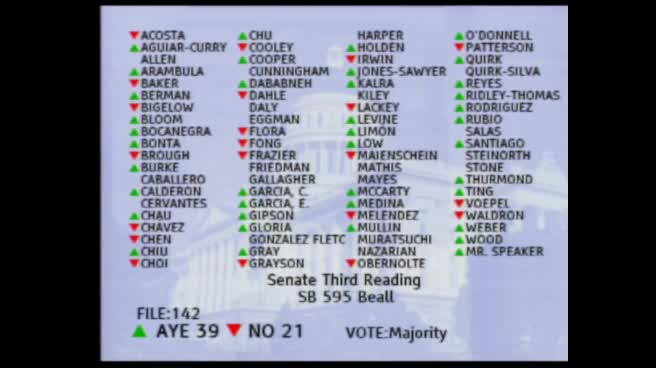
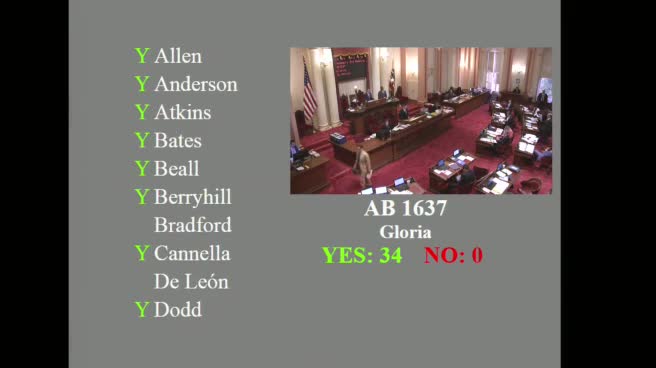
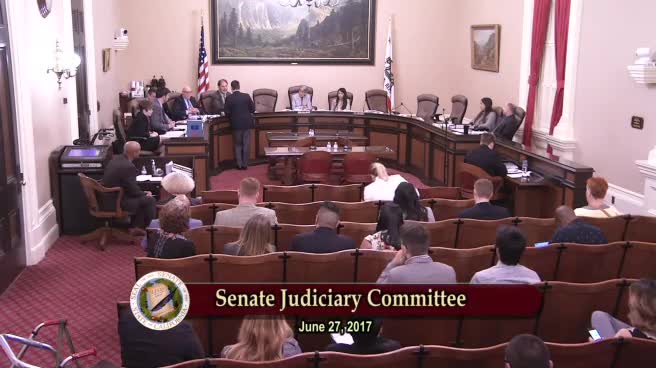
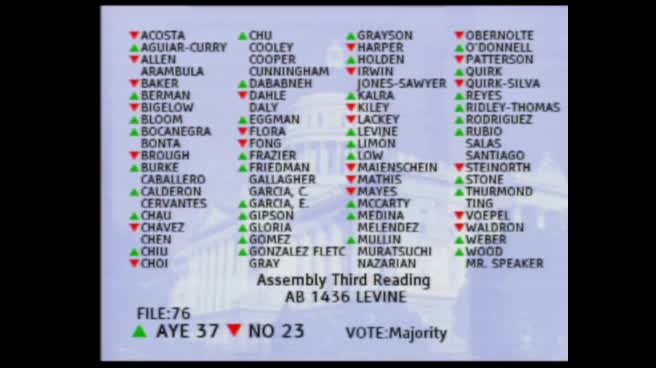
Bill Author


