AB 602: Pharmacy: nonprescription diabetes test devices.
- Session Year: 2017-2018
- House: Assembly
- Latest Version Date: 2017-07-31
The Pharmacy Law provides for the licensing and regulation of the practice of pharmacy by the California State Board of Pharmacy within the Department of Consumer Affairs. That law authorizes the board to take disciplinary action against any holder of a license who is guilty of unprofessional conduct, as described, or whose license has been issued by mistake. That law also requires the records of manufacture and of sale, acquisition, receipt, shipment, or disposition of dangerous drugs or dangerous devices to be open for inspection during business hours and preserved for at least 3 years, as specified. That law authorizes a board inspector to embargo any dangerous drug or dangerous device that the board inspector finds or has probable cause to believe is adulterated, misbranded, or counterfeit. Under that law, a person who fails to maintain or produce those records and who violates any provision of that law, when no other penalty is provided, is guilty of a crime.
This bill would make it unprofessional conduct for a licensee to acquire a nonprescription diabetes test device from a person that the licensee knew or should have known was not the nonprescription diabetes test devices manufacturer or manufacturers authorized distributor or to submit to specified persons a claim for reimbursement for a nonprescription diabetes test device when the licensee knew or should have known that the diabetes test device was not purchased directly from the manufacturer or from a manufacturers authorized distributor. The bill would authorize the board to embargo any nonprescription diabetes test device that a board inspector finds or has probable cause to believe was not purchased directly from the manufacturer or from a manufacturers authorized distributor, as specified. The bill would require pharmacies that dispense nonprescription diabetes test devices pursuant to prescriptions to retain records of acquisition and sale of those nonprescription diabetes test devices for at least 3 years and keep those records open to inspection during business hours, as described above. The bill would require a manufacturer of nonprescription diabetes test devices to make the names of its authorized distributors available on its Internet Web site, to provide those names to the board, and to, within 30 days of making changes, update its Internet Web site and inform the board of the changes, as specified. The bill would require the board to post the names of authorized distributors on the boards Internet Web site, as specified. By expanding the scope of an existing crime, this bill would impose a state-mandated local program.
The California Constitution requires the state to reimburse local agencies and school districts for certain costs mandated by the state. Statutory provisions establish procedures for making that reimbursement.
This bill would provide that no reimbursement is required by this act for a specified reason.
This bill would declare that it is to take effect immediately as an urgency statute.
The Pharmacy Law provides for the licensing and regulation of the practice of pharmacy by the California State Board of Pharmacy within the Department of Consumer Affairs. That law authorizes the board to take disciplinary action against any holder of a license who is guilty of unprofessional conduct, as described, or whose license has been issued by mistake. That law also requires the records of manufacture and of sale, acquisition, receipt, shipment, or disposition of dangerous drugs or dangerous devices to be open for inspection during business hours and preserved for at least 3 years, as specified. That law authorizes a board inspector to embargo any dangerous drug or dangerous device that the board inspector finds or has probable cause to believe is adulterated, misbranded, or counterfeit. Under that law, a person who fails to maintain or produce those records and who violates any provision of that law, when no other penalty is provided, is guilty of a crime.
This bill would make it unprofessional conduct for a licensee to acquire a nonprescription diabetes test device from a person that the licensee knew or should have known was not the nonprescription diabetes test devices manufacturer or manufacturers authorized distributor or to submit to specified persons a claim for reimbursement for a nonprescription diabetes test device when the licensee knew or should have known that the diabetes test device was not purchased directly from the manufacturer or from a manufacturers authorized distributor. The bill would authorize the board to embargo any nonprescription diabetes test device that a board inspector finds or has probable cause to believe was not purchased directly from the manufacturer or from a manufacturers authorized distributor, as specified. The bill would require pharmacies that dispense nonprescription diabetes test devices pursuant to prescriptions to retain records of acquisition and sale of those nonprescription diabetes test devices for at least 3 years and keep those records open to inspection during business hours, as described above. The bill would require a manufacturer of nonprescription diabetes test devices to make the names of its authorized distributors available on its Internet Web site, to provide those names to the board, and to, within 30 days of making changes, update its Internet Web site and inform the board of the changes. changes, as specified. The bill would require the board to post the names of authorized distributors on the boards Internet Web site. site, as specified. By expanding the scope of an existing crime, this bill would impose a state-mandated local program.
The California Constitution requires the state to reimburse local agencies and school districts for certain costs mandated by the state. Statutory provisions establish procedures for making that reimbursement.
This bill would provide that no reimbursement is required by this act for a specified reason.
This bill would declare that it is to take effect immediately as an urgency statute.
The Pharmacy Law provides for the licensing and regulation of the practice of pharmacy by the California State Board of Pharmacy within the Department of Consumer Affairs. That law authorizes the board to take disciplinary action against any holder of a license who is guilty of unprofessional conduct, as described, or whose license has been issued by mistake. That law also requires the records of manufacture and of sale, acquisition, receipt, shipment, or disposition of dangerous drugs or dangerous devices to be open for inspection during business hours and preserved for at least 3 years, as specified. Under that law, a person who fails to maintain or produce those records and who violates any provision of that law, when no other penalty is provided, is guilty of a crime.
This bill would make it unprofessional conduct for a licensee to submit to specified persons a claim for reimbursement for a nonprescription diabetes test device when the licensee knew or should have known that the diabetes test device was not purchased directly from the manufacturer or from a manufacturers authorized distributor. The bill would require pharmacies that dispense nonprescription diabetes devices pursuant to prescriptions to retain records of acquisition and sale of those nonprescription diabetes devices for at least 3 years and keep those records open to inspection during business hours, as described above. The bill would require a manufacturer of nonprescription diabetes test devices to make the names of its authorized distributors available on its Internet Web site, to provide those names to the board, and to, within 30 days of making changes, update its Internet Web site and inform the board of the changes. The bill would require the board to post the names of authorized distributors on the boards Internet Web site. By expanding the scope of an existing crime, this bill would impose a state-mandated local program.
The California Constitution requires the state to reimburse local agencies and school districts for certain costs mandated by the state. Statutory provisions establish procedures for making that reimbursement.
This bill would provide that no reimbursement is required by this act for a specified reason.
This bill would declare that it is to take effect immediately as an urgency statute.
The Pharmacy Law provides for the licensing and regulation of the practice of pharmacy by the California State Board of Pharmacy within the Department of Consumer Affairs. That law authorizes the board to take disciplinary action against any holder of a license who is guilty of unprofessional conduct, as described, or whose license has been issued by mistake. That law also requires the records of manufacture and of sale, acquisition, receipt, shipment, or disposition of dangerous drugs or dangerous devices to be open for inspection during business hours and preserved for at least 3 years, as specified. Under that law, a person who fails to maintain or produce those records and who violates any provision of that law, when no other penalty is provided, is guilty of a crime.
This bill would authorize the board to take disciplinary action against a licensee for unprofessional conduct involving the dispensing of a nonprescription diabetes device, as defined, pursuant to a prescription. make it unprofessional conduct for a licensee to submit to specified persons a claim for reimbursement for a nonprescription diabetes test device when the licensee knew or should have known that the diabetes test device was not purchased directly from the manufacturer or from a manufacturers authorized distributor. The bill would require pharmacies that dispense nonprescription diabetes devices pursuant to prescriptions to retain records of acquisition and sale of those nonprescription diabetes devices for at least 3 years and keep those records open to inspection during business hours, as described above. The bill would require a manufacturer of nonprescription diabetes test devices to make the names of its authorized distributors available on its Internet Web site, to provide those names to the board, and to, within 30 days of making changes, update its Internet Web site and inform the board of the changes. The bill would require the board to post the names of authorized distributors on the boards Internet Web site. By expanding the scope of a an existing crime, this bill would impose a state-mandated local program.
The California Constitution requires the state to reimburse local agencies and school districts for certain costs mandated by the state. Statutory provisions establish procedures for making that reimbursement.
This bill would provide that no reimbursement is required by this act for a specified reason.
The Pharmacy Law provides for the licensing and regulation of the practice of pharmacy by the California State Board of Pharmacy within the Department of Consumer Affairs. That law authorizes the board to take disciplinary action against any holder of a license who is guilty of unprofessional conduct, as described, or whose license has been issued by mistake. That law also requires the records of manufacture and of sale, acquisition, receipt, shipment, or disposition of dangerous drugs or dangerous devices to be open for inspection during business hours and preserved for at least 3 years, as specified. Under that law, a person who fails to maintain or produce those records is guilty of a crime.
This bill would authorize the board to take disciplinary action against a licensee for unprofessional conduct involving the dispensing of a nonprescription diabetes device, as defined, pursuant to a prescription. The bill would require pharmacies that dispense nonprescription diabetes devices pursuant to prescriptions to retain records of acquisition and sale of those nonprescription diabetes devices for at least 3 years and keep those records open to inspection during business hours, as described above. By expanding the scope of a crime, this bill would impose a state-mandated local program.
The California Constitution requires the state to reimburse local agencies and school districts for certain costs mandated by the state. Statutory provisions establish procedures for making that reimbursement.
This bill would provide that no reimbursement is required by this act for a specified reason.
Nonprescription diabetes test device means a glucose meter or test strip for use in the treatment of prediabetic or diabetic individuals that may be sold without a prescription and that is labeled for use by the consumer in accordance with the requirements of the laws and rules of this state and the federal government.
SEC. 2.Section 4057 of the Business and Professions Code is amended to read:4057.(a)Except as provided in Section 4006, subdivision (d) of Section 4081, Section 4240, subdivisions (t) and (u) of Section 4301, and Section 4342, this chapter does not apply to the retail sale of nonprescription drugs that are not subject to Section 4022 and that are packaged or bottled in the manufacturers or distributors container and labeled in accordance with applicable federal and state drug labeling requirements.
(b)This chapter does not apply to specific dangerous drugs and dangerous devices listed in board regulations, where the sale or furnishing is made to any of the following:
(1)A physician, dentist, podiatrist, pharmacist, medical technician, medical technologist, optometrist, or chiropractor holding a currently valid and unrevoked license and acting within the scope of his or her profession.
(2)A clinic, hospital, institution, or establishment holding a currently valid and unrevoked license or permit under Division 2 (commencing with Section 1200) of the Health and Safety Code, or Chapter 2 (commencing with Section 3300) of Division 3 of, or Part 2 (commencing with Section 6250) of Division 6 of, the Welfare and Institutions Code.
(c)This chapter shall not apply to a home health agency licensed under Chapter 8 (commencing with Section 1725) of, or a hospice licensed under Chapter 8.5 (commencing with Section 1745) of, Division 2 of, the Health and Safety Code, when it purchases, stores, furnishes, or transports specific dangerous drugs and dangerous devices listed in board regulations in compliance with applicable law and regulations including:
(1)Dangerous devices described in subdivision (b) of Section 4022, as long as these dangerous devices are furnished only upon the prescription or order of a physician, dentist, or podiatrist.
(2)Hypodermic needles and syringes.
(3)Irrigation solutions of 50 cubic centimeters or greater.
(d)This chapter does not apply to the storage of devices in secure central or ward supply areas of a clinic, hospital, institution, or establishment holding a currently valid and unrevoked license or permit pursuant to Division 2 (commencing with Section 1200) of the Health and Safety Code, or pursuant to Chapter 2 (commencing with Section 3300) of Division 3 of, or Part 2 (commencing with Section 6250) of Division 6 of, the Welfare and Institutions Code.
(e)This chapter does not apply to the retail sale of vitamins, mineral products, or combinations thereof or to foods, supplements, or nutrients used to fortify the diet of humans or other animals or poultry and labeled as such that are not subject to Section 4022 and that are packaged or bottled in the manufacturers or distributors container and labeled in accordance with applicable federal and state labeling requirements.
(f)This chapter does not apply to the furnishing of dangerous drugs and dangerous devices to recognized schools of nursing. These dangerous drugs and dangerous devices shall not include controlled substances. The dangerous drugs and dangerous devices shall be used for training purposes only, and not for the cure, mitigation, or treatment of disease in humans. Recognized schools of nursing for purposes of this subdivision are those schools recognized as training facilities by the California Board of Registered Nursing.
SEC. 3.Section 4081 of the Business and Professions Code is amended to read:4081.(a)All records of manufacture and of sale, acquisition, receipt, shipment, or disposition of dangerous drugs or dangerous devices shall be at all times during business hours open to inspection by authorized officers of the law, and shall be preserved for at least three years from the date of making. A current inventory shall be kept by every manufacturer, wholesaler, third-party logistics provider, pharmacy, veterinary food-animal drug retailer, outsourcing facility, physician, dentist, podiatrist, veterinarian, laboratory, clinic, hospital, institution, or establishment holding a currently valid and unrevoked certificate, license, permit, registration, or exemption under Division 2 (commencing with Section 1200) of the Health and Safety Code or under Part 4 (commencing with Section 16000) of Division 9 of the Welfare and Institutions Code who maintains a stock of dangerous drugs or dangerous devices.
(b)The owner, officer, and partner of a pharmacy, wholesaler, third-party logistics provider, or veterinary food-animal drug retailer shall be jointly responsible, with the pharmacist-in-charge, responsible manager, or designated representative-in-charge, for maintaining the records and inventory described in this section.
(c)The pharmacist-in-charge, responsible manager, or designated representative-in-charge shall not be criminally responsible for acts of the owner, officer, partner, or employee that violate this section and of which the pharmacist-in-charge, responsible manager, or designated representative-in-charge had no knowledge, or in which he or she did not knowingly participate.
(d)Pharmacies that dispense nonprescription diabetes test devices pursuant to prescriptions shall retain records of acquisition and sale of those nonprescription diabetes test devices for at least three years from the date of making. The records shall be at all times during business hours open to inspection by authorized officers of the law.
SEC. 4.Section 4084.1 is added to the Business and Professions Code, to read:4084.1.The board may embargo any nonprescription diabetes test device that a board inspector finds or has probable cause to believe was not purchased either directly from the manufacturer or from the nonprescription diabetes test device manufacturers authorized distributors as identified in Section 4160.5. For the purposes of this section, the board shall embargo these products following the same procedures and protections used for adulterated, misbranded, or counterfeit drugs or dangerous devices in Sections 4084, 4085, and 4086.
SEC. 5.Section 4160.5 is added to the Business and Professions Code, to read:4160.5.Within 30 days of the effective date of the act adding this section, a manufacturer of a nonprescription diabetes test device shall make the names of its authorized distributors available on its Internet Web site and shall provide the board with the names of its authorized distributors. Within 30 days of receiving that information from a manufacturer of a nonprescription diabetes test device, the board shall post the names of authorized distributors of nonprescription diabetes test devices on the boards Internet Web site. A manufacturer of a nonprescription diabetes test device shall, within 30 days of making changes to its authorized distributors, update its Internet Web site and inform the board of changes to its authorized distributors. Within 30 days of receiving notice of any change from a manufacturer of a nonprescription diabetes test device, the board shall post the updated list of the manufacturers authorized distributors on its Internet Web site.
SEC. 6.Section 4301 of the Business and Professions Code is amended to read:4301.The board shall take action against any holder of a license who is guilty of unprofessional conduct or whose license has been issued by mistake. Unprofessional conduct shall include, but is not limited to, any of the following:
(a)Procurement of a license by fraud or misrepresentation.
(b)Incompetence.
(c)Gross negligence.
(d)The clearly excessive furnishing of controlled substances in violation of subdivision (a) of Section 11153 of the Health and Safety Code.
(e)The clearly excessive furnishing of controlled substances in violation of subdivision (a) of Section 11153.5 of the Health and Safety Code. Factors to be considered in determining whether the furnishing of controlled substances is clearly excessive shall include, but not be limited to, the amount of controlled substances furnished, the previous ordering pattern of the customer (including size and frequency of orders), the type and size of the customer, and where and to whom the customer distributes its product.
(f)The commission of any act involving moral turpitude, dishonesty, fraud, deceit, or corruption, whether the act is committed in the course of relations as a licensee or otherwise, and whether the act is a felony or misdemeanor or not.
(g)Knowingly making or signing any certificate or other document that falsely represents the existence or nonexistence of a state of facts.
(h)The administering to oneself, of any controlled substance, or the use of any dangerous drug or of alcoholic beverages to the extent or in a manner as to be dangerous or injurious to oneself, to a person holding a license under this chapter, or to any other person or to the public, or to the extent that the use impairs the ability of the person to conduct with safety to the public the practice authorized by the license.
(i)Except as otherwise authorized by law, knowingly selling, furnishing, giving away, or administering, or offering to sell, furnish, give away, or administer, any controlled substance to an addict.
(j)The violation of any of the statutes of this state, of any other state, or of the United States regulating controlled substances and dangerous drugs.
(k)The conviction of more than one misdemeanor or any felony involving the use, consumption, or self-administration of any dangerous drug or alcoholic beverage, or any combination of those substances.
(l)The conviction of a crime substantially related to the qualifications, functions, and duties of a licensee under this chapter. The record of conviction of a violation of Chapter 13 (commencing with Section 801) of Title 21 of the United States Code regulating controlled substances or of a violation of the statutes of this state regulating controlled substances or dangerous drugs shall be conclusive evidence of unprofessional conduct. In all other cases, the record of conviction shall be conclusive evidence only of the fact that the conviction occurred. The board may inquire into the circumstances surrounding the commission of the crime, in order to fix the degree of discipline or, in the case of a conviction not involving controlled substances or dangerous drugs, to determine if the conviction is of an offense substantially related to the qualifications, functions, and duties of a licensee under this chapter. A plea or verdict of guilty or a conviction following a plea of nolo contendere is deemed to be a conviction within the meaning of this provision. The board may take action when the time for appeal has elapsed, or the judgment of conviction has been affirmed on appeal or when an order granting probation is made suspending the imposition of sentence, irrespective of a subsequent order under Section 1203.4 of the Penal Code allowing the person to withdraw his or her plea of guilty and to enter a plea of not guilty, or setting aside the verdict of guilty, or dismissing the accusation, information, or indictment.
(m)The cash compromise of a charge of violation of Chapter 13 (commencing with Section 801) of Title 21 of the United States Code regulating controlled substances or of Chapter 7 (commencing with Section 14000) of Part 3 of Division 9 of the Welfare and Institutions Code relating to the Medi-Cal program.
(n)The revocation, suspension, or other discipline by another state of a license to practice pharmacy, operate a pharmacy, or do any other act for which a license is required by this chapter that would be grounds for revocation, suspension, or other discipline under this chapter. Any disciplinary action taken by the board pursuant to this section shall be coterminous with action taken by another state, except that the term of any discipline taken by the board may exceed that of another state, consistent with the boards enforcement guidelines. The evidence of discipline by another state is conclusive proof of unprofessional conduct.
(o)Violating or attempting to violate, directly or indirectly, or assisting in or abetting the violation of or conspiring to violate any provision or term of this chapter or of the applicable federal and state laws and regulations governing pharmacy, including regulations established by the board or by any other state or federal regulatory agency.
(p)Actions or conduct that would have warranted denial of a license.
(q)Engaging in any conduct that subverts or attempts to subvert an investigation of the board.
(r)The selling, trading, transferring, or furnishing of drugs obtained pursuant to Section 256b of Title 42 of the United States Code to any person a licensee knows or reasonably should have known, not to be a patient of a covered entity, as defined in paragraph (4) of subsection (a) of Section 256b of Title 42 of the United States Code.
(s)The clearly excessive furnishing of dangerous drugs by a wholesaler to a pharmacy that primarily or solely dispenses prescription drugs to patients of long-term care facilities. Factors to be considered in determining whether the furnishing of dangerous drugs is clearly excessive shall include, but not be limited to, the amount of dangerous drugs furnished to a pharmacy that primarily or solely dispenses prescription drugs to patients of long-term care facilities, the previous ordering pattern of the pharmacy, and the general patient population to whom the pharmacy distributes the dangerous drugs. That a wholesaler has established, and employs, a tracking system that complies with the requirements of subdivision (b) of Section 4164 shall be considered in determining whether there has been a violation of this subdivision. This provision shall not be interpreted to require a wholesaler to obtain personal medical information or be authorized to permit a wholesaler to have access to personal medical information except as otherwise authorized by Section 56 and following of the Civil Code. For purposes of this section, long-term care facility shall have the same meaning given the term in Section 1418 of the Health and Safety Code.
(t)The acquisition of a nonprescription diabetes test device from a person that the licensee knew or should have known was not the nonprescription diabetes test devices manufacturer or the manufacturers authorized distributors as identified in Section 4160.5.
(u)The submission of a reimbursement claim for a nonprescription diabetes test device to a pharmaceutical benefit manager, health insurer, government agency, or other third-party payor when the licensee knew or reasonably should have known that the diabetes test device was not purchased either directly from the manufacturer or from the nonprescription diabetes test device manufacturers authorized distributors as identified in Section 4160.5.
SEC. 7.No reimbursement is required by this act pursuant to Section 6 of Article XIIIB of the California Constitution because the only costs that may be incurred by a local agency or school district will be incurred because this act creates a new crime or infraction, eliminates a crime or infraction, or changes the penalty for a crime or infraction, within the meaning of Section 17556 of the Government Code, or changes the definition of a crime within the meaning of Section 6 of Article XIIIB of the California Constitution.
SEC. 8.This act is an urgency statute necessary for the immediate preservation of the public peace, health, or safety within the meaning of Article IV of the California Constitution and shall go into immediate effect. The facts constituting the necessity are:
In order to immediately prevent the sale of nonprescription diabetes test devices that may have been tampered with or improperly stored, it is necessary that this act take effect immediately.
Nonprescription diabetes test device means a glucose meter or test strip for use in the treatment of prediabetic or diabetic individuals that may be sold without a prescription and that is labeled for use by the consumer in accordance with the requirements of the laws and rules of this state and the federal government.
SEC. 2.Section 4057 of the Business and Professions Code is amended to read:4057.(a)Except as provided in Section 4006, subdivision (d) of Section 4081, Section 4240, subdivision (t) subdivisions (t) and (u) of Section 4301, and Section 4342, this chapter does not apply to the retail sale of nonprescription drugs that are not subject to Section 4022 and that are packaged or bottled in the manufacturers or distributors container and labeled in accordance with applicable federal and state drug labeling requirements.
(b)This chapter does not apply to specific dangerous drugs and dangerous devices listed in board regulations, where the sale or furnishing is made to any of the following:
(1)A physician, dentist, podiatrist, pharmacist, medical technician, medical technologist, optometrist, or chiropractor holding a currently valid and unrevoked license and acting within the scope of his or her profession.
(2)A clinic, hospital, institution, or establishment holding a currently valid and unrevoked license or permit under Division 2 (commencing with Section 1200) of the Health and Safety Code, or Chapter 2 (commencing with Section 3300) of Division 3 of, or Part 2 (commencing with Section 6250) of Division 6 of, the Welfare and Institutions Code.
(c)This chapter shall not apply to a home health agency licensed under Chapter 8 (commencing with Section 1725) of, or a hospice licensed under Chapter 8.5 (commencing with Section 1745) of, Division 2 of, the Health and Safety Code, when it purchases, stores, furnishes, or transports specific dangerous drugs and dangerous devices listed in board regulations in compliance with applicable law and regulations including:
(1)Dangerous devices described in subdivision (b) of Section 4022, as long as these dangerous devices are furnished only upon the prescription or order of a physician, dentist, or podiatrist.
(2)Hypodermic needles and syringes.
(3)Irrigation solutions of 50 cubic centimeters or greater.
(d)This chapter does not apply to the storage of devices in secure central or ward supply areas of a clinic, hospital, institution, or establishment holding a currently valid and unrevoked license or permit pursuant to Division 2 (commencing with Section 1200) of the Health and Safety Code, or pursuant to Chapter 2 (commencing with Section 3300) of Division 3 of, or Part 2 (commencing with Section 6250) of Division 6 of, the Welfare and Institutions Code.
(e)This chapter does not apply to the retail sale of vitamins, mineral products, or combinations thereof or to foods, supplements, or nutrients used to fortify the diet of humans or other animals or poultry and labeled as such that are not subject to Section 4022 and that are packaged or bottled in the manufacturers or distributors container and labeled in accordance with applicable federal and state labeling requirements.
(f)This chapter does not apply to the furnishing of dangerous drugs and dangerous devices to recognized schools of nursing. These dangerous drugs and dangerous devices shall not include controlled substances. The dangerous drugs and dangerous devices shall be used for training purposes only, and not for the cure, mitigation, or treatment of disease in humans. Recognized schools of nursing for purposes of this subdivision are those schools recognized as training facilities by the California Board of Registered Nursing.
SEC. 3.Section 4081 of the Business and Professions Code is amended to read:4081.(a)All records of manufacture and of sale, acquisition, receipt, shipment, or disposition of dangerous drugs or dangerous devices shall be at all times during business hours open to inspection by authorized officers of the law, and shall be preserved for at least three years from the date of making. A current inventory shall be kept by every manufacturer, wholesaler, third-party logistics provider, pharmacy, veterinary food-animal drug retailer, outsourcing facility, physician, dentist, podiatrist, veterinarian, laboratory, clinic, hospital, institution, or establishment holding a currently valid and unrevoked certificate, license, permit, registration, or exemption under Division 2 (commencing with Section 1200) of the Health and Safety Code or under Part 4 (commencing with Section 16000) of Division 9 of the Welfare and Institutions Code who maintains a stock of dangerous drugs or dangerous devices.
(b)The owner, officer, and partner of a pharmacy, wholesaler, third-party logistics provider, or veterinary food-animal drug retailer shall be jointly responsible, with the pharmacist-in-charge, responsible manager, or designated representative-in-charge, for maintaining the records and inventory described in this section.
(c)The pharmacist-in-charge, responsible manager, or designated representative-in-charge shall not be criminally responsible for acts of the owner, officer, partner, or employee that violate this section and of which the pharmacist-in-charge, responsible manager, or designated representative-in-charge had no knowledge, or in which he or she did not knowingly participate.
(d)Pharmacies that dispense nonprescription diabetes test devices pursuant to prescriptions shall retain records of acquisition and sale of those nonprescription diabetes test devices for at least three years from the date of making. The records shall be at all times during business hours open to inspection by authorized officers of the law.
SEC. 4.Section 4084.1 is added to the Business and Professions Code, to read:4084.1.The board may embargo any nonprescription diabetes test device that a board inspector finds or has probable cause to believe was not purchased either directly from the manufacturer or from the nonprescription diabetes test device manufacturers authorized distributors as identified in Section 4160.5. For the purposes of this section, the board shall embargo these products following the same procedures and protections used for adulterated, misbranded, or counterfeit drugs or dangerous devices in Sections 4084, 4085, and 4086.
SEC. 4.SEC. 5.Section 4160.5 is added to the Business and Professions Code, to read:4160.5.On and after January 1, 2018, Within 30 days of the effective date of the act adding this section, a manufacturer of a nonprescription diabetes test device shall make the names of its authorized distributors available on its Internet Web site and shall provide the board with the names of its authorized distributors. The Within 30 days of receiving that information from a manufacturer of a nonprescription diabetes test device, the board shall post the names of authorized distributors of nonprescription diabetes test devices on the boards Internet Web site. A manufacturer of a nonprescription diabetes test device shall, within 30 days of making changes to its authorized distributors, update its Internet Web site and inform the board of changes to its authorized distributors. Within 30 days of receiving notice of any change from a manufacturer of a nonprescription diabetes test device, the board shall post the updated list of the manufacturers authorized distributors on its Internet Web site.
SEC. 5.SEC. 6.Section 4301 of the Business and Professions Code is amended to read:4301.The board shall take action against any holder of a license who is guilty of unprofessional conduct or whose license has been issued by mistake. Unprofessional conduct shall include, but is not limited to, any of the following:
(a)Procurement of a license by fraud or misrepresentation.
(b)Incompetence.
(c)Gross negligence.
(d)The clearly excessive furnishing of controlled substances in violation of subdivision (a) of Section 11153 of the Health and Safety Code.
(e)The clearly excessive furnishing of controlled substances in violation of subdivision (a) of Section 11153.5 of the Health and Safety Code. Factors to be considered in determining whether the furnishing of controlled substances is clearly excessive shall include, but not be limited to, the amount of controlled substances furnished, the previous ordering pattern of the customer (including size and frequency of orders), the type and size of the customer, and where and to whom the customer distributes its product.
(f)The commission of any act involving moral turpitude, dishonesty, fraud, deceit, or corruption, whether the act is committed in the course of relations as a licensee or otherwise, and whether the act is a felony or misdemeanor or not.
(g)Knowingly making or signing any certificate or other document that falsely represents the existence or nonexistence of a state of facts.
(h)The administering to oneself, of any controlled substance, or the use of any dangerous drug or of alcoholic beverages to the extent or in a manner as to be dangerous or injurious to oneself, to a person holding a license under this chapter, or to any other person or to the public, or to the extent that the use impairs the ability of the person to conduct with safety to the public the practice authorized by the license.
(i)Except as otherwise authorized by law, knowingly selling, furnishing, giving away, or administering, or offering to sell, furnish, give away, or administer, any controlled substance to an addict.
(j)The violation of any of the statutes of this state, of any other state, or of the United States regulating controlled substances and dangerous drugs.
(k)The conviction of more than one misdemeanor or any felony involving the use, consumption, or self-administration of any dangerous drug or alcoholic beverage, or any combination of those substances.
(l)The conviction of a crime substantially related to the qualifications, functions, and duties of a licensee under this chapter. The record of conviction of a violation of Chapter 13 (commencing with Section 801) of Title 21 of the United States Code regulating controlled substances or of a violation of the statutes of this state regulating controlled substances or dangerous drugs shall be conclusive evidence of unprofessional conduct. In all other cases, the record of conviction shall be conclusive evidence only of the fact that the conviction occurred. The board may inquire into the circumstances surrounding the commission of the crime, in order to fix the degree of discipline or, in the case of a conviction not involving controlled substances or dangerous drugs, to determine if the conviction is of an offense substantially related to the qualifications, functions, and duties of a licensee under this chapter. A plea or verdict of guilty or a conviction following a plea of nolo contendere is deemed to be a conviction within the meaning of this provision. The board may take action when the time for appeal has elapsed, or the judgment of conviction has been affirmed on appeal or when an order granting probation is made suspending the imposition of sentence, irrespective of a subsequent order under Section 1203.4 of the Penal Code allowing the person to withdraw his or her plea of guilty and to enter a plea of not guilty, or setting aside the verdict of guilty, or dismissing the accusation, information, or indictment.
(m)The cash compromise of a charge of violation of Chapter 13 (commencing with Section 801) of Title 21 of the United States Code regulating controlled substances or of Chapter 7 (commencing with Section 14000) of Part 3 of Division 9 of the Welfare and Institutions Code relating to the Medi-Cal program.
(n)The revocation, suspension, or other discipline by another state of a license to practice pharmacy, operate a pharmacy, or do any other act for which a license is required by this chapter that would be grounds for revocation, suspension, or other discipline under this chapter. Any disciplinary action taken by the board pursuant to this section shall be coterminous with action taken by another state, except that the term of any discipline taken by the board may exceed that of another state, consistent with the boards enforcement guidelines. The evidence of discipline by another state is conclusive proof of unprofessional conduct.
(o)Violating or attempting to violate, directly or indirectly, or assisting in or abetting the violation of or conspiring to violate any provision or term of this chapter or of the applicable federal and state laws and regulations governing pharmacy, including regulations established by the board or by any other state or federal regulatory agency.
(p)Actions or conduct that would have warranted denial of a license.
(q)Engaging in any conduct that subverts or attempts to subvert an investigation of the board.
(r)The selling, trading, transferring, or furnishing of drugs obtained pursuant to Section 256b of Title 42 of the United States Code to any person a licensee knows or reasonably should have known, not to be a patient of a covered entity, as defined in paragraph (4) of subsection (a) of Section 256b of Title 42 of the United States Code.
(s)The clearly excessive furnishing of dangerous drugs by a wholesaler to a pharmacy that primarily or solely dispenses prescription drugs to patients of long-term care facilities. Factors to be considered in determining whether the furnishing of dangerous drugs is clearly excessive shall include, but not be limited to, the amount of dangerous drugs furnished to a pharmacy that primarily or solely dispenses prescription drugs to patients of long-term care facilities, the previous ordering pattern of the pharmacy, and the general patient population to whom the pharmacy distributes the dangerous drugs. That a wholesaler has established, and employs, a tracking system that complies with the requirements of subdivision (b) of Section 4164 shall be considered in determining whether there has been a violation of this subdivision. This provision shall not be interpreted to require a wholesaler to obtain personal medical information or be authorized to permit a wholesaler to have access to personal medical information except as otherwise authorized by Section 56 and following of the Civil Code. For purposes of this section, long-term care facility shall have the same meaning given the term in Section 1418 of the Health and Safety Code.
(t)The acquisition of a nonprescription diabetes test device from a person that the licensee knew or should have known was not the nonprescription diabetes test devices manufacturer or the manufacturers authorized distributors as identified in Section 4160.5.
(t)(u)The submission of a reimbursement claim for a nonprescription diabetes test device to a pharmaceutical benefit manager, health insurer, government agency, or other third-party payor when the licensee knew or reasonably should have known that the diabetes test device was not purchased either directly from the manufacturer or from the nonprescription diabetes test device manufacturers authorized distributors as identified in Section 4106.5. 4160.5.
SEC. 6.SEC. 7.No reimbursement is required by this act pursuant to Section 6 of Article XIIIB of the California Constitution because the only costs that may be incurred by a local agency or school district will be incurred because this act creates a new crime or infraction, eliminates a crime or infraction, or changes the penalty for a crime or infraction, within the meaning of Section 17556 of the Government Code, or changes the definition of a crime within the meaning of Section 6 of Article XIIIB of the California Constitution.
SEC. 7.SEC. 8.This act is an urgency statute necessary for the immediate preservation of the public peace, health, or safety within the meaning of Article IV of the California Constitution and shall go into immediate effect. The facts constituting the necessity are:
In order to immediately prevent the sale of nonprescription diabetes test devices that may have been tampered with or improperly stored, it is necessary that this act take effect immediately.
Nonprescription diabetes test device means a glucose meter or test strip for use in the treatment of prediabetic or diabetic individuals that may be sold without a prescription and that is labeled for use by the consumer in accordance with the requirements of the laws and rules of this state and the federal government.
SEC. 2.Section 4057 of the Business and Professions Code is amended to read:4057.(a)Except as provided in Section 4006, subdivision (d) of Section 4081, Section 4240, subdivision (t) of Section 4301, and Section 4342, this chapter does not apply to the retail sale of nonprescription drugs that are not subject to Section 4022 and that are packaged or bottled in the manufacturers or distributors container and labeled in accordance with applicable federal and state drug labeling requirements.
(b)This chapter does not apply to specific dangerous drugs and dangerous devices listed in board regulations, where the sale or furnishing is made to any of the following:
(1)A physician, dentist, podiatrist, pharmacist, medical technician, medical technologist, optometrist, or chiropractor holding a currently valid and unrevoked license and acting within the scope of his or her profession.
(2)A clinic, hospital, institution, or establishment holding a currently valid and unrevoked license or permit under Division 2 (commencing with Section 1200) of the Health and Safety Code, or Chapter 2 (commencing with Section 3300) of Division 3 of, or Part 2 (commencing with Section 6250) of Division 6 of, the Welfare and Institutions Code.
(c)This chapter shall not apply to a home health agency licensed under Chapter 8 (commencing with Section 1725) of, or a hospice licensed under Chapter 8.5 (commencing with Section 1745) of, Division 2 of, the Health and Safety Code, when it purchases, stores, furnishes, or transports specific dangerous drugs and dangerous devices listed in board regulations in compliance with applicable law and regulations including:
(1)Dangerous devices described in subdivision (b) of Section 4022, as long as these dangerous devices are furnished only upon the prescription or order of a physician, dentist, or podiatrist.
(2)Hypodermic needles and syringes.
(3)Irrigation solutions of 50 cubic centimeters or greater.
(d)This chapter does not apply to the storage of devices in secure central or ward supply areas of a clinic, hospital, institution, or establishment holding a currently valid and unrevoked license or permit pursuant to Division 2 (commencing with Section 1200) of the Health and Safety Code, or pursuant to Chapter 2 (commencing with Section 3300) of Division 3 of, or Part 2 (commencing with Section 6250) of Division 6 of, the Welfare and Institutions Code.
(e)This chapter does not apply to the retail sale of vitamins, mineral products, or combinations thereof or to foods, supplements, or nutrients used to fortify the diet of humans or other animals or poultry and labeled as such that are not subject to Section 4022 and that are packaged or bottled in the manufacturers or distributors container and labeled in accordance with applicable federal and state labeling requirements.
(f)This chapter does not apply to the furnishing of dangerous drugs and dangerous devices to recognized schools of nursing. These dangerous drugs and dangerous devices shall not include controlled substances. The dangerous drugs and dangerous devices shall be used for training purposes only, and not for the cure, mitigation, or treatment of disease in humans. Recognized schools of nursing for purposes of this subdivision are those schools recognized as training facilities by the California Board of Registered Nursing.
SEC. 3.Section 4081 of the Business and Professions Code is amended to read:4081.(a)All records of manufacture and of sale, acquisition, receipt, shipment, or disposition of dangerous drugs or dangerous devices shall be at all times during business hours open to inspection by authorized officers of the law, and shall be preserved for at least three years from the date of making. A current inventory shall be kept by every manufacturer, wholesaler, third-party logistics provider, pharmacy, veterinary food-animal drug retailer, outsourcing facility, physician, dentist, podiatrist, veterinarian, laboratory, clinic, hospital, institution, or establishment holding a currently valid and unrevoked certificate, license, permit, registration, or exemption under Division 2 (commencing with Section 1200) of the Health and Safety Code or under Part 4 (commencing with Section 16000) of Division 9 of the Welfare and Institutions Code who maintains a stock of dangerous drugs or dangerous devices.
(b)The owner, officer, and partner of a pharmacy, wholesaler, third-party logistics provider, or veterinary food-animal drug retailer shall be jointly responsible, with the pharmacist-in-charge, responsible manager, or designated representative-in-charge, for maintaining the records and inventory described in this section.
(c)The pharmacist-in-charge, responsible manager, or designated representative-in-charge shall not be criminally responsible for acts of the owner, officer, partner, or employee that violate this section and of which the pharmacist-in-charge, responsible manager, or designated representative-in-charge had no knowledge, or in which he or she did not knowingly participate.
(d)Pharmacies that dispense nonprescription diabetes test devices pursuant to prescriptions shall retain records of acquisition and sale of those nonprescription diabetes devices for at least three years from the date of making. The records shall be at all times during business hours open to inspection by authorized officers of the law.
SEC. 4.Section 4160.5 is added to the Business and Professions Code, to read:4160.5.On and after January 1, 2018, a manufacturer of a nonprescription diabetes test device shall make the names of its authorized distributors available on its Internet Web site and shall provide the board with the names of its authorized distributors. The board shall post the names of authorized distributors of nonprescription diabetes test devices on the boards Internet Web site. A manufacturer of a nonprescription diabetes test device shall, within 30 days of making changes to its authorized distributors, update its Internet Web site and inform the board of changes to its authorized distributors.
SEC. 5.Section 4301 of the Business and Professions Code is amended to read:4301.The board shall take action against any holder of a license who is guilty of unprofessional conduct or whose license has been issued by mistake. Unprofessional conduct shall include, but is not limited to, any of the following:
(a)Procurement of a license by fraud or misrepresentation.
(b)Incompetence.
(c)Gross negligence.
(d)The clearly excessive furnishing of controlled substances in violation of subdivision (a) of Section 11153 of the Health and Safety Code.
(e)The clearly excessive furnishing of controlled substances in violation of subdivision (a) of Section 11153.5 of the Health and Safety Code. Factors to be considered in determining whether the furnishing of controlled substances is clearly excessive shall include, but not be limited to, the amount of controlled substances furnished, the previous ordering pattern of the customer (including size and frequency of orders), the type and size of the customer, and where and to whom the customer distributes its product.
(f)The commission of any act involving moral turpitude, dishonesty, fraud, deceit, or corruption, whether the act is committed in the course of relations as a licensee or otherwise, and whether the act is a felony or misdemeanor or not.
(g)Knowingly making or signing any certificate or other document that falsely represents the existence or nonexistence of a state of facts.
(h)The administering to oneself, of any controlled substance, or the use of any dangerous drug or of alcoholic beverages to the extent or in a manner as to be dangerous or injurious to oneself, to a person holding a license under this chapter, or to any other person or to the public, or to the extent that the use impairs the ability of the person to conduct with safety to the public the practice authorized by the license.
(i)Except as otherwise authorized by law, knowingly selling, furnishing, giving away, or administering, or offering to sell, furnish, give away, or administer, any controlled substance to an addict.
(j)The violation of any of the statutes of this state, of any other state, or of the United States regulating controlled substances and dangerous drugs.
(k)The conviction of more than one misdemeanor or any felony involving the use, consumption, or self-administration of any dangerous drug or alcoholic beverage, or any combination of those substances.
(l)The conviction of a crime substantially related to the qualifications, functions, and duties of a licensee under this chapter. The record of conviction of a violation of Chapter 13 (commencing with Section 801) of Title 21 of the United States Code regulating controlled substances or of a violation of the statutes of this state regulating controlled substances or dangerous drugs shall be conclusive evidence of unprofessional conduct. In all other cases, the record of conviction shall be conclusive evidence only of the fact that the conviction occurred. The board may inquire into the circumstances surrounding the commission of the crime, in order to fix the degree of discipline or, in the case of a conviction not involving controlled substances or dangerous drugs, to determine if the conviction is of an offense substantially related to the qualifications, functions, and duties of a licensee under this chapter. A plea or verdict of guilty or a conviction following a plea of nolo contendere is deemed to be a conviction within the meaning of this provision. The board may take action when the time for appeal has elapsed, or the judgment of conviction has been affirmed on appeal or when an order granting probation is made suspending the imposition of sentence, irrespective of a subsequent order under Section 1203.4 of the Penal Code allowing the person to withdraw his or her plea of guilty and to enter a plea of not guilty, or setting aside the verdict of guilty, or dismissing the accusation, information, or indictment.
(m)The cash compromise of a charge of violation of Chapter 13 (commencing with Section 801) of Title 21 of the United States Code regulating controlled substances or of Chapter 7 (commencing with Section 14000) of Part 3 of Division 9 of the Welfare and Institutions Code relating to the Medi-Cal program.
(n)The revocation, suspension, or other discipline by another state of a license to practice pharmacy, operate a pharmacy, or do any other act for which a license is required by this chapter that would be grounds for revocation, suspension, or other discipline under this chapter. Any disciplinary action taken by the board pursuant to this section shall be coterminous with action taken by another state, except that the term of any discipline taken by the board may exceed that of another state, consistent with the boards enforcement guidelines. The evidence of discipline by another state is conclusive proof of unprofessional conduct.
(o)Violating or attempting to violate, directly or indirectly, or assisting in or abetting the violation of or conspiring to violate any provision or term of this chapter or of the applicable federal and state laws and regulations governing pharmacy, including regulations established by the board or by any other state or federal regulatory agency.
(p)Actions or conduct that would have warranted denial of a license.
(q)Engaging in any conduct that subverts or attempts to subvert an investigation of the board.
(r)The selling, trading, transferring, or furnishing of drugs obtained pursuant to Section 256b of Title 42 of the United States Code to any person a licensee knows or reasonably should have known, not to be a patient of a covered entity, as defined in paragraph (4) of subsection (a) of Section 256b of Title 42 of the United States Code.
(s)The clearly excessive furnishing of dangerous drugs by a wholesaler to a pharmacy that primarily or solely dispenses prescription drugs to patients of long-term care facilities. Factors to be considered in determining whether the furnishing of dangerous drugs is clearly excessive shall include, but not be limited to, the amount of dangerous drugs furnished to a pharmacy that primarily or solely dispenses prescription drugs to patients of long-term care facilities, the previous ordering pattern of the pharmacy, and the general patient population to whom the pharmacy distributes the dangerous drugs. That a wholesaler has established, and employs, a tracking system that complies with the requirements of subdivision (b) of Section 4164 shall be considered in determining whether there has been a violation of this subdivision. This provision shall not be interpreted to require a wholesaler to obtain personal medical information or be authorized to permit a wholesaler to have access to personal medical information except as otherwise authorized by Section 56 and following of the Civil Code. For purposes of this section, long-term care facility shall have the same meaning given the term in Section 1418 of the Health and Safety Code.
(t)The submission of a reimbursement claim for a nonprescription diabetes test device to a pharmaceutical benefit manager, health insurer, government agency, or other third-party payor when the licensee knew or reasonably should have known that the diabetes test device was not purchased either directly from the manufacturer or from the nonprescription diabetes test device manufacturers authorized distributors as identified in Section 4106.5.
SEC. 6.No reimbursement is required by this act pursuant to Section 6 of Article XIIIB of the California Constitution because the only costs that may be incurred by a local agency or school district will be incurred because this act creates a new crime or infraction, eliminates a crime or infraction, or changes the penalty for a crime or infraction, within the meaning of Section 17556 of the Government Code, or changes the definition of a crime within the meaning of Section 6 of Article XIIIB of the California Constitution.
SEC. 7.This act is an urgency statute necessary for the immediate preservation of the public peace, health, or safety within the meaning of Article IV of the California Constitution and shall go into immediate effect. The facts constituting the necessity are:
In order to immediately prevent the sale of nonprescription diabetes test devices that may have been tampered with or improperly stored, it is necessary that this act take effect immediately.
Nonprescription diabetes test device means a device glucose meter or test strip for use in the treatment of prediabetic or diabetic individuals that may be sold without a prescription and that is labeled for use by the consumer in accordance with the requirements of the laws and rules of this state and the federal government.
SEC. 2.Section 4057 of the Business and Professions Code is amended to read:4057.(a)Except as provided in Sections Section 4006, subdivision (d) of Section 4081, Section 4240, subdivision (t) of Section 4301, and Section 4342, this chapter does not apply to the retail sale of nonprescription drugs that are not subject to Section 4022 and that are packaged or bottled in the manufacturers or distributors container and labeled in accordance with applicable federal and state drug labeling requirements.
(b)This chapter does not apply to specific dangerous drugs and dangerous devices listed in board regulations, where the sale or furnishing is made to any of the following:
(1)A physician, dentist, podiatrist, pharmacist, medical technician, medical technologist, optometrist, or chiropractor holding a currently valid and unrevoked license and acting within the scope of his or her profession.
(2)A clinic, hospital, institution, or establishment holding a currently valid and unrevoked license or permit under Division 2 (commencing with Section 1200) of the Health and Safety Code, or Chapter 2 (commencing with Section 3300) of Division 3 of, or Part 2 (commencing with Section 6250) of Division 6 of, the Welfare and Institutions Code.
(c)This chapter shall not apply to a home health agency licensed under Chapter 8 (commencing with Section 1725) of, or a hospice licensed under Chapter 8.5 (commencing with Section 1745) of, Division 2 of, the Health and Safety Code, when it purchases, stores, furnishes, or transports specific dangerous drugs and dangerous devices listed in board regulations in compliance with applicable law and regulations including:
(1)Dangerous devices described in subdivision (b) of Section 4022, as long as these dangerous devices are furnished only upon the prescription or order of a physician, dentist, or podiatrist.
(2)Hypodermic needles and syringes.
(3)Irrigation solutions of 50 cubic centimeters or greater.
(d)This chapter does not apply to the storage of devices in secure central or ward supply areas of a clinic, hospital, institution, or establishment holding a currently valid and unrevoked license or permit pursuant to Division 2 (commencing with Section 1200) of the Health and Safety Code, or pursuant to Chapter 2 (commencing with Section 3300) of Division 3 of, or Part 2 (commencing with Section 6250) of Division 6 of, the Welfare and Institutions Code.
(e)This chapter does not apply to the retail sale of vitamins, mineral products, or combinations thereof or to foods, supplements, or nutrients used to fortify the diet of humans or other animals or poultry and labeled as such that are not subject to Section 4022 and that are packaged or bottled in the manufacturers or distributors container and labeled in accordance with applicable federal and state labeling requirements.
(f)This chapter does not apply to the furnishing of dangerous drugs and dangerous devices to recognized schools of nursing. These dangerous drugs and dangerous devices shall not include controlled substances. The dangerous drugs and dangerous devices shall be used for training purposes only, and not for the cure, mitigation, or treatment of disease in humans. Recognized schools of nursing for purposes of this subdivision are those schools recognized as training facilities by the California Board of Registered Nursing.
SEC. 2.SEC. 3.Section 4081 of the Business and Professions Code is amended to read:4081.(a)All records of manufacture and of sale, acquisition, receipt, shipment, or disposition of dangerous drugs or dangerous devices shall be at all times during business hours open to inspection by authorized officers of the law, and shall be preserved for at least three years from the date of making. A current inventory shall be kept by every manufacturer, wholesaler, third-party logistics provider, pharmacy, veterinary food-animal drug retailer, outsourcing facility, physician, dentist, podiatrist, veterinarian, laboratory, clinic, hospital, institution, or establishment holding a currently valid and unrevoked certificate, license, permit, registration, or exemption under Division 2 (commencing with Section 1200) of the Health and Safety Code or under Part 4 (commencing with Section 16000) of Division 9 of the Welfare and Institutions Code who maintains a stock of dangerous drugs or dangerous devices.
(b)The owner, officer, and partner of a pharmacy, wholesaler, third-party logistics provider, or veterinary food-animal drug retailer shall be jointly responsible, with the pharmacist-in-charge, responsible manager, or designated representative-in-charge, for maintaining the records and inventory described in this section.
(c)The pharmacist-in-charge, responsible manager, or designated representative-in-charge shall not be criminally responsible for acts of the owner, officer, partner, or employee that violate this section and of which the pharmacist-in-charge, responsible manager, or designated representative-in-charge had no knowledge, or in which he or she did not knowingly participate.
(d)Notwithstanding Section 4057, pharmacies Pharmacies that dispense nonprescription diabetes test devices pursuant to prescriptions shall retain records of acquisition and sale of those nonprescription diabetes devices for at least three years from the date of making. The records shall be at all times during business hours open to inspection by authorized officers of the law.
SEC. 4.Section 4160.5 is added to the Business and Professions Code, to read:4160.5.On and after January 1, 2018, a manufacturer of a nonprescription diabetes test device shall make the names of its authorized distributors available on its Internet Web site and shall provide the board with the names of its authorized distributors. The board shall post the names of authorized distributors of nonprescription diabetes test devices on the boards Internet Web site. A manufacturer of a nonprescription diabetes test device shall, within 30 days of making changes to its authorized distributors, update its Internet Web site and inform the board of changes to its authorized distributors.
SEC. 5.Section 4301 of the Business and Professions Code is amended to read:4301.The board shall take action against any holder of a license who is guilty of unprofessional conduct or whose license has been issued by mistake. Unprofessional conduct shall include, but is not limited to, any of the following:
(a)Procurement of a license by fraud or misrepresentation.
(b)Incompetence.
(c)Gross negligence.
(d)The clearly excessive furnishing of controlled substances in violation of subdivision (a) of Section 11153 of the Health and Safety Code.
(e)The clearly excessive furnishing of controlled substances in violation of subdivision (a) of Section 11153.5 of the Health and Safety Code. Factors to be considered in determining whether the furnishing of controlled substances is clearly excessive shall include, but not be limited to, the amount of controlled substances furnished, the previous ordering pattern of the customer (including size and frequency of orders), the type and size of the customer, and where and to whom the customer distributes its product.
(f)The commission of any act involving moral turpitude, dishonesty, fraud, deceit, or corruption, whether the act is committed in the course of relations as a licensee or otherwise, and whether the act is a felony or misdemeanor or not.
(g)Knowingly making or signing any certificate or other document that falsely represents the existence or nonexistence of a state of facts.
(h)The administering to oneself, of any controlled substance, or the use of any dangerous drug or of alcoholic beverages to the extent or in a manner as to be dangerous or injurious to oneself, to a person holding a license under this chapter, or to any other person or to the public, or to the extent that the use impairs the ability of the person to conduct with safety to the public the practice authorized by the license.
(i)Except as otherwise authorized by law, knowingly selling, furnishing, giving away, or administering, or offering to sell, furnish, give away, or administer, any controlled substance to an addict.
(j)The violation of any of the statutes of this state, of any other state, or of the United States regulating controlled substances and dangerous drugs.
(k)The conviction of more than one misdemeanor or any felony involving the use, consumption, or self-administration of any dangerous drug or alcoholic beverage, or any combination of those substances.
(l)The conviction of a crime substantially related to the qualifications, functions, and duties of a licensee under this chapter. The record of conviction of a violation of Chapter 13 (commencing with Section 801) of Title 21 of the United States Code regulating controlled substances or of a violation of the statutes of this state regulating controlled substances or dangerous drugs shall be conclusive evidence of unprofessional conduct. In all other cases, the record of conviction shall be conclusive evidence only of the fact that the conviction occurred. The board may inquire into the circumstances surrounding the commission of the crime, in order to fix the degree of discipline or, in the case of a conviction not involving controlled substances or dangerous drugs, to determine if the conviction is of an offense substantially related to the qualifications, functions, and duties of a licensee under this chapter. A plea or verdict of guilty or a conviction following a plea of nolo contendere is deemed to be a conviction within the meaning of this provision. The board may take action when the time for appeal has elapsed, or the judgment of conviction has been affirmed on appeal or when an order granting probation is made suspending the imposition of sentence, irrespective of a subsequent order under Section 1203.4 of the Penal Code allowing the person to withdraw his or her plea of guilty and to enter a plea of not guilty, or setting aside the verdict of guilty, or dismissing the accusation, information, or indictment.
(m)The cash compromise of a charge of violation of Chapter 13 (commencing with Section 801) of Title 21 of the United States Code regulating controlled substances or of Chapter 7 (commencing with Section 14000) of Part 3 of Division 9 of the Welfare and Institutions Code relating to the Medi-Cal program.
(n)The revocation, suspension, or other discipline by another state of a license to practice pharmacy, operate a pharmacy, or do any other act for which a license is required by this chapter that would be grounds for revocation, suspension, or other discipline under this chapter. Any disciplinary action taken by the board pursuant to this section shall be coterminous with action taken by another state, except that the term of any discipline taken by the board may exceed that of another state, consistent with the boards enforcement guidelines. The evidence of discipline by another state is conclusive proof of unprofessional conduct.
(o)Violating or attempting to violate, directly or indirectly, or assisting in or abetting the violation of or conspiring to violate any provision or term of this chapter or of the applicable federal and state laws and regulations governing pharmacy, including regulations established by the board or by any other state or federal regulatory agency.
(p)Actions or conduct that would have warranted denial of a license.
(q)Engaging in any conduct that subverts or attempts to subvert an investigation of the board.
(r)The selling, trading, transferring, or furnishing of drugs obtained pursuant to Section 256b of Title 42 of the United States Code to any person a licensee knows or reasonably should have known, not to be a patient of a covered entity, as defined in paragraph (4) of subsection (a) of Section 256b of Title 42 of the United States Code.
(s)The clearly excessive furnishing of dangerous drugs by a wholesaler to a pharmacy that primarily or solely dispenses prescription drugs to patients of long-term care facilities. Factors to be considered in determining whether the furnishing of dangerous drugs is clearly excessive shall include, but not be limited to, the amount of dangerous drugs furnished to a pharmacy that primarily or solely dispenses prescription drugs to patients of long-term care facilities, the previous ordering pattern of the pharmacy, and the general patient population to whom the pharmacy distributes the dangerous drugs. That a wholesaler has established, and employs, a tracking system that complies with the requirements of subdivision (b) of Section 4164 shall be considered in determining whether there has been a violation of this subdivision. This provision shall not be interpreted to require a wholesaler to obtain personal medical information or be authorized to permit a wholesaler to have access to personal medical information except as otherwise authorized by Section 56 and following of the Civil Code. For purposes of this section, long-term care facility shall have the same meaning given the term in Section 1418 of the Health and Safety Code.
(t)The submission of a reimbursement claim for a nonprescription diabetes test device to a pharmaceutical benefit manager, health insurer, government agency, or other third-party payor when the licensee knew or reasonably should have known that the diabetes test device was not purchased either directly from the manufacturer or from the nonprescription diabetes test device manufacturers authorized distributors as identified in Section 4106.5.
SEC. 3.Section 4301.01 is added to the Business and Professions Code, to read:4301.01.Section 4301 shall apply when a nonprescription diabetes device is dispensed pursuant to a prescription.SEC. 4.SEC. 6.No reimbursement is required by this act pursuant to Section 6 of Article XIIIB of the California Constitution because the only costs that may be incurred by a local agency or school district will be incurred because this act creates a new crime or infraction, eliminates a crime or infraction, or changes the penalty for a crime or infraction, within the meaning of Section 17556 of the Government Code, or changes the definition of a crime within the meaning of Section 6 of Article XIIIB of the California Constitution.
Nonprescription diabetes device means a device for use in the treatment of prediabetic or diabetic individuals that may be sold without a prescription and that is labeled for use by the consumer in accordance with the requirements of the laws and rules of this state and the federal government.
SEC. 2.Section 4081 of the Business and Professions Code is amended to read:4081.(a)All records of manufacture and of sale, acquisition, receipt, shipment, or disposition of dangerous drugs or dangerous devices shall be at all times during business hours open to inspection by authorized officers of the law, and shall be preserved for at least three years from the date of making. A current inventory shall be kept by every manufacturer, wholesaler, third-party logistics provider, pharmacy, veterinary food-animal drug retailer, outsourcing facility, physician, dentist, podiatrist, veterinarian, laboratory, clinic, hospital, institution, or establishment holding a currently valid and unrevoked certificate, license, permit, registration, or exemption under Division 2 (commencing with Section 1200) of the Health and Safety Code or under Part 4 (commencing with Section 16000) of Division 9 of the Welfare and Institutions Code who maintains a stock of dangerous drugs or dangerous devices.
(b)The owner, officer, and partner of a pharmacy, wholesaler, third-party logistics provider, or veterinary food-animal drug retailer shall be jointly responsible, with the pharmacist-in-charge, responsible manager, or designated representative-in-charge, for maintaining the records and inventory described in this section.
(c)The pharmacist-in-charge, responsible manager, or designated representative-in-charge shall not be criminally responsible for acts of the owner, officer, partner, or employee that violate this section and of which the pharmacist-in-charge, responsible manager, or designated representative-in-charge had no knowledge, or in which he or she did not knowingly participate.
(d)Notwithstanding Section 4057, pharmacies that dispense nonprescription diabetes devices pursuant to prescriptions shall retain records of acquisition and sale of those nonprescription diabetes devices for at least three years from the date of making. The records shall be at all times during business hours open to inspection by authorized officers of the law.
SEC. 3.Section 4301.01 is added to the Business and Professions Code, to read:4301.01.Section 4301 shall apply when a nonprescription diabetes device is dispensed pursuant to a prescription.
SEC. 4.No reimbursement is required by this act pursuant to Section 6 of Article XIIIB of the California Constitution because the only costs that may be incurred by a local agency or school district will be incurred because this act creates a new crime or infraction, eliminates a crime or infraction, or changes the penalty for a crime or infraction, within the meaning of Section 17556 of the Government Code, or changes the definition of a crime within the meaning of Section 6 of Article XIIIB of the California Constitution.
|
Date
|
Status
|
|---|---|
| Jul 31, 2017 | Chaptered by Secretary of State - Chapter 139, Statutes of 2017. |
| Jul 31, 2017 | Approved by the Governor. |
| Jul 21, 2017 | Enrolled and presented to the Governor at 4 p.m. |
| Jul 17, 2017 | Senate amendments concurred in. To Engrossing and Enrolling. (Ayes 77. Noes 0. Page 2565.). |
| Jul 11, 2017 | In Assembly. Concurrence in Senate amendments pending. May be considered on or after July 13 pursuant to Assembly Rule 77. |
| Jul 10, 2017 | Read third time. Urgency clause adopted. Passed. Ordered to the Assembly. (Ayes 40. Noes 0. Page 1932.). |
| Jul 3, 2017 | Read second time. Ordered to Consent Calendar. |
| Jun 29, 2017 | From committee: Be placed on second reading file pursuant to Senate Rule 28.8 and ordered to consent calendar. |
| Jun 19, 2017 | From committee: Do pass and re-refer to Com. on APPR. with recommendation: To Consent Calendar. (Ayes 9. Noes 0.) (June 19). Re-referred to Com. on APPR. |
| Jun 13, 2017 | From committee chair, with author's amendments: Amend, and re-refer to committee. Read second time, amended, and re-referred to Com. on B., P. & E.D. |
| Jun 12, 2017 | In committee: Hearing postponed by committee. |
| Jun 8, 2017 | Referred to Com. on B., P. & E.D. |
| May 30, 2017 | In Senate. Read first time. To Com. on RLS. for assignment. |
| May 30, 2017 | Read third time. Urgency clause adopted. Passed. Ordered to the Senate. (Ayes 75. Noes 0. Page 1788.). |
| May 26, 2017 | Read third time and amended. Ordered to third reading. (Page 1708.) |
| May 4, 2017 | From Consent Calendar by request of Assembly Member Bonta. To Third Reading. |
| May 3, 2017 | From committee: Do pass. To Consent Calendar. (Ayes 16. Noes 0.) (May 3). |
| Apr 4, 2017 | From committee: Do pass and re-refer to Com. on APPR. (Ayes 15. Noes 0.) (April 4). Re-referred to Com. on APPR. |
| Mar 29, 2017 | Re-referred to Com. on B. & P. |
| Mar 28, 2017 | From committee chair, with author's amendments: Amend, and re-refer to Com. on B. & P. Read second time and amended. |
| Feb 27, 2017 | Referred to Com. on B. & P. |
| Feb 15, 2017 | From printer. May be heard in committee March 17. |
| Feb 14, 2017 | Read first time. To print. |
|
Date
|
Description
|
Location
|
Votes
|
|
|---|---|---|---|---|
| Jul 17, 2017 | AB 602 BONTA Concurrence in Senate Amendments | Assembly Floor |
Passed |
|
| Jul 10, 2017 | Consent Calendar 2nd AB602 Bonta Urgency Clause | Senate Floor |
Passed |
|
| Jun 19, 2017 | Do pass, but first be re-referred to the Committee on [Appropriations] with the recommendation: To Consent Calendar | Senate Standing Committee on Business, Professions and Economic Development |
Passed |
|
| May 30, 2017 | AB 602 BONTA Third Reading Urgency | Assembly Floor |
Passed |
|
| May 3, 2017 | Do pass. To Consent Calendar. | Assembly Standing Committee on Appropriations |
Passed |
|
| Apr 4, 2017 | Do pass and be re-referred to the Committee on [Appropriations] | Assembly Standing Committee on Business and Professions |
Passed |
This list shows positions taken on this bill by organizations on the date displayed, which is linked to the original source.
Positions by individuals are not included.
|
Organization
|
Position
|
Date
|
|---|---|---|
| abbot | ** Support | Jul 5, 2017 |
| advanced medical technology associates | ** Support | Jul 5, 2017 |
| Biocom | ** Support | Jul 5, 2017 |
| California Life Sciences Association | ** Support | Jul 5, 2017 |
| Johnson & Johnson Services, Inc. | ** Support | Jul 5, 2017 |
CONCURRENCE IN SENATE AMENDMENTS
CSA1 Bill Id:AB 602
Author:(Bonta)
As Amended Ver:June 13, 2017
2/3 vote. Urgency
ASSEMBLY: | 75-0 | (May 30, 2017) | SENATE: | 40-0 | (July 10, 2017) |
Original Committee Reference: B. & P.
SUMMARY: Prohibits the practice of submitting reimbursement claims for diabetes test devices that were obtained other than from the manufacturer or authorized distributor. Directs the California State Board of Pharmacy (Board) to make doing so "unprofessional conduct" for a licensee. The Board may also embargo products was not purchased from the manufacturer or an authorized distributor following the same procedures as currently allowed for counterfeit drugs or dangerous devices. Manufacturers of nonprescription diabetes test devices are required to make available on their website and to the Board, the names of authorized distributors, and to update both within 30 days of making changes. Requires pharmacies to retain records of sale for three years.
The Senate amendments make it unprofessional conduct to acquire prescription diabetes test devices from someone the licensee know or should have known was not the manufacturer or authorized distributor. Also would authorize a board inspector to embargo nonprescription diabetes test devices that was not purchased directly from an authorized distributor or manufacturer. Also includes technical changes.
EXISTING LAW:
- Clarifies that the provisions of the chapter shall not apply to nonprescription devices, except as provided in Sections 4006, 4240, and 4342. (Business and Professions Code (BPC) Section 4057)
- Sets standards for the maintenance of records and inventory for dangerous drugs or devices and the criminal penalties for failing to do so. (BPC Section 4081)
- Sets licensing requirements for wholesalers, third-party logistics providers, and manufacturers involved in medical supplies or pharmaceuticals. (BPC Section 4160)
- Sets standards for the Board to use when determining if the conduct of a licensee is unprofessional. Includes criminal actions and incompetence, among others. (BPC Section 4301)
FISCAL EFFECT: According to the Assembly Appropriations Committee this bill includes minor and absorbable costs to the Board of Pharmacy (Pharmacy Board Contingent Fund). Compliance with the requirements in this bill will be conducted through routine inspections, and a $2,500 information technology cost to create new enforcement codes is projected.
COMMENTS:
Purpose. This bill is sponsored by the California Life Sciences Association (CLSA). According to the author, "More than 23 million Americans have diabetes, and in 2012 diabetes cost the US more than $245 billion. Blood glucose monitors and test strips are an essential tool for patients and their physicians to measure and treat diabetes. Unfortunately, they have also become a tool for nefarious pharmacies who submit millions in fraudulent claims. AB 602 will target these abuses, preventing cost increases, and maintaining affordable testing products for the millions who use these test strips daily."
Background. This bill authorizes the Board to prevent the sale and manipulation of the supply chain of glucose blood testing strips used in the evaluation of diabetes patients. To do so it specifies that the Board must apply its "unprofessional conduct standards" to the sale and acquisition of diabetes testing supplies when they are sold by prescription.
In recent years, the acquisition and resale of diabetic test strips has become big business for those participating in the gray and black market. The authorization of the Board to pursue this kind of activity is intended to curtail the resale and counterfeiting of diabetes test strips to turn a profit via manufacturer and Medicare reimbursements. Test strip resellers operate on the fringes of the diabetes community, handing out flyers and advertising of a quick pay off in exchange for excess strips that may have been obtained through Medicare or health insurance.
In 2013, the U.S. Department of Health and Human Services Office of the Inspector General, released a report detailing the significant rise in Medicare fraud involving diabetes test strips. In 2011, Medicare inappropriately allowed $6 million in diabetic test strip claims and identified $425 million in Medicare claims that originated from 10% of test strip suppliers and had characteristics of questionable billing.[1]
According to the sponsor, in some cases manufacturers commonly encounter duplicate or triplicate claims for rebate for the same supplies.
In California, the Board is limited in its enforcement efforts because its authority is limited to prescribed drugs and equipment. While diabetes supplies are often prescribed by health care practitioners, their use is not limited to prescription only and may be obtained through mail order and over the counter. The provisions in this bill would extend the authority of the Board to cover diabetes test strips and permit the Board to target bad actors in the industry.
Analysis Prepared by: Jimmy Fremgen / B. & P. / (916) 319-3301 FN: 0001136
Inappropriate and Questionable Medicare Billing for Diabetes Test Strips, Office of the Inspector General, U.S. Department of Health and Human Services. August 26, 2013. (https://oig.hhs.gov/oei/reports/oei-04-11-00330.asp) ↑
Office of Senate Floor Analyses (916) 651-1520 Fax: (916) 327-4478 | AB |
CONSENT
Bill No: AB 602
:
SENATE BUS., PROF. & ECON. DEV. COMMITTEE: 9-0, 6/19/17
AYES: Hill, Fuller, Dodd, Galgiani, Glazer, Hernandez, Newman, Pan, Wilk
SENATE APPROPRIATIONS COMMITTEE: Senate Rule 28.8
ASSEMBLY FLOOR: 75-0, 5/30/17 - See last page for vote
SOURCE: California Life Sciences Association
DIGEST:
This bill defines a “nonprescription diabetes test device” (NDTD) and prohibits a Board of Pharmacy (BOP) licensee from purchasing an NDTD from an unauthorized source. Authorizes BOP inspectors to embargo, as specified, any NDTD that is not purchased from an authorized source and requires pharmacies to maintain appropriate records related to the acquisition and sale of these devices.
Existing law:
- Establishes the BOP to administer the Pharmacy Law. (Business and Professions Code (BPC) § 4001).
- Declares that protection of the public shall be the highest priority for the BOP in exercising its licensing, regulatory, and disciplinary functions. Whenever the protection of the public is inconsistent with other interests sought to be promoted, the protection of the public shall be paramount. (BPC § 4001.1)
- Authorizes BOP to adopt regulations limiting or restricting the furnishing of a particular drug upon a finding that the otherwise unrestricted retail sale of the drug is dangerous to the public health or safety. (BPC § 4006)
- Exempts the retail sale of nonprescription drugs that are not dangerous drugs or devices, and are packaged or bottled in the manufacturer’s or distributor’s container and labeled in accordance with applicable federal and state drug labeling requirements, from the Pharmacy Law, with certain exceptions.
(BPC § 4057) - Requires all records of manufacture and of sale, acquisition, receipt, shipment, or disposition of dangerous drugs or dangerous devices to be open to inspection by authorized officers, and be preserved for at least three years from the date of making. (BPC § 4081)
- Authorizes the BOP to embargo a dangerous drug or dangerous device that is adulterated, misbranded, or counterfeit, and specifies the procedures necessary to condemn it. (BPC §§ 4084-4086)
- Authorizes the BOP to take action against any holder of a license who is guilty of unprofessional conduct. (BPC § 4301)
This bill:
- Defines an NDTD as a glucose meter or test strip for use in the treatment of prediabetic or diabetic individuals that may be sold without a prescription and that is labeled for use by the consumer in accordance with the requirements of the laws and rules of this state and the federal government.
- Requires pharmacies that dispense NDTDs, pursuant to prescriptions, to retain records of acquisition and sale of the devices for at least three years. The records shall be available at all times during business hours and open to inspection by authorized officers of the law.
- Authorizes the BOP to embargo any NDTD that a board inspector finds, or has probable cause to believe, was not purchased either directly from the manufacturer or from the NDTD manufacturer’s authorized distributors. The BOP shall embargo these products following the same procedures and protections used for adulterated, misbranded, or counterfeit drugs or dangerous devices, as specified.
- Requires, within 30 days of this bill’s enactment, a manufacturer of an NDTD to make the names of its authorized distributors available on its Internet Web site and provide the BOP with the names of its authorized distributors. The BOP shall post the names of authorized distributors of NDTDs on the BOP’s Internet Web site within 30 days of receipt of the information from the manufacturer. A manufacturer of an NDTD shall, within 30 days of making changes to its authorized distributors, update its Internet Web site and inform the BOP of changes to its authorized distributors. Within 30 days of receiving notice of any change from a manufacturer of an NDTD, the BOP shall post the updated list of the manufacturer’s authorized distributors on its Internet Web site.
- Includes the following in the definition of “unprofessional conduct:”
- The acquisition of an NDTD from a person that the licensee knew or should have known was not the NDTD’s manufacturer or the manufacturer’s authorized distributors.
- The submission of a reimbursement claim for an NDTD to a pharmaceutical benefit manager, health insurer, government agency, or other third-party payor when the licensee knew or reasonably should have known that the NDTD was not purchased either directly from the manufacturer or from the NDTD manufacturer’s authorized distributors.
- Declares this bill an urgency statute in order to immediately prevent the sale of NDTDs that may have been tampered with or improperly stored.
Background
An NDTD is a glucose meter or test strip used to measure blood sugar levels. To use, blood is placed on the strip and the glucose meter provides a reading of blood sugar levels. Although not commonly used, there are also diabetic test strips that do not require a meter; they are less accurate than a blood glucose meter but the test strips are often cheaper.
The federal Food and Drug Administration’s (FDA) Web site indicates that, while it is technically legal for individuals to resell their test strips, it does not recommend buying them because pre-owned strips can give incorrect results and may not be safe to use with all glucose meters. It lists the following safety risks:
- Test strips should be properly stored to give accurate results. If you buy pre-owned strips, it is hard to know whether the strips were stored properly.
- Test strip vials that have been opened by another person may have small amounts of blood on them, which can put you at risk for infection.
- Pre-owned test strip vials may have been tampered with, which means that they may not be safe to use. (For instance, the expiration dates might have been changed or covered up.)
- Pre-owned strips also may not have been cleared by the FDA for sale in the United States. (If instructions aren’t in English or the strips look different than other strips of the same brand, this can be a sign of unsafe strips.)
The BOP has explicit authority to regulate prescription drugs and dangerous drugs and devices, but it is unclear whether it has the authority to regulate retail devices that are not deemed “dangerous.” This bill authorizes the BOP to ensure that the purchase and sale of NDTDs by its licensees are safe.
FISCAL EFFECT: Appropriation: Fiscal Com.: Local:
California Life Sciences Association (source)
Abbot
Advanced Medical Technology Associates
Biocom
Johnson & Johnson Services, Inc.
None received
ARGUMENTS IN SUPPORT: Abbot writes, “…in recent years there has been an increase in insurance fraud related to diabetes test devices. Diabetes test devices are purchased outside of manufacturer’s authorized distribution channels. The sources include diabetes test devices intended for the international market (which are not authorized for sale in the United States) and diabetes test devices that have already been dispensed to consumers, which are repurchased and then re-dispensed to new consumers. These diabetes test devices are then sold (or resold) to unsuspecting California consumers and fraudulent bills are submitted to insurance companies, Medicare, Medi-Cal, and other third party payers with false claims that the dispensed diabetes test devices were authorized for sale in the United States and were obtained through the manufacturers’ authorized distributors.”
Biocom writes, “AB 602 will create consequences for those who knowingly allow the health and safety of those reliant on diabetes testing devices and strips to be endangered by introducing product that has been outside of a tightly controlled supply chain. Devices and testing strips that may not have been kept in necessary storage conditions (such as temperature or moisture) or even counterfeit product put patients at great risk, yet unscrupulous third parties have repackaged devices and strips and billed payers fraudulently.”
ASSEMBLY FLOOR: 75-0, 5/30/17
AYES: Acosta, Aguiar-Curry, Arambula, Baker, Berman, Bigelow, Bloom, Bocanegra, Bonta, Brough, Burke, Caballero, Calderon, Cervantes, Chávez, Chiu, Chu, Cooley, Cooper, Cunningham, Dababneh, Dahle, Daly, Flora, Fong, Frazier, Friedman, Gallagher, Cristina Garcia, Eduardo Garcia, Gipson, Gloria, Gomez, Gonzalez Fletcher, Gray, Grayson, Harper, Holden, Irwin, Jones-Sawyer, Kalra, Kiley, Lackey, Levine, Limón, Low, Maienschein, Mathis, Mayes, McCarty, Medina, Melendez, Mullin, Muratsuchi, Nazarian, Obernolte, O'Donnell, Patterson, Quirk, Quirk-Silva, Reyes, Ridley-Thomas, Rodriguez, Rubio, Salas, Santiago, Steinorth, Mark Stone, Thurmond, Ting, Voepel, Waldron, Weber, Wood, Rendon
NO VOTE RECORDED: Travis Allen, Chau, Chen, Choi, Eggman
7/5/17 16:37:10
**** END ****
SENATE COMMITTEE ON
BUSINESS, PROFESSIONS AND ECONOMIC DEVELOPMENT
Senator Jerry Hill, Chair
2017 - 2018 Regular
Bill No: AB 602 Hearing Date: June 19, 2017
Author: | Bonta | ||
Version: | Amended | ||
Urgency: | Fiscal: | ||
Consultant: | |||
Subject: Pharmacy: nonprescription diabetes test devices
SUMMARY:
Defines a “nonprescription diabetes test device” (NDTD) and prohibits a Board of Pharmacy (BOP) licensee from purchasing a NDTD from an unauthorized source. Authorizes BOP inspectors to embargo, as specified, any NDTD that is not purchased from an authorized source and requires pharmacies to maintain appropriate records related to the acquisition and sale of these devices.
Existing law:
- Establishes the BOP to administer the Pharmacy Law. (Business and Professions Code (BPC) § 4001).
- Declares that protection of the public shall be the highest priority for the BOP in exercising its licensing, regulatory, and disciplinary functions. Whenever the protection of the public is inconsistent with other interests sought to be promoted, the protection of the public shall be paramount. (BPC § 4001.1)
- Authorizes BOP to adopt regulations limiting or restricting the furnishing of a particular drug upon a finding that the otherwise unrestricted retail sale of the drug is dangerous to the public health or safety. (BPC § 4006)
- Exempts the retail sale of nonprescription drugs that are not dangerous drugs or devices, and are packaged or bottled in the manufacturer’s or distributor’s container and labeled in accordance with applicable federal and state drug labeling requirements, from the Pharmacy Law, with certain exceptions. (BPC § 4057)
- Requires all records of manufacture and of sale, acquisition, receipt, shipment, or disposition of dangerous drugs or dangerous devices to be open to inspection by authorized officers, and be preserved for at least three years from the date of making. (BPC § 4081)
- Authorizes the BOP to embargo a dangerous drug or dangerous device that is adulterated, misbranded, or counterfeit, and specifies the procedures necessary to condemn it. (BPC §§ 4084-4086)
- Authorizes the BOP to take action against any holder of a license who is guilty of unprofessional conduct. (BPC § 4301)
This bill:
- Defines a NDTD as a glucose meter or test strip for use in the treatment of prediabetic or diabetic individuals that may be sold without a prescription and that is labeled for use by the consumer in accordance with the requirements of the laws and rules of this state and the federal government.
- Requires pharmacies that dispense NDTDs, pursuant to prescriptions, to retain records of acquisition and sale of the devices for at least three years. The records shall be available at all times during business hours and open to inspection by authorized officers of the law.
- Authorizes the BOP to embargo any nonprescription diabetes test device that a board inspector finds, or has probable cause to believe, was not purchased either directly from the manufacturer or from the NDTD manufacturer’s authorized distributors. The BOP shall embargo these products following the same procedures and protections used for adulterated, misbranded, or counterfeit drugs or dangerous devices, as specified.
- Requires, within 30 days of this bill’s enactment, a manufacturer of a NDTD to make the names of its authorized distributors available on its Internet Web site and provide the BOP with the names of its authorized distributors. The BOP shall post the names of authorized distributors of nonprescription diabetes test devices on the BOP’s Internet Web site within 30 days of receipt of the information from the manufacturer. A manufacturer of a NDTD shall, within 30 days of making changes to its authorized distributors, update its Internet Web site and inform the BOP of changes to its authorized distributors. Within 30 days of receiving notice of any change from a manufacturer of a NDTD, the BOP shall post the updated list of the manufacturer’s authorized distributors on its Internet Web site.
- Includes the following in the definition of “unprofessional conduct:”
- The acquisition of a NDTD from a person that the licensee knew or should have known was not the NDTD’s manufacturer or the manufacturer’s authorized distributors.
- The submission of a reimbursement claim for a NDTD to a pharmaceutical benefit manager, health insurer, government agency, or other third-party payor when the licensee knew or reasonably should have known that the NDTD was not purchased either directly from the manufacturer or from the NDTD manufacturer’s authorized distributors.
- Declares this bill an urgency statute in order to immediately prevent the sale of NDTDs that may have been tampered with or improperly stored.
FISCAL EFFECT:
According to the Assembly Appropriations Committee analysis dated May 3, 2017, this bill has minor and absorbable costs to the BOP (Pharmacy Board Contingent Fund). The analysis notes that compliance with the requirements in this bill will be conducted through routine inspections, and a $2,500 information technology cost to create new enforcement codes is projected.
COMMENTS:
- Purpose. This bill is sponsored by the California Life Sciences Association. According to the Author’s office, “More than 23 million Americans have diabetes, and in 2012 (the latest year available) diabetes cost the US more than $245 billion. Blood glucose monitors and test strips are an essential tool for patients and their physicians to measure and treat diabetes. Approximately 55% of the glucose test strips purchased in the United States each year are paid for by government insurers such as Medicare and Medi-Cal.
“In recent years, entities engaged in health care fraud have created a lucrative market for glucose strips that are acquired outside of the authorized supply chain. These entities generate grey market product through three main avenues:
- They acquire strips outside the US, repackage them in counterfeit containers with fake identification numbers, and then resell them;
- They illegally ship product in from foreign countries and resell it; or
- They buy and resell unused strips from patients at a cost far lower than the wholesale price (but far higher than the out of pocket costs for the patient).
“They then resell the product to pharmacies and durable medical equipment suppliers for a significant profit. The pharmacies and durable medical equipment suppliers then bill government and private insurers for the full price of the product and collect a full rebate from the manufacturers, thereby double-billing payers and increasing health care costs.
“The California Board of Pharmacy is responsible for licensing and regulating pharmacists. Current law gives the Board authority to protect consumers if pharmacists engage in unprofessional conduct, especially with respect to prescription drugs. The law is less clear that the Board has authority to protect consumers if the questionable conduct relates to glucose testing products, which are frequently, but not always, sold via prescription.
“In addition, because grey market test strips are acquired, stored, and shipped outside of the normal supply chain, they are not subject to the protections that the FDA and Board of Pharmacy demand to ensure product quality. Products may be mislabeled, expired, or stored in conditions that render the strips ineffective. Strips that are not stored and maintained properly can provide inaccurate readings and put patients at risk. For example, an improperly maintained test strip may indicate a patient’s blood sugar is within normal limits, when in reality the patient needs an insulin injection immediately.
“This bill would specifically authorize the Board to take disciplinary action against pharmacies who improperly acquire and dispense blood glucose testing strips.”
- Background. A NDTD is a glucose meter or test strip used to measure blood sugar levels. To use, blood is placed on the strip and the glucose meter provides a reading of blood sugar levels. Although not commonly used, there are also diabetic test strips that do not require a meter; they are less accurate than a blood glucose meter but the test strips are often cheaper.
The federal Food and Drug Administration’s (FDA) Web site indicates that, while it is technically legal for individuals to resell their test strips, it does not recommend buying them because pre-owned strips can give incorrect results and may not be safe to use with all glucose meters. It lists the following safety risks:
- Test strips should be properly stored to give accurate results. If you buy pre-owned strips, it is hard to know whether the strips were stored properly.
- Test strip vials that have been opened by another person may have small amounts of blood on them, which can put you at risk for infection.
- Pre-owned test strip vials may have been tampered with, which means that they may not be safe to use. (For instance, the expiration dates might have been changed or covered up.)
- Pre-owned strips also may not have been cleared by the FDA for sale in the United States. (If instructions aren’t in English or the strips look different than other strips of the same brand, this can be a sign of unsafe strips.)
The BOP has explicit authority to regulate prescription drugs and dangerous drugs and devices, but it is unclear whether it has the authority to regulate retail devices that are not deemed “dangerous.” This bill authorizes the BOP to ensure that the purchase and sale of NDTDs by its licensees are safe.
- Related Legislation This Year. SB 351 (Roth and Stone) establishes a license for a hospital satellite compounding pharmacy and allows a general acute care hospital without a consolidated license to obtain multiple site licenses from the BOP. (Status: This bill is currently pending in the Assembly Business and Professions Committee.)
- Arguments in Support. Abbot writes, “…in recent years there has been an increase in insurance fraud related to diabetes test devices. Diabetes test devices are purchased outside of manufacturer’s authorized distribution channels. The sources include diabetes test devices intended for the international market (which are not authorized for sale in the United States) and diabetes test devices that have already been dispensed to consumers, which are repurchased and then re-dispensed to new consumers. These diabetes test devices are then sold (or resold) to unsuspecting California consumers and fraudulent bills are submitted to insurance companies, Medicare, Medi-Cal, and other third party payers with false claims that the dispensed diabetes test devices were authorized for sale in the United States and were obtained through the manufacturers’ authorized distributors.”
Biocom writes, “AB 602 will create consequences for those who knowingly allow the health and safety of those reliant on diabetes testing devices and strips to be endangered by introducing product that has been outside of a tightly controlled supply chain. Devices and testing strips that may not have been kept in necessary storage conditions (such as temperature or moisture) or even counterfeit product put patients at great risk, yet unscrupulous third parties have repackaged devices and strips and billed payers fraudulently.”
SUPPORT AND OPPOSITION:
Support:
California Life Sciences Association (Sponsor)
Abbot
Advanced Medical Technology Associates
Biocom
Johnson & Johnson Services, Inc.
Opposition:
None on file as of June 13, 2017.
-- END --
ASSEMBLY THIRD READING
ATR Bill Id:AB 602
Author:(Bonta)
As Amended Ver:May 26, 2017
Majority vote
Committee | Votes | Ayes | Noes |
Business & Professions | 15-0 | Salas, Brough, Arambula, Baker, Bloom, Chiu, Cunningham, Dahle, Eggman, Gipson, Grayson, Holden, Low, Steinorth, Ting | > |
Appropriations | 16-0 | Gonzalez Fletcher, Bigelow, Bloom, Bocanegra, Bonta, Brough, Calderon, Chau, Eggman, Fong, Friedman, Gallagher, Eduardo Garcia, Muratsuchi, Obernolte, Reyes | > |
SUMMARY: This bill prohibits the practice of submitting reimbursement claims for diabetes test devices that were obtained other than from the manufacturer or authorized distributor. Directs the California State Board of Pharmacy (Board) to make doing so "unprofessional conduct" for a licensee. Manufacturers of nonprescription diabetes test devices are required to make available on their Web site and to the Board, the names of authorized distributors, and to update both within 30 days of making changes. Requires pharmacies to retain records of sale for three years. Specifically, this bill:
- Defines "Nonprescription diabetes device" as a device for use in the treatment of prediabetic or diabetic individuals that may be sold without a prescription and that is labeled for use by the consumer in accordance with the requirements of the laws and rules of this state and the federal government.
- Requires businesses to maintain a record of manufacture and sale, acquisition, receipt, shipment, or disposition of dangerous drugs or devices, that records be available to law enforcement, and that they be maintained for at least three years. States that the owner, officer, and partner of a pharmacy, wholesaler, third-party logistics provider, or veterinary food-animal drug retailer shall be jointly responsible for the maintenance of the records with the pharmacist-in-charge, responsible manager, or designated representative-in-charge.
- States that the pharmacist-in-charge, responsible manager, or designated representative-in-charge, shall not be criminally liable for acts of the owner, partner, or employee that violate the section.
- Adds that unprofessional conduct standards must apply to infractions involving the dispensing of nonprescription diabetes devices.
- Includes an urgency clause
FISCAL EFFECT: According to the Appropriations Committee this bill would result in minor and absorbable costs to the Board of Pharmacy (Pharmacy Board Contingent Fund). Compliance with the requirements in this bill will be conducted through routine inspections, and a $2,500 information technology cost to create new enforcement codes is projected.
COMMENTS:
Purpose. This bill is sponsored by the California Life Sciences Association (CLSA). According to the author, "More than 23 million Americans have diabetes, and in 2012 diabetes cost the United States (U.S.) more than $245 billion. Blood glucose monitors and test strips are an essential tool for patients and their physicians to measure and treat diabetes. Unfortunately, they have also become a tool for nefarious pharmacies who submit millions in fraudulent claims. This bill will target these abuses, preventing cost increases, and maintaining affordable testing products for the millions who use these test strips daily."
Background. This bill authorizes the Board to prevent the sale and manipulation of the supply chain of glucose blood testing strips used in the evaluation of diabetes patients. To do so it specifies that the Board must apply its "unprofessional conduct standards" to the sale and acquisition of diabetes testing supplies when they are sold by prescription.
In recent years, the acquisition and resale of diabetic test strips has become big business for those participating in the gray and black market. The authorization of the Board to pursue this kind of activity is intended to curtail the resale and counterfeiting of diabetes test strips to turn a profit via manufacturer and Medicare reimbursements. Test strip resellers operate on the fringes of the diabetes community, handing out flyers and advertising of a quick pay off in exchange for excess strips that may have been obtained through Medicare or health insurance.
In 2013, the U.S. Department of Health and Human Services Office of the Inspector General, released a report detailing the significant rise in Medicare fraud involving diabetes test strips. In 2011, Medicare inappropriately allowed $6 million in diabetic test strip claims and identified $425 million in Medicare claims that originated from 10% of test strip suppliers and had characteristics of questionable billing.[1]
According to the sponsor, in some cases manufacturers commonly encounter duplicate or triplicate claims for rebate for the same supplies.
In California, the Board is limited in its enforcement efforts because its authority is limited to prescribed drugs and equipment. While diabetes supplies are often prescribed by health care practitioners, their use is not limited to prescription only and may be obtained through mail order and over the counter. The provisions in this bill would extend the authority of the Board to cover diabetes test strips and permit the Board to target bad actors in the industry.
Analysis Prepared by: Jimmy Fremgen / B. & P. / (916) 319-3301 FN: 0000482
Inappropriate and Questionable Medicare Billing for Diabetes Test Strips, Office of the Inspector General, U.S. Department of Health and Human Services. August 26, 2013. (https://oig.hhs.gov/oei/reports/oei-04-11-00330.asp) ↑
ASSEMBLY THIRD READING
ATR Bill Id:AB 602
Author:(Bonta)
As Amended Ver:March 28, 2017
Majority vote
Committee | Votes | Ayes | Noes |
Business & Professions | 15-0 | Salas, Brough, Arambula, Baker, Bloom, Chiu, Cunningham, Dahle, Eggman, Gipson, Grayson, Holden, Low, Steinorth, Ting | |
Appropriations | 16-0 | Gonzalez Fletcher, Bigelow, Bloom, Bocanegra, Bonta, Brough, Calderon, Chau, Eggman, Fong, Friedman, Gallagher, Eduardo Garcia, Muratsuchi, Obernolte, Reyes |
SUMMARY: This bill prohibits the practice of submitting reimbursement claims for diabetes test devices that were obtained other than from the manufacturer or authorized distributor. Directs the California State Board of Pharmacy (Board) to make doing so "unprofessional conduct" for a licensee. Manufacturers of nonprescription diabetes test devices are required to make available on their Web site and to the Board, the names of authorized distributors, and to update both within 30 days of making changes. Requires pharmacies to retain records of sale for three years. Specifically, this bill:
- Defines "Nonprescription diabetes device" as a device for use in the treatment of prediabetic or diabetic individuals that may be sold without a prescription and that is labeled for use by the consumer in accordance with the requirements of the laws and rules of this state and the federal government.
- Requires businesses to maintain a record of manufacture and sale, acquisition, receipt, shipment, or disposition of dangerous drugs or devices, that records be available to law enforcement, and that they be maintained for at least three years. States that the owner, officer, and partner of a pharmacy, wholesaler, third-party logistics provider, or veterinary food-animal drug retailer shall be jointly responsible for the maintenance of the records with the pharmacist-in-charge, responsible manager, or designated representative-in-charge.
- States that the pharmacist-in-charge, responsible manager, or designated representative-in-charge, shall not be criminally liable for acts of the owner, partner, or employee that violate the section.
- Adds that unprofessional conduct standards must apply to infractions involving the dispensing of nonprescription diabetes devices.
FISCAL EFFECT: According to the Appropriations Committee this bill would result in minor and absorbable costs to the Board of Pharmacy (Pharmacy Board Contingent Fund). Compliance with the requirements in this bill will be conducted through routine inspections, and a $2,500 information technology cost to create new enforcement codes is projected.
COMMENTS:
Purpose. This bill is sponsored by the California Life Sciences Association (CLSA). According to the author, "More than 23 million Americans have diabetes, and in 2012 diabetes cost the United States (U.S.) more than $245 billion. Blood glucose monitors and test strips are an essential tool for patients and their physicians to measure and treat diabetes. Unfortunately, they have also become a tool for nefarious pharmacies who submit millions in fraudulent claims. This bill will target these abuses, preventing cost increases, and maintaining affordable testing products for the millions who use these test strips daily."
Background. This bill authorizes the Board to prevent the sale and manipulation of the supply chain of glucose blood testing strips used in the evaluation of diabetes patients. To do so it specifies that the Board must apply its "unprofessional conduct standards" to the sale and acquisition of diabetes testing supplies when they are sold by prescription.
In recent years, the acquisition and resale of diabetic test strips has become big business for those participating in the gray and black market. The authorization of the Board to pursue this kind of activity is intended to curtail the resale and counterfeiting of diabetes test strips to turn a profit via manufacturer and Medicare reimbursements. Test strip resellers operate on the fringes of the diabetes community, handing out flyers and advertising of a quick pay off in exchange for excess strips that may have been obtained through Medicare or health insurance.
In 2013, the U.S. Department of Health and Human Services Office of the Inspector General, released a report detailing the significant rise in Medicare fraud involving diabetes test strips. In 2011, Medicare inappropriately allowed $6 million in diabetic test strip claims and identified $425 million in Medicare claims that originated from 10% of test strip suppliers and had characteristics of questionable billing.[1]
According to the sponsor, in some cases manufacturers commonly encounter duplicate or triplicate claims for rebate for the same supplies.
In California, the Board is limited in its enforcement efforts because its authority is limited to prescribed drugs and equipment. While diabetes supplies are often prescribed by health care practitioners, their use is not limited to prescription only and may be obtained through mail order and over the counter. The provisions in this bill would extend the authority of the Board to cover diabetes test strips and permit the Board to target bad actors in the industry.
Analysis Prepared by: Jimmy Fremgen / B. & P. /916-319-3301 FN: 0000269
Inappropriate and Questionable Medicare Billing for Diabetes Test Strips, Office of the Inspector General, U.S. Department of Health and Human Services. August 26, 2013. (https://oig.hhs.gov/oei/reports/oei-04-11-00330.asp) ↑
Date of Hearing: May 3, 2017
ASSEMBLY COMMITTEE ON APPROPRIATIONS
Lorena Gonzalez Fletcher, Chair
ABPCA Bill Id:AB 602
Author:(Bonta) – As Amended Ver:March 28, 2017
Policy Committee: | Business and Professions | Vote: | 15 - 0 |
|
| ||
|
|
Urgency: No State Mandated Local Program: Yes Reimbursable: No
SUMMARY:
This bill establishes Board of Pharmacy oversight over the dispensing of "nonprescription diabetes devices" (defined as glucose meters or test strips). Specifically, this bill:
- Requires manufacturers of these devices to list authorized distributors, and requires the Board to post the names of authorized distributors on its Internet web site.
- Requires pharmacies to retain records of acquisition and sale of these devices.
- Requires the Board to take disciplinary action against a licensee for unprofessional conduct involving the dispensing of these devices, when the licensee knew or reasonably should have known the devices were not purchased from a manufacturer or from an authorized distributor.
FISCAL EFFECT:
Minor and absorbable costs to the Board of Pharmacy (Pharmacy Board Contingent Fund). Compliance with the requirements in this bill will be conducted through routine inspections, and a $2,500 information technology cost to create new enforcement codes is projected.
COMMENTS:
Purpose and Background. The Board of Pharmacy licenses pharmacies. This bill gives the Board the authority explained above in order to allow it to conduct enforcement actions against pharmacies that purchase and dispense glucose test strips purchased from entities other than authorized distributors or manufacturers. It is common for entities in the black or grey market to purchase and re-sell test strips from individuals who have received the devices at no or low cost through their health benefits. This bill attempts to address one aspect of the phenomenon – namely, it intends to prevent licensed pharmacies from buying from re-sellers. Re-sellers also sell test strips directly to consumers.
Analysis Prepared by: Lisa Murawski / APPR. / (916) 319-2081
Date of Hearing: April 4, 2017
ASSEMBLY COMMITTEE ON BUSINESS AND PROFESSIONS
Rudy Salas, Chair
ABPCA Bill Id:AB 602
Author:(Bonta) – As Amended Ver:March 28, 2017
SUBJECT: Pharmacy: nonprescription diabetes test devices.
SUMMARY: This bill prohibits the practice of submitting reimbursement claims for diabetes test devices that were obtained other than from the manufacturer or authorized distributor. Directs the California State Board of Pharmacy (Board) to make doing so “unprofessional conduct” for a licensee. Manufacturers of nonprescription diabetes test devices are required to make available on their website and to the Board, the names of authorized distributors, and to update both within 30 days of making changes. Requires pharmacies to retain records of sale for three years.
EXISTING LAW:
- Clarifies that the provisions of the chapter shall not apply to nonprescription devices, except as provided in Sections 4006, 4240, and 4342. (Business and Professions Code (BPC) Section 4057)
- Sets standards for the maintenance of records and inventory for dangerous drugs or devices and the criminal penalties for failing to do so. (BPC Section 4081)
- Sets licensing requirements for wholesalers, third-party logistics providers, and manufacturers involved in medical supplies or pharmaceuticals. (BPC Section 4160)
- Sets standards for the Board to use when determining if the conduct of a licensee is unprofessional. Includes criminal actions and incompetence, among others. (BPC Section 4301)
THIS BILL:
- Defines “Nonprescription diabetes device” as a device for use in the treatment of prediabetic or diabetic individuals that may be sold without a prescription and that is labeled for use by the consumer in accordance with the requirements of the laws and rules of this state and the federal government.
- Amends section 4081 to require that businesses shall maintain a record of manufacture and sale, acquisition, receipt, shipment, or disposition of dangerous drugs or devices, that records be available to law enforcement, and that they be maintained for at least 3 years. States that the owner, officer, and partner of a pharmacy, wholesaler, third-party logistics provider, or veterinary food-animal drug retailer shall be jointly responsible for the maintenance of the records with the pharmacist-in-charge, responsible manager, or designated representative-in-charge.
- States that the pharmacist-in-charge, responsible manager, or designated representative-in-charge, shall not be criminally liable for acts of the owner, partner, or employee that violate the section.
Adds that unprofessional conduct standards must apply to infractions involving the dispensing of nonprescription diabetes devices.
FISCAL EFFECT: Unknown. This bill is keyed fiscal by the Legislative Counsel.
COMMENTS:
Purpose. This bill is sponsored by the California Life Sciences Association (CLSA). According to the author, “More than 23 million Americans have diabetes, and in 2012 diabetes cost the US more than $245 billion. Blood glucose monitors and test strips are an essential tool for patients and their physicians to measure and treat diabetes. Unfortunately, they have also become a tool for nefarious pharmacies who submit millions in fraudulent claims. AB602 will target these abuses, preventing cost increases, and maintaining affordable testing products for the millions who use these test strips daily.”
Background. This bill authorizes the Board to prevent the sale and manipulation of the supply chain of glucose blood testing strips used in the evaluation of diabetes patients. To do so it specifies that the Board must apply its “unprofessional conduct standards” to the sale and acquisition of diabetes testing supplies when they are sold by prescription.
In recent years, the acquisition and resale of diabetic test strips has become big business for those participating in the gray and black market. The authorization of the Board to pursue this kind of activity is intended to curtail the resale and counterfeiting of diabetes test strips to turn a profit via manufacturer and Medicare reimbursements. Test strip resellers operate on the fringes of the diabetes community, handing out flyers and advertising of a quick pay off in exchange for excess strips that may have been obtained through Medicare or health insurance.
In 2013, the U.S. Department of Health and Human Services Office of the Inspector General, released a report detailing the significant rise in Medicare fraud involving diabetes test strips. In 2011, Medicare inappropriately allowed $6 million in diabetic test strip claims and identified $425 million in Medicare claims that originated from 10 percent of test strip suppliers and had characteristics of questionable billing.[1]
According to the sponsor, in some cases manufacturers commonly encounter duplicate or triplicate claims for rebate for the same supplies.
In California, the Board is limited in its enforcement efforts because its authority is limited to prescribed drugs and equipment. While diabetes supplies are often prescribed by health care practitioners, their use is not limited to prescription only and may be obtained through mail order and over the counter. The provisions in this bill would extend the authority of the Board to cover diabetes test strips and permit the Board to target bad actors in the industry.
ARGUMENTS IN SUPPORT:
Abbott Laboratories Inc. – “By ensuring that pharmacies can only submit insurance claims for diabetes test devices purchased from authorized distributors, AB 602 will protect patients and save money for Medi-Cal, Medicare, and the overall health care system.”
ARGUMENTS IN OPPOSITION:
None on file
REGISTERED SUPPORT:
Abbott Laboratories Inc.
REGISTERED OPPOSITION:
None on file.
Analysis Prepared by: Jimmy Fremgen / B. & P. / 916-319-3301
Inappropriate and Questionable Medicare Billing for Diabetes Test Strips, Office of the Inspector General, U.S. Department of Health and Human Services. August 26, 2013. (https://oig.hhs.gov/oei/reports/oei-04-11-00330.asp) ↑
Discussed in Hearing
 53SEC
Assembly Floor
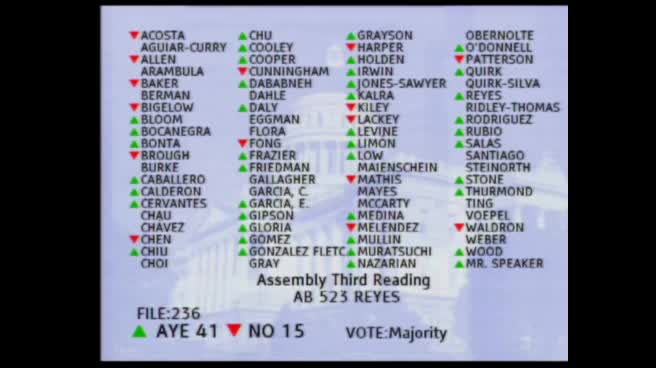 1MIN
Assembly Floor
 33SEC
Assembly Floor
Bill Author

Bill Co-Author(s):