AB 613: Healing arts: clinical laboratories.
- Session Year: 2017-2018
- House: Assembly
- Latest Version Date: 2018-09-27
Existing law provides for the licensure, registration, and regulation of clinical laboratories and various clinical laboratory personnel by the State Department of Public Health, with specified exceptions. A violation of those provisions is a crime. Existing law authorizes a person who is licensed under those provisions to perform certain laboratory tests.
This bill, until January 1, 2021, would authorize a person with specified qualifications to perform a total protein test using a digital refractometer in a licensed plasma collection center in this state if specified circumstances are met, as determined by the department, including that the person meets certain education and training requirements. The bill would require the digital refractometer used to perform a total protein test pursuant to these provisions to meet specific criteria, including that it be used within 30 feet of the donor for whom the test is being conducted. The bill would require a participating licensed plasma collection center to make specified information available to the department. The bill would exempt the information obtained pursuant to these provisions from the California Public Records Act. Because a violation of those provisions would be a crime, the bill would impose a state-mandated local program.
Existing constitutional provisions require that a statute that limits the right of access to the meetings of public bodies or the writings of public officials and agencies be adopted with findings demonstrating the interest protected by the limitation and the need for protecting that interest.
This bill would make legislative findings to that effect.
The California Constitution requires the state to reimburse local agencies and school districts for certain costs mandated by the state. Statutory provisions establish procedures for making that reimbursement.
This bill would provide that no reimbursement is required by this act for a specified reason.
Existing law provides for the licensure, registration, and regulation of clinical laboratories and various clinical laboratory personnel by the State Department of Public Health, with specified exceptions. A violation of those provisions is a crime. Existing law authorizes a person who is licensed under those provisions to perform certain laboratory tests.
This bill, until January 1, 2020, 2021, would authorize a person with specified qualifications to perform a total protein test using a digital refractometer in a licensed plasma collection center in this state if specified circumstances are met, as determined by the department, including that the person meets certain education and training requirements. The bill would require the digital refractometer used to perform a total protein test pursuant to these provisions to meet specific criteria, including that it be used within 30 feet of the donor for whom the test is being conducted and performs total protein tests on plasma samples from the waived spun hematocrit test. conducted. The bill would require a participating licensed plasma collection center to maintain specified records and provide make specified information available to the department upon request, as well as provide an annual report of protein test results below the required lower limit, as specified. department. The bill would exempt the information obtained pursuant to these provisions from the California Public Records Act. Because a violation of those provisions would be a crime, the bill would impose a state-mandated local program.
Existing constitutional provisions require that a statute that limits the right of access to the meetings of public bodies or the writings of public officials and agencies be adopted with findings demonstrating the interest protected by the limitation and the need for protecting that interest.
This bill would make legislative findings to that effect.
The California Constitution requires the state to reimburse local agencies and school districts for certain costs mandated by the state. Statutory provisions establish procedures for making that reimbursement.
This bill would provide that no reimbursement is required by this act for a specified reason.
Existing law provides for the licensure, registration, and regulation of clinical laboratories and various clinical laboratory personnel by the State Department of Public Health, with specified exceptions. A violation of those provisions is a crime. Existing law authorizes a person who is licensed under those provisions to perform certain laboratory tests.
This bill, until January 1, 2020, would authorize a person with specified qualifications to perform a total protein test using a digital refractometer that creates an electronic record of the test results in a licensed plasma collection center in this state if specified circumstances are met, as determined by the department, including that the person meets certain education and training requirements. The bill would require the digital refractometer used to perform a total protein test pursuant to these provisions to meet specific criteria, including that it be used within 30 feet of the donor for whom the test is being conducted and the refractometer performs total protein tests on plasma samples from the waived spun hematocrit test. The bill would require a licensed plasma collection center to maintain specified records and provide specified information to the department upon request, as well as provide an annual report of protein test results below the required lower limit, as specified. Because a violation of those provisions would be a crime, the bill would impose a state-mandated local program.
The California Constitution requires the state to reimburse local agencies and school districts for certain costs mandated by the state. Statutory provisions establish procedures for making that reimbursement.
This bill would provide that no reimbursement is required by this act for a specified reason.
Existing law provides for the licensure, registration, and regulation of clinical laboratories and various clinical laboratory personnel by the State Department of Public Health, with specified exceptions. A violation of those provisions is a crime. Existing law authorizes a person who is licensed under those provisions to perform certain laboratory tests.
This bill, until January 1, 2020, would authorize a person with specified qualifications to perform a total protein test using a digital refractometer that creates an electronic record of the test results in a licensed plasma collection facility center in this state if specified circumstances are met, as determined by the department, including that the person meets certain education and training requirements. The bill would require the digital refractometer used to perform a total protein test pursuant to these provisions to meet specific criteria, including that it be used within the proximity 30 feet of the donor for whom the test or examination is being conducted and the refractometer performs clinical laboratory total protein tests or examinations on biological specimens that require no preparation after collection. on plasma samples from the waived spun hematocrit test. The bill would require a licensed plasma collection center to maintain specified records and provide specified information to the department upon request, as well as provide an annual report of protein test results below the required lower limit, as specified. Because a violation of those provisions would be a crime, the bill would impose a state-mandated local program.
The California Constitution requires the state to reimburse local agencies and school districts for certain costs mandated by the state. Statutory provisions establish procedures for making that reimbursement.
This bill would provide that no reimbursement is required by this act for a specified reason.
Existing law provides for the licensure, registration, and regulation of clinical laboratories and various clinical laboratory personnel by the State Department of Public Health, with specified exceptions. A violation of those provisions is a crime. Existing law authorizes a person who is licensed under those provisions to perform certain laboratory tests.
This bill, until January 1, 2020, would authorize a person with specified qualifications to perform a total protein test using a digital refractometer in a licensed plasma collection facility in this state if specified circumstances are met, as determined by the department. department, including that the person meets certain education and training requirements. The bill would require the digital refractometer used to perform a total protein test pursuant to these provisions to meet specific criteria, including that it be used within the proximity of the donor for whom the test or examination is being conducted and the refractometer performs clinical laboratory tests or examinations on biological specimens that require no preparation after collection. Because a violation of those provisions would be a crime, the bill would impose a state-mandated local program.
The California Constitution requires the state to reimburse local agencies and school districts for certain costs mandated by the state. Statutory provisions establish procedures for making that reimbursement.
This bill would provide that no reimbursement is required by this act for a specified reason.
Existing law provides for the licensure, registration, and regulation of clinical laboratories and various clinical laboratory personnel by the State Department of Public Health, with specified exceptions. A violation of those provisions is a crime. Existing law authorizes a person who is licensed under those provisions to perform certain laboratory tests.
This bill, until January 1, 2020, would authorize a person with specified qualifications to perform a total protein test using a digital refractometer in a licensed plasma collection facility in this state if specified circumstances are met, as determined by the department. Because a violation of those provisions would be a crime, the bill would impose a state-mandated local program.
The California Constitution requires the state to reimburse local agencies and school districts for certain costs mandated by the state. Statutory provisions establish procedures for making that reimbursement.
This bill would provide that no reimbursement is required by this act for a specified reason.
Existing law provides for the licensure, registration, and regulation of clinical laboratories and various clinical laboratory personnel by the State Department of Public Health, with specified exceptions. A violation of those provisions is a crime. Existing law authorizes a person who is licensed under those provisions to perform certain laboratory tests.This bill would state the intent of the Legislature to enact legislation related to authorizing a person with specified qualifications to perform a total protein refractometer test using an automatic, button-operated total protein refractometer with a digital readout in a licensed plasma collection facility in this state under specified circumstances.Existing law provides for the licensure, registration, and regulation of clinical laboratories and various clinical laboratory personnel by the State Department of Public Health, with specified exceptions. A violation of those provisions is a crime. Existing law authorizes a person who is licensed under those provisions to perform certain laboratory tests.
This bill would state the intent of the Legislature to enact legislation related to authorizing a person with specified qualifications to perform a total protein refractometer test using an automatic, button-operated total protein refractometer with a digital readout in a licensed plasma collection facility in this state under specified circumstances.
It is the intent of the Legislature to enact legislation to specify the qualifications of, and the limited circumstances in which, properly trained and supervised personnel may perform a total protein test using a digital refractometer in a licensed plasma collection center in this state.
SEC. 2.Section 1246.7 is added to the Business and Professions Code, to read:1246.7.(a)Notwithstanding any other law, a person may perform a total protein test using a digital refractometer in a licensed plasma collection center in this state, if the department, as part of its routine, fee-supported inspection of the licensed plasma collection center, including its review of personnel reports for licensed and unlicensed personnel and job descriptions of all center positions for a licensed plasma collection center, determines that all of the following conditions are met:
(1)(A)He or she has earned a high school diploma or equivalent, as determined by the federal Centers for Medicare and Medicaid Services (CMS) pursuant to the federal Clinical Laboratory Improvement Amendments of 1988 (CLIA) (42 U.S.C. Sec. 263a).
(B)He or she has training sufficient to demonstrate that the individual has the skills and abilities described in paragraph (2) of subdivision (a) of Section 1269.
(2)(A)In addition to the education and training requirements specified in paragraph (1), he or she has received five hours of training in the proper procedures to be employed when performing a total protein test using a digital refractometer and the procedures for recording the test results pursuant to paragraph (7).
(B)His or her training in the proper procedure to be employed when performing a total protein test using a digital refractometer has been certified by a moderate complexity laboratory technical consultant as specified in Section 1036.2 of Title 17 of the California Code of Regulations, by a physician and surgeon licensed in this state, or by a licensed clinical laboratory director who is in charge of the licensed plasma collection center.
(C)The instructor documents, and the plasma collection center maintains the documentation of, the individuals successful completion of training in the performance of the total protein test using a digital refractometer. This documentation shall be made available to the department upon request.
(3)He or she performs the total protein test using a digital refractometer under the supervision of one of the following individuals who is physically onsite in the licensed plasma collection center and is available for consultation and direction while the person is processing specimens and performing the test:
(A)A moderate complexity laboratory technical consultant as specified in Section 1036.2 of Title 17 of the California Code of Regulations.
(B)A registered nurse licensed pursuant to Chapter 6 of Division 2.
(C)A physician or surgeon licensed pursuant to Chapter 5 of Division 2.
(D)A clinical laboratory director licensed pursuant to this chapter.
(4)He or she performs the total protein test using a digital refractometer in accordance with both of the following:
(A)Standardized operating procedures required by the licensed plasma collection centers license.
(B)Standardized procedures developed and approved by the licensed plasma collection centers supervising physician and surgeon or licensed clinical laboratory director for administration of the total protein test by the persons authorized to perform the total protein test pursuant to this section. These standardized procedures shall be made available to the department upon request.
(5)He or she does not draw the blood sample required for the test using a procedure that requires a registration, certification, or license under state law unless he or she is properly registered, certified, or licensed to perform the procedure.
(6)His or her competency in performing total protein tests using a digital refractometer is evaluated before testing on donors, and every six months thereafter, by the CLIA lab director or technical consultant by direct observation. A licensed plasma collection center shall maintain documentation of the competency evaluation, which shall be made available to the department upon request.
(7)He or she accurately records the results of the total protein test in a federal FDA 510k-approved blood establishment computer system (BECS), which shall be verified in one of the following ways:
(A)Using a digital refractometer that creates an electronic record of the test results.
(B)Having each record entered by the individual verified for accuracy at the time the test result is recorded and while the result remains visible on the digital refractometer by a registered nurse or by the individual described in paragraph (4) who is supervising the individual performing the test. The individual certifying the accuracy shall affix his or her name to the record verifying the accuracy of the entries.
(C)Affixing a date- and time-stamped photograph of the digital refractometer test results to the spreadsheet.
(D)The plasma collection center utilizing a double blind computer entry system that requires the test results to be accurately entered into the record twice before the results are recorded as final.
(b)The digital refractometer used to perform a total protein test pursuant to this section shall meet all of the following criteria:
(1)Is used within 30 feet of the donor for whom the test is being conducted.
(2)Is used in accordance with the donor test management system, the quality control program, and the comprehensive quality assurance program established and maintained by the laboratory pursuant to paragraph (2) of subdivision (d) of Section 1220, if applicable to the licensed plasma collection center under federal law.
(3)Performs total protein tests classified as waived or of moderate complexity under the federal Clinical Laboratory Improvement Amendments of 1988 (CLIA) (42 U.S.C. Sec. 263a).
(4)Performs total protein tests using a digital refractometer on biological specimens that require manual blood collection, centrifugation to separate the blood cells from the plasma, pipetting the plasma from the cells, and application of the plasma into the refractometer.
(5)Provides total protein test results without calculation or discretionary intervention by the testing personnel.
(6)Performs total protein tests without the necessity for testing personnel to perform calibration or maintenance, except basic cleaning, resetting, and daily standardization pursuant to the manufacturers instructions.
(c)To assess the competency and performance of persons authorized to perform the total protein test pursuant to this section, a licensed plasma collection center utilizing this section shall make available to the department any information required by statute or regulation to be collected or maintained by the licensed plasma collection center, and the results of any testing required by statute or regulation to be performed by the licensed plasma collection center, related to assessing the competency and performance of persons using a digital refractometer, as determined by the department. Information obtained pursuant to this subdivision shall be confidential and is not a public record. The department may contract for collection and review of the information required by this subdivision. The contract shall be exempt from Part 2 (commencing with Section 10100) of Division 2 of the Public Contract Code and shall be exempt from review or approval by any division of the Department of General Services.
(d)Records of digital refractometer test results collected pursuant to paragraph (7) of subdivision (a) shall be maintained for three years and made available to the department upon request.
(e)This section shall remain in effect only until January 1, 2021, and as of that date is repealed, unless a later enacted statute that is enacted before January 1, 2021, deletes or extends that date.
SEC. 3.The Legislature finds and declares that Section 2 of this act, which adds Section 1246.7 to the Business and Professions Code, imposes a limitation on the publics right of access to the meetings of public bodies or the writings of public officials and agencies within the meaning of Section 3 of Article I of the California Constitution. Pursuant to that constitutional provision, the Legislature makes the following findings to demonstrate the interest protected by this limitation and the need for protecting that interest:
In order to protect against an unwarranted invasion of personal privacy as a result of the disclosure of personnel, medical, or similar files, it is necessary that this act limit the publics right of access to that information.
SEC. 4.No reimbursement is required by this act pursuant to Section 6 of Article XIIIB of the California Constitution because the only costs that may be incurred by a local agency or school district will be incurred because this act creates a new crime or infraction, eliminates a crime or infraction, or changes the penalty for a crime or infraction, within the meaning of Section 17556 of the Government Code, or changes the definition of a crime within the meaning of Section 6 of Article XIIIB of the California Constitution.
It is the intent of the Legislature to enact legislation to specify the qualifications of, and the limited circumstances in which, properly trained and supervised personnel may perform a total protein test using a digital refractometer in a licensed plasma collection center in this state.
SEC. 2.Section 1246.7 is added to the Business and Professions Code, to read:1246.7.(a)Notwithstanding any other law, a person may perform a total protein test using a digital refractometer in a licensed plasma collection center in this state, if the department, as part of its routine, fee-supported inspection of the licensed plasma collection center, including its review of personnel reports for licensed and unlicensed personnel and job descriptions of all center positions for a licensed plasma collection center, determines that all of the following conditions are met:
(1)(A)He or she has earned a high school diploma or equivalent, as determined by the federal Centers for Medicare and Medicaid Services (CMS) pursuant to the federal Clinical Laboratory Improvement Amendments of 1988 (CLIA) (42 U.S.C. Sec. 263a).
(B)He or she has training sufficient to demonstrate that the individual has the skills and abilities described in paragraph (2) of subdivision (a) of Section 1269.
(2)(A)In addition to the education and training requirements specified in paragraph (1), he or she has received five hours of training in the proper procedures to be employed when performing a total protein test using a digital refractometer. refractometer and the procedures for recording the test results pursuant to paragraph (7).
(B)His or her training in the proper procedure to be employed when performing a total protein test using a digital refractometer has been certified by a moderate complexity laboratory technical consultant as specified in Section 1036.2 of Title 17 of the California Code of Regulations, by a physician and surgeon licensed in this state, or by a licensed clinical laboratory director who is in charge of the licensed plasma collection center.
(C)The instructor documents, and the plasma collection center maintains the documentation of, the individuals successful completion of training in the performance of the total protein test using a digital refractometer. This documentation shall be made available to the department upon request.
(3)He or she performs the total protein test using a digital refractometer while under the supervision of one of the following individuals who is physically onsite in the licensed plasma collection center and is available for consultation and direction while the person is processing specimens and performing the test:
(A)A moderate complexity laboratory technical consultant as specified in Section 1036.2 of Title 17 of the California Code of Regulations.
(B)A registered nurse licensed pursuant to Chapter 6 of Division 2.
(C)A physician or surgeon licensed pursuant to Chapter 5 of Division 2.
(D)A clinical laboratory director licensed pursuant to this chapter.
(4)He or she performs the total protein test using a digital refractometer in accordance with both of the following:
(A)Standardized operating procedures required by the licensed plasma collection centers license.
(B)Standardized procedures developed and approved by the licensed plasma collection centers supervising physician and surgeon or licensed clinical laboratory director for administration of the total protein test by the persons authorized to perform the total protein test pursuant to this section. These standardized procedures shall be made available to the department upon request.
(5)He or she does not draw the blood sample required for the test using a procedure that requires a registration, certification, or license under state law unless he or she is properly registered, certified, or licensed to perform the procedure.
(6)His or her competency in performing total protein tests using a digital refractometer is evaluated before testing on donors, and every six months thereafter, by a person providing supervision pursuant to paragraph (3) of subdivision (a), who will review a random sampling of the tests performed. the CLIA lab director or technical consultant by direct observation. A licensed plasma collection center shall maintain documentation of the competency evaluation, which shall be made available to the department upon request.
(7)He or she accurately records the results of the total protein test in a federal FDA 510k-approved blood establishment computer system (BECS), which shall be verified in one of the following ways:
(A)Using a digital refractometer that creates an electronic record of the test results.
(B)Having each record entered by the individual verified for accuracy at the time the test result is recorded and while the result remains visible on the digital refractometer by a registered nurse or by the individual described in paragraph (4) who is supervising the individual performing the test. The individual certifying the accuracy shall affix his or her name to the record verifying the accuracy of the entries.
(C)Affixing a date- and time-stamped photograph of the digital refractometer test results to the spreadsheet.
(D)The plasma collection center utilizing a double blind computer entry system that requires the test results to be accurately entered into the record twice before the results are recorded as final.
(b)The digital refractometer used to perform a total protein test pursuant to this section shall meet all of the following criteria:
(1)Is used within 30 feet of the donor for whom the test is being conducted.
(2)Is used in accordance with the donor test management system, the quality control program, and the comprehensive quality assurance program established and maintained by the laboratory pursuant to paragraph (2) of subdivision (d) of Section 1220, if applicable to the licensed plasma collection center under federal law.
(3)Performs total protein tests classified as waived or of moderate complexity under the federal Clinical Laboratory Improvement Amendments of 1988 (CLIA) (42 U.S.C. Sec. 263a).
(4)Performs total protein tests using a digital refractometer on plasma samples only obtained from the waived spun hematocrit test. biological specimens that require manual blood collection, centrifugation to separate the blood cells from the plasma, pipetting the plasma from the cells, and application of the plasma into the refractometer.
(5)Provides total protein test results without calculation or discretionary intervention by the testing personnel.
(6)Performs total protein tests without the necessity for testing personnel to perform calibration or maintenance, except resetting basic cleaning, resetting, and daily standardization pursuant to the manufacturers instructions or basic cleaning. instructions.
(c)To assess the competency and performance of persons authorized to perform the total protein test pursuant to this section, a licensed plasma collection centers shall report the name of the facility, the date the test was provided, and the total protein test result for each total protein test result below the required lower limit of 6.0 gm/dl to the department annually by electronic mail in a data spreadsheet. center utilizing this section shall make available to the department any information required by statute or regulation to be collected or maintained by the licensed plasma collection center, and the results of any testing required by statute or regulation to be performed by the licensed plasma collection center, related to assessing the competency and performance of persons using a digital refractometer, as determined by the department. Information obtained pursuant to this subdivision shall be confidential and is not a public record. The department may contract for collection and review of the information required by this subdivision. The contract shall be exempt from Part 2 (commencing with Section 10100) of Division 2 of the Public Contract Code and shall be exempt from review or approval by any division of the Department of General Services.
(d)Electronic records Records of digital refractometer test results collected pursuant to paragraph (7) of subdivision (a) shall be maintained for three years and made available to the department upon request.
(e)This section shall remain in effect only until January 1, 2020, 2021, and as of that date is repealed, unless a later enacted statute that is enacted before January 1, 2020, 2021, deletes or extends that date.
SEC. 3.The Legislature finds and declares that Section 2 of this act, which adds Section 1246.7 to the Business and Professions Code, imposes a limitation on the publics right of access to the meetings of public bodies or the writings of public officials and agencies within the meaning of Section 3 of Article I of the California Constitution. Pursuant to that constitutional provision, the Legislature makes the following findings to demonstrate the interest protected by this limitation and the need for protecting that interest:
In order to protect against an unwarranted invasion of personal privacy as a result of the disclosure of personnel, medical, or similar files, it is necessary that this act limit the publics right of access to that information.
SEC. 3.SEC. 4.No reimbursement is required by this act pursuant to Section 6 of Article XIIIB of the California Constitution because the only costs that may be incurred by a local agency or school district will be incurred because this act creates a new crime or infraction, eliminates a crime or infraction, or changes the penalty for a crime or infraction, within the meaning of Section 17556 of the Government Code, or changes the definition of a crime within the meaning of Section 6 of Article XIIIB of the California Constitution.
It is the intent of the Legislature to enact legislation to specify the qualifications of, and the limited circumstances in which, properly trained and supervised personnel may perform a total protein test using a digital refractometer in a licensed plasma collection center in this state.
SEC. 2.Section 1246.7 is added to the Business and Professions Code, to read:1246.7.(a)Notwithstanding any other law, a person may perform a total protein test using a digital refractometer that creates an electronic record of the test results in a licensed plasma collection center in this state, if the department, as part of its routine, fee-supported inspection of the licensed plasma collection center, including its review of personnel reports for licensed and unlicensed personnel and job descriptions of all center positions for a licensed plasma collection center, determines that all of the following conditions are met:
(1)He or she has earned a high school diploma or equivalent, as determined by the federal Centers for Medicare and Medicaid Services (CMS) pursuant to the federal Clinical Laboratory Improvement Amendments of 1988 (CLIA) (42 U.S.C. Sec. 263a).
(2)(A)In addition to the training requirements specified in paragraph (1), he or she has received five hours of training in the proper procedures to be employed when performing a total protein test using a digital refractometer.
(B)His or her training in the proper procedure to be employed when performing a total protein test using a digital refractometer has been certified by a moderate complexity laboratory technical consultant as specified in Section 1036.2 of Title 17 of the California Code of Regulations, by a physician and surgeon licensed in this state, or by a licensed clinical laboratory director who is in charge of the licensed plasma collection center.
(C)The instructor documents, and the plasma collection center maintains the documentation of, the individuals successful completion of training in the performance of the total protein test using a digital refractometer. This documentation shall be made available to the department upon request.
(3)He or she performs the total protein test using a digital refractometer while one of the following individuals is physically onsite in the licensed plasma collection center and is available for consultation and direction while the person is processing specimens and performing the test:
(A)A moderate complexity laboratory technical consultant as specified in Section 1036.2 of Title 17 of the California Code of Regulations.
(B)A registered nurse licensed pursuant to Chapter 6 of Division 2.
(C)A physician or surgeon licensed pursuant to Chapter 5 of Division 2.
(D)A clinical laboratory director licensed pursuant to this chapter.
(4)He or she performs the total protein test using a digital refractometer in accordance with both of the following:
(A)Standardized operating procedures required by the licensed plasma collection centers license.
(B)Standardized procedures developed and approved by the licensed plasma collection centers supervising physician and surgeon or licensed clinical laboratory director for administration of the total protein test by the persons authorized to perform the total protein test pursuant to this section. These standardized procedures shall be made available to the department upon request.
(5)He or she does not draw the blood sample required for the test using a procedure that requires a registration, certification, or license under state law unless he or she is properly registered, certified, or licensed to perform the procedure.
(6)His or her competency in performing total protein tests using a digital refractometer is evaluated before testing on donors, and every six months thereafter, by a person providing supervision pursuant to paragraph (3) of subdivision (a), who will review a random sampling of the tests performed. A licensed plasma collection center shall maintain documentation of the competency evaluation, which shall be made available to the department upon request.
(b)The digital refractometer used to perform a total protein test pursuant to this section shall meet all of the following criteria:
(1)Is used within 30 feet of the donor for whom the test is being conducted.
(2)Is used in accordance with the donor test management system, the quality control program, and the comprehensive quality assurance program established and maintained by the laboratory pursuant to paragraph (2) of subdivision (d) of Section 1220, if applicable to the licensed plasma collection center under federal law.
(3)Performs total protein tests classified as waived or of moderate complexity under the federal Clinical Laboratory Improvement Amendments of 1988 (CLIA) (42 U.S.C. Sec. 263a).
(4)Performs total protein tests using a digital refractometer on plasma samples only obtained from the waived spun hematocrit test.
(5)Provides total protein test results without calculation or discretionary intervention by the testing personnel.
(6)Performs total protein tests without the necessity for testing personnel to perform calibration or maintenance, except resetting pursuant to the manufacturers instructions or basic cleaning.
(c)To assess persons authorized to perform the total protein test pursuant to this section, licensed plasma collection centers shall report the name of the facility, the date the test was provided, and the total protein test result for each total protein test result below the required lower limit of 6.0 gm/dl to the department annually by electronic mail in a data spreadsheet.
(d)Electronic records of digital refractometer test results shall be maintained for three years and made available to the department upon request.
(e)This section shall remain in effect only until January 1, 2020, and as of that date is repealed, unless a later enacted statute that is enacted before January 1, 2020, deletes or extends that date.
SEC. 3.No reimbursement is required by this act pursuant to Section 6 of Article XIIIB of the California Constitution because the only costs that may be incurred by a local agency or school district will be incurred because this act creates a new crime or infraction, eliminates a crime or infraction, or changes the penalty for a crime or infraction, within the meaning of Section 17556 of the Government Code, or changes the definition of a crime within the meaning of Section 6 of Article XIIIB of the California Constitution.
It is the intent of the Legislature to enact legislation to specify the qualifications of, and the limited circumstances in which, properly trained and supervised personnel may perform a total protein test using a digital refractometer in a licensed plasma collection facility center in this state.
SEC. 2.Section 1246.7 is added to the Business and Professions Code, to read:1246.7.(a)Notwithstanding any other law, a person may perform a total protein test using a digital refractometer that creates an electronic record of the test results in a licensed plasma collection facility center in this state, if the department, as part of its routine, fee-supported inspection of the licensed plasma collection facility, center, including its review of personnel reports for licensed and unlicensed personnel and job descriptions of all facility center positions for a licensed plasma collection facility, center, determines that all of the following conditions are met:
(1)He or she meets the education and training requirements for unlicensed laboratory personnel specified in Section 1269. has earned a high school diploma or equivalent, as determined by the federal Centers for Medicare and Medicaid Services (CMS) pursuant to the federal Clinical Laboratory Improvement Amendments of 1988 (CLIA) (42 U.S.C. Sec. 263a).
(2)(A)In addition to the training requirements specified in paragraph (1), he or she is trained has received five hours of training in the proper procedures to be employed when performing a total protein test using a digital refractometer.
(B)His or her training in the proper procedure to be employed when performing a total protein test using a digital refractometer has been certified by a moderate complexity laboratory technical consultant as specified in Section 1036.2 of Title 17 of the California Code of Regulations, by a physician and surgeon licensed in this state state, or by a licensed clinical laboratory director who is in charge of the licensed plasma collection facility, or their certified, trained designate. center.
(C)The instructor documents, and the plasma collection facility center maintains the documentation of, the individuals successful completion of training in the performance of the total protein test using a digital refractometer. This documentation shall be made available to the department upon request.
(3)He or she performs the total protein test using a digital refractometer while one of the following individuals is physically onsite in the licensed plasma collection center and is available for consultation and direction while the person is processing specimens and performing the test:
(A)A moderate complexity laboratory technical consultant as specified in Section 1036.2 of Title 17 of the California Code of Regulations.
(B)A registered nurse licensed pursuant to Chapter 6 of Division 2.
(C)A physician or surgeon licensed pursuant to Chapter 5 of Division 2.
(D)A clinical laboratory director licensed pursuant to this chapter.
(3)(4)He or she performs the total protein test using a digital refractometer in accordance with both of the following:
(A)Standardized operating procedures required by the licensed plasma collection facilitys centers license.
(B)Standardized procedures developed and approved by the licensed plasma collection facilitys centers supervising physician and surgeon or licensed clinical laboratory director for administration of the total protein test by the persons authorized to perform the total protein test pursuant to this section. These standardized procedures shall be made available to the department upon request.
(4)(5)He or she does not draw the blood sample required for the test using a procedure that requires a registration, certification, or license under state law unless he or she is properly registered, certified, or licensed to perform the procedure.
(6)His or her competency in performing total protein tests using a digital refractometer is evaluated before testing on donors, and every six months thereafter, by a person providing supervision pursuant to paragraph (3) of subdivision (a), who will review a random sampling of the tests performed. A licensed plasma collection center shall maintain documentation of the competency evaluation, which shall be made available to the department upon request.
(b)The digital refractometer used to perform a total protein test pursuant to this section shall meet all of the following criteria:
(1)Is used within the proximity 30 feet of the donor for whom the test or examination is being conducted.
(2)Is used in accordance with the donor test management system, the quality control program, and the comprehensive quality assurance program established and maintained by the laboratory pursuant to paragraph (2) of subdivision (d) of Section 1220, if applicable to the licensed plasma collection facility center under federal law.
(3)Performs clinical laboratory total protein tests or examinations classified as waived or of moderate complexity under the federal Clinical Laboratory Improvement Amendments of 1988 (CLIA) (42 U.S.C. Sec. 263a).
(4)Performs clinical laboratory total protein tests or examinations on biological specimens that require no preparation after collection. For purposes of this paragraph, preparation means any step beyond those required for the collection and transfer of a sample between a donor and a testing device or between the digital refractometer and a waived testing device, including, but not limited to, staining, use of test reagents, quantitative measurement without an automatic or calibrated pipette or dispenser, or slide mounting. using a digital refractometer on plasma samples only obtained from the waived spun hematocrit test.
(5)Provides clinical laboratory tests or examination total protein test results without calculation or discretionary intervention by the testing personnel.
(6)Performs clinical laboratory total protein tests or examinations without the necessity for testing personnel to perform calibration or maintenance, except resetting pursuant to the manufacturers instructions or basic cleaning.
(c)To assess persons authorized to perform the total protein test pursuant to this section, licensed plasma collection centers shall report the name of the facility, the date the test was provided, and the total protein test result for each total protein test result below the required lower limit of 6.0 gm/dl to the department annually by electronic mail in a data spreadsheet.
(d)Electronic records of digital refractometer test results shall be maintained for three years and made available to the department upon request.
(c)(e)This section shall remain in effect only until January 1, 2020, and as of that date is repealed, unless a later enacted statute that is enacted before January 1, 2020, deletes or extends that date.
SEC. 3.No reimbursement is required by this act pursuant to Section 6 of Article XIIIB of the California Constitution because the only costs that may be incurred by a local agency or school district will be incurred because this act creates a new crime or infraction, eliminates a crime or infraction, or changes the penalty for a crime or infraction, within the meaning of Section 17556 of the Government Code, or changes the definition of a crime within the meaning of Section 6 of Article XIIIB of the California Constitution.
It is the intent of the Legislature to enact legislation to specify the qualifications of, and the limited circumstances in which, properly trained and supervised personnel may perform a total protein test using a digital refractometer in a licensed plasma collection facility in this state. Digital refractometers are very easy to operate; with one push of a button, the protein concentration is displayed on an LCD screen. User experience supports that the tests are simple.
SEC. 2.Section 1246.7 is added to the Business and Professions Code, to read:1246.7.(a)Notwithstanding any other law, a person may perform a total protein test using a digital refractometer in a licensed plasma collection facility in this state, if the department, as part of its routine, fee-supported inspection of California Biologics facilities (plasma centers), the licensed plasma collection facility, including its review of personnel reports for licensed and unlicensed personnel and job descriptions of all facility positions for a licensed plasma collection facility, determines that all of the following conditions are met:
(1)He or she has earned a high school diploma or equivalent, as determined by the Centers for Medicare and Medicaid Services (CMS) pursuant to the federal Clinical Laboratory Improvement Amendments of 1988 (CLIA) (42 U.S.C. Sec. 263a). meets the education and training requirements for unlicensed laboratory personnel specified in Section 1269.
(2)(A)In addition to the training requirements specified in paragraph (1), he or she is trained in the proper procedures to be employed when performing a total protein test using a digital refractometer.
(2)(B)His or her training in the proper procedure to be employed when performing a total protein test using a digital refractometer has been certified by a physician and surgeon licensed in this state or by a licensed clinical laboratory director who is in charge of the licensed plasma collection facility, or their certified, trained designate. The
(C)The instructor shall document, documents, and the plasma collection facility shall maintain maintains the documentation of, the individuals successful completion of training in the performance of the total protein test using a digital refractometer.
(3)He or she performs the total protein test using a digital refractometer under the direction and supervision of the physician and surgeon or licensed clinical laboratory director. in accordance with both of the following:
(A)Standardized operating procedures required by the licensed plasma collection facilitys license.
(B)Standardized procedures developed and approved by the licensed plasma collection facilitys supervising physician and surgeon or licensed clinical laboratory director for administration of the total protein test by the persons authorized to perform the total protein test pursuant to this section.
(4)He or she does not draw the blood sample required for the test using a procedure that requires a registration, certification, or license under state law unless he or she is properly registered, certified, or licensed to perform the procedure.
(b)The digital refractometer used to perform a total protein test pursuant to this section shall meet all of the following criteria:
(1)Is used within the proximity of the donor for whom the test or examination is being conducted.
(2)Is used in accordance with the donor test management system, the quality control program, and the comprehensive quality assurance program established and maintained by the laboratory pursuant to paragraph (2) of subdivision (d) of Section 1220, if applicable to the licensed plasma collection facility under federal law.
(3)Performs clinical laboratory tests or examinations classified as waived or of moderate complexity under the federal Clinical Laboratory Improvement Amendments of 1988 (CLIA) (42 U.S.C. Sec. 263a).
(4)Performs clinical laboratory tests or examinations on biological specimens that require no preparation after collection. For purposes of this paragraph, preparation means any step beyond those required for the collection and transfer of a sample between a donor and a testing device or between the digital refractometer and a waived testing device, including, but not limited to, staining, use of test reagents, quantitative measurement without an automatic or calibrated pipette or dispenser, or slide mounting.
(5)Provides clinical laboratory tests or examination results without calculation or discretionary intervention by the testing personnel.
(6)Performs clinical laboratory tests or examinations without the necessity for testing personnel to perform calibration or maintenance, except resetting pursuant to the manufacturers instructions or basic cleaning.
(b)(c)This section shall remain in effect only until January 1, 2020, and as of that date is repealed, unless a later enacted statute that is enacted before January 1, 2020, deletes or extends that date.
SEC. 3.No reimbursement is required by this act pursuant to Section 6 of Article XIIIB of the California Constitution because the only costs that may be incurred by a local agency or school district will be incurred because this act creates a new crime or infraction, eliminates a crime or infraction, or changes the penalty for a crime or infraction, within the meaning of Section 17556 of the Government Code, or changes the definition of a crime within the meaning of Section 6 of Article XIIIB of the California Constitution.
It is the intent of the Legislature to enact legislation to specify the qualifications of, and the limited circumstances in which, properly trained and supervised personnel may perform a total protein test using a digital refractometer in a licensed plasma collection facility in this state. Digital refractometers are very easy to operate; with one push of a button, the protein concentration is displayed on an LCD screen. User experience supports that the tests are simple.
SEC. 2.Section 1246.7 is added to the Business and Professions Code, to read:1246.7.(a)Notwithstanding any other law, a person may perform a total protein test using a digital refractometer in a licensed plasma collection facility in this state, if the department, as part of its routine, fee-supported inspection of California Biologics facilities (plasma centers), including its review of personnel reports for licensed and unlicensed personnel and job descriptions of all facility positions for a licensed plasma collection facility, determines that all of the following conditions are met:
(1)He or she has earned a high school diploma or equivalent, as determined by the Centers for Medicare and Medicaid Services (CMS) pursuant to the federal Clinical Laboratory Improvement Amendments of 1988 (CLIA) (42 U.S.C. Sec. 263a).
(2)His or her training in the proper procedure to be employed when performing a total protein test using a digital refractometer has been certified by a physician and surgeon licensed in this state or by a licensed clinical laboratory director who is in charge of the licensed plasma collection facility, or their certified, trained designate. The instructor shall document, and the plasma collection facility shall maintain the documentation of, the individuals successful completion of training in the performance of the total protein test using a digital refractometer.
(3)He or she performs the total protein test using a digital refractometer under the direction and supervision of the physician and surgeon or licensed clinical laboratory director.
(b)This section shall remain in effect only until January 1, 2020, and as of that date is repealed, unless a later enacted statute that is enacted before January 1, 2020, deletes or extends that date.
SEC. 3.No reimbursement is required by this act pursuant to Section 6 of Article XIIIB of the California Constitution because the only costs that may be incurred by a local agency or school district will be incurred because this act creates a new crime or infraction, eliminates a crime or infraction, or changes the penalty for a crime or infraction, within the meaning of Section 17556 of the Government Code, or changes the definition of a crime within the meaning of Section 6 of Article XIIIB of the California Constitution.
SECTION 1.It is the intent of the Legislature to enact legislation that recognizes 21st century technological advances in medical devices that are a direct outgrowth of high-technology research, development, and production capabilities in California and the United States. These advances have resulted in the creation of new, simple, one-button-operable versions of formerly complex, older equipment. It is the intent of the Legislature to enact legislation specifically relating to one such one-button advances in medical device technology to reflect the simplification of medical device operations by identifying the limited settings and circumstances in which closely supervised personnel, meeting federal CLIA-equivalent education and training standards, may use the device for nondiagnostic purposes. It is the intent of the Legislature to enact legislation to specify the qualifications of properly trained and supervised personnel and the limited circumstances in which those personnel may perform a total protein refractometer test using an automatic, button-operated total protein refractometer with a digital readout in a licensed plasma collection facility in this state.It is the intent of the Legislature to enact legislation that recognizes 21st century technological advances in medical devices that are a direct outgrowth of high-technology research, development, and production capabilities in California and the United States. These advances have resulted in the creation of new, simple, one-button-operable versions of formerly complex, older equipment. It is the intent of the Legislature to enact legislation specifically relating to one such one-button advances in medical device technology to reflect the simplification of medical device operations by identifying the limited settings and circumstances in which closely supervised personnel, meeting federal CLIA-equivalent education and training standards, may use the device for nondiagnostic purposes. It is the intent of the Legislature to enact legislation to specify the qualifications of properly trained and supervised personnel and the limited circumstances in which those personnel may perform a total protein refractometer test using an automatic, button-operated total protein refractometer with a digital readout in a licensed plasma collection facility in this state.
|
Date
|
Status
|
|---|---|
| Sep 27, 2018 | Chaptered by Secretary of State - Chapter 799, Statutes of 2018. |
| Sep 27, 2018 | Approved by the Governor. |
| Sep 6, 2018 | Enrolled and presented to the Governor at 3 p.m. |
| Aug 29, 2018 | Senate amendments concurred in. To Engrossing and Enrolling. |
| Aug 27, 2018 | In Assembly. Concurrence in Senate amendments pending. May be considered on or after August 29 pursuant to Assembly Rule 77. |
| Aug 27, 2018 | Read third time. Passed. Ordered to the Assembly. |
| Aug 22, 2018 | Read second time. Ordered to third reading. |
| Aug 21, 2018 | From inactive file. |
| Sep 5, 2017 | Ordered to inactive file at the request of Senator Newman. |
| Aug 29, 2017 | Read second time and amended. Ordered to third reading. |
| Aug 28, 2017 | From committee: Amend, and do pass as amended. (Ayes 7. Noes 0.) (August 28). |
| Aug 23, 2017 | From committee chair, with author's amendments: Amend, and re-refer to committee. Read second time, amended, and re-referred to Com. on APPR. |
| Aug 21, 2017 | In committee: Hearing postponed by committee. |
| Jul 11, 2017 | In committee: Set, first hearing. Hearing canceled at the request of author. |
| Jul 5, 2017 | In committee: Hearing postponed by committee. |
| Jun 13, 2017 | From committee: Do pass and re-refer to Com. on APPR. (Ayes 9. Noes 0.) (June 12). Re-referred to Com. on APPR. |
| May 24, 2017 | Referred to Com. on B., P. & E.D. |
| May 15, 2017 | In Senate. Read first time. To Com. on RLS. for assignment. |
| May 15, 2017 | Read third time. Passed. Ordered to the Senate. (Ayes 78. Noes 0. Page 1539.) |
| May 11, 2017 | Read second time. Ordered to third reading. |
| May 10, 2017 | From committee: Do pass. (Ayes 16. Noes 1.) (May 10). |
| Apr 26, 2017 | Re-referred to Com. on APPR. |
| Apr 25, 2017 | Read second time and amended. |
| Apr 24, 2017 | From committee: Amend, and do pass as amended and re-refer to Com. on APPR. (Ayes 15. Noes 0.) (April 18). |
| Mar 28, 2017 | Re-referred to Com. on B. & P. |
| Mar 27, 2017 | From committee chair, with author's amendments: Amend, and re-refer to Com. on B. & P. Read second time and amended. |
| Mar 23, 2017 | Referred to Com. on B. & P. |
| Feb 15, 2017 | From printer. May be heard in committee March 17. |
| Feb 14, 2017 | Read first time. To print. |
|
Date
|
Description
|
Location
|
Votes
|
|
|---|---|---|---|---|
| Aug 29, 2018 | AB 613 NAZARIAN Concurrence in Senate Amendments | Assembly Floor |
Passed |
|
| Aug 27, 2018 | Assembly 3rd Reading AB613 Nazarian et al. By Hill | Senate Floor |
Passed |
|
| Aug 28, 2017 | Do pass as amended | Senate Standing Committee on Appropriations |
Passed |
|
| Jun 12, 2017 | Do pass, but first be re-referred to the Committee on [Appropriations] | Senate Standing Committee on Business, Professions and Economic Development |
Passed |
|
| May 15, 2017 | AB 613 NAZARIAN Assembly Third Reading | Assembly Floor |
Passed |
|
| May 10, 2017 | Do pass. | Assembly Standing Committee on Appropriations |
Passed |
|
| Apr 18, 2017 | Do pass as amended and be re-referred to the Committee on [Appropriations] | Assembly Standing Committee on Business and Professions |
Passed |
This list shows positions taken on this bill by organizations on the date displayed, which is linked to the original source.
Positions by individuals are not included.
|
Organization
|
Position
|
Date
|
|---|---|---|
| alpha-1 foundation | ** Support | Aug 22, 2018 |
| american plasma users coalition | ** Support | Aug 22, 2018 |
| Blood Centers Of California | ** Support | Aug 22, 2018 |
| California Association For Medical Laboratory Technology | ** Against | Aug 22, 2018 |
| California Chronic Care Coalition | ** Support | Aug 22, 2018 |
| California Department of Public Health | ** Against | Aug 22, 2018 |
| California Life Sciences Association | ** Support | Aug 22, 2018 |
| cidp foundation international | ** Support | Aug 22, 2018 |
| committee of ten thousand | ** Support | Aug 22, 2018 |
| Csl Behring | ** Support | Aug 22, 2018 |
| csl plasma | ** Support | Jun 8, 2017 |
| Department Of Finance | ** Against | Aug 22, 2018 |
| Engineers and Scientists of California, IFPTE Local 20 | ** Against | Aug 22, 2018 |
| green cross american plasma | ** Support | Aug 22, 2018 |
| grifols | ** Support | Aug 22, 2018 |
| Grifols Pharmaceuticals | * Support | May 10, 2017 |
| Hemophilia Council Of California | ** Support | Aug 22, 2018 |
| hemophilia federation of america | ** Support | Aug 22, 2018 |
| Immune Deficiency Foundation | ** Support | Aug 22, 2018 |
| Jeffrey Modell Foundation | ** Support | Aug 22, 2018 |
| national hemophilia foundation | ** Support | Aug 22, 2018 |
| National Organization for Rare Disorders | ** Support | Aug 22, 2018 |
| octapharma plasma, inc. | ** Support | Aug 22, 2018 |
| patient services incorporated | ** Support | Aug 22, 2018 |
| Plasma Protein Therapeutics Association | ** Support | Aug 22, 2018 |
| platelet disorder support association | ** Support | Aug 22, 2018 |
| us hereditary angioedema association | ** Support | Aug 22, 2018 |
CONCURRENCE IN SENATE AMENDMENTS
CSA1 Bill Id:AB 613
Author:(Nazarian)
As Amended Ver:August 21, 2018
Majority vote
ASSEMBLY: | 78-0 | (May 15, 2017) | SENATE: | 37-0 | (August 27, 2018) |
Original Committee Reference: B. & P.
SUMMARY: Authorizes, until January 1, 2021, an unlicensed person who meets specified criteria to perform a total protein refractometer test using digital refractometer in a licensed plasma collection center in this state. Specifically, this bill:
- Declares that it is the intent of the Legislature to enact legislation to specify the qualifications of, and the limited circumstances in which, properly trained and supervised personnel may perform a total protein test using a digital refractometer in a licensed plasma collection center in this state.
- Authorizes a person to perform a total protein test using a digital refractometer in a licensed plasma collection facility in this state, if the California Department of Public Health (CDPH), as part of its routine, fee-supported inspection of the licensed plasma collection facility, including its review of personnel reports for licensed and unlicensed personnel and job descriptions of all facility positions for a licensed plasma collection facility, determines that all of the following conditions are met:
- The person has earned a high school diploma or equivalent, as determined by the federal Centers for Medicare and Medicaid Services (CMS) pursuant to the federal Clinical Laboratory Improvement Amendments of 1988 (CLIA) (42 United States Code Section 263(a)).
- The person has training sufficient to demonstrate that the individual has the skills and abilities currently required of unlicensed laboratory personnel.
- The person is has received five hours of training in the proper procedures to be employed when performing a total protein test using a digital refractometer and the procedures for recording the test, as specified.
- The person's training in the proper procedure to be employed when performing a total protein test using a digital refractometer has been certified by a moderate complexity laboratory technical consultant, a physician and surgeon licensed in this state or by a licensed clinical laboratory director who is in charge of the licensed plasma collection facility, or their certified, trained designate.
- The instructor documents, and the plasma collection center maintains the documentation of, the person's successful completion of training in the performance of the total protein test using a digital refractometer. The documentation must be made available to the CDPH upon request.
- The person performs the test under the supervision of one of the specified licensed individuals who is physically onsite in the licensed plasma collection center and is available for consultation and direction while the person is processing specimens and performing the test.
- The person performs the test in accordance with both of the following:
- Standardized operating procedures required by the licensed plasma collection center's license.
- Standardized procedures developed and approved by the licensed plasma collection center's supervising physician and surgeon or licensed clinical laboratory director for administration of the total protein test by the persons authorized to perform the total protein test pursuant to this section. The standardized procedures must be made available to the CDPH upon request.
- The person does not draw the blood sample required for the test using a procedure that requires a registration, certification, or license under state law unless he or she is properly registered, certified, or licensed to perform the procedure.
- The person's competency in performing total protein tests using a digital refractometer is evaluated before and every six months after testing on donors by the lab director or technical consultant by direct observation. A licensed plasma collection center must maintain documentation of the competency evaluation, which must be made available to the CDPH upon request.
- The person accurately records the results of the total protein test in a federal FDA 510k-approved blood establishment computer system (BECS), as specified.
- Requires the digital refractometer used to perform a total protein test pursuant to meet all of the following criteria:
- Is used within 30 feet of the donor for whom the test is being conducted.
- Is used in accordance with the donor test management system, the quality control program, and the comprehensive quality assurance program established and maintained by the laboratory, as specified, if applicable to the licensed plasma collection center under federal law.
- Performs total protein tests classified as waived or of moderate complexity under CLIA.
- Performs total protein tests using a digital refractometer on biological specimens that require manual blood collection, centrifugation to separate the blood cells from the plasma, pipetting the plasma from the cells, and application of the plasma into the refractometer.
- Provides total protein test results without calculation or discretionary intervention by the testing personnel.
- Performs total protein tests without the necessity for testing personnel to perform calibration or maintenance, except basic cleaning, resetting, and daily standardization pursuant to the manufacturer's instructions
- Requires, for purposes of assessing the competency and performance of persons authorized to perform the total protein test pursuant under this bill, a licensed plasma collection center must make available to the CDPH any information or results of testing required by statute or regulation related to assessing the competency and performance of persons using a digital refractometer, as determined by the CDPH.
- Specifies that information obtained pursuant to this bill is confidential and not a public record.
- Authorizes the CDPH to contract for collection and review of the information required by this bill, as specified.
- Requires records of digital refractometer test results collected pursuant to this bill to be maintained for three years and made available to the CDPH upon request.
- Provides that this authorization shall remain in effect only until January 1, 2021, and as of that date is repealed, unless a later enacted statute that is enacted before January 1, 2021, deletes or extends that date.
The Senate amendments added additional training, testing, and documentation requirements and made numerous clarifying and technical changes.
FISCAL EFFECT: According to the Senate Appropriations Committee on the August 23, 2017, version of this bill, one-time costs of about $120,000 per year for one to three years for the Department of Public Health to revise existing regulations (Licensing and Certification Fund). The Department indicates that it will take three years to develop regulations to implement the requirements of the bill. Given that the requirements of the bill are fairly explicit, it may not take three years of full-time staff work to develop and adopt regulations to implement this bill.
COMMENTS:
Purpose. This bill is sponsored by the Plasma Protein Therapeutics Association. According to the author, this bill "would authorize a person with specified qualifications to perform a total protein refractometer test using an automatic refractometer with a digital readout in a licensed plasma collection facility in California when the [CDPH], as part of their routine inspections, determines that those specified conditions are met…. Plasma is a critical component of several therapies. By authorizing more people with specified qualifications to perform a total protein refractometer test using an automatic refractometer, we can help serve the needs of more Californians who suffer from rare, chronic, and sometimes life-threatening diseases. Additionally, more efficient operations will encourage the building of new plasma donation centers in the state, which will lead to new plasma donation centers in the state, which will lead to more quality jobs in the ever-growing medical industry."
Background. This bill would create an exemption under California clinical laboratory testing requirements, allowing an unlicensed individual to perform a total protein test using a digital refractometer during the donor screening process at plasma donation centers. The sponsor of this bill represents private sector manufacturers of plasma protein therapies and collectors of source plasma. According to the sponsor, plasma protein therapies are used to treat medical conditions resulting from insufficient levels of plasma protein, including immune deficiencies and bleeding disorders.
The manufacturers and collectors require plasma donations in order to produce the therapies. In the United States, plasma donors are paid, and the amount of payment varies by plasma center. These processes are regulated under federal and state biological product and clinical laboratory laws.
Plasma Derived Biologics. The process for separating source plasma from whole blood is called plasmapheresis. Like dialysis, plasmapheresis is a process during which blood is removed from a donor, the plasma separated from the formed elements, and the remaining blood is returned to the donor. Due to the risks involved, both federal and state biologics laws impose safety precautions for source plasma donations, including various testing, timing, and fatality reporting requirements.
According to the FDA's most recent blood transfusion and donor fatality report (for FY 2015), modern blood donation processes are generally safe and the number of reported fatalities associated with donations remains small compared to the number of donations provided. This bill would allow unlicensed plasma donation center personnel, with training and supervision by a licensed physician and surgeon or clinical laboratory director, to perform the screening test performed prior to plasma donation.
However, in California, only specified licensed, certified, or otherwise authorized individuals may perform moderate complexity tests. There are two exceptions allowing unlicensed individuals to perform a moderate complexity test in California. One is for anyone performing a blood gas analysis and the other is for anyone in a physician's office laboratory with a physician readily available.
Total Protein Digital Refractometer Test. According to the sponsors, the centers typically use a digital refractometer to perform the total protein test, which the FDA has categorized as a moderate complexity test. The FDA's medical device database shows that the FDA has classified all total protein refractometer devices as of moderate complexity under CLIA. Because the test is categorized as moderate complexity at the federal level, state law requires that the test is performed by various licensed, such as a registered nurse or clinical laboratory scientist. The sponsor argues that the amount of training and education needed for these personnel is in excess of the amount needed for a total protein test using a digital refractometer in a plasma collection facility.
Other States. According to the sponsor, California and New York are the only states out of the 42 states that have plasma donation centers to require personnel standards that exceed the federal CLIA standards. The sponsor argues that this bill therefore "would bring California's laws in line with the majority of other states that allow a total protein test to be administered by trained and qualified plasma donation center employees."
Analysis Prepared by: Vincent Chee / B. & P. / (916) 319-3301 FN: 0004973
Office of Senate Floor Analyses (916) 651-1520 Fax: (916) 327-4478 | AB |
THIRD READING
Bill No: AB 613
: 8
SENATE BUS., PROF. & ECON. DEV. COMMITTEE: 9-0, 6/12/17
AYES: Hill, Fuller, Dodd, Galgiani, Glazer, Hernandez, Newman, Pan, Wilk
SENATE APPROPRIATIONS COMMITTEE: 7-0, 8/28/17
AYES: Lara, Bates, Beall, Bradford, Hill, Nielsen, Wiener
ASSEMBLY FLOOR: 78-0, 5/15/17 - See last page for vote
SOURCE: Plasma Protein Therapeutics Association
DIGEST:
This bill authorizes an unlicensed individual who meets specified education and training requirements to perform a total protein test using a digital refractometer in a licensed plasma collection facility until January 1, 2021.
Senate Floor Amendments of 8/21/18 are largely duplicative of existing supervision and training duties and describe additional record-keeping requirements and testing processes for the unlicensed personnel, and extend the sunset date by one year.
Existing federal law:
- Establishes conditions that laboratories must meet for certification to perform testing on human specimens under the Clinical Laboratory Improvement Amendments (CLIA). (Title 42, Code of Federal Regulations (CFR) § 493.1)
- Classifies laboratory tests using three categories: “waived,” “moderate complexity,” or “high complexity.” (42 CFR § 493.5)
Existing state law provides for the licensure, registration, and regulation of clinical laboratories and various clinical laboratory personnel, including cytotechnologists, by the California Department of Public Health (DPH). (Business and Professions Code (BPC) §§ 1200-1327)
This bill:
- States legislative intent to enact legislation specifying the qualifications of, and the limited circumstances in which, properly trained and supervised personnel may perform a total protein test using a digital refractometer in a licensed plasma collection center.
- Authorizes, regardless of any other law, a person to perform a total protein test using a digital refractometer in a licensed plasma collection center if DPH determines that all of the following conditions are met:
- He or she has earned a high school diploma or equivalent, as determined by the federal Centers for Medicare and Medicaid Services (CMS) pursuant to CLIA.
- He or she has training sufficient to demostrate that the individual has a working knowledge of reagent stability and storage, the awareness of the factors that influence test results, and the following skills and abilities for:
- Proper specimen collection.
- Assisting a licensed physician and surgeon or other personnel, as specified, other than trainees, in a licensed clinical laboratory.
- Performing preventive maintenance and troubleshooting.
- Assisting in the performance of quality control procedures, and an understanding of the laboratory’s quality control procedures.
- He or she has received five hours of training in the proper procedures to be employed when performing a total protein test using a digital refractometer and the procedures for recording the test results, which have been certified by a moderate complexity laboratory technical consultant, as specified, by a physician and surgeon, or by a licensed clinical laboratory director who is in charge of the licensed plasma collection center.
- The instructor documents the individual’s successful training, and the plasma collection center maintains this documentation and shall make it available to DPH upon request.
- He or she performs the total protein test using a digital refractometer under the supervision of one of the following individuals who is physically onsite in the licensed plasma collection center and is available for consultation and direction while the person is processing specimens and performing the test:
- A moderate complexity laboratory technical consultant.
- A registered nurse.
- A physician or surgeon.
- A clinical laboratory director.
- He or she performs the total protein test using a digital refractometer in accordance with both of the following:
- Standardized operating procedures required by the licensed plasma collection center’s license.
- Standardized procedures, which shall be made available to DPH upon request, developed and approved by the licensed plasma collection center’s supervising physician and surgeon or licensed clinical laboratory director for administration of the total protein test by the persons authorized to perform the total protein test.
- He or she does not draw the blood sample required for the test using a procedure that requires a registration, certification, or license under state law unless he or she is properly registered, certified, or licensed to perform the procedure.
- His or her competency in performing total protein tests using a digital refractometer is evaluated before testing on donors, and every six months thereafter, by the CLIA lab director or technical consultant by direct observation. A licensed plasma collection center shall maintain documentation of the competency evaluation, which shall be made available to DPH upon request.
- He or she accurately records the results of the total protein test in a federal FDA 510k-approved blood establishment computer system, which shall be verified in one of the following ways:
- Using a digital refractometer that creates an electronic record of the test results.
- Having each record entered by the individual verified for accuracy at the time the test result is recorded and while the result remains visible on the digital refractometer by a supervisor. The individual certifying the accuracy shall affix his or her name to the record verifying the accuracy of the entries.
- Affixing a date-and time-stamped photograph of the digital refractometer test results to the spreadsheet.
- The plasma collection center uses a double blind computer entry system that requires the test results to be accurately entered into the record twice before the results are recorded as final.
- Requires the digital refractometer used to perform a total protein test pursuant to this section to meet all of the following criteria:
- Is used within 30 feet of the donor for whom the test is being conducted.
- Is used in accordance with the lab’s donor test management system, quality control program, and comprehensive quality assurance program, if applicable to the licensed plasma collection center.
- Performs total protein tests classified as waived or of moderate complexity under CLIA.
- Performs total protein tests using a digital refractometer on biological specimens that require menual blood collection, centrifugation to separate the blood cells from the plasma, pipetting the plasma from the cells, and application of the plasma into the refractometer.
- Provides total protein tests results without calculation or discretionary intervention by the testing personnel.
- Performs total protein tests without the necessity for testing personnel to perform calibration or maintenance, except basic cleaning, resetting, and daily standardization pursuant to the manufacturer’s instructions.
- Provides that, to assess persons authorized to perform the total protein test pursuant to this section, a licensed plasma center must make available to DPH any information required by statute or regulation to be collected or maintained by the licensed plasma collection center to assess the tester’s competence, and the results of any testing required by statute or regulation to be performed by the licensed plasma collection center, related to assessing the competency and performance of the persons using a digital refractometer, as determined by DPH. Information obtained shall be confidential and not a public record. Authorizes DPH to contract for collection and review of this information, which shall be exempt from the Public Contract Code and exempt from review or approval by any division of the Department of General Services.
- Requires records of digital refractometer test results be maintained for three years and made available to DPH upon request.
- Sunsets the provisions of this bill on January 1, 2021.
- Makes the legislative declaration that that there is a need to protect against the unwarranted invasion of personal privacy as a result of the disclosure of personnel, medical, or similar files as a reason for making certain information in this bill nonpublic.
Background
The federal CLIA laws set the regulatory floor for laboratory testing; states are free to develop higher standards, and laboratories must follow whichever law is more stringent. According to the sponsor, California is one of seven states that have developed more rigorous lab personnel requirements. California defers to CLIA in matters of determining test complexity, which dictates who and under what circumstances, may perform a test. The Food and Drug Administration (FDA) categorizes diagnostic tests by their complexity—from the least to the most complex: waived tests, moderate complexity tests, and high complexity tests. Personnel authorized to perform the tests are required to have skill and training commensurate with the test level. Diagnostic tests are categorized as waived if they are simple to use and there is little chance the test will provide wrong information or cause harm if it is performed incorrectly.
As part of donor-screening and quality-assurance procedures, some plasma donation centers perform screening tests on-site, and these screening tests are considered “waived tests,” with the exception of the total protein refractometer test (TPRT). While some centers use older, analog refractometers to conduct the test, which require more expertise by the operator, other centers use newer, and much simpler, digital refractometers, like the instrument described in this bill. FDA assigned TPRT to the moderate complexity category under CLIA, regardless of type. Although TPRT is classified as a moderate complexity test under CLIA, the sponsors argue that advances in technology have made the digital refractometer so simple that it should be considered “waived.” Were it classified as such, the sponsors would not need this bill.
In order to reclassify, FDA may initiate or respond to an interested person's petition for reclassification of a device type. In either case, the basis for reclassification is the availability of new information regarding the device.
FISCAL EFFECT: Appropriation: Fiscal Com.: Local:
According to the Senate Appropriations Committee, this bill has one-time costs of about $120,000 per year for one to three years for DPH to revise existing regulations (Licensing and Certification Fund). DPH indicates that it will take three years to develop regulations to implement the requirements of the bill. Given that the requirements of the bill are fairly explicit, it may not take three years of full-time staff work to develop and adopt regulations to implement this bill.
Plasma Protein Therapeutics Association (source)
Alpha-1 Foundation
American Plasma Users Coalition
Blood Centers of California
California Chronic Care Coalition
California Life Sciences Association
Committee of Ten Thousand
CSL Behring
GBS/CIDP Foundation International
Green Cross American Plasma
Grifols
Hemophilia Council of California
Hemophilia Federation of America
Immune Deficiency Foundation
Jeffrey Modell Foundation
National Hemophilia Foundation
National Organization for Rare Disorders
Octapharma Plasma, Inc.
Patient Services Incorporated
Platelet Disorder Support Association
US Hereditary Angioedema Association
OPPOSITION: (Verified 8/21/18)
California Association for Medical Laboratory Technology
California Department of Public Health
Department of Finance
Engineers and Scientists of California, IFPTE Local 20
ARGUMENTS IN SUPPORT: The California Life Sciences Association writes, “As an industry that continues to find cures and is committed to saving lives, we believe AB 613 would allow more qualified individuals to operate automatic refractometers and, therefore, streamline the collection of human plasma to meet the growing patient population in need of these lifesaving therapies.”
The Hemophilia Council of California, Green Cross American Plasma, Plasma Protein Therapeutics Association, and CSL Behring states that this bill would bring California’s personnel laws for this device into conformity with the vast majority of other states, which have sufficient safeguards for safe operation.
ARGUMENTS IN OPPOSITION: The California Association for Medical Laboratory Technology, the professional association representing Clinical Laboratory Scientists and other laboratory personnel in California, writes, “At issue are the safety of plasma donors and the competency of personnel who test them for donor eligibility. If the test were so safe and simple, the FDA would have categorized it as ‘waived’ instead of ‘moderate complexity.’ The solution is for the bill’s sponsors to petition the FDA to reclassify the test – not change California law.”
The Engineers and Scientists of California, IFPTE Local 20, states, “The digital refractometer requires more than just simply pushing a button. Critical thinking skills are required for temperature, calibration of the instrument, sample analysis, and the interpretation and action for error codes. The instructions for this instrument are not simple and make clear that this instrument is more suited to what a clinical lab scientist would do in their daily duties. This is an analytical instrument just like any other instrument in the laboratory and should be operated by an appropriately qualified professional.”
ASSEMBLY FLOOR: 78-0, 5/15/17
AYES: Acosta, Aguiar-Curry, Travis Allen, Arambula, Baker, Berman, Bigelow, Bloom, Bocanegra, Bonta, Brough, Burke, Caballero, Calderon, Cervantes, Chau, Chávez, Chen, Chiu, Choi, Chu, Cooley, Cooper, Cunningham, Dababneh, Dahle, Daly, Eggman, Flora, Fong, Frazier, Friedman, Gallagher, Cristina Garcia, Eduardo Garcia, Gipson, Gloria, Gomez, Gray, Grayson, Harper, Irwin, Jones-Sawyer, Kalra, Kiley, Lackey, Levine, Limón, Low, Maienschein, Mathis, Mayes, McCarty, Medina, Melendez, Mullin, Muratsuchi, Nazarian, Obernolte, O'Donnell, Patterson, Quirk, Quirk-Silva, Reyes, Ridley-Thomas, Rodriguez, Rubio, Salas, Santiago, Steinorth, Mark Stone, Thurmond, Ting, Voepel, Waldron, Weber, Wood, Rendon
NO VOTE RECORDED: Gonzalez Fletcher, Holden
8/22/18 14:31:39
**** END ****
Office of Senate Floor Analyses (916) 651-1520 Fax: (916) 327-4478 | AB |
THIRD READING
Bill No: AB 613
Amended: 8/29/17 in Senate
SENATE BUS., PROF. & ECON. DEV. COMMITTEE: 9-0, 6/12/17
AYES: Hill, Fuller, Dodd, Galgiani, Glazer, Hernandez, Newman, Pan, Wilk
SENATE APPROPRIATIONS COMMITTEE: 7-0, 8/28/17
AYES: Lara, Bates, Beall, Bradford, Hill, Nielsen, Wiener
ASSEMBLY FLOOR: 78-0, 5/15/17 - See last page for vote
SOURCE: Plasma Protein Therapeutics Association
DIGEST:
This bill authorizes an unlicensed individual who meets specified education and training requirements to perform a total protein test using a digital refractometer in a licensed plasma collection facility until January 1, 2020.
Existing federal law:
- Establishes conditions that laboratories must meet for certification to perform testing on human specimens under the Clinical Laboratory Improvement Amendments (CLIA). (Title 42, Code of Federal Regulations (CFR) § 493.1)
- Classifies laboratory tests using three categories: “waived,” “moderate complexity,” or “high complexity.” (42 CFR § 493.5)
- Requires an individual performing moderate complexity testing to have a current license issued by the state in which the laboratory is located, if such licensing is required; and meets one of several requirements.
- Requires the laboratory director to be responsible for the overall operation and administration of the laboratory, including the employment of personnel who are competent to perform test procedures, and record and report test results promptly, accurately and proficiently and for assuring compliance with the applicable regulations.
Existing state law:
- Provides for the licensure, registration, and regulation of clinical laboratories and various clinical laboratory personnel, including cytotechnologists, by the California Department of Public Health (DPH). (Business and Professions Code (BPC) §§ 1200-1327)
- Authorizes certain individuals to perform clinical laboratory tests or examinations classified as of moderate complexity under CLIA under the overall operation and administration of the laboratory director. (BPC § 1206.5)
- Authorizes unlicensed laboratory personnel to perform specified activities if the individual has a high school diploma, or its equalivalent, and has documentation of training appropriate to ensure that the individual has all of the skills and abilities necessary to perform the permitted activities. (BPC § 1269 (a))
- Authorizes unlicensed laboratory personnel to perform certain activities under the direct and constant supervision of a physician and surgeon, or other licensed person, as specified. (BPC § 1269 (b))
- Declares legislative intent to sustain the integrity of California's laboratory standards, including its personnel standards, and that changes in technology to increase the efficiency of health care delivery be accommodated when the providers of laboratory services utilizing technology remain competent to provide accurate, reliable, and necessary test results. (Uncodified language from SB 113 (Maddy, Chapter 510, Statutes of 1995)
This bill:
- States legislative intent to enact legislation specifying the qualifications of, and the limited circumstances in which, properly trained and supervised personnel may perform a total protein test using a digital refractometer in a licensed plasma collection center.
- Authorizes, regardless of any other law, a person to perform a total protein test using a digital refractometer in a licensed plasma collection center if DPH determines that all of the following conditions are met:
- He or she has earned a high school diploma or equivalent, as determined by the federal Centers for Medicare and Medicaid Services (CMS) pursuant to CLIA.
- He or she has received five hours of training in the proper procedures to be employed when performing a total protein test using a digital refractometer, which have been certified by a moderate complexity laboratory technical consultat, as specified, by a physician and surgeon, or by a licensed clinical laboratory director who is in charge of the licensed plasma collection center.
- The instructor documents the individual’s successful training, and the plasma collection center maintains this documentation and shall make it available to DPH upon request.
- He or she performs the total protein test using a digital refractometer while one of the following individuals is physically onsite in the licensed plasma collection center and is available for consultation and direction while the person is processing specimens and performing the test:
- A moderate complexity laboratory technical consultant.
- A registered nurse.
- A physician or surgeon.
- A clinical laboratory director.
- He or she performs the total protein test using a digital refractometer in accordance with both of the following:
- Standardized operating procedures required by the licensed plasma collection center’s license.
- Standardized procedures, which shall be made available to DPH upon request, developed and approved by the licensed plasma collection center’s supervising physician and surgeon or licensed clinical laboratory director for administration of the total protein test by the persons authorized to perform the total protein test.
- He or she does not draw the blood sample required for the test using a procedure that requires a registration, certification, or license under state law unless he or she is properly registered, certified, or licensed to perform the procedure.
- His or her competency in performing total protein tests using a digital refractometer is evaluated before testing on donors, and every six months thereafter, by a supervisor, as specified, who will review a random sampling of the tests performed. A licensed plasma collection center shall maintain documentation of the competency evaluation, which shall be made available to DPH upon request.
- Provides that the digital refractometer used to perform a total protein test pursuant to this section requires to meet all of the following criteria:
- Is used within 30 feet of the donor for whom the test is being conducted.
- Is used in accordance with the lab’s donor test management system, quality control program, and comprehensive quality assurance program, if applicable to the licensed plasma collection center.
- Performs total protein tests classified as waived or of moderate complexity under CLIA.
- Performs total protein tests using a digital refractometer on plasma samples only obtained from the waived supon hematocrit test.
- Provides total protein tests results without calculation or discretionary intervention by the testing personnel.
- Performs total protein tests without the necessity for testing personnel to perform calibration or maintenance, except resetting pursuant to the manufacturer’s instructions or basic cleaning.
- Provides that, to assess persons authorized to perform the total protein test pursuant to this section, licensed plasma collection centers shall report the name of the facility, the date the test was provided, and the total protein test result for each total protein test result below the required lower limit of 6.0 gm/dl to DPH annually by electronic mail in a data spreadsheet.
- Requires electronic records of digital refractometer test results be maintained for three years and made available to DPH upon request.
- Sunsets the provisions of this bill on January 1, 2020.
Background
The federal CLIA laws set the regulatory floor for laboratory testing; states are free to develop higher standards, and laboratories must follow whichever law is more stringent. According to the sponsor, California is one of seven states that have developed more rigorous lab personnel requirements. California defers to CLIA in matters of determining test complexity, which dictates who and under what circumstances, may perform a test. The Food and Drug Administration (FDA) categorizes diagnostic tests by their complexity—from the least to the most complex: waived tests, moderate complexity tests, and high complexity tests. Personnel authorized to perform the tests are required to have skill and training commensurate with the test level. Diagnostic tests are categorized as waived if they are simple to use and there is little chance the test will provide wrong information or cause harm if it is performed incorrectly.
As part of donor-screening and quality-assurance procedures, some plasma donation centers perform screening tests on-site, and these screening tests are considered “waived tests,” with the exception of the total protein refractometer test (TPRT). While some centers use older, analog refractometers to conduct the test, which require more expertise by the operator, other centers use newer, and much simpler, digital refractometers, like the instrument described in this bill. FDA assigned TPRT to the moderate complexity category under CLIA, regardless of type. Although TPRT is classified as a moderate complexity test under CLIA, the sponsors argue that advances in technology have made the digital refractometer so simple that it should be considered “waived.” Were it classified as such, the sponsors would not need this bill.
In order to reclassify, FDA may initiate or respond to an interested person's petition for reclassification of a device type. In either case, the basis for reclassification is the availability of new information regarding the device.
FISCAL EFFECT: Appropriation: Fiscal Com.: Local:
According to the Senate Appropriations Committee, this bill has one-time costs of about $120,000 per year for one to three years for DPH to revise existing regulations (Licensing and Certification Fund). DPH indicates that it will take three years to develop regulations to implement the requirements of the bill. Given that the requirements of the bill are fairly explicit, it may not take three years of full-time staff work to develop and adopt regulations to implement this bill.
Plasma Protein Therapeutics Association (source)
Alpha-1 Foundation
American Plasma Users Coalition
Blood Centers of California
California Chronic Care Coalition
California Life Sciences Association
Committee of Ten Thousand
CSL Behring
GBS/CIDP Foundation International
Green Cross American Plasma
Grifols
Hemophilia Council of California
Hemophilia Federation of America
Immune Deficiency Foundation
Jeffrey Modell Foundation
National Hemophilia Foundation
National Organization for Rare Disorders
Octapharma Plasma, Inc.
Patient Services Incorporated
Platelet Disorder Support Association
US Hereditary Angioedema Association
OPPOSITION: (Verified 8/28/17)
California Association for Medical Laboratory Technology
California Department of Public Health
Department of Finance
Engineers and Scientists of California, IFPTE Local 20
ARGUMENTS IN SUPPORT: The California Life Sciences Association writes, “As an industry that continues to find cures and is committed to saving lives, we believe AB 613 would allow more qualified individuals to operate automatic refractometers and, therefore, streamline the collection of human plasma to meet the growing patient population in need of these lifesaving therapies.”
The Hemophilia Council of California, Green Cross American Plasma, Plasma Protein Therapeutics Association, and CSL Behring states that this bill would bring California’s personnel laws for this device into conformity with the vast majority of other states, which have sufficient safeguards for safe operation.
ARGUMENTS IN OPPOSITION: The California Association for Medical Laboratory Technology, the professional association representing Clinical Laboratory Scientists and other laboratory personnel in California, writes, “At issue are the safety of plasma donors and the competency of personnel who test them for donor eligibility. If the test were so safe and simple, the FDA would have categorized it as ‘waived’ instead of ‘moderate complexity.’ The solution is for the bill’s sponsors to petition the FDA to reclassify the test – not change California law.”
The Engineers and Scientists of California, IFPTE Local 20, states, “The digital refractometer requires more than just simply pushing a button. Critical thinking skills are required for temperature, calibration of the instrument, sample analysis, and the interpretation and action for error codes. The instructions for this instrument are not simple and make clear that this instrument is more suited to what a clinical lab scientist would do in their daily duties. This is an analytical instrument just like any other instrument in the laboratory and should be operated by an appropriately qualified professional.”
ASSEMBLY FLOOR: 78-0, 5/15/17
AYES: Acosta, Aguiar-Curry, Travis Allen, Arambula, Baker, Berman, Bigelow, Bloom, Bocanegra, Bonta, Brough, Burke, Caballero, Calderon, Cervantes, Chau, Chávez, Chen, Chiu, Choi, Chu, Cooley, Cooper, Cunningham, Dababneh, Dahle, Daly, Eggman, Flora, Fong, Frazier, Friedman, Gallagher, Cristina Garcia, Eduardo Garcia, Gipson, Gloria, Gomez, Gray, Grayson, Harper, Irwin, Jones-Sawyer, Kalra, Kiley, Lackey, Levine, Limón, Low, Maienschein, Mathis, Mayes, McCarty, Medina, Melendez, Mullin, Muratsuchi, Nazarian, Obernolte, O'Donnell, Patterson, Quirk, Quirk-Silva, Reyes, Ridley-Thomas, Rodriguez, Rubio, Salas, Santiago, Steinorth, Mark Stone, Thurmond, Ting, Voepel, Waldron, Weber, Wood, Rendon
NO VOTE RECORDED: Gonzalez Fletcher, Holden
8/30/17 13:39:53
**** END ****
SENATE COMMITTEE ON APPROPRIATIONS
Senator Ricardo Lara, Chair
2017 - 2018 Regular Session
AB 613 (Nazarian) - Healing arts: clinical laboratories
Version: August 23, 2017 | Policy Vote: B., P. & E.D. 9 - 0 |
Urgency: No | Mandate: Yes |
Hearing Date: August 28, 2017 | Consultant: Brendan McCarthy |
This bill does not meet the criteria for referral to the Suspense File.
Bill Summary:
AB 613 would allow an unlicensed person, who meets specified criteria, to perform a total protein test using a digital refractometer in a licensed plasma collection facility.
Fiscal Impact:
One-time costs of about $120,000 per year for one to three years for the Department of Public Health to revise existing regulations (Licensing and Certification Fund). The Department indicates that it will take three years to develop regulations to implement the requirements of the bill. Given that the requirements of the bill are fairly explicit, it may not take three years of full-time staff work to develop and adopt regulations to implement this bill.
Background:
The operation of clinical laboratories is governed by both state and federal law. Federal law sets the floor for standards and states are authorized to impose more stringent standards. Under current federal law, clinical laboratory tests are classified as “waived” (the least complicated), “moderate complexity”, and “high complexity”. Under current state law, tests of moderate complexity can only be performed by specified individuals, such as physicians, laboratory directors, and others.
The total protein refractometer test is used by plasma collection facilities to ensure that donors can safely donate blood plasma. Previously, the performance of this test was complicated and therefore the test is listed as moderate complexity by the federal government. In recent years, however, a fully automated version of the total protein refractometer test has become available. An industry group has asked the federal government to reconsider the classification of the total protein refractometer test. That decision is likely to take several years.
Proposed Law:
AB 613 would allow an unlicensed person, who meets specified criteria, to perform a total protein test using a digital refractometer in a licensed plasma collection facility.
Specific provisions of the bill would:
- Allow a person to perform a total protein test using a digital refractometer in a licensed plasma collection facility, if the Department of Public Health determines that specified conditions are met, including:
- specified education and training requirements and requirements for the individual;
- the use of standardized operating requirements;
- Require an electronic record of the test result to be created;
- Specify the requirements for the digital refractometer to be used;
- Require licensed plasma collection centers to report to the Department on each test with a result below a specified threshold;
- Impose a statutory sunset of January 1, 2020.
Related Legislation:
AB 757 (Gomez, 2015) was substantially similar to this bill. That bill was vetoed by Governor Brown, who stated that the standards in that bill would not have ensured the health and safety of plasma donors.
Author’s amendments: would delete the requirement for an electronic record of the test result. (This would allow the operator to manually enter the test results into the plasma collection facility’s data system.)
The only costs that may be incurred by a local agency relate to crimes and infractions. Under the California Constitution, such costs are not reimbursable by the state.
-- END --
SENATE COMMITTEE ON
BUSINESS, PROFESSIONS AND ECONOMIC DEVELOPMENT
Senator Jerry Hill, Chair
2017 - 2018 Regular
Bill No: AB 613 Hearing Date: June 12, 2017
Author: | Nazarian | ||
Version: |
| ||
Urgency: | Fiscal: | ||
Consultant: | |||
Subject: Healing arts: clinical laboratories
SUMMARY:
Authorizes an unlicensed individual who meets specified education and training requirements to perform a total protein test using a digital refractometer in a licensed plasma collection facility until January 1, 2020.
Existing law:
- Provides for the licensure, registration, and regulation of clinical laboratories and various clinical laboratory personnel, including cytotechnologists, by the California Department of Public Health (DPH). (Business and Professions Code (BPC) §§ 1200-1327)
- Authorizes the following individuals to perform clinical laboratory tests or examinations classified as of moderate complexity under the Clinical Laboratory Improvement Amendments (CLIA) under the overall operation and administration of the laboratory director: (BPC § 1206.5)
- A licensed physician and surgeon.
- A licensed podiatrist or a licensed dentist if the results of the tests can be lawfully utilized within his or her practice.
- A person licensed to engage in clinical laboratory practice or to direct a clinical laboratory.
- A licensed physician assistant if authorized by a supervising physician and surgeon.
- A licensed nurse.
- A perfusionist.
- A respiratory care practitioner.
- A person performing nuclear medicine technology.
- A person certified or licensed as an “Emergency Medical Technician II” or paramedic while providing prehospital medical care, a person licensed as a psychiatric technician, as a vocational nurse, or as a midwife, or certified as a nurse assistant or a home health aide, who provides direct patient care, if the person is performing the test as an adjunct to the provision of direct patient care by the person, is utilizing a point-of-care laboratory testing device at a site for which a laboratory license or registration has been issued, meets the minimum clinical laboratory education, training, and experience requirements set forth in regulations adopted by the department, and has demonstrated to the satisfaction of the laboratory director that he or she is competent in the operation of the point-of-care laboratory testing device for each analyte to be reported.
- Any other person within a physician office laboratory if the test is performed under the supervision of the patient’s physician and surgeon or podiatrist who shall be accessible to the laboratory to provide onsite, telephone, or electronic consultation as needed, and shall do both of the following:
- Ensure that the person is performing test methods as required for accurate and reliable tests.
- Have personal knowledge of the results of the clinical laboratory testing or examination performed by that person before the test results are reported from the laboratory.
- A pharmacist.
- Authorizes unlicensed laboratory personnel to perform specified activities if the individual has a high school diploma, or its equalivalent, and has documentation of training appropriate to ensure that the individual has all of the skills and abilities necessary to perform the permitted activities. (BPC § 1269 (a))
- Authorizes unlicensed laboratory personnel to perform the following activities under the direct and constant supervision of a physician and surgeon, or other licensed person, as specified: (BPC § 1269 (b))
- Biological specimen collection, including patient preparation, labeling, handling, preservation or fixation, processing or preparation, and transportation and storage of specimens.
- Assisting a licensed physician and surgeon or personnel licensed under this chapter, other than trainees, in a licensed clinical laboratory.
- Assisting in preventive maintenance, and troubleshooting.
- Preparation and storage of reagents and culture media.
- Assisting in the performance of quality control procedures.
- Declares Legislative intent to sustain the integrity of California's laboratory standards, including its personnel standards, and that changes in technology to increase the efficiency of health care delivery be accommodated when the providers of laboratory services utilizing technology remain competent to provide accurate, reliable, and necessary test results. (Uncodified language from SB 113 (Maddy) Chapter 510, Statutes of 1995)
Existing federal law:
- Establishes conditions that laboratories must meet for certification to perform testing on human specimens under CLIA. (Title 42, Code of Federal Regulations (CFR) § 493.1)
- Classifies laboratory tests using three categories: “waived,” “moderate complexity,” or “high complexity.” (42 CFR § 493.5)
- Requires an individual performing moderate complexity testing to have a current license issued by the state in which the laboratory is located, if such licensing is required; and meets one of the following requirements:
- Is a physician licensed to practice medicine in the state in which the laboratory is located or have earned a doctoral, master's, or bachelor's degree in a chemical, physical, biological or clinical laboratory science, or edical technology from an accredited institution.
- Has earned an associate degree in a chemical, physical or biological science or medical laboratory technology from an accredited institution.
- Is a high school graduate or equivalent and have successfully completed an official military medical laboratory procedures course of at least 50 weeks duration and have held the military enlisted occupational specialty of Medical Laboratory Specialist (Laboratory Technician).
- Has earned a high school diploma or equivalent and documentation of training appropriate for the testing performed prior to analyzing patient specimens. Such training must ensure that the individual has: (42 CFR § 493.1423)
- Skills required for proper specimen collection, including patient preparation, if applicable, labeling, handling, preservation or fixation, processing or preparation, transportation and storage of specimens.
- Skills required for implementing all standard laboratory procedures.
- Skills required for performing each test method and for proper instrument use.
- Skills required for preventive maintenance, troubleshooting and calibration procedures related to each test performed.
- A working knowledge of reagent stability and storage.
- The skills required to implement the quality control policies and procedures of the laboratory.
- An awareness of the factors that influence test results; and,
- The skills required to assess and verify the validity of patient test results through the evaluation of quality control sample values prior to reporting patient test results.
- Requires the laboratory director to be responsible for the overall operation and administration of the laboratory, including the employment of personnel who are competent to perform test procedures, and record and report test results promptly, accurately and proficiently and for assuring compliance with the applicable regulations. Among other duties, the laboratory director is required to:
(42 CFR § 493.1407)- Employ a sufficient number of laboratory personnel with the appropriate education and either experience or training to provide appropriate consultation, properly supervise and accurately perform tests and report test results in accordance with the personnel responsibilities described in this subpart;
- Ensure that prior to testing patients' specimens, all personnel have the appropriate education and experience, receive the appropriate training for the type and complexity of the services offered, and have demonstrated that they can perform all testing operations reliably to provide and report accurate results.
This bill:
- States Legislative intent to enact legislation specifying the qualifications of, and the limited circumstances in which, properly trained and supervised personnel may perform a total protein test using a digital refractometer in a licensed plasma collection facility.
- Authorizes, regardless of any other law, a person to perform a total protein test using a digital refractometer in a licensed plasma collection facility if DPH determines that all of the following conditions are met:
- He or she meets the education and training requirements for unlicensed laboratory personnel, as specified.
- He or she is trained in proper procedures to be employed when performing a total protein test using a digital refractometer, which have been certified by a physician and surgeon or by a licensed clinical laboratory director who is in charge of the licensed plasma collection facility, or their certified, trained designate.
- The instructor documents, and the plasma collection facility maintains the documentation of, the individual’s successful training.
- He or she performs the total protein test using a digital refractometer in accordance with both of the following:
- Standardized operating procedures required by the licensed plasma collection facility’s license.
- Standardized procedures developed and approved by the licensed plasma collection facility’s supervising physician and surgeon or licensed clinical laboratory director for administration of the total protein test by the persons authorized to perform the total protein test pursuant to this section.
- He or she does not draw the blood sample required for the test using a procedure that requires a registration, certification, or license under state law unless he or she is properly registered, certified, or licensed to perform the procedure.
- The digital refractometer used to perform a total protein test pursuant to this section requires to meet all of the following criteria:
- Is used within the proximity of the donor for whom the test or examination is being conducted.
- Is used in accordance with the lab’s donor test management system, quality control program, and comprehensive quality assurance program, if applicable to the licensed plasma collection facility.
- Performs clinical laboratory tests or examinations classified as waived or of moderate complexity under CLIA.
- Performs clinical laboratory tests or examinations on biological specimens that require no preparation after collection. For purposes of this paragraph, “preparation” means any step beyond those required for the collection and transfer of a sample between a donor and a testing device or between the digital refractometer and a waived testing device, including, but not limited to, staining, use of test reagents, quantitative measurement without an automatic or calibrated pipette or dispenser, or slide mounting.
- Provides clinical laboratory tests or examination results without calculation or discretionary intervention by the testing personnel.
- Performs clinical laboratory tests or examinations without the necessity for testing personnel to perform calibration or maintenance, except resetting pursuant to the manufacturer’s instructions or basic cleaning.
- Sunsets the provisions of this bill on January 1, 2020.
FISCAL EFFECT:
According to the Assembly Appropriations Committee analysis dated May 10, 2017, this bill has costs of approximately $120,000 to $130,000 annually to obtain and analyze data from licensed plasma collection facilities to evaluate the effects of allowing authorized persons to perform moderate-complexity total protein refractometer test currently performed by licensed personnel (Clinical Laboratory Improvement Fund).
COMMENTS:
- Purpose. This bill is sponsored by Plasma Protein Therapeutics Association. According to the Author’s office, “Under current California law, only licensed personnel may perform a digital total protein refractometer test on potential plasma donors. This exceeds current federal CLIA standards, which allow trained personnel under the general supervision of a laboratory director to perform the donor total protein test by refractometer [without] direct supervision.
“More than 630 plasma collection facilities in 42 states in the U.S. are FDA licensed and CMS certified. Of these 42 states, only California (16 plasma collection facilities) and New York (one plasma collection facility) require licensed personnel (at least a Registered Nurse) to perform the donor total protein test by refractometer.
“Due to the restrictions on who can administer the total protein refractometer test, California has a limited number of donation centers to serve the entire state. Donated plasma is the starting material for several therapies that treat rare, chronic, and sometimes life-threatening diseases.
“AB 613 authorizes a person with training set forth in the bill to perform an automated total protein refractometer test in a state-licensed plasma collection facility in California, if a number of conditions are met.
“This will ensure efficiency and better service delivery at these licensed facilities, and also frees up highly qualified personnel, like RNs, to serve more plasma donors while continuing to supervise the administration of the simple, almost entirely automated digital total protein refractometer test.”
- CLIA and California Law. The federal CLIA laws set the regulatory floor for laboratory testing; states are free to develop higher standards, and laboratories must follow whichever law is more stringent. According to the sponsor, California is one of 7 states that have developed more rigorous lab personnel requirements. California defers to CLIA in matters of determining test complexity, which dictates who and under what circumstances, may perform a test.
The FDA categorizes diagnostic tests by their complexity—from the least to the most complex: waived tests, moderate complexity tests, and high complexity tests. Personnel authorized to perform the tests are required to have skill and training commensurate with the test level. Diagnostic tests are categorized as waived if they are simple to use and there is little chance the test will provide wrong information or cause harm if it is performed incorrectly.
- Total Protein Refractometer Test (TPRT). As part of donor-screening and quality-assurance procedures, some plasma donation centers perform screening tests on-site, and these screening tests are considered “waived tests,” with the exception of the TPRT. While some centers use older, analog refractometers to conduct the test, which require more expertise by the operator, other centers use newer, and much simpler, digital refractometers, like the instrument described in this bill. FDA assigned TPRT to the moderate complexity category under CLIA, regardless of type.
Although TPRT is classified as a moderate complexity test under CLIA, the sponsors argue that advances in technology have made the digital refractometer so simple that it should be considered “waived.” Were it classified as such, the sponsors would not need this bill.
In order to reclassify, FDA may initiate or respond to an interested person's petition for reclassification of a device type. In either case, the basis for reclassification is the availability of new information regarding the device. One of the device manufacturers, Reichert, plans to submit a reclassification request FDA within the next several weeks.
The sponsors of this bill, Plasma Protein Therapeutics Association, submitted a letter of support to the FDA in an effort to get this instrument reclassified, stating, “While older, analog refractometers require water calibration … digital refractometers offer accurate, simple, electronic, water calibration at the push of a button. Digital refractometers are battery-operated, portable, and automatic and measure accurately, consistently from technician to technician, and electronically the same scale as analog refractometers. While older, analog refractometers require trained operators with experience and knowledge of proper use, simple operational software and interface-onscreen instructions guide technicians through digital-refractometer results.”
This bill is substantially similar to AB 757 (Gomez) of 2015, which was vetoed by the Governor. His message stated, “Failure to perform and report this test accurately could lead to serious health consequences for the donor. DPH does not believe that the standards outlined in the bill for persons to perform this test ensure the health and safety of plasma donors.”
- Related Legislation. AB 658 (Waldron) directs the DPH to suspend the clinical laboratory license renewal fee for two years and annually adjust all licensing fees thereafter according to existing law. (Status: This bill is pending in the Senate Appropriations Committee.)
- Prior Legislation. AB 757 (Gomez) of 2015 would have made an exception to California law to allow an individual who meets standards equivalent to federal requirements to perform a particular type of total protein refractometer test in a licensed plasma collection facility. (Status: This bill was vetoed by the Governor.)
AB 940 (Ridley-Thomas, Chapter 341, Statutes of 2015) allowed a master’s level clinical laboratory bioanalyst who is not the CLIA lab director to be a laboratory director for a high-complexity lab, allows a bioanalyst to gain experience in a clinical laboratory certified by CLIA, and makes other modifications to existing law.
AB 599 (Bonilla, Chapter 300, Statutes of 2015) expands the scope of practice for a licensed cytotechnologist by authorizing the performance of all tests and procedures pertaining to cytology under the supervision of a laboratory director.
- Arguments in Support. The California Life Sciences Association writes, “Plasma derived biologic therapies treat a variety of rare disorders including hemophilia, liver disease, Von Willebrand disease, CIDP, and many more. The manufacturing process of the plasma protein biotherapy can take anywhere from 7-12 months, from the time a donation is made until the therapy is ready to be given to the patient. To treat one patient with hemophilia requires 1,200 plasma donations. Thus, to accommodate for the increasing need for these biotherapies, many more plasma donation centers need to be built. Currently, California has just 16 plasma donation centers, which is on par with Alabama. Meanwhile, Texas continues to add to its 80 centers. Each plasma facility contributes to local economies by way of salaries, taxes, employment, and construction costs.
AB 613 would encourage the construction of additional plasma donation centers by bringing California’s laws in line with many other states that allow a total protein test to be administered by trained and qualified plasma donation center employees.
“As an industry that continues to find cures and is committed to saving lives, we believe AB 613 would allow more qualified individuals to operate automatic refractometers and, therefore, streamline the collection of human plasma to meet the growing patient population in need of these lifesaving therapies.”
The Hemophilia Council of California, Green Cross American Plasma, Plasma Protein Therapeutics Association, and CSL Plasma/CSL Behring states that this bill would bring California’s personnel laws for this device into conformity with the vast majority of other states, which have sufficient safeguards for safe operation.
- Arguments in Opposition. The California Association For Medical Laboratory Technology, the professional association representing Clinical Laboratory Scientists and other laboratory personnel in California, writes, “At issue are the safety of plasma donors and the competency of personnel who test them for donor eligibility. If the test were so safe and simple, the FDA would have categorized it as ‘waived’ instead of ‘moderate complexity.’ The solution is for the bill’s sponsors to petition the FDA to reclassify the test – not change California law.”
The Engineers and Scientists of California, IFPTE Local 20, states, “The digital refractometer requires more than just simply pushing a button. Critical thinking skills are required for temperature, calibration of the instrument, sample analysis, and the interpretation and action for error codes. The instructions for this instrument are not simple and make clear that this instrument is more suited to what a clinical lab scientist would do in their daily duties. This is an analytical instrument just like any other instrument in the laboratory and should be operated by an appropriately qualified professional.” - Policy Considerations. Uncodified language from the 1995 bill that incorporated CLIA into California law declared Legislative intent “to sustain the integrity of California’s laboratory standards, including its personnel standards, and that [any] changes in technology to increase the efficiency of health care delivery be accommodated when the providers of laboratory services utilizing technology remain competent to provide accurate, reliable, and necessary test results,”
SB 113 (Maddy, Chapter 510, Statutes of 1995.)
This bill may be viewed as either a request to make an exception to California’s higher standards for personnel performing moderate complexity tests or a premature move in advance of FDA reclassification to streamline operator requirements. There is no indication of a lack of sufficient personnel under current law, but rather the preference to better allocate skilled resources.
There is also a concern with the recent amendment that requires the unlicensed individual to perform the total protein test using a digital refractometer “within the proximity of the donor for whom the test or examination is being conducted.” It is unclear whether it is typical for all labs that may use this device to conduct this test in time or geographic proximity to the donor, nor what additional safety measures are gained by this provision.
SUPPORT AND OPPOSITION:
Support:
Plasma Protein Therapeutics Association (Sponsor)
Alpha-1 Foundation
American Plasma Users Coalition
Blood Centers of California
California Chronic Care Coalition
California Life Sciences Association
Committee of Ten Thousand
CSL Plasma/CSL Behring
GBS/CIDP Foundation International
Green Cross American Plasma
Grifols
Hemophilia Council of California
Hemophilia Federation of America
Immune Deficiency Foundation
Jeffrey Modell Foundation
National Hemophilia Foundation
National Organization for Rare Disorders (NORD)
Octapharma Plasma, Inc.
Patient Services Incorporated
Platelet Disorder Support Association
US Hereditary Angioedema Association
Opposition:
California Association for Medical Laboratory Technology
Engineers and Scientists of California, IFPTE Local 20
-- END --
ASSEMBLY THIRD READING
ATR Bill Id:AB 613
Author:()
As Amended Ver:
Majority vote
Committee | Votes | Ayes | Noes |
Business & Professions | 15-0 | Low, Arambula, Baker, Bloom, Chiu, Cunningham, Dahle, Gloria, Gipson, Grayson, Holden, Irwin, Caballero, Steinorth, Ting | |
Appropriations | 16-1 | Bigelow, Bloom, Bocanegra, Bonta, Brough, Calderon, Chau, Eggman, Fong, Friedman, Gallagher, Eduardo Garcia, Gray, Muratsuchi, Obernolte, Reyes | Gonzalez Fletcher |
SUMMARY: Authorizes, until January 1, 2020, a person who meets specified criteria to perform a total protein refractometer test using digital refractometer in a licensed plasma collection facility in this state. Specifically, this bill:
- Declares that it is the intent of the Legislature to enact legislation to specify the qualifications of, and the limited circumstances in which, properly trained and supervised personnel may perform a total protein test using a digital refractometer in a licensed plasma collection facility in this state.
- Authorizes a person to perform a total protein test using a digital refractometer in a licensed plasma collection facility in this state, if the California Department of Public Health (CDPH), as part of its routine, fee-supported inspection of the licensed plasma collection facility, including its review of personnel reports for licensed and unlicensed personnel and job descriptions of all facility positions for a licensed plasma collection facility, determines that all of the following conditions are met:
- The person meets the education and training requirements for unlicensed laboratory personnel specified in Business and Professions Code (BPC) Section 1269.
- In addition to the training requirements for unlicensed personnel, the person is trained in the proper procedures to be employed when performing a total protein test using a digital refractometer.
- The person's training in the proper procedure to be employed when performing a total protein test using a digital refractometer has been certified by a physician and surgeon licensed in this state or by a licensed clinical laboratory director who is in charge of the licensed plasma collection facility, or their certified, trained designate.
- The instructor documents, and the plasma collection facility maintains the documentation of, the person's successful completion of training in the performance of the total protein test using a digital refractometer.
- He or she performs the total protein test using a digital refractometer in accordance with both of the following:
- Standardized operating procedures required by the licensed plasma collection facility's license.
- Standardized procedures developed and approved by the licensed plasma collection facility's supervising physician and surgeon or licensed clinical laboratory director for administration of the total protein test by the persons authorized to perform the total protein test pursuant to this section.
- The person does not draw the blood sample required for the test using a procedure that requires a registration, certification, or license under state law unless he or she is properly registered, certified, or licensed to perform the procedure.
- Requires the digital refractometer used to perform a total protein test pursuant to meet all of the following criteria:
- Is used within the proximity of the donor for whom the test or examination is being conducted.
- Is used in accordance with the donor test management system, the quality control program, and the comprehensive quality assurance program established and maintained by the laboratory, as specified, if applicable to the licensed plasma collection facility under federal law.
- Performs clinical laboratory tests or examinations classified as waived or of moderate complexity under the federal Clinical Laboratory Improvement Amendments of 1988 (CLIA) (42 United States Code Section 263a).
- Performs clinical laboratory tests or examinations on biological specimens that require no preparation after collection. For purposes of this criterion, "preparation" means any step beyond those required for the collection and transfer of a sample between a donor and a testing device or between the digital refractometer and a waived testing device, including, but not limited to, staining, use of test reagents, quantitative measurement without an automatic or calibrated pipette or dispenser, or slide mounting.
- Provides clinical laboratory tests or examination results without calculation or discretionary intervention by the testing personnel.
- Performs clinical laboratory tests or examinations without the necessity for testing personnel to perform calibration or maintenance, except resetting pursuant to the manufacturer’s instructions or basic cleaning.
- Provides that this authorization shall remain in effect only until January 1, 2020, and as of that date is repealed, unless a later enacted statute that is enacted before January 1, 2020, deletes or extends that date.
FISCAL EFFECT: According to the Assembly Appropriations Committee, costs of approximately $120,000 to $130,000 annually to obtain and analyze data from licensed plasma collection facilities to evaluate the effects of allowing authorized persons to perform moderate-complexity total protein refractometer test currently performed by licensed personnel (Clinical Laboratory Improvement Fund).
COMMENTS:
Purpose. This bill is sponsored by the Plasma Protein Therapeutics Association. According to the author, this bill "would authorize a person with specified qualifications to perform a total protein refractometer test using an automatic refractometer with a digital readout in a licensed plasma collection facility in California when the [CDPH], as part of their routine inspections, determines that those specified conditions are met…. Plasma is a critical component of several therapies. By authorizing more people with specified qualifications to perform a total protein refractometer test using an automatic refractometer, we can help serve the needs of more Californians who suffer from rare, chronic, and sometimes life-threatening diseases. Additionally, more efficient operations will encourage the building of new plasma donation centers in the state, which will lead to new plasma donation centers in the state, which will lead to more quality jobs in the ever-growing medical industry."
Background. This bill would provide an exemption under California clinical laboratory testing requirements, allowing an unlicensed individual to perform a total protein test using a digital refractometer during the donor screening process at plasma donation centers. The sponsor of this bill represents private sector manufacturers of plasma protein therapies and collectors of source plasma. According to the sponsor, plasma protein therapies are used to treat medical conditions resulting from insufficient levels of plasma protein, including immune deficiencies and bleeding disorders.
The manufacturers and collectors require plasma donations in order to produce the therapies. In the U.S., plasma donors are paid, and the amount of payment varies by plasma center. These processes are regulated under federal and state biological product and clinical laboratory laws.
Plasma Derived Biologics. Plasma is a component of whole blood and contains blood proteins, which support ordinary bodily functions. Plasma that is separated from blood for the purposes of manufacturing medical products is known as source plasma. Among other things, source plasma can be used to produce therapeutic proteins. Facilities that produce products derived from blood are regulated and licensed under federal and state biologics laws (42 U.S. Code sec. 262; BPC secs. 1600-1630).
The process for separating source plasma from whole blood is called plasmapheresis (apheresis specific to plasma). Like dialysis, plasmapheresis is a process during which blood is removed from a donor, the plasma separated from the formed elements, and the remaining blood is returned to the donor. Due to the risks involved, both federal and state biologics laws impose safety precautions for source plasma donations, including various testing, timing, and fatality reporting requirements.
According to the FDA's most recent blood transfusion and donor fatality report (for FY 2015), modern blood donation processes are generally safe and the number of reported fatalities associated with donations remains small compared to the number of donations provided. This bill would allow unlicensed plasma donation center personnel, with training and supervision by a licensed physician and surgeon or clinical laboratory director, to perform the screening test performed prior to plasma donation.
CLIA. In addition to regulation under the biologics laws, plasma collectors and plasma derivative manufacturers must comply with the clinical laboratory testing requirements under CLIA. Federal and state law require that a plasma collection center test a donor’s total protein level, among other things, prior to undergoing plasmapheresis (42 CFR sec. 640.65(b)(1)(i); CCR, tit. 17, sect. 1025(b)). According to the sponsor, the total protein test helps detect underlying conditions that may cause complications.
At both the federal and state level, a facility that performs laboratory tests on human specimens for diagnostic or assessment purposes must be certified under CLIA. While CLIA establishes the minimum standards under federal law, it allows states to establish more stringent requirements under state law.
In all cases, the requirements for CLIA certification vary depending on the complexity of the laboratory tests performed. Clinical laboratories or other testing sites need to know whether each test system used is waived, moderate, or high complexity. In general, the more complicated the test, the more stringent the requirements, including increased training and licensing of laboratory personnel. At a minimum, all laboratories must have a licensed clinical laboratory director.
The FDA determines the complexity of laboratory tests under CLIA. Waived tests are simple tests with a low risk for an incorrect result. They include tests listed in the CLIA regulations, tests cleared by the FDA for home use, and tests approved for waiver by the FDA using the CLIA criteria. Tests not classified as waived are assigned a moderate or high complexity category based on seven criteria given in the CLIA regulations, including ease of use, knowledge required, and types of materials tested. For commercially available FDA-cleared or approved tests, the test complexity is determined by the FDA during the pre-market approval process.
At the federal level and in California, anyone may perform a waived test in a licensed laboratory. For moderate complexity tests, federal law requires that, at a minimum, personnel have 1) a high school diploma or equivalent and 2) documentation of training appropriate for the testing performed prior to analyzing patient specimens.
However, in California, only specified licensed, certified, or otherwise authorized individuals may perform moderate complexity tests. There are two exceptions allowing unlicensed individuals to perform a moderate complexity test in California. One is for anyone performing a blood gas analysis under BPC sec. 1245 and the other is for anyone in a physician’s office laboratory with a physician readily available.
Total Protein Digital Refractometer Test. According to the sponsors, the centers typically use a digital refractometer to perform the total protein test, which the FDA has categorized as a moderate complexity test. A refractometer is a device that shines a beam of light through a sample of liquid. The device measures the amount of light that is refracted (bent) due to the solids in the sample. In blood, protein causes light to bend. The greater the amount of protein, the more light is bent from the light path.
There are multiple types of protein refractometer devices, ranging from manual to automatic and handheld to benchtop. Depending on the device, the rest requires varying, small samples of blood from the donor, which is then placed into the device. Generally, a manual device requires the user to analyze the sample and calculate the result. An automatic device performs the analysis without input from the user and displays the result, which the user then compares to a set of standard guidelines for total protein levels.
The FDA's medical device database shows that the FDA has classified all total protein refractometer devices as of moderate complexity under CLIA. Because the test is categorized as moderate complexity at the federal level, state law requires that the test is performed by various licensed personnel under the BPC, such as a registered nurse or clinical laboratory scientist. The sponsor argues that the amount of training and education needed for these personnel is in excess of the amount needed for a total protein test using a digital refractometer in a plasma collection facility.
CLIA Waiver by Application. A device manufacturer may submit a CLIA waiver by application if it thinks the FDA has mistakenly categorized the test. In order to have a device reclassified, the application must demonstrate in clinical studies conducted at the intended use sites that the test is accurate and poses little to no risk of incorrect results.
In this case, the sponsor points out that the type of refractometer device it uses to perform total protein tests is simple but that the device manufacturer has not had an incentive to have the device reclassified. However, the sponsor states that the manufacturer of the device has since submit an application to the FDA to have the device re-classified and the process is ongoing.
Other States. According to the sponsor, California and New York are the only states out of the 42 states that have plasma donation centers to require personnel standards that exceed the federal CLIA standards. The sponsor argues that this bill therefore “would bring California’s laws in line with the majority of other states that allow a total protein test to be administered by trained and qualified plasma donation center employees.”
Prior Related Legislation. AB 757 (Gomez) of 2015 was substantially similar to this bill and would have authorized a person, who meets specified criteria, to perform a total protein refractometer test using an automatic, button-operated refractometer with a digital readout in a licensed plasma collection facility in this state. NOTE: this bill was vetoed by Governor Brown, who stated that "Failure to perform and report this test accurately could lead to serious health consequences for the donor. The California Department of Public Health does not believe that the standards outlined in the bill for persons to perform this test ensure the health and safety of plasma donors."
ARGUMENTS IN SUPPORT:
The Plasma Protein Therapeutics Association (sponsor) writes in support, "[this bill] will align California's licensing requirements to perform a total protein test at plasma donation centers with those that are followed in 40 other states in conformance with CLIA regulations. This would certainly benefit California communities. Each plasma donation center employs 50 – 100 people. These are good jobs that result in positive fiscal impacts to the community. It is expected that each plasma donation center results in more than $4 million dollars annually infused into the local economy between salaries, taxes and donor fees."
The American Plasma Users Coalition (APLUS), which is made up of the Alpha-1 Foundation GBS/CIDP Foundation International, the Committee of Ten Thousand, the Hemophilia Federation of America, the Immune Deficiency Foundation, the Jeffrey Modell Foundation, the National Hemophilia Foundation, the National Organization for Rare Disorders (NORD), the Patient Services Incorporated, the Platelet Disorder Support Association, and the US Hereditary Angioedema Association, writes in support, "Plasma collected at donation centers in California and across the United States is used in a complex manufacturing process to produce life-saving plasma-derived medicines. It takes many donations to manufacture the plasma protein therapies that are used to treat an individual with a rare, chronic condition that requires plasma protein replacement. It is estimated that it takes 130 donations to produce enough immunoglobulin to treat an adult with primary immune deficiency for a year. For someone with alpha-one antitrypsin deficiency or hemophilia, the estimated number of donations needed for one year of therapy exceeds 900. For this reason, it is essential that laws promote efficient plasma donation policies.”
Blood Centers of California writes in support, "The need for source plasma – defined as the fluid portion of human blood collected by plasmapheresis and intended as source material for further manufacturing use is growing. Source plasma is used to develop plasma based medicines and therapies which are used to treat over eighty diseases. Assuring that eligible, trained personnel are available for this growing segment of the blood industry is necessary" (citations omitted).
CSL Plasma, on behalf of CSL Behring writes in support, "CSL Behring supports this bill because it would harmonize California law with most other states that allow a total protein refractometer test to be performed by trained and qualified plasma donation center employees at a FDA-licensed center. This test method is simple and reproducible giving a digital read-out that is easy to read and interpret. Thus, the safety of the California donors would not be compromised in any way if the trained center personnel were permitted to perform the test."
Grifols writes in support, "[this bill] allows a specially trained employee, in the unique and limited setting of a plasma donation facility, to operate a virtually automated test with the push of one button, under the supervision of licensed health care personnel—including the responsible physician and surgeon and/or other licensed facility manager. The end goal of this measure is to help our CDPH-licensed plasma donation centers operate more efficiently by authorizing a properly-trained employee to perform this simple task as part of the donor intake process, without diverting other employees from their primary occupations."
Octapharma writes in support, "This measure will allow highly specialized employees in these centers to perform other essential functions, such as conducting donor suitability screenings. CLIA licensed Lab Directors will continue to provide observation and competency reviews of these trained employees performing this simple, almost entirely automated total protein refractometer test analysis, per all CLIA and FDA standards and regulations, while ensuring continued donor safety."
ARGUMENTS IN OPPOSITION:
The California Association for Medical Laboratory Technology writes in opposition, "Plasma donors are paid. They can donate every two weeks if their total protein is at least 6 g/dL. Many plasma collection centers 'bleed' their donors down to 6 g/dL of protein regularly. If the protein refractometer test and/or calibration is done incorrectly and the protein read is higher than it actually is, there is a potential to over 'bleed' a donor causing donor harm, such as death from untreated low protein, immune deficiency, heart and respiratory problems, bruising, insufficient blood clotting, muscle wasting and reduced energy. In short, the current personnel standard needs to be maintained."
The Engineers and Scientists of California, IFPTE Local 20, writes in opposition, "The digital refractometer requires more than just simply pushing a button. Critical thinking skills are required for temperature, calibration of the instrument, sample analysis, and the interpretation and action for error codes. The instructions for this instrument are not simple and make clear that this instrument is more suited to what a [clinical laboratory scientist] would do in their daily duties. This is an analytical instrument just like any other instrument in the laboratory and should be operated by an appropriately qualified professional."
Analysis Prepared by: Vincent Chee / B. & P. / 916-319-3301 FN: 0000322
Date of Hearing: May 10, 2017
ASSEMBLY COMMITTEE ON APPROPRIATIONS
Lorena Gonzalez Fletcher, Chair
ABPCA Bill Id:AB 613
Author:(Nazarian) – As Amended Ver:April 25, 2017
Policy Committee: | Business and Professions | Vote: | 15 - 0 |
|
|
Urgency: No State Mandated Local Program: Yes Reimbursable: No
SUMMARY:
This bill authorizes, until January 1, 2020, a person who meets specified criteria to perform a total protein refractometer test using digital refractometer in a licensed plasma collection facility in this state, as specified.
FISCAL EFFECT:
Costs of approximately $120,000 to $130,000 annually to obtain and analyze data from licensed plasma collection facilities to evaluate the effects of allowing authorized persons to perform moderate-complexity total protein refractometer test currently performed by licensed personnel (Clinical Laboratory Improvement Fund).
COMMENTS:
- Purpose. The author states this bill will help promote efficiency in the plasma donation industry while continuing to prioritize patient health and safety. The author states the test addressed in this bill is a standard, mostly automated procedure performed during donor intake and assessment to determine donor eligibility for plasma donation.
- Background. Federal and state law jointly govern the provision of laboratory services, and the California Department of Public Health regulates laboratories on behalf of the state and federal government. The Clinical Laboratory Improvement Amendments (CLIA), is the federal framework for laboratory oversight. Under CLIA, tests are classified as either waived, moderate-complexity, or high-complexity. Waived tests are simple and low-risk, while moderate- and high-complexity tests are subject to more stringent regulation. Existing law authorizes certain exceptions from normal rules governing which professionals can conduct certain tests.
- Support. The plasma industry supports this bill. Plasma Protein Therapeutics Association is the sponsor, and the American Plasma Users Coalition, California Life Sciences Association, and individual companies support this bill. Supporters indicate it will improve efficiency and even assert it will result in more plasma centers being built.
- Opposition. The California Association for Medical Laboratory Technology (CAMLT), as well as the Engineers & Scientists of California, and IFPTE Local 20 oppose this bill, arguing exemptions undermine test result integrity and protection for patients. They explain that although the test may appear simple, it is an analytical test that needs to be conducted by qualified personnel. CAMLT asserts that since plasma donors are paid and they can donate every two weeks if plasma levels remain high enough, many centers "bleed" their donors down close to a threshold safety range, which means if the test is calibrated poorly and plasma drops too low, significant patient harm or death can result.
- Prior Legislation. This bill is similar to AB 757 (Gomez), but adds in additional safety considerations. AB 757 was vetoed by Governor Brown, who said, "This bill would allow unlicensed personnel to perform a total protein refractometer test designed to monitor the protein level of plasma donors. Failure to perform and report this test accurately could lead to serious health consequences for the donor. The California Department of Public Health does not believe that the standards outlined in the bill for persons to perform this test ensure the health and safety of plasma donors." Supporters believe the additional safeguards in this bill address the veto message.
Analysis Prepared by: Lisa Murawski / APPR. / (916) 319-2081
Date of Hearing:
ASSEMBLY COMMITTEE ON BUSINESS AND PROFESSIONS
Rudy Salas, Chair
ABPCA Bill Id:AB 613
Author:(Nazarian) – As Amended Ver:March 27, 2017
SUBJECT: Healing arts: clinical laboratories.
SUMMARY: Authorizes, until January 1, 2020, a person who meets specified criteria to perform a total protein refractometer test using digital refractometer in a licensed plasma collection facility in this state, as specified.
EXISTING FEDERAL LAW:
- Regulates laboratory testing and requires that clinical laboratories obtain a certificate before accepting materials derived from the human body for the purpose of providing information for the diagnosis, prevention, or treatment of any disease or the impairment of, or assessment of the health of human beings. (Clinical Laboratory Improvement Amendments (CLIA), Title 42 United States Code (USC) § 263a)
- Defines “laboratory” as a facility for the biological, microbiological, serological, chemical, immunohematological, hematological, biophysical, cytological, pathological, or other examination of materials derived from the human body for the purpose of providing information for the diagnosis, prevention, or treatment of any disease or impairment of, or the assessment of the health of, human beings. These examinations also include procedures to determine, measure, or otherwise describe the presence or absence of various substances or organisms in the body. Facilities only collecting or preparing specimens (or both) or only serving as a mailing service and not performing testing are not considered laboratories. (Title 42 Code of Federal Regulations (CFR) § 493.2)
- Classifies laboratory tests using three categories: “waived tests,” “moderate complexity,” or “high complexity,” and requires laboratories to meet varying requirements based on the type of test performed (Title 42 Code of Federal Regulations (CFR) §§ 493.3, 493.5)
- Defines “waived tests” as simple laboratory examinations and procedures which: 1) are cleared by Federal Food and Drug Administration (FDA) for home use; 2) employ methodologies that are so simple and accurate as to render the likelihood of erroneous results negligible; or 3) pose no reasonable risk of harm to the patient if the test is performed incorrectly. (42 CFR § 493.15)
- Requires laboratories to ensure that each individual performing moderate complexity testing possesses a current license issued by the state where laboratory is located, if a license is required, and meet one of the following requirements: (42 CFR § 493.1423)
- Be a doctor of medicine or doctor of osteopathy licensed to practice medicine or osteopathy in the State in which the laboratory is located or have earned a doctoral, master's, or bachelor's degree in a chemical, physical, biological or clinical laboratory science, or medical technology from an accredited institution.
- Have earned an associate degree in a chemical, physical or biological science or medical laboratory technology from an accredited institution.
- Be a high school graduate or equivalent and have successfully completed an official military medical laboratory procedures course of at least 50 weeks duration and have held the military enlisted occupational specialty of Medical Laboratory Specialist (Laboratory Technician).
- Have earned a high school diploma or equivalent, and have documentation of training appropriate for the testing performed prior to analyzing patient specimens.
- Provides for the regulation and licensure of biological products and manufacturers. (42 U.S. Code § 262; 21 CFR §§ 600-680.3)
- Defines “source plasma” as the fluid portion of human blood collected by plasmapheresis and intended as source material for further manufacturing use. The definition excludes single donor plasma products intended for intravenous use. (21 CFR § 640.60)
- Defines “plasmapheresis” as a procedure in which, during a single visit to the establishment, blood is removed from a donor, the plasma separated from the formed elements, and at least the red blood cells returned to the donor; requires this procedure to be described in detail in a biologics license application; and specifies the requirements for performing the procedure. (21 CFR § 640.65)
- Defines and sets forth classification of clinical chemistry and clinical toxicology devices intended for human use that are in commercial distribution. (21 CFR §§ 862.1-862.3950)
- Defines total protein test system as a device intended to measure total protein(s) in serum or plasma. Measurements obtained by this device are used in the diagnosis and treatment of a variety of diseases involving the liver, kidney, or bone marrow as well as other metabolic or nutritional disorders. (21 CFR § 862.1635(a))
- Defines “refractometer” as a device used to determine the amount of solute in a solution by measuring the index of refraction (the ratio of the velocity of light in a vacuum to the velocity of light in the solution). The index of refraction is used to measure the concentration of certain analytes (solutes), such a plasma total proteins and urinary total solids. Measurements obtained by this device are used in the diagnosis and treatment of certain conditions. (21 CFR § 862.2800(a))
EXISTING STATE LAW:
- Provides for the licensure, registration, and regulation of clinical laboratories and various clinical laboratory personnel by the California Department of Public Health (CDPH), with specified exceptions. (BPC § 1200-1327)
- Defines, for purposes of state regulation of clinical laboratories, the following:
- “CLIA” means the federal Clinical Laboratory Improvement Amendments of 1988 (42 U.S.C. Sec. 263a; P.L. 100-578) and the regulations adopted thereunder by the federal Health Care Financing Administration and effective on January 1, 1994, or any later date, when adopted in California pursuant to subdivision (b) of Section 1208. (BPC § 1202.5(a))
- “HCFA” means the Health Care Financing Administration of the federal Department of Health and Human Services. (BPC § 1202.5(a))
- “Clinical laboratory” meant any place used, or any establishment or institution organized or operated, for the performance of clinical laboratory tests or examinations or the practical application of the clinical laboratory sciences. That application may include any means that applies the clinical laboratory sciences. (BPC § 1206(a)(8))
- “Direct and constant supervision” means personal observation and critical evaluation of the activity of unlicensed laboratory personnel by a physician and surgeon, or by licensed clinical laboratory personnel other than a trainee, during the entire time that the unlicensed laboratory personnel are engaged in authorized clinical laboratory activities. (BPC § 1206(a)(9))
- “Direct and responsible supervision” means both of the following: (BPC § 1206(a)(10))
- Personal observation and critical evaluation of the activity of a trainee by a physician and surgeon, or by a person licensed under this chapter other than a trainee, during the entire time that the trainee is performing clinical laboratory tests or examinations.
- Personal review by the physician and surgeon or the licensed person of all results of clinical laboratory testing or examination performed by the trainee for accuracy, reliability, and validity before the results are reported from the laboratory.
- “Point-of-care laboratory testing device” means a portable laboratory testing instrument to which the following applies: (BPC § 1206(a)(14))
- It is used within the proximity of the patient for whom the test or examination is being conducted.
- It is used in accordance with the patient test management system, the quality control program, and the comprehensive quality assurance program established and maintained by the laboratory, as specified.
- It meets the following criteria:
- Performs clinical laboratory tests or examinations classified as waived or of moderate complexity under the federal Clinical Laboratory Improvement Amendments of 1988 (CLIA) (42 U.S.C. Sec. 263a).
- Performs clinical laboratory tests or examinations on biological specimens that require no preparation after collection.
- Provides clinical laboratory tests or examination results without calculation or discretionary intervention by the testing personnel.
- Performs clinical laboratory tests or examinations without the necessity for testing personnel to perform calibration or maintenance, except resetting pursuant to the manufacturer’s instructions or basic cleaning.
- Establishes the qualifications and scope for unlicensed laboratory personnel: (BPC § 1269)
- Unlicensed personnel may perform limited activities in a licensed clinical laboratory, under the direct and constant supervision of a physician and surgeon, or licensed clinical laboratory personnel other than a trainee, upon meeting all of the following criteria:
- Have earned a high school diploma, or its equivalent, as determined by HCFA under CLIA.
- Have documentation of training appropriate to ensure that the individual has all of the following skills and abilities:
- The skills required for proper specimen collection, including patient preparation, labeling, handling, preservation or fixation, processing or preparation, and transportation and storage of specimens.
- The skills required for assisting a licensed physician and surgeon or personnel licensed under this chapter, other than trainees, in a licensed clinical laboratory.
- The skills required for performing preventive maintenance, and troubleshooting.
- A working knowledge of reagent stability and storage.
- The skills required for assisting in the performance of quality control procedures, and an understanding of the quality control policies of the laboratory.
- An awareness of the factors that influence test results.
- Unlicensed personnel who meet those criteria may perform activities limited to the following:
- Biological specimen collection, including patient preparation, labeling, handling, preservation or fixation, processing or preparation, and transportation and storage of specimens.
- Assisting a licensed physician and surgeon or personnel licensed under this chapter, other than trainees, in a licensed clinical laboratory.
- Assisting in preventive maintenance, and troubleshooting.
- Preparation and storage of reagents and culture media.
- Assisting in the performance of quality control procedures.
- Notwithstanding the above, unlicensed laboratory personnel, other than a trainee, may, under the supervision and control of a physician and surgeon or licensed clinical laboratory under this chapter, perform specimen labeling, handling, preservation or fixation, processing or preparation, transportation, and storing if he or she meets the following requirements:
- Have earned a high school diploma, or its equivalent, as determined by HCFA under CLIA.
- Have documentation of training appropriate to ensure that the individual has all of the following skills and abilities:
- The skills required for proper specimen collection, including patient preparation, labeling, handling, preservation or fixation, processing or preparation, and transportation and storage of specimens.
- The skills required for assisting a licensed physician and surgeon or personnel licensed under this chapter, other than trainees, in a licensed clinical laboratory.
- Unlicensed laboratory personnel may not do any of the following:
- Record test results, but he or she may transcribe results that have been previously recorded, either manually by a physician and surgeon or personnel licensed under this chapter, or automatically by a testing instrument.
- Perform any test or part thereof that involves the quantitative measurement of the specimen or test reagent, or any mathematical calculation relative to determining the results or the validity of a test procedure.
- Perform any phase of clinical laboratory tests or examinations in the specialty of immunohematology beyond initial collection and centrifugation.
- When any of the following manual methods are employed, the activities of unlicensed laboratory personnel shall be limited as follows:
- In the case of qualitative and semi-quantitative “spot, tablet, or stick” tests, the personnel may add the test reagent to the specimen or vice versa, but the results must be read by a physician and surgeon or person licensed under this chapter.
- In the case of microbiological tests the unlicensed laboratory personnel may make primary inoculations of test material onto appropriate culture media, stain slide preparations for microscopic examination, and subculture from liquid media.
- When any of the following mechanical or electronic instruments are employed, unlicensed laboratory personnel shall not perform any of the following activities:
- Standardizing or calibrating the instrument or assessing its performance by monitoring results of appropriate standards and control.
- Reading or recording test results, except that the personnel may transcribe results that have been previously recorded automatically by a testing instrument.
- Quantitatively measuring any sample or reagents unless done automatically by the instrument in the course of its normal operation or by the use of previously calibrated and approved automatic syringes or other dispensers.
- Unlicensed personnel may perform limited activities in a licensed clinical laboratory, under the direct and constant supervision of a physician and surgeon, or licensed clinical laboratory personnel other than a trainee, upon meeting all of the following criteria:
- Requires a clinical laboratory performing clinical laboratory tests or examinations classified as of moderate or of high complexity under CLIA to obtain a state clinical laboratory license. The CDPH shall issue a clinical laboratory license to any person who has applied for the license on forms provided by the department and who is found to be in compliance with the requirements and regulations pertaining to clinical laboratories. No clinical laboratory license shall be issued by the CDPH unless the clinical laboratory and its personnel meet the CLIA requirements for laboratories performing tests or examinations classified as of moderate or high complexity, or both. (BPC § 1265(a)(1))
- Prohibits a person from performing a test classified as of moderate complexity test under CLIA unless the test is performed under a laboratory director, as specified, the laboratory director provides documentation of the adequacy of the qualifications and competency of the personnel, and the test is performed by one the following individuals: (BPC § 1206.5)
- A licensed physician and surgeon;
- A licensed podiatrist or a licensed dentist;
- A person licensed to engage in clinical laboratory practice or to direct a clinical laboratory;
- A certified local health officer.
- A licensed physician assistant if authorized by a supervising physician and surgeon.
- A registered nurse.
- A perfusionist if authorized under BPC § 2590.
- A respiratory care practitioner.
- A person certified to perform nuclear medicine technology under CDPH if authorized.
- Any person if performing blood gas analysis in compliance with BPC § 1245.
- A certified or licensed emergency medical technician II or paramedic while providing prehospital medical care.
- A person licensed as a psychiatric technician, as a vocational nurse, or as a licensed midwife, or certified by the CDPH as a nurse assistant or a home health aide, who provides direct patient care, if the person meets the following:
- Is performing the test as an adjunct to the provision of direct patient care by the person.
- Is utilizing a point-of-care laboratory testing device at a site for which a laboratory license or registration has been issued.
- Meets the minimum clinical laboratory education, training, and experience requirements set forth in regulations adopted by the CDPH.
- Has demonstrated to the satisfaction of the laboratory director that the person is competent in the operation of the point-of-care laboratory testing device for each analyte to be reported.
- Has participated in a preceptor program until they are able to perform the clinical laboratory tests or examinations with results that are deemed accurate and skills that are deemed competent by the preceptor. For the purposes of this section, a “preceptor program” means an organized system that meets regulatory requirements in which a preceptor provides and documents personal observation and critical evaluation, including review of accuracy, reliability, and validity, of laboratory testing performed.
- Any person within a physician office laboratory if the test is performed under the supervision of the patient’s physician and surgeon or podiatrist who is accessible to the laboratory to provide onsite, telephone, or electronic consultation as needed, as specified.
- A pharmacist, if ordering drug therapy-related laboratory.
- Provides for the licensure and regulation of the production of human whole blood, human whole blood derivatives, and other biologics, including plasma derived from whole blood. (Health and Safety Code (HSC) §§ 1600-1630)
- Defines “biologics” to include the following products which are offered for sale or distribution for the prevention or treatment of disease, except as specified: (HSC § 1600.1)
- Human whole blood.
- Human whole blood derivatives specified by regulations.
- Serum, vaccine, live vaccine, killed vaccine, tissue vaccine, autogenous vaccine, live virus, killed virus, live bacterial culture, killed bacterial culture, bacterin, hormone, tissue extract, gland extract, gland preparation, insulin, and similar products made from human or animal tissues or micro-organisms.
- Defines “blood bank” as any place where human whole blood, and human whole blood derivatives specified by regulation, are collected, prepared, tested, processed, or stored, or from which human whole blood or human whole blood derivatives specified by regulation are distributed. (HSC § 1600.2; 17 CCR § 997(a))
- Defines “blood bank depository” as any place other than a blood bank where human whole blood and human whole blood derivatives specified by regulation are stored and held for transfusion. Blood bank depositories must be clinical laboratories, licensed as a clinical laboratory in this state, or other places where services essentially equivalent are maintained, as determined by the CDPH. For implementation CDPH’s regulations, a blood bank depository also is designated as a transfusion service. (HSC §1600.3; 17 CCR § 997(b))
- Defines “blood component,” “blood derivative,” or “fractionation products” as any product produced from whole blood, including the individual elements of whole blood which have been processed or manufactured into their individual component parts, in accordance with procedures relating to the preparation and distribution of human plasma and other blood derivatives. (HSC § 1600.35; 17 CCR § 997(g))
- Defines “whole blood” as the fluid component of the human cardiovascular system composed of liquid and cellular elements. (17 CCR § 997(e))
- Defines “plasma” as the extracellular portion of anticoagulated whole blood. (17 CCR § 997(f))
- Defines “production” to include collection, preparation, testing, processing, storage, and distribution of biologics under a license issued by the CDPH. (HSC § 1600.5)
- Defines “plasma center,” as any place where the process of plasmapheresis is conducted, as specified, and includes a place where leukopheresis or platelet pheresis, or both, is conducted. (HSC § 1603.1(g))
- Prohibits the production of human whole blood or human whole blood derivatives unless licensed with the CDPH under the blood and biologics provisions and the human whole blood or human whole blood derivative is collected, prepared, labeled, and stored, as specified. (HSC § 1602.5(a))
- Requires each blood bank or plasma center to require as identification either a photographic driver’s license or other photographic identification that is issued by the Department of Motor Vehicles from all donors of human whole blood or blood components who receive payment in return for the donation of that blood or blood components. (HSC § 1603.2(a))
- Specifies that blood may only be processed into plasma in blood banks adequately staffed and equipped for that purpose. The individual directly in charge of plasma processing shall be a California-licensed physician and surgeon or an individual sufficiently trained in laboratory procedures relating to blood banking and plasma processing and whose qualifications have been approved by the CDPH. The staff may include other trained persons necessary for the proper operation of plasma processing. (17 CCR § 1011)
- Requires that any time blood is collected under a license, adequate medical care for the donor shall be provided. Blood shall be drawn from the donor under the supervision of a physician or registered nurse trained in the procedure. Blood may be collected when a physician is not present on the premises under limited conditions. The final responsibility for the acceptance of donors rests with the attending physician. (17 CCR § 1002)
- Specifies the following for performance of plasmapheresis: (17 CCR § 1025)
- Procedural requirements:
- No more than 500 milliliters of whole blood shall be removed from a donor at one time, unless the donor's weight is 175 pounds or greater in which case no more than 600 milliliters of whole blood shall be removed from the donor at one time.
- A duly licensed physician and surgeon shall be available as required for blood donations when plasmapheresis is performed.
- A system shall be employed which gives maximum assurance against any possibility of return of the separated red cells to an individual other than their donor.
- Examination and laboratory tests required for plasmapheresis to assist in determining a donor's health:
- Within no more than one week prior to the initial plasmapheresis, the donor shall be examined and certified to be in good health by a duly licensed physician and surgeon, as indicated in the applicable sections of the regulations. All donors shall have a physical examination by a duly licensed physician and surgeon at least once a year.
- A whole blood hemoglobin or hemoglobin or hematocrit concentration shall be performed prior to each plasmapheresis procedure.
- Determination of total protein shall be done at the time of each plasmapheresis procedure. the total protein shall not be less than 6.0 grams per 100 ml of plasma.
- The ratios of the various protein components of the donor's serum shall be determined from a sample taken at the time of his initial plasmapheresis and at intervals of not more than four months thereafter so long as he remains on a plasmapheresis program.
- To qualify for further plasmapheresis, all of the values determined under this section must be within the acceptable normal range.
- Samples for laboratory tests shall not exceed 30 ml of whole blood in a seven-day period.
- Procedural requirements:
THIS BILL:
- Declares that 1) it is the intent of the Legislature to enact legislation to specify the qualifications of, and the limited circumstances in which, properly trained and supervised personnel may perform a total protein test using a digital refractometer in a licensed plasma collection facility in this state; 2) that digital refractometers are very easy to operate, require the use of one button, and protein concentration is displayed on an LCD screen; and 3) user experience supports that the tests are simple.
- Authorizes, notwithstanding any other law, a person to perform a total protein test using a digital refractometer in a licensed plasma collection facility in this state, if the CDPH, as part of its routine, fee-supported inspection of California Biologics facilities (plasma centers), including its review of personnel reports for licensed and unlicensed personnel and job descriptions of all facility positions for a licensed plasma collection facility, determines that all of the following conditions are met:
- He or she has earned a high school diploma or equivalent, as determined by the Centers for Medicare and Medicaid Services (CMS) pursuant to CLIA.
- His or her training in the proper procedure to be employed when performing a total protein test using a digital refractometer has been certified by a physician and surgeon licensed in this state or by a licensed clinical laboratory director who is in charge of the licensed plasma collection facility, or their certified, trained designate. The instructor shall document, and the plasma collection facility shall maintain the documentation of, the individual’s successful completion of training in the performance of the total protein test using a digital refractometer.
- He or she performs the total protein test using a digital refractometer under the direction and supervision of the physician and surgeon or licensed clinical laboratory director.
- Provides that this authorization shall remain in effect only until January 1, 2020, and as of that date is repealed, unless a later enacted statute that is enacted before January 1, 2020, deletes or extends that date.
FISCAL EFFECT: Unknown. This bill is keyed fiscal by the Legislative Counsel.
COMMENTS:
Purpose. This bill is sponsored by the Plasma Protein Therapeutics Association. According to the author, this bill “would authorize a person with specified qualifications to perform a total protein refractometer test using an automatic refractometer with a digital readout in a licensed plasma collection facility in California when the [CDPH], as part of their routine inspections, determines that those specified conditions are met…. Plasma is a critical component of several therapies. By authorizing more people with specified qualifications to perform a total protein refractometer test using an automatic refractometer, we can help serve the needs of more Californians who suffer from rare, chronic, and sometimes life-threatening diseases. Additionally, more efficient operations will encourage the building of new plasma donation centers in the state, which will lead to new plasma donation centers in the state, which will lead to more quality jobs in the ever-growing medical industry.”
Background. This bill would provide an exemption under California clinical laboratory testing requirements, allowing an unlicensed individual to perform a total protein test using a digital refractometer during the donor screening process at plasma donation centers. The sponsor of this bill represents private sector manufacturers of plasma protein therapies and collectors of source plasma. According to the sponsor, plasma protein therapies are used to treat medical conditions resulting from insufficient levels of plasma protein, including immune deficiencies and bleeding disorders.
The manufacturers and collectors require plasma donations in order to produce the therapies. In the U.S., plasma donors are paid, and the amount of payment varies by plasma center. These processes are regulated under federal and state biological product and clinical laboratory laws.
Plasma Derived Biologics. Plasma is a component of whole blood and contains blood proteins, which support ordinary bodily functions. Plasma that is separated from blood for the purposes of manufacturing medical products is known as source plasma. Among other things, source plasma can be used to produce therapeutic proteins. Facilities that produce products derived from blood are regulated and licensed under federal and state biologics laws (42 U.S. Code § 262; BPC §§ 1600-1630).
The process for separating source plasma from whole blood is called plasmapheresis (apheresis specific to plasma). Like dialysis, plasmapheresis is a process during which blood is removed from a donor, the plasma separated from the formed elements, and the remaining blood is returned to the donor. Due to the risks involved, both federal and state biologics laws impose safety precautions for source plasma donations, including various testing, timing, and fatality reporting requirements.
According to the FDA’s most recent blood transfusion and donor fatality report (for FY 2015), modern blood donation processes are generally safe and the number of reported fatalities associated with donations remains small compared to the number of donations provided. This bill would allow unlicensed plasma donation center personnel, with training and supervision by a licensed physician and surgeon or clinical laboratory director, to perform the screening test performed prior to plasma donation.
CLIA. In addition to regulation under the biologics laws, plasma collectors and plasma derivative manufacturers must comply with the clinical laboratory testing requirements under CLIA. Federal and state law require that a plasma collection center test a donor’s total protein level, among other things, prior to undergoing plasmapheresis (42 CFR §640.65(b)(1)(i); CCR, tit. 17, § 1025(b)). According to the sponsor, the total protein test helps detect underlying conditions that may cause complications.
At both the federal and state level, a facility that performs laboratory tests on human specimens for diagnostic or assessment purposes must be certified under CLIA. While CLIA establishes the minimum standards under federal law, it allows states to establish more stringent requirements under state law.
In all cases, the requirements for CLIA certification vary depending on the complexity of the laboratory tests performed. Clinical laboratories or other testing sites need to know whether each test system used is waived, moderate, or high complexity. In general, the more complicated the test, the more stringent the requirements, including increased training and licensing of laboratory personnel. At a minimum, all laboratories must have a licensed clinical laboratory director.
The FDA determines the complexity of laboratory tests under CLIA. Waived tests are simple tests with a low risk for an incorrect result. They include tests listed in the CLIA regulations, tests cleared by the FDA for home use, and tests approved for waiver by the FDA using the CLIA criteria. Tests not classified as waived are assigned a moderate or high complexity category based on seven criteria given in the CLIA regulations, including ease of use, knowledge required, and types of materials tested. For commercially available FDA-cleared or approved tests, the test complexity is determined by the FDA during the pre-market approval process.
At the federal level and in California, anyone may perform a waived test in a licensed laboratory. For moderate complexity tests, federal law requires that, at a minimum, personnel have 1) a high school diploma or equivalent and 2) documentation of training appropriate for the testing performed prior to analyzing patient specimens.
However, in California, only specified licensed, certified, or otherwise authorized individuals may perform moderate complexity tests. There are two exceptions allowing unlicensed individuals to perform a moderate complexity test in California. One is for anyone performing a blood gas analysis under BPC § 1245 and anyone in a physician’s office laboratory with a physician readily available.
Total Protein Digital Refractometer Test. According to the sponsors, the centers typically use a digital refractometer to perform the total protein test, which the FDA has categorized as a moderate complexity test. A refractometer is a device that shines a beam of light through a sample of liquid. The device measures the amount of light that is refracted (bent) due to the solids in the sample. In blood, protein causes light to bend. The greater the amount of protein, the more light is bent from the light path.
There are multiple types of protein refractometer devices, ranging from manual to automatic and handheld to benchtop. Depending on the device, the rest requires varying, small samples of blood from the donor, which is then placed into the device. Generally, a manual device requires the user to analyze the sample and calculate the result. An automatic device performs the analysis without input from the user and displays the result, which the user then compares to a set of standard guidelines for total protein levels.
The FDA’s medical device database shows that the FDA has classified all total protein refractometer devices as of moderate complexity under CLIA. Because the test is categorized as moderate complexity at the federal level, state law requires that the test is performed by various licensed personnel under the BPC, such as a registered nurse or clinical laboratory scientist. The sponsor argues that the amount of training and education needed for these personnel is in excess of the amount needed for a total protein test using a digital refractometer in a plasma collection facility.
CLIA Waiver by Application. A device manufacturer may submit a CLIA waiver by application if it thinks the FDA has mistakenly categorized the test. In order to have a device reclassified, the application must demonstrate in clinical studies conducted at the intended use sites that the test is accurate and poses little to no risk of incorrect results.
In this case, the sponsor points out that the type of refractometer device it uses to perform total protein tests is simple but that the device manufacturer has not had an incentive to have the device reclassified. However, the sponsor states that the manufacturer of the device has since submit an application to the FDA to have the device re-classified and the process is ongoing.
Other States. According to the sponsor, California and New York are the only states out of the 42 states that have plasma donation centers to require personnel standards that exceed the federal CLIA standards. The sponsor argues that this bill therefore “would bring California’s laws in line with the majority of other states that allow a total protein test to be administered by trained and qualified plasma donation center employees.”
Prior Related Legislation. AB 757 (Gomez) of 2015 was substantially similar to this bill and would have authorized a person, who meets specified criteria, to perform a total protein refractometer test using an automatic, button-operated refractometer with a digital readout in a licensed plasma collection facility in this state. NOTE: this bill was vetoed by Governor Brown, who stated that “Failure to perform and report this test accurately could lead to serious health consequences for the donor. The California Department of Public Health does not believe that the standards outlined in the bill for persons to perform this test ensure the health and safety of plasma donors.”
ARGUMENTS IN SUPPORT:
The Plasma Protein Therapeutics Association (sponsor) writes in support, “[this bill] will align California’s licensing requirements to perform a total protein test at plasma donation centers with those that are followed in 40 other states in conformance with CLIA regulations. This would certainly benefit California communities. Each plasma donation center employs 50 – 100 people. These are good jobs that result in positive fiscal impacts to the community. It is expected that each plasma donation center results in more than $4 million dollars annually infused into the local economy between salaries, taxes and donor fees.”
The American Plasma Users Coalition (APLUS), which is made up of the Alpha-1 Foundation GBS/CIDP Foundation International, the Committee of Ten Thousand, the Hemophilia Federation of America, the Immune Deficiency Foundation, the Jeffrey Modell Foundation, the National Hemophilia Foundation, the National Organization for Rare Disorders (NORD), the Patient Services Incorporated, the Platelet Disorder Support Association, and the US Hereditary Angioedema Association, writes in support, “Plasma collected at donation centers in California and across the United States is used in a complex manufacturing process to produce life-saving plasma-derived medicines. It takes many donations to manufacture the plasma protein therapies that are used to treat an individual with a rare, chronic condition that requires plasma protein replacement. It is estimated that it takes 130 donations to produce enough immunoglobulin to treat an adult with primary immune deficiency for a year. For someone with alpha-one antitrypsin deficiency or hemophilia, the estimated number of donations needed for one year of therapy exceeds 900. For this reason, it is essential that laws promote efficient plasma donation policies.”
Blood Centers of California writes in support, “The need for source plasma—defined as the fluid portion of human blood collected by plasmapheresis and intended as source material for further manufacturing use is growing. Source plasma is used to develop plasma based medicines and therapies which are used to treat over eighty diseases. Assuring that eligible, trained personnel are available for this growing segment of the blood industry is necessary” (citations omitted).
CSL Plasma, on behalf of CSL Behring writes in support, “CSL Behring supports this bill because it would harmonize California law with most other states that allow a total protein refractometer test to be performed by trained and qualified plasma donation center employees at a FDA-licensed center. This test method is simple and reproducible giving a digital read-out that is easy to read and interpret. Thus, the safety of the California donors would not be compromised in any way if the trained center personnel were permitted to perform the test.”
Grifols writes in support, “[this bill] allows a specially trained employee, in the unique and limited setting of a plasma donation facility, to operate a virtually automated test with the push of one button, under the supervision of licensed health care personnel—including the responsible physician and surgeon and/or other licensed facility manager. The end goal of this measure is to help our CDPH-licensed plasma donation centers operate more efficiently by authorizing a properly-trained employee to perform this simple task as part of the donor intake process, without diverting other employees from their primary occupations.”
Octapharma writes in support, “This measure will allow highly specialized employees in these centers to perform other essential functions, such as conducting donor suitability screenings. CLIA licensed Lab Directors will continue to provide observation and competency reviews of these trained employees performing this simple, almost entirely automated total protein refractometer test analysis, per all CLIA and FDA standards and regulations, while ensuring continued donor safety.”
ARGUMENTS IN OPPOSITION:
The California Association for Medical Laboratory Technology writes in opposition, “Plasma donors are paid. They can donate every two weeks if their total protein is at least 6 g/dL. Many plasma collection centers ‘bleed’ their donors down to 6 g/dL of protein regularly. If the protein refractometer test and/or calibration is done incorrectly and the protein read is higher than it actually is, there is a potential to over “bleed” a donor causing donor harm, such as death from untreated low protein, immune deficiency, heart and respiratory problems, bruising, insufficient blood clotting, muscle wasting and reduced energy. In short, the current personnel standard needs to be maintained.”
The Engineers and Scientists of California, IFPTE Local 20, writes in opposition, “The digital refractometer requires more than just simply pushing a button. Critical thinking skills are required for temperature, calibration of the instrument, sample analysis, and the interpretation and action for error codes. The instructions for this instrument are not simple and make clear that this instrument is more suited to what a [clinical laboratory scientist] would do in their daily duties. This is an analytical instrument just like any other instrument in the laboratory and should be operated by an appropriately qualified professional.”
AMENDMENTS:
This bill is substantially similar to AB 757 (Gomez) of 2015, to which the CDPH had concerns regarding the health and safety of plasma donors. Given the concerns the CDPH, the author should amend the bill as follows:
- Describe the device as follows:
- It is used within the proximity of the donor for whom the test or examination is being conducted.
- It is used in accordance with the donor test management system, the quality control program, and the comprehensive quality assurance program established and maintained by the laboratory.
- It performs clinical laboratory tests or examinations classified as waived or of moderate complexity under the federal Clinical Laboratory Improvement Amendments of 1988 (CLIA) (42 U.S.C. Sec. 263a).
- It performs clinical laboratory tests or examinations on biological specimens that require no preparation after collection.
- It provides clinical laboratory tests or examination results without calculation or discretionary intervention by the testing personnel.
- Performs clinical laboratory tests or examinations without the necessity for testing personnel to perform calibration or maintenance, except resetting pursuant to the manufacturer’s instructions or basic cleaning.
- Require that the unlicensed personnel must meet the education and training requirements for unlicensed clinical laboratory personnel under BPC § 1269.
- Provide that, notwithstanding the supervision requirements for unlicensed laboratory personnel, qualified unlicensed personal may perform the test if performed, in addition to the regular Standardized Operating Procedures required by the plasma facility’s license, under standardized procedures developed and approved by the center’s supervising physician and surgeon or clinical laboratory director specific to the unlicensed personnel’s administration of the test.
- Clarify that, except for the administration of the test this bill would not authorize the unlicensed personnel to perform procedures, other than the operation of the device that would require a registration, certification, or license.
- Make necessary clarifying and conforming changes, including clarifying the license types held by the plasma centers and deleting duplicative provisions.
REGISTERED SUPPORT:
Plasma Protein Therapeutics Association (sponsor)
American Plasma Users Coalition:
Alpha-1 Foundation
GBS/CIDP Foundation International
Committee of Ten Thousand
Hemophilia Federation of America
Immune Deficiency Foundation
Jeffrey Modell Foundation
National Hemophilia Foundation
National Organization for Rare Disorders (NORD)
Patient Services Incorporated
Platelet Disorder Support Association
US Hereditary Angioedema Association
Blood Centers of California
California Life Sciences Association
CSL Behring
Grifols
Octapharma
REGISTERED OPPOSITION:
California Association for Medical Laboratory Technology
Engineers and Scientists of California, IFPTE Local 20
Analysis Prepared by: Vincent Chee / B. & P. /
Discussed in Hearing
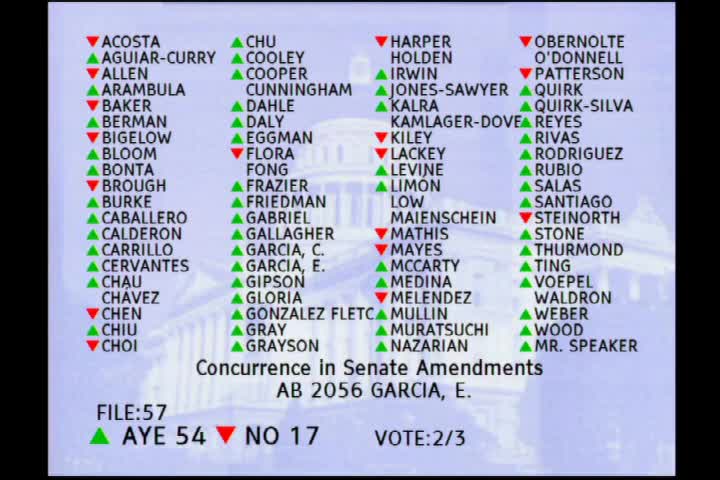 1MIN
Assembly Floor
 1MIN
Senate Floor
 3MIN
Senate Standing Committee on Appropriations
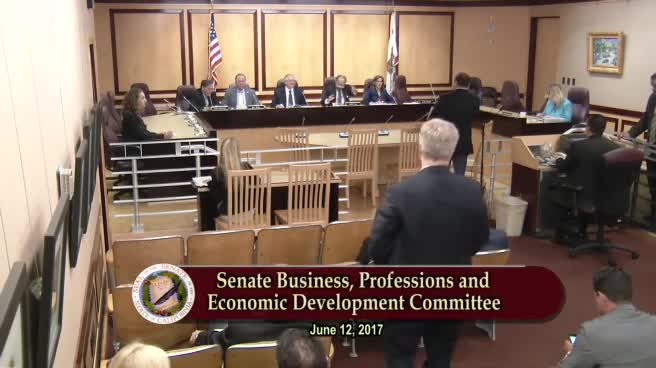 27MIN
Senate Standing Committee on Business, Professions and Economic Development
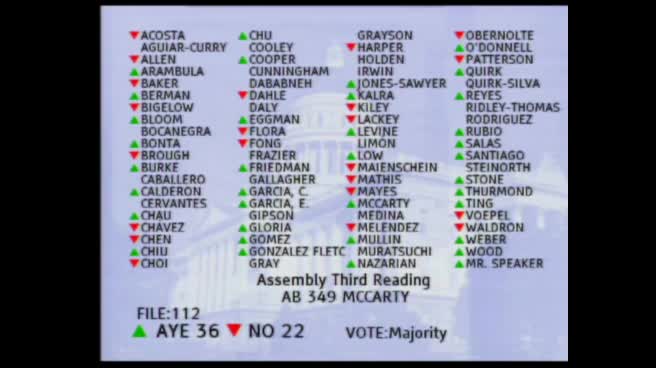 1MIN
Assembly Floor
 1MIN
Assembly Standing Committee on Appropriations
 10MIN
Assembly Standing Committee on Business and Professions
Bill Author


