AB 653: Joint powers agreements: County of Santa Barbara: nonprofit hospitals.
- Session Year: 2017-2018
- House: Assembly
- Latest Version Date: 2018-09-23
The Joint Exercise of Powers Act authorizes 2 or more public agencies to enter into an agreement to jointly exercise any power common to the contracting parties.
This bill, notwithstanding the law relating to the joint exercise of powers, would authorize a private, nonprofit hospital in the County of Santa Barbara to enter into a joint powers agreement with a public agency. The bill would prohibit nonprofit hospitals and public agencies participating in the agreement from reducing or eliminating any emergency services following the creation of the joint powers authority without a public hearing, as provided.
This bill would make legislative findings and declarations as to the necessity of a special statute for the County of Santa Barbara.
The Joint Exercise of Powers Act authorizes 2 or more public agencies to enter into an agreement to jointly exercise any power common to the contracting parties.
This bill, notwithstanding the law relating to the joint exercise of powers, would authorize a private, nonprofit hospital in the County of Santa Barbara to enter into a joint powers agreement with a public agency. The bill would prohibit nonprofit hospitals and public agencies participating in the agreement from reducing or eliminating any emergency services following the creation of the joint powers authority without a public hearing, as provided.
This bill would make legislative findings and declarations as to the necessity of a special statute for the County of Santa Barbara.
The Joint Exercise of Powers Act authorizes 2 or more public agencies to enter into an agreement to jointly exercise any power common to the contracting parties.
This bill, notwithstanding the law relating to the joint exercise of powers, would authorize a private, nonprofit hospital in the County of Santa Barbara to enter into a joint powers agreement with a public agency. The bill would prohibit nonprofit hospitals and public agencies participating in the agreement from reducing or eliminating any emergency services following the creation of the joint powers authority without a public hearing, as provided.
This bill would make legislative findings and declarations as to the necessity of a special statute for the County of Santa Barbara.
The California Constitution provides that all property is taxable unless exempted by the California Constitution or by federal law.This bill, commencing with the 201819 fiscal year, would exempt from taxation property owned in fee or held in trust by a federally recognized Indian tribe or charitable nonprofit organization if the United States Department of the Interior has issued a notice of decision accepting the land into federal trust and other specified conditions are met. The bill would require the tribe to be liable for tax for the years for which the property was exempted from taxation by the bill if a court of competent jurisdiction overturns the notice of decision approving the trust application, as specified.By imposing new duties upon local county officials, this bill would impose a state-mandated local program.The California Constitution requires the state to reimburse local agencies and school districts for certain costs mandated by the state. Statutory provisions establish procedures for making that reimbursement.This bill would provide that, if the Commission on State Mandates determines that the bill contains costs mandated by the state, reimbursement for those costs shall be made pursuant to the statutory provisions noted above.Existing law requires the state to reimburse local agencies annually for certain property tax revenues lost as a result of any exemption or classification of property for purposes of ad valorem property taxation.This bill would provide that, notwithstanding those provisions, no appropriation is made and the state shall not reimburse local agencies for property tax revenues lost by them pursuant to the bill.This bill would take effect immediately as a tax levy.The California Constitution provides that all property is taxable unless exempted by the California Constitution or by federal law.
This bill, commencing with the 201819 fiscal year, would exempt from taxation property owned in fee or held in trust by a federally recognized Indian tribe or charitable nonprofit organization if the United States Department of the Interior has issued a notice of decision accepting the land into federal trust and other specified conditions are met. The bill would require the tribe to be liable for tax for the years for which the property was exempted from taxation by the bill if a court of competent jurisdiction overturns the notice of decision approving the trust application, as specified.
By imposing new duties upon local county officials, this bill would impose a state-mandated local program.
The California Constitution requires the state to reimburse local agencies and school districts for certain costs mandated by the state. Statutory provisions establish procedures for making that reimbursement.
This bill would provide that, if the Commission on State Mandates determines that the bill contains costs mandated by the state, reimbursement for those costs shall be made pursuant to the statutory provisions noted above.
Existing law requires the state to reimburse local agencies annually for certain property tax revenues lost as a result of any exemption or classification of property for purposes of ad valorem property taxation.
This bill would provide that, notwithstanding those provisions, no appropriation is made and the state shall not reimburse local agencies for property tax revenues lost by them pursuant to the bill.
This bill would take effect immediately as a tax levy.
The California Constitution provides that all property is taxable unless exempted by the California Constitution or by federal law.
This bill, commencing with the 201819 fiscal year, would exempt from taxation property owned in fee by a federally recognized Indian tribe if specified conditions are met.
By imposing new duties upon local county officials, this bill would impose a state-mandated local program.
The California Constitution requires the state to reimburse local agencies and school districts for certain costs mandated by the state. Statutory provisions establish procedures for making that reimbursement.
This bill would provide that, if the Commission on State Mandates determines that the bill contains costs mandated by the state, reimbursement for those costs shall be made pursuant to the statutory provisions noted above.
Existing law requires the state to reimburse local agencies annually for certain property tax revenues lost as a result of any exemption or classification of property for purposes of ad valorem property taxation.
This bill would provide that, notwithstanding those provisions, no appropriation is made and the state shall not reimburse local agencies for property tax revenues lost by them pursuant to the bill.
This bill would take effect immediately as a tax levy.
The California Constitution provides that all property is taxable unless exempted by the California Constitution or by federal law.
This bill, commencing with the 201819 fiscal year, would exempt from taxation property owned in fee by a federally recognized Indian tribe if specified conditions are met.
By imposing new duties upon local county officials, this bill would impose a state-mandated local program.
The California Constitution requires the state to reimburse local agencies and school districts for certain costs mandated by the state. Statutory provisions establish procedures for making that reimbursement.
This bill would provide that, if the Commission on State Mandates determines that the bill contains costs mandated by the state, reimbursement for those costs shall be made pursuant to the statutory provisions noted above.
Existing law requires the state to reimburse local agencies annually for certain property tax revenues lost as a result of any exemption or classification of property for purposes of ad valorem property taxation.
This bill would provide that, notwithstanding those provisions, no appropriation is made and the state shall not reimburse local agencies for property tax revenues lost by them pursuant to the bill.
This bill would take effect immediately as a tax levy.
Existing property tax law requires assessees to report change in ownership information to the assessor, as provided.This bill would make a nonsubstantive change to that provision.Existing property tax law requires assessees to report change in ownership information to the assessor, as provided.
This bill would make a nonsubstantive change to that provision.
(a)Notwithstanding any other provision of this chapter, a private, nonprofit hospital in the County of Santa Barbara may enter into a joint powers agreement with a public agency, as defined in Section 6500.
(b)Nonprofit hospitals and public agencies participating in a joint powers agreement entered into pursuant to subdivision (a) shall not reduce or eliminate any emergency services, as a result of that agreement, following the creation of the joint powers authority without a public hearing by the authority. The joint powers authority shall provide public notice of the hearing to the communities served by the authority not less than 14 days prior to the hearing and the notice shall contain a description of the proposed reductions or changes.
(c)This section shall not be construed to grant any power to a nonprofit hospital that participates in an agreement authorized under this section to levy any tax or assessment. This section shall not permit any entity, other than a nonprofit hospital corporation or a public agency, to participate as a party to an agreement authorized under this section.
SEC. 2.The Legislature finds and declares that a special statute is necessary and that a general statute cannot be made applicable within the meaning of Section 16 of Article IV of the California Constitution because of the unique circumstances facing health care providers and nonprofit hospitals in the County of Santa Barbara.
(a)Notwithstanding any other provision of this chapter, a private, nonprofit hospital in the County of Santa Barbara may enter into a joint powers agreement with a public agency, as defined in Section 6500.
(b)Nonprofit hospitals and public agencies participating in a joint powers agreement entered into pursuant to subdivision (a) shall not reduce or eliminate any emergency services, as a result of that agreement, following the creation of the joint powers authority without a public hearing by the authority. The joint powers authority shall provide public notice of the hearing to the communities served by the authority not less than 14 days prior to the hearing and the notice shall contain a description of the proposed reductions or changes.
(c)This section shall not be construed to grant any power to a nonprofit hospital that participates in an agreement authorized under this section to levy any tax or assessment. This section shall not permit any entity, other than a nonprofit hospital corporation or a public agency, to participate as a party to an agreement authorized under this section.
SEC. 2.The Legislature finds and declares that a special statute is necessary and that a general statute cannot be made applicable within the meaning of Section 16 of Article IV of the California Constitution because of the unique circumstances facing health care providers and nonprofit hospitals in the County of Santa Barbara.
(a)Notwithstanding any other provision of this chapter, a private, nonprofit hospital in the County of Santa Barbara may enter into a joint powers agreement with a public agency, as defined in Section 6500.
(b)Nonprofit hospitals and public agencies participating in a joint powers agreement entered into pursuant to subdivision (a) shall not reduce or eliminate any emergency services, as a result of that agreement, following the creation of the joint powers authority without a public hearing by the authority. The joint powers authority shall provide public notice of the hearing to the communities served by the authority not less than 14 days prior to the hearing and the notice shall contain a description of the proposed reductions or changes.
(c)This section shall not be construed to grant any power to a nonprofit hospital that participates in an agreement authorized under this section to levy any tax or assessment. This section shall not permit any entity, other than a nonprofit hospital corporation or a public agency, to participate as a party to an agreement authorized under this section.
SEC. 2.The Legislature finds and declares that a special statute is necessary and that a general statute cannot be made applicable within the meaning of Section 16 of Article IV of the California Constitution because of the unique circumstances facing health care providers and nonprofit hospitals in the County of Santa Barbara.
SECTION 1.Section 238 is added to the Revenue and Taxation Code, to read:238.(a)Commencing with the lien date for the 201819 fiscal year, property owned in fee or held in trust by a federally recognized Indian tribe, or owned in fee or held in trust by a charitable nonprofit organization, is exempt from taxation if the following conditions are met:(1)The tribe has submitted an initial written request or trust application to the United States Department of the Interior and the department has issued a notice of decision accepting the land into federal trust.(2)The tribe has submitted both of the following to the assessor:(A)Documents establishing that the tribe is federally recognized.(B)Documents establishing that the initial written request or trust application is under consideration by the United States Department of the Interior.(3)The property is used primarily for tribal housing, an essential governmental function, or other charitable purposes, including, but not limited to, tribal religious, education, museum, hospital, and cemetery facilities or for the preservation of agriculture and open space. For purposes of this paragraph, essential governmental function has the same meaning as provided in Section 7871 of the Internal Revenue Code, as that section read on January 1, 2017.(4)If the property is owned in fee or held in trust by a charitable nonprofit organization, the organization operates for the purposes described in paragraph (3).(b)The exemption required by this section shall cease to apply on the earliest of any of the following dates:(1)The lien date that occurs five years from the date of the initial grant of the exemption.(2)The date the property is placed into trust by the federal government.(3)(A)The date a final decision by a court of competent jurisdiction overturns the notice of decision approving the trust application.(B)The tribe shall inform the assessor if a court of competent jurisdiction overturns the notice of decision approving the trust application.(4)(A)The date the tribe withdraws the trust application from the United States Department of the Interior.(B)The tribe shall notify the assessor if the tribe withdraws the trust application from the United States Department of the Interior.(c)Notwithstanding any other law, and to the extent that a court of competent jurisdiction overturns the notice of decision approving the trust application, the tribe shall be liable for property tax for the years for which the property was exempt from taxation pursuant to this section; provided, however, that if the decision is only remanded to the United States Department of the Interior or an administrative appellate tribunal, then the property shall remain exempt for the full balance of the five years from the date of the initial grant of the exemption and the five years shall restart on the issuance of any new notice of decision accepting the land into federal trust.SEC. 2.If the Commission on State Mandates determines that this act contains costs mandated by the state, reimbursement to local agencies and school districts for those costs shall be made pursuant to Part 7 (commencing with Section 17500) of Division 4 of Title 2 of the Government Code.SEC. 3.Notwithstanding Section 2229 of the Revenue and Taxation Code, no appropriation is made by this act and the state shall not reimburse any local agency for any property tax revenues lost by it pursuant to this act.SEC. 4.This act provides for a tax levy within the meaning of Article IV of the California Constitution and shall go into immediate effect.(a)Commencing with the lien date for the 201819 fiscal year, property owned in fee or held in trust by a federally recognized Indian tribe tribe, or owned in fee or held in trust by a charitable nonprofit organization, is exempt from taxation if the following conditions are met:
(1)The tribe has submitted an initial written request or trust application to the United States Department of the Interior and the department has issued a notice of decision accepting the land into federal trust.
(2)The tribe has submitted both of the following to the assessor:
(A)Documents establishing that the tribe is federally recognized.
(B)Documents establishing that the initial written request or trust application is under consideration by the United States Department of the Interior.
(3)The property is used primarily for tribal housing, an essential governmental function, or other charitable purposes, including, but not limited to, tribal religious, education, museum, hospital, and cemetery facilities or for the preservation of agriculture and open space. For purposes of this paragraph, essential governmental function has the same meaning as provided in Section 7871 of the Internal Revenue Code, as that section read on January 1, 2017.
(4)If the property is owned in fee or held in trust by a charitable nonprofit organization, the organization operates for the purposes described in paragraph (3).
(b)The exemption required by this section shall cease to apply on the earliest of any of the following dates:
(1)The lien date that occurs five years from the date of the initial grant of the exemption.
(2)The date the property is placed into trust by the federal government.
(3)(A)The date a final decision by a court of competent jurisdiction overturns the notice of decision approving the trust application.
(B)The tribe shall inform the assessor if a court of competent jurisdiction overturns the notice of decision approving the trust application.
(4)(A)The date the tribe withdraws the trust application from the United States Department of the Interior.
(B)The tribe shall notify the assessor if the tribe withdraws the trust application from the United States Department of the Interior.
(c)Notwithstanding any other law, and to the extent that a court of competent jurisdiction overturns the notice of decision approving the trust application, the tribe shall be liable for property tax for the years for which the property was exempt from taxation pursuant to this section; provided, however, that if the decision is only remanded to the United States Department of the Interior or an administrative appellate tribunal, then the property shall remain exempt for the full balance of the five years from the date of the initial grant of the exemption and the five years shall restart on the issuance of any new notice of decision accepting the land into federal trust.
SEC. 2.If the Commission on State Mandates determines that this act contains costs mandated by the state, reimbursement to local agencies and school districts for those costs shall be made pursuant to Part 7 (commencing with Section 17500) of Division 4 of Title 2 of the Government Code.
SEC. 3.Notwithstanding Section 2229 of the Revenue and Taxation Code, no appropriation is made by this act and the state shall not reimburse any local agency for any property tax revenues lost by it pursuant to this act.
SEC. 4.This act provides for a tax levy within the meaning of Article IV of the California Constitution and shall go into immediate effect.
(a)Commencing with the lien date for the 201819 fiscal year, property owned in fee by a federally recognized Indian tribe is exempt from taxation if the following conditions are met:
(1)The tribe has submitted an initial written request or trust application to the United States Department of the Interior and the department has determined that the initial written request or trust application is complete. issued a notice of decision accepting the land into federal trust.
(2)The tribe has submitted both of the following to the assessor:
(A)Documents establishing that the tribe is federally recognized.
(B)Documents establishing that the initial written request or trust application is under consideration by the United States Department of the Interior.
(b)The exemption required by this section shall cease to apply on the earlier of either earliest of any of the following dates:
(1)The lien date that occurs five years from the date of the initial grant of the exemption.
(2)(A)The lien date that occurs following a denial of the initial written request or trust application by the United States Department of the Interior.(2)The date the property is placed into trust by the federal government.
(3)(A)The date a final decision by a court of competent jurisdiction overturns the notice of decision approving the trust application.
(B)The tribe shall inform the assessor if a court of competent jurisdiction overturns the notice of decision approving the trust application.
(4)(A)The date the tribe withdraws the trust application from the United States Department of the Interior.
(B)The tribe shall notify the assessor if the initial written request or trust application has been denied by the United States Department of the Interior. tribe withdraws the trust application from the United States Department of the Interior.
SEC. 2.If the Commission on State Mandates determines that this act contains costs mandated by the state, reimbursement to local agencies and school districts for those costs shall be made pursuant to Part 7 (commencing with Section 17500) of Division 4 of Title 2 of the Government Code.
SEC. 3.Notwithstanding Section 2229 of the Revenue and Taxation Code, no appropriation is made by this act and the state shall not reimburse any local agency for any property tax revenues lost by it pursuant to this act.
SEC. 4.This act provides for a tax levy within the meaning of Article IV of the California Constitution and shall go into immediate effect.
(a)Commencing with the lien date for the 201819 fiscal year, property owned in fee by a federally recognized Indian tribe is exempt from taxation if the following conditions are met:
(1)The tribe has submitted an initial written request or trust application to the United States Department of the Interior and the department has determined that the initial written request or trust application is complete.
(2)The tribe has submitted both of the following to the assessor:
(A)Documents establishing that the tribe is federally recognized.
(B)Documents establishing that the initial written request or trust application is under consideration by the United States Department of the Interior.
(b)The exemption required by this section shall cease to apply on the earlier of either of the following dates:
(1)The lien date that occurs five years from the date of the initial grant of the exemption.
(2)(A)The lien date that occurs following a denial of the initial written request or trust application by the United States Department of the Interior.
(B)The tribe shall notify the assessor if the initial written request or trust application has been denied by the United States Department of the Interior.
SEC. 2.If the Commission on State Mandates determines that this act contains costs mandated by the state, reimbursement to local agencies and school districts for those costs shall be made pursuant to Part 7 (commencing with Section 17500) of Division 4 of Title 2 of the Government Code.
SEC. 3.Notwithstanding Section 2229 of the Revenue and Taxation Code, no appropriation is made by this act and the state shall not reimburse any local agency for any property tax revenues lost by it pursuant to this act.
SEC. 4.This act provides for a tax levy within the meaning of Article IV of the California Constitution and shall go into immediate effect.
SECTION 1.Section 90 of the Revenue and Taxation Code is amended to read:90.An assessee shall report change in ownership information to the assessor as provided in Article 2.5 (commencing with Section 480) of Chapter 3 of Part 2.Assessees An assessee shall report change in ownership information to the assessor as provided in Article 2.5 (commencing with Section 480) of Chapter 3 of Part 2.
|
Date
|
Status
|
|---|---|
| Sep 23, 2018 | Chaptered by Secretary of State - Chapter 706, Statutes of 2018. |
| Sep 23, 2018 | Approved by the Governor. |
| Sep 4, 2018 | Enrolled and presented to the Governor at 3 p.m. |
| Aug 27, 2018 | Senate amendments concurred in. To Engrossing and Enrolling. |
| Aug 21, 2018 | From committee: That the Senate amendments be concurred in. (Ayes 15. Noes 0.) (August 21). |
| Aug 20, 2018 | From committee: That the Senate amendments be concurred in, but first be re-referred to Com. on HEALTH. (Ayes 9. Noes 0.) (August 20). Re-referred to Com. on HEALTH. |
| Aug 16, 2018 | (Pending re-referral to the Comm. on Health) |
| Aug 6, 2018 | Re-referred to Coms. on L. GOV. and HEALTH pursuant to Assembly Rule 77.2. |
| Jul 5, 2018 | In Assembly. Concurrence in Senate amendments pending. May be considered on or after August 3 pursuant to Assembly Rule 77. |
| Jul 5, 2018 | Read third time. Passed. Ordered to the Assembly. |
| Jul 2, 2018 | Read second time. Ordered to Consent Calendar. |
| Jun 28, 2018 | From committee: Do pass. To Consent Calendar. (Ayes 9. Noes 0.) (June 27). |
| Jun 27, 2018 | From committee: Do pass and re-refer to Com. on HEALTH. (Ayes 5. Noes 0.) (June 27). Re-referred to Com. on HEALTH. |
| Jun 25, 2018 | Re-referred to Coms. on GOV. & F. and HEALTH. |
| Jun 21, 2018 | From committee chair, with author's amendments: Amend, and re-refer to committee. Read second time, amended, and re-referred to Com. on RLS. |
| Jun 20, 2018 | Withdrawn from committee. |
| Aug 29, 2017 | In committee: Set, first hearing. Hearing canceled at the request of author. |
| Aug 23, 2017 | From committee chair, with author's amendments: Amend, and re-refer to committee. Read second time, amended, and re-referred to Com. on GOV. & F. |
| Jun 14, 2017 | Referred to Com. on GOV. & F. |
| Jun 5, 2017 | In Senate. Read first time. To Com. on RLS. for assignment. |
| Jun 1, 2017 | Read third time. Passed. Ordered to the Senate. (Ayes 75. Noes 1. Page 2042.) |
| May 31, 2017 | Assembly Rule 69(d) suspended. (Page 1990.) |
| May 30, 2017 | Assembly Rule 69(b) suspended. (Ayes 53. Noes 23. Page 1851.) |
| May 18, 2017 | Read second time. Ordered to third reading. |
| May 17, 2017 | From committee: Do pass. (Ayes 17. Noes 0.) (May 17). |
| May 11, 2017 | From committee: Do pass and re-refer to Com. on APPR. (Ayes 9. Noes 0.) (May 8). Re-referred to Com. on APPR. |
| Mar 22, 2017 | Re-referred to Com. on REV. & TAX. |
| Mar 21, 2017 | From committee chair, with author's amendments: Amend, and re-refer to Com. on REV. & TAX. Read second time and amended. |
| Mar 20, 2017 | Referred to Com. on REV. & TAX. |
| Feb 15, 2017 | From printer. May be heard in committee March 17. |
| Feb 14, 2017 | Read first time. To print. |
|
Date
|
Description
|
Location
|
Votes
|
|
|---|---|---|---|---|
| Aug 27, 2018 | AB 653 CUNNINGHAM Concurrence in Senate Amendments | Assembly Floor |
Passed |
|
| Aug 21, 2018 | With recommendation: That Senate amendments be concurred in. | Assembly Standing Committee on Health |
Passed |
|
| Aug 20, 2018 | With recommendation: That Senate amendments be concurred in, but first be re-referred to Com. on [Health] | Assembly Standing Committee on Local Government |
Passed |
|
| Jul 5, 2018 | Consent Calendar AB653 | Senate Floor |
Passed |
|
| Jun 27, 2018 | Do pass and be ordered to the Consent Calendar | Senate Standing Committee on Health |
Passed |
|
| Jun 27, 2018 | Do pass, but first be re-referred to the Committee on [Health] | Senate Standing Committee on Governance and Finance |
Passed |
|
| Jun 1, 2017 | AB 653 RIDLEY-THOMAS Assembly Third Reading | Assembly Floor |
Passed |
|
| May 17, 2017 | Do pass. | Assembly Standing Committee on Appropriations |
Passed |
|
| May 8, 2017 | Do pass and be re-referred to the Committee on [Appropriations] | Assembly Standing Committee on Revenue and Taxation |
Passed |
This list shows positions taken on this bill by organizations on the date displayed, which is linked to the original source.
Positions by individuals are not included.
|
Organization
|
Position
|
Date
|
|---|---|---|
| Cottage Health | ** Support | Aug 17, 2018 |
| Cottage Health, Lompoc Valley Medical Center | ** Support | Jun 26, 2018 |
| Lompoc Medical Center | * Support | Aug 21, 2018 |
| Santa Ynez Band Of Chumash Indians | ** Support | May 5, 2017 |
| Unknown. | ** Against | Jun 26, 2018 |
CONCURRENCE IN SENATE AMENDMENTS
CSA2 Bill Id:AB 653
Author:(Cunningham)
As Amended Ver:June 21, 2018
Majority vote
ASSEMBLY: |
| (June 01, 2017) | SENATE: | 35-0 | (July 05, 2018) |
(vote not relevant)
COMMITTEE VOTE: | 9-0 | (August 20, 2018) | RECOMMENDATION: | concur |
(L. Gov.)
COMMITTEE VOTE: | 15-0 | (August 21, 2018) | RECOMMENDATION: | concur |
(Health)
Original Committee Reference: L. GOV.
SUMMARY: Allows private, nonprofit hospitals in Santa Barbara County to enter into joint powers agreements with public agencies.
The Senate amendments delete the Assembly version of this bill, and instead:
- Allow a private, nonprofit hospital in Santa Barbara County to enter into a joint powers agreement with a public agency, as defined.
- Prohibit nonprofit hospitals and public agencies participating in an agreement entered into pursuant to this bill from reducing or eliminating any emergency services, as a result of that agreement, following the creation of the joint powers authority (JPA) without a public hearing by the JPA.
- Require the JPA to provide public notice of the hearing specified in 2), above, to the communities served by the JPA not less than 14 days prior to the hearing, and require the notice to contain a description of the proposed reductions or changes.
- Provide that this bill shall not be construed to grant any power to a nonprofit hospital that participates in an agreement authorized under this bill to levy any tax or assessment.
- Specify that this bill shall not permit any entity, other than a nonprofit hospital corporation or a public agency, to participate as a party to an agreement authorized under this bill.
- Find and declare that a special statute is necessary and that a general statute cannot be made applicable within the meaning of the California Constitution Article IV Section 16 because
of the unique circumstances facing health care providers and nonprofit hospitals in Santa Barbara County.
AS PASSED BY THE ASSEMBLY, this bill exempted from taxation property that is owned by a federally recognized Native American tribe during the fee-to-trust application process with the United States Department of Interior, as specified.
EXISTING LAW:
- Allows, pursuant to the Joint Exercise of Powers Act (JPA Act), two or more public agencies by agreement to jointly exercise any power common to the contracting parties, as specified,
if authorized by their legislative or other governing bodies. - Authorizes private nonprofit hospitals in the counties of Contra Costa, El Dorado, Fresno, Kings, San Diego, Tulare and Tuolumne to enter into JPAs with public agencies.
FISCAL EFFECT: None
COMMENTS:
- Bill Summary. This bill allows a private, nonprofit hospital in Santa Barbara County to enter into a joint powers agreement with a public agency. Nonprofit hospitals and public agencies that participate in such an agreement must not reduce or eliminate any emergency services as a result of the agreement without a public hearing by the JPA. The JPA must provide public notice of the hearing to the communities served by the JPA at least 14 days before the hearing, and the notice must contain a description of the proposed reductions or changes.
This bill provides that it shall not be construed to grant any power to a nonprofit hospital that participates in an agreement to levy any tax or assessment, and shall not permit any entity, other than a nonprofit hospital corporation or a public agency, to participate as a party to an agreement.
This bill is sponsored by Lompoc Healthcare District.
- Author's Statement. According to the author, "Lompoc Valley Medical Center (a California Healthcare District) in collaboration with Cottage Health (a California nonprofit hospital), would like to develop a Joint Powers Agreement (JPA) to collaboratively provide access to healthcare services (primary care, urgent care and specialty care) in underserved areas in Santa Barbara County that are just outside the Lompoc Healthcare District boundary. According to the United State Census Bureau, while 8.3% of Californians under the age of 65 do not have health insurance, that number is higher in Santa Barbara County at 10.3%. According to a 2017 study by UC San Francisco, many areas around California, including the Central Coast, are expected to face acute healthcare services shortages in the next 15 years. The study estimated '…a shortfall of about 4,700 primary care clinicians in 2025 and a need for roughly 4,100 additional providers in 2030 to meet the expected population demand.' This bill will expand access to healthcare services in my district and the Santa Barbara region."
- Background. Lompoc Healthcare District, also known as Lompoc Valley Medical Center, and Cottage Health would like to develop a JPA to collaboratively provide access to healthcare services such as primary care, urgent care and specialty care in underserved areas in Santa Barbara County that are just outside the Lompoc Healthcare District boundary. Lompoc Healthcare District opened the first healthcare district hospital in California. In addition to its 60-bed acute care hospital, the district operates a skilled rehabilitation and long-term care facility, a laboratory and imaging center, a surgical center, a counseling center, and other services. The district's boundaries encompass 463 square miles that include Lompoc, Mission Hills, Mesa Oaks, Vandenberg Village, a portion of Vandenberg Air Force Base, and the area east toward Buellton.
Cottage Health, a not-for-profit health system, owns five hospitals and numerous primary care and specialty clinics in the Santa Barbara region. In addition to the 450-bed Santa Barbara Cottage Hospital, Cottage Health also operates Goleta Valley Cottage Hospital, Cottage Rehabilitation Hospital, Santa Ynez Valley Cottage Hospital, and Cottage Children's Medical Center.
- JPAs. JPAs have existed in California for nearly 100 years, and were originally created to allow multiple local governments in a region to pool resources to meet common needs. The JPA Act authorizes federal, state and local agencies to create and use a joint powers agreement, which is a legal document that allows the contracting parties to exercise powers that are common to all of the contracting parties. A joint powers agreement can be administered by one of the contracting agencies, or it can be carried out by a new, separate public entity called a JPA.
Joint powers agreements are an attractive tool for local governments because they facilitate more efficient service provision through collaboration, and they allow local entities to issue bonds without voter ratification. Public officials have created about 700 JPAs statewide.
There are a few, limited instances in JPA law allowing non-governmental entities to join a JPA with a public agency partner. Included among these are statutes allowing the formation of JPAs between private, nonprofit hospitals and public agencies in the following counties: Contra Costa, El Dorado, Fresno, Kings, San Diego, Tulare and Tuolumne.
- Arguments in Support. Lompoc Healthcare District, sponsor of this measure, writes, "This bill authorizes nonprofit hospitals Santa Barbara Cottage Hospital (Cottage Hospital) and Lompoc Healthcare District to form a partnership for the purposes of opening primary and specialty care clinics in underserved parts of the region…The joint entity will contract with providers for the provision of professional services at a clinic or urgent care that would be jointly operated in underserved areas. Otherwise, Lompoc Valley Medical Center or Cottage Hospital would set up clinics independently. Most of these clinics lose money because of low payer volume. The JPA will be developed to minimize the losses for each organization and allow the community to be served."
- Arguments in Opposition. None on file.
Analysis Prepared by: Angela Mapp / L. GOV. / (916) 319-3958 FN: 0004472
Date of Hearing: August 20, 2018
ASSEMBLY COMMITTEE ON LOCAL GOVERNMENT
Cecilia Aguiar-Curry, Chair
ABPCA Bill Id:AB 653 (
Author:Cunningham) – As Amended Ver:June 21, 2018
SUBJECT: Joint powers agreements: County of Santa Barbara: nonprofit hospitals.
SUMMARY: Allows private, nonprofit hospitals in Santa Barbara County to enter into joint powers agreements with public agencies.
The Senate amendments delete the Assembly version of this bill, and instead:
- Allow a private, nonprofit hospital in Santa Barbara County to enter into a joint powers agreement with a public agency, as defined.
- Prohibit nonprofit hospitals and public agencies participating in an agreement entered into pursuant to this bill from reducing or eliminating any emergency services, as a result of that agreement, following the creation of the joint powers authority (JPA) without a public hearing by the JPA.
- Require the JPA to provide public notice of the hearing specified in 2), above, to the communities served by the JPA not less than 14 days prior to the hearing, and require the notice to contain a description of the proposed reductions or changes.
- Provide that this bill shall not be construed to grant any power to a nonprofit hospital that participates in an agreement authorized under this bill to levy any tax or assessment.
- Specify that this bill shall not permit any entity, other than a nonprofit hospital corporation or a public agency, to participate as a party to an agreement authorized under this bill.
- Find and declare that a special statute is necessary and that a general statute cannot be made applicable within the meaning of the California Constitution Article IV Section 16 because
of the unique circumstances facing health care providers and nonprofit hospitals in Santa Barbara County.
AS PASSED BY THE ASSEMBLY, this bill exempted from taxation property that is owned by a federally recognized Native American tribe during the fee-to-trust application process with the United States Department of Interior, as specified.
EXISTING LAW:
- Allows, pursuant to the Joint Exercise of Powers Act (JPA Act), two or more public agencies by agreement to jointly exercise any power common to the contracting parties, as specified,
if authorized by their legislative or other governing bodies. - Authorizes private nonprofit hospitals in the counties of Contra Costa, El Dorado, Fresno, Kings, San Diego, Tulare and Tuolumne to enter into JPAs with public agencies.
FISCAL EFFECT: None
COMMENTS:
- Bill Summary. This bill allows a private, nonprofit hospital in Santa Barbara County to enter into a joint powers agreement with a public agency. Nonprofit hospitals and public agencies that participate in such an agreement must not reduce or eliminate any emergency services as a result of the agreement without a public hearing by the JPA. The JPA must provide public notice of the hearing to the communities served by the JPA at least 14 days before the hearing, and the notice must contain a description of the proposed reductions or changes.
This bill provides that it shall not be construed to grant any power to a nonprofit hospital that participates in an agreement to levy any tax or assessment, and shall not permit any entity, other than a nonprofit hospital corporation or a public agency, to participate as a party to an agreement.
This bill is sponsored by Lompoc Healthcare District.
- Author's Statement. According to the author, "Lompoc Valley Medical Center (a California Healthcare District) in collaboration with Cottage Health (a California nonprofit hospital), would like to develop a Joint Powers Agreement (JPA) to collaboratively provide access to healthcare services (primary care, urgent care and specialty care) in underserved areas in Santa Barbara County that are just outside the Lompoc Healthcare District boundary. According to the United State Census Bureau, while 8.3% of Californians under the age of 65 do not have health insurance, that number is higher in Santa Barbara County at 10.3%. According to a 2017 study by UC San Francisco, many areas around California, including the Central Coast, are expected to face acute healthcare services shortages in the next 15 years. The study estimated '…a shortfall of about 4,700 primary care clinicians in 2025 and a need for roughly 4,100 additional providers in 2030 to meet the expected population demand.' This bill will expand access to healthcare services in my district and the Santa Barbara region."
- Background. Lompoc Healthcare District, also known as Lompoc Valley Medical Center, and Cottage Health would like to develop a JPA to collaboratively provide access to healthcare services such as primary care, urgent care and specialty care in underserved areas in Santa Barbara County that are just outside the Lompoc Healthcare District boundary. Lompoc Healthcare District opened the first healthcare district hospital in California. In addition to its 60-bed acute care hospital, the district operates a skilled rehabilitation and long-term care facility, a laboratory and imaging center, a surgical center, a counseling center, and other services. The district's boundaries encompass 463 square miles that include Lompoc, Mission Hills, Mesa Oaks, Vandenberg Village, a portion of Vandenberg Air Force Base, and the area east toward Buellton.
Cottage Health, a not-for-profit health system, owns five hospitals and numerous primary care and specialty clinics in the Santa Barbara region. In addition to the 450-bed Santa Barbara Cottage Hospital, Cottage Health also operates Goleta Valley Cottage Hospital, Cottage Rehabilitation Hospital, Santa Ynez Valley Cottage Hospital, and Cottage Children's Medical Center.
- JPAs. JPAs have existed in California for nearly 100 years, and were originally created to allow multiple local governments in a region to pool resources to meet common needs. The JPA Act authorizes federal, state and local agencies to create and use a joint powers agreement, which is a legal document that allows the contracting parties to exercise powers that are common to all of the contracting parties. A joint powers agreement can be administered by one of the contracting agencies, or it can be carried out by a new, separate public entity called a JPA.
Joint powers agreements are an attractive tool for local governments because they facilitate more efficient service provision through collaboration, and they allow local entities to issue bonds without voter ratification. Public officials have created about 700 JPAs statewide.
There are a few, limited instances in JPA law allowing non-governmental entities to join a JPA with a public agency partner. Included among these are statutes allowing the formation of JPAs between private, nonprofit hospitals and public agencies in the following counties: Contra Costa, El Dorado, Fresno, Kings, San Diego, Tulare and Tuolumne.
- Arguments in Support. Lompoc Healthcare District, sponsor of this measure, writes,
"This bill authorizes nonprofit hospitals Santa Barbara Cottage Hospital (Cottage Hospital) and Lompoc Healthcare District to form a partnership for the purposes of opening primary and specialty care clinics in underserved parts of the region…The joint entity will contract with providers for the provision of professional services at a clinic or urgent care that would be jointly operated in underserved areas. Otherwise, Lompoc Valley Medical Center or Cottage Hospital would set up clinics independently. Most of these clinics lose money because of low payer volume. The JPA will be developed to minimize the losses for each organization and allow the community to be served." - Arguments in Opposition. None on file.
- Substantially Amended. The provisions of this bill have not been heard in an Assembly policy committee this legislative session.
REGISTERED SUPPORT / OPPOSITION:
Support
Lompoc Healthcare District [SPONSOR]
Cottage Health
Opposition
None on file
Analysis Prepared by: Angela Mapp / L. GOV. / (916) 319-3958
CONCURRENCE IN SENATE AMENDMENTS
CSA1 Bill Id:AB 653
Author:(Cunningham)
As Amended Ver:June 21, 2018
Majority vote
ASSEMBLY: | 75-1 | (June 1, 2017) | SENATE: | 35-0 | (July 5, 2018) |
(vote not relevant)
Original Committee Reference: REV. & TAX.
SUMMARY: Allows private, nonprofit hospitals in Santa Barbara County to enter into joint powers agreements with public agencies.
The Senate amendments delete the Assembly version of this bill, and instead:
- Allow a private, nonprofit hospital in Santa Barbara County to enter into a joint powers agreement with a public agency, as defined.
- Prohibit nonprofit hospitals and public agencies participating in an agreement entered into pursuant to this bill from reducing or eliminating any emergency services, as a result of that agreement, following the creation of the joint powers authority (JPA) without a public hearing by the JPA.
- Require the JPA to provide public notice of the hearing specified in 2), above, to the communities served by the JPA not less than 14 days prior to the hearing, and require the notice to contain a description of the proposed reductions or changes.
- Provide that this bill shall not be construed to grant any power to a nonprofit hospital that participates in an agreement authorized under this bill to levy any tax or assessment.
- Specify that this bill shall not permit any entity, other than a nonprofit hospital corporation or a public agency, to participate as a party to an agreement authorized under this bill.
- Find and declare that a special statute is necessary and that a general statute cannot be made applicable within the meaning of the California Constitution Article IV Section 16 because of the unique circumstances facing health care providers and nonprofit hospitals in Santa Barbara County.
AS PASSED BY THE ASSEMBLY, this bill exempted from taxation property that is owned by a federally recognized Native American tribe during the fee-to-trust application process with the United States Department of Interior, as specified.
EXISTING LAW:
- Allows, pursuant to the Joint Exercise of Powers Act (JPA Act), two or more public agencies by agreement to jointly exercise any power common to the contracting parties, as specified, if authorized by their legislative or other governing bodies.
- Authorizes private nonprofit hospitals in the counties of Contra Costa, El Dorado, Fresno, Kings, San Diego, Tulare and Tuolumne to enter into JPAs with public agencies.
FISCAL EFFECT: None
COMMENTS:
- Bill Summary. This bill allows a private, nonprofit hospital in Santa Barbara County to enter into a joint powers agreement with a public agency. Nonprofit hospitals and public agencies that participate in such an agreement must not reduce or eliminate any emergency services as a result of the agreement without a public hearing by the JPA. The JPA must provide public notice of the hearing to the communities served by the JPA at least 14 days before the hearing, and the notice must contain a description of the proposed reductions or changes.
This bill provides that it shall not be construed to grant any power to a nonprofit hospital that participates in an agreement to levy any tax or assessment, and shall not permit any entity, other than a nonprofit hospital corporation or a public agency, to participate as a party to an agreement.
This bill is sponsored by Lompoc Healthcare District.
- Author's Statement. According to the author, "Lompoc Valley Medical Center (a California Healthcare District) in collaboration with Cottage Health (a California nonprofit hospital), would like to develop a Joint Powers Agreement (JPA) to collaboratively provide access to healthcare services (primary care, urgent care and specialty care) in underserved areas in Santa Barbara county that are just outside the Lompoc Healthcare District boundary. According to the United State Census Bureau, while 8.3% of Californians under the age of 65 do not have health insurance, that number is higher in Santa Barbara County at 10.3%. According to a 2017 study by UC San Francisco, many areas around California, including the Central Coast, are expected to face acute healthcare services shortages in the next 15 years. The study estimated '…a shortfall of about 4,700 primary care clinicians in 2025 and a need for roughly 4,100 additional providers in 2030 to meet the expected population demand.' This bill will expand access to healthcare services in my district and the Santa Barbara region."
- JPAs. JPAs have existed in California for nearly 100 years, and were originally created to allow multiple local governments in a region to pool resources to meet common needs. The JPA Act authorizes federal, state and local agencies to create and use a joint powers agreement, which is a legal document that allows the contracting parties to exercise powers that are common to all of the contracting parties. A joint powers agreement can be administered by one of the contracting agencies, or it can be carried out by a new, separate public entity called a JPA.
Joint powers agreements are an attractive tool for local governments because they facilitate more efficient service provision through collaboration, and they allow local entities to issue bonds without voter ratification. Public officials have created about 700 JPAs statewide.
There are a few, limited instances in JPA law allowing non-governmental entities to join a JPA with a public agency partner. Included among these are statutes allowing the formation of JPAs between private, nonprofit hospitals and public agencies for the following counties: Contra Costa, El Dorado, Fresno, Kings, San Diego, Tulare and Tuolumne. The statutes providing this authority are nearly identical to the language in this bill.
- Arguments in Support. Lompoc Healthcare District, sponsor of this measure, writes, "This bill authorizes nonprofit hospitals Santa Barbara Cottage Hospital (Cottage Hospital) and Lompoc Healthcare District to form a partnership for the purposes of opening primary and specialty care clinics in underserved parts of the region…The joint entity will contract with providers for the provision of professional services at a clinic or urgent care that would be jointly operated in underserved areas. Otherwise, Lompoc Valley Medical Center or Cottage Hospital would set up clinics independently. Most of these clinics lose money because of low payer volume. The JPA will be developed to minimize the losses for each organization and allow the community to be served."
- Arguments in Opposition. None on file.
- Gut-and-Amend. The provisions of this bill have not been heard in an Assembly policy committee this legislative session.
Analysis Prepared by: Angela Mapp / L. GOV. / (916) 319-3958 FN: 0003734
Office of Senate Floor Analyses (916) 651-1520 Fax: (916) 327-4478 | AB |
CONSENT
Bill No: AB 653
:
SENATE GOVERNANCE & FIN. COMMITTEE: 5-0, 6/27/18
AYES: McGuire, Beall, Hernandez, Hertzberg, Moorlach
NO VOTE RECORDED: Nguyen, Lara
SENATE HEALTH COMMITTEE: 9-0, 6/27/18
AYES: Pan, Nguyen, Beall, Hernandez, Leyva, Mitchell, Monning, Nielsen, Roth
ASSEMBLY FLOOR: 75-1, 6/1/17 - See last page for vote
SOURCE: Lompoc Valley Medical Center
DIGEST:
This bill authorizes a private, nonprofit hospital in Santa Barbara County to enter into a joint powers agreement with public agencies.
Existing law:
- Enacts the Joint Exercise of Powers Act, which allows two or more public agencies to use their powers in common if they sign a joint powers agreement (JPA).
- Allows various public agencies, which can include federal agencies, state departments, counties, cities, special districts, school districts, federally recognized Indian tribes, and even other joint powers authorities, to enter into JPAs.
- Provides five exceptions to JPA law by allowing private, nonprofit hospitals to join JPAs on five separate occasions to create efficiencies between the local agencies and relevant private entities:
- Contra Costa County (AB 3097, Campbell, Chapter 148, Statutes of 1996),
- Tulare, Kings and San Diego County (SB 850, Kelley, Chapter 432, Statutes of 1997),
- Tuolumne County (AB 2717, House, Chapter 227, Statutes of 2000),
- Fresno (AB 1785, Reyes, Chapter 55, Statutes of 2002), and
- El Dorado (AB 545, Bigelow, Chapter 145, Statutes of 2017).
This bill:
- Authorizes a private, nonprofit hospital in Santa Barbara County to enter into a JPA with public agencies.
- Includes language identical to previous authorization, including to:
- Require that any nonprofit hospitals and public agencies that participate in an agreement must not reduce or eliminate any emergency services following the creation of the JPA, without a public hearing by the JPA. The JPA must provide public notice of the hearing to the communities served by the JPA not less than 14 days prior to the hearing, and the notice must contain a description of the proposed reductions or changes.
- Specifies that this authorization must not be construed to grant any power to a nonprofit hospital that participates in an agreement to levy any tax or assessment and must not permit any entity, other than a nonprofit hospital corporation or a public agency, to participate as a party to an agreement.
- Contains legislative findings and declarations regarding the necessity for special legislation.
Background
Created in 1946 by the Santa Barbara County Board of Supervisors, the Lompoc Valley Healthcare District operates the Lompoc Valley Medical Center (LVMC) in Lompoc, CA, among other facilities. The 463-square-mile district includes the City of Lompoc; the unincorporated communities of Mission Hills, Mesa Oaks, and Vandenberg Village; a portion of Vandenberg Air Force Base; and the area east toward Buellton. The district is governed by a five-member elected board, and operated and managed by a staff led by a Chief Executive Officer hired by the board. In 2008, the District changed its name to the LVMC.
Formed in 1995, Cottage Health is a private, non-profit organization that owns five hospitals in the Santa Barbara region (Santa Barbara Cottage Hospital, Goleta Valley Cottage Hospital, Santa Ynez Cottage Hospital, Cottage Rehabilitation Hospital, and Cottage Children’s Medical Center), and several primary care and several specialty clinics. Cottage is the sole hospital operator in its region, and is led by a 15-member board of directors.
LVMC wants to enter into a JPA with Cottage Health to collaboratively provide access to healthcare services in underserved areas in Santa Barbara County. LVMC states that it will contract with providers for the provision of professional services at a jointly operated clinic or urgent care facility, or else each would set up clinics independently.
FISCAL EFFECT: Appropriation: Fiscal Com.: Local:
Lompoc Valley Medical Center (source)
Cottage Health
None received
ARGUMENTS IN SUPPORT: According to the author, “Lompoc Valley Medical Center (a California Healthcare District) in collaboration with Cottage Health (a California nonprofit hospital), would like to develop a Joint Powers Agreement (JPA) to collaboratively provide access to healthcare services (primary care, urgent care and specialty care) in underserved areas in Santa Barbara county that are just outside the Lompoc Healthcare District boundary. According to the United State Census Bureau, while 8.3% of Californians under the age of 65 do not have health insurance, that number is higher in Santa Barbara County at 10.3%. According to a 2017 study by UC San Francisco, many areas around California, including the Central Coast, are expected to face acute healthcare services shortages in the next 15 years. The study estimated ‘…a shortfall of about 4,700 primary care clinicians in 2025 and a need for roughly 4,100 additional providers in 2030 to meet the expected population demand.’ This bill will expand access to healthcare services in my district and the Santa Barbara region.”
ASSEMBLY FLOOR: 75-1, 6/1/17
AYES: Acosta, Aguiar-Curry, Travis Allen, Arambula, Baker, Berman, Bigelow, Bloom, Bocanegra, Bonta, Brough, Burke, Caballero, Calderon, Cervantes, Chau, Chávez, Chen, Chiu, Chu, Cooley, Cooper, Cunningham, Dababneh, Dahle, Daly, Flora, Fong, Frazier, Friedman, Cristina Garcia, Eduardo Garcia, Gipson, Gloria, Gomez, Gonzalez Fletcher, Gray, Grayson, Harper, Holden, Irwin, Jones-Sawyer, Kalra, Kiley, Lackey, Levine, Low, Maienschein, Mathis, Mayes, Medina, Melendez, Mullin, Muratsuchi, Nazarian, Obernolte, O'Donnell, Patterson, Quirk, Quirk-Silva, Reyes, Ridley-Thomas, Rodriguez, Rubio, Salas, Santiago, Steinorth, Mark Stone, Thurmond, Ting, Voepel, Waldron, Weber, Wood, Rendon
NOES: Gallagher
NO VOTE RECORDED: Choi, Eggman, Limón, McCarty
7/3/18 15:43:56
**** END ****
SENATE COMMITTEE ON GOVERNANCE AND FINANCE
Senator Mike McGuire, Chair
2017 - 2018 Regular
Bill No: | AB 653 | Hearing Date: | 6/27/18 |
Author: | Cunningham | Tax Levy: | No |
Version: | 6/21/18 Amended | Fiscal: | No |
Consultant: | Grinnell | ||
Joint powers agreements: County of Santa Barbara: nonprofit hospitals
Authorizes a private, nonprofit hospital in Santa Barbara County to enter into a joint powers agreement with public agencies.
Background
Joint Exercise of Powers Act. The Joint Exercise of Powers Act allows two or more public agencies to use their powers in common if they sign a joint powers agreement. Sometimes an agreement creates a new, separate government called a joint powers agency or joint powers authority (JPA). Agencies that can exercise joint powers include federal agencies, state departments, counties, cities, special districts, school districts, federally recognized Indian tribes, and even other joint powers authorities. However, the Legislature has made exceptions to JPA law by allowing nonprofit hospitals to join JPAs to create efficiencies between the local agencies and relevant private entities: Contra Costa County (AB 3097, Campbell, 1996), Tulare, Kings and San Diego County (SB 850, Kelley, 1997), Tuolumne County (AB 2717, House, 2000), Fresno (AB 1785, Reyes, 2002), and El Dorado (AB 545, Bigelow, 2017).
Santa Barbara County. Created in 1946 by the Santa Barbara County Board of Supervisors, the Lompoc Valley Healthcare District operates the Lompoc Valley Medical Center (LVMC) in Lompoc, CA, among other facilities. The 463-square-mile district includes the city of Lompoc; the unincorporated communities of Mission Hills, Mesa Oaks, and Vandenberg Village; a portion of Vandenberg Air Force Base; and the area east toward Buellton. The district is governed by a five-member elected board, and operated and managed by a staff led by a Chief Executive Officer hired by the board. In 2008, the District changed its name to the LVMC.
Formed in 1995, Cottage Health is a private, non-profit organization that owns five hospitals in the Santa Barbara region (Santa Barbara Cottage Hospital, Goleta Valley Cottage Hospital, Santa Ynez Cottage Hospital, Cottage Rehabilitation Hospital, and Cottage Children’s Medical Center), and several primary care and several specialty clinics. Cottage is the sole hospital operator in its region, and is led by a 15-member board of directors.
LVMC wants to enter into a JPA with Cottage Health to collaboratively provide access to healthcare services in underserved areas in Santa Barbara County. LVMC states that it will contract with providers for the provision of professional services at a jointly operated clinic or urgent care facility, or else each would set up clinics independently.
Proposed Law
Assembly Bill 653 authorizes a private, nonprofit hospital in Santa Barbara County to enter into a joint powers agreement with public agencies.
This bill includes language identical to previous authorization, including to:
- Require that any nonprofit hospitals and public agencies that participate in an agreement must not reduce or eliminate any emergency services following the creation of the JPA, without a public hearing by the JPA. The JPA must provide public notice of the hearing to the communities served by the JPA not less than 14 days prior to the hearing, and the notice must contain a description of the proposed reductions or changes.
- Specifies that this authorization must not be construed to grant any power to a nonprofit hospital that participates in an agreement to levy any tax or assessment and must not permit any entity, other than a nonprofit hospital corporation or a public agency, to participate as a party to an agreement.
This bill contains legislative findings and declarations regarding the necessity for special legislation.
State Revenue Impact
No estimate.
Comments
1. Purpose of the bill. According to the author, “Lompoc Valley Medical Center (a California Healthcare District) in collaboration with Cottage Health (a California nonprofit hospital), would like to develop a Joint Powers Agreement (JPA) to collaboratively provide access to healthcare services (primary care, urgent care and specialty care) in underserved areas in Santa Barbara county that are just outside the Lompoc Healthcare District boundary. According to the United State Census Bureau, while 8.3% of Californians under the age of 65 do not have health insurance, that number is higher in Santa Barbara County at 10.3%. According to a 2017 study by UC San Francisco, many areas around California, including the Central Coast, are expected to face acute healthcare services shortages in the next 15 years. The study estimated ‘…a shortfall of about 4,700 primary care clinicians in 2025 and a need for roughly 4,100 additional providers in 2030 to meet the expected population demand.’ This bill will expand access to healthcare services in my district and the Santa Barbara region.”
2. Special legislation. The California Constitution prohibits special legislation when a general law can apply (Article IV, §16). AB 653 contains findings and declarations explaining the need for legislation that allows nonprofit hospitals to join Santa Barbara County JPAs.
3. Double-referred. The Senate Rules Committee referred AB 653 to both the Committees on Governance and Finance, which considers bills affecting local governance, and Health.
4. Gut and amend. When the Assembly approved AB 653, it related to property taxes on land owned by Native American tribes. On June 20th, the Senate Rules Committee approved a request to change the author of the bill. On June 21st, the new author amended the bill to delete its current contents, and insert provisions authorizing the JPA.
Assembly Actions
Not relevant to this version of the bill.
Support and Opposition
(6/25/18)
Support: Cottage Health, Lompoc Valley Medical Center
Opposition: Unknown.
-- END --
SENATE COMMITTEE ON HEALTH
Senator Dr. Richard Pan, Chair
BILL NO: AB 653
AUTHOR: | Cunningham | ||
VERSION: | June 21, 2018 | ||
HEARING DATE: | June 27, 2018 | ||
CONSULTANT: | Vincent D. Marchand | ||
SUBJECT: Joint powers agreements: County of Santa Barbara: nonprofit hospitals
SUMMARY:
Permits a private, nonprofit hospital in the County of Santa Barbara to enter into a joint powers agreement with a public agency.
Existing law:
- Permits, under the Joint Exercise of Powers Act, two or more public agencies, if authorized by their legislative or other governing bodies, to jointly exercise any power common to the contracting parties, including, but not limited to, the authority to levy a fee, assessment, or tax.
- Requires each county that develops an emergency medical services (EMS) program to designate a local EMS agency, which is required to be the county health department, an agency established and operated by the county, an entity with which the county contracts for purposes of local EMS administration, or a joint powers agency (JPA) created for the administration of EMS by agreement between cities and counties.
- Requires the local EMS agency to plan, implement, and evaluate an EMS system, as specified, consisting of an organized pattern of readiness and response services based on public and private agreements and operational procedures.
- Permits a local EMS agency to create one or more exclusive operating areas in the development of a local EMS plan, if a competitive process is utilized to select the provider or providers of the services pursuant to the plan.
- Establishes exceptions from the requirement that a JPA be comprised of only public agencies to permit private, nonprofit hospitals to enter into a joint powers agreement as follows:
- Permits Selma Community Hospital, a private, nonprofit hospital in Fresno County, to enter into a JPA with one or more of the following public agencies: the Alta Hospital District, the Kingsburg Hospital District, and the Sierra-Kings Hospital District;
- Permits a private, nonprofit hospital in the County of Contra Cost to enter into a JPA with a public agency;
- Permits a private, nonprofit hospital in the County of Tulare to enter into a JPA with a public agency;
- Permits a private, nonprofit hospital in the County of Kings to enter into a JPA with a public agency;
- Permits a nonprofit hospital in the County of Tuolumne to enter into a JPA with a public agency;
- Permits a nonprofit hospital in the County of San Diego to enter into a JPA with any public agency;
- Permits a private, nonprofit children’s hospital in a county of the third class to enter into a JPA with any public agency; and,
- Permits a private, nonprofit hospital in El Dorado County to enter into a joint powers agreement with a public agency.
This bill:
- Permits a private, nonprofit hospital in the County of Santa Barbara to enter into a JPA with a public agency, as defined.
- Prohibits nonprofit hospitals and public agencies participating in a JPA pursuant to the provisions of this bill from reducing or eliminating any emergency services, as a result of that agreement, without a public hearing by the JPA. Requires the JPA to provide public notice of the hearing to the communities served by the JPA at least 14 days prior to the hearing, and requires the notice to contain a description of the proposed reductions or changes.
- Prohibits this bill from being construed to grant any power to a nonprofit hospital that participates in an agreement authorized under this bill to levy any tax or assessment.
- Prohibits this bill from permitting any entity, other than a nonprofit hospital corporation or a public agency, to participate as a party to an agreement authorized under this bill.
FISCAL EFFECT:
This bill is keyed nonfiscal.
PRIOR VOTES:
Assembly Floor: | 75 - 1 |
Assembly Appropriations Committee: | 17 - 0 |
Assembly Revenue and Taxation Committee: | 9 - 0 |
COMMENTS:
- Author’s statement. According to the author, this bill authorizes nonprofit hospitals in Santa Barbara County to enter into joint powers agreements with a public agency. This authority is intended to allow Santa Barbara Cottage Hospital (Cottage Hospital) and Lompoc Healthcare District to form a partnership for the purposes of opening primary and specialty care clinics in underserved parts of the region. Because the services will be provided outside the district lines with a non-governmental entity, the JPA must be authorized.
- Background. Lompoc Valley Medical Center (LVMC), which is a California healthcare district, in collaboration with Cottage Hospital, would like to develop a JPA to collaboratively provide access to healthcare services (primary care, urgent care and specialty care) in underserved areas in Santa Barbara county that are just outside the Lompoc Healthcare District boundary. LVCM, formerly known as Lompoc Healthcare District, was the first operating healthcare district hospital established in California, and encompasses a 463-square-mile district including Lompoc, Mission Hills, Mesa Oaks, Vandenberg Village, a portion of Vandenberg Air Force Base, and the area east toward Buellton. In addition to its 60-bed acute care hospital, LVMC operates 110-bed skilled rehabilitation and long term care facility, a laboratory and imaging center, a surgical center, a counseling center, and other services.
Santa Barbara Cottage Hospital is the flagship hospital of Cottage Health, which owns five hospitals in the Santa Barbara region and several primary care and specialty clinics. In addition to the 450-bed Santa Barbara Cottage Hospital, Cottage Health also operates Goleta Valley Cottage Hospital, Cottage Rehabilitation Hospital, Santa Ynez Valley Cottage Hospital, and Cottage Children’s Medical Center. - Double referral. This bill is double referred, and will also be heard in the Senate Governance and Finance Committee on June 27, 2018.
- Prior legislation. AB 545 (Bigelow, Chapter 124, Statutes of 2017) permitted a private, nonprofit hospital in El Dorado County to enter into a joint powers agreement with a public agency.
AB 1785 (Reyes, Chapter 55, Statutes of 2002) permitted Selma Community Hospital, a private, nonprofit hospital in Fresno County, to enter into a JPA with one or more of the following public agencies: the Alta Hospital District, the Kingsburg Hospital District, and the Sierra-Kings Hospital District.
AB 2717 (House, Chapter 227, Statutes of 2000) permitted a private, nonprofit hospital in Tuolumne County, to enter into a JPA with a public agency. - Support. This bill is sponsored by LVMC, which states that the joint entity will contract with providers for the provision of professional services at a clinic or urgent care that would be jointly operated in underserved areas. Otherwise, LVMC or Cottage Hospital would set up clinics independently. Most of these clinics lose money because of low payer volume. The JPA will be developed to minimize the losses for each organization and allow the community to be served.
SUPPORT AND OPPOSITION:
Support: Lompoc Valley Medical Center (sponsor)
Oppose: None received
-- END --
ASSEMBLY THIRD READING
ATR Bill Id:AB 653
Author:(Ridley-Thomas)
As Amended Ver:May 30, 2017
Majority vote. Tax Levy
Committee | Votes | Ayes | Noes |
Revenue & Taxation | 9-0 | Ridley-Thomas, Brough, Travis Allen, Bocanegra, Burke, Chen, Dababneh, Mullin, Quirk |
|
Appropriations | 17-0 | Gonzalez Fletcher, Bigelow, Bloom, Levine, Bonta, Brough, Calderon, Quirk, Eggman, Fong, Thurmond, Gallagher, Eduardo Garcia, Gray, Muratsuchi, Obernolte, Reyes |
|
SUMMARY: Exempts property from taxation that is owned by a federally recognized Native American tribe during the fee-to-trust application process with the United States (U.S) Department of Interior (DOI), as specified. Specifically, this bill:
- Exempts from taxation, commencing with lien date 2018-19, property owned by a federally recognized Native American tribe if the following conditions are met:
- The tribe has submitted an initial written request or trust application and DOI has issued a notice of decision accepting the land into federal trust; and,
- The tribe has submitted documents establishing the tribe as being federally recognized and that the initial written request or trust application is under consideration by the DOI.
- Provides that the exemption shall cease to apply on the earliest of any of the following dates:
- The lien date that occurs five years from the date of the initial grant of the property tax exemption;
- The date the property is placed into trust by the Federal Government;
- The date a final decision by a court of competent jurisdiction overturns the notice of decision approving the trust application; or,
- The date the tribe withdraws the trust application from the DOI.
- Requires the tribe to notify the assessor if a court of competent jurisdiction overturns the notice of decision approving the trust application or if the tribe withdraws the trust application from the DOI.
- Provides that if the Commission on State Mandates determines that this bill contains costs mandated by the state, reimbursement to local agencies and school districts for those costs shall be made.
- Provides that no appropriation is made by this bill and the state shall not reimburse any local agency for any property tax revenues lost.
- Takes effect immediately as a tax levy.
EXISTING FEDERAL LAW provides that land taken in trust for a Native American tribe or individual Native American shall be exempt from State and local taxation. (United States Code (USC), Title 25, Section 5108.).
EXISTING STATE LAW:
- Provides that all property is taxable, unless otherwise provided by the California Constitution or federal laws (California Constitution Section 1(a), Article XIII).
- Limits ad valorem taxes on real property to 1% of the full cash value of that property (California Constitution Section 1(a), Article XIII A, (Proposition 13)).
- Requires real property to be reassessed to its current fair market value whenever a "change in ownership" occurs. (California Constitution, Article XIII A, Section 2; Revenue and Taxation Code Sections 60 – 69.5).
- Exempts, in general, property held in trust by the U.S. Government for Native American tribes and tribal members from property tax. However, property owned in fee by a Native American tribe or individual member, even within the boundaries of the reservation, is subject to property tax (County of Yakima v Confederated Tribes and Bands of Yakima Nation 502 U.S. 251 (1992))[1].
FISCAL EFFECT: According to the Assembly Appropriations Committee, unknown annual local revenue loss in the hundreds of thousands of dollars. Had this bill been in effect beginning in 2001-02, local property tax revenues would have declined on average by $133,000 each year for 15 years, resulting in annual General Fund costs of $66,000 as a result of the Proposition 98 guarantee.
COMMENTS:
- The author has provided the following statement in support of this bill:
There is a serious need to build affordable housing for tribal members. In order to make housing more affordable, Native American tribes have asked the Department of Interior to put the lands into trust, because lands that are held in trust are not subject to local property taxes. However, the administrative process can take several years, and in some cases, over a decade. It is unfair that Native American tribes attempting to provide affordable housing to their members have to pay property taxes on property that otherwise would not be subject to property taxes but for a lengthy application process. This bill would provide some tax relief as Native American tribes work toward solving their own housing crisis.
- Supporters of this bill state that "not only is there a chronic shortage of housing in California; there is also a chronic shortage of tribal housing for California Native American Tribes. Tribes are stepping up for tribal member housing by adding land to the Reservation for tribal housing projects." Unfortunately, the process of taking land into trust can take several years during which time the Tribe must pay to continue the fee-to-trust process and also pay property taxes. "AB 653 makes the property subject to a fee-to-trust appeal exempt from property taxes for a maximum of five years. This supports Tribal housing projects on Native American Reservations throughout California."
- Committee staff comments:
- Application Process: If land is taken in the name of the U.S. in trust for a Native American tribe or an individual Native American, the land and rights are exempt from state and local taxation[2]. The [Native American] Reorganization Act[3] provides the Secretary of the Interior (Secretary) with discretion to acquire trust title land or interest in land. The decisions are based on criteria set forth in the Code of Federal Regulations Title 25 Part 151. The process is generally divided between on-reservation and off-reservation discretionary acquisitions.
The fee-to-trust process is initiated by filing an application with the Bureau of Indian Affairs (BIA), which must be accompanied by a duly enacted tribal resolution that requests secretarial action, and must cite the statutory authority for the land acquisition. Once an application is received, a hazardous materials survey is conducted, usually by BIA environmental specialist. Parallel to the environmental review process, BIA also reviews the application and makes a determination as to whether it is complete. If it is not complete, the BIA will request further information and documentation. Once completed, notice can be provided to local and state governmental agencies, which starts a 30-day public comment period. Once the comment period is closed, a Notice of Decision can be issued by BIA. Interested parties have 30 days to file an appeal of the Notice of Decision with the Interior Board of Indian Appeals (Board). A final decision of the Board can then be appealed to the federal District Court. If none is filed, the decision of the Board is final.
- On-Reservation Acquisition: The Secretary will consider the following criteria when the land is located within or contiguous to a Native American reservation, and the acquisition is not mandated:
- The existence of statutory authority for the acquisition and any limitations contained in such authority;
- The need of the individual Native American or the tribe for additional land;
- The purposes for which the land will be used;
- The amount of trust or restricted land already owned by or for an individual and the degree to which the individual needs assistance in handling his affairs;
- The impact on the State and its political subdivisions resulting from the removal of the land from the tax rolls;
- Jurisdictional problems and potential conflicts of land use that may arise; and,
- If the land to be acquired is in fee status, whether the BIA is equipped to discharge the additional responsibilities resulting from the acquisition of the land in trust status.
- Off-Reservation Acquisition: In addition to most of the criteria outlined in "on-reservation acquisition,"[4] the Secretary will also consider the following criteria when the land is located outside of and noncontiguous to the tribe's reservation, and the acquisition is not mandated:
- The Secretary shall give greater scrutiny to the tribe's justification of anticipated benefits and give greater weight to the concerns raised by the state and local governments as the distance between the tribe's reservation and the land to be acquired increases;
- A plan specifying the economic benefits associated with the proposed use if the land is being acquired for business purposes; and,
- Comments expressed by the state and the local government with respect to impacts on regulatory jurisdiction, real property taxes, and special assessments.
- Length of application time varies: According to the BOE's staff analysis, the length of time to complete a fee-to-trust application varies greatly. Of the 86 completed fee-to-trust applications filed in 2001, 36 were completed within one year or less, 39 took between one to five years, and 11 applications required more than five years to complete. The longest application took 13 years to complete.
- Implementation concerns: This bill also provides that the property tax exemption shall cease on the lien date that occurs five years from the initial exemption. However, as noted above, not all properties are accepted into trust within five years. If a property is accepted into trust on a date beyond five years from the initial application, it would appear, under the provisions in this bill, that the Native American tribe would pay property taxes for the period of time after the fifth lien date until the time the land is taken into trust.
- On-Reservation Acquisition: The Secretary will consider the following criteria when the land is located within or contiguous to a Native American reservation, and the acquisition is not mandated:
Analysis Prepared by: Carlos Anguiano / REV. & TAX. / (916) 319-2098 FN: 0000908
Fee, also called a fee simple or fee simple absolute, is an estate of land, or other property, over which a person has absolute ownership. ↑
Courts have stressed that the reason for exempting Native American property from state taxation is that the power and duty of governing and protecting tribal Native Americans is primarily a Federal function and that a state cannot impose a tax which will substantially impede or burden the functioning of the Federal Government. (BOE Legal Opinion, April 14, 1981) ↑
25 U.S. Code Section 461 ↑
The Secretary will not consider the amount of trust or restricted land already owned by or for an individual and the degree to which the individual needs assistance in handling his affairs. ↑
ASSEMBLY THIRD READING
ATR Bill Id:
Author:(Ridley-Thomas)
As Amended Ver:March 21, 2017
Majority vote. Tax Levy
Committee | Votes | Ayes | Noes |
Revenue & Taxation | 9-0 | Ridley-Thomas, Brough, Travis Allen, Bocanegra, Burke, Chen, Dababneh, Mullin, Quirk | |
Appropriations | 17-0 | Gonzalez Fletcher, Bigelow, Bloom, Levine, Bonta, Brough, Calderon, Quirk, Eggman, Fong, Thurmond, Gallagher, Eduardo Garcia, Gray, Muratsuchi, Obernolte, Reyes |
SUMMARY: Exempts property from taxation that is owned by a federally recognized Native American tribe during the fee-to-trust application with the United States (U.S) Department of Interior (DOI), as specified. Specifically, this bill:
- Exempts from taxation, commencing with lien date 2018-19, property owned by a federally recognized Native American tribe if the following conditions are met:
- The tribe has submitted an initial written request or trust application to the DOI and a determination has been made that the initial written request or trust application is complete; and,
- The tribe has submitted documents establishing the tribe as being federally recognized and that the initial written request or trust application is under consideration by the DOI.
- Provides that the exemption shall cease to apply upon either of the following dates:
- The lien date that occurs five years from the date of the initial grant of the property tax exemption; or,
- The lien date that occurs following a denial of the initial written request or trust application by the DOI.
- Requires the tribe to notify the assessor if the initial written request or trust application has been denied by the DOI.
- Provides that if the Commission on State Mandates determines that this bill contains costs mandated by the state, reimbursement to local agencies and school districts for those costs shall be made.
- Provides that no appropriation is made by this bill and the state shall not reimburse any local agency for any property tax revenues lost.
- Takes effect immediately as a tax levy.
EXISTING FEDERAL LAW provides that land taken in trust for a Native American tribe or individual Native American shall be exempt from State and local taxation. (United States Code (USC), Title 25, Section 5108.).
EXISTING STATE LAW:
- Provides that all property is taxable, unless otherwise provided by the California Constitution or federal laws [California Constitution Section 1(a), Article XIII].
- Limits ad valorem taxes on real property to 1% of the full cash value of that property [California Constitution Section 1(a), Article XIII A, (Proposition 13)].
- Requires real property to be reassessed to its current fair market value whenever a "change in ownership" occurs. (California Constitution, Article XIII A, Section 2; Revenue and Taxation Code Sections 60 – 69.5).
- Exempts, in general, property held in trust by the U.S. Government for Native American tribes and tribal members from property tax. However, property owned in fee by a Native American tribe or individual member, even within the boundaries of the reservation, is subject to property tax (County of Yakima v Confederated Tribes and Bands of Yakima Nation 502 U.S. 251 (1992))[1].
FISCAL EFFECT: According to the Assembly Appropriations Committee, unknown annual local revenue loss in the hundreds of thousands of dollars. Had this bill been in effect beginning in 2001-02, local property tax revenues would have declined on average by $133,000 each year for 15 years, resulting in annual General Fund costs of $66,000 as a result of the Proposition 98 guarantee.
COMMENTS:
- The author has provided the following statement in support of this bill:
There is a serious need to build affordable housing for tribal members. In order to make housing more affordable, Native American tribes have asked the Department of Interior to put the lands into trust, because lands that are held in trust are not subject to local property taxes. However, the administrative process can take several years, and in some cases, over a decade. It is unfair that Native American tribes attempting to provide affordable housing to their members have to pay property taxes on property that otherwise would not be subject to property taxes but for a lengthy application process. This bill would provide some tax relief as Native American tribes work toward solving their own housing crisis.
- Supporters of this bill state that "not only is there a chronic shortage of housing in California; there is also a chronic shortage of tribal housing for California Native American Tribes. Tribes are stepping up for tribal member housing by adding land to the Reservation for tribal housing projects." Unfortunately, the process of taking land into trust can take several years during which time the Tribe must pay to continue the fee-to-trust process and also pay property taxes. "AB 653 makes the property subject to a fee-to-trust appeal exempt from property taxes for a maximum of five years. This supports Tribal housing projects on Native American Reservations throughout California."
- Committee staff comments:
- Application Process: If land is taken in the name of the U.S. in trust for a Native American tribe or an individual Native American, the land and rights are exempt from state and local taxation[2]. The [Native American] Reorganization Act[3] provides the Secretary of the Interior (Secretary) with discretion to acquire trust title land or interest in land. The decisions are based on criteria set forth in the Code of Federal Regulations Title 25 Part 151. The process is generally divided between on-reservation and off-reservation discretionary acquisitions.
The fee-to-trust process is initiated by filing an application with the Bureau of Indian Affairs (BIA), which must be accompanied by a duly enacted tribal resolution that requests secretarial action, and must cite the statutory authority for the land acquisition. Once an application is received, a hazardous materials survey is conducted, usually by BIA environmental specialist. Parallel to the environmental review process, BIA also reviews the application and makes a determination as to whether it is complete. If it is not complete, the BIA will request further information and documentation. Once completed, notice can be provided to local and state governmental agencies, which starts a 30-day public comment period. Once the comment period is closed, a Notice of Decision can be issued by BIA. Interested parties have 30 days to file an appeal of the Notice of Decision with the Interior Board of Indian Appeals (Board). A final decision of the Board can then be appealed to the federal District Court. If none is filed, the decision of the Board is final.
- On-Reservation Acquisition: The Secretary will consider the following criteria when the land is located within or contiguous to a Native American reservation, and the acquisition is not mandated:
- The existence of statutory authority for the acquisition and any limitations contained in such authority;
- The need of the individual Native American or the tribe for additional land;
- The purposes for which the land will be used;
- The amount of trust or restricted land already owned by or for an individual and the degree to which the individual needs assistance in handling his affairs;
- The impact on the State and its political subdivisions resulting from the removal of the land from the tax rolls;
- Jurisdictional problems and potential conflicts of land use that may arise; and,
- If the land to be acquired is in fee status, whether the BIA is equipped to discharge the additional responsibilities resulting from the acquisition of the land in trust status.
- Off-Reservation Acquisition: In addition to most of the criteria outlined in "on-reservation acquisition,"[4] the Secretary will also consider the following criteria when the land is located outside of and noncontiguous to the tribe's reservation, and the acquisition is not mandated:
- The Secretary shall give greater scrutiny to the tribe's justification of anticipated benefits and give greater weight to the concerns raised by the state and local governments as the distance between the tribe's reservation and the land to be acquired increases;
- A plan specifying the economic benefits associated with the proposed use if the land is being acquired for business purposes; and,
- Comments expressed by the state and the local government with respect to impacts on regulatory jurisdiction, real property taxes, and special assessments.
- Length of application time varies: According to the BOE's staff analysis, the length of time to complete a fee-to-trust application varies greatly. Of the 86 completed fee-to-trust applications filed in 2001, 36 were completed within one year or less, 39 took between one to five years, and 11 applications required more than five years to complete. The longest application took 13 years to complete.
- Implementation concerns: This bill provides that the exemption shall cease following a denial letter from the DOI. It is unclear, however, if funds may be recouped by the local government for back years if an application is denied by the DOI. This bill also provides that the property tax exemption shall cease on the lien date that occurs five years from the initial exemption. However, as noted above, not all properties are accepted into trust within five years. If a property is accepted into trust on a date beyond five years from the initial application, it would appear, under the provisions in this bill, that the Native American tribe would pay property taxes for the period of time after the fifth lien date until the time the land is taken into trust.
- On-Reservation Acquisition: The Secretary will consider the following criteria when the land is located within or contiguous to a Native American reservation, and the acquisition is not mandated:
Analysis Prepared by: Carlos Anguiano / REV. & TAX. / (916) 319-2098 FN: 0000447
Fee, also called a fee simple or fee simple absolute, is an estate of land, or other property, over which a person has absolute ownership. ↑
Courts have stressed that the reason for exempting Native American property from state taxation is that the power and duty of governing and protecting tribal Native Americans is primarily a Federal function and that a state cannot impose a tax which will substantially impede or burden the functioning of the Federal Government. (BOE Legal Opinion, April 14, 1981) ↑
25 U.S. Code Section 461 ↑
The Secretary will not consider the amount of trust or restricted land already owned by or for an individual and the degree to which the individual needs assistance in handling his affairs. ↑
Date of Hearing: May 17, 2017
ASSEMBLY COMMITTEE ON APPROPRIATIONS
Lorena Gonzalez Fletcher, Chair
ABPCA Bill Id:AB 653
Author:(Ridley-Thomas) – As Amended Ver:March 21, 2017
Policy Committee: | Revenue and Taxation | Vote: | 9 - 0 |
|
| ||
|
|
Urgency: No State Mandated Local Program: Yes Reimbursable: Yes
SUMMARY:
This bill exempts property from taxation that is owned by a federally recognized Native American tribe during the fee-to-trust application with the U.S. Department of Interior (DOI), as specified. This exemption, which commences with lien date 2018-19, will expire within five years or when there is a denial of the trust application by DOI.
FISCAL EFFECT:
Unknown annual local revenue loss in the hundreds of thousands of dollars. Had this bill been in effect beginning in 2001-02, local property tax revenues would have declined on average by $133,000 each year for 15 years, resulting in annual GF costs of $66,000 as a result of the Proposition 98 guarantee.
COMMENTS:
- Background. Indian lands held in trust by the federal government are immune from property tax because they treated as federally owned property. However, Indian lands not held in trust – also called fee land in this context – are subject to property tax. The Native American Reorganization Act provides the Secretary of the Interior with discretion to acquire trust title land or interest in land. This process is initiated by filing an application with the Bureau of Indian Affairs (BIA).
- Application process. The length of time to complete a fee-to-trust application varies greatly. Of the 86 completed fee-to-trust applications filed in 2001, 36 were completed within one year or less, 39 took between one to five years, and 11 applications required more than five years to complete. The longest application took 13 years to complete.
- Purpose. This bill exempts from California property tax the property that is in transition from fee property to property held in trust. According to the author, AB 653 will provide tax relief to Native American tribes attempting to provide affordable housing on property that would not be subject to the tax but for a lengthy application process.
Analysis Prepared by: Luke Reidenbach / APPR. / (916) 319-2081
Date of Hearing: May 8, 2017
ASSEMBLY COMMITTEE ON REVENUE AND TAXATION
Sebastian Ridley-Thomas, Chair
ABPCA Bill Id:AB 653 (
Author:Ridley-Thomas) – As Amended Ver:March 21, 2017
Majority vote. Tax levy. Fiscal committee.
SUBJECT: Property taxation: exemption: property owned in fee by Indian tribes
SUMMARY: Exempts property from taxation that is owned by a federally recognized Native American tribe during the fee-to-trust application with the U.S. Department of Interior (DOI), as specified. Specifically, this bill:
- Exempts from taxation, commencing with lien date 2018-19, property owned by a federally recognized Native American tribe if the following conditions are met:
- The tribe has submitted an initial written request or trust application to the DOI and a determination has been made that the initial written request or trust application is complete; and,
- The tribe has submitted documents establishing the tribe as being federally recognized and that the initial written request or trust application is under consideration by the DOI.
- Provides that the exemption shall cease to apply upon either of the following dates:
- The lien date that occurs five years from the date of the initial grant of the property tax exemption; or,
- The lien date that occurs following a denial of the initial written request or trust application by the DOI.
- Requires the tribe to notify the assessor if the initial written request or trust application has been denied by the DOI.
- Provides that if the Commission on State Mandates determines that this bill contains costs mandated by the state, reimbursement to local agencies and school districts for those costs shall be made.
- Provides that no appropriation is made by this bill and the state shall not reimburse any local agency for any property tax revenues lost.
- Takes effect immediately as a tax levy.
EXISTING FEDERAL LAW:
- Provides that land taken in trust for an Native American tribe or individual Native American shall be exempt from State and local taxation. (United States Code (USC), Title 25, Section 5108.).
EXISTING STATE LAW:
- Provides that all property is taxable, unless otherwise provided by the California Constitution or federal laws [Section 1(a), Article XIII, California Constitution].
- Limits ad valorem taxes on real property to 1% of the full cash value of that property [Section 1(a), Article XIII A, California Constitution (Proposition 13)].
- Requires real property to be reassessed to its current fair market value whenever a "change in ownership" occurs. (California Constitution, Article XIII A, Section 2; Revenue and Taxation Code Sections 60 – 69.5).
- Exempts, in general, property held in trust by the U.S. Government for Native American tribes and tribal members from property tax. However, property owned in fee by a Native American tribe or individual member, even within the boundaries of the reservation, is subject to property tax (County of Yakima v Confederated Tribes and Bands of Yakima Nation 502 U.S. 251 (1992))[1].
FISCAL EFFECT: Unknown
COMMENTS:
- The author has provided the following statement in support of this bill:
There is a serious need to build affordable housing for tribal members. In order to make housing more affordable, Native American tribes have asked the Department of Interior to put the lands into trust, because lands that are held in trust are not subject to local property taxes. However, the administrative process can take several years, and in some cases, over a decade. It is unfair that Native American tribes attempting to provide affordable housing to their members have to pay property taxes on property that otherwise would not be subject to property taxes but for a lengthy application process. This bill would provide some tax relief as Native American tribes work toward solving their own housing crisis. - Supporters of this bill state that "not only is there a chronic shortage of housing in California; there is also a chronic shortage of tribal housing for California Native American Tribes. Tribes are stepping up for tribal member housing by adding land to the Reservation for tribal housing projects." Unfortunately, the process of taking land into trust can take several years during which time the Tribe must pay to continue the fee-to-trust process and also pay property taxes. "AB 653 makes the property subject to a fee-to-trust appeal exempt from property taxes for a maximum of five years. This supports Tribal housing projects on Native American Reservations throughout California."
- Committee staff comments:
- Application Process: If land is taken in the name of the U.S. in trust for a Native American tribe or an individual Native American, the land and rights are exempt from state and local taxation[2]. The [Native American] Reorganization Act[3] provides the Secretary of the Interior (Secretary) with discretion to acquire trust title land or interest in land. The decisions are based on criteria set forth in Title 25 Code of Federal Regulations (CFR) Part 151. The process is generally divided between on-reservation and off-reservation discretionary acquisitions.
The fee-to-trust process is initiated by filing an application with the Bureau of Indian Affairs (BIA), which must be accompanied by a duly enacted tribal resolution that requests secretarial action, and must cite the statutory authority for the land acquisition. Once an application is received, a hazardous materials survey is conducted, usually by BIA environmental specialist. Parallel to the environmental review process, BIA also reviews the application and makes a determination as to whether it is complete. If it is not complete, the BIA will request further information and documentation. Once completed, notice can be provided to local and state governmental agencies, which starts a 30-day public comment period. Once the comment period is closed, a Notice of Decision can be issued by BIA. Interested parties have 30 days to file an appeal of the Notice of Decision with the Interior Board of Indian Appeals (Board). A final decision of the Board can then be appealed to the federal District Court. If none is filed, the decision of the Board is final. - On-Reservation Acquisition: The Secretary will consider the following criteria when the land is located within or contiguous to a Native American reservation, and the acquisition is not mandated:
- The existence of statutory authority for the acquisition and any limitations contained in such authority;
- The need of the individual Native American or the tribe for additional land;
- The purposes for which the land will be used;
- The amount of trust or restricted land already owned by or for an individual and the degree to which the individual needs assistance in handling his affairs;
- The impact on the State and its political subdivisions resulting from the removal of the land from the tax rolls;
- Jurisdictional problems and potential conflicts of land use that may arise; and,
- If the land to be acquired is in fee status, whether the BIA is equipped to discharge the additional responsibilities resulting from the acquisition of the land in trust status.
- Off-Reservation Acquisition: In addition to most of the criteria outlined in "on-reservation acquisition,"[4] the Secretary will also consider the following criteria when the land is located outside of and noncontiguous to the tribe's reservation, and the acquisition is not mandated:
- The Secretary shall give greater scrutiny to the tribe's justification of anticipated benefits and give greater weight to the concerns raised by the state and local governments as the distance between the tribe's reservation and the land to be acquired increases;
- A plan specifying the economic benefits associated with the proposed use if the land is being acquired for business purposes; and,
- Comments expressed by the state and the local government with respect to impacts on regulatory jurisdiction, real property taxes, and special assessments.
- The Secretary shall give greater scrutiny to the tribe's justification of anticipated benefits and give greater weight to the concerns raised by the state and local governments as the distance between the tribe's reservation and the land to be acquired increases;
- Length of application time varies: According to the BOE's staff analysis, the length of time to complete a fee-to-trust application varies greatly. Of the 86 completed fee-to-trust applications filed in 2001, 36 were completed within one year or less, 39 took between one to five years, and 11 applications required more than five years to complete. The longest application took 13 years to complete.
- Implementation concerns: This bill provides that the exemption shall cease following a denial letter from the DOI. It is unclear, however, if funds may be recouped by the local government for back years if an application is denied by the DOI. This bill also provides that the property tax exemption shall cease on the lien date that occurs five years from the initial exemption. However, as noted above, not all properties are accepted into trust within five years. If a property is accepted into trust on a date beyond five years from the initial application, it would appear, under the provisions in this bill, that the Native American tribe would pay property taxes for the period of time after the fifth lien date until the time the land is taken into trust.
- Application Process: If land is taken in the name of the U.S. in trust for a Native American tribe or an individual Native American, the land and rights are exempt from state and local taxation[2]. The [Native American] Reorganization Act[3] provides the Secretary of the Interior (Secretary) with discretion to acquire trust title land or interest in land. The decisions are based on criteria set forth in Title 25 Code of Federal Regulations (CFR) Part 151. The process is generally divided between on-reservation and off-reservation discretionary acquisitions.
REGISTERED SUPPORT / OPPOSITION:
Support
Santa Ynez Band of Chumash Indians
Opposition
None on file
Analysis Prepared by: Carlos Anguiano / REV. & TAX. / (916) 319-2098
Fee, also called a fee simple or fee simple absolute, is an estate of land, or other property, over which a person has absolute ownership. ↑
Courts have stressed that the reason for exempting Native American property from state taxation is that the power and duty of governing and protecting tribal Native Americans is primarily a Federal function and that a state cannot impose a tax which will substantially impede or burden the functioning of the Federal Government. (BOE Legal Opinion, April 14, 1981) ↑
25 USC Section 461 ↑
The Secretary will not consider the amount of trust or restricted land already owned by or for an individual and the degree to which the individual needs assistance in handling his affairs. ↑
Discussed in Hearing
 59SEC
Assembly Floor
 3MIN
Assembly Standing Committee on Health
 2MIN
Assembly Standing Committee on Local Government
 3MIN
Senate Standing Committee on Governance and Finance
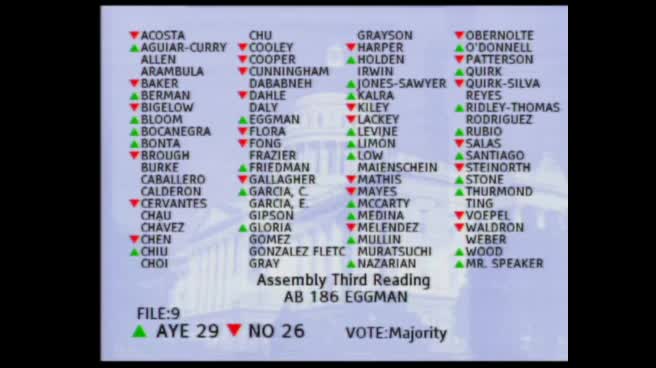 1MIN
Assembly Floor
 1MIN
Assembly Floor
 50SEC
Assembly Standing Committee on Appropriations
 17MIN
Assembly Standing Committee on Revenue and Taxation

Bill Co-Author(s):