AB 718: Mosquito abatement and vector control districts: managed wetland habitat: memoranda of understanding.
- Session Year: 2017-2018
- House: Assembly
- Latest Version Date: 2017-10-03
Existing law provides for the formation of mosquito abatement and vector control districts, and prescribes the powers, functions, and duties of those districts, as specified. Existing law authorizes a district to levy special taxes, to levy special benefit assessments for specified purposes, and to charge a fee to cover the cost of any service that the district provides or the cost of enforcing any regulation for which the fee is charged.
Existing law requires a mosquito abatement and vector control district whose boundaries include one or more wildlife management areas or in which vectors and vectorborne diseases from a wildlife management area may enter the district to notify the Department of Fish and Wildlife of those areas that are of concern due to the potential for high mosquito populations that may incur associated mosquito control costs. Existing law requires the department to consult with districts to identify those areas within those wildlife management areas having the highest need for additional mosquito reduction through the implementation of best management practices, as defined.
This bill would authorize a private landowner whose property includes managed wetland habitat, as defined, located within the boundaries of a district and meets other criteria to initiate the opportunity to enter into a memorandum of understanding with the district to establish a process to implement best management practices with regard to the managed wetland habitat. The bill would authorize the Central Valley Joint Venture, in consultation with districts, the department, and the State Department of Public Health, to periodically modify the best management practices in order to best fulfill certain purposes. To the extent that the bill imposes additional duties on a district, the bill would impose a state-mandated local program.
The California Constitution requires the state to reimburse local agencies and school districts for certain costs mandated by the state. Statutory provisions establish procedures for making that reimbursement.
This bill would provide that no reimbursement is required by this act for a specified reason.
Existing law provides for the formation of mosquito abatement and vector control districts, and prescribes the powers, functions, and duties of those districts, as specified. Existing law authorizes a district to levy special taxes, to levy special benefit assessments for specified purposes, and to charge a fee to cover the cost of any service that the district provides or the cost of enforcing any regulation for which the fee is charged.
Existing law requires a mosquito abatement and vector control district whose boundaries include one or more wildlife management areas or in which vectors and vectorborne diseases from a wildlife management area may enter the district to notify the Department of Fish and Wildlife of those areas that are of concern due to the potential for high mosquito populations that may incur associated mosquito control costs. Existing law requires the department to consult with districts to identify those areas within those wildlife management areas having the highest need for additional mosquito reduction through the implementation of best management practices, as defined.
This bill would authorize a private landowner whose property includes managed wetland habitat, as defined, located within the boundaries of a district and meets other criteria to initiate the opportunity to enter into a memorandum of understanding with the district to establish a process to implement best management practices with regard to the managed wetland habitat. The bill would authorize the Central Valley Joint Venture, in consultation with districts, the department, and the State Department of Public Health, to periodically modify the best management practices that in order to best fulfill certain purposes, and would require those best management practices to be utilized, to the extent possible, with regard to managed wetland habitats, as specified. purposes. To the extent that the bill imposes additional duties on a district, the bill would impose a state-mandated local program.
The California Constitution requires the state to reimburse local agencies and school districts for certain costs mandated by the state. Statutory provisions establish procedures for making that reimbursement.
This bill would provide that no reimbursement is required by this act for a specified reason.
Existing law provides for the formation of mosquito abatement and vector control districts, and prescribes the powers, functions, and duties of those districts, as specified. Existing law authorizes a district to levy special taxes, to levy special benefit assessments for specified purposes, and to charge a fee to cover the cost of any service that the district provides or the cost of enforcing any regulation for which the fee is charged.
Existing law requires a mosquito abatement and vector control district whose boundaries include one or more wildlife management areas or in which vectors and vectorborne diseases from a wildlife management area may enter the district to notify the Department of Fish and Wildlife of those areas that are of concern due to the potential for high mosquito populations that may incur associated mosquito control costs. Existing law requires the department to consult with districts to identify those areas within those wildlife management areas having the highest need for additional mosquito reduction through the implementation of best management practices, as defined.
This bill would authorize a private landowner whose property includes managed wetland habitat, as defined, located within the boundaries of a district and meets other criteria to initiate the opportunity to enter into a memorandum of understanding with the district to establish a process to implement best management practices with regard to the managed wetland habitat. The bill would authorize the Central Valley Joint Venture, in consultation with districts, the department, and the State Department of Public Health, to periodically modify the best management practices that fulfill certain purposes, and would require those best management practices to be utilized, to the extent possible, with regard to managed wetland habitats, as specified. To the extent that the bill imposes additional duties on a district, the bill would impose a state-mandated local program.
The California Constitution requires the state to reimburse local agencies and school districts for certain costs mandated by the state. Statutory provisions establish procedures for making that reimbursement.
This bill would provide that no reimbursement is required by this act for a specified reason.
Existing law provides for the formation of mosquito abatement and vector control districts, and prescribes the powers, functions, and duties of those districts, as specified. Existing law authorizes a district to levy special taxes, to levy special benefit assessments for specified purposes, and to charge a fee to cover the cost of any service that the district provides or the cost of enforcing any regulation for which the fee is charged.
Existing law requires a mosquito abatement and vector control district whose boundaries include one or more wildlife management areas or in which vectors and vectorborne diseases from a wildlife management area may enter the district to notify the Department of Fish and Wildlife of those areas that are of concern due to the potential for high mosquito populations that may incur associated mosquito control costs. Existing law requires the department to consult with districts to identify those areas within those wildlife management areas having the highest need for additional mosquito reduction through the implementation of best management practices, as defined.
This bill would authorize a private landowner whose property includes managed wetland habitat, as defined, located within the boundaries of a district and meets other criteria to initiate the opportunity to enter into a memorandum of understanding with the district to establish a process to implement best management practices with regard to the managed wetland habitat. The bill would authorize the Central Valley Joint Venture, in consultation with districts, the department, and the State Department of Public Health, to periodically identify modify the best management practices, practices that fulfill certain purposes, and would require the identified those best management practices to be utilized, to the extent possible, with regard to managed wetland habitats, as specified. To the extent that the bill imposes additional duties on a district, the bill would impose a state-mandated local program.
The California Constitution requires the state to reimburse local agencies and school districts for certain costs mandated by the state. Statutory provisions establish procedures for making that reimbursement.
This bill would provide that no reimbursement is required by this act for a specified reason.
Existing law provides for the formation of mosquito abatement and vector control districts, and prescribes the powers, functions, and duties of those districts, as specified. Existing law authorizes a district to levy special taxes, to levy special benefit assessments for specified purposes, and to charge a fee to cover the cost of any service that the district provides or the cost of enforcing any regulation for which the fee is charged.
Existing law requires a mosquito abatement and vector control district whose boundaries include one or more wildlife management areas or in which vectors and vectorborne diseases from a wildlife management area may enter the district to notify the Department of Fish and Wildlife of those areas that are of concern due to the potential for high mosquito populations that may incur associated mosquito control costs. Existing law requires the department to consult with districts to identify those areas within those wildlife management areas having the highest need for additional mosquito reduction through the implementation of best management practices, as defined.
This bill would authorize a private landowner whose property includes managed wetland habitat, as defined, located within the boundaries of a district and meets other criteria to initiate the opportunity to enter into a memorandum of understanding with the district to establish a process to implement best management practices with regard to the managed wetland habitat. The bill would authorize the Central Valley Joint Venture, in consultation with districts, the department, and the State Department of Public Health, to periodically identify best management practices, and would require the identified best management practices to be utilized, to the extent possible, with regard to managed wetland habitats, as specified. To the extent that the bill imposes additional duties on a district, the bill would impose a state-mandated local program.
The California Constitution requires the state to reimburse local agencies and school districts for certain costs mandated by the state. Statutory provisions establish procedures for making that reimbursement.
This bill would provide that no reimbursement is required by this act for a specified reason.
Existing law provides for the formation of mosquito abatement and vector control districts, and prescribes the powers, functions, and duties of those districts, as specified. Existing law requires the auditor of each county in which a district is located to allocate to the district its share of property tax revenue, as prescribed. Existing law also authorizes a district to levy special taxes, to levy special benefit assessments for specified purposes, and to charge a fee to cover the cost of any service that the district provides or the cost of enforcing any regulation for which the fee is charged.
Existing law requires the Department of Fish and Wildlife a mosquito abatement and vector control district whose boundaries include one or more wildlife management areas or in which vectors and vectorborne diseases from a wildlife management area may enter the district to notify the Department of Fish and Wildlife of those areas that are of concern due to the potential for high mosquito populations that may incur associated mosquito control costs. Existing law requires the department to consult with local mosquito abatement and vector control districts districts to identify those areas within those wildlife management areas having the highest need for additional mosquito reduction through the implementation of best management practices, as defined.
This bill would exempt a private landowner from a charge imposed by a mosquito abatement and vector control district to recover mosquito control costs for any type of treatment specific to the landowners property if the property is managed wetland habitat, as defined, the landowner has placed the property under a state or federal easement or similar wildlife conservation agreement, and the landowner implements best management practices on the property. The bill would restrict the source of moneys that a district uses to pay for any cost of treating these properties to moneys collected from fines and penalties. authorize a private landowner whose property includes managed wetland habitat, as defined, located within the boundaries of a district and meets other criteria to initiate the opportunity to enter into a memorandum of understanding with the district to establish a process to implement best management practices with regard to the managed wetland habitat. To the extent that the bill imposes additional duties on a district, the bill would impose a state-mandated local program.
The California Constitution requires the state to reimburse local agencies and school districts for certain costs mandated by the state. Statutory provisions establish procedures for making that reimbursement.
This bill would provide that no reimbursement is required by this act for a specified reason.
Existing law provides for the formation of mosquito abatement and vector control districts, and prescribes the powers, functions, and duties of those districts, as specified. Existing law requires the auditor of each county in which a district is located to allocate to the district its share of property tax revenue, as prescribed. Existing law also authorizes a district to levy special taxes, to levy special benefit assessments for specified purposes, and to charge a fee to cover the cost of any service that the district provides or the cost of enforcing any regulation for which the fee is charged.
Existing law requires the Department of Fish and Wildlife to consult with local mosquito abatement and vector control districts to identify those areas within wildlife management areas having the highest need for additional mosquito reduction through the implementation of best management practices, as defined.
This bill would exempt a private landowner from a charge imposed by a mosquito abatement and vector control district to recover mosquito control costs for any type of treatment specific to the landowners property if the property is managed wetland habitat, as defined, the landowner has placed the property under a state or federal easement or similar wildlife conservation agreement, and the landowner implements best management practices on the property. The bill would restrict the source of moneys that a district uses to pay for any cost of treating these properties to moneys collected from fines and penalties.
(a)For purposes of this section, the following definitions apply:
(1)Managed wetland habitat means artificially irrigated and intensively managed wetland habitat administered primarily for the benefit of waterfowl and other wetland-dependent species.
(2)Best management practices means management strategies jointly developed by the department, the State Department of Public Health, and mosquito abatement and vector control districts, in consultation with the Central Valley Joint Venture, for the ecological control of mosquitoes on managed wetland habitat.
(3)Wildlife management area has the same meaning as set forth in subdivision (d) of Section 1504.
(4)Mosquito abatement and vector control district has the same meaning as set forth in subdivision (f) of Section 2002 of the Health and Safety Code.
(b)(1)A mosquito abatement and vector control district whose district boundaries include one or more wildlife management areas or a mosquito abatement and vector control district in which vectors and vectorborne diseases from a wildlife management area may enter the district shall periodically, or at least semiannually, notify the department of those areas that are of concern due to the potential for high mosquito populations that may incur associated mosquito control costs.
(2)(A)To reduce mosquito production at those wildlife management areas described in paragraph (1), the department shall consult with local mosquito abatement and vector control districts to identify those areas within wildlife management areas having the highest need for additional mosquito reduction through the implementation of best management practices.
(B)If the wetland occupies land outside the jurisdictional boundaries of a mosquito abatement and vector control district, the department may consult with the State Department of Public Health to determine which best management practices can be implemented in the absence of an organized local mosquito control program.
(c)This section does not affect existing authority of a mosquito abatement and vector control district under Section 2040 of the Health and Safety Code.
(d)(1)A private landowner whose property includes managed wetland habitat located within the boundaries of a mosquito abatement and vector control district may initiate the opportunity to enter into a memorandum of understanding with the district if all of the following criteria are met:
(A)The managed wetland habitat is encumbered by a state or federal conservation easement or similar state or federal voluntary habitat agreement or is protected in perpetuity by state or federal law.
(B)The managed wetland habitat is within the boundaries of the Central Valley Joint Venture, as those boundaries are identified in the Central Valley Joint Venture Implementation Plan.
(2)The goal of a memorandum of understanding entered into pursuant to paragraph (1) is to establish a process to implement best management practices for the purposes of decreasing mosquito production, providing net cost savings to the landowner, decreasing the application of pesticides, and maintaining or enhancing the waterfowl habitat values on the property.
(3)Notwithstanding paragraph (2) of subdivision (a), the Central Valley Joint Venture, in consultation with mosquito abatement and vector control districts, the department, and the State Department of Public Health, may periodically modify the best management practices in order to best fulfill the purposes described in paragraph (2) of this subdivision.
(4)A memorandum of understanding entered into pursuant to paragraph (1) shall not conflict with the provisions of any applicable conservation easement or other state or federal habitat agreement. The participating private landowner shall ensure that the memorandum of understanding is in compliance with the requirements of this paragraph. Compliance with the requirements of this paragraph is the sole responsibility of the private landowner and subject to enforcement pursuant to the terms contained in any applicable conservation easement or habitat agreement.
SEC. 2.No reimbursement is required by this act pursuant to Section 6 of Article XIIIB of the California Constitution because a local agency or school district has the authority to levy service charges, fees, or assessments sufficient to pay for the program or level of service mandated by this act, within the meaning of Section 17556 of the Government Code.
(a)For purposes of this section, the following definitions apply:
(1)Managed wetland habitat means artificially irrigated and intensively managed wetland habitat administered primarily for the benefit of waterfowl and other wetland-dependent species.
(2)Best management practices means management strategies jointly developed by the department, the State Department of Public Health, and mosquito abatement and vector control districts, in consultation with the Central Valley Joint Venture, for the ecological control of mosquitoes on managed wetland habitat.
(3)Wildlife management area has the same meaning as set forth in subdivision (d) of Section 1504.
(4)Mosquito abatement and vector control district has the same meaning as set forth in subdivision (f) of Section 2002 of the Health and Safety Code.
(b)(1)A mosquito abatement and vector control district whose district boundaries include one or more wildlife management areas or a mosquito abatement and vector control district in which vectors and vectorborne diseases from a wildlife management area may enter the district shall periodically, or at least semiannually, notify the department of those areas that are of concern due to the potential for high mosquito populations that may incur associated mosquito control costs.
(2)(A)To reduce mosquito production at those wildlife management areas described in paragraph (1), the department shall consult with local mosquito abatement and vector control districts to identify those areas within wildlife management areas having the highest need for additional mosquito reduction through the implementation of best management practices.
(B)If the wetland occupies land outside the jurisdictional boundaries of a mosquito abatement and vector control district, the department may consult with the State Department of Public Health to determine which best management practices can be implemented in the absence of an organized local mosquito control program.
(c)This section does not affect existing authority of a mosquito abatement and vector control district under Section 2040 of the Health and Safety Code.
(d)(1)A private landowner whose property includes managed wetland habitat located within the boundaries of a mosquito abatement and vector control district may initiate the opportunity to enter into a memorandum of understanding with the district if all of the following criteria are met:
(A)The managed wetland habitat is encumbered by a state or federal conservation easement or similar state or federal voluntary habitat agreement or is protected in perpetuity by state or federal law.
(B)The managed wetland habitat is within the boundaries of the Central Valley Joint Venture, as those boundaries are identified in the Central Valley Joint Venture Implementation Plan.
(2)The goal of a memorandum of understanding entered into pursuant to paragraph (1) is to establish a process to implement best management practices for the purposes of decreasing mosquito production, providing net cost savings to the landowner, decreasing the application of pesticides, and maintaining or enhancing the waterfowl habitat values on the property.
(3)Notwithstanding paragraph (2) of subdivision (a), the Central Valley Joint Venture, in consultation with mosquito abatement and vector control districts, the department, and the State Department of Public Health, may periodically modify the best management practices that in order to best fulfill the purposes described in paragraph (2) of this subdivision. To the extent possible, those best management practices shall be utilized in implementing this subdivision.
(4)A memorandum of understanding entered into pursuant to paragraph (1) shall not conflict with the provisions of any applicable conservation agreement easement or other state or federal habitat agreement. The participating private landowner shall ensure that the memorandum of understanding is in compliance with the requirements of this paragraph. Compliance with the requirements of this paragraph is the sole responsibility of the private landowner and subject to enforcement pursuant to the terms contained in any applicable conservation easement or habitat agreement.
SEC. 2.No reimbursement is required by this act pursuant to Section 6 of Article XIIIB of the California Constitution because a local agency or school district has the authority to levy service charges, fees, or assessments sufficient to pay for the program or level of service mandated by this act, within the meaning of Section 17556 of the Government Code.
(a)For purposes of this section, the following definitions apply:
(1)Managed wetland habitat means artificially irrigated and intensively managed wetland habitat administered primarily for the benefit of waterfowl and other wetland-dependent species.
(2)Best management practices means management strategies jointly developed by the department, the State Department of Public Health, and mosquito abatement and vector control districts, in consultation with the Central Valley Joint Venture, for the ecological control of mosquitoes on managed wetland habitat.
(3)Wildlife management area has the same meaning as set forth in subdivision (d) of Section 1504.
(4)Mosquito abatement and vector control district has the same meaning as set forth in subdivision (f) of Section 2002 of the Health and Safety Code.
(b)(1)A mosquito abatement and vector control district whose district boundaries include one or more wildlife management areas or a mosquito abatement and vector control district in which vectors and vectorborne diseases from a wildlife management area may enter the district shall periodically, or at least semiannually, notify the department of those areas that are of concern due to the potential for high mosquito populations that may incur associated mosquito control costs.
(2)(A)To reduce mosquito production at those wildlife management areas described in paragraph (1), the department shall consult with local mosquito abatement and vector control districts to identify those areas within wildlife management areas having the highest need for additional mosquito reduction through the implementation of best management practices.
(B)If the wetland occupies land outside the jurisdictional boundaries of a mosquito abatement and vector control district, the department may consult with the State Department of Public Health to determine which best management practices can be implemented in the absence of an organized local mosquito control program.
(c)This section does not affect existing authority of a mosquito abatement and vector control district under Section 2040 of the Health and Safety Code.
(d)(1)A private landowner whose property includes managed wetland habitat located within the boundaries of a mosquito abatement and vector control district may initiate the opportunity to enter into a memorandum of understanding with the district if all of the following criteria are met:
(A)The managed wetland habitat is encumbered by a state or federal conservation easement or similar state or federal voluntary habitat agreement or is protected in perpetuity by state or federal law.
(B)The managed wetland habitat is within the boundaries of the Central Valley Joint Venture, as those boundaries are identified in the Central Valley Joint Venture Implementation Plan.
(2)The goal of a memorandum of understanding entered into pursuant to paragraph (1) is to establish a process to implement best management practices for the purposes of decreasing mosquito production, providing net cost savings to the landowner, decreasing the application of pesticides, and maintaining or enhancing the waterfowl habitat values on the property.
(3)Notwithstanding paragraph (2) of subdivision (a), the Central Valley Joint Venture, in consultation with mosquito abatement and vector control districts, the department, and the State Department of Public Health, may periodically modify the best management practices that fulfill the purposes described in paragraph (2) of this subdivision. To the extent possible, those best management practices shall be utilized in implementing this subdivision.
(4)If a managed wetland property is subject to a state or federal conservation easement, a mosquito abatement and vector control district shall not enter into a memorandum of understanding unless the holder of the conservation easement approves the memorandum of understanding.(4)A memorandum of understanding entered into pursuant to paragraph (1) shall not conflict with the provisions of any applicable conservation agreement or other state or federal habitat agreement.
SEC. 2.No reimbursement is required by this act pursuant to Section 6 of Article XIIIB of the California Constitution because a local agency or school district has the authority to levy service charges, fees, or assessments sufficient to pay for the program or level of service mandated by this act, within the meaning of Section 17556 of the Government Code.
(a)For purposes of this section, the following definitions apply:
(1)Managed wetland habitat means artificially irrigated and intensively managed wetland habitat administered primarily for the benefit of waterfowl and other wetland-dependent species.
(2)Best management practices means management strategies jointly developed by the department, the State Department of Public Health, and mosquito abatement and vector control districts, in consultation with the Central Valley Joint Venture, for the ecological control of mosquitoes on managed wetland habitat.
(3)Wildlife management area has the same meaning as set forth in subdivision (d) of Section 1504.
(4)Mosquito abatement and vector control district has the same meaning as set forth in subdivision (f) of Section 2002 of the Health and Safety Code.
(b)(1)A mosquito abatement and vector control district whose district boundaries include one or more wildlife management areas or a mosquito abatement and vector control district in which vectors and vectorborne diseases from a wildlife management area may enter the district shall periodically, or at least semiannually, notify the department of those areas that are of concern due to the potential for high mosquito populations that may incur associated mosquito control costs.
(2)(A)To reduce mosquito production at those wildlife management areas described in paragraph (1), the department shall consult with local mosquito abatement and vector control districts to identify those areas within wildlife management areas having the highest need for additional mosquito reduction through the implementation of best management practices.
(B)If the wetland occupies land outside the jurisdictional boundaries of a mosquito abatement and vector control district, the department may consult with the State Department of Public Health to determine which best management practices can be implemented in the absence of an organized local mosquito control program.
(c)This section does not affect existing authority of a mosquito abatement and vector control district under Section 2040 of the Health and Safety Code.
(d)(1)A private landowner whose property includes managed wetland habitat located within the boundaries of a mosquito abatement and vector control district may initiate the opportunity to enter into a memorandum of understanding with the district if all of the following criteria are met:
(A)The managed wetland habitat is encumbered by a state or federal conservation easement or similar state or federal voluntary habitat agreement or is protected in perpetuity by state or federal law.
(B)The managed wetland habitat is within the boundaries of the Central Valley Joint Venture, as those boundaries are identified in the Central Valley Joint Venture Implementation Plan.
(2)The goal of a memorandum of understanding entered into pursuant to paragraph (1) is to establish a process to implement best management practices for the purposes of decreasing mosquito production, providing net cost savings to the landowner, decreasing the application of pesticides, and maintaining or enhancing the waterfowl habitat values on the property.
(3)Notwithstanding paragraph (2) of subdivision (a), the Central Valley Joint Venture, in consultation with mosquito abatement and vector control districts, the department, and the State Department of Public Health, may periodically identify modify the best management practices that fulfill the purposes described in paragraph (2) of this subdivision. To the extent possible, the identified those best management practices shall be utilized in implementing this subdivision.
(4)If a managed wetland property is subject to a state or federal conservation easement, a mosquito abatement and vector control district shall not enter into a memorandum of understanding unless the holder of the conservation easement approves the memorandum of understanding.
SEC. 2.No reimbursement is required by this act pursuant to Section 6 of Article XIIIB of the California Constitution because a local agency or school district has the authority to levy service charges, fees, or assessments sufficient to pay for the program or level of service mandated by this act, within the meaning of Section 17556 of the Government Code.
(a)For purposes of this section, the following definitions apply:
(1)Managed wetland habitat means artificially irrigated and intensively managed wetland habitat administered primarily for the benefit of waterfowl and other wetland-dependent species.
(2)Best management practices means management strategies jointly developed by the department, the State Department of Public Health, and mosquito abatement and vector control districts, in consultation with the Central Valley Joint Venture, for the ecological control of mosquitoes on managed wetland habitat.
(3)Wildlife management area has the same meaning as set forth in subdivision (d) of Section 1504.
(4)Mosquito abatement and vector control district has the same meaning as set forth in subdivision (f) of Section 2002 of the Health and Safety Code.
(b)(1)A mosquito abatement and vector control district whose district boundaries include one or more wildlife management areas or a mosquito abatement and vector control district in which vectors and vectorborne diseases from a wildlife management area may enter the district shall periodically, or at least semiannually, notify the department of those areas that are of concern due to the potential for high mosquito populations that may incur associated mosquito control costs.
(2)(A)To reduce mosquito production at those wildlife management areas described in paragraph (1), the department shall consult with local mosquito abatement and vector control districts to identify those areas within wildlife management areas having the highest need for additional mosquito reduction through the implementation of best management practices.
(B)If the wetland occupies land outside the jurisdictional boundaries of a mosquito abatement and vector control district, the department may consult with the State Department of Public Health to determine which best management practices can be implemented in the absence of an organized local mosquito control program.
(c)This section does not affect existing authority of a mosquito abatement and vector control district under Section 2040 of the Health and Safety Code.
(d)(1)A private landowner whose property includes managed wetland habitat located within the boundaries of a mosquito abatement and vector control district may initiate the opportunity to enter into a memorandum of understanding with the district if all of the following criteria are met:
(A)The managed wetland habitat is encumbered by a state or federal conservation easement or similar state or federal voluntary habitat agreement or is protected in perpetuity by state or federal law.
(B)The managed wetland habitat is within the boundaries of the Central Valley Joint Venture, as those boundaries are identified in the Central Valley Joint Venture Implementation Plan.
(2)The goal of a memorandum of understanding entered into pursuant to paragraph (1) is to establish a process to implement best management practices in order to decrease for the purposes of decreasing mosquito production, provide providing net cost savings to the landowner, decrease decreasing the application of pesticides, and maintain or enhance maintaining or enhancing the waterfowl habitat values on the property.
(3)Notwithstanding paragraph (2) of subdivision (a), the Central Valley Joint Venture, in consultation with mosquito abatement and vector control districts, the department, and the State Department of Public Health, may periodically identify the best management practices that fulfill the purposes described in paragraph (2) of this subdivision. To the extent possible, the identified best management practices shall be utilized in implementing this subdivision.
(4)If a managed wetland property is subject to a state or federal conservation easement, a mosquito abatement and vector control district shall not enter into a memorandum of understanding unless the holder of the conservation easement approves the memorandum of understanding.
SEC. 2.No reimbursement is required by this act pursuant to Section 6 of Article XIIIB of the California Constitution because a local agency or school district has the authority to levy service charges, fees, or assessments sufficient to pay for the program or level of service mandated by this act, within the meaning of Section 17556 of the Government Code.
(a)For purposes of this section, the following definitions apply:
(1)Managed wetland habitat means artificially irrigated and intensively managed wetland habitat administered primarily for the benefit of waterfowl and other wetland-dependent species.
(2)Best management practices means management strategies jointly developed by the department, the State Department of Public Health, and mosquito abatement and vector control districts, in consultation with the Central Valley Habitat Joint Venture, for the ecological control of mosquitoes on managed wetland habitat in a manner that maintains or enhances waterfowl or other wildlife values. habitat.
(3)Wildlife management area has the same meaning as set forth in subdivision (d) of Section 1504.
(4)Mosquito abatement and vector control district has the same meaning as set forth in subdivision (f) of Section 2002 of the Health and Safety Code.
(b)(1)A mosquito abatement and vector control district whose district boundaries include one or more wildlife management areas or a mosquito abatement and vector control district in which vectors and vectorborne diseases from a wildlife management area may enter the district shall periodically, or at least semiannually, notify the department of those areas that are of concern due to the potential for high mosquito populations that may incur associated mosquito control costs.
(2)(A)To reduce mosquito production at those wildlife management areas described in paragraph (1), the department shall consult with local mosquito abatement and vector control districts to identify those areas within wildlife management areas having the highest need for additional mosquito reduction through the implementation of best management practices.
(B)If the wetland occupies land outside the jurisdictional boundaries of a mosquito abatement and vector control district, the department may consult with the State Department of Public Health to determine which best management practices can be implemented in the absence of an organized local mosquito control program.
(c)This section does not affect existing authority of a mosquito abatement and vector control district under Section 2040 of the Health and Safety Code.
(d)(1)A mosquito abatement and vector control district shall not impose a charge to recover mosquito control costs from a private landowner for any type of treatment specific to the landowners property if the property is managed wetland habitat, the landowner has placed the property under a state or federal easement or similar wildlife conservation agreement, and the landowner implements best management practices on the property.(2)A mosquito abatement and vector control district shall only use moneys collected from fines and penalties to pay for any cost of treating properties described in paragraph (1).(d)(1)A private landowner whose property includes managed wetland habitat located within the boundaries of a mosquito abatement and vector control district may initiate the opportunity to enter into a memorandum of understanding with the district if all of the following criteria are met:
(A)The managed wetland habitat is encumbered by a state or federal conservation easement or similar state or federal voluntary habitat agreement or is protected in perpetuity by state or federal law.
(B)The managed wetland habitat is within the boundaries of the Central Valley Joint Venture, as those boundaries are identified in the Central Valley Joint Venture Implementation Plan.
(2)The goal of a memorandum of understanding entered into pursuant to paragraph (1) is to establish a process to implement best management practices in order to decrease mosquito production, provide net cost savings to the landowner, decrease the application of pesticides, and maintain or enhance the waterfowl habitat values on the property.
SEC. 2.No reimbursement is required by this act pursuant to Section 6 of Article XIIIB of the California Constitution because a local agency or school district has the authority to levy service charges, fees, or assessments sufficient to pay for the program or level of service mandated by this act, within the meaning of Section 17556 of the Government Code.
(a)For purposes of this section, the following definitions apply:
(1)Managed wetland habitat means artificially irrigated and intensively managed wetland habitat administered primarily for the benefit of waterfowl and other wetland-dependent species.
(2)Best management practices means management strategies jointly developed by the department, the State Department of Public Health, and mosquito abatement and vector control districts, in consultation with the Central Valley Habitat Joint Venture, for the ecological control of mosquitoes on managed wetland habitat. habitat in a manner that maintains or enhances waterfowl or other wildlife values.
(3)Wildlife management area has the same meaning as set forth in subdivision (d) of Section 1504.
(4)Mosquito abatement and vector control district has the same meaning as set forth in subdivision (f) of Section 2002 of the Health and Safety Code.
(b)(1)A mosquito abatement and vector control district whose district boundaries include one or more wildlife management areas or a mosquito abatement and vector control district in which vectors and vectorborne diseases from a wildlife management area may enter the district shall periodically, or at least semiannually, notify the department of those areas that are of concern due to the potential for high mosquito populations that may incur associated mosquito control costs.
(2)(A)To reduce mosquito production at those wildlife management areas described in paragraph (1), the department shall consult with local mosquito abatement and vector control districts to identify those areas within wildlife management areas having the highest need for additional mosquito reduction through the implementation of best management practices.
(B)If the wetland occupies land outside the jurisdictional boundaries of a mosquito abatement and vector control district, the department may consult with the State Department of Public Health to determine which best management practices can be implemented in the absence of an organized local mosquito control program.
(c)This section does not affect existing authority of a mosquito abatement and vector control district under Section 2040 of the Health and Safety Code.
(d)(1)A mosquito abatement and vector control district shall not impose a charge to recover mosquito control costs from a private landowner for any type of treatment specific to the landowners property if the property is managed wetland habitat, the landowner has placed the property under a state or federal easement or similar wildlife conservation agreement, and the landowner implements best management practices on the property.
(2)A mosquito abatement and vector control district shall only use moneys collected from fines and penalties to pay for any cost of treating properties described in paragraph (1).
|
Date
|
Status
|
|---|---|
| Oct 3, 2017 | Chaptered by Secretary of State - Chapter 446, Statutes of 2017. |
| Oct 3, 2017 | Approved by the Governor. |
| Sep 25, 2017 | Enrolled and presented to the Governor at 12 p.m. |
| Sep 14, 2017 | Senate amendments concurred in. To Engrossing and Enrolling. |
| Sep 14, 2017 | In Assembly. Concurrence in Senate amendments pending. |
| Sep 14, 2017 | Read third time. Passed. Ordered to the Assembly. |
| Sep 12, 2017 | Ordered to special consent calendar. |
| Sep 11, 2017 | Read second time. Ordered to third reading. |
| Sep 8, 2017 | Read third time and amended. Ordered to second reading. |
| Sep 5, 2017 | Read second time. Ordered to third reading. |
| Sep 1, 2017 | From committee: Amend, and do pass as amended. (Ayes 7. Noes 0.) (August 28). |
| Aug 21, 2017 | In committee: Hearing postponed by committee. |
| Jul 18, 2017 | Read second time and amended. Re-referred to Com. on APPR. |
| Jul 17, 2017 | From committee: Amend, and do pass as amended and re-refer to Com. on APPR. with recommendation: To Consent Calendar. (Ayes 9. Noes 0.) (July 11). |
| Jul 3, 2017 | From committee chair, with author's amendments: Amend, and re-refer to committee. Read second time, amended, and re-referred to Com. on N.R. & W. |
| Jun 8, 2017 | Referred to Com. on N.R. & W. |
| May 30, 2017 | In Senate. Read first time. To Com. on RLS. for assignment. |
| May 30, 2017 | Read third time. Passed. Ordered to the Senate. (Ayes 76. Noes 0. Page 1785.) |
| May 1, 2017 | Read second time. Ordered to third reading. |
| Apr 27, 2017 | Read second time and amended. Ordered returned to second reading. |
| Apr 26, 2017 | From committee: Amend, and do pass as amended. (Ayes 13. Noes 1.) (April 25). |
| Apr 3, 2017 | In committee: Set, first hearing. Hearing canceled at the request of author. |
| Mar 2, 2017 | Referred to Com. on W.,P., & W. |
| Feb 16, 2017 | From printer. May be heard in committee March 18. |
| Feb 15, 2017 | Read first time. To print. |
|
Date
|
Description
|
Location
|
Votes
|
|
|---|---|---|---|---|
| Sep 14, 2017 | AB 718 Frazier Special Consent Calendar 1st Day Regular Session | Assembly Floor |
Passed |
|
| Sep 14, 2017 | Special Consent Calendar # AB718 | Senate Floor |
Passed |
|
| Aug 28, 2017 | Do pass as amended | Senate Standing Committee on Appropriations |
Passed |
|
| Jul 11, 2017 | Do pass as amended, but first amend, and re-refer to the Committee on [Appropriations] with the recommendation: To Consent Calendar | Senate Standing Committee on Natural Resources and Water |
Passed |
|
| May 30, 2017 | AB 718 FRAZIER Assembly Third Reading | Assembly Floor |
Passed |
|
| Apr 25, 2017 | Do pass as amended. | Assembly Standing Committee on Water, Parks, and Wildlife |
Passed |
This list shows positions taken on this bill by organizations on the date displayed, which is linked to the original source.
Positions by individuals are not included.
|
Organization
|
Position
|
Date
|
|---|---|---|
| Alameda County Mosquito Abatement District | ** Against | Apr 21, 2017 |
| black brant conservancy | ** Support | Sep 11, 2017 |
| Black Brant Group, The | ** Support | Apr 21, 2017 |
| Butte County Mosquito and Vector Control District | ** Against | Apr 21, 2017 |
| Cal-Ore Wetlands and Waterfowl Council | ** Support | Sep 11, 2017 |
| California Department Of Fish And Game | ** Against | Sep 11, 2017 |
| california department of fish and wildlife | ** Against | Sep 6, 2017 |
| California Hawking Club | ** Support | Apr 21, 2017 |
| California Rice | ** Support | Sep 11, 2017 |
| California Rice Commission | ** Support | Apr 21, 2017 |
| California Rifle and Pistol Association | ** Support | Sep 11, 2017 |
| California Waterfowl Association | ** Support | Sep 11, 2017 |
| Colusa Mosquito Abatement District | ** Against | Apr 21, 2017 |
| Defenders Of Wildlife | ** Support | Sep 11, 2017 |
| Delta Waterfowl | ** Support | Sep 11, 2017 |
| Fresno Westside Mosquito Abatement District | ** Against | Apr 21, 2017 |
| Grassland Water District | ** Support | Sep 11, 2017 |
| Lower Sherman Island Duck Hunters Association | ** Support | Sep 11, 2017 |
| Marin | ** Against | Apr 21, 2017 |
| Mosquito And Vector Control Association Of California | ** Against | Apr 21, 2017 |
| Northern California Water Association | ** Support | Sep 11, 2017 |
| pheasants forever | ** Support | Sep 11, 2017 |
| Quail Forever | ** Support | Sep 11, 2017 |
| Sacramento-Yolo Mosquito and Vector Control District | ** Against | Apr 21, 2017 |
| San Gabriel Valley Mosquito and Vector Control District | ** Against | Apr 21, 2017 |
| San Joaquin County Mosquito and Vector Control District | ** Against | Apr 21, 2017 |
| San Mateo County Mosquito and Vector Control District | ** Against | Apr 21, 2017 |
| Shasta Mosquito and Vector Control District | ** Against | Apr 21, 2017 |
| Solano County Mosquito Abatement District | ** Against | Apr 21, 2017 |
| Sonoma Mosquito & Vector Control District | ** Against | Apr 21, 2017 |
| Suisun Resource Conservation District | ** Support | Sep 11, 2017 |
| Sutter-Yuba Mosquito and Vector Control District | ** Against | Apr 21, 2017 |
| Tehama County Mosquito and Vector Control District | ** Against | Apr 21, 2017 |
| The Nature Conservancy | ** Support | Sep 11, 2017 |
| Tulare Basin Wetlands Association | ** Support | Apr 21, 2017 |
| Tulare Mosquito Abatement District | ** Against | Apr 21, 2017 |
| Turlock Mosquito Abatement District | ** Against | Apr 21, 2017 |
CONCURRENCE IN SENATE AMENDMENTS
CSA1 Bill Id:AB 718
Author:(Frazier)
As Amended Ver:September 8, 2017
Majority vote
ASSEMBLY: | 76-0 | (May 30, 2017) | SENATE: | 40-0 | (September 14, 2017) |
Original Committee Reference: W., P., & W.
SUMMARY: Allows specified private landowners who manage wetlands within the boundaries of a mosquito abatement and vector control district (MVCDs) to initiate the opportunity to enter into a memorandum of understanding (MOU). The goal of the MOU will be to establish a process to implement best management practices (BMPs) for the purposes of decreasing mosquito production, providing net cost savings to the landowner, decreasing the application of pesticides, and maintaining or enhancing the waterfowl habitat values on the property. Specifically, this bill:
Defines an eligible private landowner as being both within the Central Valley Joint Venture and has managed wetland habitat that is protected in perpetuity.
The Senate amendments:
- Specify that BMPs may be periodically modified in order to best fulfill the goals of the MOU.
- Prohibit an MOU from conflicting with the provisions of any applicable conservation easement or other state or federal habitat agreement. Requires a participating private landowner to ensure that the MOU is not in conflict with any applicable conservation easement, and specifies that compliance is the sole responsibility of the private landowner and subjects the MOU to enforcement of terms contained in any applicable conservation easement or habitat agreement.
EXISTING LAW:
- Provides for the formation of local MVCDs, and authorizes the districts to conduct programs for the surveillance, prevention, abatement and control of mosquitos and other vectors. States the Legislature's intent that the districts cooperate with other public agencies to protect the public health, safety and welfare, and to protect the public from vectors and pathogens such as West Nile virus.
- Sets a state goal to increase the total wetlands acreage and values within the Sacramento-San Joaquin Valley.
- Defines BMPs for the ecological control of mosquitoes to mean strategies developed by the Department of Fish and Wildlife (DFW), the state department of public health, the MVCDs, and the Central Valley Joint Venture.
FISCAL EFFECT: According to the Senate Appropriations Committee, the DFW estimates one-time costs of $52,000 and annual costs of $189,000 for an environmental scientist position to coordinate with and review of approximately 100 MOUs. The DFW indicates the increased workload will create a significant demand on staff for technical guidance to each landowner that cannot be absorbed by current staff.
COMMENTS: MVCDs were established over 100 years ago in the interest of protecting public health. Mosquitos routinely transmit numerous debilitating and potentially deadly diseases including West Nile virus. In 2016, there were 442 human cases of West Nile reported. Each MVCD establishes their own approach to mosquito control based on the specific threat in their district. The approach takes into account the species of mosquito, their abundance, and their proximity to human and animal populations. The MVCDs have broad authority to control mosquito populations that impact their jurisdiction and are supported by local parcel taxes.
According to the DFW, "BMPs are habitat management strategies that are an effective and practical means for reducing mosquito populations, production rates, or the timing of hatch. These BMPs focus on exploiting the ecological relationships among mosquitoes, their predators, and the wetland habitats they use for breeding. In many cases, these practices are also beneficial to the general management of wetlands and the wildlife they support. Mosquito BMPs are currently being used at Yolo Bypass Wildlife Area and Grizzly Island Wildlife Area to successfully reduce mosquitoes."
Analysis Prepared by: Ryan Ojakian / W., P., & W. / (916) 319-2096 FN: 0002261
Office of Senate Floor Analyses (916) 651-1520 Fax: (916) 327-4478 | AB |
THIRD READING
Bill No: AB 718
:
SENATE NATURAL RES. & WATER COMMITTEE: 9-0, 7/11/17
AYES: Hertzberg, Stone, Allen, Atkins, Hueso, Jackson, Monning, Stern, Vidak
SENATE APPROPRIATIONS COMMITTEE: 7-0, 8/28/17
AYES: Lara, Bates, Beall, Bradford, Hill, Nielsen, Wiener
ASSEMBLY FLOOR: 76-0, 5/30/17 - See last page for vote
DIGEST:
This bill provides for the use of memoranda of understanding (MOU) in certain circumstances between landowners and mosquito abatement districts.
Senate Floor Amendments of 9/8/17 place the burden of avoiding conflicts with state or federal conservation easements on participating landowners in an effort to reduce costs of the Department of Fish and Wildlife.
Existing law:
- Provides for the formation of local mosquito and vector control districts (MVCD), and authorizes the districts to conduct programs for the surveillance, prevention, abatement and control of mosquitos and other vectors. States the Legislature's intent that the districts cooperate with other public agencies to protect the public health, safety and welfare, and to protect the public from vectors and pathogens such as West Nile virus.
- Sets a state goal to increase the total wetlands acreage and values within the Sacramento-San Joaquin Valley.
- Defines best management practices (BMPs) for the ecological control of mosquitoes to mean strategies developed by the Department of Fish and Wildlife (DFW), the state department of public health, the MVCDs, and the Central Valley Joint Venture, a coalition with the common goal of providing for the habitat needs of migrating and resident birds in the Central Valley of California.
This bill:
- Redefines BMPs as those that provide for the “ecological control of mosquitos on managed wetland habitat.”
- Authorizes landowners whose property includes managed wetland habitat located within the boundary of a MVCD to initiate the opportunity to enter into a memorandum of understanding provided all of the following criteria are met:
- The managed wetland habitat is encumbered by a state or federal conservation easement or similar state or federal voluntary habitat agreement or is protected in perpetuity by state or federal law;
- The managed wetland habitat is within the boundaries of the Central Valley Joint Venture.
- Provides that the goal of a memorandum of understanding is to establish a process to implement best management practices in order to decrease mosquito production, provide net cost savings to the landowner, decrease the application of pesticides, and maintain or enhance the waterfowl habitat values on the property.
- Authorizes BMPs to be identified and to the extent possible, used in implementing the bill.
- Requires participating landowners to ensure that a memorandum of understanding does not conflict with a state or federal conservation easement or habitat agreement.
Comments
Opposition? Former opposition in the Assembly from the several county mosquito abatement districts and their statewide association was based on language that has been removed from the bill. Not all of the opposition reflected in the Assembly analyses submitted letters removing their opposition, but 9 of the county districts have done so as well as the Mosquito and Vector Control Association of California in letters provided by the author.
FISCAL EFFECT: Appropriation: Fiscal Com.: Local:
According to the Senate Appropriations Committee, unknown costs, likely under $150,000 annually (Fish and Game Preservation Fund) to the Department of Fish and Wildlife for staff necessary to review MOUs for conflicts with management of state lands and provide technical assistance to landowners seeking to enter into an MOU.
Black Brant Conservancy
California Rice
California Rifle and Pistol Association
California Waterfowl Association
Cal-Ore Wetlands and Waterfowl Council
Defenders of Wildlife
Delta Waterfowl
Grassland Water District
Northern California Water Association
Pheasants Forever
Quail Forever
Suisun Resource Conservation District
The Nature Conservancy
Lower Sherman Island Duck Hunters Association
OPPOSITION: (Verified 9/11/17)
California Department of Fish and Game
ARGUMENTS IN SUPPORT: According to the author and sponsor, the California Waterfowl Association, about two-thirds of California’s managed wetlands are in private ownership, with the remainder mainly located on state wildlife management areas or national wildlife refuges. These wetlands are often prime locations for waterfowl hunting. The author notes that MVCD spraying on these wetlands costs many wetland owners thousands of dollars each year, money which is then unavailable for wetland maintenance activities that optimize food resources and cover for migratory wildfowl and other wetland-dependent species. The author also notes that MVCDs do not have a uniform approach to dealing with wetland managers. Some have cooperative relationships with duck clubs, while others have a very low threshold mosquito controls on wetlands. The latter charge wetland owners higher fees for the spraying of pesticides.
ARGUMENTS IN OPPOSITION: The California Department of Fish and Wildlife considers the bill an unfunded mandate that will add costs and additional layers of agreement between the department and the mosquito districts that could involve as many as 100 properties.
ASSEMBLY FLOOR: 76-0, 5/30/17
AYES: Acosta, Aguiar-Curry, Travis Allen, Arambula, Baker, Berman, Bigelow, Bloom, Bocanegra, Bonta, Brough, Burke, Caballero, Calderon, Cervantes, Chávez, Chen, Chiu, Chu, Cooley, Cooper, Cunningham, Dababneh, Dahle, Daly, Flora, Fong, Frazier, Friedman, Gallagher, Cristina Garcia, Eduardo Garcia, Gipson, Gloria, Gomez, Gonzalez Fletcher, Gray, Grayson, Holden, Irwin, Jones-Sawyer, Kalra, Kiley, Lackey, Levine, Limón, Low, Maienschein, Mathis, Mayes, McCarty, Medina, Melendez, Mullin, Muratsuchi, Nazarian, Obernolte, O'Donnell, Patterson, Quirk, Quirk-Silva, Reyes, Ridley-Thomas, Rodriguez, Rubio, Salas, Santiago, Steinorth, Mark Stone, Thurmond, Ting, Voepel, Waldron, Weber, Wood, Rendon
NO VOTE RECORDED: Chau, Choi, Eggman, Harper
9/11/17 20:00:52
**** END ****
Office of Senate Floor Analyses (916) 651-1520 Fax: (916) 327-4478 | AB |
THIRD READING
Bill No: AB 718
:
SENATE NATURAL RES. & WATER COMMITTEE: 9-0, 7/11/17
AYES: Hertzberg, Stone, Allen, Atkins, Hueso, Jackson, Monning, Stern, Vidak
SENATE APPROPRIATIONS COMMITTEE: 7-0, 8/28/17
AYES: Lara, Bates, Beall, Bradford, Hill, Nielsen, Wiener
ASSEMBLY FLOOR: 76-0, 5/30/17 - See last page for vote
DIGEST:
This bill provides for the use of memoranda of understanding (MOU) in certain circumstances between landowners and mosquito abatement districts.
Existing law:
- Provides for the formation of local mosquito and vector control districts (MVCD), and authorizes the districts to conduct programs for the surveillance, prevention, abatement and control of mosquitos and other vectors. States the Legislature's intent that the districts cooperate with other public agencies to protect the public health, safety and welfare, and to protect the public from vectors and pathogens such as West Nile virus.
- Sets a state goal to increase the total wetlands acreage and values within the Sacramento-San Joaquin Valley.
- Defines best management practices (BMPs) for the ecological control of mosquitoes to mean strategies developed by the Department of Fish and Wildlife (DFW), the state department of public health, the MVCDs, and the Central Valley Joint Venture, a coalition with the common goal of providing for the habitat needs of migrating and resident birds in the Central Valley of California.
This bill:
- Redefines BMPs as those that provide for the “ecological control of mosquitos on managed wetland habitat.”
- Authorizes landowners whose property includes managed wetland habitat located within the boundary of a MVCD to initiate the opportunity to enter into a memorandum of understanding provided all of the following criteria are met:
- The managed wetland habitat is encumbered by a state or federal conservation easement or similar state or federal voluntary habitat agreement or is protected in perpetuity by state or federal law;
- The managed wetland habitat is within the boundaries of the Central Valley Joint Venture.
- Provides that the goal of a memorandum of understanding is to establish a process to implement best management practices in order to decrease mosquito production, provide net cost savings to the landowner, decrease the application of pesticides, and maintain or enhance the waterfowl habitat values on the property.
- Authorizes BMPs to be identified and to the extent possible, used in implementing the bill.
- Prohibits a memorandum of understanding from conflicting with a state or federal conservation easement or habitat agreement.
Comments
Opposition? Former opposition in the Assembly from the several county mosquito abatement districts and their statewide association was based on language that has been removed from the bill. Not all of the opposition reflected in the Assembly analyses submitted letters removing their opposition, but 9 of the county districts have done so as well as the Mosquito and Vector Control Association of California in letters provided by the author.
FISCAL EFFECT: Appropriation: Fiscal Com.: Local: Yes
According to the Senate Appropriations Committee, unknown costs, likely under $150,000 annually (Fish and Game Preservation Fund) to the Department of Fish and Wildlife for staff necessary to review MOUs for conflicts with management of state lands and provide technical assistance to landowners seeking to enter into an MOU.
Black Brant Conservancy
California Rice
California Rifle and Pistol Association
California Waterfowl Association
Cal-Ore Wetlands and Waterfowl Council
Defenders of Wildlife
Delta Waterfowl
Grassland Water District
Northern California Water Association
Pheasants Forever
Quail Forever
Suisun Resource Conservation District
The Nature Conservancy
Lower Sherman Island Duck Hunters Association
California Department of Fish and Wildlife
ARGUMENTS IN SUPPORT: According to the author and sponsor, the California Waterfowl Association, about two-thirds of California’s managed wetlands are in private ownership, with the remainder mainly located on state wildlife management areas or national wildlife refuges. These wetlands are often prime locations for waterfowl hunting. The author notes that MVCD spraying on these wetlands costs many wetland owners thousands of dollars each year, money which is then unavailable for wetland maintenance activities that optimize food resources and cover for migratory wildfowl and other wetland-dependent species. The author also notes that MVCDs do not have a uniform approach to dealing with wetland managers. Some have cooperative relationships with duck clubs, while others have a very low threshold mosquito controls on wetlands. The latter charge wetland owners higher fees for the spraying of pesticides.
ARGUMENTS IN OPPOSITION: The California Department of Fish and Wildlife considers the bill an unfunded mandate that will add costs and additional layers of agreement between the department and the mosquito districts that could involve as many as 100 properties.
ASSEMBLY FLOOR: 76-0, 5/30/17
AYES: Acosta, Aguiar-Curry, Travis Allen, Arambula, Baker, Berman, Bigelow, Bloom, Bocanegra, Bonta, Brough, Burke, Caballero, Calderon, Cervantes, Chávez, Chen, Chiu, Chu, Cooley, Cooper, Cunningham, Dababneh, Dahle, Daly, Flora, Fong, Frazier, Friedman, Gallagher, Cristina Garcia, Eduardo Garcia, Gipson, Gloria, Gomez, Gonzalez Fletcher, Gray, Grayson, Holden, Irwin, Jones-Sawyer, Kalra, Kiley, Lackey, Levine, Limón, Low, Maienschein, Mathis, Mayes, McCarty, Medina, Melendez, Mullin, Muratsuchi, Nazarian, Obernolte, O'Donnell, Patterson, Quirk, Quirk-Silva, Reyes, Ridley-Thomas, Rodriguez, Rubio, Salas, Santiago, Steinorth, Mark Stone, Thurmond, Ting, Voepel, Waldron, Weber, Wood, Rendon
NO VOTE RECORDED: Chau, Choi, Eggman, Harper
9/6/17 11:09:01
**** END ****
SENATE COMMITTEE ON APPROPRIATIONS
Senator Ricardo Lara, Chair
2017 - 2018 Regular Session
AB 718 (Frazier) - Mosquito abatement and vector control districts: managed wetland habitat: memoranda of understanding
Version: July 18, 2017 | Policy Vote: N.R. & W. 9 - 0 |
Urgency: No | Mandate: Yes |
Hearing Date: August 28, 2017 | Consultant: Narisha Bonakdar |
This bill does not meet the criteria for referral to the Suspense File.
Bill Summary:
AB 718 authorizes landowners whose property includes managed wetland habitat located within the boundary of a Mosquito and Vector Control District (district) to enter into a memorandum of understanding (MOU), subject to certain conditions.
Fiscal Impact:
- Unknown, likely under $150,000 annually (Fish and Game Preservation Fund) to the Department of Fish and Wildlife (CDFW) for staff necessary to review MOUs for conflicts with management of state lands and provide technical assistance to landowners seeking to enter into an MOU.
Background:
Vector Control in California. The California Mosquito Abatement and Vector District Law established districts to conduct surveillance and research program and take all necessary actions to prevent, abate, and control vectorborne diseases. Since its enactment in 1915, more than 70 mosquito and vector control agencies have been established in California. Together, these agencies cover approximately 60,000 square miles and protect more than 85% of California residents.
Best Management Practices (BMPs). According to the CDFW, “BMPs are habitat management strategies that are an effective and practical means for reducing mosquito populations, production rates, or the timing of hatch. These BMPs focus on exploiting the ecological relationships among mosquitoes, their predators, and the wetland habitats they use for breeding. In many cases, these practices are also beneficial to the general management of wetlands and the wildlife they support. Mosquito BMPs are currently being used at Yolo Bypass Wildlife Area and Grizzly Island Wildlife Area to successfully reduce mosquitoes.”
Proposed Law:
This bill:
- Redefines BMPs as those that provide for the “ecological control of mosquitos on managed wetland habitat.”
- Authorizes landowners whose property includes managed wetland habitat located within the boundary of a MVCD to initiate the opportunity to enter into a memorandum of understanding provided all of the following criteria are met:
- The managed wetland habitat is encumbered by a state or federal conservation easement or similar state or federal voluntary habitat agreement or is protected in perpetuity by state or federal law;
- The managed wetland habitat is within the boundaries of the Central Valley Joint Venture.
- Provides that the goal of a memorandum of understanding is to establish a process to implement best management practices in order to decrease mosquito production, provide net cost savings to the landowner, decrease the application of pesticides, and maintain or enhance the waterfowl habitat values on the property.
- Authorizes BMPs to be identified and to the extent possible, used in implementing the bill.
- Prohibits a memorandum of understanding on lands subject to a state or federal conservation easement without the approval of the holder of such easement.
Staff Comments:
Implementation costs. The CDFW estimates one-time costs of $52,000 and annual costs of $189,000 for an environmental scientist position to coordinate with and review of approximately 100 MOUs. The department indicates the increased workload will create a significant demand on staff for technical guidance to each landowner that cannot be absorbed by current staff. Staff notes that this bill will likely result in an increase in workload, which will vary annually based upon the number of MOUs negotiated and the level of review required for each.
The Fish and Game Preservation Fund (FGPF) account is in a structural deficit. This bill will result in additional workload for the Department without allocating funding or identifying a funding source. The FGPF-nondedicated, which supports a wide range of CDFW activities, including law enforcement, CEQA activities, and wildlife conservation, is in a structural deficit. The unfunded mandate in this bill could further exacerbate the structural imbalance, result in the redirection of resources away from higher priority activities, or place pressure on the General Fund to backfill funding losses.
State mandate not reimbursable. This bill constitutes a state mandate. However, under the California Constitution, cost associated with the following are not reimbursable (1) legislation defining a new crime or changing an existing definition of a crime; (2) mandates on local agencies or school districts because have the authority to levy service charges, fees, or assessments sufficient to pay for the program or level of service mandated; or (3) legislative mandates requested by the local affected agency.
-- END --
SENATE COMMITTEE ON NATURAL RESOURCES AND WATER
Senator Robert Hertzberg, Chair
2017 - 2018 Regular
Bill No: AB Hearing Date: July 11, 2017
Author: | Frazier | ||
Version: | July 3, 2017 Amended | ||
Urgency: | No | Fiscal: | Yes |
Consultant: | William Craven | ||
Subject: Mosquito abatement and vector control districts: managed wetland habitat: memoranda of understanding
BACKGROUND AND EXISTING LAW
- Provides for the formation of local mosquito and vector control districts (MVCD), and authorizes the districts to conduct programs for the surveillance, prevention, abatement and control of mosquitos and other vectors. States the Legislature's intent that the districts cooperate with other public agencies to protect the public health, safety and welfare, and to protect the public from vectors and pathogens such as West Nile virus.
- Sets a state goal to increase the total wetlands acreage and values within the Sacramento-San Joaquin Valley.
- Defines best management practices (BMPs) for the ecological control of mosquitoes to mean strategies developed by the Department of Fish and Wildlife (DFW), the state department of public health, the MVCDs, and the Central Valley Joint Venture, a coalition with the common goal of providing for the habitat needs of migrating and resident birds in the Central Valley of California.
PROPOSED LAW
This bill:
- Redefines BMPs as those that provide for the “ecological control of mosquitos on managed wetland habitat.”
- Authorizes landowners whose property includes managed wetland habitat located within the boundary of a MVCD to initiate the opportunity to enter into a memorandum of understanding provided all of the following criteria are met:
- The managed wetland habitat is encumbered by a state or federal conservation easement or similar state or federal voluntary habitat agreement or is protected in perpetuity by state or federal law;
- The managed wetland habitat is within the boundaries of the Central Valley Joint Venture.
- Provides that the goal of a memorandum of understanding is to establish a process to implement best management practices in order to decrease mosquito production, provide net cost savings to the landowner, decrease the application of pesticides, and maintain or enhance the waterfowl habitat values on the property.
- Authorizes BMPs to be identified and to the extent possible, used in implementing the bill.
- Prohibits a memorandum of understanding on lands subject to a state or federal conservation easement without the approval of the holder of such easement.
ARGUMENTS IN SUPPORT
According to the author and sponsor, the California Waterfowl Association, about two-thirds of California’s managed wetlands are in private ownership, with the remainder mainly located on state wildlife management areas or national wildlife refuges. These wetlands are often prime locations for waterfowl hunting. The author notes that MVCD spraying on these wetlands costs many wetland owners thousands of dollars each year, money which is then unavailable for wetland maintenance activities that optimize food resources and cover for migratory wildfowl and other wetland-dependent species. The author also notes that MVCDs do not have a uniform approach to dealing with wetland managers. Some have cooperative relationships with duck clubs, while others have a very low threshold mosquito controls on wetlands. The latter charge wetland owners higher fees for the spraying of pesticides.
ARGUMENTS IN OPPOSITION
Opposition from the several county mosquito abatement districts and their statewide association was based on language that has been removed from the bill that could have automatically reduced the fees that would be paid to these districts by landowners. That language was replaced with the current language authorizing memoranda of understanding that has as one goal (among others) of providing net cost savings to landowners. Not all of the opposition reflected in the Assembly analyses submitted letters removing their opposition, but 9 of the county districts have done so as well as the Mosquito and Vector Control Association of California in letters provided by the author. These include the districts in the counties of Alameda, Fresno (Westside), Marin/Sonoma, San Mateo, Shasta, Tulare, Madera, and Sacramento/Yolo. None of the opposition has sent letters of opposition to this Committee, but the districts in Butte, Colusa, San Gabriel Valley, San Joaquin, Solano, Sutter/Yuba, and Tehama were recorded as opposition in the Assembly.
AMENDMENTS
As a technical amendment, staff recommends that beginning on page 2, line 21, in (3), that the word “identify” be changed to “modify” and that the word “identified” be deleted in the last sentence.
SUPPORT
Black Brant Conservancy
California Rice
California Rifle and Pistol Association
California Waterfowl Association
Cal-Ore Wetlands and Waterfowl Council
Defenders of Wildlife
Delta Waterfowl
Grassland Water District
Northern California Water Association
Pheasants Forever
Quail Forever
Suisun Resource Conservation District
The Nature Conservancy
Lower Sherman Island Duck Hunters Association
OPPOSITION
None Received
-- END --
ASSEMBLY THIRD READING
ATR Bill Id:AB 718
Author:(Frazier)
As Amended Ver:April 27, 2017
Majority vote
Committee | Votes | Ayes | Noes |
Water | 13-1 | Eduardo Garcia, Gallagher, Bigelow, Choi, Chu, Friedman, Gloria, Bocanegra, Levine, Mathis, Rubio, Thurmond, Wood | Salas |
SUMMARY: Allows specified private landowners who manage wetlands within the boundaries of a mosquito abatement and vector control district (MVCDs) to initiate the opportunity to enter into a memorandum of understanding (MOU). The goal of the MOU will be to establish a process to implement best management practices (BMPs) in order to decrease mosquito production, provide net cost saving to the landowner, decrease the application of pesticides, and maintain and enhance waterfowl habitat values. Specifically, this bill:
Defines an eligible private landowner as being both within the Central Valley Joint Venture and has managed wetland habitat that is protected in perpetuity.
EXISTING LAW:
- Provides for the formation of local MVCDs, and authorizes the districts to conduct programs for the surveillance, prevention, abatement and control of mosquitos and other vectors. States the Legislature's intent that the districts cooperate with other public agencies to protect the public health, safety and welfare, and to protect the public from vectors and pathogens such as West Nile virus.
- Sets a state goal to increase the total wetlands acreage and values within the Sacramento-San Joaquin Valley.
- Defines BMPs for the ecological control of mosquitoes to mean strategies developed by the Department of Fish and Wildlife (DFW), the state department of public health, the MVCDs, and the Central Valley Joint Venture.
FISCAL EFFECT: Unknown.
COMMENTS:
BMPs are a combination of practices that can include water management, vegetation management, infrastructure, and biological controls that have been determined to be an effective means for reducing mosquitos. BMPs focus on exploiting the ecological relationships of mosquitoes, their predators, and the wetland habitats they use for breeding. Ideally, BMPs reduce the production of mosquitos, limiting the need for chemical treatment.
The responsibilities of the MVCDs and wetland managers have some inherent conflicts and they have a history of conflict dating back to the 1950's. The MVCDs have a responsibility to reduce mosquito related disease and nuisance. Wetland managers have a responsibility to maintain and enhance wetlands. A future with reduced tensions between the MVCDs and wetland managers will likely depend on cooperation and sharing of information on habitat and water management schedules, collaborating on the identification of problem areas, monitoring the effectiveness of BMPs, and coordinating on wetland infrastructure projects.
AB 896 (Eggman), Chapter 494, Statutes of 2014, required the MVCDs to communicate with the DFW over mosquito control costs and management on DFW managed wetlands in wildlife management areas. In meeting the requirements of AB 896, the DFW and the MVCDs engaged in a MOU in the spring of 2016.
This bill is a similar approach to AB 896. It establishes a path to an MOU between specified private landowners and MVCDs.
Analysis Prepared by: Ryan Ojakian / W., P., & W. / (916) 319-2096 FN: 0000175
Date of Hearing: April 25, 2017
ASSEMBLY COMMITTEE ON WATER, PARKS, AND WILDLIFE
Eduardo Garcia, Chair
ABPCA Bill Id:AB 718 (
Author:Frazier) – As Introduced Ver:February 15, 2017
SUBJECT: Mosquito abatement and vector control districts: fees: exemptions
SUMMARY: Removes the ability for a mosquito abatement and vector control district to recover mosquito control costs from a private landowner, if specified conditions are met. Specifically, this bill:
- Exempts private landowners from mosquito control costs if all of the following conditions are met:
- The property is a managed wetland habitat.
- The property has been placed under a state or federal easement or similar wildlife conservation agreement.
- The landowner implements best management practices (BMPs) on the property.
- Changes the definition of BMPs for the ecological control of mosquitoes. Specifically adds, BMPs will maintain or enhance waterfowl or other wildlife values.
- Restricts a mosquito abatement and vector control district to only use money collected from fines and penalties to pay for mosquito control costs as specified.
- Is keyed nonfiscal.
EXISTING LAW:
- Provides for the formation of local mosquito abatement and vector control districts (MVCDs), and authorizes the districts to conduct programs for the surveillance, prevention, abatement and control of mosquitos and other vectors. States the Legislature's intent that the districts cooperate with other public agencies to protect the public health, safety and welfare, and to protect the public from vectors and pathogens such as West Nile virus.
- Sets a state goal to increase the total wetlands acreage and values within the Sacramento-San Joaquin Valley.
- Defines BMPs for the ecological control of mosquitoes to mean strategies developed by the Department of Fish and Wildlife (DFW), the state department of public health, the MVCDs, and the Central Valley Habitat Joint Venture.
FISCAL EFFECT: Unknown.
COMMENTS: Removes the ability for a mosquito abatement and vector control district to recover mosquito control costs from a private landowner, if specified conditions are met.
Author’s Statement:
California has a long history of committing to protecting the environment and providing reliable habitat for wildlife. Wetlands and duck clubs are an important component to providing the quality of habitat needed for waterfowl and other species to thrive. This bill would alleviate wetland managers of exorbitant mosquito spraying costs if they implement BMPs. This bill will allow landowners to spend more resources on BMPs that are proven to reduce the need for spraying and put more resources into providing quality habitat.
Background: Mosquitos Pose a Public Health Risk. MVCDs were established over 100 years ago in the interest of protecting public health. Mosquitos routinely transmit numerous debilitating and potentially deadly diseases including West Nile virus. In 2016, there were 442 human cases of West Nile reported. Each MVCD establishes their own approach to mosquito control based on the specific threat in their district. The approach takes into account the species of mosquito, their abundance, and their proximity to human and animal populations. The MVCDs have broad authority to control mosquito populations that impact their jurisdiction and are supported by local parcel taxes.
Wetlands are Beneficial Habitat. California has lost more than 95 percent of the Central Valley’s historic wetlands. Wetlands provide a wide range of benefits including, water purification, flood protection, groundwater recharge and stream flow maintenance, and wildlife habitat for waterfowl and other species. According to the DFW, over two-thirds of the wetlands in the Central Valley are under private ownership. In addition to all of the benefits that wetlands provide, they can also be excellent mosquito breeding grounds. The extent to which wetlands create a mosquito related public health threat depends on a variety of factors including how the wetland is engineered and managed.
BMPs for Mosquito Control. To address the concerns and conflict between the need to protect and develop wetlands and the production of mosquitos, AB 1982 (Wolk), Chapter 553, Statutes of 2004, required the development and implementation of BMPs for the control of mosquitos on wetlands. BMPs are a combination of practices that can include water management, vegetation management, infrastructure, and biological controls that have been determined to be an effective means for reducing mosquitos. BMPs focus on exploiting the ecological relationships of mosquitoes, their predators, and the wetland habitats they use for breeding. Ideally BMPs reduce the production of mosquitos, limiting the need for chemical treatment. Much like the MVCDs mosquito control plans, the effectiveness of BMPs is site specific. Because BMPs will have varying degrees of effectiveness they cannot simply be substituted for the MVCDs mosquito control plans if there is to be an assurance that mosquito populations will be adequately controlled.
Communication between MVCDs and Wetland Managers. The responsibilities of the MVCDs and wetland managers have some inherent conflicts and they have a history of conflict dating back to the 1950’s. The MVCDs have a responsibility to reduce mosquito related disease and nuisance. Wetland managers have a responsibility to maintain and enhance wetlands. A future with reduced tensions between the MVCDs and wetland managers will likely depend on cooperation and sharing of information on habitat and water management schedules, collaborating on the identification of problem areas, monitoring the effectiveness of BMPs, and coordinating on wetland infrastructure projects.
There is going to be a cost associated with wetland management mosquito control. BMPs will not eliminate mosquito control costs, but may be able to significantly reduce those costs. If all parties are going to be comfortable with how the costs of mosquito control are borne, it seems likely that improved communication and understanding of the source of costs and how they are being paid for, will be important.
AB 896 MOU between the DFW and the MVCDs. AB 896 (Eggman), Chapter 494, Statutes of 2014, required the MVCDs to communicate with the DFW over mosquito control costs and management on DFW managed wetlands in wildlife management areas. In meeting the requirements of AB 896, the DFW and the MVCDs engaged in a memorandum of understanding (MOU) in the spring of 2016. That MOU requires the parties to maintain regular communication, engage in a plan for mosquito control, share a database containing information about the implementation of BMPs and mosquito control costs, and have a process to review and update BMPs.
This bill dictates what the relationship for mosquito control between the MVCDs and qualifying private landowners of wetlands will be. That is a different approach from the collaborative process that is being developed through the DFW and the MVCDs MOU.
Suggested Amendments.
- On page 2, in line 11, strike out “Habitat”
- On page 2, strike lines 13 and 14 and insert: habitat.
- On page 3, delete lines 12-21, inclusive, and insert:
(d) (1) A private landowner whose property includes managed wetland habitat located within the boundaries of a mosquito abatement and vector control district may initiate the opportunity to enter into a memorandum of understanding with the district if all of the following criteria are met: - The managed wetland habitat is encumbered by a state or federal conservation easement or similar state or federal voluntary habitat agreement or is protected in perpetuity by state or federal law.
- The managed wetland habitat is within the boundaries of the Central Valley Joint Venture, as those boundaries are identified in the Central Valley Joint Venture Implementation Plan.
(2) The goal of the memorandum of understanding entered into pursuant to paragraph (1) will be to establish a process to implement best management practices in order to decrease mosquito production, provide net cost savings to the landowner, decrease the application of pesticides, and maintain or enhance the waterfowl habitat values of property.
SEC. 2. No reimbursement is required by this act pursuant to Section 6 of Article XIII B of the California Constitution because a local agency or school district has the authority to levy service charges, fees, or assessments sufficient to pay for the program or level of service mandated by this act, within the meaning of Section 17556 of the Government Code
Prior and Related Legislation:
- AB 299 (Thompson), Chapter 233, Statutes of 2000, the Suisun Marsh Wetlands Enhancement and Mosquito Abatement Program
- AB 1982 (Wolk), Chapter 553, Statutes of 2004, required the development and implementation of BMPs for the control of mosquitos on wetlands.
- AB 896 (Eggman), Chapter 494, Statutes of 2014, required MVCDs to communicate with the DFW over costs and management of DFW managed wetlands.
Supporting Arguments: Spraying of insecticides for mosquito abatement purposes costs many wetland owners thousands or even tens of thousands of dollars each year. These costs leave less funding for necessary wetland maintenance activities that optimize food resources and habitat. They also provide a growing disincentive for private landowners, who currently own two-thirds of California’s remaining wetlands, to conserve wetlands. BMPs do not always remove the need to spray pesticides, and many landowners who employ BMPs still face significant mosquito spraying costs. This bill would provide some much-needed cost relief.
Opposing Arguments: Opponents argue this bill would harm California residents who live around affected areas (chiefly, wetlands where duck hunting occurs) and could reverse agreements currently being negotiated between mosquito control agencies and the Department of Fish and Wildlife (DFW). The bill would negatively impact public health, reverse agreements made in pervious legislation, and misunderstands BMPs for mosquito control. By allowing private landowners to self-certify their compliance with a set of BMPs and exempt themselves from any costs associated with necessary subsequent mosquito control the efficacy of BMPs is compromised and the general public will bear the costs of necessary treatments on these private lands.
REGISTERED SUPPORT / OPPOSITION:
Support
Black Brant Group, The
Cal-Ore Wetlands and Waterfowl Council
California Hawking Club
California Rice Commission
California Waterfowl Association
Defenders of Wildlife
Delta Waterfowl
Grassland Water District
Lower Sherman Island Duck Hunters Association
Nature Conservancy, The
Northern California Water Association
Pheasants Forever, Inc.
Quail Forever
Suisun Resource Conservation District
Tulare Basin Wetlands Association
Opposition
Alameda County Mosquito Abatement District
Butte County Mosquito and Vector Control District
Colusa Mosquito Abatement District
Fresno Westside Mosquito Abatement District
Marin/Sonoma Mosquito & Vector Control District
Mosquito and Vector Control Association of California
Sacramento-Yolo Mosquito and Vector Control District
San Gabriel Valley Mosquito and Vector Control District
San Joaquin County Mosquito and Vector Control District
San Mateo County Mosquito and Vector Control District
Shasta Mosquito and Vector Control District
Solano County Mosquito Abatement District
Sutter-Yuba Mosquito and Vector Control District
Tehama County Mosquito and Vector Control District
Tulare Mosquito Abatement District
Turlock Mosquito Abatement District
Analysis Prepared by: Ryan Ojakian / W., P., & W. /
Date of Hearing: April 4, 2017
ASSEMBLY COMMITTEE ON WATER, PARKS, AND WILDLIFE
Eduardo Garcia, Chair
ABPCA Bill Id:AB 718 (
Author:Frazier) – As Introduced Ver:February 15, 2017
SUBJECT: Mosquito abatement and vector control districts: fees: exemptions
SUMMARY: Removes the ability for a mosquito abatement and vector control district to recover mosquito control costs from a private landowner, if specified conditions are met. Specifically, this bill:
- Exempts private landowners from mosquito control costs if all of the following conditions are met:
- The property is a managed wetland habitat.
- The property has been placed under a state or federal easement or similar wildlife conservation agreement.
- The landowner implements best management practices (BMPs) on the property.
- Changes the definition of BMPs for the ecological control of mosquitoes. Specifically adds, BMPs will maintain or enhance waterfowl or other wildlife values.
- Restricts a mosquito abatement and vector control district to only use money collected from fines and penalties to pay for mosquito control costs as specified.
- Is keyed nonfiscal.
EXISTING LAW:
- Provides for the formation of local mosquito abatement and vector control districts (MVCDs), and authorizes the districts to conduct programs for the surveillance, prevention, abatement and control of mosquitos and other vectors. States the Legislature's intent that the districts cooperate with other public agencies to protect the public health, safety and welfare, and to protect the public from vectors and pathogens such as West Nile virus.
- Sets a state goal to increase the total wetlands acreage and values within the Sacramento-San Joaquin Valley.
- Defines BMPs for the ecological control of mosquitoes to mean strategies developed by the DFW, the state department of public health, the MVCDs, and the Central Valley Habitat Joint Venture.
FISCAL EFFECT: Unknown.
COMMENTS: Removes the ability for a mosquito abatement and vector control district to recover mosquito control costs from a private landowner, if specified conditions are met.
Author’s Statement: California has a long history of committing to protecting the environment and providing reliable habitat for wildlife. Wetlands and duck clubs are an important component to providing the quality of habitat needed for waterfowl and other species to thrive. This bill would alleviate wetland managers of exorbitant mosquito spraying costs if they implement BMPs. This bill will allow landowners to spend more resources on BMPs that are proven to reduce the need for spraying and put more resources into providing quality habitat.
Background: Mosquitos Pose a Public Health Risk. MVCDs were established over 100 years ago in the interest of protecting public health. Mosquitos routinely transmit numerous debilitating and potentially deadly diseases including West Nile virus. In 2016, there were 442 human cases of West Nile reported. Each MVCD establishes their own approach to mosquito control based on the specific threat in their district. The approach takes into account the species of mosquito, their abundance, and their proximity to human and animal populations. The MVCDs have broad authority to control mosquito populations that impact their jurisdiction and are supported by local parcel taxes.
Wetlands are Beneficial Habitat. California has lost more than 95 percent of the Central Valley’s historic wetlands. Wetlands provide a wide range of benefits including, water purification, flood protection, groundwater recharge and stream flow maintenance, and wildlife habitat for waterfowl and other species. According to the DFW, over two-thirds of the wetlands in the Central Valley are under private ownership. In addition to all of the benefits that wetlands provide, they can also be excellent mosquito breeding grounds. The extent to which wetlands create a mosquito related public health threat depends on a variety of factors including how the wetland is engineered and managed.
BMPs for Mosquito Control. To address the concerns and conflict between the need to protect and develop wetlands and the production of mosquitos, AB 1982 (Wolk), Chapter 553, Statutes of 2004, required the development and implementation of BMPs for the control of mosquitos on wetlands. BMPs are a combination of practices that can include water management, vegetation management, infrastructure, and biological controls that have been determined to be an effective means for reducing mosquitos. BMPs focus on exploiting the ecological relationships of mosquitoes, their predators, and the wetland habitats they use for breeding. Ideally BMPs reduce the production of mosquitos, limiting the need for chemical treatment. Much like the MVCDs mosquito control plans, the effectiveness of BMPs is site specific. Because BMPs will have varying degrees of effectiveness they cannot simply be substituted for the MVCDs mosquito control plans if there is to be an assurance that mosquito populations will be adequately controlled.
Communication between MVCDs and Wetland Managers. The responsibilities of the MVCDs and wetland managers have some inherent conflicts and they have a history of conflict dating back to the 1950’s. The MVCDs have a responsibility to reduce mosquito related disease and nuisance. Wetland managers have a responsibility to maintain and enhance wetlands. A future with reduced tensions between the MVCDs and wetland managers will likely depend on cooperation and sharing of information on habitat and water management schedules, collaborating on the identification of problem areas, monitoring the effectiveness of BMPs, and coordinating on wetland infrastructure projects.
There is going to be a cost associated with wetland management mosquito control. BMPs will not eliminate mosquito control costs, but may be able to significantly reduce those costs. If all parties are going to be comfortable with how the costs of mosquito control are borne, it seems likely that improved communication and understanding of the source of costs and how they are being paid for, will be important.
AB 896 MOU between the DFW and the MVCDs. AB 896 (Eggman), Chapter 494, Statues of 2014, required the MVCDs to communicate with the DFW over mosquito control costs and management on DFW managed wetlands in wildlife management areas. In meeting the requirements of AB 896, the DFW and the MVCDs engaged in a memorandum of understanding (MOU) in the spring of 2016. That MOU requires the parties to maintain regular communication, engage in a plan for mosquito control, share a database containing information about the implementation of BMPs and mosquito control costs, and have a process to review and update BMPs.
This bill dictates what the relationship for mosquito control between the MVCDs and qualifying private landowners of wetlands will be. That is a different approach from the collaborative process that is being developed through the DFW and the MVCDs MOU.
Suggested Amendments: The committee has been working with the author’s office on an approach to encourage greater communication between wetland managers of qualifying private landowners and MVCDs through MOUs.
Prior and Related Legislation:
- AB 299 (Thompson), Chapter 233, Statutes of 2000, the Suisun Marsh Wetlands Enhancement and Mosquito Abatement Program
- AB 1982 (Wolk), Chapter 553, Statutes of 2004, required the development and implementation of BMPs for the control of mosquitos on wetlands.
- AB 896 (Eggman), Chapter 494, Statutes of 2014, required MVCDs to communicate with the DFW over costs and management of DFW managed wetlands.
Supporting Arguments: Spraying of insecticides for mosquito abatement purposes costs many wetland owners thousands or even tens of thousands of dollars each year. These costs leave less funding for necessary wetland maintenance activities that optimize food resources and habitat. They also provide a growing disincentive for private landowners, who currently own two-thirds of California’s remaining wetlands, to conserve wetlands. BMPs do not always remove the need to spray pesticides, and many landowners who employ BMPs still face significant mosquito spraying costs. This bill would provide some much-needed cost relief.
Opposing Arguments: Opponents argue this bill would harm California residents who live around affected areas (chiefly, wetlands where duck hunting occurs) and could reverse agreements currently being negotiated between mosquito control agencies and the Department of Fish and Wildlife (DFW). The bill would negatively impact public health, reverse agreements made in pervious legislation, and misunderstands BMPs for mosquito control. By allowing private landowners to self-certify their compliance with a set of BMPs and exempt themselves from any costs associated with necessary subsequent mosquito control the efficacy of BMPs is compromised and the general public will bear the costs of necessary treatments on these private lands.
REGISTERED SUPPORT / OPPOSITION:
Support
California Waterfowl Association
Tulare Basin Wetlands Association
California Rice Commission
Grassland Water District
Cal-Ore Wetlands and Waterfowl Council
Delta Waterfowl
Lower Sherman Island Duck Hunters Association
Pheasants Forever, Inc.
Quail Forever
Northern California Water Association
Defenders of Wildlife
Black Brant Group, The
Suisun Resource Conservation District
Nature Conservancy, The
Opposition
Alameda County Mosquito Abatement District
Butte County Mosquito and Vector Control District
Colusa Mosquito Abatement District
Fresno Westside Mosquito Abatement District
Marin/Sonoma Mosquito & Vector Control District
Mosquito and Vector Control Association of California
Sacramento-Yolo Mosquito and Vector Control District
San Gabriel Valley Mosquito and Vector Control District
San Joaquin County Mosquito and Vector Control District
San Mateo County Mosquito and Vector Control District
Shasta Mosquito and Vector Control District
Solano County Mosquito Abatement District
Sutter-Yuba Mosquito and Vector Control District
Tehama County Mosquito and Vector Control District
Tulare Mosquito Abatement District
Turlock Mosquito Abatement District
Analysis Prepared by: Ryan Ojakian / W., P., & W. /
Discussed in Hearing
 5MIN
Senate Standing Committee on Appropriations
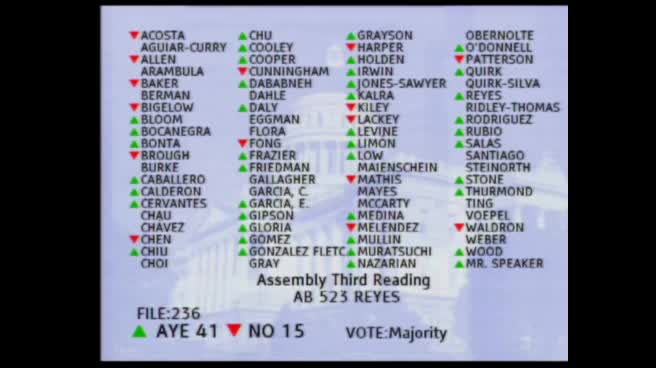 1MIN
Assembly Floor
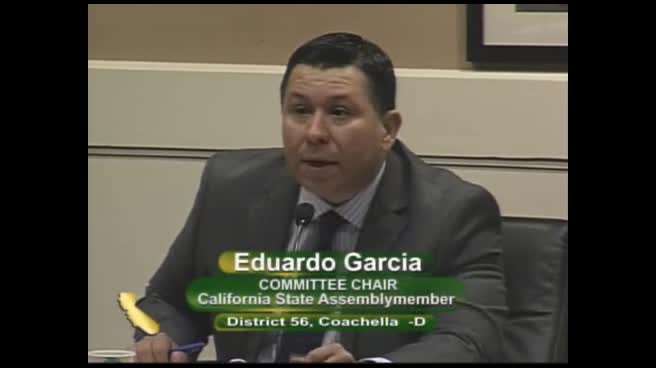 4MIN
Assembly Standing Committee on Water, Parks, and Wildlife
Bill Author

Bill Co-Author(s):